User login
FDA gives breakthrough status to midostaurin for AML
An experimental treatment targeting a form of acute myeloid leukemia has been designated a breakthrough therapy by the Food and Drug Administration, according to the drug’s manufacturer.
Midostaurin (Novartis) is an oral drug used alongside standard chemotherapy for adults with newly-diagnosed AML who are positive for the FMS-like tyrosine 3 (FLT-3) mutation and can undergo chemotherapy. AML has the lowest survival rate of all leukemias, and about one-third of AML patients have the FLT-3 mutation.

The FDA’s breakthrough therapy designation, in place since 2012, is an intensive form of fast-tracking in which the agency offers the manufacturer more guidance on an efficient drug development program and a higher level of organizational support, though future approval is not guaranteed. To qualify, a therapy must come with preliminary clinical evidence demonstrating substantial improvement on at least one clinically significant endpoint over available therapy, according to the agency.
Results from a phase III clinical trial, presented in December 2015 at the 57th annual meeting of the American Society of Hematology, showed that among 717 patients randomized to receive midostaurin alongside standard induction and consolidation chemotherapy or the same chemotherapy protocol alone, the midostaurin group saw significant improvement in overall survival (hazard ratio, 0.77, P = .0074).
Mean OS for patients in the midostaurin arm was 74.7 months (95% CI: 31.7, not attained), compared with 25.6 months for the placebo arm (18.6, 42.9). Median follow-up in the study was 57 months for surviving patients.
In a news release Feb. 19, Novartis said that midostaurin would be submitted for FDA approval for FLT-3-positive AML and that the company had launched compassionate use and expanded access programs allowing newly diagnosed patients aged 18 and older to receive midostaurin alongside standard induction and consolidation therapy. No targeted AML treatments are currently approved by FDA.
FLT3 is a receptor tyrosine kinase that plays a role in the proliferation in the number of certain blood cells. Midostaurin is a multi-targeted kinase inhibitor that is also being investigated for the treatment of aggressive systemic mast cell leukemia, according to Novartis.
An experimental treatment targeting a form of acute myeloid leukemia has been designated a breakthrough therapy by the Food and Drug Administration, according to the drug’s manufacturer.
Midostaurin (Novartis) is an oral drug used alongside standard chemotherapy for adults with newly-diagnosed AML who are positive for the FMS-like tyrosine 3 (FLT-3) mutation and can undergo chemotherapy. AML has the lowest survival rate of all leukemias, and about one-third of AML patients have the FLT-3 mutation.
The FDA’s breakthrough therapy designation, in place since 2012, is an intensive form of fast-tracking in which the agency offers the manufacturer more guidance on an efficient drug development program and a higher level of organizational support, though future approval is not guaranteed. To qualify, a therapy must come with preliminary clinical evidence demonstrating substantial improvement on at least one clinically significant endpoint over available therapy, according to the agency.
Results from a phase III clinical trial, presented in December 2015 at the 57th annual meeting of the American Society of Hematology, showed that among 717 patients randomized to receive midostaurin alongside standard induction and consolidation chemotherapy or the same chemotherapy protocol alone, the midostaurin group saw significant improvement in overall survival (hazard ratio, 0.77, P = .0074).
Mean OS for patients in the midostaurin arm was 74.7 months (95% CI: 31.7, not attained), compared with 25.6 months for the placebo arm (18.6, 42.9). Median follow-up in the study was 57 months for surviving patients.
In a news release Feb. 19, Novartis said that midostaurin would be submitted for FDA approval for FLT-3-positive AML and that the company had launched compassionate use and expanded access programs allowing newly diagnosed patients aged 18 and older to receive midostaurin alongside standard induction and consolidation therapy. No targeted AML treatments are currently approved by FDA.
FLT3 is a receptor tyrosine kinase that plays a role in the proliferation in the number of certain blood cells. Midostaurin is a multi-targeted kinase inhibitor that is also being investigated for the treatment of aggressive systemic mast cell leukemia, according to Novartis.
An experimental treatment targeting a form of acute myeloid leukemia has been designated a breakthrough therapy by the Food and Drug Administration, according to the drug’s manufacturer.
Midostaurin (Novartis) is an oral drug used alongside standard chemotherapy for adults with newly-diagnosed AML who are positive for the FMS-like tyrosine 3 (FLT-3) mutation and can undergo chemotherapy. AML has the lowest survival rate of all leukemias, and about one-third of AML patients have the FLT-3 mutation.
The FDA’s breakthrough therapy designation, in place since 2012, is an intensive form of fast-tracking in which the agency offers the manufacturer more guidance on an efficient drug development program and a higher level of organizational support, though future approval is not guaranteed. To qualify, a therapy must come with preliminary clinical evidence demonstrating substantial improvement on at least one clinically significant endpoint over available therapy, according to the agency.
Results from a phase III clinical trial, presented in December 2015 at the 57th annual meeting of the American Society of Hematology, showed that among 717 patients randomized to receive midostaurin alongside standard induction and consolidation chemotherapy or the same chemotherapy protocol alone, the midostaurin group saw significant improvement in overall survival (hazard ratio, 0.77, P = .0074).
Mean OS for patients in the midostaurin arm was 74.7 months (95% CI: 31.7, not attained), compared with 25.6 months for the placebo arm (18.6, 42.9). Median follow-up in the study was 57 months for surviving patients.
In a news release Feb. 19, Novartis said that midostaurin would be submitted for FDA approval for FLT-3-positive AML and that the company had launched compassionate use and expanded access programs allowing newly diagnosed patients aged 18 and older to receive midostaurin alongside standard induction and consolidation therapy. No targeted AML treatments are currently approved by FDA.
FLT3 is a receptor tyrosine kinase that plays a role in the proliferation in the number of certain blood cells. Midostaurin is a multi-targeted kinase inhibitor that is also being investigated for the treatment of aggressive systemic mast cell leukemia, according to Novartis.

VIDEO: Octogenarians benefit from ischemic stroke thrombectomy
LOS ANGELES – Clot removal to recanalize the occluded intracerebral arteries of acute ischemic stroke patients was as effective for producing good outcomes in patients aged 80 years or older as it was in younger patients, according to results from a pooled analysis of 1,287 patients in five separate but similar randomized trials.
This unprecedented evidence for the safety and efficacy of thrombectomy (also known as embolectomy) in octogenarians experiencing an acute occlusive, large-vessel, proximal anterior-circulation stroke was one of several new findings from the pooled analysis that should help further push thrombectomy to the forefront of acute care for patients undergoing this type of ischemic stroke, predicted Dr. Wade S. Smith in a video interview at the International Stroke Conference.
“By looking at all the data, we have much more refined information on the robustness of the treatment across age groups, which is quite important, especially patients in the 80-plus age group,” commented Dr. Smith, professor of neurology and chief of the neurovascular division at the University of California, San Francisco.
Until now, during the year following the reports in early 2015 from all five studies, “age had been a limiting factor” in applying the practicing-changing intervention of thrombectomy to patients, he noted.
“This [the new pooled analysis] will change that,” Dr. Smith predicted. “It does not apply to patients who were infirm prior to their stroke – but for patients who were otherwise healthy, with a modified Rankin scale level of 0 or 1 at initial presentation, it appears that they benefit [from thrombectomy] regardless of their age.” In the pooled analysis, 198 of the 1,287 total patients (15%) were at least 80 years old.
“It removes age discrimination. A healthy 80-year-old may do extremely well with this treatment,” Dr. Smith said.
The consistency of benefit across a wide range of stroke severity that showed up in the trials as four distinct strata of NIH Stroke Scale scores prior to treatment was another important finding that could not previously be definitively made by analyzing each of the five trials individually.
In patients with stroke-severity scores that ranged from 10 or less (the least severely affected) to patients with scores of 21 or greater, all had post-thrombectomy improvements that clustered around the overall average number-needed-to-treat of 2.6 patients to reduce the disability of one patient at follow-up by at least one level on the modified Rankin scale.
Other notable findings from the pooled analysis were that thrombectomy also produced a consistent benefit to patients across every other subgroup examined, including sex, specific occlusion site, whether or not patients also received thrombolytic treatment with tissue plasminogen activator, and time to thrombectomy treatment (5 or fewer hours from stroke onset or more than 5 hours), reported Dr. Michael D. Hill and Dr. Tudor G. Jovin in a joint presentation at the meeting, sponsored by the American Heart Association.
Their pooled analysis, known as HERMES, pooled data from the MR CLEAN, ESCAPE, REVASCAT, SWIFT PRIME, and EXTEND IA trials, all run during 2010-2014.
“Endovascular treatment is a highly effective treatment across all subgroups,” concluded Dr. Hill and Dr. Jovin as they completed their talk. “These data may provide additional support for endovascular treatment in subgroups not addressed in the individual trials.”
Concurrent with their report at the meeting, the results appeared in a paper published online (Lancet. 2016 Feb 18;doi: 10.1016/S0140-6736(16)00163-X).
Both Dr. Jovin and Dr. Hill shared the enthusiasm of Dr. Smith and others in the packed meeting room about the age finding.
“Older patients seemed to benefit even more” from thrombectomy, compared with younger patients, noted Dr. Jovin, chief of the stroke division at the University of Pittsburgh and a coinvestigator on SWIFT PRIME. “There is no reason to deny this treatment to appropriately selected patients based on age,” he said.
“There is no upper age limit,” agreed Dr. Hill, professor of neurology and director of the stroke unit at the University of Calgary (Alta.) and a coinvestigator on the ESCAPE trial. “If it’s an otherwise healthy 90-year-old who is living independently, you can surely consider them for this treatment.”
HERMES received fundings through an unrestricted grant from Medtronic. Dr. Hill and Dr. Jovin had no personal disclosures. Dr. Smith served on the data safety and monitoring board for a trial funded by Stryker.
The video associated with this article is no longer available on this site. Please view all of our videos on the MDedge YouTube channel
On Twitter @mitchelzoler
LOS ANGELES – Clot removal to recanalize the occluded intracerebral arteries of acute ischemic stroke patients was as effective for producing good outcomes in patients aged 80 years or older as it was in younger patients, according to results from a pooled analysis of 1,287 patients in five separate but similar randomized trials.
This unprecedented evidence for the safety and efficacy of thrombectomy (also known as embolectomy) in octogenarians experiencing an acute occlusive, large-vessel, proximal anterior-circulation stroke was one of several new findings from the pooled analysis that should help further push thrombectomy to the forefront of acute care for patients undergoing this type of ischemic stroke, predicted Dr. Wade S. Smith in a video interview at the International Stroke Conference.
“By looking at all the data, we have much more refined information on the robustness of the treatment across age groups, which is quite important, especially patients in the 80-plus age group,” commented Dr. Smith, professor of neurology and chief of the neurovascular division at the University of California, San Francisco.
Until now, during the year following the reports in early 2015 from all five studies, “age had been a limiting factor” in applying the practicing-changing intervention of thrombectomy to patients, he noted.
“This [the new pooled analysis] will change that,” Dr. Smith predicted. “It does not apply to patients who were infirm prior to their stroke – but for patients who were otherwise healthy, with a modified Rankin scale level of 0 or 1 at initial presentation, it appears that they benefit [from thrombectomy] regardless of their age.” In the pooled analysis, 198 of the 1,287 total patients (15%) were at least 80 years old.
“It removes age discrimination. A healthy 80-year-old may do extremely well with this treatment,” Dr. Smith said.
The consistency of benefit across a wide range of stroke severity that showed up in the trials as four distinct strata of NIH Stroke Scale scores prior to treatment was another important finding that could not previously be definitively made by analyzing each of the five trials individually.
In patients with stroke-severity scores that ranged from 10 or less (the least severely affected) to patients with scores of 21 or greater, all had post-thrombectomy improvements that clustered around the overall average number-needed-to-treat of 2.6 patients to reduce the disability of one patient at follow-up by at least one level on the modified Rankin scale.
Other notable findings from the pooled analysis were that thrombectomy also produced a consistent benefit to patients across every other subgroup examined, including sex, specific occlusion site, whether or not patients also received thrombolytic treatment with tissue plasminogen activator, and time to thrombectomy treatment (5 or fewer hours from stroke onset or more than 5 hours), reported Dr. Michael D. Hill and Dr. Tudor G. Jovin in a joint presentation at the meeting, sponsored by the American Heart Association.
Their pooled analysis, known as HERMES, pooled data from the MR CLEAN, ESCAPE, REVASCAT, SWIFT PRIME, and EXTEND IA trials, all run during 2010-2014.
“Endovascular treatment is a highly effective treatment across all subgroups,” concluded Dr. Hill and Dr. Jovin as they completed their talk. “These data may provide additional support for endovascular treatment in subgroups not addressed in the individual trials.”
Concurrent with their report at the meeting, the results appeared in a paper published online (Lancet. 2016 Feb 18;doi: 10.1016/S0140-6736(16)00163-X).
Both Dr. Jovin and Dr. Hill shared the enthusiasm of Dr. Smith and others in the packed meeting room about the age finding.
“Older patients seemed to benefit even more” from thrombectomy, compared with younger patients, noted Dr. Jovin, chief of the stroke division at the University of Pittsburgh and a coinvestigator on SWIFT PRIME. “There is no reason to deny this treatment to appropriately selected patients based on age,” he said.
“There is no upper age limit,” agreed Dr. Hill, professor of neurology and director of the stroke unit at the University of Calgary (Alta.) and a coinvestigator on the ESCAPE trial. “If it’s an otherwise healthy 90-year-old who is living independently, you can surely consider them for this treatment.”
HERMES received fundings through an unrestricted grant from Medtronic. Dr. Hill and Dr. Jovin had no personal disclosures. Dr. Smith served on the data safety and monitoring board for a trial funded by Stryker.
The video associated with this article is no longer available on this site. Please view all of our videos on the MDedge YouTube channel
On Twitter @mitchelzoler
LOS ANGELES – Clot removal to recanalize the occluded intracerebral arteries of acute ischemic stroke patients was as effective for producing good outcomes in patients aged 80 years or older as it was in younger patients, according to results from a pooled analysis of 1,287 patients in five separate but similar randomized trials.
This unprecedented evidence for the safety and efficacy of thrombectomy (also known as embolectomy) in octogenarians experiencing an acute occlusive, large-vessel, proximal anterior-circulation stroke was one of several new findings from the pooled analysis that should help further push thrombectomy to the forefront of acute care for patients undergoing this type of ischemic stroke, predicted Dr. Wade S. Smith in a video interview at the International Stroke Conference.
“By looking at all the data, we have much more refined information on the robustness of the treatment across age groups, which is quite important, especially patients in the 80-plus age group,” commented Dr. Smith, professor of neurology and chief of the neurovascular division at the University of California, San Francisco.
Until now, during the year following the reports in early 2015 from all five studies, “age had been a limiting factor” in applying the practicing-changing intervention of thrombectomy to patients, he noted.
“This [the new pooled analysis] will change that,” Dr. Smith predicted. “It does not apply to patients who were infirm prior to their stroke – but for patients who were otherwise healthy, with a modified Rankin scale level of 0 or 1 at initial presentation, it appears that they benefit [from thrombectomy] regardless of their age.” In the pooled analysis, 198 of the 1,287 total patients (15%) were at least 80 years old.
“It removes age discrimination. A healthy 80-year-old may do extremely well with this treatment,” Dr. Smith said.
The consistency of benefit across a wide range of stroke severity that showed up in the trials as four distinct strata of NIH Stroke Scale scores prior to treatment was another important finding that could not previously be definitively made by analyzing each of the five trials individually.
In patients with stroke-severity scores that ranged from 10 or less (the least severely affected) to patients with scores of 21 or greater, all had post-thrombectomy improvements that clustered around the overall average number-needed-to-treat of 2.6 patients to reduce the disability of one patient at follow-up by at least one level on the modified Rankin scale.
Other notable findings from the pooled analysis were that thrombectomy also produced a consistent benefit to patients across every other subgroup examined, including sex, specific occlusion site, whether or not patients also received thrombolytic treatment with tissue plasminogen activator, and time to thrombectomy treatment (5 or fewer hours from stroke onset or more than 5 hours), reported Dr. Michael D. Hill and Dr. Tudor G. Jovin in a joint presentation at the meeting, sponsored by the American Heart Association.
Their pooled analysis, known as HERMES, pooled data from the MR CLEAN, ESCAPE, REVASCAT, SWIFT PRIME, and EXTEND IA trials, all run during 2010-2014.
“Endovascular treatment is a highly effective treatment across all subgroups,” concluded Dr. Hill and Dr. Jovin as they completed their talk. “These data may provide additional support for endovascular treatment in subgroups not addressed in the individual trials.”
Concurrent with their report at the meeting, the results appeared in a paper published online (Lancet. 2016 Feb 18;doi: 10.1016/S0140-6736(16)00163-X).
Both Dr. Jovin and Dr. Hill shared the enthusiasm of Dr. Smith and others in the packed meeting room about the age finding.
“Older patients seemed to benefit even more” from thrombectomy, compared with younger patients, noted Dr. Jovin, chief of the stroke division at the University of Pittsburgh and a coinvestigator on SWIFT PRIME. “There is no reason to deny this treatment to appropriately selected patients based on age,” he said.
“There is no upper age limit,” agreed Dr. Hill, professor of neurology and director of the stroke unit at the University of Calgary (Alta.) and a coinvestigator on the ESCAPE trial. “If it’s an otherwise healthy 90-year-old who is living independently, you can surely consider them for this treatment.”
HERMES received fundings through an unrestricted grant from Medtronic. Dr. Hill and Dr. Jovin had no personal disclosures. Dr. Smith served on the data safety and monitoring board for a trial funded by Stryker.
The video associated with this article is no longer available on this site. Please view all of our videos on the MDedge YouTube channel
On Twitter @mitchelzoler
AT THE INTERNATIONAL STROKE CONFERENCE
Key clinical point: A pooled analysis of five recent trials of thrombectomy for acute ischemic stroke should help further propel its widespread U.S. adoption.
Major finding: Intracerebral, transcatheter clot removal in acute ischemic stroke was equally effective in octogenarian and younger patients.
Data source: HERMES, a pooled analysis of data from 1,287 acute ischemic stroke patients randomized in five separate but similar trials.
Disclosures: HERMES received fundings through an unrestricted grant from Medtronic. Dr. Hill and Dr. Jovin had no personal disclosures. Dr. Smith served on the data safety and monitoring board for a trial funded by Stryker.

VIDEO: ACTRIMS Forum focuses on progressive MS
NEW ORLEANS – A focus of the 2016 Americas Committee for Treatment and Research in Multiple Sclerosis (ACTRIMS) Forum is the pathogenic mechanisms involved in progressive forms of MS, including the genetic and environmental underpinnings and the immunopathologic processes involved, according to ACTRIMS president, Dr. Suhayl Dhib-Jalbut.
In particular, the role of B cells in the pathogenesis of progressive disease will be addressed as recent studies targeting B lymphocytes are providing important new information about the importance of B cells in the pathogenesis of progressive MS.
In this video interview, Dr. Dhib-Jalbut, professor and chair of the department of neurology at the Rutgers Robert Wood Johnson Medical School, New Brunswick, N.J., notes that it is hypothesized that in progressive MS, there is a depletion of energy in the central nervous system. Studies of medications that can restore mitochondrial function and energy pools and perhaps have an impact on disease progression will be presented during the forum, he said.
The video associated with this article is no longer available on this site. Please view all of our videos on the MDedge YouTube channel
NEW ORLEANS – A focus of the 2016 Americas Committee for Treatment and Research in Multiple Sclerosis (ACTRIMS) Forum is the pathogenic mechanisms involved in progressive forms of MS, including the genetic and environmental underpinnings and the immunopathologic processes involved, according to ACTRIMS president, Dr. Suhayl Dhib-Jalbut.
In particular, the role of B cells in the pathogenesis of progressive disease will be addressed as recent studies targeting B lymphocytes are providing important new information about the importance of B cells in the pathogenesis of progressive MS.
In this video interview, Dr. Dhib-Jalbut, professor and chair of the department of neurology at the Rutgers Robert Wood Johnson Medical School, New Brunswick, N.J., notes that it is hypothesized that in progressive MS, there is a depletion of energy in the central nervous system. Studies of medications that can restore mitochondrial function and energy pools and perhaps have an impact on disease progression will be presented during the forum, he said.
The video associated with this article is no longer available on this site. Please view all of our videos on the MDedge YouTube channel
NEW ORLEANS – A focus of the 2016 Americas Committee for Treatment and Research in Multiple Sclerosis (ACTRIMS) Forum is the pathogenic mechanisms involved in progressive forms of MS, including the genetic and environmental underpinnings and the immunopathologic processes involved, according to ACTRIMS president, Dr. Suhayl Dhib-Jalbut.
In particular, the role of B cells in the pathogenesis of progressive disease will be addressed as recent studies targeting B lymphocytes are providing important new information about the importance of B cells in the pathogenesis of progressive MS.
In this video interview, Dr. Dhib-Jalbut, professor and chair of the department of neurology at the Rutgers Robert Wood Johnson Medical School, New Brunswick, N.J., notes that it is hypothesized that in progressive MS, there is a depletion of energy in the central nervous system. Studies of medications that can restore mitochondrial function and energy pools and perhaps have an impact on disease progression will be presented during the forum, he said.
The video associated with this article is no longer available on this site. Please view all of our videos on the MDedge YouTube channel
EXPERT ANALYSIS FROM THE ACTRIMS 2016 FORUM

VIDEO: Post-stroke pioglitazone modestly protective against secondary vascular events
LOS ANGELES – Nondiabetic, insulin-resistant patients who started pioglitazone within 6 months of an ischemic stroke or transient ischemic attack had almost a 3% absolute risk reduction in secondary strokes and myocardial infarctions after 5 years, in a randomized, clinical trial published online Feb. 17 in the New England Journal of Medicine.
Stroke or MI – the study’s primary combined outcome – occurred in 175 of 1,939 (9.0%) pioglitazone (Actos) patients, but 228 of 1,937 (11.8%) placebo patients (hazard ratio, 0.76; P = 0.007). There was no significant difference in all-cause mortality (HR, 0.93; P = 0.52).
Seventy-three pioglitazone patients (3.8%) developed diabetes, compared with 149 (7.7%) in the placebo group (HR, 0.48; P less than 0.001). That wasn’t a surprise; pioglitazone has been shown to protect insulin resistant patients against diabetes, the study investigators noted (N Engl J Med. 2016 Feb 17; doi: 10.1056/NEJMoa1506930).
Known side effects showed up as well. Pioglitazone was associated with a greater frequency of weight gain exceeding 4.5 kg (52.2% versus 33.7%, P less than 0.001), edema (35.6% versus 24.9%, P less than 0.001), and bone fracture requiring surgery or hospitalization (5.1% versus 3.2%, P = 0.003).
Heart failure – another known risk with the drug – did not show up in the trial; people with heart failure histories or other risk factors were excluded.
The median baseline modified Rankin Scale in both groups was 1, and the median NIH Stroke Scale score was 0. The pioglitazone target dose was 45 mg daily.
Insulin resistance is a risk factor for heart attack and stroke, which may help explain the thiazolidinedione’s apparent protective effects. It was defined in the trial as a score greater than 3.0 on the homeostasis model assessment of insulin resistance (HOMA-IR) index.
So, should pioglitazone be a part of routine post-stroke care?
In a video interview at the International Stroke Conference, lead investigator Dr. Walter N. Kernan, a professor of general medicine at Yale University, New Haven, Conn., shared his thoughts.
The video associated with this article is no longer available on this site. Please view all of our videos on the MDedge YouTube channel
LOS ANGELES – Nondiabetic, insulin-resistant patients who started pioglitazone within 6 months of an ischemic stroke or transient ischemic attack had almost a 3% absolute risk reduction in secondary strokes and myocardial infarctions after 5 years, in a randomized, clinical trial published online Feb. 17 in the New England Journal of Medicine.
Stroke or MI – the study’s primary combined outcome – occurred in 175 of 1,939 (9.0%) pioglitazone (Actos) patients, but 228 of 1,937 (11.8%) placebo patients (hazard ratio, 0.76; P = 0.007). There was no significant difference in all-cause mortality (HR, 0.93; P = 0.52).
Seventy-three pioglitazone patients (3.8%) developed diabetes, compared with 149 (7.7%) in the placebo group (HR, 0.48; P less than 0.001). That wasn’t a surprise; pioglitazone has been shown to protect insulin resistant patients against diabetes, the study investigators noted (N Engl J Med. 2016 Feb 17; doi: 10.1056/NEJMoa1506930).
Known side effects showed up as well. Pioglitazone was associated with a greater frequency of weight gain exceeding 4.5 kg (52.2% versus 33.7%, P less than 0.001), edema (35.6% versus 24.9%, P less than 0.001), and bone fracture requiring surgery or hospitalization (5.1% versus 3.2%, P = 0.003).
Heart failure – another known risk with the drug – did not show up in the trial; people with heart failure histories or other risk factors were excluded.
The median baseline modified Rankin Scale in both groups was 1, and the median NIH Stroke Scale score was 0. The pioglitazone target dose was 45 mg daily.
Insulin resistance is a risk factor for heart attack and stroke, which may help explain the thiazolidinedione’s apparent protective effects. It was defined in the trial as a score greater than 3.0 on the homeostasis model assessment of insulin resistance (HOMA-IR) index.
So, should pioglitazone be a part of routine post-stroke care?
In a video interview at the International Stroke Conference, lead investigator Dr. Walter N. Kernan, a professor of general medicine at Yale University, New Haven, Conn., shared his thoughts.
The video associated with this article is no longer available on this site. Please view all of our videos on the MDedge YouTube channel
LOS ANGELES – Nondiabetic, insulin-resistant patients who started pioglitazone within 6 months of an ischemic stroke or transient ischemic attack had almost a 3% absolute risk reduction in secondary strokes and myocardial infarctions after 5 years, in a randomized, clinical trial published online Feb. 17 in the New England Journal of Medicine.
Stroke or MI – the study’s primary combined outcome – occurred in 175 of 1,939 (9.0%) pioglitazone (Actos) patients, but 228 of 1,937 (11.8%) placebo patients (hazard ratio, 0.76; P = 0.007). There was no significant difference in all-cause mortality (HR, 0.93; P = 0.52).
Seventy-three pioglitazone patients (3.8%) developed diabetes, compared with 149 (7.7%) in the placebo group (HR, 0.48; P less than 0.001). That wasn’t a surprise; pioglitazone has been shown to protect insulin resistant patients against diabetes, the study investigators noted (N Engl J Med. 2016 Feb 17; doi: 10.1056/NEJMoa1506930).
Known side effects showed up as well. Pioglitazone was associated with a greater frequency of weight gain exceeding 4.5 kg (52.2% versus 33.7%, P less than 0.001), edema (35.6% versus 24.9%, P less than 0.001), and bone fracture requiring surgery or hospitalization (5.1% versus 3.2%, P = 0.003).
Heart failure – another known risk with the drug – did not show up in the trial; people with heart failure histories or other risk factors were excluded.
The median baseline modified Rankin Scale in both groups was 1, and the median NIH Stroke Scale score was 0. The pioglitazone target dose was 45 mg daily.
Insulin resistance is a risk factor for heart attack and stroke, which may help explain the thiazolidinedione’s apparent protective effects. It was defined in the trial as a score greater than 3.0 on the homeostasis model assessment of insulin resistance (HOMA-IR) index.
So, should pioglitazone be a part of routine post-stroke care?
In a video interview at the International Stroke Conference, lead investigator Dr. Walter N. Kernan, a professor of general medicine at Yale University, New Haven, Conn., shared his thoughts.
The video associated with this article is no longer available on this site. Please view all of our videos on the MDedge YouTube channel
AT THE INTERNATIONAL STROKE CONFERENCE
Pediatric BMI increases linked to rises in blood pressure, hypertension risk
Children’s and adolescents’ risk of blood pressure increases and hypertension rose as their body mass index increased, even over a short period of a few years, according to a recent study.
“Obesity, especially severe obesity, at a young age confers an increased risk of early onset of cardiometabolic diseases such as hypertension,” wrote Emily D. Parker, Ph.D., of the HealthPartners Institute for Education and Research in Minneapolis, and her associates online (Pediatrics. 2016 Feb 19. doi: 10.1542/peds.2015-1662). “The significant adverse effect of weight gain and obesity early in life, and over a short period of time, emphasizes the importance of developing early and effective clinical and public health strategies directed at the primary prevention of overweight and obesity.”

The researchers retrospectively analyzed the health care records of 100,606 children and adolescents, aged 3-17 years, who received care from HealthPartners Medical Group in Minnesota, Kaiser Permanente Colorado, or Kaiser Permanente Northern California. All the patients had not been hypertensive within the 6 months before baseline measurements and had at least three primary care visits with blood pressure measurements between January 2007 and December 2011.
At baseline, 16% of the patients were overweight, 2% were obese, and 4% were severely obese. The majority (92%) were below the 90th percentile for their systolic blood pressure at baseline, while 4% were prehypertensive and 4% were hypertensive (at or above 95th percentile). Over a median 3.1 years of follow-up per person, 0.3% of the patients became hypertensive, translating to an incidence rate of 0.15 new cases per year.
After accounting for demographics, baseline blood pressure percentiles, year, and site, both children (aged 3-11) and adolescents with obesity were about twice as likely as children and adolescents with low healthy weights to develop hypertension (hazard ratio, 2.02 and HR, 2.20, respectively). Children and adolescents with severe obesity had more than a four times greater risk of developing hypertension (HR, 4.42 and HR, 4.46, respectively), compared with those with a low healthy weight. These were significant differences. No association appeared between those with low-normal weights at baseline and either high-normal or overweight categories during follow-up.
Forty percent of the children and 24% of the adolescents dropped from severely obese to obese during follow-up, and 45% of the children and 55% of the adolescents who were obese at baseline remained so throughout follow-up. Among children overweight at baseline, 19% became obese, 0.7% became severely obese, and 44% became a healthy weight. Among initially overweight adolescents, 13% became obese, 0.1% became severely obese, and 34% became a healthy weight.
“There was a strong association between change in BMI [body mass index] category and change in blood pressure across BMI categories in both age groups and genders,” Dr. Parker and her associates wrote. “In girls and boys 3-11 years old, both systolic blood pressure and diastolic blood pressure percentiles increased significantly when BMI increased from normal to either overweight or obese and when it increased from overweight to obese.” Similar but greater changes were seen among the adolescents, particularly among girls aged 12-17 years.
Correspondingly, children and teens who dropped from a higher to a lower BMI category had statistically significant drops in both systolic and diastolic blood pressure.
Risk of hypertension tripled for those with obesity at baseline who remained obese through follow-up (HR, 3.71 for children; HR, 3.64 for teens).
The study was funded by the National Heart, Lung, and Blood Institute. Most of the investigators had no relevant financial disclosures. Dr. Joan C. Lo has received previous research funding from Sanofi unrelated to this study.
Children’s and adolescents’ risk of blood pressure increases and hypertension rose as their body mass index increased, even over a short period of a few years, according to a recent study.
“Obesity, especially severe obesity, at a young age confers an increased risk of early onset of cardiometabolic diseases such as hypertension,” wrote Emily D. Parker, Ph.D., of the HealthPartners Institute for Education and Research in Minneapolis, and her associates online (Pediatrics. 2016 Feb 19. doi: 10.1542/peds.2015-1662). “The significant adverse effect of weight gain and obesity early in life, and over a short period of time, emphasizes the importance of developing early and effective clinical and public health strategies directed at the primary prevention of overweight and obesity.”
The researchers retrospectively analyzed the health care records of 100,606 children and adolescents, aged 3-17 years, who received care from HealthPartners Medical Group in Minnesota, Kaiser Permanente Colorado, or Kaiser Permanente Northern California. All the patients had not been hypertensive within the 6 months before baseline measurements and had at least three primary care visits with blood pressure measurements between January 2007 and December 2011.
At baseline, 16% of the patients were overweight, 2% were obese, and 4% were severely obese. The majority (92%) were below the 90th percentile for their systolic blood pressure at baseline, while 4% were prehypertensive and 4% were hypertensive (at or above 95th percentile). Over a median 3.1 years of follow-up per person, 0.3% of the patients became hypertensive, translating to an incidence rate of 0.15 new cases per year.
After accounting for demographics, baseline blood pressure percentiles, year, and site, both children (aged 3-11) and adolescents with obesity were about twice as likely as children and adolescents with low healthy weights to develop hypertension (hazard ratio, 2.02 and HR, 2.20, respectively). Children and adolescents with severe obesity had more than a four times greater risk of developing hypertension (HR, 4.42 and HR, 4.46, respectively), compared with those with a low healthy weight. These were significant differences. No association appeared between those with low-normal weights at baseline and either high-normal or overweight categories during follow-up.
Forty percent of the children and 24% of the adolescents dropped from severely obese to obese during follow-up, and 45% of the children and 55% of the adolescents who were obese at baseline remained so throughout follow-up. Among children overweight at baseline, 19% became obese, 0.7% became severely obese, and 44% became a healthy weight. Among initially overweight adolescents, 13% became obese, 0.1% became severely obese, and 34% became a healthy weight.
“There was a strong association between change in BMI [body mass index] category and change in blood pressure across BMI categories in both age groups and genders,” Dr. Parker and her associates wrote. “In girls and boys 3-11 years old, both systolic blood pressure and diastolic blood pressure percentiles increased significantly when BMI increased from normal to either overweight or obese and when it increased from overweight to obese.” Similar but greater changes were seen among the adolescents, particularly among girls aged 12-17 years.
Correspondingly, children and teens who dropped from a higher to a lower BMI category had statistically significant drops in both systolic and diastolic blood pressure.
Risk of hypertension tripled for those with obesity at baseline who remained obese through follow-up (HR, 3.71 for children; HR, 3.64 for teens).
The study was funded by the National Heart, Lung, and Blood Institute. Most of the investigators had no relevant financial disclosures. Dr. Joan C. Lo has received previous research funding from Sanofi unrelated to this study.
Children’s and adolescents’ risk of blood pressure increases and hypertension rose as their body mass index increased, even over a short period of a few years, according to a recent study.
“Obesity, especially severe obesity, at a young age confers an increased risk of early onset of cardiometabolic diseases such as hypertension,” wrote Emily D. Parker, Ph.D., of the HealthPartners Institute for Education and Research in Minneapolis, and her associates online (Pediatrics. 2016 Feb 19. doi: 10.1542/peds.2015-1662). “The significant adverse effect of weight gain and obesity early in life, and over a short period of time, emphasizes the importance of developing early and effective clinical and public health strategies directed at the primary prevention of overweight and obesity.”
The researchers retrospectively analyzed the health care records of 100,606 children and adolescents, aged 3-17 years, who received care from HealthPartners Medical Group in Minnesota, Kaiser Permanente Colorado, or Kaiser Permanente Northern California. All the patients had not been hypertensive within the 6 months before baseline measurements and had at least three primary care visits with blood pressure measurements between January 2007 and December 2011.
At baseline, 16% of the patients were overweight, 2% were obese, and 4% were severely obese. The majority (92%) were below the 90th percentile for their systolic blood pressure at baseline, while 4% were prehypertensive and 4% were hypertensive (at or above 95th percentile). Over a median 3.1 years of follow-up per person, 0.3% of the patients became hypertensive, translating to an incidence rate of 0.15 new cases per year.
After accounting for demographics, baseline blood pressure percentiles, year, and site, both children (aged 3-11) and adolescents with obesity were about twice as likely as children and adolescents with low healthy weights to develop hypertension (hazard ratio, 2.02 and HR, 2.20, respectively). Children and adolescents with severe obesity had more than a four times greater risk of developing hypertension (HR, 4.42 and HR, 4.46, respectively), compared with those with a low healthy weight. These were significant differences. No association appeared between those with low-normal weights at baseline and either high-normal or overweight categories during follow-up.
Forty percent of the children and 24% of the adolescents dropped from severely obese to obese during follow-up, and 45% of the children and 55% of the adolescents who were obese at baseline remained so throughout follow-up. Among children overweight at baseline, 19% became obese, 0.7% became severely obese, and 44% became a healthy weight. Among initially overweight adolescents, 13% became obese, 0.1% became severely obese, and 34% became a healthy weight.
“There was a strong association between change in BMI [body mass index] category and change in blood pressure across BMI categories in both age groups and genders,” Dr. Parker and her associates wrote. “In girls and boys 3-11 years old, both systolic blood pressure and diastolic blood pressure percentiles increased significantly when BMI increased from normal to either overweight or obese and when it increased from overweight to obese.” Similar but greater changes were seen among the adolescents, particularly among girls aged 12-17 years.
Correspondingly, children and teens who dropped from a higher to a lower BMI category had statistically significant drops in both systolic and diastolic blood pressure.
Risk of hypertension tripled for those with obesity at baseline who remained obese through follow-up (HR, 3.71 for children; HR, 3.64 for teens).
The study was funded by the National Heart, Lung, and Blood Institute. Most of the investigators had no relevant financial disclosures. Dr. Joan C. Lo has received previous research funding from Sanofi unrelated to this study.
FROM PEDIATRICS
Key clinical point: The risk of blood pressure increases and even hypertension rises with increasing BMI among youth aged 3-17 years.
Major finding: Incident hypertension risk doubled for children and adolescents with obesity (HR, 2.02 and HR, 2.20, respectively) and quadrupled for those with severe obesity (HR, 4.42 and HR, 4.46, respectively).
Data source: The findings are based on a retrospective cohort study of 100,606 individuals, aged 3-17 years, from one of three U.S. health systems who were tracked over a median 3.1 years.
Disclosures: The study was funded by the National Heart, Lung, and Blood Institute. Dr. Lo has received previous research funding from Sanofi.

Targeting EZH2 to treat ETP-ALL

The gene EZH2 is a driver of, and potential therapeutic target for, early T-cell precursor acute lymphoblastic leukemia (ETP-ALL), according to a new study.
A previous study, published in Nature in 2012, suggested that nearly half of ETP-ALLs have inactivating alterations in EZH2.
Loss of EZH2 function can inactivate Polycomb repressive complex 2 (PRC2), but it was not clear how PRC2 loss-of-function mutations would aid leukemia growth.
The new study, published in Cell Reports, provides some insight.
Tobias Neff, MD, of the University of Colorado Denver in Aurora, and his colleagues developed a mouse model of NRASQ61K-driven leukemia that recapitulates phenotypic and transcriptional features of ETP-ALL.
Experiments with this model revealed that inactivation of EZH2 helps accelerate leukemia development and enhances a stem-cell-related transcriptional program.
“We have 2 major features of [ETP-ALL]—stem-like cells and increased growth—and, now, we show an actor implicated in both—namely, EZH2/PRC2,” Dr Neff said.
“How exactly the stem-cell-like gene expression profile contributes to the aggressiveness of ETP-ALL is unknown, but we’ve known that these stem-like cells are associated with poor prognosis in acute leukemia.”
The researchers also found that EZH2 inactivation resulted in increased activation of STAT3 by tyrosine 705 phosphorylation. This led them to wonder whether the JAK/STAT pathway might be important in their ETP-ALL model.
The team tested the JAK1/2 inhibitor ruxolitinib in NRASQ61K cells with EZH2 deletion and observed inhibition of cell growth.
“Ruxolitinib is unlikely to treat the disease by itself, but this model will help us test possible drug combinations that could eventually benefit ETP-ALL patients,” Dr Neff said.
He and his colleagues also plan to test the activity of different drugs against other cell types with inactivated EZH2.
“In addition to our specific finding in this disease, we are excited to now have a model that allows us to explore consequences of EZH2 inactivation that may enrich our understanding of a number of other conditions with a similar set of genetic changes,” Dr Neff said.
He and his colleagues noted that EZH2 is known to be inactivated in myelodysplastic syndromes, myeloproliferative neoplasms, and other hematologic malignancies. 
The gene EZH2 is a driver of, and potential therapeutic target for, early T-cell precursor acute lymphoblastic leukemia (ETP-ALL), according to a new study.
A previous study, published in Nature in 2012, suggested that nearly half of ETP-ALLs have inactivating alterations in EZH2.
Loss of EZH2 function can inactivate Polycomb repressive complex 2 (PRC2), but it was not clear how PRC2 loss-of-function mutations would aid leukemia growth.
The new study, published in Cell Reports, provides some insight.
Tobias Neff, MD, of the University of Colorado Denver in Aurora, and his colleagues developed a mouse model of NRASQ61K-driven leukemia that recapitulates phenotypic and transcriptional features of ETP-ALL.
Experiments with this model revealed that inactivation of EZH2 helps accelerate leukemia development and enhances a stem-cell-related transcriptional program.
“We have 2 major features of [ETP-ALL]—stem-like cells and increased growth—and, now, we show an actor implicated in both—namely, EZH2/PRC2,” Dr Neff said.
“How exactly the stem-cell-like gene expression profile contributes to the aggressiveness of ETP-ALL is unknown, but we’ve known that these stem-like cells are associated with poor prognosis in acute leukemia.”
The researchers also found that EZH2 inactivation resulted in increased activation of STAT3 by tyrosine 705 phosphorylation. This led them to wonder whether the JAK/STAT pathway might be important in their ETP-ALL model.
The team tested the JAK1/2 inhibitor ruxolitinib in NRASQ61K cells with EZH2 deletion and observed inhibition of cell growth.
“Ruxolitinib is unlikely to treat the disease by itself, but this model will help us test possible drug combinations that could eventually benefit ETP-ALL patients,” Dr Neff said.
He and his colleagues also plan to test the activity of different drugs against other cell types with inactivated EZH2.
“In addition to our specific finding in this disease, we are excited to now have a model that allows us to explore consequences of EZH2 inactivation that may enrich our understanding of a number of other conditions with a similar set of genetic changes,” Dr Neff said.
He and his colleagues noted that EZH2 is known to be inactivated in myelodysplastic syndromes, myeloproliferative neoplasms, and other hematologic malignancies.
The gene EZH2 is a driver of, and potential therapeutic target for, early T-cell precursor acute lymphoblastic leukemia (ETP-ALL), according to a new study.
A previous study, published in Nature in 2012, suggested that nearly half of ETP-ALLs have inactivating alterations in EZH2.
Loss of EZH2 function can inactivate Polycomb repressive complex 2 (PRC2), but it was not clear how PRC2 loss-of-function mutations would aid leukemia growth.
The new study, published in Cell Reports, provides some insight.
Tobias Neff, MD, of the University of Colorado Denver in Aurora, and his colleagues developed a mouse model of NRASQ61K-driven leukemia that recapitulates phenotypic and transcriptional features of ETP-ALL.
Experiments with this model revealed that inactivation of EZH2 helps accelerate leukemia development and enhances a stem-cell-related transcriptional program.
“We have 2 major features of [ETP-ALL]—stem-like cells and increased growth—and, now, we show an actor implicated in both—namely, EZH2/PRC2,” Dr Neff said.
“How exactly the stem-cell-like gene expression profile contributes to the aggressiveness of ETP-ALL is unknown, but we’ve known that these stem-like cells are associated with poor prognosis in acute leukemia.”
The researchers also found that EZH2 inactivation resulted in increased activation of STAT3 by tyrosine 705 phosphorylation. This led them to wonder whether the JAK/STAT pathway might be important in their ETP-ALL model.
The team tested the JAK1/2 inhibitor ruxolitinib in NRASQ61K cells with EZH2 deletion and observed inhibition of cell growth.
“Ruxolitinib is unlikely to treat the disease by itself, but this model will help us test possible drug combinations that could eventually benefit ETP-ALL patients,” Dr Neff said.
He and his colleagues also plan to test the activity of different drugs against other cell types with inactivated EZH2.
“In addition to our specific finding in this disease, we are excited to now have a model that allows us to explore consequences of EZH2 inactivation that may enrich our understanding of a number of other conditions with a similar set of genetic changes,” Dr Neff said.
He and his colleagues noted that EZH2 is known to be inactivated in myelodysplastic syndromes, myeloproliferative neoplasms, and other hematologic malignancies.
Does Life, Liberty, and the Pursuit of Happiness Apply to Hospital Medicine?
Every American knows this well-known phrase from the Declaration of Independence, which describes the three “unalienable rights” ordained on humans by their Creator and which governments are bound to dutifully protect. But I wonder if the last unalienable right has implications for career happiness in the healthcare industry, particularly for hospitalists. With the phrase now being 240 years old, it has understandably permeated every inch of American society and affected every crevice of the American psyche. Despite having this decreed inalienable right of the pursuit of happiness, there is evidence of widespread dissatisfaction and unhappiness within our profession.
Speaking of happiness, I was listening to a 60 Minutes podcast entitled “Heroin in the Heartland.” It described a widespread affliction of heroin among mainstream middle- and upper-class suburban youths.1 During the piece, they interviewed several addicted youngsters and their parents. I was struck by the story of a young woman named Hannah; she described how and why she became addicted to heroin in her upper-middle-class high school in Columbus, Ohio. She described how heroin made her feel. On a scale of 1–10 in happiness, she said it made her feel like a “26.” She and many of her friends became addicted to the feeling of happiness that was infused into them, a feeling that could not be replicated without the use of the drug. She and her friends started their road to addiction in a quest for their unalienable right of the pursuit of happiness.
Contrast that story with the “unhappiness factor” that plagues U.S. physicians. A 2014 survey found that 54% of physicians reported at least one symptom of burnout.2 That figure was up from 46% in a 2011 survey. From 2011 to 2014, satisfaction with work-life balance dropped to 41% from 49%. Within that same time frame, burnout and dissatisfaction showed very little change in other U.S. working adults, widening the gap in dissatisfaction between physicians and non-physicians. Even after adjusting for age, sex, relationship status, and hours worked, physicians still were almost twice as likely to experience burnout than other working U.S. adults, and they only had an odds ratio of satisfaction of 0.68 (95% CI, 0.62–0.75) compared with non-physicians. In another recent (and sobering) meta-analysis, researchers found that about a third of all resident physicians report depression or depressive symptoms during their training (ranging from 21% to 43%, depending on the instrument used).3
Could it be that physicians in the U.S., in their quest for the pursuit of happiness, are looking for happiness in all the wrong ways? I read an article recently on DailyGood entitled “Does Trying to Be Happy Make Us Unhappy?”4 It describes several studies that purport that the more value people place on trying to become happy, the less happy they actually become. It turns out that in order for us to figure out if we are happy, we are forced to evaluate our current level of happiness and set that against some benchmark (usually from our own past) to analyze where we are. The mere act of doing this moves us from an experiential mode to an evaluation mode, which puts us out of touch with those things in life that can bring us joy and contentment.
Social scientists have found that when we are immersed in the present, we don’t report being happy in that moment, but we do report happiness later when reflecting on those moments. Ruminating about whether we are unhappy, depressed, burned out, or unsatisfied makes us inwardly focused and makes us lose the ability to become immersed in the present.
Scientists also have found that we tend to overestimate how external influences, such as getting a promotion or moving into a new job, will inflate our happiness and that we all adapt to new experiences and quickly return to our baseline happiness (as if the change never occurred). They’ve also found that when we pursue happiness as an individual state, we become inwardly focused and less likely to actually achieve happiness. People who are more outwardly focused on how others feel (and not how they themselves feel) are much more likely to achieve a state of sustained happiness.
Finally, researchers have found that happiness is more likely achieved by pursuing frequent positive emotions rather than intense positive emotions. Many of us search for single intense emotional experiences (the winning of a gold medal) in the pursuit of happiness, but researchers found that the frequency of positive emotions are much more important than the intensity of positive emotions.
So maybe, as physicians in pursuit of happiness, we are going about this pursuit all wrong, with resultant depression, dissatisfaction, and burnout. We can’t change the Declaration of Independence or the American psyche, but we can change how we perceive that pursuit.
Happiness is not a goal to be achieved but a state of mind to be savored. Immersing ourselves in our daily life, we should be outwardly focused on our colleagues and our patients. If we take this approach, there is no other profession better suited to actually achieving sustained happiness. TH
References
1. Preview: heroin in the heartland. CBS News website. Available at: www.cbsnews.com/videos/preview-heroin-in-the-heartland. Accessed Feb. 1, 2016.
2. Shanafelt TD, Hasan O, Dyrbye LN, et al. Changes in burnout and satisfaction with work-life balance in physicians and the general US working population between 2011 and 2014. Mayo Clin Proc. 2015;90(12):1600-1613. doi:10.1016/j.maocop.2015.08.023.
3. Mata DA, Ramos MA, Bansal N. Prevalence of depression and depressive symptoms among resident physicians: a systematic review and meta-analysis. JAMA. 2015;314(22):2373-2383. doi:10.1001/jama.2015.15845.
4. Grant A. Does trying to be happy make us unhappy? DailyGood website. Available at: http://www.dailygood.org/story/1187/does-trying-to-be-happy-make-us-unhappy-adam-grant/. Accessed Feb. 1, 2016.

Every American knows this well-known phrase from the Declaration of Independence, which describes the three “unalienable rights” ordained on humans by their Creator and which governments are bound to dutifully protect. But I wonder if the last unalienable right has implications for career happiness in the healthcare industry, particularly for hospitalists. With the phrase now being 240 years old, it has understandably permeated every inch of American society and affected every crevice of the American psyche. Despite having this decreed inalienable right of the pursuit of happiness, there is evidence of widespread dissatisfaction and unhappiness within our profession.
Speaking of happiness, I was listening to a 60 Minutes podcast entitled “Heroin in the Heartland.” It described a widespread affliction of heroin among mainstream middle- and upper-class suburban youths.1 During the piece, they interviewed several addicted youngsters and their parents. I was struck by the story of a young woman named Hannah; she described how and why she became addicted to heroin in her upper-middle-class high school in Columbus, Ohio. She described how heroin made her feel. On a scale of 1–10 in happiness, she said it made her feel like a “26.” She and many of her friends became addicted to the feeling of happiness that was infused into them, a feeling that could not be replicated without the use of the drug. She and her friends started their road to addiction in a quest for their unalienable right of the pursuit of happiness.
Contrast that story with the “unhappiness factor” that plagues U.S. physicians. A 2014 survey found that 54% of physicians reported at least one symptom of burnout.2 That figure was up from 46% in a 2011 survey. From 2011 to 2014, satisfaction with work-life balance dropped to 41% from 49%. Within that same time frame, burnout and dissatisfaction showed very little change in other U.S. working adults, widening the gap in dissatisfaction between physicians and non-physicians. Even after adjusting for age, sex, relationship status, and hours worked, physicians still were almost twice as likely to experience burnout than other working U.S. adults, and they only had an odds ratio of satisfaction of 0.68 (95% CI, 0.62–0.75) compared with non-physicians. In another recent (and sobering) meta-analysis, researchers found that about a third of all resident physicians report depression or depressive symptoms during their training (ranging from 21% to 43%, depending on the instrument used).3
Could it be that physicians in the U.S., in their quest for the pursuit of happiness, are looking for happiness in all the wrong ways? I read an article recently on DailyGood entitled “Does Trying to Be Happy Make Us Unhappy?”4 It describes several studies that purport that the more value people place on trying to become happy, the less happy they actually become. It turns out that in order for us to figure out if we are happy, we are forced to evaluate our current level of happiness and set that against some benchmark (usually from our own past) to analyze where we are. The mere act of doing this moves us from an experiential mode to an evaluation mode, which puts us out of touch with those things in life that can bring us joy and contentment.
Social scientists have found that when we are immersed in the present, we don’t report being happy in that moment, but we do report happiness later when reflecting on those moments. Ruminating about whether we are unhappy, depressed, burned out, or unsatisfied makes us inwardly focused and makes us lose the ability to become immersed in the present.
Scientists also have found that we tend to overestimate how external influences, such as getting a promotion or moving into a new job, will inflate our happiness and that we all adapt to new experiences and quickly return to our baseline happiness (as if the change never occurred). They’ve also found that when we pursue happiness as an individual state, we become inwardly focused and less likely to actually achieve happiness. People who are more outwardly focused on how others feel (and not how they themselves feel) are much more likely to achieve a state of sustained happiness.
Finally, researchers have found that happiness is more likely achieved by pursuing frequent positive emotions rather than intense positive emotions. Many of us search for single intense emotional experiences (the winning of a gold medal) in the pursuit of happiness, but researchers found that the frequency of positive emotions are much more important than the intensity of positive emotions.
So maybe, as physicians in pursuit of happiness, we are going about this pursuit all wrong, with resultant depression, dissatisfaction, and burnout. We can’t change the Declaration of Independence or the American psyche, but we can change how we perceive that pursuit.
Happiness is not a goal to be achieved but a state of mind to be savored. Immersing ourselves in our daily life, we should be outwardly focused on our colleagues and our patients. If we take this approach, there is no other profession better suited to actually achieving sustained happiness. TH
References
1. Preview: heroin in the heartland. CBS News website. Available at: www.cbsnews.com/videos/preview-heroin-in-the-heartland. Accessed Feb. 1, 2016.
2. Shanafelt TD, Hasan O, Dyrbye LN, et al. Changes in burnout and satisfaction with work-life balance in physicians and the general US working population between 2011 and 2014. Mayo Clin Proc. 2015;90(12):1600-1613. doi:10.1016/j.maocop.2015.08.023.
3. Mata DA, Ramos MA, Bansal N. Prevalence of depression and depressive symptoms among resident physicians: a systematic review and meta-analysis. JAMA. 2015;314(22):2373-2383. doi:10.1001/jama.2015.15845.
4. Grant A. Does trying to be happy make us unhappy? DailyGood website. Available at: http://www.dailygood.org/story/1187/does-trying-to-be-happy-make-us-unhappy-adam-grant/. Accessed Feb. 1, 2016.
Every American knows this well-known phrase from the Declaration of Independence, which describes the three “unalienable rights” ordained on humans by their Creator and which governments are bound to dutifully protect. But I wonder if the last unalienable right has implications for career happiness in the healthcare industry, particularly for hospitalists. With the phrase now being 240 years old, it has understandably permeated every inch of American society and affected every crevice of the American psyche. Despite having this decreed inalienable right of the pursuit of happiness, there is evidence of widespread dissatisfaction and unhappiness within our profession.
Speaking of happiness, I was listening to a 60 Minutes podcast entitled “Heroin in the Heartland.” It described a widespread affliction of heroin among mainstream middle- and upper-class suburban youths.1 During the piece, they interviewed several addicted youngsters and their parents. I was struck by the story of a young woman named Hannah; she described how and why she became addicted to heroin in her upper-middle-class high school in Columbus, Ohio. She described how heroin made her feel. On a scale of 1–10 in happiness, she said it made her feel like a “26.” She and many of her friends became addicted to the feeling of happiness that was infused into them, a feeling that could not be replicated without the use of the drug. She and her friends started their road to addiction in a quest for their unalienable right of the pursuit of happiness.
Contrast that story with the “unhappiness factor” that plagues U.S. physicians. A 2014 survey found that 54% of physicians reported at least one symptom of burnout.2 That figure was up from 46% in a 2011 survey. From 2011 to 2014, satisfaction with work-life balance dropped to 41% from 49%. Within that same time frame, burnout and dissatisfaction showed very little change in other U.S. working adults, widening the gap in dissatisfaction between physicians and non-physicians. Even after adjusting for age, sex, relationship status, and hours worked, physicians still were almost twice as likely to experience burnout than other working U.S. adults, and they only had an odds ratio of satisfaction of 0.68 (95% CI, 0.62–0.75) compared with non-physicians. In another recent (and sobering) meta-analysis, researchers found that about a third of all resident physicians report depression or depressive symptoms during their training (ranging from 21% to 43%, depending on the instrument used).3
Could it be that physicians in the U.S., in their quest for the pursuit of happiness, are looking for happiness in all the wrong ways? I read an article recently on DailyGood entitled “Does Trying to Be Happy Make Us Unhappy?”4 It describes several studies that purport that the more value people place on trying to become happy, the less happy they actually become. It turns out that in order for us to figure out if we are happy, we are forced to evaluate our current level of happiness and set that against some benchmark (usually from our own past) to analyze where we are. The mere act of doing this moves us from an experiential mode to an evaluation mode, which puts us out of touch with those things in life that can bring us joy and contentment.
Social scientists have found that when we are immersed in the present, we don’t report being happy in that moment, but we do report happiness later when reflecting on those moments. Ruminating about whether we are unhappy, depressed, burned out, or unsatisfied makes us inwardly focused and makes us lose the ability to become immersed in the present.
Scientists also have found that we tend to overestimate how external influences, such as getting a promotion or moving into a new job, will inflate our happiness and that we all adapt to new experiences and quickly return to our baseline happiness (as if the change never occurred). They’ve also found that when we pursue happiness as an individual state, we become inwardly focused and less likely to actually achieve happiness. People who are more outwardly focused on how others feel (and not how they themselves feel) are much more likely to achieve a state of sustained happiness.
Finally, researchers have found that happiness is more likely achieved by pursuing frequent positive emotions rather than intense positive emotions. Many of us search for single intense emotional experiences (the winning of a gold medal) in the pursuit of happiness, but researchers found that the frequency of positive emotions are much more important than the intensity of positive emotions.
So maybe, as physicians in pursuit of happiness, we are going about this pursuit all wrong, with resultant depression, dissatisfaction, and burnout. We can’t change the Declaration of Independence or the American psyche, but we can change how we perceive that pursuit.
Happiness is not a goal to be achieved but a state of mind to be savored. Immersing ourselves in our daily life, we should be outwardly focused on our colleagues and our patients. If we take this approach, there is no other profession better suited to actually achieving sustained happiness. TH
References
1. Preview: heroin in the heartland. CBS News website. Available at: www.cbsnews.com/videos/preview-heroin-in-the-heartland. Accessed Feb. 1, 2016.
2. Shanafelt TD, Hasan O, Dyrbye LN, et al. Changes in burnout and satisfaction with work-life balance in physicians and the general US working population between 2011 and 2014. Mayo Clin Proc. 2015;90(12):1600-1613. doi:10.1016/j.maocop.2015.08.023.
3. Mata DA, Ramos MA, Bansal N. Prevalence of depression and depressive symptoms among resident physicians: a systematic review and meta-analysis. JAMA. 2015;314(22):2373-2383. doi:10.1001/jama.2015.15845.
4. Grant A. Does trying to be happy make us unhappy? DailyGood website. Available at: http://www.dailygood.org/story/1187/does-trying-to-be-happy-make-us-unhappy-adam-grant/. Accessed Feb. 1, 2016.
Dabigatran and Warfarin are Both Used for Stroke-prevention in Patients with AF but their Side effects Differ
NEW YORK (Reuters Health) - Dabigatran and warfarin offer similar stroke-prevention efficacy in patients with atrial fibrillation (AF), but their side effect profiles differ, according to a systematic review and meta-analysis of real-world clinical practice.
"There could be many reasons for the differences in our findings, such as differences in the quality of evidence of observational studies and randomized controlled trials (RCTs) or differences in the included study populations between the observational studies in our review and the RE-LY trial," Dr. Robert J. Romanelli from Palo Alto Medical Foundation Research Institute, California, told Reuters Health by email.
The RE-LY trial is the only RCT to have evaluated dabigatran in stroke prevention, and RCTs are prone to selection biases less likely to be present in well designed observational studies, Dr. Romanelli and colleagues note in Circulation:Cardiovascular and Quality Outcomes, online January 26.
The team used data from seven retrospective cohort studies to compare the effectiveness and safety of dabigatran and warfarin among more than 348,750 patients with nonvalvular AF.
During an overall mean follow-up of 794 days, dabigatran 150mg or 110 mg was similar to warfarin in ischemic stroke prevention.
Both the higher and lower dabigatran doses had significantly lower hazards of intracranial bleeding compared with warfarin (pooled hazard ratio, 0.44 and 0.49, respectively). But the hazard of gastrointestinal bleeding was significantly greater for dabigatran 150 mg (but not for 110 mg) than for warfarin (pHR, 1.23). The 110 mg dose of dabigatran was only available during the trial; it's now sold in 150 mg or 75 mg capsules.
The increased risk of gastrointestinal bleeding with the higher dose of dabigatran was significant only in older populations (75 years or older).
"Data presented in this review reflect relative risk, which is not always clinically meaningful," the researchers caution. "It is important to bear in mind that event rates for the outcome of interest are low under standard treatment."
"I don't think the findings from this one reviewshould change clinical practice," Dr. Romanelli said. "If anything, this study revealed areas for future research.
NEW YORK (Reuters Health) - Dabigatran and warfarin offer similar stroke-prevention efficacy in patients with atrial fibrillation (AF), but their side effect profiles differ, according to a systematic review and meta-analysis of real-world clinical practice.
"There could be many reasons for the differences in our findings, such as differences in the quality of evidence of observational studies and randomized controlled trials (RCTs) or differences in the included study populations between the observational studies in our review and the RE-LY trial," Dr. Robert J. Romanelli from Palo Alto Medical Foundation Research Institute, California, told Reuters Health by email.
The RE-LY trial is the only RCT to have evaluated dabigatran in stroke prevention, and RCTs are prone to selection biases less likely to be present in well designed observational studies, Dr. Romanelli and colleagues note in Circulation:Cardiovascular and Quality Outcomes, online January 26.
The team used data from seven retrospective cohort studies to compare the effectiveness and safety of dabigatran and warfarin among more than 348,750 patients with nonvalvular AF.
During an overall mean follow-up of 794 days, dabigatran 150mg or 110 mg was similar to warfarin in ischemic stroke prevention.
Both the higher and lower dabigatran doses had significantly lower hazards of intracranial bleeding compared with warfarin (pooled hazard ratio, 0.44 and 0.49, respectively). But the hazard of gastrointestinal bleeding was significantly greater for dabigatran 150 mg (but not for 110 mg) than for warfarin (pHR, 1.23). The 110 mg dose of dabigatran was only available during the trial; it's now sold in 150 mg or 75 mg capsules.
The increased risk of gastrointestinal bleeding with the higher dose of dabigatran was significant only in older populations (75 years or older).
"Data presented in this review reflect relative risk, which is not always clinically meaningful," the researchers caution. "It is important to bear in mind that event rates for the outcome of interest are low under standard treatment."
"I don't think the findings from this one reviewshould change clinical practice," Dr. Romanelli said. "If anything, this study revealed areas for future research.
NEW YORK (Reuters Health) - Dabigatran and warfarin offer similar stroke-prevention efficacy in patients with atrial fibrillation (AF), but their side effect profiles differ, according to a systematic review and meta-analysis of real-world clinical practice.
"There could be many reasons for the differences in our findings, such as differences in the quality of evidence of observational studies and randomized controlled trials (RCTs) or differences in the included study populations between the observational studies in our review and the RE-LY trial," Dr. Robert J. Romanelli from Palo Alto Medical Foundation Research Institute, California, told Reuters Health by email.
The RE-LY trial is the only RCT to have evaluated dabigatran in stroke prevention, and RCTs are prone to selection biases less likely to be present in well designed observational studies, Dr. Romanelli and colleagues note in Circulation:Cardiovascular and Quality Outcomes, online January 26.
The team used data from seven retrospective cohort studies to compare the effectiveness and safety of dabigatran and warfarin among more than 348,750 patients with nonvalvular AF.
During an overall mean follow-up of 794 days, dabigatran 150mg or 110 mg was similar to warfarin in ischemic stroke prevention.
Both the higher and lower dabigatran doses had significantly lower hazards of intracranial bleeding compared with warfarin (pooled hazard ratio, 0.44 and 0.49, respectively). But the hazard of gastrointestinal bleeding was significantly greater for dabigatran 150 mg (but not for 110 mg) than for warfarin (pHR, 1.23). The 110 mg dose of dabigatran was only available during the trial; it's now sold in 150 mg or 75 mg capsules.
The increased risk of gastrointestinal bleeding with the higher dose of dabigatran was significant only in older populations (75 years or older).
"Data presented in this review reflect relative risk, which is not always clinically meaningful," the researchers caution. "It is important to bear in mind that event rates for the outcome of interest are low under standard treatment."
"I don't think the findings from this one reviewshould change clinical practice," Dr. Romanelli said. "If anything, this study revealed areas for future research.
Health Canada approves ruxolitinib for PV

Image courtesy of AFIP
Health Canada has approved the JAK1/2 inhibitor ruxolitinib (Jakavi) for the control of hematocrit in adult patients with polycythemia vera (PV) that is resistant to or intolerant of a cytoreductive agent.
Ruxolitinib is the first targeted treatment approved to treat PV in Canada.
The approval is based on results of the phase 3 RESPONSE trial, which showed that ruxolitinib could provide hematocrit control without phlebotomy in patients with PV.
For RESPONSE, researchers compared ruxolitinib to best available therapy (BAT) for PV. The trial was sponsored by Incyte Corporation and Novartis Pharmaceuticals, the companies developing ruxolitinib.
The study’s primary endpoint was the proportion of patients who achieved hematocrit control and were not eligible for phlebotomy from weeks 8 through 32 (with no more than 1 instance of phlebotomy eligibility between randomization and week 8) and who saw a 35% or greater reduction in spleen volume from baseline, as assessed by imaging at week 32.
The primary endpoint was met by significantly more patients in the ruxolitinib arm than the BAT arm— 20.9% and 0.9%, respectively (P<0.0001).
Sixty percent of patients in the ruxolitinib arm achieved hematocrit control, as did 19.6% of patients in the BAT arm. The percentage of patients who had at least a 35% reduction in spleen volume was 38.2% in the ruxolitinib arm and 0.9% in the BAT arm.
The proportion of patients achieving a complete hematologic remission at week 32 was 23.6% in the ruxolitinib arm and 8.9% in the BAT arm (P=0.0028). The proportion of patients achieving a durable primary response at week 48 was 19.1% in the ruxolitinib arm and 0.9% in the BAT arm (P<0.0001).
At 80 weeks, the most common adverse events in the ruxolitinib arm were headache (22%), diarrhea (20%), pruritus (20%), and fatigue (17%). Grade 3 or 4 anemia and thrombocytopenia occurred in 2% and 6% of patients, respectively. Five percent of patients discontinued ruxolitinib due to adverse events.
Image courtesy of AFIP
Health Canada has approved the JAK1/2 inhibitor ruxolitinib (Jakavi) for the control of hematocrit in adult patients with polycythemia vera (PV) that is resistant to or intolerant of a cytoreductive agent.
Ruxolitinib is the first targeted treatment approved to treat PV in Canada.
The approval is based on results of the phase 3 RESPONSE trial, which showed that ruxolitinib could provide hematocrit control without phlebotomy in patients with PV.
For RESPONSE, researchers compared ruxolitinib to best available therapy (BAT) for PV. The trial was sponsored by Incyte Corporation and Novartis Pharmaceuticals, the companies developing ruxolitinib.
The study’s primary endpoint was the proportion of patients who achieved hematocrit control and were not eligible for phlebotomy from weeks 8 through 32 (with no more than 1 instance of phlebotomy eligibility between randomization and week 8) and who saw a 35% or greater reduction in spleen volume from baseline, as assessed by imaging at week 32.
The primary endpoint was met by significantly more patients in the ruxolitinib arm than the BAT arm— 20.9% and 0.9%, respectively (P<0.0001).
Sixty percent of patients in the ruxolitinib arm achieved hematocrit control, as did 19.6% of patients in the BAT arm. The percentage of patients who had at least a 35% reduction in spleen volume was 38.2% in the ruxolitinib arm and 0.9% in the BAT arm.
The proportion of patients achieving a complete hematologic remission at week 32 was 23.6% in the ruxolitinib arm and 8.9% in the BAT arm (P=0.0028). The proportion of patients achieving a durable primary response at week 48 was 19.1% in the ruxolitinib arm and 0.9% in the BAT arm (P<0.0001).
At 80 weeks, the most common adverse events in the ruxolitinib arm were headache (22%), diarrhea (20%), pruritus (20%), and fatigue (17%). Grade 3 or 4 anemia and thrombocytopenia occurred in 2% and 6% of patients, respectively. Five percent of patients discontinued ruxolitinib due to adverse events.
Image courtesy of AFIP
Health Canada has approved the JAK1/2 inhibitor ruxolitinib (Jakavi) for the control of hematocrit in adult patients with polycythemia vera (PV) that is resistant to or intolerant of a cytoreductive agent.
Ruxolitinib is the first targeted treatment approved to treat PV in Canada.
The approval is based on results of the phase 3 RESPONSE trial, which showed that ruxolitinib could provide hematocrit control without phlebotomy in patients with PV.
For RESPONSE, researchers compared ruxolitinib to best available therapy (BAT) for PV. The trial was sponsored by Incyte Corporation and Novartis Pharmaceuticals, the companies developing ruxolitinib.
The study’s primary endpoint was the proportion of patients who achieved hematocrit control and were not eligible for phlebotomy from weeks 8 through 32 (with no more than 1 instance of phlebotomy eligibility between randomization and week 8) and who saw a 35% or greater reduction in spleen volume from baseline, as assessed by imaging at week 32.
The primary endpoint was met by significantly more patients in the ruxolitinib arm than the BAT arm— 20.9% and 0.9%, respectively (P<0.0001).
Sixty percent of patients in the ruxolitinib arm achieved hematocrit control, as did 19.6% of patients in the BAT arm. The percentage of patients who had at least a 35% reduction in spleen volume was 38.2% in the ruxolitinib arm and 0.9% in the BAT arm.
The proportion of patients achieving a complete hematologic remission at week 32 was 23.6% in the ruxolitinib arm and 8.9% in the BAT arm (P=0.0028). The proportion of patients achieving a durable primary response at week 48 was 19.1% in the ruxolitinib arm and 0.9% in the BAT arm (P<0.0001).
At 80 weeks, the most common adverse events in the ruxolitinib arm were headache (22%), diarrhea (20%), pruritus (20%), and fatigue (17%). Grade 3 or 4 anemia and thrombocytopenia occurred in 2% and 6% of patients, respectively. Five percent of patients discontinued ruxolitinib due to adverse events.
Blood collection set gets FDA clearance, CE mark
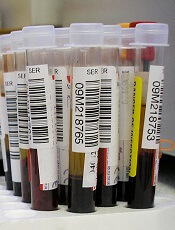
Photo by Graham Colm
A new blood collection set has received 510(k) clearance from the US Food and Drug Administration as well as the CE mark, which means it can be marketed within the European Economic Area.
The BD Vacutainer® UltraTouch™ Push Button Blood Collection Set is engineered to minimize patient discomfort during blood collection.
The set uses proprietary needle technology—Pentapoint™ Comfort and RightGauge™ Ultra-Thin Wall technology.
According to the manufacturer, BD, this technology can reduce penetration forces without compromising tube fill times or sample quality.
Research has shown that PentaPoint™ Comfort 5-bevel needle technology helps reduce the chance of a painful injection by creating a flatter, thinner surface to help penetrate the skin with significantly greater ease.1
When combined with RightGauge™ technology, which increases the needle’s inner diameter and enables clinicians to select a smaller gauge needle without sacrificing sample quality and blood flow, the BD Vacutainer® UltraTouch™ Push Button Blood Collection Set has been shown to reduce penetration forces by up to 32% when compared to another blood collection set.2
“The ability to use smaller gauge needles should also help clinicians access veins more successfully,” said Ana K. Stankovic, MD, PhD, worldwide vice president of Medical Affairs for BD Life Sciences – Preanalytical Systems and Global Health.
“This could prove especially valuable in patient populations—such as oncology, geriatric, and pediatric—that often have difficult or fragile veins.”
Dr Stankovic also noted that clinicians may be reluctant to use smaller gauge needles for fear of increasing hemolysis as the blood passes slowly through the narrow cannula.
“With BD Vacutainer® UltraTouch™ Push Button Blood Collection Sets, clinicians can select the gauge that is most appropriate for their patients, without compromising sample quality, testing accuracy, and their own efficiency,” she said.
1. Hirsch LJ, et al. Journal of Diabetes Science and Technology. 2012, 6(2):328-35.
2. 2015 BD bench testing versus BD Vacutainer® Push Button Blood Collection Sets.
Photo by Graham Colm
A new blood collection set has received 510(k) clearance from the US Food and Drug Administration as well as the CE mark, which means it can be marketed within the European Economic Area.
The BD Vacutainer® UltraTouch™ Push Button Blood Collection Set is engineered to minimize patient discomfort during blood collection.
The set uses proprietary needle technology—Pentapoint™ Comfort and RightGauge™ Ultra-Thin Wall technology.
According to the manufacturer, BD, this technology can reduce penetration forces without compromising tube fill times or sample quality.
Research has shown that PentaPoint™ Comfort 5-bevel needle technology helps reduce the chance of a painful injection by creating a flatter, thinner surface to help penetrate the skin with significantly greater ease.1
When combined with RightGauge™ technology, which increases the needle’s inner diameter and enables clinicians to select a smaller gauge needle without sacrificing sample quality and blood flow, the BD Vacutainer® UltraTouch™ Push Button Blood Collection Set has been shown to reduce penetration forces by up to 32% when compared to another blood collection set.2
“The ability to use smaller gauge needles should also help clinicians access veins more successfully,” said Ana K. Stankovic, MD, PhD, worldwide vice president of Medical Affairs for BD Life Sciences – Preanalytical Systems and Global Health.
“This could prove especially valuable in patient populations—such as oncology, geriatric, and pediatric—that often have difficult or fragile veins.”
Dr Stankovic also noted that clinicians may be reluctant to use smaller gauge needles for fear of increasing hemolysis as the blood passes slowly through the narrow cannula.
“With BD Vacutainer® UltraTouch™ Push Button Blood Collection Sets, clinicians can select the gauge that is most appropriate for their patients, without compromising sample quality, testing accuracy, and their own efficiency,” she said.
1. Hirsch LJ, et al. Journal of Diabetes Science and Technology. 2012, 6(2):328-35.
2. 2015 BD bench testing versus BD Vacutainer® Push Button Blood Collection Sets.
Photo by Graham Colm
A new blood collection set has received 510(k) clearance from the US Food and Drug Administration as well as the CE mark, which means it can be marketed within the European Economic Area.
The BD Vacutainer® UltraTouch™ Push Button Blood Collection Set is engineered to minimize patient discomfort during blood collection.
The set uses proprietary needle technology—Pentapoint™ Comfort and RightGauge™ Ultra-Thin Wall technology.
According to the manufacturer, BD, this technology can reduce penetration forces without compromising tube fill times or sample quality.
Research has shown that PentaPoint™ Comfort 5-bevel needle technology helps reduce the chance of a painful injection by creating a flatter, thinner surface to help penetrate the skin with significantly greater ease.1
When combined with RightGauge™ technology, which increases the needle’s inner diameter and enables clinicians to select a smaller gauge needle without sacrificing sample quality and blood flow, the BD Vacutainer® UltraTouch™ Push Button Blood Collection Set has been shown to reduce penetration forces by up to 32% when compared to another blood collection set.2
“The ability to use smaller gauge needles should also help clinicians access veins more successfully,” said Ana K. Stankovic, MD, PhD, worldwide vice president of Medical Affairs for BD Life Sciences – Preanalytical Systems and Global Health.
“This could prove especially valuable in patient populations—such as oncology, geriatric, and pediatric—that often have difficult or fragile veins.”
Dr Stankovic also noted that clinicians may be reluctant to use smaller gauge needles for fear of increasing hemolysis as the blood passes slowly through the narrow cannula.
“With BD Vacutainer® UltraTouch™ Push Button Blood Collection Sets, clinicians can select the gauge that is most appropriate for their patients, without compromising sample quality, testing accuracy, and their own efficiency,” she said.
1. Hirsch LJ, et al. Journal of Diabetes Science and Technology. 2012, 6(2):328-35.
2. 2015 BD bench testing versus BD Vacutainer® Push Button Blood Collection Sets.