User login
Parental leave for residents pales in comparison to that of faculty physicians
Leave policies for residents who become new parents are uneven, oft-ignored by training boards, and provide less time off than similar policies for faculty physicians. Those were the findings of a pair of research letters published in JAMA.
Kirti Magudia, MD, of the department of radiology at Brigham and Women’s Hospital in Boston and her colleagues reviewed childbearing and family leave policies for 15 graduate medical education (GME)–sponsoring institutions, all of which were affiliated with the top 12 U.S. medical schools. Though all 12 schools provided paid childbearing or family leave for faculty physicians, only 8 of the 15 did so for residents (JAMA. 2018 Dec 11;320[22)]:2372-4).
In programs that did provide leave, the average of 6.6 weeks of paid total maternity leave for residents was less than the 8.6 weeks faculty receive. Both are considerably less than proscribed by the Family and Medical Leave Act, which requires large employers to provide 12 weeks of unpaid leave, but only after 12 months of employment.
The research focused on only institutional policies for paid leave; unpaid leave and state policies may extend the average, and departments may offer leave that goes beyond specific policies, Dr. Magudia and her colleagues noted.
Changes in the residency population make now the right time for establishing consistent family leave policies, Dr. Magudia said in an interview. “We have people starting training later; we have more female trainees. And with the Match system, you’re not in control of exactly where you’re going. You may not have a support system where you end up, and a lot of the top training institutions are in high cost-of-living areas. All of those things together can make trainees especially vulnerable, and because trainees are temporary employees, changing policies to benefit them is very challenging.
“Wellness is a huge issue in medicine, and at large in society,” she said. “Making sure people have adequate parental leave goes a long way toward reducing stress levels and helping them cope with normal life transitions. We want to take steps that promote success among a diverse community of physicians; we want to retain as many people in the field as possible, and we want them to feel supported.”
Beyond asking all GME-sponsoring institutions to adopt parental leave policies, Dr. Magudia believes trainees must be better informed. “It should be clear to training program applicants what the policies are at those institutions,” she said. “That information is extremely difficult to obtain, as we’ve discovered. You can imagine that, if you are the applicant, it can be difficult to ask about those policies during the interview process because it may affect how things turn out.”
“If we can see changes like these made in the near future,” she added, “we will be in a good place.”
In the second study, Briony K. Varda, MD, of the department of urology at Boston Children’s Hospital, and her colleagues also noted the complications of balancing parental leave with training requirements from specialty boards. They compared leave policies among American Board of Medical Specialty member organizations and found that less than half specifically mentioned parental leave for resident physicians (JAMA. 2018 Dec 11;320[22]:2374-7).
Dr. Varda and her colleagues reviewed the websites of 24 ABMS boards to determine their leave policies; 22 had policies but only 11 cited parental leave as an option for residents. Twenty boards have time-based training requirements and allow for a median of 6 weeks leave for any reason; none of the boards had a specific policy for parental leave. In addition, only eight boards had “explicit and clear clarifying language” that would allow program directors to seek exemptions for their residents.
Though limitations like not detecting all available policies – and a subjective evaluation of the policies that were reviewed – could have impacted their study, the coauthors reiterated that the median of 6 weeks leave is less than the average leave for faculty physicians. They also emphasized the detriments associated with inadequate parental leave, including delayed childbearing, use of assisted reproduction technology, and difficulty breastfeeding.
Dr. Varda underlined the issues that arise for program directors, who “must weigh potentially conflicting factors such as adhering to board and institutional policies, maintaining adequate clinical service coverage, considering precedent within the program, and ensuring that resident physicians are well trained.” To balance the needs of all involved “novel approaches such as use of competency-based rather than time-based training milestones” to determine certification eligibility and, in return, lessen the stresses for new-parent residents, she noted.
The researchers disclosed no relevant conflicts of interest.
SOURCE: Magudia K et al. JAMA. 2018 Dec 11;320[22)]:2372-4; Varda B et al. JAMA. 2018 Dec 11;320[22]:2374-7.
Recent data by Magudia et al. have highlighted the fact that family leave policies supporting parents during medical training are widely inconsistent and in many instances do not exist. Where trainee policies do exist, benefits are routinely less robust than those of permanent faculty who receive on average 30% more paid leave time. Stratifying physician wellness needs by training status seems to be a misplaced approach.
It is not only the medical field which sees inconsistencies in the way family leave is allocated for different types of jobs. Millions of Americans receive no time off after birth or adoption, at a time when corporate America offers elite benefits for child care. In medicine, however, there is an expectation that paid family leave should be the norm, perhaps because of our mission to improve the quality of health care.
Of course, there are valid distinctions between faculty and trainees: faculty are more permanent, are more professionally differentiated and accomplished than trainees, have greater responsibilities, and are recruited for their expertise. Arguably, faculty deserve better compensation than trainees.
But the importance of parental leave transcends the routine benefits arguments. There is something more universal about how we value parenting. Parental leave policies benefit the health of parent and child, increase career satisfaction, and improve retention. The process of birth or adoption, ensuing fatigue, family bonding needs, and life-restructuring will challenge all parents regardless of career status.
Awareness of the inadequacies of parental leave policies is the first step in remedying the disparities in support for our trainees. Establishing an equal and adequate family leave policy for physicians at any stage is consistent with the goal of success and well-being for us all.
Laurel Fisher, MD, AGAF, professor of clinical internal medicine, division of gastroenterology, University of Pennsylvania, Philadelphia. She reports no conflicts of interest.
Recent data by Magudia et al. have highlighted the fact that family leave policies supporting parents during medical training are widely inconsistent and in many instances do not exist. Where trainee policies do exist, benefits are routinely less robust than those of permanent faculty who receive on average 30% more paid leave time. Stratifying physician wellness needs by training status seems to be a misplaced approach.
It is not only the medical field which sees inconsistencies in the way family leave is allocated for different types of jobs. Millions of Americans receive no time off after birth or adoption, at a time when corporate America offers elite benefits for child care. In medicine, however, there is an expectation that paid family leave should be the norm, perhaps because of our mission to improve the quality of health care.
Of course, there are valid distinctions between faculty and trainees: faculty are more permanent, are more professionally differentiated and accomplished than trainees, have greater responsibilities, and are recruited for their expertise. Arguably, faculty deserve better compensation than trainees.
But the importance of parental leave transcends the routine benefits arguments. There is something more universal about how we value parenting. Parental leave policies benefit the health of parent and child, increase career satisfaction, and improve retention. The process of birth or adoption, ensuing fatigue, family bonding needs, and life-restructuring will challenge all parents regardless of career status.
Awareness of the inadequacies of parental leave policies is the first step in remedying the disparities in support for our trainees. Establishing an equal and adequate family leave policy for physicians at any stage is consistent with the goal of success and well-being for us all.
Laurel Fisher, MD, AGAF, professor of clinical internal medicine, division of gastroenterology, University of Pennsylvania, Philadelphia. She reports no conflicts of interest.
Recent data by Magudia et al. have highlighted the fact that family leave policies supporting parents during medical training are widely inconsistent and in many instances do not exist. Where trainee policies do exist, benefits are routinely less robust than those of permanent faculty who receive on average 30% more paid leave time. Stratifying physician wellness needs by training status seems to be a misplaced approach.
It is not only the medical field which sees inconsistencies in the way family leave is allocated for different types of jobs. Millions of Americans receive no time off after birth or adoption, at a time when corporate America offers elite benefits for child care. In medicine, however, there is an expectation that paid family leave should be the norm, perhaps because of our mission to improve the quality of health care.
Of course, there are valid distinctions between faculty and trainees: faculty are more permanent, are more professionally differentiated and accomplished than trainees, have greater responsibilities, and are recruited for their expertise. Arguably, faculty deserve better compensation than trainees.
But the importance of parental leave transcends the routine benefits arguments. There is something more universal about how we value parenting. Parental leave policies benefit the health of parent and child, increase career satisfaction, and improve retention. The process of birth or adoption, ensuing fatigue, family bonding needs, and life-restructuring will challenge all parents regardless of career status.
Awareness of the inadequacies of parental leave policies is the first step in remedying the disparities in support for our trainees. Establishing an equal and adequate family leave policy for physicians at any stage is consistent with the goal of success and well-being for us all.
Laurel Fisher, MD, AGAF, professor of clinical internal medicine, division of gastroenterology, University of Pennsylvania, Philadelphia. She reports no conflicts of interest.
Leave policies for residents who become new parents are uneven, oft-ignored by training boards, and provide less time off than similar policies for faculty physicians. Those were the findings of a pair of research letters published in JAMA.
Kirti Magudia, MD, of the department of radiology at Brigham and Women’s Hospital in Boston and her colleagues reviewed childbearing and family leave policies for 15 graduate medical education (GME)–sponsoring institutions, all of which were affiliated with the top 12 U.S. medical schools. Though all 12 schools provided paid childbearing or family leave for faculty physicians, only 8 of the 15 did so for residents (JAMA. 2018 Dec 11;320[22)]:2372-4).
In programs that did provide leave, the average of 6.6 weeks of paid total maternity leave for residents was less than the 8.6 weeks faculty receive. Both are considerably less than proscribed by the Family and Medical Leave Act, which requires large employers to provide 12 weeks of unpaid leave, but only after 12 months of employment.
The research focused on only institutional policies for paid leave; unpaid leave and state policies may extend the average, and departments may offer leave that goes beyond specific policies, Dr. Magudia and her colleagues noted.
Changes in the residency population make now the right time for establishing consistent family leave policies, Dr. Magudia said in an interview. “We have people starting training later; we have more female trainees. And with the Match system, you’re not in control of exactly where you’re going. You may not have a support system where you end up, and a lot of the top training institutions are in high cost-of-living areas. All of those things together can make trainees especially vulnerable, and because trainees are temporary employees, changing policies to benefit them is very challenging.
“Wellness is a huge issue in medicine, and at large in society,” she said. “Making sure people have adequate parental leave goes a long way toward reducing stress levels and helping them cope with normal life transitions. We want to take steps that promote success among a diverse community of physicians; we want to retain as many people in the field as possible, and we want them to feel supported.”
Beyond asking all GME-sponsoring institutions to adopt parental leave policies, Dr. Magudia believes trainees must be better informed. “It should be clear to training program applicants what the policies are at those institutions,” she said. “That information is extremely difficult to obtain, as we’ve discovered. You can imagine that, if you are the applicant, it can be difficult to ask about those policies during the interview process because it may affect how things turn out.”
“If we can see changes like these made in the near future,” she added, “we will be in a good place.”
In the second study, Briony K. Varda, MD, of the department of urology at Boston Children’s Hospital, and her colleagues also noted the complications of balancing parental leave with training requirements from specialty boards. They compared leave policies among American Board of Medical Specialty member organizations and found that less than half specifically mentioned parental leave for resident physicians (JAMA. 2018 Dec 11;320[22]:2374-7).
Dr. Varda and her colleagues reviewed the websites of 24 ABMS boards to determine their leave policies; 22 had policies but only 11 cited parental leave as an option for residents. Twenty boards have time-based training requirements and allow for a median of 6 weeks leave for any reason; none of the boards had a specific policy for parental leave. In addition, only eight boards had “explicit and clear clarifying language” that would allow program directors to seek exemptions for their residents.
Though limitations like not detecting all available policies – and a subjective evaluation of the policies that were reviewed – could have impacted their study, the coauthors reiterated that the median of 6 weeks leave is less than the average leave for faculty physicians. They also emphasized the detriments associated with inadequate parental leave, including delayed childbearing, use of assisted reproduction technology, and difficulty breastfeeding.
Dr. Varda underlined the issues that arise for program directors, who “must weigh potentially conflicting factors such as adhering to board and institutional policies, maintaining adequate clinical service coverage, considering precedent within the program, and ensuring that resident physicians are well trained.” To balance the needs of all involved “novel approaches such as use of competency-based rather than time-based training milestones” to determine certification eligibility and, in return, lessen the stresses for new-parent residents, she noted.
The researchers disclosed no relevant conflicts of interest.
SOURCE: Magudia K et al. JAMA. 2018 Dec 11;320[22)]:2372-4; Varda B et al. JAMA. 2018 Dec 11;320[22]:2374-7.
Leave policies for residents who become new parents are uneven, oft-ignored by training boards, and provide less time off than similar policies for faculty physicians. Those were the findings of a pair of research letters published in JAMA.
Kirti Magudia, MD, of the department of radiology at Brigham and Women’s Hospital in Boston and her colleagues reviewed childbearing and family leave policies for 15 graduate medical education (GME)–sponsoring institutions, all of which were affiliated with the top 12 U.S. medical schools. Though all 12 schools provided paid childbearing or family leave for faculty physicians, only 8 of the 15 did so for residents (JAMA. 2018 Dec 11;320[22)]:2372-4).
In programs that did provide leave, the average of 6.6 weeks of paid total maternity leave for residents was less than the 8.6 weeks faculty receive. Both are considerably less than proscribed by the Family and Medical Leave Act, which requires large employers to provide 12 weeks of unpaid leave, but only after 12 months of employment.
The research focused on only institutional policies for paid leave; unpaid leave and state policies may extend the average, and departments may offer leave that goes beyond specific policies, Dr. Magudia and her colleagues noted.
Changes in the residency population make now the right time for establishing consistent family leave policies, Dr. Magudia said in an interview. “We have people starting training later; we have more female trainees. And with the Match system, you’re not in control of exactly where you’re going. You may not have a support system where you end up, and a lot of the top training institutions are in high cost-of-living areas. All of those things together can make trainees especially vulnerable, and because trainees are temporary employees, changing policies to benefit them is very challenging.
“Wellness is a huge issue in medicine, and at large in society,” she said. “Making sure people have adequate parental leave goes a long way toward reducing stress levels and helping them cope with normal life transitions. We want to take steps that promote success among a diverse community of physicians; we want to retain as many people in the field as possible, and we want them to feel supported.”
Beyond asking all GME-sponsoring institutions to adopt parental leave policies, Dr. Magudia believes trainees must be better informed. “It should be clear to training program applicants what the policies are at those institutions,” she said. “That information is extremely difficult to obtain, as we’ve discovered. You can imagine that, if you are the applicant, it can be difficult to ask about those policies during the interview process because it may affect how things turn out.”
“If we can see changes like these made in the near future,” she added, “we will be in a good place.”
In the second study, Briony K. Varda, MD, of the department of urology at Boston Children’s Hospital, and her colleagues also noted the complications of balancing parental leave with training requirements from specialty boards. They compared leave policies among American Board of Medical Specialty member organizations and found that less than half specifically mentioned parental leave for resident physicians (JAMA. 2018 Dec 11;320[22]:2374-7).
Dr. Varda and her colleagues reviewed the websites of 24 ABMS boards to determine their leave policies; 22 had policies but only 11 cited parental leave as an option for residents. Twenty boards have time-based training requirements and allow for a median of 6 weeks leave for any reason; none of the boards had a specific policy for parental leave. In addition, only eight boards had “explicit and clear clarifying language” that would allow program directors to seek exemptions for their residents.
Though limitations like not detecting all available policies – and a subjective evaluation of the policies that were reviewed – could have impacted their study, the coauthors reiterated that the median of 6 weeks leave is less than the average leave for faculty physicians. They also emphasized the detriments associated with inadequate parental leave, including delayed childbearing, use of assisted reproduction technology, and difficulty breastfeeding.
Dr. Varda underlined the issues that arise for program directors, who “must weigh potentially conflicting factors such as adhering to board and institutional policies, maintaining adequate clinical service coverage, considering precedent within the program, and ensuring that resident physicians are well trained.” To balance the needs of all involved “novel approaches such as use of competency-based rather than time-based training milestones” to determine certification eligibility and, in return, lessen the stresses for new-parent residents, she noted.
The researchers disclosed no relevant conflicts of interest.
SOURCE: Magudia K et al. JAMA. 2018 Dec 11;320[22)]:2372-4; Varda B et al. JAMA. 2018 Dec 11;320[22]:2374-7.
FROM JAMA
Women in forensic psychiatry making progress but still have ways to go
AUSTIN, TEX. – Women are making progress in equal representation and leadership within the field of forensic psychiatry, but gender parity remains elusive, according to a presentation at the annual meeting of the American Academy of Psychiatry and the Law.
In the presentation, Kelly L. Coffman, MD, MPH, assistant professor of psychiatry and associate program director of the forensic psychiatry fellowship at Emory University, Atlanta, and Helen M. Farrell, MD, a lecturer at Harvard Medical School, Boston, discussed gender bias in the field and in medicine at large.
After reviewing a handful of Supreme Court cases since the 1970s establishing women’s rights to equal opportunities and harassment-free workplaces, Dr. Farrell noted a recent commentary in the New England Journal of Medicine illustrating the challenges women still face. In that commentary, Reshma Jagsi, MD, a professor of radiation oncology at the University of Michigan, Ann Arbor, and director of the Center for Bioethics and Social Sciences in Medicine, shared her own #MeToo experience within the context of such harassment narratives throughout academic medicine (N Engl J Med. 2018;378:209-11).
Harassment found in medicine
Dr. Jagsi had published a study in 2016 on workplace sexual harassment in medicine that surveyed 1,066 recipients of career development grants from the National Institutes of Health (JAMA. 2016;315:2120-1). The average age of respondents was 43 years, and 46% of respondents were women.
While only 22% of men reported perceiving gender bias in their careers, 70% of women reported such bias. Similarly, 66% of women said they had experienced gender bias in their careers, compared with 10% of men (P less than .001). Women also were substantially more likely to have experienced sexual harassment (30% vs. 4%).
Most women (92%) reporting those experiences described sexist remarks or behavior, 41% experienced unwanted sexual advances, and 9% experienced coercive advances.
“Although a lower proportion reported these experiences than in a 1995 sample, the difference appears large given that the women began their careers after the proportion of female medical students exceeded 40%,” Dr. Jagsi and her colleagues reported in the study.
The effects of those experiences were not minor: Among women who reported harassment, 59% said their confidence as professionals took a hit, and 47% said those experiences hurt their career advancement.
Women still underrepresented
One factor in those high rates might be the extent of existing power differentials: Women remain underrepresented in medical leadership despite accounting for more than half of all enrollees in U.S. medical schools in 2017, according to the Association of American Medical Colleges (AAMC). Female enrollment in medical schools hovered around 40% in the mid-90s, yet in 2015, the AAMC reported that women held 37% of all U.S. medical school faculty positions and 20% of full professorships.
“There’s also a large discrepancy in terms of specialties,” said Dr. Farrell, also a staff psychiatrist at Beth Israel Deaconess Medical Center, Boston. “Women tend to go into fields like pediatrics and ob.gyn. at much higher rates than men, and there are very low rates of women going into surgical fields like neurosurgery and orthopedics.”
Dr. Farrell then zeroed in on the field of forensic psychiatry in particular and various ways to consider how gender bias might manifest: opportunities for exposure to forensics in residency; fellowship applications vs. acceptances; experience in court; publications; invitations to present; large- and small-scale organizational leadership representation; and job placement across the settings of clinics, academics, prisons/institutions; and experience in private practice. Then there’s the perception of female forensic psychiatrists in court.
“There’s a really big question about the difference between how men and women are perceived by attorneys who hire us as experts, and by judges and juries in terms of our credibility when we’re testifying,” Dr. Farrell said.
Picking up where Dr. Farrell left off, Dr. Coffman noted that women always have faced an uphill battle – particularly within forensic psychiatry.
“Forensic psychiatry really is the global intersection of medicine, the criminal justice system, and the law – and traditionally, all three of these fields have really been male dominated,” Dr. Coffman said. “We were often told that women should not go into careers like medicine and the law, because if they work too hard, they might ruin their reproductive potential. They were also thought of as being weak and unable to handle seeing blood.”
Fortunately, however, she added: “That’s very different from how we think about things today.” For example,
Gender perceptions matter
Those numbers show progress, though “we’re a little bit behind the trends,” Dr. Coffman said. One reason for this probably is rooted in implicit biases that shape a person’s thinking, without a conscious realization of the sexist ideas about gender roles that have been internalized.

She presented two descriptions of an individual to make her point: one an accomplished scientist, tax attorney, and major political figure, and one a loving parent with a reputation for “always being well-coiffed and tastefully dressed.” Both depictions describe Margaret Thatcher, the first woman to become prime minister of the United Kingdom.
“There’s that real disconnect between the woman and the role, and that that’s where the prejudice lives,” Dr. Coffman said. “The greater the mismatch you see, the greater potential for prejudice.”
Research backs up those assertions. Dr. Coffman shared findings from a study that compared how male and female doctors introduced one another as speakers (J Womens Health [Larchmt]. 2017 May;26[5]:413-9).
Across 321 forms of address, women were more likely to use professional titles when “introducing any speaker during the first form of address, compared with male introducers (96.2% vs. 65.6%).” When the researchers drilled deeper, they found that women introduced others using their professional titles 97.8% of the time (45/46), while men used professional titles to introduce 72.4% of the time (110/152). A disparity was found in mixed-gender introductions: Women used professional titles when introducing men 95% of the time (57/60), but men did the same with women 49.2% of the time (31/63).
Research on perceptions of women as expert witnesses in court is more complicated. In one experiment, for example, mock jurors read a written summary of a civil case where the expert’s opinion was written by either a male or female automobile engineer. The jurors reached the same verdict just as often with female as male engineers – but awarded higher damages when the engineer was a woman.
But that was a written experiment. In similar research where mock jurors viewed video summaries involving cross-examination of a forensic mental health expert, men were found to be more “likable, believable, trustworthy, confident, and credible” than were women.
This and other research underscore a common dilemma for women, Dr. Coffman said: balancing the expectation of being warm and the need to appear competent – both of which can help and harm the way in which women are perceived. But the reality of perception sometimes can surprise.
She pointed to the double-edged sword of eye contact as an example: “If you don’t make eye contact, then you’re perceived as being weak. But if you make too much eye contact, then you’re perceived as being aggressive. So you really can’t win, right?”
Yet the women remained cautiously optimistic, especially noting the large proportion of men attending the session itself.
“It really takes everybody working together to keep the conversation going, finding out where women want to flourish and bloom, and having people to champion us and support that,” Dr. Farrell said.
Dr. Coffman and Dr. Farrell had no relevant conflicts of interest. They will be presenting an expanded version of the presentation at the International Academy of Law and Mental Health meeting in July 2019 in Rome.
AUSTIN, TEX. – Women are making progress in equal representation and leadership within the field of forensic psychiatry, but gender parity remains elusive, according to a presentation at the annual meeting of the American Academy of Psychiatry and the Law.
In the presentation, Kelly L. Coffman, MD, MPH, assistant professor of psychiatry and associate program director of the forensic psychiatry fellowship at Emory University, Atlanta, and Helen M. Farrell, MD, a lecturer at Harvard Medical School, Boston, discussed gender bias in the field and in medicine at large.
After reviewing a handful of Supreme Court cases since the 1970s establishing women’s rights to equal opportunities and harassment-free workplaces, Dr. Farrell noted a recent commentary in the New England Journal of Medicine illustrating the challenges women still face. In that commentary, Reshma Jagsi, MD, a professor of radiation oncology at the University of Michigan, Ann Arbor, and director of the Center for Bioethics and Social Sciences in Medicine, shared her own #MeToo experience within the context of such harassment narratives throughout academic medicine (N Engl J Med. 2018;378:209-11).
Harassment found in medicine
Dr. Jagsi had published a study in 2016 on workplace sexual harassment in medicine that surveyed 1,066 recipients of career development grants from the National Institutes of Health (JAMA. 2016;315:2120-1). The average age of respondents was 43 years, and 46% of respondents were women.
While only 22% of men reported perceiving gender bias in their careers, 70% of women reported such bias. Similarly, 66% of women said they had experienced gender bias in their careers, compared with 10% of men (P less than .001). Women also were substantially more likely to have experienced sexual harassment (30% vs. 4%).
Most women (92%) reporting those experiences described sexist remarks or behavior, 41% experienced unwanted sexual advances, and 9% experienced coercive advances.
“Although a lower proportion reported these experiences than in a 1995 sample, the difference appears large given that the women began their careers after the proportion of female medical students exceeded 40%,” Dr. Jagsi and her colleagues reported in the study.
The effects of those experiences were not minor: Among women who reported harassment, 59% said their confidence as professionals took a hit, and 47% said those experiences hurt their career advancement.
Women still underrepresented
One factor in those high rates might be the extent of existing power differentials: Women remain underrepresented in medical leadership despite accounting for more than half of all enrollees in U.S. medical schools in 2017, according to the Association of American Medical Colleges (AAMC). Female enrollment in medical schools hovered around 40% in the mid-90s, yet in 2015, the AAMC reported that women held 37% of all U.S. medical school faculty positions and 20% of full professorships.
“There’s also a large discrepancy in terms of specialties,” said Dr. Farrell, also a staff psychiatrist at Beth Israel Deaconess Medical Center, Boston. “Women tend to go into fields like pediatrics and ob.gyn. at much higher rates than men, and there are very low rates of women going into surgical fields like neurosurgery and orthopedics.”
Dr. Farrell then zeroed in on the field of forensic psychiatry in particular and various ways to consider how gender bias might manifest: opportunities for exposure to forensics in residency; fellowship applications vs. acceptances; experience in court; publications; invitations to present; large- and small-scale organizational leadership representation; and job placement across the settings of clinics, academics, prisons/institutions; and experience in private practice. Then there’s the perception of female forensic psychiatrists in court.
“There’s a really big question about the difference between how men and women are perceived by attorneys who hire us as experts, and by judges and juries in terms of our credibility when we’re testifying,” Dr. Farrell said.
Picking up where Dr. Farrell left off, Dr. Coffman noted that women always have faced an uphill battle – particularly within forensic psychiatry.
“Forensic psychiatry really is the global intersection of medicine, the criminal justice system, and the law – and traditionally, all three of these fields have really been male dominated,” Dr. Coffman said. “We were often told that women should not go into careers like medicine and the law, because if they work too hard, they might ruin their reproductive potential. They were also thought of as being weak and unable to handle seeing blood.”
Fortunately, however, she added: “That’s very different from how we think about things today.” For example,
Gender perceptions matter
Those numbers show progress, though “we’re a little bit behind the trends,” Dr. Coffman said. One reason for this probably is rooted in implicit biases that shape a person’s thinking, without a conscious realization of the sexist ideas about gender roles that have been internalized.
She presented two descriptions of an individual to make her point: one an accomplished scientist, tax attorney, and major political figure, and one a loving parent with a reputation for “always being well-coiffed and tastefully dressed.” Both depictions describe Margaret Thatcher, the first woman to become prime minister of the United Kingdom.
“There’s that real disconnect between the woman and the role, and that that’s where the prejudice lives,” Dr. Coffman said. “The greater the mismatch you see, the greater potential for prejudice.”
Research backs up those assertions. Dr. Coffman shared findings from a study that compared how male and female doctors introduced one another as speakers (J Womens Health [Larchmt]. 2017 May;26[5]:413-9).
Across 321 forms of address, women were more likely to use professional titles when “introducing any speaker during the first form of address, compared with male introducers (96.2% vs. 65.6%).” When the researchers drilled deeper, they found that women introduced others using their professional titles 97.8% of the time (45/46), while men used professional titles to introduce 72.4% of the time (110/152). A disparity was found in mixed-gender introductions: Women used professional titles when introducing men 95% of the time (57/60), but men did the same with women 49.2% of the time (31/63).
Research on perceptions of women as expert witnesses in court is more complicated. In one experiment, for example, mock jurors read a written summary of a civil case where the expert’s opinion was written by either a male or female automobile engineer. The jurors reached the same verdict just as often with female as male engineers – but awarded higher damages when the engineer was a woman.
But that was a written experiment. In similar research where mock jurors viewed video summaries involving cross-examination of a forensic mental health expert, men were found to be more “likable, believable, trustworthy, confident, and credible” than were women.
This and other research underscore a common dilemma for women, Dr. Coffman said: balancing the expectation of being warm and the need to appear competent – both of which can help and harm the way in which women are perceived. But the reality of perception sometimes can surprise.
She pointed to the double-edged sword of eye contact as an example: “If you don’t make eye contact, then you’re perceived as being weak. But if you make too much eye contact, then you’re perceived as being aggressive. So you really can’t win, right?”
Yet the women remained cautiously optimistic, especially noting the large proportion of men attending the session itself.
“It really takes everybody working together to keep the conversation going, finding out where women want to flourish and bloom, and having people to champion us and support that,” Dr. Farrell said.
Dr. Coffman and Dr. Farrell had no relevant conflicts of interest. They will be presenting an expanded version of the presentation at the International Academy of Law and Mental Health meeting in July 2019 in Rome.
AUSTIN, TEX. – Women are making progress in equal representation and leadership within the field of forensic psychiatry, but gender parity remains elusive, according to a presentation at the annual meeting of the American Academy of Psychiatry and the Law.
In the presentation, Kelly L. Coffman, MD, MPH, assistant professor of psychiatry and associate program director of the forensic psychiatry fellowship at Emory University, Atlanta, and Helen M. Farrell, MD, a lecturer at Harvard Medical School, Boston, discussed gender bias in the field and in medicine at large.
After reviewing a handful of Supreme Court cases since the 1970s establishing women’s rights to equal opportunities and harassment-free workplaces, Dr. Farrell noted a recent commentary in the New England Journal of Medicine illustrating the challenges women still face. In that commentary, Reshma Jagsi, MD, a professor of radiation oncology at the University of Michigan, Ann Arbor, and director of the Center for Bioethics and Social Sciences in Medicine, shared her own #MeToo experience within the context of such harassment narratives throughout academic medicine (N Engl J Med. 2018;378:209-11).
Harassment found in medicine
Dr. Jagsi had published a study in 2016 on workplace sexual harassment in medicine that surveyed 1,066 recipients of career development grants from the National Institutes of Health (JAMA. 2016;315:2120-1). The average age of respondents was 43 years, and 46% of respondents were women.
While only 22% of men reported perceiving gender bias in their careers, 70% of women reported such bias. Similarly, 66% of women said they had experienced gender bias in their careers, compared with 10% of men (P less than .001). Women also were substantially more likely to have experienced sexual harassment (30% vs. 4%).
Most women (92%) reporting those experiences described sexist remarks or behavior, 41% experienced unwanted sexual advances, and 9% experienced coercive advances.
“Although a lower proportion reported these experiences than in a 1995 sample, the difference appears large given that the women began their careers after the proportion of female medical students exceeded 40%,” Dr. Jagsi and her colleagues reported in the study.
The effects of those experiences were not minor: Among women who reported harassment, 59% said their confidence as professionals took a hit, and 47% said those experiences hurt their career advancement.
Women still underrepresented
One factor in those high rates might be the extent of existing power differentials: Women remain underrepresented in medical leadership despite accounting for more than half of all enrollees in U.S. medical schools in 2017, according to the Association of American Medical Colleges (AAMC). Female enrollment in medical schools hovered around 40% in the mid-90s, yet in 2015, the AAMC reported that women held 37% of all U.S. medical school faculty positions and 20% of full professorships.
“There’s also a large discrepancy in terms of specialties,” said Dr. Farrell, also a staff psychiatrist at Beth Israel Deaconess Medical Center, Boston. “Women tend to go into fields like pediatrics and ob.gyn. at much higher rates than men, and there are very low rates of women going into surgical fields like neurosurgery and orthopedics.”
Dr. Farrell then zeroed in on the field of forensic psychiatry in particular and various ways to consider how gender bias might manifest: opportunities for exposure to forensics in residency; fellowship applications vs. acceptances; experience in court; publications; invitations to present; large- and small-scale organizational leadership representation; and job placement across the settings of clinics, academics, prisons/institutions; and experience in private practice. Then there’s the perception of female forensic psychiatrists in court.
“There’s a really big question about the difference between how men and women are perceived by attorneys who hire us as experts, and by judges and juries in terms of our credibility when we’re testifying,” Dr. Farrell said.
Picking up where Dr. Farrell left off, Dr. Coffman noted that women always have faced an uphill battle – particularly within forensic psychiatry.
“Forensic psychiatry really is the global intersection of medicine, the criminal justice system, and the law – and traditionally, all three of these fields have really been male dominated,” Dr. Coffman said. “We were often told that women should not go into careers like medicine and the law, because if they work too hard, they might ruin their reproductive potential. They were also thought of as being weak and unable to handle seeing blood.”
Fortunately, however, she added: “That’s very different from how we think about things today.” For example,
Gender perceptions matter
Those numbers show progress, though “we’re a little bit behind the trends,” Dr. Coffman said. One reason for this probably is rooted in implicit biases that shape a person’s thinking, without a conscious realization of the sexist ideas about gender roles that have been internalized.
She presented two descriptions of an individual to make her point: one an accomplished scientist, tax attorney, and major political figure, and one a loving parent with a reputation for “always being well-coiffed and tastefully dressed.” Both depictions describe Margaret Thatcher, the first woman to become prime minister of the United Kingdom.
“There’s that real disconnect between the woman and the role, and that that’s where the prejudice lives,” Dr. Coffman said. “The greater the mismatch you see, the greater potential for prejudice.”
Research backs up those assertions. Dr. Coffman shared findings from a study that compared how male and female doctors introduced one another as speakers (J Womens Health [Larchmt]. 2017 May;26[5]:413-9).
Across 321 forms of address, women were more likely to use professional titles when “introducing any speaker during the first form of address, compared with male introducers (96.2% vs. 65.6%).” When the researchers drilled deeper, they found that women introduced others using their professional titles 97.8% of the time (45/46), while men used professional titles to introduce 72.4% of the time (110/152). A disparity was found in mixed-gender introductions: Women used professional titles when introducing men 95% of the time (57/60), but men did the same with women 49.2% of the time (31/63).
Research on perceptions of women as expert witnesses in court is more complicated. In one experiment, for example, mock jurors read a written summary of a civil case where the expert’s opinion was written by either a male or female automobile engineer. The jurors reached the same verdict just as often with female as male engineers – but awarded higher damages when the engineer was a woman.
But that was a written experiment. In similar research where mock jurors viewed video summaries involving cross-examination of a forensic mental health expert, men were found to be more “likable, believable, trustworthy, confident, and credible” than were women.
This and other research underscore a common dilemma for women, Dr. Coffman said: balancing the expectation of being warm and the need to appear competent – both of which can help and harm the way in which women are perceived. But the reality of perception sometimes can surprise.
She pointed to the double-edged sword of eye contact as an example: “If you don’t make eye contact, then you’re perceived as being weak. But if you make too much eye contact, then you’re perceived as being aggressive. So you really can’t win, right?”
Yet the women remained cautiously optimistic, especially noting the large proportion of men attending the session itself.
“It really takes everybody working together to keep the conversation going, finding out where women want to flourish and bloom, and having people to champion us and support that,” Dr. Farrell said.
Dr. Coffman and Dr. Farrell had no relevant conflicts of interest. They will be presenting an expanded version of the presentation at the International Academy of Law and Mental Health meeting in July 2019 in Rome.
REPORTING FROM THE AAPL ANNUAL MEETING
Social media can help doctors stay up to date
SAN DIEGO –
“People want to see that you’re a person and not strictly a physician,” said Dr. Yates, a pediatric hematologist at Texas Children’s Hospital in Houston, who has had an active Twitter presence for the last few years.
Dr. Yates – whose Twitter handle is @sicklecelldoc – said she dipped a toe in the social media waters because she wanted to bring accurate medical information to patients in the arena where they are seeking information.
“I want families to understand their condition as well as they can on whatever level they can, and so I just found this to be another way to do that ... outside of my clinic,” she said during an interview at the annual meeting of the American Society of Hematology.
But beyond correcting misinformation and serving as an advocate for patients, Dr. Yates said she gets professional benefits from being on Twitter. For instance, she uses the platform to find relevant articles as soon as they publish, without wading through all the journals.
“It’s allowed me to kind of streamline what I read,” she said.
Dr. Yates said Twitter is her social media platform of choice because it provides a simple, succinct way to communicate and provide links to more in-depth resources.
While social media can be fun and rewarding for physicians, Dr. Yates said think before you post. Ask yourself, “would you tell your chairperson this?”
Dr. Yates reported having no relevant financial disclosures.
SAN DIEGO –
“People want to see that you’re a person and not strictly a physician,” said Dr. Yates, a pediatric hematologist at Texas Children’s Hospital in Houston, who has had an active Twitter presence for the last few years.
Dr. Yates – whose Twitter handle is @sicklecelldoc – said she dipped a toe in the social media waters because she wanted to bring accurate medical information to patients in the arena where they are seeking information.
“I want families to understand their condition as well as they can on whatever level they can, and so I just found this to be another way to do that ... outside of my clinic,” she said during an interview at the annual meeting of the American Society of Hematology.
But beyond correcting misinformation and serving as an advocate for patients, Dr. Yates said she gets professional benefits from being on Twitter. For instance, she uses the platform to find relevant articles as soon as they publish, without wading through all the journals.
“It’s allowed me to kind of streamline what I read,” she said.
Dr. Yates said Twitter is her social media platform of choice because it provides a simple, succinct way to communicate and provide links to more in-depth resources.
While social media can be fun and rewarding for physicians, Dr. Yates said think before you post. Ask yourself, “would you tell your chairperson this?”
Dr. Yates reported having no relevant financial disclosures.
SAN DIEGO –
“People want to see that you’re a person and not strictly a physician,” said Dr. Yates, a pediatric hematologist at Texas Children’s Hospital in Houston, who has had an active Twitter presence for the last few years.
Dr. Yates – whose Twitter handle is @sicklecelldoc – said she dipped a toe in the social media waters because she wanted to bring accurate medical information to patients in the arena where they are seeking information.
“I want families to understand their condition as well as they can on whatever level they can, and so I just found this to be another way to do that ... outside of my clinic,” she said during an interview at the annual meeting of the American Society of Hematology.
But beyond correcting misinformation and serving as an advocate for patients, Dr. Yates said she gets professional benefits from being on Twitter. For instance, she uses the platform to find relevant articles as soon as they publish, without wading through all the journals.
“It’s allowed me to kind of streamline what I read,” she said.
Dr. Yates said Twitter is her social media platform of choice because it provides a simple, succinct way to communicate and provide links to more in-depth resources.
While social media can be fun and rewarding for physicians, Dr. Yates said think before you post. Ask yourself, “would you tell your chairperson this?”
Dr. Yates reported having no relevant financial disclosures.
REPORTING FROM ASH 2018

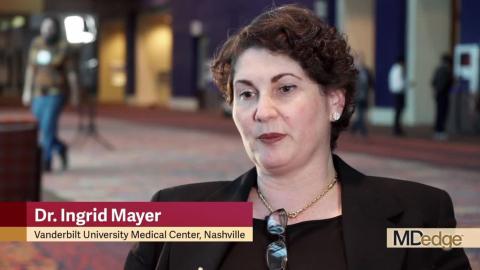
Dr. Ingrid A. Mayer on neoadjuvant endocrine therapy: The times are changing
SAN ANTONIO – Phase 2 neoadjuvant endocrine therapy breast cancer trials can and should serve as a testing platform to inform the design of phase 3 trials with the ability to change practice, according to Ingrid A. Mayer, MD.
Correlating outcomes such as the Preoperative Endocrine Prognostic Index and Ki67 blood levels from phase 2 trials to larger, similarly designed trials could reduce costs, time, and the need for large numbers of patients, thereby promoting more efficient development of effective breast cancer therapies, she said during a plenary lecture at the San Antonio Breast Cancer Symposium.
In this video interview, Dr. Mayer, director of breast medical oncology at Vanderbilt University, Nashville, Tenn., explained that while neoadjuvant endocrine therapy is suitable for down-staging tumors in women with stage I-III breast cancer, it is not commonly used, as those patients are also good surgery candidates.
However, neoadjuvant endocrine therapy can be “an incredible platform” to test novel combinations of endocrine therapy agents with or without targeted treatments, validate new biomarkers, discover mechanisms of resistance, and predict the best combinations for moving forward in phase 3 trials, she said, adding that “this is something that all academic institutions potentially should be doing.”
Although the direct clinical benefit for patients who participate in such trials is not tremendous, participation has the potential to ultimately improve outcomes for participants and for “their friends and families and daughters,” and to help propel the science forward, Dr. Meyer noted.
“I would argue that we really should be moving forward to designing trials in the neoadjuvant endocrine setting more and more, and really utilizing this platform for that end,” she said.
Dr. Mayer reported having no relevant disclosures.
SAN ANTONIO – Phase 2 neoadjuvant endocrine therapy breast cancer trials can and should serve as a testing platform to inform the design of phase 3 trials with the ability to change practice, according to Ingrid A. Mayer, MD.
Correlating outcomes such as the Preoperative Endocrine Prognostic Index and Ki67 blood levels from phase 2 trials to larger, similarly designed trials could reduce costs, time, and the need for large numbers of patients, thereby promoting more efficient development of effective breast cancer therapies, she said during a plenary lecture at the San Antonio Breast Cancer Symposium.
In this video interview, Dr. Mayer, director of breast medical oncology at Vanderbilt University, Nashville, Tenn., explained that while neoadjuvant endocrine therapy is suitable for down-staging tumors in women with stage I-III breast cancer, it is not commonly used, as those patients are also good surgery candidates.
However, neoadjuvant endocrine therapy can be “an incredible platform” to test novel combinations of endocrine therapy agents with or without targeted treatments, validate new biomarkers, discover mechanisms of resistance, and predict the best combinations for moving forward in phase 3 trials, she said, adding that “this is something that all academic institutions potentially should be doing.”
Although the direct clinical benefit for patients who participate in such trials is not tremendous, participation has the potential to ultimately improve outcomes for participants and for “their friends and families and daughters,” and to help propel the science forward, Dr. Meyer noted.
“I would argue that we really should be moving forward to designing trials in the neoadjuvant endocrine setting more and more, and really utilizing this platform for that end,” she said.
Dr. Mayer reported having no relevant disclosures.
SAN ANTONIO – Phase 2 neoadjuvant endocrine therapy breast cancer trials can and should serve as a testing platform to inform the design of phase 3 trials with the ability to change practice, according to Ingrid A. Mayer, MD.
Correlating outcomes such as the Preoperative Endocrine Prognostic Index and Ki67 blood levels from phase 2 trials to larger, similarly designed trials could reduce costs, time, and the need for large numbers of patients, thereby promoting more efficient development of effective breast cancer therapies, she said during a plenary lecture at the San Antonio Breast Cancer Symposium.
In this video interview, Dr. Mayer, director of breast medical oncology at Vanderbilt University, Nashville, Tenn., explained that while neoadjuvant endocrine therapy is suitable for down-staging tumors in women with stage I-III breast cancer, it is not commonly used, as those patients are also good surgery candidates.
However, neoadjuvant endocrine therapy can be “an incredible platform” to test novel combinations of endocrine therapy agents with or without targeted treatments, validate new biomarkers, discover mechanisms of resistance, and predict the best combinations for moving forward in phase 3 trials, she said, adding that “this is something that all academic institutions potentially should be doing.”
Although the direct clinical benefit for patients who participate in such trials is not tremendous, participation has the potential to ultimately improve outcomes for participants and for “their friends and families and daughters,” and to help propel the science forward, Dr. Meyer noted.
“I would argue that we really should be moving forward to designing trials in the neoadjuvant endocrine setting more and more, and really utilizing this platform for that end,” she said.
Dr. Mayer reported having no relevant disclosures.
REPORTING FROM SABCS 2018
Lipoprotein ratio linked to poor survival in metastatic RCC
The ratio of apolipoproteins B and A1 (apo B/A1) is an independent prognostic factor in patients with metastatic renal cell carcinoma, according to authors of a recent retrospective study.
The apo B/A1 ratio, evaluated prior to cytoreductive nephrectomy, was significantly linked with poor progression-free survival and overall survival, according to Fan Zhang, MD, of the Chinese PLA General Hospital in Beijing and coauthors.
Those findings suggest that patients with metastatic RCC should receive “consistent follow-up” that includes evaluation of that ratio, Dr. Zhang and colleagues said.
“As a novel prognostic factor, the preoperative apo B/A1 ratio can be utilized as a supplement to improve the current prognostic evaluation and treatment decision for patients with metastatic RCC,” they wrote in Urologic Oncology.
Apo B and A1, which are predominant components of low-density lipoprotein (LDL) and high-density lipoprotein (HDL), respectively, have “extensive connections” with cardiovascular disease, diabetes, and Alzheimer disease, the authors said.
The apo B/A1 ratio is a known risk index for cardiovascular disease, and in recent studies, it appeared to have some value in prognosis and prediction of gastric and colorectal cancer, among other neoplasms, they added.
In their retrospective study, Dr. Zhang and colleagues analyzed data on 287 metastatic RCC patients who underwent cytoreductive nephrectomy at the Chinese PLA General Hospital. The median age of the patients was 56 years, and the median apo B/A1 ratio was 0.859.
Significantly poorer progression-free survival was seen in the group of patients with a preoperative apo B/A1 ratio over the cutoff of 0.977 (P less than .0001) compared with those under the cutoff, the investigators reported. Likewise, overall survival was poorer for patients with an apo B/A1 ratio over a cutoff of 0.847 (P = .0005).
The apo B/A1 ratio was higher in patients with Fuhrman grade 3-4 versus grade 1-2 patients (P = .010), though the investigators said no significant differences in the ratio were seen in patients stratified by age, body mass index, fatty liver, number of metastases, among other subgroup analyses.
Multivariate analysis revealed that the two independent prognostic factors for progression-free survival were preoperative apo B/A1 ratio and Fuhrman grade, with hazard ratios of 3.131 and 1.906, respectively (P less than .001 for both), while independent prognostic factors for overall survival also included the apo B/A1 ratio (hazard ratio, 2.173; P less than .001) and Fuhrman grade, along with tumor necrosis and receiving targeted therapy.
This retrospective study was limited by relatively small samples from a single center, and the prognostic value of the apo B/A1 ratio needs to be verified in other studies, investigators said.
“Peripheral blood biomarkers only provide a supplement to the traditional prognostic factors in the prediction of the prognosis for patients with metastatic RCC, and are still unable to replace it,” Dr. Zhang and associates said.
The Beijing Natural Science Foundation supported the study. Dr. Zhang and coauthors had no disclosed conflicts of interest related to the work.
SOURCE: Zhang F et al. Urol Oncol. 2018 Nov 30. doi: 10.1016/j.urolonc.2018.11.010.
The ratio of apolipoproteins B and A1 (apo B/A1) is an independent prognostic factor in patients with metastatic renal cell carcinoma, according to authors of a recent retrospective study.
The apo B/A1 ratio, evaluated prior to cytoreductive nephrectomy, was significantly linked with poor progression-free survival and overall survival, according to Fan Zhang, MD, of the Chinese PLA General Hospital in Beijing and coauthors.
Those findings suggest that patients with metastatic RCC should receive “consistent follow-up” that includes evaluation of that ratio, Dr. Zhang and colleagues said.
“As a novel prognostic factor, the preoperative apo B/A1 ratio can be utilized as a supplement to improve the current prognostic evaluation and treatment decision for patients with metastatic RCC,” they wrote in Urologic Oncology.
Apo B and A1, which are predominant components of low-density lipoprotein (LDL) and high-density lipoprotein (HDL), respectively, have “extensive connections” with cardiovascular disease, diabetes, and Alzheimer disease, the authors said.
The apo B/A1 ratio is a known risk index for cardiovascular disease, and in recent studies, it appeared to have some value in prognosis and prediction of gastric and colorectal cancer, among other neoplasms, they added.
In their retrospective study, Dr. Zhang and colleagues analyzed data on 287 metastatic RCC patients who underwent cytoreductive nephrectomy at the Chinese PLA General Hospital. The median age of the patients was 56 years, and the median apo B/A1 ratio was 0.859.
Significantly poorer progression-free survival was seen in the group of patients with a preoperative apo B/A1 ratio over the cutoff of 0.977 (P less than .0001) compared with those under the cutoff, the investigators reported. Likewise, overall survival was poorer for patients with an apo B/A1 ratio over a cutoff of 0.847 (P = .0005).
The apo B/A1 ratio was higher in patients with Fuhrman grade 3-4 versus grade 1-2 patients (P = .010), though the investigators said no significant differences in the ratio were seen in patients stratified by age, body mass index, fatty liver, number of metastases, among other subgroup analyses.
Multivariate analysis revealed that the two independent prognostic factors for progression-free survival were preoperative apo B/A1 ratio and Fuhrman grade, with hazard ratios of 3.131 and 1.906, respectively (P less than .001 for both), while independent prognostic factors for overall survival also included the apo B/A1 ratio (hazard ratio, 2.173; P less than .001) and Fuhrman grade, along with tumor necrosis and receiving targeted therapy.
This retrospective study was limited by relatively small samples from a single center, and the prognostic value of the apo B/A1 ratio needs to be verified in other studies, investigators said.
“Peripheral blood biomarkers only provide a supplement to the traditional prognostic factors in the prediction of the prognosis for patients with metastatic RCC, and are still unable to replace it,” Dr. Zhang and associates said.
The Beijing Natural Science Foundation supported the study. Dr. Zhang and coauthors had no disclosed conflicts of interest related to the work.
SOURCE: Zhang F et al. Urol Oncol. 2018 Nov 30. doi: 10.1016/j.urolonc.2018.11.010.
The ratio of apolipoproteins B and A1 (apo B/A1) is an independent prognostic factor in patients with metastatic renal cell carcinoma, according to authors of a recent retrospective study.
The apo B/A1 ratio, evaluated prior to cytoreductive nephrectomy, was significantly linked with poor progression-free survival and overall survival, according to Fan Zhang, MD, of the Chinese PLA General Hospital in Beijing and coauthors.
Those findings suggest that patients with metastatic RCC should receive “consistent follow-up” that includes evaluation of that ratio, Dr. Zhang and colleagues said.
“As a novel prognostic factor, the preoperative apo B/A1 ratio can be utilized as a supplement to improve the current prognostic evaluation and treatment decision for patients with metastatic RCC,” they wrote in Urologic Oncology.
Apo B and A1, which are predominant components of low-density lipoprotein (LDL) and high-density lipoprotein (HDL), respectively, have “extensive connections” with cardiovascular disease, diabetes, and Alzheimer disease, the authors said.
The apo B/A1 ratio is a known risk index for cardiovascular disease, and in recent studies, it appeared to have some value in prognosis and prediction of gastric and colorectal cancer, among other neoplasms, they added.
In their retrospective study, Dr. Zhang and colleagues analyzed data on 287 metastatic RCC patients who underwent cytoreductive nephrectomy at the Chinese PLA General Hospital. The median age of the patients was 56 years, and the median apo B/A1 ratio was 0.859.
Significantly poorer progression-free survival was seen in the group of patients with a preoperative apo B/A1 ratio over the cutoff of 0.977 (P less than .0001) compared with those under the cutoff, the investigators reported. Likewise, overall survival was poorer for patients with an apo B/A1 ratio over a cutoff of 0.847 (P = .0005).
The apo B/A1 ratio was higher in patients with Fuhrman grade 3-4 versus grade 1-2 patients (P = .010), though the investigators said no significant differences in the ratio were seen in patients stratified by age, body mass index, fatty liver, number of metastases, among other subgroup analyses.
Multivariate analysis revealed that the two independent prognostic factors for progression-free survival were preoperative apo B/A1 ratio and Fuhrman grade, with hazard ratios of 3.131 and 1.906, respectively (P less than .001 for both), while independent prognostic factors for overall survival also included the apo B/A1 ratio (hazard ratio, 2.173; P less than .001) and Fuhrman grade, along with tumor necrosis and receiving targeted therapy.
This retrospective study was limited by relatively small samples from a single center, and the prognostic value of the apo B/A1 ratio needs to be verified in other studies, investigators said.
“Peripheral blood biomarkers only provide a supplement to the traditional prognostic factors in the prediction of the prognosis for patients with metastatic RCC, and are still unable to replace it,” Dr. Zhang and associates said.
The Beijing Natural Science Foundation supported the study. Dr. Zhang and coauthors had no disclosed conflicts of interest related to the work.
SOURCE: Zhang F et al. Urol Oncol. 2018 Nov 30. doi: 10.1016/j.urolonc.2018.11.010.
FROM UROLOGIC ONCOLOGY
Key clinical point: The ratio of apolipoproteins B and A1 (apo B/A1) was an independent prognostic factor in patients with metastatic renal cell carcinoma (RCC).
Major finding: The preoperative apo B/A1 ratio was independently prognostic for progression-free survival and overall survival, with hazard ratios of 3.131 and 2.173, respectively (P less than .001 for both).
Study details: A retrospective, single-center study including 287 patients with metastatic RCC who underwent cytoreductive nephrectomy.
Disclosures: Beijing Natural Science Foundation supported the study. Dr. Zhang and coauthors had no disclosed conflicts of interest.
Source: Zhang F et al. Urol Oncol. 2018 Nov 30. doi: 10.1016/j.urolonc.2018.11.010.
IgA vasculitis increases risks for hypertension, chronic kidney disease
IgA vasculitis, also called Henoch-Schönlein purpura, increases risks for hypertension and chronic kidney disease (CKD), according to a retrospective study of more than 13,000 patients with IgAV.
In patients with adult-onset IgA vasculitis (IgAV), mortality risk is also increased, reported first author Alexander Tracy and his colleagues at the University of Birmingham (England).
“Long-term health outcomes of adult-onset IgAV are not well characterized,” the investigators wrote in Annals of Rheumatic Disease. “Most evidence regarding complications of IgAV in adults derives from case reports and case series; there is need for controlled epidemiological studies to address this question.”
The retrospective study compared 2,828 patients with adult-onset IgAV and 10,405 patients with childhood-onset IgAV against sex- and age-matched controls. Patients diagnosed at age 16 years or older were classified as having adult-onset disease. The investigators drew their data from The Health Improvement Network database, which includes 3.6 million active patients from more than 675 general practices in the United Kingdom. Patients in the present study were diagnosed with IgAV between 2005 and 2016. After diagnosis, participant follow-up continued until any of the following occurred: outcome event, patient left practice, death, the practice stopped contributing data, or the study ended. Primary outcomes for adult-onset patients were venous thromboembolism (VTE), ischemic heart disease, hypertension, stage 3-5 CKD, stroke/transient ischemic attack, and all-cause mortality. Primary outcomes for patients with childhood-onset disease were limited to CKD, hypertension, and VTE.
The incidence of childhood-onset IgAV was 27.22 per 100,000 person-years, whereas adult-onset disease was much less common at 2.20 per 100,000 person-years. Mean age at onset of childhood IgAV was 6.68 years. The adult-onset group had a mean age at diagnosis of 38.1 years.
Compared with controls, all patients with IgAV, regardless of onset age, had increased risks of hypertension (adult-onset adjusted hazard ratio, 1.42; P less than .001; childhood-onset aHR, 1.52; P less than .001) and CKD (adult-onset aHR, 1.54; P less than .001; childhood-onset aHR, 1.89; P = .01). Patients with adult-onset IgAV showed increased risk of death, compared with controls (aHR, 1.27; P = .006). No associations were found between IgAV and stroke/transient ischemic attack, VTE, or ischemic heart disease.
“These findings emphasize the importance of blood pressure and renal function monitoring in patients with IgAV,” the investigators concluded. “Our data also suggest that IgAV should not be considered a ‘single-hit’ disease, but that clinicians should monitor for long-term sequelae. Further research is required to clarify the cause of hypertension in patients with IgAV, and to investigate whether such patients suffer from additional long-term sequelae than that are currently unrecognized.”
The investigators reported no funding sources or conflicts or interest.
SOURCE: Tracy A et al. Ann Rheum Dis. 2018 Nov 28. doi: 10.1136/annrheumdis-2018-214142.
IgA vasculitis, also called Henoch-Schönlein purpura, increases risks for hypertension and chronic kidney disease (CKD), according to a retrospective study of more than 13,000 patients with IgAV.
In patients with adult-onset IgA vasculitis (IgAV), mortality risk is also increased, reported first author Alexander Tracy and his colleagues at the University of Birmingham (England).
“Long-term health outcomes of adult-onset IgAV are not well characterized,” the investigators wrote in Annals of Rheumatic Disease. “Most evidence regarding complications of IgAV in adults derives from case reports and case series; there is need for controlled epidemiological studies to address this question.”
The retrospective study compared 2,828 patients with adult-onset IgAV and 10,405 patients with childhood-onset IgAV against sex- and age-matched controls. Patients diagnosed at age 16 years or older were classified as having adult-onset disease. The investigators drew their data from The Health Improvement Network database, which includes 3.6 million active patients from more than 675 general practices in the United Kingdom. Patients in the present study were diagnosed with IgAV between 2005 and 2016. After diagnosis, participant follow-up continued until any of the following occurred: outcome event, patient left practice, death, the practice stopped contributing data, or the study ended. Primary outcomes for adult-onset patients were venous thromboembolism (VTE), ischemic heart disease, hypertension, stage 3-5 CKD, stroke/transient ischemic attack, and all-cause mortality. Primary outcomes for patients with childhood-onset disease were limited to CKD, hypertension, and VTE.
The incidence of childhood-onset IgAV was 27.22 per 100,000 person-years, whereas adult-onset disease was much less common at 2.20 per 100,000 person-years. Mean age at onset of childhood IgAV was 6.68 years. The adult-onset group had a mean age at diagnosis of 38.1 years.
Compared with controls, all patients with IgAV, regardless of onset age, had increased risks of hypertension (adult-onset adjusted hazard ratio, 1.42; P less than .001; childhood-onset aHR, 1.52; P less than .001) and CKD (adult-onset aHR, 1.54; P less than .001; childhood-onset aHR, 1.89; P = .01). Patients with adult-onset IgAV showed increased risk of death, compared with controls (aHR, 1.27; P = .006). No associations were found between IgAV and stroke/transient ischemic attack, VTE, or ischemic heart disease.
“These findings emphasize the importance of blood pressure and renal function monitoring in patients with IgAV,” the investigators concluded. “Our data also suggest that IgAV should not be considered a ‘single-hit’ disease, but that clinicians should monitor for long-term sequelae. Further research is required to clarify the cause of hypertension in patients with IgAV, and to investigate whether such patients suffer from additional long-term sequelae than that are currently unrecognized.”
The investigators reported no funding sources or conflicts or interest.
SOURCE: Tracy A et al. Ann Rheum Dis. 2018 Nov 28. doi: 10.1136/annrheumdis-2018-214142.
IgA vasculitis, also called Henoch-Schönlein purpura, increases risks for hypertension and chronic kidney disease (CKD), according to a retrospective study of more than 13,000 patients with IgAV.
In patients with adult-onset IgA vasculitis (IgAV), mortality risk is also increased, reported first author Alexander Tracy and his colleagues at the University of Birmingham (England).
“Long-term health outcomes of adult-onset IgAV are not well characterized,” the investigators wrote in Annals of Rheumatic Disease. “Most evidence regarding complications of IgAV in adults derives from case reports and case series; there is need for controlled epidemiological studies to address this question.”
The retrospective study compared 2,828 patients with adult-onset IgAV and 10,405 patients with childhood-onset IgAV against sex- and age-matched controls. Patients diagnosed at age 16 years or older were classified as having adult-onset disease. The investigators drew their data from The Health Improvement Network database, which includes 3.6 million active patients from more than 675 general practices in the United Kingdom. Patients in the present study were diagnosed with IgAV between 2005 and 2016. After diagnosis, participant follow-up continued until any of the following occurred: outcome event, patient left practice, death, the practice stopped contributing data, or the study ended. Primary outcomes for adult-onset patients were venous thromboembolism (VTE), ischemic heart disease, hypertension, stage 3-5 CKD, stroke/transient ischemic attack, and all-cause mortality. Primary outcomes for patients with childhood-onset disease were limited to CKD, hypertension, and VTE.
The incidence of childhood-onset IgAV was 27.22 per 100,000 person-years, whereas adult-onset disease was much less common at 2.20 per 100,000 person-years. Mean age at onset of childhood IgAV was 6.68 years. The adult-onset group had a mean age at diagnosis of 38.1 years.
Compared with controls, all patients with IgAV, regardless of onset age, had increased risks of hypertension (adult-onset adjusted hazard ratio, 1.42; P less than .001; childhood-onset aHR, 1.52; P less than .001) and CKD (adult-onset aHR, 1.54; P less than .001; childhood-onset aHR, 1.89; P = .01). Patients with adult-onset IgAV showed increased risk of death, compared with controls (aHR, 1.27; P = .006). No associations were found between IgAV and stroke/transient ischemic attack, VTE, or ischemic heart disease.
“These findings emphasize the importance of blood pressure and renal function monitoring in patients with IgAV,” the investigators concluded. “Our data also suggest that IgAV should not be considered a ‘single-hit’ disease, but that clinicians should monitor for long-term sequelae. Further research is required to clarify the cause of hypertension in patients with IgAV, and to investigate whether such patients suffer from additional long-term sequelae than that are currently unrecognized.”
The investigators reported no funding sources or conflicts or interest.
SOURCE: Tracy A et al. Ann Rheum Dis. 2018 Nov 28. doi: 10.1136/annrheumdis-2018-214142.
FROM ANNALS OF THE RHEUMATIC DISEASES
Key clinical point:
Major finding: There was significantly increased risk of stage 3-5 chronic kidney disease in patients with childhood-onset IgA vasculitis (adjusted hazard ratio, 1.89; P = .01).
Study details: A retrospective study of 2,828 patients with adult-onset IgA vasculitis and 10,405 patients with childhood-onset IgAV, compared with sex-matched and age-matched controls.
Disclosures: No funding sources or conflicts of interest were reported.
Source: Tracy A et al. Ann Rheum Dis. 2018 Nov 28. doi: 10.1136/annrheumdis-2018-214142.
Ghost busting in pediatric primary care
As clinicians trained in the care of children, we have struggled in recent years with how much care is appropriate to provide to the parents of our young charges.

Gradual progression has occurred from recognizing postpartum depression as affecting infants, to recommending screening, to creation of a billing code for screening as “for the benefit of” the child, and increasingly even being paid for that code. We now see referral of depressed parents as within our scope of practice with the goal of protecting the child’s emotional development from the caregiver’s altered mental condition, as well as relieving the parent’s suffering. Some of us even provide treatment ourselves.
While the family history has been our standard way of assessing “transgenerational transmission” of risk for physical and mental health conditions, parenting practices are a more direct transmission threat, and one more amenable to our intervention.
Aversive parenting acts happen to many people growing up, but how the parent thinks about these seems to make the difference between consciously protecting the child from similar experiences or unconsciously playing them out in the child’s life. With 64% of U.S. adults reporting at least one adverse childhood experience (ACE), many of which were acts or omissions by their parents, we need to be vigilant to track their translation of past events, “the ghosts,” into present parenting.
Just ask
“I barely have time to talk about the child,” you may be saying, “how can I have time to dig into the parent’s issues, much less know what to do?” Exploring for connections to the parent’s past in primary care is most crucial when the parent-child relationship is strained, or the parent’s handling of typical or problematic child behaviors is abnormal, clinically symptomatic, or dangerous. Nonetheless, helping all parents make these connections enriches life and meaning for families, and dramatically strengthens the doctor-family relationship. Then all of our care is more effective.
In my experience, this valuable connection is not difficult to make – it lives just below the surface for most parents. We may want to ask permission first, noting that “our ideas about how to parent tend to be shaped by how we were parented.” By simply asking, “May I ask how your parents would have handled this [behavior or situation]?” we may hear a description of a reasonable approach (sent to my room), denial that this ever came up (I was never as hardheaded as this kid!), blanking out (Things were tough. I have tried to block it all out), or clues to a pattern better not repeated (Oh, my father would have beat me ...). This question also may be useful in elucidating cultural or generational differences between what was done to them and their own intentions that can be hard to bridge. All of these are opportunities for promoting positive parenting by creating empathy for that child of the past to carry forward to the own child in the present.
While we may be lucky to have even one parent at the visit, we should ask the one present the equivalent question of the partner’s past. Even if one parent had a model that he or she wanted to emulate or a ghost to bust, the other may not agree. Conflict between partners undermines management and can create harmful tension. If the parent does not know, this is an important homework assignment to being collaborative coparents.
Empathize
After hearing about the past experiences, we should empathize with the parent regarding pain experienced as a child in the past (“That would be very scary for any child”) and ask “How much is this a burden for you now?” to see if help is needed. But this is a key educational moment for us as child development experts to suggest how children of the age they were then might process the events. For example, one might explain reaction to abandonment by a father by saying, “Any 6-year-old whose father left would feel sad and mad, but also might think he had done something wrong or wasn’t worth staying around for.” One might react to a story of abusive discipline by saying, “Children need to feel safe and protected at home. Not knowing when your parent is going to hurt you could produce lifelong anxiety and trouble trusting your closest relationships.” Watch to see if this connects for them.
Selma Fraiberg, in the classic article “Ghosts in the Nursery,”1 noted that if parents have come to empathize with their past hurting selves, they will work to prevent similar pain for their own children. If they have dealt with these experiences by identifying with the aggressive or neglectful adult or blanking the memory, they are more likely to act out similar practices with their children.
For some, being able to tolerate reviewing these painful times enough to experience empathy for the child may require years of work with a trusted therapist. We should be prepared to refer if the parents are in distress. But for many, getting our help to understand how a child might feel and later act after these experiences may be enough to interrupt the transmission. We can try to elicit current impact of the past (“How are those experiences affecting your parenting now?”). This question, expecting impact, often causes parents to stop short and think. While at first denying impact, if I have been compassionate and nonjudgmental in asking, they often return with more insight.
Help with parenting issues
After eliciting perceptions of the past, I find it useful to ask, “So, what have (the two of) you decided” about how to manage [the problematic parenting situation]?” The implication is that parenting actions are decisions. Making this decision process overt may reveal that they are having blank out moments of impulsive action, or ambivalence with thoughts and feelings in conflict, or arguments resulting in standoffs. A common reaction to hurts in the past is for parents to strongly avoid doing as their own parents did, but then have no plan at all, get increasingly emotional, and finally blow up and scream or hit or storm off ineffectually. We can help them pick out one or two stressful situations, often perceived disrespect or defiance by the child, and plan steps for when it comes up again – as hot-button issues always do. It is important to let them know that their “emotion brain” is likely to speak up first under stress and the “thinking brain” takes longer. We, and they, need to be patient and congratulate them for little bits of progress in having rationality win.

Don’t forget that children adapt to the parenting they receive and develop reactions that may interfere with seeing their parents in a new mode of trust and kindness. A child may have defended him/herself from the emotional pain of not feeling safe or protected by the parent who is acting out a ghost and may react by laughing, running, spitting, hitting, shutting down, pushing the parent away, or saying “I don’t care.” The child’s reaction, too, takes time and consistent responsiveness to change to accept new parenting patterns. It can be painful to the newly-aware parents to recognize these behaviors are caused, at least in part, by their own actions, especially when it is a repetition of their own childhood experiences. We can be the patient, empathic coach – believing in their good intentions as they develop as parents – just as they would have wanted from their parents when they were growing up.
Dr. Howard is assistant professor of pediatrics at The Johns Hopkins University School of Medicine, Baltimore, and creator of CHADIS (www.CHADIS.com). She had no other relevant disclosures. Dr. Howard’s contribution to this publication was as a paid expert for MDedge News. E-mail her at [email protected].
Reference
1. “Ghosts in the Nursery: A Psychoanalytic Approach to the Problems of Impaired Infant-Mother Relationships,” J Am Acad Child Psychiatry. 1975 Summer;14(3);387-421.
As clinicians trained in the care of children, we have struggled in recent years with how much care is appropriate to provide to the parents of our young charges.
Gradual progression has occurred from recognizing postpartum depression as affecting infants, to recommending screening, to creation of a billing code for screening as “for the benefit of” the child, and increasingly even being paid for that code. We now see referral of depressed parents as within our scope of practice with the goal of protecting the child’s emotional development from the caregiver’s altered mental condition, as well as relieving the parent’s suffering. Some of us even provide treatment ourselves.
While the family history has been our standard way of assessing “transgenerational transmission” of risk for physical and mental health conditions, parenting practices are a more direct transmission threat, and one more amenable to our intervention.
Aversive parenting acts happen to many people growing up, but how the parent thinks about these seems to make the difference between consciously protecting the child from similar experiences or unconsciously playing them out in the child’s life. With 64% of U.S. adults reporting at least one adverse childhood experience (ACE), many of which were acts or omissions by their parents, we need to be vigilant to track their translation of past events, “the ghosts,” into present parenting.
Just ask
“I barely have time to talk about the child,” you may be saying, “how can I have time to dig into the parent’s issues, much less know what to do?” Exploring for connections to the parent’s past in primary care is most crucial when the parent-child relationship is strained, or the parent’s handling of typical or problematic child behaviors is abnormal, clinically symptomatic, or dangerous. Nonetheless, helping all parents make these connections enriches life and meaning for families, and dramatically strengthens the doctor-family relationship. Then all of our care is more effective.
In my experience, this valuable connection is not difficult to make – it lives just below the surface for most parents. We may want to ask permission first, noting that “our ideas about how to parent tend to be shaped by how we were parented.” By simply asking, “May I ask how your parents would have handled this [behavior or situation]?” we may hear a description of a reasonable approach (sent to my room), denial that this ever came up (I was never as hardheaded as this kid!), blanking out (Things were tough. I have tried to block it all out), or clues to a pattern better not repeated (Oh, my father would have beat me ...). This question also may be useful in elucidating cultural or generational differences between what was done to them and their own intentions that can be hard to bridge. All of these are opportunities for promoting positive parenting by creating empathy for that child of the past to carry forward to the own child in the present.
While we may be lucky to have even one parent at the visit, we should ask the one present the equivalent question of the partner’s past. Even if one parent had a model that he or she wanted to emulate or a ghost to bust, the other may not agree. Conflict between partners undermines management and can create harmful tension. If the parent does not know, this is an important homework assignment to being collaborative coparents.
Empathize
After hearing about the past experiences, we should empathize with the parent regarding pain experienced as a child in the past (“That would be very scary for any child”) and ask “How much is this a burden for you now?” to see if help is needed. But this is a key educational moment for us as child development experts to suggest how children of the age they were then might process the events. For example, one might explain reaction to abandonment by a father by saying, “Any 6-year-old whose father left would feel sad and mad, but also might think he had done something wrong or wasn’t worth staying around for.” One might react to a story of abusive discipline by saying, “Children need to feel safe and protected at home. Not knowing when your parent is going to hurt you could produce lifelong anxiety and trouble trusting your closest relationships.” Watch to see if this connects for them.
Selma Fraiberg, in the classic article “Ghosts in the Nursery,”1 noted that if parents have come to empathize with their past hurting selves, they will work to prevent similar pain for their own children. If they have dealt with these experiences by identifying with the aggressive or neglectful adult or blanking the memory, they are more likely to act out similar practices with their children.
For some, being able to tolerate reviewing these painful times enough to experience empathy for the child may require years of work with a trusted therapist. We should be prepared to refer if the parents are in distress. But for many, getting our help to understand how a child might feel and later act after these experiences may be enough to interrupt the transmission. We can try to elicit current impact of the past (“How are those experiences affecting your parenting now?”). This question, expecting impact, often causes parents to stop short and think. While at first denying impact, if I have been compassionate and nonjudgmental in asking, they often return with more insight.
Help with parenting issues
After eliciting perceptions of the past, I find it useful to ask, “So, what have (the two of) you decided” about how to manage [the problematic parenting situation]?” The implication is that parenting actions are decisions. Making this decision process overt may reveal that they are having blank out moments of impulsive action, or ambivalence with thoughts and feelings in conflict, or arguments resulting in standoffs. A common reaction to hurts in the past is for parents to strongly avoid doing as their own parents did, but then have no plan at all, get increasingly emotional, and finally blow up and scream or hit or storm off ineffectually. We can help them pick out one or two stressful situations, often perceived disrespect or defiance by the child, and plan steps for when it comes up again – as hot-button issues always do. It is important to let them know that their “emotion brain” is likely to speak up first under stress and the “thinking brain” takes longer. We, and they, need to be patient and congratulate them for little bits of progress in having rationality win.
Don’t forget that children adapt to the parenting they receive and develop reactions that may interfere with seeing their parents in a new mode of trust and kindness. A child may have defended him/herself from the emotional pain of not feeling safe or protected by the parent who is acting out a ghost and may react by laughing, running, spitting, hitting, shutting down, pushing the parent away, or saying “I don’t care.” The child’s reaction, too, takes time and consistent responsiveness to change to accept new parenting patterns. It can be painful to the newly-aware parents to recognize these behaviors are caused, at least in part, by their own actions, especially when it is a repetition of their own childhood experiences. We can be the patient, empathic coach – believing in their good intentions as they develop as parents – just as they would have wanted from their parents when they were growing up.
Dr. Howard is assistant professor of pediatrics at The Johns Hopkins University School of Medicine, Baltimore, and creator of CHADIS (www.CHADIS.com). She had no other relevant disclosures. Dr. Howard’s contribution to this publication was as a paid expert for MDedge News. E-mail her at [email protected].
Reference
1. “Ghosts in the Nursery: A Psychoanalytic Approach to the Problems of Impaired Infant-Mother Relationships,” J Am Acad Child Psychiatry. 1975 Summer;14(3);387-421.
As clinicians trained in the care of children, we have struggled in recent years with how much care is appropriate to provide to the parents of our young charges.
Gradual progression has occurred from recognizing postpartum depression as affecting infants, to recommending screening, to creation of a billing code for screening as “for the benefit of” the child, and increasingly even being paid for that code. We now see referral of depressed parents as within our scope of practice with the goal of protecting the child’s emotional development from the caregiver’s altered mental condition, as well as relieving the parent’s suffering. Some of us even provide treatment ourselves.
While the family history has been our standard way of assessing “transgenerational transmission” of risk for physical and mental health conditions, parenting practices are a more direct transmission threat, and one more amenable to our intervention.
Aversive parenting acts happen to many people growing up, but how the parent thinks about these seems to make the difference between consciously protecting the child from similar experiences or unconsciously playing them out in the child’s life. With 64% of U.S. adults reporting at least one adverse childhood experience (ACE), many of which were acts or omissions by their parents, we need to be vigilant to track their translation of past events, “the ghosts,” into present parenting.
Just ask
“I barely have time to talk about the child,” you may be saying, “how can I have time to dig into the parent’s issues, much less know what to do?” Exploring for connections to the parent’s past in primary care is most crucial when the parent-child relationship is strained, or the parent’s handling of typical or problematic child behaviors is abnormal, clinically symptomatic, or dangerous. Nonetheless, helping all parents make these connections enriches life and meaning for families, and dramatically strengthens the doctor-family relationship. Then all of our care is more effective.
In my experience, this valuable connection is not difficult to make – it lives just below the surface for most parents. We may want to ask permission first, noting that “our ideas about how to parent tend to be shaped by how we were parented.” By simply asking, “May I ask how your parents would have handled this [behavior or situation]?” we may hear a description of a reasonable approach (sent to my room), denial that this ever came up (I was never as hardheaded as this kid!), blanking out (Things were tough. I have tried to block it all out), or clues to a pattern better not repeated (Oh, my father would have beat me ...). This question also may be useful in elucidating cultural or generational differences between what was done to them and their own intentions that can be hard to bridge. All of these are opportunities for promoting positive parenting by creating empathy for that child of the past to carry forward to the own child in the present.
While we may be lucky to have even one parent at the visit, we should ask the one present the equivalent question of the partner’s past. Even if one parent had a model that he or she wanted to emulate or a ghost to bust, the other may not agree. Conflict between partners undermines management and can create harmful tension. If the parent does not know, this is an important homework assignment to being collaborative coparents.
Empathize
After hearing about the past experiences, we should empathize with the parent regarding pain experienced as a child in the past (“That would be very scary for any child”) and ask “How much is this a burden for you now?” to see if help is needed. But this is a key educational moment for us as child development experts to suggest how children of the age they were then might process the events. For example, one might explain reaction to abandonment by a father by saying, “Any 6-year-old whose father left would feel sad and mad, but also might think he had done something wrong or wasn’t worth staying around for.” One might react to a story of abusive discipline by saying, “Children need to feel safe and protected at home. Not knowing when your parent is going to hurt you could produce lifelong anxiety and trouble trusting your closest relationships.” Watch to see if this connects for them.
Selma Fraiberg, in the classic article “Ghosts in the Nursery,”1 noted that if parents have come to empathize with their past hurting selves, they will work to prevent similar pain for their own children. If they have dealt with these experiences by identifying with the aggressive or neglectful adult or blanking the memory, they are more likely to act out similar practices with their children.
For some, being able to tolerate reviewing these painful times enough to experience empathy for the child may require years of work with a trusted therapist. We should be prepared to refer if the parents are in distress. But for many, getting our help to understand how a child might feel and later act after these experiences may be enough to interrupt the transmission. We can try to elicit current impact of the past (“How are those experiences affecting your parenting now?”). This question, expecting impact, often causes parents to stop short and think. While at first denying impact, if I have been compassionate and nonjudgmental in asking, they often return with more insight.
Help with parenting issues
After eliciting perceptions of the past, I find it useful to ask, “So, what have (the two of) you decided” about how to manage [the problematic parenting situation]?” The implication is that parenting actions are decisions. Making this decision process overt may reveal that they are having blank out moments of impulsive action, or ambivalence with thoughts and feelings in conflict, or arguments resulting in standoffs. A common reaction to hurts in the past is for parents to strongly avoid doing as their own parents did, but then have no plan at all, get increasingly emotional, and finally blow up and scream or hit or storm off ineffectually. We can help them pick out one or two stressful situations, often perceived disrespect or defiance by the child, and plan steps for when it comes up again – as hot-button issues always do. It is important to let them know that their “emotion brain” is likely to speak up first under stress and the “thinking brain” takes longer. We, and they, need to be patient and congratulate them for little bits of progress in having rationality win.
Don’t forget that children adapt to the parenting they receive and develop reactions that may interfere with seeing their parents in a new mode of trust and kindness. A child may have defended him/herself from the emotional pain of not feeling safe or protected by the parent who is acting out a ghost and may react by laughing, running, spitting, hitting, shutting down, pushing the parent away, or saying “I don’t care.” The child’s reaction, too, takes time and consistent responsiveness to change to accept new parenting patterns. It can be painful to the newly-aware parents to recognize these behaviors are caused, at least in part, by their own actions, especially when it is a repetition of their own childhood experiences. We can be the patient, empathic coach – believing in their good intentions as they develop as parents – just as they would have wanted from their parents when they were growing up.
Dr. Howard is assistant professor of pediatrics at The Johns Hopkins University School of Medicine, Baltimore, and creator of CHADIS (www.CHADIS.com). She had no other relevant disclosures. Dr. Howard’s contribution to this publication was as a paid expert for MDedge News. E-mail her at [email protected].
Reference
1. “Ghosts in the Nursery: A Psychoanalytic Approach to the Problems of Impaired Infant-Mother Relationships,” J Am Acad Child Psychiatry. 1975 Summer;14(3);387-421.

DTCs in marrow herald worse outcomes for early breast cancer
SAN ANTONIO – When disseminated tumor cells – even a single cell – are detected in the bone marrow of patients with early breast cancer, it’s not a good sign, according to results of pooled international analysis.
The presence of disseminated tumor cells (DTCs) in marrow at the time of primary diagnosis was an independent prognostic factor for overall survival (OS), disease-free survival (DFS), and distant disease-free survival (DDFS), reported Andreas Daniel Hartkopf, MD, MSc, of the University of Tübingen, Germany, on behalf of colleagues in the PADDY study.
“The DTC detection was associated with higher local tumor burden and more aggressive biological subtype,” he said at the San Antonio Breast Cancer Symposium.
The PADDY (Pooled Analysis of DTC Detection in Early Breast Cancer) study is an international cooperative effort designed to evaluate the association between DTC detection in patients with early breast cancer and clinical outcomes.
The investigators collected individual data sets including information on bone marrow samples from 10,307 patients treated at 11 centers in the United States and Europe.
The patients had early invasive breast cancer (T1-4, NO-3, M0) and for inclusion in the study had to have had bone marrow aspiration performed at the time of diagnosis or during primary surgery, with no prior systemic therapy. DTCs were detected by cytokeratin staining.
Patients were defined as being DTC positive if one or more DTCs were detected.
A total of 2,814 of the 10,307 patients (27.3%) were DTC positive. DTC status was not significantly associated with menopausal status or tumor histology (invasive ductal, invasive lobular, or other), but was positively associated with tumor grade, with 21.1% of patients with grade 1 tumors being DTC positive, compared with 27.2% with grade 2 tumors, and 29.9% with grade 3 tumors (P less than .001).
At a median follow-up of 7.6 years from bone marrow sampling DTC positivity was significantly associated with, in addition to higher tumor grade, higher T stage, nodal positivity, estrogen and progesterone receptor negativity, and HER2 positivity (P less than .001 for all).
Univariate analysis showed that DTC-positive patients had significantly shorter OS, breast cancer–specific survival, and DDFS compared with DTC negative patients (P less than .001 for all).
In a multivariate model stratified by center and controlling for age, menopausal status, histology, tumor size, nodal status, and biological subtype, DTC was an independent prognostic marker for OS (hazard ratio 1.23, P = .006), DFS (HR 1.30, P less than .001) and DDFS (HR 1.30, P = .006), but not for locoregional relapse-free survival.
“These results confirm that DTC detection is an independent risk factor for metastatic relapse and poor overall survival in early breast cancer,” Dr. Hartkopf said.
There was a statistically significant interaction between DTCs and subtypes with regard to DDFS, with a HR of 2.34 for patients with luminal B disease (P = .014).
“Future trials must evaluate the predictive value of DTC detection and/or their characterization on adjuvant therapy efficacy,” Dr. Hartkopf concluded.
Dr. Hartkopf did not disclose a study funding source or potential conflicts of interest.
SOURCE: Hartkopf AD et al. SABCS 2018. Abstract GS5-07.
SAN ANTONIO – When disseminated tumor cells – even a single cell – are detected in the bone marrow of patients with early breast cancer, it’s not a good sign, according to results of pooled international analysis.
The presence of disseminated tumor cells (DTCs) in marrow at the time of primary diagnosis was an independent prognostic factor for overall survival (OS), disease-free survival (DFS), and distant disease-free survival (DDFS), reported Andreas Daniel Hartkopf, MD, MSc, of the University of Tübingen, Germany, on behalf of colleagues in the PADDY study.
“The DTC detection was associated with higher local tumor burden and more aggressive biological subtype,” he said at the San Antonio Breast Cancer Symposium.
The PADDY (Pooled Analysis of DTC Detection in Early Breast Cancer) study is an international cooperative effort designed to evaluate the association between DTC detection in patients with early breast cancer and clinical outcomes.
The investigators collected individual data sets including information on bone marrow samples from 10,307 patients treated at 11 centers in the United States and Europe.
The patients had early invasive breast cancer (T1-4, NO-3, M0) and for inclusion in the study had to have had bone marrow aspiration performed at the time of diagnosis or during primary surgery, with no prior systemic therapy. DTCs were detected by cytokeratin staining.
Patients were defined as being DTC positive if one or more DTCs were detected.
A total of 2,814 of the 10,307 patients (27.3%) were DTC positive. DTC status was not significantly associated with menopausal status or tumor histology (invasive ductal, invasive lobular, or other), but was positively associated with tumor grade, with 21.1% of patients with grade 1 tumors being DTC positive, compared with 27.2% with grade 2 tumors, and 29.9% with grade 3 tumors (P less than .001).
At a median follow-up of 7.6 years from bone marrow sampling DTC positivity was significantly associated with, in addition to higher tumor grade, higher T stage, nodal positivity, estrogen and progesterone receptor negativity, and HER2 positivity (P less than .001 for all).
Univariate analysis showed that DTC-positive patients had significantly shorter OS, breast cancer–specific survival, and DDFS compared with DTC negative patients (P less than .001 for all).
In a multivariate model stratified by center and controlling for age, menopausal status, histology, tumor size, nodal status, and biological subtype, DTC was an independent prognostic marker for OS (hazard ratio 1.23, P = .006), DFS (HR 1.30, P less than .001) and DDFS (HR 1.30, P = .006), but not for locoregional relapse-free survival.
“These results confirm that DTC detection is an independent risk factor for metastatic relapse and poor overall survival in early breast cancer,” Dr. Hartkopf said.
There was a statistically significant interaction between DTCs and subtypes with regard to DDFS, with a HR of 2.34 for patients with luminal B disease (P = .014).
“Future trials must evaluate the predictive value of DTC detection and/or their characterization on adjuvant therapy efficacy,” Dr. Hartkopf concluded.
Dr. Hartkopf did not disclose a study funding source or potential conflicts of interest.
SOURCE: Hartkopf AD et al. SABCS 2018. Abstract GS5-07.
SAN ANTONIO – When disseminated tumor cells – even a single cell – are detected in the bone marrow of patients with early breast cancer, it’s not a good sign, according to results of pooled international analysis.
The presence of disseminated tumor cells (DTCs) in marrow at the time of primary diagnosis was an independent prognostic factor for overall survival (OS), disease-free survival (DFS), and distant disease-free survival (DDFS), reported Andreas Daniel Hartkopf, MD, MSc, of the University of Tübingen, Germany, on behalf of colleagues in the PADDY study.
“The DTC detection was associated with higher local tumor burden and more aggressive biological subtype,” he said at the San Antonio Breast Cancer Symposium.
The PADDY (Pooled Analysis of DTC Detection in Early Breast Cancer) study is an international cooperative effort designed to evaluate the association between DTC detection in patients with early breast cancer and clinical outcomes.
The investigators collected individual data sets including information on bone marrow samples from 10,307 patients treated at 11 centers in the United States and Europe.
The patients had early invasive breast cancer (T1-4, NO-3, M0) and for inclusion in the study had to have had bone marrow aspiration performed at the time of diagnosis or during primary surgery, with no prior systemic therapy. DTCs were detected by cytokeratin staining.
Patients were defined as being DTC positive if one or more DTCs were detected.
A total of 2,814 of the 10,307 patients (27.3%) were DTC positive. DTC status was not significantly associated with menopausal status or tumor histology (invasive ductal, invasive lobular, or other), but was positively associated with tumor grade, with 21.1% of patients with grade 1 tumors being DTC positive, compared with 27.2% with grade 2 tumors, and 29.9% with grade 3 tumors (P less than .001).
At a median follow-up of 7.6 years from bone marrow sampling DTC positivity was significantly associated with, in addition to higher tumor grade, higher T stage, nodal positivity, estrogen and progesterone receptor negativity, and HER2 positivity (P less than .001 for all).
Univariate analysis showed that DTC-positive patients had significantly shorter OS, breast cancer–specific survival, and DDFS compared with DTC negative patients (P less than .001 for all).
In a multivariate model stratified by center and controlling for age, menopausal status, histology, tumor size, nodal status, and biological subtype, DTC was an independent prognostic marker for OS (hazard ratio 1.23, P = .006), DFS (HR 1.30, P less than .001) and DDFS (HR 1.30, P = .006), but not for locoregional relapse-free survival.
“These results confirm that DTC detection is an independent risk factor for metastatic relapse and poor overall survival in early breast cancer,” Dr. Hartkopf said.
There was a statistically significant interaction between DTCs and subtypes with regard to DDFS, with a HR of 2.34 for patients with luminal B disease (P = .014).
“Future trials must evaluate the predictive value of DTC detection and/or their characterization on adjuvant therapy efficacy,” Dr. Hartkopf concluded.
Dr. Hartkopf did not disclose a study funding source or potential conflicts of interest.
SOURCE: Hartkopf AD et al. SABCS 2018. Abstract GS5-07.
REPORTING FROM SABCS 2018
Key clinical point: The presence of even a single DTC may be prognostic of metastases and poor survival.
Major finding: DTC was an independent prognostic marker for overall survival, disease-free survival, and distant disease-free survival.
Study details: Retrospective analysis of data on 10,030 patients, including 2,814 with detectable DTCs in bone marrow.
Disclosures: Dr. Hartkopf did not disclose a study funding source or potential conflicts of interest.
Source: Hartkopf AD et al. SABCS 2018. Abstract GS5-07.
Ibrutinib-rituximab ‘new standard of care’ in younger CLL patients
SAN DIEGO – The combination of ibrutinib and rituximab was associated with a two-thirds reduction in chronic lymphocytic leukemia (CLL) progression, compared with standard chemoimmunotherapy in patients younger than 70 years old, interim results of a phase 3 randomized trial showed.
Among 529 patients with previously untreated, symptomatic CLL randomly assigned to ibrutinib-rituximab (IR) or to chemoimmunotherapy with fludarabine, cyclophosphamide, and rituximab (FCR), the IR regimen was associated with a 65% reduction in risk for disease progression, which was the trial’s primary endpoint.
The IR regimen was also associated with better overall survival out to 4 years of follow-up, reported Tait D. Shanafelt, MD, of Stanford (Calif.) University.
“This establishes ibrutinib-based therapy as the most effective treatment tested to date in this disease for untreated patients,” he said at a media briefing prior at the annual meeting of the American Society of Hematology.
The study results are likely to dethrone FCR as the most active chemoimmunotherapy regimen against CLL, Dr. Shanafelt said.
In the ECOG-ACRIN Cancer Research Group E1912 trial, 529 patients aged 70 or younger with previously untreated CLL were enrolled and randomly assigned on a 2:1 basis to either standard therapy with six cycles of FCR according to standard protocols (175 patients), or IR, with ibrutinib 420 mg daily for each cycle, and rituximab delivered 50 mg/m2 intravenously on day 1 of cycle 2, and 325 mg/m2 on day 2 of the same cycle, and 500 mg/m2 on day 1 for all remaining cycles (354 patients).
From cycle 8 until progression, patients in the IR arm received daily ibrutinib 420 mg.
Dr. Shanafelt presented results from both an intention-to-treat analysis and a per-protocol analysis excluding 22 patients in the IR arm and 9 patients in the FCR arm who were randomized but later found not to meet eligibility criteria.
After a mean follow-up of 34 months, there were 37 PFS events in the IR arm, compared with 40 events in the FCR arm in an intention-to-treat analysis. The difference translated into a hazard ratio for progression of 0.35 with IR (P less than .00001).
The results were similar in the per-protocol analysis, with an HR of 0.32 favoring IR (P less than .00001).*
There were four deaths in the IR arm, compared with 10 in the FCR arm at the time of the data lock, translating into a hazard ratio (HR) for overall survival of 0.17 (P less than .0003) in the intention-to-treat analysis, and 0.13 in the per-protocol analysis (P less than .0001).
Dr. Shanafelt noted that although the overall number of deaths was relatively small, there were twice as many patients enrolled in the IR arm as in the FCR arm, meaning that the rate of deaths in the FCR arm was fivefold higher than in the IR arm.
In a subgroup analysis of PFS, IR was superior to FCR regardless of patient age, sex, performance status, disease stage, or the presence or absence of the 11q23.3 deletion.
PFS was also significantly better with IR in patients with unmutated immunoglobulin heavy chain variable (IGHV) regions (HR 0.26, P less than .00001), but not in patients with mutated IGHV.*
Grade 3 or greater treatment-related adverse events occurred in 58.5% of patients in the IR arm, compared with 72.1% of patients in the FCR arm. Specific events that occurred significantly less often with IR included neutropenia (22.7% vs. 43.7%), anemia (2.6% vs. 12.0%), thrombocytopenia (2.9% vs. 13.9%), any infection (7.1% vs. 19.0%), and neutropenic fever (2.3% vs. 15.8%; P less than .001 for all comparisons).
Events that occurred more frequently with IR than FCR included atrial fibrillation (2.9% vs. 0%, P = .04), and hypertension (7.4% vs. 1.9%, P = .01).
Dr. Shanafelt acknowledged that one possible barrier to the IR regimen is cost; the monthly cost of ibrutinib maintenance is about $10,000, he said, although he noted that cost considerations were not studied in the trial.
“Future trials testing novel agent combinations to see if we can eliminate the need for chronic therapy should be pursued,” he said.
The trial was sponsored by the National Cancer Institute with additional support from Pharmacyclics. Dr. Shanafelt reported patents and royalties from the Mayo Clinic, and research funding from Celgene, GlaxoSmithKline, Genentech, Abbvie, Pharmacyclics, and Janssen.
SOURCE: Shanafelt TD et al. ASH 2018, Abstract LBA-4.
*Correction, 12/12/2018: An earlier version of this story misstated the P value in two comparisons.
SAN DIEGO – The combination of ibrutinib and rituximab was associated with a two-thirds reduction in chronic lymphocytic leukemia (CLL) progression, compared with standard chemoimmunotherapy in patients younger than 70 years old, interim results of a phase 3 randomized trial showed.
Among 529 patients with previously untreated, symptomatic CLL randomly assigned to ibrutinib-rituximab (IR) or to chemoimmunotherapy with fludarabine, cyclophosphamide, and rituximab (FCR), the IR regimen was associated with a 65% reduction in risk for disease progression, which was the trial’s primary endpoint.
The IR regimen was also associated with better overall survival out to 4 years of follow-up, reported Tait D. Shanafelt, MD, of Stanford (Calif.) University.
“This establishes ibrutinib-based therapy as the most effective treatment tested to date in this disease for untreated patients,” he said at a media briefing prior at the annual meeting of the American Society of Hematology.
The study results are likely to dethrone FCR as the most active chemoimmunotherapy regimen against CLL, Dr. Shanafelt said.
In the ECOG-ACRIN Cancer Research Group E1912 trial, 529 patients aged 70 or younger with previously untreated CLL were enrolled and randomly assigned on a 2:1 basis to either standard therapy with six cycles of FCR according to standard protocols (175 patients), or IR, with ibrutinib 420 mg daily for each cycle, and rituximab delivered 50 mg/m2 intravenously on day 1 of cycle 2, and 325 mg/m2 on day 2 of the same cycle, and 500 mg/m2 on day 1 for all remaining cycles (354 patients).
From cycle 8 until progression, patients in the IR arm received daily ibrutinib 420 mg.
Dr. Shanafelt presented results from both an intention-to-treat analysis and a per-protocol analysis excluding 22 patients in the IR arm and 9 patients in the FCR arm who were randomized but later found not to meet eligibility criteria.
After a mean follow-up of 34 months, there were 37 PFS events in the IR arm, compared with 40 events in the FCR arm in an intention-to-treat analysis. The difference translated into a hazard ratio for progression of 0.35 with IR (P less than .00001).
The results were similar in the per-protocol analysis, with an HR of 0.32 favoring IR (P less than .00001).*
There were four deaths in the IR arm, compared with 10 in the FCR arm at the time of the data lock, translating into a hazard ratio (HR) for overall survival of 0.17 (P less than .0003) in the intention-to-treat analysis, and 0.13 in the per-protocol analysis (P less than .0001).
Dr. Shanafelt noted that although the overall number of deaths was relatively small, there were twice as many patients enrolled in the IR arm as in the FCR arm, meaning that the rate of deaths in the FCR arm was fivefold higher than in the IR arm.
In a subgroup analysis of PFS, IR was superior to FCR regardless of patient age, sex, performance status, disease stage, or the presence or absence of the 11q23.3 deletion.
PFS was also significantly better with IR in patients with unmutated immunoglobulin heavy chain variable (IGHV) regions (HR 0.26, P less than .00001), but not in patients with mutated IGHV.*
Grade 3 or greater treatment-related adverse events occurred in 58.5% of patients in the IR arm, compared with 72.1% of patients in the FCR arm. Specific events that occurred significantly less often with IR included neutropenia (22.7% vs. 43.7%), anemia (2.6% vs. 12.0%), thrombocytopenia (2.9% vs. 13.9%), any infection (7.1% vs. 19.0%), and neutropenic fever (2.3% vs. 15.8%; P less than .001 for all comparisons).
Events that occurred more frequently with IR than FCR included atrial fibrillation (2.9% vs. 0%, P = .04), and hypertension (7.4% vs. 1.9%, P = .01).
Dr. Shanafelt acknowledged that one possible barrier to the IR regimen is cost; the monthly cost of ibrutinib maintenance is about $10,000, he said, although he noted that cost considerations were not studied in the trial.
“Future trials testing novel agent combinations to see if we can eliminate the need for chronic therapy should be pursued,” he said.
The trial was sponsored by the National Cancer Institute with additional support from Pharmacyclics. Dr. Shanafelt reported patents and royalties from the Mayo Clinic, and research funding from Celgene, GlaxoSmithKline, Genentech, Abbvie, Pharmacyclics, and Janssen.
SOURCE: Shanafelt TD et al. ASH 2018, Abstract LBA-4.
*Correction, 12/12/2018: An earlier version of this story misstated the P value in two comparisons.
SAN DIEGO – The combination of ibrutinib and rituximab was associated with a two-thirds reduction in chronic lymphocytic leukemia (CLL) progression, compared with standard chemoimmunotherapy in patients younger than 70 years old, interim results of a phase 3 randomized trial showed.
Among 529 patients with previously untreated, symptomatic CLL randomly assigned to ibrutinib-rituximab (IR) or to chemoimmunotherapy with fludarabine, cyclophosphamide, and rituximab (FCR), the IR regimen was associated with a 65% reduction in risk for disease progression, which was the trial’s primary endpoint.
The IR regimen was also associated with better overall survival out to 4 years of follow-up, reported Tait D. Shanafelt, MD, of Stanford (Calif.) University.
“This establishes ibrutinib-based therapy as the most effective treatment tested to date in this disease for untreated patients,” he said at a media briefing prior at the annual meeting of the American Society of Hematology.
The study results are likely to dethrone FCR as the most active chemoimmunotherapy regimen against CLL, Dr. Shanafelt said.
In the ECOG-ACRIN Cancer Research Group E1912 trial, 529 patients aged 70 or younger with previously untreated CLL were enrolled and randomly assigned on a 2:1 basis to either standard therapy with six cycles of FCR according to standard protocols (175 patients), or IR, with ibrutinib 420 mg daily for each cycle, and rituximab delivered 50 mg/m2 intravenously on day 1 of cycle 2, and 325 mg/m2 on day 2 of the same cycle, and 500 mg/m2 on day 1 for all remaining cycles (354 patients).
From cycle 8 until progression, patients in the IR arm received daily ibrutinib 420 mg.
Dr. Shanafelt presented results from both an intention-to-treat analysis and a per-protocol analysis excluding 22 patients in the IR arm and 9 patients in the FCR arm who were randomized but later found not to meet eligibility criteria.
After a mean follow-up of 34 months, there were 37 PFS events in the IR arm, compared with 40 events in the FCR arm in an intention-to-treat analysis. The difference translated into a hazard ratio for progression of 0.35 with IR (P less than .00001).
The results were similar in the per-protocol analysis, with an HR of 0.32 favoring IR (P less than .00001).*
There were four deaths in the IR arm, compared with 10 in the FCR arm at the time of the data lock, translating into a hazard ratio (HR) for overall survival of 0.17 (P less than .0003) in the intention-to-treat analysis, and 0.13 in the per-protocol analysis (P less than .0001).
Dr. Shanafelt noted that although the overall number of deaths was relatively small, there were twice as many patients enrolled in the IR arm as in the FCR arm, meaning that the rate of deaths in the FCR arm was fivefold higher than in the IR arm.
In a subgroup analysis of PFS, IR was superior to FCR regardless of patient age, sex, performance status, disease stage, or the presence or absence of the 11q23.3 deletion.
PFS was also significantly better with IR in patients with unmutated immunoglobulin heavy chain variable (IGHV) regions (HR 0.26, P less than .00001), but not in patients with mutated IGHV.*
Grade 3 or greater treatment-related adverse events occurred in 58.5% of patients in the IR arm, compared with 72.1% of patients in the FCR arm. Specific events that occurred significantly less often with IR included neutropenia (22.7% vs. 43.7%), anemia (2.6% vs. 12.0%), thrombocytopenia (2.9% vs. 13.9%), any infection (7.1% vs. 19.0%), and neutropenic fever (2.3% vs. 15.8%; P less than .001 for all comparisons).
Events that occurred more frequently with IR than FCR included atrial fibrillation (2.9% vs. 0%, P = .04), and hypertension (7.4% vs. 1.9%, P = .01).
Dr. Shanafelt acknowledged that one possible barrier to the IR regimen is cost; the monthly cost of ibrutinib maintenance is about $10,000, he said, although he noted that cost considerations were not studied in the trial.
“Future trials testing novel agent combinations to see if we can eliminate the need for chronic therapy should be pursued,” he said.
The trial was sponsored by the National Cancer Institute with additional support from Pharmacyclics. Dr. Shanafelt reported patents and royalties from the Mayo Clinic, and research funding from Celgene, GlaxoSmithKline, Genentech, Abbvie, Pharmacyclics, and Janssen.
SOURCE: Shanafelt TD et al. ASH 2018, Abstract LBA-4.
*Correction, 12/12/2018: An earlier version of this story misstated the P value in two comparisons.
REPORTING FROM ASH 2018
Key clinical point:
Major finding: The hazard ratio for disease progression with IR versus FCR was 0.35 (P less than .00001).
Study details: Interim analysis of a phase 3 trial in 529 patients aged 70 or younger with newly diagnosed CLL.
Disclosures: The trial was sponsored by the National Cancer Institute with additional support from Pharmacyclics. Dr. Shanafelt reported patents and royalties from the Mayo Clinic, and research funding from Celgene, GlaxoSmithKline, Genentech, Abbvie, Pharmacyclics, and Janssen.
Source: Shanafelt TD et al. ASH 2018, Abstract LBA-4.

Tom Brokaw opens up on surviving multiple myeloma
SAN DIEGO – Tom Brokaw has devoted his life to openness and transparency. But he kept mum about a big story that only he could fully tell – his diagnosis of multiple myeloma. He alerted his bosses and a few loved ones but otherwise kept his condition secret even as he struggled to walk and navigate stairs.

“I didn’t want to be Tom Brokaw, cancer victim,” he said at the annual meeting of the American Society of Hematology. But he did decide to go public in a big way and he said he doesn’t regret it. “I’m kind of the multiple myeloma poster boy.”
Since opening up about myeloma, “I have learned more about life and medicine, and kindness and the extraordinary strength of this country, than I have in all my other experiences,” he said. “I can say, oddly enough, at age 78 about to be 79, that having multiple myeloma has been a kind of privilege for me.”
Mr. Brokaw is best known as the longtime anchor of “NBC Nightly News” and author of “The Greatest Generation,” about the American experience in World War II. He was diagnosed with multiple myeloma in 2013 and revealed his condition publicly in 2014.
In 2016, he described his treatment in a New York Times commentary: “...three years of chemotherapy, a spinal operation that cost me three inches of height, monthly infusions of bone supplements, and drugs to prevent respiratory infection.” He also described fatigue, bone damage, and a 24-pill-a-day regimen.
In his presentation at ASH, Mr. Brokaw detailed the adjustment of having to slow down after an active life as a cyclist and outdoorsman. “I’m not going to go down the street with a cane. My birth certificate says I’m 78 years old, but I still think I’m 38, anchoring the news.”
“There was so much concentration on the disease itself that I don’t think I got as much as I needed regarding the radiant effects.”
At one point, he fell while running with his dog, and developed an infection in a cavity in his elbow. Still, he refused to cancel a flight to Washington, D.C., for an interview with the secretary of defense. The infection got worse, soaking his shirt with leakage, and when he returned “they slammed me into intensive care.”
He got a stern instruction that “you can’t do this anymore,” and he responded with an “ohh-kay.”
“It’s the anchorman in me. You get used to doing what you want to do. But I have to be much more careful about what I do and when I do it,” he said.
Now, Mr. Brokaw still struggles to follow advice about risks such as flying. But he remains active as a speaker, a special correspondent for NBC, and an author. “By and large,” he said, “I’m getting along OK. I’m grateful for that.”
SAN DIEGO – Tom Brokaw has devoted his life to openness and transparency. But he kept mum about a big story that only he could fully tell – his diagnosis of multiple myeloma. He alerted his bosses and a few loved ones but otherwise kept his condition secret even as he struggled to walk and navigate stairs.
“I didn’t want to be Tom Brokaw, cancer victim,” he said at the annual meeting of the American Society of Hematology. But he did decide to go public in a big way and he said he doesn’t regret it. “I’m kind of the multiple myeloma poster boy.”
Since opening up about myeloma, “I have learned more about life and medicine, and kindness and the extraordinary strength of this country, than I have in all my other experiences,” he said. “I can say, oddly enough, at age 78 about to be 79, that having multiple myeloma has been a kind of privilege for me.”
Mr. Brokaw is best known as the longtime anchor of “NBC Nightly News” and author of “The Greatest Generation,” about the American experience in World War II. He was diagnosed with multiple myeloma in 2013 and revealed his condition publicly in 2014.
In 2016, he described his treatment in a New York Times commentary: “...three years of chemotherapy, a spinal operation that cost me three inches of height, monthly infusions of bone supplements, and drugs to prevent respiratory infection.” He also described fatigue, bone damage, and a 24-pill-a-day regimen.
In his presentation at ASH, Mr. Brokaw detailed the adjustment of having to slow down after an active life as a cyclist and outdoorsman. “I’m not going to go down the street with a cane. My birth certificate says I’m 78 years old, but I still think I’m 38, anchoring the news.”
“There was so much concentration on the disease itself that I don’t think I got as much as I needed regarding the radiant effects.”
At one point, he fell while running with his dog, and developed an infection in a cavity in his elbow. Still, he refused to cancel a flight to Washington, D.C., for an interview with the secretary of defense. The infection got worse, soaking his shirt with leakage, and when he returned “they slammed me into intensive care.”
He got a stern instruction that “you can’t do this anymore,” and he responded with an “ohh-kay.”
“It’s the anchorman in me. You get used to doing what you want to do. But I have to be much more careful about what I do and when I do it,” he said.
Now, Mr. Brokaw still struggles to follow advice about risks such as flying. But he remains active as a speaker, a special correspondent for NBC, and an author. “By and large,” he said, “I’m getting along OK. I’m grateful for that.”
SAN DIEGO – Tom Brokaw has devoted his life to openness and transparency. But he kept mum about a big story that only he could fully tell – his diagnosis of multiple myeloma. He alerted his bosses and a few loved ones but otherwise kept his condition secret even as he struggled to walk and navigate stairs.
“I didn’t want to be Tom Brokaw, cancer victim,” he said at the annual meeting of the American Society of Hematology. But he did decide to go public in a big way and he said he doesn’t regret it. “I’m kind of the multiple myeloma poster boy.”
Since opening up about myeloma, “I have learned more about life and medicine, and kindness and the extraordinary strength of this country, than I have in all my other experiences,” he said. “I can say, oddly enough, at age 78 about to be 79, that having multiple myeloma has been a kind of privilege for me.”
Mr. Brokaw is best known as the longtime anchor of “NBC Nightly News” and author of “The Greatest Generation,” about the American experience in World War II. He was diagnosed with multiple myeloma in 2013 and revealed his condition publicly in 2014.
In 2016, he described his treatment in a New York Times commentary: “...three years of chemotherapy, a spinal operation that cost me three inches of height, monthly infusions of bone supplements, and drugs to prevent respiratory infection.” He also described fatigue, bone damage, and a 24-pill-a-day regimen.
In his presentation at ASH, Mr. Brokaw detailed the adjustment of having to slow down after an active life as a cyclist and outdoorsman. “I’m not going to go down the street with a cane. My birth certificate says I’m 78 years old, but I still think I’m 38, anchoring the news.”
“There was so much concentration on the disease itself that I don’t think I got as much as I needed regarding the radiant effects.”
At one point, he fell while running with his dog, and developed an infection in a cavity in his elbow. Still, he refused to cancel a flight to Washington, D.C., for an interview with the secretary of defense. The infection got worse, soaking his shirt with leakage, and when he returned “they slammed me into intensive care.”
He got a stern instruction that “you can’t do this anymore,” and he responded with an “ohh-kay.”
“It’s the anchorman in me. You get used to doing what you want to do. But I have to be much more careful about what I do and when I do it,” he said.
Now, Mr. Brokaw still struggles to follow advice about risks such as flying. But he remains active as a speaker, a special correspondent for NBC, and an author. “By and large,” he said, “I’m getting along OK. I’m grateful for that.”
EXPERT ANALYSIS FROM ASH 2018