User login
Dermatologic Surgery Milestones
Dermatologic surgery has come a long way since the 1950s. This look at some of the highlights – from phenol peels and hair transplants to tumescent liposuction and botulinum toxin injections – covers the subspecialty's evolution and influence.
Dermatologic surgery has come a long way since the 1950s. This look at some of the highlights – from phenol peels and hair transplants to tumescent liposuction and botulinum toxin injections – covers the subspecialty's evolution and influence.
Dermatologic surgery has come a long way since the 1950s. This look at some of the highlights – from phenol peels and hair transplants to tumescent liposuction and botulinum toxin injections – covers the subspecialty's evolution and influence.
Robotic-Assisted Follicular Unit Extraction for Hair Resotration: Case Reports
Photoepilation System Painlessly Delivers Results
KISSIMMEE, FLA. – A combined 800-nm diode laser and vacuum system for photoepilation resulted in high patient satisfaction and was safe and virtually painless for more than 2,000 treated patients.
Photoepilation is among the most popular aesthetic treatments worldwide, and is the second most popular aesthetic treatment in Latin America, where most patients have darker skin types that can be prone to greater risk of adverse outcomes, Dr. Rafael Nunes said at the annual meeting of the American Society for Laser Medicine and Surgery. On the basis of this study, however, the LightSheer Duet laser system appears to be a safe method for successful photoepilation even in darker-skinned patients.
Of the 2,158 study patients, 1,845 were women and 313 were men; they had a mean age of 36 years (range, 18-63 years) and skin types I-IV. Photoepilation was performed on various body and facial areas at one of four participating laser centers in Brazil over an 18-month period, with a mean of six treatments every 28-45 days. The investigators treated patients with a Lumenis 800-nm LightSheer Duet diode laser and vacuum-assist technology at a fluence of 6-12 J/cm2, a spot size of 22 x 35 mm, a pulse width of 30-100 ms, and a single pass, said Dr. Nunes, a plastic surgeon in private practice in Rio de Janeiro.
At the 3- to 6-month follow-up, after completion of 4-10 treatment sessions, 92% of patients rated their outcomes as "good" or "great."
The system requires no pretreatment ice packs, creams, or anesthesia, and the vacuum system should be used only on the low setting to prevent injury – particularly in areas where there is skin laxity.
No permanent or severe adverse effects occurred in any of the patients. The only adverse effect was transient erythema in six patients (0.3%). Treatment tolerance was also impressive, with patients experiencing only a small sensation of heat at the treatment site, and "no discomfort whatsoever" following treatment, Dr. Nunes said.
Dr. Nunes is a speaker or consultant for Allergan, Alma Lasers, Q-MED (Galderma), Lumenis, MedixSysteme, Palomar, and Solta Medical.
KISSIMMEE, FLA. – A combined 800-nm diode laser and vacuum system for photoepilation resulted in high patient satisfaction and was safe and virtually painless for more than 2,000 treated patients.
Photoepilation is among the most popular aesthetic treatments worldwide, and is the second most popular aesthetic treatment in Latin America, where most patients have darker skin types that can be prone to greater risk of adverse outcomes, Dr. Rafael Nunes said at the annual meeting of the American Society for Laser Medicine and Surgery. On the basis of this study, however, the LightSheer Duet laser system appears to be a safe method for successful photoepilation even in darker-skinned patients.
Of the 2,158 study patients, 1,845 were women and 313 were men; they had a mean age of 36 years (range, 18-63 years) and skin types I-IV. Photoepilation was performed on various body and facial areas at one of four participating laser centers in Brazil over an 18-month period, with a mean of six treatments every 28-45 days. The investigators treated patients with a Lumenis 800-nm LightSheer Duet diode laser and vacuum-assist technology at a fluence of 6-12 J/cm2, a spot size of 22 x 35 mm, a pulse width of 30-100 ms, and a single pass, said Dr. Nunes, a plastic surgeon in private practice in Rio de Janeiro.
At the 3- to 6-month follow-up, after completion of 4-10 treatment sessions, 92% of patients rated their outcomes as "good" or "great."
The system requires no pretreatment ice packs, creams, or anesthesia, and the vacuum system should be used only on the low setting to prevent injury – particularly in areas where there is skin laxity.
No permanent or severe adverse effects occurred in any of the patients. The only adverse effect was transient erythema in six patients (0.3%). Treatment tolerance was also impressive, with patients experiencing only a small sensation of heat at the treatment site, and "no discomfort whatsoever" following treatment, Dr. Nunes said.
Dr. Nunes is a speaker or consultant for Allergan, Alma Lasers, Q-MED (Galderma), Lumenis, MedixSysteme, Palomar, and Solta Medical.
KISSIMMEE, FLA. – A combined 800-nm diode laser and vacuum system for photoepilation resulted in high patient satisfaction and was safe and virtually painless for more than 2,000 treated patients.
Photoepilation is among the most popular aesthetic treatments worldwide, and is the second most popular aesthetic treatment in Latin America, where most patients have darker skin types that can be prone to greater risk of adverse outcomes, Dr. Rafael Nunes said at the annual meeting of the American Society for Laser Medicine and Surgery. On the basis of this study, however, the LightSheer Duet laser system appears to be a safe method for successful photoepilation even in darker-skinned patients.
Of the 2,158 study patients, 1,845 were women and 313 were men; they had a mean age of 36 years (range, 18-63 years) and skin types I-IV. Photoepilation was performed on various body and facial areas at one of four participating laser centers in Brazil over an 18-month period, with a mean of six treatments every 28-45 days. The investigators treated patients with a Lumenis 800-nm LightSheer Duet diode laser and vacuum-assist technology at a fluence of 6-12 J/cm2, a spot size of 22 x 35 mm, a pulse width of 30-100 ms, and a single pass, said Dr. Nunes, a plastic surgeon in private practice in Rio de Janeiro.
At the 3- to 6-month follow-up, after completion of 4-10 treatment sessions, 92% of patients rated their outcomes as "good" or "great."
The system requires no pretreatment ice packs, creams, or anesthesia, and the vacuum system should be used only on the low setting to prevent injury – particularly in areas where there is skin laxity.
No permanent or severe adverse effects occurred in any of the patients. The only adverse effect was transient erythema in six patients (0.3%). Treatment tolerance was also impressive, with patients experiencing only a small sensation of heat at the treatment site, and "no discomfort whatsoever" following treatment, Dr. Nunes said.
Dr. Nunes is a speaker or consultant for Allergan, Alma Lasers, Q-MED (Galderma), Lumenis, MedixSysteme, Palomar, and Solta Medical.
FROM THE ANNUAL MEETING OF THE AMERICAN SOCIETY FOR LASER MEDICINE AND SURGERY
Eflornithine + Laser 99% Effective for Pseudofolliculitis Barbae
WAIKOLOA, HAWAII – The use of eflornithine cream may increase the effectiveness of laser hair removal for treating pseudofolliculitis barbae, according to Dr. Andrew F. Alexis.
Laser hair removal has proved to be a game changer in the treatment of pseudofolliculitis barbae, a common chronic, inflammatory dermatosis that’s often been a difficult therapeutic challenge, Dr. Alexis said at the seminar sponsored by Skin Disease Education Foundation (SDEF). And the use of adjunctive eflornithine cream makes laser therapy even more effective, based on a recent study, which is one of the few rigorous studies conducted in pseudofolliculitis barbae (PFB) patients, noted Dr. Alexis, director of the skin of color center at St. Luke’s–Roosevelt Hospital and a dermatologist at Columbia University, New York.
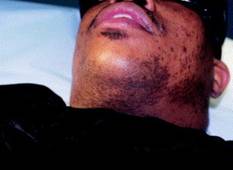
The double-blind placebo controlled study was carried out by U.S. military physicians. PFB, which is predominantly a disorder of black men, has at times been a source of racial tension in the military because the simplest treatment for PFB is to stop shaving and grow a beard, a form of individual expression at odds with regulations.
The study included 27 men with PFB. They received laser therapy once every 4 weeks for 16 weeks. In addition, they applied eflornithine cream to one side of their bearded neck region and placebo to the other side twice daily.
At 16 weeks, the laser plus eflornithine cream side produced a median 99.5% reduction in hair count and inflammatory papules. This was a significantly better result than the median 85% reduction on the laser plus placebo–treated side (J. Am. Acad. Dermatol. 2012 Jan. 8; in press).
The PFB study follows an earlier study by other investigators who demonstrated that eflornithine cream as an adjunct to laser hair removal for facial hirsutism in women was more effective than laser therapy alone (J. Am. Acad. Dermatol. 2007;57:54-9).
Dr. Alexis said performing laser hair removal safely in darker-skinned patients with PFB requires attention to several key principles: longer wavelengths, lower fluences, longer pulse durations, and plenty of epidermal cooling.
"The No. 1 thing is to use longer wavelengths, because the goal is deeper penetration to maximize the ratio of the temperature in the bulb of the follicle to the temperature in the epidermis," he explained.
The long-pulsed 1,064-nm Nd:YAG laser has the lowest rate of associated epidermal burns, hypopigmentation, and other adverse events in darker-skinned patients, as has been shown in a review of a wide assortment of lasers (J. Drugs Dermatol. 2007;6:40-6). It is clearly the safest laser option in patients with skin types IV-VI. The 810-nm diode laser is a reasonable alternative in skin types IV-V, Dr. Alexis said.
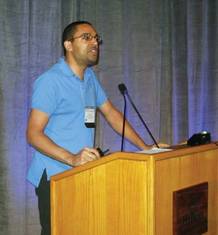
In treating patients for PFB with the 1,064-nm Nd:YAG laser, he said that he typically starts with a fluence of 20 J/cm2 and a pulse duration of 20-30 milliseconds. After several sessions, as he makes inroads into the initially dense follicular distribution, he said that he might increase the fluence to a maximum of 50 J/cm2 in the setting of skin type VI, and as high as 100 J/cm2 in skin types IV or V.
Longer pulse durations allow for more efficient epidermal cooling. This minimizes heat injury to melanin-containing epidermal cells. For the 810-nm diode laser, Dr. Alexis said he uses pulse durations of 100 or 400 milliseconds.
Epidermal cooling can be accomplished in several ways. His preferred method is to utilize contact cooling via a sapphire tip or chilled copper plate attached to the laser; the cooling is done before delivering the laser pulse. Alternatively, the epidermal cooling can be done using cold gels, forced air, or spray cooling, although dyschromia can occur in darker skin types if the spray technique isn’t optimal. Another option is to apply an ice pack for 5-10 minutes post treatment.
Laser therapy is expensive, so Dr. Alexis said he likes to give his patients a range of therapeutic options. These include growing a beard, chemical depilation with barium sulfide or calcium thioglycolate every 2-4 days, modification of shaving practices, and salicylic acid chemical peels.
"It’s kind of a long conversation," he said.
Whatever form of therapy the patient decides upon, it’s important that the patient stops tweezing to remove ingrown hairs. This is a common practice that induces trauma and worsens postinflammatory hyperpigmentation.
Dr. Alexis reported that he serves as a consultant to Schick and is on the advisory board for Allergan. SDEF and this news organization are owned by Elsevier.
WAIKOLOA, HAWAII – The use of eflornithine cream may increase the effectiveness of laser hair removal for treating pseudofolliculitis barbae, according to Dr. Andrew F. Alexis.
Laser hair removal has proved to be a game changer in the treatment of pseudofolliculitis barbae, a common chronic, inflammatory dermatosis that’s often been a difficult therapeutic challenge, Dr. Alexis said at the seminar sponsored by Skin Disease Education Foundation (SDEF). And the use of adjunctive eflornithine cream makes laser therapy even more effective, based on a recent study, which is one of the few rigorous studies conducted in pseudofolliculitis barbae (PFB) patients, noted Dr. Alexis, director of the skin of color center at St. Luke’s–Roosevelt Hospital and a dermatologist at Columbia University, New York.
The double-blind placebo controlled study was carried out by U.S. military physicians. PFB, which is predominantly a disorder of black men, has at times been a source of racial tension in the military because the simplest treatment for PFB is to stop shaving and grow a beard, a form of individual expression at odds with regulations.
The study included 27 men with PFB. They received laser therapy once every 4 weeks for 16 weeks. In addition, they applied eflornithine cream to one side of their bearded neck region and placebo to the other side twice daily.
At 16 weeks, the laser plus eflornithine cream side produced a median 99.5% reduction in hair count and inflammatory papules. This was a significantly better result than the median 85% reduction on the laser plus placebo–treated side (J. Am. Acad. Dermatol. 2012 Jan. 8; in press).
The PFB study follows an earlier study by other investigators who demonstrated that eflornithine cream as an adjunct to laser hair removal for facial hirsutism in women was more effective than laser therapy alone (J. Am. Acad. Dermatol. 2007;57:54-9).
Dr. Alexis said performing laser hair removal safely in darker-skinned patients with PFB requires attention to several key principles: longer wavelengths, lower fluences, longer pulse durations, and plenty of epidermal cooling.
"The No. 1 thing is to use longer wavelengths, because the goal is deeper penetration to maximize the ratio of the temperature in the bulb of the follicle to the temperature in the epidermis," he explained.
The long-pulsed 1,064-nm Nd:YAG laser has the lowest rate of associated epidermal burns, hypopigmentation, and other adverse events in darker-skinned patients, as has been shown in a review of a wide assortment of lasers (J. Drugs Dermatol. 2007;6:40-6). It is clearly the safest laser option in patients with skin types IV-VI. The 810-nm diode laser is a reasonable alternative in skin types IV-V, Dr. Alexis said.
In treating patients for PFB with the 1,064-nm Nd:YAG laser, he said that he typically starts with a fluence of 20 J/cm2 and a pulse duration of 20-30 milliseconds. After several sessions, as he makes inroads into the initially dense follicular distribution, he said that he might increase the fluence to a maximum of 50 J/cm2 in the setting of skin type VI, and as high as 100 J/cm2 in skin types IV or V.
Longer pulse durations allow for more efficient epidermal cooling. This minimizes heat injury to melanin-containing epidermal cells. For the 810-nm diode laser, Dr. Alexis said he uses pulse durations of 100 or 400 milliseconds.
Epidermal cooling can be accomplished in several ways. His preferred method is to utilize contact cooling via a sapphire tip or chilled copper plate attached to the laser; the cooling is done before delivering the laser pulse. Alternatively, the epidermal cooling can be done using cold gels, forced air, or spray cooling, although dyschromia can occur in darker skin types if the spray technique isn’t optimal. Another option is to apply an ice pack for 5-10 minutes post treatment.
Laser therapy is expensive, so Dr. Alexis said he likes to give his patients a range of therapeutic options. These include growing a beard, chemical depilation with barium sulfide or calcium thioglycolate every 2-4 days, modification of shaving practices, and salicylic acid chemical peels.
"It’s kind of a long conversation," he said.
Whatever form of therapy the patient decides upon, it’s important that the patient stops tweezing to remove ingrown hairs. This is a common practice that induces trauma and worsens postinflammatory hyperpigmentation.
Dr. Alexis reported that he serves as a consultant to Schick and is on the advisory board for Allergan. SDEF and this news organization are owned by Elsevier.
WAIKOLOA, HAWAII – The use of eflornithine cream may increase the effectiveness of laser hair removal for treating pseudofolliculitis barbae, according to Dr. Andrew F. Alexis.
Laser hair removal has proved to be a game changer in the treatment of pseudofolliculitis barbae, a common chronic, inflammatory dermatosis that’s often been a difficult therapeutic challenge, Dr. Alexis said at the seminar sponsored by Skin Disease Education Foundation (SDEF). And the use of adjunctive eflornithine cream makes laser therapy even more effective, based on a recent study, which is one of the few rigorous studies conducted in pseudofolliculitis barbae (PFB) patients, noted Dr. Alexis, director of the skin of color center at St. Luke’s–Roosevelt Hospital and a dermatologist at Columbia University, New York.
The double-blind placebo controlled study was carried out by U.S. military physicians. PFB, which is predominantly a disorder of black men, has at times been a source of racial tension in the military because the simplest treatment for PFB is to stop shaving and grow a beard, a form of individual expression at odds with regulations.
The study included 27 men with PFB. They received laser therapy once every 4 weeks for 16 weeks. In addition, they applied eflornithine cream to one side of their bearded neck region and placebo to the other side twice daily.
At 16 weeks, the laser plus eflornithine cream side produced a median 99.5% reduction in hair count and inflammatory papules. This was a significantly better result than the median 85% reduction on the laser plus placebo–treated side (J. Am. Acad. Dermatol. 2012 Jan. 8; in press).
The PFB study follows an earlier study by other investigators who demonstrated that eflornithine cream as an adjunct to laser hair removal for facial hirsutism in women was more effective than laser therapy alone (J. Am. Acad. Dermatol. 2007;57:54-9).
Dr. Alexis said performing laser hair removal safely in darker-skinned patients with PFB requires attention to several key principles: longer wavelengths, lower fluences, longer pulse durations, and plenty of epidermal cooling.
"The No. 1 thing is to use longer wavelengths, because the goal is deeper penetration to maximize the ratio of the temperature in the bulb of the follicle to the temperature in the epidermis," he explained.
The long-pulsed 1,064-nm Nd:YAG laser has the lowest rate of associated epidermal burns, hypopigmentation, and other adverse events in darker-skinned patients, as has been shown in a review of a wide assortment of lasers (J. Drugs Dermatol. 2007;6:40-6). It is clearly the safest laser option in patients with skin types IV-VI. The 810-nm diode laser is a reasonable alternative in skin types IV-V, Dr. Alexis said.
In treating patients for PFB with the 1,064-nm Nd:YAG laser, he said that he typically starts with a fluence of 20 J/cm2 and a pulse duration of 20-30 milliseconds. After several sessions, as he makes inroads into the initially dense follicular distribution, he said that he might increase the fluence to a maximum of 50 J/cm2 in the setting of skin type VI, and as high as 100 J/cm2 in skin types IV or V.
Longer pulse durations allow for more efficient epidermal cooling. This minimizes heat injury to melanin-containing epidermal cells. For the 810-nm diode laser, Dr. Alexis said he uses pulse durations of 100 or 400 milliseconds.
Epidermal cooling can be accomplished in several ways. His preferred method is to utilize contact cooling via a sapphire tip or chilled copper plate attached to the laser; the cooling is done before delivering the laser pulse. Alternatively, the epidermal cooling can be done using cold gels, forced air, or spray cooling, although dyschromia can occur in darker skin types if the spray technique isn’t optimal. Another option is to apply an ice pack for 5-10 minutes post treatment.
Laser therapy is expensive, so Dr. Alexis said he likes to give his patients a range of therapeutic options. These include growing a beard, chemical depilation with barium sulfide or calcium thioglycolate every 2-4 days, modification of shaving practices, and salicylic acid chemical peels.
"It’s kind of a long conversation," he said.
Whatever form of therapy the patient decides upon, it’s important that the patient stops tweezing to remove ingrown hairs. This is a common practice that induces trauma and worsens postinflammatory hyperpigmentation.
Dr. Alexis reported that he serves as a consultant to Schick and is on the advisory board for Allergan. SDEF and this news organization are owned by Elsevier.
EXPERT ANALYSIS FROM THE SDEF HAWAII DERMATOLOGY SEMINAR
Cultural Practices at Root of Alopecia
NEW YORK – To successfully treat alopecia in darker-skinned patients, it is important to first get to the root of a patient’s hair care regimen, according to Dr. Amy McMichael.
For the past 18 years, Dr. McMichael of Wake Forest University in Winston-Salem, N.C., has run a hair disorders clinic. She said she often finds herself at odds with patients who can’t understand why their hair won’t grow.
"Of course, we know it’s growing; it’s just breaking off. They’re having issues with damaged hair," she said at the Skin of Color Seminar Series. Patients "want me to find some underlying vitamin disorder or disease, or something [in their diet] that they can ‘cut out,’ " she said.

Instead, the key is to specifically ask patients about their hair care regimen. She also uses a "60-second comb test" to assess fragility, whereby she instructs patients to brush their hair over a white pillow for 60 seconds and then count the broken and full-bulb hairs that are seen on the pillow.
More often than not, she said she finds that the number of full telogen hairs do not differ between white and darker-skinned people, but that broken hairs (versus bulb hairs) are found significantly more often in women of African descent.
This standardized approach may help convince women that, indeed, breakage – and not some underlying condition – is at the root of their problem, and that changes in behavior could have big effects.
Traction alopecia is a major issue in this population – even among patients who say they don’t pull their hair – and is likely because of the African American custom of getting tight braids starting at a young age. "They tell me their hair braids were so tight, they couldn’t chew the next day," she said. "That is not normal."
Additionally, many skin of color patients use powerful, lye-based chemical relaxers. The damage inflicted by these products, combined with braids, increases the risk for alopecia.
She pointed to a 2008 study of 574 African school girls and 604 African women that showed that females who both relaxed and braided their hair had a 3.5 times greater risk for traction alopecia, compared with patients who did neither (J. Am. Acad. Dermatol. 2008;59:432-8).
Central centrifugal scarring alopecia is also associated with particular cultural practices. For example, Dr. McMichael cited a 2009 study that looked at 101 black women with the condition and found that there was a strong association between scarring alopecia and patients who reported using sewn-in hair weaves and braided styles with hair extensions (J. Am. Acad. Dermatol. 2009;60:574-8).
A second 2011 study by Dr. McMichael and her colleagues confirmed this, but also found associations with chemical relaxers in 44 surveyed patients (Cosmet. Dermatol. 2011;24:331-7).
She recommends that patients discontinue tight braids, sewn-in weaves, relaxers, and heat treatments. "A lot of women still go under hooded hair dryers," she said. She also advocates serial trimming of the hair every 6-8 weeks, as well as gentle hair conditioning with positively charged silicones and dimethicone coating agents.
"These work very nicely in this population," she said. She also recommends using foams as a vehicle for treatments when available. For patients with more severe issues, however, she has administered intralesional corticosteroids, and followed with an off-label use of topical minoxidil.
Additionally, "a lot of women do well with surgical hair restoration," she said, despite initial patient concerns about it being prohibitively expensive. "It might be much less expensive [than patients think] because they have a small area to treat."
Finally, Dr. McMichael said she refers patients with cicatricial alopecia to the Cicatricial Alopecia Research Foundation.
Dr. McMichael stated that she has been an investigator for Abbott, Allergan, Intendis (now Bayer HealthCare), and Procter and Gamble. She also disclosed serving as a consultant for Allergan, Galderma, Guthy-Ranker, Johnson and Johnson, Procter and Gamble, and Stiefel.
alopecia in black women, Dr. Amy McMichael, skin of color dermatology
NEW YORK – To successfully treat alopecia in darker-skinned patients, it is important to first get to the root of a patient’s hair care regimen, according to Dr. Amy McMichael.
For the past 18 years, Dr. McMichael of Wake Forest University in Winston-Salem, N.C., has run a hair disorders clinic. She said she often finds herself at odds with patients who can’t understand why their hair won’t grow.
"Of course, we know it’s growing; it’s just breaking off. They’re having issues with damaged hair," she said at the Skin of Color Seminar Series. Patients "want me to find some underlying vitamin disorder or disease, or something [in their diet] that they can ‘cut out,’ " she said.
Instead, the key is to specifically ask patients about their hair care regimen. She also uses a "60-second comb test" to assess fragility, whereby she instructs patients to brush their hair over a white pillow for 60 seconds and then count the broken and full-bulb hairs that are seen on the pillow.
More often than not, she said she finds that the number of full telogen hairs do not differ between white and darker-skinned people, but that broken hairs (versus bulb hairs) are found significantly more often in women of African descent.
This standardized approach may help convince women that, indeed, breakage – and not some underlying condition – is at the root of their problem, and that changes in behavior could have big effects.
Traction alopecia is a major issue in this population – even among patients who say they don’t pull their hair – and is likely because of the African American custom of getting tight braids starting at a young age. "They tell me their hair braids were so tight, they couldn’t chew the next day," she said. "That is not normal."
Additionally, many skin of color patients use powerful, lye-based chemical relaxers. The damage inflicted by these products, combined with braids, increases the risk for alopecia.
She pointed to a 2008 study of 574 African school girls and 604 African women that showed that females who both relaxed and braided their hair had a 3.5 times greater risk for traction alopecia, compared with patients who did neither (J. Am. Acad. Dermatol. 2008;59:432-8).
Central centrifugal scarring alopecia is also associated with particular cultural practices. For example, Dr. McMichael cited a 2009 study that looked at 101 black women with the condition and found that there was a strong association between scarring alopecia and patients who reported using sewn-in hair weaves and braided styles with hair extensions (J. Am. Acad. Dermatol. 2009;60:574-8).
A second 2011 study by Dr. McMichael and her colleagues confirmed this, but also found associations with chemical relaxers in 44 surveyed patients (Cosmet. Dermatol. 2011;24:331-7).
She recommends that patients discontinue tight braids, sewn-in weaves, relaxers, and heat treatments. "A lot of women still go under hooded hair dryers," she said. She also advocates serial trimming of the hair every 6-8 weeks, as well as gentle hair conditioning with positively charged silicones and dimethicone coating agents.
"These work very nicely in this population," she said. She also recommends using foams as a vehicle for treatments when available. For patients with more severe issues, however, she has administered intralesional corticosteroids, and followed with an off-label use of topical minoxidil.
Additionally, "a lot of women do well with surgical hair restoration," she said, despite initial patient concerns about it being prohibitively expensive. "It might be much less expensive [than patients think] because they have a small area to treat."
Finally, Dr. McMichael said she refers patients with cicatricial alopecia to the Cicatricial Alopecia Research Foundation.
Dr. McMichael stated that she has been an investigator for Abbott, Allergan, Intendis (now Bayer HealthCare), and Procter and Gamble. She also disclosed serving as a consultant for Allergan, Galderma, Guthy-Ranker, Johnson and Johnson, Procter and Gamble, and Stiefel.
NEW YORK – To successfully treat alopecia in darker-skinned patients, it is important to first get to the root of a patient’s hair care regimen, according to Dr. Amy McMichael.
For the past 18 years, Dr. McMichael of Wake Forest University in Winston-Salem, N.C., has run a hair disorders clinic. She said she often finds herself at odds with patients who can’t understand why their hair won’t grow.
"Of course, we know it’s growing; it’s just breaking off. They’re having issues with damaged hair," she said at the Skin of Color Seminar Series. Patients "want me to find some underlying vitamin disorder or disease, or something [in their diet] that they can ‘cut out,’ " she said.
Instead, the key is to specifically ask patients about their hair care regimen. She also uses a "60-second comb test" to assess fragility, whereby she instructs patients to brush their hair over a white pillow for 60 seconds and then count the broken and full-bulb hairs that are seen on the pillow.
More often than not, she said she finds that the number of full telogen hairs do not differ between white and darker-skinned people, but that broken hairs (versus bulb hairs) are found significantly more often in women of African descent.
This standardized approach may help convince women that, indeed, breakage – and not some underlying condition – is at the root of their problem, and that changes in behavior could have big effects.
Traction alopecia is a major issue in this population – even among patients who say they don’t pull their hair – and is likely because of the African American custom of getting tight braids starting at a young age. "They tell me their hair braids were so tight, they couldn’t chew the next day," she said. "That is not normal."
Additionally, many skin of color patients use powerful, lye-based chemical relaxers. The damage inflicted by these products, combined with braids, increases the risk for alopecia.
She pointed to a 2008 study of 574 African school girls and 604 African women that showed that females who both relaxed and braided their hair had a 3.5 times greater risk for traction alopecia, compared with patients who did neither (J. Am. Acad. Dermatol. 2008;59:432-8).
Central centrifugal scarring alopecia is also associated with particular cultural practices. For example, Dr. McMichael cited a 2009 study that looked at 101 black women with the condition and found that there was a strong association between scarring alopecia and patients who reported using sewn-in hair weaves and braided styles with hair extensions (J. Am. Acad. Dermatol. 2009;60:574-8).
A second 2011 study by Dr. McMichael and her colleagues confirmed this, but also found associations with chemical relaxers in 44 surveyed patients (Cosmet. Dermatol. 2011;24:331-7).
She recommends that patients discontinue tight braids, sewn-in weaves, relaxers, and heat treatments. "A lot of women still go under hooded hair dryers," she said. She also advocates serial trimming of the hair every 6-8 weeks, as well as gentle hair conditioning with positively charged silicones and dimethicone coating agents.
"These work very nicely in this population," she said. She also recommends using foams as a vehicle for treatments when available. For patients with more severe issues, however, she has administered intralesional corticosteroids, and followed with an off-label use of topical minoxidil.
Additionally, "a lot of women do well with surgical hair restoration," she said, despite initial patient concerns about it being prohibitively expensive. "It might be much less expensive [than patients think] because they have a small area to treat."
Finally, Dr. McMichael said she refers patients with cicatricial alopecia to the Cicatricial Alopecia Research Foundation.
Dr. McMichael stated that she has been an investigator for Abbott, Allergan, Intendis (now Bayer HealthCare), and Procter and Gamble. She also disclosed serving as a consultant for Allergan, Galderma, Guthy-Ranker, Johnson and Johnson, Procter and Gamble, and Stiefel.
alopecia in black women, Dr. Amy McMichael, skin of color dermatology
alopecia in black women, Dr. Amy McMichael, skin of color dermatology
EXPERT ANALYSIS FROM THE SKIN OF COLOR SEMINAR SERIES
Alopecia in an Ophiasis Pattern: Traction Alopecia Versus Alopecia Areata
New Results Challenge Laser Effectiveness for Onychomycosis
SAN DIEGO – Although previous studies of 1,064-nm Nd:YAG lasers for the treatment of onychomycosis have reported significant mycological cure rates, results from a newer, ongoing study challenge such findings.
At the annual meeting of the American Academy of Dermatology, Dr. Boni E. Elewski reported findings from a trial in which she and her colleagues set out to answer two questions: Can fungal organisms be killed by heat at temperatures tolerable to patients? And, can a laser be directly fungicidal on a growing fungal colony or dilute suspension?

Dr. Elewski and her colleagues conducted a heat kill study of three fungi: Trichophyton rubrum, Epidermophyton floccosum, and Scytalidium.
For T. rubrum, they found that growth was halted after the nail was treated at 50° C for 15 minutes. For E. floccosum, they found that growth was halted after the nail was treated at 50° C for 10 minutes, and for Scytalidium, growth was halted after the nail was treated at 55° C for 5 minutes. "However, nail temperatures that reach 40-41° C cause enough pain for patients to pull away, and the maximum nail temperature patients could tolerate was 45° C," said Dr. Elewski, professor of dermatology at the University of Alabama at Birmingham.
In part two of the study, the researchers used a 1,064-nm Nd:YAG laser to treat colonies and dilute solutions before growth occurred. They used various laser parameters, including spot sizes ranging from 3 to 5 mm, pulse durations that ranged from 100 to 300 milliseconds, fluences of 15 to 50 J/cm2, and frequencies of 2 to 10 Hz. "We found that there was no effect on fungal growth at numerous settings, and the temperature of the agar plate reached about 40° C," Dr. Elewski said. "We decided to take this knowledge and move it into our clinical practice."
In an ongoing study that has enrolled 10 patients to date, she and her associates use a 1,064-nm Nd:YAG laser for a protocol that involves five treatments at settings of 16 J/cm2, 0.3 microseconds, and 2 Hz. They use a 5-mm spot size with more than 300 pulses over the nail in a predetermined pattern. "You see some clearance," Dr. Elewski said of the results so far. "We have no mycological cures to date, but improvement as shown by other companies is noted. Some improvement may be seen, but in my opinion a durable response is needed to satisfy patients."
In a 2010 study from Yugoslavia, mycological cures were reported using a fluence of 35-40 J/cm2, Dr. Elewski said, "but our patients could not tolerate anything above 16 J/cm2, at least without a digital block. All I can assume is that patients in Yugoslavia are significantly heartier than patients in Alabama" (J. Laser and Health Academy 2010;1:1-8).
She concluded her remarks by noting that photodynamic therapy "may be an option for your patients who have failed other treatments or who could not tolerate another treatment. Laser treatment is still under investigation, but might be desirable for those who would be satisfied with an improvement."
Dr. Elewski disclosed that Cutera provided research funds for the study. She said that she had no financial conflicts of interest to disclose, and emphasized that she has never been a paid consultant to any laser device company.
SAN DIEGO – Although previous studies of 1,064-nm Nd:YAG lasers for the treatment of onychomycosis have reported significant mycological cure rates, results from a newer, ongoing study challenge such findings.
At the annual meeting of the American Academy of Dermatology, Dr. Boni E. Elewski reported findings from a trial in which she and her colleagues set out to answer two questions: Can fungal organisms be killed by heat at temperatures tolerable to patients? And, can a laser be directly fungicidal on a growing fungal colony or dilute suspension?
Dr. Elewski and her colleagues conducted a heat kill study of three fungi: Trichophyton rubrum, Epidermophyton floccosum, and Scytalidium.
For T. rubrum, they found that growth was halted after the nail was treated at 50° C for 15 minutes. For E. floccosum, they found that growth was halted after the nail was treated at 50° C for 10 minutes, and for Scytalidium, growth was halted after the nail was treated at 55° C for 5 minutes. "However, nail temperatures that reach 40-41° C cause enough pain for patients to pull away, and the maximum nail temperature patients could tolerate was 45° C," said Dr. Elewski, professor of dermatology at the University of Alabama at Birmingham.
In part two of the study, the researchers used a 1,064-nm Nd:YAG laser to treat colonies and dilute solutions before growth occurred. They used various laser parameters, including spot sizes ranging from 3 to 5 mm, pulse durations that ranged from 100 to 300 milliseconds, fluences of 15 to 50 J/cm2, and frequencies of 2 to 10 Hz. "We found that there was no effect on fungal growth at numerous settings, and the temperature of the agar plate reached about 40° C," Dr. Elewski said. "We decided to take this knowledge and move it into our clinical practice."
In an ongoing study that has enrolled 10 patients to date, she and her associates use a 1,064-nm Nd:YAG laser for a protocol that involves five treatments at settings of 16 J/cm2, 0.3 microseconds, and 2 Hz. They use a 5-mm spot size with more than 300 pulses over the nail in a predetermined pattern. "You see some clearance," Dr. Elewski said of the results so far. "We have no mycological cures to date, but improvement as shown by other companies is noted. Some improvement may be seen, but in my opinion a durable response is needed to satisfy patients."
In a 2010 study from Yugoslavia, mycological cures were reported using a fluence of 35-40 J/cm2, Dr. Elewski said, "but our patients could not tolerate anything above 16 J/cm2, at least without a digital block. All I can assume is that patients in Yugoslavia are significantly heartier than patients in Alabama" (J. Laser and Health Academy 2010;1:1-8).
She concluded her remarks by noting that photodynamic therapy "may be an option for your patients who have failed other treatments or who could not tolerate another treatment. Laser treatment is still under investigation, but might be desirable for those who would be satisfied with an improvement."
Dr. Elewski disclosed that Cutera provided research funds for the study. She said that she had no financial conflicts of interest to disclose, and emphasized that she has never been a paid consultant to any laser device company.
SAN DIEGO – Although previous studies of 1,064-nm Nd:YAG lasers for the treatment of onychomycosis have reported significant mycological cure rates, results from a newer, ongoing study challenge such findings.
At the annual meeting of the American Academy of Dermatology, Dr. Boni E. Elewski reported findings from a trial in which she and her colleagues set out to answer two questions: Can fungal organisms be killed by heat at temperatures tolerable to patients? And, can a laser be directly fungicidal on a growing fungal colony or dilute suspension?
Dr. Elewski and her colleagues conducted a heat kill study of three fungi: Trichophyton rubrum, Epidermophyton floccosum, and Scytalidium.
For T. rubrum, they found that growth was halted after the nail was treated at 50° C for 15 minutes. For E. floccosum, they found that growth was halted after the nail was treated at 50° C for 10 minutes, and for Scytalidium, growth was halted after the nail was treated at 55° C for 5 minutes. "However, nail temperatures that reach 40-41° C cause enough pain for patients to pull away, and the maximum nail temperature patients could tolerate was 45° C," said Dr. Elewski, professor of dermatology at the University of Alabama at Birmingham.
In part two of the study, the researchers used a 1,064-nm Nd:YAG laser to treat colonies and dilute solutions before growth occurred. They used various laser parameters, including spot sizes ranging from 3 to 5 mm, pulse durations that ranged from 100 to 300 milliseconds, fluences of 15 to 50 J/cm2, and frequencies of 2 to 10 Hz. "We found that there was no effect on fungal growth at numerous settings, and the temperature of the agar plate reached about 40° C," Dr. Elewski said. "We decided to take this knowledge and move it into our clinical practice."
In an ongoing study that has enrolled 10 patients to date, she and her associates use a 1,064-nm Nd:YAG laser for a protocol that involves five treatments at settings of 16 J/cm2, 0.3 microseconds, and 2 Hz. They use a 5-mm spot size with more than 300 pulses over the nail in a predetermined pattern. "You see some clearance," Dr. Elewski said of the results so far. "We have no mycological cures to date, but improvement as shown by other companies is noted. Some improvement may be seen, but in my opinion a durable response is needed to satisfy patients."
In a 2010 study from Yugoslavia, mycological cures were reported using a fluence of 35-40 J/cm2, Dr. Elewski said, "but our patients could not tolerate anything above 16 J/cm2, at least without a digital block. All I can assume is that patients in Yugoslavia are significantly heartier than patients in Alabama" (J. Laser and Health Academy 2010;1:1-8).
She concluded her remarks by noting that photodynamic therapy "may be an option for your patients who have failed other treatments or who could not tolerate another treatment. Laser treatment is still under investigation, but might be desirable for those who would be satisfied with an improvement."
Dr. Elewski disclosed that Cutera provided research funds for the study. She said that she had no financial conflicts of interest to disclose, and emphasized that she has never been a paid consultant to any laser device company.
EXPERT ANALYSIS FROM THE ANNUAL MEETING OF THE AMERICAN ACADEMY OF DERMATOLOGY
Be Skeptical of Nail Fungus Treatment Products
MIAMI BEACH – Remain skeptical about new devices or drugs that claim the ability to target fungal infections, recommended Dr. Alan B. Fleischer Jr.
"You are probably going to be barraged by devices that do something for nail fungus," Dr. Fleischer said. "As a physician, try to focus on curing the fungus and not just making them [patients] look better," he said at the South Beach Symposium.
For example, enrollment is underway for a study to assess a 1320-nm Nd:YAG device to fight onychomycosis. However, the primary outcome in the trial is "improved appearance," not fungal cure, he said. "It is confusing ... to a consumer. Improving the appearance sounds similar, but it is not the same."
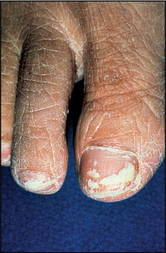
When it comes to topical treatments for onychomycosis, efinaconazole is in development for treating mild to moderate forms of toenail infection, noted Dr. Fleischer. The manufacturer, Valeant Pharmaceuticals, reported promising results in two international phase III studies in December 2011. However, Valeant has not released mycology results.
"Pay attention to the cure rate when it is approved, probably sometime in the next year," said Dr. Fleischer, professor of dermatology at Wake Forest University in Winston-Salem, N.C.
Patients may ask about natural cures for fungal infections, but the data are generally unconvincing or lacking, Dr. Fleischer said. For example, some people advocate melaleuca oil from the tea tree to clear tinea pedis. However, when 104 patients were randomized to creams containing 10% melaleuca oil, 1% tolnaftate, or placebo, "melaleuca oil cleared 30% of subjects of tinea pedis. That is very low," he said (Australas. J. Dermatol. 1992;33:145-9). Of the tolnaftate-treated patients, 85% had a negative culture at the end of therapy, and 21% of placebo patients were considered cleared.
Other patients might ask about using vinegar to cure foot fungus. They may have read about this natural remedy on the Internet, where a Google search for the keywords "vinegar" and "foot fungus" yields about 116,000 results. "Although there are no data, topical vinegar immersion probably does something," Dr. Fleischer said.
"Fungal infections are still out there, but new drugs and modalities are continually evolving," he added.
Dr. Fleischer disclosed that he is a consultant for Intendis and Upsher-Smith Laboratories. He is also a researcher for Abbott, Amgen, Astellas, Galderma, GlaxoSmithKline, Intendis, and Pfizer. He receives a salary from Merz Pharma.
MIAMI BEACH – Remain skeptical about new devices or drugs that claim the ability to target fungal infections, recommended Dr. Alan B. Fleischer Jr.
"You are probably going to be barraged by devices that do something for nail fungus," Dr. Fleischer said. "As a physician, try to focus on curing the fungus and not just making them [patients] look better," he said at the South Beach Symposium.
For example, enrollment is underway for a study to assess a 1320-nm Nd:YAG device to fight onychomycosis. However, the primary outcome in the trial is "improved appearance," not fungal cure, he said. "It is confusing ... to a consumer. Improving the appearance sounds similar, but it is not the same."
When it comes to topical treatments for onychomycosis, efinaconazole is in development for treating mild to moderate forms of toenail infection, noted Dr. Fleischer. The manufacturer, Valeant Pharmaceuticals, reported promising results in two international phase III studies in December 2011. However, Valeant has not released mycology results.
"Pay attention to the cure rate when it is approved, probably sometime in the next year," said Dr. Fleischer, professor of dermatology at Wake Forest University in Winston-Salem, N.C.
Patients may ask about natural cures for fungal infections, but the data are generally unconvincing or lacking, Dr. Fleischer said. For example, some people advocate melaleuca oil from the tea tree to clear tinea pedis. However, when 104 patients were randomized to creams containing 10% melaleuca oil, 1% tolnaftate, or placebo, "melaleuca oil cleared 30% of subjects of tinea pedis. That is very low," he said (Australas. J. Dermatol. 1992;33:145-9). Of the tolnaftate-treated patients, 85% had a negative culture at the end of therapy, and 21% of placebo patients were considered cleared.
Other patients might ask about using vinegar to cure foot fungus. They may have read about this natural remedy on the Internet, where a Google search for the keywords "vinegar" and "foot fungus" yields about 116,000 results. "Although there are no data, topical vinegar immersion probably does something," Dr. Fleischer said.
"Fungal infections are still out there, but new drugs and modalities are continually evolving," he added.
Dr. Fleischer disclosed that he is a consultant for Intendis and Upsher-Smith Laboratories. He is also a researcher for Abbott, Amgen, Astellas, Galderma, GlaxoSmithKline, Intendis, and Pfizer. He receives a salary from Merz Pharma.
MIAMI BEACH – Remain skeptical about new devices or drugs that claim the ability to target fungal infections, recommended Dr. Alan B. Fleischer Jr.
"You are probably going to be barraged by devices that do something for nail fungus," Dr. Fleischer said. "As a physician, try to focus on curing the fungus and not just making them [patients] look better," he said at the South Beach Symposium.
For example, enrollment is underway for a study to assess a 1320-nm Nd:YAG device to fight onychomycosis. However, the primary outcome in the trial is "improved appearance," not fungal cure, he said. "It is confusing ... to a consumer. Improving the appearance sounds similar, but it is not the same."
When it comes to topical treatments for onychomycosis, efinaconazole is in development for treating mild to moderate forms of toenail infection, noted Dr. Fleischer. The manufacturer, Valeant Pharmaceuticals, reported promising results in two international phase III studies in December 2011. However, Valeant has not released mycology results.
"Pay attention to the cure rate when it is approved, probably sometime in the next year," said Dr. Fleischer, professor of dermatology at Wake Forest University in Winston-Salem, N.C.
Patients may ask about natural cures for fungal infections, but the data are generally unconvincing or lacking, Dr. Fleischer said. For example, some people advocate melaleuca oil from the tea tree to clear tinea pedis. However, when 104 patients were randomized to creams containing 10% melaleuca oil, 1% tolnaftate, or placebo, "melaleuca oil cleared 30% of subjects of tinea pedis. That is very low," he said (Australas. J. Dermatol. 1992;33:145-9). Of the tolnaftate-treated patients, 85% had a negative culture at the end of therapy, and 21% of placebo patients were considered cleared.
Other patients might ask about using vinegar to cure foot fungus. They may have read about this natural remedy on the Internet, where a Google search for the keywords "vinegar" and "foot fungus" yields about 116,000 results. "Although there are no data, topical vinegar immersion probably does something," Dr. Fleischer said.
"Fungal infections are still out there, but new drugs and modalities are continually evolving," he added.
Dr. Fleischer disclosed that he is a consultant for Intendis and Upsher-Smith Laboratories. He is also a researcher for Abbott, Amgen, Astellas, Galderma, GlaxoSmithKline, Intendis, and Pfizer. He receives a salary from Merz Pharma.
EXPERT ANALYSIS FROM THE SOUTH BEACH SYMPOSIUM