User login
VEST: Closer tailoring might boost wearable cardioverter defibrillator’s benefit
ORLANDO – , the findings failed to show a statistically significant reduction in sudden death or death from ventricular tachycardia. This suggests better targeting of the device is needed, commented Dhanunjaya Lakkireddy, MD, in a video interview at the annual meeting of the American College of Cardiology.
The Vest Prevention of Early Sudden Death Trial (VEST) randomized 2,302 patients within the first 7 days following an acute MI who also had a left ventricular ejection fraction of 35% or less to either 90 days of treatment with a wearable cardioverter defibrillator (WCD) or usual care. After a median of 84 days, the results showed no statistically significant reduction from WCD use in the primary endpoint of sudden death or death from ventricular tachyarrhythmias, but a statistically significant reduction in the secondary endpoint of all-cause death: 3.1% in the patients randomized to WCD use and 4.9% among the control patients, reported Jeffrey Olgin, MD, chief of cardiology at the University of California, San Francisco.
The results suggest that a more robust benefit might occur in post-MI, low ejection fraction patients who undergo additional selection based on having frequent premature ventricular contractions and nonsustained ventricular tachycardia, suggested Dr. Lakkireddy, professor of medicine and director of the Center for Excellence in AF and Complex Arrhythmias at the University of Kansas Medical Center in Kansas City.
VEST was sponsored by Zoll, a company that markets a WCD. Dr. Lakkireddy had no relevant disclosures.
[email protected]
On Twitter @mitchelzoler
Source: Olgin J and Lakkireddy D ACC 18.
ORLANDO – , the findings failed to show a statistically significant reduction in sudden death or death from ventricular tachycardia. This suggests better targeting of the device is needed, commented Dhanunjaya Lakkireddy, MD, in a video interview at the annual meeting of the American College of Cardiology.
The Vest Prevention of Early Sudden Death Trial (VEST) randomized 2,302 patients within the first 7 days following an acute MI who also had a left ventricular ejection fraction of 35% or less to either 90 days of treatment with a wearable cardioverter defibrillator (WCD) or usual care. After a median of 84 days, the results showed no statistically significant reduction from WCD use in the primary endpoint of sudden death or death from ventricular tachyarrhythmias, but a statistically significant reduction in the secondary endpoint of all-cause death: 3.1% in the patients randomized to WCD use and 4.9% among the control patients, reported Jeffrey Olgin, MD, chief of cardiology at the University of California, San Francisco.
The results suggest that a more robust benefit might occur in post-MI, low ejection fraction patients who undergo additional selection based on having frequent premature ventricular contractions and nonsustained ventricular tachycardia, suggested Dr. Lakkireddy, professor of medicine and director of the Center for Excellence in AF and Complex Arrhythmias at the University of Kansas Medical Center in Kansas City.
VEST was sponsored by Zoll, a company that markets a WCD. Dr. Lakkireddy had no relevant disclosures.
[email protected]
On Twitter @mitchelzoler
Source: Olgin J and Lakkireddy D ACC 18.
ORLANDO – , the findings failed to show a statistically significant reduction in sudden death or death from ventricular tachycardia. This suggests better targeting of the device is needed, commented Dhanunjaya Lakkireddy, MD, in a video interview at the annual meeting of the American College of Cardiology.
The Vest Prevention of Early Sudden Death Trial (VEST) randomized 2,302 patients within the first 7 days following an acute MI who also had a left ventricular ejection fraction of 35% or less to either 90 days of treatment with a wearable cardioverter defibrillator (WCD) or usual care. After a median of 84 days, the results showed no statistically significant reduction from WCD use in the primary endpoint of sudden death or death from ventricular tachyarrhythmias, but a statistically significant reduction in the secondary endpoint of all-cause death: 3.1% in the patients randomized to WCD use and 4.9% among the control patients, reported Jeffrey Olgin, MD, chief of cardiology at the University of California, San Francisco.
The results suggest that a more robust benefit might occur in post-MI, low ejection fraction patients who undergo additional selection based on having frequent premature ventricular contractions and nonsustained ventricular tachycardia, suggested Dr. Lakkireddy, professor of medicine and director of the Center for Excellence in AF and Complex Arrhythmias at the University of Kansas Medical Center in Kansas City.
VEST was sponsored by Zoll, a company that markets a WCD. Dr. Lakkireddy had no relevant disclosures.
[email protected]
On Twitter @mitchelzoler
Source: Olgin J and Lakkireddy D ACC 18.
EXPERT ANALYSIS FROM ACC 18

Post-ACS death lowered in ODYSSEY Outcomes
ORLANDO – should set the stage for broader use of the PCSK9-inhibitor in certain high-risk patients, Gabriel Steg, MD, said in a video interview at the annual meeting of the American College of Cardiology.
The findings from the 3-year trial are threefold: First, the trial met its primary goal, significantly lower major adverse cardiovascular events and 15% lower mortality in alirocumab-treated patients compared with those on placebo; second, the effect was greater in patients who started with an LDL level above 100 mg/dL; and third, alirocumab was remarkably safe, said Dr. Steg, director of the coronary care unit of Bichat Hospital in Paris.
“We now have good reason to target a lower LDL range of at least less than 50 mg/dL, and possibly even lower, using PCSK9 inhibitors to get the benefits we’re seeing in the trial applied to broader groups of patients,” he added.
SOURCE: Steg G ACC 18.
ORLANDO – should set the stage for broader use of the PCSK9-inhibitor in certain high-risk patients, Gabriel Steg, MD, said in a video interview at the annual meeting of the American College of Cardiology.
The findings from the 3-year trial are threefold: First, the trial met its primary goal, significantly lower major adverse cardiovascular events and 15% lower mortality in alirocumab-treated patients compared with those on placebo; second, the effect was greater in patients who started with an LDL level above 100 mg/dL; and third, alirocumab was remarkably safe, said Dr. Steg, director of the coronary care unit of Bichat Hospital in Paris.
“We now have good reason to target a lower LDL range of at least less than 50 mg/dL, and possibly even lower, using PCSK9 inhibitors to get the benefits we’re seeing in the trial applied to broader groups of patients,” he added.
SOURCE: Steg G ACC 18.
ORLANDO – should set the stage for broader use of the PCSK9-inhibitor in certain high-risk patients, Gabriel Steg, MD, said in a video interview at the annual meeting of the American College of Cardiology.
The findings from the 3-year trial are threefold: First, the trial met its primary goal, significantly lower major adverse cardiovascular events and 15% lower mortality in alirocumab-treated patients compared with those on placebo; second, the effect was greater in patients who started with an LDL level above 100 mg/dL; and third, alirocumab was remarkably safe, said Dr. Steg, director of the coronary care unit of Bichat Hospital in Paris.
“We now have good reason to target a lower LDL range of at least less than 50 mg/dL, and possibly even lower, using PCSK9 inhibitors to get the benefits we’re seeing in the trial applied to broader groups of patients,” he added.
SOURCE: Steg G ACC 18.
REPORTING FROM ACC 18

VIDEO: Device-based therapy for onychomycosis
REPORTING FROM AAD 18
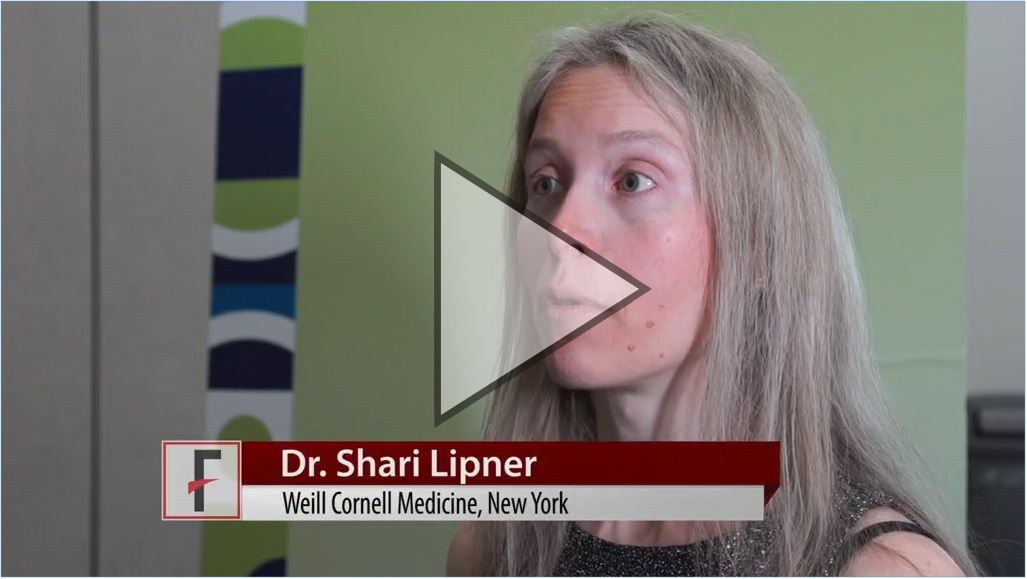
SAN DIEGO – which has been studied in two clinical trials and case series, Shari Lipner, MD, PhD, said in a video interview at the annual meeting of the American Academy of Dermatology, where she presented on this topic.
“Something that we’re looking at is plasma treatment of onychomycosis basically using ionized gas,” which has been shown to inhibit the growth of Trichophyton rubrum in vitro, added Dr. Lipner of the department of dermatology, Cornell University, New York.
In a pilot study of 19 patients with onychomycosis, she and her associates found that the clinical cure with nonthermal plasma was about 50% and the mycological cure rate was 15%, “and we’re now trying to improve efficacy using this device,” she said (Clin Exp Dermatol. 2017 Apr;42[3]:295-8). With a dielectric insulator, “nonthermal plasma is created by short pulses (about 10 ns) of strong (about 20 kV/mm peak) electric field that ionizes air molecules, creating ions and electrons, as well as ozone, hydroxyl radicals and nitric oxide,” according to the description in the study.
Other device-based therapies include iontophoresis, using electrical currents to increase drug delivery, and creating small punch biopsies or using a device to create “microholes” in the nails to increase delivery of topical medication across the nail, Dr. Lipner said.
Patients often ask about another device-based treatment, laser therapy, which she pointed out is not approved by the Food and Drug Administration for cure, but for a temporary increase in clear nail in patients with onychomycosis, “very different” than the criteria used for topical and systemic medications, making it difficult to compare efficacy data between lasers and medications, she noted.
Dr. Lipner reported receiving grants/research funding from MOE Medical Devices.
REPORTING FROM AAD 18
SAN DIEGO – which has been studied in two clinical trials and case series, Shari Lipner, MD, PhD, said in a video interview at the annual meeting of the American Academy of Dermatology, where she presented on this topic.
“Something that we’re looking at is plasma treatment of onychomycosis basically using ionized gas,” which has been shown to inhibit the growth of Trichophyton rubrum in vitro, added Dr. Lipner of the department of dermatology, Cornell University, New York.
In a pilot study of 19 patients with onychomycosis, she and her associates found that the clinical cure with nonthermal plasma was about 50% and the mycological cure rate was 15%, “and we’re now trying to improve efficacy using this device,” she said (Clin Exp Dermatol. 2017 Apr;42[3]:295-8). With a dielectric insulator, “nonthermal plasma is created by short pulses (about 10 ns) of strong (about 20 kV/mm peak) electric field that ionizes air molecules, creating ions and electrons, as well as ozone, hydroxyl radicals and nitric oxide,” according to the description in the study.
Other device-based therapies include iontophoresis, using electrical currents to increase drug delivery, and creating small punch biopsies or using a device to create “microholes” in the nails to increase delivery of topical medication across the nail, Dr. Lipner said.
Patients often ask about another device-based treatment, laser therapy, which she pointed out is not approved by the Food and Drug Administration for cure, but for a temporary increase in clear nail in patients with onychomycosis, “very different” than the criteria used for topical and systemic medications, making it difficult to compare efficacy data between lasers and medications, she noted.
Dr. Lipner reported receiving grants/research funding from MOE Medical Devices.
REPORTING FROM AAD 18
SAN DIEGO – which has been studied in two clinical trials and case series, Shari Lipner, MD, PhD, said in a video interview at the annual meeting of the American Academy of Dermatology, where she presented on this topic.
“Something that we’re looking at is plasma treatment of onychomycosis basically using ionized gas,” which has been shown to inhibit the growth of Trichophyton rubrum in vitro, added Dr. Lipner of the department of dermatology, Cornell University, New York.
In a pilot study of 19 patients with onychomycosis, she and her associates found that the clinical cure with nonthermal plasma was about 50% and the mycological cure rate was 15%, “and we’re now trying to improve efficacy using this device,” she said (Clin Exp Dermatol. 2017 Apr;42[3]:295-8). With a dielectric insulator, “nonthermal plasma is created by short pulses (about 10 ns) of strong (about 20 kV/mm peak) electric field that ionizes air molecules, creating ions and electrons, as well as ozone, hydroxyl radicals and nitric oxide,” according to the description in the study.
Other device-based therapies include iontophoresis, using electrical currents to increase drug delivery, and creating small punch biopsies or using a device to create “microholes” in the nails to increase delivery of topical medication across the nail, Dr. Lipner said.
Patients often ask about another device-based treatment, laser therapy, which she pointed out is not approved by the Food and Drug Administration for cure, but for a temporary increase in clear nail in patients with onychomycosis, “very different” than the criteria used for topical and systemic medications, making it difficult to compare efficacy data between lasers and medications, she noted.
Dr. Lipner reported receiving grants/research funding from MOE Medical Devices.
Ketamine for mood disorders?

VIDEO: Model supports endoscopic resection for some T1b esophageal adenocarcinomas
Endoscopic treatment of T1a esophageal adenocarcinoma outperformed esophagectomy across a range of ages and comorbidity levels in a Markov model.
Esophagectomy produced 0.16 more unadjusted life-years, but led to 0.27 fewer quality-adjusted life-years (QALYs), in the hypothetical case of a 75-year-old man with T1aN0M0 esophageal adenocarcinoma (EAC) and a Charlson comorbidity index score of 0, reported Jacqueline N. Chu, MD, of Massachusetts General Hospital, Boston, and her associates. “[We] believe QALYs are a more important endpoint because of the significant morbidity associated with esophagectomy,” they wrote in the March issue of Clinical Gastroenterology and Hepatology.
Source: American Gastroenterological Association
In contrast, the model portrayed the management of T1b EAC as “an individualized decision” – esophagectomy was preferable in 60- to 70-year-old patients with T1b EAC, but serial endoscopic treatment was better when patients were older, with more comorbidities, the researchers said. “For the sickest patients, those aged 80 and older with comorbidity index of 2, endoscopic treatment not only provided more QALYs but more unadjusted life years as well.”
Treatment of T1a EAC is transitioning from esophagectomy to serial endoscopic resection, which physicians still tend to regard as too risky in T1b EAC. The Markov model evaluated the efficacy and cost efficacy of the two approaches in hypothetical T1a and T1b patients of various ages and comorbidities, using cancer death data from the Surveillance, Epidemiology, and End Results (SEER) Medicare database and published cost data converted to 2017 U.S. dollars based on the U.S. Bureau of Labor Statistics’ Consumer Price Index.
Like the T1a case, the T1b base case consisted of a 75-year-old man with a Charlson comorbidity index of 0. Esophagectomy produced 0.72 more unadjusted life years than did endoscopic treatment (5.73 vs. 5.01) while yielding 0.22 more QALYs (4.07 vs. 3.85, respectively). Esophagectomy cost $156,981 more, but the model did not account for costs of chemotherapy and radiation or palliative care, all of which are more likely with endoscopic resection than esophagectomy, the researchers noted.
In sensitivity analyses, endoscopic treatment optimized quality of life in T1b EAC patients who were older than 80 years and had a comorbidity index of 1 or 2. Beyond that, treatment choice depended on posttreatment variables. “[If] a patient considered his or her quality of life postesophagectomy nearly equal to, or preferable to, [that] postendoscopic treatment, esophagectomy would be the optimal treatment strategy,” the investigators wrote. “An example would be the patient who would rather have an esophagectomy than worry about recurrence with endoscopic treatment.”
Pathologic analysis of T1a EACs can be inconsistent, and the model did not test whether high versus low pathologic risk affected treatment preference, the researchers said. They added data on T1NOS (T1 not otherwise specified) EACs to the model because the SEER-Medicare database included so few T1b endoscopic cases, but T1NOS patients had the worst outcomes and were in fact probably higher stage than T1. Fully 31% of endoscopy patients were T1NOS, compared with only 11% of esophagectomy patients, which would have biased the model against endoscopic treatment, according to the investigators.
The National Institutes of Health provided funding. Dr. Chu reported having no conflicts of interest. Three coinvestigators disclosed ties to CSA Medical, Ninepoint, C2 Therapeutics, Medtronic, and Trio Medicines. The remaining coinvestigators had no conflicts.
SOURCE: Chu JN et al. Clin Gastroenterol Hepatol. 2017 Nov 24. doi: 10.1016/j.cgh.2017.10.024.
Endoscopic treatment of T1a esophageal adenocarcinoma outperformed esophagectomy across a range of ages and comorbidity levels in a Markov model.
Esophagectomy produced 0.16 more unadjusted life-years, but led to 0.27 fewer quality-adjusted life-years (QALYs), in the hypothetical case of a 75-year-old man with T1aN0M0 esophageal adenocarcinoma (EAC) and a Charlson comorbidity index score of 0, reported Jacqueline N. Chu, MD, of Massachusetts General Hospital, Boston, and her associates. “[We] believe QALYs are a more important endpoint because of the significant morbidity associated with esophagectomy,” they wrote in the March issue of Clinical Gastroenterology and Hepatology.
Source: American Gastroenterological Association
In contrast, the model portrayed the management of T1b EAC as “an individualized decision” – esophagectomy was preferable in 60- to 70-year-old patients with T1b EAC, but serial endoscopic treatment was better when patients were older, with more comorbidities, the researchers said. “For the sickest patients, those aged 80 and older with comorbidity index of 2, endoscopic treatment not only provided more QALYs but more unadjusted life years as well.”
Treatment of T1a EAC is transitioning from esophagectomy to serial endoscopic resection, which physicians still tend to regard as too risky in T1b EAC. The Markov model evaluated the efficacy and cost efficacy of the two approaches in hypothetical T1a and T1b patients of various ages and comorbidities, using cancer death data from the Surveillance, Epidemiology, and End Results (SEER) Medicare database and published cost data converted to 2017 U.S. dollars based on the U.S. Bureau of Labor Statistics’ Consumer Price Index.
Like the T1a case, the T1b base case consisted of a 75-year-old man with a Charlson comorbidity index of 0. Esophagectomy produced 0.72 more unadjusted life years than did endoscopic treatment (5.73 vs. 5.01) while yielding 0.22 more QALYs (4.07 vs. 3.85, respectively). Esophagectomy cost $156,981 more, but the model did not account for costs of chemotherapy and radiation or palliative care, all of which are more likely with endoscopic resection than esophagectomy, the researchers noted.
In sensitivity analyses, endoscopic treatment optimized quality of life in T1b EAC patients who were older than 80 years and had a comorbidity index of 1 or 2. Beyond that, treatment choice depended on posttreatment variables. “[If] a patient considered his or her quality of life postesophagectomy nearly equal to, or preferable to, [that] postendoscopic treatment, esophagectomy would be the optimal treatment strategy,” the investigators wrote. “An example would be the patient who would rather have an esophagectomy than worry about recurrence with endoscopic treatment.”
Pathologic analysis of T1a EACs can be inconsistent, and the model did not test whether high versus low pathologic risk affected treatment preference, the researchers said. They added data on T1NOS (T1 not otherwise specified) EACs to the model because the SEER-Medicare database included so few T1b endoscopic cases, but T1NOS patients had the worst outcomes and were in fact probably higher stage than T1. Fully 31% of endoscopy patients were T1NOS, compared with only 11% of esophagectomy patients, which would have biased the model against endoscopic treatment, according to the investigators.
The National Institutes of Health provided funding. Dr. Chu reported having no conflicts of interest. Three coinvestigators disclosed ties to CSA Medical, Ninepoint, C2 Therapeutics, Medtronic, and Trio Medicines. The remaining coinvestigators had no conflicts.
SOURCE: Chu JN et al. Clin Gastroenterol Hepatol. 2017 Nov 24. doi: 10.1016/j.cgh.2017.10.024.
Endoscopic treatment of T1a esophageal adenocarcinoma outperformed esophagectomy across a range of ages and comorbidity levels in a Markov model.
Esophagectomy produced 0.16 more unadjusted life-years, but led to 0.27 fewer quality-adjusted life-years (QALYs), in the hypothetical case of a 75-year-old man with T1aN0M0 esophageal adenocarcinoma (EAC) and a Charlson comorbidity index score of 0, reported Jacqueline N. Chu, MD, of Massachusetts General Hospital, Boston, and her associates. “[We] believe QALYs are a more important endpoint because of the significant morbidity associated with esophagectomy,” they wrote in the March issue of Clinical Gastroenterology and Hepatology.
Source: American Gastroenterological Association
In contrast, the model portrayed the management of T1b EAC as “an individualized decision” – esophagectomy was preferable in 60- to 70-year-old patients with T1b EAC, but serial endoscopic treatment was better when patients were older, with more comorbidities, the researchers said. “For the sickest patients, those aged 80 and older with comorbidity index of 2, endoscopic treatment not only provided more QALYs but more unadjusted life years as well.”
Treatment of T1a EAC is transitioning from esophagectomy to serial endoscopic resection, which physicians still tend to regard as too risky in T1b EAC. The Markov model evaluated the efficacy and cost efficacy of the two approaches in hypothetical T1a and T1b patients of various ages and comorbidities, using cancer death data from the Surveillance, Epidemiology, and End Results (SEER) Medicare database and published cost data converted to 2017 U.S. dollars based on the U.S. Bureau of Labor Statistics’ Consumer Price Index.
Like the T1a case, the T1b base case consisted of a 75-year-old man with a Charlson comorbidity index of 0. Esophagectomy produced 0.72 more unadjusted life years than did endoscopic treatment (5.73 vs. 5.01) while yielding 0.22 more QALYs (4.07 vs. 3.85, respectively). Esophagectomy cost $156,981 more, but the model did not account for costs of chemotherapy and radiation or palliative care, all of which are more likely with endoscopic resection than esophagectomy, the researchers noted.
In sensitivity analyses, endoscopic treatment optimized quality of life in T1b EAC patients who were older than 80 years and had a comorbidity index of 1 or 2. Beyond that, treatment choice depended on posttreatment variables. “[If] a patient considered his or her quality of life postesophagectomy nearly equal to, or preferable to, [that] postendoscopic treatment, esophagectomy would be the optimal treatment strategy,” the investigators wrote. “An example would be the patient who would rather have an esophagectomy than worry about recurrence with endoscopic treatment.”
Pathologic analysis of T1a EACs can be inconsistent, and the model did not test whether high versus low pathologic risk affected treatment preference, the researchers said. They added data on T1NOS (T1 not otherwise specified) EACs to the model because the SEER-Medicare database included so few T1b endoscopic cases, but T1NOS patients had the worst outcomes and were in fact probably higher stage than T1. Fully 31% of endoscopy patients were T1NOS, compared with only 11% of esophagectomy patients, which would have biased the model against endoscopic treatment, according to the investigators.
The National Institutes of Health provided funding. Dr. Chu reported having no conflicts of interest. Three coinvestigators disclosed ties to CSA Medical, Ninepoint, C2 Therapeutics, Medtronic, and Trio Medicines. The remaining coinvestigators had no conflicts.
SOURCE: Chu JN et al. Clin Gastroenterol Hepatol. 2017 Nov 24. doi: 10.1016/j.cgh.2017.10.024.
FROM CLINICAL GASTROENTEROLOGY AND HEPATOLOGY
Key clinical point: A Markov model supports endoscopic resection for some T1b esophageal adenocarcinomas.
Major finding: Endoscopic resection was preferred in T1b patients who were more than 80 years old or had a Charlson comorbidity index of 1or 2.
Data source: A Markov model with Surveillance, Epidemiology, and End Results (SEER) Medicare mortality data and published cost data converted to 2017 U.S. dollars based on the national Consumer Price Index.
Disclosures: The National Institutes of Health provided funding. Dr. Chu reported having no conflicts of interest. Three coinvestigators disclosed ties to CSA Medical, Ninepoint, C2 Therapeutics, Medtronic, and Trio Medicines. The remaining coinvestigators had no conflicts.
Source: Chu JN et al. Clin Gastroenterol Hepatol .2017 Nov 24. doi: 10.1016/j.cgh.2017.10.024.

VIDEO: No short-term link found between PPIs, myocardial infarction
in a large retrospective insurance claims study.
SOURCE: AMERICAN GASTROENTEROLOGICAL ASSOCIATION
Over a median follow-up of 2-3 months, estimated weighted risks of first-ever MI were low and similar regardless of whether patients started PPIs or histamine2 receptor antagonists (H2RAs), reported Suzanne N. Landi of the University of North Carolina at Chapel Hill, and her associates. “Contrary to prior literature, our analyses do not indicate increased risk of MI in PPI initiators compared to histamine2-receptor antagonist initiators,” they wrote in the March issue of Gastroenterology.
Epidemiologic studies have produced mixed findings on PPI use and MI risk. Animal models and ex vivo studies of human tissue indicate that PPIs might harm coronary vessels by increasing plasma levels of asymmetrical dimethylarginine, which counteracts the vasoprotective activity of endothelial nitrous oxide synthase, the investigators noted. To further assess PPIs and risk of MI while minimizing potential confounding, they studied new users of either prescription PPIs or an active comparator, prescription H2RAs. The dataset included administrative claims for more than 5 million patients with no MI history who were enrolled in commercial insurance plans or Medicare Supplemental Insurance plans. The study data spanned from 2001 to 2014, and patients were followed from their initial antacid prescription until they either developed a first-ever MI, stopped their medication, or left their insurance plan. Median follow-up times were 60 days in patients with commercial insurance and 96 days in patients with Medicare Supplemental Insurance, which employers provide for individuals who are at least 65 years old.
After controlling for numerous measurable clinical and demographic confounders, the estimated 12-month risk of MI was about 2 cases per 1,000 commercially insured patients and about 8 cases per 1,000 Medicare Supplemental Insurance enrollees. The estimated 12-month risk of MI did not significantly differ between users of PPIs and H2RAs, regardless of whether they were enrolled in commercial insurance plans (weighted risk difference per 1,000 users, –0.08; 95% confidence interval, –0.51 to 0.36) or Medicare Supplemental Insurance (weighted risk difference per 1,000 users, –0.45; 95% CI, –1.53 to 0.58) plans.
Each antacid class also conferred a similar estimated risk of MI at 36 months, with weighted risk differences of 0.44 (95% CI, –0.90 to 1.63) per 1,000 commercial plan enrollees and –0.33 (95% CI, –4.40 to 3.46) per 1,000 Medicare Supplemental Insurance plan enrollees, the researchers reported. Weighted estimated risk ratios also were similar between drug classes, ranging from 0.87 (95% CI, 0.76 to 0.99) at 3 months among Medicare Supplemental Insurance enrollees to 1.08 (95% CI, 0.87 to 1.35) at 36 months among commercial insurance plan members.
“Previous studies have examined the risk of MI in PPI users and compared directly to nonusers, which may have resulted in stronger confounding by indication and other risk factors, such as BMI [body mass index] and baseline cardiovascular disease,” the investigators wrote. “Physicians and patients should not avoid starting a PPI because of concerns related to MI risk.”
The researchers received no grant support for this study. Ms. Landi disclosed a student fellowship from UCB Biosciences.
SOURCE: Source: Landi SN et al. Gastroenterology. 2017 Nov 6. doi: 10.1053/j.gastro.2017.10.042.
In the late 2000s, several large epidemiologic studies suggested that proton pump inhibitors (PPIs) increase the risk for MI in users of clopidogrel. There was a proposed mechanism: PPIs competitively inhibit cytochrome P450 isoenzymes, which blocked clopidogrel activation and, ex vivo, increased platelet aggregation. It sounded scary – but fortunately, some reassuring data quickly emerged. In 2007, the COGENT trial randomized patients with cardiovascular disease to a PPI/clopidogrel versus a placebo/clopidogrel combination pill. After 3 years of follow-up, there was no difference in rates of death or cardiovascular events. In the glaring light of this randomized controlled trial data, earlier studies didn’t look so convincing.
So why won’t the PPI/MI issue die? In part because COGENT was a relatively small study. It included 3,761 patients, but the main result depended on 109 cardiovascular events. Naysayers have argued that perhaps if COGENT had been a bigger study, the result would have been different.

In this context, the epidemiologic study by Suzanne Landi and her associates provides further reassurance that PPIs do not cause MI. Two insurance cohorts comprising over 5 million patients were used to compare PPI users with histamine2-receptor antagonist users after adjusting for baseline differences between the two groups. The large size of the dataset allowed the authors to make precise estimates; we can say with confidence that there was no clinically relevant PPI/MI risk in these data.
Can we forget about PPIs and MI? These days, my patients worry more about dementia or chronic kidney disease. But the PPI/MI story is worth remembering. Large epidemiologic studies are sometimes contradicted by subsequent studies and need to be evaluated in context.
Daniel E. Freedberg, MD, MS, is an assistant professor of medicine at the Columbia University Medical Center, New York. He has consulted for Pfizer.
In the late 2000s, several large epidemiologic studies suggested that proton pump inhibitors (PPIs) increase the risk for MI in users of clopidogrel. There was a proposed mechanism: PPIs competitively inhibit cytochrome P450 isoenzymes, which blocked clopidogrel activation and, ex vivo, increased platelet aggregation. It sounded scary – but fortunately, some reassuring data quickly emerged. In 2007, the COGENT trial randomized patients with cardiovascular disease to a PPI/clopidogrel versus a placebo/clopidogrel combination pill. After 3 years of follow-up, there was no difference in rates of death or cardiovascular events. In the glaring light of this randomized controlled trial data, earlier studies didn’t look so convincing.
So why won’t the PPI/MI issue die? In part because COGENT was a relatively small study. It included 3,761 patients, but the main result depended on 109 cardiovascular events. Naysayers have argued that perhaps if COGENT had been a bigger study, the result would have been different.
In this context, the epidemiologic study by Suzanne Landi and her associates provides further reassurance that PPIs do not cause MI. Two insurance cohorts comprising over 5 million patients were used to compare PPI users with histamine2-receptor antagonist users after adjusting for baseline differences between the two groups. The large size of the dataset allowed the authors to make precise estimates; we can say with confidence that there was no clinically relevant PPI/MI risk in these data.
Can we forget about PPIs and MI? These days, my patients worry more about dementia or chronic kidney disease. But the PPI/MI story is worth remembering. Large epidemiologic studies are sometimes contradicted by subsequent studies and need to be evaluated in context.
Daniel E. Freedberg, MD, MS, is an assistant professor of medicine at the Columbia University Medical Center, New York. He has consulted for Pfizer.
In the late 2000s, several large epidemiologic studies suggested that proton pump inhibitors (PPIs) increase the risk for MI in users of clopidogrel. There was a proposed mechanism: PPIs competitively inhibit cytochrome P450 isoenzymes, which blocked clopidogrel activation and, ex vivo, increased platelet aggregation. It sounded scary – but fortunately, some reassuring data quickly emerged. In 2007, the COGENT trial randomized patients with cardiovascular disease to a PPI/clopidogrel versus a placebo/clopidogrel combination pill. After 3 years of follow-up, there was no difference in rates of death or cardiovascular events. In the glaring light of this randomized controlled trial data, earlier studies didn’t look so convincing.
So why won’t the PPI/MI issue die? In part because COGENT was a relatively small study. It included 3,761 patients, but the main result depended on 109 cardiovascular events. Naysayers have argued that perhaps if COGENT had been a bigger study, the result would have been different.
In this context, the epidemiologic study by Suzanne Landi and her associates provides further reassurance that PPIs do not cause MI. Two insurance cohorts comprising over 5 million patients were used to compare PPI users with histamine2-receptor antagonist users after adjusting for baseline differences between the two groups. The large size of the dataset allowed the authors to make precise estimates; we can say with confidence that there was no clinically relevant PPI/MI risk in these data.
Can we forget about PPIs and MI? These days, my patients worry more about dementia or chronic kidney disease. But the PPI/MI story is worth remembering. Large epidemiologic studies are sometimes contradicted by subsequent studies and need to be evaluated in context.
Daniel E. Freedberg, MD, MS, is an assistant professor of medicine at the Columbia University Medical Center, New York. He has consulted for Pfizer.
in a large retrospective insurance claims study.
SOURCE: AMERICAN GASTROENTEROLOGICAL ASSOCIATION
Over a median follow-up of 2-3 months, estimated weighted risks of first-ever MI were low and similar regardless of whether patients started PPIs or histamine2 receptor antagonists (H2RAs), reported Suzanne N. Landi of the University of North Carolina at Chapel Hill, and her associates. “Contrary to prior literature, our analyses do not indicate increased risk of MI in PPI initiators compared to histamine2-receptor antagonist initiators,” they wrote in the March issue of Gastroenterology.
Epidemiologic studies have produced mixed findings on PPI use and MI risk. Animal models and ex vivo studies of human tissue indicate that PPIs might harm coronary vessels by increasing plasma levels of asymmetrical dimethylarginine, which counteracts the vasoprotective activity of endothelial nitrous oxide synthase, the investigators noted. To further assess PPIs and risk of MI while minimizing potential confounding, they studied new users of either prescription PPIs or an active comparator, prescription H2RAs. The dataset included administrative claims for more than 5 million patients with no MI history who were enrolled in commercial insurance plans or Medicare Supplemental Insurance plans. The study data spanned from 2001 to 2014, and patients were followed from their initial antacid prescription until they either developed a first-ever MI, stopped their medication, or left their insurance plan. Median follow-up times were 60 days in patients with commercial insurance and 96 days in patients with Medicare Supplemental Insurance, which employers provide for individuals who are at least 65 years old.
After controlling for numerous measurable clinical and demographic confounders, the estimated 12-month risk of MI was about 2 cases per 1,000 commercially insured patients and about 8 cases per 1,000 Medicare Supplemental Insurance enrollees. The estimated 12-month risk of MI did not significantly differ between users of PPIs and H2RAs, regardless of whether they were enrolled in commercial insurance plans (weighted risk difference per 1,000 users, –0.08; 95% confidence interval, –0.51 to 0.36) or Medicare Supplemental Insurance (weighted risk difference per 1,000 users, –0.45; 95% CI, –1.53 to 0.58) plans.
Each antacid class also conferred a similar estimated risk of MI at 36 months, with weighted risk differences of 0.44 (95% CI, –0.90 to 1.63) per 1,000 commercial plan enrollees and –0.33 (95% CI, –4.40 to 3.46) per 1,000 Medicare Supplemental Insurance plan enrollees, the researchers reported. Weighted estimated risk ratios also were similar between drug classes, ranging from 0.87 (95% CI, 0.76 to 0.99) at 3 months among Medicare Supplemental Insurance enrollees to 1.08 (95% CI, 0.87 to 1.35) at 36 months among commercial insurance plan members.
“Previous studies have examined the risk of MI in PPI users and compared directly to nonusers, which may have resulted in stronger confounding by indication and other risk factors, such as BMI [body mass index] and baseline cardiovascular disease,” the investigators wrote. “Physicians and patients should not avoid starting a PPI because of concerns related to MI risk.”
The researchers received no grant support for this study. Ms. Landi disclosed a student fellowship from UCB Biosciences.
SOURCE: Source: Landi SN et al. Gastroenterology. 2017 Nov 6. doi: 10.1053/j.gastro.2017.10.042.
in a large retrospective insurance claims study.
SOURCE: AMERICAN GASTROENTEROLOGICAL ASSOCIATION
Over a median follow-up of 2-3 months, estimated weighted risks of first-ever MI were low and similar regardless of whether patients started PPIs or histamine2 receptor antagonists (H2RAs), reported Suzanne N. Landi of the University of North Carolina at Chapel Hill, and her associates. “Contrary to prior literature, our analyses do not indicate increased risk of MI in PPI initiators compared to histamine2-receptor antagonist initiators,” they wrote in the March issue of Gastroenterology.
Epidemiologic studies have produced mixed findings on PPI use and MI risk. Animal models and ex vivo studies of human tissue indicate that PPIs might harm coronary vessels by increasing plasma levels of asymmetrical dimethylarginine, which counteracts the vasoprotective activity of endothelial nitrous oxide synthase, the investigators noted. To further assess PPIs and risk of MI while minimizing potential confounding, they studied new users of either prescription PPIs or an active comparator, prescription H2RAs. The dataset included administrative claims for more than 5 million patients with no MI history who were enrolled in commercial insurance plans or Medicare Supplemental Insurance plans. The study data spanned from 2001 to 2014, and patients were followed from their initial antacid prescription until they either developed a first-ever MI, stopped their medication, or left their insurance plan. Median follow-up times were 60 days in patients with commercial insurance and 96 days in patients with Medicare Supplemental Insurance, which employers provide for individuals who are at least 65 years old.
After controlling for numerous measurable clinical and demographic confounders, the estimated 12-month risk of MI was about 2 cases per 1,000 commercially insured patients and about 8 cases per 1,000 Medicare Supplemental Insurance enrollees. The estimated 12-month risk of MI did not significantly differ between users of PPIs and H2RAs, regardless of whether they were enrolled in commercial insurance plans (weighted risk difference per 1,000 users, –0.08; 95% confidence interval, –0.51 to 0.36) or Medicare Supplemental Insurance (weighted risk difference per 1,000 users, –0.45; 95% CI, –1.53 to 0.58) plans.
Each antacid class also conferred a similar estimated risk of MI at 36 months, with weighted risk differences of 0.44 (95% CI, –0.90 to 1.63) per 1,000 commercial plan enrollees and –0.33 (95% CI, –4.40 to 3.46) per 1,000 Medicare Supplemental Insurance plan enrollees, the researchers reported. Weighted estimated risk ratios also were similar between drug classes, ranging from 0.87 (95% CI, 0.76 to 0.99) at 3 months among Medicare Supplemental Insurance enrollees to 1.08 (95% CI, 0.87 to 1.35) at 36 months among commercial insurance plan members.
“Previous studies have examined the risk of MI in PPI users and compared directly to nonusers, which may have resulted in stronger confounding by indication and other risk factors, such as BMI [body mass index] and baseline cardiovascular disease,” the investigators wrote. “Physicians and patients should not avoid starting a PPI because of concerns related to MI risk.”
The researchers received no grant support for this study. Ms. Landi disclosed a student fellowship from UCB Biosciences.
SOURCE: Source: Landi SN et al. Gastroenterology. 2017 Nov 6. doi: 10.1053/j.gastro.2017.10.042.
FROM GASTROENTEROLOGY
Key clinical point: Starting a PPI did not appear to increase the short-term risk of MI.
Major finding: Over a median follow-up time of 2-3 months, the estimated risk of first-ever MI did not statistically differ between initiators of PPIs and initiators of histamine2-receptor antagonists.
Data source: Analyses of commercial and Medicare Supplemental Insurance claims for more than 5 million patients from 2001-2014.
Disclosures: The researchers received no grant support for this study. Ms. Landi disclosed a student fellowship from UCB Biosciences.
Source: Landi SN et al. Gastroenterology. 2017 Nov 6. doi: 10.1053/j.gastro.2017.10.042.

VIDEO: Cannabinoids in dermatology
SAN DIEGO – To date, most of the research on cannabinoids has been outside of dermatology, but these agents may eventually play an important role in the treatment of dermatologic diseases, according to Adam Friedman, MD, director of translational research, department of dermatology, at George Washington University, Washington.
for diseases like dermatomyositis, scleroderma, and lupus, Dr. Friedman said in a video interview at the annual meeting of the American Academy of Dermatology.
In this area, most progress has been made with a synthetic cannabinoid, ajulemic acid (also known as anabasum), which is designed to go after CB2 cannabinoid receptors, which have the anti-inflammatory effects, and not the CB1 receptors, which have the psychoactive effects, he explained. Results of phase 2 studies of ajulemic acid in dermatomyositis and systemic sclerosis have been “very promising,” he noted.
In collaboration with Albert Einstein College of Medicine, New York, he and his associates have studied the topical application of an endocannabinoid, anandamide (AEA), in nanoparticles in an animal model of cutaneous lupus. “We found that we can actually reverse the very classic, almost chronic cutaneous-like symptoms that we see in these animals if they go untreated,” he said.
In the interview, Dr. Friedman, who spoke about the potential of cannabinoids for the treatment of inflammatory and neoplastic diseases of the skin at the meeting, said that it is actually surprising that most research with cannabinoids to date has been outside of dermatology, “because our skin is chock full of cannabinoids; chock full of expression of cannabinoid receptors.”
Dr. Friedman disclosed that he has invented the nanotechnology licensed to Zylo Therapeutics. He is a member of the Dermatology News advisory board.

SAN DIEGO – To date, most of the research on cannabinoids has been outside of dermatology, but these agents may eventually play an important role in the treatment of dermatologic diseases, according to Adam Friedman, MD, director of translational research, department of dermatology, at George Washington University, Washington.
for diseases like dermatomyositis, scleroderma, and lupus, Dr. Friedman said in a video interview at the annual meeting of the American Academy of Dermatology.
In this area, most progress has been made with a synthetic cannabinoid, ajulemic acid (also known as anabasum), which is designed to go after CB2 cannabinoid receptors, which have the anti-inflammatory effects, and not the CB1 receptors, which have the psychoactive effects, he explained. Results of phase 2 studies of ajulemic acid in dermatomyositis and systemic sclerosis have been “very promising,” he noted.
In collaboration with Albert Einstein College of Medicine, New York, he and his associates have studied the topical application of an endocannabinoid, anandamide (AEA), in nanoparticles in an animal model of cutaneous lupus. “We found that we can actually reverse the very classic, almost chronic cutaneous-like symptoms that we see in these animals if they go untreated,” he said.
In the interview, Dr. Friedman, who spoke about the potential of cannabinoids for the treatment of inflammatory and neoplastic diseases of the skin at the meeting, said that it is actually surprising that most research with cannabinoids to date has been outside of dermatology, “because our skin is chock full of cannabinoids; chock full of expression of cannabinoid receptors.”
Dr. Friedman disclosed that he has invented the nanotechnology licensed to Zylo Therapeutics. He is a member of the Dermatology News advisory board.
SAN DIEGO – To date, most of the research on cannabinoids has been outside of dermatology, but these agents may eventually play an important role in the treatment of dermatologic diseases, according to Adam Friedman, MD, director of translational research, department of dermatology, at George Washington University, Washington.
for diseases like dermatomyositis, scleroderma, and lupus, Dr. Friedman said in a video interview at the annual meeting of the American Academy of Dermatology.
In this area, most progress has been made with a synthetic cannabinoid, ajulemic acid (also known as anabasum), which is designed to go after CB2 cannabinoid receptors, which have the anti-inflammatory effects, and not the CB1 receptors, which have the psychoactive effects, he explained. Results of phase 2 studies of ajulemic acid in dermatomyositis and systemic sclerosis have been “very promising,” he noted.
In collaboration with Albert Einstein College of Medicine, New York, he and his associates have studied the topical application of an endocannabinoid, anandamide (AEA), in nanoparticles in an animal model of cutaneous lupus. “We found that we can actually reverse the very classic, almost chronic cutaneous-like symptoms that we see in these animals if they go untreated,” he said.
In the interview, Dr. Friedman, who spoke about the potential of cannabinoids for the treatment of inflammatory and neoplastic diseases of the skin at the meeting, said that it is actually surprising that most research with cannabinoids to date has been outside of dermatology, “because our skin is chock full of cannabinoids; chock full of expression of cannabinoid receptors.”
Dr. Friedman disclosed that he has invented the nanotechnology licensed to Zylo Therapeutics. He is a member of the Dermatology News advisory board.
REPORTING FROM AAD 18

VIDEO: Considering systemic disease in dermatology patients
SAN DIEGO – Be mindful of what lies below the skin.
That was the message of Joseph Merola, MD, during a session on “rheumatology for the dermatologist” at the annual meeting of the American Academy of Dermatology.
“The idea is really to start to try to get our dermatology colleagues thinking more systemically and outside of just the skin,” said Dr. Merola, a rheumatologist and dermatologist who is codirector of the center for skin and related musculoskeletal diseases at Brigham and Women’s Hospital, Boston.
“ in up to 30% of patients,” he noted.
He urged his colleagues to ask patients functional questions; for example, those pertaining to sicca symptoms; and how to parse out whether a patient’s joint pain is inflammatory or non-inflammatory.
In a video interview, Dr. Merola also discussed lab tests used to evaluate patients with lupus, the value of a simple urine test, and recent work on the development of the first international classification criteria set for discoid type skin lupus.

Dr. Merola had no relevant disclosures.
SAN DIEGO – Be mindful of what lies below the skin.
That was the message of Joseph Merola, MD, during a session on “rheumatology for the dermatologist” at the annual meeting of the American Academy of Dermatology.
“The idea is really to start to try to get our dermatology colleagues thinking more systemically and outside of just the skin,” said Dr. Merola, a rheumatologist and dermatologist who is codirector of the center for skin and related musculoskeletal diseases at Brigham and Women’s Hospital, Boston.
“ in up to 30% of patients,” he noted.
He urged his colleagues to ask patients functional questions; for example, those pertaining to sicca symptoms; and how to parse out whether a patient’s joint pain is inflammatory or non-inflammatory.
In a video interview, Dr. Merola also discussed lab tests used to evaluate patients with lupus, the value of a simple urine test, and recent work on the development of the first international classification criteria set for discoid type skin lupus.
Dr. Merola had no relevant disclosures.
SAN DIEGO – Be mindful of what lies below the skin.
That was the message of Joseph Merola, MD, during a session on “rheumatology for the dermatologist” at the annual meeting of the American Academy of Dermatology.
“The idea is really to start to try to get our dermatology colleagues thinking more systemically and outside of just the skin,” said Dr. Merola, a rheumatologist and dermatologist who is codirector of the center for skin and related musculoskeletal diseases at Brigham and Women’s Hospital, Boston.
“ in up to 30% of patients,” he noted.
He urged his colleagues to ask patients functional questions; for example, those pertaining to sicca symptoms; and how to parse out whether a patient’s joint pain is inflammatory or non-inflammatory.
In a video interview, Dr. Merola also discussed lab tests used to evaluate patients with lupus, the value of a simple urine test, and recent work on the development of the first international classification criteria set for discoid type skin lupus.
Dr. Merola had no relevant disclosures.
REPORTING FROM AAD 18

VIDEO: PPACMAN aims to advance the combined rheum-derm clinic approach in the community
SAN DIEGO – A new endeavor that aims to promote the concept of the combined clinic approach to caring for psoriatic patients is now underway.
PPACMAN (Psoriasis and Psoriatic Arthritis Clinics Multicenter Advancement Network) is made up of dermatologists and rheumatologists who play a key role in the management of psoriatic disease and are interested in combined clinics, with the mission “to nucleate psoriatic disease combined clinics and centers to advance a multilevel approach to psoriatic patients, increase disease awareness, and accelerate management,” according to Joseph Merola, MD, codirector of the center for skin and related musculoskeletal diseases at Brigham and Women’s Hospital, Boston.
There are now about 12 centers in North America with formal rheumatology-dermatology clinics for patients with psoriasis and psoriatic arthritis, including the one at Brigham and Women’s, where Dr. Merola and his colleagues have seen the “myriad benefits that come with having a combined clinic,” he said in a video interview at the annual meeting of the American Academy of Dermatology. The idea behind starting PPACMAN was to help form new clinics at academic centers but, also, “to start to catalyze local-regional partnerships in the community so we could get dermatologists and rheumatologists in the community to start interacting, communicating, [and] sharing patients,” he explained.
“The group is really very much focused on this mission of getting combined ... treatment models out there,” added Dr. Merola, president and chair of the board of PPACMAN, which is a 501c3 nonprofit organization.
In the interview, he discusses other benefits of the combined clinic model and other elements of the PPACMAN mission, including education and the potential for shared EMR templates.
The video associated with this article is no longer available on this site. Please view all of our videos on the MDedge YouTube channel
SAN DIEGO – A new endeavor that aims to promote the concept of the combined clinic approach to caring for psoriatic patients is now underway.
PPACMAN (Psoriasis and Psoriatic Arthritis Clinics Multicenter Advancement Network) is made up of dermatologists and rheumatologists who play a key role in the management of psoriatic disease and are interested in combined clinics, with the mission “to nucleate psoriatic disease combined clinics and centers to advance a multilevel approach to psoriatic patients, increase disease awareness, and accelerate management,” according to Joseph Merola, MD, codirector of the center for skin and related musculoskeletal diseases at Brigham and Women’s Hospital, Boston.
There are now about 12 centers in North America with formal rheumatology-dermatology clinics for patients with psoriasis and psoriatic arthritis, including the one at Brigham and Women’s, where Dr. Merola and his colleagues have seen the “myriad benefits that come with having a combined clinic,” he said in a video interview at the annual meeting of the American Academy of Dermatology. The idea behind starting PPACMAN was to help form new clinics at academic centers but, also, “to start to catalyze local-regional partnerships in the community so we could get dermatologists and rheumatologists in the community to start interacting, communicating, [and] sharing patients,” he explained.
“The group is really very much focused on this mission of getting combined ... treatment models out there,” added Dr. Merola, president and chair of the board of PPACMAN, which is a 501c3 nonprofit organization.
In the interview, he discusses other benefits of the combined clinic model and other elements of the PPACMAN mission, including education and the potential for shared EMR templates.
The video associated with this article is no longer available on this site. Please view all of our videos on the MDedge YouTube channel
SAN DIEGO – A new endeavor that aims to promote the concept of the combined clinic approach to caring for psoriatic patients is now underway.
PPACMAN (Psoriasis and Psoriatic Arthritis Clinics Multicenter Advancement Network) is made up of dermatologists and rheumatologists who play a key role in the management of psoriatic disease and are interested in combined clinics, with the mission “to nucleate psoriatic disease combined clinics and centers to advance a multilevel approach to psoriatic patients, increase disease awareness, and accelerate management,” according to Joseph Merola, MD, codirector of the center for skin and related musculoskeletal diseases at Brigham and Women’s Hospital, Boston.
There are now about 12 centers in North America with formal rheumatology-dermatology clinics for patients with psoriasis and psoriatic arthritis, including the one at Brigham and Women’s, where Dr. Merola and his colleagues have seen the “myriad benefits that come with having a combined clinic,” he said in a video interview at the annual meeting of the American Academy of Dermatology. The idea behind starting PPACMAN was to help form new clinics at academic centers but, also, “to start to catalyze local-regional partnerships in the community so we could get dermatologists and rheumatologists in the community to start interacting, communicating, [and] sharing patients,” he explained.
“The group is really very much focused on this mission of getting combined ... treatment models out there,” added Dr. Merola, president and chair of the board of PPACMAN, which is a 501c3 nonprofit organization.
In the interview, he discusses other benefits of the combined clinic model and other elements of the PPACMAN mission, including education and the potential for shared EMR templates.
The video associated with this article is no longer available on this site. Please view all of our videos on the MDedge YouTube channel
REPORTING FROM AAD 18