User login
‘Professional grief’ is a daily reality for oncologists
– but when it is also accompanied by a sense of emotional isolation, it can lead to reduced well-being and burnout.
The issue was discussed at a special session at the annual meeting of the American Society of Clinical Oncology, and several speakers offered solutions.
Laurie Jean Lyckholm, MD, professor, Hematology/Oncology, West Virginia University School of Medicine, Morgantown, polled the audience to ask how they deal with patient-related loss and grief.
The responses showed that 44.4% said they talk with their colleagues, 16.7% said they talk about it with family and friends, but 22.2% said that they simply move on to the next patient.
Dr. Lyckholm noted that there are positive and negative ways of dealing with grief.
One example of a positive way comes from an oncologist who attended one of her talks and shared with her how his practice deals with the issue.
“At the end of every fourth Friday, he closes his community practice office early and all the oncologists, everyone, stays for a while, and they have a list of the people who have died,” Dr. Lyckholm explained. As a group, they go through the list and reminisce about the patients who died, recalling funny incidents or things that person had said.
“I love this idea,” she said. “The most important thing is to commemorate that person.”
Amplified during pandemic
Like many other issues, the problem of how to deal with “professional grief” was amplified during the COVID-19 pandemic. Many people were unable to see their dying relatives because of the restricted access to sealed-off, dedicated COVID-19 units. One oncologist who had developed a friendly relationship with a patient while treating them for cancer over several years was unable to visit the patient once they were ill with the disease and was left to communicate via an iPad. “It was the only way I could say ‘goodbye’ before she died. ... It still haunts me today, 2 years later,” the clinician recalled.
This anecdote illustrates “disenfranchised grief,” which occurs when an individual experiences a “significant loss and the resultant grief is not openly acknowledged, socially validated, or publicly mourned,” Dr. Lyckholm explained.
If this goes unrecognized, it can lead to shame, guilt, and organizational mistrust, resulting in reduced well-being and clinician burnout, she warned.
The pandemic also had an impact on clinicians directly. Dr. Lyckholm quoted one nurse practitioner who talked about coming back to a new “lonely normal” when returning to a Veterans Affairs hospital.
“I am still getting used to calling colleagues, and paging colleagues, and realizing that they just aren’t there,” the nurse practitioner said. “They aren’t there because they either left or died. I just didn’t expect that.”
Dr. Lyckholm said, “I don’t think we can ever stop acknowledging COVID, because it just had such a terrible impact on all of us.”
Teamwork intervention
The next speaker also polled the audience. Christopher Ryan Friese, PhD, RN, AOCN, Elizabeth Tone Hosmer Professor of Nursing, University of Michigan, Ann Arbor, asked the audience what strategy they would prioritize to reduce burnout, from the perspective of the entire cancer care team.
The response indicated that many (43.6%) would like to see team-based grief and bereavement sessions, while 31.1% thought it best to tackle low-value administrative work.
Dr. Friese drew on a teamwork intervention that researchers at the Dana-Farber Cancer Institute, Boston, with support from the National Cancer Institute, implemented to help identify opportunities to improve cancer care delivery services.
It began with a focus group of nurses who were invited to identify practice pain points, then six 2-hour sessions with all members of the clinical team to identify and develop service expectations and commitments across the various roles.
After these sessions, the researchers saw a decrease in missing orders from 30% to 2%, while patient satisfaction increased from 93% to 97% as a result. Interestingly, there was also a reported rise in efficiency, practice quality and safety, and respectful professional behaviors.
The pilot was then rolled out across the whole institution, and Dr. Friese and colleagues also implemented a version of the program at their community medical oncology practice.
They had a huge response from patients and clinicians alike (with participation rates of 90% and 78%, respectively), and the survey results led to changes in workflow and the standardization of communications.
Importantly for Dr. Friese, the clinicians who took part wanted to repeat the survey to evaluate any practice changes, which was not part of the study protocol and had not been envisaged by the researchers.
So they developed a survey for clinicians, using as an inspiration the Choosing Wisely campaign by the American Board of Internal Medicine Foundation to identify the best treatments to improve patient outcomes and those to deprioritize.
They used the survey on 373 clinicians at the University of Michigan Health System and found that “the number one thing was getting rid of the administrative work” – that it doesn’t have to be done specifically by physicians or other providers and that other people can do it.
The second was time-consuming electronic health record tasks.
Both of these have since been the focus of an elimination and reduction process to give clinicians more time to do what matters most to them and their patients.
“We have the opportunity to do this in a different way,” Dr. Friese said, “and I think it’s a really powerful opportunity.”
“We can retrofit the solution, which is the pizza parties, and the yoga apps, and the T-shirts ... [or] we could actually redesign the work that we’re asking clinicians to do on a daily basis,” he commented.
“We could make the work easier to do so that you have more time with patients and less time with administrative work and have more time to process grief or to celebrate successes,” he concluded.
Tackling burnout
The final speaker, Vicki A. Jackson, MD, MPH, chief of palliative care, Massachusetts General Hospital, emphasized that the recognition of grief by a cancer care provider is “imperative” for physician well-being and pointed out that that interventions to help “do exist,” including ASCO’s SafeHaven collection of physician well-being resources.
Oncology inherently carries with it “threats” to well-being, including uncertainty and doubt, isolation, fears over one’s usefulness, exhaustion, the witnessing of suffering, and moral distress, she noted.
Things that are necessary for well-being, in contrast, include a sense of connection and community, having boundaries between work and personal life, self-awareness, compassion, and empowerment, among others.
Dr. Jackson believes that in the current era community building within oncology must be “intentional” and not just based around “water cooler moments,” as the sense of isolation experienced by clinicians is “not fluff; this is critical.”
Initiatives such as virtual happy hours and game nights may be helpful, she suggested.
A colleague of hers likes to send out the dad joke of the day, “which made everybody groan, but let me tell you, it changed the affective tone before they started seeing all these really hard, sad patients.”
Setting boundaries, which was the topic of another session at ASCO 2023, is also an important way to address the “emotionally powerful” work of oncology, Dr. Jackson commented.
She underlined the need to channel or be “fully present when you are in the room” but emphasized the need to detach at the end of the day, commenting that “when you leave, you leave.”
No funding was declared. Dr. Friese reported relationships with Merck, NCCN/Pfizer, National Cancer Institute, Patient-Centered Outcomes Research Institute, and the Simms/Mann Foundation. No other speakers reported relevant financial relationships.
A version of this article first appeared on Medscape.com.
– but when it is also accompanied by a sense of emotional isolation, it can lead to reduced well-being and burnout.
The issue was discussed at a special session at the annual meeting of the American Society of Clinical Oncology, and several speakers offered solutions.
Laurie Jean Lyckholm, MD, professor, Hematology/Oncology, West Virginia University School of Medicine, Morgantown, polled the audience to ask how they deal with patient-related loss and grief.
The responses showed that 44.4% said they talk with their colleagues, 16.7% said they talk about it with family and friends, but 22.2% said that they simply move on to the next patient.
Dr. Lyckholm noted that there are positive and negative ways of dealing with grief.
One example of a positive way comes from an oncologist who attended one of her talks and shared with her how his practice deals with the issue.
“At the end of every fourth Friday, he closes his community practice office early and all the oncologists, everyone, stays for a while, and they have a list of the people who have died,” Dr. Lyckholm explained. As a group, they go through the list and reminisce about the patients who died, recalling funny incidents or things that person had said.
“I love this idea,” she said. “The most important thing is to commemorate that person.”
Amplified during pandemic
Like many other issues, the problem of how to deal with “professional grief” was amplified during the COVID-19 pandemic. Many people were unable to see their dying relatives because of the restricted access to sealed-off, dedicated COVID-19 units. One oncologist who had developed a friendly relationship with a patient while treating them for cancer over several years was unable to visit the patient once they were ill with the disease and was left to communicate via an iPad. “It was the only way I could say ‘goodbye’ before she died. ... It still haunts me today, 2 years later,” the clinician recalled.
This anecdote illustrates “disenfranchised grief,” which occurs when an individual experiences a “significant loss and the resultant grief is not openly acknowledged, socially validated, or publicly mourned,” Dr. Lyckholm explained.
If this goes unrecognized, it can lead to shame, guilt, and organizational mistrust, resulting in reduced well-being and clinician burnout, she warned.
The pandemic also had an impact on clinicians directly. Dr. Lyckholm quoted one nurse practitioner who talked about coming back to a new “lonely normal” when returning to a Veterans Affairs hospital.
“I am still getting used to calling colleagues, and paging colleagues, and realizing that they just aren’t there,” the nurse practitioner said. “They aren’t there because they either left or died. I just didn’t expect that.”
Dr. Lyckholm said, “I don’t think we can ever stop acknowledging COVID, because it just had such a terrible impact on all of us.”
Teamwork intervention
The next speaker also polled the audience. Christopher Ryan Friese, PhD, RN, AOCN, Elizabeth Tone Hosmer Professor of Nursing, University of Michigan, Ann Arbor, asked the audience what strategy they would prioritize to reduce burnout, from the perspective of the entire cancer care team.
The response indicated that many (43.6%) would like to see team-based grief and bereavement sessions, while 31.1% thought it best to tackle low-value administrative work.
Dr. Friese drew on a teamwork intervention that researchers at the Dana-Farber Cancer Institute, Boston, with support from the National Cancer Institute, implemented to help identify opportunities to improve cancer care delivery services.
It began with a focus group of nurses who were invited to identify practice pain points, then six 2-hour sessions with all members of the clinical team to identify and develop service expectations and commitments across the various roles.
After these sessions, the researchers saw a decrease in missing orders from 30% to 2%, while patient satisfaction increased from 93% to 97% as a result. Interestingly, there was also a reported rise in efficiency, practice quality and safety, and respectful professional behaviors.
The pilot was then rolled out across the whole institution, and Dr. Friese and colleagues also implemented a version of the program at their community medical oncology practice.
They had a huge response from patients and clinicians alike (with participation rates of 90% and 78%, respectively), and the survey results led to changes in workflow and the standardization of communications.
Importantly for Dr. Friese, the clinicians who took part wanted to repeat the survey to evaluate any practice changes, which was not part of the study protocol and had not been envisaged by the researchers.
So they developed a survey for clinicians, using as an inspiration the Choosing Wisely campaign by the American Board of Internal Medicine Foundation to identify the best treatments to improve patient outcomes and those to deprioritize.
They used the survey on 373 clinicians at the University of Michigan Health System and found that “the number one thing was getting rid of the administrative work” – that it doesn’t have to be done specifically by physicians or other providers and that other people can do it.
The second was time-consuming electronic health record tasks.
Both of these have since been the focus of an elimination and reduction process to give clinicians more time to do what matters most to them and their patients.
“We have the opportunity to do this in a different way,” Dr. Friese said, “and I think it’s a really powerful opportunity.”
“We can retrofit the solution, which is the pizza parties, and the yoga apps, and the T-shirts ... [or] we could actually redesign the work that we’re asking clinicians to do on a daily basis,” he commented.
“We could make the work easier to do so that you have more time with patients and less time with administrative work and have more time to process grief or to celebrate successes,” he concluded.
Tackling burnout
The final speaker, Vicki A. Jackson, MD, MPH, chief of palliative care, Massachusetts General Hospital, emphasized that the recognition of grief by a cancer care provider is “imperative” for physician well-being and pointed out that that interventions to help “do exist,” including ASCO’s SafeHaven collection of physician well-being resources.
Oncology inherently carries with it “threats” to well-being, including uncertainty and doubt, isolation, fears over one’s usefulness, exhaustion, the witnessing of suffering, and moral distress, she noted.
Things that are necessary for well-being, in contrast, include a sense of connection and community, having boundaries between work and personal life, self-awareness, compassion, and empowerment, among others.
Dr. Jackson believes that in the current era community building within oncology must be “intentional” and not just based around “water cooler moments,” as the sense of isolation experienced by clinicians is “not fluff; this is critical.”
Initiatives such as virtual happy hours and game nights may be helpful, she suggested.
A colleague of hers likes to send out the dad joke of the day, “which made everybody groan, but let me tell you, it changed the affective tone before they started seeing all these really hard, sad patients.”
Setting boundaries, which was the topic of another session at ASCO 2023, is also an important way to address the “emotionally powerful” work of oncology, Dr. Jackson commented.
She underlined the need to channel or be “fully present when you are in the room” but emphasized the need to detach at the end of the day, commenting that “when you leave, you leave.”
No funding was declared. Dr. Friese reported relationships with Merck, NCCN/Pfizer, National Cancer Institute, Patient-Centered Outcomes Research Institute, and the Simms/Mann Foundation. No other speakers reported relevant financial relationships.
A version of this article first appeared on Medscape.com.
– but when it is also accompanied by a sense of emotional isolation, it can lead to reduced well-being and burnout.
The issue was discussed at a special session at the annual meeting of the American Society of Clinical Oncology, and several speakers offered solutions.
Laurie Jean Lyckholm, MD, professor, Hematology/Oncology, West Virginia University School of Medicine, Morgantown, polled the audience to ask how they deal with patient-related loss and grief.
The responses showed that 44.4% said they talk with their colleagues, 16.7% said they talk about it with family and friends, but 22.2% said that they simply move on to the next patient.
Dr. Lyckholm noted that there are positive and negative ways of dealing with grief.
One example of a positive way comes from an oncologist who attended one of her talks and shared with her how his practice deals with the issue.
“At the end of every fourth Friday, he closes his community practice office early and all the oncologists, everyone, stays for a while, and they have a list of the people who have died,” Dr. Lyckholm explained. As a group, they go through the list and reminisce about the patients who died, recalling funny incidents or things that person had said.
“I love this idea,” she said. “The most important thing is to commemorate that person.”
Amplified during pandemic
Like many other issues, the problem of how to deal with “professional grief” was amplified during the COVID-19 pandemic. Many people were unable to see their dying relatives because of the restricted access to sealed-off, dedicated COVID-19 units. One oncologist who had developed a friendly relationship with a patient while treating them for cancer over several years was unable to visit the patient once they were ill with the disease and was left to communicate via an iPad. “It was the only way I could say ‘goodbye’ before she died. ... It still haunts me today, 2 years later,” the clinician recalled.
This anecdote illustrates “disenfranchised grief,” which occurs when an individual experiences a “significant loss and the resultant grief is not openly acknowledged, socially validated, or publicly mourned,” Dr. Lyckholm explained.
If this goes unrecognized, it can lead to shame, guilt, and organizational mistrust, resulting in reduced well-being and clinician burnout, she warned.
The pandemic also had an impact on clinicians directly. Dr. Lyckholm quoted one nurse practitioner who talked about coming back to a new “lonely normal” when returning to a Veterans Affairs hospital.
“I am still getting used to calling colleagues, and paging colleagues, and realizing that they just aren’t there,” the nurse practitioner said. “They aren’t there because they either left or died. I just didn’t expect that.”
Dr. Lyckholm said, “I don’t think we can ever stop acknowledging COVID, because it just had such a terrible impact on all of us.”
Teamwork intervention
The next speaker also polled the audience. Christopher Ryan Friese, PhD, RN, AOCN, Elizabeth Tone Hosmer Professor of Nursing, University of Michigan, Ann Arbor, asked the audience what strategy they would prioritize to reduce burnout, from the perspective of the entire cancer care team.
The response indicated that many (43.6%) would like to see team-based grief and bereavement sessions, while 31.1% thought it best to tackle low-value administrative work.
Dr. Friese drew on a teamwork intervention that researchers at the Dana-Farber Cancer Institute, Boston, with support from the National Cancer Institute, implemented to help identify opportunities to improve cancer care delivery services.
It began with a focus group of nurses who were invited to identify practice pain points, then six 2-hour sessions with all members of the clinical team to identify and develop service expectations and commitments across the various roles.
After these sessions, the researchers saw a decrease in missing orders from 30% to 2%, while patient satisfaction increased from 93% to 97% as a result. Interestingly, there was also a reported rise in efficiency, practice quality and safety, and respectful professional behaviors.
The pilot was then rolled out across the whole institution, and Dr. Friese and colleagues also implemented a version of the program at their community medical oncology practice.
They had a huge response from patients and clinicians alike (with participation rates of 90% and 78%, respectively), and the survey results led to changes in workflow and the standardization of communications.
Importantly for Dr. Friese, the clinicians who took part wanted to repeat the survey to evaluate any practice changes, which was not part of the study protocol and had not been envisaged by the researchers.
So they developed a survey for clinicians, using as an inspiration the Choosing Wisely campaign by the American Board of Internal Medicine Foundation to identify the best treatments to improve patient outcomes and those to deprioritize.
They used the survey on 373 clinicians at the University of Michigan Health System and found that “the number one thing was getting rid of the administrative work” – that it doesn’t have to be done specifically by physicians or other providers and that other people can do it.
The second was time-consuming electronic health record tasks.
Both of these have since been the focus of an elimination and reduction process to give clinicians more time to do what matters most to them and their patients.
“We have the opportunity to do this in a different way,” Dr. Friese said, “and I think it’s a really powerful opportunity.”
“We can retrofit the solution, which is the pizza parties, and the yoga apps, and the T-shirts ... [or] we could actually redesign the work that we’re asking clinicians to do on a daily basis,” he commented.
“We could make the work easier to do so that you have more time with patients and less time with administrative work and have more time to process grief or to celebrate successes,” he concluded.
Tackling burnout
The final speaker, Vicki A. Jackson, MD, MPH, chief of palliative care, Massachusetts General Hospital, emphasized that the recognition of grief by a cancer care provider is “imperative” for physician well-being and pointed out that that interventions to help “do exist,” including ASCO’s SafeHaven collection of physician well-being resources.
Oncology inherently carries with it “threats” to well-being, including uncertainty and doubt, isolation, fears over one’s usefulness, exhaustion, the witnessing of suffering, and moral distress, she noted.
Things that are necessary for well-being, in contrast, include a sense of connection and community, having boundaries between work and personal life, self-awareness, compassion, and empowerment, among others.
Dr. Jackson believes that in the current era community building within oncology must be “intentional” and not just based around “water cooler moments,” as the sense of isolation experienced by clinicians is “not fluff; this is critical.”
Initiatives such as virtual happy hours and game nights may be helpful, she suggested.
A colleague of hers likes to send out the dad joke of the day, “which made everybody groan, but let me tell you, it changed the affective tone before they started seeing all these really hard, sad patients.”
Setting boundaries, which was the topic of another session at ASCO 2023, is also an important way to address the “emotionally powerful” work of oncology, Dr. Jackson commented.
She underlined the need to channel or be “fully present when you are in the room” but emphasized the need to detach at the end of the day, commenting that “when you leave, you leave.”
No funding was declared. Dr. Friese reported relationships with Merck, NCCN/Pfizer, National Cancer Institute, Patient-Centered Outcomes Research Institute, and the Simms/Mann Foundation. No other speakers reported relevant financial relationships.
A version of this article first appeared on Medscape.com.
FROM ASCO 2023
Rehabilitation improves walk test results for post–pulmonary embolism patients with persistent dyspnea
In patients with persistent dyspnea following a pulmonary embolism, rehabilitation should be considered as a treatment option, according to findings from a randomized, controlled trial comparing usual care to a twice-weekly, 8-week physical exercise program.
The prevalence of persistent dyspnea, functional limitations, and reduced quality of life (QoL) after pulmonary embolism (PE) ranges from 30% to 50% in published studies. While the underlying mechanisms remain unclear and are likely multifactorial, Øyvind Jervan, MD, and colleagues reported, research suggests that deconditioning and psychological factors contribute substantially to post-PE impairment. Optimal management remains unknown.
The investigators randomized adult patients 1:1 from two hospitals (Osfold Hospital and Akershus University Hospital) with PE identified via computed tomography pulmonary angiography 6-72 months prior to study inclusion to either a supervised outpatient exercise program or usual care. The once- or twice-weekly home-based program was tailored to each participant and included a 90-minute educational session on the cardiopulmonary system, diagnosis and treatment of PE and its possible long-term effects, the benefits of exercise and physical activity, and the management of breathlessness. Also during the intervention period, participants were given a simple home-based exercise program to be performed once or twice weekly. Differences between groups in the Incremental Shuttle Walk Test (ISWT), a standardized walking test that assesses exercise capacity, was the primary endpoint. Secondary endpoints included an endurance walk test (ESWT) and measures of symptoms and QoL.
Among 211 participants (median age 57 years; 56% men), the median time from diagnosis to inclusion was 10.3 months. Median baseline walking distance on the ISWT was 695 m with 21% achieving the 1,020-m maximum distance. At follow-up, a between-group difference of 53.0 m favored the rehabilitation group (89 evaluable subjects; 87 in usual care) (P = .0035). While subgroup analysis revealed a greater difference for those with shorter time from diagnosis (6-12 months vs. 12.1-72 months), the between-group differences were nonsignificant. Also, no ISWT differences between the intervention and control group were found for those with higher pulmonary embolism severity and dyspnea scores. The walk endurance test revealed no between-group differences.
Scores at follow-up on the Pulmonary Embolism-QoL questionnaire favored the rehabilitation group (mean difference –4%; P = .041), but there were no differences in generic QoL, dyspnea scores, or the ESWT.
“The present study adds to the growing evidence of the benefits of rehabilitation after PE,” the researchers stated. Although several recent studies have shown rehabilitation after PE results that were promising, the authors pointed out that most of these studies have been small or have lacked a control group, with great variations between them with respect to time, mode, and duration of intervention. In addition, the current study is the largest one addressing the effect of rehabilitation after PE to demonstrate in subjects with persistent dyspnea a positive effect on exercise capacity and QoL.
The researchers also commented that the small detected mean difference of 53 m in walking distance was lower than has been considered a worthwhile improvement by some, and its clinical relevance can be debated. Other studies, however, have used mean group differences of 40-62 m as clinically meaningful. The authors underscored also that the ISWT data were subject to a considerable ceiling effect which may underestimate the effect size.
Addressing study limitations, the researchers added that: “The rehabilitation program in the present study consisted mainly of exercise training. It is unknown whether the addition of occupational therapy, psychology, or dietary therapy would provide additional benefits for the participants. Most participants had mild symptoms, which may have limited the potential benefits of our rehabilitation program.”
The project was funded by Østfold Hospital Trust. Dr. Jervan reported no relevant conflicts of interest.
In patients with persistent dyspnea following a pulmonary embolism, rehabilitation should be considered as a treatment option, according to findings from a randomized, controlled trial comparing usual care to a twice-weekly, 8-week physical exercise program.
The prevalence of persistent dyspnea, functional limitations, and reduced quality of life (QoL) after pulmonary embolism (PE) ranges from 30% to 50% in published studies. While the underlying mechanisms remain unclear and are likely multifactorial, Øyvind Jervan, MD, and colleagues reported, research suggests that deconditioning and psychological factors contribute substantially to post-PE impairment. Optimal management remains unknown.
The investigators randomized adult patients 1:1 from two hospitals (Osfold Hospital and Akershus University Hospital) with PE identified via computed tomography pulmonary angiography 6-72 months prior to study inclusion to either a supervised outpatient exercise program or usual care. The once- or twice-weekly home-based program was tailored to each participant and included a 90-minute educational session on the cardiopulmonary system, diagnosis and treatment of PE and its possible long-term effects, the benefits of exercise and physical activity, and the management of breathlessness. Also during the intervention period, participants were given a simple home-based exercise program to be performed once or twice weekly. Differences between groups in the Incremental Shuttle Walk Test (ISWT), a standardized walking test that assesses exercise capacity, was the primary endpoint. Secondary endpoints included an endurance walk test (ESWT) and measures of symptoms and QoL.
Among 211 participants (median age 57 years; 56% men), the median time from diagnosis to inclusion was 10.3 months. Median baseline walking distance on the ISWT was 695 m with 21% achieving the 1,020-m maximum distance. At follow-up, a between-group difference of 53.0 m favored the rehabilitation group (89 evaluable subjects; 87 in usual care) (P = .0035). While subgroup analysis revealed a greater difference for those with shorter time from diagnosis (6-12 months vs. 12.1-72 months), the between-group differences were nonsignificant. Also, no ISWT differences between the intervention and control group were found for those with higher pulmonary embolism severity and dyspnea scores. The walk endurance test revealed no between-group differences.
Scores at follow-up on the Pulmonary Embolism-QoL questionnaire favored the rehabilitation group (mean difference –4%; P = .041), but there were no differences in generic QoL, dyspnea scores, or the ESWT.
“The present study adds to the growing evidence of the benefits of rehabilitation after PE,” the researchers stated. Although several recent studies have shown rehabilitation after PE results that were promising, the authors pointed out that most of these studies have been small or have lacked a control group, with great variations between them with respect to time, mode, and duration of intervention. In addition, the current study is the largest one addressing the effect of rehabilitation after PE to demonstrate in subjects with persistent dyspnea a positive effect on exercise capacity and QoL.
The researchers also commented that the small detected mean difference of 53 m in walking distance was lower than has been considered a worthwhile improvement by some, and its clinical relevance can be debated. Other studies, however, have used mean group differences of 40-62 m as clinically meaningful. The authors underscored also that the ISWT data were subject to a considerable ceiling effect which may underestimate the effect size.
Addressing study limitations, the researchers added that: “The rehabilitation program in the present study consisted mainly of exercise training. It is unknown whether the addition of occupational therapy, psychology, or dietary therapy would provide additional benefits for the participants. Most participants had mild symptoms, which may have limited the potential benefits of our rehabilitation program.”
The project was funded by Østfold Hospital Trust. Dr. Jervan reported no relevant conflicts of interest.
In patients with persistent dyspnea following a pulmonary embolism, rehabilitation should be considered as a treatment option, according to findings from a randomized, controlled trial comparing usual care to a twice-weekly, 8-week physical exercise program.
The prevalence of persistent dyspnea, functional limitations, and reduced quality of life (QoL) after pulmonary embolism (PE) ranges from 30% to 50% in published studies. While the underlying mechanisms remain unclear and are likely multifactorial, Øyvind Jervan, MD, and colleagues reported, research suggests that deconditioning and psychological factors contribute substantially to post-PE impairment. Optimal management remains unknown.
The investigators randomized adult patients 1:1 from two hospitals (Osfold Hospital and Akershus University Hospital) with PE identified via computed tomography pulmonary angiography 6-72 months prior to study inclusion to either a supervised outpatient exercise program or usual care. The once- or twice-weekly home-based program was tailored to each participant and included a 90-minute educational session on the cardiopulmonary system, diagnosis and treatment of PE and its possible long-term effects, the benefits of exercise and physical activity, and the management of breathlessness. Also during the intervention period, participants were given a simple home-based exercise program to be performed once or twice weekly. Differences between groups in the Incremental Shuttle Walk Test (ISWT), a standardized walking test that assesses exercise capacity, was the primary endpoint. Secondary endpoints included an endurance walk test (ESWT) and measures of symptoms and QoL.
Among 211 participants (median age 57 years; 56% men), the median time from diagnosis to inclusion was 10.3 months. Median baseline walking distance on the ISWT was 695 m with 21% achieving the 1,020-m maximum distance. At follow-up, a between-group difference of 53.0 m favored the rehabilitation group (89 evaluable subjects; 87 in usual care) (P = .0035). While subgroup analysis revealed a greater difference for those with shorter time from diagnosis (6-12 months vs. 12.1-72 months), the between-group differences were nonsignificant. Also, no ISWT differences between the intervention and control group were found for those with higher pulmonary embolism severity and dyspnea scores. The walk endurance test revealed no between-group differences.
Scores at follow-up on the Pulmonary Embolism-QoL questionnaire favored the rehabilitation group (mean difference –4%; P = .041), but there were no differences in generic QoL, dyspnea scores, or the ESWT.
“The present study adds to the growing evidence of the benefits of rehabilitation after PE,” the researchers stated. Although several recent studies have shown rehabilitation after PE results that were promising, the authors pointed out that most of these studies have been small or have lacked a control group, with great variations between them with respect to time, mode, and duration of intervention. In addition, the current study is the largest one addressing the effect of rehabilitation after PE to demonstrate in subjects with persistent dyspnea a positive effect on exercise capacity and QoL.
The researchers also commented that the small detected mean difference of 53 m in walking distance was lower than has been considered a worthwhile improvement by some, and its clinical relevance can be debated. Other studies, however, have used mean group differences of 40-62 m as clinically meaningful. The authors underscored also that the ISWT data were subject to a considerable ceiling effect which may underestimate the effect size.
Addressing study limitations, the researchers added that: “The rehabilitation program in the present study consisted mainly of exercise training. It is unknown whether the addition of occupational therapy, psychology, or dietary therapy would provide additional benefits for the participants. Most participants had mild symptoms, which may have limited the potential benefits of our rehabilitation program.”
The project was funded by Østfold Hospital Trust. Dr. Jervan reported no relevant conflicts of interest.
FROM THE JOURNAL CHEST
Patients with post-COVID cognitive symptoms may have gliosis
In a case-control study of 40 patients who were treated at a tertiary care psychiatric hospital in Canada, the level of translocator protein total distribution volume (TSPO VT), a marker of gliosis, was 9.23 mL/cm3 among patients with COVID-DC and 7.72 mL/cm3 among control persons. Differences were particularly notable in the ventral striatum and dorsal putamen.
“Most theories assume there is inflammation in the brain [with] long COVID,” but that assumption had not been studied, author Jeffrey H. Meyer, MD, PhD, Canada Research Chair in Neurochemistry of Major Depressive Disorder at the University of Toronto, said in an interview. “Such information is pivotal to developing treatments.”
The study was published online in JAMA Psychiatry.
Quantifiable marker
The investigators sought to determine whether levels of TSPO VT, which are quantifiable with PET, are elevated in the dorsal putamen, ventral striatum, prefrontal cortex, anterior cingulate cortex, and hippocampus of patients with COVID-DC, compared with patients without this syndrome. These brain regions were chosen, according to the authors, “because injury in these regions, which can cause gliosis, also induces symptoms of COVID-DC.”
The study was conducted from April 2021 through June 30, 2022. The investigators compared levels of TSPO VT in the selected brain regions of 20 participants with COVID-DC (mean age, 32.7 years; 60% women) with that of 20 control persons (mean age, 33.3 years; 55% women). TSPO VT was measured with fluorine F18–labeled N-(2-(2-fluoroethoxy)benzyl)-N-(4-phenoxypyridin-3-yl)acetamide PET.
The difference in TSPO VT was most noticeable in the ventral striatum (mean difference, 1.97 mL/cm3) and dorsal putamen (mean difference, 1.70 mL/cm3). The study authors suggest that gliosis in these areas may explain some of the persistent symptoms reported in structured clinical interviews and assessed on neuropsychological and psychological testing.
For patients with COVID-DC, motor speed on the finger-tapping test was negatively associated with dorsal putamen TSPO VT (r, −0.53). The 10 participants with COVID-DC whose speed was lowest had higher mean dorsal putamen TSPO VT levels than those of control persons by 2.3 mL/cm3.
The investigators could not assess a possible association between the ventral striatum TSPO VT and anhedonia because all participants had these symptoms. No significant correlations were found between depression and TSPO VT in the prefrontal cortex or anterior cingulate cortex.
The authors acknowledged that the study was cross-sectional, and so the duration of persistently elevated TSPO VT is not yet known. In addition, elevation in TSPO VT is not completely specific to glial cells, and although correlations with finger-tapping test performance reflect associations between brain changes and symptoms, they do not prove cause and effect.
“Presently, clinicians can use treatments for symptoms in other illnesses that are [also] common with long COVID. We need better than this,” said Dr. Meyer. “Clients with long COVID should be able to state their symptoms, and the practitioner should have an evidence-based matching treatment to recommend.”
Research is ongoing. “We are acquiring more information regarding different types of inflammation in the brain, whether there is ongoing injury, and whether treatments that influence inflammation are helpful,” said Dr. Meyer.
Jigsaw puzzle
“While this is an important piece in the jigsaw puzzle of neuroinflammation in chronic neurological disease, it is important to keep in mind that we still lack understanding of the complex picture for several reasons,” Alexander Gerhard, MD, honorary senior lecturer in neuroscience at the University of Manchester, England, wrote in an accompanying editorial.
Among these reasons is that the PET technique used in the study is noisy and not restricted to glial cells, he wrote. TSPO expression is only one part of the brain’s neuroinflammatory response, but PET techniques “do not currently allow us to distinguish between different states of microglial activation.” In addition, “a much more detailed understanding of microglial activation at different time points” is needed before neuroinflammatory changes can be targeted therapeutically, Dr. Gerhard wrote.
In a comment, Vilma Gabbay, MD, professor of psychiatry and neuroscience and director of biomarkers and dimensional psychiatry in the Psychiatry Research Institute at Montefiore Einstein, Albert Einstein College of Medicine, New York, said that “this is an important initial step to better understand the neuropsychiatric consequences of COVID even in only a mild and moderate viral illness.” TSPO imaging through PET scanning has been used as an index for neuroinflammation and gliosis. Researchers have used it to study neurodegenerative diseases, but as the authors noted, the ligand is not specific for gliosis.
“Follow-up large cohort studies including other measures of neuroimaging modalities assessing circuitry and neurochemistry are needed,” she said. “Similarly, studying the blood-brain barrier will also allow us to better understand how the immune reaction in the blood transitions to the brain.”
This field of research is evolving, and clinical trials are ongoing, Dr. Gabbay added. Meanwhile, clinicians should monitor for, assess, and treat neuropsychiatric symptoms and “follow the literature for new research and management recommendations.”
The study was primarily funded by a Canadian Institutes of Health Research Project grant to the authors, with some funding from the Canadian Institute for Military and Veteran Health Research. Dr. Meyer received support from their Canada Research Chair awards and received grants and support from several pharmaceutical companies outside of the submitted work. Dr. Gerhard and Dr. Gabbay disclosed no relevant financial relationships.
A version of this article first appeared on Medscape.com.
In a case-control study of 40 patients who were treated at a tertiary care psychiatric hospital in Canada, the level of translocator protein total distribution volume (TSPO VT), a marker of gliosis, was 9.23 mL/cm3 among patients with COVID-DC and 7.72 mL/cm3 among control persons. Differences were particularly notable in the ventral striatum and dorsal putamen.
“Most theories assume there is inflammation in the brain [with] long COVID,” but that assumption had not been studied, author Jeffrey H. Meyer, MD, PhD, Canada Research Chair in Neurochemistry of Major Depressive Disorder at the University of Toronto, said in an interview. “Such information is pivotal to developing treatments.”
The study was published online in JAMA Psychiatry.
Quantifiable marker
The investigators sought to determine whether levels of TSPO VT, which are quantifiable with PET, are elevated in the dorsal putamen, ventral striatum, prefrontal cortex, anterior cingulate cortex, and hippocampus of patients with COVID-DC, compared with patients without this syndrome. These brain regions were chosen, according to the authors, “because injury in these regions, which can cause gliosis, also induces symptoms of COVID-DC.”
The study was conducted from April 2021 through June 30, 2022. The investigators compared levels of TSPO VT in the selected brain regions of 20 participants with COVID-DC (mean age, 32.7 years; 60% women) with that of 20 control persons (mean age, 33.3 years; 55% women). TSPO VT was measured with fluorine F18–labeled N-(2-(2-fluoroethoxy)benzyl)-N-(4-phenoxypyridin-3-yl)acetamide PET.
The difference in TSPO VT was most noticeable in the ventral striatum (mean difference, 1.97 mL/cm3) and dorsal putamen (mean difference, 1.70 mL/cm3). The study authors suggest that gliosis in these areas may explain some of the persistent symptoms reported in structured clinical interviews and assessed on neuropsychological and psychological testing.
For patients with COVID-DC, motor speed on the finger-tapping test was negatively associated with dorsal putamen TSPO VT (r, −0.53). The 10 participants with COVID-DC whose speed was lowest had higher mean dorsal putamen TSPO VT levels than those of control persons by 2.3 mL/cm3.
The investigators could not assess a possible association between the ventral striatum TSPO VT and anhedonia because all participants had these symptoms. No significant correlations were found between depression and TSPO VT in the prefrontal cortex or anterior cingulate cortex.
The authors acknowledged that the study was cross-sectional, and so the duration of persistently elevated TSPO VT is not yet known. In addition, elevation in TSPO VT is not completely specific to glial cells, and although correlations with finger-tapping test performance reflect associations between brain changes and symptoms, they do not prove cause and effect.
“Presently, clinicians can use treatments for symptoms in other illnesses that are [also] common with long COVID. We need better than this,” said Dr. Meyer. “Clients with long COVID should be able to state their symptoms, and the practitioner should have an evidence-based matching treatment to recommend.”
Research is ongoing. “We are acquiring more information regarding different types of inflammation in the brain, whether there is ongoing injury, and whether treatments that influence inflammation are helpful,” said Dr. Meyer.
Jigsaw puzzle
“While this is an important piece in the jigsaw puzzle of neuroinflammation in chronic neurological disease, it is important to keep in mind that we still lack understanding of the complex picture for several reasons,” Alexander Gerhard, MD, honorary senior lecturer in neuroscience at the University of Manchester, England, wrote in an accompanying editorial.
Among these reasons is that the PET technique used in the study is noisy and not restricted to glial cells, he wrote. TSPO expression is only one part of the brain’s neuroinflammatory response, but PET techniques “do not currently allow us to distinguish between different states of microglial activation.” In addition, “a much more detailed understanding of microglial activation at different time points” is needed before neuroinflammatory changes can be targeted therapeutically, Dr. Gerhard wrote.
In a comment, Vilma Gabbay, MD, professor of psychiatry and neuroscience and director of biomarkers and dimensional psychiatry in the Psychiatry Research Institute at Montefiore Einstein, Albert Einstein College of Medicine, New York, said that “this is an important initial step to better understand the neuropsychiatric consequences of COVID even in only a mild and moderate viral illness.” TSPO imaging through PET scanning has been used as an index for neuroinflammation and gliosis. Researchers have used it to study neurodegenerative diseases, but as the authors noted, the ligand is not specific for gliosis.
“Follow-up large cohort studies including other measures of neuroimaging modalities assessing circuitry and neurochemistry are needed,” she said. “Similarly, studying the blood-brain barrier will also allow us to better understand how the immune reaction in the blood transitions to the brain.”
This field of research is evolving, and clinical trials are ongoing, Dr. Gabbay added. Meanwhile, clinicians should monitor for, assess, and treat neuropsychiatric symptoms and “follow the literature for new research and management recommendations.”
The study was primarily funded by a Canadian Institutes of Health Research Project grant to the authors, with some funding from the Canadian Institute for Military and Veteran Health Research. Dr. Meyer received support from their Canada Research Chair awards and received grants and support from several pharmaceutical companies outside of the submitted work. Dr. Gerhard and Dr. Gabbay disclosed no relevant financial relationships.
A version of this article first appeared on Medscape.com.
In a case-control study of 40 patients who were treated at a tertiary care psychiatric hospital in Canada, the level of translocator protein total distribution volume (TSPO VT), a marker of gliosis, was 9.23 mL/cm3 among patients with COVID-DC and 7.72 mL/cm3 among control persons. Differences were particularly notable in the ventral striatum and dorsal putamen.
“Most theories assume there is inflammation in the brain [with] long COVID,” but that assumption had not been studied, author Jeffrey H. Meyer, MD, PhD, Canada Research Chair in Neurochemistry of Major Depressive Disorder at the University of Toronto, said in an interview. “Such information is pivotal to developing treatments.”
The study was published online in JAMA Psychiatry.
Quantifiable marker
The investigators sought to determine whether levels of TSPO VT, which are quantifiable with PET, are elevated in the dorsal putamen, ventral striatum, prefrontal cortex, anterior cingulate cortex, and hippocampus of patients with COVID-DC, compared with patients without this syndrome. These brain regions were chosen, according to the authors, “because injury in these regions, which can cause gliosis, also induces symptoms of COVID-DC.”
The study was conducted from April 2021 through June 30, 2022. The investigators compared levels of TSPO VT in the selected brain regions of 20 participants with COVID-DC (mean age, 32.7 years; 60% women) with that of 20 control persons (mean age, 33.3 years; 55% women). TSPO VT was measured with fluorine F18–labeled N-(2-(2-fluoroethoxy)benzyl)-N-(4-phenoxypyridin-3-yl)acetamide PET.
The difference in TSPO VT was most noticeable in the ventral striatum (mean difference, 1.97 mL/cm3) and dorsal putamen (mean difference, 1.70 mL/cm3). The study authors suggest that gliosis in these areas may explain some of the persistent symptoms reported in structured clinical interviews and assessed on neuropsychological and psychological testing.
For patients with COVID-DC, motor speed on the finger-tapping test was negatively associated with dorsal putamen TSPO VT (r, −0.53). The 10 participants with COVID-DC whose speed was lowest had higher mean dorsal putamen TSPO VT levels than those of control persons by 2.3 mL/cm3.
The investigators could not assess a possible association between the ventral striatum TSPO VT and anhedonia because all participants had these symptoms. No significant correlations were found between depression and TSPO VT in the prefrontal cortex or anterior cingulate cortex.
The authors acknowledged that the study was cross-sectional, and so the duration of persistently elevated TSPO VT is not yet known. In addition, elevation in TSPO VT is not completely specific to glial cells, and although correlations with finger-tapping test performance reflect associations between brain changes and symptoms, they do not prove cause and effect.
“Presently, clinicians can use treatments for symptoms in other illnesses that are [also] common with long COVID. We need better than this,” said Dr. Meyer. “Clients with long COVID should be able to state their symptoms, and the practitioner should have an evidence-based matching treatment to recommend.”
Research is ongoing. “We are acquiring more information regarding different types of inflammation in the brain, whether there is ongoing injury, and whether treatments that influence inflammation are helpful,” said Dr. Meyer.
Jigsaw puzzle
“While this is an important piece in the jigsaw puzzle of neuroinflammation in chronic neurological disease, it is important to keep in mind that we still lack understanding of the complex picture for several reasons,” Alexander Gerhard, MD, honorary senior lecturer in neuroscience at the University of Manchester, England, wrote in an accompanying editorial.
Among these reasons is that the PET technique used in the study is noisy and not restricted to glial cells, he wrote. TSPO expression is only one part of the brain’s neuroinflammatory response, but PET techniques “do not currently allow us to distinguish between different states of microglial activation.” In addition, “a much more detailed understanding of microglial activation at different time points” is needed before neuroinflammatory changes can be targeted therapeutically, Dr. Gerhard wrote.
In a comment, Vilma Gabbay, MD, professor of psychiatry and neuroscience and director of biomarkers and dimensional psychiatry in the Psychiatry Research Institute at Montefiore Einstein, Albert Einstein College of Medicine, New York, said that “this is an important initial step to better understand the neuropsychiatric consequences of COVID even in only a mild and moderate viral illness.” TSPO imaging through PET scanning has been used as an index for neuroinflammation and gliosis. Researchers have used it to study neurodegenerative diseases, but as the authors noted, the ligand is not specific for gliosis.
“Follow-up large cohort studies including other measures of neuroimaging modalities assessing circuitry and neurochemistry are needed,” she said. “Similarly, studying the blood-brain barrier will also allow us to better understand how the immune reaction in the blood transitions to the brain.”
This field of research is evolving, and clinical trials are ongoing, Dr. Gabbay added. Meanwhile, clinicians should monitor for, assess, and treat neuropsychiatric symptoms and “follow the literature for new research and management recommendations.”
The study was primarily funded by a Canadian Institutes of Health Research Project grant to the authors, with some funding from the Canadian Institute for Military and Veteran Health Research. Dr. Meyer received support from their Canada Research Chair awards and received grants and support from several pharmaceutical companies outside of the submitted work. Dr. Gerhard and Dr. Gabbay disclosed no relevant financial relationships.
A version of this article first appeared on Medscape.com.
FROM JAMA PSYCHIATRY
Low-carb, plant-rich diets tied to breast cancer survival?
TOPLINE:
METHODOLOGY:
- The diets of 9,621 women with stage I-III breast cancer from two ongoing cohort studies – the Nurses’ Health Study and Nurses’ Health Study II – were evaluated.
- Overall low-carb, animal-rich, and plant-rich low-carb diet scores were calculated using food frequency questionnaires after breast cancer diagnosis.
- Cox proportional hazards regression models adjusted for multiple potential confounding factors.
- Follow-up lasted for a median of 12.4 years after breast cancer diagnosis.
TAKEAWAY:
- Overall, 1,269 deaths due to breast cancer and 3,850 all-cause deaths occurred during the follow-up period.
- Researchers found that greater adherence to low-carb (hazard ratio, 0.82 for quintile 5 vs. 1) and plant-rich diet (HR, 0.73 Q5 vs. 1) was associated with a significantly lower risk for overall mortality but not breast cancer–specific mortality.
- Overall, adhering to animal-rich, low-carb diets did not significantly influence all-cause or breast cancer–specific survival rates.
- But replacing 3% of energy intake from available carbohydrates with fish protein was associated with 17% lower risk for breast cancer–specific mortality and 15% lower risk for all-cause mortality.
IN PRACTICE:
“The findings suggest that breast cancer survivors could benefit from limiting intake of carbohydrates, especially from fruit juice, sugar-sweetened beverages, and added sugar, and increasing the amount of protein and fat, in particular from plant sources,” the authors write.
STUDY DETAILS:
The study was led by Maryam Farvid, PhD, with the Data Statistics Group, Mission Viejo, Calif. It was published online in the journal Cancer and supported by National Institutes of Health and the University of Toronto.
LIMITATIONS:
Most women were non-Hispanic White and health professionals, so the results might not generalize to other sociodemographic groups. The authors also noted potential residual confounding, despite controlling for several breast cancer risk factors.
DISCLOSURES:
Dr. Farvid is a founder of the Institute for Cancer Prevention and Healing and the Data Statistics Group.
A version of this article first appeared on Medscape.com.
TOPLINE:
METHODOLOGY:
- The diets of 9,621 women with stage I-III breast cancer from two ongoing cohort studies – the Nurses’ Health Study and Nurses’ Health Study II – were evaluated.
- Overall low-carb, animal-rich, and plant-rich low-carb diet scores were calculated using food frequency questionnaires after breast cancer diagnosis.
- Cox proportional hazards regression models adjusted for multiple potential confounding factors.
- Follow-up lasted for a median of 12.4 years after breast cancer diagnosis.
TAKEAWAY:
- Overall, 1,269 deaths due to breast cancer and 3,850 all-cause deaths occurred during the follow-up period.
- Researchers found that greater adherence to low-carb (hazard ratio, 0.82 for quintile 5 vs. 1) and plant-rich diet (HR, 0.73 Q5 vs. 1) was associated with a significantly lower risk for overall mortality but not breast cancer–specific mortality.
- Overall, adhering to animal-rich, low-carb diets did not significantly influence all-cause or breast cancer–specific survival rates.
- But replacing 3% of energy intake from available carbohydrates with fish protein was associated with 17% lower risk for breast cancer–specific mortality and 15% lower risk for all-cause mortality.
IN PRACTICE:
“The findings suggest that breast cancer survivors could benefit from limiting intake of carbohydrates, especially from fruit juice, sugar-sweetened beverages, and added sugar, and increasing the amount of protein and fat, in particular from plant sources,” the authors write.
STUDY DETAILS:
The study was led by Maryam Farvid, PhD, with the Data Statistics Group, Mission Viejo, Calif. It was published online in the journal Cancer and supported by National Institutes of Health and the University of Toronto.
LIMITATIONS:
Most women were non-Hispanic White and health professionals, so the results might not generalize to other sociodemographic groups. The authors also noted potential residual confounding, despite controlling for several breast cancer risk factors.
DISCLOSURES:
Dr. Farvid is a founder of the Institute for Cancer Prevention and Healing and the Data Statistics Group.
A version of this article first appeared on Medscape.com.
TOPLINE:
METHODOLOGY:
- The diets of 9,621 women with stage I-III breast cancer from two ongoing cohort studies – the Nurses’ Health Study and Nurses’ Health Study II – were evaluated.
- Overall low-carb, animal-rich, and plant-rich low-carb diet scores were calculated using food frequency questionnaires after breast cancer diagnosis.
- Cox proportional hazards regression models adjusted for multiple potential confounding factors.
- Follow-up lasted for a median of 12.4 years after breast cancer diagnosis.
TAKEAWAY:
- Overall, 1,269 deaths due to breast cancer and 3,850 all-cause deaths occurred during the follow-up period.
- Researchers found that greater adherence to low-carb (hazard ratio, 0.82 for quintile 5 vs. 1) and plant-rich diet (HR, 0.73 Q5 vs. 1) was associated with a significantly lower risk for overall mortality but not breast cancer–specific mortality.
- Overall, adhering to animal-rich, low-carb diets did not significantly influence all-cause or breast cancer–specific survival rates.
- But replacing 3% of energy intake from available carbohydrates with fish protein was associated with 17% lower risk for breast cancer–specific mortality and 15% lower risk for all-cause mortality.
IN PRACTICE:
“The findings suggest that breast cancer survivors could benefit from limiting intake of carbohydrates, especially from fruit juice, sugar-sweetened beverages, and added sugar, and increasing the amount of protein and fat, in particular from plant sources,” the authors write.
STUDY DETAILS:
The study was led by Maryam Farvid, PhD, with the Data Statistics Group, Mission Viejo, Calif. It was published online in the journal Cancer and supported by National Institutes of Health and the University of Toronto.
LIMITATIONS:
Most women were non-Hispanic White and health professionals, so the results might not generalize to other sociodemographic groups. The authors also noted potential residual confounding, despite controlling for several breast cancer risk factors.
DISCLOSURES:
Dr. Farvid is a founder of the Institute for Cancer Prevention and Healing and the Data Statistics Group.
A version of this article first appeared on Medscape.com.
Experts share their sun protection tips for children
“I basically say, ‘sun protection means clothing, shade, [considering the] time of day of exposure, and sunscreen if you are going to be otherwise exposed,’ ” Dr. Eichenfield, chief of pediatric and adolescent dermatology at Rady’s Children’s Hospital, San Diego, said during a panel discussion about sunscreen use at the Hawaii Dermatology Seminar provided by MedscapeLIVE! He recommends photoprotective gear such as rash guards for surfers and other water sport enthusiasts. When patients ask him if they should use sunscreen, he often replies with a question of his own.
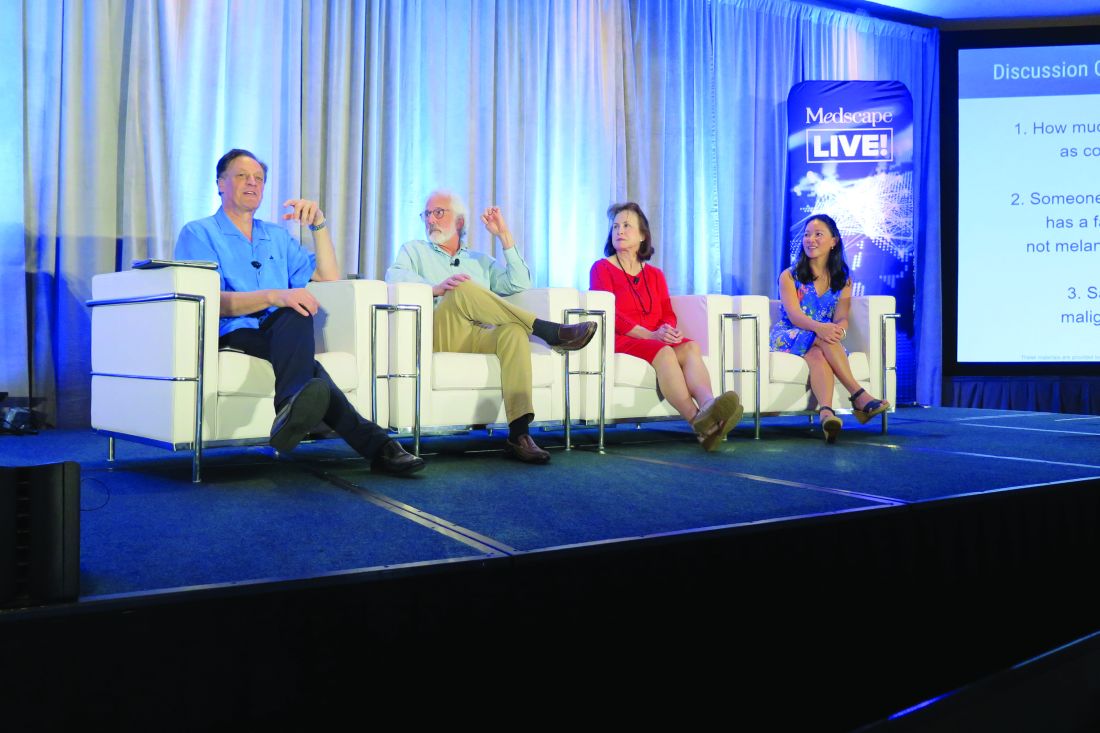
“Do you brush your teeth?” he’ll ask.
“Yes, I do.”
“Well, you should put sunscreen on every day.”
Another panelist, Adelaide A. Hebert, MD, professor of dermatology and pediatrics and chief of pediatric dermatology at the University of Texas, Houston, said that she advises new parents to start sun protection efforts early. “Most sunscreens are not approved for use in children under the age of 6 months because testing has not been done in this age group, but I do recommend protective clothing. I also recommend wrap-around sunglasses, which offer 5% more protection from the sun than regular sunglasses.”
In her opinion, stick sunscreens are “a good add-on,” especially for under the eyes and the backs of the hands, but she is not a fan of spray sunscreens, which can leave large areas of skin unprotected if not applied properly.
Fellow panelist Jennifer Huang, MD, a pediatric dermatologist at Boston Children’s Hospital, who has a special interest in taking care of dermatologic conditions of children with cancer, generally recommends mineral-based sunscreens. “There is data to suggest that nonmineral sunscreens are less safe than mineral sunscreens for humans, and mineral sunscreens are considered to be better for the environment,” Dr. Huang said. “Plus, there are more elegant versions of mineral sunscreens that don’t make your skin pasty white.” However, for patients with darker skin tones, “it can be hard to apply a pasty white sunscreen, so I lean on some recommendations for tinted sunscreens, too, so there are options. I specifically recommend sunscreens that have iron oxides in them so that it can block physical rays and help with the cosmetic appearance.”
Moise Levy, MD, professor of internal medicine and pediatrics at the University of Texas at Austin, said that his approach to imparting sunscreen advice to children and their parents involves a mix of spoken information, printed information, and sunscreen samples for children to try in the office, in the presence of a parent. To help patients choose among different samples, be they ointments, gels, or lotions, he will often ask the child: “‘What do you like the feel of better?’ If the child says, ‘I like this one,’ I make sure the parent hears that,” Dr. Levy said.
Next, Dr. Eichenfield, who moderated the discussion, asked his fellow panelists how they would counsel someone who comes to their practice for evaluation of moles and has a family history of nonmelanoma skin cancer. “I think this is one of the easier counseling sessions, because there are enough kids who are asked about the moles on their skin when they’re at school,” Dr. Hebert said. “I think they’re very ready to wear sun protective clothing and I certainly don’t want any sun exposure that would pose an increased risk for their child.”
In addition to routine sun protection, Dr. Huang recommends annual mole checks for children who have a first-degree relative with a history of malignant melanoma. Other high-risk groups that should undergo annual skin exams include anyone who has received high doses of radiation, bone marrow transplants, prolonged use of voriconazole, or prolonged systemic immunosuppression. Without a known genetic predisposition syndrome, a family history of nonmelanoma skin cancer would not raise concern for melanoma in an otherwise healthy child.
Dr. Eichenfield added that freckling used to be the secondary risk factor for melanoma, “but it’s flipped over to a primary risk factor. A history of immunosuppression or prior cancer is a major risk factor in childhood and teenage years.”
Dr. Eichenfield disclosed that he is a consultant or adviser for numerous pharmaceutical companies. He has also received research funding from AbbVie, Bausch & Lomb, Galderma Laboratories, and Pfizer. Dr. Hebert disclosed that she is a consultant or adviser for AbbVie, Almirall, Amryt Pharma, Arcutis Biotherapeutics, Beiersdorf, Dermavant Sciences, Galderma Laboratories, L’Oreal, Novan, Ortho Dermatologics, Pfizer, and Verrica. Dr. Levy disclosed that he is consultant or adviser for Abeona, Castle Creek, Dusa Pharma, Krystal Bio, Novan, Regeneron, and Sanofi Genzyme. Dr. Huang disclosed that she is an adviser for EllaOla.
MedscapeLive! and this news organization are owned by the same parent company.
“I basically say, ‘sun protection means clothing, shade, [considering the] time of day of exposure, and sunscreen if you are going to be otherwise exposed,’ ” Dr. Eichenfield, chief of pediatric and adolescent dermatology at Rady’s Children’s Hospital, San Diego, said during a panel discussion about sunscreen use at the Hawaii Dermatology Seminar provided by MedscapeLIVE! He recommends photoprotective gear such as rash guards for surfers and other water sport enthusiasts. When patients ask him if they should use sunscreen, he often replies with a question of his own.
“Do you brush your teeth?” he’ll ask.
“Yes, I do.”
“Well, you should put sunscreen on every day.”
Another panelist, Adelaide A. Hebert, MD, professor of dermatology and pediatrics and chief of pediatric dermatology at the University of Texas, Houston, said that she advises new parents to start sun protection efforts early. “Most sunscreens are not approved for use in children under the age of 6 months because testing has not been done in this age group, but I do recommend protective clothing. I also recommend wrap-around sunglasses, which offer 5% more protection from the sun than regular sunglasses.”
In her opinion, stick sunscreens are “a good add-on,” especially for under the eyes and the backs of the hands, but she is not a fan of spray sunscreens, which can leave large areas of skin unprotected if not applied properly.
Fellow panelist Jennifer Huang, MD, a pediatric dermatologist at Boston Children’s Hospital, who has a special interest in taking care of dermatologic conditions of children with cancer, generally recommends mineral-based sunscreens. “There is data to suggest that nonmineral sunscreens are less safe than mineral sunscreens for humans, and mineral sunscreens are considered to be better for the environment,” Dr. Huang said. “Plus, there are more elegant versions of mineral sunscreens that don’t make your skin pasty white.” However, for patients with darker skin tones, “it can be hard to apply a pasty white sunscreen, so I lean on some recommendations for tinted sunscreens, too, so there are options. I specifically recommend sunscreens that have iron oxides in them so that it can block physical rays and help with the cosmetic appearance.”
Moise Levy, MD, professor of internal medicine and pediatrics at the University of Texas at Austin, said that his approach to imparting sunscreen advice to children and their parents involves a mix of spoken information, printed information, and sunscreen samples for children to try in the office, in the presence of a parent. To help patients choose among different samples, be they ointments, gels, or lotions, he will often ask the child: “‘What do you like the feel of better?’ If the child says, ‘I like this one,’ I make sure the parent hears that,” Dr. Levy said.
Next, Dr. Eichenfield, who moderated the discussion, asked his fellow panelists how they would counsel someone who comes to their practice for evaluation of moles and has a family history of nonmelanoma skin cancer. “I think this is one of the easier counseling sessions, because there are enough kids who are asked about the moles on their skin when they’re at school,” Dr. Hebert said. “I think they’re very ready to wear sun protective clothing and I certainly don’t want any sun exposure that would pose an increased risk for their child.”
In addition to routine sun protection, Dr. Huang recommends annual mole checks for children who have a first-degree relative with a history of malignant melanoma. Other high-risk groups that should undergo annual skin exams include anyone who has received high doses of radiation, bone marrow transplants, prolonged use of voriconazole, or prolonged systemic immunosuppression. Without a known genetic predisposition syndrome, a family history of nonmelanoma skin cancer would not raise concern for melanoma in an otherwise healthy child.
Dr. Eichenfield added that freckling used to be the secondary risk factor for melanoma, “but it’s flipped over to a primary risk factor. A history of immunosuppression or prior cancer is a major risk factor in childhood and teenage years.”
Dr. Eichenfield disclosed that he is a consultant or adviser for numerous pharmaceutical companies. He has also received research funding from AbbVie, Bausch & Lomb, Galderma Laboratories, and Pfizer. Dr. Hebert disclosed that she is a consultant or adviser for AbbVie, Almirall, Amryt Pharma, Arcutis Biotherapeutics, Beiersdorf, Dermavant Sciences, Galderma Laboratories, L’Oreal, Novan, Ortho Dermatologics, Pfizer, and Verrica. Dr. Levy disclosed that he is consultant or adviser for Abeona, Castle Creek, Dusa Pharma, Krystal Bio, Novan, Regeneron, and Sanofi Genzyme. Dr. Huang disclosed that she is an adviser for EllaOla.
MedscapeLive! and this news organization are owned by the same parent company.
“I basically say, ‘sun protection means clothing, shade, [considering the] time of day of exposure, and sunscreen if you are going to be otherwise exposed,’ ” Dr. Eichenfield, chief of pediatric and adolescent dermatology at Rady’s Children’s Hospital, San Diego, said during a panel discussion about sunscreen use at the Hawaii Dermatology Seminar provided by MedscapeLIVE! He recommends photoprotective gear such as rash guards for surfers and other water sport enthusiasts. When patients ask him if they should use sunscreen, he often replies with a question of his own.
“Do you brush your teeth?” he’ll ask.
“Yes, I do.”
“Well, you should put sunscreen on every day.”
Another panelist, Adelaide A. Hebert, MD, professor of dermatology and pediatrics and chief of pediatric dermatology at the University of Texas, Houston, said that she advises new parents to start sun protection efforts early. “Most sunscreens are not approved for use in children under the age of 6 months because testing has not been done in this age group, but I do recommend protective clothing. I also recommend wrap-around sunglasses, which offer 5% more protection from the sun than regular sunglasses.”
In her opinion, stick sunscreens are “a good add-on,” especially for under the eyes and the backs of the hands, but she is not a fan of spray sunscreens, which can leave large areas of skin unprotected if not applied properly.
Fellow panelist Jennifer Huang, MD, a pediatric dermatologist at Boston Children’s Hospital, who has a special interest in taking care of dermatologic conditions of children with cancer, generally recommends mineral-based sunscreens. “There is data to suggest that nonmineral sunscreens are less safe than mineral sunscreens for humans, and mineral sunscreens are considered to be better for the environment,” Dr. Huang said. “Plus, there are more elegant versions of mineral sunscreens that don’t make your skin pasty white.” However, for patients with darker skin tones, “it can be hard to apply a pasty white sunscreen, so I lean on some recommendations for tinted sunscreens, too, so there are options. I specifically recommend sunscreens that have iron oxides in them so that it can block physical rays and help with the cosmetic appearance.”
Moise Levy, MD, professor of internal medicine and pediatrics at the University of Texas at Austin, said that his approach to imparting sunscreen advice to children and their parents involves a mix of spoken information, printed information, and sunscreen samples for children to try in the office, in the presence of a parent. To help patients choose among different samples, be they ointments, gels, or lotions, he will often ask the child: “‘What do you like the feel of better?’ If the child says, ‘I like this one,’ I make sure the parent hears that,” Dr. Levy said.
Next, Dr. Eichenfield, who moderated the discussion, asked his fellow panelists how they would counsel someone who comes to their practice for evaluation of moles and has a family history of nonmelanoma skin cancer. “I think this is one of the easier counseling sessions, because there are enough kids who are asked about the moles on their skin when they’re at school,” Dr. Hebert said. “I think they’re very ready to wear sun protective clothing and I certainly don’t want any sun exposure that would pose an increased risk for their child.”
In addition to routine sun protection, Dr. Huang recommends annual mole checks for children who have a first-degree relative with a history of malignant melanoma. Other high-risk groups that should undergo annual skin exams include anyone who has received high doses of radiation, bone marrow transplants, prolonged use of voriconazole, or prolonged systemic immunosuppression. Without a known genetic predisposition syndrome, a family history of nonmelanoma skin cancer would not raise concern for melanoma in an otherwise healthy child.
Dr. Eichenfield added that freckling used to be the secondary risk factor for melanoma, “but it’s flipped over to a primary risk factor. A history of immunosuppression or prior cancer is a major risk factor in childhood and teenage years.”
Dr. Eichenfield disclosed that he is a consultant or adviser for numerous pharmaceutical companies. He has also received research funding from AbbVie, Bausch & Lomb, Galderma Laboratories, and Pfizer. Dr. Hebert disclosed that she is a consultant or adviser for AbbVie, Almirall, Amryt Pharma, Arcutis Biotherapeutics, Beiersdorf, Dermavant Sciences, Galderma Laboratories, L’Oreal, Novan, Ortho Dermatologics, Pfizer, and Verrica. Dr. Levy disclosed that he is consultant or adviser for Abeona, Castle Creek, Dusa Pharma, Krystal Bio, Novan, Regeneron, and Sanofi Genzyme. Dr. Huang disclosed that she is an adviser for EllaOla.
MedscapeLive! and this news organization are owned by the same parent company.
FROM THE MEDSCAPELIVE! HAWAII DERMATOLOGY SEMINAR
Are periodontitis, stroke, and Alzheimer’s disease linked?
MADRID –
The Spanish Society of Dentistry and Osseointegration (SEPA) and the Spanish Society of Neurology (SEN) recently released a report with the latest data on this topic. The report reviews, updates, and presents the most recent scientific evidence regarding this link. It also provides practical recommendations that, on the basis of the evidence, should be applied in dental clinics and neurology centers.
As Yago Leira, DDS, PhD, periodontist and coordinator of the SEPA-SEN working group, told this news organization, “The main takeaway from this scientific report is that patients with periodontitis are at nearly twice the risk of developing Alzheimer’s disease and at triple the risk of ischemic stroke.”
Data from the report show that individuals with periodontitis are at 2.8 times’ higher risk of ischemic stroke. The available evidence regarding hemorrhagic stroke, however, is conflicting.
How does this dental condition affect the course of cardiovascular disease? Observational studies have shown that those who have had an ischemic stroke and have a confirmed diagnosis of periodontitis are at greater risk of suffering a recurrent vascular event, worse neurologic deficit, and postictal depression than are patients without periodontitis.
Immune‐mediated inflammation
As far as its link to Alzheimer’s disease, meta-analyses of epidemiologic studies show that periodontitis is associated with a 1.7 times greater risk of this type of dementia and that the risk triples among patients with more serious forms of periodontitis.
Likewise, studies suggest that individuals with dementia or neurocognitive impairment are at a greater risk of suffering periodontitis. Other studies indicate that individuals with periodontitis have worse outcomes on various neuropsychological tests of cognitive function.
The current report presents the evidence from three clearly defined perspectives: The epidemiologic association between periodontitis and these neurologic diseases, the biological mechanisms that may explain this link, and interventional studies of dental treatment as a means of preventing stroke and Alzheimer’s disease.
“There is a possible biological explanation for these epidemiological findings. The report concludes that the low-grade chronic, systemic, immune-mediated inflammatory response induced by the bacteria and their endotoxins and the proinflammatory mediators circulating through the blood contributes to various biological processes that are involved in neurological impairment and cerebral ischemia,” said Dr. Leira, one of the report’s authors.
Ana Frank, MD, PhD, another author of this study, is head of the neurology department at the La Paz University Hospital in Madrid and a member of the SEPA-SEN group. She said in an interview that the main biological mechanism in stroke and Alzheimer’s disease is chronic exposure of the entire brain (vasculature, neurons, and astrocytes) to the harmful effects of periodontal infection. “Although low in intensity, this [exposure] is sufficient to set off a series of events that eventually lead to vascular endothelial injury, changes to neurons and astrocytes, and damage to the neuropil.”
As far as the evidence of an epidemiologic association between periodontitis and both neurologic diseases, Dr. Frank cited the exponential increase in risk brought on by periodontitis. She said that further epidemiologic studies are necessary to gain a better understanding of the magnitude of the problem.
A preventive alternative?
Dr. Leira cited evidence that periodontal treatment could provide a means of preventing stroke and dementia. He pointed out that numerous population studies have observed various oral health interventions (e.g., periodic dental prophylaxis or periodontal treatment) and regular dental visits to reduce the risk of developing dementia and stroke. “However, we don’t currently have randomized clinical trials that were designed to investigate whether periodontal treatment may be a primary or a secondary preventive measure against these neurological conditions.”
According to Dr. Leira, “There are currently several research groups in the United States and Europe, including ours, that are performing clinical trials to assess the impact of periodontal treatment on recurrent vascular events in patients with cerebrovascular disease.
“On the other hand, there are various interventional studies underway that are evaluating the potential effect of periodontal treatment on cognitive function in patients with dementia. Along these lines, there appear to be encouraging results from the 1-year follow-up in the GAIN study, which was a phase 2/3 clinical trial testing atuzaginstat. Atuzaginstat is an inhibitor of gingipain, the endotoxin produced by Porphyromonas gingivalis, which is one of the bacteria thought to be responsible for periodontitis. The drug reduces neurocognitive impairment in patients with high levels of antibodies against this periodontal pathogen.”
Toward clinical practice
The report has a practical focus. The intention is that this evidence will make its way into recommendations for dentists to implement in clinical practice, especially with elderly patients or patients with risk factors for stroke.
In this regard, Dr. Leira said, “On one hand, dentists have to know how to approach patients who have already suffered a stroke (most of whom have vascular risk factors like diabetes and hypertension), many of whom have polypharmacy and are [taking] certain drugs like blood thinners that could negatively impact various dental procedures. In such cases, it is important to maintain direct contact with a neurologist, since these patients ought to be treated with a multidisciplinary approach.
“On the other hand, each patient who comes to the dental office and has a diagnosis of periodontitis could be screened to identify potential vascular risk factors, even though the definitive diagnosis would need to be given by a specialist physician. To this end, SEPA is carrying out the Promosalud (“Health Promotion”) project, which will soon be applied in a large number of dental clinics in Spain,” added Dr. Leira.
“Lastly, specialists in odontology must understand the potential positive benefits surrounding systemic vascular inflammation that periodontal treatment could provide, including, for example, metabolic control and lowering blood pressure.”
For patients with cognitive impairment, the authors of the report recommended adhering to the following steps during dental visits: Inform the patient and the patient’s caregiver about the importance of good dental hygiene and monitor for any signs of infection or dental disease; address pain in every patient with cognitive impairment and dental problems, especially those with agitation, even if the patient isn’t specifically complaining of pain (also, try not to give opioids); finally, avoid sedation as much as possible and use the smallest effective dose if it becomes necessary.
Prescribe oral hygiene
Regarding recommendations that neurologists should follow during consultations in light of the link between these diseases and periodontitis, Dr. Frank said, “Regardless of how old our patients are, I believe it’s important to emphasize the importance of practicing good oral and dental hygiene. It’s a good strategy to put this in writing in medical reports, alongside the usual recommendations about healthy lifestyle habits and monitoring for diseases like high blood pressure, diabetes, or dyslipidemia. These, among other factors like smoking, a sedentary lifestyle, alcoholism, and other drug addictions, are vascular risk factors and are therefore risk factors for stroke and dementia.”
According to Dr. Frank, the public is largely unaware of the relationship between periodontitis and incident neurologic diseases. “We still have a long way to go before we can say that the public is aware of this potential link. And not just the public, either. I believe we must stress among our colleagues and among health care professionals in general the importance of promoting dental health to improve people’s overall health.”
In this regard, Dr. Leira emphasized the authors’ intention to make this report available not only to oral health and neurologic health care professionals but also to primary care physicians and nurses so that patients with cerebrovascular disease or Alzheimer’s disease and their caregivers can develop a greater awareness and thereby improve prevention.
“This study will also provide the scientific basis to support the SEPA-SEN working group as they implement their future activities and projects,” Dr. Leira concluded.
Dr. Leira and Dr. Frank have disclosed no relevant financial relationships.
This article was translated from the Medscape Spanish Edition. A version of this article appeared on Medscape.com.
MADRID –
The Spanish Society of Dentistry and Osseointegration (SEPA) and the Spanish Society of Neurology (SEN) recently released a report with the latest data on this topic. The report reviews, updates, and presents the most recent scientific evidence regarding this link. It also provides practical recommendations that, on the basis of the evidence, should be applied in dental clinics and neurology centers.
As Yago Leira, DDS, PhD, periodontist and coordinator of the SEPA-SEN working group, told this news organization, “The main takeaway from this scientific report is that patients with periodontitis are at nearly twice the risk of developing Alzheimer’s disease and at triple the risk of ischemic stroke.”
Data from the report show that individuals with periodontitis are at 2.8 times’ higher risk of ischemic stroke. The available evidence regarding hemorrhagic stroke, however, is conflicting.
How does this dental condition affect the course of cardiovascular disease? Observational studies have shown that those who have had an ischemic stroke and have a confirmed diagnosis of periodontitis are at greater risk of suffering a recurrent vascular event, worse neurologic deficit, and postictal depression than are patients without periodontitis.
Immune‐mediated inflammation
As far as its link to Alzheimer’s disease, meta-analyses of epidemiologic studies show that periodontitis is associated with a 1.7 times greater risk of this type of dementia and that the risk triples among patients with more serious forms of periodontitis.
Likewise, studies suggest that individuals with dementia or neurocognitive impairment are at a greater risk of suffering periodontitis. Other studies indicate that individuals with periodontitis have worse outcomes on various neuropsychological tests of cognitive function.
The current report presents the evidence from three clearly defined perspectives: The epidemiologic association between periodontitis and these neurologic diseases, the biological mechanisms that may explain this link, and interventional studies of dental treatment as a means of preventing stroke and Alzheimer’s disease.
“There is a possible biological explanation for these epidemiological findings. The report concludes that the low-grade chronic, systemic, immune-mediated inflammatory response induced by the bacteria and their endotoxins and the proinflammatory mediators circulating through the blood contributes to various biological processes that are involved in neurological impairment and cerebral ischemia,” said Dr. Leira, one of the report’s authors.
Ana Frank, MD, PhD, another author of this study, is head of the neurology department at the La Paz University Hospital in Madrid and a member of the SEPA-SEN group. She said in an interview that the main biological mechanism in stroke and Alzheimer’s disease is chronic exposure of the entire brain (vasculature, neurons, and astrocytes) to the harmful effects of periodontal infection. “Although low in intensity, this [exposure] is sufficient to set off a series of events that eventually lead to vascular endothelial injury, changes to neurons and astrocytes, and damage to the neuropil.”
As far as the evidence of an epidemiologic association between periodontitis and both neurologic diseases, Dr. Frank cited the exponential increase in risk brought on by periodontitis. She said that further epidemiologic studies are necessary to gain a better understanding of the magnitude of the problem.
A preventive alternative?
Dr. Leira cited evidence that periodontal treatment could provide a means of preventing stroke and dementia. He pointed out that numerous population studies have observed various oral health interventions (e.g., periodic dental prophylaxis or periodontal treatment) and regular dental visits to reduce the risk of developing dementia and stroke. “However, we don’t currently have randomized clinical trials that were designed to investigate whether periodontal treatment may be a primary or a secondary preventive measure against these neurological conditions.”
According to Dr. Leira, “There are currently several research groups in the United States and Europe, including ours, that are performing clinical trials to assess the impact of periodontal treatment on recurrent vascular events in patients with cerebrovascular disease.
“On the other hand, there are various interventional studies underway that are evaluating the potential effect of periodontal treatment on cognitive function in patients with dementia. Along these lines, there appear to be encouraging results from the 1-year follow-up in the GAIN study, which was a phase 2/3 clinical trial testing atuzaginstat. Atuzaginstat is an inhibitor of gingipain, the endotoxin produced by Porphyromonas gingivalis, which is one of the bacteria thought to be responsible for periodontitis. The drug reduces neurocognitive impairment in patients with high levels of antibodies against this periodontal pathogen.”
Toward clinical practice
The report has a practical focus. The intention is that this evidence will make its way into recommendations for dentists to implement in clinical practice, especially with elderly patients or patients with risk factors for stroke.
In this regard, Dr. Leira said, “On one hand, dentists have to know how to approach patients who have already suffered a stroke (most of whom have vascular risk factors like diabetes and hypertension), many of whom have polypharmacy and are [taking] certain drugs like blood thinners that could negatively impact various dental procedures. In such cases, it is important to maintain direct contact with a neurologist, since these patients ought to be treated with a multidisciplinary approach.
“On the other hand, each patient who comes to the dental office and has a diagnosis of periodontitis could be screened to identify potential vascular risk factors, even though the definitive diagnosis would need to be given by a specialist physician. To this end, SEPA is carrying out the Promosalud (“Health Promotion”) project, which will soon be applied in a large number of dental clinics in Spain,” added Dr. Leira.
“Lastly, specialists in odontology must understand the potential positive benefits surrounding systemic vascular inflammation that periodontal treatment could provide, including, for example, metabolic control and lowering blood pressure.”
For patients with cognitive impairment, the authors of the report recommended adhering to the following steps during dental visits: Inform the patient and the patient’s caregiver about the importance of good dental hygiene and monitor for any signs of infection or dental disease; address pain in every patient with cognitive impairment and dental problems, especially those with agitation, even if the patient isn’t specifically complaining of pain (also, try not to give opioids); finally, avoid sedation as much as possible and use the smallest effective dose if it becomes necessary.
Prescribe oral hygiene
Regarding recommendations that neurologists should follow during consultations in light of the link between these diseases and periodontitis, Dr. Frank said, “Regardless of how old our patients are, I believe it’s important to emphasize the importance of practicing good oral and dental hygiene. It’s a good strategy to put this in writing in medical reports, alongside the usual recommendations about healthy lifestyle habits and monitoring for diseases like high blood pressure, diabetes, or dyslipidemia. These, among other factors like smoking, a sedentary lifestyle, alcoholism, and other drug addictions, are vascular risk factors and are therefore risk factors for stroke and dementia.”
According to Dr. Frank, the public is largely unaware of the relationship between periodontitis and incident neurologic diseases. “We still have a long way to go before we can say that the public is aware of this potential link. And not just the public, either. I believe we must stress among our colleagues and among health care professionals in general the importance of promoting dental health to improve people’s overall health.”
In this regard, Dr. Leira emphasized the authors’ intention to make this report available not only to oral health and neurologic health care professionals but also to primary care physicians and nurses so that patients with cerebrovascular disease or Alzheimer’s disease and their caregivers can develop a greater awareness and thereby improve prevention.
“This study will also provide the scientific basis to support the SEPA-SEN working group as they implement their future activities and projects,” Dr. Leira concluded.
Dr. Leira and Dr. Frank have disclosed no relevant financial relationships.
This article was translated from the Medscape Spanish Edition. A version of this article appeared on Medscape.com.
MADRID –
The Spanish Society of Dentistry and Osseointegration (SEPA) and the Spanish Society of Neurology (SEN) recently released a report with the latest data on this topic. The report reviews, updates, and presents the most recent scientific evidence regarding this link. It also provides practical recommendations that, on the basis of the evidence, should be applied in dental clinics and neurology centers.
As Yago Leira, DDS, PhD, periodontist and coordinator of the SEPA-SEN working group, told this news organization, “The main takeaway from this scientific report is that patients with periodontitis are at nearly twice the risk of developing Alzheimer’s disease and at triple the risk of ischemic stroke.”
Data from the report show that individuals with periodontitis are at 2.8 times’ higher risk of ischemic stroke. The available evidence regarding hemorrhagic stroke, however, is conflicting.
How does this dental condition affect the course of cardiovascular disease? Observational studies have shown that those who have had an ischemic stroke and have a confirmed diagnosis of periodontitis are at greater risk of suffering a recurrent vascular event, worse neurologic deficit, and postictal depression than are patients without periodontitis.
Immune‐mediated inflammation
As far as its link to Alzheimer’s disease, meta-analyses of epidemiologic studies show that periodontitis is associated with a 1.7 times greater risk of this type of dementia and that the risk triples among patients with more serious forms of periodontitis.
Likewise, studies suggest that individuals with dementia or neurocognitive impairment are at a greater risk of suffering periodontitis. Other studies indicate that individuals with periodontitis have worse outcomes on various neuropsychological tests of cognitive function.
The current report presents the evidence from three clearly defined perspectives: The epidemiologic association between periodontitis and these neurologic diseases, the biological mechanisms that may explain this link, and interventional studies of dental treatment as a means of preventing stroke and Alzheimer’s disease.
“There is a possible biological explanation for these epidemiological findings. The report concludes that the low-grade chronic, systemic, immune-mediated inflammatory response induced by the bacteria and their endotoxins and the proinflammatory mediators circulating through the blood contributes to various biological processes that are involved in neurological impairment and cerebral ischemia,” said Dr. Leira, one of the report’s authors.
Ana Frank, MD, PhD, another author of this study, is head of the neurology department at the La Paz University Hospital in Madrid and a member of the SEPA-SEN group. She said in an interview that the main biological mechanism in stroke and Alzheimer’s disease is chronic exposure of the entire brain (vasculature, neurons, and astrocytes) to the harmful effects of periodontal infection. “Although low in intensity, this [exposure] is sufficient to set off a series of events that eventually lead to vascular endothelial injury, changes to neurons and astrocytes, and damage to the neuropil.”
As far as the evidence of an epidemiologic association between periodontitis and both neurologic diseases, Dr. Frank cited the exponential increase in risk brought on by periodontitis. She said that further epidemiologic studies are necessary to gain a better understanding of the magnitude of the problem.
A preventive alternative?
Dr. Leira cited evidence that periodontal treatment could provide a means of preventing stroke and dementia. He pointed out that numerous population studies have observed various oral health interventions (e.g., periodic dental prophylaxis or periodontal treatment) and regular dental visits to reduce the risk of developing dementia and stroke. “However, we don’t currently have randomized clinical trials that were designed to investigate whether periodontal treatment may be a primary or a secondary preventive measure against these neurological conditions.”
According to Dr. Leira, “There are currently several research groups in the United States and Europe, including ours, that are performing clinical trials to assess the impact of periodontal treatment on recurrent vascular events in patients with cerebrovascular disease.
“On the other hand, there are various interventional studies underway that are evaluating the potential effect of periodontal treatment on cognitive function in patients with dementia. Along these lines, there appear to be encouraging results from the 1-year follow-up in the GAIN study, which was a phase 2/3 clinical trial testing atuzaginstat. Atuzaginstat is an inhibitor of gingipain, the endotoxin produced by Porphyromonas gingivalis, which is one of the bacteria thought to be responsible for periodontitis. The drug reduces neurocognitive impairment in patients with high levels of antibodies against this periodontal pathogen.”
Toward clinical practice
The report has a practical focus. The intention is that this evidence will make its way into recommendations for dentists to implement in clinical practice, especially with elderly patients or patients with risk factors for stroke.
In this regard, Dr. Leira said, “On one hand, dentists have to know how to approach patients who have already suffered a stroke (most of whom have vascular risk factors like diabetes and hypertension), many of whom have polypharmacy and are [taking] certain drugs like blood thinners that could negatively impact various dental procedures. In such cases, it is important to maintain direct contact with a neurologist, since these patients ought to be treated with a multidisciplinary approach.
“On the other hand, each patient who comes to the dental office and has a diagnosis of periodontitis could be screened to identify potential vascular risk factors, even though the definitive diagnosis would need to be given by a specialist physician. To this end, SEPA is carrying out the Promosalud (“Health Promotion”) project, which will soon be applied in a large number of dental clinics in Spain,” added Dr. Leira.
“Lastly, specialists in odontology must understand the potential positive benefits surrounding systemic vascular inflammation that periodontal treatment could provide, including, for example, metabolic control and lowering blood pressure.”
For patients with cognitive impairment, the authors of the report recommended adhering to the following steps during dental visits: Inform the patient and the patient’s caregiver about the importance of good dental hygiene and monitor for any signs of infection or dental disease; address pain in every patient with cognitive impairment and dental problems, especially those with agitation, even if the patient isn’t specifically complaining of pain (also, try not to give opioids); finally, avoid sedation as much as possible and use the smallest effective dose if it becomes necessary.
Prescribe oral hygiene
Regarding recommendations that neurologists should follow during consultations in light of the link between these diseases and periodontitis, Dr. Frank said, “Regardless of how old our patients are, I believe it’s important to emphasize the importance of practicing good oral and dental hygiene. It’s a good strategy to put this in writing in medical reports, alongside the usual recommendations about healthy lifestyle habits and monitoring for diseases like high blood pressure, diabetes, or dyslipidemia. These, among other factors like smoking, a sedentary lifestyle, alcoholism, and other drug addictions, are vascular risk factors and are therefore risk factors for stroke and dementia.”
According to Dr. Frank, the public is largely unaware of the relationship between periodontitis and incident neurologic diseases. “We still have a long way to go before we can say that the public is aware of this potential link. And not just the public, either. I believe we must stress among our colleagues and among health care professionals in general the importance of promoting dental health to improve people’s overall health.”
In this regard, Dr. Leira emphasized the authors’ intention to make this report available not only to oral health and neurologic health care professionals but also to primary care physicians and nurses so that patients with cerebrovascular disease or Alzheimer’s disease and their caregivers can develop a greater awareness and thereby improve prevention.
“This study will also provide the scientific basis to support the SEPA-SEN working group as they implement their future activities and projects,” Dr. Leira concluded.
Dr. Leira and Dr. Frank have disclosed no relevant financial relationships.
This article was translated from the Medscape Spanish Edition. A version of this article appeared on Medscape.com.
Depression drives metabolic syndrome
Previous research has established a connection between metabolic syndrome and depression, but data on the increased risk for depressed individuals to develop metabolic syndrome (MetS) are lacking, wrote Lara Onofre Ferriani, PhD, of Federal University of Espírito Santo, Vitoria, Brazil, and colleagues.
“Individuals with MetS and depression have increased levels of inflammatory markers, and it is speculated that inflammation could mediate this comorbidity,” they said.
In a study published in the Journal of Psychiatric Research, the investigators reviewed data from 13,883 participants in the Brazilian Longitudinal Study of Adult Health; all were civil servants at universities in Brazil. The participants ranged from 35 to 74 years of age, with a mean age of 51.9 years; 54.3% were women; and 52.4% were white; the mean follow-up period was 3.8 years.
The primary outcome was the association between depression diagnosis and severity on components of MetS at baseline and over a 4-year period. Participants were classified by MetS trajectory as recovered, incident, or persistent, and classified by depression status as without depression or with a mild, moderate, or severe current depressive episode. Depression status was based on the Clinical Interview Schedule Revised. MetS components and diagnosis were based on the National Cholesterol Education Program Adult Treatment Panel III.
In a logistic regression analysis, baseline depression was positively associated with recovered, incident, and persistent MetS (odds ratios, 1.59, 1.45, and 1.70, respectively).
Depression at baseline also was significantly associated with separate components of MetS: large waist circumference, high triglycerides, low high-density lipoprotein cholesterol, and hyperglycemia, with odds ratios of 1.47, 1.23, 1.30, and 1.38, respectively.
Although not seen at baseline, a significant positive association between baseline depression and the presence of three or more MetS components was noted at follow-up, with a positive dose-response effect, the researchers wrote in their discussion.
Not all associations were statistically significant, but this was mainly because of the small number of cases of moderate and severe depression, they said. However, the magnitude of associations was greater in severe depression, when compared with moderate and mild, which suggests that the risk of MetS may be higher in this population, they added.
The study findings were limited by several factors including the possible misclassification of depression, inability to differentiate among depressive subtypes, and the potential lack of generalizability to other populations beyond Brazilian civil servants, the researchers noted.
However, the results were strengthened by the large sample size and support the role of depression as a risk factor for MetS, they said. More research is needed to determine a bidirectional relationship and to assess the trajectory of depression after MetS develops, but the findings “highlight the need to investigate and manage metabolic and cardiovascular alterations in the presence of depression in clinical settings,” they concluded.
The study was supported by the Brazilian Ministry of Health (Science and Technology Department) and the Brazilian Ministry of Science, Technology and Innovation FINEP and CNPq, and by the Coordenaçaõ de Aperfeiçoamento de Pessoal de Nível Superior – Brasil (CAPES). The researchers had no financial conflicts to disclose.
Previous research has established a connection between metabolic syndrome and depression, but data on the increased risk for depressed individuals to develop metabolic syndrome (MetS) are lacking, wrote Lara Onofre Ferriani, PhD, of Federal University of Espírito Santo, Vitoria, Brazil, and colleagues.
“Individuals with MetS and depression have increased levels of inflammatory markers, and it is speculated that inflammation could mediate this comorbidity,” they said.
In a study published in the Journal of Psychiatric Research, the investigators reviewed data from 13,883 participants in the Brazilian Longitudinal Study of Adult Health; all were civil servants at universities in Brazil. The participants ranged from 35 to 74 years of age, with a mean age of 51.9 years; 54.3% were women; and 52.4% were white; the mean follow-up period was 3.8 years.
The primary outcome was the association between depression diagnosis and severity on components of MetS at baseline and over a 4-year period. Participants were classified by MetS trajectory as recovered, incident, or persistent, and classified by depression status as without depression or with a mild, moderate, or severe current depressive episode. Depression status was based on the Clinical Interview Schedule Revised. MetS components and diagnosis were based on the National Cholesterol Education Program Adult Treatment Panel III.
In a logistic regression analysis, baseline depression was positively associated with recovered, incident, and persistent MetS (odds ratios, 1.59, 1.45, and 1.70, respectively).
Depression at baseline also was significantly associated with separate components of MetS: large waist circumference, high triglycerides, low high-density lipoprotein cholesterol, and hyperglycemia, with odds ratios of 1.47, 1.23, 1.30, and 1.38, respectively.
Although not seen at baseline, a significant positive association between baseline depression and the presence of three or more MetS components was noted at follow-up, with a positive dose-response effect, the researchers wrote in their discussion.
Not all associations were statistically significant, but this was mainly because of the small number of cases of moderate and severe depression, they said. However, the magnitude of associations was greater in severe depression, when compared with moderate and mild, which suggests that the risk of MetS may be higher in this population, they added.
The study findings were limited by several factors including the possible misclassification of depression, inability to differentiate among depressive subtypes, and the potential lack of generalizability to other populations beyond Brazilian civil servants, the researchers noted.
However, the results were strengthened by the large sample size and support the role of depression as a risk factor for MetS, they said. More research is needed to determine a bidirectional relationship and to assess the trajectory of depression after MetS develops, but the findings “highlight the need to investigate and manage metabolic and cardiovascular alterations in the presence of depression in clinical settings,” they concluded.
The study was supported by the Brazilian Ministry of Health (Science and Technology Department) and the Brazilian Ministry of Science, Technology and Innovation FINEP and CNPq, and by the Coordenaçaõ de Aperfeiçoamento de Pessoal de Nível Superior – Brasil (CAPES). The researchers had no financial conflicts to disclose.
Previous research has established a connection between metabolic syndrome and depression, but data on the increased risk for depressed individuals to develop metabolic syndrome (MetS) are lacking, wrote Lara Onofre Ferriani, PhD, of Federal University of Espírito Santo, Vitoria, Brazil, and colleagues.
“Individuals with MetS and depression have increased levels of inflammatory markers, and it is speculated that inflammation could mediate this comorbidity,” they said.
In a study published in the Journal of Psychiatric Research, the investigators reviewed data from 13,883 participants in the Brazilian Longitudinal Study of Adult Health; all were civil servants at universities in Brazil. The participants ranged from 35 to 74 years of age, with a mean age of 51.9 years; 54.3% were women; and 52.4% were white; the mean follow-up period was 3.8 years.
The primary outcome was the association between depression diagnosis and severity on components of MetS at baseline and over a 4-year period. Participants were classified by MetS trajectory as recovered, incident, or persistent, and classified by depression status as without depression or with a mild, moderate, or severe current depressive episode. Depression status was based on the Clinical Interview Schedule Revised. MetS components and diagnosis were based on the National Cholesterol Education Program Adult Treatment Panel III.
In a logistic regression analysis, baseline depression was positively associated with recovered, incident, and persistent MetS (odds ratios, 1.59, 1.45, and 1.70, respectively).
Depression at baseline also was significantly associated with separate components of MetS: large waist circumference, high triglycerides, low high-density lipoprotein cholesterol, and hyperglycemia, with odds ratios of 1.47, 1.23, 1.30, and 1.38, respectively.
Although not seen at baseline, a significant positive association between baseline depression and the presence of three or more MetS components was noted at follow-up, with a positive dose-response effect, the researchers wrote in their discussion.
Not all associations were statistically significant, but this was mainly because of the small number of cases of moderate and severe depression, they said. However, the magnitude of associations was greater in severe depression, when compared with moderate and mild, which suggests that the risk of MetS may be higher in this population, they added.
The study findings were limited by several factors including the possible misclassification of depression, inability to differentiate among depressive subtypes, and the potential lack of generalizability to other populations beyond Brazilian civil servants, the researchers noted.
However, the results were strengthened by the large sample size and support the role of depression as a risk factor for MetS, they said. More research is needed to determine a bidirectional relationship and to assess the trajectory of depression after MetS develops, but the findings “highlight the need to investigate and manage metabolic and cardiovascular alterations in the presence of depression in clinical settings,” they concluded.
The study was supported by the Brazilian Ministry of Health (Science and Technology Department) and the Brazilian Ministry of Science, Technology and Innovation FINEP and CNPq, and by the Coordenaçaõ de Aperfeiçoamento de Pessoal de Nível Superior – Brasil (CAPES). The researchers had no financial conflicts to disclose.
FROM THE JOURNAL OF PSYCHIATRIC RESEARCH
Novel cannabis oil curbs tics in severe Tourette’s
(TS), results of a double-blind, placebo-controlled, crossover study show.
“In a methodologically robust manner (and independent of any drug company sponsorship), we provide evidence for the effectiveness of repeated dosing with THC:CBD vs. placebo in tic suppression, as well as reduction of comorbid anxiety and obsessive-compulsive disorder in severe TS,” neuropsychiatrist and lead investigator Philip Mosley, PhD, said in an interview.
The results offer support to people with TS who “want to approach their doctor to try medicinal cannabis when other drugs have not worked or are intolerable,” said Dr. Mosley, of the Wesley Research Institute and QIMR Berghofer Medical Research Institute, Herston, Australia.
The study was published online in NEJM Evidence.
A viable treatment option
Twenty-two adults (mean age, 31 years) with severe TS received THC:CBD oil titrated upward over 6 weeks to a daily dose of 20 mg of THC and 20 mg of CBD, followed by a 6-week course of placebo (or vice versa). Six participants had not previously used cannabis.
The primary outcome was the total tic score on the Yale Global Tic Severity Scale (YGTSS; range 0 to 50 with higher scores = greater tic severity).
The mean baseline YGTSS total tic score was 35.7. At 6 weeks, the reduction in total tic score was 8.9 with THC:CBD vs. 2.5 with placebo.
A linear mixed-effects model (intention-to-treat) showed a significant interaction of treatment and visit number (P = .008), indicating a greater decrease (improvement) in tic score over time with THC:CBD, the study team reported.
On average, the magnitude of the tic reduction was “moderate” and comparable to the effect observed with existing treatments such as antipsychotic agents, the investigators noted.
THC:CBD also led to a reduction in other symptoms associated with TS, particularly symptoms of OCD and anxiety.
The symptomatic response to THC:CBD correlated with serum metabolites of the cannabinoids, further supporting a biological relationship, the researchers noted.
There were no serious adverse events. Adverse effects with THC:CBD were generally mild. The most common adverse effect was cognitive difficulties, including slowed mentation, memory lapses, and poor concentration.
“Like many studies of psychoactive compounds, blinding among participants was a problem,” the researchers noted. Despite best efforts to conceal treatment allocation and match placebo to the active agent in terms of color and smell, most participants were able to correctly guess their treatment order.
Based on the findings in this small trial, larger and longer trials of THC:CBD in TS are warranted, they concluded.
“We need a plurality of treatment options in Tourette syndrome. For some, antipsychotics are effective tic-suppressing agents but for many these benefits are complicated by side effects such as weight gain & sedation,” Dr. Mosley tweeted. “Cannabinoids are a biologically plausible therapeutic agent. The body’s own ‘endocannabinoid’ receptors are concentrated in the basal ganglia – the neuroanatomical nexus of TS.”
The study was funded by the Wesley Medical Research Institute, Brisbane, and the Lambert Initiative for Cannabinoid Therapeutics, a philanthropically funded research organization at the University of Sydney, Australia. Dr. Mosley reports no relevant financial relationships.
A version of this article first appeared on Medscape.com.
(TS), results of a double-blind, placebo-controlled, crossover study show.
“In a methodologically robust manner (and independent of any drug company sponsorship), we provide evidence for the effectiveness of repeated dosing with THC:CBD vs. placebo in tic suppression, as well as reduction of comorbid anxiety and obsessive-compulsive disorder in severe TS,” neuropsychiatrist and lead investigator Philip Mosley, PhD, said in an interview.
The results offer support to people with TS who “want to approach their doctor to try medicinal cannabis when other drugs have not worked or are intolerable,” said Dr. Mosley, of the Wesley Research Institute and QIMR Berghofer Medical Research Institute, Herston, Australia.
The study was published online in NEJM Evidence.
A viable treatment option
Twenty-two adults (mean age, 31 years) with severe TS received THC:CBD oil titrated upward over 6 weeks to a daily dose of 20 mg of THC and 20 mg of CBD, followed by a 6-week course of placebo (or vice versa). Six participants had not previously used cannabis.
The primary outcome was the total tic score on the Yale Global Tic Severity Scale (YGTSS; range 0 to 50 with higher scores = greater tic severity).
The mean baseline YGTSS total tic score was 35.7. At 6 weeks, the reduction in total tic score was 8.9 with THC:CBD vs. 2.5 with placebo.
A linear mixed-effects model (intention-to-treat) showed a significant interaction of treatment and visit number (P = .008), indicating a greater decrease (improvement) in tic score over time with THC:CBD, the study team reported.
On average, the magnitude of the tic reduction was “moderate” and comparable to the effect observed with existing treatments such as antipsychotic agents, the investigators noted.
THC:CBD also led to a reduction in other symptoms associated with TS, particularly symptoms of OCD and anxiety.
The symptomatic response to THC:CBD correlated with serum metabolites of the cannabinoids, further supporting a biological relationship, the researchers noted.
There were no serious adverse events. Adverse effects with THC:CBD were generally mild. The most common adverse effect was cognitive difficulties, including slowed mentation, memory lapses, and poor concentration.
“Like many studies of psychoactive compounds, blinding among participants was a problem,” the researchers noted. Despite best efforts to conceal treatment allocation and match placebo to the active agent in terms of color and smell, most participants were able to correctly guess their treatment order.
Based on the findings in this small trial, larger and longer trials of THC:CBD in TS are warranted, they concluded.
“We need a plurality of treatment options in Tourette syndrome. For some, antipsychotics are effective tic-suppressing agents but for many these benefits are complicated by side effects such as weight gain & sedation,” Dr. Mosley tweeted. “Cannabinoids are a biologically plausible therapeutic agent. The body’s own ‘endocannabinoid’ receptors are concentrated in the basal ganglia – the neuroanatomical nexus of TS.”
The study was funded by the Wesley Medical Research Institute, Brisbane, and the Lambert Initiative for Cannabinoid Therapeutics, a philanthropically funded research organization at the University of Sydney, Australia. Dr. Mosley reports no relevant financial relationships.
A version of this article first appeared on Medscape.com.
(TS), results of a double-blind, placebo-controlled, crossover study show.
“In a methodologically robust manner (and independent of any drug company sponsorship), we provide evidence for the effectiveness of repeated dosing with THC:CBD vs. placebo in tic suppression, as well as reduction of comorbid anxiety and obsessive-compulsive disorder in severe TS,” neuropsychiatrist and lead investigator Philip Mosley, PhD, said in an interview.
The results offer support to people with TS who “want to approach their doctor to try medicinal cannabis when other drugs have not worked or are intolerable,” said Dr. Mosley, of the Wesley Research Institute and QIMR Berghofer Medical Research Institute, Herston, Australia.
The study was published online in NEJM Evidence.
A viable treatment option
Twenty-two adults (mean age, 31 years) with severe TS received THC:CBD oil titrated upward over 6 weeks to a daily dose of 20 mg of THC and 20 mg of CBD, followed by a 6-week course of placebo (or vice versa). Six participants had not previously used cannabis.
The primary outcome was the total tic score on the Yale Global Tic Severity Scale (YGTSS; range 0 to 50 with higher scores = greater tic severity).
The mean baseline YGTSS total tic score was 35.7. At 6 weeks, the reduction in total tic score was 8.9 with THC:CBD vs. 2.5 with placebo.
A linear mixed-effects model (intention-to-treat) showed a significant interaction of treatment and visit number (P = .008), indicating a greater decrease (improvement) in tic score over time with THC:CBD, the study team reported.
On average, the magnitude of the tic reduction was “moderate” and comparable to the effect observed with existing treatments such as antipsychotic agents, the investigators noted.
THC:CBD also led to a reduction in other symptoms associated with TS, particularly symptoms of OCD and anxiety.
The symptomatic response to THC:CBD correlated with serum metabolites of the cannabinoids, further supporting a biological relationship, the researchers noted.
There were no serious adverse events. Adverse effects with THC:CBD were generally mild. The most common adverse effect was cognitive difficulties, including slowed mentation, memory lapses, and poor concentration.
“Like many studies of psychoactive compounds, blinding among participants was a problem,” the researchers noted. Despite best efforts to conceal treatment allocation and match placebo to the active agent in terms of color and smell, most participants were able to correctly guess their treatment order.
Based on the findings in this small trial, larger and longer trials of THC:CBD in TS are warranted, they concluded.
“We need a plurality of treatment options in Tourette syndrome. For some, antipsychotics are effective tic-suppressing agents but for many these benefits are complicated by side effects such as weight gain & sedation,” Dr. Mosley tweeted. “Cannabinoids are a biologically plausible therapeutic agent. The body’s own ‘endocannabinoid’ receptors are concentrated in the basal ganglia – the neuroanatomical nexus of TS.”
The study was funded by the Wesley Medical Research Institute, Brisbane, and the Lambert Initiative for Cannabinoid Therapeutics, a philanthropically funded research organization at the University of Sydney, Australia. Dr. Mosley reports no relevant financial relationships.
A version of this article first appeared on Medscape.com.
FROM NEJM EVIDENCE
FDA panel backs new COVID booster focusing only on variants
but questioned whether the population as a whole needs booster shots and how often they should be given.
The Vaccines and Related Biological Products Advisory Committee of the FDA voted 21-0 in favor of the recommendation about the strain to be used in the next crop of vaccines.
In the briefing document for the meeting, FDA staff said the available evidence suggests that a monovalent (single-strain) XBB-lineage vaccine “is warranted” for the 2023-2024 vaccination campaign and would replace the current bivalent vaccine, which targets the original version of the virus and two strains from the Omicron variant.
FDA staff also noted how such a shift would be in line with the World Health Organization toward targeting the XBB family of subvariants. European regulators have done this as well.
The FDA is not obligated to act on the panel’s recommendations. But the agency often does and is highly likely to do so in this case. Vaccine companies will need the recommendation from the FDA to begin making vaccines for the fall.
New shot every year?
The FDA asked its expert panel to vote only on the question about the makeup of future vaccines in terms of which strain to include.
But panelists also raised other questions during the meeting, including concerns about moves toward tying COVID vaccinations into the model of annual flu shots.
Paul Offit, MD, director of the Vaccine Education Center at the Children’s Hospital of Philadelphia, argued for greater focus on the response of T cells after vaccination, even in light of the already recognized waning of antibody protection.
In a recent Substack article, Dr. Offit called T cells the “unsung hero” of the pandemic. They take longer to develop after infection or vaccination than the antibodies that first attack the virus, but immune memory cells called B and T cells “are long-lived,” and their “protection against severe disease often lasts for years and sometimes decades.”
Dr. Offit said he was concerned about using a blanket approach for future recommendations for COVID vaccinations, following the one now in place for influenza vaccines.
The Centers for Disease Control and Prevention recommends flu shots for everyone 6 months and older, with rare exceptions.
“We need to continue to define who those high-risk groups are and not make this a recommendation for everybody every season,” he said.
Dr. Offit offered his own experience as an example. While he had been vaccinated against the virus’s early Wuhan strain, he still was infected, most likely with a variant that emerged later.
“That was a drifted virus. That’s why I had a mild infection but I didn’t have a severe infection, because presumably I had T cells which prevented that severe infection, which may last for years,” Dr. Offit said.
Pfizer and Moderna, the two companies that make mRNA-based COVID vaccines, are working on experimental products meant to protect against both flu and SARS-COv-2 in one shot. Novavax, maker of a more traditional protein-based COVID shot, is doing the same.
The idea of these combination products is to make it more convenient for people to protect against both viruses, while also offering companies some marketing advantages.
But without referring to these drugmakers’ plans for future combo flu-COVID shots, members of the FDA panel raised objections to an assumption of routine annual vaccines against variants of SARS-CoV-2.
Among the panelists who expressed concerns was Henry H. Bernstein, DO, a former member of the CDC’s Advisory Committee on Immunization Practices.
Bernstein questioned the approach of dubbing these the “2023-2024 formulas,” as this approach conveyed a sense of an expectation for a need for annual vaccines, as happens with flu.
“It’s not clear to me that this is a seasonal virus yet,” said Dr. Bernstein, who is also a professor of pediatrics at Hofstra University, Hempstead, N.Y..
In response to Dr. Bernstein’s point, Arnold Monto, MD, the acting chair of the FDA panel, suggested such a pattern could emerge, while also agreeing that it’s too soon to say for sure.
A professor emeritus at the University of Michigan, Ann Arbor, Dr. Monto’s career included pandemic planning and emergency response to virus outbreaks, including the 1968 Hong Kong influenza pandemic, avian influenza, and the original SARS.
“I think it’s premature to say that this virus will not become seasonal,” Dr. Monto said about SARS-CoV-2. “I agree. We’re not there yet, but we may be.”
At the end of the meeting, Dr. Monto recapped the meeting’s key points, noting that there was a general consensus that the XBB.1.5 subvariant would be the best to use in future COVID shots.
He also noted that Novavax, which makes the more traditional protein-based vaccine, along with Pfizer and Moderna, already have honed in on this subvariant, which would allow for rapid development of updated COVID vaccines.
“The fact that most of the manufacturers are ready to work on an XBB 1.5 [vaccine] is an added reason to select this strain or this variant, given the immunologic data,” Dr. Monto said.
Peter Marks, MD, PhD, director of the FDA’s Center for Biologics Evaluation and Research, said the demands involved in manufacturing vaccines tilts toward annual changes.
“Practically, we’re going to have one update per year, barring a heroic effort to deal with a strain that pops up that is essentially so different that it requires us to mobilize tremendous resources to address that strain change,” he said.
Dr. Marks questioned the panelists’ concerns about likening flu and COVID vaccination practices. The FDA staff’s intent was to try to help the public understand the need for follow-on vaccination.
“I’m really having trouble understanding that committee’s need to bristle against something that’s similar to influenza. People understand a yearly influenza vaccine,” Dr. Marks said.
And it’s not certain when another major change in the COVID virus will follow the XBB subvariant, but it’s likely one will – and soon, Dr. Marks said.
“It looks like, probably by next fall, there’ll be further drift from this,” he said.
Informing the public
Dr. Marks also stressed the need to better convey the benefits of vaccination to people in the United States.
CDC data estimate that 70% of the U.S. population completed an initial series of the original monovalent vaccines, with only 17% then getting bivalent shots. There’s even a decline among people ages 65 and older. CDC estimates 94% of this group completed their primary series, but only 43% got the bivalent booster dose.
“We have to do better because we have not done a good job today communicating to the American public what’s going on here,” Marks said.
Researchers also are still trying to determine the best timing for people to get additional COVID shots. Finding the “sweet spot” where people can maximize additional protection is tricky, with people most protected if they happen to get shot near the beginning of an uptick in viral spread, the CDC’s Ruth Link-Gelles, PhD, MPH, told the panel during a presentation.
“You’re going to get the best incremental benefit if it’s been longer since your last vaccine,” she said. “But of course, if you wait too long since your last vaccine, you’re left with very little protection, and so you’re at higher risk of severe illness.”
Like Dr. Marks, Dr. Link-Gelles stressed the need for persuading more people to get follow-on vaccines.
“Most Americans, at this point, haven’t even received the bivalent and so are a year or more out from their monovalent dose and so have relatively little protection left,” she said.
A version of this article first appeared on WebMD.com.
but questioned whether the population as a whole needs booster shots and how often they should be given.
The Vaccines and Related Biological Products Advisory Committee of the FDA voted 21-0 in favor of the recommendation about the strain to be used in the next crop of vaccines.
In the briefing document for the meeting, FDA staff said the available evidence suggests that a monovalent (single-strain) XBB-lineage vaccine “is warranted” for the 2023-2024 vaccination campaign and would replace the current bivalent vaccine, which targets the original version of the virus and two strains from the Omicron variant.
FDA staff also noted how such a shift would be in line with the World Health Organization toward targeting the XBB family of subvariants. European regulators have done this as well.
The FDA is not obligated to act on the panel’s recommendations. But the agency often does and is highly likely to do so in this case. Vaccine companies will need the recommendation from the FDA to begin making vaccines for the fall.
New shot every year?
The FDA asked its expert panel to vote only on the question about the makeup of future vaccines in terms of which strain to include.
But panelists also raised other questions during the meeting, including concerns about moves toward tying COVID vaccinations into the model of annual flu shots.
Paul Offit, MD, director of the Vaccine Education Center at the Children’s Hospital of Philadelphia, argued for greater focus on the response of T cells after vaccination, even in light of the already recognized waning of antibody protection.
In a recent Substack article, Dr. Offit called T cells the “unsung hero” of the pandemic. They take longer to develop after infection or vaccination than the antibodies that first attack the virus, but immune memory cells called B and T cells “are long-lived,” and their “protection against severe disease often lasts for years and sometimes decades.”
Dr. Offit said he was concerned about using a blanket approach for future recommendations for COVID vaccinations, following the one now in place for influenza vaccines.
The Centers for Disease Control and Prevention recommends flu shots for everyone 6 months and older, with rare exceptions.
“We need to continue to define who those high-risk groups are and not make this a recommendation for everybody every season,” he said.
Dr. Offit offered his own experience as an example. While he had been vaccinated against the virus’s early Wuhan strain, he still was infected, most likely with a variant that emerged later.
“That was a drifted virus. That’s why I had a mild infection but I didn’t have a severe infection, because presumably I had T cells which prevented that severe infection, which may last for years,” Dr. Offit said.
Pfizer and Moderna, the two companies that make mRNA-based COVID vaccines, are working on experimental products meant to protect against both flu and SARS-COv-2 in one shot. Novavax, maker of a more traditional protein-based COVID shot, is doing the same.
The idea of these combination products is to make it more convenient for people to protect against both viruses, while also offering companies some marketing advantages.
But without referring to these drugmakers’ plans for future combo flu-COVID shots, members of the FDA panel raised objections to an assumption of routine annual vaccines against variants of SARS-CoV-2.
Among the panelists who expressed concerns was Henry H. Bernstein, DO, a former member of the CDC’s Advisory Committee on Immunization Practices.
Bernstein questioned the approach of dubbing these the “2023-2024 formulas,” as this approach conveyed a sense of an expectation for a need for annual vaccines, as happens with flu.
“It’s not clear to me that this is a seasonal virus yet,” said Dr. Bernstein, who is also a professor of pediatrics at Hofstra University, Hempstead, N.Y..
In response to Dr. Bernstein’s point, Arnold Monto, MD, the acting chair of the FDA panel, suggested such a pattern could emerge, while also agreeing that it’s too soon to say for sure.
A professor emeritus at the University of Michigan, Ann Arbor, Dr. Monto’s career included pandemic planning and emergency response to virus outbreaks, including the 1968 Hong Kong influenza pandemic, avian influenza, and the original SARS.
“I think it’s premature to say that this virus will not become seasonal,” Dr. Monto said about SARS-CoV-2. “I agree. We’re not there yet, but we may be.”
At the end of the meeting, Dr. Monto recapped the meeting’s key points, noting that there was a general consensus that the XBB.1.5 subvariant would be the best to use in future COVID shots.
He also noted that Novavax, which makes the more traditional protein-based vaccine, along with Pfizer and Moderna, already have honed in on this subvariant, which would allow for rapid development of updated COVID vaccines.
“The fact that most of the manufacturers are ready to work on an XBB 1.5 [vaccine] is an added reason to select this strain or this variant, given the immunologic data,” Dr. Monto said.
Peter Marks, MD, PhD, director of the FDA’s Center for Biologics Evaluation and Research, said the demands involved in manufacturing vaccines tilts toward annual changes.
“Practically, we’re going to have one update per year, barring a heroic effort to deal with a strain that pops up that is essentially so different that it requires us to mobilize tremendous resources to address that strain change,” he said.
Dr. Marks questioned the panelists’ concerns about likening flu and COVID vaccination practices. The FDA staff’s intent was to try to help the public understand the need for follow-on vaccination.
“I’m really having trouble understanding that committee’s need to bristle against something that’s similar to influenza. People understand a yearly influenza vaccine,” Dr. Marks said.
And it’s not certain when another major change in the COVID virus will follow the XBB subvariant, but it’s likely one will – and soon, Dr. Marks said.
“It looks like, probably by next fall, there’ll be further drift from this,” he said.
Informing the public
Dr. Marks also stressed the need to better convey the benefits of vaccination to people in the United States.
CDC data estimate that 70% of the U.S. population completed an initial series of the original monovalent vaccines, with only 17% then getting bivalent shots. There’s even a decline among people ages 65 and older. CDC estimates 94% of this group completed their primary series, but only 43% got the bivalent booster dose.
“We have to do better because we have not done a good job today communicating to the American public what’s going on here,” Marks said.
Researchers also are still trying to determine the best timing for people to get additional COVID shots. Finding the “sweet spot” where people can maximize additional protection is tricky, with people most protected if they happen to get shot near the beginning of an uptick in viral spread, the CDC’s Ruth Link-Gelles, PhD, MPH, told the panel during a presentation.
“You’re going to get the best incremental benefit if it’s been longer since your last vaccine,” she said. “But of course, if you wait too long since your last vaccine, you’re left with very little protection, and so you’re at higher risk of severe illness.”
Like Dr. Marks, Dr. Link-Gelles stressed the need for persuading more people to get follow-on vaccines.
“Most Americans, at this point, haven’t even received the bivalent and so are a year or more out from their monovalent dose and so have relatively little protection left,” she said.
A version of this article first appeared on WebMD.com.
but questioned whether the population as a whole needs booster shots and how often they should be given.
The Vaccines and Related Biological Products Advisory Committee of the FDA voted 21-0 in favor of the recommendation about the strain to be used in the next crop of vaccines.
In the briefing document for the meeting, FDA staff said the available evidence suggests that a monovalent (single-strain) XBB-lineage vaccine “is warranted” for the 2023-2024 vaccination campaign and would replace the current bivalent vaccine, which targets the original version of the virus and two strains from the Omicron variant.
FDA staff also noted how such a shift would be in line with the World Health Organization toward targeting the XBB family of subvariants. European regulators have done this as well.
The FDA is not obligated to act on the panel’s recommendations. But the agency often does and is highly likely to do so in this case. Vaccine companies will need the recommendation from the FDA to begin making vaccines for the fall.
New shot every year?
The FDA asked its expert panel to vote only on the question about the makeup of future vaccines in terms of which strain to include.
But panelists also raised other questions during the meeting, including concerns about moves toward tying COVID vaccinations into the model of annual flu shots.
Paul Offit, MD, director of the Vaccine Education Center at the Children’s Hospital of Philadelphia, argued for greater focus on the response of T cells after vaccination, even in light of the already recognized waning of antibody protection.
In a recent Substack article, Dr. Offit called T cells the “unsung hero” of the pandemic. They take longer to develop after infection or vaccination than the antibodies that first attack the virus, but immune memory cells called B and T cells “are long-lived,” and their “protection against severe disease often lasts for years and sometimes decades.”
Dr. Offit said he was concerned about using a blanket approach for future recommendations for COVID vaccinations, following the one now in place for influenza vaccines.
The Centers for Disease Control and Prevention recommends flu shots for everyone 6 months and older, with rare exceptions.
“We need to continue to define who those high-risk groups are and not make this a recommendation for everybody every season,” he said.
Dr. Offit offered his own experience as an example. While he had been vaccinated against the virus’s early Wuhan strain, he still was infected, most likely with a variant that emerged later.
“That was a drifted virus. That’s why I had a mild infection but I didn’t have a severe infection, because presumably I had T cells which prevented that severe infection, which may last for years,” Dr. Offit said.
Pfizer and Moderna, the two companies that make mRNA-based COVID vaccines, are working on experimental products meant to protect against both flu and SARS-COv-2 in one shot. Novavax, maker of a more traditional protein-based COVID shot, is doing the same.
The idea of these combination products is to make it more convenient for people to protect against both viruses, while also offering companies some marketing advantages.
But without referring to these drugmakers’ plans for future combo flu-COVID shots, members of the FDA panel raised objections to an assumption of routine annual vaccines against variants of SARS-CoV-2.
Among the panelists who expressed concerns was Henry H. Bernstein, DO, a former member of the CDC’s Advisory Committee on Immunization Practices.
Bernstein questioned the approach of dubbing these the “2023-2024 formulas,” as this approach conveyed a sense of an expectation for a need for annual vaccines, as happens with flu.
“It’s not clear to me that this is a seasonal virus yet,” said Dr. Bernstein, who is also a professor of pediatrics at Hofstra University, Hempstead, N.Y..
In response to Dr. Bernstein’s point, Arnold Monto, MD, the acting chair of the FDA panel, suggested such a pattern could emerge, while also agreeing that it’s too soon to say for sure.
A professor emeritus at the University of Michigan, Ann Arbor, Dr. Monto’s career included pandemic planning and emergency response to virus outbreaks, including the 1968 Hong Kong influenza pandemic, avian influenza, and the original SARS.
“I think it’s premature to say that this virus will not become seasonal,” Dr. Monto said about SARS-CoV-2. “I agree. We’re not there yet, but we may be.”
At the end of the meeting, Dr. Monto recapped the meeting’s key points, noting that there was a general consensus that the XBB.1.5 subvariant would be the best to use in future COVID shots.
He also noted that Novavax, which makes the more traditional protein-based vaccine, along with Pfizer and Moderna, already have honed in on this subvariant, which would allow for rapid development of updated COVID vaccines.
“The fact that most of the manufacturers are ready to work on an XBB 1.5 [vaccine] is an added reason to select this strain or this variant, given the immunologic data,” Dr. Monto said.
Peter Marks, MD, PhD, director of the FDA’s Center for Biologics Evaluation and Research, said the demands involved in manufacturing vaccines tilts toward annual changes.
“Practically, we’re going to have one update per year, barring a heroic effort to deal with a strain that pops up that is essentially so different that it requires us to mobilize tremendous resources to address that strain change,” he said.
Dr. Marks questioned the panelists’ concerns about likening flu and COVID vaccination practices. The FDA staff’s intent was to try to help the public understand the need for follow-on vaccination.
“I’m really having trouble understanding that committee’s need to bristle against something that’s similar to influenza. People understand a yearly influenza vaccine,” Dr. Marks said.
And it’s not certain when another major change in the COVID virus will follow the XBB subvariant, but it’s likely one will – and soon, Dr. Marks said.
“It looks like, probably by next fall, there’ll be further drift from this,” he said.
Informing the public
Dr. Marks also stressed the need to better convey the benefits of vaccination to people in the United States.
CDC data estimate that 70% of the U.S. population completed an initial series of the original monovalent vaccines, with only 17% then getting bivalent shots. There’s even a decline among people ages 65 and older. CDC estimates 94% of this group completed their primary series, but only 43% got the bivalent booster dose.
“We have to do better because we have not done a good job today communicating to the American public what’s going on here,” Marks said.
Researchers also are still trying to determine the best timing for people to get additional COVID shots. Finding the “sweet spot” where people can maximize additional protection is tricky, with people most protected if they happen to get shot near the beginning of an uptick in viral spread, the CDC’s Ruth Link-Gelles, PhD, MPH, told the panel during a presentation.
“You’re going to get the best incremental benefit if it’s been longer since your last vaccine,” she said. “But of course, if you wait too long since your last vaccine, you’re left with very little protection, and so you’re at higher risk of severe illness.”
Like Dr. Marks, Dr. Link-Gelles stressed the need for persuading more people to get follow-on vaccines.
“Most Americans, at this point, haven’t even received the bivalent and so are a year or more out from their monovalent dose and so have relatively little protection left,” she said.
A version of this article first appeared on WebMD.com.
Cancer drug shortages spur worry, rationing, and tough choices
CHICAGO – Oncologist Denise Yardley, MD, isn’t used to expressing uncertainty when she tells patients about what’s in store for them in terms of drug treatment. But things are dramatically different now amid a severe national shortage of carboplatin and cisplatin, two common and crucial cancer drugs.
“There’s a regimen I’m thinking about,” Dr. Yardley told a new patient recently, “but we’ll have to wait until you finish your staging evaluation to see whether I can deliver this. Another regimen that’s a little more toxic is my second choice.” And, she added, the alternative chemotherapy treatment – anthracycline instead of carboplatin – requires a longer treatment period.
This ambiguity is hardly ideal, said Dr. Yardley, of Tennessee Oncology and Sarah Cannon Research Institute in Nashville. “It’s another factor in being overwhelmed in a first-time visit and wanting to know the details about what your treatment is going to look like. You’re not walking out knowing exactly what you’re going to take or the exact timing so you can start mapping out your calendar and work schedule.”
This kind of scenario is becoming all too familiar this spring, according to oncologists who gathered at the annual meeting of the American Society of Clinical Oncology (ASCO). In interviews, these physicians said the limited supply of multiple cancer drugs – including the chemotherapies carboplatin and cisplatin – is having an unprecedented negative effect since their use is so widespread in cancer care.
“Every patient could get impacted. That’s why we need to address this sooner rather than later,” said oncologist Aditya Baria, MBBS, MPH, director of the Breast Cancer Research Program at Massachusetts General Hospital, Boston.
Shortages of cancer drugs are not unusual. Three-quarters of oncology pharmacists at 68 organizations surveyed from 2019 to 2020 said shortages prompted treatment delays, reduced doses, or alternative regimens. But the current shortages are having a much wider impact.
The National Comprehensive Cancer Network recently reported that 93% of 27 member institutions surveyed in late May are short on carboplatin, and 70% have reported a shortage of cisplatin. Plus, 20% of 19 centers said they weren’t able to continue carboplatin regimens for all patients.
The drugs are mainstays of multiple types of treatment for a long list of cancer types including lung, breast, gynecologic, and many others.
Several scenarios are possible when the drugs are in short supply, said Dr. Yardley, who noted that the shortage is more severe than any she’s seen in her medical career of more than 3 decades. Patients may need to be switched to regimens with more side effects, even when they’re in the middle of a treatment, she said. Or patients might have to go longer between treatments.
In some cases, Dr. Yardley said, the shortage is forcing patients to go without an important component of a larger combination therapy regimen. “The Keynote 522 neoadjuvant regimen for triple-negative breast cancer has carboplatin given with Taxol [paclitaxel] and Keytruda [pembrolizumab]. We are just deleting the carboplatin.”
She added that carboplatin is part of the following so-called TCHP regimen for HER2+ early-stage breast cancer: Taxotere (docetaxel), carboplatin, Herceptin (trastuzumab), and Perjeta (pertuzumab).
“You can delete [carboplatin] or consider substituting cyclophosphamide for carboplatin,” she said. But she cautioned the Keynote 522 and TCHP regimens haven’t been tested without carboplatin in curative-intent trials.
At Duke University in Durham, N.C., doses of carboplatin for many patients are being lowered by a third to the level that’s commonly used for older and frail patients, said oncologist Arif Kamal, MD, MBA, MHS, who works at the academic center and is the chief patient officer at the American Cancer Society.
“We don’t know if [the lower doses will negatively affect cancer patients’ outcomes]. What’s amazing is how many patients [are understanding about having to take smaller amounts of the chemotherapy],” he said.
Medical organizations are offering guidance. The Society of Gynecologic Oncology, for example, in late April recommended that oncologists increase intervals between chemotherapy treatments when appropriate, round down vial sizes to ensure “efficient use,” and eliminate or minimize use of cisplatin and carboplatin in certain platinum-resistant cancers.
In early June, ASCO published guidance regarding alternatives to cisplatin, carboplatin, and 5-fluorouracil, which is also in short supply, in gastrointestinal cancer. As the guidance notes, some alternatives are more untested or more toxic than ideal treatments.
In addition, ASCO has a webpage devoted to news and resources about shortages of cancer drugs. It offers drug availability updates, general guidance, and breast cancer guidance. ASCO also offers ethical guidance about handling drug shortages.
Patients in clinical trials and those who hope to join them are especially vulnerable to the drug shortage, oncologists interviewed for this story said. Cisplatin and carboplatin are the backbones of many clinical trials, Dr. Yardley said. “When you can’t supply a drug in one of the [trial] arms, that puts the whole trial on pause.”
Even clinics that have managed to find adequate supplies of the drugs are planning for when they run out.
“Our institution and other institutions are trying to come up with a rationing protocol, deciding which patients are going to get access, and which ones have reasonable alternatives,” radiation oncologist Corey Speers MD, PhD, of University Hospitals Seidman Cancer Center and Case Western Reserve University, Cleveland, said in an interview. “In some settings, there really isn’t an effective alternative. Or the alternatives are tens of thousands of dollars more expensive.”
Oncologists also noted that cisplatin and carboplatin aren’t the only cancer drugs in short supply.
“Methotrexate is critically low, and 5FU [fluorouracil] is critically low,” Dr. Yardley said, referring to drugs that each treat several types of cancer. According to the May NCNN survey, 67% of respondents reported low supplies of methotrexate, and 26% said they were low on 5FU.
“Viscous lidocaine is a component of many supportive care mouth rinses for the stomatitis caused by our drugs but is not available at all,” Dr. Yardley said.
She added that there are also low supplies of fludarabine, which is used to treat chronic lymphocytic lymphom; clofarabine, which is used to treat acute lymphoblastic leukemia; and rasburicase, which is used to treat high levels of uric acid in patients on chemotherapy.
Dr. Speers said his institution is facing a shortage of capecitabine, which is used to treat several types of cancer.
“Numerous trials have demonstrated the improved, safety, efficacy, and convenience of oral capecitabine. With the shortage we’re having to use infusional 5FU, which not only is less convenient but also ends up being more costly and requires infusion room space or continuous infusion pumps. This impacts our ability to treat cancer patients,” he said. “Our capacity is becoming more limited to accommodate these added patients, and we have to use infusional formulations of a drug that previously was readily available via an oral formulation. Patients and caregivers now have to come to the cancer center for appointments and infusions that previously weren’t needed as they could take an oral pill.”
Dr. Speers added that his institution is rationing methotrexate. “We are now prioritizing patients being treated with curative intent and adjusting protocols to use the lowest allowable doses to conserve supply,” he said.
The roots of the platinum chemotherapy drug shortage link back to the India-based Intas Pharmaceuticals company, a major manufacturer of cisplatin and carboplatin. According to Kellyann Zuzulo, spokeperson for Accord Healthcare, an Instas U.S. subsidiary, a facility inspection in December 2022 prompted a decision to temporarily stop making the drugs. The inspection identified multiple problems.
“Intas and Accord are working with the FDA on a plan to return to manufacturing,” Ms. Zuzulo said in an interview. “This will allow for continued production of products that will be prioritized based on medical necessity. A date has not yet been confirmed in which the facility will return to manufacturing for cisplatin, carboplatin or any other products.”
Ms. Zuzulo said the company is not a health care provider and cannot offer advice to patients about alternatives.
Other companies that make cisplatin and carboplatin have also reported shortages. In interviews, representatives for Fresenius Kabi and Pfizer said the companies have limited supplies because of increased demand – not because of manufacturing problems.
On June 12, the American Society of Health-System Pharmacists (ASHP) reported that carboplatin remains in short supply, with all five companies that sell the drug listed as having limited or back-ordered supplies. Cisplatin is also in short supply, the organization reported in a June 9 update, although some is available.
In a June 12 update on methotrexate, ASHP said manufacturing delays at Accord have caused a shortage, and other companies are running low due to increased demand.
As for the future, Congress and the Biden administration, according to a report by Bloomberg, are trying to figure out what to do regarding shortages of cheap generic drugs such as cisplatin and carboplatin. The FDA is exploring a partnership with a Chinese drugmaker to make cisplatin, NBC News reported.
However, fixes will be challenging, according to former FDA commissioner and Pfizer board member, Scott Gottlieb, MD.
“This generic business, particularly for these complex drugs, these complex formulations, is not a healthy business right now. Yet it’s a vital business from a public standpoint,” he told CBS News.
In an interview, Dr. Kamal said that there is even talk about boosting the prices of cheap generic drugs “to ensure that there’s enough incentive for multiple manufacturers to be involved.”
Dr. Kamal said he is crossing his fingers that cutting chemotherapy doses at his clinic doesn’t result in worse outcomes for his patients.
“Right now, I think dropping someone by 25% or 30% is okay. And for some patients, particularly in a curative setting, we try to keep them at as much as 100% as possible. But there’s just a lot of unknowns,” he said.
CHICAGO – Oncologist Denise Yardley, MD, isn’t used to expressing uncertainty when she tells patients about what’s in store for them in terms of drug treatment. But things are dramatically different now amid a severe national shortage of carboplatin and cisplatin, two common and crucial cancer drugs.
“There’s a regimen I’m thinking about,” Dr. Yardley told a new patient recently, “but we’ll have to wait until you finish your staging evaluation to see whether I can deliver this. Another regimen that’s a little more toxic is my second choice.” And, she added, the alternative chemotherapy treatment – anthracycline instead of carboplatin – requires a longer treatment period.
This ambiguity is hardly ideal, said Dr. Yardley, of Tennessee Oncology and Sarah Cannon Research Institute in Nashville. “It’s another factor in being overwhelmed in a first-time visit and wanting to know the details about what your treatment is going to look like. You’re not walking out knowing exactly what you’re going to take or the exact timing so you can start mapping out your calendar and work schedule.”
This kind of scenario is becoming all too familiar this spring, according to oncologists who gathered at the annual meeting of the American Society of Clinical Oncology (ASCO). In interviews, these physicians said the limited supply of multiple cancer drugs – including the chemotherapies carboplatin and cisplatin – is having an unprecedented negative effect since their use is so widespread in cancer care.
“Every patient could get impacted. That’s why we need to address this sooner rather than later,” said oncologist Aditya Baria, MBBS, MPH, director of the Breast Cancer Research Program at Massachusetts General Hospital, Boston.
Shortages of cancer drugs are not unusual. Three-quarters of oncology pharmacists at 68 organizations surveyed from 2019 to 2020 said shortages prompted treatment delays, reduced doses, or alternative regimens. But the current shortages are having a much wider impact.
The National Comprehensive Cancer Network recently reported that 93% of 27 member institutions surveyed in late May are short on carboplatin, and 70% have reported a shortage of cisplatin. Plus, 20% of 19 centers said they weren’t able to continue carboplatin regimens for all patients.
The drugs are mainstays of multiple types of treatment for a long list of cancer types including lung, breast, gynecologic, and many others.
Several scenarios are possible when the drugs are in short supply, said Dr. Yardley, who noted that the shortage is more severe than any she’s seen in her medical career of more than 3 decades. Patients may need to be switched to regimens with more side effects, even when they’re in the middle of a treatment, she said. Or patients might have to go longer between treatments.
In some cases, Dr. Yardley said, the shortage is forcing patients to go without an important component of a larger combination therapy regimen. “The Keynote 522 neoadjuvant regimen for triple-negative breast cancer has carboplatin given with Taxol [paclitaxel] and Keytruda [pembrolizumab]. We are just deleting the carboplatin.”
She added that carboplatin is part of the following so-called TCHP regimen for HER2+ early-stage breast cancer: Taxotere (docetaxel), carboplatin, Herceptin (trastuzumab), and Perjeta (pertuzumab).
“You can delete [carboplatin] or consider substituting cyclophosphamide for carboplatin,” she said. But she cautioned the Keynote 522 and TCHP regimens haven’t been tested without carboplatin in curative-intent trials.
At Duke University in Durham, N.C., doses of carboplatin for many patients are being lowered by a third to the level that’s commonly used for older and frail patients, said oncologist Arif Kamal, MD, MBA, MHS, who works at the academic center and is the chief patient officer at the American Cancer Society.
“We don’t know if [the lower doses will negatively affect cancer patients’ outcomes]. What’s amazing is how many patients [are understanding about having to take smaller amounts of the chemotherapy],” he said.
Medical organizations are offering guidance. The Society of Gynecologic Oncology, for example, in late April recommended that oncologists increase intervals between chemotherapy treatments when appropriate, round down vial sizes to ensure “efficient use,” and eliminate or minimize use of cisplatin and carboplatin in certain platinum-resistant cancers.
In early June, ASCO published guidance regarding alternatives to cisplatin, carboplatin, and 5-fluorouracil, which is also in short supply, in gastrointestinal cancer. As the guidance notes, some alternatives are more untested or more toxic than ideal treatments.
In addition, ASCO has a webpage devoted to news and resources about shortages of cancer drugs. It offers drug availability updates, general guidance, and breast cancer guidance. ASCO also offers ethical guidance about handling drug shortages.
Patients in clinical trials and those who hope to join them are especially vulnerable to the drug shortage, oncologists interviewed for this story said. Cisplatin and carboplatin are the backbones of many clinical trials, Dr. Yardley said. “When you can’t supply a drug in one of the [trial] arms, that puts the whole trial on pause.”
Even clinics that have managed to find adequate supplies of the drugs are planning for when they run out.
“Our institution and other institutions are trying to come up with a rationing protocol, deciding which patients are going to get access, and which ones have reasonable alternatives,” radiation oncologist Corey Speers MD, PhD, of University Hospitals Seidman Cancer Center and Case Western Reserve University, Cleveland, said in an interview. “In some settings, there really isn’t an effective alternative. Or the alternatives are tens of thousands of dollars more expensive.”
Oncologists also noted that cisplatin and carboplatin aren’t the only cancer drugs in short supply.
“Methotrexate is critically low, and 5FU [fluorouracil] is critically low,” Dr. Yardley said, referring to drugs that each treat several types of cancer. According to the May NCNN survey, 67% of respondents reported low supplies of methotrexate, and 26% said they were low on 5FU.
“Viscous lidocaine is a component of many supportive care mouth rinses for the stomatitis caused by our drugs but is not available at all,” Dr. Yardley said.
She added that there are also low supplies of fludarabine, which is used to treat chronic lymphocytic lymphom; clofarabine, which is used to treat acute lymphoblastic leukemia; and rasburicase, which is used to treat high levels of uric acid in patients on chemotherapy.
Dr. Speers said his institution is facing a shortage of capecitabine, which is used to treat several types of cancer.
“Numerous trials have demonstrated the improved, safety, efficacy, and convenience of oral capecitabine. With the shortage we’re having to use infusional 5FU, which not only is less convenient but also ends up being more costly and requires infusion room space or continuous infusion pumps. This impacts our ability to treat cancer patients,” he said. “Our capacity is becoming more limited to accommodate these added patients, and we have to use infusional formulations of a drug that previously was readily available via an oral formulation. Patients and caregivers now have to come to the cancer center for appointments and infusions that previously weren’t needed as they could take an oral pill.”
Dr. Speers added that his institution is rationing methotrexate. “We are now prioritizing patients being treated with curative intent and adjusting protocols to use the lowest allowable doses to conserve supply,” he said.
The roots of the platinum chemotherapy drug shortage link back to the India-based Intas Pharmaceuticals company, a major manufacturer of cisplatin and carboplatin. According to Kellyann Zuzulo, spokeperson for Accord Healthcare, an Instas U.S. subsidiary, a facility inspection in December 2022 prompted a decision to temporarily stop making the drugs. The inspection identified multiple problems.
“Intas and Accord are working with the FDA on a plan to return to manufacturing,” Ms. Zuzulo said in an interview. “This will allow for continued production of products that will be prioritized based on medical necessity. A date has not yet been confirmed in which the facility will return to manufacturing for cisplatin, carboplatin or any other products.”
Ms. Zuzulo said the company is not a health care provider and cannot offer advice to patients about alternatives.
Other companies that make cisplatin and carboplatin have also reported shortages. In interviews, representatives for Fresenius Kabi and Pfizer said the companies have limited supplies because of increased demand – not because of manufacturing problems.
On June 12, the American Society of Health-System Pharmacists (ASHP) reported that carboplatin remains in short supply, with all five companies that sell the drug listed as having limited or back-ordered supplies. Cisplatin is also in short supply, the organization reported in a June 9 update, although some is available.
In a June 12 update on methotrexate, ASHP said manufacturing delays at Accord have caused a shortage, and other companies are running low due to increased demand.
As for the future, Congress and the Biden administration, according to a report by Bloomberg, are trying to figure out what to do regarding shortages of cheap generic drugs such as cisplatin and carboplatin. The FDA is exploring a partnership with a Chinese drugmaker to make cisplatin, NBC News reported.
However, fixes will be challenging, according to former FDA commissioner and Pfizer board member, Scott Gottlieb, MD.
“This generic business, particularly for these complex drugs, these complex formulations, is not a healthy business right now. Yet it’s a vital business from a public standpoint,” he told CBS News.
In an interview, Dr. Kamal said that there is even talk about boosting the prices of cheap generic drugs “to ensure that there’s enough incentive for multiple manufacturers to be involved.”
Dr. Kamal said he is crossing his fingers that cutting chemotherapy doses at his clinic doesn’t result in worse outcomes for his patients.
“Right now, I think dropping someone by 25% or 30% is okay. And for some patients, particularly in a curative setting, we try to keep them at as much as 100% as possible. But there’s just a lot of unknowns,” he said.
CHICAGO – Oncologist Denise Yardley, MD, isn’t used to expressing uncertainty when she tells patients about what’s in store for them in terms of drug treatment. But things are dramatically different now amid a severe national shortage of carboplatin and cisplatin, two common and crucial cancer drugs.
“There’s a regimen I’m thinking about,” Dr. Yardley told a new patient recently, “but we’ll have to wait until you finish your staging evaluation to see whether I can deliver this. Another regimen that’s a little more toxic is my second choice.” And, she added, the alternative chemotherapy treatment – anthracycline instead of carboplatin – requires a longer treatment period.
This ambiguity is hardly ideal, said Dr. Yardley, of Tennessee Oncology and Sarah Cannon Research Institute in Nashville. “It’s another factor in being overwhelmed in a first-time visit and wanting to know the details about what your treatment is going to look like. You’re not walking out knowing exactly what you’re going to take or the exact timing so you can start mapping out your calendar and work schedule.”
This kind of scenario is becoming all too familiar this spring, according to oncologists who gathered at the annual meeting of the American Society of Clinical Oncology (ASCO). In interviews, these physicians said the limited supply of multiple cancer drugs – including the chemotherapies carboplatin and cisplatin – is having an unprecedented negative effect since their use is so widespread in cancer care.
“Every patient could get impacted. That’s why we need to address this sooner rather than later,” said oncologist Aditya Baria, MBBS, MPH, director of the Breast Cancer Research Program at Massachusetts General Hospital, Boston.
Shortages of cancer drugs are not unusual. Three-quarters of oncology pharmacists at 68 organizations surveyed from 2019 to 2020 said shortages prompted treatment delays, reduced doses, or alternative regimens. But the current shortages are having a much wider impact.
The National Comprehensive Cancer Network recently reported that 93% of 27 member institutions surveyed in late May are short on carboplatin, and 70% have reported a shortage of cisplatin. Plus, 20% of 19 centers said they weren’t able to continue carboplatin regimens for all patients.
The drugs are mainstays of multiple types of treatment for a long list of cancer types including lung, breast, gynecologic, and many others.
Several scenarios are possible when the drugs are in short supply, said Dr. Yardley, who noted that the shortage is more severe than any she’s seen in her medical career of more than 3 decades. Patients may need to be switched to regimens with more side effects, even when they’re in the middle of a treatment, she said. Or patients might have to go longer between treatments.
In some cases, Dr. Yardley said, the shortage is forcing patients to go without an important component of a larger combination therapy regimen. “The Keynote 522 neoadjuvant regimen for triple-negative breast cancer has carboplatin given with Taxol [paclitaxel] and Keytruda [pembrolizumab]. We are just deleting the carboplatin.”
She added that carboplatin is part of the following so-called TCHP regimen for HER2+ early-stage breast cancer: Taxotere (docetaxel), carboplatin, Herceptin (trastuzumab), and Perjeta (pertuzumab).
“You can delete [carboplatin] or consider substituting cyclophosphamide for carboplatin,” she said. But she cautioned the Keynote 522 and TCHP regimens haven’t been tested without carboplatin in curative-intent trials.
At Duke University in Durham, N.C., doses of carboplatin for many patients are being lowered by a third to the level that’s commonly used for older and frail patients, said oncologist Arif Kamal, MD, MBA, MHS, who works at the academic center and is the chief patient officer at the American Cancer Society.
“We don’t know if [the lower doses will negatively affect cancer patients’ outcomes]. What’s amazing is how many patients [are understanding about having to take smaller amounts of the chemotherapy],” he said.
Medical organizations are offering guidance. The Society of Gynecologic Oncology, for example, in late April recommended that oncologists increase intervals between chemotherapy treatments when appropriate, round down vial sizes to ensure “efficient use,” and eliminate or minimize use of cisplatin and carboplatin in certain platinum-resistant cancers.
In early June, ASCO published guidance regarding alternatives to cisplatin, carboplatin, and 5-fluorouracil, which is also in short supply, in gastrointestinal cancer. As the guidance notes, some alternatives are more untested or more toxic than ideal treatments.
In addition, ASCO has a webpage devoted to news and resources about shortages of cancer drugs. It offers drug availability updates, general guidance, and breast cancer guidance. ASCO also offers ethical guidance about handling drug shortages.
Patients in clinical trials and those who hope to join them are especially vulnerable to the drug shortage, oncologists interviewed for this story said. Cisplatin and carboplatin are the backbones of many clinical trials, Dr. Yardley said. “When you can’t supply a drug in one of the [trial] arms, that puts the whole trial on pause.”
Even clinics that have managed to find adequate supplies of the drugs are planning for when they run out.
“Our institution and other institutions are trying to come up with a rationing protocol, deciding which patients are going to get access, and which ones have reasonable alternatives,” radiation oncologist Corey Speers MD, PhD, of University Hospitals Seidman Cancer Center and Case Western Reserve University, Cleveland, said in an interview. “In some settings, there really isn’t an effective alternative. Or the alternatives are tens of thousands of dollars more expensive.”
Oncologists also noted that cisplatin and carboplatin aren’t the only cancer drugs in short supply.
“Methotrexate is critically low, and 5FU [fluorouracil] is critically low,” Dr. Yardley said, referring to drugs that each treat several types of cancer. According to the May NCNN survey, 67% of respondents reported low supplies of methotrexate, and 26% said they were low on 5FU.
“Viscous lidocaine is a component of many supportive care mouth rinses for the stomatitis caused by our drugs but is not available at all,” Dr. Yardley said.
She added that there are also low supplies of fludarabine, which is used to treat chronic lymphocytic lymphom; clofarabine, which is used to treat acute lymphoblastic leukemia; and rasburicase, which is used to treat high levels of uric acid in patients on chemotherapy.
Dr. Speers said his institution is facing a shortage of capecitabine, which is used to treat several types of cancer.
“Numerous trials have demonstrated the improved, safety, efficacy, and convenience of oral capecitabine. With the shortage we’re having to use infusional 5FU, which not only is less convenient but also ends up being more costly and requires infusion room space or continuous infusion pumps. This impacts our ability to treat cancer patients,” he said. “Our capacity is becoming more limited to accommodate these added patients, and we have to use infusional formulations of a drug that previously was readily available via an oral formulation. Patients and caregivers now have to come to the cancer center for appointments and infusions that previously weren’t needed as they could take an oral pill.”
Dr. Speers added that his institution is rationing methotrexate. “We are now prioritizing patients being treated with curative intent and adjusting protocols to use the lowest allowable doses to conserve supply,” he said.
The roots of the platinum chemotherapy drug shortage link back to the India-based Intas Pharmaceuticals company, a major manufacturer of cisplatin and carboplatin. According to Kellyann Zuzulo, spokeperson for Accord Healthcare, an Instas U.S. subsidiary, a facility inspection in December 2022 prompted a decision to temporarily stop making the drugs. The inspection identified multiple problems.
“Intas and Accord are working with the FDA on a plan to return to manufacturing,” Ms. Zuzulo said in an interview. “This will allow for continued production of products that will be prioritized based on medical necessity. A date has not yet been confirmed in which the facility will return to manufacturing for cisplatin, carboplatin or any other products.”
Ms. Zuzulo said the company is not a health care provider and cannot offer advice to patients about alternatives.
Other companies that make cisplatin and carboplatin have also reported shortages. In interviews, representatives for Fresenius Kabi and Pfizer said the companies have limited supplies because of increased demand – not because of manufacturing problems.
On June 12, the American Society of Health-System Pharmacists (ASHP) reported that carboplatin remains in short supply, with all five companies that sell the drug listed as having limited or back-ordered supplies. Cisplatin is also in short supply, the organization reported in a June 9 update, although some is available.
In a June 12 update on methotrexate, ASHP said manufacturing delays at Accord have caused a shortage, and other companies are running low due to increased demand.
As for the future, Congress and the Biden administration, according to a report by Bloomberg, are trying to figure out what to do regarding shortages of cheap generic drugs such as cisplatin and carboplatin. The FDA is exploring a partnership with a Chinese drugmaker to make cisplatin, NBC News reported.
However, fixes will be challenging, according to former FDA commissioner and Pfizer board member, Scott Gottlieb, MD.
“This generic business, particularly for these complex drugs, these complex formulations, is not a healthy business right now. Yet it’s a vital business from a public standpoint,” he told CBS News.
In an interview, Dr. Kamal said that there is even talk about boosting the prices of cheap generic drugs “to ensure that there’s enough incentive for multiple manufacturers to be involved.”
Dr. Kamal said he is crossing his fingers that cutting chemotherapy doses at his clinic doesn’t result in worse outcomes for his patients.
“Right now, I think dropping someone by 25% or 30% is okay. And for some patients, particularly in a curative setting, we try to keep them at as much as 100% as possible. But there’s just a lot of unknowns,” he said.
AT ASCO 2023