User login
Surgeons Voice Legislative Priorities at Advocacy Summit 2016
Approximately 300 surgeons and surgical residents participated in the advocacy portion of the 2016 American College of Surgeons (ACS) Leadership & Advocacy Summit. The event provided participants with an opportunity to develop their advocacy skills, learn about legislative and health policy priorities, and advocate in meetings with members of Congress and their staffs.
Surgeons asked lawmakers to use their oversight authority to encourage the Centers for Medicare & Medicaid Services to adopt meaningful quality measures, and physician-developed Alternative Payment Models. ACS members also asked their elected officials to support the Responsible Data Transparency Act, legislation that is being developed by Rep. Bill Flores (R-Tex.). The College is committed to maintaining transparency in the Medicare system to promote high-quality patient care. At issue, however, are third-party groups that are evading established, accurate, valid, and transparent pathways to sensitive Medicare data by using Freedom of Information Act requests to obtain raw physician claims data. This legislation would prevent groups from using questionable, non–risk-adjusted methodologies to conduct performance analyses and publish potentially misleading physician performance ratings on public websites.
Other issues discussed at the Capitol Hill meetings include promotion of the Ensuring Access to General Surgery Act of 2016, legislation being developed that would require that a study be conducted to designate general surgery Health Professional Shortage Areas (HPSAs); cancer-related concerns, including education on the importance of Commission on Cancer accreditation; and improved access to trauma care. Details about the ACS Leadership & Advocacy Summit will be published in the May SurgeonsVoice Monthly and the July issue of the Bulletin at http://bulletin.facs.org/.
Approximately 300 surgeons and surgical residents participated in the advocacy portion of the 2016 American College of Surgeons (ACS) Leadership & Advocacy Summit. The event provided participants with an opportunity to develop their advocacy skills, learn about legislative and health policy priorities, and advocate in meetings with members of Congress and their staffs.
Surgeons asked lawmakers to use their oversight authority to encourage the Centers for Medicare & Medicaid Services to adopt meaningful quality measures, and physician-developed Alternative Payment Models. ACS members also asked their elected officials to support the Responsible Data Transparency Act, legislation that is being developed by Rep. Bill Flores (R-Tex.). The College is committed to maintaining transparency in the Medicare system to promote high-quality patient care. At issue, however, are third-party groups that are evading established, accurate, valid, and transparent pathways to sensitive Medicare data by using Freedom of Information Act requests to obtain raw physician claims data. This legislation would prevent groups from using questionable, non–risk-adjusted methodologies to conduct performance analyses and publish potentially misleading physician performance ratings on public websites.
Other issues discussed at the Capitol Hill meetings include promotion of the Ensuring Access to General Surgery Act of 2016, legislation being developed that would require that a study be conducted to designate general surgery Health Professional Shortage Areas (HPSAs); cancer-related concerns, including education on the importance of Commission on Cancer accreditation; and improved access to trauma care. Details about the ACS Leadership & Advocacy Summit will be published in the May SurgeonsVoice Monthly and the July issue of the Bulletin at http://bulletin.facs.org/.
Approximately 300 surgeons and surgical residents participated in the advocacy portion of the 2016 American College of Surgeons (ACS) Leadership & Advocacy Summit. The event provided participants with an opportunity to develop their advocacy skills, learn about legislative and health policy priorities, and advocate in meetings with members of Congress and their staffs.
Surgeons asked lawmakers to use their oversight authority to encourage the Centers for Medicare & Medicaid Services to adopt meaningful quality measures, and physician-developed Alternative Payment Models. ACS members also asked their elected officials to support the Responsible Data Transparency Act, legislation that is being developed by Rep. Bill Flores (R-Tex.). The College is committed to maintaining transparency in the Medicare system to promote high-quality patient care. At issue, however, are third-party groups that are evading established, accurate, valid, and transparent pathways to sensitive Medicare data by using Freedom of Information Act requests to obtain raw physician claims data. This legislation would prevent groups from using questionable, non–risk-adjusted methodologies to conduct performance analyses and publish potentially misleading physician performance ratings on public websites.
Other issues discussed at the Capitol Hill meetings include promotion of the Ensuring Access to General Surgery Act of 2016, legislation being developed that would require that a study be conducted to designate general surgery Health Professional Shortage Areas (HPSAs); cancer-related concerns, including education on the importance of Commission on Cancer accreditation; and improved access to trauma care. Details about the ACS Leadership & Advocacy Summit will be published in the May SurgeonsVoice Monthly and the July issue of the Bulletin at http://bulletin.facs.org/.
No benefit from added trabectedin for STS patients
When trabectedin was administered to soft tissue sarcoma (STS) patients receiving doxorubicin, neither progression-free nor overall survival significantly improved, investigators found.
In addition, patients who received both drugs were significantly more likely to experience adverse events.
“The combination of trabectedin plus doxorubicin did not show superiority over doxorubicin alone as first-line treatment of advanced STS patients, at least under this schedule. Moreover, the experimental arm was significantly more toxic than the control arm, especially regarding thrombocytopenia, vomiting, liver toxicity, and asthenia,” wrote Dr. Javier Martin-Broto of the Virgen del Rocio Hospital and Biomedicine Institute, Seville (Spain) and his associates (J Clin Oncol. 2016. doi: 10.1200/JCO.2015.65.3329).
Of 115 adult patients with advanced nonresectable or metastatic STS, 59 received doxorubicin only, 55 received both doxorubicin and trabectedin, and one patient was not treated. In the experimental group, doxorubicin was administered before trabectedin. Both the experimental and control groups underwent six cycles of their respective drug regime unless disease progression or unacceptable toxicity was observed.
A Cox proportional hazard regression model revealed that the progression-free survival was not significantly higher among patients receiving trabectedin and doxorubicin compared to patients only receiving doxorubicin (5.7 months vs. 5.5 months; hazard ratio, 1.16; 95% confidence interval, 0.79-1.71; P = .45). Overall survival was also not significantly different between the groups (13.3 months vs. 13.7 months; HR, 1.21; 95% CI, .77-1.92, P = .41).
However, compared with patients who only received doxorubicin, patients who received both trabectedin and doxorubicin experienced significantly more adverse events such as grade 3 or 4 thrombocytopenia (2% vs. 18%, P = .016), grade 3 or 4 liver toxicity (12% vs. 29%, P = .002), AST (0% vs. 8%, P = .007), ALT (0% vs. 19%, P less than .001), and grade 3 or 4 asthenia (4% vs. 25%, P = .002).
On Twitter @jess_craig94
When trabectedin was administered to soft tissue sarcoma (STS) patients receiving doxorubicin, neither progression-free nor overall survival significantly improved, investigators found.
In addition, patients who received both drugs were significantly more likely to experience adverse events.
“The combination of trabectedin plus doxorubicin did not show superiority over doxorubicin alone as first-line treatment of advanced STS patients, at least under this schedule. Moreover, the experimental arm was significantly more toxic than the control arm, especially regarding thrombocytopenia, vomiting, liver toxicity, and asthenia,” wrote Dr. Javier Martin-Broto of the Virgen del Rocio Hospital and Biomedicine Institute, Seville (Spain) and his associates (J Clin Oncol. 2016. doi: 10.1200/JCO.2015.65.3329).
Of 115 adult patients with advanced nonresectable or metastatic STS, 59 received doxorubicin only, 55 received both doxorubicin and trabectedin, and one patient was not treated. In the experimental group, doxorubicin was administered before trabectedin. Both the experimental and control groups underwent six cycles of their respective drug regime unless disease progression or unacceptable toxicity was observed.
A Cox proportional hazard regression model revealed that the progression-free survival was not significantly higher among patients receiving trabectedin and doxorubicin compared to patients only receiving doxorubicin (5.7 months vs. 5.5 months; hazard ratio, 1.16; 95% confidence interval, 0.79-1.71; P = .45). Overall survival was also not significantly different between the groups (13.3 months vs. 13.7 months; HR, 1.21; 95% CI, .77-1.92, P = .41).
However, compared with patients who only received doxorubicin, patients who received both trabectedin and doxorubicin experienced significantly more adverse events such as grade 3 or 4 thrombocytopenia (2% vs. 18%, P = .016), grade 3 or 4 liver toxicity (12% vs. 29%, P = .002), AST (0% vs. 8%, P = .007), ALT (0% vs. 19%, P less than .001), and grade 3 or 4 asthenia (4% vs. 25%, P = .002).
On Twitter @jess_craig94
When trabectedin was administered to soft tissue sarcoma (STS) patients receiving doxorubicin, neither progression-free nor overall survival significantly improved, investigators found.
In addition, patients who received both drugs were significantly more likely to experience adverse events.
“The combination of trabectedin plus doxorubicin did not show superiority over doxorubicin alone as first-line treatment of advanced STS patients, at least under this schedule. Moreover, the experimental arm was significantly more toxic than the control arm, especially regarding thrombocytopenia, vomiting, liver toxicity, and asthenia,” wrote Dr. Javier Martin-Broto of the Virgen del Rocio Hospital and Biomedicine Institute, Seville (Spain) and his associates (J Clin Oncol. 2016. doi: 10.1200/JCO.2015.65.3329).
Of 115 adult patients with advanced nonresectable or metastatic STS, 59 received doxorubicin only, 55 received both doxorubicin and trabectedin, and one patient was not treated. In the experimental group, doxorubicin was administered before trabectedin. Both the experimental and control groups underwent six cycles of their respective drug regime unless disease progression or unacceptable toxicity was observed.
A Cox proportional hazard regression model revealed that the progression-free survival was not significantly higher among patients receiving trabectedin and doxorubicin compared to patients only receiving doxorubicin (5.7 months vs. 5.5 months; hazard ratio, 1.16; 95% confidence interval, 0.79-1.71; P = .45). Overall survival was also not significantly different between the groups (13.3 months vs. 13.7 months; HR, 1.21; 95% CI, .77-1.92, P = .41).
However, compared with patients who only received doxorubicin, patients who received both trabectedin and doxorubicin experienced significantly more adverse events such as grade 3 or 4 thrombocytopenia (2% vs. 18%, P = .016), grade 3 or 4 liver toxicity (12% vs. 29%, P = .002), AST (0% vs. 8%, P = .007), ALT (0% vs. 19%, P less than .001), and grade 3 or 4 asthenia (4% vs. 25%, P = .002).
On Twitter @jess_craig94
FROM JOURNAL OF CLINICAL ONCOLOGY
Key clinical point: When trabectedin was administered to soft tissue sarcoma (STS) patients receiving doxorubicin, neither progression-free nor overall survival significantly improved. However, patients who received both drugs were significantly more likely to experience adverse events.
Major finding: Progression-free survival was not significantly higher among patients receiving trabectedin and doxorubicin, compared with patients only receiving doxorubicin (5.7 months vs. 5.5 months; HR, 1.16; 95% CI, 0.79-1.71; P = .45). Compared with patients who only received doxorubicin, patients who received both drugs experienced significantly more adverse events such as thrombocytopenia, liver toxicity, AST, ALT, and asthenia (all P values less than .05).
Data source: Randomized phase II trial of 115 adult patients with advanced nonresectable soft tissue sarcoma.
Disclosures: This study was supported by the Spanish Group for Research on Sarcoma. Ten investigators reported serving in advisory roles or receiving financial compensation or honoraria from several companies. The other 14 investigators reported having no disclosures.
MRI Results May Help Pinpoint PNEEs
A recent study suggests that brain MRI abnormalities are more common in patients with psychogenic nonepileptic events, when compared to the findings in normal persons. When investigators analyzed MRI data from 339 patients discharged from their epilepsy monitoring units, they found brain MRI abnormalities in 33.8% of patients with PNEEs and 57.7% in patients with epilepsy, much higher than would be found in a normal population. The researchers also discovered that the brain MRI anomalies during epileptic seizures were more likely to occur in the temporal region of the brain, while PNEE anomalies were more frequently multifocal.
Bolen RD, Koontz EH, Pritchard PB. Prevalence and distribution of MRI abnormalities in patients with psychogenic nonepileptic events. Epilepsy Behav. 2016;59:73-76.
A recent study suggests that brain MRI abnormalities are more common in patients with psychogenic nonepileptic events, when compared to the findings in normal persons. When investigators analyzed MRI data from 339 patients discharged from their epilepsy monitoring units, they found brain MRI abnormalities in 33.8% of patients with PNEEs and 57.7% in patients with epilepsy, much higher than would be found in a normal population. The researchers also discovered that the brain MRI anomalies during epileptic seizures were more likely to occur in the temporal region of the brain, while PNEE anomalies were more frequently multifocal.
Bolen RD, Koontz EH, Pritchard PB. Prevalence and distribution of MRI abnormalities in patients with psychogenic nonepileptic events. Epilepsy Behav. 2016;59:73-76.
A recent study suggests that brain MRI abnormalities are more common in patients with psychogenic nonepileptic events, when compared to the findings in normal persons. When investigators analyzed MRI data from 339 patients discharged from their epilepsy monitoring units, they found brain MRI abnormalities in 33.8% of patients with PNEEs and 57.7% in patients with epilepsy, much higher than would be found in a normal population. The researchers also discovered that the brain MRI anomalies during epileptic seizures were more likely to occur in the temporal region of the brain, while PNEE anomalies were more frequently multifocal.
Bolen RD, Koontz EH, Pritchard PB. Prevalence and distribution of MRI abnormalities in patients with psychogenic nonepileptic events. Epilepsy Behav. 2016;59:73-76.
Texting on a Smartphone Generates Unique EEG Readings
Using a smartphone or other personal electronic device (PED) to send text messages produces a “reproducible texting rhythm” that can be detected during video-EEG monitoring, according to Mayo Clinic researchers. In a cohort of 129 patients, this texting rhythm was detected in 27 (20.9%) patients. The rhythm existed in 28% of patients with epilepsy and 16% of those with non-epileptic seizures. The unique pattern was not present in patients when they performed independent tasks or when using a cellphone to make audio calls. The investigators concluded that the reproducible text rhythm “represents a novel technology-specific neurophysiological alteration of brain networks” and proposed that “cortical processing in the contemporary brain is uniquely activated by the use of PEDs.”
Tatum WO, DiCiaccio B, Yelvington KH. Cortical processing during smartphone text messaging. Epilepsy Behav. 2016;59:117-121.
Using a smartphone or other personal electronic device (PED) to send text messages produces a “reproducible texting rhythm” that can be detected during video-EEG monitoring, according to Mayo Clinic researchers. In a cohort of 129 patients, this texting rhythm was detected in 27 (20.9%) patients. The rhythm existed in 28% of patients with epilepsy and 16% of those with non-epileptic seizures. The unique pattern was not present in patients when they performed independent tasks or when using a cellphone to make audio calls. The investigators concluded that the reproducible text rhythm “represents a novel technology-specific neurophysiological alteration of brain networks” and proposed that “cortical processing in the contemporary brain is uniquely activated by the use of PEDs.”
Tatum WO, DiCiaccio B, Yelvington KH. Cortical processing during smartphone text messaging. Epilepsy Behav. 2016;59:117-121.
Using a smartphone or other personal electronic device (PED) to send text messages produces a “reproducible texting rhythm” that can be detected during video-EEG monitoring, according to Mayo Clinic researchers. In a cohort of 129 patients, this texting rhythm was detected in 27 (20.9%) patients. The rhythm existed in 28% of patients with epilepsy and 16% of those with non-epileptic seizures. The unique pattern was not present in patients when they performed independent tasks or when using a cellphone to make audio calls. The investigators concluded that the reproducible text rhythm “represents a novel technology-specific neurophysiological alteration of brain networks” and proposed that “cortical processing in the contemporary brain is uniquely activated by the use of PEDs.”
Tatum WO, DiCiaccio B, Yelvington KH. Cortical processing during smartphone text messaging. Epilepsy Behav. 2016;59:117-121.
Most Women With Epilepsy Seem to Favor Effective Contraceptive Methods
A cross-sectional data analysis derived from the Epilepsy Birth Control Registry recently found that among nearly 800 patients who were at risk for unintended pregnancy, 69.7% were using effective contraceptive methods, which included hormonal contraceptives, intrauterine devices, tubal ligation, and vasectomy. Despite the high number of patients with epilepsy using what are generally considered highly effective forms of birth control, the efficacy of these methods in this population "remains to be proven" according to researchers from Columbia University and Beth Israel Deaconess Medical Center. The analysis suggests that there is a need for evidence-based guidelines that demonstrate the efficacy and safety of various contraceptive methods in this special population.
Herzog AG, Mandle HB, Cahill KE, Fowler KM, Hauser WA, Davis AR. Contraceptive practices of women with epilepsy: Findings of the epilepsy birth control registry. Epilepsia. 2016;57(4):630-637.
A cross-sectional data analysis derived from the Epilepsy Birth Control Registry recently found that among nearly 800 patients who were at risk for unintended pregnancy, 69.7% were using effective contraceptive methods, which included hormonal contraceptives, intrauterine devices, tubal ligation, and vasectomy. Despite the high number of patients with epilepsy using what are generally considered highly effective forms of birth control, the efficacy of these methods in this population "remains to be proven" according to researchers from Columbia University and Beth Israel Deaconess Medical Center. The analysis suggests that there is a need for evidence-based guidelines that demonstrate the efficacy and safety of various contraceptive methods in this special population.
Herzog AG, Mandle HB, Cahill KE, Fowler KM, Hauser WA, Davis AR. Contraceptive practices of women with epilepsy: Findings of the epilepsy birth control registry. Epilepsia. 2016;57(4):630-637.
A cross-sectional data analysis derived from the Epilepsy Birth Control Registry recently found that among nearly 800 patients who were at risk for unintended pregnancy, 69.7% were using effective contraceptive methods, which included hormonal contraceptives, intrauterine devices, tubal ligation, and vasectomy. Despite the high number of patients with epilepsy using what are generally considered highly effective forms of birth control, the efficacy of these methods in this population "remains to be proven" according to researchers from Columbia University and Beth Israel Deaconess Medical Center. The analysis suggests that there is a need for evidence-based guidelines that demonstrate the efficacy and safety of various contraceptive methods in this special population.
Herzog AG, Mandle HB, Cahill KE, Fowler KM, Hauser WA, Davis AR. Contraceptive practices of women with epilepsy: Findings of the epilepsy birth control registry. Epilepsia. 2016;57(4):630-637.
FDA approves lenvatinib for advanced renal cell carcinoma
The Food and Drug Administration has approved lenvatinib capsules, in combination with everolimus, for the treatment of patients with advanced renal cell carcinoma following one prior antiangiogenic therapy.
Approval was based on prolonged progression-free survival (PFS) in a randomized, phase II, open-label multicenter clinical trial of 153 patients, the FDA said in a written statement.

Patients who received lenvatinib plus everolimus (n = 51) had significantly prolonged PFS, compared with patients who received only everolimus (n = 50) (14.6 months vs. 5.5 months; HR, 0.40; 95% CI, 0.24-0.68; P = .0005) but not compared with patients who received lenvatinib alone (n = 52) (7.4 months; HR, 0.66; 95% CI, 0.30-1.10; P = .12). Of patients receiving the combination of drugs, 71% experienced adverse events, compared with 79% of patients receiving lenvatinib alone and 50% of patients receiving everolimus alone. The most common treatment-related adverse events reported included diarrhea, decreased appetite, and severe fatigue.
The FDA previously granted lenvatinib, marketed as Lenvima by Eisai, a breakthrough therapy designation and priority review.
“This is the only combination regimen to significantly prolong progression-free survival … when compared with a standard of care in patients with advanced renal cell carcinoma,” representatives from Eisai said in a written statement.
Lenvatinib was previously approved for the treatment of recurrent, progressive, radioactive iodine-refractory differentiated thyroid cancer in early 2015. However, in April 2016, the FDA released a safety warning about lenvatinib capsules for oral use.
“Serious tumor-related bleeds, including fatal hemorrhagic events in Lenvima-treated patients, have occurred in clinical trials and been reported in postmarketing experience,” reported the FDA in a written statement.
The recommended lenvatinib dosage for renal cell carcinoma patients is 18 mg/day, lower than the 24 mg/day that was recommended to thyroid cancer patients prior to the FDA’s warning.
On Twitter @JessCraig_OP
The Food and Drug Administration has approved lenvatinib capsules, in combination with everolimus, for the treatment of patients with advanced renal cell carcinoma following one prior antiangiogenic therapy.
Approval was based on prolonged progression-free survival (PFS) in a randomized, phase II, open-label multicenter clinical trial of 153 patients, the FDA said in a written statement.
Patients who received lenvatinib plus everolimus (n = 51) had significantly prolonged PFS, compared with patients who received only everolimus (n = 50) (14.6 months vs. 5.5 months; HR, 0.40; 95% CI, 0.24-0.68; P = .0005) but not compared with patients who received lenvatinib alone (n = 52) (7.4 months; HR, 0.66; 95% CI, 0.30-1.10; P = .12). Of patients receiving the combination of drugs, 71% experienced adverse events, compared with 79% of patients receiving lenvatinib alone and 50% of patients receiving everolimus alone. The most common treatment-related adverse events reported included diarrhea, decreased appetite, and severe fatigue.
The FDA previously granted lenvatinib, marketed as Lenvima by Eisai, a breakthrough therapy designation and priority review.
“This is the only combination regimen to significantly prolong progression-free survival … when compared with a standard of care in patients with advanced renal cell carcinoma,” representatives from Eisai said in a written statement.
Lenvatinib was previously approved for the treatment of recurrent, progressive, radioactive iodine-refractory differentiated thyroid cancer in early 2015. However, in April 2016, the FDA released a safety warning about lenvatinib capsules for oral use.
“Serious tumor-related bleeds, including fatal hemorrhagic events in Lenvima-treated patients, have occurred in clinical trials and been reported in postmarketing experience,” reported the FDA in a written statement.
The recommended lenvatinib dosage for renal cell carcinoma patients is 18 mg/day, lower than the 24 mg/day that was recommended to thyroid cancer patients prior to the FDA’s warning.
On Twitter @JessCraig_OP
The Food and Drug Administration has approved lenvatinib capsules, in combination with everolimus, for the treatment of patients with advanced renal cell carcinoma following one prior antiangiogenic therapy.
Approval was based on prolonged progression-free survival (PFS) in a randomized, phase II, open-label multicenter clinical trial of 153 patients, the FDA said in a written statement.
Patients who received lenvatinib plus everolimus (n = 51) had significantly prolonged PFS, compared with patients who received only everolimus (n = 50) (14.6 months vs. 5.5 months; HR, 0.40; 95% CI, 0.24-0.68; P = .0005) but not compared with patients who received lenvatinib alone (n = 52) (7.4 months; HR, 0.66; 95% CI, 0.30-1.10; P = .12). Of patients receiving the combination of drugs, 71% experienced adverse events, compared with 79% of patients receiving lenvatinib alone and 50% of patients receiving everolimus alone. The most common treatment-related adverse events reported included diarrhea, decreased appetite, and severe fatigue.
The FDA previously granted lenvatinib, marketed as Lenvima by Eisai, a breakthrough therapy designation and priority review.
“This is the only combination regimen to significantly prolong progression-free survival … when compared with a standard of care in patients with advanced renal cell carcinoma,” representatives from Eisai said in a written statement.
Lenvatinib was previously approved for the treatment of recurrent, progressive, radioactive iodine-refractory differentiated thyroid cancer in early 2015. However, in April 2016, the FDA released a safety warning about lenvatinib capsules for oral use.
“Serious tumor-related bleeds, including fatal hemorrhagic events in Lenvima-treated patients, have occurred in clinical trials and been reported in postmarketing experience,” reported the FDA in a written statement.
The recommended lenvatinib dosage for renal cell carcinoma patients is 18 mg/day, lower than the 24 mg/day that was recommended to thyroid cancer patients prior to the FDA’s warning.
On Twitter @JessCraig_OP

Transgender surgery making inroads
The way Dr. Marci L. Bowers sees it, societal acceptance of transgender persons has come a long way, and the future of transgender surgery is bright.
“Who thought that we’d have our decathlon winner Bruce Jenner become Caitlyn?” Dr. Bowers said at the annual scientific meeting of the Society of Gynecologic Surgeons in Indian Wells, Calif. “Who thought that the brothers who created “The Matrix” movies [Larry and Andy Wachowski] would become sisters? All in this past year?”

As the first transgender surgeon to perform transgender surgery in North America, Dr. Bowers knows of what she speaks. In fact, she recently joined the faculty at Mount Sinai Beth Israel Medical Center in New York to help launch what she said will be the first U.S.-based surgical training program for transgender medicine in nearly 40 years.
“An academic institution doing these procedures is really revolutionary,” she said. “I think it’s going to really help how things are taught and described to practitioners.”
She said she also hopes the effort helps stem the “high percentage” of transgender teenagers who attempt or commit suicide. According to 7,261 transgender students in grades 6-12 who responded to the 2009 National School Climate Survey, 61% reported feeling unsafe at school because of their sexual orientation and 40% because of how they expressed their gender; 19% said they have been punched, kicked, or injured with a weapon on at least one occasion within the last year because of their sexual orientation and 13% because of their gender expression; and 53% reported cyberbullying because of their gender identity.
“We need to stop losing these people,” she said. “My kids are now in their early 20s. This generation is asking for honesty in the areas of sexuality and gender identity.”
Dr. Bowers, who graduated from the University of Minnesota Medical School in 1986 and did her ob.gyn. residency at the University of Washington, Seattle, characterized the notion of being “misgendered” as a biologic process. “If you look around nature, there is no single measure anywhere in biology that offers only two choices, besides gender,” said Dr. Bowers, who underwent male to female reassignment surgery at age 39. “So when you think about it, the world is represented by a spectrum; it’s represented by diversity. That’s what transgender is, the inner concept of maleness and femaleness. It can’t be just two choices. This is what’s coming to the surface as this movement takes hold.”
After practicing ob.gyn. in Seattle for 13 years, Dr. Bowers relocated to Trinidad, Colo., where she learned and began to practice transgender surgery under the tutelage of the late Dr. Stanley Biber, who performed more than 4,000 sex reassignment surgeries. After working there for 8 years, Dr. Bowers moved her practice to Burlingame, Calif., where she currently performs about 140 male to female operations each year and has a 3-year waiting list. During each 3-hour operation the testicles are removed, the glans penis becomes the clitoris, the scrotum becomes the labia majora, the urethra becomes the labia minora mucosa, the scrotum/penile skin becomes the vagina, and the Cowper’s glands and prostate are retained. Results are “rather convincing,” she said.
Most patients require a hospital stay of up to 3 days, and the most common complication is wound separation/dehiscence, which occurs in 3%-9% of cases. Out-of-pocket costs average about $25,000 per case, but a growing number of insurers now pay for the procedure.
“A dozen years ago, only one company in the Fortune 500 covered transgender surgery,” she said. “Now in our practice, nearly 90% of insurers do, about 70% of the Fortune 500 companies do, and 12 states mandate coverage for all of their citizens to be covered for transgender surgery. It’s really changed.”
In 2009 the American Medical Association passed a resolution supporting public and private insurance coverage for the treatment of gender identity disorder. According to Dr. Bowers, this came about in part because of a 2009 landmark study conducted by the National Center for Transgender Quality and the Gay and Lesbian Task Force that found that more than half of transgender and gender nonconforming people who were bullied, harassed, or assaulted in school because of their gender identity have attempted suicide. In 2011, ACOG’s Committee on Health Care for Underserved Women published an opinion on health care for transgender individuals. Part of its recommendation was that ob. gyns. “should be prepared to assist or refer transgender individuals for routine treatment and screening as well as hormonal and surgical therapies.” According to guidelines from the World Professional Association for Transgender Health (WPATH), individuals seeking transgender surgery should undergo a psychological evaluation, 1 year of cross-sex hormone therapy, and 1 year of desired gender role, and be at least 18 years of age before undergoing surgery itself.
“Gender identity is established early; this is not something that somebody wakes up with,” said Dr. Bowers, who has appeared on “The Oprah Winfrey Show,” “CBS Sunday Morning,” “Discovery Health,” and CNN, and was named one of Huffington Post’s 50 Transgender Icons. “Yes, they need to have a psychological evaluation. Yes, they need to live in their desired gender role, and yes, they need to be on hormones, but other than that, they rarely regret their decision to move forward medically and surgically. Almost never.”
During a presentation at the annual meeting of the American College of Physicians, Dr. Henry Ng noted that some transgender patients are ambivalent about undergoing gender reassignment surgery. “A lot of them don’t want surgery because it’s not a covered benefit under most health plans, it’s expensive, and it does require a lot of healing time because it’s a very invasive procedure,” said Dr. Ng of the departments of internal medicine and pediatrics at Case Western Reserve University, Cleveland. “Especially for certain procedures like phalloplasty, those procedures have not been developed to a point where we can avoid a lot of complications.”
Dr. Ng, who is also clinical director of the MetroHealth Pride Clinic in Cleveland, noted that general health screening guidelines for transgender patients can be found at www.transhealth.ucsf.edu/protocols. “The good news is that it’s really no different than that versus gender people: cardiovascular health; tobacco use; addressing issues of mood disorders/depression, in part related to the experience of microaggressions and macroaggressions from discrimination, violence, and hate-motivated violence on a day-to-day basis; thyroid disease; respiratory illnesses that may be associated with increased use of tobacco products; sexual health; and vaccinations,” he said. “These are all important to include in a general health screening for transgender people.” A free consultation service known as TransLine offers physicians clinical information about transgender issues and individualized case consultation. For information, visit www.project-health.org/transline.
According to the Human Rights Campaign’s Corporate Quality Index, scores of major employers in the United States, including 3M, Amazon.com, American Express, Boeing, General Motors, Johnson & Johnson, Morgan Stanley, Nike, Procter & Gamble, Starbucks, UnitedHealth Group, Visa, and Xerox, offer at least one transgender-inclusive health care coverage plan. A list of insurers who offer transgender health coverage can be found here. The Human Rights Campaign also notes that seven states that have both bans on insurance exclusions for transgender health care and provide transgender inclusive benefits for state employees: New York, Massachusetts, Connecticut, Rhode Island, California, Oregon, and Washington. The National Center for Transgender Quality notes that since May of 2014, Medicare coverage decisions for transition-related surgeries are “made individually on the basis of medical need and applicable standards of care, similar to other doctor or hospital services under Medicare.”
When a patient realizes that his or her employer has not opted in to cover transgender care as part of its health insurance offerings, “it’s heartbreaking to be the middle man,” Dr. Cecile Unger, a surgeon at the Cleveland Clinic center for female pelvic medicine and reconstructive surgery, said in an interview. “Some patients start calculating how much they need to save weekly or monthly [in order to pay out of pocket]. They figure out where they want to have surgery. We provide them with the exact self-pay numbers. They usually will shop around a bit to see what some of the other providers are offering. Some patients will try to get their names on the books a year-and-a-half or two ahead of time.”
The cost of procedures varies. For example, the price of a vaginoplasty at the Philadelphia Center for Transgender Surgery is $12,600, plus $7,150 in anesthesia, operating room, and hospital stay charges, for a total of $19,750. The center’s cost for female to male surgery at the center are slightly higher. For example, the price of a phalloplasty, scrotoplasty, testicular implants, glansplasty, and transposition of the clitoris is $15,500, plus $5,750 in anesthesia, OR, and hospital charges, for a total of $21,250.
Wound separation and wound-healing problems are the most common complications after gender reassignment surgery, Dr. Unger said, “but within 4-12 weeks usually those issues resolve themselves with a bit of conservative wound care, and don’t require more surgery. Infection is quite rare. Hematoma formation is not common in the first few days after surgery. In female to male procedures, there’s a bit of a risk for stricture of the urethra, which can lead to problems with voiding and fistula formation.”
Discussing realistic expectations with patients preoperatively is key, Dr. Unger said, especially in terms of scarring and cosmesis. “Most of the time you get a great result, but patients should also understand that everybody’s anatomy is different and everybody’s wound healing is different, so [they] have to be flexible and understand that secondary procedures are sometimes necessary to get the perfect outcomes,” she said.
Another procedure Dr. Bowers provides in her practice is functional clitoroplasty for females who have undergone genital mutation, a procedure that has impacted an estimated 140 million women worldwide, especially those in Indonesia. “These women often have never had orgasm in their life because all or part of the clitoris and the labia have been excised,” Dr. Bowers said. “It’s one of the great human tragedies.”
In a procedure that takes about an hour, Dr. Bowers restores refibulation and sensation for women who have been genitally mutilated – at no charge to them. “We 100% of the time find the clitoris when we do these operations,” she said. “We refibulate, we release the suspensory ligament, we anchor the clitoral body down, and that restores function. From the letters I receive, this is a miracle for these patients, to feel orgasm for the first time in your life. Imagine restoring sight to a blind person. It’s that profound.”
Dr. Bowers disclosed that she is a member of WPATH and that she serves on the board of directors of GLAAD and the Transgender Law Center. The meeting was jointly sponsored by the American College of Surgeons.
The way Dr. Marci L. Bowers sees it, societal acceptance of transgender persons has come a long way, and the future of transgender surgery is bright.
“Who thought that we’d have our decathlon winner Bruce Jenner become Caitlyn?” Dr. Bowers said at the annual scientific meeting of the Society of Gynecologic Surgeons in Indian Wells, Calif. “Who thought that the brothers who created “The Matrix” movies [Larry and Andy Wachowski] would become sisters? All in this past year?”
As the first transgender surgeon to perform transgender surgery in North America, Dr. Bowers knows of what she speaks. In fact, she recently joined the faculty at Mount Sinai Beth Israel Medical Center in New York to help launch what she said will be the first U.S.-based surgical training program for transgender medicine in nearly 40 years.
“An academic institution doing these procedures is really revolutionary,” she said. “I think it’s going to really help how things are taught and described to practitioners.”
She said she also hopes the effort helps stem the “high percentage” of transgender teenagers who attempt or commit suicide. According to 7,261 transgender students in grades 6-12 who responded to the 2009 National School Climate Survey, 61% reported feeling unsafe at school because of their sexual orientation and 40% because of how they expressed their gender; 19% said they have been punched, kicked, or injured with a weapon on at least one occasion within the last year because of their sexual orientation and 13% because of their gender expression; and 53% reported cyberbullying because of their gender identity.
“We need to stop losing these people,” she said. “My kids are now in their early 20s. This generation is asking for honesty in the areas of sexuality and gender identity.”
Dr. Bowers, who graduated from the University of Minnesota Medical School in 1986 and did her ob.gyn. residency at the University of Washington, Seattle, characterized the notion of being “misgendered” as a biologic process. “If you look around nature, there is no single measure anywhere in biology that offers only two choices, besides gender,” said Dr. Bowers, who underwent male to female reassignment surgery at age 39. “So when you think about it, the world is represented by a spectrum; it’s represented by diversity. That’s what transgender is, the inner concept of maleness and femaleness. It can’t be just two choices. This is what’s coming to the surface as this movement takes hold.”
After practicing ob.gyn. in Seattle for 13 years, Dr. Bowers relocated to Trinidad, Colo., where she learned and began to practice transgender surgery under the tutelage of the late Dr. Stanley Biber, who performed more than 4,000 sex reassignment surgeries. After working there for 8 years, Dr. Bowers moved her practice to Burlingame, Calif., where she currently performs about 140 male to female operations each year and has a 3-year waiting list. During each 3-hour operation the testicles are removed, the glans penis becomes the clitoris, the scrotum becomes the labia majora, the urethra becomes the labia minora mucosa, the scrotum/penile skin becomes the vagina, and the Cowper’s glands and prostate are retained. Results are “rather convincing,” she said.
Most patients require a hospital stay of up to 3 days, and the most common complication is wound separation/dehiscence, which occurs in 3%-9% of cases. Out-of-pocket costs average about $25,000 per case, but a growing number of insurers now pay for the procedure.
“A dozen years ago, only one company in the Fortune 500 covered transgender surgery,” she said. “Now in our practice, nearly 90% of insurers do, about 70% of the Fortune 500 companies do, and 12 states mandate coverage for all of their citizens to be covered for transgender surgery. It’s really changed.”
In 2009 the American Medical Association passed a resolution supporting public and private insurance coverage for the treatment of gender identity disorder. According to Dr. Bowers, this came about in part because of a 2009 landmark study conducted by the National Center for Transgender Quality and the Gay and Lesbian Task Force that found that more than half of transgender and gender nonconforming people who were bullied, harassed, or assaulted in school because of their gender identity have attempted suicide. In 2011, ACOG’s Committee on Health Care for Underserved Women published an opinion on health care for transgender individuals. Part of its recommendation was that ob. gyns. “should be prepared to assist or refer transgender individuals for routine treatment and screening as well as hormonal and surgical therapies.” According to guidelines from the World Professional Association for Transgender Health (WPATH), individuals seeking transgender surgery should undergo a psychological evaluation, 1 year of cross-sex hormone therapy, and 1 year of desired gender role, and be at least 18 years of age before undergoing surgery itself.
“Gender identity is established early; this is not something that somebody wakes up with,” said Dr. Bowers, who has appeared on “The Oprah Winfrey Show,” “CBS Sunday Morning,” “Discovery Health,” and CNN, and was named one of Huffington Post’s 50 Transgender Icons. “Yes, they need to have a psychological evaluation. Yes, they need to live in their desired gender role, and yes, they need to be on hormones, but other than that, they rarely regret their decision to move forward medically and surgically. Almost never.”
During a presentation at the annual meeting of the American College of Physicians, Dr. Henry Ng noted that some transgender patients are ambivalent about undergoing gender reassignment surgery. “A lot of them don’t want surgery because it’s not a covered benefit under most health plans, it’s expensive, and it does require a lot of healing time because it’s a very invasive procedure,” said Dr. Ng of the departments of internal medicine and pediatrics at Case Western Reserve University, Cleveland. “Especially for certain procedures like phalloplasty, those procedures have not been developed to a point where we can avoid a lot of complications.”
Dr. Ng, who is also clinical director of the MetroHealth Pride Clinic in Cleveland, noted that general health screening guidelines for transgender patients can be found at www.transhealth.ucsf.edu/protocols. “The good news is that it’s really no different than that versus gender people: cardiovascular health; tobacco use; addressing issues of mood disorders/depression, in part related to the experience of microaggressions and macroaggressions from discrimination, violence, and hate-motivated violence on a day-to-day basis; thyroid disease; respiratory illnesses that may be associated with increased use of tobacco products; sexual health; and vaccinations,” he said. “These are all important to include in a general health screening for transgender people.” A free consultation service known as TransLine offers physicians clinical information about transgender issues and individualized case consultation. For information, visit www.project-health.org/transline.
According to the Human Rights Campaign’s Corporate Quality Index, scores of major employers in the United States, including 3M, Amazon.com, American Express, Boeing, General Motors, Johnson & Johnson, Morgan Stanley, Nike, Procter & Gamble, Starbucks, UnitedHealth Group, Visa, and Xerox, offer at least one transgender-inclusive health care coverage plan. A list of insurers who offer transgender health coverage can be found here. The Human Rights Campaign also notes that seven states that have both bans on insurance exclusions for transgender health care and provide transgender inclusive benefits for state employees: New York, Massachusetts, Connecticut, Rhode Island, California, Oregon, and Washington. The National Center for Transgender Quality notes that since May of 2014, Medicare coverage decisions for transition-related surgeries are “made individually on the basis of medical need and applicable standards of care, similar to other doctor or hospital services under Medicare.”
When a patient realizes that his or her employer has not opted in to cover transgender care as part of its health insurance offerings, “it’s heartbreaking to be the middle man,” Dr. Cecile Unger, a surgeon at the Cleveland Clinic center for female pelvic medicine and reconstructive surgery, said in an interview. “Some patients start calculating how much they need to save weekly or monthly [in order to pay out of pocket]. They figure out where they want to have surgery. We provide them with the exact self-pay numbers. They usually will shop around a bit to see what some of the other providers are offering. Some patients will try to get their names on the books a year-and-a-half or two ahead of time.”
The cost of procedures varies. For example, the price of a vaginoplasty at the Philadelphia Center for Transgender Surgery is $12,600, plus $7,150 in anesthesia, operating room, and hospital stay charges, for a total of $19,750. The center’s cost for female to male surgery at the center are slightly higher. For example, the price of a phalloplasty, scrotoplasty, testicular implants, glansplasty, and transposition of the clitoris is $15,500, plus $5,750 in anesthesia, OR, and hospital charges, for a total of $21,250.
Wound separation and wound-healing problems are the most common complications after gender reassignment surgery, Dr. Unger said, “but within 4-12 weeks usually those issues resolve themselves with a bit of conservative wound care, and don’t require more surgery. Infection is quite rare. Hematoma formation is not common in the first few days after surgery. In female to male procedures, there’s a bit of a risk for stricture of the urethra, which can lead to problems with voiding and fistula formation.”
Discussing realistic expectations with patients preoperatively is key, Dr. Unger said, especially in terms of scarring and cosmesis. “Most of the time you get a great result, but patients should also understand that everybody’s anatomy is different and everybody’s wound healing is different, so [they] have to be flexible and understand that secondary procedures are sometimes necessary to get the perfect outcomes,” she said.
Another procedure Dr. Bowers provides in her practice is functional clitoroplasty for females who have undergone genital mutation, a procedure that has impacted an estimated 140 million women worldwide, especially those in Indonesia. “These women often have never had orgasm in their life because all or part of the clitoris and the labia have been excised,” Dr. Bowers said. “It’s one of the great human tragedies.”
In a procedure that takes about an hour, Dr. Bowers restores refibulation and sensation for women who have been genitally mutilated – at no charge to them. “We 100% of the time find the clitoris when we do these operations,” she said. “We refibulate, we release the suspensory ligament, we anchor the clitoral body down, and that restores function. From the letters I receive, this is a miracle for these patients, to feel orgasm for the first time in your life. Imagine restoring sight to a blind person. It’s that profound.”
Dr. Bowers disclosed that she is a member of WPATH and that she serves on the board of directors of GLAAD and the Transgender Law Center. The meeting was jointly sponsored by the American College of Surgeons.
The way Dr. Marci L. Bowers sees it, societal acceptance of transgender persons has come a long way, and the future of transgender surgery is bright.
“Who thought that we’d have our decathlon winner Bruce Jenner become Caitlyn?” Dr. Bowers said at the annual scientific meeting of the Society of Gynecologic Surgeons in Indian Wells, Calif. “Who thought that the brothers who created “The Matrix” movies [Larry and Andy Wachowski] would become sisters? All in this past year?”
As the first transgender surgeon to perform transgender surgery in North America, Dr. Bowers knows of what she speaks. In fact, she recently joined the faculty at Mount Sinai Beth Israel Medical Center in New York to help launch what she said will be the first U.S.-based surgical training program for transgender medicine in nearly 40 years.
“An academic institution doing these procedures is really revolutionary,” she said. “I think it’s going to really help how things are taught and described to practitioners.”
She said she also hopes the effort helps stem the “high percentage” of transgender teenagers who attempt or commit suicide. According to 7,261 transgender students in grades 6-12 who responded to the 2009 National School Climate Survey, 61% reported feeling unsafe at school because of their sexual orientation and 40% because of how they expressed their gender; 19% said they have been punched, kicked, or injured with a weapon on at least one occasion within the last year because of their sexual orientation and 13% because of their gender expression; and 53% reported cyberbullying because of their gender identity.
“We need to stop losing these people,” she said. “My kids are now in their early 20s. This generation is asking for honesty in the areas of sexuality and gender identity.”
Dr. Bowers, who graduated from the University of Minnesota Medical School in 1986 and did her ob.gyn. residency at the University of Washington, Seattle, characterized the notion of being “misgendered” as a biologic process. “If you look around nature, there is no single measure anywhere in biology that offers only two choices, besides gender,” said Dr. Bowers, who underwent male to female reassignment surgery at age 39. “So when you think about it, the world is represented by a spectrum; it’s represented by diversity. That’s what transgender is, the inner concept of maleness and femaleness. It can’t be just two choices. This is what’s coming to the surface as this movement takes hold.”
After practicing ob.gyn. in Seattle for 13 years, Dr. Bowers relocated to Trinidad, Colo., where she learned and began to practice transgender surgery under the tutelage of the late Dr. Stanley Biber, who performed more than 4,000 sex reassignment surgeries. After working there for 8 years, Dr. Bowers moved her practice to Burlingame, Calif., where she currently performs about 140 male to female operations each year and has a 3-year waiting list. During each 3-hour operation the testicles are removed, the glans penis becomes the clitoris, the scrotum becomes the labia majora, the urethra becomes the labia minora mucosa, the scrotum/penile skin becomes the vagina, and the Cowper’s glands and prostate are retained. Results are “rather convincing,” she said.
Most patients require a hospital stay of up to 3 days, and the most common complication is wound separation/dehiscence, which occurs in 3%-9% of cases. Out-of-pocket costs average about $25,000 per case, but a growing number of insurers now pay for the procedure.
“A dozen years ago, only one company in the Fortune 500 covered transgender surgery,” she said. “Now in our practice, nearly 90% of insurers do, about 70% of the Fortune 500 companies do, and 12 states mandate coverage for all of their citizens to be covered for transgender surgery. It’s really changed.”
In 2009 the American Medical Association passed a resolution supporting public and private insurance coverage for the treatment of gender identity disorder. According to Dr. Bowers, this came about in part because of a 2009 landmark study conducted by the National Center for Transgender Quality and the Gay and Lesbian Task Force that found that more than half of transgender and gender nonconforming people who were bullied, harassed, or assaulted in school because of their gender identity have attempted suicide. In 2011, ACOG’s Committee on Health Care for Underserved Women published an opinion on health care for transgender individuals. Part of its recommendation was that ob. gyns. “should be prepared to assist or refer transgender individuals for routine treatment and screening as well as hormonal and surgical therapies.” According to guidelines from the World Professional Association for Transgender Health (WPATH), individuals seeking transgender surgery should undergo a psychological evaluation, 1 year of cross-sex hormone therapy, and 1 year of desired gender role, and be at least 18 years of age before undergoing surgery itself.
“Gender identity is established early; this is not something that somebody wakes up with,” said Dr. Bowers, who has appeared on “The Oprah Winfrey Show,” “CBS Sunday Morning,” “Discovery Health,” and CNN, and was named one of Huffington Post’s 50 Transgender Icons. “Yes, they need to have a psychological evaluation. Yes, they need to live in their desired gender role, and yes, they need to be on hormones, but other than that, they rarely regret their decision to move forward medically and surgically. Almost never.”
During a presentation at the annual meeting of the American College of Physicians, Dr. Henry Ng noted that some transgender patients are ambivalent about undergoing gender reassignment surgery. “A lot of them don’t want surgery because it’s not a covered benefit under most health plans, it’s expensive, and it does require a lot of healing time because it’s a very invasive procedure,” said Dr. Ng of the departments of internal medicine and pediatrics at Case Western Reserve University, Cleveland. “Especially for certain procedures like phalloplasty, those procedures have not been developed to a point where we can avoid a lot of complications.”
Dr. Ng, who is also clinical director of the MetroHealth Pride Clinic in Cleveland, noted that general health screening guidelines for transgender patients can be found at www.transhealth.ucsf.edu/protocols. “The good news is that it’s really no different than that versus gender people: cardiovascular health; tobacco use; addressing issues of mood disorders/depression, in part related to the experience of microaggressions and macroaggressions from discrimination, violence, and hate-motivated violence on a day-to-day basis; thyroid disease; respiratory illnesses that may be associated with increased use of tobacco products; sexual health; and vaccinations,” he said. “These are all important to include in a general health screening for transgender people.” A free consultation service known as TransLine offers physicians clinical information about transgender issues and individualized case consultation. For information, visit www.project-health.org/transline.
According to the Human Rights Campaign’s Corporate Quality Index, scores of major employers in the United States, including 3M, Amazon.com, American Express, Boeing, General Motors, Johnson & Johnson, Morgan Stanley, Nike, Procter & Gamble, Starbucks, UnitedHealth Group, Visa, and Xerox, offer at least one transgender-inclusive health care coverage plan. A list of insurers who offer transgender health coverage can be found here. The Human Rights Campaign also notes that seven states that have both bans on insurance exclusions for transgender health care and provide transgender inclusive benefits for state employees: New York, Massachusetts, Connecticut, Rhode Island, California, Oregon, and Washington. The National Center for Transgender Quality notes that since May of 2014, Medicare coverage decisions for transition-related surgeries are “made individually on the basis of medical need and applicable standards of care, similar to other doctor or hospital services under Medicare.”
When a patient realizes that his or her employer has not opted in to cover transgender care as part of its health insurance offerings, “it’s heartbreaking to be the middle man,” Dr. Cecile Unger, a surgeon at the Cleveland Clinic center for female pelvic medicine and reconstructive surgery, said in an interview. “Some patients start calculating how much they need to save weekly or monthly [in order to pay out of pocket]. They figure out where they want to have surgery. We provide them with the exact self-pay numbers. They usually will shop around a bit to see what some of the other providers are offering. Some patients will try to get their names on the books a year-and-a-half or two ahead of time.”
The cost of procedures varies. For example, the price of a vaginoplasty at the Philadelphia Center for Transgender Surgery is $12,600, plus $7,150 in anesthesia, operating room, and hospital stay charges, for a total of $19,750. The center’s cost for female to male surgery at the center are slightly higher. For example, the price of a phalloplasty, scrotoplasty, testicular implants, glansplasty, and transposition of the clitoris is $15,500, plus $5,750 in anesthesia, OR, and hospital charges, for a total of $21,250.
Wound separation and wound-healing problems are the most common complications after gender reassignment surgery, Dr. Unger said, “but within 4-12 weeks usually those issues resolve themselves with a bit of conservative wound care, and don’t require more surgery. Infection is quite rare. Hematoma formation is not common in the first few days after surgery. In female to male procedures, there’s a bit of a risk for stricture of the urethra, which can lead to problems with voiding and fistula formation.”
Discussing realistic expectations with patients preoperatively is key, Dr. Unger said, especially in terms of scarring and cosmesis. “Most of the time you get a great result, but patients should also understand that everybody’s anatomy is different and everybody’s wound healing is different, so [they] have to be flexible and understand that secondary procedures are sometimes necessary to get the perfect outcomes,” she said.
Another procedure Dr. Bowers provides in her practice is functional clitoroplasty for females who have undergone genital mutation, a procedure that has impacted an estimated 140 million women worldwide, especially those in Indonesia. “These women often have never had orgasm in their life because all or part of the clitoris and the labia have been excised,” Dr. Bowers said. “It’s one of the great human tragedies.”
In a procedure that takes about an hour, Dr. Bowers restores refibulation and sensation for women who have been genitally mutilated – at no charge to them. “We 100% of the time find the clitoris when we do these operations,” she said. “We refibulate, we release the suspensory ligament, we anchor the clitoral body down, and that restores function. From the letters I receive, this is a miracle for these patients, to feel orgasm for the first time in your life. Imagine restoring sight to a blind person. It’s that profound.”
Dr. Bowers disclosed that she is a member of WPATH and that she serves on the board of directors of GLAAD and the Transgender Law Center. The meeting was jointly sponsored by the American College of Surgeons.

VIDEO: Caring for transgender youth will require care across specialties
BALTIMORE – Training in transgender care needs to be amplified across all specialties, including pediatrics, as the number of transgender individuals, both young and old, continues to climb.
“We all have a gender, we all have a gender identity, we all have a way in which we express that to the world around us, and to ignore that part of a human being [and] a patient would be a real detriment [to] our society,” explained Dr. Kristen Eckstrand a resident in the child psychiatry program at the University of Pittsburgh.
In an interview at the annual meeting of the Pediatric Academic Societies, Dr. Eckstrand discussed strategies for talking to transgender patients to provide the best care for them, and the importance of working across professions and specialties when the situation calls for it.
Dr. Eckstrand did not report any relevant financial disclosures.
The video associated with this article is no longer available on this site. Please view all of our videos on the MDedge YouTube channel
Go to LGBT Youth Consult on our site for articles on the nature of sexuality and gender identity and how they affect health, advice on how to talk with your patients about these topics, and how to make your office a safe place for LGBT youth.
BALTIMORE – Training in transgender care needs to be amplified across all specialties, including pediatrics, as the number of transgender individuals, both young and old, continues to climb.
“We all have a gender, we all have a gender identity, we all have a way in which we express that to the world around us, and to ignore that part of a human being [and] a patient would be a real detriment [to] our society,” explained Dr. Kristen Eckstrand a resident in the child psychiatry program at the University of Pittsburgh.
In an interview at the annual meeting of the Pediatric Academic Societies, Dr. Eckstrand discussed strategies for talking to transgender patients to provide the best care for them, and the importance of working across professions and specialties when the situation calls for it.
Dr. Eckstrand did not report any relevant financial disclosures.
The video associated with this article is no longer available on this site. Please view all of our videos on the MDedge YouTube channel
Go to LGBT Youth Consult on our site for articles on the nature of sexuality and gender identity and how they affect health, advice on how to talk with your patients about these topics, and how to make your office a safe place for LGBT youth.
BALTIMORE – Training in transgender care needs to be amplified across all specialties, including pediatrics, as the number of transgender individuals, both young and old, continues to climb.
“We all have a gender, we all have a gender identity, we all have a way in which we express that to the world around us, and to ignore that part of a human being [and] a patient would be a real detriment [to] our society,” explained Dr. Kristen Eckstrand a resident in the child psychiatry program at the University of Pittsburgh.
In an interview at the annual meeting of the Pediatric Academic Societies, Dr. Eckstrand discussed strategies for talking to transgender patients to provide the best care for them, and the importance of working across professions and specialties when the situation calls for it.
Dr. Eckstrand did not report any relevant financial disclosures.
The video associated with this article is no longer available on this site. Please view all of our videos on the MDedge YouTube channel
Go to LGBT Youth Consult on our site for articles on the nature of sexuality and gender identity and how they affect health, advice on how to talk with your patients about these topics, and how to make your office a safe place for LGBT youth.
AT THE PAS ANNUAL MEETING
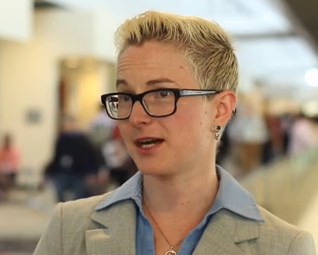
VIDEO: Is hysterectomy still best for complex atypical hyperplasia?
WASHINGTON – Hysterectomy has long been the first-line therapy for complex atypical endometrial hyperplasia in patients who don’t desire to preserve their fertility. Is it time to consider hormone treatment in a larger population of patients?
That’s the question that experts debated at the annual meeting of the American College of Obstetricians and Gynecologists.
Dr. Amanda Nickles Fader, associate professor and director of the Kelly Gynecologic Oncology Service* at the Johns Hopkins Hospital, Baltimore, said in an interview that changing patient demographics – particularly the growing number of overweight and obese women – are driving the need to consider the use of progestin in more cases. The obesity epidemic translates into younger women developing the condition, and it creates the potential for more complications in surgery, she said. Endometrial hyperplasia is very sensitive to hormone therapy, specifically progestin agents, with 75%-90% response rates with up-front treatment, Dr. Fader added.
But Dr. David Cohn, director of the division of gynecologic oncology at the Ohio State University, Columbus, said in an interview that surgery remains the standard of care because it is curative. Hormone treatment is appropriate in selected patients, but it is currently understudied and questions remain about the duration of treatment and about the type of hormones to use, he said.
Dr. Cohn and Dr. Fader both reported having no relevant financial disclosures.
The video associated with this article is no longer available on this site. Please view all of our videos on the MDedge YouTube channel
The video associated with this article is no longer available on this site. Please view all of our videos on the MDedge YouTube channel
On Twitter @maryellenny
*Correction, 5/17/2016: An earlier version of this story misstated Dr. Fader's title.
WASHINGTON – Hysterectomy has long been the first-line therapy for complex atypical endometrial hyperplasia in patients who don’t desire to preserve their fertility. Is it time to consider hormone treatment in a larger population of patients?
That’s the question that experts debated at the annual meeting of the American College of Obstetricians and Gynecologists.
Dr. Amanda Nickles Fader, associate professor and director of the Kelly Gynecologic Oncology Service* at the Johns Hopkins Hospital, Baltimore, said in an interview that changing patient demographics – particularly the growing number of overweight and obese women – are driving the need to consider the use of progestin in more cases. The obesity epidemic translates into younger women developing the condition, and it creates the potential for more complications in surgery, she said. Endometrial hyperplasia is very sensitive to hormone therapy, specifically progestin agents, with 75%-90% response rates with up-front treatment, Dr. Fader added.
But Dr. David Cohn, director of the division of gynecologic oncology at the Ohio State University, Columbus, said in an interview that surgery remains the standard of care because it is curative. Hormone treatment is appropriate in selected patients, but it is currently understudied and questions remain about the duration of treatment and about the type of hormones to use, he said.
Dr. Cohn and Dr. Fader both reported having no relevant financial disclosures.
The video associated with this article is no longer available on this site. Please view all of our videos on the MDedge YouTube channel
The video associated with this article is no longer available on this site. Please view all of our videos on the MDedge YouTube channel
On Twitter @maryellenny
*Correction, 5/17/2016: An earlier version of this story misstated Dr. Fader's title.
WASHINGTON – Hysterectomy has long been the first-line therapy for complex atypical endometrial hyperplasia in patients who don’t desire to preserve their fertility. Is it time to consider hormone treatment in a larger population of patients?
That’s the question that experts debated at the annual meeting of the American College of Obstetricians and Gynecologists.
Dr. Amanda Nickles Fader, associate professor and director of the Kelly Gynecologic Oncology Service* at the Johns Hopkins Hospital, Baltimore, said in an interview that changing patient demographics – particularly the growing number of overweight and obese women – are driving the need to consider the use of progestin in more cases. The obesity epidemic translates into younger women developing the condition, and it creates the potential for more complications in surgery, she said. Endometrial hyperplasia is very sensitive to hormone therapy, specifically progestin agents, with 75%-90% response rates with up-front treatment, Dr. Fader added.
But Dr. David Cohn, director of the division of gynecologic oncology at the Ohio State University, Columbus, said in an interview that surgery remains the standard of care because it is curative. Hormone treatment is appropriate in selected patients, but it is currently understudied and questions remain about the duration of treatment and about the type of hormones to use, he said.
Dr. Cohn and Dr. Fader both reported having no relevant financial disclosures.
The video associated with this article is no longer available on this site. Please view all of our videos on the MDedge YouTube channel
The video associated with this article is no longer available on this site. Please view all of our videos on the MDedge YouTube channel
On Twitter @maryellenny
*Correction, 5/17/2016: An earlier version of this story misstated Dr. Fader's title.
EXPERT ANALYSIS FROM ACOG 2016

Dealing with compassion fatigue
It was close to 2 decades ago, but it is still as clear as if it had been yesterday. I sat in the intensive care unit, fresh from my residency, tears streaming down my face, which was firmly nestled between my hands as I tried to hide my pain from every soul around me – doctors, nurses, patients’ family members – anyone and everyone.
I had just lost a very dear patient and emotions were running high. I only hoped no one at the nurses’ station would notice me, at least until I had a chance to regain my composure. After all, who would expect to see, or even respect, a doctor found sobbing like a child over a patient who died? Isn’t that all part of the job? Don’t we anticipate the death of some of our most critically ill patients?
Almost paralyzed with grief, I had a hard decision to make.
Option one: I could sit firmly planted in my seat and deal with my personal loss, the loss of my patient with chart number 0001 – yes, my very first patient in private practice. Over time, she and I had developed a very warm, loving relationship, almost like that of a mother and daughter as she was several decades my elder. I had a right to grieve my loss just as anyone else would grieve after losing someone they cared for, didn’t I?
Option two: I could bury my personal feelings and deal with them later in the comfort of my home, safe from the incessant pages from nurses calling about other patients’ urgent needs, hidden from accusing, sometimes condescending glances from other medical professionals who could never understand why I would react so strongly to the death of a patient – especially in a place surrounded by the watchful eyes of others who hold physicians to such a high standard.
Not so much to save face, but for the sake of other critically ill patients who needed a calm, clear-thinking physician to make prudent decisions regarding their care, I chose option two.
As hospitalists, our work is exciting and extremely rewarding, yet with all the suffering and death we see, we must be very careful to guard our hearts and minds, lest we fall into a state of perpetual inner turmoil and stress, and find ourselves seeking counseling or even prescription medication to cope. Compassion satisfaction and compassion fatigue are two ends of a spectrum that caregivers, including medical professionals, often experience. As the names suggest, the former refers to the positive feelings of helping others in need, while the latter refers to a potentially pathologic psychological adaptation to the suffering we experience.
Dr. Charles Figley, director of the Tulane Traumatology Institute in New Orleans, describes compassion fatigue as “a state experienced by those helping people or animals in distress; it is an extreme state of tension and preoccupation with the suffering of those being helped to the degree that it can create a secondary traumatic stress for the helper.”
We all have different coping mechanisms. Some hospitalists are so focused on the art of healing the sick that they have learned to dissociate themselves from the suffering of the individuals they serve, while still delivering excellent care to each and every patient. Not everyone has reached that level.
“Striking the right work-life balance helps me,” said Dr. Marianne Cunanan-Bush, medical director of the inpatient team at Baltimore Washington Medical Center in Glen Burnie, Md. “The first part of my day is spent in personal quiet time, [so] I can just relax and let my mind go free. And my family life is vital. My husband and I play tennis with our children and do other fun things as a family and that helps keep me grounded.”
Dr. Jiayan Chen, a hospitalist at Baltimore Washington Medical Center, finds it almost impossible to completely avoid compassion fatigue. “As hospitalists, I think we can only try to minimize it,” she said. “Try to be sympathetic to patient and family but remain neutral to avoid too high compassion fatigue. Talk to colleagues a couple of times a day, give yourself a few small breaks, including lunch time, drink a cup of water, anything to help break the tension of care during the day.”
Whatever your personal style or inner make-up, be true to yourself. It’s okay to be stoic and to cry sometimes, but if you need help dealing with the trauma and stress this profession sometimes brings, don’t be ashamed to seek the counsel of friends, family members, or even professionals. Two useful resources for help in dealing with, and preventing, compassion fatigue are the Compassion Fatigue Awareness Project and ProQOL.org.
Those of you with small children will appreciate this more than others: As the words of a popular song sung by little girls from coast to coast say, “Let it go, let it go. Don’t hold it back anymore!”
Dr. Hester is a hospitalist at Baltimore Washington Medical Center in Glen Burnie, Md. She is the creator of the Patient Whiz, a patient-engagement app for iOS. Reach her at [email protected].
It was close to 2 decades ago, but it is still as clear as if it had been yesterday. I sat in the intensive care unit, fresh from my residency, tears streaming down my face, which was firmly nestled between my hands as I tried to hide my pain from every soul around me – doctors, nurses, patients’ family members – anyone and everyone.
I had just lost a very dear patient and emotions were running high. I only hoped no one at the nurses’ station would notice me, at least until I had a chance to regain my composure. After all, who would expect to see, or even respect, a doctor found sobbing like a child over a patient who died? Isn’t that all part of the job? Don’t we anticipate the death of some of our most critically ill patients?
Almost paralyzed with grief, I had a hard decision to make.
Option one: I could sit firmly planted in my seat and deal with my personal loss, the loss of my patient with chart number 0001 – yes, my very first patient in private practice. Over time, she and I had developed a very warm, loving relationship, almost like that of a mother and daughter as she was several decades my elder. I had a right to grieve my loss just as anyone else would grieve after losing someone they cared for, didn’t I?
Option two: I could bury my personal feelings and deal with them later in the comfort of my home, safe from the incessant pages from nurses calling about other patients’ urgent needs, hidden from accusing, sometimes condescending glances from other medical professionals who could never understand why I would react so strongly to the death of a patient – especially in a place surrounded by the watchful eyes of others who hold physicians to such a high standard.
Not so much to save face, but for the sake of other critically ill patients who needed a calm, clear-thinking physician to make prudent decisions regarding their care, I chose option two.
As hospitalists, our work is exciting and extremely rewarding, yet with all the suffering and death we see, we must be very careful to guard our hearts and minds, lest we fall into a state of perpetual inner turmoil and stress, and find ourselves seeking counseling or even prescription medication to cope. Compassion satisfaction and compassion fatigue are two ends of a spectrum that caregivers, including medical professionals, often experience. As the names suggest, the former refers to the positive feelings of helping others in need, while the latter refers to a potentially pathologic psychological adaptation to the suffering we experience.
Dr. Charles Figley, director of the Tulane Traumatology Institute in New Orleans, describes compassion fatigue as “a state experienced by those helping people or animals in distress; it is an extreme state of tension and preoccupation with the suffering of those being helped to the degree that it can create a secondary traumatic stress for the helper.”
We all have different coping mechanisms. Some hospitalists are so focused on the art of healing the sick that they have learned to dissociate themselves from the suffering of the individuals they serve, while still delivering excellent care to each and every patient. Not everyone has reached that level.
“Striking the right work-life balance helps me,” said Dr. Marianne Cunanan-Bush, medical director of the inpatient team at Baltimore Washington Medical Center in Glen Burnie, Md. “The first part of my day is spent in personal quiet time, [so] I can just relax and let my mind go free. And my family life is vital. My husband and I play tennis with our children and do other fun things as a family and that helps keep me grounded.”
Dr. Jiayan Chen, a hospitalist at Baltimore Washington Medical Center, finds it almost impossible to completely avoid compassion fatigue. “As hospitalists, I think we can only try to minimize it,” she said. “Try to be sympathetic to patient and family but remain neutral to avoid too high compassion fatigue. Talk to colleagues a couple of times a day, give yourself a few small breaks, including lunch time, drink a cup of water, anything to help break the tension of care during the day.”
Whatever your personal style or inner make-up, be true to yourself. It’s okay to be stoic and to cry sometimes, but if you need help dealing with the trauma and stress this profession sometimes brings, don’t be ashamed to seek the counsel of friends, family members, or even professionals. Two useful resources for help in dealing with, and preventing, compassion fatigue are the Compassion Fatigue Awareness Project and ProQOL.org.
Those of you with small children will appreciate this more than others: As the words of a popular song sung by little girls from coast to coast say, “Let it go, let it go. Don’t hold it back anymore!”
Dr. Hester is a hospitalist at Baltimore Washington Medical Center in Glen Burnie, Md. She is the creator of the Patient Whiz, a patient-engagement app for iOS. Reach her at [email protected].
It was close to 2 decades ago, but it is still as clear as if it had been yesterday. I sat in the intensive care unit, fresh from my residency, tears streaming down my face, which was firmly nestled between my hands as I tried to hide my pain from every soul around me – doctors, nurses, patients’ family members – anyone and everyone.
I had just lost a very dear patient and emotions were running high. I only hoped no one at the nurses’ station would notice me, at least until I had a chance to regain my composure. After all, who would expect to see, or even respect, a doctor found sobbing like a child over a patient who died? Isn’t that all part of the job? Don’t we anticipate the death of some of our most critically ill patients?
Almost paralyzed with grief, I had a hard decision to make.
Option one: I could sit firmly planted in my seat and deal with my personal loss, the loss of my patient with chart number 0001 – yes, my very first patient in private practice. Over time, she and I had developed a very warm, loving relationship, almost like that of a mother and daughter as she was several decades my elder. I had a right to grieve my loss just as anyone else would grieve after losing someone they cared for, didn’t I?
Option two: I could bury my personal feelings and deal with them later in the comfort of my home, safe from the incessant pages from nurses calling about other patients’ urgent needs, hidden from accusing, sometimes condescending glances from other medical professionals who could never understand why I would react so strongly to the death of a patient – especially in a place surrounded by the watchful eyes of others who hold physicians to such a high standard.
Not so much to save face, but for the sake of other critically ill patients who needed a calm, clear-thinking physician to make prudent decisions regarding their care, I chose option two.
As hospitalists, our work is exciting and extremely rewarding, yet with all the suffering and death we see, we must be very careful to guard our hearts and minds, lest we fall into a state of perpetual inner turmoil and stress, and find ourselves seeking counseling or even prescription medication to cope. Compassion satisfaction and compassion fatigue are two ends of a spectrum that caregivers, including medical professionals, often experience. As the names suggest, the former refers to the positive feelings of helping others in need, while the latter refers to a potentially pathologic psychological adaptation to the suffering we experience.
Dr. Charles Figley, director of the Tulane Traumatology Institute in New Orleans, describes compassion fatigue as “a state experienced by those helping people or animals in distress; it is an extreme state of tension and preoccupation with the suffering of those being helped to the degree that it can create a secondary traumatic stress for the helper.”
We all have different coping mechanisms. Some hospitalists are so focused on the art of healing the sick that they have learned to dissociate themselves from the suffering of the individuals they serve, while still delivering excellent care to each and every patient. Not everyone has reached that level.
“Striking the right work-life balance helps me,” said Dr. Marianne Cunanan-Bush, medical director of the inpatient team at Baltimore Washington Medical Center in Glen Burnie, Md. “The first part of my day is spent in personal quiet time, [so] I can just relax and let my mind go free. And my family life is vital. My husband and I play tennis with our children and do other fun things as a family and that helps keep me grounded.”
Dr. Jiayan Chen, a hospitalist at Baltimore Washington Medical Center, finds it almost impossible to completely avoid compassion fatigue. “As hospitalists, I think we can only try to minimize it,” she said. “Try to be sympathetic to patient and family but remain neutral to avoid too high compassion fatigue. Talk to colleagues a couple of times a day, give yourself a few small breaks, including lunch time, drink a cup of water, anything to help break the tension of care during the day.”
Whatever your personal style or inner make-up, be true to yourself. It’s okay to be stoic and to cry sometimes, but if you need help dealing with the trauma and stress this profession sometimes brings, don’t be ashamed to seek the counsel of friends, family members, or even professionals. Two useful resources for help in dealing with, and preventing, compassion fatigue are the Compassion Fatigue Awareness Project and ProQOL.org.
Those of you with small children will appreciate this more than others: As the words of a popular song sung by little girls from coast to coast say, “Let it go, let it go. Don’t hold it back anymore!”
Dr. Hester is a hospitalist at Baltimore Washington Medical Center in Glen Burnie, Md. She is the creator of the Patient Whiz, a patient-engagement app for iOS. Reach her at [email protected].