User login
AVAHO
div[contains(@class, 'header__large-screen')]
div[contains(@class, 'read-next-article')]
div[contains(@class, 'nav-primary')]
nav[contains(@class, 'nav-primary')]
section[contains(@class, 'footer-nav-section-wrapper')]
footer[@id='footer']
div[contains(@class, 'main-prefix')]
section[contains(@class, 'nav-hidden')]
div[contains(@class, 'ce-card-content')]
nav[contains(@class, 'nav-ce-stack')]

Does Bariatric Surgery Increase or Decrease Cancer Risk? It Depends.
Bariatric surgery appears to decrease the risk for some cancers, but it may increase the risk for others, particularly colorectal cancer (CRC), according to a synthesis of current evidence.
“There has been a recent burst of studies examining the association between bariatric surgery and the longitudinal risks of developing cancer,” corresponding author Zhi Ven Fong, MD, MPH, DrPH, surgical oncologist, Mayo Clinic Arizona, Phoenix, said in an interview. “However, there has not been a rigorous and critical analysis of the data published to date.”
In evaluating research showing an association between bariatric surgery and longitudinal cancer risk, the investigators found that the quality of the studies and their findings are “heterogeneous and might be susceptible to bias,” Dr. Fong said.
Bariatric surgery appears to have the strongest and most consistent association with the reduction of breast, ovarian, and endometrial cancer risk, first author Pei-Wen Lim, MD, MS, bariatric surgeon at Mayo Clinic Arizona, Phoenix, told this news organization. “However, there have been concerning signals from preclinical and epidemiological studies that bariatric surgery may be associated with a higher risk of developing colorectal cancers,” she added.
The authors cautioned against certain changes in clinical management.
“First, cancer surveillance frequency should not be altered after bariatric surgery because of any assumed reduction in longitudinal cancer risk, and surveillance strategy should mirror that of an average-risk individual,” they wrote. “Secondly, the indications for bariatric surgery should not be expanded for the purpose of cancer-risk mitigation.”
The review was published online in JAMA Surgery.
Protection Against Hormone-Related Cancers
The authors pointed to several studies that appear to support the association between bariatric surgery and decreased risk for hormone-related cancers.
Among them is an observational study of 6781 patients in Canada that showed a significant reduction in breast cancer risk at a median follow-up of 5 years in those who had bariatric surgery vs those who did not (P = .01).
The largest study to date on risk for hormone-related cancer after bariatric surgery was conducted using New York State data for 302,883 women.
It showed a lower rate of breast, endometrial, and ovarian cancers after bariatric surgery (hazard ratio [HR], 0.78; P < .001), with Roux-en-Y gastric bypass conferring the greatest benefit compared with laparoscopic sleeve gastrectomy (HR, 0.66; P = .006) and laparoscopic adjustable gastric banding (HR, 0.83; P = .006).
Beyond the shared mechanisms explaining obesity and cancer risk, a proposed explanation for the strong, consistent association between bariatric surgery and hormone-sensitive cancers is the role obesity-related changes in estrogen stimulation play in development of such cancers, the authors noted.
Association With GI Cancers
The association between bariatric surgery and development of esophageal, gastric, liver, and pancreas cancers is less clear. The data are heterogeneous, with studies showing either no association or decreased longitudinal incidence, the authors reported.
The data are also mixed when it comes to CRC. Epidemiological studies have demonstrated decreased longitudinal incidence of colon and rectal cancer after bariatric surgery; however, two studies have suggested an increased CRC risk after bariatric surgery, the authors noted.
A 15-year study from England that matched 8794 patients with obesity who underwent bariatric surgery with 8794 patients with obesity who did not have the surgery showed that gastric bypass (but not gastric banding or sleeve gastrectomy) was associated with a greater than twofold increased risk of developing colon and rectal cancer (odds ratio, 2.63).
These findings were corroborated in a Swedish cohort study with more than 10 years of follow-up data.
One potential explanation for the heterogeneous findings is that “present studies do not discriminate the sub-types of colon and rectal cancer, with bariatric surgery possibly increasing the incidence of colitis-associated cancers but not hereditary cancers,” the authors wrote.
“The mechanism by which gastric bypass may increase the risk of colorectal cancer is through changes in the gut’s microbiome. These changes in gut flora may triumph the protective effect of weight loss on the development of colorectal cancers,” Dr. Fong said.
Prospective studies are necessary to better delineate CRC risk after bariatric surgery, the authors wrote.
Benefits Outweigh Risk
“Ultimately, it has been proven that bariatric surgery saves lives by improving the metabolic profile of patients with obesity through reduction in cardiovascular risk factors such as hypertension, diabetes, and nonalcoholic fatty liver disease,” Dr. Lim said.
“If patients qualify for bariatric surgery on the basis of their BMI or comorbidities, they should pursue it for its metabolic benefits, but perhaps consider timely or closer-interval screening colonoscopies to monitor for potential colorectal cancer development,” Dr. Lim added.
When asked to comment on the review, Marina Kurian, MD, president, American Society for Metabolic and Bariatric Surgery, also pointed to the advantages of bariatric surgery in reducing major adverse cardiovascular events and improving hypertension, hyperlipidemia, and diabetes.
Bariatric surgery reduces many types of cancers, although the data specific to CRC risk with bariatric surgery are mixed, she added.
“The jury is still out,” said Dr. Kurian, clinical professor of surgery at NYU Langone Health in New York, who was not involved in the review. “There are papers and meta-analyses that show benefit even in colorectal cancer, but then there are a couple of papers out there that suggest a risk that seems to be specific to men.
“It could just be a numbers game, where we may not have enough data. We need more granular data that will help address these nuances and really determine what is the actual risk,” Dr. Kurian said. “But overall, for cancer, bariatric surgery is a win.”
This research had no specific funding. Dr. Fong and Dr. Lim had no relevant disclosures. Dr. Kurian disclosed relationships with Allergan, Allurion, CineMed, CSATS, Ezisurg Medical, Hernon, Johnson & Johnson, Medtronic, Novo, Stryker, and Vivus.
A version of this article appeared on Medscape.com.
Bariatric surgery appears to decrease the risk for some cancers, but it may increase the risk for others, particularly colorectal cancer (CRC), according to a synthesis of current evidence.
“There has been a recent burst of studies examining the association between bariatric surgery and the longitudinal risks of developing cancer,” corresponding author Zhi Ven Fong, MD, MPH, DrPH, surgical oncologist, Mayo Clinic Arizona, Phoenix, said in an interview. “However, there has not been a rigorous and critical analysis of the data published to date.”
In evaluating research showing an association between bariatric surgery and longitudinal cancer risk, the investigators found that the quality of the studies and their findings are “heterogeneous and might be susceptible to bias,” Dr. Fong said.
Bariatric surgery appears to have the strongest and most consistent association with the reduction of breast, ovarian, and endometrial cancer risk, first author Pei-Wen Lim, MD, MS, bariatric surgeon at Mayo Clinic Arizona, Phoenix, told this news organization. “However, there have been concerning signals from preclinical and epidemiological studies that bariatric surgery may be associated with a higher risk of developing colorectal cancers,” she added.
The authors cautioned against certain changes in clinical management.
“First, cancer surveillance frequency should not be altered after bariatric surgery because of any assumed reduction in longitudinal cancer risk, and surveillance strategy should mirror that of an average-risk individual,” they wrote. “Secondly, the indications for bariatric surgery should not be expanded for the purpose of cancer-risk mitigation.”
The review was published online in JAMA Surgery.
Protection Against Hormone-Related Cancers
The authors pointed to several studies that appear to support the association between bariatric surgery and decreased risk for hormone-related cancers.
Among them is an observational study of 6781 patients in Canada that showed a significant reduction in breast cancer risk at a median follow-up of 5 years in those who had bariatric surgery vs those who did not (P = .01).
The largest study to date on risk for hormone-related cancer after bariatric surgery was conducted using New York State data for 302,883 women.
It showed a lower rate of breast, endometrial, and ovarian cancers after bariatric surgery (hazard ratio [HR], 0.78; P < .001), with Roux-en-Y gastric bypass conferring the greatest benefit compared with laparoscopic sleeve gastrectomy (HR, 0.66; P = .006) and laparoscopic adjustable gastric banding (HR, 0.83; P = .006).
Beyond the shared mechanisms explaining obesity and cancer risk, a proposed explanation for the strong, consistent association between bariatric surgery and hormone-sensitive cancers is the role obesity-related changes in estrogen stimulation play in development of such cancers, the authors noted.
Association With GI Cancers
The association between bariatric surgery and development of esophageal, gastric, liver, and pancreas cancers is less clear. The data are heterogeneous, with studies showing either no association or decreased longitudinal incidence, the authors reported.
The data are also mixed when it comes to CRC. Epidemiological studies have demonstrated decreased longitudinal incidence of colon and rectal cancer after bariatric surgery; however, two studies have suggested an increased CRC risk after bariatric surgery, the authors noted.
A 15-year study from England that matched 8794 patients with obesity who underwent bariatric surgery with 8794 patients with obesity who did not have the surgery showed that gastric bypass (but not gastric banding or sleeve gastrectomy) was associated with a greater than twofold increased risk of developing colon and rectal cancer (odds ratio, 2.63).
These findings were corroborated in a Swedish cohort study with more than 10 years of follow-up data.
One potential explanation for the heterogeneous findings is that “present studies do not discriminate the sub-types of colon and rectal cancer, with bariatric surgery possibly increasing the incidence of colitis-associated cancers but not hereditary cancers,” the authors wrote.
“The mechanism by which gastric bypass may increase the risk of colorectal cancer is through changes in the gut’s microbiome. These changes in gut flora may triumph the protective effect of weight loss on the development of colorectal cancers,” Dr. Fong said.
Prospective studies are necessary to better delineate CRC risk after bariatric surgery, the authors wrote.
Benefits Outweigh Risk
“Ultimately, it has been proven that bariatric surgery saves lives by improving the metabolic profile of patients with obesity through reduction in cardiovascular risk factors such as hypertension, diabetes, and nonalcoholic fatty liver disease,” Dr. Lim said.
“If patients qualify for bariatric surgery on the basis of their BMI or comorbidities, they should pursue it for its metabolic benefits, but perhaps consider timely or closer-interval screening colonoscopies to monitor for potential colorectal cancer development,” Dr. Lim added.
When asked to comment on the review, Marina Kurian, MD, president, American Society for Metabolic and Bariatric Surgery, also pointed to the advantages of bariatric surgery in reducing major adverse cardiovascular events and improving hypertension, hyperlipidemia, and diabetes.
Bariatric surgery reduces many types of cancers, although the data specific to CRC risk with bariatric surgery are mixed, she added.
“The jury is still out,” said Dr. Kurian, clinical professor of surgery at NYU Langone Health in New York, who was not involved in the review. “There are papers and meta-analyses that show benefit even in colorectal cancer, but then there are a couple of papers out there that suggest a risk that seems to be specific to men.
“It could just be a numbers game, where we may not have enough data. We need more granular data that will help address these nuances and really determine what is the actual risk,” Dr. Kurian said. “But overall, for cancer, bariatric surgery is a win.”
This research had no specific funding. Dr. Fong and Dr. Lim had no relevant disclosures. Dr. Kurian disclosed relationships with Allergan, Allurion, CineMed, CSATS, Ezisurg Medical, Hernon, Johnson & Johnson, Medtronic, Novo, Stryker, and Vivus.
A version of this article appeared on Medscape.com.
Bariatric surgery appears to decrease the risk for some cancers, but it may increase the risk for others, particularly colorectal cancer (CRC), according to a synthesis of current evidence.
“There has been a recent burst of studies examining the association between bariatric surgery and the longitudinal risks of developing cancer,” corresponding author Zhi Ven Fong, MD, MPH, DrPH, surgical oncologist, Mayo Clinic Arizona, Phoenix, said in an interview. “However, there has not been a rigorous and critical analysis of the data published to date.”
In evaluating research showing an association between bariatric surgery and longitudinal cancer risk, the investigators found that the quality of the studies and their findings are “heterogeneous and might be susceptible to bias,” Dr. Fong said.
Bariatric surgery appears to have the strongest and most consistent association with the reduction of breast, ovarian, and endometrial cancer risk, first author Pei-Wen Lim, MD, MS, bariatric surgeon at Mayo Clinic Arizona, Phoenix, told this news organization. “However, there have been concerning signals from preclinical and epidemiological studies that bariatric surgery may be associated with a higher risk of developing colorectal cancers,” she added.
The authors cautioned against certain changes in clinical management.
“First, cancer surveillance frequency should not be altered after bariatric surgery because of any assumed reduction in longitudinal cancer risk, and surveillance strategy should mirror that of an average-risk individual,” they wrote. “Secondly, the indications for bariatric surgery should not be expanded for the purpose of cancer-risk mitigation.”
The review was published online in JAMA Surgery.
Protection Against Hormone-Related Cancers
The authors pointed to several studies that appear to support the association between bariatric surgery and decreased risk for hormone-related cancers.
Among them is an observational study of 6781 patients in Canada that showed a significant reduction in breast cancer risk at a median follow-up of 5 years in those who had bariatric surgery vs those who did not (P = .01).
The largest study to date on risk for hormone-related cancer after bariatric surgery was conducted using New York State data for 302,883 women.
It showed a lower rate of breast, endometrial, and ovarian cancers after bariatric surgery (hazard ratio [HR], 0.78; P < .001), with Roux-en-Y gastric bypass conferring the greatest benefit compared with laparoscopic sleeve gastrectomy (HR, 0.66; P = .006) and laparoscopic adjustable gastric banding (HR, 0.83; P = .006).
Beyond the shared mechanisms explaining obesity and cancer risk, a proposed explanation for the strong, consistent association between bariatric surgery and hormone-sensitive cancers is the role obesity-related changes in estrogen stimulation play in development of such cancers, the authors noted.
Association With GI Cancers
The association between bariatric surgery and development of esophageal, gastric, liver, and pancreas cancers is less clear. The data are heterogeneous, with studies showing either no association or decreased longitudinal incidence, the authors reported.
The data are also mixed when it comes to CRC. Epidemiological studies have demonstrated decreased longitudinal incidence of colon and rectal cancer after bariatric surgery; however, two studies have suggested an increased CRC risk after bariatric surgery, the authors noted.
A 15-year study from England that matched 8794 patients with obesity who underwent bariatric surgery with 8794 patients with obesity who did not have the surgery showed that gastric bypass (but not gastric banding or sleeve gastrectomy) was associated with a greater than twofold increased risk of developing colon and rectal cancer (odds ratio, 2.63).
These findings were corroborated in a Swedish cohort study with more than 10 years of follow-up data.
One potential explanation for the heterogeneous findings is that “present studies do not discriminate the sub-types of colon and rectal cancer, with bariatric surgery possibly increasing the incidence of colitis-associated cancers but not hereditary cancers,” the authors wrote.
“The mechanism by which gastric bypass may increase the risk of colorectal cancer is through changes in the gut’s microbiome. These changes in gut flora may triumph the protective effect of weight loss on the development of colorectal cancers,” Dr. Fong said.
Prospective studies are necessary to better delineate CRC risk after bariatric surgery, the authors wrote.
Benefits Outweigh Risk
“Ultimately, it has been proven that bariatric surgery saves lives by improving the metabolic profile of patients with obesity through reduction in cardiovascular risk factors such as hypertension, diabetes, and nonalcoholic fatty liver disease,” Dr. Lim said.
“If patients qualify for bariatric surgery on the basis of their BMI or comorbidities, they should pursue it for its metabolic benefits, but perhaps consider timely or closer-interval screening colonoscopies to monitor for potential colorectal cancer development,” Dr. Lim added.
When asked to comment on the review, Marina Kurian, MD, president, American Society for Metabolic and Bariatric Surgery, also pointed to the advantages of bariatric surgery in reducing major adverse cardiovascular events and improving hypertension, hyperlipidemia, and diabetes.
Bariatric surgery reduces many types of cancers, although the data specific to CRC risk with bariatric surgery are mixed, she added.
“The jury is still out,” said Dr. Kurian, clinical professor of surgery at NYU Langone Health in New York, who was not involved in the review. “There are papers and meta-analyses that show benefit even in colorectal cancer, but then there are a couple of papers out there that suggest a risk that seems to be specific to men.
“It could just be a numbers game, where we may not have enough data. We need more granular data that will help address these nuances and really determine what is the actual risk,” Dr. Kurian said. “But overall, for cancer, bariatric surgery is a win.”
This research had no specific funding. Dr. Fong and Dr. Lim had no relevant disclosures. Dr. Kurian disclosed relationships with Allergan, Allurion, CineMed, CSATS, Ezisurg Medical, Hernon, Johnson & Johnson, Medtronic, Novo, Stryker, and Vivus.
A version of this article appeared on Medscape.com.
Oxaliplatin in Older Adults With Resected Colorectal Cancer: Is There a Benefit?
This transcript has been edited for clarity.
Our group, the QUASAR Group, made a very significant contribution in terms of trials and knowledge in this field. One of the things that we still need to discuss and think about in our wider community is the impact of adjuvant chemotherapy in older patients.
Colorectal cancer is a disease of the elderly, with the median age of presentation around 72. We know that, at presentation, more than 50% of patients are aged 65 or over and one third of patients are 75 or over. It’s a disease predominantly of the elderly. Are we justified in giving combination chemotherapy with oxaliplatin to high-risk resected colorectal cancer patients?
There’s a very nice report of a meta-analysis by Dottorini and colleagues that came out recently in the Journal of Clinical Oncology. It’s an excellent group. They did their meta-analytical work according to a strict, rational protocol. Their statistical analyses were on point, and they collected data from all the relevant trials.
According to the results of their study, it could be concluded that the addition of oxaliplatin to adjuvant therapy for resected high-risk colorectal cancer in older patients — patients older than 70 — doesn’t result in any statistically significant gain in terms of preventing recurrences or saving lives.
When we did our QUASAR trials, initially we were looking at control vs fluoropyrimidine chemotherapy. Although there was an overall impact on survival of the whole trial group (the 5000 patients in our study), when we looked by decile, there was a significant diminution of benefit even to fluoropyrimidine therapy in our trial in patients aged 70 or above. I think this careful meta-analysis must make us question the use of oxaliplatin in elderly patients.
What could the explanation be? Why could the well-known and described benefits of oxaliplatin, particularly for stage III disease, attenuate in older people? It may be to do with reduction in dose intensity. Older people have more side effects; therefore, the chemotherapy isn’t completed as planned. Although, increasingly these days, we tend only to be giving 3 months of treatment.
Is there something biologically in terms of the biology or the somatic mutational landscape of the tumor in older people? I don’t think so. Certainly, in terms of their capacity, in terms of stem cell reserve to be as resistant to the side effects of chemotherapy as younger people, we know that does attenuate with age.
Food for thought: The majority of patients I see in the clinic for the adjuvant treatment are elderly. The majority are coming these days with high-risk stage II or stage III disease. There is a real question mark about whether we should be using oxaliplatin at all.
Clearly, one would say that we need more trials of chemotherapy in older folk to see if the addition of drugs like oxaliplatin to a fluoropyrimidine backbone really does make a difference. I’ve said many times before that we, the medical community recommending adjuvant treatment, need to have better risk stratifiers. We need to have better prognostic markers. We need to have better indices that would allow us to perhaps consider these combination treatments in a more focused group of patients who may have a higher risk for recurrence.
Have a look at the paper and see what you think. I think it’s well done. It’s certainly given me pause for thought about the treatment that we will offer our elderly patients.
Have a think about it. Let me know if there are any comments that you’d like to make. For the time being, over and out.
Dr. Kerr is Professor, Nuffield Department of Clinical Laboratory Science, University of Oxford; Professor of Cancer Medicine, Oxford Cancer Centre, Oxford, United Kingdom. He disclosed ties with Celleron Therapeutics, Oxford Cancer Biomarkers, Afrox, GlaxoSmithKline, Bayer HealthCare Pharmaceuticals, Genomic Health, Merck Serono, and Roche.
A version of this article appeared on Medscape.com.
This transcript has been edited for clarity.
Our group, the QUASAR Group, made a very significant contribution in terms of trials and knowledge in this field. One of the things that we still need to discuss and think about in our wider community is the impact of adjuvant chemotherapy in older patients.
Colorectal cancer is a disease of the elderly, with the median age of presentation around 72. We know that, at presentation, more than 50% of patients are aged 65 or over and one third of patients are 75 or over. It’s a disease predominantly of the elderly. Are we justified in giving combination chemotherapy with oxaliplatin to high-risk resected colorectal cancer patients?
There’s a very nice report of a meta-analysis by Dottorini and colleagues that came out recently in the Journal of Clinical Oncology. It’s an excellent group. They did their meta-analytical work according to a strict, rational protocol. Their statistical analyses were on point, and they collected data from all the relevant trials.
According to the results of their study, it could be concluded that the addition of oxaliplatin to adjuvant therapy for resected high-risk colorectal cancer in older patients — patients older than 70 — doesn’t result in any statistically significant gain in terms of preventing recurrences or saving lives.
When we did our QUASAR trials, initially we were looking at control vs fluoropyrimidine chemotherapy. Although there was an overall impact on survival of the whole trial group (the 5000 patients in our study), when we looked by decile, there was a significant diminution of benefit even to fluoropyrimidine therapy in our trial in patients aged 70 or above. I think this careful meta-analysis must make us question the use of oxaliplatin in elderly patients.
What could the explanation be? Why could the well-known and described benefits of oxaliplatin, particularly for stage III disease, attenuate in older people? It may be to do with reduction in dose intensity. Older people have more side effects; therefore, the chemotherapy isn’t completed as planned. Although, increasingly these days, we tend only to be giving 3 months of treatment.
Is there something biologically in terms of the biology or the somatic mutational landscape of the tumor in older people? I don’t think so. Certainly, in terms of their capacity, in terms of stem cell reserve to be as resistant to the side effects of chemotherapy as younger people, we know that does attenuate with age.
Food for thought: The majority of patients I see in the clinic for the adjuvant treatment are elderly. The majority are coming these days with high-risk stage II or stage III disease. There is a real question mark about whether we should be using oxaliplatin at all.
Clearly, one would say that we need more trials of chemotherapy in older folk to see if the addition of drugs like oxaliplatin to a fluoropyrimidine backbone really does make a difference. I’ve said many times before that we, the medical community recommending adjuvant treatment, need to have better risk stratifiers. We need to have better prognostic markers. We need to have better indices that would allow us to perhaps consider these combination treatments in a more focused group of patients who may have a higher risk for recurrence.
Have a look at the paper and see what you think. I think it’s well done. It’s certainly given me pause for thought about the treatment that we will offer our elderly patients.
Have a think about it. Let me know if there are any comments that you’d like to make. For the time being, over and out.
Dr. Kerr is Professor, Nuffield Department of Clinical Laboratory Science, University of Oxford; Professor of Cancer Medicine, Oxford Cancer Centre, Oxford, United Kingdom. He disclosed ties with Celleron Therapeutics, Oxford Cancer Biomarkers, Afrox, GlaxoSmithKline, Bayer HealthCare Pharmaceuticals, Genomic Health, Merck Serono, and Roche.
A version of this article appeared on Medscape.com.
This transcript has been edited for clarity.
Our group, the QUASAR Group, made a very significant contribution in terms of trials and knowledge in this field. One of the things that we still need to discuss and think about in our wider community is the impact of adjuvant chemotherapy in older patients.
Colorectal cancer is a disease of the elderly, with the median age of presentation around 72. We know that, at presentation, more than 50% of patients are aged 65 or over and one third of patients are 75 or over. It’s a disease predominantly of the elderly. Are we justified in giving combination chemotherapy with oxaliplatin to high-risk resected colorectal cancer patients?
There’s a very nice report of a meta-analysis by Dottorini and colleagues that came out recently in the Journal of Clinical Oncology. It’s an excellent group. They did their meta-analytical work according to a strict, rational protocol. Their statistical analyses were on point, and they collected data from all the relevant trials.
According to the results of their study, it could be concluded that the addition of oxaliplatin to adjuvant therapy for resected high-risk colorectal cancer in older patients — patients older than 70 — doesn’t result in any statistically significant gain in terms of preventing recurrences or saving lives.
When we did our QUASAR trials, initially we were looking at control vs fluoropyrimidine chemotherapy. Although there was an overall impact on survival of the whole trial group (the 5000 patients in our study), when we looked by decile, there was a significant diminution of benefit even to fluoropyrimidine therapy in our trial in patients aged 70 or above. I think this careful meta-analysis must make us question the use of oxaliplatin in elderly patients.
What could the explanation be? Why could the well-known and described benefits of oxaliplatin, particularly for stage III disease, attenuate in older people? It may be to do with reduction in dose intensity. Older people have more side effects; therefore, the chemotherapy isn’t completed as planned. Although, increasingly these days, we tend only to be giving 3 months of treatment.
Is there something biologically in terms of the biology or the somatic mutational landscape of the tumor in older people? I don’t think so. Certainly, in terms of their capacity, in terms of stem cell reserve to be as resistant to the side effects of chemotherapy as younger people, we know that does attenuate with age.
Food for thought: The majority of patients I see in the clinic for the adjuvant treatment are elderly. The majority are coming these days with high-risk stage II or stage III disease. There is a real question mark about whether we should be using oxaliplatin at all.
Clearly, one would say that we need more trials of chemotherapy in older folk to see if the addition of drugs like oxaliplatin to a fluoropyrimidine backbone really does make a difference. I’ve said many times before that we, the medical community recommending adjuvant treatment, need to have better risk stratifiers. We need to have better prognostic markers. We need to have better indices that would allow us to perhaps consider these combination treatments in a more focused group of patients who may have a higher risk for recurrence.
Have a look at the paper and see what you think. I think it’s well done. It’s certainly given me pause for thought about the treatment that we will offer our elderly patients.
Have a think about it. Let me know if there are any comments that you’d like to make. For the time being, over and out.
Dr. Kerr is Professor, Nuffield Department of Clinical Laboratory Science, University of Oxford; Professor of Cancer Medicine, Oxford Cancer Centre, Oxford, United Kingdom. He disclosed ties with Celleron Therapeutics, Oxford Cancer Biomarkers, Afrox, GlaxoSmithKline, Bayer HealthCare Pharmaceuticals, Genomic Health, Merck Serono, and Roche.
A version of this article appeared on Medscape.com.
Is Mammography Ready for AI? Opinions Mixed on Usage, Cost Methods
Screening mammograms miss close to one in eight breast cancers. But early research suggests artificial intelligence (AI) could close this detection gap and markedly improve early diagnosis of the disease. Still, questions remain regarding how to best incorporate AI into screenings and whether it’s too soon to deploy the technology.
Already, some radiology clinics are offering AI analysis of mammograms through an add-on cost method.
Mammography patients who visit RadNet facilities, for example, have the option of an additional AI screening of their images. RadNet, the largest national owner and operator of fixed-site diagnostic imaging centers in the United States with more than 370 locations, first launched its AI program in the Northeast. The company has now rolled out its product across all regions in the country.
Because the AI is not reimbursed by insurers, patients must pay a $40 out-of-pocket fee if they want the AI analysis.
“RadNet practices have identified more than 400 women whose cancer was found earlier than it would have been had the AI not been present,” said Greg Sorensen MD, chief science officer for RadNet.
How RadNet’s AI Program Works
Patients coming to RadNet facilities for screening mammography undergo 3D high-resolution mammography that includes the use of 70-micron resolution detector technology, said Dr. Sorensen. The mammogram is reviewed by a qualified radiologist with assistance from two Food and Drug Administration–cleared AI programs, Saige-Q and Saige-Density. The radiologist then makes an interpretation.
Saige-Q is an AI tool that helps identify more suspicious mammograms by providing a quick signal to radiologists if the AI considers a given mammogram to be in a suspicious category, according to Dr. Sorensen. Saige-Density provides a density rating for each mammogram using one of the four standard categories:
- A. Almost entirely fatty
- B. Scattered areas of fibroglandular density
- C. Heterogeneously dense
- D. Extremely dense
Starting in September 2024, the FDA will require all mammogram reports to indicate density.
For patients who choose the $40 add-on service, called Enhanced Breast Cancer Detection, two other FDA-registered AI programs are also applied: Saige-Dx and Saige-Assure. These AI programs go a step further by placing marks on areas within the images that they find suspicious. Mammograms flagged as “high-suspicion” by the AI are then reviewed by a second human radiologist. The first and second radiologists confer to agree on a final diagnosis, Dr. Sorensen explained.
“Our research shows that approximately 20% more cancers are found when the safeguard review process is in place,” Dr. Sorensen said. “We also have seen [30%] decreases in recall rates” — the percentage of screening cases in which further tests are recommended by the radiologist.
Bethesda radiologist Janet Storella, MD, has used the AI program for about 3 years and said the technology has improved her screening performance.
The AI is linked to her practice’s imaging software, and radiologists have the option of turning the AI on at any time during their reading of screening mammograms, Dr. Storella explained. Some radiologists review the mammogram first and then initiate the AI, while others like Dr. Storella turn it on at the start, she said. Once initiated, the AI draws bounding boxes — or outlines — around areas that it deems suspicious.
The AI helps focus Dr. Storella’s attention on suspicious areas and grades the level of suspicion into one of four categories: high, intermediate, low, and minimal, she said.
“I find it especially useful in patients who have dense breast tissue,” said Dr. Storella, medical director of women’s imaging at Community Radiology Associates, a RadNet practice. “In these situations, the tissue on the mammogram is a field of white, and cancers are also white, so you’re looking for that little white golf ball on a sea of snow. The AI really helps hone that down to specific areas.”
About 35% of RadNet’s screening mammography patients have enrolled in the Enhanced Breast Cancer Detection program, according to RadNet data. In a recent study of nine general radiologists and nine breast imaging specialists, all radiologists improved their interpretation performance of DBT screening mammograms when reading with RadNet’s AI versus without it. (An average AUC [area under the receiver operating characteristic curve] of 0.93 versus 0.87, demonstrating a difference in AUC of 0.06 (95% CI, 0.04-0.08; P < .001)
Is Mammography Ready for AI?
RadNet is among a growing number of commercial companies offering AI solutions for mammography. MammoScreen and Hologic, for example, are two other companies that provide AI programs to assist radiologists in reading screening mammograms.
“We are at the start of the AI integration into breast imaging at this point,” said Laura Heacock, MD, a breast imaging radiologist and associate professor of radiology at NYU Langone Health. “There are multiple commercial AI models now available to radiologists to use in their practice [ and] there will likely be more. We’re in the transition stage where people are still deciding: Which is the best model to go with? How do I put it in my system? How do I ensure it works they way it was intended? Every practice and medical system will have a different answer to that question.”
At NYU Langone Health, researchers have been developing and studying optimal AI models for breast imaging for several years, Dr. Heacock said. Researchers thus far, have developed AI models for 2D digital mammography, 3D mammograms, breast ultrasound, and breast MRI. Similar to commercial AI systems, the AI is embedded into the picture archiving and communication (PACS) system used by radiologists to review images. Radiologists press a button to launch the AI, which draws a box around suspicious areas of the image and scores the suspicion.
“I take a look of where it is on the mammogram and decide whether that fits my level of suspicion,” Dr. Heacock said. The AI may not understand things about the mammogram like we do. For example, surgical scars look very suspicious to an AI model. But if I’m looking at a mammogram where [the patient] has had a stable scar that hasn’t changed in 10 years, I’m not concerned that the AI found it suspicious. My clinical judgment is the ultimate decider. This is just an additional piece of information that’s helpful to me.”
Research by New York University (NYU) has shown that when used by an expert radiologist the AI models have improved breast cancer detection in all four modalities, she said.
However, the AI has not yet launched at NYU Langone. More research is needed before deploying the technology, according to Dr. Heacock.
“At NYU, we are still testing the benefits to patients,” she said. “We know it improves cancer detection, but we want to make sure there are no drawbacks. We are still exploring the best ways to put it into effect at our institution.”
Dr. Heacock pointed to recent studies on AI in screening mammography that show promise.
An analysis of more than 80,000 women, for example, published in The Lancet Oncology in August, found that AI-supported screen reading led to a similar cancer detection rate as compared with a two-person reader system. This screening resulted in 244 screen-detected cancers, 861 recalls, and a total of 46,345 screen readings, according to the study. Standard screening resulted in 203 screen-detected cancers, 817 recalls, and a total of 83,231 screen readings.
The AI system also reduced the screen-reading workload for radiologists by 44%, the study found.
Meanwhile, a September 2023 study, published in The Lancet Digital Health, found that replacing one radiologist with AI resulted in more cancer detection without a large increase in false-positive cases. The AI led to a 4% higher, noninferior cancer detection rate, compared with radiologist double reading, the study found.
Dr. Heacock emphasized that both studies were conducted in Europe where the standard is for two radiologists to evaluate mammograms.
“That makes the results exciting, but not directly applicable to US practice just yet,” she said.
What Do the Experts Recommend?
Stamatia V. Destounis, MD, FACR, chair of the American College of Radiology (ACR) Breast Imaging Commission, said the college welcomes ongoing research into the efficacy of AI technologies and that AI may prove to be beneficial as an improved workflow tool.
The ACR has not released any guidance about the use of AI for radiologists and have no recommendation about best practices, Dr. Destounis said.
“The decisions regarding which technologies that various health systems and radiology sites choose to use are made by those facilities,” she said.
Dr. Destounis said more research is needed to demonstrate whether or not AI technologies help radiologists produce better results in identifying disease, injury, and illnesses among the general population or in specific groups — whether based on age, physical characteristics, race, ethnicity or risk status for breast cancer.
“Also, a way to measure each AI product is needed so that we can be certain they are relatively equivalent in their efficacy and accuracy — initially and over a prolonged period of time,” she said.
No consensus or concrete recommendation exists about the use of AI in mammography screening, adds Peter P. Yu, MD, FACP, FASCO, physician-in-chief at the Hartford HealthCare Cancer Institute and a member of the newly-created American Society of Clinical Oncology AI task force.
One of the many discussions concerning AI is to what degree patients should be aware that AI is being used in their healthcare and whether they should be required to give consent to its use, Dr. Yu said.
If AI is used to assist radiologists with mammographic interpretation, radiologists should discuss with patients how it’s being used and explain the ultimate reading is in the hands of their physician radiologist, he said.
“In the unlikely situation where there wasn’t a human in the loop and AI was in effect making a medical decision, the patient needs to be aware,” he said. “I’m not aware that any such situation exists today. AI is more likely to be subtly embedded in the software that operates technology, much like it is embedded in manufacturing and transportation.”
Who Will Pay for AI?
When it comes to payment, Dr. Yu said shifting the cost of AI to patients creates serious risk.
“It has enormous potential to increase health inequities,” he said. “If we believe health care is a fundamental human right, AI should inure to the benefit of all, not just those who can afford it. Healthcare should not be a luxury item; if it works, it works for all.”
In general, the issue of payment for AI is still pretty “thorny,” Dr. Heacock noted. Currently, there’s no way for physicians to request direct reimbursement for AI reads of mammograms.
While Dr. Heacock says she is sympathetic to the companies that spend significant time and effort on their AI technology, she doesn’t think charging patients is the right solution.
“We know that many women already have difficulty in paying for mammography-related services and this is just one more charge to confuse them or that they can’t pay,” she said.
Dr. Sorensen expects that, similar to 3D mammography, payers will eventually cover RadNet’s AI technology and that patients will no longer need to pay out of pocket. One Blue Cross carrier will start covering the AI in April 2024, he said.
Screening mammograms miss close to one in eight breast cancers. But early research suggests artificial intelligence (AI) could close this detection gap and markedly improve early diagnosis of the disease. Still, questions remain regarding how to best incorporate AI into screenings and whether it’s too soon to deploy the technology.
Already, some radiology clinics are offering AI analysis of mammograms through an add-on cost method.
Mammography patients who visit RadNet facilities, for example, have the option of an additional AI screening of their images. RadNet, the largest national owner and operator of fixed-site diagnostic imaging centers in the United States with more than 370 locations, first launched its AI program in the Northeast. The company has now rolled out its product across all regions in the country.
Because the AI is not reimbursed by insurers, patients must pay a $40 out-of-pocket fee if they want the AI analysis.
“RadNet practices have identified more than 400 women whose cancer was found earlier than it would have been had the AI not been present,” said Greg Sorensen MD, chief science officer for RadNet.
How RadNet’s AI Program Works
Patients coming to RadNet facilities for screening mammography undergo 3D high-resolution mammography that includes the use of 70-micron resolution detector technology, said Dr. Sorensen. The mammogram is reviewed by a qualified radiologist with assistance from two Food and Drug Administration–cleared AI programs, Saige-Q and Saige-Density. The radiologist then makes an interpretation.
Saige-Q is an AI tool that helps identify more suspicious mammograms by providing a quick signal to radiologists if the AI considers a given mammogram to be in a suspicious category, according to Dr. Sorensen. Saige-Density provides a density rating for each mammogram using one of the four standard categories:
- A. Almost entirely fatty
- B. Scattered areas of fibroglandular density
- C. Heterogeneously dense
- D. Extremely dense
Starting in September 2024, the FDA will require all mammogram reports to indicate density.
For patients who choose the $40 add-on service, called Enhanced Breast Cancer Detection, two other FDA-registered AI programs are also applied: Saige-Dx and Saige-Assure. These AI programs go a step further by placing marks on areas within the images that they find suspicious. Mammograms flagged as “high-suspicion” by the AI are then reviewed by a second human radiologist. The first and second radiologists confer to agree on a final diagnosis, Dr. Sorensen explained.
“Our research shows that approximately 20% more cancers are found when the safeguard review process is in place,” Dr. Sorensen said. “We also have seen [30%] decreases in recall rates” — the percentage of screening cases in which further tests are recommended by the radiologist.
Bethesda radiologist Janet Storella, MD, has used the AI program for about 3 years and said the technology has improved her screening performance.
The AI is linked to her practice’s imaging software, and radiologists have the option of turning the AI on at any time during their reading of screening mammograms, Dr. Storella explained. Some radiologists review the mammogram first and then initiate the AI, while others like Dr. Storella turn it on at the start, she said. Once initiated, the AI draws bounding boxes — or outlines — around areas that it deems suspicious.
The AI helps focus Dr. Storella’s attention on suspicious areas and grades the level of suspicion into one of four categories: high, intermediate, low, and minimal, she said.
“I find it especially useful in patients who have dense breast tissue,” said Dr. Storella, medical director of women’s imaging at Community Radiology Associates, a RadNet practice. “In these situations, the tissue on the mammogram is a field of white, and cancers are also white, so you’re looking for that little white golf ball on a sea of snow. The AI really helps hone that down to specific areas.”
About 35% of RadNet’s screening mammography patients have enrolled in the Enhanced Breast Cancer Detection program, according to RadNet data. In a recent study of nine general radiologists and nine breast imaging specialists, all radiologists improved their interpretation performance of DBT screening mammograms when reading with RadNet’s AI versus without it. (An average AUC [area under the receiver operating characteristic curve] of 0.93 versus 0.87, demonstrating a difference in AUC of 0.06 (95% CI, 0.04-0.08; P < .001)
Is Mammography Ready for AI?
RadNet is among a growing number of commercial companies offering AI solutions for mammography. MammoScreen and Hologic, for example, are two other companies that provide AI programs to assist radiologists in reading screening mammograms.
“We are at the start of the AI integration into breast imaging at this point,” said Laura Heacock, MD, a breast imaging radiologist and associate professor of radiology at NYU Langone Health. “There are multiple commercial AI models now available to radiologists to use in their practice [ and] there will likely be more. We’re in the transition stage where people are still deciding: Which is the best model to go with? How do I put it in my system? How do I ensure it works they way it was intended? Every practice and medical system will have a different answer to that question.”
At NYU Langone Health, researchers have been developing and studying optimal AI models for breast imaging for several years, Dr. Heacock said. Researchers thus far, have developed AI models for 2D digital mammography, 3D mammograms, breast ultrasound, and breast MRI. Similar to commercial AI systems, the AI is embedded into the picture archiving and communication (PACS) system used by radiologists to review images. Radiologists press a button to launch the AI, which draws a box around suspicious areas of the image and scores the suspicion.
“I take a look of where it is on the mammogram and decide whether that fits my level of suspicion,” Dr. Heacock said. The AI may not understand things about the mammogram like we do. For example, surgical scars look very suspicious to an AI model. But if I’m looking at a mammogram where [the patient] has had a stable scar that hasn’t changed in 10 years, I’m not concerned that the AI found it suspicious. My clinical judgment is the ultimate decider. This is just an additional piece of information that’s helpful to me.”
Research by New York University (NYU) has shown that when used by an expert radiologist the AI models have improved breast cancer detection in all four modalities, she said.
However, the AI has not yet launched at NYU Langone. More research is needed before deploying the technology, according to Dr. Heacock.
“At NYU, we are still testing the benefits to patients,” she said. “We know it improves cancer detection, but we want to make sure there are no drawbacks. We are still exploring the best ways to put it into effect at our institution.”
Dr. Heacock pointed to recent studies on AI in screening mammography that show promise.
An analysis of more than 80,000 women, for example, published in The Lancet Oncology in August, found that AI-supported screen reading led to a similar cancer detection rate as compared with a two-person reader system. This screening resulted in 244 screen-detected cancers, 861 recalls, and a total of 46,345 screen readings, according to the study. Standard screening resulted in 203 screen-detected cancers, 817 recalls, and a total of 83,231 screen readings.
The AI system also reduced the screen-reading workload for radiologists by 44%, the study found.
Meanwhile, a September 2023 study, published in The Lancet Digital Health, found that replacing one radiologist with AI resulted in more cancer detection without a large increase in false-positive cases. The AI led to a 4% higher, noninferior cancer detection rate, compared with radiologist double reading, the study found.
Dr. Heacock emphasized that both studies were conducted in Europe where the standard is for two radiologists to evaluate mammograms.
“That makes the results exciting, but not directly applicable to US practice just yet,” she said.
What Do the Experts Recommend?
Stamatia V. Destounis, MD, FACR, chair of the American College of Radiology (ACR) Breast Imaging Commission, said the college welcomes ongoing research into the efficacy of AI technologies and that AI may prove to be beneficial as an improved workflow tool.
The ACR has not released any guidance about the use of AI for radiologists and have no recommendation about best practices, Dr. Destounis said.
“The decisions regarding which technologies that various health systems and radiology sites choose to use are made by those facilities,” she said.
Dr. Destounis said more research is needed to demonstrate whether or not AI technologies help radiologists produce better results in identifying disease, injury, and illnesses among the general population or in specific groups — whether based on age, physical characteristics, race, ethnicity or risk status for breast cancer.
“Also, a way to measure each AI product is needed so that we can be certain they are relatively equivalent in their efficacy and accuracy — initially and over a prolonged period of time,” she said.
No consensus or concrete recommendation exists about the use of AI in mammography screening, adds Peter P. Yu, MD, FACP, FASCO, physician-in-chief at the Hartford HealthCare Cancer Institute and a member of the newly-created American Society of Clinical Oncology AI task force.
One of the many discussions concerning AI is to what degree patients should be aware that AI is being used in their healthcare and whether they should be required to give consent to its use, Dr. Yu said.
If AI is used to assist radiologists with mammographic interpretation, radiologists should discuss with patients how it’s being used and explain the ultimate reading is in the hands of their physician radiologist, he said.
“In the unlikely situation where there wasn’t a human in the loop and AI was in effect making a medical decision, the patient needs to be aware,” he said. “I’m not aware that any such situation exists today. AI is more likely to be subtly embedded in the software that operates technology, much like it is embedded in manufacturing and transportation.”
Who Will Pay for AI?
When it comes to payment, Dr. Yu said shifting the cost of AI to patients creates serious risk.
“It has enormous potential to increase health inequities,” he said. “If we believe health care is a fundamental human right, AI should inure to the benefit of all, not just those who can afford it. Healthcare should not be a luxury item; if it works, it works for all.”
In general, the issue of payment for AI is still pretty “thorny,” Dr. Heacock noted. Currently, there’s no way for physicians to request direct reimbursement for AI reads of mammograms.
While Dr. Heacock says she is sympathetic to the companies that spend significant time and effort on their AI technology, she doesn’t think charging patients is the right solution.
“We know that many women already have difficulty in paying for mammography-related services and this is just one more charge to confuse them or that they can’t pay,” she said.
Dr. Sorensen expects that, similar to 3D mammography, payers will eventually cover RadNet’s AI technology and that patients will no longer need to pay out of pocket. One Blue Cross carrier will start covering the AI in April 2024, he said.
Screening mammograms miss close to one in eight breast cancers. But early research suggests artificial intelligence (AI) could close this detection gap and markedly improve early diagnosis of the disease. Still, questions remain regarding how to best incorporate AI into screenings and whether it’s too soon to deploy the technology.
Already, some radiology clinics are offering AI analysis of mammograms through an add-on cost method.
Mammography patients who visit RadNet facilities, for example, have the option of an additional AI screening of their images. RadNet, the largest national owner and operator of fixed-site diagnostic imaging centers in the United States with more than 370 locations, first launched its AI program in the Northeast. The company has now rolled out its product across all regions in the country.
Because the AI is not reimbursed by insurers, patients must pay a $40 out-of-pocket fee if they want the AI analysis.
“RadNet practices have identified more than 400 women whose cancer was found earlier than it would have been had the AI not been present,” said Greg Sorensen MD, chief science officer for RadNet.
How RadNet’s AI Program Works
Patients coming to RadNet facilities for screening mammography undergo 3D high-resolution mammography that includes the use of 70-micron resolution detector technology, said Dr. Sorensen. The mammogram is reviewed by a qualified radiologist with assistance from two Food and Drug Administration–cleared AI programs, Saige-Q and Saige-Density. The radiologist then makes an interpretation.
Saige-Q is an AI tool that helps identify more suspicious mammograms by providing a quick signal to radiologists if the AI considers a given mammogram to be in a suspicious category, according to Dr. Sorensen. Saige-Density provides a density rating for each mammogram using one of the four standard categories:
- A. Almost entirely fatty
- B. Scattered areas of fibroglandular density
- C. Heterogeneously dense
- D. Extremely dense
Starting in September 2024, the FDA will require all mammogram reports to indicate density.
For patients who choose the $40 add-on service, called Enhanced Breast Cancer Detection, two other FDA-registered AI programs are also applied: Saige-Dx and Saige-Assure. These AI programs go a step further by placing marks on areas within the images that they find suspicious. Mammograms flagged as “high-suspicion” by the AI are then reviewed by a second human radiologist. The first and second radiologists confer to agree on a final diagnosis, Dr. Sorensen explained.
“Our research shows that approximately 20% more cancers are found when the safeguard review process is in place,” Dr. Sorensen said. “We also have seen [30%] decreases in recall rates” — the percentage of screening cases in which further tests are recommended by the radiologist.
Bethesda radiologist Janet Storella, MD, has used the AI program for about 3 years and said the technology has improved her screening performance.
The AI is linked to her practice’s imaging software, and radiologists have the option of turning the AI on at any time during their reading of screening mammograms, Dr. Storella explained. Some radiologists review the mammogram first and then initiate the AI, while others like Dr. Storella turn it on at the start, she said. Once initiated, the AI draws bounding boxes — or outlines — around areas that it deems suspicious.
The AI helps focus Dr. Storella’s attention on suspicious areas and grades the level of suspicion into one of four categories: high, intermediate, low, and minimal, she said.
“I find it especially useful in patients who have dense breast tissue,” said Dr. Storella, medical director of women’s imaging at Community Radiology Associates, a RadNet practice. “In these situations, the tissue on the mammogram is a field of white, and cancers are also white, so you’re looking for that little white golf ball on a sea of snow. The AI really helps hone that down to specific areas.”
About 35% of RadNet’s screening mammography patients have enrolled in the Enhanced Breast Cancer Detection program, according to RadNet data. In a recent study of nine general radiologists and nine breast imaging specialists, all radiologists improved their interpretation performance of DBT screening mammograms when reading with RadNet’s AI versus without it. (An average AUC [area under the receiver operating characteristic curve] of 0.93 versus 0.87, demonstrating a difference in AUC of 0.06 (95% CI, 0.04-0.08; P < .001)
Is Mammography Ready for AI?
RadNet is among a growing number of commercial companies offering AI solutions for mammography. MammoScreen and Hologic, for example, are two other companies that provide AI programs to assist radiologists in reading screening mammograms.
“We are at the start of the AI integration into breast imaging at this point,” said Laura Heacock, MD, a breast imaging radiologist and associate professor of radiology at NYU Langone Health. “There are multiple commercial AI models now available to radiologists to use in their practice [ and] there will likely be more. We’re in the transition stage where people are still deciding: Which is the best model to go with? How do I put it in my system? How do I ensure it works they way it was intended? Every practice and medical system will have a different answer to that question.”
At NYU Langone Health, researchers have been developing and studying optimal AI models for breast imaging for several years, Dr. Heacock said. Researchers thus far, have developed AI models for 2D digital mammography, 3D mammograms, breast ultrasound, and breast MRI. Similar to commercial AI systems, the AI is embedded into the picture archiving and communication (PACS) system used by radiologists to review images. Radiologists press a button to launch the AI, which draws a box around suspicious areas of the image and scores the suspicion.
“I take a look of where it is on the mammogram and decide whether that fits my level of suspicion,” Dr. Heacock said. The AI may not understand things about the mammogram like we do. For example, surgical scars look very suspicious to an AI model. But if I’m looking at a mammogram where [the patient] has had a stable scar that hasn’t changed in 10 years, I’m not concerned that the AI found it suspicious. My clinical judgment is the ultimate decider. This is just an additional piece of information that’s helpful to me.”
Research by New York University (NYU) has shown that when used by an expert radiologist the AI models have improved breast cancer detection in all four modalities, she said.
However, the AI has not yet launched at NYU Langone. More research is needed before deploying the technology, according to Dr. Heacock.
“At NYU, we are still testing the benefits to patients,” she said. “We know it improves cancer detection, but we want to make sure there are no drawbacks. We are still exploring the best ways to put it into effect at our institution.”
Dr. Heacock pointed to recent studies on AI in screening mammography that show promise.
An analysis of more than 80,000 women, for example, published in The Lancet Oncology in August, found that AI-supported screen reading led to a similar cancer detection rate as compared with a two-person reader system. This screening resulted in 244 screen-detected cancers, 861 recalls, and a total of 46,345 screen readings, according to the study. Standard screening resulted in 203 screen-detected cancers, 817 recalls, and a total of 83,231 screen readings.
The AI system also reduced the screen-reading workload for radiologists by 44%, the study found.
Meanwhile, a September 2023 study, published in The Lancet Digital Health, found that replacing one radiologist with AI resulted in more cancer detection without a large increase in false-positive cases. The AI led to a 4% higher, noninferior cancer detection rate, compared with radiologist double reading, the study found.
Dr. Heacock emphasized that both studies were conducted in Europe where the standard is for two radiologists to evaluate mammograms.
“That makes the results exciting, but not directly applicable to US practice just yet,” she said.
What Do the Experts Recommend?
Stamatia V. Destounis, MD, FACR, chair of the American College of Radiology (ACR) Breast Imaging Commission, said the college welcomes ongoing research into the efficacy of AI technologies and that AI may prove to be beneficial as an improved workflow tool.
The ACR has not released any guidance about the use of AI for radiologists and have no recommendation about best practices, Dr. Destounis said.
“The decisions regarding which technologies that various health systems and radiology sites choose to use are made by those facilities,” she said.
Dr. Destounis said more research is needed to demonstrate whether or not AI technologies help radiologists produce better results in identifying disease, injury, and illnesses among the general population or in specific groups — whether based on age, physical characteristics, race, ethnicity or risk status for breast cancer.
“Also, a way to measure each AI product is needed so that we can be certain they are relatively equivalent in their efficacy and accuracy — initially and over a prolonged period of time,” she said.
No consensus or concrete recommendation exists about the use of AI in mammography screening, adds Peter P. Yu, MD, FACP, FASCO, physician-in-chief at the Hartford HealthCare Cancer Institute and a member of the newly-created American Society of Clinical Oncology AI task force.
One of the many discussions concerning AI is to what degree patients should be aware that AI is being used in their healthcare and whether they should be required to give consent to its use, Dr. Yu said.
If AI is used to assist radiologists with mammographic interpretation, radiologists should discuss with patients how it’s being used and explain the ultimate reading is in the hands of their physician radiologist, he said.
“In the unlikely situation where there wasn’t a human in the loop and AI was in effect making a medical decision, the patient needs to be aware,” he said. “I’m not aware that any such situation exists today. AI is more likely to be subtly embedded in the software that operates technology, much like it is embedded in manufacturing and transportation.”
Who Will Pay for AI?
When it comes to payment, Dr. Yu said shifting the cost of AI to patients creates serious risk.
“It has enormous potential to increase health inequities,” he said. “If we believe health care is a fundamental human right, AI should inure to the benefit of all, not just those who can afford it. Healthcare should not be a luxury item; if it works, it works for all.”
In general, the issue of payment for AI is still pretty “thorny,” Dr. Heacock noted. Currently, there’s no way for physicians to request direct reimbursement for AI reads of mammograms.
While Dr. Heacock says she is sympathetic to the companies that spend significant time and effort on their AI technology, she doesn’t think charging patients is the right solution.
“We know that many women already have difficulty in paying for mammography-related services and this is just one more charge to confuse them or that they can’t pay,” she said.
Dr. Sorensen expects that, similar to 3D mammography, payers will eventually cover RadNet’s AI technology and that patients will no longer need to pay out of pocket. One Blue Cross carrier will start covering the AI in April 2024, he said.
This Could Be a Strong Weapon for Cancer Pain (or Any Pain)
, according to a study of exercise and pain outcomes from more than 60,000 people, including 10,000 with a history of cancer.
Study participants who’d been diagnosed with cancer and surpassed 150 minutes of moderate activity a week were 16% less likely to report pain than those who did not exercise or who exercised less. Exercise was particularly helpful for those with moderate to severe pain. In general, the more people exercised, the less pain they felt — and that was true for those with and without a history of cancer.
“This adds to a large evidence base regarding other benefits of exercise after cancer,” said lead study author Christopher Swain, PhD, a researcher at the University of Melbourne, Australia, who studies how physical activity can protect against cancer. “It would be great for physicians to encourage physical activity” for anyone who’s ever been diagnosed with cancer.
The findings also add to mounting evidence — including observational and experimental studies — that physical activity may help ease people’s pain. One large cross-sectional study of Norwegian adults found that the prevalence of chronic pain was 10%-38% lower among people who exercised. Randomized trials suggest exercise could be an effective pain management tool for a range of conditions, including neck and low-back pain, osteoarthritis, myofascial pain, and fibromyalgia.
Still, the analgesic effects of exercise are less established for cancer-related pain, the authors wrote in the recent study published in Cancer — even though cancer pain remains a common and critical issue.
Cancer-related pain is unique, stemming from multiple potential causes, said Shakil Ahmed, MB, an anesthesiologist at Weill Cornell Medicine who specializes in treating cancer pain. (Dr. Ahmed was not involved in the study.) Patients “might be having pain from the tumor itself,” — such as a tumor pressing on nerves — “or as a result of treatment, including surgery, radiation, chemotherapy, or complications from long-term medications,” Dr. Ahmed said. Indeed, some 40% of patients have chronic pain post cancer diagnosis, and it›s often undertreated and underdiagnosed.
How Does Exercise Reduce Pain?
Researchers aren’t exactly sure how exercise modulates pain, but they have some theories.
A 2021 meta-analysis found that exercise training can raise a person›s pain threshold, particularly at the pain site, suggesting adaptations in central inhibition, a process in the central nervous system that suppresses the perception of pain. This echoes a 2017 review that suggests exercise may help relieve pain by activating central inhibitory pathways.
“There’s definitely evidence that there is improvement in the pain-reduction chemicals and augmentation of the pain inhibitory process in the central nervous system,” said Dr. Ahmed. That is, exercise may induce chemical changes that alter how much pain the brain’s sensory neurons can detect.
Regular exercise can also reduce inflammation and improve blood flow, noted William McCarthy, PhD, a public health researcher with UCLA Health — both effects that may help to reduce pain.
Psychological factors may be another part of it. “There’s a lot of psychological stress as a result of a cancer diagnosis, which can lower the pain threshold,” said Dr. Ahmed. Exercise may help boost mood and reduce stress, increasing pain tolerance.
“People who are physically active also tend to be more socially active,” Dr. McCarthy added. “Engaging in social networks that provide social support can often palliate a sense of constant battling with fatigue, pain, and other negative effects of cancer.” Social activity, in turn, may promote physical activity: Studies show that when sedentary people socialize with active people, they become more active themselves — often by joining in walks or sports.
Help Patients Reap the Pain-Relieving Benefits of Exercise
For beginners, the key to establishing a long-term exercise routine is to start low and slow, said Dr. Ahmed. That is, start with low-intensity activities like walking (walking was the most common activity reported in the study) or using light weights. Then, build slowly from there.
Keep in mind that some pain or stiffness is normal at first, as one’s muscles and joints get used to the new activity. But be sure to investigate any new pain, Dr. Ahmed said. “Especially for patients who have had cancer, you want to see if the patient has any recurrence of disease,” Dr. Ahmed said. “That has to be kept in mind when you recommend any kind of exercise. “
It’s worth acknowledging that pain can be a significant barrier to exercise. If appropriate, you may consider referring out to exercise or physical therapy professionals in your network. Emphasizing the benefits of exercise — like the pain relief — may help motivate patients as well.
For Dr. Swain, encouraging exercise is less about prescribing specific quantities and more about helping patients find activities “that give them enjoyment, that they feel comfortable doing, and that they can sustain over time.”
“The field needs to consider the different ways of supporting physical activity after a cancer diagnosis and treatment,” Dr. Swain said. “We have a lot of great research that shows the benefit of physical activity but not as strong an understanding of how to encourage and support it.”
A version of this article appeared on Medscape.com.
, according to a study of exercise and pain outcomes from more than 60,000 people, including 10,000 with a history of cancer.
Study participants who’d been diagnosed with cancer and surpassed 150 minutes of moderate activity a week were 16% less likely to report pain than those who did not exercise or who exercised less. Exercise was particularly helpful for those with moderate to severe pain. In general, the more people exercised, the less pain they felt — and that was true for those with and without a history of cancer.
“This adds to a large evidence base regarding other benefits of exercise after cancer,” said lead study author Christopher Swain, PhD, a researcher at the University of Melbourne, Australia, who studies how physical activity can protect against cancer. “It would be great for physicians to encourage physical activity” for anyone who’s ever been diagnosed with cancer.
The findings also add to mounting evidence — including observational and experimental studies — that physical activity may help ease people’s pain. One large cross-sectional study of Norwegian adults found that the prevalence of chronic pain was 10%-38% lower among people who exercised. Randomized trials suggest exercise could be an effective pain management tool for a range of conditions, including neck and low-back pain, osteoarthritis, myofascial pain, and fibromyalgia.
Still, the analgesic effects of exercise are less established for cancer-related pain, the authors wrote in the recent study published in Cancer — even though cancer pain remains a common and critical issue.
Cancer-related pain is unique, stemming from multiple potential causes, said Shakil Ahmed, MB, an anesthesiologist at Weill Cornell Medicine who specializes in treating cancer pain. (Dr. Ahmed was not involved in the study.) Patients “might be having pain from the tumor itself,” — such as a tumor pressing on nerves — “or as a result of treatment, including surgery, radiation, chemotherapy, or complications from long-term medications,” Dr. Ahmed said. Indeed, some 40% of patients have chronic pain post cancer diagnosis, and it›s often undertreated and underdiagnosed.
How Does Exercise Reduce Pain?
Researchers aren’t exactly sure how exercise modulates pain, but they have some theories.
A 2021 meta-analysis found that exercise training can raise a person›s pain threshold, particularly at the pain site, suggesting adaptations in central inhibition, a process in the central nervous system that suppresses the perception of pain. This echoes a 2017 review that suggests exercise may help relieve pain by activating central inhibitory pathways.
“There’s definitely evidence that there is improvement in the pain-reduction chemicals and augmentation of the pain inhibitory process in the central nervous system,” said Dr. Ahmed. That is, exercise may induce chemical changes that alter how much pain the brain’s sensory neurons can detect.
Regular exercise can also reduce inflammation and improve blood flow, noted William McCarthy, PhD, a public health researcher with UCLA Health — both effects that may help to reduce pain.
Psychological factors may be another part of it. “There’s a lot of psychological stress as a result of a cancer diagnosis, which can lower the pain threshold,” said Dr. Ahmed. Exercise may help boost mood and reduce stress, increasing pain tolerance.
“People who are physically active also tend to be more socially active,” Dr. McCarthy added. “Engaging in social networks that provide social support can often palliate a sense of constant battling with fatigue, pain, and other negative effects of cancer.” Social activity, in turn, may promote physical activity: Studies show that when sedentary people socialize with active people, they become more active themselves — often by joining in walks or sports.
Help Patients Reap the Pain-Relieving Benefits of Exercise
For beginners, the key to establishing a long-term exercise routine is to start low and slow, said Dr. Ahmed. That is, start with low-intensity activities like walking (walking was the most common activity reported in the study) or using light weights. Then, build slowly from there.
Keep in mind that some pain or stiffness is normal at first, as one’s muscles and joints get used to the new activity. But be sure to investigate any new pain, Dr. Ahmed said. “Especially for patients who have had cancer, you want to see if the patient has any recurrence of disease,” Dr. Ahmed said. “That has to be kept in mind when you recommend any kind of exercise. “
It’s worth acknowledging that pain can be a significant barrier to exercise. If appropriate, you may consider referring out to exercise or physical therapy professionals in your network. Emphasizing the benefits of exercise — like the pain relief — may help motivate patients as well.
For Dr. Swain, encouraging exercise is less about prescribing specific quantities and more about helping patients find activities “that give them enjoyment, that they feel comfortable doing, and that they can sustain over time.”
“The field needs to consider the different ways of supporting physical activity after a cancer diagnosis and treatment,” Dr. Swain said. “We have a lot of great research that shows the benefit of physical activity but not as strong an understanding of how to encourage and support it.”
A version of this article appeared on Medscape.com.
, according to a study of exercise and pain outcomes from more than 60,000 people, including 10,000 with a history of cancer.
Study participants who’d been diagnosed with cancer and surpassed 150 minutes of moderate activity a week were 16% less likely to report pain than those who did not exercise or who exercised less. Exercise was particularly helpful for those with moderate to severe pain. In general, the more people exercised, the less pain they felt — and that was true for those with and without a history of cancer.
“This adds to a large evidence base regarding other benefits of exercise after cancer,” said lead study author Christopher Swain, PhD, a researcher at the University of Melbourne, Australia, who studies how physical activity can protect against cancer. “It would be great for physicians to encourage physical activity” for anyone who’s ever been diagnosed with cancer.
The findings also add to mounting evidence — including observational and experimental studies — that physical activity may help ease people’s pain. One large cross-sectional study of Norwegian adults found that the prevalence of chronic pain was 10%-38% lower among people who exercised. Randomized trials suggest exercise could be an effective pain management tool for a range of conditions, including neck and low-back pain, osteoarthritis, myofascial pain, and fibromyalgia.
Still, the analgesic effects of exercise are less established for cancer-related pain, the authors wrote in the recent study published in Cancer — even though cancer pain remains a common and critical issue.
Cancer-related pain is unique, stemming from multiple potential causes, said Shakil Ahmed, MB, an anesthesiologist at Weill Cornell Medicine who specializes in treating cancer pain. (Dr. Ahmed was not involved in the study.) Patients “might be having pain from the tumor itself,” — such as a tumor pressing on nerves — “or as a result of treatment, including surgery, radiation, chemotherapy, or complications from long-term medications,” Dr. Ahmed said. Indeed, some 40% of patients have chronic pain post cancer diagnosis, and it›s often undertreated and underdiagnosed.
How Does Exercise Reduce Pain?
Researchers aren’t exactly sure how exercise modulates pain, but they have some theories.
A 2021 meta-analysis found that exercise training can raise a person›s pain threshold, particularly at the pain site, suggesting adaptations in central inhibition, a process in the central nervous system that suppresses the perception of pain. This echoes a 2017 review that suggests exercise may help relieve pain by activating central inhibitory pathways.
“There’s definitely evidence that there is improvement in the pain-reduction chemicals and augmentation of the pain inhibitory process in the central nervous system,” said Dr. Ahmed. That is, exercise may induce chemical changes that alter how much pain the brain’s sensory neurons can detect.
Regular exercise can also reduce inflammation and improve blood flow, noted William McCarthy, PhD, a public health researcher with UCLA Health — both effects that may help to reduce pain.
Psychological factors may be another part of it. “There’s a lot of psychological stress as a result of a cancer diagnosis, which can lower the pain threshold,” said Dr. Ahmed. Exercise may help boost mood and reduce stress, increasing pain tolerance.
“People who are physically active also tend to be more socially active,” Dr. McCarthy added. “Engaging in social networks that provide social support can often palliate a sense of constant battling with fatigue, pain, and other negative effects of cancer.” Social activity, in turn, may promote physical activity: Studies show that when sedentary people socialize with active people, they become more active themselves — often by joining in walks or sports.
Help Patients Reap the Pain-Relieving Benefits of Exercise
For beginners, the key to establishing a long-term exercise routine is to start low and slow, said Dr. Ahmed. That is, start with low-intensity activities like walking (walking was the most common activity reported in the study) or using light weights. Then, build slowly from there.
Keep in mind that some pain or stiffness is normal at first, as one’s muscles and joints get used to the new activity. But be sure to investigate any new pain, Dr. Ahmed said. “Especially for patients who have had cancer, you want to see if the patient has any recurrence of disease,” Dr. Ahmed said. “That has to be kept in mind when you recommend any kind of exercise. “
It’s worth acknowledging that pain can be a significant barrier to exercise. If appropriate, you may consider referring out to exercise or physical therapy professionals in your network. Emphasizing the benefits of exercise — like the pain relief — may help motivate patients as well.
For Dr. Swain, encouraging exercise is less about prescribing specific quantities and more about helping patients find activities “that give them enjoyment, that they feel comfortable doing, and that they can sustain over time.”
“The field needs to consider the different ways of supporting physical activity after a cancer diagnosis and treatment,” Dr. Swain said. “We have a lot of great research that shows the benefit of physical activity but not as strong an understanding of how to encourage and support it.”
A version of this article appeared on Medscape.com.
FROM CANCER
Unleashing Our Immune Response to Quash Cancer
This article was originally published on February 10 in Eric Topol’s substack “Ground Truths.”
It’s astounding how devious cancer cells and tumor tissue can be. This week in Science we learned how certain lung cancer cells can function like “Catch Me If You Can” — changing their driver mutation and cell identity to escape targeted therapy. This histologic transformation, as seen in an experimental model, is just one of so many cancer tricks that we are learning about.
Recently, as shown by single-cell sequencing, cancer cells can steal the mitochondria from T cells, a double whammy that turbocharges cancer cells with the hijacked fuel supply and, at the same time, dismantles the immune response.
Last week, we saw how tumor cells can release a virus-like protein that unleashes a vicious autoimmune response.
And then there’s the finding that cancer cell spread predominantly is occurring while we sleep.
As I previously reviewed, the ability for cancer cells to hijack neurons and neural circuits is now well established, no less their ability to reprogram neurons to become adrenergic and stimulate tumor progression, and interfere with the immune response. Stay tuned on that for a new Ground Truths podcast with Prof Michelle Monje, a leader in cancer neuroscience, which will post soon.
Add advancing age’s immunosenescence as yet another challenge to the long and growing list of formidable ways that cancer cells, and the tumor microenvironment, evade our immune response.
An Ever-Expanding Armamentarium
Immune Checkpoint Inhibitors
The field of immunotherapies took off with the immune checkpoint inhibitors, first approved by the FDA in 2011, that take the brakes off of T cells, with the programmed death-1 (PD-1), PD-ligand1, and anti-CTLA-4 monoclonal antibodies.
But we’re clearly learning they are not enough to prevail over cancer with common recurrences, only short term success in most patients, with some notable exceptions. Adding other immune response strategies, such as a vaccine, or antibody-drug conjugates, or engineered T cells, are showing improved chances for success.
Therapeutic Cancer Vaccines
There are many therapeutic cancer vaccines in the works, as reviewed in depth here.
Here’s a list of ongoing clinical trials of cancer vaccines. You’ll note most of these are on top of a checkpoint inhibitor and use personalized neoantigens (cancer cell surface proteins) derived from sequencing (whole-exome or whole genome, RNA-sequencing and HLA-profiling) the patient’s tumor.
An example of positive findings is with the combination of an mRNA-nanoparticle vaccine with up to 34 personalized neoantigens and pembrolizumab (Keytruda) vs pembrolizumab alone in advanced melanoma after resection, with improved outcomes at 3-year follow-up, cutting death or relapse rate in half.
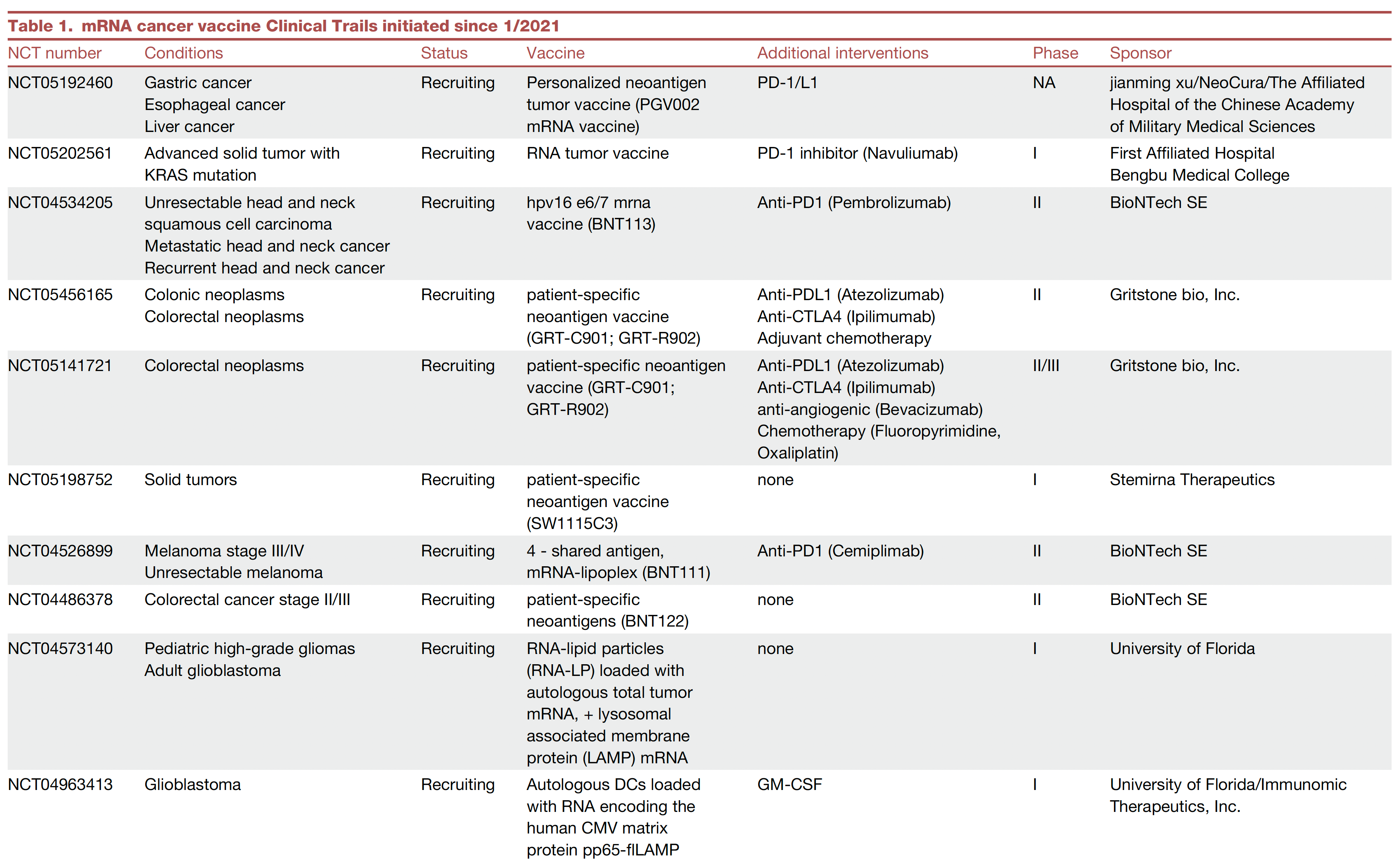
Antibody-Drug Conjugates (ADC)
There is considerable excitement about antibody-drug conjugates (ADC) whereby a linker is used to attach a chemotherapy agent to the checkpoint inhibitor antibody, specifically targeting the cancer cell and facilitating entry of the chemotherapy into the cell. Akin to these are bispecific antibodies (BiTEs, binding to a tumor antigen and T cell receptor simultaneously), both of these conjugates acting as “biologic” or “guided” missiles.
A very good example of the potency of an ADC was seen in a “HER2-low” breast cancer randomized trial. The absence or very low expression or amplification of the HER2 receptor is common in breast cancer and successful treatment has been elusive. A randomized trial of an ADC (trastuzumab deruxtecan) compared to physician’s choice therapy demonstrated a marked success for progression-free survival in HER2-low patients, which was characterized as “unheard-of success” by media coverage.
This strategy is being used to target some of the most difficult cancer driver mutations such as TP53 and KRAS.
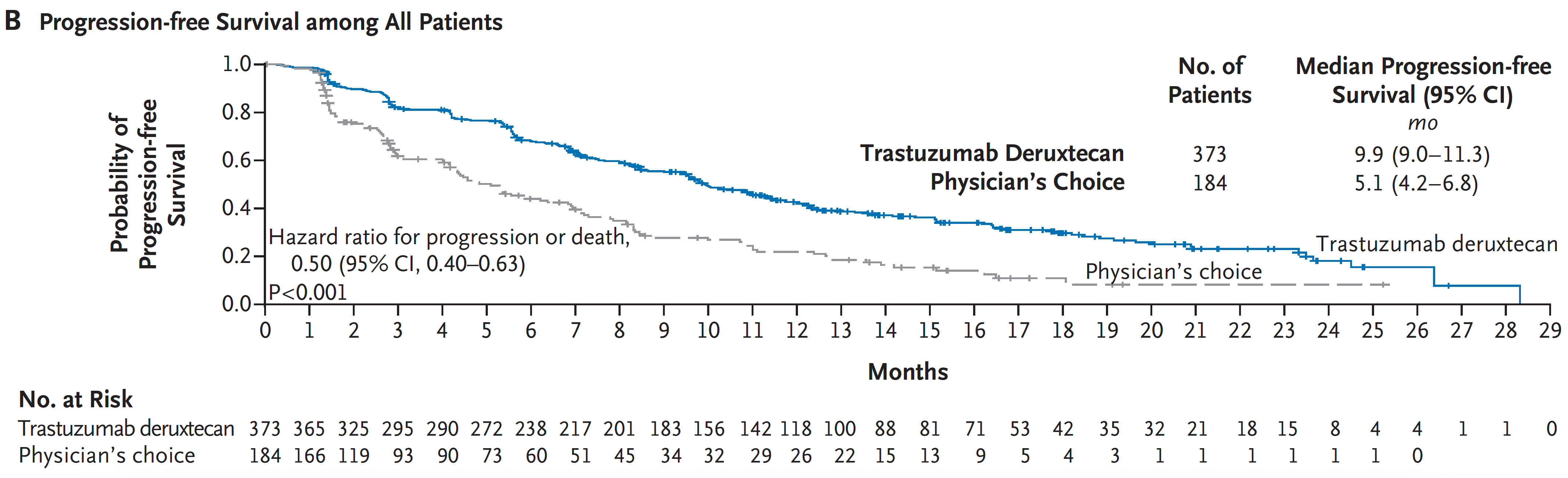
Oncolytic Viruses
Modifying viruses to infect the tumor and make it more visible to the immune system, potentiating anti-tumor responses, known as oncolytic viruses, have been proposed as a way to rev up the immune response for a long time but without positive Phase 3 clinical trials.
After decades of failure, a recent trial in refractory bladder cancer showed marked success, along with others, summarized here, now providing very encouraging results. It looks like oncolytic viruses are on a comeback path.
Engineering T Cells (Chimeric Antigen Receptor [CAR-T])
As I recently reviewed, there are over 500 ongoing clinical trials to build on the success of the first CAR-T approval for leukemia 7 years ago. I won’t go through that all again here, but to reiterate most of the success to date has been in “liquid” blood (leukemia and lymphoma) cancer tumors. This week in Nature is the discovery of a T cell cancer mutation, a gene fusion CARD11-PIK3R3, from a T cell lymphoma that can potentially be used to augment CAR-T efficacy. It has pronounced and prolonged effects in the experimental model. Instead of 1 million cells needed for treatment, even 20,000 were enough to melt the tumor. This is a noteworthy discovery since CAR-T work to date has largely not exploited such naturally occurring mutations, while instead concentrating on those seen in the patient’s set of key tumor mutations.
As currently conceived, CAR-T, and what is being referred to more broadly as adoptive cell therapies, involves removing T cells from the patient’s body and engineering their activation, then reintroducing them back to the patient. This is laborious, technically difficult, and very expensive. Recently, the idea of achieving all of this via an injection of virus that specifically infects T cells and inserts the genes needed, was advanced by two biotech companies with preclinical results, one in non-human primates.
Gearing up to meet the challenge of solid tumor CAR-T intervention, there’s more work using CRISPR genome editing of T cell receptors. A.I. is increasingly being exploited to process the data from sequencing and identify optimal neoantigens.
Instead of just CAR-T, we’re seeing the emergence of CAR-macrophage and CAR-natural killer (NK) cells strategies, and rapidly expanding potential combinations of all the strategies I’ve mentioned. No less, there’s been maturation of on-off suicide switches programmed in, to limit cytokine release and promote safety of these interventions. Overall, major side effects of immunotherapies are not only cytokine release syndromes, but also include interstitial pneumonitis and neurotoxicity.
Summary
Given the multitude of ways cancer cells and tumor tissue can evade our immune response, durably successful treatment remains a daunting challenge. But the ingenuity of so many different approaches to unleash our immune response, and their combinations, provides considerable hope that we’ll increasingly meet the challenge in the years ahead. We have clearly learned that combining different immunotherapy strategies will be essential for many patients with the most resilient solid tumors.
Of concern, as noted by a recent editorial in The Lancet, entitled “Cancer Research Equity: Innovations For The Many, Not The Few,” is that these individualized, sophisticated strategies are not scalable; they will have limited reach and benefit. The movement towards “off the shelf” CAR-T and inexpensive, orally active checkpoint inhibitors may help mitigate this issue.
Notwithstanding this important concern, we’re seeing an array of diverse and potent immunotherapy strategies that are providing highly encouraging results, engendering more excitement than we’ve seen in this space for some time. These should propel substantial improvements in outcomes for patients in the years ahead. It can’t happen soon enough.
Thanks for reading this edition of Ground Truths. If you found it informative, please share it with your colleagues.
Dr. Topol has disclosed the following relevant financial relationships: Serve(d) as a director, officer, partner, employee, advisor, consultant, or trustee for Dexcom; Illumina; Molecular Stethoscope; Quest Diagnostics; Blue Cross Blue Shield Association. Received research grant from National Institutes of Health.
A version of this article appeared on Medscape.com.
This article was originally published on February 10 in Eric Topol’s substack “Ground Truths.”
It’s astounding how devious cancer cells and tumor tissue can be. This week in Science we learned how certain lung cancer cells can function like “Catch Me If You Can” — changing their driver mutation and cell identity to escape targeted therapy. This histologic transformation, as seen in an experimental model, is just one of so many cancer tricks that we are learning about.
Recently, as shown by single-cell sequencing, cancer cells can steal the mitochondria from T cells, a double whammy that turbocharges cancer cells with the hijacked fuel supply and, at the same time, dismantles the immune response.
Last week, we saw how tumor cells can release a virus-like protein that unleashes a vicious autoimmune response.
And then there’s the finding that cancer cell spread predominantly is occurring while we sleep.
As I previously reviewed, the ability for cancer cells to hijack neurons and neural circuits is now well established, no less their ability to reprogram neurons to become adrenergic and stimulate tumor progression, and interfere with the immune response. Stay tuned on that for a new Ground Truths podcast with Prof Michelle Monje, a leader in cancer neuroscience, which will post soon.
Add advancing age’s immunosenescence as yet another challenge to the long and growing list of formidable ways that cancer cells, and the tumor microenvironment, evade our immune response.
An Ever-Expanding Armamentarium
Immune Checkpoint Inhibitors
The field of immunotherapies took off with the immune checkpoint inhibitors, first approved by the FDA in 2011, that take the brakes off of T cells, with the programmed death-1 (PD-1), PD-ligand1, and anti-CTLA-4 monoclonal antibodies.
But we’re clearly learning they are not enough to prevail over cancer with common recurrences, only short term success in most patients, with some notable exceptions. Adding other immune response strategies, such as a vaccine, or antibody-drug conjugates, or engineered T cells, are showing improved chances for success.
Therapeutic Cancer Vaccines
There are many therapeutic cancer vaccines in the works, as reviewed in depth here.
Here’s a list of ongoing clinical trials of cancer vaccines. You’ll note most of these are on top of a checkpoint inhibitor and use personalized neoantigens (cancer cell surface proteins) derived from sequencing (whole-exome or whole genome, RNA-sequencing and HLA-profiling) the patient’s tumor.
An example of positive findings is with the combination of an mRNA-nanoparticle vaccine with up to 34 personalized neoantigens and pembrolizumab (Keytruda) vs pembrolizumab alone in advanced melanoma after resection, with improved outcomes at 3-year follow-up, cutting death or relapse rate in half.
Antibody-Drug Conjugates (ADC)
There is considerable excitement about antibody-drug conjugates (ADC) whereby a linker is used to attach a chemotherapy agent to the checkpoint inhibitor antibody, specifically targeting the cancer cell and facilitating entry of the chemotherapy into the cell. Akin to these are bispecific antibodies (BiTEs, binding to a tumor antigen and T cell receptor simultaneously), both of these conjugates acting as “biologic” or “guided” missiles.
A very good example of the potency of an ADC was seen in a “HER2-low” breast cancer randomized trial. The absence or very low expression or amplification of the HER2 receptor is common in breast cancer and successful treatment has been elusive. A randomized trial of an ADC (trastuzumab deruxtecan) compared to physician’s choice therapy demonstrated a marked success for progression-free survival in HER2-low patients, which was characterized as “unheard-of success” by media coverage.
This strategy is being used to target some of the most difficult cancer driver mutations such as TP53 and KRAS.
Oncolytic Viruses
Modifying viruses to infect the tumor and make it more visible to the immune system, potentiating anti-tumor responses, known as oncolytic viruses, have been proposed as a way to rev up the immune response for a long time but without positive Phase 3 clinical trials.
After decades of failure, a recent trial in refractory bladder cancer showed marked success, along with others, summarized here, now providing very encouraging results. It looks like oncolytic viruses are on a comeback path.
Engineering T Cells (Chimeric Antigen Receptor [CAR-T])
As I recently reviewed, there are over 500 ongoing clinical trials to build on the success of the first CAR-T approval for leukemia 7 years ago. I won’t go through that all again here, but to reiterate most of the success to date has been in “liquid” blood (leukemia and lymphoma) cancer tumors. This week in Nature is the discovery of a T cell cancer mutation, a gene fusion CARD11-PIK3R3, from a T cell lymphoma that can potentially be used to augment CAR-T efficacy. It has pronounced and prolonged effects in the experimental model. Instead of 1 million cells needed for treatment, even 20,000 were enough to melt the tumor. This is a noteworthy discovery since CAR-T work to date has largely not exploited such naturally occurring mutations, while instead concentrating on those seen in the patient’s set of key tumor mutations.
As currently conceived, CAR-T, and what is being referred to more broadly as adoptive cell therapies, involves removing T cells from the patient’s body and engineering their activation, then reintroducing them back to the patient. This is laborious, technically difficult, and very expensive. Recently, the idea of achieving all of this via an injection of virus that specifically infects T cells and inserts the genes needed, was advanced by two biotech companies with preclinical results, one in non-human primates.
Gearing up to meet the challenge of solid tumor CAR-T intervention, there’s more work using CRISPR genome editing of T cell receptors. A.I. is increasingly being exploited to process the data from sequencing and identify optimal neoantigens.
Instead of just CAR-T, we’re seeing the emergence of CAR-macrophage and CAR-natural killer (NK) cells strategies, and rapidly expanding potential combinations of all the strategies I’ve mentioned. No less, there’s been maturation of on-off suicide switches programmed in, to limit cytokine release and promote safety of these interventions. Overall, major side effects of immunotherapies are not only cytokine release syndromes, but also include interstitial pneumonitis and neurotoxicity.
Summary
Given the multitude of ways cancer cells and tumor tissue can evade our immune response, durably successful treatment remains a daunting challenge. But the ingenuity of so many different approaches to unleash our immune response, and their combinations, provides considerable hope that we’ll increasingly meet the challenge in the years ahead. We have clearly learned that combining different immunotherapy strategies will be essential for many patients with the most resilient solid tumors.
Of concern, as noted by a recent editorial in The Lancet, entitled “Cancer Research Equity: Innovations For The Many, Not The Few,” is that these individualized, sophisticated strategies are not scalable; they will have limited reach and benefit. The movement towards “off the shelf” CAR-T and inexpensive, orally active checkpoint inhibitors may help mitigate this issue.
Notwithstanding this important concern, we’re seeing an array of diverse and potent immunotherapy strategies that are providing highly encouraging results, engendering more excitement than we’ve seen in this space for some time. These should propel substantial improvements in outcomes for patients in the years ahead. It can’t happen soon enough.
Thanks for reading this edition of Ground Truths. If you found it informative, please share it with your colleagues.
Dr. Topol has disclosed the following relevant financial relationships: Serve(d) as a director, officer, partner, employee, advisor, consultant, or trustee for Dexcom; Illumina; Molecular Stethoscope; Quest Diagnostics; Blue Cross Blue Shield Association. Received research grant from National Institutes of Health.
A version of this article appeared on Medscape.com.
This article was originally published on February 10 in Eric Topol’s substack “Ground Truths.”
It’s astounding how devious cancer cells and tumor tissue can be. This week in Science we learned how certain lung cancer cells can function like “Catch Me If You Can” — changing their driver mutation and cell identity to escape targeted therapy. This histologic transformation, as seen in an experimental model, is just one of so many cancer tricks that we are learning about.
Recently, as shown by single-cell sequencing, cancer cells can steal the mitochondria from T cells, a double whammy that turbocharges cancer cells with the hijacked fuel supply and, at the same time, dismantles the immune response.
Last week, we saw how tumor cells can release a virus-like protein that unleashes a vicious autoimmune response.
And then there’s the finding that cancer cell spread predominantly is occurring while we sleep.
As I previously reviewed, the ability for cancer cells to hijack neurons and neural circuits is now well established, no less their ability to reprogram neurons to become adrenergic and stimulate tumor progression, and interfere with the immune response. Stay tuned on that for a new Ground Truths podcast with Prof Michelle Monje, a leader in cancer neuroscience, which will post soon.
Add advancing age’s immunosenescence as yet another challenge to the long and growing list of formidable ways that cancer cells, and the tumor microenvironment, evade our immune response.
An Ever-Expanding Armamentarium
Immune Checkpoint Inhibitors
The field of immunotherapies took off with the immune checkpoint inhibitors, first approved by the FDA in 2011, that take the brakes off of T cells, with the programmed death-1 (PD-1), PD-ligand1, and anti-CTLA-4 monoclonal antibodies.
But we’re clearly learning they are not enough to prevail over cancer with common recurrences, only short term success in most patients, with some notable exceptions. Adding other immune response strategies, such as a vaccine, or antibody-drug conjugates, or engineered T cells, are showing improved chances for success.
Therapeutic Cancer Vaccines
There are many therapeutic cancer vaccines in the works, as reviewed in depth here.
Here’s a list of ongoing clinical trials of cancer vaccines. You’ll note most of these are on top of a checkpoint inhibitor and use personalized neoantigens (cancer cell surface proteins) derived from sequencing (whole-exome or whole genome, RNA-sequencing and HLA-profiling) the patient’s tumor.
An example of positive findings is with the combination of an mRNA-nanoparticle vaccine with up to 34 personalized neoantigens and pembrolizumab (Keytruda) vs pembrolizumab alone in advanced melanoma after resection, with improved outcomes at 3-year follow-up, cutting death or relapse rate in half.
Antibody-Drug Conjugates (ADC)
There is considerable excitement about antibody-drug conjugates (ADC) whereby a linker is used to attach a chemotherapy agent to the checkpoint inhibitor antibody, specifically targeting the cancer cell and facilitating entry of the chemotherapy into the cell. Akin to these are bispecific antibodies (BiTEs, binding to a tumor antigen and T cell receptor simultaneously), both of these conjugates acting as “biologic” or “guided” missiles.
A very good example of the potency of an ADC was seen in a “HER2-low” breast cancer randomized trial. The absence or very low expression or amplification of the HER2 receptor is common in breast cancer and successful treatment has been elusive. A randomized trial of an ADC (trastuzumab deruxtecan) compared to physician’s choice therapy demonstrated a marked success for progression-free survival in HER2-low patients, which was characterized as “unheard-of success” by media coverage.
This strategy is being used to target some of the most difficult cancer driver mutations such as TP53 and KRAS.
Oncolytic Viruses
Modifying viruses to infect the tumor and make it more visible to the immune system, potentiating anti-tumor responses, known as oncolytic viruses, have been proposed as a way to rev up the immune response for a long time but without positive Phase 3 clinical trials.
After decades of failure, a recent trial in refractory bladder cancer showed marked success, along with others, summarized here, now providing very encouraging results. It looks like oncolytic viruses are on a comeback path.
Engineering T Cells (Chimeric Antigen Receptor [CAR-T])
As I recently reviewed, there are over 500 ongoing clinical trials to build on the success of the first CAR-T approval for leukemia 7 years ago. I won’t go through that all again here, but to reiterate most of the success to date has been in “liquid” blood (leukemia and lymphoma) cancer tumors. This week in Nature is the discovery of a T cell cancer mutation, a gene fusion CARD11-PIK3R3, from a T cell lymphoma that can potentially be used to augment CAR-T efficacy. It has pronounced and prolonged effects in the experimental model. Instead of 1 million cells needed for treatment, even 20,000 were enough to melt the tumor. This is a noteworthy discovery since CAR-T work to date has largely not exploited such naturally occurring mutations, while instead concentrating on those seen in the patient’s set of key tumor mutations.
As currently conceived, CAR-T, and what is being referred to more broadly as adoptive cell therapies, involves removing T cells from the patient’s body and engineering their activation, then reintroducing them back to the patient. This is laborious, technically difficult, and very expensive. Recently, the idea of achieving all of this via an injection of virus that specifically infects T cells and inserts the genes needed, was advanced by two biotech companies with preclinical results, one in non-human primates.
Gearing up to meet the challenge of solid tumor CAR-T intervention, there’s more work using CRISPR genome editing of T cell receptors. A.I. is increasingly being exploited to process the data from sequencing and identify optimal neoantigens.
Instead of just CAR-T, we’re seeing the emergence of CAR-macrophage and CAR-natural killer (NK) cells strategies, and rapidly expanding potential combinations of all the strategies I’ve mentioned. No less, there’s been maturation of on-off suicide switches programmed in, to limit cytokine release and promote safety of these interventions. Overall, major side effects of immunotherapies are not only cytokine release syndromes, but also include interstitial pneumonitis and neurotoxicity.
Summary
Given the multitude of ways cancer cells and tumor tissue can evade our immune response, durably successful treatment remains a daunting challenge. But the ingenuity of so many different approaches to unleash our immune response, and their combinations, provides considerable hope that we’ll increasingly meet the challenge in the years ahead. We have clearly learned that combining different immunotherapy strategies will be essential for many patients with the most resilient solid tumors.
Of concern, as noted by a recent editorial in The Lancet, entitled “Cancer Research Equity: Innovations For The Many, Not The Few,” is that these individualized, sophisticated strategies are not scalable; they will have limited reach and benefit. The movement towards “off the shelf” CAR-T and inexpensive, orally active checkpoint inhibitors may help mitigate this issue.
Notwithstanding this important concern, we’re seeing an array of diverse and potent immunotherapy strategies that are providing highly encouraging results, engendering more excitement than we’ve seen in this space for some time. These should propel substantial improvements in outcomes for patients in the years ahead. It can’t happen soon enough.
Thanks for reading this edition of Ground Truths. If you found it informative, please share it with your colleagues.
Dr. Topol has disclosed the following relevant financial relationships: Serve(d) as a director, officer, partner, employee, advisor, consultant, or trustee for Dexcom; Illumina; Molecular Stethoscope; Quest Diagnostics; Blue Cross Blue Shield Association. Received research grant from National Institutes of Health.
A version of this article appeared on Medscape.com.
Is MRI Screening Unnecessarily High in Prostate Cancer?
TOPLINE:
METHODOLOGY:
- New initiatives are focusing on organizing prostate cancer screening using MRI to reduce overdiagnosis, as current evidence does not support the effectiveness of a single PSA test, with guidelines now recommending repeated testing every 1-4 years.
- In the STHLM3-MRI trial, men, aged 50-74 years, living in Stockholm County, Sweden, were invited to participate in prostate cancer screening and randomly assigned to traditional screening with systematic or an MRI-based strategy.
- Blood samples were analyzed for PSA levels and Stockholm3 risk score; men with elevated risk underwent targeted MRI and biopsy procedures.
- In this follow-up analysis, 2,078 men with PSA levels of 1.5 ng/mL or higher and a Stockholm3 risk score less than 0.11 were re-invited for screening 2-3 years after their initial screening.
- The primary outcome was clinically significant prostate cancer (Gleason score of 3 + 4 or greater). A Gleason score of 6 was detected in 0.7% of patients, and a score of 4 + 3 or greater was detected in 19 (1.3%) men.
TAKEAWAY:
- Of 1,500 men (median age of 67 years) who underwent a blood test, the median PSA level was 2.8 ng/mL and 26.0% changed risk classification groups (PSA levels < 3 vs 3 ng/mL).
- Out of 667 men with PSA levels of 3 ng/mL or higher, 617 (92.5%) had an MRI. Of the 617, 51 (7.6%) had equivocal lesions (a Prostate Imaging-Reporting and Data System score of 3) and 33 (4.9%) had suspicious lesions.
- Of the 1,500 rescreened men, clinically significant prostate cancer was detected in 48 men (3.2%); this corresponds to 59.2% of the biopsied men.
- Out of 383 men who had previously received a negative MRI result, only 10 (2.6%) exhibited a lesion with a Prostate Imaging-Reporting and Data System score of 4 or higher.
IN PRACTICE:
In an accompanying editorial, Ola Bratt, MD, PhD, noted that the “most important finding was the very high proportion of nonsuspicious repeat MRI scans,” but also emphasizes the necessity of observing a decrease in overall prostate cancer incidence before asserting that the current cancer diagnostics effectively reduce overdiagnosis.
SOURCE:
This study, led by Tobias Nordström, MD, PhD, from Karolinska Institute, Stockholm, Sweden, was published on February 7, 2024, in JAMA Network Open.
LIMITATIONS:
Long-term outcomes like prostate cancer mortality were not evaluated. Information on cancer detection in men with a negative MRI result at rescreening was not available. Authors noted that a subset of individuals may still be at risk despite lower PSA levels.
DISCLOSURES:
This study was funded by the Swedish Research Council for Health, Working Life and Welfare, Karolinska Institute, Prostatacancerförbundet, Region Stockholm, and Åke Wibergs Stiftelse. The authors reported financial relationships outside this work.
A version of this article appeared on Medscape.com.
TOPLINE:
METHODOLOGY:
- New initiatives are focusing on organizing prostate cancer screening using MRI to reduce overdiagnosis, as current evidence does not support the effectiveness of a single PSA test, with guidelines now recommending repeated testing every 1-4 years.
- In the STHLM3-MRI trial, men, aged 50-74 years, living in Stockholm County, Sweden, were invited to participate in prostate cancer screening and randomly assigned to traditional screening with systematic or an MRI-based strategy.
- Blood samples were analyzed for PSA levels and Stockholm3 risk score; men with elevated risk underwent targeted MRI and biopsy procedures.
- In this follow-up analysis, 2,078 men with PSA levels of 1.5 ng/mL or higher and a Stockholm3 risk score less than 0.11 were re-invited for screening 2-3 years after their initial screening.
- The primary outcome was clinically significant prostate cancer (Gleason score of 3 + 4 or greater). A Gleason score of 6 was detected in 0.7% of patients, and a score of 4 + 3 or greater was detected in 19 (1.3%) men.
TAKEAWAY:
- Of 1,500 men (median age of 67 years) who underwent a blood test, the median PSA level was 2.8 ng/mL and 26.0% changed risk classification groups (PSA levels < 3 vs 3 ng/mL).
- Out of 667 men with PSA levels of 3 ng/mL or higher, 617 (92.5%) had an MRI. Of the 617, 51 (7.6%) had equivocal lesions (a Prostate Imaging-Reporting and Data System score of 3) and 33 (4.9%) had suspicious lesions.
- Of the 1,500 rescreened men, clinically significant prostate cancer was detected in 48 men (3.2%); this corresponds to 59.2% of the biopsied men.
- Out of 383 men who had previously received a negative MRI result, only 10 (2.6%) exhibited a lesion with a Prostate Imaging-Reporting and Data System score of 4 or higher.
IN PRACTICE:
In an accompanying editorial, Ola Bratt, MD, PhD, noted that the “most important finding was the very high proportion of nonsuspicious repeat MRI scans,” but also emphasizes the necessity of observing a decrease in overall prostate cancer incidence before asserting that the current cancer diagnostics effectively reduce overdiagnosis.
SOURCE:
This study, led by Tobias Nordström, MD, PhD, from Karolinska Institute, Stockholm, Sweden, was published on February 7, 2024, in JAMA Network Open.
LIMITATIONS:
Long-term outcomes like prostate cancer mortality were not evaluated. Information on cancer detection in men with a negative MRI result at rescreening was not available. Authors noted that a subset of individuals may still be at risk despite lower PSA levels.
DISCLOSURES:
This study was funded by the Swedish Research Council for Health, Working Life and Welfare, Karolinska Institute, Prostatacancerförbundet, Region Stockholm, and Åke Wibergs Stiftelse. The authors reported financial relationships outside this work.
A version of this article appeared on Medscape.com.
TOPLINE:
METHODOLOGY:
- New initiatives are focusing on organizing prostate cancer screening using MRI to reduce overdiagnosis, as current evidence does not support the effectiveness of a single PSA test, with guidelines now recommending repeated testing every 1-4 years.
- In the STHLM3-MRI trial, men, aged 50-74 years, living in Stockholm County, Sweden, were invited to participate in prostate cancer screening and randomly assigned to traditional screening with systematic or an MRI-based strategy.
- Blood samples were analyzed for PSA levels and Stockholm3 risk score; men with elevated risk underwent targeted MRI and biopsy procedures.
- In this follow-up analysis, 2,078 men with PSA levels of 1.5 ng/mL or higher and a Stockholm3 risk score less than 0.11 were re-invited for screening 2-3 years after their initial screening.
- The primary outcome was clinically significant prostate cancer (Gleason score of 3 + 4 or greater). A Gleason score of 6 was detected in 0.7% of patients, and a score of 4 + 3 or greater was detected in 19 (1.3%) men.
TAKEAWAY:
- Of 1,500 men (median age of 67 years) who underwent a blood test, the median PSA level was 2.8 ng/mL and 26.0% changed risk classification groups (PSA levels < 3 vs 3 ng/mL).
- Out of 667 men with PSA levels of 3 ng/mL or higher, 617 (92.5%) had an MRI. Of the 617, 51 (7.6%) had equivocal lesions (a Prostate Imaging-Reporting and Data System score of 3) and 33 (4.9%) had suspicious lesions.
- Of the 1,500 rescreened men, clinically significant prostate cancer was detected in 48 men (3.2%); this corresponds to 59.2% of the biopsied men.
- Out of 383 men who had previously received a negative MRI result, only 10 (2.6%) exhibited a lesion with a Prostate Imaging-Reporting and Data System score of 4 or higher.
IN PRACTICE:
In an accompanying editorial, Ola Bratt, MD, PhD, noted that the “most important finding was the very high proportion of nonsuspicious repeat MRI scans,” but also emphasizes the necessity of observing a decrease in overall prostate cancer incidence before asserting that the current cancer diagnostics effectively reduce overdiagnosis.
SOURCE:
This study, led by Tobias Nordström, MD, PhD, from Karolinska Institute, Stockholm, Sweden, was published on February 7, 2024, in JAMA Network Open.
LIMITATIONS:
Long-term outcomes like prostate cancer mortality were not evaluated. Information on cancer detection in men with a negative MRI result at rescreening was not available. Authors noted that a subset of individuals may still be at risk despite lower PSA levels.
DISCLOSURES:
This study was funded by the Swedish Research Council for Health, Working Life and Welfare, Karolinska Institute, Prostatacancerförbundet, Region Stockholm, and Åke Wibergs Stiftelse. The authors reported financial relationships outside this work.
A version of this article appeared on Medscape.com.
Focal Therapy for Prostate Cancer: Evidence-Based or Oversold?
In 2013, a prostate-specific antigen (PSA) blood test revealed that Richard LaFrate’s levels had jumped.
Previously in a normal range, his PSA was now above 6 ng/mL, indicating an elevated likelihood for prostate cancer. The jazz guitarist from Leesburg, Florida, then 70 years old, underwent a biopsy, which found two Gleason 6 lesions.
Mr. LaFrate had low-risk prostate cancer.
Guidelines now recommend active surveillance for patients like Mr. LaFrate, who have low-risk disease. This strategy would mean monitoring the cancer until LaFrate required treatment, with the upside being he might never need therapy.
Mr. LaFrate’s urologist, however, was pushing whole gland surgery — an invasive and unnecessary procedure given his diagnosis and age.
Mr. LaFrate decided to look for another doctor. He filled out a form online that pointed him to a new urologist who offered him one option: An investigational procedure known as high-intensity focused ultrasound.
At the time, high-intensity focused ultrasound — a form of focal therapy — was being studied in the United States to treat men with low or intermediate-risk prostate cancer, but it was still relatively early days.
Mr. LaFrate’s urologist asked him to pay $25,000 out of pocket to undergo the focal procedure at a clinic in the Bahamas. He refused and, ultimately, landed on active surveillance as the best strategy to manage for his low-risk disease.
That urologist was “a shyster in my opinion,” Mr. LaFrate said.
— Gleason 3+4 (grade group 2) tumors — as an alternative to invasive surgery and active surveillance. Prestigious medical centers, such as Cleveland Clinic, Mayo Clinic, Memorial Sloan Kettering, UCLA, and the University of Chicago, routinely offer focal therapy.
But use of the techniques remains controversial and costly.
As the Cleveland Clinic’s website acknowledges, although “the use of focal therapy for localized prostate cancer appears to be a promising development in a number of ways, it is still considered investigational and not yet part of standard therapy.” Major caveats to focal therapy include unknown long-term effectiveness, the possibility of leaving behind untreated cancer, and higher overall costs.
No major national guidelines endorse the use of focal therapy, unless offered in a research or clinical trial setting. Insurance companies, such as Aetna, Blue Cross Blue Shield, and United, also consider focal therapy for prostate cancer investigational and don’t cover it.
Without a stamp of approval from guideline bodies and insurance companies, patients, like Mr. LaFrate, remain vulnerable to the high out-of-pocket costs for these focal techniques.
“Almost every place charges $15,000-$30,000 in cash,” said Daniel Spratt, MD, radiation oncology chair at University Hospitals Seidman Cancer Center and Case Western Reserve University in Cleveland.
Dr. Spratt has seen hundreds of patients after focal therapy, some from prominent centers, who have emptied their bank accounts to undergo treatment with the promise of great results and ultimately felt misled when the cancer has recurred.
“It pains me that there are doctors willing to ignore the Hippocratic oath of ‘Do No Harm’ simply to jump on this fad to bring in revenue,” Dr. Spratt said.
Evidence-Based or Oversold?
Focal therapy gained a foothold in the United Kingdom well before the United States.
Hashim Ahmed, FRCS, urology chair at Imperial College London, has used focal therapy for 15 years, treated over 1000 patients, and taught dozens of surgeons how to use the leading focal therapies — focal cryoablation, in which surgeons use a needle-thin probe to target, freeze, and kill prostate tumors, as well as high-intensity focused ultrasound, which uses sound wave energy to superheat and kill tumors.
“Certainly, in the United Kingdom, focal therapy has been prime time in a number of centers for a number of years,” Dr. Ahmed said.
In the United States, focal therapy has become an attractive option for men with prostate cancer who want to avoid radiation or radical prostatectomy but don’t feel comfortable simply monitoring their disease with active surveillance. Experts from specialized focal therapy centers touting the promise of this “innovative technique” predict its routine use in the next few years.
But the excitement surrounding the use of focal therapy in prostate cancer has outpaced broader acceptance.
In 2015, the FDA approved high-intensity focused ultrasound to treat prostatic disease, but not prostate cancer specifically. Although the approval language “means that companies cannot advertise that their devices can be used for prostate cancer,” physicians can still determine how to use the technology, which includes treating prostate cancer, Dr. Ahmed said.
The evidence is starting to catch up to the demand. The latest research suggests that the partial-gland techniques may stand up well to radical prostatectomy.
A 2022 prospective database study comparing radical prostatectomies to focal therapy — mostly high-intensity focused ultrasound — in more than 800 men found similar rates of failure-free survival in the two groups at the 8-year follow-up. A 2019 registry study found that failure-free survival at 3 years was just over 90% in high and intermediate-risk patients receiving focal cryotherapy, with the rate rising to about 93% for the intermediate-risk group. And a 2018 prospective study of 625 patients with intermediate or high-risk prostate cancer who underwent high-intensity focused ultrasound had 5-year metastasis-free survival of 98% and overall survival rates of 100%.
One of the biggest draws of focal therapy vs more aggressive treatments is the “massive differences in side-effect profiles,” said Dr. Ahmed.
In a 2021 meta-analysis, researchers found that 6 months after high-intensity focused ultrasound, 98% of patients remained continent and 80% retained erectile function, while erectile dysfunction can occur in 30% to as many as 85% of patients following prostatectomy or radiotherapy and urinary incontinence can occur in as many as 40% of patients.
Despite these potential advantages of focal therapy, the long-term efficacy of the techniques remains uncertain.
A recent study from a team at MSK, for instance, reported that 40% of men with intermediate (grade 2) or high-risk (grade 3) disease had residual cancer following MRI-guided focused ultrasound. A 2020 prospective registry study found that almost 20% of patients undergoing high-intensity focal ultrasound required a second round following a recurrence.
Dr. Spratt worries that patients who recur after focal therapy may go on to receive a second round — often offered at half price — and will still ultimately need surgery or radiation therapy later. By that point, however, patients may have spent as much as $45,000 — ie, $30,000 on the initial and another $15,000 on the follow-up procedure.
When patients see Dr. Spratt after a recurrence, he informs them that their side effects will be worse if he gives them radiation or surgery now vs if he had given them curative therapy upfront. “But this is what we’re left with,” he tells them.
Another big concern in the field is “the quality of data for focal therapy is overwhelmingly poor,” said Jonathan Shoag, MD, a urologic oncologist at University Hospitals and an associate professor of urology at Case Western Reserve University School of Medicine in Cleveland. “Essentially, the bulk of the data is from single-institution retrospective series without defined follow-up protocols or endpoints.”
The American Urological Association (AUA) has even cautioned experts and patients about the lack of high-quality data comparing focal therapy techniques to radiation therapy, surgery, and active surveillance. According to the AUA, focal options should only be considered in intermediate-risk prostate cancer in a clinical trial setting.
“The lack of randomized clinical trials poses a major stumbling block for the field,” said Dr. Ahmed.
Although randomized trials would be ideal, the results would take many years to mature, and growing patient demand for these less invasive focal procedures has made randomized trials difficult to complete, explained Arvin George, MD, associate professor at Johns Hopkins School of Medicine in Baltimore. Several randomized trials attempted in Norway and the United Kingdom, for instance, fell apart when patients refused to be randomized between focal and radical therapy, Dr. George said.
Focal therapy is now in the same position that active surveillance was a few years ago, according to Dr. George.
“We are hearing the same concerns about focal therapy now as we did about active surveillance,” he said. The initial evidence supporting active surveillance largely came from real-world experience and retrospective studies. The randomized data came later, and skeptics of active surveillance “were proven wrong,” he added.
But Dr. Shoag has a different take on the trajectory of focal therapy research and care in the United States.
“I think there’s this emerging kind of tragedy happening in our field now, where you have even academic institutions offering focal therapy to patients off-trial with essentially no data to suggest it is oncologically effective,” Dr. Shoag said.
William Catalona, MD, Northwestern University Feinberg School of Medicine, Chicago, agreed, noting that too many low-risk patients are undergoing focal treatment who should be on active surveillance. “Many men are attracted to focal because they just are uncomfortable having a cancer in their body that’s not treated,” Dr. Catalona said. But “giving these patients focal therapy is really overtreatment.”
Patients with higher-risk disease who want to avoid aggressive treatment are also being lured into focal without guidelines or clear evidence to back up that option, Dr. Catalona explained.
Although it’s not clear how many men in the United States are receiving focal therapy who shouldn’t, even proponents of focal therapy, like George, have expressed concern.
Dr. George agreed that focal therapy marketing geared towards patients is drawing in some men who are not good candidates for these techniques, and feels there’s not enough objective material from medical societies or academic centers giving patients a realistic picture of focal therapy.
“There is concern that patients may be receiving biased information,” Dr. George said, adding that it’s ultimately up to the physician to reconcile the best available evidence, understand the outcomes, and discuss these options with the patient to guide them to what’s best.
At the end of the day, Dr. Spratt said, physicians giving focal therapy off a clinical trial need to pause and ask themselves “why are they giving a treatment that remains investigational by payers, not recommended by any major guideline, and that lacks any randomized evidence?”
Mr. LaFrate does not regret his decision to forgo focal therapy in 2013. He has been on active surveillance for about a decade now.
Following an MRI in 2022, Mr. LaFrate’s radiology report found that “clinically significant cancer is very unlikely to be present.”
Still, his PSA has risen two points in the past year to 14. His current urologist feels that the PSA is going up because there’s cancer present and is suggesting focal therapy for Mr. LaFrate.
Mr. LaFrate, who has prostate enlargement issues, remains skeptical of focal therapy and is still resisting the sales pitch.
“My doctor is not aggressively pushing it. He’s just giving me that as one of my options,” he said. “I just have a hunch I don’t need it at this point.”
A version of this article appeared on Medscape.com.
In 2013, a prostate-specific antigen (PSA) blood test revealed that Richard LaFrate’s levels had jumped.
Previously in a normal range, his PSA was now above 6 ng/mL, indicating an elevated likelihood for prostate cancer. The jazz guitarist from Leesburg, Florida, then 70 years old, underwent a biopsy, which found two Gleason 6 lesions.
Mr. LaFrate had low-risk prostate cancer.
Guidelines now recommend active surveillance for patients like Mr. LaFrate, who have low-risk disease. This strategy would mean monitoring the cancer until LaFrate required treatment, with the upside being he might never need therapy.
Mr. LaFrate’s urologist, however, was pushing whole gland surgery — an invasive and unnecessary procedure given his diagnosis and age.
Mr. LaFrate decided to look for another doctor. He filled out a form online that pointed him to a new urologist who offered him one option: An investigational procedure known as high-intensity focused ultrasound.
At the time, high-intensity focused ultrasound — a form of focal therapy — was being studied in the United States to treat men with low or intermediate-risk prostate cancer, but it was still relatively early days.
Mr. LaFrate’s urologist asked him to pay $25,000 out of pocket to undergo the focal procedure at a clinic in the Bahamas. He refused and, ultimately, landed on active surveillance as the best strategy to manage for his low-risk disease.
That urologist was “a shyster in my opinion,” Mr. LaFrate said.
— Gleason 3+4 (grade group 2) tumors — as an alternative to invasive surgery and active surveillance. Prestigious medical centers, such as Cleveland Clinic, Mayo Clinic, Memorial Sloan Kettering, UCLA, and the University of Chicago, routinely offer focal therapy.
But use of the techniques remains controversial and costly.
As the Cleveland Clinic’s website acknowledges, although “the use of focal therapy for localized prostate cancer appears to be a promising development in a number of ways, it is still considered investigational and not yet part of standard therapy.” Major caveats to focal therapy include unknown long-term effectiveness, the possibility of leaving behind untreated cancer, and higher overall costs.
No major national guidelines endorse the use of focal therapy, unless offered in a research or clinical trial setting. Insurance companies, such as Aetna, Blue Cross Blue Shield, and United, also consider focal therapy for prostate cancer investigational and don’t cover it.
Without a stamp of approval from guideline bodies and insurance companies, patients, like Mr. LaFrate, remain vulnerable to the high out-of-pocket costs for these focal techniques.
“Almost every place charges $15,000-$30,000 in cash,” said Daniel Spratt, MD, radiation oncology chair at University Hospitals Seidman Cancer Center and Case Western Reserve University in Cleveland.
Dr. Spratt has seen hundreds of patients after focal therapy, some from prominent centers, who have emptied their bank accounts to undergo treatment with the promise of great results and ultimately felt misled when the cancer has recurred.
“It pains me that there are doctors willing to ignore the Hippocratic oath of ‘Do No Harm’ simply to jump on this fad to bring in revenue,” Dr. Spratt said.
Evidence-Based or Oversold?
Focal therapy gained a foothold in the United Kingdom well before the United States.
Hashim Ahmed, FRCS, urology chair at Imperial College London, has used focal therapy for 15 years, treated over 1000 patients, and taught dozens of surgeons how to use the leading focal therapies — focal cryoablation, in which surgeons use a needle-thin probe to target, freeze, and kill prostate tumors, as well as high-intensity focused ultrasound, which uses sound wave energy to superheat and kill tumors.
“Certainly, in the United Kingdom, focal therapy has been prime time in a number of centers for a number of years,” Dr. Ahmed said.
In the United States, focal therapy has become an attractive option for men with prostate cancer who want to avoid radiation or radical prostatectomy but don’t feel comfortable simply monitoring their disease with active surveillance. Experts from specialized focal therapy centers touting the promise of this “innovative technique” predict its routine use in the next few years.
But the excitement surrounding the use of focal therapy in prostate cancer has outpaced broader acceptance.
In 2015, the FDA approved high-intensity focused ultrasound to treat prostatic disease, but not prostate cancer specifically. Although the approval language “means that companies cannot advertise that their devices can be used for prostate cancer,” physicians can still determine how to use the technology, which includes treating prostate cancer, Dr. Ahmed said.
The evidence is starting to catch up to the demand. The latest research suggests that the partial-gland techniques may stand up well to radical prostatectomy.
A 2022 prospective database study comparing radical prostatectomies to focal therapy — mostly high-intensity focused ultrasound — in more than 800 men found similar rates of failure-free survival in the two groups at the 8-year follow-up. A 2019 registry study found that failure-free survival at 3 years was just over 90% in high and intermediate-risk patients receiving focal cryotherapy, with the rate rising to about 93% for the intermediate-risk group. And a 2018 prospective study of 625 patients with intermediate or high-risk prostate cancer who underwent high-intensity focused ultrasound had 5-year metastasis-free survival of 98% and overall survival rates of 100%.
One of the biggest draws of focal therapy vs more aggressive treatments is the “massive differences in side-effect profiles,” said Dr. Ahmed.
In a 2021 meta-analysis, researchers found that 6 months after high-intensity focused ultrasound, 98% of patients remained continent and 80% retained erectile function, while erectile dysfunction can occur in 30% to as many as 85% of patients following prostatectomy or radiotherapy and urinary incontinence can occur in as many as 40% of patients.
Despite these potential advantages of focal therapy, the long-term efficacy of the techniques remains uncertain.
A recent study from a team at MSK, for instance, reported that 40% of men with intermediate (grade 2) or high-risk (grade 3) disease had residual cancer following MRI-guided focused ultrasound. A 2020 prospective registry study found that almost 20% of patients undergoing high-intensity focal ultrasound required a second round following a recurrence.
Dr. Spratt worries that patients who recur after focal therapy may go on to receive a second round — often offered at half price — and will still ultimately need surgery or radiation therapy later. By that point, however, patients may have spent as much as $45,000 — ie, $30,000 on the initial and another $15,000 on the follow-up procedure.
When patients see Dr. Spratt after a recurrence, he informs them that their side effects will be worse if he gives them radiation or surgery now vs if he had given them curative therapy upfront. “But this is what we’re left with,” he tells them.
Another big concern in the field is “the quality of data for focal therapy is overwhelmingly poor,” said Jonathan Shoag, MD, a urologic oncologist at University Hospitals and an associate professor of urology at Case Western Reserve University School of Medicine in Cleveland. “Essentially, the bulk of the data is from single-institution retrospective series without defined follow-up protocols or endpoints.”
The American Urological Association (AUA) has even cautioned experts and patients about the lack of high-quality data comparing focal therapy techniques to radiation therapy, surgery, and active surveillance. According to the AUA, focal options should only be considered in intermediate-risk prostate cancer in a clinical trial setting.
“The lack of randomized clinical trials poses a major stumbling block for the field,” said Dr. Ahmed.
Although randomized trials would be ideal, the results would take many years to mature, and growing patient demand for these less invasive focal procedures has made randomized trials difficult to complete, explained Arvin George, MD, associate professor at Johns Hopkins School of Medicine in Baltimore. Several randomized trials attempted in Norway and the United Kingdom, for instance, fell apart when patients refused to be randomized between focal and radical therapy, Dr. George said.
Focal therapy is now in the same position that active surveillance was a few years ago, according to Dr. George.
“We are hearing the same concerns about focal therapy now as we did about active surveillance,” he said. The initial evidence supporting active surveillance largely came from real-world experience and retrospective studies. The randomized data came later, and skeptics of active surveillance “were proven wrong,” he added.
But Dr. Shoag has a different take on the trajectory of focal therapy research and care in the United States.
“I think there’s this emerging kind of tragedy happening in our field now, where you have even academic institutions offering focal therapy to patients off-trial with essentially no data to suggest it is oncologically effective,” Dr. Shoag said.
William Catalona, MD, Northwestern University Feinberg School of Medicine, Chicago, agreed, noting that too many low-risk patients are undergoing focal treatment who should be on active surveillance. “Many men are attracted to focal because they just are uncomfortable having a cancer in their body that’s not treated,” Dr. Catalona said. But “giving these patients focal therapy is really overtreatment.”
Patients with higher-risk disease who want to avoid aggressive treatment are also being lured into focal without guidelines or clear evidence to back up that option, Dr. Catalona explained.
Although it’s not clear how many men in the United States are receiving focal therapy who shouldn’t, even proponents of focal therapy, like George, have expressed concern.
Dr. George agreed that focal therapy marketing geared towards patients is drawing in some men who are not good candidates for these techniques, and feels there’s not enough objective material from medical societies or academic centers giving patients a realistic picture of focal therapy.
“There is concern that patients may be receiving biased information,” Dr. George said, adding that it’s ultimately up to the physician to reconcile the best available evidence, understand the outcomes, and discuss these options with the patient to guide them to what’s best.
At the end of the day, Dr. Spratt said, physicians giving focal therapy off a clinical trial need to pause and ask themselves “why are they giving a treatment that remains investigational by payers, not recommended by any major guideline, and that lacks any randomized evidence?”
Mr. LaFrate does not regret his decision to forgo focal therapy in 2013. He has been on active surveillance for about a decade now.
Following an MRI in 2022, Mr. LaFrate’s radiology report found that “clinically significant cancer is very unlikely to be present.”
Still, his PSA has risen two points in the past year to 14. His current urologist feels that the PSA is going up because there’s cancer present and is suggesting focal therapy for Mr. LaFrate.
Mr. LaFrate, who has prostate enlargement issues, remains skeptical of focal therapy and is still resisting the sales pitch.
“My doctor is not aggressively pushing it. He’s just giving me that as one of my options,” he said. “I just have a hunch I don’t need it at this point.”
A version of this article appeared on Medscape.com.
In 2013, a prostate-specific antigen (PSA) blood test revealed that Richard LaFrate’s levels had jumped.
Previously in a normal range, his PSA was now above 6 ng/mL, indicating an elevated likelihood for prostate cancer. The jazz guitarist from Leesburg, Florida, then 70 years old, underwent a biopsy, which found two Gleason 6 lesions.
Mr. LaFrate had low-risk prostate cancer.
Guidelines now recommend active surveillance for patients like Mr. LaFrate, who have low-risk disease. This strategy would mean monitoring the cancer until LaFrate required treatment, with the upside being he might never need therapy.
Mr. LaFrate’s urologist, however, was pushing whole gland surgery — an invasive and unnecessary procedure given his diagnosis and age.
Mr. LaFrate decided to look for another doctor. He filled out a form online that pointed him to a new urologist who offered him one option: An investigational procedure known as high-intensity focused ultrasound.
At the time, high-intensity focused ultrasound — a form of focal therapy — was being studied in the United States to treat men with low or intermediate-risk prostate cancer, but it was still relatively early days.
Mr. LaFrate’s urologist asked him to pay $25,000 out of pocket to undergo the focal procedure at a clinic in the Bahamas. He refused and, ultimately, landed on active surveillance as the best strategy to manage for his low-risk disease.
That urologist was “a shyster in my opinion,” Mr. LaFrate said.
— Gleason 3+4 (grade group 2) tumors — as an alternative to invasive surgery and active surveillance. Prestigious medical centers, such as Cleveland Clinic, Mayo Clinic, Memorial Sloan Kettering, UCLA, and the University of Chicago, routinely offer focal therapy.
But use of the techniques remains controversial and costly.
As the Cleveland Clinic’s website acknowledges, although “the use of focal therapy for localized prostate cancer appears to be a promising development in a number of ways, it is still considered investigational and not yet part of standard therapy.” Major caveats to focal therapy include unknown long-term effectiveness, the possibility of leaving behind untreated cancer, and higher overall costs.
No major national guidelines endorse the use of focal therapy, unless offered in a research or clinical trial setting. Insurance companies, such as Aetna, Blue Cross Blue Shield, and United, also consider focal therapy for prostate cancer investigational and don’t cover it.
Without a stamp of approval from guideline bodies and insurance companies, patients, like Mr. LaFrate, remain vulnerable to the high out-of-pocket costs for these focal techniques.
“Almost every place charges $15,000-$30,000 in cash,” said Daniel Spratt, MD, radiation oncology chair at University Hospitals Seidman Cancer Center and Case Western Reserve University in Cleveland.
Dr. Spratt has seen hundreds of patients after focal therapy, some from prominent centers, who have emptied their bank accounts to undergo treatment with the promise of great results and ultimately felt misled when the cancer has recurred.
“It pains me that there are doctors willing to ignore the Hippocratic oath of ‘Do No Harm’ simply to jump on this fad to bring in revenue,” Dr. Spratt said.
Evidence-Based or Oversold?
Focal therapy gained a foothold in the United Kingdom well before the United States.
Hashim Ahmed, FRCS, urology chair at Imperial College London, has used focal therapy for 15 years, treated over 1000 patients, and taught dozens of surgeons how to use the leading focal therapies — focal cryoablation, in which surgeons use a needle-thin probe to target, freeze, and kill prostate tumors, as well as high-intensity focused ultrasound, which uses sound wave energy to superheat and kill tumors.
“Certainly, in the United Kingdom, focal therapy has been prime time in a number of centers for a number of years,” Dr. Ahmed said.
In the United States, focal therapy has become an attractive option for men with prostate cancer who want to avoid radiation or radical prostatectomy but don’t feel comfortable simply monitoring their disease with active surveillance. Experts from specialized focal therapy centers touting the promise of this “innovative technique” predict its routine use in the next few years.
But the excitement surrounding the use of focal therapy in prostate cancer has outpaced broader acceptance.
In 2015, the FDA approved high-intensity focused ultrasound to treat prostatic disease, but not prostate cancer specifically. Although the approval language “means that companies cannot advertise that their devices can be used for prostate cancer,” physicians can still determine how to use the technology, which includes treating prostate cancer, Dr. Ahmed said.
The evidence is starting to catch up to the demand. The latest research suggests that the partial-gland techniques may stand up well to radical prostatectomy.
A 2022 prospective database study comparing radical prostatectomies to focal therapy — mostly high-intensity focused ultrasound — in more than 800 men found similar rates of failure-free survival in the two groups at the 8-year follow-up. A 2019 registry study found that failure-free survival at 3 years was just over 90% in high and intermediate-risk patients receiving focal cryotherapy, with the rate rising to about 93% for the intermediate-risk group. And a 2018 prospective study of 625 patients with intermediate or high-risk prostate cancer who underwent high-intensity focused ultrasound had 5-year metastasis-free survival of 98% and overall survival rates of 100%.
One of the biggest draws of focal therapy vs more aggressive treatments is the “massive differences in side-effect profiles,” said Dr. Ahmed.
In a 2021 meta-analysis, researchers found that 6 months after high-intensity focused ultrasound, 98% of patients remained continent and 80% retained erectile function, while erectile dysfunction can occur in 30% to as many as 85% of patients following prostatectomy or radiotherapy and urinary incontinence can occur in as many as 40% of patients.
Despite these potential advantages of focal therapy, the long-term efficacy of the techniques remains uncertain.
A recent study from a team at MSK, for instance, reported that 40% of men with intermediate (grade 2) or high-risk (grade 3) disease had residual cancer following MRI-guided focused ultrasound. A 2020 prospective registry study found that almost 20% of patients undergoing high-intensity focal ultrasound required a second round following a recurrence.
Dr. Spratt worries that patients who recur after focal therapy may go on to receive a second round — often offered at half price — and will still ultimately need surgery or radiation therapy later. By that point, however, patients may have spent as much as $45,000 — ie, $30,000 on the initial and another $15,000 on the follow-up procedure.
When patients see Dr. Spratt after a recurrence, he informs them that their side effects will be worse if he gives them radiation or surgery now vs if he had given them curative therapy upfront. “But this is what we’re left with,” he tells them.
Another big concern in the field is “the quality of data for focal therapy is overwhelmingly poor,” said Jonathan Shoag, MD, a urologic oncologist at University Hospitals and an associate professor of urology at Case Western Reserve University School of Medicine in Cleveland. “Essentially, the bulk of the data is from single-institution retrospective series without defined follow-up protocols or endpoints.”
The American Urological Association (AUA) has even cautioned experts and patients about the lack of high-quality data comparing focal therapy techniques to radiation therapy, surgery, and active surveillance. According to the AUA, focal options should only be considered in intermediate-risk prostate cancer in a clinical trial setting.
“The lack of randomized clinical trials poses a major stumbling block for the field,” said Dr. Ahmed.
Although randomized trials would be ideal, the results would take many years to mature, and growing patient demand for these less invasive focal procedures has made randomized trials difficult to complete, explained Arvin George, MD, associate professor at Johns Hopkins School of Medicine in Baltimore. Several randomized trials attempted in Norway and the United Kingdom, for instance, fell apart when patients refused to be randomized between focal and radical therapy, Dr. George said.
Focal therapy is now in the same position that active surveillance was a few years ago, according to Dr. George.
“We are hearing the same concerns about focal therapy now as we did about active surveillance,” he said. The initial evidence supporting active surveillance largely came from real-world experience and retrospective studies. The randomized data came later, and skeptics of active surveillance “were proven wrong,” he added.
But Dr. Shoag has a different take on the trajectory of focal therapy research and care in the United States.
“I think there’s this emerging kind of tragedy happening in our field now, where you have even academic institutions offering focal therapy to patients off-trial with essentially no data to suggest it is oncologically effective,” Dr. Shoag said.
William Catalona, MD, Northwestern University Feinberg School of Medicine, Chicago, agreed, noting that too many low-risk patients are undergoing focal treatment who should be on active surveillance. “Many men are attracted to focal because they just are uncomfortable having a cancer in their body that’s not treated,” Dr. Catalona said. But “giving these patients focal therapy is really overtreatment.”
Patients with higher-risk disease who want to avoid aggressive treatment are also being lured into focal without guidelines or clear evidence to back up that option, Dr. Catalona explained.
Although it’s not clear how many men in the United States are receiving focal therapy who shouldn’t, even proponents of focal therapy, like George, have expressed concern.
Dr. George agreed that focal therapy marketing geared towards patients is drawing in some men who are not good candidates for these techniques, and feels there’s not enough objective material from medical societies or academic centers giving patients a realistic picture of focal therapy.
“There is concern that patients may be receiving biased information,” Dr. George said, adding that it’s ultimately up to the physician to reconcile the best available evidence, understand the outcomes, and discuss these options with the patient to guide them to what’s best.
At the end of the day, Dr. Spratt said, physicians giving focal therapy off a clinical trial need to pause and ask themselves “why are they giving a treatment that remains investigational by payers, not recommended by any major guideline, and that lacks any randomized evidence?”
Mr. LaFrate does not regret his decision to forgo focal therapy in 2013. He has been on active surveillance for about a decade now.
Following an MRI in 2022, Mr. LaFrate’s radiology report found that “clinically significant cancer is very unlikely to be present.”
Still, his PSA has risen two points in the past year to 14. His current urologist feels that the PSA is going up because there’s cancer present and is suggesting focal therapy for Mr. LaFrate.
Mr. LaFrate, who has prostate enlargement issues, remains skeptical of focal therapy and is still resisting the sales pitch.
“My doctor is not aggressively pushing it. He’s just giving me that as one of my options,” he said. “I just have a hunch I don’t need it at this point.”
A version of this article appeared on Medscape.com.
Transcatheter Arterial Chemoembolization for Rectal Tumors?
TOPLINE:
METHODOLOGY:
- The combination of neoadjuvant chemoradiotherapy, total mesorectal excision, and postoperative adjuvant chemotherapy is the current standard of care for locally advanced rectal cancer. But with pathological complete response rates of only 10%-15% and more than 30% of patients developing distant metastases within 3 years, outcomes remain suboptimal.
- Chinese investigators took a step to improve the situation, applying TACE — a standard treatment for colorectal liver metastases — to rectal tumors, dubbing the approach transcatheter rectal arterial chemoembolization (TRACE).
- As in TACE, TRACE uses precisely injected chemotherapeutic and vaso-occlusive agents to shut down blood flow to tumors, starving them of oxygen and nutrients.
- The research team tried the approach in 111 patients with stage II or III rectal tumors and performance status scores of 0-1.
- TRACE was delivered with oxaliplatin and followed by radiotherapy and S1 chemotherapy (tegafur, gimeracil, and potassium oteracil). Total mesorectal excisions were performed 4-8 weeks later, followed by mFOLFOX6 (5-fluorouracil, leucovorin, and oxaliplatin) or CAPOX (oxaliplatin and capecitabine) chemotherapy for 4-6 months.
TAKEAWAY:
- Overall, 20.7% of patients undergoing TRACE had a pathological complete response, and almost half (48.65%) had a major pathological response.
- Nearly 62% of patients were disease-free at 5 years, and almost 75% were alive at 5 years.
- No serious surgical complications occurred, but 21.6% of patients had postoperative complications. Overall, about 26% of patients (29 of 111) had grade 3/4 toxicities.
IN PRACTICE:
“The addition of transcatheter rectal arterial chemoembolisation to the neoadjuvant therapy can improve the pathological remission rate and prognosis in patients with locally advanced rectal cancer, without increasing the incidence of preoperative adverse events and postoperative complications,” the researchers concluded. “Given its promising effectiveness and safe profile, incorporating TRACE into the standard treatment strategy for patients with [locally advanced rectal cancer] should be considered.”
SOURCE:
The work, led by W. Yang of the Army Medical University in Chongqing, China, was published in Clinical Oncology.
LIMITATIONS:
The study was performed at a single center with no control arm in a Chinese population.
DISCLOSURES:
The work was funded by the Third Military Medical University in China. The investigators had no conflicts of interest.
A version of this article appeared on Medscape.com.
TOPLINE:
METHODOLOGY:
- The combination of neoadjuvant chemoradiotherapy, total mesorectal excision, and postoperative adjuvant chemotherapy is the current standard of care for locally advanced rectal cancer. But with pathological complete response rates of only 10%-15% and more than 30% of patients developing distant metastases within 3 years, outcomes remain suboptimal.
- Chinese investigators took a step to improve the situation, applying TACE — a standard treatment for colorectal liver metastases — to rectal tumors, dubbing the approach transcatheter rectal arterial chemoembolization (TRACE).
- As in TACE, TRACE uses precisely injected chemotherapeutic and vaso-occlusive agents to shut down blood flow to tumors, starving them of oxygen and nutrients.
- The research team tried the approach in 111 patients with stage II or III rectal tumors and performance status scores of 0-1.
- TRACE was delivered with oxaliplatin and followed by radiotherapy and S1 chemotherapy (tegafur, gimeracil, and potassium oteracil). Total mesorectal excisions were performed 4-8 weeks later, followed by mFOLFOX6 (5-fluorouracil, leucovorin, and oxaliplatin) or CAPOX (oxaliplatin and capecitabine) chemotherapy for 4-6 months.
TAKEAWAY:
- Overall, 20.7% of patients undergoing TRACE had a pathological complete response, and almost half (48.65%) had a major pathological response.
- Nearly 62% of patients were disease-free at 5 years, and almost 75% were alive at 5 years.
- No serious surgical complications occurred, but 21.6% of patients had postoperative complications. Overall, about 26% of patients (29 of 111) had grade 3/4 toxicities.
IN PRACTICE:
“The addition of transcatheter rectal arterial chemoembolisation to the neoadjuvant therapy can improve the pathological remission rate and prognosis in patients with locally advanced rectal cancer, without increasing the incidence of preoperative adverse events and postoperative complications,” the researchers concluded. “Given its promising effectiveness and safe profile, incorporating TRACE into the standard treatment strategy for patients with [locally advanced rectal cancer] should be considered.”
SOURCE:
The work, led by W. Yang of the Army Medical University in Chongqing, China, was published in Clinical Oncology.
LIMITATIONS:
The study was performed at a single center with no control arm in a Chinese population.
DISCLOSURES:
The work was funded by the Third Military Medical University in China. The investigators had no conflicts of interest.
A version of this article appeared on Medscape.com.
TOPLINE:
METHODOLOGY:
- The combination of neoadjuvant chemoradiotherapy, total mesorectal excision, and postoperative adjuvant chemotherapy is the current standard of care for locally advanced rectal cancer. But with pathological complete response rates of only 10%-15% and more than 30% of patients developing distant metastases within 3 years, outcomes remain suboptimal.
- Chinese investigators took a step to improve the situation, applying TACE — a standard treatment for colorectal liver metastases — to rectal tumors, dubbing the approach transcatheter rectal arterial chemoembolization (TRACE).
- As in TACE, TRACE uses precisely injected chemotherapeutic and vaso-occlusive agents to shut down blood flow to tumors, starving them of oxygen and nutrients.
- The research team tried the approach in 111 patients with stage II or III rectal tumors and performance status scores of 0-1.
- TRACE was delivered with oxaliplatin and followed by radiotherapy and S1 chemotherapy (tegafur, gimeracil, and potassium oteracil). Total mesorectal excisions were performed 4-8 weeks later, followed by mFOLFOX6 (5-fluorouracil, leucovorin, and oxaliplatin) or CAPOX (oxaliplatin and capecitabine) chemotherapy for 4-6 months.
TAKEAWAY:
- Overall, 20.7% of patients undergoing TRACE had a pathological complete response, and almost half (48.65%) had a major pathological response.
- Nearly 62% of patients were disease-free at 5 years, and almost 75% were alive at 5 years.
- No serious surgical complications occurred, but 21.6% of patients had postoperative complications. Overall, about 26% of patients (29 of 111) had grade 3/4 toxicities.
IN PRACTICE:
“The addition of transcatheter rectal arterial chemoembolisation to the neoadjuvant therapy can improve the pathological remission rate and prognosis in patients with locally advanced rectal cancer, without increasing the incidence of preoperative adverse events and postoperative complications,” the researchers concluded. “Given its promising effectiveness and safe profile, incorporating TRACE into the standard treatment strategy for patients with [locally advanced rectal cancer] should be considered.”
SOURCE:
The work, led by W. Yang of the Army Medical University in Chongqing, China, was published in Clinical Oncology.
LIMITATIONS:
The study was performed at a single center with no control arm in a Chinese population.
DISCLOSURES:
The work was funded by the Third Military Medical University in China. The investigators had no conflicts of interest.
A version of this article appeared on Medscape.com.
Is ChatGPT Reliable for CRC Screening/Surveillance Advice?
TOPLINE:
ChatGPT (version 3.5) provides relatively poor and inconsistent responses when asked about appropriate colorectal cancer (CRC) screening and surveillance, a new study showed.
METHODOLOGY:
- Three board-certified gastroenterologists with 10+ years of clinical experience developed five CRC screening and five CRC surveillance clinical vignettes (with multiple choice answers), which were fed to ChatGPT version 3.5.
- ChatGPT’s responses were recorded over four separate sessions and screened for accuracy to determine reliability of the tool.
- The average number of correct answers was compared to that of 238 gastroenterologists and colorectal surgeons answering the same questions with and without the help of a previously validated CRC screening mobile app.
TAKEAWAY:
- ChatGPT’s average overall performance was 45%; the average number of correct answers was 2.75 for screening and 1.75 for surveillance.
- ChatGPT’s responses were inconsistent in a large proportion of questions; the tool gave a different answer in four questions among the different sessions.
- The average number of total correct answers of ChatGPT was significantly lower (P < .001) than that of physicians with and without the mobile app (7.71 and 5.62 correct answers, respectively).
IN PRACTICE:
“The use of validated mobile apps with decision-making algorithms could serve as more reliable assistants until large language models developed with AI are further refined,” the authors concluded.
SOURCE:
The study, with first author Lisandro Pereyra, MD, Department of Gastroenterology, Hospital Alemán of Buenos Aires, Argentina, was published online on February 7, 2024, in the Journal of Clinical Gastroenterology.
LIMITATIONS:
The 10 clinical vignettes represented a relatively small sample size to assess accuracy. The study did not use the latest version of ChatGPT. No “fine-tuning” attempts with inputs of diverse prompts, instructions, or relevant data were performed, which could potentially improve the performance of the chatbot.
DISCLOSURES:
The study had no specific funding. The authors declared no conflicts of interest.
A version of this article appeared on Medscape.com.
TOPLINE:
ChatGPT (version 3.5) provides relatively poor and inconsistent responses when asked about appropriate colorectal cancer (CRC) screening and surveillance, a new study showed.
METHODOLOGY:
- Three board-certified gastroenterologists with 10+ years of clinical experience developed five CRC screening and five CRC surveillance clinical vignettes (with multiple choice answers), which were fed to ChatGPT version 3.5.
- ChatGPT’s responses were recorded over four separate sessions and screened for accuracy to determine reliability of the tool.
- The average number of correct answers was compared to that of 238 gastroenterologists and colorectal surgeons answering the same questions with and without the help of a previously validated CRC screening mobile app.
TAKEAWAY:
- ChatGPT’s average overall performance was 45%; the average number of correct answers was 2.75 for screening and 1.75 for surveillance.
- ChatGPT’s responses were inconsistent in a large proportion of questions; the tool gave a different answer in four questions among the different sessions.
- The average number of total correct answers of ChatGPT was significantly lower (P < .001) than that of physicians with and without the mobile app (7.71 and 5.62 correct answers, respectively).
IN PRACTICE:
“The use of validated mobile apps with decision-making algorithms could serve as more reliable assistants until large language models developed with AI are further refined,” the authors concluded.
SOURCE:
The study, with first author Lisandro Pereyra, MD, Department of Gastroenterology, Hospital Alemán of Buenos Aires, Argentina, was published online on February 7, 2024, in the Journal of Clinical Gastroenterology.
LIMITATIONS:
The 10 clinical vignettes represented a relatively small sample size to assess accuracy. The study did not use the latest version of ChatGPT. No “fine-tuning” attempts with inputs of diverse prompts, instructions, or relevant data were performed, which could potentially improve the performance of the chatbot.
DISCLOSURES:
The study had no specific funding. The authors declared no conflicts of interest.
A version of this article appeared on Medscape.com.
TOPLINE:
ChatGPT (version 3.5) provides relatively poor and inconsistent responses when asked about appropriate colorectal cancer (CRC) screening and surveillance, a new study showed.
METHODOLOGY:
- Three board-certified gastroenterologists with 10+ years of clinical experience developed five CRC screening and five CRC surveillance clinical vignettes (with multiple choice answers), which were fed to ChatGPT version 3.5.
- ChatGPT’s responses were recorded over four separate sessions and screened for accuracy to determine reliability of the tool.
- The average number of correct answers was compared to that of 238 gastroenterologists and colorectal surgeons answering the same questions with and without the help of a previously validated CRC screening mobile app.
TAKEAWAY:
- ChatGPT’s average overall performance was 45%; the average number of correct answers was 2.75 for screening and 1.75 for surveillance.
- ChatGPT’s responses were inconsistent in a large proportion of questions; the tool gave a different answer in four questions among the different sessions.
- The average number of total correct answers of ChatGPT was significantly lower (P < .001) than that of physicians with and without the mobile app (7.71 and 5.62 correct answers, respectively).
IN PRACTICE:
“The use of validated mobile apps with decision-making algorithms could serve as more reliable assistants until large language models developed with AI are further refined,” the authors concluded.
SOURCE:
The study, with first author Lisandro Pereyra, MD, Department of Gastroenterology, Hospital Alemán of Buenos Aires, Argentina, was published online on February 7, 2024, in the Journal of Clinical Gastroenterology.
LIMITATIONS:
The 10 clinical vignettes represented a relatively small sample size to assess accuracy. The study did not use the latest version of ChatGPT. No “fine-tuning” attempts with inputs of diverse prompts, instructions, or relevant data were performed, which could potentially improve the performance of the chatbot.
DISCLOSURES:
The study had no specific funding. The authors declared no conflicts of interest.
A version of this article appeared on Medscape.com.
FDA Approves First Cellular Therapy for Metastatic Melanoma
The US Food and Drug Administration (FDA) has approved lifileucel (Amtagvi, Iovance Biotherapeutics) for the treatment of certain adults with unresectable or metastatic melanoma, marking the first approval of a cellular therapy in the solid tumor setting.
Specifically, the tumor-derived autologous T-cell immunotherapy is indicated for adult patients previously treated with a programmed cell death protein 1 (PD-1)–blocking antibody, and if BRAF V600–positive, a BRAF inhibitor with or without an MEK inhibitor.
,” Samantha R. Guild, JD, president, AIM at Melanoma Foundation, stated in a press release. “This one-time cell therapy represents a promising innovation for the melanoma community, and we are excited by its potential to transform care for patients who are in dire need of additional therapeutic options.”
The approval was based on findings from the open-label single-arm global C-144-01 clinical trial, which showed an objective response rate of 31.5% in 73 patients treated within the recommended dosing rage of 7.5 x 10⁹ to 72 x 109 viable cells. Complete responses occurred in three patients (4.1%) and partial responses occurred in 20 patients (27.4%)
Median duration of response was not reached at 18.6 months of follow-up. The median time to initial response to the therapy was 1.5 months, according to an FDA press release.
“Unresectable or metastatic melanoma is an aggressive form of cancer that can be fatal,” Peter Marks, MD, PhD, director of the FDA’s Center for Biologics Evaluation and Research stated in the FDA release. “The approval of Amtagvi represents the culmination of scientific and clinical research efforts leading to a novel T cell immunotherapy for patients with limited treatment options.”
“The melanoma community is so grateful to the patients, caregivers, and clinicians who have made the clinical trials of this therapy possible and got lifileucel to approval,” Allison Betof Warner, MD, PhD, director of Melanoma Medical Oncology at Stanford Medicine, wrote on X. “We are very excited to bring this life-saving therapy to patients ASAP! Available immediately at @StanfordCancer!!!”
For the C-144-01 trial, lifileucel was administered after a lymphodepletion regimen of 60 mg/kg/d of cyclophosphamide for 2 days followed by 25 mg/m2/d of fludarabine for 5 days. Between 3 and 34 hours after infusion, patients received 600,000 IU/Kg of the interleukin 2 aldesleukin every 8-12 hours for up to six doses to support cell expansion in vivo.
The full prescribing information for lifileucel contains a boxed warning for treatment-related mortality, prolonged severe cytopenia, severe infection, cardiopulmonary, and renal impairment. The most common adverse reactions, which occurred in at least 20% of patients, were chills, pyrexia, fatigue, tachycardia, diarrhea, febrile neutropenia, edema, rash hypotension, alopecia, infection, hypoxia, and dyspnea.
“Patients receiving this product should be closely monitored before and after infusion for signs and symptoms of adverse reactions. Treatment should be withheld or discontinued in the presence of these symptoms, as indicated,” according to the FDA statement.
A version of this article appeared on Medscape.com.
The US Food and Drug Administration (FDA) has approved lifileucel (Amtagvi, Iovance Biotherapeutics) for the treatment of certain adults with unresectable or metastatic melanoma, marking the first approval of a cellular therapy in the solid tumor setting.
Specifically, the tumor-derived autologous T-cell immunotherapy is indicated for adult patients previously treated with a programmed cell death protein 1 (PD-1)–blocking antibody, and if BRAF V600–positive, a BRAF inhibitor with or without an MEK inhibitor.
,” Samantha R. Guild, JD, president, AIM at Melanoma Foundation, stated in a press release. “This one-time cell therapy represents a promising innovation for the melanoma community, and we are excited by its potential to transform care for patients who are in dire need of additional therapeutic options.”
The approval was based on findings from the open-label single-arm global C-144-01 clinical trial, which showed an objective response rate of 31.5% in 73 patients treated within the recommended dosing rage of 7.5 x 10⁹ to 72 x 109 viable cells. Complete responses occurred in three patients (4.1%) and partial responses occurred in 20 patients (27.4%)
Median duration of response was not reached at 18.6 months of follow-up. The median time to initial response to the therapy was 1.5 months, according to an FDA press release.
“Unresectable or metastatic melanoma is an aggressive form of cancer that can be fatal,” Peter Marks, MD, PhD, director of the FDA’s Center for Biologics Evaluation and Research stated in the FDA release. “The approval of Amtagvi represents the culmination of scientific and clinical research efforts leading to a novel T cell immunotherapy for patients with limited treatment options.”
“The melanoma community is so grateful to the patients, caregivers, and clinicians who have made the clinical trials of this therapy possible and got lifileucel to approval,” Allison Betof Warner, MD, PhD, director of Melanoma Medical Oncology at Stanford Medicine, wrote on X. “We are very excited to bring this life-saving therapy to patients ASAP! Available immediately at @StanfordCancer!!!”
For the C-144-01 trial, lifileucel was administered after a lymphodepletion regimen of 60 mg/kg/d of cyclophosphamide for 2 days followed by 25 mg/m2/d of fludarabine for 5 days. Between 3 and 34 hours after infusion, patients received 600,000 IU/Kg of the interleukin 2 aldesleukin every 8-12 hours for up to six doses to support cell expansion in vivo.
The full prescribing information for lifileucel contains a boxed warning for treatment-related mortality, prolonged severe cytopenia, severe infection, cardiopulmonary, and renal impairment. The most common adverse reactions, which occurred in at least 20% of patients, were chills, pyrexia, fatigue, tachycardia, diarrhea, febrile neutropenia, edema, rash hypotension, alopecia, infection, hypoxia, and dyspnea.
“Patients receiving this product should be closely monitored before and after infusion for signs and symptoms of adverse reactions. Treatment should be withheld or discontinued in the presence of these symptoms, as indicated,” according to the FDA statement.
A version of this article appeared on Medscape.com.
The US Food and Drug Administration (FDA) has approved lifileucel (Amtagvi, Iovance Biotherapeutics) for the treatment of certain adults with unresectable or metastatic melanoma, marking the first approval of a cellular therapy in the solid tumor setting.
Specifically, the tumor-derived autologous T-cell immunotherapy is indicated for adult patients previously treated with a programmed cell death protein 1 (PD-1)–blocking antibody, and if BRAF V600–positive, a BRAF inhibitor with or without an MEK inhibitor.
,” Samantha R. Guild, JD, president, AIM at Melanoma Foundation, stated in a press release. “This one-time cell therapy represents a promising innovation for the melanoma community, and we are excited by its potential to transform care for patients who are in dire need of additional therapeutic options.”
The approval was based on findings from the open-label single-arm global C-144-01 clinical trial, which showed an objective response rate of 31.5% in 73 patients treated within the recommended dosing rage of 7.5 x 10⁹ to 72 x 109 viable cells. Complete responses occurred in three patients (4.1%) and partial responses occurred in 20 patients (27.4%)
Median duration of response was not reached at 18.6 months of follow-up. The median time to initial response to the therapy was 1.5 months, according to an FDA press release.
“Unresectable or metastatic melanoma is an aggressive form of cancer that can be fatal,” Peter Marks, MD, PhD, director of the FDA’s Center for Biologics Evaluation and Research stated in the FDA release. “The approval of Amtagvi represents the culmination of scientific and clinical research efforts leading to a novel T cell immunotherapy for patients with limited treatment options.”
“The melanoma community is so grateful to the patients, caregivers, and clinicians who have made the clinical trials of this therapy possible and got lifileucel to approval,” Allison Betof Warner, MD, PhD, director of Melanoma Medical Oncology at Stanford Medicine, wrote on X. “We are very excited to bring this life-saving therapy to patients ASAP! Available immediately at @StanfordCancer!!!”
For the C-144-01 trial, lifileucel was administered after a lymphodepletion regimen of 60 mg/kg/d of cyclophosphamide for 2 days followed by 25 mg/m2/d of fludarabine for 5 days. Between 3 and 34 hours after infusion, patients received 600,000 IU/Kg of the interleukin 2 aldesleukin every 8-12 hours for up to six doses to support cell expansion in vivo.
The full prescribing information for lifileucel contains a boxed warning for treatment-related mortality, prolonged severe cytopenia, severe infection, cardiopulmonary, and renal impairment. The most common adverse reactions, which occurred in at least 20% of patients, were chills, pyrexia, fatigue, tachycardia, diarrhea, febrile neutropenia, edema, rash hypotension, alopecia, infection, hypoxia, and dyspnea.
“Patients receiving this product should be closely monitored before and after infusion for signs and symptoms of adverse reactions. Treatment should be withheld or discontinued in the presence of these symptoms, as indicated,” according to the FDA statement.
A version of this article appeared on Medscape.com.