User login
VIDEO: Most baby boomers didn’t know their hep C status
BOSTON– Almost two-thirds of baby boomers presenting to Alabama emergency departments were unaware of their hepatitis C virus status, despite having such high-risk factors as past intravenous drug use or receipt of a blood transfusion prior to 1992.
Equally concerning, only 48% of patients who knew they were HCV positive were aware of some of the highly efficacious treatments now available, study author and medical student Derek Wells of the University of Alabama-Birmingham said in a video interview at the annual meeting of the American Association for the Study of Liver Diseases.
Mr. Wells called for increased awareness among front-line providers to improve screening and help eradicate HCV in the United States.
Mr. Wells reported no financial disclosures.
The video associated with this article is no longer available on this site. Please view all of our videos on the MDedge YouTube channel
BOSTON– Almost two-thirds of baby boomers presenting to Alabama emergency departments were unaware of their hepatitis C virus status, despite having such high-risk factors as past intravenous drug use or receipt of a blood transfusion prior to 1992.
Equally concerning, only 48% of patients who knew they were HCV positive were aware of some of the highly efficacious treatments now available, study author and medical student Derek Wells of the University of Alabama-Birmingham said in a video interview at the annual meeting of the American Association for the Study of Liver Diseases.
Mr. Wells called for increased awareness among front-line providers to improve screening and help eradicate HCV in the United States.
Mr. Wells reported no financial disclosures.
The video associated with this article is no longer available on this site. Please view all of our videos on the MDedge YouTube channel
BOSTON– Almost two-thirds of baby boomers presenting to Alabama emergency departments were unaware of their hepatitis C virus status, despite having such high-risk factors as past intravenous drug use or receipt of a blood transfusion prior to 1992.
Equally concerning, only 48% of patients who knew they were HCV positive were aware of some of the highly efficacious treatments now available, study author and medical student Derek Wells of the University of Alabama-Birmingham said in a video interview at the annual meeting of the American Association for the Study of Liver Diseases.
Mr. Wells called for increased awareness among front-line providers to improve screening and help eradicate HCV in the United States.
Mr. Wells reported no financial disclosures.
The video associated with this article is no longer available on this site. Please view all of our videos on the MDedge YouTube channel
AT THE LIVER MEETING 2014

Sofosbuvir/ledipasvir improved patient-reported outcomes in HCV
BOSTON - A hepatitis C treatment regimen of sofosbuvir and ledipasvir without ribavirin is associated with significant improvement in patient-reported outcomes, new research suggests.
“This is really the first time in the history of hepatitis C that we can show improvement of [patient reported outcomes (PROs)] during treatment because all the other treatments [that contain ribavirin] show some decline,” Dr. Zobair Younossi said at the annual meeting of the American Association for the Study of Liver Diseases.
The improvement in PROs occurs as early as 2 weeks after the initiation of therapy, and increased by up to 7.4% in 8 weeks, 7% in 12 weeks, and 6.7% in 24 weeks in patients not receiving ribavirin, according to Dr. Younossi, chair of medicine and executive director of the Center for Liver Diseases at Inova Fairfax Medical Campus and vice president for research at Inova Health System in Falls Church, Va.
The investigators surveyed 1,952 patients with chronic hepatitis C virus genotype 1 who participated in the ION-1, -2, and -3 clinical trials and received sofosbuvir and ledipasvir alone or with ribavirin for either 8 weeks (n = 431), 12 weeks (n = 867), or 24 (n = 654) weeks.
PROs were assessed at baseline, weeks 2, 4, 8, and 12 during treatment, and weeks 4 and 12 post-treatment using four validated instruments: Chronic Liver Disease Questionnaire-HCV (CLDQ-HCV), Short Form-36, Functional Assessment of Chronic Illness Therapy-Fatigue (FACIT-F), and Work Productivity and Activity Index (WPAI).
Changes in individual domain scores were significantly higher from baseline throughout treatment for patients not receiving ribavirin on all domains, except work absenteeism, Dr. Younossi said. The overall work productivity score on the WPAI also improved significantly, by 10.3% at 8 and 12 weeks, and the activity score improved by 7.4% at 24 weeks.
Scores on the CLDQ-HCV and other PRO instruments improved during the first 2 weeks for patients in either group, but continued to rise for patients not receiving ribavirin. CLDQ-HCV scores remained significantly higher compared with baseline at 8 weeks, 12 weeks, and 14 weeks of treatment.
In contrast, CLDQ-HCV scores and other PRO scores dropped off at 2 weeks after their initial rise among patients receiving ribavirin and remained flat until treatment was discontinued. Overall work productivity on the WPAI declined by 6.3% at 12 weeks, with a further 4.9% decline noted at 24 weeks of treatment.
Patients on a ribavirin regimen also had a 6.7% decline from baseline in the mental component summary score of the SF-36. After treatment with ribavirin, PRO scores improved rapidly and were not different from the ribavirin-free arm after 12 weeks of follow-up.
Among all patients, achieving SVR-12 was shown to be associated with significant PRO improvement. This data suggests that achieving SVR-12 not only improves patient reported outcomes, but could also lead to improvements in the presenteism aspect of work productivity and thus potentially could have a positive economic impact on workers currently affected by HCV, Dr. Younossi said in an interview.
In multivariate analysis, independent predictors of PRO impairment at baseline and all time points were: older age, female gender, pretreatment depression, anxiety, insomnia, clinically overt fatigue, and type 2 diabetes mellitus. Ribavirin was a significant predictor of impairment in mental component score on the SF-36, work productivity, and activity (beta -5.4% to -8.8%).
“The AASLD/IDSA guidelines suggest that we should treat patients with very mild disease as long as they have significant fatigue, and these data support that recommendation,” he said.
During a discussion of the study, audience members questioned whether, in the absence of a placebo arm in the ION trials, the authors could conclude that the benefits observed in PROs were due to the ribavirin-free regimens and not due to virologic improvements or the psychological benefits of simply taking a medication.
Dr. Younossi said patients were unaware of their viral load during treatment and that the argument for the psychological effect of treatment on PROs has been resolved. The decline in PROs observed in patients taking ribavirin has been observed in other studies and is related to ribavirin-associated side effects. PRO results from another Gilead-sponsored ribavirin study that includes placebo are expected to be reported next year, he added.
[email protected]
Karen Blum contributed to this report.
This story was updated 11/11/2014.
BOSTON - A hepatitis C treatment regimen of sofosbuvir and ledipasvir without ribavirin is associated with significant improvement in patient-reported outcomes, new research suggests.
“This is really the first time in the history of hepatitis C that we can show improvement of [patient reported outcomes (PROs)] during treatment because all the other treatments [that contain ribavirin] show some decline,” Dr. Zobair Younossi said at the annual meeting of the American Association for the Study of Liver Diseases.
The improvement in PROs occurs as early as 2 weeks after the initiation of therapy, and increased by up to 7.4% in 8 weeks, 7% in 12 weeks, and 6.7% in 24 weeks in patients not receiving ribavirin, according to Dr. Younossi, chair of medicine and executive director of the Center for Liver Diseases at Inova Fairfax Medical Campus and vice president for research at Inova Health System in Falls Church, Va.
The investigators surveyed 1,952 patients with chronic hepatitis C virus genotype 1 who participated in the ION-1, -2, and -3 clinical trials and received sofosbuvir and ledipasvir alone or with ribavirin for either 8 weeks (n = 431), 12 weeks (n = 867), or 24 (n = 654) weeks.
PROs were assessed at baseline, weeks 2, 4, 8, and 12 during treatment, and weeks 4 and 12 post-treatment using four validated instruments: Chronic Liver Disease Questionnaire-HCV (CLDQ-HCV), Short Form-36, Functional Assessment of Chronic Illness Therapy-Fatigue (FACIT-F), and Work Productivity and Activity Index (WPAI).
Changes in individual domain scores were significantly higher from baseline throughout treatment for patients not receiving ribavirin on all domains, except work absenteeism, Dr. Younossi said. The overall work productivity score on the WPAI also improved significantly, by 10.3% at 8 and 12 weeks, and the activity score improved by 7.4% at 24 weeks.
Scores on the CLDQ-HCV and other PRO instruments improved during the first 2 weeks for patients in either group, but continued to rise for patients not receiving ribavirin. CLDQ-HCV scores remained significantly higher compared with baseline at 8 weeks, 12 weeks, and 14 weeks of treatment.
In contrast, CLDQ-HCV scores and other PRO scores dropped off at 2 weeks after their initial rise among patients receiving ribavirin and remained flat until treatment was discontinued. Overall work productivity on the WPAI declined by 6.3% at 12 weeks, with a further 4.9% decline noted at 24 weeks of treatment.
Patients on a ribavirin regimen also had a 6.7% decline from baseline in the mental component summary score of the SF-36. After treatment with ribavirin, PRO scores improved rapidly and were not different from the ribavirin-free arm after 12 weeks of follow-up.
Among all patients, achieving SVR-12 was shown to be associated with significant PRO improvement. This data suggests that achieving SVR-12 not only improves patient reported outcomes, but could also lead to improvements in the presenteism aspect of work productivity and thus potentially could have a positive economic impact on workers currently affected by HCV, Dr. Younossi said in an interview.
In multivariate analysis, independent predictors of PRO impairment at baseline and all time points were: older age, female gender, pretreatment depression, anxiety, insomnia, clinically overt fatigue, and type 2 diabetes mellitus. Ribavirin was a significant predictor of impairment in mental component score on the SF-36, work productivity, and activity (beta -5.4% to -8.8%).
“The AASLD/IDSA guidelines suggest that we should treat patients with very mild disease as long as they have significant fatigue, and these data support that recommendation,” he said.
During a discussion of the study, audience members questioned whether, in the absence of a placebo arm in the ION trials, the authors could conclude that the benefits observed in PROs were due to the ribavirin-free regimens and not due to virologic improvements or the psychological benefits of simply taking a medication.
Dr. Younossi said patients were unaware of their viral load during treatment and that the argument for the psychological effect of treatment on PROs has been resolved. The decline in PROs observed in patients taking ribavirin has been observed in other studies and is related to ribavirin-associated side effects. PRO results from another Gilead-sponsored ribavirin study that includes placebo are expected to be reported next year, he added.
[email protected]
Karen Blum contributed to this report.
This story was updated 11/11/2014.
BOSTON - A hepatitis C treatment regimen of sofosbuvir and ledipasvir without ribavirin is associated with significant improvement in patient-reported outcomes, new research suggests.
“This is really the first time in the history of hepatitis C that we can show improvement of [patient reported outcomes (PROs)] during treatment because all the other treatments [that contain ribavirin] show some decline,” Dr. Zobair Younossi said at the annual meeting of the American Association for the Study of Liver Diseases.
The improvement in PROs occurs as early as 2 weeks after the initiation of therapy, and increased by up to 7.4% in 8 weeks, 7% in 12 weeks, and 6.7% in 24 weeks in patients not receiving ribavirin, according to Dr. Younossi, chair of medicine and executive director of the Center for Liver Diseases at Inova Fairfax Medical Campus and vice president for research at Inova Health System in Falls Church, Va.
The investigators surveyed 1,952 patients with chronic hepatitis C virus genotype 1 who participated in the ION-1, -2, and -3 clinical trials and received sofosbuvir and ledipasvir alone or with ribavirin for either 8 weeks (n = 431), 12 weeks (n = 867), or 24 (n = 654) weeks.
PROs were assessed at baseline, weeks 2, 4, 8, and 12 during treatment, and weeks 4 and 12 post-treatment using four validated instruments: Chronic Liver Disease Questionnaire-HCV (CLDQ-HCV), Short Form-36, Functional Assessment of Chronic Illness Therapy-Fatigue (FACIT-F), and Work Productivity and Activity Index (WPAI).
Changes in individual domain scores were significantly higher from baseline throughout treatment for patients not receiving ribavirin on all domains, except work absenteeism, Dr. Younossi said. The overall work productivity score on the WPAI also improved significantly, by 10.3% at 8 and 12 weeks, and the activity score improved by 7.4% at 24 weeks.
Scores on the CLDQ-HCV and other PRO instruments improved during the first 2 weeks for patients in either group, but continued to rise for patients not receiving ribavirin. CLDQ-HCV scores remained significantly higher compared with baseline at 8 weeks, 12 weeks, and 14 weeks of treatment.
In contrast, CLDQ-HCV scores and other PRO scores dropped off at 2 weeks after their initial rise among patients receiving ribavirin and remained flat until treatment was discontinued. Overall work productivity on the WPAI declined by 6.3% at 12 weeks, with a further 4.9% decline noted at 24 weeks of treatment.
Patients on a ribavirin regimen also had a 6.7% decline from baseline in the mental component summary score of the SF-36. After treatment with ribavirin, PRO scores improved rapidly and were not different from the ribavirin-free arm after 12 weeks of follow-up.
Among all patients, achieving SVR-12 was shown to be associated with significant PRO improvement. This data suggests that achieving SVR-12 not only improves patient reported outcomes, but could also lead to improvements in the presenteism aspect of work productivity and thus potentially could have a positive economic impact on workers currently affected by HCV, Dr. Younossi said in an interview.
In multivariate analysis, independent predictors of PRO impairment at baseline and all time points were: older age, female gender, pretreatment depression, anxiety, insomnia, clinically overt fatigue, and type 2 diabetes mellitus. Ribavirin was a significant predictor of impairment in mental component score on the SF-36, work productivity, and activity (beta -5.4% to -8.8%).
“The AASLD/IDSA guidelines suggest that we should treat patients with very mild disease as long as they have significant fatigue, and these data support that recommendation,” he said.
During a discussion of the study, audience members questioned whether, in the absence of a placebo arm in the ION trials, the authors could conclude that the benefits observed in PROs were due to the ribavirin-free regimens and not due to virologic improvements or the psychological benefits of simply taking a medication.
Dr. Younossi said patients were unaware of their viral load during treatment and that the argument for the psychological effect of treatment on PROs has been resolved. The decline in PROs observed in patients taking ribavirin has been observed in other studies and is related to ribavirin-associated side effects. PRO results from another Gilead-sponsored ribavirin study that includes placebo are expected to be reported next year, he added.
[email protected]
Karen Blum contributed to this report.
This story was updated 11/11/2014.
Key clinical point: A hepatitis C treatment regimen of sofosbuvir and ledipasvir without ribavirin was associated with significant improvements in patient-reported outcomes.
Major finding: Patients receiving the combination therapy without ribavirin showed PRO improvements of up to 7.4% in 8 weeks, 7% in 12 weeks, and 6.7% in 24 weeks.
Data source: PROs from surveys of 1,952 participants in the ION-1, 2, and 3 clinical trials.
Disclosures: The ION trials were sponsored by Gilead Sciences, manufacturer of sofosbuvir/ledipasvir. Four of the authors reported receiving consulting or research fees from, or serving on an advisory board for the company.
VIDEO: Hepatitis C burden could wallop Medicare
BOSTON – The graying of America will add at least 1 million more patients with chronic hepatitis C virus infection into the Medicare system between 2010 and 2024.
“If all of these patients were treated with an all-oral high efficacy regimen, however, it could save 33,922 lives and increase the number of years lived by an estimated 200,000 years,” study author David Rein, Ph.D., reported at the annual meeting of the American Association for the Study of Liver Diseases.
The study is the first to estimate the number of chronically infected HCV patients in the Medicare system, and the data suggest that as of 2009, there were already 407,786 such patients in the system.
Most patients (68%) were diagnosed with chronic disease only, 24% were diagnosed with some form of end-stage liver disease, and 8% died in 2009.
Co-morbities were commona among the cohort, with 64% having at least one other chronic condition, such as diabetes, renal disease, alcohol/substance abuse, or mental health conditions.
The annual cost of their HCV treatment in 2009 was $2.7 billion in 2014 dollars.
Over the next 10 years, that number could rise to $6.7 billion if these patients aren’t treated, Dr. Rein, a principal research scientist in the Atlanta office of NORC at the University of Chicago, said.
To hear more about this study and whether Medicare can afford this level of care, click here to hear our interview with Dr. Rein.
The study was funded by an unrestricted research grant from Gilead Sciences. Dr. Rein and his co-authors reported having no conflicting interests.
The video associated with this article is no longer available on this site. Please view all of our videos on the MDedge YouTube channel
BOSTON – The graying of America will add at least 1 million more patients with chronic hepatitis C virus infection into the Medicare system between 2010 and 2024.
“If all of these patients were treated with an all-oral high efficacy regimen, however, it could save 33,922 lives and increase the number of years lived by an estimated 200,000 years,” study author David Rein, Ph.D., reported at the annual meeting of the American Association for the Study of Liver Diseases.
The study is the first to estimate the number of chronically infected HCV patients in the Medicare system, and the data suggest that as of 2009, there were already 407,786 such patients in the system.
Most patients (68%) were diagnosed with chronic disease only, 24% were diagnosed with some form of end-stage liver disease, and 8% died in 2009.
Co-morbities were commona among the cohort, with 64% having at least one other chronic condition, such as diabetes, renal disease, alcohol/substance abuse, or mental health conditions.
The annual cost of their HCV treatment in 2009 was $2.7 billion in 2014 dollars.
Over the next 10 years, that number could rise to $6.7 billion if these patients aren’t treated, Dr. Rein, a principal research scientist in the Atlanta office of NORC at the University of Chicago, said.
To hear more about this study and whether Medicare can afford this level of care, click here to hear our interview with Dr. Rein.
The study was funded by an unrestricted research grant from Gilead Sciences. Dr. Rein and his co-authors reported having no conflicting interests.
The video associated with this article is no longer available on this site. Please view all of our videos on the MDedge YouTube channel
BOSTON – The graying of America will add at least 1 million more patients with chronic hepatitis C virus infection into the Medicare system between 2010 and 2024.
“If all of these patients were treated with an all-oral high efficacy regimen, however, it could save 33,922 lives and increase the number of years lived by an estimated 200,000 years,” study author David Rein, Ph.D., reported at the annual meeting of the American Association for the Study of Liver Diseases.
The study is the first to estimate the number of chronically infected HCV patients in the Medicare system, and the data suggest that as of 2009, there were already 407,786 such patients in the system.
Most patients (68%) were diagnosed with chronic disease only, 24% were diagnosed with some form of end-stage liver disease, and 8% died in 2009.
Co-morbities were commona among the cohort, with 64% having at least one other chronic condition, such as diabetes, renal disease, alcohol/substance abuse, or mental health conditions.
The annual cost of their HCV treatment in 2009 was $2.7 billion in 2014 dollars.
Over the next 10 years, that number could rise to $6.7 billion if these patients aren’t treated, Dr. Rein, a principal research scientist in the Atlanta office of NORC at the University of Chicago, said.
To hear more about this study and whether Medicare can afford this level of care, click here to hear our interview with Dr. Rein.
The study was funded by an unrestricted research grant from Gilead Sciences. Dr. Rein and his co-authors reported having no conflicting interests.
The video associated with this article is no longer available on this site. Please view all of our videos on the MDedge YouTube channel
FROM THE LIVER MEETING 2014

CheckMate 012: Nivolumab plus chemo less than stellar
CHICAGO– Combining the PD-1 checkpoint inhibitor nivolumab with first-line chemotherapy for advanced non–small cell lung cancer produced responses no better than those previously reported for chemotherapy alone, according to results of CheckMate 012.
There was a “hint” of benefit with one of the regimens, however, prompting study author Dr. Scott J. Antonia to argue that the combination treatment strategy should not be abandoned.

Nivolumab 5 mg plus paclitaxel/carboplatin resulted in an “encouraging” 18-month overall survival rate of 86%, a lack of progressors at first evaluation, and a median overall survival that had yet to be reached at 2 years.
Overall, responses were independent of programmed death-1 (PD-1) status and toxicity was manageable.
“It is my opinion that these data support further development of concurrent bimodality therapies,” Dr. Antonia from the Moffitt Cancer Center, Tampa, said at the Chicago Multidisciplinary Symposium in Thoracic Oncology, where the data were presented.
Session comoderator Dr. Karen Kelly from University of California–Davis Comprehensive Cancer Center, Sacramento, said in an interview, “At best, there was a hint” of benefit with the combination. The results also have to be put into perspective of the “very, very small” sample size and weighed against the increase in side effects.
In all, 23 of the 56 patients had a grade 3 adverse event and 2 had a grade 4 event. There were no treatment-related deaths, but 12 patients discontinued therapy because of treatment-related adverse events.
Still, Dr. Kelly agreed that combination PD-1 inhibition and chemotherapy should continue to be explored.
“Absolutely,” she said, but added, “I suspect we’ll see the exact same finding with all of the other trials. It’s been very consistent across the refractory stage diseases, every drug has been the same.”
Nivolumab is under review for non–small cell lung cancer (NSCLC) in Europe, and drug developer Bristol-Myers Squibb is expected to complete submission for third-line, pretreated squamous cell NSCLC in the United States by year’s end.
Nivolumab is already under priority review in the United States for pretreated advanced melanoma, and it became the world’s first approved PD-1 inhibitor with the July 2014 approval for unresectable melanoma in Japan, where it is sold under the trade name Opdivo.
PD-1 inhibitors have proven to be very active drugs in NSCLC, raising the inevitable question of whether they would be even more effective when combined with chemotherapy.
CheckMate 012 assigned 56 patients with chemotherapy-naive stage IIIb or IV NSCLC to platinum-based doublet chemotherapy given in four 21-day cycles plus nivolumab 10 mg/kg or 5 mg/kg intravenous every 3 weeks until disease progression or unacceptable toxicity.
Patients with squamous histology got nivolumab 10 mg plus gemcitabine (Gemzar) 1,250 mg/m2 and cisplatin (Platinol) 75 mg/m2; nonsquamous patients got nivolumab 10 mg plus pemetrexed (Alimta) 500 mg/m2 and cisplatin 75 mg/m2; and patients with any histology got either nivolumab 10 mg or 5 mg plus paclitaxel (Taxol) 200 mg/m2 and carboplatin AUC 6.
The patients’ median age was 64 years, 96% had stage IV disease, and 66% had adenocarcinoma. Five percent of patients had prior erlotinib (Tarceva), but none were in the nivolumab 5-mg group.
The objective response rate for nivolumab 10 mg/kg was 33% with gemcitabine/cisplatin, 47% with pemetrexed/cisplatin, and 47% with paclitaxel/carboplatin, Dr. Antonia said. Stable disease was reported in 58%, 47%, and 27%.
The objective response rate for the 14 patients in the nivolumab 5 mg/kg arm fell in the same range at 43%. Stable disease was also 43%.
Despite being given the higher 10-mg dose of nivolumab, overall survival at 18 months was only 33% for those also on gemcitabine/cisplatin, 60% for pemetrexed/cisplatin, and 40% for paclitaxel/carboplatin. Median overall survival was 51 weeks, 83 weeks, and 65 weeks, he said.
CHICAGO– Combining the PD-1 checkpoint inhibitor nivolumab with first-line chemotherapy for advanced non–small cell lung cancer produced responses no better than those previously reported for chemotherapy alone, according to results of CheckMate 012.
There was a “hint” of benefit with one of the regimens, however, prompting study author Dr. Scott J. Antonia to argue that the combination treatment strategy should not be abandoned.
Nivolumab 5 mg plus paclitaxel/carboplatin resulted in an “encouraging” 18-month overall survival rate of 86%, a lack of progressors at first evaluation, and a median overall survival that had yet to be reached at 2 years.
Overall, responses were independent of programmed death-1 (PD-1) status and toxicity was manageable.
“It is my opinion that these data support further development of concurrent bimodality therapies,” Dr. Antonia from the Moffitt Cancer Center, Tampa, said at the Chicago Multidisciplinary Symposium in Thoracic Oncology, where the data were presented.
Session comoderator Dr. Karen Kelly from University of California–Davis Comprehensive Cancer Center, Sacramento, said in an interview, “At best, there was a hint” of benefit with the combination. The results also have to be put into perspective of the “very, very small” sample size and weighed against the increase in side effects.
In all, 23 of the 56 patients had a grade 3 adverse event and 2 had a grade 4 event. There were no treatment-related deaths, but 12 patients discontinued therapy because of treatment-related adverse events.
Still, Dr. Kelly agreed that combination PD-1 inhibition and chemotherapy should continue to be explored.
“Absolutely,” she said, but added, “I suspect we’ll see the exact same finding with all of the other trials. It’s been very consistent across the refractory stage diseases, every drug has been the same.”
Nivolumab is under review for non–small cell lung cancer (NSCLC) in Europe, and drug developer Bristol-Myers Squibb is expected to complete submission for third-line, pretreated squamous cell NSCLC in the United States by year’s end.
Nivolumab is already under priority review in the United States for pretreated advanced melanoma, and it became the world’s first approved PD-1 inhibitor with the July 2014 approval for unresectable melanoma in Japan, where it is sold under the trade name Opdivo.
PD-1 inhibitors have proven to be very active drugs in NSCLC, raising the inevitable question of whether they would be even more effective when combined with chemotherapy.
CheckMate 012 assigned 56 patients with chemotherapy-naive stage IIIb or IV NSCLC to platinum-based doublet chemotherapy given in four 21-day cycles plus nivolumab 10 mg/kg or 5 mg/kg intravenous every 3 weeks until disease progression or unacceptable toxicity.
Patients with squamous histology got nivolumab 10 mg plus gemcitabine (Gemzar) 1,250 mg/m2 and cisplatin (Platinol) 75 mg/m2; nonsquamous patients got nivolumab 10 mg plus pemetrexed (Alimta) 500 mg/m2 and cisplatin 75 mg/m2; and patients with any histology got either nivolumab 10 mg or 5 mg plus paclitaxel (Taxol) 200 mg/m2 and carboplatin AUC 6.
The patients’ median age was 64 years, 96% had stage IV disease, and 66% had adenocarcinoma. Five percent of patients had prior erlotinib (Tarceva), but none were in the nivolumab 5-mg group.
The objective response rate for nivolumab 10 mg/kg was 33% with gemcitabine/cisplatin, 47% with pemetrexed/cisplatin, and 47% with paclitaxel/carboplatin, Dr. Antonia said. Stable disease was reported in 58%, 47%, and 27%.
The objective response rate for the 14 patients in the nivolumab 5 mg/kg arm fell in the same range at 43%. Stable disease was also 43%.
Despite being given the higher 10-mg dose of nivolumab, overall survival at 18 months was only 33% for those also on gemcitabine/cisplatin, 60% for pemetrexed/cisplatin, and 40% for paclitaxel/carboplatin. Median overall survival was 51 weeks, 83 weeks, and 65 weeks, he said.
CHICAGO– Combining the PD-1 checkpoint inhibitor nivolumab with first-line chemotherapy for advanced non–small cell lung cancer produced responses no better than those previously reported for chemotherapy alone, according to results of CheckMate 012.
There was a “hint” of benefit with one of the regimens, however, prompting study author Dr. Scott J. Antonia to argue that the combination treatment strategy should not be abandoned.
Nivolumab 5 mg plus paclitaxel/carboplatin resulted in an “encouraging” 18-month overall survival rate of 86%, a lack of progressors at first evaluation, and a median overall survival that had yet to be reached at 2 years.
Overall, responses were independent of programmed death-1 (PD-1) status and toxicity was manageable.
“It is my opinion that these data support further development of concurrent bimodality therapies,” Dr. Antonia from the Moffitt Cancer Center, Tampa, said at the Chicago Multidisciplinary Symposium in Thoracic Oncology, where the data were presented.
Session comoderator Dr. Karen Kelly from University of California–Davis Comprehensive Cancer Center, Sacramento, said in an interview, “At best, there was a hint” of benefit with the combination. The results also have to be put into perspective of the “very, very small” sample size and weighed against the increase in side effects.
In all, 23 of the 56 patients had a grade 3 adverse event and 2 had a grade 4 event. There were no treatment-related deaths, but 12 patients discontinued therapy because of treatment-related adverse events.
Still, Dr. Kelly agreed that combination PD-1 inhibition and chemotherapy should continue to be explored.
“Absolutely,” she said, but added, “I suspect we’ll see the exact same finding with all of the other trials. It’s been very consistent across the refractory stage diseases, every drug has been the same.”
Nivolumab is under review for non–small cell lung cancer (NSCLC) in Europe, and drug developer Bristol-Myers Squibb is expected to complete submission for third-line, pretreated squamous cell NSCLC in the United States by year’s end.
Nivolumab is already under priority review in the United States for pretreated advanced melanoma, and it became the world’s first approved PD-1 inhibitor with the July 2014 approval for unresectable melanoma in Japan, where it is sold under the trade name Opdivo.
PD-1 inhibitors have proven to be very active drugs in NSCLC, raising the inevitable question of whether they would be even more effective when combined with chemotherapy.
CheckMate 012 assigned 56 patients with chemotherapy-naive stage IIIb or IV NSCLC to platinum-based doublet chemotherapy given in four 21-day cycles plus nivolumab 10 mg/kg or 5 mg/kg intravenous every 3 weeks until disease progression or unacceptable toxicity.
Patients with squamous histology got nivolumab 10 mg plus gemcitabine (Gemzar) 1,250 mg/m2 and cisplatin (Platinol) 75 mg/m2; nonsquamous patients got nivolumab 10 mg plus pemetrexed (Alimta) 500 mg/m2 and cisplatin 75 mg/m2; and patients with any histology got either nivolumab 10 mg or 5 mg plus paclitaxel (Taxol) 200 mg/m2 and carboplatin AUC 6.
The patients’ median age was 64 years, 96% had stage IV disease, and 66% had adenocarcinoma. Five percent of patients had prior erlotinib (Tarceva), but none were in the nivolumab 5-mg group.
The objective response rate for nivolumab 10 mg/kg was 33% with gemcitabine/cisplatin, 47% with pemetrexed/cisplatin, and 47% with paclitaxel/carboplatin, Dr. Antonia said. Stable disease was reported in 58%, 47%, and 27%.
The objective response rate for the 14 patients in the nivolumab 5 mg/kg arm fell in the same range at 43%. Stable disease was also 43%.
Despite being given the higher 10-mg dose of nivolumab, overall survival at 18 months was only 33% for those also on gemcitabine/cisplatin, 60% for pemetrexed/cisplatin, and 40% for paclitaxel/carboplatin. Median overall survival was 51 weeks, 83 weeks, and 65 weeks, he said.
FROM A SYMPOSIUM IN THORACIC ONCOLOGY
Key clinical point: Adding nivolumab to chemotherapy did not enhance overall responses in advanced NSCLC, although there was a suggestion of benefit with paclitaxel/carboplatin.
Major finding: Overall survival at 18 months was 86% with nivolumab 5 mg plus paclitaxel/carboplatin.
Data source: Phase I safety study in 56 patients with stage IIIB or IV NSCLC.
Disclosures: Bristol-Myers Squibb sponsored the study. Dr. Antonia reported serving as a consultant for and honoraria from Bristol-Myers Squibb and a research grant from MedImmune. Dr. Kelly reported no conflicting interests.

Pentavalent Meningococcal Vaccine Makes Headway
PHILADELPHIA – An investigational meningococcal vaccine that covers the five predominant serogroups, including serogroup B, showed early promise in a phase II study in adolescents and young adults.
“As a pediatrician giving shots all day long, giving kids the quadrivalent vaccine and a monovalent serogroup B vaccine at two separate time points can be a real challenge. This combination vaccine gets around that problem by combining all five serogroups,” Dr. Stanley Block said in an interview at an annual scientific meeting on infectious diseases.
Two quadrivalent polysaccharide-protein conjugate meningococcal vaccines against serogroups A, C, W, and Y are available including Menveo from study sponsor, Novartis. It uses the mutated diphtheria toxin, CRM₁₉₇, as a carrier protein (MenACWY-CRM), and is licensed in the United States for persons aged 2 months to 55 years.
Novartis’ serogroup B vaccine, Bexsero (4CMenB), is licensed for use in Europe, Canada, and Australia, but was rejected in the United Kingdom and is being evaluated under fast track designation in the United States. It consists of three recombinant membrane-bound proteins and one outer membrane vesicle (OMV) protein from a New Zealand serogroup B strain, explained Dr. Block, who is a pediatrician in private practice and also works with Kentucky Pediatric and Adult Research in Bardstown, Ky.
The phase II, investigator-blinded study randomly assigned 480 participants, aged 10-25 years, to experimental MenABCWY plus full dose OMV, experimental MenABCWY plus one-quarter dose OMV, MenACWY-CRM plus a placebo vaccination, or 4CMenB. The vaccines were given as a 2-dose series at 0 and 2 months. The per-protocol immunogenicity analysis included 343 participants.
As expected, the percentage of participants with seroresponses against serogroups A, C, W, and Y was notably higher after two doses of combination MenABCWY with full OMV or quarter OMV than after a single dose of the licensed MenACWY-CRM vaccine, Dr. Block reported. Seroresponses were: 90% and 92% vs. 73% for A, 95% and 93% vs. 63% for C, 80% and 84% vs. 65% for W, and 92% and 90% vs. 75% for Y, respectively, likely demonstrating no MenB component interference.
Dr. Block noted that a single dose of MenACWY-CRM vaccine is currently the standard dosage given to all 11- and 12-year-olds, although studies from the Centers for Disease Control and Prevention suggest that immune protection from a single dose may wane after several years.
Two doses of 4CMenB in the study induced immune responses against serogroups A (90%), C (57%), and W (86%), but not against serogroup Y (18%). The 4CMenB vaccine may contribute immune protection against other serotypes because, unlike the polysaccharides in the ACWY conjugate vaccines, the 4CMenB proteins are not unique to a single serogroup, the authors noted in the poster.
Both MenABCWY formulations stimulated robust immune responses to four distinct serogroup B test strains, but they were less than those elicited by the licensed 4CMenB vaccine. This pattern was true regardless of whether response was measured as percentage of subjects with a human serum bactericidal activity titer ≥ 5 or by geometric mean titers.
No overall difference was seen between the MenABCWY formulations in terms of reactogenicity or safety profile, Dr. Block said. Ten serious adverse events were reported by nine subjects, but none were thought to be related to vaccination. The OMV-containing MenABCWY groups, however, had higher frequencies of local reactions, myalgia, and arthralgia.
A phase III trial is being planned, but it is unclear which MenABCWY formulation will be selected for testing, he said at the combined annual meetings of the Infectious Diseases Society of America, the Society for Healthcare Epidemiology of America, the HIV Medicine Association, and the Pediatric Infectious Diseases Society.
PHILADELPHIA – An investigational meningococcal vaccine that covers the five predominant serogroups, including serogroup B, showed early promise in a phase II study in adolescents and young adults.
“As a pediatrician giving shots all day long, giving kids the quadrivalent vaccine and a monovalent serogroup B vaccine at two separate time points can be a real challenge. This combination vaccine gets around that problem by combining all five serogroups,” Dr. Stanley Block said in an interview at an annual scientific meeting on infectious diseases.
Two quadrivalent polysaccharide-protein conjugate meningococcal vaccines against serogroups A, C, W, and Y are available including Menveo from study sponsor, Novartis. It uses the mutated diphtheria toxin, CRM₁₉₇, as a carrier protein (MenACWY-CRM), and is licensed in the United States for persons aged 2 months to 55 years.
Novartis’ serogroup B vaccine, Bexsero (4CMenB), is licensed for use in Europe, Canada, and Australia, but was rejected in the United Kingdom and is being evaluated under fast track designation in the United States. It consists of three recombinant membrane-bound proteins and one outer membrane vesicle (OMV) protein from a New Zealand serogroup B strain, explained Dr. Block, who is a pediatrician in private practice and also works with Kentucky Pediatric and Adult Research in Bardstown, Ky.
The phase II, investigator-blinded study randomly assigned 480 participants, aged 10-25 years, to experimental MenABCWY plus full dose OMV, experimental MenABCWY plus one-quarter dose OMV, MenACWY-CRM plus a placebo vaccination, or 4CMenB. The vaccines were given as a 2-dose series at 0 and 2 months. The per-protocol immunogenicity analysis included 343 participants.
As expected, the percentage of participants with seroresponses against serogroups A, C, W, and Y was notably higher after two doses of combination MenABCWY with full OMV or quarter OMV than after a single dose of the licensed MenACWY-CRM vaccine, Dr. Block reported. Seroresponses were: 90% and 92% vs. 73% for A, 95% and 93% vs. 63% for C, 80% and 84% vs. 65% for W, and 92% and 90% vs. 75% for Y, respectively, likely demonstrating no MenB component interference.
Dr. Block noted that a single dose of MenACWY-CRM vaccine is currently the standard dosage given to all 11- and 12-year-olds, although studies from the Centers for Disease Control and Prevention suggest that immune protection from a single dose may wane after several years.
Two doses of 4CMenB in the study induced immune responses against serogroups A (90%), C (57%), and W (86%), but not against serogroup Y (18%). The 4CMenB vaccine may contribute immune protection against other serotypes because, unlike the polysaccharides in the ACWY conjugate vaccines, the 4CMenB proteins are not unique to a single serogroup, the authors noted in the poster.
Both MenABCWY formulations stimulated robust immune responses to four distinct serogroup B test strains, but they were less than those elicited by the licensed 4CMenB vaccine. This pattern was true regardless of whether response was measured as percentage of subjects with a human serum bactericidal activity titer ≥ 5 or by geometric mean titers.
No overall difference was seen between the MenABCWY formulations in terms of reactogenicity or safety profile, Dr. Block said. Ten serious adverse events were reported by nine subjects, but none were thought to be related to vaccination. The OMV-containing MenABCWY groups, however, had higher frequencies of local reactions, myalgia, and arthralgia.
A phase III trial is being planned, but it is unclear which MenABCWY formulation will be selected for testing, he said at the combined annual meetings of the Infectious Diseases Society of America, the Society for Healthcare Epidemiology of America, the HIV Medicine Association, and the Pediatric Infectious Diseases Society.
PHILADELPHIA – An investigational meningococcal vaccine that covers the five predominant serogroups, including serogroup B, showed early promise in a phase II study in adolescents and young adults.
“As a pediatrician giving shots all day long, giving kids the quadrivalent vaccine and a monovalent serogroup B vaccine at two separate time points can be a real challenge. This combination vaccine gets around that problem by combining all five serogroups,” Dr. Stanley Block said in an interview at an annual scientific meeting on infectious diseases.
Two quadrivalent polysaccharide-protein conjugate meningococcal vaccines against serogroups A, C, W, and Y are available including Menveo from study sponsor, Novartis. It uses the mutated diphtheria toxin, CRM₁₉₇, as a carrier protein (MenACWY-CRM), and is licensed in the United States for persons aged 2 months to 55 years.
Novartis’ serogroup B vaccine, Bexsero (4CMenB), is licensed for use in Europe, Canada, and Australia, but was rejected in the United Kingdom and is being evaluated under fast track designation in the United States. It consists of three recombinant membrane-bound proteins and one outer membrane vesicle (OMV) protein from a New Zealand serogroup B strain, explained Dr. Block, who is a pediatrician in private practice and also works with Kentucky Pediatric and Adult Research in Bardstown, Ky.
The phase II, investigator-blinded study randomly assigned 480 participants, aged 10-25 years, to experimental MenABCWY plus full dose OMV, experimental MenABCWY plus one-quarter dose OMV, MenACWY-CRM plus a placebo vaccination, or 4CMenB. The vaccines were given as a 2-dose series at 0 and 2 months. The per-protocol immunogenicity analysis included 343 participants.
As expected, the percentage of participants with seroresponses against serogroups A, C, W, and Y was notably higher after two doses of combination MenABCWY with full OMV or quarter OMV than after a single dose of the licensed MenACWY-CRM vaccine, Dr. Block reported. Seroresponses were: 90% and 92% vs. 73% for A, 95% and 93% vs. 63% for C, 80% and 84% vs. 65% for W, and 92% and 90% vs. 75% for Y, respectively, likely demonstrating no MenB component interference.
Dr. Block noted that a single dose of MenACWY-CRM vaccine is currently the standard dosage given to all 11- and 12-year-olds, although studies from the Centers for Disease Control and Prevention suggest that immune protection from a single dose may wane after several years.
Two doses of 4CMenB in the study induced immune responses against serogroups A (90%), C (57%), and W (86%), but not against serogroup Y (18%). The 4CMenB vaccine may contribute immune protection against other serotypes because, unlike the polysaccharides in the ACWY conjugate vaccines, the 4CMenB proteins are not unique to a single serogroup, the authors noted in the poster.
Both MenABCWY formulations stimulated robust immune responses to four distinct serogroup B test strains, but they were less than those elicited by the licensed 4CMenB vaccine. This pattern was true regardless of whether response was measured as percentage of subjects with a human serum bactericidal activity titer ≥ 5 or by geometric mean titers.
No overall difference was seen between the MenABCWY formulations in terms of reactogenicity or safety profile, Dr. Block said. Ten serious adverse events were reported by nine subjects, but none were thought to be related to vaccination. The OMV-containing MenABCWY groups, however, had higher frequencies of local reactions, myalgia, and arthralgia.
A phase III trial is being planned, but it is unclear which MenABCWY formulation will be selected for testing, he said at the combined annual meetings of the Infectious Diseases Society of America, the Society for Healthcare Epidemiology of America, the HIV Medicine Association, and the Pediatric Infectious Diseases Society.
AT IDWEEK 2014
Pentavalent meningococcal vaccine makes headway
PHILADELPHIA – An investigational meningococcal vaccine that covers the five predominant serogroups, including serogroup B, showed early promise in a phase II study in adolescents and young adults.
“As a pediatrician giving shots all day long, giving kids the quadrivalent vaccine and a monovalent serogroup B vaccine at two separate time points can be a real challenge. This combination vaccine gets around that problem by combining all five serogroups,” Dr. Stanley Block said in an interview at an annual scientific meeting on infectious diseases.
Two quadrivalent polysaccharide-protein conjugate meningococcal vaccines against serogroups A, C, W, and Y are available including Menveo from study sponsor, Novartis. It uses the mutated diphtheria toxin, CRM₁₉₇, as a carrier protein (MenACWY-CRM), and is licensed in the United States for persons aged 2 months to 55 years.
Novartis’ serogroup B vaccine, Bexsero (4CMenB), is licensed for use in Europe, Canada, and Australia, but was rejected in the United Kingdom and is being evaluated under fast track designation in the United States. It consists of three recombinant membrane-bound proteins and one outer membrane vesicle (OMV) protein from a New Zealand serogroup B strain, explained Dr. Block, who is a pediatrician in private practice and also works with Kentucky Pediatric and Adult Research in Bardstown, Ky.
The phase II, investigator-blinded study randomly assigned 480 participants, aged 10-25 years, to experimental MenABCWY plus full dose OMV, experimental MenABCWY plus one-quarter dose OMV, MenACWY-CRM plus a placebo vaccination, or 4CMenB. The vaccines were given as a 2-dose series at 0 and 2 months. The per-protocol immunogenicity analysis included 343 participants.
As expected, the percentage of participants with seroresponses against serogroups A, C, W, and Y was notably higher after two doses of combination MenABCWY with full OMV or quarter OMV than after a single dose of the licensed MenACWY-CRM vaccine, Dr. Block reported. Seroresponses were: 90% and 92% vs. 73% for A, 95% and 93% vs. 63% for C, 80% and 84% vs. 65% for W, and 92% and 90% vs. 75% for Y, respectively, likely demonstrating no MenB component interference.
Dr. Block noted that a single dose of MenACWY-CRM vaccine is currently the standard dosage given to all 11- and 12-year-olds, although studies from the Centers for Disease Control and Prevention suggest that immune protection from a single dose may wane after several years.
Two doses of 4CMenB in the study induced immune responses against serogroups A (90%), C (57%), and W (86%), but not against serogroup Y (18%). The 4CMenB vaccine may contribute immune protection against other serotypes because, unlike the polysaccharides in the ACWY conjugate vaccines, the 4CMenB proteins are not unique to a single serogroup, the authors noted in the poster.
Both MenABCWY formulations stimulated robust immune responses to four distinct serogroup B test strains, but they were less than those elicited by the licensed 4CMenB vaccine. This pattern was true regardless of whether response was measured as percentage of subjects with a human serum bactericidal activity titer ≥ 5 or by geometric mean titers.
No overall difference was seen between the MenABCWY formulations in terms of reactogenicity or safety profile, Dr. Block said. Ten serious adverse events were reported by nine subjects, but none were thought to be related to vaccination. The OMV-containing MenABCWY groups, however, had higher frequencies of local reactions, myalgia, and arthralgia.
A phase III trial is being planned, but it is unclear which MenABCWY formulation will be selected for testing, he said at the combined annual meetings of the Infectious Diseases Society of America, the Society for Healthcare Epidemiology of America, the HIV Medicine Association, and the Pediatric Infectious Diseases Society.
PHILADELPHIA – An investigational meningococcal vaccine that covers the five predominant serogroups, including serogroup B, showed early promise in a phase II study in adolescents and young adults.
“As a pediatrician giving shots all day long, giving kids the quadrivalent vaccine and a monovalent serogroup B vaccine at two separate time points can be a real challenge. This combination vaccine gets around that problem by combining all five serogroups,” Dr. Stanley Block said in an interview at an annual scientific meeting on infectious diseases.
Two quadrivalent polysaccharide-protein conjugate meningococcal vaccines against serogroups A, C, W, and Y are available including Menveo from study sponsor, Novartis. It uses the mutated diphtheria toxin, CRM₁₉₇, as a carrier protein (MenACWY-CRM), and is licensed in the United States for persons aged 2 months to 55 years.
Novartis’ serogroup B vaccine, Bexsero (4CMenB), is licensed for use in Europe, Canada, and Australia, but was rejected in the United Kingdom and is being evaluated under fast track designation in the United States. It consists of three recombinant membrane-bound proteins and one outer membrane vesicle (OMV) protein from a New Zealand serogroup B strain, explained Dr. Block, who is a pediatrician in private practice and also works with Kentucky Pediatric and Adult Research in Bardstown, Ky.
The phase II, investigator-blinded study randomly assigned 480 participants, aged 10-25 years, to experimental MenABCWY plus full dose OMV, experimental MenABCWY plus one-quarter dose OMV, MenACWY-CRM plus a placebo vaccination, or 4CMenB. The vaccines were given as a 2-dose series at 0 and 2 months. The per-protocol immunogenicity analysis included 343 participants.
As expected, the percentage of participants with seroresponses against serogroups A, C, W, and Y was notably higher after two doses of combination MenABCWY with full OMV or quarter OMV than after a single dose of the licensed MenACWY-CRM vaccine, Dr. Block reported. Seroresponses were: 90% and 92% vs. 73% for A, 95% and 93% vs. 63% for C, 80% and 84% vs. 65% for W, and 92% and 90% vs. 75% for Y, respectively, likely demonstrating no MenB component interference.
Dr. Block noted that a single dose of MenACWY-CRM vaccine is currently the standard dosage given to all 11- and 12-year-olds, although studies from the Centers for Disease Control and Prevention suggest that immune protection from a single dose may wane after several years.
Two doses of 4CMenB in the study induced immune responses against serogroups A (90%), C (57%), and W (86%), but not against serogroup Y (18%). The 4CMenB vaccine may contribute immune protection against other serotypes because, unlike the polysaccharides in the ACWY conjugate vaccines, the 4CMenB proteins are not unique to a single serogroup, the authors noted in the poster.
Both MenABCWY formulations stimulated robust immune responses to four distinct serogroup B test strains, but they were less than those elicited by the licensed 4CMenB vaccine. This pattern was true regardless of whether response was measured as percentage of subjects with a human serum bactericidal activity titer ≥ 5 or by geometric mean titers.
No overall difference was seen between the MenABCWY formulations in terms of reactogenicity or safety profile, Dr. Block said. Ten serious adverse events were reported by nine subjects, but none were thought to be related to vaccination. The OMV-containing MenABCWY groups, however, had higher frequencies of local reactions, myalgia, and arthralgia.
A phase III trial is being planned, but it is unclear which MenABCWY formulation will be selected for testing, he said at the combined annual meetings of the Infectious Diseases Society of America, the Society for Healthcare Epidemiology of America, the HIV Medicine Association, and the Pediatric Infectious Diseases Society.
PHILADELPHIA – An investigational meningococcal vaccine that covers the five predominant serogroups, including serogroup B, showed early promise in a phase II study in adolescents and young adults.
“As a pediatrician giving shots all day long, giving kids the quadrivalent vaccine and a monovalent serogroup B vaccine at two separate time points can be a real challenge. This combination vaccine gets around that problem by combining all five serogroups,” Dr. Stanley Block said in an interview at an annual scientific meeting on infectious diseases.
Two quadrivalent polysaccharide-protein conjugate meningococcal vaccines against serogroups A, C, W, and Y are available including Menveo from study sponsor, Novartis. It uses the mutated diphtheria toxin, CRM₁₉₇, as a carrier protein (MenACWY-CRM), and is licensed in the United States for persons aged 2 months to 55 years.
Novartis’ serogroup B vaccine, Bexsero (4CMenB), is licensed for use in Europe, Canada, and Australia, but was rejected in the United Kingdom and is being evaluated under fast track designation in the United States. It consists of three recombinant membrane-bound proteins and one outer membrane vesicle (OMV) protein from a New Zealand serogroup B strain, explained Dr. Block, who is a pediatrician in private practice and also works with Kentucky Pediatric and Adult Research in Bardstown, Ky.
The phase II, investigator-blinded study randomly assigned 480 participants, aged 10-25 years, to experimental MenABCWY plus full dose OMV, experimental MenABCWY plus one-quarter dose OMV, MenACWY-CRM plus a placebo vaccination, or 4CMenB. The vaccines were given as a 2-dose series at 0 and 2 months. The per-protocol immunogenicity analysis included 343 participants.
As expected, the percentage of participants with seroresponses against serogroups A, C, W, and Y was notably higher after two doses of combination MenABCWY with full OMV or quarter OMV than after a single dose of the licensed MenACWY-CRM vaccine, Dr. Block reported. Seroresponses were: 90% and 92% vs. 73% for A, 95% and 93% vs. 63% for C, 80% and 84% vs. 65% for W, and 92% and 90% vs. 75% for Y, respectively, likely demonstrating no MenB component interference.
Dr. Block noted that a single dose of MenACWY-CRM vaccine is currently the standard dosage given to all 11- and 12-year-olds, although studies from the Centers for Disease Control and Prevention suggest that immune protection from a single dose may wane after several years.
Two doses of 4CMenB in the study induced immune responses against serogroups A (90%), C (57%), and W (86%), but not against serogroup Y (18%). The 4CMenB vaccine may contribute immune protection against other serotypes because, unlike the polysaccharides in the ACWY conjugate vaccines, the 4CMenB proteins are not unique to a single serogroup, the authors noted in the poster.
Both MenABCWY formulations stimulated robust immune responses to four distinct serogroup B test strains, but they were less than those elicited by the licensed 4CMenB vaccine. This pattern was true regardless of whether response was measured as percentage of subjects with a human serum bactericidal activity titer ≥ 5 or by geometric mean titers.
No overall difference was seen between the MenABCWY formulations in terms of reactogenicity or safety profile, Dr. Block said. Ten serious adverse events were reported by nine subjects, but none were thought to be related to vaccination. The OMV-containing MenABCWY groups, however, had higher frequencies of local reactions, myalgia, and arthralgia.
A phase III trial is being planned, but it is unclear which MenABCWY formulation will be selected for testing, he said at the combined annual meetings of the Infectious Diseases Society of America, the Society for Healthcare Epidemiology of America, the HIV Medicine Association, and the Pediatric Infectious Diseases Society.
AT IDWEEK 2014
Key clinical point: An experimental meningococcal vaccine that targets all five serogroups A, C, W, Y, and B could reduce the need for two separate vaccines.
Major finding: The percentage of participants with seroresponses against serogroups A, C, W, and Y was higher after two doses of experimental MenABCWY than after a single dose of the licensed MenACWY-CRM vaccine.
Data source: Phase II study in 480 healthy 10- to 25-year-olds.
Disclosures: Novartis Vaccines sponsored the study. Dr. Block reported serving as an investigator for Novartis. Several coauthors are Novartis employees.
Spotlight falls on rising levels of tricuspid valve surgery
CHICAGO – Ten times as many papers were published on the mitral valve as were published on the tricuspid valve during the 1990s, based on a literature review.
Things have picked up over the past decade, however, for the “forgotten,” little-respected “Rodney Dangerfield” valve, with surgeons writing more about tricuspid regurgitation and doing more tricuspid surgery than ever before, Dr. Patrick McCarthy said at Heart Valve Summit 2014.

Tricuspid interventions more than doubled from 1999 to 2008, although overall hospital mortality was substantial at 10.6%. (J. Thorac. Cardiovasc. Surg. 2012;143:1043-9).
A Society of Thoracic Surgeons risk model containing intraoperative variables showed that multiple-valve surgery mortality is more than twice that of single-valve surgery, but that performance of arrhythmia ablation and atrioventricular valve repair are protective for mortality (Ann. Thorac. Surg. 2013;95:1484-90).
“There isn’t any data that the tricuspid per se is actually the reason that the operation is higher risk,” said Dr. McCarthy, director of the Bluhm Cardiovascular Institute and chief of cardiac surgery, Northwestern University in Chicago.
The new American Heart Association/American College of Cardiology (AHA/ACC) guideline on valvular heart disease, published earlier this year, reflects the changing attitudes about mitral valve surgery and the need for earlier intervention.
A class I indication for surgery remains in place for severe tricuspid regurgitation (TR) with mitral valve disease. However, what had been a class IIb indication in the 2006 guidelines for primary TR with symptoms is now a class I indication in the 2014 guidelines.
“Don’t wait for right ventricular failure in primary TR. Plan for earlier intervention, and think of it more like we do mitral regurgitation,” Dr. McCarthy said.
The recommendation for more moderate TR has also changed. The class IIb recommendation for patients with less than severe TR during mitral valve repair with pulmonary hypertension, right heart failure, or tricuspid dilation is now class IIa, indicating a lower threshold for surgery for these patients, he said.
Asymptomatic primary TR with right ventricle dilation or reoperations for TR with symptoms and prior left heart surgery had been a class III indication against surgery in 2006, but are now in sync with the European valvular guidelines with a class IIb indication, suggesting surgery may be considered.
The move toward earlier surgery is supported by results showing that TR only gets worse if left untreated, Dr. McCarthy said. Among patients with annular dilation greater than 70 mm as the only criterion for tricuspid valve repair (TVR), TR was shown to increase by more than 2 grades after 2 years in just 2% of patients who underwent TVR during mitral valve repair (MVR), versus 48% without TVR (Ann. Thorac. Surg. 2005;79:127-32).
Another study showed that prophylactic tricuspid annuloplasty in patients with dilated tricuspid annulus undergoing MVR reduces the rate of TR progression, improves right ventricular remodeling, and improves functional outcomes on the 6-minute walk test (J. Thorac. Cardiovasc. Surg. 2012;143:632-8).
Not all data, however, have been viewed through the same lens, with the “Mayo Clinic and Cleveland Clinic finding the same thing but drawing different conclusions,” Dr. McCarthy observed.
A Cleveland Clinic analysis involving 1,833 patients with degenerative mitral valve disease reported that MVR alone improved TR and right ventricular function in patients with severe TR (grade 3+/4+), but that improvements were incomplete and temporary. In contrast, MVR with concomitant TVR eliminated severe TR and improved RV function toward normal, “supporting an aggressive approach to important functional tricuspid regurgitation” (J. Cardiovasc Surg. 2013;146:1126-32).
An 11-year review by the Mayo Clinic in Rochester, Minn., involving 699 patients with functional TR and degenerative mitral valve leaflet prolapse also showed that MVR alone significantly reduced TR within the first year in all patients and produced significant decreases until the third year in those with severe regurgitation. Only one patient required tricuspid reoperation 4.5 years after mitral repair. The authors argued for a selective approach to TR, concluding that “tricuspid valve surgery is rarely necessary for most patients undergoing repair of isolated mitral valve prolapse.”
“While both Cleveland and Mayo Clinic found that untreated TR persisted, Mayo interpreted the rare need for reoperation and no decrease in 5-year survival as evidence that it need not be repaired, while Cleveland suggested with the evidence of improved RV function that it should be repaired,” Dr. McCarthy said in an interview. “The European Society of Cardiology and AHA/ACC guidelines would support the approach from the Cleveland Clinic.”
Dr. McCarthy disclosed inventing the Edwards MC3 tricuspid valve repair ring.
Dr. Hossein Almassi, FCCP,comments: Historically, cardiac surgeons have been reluctant to operate on the tricuspid valve, mainly because of poor outcome and a high mortality rate. The excellent results with mitral valve repair and the emerging experience on tricuspid valve surgery have led to a welcome shift in the attitude of cardiac surgeons and cardiologists in adopting an earlier and more proactive approach in treating patients with significant tricuspid valve regurgitation, either alone or in conjunction with other valvular operations, as evidenced by changes in the 2014 AHA/ACC guidelines.
Dr. Almassi is with the Cardiothoracic Surgery Division at the Medical College of Wisconsin in Milwaukee, WI.
Dr. Hossein Almassi, FCCP,comments: Historically, cardiac surgeons have been reluctant to operate on the tricuspid valve, mainly because of poor outcome and a high mortality rate. The excellent results with mitral valve repair and the emerging experience on tricuspid valve surgery have led to a welcome shift in the attitude of cardiac surgeons and cardiologists in adopting an earlier and more proactive approach in treating patients with significant tricuspid valve regurgitation, either alone or in conjunction with other valvular operations, as evidenced by changes in the 2014 AHA/ACC guidelines.
Dr. Almassi is with the Cardiothoracic Surgery Division at the Medical College of Wisconsin in Milwaukee, WI.
Dr. Hossein Almassi, FCCP,comments: Historically, cardiac surgeons have been reluctant to operate on the tricuspid valve, mainly because of poor outcome and a high mortality rate. The excellent results with mitral valve repair and the emerging experience on tricuspid valve surgery have led to a welcome shift in the attitude of cardiac surgeons and cardiologists in adopting an earlier and more proactive approach in treating patients with significant tricuspid valve regurgitation, either alone or in conjunction with other valvular operations, as evidenced by changes in the 2014 AHA/ACC guidelines.
Dr. Almassi is with the Cardiothoracic Surgery Division at the Medical College of Wisconsin in Milwaukee, WI.
CHICAGO – Ten times as many papers were published on the mitral valve as were published on the tricuspid valve during the 1990s, based on a literature review.
Things have picked up over the past decade, however, for the “forgotten,” little-respected “Rodney Dangerfield” valve, with surgeons writing more about tricuspid regurgitation and doing more tricuspid surgery than ever before, Dr. Patrick McCarthy said at Heart Valve Summit 2014.
Tricuspid interventions more than doubled from 1999 to 2008, although overall hospital mortality was substantial at 10.6%. (J. Thorac. Cardiovasc. Surg. 2012;143:1043-9).
A Society of Thoracic Surgeons risk model containing intraoperative variables showed that multiple-valve surgery mortality is more than twice that of single-valve surgery, but that performance of arrhythmia ablation and atrioventricular valve repair are protective for mortality (Ann. Thorac. Surg. 2013;95:1484-90).
“There isn’t any data that the tricuspid per se is actually the reason that the operation is higher risk,” said Dr. McCarthy, director of the Bluhm Cardiovascular Institute and chief of cardiac surgery, Northwestern University in Chicago.
The new American Heart Association/American College of Cardiology (AHA/ACC) guideline on valvular heart disease, published earlier this year, reflects the changing attitudes about mitral valve surgery and the need for earlier intervention.
A class I indication for surgery remains in place for severe tricuspid regurgitation (TR) with mitral valve disease. However, what had been a class IIb indication in the 2006 guidelines for primary TR with symptoms is now a class I indication in the 2014 guidelines.
“Don’t wait for right ventricular failure in primary TR. Plan for earlier intervention, and think of it more like we do mitral regurgitation,” Dr. McCarthy said.
The recommendation for more moderate TR has also changed. The class IIb recommendation for patients with less than severe TR during mitral valve repair with pulmonary hypertension, right heart failure, or tricuspid dilation is now class IIa, indicating a lower threshold for surgery for these patients, he said.
Asymptomatic primary TR with right ventricle dilation or reoperations for TR with symptoms and prior left heart surgery had been a class III indication against surgery in 2006, but are now in sync with the European valvular guidelines with a class IIb indication, suggesting surgery may be considered.
The move toward earlier surgery is supported by results showing that TR only gets worse if left untreated, Dr. McCarthy said. Among patients with annular dilation greater than 70 mm as the only criterion for tricuspid valve repair (TVR), TR was shown to increase by more than 2 grades after 2 years in just 2% of patients who underwent TVR during mitral valve repair (MVR), versus 48% without TVR (Ann. Thorac. Surg. 2005;79:127-32).
Another study showed that prophylactic tricuspid annuloplasty in patients with dilated tricuspid annulus undergoing MVR reduces the rate of TR progression, improves right ventricular remodeling, and improves functional outcomes on the 6-minute walk test (J. Thorac. Cardiovasc. Surg. 2012;143:632-8).
Not all data, however, have been viewed through the same lens, with the “Mayo Clinic and Cleveland Clinic finding the same thing but drawing different conclusions,” Dr. McCarthy observed.
A Cleveland Clinic analysis involving 1,833 patients with degenerative mitral valve disease reported that MVR alone improved TR and right ventricular function in patients with severe TR (grade 3+/4+), but that improvements were incomplete and temporary. In contrast, MVR with concomitant TVR eliminated severe TR and improved RV function toward normal, “supporting an aggressive approach to important functional tricuspid regurgitation” (J. Cardiovasc Surg. 2013;146:1126-32).
An 11-year review by the Mayo Clinic in Rochester, Minn., involving 699 patients with functional TR and degenerative mitral valve leaflet prolapse also showed that MVR alone significantly reduced TR within the first year in all patients and produced significant decreases until the third year in those with severe regurgitation. Only one patient required tricuspid reoperation 4.5 years after mitral repair. The authors argued for a selective approach to TR, concluding that “tricuspid valve surgery is rarely necessary for most patients undergoing repair of isolated mitral valve prolapse.”
“While both Cleveland and Mayo Clinic found that untreated TR persisted, Mayo interpreted the rare need for reoperation and no decrease in 5-year survival as evidence that it need not be repaired, while Cleveland suggested with the evidence of improved RV function that it should be repaired,” Dr. McCarthy said in an interview. “The European Society of Cardiology and AHA/ACC guidelines would support the approach from the Cleveland Clinic.”
Dr. McCarthy disclosed inventing the Edwards MC3 tricuspid valve repair ring.
CHICAGO – Ten times as many papers were published on the mitral valve as were published on the tricuspid valve during the 1990s, based on a literature review.
Things have picked up over the past decade, however, for the “forgotten,” little-respected “Rodney Dangerfield” valve, with surgeons writing more about tricuspid regurgitation and doing more tricuspid surgery than ever before, Dr. Patrick McCarthy said at Heart Valve Summit 2014.
Tricuspid interventions more than doubled from 1999 to 2008, although overall hospital mortality was substantial at 10.6%. (J. Thorac. Cardiovasc. Surg. 2012;143:1043-9).
A Society of Thoracic Surgeons risk model containing intraoperative variables showed that multiple-valve surgery mortality is more than twice that of single-valve surgery, but that performance of arrhythmia ablation and atrioventricular valve repair are protective for mortality (Ann. Thorac. Surg. 2013;95:1484-90).
“There isn’t any data that the tricuspid per se is actually the reason that the operation is higher risk,” said Dr. McCarthy, director of the Bluhm Cardiovascular Institute and chief of cardiac surgery, Northwestern University in Chicago.
The new American Heart Association/American College of Cardiology (AHA/ACC) guideline on valvular heart disease, published earlier this year, reflects the changing attitudes about mitral valve surgery and the need for earlier intervention.
A class I indication for surgery remains in place for severe tricuspid regurgitation (TR) with mitral valve disease. However, what had been a class IIb indication in the 2006 guidelines for primary TR with symptoms is now a class I indication in the 2014 guidelines.
“Don’t wait for right ventricular failure in primary TR. Plan for earlier intervention, and think of it more like we do mitral regurgitation,” Dr. McCarthy said.
The recommendation for more moderate TR has also changed. The class IIb recommendation for patients with less than severe TR during mitral valve repair with pulmonary hypertension, right heart failure, or tricuspid dilation is now class IIa, indicating a lower threshold for surgery for these patients, he said.
Asymptomatic primary TR with right ventricle dilation or reoperations for TR with symptoms and prior left heart surgery had been a class III indication against surgery in 2006, but are now in sync with the European valvular guidelines with a class IIb indication, suggesting surgery may be considered.
The move toward earlier surgery is supported by results showing that TR only gets worse if left untreated, Dr. McCarthy said. Among patients with annular dilation greater than 70 mm as the only criterion for tricuspid valve repair (TVR), TR was shown to increase by more than 2 grades after 2 years in just 2% of patients who underwent TVR during mitral valve repair (MVR), versus 48% without TVR (Ann. Thorac. Surg. 2005;79:127-32).
Another study showed that prophylactic tricuspid annuloplasty in patients with dilated tricuspid annulus undergoing MVR reduces the rate of TR progression, improves right ventricular remodeling, and improves functional outcomes on the 6-minute walk test (J. Thorac. Cardiovasc. Surg. 2012;143:632-8).
Not all data, however, have been viewed through the same lens, with the “Mayo Clinic and Cleveland Clinic finding the same thing but drawing different conclusions,” Dr. McCarthy observed.
A Cleveland Clinic analysis involving 1,833 patients with degenerative mitral valve disease reported that MVR alone improved TR and right ventricular function in patients with severe TR (grade 3+/4+), but that improvements were incomplete and temporary. In contrast, MVR with concomitant TVR eliminated severe TR and improved RV function toward normal, “supporting an aggressive approach to important functional tricuspid regurgitation” (J. Cardiovasc Surg. 2013;146:1126-32).
An 11-year review by the Mayo Clinic in Rochester, Minn., involving 699 patients with functional TR and degenerative mitral valve leaflet prolapse also showed that MVR alone significantly reduced TR within the first year in all patients and produced significant decreases until the third year in those with severe regurgitation. Only one patient required tricuspid reoperation 4.5 years after mitral repair. The authors argued for a selective approach to TR, concluding that “tricuspid valve surgery is rarely necessary for most patients undergoing repair of isolated mitral valve prolapse.”
“While both Cleveland and Mayo Clinic found that untreated TR persisted, Mayo interpreted the rare need for reoperation and no decrease in 5-year survival as evidence that it need not be repaired, while Cleveland suggested with the evidence of improved RV function that it should be repaired,” Dr. McCarthy said in an interview. “The European Society of Cardiology and AHA/ACC guidelines would support the approach from the Cleveland Clinic.”
Dr. McCarthy disclosed inventing the Edwards MC3 tricuspid valve repair ring.
EXPERT ANALYSIS FROM HEART VALVE SUMMIT 2014

Obesity, Diabetes Spur on Group A Strep Infections
PHILADELPHIA – Obesity and diabetes are independent risk factors for invasive group A Streptococcus infections, with the highest risk among those with diabetes and morbid obesity.
The relative risk of invasive group A Streptococcus (iGAS) infection was 15 times higher in adults with diabetes and grade 3 morbid obesity (body mass index ≥ 40 kg/m2) than in those of normal weight, Dr. Gayle Langley reported at Infectious Diseases Week 2014.
Moreover, grades 1-2 obesity and morbid obesity increased the odds of ICU admission and death from an iGAS infection in multivariable logistic regression.
The adjusted odds ratios for ICU admission and death were 1.46 and 1.55 for patients with grades 1-2 obesity (BMI 30 < 40 kg/m2) and 2.07 and 1.62 for those with morbid obesity, she said.
Diabetes was not associated with an increased risk for either ICU admission (odds ratio, 1.06) or death (OR, 0.77) in the analysis.
Skin and soft tissue infections, which were significantly more common in obese and diabetic patients, appear to be driving the increased risk for iGAS in these groups, Dr. Langley of the Centers for Disease Control and Prevention said in an interview.
“Based on the literature, I’m not all that surprised because we definitely know that they are at increased risk for these skin and soft tissue infections, and that is a common manifestation of strep,” she said. “The mortality is slightly increased, but not to the extent of the incidence.”
The study was prompted by the limited number of prevention strategies for what Langley described as a “really serious infection” and by the rise in obesity and diabetes in the United States.
Data from select counties in 10 of the CDC’s Active Bacterial Core surveillance sites were used to identify 2,927 cases of 2010-2012 community onset iGAS. Cases were defined by isolation of GAS from a normally sterile site or from a wound in a patient with necrotizing fasciitis or streptococcal toxic shock syndrome in a resident in the surveillance area. Clinical data were obtained from medical records, with height and weight used to calculate BMI.
Diabetes was present in 859 patients (29.3%), grades 1-2 obesity in 743 (25.4%), grade 3 obesity in 399 patients (13.6%), and skin/soft tissue infections in 976 (33.3%). Most patients were aged 18-49 years (37.6%) and male (55%).
Among diabetic patients, the relative risk of an iGAS infection was 4.09 for those who were underweight (BMI < 18.5), 1.23 for the overweight (BMI 25 < 30), 3.14 for those with grade 1-2 obesity, and 15.6 for the morbidly obese. Among nondiabetics, the corresponding relative risks were 3.29, 0.87, 1.15, and 2.95, the authors reported in the poster presentation.
Dr. Langley said the next step is to look at treatment options and whether antibiotic dosing is important and “Long term, if we have a vaccine, this might be a group that needs to be targeted for vaccination.”
ID Week is a joint meeting of the Infectious Diseases Society of America, Society for Healthcare Epidemiology of America, HIV Medicine Association, and Pediatric Infectious Diseases Society.
PHILADELPHIA – Obesity and diabetes are independent risk factors for invasive group A Streptococcus infections, with the highest risk among those with diabetes and morbid obesity.
The relative risk of invasive group A Streptococcus (iGAS) infection was 15 times higher in adults with diabetes and grade 3 morbid obesity (body mass index ≥ 40 kg/m2) than in those of normal weight, Dr. Gayle Langley reported at Infectious Diseases Week 2014.
Moreover, grades 1-2 obesity and morbid obesity increased the odds of ICU admission and death from an iGAS infection in multivariable logistic regression.
The adjusted odds ratios for ICU admission and death were 1.46 and 1.55 for patients with grades 1-2 obesity (BMI 30 < 40 kg/m2) and 2.07 and 1.62 for those with morbid obesity, she said.
Diabetes was not associated with an increased risk for either ICU admission (odds ratio, 1.06) or death (OR, 0.77) in the analysis.
Skin and soft tissue infections, which were significantly more common in obese and diabetic patients, appear to be driving the increased risk for iGAS in these groups, Dr. Langley of the Centers for Disease Control and Prevention said in an interview.
“Based on the literature, I’m not all that surprised because we definitely know that they are at increased risk for these skin and soft tissue infections, and that is a common manifestation of strep,” she said. “The mortality is slightly increased, but not to the extent of the incidence.”
The study was prompted by the limited number of prevention strategies for what Langley described as a “really serious infection” and by the rise in obesity and diabetes in the United States.
Data from select counties in 10 of the CDC’s Active Bacterial Core surveillance sites were used to identify 2,927 cases of 2010-2012 community onset iGAS. Cases were defined by isolation of GAS from a normally sterile site or from a wound in a patient with necrotizing fasciitis or streptococcal toxic shock syndrome in a resident in the surveillance area. Clinical data were obtained from medical records, with height and weight used to calculate BMI.
Diabetes was present in 859 patients (29.3%), grades 1-2 obesity in 743 (25.4%), grade 3 obesity in 399 patients (13.6%), and skin/soft tissue infections in 976 (33.3%). Most patients were aged 18-49 years (37.6%) and male (55%).
Among diabetic patients, the relative risk of an iGAS infection was 4.09 for those who were underweight (BMI < 18.5), 1.23 for the overweight (BMI 25 < 30), 3.14 for those with grade 1-2 obesity, and 15.6 for the morbidly obese. Among nondiabetics, the corresponding relative risks were 3.29, 0.87, 1.15, and 2.95, the authors reported in the poster presentation.
Dr. Langley said the next step is to look at treatment options and whether antibiotic dosing is important and “Long term, if we have a vaccine, this might be a group that needs to be targeted for vaccination.”
ID Week is a joint meeting of the Infectious Diseases Society of America, Society for Healthcare Epidemiology of America, HIV Medicine Association, and Pediatric Infectious Diseases Society.
PHILADELPHIA – Obesity and diabetes are independent risk factors for invasive group A Streptococcus infections, with the highest risk among those with diabetes and morbid obesity.
The relative risk of invasive group A Streptococcus (iGAS) infection was 15 times higher in adults with diabetes and grade 3 morbid obesity (body mass index ≥ 40 kg/m2) than in those of normal weight, Dr. Gayle Langley reported at Infectious Diseases Week 2014.
Moreover, grades 1-2 obesity and morbid obesity increased the odds of ICU admission and death from an iGAS infection in multivariable logistic regression.
The adjusted odds ratios for ICU admission and death were 1.46 and 1.55 for patients with grades 1-2 obesity (BMI 30 < 40 kg/m2) and 2.07 and 1.62 for those with morbid obesity, she said.
Diabetes was not associated with an increased risk for either ICU admission (odds ratio, 1.06) or death (OR, 0.77) in the analysis.
Skin and soft tissue infections, which were significantly more common in obese and diabetic patients, appear to be driving the increased risk for iGAS in these groups, Dr. Langley of the Centers for Disease Control and Prevention said in an interview.
“Based on the literature, I’m not all that surprised because we definitely know that they are at increased risk for these skin and soft tissue infections, and that is a common manifestation of strep,” she said. “The mortality is slightly increased, but not to the extent of the incidence.”
The study was prompted by the limited number of prevention strategies for what Langley described as a “really serious infection” and by the rise in obesity and diabetes in the United States.
Data from select counties in 10 of the CDC’s Active Bacterial Core surveillance sites were used to identify 2,927 cases of 2010-2012 community onset iGAS. Cases were defined by isolation of GAS from a normally sterile site or from a wound in a patient with necrotizing fasciitis or streptococcal toxic shock syndrome in a resident in the surveillance area. Clinical data were obtained from medical records, with height and weight used to calculate BMI.
Diabetes was present in 859 patients (29.3%), grades 1-2 obesity in 743 (25.4%), grade 3 obesity in 399 patients (13.6%), and skin/soft tissue infections in 976 (33.3%). Most patients were aged 18-49 years (37.6%) and male (55%).
Among diabetic patients, the relative risk of an iGAS infection was 4.09 for those who were underweight (BMI < 18.5), 1.23 for the overweight (BMI 25 < 30), 3.14 for those with grade 1-2 obesity, and 15.6 for the morbidly obese. Among nondiabetics, the corresponding relative risks were 3.29, 0.87, 1.15, and 2.95, the authors reported in the poster presentation.
Dr. Langley said the next step is to look at treatment options and whether antibiotic dosing is important and “Long term, if we have a vaccine, this might be a group that needs to be targeted for vaccination.”
ID Week is a joint meeting of the Infectious Diseases Society of America, Society for Healthcare Epidemiology of America, HIV Medicine Association, and Pediatric Infectious Diseases Society.
AT ID WEEK 2014
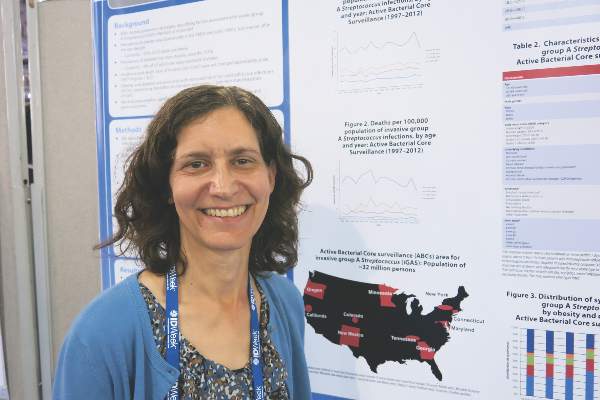
Obesity, diabetes spur on group A strep infections
PHILADELPHIA – Obesity and diabetes are independent risk factors for invasive group A Streptococcus infections, with the highest risk among those with diabetes and morbid obesity.
The relative risk of invasive group A Streptococcus (iGAS) infection was 15 times higher in adults with diabetes and grade 3 morbid obesity (body mass index ≥ 40 kg/m2) than in those of normal weight, Dr. Gayle Langley reported at Infectious Diseases Week 2014.
Moreover, grades 1-2 obesity and morbid obesity increased the odds of ICU admission and death from an iGAS infection in multivariable logistic regression.
The adjusted odds ratios for ICU admission and death were 1.46 and 1.55 for patients with grades 1-2 obesity (BMI 30 < 40 kg/m2) and 2.07 and 1.62 for those with morbid obesity, she said.
Diabetes was not associated with an increased risk for either ICU admission (odds ratio, 1.06) or death (OR, 0.77) in the analysis.
Skin and soft tissue infections, which were significantly more common in obese and diabetic patients, appear to be driving the increased risk for iGAS in these groups, Dr. Langley of the Centers for Disease Control and Prevention said in an interview.
“Based on the literature, I’m not all that surprised because we definitely know that they are at increased risk for these skin and soft tissue infections, and that is a common manifestation of strep,” she said. “The mortality is slightly increased, but not to the extent of the incidence.”
The study was prompted by the limited number of prevention strategies for what Langley described as a “really serious infection” and by the rise in obesity and diabetes in the United States.
Data from select counties in 10 of the CDC’s Active Bacterial Core surveillance sites were used to identify 2,927 cases of 2010-2012 community onset iGAS. Cases were defined by isolation of GAS from a normally sterile site or from a wound in a patient with necrotizing fasciitis or streptococcal toxic shock syndrome in a resident in the surveillance area. Clinical data were obtained from medical records, with height and weight used to calculate BMI.
Diabetes was present in 859 patients (29.3%), grades 1-2 obesity in 743 (25.4%), grade 3 obesity in 399 patients (13.6%), and skin/soft tissue infections in 976 (33.3%). Most patients were aged 18-49 years (37.6%) and male (55%).
Among diabetic patients, the relative risk of an iGAS infection was 4.09 for those who were underweight (BMI < 18.5), 1.23 for the overweight (BMI 25 < 30), 3.14 for those with grade 1-2 obesity, and 15.6 for the morbidly obese. Among nondiabetics, the corresponding relative risks were 3.29, 0.87, 1.15, and 2.95, the authors reported in the poster presentation.
Dr. Langley said the next step is to look at treatment options and whether antibiotic dosing is important and “Long term, if we have a vaccine, this might be a group that needs to be targeted for vaccination.”
ID Week is a joint meeting of the Infectious Diseases Society of America, Society for Healthcare Epidemiology of America, HIV Medicine Association, and Pediatric Infectious Diseases Society.
PHILADELPHIA – Obesity and diabetes are independent risk factors for invasive group A Streptococcus infections, with the highest risk among those with diabetes and morbid obesity.
The relative risk of invasive group A Streptococcus (iGAS) infection was 15 times higher in adults with diabetes and grade 3 morbid obesity (body mass index ≥ 40 kg/m2) than in those of normal weight, Dr. Gayle Langley reported at Infectious Diseases Week 2014.
Moreover, grades 1-2 obesity and morbid obesity increased the odds of ICU admission and death from an iGAS infection in multivariable logistic regression.
The adjusted odds ratios for ICU admission and death were 1.46 and 1.55 for patients with grades 1-2 obesity (BMI 30 < 40 kg/m2) and 2.07 and 1.62 for those with morbid obesity, she said.
Diabetes was not associated with an increased risk for either ICU admission (odds ratio, 1.06) or death (OR, 0.77) in the analysis.
Skin and soft tissue infections, which were significantly more common in obese and diabetic patients, appear to be driving the increased risk for iGAS in these groups, Dr. Langley of the Centers for Disease Control and Prevention said in an interview.
“Based on the literature, I’m not all that surprised because we definitely know that they are at increased risk for these skin and soft tissue infections, and that is a common manifestation of strep,” she said. “The mortality is slightly increased, but not to the extent of the incidence.”
The study was prompted by the limited number of prevention strategies for what Langley described as a “really serious infection” and by the rise in obesity and diabetes in the United States.
Data from select counties in 10 of the CDC’s Active Bacterial Core surveillance sites were used to identify 2,927 cases of 2010-2012 community onset iGAS. Cases were defined by isolation of GAS from a normally sterile site or from a wound in a patient with necrotizing fasciitis or streptococcal toxic shock syndrome in a resident in the surveillance area. Clinical data were obtained from medical records, with height and weight used to calculate BMI.
Diabetes was present in 859 patients (29.3%), grades 1-2 obesity in 743 (25.4%), grade 3 obesity in 399 patients (13.6%), and skin/soft tissue infections in 976 (33.3%). Most patients were aged 18-49 years (37.6%) and male (55%).
Among diabetic patients, the relative risk of an iGAS infection was 4.09 for those who were underweight (BMI < 18.5), 1.23 for the overweight (BMI 25 < 30), 3.14 for those with grade 1-2 obesity, and 15.6 for the morbidly obese. Among nondiabetics, the corresponding relative risks were 3.29, 0.87, 1.15, and 2.95, the authors reported in the poster presentation.
Dr. Langley said the next step is to look at treatment options and whether antibiotic dosing is important and “Long term, if we have a vaccine, this might be a group that needs to be targeted for vaccination.”
ID Week is a joint meeting of the Infectious Diseases Society of America, Society for Healthcare Epidemiology of America, HIV Medicine Association, and Pediatric Infectious Diseases Society.
PHILADELPHIA – Obesity and diabetes are independent risk factors for invasive group A Streptococcus infections, with the highest risk among those with diabetes and morbid obesity.
The relative risk of invasive group A Streptococcus (iGAS) infection was 15 times higher in adults with diabetes and grade 3 morbid obesity (body mass index ≥ 40 kg/m2) than in those of normal weight, Dr. Gayle Langley reported at Infectious Diseases Week 2014.
Moreover, grades 1-2 obesity and morbid obesity increased the odds of ICU admission and death from an iGAS infection in multivariable logistic regression.
The adjusted odds ratios for ICU admission and death were 1.46 and 1.55 for patients with grades 1-2 obesity (BMI 30 < 40 kg/m2) and 2.07 and 1.62 for those with morbid obesity, she said.
Diabetes was not associated with an increased risk for either ICU admission (odds ratio, 1.06) or death (OR, 0.77) in the analysis.
Skin and soft tissue infections, which were significantly more common in obese and diabetic patients, appear to be driving the increased risk for iGAS in these groups, Dr. Langley of the Centers for Disease Control and Prevention said in an interview.
“Based on the literature, I’m not all that surprised because we definitely know that they are at increased risk for these skin and soft tissue infections, and that is a common manifestation of strep,” she said. “The mortality is slightly increased, but not to the extent of the incidence.”
The study was prompted by the limited number of prevention strategies for what Langley described as a “really serious infection” and by the rise in obesity and diabetes in the United States.
Data from select counties in 10 of the CDC’s Active Bacterial Core surveillance sites were used to identify 2,927 cases of 2010-2012 community onset iGAS. Cases were defined by isolation of GAS from a normally sterile site or from a wound in a patient with necrotizing fasciitis or streptococcal toxic shock syndrome in a resident in the surveillance area. Clinical data were obtained from medical records, with height and weight used to calculate BMI.
Diabetes was present in 859 patients (29.3%), grades 1-2 obesity in 743 (25.4%), grade 3 obesity in 399 patients (13.6%), and skin/soft tissue infections in 976 (33.3%). Most patients were aged 18-49 years (37.6%) and male (55%).
Among diabetic patients, the relative risk of an iGAS infection was 4.09 for those who were underweight (BMI < 18.5), 1.23 for the overweight (BMI 25 < 30), 3.14 for those with grade 1-2 obesity, and 15.6 for the morbidly obese. Among nondiabetics, the corresponding relative risks were 3.29, 0.87, 1.15, and 2.95, the authors reported in the poster presentation.
Dr. Langley said the next step is to look at treatment options and whether antibiotic dosing is important and “Long term, if we have a vaccine, this might be a group that needs to be targeted for vaccination.”
ID Week is a joint meeting of the Infectious Diseases Society of America, Society for Healthcare Epidemiology of America, HIV Medicine Association, and Pediatric Infectious Diseases Society.
AT ID WEEK 2014
Key clinical point: Patients with diabetes and obesity are at increased risk for invasive group A Streptococcus infection.
Major finding: The relative risk of invasive group A Streptococcus (iGAS) infection was 15.6 in diabetics with grade 3 morbid obesity vs. normal-weight diabetics.
Data source: Active surveillance data from 2,927 cases of iGAS.
Disclosures: Dr. Langley reported having no financial disclosures. The CDC funds the ABC surveillance sites.
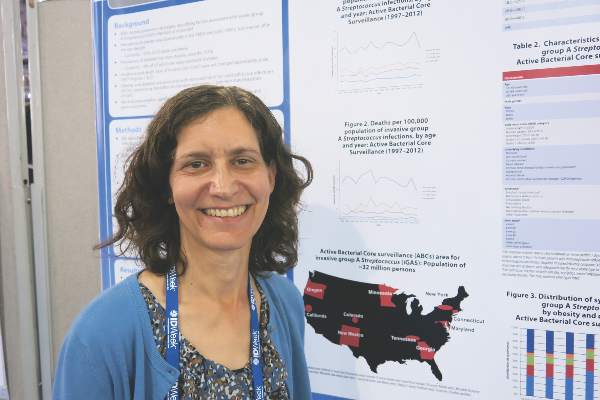
Vaccine slashes odds of flu hospitalizations for older adults
PHILADELPHIA – Receiving a flu shot cut the odds of influenza hospitalizations by 56% among older adults during the 2010-2011 flu season, surveillance data show.
Vaccine effectiveness was consistent across all age groups, even among those aged 75 years or older.
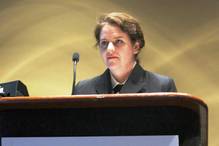
“Continued emphasis on the importance of influenza vaccination among older adults is crucial,” Dr. Fiona Havers said at an annual scientific meeting on infectious diseases.
She reported on 364 adults, aged 50 years and older, who received a flu shot at least 14 days prior to hospital admission for laboratory-confirmed influenza during the 2010-2011 season. Cases were admitted to one of 11 sites participating in the Emerging Infections Program, now FluSurv-Net, and were matched by age and county to 773 controls.
Cases were significantly more likely than were controls to be of nonwhite race (31% vs. 15%), to be Hispanic (7% vs. 2%), to have an annual income less than $35,000 (52% vs. 33%), to have high school or lower-level education (44% vs. 27%), and to have at least two chronic health conditions (72% vs. 36%) (P values < .01 for all).
Estimates of influenza vaccine effectiveness in preventing hospitalization was 33% for all ages, 33% for ages 50-64 years, 45% for ages 65-74 years, and 21% for those 75 years and older, reported Dr. Havers of the influenza division of the Centers for Disease Control and Prevention in Atlanta.
After adjustment for age, gender, race/ethnicity, income, education, recent hospitalization, functional status, and chronic medical conditions, vaccine effectiveness estimates were 56%, 64%, 61%, and 57%, respectively, (P values < .05 for all).
The investigators also looked at influenza subtype and found that after adjustment, vaccination was associated with a significant reduction in the risk of hospitalizations for influenza A H3N2 (51%) and influenza B (95%), but not influenza A H1N1 (46%), likely because of the small number of H1N1 cases, said Dr. Havers, who urged older adults to seek care if they develop symptoms, even if they were vaccinated.
“We know that antiviral treatment is recommended for all older adults with suspected influenza, as they are at high risk for influenza complications, and antiviral drugs work best if given promptly after symptoms develop,” she said in an interview. ID Week comprises the combined annual meetings of the Infectious Diseases Society of America, Society for Healthcare Epidemiology of America, HIV Medicine Association, and Pediatric Infectious Diseases Society.
PHILADELPHIA – Receiving a flu shot cut the odds of influenza hospitalizations by 56% among older adults during the 2010-2011 flu season, surveillance data show.
Vaccine effectiveness was consistent across all age groups, even among those aged 75 years or older.
“Continued emphasis on the importance of influenza vaccination among older adults is crucial,” Dr. Fiona Havers said at an annual scientific meeting on infectious diseases.
She reported on 364 adults, aged 50 years and older, who received a flu shot at least 14 days prior to hospital admission for laboratory-confirmed influenza during the 2010-2011 season. Cases were admitted to one of 11 sites participating in the Emerging Infections Program, now FluSurv-Net, and were matched by age and county to 773 controls.
Cases were significantly more likely than were controls to be of nonwhite race (31% vs. 15%), to be Hispanic (7% vs. 2%), to have an annual income less than $35,000 (52% vs. 33%), to have high school or lower-level education (44% vs. 27%), and to have at least two chronic health conditions (72% vs. 36%) (P values < .01 for all).
Estimates of influenza vaccine effectiveness in preventing hospitalization was 33% for all ages, 33% for ages 50-64 years, 45% for ages 65-74 years, and 21% for those 75 years and older, reported Dr. Havers of the influenza division of the Centers for Disease Control and Prevention in Atlanta.
After adjustment for age, gender, race/ethnicity, income, education, recent hospitalization, functional status, and chronic medical conditions, vaccine effectiveness estimates were 56%, 64%, 61%, and 57%, respectively, (P values < .05 for all).
The investigators also looked at influenza subtype and found that after adjustment, vaccination was associated with a significant reduction in the risk of hospitalizations for influenza A H3N2 (51%) and influenza B (95%), but not influenza A H1N1 (46%), likely because of the small number of H1N1 cases, said Dr. Havers, who urged older adults to seek care if they develop symptoms, even if they were vaccinated.
“We know that antiviral treatment is recommended for all older adults with suspected influenza, as they are at high risk for influenza complications, and antiviral drugs work best if given promptly after symptoms develop,” she said in an interview. ID Week comprises the combined annual meetings of the Infectious Diseases Society of America, Society for Healthcare Epidemiology of America, HIV Medicine Association, and Pediatric Infectious Diseases Society.
PHILADELPHIA – Receiving a flu shot cut the odds of influenza hospitalizations by 56% among older adults during the 2010-2011 flu season, surveillance data show.
Vaccine effectiveness was consistent across all age groups, even among those aged 75 years or older.
“Continued emphasis on the importance of influenza vaccination among older adults is crucial,” Dr. Fiona Havers said at an annual scientific meeting on infectious diseases.
She reported on 364 adults, aged 50 years and older, who received a flu shot at least 14 days prior to hospital admission for laboratory-confirmed influenza during the 2010-2011 season. Cases were admitted to one of 11 sites participating in the Emerging Infections Program, now FluSurv-Net, and were matched by age and county to 773 controls.
Cases were significantly more likely than were controls to be of nonwhite race (31% vs. 15%), to be Hispanic (7% vs. 2%), to have an annual income less than $35,000 (52% vs. 33%), to have high school or lower-level education (44% vs. 27%), and to have at least two chronic health conditions (72% vs. 36%) (P values < .01 for all).
Estimates of influenza vaccine effectiveness in preventing hospitalization was 33% for all ages, 33% for ages 50-64 years, 45% for ages 65-74 years, and 21% for those 75 years and older, reported Dr. Havers of the influenza division of the Centers for Disease Control and Prevention in Atlanta.
After adjustment for age, gender, race/ethnicity, income, education, recent hospitalization, functional status, and chronic medical conditions, vaccine effectiveness estimates were 56%, 64%, 61%, and 57%, respectively, (P values < .05 for all).
The investigators also looked at influenza subtype and found that after adjustment, vaccination was associated with a significant reduction in the risk of hospitalizations for influenza A H3N2 (51%) and influenza B (95%), but not influenza A H1N1 (46%), likely because of the small number of H1N1 cases, said Dr. Havers, who urged older adults to seek care if they develop symptoms, even if they were vaccinated.
“We know that antiviral treatment is recommended for all older adults with suspected influenza, as they are at high risk for influenza complications, and antiviral drugs work best if given promptly after symptoms develop,” she said in an interview. ID Week comprises the combined annual meetings of the Infectious Diseases Society of America, Society for Healthcare Epidemiology of America, HIV Medicine Association, and Pediatric Infectious Diseases Society.
AT ID WEEK 2014
Key clinical point: Influenza vaccination significantly reduced the risk of influenza hospitalization in older adults, regardless of age.
Major finding: Adjusted vaccine effectiveness was 56% for all ages, 64% for ages 50-64 years, 61% for ages 65-74 years, and 57% for ≥ 75 years.
Data source: Case-control study of 1,141 adults vaccinated for influenza during the 2010-2011 season.
Disclosures: Dr. Havers declared no financial conflicts.