User login
Is choice of anesthesia during cancer surgery linked to outcome?
Click on the PDF icon at the top of this introduction to read the full article.
Click on the PDF icon at the top of this introduction to read the full article.
Click on the PDF icon at the top of this introduction to read the full article.
Biopsy remains most costly lung cancer diagnosis tool
CHICAGO – Biopsies performed in patients ultimately not diagnosed with lung cancer accounted for 43% of the $38.3 million spent in lung cancer diagnostic costs in a Medicare analysis.
“We need to develop more precise risk stratification tools to better identify patients who require referrals for lung biopsy. This has the potential to reduce costs and improve patient outcomes,” study author Tasneem Lokhandwala, Ph.D., said during a press briefing at the 2014 Chicago Multidisciplinary Symposium in Thoracic Oncology. To estimate the use of diagnostic tests in lung cancer diagnosis and detection as well as the costs incurred by Medicare patients, Dr. Lokhandwala and her associates used a random 5% sample of Medicare patients from Jan. 1, 2009 through Dec. 31, 2011.
In all, 8,979 patients, aged 65-74 years, were identified with an abnormal computed tomography scan from July 1, 2009 through Dec. 31, 2010. Their mean age was 69.3 years, 43.6% were male, and 86.5% white.

The date of the patient’s abnormal CT scan was defined as the index date. Patients diagnosed with any cancer, pneumonia, atelectasis, or tuberculosis in the 6-month preindex period were excluded.
During the 12-month follow-up period, 14% of patients were diagnosed with lung cancer, with a median time to diagnosis from the abnormal chest CT of 11 days.
Diagnostic tests used were chest x-rays for 54.4%, chest CT scans for 33%, chest positron emission tomography scans for 0.5%, and lung biopsy for 19.4%, Dr. Lokhandwala, a data analyst at Xcenda, Palm Harbor, Fla., reported.
Importantly, the National Comprehensive Cancer Network guidelines call for low-dose chest CT followed by a PET scan to identify patients for biopsy.
In terms of financial costs, the average total cost of the diagnostic work-up was $7,567 for patients diagnosed with lung cancer and $3,558 for those without a lung cancer diagnosis.
For both groups, these costs rose dramatically with the use of biopsy to $8,341 and $22,127, respectively, Dr. Lokhandwala said.
Of the 1,744 patients who underwent a biopsy, 19.3% experienced a biopsy-related adverse event. An adverse event increased the average cost of a biopsy fourfold from $8,869 to $37,745, she said.
“Apart from the financial costs and the adverse events associated with tests and biopsies, there was also likely tremendous stress for those patients who ultimately were not found to have lung cancer,” press briefing moderator Dr. Laurie E. Gaspar, professor and chair of radiation oncology at the University of Colorado at Denver, Aurora, said.
Dr. Gaspar agreed that the data highlight the need to better identify patients with lung cancer through the use of better imaging tests, follow-up CT or PET scans, or liquid biopsies.

|
| Dr. Jennifer D. Cox |
Dr. Jennifer D. Cox, FCCP, comments: 43% of spending on lung cancer diagnosis is ultimately spent on those without lung cancer. Nearly 9000 patients were included in this study and ultimately 14 % of patients were diagnosed with lung cancer. The high rate of biopsy related complications, which occurred in nearly 20% of those patients biopsied, and the severe financial costs associated with the complications, emphasize the need for better screening practices and testing before sending patients to biopsy. As the current guidelines for screening that include low dose CT scan followed by PET CT before biopsy become more mainstream, hopefully these rates of complications and cost will go down.
Dr. Cox is a specialist in Critical Care, Lung Cancer at the Moffitt Cancer Center in Tampa, FL.
|
|
| Dr. Jennifer D. Cox |
Dr. Jennifer D. Cox, FCCP, comments: 43% of spending on lung cancer diagnosis is ultimately spent on those without lung cancer. Nearly 9000 patients were included in this study and ultimately 14 % of patients were diagnosed with lung cancer. The high rate of biopsy related complications, which occurred in nearly 20% of those patients biopsied, and the severe financial costs associated with the complications, emphasize the need for better screening practices and testing before sending patients to biopsy. As the current guidelines for screening that include low dose CT scan followed by PET CT before biopsy become more mainstream, hopefully these rates of complications and cost will go down.
Dr. Cox is a specialist in Critical Care, Lung Cancer at the Moffitt Cancer Center in Tampa, FL.
|
|
| Dr. Jennifer D. Cox |
Dr. Jennifer D. Cox, FCCP, comments: 43% of spending on lung cancer diagnosis is ultimately spent on those without lung cancer. Nearly 9000 patients were included in this study and ultimately 14 % of patients were diagnosed with lung cancer. The high rate of biopsy related complications, which occurred in nearly 20% of those patients biopsied, and the severe financial costs associated with the complications, emphasize the need for better screening practices and testing before sending patients to biopsy. As the current guidelines for screening that include low dose CT scan followed by PET CT before biopsy become more mainstream, hopefully these rates of complications and cost will go down.
Dr. Cox is a specialist in Critical Care, Lung Cancer at the Moffitt Cancer Center in Tampa, FL.
CHICAGO – Biopsies performed in patients ultimately not diagnosed with lung cancer accounted for 43% of the $38.3 million spent in lung cancer diagnostic costs in a Medicare analysis.
“We need to develop more precise risk stratification tools to better identify patients who require referrals for lung biopsy. This has the potential to reduce costs and improve patient outcomes,” study author Tasneem Lokhandwala, Ph.D., said during a press briefing at the 2014 Chicago Multidisciplinary Symposium in Thoracic Oncology. To estimate the use of diagnostic tests in lung cancer diagnosis and detection as well as the costs incurred by Medicare patients, Dr. Lokhandwala and her associates used a random 5% sample of Medicare patients from Jan. 1, 2009 through Dec. 31, 2011.
In all, 8,979 patients, aged 65-74 years, were identified with an abnormal computed tomography scan from July 1, 2009 through Dec. 31, 2010. Their mean age was 69.3 years, 43.6% were male, and 86.5% white.
The date of the patient’s abnormal CT scan was defined as the index date. Patients diagnosed with any cancer, pneumonia, atelectasis, or tuberculosis in the 6-month preindex period were excluded.
During the 12-month follow-up period, 14% of patients were diagnosed with lung cancer, with a median time to diagnosis from the abnormal chest CT of 11 days.
Diagnostic tests used were chest x-rays for 54.4%, chest CT scans for 33%, chest positron emission tomography scans for 0.5%, and lung biopsy for 19.4%, Dr. Lokhandwala, a data analyst at Xcenda, Palm Harbor, Fla., reported.
Importantly, the National Comprehensive Cancer Network guidelines call for low-dose chest CT followed by a PET scan to identify patients for biopsy.
In terms of financial costs, the average total cost of the diagnostic work-up was $7,567 for patients diagnosed with lung cancer and $3,558 for those without a lung cancer diagnosis.
For both groups, these costs rose dramatically with the use of biopsy to $8,341 and $22,127, respectively, Dr. Lokhandwala said.
Of the 1,744 patients who underwent a biopsy, 19.3% experienced a biopsy-related adverse event. An adverse event increased the average cost of a biopsy fourfold from $8,869 to $37,745, she said.
“Apart from the financial costs and the adverse events associated with tests and biopsies, there was also likely tremendous stress for those patients who ultimately were not found to have lung cancer,” press briefing moderator Dr. Laurie E. Gaspar, professor and chair of radiation oncology at the University of Colorado at Denver, Aurora, said.
Dr. Gaspar agreed that the data highlight the need to better identify patients with lung cancer through the use of better imaging tests, follow-up CT or PET scans, or liquid biopsies.
CHICAGO – Biopsies performed in patients ultimately not diagnosed with lung cancer accounted for 43% of the $38.3 million spent in lung cancer diagnostic costs in a Medicare analysis.
“We need to develop more precise risk stratification tools to better identify patients who require referrals for lung biopsy. This has the potential to reduce costs and improve patient outcomes,” study author Tasneem Lokhandwala, Ph.D., said during a press briefing at the 2014 Chicago Multidisciplinary Symposium in Thoracic Oncology. To estimate the use of diagnostic tests in lung cancer diagnosis and detection as well as the costs incurred by Medicare patients, Dr. Lokhandwala and her associates used a random 5% sample of Medicare patients from Jan. 1, 2009 through Dec. 31, 2011.
In all, 8,979 patients, aged 65-74 years, were identified with an abnormal computed tomography scan from July 1, 2009 through Dec. 31, 2010. Their mean age was 69.3 years, 43.6% were male, and 86.5% white.
The date of the patient’s abnormal CT scan was defined as the index date. Patients diagnosed with any cancer, pneumonia, atelectasis, or tuberculosis in the 6-month preindex period were excluded.
During the 12-month follow-up period, 14% of patients were diagnosed with lung cancer, with a median time to diagnosis from the abnormal chest CT of 11 days.
Diagnostic tests used were chest x-rays for 54.4%, chest CT scans for 33%, chest positron emission tomography scans for 0.5%, and lung biopsy for 19.4%, Dr. Lokhandwala, a data analyst at Xcenda, Palm Harbor, Fla., reported.
Importantly, the National Comprehensive Cancer Network guidelines call for low-dose chest CT followed by a PET scan to identify patients for biopsy.
In terms of financial costs, the average total cost of the diagnostic work-up was $7,567 for patients diagnosed with lung cancer and $3,558 for those without a lung cancer diagnosis.
For both groups, these costs rose dramatically with the use of biopsy to $8,341 and $22,127, respectively, Dr. Lokhandwala said.
Of the 1,744 patients who underwent a biopsy, 19.3% experienced a biopsy-related adverse event. An adverse event increased the average cost of a biopsy fourfold from $8,869 to $37,745, she said.
“Apart from the financial costs and the adverse events associated with tests and biopsies, there was also likely tremendous stress for those patients who ultimately were not found to have lung cancer,” press briefing moderator Dr. Laurie E. Gaspar, professor and chair of radiation oncology at the University of Colorado at Denver, Aurora, said.
Dr. Gaspar agreed that the data highlight the need to better identify patients with lung cancer through the use of better imaging tests, follow-up CT or PET scans, or liquid biopsies.
FROM A SYMPOSIUM IN THORACIC ONCOLOGY
Key clinical point: Biopsy costs remain a significant proportion of the overall cost of diagnosing lung cancer.
Major finding: 43% of the $38.3 million spent in lung cancer diagnostic costs were due to biopsies for patients ultimately not diagnosed with lung cancer.
Data source: Retrospective study using a random 5% sample of 8,979 Medicare patients.
Disclosures: Dr. Lokhandwala reported employment with Xcenda. Her coauthors disclosed employment with Xcenda or GE Healthcare.

PC providers have knowledge gaps in lung cancer screening
CHICAGO – Nearly one-fourth of primary care providers were unaware of current lung cancer screening guidelines in a survey of 212 PC providers in North Carolina, a state with one of the nation’s highest lung cancer death rates.
Only 12% of respondents ordered low-dose computed tomography (LDCT) in the past year to screen their patients at high risk for lung cancer, while 21% ordered a chest x-ray, a nonrecommended screening test, said Dr. Jennifer Lewis of Wake Forest University, Winston-Salem, N.C.

The use of LDCT screening for high-risk patients has been recommended by multiple health care organizations including the American College of Chest Physicians, American Lung Association, and U.S. Preventative Services Task Force. The 2013 USPSTF recommendations call for annual LDCT screening for adults aged 55-80 years who have a 30–pack-year smoking history and currently smoke or have quit within the past 15 years.
The survey found that 67% of providers knew screening was recommended for current and former smokers, but less than half knew the eligible age to initiate screening in any guideline is 50-55 years (35%), the eligible age to stop screening is 75-80 years (29%), and that a 1-year screening interval is recommended (25%).
Only 47% of respondents knew three or more of the guideline components and 24% knew no components.
Providers who knew three or more guideline components, however, were significantly more likely to use LDCT screening (P = .0002), Dr. Lewis said during a briefing at the 2014 Chicago Multidisciplinary Symposium in Thoracic Oncology.
The online survey was sent to 488 primary care providers, including physicians, physician assistants, and nurse practitioners, affiliated with Wake Forest Baptist Health. Of the 293 respondents (60%), 212 providers cared for patients older than age 40 years in the past year and were eligible for the study.
Less than half of respondents (42%) perceived of LDCT as “very” or even moderately effective in reducing cancer-specific mortality.

“In actuality, if you look at the number needed to screen to prevent one lung cancer death, low-dose CT is more effective than mammography or even flexible sigmoidoscopy,” she observed.
The major perceived barrier to LDCT screening was financial cost to patients. Other barriers were false positives, patient awareness of screening, incidental finding, and insurance coverage.
To put the study in perspective, 12,000 lives could be saved each year if low-dose CT screening were fully implemented, Dr. Lewis said. Before this can happen, providers need education. The good news is that 80% of respondents said they want more education.
“This education should focus on the effectiveness of low-dose CT screening in saving lives from cancer, the guideline recommendations (meaning who to screen, when to screen, and how often), as well as the correct lung cancer screening test,” she said. “This is all needed before providers can have those shared decision-making conversations with their patients.”
Although the survey was conducted at Wake Forest, the “results and conclusions can likely be extrapolated to much of the primary care population in the United States,” session moderator Dr. Laurie E. Gaspar, professor and chair of radiation oncology at the University of Colorado at Denver, Aurora, said.
CHICAGO – Nearly one-fourth of primary care providers were unaware of current lung cancer screening guidelines in a survey of 212 PC providers in North Carolina, a state with one of the nation’s highest lung cancer death rates.
Only 12% of respondents ordered low-dose computed tomography (LDCT) in the past year to screen their patients at high risk for lung cancer, while 21% ordered a chest x-ray, a nonrecommended screening test, said Dr. Jennifer Lewis of Wake Forest University, Winston-Salem, N.C.
The use of LDCT screening for high-risk patients has been recommended by multiple health care organizations including the American College of Chest Physicians, American Lung Association, and U.S. Preventative Services Task Force. The 2013 USPSTF recommendations call for annual LDCT screening for adults aged 55-80 years who have a 30–pack-year smoking history and currently smoke or have quit within the past 15 years.
The survey found that 67% of providers knew screening was recommended for current and former smokers, but less than half knew the eligible age to initiate screening in any guideline is 50-55 years (35%), the eligible age to stop screening is 75-80 years (29%), and that a 1-year screening interval is recommended (25%).
Only 47% of respondents knew three or more of the guideline components and 24% knew no components.
Providers who knew three or more guideline components, however, were significantly more likely to use LDCT screening (P = .0002), Dr. Lewis said during a briefing at the 2014 Chicago Multidisciplinary Symposium in Thoracic Oncology.
The online survey was sent to 488 primary care providers, including physicians, physician assistants, and nurse practitioners, affiliated with Wake Forest Baptist Health. Of the 293 respondents (60%), 212 providers cared for patients older than age 40 years in the past year and were eligible for the study.
Less than half of respondents (42%) perceived of LDCT as “very” or even moderately effective in reducing cancer-specific mortality.
“In actuality, if you look at the number needed to screen to prevent one lung cancer death, low-dose CT is more effective than mammography or even flexible sigmoidoscopy,” she observed.
The major perceived barrier to LDCT screening was financial cost to patients. Other barriers were false positives, patient awareness of screening, incidental finding, and insurance coverage.
To put the study in perspective, 12,000 lives could be saved each year if low-dose CT screening were fully implemented, Dr. Lewis said. Before this can happen, providers need education. The good news is that 80% of respondents said they want more education.
“This education should focus on the effectiveness of low-dose CT screening in saving lives from cancer, the guideline recommendations (meaning who to screen, when to screen, and how often), as well as the correct lung cancer screening test,” she said. “This is all needed before providers can have those shared decision-making conversations with their patients.”
Although the survey was conducted at Wake Forest, the “results and conclusions can likely be extrapolated to much of the primary care population in the United States,” session moderator Dr. Laurie E. Gaspar, professor and chair of radiation oncology at the University of Colorado at Denver, Aurora, said.
CHICAGO – Nearly one-fourth of primary care providers were unaware of current lung cancer screening guidelines in a survey of 212 PC providers in North Carolina, a state with one of the nation’s highest lung cancer death rates.
Only 12% of respondents ordered low-dose computed tomography (LDCT) in the past year to screen their patients at high risk for lung cancer, while 21% ordered a chest x-ray, a nonrecommended screening test, said Dr. Jennifer Lewis of Wake Forest University, Winston-Salem, N.C.
The use of LDCT screening for high-risk patients has been recommended by multiple health care organizations including the American College of Chest Physicians, American Lung Association, and U.S. Preventative Services Task Force. The 2013 USPSTF recommendations call for annual LDCT screening for adults aged 55-80 years who have a 30–pack-year smoking history and currently smoke or have quit within the past 15 years.
The survey found that 67% of providers knew screening was recommended for current and former smokers, but less than half knew the eligible age to initiate screening in any guideline is 50-55 years (35%), the eligible age to stop screening is 75-80 years (29%), and that a 1-year screening interval is recommended (25%).
Only 47% of respondents knew three or more of the guideline components and 24% knew no components.
Providers who knew three or more guideline components, however, were significantly more likely to use LDCT screening (P = .0002), Dr. Lewis said during a briefing at the 2014 Chicago Multidisciplinary Symposium in Thoracic Oncology.
The online survey was sent to 488 primary care providers, including physicians, physician assistants, and nurse practitioners, affiliated with Wake Forest Baptist Health. Of the 293 respondents (60%), 212 providers cared for patients older than age 40 years in the past year and were eligible for the study.
Less than half of respondents (42%) perceived of LDCT as “very” or even moderately effective in reducing cancer-specific mortality.
“In actuality, if you look at the number needed to screen to prevent one lung cancer death, low-dose CT is more effective than mammography or even flexible sigmoidoscopy,” she observed.
The major perceived barrier to LDCT screening was financial cost to patients. Other barriers were false positives, patient awareness of screening, incidental finding, and insurance coverage.
To put the study in perspective, 12,000 lives could be saved each year if low-dose CT screening were fully implemented, Dr. Lewis said. Before this can happen, providers need education. The good news is that 80% of respondents said they want more education.
“This education should focus on the effectiveness of low-dose CT screening in saving lives from cancer, the guideline recommendations (meaning who to screen, when to screen, and how often), as well as the correct lung cancer screening test,” she said. “This is all needed before providers can have those shared decision-making conversations with their patients.”
Although the survey was conducted at Wake Forest, the “results and conclusions can likely be extrapolated to much of the primary care population in the United States,” session moderator Dr. Laurie E. Gaspar, professor and chair of radiation oncology at the University of Colorado at Denver, Aurora, said.
FROM A THORACIC ONCOLOGY SYMPOSIUM
Key clinical point: Patients at high risk for lung cancer are more likely to receive screening when their primary care provider is familiar with lung cancer screening guidelines.
Major finding: 47% of respondents knew three or more guideline components and 24% knew none.
Data source: Online survey of 212 primary care providers.
Disclosures: Dr. Lewis and her coauthors reported having no financial disclosures.

VIDEO: Hepatitis C Screening Rises, But Where Are the Positive Cases?
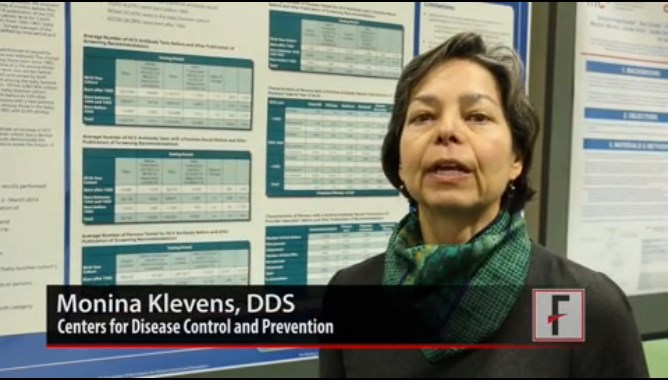
BOSTON– The number of hepatitis C virus antibody tests increased by 15.4% after the 2012 Centers for Disease Control and Prevention task force recommendation calling for one-time HCV testing in baby boomers, according to preliminary results from an analysis of 4.5 million tests.
Surprisingly, that increase in testing did not lead to an increase in the number of positive tests, which actually declined by 4.1%, R. Monina Klevens, D.D.S., MPH, reported at the annual meeting of the American Association for the Study of Liver Diseases.
“This is a huge question that we need to look at for implementation,” said Dr. Klevens, a medical epidemiologist with the CDC.
For a deep dive into the data and to hear what’s next, click here to see an interview with Dr Klevens.
Dr. Klevens reported no financial disclosures.
The video associated with this article is no longer available on this site. Please view all of our videos on the MDedge YouTube channel
BOSTON– The number of hepatitis C virus antibody tests increased by 15.4% after the 2012 Centers for Disease Control and Prevention task force recommendation calling for one-time HCV testing in baby boomers, according to preliminary results from an analysis of 4.5 million tests.
Surprisingly, that increase in testing did not lead to an increase in the number of positive tests, which actually declined by 4.1%, R. Monina Klevens, D.D.S., MPH, reported at the annual meeting of the American Association for the Study of Liver Diseases.
“This is a huge question that we need to look at for implementation,” said Dr. Klevens, a medical epidemiologist with the CDC.
For a deep dive into the data and to hear what’s next, click here to see an interview with Dr Klevens.
Dr. Klevens reported no financial disclosures.
The video associated with this article is no longer available on this site. Please view all of our videos on the MDedge YouTube channel
BOSTON– The number of hepatitis C virus antibody tests increased by 15.4% after the 2012 Centers for Disease Control and Prevention task force recommendation calling for one-time HCV testing in baby boomers, according to preliminary results from an analysis of 4.5 million tests.
Surprisingly, that increase in testing did not lead to an increase in the number of positive tests, which actually declined by 4.1%, R. Monina Klevens, D.D.S., MPH, reported at the annual meeting of the American Association for the Study of Liver Diseases.
“This is a huge question that we need to look at for implementation,” said Dr. Klevens, a medical epidemiologist with the CDC.
For a deep dive into the data and to hear what’s next, click here to see an interview with Dr Klevens.
Dr. Klevens reported no financial disclosures.
The video associated with this article is no longer available on this site. Please view all of our videos on the MDedge YouTube channel
FROM THE LIVER MEETING 2014
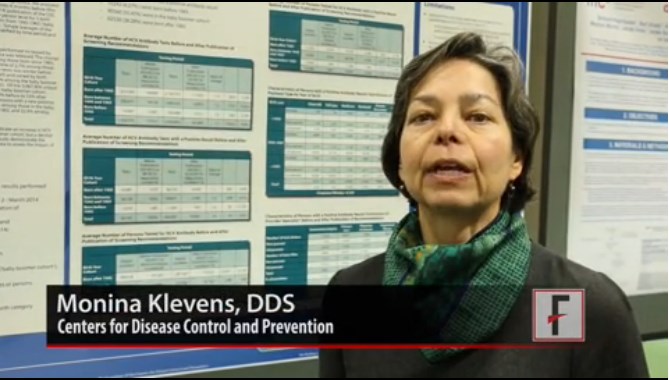
VIDEO: Hepatitis C screening rises, but where are the positive cases?
BOSTON– The number of hepatitis C virus antibody tests increased by 15.4% after the 2012 Centers for Disease Control and Prevention task force recommendation calling for one-time HCV testing in baby boomers, according to preliminary results from an analysis of 4.5 million tests.
Surprisingly, that increase in testing did not lead to an increase in the number of positive tests, which actually declined by 4.1%, R. Monina Klevens, D.D.S., MPH, reported at the annual meeting of the American Association for the Study of Liver Diseases.
“This is a huge question that we need to look at for implementation,” said Dr. Klevens, a medical epidemiologist with the CDC.
For a deep dive into the data and to hear what’s next, click here to see an interview with Dr Klevens.
Dr. Klevens reported no financial disclosures.
The video associated with this article is no longer available on this site. Please view all of our videos on the MDedge YouTube channel
BOSTON– The number of hepatitis C virus antibody tests increased by 15.4% after the 2012 Centers for Disease Control and Prevention task force recommendation calling for one-time HCV testing in baby boomers, according to preliminary results from an analysis of 4.5 million tests.
Surprisingly, that increase in testing did not lead to an increase in the number of positive tests, which actually declined by 4.1%, R. Monina Klevens, D.D.S., MPH, reported at the annual meeting of the American Association for the Study of Liver Diseases.
“This is a huge question that we need to look at for implementation,” said Dr. Klevens, a medical epidemiologist with the CDC.
For a deep dive into the data and to hear what’s next, click here to see an interview with Dr Klevens.
Dr. Klevens reported no financial disclosures.
The video associated with this article is no longer available on this site. Please view all of our videos on the MDedge YouTube channel
BOSTON– The number of hepatitis C virus antibody tests increased by 15.4% after the 2012 Centers for Disease Control and Prevention task force recommendation calling for one-time HCV testing in baby boomers, according to preliminary results from an analysis of 4.5 million tests.
Surprisingly, that increase in testing did not lead to an increase in the number of positive tests, which actually declined by 4.1%, R. Monina Klevens, D.D.S., MPH, reported at the annual meeting of the American Association for the Study of Liver Diseases.
“This is a huge question that we need to look at for implementation,” said Dr. Klevens, a medical epidemiologist with the CDC.
For a deep dive into the data and to hear what’s next, click here to see an interview with Dr Klevens.
Dr. Klevens reported no financial disclosures.
The video associated with this article is no longer available on this site. Please view all of our videos on the MDedge YouTube channel
FROM THE LIVER MEETING 2014
Bicuspid valve surgical management in rapid flux
CHICAGO – Surgical management of leaky bicuspid valves is rapidly evolving from replacement to repair of any purely insufficient bicuspid valve with enough leaflet surface area.
“We’re coming to the point like with mitral valves 20 years ago, that we don’t have to replace every blessed bicuspid valve. We can repair a lot of these valves,” Dr. Joseph Bavaria, vice chief of cardiovascular surgery, University of Pennsylvania, Philadelphia, said.

A valve-sparing root procedure in a patient with bicuspid aortic valve (BAV) disease and aortic insufficiency (AI) provides excellent results, no matter if the aortic root is abnormal or not. Many patients with BAV, however, have leaky valves without a root aneurysm.
Thus, the “great dilemma” facing surgeons now is whether they can continue to justify doing a root procedure, which is a much bigger operation, when the root is normal diameter, Dr. Bavaria said at Heart Valve Summit 2014.
“It may be inappropriate in today’s world to take a normal physiological valve and just take it out and consign someone who’s in their 30s and 40s to a mechanical or bioprosthetic valve for life,” he said in an interview. “That has anticoagulation issues, structural deterioration issues, infection issues.”
The alternative is a valve repair operation, but that’s complicated by the growing understanding that BAV AI has three distinct phenotypic presentations:
• BAV with AI with relatively normal root diameters.
• BAV with AI and relatively normal root diameters, with an ascending aortic aneurysm.
• BAV with AI and root dilation.
“The problem we have is there’s probably a different therapeutic procedure for each of these three presentations,” Dr. Bavaria said.
The goals for any bicuspid repair are to equalize the free margin lengths with plication or resection of the redundant leaflet, reduce the annulus by 10%-15%, and stabilize it with either reimplantation or a subannular technique, and to increase the height of the free margin, if the leaflet belly falls below the annular plane.
In the university’s current surgical management algorithm, patients who have an aortic annulus dilated to 28 mm or more undergo root reimplantation if they have an aneurysmal root or receive external annuloplasty rings plus a valve repair if their aortic annulus is dilated and they have a nonaneurysmal root. The Dacron ring is placed subcoronary and subannular and is generally sized 5-7 mm larger than the desired end-procedural annular diameter, he said.
For patients with a normal aortic annulus (27 mm or less), root reimplantation or remodeling is used for those with an aneurysmal root, while subcommissural annuloplasty is reserved only for those with a normal aortic annulus and a nonaneurysmal root.
Subcommissural annuloplasty had been used for many BAV patients with AI who were candidates for repair, but emerging data over the last 2 years from Dr. Bavaria’s group (Annals Thor. Surg. 2014;97:1227-34) and others show it results in a lot of midterm failures and reoperations, compared with root reimplantation. Some groups continue to use this procedure routinely, but “It doesn’t work,” Dr. Bavaria said.
His team recently compared postoperative outcomes among BAV repairs and the more commonly performed tricuspid repair between 2004 and 2014. Overall, the outcomes were the same between the two groups including mortality, stroke, freedom from AI grade +1, and aortic reoperation for bleeding (P = NS). Notably, all 41 BAV patients required concomitant primary leaflet repair, compared with only 7% of the 99 patients who underwent tricuspid valve repair (P < .01), he said.
Dr. Bavaria reported consultant fees and honoraria from St. Jude Medical and research grants from Edwards Lifesciences and Sorin Group.
CHICAGO – Surgical management of leaky bicuspid valves is rapidly evolving from replacement to repair of any purely insufficient bicuspid valve with enough leaflet surface area.
“We’re coming to the point like with mitral valves 20 years ago, that we don’t have to replace every blessed bicuspid valve. We can repair a lot of these valves,” Dr. Joseph Bavaria, vice chief of cardiovascular surgery, University of Pennsylvania, Philadelphia, said.
A valve-sparing root procedure in a patient with bicuspid aortic valve (BAV) disease and aortic insufficiency (AI) provides excellent results, no matter if the aortic root is abnormal or not. Many patients with BAV, however, have leaky valves without a root aneurysm.
Thus, the “great dilemma” facing surgeons now is whether they can continue to justify doing a root procedure, which is a much bigger operation, when the root is normal diameter, Dr. Bavaria said at Heart Valve Summit 2014.
“It may be inappropriate in today’s world to take a normal physiological valve and just take it out and consign someone who’s in their 30s and 40s to a mechanical or bioprosthetic valve for life,” he said in an interview. “That has anticoagulation issues, structural deterioration issues, infection issues.”
The alternative is a valve repair operation, but that’s complicated by the growing understanding that BAV AI has three distinct phenotypic presentations:
• BAV with AI with relatively normal root diameters.
• BAV with AI and relatively normal root diameters, with an ascending aortic aneurysm.
• BAV with AI and root dilation.
“The problem we have is there’s probably a different therapeutic procedure for each of these three presentations,” Dr. Bavaria said.
The goals for any bicuspid repair are to equalize the free margin lengths with plication or resection of the redundant leaflet, reduce the annulus by 10%-15%, and stabilize it with either reimplantation or a subannular technique, and to increase the height of the free margin, if the leaflet belly falls below the annular plane.
In the university’s current surgical management algorithm, patients who have an aortic annulus dilated to 28 mm or more undergo root reimplantation if they have an aneurysmal root or receive external annuloplasty rings plus a valve repair if their aortic annulus is dilated and they have a nonaneurysmal root. The Dacron ring is placed subcoronary and subannular and is generally sized 5-7 mm larger than the desired end-procedural annular diameter, he said.
For patients with a normal aortic annulus (27 mm or less), root reimplantation or remodeling is used for those with an aneurysmal root, while subcommissural annuloplasty is reserved only for those with a normal aortic annulus and a nonaneurysmal root.
Subcommissural annuloplasty had been used for many BAV patients with AI who were candidates for repair, but emerging data over the last 2 years from Dr. Bavaria’s group (Annals Thor. Surg. 2014;97:1227-34) and others show it results in a lot of midterm failures and reoperations, compared with root reimplantation. Some groups continue to use this procedure routinely, but “It doesn’t work,” Dr. Bavaria said.
His team recently compared postoperative outcomes among BAV repairs and the more commonly performed tricuspid repair between 2004 and 2014. Overall, the outcomes were the same between the two groups including mortality, stroke, freedom from AI grade +1, and aortic reoperation for bleeding (P = NS). Notably, all 41 BAV patients required concomitant primary leaflet repair, compared with only 7% of the 99 patients who underwent tricuspid valve repair (P < .01), he said.
Dr. Bavaria reported consultant fees and honoraria from St. Jude Medical and research grants from Edwards Lifesciences and Sorin Group.
CHICAGO – Surgical management of leaky bicuspid valves is rapidly evolving from replacement to repair of any purely insufficient bicuspid valve with enough leaflet surface area.
“We’re coming to the point like with mitral valves 20 years ago, that we don’t have to replace every blessed bicuspid valve. We can repair a lot of these valves,” Dr. Joseph Bavaria, vice chief of cardiovascular surgery, University of Pennsylvania, Philadelphia, said.
A valve-sparing root procedure in a patient with bicuspid aortic valve (BAV) disease and aortic insufficiency (AI) provides excellent results, no matter if the aortic root is abnormal or not. Many patients with BAV, however, have leaky valves without a root aneurysm.
Thus, the “great dilemma” facing surgeons now is whether they can continue to justify doing a root procedure, which is a much bigger operation, when the root is normal diameter, Dr. Bavaria said at Heart Valve Summit 2014.
“It may be inappropriate in today’s world to take a normal physiological valve and just take it out and consign someone who’s in their 30s and 40s to a mechanical or bioprosthetic valve for life,” he said in an interview. “That has anticoagulation issues, structural deterioration issues, infection issues.”
The alternative is a valve repair operation, but that’s complicated by the growing understanding that BAV AI has three distinct phenotypic presentations:
• BAV with AI with relatively normal root diameters.
• BAV with AI and relatively normal root diameters, with an ascending aortic aneurysm.
• BAV with AI and root dilation.
“The problem we have is there’s probably a different therapeutic procedure for each of these three presentations,” Dr. Bavaria said.
The goals for any bicuspid repair are to equalize the free margin lengths with plication or resection of the redundant leaflet, reduce the annulus by 10%-15%, and stabilize it with either reimplantation or a subannular technique, and to increase the height of the free margin, if the leaflet belly falls below the annular plane.
In the university’s current surgical management algorithm, patients who have an aortic annulus dilated to 28 mm or more undergo root reimplantation if they have an aneurysmal root or receive external annuloplasty rings plus a valve repair if their aortic annulus is dilated and they have a nonaneurysmal root. The Dacron ring is placed subcoronary and subannular and is generally sized 5-7 mm larger than the desired end-procedural annular diameter, he said.
For patients with a normal aortic annulus (27 mm or less), root reimplantation or remodeling is used for those with an aneurysmal root, while subcommissural annuloplasty is reserved only for those with a normal aortic annulus and a nonaneurysmal root.
Subcommissural annuloplasty had been used for many BAV patients with AI who were candidates for repair, but emerging data over the last 2 years from Dr. Bavaria’s group (Annals Thor. Surg. 2014;97:1227-34) and others show it results in a lot of midterm failures and reoperations, compared with root reimplantation. Some groups continue to use this procedure routinely, but “It doesn’t work,” Dr. Bavaria said.
His team recently compared postoperative outcomes among BAV repairs and the more commonly performed tricuspid repair between 2004 and 2014. Overall, the outcomes were the same between the two groups including mortality, stroke, freedom from AI grade +1, and aortic reoperation for bleeding (P = NS). Notably, all 41 BAV patients required concomitant primary leaflet repair, compared with only 7% of the 99 patients who underwent tricuspid valve repair (P < .01), he said.
Dr. Bavaria reported consultant fees and honoraria from St. Jude Medical and research grants from Edwards Lifesciences and Sorin Group.
EXPERT OPINION FROM HEART VALVE SUMMIT 2014

VIDEO: Most Baby Boomers Didn’t Know Their Hep C Status
BOSTON– Almost two-thirds of baby boomers presenting to Alabama emergency departments were unaware of their hepatitis C virus status, despite having such high-risk factors as past intravenous drug use or receipt of a blood transfusion prior to 1992.
Equally concerning, only 48% of patients who knew they were HCV positive were aware of some of the highly efficacious treatments now available, study author and medical student Derek Wells of the University of Alabama-Birmingham said in a video interview at the annual meeting of the American Association for the Study of Liver Diseases.
Mr. Wells called for increased awareness among front-line providers to improve screening and help eradicate HCV in the United States.
Mr. Wells reported no financial disclosures.
The video associated with this article is no longer available on this site. Please view all of our videos on the MDedge YouTube channel
BOSTON– Almost two-thirds of baby boomers presenting to Alabama emergency departments were unaware of their hepatitis C virus status, despite having such high-risk factors as past intravenous drug use or receipt of a blood transfusion prior to 1992.
Equally concerning, only 48% of patients who knew they were HCV positive were aware of some of the highly efficacious treatments now available, study author and medical student Derek Wells of the University of Alabama-Birmingham said in a video interview at the annual meeting of the American Association for the Study of Liver Diseases.
Mr. Wells called for increased awareness among front-line providers to improve screening and help eradicate HCV in the United States.
Mr. Wells reported no financial disclosures.
The video associated with this article is no longer available on this site. Please view all of our videos on the MDedge YouTube channel
BOSTON– Almost two-thirds of baby boomers presenting to Alabama emergency departments were unaware of their hepatitis C virus status, despite having such high-risk factors as past intravenous drug use or receipt of a blood transfusion prior to 1992.
Equally concerning, only 48% of patients who knew they were HCV positive were aware of some of the highly efficacious treatments now available, study author and medical student Derek Wells of the University of Alabama-Birmingham said in a video interview at the annual meeting of the American Association for the Study of Liver Diseases.
Mr. Wells called for increased awareness among front-line providers to improve screening and help eradicate HCV in the United States.
Mr. Wells reported no financial disclosures.
The video associated with this article is no longer available on this site. Please view all of our videos on the MDedge YouTube channel

VIDEO: Pediatric NAFLD Worsens As Kids Age
BOSTON – Pediatric nonalcoholic fatty liver disease progresses as children age to a more adult pattern of disease, a paired-biopsy study shows.
“As they grow older, they are facing liver transplant and potentially hepatocellular carcinoma, just as the adults do,” Dr. Elizabeth M. Brunt said during an interview at the annual meeting of the American Association for the Study of Liver Diseases.
Among 102 children studied, the zone 1 (borderline 1b) diagnostic pattern decreased from 27.5% to 9.8%, while the more “adult” NAFLD zone 3 (borderline 1a) pattern and definite steatohepatitis patterns both increased from 14.7% and 28.4% to 18.6% and 29.4%.
Moreover, cirrhosis was seen in nearly 3% of children at first biopsy, but by the second biopsy, nearly 20% of children had advanced fibrosis or cirrhosis, she said.
The findings are troubling because the United States is in the midst of an obesity epidemic, and obesity is associated with high rates of fatty liver disease, said Dr. Brunt of Washington University, St. Louis.
The National Institutes of Health supported the study. Dr. Brunt reported consulting for Synageva, serving as an independent contractor for Rottapharm and Kadmon, and speaking and teaching for the Geneva Foundation.
The video associated with this article is no longer available on this site. Please view all of our videos on the MDedge YouTube channel
BOSTON – Pediatric nonalcoholic fatty liver disease progresses as children age to a more adult pattern of disease, a paired-biopsy study shows.
“As they grow older, they are facing liver transplant and potentially hepatocellular carcinoma, just as the adults do,” Dr. Elizabeth M. Brunt said during an interview at the annual meeting of the American Association for the Study of Liver Diseases.
Among 102 children studied, the zone 1 (borderline 1b) diagnostic pattern decreased from 27.5% to 9.8%, while the more “adult” NAFLD zone 3 (borderline 1a) pattern and definite steatohepatitis patterns both increased from 14.7% and 28.4% to 18.6% and 29.4%.
Moreover, cirrhosis was seen in nearly 3% of children at first biopsy, but by the second biopsy, nearly 20% of children had advanced fibrosis or cirrhosis, she said.
The findings are troubling because the United States is in the midst of an obesity epidemic, and obesity is associated with high rates of fatty liver disease, said Dr. Brunt of Washington University, St. Louis.
The National Institutes of Health supported the study. Dr. Brunt reported consulting for Synageva, serving as an independent contractor for Rottapharm and Kadmon, and speaking and teaching for the Geneva Foundation.
The video associated with this article is no longer available on this site. Please view all of our videos on the MDedge YouTube channel
BOSTON – Pediatric nonalcoholic fatty liver disease progresses as children age to a more adult pattern of disease, a paired-biopsy study shows.
“As they grow older, they are facing liver transplant and potentially hepatocellular carcinoma, just as the adults do,” Dr. Elizabeth M. Brunt said during an interview at the annual meeting of the American Association for the Study of Liver Diseases.
Among 102 children studied, the zone 1 (borderline 1b) diagnostic pattern decreased from 27.5% to 9.8%, while the more “adult” NAFLD zone 3 (borderline 1a) pattern and definite steatohepatitis patterns both increased from 14.7% and 28.4% to 18.6% and 29.4%.
Moreover, cirrhosis was seen in nearly 3% of children at first biopsy, but by the second biopsy, nearly 20% of children had advanced fibrosis or cirrhosis, she said.
The findings are troubling because the United States is in the midst of an obesity epidemic, and obesity is associated with high rates of fatty liver disease, said Dr. Brunt of Washington University, St. Louis.
The National Institutes of Health supported the study. Dr. Brunt reported consulting for Synageva, serving as an independent contractor for Rottapharm and Kadmon, and speaking and teaching for the Geneva Foundation.
The video associated with this article is no longer available on this site. Please view all of our videos on the MDedge YouTube channel
FROM THE LIVER MEETING 2014

VIDEO: Pediatric NAFLD worsens as kids age
BOSTON – Pediatric nonalcoholic fatty liver disease progresses as children age to a more adult pattern of disease, a paired-biopsy study shows.
“As they grow older, they are facing liver transplant and potentially hepatocellular carcinoma, just as the adults do,” Dr. Elizabeth M. Brunt said during an interview at the annual meeting of the American Association for the Study of Liver Diseases.
Among 102 children studied, the zone 1 (borderline 1b) diagnostic pattern decreased from 27.5% to 9.8%, while the more “adult” NAFLD zone 3 (borderline 1a) pattern and definite steatohepatitis patterns both increased from 14.7% and 28.4% to 18.6% and 29.4%.
Moreover, cirrhosis was seen in nearly 3% of children at first biopsy, but by the second biopsy, nearly 20% of children had advanced fibrosis or cirrhosis, she said.
The findings are troubling because the United States is in the midst of an obesity epidemic, and obesity is associated with high rates of fatty liver disease, said Dr. Brunt of Washington University, St. Louis.
The National Institutes of Health supported the study. Dr. Brunt reported consulting for Synageva, serving as an independent contractor for Rottapharm and Kadmon, and speaking and teaching for the Geneva Foundation.
The video associated with this article is no longer available on this site. Please view all of our videos on the MDedge YouTube channel
BOSTON – Pediatric nonalcoholic fatty liver disease progresses as children age to a more adult pattern of disease, a paired-biopsy study shows.
“As they grow older, they are facing liver transplant and potentially hepatocellular carcinoma, just as the adults do,” Dr. Elizabeth M. Brunt said during an interview at the annual meeting of the American Association for the Study of Liver Diseases.
Among 102 children studied, the zone 1 (borderline 1b) diagnostic pattern decreased from 27.5% to 9.8%, while the more “adult” NAFLD zone 3 (borderline 1a) pattern and definite steatohepatitis patterns both increased from 14.7% and 28.4% to 18.6% and 29.4%.
Moreover, cirrhosis was seen in nearly 3% of children at first biopsy, but by the second biopsy, nearly 20% of children had advanced fibrosis or cirrhosis, she said.
The findings are troubling because the United States is in the midst of an obesity epidemic, and obesity is associated with high rates of fatty liver disease, said Dr. Brunt of Washington University, St. Louis.
The National Institutes of Health supported the study. Dr. Brunt reported consulting for Synageva, serving as an independent contractor for Rottapharm and Kadmon, and speaking and teaching for the Geneva Foundation.
The video associated with this article is no longer available on this site. Please view all of our videos on the MDedge YouTube channel
BOSTON – Pediatric nonalcoholic fatty liver disease progresses as children age to a more adult pattern of disease, a paired-biopsy study shows.
“As they grow older, they are facing liver transplant and potentially hepatocellular carcinoma, just as the adults do,” Dr. Elizabeth M. Brunt said during an interview at the annual meeting of the American Association for the Study of Liver Diseases.
Among 102 children studied, the zone 1 (borderline 1b) diagnostic pattern decreased from 27.5% to 9.8%, while the more “adult” NAFLD zone 3 (borderline 1a) pattern and definite steatohepatitis patterns both increased from 14.7% and 28.4% to 18.6% and 29.4%.
Moreover, cirrhosis was seen in nearly 3% of children at first biopsy, but by the second biopsy, nearly 20% of children had advanced fibrosis or cirrhosis, she said.
The findings are troubling because the United States is in the midst of an obesity epidemic, and obesity is associated with high rates of fatty liver disease, said Dr. Brunt of Washington University, St. Louis.
The National Institutes of Health supported the study. Dr. Brunt reported consulting for Synageva, serving as an independent contractor for Rottapharm and Kadmon, and speaking and teaching for the Geneva Foundation.
The video associated with this article is no longer available on this site. Please view all of our videos on the MDedge YouTube channel
FROM THE LIVER MEETING 2014

VIDEO: Hepatitis C screening recommendations falling on deaf ears
BOSTON – The call to screen Baby Boomers for hepatitis C virus infections appears to have gone unheeded so far, results from a Chicago primary care clinic show.
Screening increased by only 2% among some 25,000 patients seen in the primary care clinic of the University of Chicago after the 2012 Centers for Disease Control and Prevention recommendation to screen adults born between 1945 and 1965, Dr. Mansi Kothari reported at the annual meeting of the American Association for the Study of Liver Diseases.
On a positive note, Dr. Kothari of the University of Chicago Medical Center noted in an interview that if a patient tested positive for hepatitis C virus, rates of additional testing and referral to a hepatologist remained high.
Dr. Kothari reported no financial disclosures.
The video associated with this article is no longer available on this site. Please view all of our videos on the MDedge YouTube channel
BOSTON – The call to screen Baby Boomers for hepatitis C virus infections appears to have gone unheeded so far, results from a Chicago primary care clinic show.
Screening increased by only 2% among some 25,000 patients seen in the primary care clinic of the University of Chicago after the 2012 Centers for Disease Control and Prevention recommendation to screen adults born between 1945 and 1965, Dr. Mansi Kothari reported at the annual meeting of the American Association for the Study of Liver Diseases.
On a positive note, Dr. Kothari of the University of Chicago Medical Center noted in an interview that if a patient tested positive for hepatitis C virus, rates of additional testing and referral to a hepatologist remained high.
Dr. Kothari reported no financial disclosures.
The video associated with this article is no longer available on this site. Please view all of our videos on the MDedge YouTube channel
BOSTON – The call to screen Baby Boomers for hepatitis C virus infections appears to have gone unheeded so far, results from a Chicago primary care clinic show.
Screening increased by only 2% among some 25,000 patients seen in the primary care clinic of the University of Chicago after the 2012 Centers for Disease Control and Prevention recommendation to screen adults born between 1945 and 1965, Dr. Mansi Kothari reported at the annual meeting of the American Association for the Study of Liver Diseases.
On a positive note, Dr. Kothari of the University of Chicago Medical Center noted in an interview that if a patient tested positive for hepatitis C virus, rates of additional testing and referral to a hepatologist remained high.
Dr. Kothari reported no financial disclosures.
The video associated with this article is no longer available on this site. Please view all of our videos on the MDedge YouTube channel
AT THE LIVER MEETING 2014