User login
Genetic Basis of Alopecia Areata Leads to Abatacept Trial
PHILADELPHIA – New findings that show T-cell activation plays a critical role in the development of alopecia areata has opened new doors to treatment.
A report last year from a genome-wide association study involving 1,054 patients with alopecia areata (AA) and more than 3,000 controls, identified eight genes strongly linked to the disease (Nature 2010;466:113-7). One of the gene’s codes for a ligand, ULBP3, appears in the dermal sheath of hair follicles in patients with AA. The ULBP3 ligand appears responsible for attracting the cluster of T cells that produce the characteristic histopathology of affected hair follicles, Angela M. Christiano, Ph.D., said at the meeting.
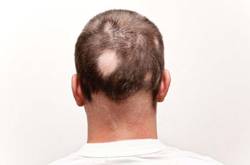
"Normally the hair follicle is immune privileged, but when the ULBP3 ligand is increased, T cells attack" the follicle and cause its destruction and the hair loss that is pathognomonic for AA, said Dr. Christiano, professor of dermatology and of genetics and development at Columbia University Medical Center in New York.
The ULBP3 finding led to a search for possible treatments that could interfere with the T-cell attack, guiding Dr. Christiano and her associates to the drug abatacept (Orencia). The agent suppresses T-cell activation and activity and is approved for treating rheumatoid arthritis (RA) and juvenile idiopathic arthritis. Study results reported almost a decade ago showed that abatacept worked in a mouse model of AA, she said.
Testing of a drug such as abatacept represents a new direction for AA treatment, which until now has usually been treated with agents developed for psoriasis, a strategy that has been unsuccessful.
Dr. Christiano and her coinvestigators designed a pilot study to test the efficacy of abatacept in patients with moderately severe AA, 6-12 months after diagnosis. They set these parameters because the patients will have established disease that is unlikely to spontaneously remit, but not so severe as to be too advanced to respond to T-cell based treatment.
Their planned study will randomize 56 patients to either a subcutaneous injection of abatacept or placebo at baseline, weeks 2 and 4, and then every 4 weeks for five cycles for a total treatment duration of 6 months. The study’s primary endpoint will be a 30%-40% improvement on the severity of alopecia tool after the first 6 months of treatment, and then after an additional 6 months of untreated follow-up, she said in an interview.
"I don’t think we could have been more shocked by what we found" in the genetic study, said Dr. Christiano at the meeting, sponsored by the Drug Information Association. "We fully expected to be aligned with other skin autoimmune diseases, like psoriasis." Instead, the eight genes linked to AA closely overlapped with type 1 diabetes, RA, and celiac disease, disorders that "we never considered."
But like the ULBP3 ligand found in the hair-follicle dermal sheaths of patients with AA, these autoimmune diseases also feature upregulated ligands that attract T cells to cellular targets and cause the disease: synoviocytes in RA, gut epithelial cells in celiac disease, and pancreatic islet cells in a mouse model of type 1 diabetes.
Dr. Christiano said that she had no disclosures.
PHILADELPHIA – New findings that show T-cell activation plays a critical role in the development of alopecia areata has opened new doors to treatment.
A report last year from a genome-wide association study involving 1,054 patients with alopecia areata (AA) and more than 3,000 controls, identified eight genes strongly linked to the disease (Nature 2010;466:113-7). One of the gene’s codes for a ligand, ULBP3, appears in the dermal sheath of hair follicles in patients with AA. The ULBP3 ligand appears responsible for attracting the cluster of T cells that produce the characteristic histopathology of affected hair follicles, Angela M. Christiano, Ph.D., said at the meeting.
"Normally the hair follicle is immune privileged, but when the ULBP3 ligand is increased, T cells attack" the follicle and cause its destruction and the hair loss that is pathognomonic for AA, said Dr. Christiano, professor of dermatology and of genetics and development at Columbia University Medical Center in New York.
The ULBP3 finding led to a search for possible treatments that could interfere with the T-cell attack, guiding Dr. Christiano and her associates to the drug abatacept (Orencia). The agent suppresses T-cell activation and activity and is approved for treating rheumatoid arthritis (RA) and juvenile idiopathic arthritis. Study results reported almost a decade ago showed that abatacept worked in a mouse model of AA, she said.
Testing of a drug such as abatacept represents a new direction for AA treatment, which until now has usually been treated with agents developed for psoriasis, a strategy that has been unsuccessful.
Dr. Christiano and her coinvestigators designed a pilot study to test the efficacy of abatacept in patients with moderately severe AA, 6-12 months after diagnosis. They set these parameters because the patients will have established disease that is unlikely to spontaneously remit, but not so severe as to be too advanced to respond to T-cell based treatment.
Their planned study will randomize 56 patients to either a subcutaneous injection of abatacept or placebo at baseline, weeks 2 and 4, and then every 4 weeks for five cycles for a total treatment duration of 6 months. The study’s primary endpoint will be a 30%-40% improvement on the severity of alopecia tool after the first 6 months of treatment, and then after an additional 6 months of untreated follow-up, she said in an interview.
"I don’t think we could have been more shocked by what we found" in the genetic study, said Dr. Christiano at the meeting, sponsored by the Drug Information Association. "We fully expected to be aligned with other skin autoimmune diseases, like psoriasis." Instead, the eight genes linked to AA closely overlapped with type 1 diabetes, RA, and celiac disease, disorders that "we never considered."
But like the ULBP3 ligand found in the hair-follicle dermal sheaths of patients with AA, these autoimmune diseases also feature upregulated ligands that attract T cells to cellular targets and cause the disease: synoviocytes in RA, gut epithelial cells in celiac disease, and pancreatic islet cells in a mouse model of type 1 diabetes.
Dr. Christiano said that she had no disclosures.
PHILADELPHIA – New findings that show T-cell activation plays a critical role in the development of alopecia areata has opened new doors to treatment.
A report last year from a genome-wide association study involving 1,054 patients with alopecia areata (AA) and more than 3,000 controls, identified eight genes strongly linked to the disease (Nature 2010;466:113-7). One of the gene’s codes for a ligand, ULBP3, appears in the dermal sheath of hair follicles in patients with AA. The ULBP3 ligand appears responsible for attracting the cluster of T cells that produce the characteristic histopathology of affected hair follicles, Angela M. Christiano, Ph.D., said at the meeting.
"Normally the hair follicle is immune privileged, but when the ULBP3 ligand is increased, T cells attack" the follicle and cause its destruction and the hair loss that is pathognomonic for AA, said Dr. Christiano, professor of dermatology and of genetics and development at Columbia University Medical Center in New York.
The ULBP3 finding led to a search for possible treatments that could interfere with the T-cell attack, guiding Dr. Christiano and her associates to the drug abatacept (Orencia). The agent suppresses T-cell activation and activity and is approved for treating rheumatoid arthritis (RA) and juvenile idiopathic arthritis. Study results reported almost a decade ago showed that abatacept worked in a mouse model of AA, she said.
Testing of a drug such as abatacept represents a new direction for AA treatment, which until now has usually been treated with agents developed for psoriasis, a strategy that has been unsuccessful.
Dr. Christiano and her coinvestigators designed a pilot study to test the efficacy of abatacept in patients with moderately severe AA, 6-12 months after diagnosis. They set these parameters because the patients will have established disease that is unlikely to spontaneously remit, but not so severe as to be too advanced to respond to T-cell based treatment.
Their planned study will randomize 56 patients to either a subcutaneous injection of abatacept or placebo at baseline, weeks 2 and 4, and then every 4 weeks for five cycles for a total treatment duration of 6 months. The study’s primary endpoint will be a 30%-40% improvement on the severity of alopecia tool after the first 6 months of treatment, and then after an additional 6 months of untreated follow-up, she said in an interview.
"I don’t think we could have been more shocked by what we found" in the genetic study, said Dr. Christiano at the meeting, sponsored by the Drug Information Association. "We fully expected to be aligned with other skin autoimmune diseases, like psoriasis." Instead, the eight genes linked to AA closely overlapped with type 1 diabetes, RA, and celiac disease, disorders that "we never considered."
But like the ULBP3 ligand found in the hair-follicle dermal sheaths of patients with AA, these autoimmune diseases also feature upregulated ligands that attract T cells to cellular targets and cause the disease: synoviocytes in RA, gut epithelial cells in celiac disease, and pancreatic islet cells in a mouse model of type 1 diabetes.
Dr. Christiano said that she had no disclosures.
EXPERT ANALYSIS FROM A MEETING ON IMPROVING CLINICAL TRIAL SAMPLING FOR FUTURE RESEARCH
The Fingernail Cocktail: Improving Preoperative Preparation for Nail Procedures [letter]
Adolescent Androgenic Alopecia
Blog: Patients Power Advances in Alopecia Areata
There’s power in numbers, and why should patient advocacy be any different?
Last week, at a meeting in Philadelphia on the collection and use of clinical specimens for genetic studies, alopecia areata researcher Dr. Angela Christiano couldn’t stop praising the National Alopecia Areata Foundation, both for its financial assistance in funding her research over more than a decade, and for the group's more intrinsic aid in establishing, promoting, and populating the National Alopecia Areata Registry that provided the genetic specimens Dr. Christiano and her associates used to identify eight genes linked to the disease, study results they reported last year.
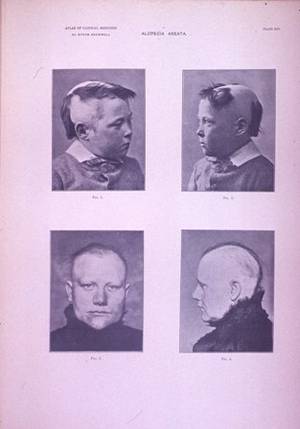
In her talk, Dr. Christiano gave some reasons why alopecia areata should have such a dynamic advocacy group. Alopecia areata, an autoimmune disorder that causes either partial or complete hair loss in otherwise healthy, young people, affects more than 5 million Americans. In addition, until recently little was know about its cause, and no evidence-based nor reliably effective treatment exists.
The genetic links that Dr. Christiano and her colleagues identified finally provide clues to what causes alopecia areata and how it might be treated. They also plan to further explore genetic links in an expanded study. Last year’s report used genetic specimens from 1,054 patients, but now the registry includes about 7,400 patients, and the researchers’ goal is to raise the total above 10,000.
The discussion at last week’s meeting made clear that patient advocacy groups can play a key role in helping researchers acquire large numbers of clinical specimens for genetic studies from patients with a variety of diseases. The Internet and social media have made patients much more informed about their conditions and have tied them into better organized networks. Alopecia areata is a disease where the payoffs from this have begun to accrue.
---Mitchel Zoler (on Twitter @mitchelzoler)
There’s power in numbers, and why should patient advocacy be any different?
Last week, at a meeting in Philadelphia on the collection and use of clinical specimens for genetic studies, alopecia areata researcher Dr. Angela Christiano couldn’t stop praising the National Alopecia Areata Foundation, both for its financial assistance in funding her research over more than a decade, and for the group's more intrinsic aid in establishing, promoting, and populating the National Alopecia Areata Registry that provided the genetic specimens Dr. Christiano and her associates used to identify eight genes linked to the disease, study results they reported last year.
In her talk, Dr. Christiano gave some reasons why alopecia areata should have such a dynamic advocacy group. Alopecia areata, an autoimmune disorder that causes either partial or complete hair loss in otherwise healthy, young people, affects more than 5 million Americans. In addition, until recently little was know about its cause, and no evidence-based nor reliably effective treatment exists.
The genetic links that Dr. Christiano and her colleagues identified finally provide clues to what causes alopecia areata and how it might be treated. They also plan to further explore genetic links in an expanded study. Last year’s report used genetic specimens from 1,054 patients, but now the registry includes about 7,400 patients, and the researchers’ goal is to raise the total above 10,000.
The discussion at last week’s meeting made clear that patient advocacy groups can play a key role in helping researchers acquire large numbers of clinical specimens for genetic studies from patients with a variety of diseases. The Internet and social media have made patients much more informed about their conditions and have tied them into better organized networks. Alopecia areata is a disease where the payoffs from this have begun to accrue.
---Mitchel Zoler (on Twitter @mitchelzoler)
There’s power in numbers, and why should patient advocacy be any different?
Last week, at a meeting in Philadelphia on the collection and use of clinical specimens for genetic studies, alopecia areata researcher Dr. Angela Christiano couldn’t stop praising the National Alopecia Areata Foundation, both for its financial assistance in funding her research over more than a decade, and for the group's more intrinsic aid in establishing, promoting, and populating the National Alopecia Areata Registry that provided the genetic specimens Dr. Christiano and her associates used to identify eight genes linked to the disease, study results they reported last year.
In her talk, Dr. Christiano gave some reasons why alopecia areata should have such a dynamic advocacy group. Alopecia areata, an autoimmune disorder that causes either partial or complete hair loss in otherwise healthy, young people, affects more than 5 million Americans. In addition, until recently little was know about its cause, and no evidence-based nor reliably effective treatment exists.
The genetic links that Dr. Christiano and her colleagues identified finally provide clues to what causes alopecia areata and how it might be treated. They also plan to further explore genetic links in an expanded study. Last year’s report used genetic specimens from 1,054 patients, but now the registry includes about 7,400 patients, and the researchers’ goal is to raise the total above 10,000.
The discussion at last week’s meeting made clear that patient advocacy groups can play a key role in helping researchers acquire large numbers of clinical specimens for genetic studies from patients with a variety of diseases. The Internet and social media have made patients much more informed about their conditions and have tied them into better organized networks. Alopecia areata is a disease where the payoffs from this have begun to accrue.
---Mitchel Zoler (on Twitter @mitchelzoler)
Half and Half Nails: A Past and Present Snapshot [letter]
Gel Nail Polish: The Painted Truth
Dr. Richard K. Scher discussed the dangers of gel nail polish, and also gave tips to share with patients on how to have a safe experience at the nail salon at the American Academy of Dermatology's Summer Academy meeting in New York.
Patients undergoing gel nail polish application at salons expose their hands to several minutes of UV light to harden the layers of polish, said Dr. Scher of Columbia University, New York. Their hands are also soaked in acetone for up to 10 minutes to dissolve the hard to remove shellac during polish changes.
In the video below, Dr. Scher offers advice and tips for patients that frequent nail salons.
Dr. Richard K. Scher discussed the dangers of gel nail polish, and also gave tips to share with patients on how to have a safe experience at the nail salon at the American Academy of Dermatology's Summer Academy meeting in New York.
Patients undergoing gel nail polish application at salons expose their hands to several minutes of UV light to harden the layers of polish, said Dr. Scher of Columbia University, New York. Their hands are also soaked in acetone for up to 10 minutes to dissolve the hard to remove shellac during polish changes.
In the video below, Dr. Scher offers advice and tips for patients that frequent nail salons.
Dr. Richard K. Scher discussed the dangers of gel nail polish, and also gave tips to share with patients on how to have a safe experience at the nail salon at the American Academy of Dermatology's Summer Academy meeting in New York.
Patients undergoing gel nail polish application at salons expose their hands to several minutes of UV light to harden the layers of polish, said Dr. Scher of Columbia University, New York. Their hands are also soaked in acetone for up to 10 minutes to dissolve the hard to remove shellac during polish changes.
In the video below, Dr. Scher offers advice and tips for patients that frequent nail salons.
EXPERT ANALYSIS FROM THE AMERICAN ACADEMY OF DERMATOLOGY'S SUMMER ACADEMY MEETING
Comparative Evaluation of Men's Depilatory Composition Versus Razor in Black Men
Alternating Clobetasol, Ketoconazole Shampoos Can Treat Seborrheic Dermatitis
SEOUL, KOREA – Twice-weekly clobetasol shampoo alternating with twice-weekly ketoconazole shampoo is a highly effective and well-tolerated treatment for moderate to severe seborrheic dermatitis, a multicenter randomized clinical trial indicates.
The superior efficacy of the combined regimen as compared to monotherapy with either agent alone was sustained with once-weekly ketoconazole shampoo maintenance therapy, Dr. Jean-Paul Ortonne reported at the World Congress of Dermatology.
The 22-center, 12-week study was conducted in Europe, North America, and Asia, and included 326 patients with moderate to severe scalp seborrheic dermatitis. At baseline, 61% of participants had involvement of at least 50% of their scalp.
Subjects were randomized to one of four treatment regimens: alternate weeks of clobetasol propionate shampoo 0.05% twice weekly and ketoconazole shampoo 2% twice weekly for 4 weeks; 4 weeks of either agent alone twice weekly; or clobetasol shampoo four times per week alternating with ketoconazole shampoo twice weekly for 4 weeks. The 4-week treatment phase was followed by 4 weeks of once-weekly ketoconazole shampoo maintenance therapy, then 4 additional weeks of untreated follow-up.
All three clobetasol-containing regimens were significantly more effective than twice-weekly ketoconazole monotherapy in reducing total severity scores at weeks 2 and 4. Indeed, 80%-90% of patients on the three clobetasol-containing regimens had no or only mild erythema, scaling, and itching at week 4, and median severity scores in the three clobetasol-containing regimens had dropped by roughly 70% compared with baseline, according to Dr. Ortonne, professor and chairman of the department of dermatology at the University of Nice–Sophia Antipolis (France).
By week 8, after 4 weeks of ketoconazole shampoo maintenance therapy, the groups earlier on clobetasol monotherapy or clobetasol four times weekly alternating with ketoconazole twice weekly both demonstrated slight worsening in terms of total severity scores, as well as measures of erythema, scaling, and itch. In contrast, efficacy was sustained throughout the maintenance phase in patients earlier assigned to clobetasol twice weekly alternating with ketoconazole twice weekly.
At week 12, after 4 weeks without treatment, efficacy remained highest in the twice-weekly alternating clobetasol/ketoconazole group, the majority of whom had involvement of less than 30% of their scalp area and no or only mild erythema, scaling, and pruritus.
The 4.9% treatment-related adverse event rate was similar in all four treatment arms and consisted mostly of mild burning. No worsening of skin atrophy was observed with any of the regimens. Two patients in the twice-weekly alternating clobetasol/ketoconazole group reported developing mild telangiectasias during the study.
Dr. Ortonne is a consultant to Galderma, the study sponsor.
SEOUL, KOREA – Twice-weekly clobetasol shampoo alternating with twice-weekly ketoconazole shampoo is a highly effective and well-tolerated treatment for moderate to severe seborrheic dermatitis, a multicenter randomized clinical trial indicates.
The superior efficacy of the combined regimen as compared to monotherapy with either agent alone was sustained with once-weekly ketoconazole shampoo maintenance therapy, Dr. Jean-Paul Ortonne reported at the World Congress of Dermatology.
The 22-center, 12-week study was conducted in Europe, North America, and Asia, and included 326 patients with moderate to severe scalp seborrheic dermatitis. At baseline, 61% of participants had involvement of at least 50% of their scalp.
Subjects were randomized to one of four treatment regimens: alternate weeks of clobetasol propionate shampoo 0.05% twice weekly and ketoconazole shampoo 2% twice weekly for 4 weeks; 4 weeks of either agent alone twice weekly; or clobetasol shampoo four times per week alternating with ketoconazole shampoo twice weekly for 4 weeks. The 4-week treatment phase was followed by 4 weeks of once-weekly ketoconazole shampoo maintenance therapy, then 4 additional weeks of untreated follow-up.
All three clobetasol-containing regimens were significantly more effective than twice-weekly ketoconazole monotherapy in reducing total severity scores at weeks 2 and 4. Indeed, 80%-90% of patients on the three clobetasol-containing regimens had no or only mild erythema, scaling, and itching at week 4, and median severity scores in the three clobetasol-containing regimens had dropped by roughly 70% compared with baseline, according to Dr. Ortonne, professor and chairman of the department of dermatology at the University of Nice–Sophia Antipolis (France).
By week 8, after 4 weeks of ketoconazole shampoo maintenance therapy, the groups earlier on clobetasol monotherapy or clobetasol four times weekly alternating with ketoconazole twice weekly both demonstrated slight worsening in terms of total severity scores, as well as measures of erythema, scaling, and itch. In contrast, efficacy was sustained throughout the maintenance phase in patients earlier assigned to clobetasol twice weekly alternating with ketoconazole twice weekly.
At week 12, after 4 weeks without treatment, efficacy remained highest in the twice-weekly alternating clobetasol/ketoconazole group, the majority of whom had involvement of less than 30% of their scalp area and no or only mild erythema, scaling, and pruritus.
The 4.9% treatment-related adverse event rate was similar in all four treatment arms and consisted mostly of mild burning. No worsening of skin atrophy was observed with any of the regimens. Two patients in the twice-weekly alternating clobetasol/ketoconazole group reported developing mild telangiectasias during the study.
Dr. Ortonne is a consultant to Galderma, the study sponsor.
SEOUL, KOREA – Twice-weekly clobetasol shampoo alternating with twice-weekly ketoconazole shampoo is a highly effective and well-tolerated treatment for moderate to severe seborrheic dermatitis, a multicenter randomized clinical trial indicates.
The superior efficacy of the combined regimen as compared to monotherapy with either agent alone was sustained with once-weekly ketoconazole shampoo maintenance therapy, Dr. Jean-Paul Ortonne reported at the World Congress of Dermatology.
The 22-center, 12-week study was conducted in Europe, North America, and Asia, and included 326 patients with moderate to severe scalp seborrheic dermatitis. At baseline, 61% of participants had involvement of at least 50% of their scalp.
Subjects were randomized to one of four treatment regimens: alternate weeks of clobetasol propionate shampoo 0.05% twice weekly and ketoconazole shampoo 2% twice weekly for 4 weeks; 4 weeks of either agent alone twice weekly; or clobetasol shampoo four times per week alternating with ketoconazole shampoo twice weekly for 4 weeks. The 4-week treatment phase was followed by 4 weeks of once-weekly ketoconazole shampoo maintenance therapy, then 4 additional weeks of untreated follow-up.
All three clobetasol-containing regimens were significantly more effective than twice-weekly ketoconazole monotherapy in reducing total severity scores at weeks 2 and 4. Indeed, 80%-90% of patients on the three clobetasol-containing regimens had no or only mild erythema, scaling, and itching at week 4, and median severity scores in the three clobetasol-containing regimens had dropped by roughly 70% compared with baseline, according to Dr. Ortonne, professor and chairman of the department of dermatology at the University of Nice–Sophia Antipolis (France).
By week 8, after 4 weeks of ketoconazole shampoo maintenance therapy, the groups earlier on clobetasol monotherapy or clobetasol four times weekly alternating with ketoconazole twice weekly both demonstrated slight worsening in terms of total severity scores, as well as measures of erythema, scaling, and itch. In contrast, efficacy was sustained throughout the maintenance phase in patients earlier assigned to clobetasol twice weekly alternating with ketoconazole twice weekly.
At week 12, after 4 weeks without treatment, efficacy remained highest in the twice-weekly alternating clobetasol/ketoconazole group, the majority of whom had involvement of less than 30% of their scalp area and no or only mild erythema, scaling, and pruritus.
The 4.9% treatment-related adverse event rate was similar in all four treatment arms and consisted mostly of mild burning. No worsening of skin atrophy was observed with any of the regimens. Two patients in the twice-weekly alternating clobetasol/ketoconazole group reported developing mild telangiectasias during the study.
Dr. Ortonne is a consultant to Galderma, the study sponsor.
FROM THE WORLD CONGRESS OF DERMATOLOGY
Major Finding: By week 8, efficacy was sustained throughout the maintenance phase of 4 weeks of ketoconazole shampoo in patients earlier assigned to clobetasol twice weekly alternating with ketoconazole shampoo twice weekly. In contrast, the groups earlier on clobetasol monotherapy or clobetasol four times weekly alternating with ketoconazole twice weekly both demonstrated slight worsening in terms of total severity scores as well as measures of erythema, scaling, and itch.
Data Source: A 22-center, 12-week study conducted in Europe, North America, and Asia included 326 patients with moderate to severe scalp seborrheic dermatitis treated with various regimens of clobetasol and ketoconazole shampoos.
Disclosures: Dr. Ortonne is a consultant to Galderma, the study sponsor.
Women Prefer 5% Minoxidil Foam for Alopecia
SEOUL, SOUTH KOREA – The 5% minoxidil foam approved for treatment of male androgenetic alopecia demonstrated significant clinical advantages over 2% minoxidil topical solution in the first head-to-head comparative trial conducted in women with the hair disorder.
The 5% minoxidil foam is approved as once-daily therapy in men only. The twice-daily 2% topical solution is the sole medication approved in the United States and Europe for female androgenetic alopecia. But in the randomized trial, the once-daily 5% foam earned higher marks from women in terms of cosmetic acceptance, convenience, and tolerability while demonstrating efficacy similar to that of the twice-daily 2% solution, Dr. Ulrike Blume-Peytavi reported at the World Congress of Dermatology.
She presented a 24-week, investigator-blinded, prospective, multicenter, randomized trial of 5% minoxidil foam once daily versus 2% minoxidil solution twice daily in 113 patients with female-pattern hair loss. The primary end point was the change from baseline to week 24 in terms of nonvellus target-area hair count as measured by Canfield hair matrix image analysis.
Patients assigned to the 5% foam had a mean 32-hair/cm2 or 16% increase, not significantly different from the 14% increase documented in women on the 2% topical solution.
In terms of secondary end points, global photographic review by blinded expert evaluators rated 68% of women in the 5% foam group as having achieved increased hair volume, and a similar 56% of those who received the 2% solution. Nor were the subjects' own efficacy ratings significantly different between the two groups, according to Dr. Blume-Peytavi of the Clinical Research Center for Hair and Skin Science at Charité University, Berlin.
Women randomized to 5% minoxidil foam experienced significantly lower rates of treatment intolerance, particularly with regard to itching and dandruff. Sixteen percent of them reported significant pruritus, compared with 39% of women on the 2% minoxidil solution. Just 5% of the women on the 5% minoxidil foam complained of dandruff, compared with 18% on the 2% solution. There were, however, no significant differences between the study arms in terms of complaints of redness, stinging, or dryness.
On a cosmetic acceptability questionnaire, 46% of the 5% minoxidil foam group strongly indicated that the medication did not interfere with styling their hair, compared with just 19% of women on the 2% topical solution.
The reason Dr. Blume-Peytavi and coinvestigators undertook this trial was to test their hypothesis that the minoxidil foam would be better tolerated and more cosmetically acceptable because, unlike the 2% topical solution, it is free of propylene glycol. They also thought the foam product would be significantly more effective at stimulating new hair growth because of its higher minoxidil concentration, although this proved not to be the case.
Dr. Blume-Peytavi is a consultant to Johnson & Johnson and Procter & Gamble.
SEOUL, SOUTH KOREA – The 5% minoxidil foam approved for treatment of male androgenetic alopecia demonstrated significant clinical advantages over 2% minoxidil topical solution in the first head-to-head comparative trial conducted in women with the hair disorder.
The 5% minoxidil foam is approved as once-daily therapy in men only. The twice-daily 2% topical solution is the sole medication approved in the United States and Europe for female androgenetic alopecia. But in the randomized trial, the once-daily 5% foam earned higher marks from women in terms of cosmetic acceptance, convenience, and tolerability while demonstrating efficacy similar to that of the twice-daily 2% solution, Dr. Ulrike Blume-Peytavi reported at the World Congress of Dermatology.
She presented a 24-week, investigator-blinded, prospective, multicenter, randomized trial of 5% minoxidil foam once daily versus 2% minoxidil solution twice daily in 113 patients with female-pattern hair loss. The primary end point was the change from baseline to week 24 in terms of nonvellus target-area hair count as measured by Canfield hair matrix image analysis.
Patients assigned to the 5% foam had a mean 32-hair/cm2 or 16% increase, not significantly different from the 14% increase documented in women on the 2% topical solution.
In terms of secondary end points, global photographic review by blinded expert evaluators rated 68% of women in the 5% foam group as having achieved increased hair volume, and a similar 56% of those who received the 2% solution. Nor were the subjects' own efficacy ratings significantly different between the two groups, according to Dr. Blume-Peytavi of the Clinical Research Center for Hair and Skin Science at Charité University, Berlin.
Women randomized to 5% minoxidil foam experienced significantly lower rates of treatment intolerance, particularly with regard to itching and dandruff. Sixteen percent of them reported significant pruritus, compared with 39% of women on the 2% minoxidil solution. Just 5% of the women on the 5% minoxidil foam complained of dandruff, compared with 18% on the 2% solution. There were, however, no significant differences between the study arms in terms of complaints of redness, stinging, or dryness.
On a cosmetic acceptability questionnaire, 46% of the 5% minoxidil foam group strongly indicated that the medication did not interfere with styling their hair, compared with just 19% of women on the 2% topical solution.
The reason Dr. Blume-Peytavi and coinvestigators undertook this trial was to test their hypothesis that the minoxidil foam would be better tolerated and more cosmetically acceptable because, unlike the 2% topical solution, it is free of propylene glycol. They also thought the foam product would be significantly more effective at stimulating new hair growth because of its higher minoxidil concentration, although this proved not to be the case.
Dr. Blume-Peytavi is a consultant to Johnson & Johnson and Procter & Gamble.
SEOUL, SOUTH KOREA – The 5% minoxidil foam approved for treatment of male androgenetic alopecia demonstrated significant clinical advantages over 2% minoxidil topical solution in the first head-to-head comparative trial conducted in women with the hair disorder.
The 5% minoxidil foam is approved as once-daily therapy in men only. The twice-daily 2% topical solution is the sole medication approved in the United States and Europe for female androgenetic alopecia. But in the randomized trial, the once-daily 5% foam earned higher marks from women in terms of cosmetic acceptance, convenience, and tolerability while demonstrating efficacy similar to that of the twice-daily 2% solution, Dr. Ulrike Blume-Peytavi reported at the World Congress of Dermatology.
She presented a 24-week, investigator-blinded, prospective, multicenter, randomized trial of 5% minoxidil foam once daily versus 2% minoxidil solution twice daily in 113 patients with female-pattern hair loss. The primary end point was the change from baseline to week 24 in terms of nonvellus target-area hair count as measured by Canfield hair matrix image analysis.
Patients assigned to the 5% foam had a mean 32-hair/cm2 or 16% increase, not significantly different from the 14% increase documented in women on the 2% topical solution.
In terms of secondary end points, global photographic review by blinded expert evaluators rated 68% of women in the 5% foam group as having achieved increased hair volume, and a similar 56% of those who received the 2% solution. Nor were the subjects' own efficacy ratings significantly different between the two groups, according to Dr. Blume-Peytavi of the Clinical Research Center for Hair and Skin Science at Charité University, Berlin.
Women randomized to 5% minoxidil foam experienced significantly lower rates of treatment intolerance, particularly with regard to itching and dandruff. Sixteen percent of them reported significant pruritus, compared with 39% of women on the 2% minoxidil solution. Just 5% of the women on the 5% minoxidil foam complained of dandruff, compared with 18% on the 2% solution. There were, however, no significant differences between the study arms in terms of complaints of redness, stinging, or dryness.
On a cosmetic acceptability questionnaire, 46% of the 5% minoxidil foam group strongly indicated that the medication did not interfere with styling their hair, compared with just 19% of women on the 2% topical solution.
The reason Dr. Blume-Peytavi and coinvestigators undertook this trial was to test their hypothesis that the minoxidil foam would be better tolerated and more cosmetically acceptable because, unlike the 2% topical solution, it is free of propylene glycol. They also thought the foam product would be significantly more effective at stimulating new hair growth because of its higher minoxidil concentration, although this proved not to be the case.
Dr. Blume-Peytavi is a consultant to Johnson & Johnson and Procter & Gamble.
FROM THE WORLD CONGRESS OF DERMATOLOGY
Major Finding: Sixteen percent of women using once-daily 5% minoxidil foam reported significant pruritus, compared with 39% of women on 2% minoxidil solution.
Data Source: A 24-week, investigator-blinded, prospective, multicenter, randomized trial of 5% minoxidil foam once daily versus 2% minoxidil solution twice daily in 113 patients with female-pattern hair loss.
Disclosures: Dr. Blume-Peytavi is a consultant to Johnson & Johnson and Procter & Gamble.