User login
VIDEO: Liquid tumor biopsies await prospective validation
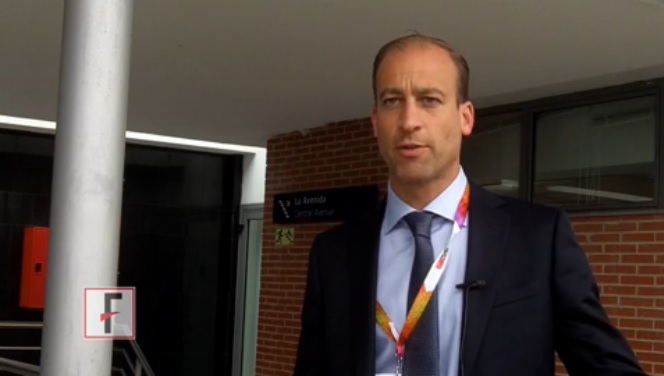
MADRID – Assessing the genetic profile of tumor DNA circulating in a cancer patient’s blood is a potentially attractive way to track a tumor without the need for multiple tissue biopsies. The limitation of these liquid biopsies is that the clinical relevance of periodically assessing circulating tumor DNA has not yet been proven, Dr. Gerald Prager said during a video interview at the European Society for Medical Oncology Congress.
“We need to perform clinical trials to know what to do” with the information that comes from evaluating circulating tumor DNA, said Dr. Prager, an oncologist at the Medical University of Vienna.
“Should we change” a patient’s treatment based on genetic results “before we see disease progression? We have not answered that yet.”
Dr. Prager has been an adviser and consultant to Bayer, Roche, Amgen, Merck Serono, and Sanofi-Aventis.
On Twitter @mitchelzoler
The video associated with this article is no longer available on this site. Please view all of our videos on the MDedge YouTube channel
MADRID – Assessing the genetic profile of tumor DNA circulating in a cancer patient’s blood is a potentially attractive way to track a tumor without the need for multiple tissue biopsies. The limitation of these liquid biopsies is that the clinical relevance of periodically assessing circulating tumor DNA has not yet been proven, Dr. Gerald Prager said during a video interview at the European Society for Medical Oncology Congress.
“We need to perform clinical trials to know what to do” with the information that comes from evaluating circulating tumor DNA, said Dr. Prager, an oncologist at the Medical University of Vienna.
“Should we change” a patient’s treatment based on genetic results “before we see disease progression? We have not answered that yet.”
Dr. Prager has been an adviser and consultant to Bayer, Roche, Amgen, Merck Serono, and Sanofi-Aventis.
On Twitter @mitchelzoler
The video associated with this article is no longer available on this site. Please view all of our videos on the MDedge YouTube channel
MADRID – Assessing the genetic profile of tumor DNA circulating in a cancer patient’s blood is a potentially attractive way to track a tumor without the need for multiple tissue biopsies. The limitation of these liquid biopsies is that the clinical relevance of periodically assessing circulating tumor DNA has not yet been proven, Dr. Gerald Prager said during a video interview at the European Society for Medical Oncology Congress.
“We need to perform clinical trials to know what to do” with the information that comes from evaluating circulating tumor DNA, said Dr. Prager, an oncologist at the Medical University of Vienna.
“Should we change” a patient’s treatment based on genetic results “before we see disease progression? We have not answered that yet.”
Dr. Prager has been an adviser and consultant to Bayer, Roche, Amgen, Merck Serono, and Sanofi-Aventis.
On Twitter @mitchelzoler
The video associated with this article is no longer available on this site. Please view all of our videos on the MDedge YouTube channel
EXPERT ANALYSIS FROM ESMO 2014
VIDEO: Novel and other therapies for vaginal dryness
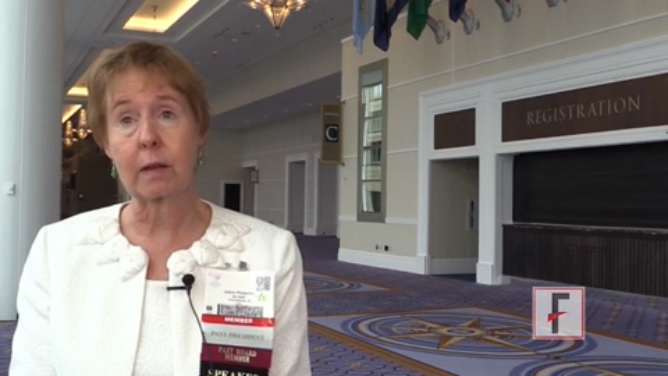
NATIONAL HARBOR, MD. – Menopausal women who experience vaginal dryness often find the resultant pain of sexual intercourse so prohibitive that, according to Dr. JoAnne Pinkerton, often these women go months or years without intimate relations.
There are many treatment options that can benefit patients with the condition, explained Dr. Pinkerton, medical director of the Midlife Health Center at the University of Virginia, Charlottesville, but physicians aren’t always aware of what’s available.
In a video interview at annual meeting of the North American Menopause Society, Dr. Pinkerton discussed the range of therapies physicians can offer menopausal patients with vaginal dryness.
On Twitter @whitneymcknight
The video associated with this article is no longer available on this site. Please view all of our videos on the MDedge YouTube channel
NATIONAL HARBOR, MD. – Menopausal women who experience vaginal dryness often find the resultant pain of sexual intercourse so prohibitive that, according to Dr. JoAnne Pinkerton, often these women go months or years without intimate relations.
There are many treatment options that can benefit patients with the condition, explained Dr. Pinkerton, medical director of the Midlife Health Center at the University of Virginia, Charlottesville, but physicians aren’t always aware of what’s available.
In a video interview at annual meeting of the North American Menopause Society, Dr. Pinkerton discussed the range of therapies physicians can offer menopausal patients with vaginal dryness.
On Twitter @whitneymcknight
The video associated with this article is no longer available on this site. Please view all of our videos on the MDedge YouTube channel
NATIONAL HARBOR, MD. – Menopausal women who experience vaginal dryness often find the resultant pain of sexual intercourse so prohibitive that, according to Dr. JoAnne Pinkerton, often these women go months or years without intimate relations.
There are many treatment options that can benefit patients with the condition, explained Dr. Pinkerton, medical director of the Midlife Health Center at the University of Virginia, Charlottesville, but physicians aren’t always aware of what’s available.
In a video interview at annual meeting of the North American Menopause Society, Dr. Pinkerton discussed the range of therapies physicians can offer menopausal patients with vaginal dryness.
On Twitter @whitneymcknight
The video associated with this article is no longer available on this site. Please view all of our videos on the MDedge YouTube channel
EXPERT ANALYSIS FROM THE NAMS 2014 ANNUAL MEETING
VIDEO: Causes of low libido in postmenopausal women are complex, don’t always require pharmacologic treatment
NATIONAL HARBOR, MD. – Menopause is often accompanied by complex changes in sexual health and function, and factors contributing to low libido and other sexual problems in postmenopausal women may include a combination of hormonal and psychological components, according to experts at the annual meeting of the North American Menopause Society (NAMS).
In this roundtable discussion, Dr. Jan L. Shifren of Harvard Medical School, Boston; NAMS executive director Dr. Margery Gass of Cleveland Clinic; and psychologist Sheryl A. Kingsberg, Ph.D., of the Case Western Reserve University, Cleveland, discuss the physiological, psychological, and relationship factors that affect sexual function and desire in postmenopausal women.
They also talk about treatments such as psychotherapy, low-dose estrogen therapy, and testosterone therapy that may be used to address postmenopausal sexual problems, and how to determine when psychological intervention alone is adequate, and when pharmacologic intervention may be needed.
But the most important thing, they stressed, was to ask women if they are having any changes in sexual health. This is not a topic most women are likely to bring up themselves.
Dr. Kingsberg disclosed relationships with Apricus Biosciences, Emotional Brain, Metagenics, Novo Nordisk, Palatin Technologies, Pfizer, Shionogi, Sprout Pharmaceuticals, Strategic Science and Technologies, and Teva Pharmaceuticals. Dr. Gass and Dr. Shifren did not report any relevant financial disclosures.
The video associated with this article is no longer available on this site. Please view all of our videos on the MDedge YouTube channel
NATIONAL HARBOR, MD. – Menopause is often accompanied by complex changes in sexual health and function, and factors contributing to low libido and other sexual problems in postmenopausal women may include a combination of hormonal and psychological components, according to experts at the annual meeting of the North American Menopause Society (NAMS).
In this roundtable discussion, Dr. Jan L. Shifren of Harvard Medical School, Boston; NAMS executive director Dr. Margery Gass of Cleveland Clinic; and psychologist Sheryl A. Kingsberg, Ph.D., of the Case Western Reserve University, Cleveland, discuss the physiological, psychological, and relationship factors that affect sexual function and desire in postmenopausal women.
They also talk about treatments such as psychotherapy, low-dose estrogen therapy, and testosterone therapy that may be used to address postmenopausal sexual problems, and how to determine when psychological intervention alone is adequate, and when pharmacologic intervention may be needed.
But the most important thing, they stressed, was to ask women if they are having any changes in sexual health. This is not a topic most women are likely to bring up themselves.
Dr. Kingsberg disclosed relationships with Apricus Biosciences, Emotional Brain, Metagenics, Novo Nordisk, Palatin Technologies, Pfizer, Shionogi, Sprout Pharmaceuticals, Strategic Science and Technologies, and Teva Pharmaceuticals. Dr. Gass and Dr. Shifren did not report any relevant financial disclosures.
The video associated with this article is no longer available on this site. Please view all of our videos on the MDedge YouTube channel
NATIONAL HARBOR, MD. – Menopause is often accompanied by complex changes in sexual health and function, and factors contributing to low libido and other sexual problems in postmenopausal women may include a combination of hormonal and psychological components, according to experts at the annual meeting of the North American Menopause Society (NAMS).
In this roundtable discussion, Dr. Jan L. Shifren of Harvard Medical School, Boston; NAMS executive director Dr. Margery Gass of Cleveland Clinic; and psychologist Sheryl A. Kingsberg, Ph.D., of the Case Western Reserve University, Cleveland, discuss the physiological, psychological, and relationship factors that affect sexual function and desire in postmenopausal women.
They also talk about treatments such as psychotherapy, low-dose estrogen therapy, and testosterone therapy that may be used to address postmenopausal sexual problems, and how to determine when psychological intervention alone is adequate, and when pharmacologic intervention may be needed.
But the most important thing, they stressed, was to ask women if they are having any changes in sexual health. This is not a topic most women are likely to bring up themselves.
Dr. Kingsberg disclosed relationships with Apricus Biosciences, Emotional Brain, Metagenics, Novo Nordisk, Palatin Technologies, Pfizer, Shionogi, Sprout Pharmaceuticals, Strategic Science and Technologies, and Teva Pharmaceuticals. Dr. Gass and Dr. Shifren did not report any relevant financial disclosures.
The video associated with this article is no longer available on this site. Please view all of our videos on the MDedge YouTube channel
FROM THE NAMS ANNUAL MEETING
VIDEO: Winning health apps link patients, researchers
SANTA CLARA, CALIF. – The federal Patient-Centered Outcomes Research Institute picked three apps for $150,000 in award funding to help patients and researchers connect and collaborate.
The Institute’s Dr. Karen Odom Walker moderated a Hospital Innovation Roundtable session at the Health 2.0 fall conference. In a video interview at the meeting, she described the work of the Patient-Centered Outcomes Research Institute (PCORI), which was part of the Affordable Care Act and is based in Washington, D.C.
So far, PCORI has awarded more than $500 million to 300 projects for patient-centered research, and it plans to distribute another $3.5 billion by 2019, she said.
The winners of PCORI’s 2014 Matchmaking App Challenge, announced at the conference, developed ready-to-use Web-based or smartphone apps to link patients, caregivers, clinicians, and researchers in various ways.
First-place winner PatientPowered.us of San Francisco received $100,000 for its mobile network connecting patients with researchers and healthcare professionals to share ideas for solving their medical conditions, such as Crohn’s disease, sleep apnea, migraines, or others, and to connect patients with clinical trials.
Second-place winner WellSpringboard, from the University of Michigan, Ann Arbor, received $35,000 for its software platform to enable crowdfunding of patient-focused research. CareHubs of Beaverton, Ore. received $15,000 in third-place prize money for a platform for patient engagement in health systems.
Dr. Walker’s spouse works for MedImmune. She reported having no other financial disclosures.
On Twitter @sherryboschert
The video associated with this article is no longer available on this site. Please view all of our videos on the MDedge YouTube channel
SANTA CLARA, CALIF. – The federal Patient-Centered Outcomes Research Institute picked three apps for $150,000 in award funding to help patients and researchers connect and collaborate.
The Institute’s Dr. Karen Odom Walker moderated a Hospital Innovation Roundtable session at the Health 2.0 fall conference. In a video interview at the meeting, she described the work of the Patient-Centered Outcomes Research Institute (PCORI), which was part of the Affordable Care Act and is based in Washington, D.C.
So far, PCORI has awarded more than $500 million to 300 projects for patient-centered research, and it plans to distribute another $3.5 billion by 2019, she said.
The winners of PCORI’s 2014 Matchmaking App Challenge, announced at the conference, developed ready-to-use Web-based or smartphone apps to link patients, caregivers, clinicians, and researchers in various ways.
First-place winner PatientPowered.us of San Francisco received $100,000 for its mobile network connecting patients with researchers and healthcare professionals to share ideas for solving their medical conditions, such as Crohn’s disease, sleep apnea, migraines, or others, and to connect patients with clinical trials.
Second-place winner WellSpringboard, from the University of Michigan, Ann Arbor, received $35,000 for its software platform to enable crowdfunding of patient-focused research. CareHubs of Beaverton, Ore. received $15,000 in third-place prize money for a platform for patient engagement in health systems.
Dr. Walker’s spouse works for MedImmune. She reported having no other financial disclosures.
On Twitter @sherryboschert
The video associated with this article is no longer available on this site. Please view all of our videos on the MDedge YouTube channel
SANTA CLARA, CALIF. – The federal Patient-Centered Outcomes Research Institute picked three apps for $150,000 in award funding to help patients and researchers connect and collaborate.
The Institute’s Dr. Karen Odom Walker moderated a Hospital Innovation Roundtable session at the Health 2.0 fall conference. In a video interview at the meeting, she described the work of the Patient-Centered Outcomes Research Institute (PCORI), which was part of the Affordable Care Act and is based in Washington, D.C.
So far, PCORI has awarded more than $500 million to 300 projects for patient-centered research, and it plans to distribute another $3.5 billion by 2019, she said.
The winners of PCORI’s 2014 Matchmaking App Challenge, announced at the conference, developed ready-to-use Web-based or smartphone apps to link patients, caregivers, clinicians, and researchers in various ways.
First-place winner PatientPowered.us of San Francisco received $100,000 for its mobile network connecting patients with researchers and healthcare professionals to share ideas for solving their medical conditions, such as Crohn’s disease, sleep apnea, migraines, or others, and to connect patients with clinical trials.
Second-place winner WellSpringboard, from the University of Michigan, Ann Arbor, received $35,000 for its software platform to enable crowdfunding of patient-focused research. CareHubs of Beaverton, Ore. received $15,000 in third-place prize money for a platform for patient engagement in health systems.
Dr. Walker’s spouse works for MedImmune. She reported having no other financial disclosures.
On Twitter @sherryboschert
The video associated with this article is no longer available on this site. Please view all of our videos on the MDedge YouTube channel
AT THE HEALTH 2.0 FALL CONFERENCE 2014
VIDEO: How physicians can help kids make smart media choices
SAN DIEGO – Digital technology and media are important components in children’s social and emotional development, and physicians can play a central role in ensuring kids make the right decisions when using those media.
“Because parents and kids trust them, pediatricians have an opportunity to educate parents across the country about the impact of media and digital technology on children,” explained James Steyer, founder of Common Sense Media in San Francisco.
In a video interview at the annual meeting of the American Academy of Pediatrics, Mr. Steyer talks about research on how media and digital technology affect children’s brain development, and how physicians can shape their young patients’ choices with techniques such as “media diets.”
The video associated with this article is no longer available on this site. Please view all of our videos on the MDedge YouTube channel
SAN DIEGO – Digital technology and media are important components in children’s social and emotional development, and physicians can play a central role in ensuring kids make the right decisions when using those media.
“Because parents and kids trust them, pediatricians have an opportunity to educate parents across the country about the impact of media and digital technology on children,” explained James Steyer, founder of Common Sense Media in San Francisco.
In a video interview at the annual meeting of the American Academy of Pediatrics, Mr. Steyer talks about research on how media and digital technology affect children’s brain development, and how physicians can shape their young patients’ choices with techniques such as “media diets.”
The video associated with this article is no longer available on this site. Please view all of our videos on the MDedge YouTube channel
SAN DIEGO – Digital technology and media are important components in children’s social and emotional development, and physicians can play a central role in ensuring kids make the right decisions when using those media.
“Because parents and kids trust them, pediatricians have an opportunity to educate parents across the country about the impact of media and digital technology on children,” explained James Steyer, founder of Common Sense Media in San Francisco.
In a video interview at the annual meeting of the American Academy of Pediatrics, Mr. Steyer talks about research on how media and digital technology affect children’s brain development, and how physicians can shape their young patients’ choices with techniques such as “media diets.”
The video associated with this article is no longer available on this site. Please view all of our videos on the MDedge YouTube channel
AT THE AAP NATIONAL CONFERENCE

VIDEO: Pharmacogenomics can sharpen treatment choices in children
SAN DIEGO – Why do some children respond differently to medications than others? Pharmacogenomics is giving physicians a better understanding of differential responses and how to tailor treatment choices to individual patients’ genetic makeup.
Pharmacogenomics’ goal is to move away from the waste and potential dangers inherent in the typical empiric approach to medications, explained Dr. Marc Williams, director of the Geisinger Genomic Medicine Institute in Scranton, Pa. Instead, “our sort-of mantra is ‘the rights’: the right person with the right medication at the right time for the right reasons.”
In a video interview at the annual meeting of the American Academy of Pediatrics, Dr. Williams talks about the promise of pharmacogenomics and the challenges faced in bringing genomic knowledge into pediatric clinical practice.
The video associated with this article is no longer available on this site. Please view all of our videos on the MDedge YouTube channel
SAN DIEGO – Why do some children respond differently to medications than others? Pharmacogenomics is giving physicians a better understanding of differential responses and how to tailor treatment choices to individual patients’ genetic makeup.
Pharmacogenomics’ goal is to move away from the waste and potential dangers inherent in the typical empiric approach to medications, explained Dr. Marc Williams, director of the Geisinger Genomic Medicine Institute in Scranton, Pa. Instead, “our sort-of mantra is ‘the rights’: the right person with the right medication at the right time for the right reasons.”
In a video interview at the annual meeting of the American Academy of Pediatrics, Dr. Williams talks about the promise of pharmacogenomics and the challenges faced in bringing genomic knowledge into pediatric clinical practice.
The video associated with this article is no longer available on this site. Please view all of our videos on the MDedge YouTube channel
SAN DIEGO – Why do some children respond differently to medications than others? Pharmacogenomics is giving physicians a better understanding of differential responses and how to tailor treatment choices to individual patients’ genetic makeup.
Pharmacogenomics’ goal is to move away from the waste and potential dangers inherent in the typical empiric approach to medications, explained Dr. Marc Williams, director of the Geisinger Genomic Medicine Institute in Scranton, Pa. Instead, “our sort-of mantra is ‘the rights’: the right person with the right medication at the right time for the right reasons.”
In a video interview at the annual meeting of the American Academy of Pediatrics, Dr. Williams talks about the promise of pharmacogenomics and the challenges faced in bringing genomic knowledge into pediatric clinical practice.
The video associated with this article is no longer available on this site. Please view all of our videos on the MDedge YouTube channel
AT THE AAP NATIONAL CONFERENCE
VIDEO: Is the FDA’s black box on estrogen too ‘alarming’?
NATIONAL HARBOR, MD. – Does the Food and Drug Administration’s black-box warning on estrogen contribute to noncompliance – or worse, to clinicians being unwilling to prescribe estrogen treatments – leaving many women to suffer untreated menopause symptoms?
The leadership of the North American Menopause Society thinks so, and the organization has started a campaign to get the FDA to reconsider how it labels estrogen.
“We would like the label for low-dose, vaginal estrogen to better reflect the true safety and risk profile,” said Dr. JoAnn Manson, chair of this year’s NAMS scientific committee.
In a video interview, Dr. Manson discusses how the current black-box labeling may impede effective treatment, and why revised, more-nuanced estrogen labeling could improve outcomes for many women.
On Twitter @whitneymcknight
The video associated with this article is no longer available on this site. Please view all of our videos on the MDedge YouTube channel
NATIONAL HARBOR, MD. – Does the Food and Drug Administration’s black-box warning on estrogen contribute to noncompliance – or worse, to clinicians being unwilling to prescribe estrogen treatments – leaving many women to suffer untreated menopause symptoms?
The leadership of the North American Menopause Society thinks so, and the organization has started a campaign to get the FDA to reconsider how it labels estrogen.
“We would like the label for low-dose, vaginal estrogen to better reflect the true safety and risk profile,” said Dr. JoAnn Manson, chair of this year’s NAMS scientific committee.
In a video interview, Dr. Manson discusses how the current black-box labeling may impede effective treatment, and why revised, more-nuanced estrogen labeling could improve outcomes for many women.
On Twitter @whitneymcknight
The video associated with this article is no longer available on this site. Please view all of our videos on the MDedge YouTube channel
NATIONAL HARBOR, MD. – Does the Food and Drug Administration’s black-box warning on estrogen contribute to noncompliance – or worse, to clinicians being unwilling to prescribe estrogen treatments – leaving many women to suffer untreated menopause symptoms?
The leadership of the North American Menopause Society thinks so, and the organization has started a campaign to get the FDA to reconsider how it labels estrogen.
“We would like the label for low-dose, vaginal estrogen to better reflect the true safety and risk profile,” said Dr. JoAnn Manson, chair of this year’s NAMS scientific committee.
In a video interview, Dr. Manson discusses how the current black-box labeling may impede effective treatment, and why revised, more-nuanced estrogen labeling could improve outcomes for many women.
On Twitter @whitneymcknight
The video associated with this article is no longer available on this site. Please view all of our videos on the MDedge YouTube channel
VIDEO: Software platform may improve care efficiency
SANTA CLARA, CALIF. – Electronic health records are everywhere, but how can a health system best use all the data that it collects?
Software platforms are emerging to organize and analyze the data for population health management. One new system from the company Acupera has been implemented in St. Vincent Health, an 18-hospital system in Indiana that’s part of Ascension Health, based in St. Louis.
The computerized platform led to a sixfold improvement in the efficiency of care managers, increasing their case loads from 14 patients to more than 85 patients per week, says Dr. Ronald Razmi, a former cardiologist who founded and serves as chief executive officer of San Francisco-based Acupera.
In a video interview at the Health 2.0 fall conference 2014, he described the platform, how it works, and how it could improve health outcomes.
On Twitter @sherryboschert
The video associated with this article is no longer available on this site. Please view all of our videos on the MDedge YouTube channel
SANTA CLARA, CALIF. – Electronic health records are everywhere, but how can a health system best use all the data that it collects?
Software platforms are emerging to organize and analyze the data for population health management. One new system from the company Acupera has been implemented in St. Vincent Health, an 18-hospital system in Indiana that’s part of Ascension Health, based in St. Louis.
The computerized platform led to a sixfold improvement in the efficiency of care managers, increasing their case loads from 14 patients to more than 85 patients per week, says Dr. Ronald Razmi, a former cardiologist who founded and serves as chief executive officer of San Francisco-based Acupera.
In a video interview at the Health 2.0 fall conference 2014, he described the platform, how it works, and how it could improve health outcomes.
On Twitter @sherryboschert
The video associated with this article is no longer available on this site. Please view all of our videos on the MDedge YouTube channel
SANTA CLARA, CALIF. – Electronic health records are everywhere, but how can a health system best use all the data that it collects?
Software platforms are emerging to organize and analyze the data for population health management. One new system from the company Acupera has been implemented in St. Vincent Health, an 18-hospital system in Indiana that’s part of Ascension Health, based in St. Louis.
The computerized platform led to a sixfold improvement in the efficiency of care managers, increasing their case loads from 14 patients to more than 85 patients per week, says Dr. Ronald Razmi, a former cardiologist who founded and serves as chief executive officer of San Francisco-based Acupera.
In a video interview at the Health 2.0 fall conference 2014, he described the platform, how it works, and how it could improve health outcomes.
On Twitter @sherryboschert
The video associated with this article is no longer available on this site. Please view all of our videos on the MDedge YouTube channel
AT THE HEALTH 2.0 FALL CONFERENCE 2014
VIDEO: How physicians can reduce risks of adolescent drug addiction
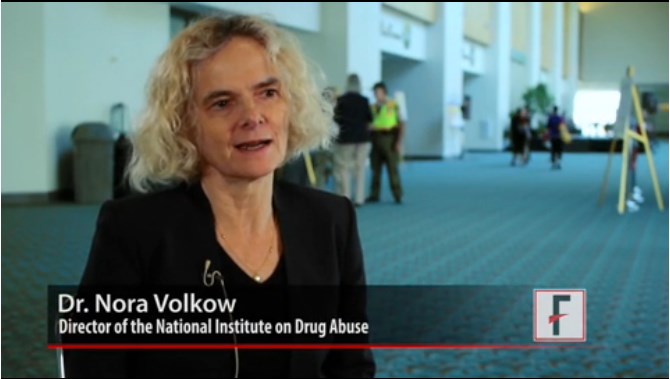
SAN DIEGO – Children and adolescents are at great risk for experimentation with drugs, and they’re also more vulnerable than adults to addiction, warned Dr. Nora Volkow, director of the National Institute on Drug Abuse, Rockville, Md.
The adolescent brain is particularly malleable, she cautioned, which is why it changes faster than an adult’s brain when teenagers take drugs.
In a video interview at the annual meeting of the American Academy of Pediatrics, Dr. Volkow discusses drug experimentation’s impact on teens’ decision-making, the long-term effects of addiction in adolescents, and the interventions that pediatricians can take to reduce the risk of teen drug use.
The video associated with this article is no longer available on this site. Please view all of our videos on the MDedge YouTube channel
SAN DIEGO – Children and adolescents are at great risk for experimentation with drugs, and they’re also more vulnerable than adults to addiction, warned Dr. Nora Volkow, director of the National Institute on Drug Abuse, Rockville, Md.
The adolescent brain is particularly malleable, she cautioned, which is why it changes faster than an adult’s brain when teenagers take drugs.
In a video interview at the annual meeting of the American Academy of Pediatrics, Dr. Volkow discusses drug experimentation’s impact on teens’ decision-making, the long-term effects of addiction in adolescents, and the interventions that pediatricians can take to reduce the risk of teen drug use.
The video associated with this article is no longer available on this site. Please view all of our videos on the MDedge YouTube channel
SAN DIEGO – Children and adolescents are at great risk for experimentation with drugs, and they’re also more vulnerable than adults to addiction, warned Dr. Nora Volkow, director of the National Institute on Drug Abuse, Rockville, Md.
The adolescent brain is particularly malleable, she cautioned, which is why it changes faster than an adult’s brain when teenagers take drugs.
In a video interview at the annual meeting of the American Academy of Pediatrics, Dr. Volkow discusses drug experimentation’s impact on teens’ decision-making, the long-term effects of addiction in adolescents, and the interventions that pediatricians can take to reduce the risk of teen drug use.
The video associated with this article is no longer available on this site. Please view all of our videos on the MDedge YouTube channel
AT THE AAP NATIONAL CONFERENCE
VIDEO: Telepsychiatry can reach children in underserved communities
SAN DIEGO – Telemedicine services can reach children with mental health needs in underserved rural and urban communities, but physicians must know how to find those services.
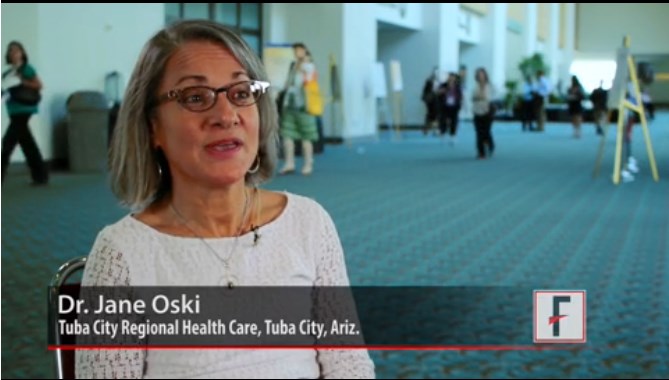
In a video interview at the annual meeting of the American Academy of Pediatrics, Dr. Jane Oski of Tuba City (Ariz.) Regional Health Care explains how Medicaid reimbursement for such services varies by state, and where physicians treating children in underserved areas should start in their search for telepsychiatry services and resources.
The video associated with this article is no longer available on this site. Please view all of our videos on the MDedge YouTube channel
SAN DIEGO – Telemedicine services can reach children with mental health needs in underserved rural and urban communities, but physicians must know how to find those services.
In a video interview at the annual meeting of the American Academy of Pediatrics, Dr. Jane Oski of Tuba City (Ariz.) Regional Health Care explains how Medicaid reimbursement for such services varies by state, and where physicians treating children in underserved areas should start in their search for telepsychiatry services and resources.
The video associated with this article is no longer available on this site. Please view all of our videos on the MDedge YouTube channel
SAN DIEGO – Telemedicine services can reach children with mental health needs in underserved rural and urban communities, but physicians must know how to find those services.
In a video interview at the annual meeting of the American Academy of Pediatrics, Dr. Jane Oski of Tuba City (Ariz.) Regional Health Care explains how Medicaid reimbursement for such services varies by state, and where physicians treating children in underserved areas should start in their search for telepsychiatry services and resources.
The video associated with this article is no longer available on this site. Please view all of our videos on the MDedge YouTube channel
AT THE AAP NATIONAL CONFERENCE