User login
VIDEO: No need to stop running for fear of knee osteoarthritis
BOSTON– Current running or a history of running did not raise the odds of knee osteoarthritis in the first population-based study of runners.
Until this cross-sectional analysis of participants in the Osteoarthritis Initiative, most studies examining the risk of knee osteoarthritis from running analyzed elite runners and other high-level runners, making them less generalizable to a larger population, according to Dr. Grace Hsiao-Wei Lo of Baylor College of Medicine, Houston.
The findings of no higher odds of symptomatic knee osteoarthritis, compared with nonrunners, were largely consistent across age groupings of runners from 12-18 years of age up to 50 years and older, Dr. Lo said in a video interview at the annual meeting of the American College of Rheumatology.
The video associated with this article is no longer available on this site. Please view all of our videos on the MDedge YouTube channel
BOSTON– Current running or a history of running did not raise the odds of knee osteoarthritis in the first population-based study of runners.
Until this cross-sectional analysis of participants in the Osteoarthritis Initiative, most studies examining the risk of knee osteoarthritis from running analyzed elite runners and other high-level runners, making them less generalizable to a larger population, according to Dr. Grace Hsiao-Wei Lo of Baylor College of Medicine, Houston.
The findings of no higher odds of symptomatic knee osteoarthritis, compared with nonrunners, were largely consistent across age groupings of runners from 12-18 years of age up to 50 years and older, Dr. Lo said in a video interview at the annual meeting of the American College of Rheumatology.
The video associated with this article is no longer available on this site. Please view all of our videos on the MDedge YouTube channel
BOSTON– Current running or a history of running did not raise the odds of knee osteoarthritis in the first population-based study of runners.
Until this cross-sectional analysis of participants in the Osteoarthritis Initiative, most studies examining the risk of knee osteoarthritis from running analyzed elite runners and other high-level runners, making them less generalizable to a larger population, according to Dr. Grace Hsiao-Wei Lo of Baylor College of Medicine, Houston.
The findings of no higher odds of symptomatic knee osteoarthritis, compared with nonrunners, were largely consistent across age groupings of runners from 12-18 years of age up to 50 years and older, Dr. Lo said in a video interview at the annual meeting of the American College of Rheumatology.
The video associated with this article is no longer available on this site. Please view all of our videos on the MDedge YouTube channel
AT THE ACR ANNUAL MEETING

VIDEO: Exercise, manual therapy for OA add incremental benefits to usual care
BOSTON – Exercise therapy or manual therapy provide benefits for improving osteoarthritis symptoms and physical function that go over and above what is obtained with usual care alone, according to results from a randomized, controlled trial.
The trial is the first to show the additive effect of manual therapy or exercise therapy on top of usual care. The results of the trial, which had 2 years of follow-up, indicate that in the absence of predictive factors, clinicians should prescribe either one of the interventions based on patient preference in addition to the usual care of NSAIDs and other adjunctive treatments such as massage therapy or specialized footwear, lead investigator Dr. Haxby Abbott of the University of Otago, Dunedin, New Zealand, said in an interview at the annual meeting of the American College of Rheumatology.
The video associated with this article is no longer available on this site. Please view all of our videos on the MDedge YouTube channel
BOSTON – Exercise therapy or manual therapy provide benefits for improving osteoarthritis symptoms and physical function that go over and above what is obtained with usual care alone, according to results from a randomized, controlled trial.
The trial is the first to show the additive effect of manual therapy or exercise therapy on top of usual care. The results of the trial, which had 2 years of follow-up, indicate that in the absence of predictive factors, clinicians should prescribe either one of the interventions based on patient preference in addition to the usual care of NSAIDs and other adjunctive treatments such as massage therapy or specialized footwear, lead investigator Dr. Haxby Abbott of the University of Otago, Dunedin, New Zealand, said in an interview at the annual meeting of the American College of Rheumatology.
The video associated with this article is no longer available on this site. Please view all of our videos on the MDedge YouTube channel
BOSTON – Exercise therapy or manual therapy provide benefits for improving osteoarthritis symptoms and physical function that go over and above what is obtained with usual care alone, according to results from a randomized, controlled trial.
The trial is the first to show the additive effect of manual therapy or exercise therapy on top of usual care. The results of the trial, which had 2 years of follow-up, indicate that in the absence of predictive factors, clinicians should prescribe either one of the interventions based on patient preference in addition to the usual care of NSAIDs and other adjunctive treatments such as massage therapy or specialized footwear, lead investigator Dr. Haxby Abbott of the University of Otago, Dunedin, New Zealand, said in an interview at the annual meeting of the American College of Rheumatology.
The video associated with this article is no longer available on this site. Please view all of our videos on the MDedge YouTube channel
AT THE ACR ANNUAL MEETING

VIDEO: RA linked to increased mortality in Nurses’ Health Study
BOSTON – Rheumatoid arthritis has been linked to increased risk for death in one of the first studies to directly compare RA patients with controls over a prolonged period of time. In women who developed RA after enrollment in the Nurses’ Health Study, seropositive disease was strongly associated with worse outcomes. Also, some surprising findings emerged about RA and the risk for fatal respiratory disease in women.
In our exclusive interview, one of the study’s lead authors, Dr. Jeffrey A. Sparks of Brigham and Women’s Hospital, Boston, discusses how the findings may begin to influence the clinical management of women with RA.
The video associated with this article is no longer available on this site. Please view all of our videos on the MDedge YouTube channel
BOSTON – Rheumatoid arthritis has been linked to increased risk for death in one of the first studies to directly compare RA patients with controls over a prolonged period of time. In women who developed RA after enrollment in the Nurses’ Health Study, seropositive disease was strongly associated with worse outcomes. Also, some surprising findings emerged about RA and the risk for fatal respiratory disease in women.
In our exclusive interview, one of the study’s lead authors, Dr. Jeffrey A. Sparks of Brigham and Women’s Hospital, Boston, discusses how the findings may begin to influence the clinical management of women with RA.
The video associated with this article is no longer available on this site. Please view all of our videos on the MDedge YouTube channel
BOSTON – Rheumatoid arthritis has been linked to increased risk for death in one of the first studies to directly compare RA patients with controls over a prolonged period of time. In women who developed RA after enrollment in the Nurses’ Health Study, seropositive disease was strongly associated with worse outcomes. Also, some surprising findings emerged about RA and the risk for fatal respiratory disease in women.
In our exclusive interview, one of the study’s lead authors, Dr. Jeffrey A. Sparks of Brigham and Women’s Hospital, Boston, discusses how the findings may begin to influence the clinical management of women with RA.
The video associated with this article is no longer available on this site. Please view all of our videos on the MDedge YouTube channel
AT ACR 2014

VIDEO: Hepatitis C screening rises, but where are the positive cases?
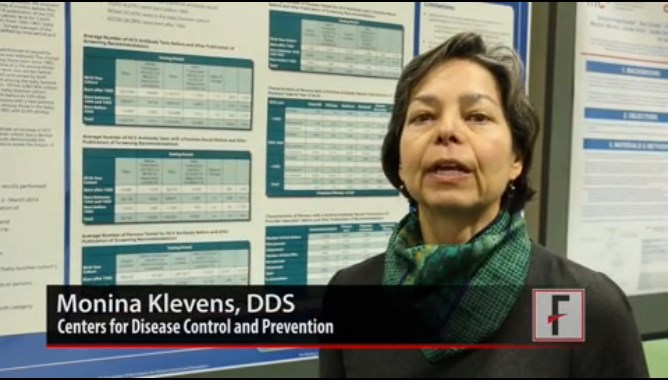
BOSTON– The number of hepatitis C virus antibody tests increased by 15.4% after the 2012 Centers for Disease Control and Prevention task force recommendation calling for one-time HCV testing in baby boomers, according to preliminary results from an analysis of 4.5 million tests.
Surprisingly, that increase in testing did not lead to an increase in the number of positive tests, which actually declined by 4.1%, R. Monina Klevens, D.D.S., MPH, reported at the annual meeting of the American Association for the Study of Liver Diseases.
“This is a huge question that we need to look at for implementation,” said Dr. Klevens, a medical epidemiologist with the CDC.
For a deep dive into the data and to hear what’s next, click here to see an interview with Dr Klevens.
Dr. Klevens reported no financial disclosures.
The video associated with this article is no longer available on this site. Please view all of our videos on the MDedge YouTube channel
BOSTON– The number of hepatitis C virus antibody tests increased by 15.4% after the 2012 Centers for Disease Control and Prevention task force recommendation calling for one-time HCV testing in baby boomers, according to preliminary results from an analysis of 4.5 million tests.
Surprisingly, that increase in testing did not lead to an increase in the number of positive tests, which actually declined by 4.1%, R. Monina Klevens, D.D.S., MPH, reported at the annual meeting of the American Association for the Study of Liver Diseases.
“This is a huge question that we need to look at for implementation,” said Dr. Klevens, a medical epidemiologist with the CDC.
For a deep dive into the data and to hear what’s next, click here to see an interview with Dr Klevens.
Dr. Klevens reported no financial disclosures.
The video associated with this article is no longer available on this site. Please view all of our videos on the MDedge YouTube channel
BOSTON– The number of hepatitis C virus antibody tests increased by 15.4% after the 2012 Centers for Disease Control and Prevention task force recommendation calling for one-time HCV testing in baby boomers, according to preliminary results from an analysis of 4.5 million tests.
Surprisingly, that increase in testing did not lead to an increase in the number of positive tests, which actually declined by 4.1%, R. Monina Klevens, D.D.S., MPH, reported at the annual meeting of the American Association for the Study of Liver Diseases.
“This is a huge question that we need to look at for implementation,” said Dr. Klevens, a medical epidemiologist with the CDC.
For a deep dive into the data and to hear what’s next, click here to see an interview with Dr Klevens.
Dr. Klevens reported no financial disclosures.
The video associated with this article is no longer available on this site. Please view all of our videos on the MDedge YouTube channel
FROM THE LIVER MEETING 2014
Dyslipidemia: 'The Changing Paradigm'
The video associated with this article is no longer available on this site. Please view all of our videos on the MDedge YouTube channel
The video associated with this article is no longer available on this site. Please view all of our videos on the MDedge YouTube channel
The video associated with this article is no longer available on this site. Please view all of our videos on the MDedge YouTube channel
Home Monitoring of Glucose
The video associated with this article is no longer available on this site. Please view all of our videos on the MDedge YouTube channel
The video associated with this article is no longer available on this site. Please view all of our videos on the MDedge YouTube channel
The video associated with this article is no longer available on this site. Please view all of our videos on the MDedge YouTube channel

VIDEO: Pediatric NAFLD worsens as kids age
BOSTON – Pediatric nonalcoholic fatty liver disease progresses as children age to a more adult pattern of disease, a paired-biopsy study shows.
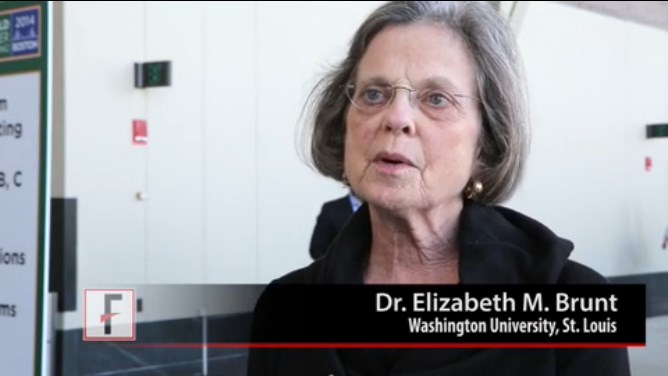
“As they grow older, they are facing liver transplant and potentially hepatocellular carcinoma, just as the adults do,” Dr. Elizabeth M. Brunt said during an interview at the annual meeting of the American Association for the Study of Liver Diseases.
Among 102 children studied, the zone 1 (borderline 1b) diagnostic pattern decreased from 27.5% to 9.8%, while the more “adult” NAFLD zone 3 (borderline 1a) pattern and definite steatohepatitis patterns both increased from 14.7% and 28.4% to 18.6% and 29.4%.
Moreover, cirrhosis was seen in nearly 3% of children at first biopsy, but by the second biopsy, nearly 20% of children had advanced fibrosis or cirrhosis, she said.
The findings are troubling because the United States is in the midst of an obesity epidemic, and obesity is associated with high rates of fatty liver disease, said Dr. Brunt of Washington University, St. Louis.
The National Institutes of Health supported the study. Dr. Brunt reported consulting for Synageva, serving as an independent contractor for Rottapharm and Kadmon, and speaking and teaching for the Geneva Foundation.
The video associated with this article is no longer available on this site. Please view all of our videos on the MDedge YouTube channel
BOSTON – Pediatric nonalcoholic fatty liver disease progresses as children age to a more adult pattern of disease, a paired-biopsy study shows.
“As they grow older, they are facing liver transplant and potentially hepatocellular carcinoma, just as the adults do,” Dr. Elizabeth M. Brunt said during an interview at the annual meeting of the American Association for the Study of Liver Diseases.
Among 102 children studied, the zone 1 (borderline 1b) diagnostic pattern decreased from 27.5% to 9.8%, while the more “adult” NAFLD zone 3 (borderline 1a) pattern and definite steatohepatitis patterns both increased from 14.7% and 28.4% to 18.6% and 29.4%.
Moreover, cirrhosis was seen in nearly 3% of children at first biopsy, but by the second biopsy, nearly 20% of children had advanced fibrosis or cirrhosis, she said.
The findings are troubling because the United States is in the midst of an obesity epidemic, and obesity is associated with high rates of fatty liver disease, said Dr. Brunt of Washington University, St. Louis.
The National Institutes of Health supported the study. Dr. Brunt reported consulting for Synageva, serving as an independent contractor for Rottapharm and Kadmon, and speaking and teaching for the Geneva Foundation.
The video associated with this article is no longer available on this site. Please view all of our videos on the MDedge YouTube channel
BOSTON – Pediatric nonalcoholic fatty liver disease progresses as children age to a more adult pattern of disease, a paired-biopsy study shows.
“As they grow older, they are facing liver transplant and potentially hepatocellular carcinoma, just as the adults do,” Dr. Elizabeth M. Brunt said during an interview at the annual meeting of the American Association for the Study of Liver Diseases.
Among 102 children studied, the zone 1 (borderline 1b) diagnostic pattern decreased from 27.5% to 9.8%, while the more “adult” NAFLD zone 3 (borderline 1a) pattern and definite steatohepatitis patterns both increased from 14.7% and 28.4% to 18.6% and 29.4%.
Moreover, cirrhosis was seen in nearly 3% of children at first biopsy, but by the second biopsy, nearly 20% of children had advanced fibrosis or cirrhosis, she said.
The findings are troubling because the United States is in the midst of an obesity epidemic, and obesity is associated with high rates of fatty liver disease, said Dr. Brunt of Washington University, St. Louis.
The National Institutes of Health supported the study. Dr. Brunt reported consulting for Synageva, serving as an independent contractor for Rottapharm and Kadmon, and speaking and teaching for the Geneva Foundation.
The video associated with this article is no longer available on this site. Please view all of our videos on the MDedge YouTube channel
FROM THE LIVER MEETING 2014
VIDEO: How to meet ACA goals through electronic consultations
SAN FRANCISCO – To meet the Affordable Care Act’s goal of integrated health care, access to mental health services is going to have to improve, according to Dr. Roderick E. Shaner, medical director of the Los Angeles County Department of Mental Health.
That’s going to mean more electronic consultations with primary care providers needing advice, in addition to traditional face-to-face meetings with patients.
At the American Psychiatric Association’s Institute on Psychiatric Services meeting, Dr. Shaner shared what his county has learned so far about implementing the ACA, and insights about how his psychiatrists are paid for their electronic consultations.
The video associated with this article is no longer available on this site. Please view all of our videos on the MDedge YouTube channel
SAN FRANCISCO – To meet the Affordable Care Act’s goal of integrated health care, access to mental health services is going to have to improve, according to Dr. Roderick E. Shaner, medical director of the Los Angeles County Department of Mental Health.
That’s going to mean more electronic consultations with primary care providers needing advice, in addition to traditional face-to-face meetings with patients.
At the American Psychiatric Association’s Institute on Psychiatric Services meeting, Dr. Shaner shared what his county has learned so far about implementing the ACA, and insights about how his psychiatrists are paid for their electronic consultations.
The video associated with this article is no longer available on this site. Please view all of our videos on the MDedge YouTube channel
SAN FRANCISCO – To meet the Affordable Care Act’s goal of integrated health care, access to mental health services is going to have to improve, according to Dr. Roderick E. Shaner, medical director of the Los Angeles County Department of Mental Health.
That’s going to mean more electronic consultations with primary care providers needing advice, in addition to traditional face-to-face meetings with patients.
At the American Psychiatric Association’s Institute on Psychiatric Services meeting, Dr. Shaner shared what his county has learned so far about implementing the ACA, and insights about how his psychiatrists are paid for their electronic consultations.
The video associated with this article is no longer available on this site. Please view all of our videos on the MDedge YouTube channel
AT INSTITUTE ON PSYCHIATRIC SERVICES

VIDEO: Less trauma, more success with bleeding peptic ulcer management
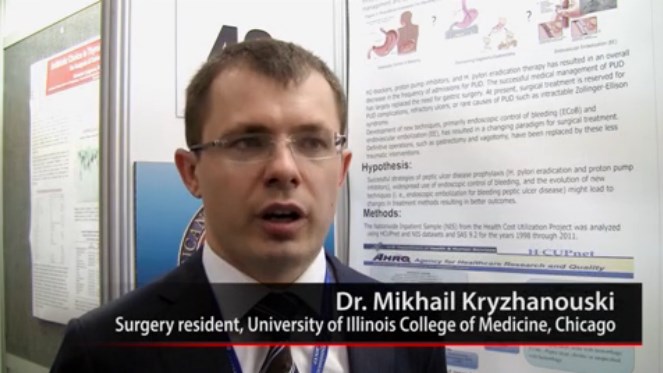
SAN FRANCISCO – If current trends continue, vagotomy and gastrectomy for bleeding peptic ulcers will be mostly a thing of the past, according to Dr. Mikhail Kryzhanouski, a surgery resident at the University of Illinois, Chicago.
Their use is quickly fading, eclipsed by better techniques and a steady drop in adverse outcomes, even though patients are presenting with more comorbidities, Dr. Kryzhanouski found in a review of patients in the U.S. Nationwide Inpatient Sample who were hospitalized for peptic ulcers from 1998 to 2011 (J. Am. Coll. Surg. 2014;219:e142).
Dr. Kryzhanouski shared the results of his study – and the reasons for his prediction – at the American College of Surgeons Clinical Congress.
The video associated with this article is no longer available on this site. Please view all of our videos on the MDedge YouTube channel
SAN FRANCISCO – If current trends continue, vagotomy and gastrectomy for bleeding peptic ulcers will be mostly a thing of the past, according to Dr. Mikhail Kryzhanouski, a surgery resident at the University of Illinois, Chicago.
Their use is quickly fading, eclipsed by better techniques and a steady drop in adverse outcomes, even though patients are presenting with more comorbidities, Dr. Kryzhanouski found in a review of patients in the U.S. Nationwide Inpatient Sample who were hospitalized for peptic ulcers from 1998 to 2011 (J. Am. Coll. Surg. 2014;219:e142).
Dr. Kryzhanouski shared the results of his study – and the reasons for his prediction – at the American College of Surgeons Clinical Congress.
The video associated with this article is no longer available on this site. Please view all of our videos on the MDedge YouTube channel
SAN FRANCISCO – If current trends continue, vagotomy and gastrectomy for bleeding peptic ulcers will be mostly a thing of the past, according to Dr. Mikhail Kryzhanouski, a surgery resident at the University of Illinois, Chicago.
Their use is quickly fading, eclipsed by better techniques and a steady drop in adverse outcomes, even though patients are presenting with more comorbidities, Dr. Kryzhanouski found in a review of patients in the U.S. Nationwide Inpatient Sample who were hospitalized for peptic ulcers from 1998 to 2011 (J. Am. Coll. Surg. 2014;219:e142).
Dr. Kryzhanouski shared the results of his study – and the reasons for his prediction – at the American College of Surgeons Clinical Congress.
The video associated with this article is no longer available on this site. Please view all of our videos on the MDedge YouTube channel
AT THE AMERICAN COLLEGE OF SURGEONS CLINICAL CONGRESS
VIDEO: Will new HCV drugs’ costs kill health care budgets?
BOSTON – The estimated cost of treating all eligible U.S. hepatitis C patients with a new generation of high-priced medications may be breathtaking, but would the resulting savings over those cured patients’ lifetimes offset the initial financial blow?
A new analysis unveiled at the annual meeting of the American Association for the Study of Liver Diseases calculated the impact of the new drugs on treatment costs and compared the cost of treatment with new drugs to the old standard of care.
“We found that the cost of treatment is very high, as expected,” explained lead investigator Jagpreet Chhatwal, Ph.D., of MD Anderson Cancer Center, Houston. In fact, if everyone who was eligible for the new drugs were treated, the cost over the next 5 years would be $136 billion.
“This is clearly unsustainable for any payer,” he noted. “So the question is: How can we manage to treat people who need this treatment?”
In a video interview, Dr. Chhatwal outlined how the researchers calculated their cost estimates, what cost savings could be gained with the new drugs, and how patients and payers alike could manage the price of treatment.
The video associated with this article is no longer available on this site. Please view all of our videos on the MDedge YouTube channel
BOSTON – The estimated cost of treating all eligible U.S. hepatitis C patients with a new generation of high-priced medications may be breathtaking, but would the resulting savings over those cured patients’ lifetimes offset the initial financial blow?
A new analysis unveiled at the annual meeting of the American Association for the Study of Liver Diseases calculated the impact of the new drugs on treatment costs and compared the cost of treatment with new drugs to the old standard of care.
“We found that the cost of treatment is very high, as expected,” explained lead investigator Jagpreet Chhatwal, Ph.D., of MD Anderson Cancer Center, Houston. In fact, if everyone who was eligible for the new drugs were treated, the cost over the next 5 years would be $136 billion.
“This is clearly unsustainable for any payer,” he noted. “So the question is: How can we manage to treat people who need this treatment?”
In a video interview, Dr. Chhatwal outlined how the researchers calculated their cost estimates, what cost savings could be gained with the new drugs, and how patients and payers alike could manage the price of treatment.
The video associated with this article is no longer available on this site. Please view all of our videos on the MDedge YouTube channel
BOSTON – The estimated cost of treating all eligible U.S. hepatitis C patients with a new generation of high-priced medications may be breathtaking, but would the resulting savings over those cured patients’ lifetimes offset the initial financial blow?
A new analysis unveiled at the annual meeting of the American Association for the Study of Liver Diseases calculated the impact of the new drugs on treatment costs and compared the cost of treatment with new drugs to the old standard of care.
“We found that the cost of treatment is very high, as expected,” explained lead investigator Jagpreet Chhatwal, Ph.D., of MD Anderson Cancer Center, Houston. In fact, if everyone who was eligible for the new drugs were treated, the cost over the next 5 years would be $136 billion.
“This is clearly unsustainable for any payer,” he noted. “So the question is: How can we manage to treat people who need this treatment?”
In a video interview, Dr. Chhatwal outlined how the researchers calculated their cost estimates, what cost savings could be gained with the new drugs, and how patients and payers alike could manage the price of treatment.
The video associated with this article is no longer available on this site. Please view all of our videos on the MDedge YouTube channel
FROM THE LIVER MEETING 2014