User login
VIDEO: Biomarker may reveal lymphoma risk in Sjögren’s syndrome
BOSTON – Low expression of protein A20 in minor salivary gland tissue appears to be associated with lymphomas in patients with primary Sjögren’s syndrome.
In an interview after his late-breaker presentation at the annual meeting of the American College of Rheumatology, Dr. Svein Joar A. Johnsen of Stavanger (Norway) University Hospital, discussed the implications of his findings and the search for biomarkers of lymphoma risk in these patients.
The video associated with this article is no longer available on this site. Please view all of our videos on the MDedge YouTube channel
BOSTON – Low expression of protein A20 in minor salivary gland tissue appears to be associated with lymphomas in patients with primary Sjögren’s syndrome.
In an interview after his late-breaker presentation at the annual meeting of the American College of Rheumatology, Dr. Svein Joar A. Johnsen of Stavanger (Norway) University Hospital, discussed the implications of his findings and the search for biomarkers of lymphoma risk in these patients.
The video associated with this article is no longer available on this site. Please view all of our videos on the MDedge YouTube channel
BOSTON – Low expression of protein A20 in minor salivary gland tissue appears to be associated with lymphomas in patients with primary Sjögren’s syndrome.
In an interview after his late-breaker presentation at the annual meeting of the American College of Rheumatology, Dr. Svein Joar A. Johnsen of Stavanger (Norway) University Hospital, discussed the implications of his findings and the search for biomarkers of lymphoma risk in these patients.
The video associated with this article is no longer available on this site. Please view all of our videos on the MDedge YouTube channel
AT ACR 2014

VIDEO: BeST seeks to define best initial therapies for JIA
BOSTON – What is the best initial therapeutic approach to RF-negative polyarticular, oligoarticular, or psoriatic juvenile idiopathic arthritis (JIA)?
The BeST for Kids study is a multicenter, 2-year, randomized trial that is examining the utility of three different treatment arms in disease modifying antirheumatic disease-naive children, aged 2-16 years, with JIA durations of less than 18 months. The study also examines whether inactive disease is a realistic treatment target, if drug-free remissions are possible, and whether restarting medication is effective when relapse occurs.
In our exclusive interview at the annual meeting of the American College of Rheumatology, Dr. Petra C.E. Hissink Muller of Leiden University Medical Center in the Netherlands, discusses the trial’s rationale and initial results from the first 3 months of the study.
The video associated with this article is no longer available on this site. Please view all of our videos on the MDedge YouTube channel
BOSTON – What is the best initial therapeutic approach to RF-negative polyarticular, oligoarticular, or psoriatic juvenile idiopathic arthritis (JIA)?
The BeST for Kids study is a multicenter, 2-year, randomized trial that is examining the utility of three different treatment arms in disease modifying antirheumatic disease-naive children, aged 2-16 years, with JIA durations of less than 18 months. The study also examines whether inactive disease is a realistic treatment target, if drug-free remissions are possible, and whether restarting medication is effective when relapse occurs.
In our exclusive interview at the annual meeting of the American College of Rheumatology, Dr. Petra C.E. Hissink Muller of Leiden University Medical Center in the Netherlands, discusses the trial’s rationale and initial results from the first 3 months of the study.
The video associated with this article is no longer available on this site. Please view all of our videos on the MDedge YouTube channel
BOSTON – What is the best initial therapeutic approach to RF-negative polyarticular, oligoarticular, or psoriatic juvenile idiopathic arthritis (JIA)?
The BeST for Kids study is a multicenter, 2-year, randomized trial that is examining the utility of three different treatment arms in disease modifying antirheumatic disease-naive children, aged 2-16 years, with JIA durations of less than 18 months. The study also examines whether inactive disease is a realistic treatment target, if drug-free remissions are possible, and whether restarting medication is effective when relapse occurs.
In our exclusive interview at the annual meeting of the American College of Rheumatology, Dr. Petra C.E. Hissink Muller of Leiden University Medical Center in the Netherlands, discusses the trial’s rationale and initial results from the first 3 months of the study.
The video associated with this article is no longer available on this site. Please view all of our videos on the MDedge YouTube channel
AT ACR 2014

Normal and Abnormal Vocal Cord Movement
The video associated with this article is no longer available on this site. Please view all of our videos on the MDedge YouTube channel
[Courtesy of Arizona Asthma & Allergy Institute]
Click Here for Free CE/CME on Vocal Cord Dysfunction: Unmasking the Asthma Pretender
The video associated with this article is no longer available on this site. Please view all of our videos on the MDedge YouTube channel
[Courtesy of Arizona Asthma & Allergy Institute]
Click Here for Free CE/CME on Vocal Cord Dysfunction: Unmasking the Asthma Pretender
The video associated with this article is no longer available on this site. Please view all of our videos on the MDedge YouTube channel
[Courtesy of Arizona Asthma & Allergy Institute]
Click Here for Free CE/CME on Vocal Cord Dysfunction: Unmasking the Asthma Pretender
VIDEO: AMA President Wah talks SGR, Medicaid parity, and IPAB
WASHINGTON – The American Medical Association is hoping – along with many other medical societies and their physician members – to convince Congress that it should repeal Medicare’s Sustainable Growth Rate formula before the end of the year.
The cost to do so is a relative bargain, and physicians have grown tired of trying to plan around a process that is predictable, yet unpredictable, according to AMA President Robert M. Wah. Why not move now, he wondered, given that there was so much progress in this Congress, including a bill that was passed by the House?
In an exclusive video interview, Dr. Wah talked about the pressing need for the SGR replacement, along with what Republican majorities in both the House and Senate in the incoming Congress might mean to physicians.
Some Republicans have said that they will press for a partial or total repeal of the Affordable Care Act. Dr. Wah touched on whether the AMA supports any part of that notion, including getting rid of the Independent Payment Advisory Board, known as the IPAB.
Dr. Wah also discussed another urgent topic: What to do about the expiring element of the ACA that gave primary care physicians who treat Medicaid patients the same rate of pay as those who serve Medicare beneficiaries. The AMA recently reiterated its position that the so-called pay bump – which ends Dec. 31 – should be extended, and that it also should include obstetricians and gynecologists, who were left out of the initial policy.
On Twitter @aliciaault
The video associated with this article is no longer available on this site. Please view all of our videos on the MDedge YouTube channel
WASHINGTON – The American Medical Association is hoping – along with many other medical societies and their physician members – to convince Congress that it should repeal Medicare’s Sustainable Growth Rate formula before the end of the year.
The cost to do so is a relative bargain, and physicians have grown tired of trying to plan around a process that is predictable, yet unpredictable, according to AMA President Robert M. Wah. Why not move now, he wondered, given that there was so much progress in this Congress, including a bill that was passed by the House?
In an exclusive video interview, Dr. Wah talked about the pressing need for the SGR replacement, along with what Republican majorities in both the House and Senate in the incoming Congress might mean to physicians.
Some Republicans have said that they will press for a partial or total repeal of the Affordable Care Act. Dr. Wah touched on whether the AMA supports any part of that notion, including getting rid of the Independent Payment Advisory Board, known as the IPAB.
Dr. Wah also discussed another urgent topic: What to do about the expiring element of the ACA that gave primary care physicians who treat Medicaid patients the same rate of pay as those who serve Medicare beneficiaries. The AMA recently reiterated its position that the so-called pay bump – which ends Dec. 31 – should be extended, and that it also should include obstetricians and gynecologists, who were left out of the initial policy.
On Twitter @aliciaault
The video associated with this article is no longer available on this site. Please view all of our videos on the MDedge YouTube channel
WASHINGTON – The American Medical Association is hoping – along with many other medical societies and their physician members – to convince Congress that it should repeal Medicare’s Sustainable Growth Rate formula before the end of the year.
The cost to do so is a relative bargain, and physicians have grown tired of trying to plan around a process that is predictable, yet unpredictable, according to AMA President Robert M. Wah. Why not move now, he wondered, given that there was so much progress in this Congress, including a bill that was passed by the House?
In an exclusive video interview, Dr. Wah talked about the pressing need for the SGR replacement, along with what Republican majorities in both the House and Senate in the incoming Congress might mean to physicians.
Some Republicans have said that they will press for a partial or total repeal of the Affordable Care Act. Dr. Wah touched on whether the AMA supports any part of that notion, including getting rid of the Independent Payment Advisory Board, known as the IPAB.
Dr. Wah also discussed another urgent topic: What to do about the expiring element of the ACA that gave primary care physicians who treat Medicaid patients the same rate of pay as those who serve Medicare beneficiaries. The AMA recently reiterated its position that the so-called pay bump – which ends Dec. 31 – should be extended, and that it also should include obstetricians and gynecologists, who were left out of the initial policy.
On Twitter @aliciaault
The video associated with this article is no longer available on this site. Please view all of our videos on the MDedge YouTube channel
VIDEO: Secukinumab rapidly effective against ankylosing spondylitis
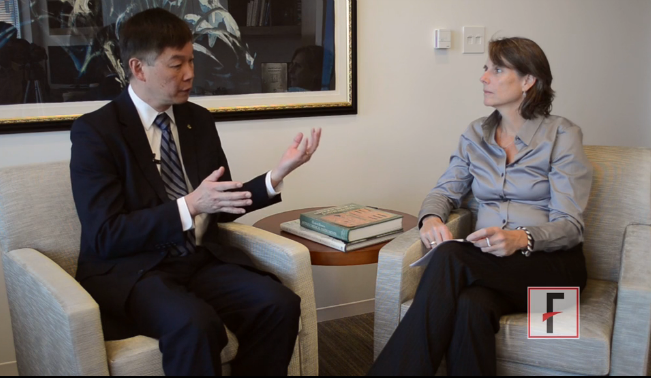
BOSTON – Secukinumab showed enduring efficacy in ankylosing spondylitis after 52 weeks of treatment, based on data reported at the annual meeting of the American College of Rheumatology.
The monoclonal antibody, which targets interleukin-17A, is the first drug with demonstrated efficacy against ankylosing spondylitis since the introduction of tumor necrosis factor inhibitors.
In our exclusive video interview, Dr. Dominique Baeten, professor of clinical immunology and rheumatology at the Academic Medical Center of the University of Amsterdam, outlines results from the phase III trial in 371 U.S. and European patients, describes how targeting the IL-17A pathway is uniquely beneficial in AS, and discusses new data from other secukinumab trials in psoriatic arthritis patients.
Secukinumab’s maker, Novartis, sponsored the study. Dr. Baeten has received research grants from Novartis and other drug companies.
The video associated with this article is no longer available on this site. Please view all of our videos on the MDedge YouTube channel
BOSTON – Secukinumab showed enduring efficacy in ankylosing spondylitis after 52 weeks of treatment, based on data reported at the annual meeting of the American College of Rheumatology.
The monoclonal antibody, which targets interleukin-17A, is the first drug with demonstrated efficacy against ankylosing spondylitis since the introduction of tumor necrosis factor inhibitors.
In our exclusive video interview, Dr. Dominique Baeten, professor of clinical immunology and rheumatology at the Academic Medical Center of the University of Amsterdam, outlines results from the phase III trial in 371 U.S. and European patients, describes how targeting the IL-17A pathway is uniquely beneficial in AS, and discusses new data from other secukinumab trials in psoriatic arthritis patients.
Secukinumab’s maker, Novartis, sponsored the study. Dr. Baeten has received research grants from Novartis and other drug companies.
The video associated with this article is no longer available on this site. Please view all of our videos on the MDedge YouTube channel
BOSTON – Secukinumab showed enduring efficacy in ankylosing spondylitis after 52 weeks of treatment, based on data reported at the annual meeting of the American College of Rheumatology.
The monoclonal antibody, which targets interleukin-17A, is the first drug with demonstrated efficacy against ankylosing spondylitis since the introduction of tumor necrosis factor inhibitors.
In our exclusive video interview, Dr. Dominique Baeten, professor of clinical immunology and rheumatology at the Academic Medical Center of the University of Amsterdam, outlines results from the phase III trial in 371 U.S. and European patients, describes how targeting the IL-17A pathway is uniquely beneficial in AS, and discusses new data from other secukinumab trials in psoriatic arthritis patients.
Secukinumab’s maker, Novartis, sponsored the study. Dr. Baeten has received research grants from Novartis and other drug companies.
The video associated with this article is no longer available on this site. Please view all of our videos on the MDedge YouTube channel
AT THE ACR ANNUAL MEETING
VIDEO: Study reignites dental antibiotic prophylaxis controversy
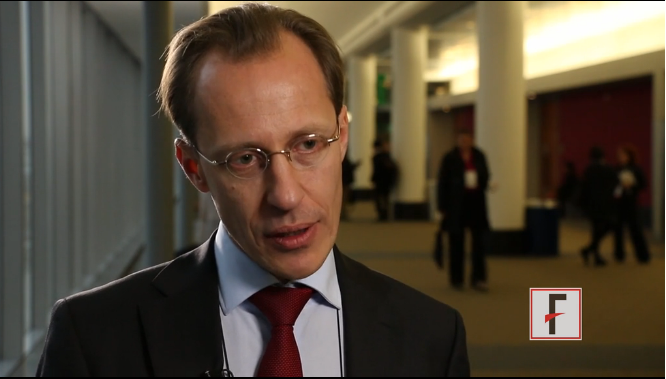
CHICAGO – The first guidelines recommending antibiotic prophylaxis for invasive dental procedures were issued in 1955, and controversy has gone hand in hand with each revision that has called for shorter treatment duration and fewer eligible patients.
A study presented at the American Heart Association scientific sessions adds to that controversy – and has prompted the United Kingdom’s National Institute for Health and Care Excellence to immediately review its 2008 guidelines.
Those guidelines recommend that antibiotics should not be prescribed to prevent infective endocarditis (IE) for people undergoing dental procedures or procedures in the upper and lower gastrointestinal tract, genitourinary tract, and upper and lower respiratory tract.
Five years post NICE, the new study found that antibiotic prophylaxis prescribing fell almost 90% in the United Kingdom, from 10,900 prescriptions per month to 1,307 per month in the last 6 months of the study, reported Dr. Mark Dayer of Taunton and Somerset NHS Trust, Somerset, England. The study was simultaneously published in the Lancet (2014 Nov. 18[doi:10.1016/S0140-6736(14)62007-9]).
In a video interview, study coauthor Dr. Martin Thornhill of the University of Sheffield, England, and AHA President-Elect Dr. Mark Creager, director of the vascular center at Brigham and Women’s Hospital, Boston, talked about the findings, their potential limitations, and whether it’s time for clinicians to change their approach to antibiotic prophylaxis.
The study was funded by the National Institutes of Dental and Cranofacial Research, Heart Research–UK, and Simplyhealth. Dr. Thornhill and Dr. Creager reported no conflicting interests.
CHICAGO – The first guidelines recommending antibiotic prophylaxis for invasive dental procedures were issued in 1955, and controversy has gone hand in hand with each revision that has called for shorter treatment duration and fewer eligible patients.
A study presented at the American Heart Association scientific sessions adds to that controversy – and has prompted the United Kingdom’s National Institute for Health and Care Excellence to immediately review its 2008 guidelines.
Those guidelines recommend that antibiotics should not be prescribed to prevent infective endocarditis (IE) for people undergoing dental procedures or procedures in the upper and lower gastrointestinal tract, genitourinary tract, and upper and lower respiratory tract.
Five years post NICE, the new study found that antibiotic prophylaxis prescribing fell almost 90% in the United Kingdom, from 10,900 prescriptions per month to 1,307 per month in the last 6 months of the study, reported Dr. Mark Dayer of Taunton and Somerset NHS Trust, Somerset, England. The study was simultaneously published in the Lancet (2014 Nov. 18[doi:10.1016/S0140-6736(14)62007-9]).
In a video interview, study coauthor Dr. Martin Thornhill of the University of Sheffield, England, and AHA President-Elect Dr. Mark Creager, director of the vascular center at Brigham and Women’s Hospital, Boston, talked about the findings, their potential limitations, and whether it’s time for clinicians to change their approach to antibiotic prophylaxis.
The study was funded by the National Institutes of Dental and Cranofacial Research, Heart Research–UK, and Simplyhealth. Dr. Thornhill and Dr. Creager reported no conflicting interests.
CHICAGO – The first guidelines recommending antibiotic prophylaxis for invasive dental procedures were issued in 1955, and controversy has gone hand in hand with each revision that has called for shorter treatment duration and fewer eligible patients.
A study presented at the American Heart Association scientific sessions adds to that controversy – and has prompted the United Kingdom’s National Institute for Health and Care Excellence to immediately review its 2008 guidelines.
Those guidelines recommend that antibiotics should not be prescribed to prevent infective endocarditis (IE) for people undergoing dental procedures or procedures in the upper and lower gastrointestinal tract, genitourinary tract, and upper and lower respiratory tract.
Five years post NICE, the new study found that antibiotic prophylaxis prescribing fell almost 90% in the United Kingdom, from 10,900 prescriptions per month to 1,307 per month in the last 6 months of the study, reported Dr. Mark Dayer of Taunton and Somerset NHS Trust, Somerset, England. The study was simultaneously published in the Lancet (2014 Nov. 18[doi:10.1016/S0140-6736(14)62007-9]).
In a video interview, study coauthor Dr. Martin Thornhill of the University of Sheffield, England, and AHA President-Elect Dr. Mark Creager, director of the vascular center at Brigham and Women’s Hospital, Boston, talked about the findings, their potential limitations, and whether it’s time for clinicians to change their approach to antibiotic prophylaxis.
The study was funded by the National Institutes of Dental and Cranofacial Research, Heart Research–UK, and Simplyhealth. Dr. Thornhill and Dr. Creager reported no conflicting interests.
AT THE AHA SCIENTIFIC SESSIONS
VIDEO: Collaborative clinic aims at heart of CVD prevention in rheumatic diseases
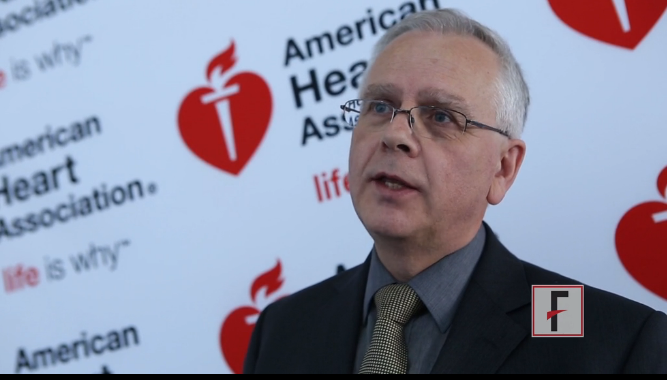
BOSTON – A multidisciplinary clinic of rheumatologists and cardiologists at the Mayo Clinic in Rochester, Minn., is focused on spreading awareness of cardiovascular disease in patients with rheumatic diseases and finding the best ways to prevent it.
The Cardio-Rheumatology Clinic, which was formed in 2013, is one of a growing number of clinics around the world that have started since the first Preventive Cardio-Rheuma Clinic opened at Diakonhjemmet Hospital in Oslo. Two of the founders of the Mayo Clinic’s Cardio-Rheumatology Clinic, Dr. Sharon L. Mulvagh and Dr. Sherine Gabriel, talk about its origins, goals, and vision in a video discussion at the annual meeting of the American College of Rheumatology.
The video associated with this article is no longer available on this site. Please view all of our videos on the MDedge YouTube channel
BOSTON – A multidisciplinary clinic of rheumatologists and cardiologists at the Mayo Clinic in Rochester, Minn., is focused on spreading awareness of cardiovascular disease in patients with rheumatic diseases and finding the best ways to prevent it.
The Cardio-Rheumatology Clinic, which was formed in 2013, is one of a growing number of clinics around the world that have started since the first Preventive Cardio-Rheuma Clinic opened at Diakonhjemmet Hospital in Oslo. Two of the founders of the Mayo Clinic’s Cardio-Rheumatology Clinic, Dr. Sharon L. Mulvagh and Dr. Sherine Gabriel, talk about its origins, goals, and vision in a video discussion at the annual meeting of the American College of Rheumatology.
The video associated with this article is no longer available on this site. Please view all of our videos on the MDedge YouTube channel
BOSTON – A multidisciplinary clinic of rheumatologists and cardiologists at the Mayo Clinic in Rochester, Minn., is focused on spreading awareness of cardiovascular disease in patients with rheumatic diseases and finding the best ways to prevent it.
The Cardio-Rheumatology Clinic, which was formed in 2013, is one of a growing number of clinics around the world that have started since the first Preventive Cardio-Rheuma Clinic opened at Diakonhjemmet Hospital in Oslo. Two of the founders of the Mayo Clinic’s Cardio-Rheumatology Clinic, Dr. Sharon L. Mulvagh and Dr. Sherine Gabriel, talk about its origins, goals, and vision in a video discussion at the annual meeting of the American College of Rheumatology.
The video associated with this article is no longer available on this site. Please view all of our videos on the MDedge YouTube channel
AT THE ACR ANNUAL MEETING
VIDEO: Lower heart failure risk seen in users of tumor necrosis factor inhibitors
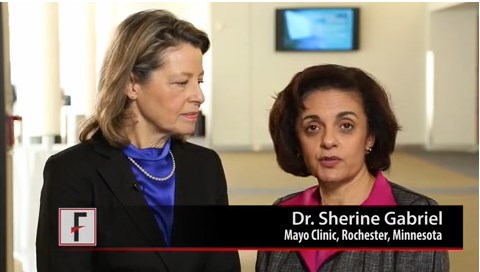
BOSTON – Rheumatoid arthritis patients taking tumor necrosis factor inhibitors ran a lower risk of developing congestive heart failure than did those on nonbiologic disease-modifying antirheumatic drugs, based on data from a large British registry.
Dr. Alper van Sijl of the University of Manchester (England) reported that, among comparable RA patients who have not yet developed CHF, fully adjusted propensity scores showed a reduced risk for developing CHF in those taking TNF inhibitors. He explained the possible reasons for the findings and described next steps in new studies designed to cut the risk of CHF in RA patients during an interview at the annual meeting of the American College of Rheumatology.
The video associated with this article is no longer available on this site. Please view all of our videos on the MDedge YouTube channel
BOSTON – Rheumatoid arthritis patients taking tumor necrosis factor inhibitors ran a lower risk of developing congestive heart failure than did those on nonbiologic disease-modifying antirheumatic drugs, based on data from a large British registry.
Dr. Alper van Sijl of the University of Manchester (England) reported that, among comparable RA patients who have not yet developed CHF, fully adjusted propensity scores showed a reduced risk for developing CHF in those taking TNF inhibitors. He explained the possible reasons for the findings and described next steps in new studies designed to cut the risk of CHF in RA patients during an interview at the annual meeting of the American College of Rheumatology.
The video associated with this article is no longer available on this site. Please view all of our videos on the MDedge YouTube channel
BOSTON – Rheumatoid arthritis patients taking tumor necrosis factor inhibitors ran a lower risk of developing congestive heart failure than did those on nonbiologic disease-modifying antirheumatic drugs, based on data from a large British registry.
Dr. Alper van Sijl of the University of Manchester (England) reported that, among comparable RA patients who have not yet developed CHF, fully adjusted propensity scores showed a reduced risk for developing CHF in those taking TNF inhibitors. He explained the possible reasons for the findings and described next steps in new studies designed to cut the risk of CHF in RA patients during an interview at the annual meeting of the American College of Rheumatology.
The video associated with this article is no longer available on this site. Please view all of our videos on the MDedge YouTube channel
AT THE ACR ANNUAL MEETING
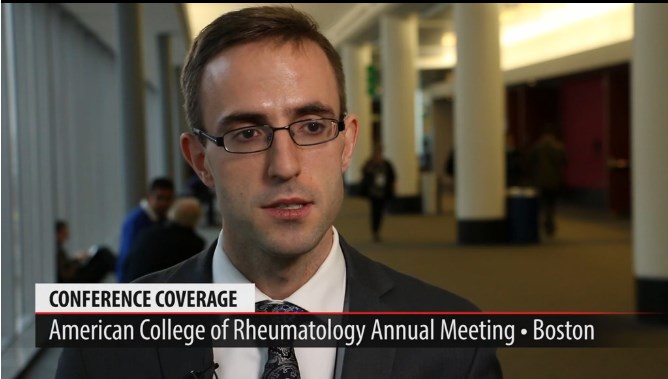
VIDEO: IMPROVE-IT exonerates ezetimibe, proves LDL hypothesis
CHICAGO – Results of the IMPROVE-IT megatrial not only show that adding ezetimibe to statin therapy lowered the risk of all cardiovascular events in high-risk patients, they also prove the LDL hypothesis, two experts commented at the American Heart Association scientific sessions.
IMPROVE-IT compared simvastatin plus placebo with simvastatin plus ezetimibe in more than 18,000 patients within 10 days of an acute coronary syndrome event. The dual-therapy patients’ LDL cholesterol went down to an average of 54 mg/dL, while the statin/placebo patients’ LDL reached 69 mg/dL.
The patients taking ezetimibe in addition to simvastatin had a 6.4% lower risk of all cardiovascular events, a 14% reduced risk of all heart attacks, and a 21% lower risk of ischemic stroke. There was no difference in mortality between groups.
Dr. Lori Mosca, professor of medicine at Columbia University, New York, and director of preventive cardiology at New York-Presbyterian Hospital, and Dr. Prakash Deedwania, professor of medicine at the University of California, San Francisco, Fresno, told us how these “exciting” results will change practice for treating very high-risk patients.
The video associated with this article is no longer available on this site. Please view all of our videos on the MDedge YouTube channel
CHICAGO – Results of the IMPROVE-IT megatrial not only show that adding ezetimibe to statin therapy lowered the risk of all cardiovascular events in high-risk patients, they also prove the LDL hypothesis, two experts commented at the American Heart Association scientific sessions.
IMPROVE-IT compared simvastatin plus placebo with simvastatin plus ezetimibe in more than 18,000 patients within 10 days of an acute coronary syndrome event. The dual-therapy patients’ LDL cholesterol went down to an average of 54 mg/dL, while the statin/placebo patients’ LDL reached 69 mg/dL.
The patients taking ezetimibe in addition to simvastatin had a 6.4% lower risk of all cardiovascular events, a 14% reduced risk of all heart attacks, and a 21% lower risk of ischemic stroke. There was no difference in mortality between groups.
Dr. Lori Mosca, professor of medicine at Columbia University, New York, and director of preventive cardiology at New York-Presbyterian Hospital, and Dr. Prakash Deedwania, professor of medicine at the University of California, San Francisco, Fresno, told us how these “exciting” results will change practice for treating very high-risk patients.
The video associated with this article is no longer available on this site. Please view all of our videos on the MDedge YouTube channel
CHICAGO – Results of the IMPROVE-IT megatrial not only show that adding ezetimibe to statin therapy lowered the risk of all cardiovascular events in high-risk patients, they also prove the LDL hypothesis, two experts commented at the American Heart Association scientific sessions.
IMPROVE-IT compared simvastatin plus placebo with simvastatin plus ezetimibe in more than 18,000 patients within 10 days of an acute coronary syndrome event. The dual-therapy patients’ LDL cholesterol went down to an average of 54 mg/dL, while the statin/placebo patients’ LDL reached 69 mg/dL.
The patients taking ezetimibe in addition to simvastatin had a 6.4% lower risk of all cardiovascular events, a 14% reduced risk of all heart attacks, and a 21% lower risk of ischemic stroke. There was no difference in mortality between groups.
Dr. Lori Mosca, professor of medicine at Columbia University, New York, and director of preventive cardiology at New York-Presbyterian Hospital, and Dr. Prakash Deedwania, professor of medicine at the University of California, San Francisco, Fresno, told us how these “exciting” results will change practice for treating very high-risk patients.
The video associated with this article is no longer available on this site. Please view all of our videos on the MDedge YouTube channel
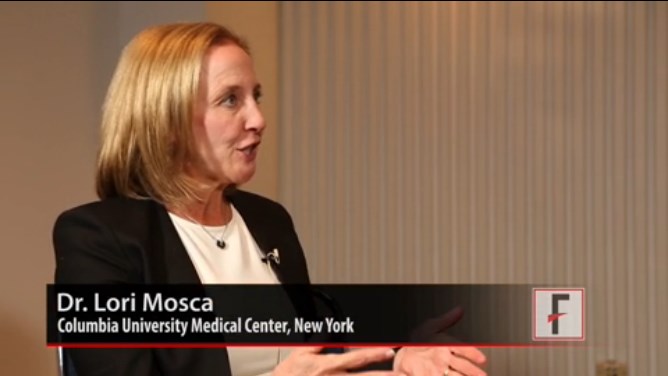
VIDEO: Herpes zoster vaccination: Is it safe for rheumatology patients over age 30 on biologics?
BOSTON– The herpes zoster vaccine may be safe to give to patients who are taking biologic therapies and have quiescent rheumatologic disorders, based on preliminary data from two studies presented at the annual meeting of the American College of Rheumatology.
Dr. Jeffrey Curtis of the University of Alabama at Birmingham presented data about the extent of the increased risk for herpes zoster in rheumatology patients, especially those with systemic lupus erythematosus, and some intriguing results on 630 patients on biologic therapies who inadvertently got the vaccine.
Dr. Stephen Lindsey of Ochsner Health System in Baton Rouge, La., said that he continues to evolve a protocol for herpes zoster vaccination of his patients with rheumatologic disorders.
In our exclusive interview at ACR14, the two researchers discussed the implications of their separate studies on the subject and revealed the next steps of a prospective study of herpes zoster vaccination in patients with rheumatologic disorders that is just getting underway.
The video associated with this article is no longer available on this site. Please view all of our videos on the MDedge YouTube channel
BOSTON– The herpes zoster vaccine may be safe to give to patients who are taking biologic therapies and have quiescent rheumatologic disorders, based on preliminary data from two studies presented at the annual meeting of the American College of Rheumatology.
Dr. Jeffrey Curtis of the University of Alabama at Birmingham presented data about the extent of the increased risk for herpes zoster in rheumatology patients, especially those with systemic lupus erythematosus, and some intriguing results on 630 patients on biologic therapies who inadvertently got the vaccine.
Dr. Stephen Lindsey of Ochsner Health System in Baton Rouge, La., said that he continues to evolve a protocol for herpes zoster vaccination of his patients with rheumatologic disorders.
In our exclusive interview at ACR14, the two researchers discussed the implications of their separate studies on the subject and revealed the next steps of a prospective study of herpes zoster vaccination in patients with rheumatologic disorders that is just getting underway.
The video associated with this article is no longer available on this site. Please view all of our videos on the MDedge YouTube channel
BOSTON– The herpes zoster vaccine may be safe to give to patients who are taking biologic therapies and have quiescent rheumatologic disorders, based on preliminary data from two studies presented at the annual meeting of the American College of Rheumatology.
Dr. Jeffrey Curtis of the University of Alabama at Birmingham presented data about the extent of the increased risk for herpes zoster in rheumatology patients, especially those with systemic lupus erythematosus, and some intriguing results on 630 patients on biologic therapies who inadvertently got the vaccine.
Dr. Stephen Lindsey of Ochsner Health System in Baton Rouge, La., said that he continues to evolve a protocol for herpes zoster vaccination of his patients with rheumatologic disorders.
In our exclusive interview at ACR14, the two researchers discussed the implications of their separate studies on the subject and revealed the next steps of a prospective study of herpes zoster vaccination in patients with rheumatologic disorders that is just getting underway.
The video associated with this article is no longer available on this site. Please view all of our videos on the MDedge YouTube channel
AT ACR 2014