User login
VIDEO: Hepatitis C screening recommendations falling on deaf ears
BOSTON – The call to screen Baby Boomers for hepatitis C virus infections appears to have gone unheeded so far, results from a Chicago primary care clinic show.
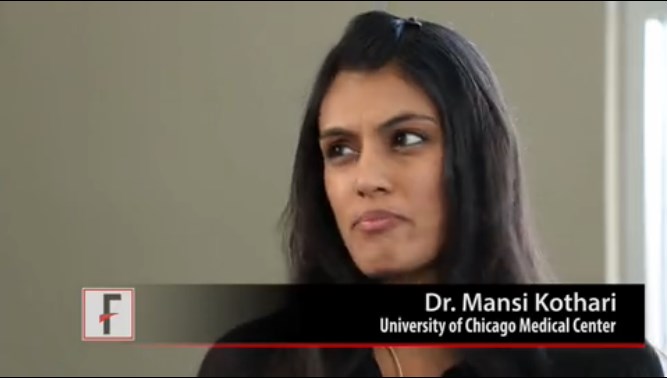
Screening increased by only 2% among some 25,000 patients seen in the primary care clinic of the University of Chicago after the 2012 Centers for Disease Control and Prevention recommendation to screen adults born between 1945 and 1965, Dr. Mansi Kothari reported at the annual meeting of the American Association for the Study of Liver Diseases.
On a positive note, Dr. Kothari of the University of Chicago Medical Center noted in an interview that if a patient tested positive for hepatitis C virus, rates of additional testing and referral to a hepatologist remained high.
Dr. Kothari reported no financial disclosures.
The video associated with this article is no longer available on this site. Please view all of our videos on the MDedge YouTube channel
BOSTON – The call to screen Baby Boomers for hepatitis C virus infections appears to have gone unheeded so far, results from a Chicago primary care clinic show.
Screening increased by only 2% among some 25,000 patients seen in the primary care clinic of the University of Chicago after the 2012 Centers for Disease Control and Prevention recommendation to screen adults born between 1945 and 1965, Dr. Mansi Kothari reported at the annual meeting of the American Association for the Study of Liver Diseases.
On a positive note, Dr. Kothari of the University of Chicago Medical Center noted in an interview that if a patient tested positive for hepatitis C virus, rates of additional testing and referral to a hepatologist remained high.
Dr. Kothari reported no financial disclosures.
The video associated with this article is no longer available on this site. Please view all of our videos on the MDedge YouTube channel
BOSTON – The call to screen Baby Boomers for hepatitis C virus infections appears to have gone unheeded so far, results from a Chicago primary care clinic show.
Screening increased by only 2% among some 25,000 patients seen in the primary care clinic of the University of Chicago after the 2012 Centers for Disease Control and Prevention recommendation to screen adults born between 1945 and 1965, Dr. Mansi Kothari reported at the annual meeting of the American Association for the Study of Liver Diseases.
On a positive note, Dr. Kothari of the University of Chicago Medical Center noted in an interview that if a patient tested positive for hepatitis C virus, rates of additional testing and referral to a hepatologist remained high.
Dr. Kothari reported no financial disclosures.
The video associated with this article is no longer available on this site. Please view all of our videos on the MDedge YouTube channel
AT THE LIVER MEETING 2014
VIDEO: Most baby boomers didn’t know their hep C status
BOSTON– Almost two-thirds of baby boomers presenting to Alabama emergency departments were unaware of their hepatitis C virus status, despite having such high-risk factors as past intravenous drug use or receipt of a blood transfusion prior to 1992.
Equally concerning, only 48% of patients who knew they were HCV positive were aware of some of the highly efficacious treatments now available, study author and medical student Derek Wells of the University of Alabama-Birmingham said in a video interview at the annual meeting of the American Association for the Study of Liver Diseases.
Mr. Wells called for increased awareness among front-line providers to improve screening and help eradicate HCV in the United States.
Mr. Wells reported no financial disclosures.
The video associated with this article is no longer available on this site. Please view all of our videos on the MDedge YouTube channel
BOSTON– Almost two-thirds of baby boomers presenting to Alabama emergency departments were unaware of their hepatitis C virus status, despite having such high-risk factors as past intravenous drug use or receipt of a blood transfusion prior to 1992.
Equally concerning, only 48% of patients who knew they were HCV positive were aware of some of the highly efficacious treatments now available, study author and medical student Derek Wells of the University of Alabama-Birmingham said in a video interview at the annual meeting of the American Association for the Study of Liver Diseases.
Mr. Wells called for increased awareness among front-line providers to improve screening and help eradicate HCV in the United States.
Mr. Wells reported no financial disclosures.
The video associated with this article is no longer available on this site. Please view all of our videos on the MDedge YouTube channel
BOSTON– Almost two-thirds of baby boomers presenting to Alabama emergency departments were unaware of their hepatitis C virus status, despite having such high-risk factors as past intravenous drug use or receipt of a blood transfusion prior to 1992.
Equally concerning, only 48% of patients who knew they were HCV positive were aware of some of the highly efficacious treatments now available, study author and medical student Derek Wells of the University of Alabama-Birmingham said in a video interview at the annual meeting of the American Association for the Study of Liver Diseases.
Mr. Wells called for increased awareness among front-line providers to improve screening and help eradicate HCV in the United States.
Mr. Wells reported no financial disclosures.
The video associated with this article is no longer available on this site. Please view all of our videos on the MDedge YouTube channel
AT THE LIVER MEETING 2014

VIDEO: An easy way to improve breast biopsy practices
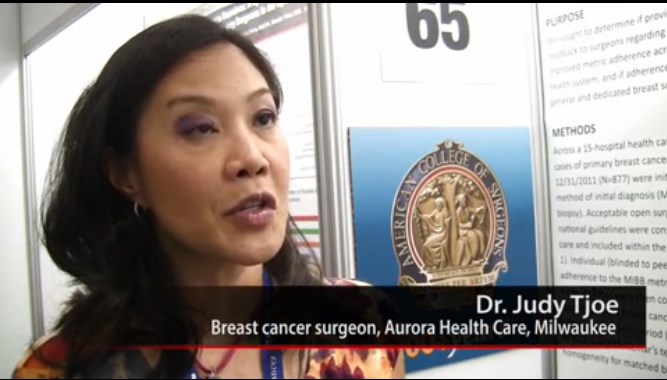
SAN FRANCISCO – Surgeons improve if they know they are behind the curve, according to Dr. Judy A. Tjoe, a breast cancer surgeon with Milwaukee-based Aurora Health Care.
She and her colleagues used that principle to significantly increase Aurora’s use of minimally invasive breast biopsies, the gold standard to diagnose breast cancer.
Although Dr. Tjoe and the system’s other three dedicated breast surgeons were using MIBB as appropriate, they found that 9 of 42 general surgeons (21%) were not, opting instead for open biopsies.
All it took to fix the problem was letting those surgeons know that minimally invasive breast biopsies was the preferred method, and that most of their peers were using it.
In a video interview at the American College of Surgeons Clinical Congress, Dr. Tjoe, also chair of Aurora’s quality committee for breast cancer care, explained why that message was so powerful, and how, in an era of pay for performance, the project is a model for improving health care without punitive measures.
The video associated with this article is no longer available on this site. Please view all of our videos on the MDedge YouTube channel
SAN FRANCISCO – Surgeons improve if they know they are behind the curve, according to Dr. Judy A. Tjoe, a breast cancer surgeon with Milwaukee-based Aurora Health Care.
She and her colleagues used that principle to significantly increase Aurora’s use of minimally invasive breast biopsies, the gold standard to diagnose breast cancer.
Although Dr. Tjoe and the system’s other three dedicated breast surgeons were using MIBB as appropriate, they found that 9 of 42 general surgeons (21%) were not, opting instead for open biopsies.
All it took to fix the problem was letting those surgeons know that minimally invasive breast biopsies was the preferred method, and that most of their peers were using it.
In a video interview at the American College of Surgeons Clinical Congress, Dr. Tjoe, also chair of Aurora’s quality committee for breast cancer care, explained why that message was so powerful, and how, in an era of pay for performance, the project is a model for improving health care without punitive measures.
The video associated with this article is no longer available on this site. Please view all of our videos on the MDedge YouTube channel
SAN FRANCISCO – Surgeons improve if they know they are behind the curve, according to Dr. Judy A. Tjoe, a breast cancer surgeon with Milwaukee-based Aurora Health Care.
She and her colleagues used that principle to significantly increase Aurora’s use of minimally invasive breast biopsies, the gold standard to diagnose breast cancer.
Although Dr. Tjoe and the system’s other three dedicated breast surgeons were using MIBB as appropriate, they found that 9 of 42 general surgeons (21%) were not, opting instead for open biopsies.
All it took to fix the problem was letting those surgeons know that minimally invasive breast biopsies was the preferred method, and that most of their peers were using it.
In a video interview at the American College of Surgeons Clinical Congress, Dr. Tjoe, also chair of Aurora’s quality committee for breast cancer care, explained why that message was so powerful, and how, in an era of pay for performance, the project is a model for improving health care without punitive measures.
The video associated with this article is no longer available on this site. Please view all of our videos on the MDedge YouTube channel
AT THE AMERICAN COLLEGE OF SURGEONS CLINICAL CONGRESS
VIDEO: EMR reminder reduces unnecessary transfusions
SAN FRANCISCO – To reduce unnecessary transfusions, all it takes is a reminder in the electronic medical record system that they aren’t generally necessary if surgery patients have hemoglobins greater than 10 g/dL, according to investigators from Emory University in Atlanta.
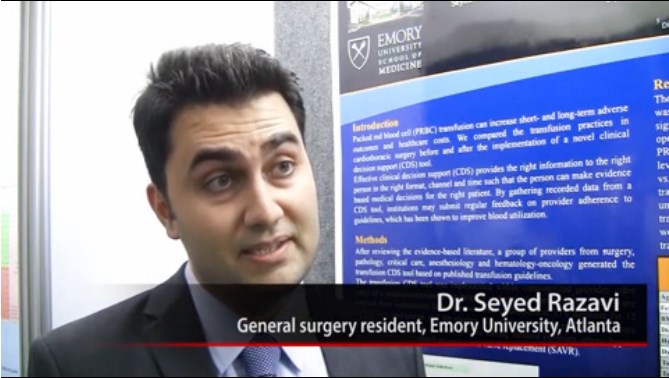
A reminder in Emory’s EMR dropped transfusion rates in cardiothoracic patients without increasing negative outcomes. It also saved money and reduced the number of surgical site infections. Emory is now rolling it out systemwide (J. Am. Coll. Surg. 2014 June 25 [doi: 10.1016/j.jamcollsurg.2014.06.012]). Lead investigator Dr. Seyed Razavi explained the initiative in a video interview at the annual clinical congress of the American College of Surgeons.
The video associated with this article is no longer available on this site. Please view all of our videos on the MDedge YouTube channel
Dr. Hossein Almassi, FCCP, comments: By their nature, cardiac operations are associated with higher transfusion rates than other surgical procedures. The negative impact of blood transfusion on short term hospital outcomes and mortality is well known. Any effort in reducing the adverse outcomes is a step in the right direction, especially in this era of 'pay per performance". A "reminder in the EMR" is but one such step.
Dr. Almassi specializes in cardiothoracic surgery at the Medical College of Wisconsin in Milwaukee, Wisconsin.
Dr. Hossein Almassi, FCCP, comments: By their nature, cardiac operations are associated with higher transfusion rates than other surgical procedures. The negative impact of blood transfusion on short term hospital outcomes and mortality is well known. Any effort in reducing the adverse outcomes is a step in the right direction, especially in this era of 'pay per performance". A "reminder in the EMR" is but one such step.
Dr. Almassi specializes in cardiothoracic surgery at the Medical College of Wisconsin in Milwaukee, Wisconsin.
Dr. Hossein Almassi, FCCP, comments: By their nature, cardiac operations are associated with higher transfusion rates than other surgical procedures. The negative impact of blood transfusion on short term hospital outcomes and mortality is well known. Any effort in reducing the adverse outcomes is a step in the right direction, especially in this era of 'pay per performance". A "reminder in the EMR" is but one such step.
Dr. Almassi specializes in cardiothoracic surgery at the Medical College of Wisconsin in Milwaukee, Wisconsin.
SAN FRANCISCO – To reduce unnecessary transfusions, all it takes is a reminder in the electronic medical record system that they aren’t generally necessary if surgery patients have hemoglobins greater than 10 g/dL, according to investigators from Emory University in Atlanta.
A reminder in Emory’s EMR dropped transfusion rates in cardiothoracic patients without increasing negative outcomes. It also saved money and reduced the number of surgical site infections. Emory is now rolling it out systemwide (J. Am. Coll. Surg. 2014 June 25 [doi: 10.1016/j.jamcollsurg.2014.06.012]). Lead investigator Dr. Seyed Razavi explained the initiative in a video interview at the annual clinical congress of the American College of Surgeons.
The video associated with this article is no longer available on this site. Please view all of our videos on the MDedge YouTube channel
SAN FRANCISCO – To reduce unnecessary transfusions, all it takes is a reminder in the electronic medical record system that they aren’t generally necessary if surgery patients have hemoglobins greater than 10 g/dL, according to investigators from Emory University in Atlanta.
A reminder in Emory’s EMR dropped transfusion rates in cardiothoracic patients without increasing negative outcomes. It also saved money and reduced the number of surgical site infections. Emory is now rolling it out systemwide (J. Am. Coll. Surg. 2014 June 25 [doi: 10.1016/j.jamcollsurg.2014.06.012]). Lead investigator Dr. Seyed Razavi explained the initiative in a video interview at the annual clinical congress of the American College of Surgeons.
The video associated with this article is no longer available on this site. Please view all of our videos on the MDedge YouTube channel
AT THE ACS CLINICAL CONGRESS
Hospitalists Channel Osler, Pioneer in Bedside Exams
Hands-on workshop helps hospitalists gain confidence in fundamentals, learn to teach physical exam skills better
Hands-on workshop helps hospitalists gain confidence in fundamentals, learn to teach physical exam skills better
Hands-on workshop helps hospitalists gain confidence in fundamentals, learn to teach physical exam skills better
Checklists Improve Outcomes, Require Care-team Buy-in
Dr. Ramiro Jervis and Dr. Umesh Gidwani urge hospitalists to experiment with checklists during the 7th annual Hospital Medicine Symposium in New York City.
Dr. Ramiro Jervis and Dr. Umesh Gidwani urge hospitalists to experiment with checklists during the 7th annual Hospital Medicine Symposium in New York City.
Dr. Ramiro Jervis and Dr. Umesh Gidwani urge hospitalists to experiment with checklists during the 7th annual Hospital Medicine Symposium in New York City.
VIDEO: West African Ebola scope makes control uncertain
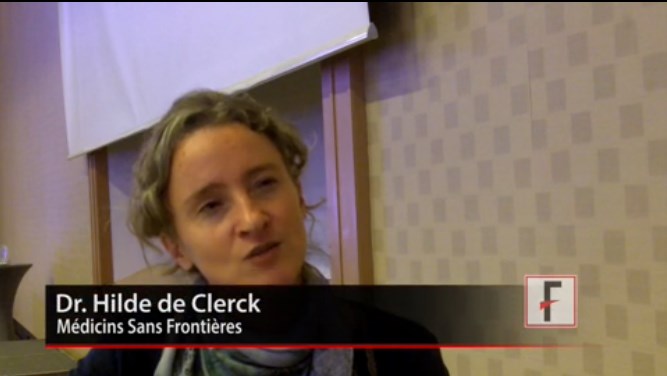
VIENNA – The huge scope of the West African Ebola outbreak makes bringing it under control an unprecedented challenge with an uncertain outcome, Dr. Hilde de Clerck said in an interview during the International Meeting on Emerging Diseases and Surveillance.
The large number of people who have been infected with Ebola in the West African countries of Guinea, Sierra Leone, and Liberia – close to 14,000 identified cases by the end of October – has forced clinicians on the scene, such as those working with Médicins Sans Frontières (MSF; Doctors Without Borders), to try new approaches in their attempt to rein in further spread of the infection, said Dr. de Clerk, an epidemiologist and family physician who serves as a field coordinator for MSF specializing in viral hemorrhagic fevers. Right now, it is hard to predict when the outbreak will be brought under control, she said. To watch an interview in which she discusses containment strategies, click here.
Dr. de Cleck had no disclosures.
The video associated with this article is no longer available on this site. Please view all of our videos on the MDedge YouTube channel
On Twitter @mitchelzoler
VIENNA – The huge scope of the West African Ebola outbreak makes bringing it under control an unprecedented challenge with an uncertain outcome, Dr. Hilde de Clerck said in an interview during the International Meeting on Emerging Diseases and Surveillance.
The large number of people who have been infected with Ebola in the West African countries of Guinea, Sierra Leone, and Liberia – close to 14,000 identified cases by the end of October – has forced clinicians on the scene, such as those working with Médicins Sans Frontières (MSF; Doctors Without Borders), to try new approaches in their attempt to rein in further spread of the infection, said Dr. de Clerk, an epidemiologist and family physician who serves as a field coordinator for MSF specializing in viral hemorrhagic fevers. Right now, it is hard to predict when the outbreak will be brought under control, she said. To watch an interview in which she discusses containment strategies, click here.
Dr. de Cleck had no disclosures.
The video associated with this article is no longer available on this site. Please view all of our videos on the MDedge YouTube channel
On Twitter @mitchelzoler
VIENNA – The huge scope of the West African Ebola outbreak makes bringing it under control an unprecedented challenge with an uncertain outcome, Dr. Hilde de Clerck said in an interview during the International Meeting on Emerging Diseases and Surveillance.
The large number of people who have been infected with Ebola in the West African countries of Guinea, Sierra Leone, and Liberia – close to 14,000 identified cases by the end of October – has forced clinicians on the scene, such as those working with Médicins Sans Frontières (MSF; Doctors Without Borders), to try new approaches in their attempt to rein in further spread of the infection, said Dr. de Clerk, an epidemiologist and family physician who serves as a field coordinator for MSF specializing in viral hemorrhagic fevers. Right now, it is hard to predict when the outbreak will be brought under control, she said. To watch an interview in which she discusses containment strategies, click here.
Dr. de Cleck had no disclosures.
The video associated with this article is no longer available on this site. Please view all of our videos on the MDedge YouTube channel
On Twitter @mitchelzoler
AT IMED 2014
Five Reasons You Should Attend Hospital Medicine 2013 in Washington, D.C.
Hospital Medicine 2013 offers expert speakers, 90 educational offerings, and networking with the best and brightest hospital medicine has to offer.
Hospital Medicine 2013 offers expert speakers, 90 educational offerings, and networking with the best and brightest hospital medicine has to offer.
Hospital Medicine 2013 offers expert speakers, 90 educational offerings, and networking with the best and brightest hospital medicine has to offer.
CME, Procedures, and Advocacy Highlight Hospital Medicine 2013 Kickoff
Hospital Medicine 2013 starts off with a day of learning and advocacy on Capitol Hill.
Hospital Medicine 2013 starts off with a day of learning and advocacy on Capitol Hill.
Hospital Medicine 2013 starts off with a day of learning and advocacy on Capitol Hill.
VIDEO: Lamivudine under study for Ebola
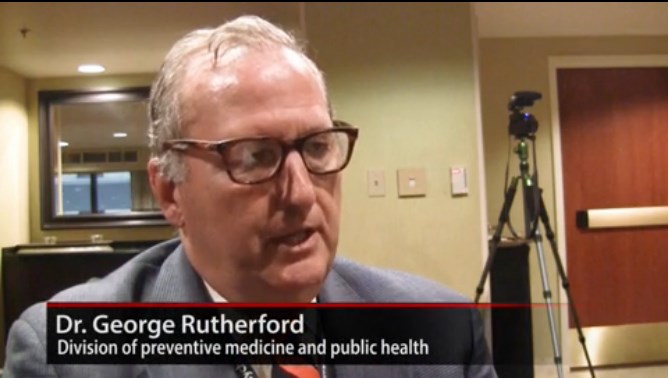
SAN FRANCISCO– It’s possible that the HIV drug lamivudine (Epivir) truly is helpful for Ebola, according to epidemiologist George W. Rutherford, head of the division of prevention medicine and public health at the University of California, San Francisco.
He and his colleagues are gearing up to study the drug, in the wake of anecdotal reports suggesting that it might help. In vitro testing for Ebola is already underway.
In this video interview, Dr. Rutherford shares his thoughts on the drug as a treatment for the infection. He also explains the current thinking on another potential Ebola treatment, ZMapp, at the American Psychiatric Association Institute on Psychiatric Services meeting.
The video associated with this article is no longer available on this site. Please view all of our videos on the MDedge YouTube channel
SAN FRANCISCO– It’s possible that the HIV drug lamivudine (Epivir) truly is helpful for Ebola, according to epidemiologist George W. Rutherford, head of the division of prevention medicine and public health at the University of California, San Francisco.
He and his colleagues are gearing up to study the drug, in the wake of anecdotal reports suggesting that it might help. In vitro testing for Ebola is already underway.
In this video interview, Dr. Rutherford shares his thoughts on the drug as a treatment for the infection. He also explains the current thinking on another potential Ebola treatment, ZMapp, at the American Psychiatric Association Institute on Psychiatric Services meeting.
The video associated with this article is no longer available on this site. Please view all of our videos on the MDedge YouTube channel
SAN FRANCISCO– It’s possible that the HIV drug lamivudine (Epivir) truly is helpful for Ebola, according to epidemiologist George W. Rutherford, head of the division of prevention medicine and public health at the University of California, San Francisco.
He and his colleagues are gearing up to study the drug, in the wake of anecdotal reports suggesting that it might help. In vitro testing for Ebola is already underway.
In this video interview, Dr. Rutherford shares his thoughts on the drug as a treatment for the infection. He also explains the current thinking on another potential Ebola treatment, ZMapp, at the American Psychiatric Association Institute on Psychiatric Services meeting.
The video associated with this article is no longer available on this site. Please view all of our videos on the MDedge YouTube channel
AT THE APA INSTITUTE ON PSYCHIATRIC SERVICES