User login
What Can I Do? Recommendations for Responding to Issues Identified by Patient-Reported Outcomes Assessments Used in Clinical Practice
What Can I Do? Recommendations for Responding to Issues Identified by Patient-Reported Outcomes Assessments Used in Clinical Practice
- Received 4 October 2011. Accepted 21 February 2012. Available online 18 May 2012.
Abstract
There is increased interest in using patient-reported outcome (PRO) measures in routine clinical practice to improve patient management. The effectiveness of this intervention may be facilitated by providing suggestions to clinicians on how to address issues identified by the PROs. We sought to develop recommendations for clinicians on how to respond to issues covered by common cancer PRO questionnaires, including functional problems (eg, physical, social, emotional), symptoms (eg, diarrhea, pain), and needs (eg, patient care and support, information). The recommendations would be incorporated into a Web-based system for PRO assessment and reporting in use at our large, academic cancer center. To develop the recommendations, we conducted a multiphase, multidisciplinary, consensus process. We reviewed the literature and conducted one-on-one interviews with experts from various disciplines.
Experts included medical oncologists, radiation oncologists, nurses, an internist, a palliative care specialist, an outcomes researcher, a chaplain, a social worker, and patient advocates. These interviews elicited the experts' recommendations for addressing problems in common PRO domains. Finally, we held a panel meeting attended by all the experts to attain consensus on the recommendations. The final consensus suggestions recommend further assessment of the problem as a first step. Treatment suggestions range from medication adjustments to lifestyle modifications to referrals to other disciplines. Further research will test whether clinicians find these suggestions useful for patient management.
*For a PDF of the full article click in the link to the left of this introduction.
What Can I Do? Recommendations for Responding to Issues Identified by Patient-Reported Outcomes Assessments Used in Clinical Practice
- Received 4 October 2011. Accepted 21 February 2012. Available online 18 May 2012.
Abstract
There is increased interest in using patient-reported outcome (PRO) measures in routine clinical practice to improve patient management. The effectiveness of this intervention may be facilitated by providing suggestions to clinicians on how to address issues identified by the PROs. We sought to develop recommendations for clinicians on how to respond to issues covered by common cancer PRO questionnaires, including functional problems (eg, physical, social, emotional), symptoms (eg, diarrhea, pain), and needs (eg, patient care and support, information). The recommendations would be incorporated into a Web-based system for PRO assessment and reporting in use at our large, academic cancer center. To develop the recommendations, we conducted a multiphase, multidisciplinary, consensus process. We reviewed the literature and conducted one-on-one interviews with experts from various disciplines.
Experts included medical oncologists, radiation oncologists, nurses, an internist, a palliative care specialist, an outcomes researcher, a chaplain, a social worker, and patient advocates. These interviews elicited the experts' recommendations for addressing problems in common PRO domains. Finally, we held a panel meeting attended by all the experts to attain consensus on the recommendations. The final consensus suggestions recommend further assessment of the problem as a first step. Treatment suggestions range from medication adjustments to lifestyle modifications to referrals to other disciplines. Further research will test whether clinicians find these suggestions useful for patient management.
*For a PDF of the full article click in the link to the left of this introduction.
What Can I Do? Recommendations for Responding to Issues Identified by Patient-Reported Outcomes Assessments Used in Clinical Practice
- Received 4 October 2011. Accepted 21 February 2012. Available online 18 May 2012.
Abstract
There is increased interest in using patient-reported outcome (PRO) measures in routine clinical practice to improve patient management. The effectiveness of this intervention may be facilitated by providing suggestions to clinicians on how to address issues identified by the PROs. We sought to develop recommendations for clinicians on how to respond to issues covered by common cancer PRO questionnaires, including functional problems (eg, physical, social, emotional), symptoms (eg, diarrhea, pain), and needs (eg, patient care and support, information). The recommendations would be incorporated into a Web-based system for PRO assessment and reporting in use at our large, academic cancer center. To develop the recommendations, we conducted a multiphase, multidisciplinary, consensus process. We reviewed the literature and conducted one-on-one interviews with experts from various disciplines.
Experts included medical oncologists, radiation oncologists, nurses, an internist, a palliative care specialist, an outcomes researcher, a chaplain, a social worker, and patient advocates. These interviews elicited the experts' recommendations for addressing problems in common PRO domains. Finally, we held a panel meeting attended by all the experts to attain consensus on the recommendations. The final consensus suggestions recommend further assessment of the problem as a first step. Treatment suggestions range from medication adjustments to lifestyle modifications to referrals to other disciplines. Further research will test whether clinicians find these suggestions useful for patient management.
*For a PDF of the full article click in the link to the left of this introduction.
Central Nervous System Complications of Cancer Therapy
Central Nervous System Complications of Cancer Therapy

- Received 16 July 2011. Accepted 15 November 2011. Available online 26 April 2012.
Abstract
As more effective therapies prolong the survival of patients with cancer, therapy-related toxicities, particularly those affecting the central nervous system (CNS) become increasingly important. CNS complications can cause significant morbidity and can limit the dose or duration of otherwise effective treatments. Because effects on the CNS are disabling and often permanent and treatments remain limited, it is important that clinicians recognize the effects of cancer therapy on the CNS. Cytotoxic chemotherapy and radiation are well-known causes of neurotoxicity, but there is increasing recognition that novel therapies are also sources of adverse effects on the CNS. This review highlights the CNS complications that result from radiation, chemotherapy, and novel therapeutics.
Central nervous system (CNS) toxicity is a significant source of morbidity in the treatment of patients with cancer. Radiation, traditional cytotoxic chemotherapy, and novel biologic and targeted therapies all have recognized CNS side effects; and the risks of neurotoxicity can increase with combination therapy.1 Some CNS complications appear during treatment, while others present months or even years later. When patients present with neurologic deficits, practitioners need to recognize the signs and symptoms of treatment-related toxicity in order to intervene early and minimize neurologic damage. Treatment-related CNS toxicity needs to be distinguished from other direct or indirect effects of cancer, including tumor invasion, metastasis, metabolic derangements, infections, and paraneoplastic neurologic syndromes.
*For a PDF of the full article and accompanying viewpoint by Ivo Tremont-Lukats, click in the links to the left of this introduction.
Central Nervous System Complications of Cancer Therapy
- Received 16 July 2011. Accepted 15 November 2011. Available online 26 April 2012.
Abstract
As more effective therapies prolong the survival of patients with cancer, therapy-related toxicities, particularly those affecting the central nervous system (CNS) become increasingly important. CNS complications can cause significant morbidity and can limit the dose or duration of otherwise effective treatments. Because effects on the CNS are disabling and often permanent and treatments remain limited, it is important that clinicians recognize the effects of cancer therapy on the CNS. Cytotoxic chemotherapy and radiation are well-known causes of neurotoxicity, but there is increasing recognition that novel therapies are also sources of adverse effects on the CNS. This review highlights the CNS complications that result from radiation, chemotherapy, and novel therapeutics.
Central nervous system (CNS) toxicity is a significant source of morbidity in the treatment of patients with cancer. Radiation, traditional cytotoxic chemotherapy, and novel biologic and targeted therapies all have recognized CNS side effects; and the risks of neurotoxicity can increase with combination therapy.1 Some CNS complications appear during treatment, while others present months or even years later. When patients present with neurologic deficits, practitioners need to recognize the signs and symptoms of treatment-related toxicity in order to intervene early and minimize neurologic damage. Treatment-related CNS toxicity needs to be distinguished from other direct or indirect effects of cancer, including tumor invasion, metastasis, metabolic derangements, infections, and paraneoplastic neurologic syndromes.
*For a PDF of the full article and accompanying viewpoint by Ivo Tremont-Lukats, click in the links to the left of this introduction.
Central Nervous System Complications of Cancer Therapy
- Received 16 July 2011. Accepted 15 November 2011. Available online 26 April 2012.
Abstract
As more effective therapies prolong the survival of patients with cancer, therapy-related toxicities, particularly those affecting the central nervous system (CNS) become increasingly important. CNS complications can cause significant morbidity and can limit the dose or duration of otherwise effective treatments. Because effects on the CNS are disabling and often permanent and treatments remain limited, it is important that clinicians recognize the effects of cancer therapy on the CNS. Cytotoxic chemotherapy and radiation are well-known causes of neurotoxicity, but there is increasing recognition that novel therapies are also sources of adverse effects on the CNS. This review highlights the CNS complications that result from radiation, chemotherapy, and novel therapeutics.
Central nervous system (CNS) toxicity is a significant source of morbidity in the treatment of patients with cancer. Radiation, traditional cytotoxic chemotherapy, and novel biologic and targeted therapies all have recognized CNS side effects; and the risks of neurotoxicity can increase with combination therapy.1 Some CNS complications appear during treatment, while others present months or even years later. When patients present with neurologic deficits, practitioners need to recognize the signs and symptoms of treatment-related toxicity in order to intervene early and minimize neurologic damage. Treatment-related CNS toxicity needs to be distinguished from other direct or indirect effects of cancer, including tumor invasion, metastasis, metabolic derangements, infections, and paraneoplastic neurologic syndromes.
*For a PDF of the full article and accompanying viewpoint by Ivo Tremont-Lukats, click in the links to the left of this introduction.
Tips on Cardiovascular Testing Before Cancer Surgery
MIAMI BEACH – When you are called to assess a patient before cancer surgery, how do you know when noninvasive cardiovascular testing is warranted?
Start by asking patients to describe their functional status before they started any treatment to combat their cancer, Dr. Sunil K. Sahai said.
Also assess for any ischemia preoperatively, because its presence might direct a surgeon to prescribe a less cardiotoxic postoperative treatment for your patient, Dr. Sahai said at a meeting on perioperative medicine sponsored by the University of Miami. Occult ischemia might be found if a patient reports shortness of breath during prior chemotherapy administration, he added.
"Everything you’ve heard about perioperative medicine is true for cancer patients, but they are also unique," Dr. Sahai said. The physiologic burden of cancer and its treatment makes preoperative evaluation challenging, but it’s worth doing right to ensure the patient receives the optimal therapy. Also, in some cases, either the patient or surgeon will decide not to proceed with surgery based on your risk assessment, said Dr. Sahai, medical director of the Internal Medicine Perioperative Assessment Center at the University of Texas M.D. Anderson Cancer Center in Houston.
To illustrate some of the challenges, Dr. Sahai described an actual patient, a 60-year-old man referred for preoperative assessment 1 week before a scheduled neck dissection and total laryngectomy. He presented with dysphagia and sore throat. A biopsy revealed postcricoid squamous cell carcinoma. He was otherwise healthy, except for psoriasis and benign prostatic hyperplasia. He had undergone surgery and radiation for nasopharyngeal cancer 15 years earlier. The current physical examination was unremarkable, except for bilateral carotid bruits. Doppler ultrasound findings led to a diagnosis of radiation-induced carotid stenosis with diffuse, bilateral atherosclerosis and greater than 70% stenosis.
Head and neck cancer patients can have double the risk of transient ischemic attack or cerebrovascular accident, compared with a patient with normal pathologic narrowing of the carotid arteries, Dr. Sahai said. This is a controversial area because "data are not clear on what to do."
"We postponed and all discussed with all the providers involved," Dr. Sahai said. A stent was placed in the patient’s right internal carotid artery, and cancer surgery was delayed for 1 month while the patient took clopidogrel and aspirin. "He then went to the operating room on aspirin, and he did well."
Another case, a 70-year-old woman scheduled for a 6-hour cystectomy for bladder cancer, raised issues around preoperative cardiovascular assessment. "She reports fatigue and shortness of breath with exertion on her evening walks," Dr. Sahai said. "Before chemotherapy, she was able to walk eight blocks and up two flights of stairs without stopping. Now she can walk only four blocks and stops to rest between flights." She does not describe typical angina symptoms, he added.
The patient is obese, has diabetes mellitus, and is taking a statin for hyperlipidemia. She does not report any angina symptoms. Her history includes a myocardial infarction 5 years earlier addressed with medical management only.
Cancer can sap a patient’s energy, but the precise etiology in this case was unclear, Dr. Sahai said. Was her shortness of breath related to coronary artery disease, heart failure, pulmonary hypertension, or treatment with cardiotoxic chemotherapy? Should the patient be tested, for example, with an echocardiogram for heart function, stress test for ischemia, or both?
"Because this patient had received cardiotoxic chemotherapy ... we would do a stress echo on this patient," Dr. Sahai said. "In addition, BNP [B-type natriuretic peptide] levels may be helpful to detect cardiomyopathy. I would also optimize cardiac function and heart rate and send her to the operating room with the statin on board."
Patients with no cardiovascular symptoms can generally go to the operating room. If a patient is symptomatic, however, especially if the symptoms are new since cancer therapy was begun, Dr. Sahai said he generally considers further testing and work-up.
Dr. Sahai had no relevant financial disclosures.
MIAMI BEACH – When you are called to assess a patient before cancer surgery, how do you know when noninvasive cardiovascular testing is warranted?
Start by asking patients to describe their functional status before they started any treatment to combat their cancer, Dr. Sunil K. Sahai said.
Also assess for any ischemia preoperatively, because its presence might direct a surgeon to prescribe a less cardiotoxic postoperative treatment for your patient, Dr. Sahai said at a meeting on perioperative medicine sponsored by the University of Miami. Occult ischemia might be found if a patient reports shortness of breath during prior chemotherapy administration, he added.
"Everything you’ve heard about perioperative medicine is true for cancer patients, but they are also unique," Dr. Sahai said. The physiologic burden of cancer and its treatment makes preoperative evaluation challenging, but it’s worth doing right to ensure the patient receives the optimal therapy. Also, in some cases, either the patient or surgeon will decide not to proceed with surgery based on your risk assessment, said Dr. Sahai, medical director of the Internal Medicine Perioperative Assessment Center at the University of Texas M.D. Anderson Cancer Center in Houston.
To illustrate some of the challenges, Dr. Sahai described an actual patient, a 60-year-old man referred for preoperative assessment 1 week before a scheduled neck dissection and total laryngectomy. He presented with dysphagia and sore throat. A biopsy revealed postcricoid squamous cell carcinoma. He was otherwise healthy, except for psoriasis and benign prostatic hyperplasia. He had undergone surgery and radiation for nasopharyngeal cancer 15 years earlier. The current physical examination was unremarkable, except for bilateral carotid bruits. Doppler ultrasound findings led to a diagnosis of radiation-induced carotid stenosis with diffuse, bilateral atherosclerosis and greater than 70% stenosis.
Head and neck cancer patients can have double the risk of transient ischemic attack or cerebrovascular accident, compared with a patient with normal pathologic narrowing of the carotid arteries, Dr. Sahai said. This is a controversial area because "data are not clear on what to do."
"We postponed and all discussed with all the providers involved," Dr. Sahai said. A stent was placed in the patient’s right internal carotid artery, and cancer surgery was delayed for 1 month while the patient took clopidogrel and aspirin. "He then went to the operating room on aspirin, and he did well."
Another case, a 70-year-old woman scheduled for a 6-hour cystectomy for bladder cancer, raised issues around preoperative cardiovascular assessment. "She reports fatigue and shortness of breath with exertion on her evening walks," Dr. Sahai said. "Before chemotherapy, she was able to walk eight blocks and up two flights of stairs without stopping. Now she can walk only four blocks and stops to rest between flights." She does not describe typical angina symptoms, he added.
The patient is obese, has diabetes mellitus, and is taking a statin for hyperlipidemia. She does not report any angina symptoms. Her history includes a myocardial infarction 5 years earlier addressed with medical management only.
Cancer can sap a patient’s energy, but the precise etiology in this case was unclear, Dr. Sahai said. Was her shortness of breath related to coronary artery disease, heart failure, pulmonary hypertension, or treatment with cardiotoxic chemotherapy? Should the patient be tested, for example, with an echocardiogram for heart function, stress test for ischemia, or both?
"Because this patient had received cardiotoxic chemotherapy ... we would do a stress echo on this patient," Dr. Sahai said. "In addition, BNP [B-type natriuretic peptide] levels may be helpful to detect cardiomyopathy. I would also optimize cardiac function and heart rate and send her to the operating room with the statin on board."
Patients with no cardiovascular symptoms can generally go to the operating room. If a patient is symptomatic, however, especially if the symptoms are new since cancer therapy was begun, Dr. Sahai said he generally considers further testing and work-up.
Dr. Sahai had no relevant financial disclosures.
MIAMI BEACH – When you are called to assess a patient before cancer surgery, how do you know when noninvasive cardiovascular testing is warranted?
Start by asking patients to describe their functional status before they started any treatment to combat their cancer, Dr. Sunil K. Sahai said.
Also assess for any ischemia preoperatively, because its presence might direct a surgeon to prescribe a less cardiotoxic postoperative treatment for your patient, Dr. Sahai said at a meeting on perioperative medicine sponsored by the University of Miami. Occult ischemia might be found if a patient reports shortness of breath during prior chemotherapy administration, he added.
"Everything you’ve heard about perioperative medicine is true for cancer patients, but they are also unique," Dr. Sahai said. The physiologic burden of cancer and its treatment makes preoperative evaluation challenging, but it’s worth doing right to ensure the patient receives the optimal therapy. Also, in some cases, either the patient or surgeon will decide not to proceed with surgery based on your risk assessment, said Dr. Sahai, medical director of the Internal Medicine Perioperative Assessment Center at the University of Texas M.D. Anderson Cancer Center in Houston.
To illustrate some of the challenges, Dr. Sahai described an actual patient, a 60-year-old man referred for preoperative assessment 1 week before a scheduled neck dissection and total laryngectomy. He presented with dysphagia and sore throat. A biopsy revealed postcricoid squamous cell carcinoma. He was otherwise healthy, except for psoriasis and benign prostatic hyperplasia. He had undergone surgery and radiation for nasopharyngeal cancer 15 years earlier. The current physical examination was unremarkable, except for bilateral carotid bruits. Doppler ultrasound findings led to a diagnosis of radiation-induced carotid stenosis with diffuse, bilateral atherosclerosis and greater than 70% stenosis.
Head and neck cancer patients can have double the risk of transient ischemic attack or cerebrovascular accident, compared with a patient with normal pathologic narrowing of the carotid arteries, Dr. Sahai said. This is a controversial area because "data are not clear on what to do."
"We postponed and all discussed with all the providers involved," Dr. Sahai said. A stent was placed in the patient’s right internal carotid artery, and cancer surgery was delayed for 1 month while the patient took clopidogrel and aspirin. "He then went to the operating room on aspirin, and he did well."
Another case, a 70-year-old woman scheduled for a 6-hour cystectomy for bladder cancer, raised issues around preoperative cardiovascular assessment. "She reports fatigue and shortness of breath with exertion on her evening walks," Dr. Sahai said. "Before chemotherapy, she was able to walk eight blocks and up two flights of stairs without stopping. Now she can walk only four blocks and stops to rest between flights." She does not describe typical angina symptoms, he added.
The patient is obese, has diabetes mellitus, and is taking a statin for hyperlipidemia. She does not report any angina symptoms. Her history includes a myocardial infarction 5 years earlier addressed with medical management only.
Cancer can sap a patient’s energy, but the precise etiology in this case was unclear, Dr. Sahai said. Was her shortness of breath related to coronary artery disease, heart failure, pulmonary hypertension, or treatment with cardiotoxic chemotherapy? Should the patient be tested, for example, with an echocardiogram for heart function, stress test for ischemia, or both?
"Because this patient had received cardiotoxic chemotherapy ... we would do a stress echo on this patient," Dr. Sahai said. "In addition, BNP [B-type natriuretic peptide] levels may be helpful to detect cardiomyopathy. I would also optimize cardiac function and heart rate and send her to the operating room with the statin on board."
Patients with no cardiovascular symptoms can generally go to the operating room. If a patient is symptomatic, however, especially if the symptoms are new since cancer therapy was begun, Dr. Sahai said he generally considers further testing and work-up.
Dr. Sahai had no relevant financial disclosures.
EXPERT ANALYSIS FROM A MEETING ON PERIOPERATIVE MEDICINE SPONSORED BY THE UNIVERSITY OF MIAMI
Vitamin D Eases Aromatase Inhibitor-Related Arthralgia
CHICAGO – Vitamin D3 can relieve the aches and pains associated with aromatase inhibitor therapy for breast cancer, according to the results of a randomized, double-blind, placebo-controlled trial.
Six months of vitamin D at 30,000 IU per week proved safe and was associated with "less worsening" of musculoskeletal events and fewer overall adverse quality of life events in women starting adjuvant letrozole (Femara) for hormone receptor–positive breast cancer, Dr. Qamar J. Khan reported at the annual meeting of the American Society of Clinical Oncology.

Aromatase inhibitors are often discontinued prematurely because of new or worsening musculoskeletal pain reported in as many as half of women and fatigue in 15%-30%, said Dr. Khan of the University of Kansas Medical Center in Kansas City.
Vitamin D deficiency is thought to contribute to musculoskeletal symptoms, he said, explaining the rationale for the study. It is prevalent in breast cancer patients who have these aches and pains, and in women receiving adjuvant chemotherapy, even with supplementation. A similar syndrome is seen in people with severe vitamin D deficiency, he noted.
A prior pilot study conducted by the investigators suggested that vitamin D at 50,000 IU/wk for 12 weeks may be effective in reducing these symptoms (Breast Cancer Res. 2010;119:111-8).
The current double-blind VITAL (Vitamin D for Arthralgias From Letrozole) trial evenly randomized 160 postmenopausal women with stage I-III hormone receptor–positive invasive breast cancer and a serum vitamin D level of 40 ng/mL or less. All patients received letrozole 2.5 mg daily and the standard daily recommended daily allowance (RDA) of vitamin D 600 IU and calcium 1,200 mg. One cohort also received 30,000 IU of oral vitamin D3 weekly for 24 weeks; the other was given a placebo.
The two arms were well matched with regard to age, race, body mass index, vitamin D level at baseline, adjuvant chemotherapy, and radiation therapy.
The per-protocol primary end point was the incidence of a musculoskeletal event, defined as worsening of pain using a simple pain intensity scale, worsening disability from musculoskeletal pain using the Health Assessment Questionnaire II, or discontinuation of letrozole because of pain at 6 months. The primary end point also was measured, substituting the quantitative Brief Pain Inventory for the simple pain intensity scale, Dr. Khan said.
Thirteen patients did not complete the study for reasons unrelated to study agents and/or musculoskeletal events, leaving 147 evaluable for efficacy.
At 6 months, 37% of women receiving 30,000 IU vitamin D weekly experienced a per-protocol musculoskeletal event, compared with 51% on placebo (P = .069), based on the simple scale. When the more robust Brief Pain Inventory was used, 61% of controls and 38% of those on vitamin D reported a musculoskeletal event, a difference that reached statistical significance (P = .008), he said.
A significantly higher proportion of women on placebo also had an adverse quality of life event, defined as a musculoskeletal event plus worsening of fatigue (72% vs. 42%; P less than .001).
The median vitamin D level at baseline was 25.1 ng/mL in the control arm and 22.5 ng/mL in the vitamin D group. It hovered at 32 ng/mL at 12 weeks and 31 ng/mL at 24 weeks in the control group, but rose to 53 ng/mL at 12 weeks and 57 ng/mL at 24 weeks in the vitamin D arm (P = .001 at both 12 and 24 weeks).
Baseline levels had little influence on the final level achieved. The sharp rise followed by relatively little gain in the active treatment arm suggests a plateau in the effect of continued vitamin D supplementation, Dr. Khan observed.
One patient in the control arm developed mild hypercalcemia, and three patients in the control arm discontinued early because of a musculoskeletal adverse event. There were no severe adverse events.
Discussant Karen Mustian, Ph.D., of the University of Rochester (N.Y.) Medical Center, said that the trial used well-validated measures and showed no discernable toxicity with 30,000 IU weekly, which is beyond the current RDA. "Therefore it may be promising for helping with these musculoskeletal symptoms and possibly fatigue," she said.
Dr. Mustian asked whether the time needed to achieve a benefit poses a potential problem in terms of patient adherence and whether data are available on the sustainability of the improvements in musculoskeletal symptoms and fatigue.
Dr. Khan said that aromatase inhibitor–induced adverse events tend to peak at about 6 months and that only one study has looked at using higher doses of vitamin D beyond 6 months. The observation that the effect of vitamin D supplementation plateaus at 3-6 months, however, is consistent with other studies.
"After you load the body with vitamin D and ... you keep on giving the same dose, the body just maintains the levels," he said.
Dr. Khan said that additional studies are needed to address long-term sustainability, and that the investigators have proposed a trial to the Southwest Oncology Group for the same intervention for 1-2 years to study a longer-term effect.
Dr. Khan reports honoraria from Abraxis BioScience and Genentech, and research funding from Abraxis and Novartis Roche/Genentech. His coauthors and Dr. Mustian report no disclosures.
CHICAGO – Vitamin D3 can relieve the aches and pains associated with aromatase inhibitor therapy for breast cancer, according to the results of a randomized, double-blind, placebo-controlled trial.
Six months of vitamin D at 30,000 IU per week proved safe and was associated with "less worsening" of musculoskeletal events and fewer overall adverse quality of life events in women starting adjuvant letrozole (Femara) for hormone receptor–positive breast cancer, Dr. Qamar J. Khan reported at the annual meeting of the American Society of Clinical Oncology.
Aromatase inhibitors are often discontinued prematurely because of new or worsening musculoskeletal pain reported in as many as half of women and fatigue in 15%-30%, said Dr. Khan of the University of Kansas Medical Center in Kansas City.
Vitamin D deficiency is thought to contribute to musculoskeletal symptoms, he said, explaining the rationale for the study. It is prevalent in breast cancer patients who have these aches and pains, and in women receiving adjuvant chemotherapy, even with supplementation. A similar syndrome is seen in people with severe vitamin D deficiency, he noted.
A prior pilot study conducted by the investigators suggested that vitamin D at 50,000 IU/wk for 12 weeks may be effective in reducing these symptoms (Breast Cancer Res. 2010;119:111-8).
The current double-blind VITAL (Vitamin D for Arthralgias From Letrozole) trial evenly randomized 160 postmenopausal women with stage I-III hormone receptor–positive invasive breast cancer and a serum vitamin D level of 40 ng/mL or less. All patients received letrozole 2.5 mg daily and the standard daily recommended daily allowance (RDA) of vitamin D 600 IU and calcium 1,200 mg. One cohort also received 30,000 IU of oral vitamin D3 weekly for 24 weeks; the other was given a placebo.
The two arms were well matched with regard to age, race, body mass index, vitamin D level at baseline, adjuvant chemotherapy, and radiation therapy.
The per-protocol primary end point was the incidence of a musculoskeletal event, defined as worsening of pain using a simple pain intensity scale, worsening disability from musculoskeletal pain using the Health Assessment Questionnaire II, or discontinuation of letrozole because of pain at 6 months. The primary end point also was measured, substituting the quantitative Brief Pain Inventory for the simple pain intensity scale, Dr. Khan said.
Thirteen patients did not complete the study for reasons unrelated to study agents and/or musculoskeletal events, leaving 147 evaluable for efficacy.
At 6 months, 37% of women receiving 30,000 IU vitamin D weekly experienced a per-protocol musculoskeletal event, compared with 51% on placebo (P = .069), based on the simple scale. When the more robust Brief Pain Inventory was used, 61% of controls and 38% of those on vitamin D reported a musculoskeletal event, a difference that reached statistical significance (P = .008), he said.
A significantly higher proportion of women on placebo also had an adverse quality of life event, defined as a musculoskeletal event plus worsening of fatigue (72% vs. 42%; P less than .001).
The median vitamin D level at baseline was 25.1 ng/mL in the control arm and 22.5 ng/mL in the vitamin D group. It hovered at 32 ng/mL at 12 weeks and 31 ng/mL at 24 weeks in the control group, but rose to 53 ng/mL at 12 weeks and 57 ng/mL at 24 weeks in the vitamin D arm (P = .001 at both 12 and 24 weeks).
Baseline levels had little influence on the final level achieved. The sharp rise followed by relatively little gain in the active treatment arm suggests a plateau in the effect of continued vitamin D supplementation, Dr. Khan observed.
One patient in the control arm developed mild hypercalcemia, and three patients in the control arm discontinued early because of a musculoskeletal adverse event. There were no severe adverse events.
Discussant Karen Mustian, Ph.D., of the University of Rochester (N.Y.) Medical Center, said that the trial used well-validated measures and showed no discernable toxicity with 30,000 IU weekly, which is beyond the current RDA. "Therefore it may be promising for helping with these musculoskeletal symptoms and possibly fatigue," she said.
Dr. Mustian asked whether the time needed to achieve a benefit poses a potential problem in terms of patient adherence and whether data are available on the sustainability of the improvements in musculoskeletal symptoms and fatigue.
Dr. Khan said that aromatase inhibitor–induced adverse events tend to peak at about 6 months and that only one study has looked at using higher doses of vitamin D beyond 6 months. The observation that the effect of vitamin D supplementation plateaus at 3-6 months, however, is consistent with other studies.
"After you load the body with vitamin D and ... you keep on giving the same dose, the body just maintains the levels," he said.
Dr. Khan said that additional studies are needed to address long-term sustainability, and that the investigators have proposed a trial to the Southwest Oncology Group for the same intervention for 1-2 years to study a longer-term effect.
Dr. Khan reports honoraria from Abraxis BioScience and Genentech, and research funding from Abraxis and Novartis Roche/Genentech. His coauthors and Dr. Mustian report no disclosures.
CHICAGO – Vitamin D3 can relieve the aches and pains associated with aromatase inhibitor therapy for breast cancer, according to the results of a randomized, double-blind, placebo-controlled trial.
Six months of vitamin D at 30,000 IU per week proved safe and was associated with "less worsening" of musculoskeletal events and fewer overall adverse quality of life events in women starting adjuvant letrozole (Femara) for hormone receptor–positive breast cancer, Dr. Qamar J. Khan reported at the annual meeting of the American Society of Clinical Oncology.
Aromatase inhibitors are often discontinued prematurely because of new or worsening musculoskeletal pain reported in as many as half of women and fatigue in 15%-30%, said Dr. Khan of the University of Kansas Medical Center in Kansas City.
Vitamin D deficiency is thought to contribute to musculoskeletal symptoms, he said, explaining the rationale for the study. It is prevalent in breast cancer patients who have these aches and pains, and in women receiving adjuvant chemotherapy, even with supplementation. A similar syndrome is seen in people with severe vitamin D deficiency, he noted.
A prior pilot study conducted by the investigators suggested that vitamin D at 50,000 IU/wk for 12 weeks may be effective in reducing these symptoms (Breast Cancer Res. 2010;119:111-8).
The current double-blind VITAL (Vitamin D for Arthralgias From Letrozole) trial evenly randomized 160 postmenopausal women with stage I-III hormone receptor–positive invasive breast cancer and a serum vitamin D level of 40 ng/mL or less. All patients received letrozole 2.5 mg daily and the standard daily recommended daily allowance (RDA) of vitamin D 600 IU and calcium 1,200 mg. One cohort also received 30,000 IU of oral vitamin D3 weekly for 24 weeks; the other was given a placebo.
The two arms were well matched with regard to age, race, body mass index, vitamin D level at baseline, adjuvant chemotherapy, and radiation therapy.
The per-protocol primary end point was the incidence of a musculoskeletal event, defined as worsening of pain using a simple pain intensity scale, worsening disability from musculoskeletal pain using the Health Assessment Questionnaire II, or discontinuation of letrozole because of pain at 6 months. The primary end point also was measured, substituting the quantitative Brief Pain Inventory for the simple pain intensity scale, Dr. Khan said.
Thirteen patients did not complete the study for reasons unrelated to study agents and/or musculoskeletal events, leaving 147 evaluable for efficacy.
At 6 months, 37% of women receiving 30,000 IU vitamin D weekly experienced a per-protocol musculoskeletal event, compared with 51% on placebo (P = .069), based on the simple scale. When the more robust Brief Pain Inventory was used, 61% of controls and 38% of those on vitamin D reported a musculoskeletal event, a difference that reached statistical significance (P = .008), he said.
A significantly higher proportion of women on placebo also had an adverse quality of life event, defined as a musculoskeletal event plus worsening of fatigue (72% vs. 42%; P less than .001).
The median vitamin D level at baseline was 25.1 ng/mL in the control arm and 22.5 ng/mL in the vitamin D group. It hovered at 32 ng/mL at 12 weeks and 31 ng/mL at 24 weeks in the control group, but rose to 53 ng/mL at 12 weeks and 57 ng/mL at 24 weeks in the vitamin D arm (P = .001 at both 12 and 24 weeks).
Baseline levels had little influence on the final level achieved. The sharp rise followed by relatively little gain in the active treatment arm suggests a plateau in the effect of continued vitamin D supplementation, Dr. Khan observed.
One patient in the control arm developed mild hypercalcemia, and three patients in the control arm discontinued early because of a musculoskeletal adverse event. There were no severe adverse events.
Discussant Karen Mustian, Ph.D., of the University of Rochester (N.Y.) Medical Center, said that the trial used well-validated measures and showed no discernable toxicity with 30,000 IU weekly, which is beyond the current RDA. "Therefore it may be promising for helping with these musculoskeletal symptoms and possibly fatigue," she said.
Dr. Mustian asked whether the time needed to achieve a benefit poses a potential problem in terms of patient adherence and whether data are available on the sustainability of the improvements in musculoskeletal symptoms and fatigue.
Dr. Khan said that aromatase inhibitor–induced adverse events tend to peak at about 6 months and that only one study has looked at using higher doses of vitamin D beyond 6 months. The observation that the effect of vitamin D supplementation plateaus at 3-6 months, however, is consistent with other studies.
"After you load the body with vitamin D and ... you keep on giving the same dose, the body just maintains the levels," he said.
Dr. Khan said that additional studies are needed to address long-term sustainability, and that the investigators have proposed a trial to the Southwest Oncology Group for the same intervention for 1-2 years to study a longer-term effect.
Dr. Khan reports honoraria from Abraxis BioScience and Genentech, and research funding from Abraxis and Novartis Roche/Genentech. His coauthors and Dr. Mustian report no disclosures.
AT THE ANNUAL MEETING OF THE AMERICAN SOCIETY OF CLINICAL ONCOLOGY
Major Finding: At 6 months, 37% of women receiving 30,000 IU vitamin D weekly experienced a per-protocol musculoskeletal event vs. 51% on placebo (P value = .069).
Data Source: Researchers conducted a double-blind, randomized trial of 160 women with stage I-III breast cancer and a vitamin D level of 40 ng/mL or less.
Disclosures: Dr. Khan reports honoraria from Abraxis BioScience and Genentech, and research funding from Abraxis and Novartis Roche/Genentech. His coauthors and Dr. Mustian report no disclosures.
Chemotherapy-Induced Neuropathy Linked to Falls
CHICAGO – Cancer survivors with chemotherapy-induced peripheral neuropathy may be headed for a fall, researchers cautioned at the annual meeting of the American Society of Clinical Oncology.
About 12% of patients with chemotherapy-induced peripheral neuropathy (CIPN) had at least one fall, and nearly 60% experienced some kind of physical problem related to CIPN, reported Dr. Supriya Mohile of the department of hematology/oncology at the University of Rochester (N.Y.).
"We should in our clinics longitudinally evaluate patients not only for toxicities from neuropathy, but also for physical functioning and falls," she said.
Dr. Mohile urged providing patients with balance and mobility training throughout chemotherapy and minimizing fall risk by recommending assistive devices and home-safety evaluations and modifications as necessary.
She and her colleagues evaluated 421 patients who had reported baseline data as part of a randomized phase III trial for a topical cream. The patients had completed chemotherapy and had self-reported CIPN of 4 or greater on an 11-point scale. The patients were not on significant medications for either pain or neuropathy, and those with other possible causes of neuropathy, such as diabetes, were excluded.
They found that about one-third of patients had a CIPN-related problem such as difficulty stooping, walking for one-fourth of a mile, or performing tasks requiring heavy lifting.
Additionally, more than 25% reported a functional loss, limiting their ability to shop, manage money, walk across a room, do light housework, or bathe themselves.
Comparing 260 patients who reported falls or physical problems with 161 who did not, the investigators identified pain, sensory neuropathy, and motor neuropathy as toxicities independently associated with falls and/or physical problems (P less than .001 for all three comparisons).
In a multivariate analysis controlling for age, sex, race, ethnicity, marital status, education, history of taxane exposure, previous surgery and radiation, pain, and sensory neuropathy, the investigators found that breast cancer (odds ratio, 2.776; P = .045) and motor neuropathy (OR, 1.138; P = .006) were independently associated with falls. Factors associated with having a physical performance problem were previous surgery (OR, 2.536; P = .013) and motor neuropathy (OR, 1.325; P less than .001).
Functional losses were more likely to occur among Hispanics (OR, 5.318; P = –.048), patients with any physical performance problem (OR, 4.942; P less than .001), and those with motor neuropathy (OR, 1.191; P = .0001).
The study was limited by the heterogeneity of the cancer sample, its cross-sectional design that precludes determination of causality or of a temporal relationship between chemotherapy and neuropathies, and self-report of CIPN toxicities, Dr. Mohile said.
Commenting on the study, Dr. Charles L. Loprinzi, emeritus chair of the division of medical oncology at the Mayo Clinic in Rochester, Minn., said that it supports earlier findings of a relationship between epidermal nerve fiber loss and deficits in sensory and motor function leading, and that "it makes sense" that such losses would lead to functional losses.*
The study was funded by grants from the National Cancer Institute. Dr. Mohile reported no relevant disclosures. Dr. Loprinzi disclosed receiving research funding from Abbott, Amgen, Bristol-Myers Squibb, Eisai, Novartis, Ortho Biotech, Pfizer, Roche, and Sanofi.
* Dr. Loprinzi's title was corrected on June 18, 2012.
balance and mobility training, fall risk,
CHICAGO – Cancer survivors with chemotherapy-induced peripheral neuropathy may be headed for a fall, researchers cautioned at the annual meeting of the American Society of Clinical Oncology.
About 12% of patients with chemotherapy-induced peripheral neuropathy (CIPN) had at least one fall, and nearly 60% experienced some kind of physical problem related to CIPN, reported Dr. Supriya Mohile of the department of hematology/oncology at the University of Rochester (N.Y.).
"We should in our clinics longitudinally evaluate patients not only for toxicities from neuropathy, but also for physical functioning and falls," she said.
Dr. Mohile urged providing patients with balance and mobility training throughout chemotherapy and minimizing fall risk by recommending assistive devices and home-safety evaluations and modifications as necessary.
She and her colleagues evaluated 421 patients who had reported baseline data as part of a randomized phase III trial for a topical cream. The patients had completed chemotherapy and had self-reported CIPN of 4 or greater on an 11-point scale. The patients were not on significant medications for either pain or neuropathy, and those with other possible causes of neuropathy, such as diabetes, were excluded.
They found that about one-third of patients had a CIPN-related problem such as difficulty stooping, walking for one-fourth of a mile, or performing tasks requiring heavy lifting.
Additionally, more than 25% reported a functional loss, limiting their ability to shop, manage money, walk across a room, do light housework, or bathe themselves.
Comparing 260 patients who reported falls or physical problems with 161 who did not, the investigators identified pain, sensory neuropathy, and motor neuropathy as toxicities independently associated with falls and/or physical problems (P less than .001 for all three comparisons).
In a multivariate analysis controlling for age, sex, race, ethnicity, marital status, education, history of taxane exposure, previous surgery and radiation, pain, and sensory neuropathy, the investigators found that breast cancer (odds ratio, 2.776; P = .045) and motor neuropathy (OR, 1.138; P = .006) were independently associated with falls. Factors associated with having a physical performance problem were previous surgery (OR, 2.536; P = .013) and motor neuropathy (OR, 1.325; P less than .001).
Functional losses were more likely to occur among Hispanics (OR, 5.318; P = –.048), patients with any physical performance problem (OR, 4.942; P less than .001), and those with motor neuropathy (OR, 1.191; P = .0001).
The study was limited by the heterogeneity of the cancer sample, its cross-sectional design that precludes determination of causality or of a temporal relationship between chemotherapy and neuropathies, and self-report of CIPN toxicities, Dr. Mohile said.
Commenting on the study, Dr. Charles L. Loprinzi, emeritus chair of the division of medical oncology at the Mayo Clinic in Rochester, Minn., said that it supports earlier findings of a relationship between epidermal nerve fiber loss and deficits in sensory and motor function leading, and that "it makes sense" that such losses would lead to functional losses.*
The study was funded by grants from the National Cancer Institute. Dr. Mohile reported no relevant disclosures. Dr. Loprinzi disclosed receiving research funding from Abbott, Amgen, Bristol-Myers Squibb, Eisai, Novartis, Ortho Biotech, Pfizer, Roche, and Sanofi.
* Dr. Loprinzi's title was corrected on June 18, 2012.
CHICAGO – Cancer survivors with chemotherapy-induced peripheral neuropathy may be headed for a fall, researchers cautioned at the annual meeting of the American Society of Clinical Oncology.
About 12% of patients with chemotherapy-induced peripheral neuropathy (CIPN) had at least one fall, and nearly 60% experienced some kind of physical problem related to CIPN, reported Dr. Supriya Mohile of the department of hematology/oncology at the University of Rochester (N.Y.).
"We should in our clinics longitudinally evaluate patients not only for toxicities from neuropathy, but also for physical functioning and falls," she said.
Dr. Mohile urged providing patients with balance and mobility training throughout chemotherapy and minimizing fall risk by recommending assistive devices and home-safety evaluations and modifications as necessary.
She and her colleagues evaluated 421 patients who had reported baseline data as part of a randomized phase III trial for a topical cream. The patients had completed chemotherapy and had self-reported CIPN of 4 or greater on an 11-point scale. The patients were not on significant medications for either pain or neuropathy, and those with other possible causes of neuropathy, such as diabetes, were excluded.
They found that about one-third of patients had a CIPN-related problem such as difficulty stooping, walking for one-fourth of a mile, or performing tasks requiring heavy lifting.
Additionally, more than 25% reported a functional loss, limiting their ability to shop, manage money, walk across a room, do light housework, or bathe themselves.
Comparing 260 patients who reported falls or physical problems with 161 who did not, the investigators identified pain, sensory neuropathy, and motor neuropathy as toxicities independently associated with falls and/or physical problems (P less than .001 for all three comparisons).
In a multivariate analysis controlling for age, sex, race, ethnicity, marital status, education, history of taxane exposure, previous surgery and radiation, pain, and sensory neuropathy, the investigators found that breast cancer (odds ratio, 2.776; P = .045) and motor neuropathy (OR, 1.138; P = .006) were independently associated with falls. Factors associated with having a physical performance problem were previous surgery (OR, 2.536; P = .013) and motor neuropathy (OR, 1.325; P less than .001).
Functional losses were more likely to occur among Hispanics (OR, 5.318; P = –.048), patients with any physical performance problem (OR, 4.942; P less than .001), and those with motor neuropathy (OR, 1.191; P = .0001).
The study was limited by the heterogeneity of the cancer sample, its cross-sectional design that precludes determination of causality or of a temporal relationship between chemotherapy and neuropathies, and self-report of CIPN toxicities, Dr. Mohile said.
Commenting on the study, Dr. Charles L. Loprinzi, emeritus chair of the division of medical oncology at the Mayo Clinic in Rochester, Minn., said that it supports earlier findings of a relationship between epidermal nerve fiber loss and deficits in sensory and motor function leading, and that "it makes sense" that such losses would lead to functional losses.*
The study was funded by grants from the National Cancer Institute. Dr. Mohile reported no relevant disclosures. Dr. Loprinzi disclosed receiving research funding from Abbott, Amgen, Bristol-Myers Squibb, Eisai, Novartis, Ortho Biotech, Pfizer, Roche, and Sanofi.
* Dr. Loprinzi's title was corrected on June 18, 2012.
balance and mobility training, fall risk,
balance and mobility training, fall risk,
AT THE ANNUAL MEETING OF THE AMERICAN SOCIETY OF CLINICAL ONCOLOGY
Major Finding: About 12% of patients with chemotherapy-induced peripheral neuropathy had at least one fall, and nearly 60% experienced some kind of physical problem related to CIPN.
Data Source: This was an analysis of baseline assessments from a phase III randomized trial.
Disclosures: The study was funded by grants from the National Cancer Institute. Dr. Mohile reported no relevant disclosures. Dr. Loprinzi disclosed receiving research funding from Abbott, Amgen, Bristol-Myers Squibb, Eisai, Novartis, Ortho Biotech, Pfizer, Roche, and Sanofi.
Less Zoledronic Acid May Work in Breast Cancer
CHICAGO – Women taking zoledronic acid monthly for metastatic breast cancer that has spread to the bone may be able to get by with quarterly injections after a year of standard treatment.
The first phase III trial to compare the two dosing schedules for the bisphosphonate found that less frequent therapy produced "noninferior" outcomes compared with the current standard of care, Dr. Carla Ripamonti reported at the annual meeting of the American Society of Clinical Oncology.
Zoledronic acid (Zometa) has been shown to reduce skeletal-related events for up to 2 years in such patients, and international guidelines recommend its use until they experience a substantial decrease in performance status, said Dr. Ripamonti of the National Cancer Institute in Milan, Italy. The thinking behind the current trial was that after a year of treatment, a more convenient regimen "might contribute to improved patient compliance and safety, and help reduce cost while maintaining the efficacy of the drug."
Underscoring the universality of the issue, the invited discussant, Dr. Thomas J. Smith, director of palliative medicine at Johns Hopkins University’s Sidney Kimmel Cancer Center in Baltimore, introduced his comments with the observation, "I’m a breast cancer doctor, and so I see so many people who ask, ‘Do I have to come in every month for my zoledronic acid?’ And the answer is, ‘I don’t know.’ "
Dr. Ripamonti and her coinvestigators randomized 209 women to 4 mg of zoledronic acid every 12 weeks and 216 women to 4 mg every 4 weeks in the 12-month, open-label, multicenter ZOOM trial. All participants had received 9-12 infusions prior to entering the prospective study.
At the trial’s end, 149 and 142 women, respectively, had completed treatment with no difference in the skeletal morbidity rate, the primary end point, in an intent-to-treat analysis. The mean of the ratio of skeletal events per year to time on trial was 0.26 with quarterly treatment and 0.22 with monthly dosing, she reported.
The proportion of patients with skeletal-related events, a secondary end point, also was similar at 14.8% in the quarterly group and 15.3% in the monthly group.
Both schedules were well tolerated, with little difference in adverse events, she reported. The rate of renal side effects was 4% in each arm; osteonecrosis of the jaw occurred in 4 patients on the quarterly schedule and 3 treated monthly.
An assessment of median NTx (N-telopeptides of type I collagen) levels at baseline and every 3 months on study raised some concern, in that the bone resorption marker was increased at 6 months and stayed elevated in the quarterly group, but it did not rise with standard care. This suggests that "caution is needed and longer follow-up is needed to assess whether zoledronic acid every 3 months can maintain adequate efficacy in skeletal-related events over time," said Dr. Ripamonti.
Despite the generally positive results, she noted that the trial was conducted in just one country as an open-label study, it did not have a prespecified imaging frequency, and patients were followed for only 1 year. She urged clinicians to wait for data from the double-blind, phase III Optimize-2 trial, which compared the same dose schedules. Results will be available in the next year, and then oncologists "can decide how to change our clinical practice," she said.
Dr. Smith agreed. It’s "too early" to use NTx levels, he said, recommending that clinicians wait for new data and guidelines. If quarterly dosing becomes possible, he predicted the "cost will be one-third of what it was before."
"So don’t change your current approach, but stay tuned," he told attendees.
Dr. Ripamonti said she had no relevant disclosures. Dr. Smith said he received research funds from the American Cancer Society.
CHICAGO – Women taking zoledronic acid monthly for metastatic breast cancer that has spread to the bone may be able to get by with quarterly injections after a year of standard treatment.
The first phase III trial to compare the two dosing schedules for the bisphosphonate found that less frequent therapy produced "noninferior" outcomes compared with the current standard of care, Dr. Carla Ripamonti reported at the annual meeting of the American Society of Clinical Oncology.
Zoledronic acid (Zometa) has been shown to reduce skeletal-related events for up to 2 years in such patients, and international guidelines recommend its use until they experience a substantial decrease in performance status, said Dr. Ripamonti of the National Cancer Institute in Milan, Italy. The thinking behind the current trial was that after a year of treatment, a more convenient regimen "might contribute to improved patient compliance and safety, and help reduce cost while maintaining the efficacy of the drug."
Underscoring the universality of the issue, the invited discussant, Dr. Thomas J. Smith, director of palliative medicine at Johns Hopkins University’s Sidney Kimmel Cancer Center in Baltimore, introduced his comments with the observation, "I’m a breast cancer doctor, and so I see so many people who ask, ‘Do I have to come in every month for my zoledronic acid?’ And the answer is, ‘I don’t know.’ "
Dr. Ripamonti and her coinvestigators randomized 209 women to 4 mg of zoledronic acid every 12 weeks and 216 women to 4 mg every 4 weeks in the 12-month, open-label, multicenter ZOOM trial. All participants had received 9-12 infusions prior to entering the prospective study.
At the trial’s end, 149 and 142 women, respectively, had completed treatment with no difference in the skeletal morbidity rate, the primary end point, in an intent-to-treat analysis. The mean of the ratio of skeletal events per year to time on trial was 0.26 with quarterly treatment and 0.22 with monthly dosing, she reported.
The proportion of patients with skeletal-related events, a secondary end point, also was similar at 14.8% in the quarterly group and 15.3% in the monthly group.
Both schedules were well tolerated, with little difference in adverse events, she reported. The rate of renal side effects was 4% in each arm; osteonecrosis of the jaw occurred in 4 patients on the quarterly schedule and 3 treated monthly.
An assessment of median NTx (N-telopeptides of type I collagen) levels at baseline and every 3 months on study raised some concern, in that the bone resorption marker was increased at 6 months and stayed elevated in the quarterly group, but it did not rise with standard care. This suggests that "caution is needed and longer follow-up is needed to assess whether zoledronic acid every 3 months can maintain adequate efficacy in skeletal-related events over time," said Dr. Ripamonti.
Despite the generally positive results, she noted that the trial was conducted in just one country as an open-label study, it did not have a prespecified imaging frequency, and patients were followed for only 1 year. She urged clinicians to wait for data from the double-blind, phase III Optimize-2 trial, which compared the same dose schedules. Results will be available in the next year, and then oncologists "can decide how to change our clinical practice," she said.
Dr. Smith agreed. It’s "too early" to use NTx levels, he said, recommending that clinicians wait for new data and guidelines. If quarterly dosing becomes possible, he predicted the "cost will be one-third of what it was before."
"So don’t change your current approach, but stay tuned," he told attendees.
Dr. Ripamonti said she had no relevant disclosures. Dr. Smith said he received research funds from the American Cancer Society.
CHICAGO – Women taking zoledronic acid monthly for metastatic breast cancer that has spread to the bone may be able to get by with quarterly injections after a year of standard treatment.
The first phase III trial to compare the two dosing schedules for the bisphosphonate found that less frequent therapy produced "noninferior" outcomes compared with the current standard of care, Dr. Carla Ripamonti reported at the annual meeting of the American Society of Clinical Oncology.
Zoledronic acid (Zometa) has been shown to reduce skeletal-related events for up to 2 years in such patients, and international guidelines recommend its use until they experience a substantial decrease in performance status, said Dr. Ripamonti of the National Cancer Institute in Milan, Italy. The thinking behind the current trial was that after a year of treatment, a more convenient regimen "might contribute to improved patient compliance and safety, and help reduce cost while maintaining the efficacy of the drug."
Underscoring the universality of the issue, the invited discussant, Dr. Thomas J. Smith, director of palliative medicine at Johns Hopkins University’s Sidney Kimmel Cancer Center in Baltimore, introduced his comments with the observation, "I’m a breast cancer doctor, and so I see so many people who ask, ‘Do I have to come in every month for my zoledronic acid?’ And the answer is, ‘I don’t know.’ "
Dr. Ripamonti and her coinvestigators randomized 209 women to 4 mg of zoledronic acid every 12 weeks and 216 women to 4 mg every 4 weeks in the 12-month, open-label, multicenter ZOOM trial. All participants had received 9-12 infusions prior to entering the prospective study.
At the trial’s end, 149 and 142 women, respectively, had completed treatment with no difference in the skeletal morbidity rate, the primary end point, in an intent-to-treat analysis. The mean of the ratio of skeletal events per year to time on trial was 0.26 with quarterly treatment and 0.22 with monthly dosing, she reported.
The proportion of patients with skeletal-related events, a secondary end point, also was similar at 14.8% in the quarterly group and 15.3% in the monthly group.
Both schedules were well tolerated, with little difference in adverse events, she reported. The rate of renal side effects was 4% in each arm; osteonecrosis of the jaw occurred in 4 patients on the quarterly schedule and 3 treated monthly.
An assessment of median NTx (N-telopeptides of type I collagen) levels at baseline and every 3 months on study raised some concern, in that the bone resorption marker was increased at 6 months and stayed elevated in the quarterly group, but it did not rise with standard care. This suggests that "caution is needed and longer follow-up is needed to assess whether zoledronic acid every 3 months can maintain adequate efficacy in skeletal-related events over time," said Dr. Ripamonti.
Despite the generally positive results, she noted that the trial was conducted in just one country as an open-label study, it did not have a prespecified imaging frequency, and patients were followed for only 1 year. She urged clinicians to wait for data from the double-blind, phase III Optimize-2 trial, which compared the same dose schedules. Results will be available in the next year, and then oncologists "can decide how to change our clinical practice," she said.
Dr. Smith agreed. It’s "too early" to use NTx levels, he said, recommending that clinicians wait for new data and guidelines. If quarterly dosing becomes possible, he predicted the "cost will be one-third of what it was before."
"So don’t change your current approach, but stay tuned," he told attendees.
Dr. Ripamonti said she had no relevant disclosures. Dr. Smith said he received research funds from the American Cancer Society.
FROM THE ANNUAL MEETING OF THE AMERICAN SOCIETY OF CLINICAL ONCOLOGY
Duloxetine Eases Pain of Chemo-Induced Neuropathy
CHICAGO – The antidepressant duloxetine reduces chronic pain from chemotherapy-induced peripheral neuropathy with fewer side effects than with current therapies, according to results of a phase III, double-blind trial.
Among evaluable patients, 59% reported less pain with duloxetine (Cymbalta), compared with 38% with placebo. A pain reduction of 30% or more – a measure considered clinically significant – was reported by 33% and 17%, respectively.
"Duloxetine 60 mg a day is the first drug to be shown to be effective in painful chemotherapy-induced peripheral neuropathy based on the results of a randomized trial," Ellen Lavoie Smith, Ph.D., said at a press conference at the annual meeting of the American Society of Clinical Oncology.

A variety of other agents – including gabapentin and tricyclic antidepressants – have been shown to be effective in treating neuropathic pain and are routinely pressed into service in oncology practice, but have failed to demonstrate efficacy in randomized trials of peripheral neuropathy caused by chemotherapy, she noted.
"Some patients endure this painful neuropathy for months and possibly for as long as years following completion of chemotherapy," she said. "It’s chronic, it’s very distressing and it’s disabling. And there is nothing to date effective in treating this problem."
Duloxetine is approved to treat major depressive disorder, with an additional indication for chronic musculoskeletal pain added in 2010. The safety label was revised in September 2011 to include warnings for severe skin reactions including Stevens-Johnson Syndrome and erythema multiforme.
The Cancer and Leukemia Group B (CALGB) 170601 trial randomized 231 patients with painful neuropathy after receiving single-agent paclitaxel (Taxol) or oxaliplatin (Eloxatin) chemotherapy to duloxetine 30 mg for 1 week and 60 mg for 4 weeks, followed by crossover to placebo after a 1-week washout period or the same regimen in the opposite order. Pain levels were assessed weekly using the Brief Pain Inventory-Short Form (BPI-SF) in 220 patients.
The average change in BPI-SF score, the study’s primary outcome, was -1.09 in patients given duloxetine, compared with –0.33 given placebo (P = .003), reported Dr. Smith, with the University of Michigan, Ann Arbor.
During duloxetine treatment, patients also experienced a significant reduction in the BPI-SF pain interference score, a sum of seven items including interference with general activity, mood, walking, normal work, relations with people, sleep and enjoyment of life. There was no difference in duloxetine efficacy based on the specific neurotoxic chemotherapeutic agent received.
In all, 21% of patients said their pain was cut by at least one-half with duloxetine, while only 9% taking placebo did.
Interestingly, 11% of patients saw their pain increase with the serotonin-norepinephrine reuptake inhibitor, compared with 28% with placebo. The reason for the finding is unclear, Dr. Smith said in an interview.
"Pain is a very complicated thing to study," she said. "There are many things that go into it – psychosocial issues, environmental issues, cultural issues, but again, there may be patients who are more likely to respond to these drugs because their central nervous system isn’t really working normally."
Overall, duloxetine was well tolerated, but was associated with significantly more grade 2 or greater fatigue than placebo (11% vs. 3%; P = .029). Dr. Smith pointed out that the overall incidence of side effects was lower than observed in two studies of diabetes-related peripheral neuropathy, likely because they used the 60 mg dose without the lower 30 mg starting dose.
Dr. Hope Rugo, an oncologist at the University of California, San Francisco, who was not involved in the study, said one of the advantages of duloxetine is the lack of somnolence observed in the study – a side effect that is bothersome to many of her breast cancer patients taking gabapentin for chronic neuropathic pain induced by taxanes or platinum-based therapy.
Press briefing moderator Dr. Nicholas Vogelzang, head of genitourinary cancer at the Nevada Cancer Institute in Las Vegas, echoed those remarks and said that neuropathy is fairly common among his patients treated with platinum-based chemotherapy. Duloxetine is an addition to the oncologist’s armamentarium, he said, adding "I’m certainly going to use this when I get back to the office."
Dr. Smith acknowledged that not everyone responded to duloxetine, but said that the dual serotonin norepinephrine reuptake inhibitor improves compliance with chemotherapy treatment and that most patients saw improved function and quality of life.
Patients with depression were excluded from the trial, so the effect of duloxetine was not simply because of improved mood, she said. Instead, it is thought that the drug eases pain by increasing serotonin and norepinephrine, and that responders may have an abnormality in the way their brain processes pain because of lower levels of these two pain-inhibiting neurotransmitters. Future work will try to determine which patients are most likely to respond to the antidepressant.
CALBG 170601 was supported by the National Cancer Institute division of cancer prevention and Lilly Pharmaceuticals. Dr. Smith reported no conflicts of interest. A coauthor reported research funding from Merck. Dr. Rugo has received research funding from Genentech/Roche, Abraxis BioScience, and Bristol-Myers Squibb.
CHICAGO – The antidepressant duloxetine reduces chronic pain from chemotherapy-induced peripheral neuropathy with fewer side effects than with current therapies, according to results of a phase III, double-blind trial.
Among evaluable patients, 59% reported less pain with duloxetine (Cymbalta), compared with 38% with placebo. A pain reduction of 30% or more – a measure considered clinically significant – was reported by 33% and 17%, respectively.
"Duloxetine 60 mg a day is the first drug to be shown to be effective in painful chemotherapy-induced peripheral neuropathy based on the results of a randomized trial," Ellen Lavoie Smith, Ph.D., said at a press conference at the annual meeting of the American Society of Clinical Oncology.
A variety of other agents – including gabapentin and tricyclic antidepressants – have been shown to be effective in treating neuropathic pain and are routinely pressed into service in oncology practice, but have failed to demonstrate efficacy in randomized trials of peripheral neuropathy caused by chemotherapy, she noted.
"Some patients endure this painful neuropathy for months and possibly for as long as years following completion of chemotherapy," she said. "It’s chronic, it’s very distressing and it’s disabling. And there is nothing to date effective in treating this problem."
Duloxetine is approved to treat major depressive disorder, with an additional indication for chronic musculoskeletal pain added in 2010. The safety label was revised in September 2011 to include warnings for severe skin reactions including Stevens-Johnson Syndrome and erythema multiforme.
The Cancer and Leukemia Group B (CALGB) 170601 trial randomized 231 patients with painful neuropathy after receiving single-agent paclitaxel (Taxol) or oxaliplatin (Eloxatin) chemotherapy to duloxetine 30 mg for 1 week and 60 mg for 4 weeks, followed by crossover to placebo after a 1-week washout period or the same regimen in the opposite order. Pain levels were assessed weekly using the Brief Pain Inventory-Short Form (BPI-SF) in 220 patients.
The average change in BPI-SF score, the study’s primary outcome, was -1.09 in patients given duloxetine, compared with –0.33 given placebo (P = .003), reported Dr. Smith, with the University of Michigan, Ann Arbor.
During duloxetine treatment, patients also experienced a significant reduction in the BPI-SF pain interference score, a sum of seven items including interference with general activity, mood, walking, normal work, relations with people, sleep and enjoyment of life. There was no difference in duloxetine efficacy based on the specific neurotoxic chemotherapeutic agent received.
In all, 21% of patients said their pain was cut by at least one-half with duloxetine, while only 9% taking placebo did.
Interestingly, 11% of patients saw their pain increase with the serotonin-norepinephrine reuptake inhibitor, compared with 28% with placebo. The reason for the finding is unclear, Dr. Smith said in an interview.
"Pain is a very complicated thing to study," she said. "There are many things that go into it – psychosocial issues, environmental issues, cultural issues, but again, there may be patients who are more likely to respond to these drugs because their central nervous system isn’t really working normally."
Overall, duloxetine was well tolerated, but was associated with significantly more grade 2 or greater fatigue than placebo (11% vs. 3%; P = .029). Dr. Smith pointed out that the overall incidence of side effects was lower than observed in two studies of diabetes-related peripheral neuropathy, likely because they used the 60 mg dose without the lower 30 mg starting dose.
Dr. Hope Rugo, an oncologist at the University of California, San Francisco, who was not involved in the study, said one of the advantages of duloxetine is the lack of somnolence observed in the study – a side effect that is bothersome to many of her breast cancer patients taking gabapentin for chronic neuropathic pain induced by taxanes or platinum-based therapy.
Press briefing moderator Dr. Nicholas Vogelzang, head of genitourinary cancer at the Nevada Cancer Institute in Las Vegas, echoed those remarks and said that neuropathy is fairly common among his patients treated with platinum-based chemotherapy. Duloxetine is an addition to the oncologist’s armamentarium, he said, adding "I’m certainly going to use this when I get back to the office."
Dr. Smith acknowledged that not everyone responded to duloxetine, but said that the dual serotonin norepinephrine reuptake inhibitor improves compliance with chemotherapy treatment and that most patients saw improved function and quality of life.
Patients with depression were excluded from the trial, so the effect of duloxetine was not simply because of improved mood, she said. Instead, it is thought that the drug eases pain by increasing serotonin and norepinephrine, and that responders may have an abnormality in the way their brain processes pain because of lower levels of these two pain-inhibiting neurotransmitters. Future work will try to determine which patients are most likely to respond to the antidepressant.
CALBG 170601 was supported by the National Cancer Institute division of cancer prevention and Lilly Pharmaceuticals. Dr. Smith reported no conflicts of interest. A coauthor reported research funding from Merck. Dr. Rugo has received research funding from Genentech/Roche, Abraxis BioScience, and Bristol-Myers Squibb.
CHICAGO – The antidepressant duloxetine reduces chronic pain from chemotherapy-induced peripheral neuropathy with fewer side effects than with current therapies, according to results of a phase III, double-blind trial.
Among evaluable patients, 59% reported less pain with duloxetine (Cymbalta), compared with 38% with placebo. A pain reduction of 30% or more – a measure considered clinically significant – was reported by 33% and 17%, respectively.
"Duloxetine 60 mg a day is the first drug to be shown to be effective in painful chemotherapy-induced peripheral neuropathy based on the results of a randomized trial," Ellen Lavoie Smith, Ph.D., said at a press conference at the annual meeting of the American Society of Clinical Oncology.
A variety of other agents – including gabapentin and tricyclic antidepressants – have been shown to be effective in treating neuropathic pain and are routinely pressed into service in oncology practice, but have failed to demonstrate efficacy in randomized trials of peripheral neuropathy caused by chemotherapy, she noted.
"Some patients endure this painful neuropathy for months and possibly for as long as years following completion of chemotherapy," she said. "It’s chronic, it’s very distressing and it’s disabling. And there is nothing to date effective in treating this problem."
Duloxetine is approved to treat major depressive disorder, with an additional indication for chronic musculoskeletal pain added in 2010. The safety label was revised in September 2011 to include warnings for severe skin reactions including Stevens-Johnson Syndrome and erythema multiforme.
The Cancer and Leukemia Group B (CALGB) 170601 trial randomized 231 patients with painful neuropathy after receiving single-agent paclitaxel (Taxol) or oxaliplatin (Eloxatin) chemotherapy to duloxetine 30 mg for 1 week and 60 mg for 4 weeks, followed by crossover to placebo after a 1-week washout period or the same regimen in the opposite order. Pain levels were assessed weekly using the Brief Pain Inventory-Short Form (BPI-SF) in 220 patients.
The average change in BPI-SF score, the study’s primary outcome, was -1.09 in patients given duloxetine, compared with –0.33 given placebo (P = .003), reported Dr. Smith, with the University of Michigan, Ann Arbor.
During duloxetine treatment, patients also experienced a significant reduction in the BPI-SF pain interference score, a sum of seven items including interference with general activity, mood, walking, normal work, relations with people, sleep and enjoyment of life. There was no difference in duloxetine efficacy based on the specific neurotoxic chemotherapeutic agent received.
In all, 21% of patients said their pain was cut by at least one-half with duloxetine, while only 9% taking placebo did.
Interestingly, 11% of patients saw their pain increase with the serotonin-norepinephrine reuptake inhibitor, compared with 28% with placebo. The reason for the finding is unclear, Dr. Smith said in an interview.
"Pain is a very complicated thing to study," she said. "There are many things that go into it – psychosocial issues, environmental issues, cultural issues, but again, there may be patients who are more likely to respond to these drugs because their central nervous system isn’t really working normally."
Overall, duloxetine was well tolerated, but was associated with significantly more grade 2 or greater fatigue than placebo (11% vs. 3%; P = .029). Dr. Smith pointed out that the overall incidence of side effects was lower than observed in two studies of diabetes-related peripheral neuropathy, likely because they used the 60 mg dose without the lower 30 mg starting dose.
Dr. Hope Rugo, an oncologist at the University of California, San Francisco, who was not involved in the study, said one of the advantages of duloxetine is the lack of somnolence observed in the study – a side effect that is bothersome to many of her breast cancer patients taking gabapentin for chronic neuropathic pain induced by taxanes or platinum-based therapy.
Press briefing moderator Dr. Nicholas Vogelzang, head of genitourinary cancer at the Nevada Cancer Institute in Las Vegas, echoed those remarks and said that neuropathy is fairly common among his patients treated with platinum-based chemotherapy. Duloxetine is an addition to the oncologist’s armamentarium, he said, adding "I’m certainly going to use this when I get back to the office."
Dr. Smith acknowledged that not everyone responded to duloxetine, but said that the dual serotonin norepinephrine reuptake inhibitor improves compliance with chemotherapy treatment and that most patients saw improved function and quality of life.
Patients with depression were excluded from the trial, so the effect of duloxetine was not simply because of improved mood, she said. Instead, it is thought that the drug eases pain by increasing serotonin and norepinephrine, and that responders may have an abnormality in the way their brain processes pain because of lower levels of these two pain-inhibiting neurotransmitters. Future work will try to determine which patients are most likely to respond to the antidepressant.
CALBG 170601 was supported by the National Cancer Institute division of cancer prevention and Lilly Pharmaceuticals. Dr. Smith reported no conflicts of interest. A coauthor reported research funding from Merck. Dr. Rugo has received research funding from Genentech/Roche, Abraxis BioScience, and Bristol-Myers Squibb.
FROM THE ANNUAL MEETING OF THE AMERICAN SOCIETY OF CLINICAL ONCOLOGY
Major Finding: A pain reduction of 30% or more was seen in 33% of patients on duloxetine vs. 17% on placebo.
Data Source: Investigators conducted a double-blind, phase III randomized controlled trial in 231 patients with peripheral neuropathy.
Disclosures: CALBG 170601 was supported by the National Cancer Institute division of cancer prevention and Lilly Pharmaceuticals. Dr. Smith reported no conflicts of interest. A co-author reported research funding from Merck.
Hodgkin's Survivors Face High Breast Cancer Risk
CHICAGO – Breast cancer risk is much higher than previously recognized among women who received chest radiation for Hodgkin’s lymphoma when they were children, investigators reported.
By the time these survivors are 50 years of age, breast cancer incidence is 30% – "remarkably similar" to the 31% incidence observed in the high-risk group of women with BRCA1 mutations, Chaya S. Moskowitz, Ph.D., and her colleagues determined in a study presented at the annual meeting of the American Society of Clinical Oncology.
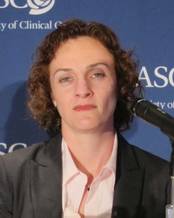
Although the effect was less dramatic, cumulative risk also was elevated in survivors of other childhood cancers treated with chest radiation, reaching 24% overall by age 50, Dr. Moskowitz said at a press briefing. Among the general population of women in the United States, it is 4% at that benchmark, she noted.
Particularly concerning is the heightened risk observed in women who received less radiation than the current threshold at which the Children’s Oncology Group (COG) recommends breast cancer surveillance. The COG says that survivors who received 20 Gy or more of chest radiation should start annual mammograms at age 25 years or 8 years after radiotherapy, whichever comes later.
In this group, 12% of survivors will develop breast cancer by age 40, said Dr. Moskowitz, a biostatistician at Memorial Sloan-Kettering Cancer Center in New York. The study showed that breast cancer incidence also was elevated, albeit not as dramatically – 7% by age 40 – among survivors who received 10-19 Gy of radiation.
Excess risk in those treated with 10-19 Gy warrants "consideration of breast cancer surveillance strategies similar to the current recommendations for women treated with [more than] 20 Gy," the investigators concluded.
About 50,000 survivors received 20 Gy or more of radiation and, therefore, meet the current threshold, Dr. Moskowitz said. Lowering the threshold to include survivors who were treated with 10-19 Gy of chest radiation would add another 7,000-9,000 women.
Increasing public awareness is crucial to increasing surveillance. "Many women who were treated with chest radiation don’t know they have an increased risk of breast cancer," she said. "Their physicians may or may not know, but many physicians are not aware of the guidelines."
Moreover, many survivors don’t know their radiation exposure, and she urged them to try to find those records from long, long ago.
The analysis – a report from the Childhood Cancer Survivor Study (CCSS) and the Women’s Environmental Cancer and Radiation Epidemiology (WECARE) study – mined data on 1,268 women survivors of childhood cancers diagnosed from 1970 to 1986 and on 4,570 first-degree relatives of women who had survived at least 1 year after being diagnosed with breast cancer.
Median follow-up was 26 years in the childhood survivors, of whom 175 women were diagnosed with breast cancer as adults. Median latency was 23 years after treatment, and diagnosis was made at a median age of 38 years.
Multiple studies have shown an increased risk of breast cancer in women who received chest radiation as children, Dr. Moskowitz said. This large study has substantially longer follow-up and was surprising in the magnitude of risk it documents.
Chest radiation doses are lower today, and mantle field radiation – which had been used almost exclusively in Hodgkin’s lymphoma – is no longer used, but other regimens are still in the clinic, she added.
Another surprise from the study was that whole lung radiation, even at low doses, can heighten breast cancer risk. "Women treated with whole lung radiation have a risk of breast cancer that is higher than previous recognized and may benefit from surveillance strategies," she said.
"These are striking data and certainly warrant our careful attention," commented press briefing chair Dr. Nicholas Vogelzang, chair and medical director of the developmental therapeutics committee at the Comprehensive Cancer Centers of Nevada, Las Vegas, and cochair of the genitourinary committee for U.S. Oncology Research.
"The benefit of curing a cancer is you can live 25 or more years," he said, noting that curves for breast cancer incidence rose after 25 years in a graphic representation of the data presented. "We have an obligation to those many thousands of young women whom we treated many years ago."
The investigators said that they had no relevant financial disclosures.
CHICAGO – Breast cancer risk is much higher than previously recognized among women who received chest radiation for Hodgkin’s lymphoma when they were children, investigators reported.
By the time these survivors are 50 years of age, breast cancer incidence is 30% – "remarkably similar" to the 31% incidence observed in the high-risk group of women with BRCA1 mutations, Chaya S. Moskowitz, Ph.D., and her colleagues determined in a study presented at the annual meeting of the American Society of Clinical Oncology.
Although the effect was less dramatic, cumulative risk also was elevated in survivors of other childhood cancers treated with chest radiation, reaching 24% overall by age 50, Dr. Moskowitz said at a press briefing. Among the general population of women in the United States, it is 4% at that benchmark, she noted.
Particularly concerning is the heightened risk observed in women who received less radiation than the current threshold at which the Children’s Oncology Group (COG) recommends breast cancer surveillance. The COG says that survivors who received 20 Gy or more of chest radiation should start annual mammograms at age 25 years or 8 years after radiotherapy, whichever comes later.
In this group, 12% of survivors will develop breast cancer by age 40, said Dr. Moskowitz, a biostatistician at Memorial Sloan-Kettering Cancer Center in New York. The study showed that breast cancer incidence also was elevated, albeit not as dramatically – 7% by age 40 – among survivors who received 10-19 Gy of radiation.
Excess risk in those treated with 10-19 Gy warrants "consideration of breast cancer surveillance strategies similar to the current recommendations for women treated with [more than] 20 Gy," the investigators concluded.
About 50,000 survivors received 20 Gy or more of radiation and, therefore, meet the current threshold, Dr. Moskowitz said. Lowering the threshold to include survivors who were treated with 10-19 Gy of chest radiation would add another 7,000-9,000 women.
Increasing public awareness is crucial to increasing surveillance. "Many women who were treated with chest radiation don’t know they have an increased risk of breast cancer," she said. "Their physicians may or may not know, but many physicians are not aware of the guidelines."
Moreover, many survivors don’t know their radiation exposure, and she urged them to try to find those records from long, long ago.
The analysis – a report from the Childhood Cancer Survivor Study (CCSS) and the Women’s Environmental Cancer and Radiation Epidemiology (WECARE) study – mined data on 1,268 women survivors of childhood cancers diagnosed from 1970 to 1986 and on 4,570 first-degree relatives of women who had survived at least 1 year after being diagnosed with breast cancer.
Median follow-up was 26 years in the childhood survivors, of whom 175 women were diagnosed with breast cancer as adults. Median latency was 23 years after treatment, and diagnosis was made at a median age of 38 years.
Multiple studies have shown an increased risk of breast cancer in women who received chest radiation as children, Dr. Moskowitz said. This large study has substantially longer follow-up and was surprising in the magnitude of risk it documents.
Chest radiation doses are lower today, and mantle field radiation – which had been used almost exclusively in Hodgkin’s lymphoma – is no longer used, but other regimens are still in the clinic, she added.
Another surprise from the study was that whole lung radiation, even at low doses, can heighten breast cancer risk. "Women treated with whole lung radiation have a risk of breast cancer that is higher than previous recognized and may benefit from surveillance strategies," she said.
"These are striking data and certainly warrant our careful attention," commented press briefing chair Dr. Nicholas Vogelzang, chair and medical director of the developmental therapeutics committee at the Comprehensive Cancer Centers of Nevada, Las Vegas, and cochair of the genitourinary committee for U.S. Oncology Research.
"The benefit of curing a cancer is you can live 25 or more years," he said, noting that curves for breast cancer incidence rose after 25 years in a graphic representation of the data presented. "We have an obligation to those many thousands of young women whom we treated many years ago."
The investigators said that they had no relevant financial disclosures.
CHICAGO – Breast cancer risk is much higher than previously recognized among women who received chest radiation for Hodgkin’s lymphoma when they were children, investigators reported.
By the time these survivors are 50 years of age, breast cancer incidence is 30% – "remarkably similar" to the 31% incidence observed in the high-risk group of women with BRCA1 mutations, Chaya S. Moskowitz, Ph.D., and her colleagues determined in a study presented at the annual meeting of the American Society of Clinical Oncology.
Although the effect was less dramatic, cumulative risk also was elevated in survivors of other childhood cancers treated with chest radiation, reaching 24% overall by age 50, Dr. Moskowitz said at a press briefing. Among the general population of women in the United States, it is 4% at that benchmark, she noted.
Particularly concerning is the heightened risk observed in women who received less radiation than the current threshold at which the Children’s Oncology Group (COG) recommends breast cancer surveillance. The COG says that survivors who received 20 Gy or more of chest radiation should start annual mammograms at age 25 years or 8 years after radiotherapy, whichever comes later.
In this group, 12% of survivors will develop breast cancer by age 40, said Dr. Moskowitz, a biostatistician at Memorial Sloan-Kettering Cancer Center in New York. The study showed that breast cancer incidence also was elevated, albeit not as dramatically – 7% by age 40 – among survivors who received 10-19 Gy of radiation.
Excess risk in those treated with 10-19 Gy warrants "consideration of breast cancer surveillance strategies similar to the current recommendations for women treated with [more than] 20 Gy," the investigators concluded.
About 50,000 survivors received 20 Gy or more of radiation and, therefore, meet the current threshold, Dr. Moskowitz said. Lowering the threshold to include survivors who were treated with 10-19 Gy of chest radiation would add another 7,000-9,000 women.
Increasing public awareness is crucial to increasing surveillance. "Many women who were treated with chest radiation don’t know they have an increased risk of breast cancer," she said. "Their physicians may or may not know, but many physicians are not aware of the guidelines."
Moreover, many survivors don’t know their radiation exposure, and she urged them to try to find those records from long, long ago.
The analysis – a report from the Childhood Cancer Survivor Study (CCSS) and the Women’s Environmental Cancer and Radiation Epidemiology (WECARE) study – mined data on 1,268 women survivors of childhood cancers diagnosed from 1970 to 1986 and on 4,570 first-degree relatives of women who had survived at least 1 year after being diagnosed with breast cancer.
Median follow-up was 26 years in the childhood survivors, of whom 175 women were diagnosed with breast cancer as adults. Median latency was 23 years after treatment, and diagnosis was made at a median age of 38 years.
Multiple studies have shown an increased risk of breast cancer in women who received chest radiation as children, Dr. Moskowitz said. This large study has substantially longer follow-up and was surprising in the magnitude of risk it documents.
Chest radiation doses are lower today, and mantle field radiation – which had been used almost exclusively in Hodgkin’s lymphoma – is no longer used, but other regimens are still in the clinic, she added.
Another surprise from the study was that whole lung radiation, even at low doses, can heighten breast cancer risk. "Women treated with whole lung radiation have a risk of breast cancer that is higher than previous recognized and may benefit from surveillance strategies," she said.
"These are striking data and certainly warrant our careful attention," commented press briefing chair Dr. Nicholas Vogelzang, chair and medical director of the developmental therapeutics committee at the Comprehensive Cancer Centers of Nevada, Las Vegas, and cochair of the genitourinary committee for U.S. Oncology Research.
"The benefit of curing a cancer is you can live 25 or more years," he said, noting that curves for breast cancer incidence rose after 25 years in a graphic representation of the data presented. "We have an obligation to those many thousands of young women whom we treated many years ago."
The investigators said that they had no relevant financial disclosures.
FROM THE ANNUAL MEETING OF THE AMERICAN SOCIETY OF CLINICAL ONCOLOGY
Major Finding: Nearly a third (30%) of females treated with chest radiation for Hodgkin’s lymphoma was diagnosed with breast cancer by age 50.
Data Source: Investigators analyzed data on 1,268 childhood cancer survivors in the Childhood Cancer Survivor Study and 4,570 first-degree relatives of breast cancer patients in the Women’s Environmental Cancer and Radiation Epidemiology (WECARE) study.
Disclosures: The investigators had no relevant financial disclosures.
Did the IOM Get Vitamin D Targets Wrong?
NEW ORLEANS – When the Institute of Medicine released updated recommendations on calcium and vitamin D intake in late 2010, the report became the backbone for clinical guidance. But since then, they have been hotly debated among those who say that the recommendations were too weak, and others who say that it has been inappropriately used to herald vitamin D as the next wonder substance, with little scientific evidence backing that claim.
The IOM guidelines "fail the smell test," said Dr. Neil Binkley, a geriatrician and research scientist at the University of Wisconsin–Madison. The recommended intake for a 1-year-old (600 IU/day) is the same as for a 70-year-old. That would make the recommended dietary allowance for vitamin D one of the few RDAs that do not adjust for age, he said at the annual meeting of the American College of Physicians.

In addition, the recommendations were formulated from a public health standpoint. That makes them less useful for determining the best recommended dietary allowance for an individual patient. Knowing an individual’s particular risk factors and variables in his or her life are crucial for determining an appropriate intake, he said.
Vitamin D deficiency is likely a growing issue, not just in the United States, but worldwide. Vitamin D is not commonly found in food, but is easily synthesized from sunlight. Centuries ago, humans wore less clothing and did not wear sunscreen. Now, of course, avoidance of sun exposure is common practice and has likely contributed to lower serum vitamin D levels in modern humans, he said.
For instance, a recent study showed that two traditional sub-Saharan tribes – the Maasai and the Hadzabe – who wear little clothing, do not use sunscreen, and have darkly pigmented skin (putting them at greater risk for vitamin D deficiency) – had a mean serum 25-hydroxyvitamin D concentration of 46 ng/mL (or 115 nmol/L), according to a study (Br. J. Nutr. 2012 Jan. 23 [doi:10.1017/S0007114511007161]).
This serum concentration is much greater than the IOM’s target of "sufficient" levels (defined as greater than 30 nmol/L). Levels between 20 and 30 nmol/L are considered insufficient, and less than 12 is considered deficient. According to these IOM figures, some 80% of whites have sufficient levels, whereas 71% of African Americans and 46% of Mexican Americans have low levels of serum vitamin D. Dr. Binkley said that he considers the IOM cut-offs to be conservative, but even according to those numbers, as much as a third of the U.S. population may be deficient.
Guidelines subsequently issued by the Endocrine Society called for higher RDAs than that recommended by the IOM, underscoring the lack of consensus around what constitutes a sufficient vitamin D intake, said Dr. Binkley.
There’s also lack of consensus around who should be screened for serum vitamin D levels. The Endocrine Society has called for screening of those "at risk," but then categorizes so many people as being at risk that it’s essentially equivalent to total population screening, said Dr. Binkley. He supports screening, in particular of older adults with a history of falls, and of others with a history of nontraumatic fractures. But he does not advocate total population screening.
What should physicians do? First, recognize that not all patients are the same and that a serum concentration of 20 ng/L may not be sufficient for every individual. Also, just urging sun exposure may not be enough for some patients, either. Multiple studies in the literature have shown that serum concentrations can vary widely among individuals, even when they have had equivalent levels of sun exposure, said Dr. Binkley.

Lab tests for serum vitamin D levels have improved over the years, but they are far from perfect.
So what are adequate levels? According to several studies in sun-exposed individuals, 20 ng/mL seems low and levels in the mid-30s seem reasonable, said Dr. Binkley. "I think we need to be above 30," he said, noting that, for many patients, that means a daily intake of 1,000-2,000 IU of vitamin D daily.
That advice jibes with a statement the American Association of Clinical Endocrinologists issued shortly after the IOM report. AACE recommended that an optimal range for most patients should be 30-50 ng/mL. To achieve that, it would be necessary to take 1,000-2,000 IU of vitamin D daily. The group also said that physicians should use the IOM recommendations "in conjunction with clinical judgment to determine the proper vitamin D requirement for any given patient."
The evidence seems to support that higher serum levels (greater than 30 ng/mL) are associated with reduced fracture and fall risk, but that at super-high levels, vitamin D actually increases falls and fractures, said Dr. Binkley. It’s not clear why that is. In the study, women were given a megadose of 500,000 IU of vitamin D once a year; findings suggested that a big blast of the vitamin is not helpful, he said (JAMA 2010:303:1815-22).
The data show that for each additional 1,000 IU daily, the serum level goes up by about 6 ng/mL. Increases will be greater for patients who start with lower serum levels. To determine what’s optimal, it’s probably necessary to measure serum levels periodically, Dr. Binkley said.
If you write a prescription, you’re likely to get the less optimal form of vitamin D, that is, vitamin D2. Humans make vitamin D3 when they are exposed to sunlight, but only D2 is available in prescription form. Dr. Binkley said that he prefers patients to take D3, which is available over the counter. But if he’s going for a big repletion – say a typical 50,000 IU dose – he has to use the D2 form.
It is possible to have vitamin D intoxication. Most studies have never documented anyone with serum levels greater than 70 ng/mL. Patients who have levels above 70 are probably getting too much vitamin D, he said.
Equally intoxicating is the hype surrounding vitamin D, which recently has been touted as a veritable fountain of youth. Almost every tissue in the body has a vitamin D receptor and it is produced locally by many tissues. But the evidence does not support the notion that low levels are responsible for a laundry list of diseases, Dr. Binkley said. It is plausible that low vitamin D contributes to impaired immune function, diabetes, vascular disease, and a higher risk for bone loss and fractures, among other conditions. Sufficient vitamin D may also reduce cancer risk.
But so far, too many studies show association, and not causation. "We need to stay tuned," said Dr. Binkley, noting that there need to be more randomized, prospective studies and no more meta-analyses.
The IOM report "is too weak," but trying to get patients to serum vitamin D levels greater than 40 ng/mL is not responsible, Dr. Binkley stressed.
Dr. Binkley has consulting arrangements with Eli Lilly and Merck, and grants from those companies as well as Amgen and Tarsa, but none relate to vitamin D.
NEW ORLEANS – When the Institute of Medicine released updated recommendations on calcium and vitamin D intake in late 2010, the report became the backbone for clinical guidance. But since then, they have been hotly debated among those who say that the recommendations were too weak, and others who say that it has been inappropriately used to herald vitamin D as the next wonder substance, with little scientific evidence backing that claim.
The IOM guidelines "fail the smell test," said Dr. Neil Binkley, a geriatrician and research scientist at the University of Wisconsin–Madison. The recommended intake for a 1-year-old (600 IU/day) is the same as for a 70-year-old. That would make the recommended dietary allowance for vitamin D one of the few RDAs that do not adjust for age, he said at the annual meeting of the American College of Physicians.
In addition, the recommendations were formulated from a public health standpoint. That makes them less useful for determining the best recommended dietary allowance for an individual patient. Knowing an individual’s particular risk factors and variables in his or her life are crucial for determining an appropriate intake, he said.
Vitamin D deficiency is likely a growing issue, not just in the United States, but worldwide. Vitamin D is not commonly found in food, but is easily synthesized from sunlight. Centuries ago, humans wore less clothing and did not wear sunscreen. Now, of course, avoidance of sun exposure is common practice and has likely contributed to lower serum vitamin D levels in modern humans, he said.
For instance, a recent study showed that two traditional sub-Saharan tribes – the Maasai and the Hadzabe – who wear little clothing, do not use sunscreen, and have darkly pigmented skin (putting them at greater risk for vitamin D deficiency) – had a mean serum 25-hydroxyvitamin D concentration of 46 ng/mL (or 115 nmol/L), according to a study (Br. J. Nutr. 2012 Jan. 23 [doi:10.1017/S0007114511007161]).
This serum concentration is much greater than the IOM’s target of "sufficient" levels (defined as greater than 30 nmol/L). Levels between 20 and 30 nmol/L are considered insufficient, and less than 12 is considered deficient. According to these IOM figures, some 80% of whites have sufficient levels, whereas 71% of African Americans and 46% of Mexican Americans have low levels of serum vitamin D. Dr. Binkley said that he considers the IOM cut-offs to be conservative, but even according to those numbers, as much as a third of the U.S. population may be deficient.
Guidelines subsequently issued by the Endocrine Society called for higher RDAs than that recommended by the IOM, underscoring the lack of consensus around what constitutes a sufficient vitamin D intake, said Dr. Binkley.
There’s also lack of consensus around who should be screened for serum vitamin D levels. The Endocrine Society has called for screening of those "at risk," but then categorizes so many people as being at risk that it’s essentially equivalent to total population screening, said Dr. Binkley. He supports screening, in particular of older adults with a history of falls, and of others with a history of nontraumatic fractures. But he does not advocate total population screening.
What should physicians do? First, recognize that not all patients are the same and that a serum concentration of 20 ng/L may not be sufficient for every individual. Also, just urging sun exposure may not be enough for some patients, either. Multiple studies in the literature have shown that serum concentrations can vary widely among individuals, even when they have had equivalent levels of sun exposure, said Dr. Binkley.
Lab tests for serum vitamin D levels have improved over the years, but they are far from perfect.
So what are adequate levels? According to several studies in sun-exposed individuals, 20 ng/mL seems low and levels in the mid-30s seem reasonable, said Dr. Binkley. "I think we need to be above 30," he said, noting that, for many patients, that means a daily intake of 1,000-2,000 IU of vitamin D daily.
That advice jibes with a statement the American Association of Clinical Endocrinologists issued shortly after the IOM report. AACE recommended that an optimal range for most patients should be 30-50 ng/mL. To achieve that, it would be necessary to take 1,000-2,000 IU of vitamin D daily. The group also said that physicians should use the IOM recommendations "in conjunction with clinical judgment to determine the proper vitamin D requirement for any given patient."
The evidence seems to support that higher serum levels (greater than 30 ng/mL) are associated with reduced fracture and fall risk, but that at super-high levels, vitamin D actually increases falls and fractures, said Dr. Binkley. It’s not clear why that is. In the study, women were given a megadose of 500,000 IU of vitamin D once a year; findings suggested that a big blast of the vitamin is not helpful, he said (JAMA 2010:303:1815-22).
The data show that for each additional 1,000 IU daily, the serum level goes up by about 6 ng/mL. Increases will be greater for patients who start with lower serum levels. To determine what’s optimal, it’s probably necessary to measure serum levels periodically, Dr. Binkley said.
If you write a prescription, you’re likely to get the less optimal form of vitamin D, that is, vitamin D2. Humans make vitamin D3 when they are exposed to sunlight, but only D2 is available in prescription form. Dr. Binkley said that he prefers patients to take D3, which is available over the counter. But if he’s going for a big repletion – say a typical 50,000 IU dose – he has to use the D2 form.
It is possible to have vitamin D intoxication. Most studies have never documented anyone with serum levels greater than 70 ng/mL. Patients who have levels above 70 are probably getting too much vitamin D, he said.
Equally intoxicating is the hype surrounding vitamin D, which recently has been touted as a veritable fountain of youth. Almost every tissue in the body has a vitamin D receptor and it is produced locally by many tissues. But the evidence does not support the notion that low levels are responsible for a laundry list of diseases, Dr. Binkley said. It is plausible that low vitamin D contributes to impaired immune function, diabetes, vascular disease, and a higher risk for bone loss and fractures, among other conditions. Sufficient vitamin D may also reduce cancer risk.
But so far, too many studies show association, and not causation. "We need to stay tuned," said Dr. Binkley, noting that there need to be more randomized, prospective studies and no more meta-analyses.
The IOM report "is too weak," but trying to get patients to serum vitamin D levels greater than 40 ng/mL is not responsible, Dr. Binkley stressed.
Dr. Binkley has consulting arrangements with Eli Lilly and Merck, and grants from those companies as well as Amgen and Tarsa, but none relate to vitamin D.
NEW ORLEANS – When the Institute of Medicine released updated recommendations on calcium and vitamin D intake in late 2010, the report became the backbone for clinical guidance. But since then, they have been hotly debated among those who say that the recommendations were too weak, and others who say that it has been inappropriately used to herald vitamin D as the next wonder substance, with little scientific evidence backing that claim.
The IOM guidelines "fail the smell test," said Dr. Neil Binkley, a geriatrician and research scientist at the University of Wisconsin–Madison. The recommended intake for a 1-year-old (600 IU/day) is the same as for a 70-year-old. That would make the recommended dietary allowance for vitamin D one of the few RDAs that do not adjust for age, he said at the annual meeting of the American College of Physicians.
In addition, the recommendations were formulated from a public health standpoint. That makes them less useful for determining the best recommended dietary allowance for an individual patient. Knowing an individual’s particular risk factors and variables in his or her life are crucial for determining an appropriate intake, he said.
Vitamin D deficiency is likely a growing issue, not just in the United States, but worldwide. Vitamin D is not commonly found in food, but is easily synthesized from sunlight. Centuries ago, humans wore less clothing and did not wear sunscreen. Now, of course, avoidance of sun exposure is common practice and has likely contributed to lower serum vitamin D levels in modern humans, he said.
For instance, a recent study showed that two traditional sub-Saharan tribes – the Maasai and the Hadzabe – who wear little clothing, do not use sunscreen, and have darkly pigmented skin (putting them at greater risk for vitamin D deficiency) – had a mean serum 25-hydroxyvitamin D concentration of 46 ng/mL (or 115 nmol/L), according to a study (Br. J. Nutr. 2012 Jan. 23 [doi:10.1017/S0007114511007161]).
This serum concentration is much greater than the IOM’s target of "sufficient" levels (defined as greater than 30 nmol/L). Levels between 20 and 30 nmol/L are considered insufficient, and less than 12 is considered deficient. According to these IOM figures, some 80% of whites have sufficient levels, whereas 71% of African Americans and 46% of Mexican Americans have low levels of serum vitamin D. Dr. Binkley said that he considers the IOM cut-offs to be conservative, but even according to those numbers, as much as a third of the U.S. population may be deficient.
Guidelines subsequently issued by the Endocrine Society called for higher RDAs than that recommended by the IOM, underscoring the lack of consensus around what constitutes a sufficient vitamin D intake, said Dr. Binkley.
There’s also lack of consensus around who should be screened for serum vitamin D levels. The Endocrine Society has called for screening of those "at risk," but then categorizes so many people as being at risk that it’s essentially equivalent to total population screening, said Dr. Binkley. He supports screening, in particular of older adults with a history of falls, and of others with a history of nontraumatic fractures. But he does not advocate total population screening.
What should physicians do? First, recognize that not all patients are the same and that a serum concentration of 20 ng/L may not be sufficient for every individual. Also, just urging sun exposure may not be enough for some patients, either. Multiple studies in the literature have shown that serum concentrations can vary widely among individuals, even when they have had equivalent levels of sun exposure, said Dr. Binkley.
Lab tests for serum vitamin D levels have improved over the years, but they are far from perfect.
So what are adequate levels? According to several studies in sun-exposed individuals, 20 ng/mL seems low and levels in the mid-30s seem reasonable, said Dr. Binkley. "I think we need to be above 30," he said, noting that, for many patients, that means a daily intake of 1,000-2,000 IU of vitamin D daily.
That advice jibes with a statement the American Association of Clinical Endocrinologists issued shortly after the IOM report. AACE recommended that an optimal range for most patients should be 30-50 ng/mL. To achieve that, it would be necessary to take 1,000-2,000 IU of vitamin D daily. The group also said that physicians should use the IOM recommendations "in conjunction with clinical judgment to determine the proper vitamin D requirement for any given patient."
The evidence seems to support that higher serum levels (greater than 30 ng/mL) are associated with reduced fracture and fall risk, but that at super-high levels, vitamin D actually increases falls and fractures, said Dr. Binkley. It’s not clear why that is. In the study, women were given a megadose of 500,000 IU of vitamin D once a year; findings suggested that a big blast of the vitamin is not helpful, he said (JAMA 2010:303:1815-22).
The data show that for each additional 1,000 IU daily, the serum level goes up by about 6 ng/mL. Increases will be greater for patients who start with lower serum levels. To determine what’s optimal, it’s probably necessary to measure serum levels periodically, Dr. Binkley said.
If you write a prescription, you’re likely to get the less optimal form of vitamin D, that is, vitamin D2. Humans make vitamin D3 when they are exposed to sunlight, but only D2 is available in prescription form. Dr. Binkley said that he prefers patients to take D3, which is available over the counter. But if he’s going for a big repletion – say a typical 50,000 IU dose – he has to use the D2 form.
It is possible to have vitamin D intoxication. Most studies have never documented anyone with serum levels greater than 70 ng/mL. Patients who have levels above 70 are probably getting too much vitamin D, he said.
Equally intoxicating is the hype surrounding vitamin D, which recently has been touted as a veritable fountain of youth. Almost every tissue in the body has a vitamin D receptor and it is produced locally by many tissues. But the evidence does not support the notion that low levels are responsible for a laundry list of diseases, Dr. Binkley said. It is plausible that low vitamin D contributes to impaired immune function, diabetes, vascular disease, and a higher risk for bone loss and fractures, among other conditions. Sufficient vitamin D may also reduce cancer risk.
But so far, too many studies show association, and not causation. "We need to stay tuned," said Dr. Binkley, noting that there need to be more randomized, prospective studies and no more meta-analyses.
The IOM report "is too weak," but trying to get patients to serum vitamin D levels greater than 40 ng/mL is not responsible, Dr. Binkley stressed.
Dr. Binkley has consulting arrangements with Eli Lilly and Merck, and grants from those companies as well as Amgen and Tarsa, but none relate to vitamin D.
EXPERT ANALYSIS FROM THE ANNUAL MEETING OF THE AMERICAN COLLEGE OF PHYSICIANS
Docs Need Primer on Long-Term Effects of Chemotherapy
Many primary care physicians – and even some oncologists – are unaware of common long-term side effects of four widely used breast and colorectal cancer drugs, a national survey by the National Cancer Institute reveals.
Only 6% of primary care physicians were able to identify the main long-term effects (LEs) of doxorubicin (Adriamycin), paclitaxel (Taxol), oxaliplatin (Eloxatin), and cyclophosphamide (Cytoxan), compared with 65% of oncologists surveyed.

The results are not surprising, but they underscore the need for ongoing education among all physicians who care for the more than 12 million cancer survivors in the United States, lead author Dr. Larissa Nekhlyudov said during a press briefing highlighting research to be presented at the upcoming annual meeting of the American Society of Clinical Oncology (ASCO).
"These findings emphasize that in the transition of patients from oncology to primary care settings, primary care providers should be informed about the late effects of cancer treatment so that they may be better prepared to recognize and address these among cancer survivors in their care," said Dr. Nekhlyudov, a primary care physician (PCP) with Harvard Medical School in Boston and Harvard Vanguard Medical Associates in Kenmore, Mass. "Whether this will be achieved with survivorship care plans needs to be evaluated."
The "Survey of Physician Attitudes Regarding the Care of Cancer Survivors" was launched by the National Cancer Institute in 2009, with one survey mailed to a nationally representative sample of 1,072 PCPs and the other to 1,130 medical oncologists who only cared for patients with colorectal or breast cancer.
When asked to report the five LEs they had observed and/or had seen reported in the literature for each of the four standard chemotherapy drugs, 95% of oncologists identified cardiac dysfunction as an LE of doxorubicin, compared with 55% of PCPs (P less than .0001), Dr. Nekhlyudov said.
Similarly, peripheral neuropathy was correctly identified as an LE of paclitaxel and of oxaliplatin by 97% of oncologists, but by only 27% and 22%, respectively, of PCPs (both P less than .0001).
The survey suggests, however, that some oncologists could also use additional continuing education. Premature menopause and secondary malignancies – two long-term effects associated with the alkylating agent cyclophosphamide – were identified by only 71% and 62% of oncologists, respectively, along with 15% and 17%, respectively, of PCPs.
Oncologists and PCPs mostly missed pulmonary fibrosis as a late effect for paclitaxel (5% and 6%, respectively; P = .42) or oxaliplatin (5% and. 9%, respectively; P = .0002). They did a little better in pointing out a possible association with cyclophosphamide (20.6% and 13%; P less than .0001), which has been noted in the literature, she observed.
Dr. Nekhlyudov suggested that the lack of awareness among oncologists is likely because much of the focus has been on the treatment of cancer, and only recently have physicians become aware of the importance of survivorship and the potential for late effects.
"While it is surprising that oncologists were not more aware of late effects, I think that as more and more attention is placed on cancer survivorship, oncologists will become more equipped with that information," she said.
ASCO president and press briefing comoderator Dr. Michael Link said the problem of survivorship has long been recognized in pediatric oncology, where patients frequently relocate, outgrow their pediatrician, or even deny they ever had cancer. Groups such as ASCO and the Institute of Medicine, most recently through its "Lost in Transition" report, have offered guidance for improving transitions among survivors, including the provision of a cancer care plan.
"I think the need for all of this has been highlighted in this abstract and certainly, it’s a shot across the bow with things that need to be done," he said.
In adjusted analyses, oncologists who were not board certified were less likely to identify the main LEs for all four drugs (odds ratio, 0.58).Oncologists were more likely to know their LEs if they spent 51%-90% of their time on patient care (OR, 1.87) or more than 90% of their time with patients (OR, 1.82). Age, sex, race, U.S. training, type of practice, and percentage of uninsured patients were not associated with LE awareness, Dr. Nekhlyudov said.
Previous results from the survey reported at last year’s ASCO annual meeting indicated that PCPs had low confidence in their knowledge of breast and colon cancer survivors, and reported low marks for their skills in caring for these patients. In addition, neither PCPs nor oncologists felt that a PCP-led model was ideal for survivorship care (J. Clin. Oncol. 2011;29[suppl.];abstract CRA9006).
Dr. Nekhlyudov will formally present her study at ASCO at 5:30 p.m. June 2. The abstract can be viewed at www.abstract.asco.org.
The authors reported no disclosures.
Many primary care physicians – and even some oncologists – are unaware of common long-term side effects of four widely used breast and colorectal cancer drugs, a national survey by the National Cancer Institute reveals.
Only 6% of primary care physicians were able to identify the main long-term effects (LEs) of doxorubicin (Adriamycin), paclitaxel (Taxol), oxaliplatin (Eloxatin), and cyclophosphamide (Cytoxan), compared with 65% of oncologists surveyed.
The results are not surprising, but they underscore the need for ongoing education among all physicians who care for the more than 12 million cancer survivors in the United States, lead author Dr. Larissa Nekhlyudov said during a press briefing highlighting research to be presented at the upcoming annual meeting of the American Society of Clinical Oncology (ASCO).
"These findings emphasize that in the transition of patients from oncology to primary care settings, primary care providers should be informed about the late effects of cancer treatment so that they may be better prepared to recognize and address these among cancer survivors in their care," said Dr. Nekhlyudov, a primary care physician (PCP) with Harvard Medical School in Boston and Harvard Vanguard Medical Associates in Kenmore, Mass. "Whether this will be achieved with survivorship care plans needs to be evaluated."
The "Survey of Physician Attitudes Regarding the Care of Cancer Survivors" was launched by the National Cancer Institute in 2009, with one survey mailed to a nationally representative sample of 1,072 PCPs and the other to 1,130 medical oncologists who only cared for patients with colorectal or breast cancer.
When asked to report the five LEs they had observed and/or had seen reported in the literature for each of the four standard chemotherapy drugs, 95% of oncologists identified cardiac dysfunction as an LE of doxorubicin, compared with 55% of PCPs (P less than .0001), Dr. Nekhlyudov said.
Similarly, peripheral neuropathy was correctly identified as an LE of paclitaxel and of oxaliplatin by 97% of oncologists, but by only 27% and 22%, respectively, of PCPs (both P less than .0001).
The survey suggests, however, that some oncologists could also use additional continuing education. Premature menopause and secondary malignancies – two long-term effects associated with the alkylating agent cyclophosphamide – were identified by only 71% and 62% of oncologists, respectively, along with 15% and 17%, respectively, of PCPs.
Oncologists and PCPs mostly missed pulmonary fibrosis as a late effect for paclitaxel (5% and 6%, respectively; P = .42) or oxaliplatin (5% and. 9%, respectively; P = .0002). They did a little better in pointing out a possible association with cyclophosphamide (20.6% and 13%; P less than .0001), which has been noted in the literature, she observed.
Dr. Nekhlyudov suggested that the lack of awareness among oncologists is likely because much of the focus has been on the treatment of cancer, and only recently have physicians become aware of the importance of survivorship and the potential for late effects.
"While it is surprising that oncologists were not more aware of late effects, I think that as more and more attention is placed on cancer survivorship, oncologists will become more equipped with that information," she said.
ASCO president and press briefing comoderator Dr. Michael Link said the problem of survivorship has long been recognized in pediatric oncology, where patients frequently relocate, outgrow their pediatrician, or even deny they ever had cancer. Groups such as ASCO and the Institute of Medicine, most recently through its "Lost in Transition" report, have offered guidance for improving transitions among survivors, including the provision of a cancer care plan.
"I think the need for all of this has been highlighted in this abstract and certainly, it’s a shot across the bow with things that need to be done," he said.
In adjusted analyses, oncologists who were not board certified were less likely to identify the main LEs for all four drugs (odds ratio, 0.58).Oncologists were more likely to know their LEs if they spent 51%-90% of their time on patient care (OR, 1.87) or more than 90% of their time with patients (OR, 1.82). Age, sex, race, U.S. training, type of practice, and percentage of uninsured patients were not associated with LE awareness, Dr. Nekhlyudov said.
Previous results from the survey reported at last year’s ASCO annual meeting indicated that PCPs had low confidence in their knowledge of breast and colon cancer survivors, and reported low marks for their skills in caring for these patients. In addition, neither PCPs nor oncologists felt that a PCP-led model was ideal for survivorship care (J. Clin. Oncol. 2011;29[suppl.];abstract CRA9006).
Dr. Nekhlyudov will formally present her study at ASCO at 5:30 p.m. June 2. The abstract can be viewed at www.abstract.asco.org.
The authors reported no disclosures.
Many primary care physicians – and even some oncologists – are unaware of common long-term side effects of four widely used breast and colorectal cancer drugs, a national survey by the National Cancer Institute reveals.
Only 6% of primary care physicians were able to identify the main long-term effects (LEs) of doxorubicin (Adriamycin), paclitaxel (Taxol), oxaliplatin (Eloxatin), and cyclophosphamide (Cytoxan), compared with 65% of oncologists surveyed.
The results are not surprising, but they underscore the need for ongoing education among all physicians who care for the more than 12 million cancer survivors in the United States, lead author Dr. Larissa Nekhlyudov said during a press briefing highlighting research to be presented at the upcoming annual meeting of the American Society of Clinical Oncology (ASCO).
"These findings emphasize that in the transition of patients from oncology to primary care settings, primary care providers should be informed about the late effects of cancer treatment so that they may be better prepared to recognize and address these among cancer survivors in their care," said Dr. Nekhlyudov, a primary care physician (PCP) with Harvard Medical School in Boston and Harvard Vanguard Medical Associates in Kenmore, Mass. "Whether this will be achieved with survivorship care plans needs to be evaluated."
The "Survey of Physician Attitudes Regarding the Care of Cancer Survivors" was launched by the National Cancer Institute in 2009, with one survey mailed to a nationally representative sample of 1,072 PCPs and the other to 1,130 medical oncologists who only cared for patients with colorectal or breast cancer.
When asked to report the five LEs they had observed and/or had seen reported in the literature for each of the four standard chemotherapy drugs, 95% of oncologists identified cardiac dysfunction as an LE of doxorubicin, compared with 55% of PCPs (P less than .0001), Dr. Nekhlyudov said.
Similarly, peripheral neuropathy was correctly identified as an LE of paclitaxel and of oxaliplatin by 97% of oncologists, but by only 27% and 22%, respectively, of PCPs (both P less than .0001).
The survey suggests, however, that some oncologists could also use additional continuing education. Premature menopause and secondary malignancies – two long-term effects associated with the alkylating agent cyclophosphamide – were identified by only 71% and 62% of oncologists, respectively, along with 15% and 17%, respectively, of PCPs.
Oncologists and PCPs mostly missed pulmonary fibrosis as a late effect for paclitaxel (5% and 6%, respectively; P = .42) or oxaliplatin (5% and. 9%, respectively; P = .0002). They did a little better in pointing out a possible association with cyclophosphamide (20.6% and 13%; P less than .0001), which has been noted in the literature, she observed.
Dr. Nekhlyudov suggested that the lack of awareness among oncologists is likely because much of the focus has been on the treatment of cancer, and only recently have physicians become aware of the importance of survivorship and the potential for late effects.
"While it is surprising that oncologists were not more aware of late effects, I think that as more and more attention is placed on cancer survivorship, oncologists will become more equipped with that information," she said.
ASCO president and press briefing comoderator Dr. Michael Link said the problem of survivorship has long been recognized in pediatric oncology, where patients frequently relocate, outgrow their pediatrician, or even deny they ever had cancer. Groups such as ASCO and the Institute of Medicine, most recently through its "Lost in Transition" report, have offered guidance for improving transitions among survivors, including the provision of a cancer care plan.
"I think the need for all of this has been highlighted in this abstract and certainly, it’s a shot across the bow with things that need to be done," he said.
In adjusted analyses, oncologists who were not board certified were less likely to identify the main LEs for all four drugs (odds ratio, 0.58).Oncologists were more likely to know their LEs if they spent 51%-90% of their time on patient care (OR, 1.87) or more than 90% of their time with patients (OR, 1.82). Age, sex, race, U.S. training, type of practice, and percentage of uninsured patients were not associated with LE awareness, Dr. Nekhlyudov said.
Previous results from the survey reported at last year’s ASCO annual meeting indicated that PCPs had low confidence in their knowledge of breast and colon cancer survivors, and reported low marks for their skills in caring for these patients. In addition, neither PCPs nor oncologists felt that a PCP-led model was ideal for survivorship care (J. Clin. Oncol. 2011;29[suppl.];abstract CRA9006).
Dr. Nekhlyudov will formally present her study at ASCO at 5:30 p.m. June 2. The abstract can be viewed at www.abstract.asco.org.
The authors reported no disclosures.
FROM THE ANNUAL MEETING OF THE AMERICAN SOCIETY OF CLINICAL ONCOLOGY
Major Finding: Only 6% of primary care physicians were able to identify the main long-term effects of doxorubicin, paclitaxel, oxaliplatin and cyclophosphamide, compared with 65% of oncologists.
Data Source: Survey of 1,072 primary care physicians and 1,130 oncologists.
Disclosures: The authors reported no disclosures.