User login
Future Technologies Hold Promise for Hair Restoration
ORLANDO - Expect clinical options for hair restoration to grow in the future, said Dr. Ricardo Mejia.
Robotic hair transfer, multiple technologies to optimize new growth, and even hair cloning could help overcome current limitations in hair transplantation, Dr. Mejia said. Promising technologies could someday supplant donor strip and follicular unit extraction techniques. "We are getting to the age of robotics," Dr. Mejia said at the annual meeting of the Florida Society of Dermatologic Surgeons.
Historically, hair transplantation meant 4-mm plugs transferred at a rate of 10-200 grafts per session over a total of three to eight treatments. Because plugs were placed in a regular pattern, initial results appeared unnatural and very obvious. For some patients, a perception persists that this is still state-of-the-art for hair transplantation, Dr. Mejia said.
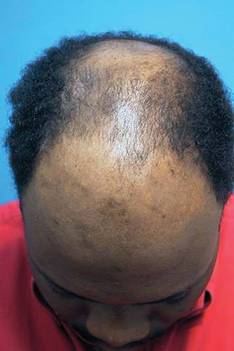
A natural, irregular hairline and greater hair density in fewer treatment sessions are now commonplace. "The average session these days of 2,500 grafts is not a big deal," Dr. Mejia said at the meeting.
"Restoring youthful hairlines can be done in single sessions. ... You can get a nice, age-appropriate appearance for an individual," said Dr. Mejia, a hair transplant surgeon in private practice in Jupiter, Fla. Even with recent advances, full growth of hair grafts still takes 6 months to a year, so realistic patient expectations are important.
A new device, NeoGraft Automated Hair Transplant System (NeoGraft), was cleared for marketing by the Food and Drug Administration in March 2009. After a rotating sharp punch scores the skin, a pneumatic suction device extracts the follicles. This technique minimizes injury to the lower half of hair follicles during follicular unit extraction, Dr. Mejia said. The device also implants grafts to a uniform depth.
Researchers are working on a variety of other means to protect grafts during the transfer process. For example, some are developing solutions to protect grafts that contain allopurinol, nitric oxide inhibitors, vitamins, and other components. Also, "we are starting to look at solutions used in organ transplantation." Small studies have shown increased hair survival and growth with these solutions used to optimize protection of organs during transfer, Dr. Mejia said.
Bathing follicular units in autologous platelet-rich plasma to promote healing angiogenesis is another approach. Growth factor components also could be beneficial, Dr. Mejia said. More studies are needed to determine the efficacy of injections of autologous platelet-rich plasma into both the donor area and the recipient areas in clinical practice.
Matching the size of the incision blade to the graft size can also help improve graft survival, Dr. Mejia said. Less trauma, less ischemia, and decreased overall bleeding are associated with finer blades. Although finer blades allow higher-density graft packing, he advised caution because some studies have shown more graft death with higher densities.
Investigators also are looking at technology to optimize new hair growth once the grafts are in place.
"Low-level lasers are getting a lot of attention," Dr. Mejia said. Wavelengths are in the range of 630-670 nm, power densities are between 5-50 mW/cm2, and fluences are 2-20 J/cm2.
The Food and Drug Administration cleared two devices that use low-level light therapy for hair growth: HairMax LaserComb (Lexington International) for men and the MPE-90 Hair Growth Stimulation System (Salon Lasers) for women.
"How good is the HairMax comb?" a meeting attendee asked. Dr. Mejia replied that reviews are mixed: "Hair restoration surgeons are on the fence – some believe in it, some don’t. Some patients are happy with it, some are not."
A lot of research also is underway to refine auto cloning and hair multiplication technologies, Dr. Mejia said.
Dermal papilla cells or fibroblasts are the starting point, because they stimulate formation of new hairs. Multiple companies are working on proprietary processes to spur these fibroblasts to produce enough follicles in culture to replace an entire scalp. This is where they hope "to make their windfall," he said. Research includes fibroblasts grown in subatmospheric oxygen tension, addition of wound-healing factors, and injections of a "hair-stimulating complex" to promote greater hair growth.
TrichoCyte is an example of a cell-based hair regeneration technology in phase II trials based on a proprietary dermal papilla cell process (Intercytex, Manchester, England). "The technique does work but [it is] not completely satisfactory at this point," Dr. Mejia said.
More than half of participants in one protocol for another proprietary cell treatment process showed significant hair growth 1 year later, according to a release announcing phase II study results for Aderans Research Institute.
Considerable work remains to be done before regenerative medical hair cloning becomes a clinically viable option, Dr. Mejia said. "How far out are we? I say 5-10 years."
Dr. Mejia said he had no relevant disclosures.
ORLANDO - Expect clinical options for hair restoration to grow in the future, said Dr. Ricardo Mejia.
Robotic hair transfer, multiple technologies to optimize new growth, and even hair cloning could help overcome current limitations in hair transplantation, Dr. Mejia said. Promising technologies could someday supplant donor strip and follicular unit extraction techniques. "We are getting to the age of robotics," Dr. Mejia said at the annual meeting of the Florida Society of Dermatologic Surgeons.
Historically, hair transplantation meant 4-mm plugs transferred at a rate of 10-200 grafts per session over a total of three to eight treatments. Because plugs were placed in a regular pattern, initial results appeared unnatural and very obvious. For some patients, a perception persists that this is still state-of-the-art for hair transplantation, Dr. Mejia said.
A natural, irregular hairline and greater hair density in fewer treatment sessions are now commonplace. "The average session these days of 2,500 grafts is not a big deal," Dr. Mejia said at the meeting.
"Restoring youthful hairlines can be done in single sessions. ... You can get a nice, age-appropriate appearance for an individual," said Dr. Mejia, a hair transplant surgeon in private practice in Jupiter, Fla. Even with recent advances, full growth of hair grafts still takes 6 months to a year, so realistic patient expectations are important.
A new device, NeoGraft Automated Hair Transplant System (NeoGraft), was cleared for marketing by the Food and Drug Administration in March 2009. After a rotating sharp punch scores the skin, a pneumatic suction device extracts the follicles. This technique minimizes injury to the lower half of hair follicles during follicular unit extraction, Dr. Mejia said. The device also implants grafts to a uniform depth.
Researchers are working on a variety of other means to protect grafts during the transfer process. For example, some are developing solutions to protect grafts that contain allopurinol, nitric oxide inhibitors, vitamins, and other components. Also, "we are starting to look at solutions used in organ transplantation." Small studies have shown increased hair survival and growth with these solutions used to optimize protection of organs during transfer, Dr. Mejia said.
Bathing follicular units in autologous platelet-rich plasma to promote healing angiogenesis is another approach. Growth factor components also could be beneficial, Dr. Mejia said. More studies are needed to determine the efficacy of injections of autologous platelet-rich plasma into both the donor area and the recipient areas in clinical practice.
Matching the size of the incision blade to the graft size can also help improve graft survival, Dr. Mejia said. Less trauma, less ischemia, and decreased overall bleeding are associated with finer blades. Although finer blades allow higher-density graft packing, he advised caution because some studies have shown more graft death with higher densities.
Investigators also are looking at technology to optimize new hair growth once the grafts are in place.
"Low-level lasers are getting a lot of attention," Dr. Mejia said. Wavelengths are in the range of 630-670 nm, power densities are between 5-50 mW/cm2, and fluences are 2-20 J/cm2.
The Food and Drug Administration cleared two devices that use low-level light therapy for hair growth: HairMax LaserComb (Lexington International) for men and the MPE-90 Hair Growth Stimulation System (Salon Lasers) for women.
"How good is the HairMax comb?" a meeting attendee asked. Dr. Mejia replied that reviews are mixed: "Hair restoration surgeons are on the fence – some believe in it, some don’t. Some patients are happy with it, some are not."
A lot of research also is underway to refine auto cloning and hair multiplication technologies, Dr. Mejia said.
Dermal papilla cells or fibroblasts are the starting point, because they stimulate formation of new hairs. Multiple companies are working on proprietary processes to spur these fibroblasts to produce enough follicles in culture to replace an entire scalp. This is where they hope "to make their windfall," he said. Research includes fibroblasts grown in subatmospheric oxygen tension, addition of wound-healing factors, and injections of a "hair-stimulating complex" to promote greater hair growth.
TrichoCyte is an example of a cell-based hair regeneration technology in phase II trials based on a proprietary dermal papilla cell process (Intercytex, Manchester, England). "The technique does work but [it is] not completely satisfactory at this point," Dr. Mejia said.
More than half of participants in one protocol for another proprietary cell treatment process showed significant hair growth 1 year later, according to a release announcing phase II study results for Aderans Research Institute.
Considerable work remains to be done before regenerative medical hair cloning becomes a clinically viable option, Dr. Mejia said. "How far out are we? I say 5-10 years."
Dr. Mejia said he had no relevant disclosures.
ORLANDO - Expect clinical options for hair restoration to grow in the future, said Dr. Ricardo Mejia.
Robotic hair transfer, multiple technologies to optimize new growth, and even hair cloning could help overcome current limitations in hair transplantation, Dr. Mejia said. Promising technologies could someday supplant donor strip and follicular unit extraction techniques. "We are getting to the age of robotics," Dr. Mejia said at the annual meeting of the Florida Society of Dermatologic Surgeons.
Historically, hair transplantation meant 4-mm plugs transferred at a rate of 10-200 grafts per session over a total of three to eight treatments. Because plugs were placed in a regular pattern, initial results appeared unnatural and very obvious. For some patients, a perception persists that this is still state-of-the-art for hair transplantation, Dr. Mejia said.
A natural, irregular hairline and greater hair density in fewer treatment sessions are now commonplace. "The average session these days of 2,500 grafts is not a big deal," Dr. Mejia said at the meeting.
"Restoring youthful hairlines can be done in single sessions. ... You can get a nice, age-appropriate appearance for an individual," said Dr. Mejia, a hair transplant surgeon in private practice in Jupiter, Fla. Even with recent advances, full growth of hair grafts still takes 6 months to a year, so realistic patient expectations are important.
A new device, NeoGraft Automated Hair Transplant System (NeoGraft), was cleared for marketing by the Food and Drug Administration in March 2009. After a rotating sharp punch scores the skin, a pneumatic suction device extracts the follicles. This technique minimizes injury to the lower half of hair follicles during follicular unit extraction, Dr. Mejia said. The device also implants grafts to a uniform depth.
Researchers are working on a variety of other means to protect grafts during the transfer process. For example, some are developing solutions to protect grafts that contain allopurinol, nitric oxide inhibitors, vitamins, and other components. Also, "we are starting to look at solutions used in organ transplantation." Small studies have shown increased hair survival and growth with these solutions used to optimize protection of organs during transfer, Dr. Mejia said.
Bathing follicular units in autologous platelet-rich plasma to promote healing angiogenesis is another approach. Growth factor components also could be beneficial, Dr. Mejia said. More studies are needed to determine the efficacy of injections of autologous platelet-rich plasma into both the donor area and the recipient areas in clinical practice.
Matching the size of the incision blade to the graft size can also help improve graft survival, Dr. Mejia said. Less trauma, less ischemia, and decreased overall bleeding are associated with finer blades. Although finer blades allow higher-density graft packing, he advised caution because some studies have shown more graft death with higher densities.
Investigators also are looking at technology to optimize new hair growth once the grafts are in place.
"Low-level lasers are getting a lot of attention," Dr. Mejia said. Wavelengths are in the range of 630-670 nm, power densities are between 5-50 mW/cm2, and fluences are 2-20 J/cm2.
The Food and Drug Administration cleared two devices that use low-level light therapy for hair growth: HairMax LaserComb (Lexington International) for men and the MPE-90 Hair Growth Stimulation System (Salon Lasers) for women.
"How good is the HairMax comb?" a meeting attendee asked. Dr. Mejia replied that reviews are mixed: "Hair restoration surgeons are on the fence – some believe in it, some don’t. Some patients are happy with it, some are not."
A lot of research also is underway to refine auto cloning and hair multiplication technologies, Dr. Mejia said.
Dermal papilla cells or fibroblasts are the starting point, because they stimulate formation of new hairs. Multiple companies are working on proprietary processes to spur these fibroblasts to produce enough follicles in culture to replace an entire scalp. This is where they hope "to make their windfall," he said. Research includes fibroblasts grown in subatmospheric oxygen tension, addition of wound-healing factors, and injections of a "hair-stimulating complex" to promote greater hair growth.
TrichoCyte is an example of a cell-based hair regeneration technology in phase II trials based on a proprietary dermal papilla cell process (Intercytex, Manchester, England). "The technique does work but [it is] not completely satisfactory at this point," Dr. Mejia said.
More than half of participants in one protocol for another proprietary cell treatment process showed significant hair growth 1 year later, according to a release announcing phase II study results for Aderans Research Institute.
Considerable work remains to be done before regenerative medical hair cloning becomes a clinically viable option, Dr. Mejia said. "How far out are we? I say 5-10 years."
Dr. Mejia said he had no relevant disclosures.
EXPERT ANALYSIS FROM THE ANNUAL MEETING OF THE FLORIDA SOCIETY OF DERMATOLOGIC SURGEONS
Pearls for Excision and Management of Cylindromas
ORLANDO - Surgical excision is the preferred approach for treating a patient who presents with a cylindroma or with the more extensive familial cylindromatosis, Dr. Leonard Slazinski said.
There are some important distinctions between the two. Cylindromas are benign skin appendage tumors that commonly present as single, slow-growing lesions on the head and neck. Lesions often appear in conjunction with spiradenomas and trichoepitheliomas, they typically are 0.5-6.0 cm in size (although some can grow larger), and they affect females more than males. They arise sporadically with no known inheritance pattern.
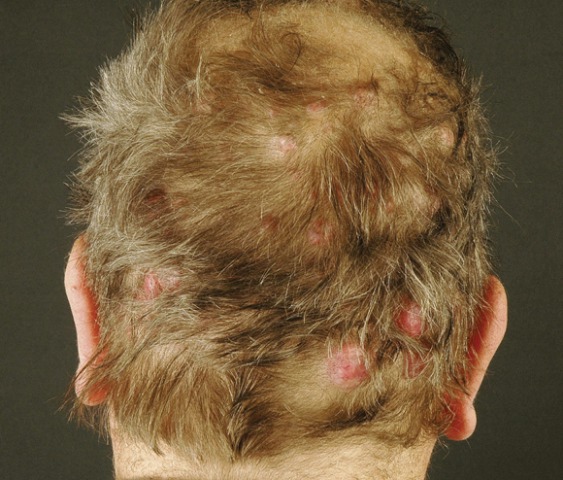
The tumor can be excised with careful inspection to ensure removal of all tissue, Dr. Slazinski said. "In my experience, the cylindroma often does have a pseudocapsule, which allows for blunt dissection of the tumor under direct vision."
In contrast, familial cylindromatosis is an inherited autosomal dominant condition characterized by multiple lesions located on the head and neck. Treatment is trickier, as there is no effective field or systemic therapy. Surgery should be considered most effective, but many doctors "are overwhelmed by the number of these lesions," said Dr. Slazinski, a dermatologist in private practice in Sarasota, Fla.
Familial trichoepitheliomas, Brooke-Spiegler syndrome, and familial cylindromatosis share a genetic etiology – a mutation of the CYLD gene on chromosome 16. "Great advances have been made in etiology and cellular mechanisms of familial cylindromatosis and related conditions," Dr. Slazinski said. But "treatment has not advanced to the same degree."
Removal of these lesions is often performed for aesthetic and functional reasons. "These diseases can become quite severe if untreated," Dr. Slazinski said. The psychosocial impact can be great, and patients often become social recluses.
Even with traditional excision, recurrence "is quite high" at approximately 42%, Dr. Slazinski said. Mohs micrographic surgery is used more often for solitary lesions. Other options, depending on the individual presentation, include cryotherapy, curettage, electrosurgery and radiofrequency excision, and true scalp excision with split-thickness grafting, "which is advocated in severe cases."
Cylindroma patients often present with pseudoalopecia because the tumor does not grow hair. Scalp cylindromas present a unique challenge, with limited tissue and patients’ desire to spare their hair, Dr. Slazinski said. "Hair cosmesis is often the patient’s greatest concern. Paradoxically, as hair is conserved, [the area] can become a reservoir for future tumor formation."
Some clinicians advocate topical aspirin therapy for familial cylindromatosis, Dr. Slazinski said. There may be "less than stellar results, but my patient is seeing some benefit and wants to continue on compounded, topical salicylic acid."
Dr. Slazinski described a patient with an extensive number of lesions across her face, head, and neck. "I'm blessed to be able to take care of this patient, because no one else has really offered her any possibility of improvement. I’ve taken it on myself to at least try to palliate the situation. I am under no delusion that I can cure her in any way."
Dr. Slazinski said he had no relevant financial disclosures.
ORLANDO - Surgical excision is the preferred approach for treating a patient who presents with a cylindroma or with the more extensive familial cylindromatosis, Dr. Leonard Slazinski said.
There are some important distinctions between the two. Cylindromas are benign skin appendage tumors that commonly present as single, slow-growing lesions on the head and neck. Lesions often appear in conjunction with spiradenomas and trichoepitheliomas, they typically are 0.5-6.0 cm in size (although some can grow larger), and they affect females more than males. They arise sporadically with no known inheritance pattern.
The tumor can be excised with careful inspection to ensure removal of all tissue, Dr. Slazinski said. "In my experience, the cylindroma often does have a pseudocapsule, which allows for blunt dissection of the tumor under direct vision."
In contrast, familial cylindromatosis is an inherited autosomal dominant condition characterized by multiple lesions located on the head and neck. Treatment is trickier, as there is no effective field or systemic therapy. Surgery should be considered most effective, but many doctors "are overwhelmed by the number of these lesions," said Dr. Slazinski, a dermatologist in private practice in Sarasota, Fla.
Familial trichoepitheliomas, Brooke-Spiegler syndrome, and familial cylindromatosis share a genetic etiology – a mutation of the CYLD gene on chromosome 16. "Great advances have been made in etiology and cellular mechanisms of familial cylindromatosis and related conditions," Dr. Slazinski said. But "treatment has not advanced to the same degree."
Removal of these lesions is often performed for aesthetic and functional reasons. "These diseases can become quite severe if untreated," Dr. Slazinski said. The psychosocial impact can be great, and patients often become social recluses.
Even with traditional excision, recurrence "is quite high" at approximately 42%, Dr. Slazinski said. Mohs micrographic surgery is used more often for solitary lesions. Other options, depending on the individual presentation, include cryotherapy, curettage, electrosurgery and radiofrequency excision, and true scalp excision with split-thickness grafting, "which is advocated in severe cases."
Cylindroma patients often present with pseudoalopecia because the tumor does not grow hair. Scalp cylindromas present a unique challenge, with limited tissue and patients’ desire to spare their hair, Dr. Slazinski said. "Hair cosmesis is often the patient’s greatest concern. Paradoxically, as hair is conserved, [the area] can become a reservoir for future tumor formation."
Some clinicians advocate topical aspirin therapy for familial cylindromatosis, Dr. Slazinski said. There may be "less than stellar results, but my patient is seeing some benefit and wants to continue on compounded, topical salicylic acid."
Dr. Slazinski described a patient with an extensive number of lesions across her face, head, and neck. "I'm blessed to be able to take care of this patient, because no one else has really offered her any possibility of improvement. I’ve taken it on myself to at least try to palliate the situation. I am under no delusion that I can cure her in any way."
Dr. Slazinski said he had no relevant financial disclosures.
ORLANDO - Surgical excision is the preferred approach for treating a patient who presents with a cylindroma or with the more extensive familial cylindromatosis, Dr. Leonard Slazinski said.
There are some important distinctions between the two. Cylindromas are benign skin appendage tumors that commonly present as single, slow-growing lesions on the head and neck. Lesions often appear in conjunction with spiradenomas and trichoepitheliomas, they typically are 0.5-6.0 cm in size (although some can grow larger), and they affect females more than males. They arise sporadically with no known inheritance pattern.
The tumor can be excised with careful inspection to ensure removal of all tissue, Dr. Slazinski said. "In my experience, the cylindroma often does have a pseudocapsule, which allows for blunt dissection of the tumor under direct vision."
In contrast, familial cylindromatosis is an inherited autosomal dominant condition characterized by multiple lesions located on the head and neck. Treatment is trickier, as there is no effective field or systemic therapy. Surgery should be considered most effective, but many doctors "are overwhelmed by the number of these lesions," said Dr. Slazinski, a dermatologist in private practice in Sarasota, Fla.
Familial trichoepitheliomas, Brooke-Spiegler syndrome, and familial cylindromatosis share a genetic etiology – a mutation of the CYLD gene on chromosome 16. "Great advances have been made in etiology and cellular mechanisms of familial cylindromatosis and related conditions," Dr. Slazinski said. But "treatment has not advanced to the same degree."
Removal of these lesions is often performed for aesthetic and functional reasons. "These diseases can become quite severe if untreated," Dr. Slazinski said. The psychosocial impact can be great, and patients often become social recluses.
Even with traditional excision, recurrence "is quite high" at approximately 42%, Dr. Slazinski said. Mohs micrographic surgery is used more often for solitary lesions. Other options, depending on the individual presentation, include cryotherapy, curettage, electrosurgery and radiofrequency excision, and true scalp excision with split-thickness grafting, "which is advocated in severe cases."
Cylindroma patients often present with pseudoalopecia because the tumor does not grow hair. Scalp cylindromas present a unique challenge, with limited tissue and patients’ desire to spare their hair, Dr. Slazinski said. "Hair cosmesis is often the patient’s greatest concern. Paradoxically, as hair is conserved, [the area] can become a reservoir for future tumor formation."
Some clinicians advocate topical aspirin therapy for familial cylindromatosis, Dr. Slazinski said. There may be "less than stellar results, but my patient is seeing some benefit and wants to continue on compounded, topical salicylic acid."
Dr. Slazinski described a patient with an extensive number of lesions across her face, head, and neck. "I'm blessed to be able to take care of this patient, because no one else has really offered her any possibility of improvement. I’ve taken it on myself to at least try to palliate the situation. I am under no delusion that I can cure her in any way."
Dr. Slazinski said he had no relevant financial disclosures.
FROM THE ANNUAL MEETING OF THE FLORIDA SOCIETY OF DERMATOLOGIC SURGEONS
AHA: CPR Training Should Be a High School Requirement
Cardiopulmonary resuscitation training should be a requirement for graduation from high school and should include instruction on the purpose of an automated external defibrillator and how to use one, according to an American Heart Association consensus statement released Jan. 10.
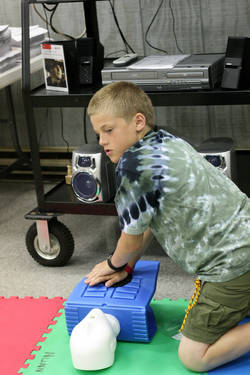
The science advisory statement, developed in collaboration with the American Academy of Pediatrics and the American College of Emergency Physicians and published in the journal Circulation, also recommends that students have opportunities to practice and master psychomotor skills related to CPR, since trainees do not learn enough unless they get the chance to practice.
Although secondary school students most likely won’t encounter a victim of cardiac arrest at school, they may encounter one elsewhere in the community, and teaching CPR skills early can lead to more proficiency later, the AHA statement said.
"Increasing the percentage of the population trained in CPR is an integral part of an overall strategy to improve community response" to out-of-hospital cardiac arrests, the statement said. "Schools provide excellent access to a large part of the community. ... Therefore, over time, a significant percentage of the overall community will receive training."
In 2003, the International Liaison Committee on Resuscitation recommended that CPR instruction be incorporated into standard school curriculums, and the next year the AHA recommended that schools train all teachers in CPR and first aid and train all students in CPR in order to prepare for potential medical emergencies on campus.
As of the 2009-2010 school year, laws or curriculum standards in six states require CPR training as a component of mandatory health education, while 30 states encourage schools to teach CPR, according to the AHA statement. However, implementation of these laws isn’t uniform, and not all schools teach CPR, even in states that have the strongest language encouraging such training, the AHA statement said.
Therefore, requiring CPR training as a condition of high school graduation would significantly increase the level of CPR knowledge in the community over time, the statement said, adding, "the evidence shows that previous training, at any interval before there is a need to use the skills learned, will increase the likelihood that a bystander will provide appropriate care to a victim."
It’s critical to target the correct age group for training, the AHA statement said. Students younger than about 13 years old may not have the necessary physical strength to perform correct chest compressions. Therefore, "it is reasonable to limit practice of adult CPR chest compression skills to children in middle school (around 13 years old) and older," the statement said (Circulation 2011;123:[doi: 10.1161/CIR.0b013e31820b5328]).
Programs designed for schools should include the core skills of conventional CPR and hands-only CPR developed by the AHA, and should emphasize recognition of the emergency and provision of high-quality chest compressions, the statement said.
The statement does not urge mandatory automated external defibrillator (AED) skills practice, although it recommends that schools providing AED skills practice give students an opportunity to practice and master all steps of CPR and AED use, with special emphasis on minimal interruptions in performance of CPR, correct application of pads to an appropriate surrogate for the human thorax, and proper "clearing" of the patient when so instructed by the AED.
Schools have cited a lack of available class time as a barrier to implementing CPR instruction. However, it should be possible for schools to implement such training as part of health courses or as part of a "community service" requirement for high school graduation, the AHA said. In addition, schools can make use of video-based, self-directed training programs and online or other e-learning programs, the statement said.
Several members of the writing committee had relationships that the AHA deemed significant: Dr. Tom P. Aufderheide of the Medical College of Wisconsin, Milwaukee, has received research support from Zoll Medical and Advanced Circulatory Inc.; and has served as an advisor or consultant to Medtronic and JoLife Inc.; Dr. Keith Lurie of the University of Wisconsin is also founder and chief medical officer of Advanced Circulatory Systems, as well as the inventor of that company’s ResQPOD. Dr. Vincent N. Mosesso Jr. of the University of Pittsburgh has received research support from Zoll Medical.
Cardiopulmonary resuscitation training should be a requirement for graduation from high school and should include instruction on the purpose of an automated external defibrillator and how to use one, according to an American Heart Association consensus statement released Jan. 10.
The science advisory statement, developed in collaboration with the American Academy of Pediatrics and the American College of Emergency Physicians and published in the journal Circulation, also recommends that students have opportunities to practice and master psychomotor skills related to CPR, since trainees do not learn enough unless they get the chance to practice.
Although secondary school students most likely won’t encounter a victim of cardiac arrest at school, they may encounter one elsewhere in the community, and teaching CPR skills early can lead to more proficiency later, the AHA statement said.
"Increasing the percentage of the population trained in CPR is an integral part of an overall strategy to improve community response" to out-of-hospital cardiac arrests, the statement said. "Schools provide excellent access to a large part of the community. ... Therefore, over time, a significant percentage of the overall community will receive training."
In 2003, the International Liaison Committee on Resuscitation recommended that CPR instruction be incorporated into standard school curriculums, and the next year the AHA recommended that schools train all teachers in CPR and first aid and train all students in CPR in order to prepare for potential medical emergencies on campus.
As of the 2009-2010 school year, laws or curriculum standards in six states require CPR training as a component of mandatory health education, while 30 states encourage schools to teach CPR, according to the AHA statement. However, implementation of these laws isn’t uniform, and not all schools teach CPR, even in states that have the strongest language encouraging such training, the AHA statement said.
Therefore, requiring CPR training as a condition of high school graduation would significantly increase the level of CPR knowledge in the community over time, the statement said, adding, "the evidence shows that previous training, at any interval before there is a need to use the skills learned, will increase the likelihood that a bystander will provide appropriate care to a victim."
It’s critical to target the correct age group for training, the AHA statement said. Students younger than about 13 years old may not have the necessary physical strength to perform correct chest compressions. Therefore, "it is reasonable to limit practice of adult CPR chest compression skills to children in middle school (around 13 years old) and older," the statement said (Circulation 2011;123:[doi: 10.1161/CIR.0b013e31820b5328]).
Programs designed for schools should include the core skills of conventional CPR and hands-only CPR developed by the AHA, and should emphasize recognition of the emergency and provision of high-quality chest compressions, the statement said.
The statement does not urge mandatory automated external defibrillator (AED) skills practice, although it recommends that schools providing AED skills practice give students an opportunity to practice and master all steps of CPR and AED use, with special emphasis on minimal interruptions in performance of CPR, correct application of pads to an appropriate surrogate for the human thorax, and proper "clearing" of the patient when so instructed by the AED.
Schools have cited a lack of available class time as a barrier to implementing CPR instruction. However, it should be possible for schools to implement such training as part of health courses or as part of a "community service" requirement for high school graduation, the AHA said. In addition, schools can make use of video-based, self-directed training programs and online or other e-learning programs, the statement said.
Several members of the writing committee had relationships that the AHA deemed significant: Dr. Tom P. Aufderheide of the Medical College of Wisconsin, Milwaukee, has received research support from Zoll Medical and Advanced Circulatory Inc.; and has served as an advisor or consultant to Medtronic and JoLife Inc.; Dr. Keith Lurie of the University of Wisconsin is also founder and chief medical officer of Advanced Circulatory Systems, as well as the inventor of that company’s ResQPOD. Dr. Vincent N. Mosesso Jr. of the University of Pittsburgh has received research support from Zoll Medical.
Cardiopulmonary resuscitation training should be a requirement for graduation from high school and should include instruction on the purpose of an automated external defibrillator and how to use one, according to an American Heart Association consensus statement released Jan. 10.
The science advisory statement, developed in collaboration with the American Academy of Pediatrics and the American College of Emergency Physicians and published in the journal Circulation, also recommends that students have opportunities to practice and master psychomotor skills related to CPR, since trainees do not learn enough unless they get the chance to practice.
Although secondary school students most likely won’t encounter a victim of cardiac arrest at school, they may encounter one elsewhere in the community, and teaching CPR skills early can lead to more proficiency later, the AHA statement said.
"Increasing the percentage of the population trained in CPR is an integral part of an overall strategy to improve community response" to out-of-hospital cardiac arrests, the statement said. "Schools provide excellent access to a large part of the community. ... Therefore, over time, a significant percentage of the overall community will receive training."
In 2003, the International Liaison Committee on Resuscitation recommended that CPR instruction be incorporated into standard school curriculums, and the next year the AHA recommended that schools train all teachers in CPR and first aid and train all students in CPR in order to prepare for potential medical emergencies on campus.
As of the 2009-2010 school year, laws or curriculum standards in six states require CPR training as a component of mandatory health education, while 30 states encourage schools to teach CPR, according to the AHA statement. However, implementation of these laws isn’t uniform, and not all schools teach CPR, even in states that have the strongest language encouraging such training, the AHA statement said.
Therefore, requiring CPR training as a condition of high school graduation would significantly increase the level of CPR knowledge in the community over time, the statement said, adding, "the evidence shows that previous training, at any interval before there is a need to use the skills learned, will increase the likelihood that a bystander will provide appropriate care to a victim."
It’s critical to target the correct age group for training, the AHA statement said. Students younger than about 13 years old may not have the necessary physical strength to perform correct chest compressions. Therefore, "it is reasonable to limit practice of adult CPR chest compression skills to children in middle school (around 13 years old) and older," the statement said (Circulation 2011;123:[doi: 10.1161/CIR.0b013e31820b5328]).
Programs designed for schools should include the core skills of conventional CPR and hands-only CPR developed by the AHA, and should emphasize recognition of the emergency and provision of high-quality chest compressions, the statement said.
The statement does not urge mandatory automated external defibrillator (AED) skills practice, although it recommends that schools providing AED skills practice give students an opportunity to practice and master all steps of CPR and AED use, with special emphasis on minimal interruptions in performance of CPR, correct application of pads to an appropriate surrogate for the human thorax, and proper "clearing" of the patient when so instructed by the AED.
Schools have cited a lack of available class time as a barrier to implementing CPR instruction. However, it should be possible for schools to implement such training as part of health courses or as part of a "community service" requirement for high school graduation, the AHA said. In addition, schools can make use of video-based, self-directed training programs and online or other e-learning programs, the statement said.
Several members of the writing committee had relationships that the AHA deemed significant: Dr. Tom P. Aufderheide of the Medical College of Wisconsin, Milwaukee, has received research support from Zoll Medical and Advanced Circulatory Inc.; and has served as an advisor or consultant to Medtronic and JoLife Inc.; Dr. Keith Lurie of the University of Wisconsin is also founder and chief medical officer of Advanced Circulatory Systems, as well as the inventor of that company’s ResQPOD. Dr. Vincent N. Mosesso Jr. of the University of Pittsburgh has received research support from Zoll Medical.
FROM CIRCULATION
Pathologic Grooming Behavior: Facial Dermatillomania
Approach to Office Visits for Hair Loss in Women [editorial]
Expert Offers Fungus Treatment Recommendations
LAS VEGAS - Competition among large retailers is bringing down the cost of terbinafine, but griseofulvin is still better for many fungal infections, according to Dr. Lawrence F. Eichenfield.
The ideal prescription depends on the type of fungus and the site of the infection, said Dr. Eichenfield, chief of pediatric and adolescent dermatology at the University of California, San Diego, at the pediatric update sponsored by the American Academy of Pediatrics California Chapter 9.
Topical medications alone can seldom cure tinea capitis because the fungus finds protection inside hair follicles, but he advised using them in combination with systemic drugs.
The signs of tinea capitis include scaling, pustules, kerion, black dots, alopecia, adenopathy, and autoeczematization (also known as id reaction). The condition can resemble seborrheic dermatitis, psoriasis, folliculitis, and other diseases.
"So it's worth doing a routine culture," said Dr. Eichenfield, adding that it’s fairly easy to obtain a specimen with a toothbrush, cotton swabs, or bacterial culturettes.
The most common culprit is Trichophyton tonsurans, which is spread by human contact. The second most common cause is Microsporum canis, which is spread by cats.
Family coinfection can contribute to treatment failure, so inquire about tinea capitis and tinea corporis in other affected family members and pets, said Dr. Eichenfield. The standard therapy for tinea capitis is microsized griseofulvin (20 mg/kg) for 6-8 weeks, he advised.
The only other approved drug is terbinafine granules, and these are hard to obtain, he said, but itraconazole and fluconazole might also work.
Particularly if griseofulvin fails, Dr. Eichenfield recommended terbinafine 4-8 mg/kg per day for 4 weeks. But one recent study found that griseofulvin was much better than terbinafine for M. canis (J. Am. Acad. Dermatol. 2008;59:41-54).
The same organisms, along with T. rubrum and T. mentagrophytes, can cause tinea corporis. Patients present with red scaling plaque, often with an active border. Central clearing may give the lesions a ring shape.
They can be treated with a wide variety of topical drugs, among them clotrimazole, econazole, oxiconazole, ciclopirox, terbinafine, and ketoconazole. Systemic treatment should be reserved for extensive disease or special circumstances, such as for wrestlers. The best systemic treatment is griseofulvin, 15-20 mg/kg (5-10 mg/kg ultramicrosize), said Dr. Eichenfield.
Although fewer than 1% of children suffer from onychomycosis, the proportion increases with age; more than a third of adults older than 70 years have the disease. In children who are not severely affected, the disease can go untreated.
There is no approved treatment for onychomycosis in children, but Dr. Eichenfield said that he is comfortable recommending terbinafine as long as parents are informed that this is an off-label use of the drug. "Terbinafine is so cost effective," he said. "You can get it for $4-$7 per month. It used to be $1,200 for a full course."
His recommended dosages to treat onychomycosis are the following:
• For children weighing less than 20 kg: 62.5 mg/day.
• For children weighing 20-40 kg: 125 mg/day.
• For children weighing more than 40 kg: 250 mg/day.
"It's recommended that you get baseline lab work," he said. "Many of us will repeat [it] 1 month into the therapy."
In a study presented at the American Academy of Dermatology annual meeting in 2007, 39% of children treated with ciclopirox lacquer achieved a complete cure, compared with 22% of children who were treated with a placebo, suggesting that the disease can spontaneously resolve.
And what about lasers? "Whether lasers are any better than any other debridement has not been addressed," he said.
Dr. Eichenfield reported having no relevant financial disclosures.
LAS VEGAS - Competition among large retailers is bringing down the cost of terbinafine, but griseofulvin is still better for many fungal infections, according to Dr. Lawrence F. Eichenfield.
The ideal prescription depends on the type of fungus and the site of the infection, said Dr. Eichenfield, chief of pediatric and adolescent dermatology at the University of California, San Diego, at the pediatric update sponsored by the American Academy of Pediatrics California Chapter 9.
Topical medications alone can seldom cure tinea capitis because the fungus finds protection inside hair follicles, but he advised using them in combination with systemic drugs.
The signs of tinea capitis include scaling, pustules, kerion, black dots, alopecia, adenopathy, and autoeczematization (also known as id reaction). The condition can resemble seborrheic dermatitis, psoriasis, folliculitis, and other diseases.
"So it's worth doing a routine culture," said Dr. Eichenfield, adding that it’s fairly easy to obtain a specimen with a toothbrush, cotton swabs, or bacterial culturettes.
The most common culprit is Trichophyton tonsurans, which is spread by human contact. The second most common cause is Microsporum canis, which is spread by cats.
Family coinfection can contribute to treatment failure, so inquire about tinea capitis and tinea corporis in other affected family members and pets, said Dr. Eichenfield. The standard therapy for tinea capitis is microsized griseofulvin (20 mg/kg) for 6-8 weeks, he advised.
The only other approved drug is terbinafine granules, and these are hard to obtain, he said, but itraconazole and fluconazole might also work.
Particularly if griseofulvin fails, Dr. Eichenfield recommended terbinafine 4-8 mg/kg per day for 4 weeks. But one recent study found that griseofulvin was much better than terbinafine for M. canis (J. Am. Acad. Dermatol. 2008;59:41-54).
The same organisms, along with T. rubrum and T. mentagrophytes, can cause tinea corporis. Patients present with red scaling plaque, often with an active border. Central clearing may give the lesions a ring shape.
They can be treated with a wide variety of topical drugs, among them clotrimazole, econazole, oxiconazole, ciclopirox, terbinafine, and ketoconazole. Systemic treatment should be reserved for extensive disease or special circumstances, such as for wrestlers. The best systemic treatment is griseofulvin, 15-20 mg/kg (5-10 mg/kg ultramicrosize), said Dr. Eichenfield.
Although fewer than 1% of children suffer from onychomycosis, the proportion increases with age; more than a third of adults older than 70 years have the disease. In children who are not severely affected, the disease can go untreated.
There is no approved treatment for onychomycosis in children, but Dr. Eichenfield said that he is comfortable recommending terbinafine as long as parents are informed that this is an off-label use of the drug. "Terbinafine is so cost effective," he said. "You can get it for $4-$7 per month. It used to be $1,200 for a full course."
His recommended dosages to treat onychomycosis are the following:
• For children weighing less than 20 kg: 62.5 mg/day.
• For children weighing 20-40 kg: 125 mg/day.
• For children weighing more than 40 kg: 250 mg/day.
"It's recommended that you get baseline lab work," he said. "Many of us will repeat [it] 1 month into the therapy."
In a study presented at the American Academy of Dermatology annual meeting in 2007, 39% of children treated with ciclopirox lacquer achieved a complete cure, compared with 22% of children who were treated with a placebo, suggesting that the disease can spontaneously resolve.
And what about lasers? "Whether lasers are any better than any other debridement has not been addressed," he said.
Dr. Eichenfield reported having no relevant financial disclosures.
LAS VEGAS - Competition among large retailers is bringing down the cost of terbinafine, but griseofulvin is still better for many fungal infections, according to Dr. Lawrence F. Eichenfield.
The ideal prescription depends on the type of fungus and the site of the infection, said Dr. Eichenfield, chief of pediatric and adolescent dermatology at the University of California, San Diego, at the pediatric update sponsored by the American Academy of Pediatrics California Chapter 9.
Topical medications alone can seldom cure tinea capitis because the fungus finds protection inside hair follicles, but he advised using them in combination with systemic drugs.
The signs of tinea capitis include scaling, pustules, kerion, black dots, alopecia, adenopathy, and autoeczematization (also known as id reaction). The condition can resemble seborrheic dermatitis, psoriasis, folliculitis, and other diseases.
"So it's worth doing a routine culture," said Dr. Eichenfield, adding that it’s fairly easy to obtain a specimen with a toothbrush, cotton swabs, or bacterial culturettes.
The most common culprit is Trichophyton tonsurans, which is spread by human contact. The second most common cause is Microsporum canis, which is spread by cats.
Family coinfection can contribute to treatment failure, so inquire about tinea capitis and tinea corporis in other affected family members and pets, said Dr. Eichenfield. The standard therapy for tinea capitis is microsized griseofulvin (20 mg/kg) for 6-8 weeks, he advised.
The only other approved drug is terbinafine granules, and these are hard to obtain, he said, but itraconazole and fluconazole might also work.
Particularly if griseofulvin fails, Dr. Eichenfield recommended terbinafine 4-8 mg/kg per day for 4 weeks. But one recent study found that griseofulvin was much better than terbinafine for M. canis (J. Am. Acad. Dermatol. 2008;59:41-54).
The same organisms, along with T. rubrum and T. mentagrophytes, can cause tinea corporis. Patients present with red scaling plaque, often with an active border. Central clearing may give the lesions a ring shape.
They can be treated with a wide variety of topical drugs, among them clotrimazole, econazole, oxiconazole, ciclopirox, terbinafine, and ketoconazole. Systemic treatment should be reserved for extensive disease or special circumstances, such as for wrestlers. The best systemic treatment is griseofulvin, 15-20 mg/kg (5-10 mg/kg ultramicrosize), said Dr. Eichenfield.
Although fewer than 1% of children suffer from onychomycosis, the proportion increases with age; more than a third of adults older than 70 years have the disease. In children who are not severely affected, the disease can go untreated.
There is no approved treatment for onychomycosis in children, but Dr. Eichenfield said that he is comfortable recommending terbinafine as long as parents are informed that this is an off-label use of the drug. "Terbinafine is so cost effective," he said. "You can get it for $4-$7 per month. It used to be $1,200 for a full course."
His recommended dosages to treat onychomycosis are the following:
• For children weighing less than 20 kg: 62.5 mg/day.
• For children weighing 20-40 kg: 125 mg/day.
• For children weighing more than 40 kg: 250 mg/day.
"It's recommended that you get baseline lab work," he said. "Many of us will repeat [it] 1 month into the therapy."
In a study presented at the American Academy of Dermatology annual meeting in 2007, 39% of children treated with ciclopirox lacquer achieved a complete cure, compared with 22% of children who were treated with a placebo, suggesting that the disease can spontaneously resolve.
And what about lasers? "Whether lasers are any better than any other debridement has not been addressed," he said.
Dr. Eichenfield reported having no relevant financial disclosures.
Onychomycosis is Best Tackled With Evidence-Based Strategies
GOTHENBURG, SWEDEN – Onychomycosis remains a difficult disorder to treat and cure, even with modern antifungal agents. But the chances of success can be greatly enhanced through application of several proven, evidence-based strategies.
A recent study identified multiple baseline factors associated with a low cure rate following a standard 3-month course of oral terbinafine for onychomycosis. One preemptive strategy in patients possessing several of these poor-prognosis factors is to consider combination therapy from the outset. Alternatively, the standard 3 months of terbinafine could be stretched for 5-6 months, Dr. Bardur Sigurgeirsson said at the annual congress of the European Academy of Dermatology and Venereology.

The host-related prognostic factors were identified in Dr. Sigurgeirsson’s recent secondary retrospective analysis of 3-year outcomes in 199 Icelandic participants in a large international randomized trial of continuous versus intermittent terbinafine (J. Eur. Acad. Dermatol. Venereol. 2010; 24:679-84).
Several of the prognostic factors were already known, but the study provided the first-ever supporting data validating their legitimacy, said Dr. Sigurgeirsson of the University of Iceland, Reykjavik. The new information is particularly useful in everyday clinical practice because no universal classification of disease severity exists.
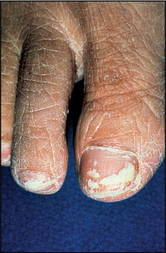
In the multivariate, logistic, regression analysis, baseline factors associated with a negative outcome at 72 weeks of follow-up – that is, failure to achieve mycologic or clinical cure – included matrix involvement, lateral nail edge involvement, and dermatophytoma. Slow nail growth from screening to baseline was another predictor of lack of cure; this makes sense, as patients with faster-growing nails are likely to shed the infected part sooner, he noted.
Other factors enabling physicians to select good candidates for up-front combination or extended therapy were being over age 65 years, being male, having a history of prior fungal toe infection, and having a positive culture at 24 weeks’ follow-up, even if the nails look good at that point.
Several factors in popular dermatologic lore to predict poor outcome were not borne out in the study. The extent of infection involvement, the number of infected toenails, duration of infection, and presence of spikes were unrelated to the 72-week cure rate. There was a trend for patients with thicker nail plates or subungual hyperkeratosis to be less likely to reach cure, but this factor did not achieve statistical significance, he reported.
The greatest likelihood of cure at 72 weeks’ follow-up after the standard 3 months of oral terbinafine was seen in younger female patients with fast nail growth.
An earlier, randomized, multicenter study by Dr. Sigurgeirsson and coworkers made the case for up-front combination therapy with amorolfine hydrochloride 5% nail lacquer and oral terbinafine for treating onychomycosis in patients with terbinafine monotherapy lack-of-cure risk factors. The trial involved 249 patients; one of the strongest predictors of poor outcome was baseline nail matrix involvement. The success rate at 18 months was 59% for combination therapy, compared with 45% for oral terbinafine monotherapy. The cost per cure was significantly less with combination therapy (Br. J. Dermatol. 2007;157:149-57).
Onychomycosis is best viewed as a chronic relapsing condition, as evidenced by a 5-year, blinded, prospective follow-up study Dr. Sigurgeirsson and colleagues conducted in terbinafine – or itraconazole-treated patients (Arch. Dermatol. 2002;138:353-7). The mycologic relapse rates were 53% in the itraconazole arm and 48% with terbinafine.
In a subsequent study of nearly 4,000 patients, the investigators identified a number of risk factors for recurrent onychomycosis: cancer, 3.4-fold increased risk; psoriasis, 2.4-fold increased risk; tinea pedis interdigitalis, 3.9-fold increased risk; moccasin form of tinea pedis, 4.3-fold increased risk; regular swimming, 2.6-fold increased risk; and having a spouse, parents, or children with onychomycosis, 2.5- to 3.5-fold increased risk (J. Eur. Acad. Dermatol. Venereol. 2004;18:48-51).
These findings were recently confirmed and expanded upon in a Japanese survey of 30,000 dermatology patients. Dermatologists at Teikyo University in Itabashi found most of the same risk factors earlier identified by Dr. Sigurgeirsson and coworkers. In addition, the Japanese investigators identified two previously undescribed risk factors for recurrent infection: more time spent wearing shoes, and having a higher temperature in the home (J. Dermatol. 2010;37:397-406).
Prophylactic therapy is worth considering following cure of onychomycosis in patients at increased risk for relapse based upon their risk factor profile, Dr. Sigurgeirsson said. He and his coworkers recently showed that amorolfine nail lacquer applied once every 2 weeks is safe and effective for this purpose (J. Eur. Acad. Dermatol. Venereol. 2010;24:910-5).
Many of his studies of terbinafine for onychomycosis were supported by research grants from Novartis.
GOTHENBURG, SWEDEN – Onychomycosis remains a difficult disorder to treat and cure, even with modern antifungal agents. But the chances of success can be greatly enhanced through application of several proven, evidence-based strategies.
A recent study identified multiple baseline factors associated with a low cure rate following a standard 3-month course of oral terbinafine for onychomycosis. One preemptive strategy in patients possessing several of these poor-prognosis factors is to consider combination therapy from the outset. Alternatively, the standard 3 months of terbinafine could be stretched for 5-6 months, Dr. Bardur Sigurgeirsson said at the annual congress of the European Academy of Dermatology and Venereology.
The host-related prognostic factors were identified in Dr. Sigurgeirsson’s recent secondary retrospective analysis of 3-year outcomes in 199 Icelandic participants in a large international randomized trial of continuous versus intermittent terbinafine (J. Eur. Acad. Dermatol. Venereol. 2010; 24:679-84).
Several of the prognostic factors were already known, but the study provided the first-ever supporting data validating their legitimacy, said Dr. Sigurgeirsson of the University of Iceland, Reykjavik. The new information is particularly useful in everyday clinical practice because no universal classification of disease severity exists.
In the multivariate, logistic, regression analysis, baseline factors associated with a negative outcome at 72 weeks of follow-up – that is, failure to achieve mycologic or clinical cure – included matrix involvement, lateral nail edge involvement, and dermatophytoma. Slow nail growth from screening to baseline was another predictor of lack of cure; this makes sense, as patients with faster-growing nails are likely to shed the infected part sooner, he noted.
Other factors enabling physicians to select good candidates for up-front combination or extended therapy were being over age 65 years, being male, having a history of prior fungal toe infection, and having a positive culture at 24 weeks’ follow-up, even if the nails look good at that point.
Several factors in popular dermatologic lore to predict poor outcome were not borne out in the study. The extent of infection involvement, the number of infected toenails, duration of infection, and presence of spikes were unrelated to the 72-week cure rate. There was a trend for patients with thicker nail plates or subungual hyperkeratosis to be less likely to reach cure, but this factor did not achieve statistical significance, he reported.
The greatest likelihood of cure at 72 weeks’ follow-up after the standard 3 months of oral terbinafine was seen in younger female patients with fast nail growth.
An earlier, randomized, multicenter study by Dr. Sigurgeirsson and coworkers made the case for up-front combination therapy with amorolfine hydrochloride 5% nail lacquer and oral terbinafine for treating onychomycosis in patients with terbinafine monotherapy lack-of-cure risk factors. The trial involved 249 patients; one of the strongest predictors of poor outcome was baseline nail matrix involvement. The success rate at 18 months was 59% for combination therapy, compared with 45% for oral terbinafine monotherapy. The cost per cure was significantly less with combination therapy (Br. J. Dermatol. 2007;157:149-57).
Onychomycosis is best viewed as a chronic relapsing condition, as evidenced by a 5-year, blinded, prospective follow-up study Dr. Sigurgeirsson and colleagues conducted in terbinafine – or itraconazole-treated patients (Arch. Dermatol. 2002;138:353-7). The mycologic relapse rates were 53% in the itraconazole arm and 48% with terbinafine.
In a subsequent study of nearly 4,000 patients, the investigators identified a number of risk factors for recurrent onychomycosis: cancer, 3.4-fold increased risk; psoriasis, 2.4-fold increased risk; tinea pedis interdigitalis, 3.9-fold increased risk; moccasin form of tinea pedis, 4.3-fold increased risk; regular swimming, 2.6-fold increased risk; and having a spouse, parents, or children with onychomycosis, 2.5- to 3.5-fold increased risk (J. Eur. Acad. Dermatol. Venereol. 2004;18:48-51).
These findings were recently confirmed and expanded upon in a Japanese survey of 30,000 dermatology patients. Dermatologists at Teikyo University in Itabashi found most of the same risk factors earlier identified by Dr. Sigurgeirsson and coworkers. In addition, the Japanese investigators identified two previously undescribed risk factors for recurrent infection: more time spent wearing shoes, and having a higher temperature in the home (J. Dermatol. 2010;37:397-406).
Prophylactic therapy is worth considering following cure of onychomycosis in patients at increased risk for relapse based upon their risk factor profile, Dr. Sigurgeirsson said. He and his coworkers recently showed that amorolfine nail lacquer applied once every 2 weeks is safe and effective for this purpose (J. Eur. Acad. Dermatol. Venereol. 2010;24:910-5).
Many of his studies of terbinafine for onychomycosis were supported by research grants from Novartis.
GOTHENBURG, SWEDEN – Onychomycosis remains a difficult disorder to treat and cure, even with modern antifungal agents. But the chances of success can be greatly enhanced through application of several proven, evidence-based strategies.
A recent study identified multiple baseline factors associated with a low cure rate following a standard 3-month course of oral terbinafine for onychomycosis. One preemptive strategy in patients possessing several of these poor-prognosis factors is to consider combination therapy from the outset. Alternatively, the standard 3 months of terbinafine could be stretched for 5-6 months, Dr. Bardur Sigurgeirsson said at the annual congress of the European Academy of Dermatology and Venereology.
The host-related prognostic factors were identified in Dr. Sigurgeirsson’s recent secondary retrospective analysis of 3-year outcomes in 199 Icelandic participants in a large international randomized trial of continuous versus intermittent terbinafine (J. Eur. Acad. Dermatol. Venereol. 2010; 24:679-84).
Several of the prognostic factors were already known, but the study provided the first-ever supporting data validating their legitimacy, said Dr. Sigurgeirsson of the University of Iceland, Reykjavik. The new information is particularly useful in everyday clinical practice because no universal classification of disease severity exists.
In the multivariate, logistic, regression analysis, baseline factors associated with a negative outcome at 72 weeks of follow-up – that is, failure to achieve mycologic or clinical cure – included matrix involvement, lateral nail edge involvement, and dermatophytoma. Slow nail growth from screening to baseline was another predictor of lack of cure; this makes sense, as patients with faster-growing nails are likely to shed the infected part sooner, he noted.
Other factors enabling physicians to select good candidates for up-front combination or extended therapy were being over age 65 years, being male, having a history of prior fungal toe infection, and having a positive culture at 24 weeks’ follow-up, even if the nails look good at that point.
Several factors in popular dermatologic lore to predict poor outcome were not borne out in the study. The extent of infection involvement, the number of infected toenails, duration of infection, and presence of spikes were unrelated to the 72-week cure rate. There was a trend for patients with thicker nail plates or subungual hyperkeratosis to be less likely to reach cure, but this factor did not achieve statistical significance, he reported.
The greatest likelihood of cure at 72 weeks’ follow-up after the standard 3 months of oral terbinafine was seen in younger female patients with fast nail growth.
An earlier, randomized, multicenter study by Dr. Sigurgeirsson and coworkers made the case for up-front combination therapy with amorolfine hydrochloride 5% nail lacquer and oral terbinafine for treating onychomycosis in patients with terbinafine monotherapy lack-of-cure risk factors. The trial involved 249 patients; one of the strongest predictors of poor outcome was baseline nail matrix involvement. The success rate at 18 months was 59% for combination therapy, compared with 45% for oral terbinafine monotherapy. The cost per cure was significantly less with combination therapy (Br. J. Dermatol. 2007;157:149-57).
Onychomycosis is best viewed as a chronic relapsing condition, as evidenced by a 5-year, blinded, prospective follow-up study Dr. Sigurgeirsson and colleagues conducted in terbinafine – or itraconazole-treated patients (Arch. Dermatol. 2002;138:353-7). The mycologic relapse rates were 53% in the itraconazole arm and 48% with terbinafine.
In a subsequent study of nearly 4,000 patients, the investigators identified a number of risk factors for recurrent onychomycosis: cancer, 3.4-fold increased risk; psoriasis, 2.4-fold increased risk; tinea pedis interdigitalis, 3.9-fold increased risk; moccasin form of tinea pedis, 4.3-fold increased risk; regular swimming, 2.6-fold increased risk; and having a spouse, parents, or children with onychomycosis, 2.5- to 3.5-fold increased risk (J. Eur. Acad. Dermatol. Venereol. 2004;18:48-51).
These findings were recently confirmed and expanded upon in a Japanese survey of 30,000 dermatology patients. Dermatologists at Teikyo University in Itabashi found most of the same risk factors earlier identified by Dr. Sigurgeirsson and coworkers. In addition, the Japanese investigators identified two previously undescribed risk factors for recurrent infection: more time spent wearing shoes, and having a higher temperature in the home (J. Dermatol. 2010;37:397-406).
Prophylactic therapy is worth considering following cure of onychomycosis in patients at increased risk for relapse based upon their risk factor profile, Dr. Sigurgeirsson said. He and his coworkers recently showed that amorolfine nail lacquer applied once every 2 weeks is safe and effective for this purpose (J. Eur. Acad. Dermatol. Venereol. 2010;24:910-5).
Many of his studies of terbinafine for onychomycosis were supported by research grants from Novartis.
FROM THE ANNUAL CONGRESS OF THE EUROPEAN ACADEMY OF DERMATOLOGY AND VENEREOLOGY
Hirsutism
Alopecia Areata Mimicking Pseudopelade of Brocq
Pigmented Lesions of the Nail Unit: Clinical and Histopathologic Features
Beth S. Ruben, MD
Probably the most common reason to perform biopsy of the nail unit is for the evaluation of irregular pigmentation, especially longitudinal melanonychia or pigmented bands. When narrow and solitary, these are usually the product of melanocytic activation/hypermelanosis, lentigines, or melanocytic nevi. Multiple pigmented bands are generally a benign finding, the result of melanocytic activation, as seen in racial pigmentation in darker-skinned patients, for example. In the context of an irregular, broad, heterogeneous or “streaky” band, the chief concern is the exclusion of subungual melanoma. Before assessing the histologic features of any such entities, it is important to understand the normal nail anatomy and melanocytic density of nail unit epithelium, as well as the type of specimen submitted, and whether it is adequate to undertake a proper histologic evaluation. The criteria for diagnosis and prognosis of melanoma of the nail unit are still evolving, and a variety of factors must be weighed in the balance to make a correct diagnosis. The importance of the clinical context cannot be overemphasized. There are also nonmelanocytic conditions to be considered that may produce worrisome nail discoloration, such as subungual hemorrhage, squamous cell carcinoma, and pigmented onychomycosis.
*For a PDF of the full article, click on the link to the left of this introduction.
Beth S. Ruben, MD
Probably the most common reason to perform biopsy of the nail unit is for the evaluation of irregular pigmentation, especially longitudinal melanonychia or pigmented bands. When narrow and solitary, these are usually the product of melanocytic activation/hypermelanosis, lentigines, or melanocytic nevi. Multiple pigmented bands are generally a benign finding, the result of melanocytic activation, as seen in racial pigmentation in darker-skinned patients, for example. In the context of an irregular, broad, heterogeneous or “streaky” band, the chief concern is the exclusion of subungual melanoma. Before assessing the histologic features of any such entities, it is important to understand the normal nail anatomy and melanocytic density of nail unit epithelium, as well as the type of specimen submitted, and whether it is adequate to undertake a proper histologic evaluation. The criteria for diagnosis and prognosis of melanoma of the nail unit are still evolving, and a variety of factors must be weighed in the balance to make a correct diagnosis. The importance of the clinical context cannot be overemphasized. There are also nonmelanocytic conditions to be considered that may produce worrisome nail discoloration, such as subungual hemorrhage, squamous cell carcinoma, and pigmented onychomycosis.
*For a PDF of the full article, click on the link to the left of this introduction.
Beth S. Ruben, MD
Probably the most common reason to perform biopsy of the nail unit is for the evaluation of irregular pigmentation, especially longitudinal melanonychia or pigmented bands. When narrow and solitary, these are usually the product of melanocytic activation/hypermelanosis, lentigines, or melanocytic nevi. Multiple pigmented bands are generally a benign finding, the result of melanocytic activation, as seen in racial pigmentation in darker-skinned patients, for example. In the context of an irregular, broad, heterogeneous or “streaky” band, the chief concern is the exclusion of subungual melanoma. Before assessing the histologic features of any such entities, it is important to understand the normal nail anatomy and melanocytic density of nail unit epithelium, as well as the type of specimen submitted, and whether it is adequate to undertake a proper histologic evaluation. The criteria for diagnosis and prognosis of melanoma of the nail unit are still evolving, and a variety of factors must be weighed in the balance to make a correct diagnosis. The importance of the clinical context cannot be overemphasized. There are also nonmelanocytic conditions to be considered that may produce worrisome nail discoloration, such as subungual hemorrhage, squamous cell carcinoma, and pigmented onychomycosis.
*For a PDF of the full article, click on the link to the left of this introduction.