User login
MDedge conference coverage features onsite reporting of the latest study results and expert perspectives from leading researchers.
Black Women With Breast Cancer Face Clinical Inequities
Black metastatic breast cancer patients with PIK3CA mutations were less likely to receive targeted therapy and less likely to be enrolled in clinical trials than White patients and had shorter overall survival, according to a retrospective cohort study. Black and White patients were equally likely to receive other drugs that did not require genomic testing.
“These clinical inequities in the use of targeted therapies and clinical trials ... must be a focus going forward,” said lead investigator Emily Podany, MD, a clinical fellow in hematology-oncology at Washington University in St. Louis, Missouri. “Our consortium is looking for paths forward in order to try and decrease these striking inequities. And it’s a focus of future research for us and future implementation [of] science interventions, hopefully, across the country.”
The study results were presented at the annual meeting of the American Society of Clinical Oncology.
Black Women Underrepresented
Black women are generally underrepresented in clinical trials, noted Dr. Podany. “They make up about 2%-5% of the patients in breast cancer clinical trials, and there are documented inequities in treatment and in outcomes for Black patients with metastatic breast cancer. This includes longer treatment delays, it includes fewer sentinel lymph node biopsies, and unfortunately, they’re more likely to discontinue treatment early.”
In terms of PI3K inhibition, PIK3CA mutations are found in about 40% of patients with HR-positive HER2-negative metastatic breast cancer. Alpelisib is FDA-approved as a targeted therapy for these patients, she said.
The study evaluated records of 1327 patients with metastatic breast cancer who also had circulating tumor DNA (ctDNA) results and were treated at Washington University, Massachusetts General Hospital in Boston, and Northwestern University in Chicago. Of these, 795 had an ER-positive, HER2-negative subtype and were included in the analysis. Most (89%) of the patients were White (n = 708), while 11% (n = 87) were Black, and the only baseline difference between patients was that Black patients had significantly more de novo metastatic breast cancer (31% versus 22%).
Use of PI3K, CDK4/6, or mTOR inhibitors was evaluated using manual electronic medical review, and genomic differences were evaluated using logistic regression.
The analysis showed inequities in both treatment and clinical trial enrollment. There were no differences between groups in the use of CDK4/6 or mTOR inhibitors, which do not require a genomic profile, the researchers noted, but Black patients with PIK3CA single nucleotide variants (SNV) were significantly less likely than White patients to use PI3K inhibitors (5.9% versus 28.8%; P = .045), despite no difference in PIK3CA mutations between groups (36% and 34% respectively). Similarly, 11% of White patients with PIK3CA mutations were enrolled in clinical trials, but none of the Black patients was.
Genomic differences were also found, Dr. Podany reported. Black patients with estrogen/progesterone receptor (ER/PR) positive, HER2-negative disease were more likely to have a CCND1 copy number variant. And for ER-positive PR-negative HER2-negative patients, Black patients were more likely to have a GATA3 SNV, while White patients were more likely to have a KRAS copy number variant.
Black Survival Less Than Half
The analysis also found significant differences in overall survival from the time of the first liquid biopsy, with White ER-positive, PR-negative, HER2-negative patients living a median of 21 months, versus 9.1 months for Black patients.
There were several limitations to the study beyond its retrospective nature, “so, we may be underestimating the true inequity,” noted Dr. Podany. “These are large urban academic centers, so our patients have access to these treatments. They have access to care. They have access to ctDNA liquid biopsy testing. And the timing of ctDNA, especially the first ctDNA test, is variable and provider-dependant. We were also unable to assess receipt of PI3 kinase inhibitors at future time points after the end of this cohort study.”
Asked for comment, Giuseppe Del Priore, MD, MPH, from Morehouse School of Medicine in Atlanta, Georgia, approved of the study design “with subjects limited to three distinctive institutions. That parameter alone can control for several unknown variables among the studied comparison groups, ie, Black women versus others.”
However, Dr. Del Priore, who is adjunct professor of obstetrics and gynecology, with a specialty in oncology, added, “retrospective studies are not reliable except for generating hypotheses. Therefore, I would like to see a rapid implementation of an intervention trial at these same institutions to ensure equal consideration of, and access to, targeted therapies. Too often a retrospective correlation is reported, but the solution is elusive due to unknown factors. In this case, knowing there is a mutation is far from alleviating the disproportionate burden of disease that many communities face.”
Dr. Podany had no relevant disclosures. Dr. Del Priore reported no conflicts of interest and disclosed that he is chief medical officer at BriaCell.
Black metastatic breast cancer patients with PIK3CA mutations were less likely to receive targeted therapy and less likely to be enrolled in clinical trials than White patients and had shorter overall survival, according to a retrospective cohort study. Black and White patients were equally likely to receive other drugs that did not require genomic testing.
“These clinical inequities in the use of targeted therapies and clinical trials ... must be a focus going forward,” said lead investigator Emily Podany, MD, a clinical fellow in hematology-oncology at Washington University in St. Louis, Missouri. “Our consortium is looking for paths forward in order to try and decrease these striking inequities. And it’s a focus of future research for us and future implementation [of] science interventions, hopefully, across the country.”
The study results were presented at the annual meeting of the American Society of Clinical Oncology.
Black Women Underrepresented
Black women are generally underrepresented in clinical trials, noted Dr. Podany. “They make up about 2%-5% of the patients in breast cancer clinical trials, and there are documented inequities in treatment and in outcomes for Black patients with metastatic breast cancer. This includes longer treatment delays, it includes fewer sentinel lymph node biopsies, and unfortunately, they’re more likely to discontinue treatment early.”
In terms of PI3K inhibition, PIK3CA mutations are found in about 40% of patients with HR-positive HER2-negative metastatic breast cancer. Alpelisib is FDA-approved as a targeted therapy for these patients, she said.
The study evaluated records of 1327 patients with metastatic breast cancer who also had circulating tumor DNA (ctDNA) results and were treated at Washington University, Massachusetts General Hospital in Boston, and Northwestern University in Chicago. Of these, 795 had an ER-positive, HER2-negative subtype and were included in the analysis. Most (89%) of the patients were White (n = 708), while 11% (n = 87) were Black, and the only baseline difference between patients was that Black patients had significantly more de novo metastatic breast cancer (31% versus 22%).
Use of PI3K, CDK4/6, or mTOR inhibitors was evaluated using manual electronic medical review, and genomic differences were evaluated using logistic regression.
The analysis showed inequities in both treatment and clinical trial enrollment. There were no differences between groups in the use of CDK4/6 or mTOR inhibitors, which do not require a genomic profile, the researchers noted, but Black patients with PIK3CA single nucleotide variants (SNV) were significantly less likely than White patients to use PI3K inhibitors (5.9% versus 28.8%; P = .045), despite no difference in PIK3CA mutations between groups (36% and 34% respectively). Similarly, 11% of White patients with PIK3CA mutations were enrolled in clinical trials, but none of the Black patients was.
Genomic differences were also found, Dr. Podany reported. Black patients with estrogen/progesterone receptor (ER/PR) positive, HER2-negative disease were more likely to have a CCND1 copy number variant. And for ER-positive PR-negative HER2-negative patients, Black patients were more likely to have a GATA3 SNV, while White patients were more likely to have a KRAS copy number variant.
Black Survival Less Than Half
The analysis also found significant differences in overall survival from the time of the first liquid biopsy, with White ER-positive, PR-negative, HER2-negative patients living a median of 21 months, versus 9.1 months for Black patients.
There were several limitations to the study beyond its retrospective nature, “so, we may be underestimating the true inequity,” noted Dr. Podany. “These are large urban academic centers, so our patients have access to these treatments. They have access to care. They have access to ctDNA liquid biopsy testing. And the timing of ctDNA, especially the first ctDNA test, is variable and provider-dependant. We were also unable to assess receipt of PI3 kinase inhibitors at future time points after the end of this cohort study.”
Asked for comment, Giuseppe Del Priore, MD, MPH, from Morehouse School of Medicine in Atlanta, Georgia, approved of the study design “with subjects limited to three distinctive institutions. That parameter alone can control for several unknown variables among the studied comparison groups, ie, Black women versus others.”
However, Dr. Del Priore, who is adjunct professor of obstetrics and gynecology, with a specialty in oncology, added, “retrospective studies are not reliable except for generating hypotheses. Therefore, I would like to see a rapid implementation of an intervention trial at these same institutions to ensure equal consideration of, and access to, targeted therapies. Too often a retrospective correlation is reported, but the solution is elusive due to unknown factors. In this case, knowing there is a mutation is far from alleviating the disproportionate burden of disease that many communities face.”
Dr. Podany had no relevant disclosures. Dr. Del Priore reported no conflicts of interest and disclosed that he is chief medical officer at BriaCell.
Black metastatic breast cancer patients with PIK3CA mutations were less likely to receive targeted therapy and less likely to be enrolled in clinical trials than White patients and had shorter overall survival, according to a retrospective cohort study. Black and White patients were equally likely to receive other drugs that did not require genomic testing.
“These clinical inequities in the use of targeted therapies and clinical trials ... must be a focus going forward,” said lead investigator Emily Podany, MD, a clinical fellow in hematology-oncology at Washington University in St. Louis, Missouri. “Our consortium is looking for paths forward in order to try and decrease these striking inequities. And it’s a focus of future research for us and future implementation [of] science interventions, hopefully, across the country.”
The study results were presented at the annual meeting of the American Society of Clinical Oncology.
Black Women Underrepresented
Black women are generally underrepresented in clinical trials, noted Dr. Podany. “They make up about 2%-5% of the patients in breast cancer clinical trials, and there are documented inequities in treatment and in outcomes for Black patients with metastatic breast cancer. This includes longer treatment delays, it includes fewer sentinel lymph node biopsies, and unfortunately, they’re more likely to discontinue treatment early.”
In terms of PI3K inhibition, PIK3CA mutations are found in about 40% of patients with HR-positive HER2-negative metastatic breast cancer. Alpelisib is FDA-approved as a targeted therapy for these patients, she said.
The study evaluated records of 1327 patients with metastatic breast cancer who also had circulating tumor DNA (ctDNA) results and were treated at Washington University, Massachusetts General Hospital in Boston, and Northwestern University in Chicago. Of these, 795 had an ER-positive, HER2-negative subtype and were included in the analysis. Most (89%) of the patients were White (n = 708), while 11% (n = 87) were Black, and the only baseline difference between patients was that Black patients had significantly more de novo metastatic breast cancer (31% versus 22%).
Use of PI3K, CDK4/6, or mTOR inhibitors was evaluated using manual electronic medical review, and genomic differences were evaluated using logistic regression.
The analysis showed inequities in both treatment and clinical trial enrollment. There were no differences between groups in the use of CDK4/6 or mTOR inhibitors, which do not require a genomic profile, the researchers noted, but Black patients with PIK3CA single nucleotide variants (SNV) were significantly less likely than White patients to use PI3K inhibitors (5.9% versus 28.8%; P = .045), despite no difference in PIK3CA mutations between groups (36% and 34% respectively). Similarly, 11% of White patients with PIK3CA mutations were enrolled in clinical trials, but none of the Black patients was.
Genomic differences were also found, Dr. Podany reported. Black patients with estrogen/progesterone receptor (ER/PR) positive, HER2-negative disease were more likely to have a CCND1 copy number variant. And for ER-positive PR-negative HER2-negative patients, Black patients were more likely to have a GATA3 SNV, while White patients were more likely to have a KRAS copy number variant.
Black Survival Less Than Half
The analysis also found significant differences in overall survival from the time of the first liquid biopsy, with White ER-positive, PR-negative, HER2-negative patients living a median of 21 months, versus 9.1 months for Black patients.
There were several limitations to the study beyond its retrospective nature, “so, we may be underestimating the true inequity,” noted Dr. Podany. “These are large urban academic centers, so our patients have access to these treatments. They have access to care. They have access to ctDNA liquid biopsy testing. And the timing of ctDNA, especially the first ctDNA test, is variable and provider-dependant. We were also unable to assess receipt of PI3 kinase inhibitors at future time points after the end of this cohort study.”
Asked for comment, Giuseppe Del Priore, MD, MPH, from Morehouse School of Medicine in Atlanta, Georgia, approved of the study design “with subjects limited to three distinctive institutions. That parameter alone can control for several unknown variables among the studied comparison groups, ie, Black women versus others.”
However, Dr. Del Priore, who is adjunct professor of obstetrics and gynecology, with a specialty in oncology, added, “retrospective studies are not reliable except for generating hypotheses. Therefore, I would like to see a rapid implementation of an intervention trial at these same institutions to ensure equal consideration of, and access to, targeted therapies. Too often a retrospective correlation is reported, but the solution is elusive due to unknown factors. In this case, knowing there is a mutation is far from alleviating the disproportionate burden of disease that many communities face.”
Dr. Podany had no relevant disclosures. Dr. Del Priore reported no conflicts of interest and disclosed that he is chief medical officer at BriaCell.
FROM ASCO 2024
Twice-Yearly PrEP Gives ‘Huge’ 100% Protection
Twice-yearly injections are 100% effective in preventing new infections, according to the final results from the PURPOSE 1 trial of lenacapavir.
For weeks, the HIV community has been talking about this highly anticipated clinical trial and whether the strong — and to many, surprising — interim results would hold at final presentation at the International AIDS Conference 2024 in Munich, Germany.
Presenting the results, Linda-Gail Bekker, MD, director of the Desmond Tutu HIV Center at the University of Cape Town, South Africa, reported zero new infections in those who got the shots in the study of about 5000 young women. In the group given daily oral preexposure prophylaxis (PrEP), roughly 2% contracted HIV from infected partners.
“A twice-yearly PrEP choice could overcome some of the adherence and persistence challenges and contribute critically to our quest to reduce HIV infection in women around the world,” Dr. Bekker said about the results, which were published simultaneously in The New England Journal of Medicine.
PURPOSE 1 confirmed that lenacapavir is a “breakthrough” for HIV prevention, said International AIDS Society president Sharon Lewin, PhD, MBBS. It has “huge public health potential,” said Dr. Lewin, the AIDS 2024 conference cochair and director of the Peter Doherty Institute for Infection and Immunity at the University of Melbourne in Australia.
Lenacapavir is a novel, first-in-class multistage HIV-1 capsid inhibitor with a long half-life, which enables the twice-yearly dosing.
PURPOSE 1 enrolled women aged 15-25 years who were at risk for HIV in South Africa and Uganda, with a primary endpoint of HIV infection. Because of the previously announced interim results, which showed the injection was preventing infections, study sponsor Gilead Sciences discontinued the randomized phase of the trial and shifted to an open-label design for lenacapavir.
“One hundred percent efficacy is more that we could ever have hoped for a potential prevention efficacy,” said Christoph Spinner, MD, MBA, an infectious disease specialist at the University Hospital of the Technical University of Munich and AIDS 2024 conference cochair.
Dr. Spinner added that while this is the first study of lenacapavir for PrEP, it’s also the first to explore outcomes of emtricitabine-tenofovir in cisgender women.
Strong Adherence Rates
The twice-yearly injection demonstrated adherence rates above 90% in the trial for both the 6- and 12-month injection intervals.
“Adherence was 91.5% at week 26 and 92.8% at week 52,” Dr. Bekker reported.
The trial compared three PrEP options including the lenacapavir injection to once-daily oral emtricitabine 200 mg and tenofovir-alafenamide 25 mg (F/TAF) and once-daily emtricitabine 200 mg and tenofovir–disoproxil fumarate 300 mg (F/TDF).
“Most participants in both the F/TAF and F/TDF groups had low adherence, and this declined over time,” Dr. Bekker reported. At 52 weeks, the vast majority of patients on both oral therapies had low adherence with dosing, defined at less than two doses a week.
Dr. Bekker called the adherence to the oral agents in this trial “disappointing.”
Findings from the trial underscore the challenges of adherence to a daily oral medication, Rochelle Walensky, MD, and Lindsey Baden, MD, from the Harvard Kennedy School of Government and Harvard Business School in Cambridge, Massachusetts, wrote in an editorial accompanying the published results.
With almost 92% attendance for the twice-yearly lenacapavir injections, the “well-done,” large, randomized, controlled trial “exemplifies not only that women can dependably adhere to this administration schedule, but also that levels of an HIV-1 capsid inhibitor can remain high enough over a period of 6 months to reliably prevent infection,” they added.
Another key focus of the presentation was adverse events. The rate of adverse events grade 3 or more in the lenacapavir arm was 4.1%, Bekker said, which is slightly lower than the rates in the oral arms. The rates of serious adverse events were 2.8% for lenacapavir, 4% for F/TAF and 3.3% for F/TDF.
Injection Site Reactions
Injection site reactions occurred in 68% of the lenacapavir group, including 63% with subcutaneous nodules.
The injection can form “a drug depot which may be palpable as a nodule,” Dr. Bekker said. In the placebo group, 34% of patients had injection-site reactions and 16% had nodules. Nearly all injection-site reactions were grade 1 or 2, she said. “Higher grade injection-site reactions were rare and not serious and occurred in a similar percentage in lenacapavir and placebo,” she said.
Overall, more than 25,000 injections of lenacapavir have been given, Dr. Bekker said, and four patients discontinued treatment because of injection-site reactions. “Reporting of injection-site reactions, including nodules, decreased with subsequent doses,” she said.
Contraception was not a requirement for enrollment in the study, Dr. Bekker pointed out, and pregnancy outcomes across the treatment arms were similar to the general population.
First in a Series of Trials
This is the first in a series of PURPOSE trials, Bekker reported. The phase 3 PURPOSE 2 trial, enrolling 3000 gay men, transgender women, transgender men and gender nonbinary people who have sex with male partners, is the second pivotal trial now underway.
Three other smaller trials are in the clinic in the United States and Europe.
PURPOSE 1 participants will continue to access lenacapavir until the product is available in South Africa and Uganda, Dr. Bekker said. Trial sponsor Gilead Sciences is also developing a direct licensing program to expedite generic access to the drug in high-incidence, resource-limited countries, she said.
Dr. Walensky and Dr. Baden report that lenacapavir currently costs about $43,000 annually in the United States. “But the results of the PURPOSE 1 trial have now created a moral imperative to make lenacapavir broadly accessible and affordable as PrEP” to people who were enrolled, as well as all those who are similarly eligible and could benefit.
So now we have a PrEP product with high efficacy, they added. “That is great news for science but not (yet) great for women.”
Given the high pregnancy rate among participants in the PURPOSE 1 trial, Dr. Walensky and Dr. Baden point out the assessment of lenacapavir safety is a priority. They are also interested in learning more about drug resistance with this new option.
“I f approved and delivered — rapidly, affordably, and equitably — to those who need or want it, this long-acting tool could help accelerate global progress in HIV prevention,” Dr. Lewin said.
Now, she added, “we eagerly await results from PURPOSE 2.”
A version of this article first appeared on Medscape.com.
Twice-yearly injections are 100% effective in preventing new infections, according to the final results from the PURPOSE 1 trial of lenacapavir.
For weeks, the HIV community has been talking about this highly anticipated clinical trial and whether the strong — and to many, surprising — interim results would hold at final presentation at the International AIDS Conference 2024 in Munich, Germany.
Presenting the results, Linda-Gail Bekker, MD, director of the Desmond Tutu HIV Center at the University of Cape Town, South Africa, reported zero new infections in those who got the shots in the study of about 5000 young women. In the group given daily oral preexposure prophylaxis (PrEP), roughly 2% contracted HIV from infected partners.
“A twice-yearly PrEP choice could overcome some of the adherence and persistence challenges and contribute critically to our quest to reduce HIV infection in women around the world,” Dr. Bekker said about the results, which were published simultaneously in The New England Journal of Medicine.
PURPOSE 1 confirmed that lenacapavir is a “breakthrough” for HIV prevention, said International AIDS Society president Sharon Lewin, PhD, MBBS. It has “huge public health potential,” said Dr. Lewin, the AIDS 2024 conference cochair and director of the Peter Doherty Institute for Infection and Immunity at the University of Melbourne in Australia.
Lenacapavir is a novel, first-in-class multistage HIV-1 capsid inhibitor with a long half-life, which enables the twice-yearly dosing.
PURPOSE 1 enrolled women aged 15-25 years who were at risk for HIV in South Africa and Uganda, with a primary endpoint of HIV infection. Because of the previously announced interim results, which showed the injection was preventing infections, study sponsor Gilead Sciences discontinued the randomized phase of the trial and shifted to an open-label design for lenacapavir.
“One hundred percent efficacy is more that we could ever have hoped for a potential prevention efficacy,” said Christoph Spinner, MD, MBA, an infectious disease specialist at the University Hospital of the Technical University of Munich and AIDS 2024 conference cochair.
Dr. Spinner added that while this is the first study of lenacapavir for PrEP, it’s also the first to explore outcomes of emtricitabine-tenofovir in cisgender women.
Strong Adherence Rates
The twice-yearly injection demonstrated adherence rates above 90% in the trial for both the 6- and 12-month injection intervals.
“Adherence was 91.5% at week 26 and 92.8% at week 52,” Dr. Bekker reported.
The trial compared three PrEP options including the lenacapavir injection to once-daily oral emtricitabine 200 mg and tenofovir-alafenamide 25 mg (F/TAF) and once-daily emtricitabine 200 mg and tenofovir–disoproxil fumarate 300 mg (F/TDF).
“Most participants in both the F/TAF and F/TDF groups had low adherence, and this declined over time,” Dr. Bekker reported. At 52 weeks, the vast majority of patients on both oral therapies had low adherence with dosing, defined at less than two doses a week.
Dr. Bekker called the adherence to the oral agents in this trial “disappointing.”
Findings from the trial underscore the challenges of adherence to a daily oral medication, Rochelle Walensky, MD, and Lindsey Baden, MD, from the Harvard Kennedy School of Government and Harvard Business School in Cambridge, Massachusetts, wrote in an editorial accompanying the published results.
With almost 92% attendance for the twice-yearly lenacapavir injections, the “well-done,” large, randomized, controlled trial “exemplifies not only that women can dependably adhere to this administration schedule, but also that levels of an HIV-1 capsid inhibitor can remain high enough over a period of 6 months to reliably prevent infection,” they added.
Another key focus of the presentation was adverse events. The rate of adverse events grade 3 or more in the lenacapavir arm was 4.1%, Bekker said, which is slightly lower than the rates in the oral arms. The rates of serious adverse events were 2.8% for lenacapavir, 4% for F/TAF and 3.3% for F/TDF.
Injection Site Reactions
Injection site reactions occurred in 68% of the lenacapavir group, including 63% with subcutaneous nodules.
The injection can form “a drug depot which may be palpable as a nodule,” Dr. Bekker said. In the placebo group, 34% of patients had injection-site reactions and 16% had nodules. Nearly all injection-site reactions were grade 1 or 2, she said. “Higher grade injection-site reactions were rare and not serious and occurred in a similar percentage in lenacapavir and placebo,” she said.
Overall, more than 25,000 injections of lenacapavir have been given, Dr. Bekker said, and four patients discontinued treatment because of injection-site reactions. “Reporting of injection-site reactions, including nodules, decreased with subsequent doses,” she said.
Contraception was not a requirement for enrollment in the study, Dr. Bekker pointed out, and pregnancy outcomes across the treatment arms were similar to the general population.
First in a Series of Trials
This is the first in a series of PURPOSE trials, Bekker reported. The phase 3 PURPOSE 2 trial, enrolling 3000 gay men, transgender women, transgender men and gender nonbinary people who have sex with male partners, is the second pivotal trial now underway.
Three other smaller trials are in the clinic in the United States and Europe.
PURPOSE 1 participants will continue to access lenacapavir until the product is available in South Africa and Uganda, Dr. Bekker said. Trial sponsor Gilead Sciences is also developing a direct licensing program to expedite generic access to the drug in high-incidence, resource-limited countries, she said.
Dr. Walensky and Dr. Baden report that lenacapavir currently costs about $43,000 annually in the United States. “But the results of the PURPOSE 1 trial have now created a moral imperative to make lenacapavir broadly accessible and affordable as PrEP” to people who were enrolled, as well as all those who are similarly eligible and could benefit.
So now we have a PrEP product with high efficacy, they added. “That is great news for science but not (yet) great for women.”
Given the high pregnancy rate among participants in the PURPOSE 1 trial, Dr. Walensky and Dr. Baden point out the assessment of lenacapavir safety is a priority. They are also interested in learning more about drug resistance with this new option.
“I f approved and delivered — rapidly, affordably, and equitably — to those who need or want it, this long-acting tool could help accelerate global progress in HIV prevention,” Dr. Lewin said.
Now, she added, “we eagerly await results from PURPOSE 2.”
A version of this article first appeared on Medscape.com.
Twice-yearly injections are 100% effective in preventing new infections, according to the final results from the PURPOSE 1 trial of lenacapavir.
For weeks, the HIV community has been talking about this highly anticipated clinical trial and whether the strong — and to many, surprising — interim results would hold at final presentation at the International AIDS Conference 2024 in Munich, Germany.
Presenting the results, Linda-Gail Bekker, MD, director of the Desmond Tutu HIV Center at the University of Cape Town, South Africa, reported zero new infections in those who got the shots in the study of about 5000 young women. In the group given daily oral preexposure prophylaxis (PrEP), roughly 2% contracted HIV from infected partners.
“A twice-yearly PrEP choice could overcome some of the adherence and persistence challenges and contribute critically to our quest to reduce HIV infection in women around the world,” Dr. Bekker said about the results, which were published simultaneously in The New England Journal of Medicine.
PURPOSE 1 confirmed that lenacapavir is a “breakthrough” for HIV prevention, said International AIDS Society president Sharon Lewin, PhD, MBBS. It has “huge public health potential,” said Dr. Lewin, the AIDS 2024 conference cochair and director of the Peter Doherty Institute for Infection and Immunity at the University of Melbourne in Australia.
Lenacapavir is a novel, first-in-class multistage HIV-1 capsid inhibitor with a long half-life, which enables the twice-yearly dosing.
PURPOSE 1 enrolled women aged 15-25 years who were at risk for HIV in South Africa and Uganda, with a primary endpoint of HIV infection. Because of the previously announced interim results, which showed the injection was preventing infections, study sponsor Gilead Sciences discontinued the randomized phase of the trial and shifted to an open-label design for lenacapavir.
“One hundred percent efficacy is more that we could ever have hoped for a potential prevention efficacy,” said Christoph Spinner, MD, MBA, an infectious disease specialist at the University Hospital of the Technical University of Munich and AIDS 2024 conference cochair.
Dr. Spinner added that while this is the first study of lenacapavir for PrEP, it’s also the first to explore outcomes of emtricitabine-tenofovir in cisgender women.
Strong Adherence Rates
The twice-yearly injection demonstrated adherence rates above 90% in the trial for both the 6- and 12-month injection intervals.
“Adherence was 91.5% at week 26 and 92.8% at week 52,” Dr. Bekker reported.
The trial compared three PrEP options including the lenacapavir injection to once-daily oral emtricitabine 200 mg and tenofovir-alafenamide 25 mg (F/TAF) and once-daily emtricitabine 200 mg and tenofovir–disoproxil fumarate 300 mg (F/TDF).
“Most participants in both the F/TAF and F/TDF groups had low adherence, and this declined over time,” Dr. Bekker reported. At 52 weeks, the vast majority of patients on both oral therapies had low adherence with dosing, defined at less than two doses a week.
Dr. Bekker called the adherence to the oral agents in this trial “disappointing.”
Findings from the trial underscore the challenges of adherence to a daily oral medication, Rochelle Walensky, MD, and Lindsey Baden, MD, from the Harvard Kennedy School of Government and Harvard Business School in Cambridge, Massachusetts, wrote in an editorial accompanying the published results.
With almost 92% attendance for the twice-yearly lenacapavir injections, the “well-done,” large, randomized, controlled trial “exemplifies not only that women can dependably adhere to this administration schedule, but also that levels of an HIV-1 capsid inhibitor can remain high enough over a period of 6 months to reliably prevent infection,” they added.
Another key focus of the presentation was adverse events. The rate of adverse events grade 3 or more in the lenacapavir arm was 4.1%, Bekker said, which is slightly lower than the rates in the oral arms. The rates of serious adverse events were 2.8% for lenacapavir, 4% for F/TAF and 3.3% for F/TDF.
Injection Site Reactions
Injection site reactions occurred in 68% of the lenacapavir group, including 63% with subcutaneous nodules.
The injection can form “a drug depot which may be palpable as a nodule,” Dr. Bekker said. In the placebo group, 34% of patients had injection-site reactions and 16% had nodules. Nearly all injection-site reactions were grade 1 or 2, she said. “Higher grade injection-site reactions were rare and not serious and occurred in a similar percentage in lenacapavir and placebo,” she said.
Overall, more than 25,000 injections of lenacapavir have been given, Dr. Bekker said, and four patients discontinued treatment because of injection-site reactions. “Reporting of injection-site reactions, including nodules, decreased with subsequent doses,” she said.
Contraception was not a requirement for enrollment in the study, Dr. Bekker pointed out, and pregnancy outcomes across the treatment arms were similar to the general population.
First in a Series of Trials
This is the first in a series of PURPOSE trials, Bekker reported. The phase 3 PURPOSE 2 trial, enrolling 3000 gay men, transgender women, transgender men and gender nonbinary people who have sex with male partners, is the second pivotal trial now underway.
Three other smaller trials are in the clinic in the United States and Europe.
PURPOSE 1 participants will continue to access lenacapavir until the product is available in South Africa and Uganda, Dr. Bekker said. Trial sponsor Gilead Sciences is also developing a direct licensing program to expedite generic access to the drug in high-incidence, resource-limited countries, she said.
Dr. Walensky and Dr. Baden report that lenacapavir currently costs about $43,000 annually in the United States. “But the results of the PURPOSE 1 trial have now created a moral imperative to make lenacapavir broadly accessible and affordable as PrEP” to people who were enrolled, as well as all those who are similarly eligible and could benefit.
So now we have a PrEP product with high efficacy, they added. “That is great news for science but not (yet) great for women.”
Given the high pregnancy rate among participants in the PURPOSE 1 trial, Dr. Walensky and Dr. Baden point out the assessment of lenacapavir safety is a priority. They are also interested in learning more about drug resistance with this new option.
“I f approved and delivered — rapidly, affordably, and equitably — to those who need or want it, this long-acting tool could help accelerate global progress in HIV prevention,” Dr. Lewin said.
Now, she added, “we eagerly await results from PURPOSE 2.”
A version of this article first appeared on Medscape.com.
FROM AIDS 2024
Study Finds Differences in Side Effect Profiles With Two Oral Psoriasis Therapies
TOPLINE:
, according to a retrospective comparison using US Food and Drug Administration (FDA) data.
METHODOLOGY:
- To evaluate the adverse events associated with apremilast, an oral phosphodiesterase-4 (PDE4) inhibitor, and deucravacitinib, an oral tyrosine kinase 2 (TYK2) inhibitor, data were drawn from the FDA’s Adverse Event Reporting System database.
- The Medex_UIMA_1.8.3 system was used to standardize drug names, and MedDRA terminology was used to encode, categorize, and localize signals.
- AE event signals were grouped by skin and subcutaneous tissue disorders, gastrointestinal disorders, infections and infestations, and nervous system disorders.
TAKEAWAY:
- There were 95,734 AE reports for apremilast and 760 AE reports for deucravacitinib, and AEs were found to be significant over time.
- The more common cutaneous AEs were psoriasis recurrence and acne (associated with apremilast) and skin burning and erythema (associated with deucravacitinib).
- The more common gastrointestinal AEs were diarrhea and nausea (apremilast) and mouth ulceration (deucravacitinib).
- Deucravacitinib-related pruritus and rash, as well as apremilast-related tension headache, were more common in women than men; deucravacitinib-related skin burning was more common in men.
IN PRACTICE:
The results “can help the doctors to choose the right treatment options based on the baseline characteristics of different patients,” said Yuanyuan Xu, a graduate student in the Department of Dermatology, Sichuan University, Chengdu, China.
SOURCE:
Mr. Xu presented the study as a poster at the Group for Research and Assessment of Psoriasis and Psoriatic Arthritis 2024 annual meeting.
LIMITATIONS:
The study was retrospective and cannot prove causality, and there were far fewer AE reports related to deucravacitinib, likely because the drug was introduced more recently.
DISCLOSURES:
The study received no funding, and the authors had no relevant financial disclosures.
A version of this article first appeared on Medscape.com.
TOPLINE:
, according to a retrospective comparison using US Food and Drug Administration (FDA) data.
METHODOLOGY:
- To evaluate the adverse events associated with apremilast, an oral phosphodiesterase-4 (PDE4) inhibitor, and deucravacitinib, an oral tyrosine kinase 2 (TYK2) inhibitor, data were drawn from the FDA’s Adverse Event Reporting System database.
- The Medex_UIMA_1.8.3 system was used to standardize drug names, and MedDRA terminology was used to encode, categorize, and localize signals.
- AE event signals were grouped by skin and subcutaneous tissue disorders, gastrointestinal disorders, infections and infestations, and nervous system disorders.
TAKEAWAY:
- There were 95,734 AE reports for apremilast and 760 AE reports for deucravacitinib, and AEs were found to be significant over time.
- The more common cutaneous AEs were psoriasis recurrence and acne (associated with apremilast) and skin burning and erythema (associated with deucravacitinib).
- The more common gastrointestinal AEs were diarrhea and nausea (apremilast) and mouth ulceration (deucravacitinib).
- Deucravacitinib-related pruritus and rash, as well as apremilast-related tension headache, were more common in women than men; deucravacitinib-related skin burning was more common in men.
IN PRACTICE:
The results “can help the doctors to choose the right treatment options based on the baseline characteristics of different patients,” said Yuanyuan Xu, a graduate student in the Department of Dermatology, Sichuan University, Chengdu, China.
SOURCE:
Mr. Xu presented the study as a poster at the Group for Research and Assessment of Psoriasis and Psoriatic Arthritis 2024 annual meeting.
LIMITATIONS:
The study was retrospective and cannot prove causality, and there were far fewer AE reports related to deucravacitinib, likely because the drug was introduced more recently.
DISCLOSURES:
The study received no funding, and the authors had no relevant financial disclosures.
A version of this article first appeared on Medscape.com.
TOPLINE:
, according to a retrospective comparison using US Food and Drug Administration (FDA) data.
METHODOLOGY:
- To evaluate the adverse events associated with apremilast, an oral phosphodiesterase-4 (PDE4) inhibitor, and deucravacitinib, an oral tyrosine kinase 2 (TYK2) inhibitor, data were drawn from the FDA’s Adverse Event Reporting System database.
- The Medex_UIMA_1.8.3 system was used to standardize drug names, and MedDRA terminology was used to encode, categorize, and localize signals.
- AE event signals were grouped by skin and subcutaneous tissue disorders, gastrointestinal disorders, infections and infestations, and nervous system disorders.
TAKEAWAY:
- There were 95,734 AE reports for apremilast and 760 AE reports for deucravacitinib, and AEs were found to be significant over time.
- The more common cutaneous AEs were psoriasis recurrence and acne (associated with apremilast) and skin burning and erythema (associated with deucravacitinib).
- The more common gastrointestinal AEs were diarrhea and nausea (apremilast) and mouth ulceration (deucravacitinib).
- Deucravacitinib-related pruritus and rash, as well as apremilast-related tension headache, were more common in women than men; deucravacitinib-related skin burning was more common in men.
IN PRACTICE:
The results “can help the doctors to choose the right treatment options based on the baseline characteristics of different patients,” said Yuanyuan Xu, a graduate student in the Department of Dermatology, Sichuan University, Chengdu, China.
SOURCE:
Mr. Xu presented the study as a poster at the Group for Research and Assessment of Psoriasis and Psoriatic Arthritis 2024 annual meeting.
LIMITATIONS:
The study was retrospective and cannot prove causality, and there were far fewer AE reports related to deucravacitinib, likely because the drug was introduced more recently.
DISCLOSURES:
The study received no funding, and the authors had no relevant financial disclosures.
A version of this article first appeared on Medscape.com.
Risk of MACE Comparable Among Biologic Classes for Psoriasis, PsA
TOPLINE:
a database analysis finds.
METHODOLOGY:
- Data from the TriNetX health records database included 32,758 patients treated with TNF inhibitors (TNFi, 62.9%), interleukin-17 inhibitors (IL-17i, 15.4%), IL-23i (10.7%), and IL-12i/IL-23i (10.7%).
- The researchers calculated time-dependent risk for MACE using multinomial Cox proportional hazard ratios. The reference was TNFi exposure.
- Subset analyses compared MACE in patients with and without existing cardiovascular disease.
TAKEAWAY:
- Compared with TNFi use, there was no difference in the incidence of MACE events in the IL-17i, IL-23i, or IL-12i/IL-23i group.
- There were also no significant differences between biologic groups in the incidence of congestive heart failure, myocardial infarction, or cerebral vascular accident/stroke.
IN PRACTICE:
Despite some concern about increased risk for MACE with TNFi use, this study suggests no special risk for patients with psoriasis or PsA associated with TNFi vs other biologics. “Given our results, as it pertains to MACE, prescribers shouldn’t favor any one biologic class over another,” said lead investigator Shikha Singla, MD, medical director of the Psoriatic Arthritis Program at Medical College of Wisconsin in Milwaukee, Wisconsin.
SOURCE:
Bonit Gill, MD, a second-year fellow at Medical College of Wisconsin, presented the study as a poster at the annual meeting of the Group for Research and Assessment of Psoriasis and Psoriatic Arthritis.
LIMITATIONS:
The study’s retrospective nature makes it impossible to prove causation and the patients included in the study were from Wisconsin, which may limit generalizability.
DISCLOSURES:
Dr. Gill had no relevant financial disclosures. Other study authors participated in trials or consulted for AbbVie, AstraZeneca, Novartis, Eli Lilly, Janssen, and UCB.
A version of this article first appeared on Medscape.com.
TOPLINE:
a database analysis finds.
METHODOLOGY:
- Data from the TriNetX health records database included 32,758 patients treated with TNF inhibitors (TNFi, 62.9%), interleukin-17 inhibitors (IL-17i, 15.4%), IL-23i (10.7%), and IL-12i/IL-23i (10.7%).
- The researchers calculated time-dependent risk for MACE using multinomial Cox proportional hazard ratios. The reference was TNFi exposure.
- Subset analyses compared MACE in patients with and without existing cardiovascular disease.
TAKEAWAY:
- Compared with TNFi use, there was no difference in the incidence of MACE events in the IL-17i, IL-23i, or IL-12i/IL-23i group.
- There were also no significant differences between biologic groups in the incidence of congestive heart failure, myocardial infarction, or cerebral vascular accident/stroke.
IN PRACTICE:
Despite some concern about increased risk for MACE with TNFi use, this study suggests no special risk for patients with psoriasis or PsA associated with TNFi vs other biologics. “Given our results, as it pertains to MACE, prescribers shouldn’t favor any one biologic class over another,” said lead investigator Shikha Singla, MD, medical director of the Psoriatic Arthritis Program at Medical College of Wisconsin in Milwaukee, Wisconsin.
SOURCE:
Bonit Gill, MD, a second-year fellow at Medical College of Wisconsin, presented the study as a poster at the annual meeting of the Group for Research and Assessment of Psoriasis and Psoriatic Arthritis.
LIMITATIONS:
The study’s retrospective nature makes it impossible to prove causation and the patients included in the study were from Wisconsin, which may limit generalizability.
DISCLOSURES:
Dr. Gill had no relevant financial disclosures. Other study authors participated in trials or consulted for AbbVie, AstraZeneca, Novartis, Eli Lilly, Janssen, and UCB.
A version of this article first appeared on Medscape.com.
TOPLINE:
a database analysis finds.
METHODOLOGY:
- Data from the TriNetX health records database included 32,758 patients treated with TNF inhibitors (TNFi, 62.9%), interleukin-17 inhibitors (IL-17i, 15.4%), IL-23i (10.7%), and IL-12i/IL-23i (10.7%).
- The researchers calculated time-dependent risk for MACE using multinomial Cox proportional hazard ratios. The reference was TNFi exposure.
- Subset analyses compared MACE in patients with and without existing cardiovascular disease.
TAKEAWAY:
- Compared with TNFi use, there was no difference in the incidence of MACE events in the IL-17i, IL-23i, or IL-12i/IL-23i group.
- There were also no significant differences between biologic groups in the incidence of congestive heart failure, myocardial infarction, or cerebral vascular accident/stroke.
IN PRACTICE:
Despite some concern about increased risk for MACE with TNFi use, this study suggests no special risk for patients with psoriasis or PsA associated with TNFi vs other biologics. “Given our results, as it pertains to MACE, prescribers shouldn’t favor any one biologic class over another,” said lead investigator Shikha Singla, MD, medical director of the Psoriatic Arthritis Program at Medical College of Wisconsin in Milwaukee, Wisconsin.
SOURCE:
Bonit Gill, MD, a second-year fellow at Medical College of Wisconsin, presented the study as a poster at the annual meeting of the Group for Research and Assessment of Psoriasis and Psoriatic Arthritis.
LIMITATIONS:
The study’s retrospective nature makes it impossible to prove causation and the patients included in the study were from Wisconsin, which may limit generalizability.
DISCLOSURES:
Dr. Gill had no relevant financial disclosures. Other study authors participated in trials or consulted for AbbVie, AstraZeneca, Novartis, Eli Lilly, Janssen, and UCB.
A version of this article first appeared on Medscape.com.
Steroids’ 75th Anniversary: Clinicians Strive to Use Less
Now, 75 years after the first presentations were made on the “sensational” effects of cortisone in the treatment of rheumatoid arthritis (RA), glucocorticoids (GCs) are still highly relevant and widely used in the management of RA and other immune-mediated inflammatory diseases.
“It makes me smile because this is such an old drug, and we need it still so much. It still hasn’t been replaced,” Josef S. Smolen, MD, observed at annual European Congress of Rheumatology.
At low doses, GCs are highly effective as anti-inflammatory and anti-destructive agents in RA and many other diseases, said Dr. Smolen, a rheumatologist and immunologist and professor emeritus at the Medical University of Vienna, Austria.
But even after all this time, the mechanisms that lead to efficacy vs toxicity have yet to be clarified. “Such separation may provide further insights into future treatment options,” said Dr. Smolen.

His comments, made during a special session on the 75th anniversary of GCs at EULAR 2024, underscore the endless saga to manage GCs while finding better alternatives. Opinions differ on what the research says on toxicity and dosage and whether a long-term, low-dose option is viable. Alternative therapies are being studied, but those endeavors are still in the early stages of development.
While GCs are still used chronically in many patients, clinicians should always attempt to discontinue them whenever possible, Frank Buttgereit, MD, professor of rheumatology and deputy head of the Department of Rheumatology and Clinical Immunology at Charité – Universitätsmedizin Berlin, Germany, told attendees at the congress. Up to 60% of patients in registries use GCs, and many patients with early or established RA enter randomized controlled trials on GCs as maintenance therapy.

The ubiquity of GC usage stems in part from overprescribing by non-rheumatologist physicians who might not have access to or aren’t aware of newer biologics or disease-modifying antirheumatic drugs (DMARDs). “We see a lot of patients on long-term glucocorticoids, chronic use for years and years, decades of glucocorticoids,” said Giovanni Adami, MD, PhD, a rheumatologist at the University of Verona, Italy, who has coauthored several studies on the use of GCs.

Societies Agree: Discontinue as Fast as Possible
GCs have been associated with a long list of adverse events, most notably Cushing syndrome, hypertension, cardiovascular disease, osteoporosis, myopathy, peptic ulcer, adrenal insufficiency (AI), infections, mood disorders, ophthalmologic disorders such as cataracts, skin disorders, menstrual septic necrosis, and pancreatitis.
Dose matters, Dr. Smolen said, citing studies that found that cumulative GC doses of 1000 or 1100 mg increase risks. One study by German researchers found that doses above 10 mg/d significantly raised the hazard ratio for death.
Because high disease activity is also associated with an equally high mortality risk, “we have to balance this out: Active disease vs glucocorticoid use, especially in countries that have less access to modern therapies than we have in the more affluent Western regions,” Dr. Smolen said.
Rheumatology societies generally agree that clinicians should try to minimize GC use or eventually discontinue the therapy.
The American College of Rheumatology recommends not using GCs as part of the first-line treatment of RA. “And if you want to use [them], you should do that for less than 3 months, taper and discontinue as fast as possible, and use the lowest dose possible,” Dr. Adami said.
EULAR’s recommendation is more nuanced in that it allows for a lower dose but gives physicians more choice in how they want to handle GCs, Dr. Adami said. The task force added that all patients should try to taper down or discontinue as fast as possible, he said.
For GCs in the management of systemic lupus erythematosus, a EULAR task force recommended that the type and severity of organ involvement should determine dose, with a long-term goal of maintaining the dose < 5 mg/d or possibly withdrawing it.
EULAR also recommends GC bridging when initiating or changing conventional synthetic (cs) DMARDs. This effectively dismisses the use of GCs when using biologic DMARDs or targeted synthetic DMARDs. As a bridging therapy, EULAR recommends either a single parenteral dose of GC or a predefined tapering or discontinuation scheme within 3 months, when starting an oral GC.
Low-Dose Approach Gains Ground
While saying he’d be the first physician to eliminate GCs whenever possible, Dr. Buttgereit made the case before the EULAR Congress that GCs in low doses could still play a role in treatment.
Many physicians believe that very low doses between 2 and 4 mg/d are a realistic therapy option for RA, he said, adding that a mean daily usage < 5 mg could be used over a longer period with relatively low risk.
Several studies he coauthored tested the 5-mg approach. The GLORIA trial compared 5 mg/d prednisolone and placebo in 451 patients aged 65 years and older with active RA over the course of 2 years. The researchers found that patients on prednisolone had a mean Disease Activity Score in 28 joints (DAS28) that was 0.37 points lower and mean joint damage score that was 1.7 points lower than those of patients on placebo, suggesting that the GC had long-term benefits in these patients with RA.
The tradeoff was a 24% increase in the risk of having at least one adverse event of special interest, but most of these events were non-severe infections, Dr. Buttgereit said.
Another study, the SEMIRA trial, assigned 128 patients to a continued regimen of prednisone 5 mg/d for 24 weeks. Another group of 131 patients received a tapered-prednisone regimen. All patients received tocilizumab 162 mg with or without csDMARDs, maintained at stable doses.
Patients in the first cohort achieved superior disease activity control than those in the tapered regimen group. “The side effects showed that in the tapering prednisone group, there were more treatment-emergent adverse effects in this double-blind trial as compared to the continued prednisone group,” Dr. Buttgereit said.
One limitation of the SEMIRA trial was that it studied the effect of tocilizumab as a GC-sparing agent, and it didn’t consider using a tumor necrosis factor or Janus kinase (JAK) inhibitor, which might have a more potent effect on pain and GC dose reduction, Dr. Adami said. “Why do we need to use glucocorticoids if we know they might be detrimental, if we know there might be some other option in our armamentarium?”
Other studies have shown that low-dose GC protocols can be used with standard treatment, according to Sebastian E. Sattui, MD, assistant professor of medicine and director of the Vasculitis Center at the University of Pittsburgh School of Medicine.
“Examples of this are the LoVAS and PEXIVAS studies for antineutrophil cytoplasmic antibody-associated [ANCA] vasculitis. This has been highlighted in existing treatment recommendations for ANCA vasculitis and systemic lupus erythematosus nephritis,” Dr. Sattui said.

Two-year results from LoVAS showed noninferiority in remission induction rates and rates of relapse and significantly less frequent serious adverse events between a reduced-dose GC regimen at 0.5 mg/kg/d and conventional high-dose GC regimen at 1 mg/kg/d plus rituximab for ANCA vasculitis.
PEXIVAS demonstrated the noninferiority of a reduced-dose regimen of GCs vs a standard-dose regimen with respect to death or end-stage kidney disease in patients with severe disease involvement.
Debating the Toxicity Threshold
Are low GC dosages significantly associated with adverse events like mortality, cardiovascular, or diabetes risk? It depends on who you ask.
Much of the toxicity data on GCs come from inadequately powered or controlled studies and often refer to doses that currently are considered too high, Dr. Buttgereit said. His presentation highlighted a study from Hong Kong, a time-varying analysis of GC dose and incident risk for major adverse cardiovascular events (MACE) in more than 12,000 patients with RA. Researchers found that GC regimens ≥ 5 mg/d significantly increased the risk for MACE. Comparatively, doses below this threshold did not confer excessive risk, he said.
Low-dose GCs are lesser toxic than high-dose GCs, noted Joan Merrill, MD, a professor with the Arthritis and Clinical Immunology Research Program at The University of Oklahoma Health Sciences Center, Oklahoma City. “There may be less weight gain, less chance of acne, and less risk for all the slower, more organ-threatening side effects.”
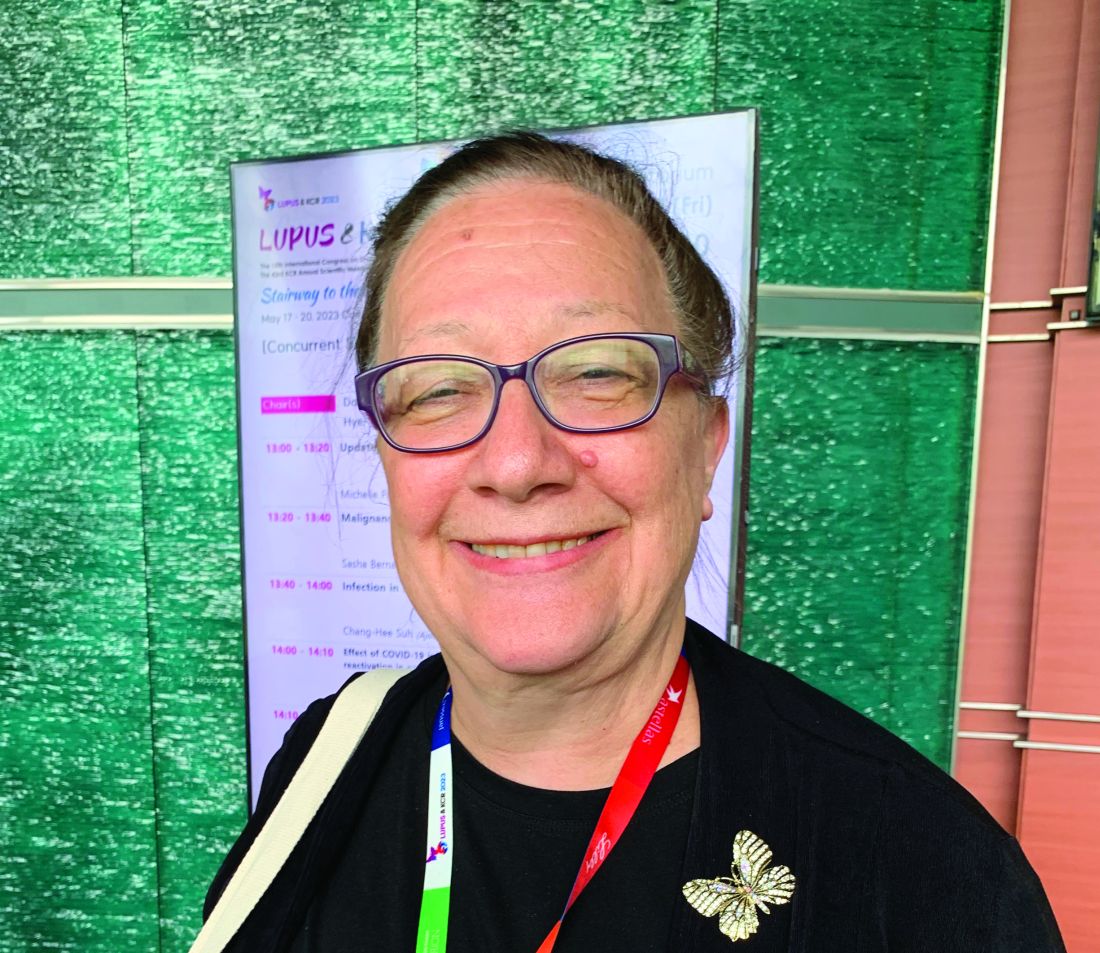
Dr. Merrill, who cares for patients with lupus, said physicians can keep lupus in check for years, using constant, low-dose GCs. “The one thing we know is that steroids work.” But over many years, damage may still occur, she cautioned.
But even a low dose could present health problems to patients. The GLORIA trial of patients with RA, which showed promising results on disease control with 5 mg/d, found an association between GCs and increased risk for infection and osteoporosis. There was a higher overall risk for adverse events related to skin, infections, and bone mineral density changes. Bone mineral density loss and fractures were more common in the GC group, Adami noted.
Surprisingly, some of the trial’s authors said patients could handle such adverse events. But what is your threshold of “acceptable?” Dr. Adami asked.
Other studies have found associations between low-dose GC regimens and adverse events. Researchers of a 2023 study reported bone mineral density loss in patients with inflammatory rheumatic musculoskeletal diseases on a 2.5-mg/d regimen. Another decade-long analysis of Medicare and Optum data found a link between serious infection and low-dose GCs in patients receiving stable DMARD therapy. Investigators reported risk even at daily doses of ≤ 5 mg.
Dr. Adami acknowledged that these studies may have “confounding by indication,” a channeling bias in which people with severe RA are more likely to be treated with GCs. For this reason, it’s a challenge to disentangle the independent role of GCs from the disease activity itself, he said.
The big question is: Why don’t these observational studies show an increased risk for adverse events with biologic drugs that are given to more severe patients? “That confirms the hypothesis that confounding by indication for GCs is minimal, and most of the risk is driven by GCs,” he said.
Tapering Options Across Diseases
Rheumatologists in the field continue to navigate GC-tapering options and treatment combinations that reduce the cumulative use of GCs over time, finding their own solutions based on the conditions they treat.
In his EULAR presentation, Dr. Buttgereit suggested that current therapeutic approaches for RA may be too narrow when they don’t consider the possibility of including very low doses of GCs.
For RA, “why shouldn’t we not do a combination of something like methotrexate plus a JAK inhibitor or a biological,” plus a very low dose of GCs < 5 mg/d, he asked.
However, Dr. Adami said he generally avoids GCs if RA disease activity is not severe (based on DAS28) and if the patient has a visual analog scale pain score < 7. “Nonetheless, even in patients with more severe disease, I would avoid GCs for more than 3 months. Usually, 1 month of steroids, tapered rapidly and discontinued.”
All patients should receive an appropriate treat-to-target strategy with csDMARDs and biologics if needed, he added.
A patient coming to clinic with difficult-to-treat RA who chronically uses GCs deserves special attention. The priority is bone protection with an anti-osteoporosis medication. “I found that JAK inhibitors, in some cases, help with the discontinuation of steroids, especially in those with residual pain. Therefore, I would think of switching medication,” Dr. Adami said.
For polymyalgia rheumatica, most clinicians will likely try to taper GCs around 52 weeks, similar to ACR/EULAR guidelines, according to Robert F. Spiera, MD, director of the Scleroderma and Vasculitis Program at Hospital for Special Surgery, New York City.

“I usually challenge patients with a more rapid taper, hoping to get them off GCs in 6 or even 4 months in some patients, recognizing that many will flare, and we will have to bump up their GC dose,” Dr. Spiera said.
For patients with lupus, GCs remain the most effective treatment, Dr. Merrill said. “The toxicities are unacceptable for long-term use. So we try to get in fast when we need them and get out as soon as possible after that, tapering down as fast as the patient can tolerate it.”
Unfortunately, that’s not always as fast as the clinician or patient hopes for, she said.
“New treatments are being developed that may help us avoid the constant use of steroids. However, it would be wonderful to see how these new safer types of steroids work in lupus,” she said.
Minimizing GCs is an important goal that should be considered and aimed for in every single patient, Dr. Sattui said. “Risk of GC toxicity should be considered in all patients, assessing [them] for cardiometabolic comorbidities, bone metabolic diseases, risk of infection, among many others.” Sticking to one specific GC-tapering protocol might not be achievable for every patient, however, based on disease characteristics, response, and other factors, he added.
Monitoring for GC toxicity is important and should occur during and after every single clinical visit, he emphasized. Patient education is critical. “Different tools have been developed and employed in clinical trials, both patient- and physician-facing instruments. Implementation to clinical practice of some of these should be the next step in order to achieve a more systematic approach.”
What to Consider for AI Symptoms
Clinicians also need to address AI in patients who are coming off GCs, Dr. Sattui said. He advised that symptoms suggestive of AI, including malaise, fatigue, nausea, and muscle and/or joint pain, should guide testing.
Even in the absence of symptoms, clinicians should consider assessing patients who have been on high doses for prolonged periods or obese or older adults who might be at a high risk for AI. “Signs to consider include weight loss, hypotension, or orthostatism,” he said.
Differentiating between AI symptoms and symptoms from the underlying disease can be a challenge. This requires a physical exam and workup, including morning serum cortisol. Collaboration with endocrinology colleagues and other treating providers is important, as well as patient education of symptoms and monitoring for possible adjustments in treating AI and other acute diseases, he said.
Dr. Smolen received research grants from AbbVie, AstraZeneca, Galapagos, and Eli Lilly. Dr. Adami received speaker fees and/or was a consultant for Galapagos, Theramex, Amgen, Eli Lilly, UCB, Fresenius Kabi, Bristol Myers Squibb, Abiogen, and Pfizer. Dr. Buttgereit’s disclosures included AbbVie, AstraZeneca, Grünenthal, Horizon Therapeutics, Mundipharma, Pfizer, and Roche. Dr. Merrill had no relevant disclosures. Dr. Spiera has been a consultant for Roche-Genentech, GlaxoSmithKline, Sanofi, ChemoCentryx, Novartis, Galderma, Cytori, AstraZeneca, Amgen, and AbbVie and received research grant support from GlaxoSmithKline, Roche-Genentech, AstraZeneca, Bristol Myers Squibb, Kadmon, Boehringer Ingelheim, Cytori, ChemoCentryx, Corbus, Novartis, Amgen, and AbbVie. Dr. Sattui reported receiving research support from AstraZeneca and GlaxoSmithKline (clinical trials), receiving consulting fees from Sanofi (funds toward research support), serving on advisory boards for Sanofi and Amgen (funds toward research support), and receiving speaker fees from Fresenius Kabi (funds toward research support).
A version of this article appeared on Medscape.com.
Now, 75 years after the first presentations were made on the “sensational” effects of cortisone in the treatment of rheumatoid arthritis (RA), glucocorticoids (GCs) are still highly relevant and widely used in the management of RA and other immune-mediated inflammatory diseases.
“It makes me smile because this is such an old drug, and we need it still so much. It still hasn’t been replaced,” Josef S. Smolen, MD, observed at annual European Congress of Rheumatology.
At low doses, GCs are highly effective as anti-inflammatory and anti-destructive agents in RA and many other diseases, said Dr. Smolen, a rheumatologist and immunologist and professor emeritus at the Medical University of Vienna, Austria.
But even after all this time, the mechanisms that lead to efficacy vs toxicity have yet to be clarified. “Such separation may provide further insights into future treatment options,” said Dr. Smolen.
His comments, made during a special session on the 75th anniversary of GCs at EULAR 2024, underscore the endless saga to manage GCs while finding better alternatives. Opinions differ on what the research says on toxicity and dosage and whether a long-term, low-dose option is viable. Alternative therapies are being studied, but those endeavors are still in the early stages of development.
While GCs are still used chronically in many patients, clinicians should always attempt to discontinue them whenever possible, Frank Buttgereit, MD, professor of rheumatology and deputy head of the Department of Rheumatology and Clinical Immunology at Charité – Universitätsmedizin Berlin, Germany, told attendees at the congress. Up to 60% of patients in registries use GCs, and many patients with early or established RA enter randomized controlled trials on GCs as maintenance therapy.
The ubiquity of GC usage stems in part from overprescribing by non-rheumatologist physicians who might not have access to or aren’t aware of newer biologics or disease-modifying antirheumatic drugs (DMARDs). “We see a lot of patients on long-term glucocorticoids, chronic use for years and years, decades of glucocorticoids,” said Giovanni Adami, MD, PhD, a rheumatologist at the University of Verona, Italy, who has coauthored several studies on the use of GCs.
Societies Agree: Discontinue as Fast as Possible
GCs have been associated with a long list of adverse events, most notably Cushing syndrome, hypertension, cardiovascular disease, osteoporosis, myopathy, peptic ulcer, adrenal insufficiency (AI), infections, mood disorders, ophthalmologic disorders such as cataracts, skin disorders, menstrual septic necrosis, and pancreatitis.
Dose matters, Dr. Smolen said, citing studies that found that cumulative GC doses of 1000 or 1100 mg increase risks. One study by German researchers found that doses above 10 mg/d significantly raised the hazard ratio for death.
Because high disease activity is also associated with an equally high mortality risk, “we have to balance this out: Active disease vs glucocorticoid use, especially in countries that have less access to modern therapies than we have in the more affluent Western regions,” Dr. Smolen said.
Rheumatology societies generally agree that clinicians should try to minimize GC use or eventually discontinue the therapy.
The American College of Rheumatology recommends not using GCs as part of the first-line treatment of RA. “And if you want to use [them], you should do that for less than 3 months, taper and discontinue as fast as possible, and use the lowest dose possible,” Dr. Adami said.
EULAR’s recommendation is more nuanced in that it allows for a lower dose but gives physicians more choice in how they want to handle GCs, Dr. Adami said. The task force added that all patients should try to taper down or discontinue as fast as possible, he said.
For GCs in the management of systemic lupus erythematosus, a EULAR task force recommended that the type and severity of organ involvement should determine dose, with a long-term goal of maintaining the dose < 5 mg/d or possibly withdrawing it.
EULAR also recommends GC bridging when initiating or changing conventional synthetic (cs) DMARDs. This effectively dismisses the use of GCs when using biologic DMARDs or targeted synthetic DMARDs. As a bridging therapy, EULAR recommends either a single parenteral dose of GC or a predefined tapering or discontinuation scheme within 3 months, when starting an oral GC.
Low-Dose Approach Gains Ground
While saying he’d be the first physician to eliminate GCs whenever possible, Dr. Buttgereit made the case before the EULAR Congress that GCs in low doses could still play a role in treatment.
Many physicians believe that very low doses between 2 and 4 mg/d are a realistic therapy option for RA, he said, adding that a mean daily usage < 5 mg could be used over a longer period with relatively low risk.
Several studies he coauthored tested the 5-mg approach. The GLORIA trial compared 5 mg/d prednisolone and placebo in 451 patients aged 65 years and older with active RA over the course of 2 years. The researchers found that patients on prednisolone had a mean Disease Activity Score in 28 joints (DAS28) that was 0.37 points lower and mean joint damage score that was 1.7 points lower than those of patients on placebo, suggesting that the GC had long-term benefits in these patients with RA.
The tradeoff was a 24% increase in the risk of having at least one adverse event of special interest, but most of these events were non-severe infections, Dr. Buttgereit said.
Another study, the SEMIRA trial, assigned 128 patients to a continued regimen of prednisone 5 mg/d for 24 weeks. Another group of 131 patients received a tapered-prednisone regimen. All patients received tocilizumab 162 mg with or without csDMARDs, maintained at stable doses.
Patients in the first cohort achieved superior disease activity control than those in the tapered regimen group. “The side effects showed that in the tapering prednisone group, there were more treatment-emergent adverse effects in this double-blind trial as compared to the continued prednisone group,” Dr. Buttgereit said.
One limitation of the SEMIRA trial was that it studied the effect of tocilizumab as a GC-sparing agent, and it didn’t consider using a tumor necrosis factor or Janus kinase (JAK) inhibitor, which might have a more potent effect on pain and GC dose reduction, Dr. Adami said. “Why do we need to use glucocorticoids if we know they might be detrimental, if we know there might be some other option in our armamentarium?”
Other studies have shown that low-dose GC protocols can be used with standard treatment, according to Sebastian E. Sattui, MD, assistant professor of medicine and director of the Vasculitis Center at the University of Pittsburgh School of Medicine.
“Examples of this are the LoVAS and PEXIVAS studies for antineutrophil cytoplasmic antibody-associated [ANCA] vasculitis. This has been highlighted in existing treatment recommendations for ANCA vasculitis and systemic lupus erythematosus nephritis,” Dr. Sattui said.
Two-year results from LoVAS showed noninferiority in remission induction rates and rates of relapse and significantly less frequent serious adverse events between a reduced-dose GC regimen at 0.5 mg/kg/d and conventional high-dose GC regimen at 1 mg/kg/d plus rituximab for ANCA vasculitis.
PEXIVAS demonstrated the noninferiority of a reduced-dose regimen of GCs vs a standard-dose regimen with respect to death or end-stage kidney disease in patients with severe disease involvement.
Debating the Toxicity Threshold
Are low GC dosages significantly associated with adverse events like mortality, cardiovascular, or diabetes risk? It depends on who you ask.
Much of the toxicity data on GCs come from inadequately powered or controlled studies and often refer to doses that currently are considered too high, Dr. Buttgereit said. His presentation highlighted a study from Hong Kong, a time-varying analysis of GC dose and incident risk for major adverse cardiovascular events (MACE) in more than 12,000 patients with RA. Researchers found that GC regimens ≥ 5 mg/d significantly increased the risk for MACE. Comparatively, doses below this threshold did not confer excessive risk, he said.
Low-dose GCs are lesser toxic than high-dose GCs, noted Joan Merrill, MD, a professor with the Arthritis and Clinical Immunology Research Program at The University of Oklahoma Health Sciences Center, Oklahoma City. “There may be less weight gain, less chance of acne, and less risk for all the slower, more organ-threatening side effects.”
Dr. Merrill, who cares for patients with lupus, said physicians can keep lupus in check for years, using constant, low-dose GCs. “The one thing we know is that steroids work.” But over many years, damage may still occur, she cautioned.
But even a low dose could present health problems to patients. The GLORIA trial of patients with RA, which showed promising results on disease control with 5 mg/d, found an association between GCs and increased risk for infection and osteoporosis. There was a higher overall risk for adverse events related to skin, infections, and bone mineral density changes. Bone mineral density loss and fractures were more common in the GC group, Adami noted.
Surprisingly, some of the trial’s authors said patients could handle such adverse events. But what is your threshold of “acceptable?” Dr. Adami asked.
Other studies have found associations between low-dose GC regimens and adverse events. Researchers of a 2023 study reported bone mineral density loss in patients with inflammatory rheumatic musculoskeletal diseases on a 2.5-mg/d regimen. Another decade-long analysis of Medicare and Optum data found a link between serious infection and low-dose GCs in patients receiving stable DMARD therapy. Investigators reported risk even at daily doses of ≤ 5 mg.
Dr. Adami acknowledged that these studies may have “confounding by indication,” a channeling bias in which people with severe RA are more likely to be treated with GCs. For this reason, it’s a challenge to disentangle the independent role of GCs from the disease activity itself, he said.
The big question is: Why don’t these observational studies show an increased risk for adverse events with biologic drugs that are given to more severe patients? “That confirms the hypothesis that confounding by indication for GCs is minimal, and most of the risk is driven by GCs,” he said.
Tapering Options Across Diseases
Rheumatologists in the field continue to navigate GC-tapering options and treatment combinations that reduce the cumulative use of GCs over time, finding their own solutions based on the conditions they treat.
In his EULAR presentation, Dr. Buttgereit suggested that current therapeutic approaches for RA may be too narrow when they don’t consider the possibility of including very low doses of GCs.
For RA, “why shouldn’t we not do a combination of something like methotrexate plus a JAK inhibitor or a biological,” plus a very low dose of GCs < 5 mg/d, he asked.
However, Dr. Adami said he generally avoids GCs if RA disease activity is not severe (based on DAS28) and if the patient has a visual analog scale pain score < 7. “Nonetheless, even in patients with more severe disease, I would avoid GCs for more than 3 months. Usually, 1 month of steroids, tapered rapidly and discontinued.”
All patients should receive an appropriate treat-to-target strategy with csDMARDs and biologics if needed, he added.
A patient coming to clinic with difficult-to-treat RA who chronically uses GCs deserves special attention. The priority is bone protection with an anti-osteoporosis medication. “I found that JAK inhibitors, in some cases, help with the discontinuation of steroids, especially in those with residual pain. Therefore, I would think of switching medication,” Dr. Adami said.
For polymyalgia rheumatica, most clinicians will likely try to taper GCs around 52 weeks, similar to ACR/EULAR guidelines, according to Robert F. Spiera, MD, director of the Scleroderma and Vasculitis Program at Hospital for Special Surgery, New York City.
“I usually challenge patients with a more rapid taper, hoping to get them off GCs in 6 or even 4 months in some patients, recognizing that many will flare, and we will have to bump up their GC dose,” Dr. Spiera said.
For patients with lupus, GCs remain the most effective treatment, Dr. Merrill said. “The toxicities are unacceptable for long-term use. So we try to get in fast when we need them and get out as soon as possible after that, tapering down as fast as the patient can tolerate it.”
Unfortunately, that’s not always as fast as the clinician or patient hopes for, she said.
“New treatments are being developed that may help us avoid the constant use of steroids. However, it would be wonderful to see how these new safer types of steroids work in lupus,” she said.
Minimizing GCs is an important goal that should be considered and aimed for in every single patient, Dr. Sattui said. “Risk of GC toxicity should be considered in all patients, assessing [them] for cardiometabolic comorbidities, bone metabolic diseases, risk of infection, among many others.” Sticking to one specific GC-tapering protocol might not be achievable for every patient, however, based on disease characteristics, response, and other factors, he added.
Monitoring for GC toxicity is important and should occur during and after every single clinical visit, he emphasized. Patient education is critical. “Different tools have been developed and employed in clinical trials, both patient- and physician-facing instruments. Implementation to clinical practice of some of these should be the next step in order to achieve a more systematic approach.”
What to Consider for AI Symptoms
Clinicians also need to address AI in patients who are coming off GCs, Dr. Sattui said. He advised that symptoms suggestive of AI, including malaise, fatigue, nausea, and muscle and/or joint pain, should guide testing.
Even in the absence of symptoms, clinicians should consider assessing patients who have been on high doses for prolonged periods or obese or older adults who might be at a high risk for AI. “Signs to consider include weight loss, hypotension, or orthostatism,” he said.
Differentiating between AI symptoms and symptoms from the underlying disease can be a challenge. This requires a physical exam and workup, including morning serum cortisol. Collaboration with endocrinology colleagues and other treating providers is important, as well as patient education of symptoms and monitoring for possible adjustments in treating AI and other acute diseases, he said.
Dr. Smolen received research grants from AbbVie, AstraZeneca, Galapagos, and Eli Lilly. Dr. Adami received speaker fees and/or was a consultant for Galapagos, Theramex, Amgen, Eli Lilly, UCB, Fresenius Kabi, Bristol Myers Squibb, Abiogen, and Pfizer. Dr. Buttgereit’s disclosures included AbbVie, AstraZeneca, Grünenthal, Horizon Therapeutics, Mundipharma, Pfizer, and Roche. Dr. Merrill had no relevant disclosures. Dr. Spiera has been a consultant for Roche-Genentech, GlaxoSmithKline, Sanofi, ChemoCentryx, Novartis, Galderma, Cytori, AstraZeneca, Amgen, and AbbVie and received research grant support from GlaxoSmithKline, Roche-Genentech, AstraZeneca, Bristol Myers Squibb, Kadmon, Boehringer Ingelheim, Cytori, ChemoCentryx, Corbus, Novartis, Amgen, and AbbVie. Dr. Sattui reported receiving research support from AstraZeneca and GlaxoSmithKline (clinical trials), receiving consulting fees from Sanofi (funds toward research support), serving on advisory boards for Sanofi and Amgen (funds toward research support), and receiving speaker fees from Fresenius Kabi (funds toward research support).
A version of this article appeared on Medscape.com.
Now, 75 years after the first presentations were made on the “sensational” effects of cortisone in the treatment of rheumatoid arthritis (RA), glucocorticoids (GCs) are still highly relevant and widely used in the management of RA and other immune-mediated inflammatory diseases.
“It makes me smile because this is such an old drug, and we need it still so much. It still hasn’t been replaced,” Josef S. Smolen, MD, observed at annual European Congress of Rheumatology.
At low doses, GCs are highly effective as anti-inflammatory and anti-destructive agents in RA and many other diseases, said Dr. Smolen, a rheumatologist and immunologist and professor emeritus at the Medical University of Vienna, Austria.
But even after all this time, the mechanisms that lead to efficacy vs toxicity have yet to be clarified. “Such separation may provide further insights into future treatment options,” said Dr. Smolen.
His comments, made during a special session on the 75th anniversary of GCs at EULAR 2024, underscore the endless saga to manage GCs while finding better alternatives. Opinions differ on what the research says on toxicity and dosage and whether a long-term, low-dose option is viable. Alternative therapies are being studied, but those endeavors are still in the early stages of development.
While GCs are still used chronically in many patients, clinicians should always attempt to discontinue them whenever possible, Frank Buttgereit, MD, professor of rheumatology and deputy head of the Department of Rheumatology and Clinical Immunology at Charité – Universitätsmedizin Berlin, Germany, told attendees at the congress. Up to 60% of patients in registries use GCs, and many patients with early or established RA enter randomized controlled trials on GCs as maintenance therapy.
The ubiquity of GC usage stems in part from overprescribing by non-rheumatologist physicians who might not have access to or aren’t aware of newer biologics or disease-modifying antirheumatic drugs (DMARDs). “We see a lot of patients on long-term glucocorticoids, chronic use for years and years, decades of glucocorticoids,” said Giovanni Adami, MD, PhD, a rheumatologist at the University of Verona, Italy, who has coauthored several studies on the use of GCs.
Societies Agree: Discontinue as Fast as Possible
GCs have been associated with a long list of adverse events, most notably Cushing syndrome, hypertension, cardiovascular disease, osteoporosis, myopathy, peptic ulcer, adrenal insufficiency (AI), infections, mood disorders, ophthalmologic disorders such as cataracts, skin disorders, menstrual septic necrosis, and pancreatitis.
Dose matters, Dr. Smolen said, citing studies that found that cumulative GC doses of 1000 or 1100 mg increase risks. One study by German researchers found that doses above 10 mg/d significantly raised the hazard ratio for death.
Because high disease activity is also associated with an equally high mortality risk, “we have to balance this out: Active disease vs glucocorticoid use, especially in countries that have less access to modern therapies than we have in the more affluent Western regions,” Dr. Smolen said.
Rheumatology societies generally agree that clinicians should try to minimize GC use or eventually discontinue the therapy.
The American College of Rheumatology recommends not using GCs as part of the first-line treatment of RA. “And if you want to use [them], you should do that for less than 3 months, taper and discontinue as fast as possible, and use the lowest dose possible,” Dr. Adami said.
EULAR’s recommendation is more nuanced in that it allows for a lower dose but gives physicians more choice in how they want to handle GCs, Dr. Adami said. The task force added that all patients should try to taper down or discontinue as fast as possible, he said.
For GCs in the management of systemic lupus erythematosus, a EULAR task force recommended that the type and severity of organ involvement should determine dose, with a long-term goal of maintaining the dose < 5 mg/d or possibly withdrawing it.
EULAR also recommends GC bridging when initiating or changing conventional synthetic (cs) DMARDs. This effectively dismisses the use of GCs when using biologic DMARDs or targeted synthetic DMARDs. As a bridging therapy, EULAR recommends either a single parenteral dose of GC or a predefined tapering or discontinuation scheme within 3 months, when starting an oral GC.
Low-Dose Approach Gains Ground
While saying he’d be the first physician to eliminate GCs whenever possible, Dr. Buttgereit made the case before the EULAR Congress that GCs in low doses could still play a role in treatment.
Many physicians believe that very low doses between 2 and 4 mg/d are a realistic therapy option for RA, he said, adding that a mean daily usage < 5 mg could be used over a longer period with relatively low risk.
Several studies he coauthored tested the 5-mg approach. The GLORIA trial compared 5 mg/d prednisolone and placebo in 451 patients aged 65 years and older with active RA over the course of 2 years. The researchers found that patients on prednisolone had a mean Disease Activity Score in 28 joints (DAS28) that was 0.37 points lower and mean joint damage score that was 1.7 points lower than those of patients on placebo, suggesting that the GC had long-term benefits in these patients with RA.
The tradeoff was a 24% increase in the risk of having at least one adverse event of special interest, but most of these events were non-severe infections, Dr. Buttgereit said.
Another study, the SEMIRA trial, assigned 128 patients to a continued regimen of prednisone 5 mg/d for 24 weeks. Another group of 131 patients received a tapered-prednisone regimen. All patients received tocilizumab 162 mg with or without csDMARDs, maintained at stable doses.
Patients in the first cohort achieved superior disease activity control than those in the tapered regimen group. “The side effects showed that in the tapering prednisone group, there were more treatment-emergent adverse effects in this double-blind trial as compared to the continued prednisone group,” Dr. Buttgereit said.
One limitation of the SEMIRA trial was that it studied the effect of tocilizumab as a GC-sparing agent, and it didn’t consider using a tumor necrosis factor or Janus kinase (JAK) inhibitor, which might have a more potent effect on pain and GC dose reduction, Dr. Adami said. “Why do we need to use glucocorticoids if we know they might be detrimental, if we know there might be some other option in our armamentarium?”
Other studies have shown that low-dose GC protocols can be used with standard treatment, according to Sebastian E. Sattui, MD, assistant professor of medicine and director of the Vasculitis Center at the University of Pittsburgh School of Medicine.
“Examples of this are the LoVAS and PEXIVAS studies for antineutrophil cytoplasmic antibody-associated [ANCA] vasculitis. This has been highlighted in existing treatment recommendations for ANCA vasculitis and systemic lupus erythematosus nephritis,” Dr. Sattui said.
Two-year results from LoVAS showed noninferiority in remission induction rates and rates of relapse and significantly less frequent serious adverse events between a reduced-dose GC regimen at 0.5 mg/kg/d and conventional high-dose GC regimen at 1 mg/kg/d plus rituximab for ANCA vasculitis.
PEXIVAS demonstrated the noninferiority of a reduced-dose regimen of GCs vs a standard-dose regimen with respect to death or end-stage kidney disease in patients with severe disease involvement.
Debating the Toxicity Threshold
Are low GC dosages significantly associated with adverse events like mortality, cardiovascular, or diabetes risk? It depends on who you ask.
Much of the toxicity data on GCs come from inadequately powered or controlled studies and often refer to doses that currently are considered too high, Dr. Buttgereit said. His presentation highlighted a study from Hong Kong, a time-varying analysis of GC dose and incident risk for major adverse cardiovascular events (MACE) in more than 12,000 patients with RA. Researchers found that GC regimens ≥ 5 mg/d significantly increased the risk for MACE. Comparatively, doses below this threshold did not confer excessive risk, he said.
Low-dose GCs are lesser toxic than high-dose GCs, noted Joan Merrill, MD, a professor with the Arthritis and Clinical Immunology Research Program at The University of Oklahoma Health Sciences Center, Oklahoma City. “There may be less weight gain, less chance of acne, and less risk for all the slower, more organ-threatening side effects.”
Dr. Merrill, who cares for patients with lupus, said physicians can keep lupus in check for years, using constant, low-dose GCs. “The one thing we know is that steroids work.” But over many years, damage may still occur, she cautioned.
But even a low dose could present health problems to patients. The GLORIA trial of patients with RA, which showed promising results on disease control with 5 mg/d, found an association between GCs and increased risk for infection and osteoporosis. There was a higher overall risk for adverse events related to skin, infections, and bone mineral density changes. Bone mineral density loss and fractures were more common in the GC group, Adami noted.
Surprisingly, some of the trial’s authors said patients could handle such adverse events. But what is your threshold of “acceptable?” Dr. Adami asked.
Other studies have found associations between low-dose GC regimens and adverse events. Researchers of a 2023 study reported bone mineral density loss in patients with inflammatory rheumatic musculoskeletal diseases on a 2.5-mg/d regimen. Another decade-long analysis of Medicare and Optum data found a link between serious infection and low-dose GCs in patients receiving stable DMARD therapy. Investigators reported risk even at daily doses of ≤ 5 mg.
Dr. Adami acknowledged that these studies may have “confounding by indication,” a channeling bias in which people with severe RA are more likely to be treated with GCs. For this reason, it’s a challenge to disentangle the independent role of GCs from the disease activity itself, he said.
The big question is: Why don’t these observational studies show an increased risk for adverse events with biologic drugs that are given to more severe patients? “That confirms the hypothesis that confounding by indication for GCs is minimal, and most of the risk is driven by GCs,” he said.
Tapering Options Across Diseases
Rheumatologists in the field continue to navigate GC-tapering options and treatment combinations that reduce the cumulative use of GCs over time, finding their own solutions based on the conditions they treat.
In his EULAR presentation, Dr. Buttgereit suggested that current therapeutic approaches for RA may be too narrow when they don’t consider the possibility of including very low doses of GCs.
For RA, “why shouldn’t we not do a combination of something like methotrexate plus a JAK inhibitor or a biological,” plus a very low dose of GCs < 5 mg/d, he asked.
However, Dr. Adami said he generally avoids GCs if RA disease activity is not severe (based on DAS28) and if the patient has a visual analog scale pain score < 7. “Nonetheless, even in patients with more severe disease, I would avoid GCs for more than 3 months. Usually, 1 month of steroids, tapered rapidly and discontinued.”
All patients should receive an appropriate treat-to-target strategy with csDMARDs and biologics if needed, he added.
A patient coming to clinic with difficult-to-treat RA who chronically uses GCs deserves special attention. The priority is bone protection with an anti-osteoporosis medication. “I found that JAK inhibitors, in some cases, help with the discontinuation of steroids, especially in those with residual pain. Therefore, I would think of switching medication,” Dr. Adami said.
For polymyalgia rheumatica, most clinicians will likely try to taper GCs around 52 weeks, similar to ACR/EULAR guidelines, according to Robert F. Spiera, MD, director of the Scleroderma and Vasculitis Program at Hospital for Special Surgery, New York City.
“I usually challenge patients with a more rapid taper, hoping to get them off GCs in 6 or even 4 months in some patients, recognizing that many will flare, and we will have to bump up their GC dose,” Dr. Spiera said.
For patients with lupus, GCs remain the most effective treatment, Dr. Merrill said. “The toxicities are unacceptable for long-term use. So we try to get in fast when we need them and get out as soon as possible after that, tapering down as fast as the patient can tolerate it.”
Unfortunately, that’s not always as fast as the clinician or patient hopes for, she said.
“New treatments are being developed that may help us avoid the constant use of steroids. However, it would be wonderful to see how these new safer types of steroids work in lupus,” she said.
Minimizing GCs is an important goal that should be considered and aimed for in every single patient, Dr. Sattui said. “Risk of GC toxicity should be considered in all patients, assessing [them] for cardiometabolic comorbidities, bone metabolic diseases, risk of infection, among many others.” Sticking to one specific GC-tapering protocol might not be achievable for every patient, however, based on disease characteristics, response, and other factors, he added.
Monitoring for GC toxicity is important and should occur during and after every single clinical visit, he emphasized. Patient education is critical. “Different tools have been developed and employed in clinical trials, both patient- and physician-facing instruments. Implementation to clinical practice of some of these should be the next step in order to achieve a more systematic approach.”
What to Consider for AI Symptoms
Clinicians also need to address AI in patients who are coming off GCs, Dr. Sattui said. He advised that symptoms suggestive of AI, including malaise, fatigue, nausea, and muscle and/or joint pain, should guide testing.
Even in the absence of symptoms, clinicians should consider assessing patients who have been on high doses for prolonged periods or obese or older adults who might be at a high risk for AI. “Signs to consider include weight loss, hypotension, or orthostatism,” he said.
Differentiating between AI symptoms and symptoms from the underlying disease can be a challenge. This requires a physical exam and workup, including morning serum cortisol. Collaboration with endocrinology colleagues and other treating providers is important, as well as patient education of symptoms and monitoring for possible adjustments in treating AI and other acute diseases, he said.
Dr. Smolen received research grants from AbbVie, AstraZeneca, Galapagos, and Eli Lilly. Dr. Adami received speaker fees and/or was a consultant for Galapagos, Theramex, Amgen, Eli Lilly, UCB, Fresenius Kabi, Bristol Myers Squibb, Abiogen, and Pfizer. Dr. Buttgereit’s disclosures included AbbVie, AstraZeneca, Grünenthal, Horizon Therapeutics, Mundipharma, Pfizer, and Roche. Dr. Merrill had no relevant disclosures. Dr. Spiera has been a consultant for Roche-Genentech, GlaxoSmithKline, Sanofi, ChemoCentryx, Novartis, Galderma, Cytori, AstraZeneca, Amgen, and AbbVie and received research grant support from GlaxoSmithKline, Roche-Genentech, AstraZeneca, Bristol Myers Squibb, Kadmon, Boehringer Ingelheim, Cytori, ChemoCentryx, Corbus, Novartis, Amgen, and AbbVie. Dr. Sattui reported receiving research support from AstraZeneca and GlaxoSmithKline (clinical trials), receiving consulting fees from Sanofi (funds toward research support), serving on advisory boards for Sanofi and Amgen (funds toward research support), and receiving speaker fees from Fresenius Kabi (funds toward research support).
A version of this article appeared on Medscape.com.
FROM EULAR 2024
New Drugs, Treatment Strategies Aim to Lessen Rheumatic Diseases’ Reliance on Steroids
. Selective GC receptor agonists and modulators and GC plus hydroxysteroid dehydrogenase inhibitor combination therapy are some of the approaches under consideration.
“There is growing observational data that confirms the GC-sparing effect seen in some of these clinical trials in real-world data,” said Sebastian E. Sattui, MD, assistant professor of medicine and director of the Vasculitis Center at the University of Pittsburgh Medical Center, Pittsburgh.
GC minimization is an important goal, “and the data emerging from these trials should be reassuring for rheumatology providers,” Dr. Sattui said.
HSD-1 Inhibitors Under Study
11ß-Hydroxysteroid dehydrogenase type 1 (11ß-HSD1) is a tissue-specific intracellular modulator of GC action that’s been trialed for a number of rheumatic conditions. “HSD-1 deficiency or inhibition has been consistently associated with reduced GC side effects in mouse and human,” wrote the authors of a study testing the coadministration of HSD-1 inhibitor SPI-62 (clofutriben) with prednisolone in patients with polymyalgia rheumatica (PMR) to measure its impact on efficacy and toxicity.
Lead study author David Katz, PhD, chief scientific officer at Sparrow Pharmaceuticals, presented results at the at the annual European Congress of Rheumatology.
GCs are often the first-line therapy with PMR. However, it’s very difficult for patients to stop taking GCs once they start taking them. The study included patients with PMR who were taking 10 mg/d prednisolone and didn’t require a dose increase. For the study, they continued prednisolone without dose reduction for 4 weeks, receiving either SPI-62 6 mg/d or a matching placebo for 2 weeks.
During SPI-62 treatment, researchers in sequential cohorts maintained daily prednisolone doses at 10 mg, adjusted to 15 mg or adjusted to 20 mg.
A 10-mg dose of prednisolone combined with 6 mg of SPI-62 demonstrated less efficacy compared with placebo but improved upon prednisolone toxicities such as bone formation and resorption biomarkers, lipidemia, and insulin resistance. Doubling the dose to 20 mg prednisolone combined with SPI-62 achieved similar efficacy and maintained improvement of prednisolone toxicity markers.
“In patients with PMR, when we double the dose of prednisolone during coadministration with a potent HSD-1 inhibitor, we are able to have similar stability of symptoms, physical function, and systemic inflammation. At the same time, we are able to show improvements on biomarkers of bone turnover and insulin resistance,” Dr. Katz informed the EULAR 2024 audience.
An ongoing phase 2 clinical trial is testing SPI-62 in patients with endogenous Cushing syndrome. “It’s a longer-term trial, so we’re able to see at least an individual patient’s more clinical outcomes such as reversal of Cushing’s-associated myopathy and the ability of patients to discontinue all of their antidiabetic medications and yet still have good glycemic control,” he said.
Another research team from the United Kingdom explored whether AZD4017, an inhibitor of human 11ß-HSD1, could mitigate GC effects. The researchers randomly assigned 32 healthy male volunteers to AZD4017 or placebo, along with prednisolone. They reported a worsening of hepatic insulin sensitivity in the placebo group but not in the AZD4017 group, and protective effects of AZD4017 on markers of lipid metabolism and bone turnover, as well as lowered nighttime blood pressure. The results signified that coadministration of AZD4017 with prednisolone in men could be a way to reduce GC side effects.
In a Japanese phase 1/2 study, 11ß-HSD1 inhibitor S-707106 proved useful as an insulin sensitizer and antisarcopenic and anti-obesity medication in 16 patients with Cushing syndrome and autonomous cortisol secretion.
Novel Antitumor Necrosis Factor (TNF) Antibody Plus GC Receptor Modulator Conjugate
A novel antibody-drug conjugate comprising the anti-TNF monoclonal antibody adalimumab (ABBV-3373) linked to a GC receptor modulator shows promise as a GC alternative.
A notable 2022 study authored by Frank Buttgereit, MD, and other researchers assessed its safety and efficacy in a randomized, double-blind, active-controlled, proof-of-concept trial.
ABBV-3373 “was designed to potentially allow precise targeting of activated immune cells while significantly dampening inflammation and minimizing the systemic side effects associated with glucocorticoids,” according to AbbVie, its manufacturer.
A total of 48 adults with moderate to severe rheumatoid arthritis receiving background methotrexate were randomized to receive either ABBV-3373 (n = 31) or adalimumab (n = 17). The novel drug at 12 weeks showed a −2.65 reduction in the Disease Activity Score in 28 joints using C-reactive protein, compared with −2.13 for adalimumab. Researchers also predicted ABBV-3373 to be more effective than adalimumab based on in-trial and historical adalimumab data.
“We have great expectations for this molecule,” said Giovanni Adami, MD, PhD, a rheumatologist at the University of Verona, Verona, Italy, who has coauthored several studies on the use of GCs. Plans are underway for a phase 3 study with ABBV-3373.
C5a and Interleukin (IL)-6 Receptor Inhibitors as GC-Sparing Drugs
Investigators in a 2021 paper explored whether the C5a receptor inhibitor avacopan could effectively treat patients with antineutrophil cytoplasmic antibody (ANCA)-associated vasculitis without the need for daily GCs, following treatment with either cyclophosphamide or rituximab. They randomized 331 patients to receive avacopan or prednisone given on a tapering schedule for 20 weeks (60 mg/d tapered to discontinuation by week 21). “Avacopan was noninferior but not superior to prednisone taper with respect to remission at week 26 and was superior to prednisone taper with respect to sustained remission at week 52,” the investigators summarized.
A longer trial should test avacopan’s safety and durability in patients with ANCA-associated vasculitis, they recommended.
Sarilumab, a human monoclonal antibody that binds IL-6 receptor alpha and blocks the IL-6 pathway, yielded good results in the phase 3 SAPHYR trial as an alternative for patients with PMR who relapse while tapering prednisone therapy.
Researchers in the SAPHYR trial randomly assigned 118 patients 1:1 to receive a twice-monthly subcutaneous injection of sarilumab over 52 weeks plus a 14-week prednisone taper or placebo plus a 52-week prednisone taper. Patients in each group received a tapered GC dose initially at 15 mg/d for 2 weeks in a blinded fashion to control for disease at baseline.
Sarilumab effectively sustained remission in patients, significantly reducing the GC dose compared with placebo.
Disease flare after clinical remission took place in 57% of patients in the placebo group, vs 24% in the sarilumab group. “The placebo-treated patients had a fairly traditional 52-week GC taper. The patients treated with sarilumab had a very rapid GC taper,” said lead study author Robert Spiera, MD, director of the Scleroderma, Vasculitis and Myositis Center at the Hospital for Special Surgery, New York City.
In his own practice, Dr. Spiera often treats his patients with new-onset PMR with a fairly rapid GC taper, akin to what was used in SAPHYR, recognizing that a portion of these patients can be successfully treated with a relatively brief course of GCs, although the majority will need to have “rescue” therapy for flares with that approach.
In SAPHYR, everyone had previously flared and started at 15 mg/d prednisone at study entry. “In my practice, I don’t always raise the prednisone to 15 mg for a PMR flare. I raise it to whatever dose is necessary to capture control of polymyalgia rheumatica symptoms as I add sarilumab. Often, that is less than 15 mg,” he clarified.
Patients with giant cell arteritis (GCA) also struggle to taper or stop using GCs. For these patients, the IL-6 receptor alpha inhibitor tocilizumab has demonstrated benefits in shortening the GC-tapering period.
In the GiACTA trial, researchers randomly assigned 251 patients in a 2:1:1:1 ratio with GCA to receive subcutaneous tocilizumab weekly or every other week, combined with a 26-week prednisone taper, or placebo combined with a prednisone taper over a period of either 26 weeks or 52 weeks. Patients in the tocilizumab arms combined with a 26-week prednisone taper had superior results with GC-free remission compared with those who underwent prednisone tapering plus placebo.
Subsequent studies have investigated the use of tocilizumab in shortening GC tapers. One pilot clinical trial assessed the use of tocilizumab monotherapy following ultrashort-term GC treatment (three pulses of 500 mg of methylprednisolone) in 18 patients with new-onset GCA. Researchers found that approximately 70% of patients were able to achieve and maintain disease remission for 52 weeks. One patient developed anterior ischemic optic neuropathy.
Another pilot study of 30 patients with GCA (50% new-onset disease, 50% relapsing disease) concluded that a year of tocilizumab combined with 8 weeks of prednisone could lead to remission. The majority of patients (77% of 30) maintained prednisone-free remission at 52 weeks, and no cases of anterior ischemic optic neuropathy were observed.
“The results of the studies mentioned above are encouraging and suggest that in the setting of IL-6 blockade treatment with tocilizumab, GC tapers shorter than 6 months may be possible. However, in order to be able to recommend short prednisone tapers in GCA, clinical trials comparing the efficacy and safety of different prednisone tapers [such as 8 vs 26 weeks] are required,” said Sebastian H. Unizony, MD, the study’s lead author and an assistant professor at Harvard Medical School and codirector of the Massachusetts General Hospital Rheumatology Vasculitis Program, Boston.

“The last several years have been a breakthrough period in GCA, which started with addition of tocilizumab to the therapeutic armamentarium against this disease and continued with several other agents showing promising results in phase 2 trials [of abatacept, mavrilimumab, and secukinumab] and a recently successful phase 3 trial with upadacitinib,” Dr. Unizony said.
Dr. Katz is a corporate officer and stockholder of Sparrow Pharmaceuticals. Dr. Adami has received speaker fees and/or has consulted for Galapagos, Theramex, Amgen, Eli Lilly, UCB, Fresenius Kabi, Bristol Myers Squibb, Abiogen, and Pfizer. Dr. Spiera has been a consultant for Roche-Genentech, GlaxoSmithKline, Sanofi, ChemoCentryx, Novartis, Galderma, Cytori, AstraZeneca, Amgen, and AbbVie, and has received research grant support from GlaxoSmithKline, Roche-Genentech, AstraZeneca, Bristol Myers Squibb, Kadmon, Boehringer Ingelheim, Cytori, ChemoCentryx, Corbus, Novartis, Amgen, and AbbVie.
A version of this article appeared on Medscape.com.
. Selective GC receptor agonists and modulators and GC plus hydroxysteroid dehydrogenase inhibitor combination therapy are some of the approaches under consideration.
“There is growing observational data that confirms the GC-sparing effect seen in some of these clinical trials in real-world data,” said Sebastian E. Sattui, MD, assistant professor of medicine and director of the Vasculitis Center at the University of Pittsburgh Medical Center, Pittsburgh.
GC minimization is an important goal, “and the data emerging from these trials should be reassuring for rheumatology providers,” Dr. Sattui said.
HSD-1 Inhibitors Under Study
11ß-Hydroxysteroid dehydrogenase type 1 (11ß-HSD1) is a tissue-specific intracellular modulator of GC action that’s been trialed for a number of rheumatic conditions. “HSD-1 deficiency or inhibition has been consistently associated with reduced GC side effects in mouse and human,” wrote the authors of a study testing the coadministration of HSD-1 inhibitor SPI-62 (clofutriben) with prednisolone in patients with polymyalgia rheumatica (PMR) to measure its impact on efficacy and toxicity.
Lead study author David Katz, PhD, chief scientific officer at Sparrow Pharmaceuticals, presented results at the at the annual European Congress of Rheumatology.
GCs are often the first-line therapy with PMR. However, it’s very difficult for patients to stop taking GCs once they start taking them. The study included patients with PMR who were taking 10 mg/d prednisolone and didn’t require a dose increase. For the study, they continued prednisolone without dose reduction for 4 weeks, receiving either SPI-62 6 mg/d or a matching placebo for 2 weeks.
During SPI-62 treatment, researchers in sequential cohorts maintained daily prednisolone doses at 10 mg, adjusted to 15 mg or adjusted to 20 mg.
A 10-mg dose of prednisolone combined with 6 mg of SPI-62 demonstrated less efficacy compared with placebo but improved upon prednisolone toxicities such as bone formation and resorption biomarkers, lipidemia, and insulin resistance. Doubling the dose to 20 mg prednisolone combined with SPI-62 achieved similar efficacy and maintained improvement of prednisolone toxicity markers.
“In patients with PMR, when we double the dose of prednisolone during coadministration with a potent HSD-1 inhibitor, we are able to have similar stability of symptoms, physical function, and systemic inflammation. At the same time, we are able to show improvements on biomarkers of bone turnover and insulin resistance,” Dr. Katz informed the EULAR 2024 audience.
An ongoing phase 2 clinical trial is testing SPI-62 in patients with endogenous Cushing syndrome. “It’s a longer-term trial, so we’re able to see at least an individual patient’s more clinical outcomes such as reversal of Cushing’s-associated myopathy and the ability of patients to discontinue all of their antidiabetic medications and yet still have good glycemic control,” he said.
Another research team from the United Kingdom explored whether AZD4017, an inhibitor of human 11ß-HSD1, could mitigate GC effects. The researchers randomly assigned 32 healthy male volunteers to AZD4017 or placebo, along with prednisolone. They reported a worsening of hepatic insulin sensitivity in the placebo group but not in the AZD4017 group, and protective effects of AZD4017 on markers of lipid metabolism and bone turnover, as well as lowered nighttime blood pressure. The results signified that coadministration of AZD4017 with prednisolone in men could be a way to reduce GC side effects.
In a Japanese phase 1/2 study, 11ß-HSD1 inhibitor S-707106 proved useful as an insulin sensitizer and antisarcopenic and anti-obesity medication in 16 patients with Cushing syndrome and autonomous cortisol secretion.
Novel Antitumor Necrosis Factor (TNF) Antibody Plus GC Receptor Modulator Conjugate
A novel antibody-drug conjugate comprising the anti-TNF monoclonal antibody adalimumab (ABBV-3373) linked to a GC receptor modulator shows promise as a GC alternative.
A notable 2022 study authored by Frank Buttgereit, MD, and other researchers assessed its safety and efficacy in a randomized, double-blind, active-controlled, proof-of-concept trial.
ABBV-3373 “was designed to potentially allow precise targeting of activated immune cells while significantly dampening inflammation and minimizing the systemic side effects associated with glucocorticoids,” according to AbbVie, its manufacturer.
A total of 48 adults with moderate to severe rheumatoid arthritis receiving background methotrexate were randomized to receive either ABBV-3373 (n = 31) or adalimumab (n = 17). The novel drug at 12 weeks showed a −2.65 reduction in the Disease Activity Score in 28 joints using C-reactive protein, compared with −2.13 for adalimumab. Researchers also predicted ABBV-3373 to be more effective than adalimumab based on in-trial and historical adalimumab data.
“We have great expectations for this molecule,” said Giovanni Adami, MD, PhD, a rheumatologist at the University of Verona, Verona, Italy, who has coauthored several studies on the use of GCs. Plans are underway for a phase 3 study with ABBV-3373.
C5a and Interleukin (IL)-6 Receptor Inhibitors as GC-Sparing Drugs
Investigators in a 2021 paper explored whether the C5a receptor inhibitor avacopan could effectively treat patients with antineutrophil cytoplasmic antibody (ANCA)-associated vasculitis without the need for daily GCs, following treatment with either cyclophosphamide or rituximab. They randomized 331 patients to receive avacopan or prednisone given on a tapering schedule for 20 weeks (60 mg/d tapered to discontinuation by week 21). “Avacopan was noninferior but not superior to prednisone taper with respect to remission at week 26 and was superior to prednisone taper with respect to sustained remission at week 52,” the investigators summarized.
A longer trial should test avacopan’s safety and durability in patients with ANCA-associated vasculitis, they recommended.
Sarilumab, a human monoclonal antibody that binds IL-6 receptor alpha and blocks the IL-6 pathway, yielded good results in the phase 3 SAPHYR trial as an alternative for patients with PMR who relapse while tapering prednisone therapy.
Researchers in the SAPHYR trial randomly assigned 118 patients 1:1 to receive a twice-monthly subcutaneous injection of sarilumab over 52 weeks plus a 14-week prednisone taper or placebo plus a 52-week prednisone taper. Patients in each group received a tapered GC dose initially at 15 mg/d for 2 weeks in a blinded fashion to control for disease at baseline.
Sarilumab effectively sustained remission in patients, significantly reducing the GC dose compared with placebo.
Disease flare after clinical remission took place in 57% of patients in the placebo group, vs 24% in the sarilumab group. “The placebo-treated patients had a fairly traditional 52-week GC taper. The patients treated with sarilumab had a very rapid GC taper,” said lead study author Robert Spiera, MD, director of the Scleroderma, Vasculitis and Myositis Center at the Hospital for Special Surgery, New York City.
In his own practice, Dr. Spiera often treats his patients with new-onset PMR with a fairly rapid GC taper, akin to what was used in SAPHYR, recognizing that a portion of these patients can be successfully treated with a relatively brief course of GCs, although the majority will need to have “rescue” therapy for flares with that approach.
In SAPHYR, everyone had previously flared and started at 15 mg/d prednisone at study entry. “In my practice, I don’t always raise the prednisone to 15 mg for a PMR flare. I raise it to whatever dose is necessary to capture control of polymyalgia rheumatica symptoms as I add sarilumab. Often, that is less than 15 mg,” he clarified.
Patients with giant cell arteritis (GCA) also struggle to taper or stop using GCs. For these patients, the IL-6 receptor alpha inhibitor tocilizumab has demonstrated benefits in shortening the GC-tapering period.
In the GiACTA trial, researchers randomly assigned 251 patients in a 2:1:1:1 ratio with GCA to receive subcutaneous tocilizumab weekly or every other week, combined with a 26-week prednisone taper, or placebo combined with a prednisone taper over a period of either 26 weeks or 52 weeks. Patients in the tocilizumab arms combined with a 26-week prednisone taper had superior results with GC-free remission compared with those who underwent prednisone tapering plus placebo.
Subsequent studies have investigated the use of tocilizumab in shortening GC tapers. One pilot clinical trial assessed the use of tocilizumab monotherapy following ultrashort-term GC treatment (three pulses of 500 mg of methylprednisolone) in 18 patients with new-onset GCA. Researchers found that approximately 70% of patients were able to achieve and maintain disease remission for 52 weeks. One patient developed anterior ischemic optic neuropathy.
Another pilot study of 30 patients with GCA (50% new-onset disease, 50% relapsing disease) concluded that a year of tocilizumab combined with 8 weeks of prednisone could lead to remission. The majority of patients (77% of 30) maintained prednisone-free remission at 52 weeks, and no cases of anterior ischemic optic neuropathy were observed.
“The results of the studies mentioned above are encouraging and suggest that in the setting of IL-6 blockade treatment with tocilizumab, GC tapers shorter than 6 months may be possible. However, in order to be able to recommend short prednisone tapers in GCA, clinical trials comparing the efficacy and safety of different prednisone tapers [such as 8 vs 26 weeks] are required,” said Sebastian H. Unizony, MD, the study’s lead author and an assistant professor at Harvard Medical School and codirector of the Massachusetts General Hospital Rheumatology Vasculitis Program, Boston.
“The last several years have been a breakthrough period in GCA, which started with addition of tocilizumab to the therapeutic armamentarium against this disease and continued with several other agents showing promising results in phase 2 trials [of abatacept, mavrilimumab, and secukinumab] and a recently successful phase 3 trial with upadacitinib,” Dr. Unizony said.
Dr. Katz is a corporate officer and stockholder of Sparrow Pharmaceuticals. Dr. Adami has received speaker fees and/or has consulted for Galapagos, Theramex, Amgen, Eli Lilly, UCB, Fresenius Kabi, Bristol Myers Squibb, Abiogen, and Pfizer. Dr. Spiera has been a consultant for Roche-Genentech, GlaxoSmithKline, Sanofi, ChemoCentryx, Novartis, Galderma, Cytori, AstraZeneca, Amgen, and AbbVie, and has received research grant support from GlaxoSmithKline, Roche-Genentech, AstraZeneca, Bristol Myers Squibb, Kadmon, Boehringer Ingelheim, Cytori, ChemoCentryx, Corbus, Novartis, Amgen, and AbbVie.
A version of this article appeared on Medscape.com.
. Selective GC receptor agonists and modulators and GC plus hydroxysteroid dehydrogenase inhibitor combination therapy are some of the approaches under consideration.
“There is growing observational data that confirms the GC-sparing effect seen in some of these clinical trials in real-world data,” said Sebastian E. Sattui, MD, assistant professor of medicine and director of the Vasculitis Center at the University of Pittsburgh Medical Center, Pittsburgh.
GC minimization is an important goal, “and the data emerging from these trials should be reassuring for rheumatology providers,” Dr. Sattui said.
HSD-1 Inhibitors Under Study
11ß-Hydroxysteroid dehydrogenase type 1 (11ß-HSD1) is a tissue-specific intracellular modulator of GC action that’s been trialed for a number of rheumatic conditions. “HSD-1 deficiency or inhibition has been consistently associated with reduced GC side effects in mouse and human,” wrote the authors of a study testing the coadministration of HSD-1 inhibitor SPI-62 (clofutriben) with prednisolone in patients with polymyalgia rheumatica (PMR) to measure its impact on efficacy and toxicity.
Lead study author David Katz, PhD, chief scientific officer at Sparrow Pharmaceuticals, presented results at the at the annual European Congress of Rheumatology.
GCs are often the first-line therapy with PMR. However, it’s very difficult for patients to stop taking GCs once they start taking them. The study included patients with PMR who were taking 10 mg/d prednisolone and didn’t require a dose increase. For the study, they continued prednisolone without dose reduction for 4 weeks, receiving either SPI-62 6 mg/d or a matching placebo for 2 weeks.
During SPI-62 treatment, researchers in sequential cohorts maintained daily prednisolone doses at 10 mg, adjusted to 15 mg or adjusted to 20 mg.
A 10-mg dose of prednisolone combined with 6 mg of SPI-62 demonstrated less efficacy compared with placebo but improved upon prednisolone toxicities such as bone formation and resorption biomarkers, lipidemia, and insulin resistance. Doubling the dose to 20 mg prednisolone combined with SPI-62 achieved similar efficacy and maintained improvement of prednisolone toxicity markers.
“In patients with PMR, when we double the dose of prednisolone during coadministration with a potent HSD-1 inhibitor, we are able to have similar stability of symptoms, physical function, and systemic inflammation. At the same time, we are able to show improvements on biomarkers of bone turnover and insulin resistance,” Dr. Katz informed the EULAR 2024 audience.
An ongoing phase 2 clinical trial is testing SPI-62 in patients with endogenous Cushing syndrome. “It’s a longer-term trial, so we’re able to see at least an individual patient’s more clinical outcomes such as reversal of Cushing’s-associated myopathy and the ability of patients to discontinue all of their antidiabetic medications and yet still have good glycemic control,” he said.
Another research team from the United Kingdom explored whether AZD4017, an inhibitor of human 11ß-HSD1, could mitigate GC effects. The researchers randomly assigned 32 healthy male volunteers to AZD4017 or placebo, along with prednisolone. They reported a worsening of hepatic insulin sensitivity in the placebo group but not in the AZD4017 group, and protective effects of AZD4017 on markers of lipid metabolism and bone turnover, as well as lowered nighttime blood pressure. The results signified that coadministration of AZD4017 with prednisolone in men could be a way to reduce GC side effects.
In a Japanese phase 1/2 study, 11ß-HSD1 inhibitor S-707106 proved useful as an insulin sensitizer and antisarcopenic and anti-obesity medication in 16 patients with Cushing syndrome and autonomous cortisol secretion.
Novel Antitumor Necrosis Factor (TNF) Antibody Plus GC Receptor Modulator Conjugate
A novel antibody-drug conjugate comprising the anti-TNF monoclonal antibody adalimumab (ABBV-3373) linked to a GC receptor modulator shows promise as a GC alternative.
A notable 2022 study authored by Frank Buttgereit, MD, and other researchers assessed its safety and efficacy in a randomized, double-blind, active-controlled, proof-of-concept trial.
ABBV-3373 “was designed to potentially allow precise targeting of activated immune cells while significantly dampening inflammation and minimizing the systemic side effects associated with glucocorticoids,” according to AbbVie, its manufacturer.
A total of 48 adults with moderate to severe rheumatoid arthritis receiving background methotrexate were randomized to receive either ABBV-3373 (n = 31) or adalimumab (n = 17). The novel drug at 12 weeks showed a −2.65 reduction in the Disease Activity Score in 28 joints using C-reactive protein, compared with −2.13 for adalimumab. Researchers also predicted ABBV-3373 to be more effective than adalimumab based on in-trial and historical adalimumab data.
“We have great expectations for this molecule,” said Giovanni Adami, MD, PhD, a rheumatologist at the University of Verona, Verona, Italy, who has coauthored several studies on the use of GCs. Plans are underway for a phase 3 study with ABBV-3373.
C5a and Interleukin (IL)-6 Receptor Inhibitors as GC-Sparing Drugs
Investigators in a 2021 paper explored whether the C5a receptor inhibitor avacopan could effectively treat patients with antineutrophil cytoplasmic antibody (ANCA)-associated vasculitis without the need for daily GCs, following treatment with either cyclophosphamide or rituximab. They randomized 331 patients to receive avacopan or prednisone given on a tapering schedule for 20 weeks (60 mg/d tapered to discontinuation by week 21). “Avacopan was noninferior but not superior to prednisone taper with respect to remission at week 26 and was superior to prednisone taper with respect to sustained remission at week 52,” the investigators summarized.
A longer trial should test avacopan’s safety and durability in patients with ANCA-associated vasculitis, they recommended.
Sarilumab, a human monoclonal antibody that binds IL-6 receptor alpha and blocks the IL-6 pathway, yielded good results in the phase 3 SAPHYR trial as an alternative for patients with PMR who relapse while tapering prednisone therapy.
Researchers in the SAPHYR trial randomly assigned 118 patients 1:1 to receive a twice-monthly subcutaneous injection of sarilumab over 52 weeks plus a 14-week prednisone taper or placebo plus a 52-week prednisone taper. Patients in each group received a tapered GC dose initially at 15 mg/d for 2 weeks in a blinded fashion to control for disease at baseline.
Sarilumab effectively sustained remission in patients, significantly reducing the GC dose compared with placebo.
Disease flare after clinical remission took place in 57% of patients in the placebo group, vs 24% in the sarilumab group. “The placebo-treated patients had a fairly traditional 52-week GC taper. The patients treated with sarilumab had a very rapid GC taper,” said lead study author Robert Spiera, MD, director of the Scleroderma, Vasculitis and Myositis Center at the Hospital for Special Surgery, New York City.
In his own practice, Dr. Spiera often treats his patients with new-onset PMR with a fairly rapid GC taper, akin to what was used in SAPHYR, recognizing that a portion of these patients can be successfully treated with a relatively brief course of GCs, although the majority will need to have “rescue” therapy for flares with that approach.
In SAPHYR, everyone had previously flared and started at 15 mg/d prednisone at study entry. “In my practice, I don’t always raise the prednisone to 15 mg for a PMR flare. I raise it to whatever dose is necessary to capture control of polymyalgia rheumatica symptoms as I add sarilumab. Often, that is less than 15 mg,” he clarified.
Patients with giant cell arteritis (GCA) also struggle to taper or stop using GCs. For these patients, the IL-6 receptor alpha inhibitor tocilizumab has demonstrated benefits in shortening the GC-tapering period.
In the GiACTA trial, researchers randomly assigned 251 patients in a 2:1:1:1 ratio with GCA to receive subcutaneous tocilizumab weekly or every other week, combined with a 26-week prednisone taper, or placebo combined with a prednisone taper over a period of either 26 weeks or 52 weeks. Patients in the tocilizumab arms combined with a 26-week prednisone taper had superior results with GC-free remission compared with those who underwent prednisone tapering plus placebo.
Subsequent studies have investigated the use of tocilizumab in shortening GC tapers. One pilot clinical trial assessed the use of tocilizumab monotherapy following ultrashort-term GC treatment (three pulses of 500 mg of methylprednisolone) in 18 patients with new-onset GCA. Researchers found that approximately 70% of patients were able to achieve and maintain disease remission for 52 weeks. One patient developed anterior ischemic optic neuropathy.
Another pilot study of 30 patients with GCA (50% new-onset disease, 50% relapsing disease) concluded that a year of tocilizumab combined with 8 weeks of prednisone could lead to remission. The majority of patients (77% of 30) maintained prednisone-free remission at 52 weeks, and no cases of anterior ischemic optic neuropathy were observed.
“The results of the studies mentioned above are encouraging and suggest that in the setting of IL-6 blockade treatment with tocilizumab, GC tapers shorter than 6 months may be possible. However, in order to be able to recommend short prednisone tapers in GCA, clinical trials comparing the efficacy and safety of different prednisone tapers [such as 8 vs 26 weeks] are required,” said Sebastian H. Unizony, MD, the study’s lead author and an assistant professor at Harvard Medical School and codirector of the Massachusetts General Hospital Rheumatology Vasculitis Program, Boston.
“The last several years have been a breakthrough period in GCA, which started with addition of tocilizumab to the therapeutic armamentarium against this disease and continued with several other agents showing promising results in phase 2 trials [of abatacept, mavrilimumab, and secukinumab] and a recently successful phase 3 trial with upadacitinib,” Dr. Unizony said.
Dr. Katz is a corporate officer and stockholder of Sparrow Pharmaceuticals. Dr. Adami has received speaker fees and/or has consulted for Galapagos, Theramex, Amgen, Eli Lilly, UCB, Fresenius Kabi, Bristol Myers Squibb, Abiogen, and Pfizer. Dr. Spiera has been a consultant for Roche-Genentech, GlaxoSmithKline, Sanofi, ChemoCentryx, Novartis, Galderma, Cytori, AstraZeneca, Amgen, and AbbVie, and has received research grant support from GlaxoSmithKline, Roche-Genentech, AstraZeneca, Bristol Myers Squibb, Kadmon, Boehringer Ingelheim, Cytori, ChemoCentryx, Corbus, Novartis, Amgen, and AbbVie.
A version of this article appeared on Medscape.com.
Emergency Contraception Recommended for Teens on Isotretinoin
TORONTO —
That was one of the main messages from Andrea L. Zaenglein, MD, professor of dermatology and pediatrics, Penn State University, Hershey, who discussed hormonal therapies for pediatric acne at the annual meeting of the Society for Pediatric Dermatology.

Many doctors are reluctant to prescribe EC, which refers to contraceptive methods used to prevent unintended pregnancy after unprotected sexual intercourse or contraceptive failure, whether that’s from discomfort with EC or lack of training, Dr. Zaenglein said in an interview.
Isotretinoin, a retinoid marketed as Accutane and other brand names, is an effective treatment for acne but carries serious teratogenicity risks; the iPLEDGE Risk Evaluation and Mitigation Strategy is designed to manage this risk and minimize fetal exposure. Yet from 2011 to 2017, 210-310 pregnancies per year were reported to the Food and Drug Administration, according to a 2019 study.
There is a knowledge gap regarding EC among dermatologists who prescribe isotretinoin, which “is perpetuated by the iPLEDGE program because it is inadequate in guiding clinicians or educating patients about the use of EC,” Dr. Zaenglein and colleagues wrote in a recently published viewpoint on EC prescribing in patients on isotretinoin.
Types of EC include oral levonorgestrel (plan B), available over the counter; oral ulipristal acetate (ella), which requires a prescription; and the copper/hormonal intrauterine device.
Not all teens taking isotretinoin can be trusted to be sexually abstinent. Dr. Zaenglein cited research showing 39% of female high school students have had sexual relations. “In my opinion, these patients should have emergency contraception prescribed to them as a backup,” she said.
Dr. Zaenglein believes there’s a fair amount of “misunderstanding” about EC, with many people thinking it’s an abortion pill. “It’s a totally different medicine. This is contraception; if you’re pregnant, it’s not going to affect your fetus.”
Outgoing SPD President Sheilagh Maguiness, MD, professor of dermatology and pediatrics, University of Minnesota, Minneapolis, agreed that Dr. Zaenglein raised an important issue. “She has identified a practice gap and a knowledge gap that we need to address,” she said in an interview.
When discussing contraception with female patients taking isotretinoin, assume they’re sexually active or could be, Dr. Zaenglein told meeting attendees. Be explicit about the risks to the fetus and consider their past compliance.
Complex Disorder
During her presentation, Dr. Zaenglein described acne as a “very complex, multifactorial inflammatory disorder” of the skin. It involves four steps: Increased sebum production, hyperkeratinization, Cutibacterium acnes, and inflammation. External factors such as diet, genes, and the environment play a role.
“But at the heart of all of it is androgens; if you didn’t have androgens, you wouldn’t have acne.” That’s why some acne treatments block androgen receptors.
Clinicians are increasingly using one such therapy, spironolactone, to treat acne in female adolescents. Dr. Zaenglein referred to a Mayo Clinic study of 80 patients (mean age, 19 years), who had moderate to severe acne treated with a mean dose of 100 mg/day, that found 80% had improvement with a favorable side effect profile. This included nearly 23% who had a complete response (90% or more) and 36% who had a partial response (more than 50%); 20% had no response.
However, response rates are higher in adults, said Dr. Zaenglein, noting that spironolactone works “much better” in adult women.
Side effects of spironolactone can include menstrual disturbances, breast enlargement and tenderness, and premenstrual syndrome–like symptoms.
Dermatologists should also consider combined oral contraceptives (COCs) in their adolescent patients with acne. These have an estrogen component as well as a progestin component.
They have proven effectiveness for acne in adolescents, yet a US survey of 170 dermatology residents found only 60% felt comfortable prescribing them to healthy adolescents. The survey also found only 62% of respondents felt adequately trained on the efficacy of COCs, and 42% felt adequately trained on their safety.
Contraindications for COCs include thrombosis, migraine with aura, lupus, seizures, and hypertension. Complex valvular heart disease and liver tumors also need to be ruled out, said Dr. Zaenglein. One of the “newer concerns” with COCs is depression. “There’s biological plausibility because, obviously, hormones impact the brain.”
Preventing Drug Interactions
Before prescribing hormonal therapy, clinicians should carry out an acne assessment, aimed in part at preventing drug interactions. “The one we mostly have to watch out for is rifampin,” an antibiotic that could interact with COCs, said Dr. Zaenglein.
The herbal supplement St John’s Wort can reduce the efficacy of COCs. “You also want to make sure that they’re not on any medicines that will increase potassium, such as ACE inhibitors,” said Dr. Zaenglein. But tetracyclines, ampicillin, or metronidazole are usually “all okay” when combined with COCs.
It’s important to get baseline blood pressure levels and to check these along with weight on a regular basis, she added.
Always Consider PCOS
Before starting hormonal therapy, she advises dermatologists to “always consider” polycystic ovary syndrome (PCOS), a condition that’s “probably much underdiagnosed.” Acne is common in adolescents with PCOS. She suggests using a PCOS checklist, a reminder to ask about irregular periods, hirsutism, signs of insulin resistance such as increased body mass index, a history of premature adrenarche, and a family history of PCOS, said Dr. Zaenglein, noting that a person with a sibling who has PCOS has about a 40% chance of developing the condition.
“We play an important role in getting kids diagnosed at an early age so that we can make interventions because the impact of the metabolic syndrome can have lifelong effects on their cardiovascular system, as well as infertility.”
Dr. Zaenglein is a member of the American Academy of Dermatology (AAD) Acne Guidelines work group, the immediate past president of the American Acne and Rosacea Society, a member of the AAD iPLEDGE work group, co–editor in chief of Pediatric Dermatology, an advisory board member of Ortho Dermatologics, and a consultant for Church & Dwight. Dr. Maguiness had no relevant conflicts of interest.
A version of this article first appeared on Medscape.com.
TORONTO —
That was one of the main messages from Andrea L. Zaenglein, MD, professor of dermatology and pediatrics, Penn State University, Hershey, who discussed hormonal therapies for pediatric acne at the annual meeting of the Society for Pediatric Dermatology.
Many doctors are reluctant to prescribe EC, which refers to contraceptive methods used to prevent unintended pregnancy after unprotected sexual intercourse or contraceptive failure, whether that’s from discomfort with EC or lack of training, Dr. Zaenglein said in an interview.
Isotretinoin, a retinoid marketed as Accutane and other brand names, is an effective treatment for acne but carries serious teratogenicity risks; the iPLEDGE Risk Evaluation and Mitigation Strategy is designed to manage this risk and minimize fetal exposure. Yet from 2011 to 2017, 210-310 pregnancies per year were reported to the Food and Drug Administration, according to a 2019 study.
There is a knowledge gap regarding EC among dermatologists who prescribe isotretinoin, which “is perpetuated by the iPLEDGE program because it is inadequate in guiding clinicians or educating patients about the use of EC,” Dr. Zaenglein and colleagues wrote in a recently published viewpoint on EC prescribing in patients on isotretinoin.
Types of EC include oral levonorgestrel (plan B), available over the counter; oral ulipristal acetate (ella), which requires a prescription; and the copper/hormonal intrauterine device.
Not all teens taking isotretinoin can be trusted to be sexually abstinent. Dr. Zaenglein cited research showing 39% of female high school students have had sexual relations. “In my opinion, these patients should have emergency contraception prescribed to them as a backup,” she said.
Dr. Zaenglein believes there’s a fair amount of “misunderstanding” about EC, with many people thinking it’s an abortion pill. “It’s a totally different medicine. This is contraception; if you’re pregnant, it’s not going to affect your fetus.”
Outgoing SPD President Sheilagh Maguiness, MD, professor of dermatology and pediatrics, University of Minnesota, Minneapolis, agreed that Dr. Zaenglein raised an important issue. “She has identified a practice gap and a knowledge gap that we need to address,” she said in an interview.
When discussing contraception with female patients taking isotretinoin, assume they’re sexually active or could be, Dr. Zaenglein told meeting attendees. Be explicit about the risks to the fetus and consider their past compliance.
Complex Disorder
During her presentation, Dr. Zaenglein described acne as a “very complex, multifactorial inflammatory disorder” of the skin. It involves four steps: Increased sebum production, hyperkeratinization, Cutibacterium acnes, and inflammation. External factors such as diet, genes, and the environment play a role.
“But at the heart of all of it is androgens; if you didn’t have androgens, you wouldn’t have acne.” That’s why some acne treatments block androgen receptors.
Clinicians are increasingly using one such therapy, spironolactone, to treat acne in female adolescents. Dr. Zaenglein referred to a Mayo Clinic study of 80 patients (mean age, 19 years), who had moderate to severe acne treated with a mean dose of 100 mg/day, that found 80% had improvement with a favorable side effect profile. This included nearly 23% who had a complete response (90% or more) and 36% who had a partial response (more than 50%); 20% had no response.
However, response rates are higher in adults, said Dr. Zaenglein, noting that spironolactone works “much better” in adult women.
Side effects of spironolactone can include menstrual disturbances, breast enlargement and tenderness, and premenstrual syndrome–like symptoms.
Dermatologists should also consider combined oral contraceptives (COCs) in their adolescent patients with acne. These have an estrogen component as well as a progestin component.
They have proven effectiveness for acne in adolescents, yet a US survey of 170 dermatology residents found only 60% felt comfortable prescribing them to healthy adolescents. The survey also found only 62% of respondents felt adequately trained on the efficacy of COCs, and 42% felt adequately trained on their safety.
Contraindications for COCs include thrombosis, migraine with aura, lupus, seizures, and hypertension. Complex valvular heart disease and liver tumors also need to be ruled out, said Dr. Zaenglein. One of the “newer concerns” with COCs is depression. “There’s biological plausibility because, obviously, hormones impact the brain.”
Preventing Drug Interactions
Before prescribing hormonal therapy, clinicians should carry out an acne assessment, aimed in part at preventing drug interactions. “The one we mostly have to watch out for is rifampin,” an antibiotic that could interact with COCs, said Dr. Zaenglein.
The herbal supplement St John’s Wort can reduce the efficacy of COCs. “You also want to make sure that they’re not on any medicines that will increase potassium, such as ACE inhibitors,” said Dr. Zaenglein. But tetracyclines, ampicillin, or metronidazole are usually “all okay” when combined with COCs.
It’s important to get baseline blood pressure levels and to check these along with weight on a regular basis, she added.
Always Consider PCOS
Before starting hormonal therapy, she advises dermatologists to “always consider” polycystic ovary syndrome (PCOS), a condition that’s “probably much underdiagnosed.” Acne is common in adolescents with PCOS. She suggests using a PCOS checklist, a reminder to ask about irregular periods, hirsutism, signs of insulin resistance such as increased body mass index, a history of premature adrenarche, and a family history of PCOS, said Dr. Zaenglein, noting that a person with a sibling who has PCOS has about a 40% chance of developing the condition.
“We play an important role in getting kids diagnosed at an early age so that we can make interventions because the impact of the metabolic syndrome can have lifelong effects on their cardiovascular system, as well as infertility.”
Dr. Zaenglein is a member of the American Academy of Dermatology (AAD) Acne Guidelines work group, the immediate past president of the American Acne and Rosacea Society, a member of the AAD iPLEDGE work group, co–editor in chief of Pediatric Dermatology, an advisory board member of Ortho Dermatologics, and a consultant for Church & Dwight. Dr. Maguiness had no relevant conflicts of interest.
A version of this article first appeared on Medscape.com.
TORONTO —
That was one of the main messages from Andrea L. Zaenglein, MD, professor of dermatology and pediatrics, Penn State University, Hershey, who discussed hormonal therapies for pediatric acne at the annual meeting of the Society for Pediatric Dermatology.
Many doctors are reluctant to prescribe EC, which refers to contraceptive methods used to prevent unintended pregnancy after unprotected sexual intercourse or contraceptive failure, whether that’s from discomfort with EC or lack of training, Dr. Zaenglein said in an interview.
Isotretinoin, a retinoid marketed as Accutane and other brand names, is an effective treatment for acne but carries serious teratogenicity risks; the iPLEDGE Risk Evaluation and Mitigation Strategy is designed to manage this risk and minimize fetal exposure. Yet from 2011 to 2017, 210-310 pregnancies per year were reported to the Food and Drug Administration, according to a 2019 study.
There is a knowledge gap regarding EC among dermatologists who prescribe isotretinoin, which “is perpetuated by the iPLEDGE program because it is inadequate in guiding clinicians or educating patients about the use of EC,” Dr. Zaenglein and colleagues wrote in a recently published viewpoint on EC prescribing in patients on isotretinoin.
Types of EC include oral levonorgestrel (plan B), available over the counter; oral ulipristal acetate (ella), which requires a prescription; and the copper/hormonal intrauterine device.
Not all teens taking isotretinoin can be trusted to be sexually abstinent. Dr. Zaenglein cited research showing 39% of female high school students have had sexual relations. “In my opinion, these patients should have emergency contraception prescribed to them as a backup,” she said.
Dr. Zaenglein believes there’s a fair amount of “misunderstanding” about EC, with many people thinking it’s an abortion pill. “It’s a totally different medicine. This is contraception; if you’re pregnant, it’s not going to affect your fetus.”
Outgoing SPD President Sheilagh Maguiness, MD, professor of dermatology and pediatrics, University of Minnesota, Minneapolis, agreed that Dr. Zaenglein raised an important issue. “She has identified a practice gap and a knowledge gap that we need to address,” she said in an interview.
When discussing contraception with female patients taking isotretinoin, assume they’re sexually active or could be, Dr. Zaenglein told meeting attendees. Be explicit about the risks to the fetus and consider their past compliance.
Complex Disorder
During her presentation, Dr. Zaenglein described acne as a “very complex, multifactorial inflammatory disorder” of the skin. It involves four steps: Increased sebum production, hyperkeratinization, Cutibacterium acnes, and inflammation. External factors such as diet, genes, and the environment play a role.
“But at the heart of all of it is androgens; if you didn’t have androgens, you wouldn’t have acne.” That’s why some acne treatments block androgen receptors.
Clinicians are increasingly using one such therapy, spironolactone, to treat acne in female adolescents. Dr. Zaenglein referred to a Mayo Clinic study of 80 patients (mean age, 19 years), who had moderate to severe acne treated with a mean dose of 100 mg/day, that found 80% had improvement with a favorable side effect profile. This included nearly 23% who had a complete response (90% or more) and 36% who had a partial response (more than 50%); 20% had no response.
However, response rates are higher in adults, said Dr. Zaenglein, noting that spironolactone works “much better” in adult women.
Side effects of spironolactone can include menstrual disturbances, breast enlargement and tenderness, and premenstrual syndrome–like symptoms.
Dermatologists should also consider combined oral contraceptives (COCs) in their adolescent patients with acne. These have an estrogen component as well as a progestin component.
They have proven effectiveness for acne in adolescents, yet a US survey of 170 dermatology residents found only 60% felt comfortable prescribing them to healthy adolescents. The survey also found only 62% of respondents felt adequately trained on the efficacy of COCs, and 42% felt adequately trained on their safety.
Contraindications for COCs include thrombosis, migraine with aura, lupus, seizures, and hypertension. Complex valvular heart disease and liver tumors also need to be ruled out, said Dr. Zaenglein. One of the “newer concerns” with COCs is depression. “There’s biological plausibility because, obviously, hormones impact the brain.”
Preventing Drug Interactions
Before prescribing hormonal therapy, clinicians should carry out an acne assessment, aimed in part at preventing drug interactions. “The one we mostly have to watch out for is rifampin,” an antibiotic that could interact with COCs, said Dr. Zaenglein.
The herbal supplement St John’s Wort can reduce the efficacy of COCs. “You also want to make sure that they’re not on any medicines that will increase potassium, such as ACE inhibitors,” said Dr. Zaenglein. But tetracyclines, ampicillin, or metronidazole are usually “all okay” when combined with COCs.
It’s important to get baseline blood pressure levels and to check these along with weight on a regular basis, she added.
Always Consider PCOS
Before starting hormonal therapy, she advises dermatologists to “always consider” polycystic ovary syndrome (PCOS), a condition that’s “probably much underdiagnosed.” Acne is common in adolescents with PCOS. She suggests using a PCOS checklist, a reminder to ask about irregular periods, hirsutism, signs of insulin resistance such as increased body mass index, a history of premature adrenarche, and a family history of PCOS, said Dr. Zaenglein, noting that a person with a sibling who has PCOS has about a 40% chance of developing the condition.
“We play an important role in getting kids diagnosed at an early age so that we can make interventions because the impact of the metabolic syndrome can have lifelong effects on their cardiovascular system, as well as infertility.”
Dr. Zaenglein is a member of the American Academy of Dermatology (AAD) Acne Guidelines work group, the immediate past president of the American Acne and Rosacea Society, a member of the AAD iPLEDGE work group, co–editor in chief of Pediatric Dermatology, an advisory board member of Ortho Dermatologics, and a consultant for Church & Dwight. Dr. Maguiness had no relevant conflicts of interest.
A version of this article first appeared on Medscape.com.
FROM SPD 2024
Several Skin Conditions More Likely in Children With Obesity
TORONTO — results of new research show.
The retrospective cohort study found markedly higher rates of skin infections, atopic dermatitis (AD), and acanthosis nigricans among children with overweight, compared with children with average weight.
“Many conditions associated with obesity are strong predictors of cardiovascular mortality as these children age, so doctors can play a key role in advocating for weight loss strategies in this population,” lead study author Samantha Epstein, third-year medical student at Case Western Reserve University, Cleveland, Ohio, said in an interview. The findings were presented at the annual meeting of the Society for Pediatric Dermatology.
Previous research has linked obesity, a chronic inflammatory condition, to psoriasis, AD, hidradenitis suppurativa (HS), acne vulgaris, infections, and rosacea in adults. However, there’s scant research exploring the connection between obesity and cutaneous conditions in children.
According to the Cleveland Clinic, childhood obesity is defined as a body mass index, which is weight in kg divided by the square of height in m2, at or above the 95th percentile for age and sex in children aged 2 years or older.
For the study, Ms. Epstein and coauthor Sonal D. Shah, MD, associate professor, Department of Dermatology, Case Western Reserve University, and a board-certified pediatric dermatologist accessed a large national research database and used diagnostic codes to identify over 1 million children (mean age, 8.5 years). Most (about 44%) were White; about one-quarter were Black. The groups were propensity matched, so there were about equal numbers of youngsters with and without obesity and of boys and girls.
They collected data on AD, HS, rosacea, psoriasis, and acanthosis nigricans (a thickened purplish discoloration typically found in body folds around the armpits, groin, and neck). They also gathered information on comorbidities.
Acanthosis nigricans, which is linked to metabolic syndrome, type 2 diabetes, and insulin resistance , was more prevalent among children with obesity (20,885 cases in the with-obesity group and 336 in the without-obesity group, for a relative risk [RR] of 62.16 and an odds ratio [OR] of 64.38).
Skin and subcutaneous tissue infections were also more common among those with obesity (14,795 cases) vs 4720 cases among those without obesity (RR, 3.14; OR, 3.2). As for AD, there were 11,892 cases in the with-obesity group and 2983 in the without-obesity group (RR, 3.99; OR, 4.06). There were 1166 cases of psoriasis among those with obesity and 408 among those without obesity (RR, 2.86; OR, 2.88).
HS (587 cases in the with-obesity group and 70 in the without-obesity group; RR, 8.39; OR, 8.39) and rosacea (351 in the with-obesity group and 138 in the without-obesity group; RR, 2.54; OR, 2.55) were the least common skin conditions.
Higher Comorbidity Rates
Compared with their average-weight counterparts, the children with obesity had higher rates of comorbidities, including type 2 diabetes. Ms. Epstein noted that children with diabetes and obesity had increased risks for every skin condition except for infections of the skin and subcutaneous tissue when compared with children without obesity.
Such infections were the most common skin conditions among children without obesity. “This was expected just due to the fact that children are outside, they’re playing in the grass and the dirt, and they get infected,” said Ms. Epstein. Still, these infections were three times more common in youngsters with obesity.
Although acanthosis nigricans is “highly correlated” with type 2 diabetes, “not as many children as we would expect in this population have developed type 2 diabetes,” said Ms. Epstein. This might make some sense, though, because these children are still quite young. “When dermatologists recognize this skin condition, they can advocate for weight loss management to try to prevent it.”
Other conditions seen more often in the overweight children with overweight included: hypertension, hyperlipidemia, obstructive sleep apnea, polycystic ovarian syndrome, attention-deficit/hyperactivity disorder, major depressive disorder, depressive episodes, and anxiety (all P < .001).
Commenting on the results, Sonia Havele, MD, a pediatrician and dermatology resident at Children’s Mercy Hospital, Kansas City, Missouri, said in an interview that the study reflects trends that she and her colleagues see in clinic: There are more common skin conditions in their patients with obesity.
She agreed that it offers an opening for education. “The results of this study highlight the opportunity we have as pediatric dermatologists to provide additional counseling on obesity and offer referrals to our colleagues in endocrinology, gastroenterology, and nutrition if needed.”
No conflicts of interest were reported.
TORONTO — results of new research show.
The retrospective cohort study found markedly higher rates of skin infections, atopic dermatitis (AD), and acanthosis nigricans among children with overweight, compared with children with average weight.
“Many conditions associated with obesity are strong predictors of cardiovascular mortality as these children age, so doctors can play a key role in advocating for weight loss strategies in this population,” lead study author Samantha Epstein, third-year medical student at Case Western Reserve University, Cleveland, Ohio, said in an interview. The findings were presented at the annual meeting of the Society for Pediatric Dermatology.
Previous research has linked obesity, a chronic inflammatory condition, to psoriasis, AD, hidradenitis suppurativa (HS), acne vulgaris, infections, and rosacea in adults. However, there’s scant research exploring the connection between obesity and cutaneous conditions in children.
According to the Cleveland Clinic, childhood obesity is defined as a body mass index, which is weight in kg divided by the square of height in m2, at or above the 95th percentile for age and sex in children aged 2 years or older.
For the study, Ms. Epstein and coauthor Sonal D. Shah, MD, associate professor, Department of Dermatology, Case Western Reserve University, and a board-certified pediatric dermatologist accessed a large national research database and used diagnostic codes to identify over 1 million children (mean age, 8.5 years). Most (about 44%) were White; about one-quarter were Black. The groups were propensity matched, so there were about equal numbers of youngsters with and without obesity and of boys and girls.
They collected data on AD, HS, rosacea, psoriasis, and acanthosis nigricans (a thickened purplish discoloration typically found in body folds around the armpits, groin, and neck). They also gathered information on comorbidities.
Acanthosis nigricans, which is linked to metabolic syndrome, type 2 diabetes, and insulin resistance , was more prevalent among children with obesity (20,885 cases in the with-obesity group and 336 in the without-obesity group, for a relative risk [RR] of 62.16 and an odds ratio [OR] of 64.38).
Skin and subcutaneous tissue infections were also more common among those with obesity (14,795 cases) vs 4720 cases among those without obesity (RR, 3.14; OR, 3.2). As for AD, there were 11,892 cases in the with-obesity group and 2983 in the without-obesity group (RR, 3.99; OR, 4.06). There were 1166 cases of psoriasis among those with obesity and 408 among those without obesity (RR, 2.86; OR, 2.88).
HS (587 cases in the with-obesity group and 70 in the without-obesity group; RR, 8.39; OR, 8.39) and rosacea (351 in the with-obesity group and 138 in the without-obesity group; RR, 2.54; OR, 2.55) were the least common skin conditions.
Higher Comorbidity Rates
Compared with their average-weight counterparts, the children with obesity had higher rates of comorbidities, including type 2 diabetes. Ms. Epstein noted that children with diabetes and obesity had increased risks for every skin condition except for infections of the skin and subcutaneous tissue when compared with children without obesity.
Such infections were the most common skin conditions among children without obesity. “This was expected just due to the fact that children are outside, they’re playing in the grass and the dirt, and they get infected,” said Ms. Epstein. Still, these infections were three times more common in youngsters with obesity.
Although acanthosis nigricans is “highly correlated” with type 2 diabetes, “not as many children as we would expect in this population have developed type 2 diabetes,” said Ms. Epstein. This might make some sense, though, because these children are still quite young. “When dermatologists recognize this skin condition, they can advocate for weight loss management to try to prevent it.”
Other conditions seen more often in the overweight children with overweight included: hypertension, hyperlipidemia, obstructive sleep apnea, polycystic ovarian syndrome, attention-deficit/hyperactivity disorder, major depressive disorder, depressive episodes, and anxiety (all P < .001).
Commenting on the results, Sonia Havele, MD, a pediatrician and dermatology resident at Children’s Mercy Hospital, Kansas City, Missouri, said in an interview that the study reflects trends that she and her colleagues see in clinic: There are more common skin conditions in their patients with obesity.
She agreed that it offers an opening for education. “The results of this study highlight the opportunity we have as pediatric dermatologists to provide additional counseling on obesity and offer referrals to our colleagues in endocrinology, gastroenterology, and nutrition if needed.”
No conflicts of interest were reported.
TORONTO — results of new research show.
The retrospective cohort study found markedly higher rates of skin infections, atopic dermatitis (AD), and acanthosis nigricans among children with overweight, compared with children with average weight.
“Many conditions associated with obesity are strong predictors of cardiovascular mortality as these children age, so doctors can play a key role in advocating for weight loss strategies in this population,” lead study author Samantha Epstein, third-year medical student at Case Western Reserve University, Cleveland, Ohio, said in an interview. The findings were presented at the annual meeting of the Society for Pediatric Dermatology.
Previous research has linked obesity, a chronic inflammatory condition, to psoriasis, AD, hidradenitis suppurativa (HS), acne vulgaris, infections, and rosacea in adults. However, there’s scant research exploring the connection between obesity and cutaneous conditions in children.
According to the Cleveland Clinic, childhood obesity is defined as a body mass index, which is weight in kg divided by the square of height in m2, at or above the 95th percentile for age and sex in children aged 2 years or older.
For the study, Ms. Epstein and coauthor Sonal D. Shah, MD, associate professor, Department of Dermatology, Case Western Reserve University, and a board-certified pediatric dermatologist accessed a large national research database and used diagnostic codes to identify over 1 million children (mean age, 8.5 years). Most (about 44%) were White; about one-quarter were Black. The groups were propensity matched, so there were about equal numbers of youngsters with and without obesity and of boys and girls.
They collected data on AD, HS, rosacea, psoriasis, and acanthosis nigricans (a thickened purplish discoloration typically found in body folds around the armpits, groin, and neck). They also gathered information on comorbidities.
Acanthosis nigricans, which is linked to metabolic syndrome, type 2 diabetes, and insulin resistance , was more prevalent among children with obesity (20,885 cases in the with-obesity group and 336 in the without-obesity group, for a relative risk [RR] of 62.16 and an odds ratio [OR] of 64.38).
Skin and subcutaneous tissue infections were also more common among those with obesity (14,795 cases) vs 4720 cases among those without obesity (RR, 3.14; OR, 3.2). As for AD, there were 11,892 cases in the with-obesity group and 2983 in the without-obesity group (RR, 3.99; OR, 4.06). There were 1166 cases of psoriasis among those with obesity and 408 among those without obesity (RR, 2.86; OR, 2.88).
HS (587 cases in the with-obesity group and 70 in the without-obesity group; RR, 8.39; OR, 8.39) and rosacea (351 in the with-obesity group and 138 in the without-obesity group; RR, 2.54; OR, 2.55) were the least common skin conditions.
Higher Comorbidity Rates
Compared with their average-weight counterparts, the children with obesity had higher rates of comorbidities, including type 2 diabetes. Ms. Epstein noted that children with diabetes and obesity had increased risks for every skin condition except for infections of the skin and subcutaneous tissue when compared with children without obesity.
Such infections were the most common skin conditions among children without obesity. “This was expected just due to the fact that children are outside, they’re playing in the grass and the dirt, and they get infected,” said Ms. Epstein. Still, these infections were three times more common in youngsters with obesity.
Although acanthosis nigricans is “highly correlated” with type 2 diabetes, “not as many children as we would expect in this population have developed type 2 diabetes,” said Ms. Epstein. This might make some sense, though, because these children are still quite young. “When dermatologists recognize this skin condition, they can advocate for weight loss management to try to prevent it.”
Other conditions seen more often in the overweight children with overweight included: hypertension, hyperlipidemia, obstructive sleep apnea, polycystic ovarian syndrome, attention-deficit/hyperactivity disorder, major depressive disorder, depressive episodes, and anxiety (all P < .001).
Commenting on the results, Sonia Havele, MD, a pediatrician and dermatology resident at Children’s Mercy Hospital, Kansas City, Missouri, said in an interview that the study reflects trends that she and her colleagues see in clinic: There are more common skin conditions in their patients with obesity.
She agreed that it offers an opening for education. “The results of this study highlight the opportunity we have as pediatric dermatologists to provide additional counseling on obesity and offer referrals to our colleagues in endocrinology, gastroenterology, and nutrition if needed.”
No conflicts of interest were reported.
FROM SPD 2024
Topical Ruxolitinib: Analysis Finds Repigmentation Rates in Adolescents with Vitiligo
data showed.
“We consider repigmenting vitiligo a two-step process, where the overactive immune system needs to be calmed down and then the melanocytes need to repopulate to the white areas,” one of the study investigators, David Rosmarin, MD, chair of the Department of Dermatology at Indiana University School of Medicine, Indianapolis, said in an interview in advance of the annual meeting of the Society for Pediatric Dermatology, where the study results were presented during a poster session. “In younger patients, it may be that the melanocytes are more rapidly repigmenting the patches, which is why we see this effect.”

Ruxolitinib, 1.5% cream (Opzelura) is a Janus kinase inhibitor approved for the treatment of nonsegmental vitiligo in patients 12 years of age and older. Dr. Rosmarin and colleagues sought to evaluate differences in rates of complete or near-complete repigmentation and repigmentation by body region between adolescents 12-17 years of age and adults 18 years of age and older who applied ruxolitinib cream twice daily. The researchers evaluated patients who were initially randomized to ruxolitinib cream, 1.5% in the pivotal TRuE-V1 and TRuE-V2 studies and applied it for up to 104 weeks. Complete facial improvement was defined as 100% improvement on the Facial Vitiligo Area Scoring Index (F-VASI 100) from baseline, and near-total improvement was categorized as a ≥ 75% or ≥ 90% improvement from baseline on the Total body VASI (T-VASI). Responses for each of six body regions, excluding the face, were assessed by the proportion of patients who achieved at least a 50% improvement from baseline on the T-VASI.
Compared with adults, a greater proportion of adolescents achieved F-VASI 100 at week 24 (5.7% [3/53] vs 2.9% [10/341], respectively), but there were no differences between the two groups at week 52 (8.0% [4/50] vs 8.0% [24/300]). Response rates were greater among adolescents vs adults for T-VASI 75 at weeks 24 (13.2% [7/53] vs 5.6% [19/341]) and 52 (22.0% [11/50] vs 20.3% [61/300]), as well as T-VASI 90 at weeks 24 (3.8% [2/53] vs 0.3% [1/341]) and 52 (12.0% [6/50] vs 4.0% [12/300]).
The researchers observed that VASI 50 responses by body region were generally similar between adolescents and adults, but a greater proportion of adolescents achieved a VASI 50 in lower extremities (67.3% [33/49] vs 51.8% [118/228]) and feet (37.5% [12/32] vs 27.9% [51/183]) at week 52.
“Adolescents repigmented more rapidly than adults, so that at 24 weeks, more teens had complete facial repigmentation and T-VASI 75 and T-VASI 90 results,” Dr. Rosmarin said. “With continued use of ruxolitinib cream, both more adults and adolescents achieved greater repigmentation.” He acknowledged certain limitations of the study, including the fact that it was only vehicle controlled up through 24 weeks and that, after week 52, there were fewer patients who completed the long-term extension.
“The take-home message is that ruxolitinib cream can effectively and safely help many patients repigment, including adolescents,” he said.
The study was funded by topical ruxolitinib manufacturer Incyte. Dr. Rosmarin disclosed that he has consulted, spoken for, or conducted trials for AbbVie, Abcuro, Almirall, AltruBio, Amgen, Arena, Astria, Boehringer Ingelheim, Bristol Meyers Squibb, Celgene, Concert, CSL Behring, Dermavant Sciences, Dermira, Galderma, Incyte, Janssen, Kyowa Kirin, Lilly, Merck, Nektar, Novartis, Pfizer, RAPT, Regeneron, Recludix Pharma, Revolo Biotherapeutics, Sanofi, Sun Pharmaceuticals, UCB, Viela Bio, and Zura.
A version of this article first appeared on Medscape.com.
data showed.
“We consider repigmenting vitiligo a two-step process, where the overactive immune system needs to be calmed down and then the melanocytes need to repopulate to the white areas,” one of the study investigators, David Rosmarin, MD, chair of the Department of Dermatology at Indiana University School of Medicine, Indianapolis, said in an interview in advance of the annual meeting of the Society for Pediatric Dermatology, where the study results were presented during a poster session. “In younger patients, it may be that the melanocytes are more rapidly repigmenting the patches, which is why we see this effect.”
Ruxolitinib, 1.5% cream (Opzelura) is a Janus kinase inhibitor approved for the treatment of nonsegmental vitiligo in patients 12 years of age and older. Dr. Rosmarin and colleagues sought to evaluate differences in rates of complete or near-complete repigmentation and repigmentation by body region between adolescents 12-17 years of age and adults 18 years of age and older who applied ruxolitinib cream twice daily. The researchers evaluated patients who were initially randomized to ruxolitinib cream, 1.5% in the pivotal TRuE-V1 and TRuE-V2 studies and applied it for up to 104 weeks. Complete facial improvement was defined as 100% improvement on the Facial Vitiligo Area Scoring Index (F-VASI 100) from baseline, and near-total improvement was categorized as a ≥ 75% or ≥ 90% improvement from baseline on the Total body VASI (T-VASI). Responses for each of six body regions, excluding the face, were assessed by the proportion of patients who achieved at least a 50% improvement from baseline on the T-VASI.
Compared with adults, a greater proportion of adolescents achieved F-VASI 100 at week 24 (5.7% [3/53] vs 2.9% [10/341], respectively), but there were no differences between the two groups at week 52 (8.0% [4/50] vs 8.0% [24/300]). Response rates were greater among adolescents vs adults for T-VASI 75 at weeks 24 (13.2% [7/53] vs 5.6% [19/341]) and 52 (22.0% [11/50] vs 20.3% [61/300]), as well as T-VASI 90 at weeks 24 (3.8% [2/53] vs 0.3% [1/341]) and 52 (12.0% [6/50] vs 4.0% [12/300]).
The researchers observed that VASI 50 responses by body region were generally similar between adolescents and adults, but a greater proportion of adolescents achieved a VASI 50 in lower extremities (67.3% [33/49] vs 51.8% [118/228]) and feet (37.5% [12/32] vs 27.9% [51/183]) at week 52.
“Adolescents repigmented more rapidly than adults, so that at 24 weeks, more teens had complete facial repigmentation and T-VASI 75 and T-VASI 90 results,” Dr. Rosmarin said. “With continued use of ruxolitinib cream, both more adults and adolescents achieved greater repigmentation.” He acknowledged certain limitations of the study, including the fact that it was only vehicle controlled up through 24 weeks and that, after week 52, there were fewer patients who completed the long-term extension.
“The take-home message is that ruxolitinib cream can effectively and safely help many patients repigment, including adolescents,” he said.
The study was funded by topical ruxolitinib manufacturer Incyte. Dr. Rosmarin disclosed that he has consulted, spoken for, or conducted trials for AbbVie, Abcuro, Almirall, AltruBio, Amgen, Arena, Astria, Boehringer Ingelheim, Bristol Meyers Squibb, Celgene, Concert, CSL Behring, Dermavant Sciences, Dermira, Galderma, Incyte, Janssen, Kyowa Kirin, Lilly, Merck, Nektar, Novartis, Pfizer, RAPT, Regeneron, Recludix Pharma, Revolo Biotherapeutics, Sanofi, Sun Pharmaceuticals, UCB, Viela Bio, and Zura.
A version of this article first appeared on Medscape.com.
data showed.
“We consider repigmenting vitiligo a two-step process, where the overactive immune system needs to be calmed down and then the melanocytes need to repopulate to the white areas,” one of the study investigators, David Rosmarin, MD, chair of the Department of Dermatology at Indiana University School of Medicine, Indianapolis, said in an interview in advance of the annual meeting of the Society for Pediatric Dermatology, where the study results were presented during a poster session. “In younger patients, it may be that the melanocytes are more rapidly repigmenting the patches, which is why we see this effect.”
Ruxolitinib, 1.5% cream (Opzelura) is a Janus kinase inhibitor approved for the treatment of nonsegmental vitiligo in patients 12 years of age and older. Dr. Rosmarin and colleagues sought to evaluate differences in rates of complete or near-complete repigmentation and repigmentation by body region between adolescents 12-17 years of age and adults 18 years of age and older who applied ruxolitinib cream twice daily. The researchers evaluated patients who were initially randomized to ruxolitinib cream, 1.5% in the pivotal TRuE-V1 and TRuE-V2 studies and applied it for up to 104 weeks. Complete facial improvement was defined as 100% improvement on the Facial Vitiligo Area Scoring Index (F-VASI 100) from baseline, and near-total improvement was categorized as a ≥ 75% or ≥ 90% improvement from baseline on the Total body VASI (T-VASI). Responses for each of six body regions, excluding the face, were assessed by the proportion of patients who achieved at least a 50% improvement from baseline on the T-VASI.
Compared with adults, a greater proportion of adolescents achieved F-VASI 100 at week 24 (5.7% [3/53] vs 2.9% [10/341], respectively), but there were no differences between the two groups at week 52 (8.0% [4/50] vs 8.0% [24/300]). Response rates were greater among adolescents vs adults for T-VASI 75 at weeks 24 (13.2% [7/53] vs 5.6% [19/341]) and 52 (22.0% [11/50] vs 20.3% [61/300]), as well as T-VASI 90 at weeks 24 (3.8% [2/53] vs 0.3% [1/341]) and 52 (12.0% [6/50] vs 4.0% [12/300]).
The researchers observed that VASI 50 responses by body region were generally similar between adolescents and adults, but a greater proportion of adolescents achieved a VASI 50 in lower extremities (67.3% [33/49] vs 51.8% [118/228]) and feet (37.5% [12/32] vs 27.9% [51/183]) at week 52.
“Adolescents repigmented more rapidly than adults, so that at 24 weeks, more teens had complete facial repigmentation and T-VASI 75 and T-VASI 90 results,” Dr. Rosmarin said. “With continued use of ruxolitinib cream, both more adults and adolescents achieved greater repigmentation.” He acknowledged certain limitations of the study, including the fact that it was only vehicle controlled up through 24 weeks and that, after week 52, there were fewer patients who completed the long-term extension.
“The take-home message is that ruxolitinib cream can effectively and safely help many patients repigment, including adolescents,” he said.
The study was funded by topical ruxolitinib manufacturer Incyte. Dr. Rosmarin disclosed that he has consulted, spoken for, or conducted trials for AbbVie, Abcuro, Almirall, AltruBio, Amgen, Arena, Astria, Boehringer Ingelheim, Bristol Meyers Squibb, Celgene, Concert, CSL Behring, Dermavant Sciences, Dermira, Galderma, Incyte, Janssen, Kyowa Kirin, Lilly, Merck, Nektar, Novartis, Pfizer, RAPT, Regeneron, Recludix Pharma, Revolo Biotherapeutics, Sanofi, Sun Pharmaceuticals, UCB, Viela Bio, and Zura.
A version of this article first appeared on Medscape.com.
FROM SPD 2024
Mysteries Persist About Tissue Resident Memory T Cells in Psoriasis
SEATTLE — In fact, flare-ups often recur at the same site, a phenomenon that might be driven by these resident memory cells, according to Liv Eidsmo, MD, PhD.
This has led to their use as biomarkers in clinical trials for new therapies, but TRM T cells have a complex biology that is far from fully understood, Dr. Eidsmo said at the annual meeting of the Group for Research and Assessment of Psoriasis and Psoriatic Arthritis. “With time, we’re understanding that the regulation of the functionality is more complicated than we thought, so following these cells as a positive outcome of a clinical trial is a little bit premature,” said Dr. Eidsmo, who is a consultant dermatologist at the University of Copenhagen, Copenhagen, Denmark.
Treatment strategies focus on inhibition of interleukin (IL)-23, which is an activator of TRM T cells and probably keeps them alive, according to Dr. Eidsmo. “The hope is that these cells can be silenced by IL-23 inhibition, which is a great idea, and it probably works. It’s just a matter of what is the readout of long-term remission, because the big challenge in the clinical world is when do we stop these expensive biological treatments? When can we feel secure that patients are in deep remission?” she asked.
TRM cells are also far from the only immune cells involved in psoriasis. Others include keratinocytes, Langerhans cells, and fibroblasts. Dr. Eidsmo referenced a recent spatial analysis that used single-cell and spatial RNA sequencing to identify the localization of specific cell populations and inflammatory pathways within psoriasis lesions and epidermal compartments as well as also suggested crosstalk links between cell types. Epigenetic changes in stem cells may also maintain a lower threshold for tissue inflammation.
Dr. Eidsmo advised caution in eliminating TRM T cells, which play a key role in protecting against melanoma and other cancers, especially later in life. “We don’t want to get rid of them. We want to have the right balance.”
She noted a study in her own lab that mapped TRM T cells in healthy epidermis and found that they could be renewed from both circulating precursors and cells within the epidermis. “So getting rid of the mature TRM T cells will most likely just lead to a new generation of the same subset.”
Other data show that there are a wide range of subsets of TRM T cells, and she recommended focusing on the functionality of TRM T cells rather than sheer numbers. “This is something we’re working on now: Can we change the functionality [of TRM T cells], rather than eradicate them and hope for the best in the next generation? Can we change the functionality of the T cells we already have in the skin?”
There is also epigenetic data in TRM T cells, keratinocytes, stem cells, and other cells thus suggesting complexity and plasticity in the system that remains poorly understood.
Taken together, the research is at too early of a stage to be clinically useful, said Dr. Eidsmo. “We need to go back to the drawing board and just realize what we need to measure, and with the new techniques coming out, maybe spatial [measurement] at a high resolution, we can find biomarkers that better dictate the future of this. Be a little bit wary when you read the outcomes from the clinical trials that are ongoing, because right now, it’s a bit of a race between different biologics. These cells are used as a readout of efficacy of the treatments, and we’re not quite there yet.”
During the Q&A session after the presentation, one audience member asked about the heterogeneity of cells found within the skin of patients with psoriasis and pointed out that many proinflammatory cells likely play a role in tumor control. Dr. Eidsmo responded that her group’s analysis of a large database of patients with metastatic melanoma found that a factor that is important to the development of TRM T cells was strongly correlated to survival in patients with metastatic melanoma receiving immune checkpoint blockade. “So we really don’t want to eradicate them,” she said.
Also during the Q&A, Iain McInnes, MD, PhD, commented about the need to understand the previous events that drove the creation of memory T cells. “For me, the question is about the hierarchy, the primacy of what really drives the memory. In the infectious world, we’re trained to think [that memory responses] are T cell driven memory, but I wonder whether you have an idea of whether the T cell is responding to other memories, particularly in the stroma. Because certainly in the arthropathies, we have really good evidence now of epigenetic change in the synovial stroma and subsets,” said Dr. McInnes, who is director of the Institute of Infection, Immunity, and Inflammation at the University of Glasgow, Glasgow, Scotland.
Dr. Eidsmo responded that she believes responses are different among different individuals. “We know too little about how these two systems interact with one another. I think the TRM T cells are very good at amplifying the stroma to recruit cells in. I think we need to think of two-step therapies. You need to normalize this [stromal] environment. How you can do that, I don’t know.”
Dr. McInnes agreed. “As a myeloid doctor, I strongly believe that perpetuators are innate and the adaptive is following on. But how do we test that? That’s really hard,” he said.
Dr. Eidsmo did not list any disclosures. Dr. McInnes has financial relationships with AbbVie, AstraZeneca, Bristol-Myers Squibb, Boehringer, Compugen, Cabaletta, Causeway, Dextera, Eli Lilly, Celgene, MoonLake, Pfizer, Novartis, Janssen, Roche, Versus Arthritis, MRC, and UCB.
SEATTLE — In fact, flare-ups often recur at the same site, a phenomenon that might be driven by these resident memory cells, according to Liv Eidsmo, MD, PhD.
This has led to their use as biomarkers in clinical trials for new therapies, but TRM T cells have a complex biology that is far from fully understood, Dr. Eidsmo said at the annual meeting of the Group for Research and Assessment of Psoriasis and Psoriatic Arthritis. “With time, we’re understanding that the regulation of the functionality is more complicated than we thought, so following these cells as a positive outcome of a clinical trial is a little bit premature,” said Dr. Eidsmo, who is a consultant dermatologist at the University of Copenhagen, Copenhagen, Denmark.
Treatment strategies focus on inhibition of interleukin (IL)-23, which is an activator of TRM T cells and probably keeps them alive, according to Dr. Eidsmo. “The hope is that these cells can be silenced by IL-23 inhibition, which is a great idea, and it probably works. It’s just a matter of what is the readout of long-term remission, because the big challenge in the clinical world is when do we stop these expensive biological treatments? When can we feel secure that patients are in deep remission?” she asked.
TRM cells are also far from the only immune cells involved in psoriasis. Others include keratinocytes, Langerhans cells, and fibroblasts. Dr. Eidsmo referenced a recent spatial analysis that used single-cell and spatial RNA sequencing to identify the localization of specific cell populations and inflammatory pathways within psoriasis lesions and epidermal compartments as well as also suggested crosstalk links between cell types. Epigenetic changes in stem cells may also maintain a lower threshold for tissue inflammation.
Dr. Eidsmo advised caution in eliminating TRM T cells, which play a key role in protecting against melanoma and other cancers, especially later in life. “We don’t want to get rid of them. We want to have the right balance.”
She noted a study in her own lab that mapped TRM T cells in healthy epidermis and found that they could be renewed from both circulating precursors and cells within the epidermis. “So getting rid of the mature TRM T cells will most likely just lead to a new generation of the same subset.”
Other data show that there are a wide range of subsets of TRM T cells, and she recommended focusing on the functionality of TRM T cells rather than sheer numbers. “This is something we’re working on now: Can we change the functionality [of TRM T cells], rather than eradicate them and hope for the best in the next generation? Can we change the functionality of the T cells we already have in the skin?”
There is also epigenetic data in TRM T cells, keratinocytes, stem cells, and other cells thus suggesting complexity and plasticity in the system that remains poorly understood.
Taken together, the research is at too early of a stage to be clinically useful, said Dr. Eidsmo. “We need to go back to the drawing board and just realize what we need to measure, and with the new techniques coming out, maybe spatial [measurement] at a high resolution, we can find biomarkers that better dictate the future of this. Be a little bit wary when you read the outcomes from the clinical trials that are ongoing, because right now, it’s a bit of a race between different biologics. These cells are used as a readout of efficacy of the treatments, and we’re not quite there yet.”
During the Q&A session after the presentation, one audience member asked about the heterogeneity of cells found within the skin of patients with psoriasis and pointed out that many proinflammatory cells likely play a role in tumor control. Dr. Eidsmo responded that her group’s analysis of a large database of patients with metastatic melanoma found that a factor that is important to the development of TRM T cells was strongly correlated to survival in patients with metastatic melanoma receiving immune checkpoint blockade. “So we really don’t want to eradicate them,” she said.
Also during the Q&A, Iain McInnes, MD, PhD, commented about the need to understand the previous events that drove the creation of memory T cells. “For me, the question is about the hierarchy, the primacy of what really drives the memory. In the infectious world, we’re trained to think [that memory responses] are T cell driven memory, but I wonder whether you have an idea of whether the T cell is responding to other memories, particularly in the stroma. Because certainly in the arthropathies, we have really good evidence now of epigenetic change in the synovial stroma and subsets,” said Dr. McInnes, who is director of the Institute of Infection, Immunity, and Inflammation at the University of Glasgow, Glasgow, Scotland.
Dr. Eidsmo responded that she believes responses are different among different individuals. “We know too little about how these two systems interact with one another. I think the TRM T cells are very good at amplifying the stroma to recruit cells in. I think we need to think of two-step therapies. You need to normalize this [stromal] environment. How you can do that, I don’t know.”
Dr. McInnes agreed. “As a myeloid doctor, I strongly believe that perpetuators are innate and the adaptive is following on. But how do we test that? That’s really hard,” he said.
Dr. Eidsmo did not list any disclosures. Dr. McInnes has financial relationships with AbbVie, AstraZeneca, Bristol-Myers Squibb, Boehringer, Compugen, Cabaletta, Causeway, Dextera, Eli Lilly, Celgene, MoonLake, Pfizer, Novartis, Janssen, Roche, Versus Arthritis, MRC, and UCB.
SEATTLE — In fact, flare-ups often recur at the same site, a phenomenon that might be driven by these resident memory cells, according to Liv Eidsmo, MD, PhD.
This has led to their use as biomarkers in clinical trials for new therapies, but TRM T cells have a complex biology that is far from fully understood, Dr. Eidsmo said at the annual meeting of the Group for Research and Assessment of Psoriasis and Psoriatic Arthritis. “With time, we’re understanding that the regulation of the functionality is more complicated than we thought, so following these cells as a positive outcome of a clinical trial is a little bit premature,” said Dr. Eidsmo, who is a consultant dermatologist at the University of Copenhagen, Copenhagen, Denmark.
Treatment strategies focus on inhibition of interleukin (IL)-23, which is an activator of TRM T cells and probably keeps them alive, according to Dr. Eidsmo. “The hope is that these cells can be silenced by IL-23 inhibition, which is a great idea, and it probably works. It’s just a matter of what is the readout of long-term remission, because the big challenge in the clinical world is when do we stop these expensive biological treatments? When can we feel secure that patients are in deep remission?” she asked.
TRM cells are also far from the only immune cells involved in psoriasis. Others include keratinocytes, Langerhans cells, and fibroblasts. Dr. Eidsmo referenced a recent spatial analysis that used single-cell and spatial RNA sequencing to identify the localization of specific cell populations and inflammatory pathways within psoriasis lesions and epidermal compartments as well as also suggested crosstalk links between cell types. Epigenetic changes in stem cells may also maintain a lower threshold for tissue inflammation.
Dr. Eidsmo advised caution in eliminating TRM T cells, which play a key role in protecting against melanoma and other cancers, especially later in life. “We don’t want to get rid of them. We want to have the right balance.”
She noted a study in her own lab that mapped TRM T cells in healthy epidermis and found that they could be renewed from both circulating precursors and cells within the epidermis. “So getting rid of the mature TRM T cells will most likely just lead to a new generation of the same subset.”
Other data show that there are a wide range of subsets of TRM T cells, and she recommended focusing on the functionality of TRM T cells rather than sheer numbers. “This is something we’re working on now: Can we change the functionality [of TRM T cells], rather than eradicate them and hope for the best in the next generation? Can we change the functionality of the T cells we already have in the skin?”
There is also epigenetic data in TRM T cells, keratinocytes, stem cells, and other cells thus suggesting complexity and plasticity in the system that remains poorly understood.
Taken together, the research is at too early of a stage to be clinically useful, said Dr. Eidsmo. “We need to go back to the drawing board and just realize what we need to measure, and with the new techniques coming out, maybe spatial [measurement] at a high resolution, we can find biomarkers that better dictate the future of this. Be a little bit wary when you read the outcomes from the clinical trials that are ongoing, because right now, it’s a bit of a race between different biologics. These cells are used as a readout of efficacy of the treatments, and we’re not quite there yet.”
During the Q&A session after the presentation, one audience member asked about the heterogeneity of cells found within the skin of patients with psoriasis and pointed out that many proinflammatory cells likely play a role in tumor control. Dr. Eidsmo responded that her group’s analysis of a large database of patients with metastatic melanoma found that a factor that is important to the development of TRM T cells was strongly correlated to survival in patients with metastatic melanoma receiving immune checkpoint blockade. “So we really don’t want to eradicate them,” she said.
Also during the Q&A, Iain McInnes, MD, PhD, commented about the need to understand the previous events that drove the creation of memory T cells. “For me, the question is about the hierarchy, the primacy of what really drives the memory. In the infectious world, we’re trained to think [that memory responses] are T cell driven memory, but I wonder whether you have an idea of whether the T cell is responding to other memories, particularly in the stroma. Because certainly in the arthropathies, we have really good evidence now of epigenetic change in the synovial stroma and subsets,” said Dr. McInnes, who is director of the Institute of Infection, Immunity, and Inflammation at the University of Glasgow, Glasgow, Scotland.
Dr. Eidsmo responded that she believes responses are different among different individuals. “We know too little about how these two systems interact with one another. I think the TRM T cells are very good at amplifying the stroma to recruit cells in. I think we need to think of two-step therapies. You need to normalize this [stromal] environment. How you can do that, I don’t know.”
Dr. McInnes agreed. “As a myeloid doctor, I strongly believe that perpetuators are innate and the adaptive is following on. But how do we test that? That’s really hard,” he said.
Dr. Eidsmo did not list any disclosures. Dr. McInnes has financial relationships with AbbVie, AstraZeneca, Bristol-Myers Squibb, Boehringer, Compugen, Cabaletta, Causeway, Dextera, Eli Lilly, Celgene, MoonLake, Pfizer, Novartis, Janssen, Roche, Versus Arthritis, MRC, and UCB.
FROM GRAPPA 2024