User login
News and Views that Matter to Pediatricians
The leading independent newspaper covering news and commentary in pediatrics.
Gender-affirming care: The role of the pediatrician in a changing landscape
As the political targeting of transgender youth and families continues to play out on the national stage, it is more important than ever for pediatricians and other primary care providers to support this vulnerable population by defending the recommendations and guidelines of reputable medical organizations based in science and to show grace and humility in caring for their patients.
Guidelines and resources
All leading medical groups in the United States with statements or policies related to gender-affirming care (including the American Medical Association, the American Academy of Pediatrics, the Society for Adolescent Health and Medicine, the Pediatric Endocrine Society, the American Academy of Child and Adolescent Psychiatry, and many more) recognize that this care is medically necessary and that exclusions for gender-related services are harmful to patients and their families. As pediatricians, families and youth rely on our expertise and guidance related to childhood and adolescent development, including the development of gender identity and ways to create safe and supportive environments needed for youth to reach their full potential.1

While pediatricians are experts in youth development, some may have had limited access to training specific to LGBTQ+ identity development and interventions related to gender-affirming care. There are, however, readily accessible resources to help guide pediatricians in providing support and recommendations to families with concerns around gender or sexuality (See Resources). The American Academy of Pediatrics and Bright Futures recommend discussing the differences between assigned sex at birth and gender identity development with parents of those younger than 12 months of age as well as beginning to discuss and explore gender identity with all youth beginning at 4-5 years of age. Beginning at 8 years of age, pediatricians are also recommended to assess for a patient’s understanding and feelings toward emerging puberty to identify any potential concerns for gender dysphoria.2 If concerns or questions emerge from screening, the family can then be referred to a gender-affirming care specialist for more support.
Gender dysphoria and gender-affirming care
Gender dysphoria may present in different ways and at different times for each patient. Some patients may present early in childhood with gender-diverse behaviors or the assertion of a gender identity different than their assigned sex at birth. However, the most commonly seen presentation is just prior to or during puberty, when one’s physical body starts to change in ways that are not consistent with their gender identity. Many patients report distress around gender before this time, but the distress that comes with the physical changes of puberty often prompts patients to reach out to parents, friends, and/or medical providers for help. Other than youth specifically disclosing their gender identity, as with any life stressors, gender dysphoria may initially present with a decline in school or social functioning, increased mood irritability, depression, or anxiety.3
The goal of support prior to puberty is for youth to grow and thrive as any other child and to not have gender dysphoria get in the way of normal development and social functioning.4 Some families will pursue social transition, the process of making changes within different areas of social interaction (such as name, pronouns, clothing, hairstyle, etc.) to decrease distress around gender. The decision of whether to pursue social transition is unique to each patient and family. The goal of this process is to allow youth to explore these changes in an effort to decrease the distress they experience in social interactions. Youth should be centered in this process and be the leader of any potential changes with parents and schools providing safe and supportive environments.5 Social transition has been shown to decrease rates of depression in gender-diverse youth to the same level as that of their cisgender peers.6
It is important to note that there are no recommended medical interventions for gender-affirming care before the time of puberty and, once a patient reaches Sexual Maturity Rating II (early puberty), the first potential treatment option is the reversible suppression of puberty using gonadotropin-releasing hormone (GnRH) analogues. The goal of this type of medication is to allow youth more time to explore their gender and avoid the permanent physical changes that occur during their endogenous puberty that can have a significant negative impact on their gender dysphoria and psychosocial functioning. Youth and their families can then later decide to discontinue the medication and go through their endogenous puberty or to proceed with gender-affirming hormone treatment.7
With the growing number of states who have or are attempting to ban gender-affirming care for youth, more patients and families will be left with no options for accessing this potentially life-saving care and support within their home state. Some families have already been forced to relocate to more supportive environments or to travel significant distances to receive medically necessary care.8 This summer, the American Academy of Pediatrics reaffirmed their current policy stating, “The AAP opposes any laws or regulations that discriminate against transgender and gender-diverse individuals, or that interfere in the doctor-patient relationship,” and they “support giving transgender adolescents access to the health care they need.”9
Pediatricians should continue to utilize existing resources for recommended routine screening and subsequent referral for patients or families with concerns around gender identity. When possible, connect patients and families in need of more supportive services around gender-affirming care to appropriate specialty providers. If providers are uncertain about the current legal climate in their state, it is recommended to consult with legal counsel if needed. As pediatricians, we must strive to uphold the tenets of medicine, follow expert recommendations and guidelines based on the best available evidence to provide comprehensive care to all patients, and continue to advocate for our patients and families.
Dr. Warus is an adolescent medicine physician who specializes in care for transgender and gender-nonconforming youth, and LGBTQ health for youth at Children’s Hospital of Los Angeles. He is assistant professor of pediatrics at University of Southern California, Los Angeles.
Resources
Bright Futures – Promoting healthy development of sexuality and gender identity (Implementation tip sheet).
Rafferty J. AAP Committee on Psychosocial Aspects of Child and Family Health, AAP Committee on Adolescence, AAP Section on Lesbian, Gay, Bisexual, and Transgender Health and Wellness. Ensuring comprehensive care and support for transgender and gender-diverse children and adolescents.
References
1. Rafferty J. AAP Committee on Psychosocial Aspects of Child and Family Health, AAP Committee on Adolescence, AAP Section on Lesbian, Gay, Bisexual, and Transgender Health and Wellness. Ensuring comprehensive care and support for transgender and gender-diverse children and adolescents.
2. Bright Futures – Promoting healthy development of sexuality and gender identity (Implementation tip sheet).
3. Shumer DE et al. Advances in the care of transgender children and adolescents.
4. Vance SR et al. Psychological and medical care of gender nonconforming youth.
5. Ehrensaft D et al. Prepubertal social gender transitions: What we know; what we can learn – A view from a gender affirmative lens.
6. Olson KR et al. Mental health of transgender children who are supported in their identities.
7. Olson J et al. Management of the transgender adolescent.
8. Rodgers A and Goldberg M. New State laws force families with trans kids to seek gender-affirming care elsewhere.
9. Wyckoff AS, ed. AAP reaffirms gender-affirming care policy, authorizes systematic review of evidence to guide update.
As the political targeting of transgender youth and families continues to play out on the national stage, it is more important than ever for pediatricians and other primary care providers to support this vulnerable population by defending the recommendations and guidelines of reputable medical organizations based in science and to show grace and humility in caring for their patients.
Guidelines and resources
All leading medical groups in the United States with statements or policies related to gender-affirming care (including the American Medical Association, the American Academy of Pediatrics, the Society for Adolescent Health and Medicine, the Pediatric Endocrine Society, the American Academy of Child and Adolescent Psychiatry, and many more) recognize that this care is medically necessary and that exclusions for gender-related services are harmful to patients and their families. As pediatricians, families and youth rely on our expertise and guidance related to childhood and adolescent development, including the development of gender identity and ways to create safe and supportive environments needed for youth to reach their full potential.1
While pediatricians are experts in youth development, some may have had limited access to training specific to LGBTQ+ identity development and interventions related to gender-affirming care. There are, however, readily accessible resources to help guide pediatricians in providing support and recommendations to families with concerns around gender or sexuality (See Resources). The American Academy of Pediatrics and Bright Futures recommend discussing the differences between assigned sex at birth and gender identity development with parents of those younger than 12 months of age as well as beginning to discuss and explore gender identity with all youth beginning at 4-5 years of age. Beginning at 8 years of age, pediatricians are also recommended to assess for a patient’s understanding and feelings toward emerging puberty to identify any potential concerns for gender dysphoria.2 If concerns or questions emerge from screening, the family can then be referred to a gender-affirming care specialist for more support.
Gender dysphoria and gender-affirming care
Gender dysphoria may present in different ways and at different times for each patient. Some patients may present early in childhood with gender-diverse behaviors or the assertion of a gender identity different than their assigned sex at birth. However, the most commonly seen presentation is just prior to or during puberty, when one’s physical body starts to change in ways that are not consistent with their gender identity. Many patients report distress around gender before this time, but the distress that comes with the physical changes of puberty often prompts patients to reach out to parents, friends, and/or medical providers for help. Other than youth specifically disclosing their gender identity, as with any life stressors, gender dysphoria may initially present with a decline in school or social functioning, increased mood irritability, depression, or anxiety.3
The goal of support prior to puberty is for youth to grow and thrive as any other child and to not have gender dysphoria get in the way of normal development and social functioning.4 Some families will pursue social transition, the process of making changes within different areas of social interaction (such as name, pronouns, clothing, hairstyle, etc.) to decrease distress around gender. The decision of whether to pursue social transition is unique to each patient and family. The goal of this process is to allow youth to explore these changes in an effort to decrease the distress they experience in social interactions. Youth should be centered in this process and be the leader of any potential changes with parents and schools providing safe and supportive environments.5 Social transition has been shown to decrease rates of depression in gender-diverse youth to the same level as that of their cisgender peers.6
It is important to note that there are no recommended medical interventions for gender-affirming care before the time of puberty and, once a patient reaches Sexual Maturity Rating II (early puberty), the first potential treatment option is the reversible suppression of puberty using gonadotropin-releasing hormone (GnRH) analogues. The goal of this type of medication is to allow youth more time to explore their gender and avoid the permanent physical changes that occur during their endogenous puberty that can have a significant negative impact on their gender dysphoria and psychosocial functioning. Youth and their families can then later decide to discontinue the medication and go through their endogenous puberty or to proceed with gender-affirming hormone treatment.7
With the growing number of states who have or are attempting to ban gender-affirming care for youth, more patients and families will be left with no options for accessing this potentially life-saving care and support within their home state. Some families have already been forced to relocate to more supportive environments or to travel significant distances to receive medically necessary care.8 This summer, the American Academy of Pediatrics reaffirmed their current policy stating, “The AAP opposes any laws or regulations that discriminate against transgender and gender-diverse individuals, or that interfere in the doctor-patient relationship,” and they “support giving transgender adolescents access to the health care they need.”9
Pediatricians should continue to utilize existing resources for recommended routine screening and subsequent referral for patients or families with concerns around gender identity. When possible, connect patients and families in need of more supportive services around gender-affirming care to appropriate specialty providers. If providers are uncertain about the current legal climate in their state, it is recommended to consult with legal counsel if needed. As pediatricians, we must strive to uphold the tenets of medicine, follow expert recommendations and guidelines based on the best available evidence to provide comprehensive care to all patients, and continue to advocate for our patients and families.
Dr. Warus is an adolescent medicine physician who specializes in care for transgender and gender-nonconforming youth, and LGBTQ health for youth at Children’s Hospital of Los Angeles. He is assistant professor of pediatrics at University of Southern California, Los Angeles.
Resources
Bright Futures – Promoting healthy development of sexuality and gender identity (Implementation tip sheet).
Rafferty J. AAP Committee on Psychosocial Aspects of Child and Family Health, AAP Committee on Adolescence, AAP Section on Lesbian, Gay, Bisexual, and Transgender Health and Wellness. Ensuring comprehensive care and support for transgender and gender-diverse children and adolescents.
References
1. Rafferty J. AAP Committee on Psychosocial Aspects of Child and Family Health, AAP Committee on Adolescence, AAP Section on Lesbian, Gay, Bisexual, and Transgender Health and Wellness. Ensuring comprehensive care and support for transgender and gender-diverse children and adolescents.
2. Bright Futures – Promoting healthy development of sexuality and gender identity (Implementation tip sheet).
3. Shumer DE et al. Advances in the care of transgender children and adolescents.
4. Vance SR et al. Psychological and medical care of gender nonconforming youth.
5. Ehrensaft D et al. Prepubertal social gender transitions: What we know; what we can learn – A view from a gender affirmative lens.
6. Olson KR et al. Mental health of transgender children who are supported in their identities.
7. Olson J et al. Management of the transgender adolescent.
8. Rodgers A and Goldberg M. New State laws force families with trans kids to seek gender-affirming care elsewhere.
9. Wyckoff AS, ed. AAP reaffirms gender-affirming care policy, authorizes systematic review of evidence to guide update.
As the political targeting of transgender youth and families continues to play out on the national stage, it is more important than ever for pediatricians and other primary care providers to support this vulnerable population by defending the recommendations and guidelines of reputable medical organizations based in science and to show grace and humility in caring for their patients.
Guidelines and resources
All leading medical groups in the United States with statements or policies related to gender-affirming care (including the American Medical Association, the American Academy of Pediatrics, the Society for Adolescent Health and Medicine, the Pediatric Endocrine Society, the American Academy of Child and Adolescent Psychiatry, and many more) recognize that this care is medically necessary and that exclusions for gender-related services are harmful to patients and their families. As pediatricians, families and youth rely on our expertise and guidance related to childhood and adolescent development, including the development of gender identity and ways to create safe and supportive environments needed for youth to reach their full potential.1
While pediatricians are experts in youth development, some may have had limited access to training specific to LGBTQ+ identity development and interventions related to gender-affirming care. There are, however, readily accessible resources to help guide pediatricians in providing support and recommendations to families with concerns around gender or sexuality (See Resources). The American Academy of Pediatrics and Bright Futures recommend discussing the differences between assigned sex at birth and gender identity development with parents of those younger than 12 months of age as well as beginning to discuss and explore gender identity with all youth beginning at 4-5 years of age. Beginning at 8 years of age, pediatricians are also recommended to assess for a patient’s understanding and feelings toward emerging puberty to identify any potential concerns for gender dysphoria.2 If concerns or questions emerge from screening, the family can then be referred to a gender-affirming care specialist for more support.
Gender dysphoria and gender-affirming care
Gender dysphoria may present in different ways and at different times for each patient. Some patients may present early in childhood with gender-diverse behaviors or the assertion of a gender identity different than their assigned sex at birth. However, the most commonly seen presentation is just prior to or during puberty, when one’s physical body starts to change in ways that are not consistent with their gender identity. Many patients report distress around gender before this time, but the distress that comes with the physical changes of puberty often prompts patients to reach out to parents, friends, and/or medical providers for help. Other than youth specifically disclosing their gender identity, as with any life stressors, gender dysphoria may initially present with a decline in school or social functioning, increased mood irritability, depression, or anxiety.3
The goal of support prior to puberty is for youth to grow and thrive as any other child and to not have gender dysphoria get in the way of normal development and social functioning.4 Some families will pursue social transition, the process of making changes within different areas of social interaction (such as name, pronouns, clothing, hairstyle, etc.) to decrease distress around gender. The decision of whether to pursue social transition is unique to each patient and family. The goal of this process is to allow youth to explore these changes in an effort to decrease the distress they experience in social interactions. Youth should be centered in this process and be the leader of any potential changes with parents and schools providing safe and supportive environments.5 Social transition has been shown to decrease rates of depression in gender-diverse youth to the same level as that of their cisgender peers.6
It is important to note that there are no recommended medical interventions for gender-affirming care before the time of puberty and, once a patient reaches Sexual Maturity Rating II (early puberty), the first potential treatment option is the reversible suppression of puberty using gonadotropin-releasing hormone (GnRH) analogues. The goal of this type of medication is to allow youth more time to explore their gender and avoid the permanent physical changes that occur during their endogenous puberty that can have a significant negative impact on their gender dysphoria and psychosocial functioning. Youth and their families can then later decide to discontinue the medication and go through their endogenous puberty or to proceed with gender-affirming hormone treatment.7
With the growing number of states who have or are attempting to ban gender-affirming care for youth, more patients and families will be left with no options for accessing this potentially life-saving care and support within their home state. Some families have already been forced to relocate to more supportive environments or to travel significant distances to receive medically necessary care.8 This summer, the American Academy of Pediatrics reaffirmed their current policy stating, “The AAP opposes any laws or regulations that discriminate against transgender and gender-diverse individuals, or that interfere in the doctor-patient relationship,” and they “support giving transgender adolescents access to the health care they need.”9
Pediatricians should continue to utilize existing resources for recommended routine screening and subsequent referral for patients or families with concerns around gender identity. When possible, connect patients and families in need of more supportive services around gender-affirming care to appropriate specialty providers. If providers are uncertain about the current legal climate in their state, it is recommended to consult with legal counsel if needed. As pediatricians, we must strive to uphold the tenets of medicine, follow expert recommendations and guidelines based on the best available evidence to provide comprehensive care to all patients, and continue to advocate for our patients and families.
Dr. Warus is an adolescent medicine physician who specializes in care for transgender and gender-nonconforming youth, and LGBTQ health for youth at Children’s Hospital of Los Angeles. He is assistant professor of pediatrics at University of Southern California, Los Angeles.
Resources
Bright Futures – Promoting healthy development of sexuality and gender identity (Implementation tip sheet).
Rafferty J. AAP Committee on Psychosocial Aspects of Child and Family Health, AAP Committee on Adolescence, AAP Section on Lesbian, Gay, Bisexual, and Transgender Health and Wellness. Ensuring comprehensive care and support for transgender and gender-diverse children and adolescents.
References
1. Rafferty J. AAP Committee on Psychosocial Aspects of Child and Family Health, AAP Committee on Adolescence, AAP Section on Lesbian, Gay, Bisexual, and Transgender Health and Wellness. Ensuring comprehensive care and support for transgender and gender-diverse children and adolescents.
2. Bright Futures – Promoting healthy development of sexuality and gender identity (Implementation tip sheet).
3. Shumer DE et al. Advances in the care of transgender children and adolescents.
4. Vance SR et al. Psychological and medical care of gender nonconforming youth.
5. Ehrensaft D et al. Prepubertal social gender transitions: What we know; what we can learn – A view from a gender affirmative lens.
6. Olson KR et al. Mental health of transgender children who are supported in their identities.
7. Olson J et al. Management of the transgender adolescent.
8. Rodgers A and Goldberg M. New State laws force families with trans kids to seek gender-affirming care elsewhere.
9. Wyckoff AS, ed. AAP reaffirms gender-affirming care policy, authorizes systematic review of evidence to guide update.
New evidence suggests genetic risk factors in hidradenitis suppurativa
Hidradenitis suppurativa (HS) is a chronic inflammatory skin condition with lesions that include deep-seated nodules and abscesses, draining tracts, and fibrotic scars, and has been reported to be highly heritable.
A genomewide association study (GWAS) that involved a meta-analysis of data from three large biobanks (UK Biobank, FinnGen, and BioVU) identified one significant locus and two suggestive loci. The researchers were able to replicate the association with HS for two loci near the SOX9 and KLF5 genes in BioVU.
In addition, they also looked at genetic correlations between HS and autoimmune and inflammatory diseases, and results suggested a positive association with inflammatory bowel disease, psoriasis, and type 2 diabetes.
However, while plausible, the variant associations near candidate genes do not prove a causal effect of these variants or genes on disease risk, and further study is needed.

“It’s possible that these genes aren’t the ones affected by the variations we describe, but both are very strong candidates,” said study author Christopher J. Sayed, MD, associate professor of dermatology, University of North Carolina at Chapel Hill. “This improves our understanding of HS as a disease that is likely related to genetic changes that result in dysregulated hair follicle maintenance, inflammation, and wound healing.”
In turn, this will allow clinicians to educate patients about the underlying genetic influences on HS, he explained, as opposed to stigmatizing misconceptions focusing only on weight, smoking, and hygiene.
“Larger studies are underway and will be needed to find variants that may predict things like disease severity and response to treatment, but this is a big first step in the right direction,” Dr. Sayed added.
The study was published online in JAMA Dermatology.
Loci identified
GWASs have been limited in HS, and previous research has not identified significant risk loci. In the current study, Dr. Sayed and colleagues sought to identify underlying genes and genetic mechanisms that may underlie pathogenesis in HS.
They performed a GWAS in a cohort of 720 patients who were part of the Hidradenitis Suppurativa Program for Research and Care Excellence (HS ProCARE) at the UNC department of dermatology, and controls from the National Longitudinal Study of Adolescent to Adult Health (Add Health) study, a U.S.-based study following adolescents through adulthood.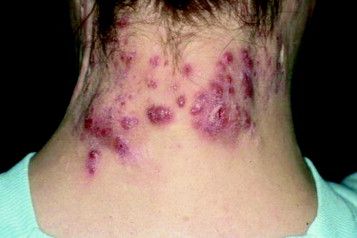
The UK Biobank (UKB) is a prospective biobank with about 500,000 individuals aged 40-69 years, and FinnGen collects and analyzes genome and health data from Finnish biobank participants. To increase power to detect associations, a GWAS was performed using participants from the UKB (247 HS cases, 453,048 controls). The HS ProCARE GWAS results were meta-analyzed with UKB, along with data from FinnGen (673 HS cases, 297,544 controls). This three-way meta-analysis revealed one genomewide significant locus and two suggestive loci.
The authors found that the most strongly associated variant, rs10512572 located on chromosome 17, showed the strongest association in FinnGen; at the second locus, the most strongly associated variant was rs17090189 located on chromosome 13 and also showed the strongest association in FinnGen; and at the third locus, the most strongly associated variant, rs5792315, located on chromosome 11, showed the strongest association in HS ProCARE.
Next, they tested the 10 most strongly associated variants at the three loci in the BioVU biobank, which has 290 HS cases, including 189 individuals of European ancestry and 101 individuals of African ancestry, with 64,234 and 12,105 controls, respectively. The locus on chromosome 17 was replicated in BioVU in the same direction of effect, while one variant at the chromosome 13 locus showed nominal evidence of association in the same direction.
In a four-way meta-analysis of BioVU combined with the other three studies, the chromosome locus became more significant and the chromosome 13 locus exceeded the genomewide significance threshold. In contrast, the chromosome 11 locus was not replicated in BioVU (P = .27).
The authors pointed out that variants at these loci are located in keratinocyte regulatory elements near the genes SOX9 and KLF5, which play a role in skin and follicular inflammation, but have not previously been associated with HS pathogenesis.
Finally, they looked to see if there were shared genetic components between HS and autoimmune and inflammatory diseases. A nominally significant genetic correlation was observed between HS and inflammatory bowel disease (P = .04), psoriasis (P = .03), and type 2 diabetes (P = .04), although none reached significance.
Different manifestation with genetic variant
In a related study, researchers assessed the prevalence of the NCSTN:c.671_682del variant among individuals with HS in Malta, the island country in the Mediterranean, which has a high prevalence of HS and its associated risk factors, particularly obesity.
Led by Dillon Mintoff, MD, of the department of pathology at the University of Malta, Msida, they conducted a cross-sectional study of 113 adults with HS. In this group, 14 (12.39%) were found to be heterozygous for the NCSTN:c.671_682del variant. Individuals who had this variant were more likely to develop symptoms earlier and to manifest them in atypical skin sites, including the scalp, neck, torso, and antecubital fossae. Additionally, even though their symptoms weren’t more severe than those without the variant, patients with the variant were more likely to require treatment with biologic agents.
Studies move genetics in HS forward
Writing in an accompanying editorial, Atlas Khan, PhD, and Lynn Petukhova, PhD, from Columbia University, New York, noted that both of these HS genetic studies “set a solid foundation for future studies aimed at understanding the biological and clinical relevance of new HS genetic evidence.”
“Each study suggests a series of experiments that will allow us to gain new knowledge about HS,” they wrote, including coming closer to providing patients with a genetic diagnosis.
In addition, evidence from the GWAS paper suggests that with “larger HS GWASs we will be able to better prioritize drug-repurposing studies,” concluded the editorialists. “Both of these goals will help to improve health outcomes for patients with HS and their family members.”
Dr. Sayed reported grants and/or personal fees from AbbVie, Novartis, UCB, Incyte, InflaRx, Alumis, and ChemoCentryx outside the submitted work; and serving as a volunteer member of the board of the HS Foundation and member of the European HS Foundation. The study in Malta was funded by the Government of Malta’s Tertiary Education Scholarship Scheme and Institutional Funds from the University of Malta. Dr. Mintoff reported grants from the Government of Malta Ministry for Education, Sport, Youth, Research and Innovation during the conduct of the study. Dr. Khan reported receiving grants from the National Institute of Diabetes and Digestive Kidney Diseases. Dr. Petukhova reported receiving grants from the National Institute of Arthritis and Musculoskeletal and Skin Diseases, Columbia University’s Precision Medicine Initiative, Herbert Irving Comprehensive Cancer Center, and Data Science Institute.
Hidradenitis suppurativa (HS) is a chronic inflammatory skin condition with lesions that include deep-seated nodules and abscesses, draining tracts, and fibrotic scars, and has been reported to be highly heritable.
A genomewide association study (GWAS) that involved a meta-analysis of data from three large biobanks (UK Biobank, FinnGen, and BioVU) identified one significant locus and two suggestive loci. The researchers were able to replicate the association with HS for two loci near the SOX9 and KLF5 genes in BioVU.
In addition, they also looked at genetic correlations between HS and autoimmune and inflammatory diseases, and results suggested a positive association with inflammatory bowel disease, psoriasis, and type 2 diabetes.
However, while plausible, the variant associations near candidate genes do not prove a causal effect of these variants or genes on disease risk, and further study is needed.
“It’s possible that these genes aren’t the ones affected by the variations we describe, but both are very strong candidates,” said study author Christopher J. Sayed, MD, associate professor of dermatology, University of North Carolina at Chapel Hill. “This improves our understanding of HS as a disease that is likely related to genetic changes that result in dysregulated hair follicle maintenance, inflammation, and wound healing.”
In turn, this will allow clinicians to educate patients about the underlying genetic influences on HS, he explained, as opposed to stigmatizing misconceptions focusing only on weight, smoking, and hygiene.
“Larger studies are underway and will be needed to find variants that may predict things like disease severity and response to treatment, but this is a big first step in the right direction,” Dr. Sayed added.
The study was published online in JAMA Dermatology.
Loci identified
GWASs have been limited in HS, and previous research has not identified significant risk loci. In the current study, Dr. Sayed and colleagues sought to identify underlying genes and genetic mechanisms that may underlie pathogenesis in HS.
They performed a GWAS in a cohort of 720 patients who were part of the Hidradenitis Suppurativa Program for Research and Care Excellence (HS ProCARE) at the UNC department of dermatology, and controls from the National Longitudinal Study of Adolescent to Adult Health (Add Health) study, a U.S.-based study following adolescents through adulthood.
The UK Biobank (UKB) is a prospective biobank with about 500,000 individuals aged 40-69 years, and FinnGen collects and analyzes genome and health data from Finnish biobank participants. To increase power to detect associations, a GWAS was performed using participants from the UKB (247 HS cases, 453,048 controls). The HS ProCARE GWAS results were meta-analyzed with UKB, along with data from FinnGen (673 HS cases, 297,544 controls). This three-way meta-analysis revealed one genomewide significant locus and two suggestive loci.
The authors found that the most strongly associated variant, rs10512572 located on chromosome 17, showed the strongest association in FinnGen; at the second locus, the most strongly associated variant was rs17090189 located on chromosome 13 and also showed the strongest association in FinnGen; and at the third locus, the most strongly associated variant, rs5792315, located on chromosome 11, showed the strongest association in HS ProCARE.
Next, they tested the 10 most strongly associated variants at the three loci in the BioVU biobank, which has 290 HS cases, including 189 individuals of European ancestry and 101 individuals of African ancestry, with 64,234 and 12,105 controls, respectively. The locus on chromosome 17 was replicated in BioVU in the same direction of effect, while one variant at the chromosome 13 locus showed nominal evidence of association in the same direction.
In a four-way meta-analysis of BioVU combined with the other three studies, the chromosome locus became more significant and the chromosome 13 locus exceeded the genomewide significance threshold. In contrast, the chromosome 11 locus was not replicated in BioVU (P = .27).
The authors pointed out that variants at these loci are located in keratinocyte regulatory elements near the genes SOX9 and KLF5, which play a role in skin and follicular inflammation, but have not previously been associated with HS pathogenesis.
Finally, they looked to see if there were shared genetic components between HS and autoimmune and inflammatory diseases. A nominally significant genetic correlation was observed between HS and inflammatory bowel disease (P = .04), psoriasis (P = .03), and type 2 diabetes (P = .04), although none reached significance.
Different manifestation with genetic variant
In a related study, researchers assessed the prevalence of the NCSTN:c.671_682del variant among individuals with HS in Malta, the island country in the Mediterranean, which has a high prevalence of HS and its associated risk factors, particularly obesity.
Led by Dillon Mintoff, MD, of the department of pathology at the University of Malta, Msida, they conducted a cross-sectional study of 113 adults with HS. In this group, 14 (12.39%) were found to be heterozygous for the NCSTN:c.671_682del variant. Individuals who had this variant were more likely to develop symptoms earlier and to manifest them in atypical skin sites, including the scalp, neck, torso, and antecubital fossae. Additionally, even though their symptoms weren’t more severe than those without the variant, patients with the variant were more likely to require treatment with biologic agents.
Studies move genetics in HS forward
Writing in an accompanying editorial, Atlas Khan, PhD, and Lynn Petukhova, PhD, from Columbia University, New York, noted that both of these HS genetic studies “set a solid foundation for future studies aimed at understanding the biological and clinical relevance of new HS genetic evidence.”
“Each study suggests a series of experiments that will allow us to gain new knowledge about HS,” they wrote, including coming closer to providing patients with a genetic diagnosis.
In addition, evidence from the GWAS paper suggests that with “larger HS GWASs we will be able to better prioritize drug-repurposing studies,” concluded the editorialists. “Both of these goals will help to improve health outcomes for patients with HS and their family members.”
Dr. Sayed reported grants and/or personal fees from AbbVie, Novartis, UCB, Incyte, InflaRx, Alumis, and ChemoCentryx outside the submitted work; and serving as a volunteer member of the board of the HS Foundation and member of the European HS Foundation. The study in Malta was funded by the Government of Malta’s Tertiary Education Scholarship Scheme and Institutional Funds from the University of Malta. Dr. Mintoff reported grants from the Government of Malta Ministry for Education, Sport, Youth, Research and Innovation during the conduct of the study. Dr. Khan reported receiving grants from the National Institute of Diabetes and Digestive Kidney Diseases. Dr. Petukhova reported receiving grants from the National Institute of Arthritis and Musculoskeletal and Skin Diseases, Columbia University’s Precision Medicine Initiative, Herbert Irving Comprehensive Cancer Center, and Data Science Institute.
Hidradenitis suppurativa (HS) is a chronic inflammatory skin condition with lesions that include deep-seated nodules and abscesses, draining tracts, and fibrotic scars, and has been reported to be highly heritable.
A genomewide association study (GWAS) that involved a meta-analysis of data from three large biobanks (UK Biobank, FinnGen, and BioVU) identified one significant locus and two suggestive loci. The researchers were able to replicate the association with HS for two loci near the SOX9 and KLF5 genes in BioVU.
In addition, they also looked at genetic correlations between HS and autoimmune and inflammatory diseases, and results suggested a positive association with inflammatory bowel disease, psoriasis, and type 2 diabetes.
However, while plausible, the variant associations near candidate genes do not prove a causal effect of these variants or genes on disease risk, and further study is needed.
“It’s possible that these genes aren’t the ones affected by the variations we describe, but both are very strong candidates,” said study author Christopher J. Sayed, MD, associate professor of dermatology, University of North Carolina at Chapel Hill. “This improves our understanding of HS as a disease that is likely related to genetic changes that result in dysregulated hair follicle maintenance, inflammation, and wound healing.”
In turn, this will allow clinicians to educate patients about the underlying genetic influences on HS, he explained, as opposed to stigmatizing misconceptions focusing only on weight, smoking, and hygiene.
“Larger studies are underway and will be needed to find variants that may predict things like disease severity and response to treatment, but this is a big first step in the right direction,” Dr. Sayed added.
The study was published online in JAMA Dermatology.
Loci identified
GWASs have been limited in HS, and previous research has not identified significant risk loci. In the current study, Dr. Sayed and colleagues sought to identify underlying genes and genetic mechanisms that may underlie pathogenesis in HS.
They performed a GWAS in a cohort of 720 patients who were part of the Hidradenitis Suppurativa Program for Research and Care Excellence (HS ProCARE) at the UNC department of dermatology, and controls from the National Longitudinal Study of Adolescent to Adult Health (Add Health) study, a U.S.-based study following adolescents through adulthood.
The UK Biobank (UKB) is a prospective biobank with about 500,000 individuals aged 40-69 years, and FinnGen collects and analyzes genome and health data from Finnish biobank participants. To increase power to detect associations, a GWAS was performed using participants from the UKB (247 HS cases, 453,048 controls). The HS ProCARE GWAS results were meta-analyzed with UKB, along with data from FinnGen (673 HS cases, 297,544 controls). This three-way meta-analysis revealed one genomewide significant locus and two suggestive loci.
The authors found that the most strongly associated variant, rs10512572 located on chromosome 17, showed the strongest association in FinnGen; at the second locus, the most strongly associated variant was rs17090189 located on chromosome 13 and also showed the strongest association in FinnGen; and at the third locus, the most strongly associated variant, rs5792315, located on chromosome 11, showed the strongest association in HS ProCARE.
Next, they tested the 10 most strongly associated variants at the three loci in the BioVU biobank, which has 290 HS cases, including 189 individuals of European ancestry and 101 individuals of African ancestry, with 64,234 and 12,105 controls, respectively. The locus on chromosome 17 was replicated in BioVU in the same direction of effect, while one variant at the chromosome 13 locus showed nominal evidence of association in the same direction.
In a four-way meta-analysis of BioVU combined with the other three studies, the chromosome locus became more significant and the chromosome 13 locus exceeded the genomewide significance threshold. In contrast, the chromosome 11 locus was not replicated in BioVU (P = .27).
The authors pointed out that variants at these loci are located in keratinocyte regulatory elements near the genes SOX9 and KLF5, which play a role in skin and follicular inflammation, but have not previously been associated with HS pathogenesis.
Finally, they looked to see if there were shared genetic components between HS and autoimmune and inflammatory diseases. A nominally significant genetic correlation was observed between HS and inflammatory bowel disease (P = .04), psoriasis (P = .03), and type 2 diabetes (P = .04), although none reached significance.
Different manifestation with genetic variant
In a related study, researchers assessed the prevalence of the NCSTN:c.671_682del variant among individuals with HS in Malta, the island country in the Mediterranean, which has a high prevalence of HS and its associated risk factors, particularly obesity.
Led by Dillon Mintoff, MD, of the department of pathology at the University of Malta, Msida, they conducted a cross-sectional study of 113 adults with HS. In this group, 14 (12.39%) were found to be heterozygous for the NCSTN:c.671_682del variant. Individuals who had this variant were more likely to develop symptoms earlier and to manifest them in atypical skin sites, including the scalp, neck, torso, and antecubital fossae. Additionally, even though their symptoms weren’t more severe than those without the variant, patients with the variant were more likely to require treatment with biologic agents.
Studies move genetics in HS forward
Writing in an accompanying editorial, Atlas Khan, PhD, and Lynn Petukhova, PhD, from Columbia University, New York, noted that both of these HS genetic studies “set a solid foundation for future studies aimed at understanding the biological and clinical relevance of new HS genetic evidence.”
“Each study suggests a series of experiments that will allow us to gain new knowledge about HS,” they wrote, including coming closer to providing patients with a genetic diagnosis.
In addition, evidence from the GWAS paper suggests that with “larger HS GWASs we will be able to better prioritize drug-repurposing studies,” concluded the editorialists. “Both of these goals will help to improve health outcomes for patients with HS and their family members.”
Dr. Sayed reported grants and/or personal fees from AbbVie, Novartis, UCB, Incyte, InflaRx, Alumis, and ChemoCentryx outside the submitted work; and serving as a volunteer member of the board of the HS Foundation and member of the European HS Foundation. The study in Malta was funded by the Government of Malta’s Tertiary Education Scholarship Scheme and Institutional Funds from the University of Malta. Dr. Mintoff reported grants from the Government of Malta Ministry for Education, Sport, Youth, Research and Innovation during the conduct of the study. Dr. Khan reported receiving grants from the National Institute of Diabetes and Digestive Kidney Diseases. Dr. Petukhova reported receiving grants from the National Institute of Arthritis and Musculoskeletal and Skin Diseases, Columbia University’s Precision Medicine Initiative, Herbert Irving Comprehensive Cancer Center, and Data Science Institute.
FROM JAMA DERMATOLOGY
Primary care vision testing rates in children low
In data from the 2018-2020 National Survey of Children’s Health, an annual, nationally representative cross-sectional study, fewer than half of children aged 3-5 with private insurance received vision testing, with rates even lower in those lacking private insurance. The findings point to unmet eye care needs, especially in young children for whom early testing to ward off vision loss is highly recommended.
The report was published online in JAMA Ophthalmology by Olivia J. Killeen MD, MS, an ophthalmologist during the study in the department of ophthalmology and visual sciences at the University of Michigan, Ann Arbor, and colleagues.

Future work should focus on improving primary care provider vision screening rates, especially for the 3- to 5-year age group, the authors wrote.
“Because children often are not aware they have an eye problem, routine vision testing in the primary care setting can help identify those with potential eye disease,” Dr. Killeen said. “We have an opportunity to improve the early detection and treatment of eye disease by improving primary care vision testing.”
Childhood vision testing, which falls into the vital signs section of the wellness check, is critical because undiagnosed problems can cause amblyopia or “lazy eye.” The American Academy of Pediatrics recommends vision testing at well-child visits starting at age 3. Regional studies,however, have suggested low rates of PCP vision testing.
Study findings
In a sample of 89,936 participants, with a mean age of 10 years (51.1% male), an estimated 30.7% overall received vision testing in primary care. Adjusted odds of vision testing in primary care decreased by 41% (odds ratio, 0.59; 95% confidence interval [CI], 0.49-0.72) for uninsured and by 24% (OR, 0.76; 95% CI, 0.70-0.82) for publicly insured participants vs. those with private insurance.
Adjusted estimated probability of vision testing was 22% (95% CI, 18.8%-25.2%) for uninsured participants, 26.6% (95% CI, 25.3%-27.9%) for those publicly insured, and 32.3% (95% CI, 31.4%-33.%) for those privately insured.
In children aged 3-5, estimated probability was 29.7% (95% CI, 25.6%-33.7%) for those uninsured, 35.2% (95% CI, 33.1%-37.3%) for those publicly insured, and 41.6% (95% CI, 39.8%-43.5%) for those privately insured – all well under 50%. The children least likely to be tested, regardless of insurance status, were adolescents aged 12-17.
Commenting on the study but not involved in it, Natalie J. Choi, MD, assistant professor of family medicine at Northwestern Medicine in Chicago, noted that the authors did not address other screening venues such as schools. She also pointed out that it is challenging for primary care physicians to address all the recommended prevention measures in addition to acute issues during an office visit.

“Oftentimes parents are the first to notice a concern about vision, and parental concerns are routinely addressed in primary care,” she said.
According to Dr. Killeen, vision testing should always be worked into the exam flow as a routine part of well-child visits. “There are devices called photoscreeners which provide automated vision tests for young children and can save a lot of time and make vision testing less burdensome for physicians and their staff,” she said. Not all primary care offices, however, offer these testing modalities.
Dr. Choi said low vision screening rates are part of the larger problem of preventive care. “In the study, the percentage of children attending a preventive health visit within the last 12 months varied by insurance coverage and was definitely not 100%,” she said. “Investing in preventive medicine helps us identify things before they become a problem, so I would love to see the number of well-child checks increase.” Identifying this gap in vision care is one of many steps, she said.
This work was supported by the University of Michigan National Clinician Scholars Program and by an unrestricted grant to the University of Michigan Department of Ophthalmology and Visual Sciences from Research to Prevent Blindness. Study coauthor Brian C. Stagg, MD, reported a grant from the National Eye Institute during the conduct of the study. Dr. Choi disclosed no conflicts of interest relevant to her comments.
In data from the 2018-2020 National Survey of Children’s Health, an annual, nationally representative cross-sectional study, fewer than half of children aged 3-5 with private insurance received vision testing, with rates even lower in those lacking private insurance. The findings point to unmet eye care needs, especially in young children for whom early testing to ward off vision loss is highly recommended.
The report was published online in JAMA Ophthalmology by Olivia J. Killeen MD, MS, an ophthalmologist during the study in the department of ophthalmology and visual sciences at the University of Michigan, Ann Arbor, and colleagues.
Future work should focus on improving primary care provider vision screening rates, especially for the 3- to 5-year age group, the authors wrote.
“Because children often are not aware they have an eye problem, routine vision testing in the primary care setting can help identify those with potential eye disease,” Dr. Killeen said. “We have an opportunity to improve the early detection and treatment of eye disease by improving primary care vision testing.”
Childhood vision testing, which falls into the vital signs section of the wellness check, is critical because undiagnosed problems can cause amblyopia or “lazy eye.” The American Academy of Pediatrics recommends vision testing at well-child visits starting at age 3. Regional studies,however, have suggested low rates of PCP vision testing.
Study findings
In a sample of 89,936 participants, with a mean age of 10 years (51.1% male), an estimated 30.7% overall received vision testing in primary care. Adjusted odds of vision testing in primary care decreased by 41% (odds ratio, 0.59; 95% confidence interval [CI], 0.49-0.72) for uninsured and by 24% (OR, 0.76; 95% CI, 0.70-0.82) for publicly insured participants vs. those with private insurance.
Adjusted estimated probability of vision testing was 22% (95% CI, 18.8%-25.2%) for uninsured participants, 26.6% (95% CI, 25.3%-27.9%) for those publicly insured, and 32.3% (95% CI, 31.4%-33.%) for those privately insured.
In children aged 3-5, estimated probability was 29.7% (95% CI, 25.6%-33.7%) for those uninsured, 35.2% (95% CI, 33.1%-37.3%) for those publicly insured, and 41.6% (95% CI, 39.8%-43.5%) for those privately insured – all well under 50%. The children least likely to be tested, regardless of insurance status, were adolescents aged 12-17.
Commenting on the study but not involved in it, Natalie J. Choi, MD, assistant professor of family medicine at Northwestern Medicine in Chicago, noted that the authors did not address other screening venues such as schools. She also pointed out that it is challenging for primary care physicians to address all the recommended prevention measures in addition to acute issues during an office visit.
“Oftentimes parents are the first to notice a concern about vision, and parental concerns are routinely addressed in primary care,” she said.
According to Dr. Killeen, vision testing should always be worked into the exam flow as a routine part of well-child visits. “There are devices called photoscreeners which provide automated vision tests for young children and can save a lot of time and make vision testing less burdensome for physicians and their staff,” she said. Not all primary care offices, however, offer these testing modalities.
Dr. Choi said low vision screening rates are part of the larger problem of preventive care. “In the study, the percentage of children attending a preventive health visit within the last 12 months varied by insurance coverage and was definitely not 100%,” she said. “Investing in preventive medicine helps us identify things before they become a problem, so I would love to see the number of well-child checks increase.” Identifying this gap in vision care is one of many steps, she said.
This work was supported by the University of Michigan National Clinician Scholars Program and by an unrestricted grant to the University of Michigan Department of Ophthalmology and Visual Sciences from Research to Prevent Blindness. Study coauthor Brian C. Stagg, MD, reported a grant from the National Eye Institute during the conduct of the study. Dr. Choi disclosed no conflicts of interest relevant to her comments.
In data from the 2018-2020 National Survey of Children’s Health, an annual, nationally representative cross-sectional study, fewer than half of children aged 3-5 with private insurance received vision testing, with rates even lower in those lacking private insurance. The findings point to unmet eye care needs, especially in young children for whom early testing to ward off vision loss is highly recommended.
The report was published online in JAMA Ophthalmology by Olivia J. Killeen MD, MS, an ophthalmologist during the study in the department of ophthalmology and visual sciences at the University of Michigan, Ann Arbor, and colleagues.
Future work should focus on improving primary care provider vision screening rates, especially for the 3- to 5-year age group, the authors wrote.
“Because children often are not aware they have an eye problem, routine vision testing in the primary care setting can help identify those with potential eye disease,” Dr. Killeen said. “We have an opportunity to improve the early detection and treatment of eye disease by improving primary care vision testing.”
Childhood vision testing, which falls into the vital signs section of the wellness check, is critical because undiagnosed problems can cause amblyopia or “lazy eye.” The American Academy of Pediatrics recommends vision testing at well-child visits starting at age 3. Regional studies,however, have suggested low rates of PCP vision testing.
Study findings
In a sample of 89,936 participants, with a mean age of 10 years (51.1% male), an estimated 30.7% overall received vision testing in primary care. Adjusted odds of vision testing in primary care decreased by 41% (odds ratio, 0.59; 95% confidence interval [CI], 0.49-0.72) for uninsured and by 24% (OR, 0.76; 95% CI, 0.70-0.82) for publicly insured participants vs. those with private insurance.
Adjusted estimated probability of vision testing was 22% (95% CI, 18.8%-25.2%) for uninsured participants, 26.6% (95% CI, 25.3%-27.9%) for those publicly insured, and 32.3% (95% CI, 31.4%-33.%) for those privately insured.
In children aged 3-5, estimated probability was 29.7% (95% CI, 25.6%-33.7%) for those uninsured, 35.2% (95% CI, 33.1%-37.3%) for those publicly insured, and 41.6% (95% CI, 39.8%-43.5%) for those privately insured – all well under 50%. The children least likely to be tested, regardless of insurance status, were adolescents aged 12-17.
Commenting on the study but not involved in it, Natalie J. Choi, MD, assistant professor of family medicine at Northwestern Medicine in Chicago, noted that the authors did not address other screening venues such as schools. She also pointed out that it is challenging for primary care physicians to address all the recommended prevention measures in addition to acute issues during an office visit.
“Oftentimes parents are the first to notice a concern about vision, and parental concerns are routinely addressed in primary care,” she said.
According to Dr. Killeen, vision testing should always be worked into the exam flow as a routine part of well-child visits. “There are devices called photoscreeners which provide automated vision tests for young children and can save a lot of time and make vision testing less burdensome for physicians and their staff,” she said. Not all primary care offices, however, offer these testing modalities.
Dr. Choi said low vision screening rates are part of the larger problem of preventive care. “In the study, the percentage of children attending a preventive health visit within the last 12 months varied by insurance coverage and was definitely not 100%,” she said. “Investing in preventive medicine helps us identify things before they become a problem, so I would love to see the number of well-child checks increase.” Identifying this gap in vision care is one of many steps, she said.
This work was supported by the University of Michigan National Clinician Scholars Program and by an unrestricted grant to the University of Michigan Department of Ophthalmology and Visual Sciences from Research to Prevent Blindness. Study coauthor Brian C. Stagg, MD, reported a grant from the National Eye Institute during the conduct of the study. Dr. Choi disclosed no conflicts of interest relevant to her comments.
FROM JAMA OPHTHALMOLOGY
Telehealth visit helps reconnect adolescents lost to follow-up
A telehealth primary care visit more than doubled the well-visit show rate for a cohort of hard-to-reach adolescents, results of a small pilot study show.
Brian P. Jenssen, MD, MSHP, department of pediatrics, University of Pennsylvania, Philadelphia, led the pilot study and the project team, which included physicians, researchers, and experts in innovation, quality improvement, and data analytics.
Findings were published online in Annals of Family Medicine.
Keeping adolescents in consistent primary care can be challenging for many reasons. The study authors note, “Only 50% of adolescents have had a health supervision visit in the past year, missing a critical opportunity for clinicians to influence health, development, screening, and counseling.”
Interest high in hard-to-reach group
This study included a particularly hard-to-reach group of 18-year-old patients at an urban primary care clinic who were lost to follow-up and had Medicaid insurance. They had not completed a well visit in more than 2 years and had a history of no-show visits.
Interest in the pilot program was high. The authors write: “We contacted patients (or their caregivers) to gauge interest in a virtual well visit with a goal to fill five telehealth slots in one evening block with one clinician. Due to high patient interest and demand, we expanded to 15 slots over three evenings, filling the slots after contacting just 24 patients.”
Professional organizations have recommended a telehealth/in-person hybrid care model to meet hard-to-reach adolescents “wherever they are,” the authors note, but the concept has not been well studied.
Under the hybrid model, the first visit is through telehealth and in-person follow-up is scheduled as needed.
Navigators contacted patients to remind them of the appointment, and helped activate the patient portal and complete previsit screening questions for depression and other health risks.
Telehealth visits were billed as preventive visits and in-person follow-up visits as no-charge nurse visits, and these payments were supported by Medicaid.
Sharp increase in show rate
In the pilot study, of the 15 patients scheduled for the telehealth visit, 11 connected virtually (73% show rate). Of those, nine needed in-person follow-up, and five completed the follow-up.
Before the intervention, the average well-visit show rate for this patient group was 33%.
Clinicians counseled all the patients about substance use and safe sex. One patient screened positive for depression and was then connected to services. Two patients were started on birth control.
During the in-person follow-up, all patients received vaccinations (influenza, meningococcal, and/or COVID-19) and were screened for sexually transmitted infection. Eight patients completed the satisfaction survey and all said they liked the convenience of the telehealth visit.
Telehealth may reduce barriers for teens
Anthony Cheng, MD, a family medicine physician at Oregon Health & Science University in Portland, who was not part of the study, said he found the hybrid model promising.
One reason is that telehealth eliminates the need for transportation to medical appointments, which can be a barrier for adolescents.
Among the top causes of death for young people are mental health issues and addressing those, Dr. Cheng noted, is well-suited to a telehealth visit.
“There’s so much we can do if we can establish a relationship and maintain a relationship with our patients as young adults,” he said. “People do better when they have a regular source of care.”
He added that adolescents also have grown up communicating via screens so it’s often more comfortable for them to communicate with health care providers this way.
Dr. Cheng said adopting such a model may be difficult for providers reluctant to switch from the practice model with which they are most comfortable.
“We prefer to do things we have the most confidence in,” he said. “It does take an investment to train staff and build your own clinical comfort. If that experience wasn’t good over the past 3 years, you may be anxious to get back to your normal way of doing business.”
The authors and Dr. Cheng have no relevant financial relationships to disclose.
A telehealth primary care visit more than doubled the well-visit show rate for a cohort of hard-to-reach adolescents, results of a small pilot study show.
Brian P. Jenssen, MD, MSHP, department of pediatrics, University of Pennsylvania, Philadelphia, led the pilot study and the project team, which included physicians, researchers, and experts in innovation, quality improvement, and data analytics.
Findings were published online in Annals of Family Medicine.
Keeping adolescents in consistent primary care can be challenging for many reasons. The study authors note, “Only 50% of adolescents have had a health supervision visit in the past year, missing a critical opportunity for clinicians to influence health, development, screening, and counseling.”
Interest high in hard-to-reach group
This study included a particularly hard-to-reach group of 18-year-old patients at an urban primary care clinic who were lost to follow-up and had Medicaid insurance. They had not completed a well visit in more than 2 years and had a history of no-show visits.
Interest in the pilot program was high. The authors write: “We contacted patients (or their caregivers) to gauge interest in a virtual well visit with a goal to fill five telehealth slots in one evening block with one clinician. Due to high patient interest and demand, we expanded to 15 slots over three evenings, filling the slots after contacting just 24 patients.”
Professional organizations have recommended a telehealth/in-person hybrid care model to meet hard-to-reach adolescents “wherever they are,” the authors note, but the concept has not been well studied.
Under the hybrid model, the first visit is through telehealth and in-person follow-up is scheduled as needed.
Navigators contacted patients to remind them of the appointment, and helped activate the patient portal and complete previsit screening questions for depression and other health risks.
Telehealth visits were billed as preventive visits and in-person follow-up visits as no-charge nurse visits, and these payments were supported by Medicaid.
Sharp increase in show rate
In the pilot study, of the 15 patients scheduled for the telehealth visit, 11 connected virtually (73% show rate). Of those, nine needed in-person follow-up, and five completed the follow-up.
Before the intervention, the average well-visit show rate for this patient group was 33%.
Clinicians counseled all the patients about substance use and safe sex. One patient screened positive for depression and was then connected to services. Two patients were started on birth control.
During the in-person follow-up, all patients received vaccinations (influenza, meningococcal, and/or COVID-19) and were screened for sexually transmitted infection. Eight patients completed the satisfaction survey and all said they liked the convenience of the telehealth visit.
Telehealth may reduce barriers for teens
Anthony Cheng, MD, a family medicine physician at Oregon Health & Science University in Portland, who was not part of the study, said he found the hybrid model promising.
One reason is that telehealth eliminates the need for transportation to medical appointments, which can be a barrier for adolescents.
Among the top causes of death for young people are mental health issues and addressing those, Dr. Cheng noted, is well-suited to a telehealth visit.
“There’s so much we can do if we can establish a relationship and maintain a relationship with our patients as young adults,” he said. “People do better when they have a regular source of care.”
He added that adolescents also have grown up communicating via screens so it’s often more comfortable for them to communicate with health care providers this way.
Dr. Cheng said adopting such a model may be difficult for providers reluctant to switch from the practice model with which they are most comfortable.
“We prefer to do things we have the most confidence in,” he said. “It does take an investment to train staff and build your own clinical comfort. If that experience wasn’t good over the past 3 years, you may be anxious to get back to your normal way of doing business.”
The authors and Dr. Cheng have no relevant financial relationships to disclose.
A telehealth primary care visit more than doubled the well-visit show rate for a cohort of hard-to-reach adolescents, results of a small pilot study show.
Brian P. Jenssen, MD, MSHP, department of pediatrics, University of Pennsylvania, Philadelphia, led the pilot study and the project team, which included physicians, researchers, and experts in innovation, quality improvement, and data analytics.
Findings were published online in Annals of Family Medicine.
Keeping adolescents in consistent primary care can be challenging for many reasons. The study authors note, “Only 50% of adolescents have had a health supervision visit in the past year, missing a critical opportunity for clinicians to influence health, development, screening, and counseling.”
Interest high in hard-to-reach group
This study included a particularly hard-to-reach group of 18-year-old patients at an urban primary care clinic who were lost to follow-up and had Medicaid insurance. They had not completed a well visit in more than 2 years and had a history of no-show visits.
Interest in the pilot program was high. The authors write: “We contacted patients (or their caregivers) to gauge interest in a virtual well visit with a goal to fill five telehealth slots in one evening block with one clinician. Due to high patient interest and demand, we expanded to 15 slots over three evenings, filling the slots after contacting just 24 patients.”
Professional organizations have recommended a telehealth/in-person hybrid care model to meet hard-to-reach adolescents “wherever they are,” the authors note, but the concept has not been well studied.
Under the hybrid model, the first visit is through telehealth and in-person follow-up is scheduled as needed.
Navigators contacted patients to remind them of the appointment, and helped activate the patient portal and complete previsit screening questions for depression and other health risks.
Telehealth visits were billed as preventive visits and in-person follow-up visits as no-charge nurse visits, and these payments were supported by Medicaid.
Sharp increase in show rate
In the pilot study, of the 15 patients scheduled for the telehealth visit, 11 connected virtually (73% show rate). Of those, nine needed in-person follow-up, and five completed the follow-up.
Before the intervention, the average well-visit show rate for this patient group was 33%.
Clinicians counseled all the patients about substance use and safe sex. One patient screened positive for depression and was then connected to services. Two patients were started on birth control.
During the in-person follow-up, all patients received vaccinations (influenza, meningococcal, and/or COVID-19) and were screened for sexually transmitted infection. Eight patients completed the satisfaction survey and all said they liked the convenience of the telehealth visit.
Telehealth may reduce barriers for teens
Anthony Cheng, MD, a family medicine physician at Oregon Health & Science University in Portland, who was not part of the study, said he found the hybrid model promising.
One reason is that telehealth eliminates the need for transportation to medical appointments, which can be a barrier for adolescents.
Among the top causes of death for young people are mental health issues and addressing those, Dr. Cheng noted, is well-suited to a telehealth visit.
“There’s so much we can do if we can establish a relationship and maintain a relationship with our patients as young adults,” he said. “People do better when they have a regular source of care.”
He added that adolescents also have grown up communicating via screens so it’s often more comfortable for them to communicate with health care providers this way.
Dr. Cheng said adopting such a model may be difficult for providers reluctant to switch from the practice model with which they are most comfortable.
“We prefer to do things we have the most confidence in,” he said. “It does take an investment to train staff and build your own clinical comfort. If that experience wasn’t good over the past 3 years, you may be anxious to get back to your normal way of doing business.”
The authors and Dr. Cheng have no relevant financial relationships to disclose.
FROM ANNALS OF INTERNAL MEDICINE
FDA okays first-ever new drug for rare bone disorder
Affecting roughly 400 people in the United States and 900 worldwide, FOP is an autosomal dominant condition in which bone develops in soft connective tissue areas of the body where it isn’t normally present (heterotopic ossification), such as the ligaments, tendons, and skeletal muscles. This leads to severe restriction in mobility and function, to the point that people lose the ability to feed or care for themselves. Most are completely disabled by age 30 years and median life expectancy is 56 years, with death often caused by bone formation around the rib cage restricting respiration.
“As a clinician caring for patients with FOP, I personally see the daily challenges and stresses that our patients and their families must contend with ... since the accumulation of heterotopic ossification in FOP is progressive, irreversible, and life altering. This medication is an important treatment option for our FOP community,” said endocrinologist Edward Hsiao, MD, professor of medicine at the University of California, San Francisco, in a statement from Ipsen.
Taken orally, palovarotene selectively targets the gamma subtype of retinoic acid receptors that regulate skeletal development and ectopic bone in the retinoid signaling pathway. The drug mediates interactions between these receptors, growth factors, and proteins within that pathway to reduce new abnormal bone formation.
It is now FDA approved for the treatment of FOP in female patients aged 8 years or older and male patients aged 10 years or older. The recommended dosing is 5 mg daily or weight-based equivalent for pediatric patients under 14 years of age, which can be modified or increased for flare-up symptoms. It is contraindicated during pregnancy.
The FDA approval was based on 18-month data from the phase 3, multicenter, open-label MOVE trial that included 107 adult and pediatric patients, over 10% of the world’s population with FOP. All received oral palovarotene and were compared with untreated individuals from a prior natural history study of the condition. The drug reduced annualized heterotopic ossification volume by 54%.
Side effects were typical of those seen with other systemic retinoid drugs, including mucocutaneous events such as dryness of the skin and mucous membranes, alopecia, drug eruption, rash, and pruritus, and musculoskeletal events, such as arthralgia and premature growth plate closure in growing children.
According to Dr. Hsiao, who was a MOVE investigator, the study “showed that Sohonos can decrease new heterotopic ossification, and that palovarotene can be tolerated by many patients with FOP. Sohonos is not for everyone. As with all medicines there are risks in this case especially for young children who may develop early growth plate closure. In addition, Sohonos has the same side effects as other retinoids.”
The FDA approval of palovarotene follows its rejection for marketing authorization in the European Union in July 2023.
Reached for comment, an Ipsen spokesperson said in an interview: “We reached the end of the regulatory process in the European Union for Sohonos and are disappointed the European Commission decided not to approved palovarotene for people with FOP in Europe.”
The company is developing another drug, fidrisertib, for treating FOP. A pivotal phase 2 trial for that drug is now recruiting patients. Asked where Ipsen might try to market fidrisertib, the spokesperson replied:“At this point, our focus is on the completion of the pivotal trial.”
Meanwhile, in the United States, the FOP community is celebrating the palovarotene approval. In a statement, Michelle Davis, executive director of the International Fibrodysplasia Ossificans Progressiva Association, said: “FOP is life altering to the individuals diagnosed and their families. There’s not a day that goes by where those impacted don’t worry about the debilitating physical pain of muscle that is replaced by bone, another joint locking, or the relentless emotional toll of losing the ability to do an activity they love, or hold a loved one close. ... The first treatment for FOP has been proven to reduce the volume of new abnormal bone growth, which may result in better health outcomes for people living with FOP.”
Ipsen is offering a patient support program to assist with education, coverage, and reimbursement (1-866-435-5677).
A version of this article appeared on Medscape.com.
Affecting roughly 400 people in the United States and 900 worldwide, FOP is an autosomal dominant condition in which bone develops in soft connective tissue areas of the body where it isn’t normally present (heterotopic ossification), such as the ligaments, tendons, and skeletal muscles. This leads to severe restriction in mobility and function, to the point that people lose the ability to feed or care for themselves. Most are completely disabled by age 30 years and median life expectancy is 56 years, with death often caused by bone formation around the rib cage restricting respiration.
“As a clinician caring for patients with FOP, I personally see the daily challenges and stresses that our patients and their families must contend with ... since the accumulation of heterotopic ossification in FOP is progressive, irreversible, and life altering. This medication is an important treatment option for our FOP community,” said endocrinologist Edward Hsiao, MD, professor of medicine at the University of California, San Francisco, in a statement from Ipsen.
Taken orally, palovarotene selectively targets the gamma subtype of retinoic acid receptors that regulate skeletal development and ectopic bone in the retinoid signaling pathway. The drug mediates interactions between these receptors, growth factors, and proteins within that pathway to reduce new abnormal bone formation.
It is now FDA approved for the treatment of FOP in female patients aged 8 years or older and male patients aged 10 years or older. The recommended dosing is 5 mg daily or weight-based equivalent for pediatric patients under 14 years of age, which can be modified or increased for flare-up symptoms. It is contraindicated during pregnancy.
The FDA approval was based on 18-month data from the phase 3, multicenter, open-label MOVE trial that included 107 adult and pediatric patients, over 10% of the world’s population with FOP. All received oral palovarotene and were compared with untreated individuals from a prior natural history study of the condition. The drug reduced annualized heterotopic ossification volume by 54%.
Side effects were typical of those seen with other systemic retinoid drugs, including mucocutaneous events such as dryness of the skin and mucous membranes, alopecia, drug eruption, rash, and pruritus, and musculoskeletal events, such as arthralgia and premature growth plate closure in growing children.
According to Dr. Hsiao, who was a MOVE investigator, the study “showed that Sohonos can decrease new heterotopic ossification, and that palovarotene can be tolerated by many patients with FOP. Sohonos is not for everyone. As with all medicines there are risks in this case especially for young children who may develop early growth plate closure. In addition, Sohonos has the same side effects as other retinoids.”
The FDA approval of palovarotene follows its rejection for marketing authorization in the European Union in July 2023.
Reached for comment, an Ipsen spokesperson said in an interview: “We reached the end of the regulatory process in the European Union for Sohonos and are disappointed the European Commission decided not to approved palovarotene for people with FOP in Europe.”
The company is developing another drug, fidrisertib, for treating FOP. A pivotal phase 2 trial for that drug is now recruiting patients. Asked where Ipsen might try to market fidrisertib, the spokesperson replied:“At this point, our focus is on the completion of the pivotal trial.”
Meanwhile, in the United States, the FOP community is celebrating the palovarotene approval. In a statement, Michelle Davis, executive director of the International Fibrodysplasia Ossificans Progressiva Association, said: “FOP is life altering to the individuals diagnosed and their families. There’s not a day that goes by where those impacted don’t worry about the debilitating physical pain of muscle that is replaced by bone, another joint locking, or the relentless emotional toll of losing the ability to do an activity they love, or hold a loved one close. ... The first treatment for FOP has been proven to reduce the volume of new abnormal bone growth, which may result in better health outcomes for people living with FOP.”
Ipsen is offering a patient support program to assist with education, coverage, and reimbursement (1-866-435-5677).
A version of this article appeared on Medscape.com.
Affecting roughly 400 people in the United States and 900 worldwide, FOP is an autosomal dominant condition in which bone develops in soft connective tissue areas of the body where it isn’t normally present (heterotopic ossification), such as the ligaments, tendons, and skeletal muscles. This leads to severe restriction in mobility and function, to the point that people lose the ability to feed or care for themselves. Most are completely disabled by age 30 years and median life expectancy is 56 years, with death often caused by bone formation around the rib cage restricting respiration.
“As a clinician caring for patients with FOP, I personally see the daily challenges and stresses that our patients and their families must contend with ... since the accumulation of heterotopic ossification in FOP is progressive, irreversible, and life altering. This medication is an important treatment option for our FOP community,” said endocrinologist Edward Hsiao, MD, professor of medicine at the University of California, San Francisco, in a statement from Ipsen.
Taken orally, palovarotene selectively targets the gamma subtype of retinoic acid receptors that regulate skeletal development and ectopic bone in the retinoid signaling pathway. The drug mediates interactions between these receptors, growth factors, and proteins within that pathway to reduce new abnormal bone formation.
It is now FDA approved for the treatment of FOP in female patients aged 8 years or older and male patients aged 10 years or older. The recommended dosing is 5 mg daily or weight-based equivalent for pediatric patients under 14 years of age, which can be modified or increased for flare-up symptoms. It is contraindicated during pregnancy.
The FDA approval was based on 18-month data from the phase 3, multicenter, open-label MOVE trial that included 107 adult and pediatric patients, over 10% of the world’s population with FOP. All received oral palovarotene and were compared with untreated individuals from a prior natural history study of the condition. The drug reduced annualized heterotopic ossification volume by 54%.
Side effects were typical of those seen with other systemic retinoid drugs, including mucocutaneous events such as dryness of the skin and mucous membranes, alopecia, drug eruption, rash, and pruritus, and musculoskeletal events, such as arthralgia and premature growth plate closure in growing children.
According to Dr. Hsiao, who was a MOVE investigator, the study “showed that Sohonos can decrease new heterotopic ossification, and that palovarotene can be tolerated by many patients with FOP. Sohonos is not for everyone. As with all medicines there are risks in this case especially for young children who may develop early growth plate closure. In addition, Sohonos has the same side effects as other retinoids.”
The FDA approval of palovarotene follows its rejection for marketing authorization in the European Union in July 2023.
Reached for comment, an Ipsen spokesperson said in an interview: “We reached the end of the regulatory process in the European Union for Sohonos and are disappointed the European Commission decided not to approved palovarotene for people with FOP in Europe.”
The company is developing another drug, fidrisertib, for treating FOP. A pivotal phase 2 trial for that drug is now recruiting patients. Asked where Ipsen might try to market fidrisertib, the spokesperson replied:“At this point, our focus is on the completion of the pivotal trial.”
Meanwhile, in the United States, the FOP community is celebrating the palovarotene approval. In a statement, Michelle Davis, executive director of the International Fibrodysplasia Ossificans Progressiva Association, said: “FOP is life altering to the individuals diagnosed and their families. There’s not a day that goes by where those impacted don’t worry about the debilitating physical pain of muscle that is replaced by bone, another joint locking, or the relentless emotional toll of losing the ability to do an activity they love, or hold a loved one close. ... The first treatment for FOP has been proven to reduce the volume of new abnormal bone growth, which may result in better health outcomes for people living with FOP.”
Ipsen is offering a patient support program to assist with education, coverage, and reimbursement (1-866-435-5677).
A version of this article appeared on Medscape.com.
What can you do during a mass shooting? This MD found out
Sunday night. Las Vegas. Jason Aldean had just started playing.
My wife and I were at the 2017 Route 91 Harvest Festival with three other couples; two of them were our close friends. We were sitting in the VIP section, a tented area right next to the stage. We started hearing what I was convinced were fireworks.
I’ve been in the Army for 20 some years. I’ve been deployed and shot at multiple times. But these shots were far away. And you don’t expect people to be shooting at you at a concert.
I was on the edge of the VIP area, so I could see around the corner of the tent. I looked up at the Mandalay Bay and saw the muzzle flash in the hotel window. That’s when I knew.
I screamed: “Somebody’s shooting at us! Everybody get down!”
It took a while for people to realize what was going on. When the first couple volleys sprayed into the crowd, nobody understood. But once enough people had been hit and dropped, everyone knew, and it was just mass exodus.
People screamed and ran everywhere. Some of them tried to jump over the front barrier so they could get underneath the stage. Others were trying to pick up loved ones who’d been shot.
The next 15 minutes are a little foggy. I was helping my wife and the people around us to get down. Funny things come back to you afterward. One of my friends was carrying a 16-ounce beer in his hand. Somebody’s shooting at him and he’s walking around with his beer like he’s afraid to put it down. It was so surreal.
We got everybody underneath the tent, and then we just sat there. There would be shooting and then a pause. You’d think it was over. And then there would be more shooting and another pause. It felt like it never was going to stop.
After a short period of time, somebody came in with an official badge, maybe FBI, who knows. They said: “Okay, everybody up. We’ve got to get you out of here.” So, we all got up and headed across the stage. The gate they were taking us to was in full view of the shooter, so it wasn’t very safe.
As I got up, I looked out at the field. Bodies were scattered everywhere. I’m a trauma surgeon by trade. I couldn’t just leave.
I told my two best friends to take my wife with them. My wife lost her mind at that point. She didn’t want me to run out on the field. But I had to. I saw the injured and they needed help. Another buddy and I jumped over the fence and started taking care of people.
The feeling of being out on the field was one of complete frustration. I was in sandals, shorts, and a t-shirt. We had no stretchers, no medical supplies, no nothing. I didn’t have a belt to use as a tourniquet. I didn’t even have a bandage.
Worse: We were seeing high-velocity gunshot wounds that I’ve seen for 20 years in the Army. I know how to take care of them. I know how to fix them. But there wasn’t a single thing I could do.
We had to get people off the field, so we started gathering up as many as we could. We didn’t know if we were going to get shot at again, so we were trying to hide behind things as we ran. Our main objective was just to get people to a place of safety.
A lot of it is a blur. But a few patients stick out in my mind.
A father and son. The father had been shot through the abdomen, exited out through his back. He was in severe pain and couldn’t walk.
A young girl shot in the arm. Her parents carrying her.
A group of people doing CPR on a young lady. She had a gunshot wound to the head or neck. She was obviously dead. But they were still doing chest compressions in the middle of the field. I had to say to them: “She’s dead. You can’t save her. You need to get off the field.” But they wouldn’t stop. We picked her up and took her out while they continued to do CPR.
Later, I realized I knew that woman. She was part of a group of friends that we would see at the festival. I hadn’t recognized her. I also didn’t know that my friend Marco was there. A month or 2 later, we figured out that he was one of the people doing CPR. And I was the guy who came up and said his friend was dead.
Some people were so badly injured we couldn’t lift them. We started tearing apart the fencing used to separate the crowd and slid sections of the barricades under the wounded to carry them. We also carried off a bunch of people who were dead.
We were moving patients to a covered bar area where we thought they would be safer. What we didn’t know was there was an ambulance rally point at the very far end of the field. Unfortunately, we had no idea it was there.
I saw a lot of other first responders out there, people from the fire department, corpsmen from the Navy, medics. I ran into an anesthesia provider and a series of nurses.
When we got everybody off the field, we started moving them into vehicles. People were bringing their trucks up. One guy even stole a truck so he could drive people to the ED. There wasn’t a lot of triage. We were just stacking whoever we could into the backs of these pickups.
I tried to help a nurse taking care of a lady who had been shot in the neck. She was sitting sort of half upright with the patient lying in her arms. When I reached to help her, she said: “You can’t move her.”
“We need to get her to the hospital,” I replied.
“This is the only position that this lady has an airway,” she said. “You’re going to have to move both of us together. If I move at all, she loses her airway.”
So, a group of us managed to slide something underneath and lift them into the back of a truck.
Loading the wounded went on for a while. And then, just like that, everybody was gone.
I walked back out onto this field which not too long ago held 30,000 people. It was as if aliens had just suddenly beamed everyone out.
There was stuff on the ground everywhere – blankets, clothing, single boots, wallets, purses. I walked past a food stand with food still cooking on the grill. There was a beer tap still running. It was the weirdest feeling I’d ever had in my life.
After that, things got a little crazy again. There had been a report of a second shooter, and no one knew if it was real or not. The police started herding a group of us across the street to the Tropicana. We were still trying to take cover as we walked there. We went past a big lion statue in front of one of the casinos. I have a picture from two years earlier of me sitting on the back of that lion. I remember thinking: Now I’m hunkered down behind the same lion hiding from a shooter. Times change.
They brought about 50 of us into a food court, which was closed. They wouldn’t tell us what was going on. And they wouldn’t let us leave. This went on for hours. Meanwhile, I had dropped my cell phone on the field, so my wife couldn’t get hold of me, and later she told me she assumed I’d been shot. I was just hoping that she was safe.
People were huddled together, crying, holding each other. Most were wearing Western concert–going stuff, which for a lot of them wasn’t very much clothing. The hotel eventually brought some blankets.
I was covered in blood. My shirt, shorts, and sandals were soaked. It was running down my legs. I couldn’t find anything to eat or drink. At one point, I sat down at a slot machine, put a hundred dollars in, and started playing slots. I didn’t know what else to do. It didn’t take me very long to lose it all.
Finally, I started looking for a way to get out. I checked all the exits, but there were security and police there. Then I ran into a guy who said he had found a fire exit. When we opened the fire door, there was a big security guard there, and he said: “You can’t leave.”
We said: “Try to stop us. We’re out of here.”
Another thing I’ll always remember – after I broke out of the Tropicana, I was low crawling through the bushes along the Strip toward my hotel. I got a block away and stood up to cross the street. I pushed the crosswalk button and waited. There were no cars, no people. I’ve just broken all the rules, violated police orders, and now I’m standing there waiting for a blinking light to allow me to cross the street!
I made it back to my hotel room around 3:30 or 4:00 in the morning. My wife was hysterical because I hadn’t been answering my cell phone. I came in, and she gave me a big hug, and I got in the shower. Our plane was leaving in a few hours, so we laid down, but didn’t sleep.
As we were getting ready to leave, my wife’s phone rang, and it was my number. A guy at the same hotel had found my phone on the field and called the “in case of emergency” number. So, I got my phone back.
It wasn’t easy to deal with the aftermath. It really affected everybody’s life. To this day, I’m particular about where we sit at concerts. My wife isn’t comfortable if she can’t see an exit. I now have a med bag in my car with tourniquets, pressure dressings, airway masks for CPR.
I’ll never forget that feeling of absolute frustration. That lady without an airway – I could’ve put a trach in her very quickly and made a difference. Were they able to keep her airway? Did she live?
The father and son – did the father make it? I have no idea what happened to any of them. Later, I went through and looked at the pictures of all the people who had died, but I couldn’t recognize anybody.
The hardest part was being there with my wife. I’ve been in places where people are shooting at you, in vehicles that are getting bombed. I’ve always believed that when it’s your time, it’s your time. If I get shot, well, okay, that happens. But if she got shot or my friends ... that would be really tough.
A year later, I gave a talk about it at a conference. I thought I had worked through everything. But all of those feelings, all of that helplessness, that anger, everything came roaring back to the surface again. They asked me how I deal with it, and I said: “Well ... poorly.” I’m the guy who sticks it in a box in the back of his brain, tucks it in and buries it with a bunch of other boxes, and hopes it never comes out again. But every once in a while, it does.
There were all kinds of people out on that field, some with medical training, some without, all determined to help, trying to get those injured people where they needed to be. In retrospect, it does make you feel good. Somebody was shooting at us, but people were still willing to stand up and risk their lives to help others.
We still talk with our friends about what happened that night. Over the years, it’s become less and less. But there’s still a text sent out every year on that day: “Today is the anniversary. Glad we’re all alive. Thanks for being our friends.”
Dr. Sebesta is a bariatric surgeon with MultiCare Health System in Tacoma, Wash.
A version of this article first appeared on Medscape.com.
Sunday night. Las Vegas. Jason Aldean had just started playing.
My wife and I were at the 2017 Route 91 Harvest Festival with three other couples; two of them were our close friends. We were sitting in the VIP section, a tented area right next to the stage. We started hearing what I was convinced were fireworks.
I’ve been in the Army for 20 some years. I’ve been deployed and shot at multiple times. But these shots were far away. And you don’t expect people to be shooting at you at a concert.
I was on the edge of the VIP area, so I could see around the corner of the tent. I looked up at the Mandalay Bay and saw the muzzle flash in the hotel window. That’s when I knew.
I screamed: “Somebody’s shooting at us! Everybody get down!”
It took a while for people to realize what was going on. When the first couple volleys sprayed into the crowd, nobody understood. But once enough people had been hit and dropped, everyone knew, and it was just mass exodus.
People screamed and ran everywhere. Some of them tried to jump over the front barrier so they could get underneath the stage. Others were trying to pick up loved ones who’d been shot.
The next 15 minutes are a little foggy. I was helping my wife and the people around us to get down. Funny things come back to you afterward. One of my friends was carrying a 16-ounce beer in his hand. Somebody’s shooting at him and he’s walking around with his beer like he’s afraid to put it down. It was so surreal.
We got everybody underneath the tent, and then we just sat there. There would be shooting and then a pause. You’d think it was over. And then there would be more shooting and another pause. It felt like it never was going to stop.
After a short period of time, somebody came in with an official badge, maybe FBI, who knows. They said: “Okay, everybody up. We’ve got to get you out of here.” So, we all got up and headed across the stage. The gate they were taking us to was in full view of the shooter, so it wasn’t very safe.
As I got up, I looked out at the field. Bodies were scattered everywhere. I’m a trauma surgeon by trade. I couldn’t just leave.
I told my two best friends to take my wife with them. My wife lost her mind at that point. She didn’t want me to run out on the field. But I had to. I saw the injured and they needed help. Another buddy and I jumped over the fence and started taking care of people.
The feeling of being out on the field was one of complete frustration. I was in sandals, shorts, and a t-shirt. We had no stretchers, no medical supplies, no nothing. I didn’t have a belt to use as a tourniquet. I didn’t even have a bandage.
Worse: We were seeing high-velocity gunshot wounds that I’ve seen for 20 years in the Army. I know how to take care of them. I know how to fix them. But there wasn’t a single thing I could do.
We had to get people off the field, so we started gathering up as many as we could. We didn’t know if we were going to get shot at again, so we were trying to hide behind things as we ran. Our main objective was just to get people to a place of safety.
A lot of it is a blur. But a few patients stick out in my mind.
A father and son. The father had been shot through the abdomen, exited out through his back. He was in severe pain and couldn’t walk.
A young girl shot in the arm. Her parents carrying her.
A group of people doing CPR on a young lady. She had a gunshot wound to the head or neck. She was obviously dead. But they were still doing chest compressions in the middle of the field. I had to say to them: “She’s dead. You can’t save her. You need to get off the field.” But they wouldn’t stop. We picked her up and took her out while they continued to do CPR.
Later, I realized I knew that woman. She was part of a group of friends that we would see at the festival. I hadn’t recognized her. I also didn’t know that my friend Marco was there. A month or 2 later, we figured out that he was one of the people doing CPR. And I was the guy who came up and said his friend was dead.
Some people were so badly injured we couldn’t lift them. We started tearing apart the fencing used to separate the crowd and slid sections of the barricades under the wounded to carry them. We also carried off a bunch of people who were dead.
We were moving patients to a covered bar area where we thought they would be safer. What we didn’t know was there was an ambulance rally point at the very far end of the field. Unfortunately, we had no idea it was there.
I saw a lot of other first responders out there, people from the fire department, corpsmen from the Navy, medics. I ran into an anesthesia provider and a series of nurses.
When we got everybody off the field, we started moving them into vehicles. People were bringing their trucks up. One guy even stole a truck so he could drive people to the ED. There wasn’t a lot of triage. We were just stacking whoever we could into the backs of these pickups.
I tried to help a nurse taking care of a lady who had been shot in the neck. She was sitting sort of half upright with the patient lying in her arms. When I reached to help her, she said: “You can’t move her.”
“We need to get her to the hospital,” I replied.
“This is the only position that this lady has an airway,” she said. “You’re going to have to move both of us together. If I move at all, she loses her airway.”
So, a group of us managed to slide something underneath and lift them into the back of a truck.
Loading the wounded went on for a while. And then, just like that, everybody was gone.
I walked back out onto this field which not too long ago held 30,000 people. It was as if aliens had just suddenly beamed everyone out.
There was stuff on the ground everywhere – blankets, clothing, single boots, wallets, purses. I walked past a food stand with food still cooking on the grill. There was a beer tap still running. It was the weirdest feeling I’d ever had in my life.
After that, things got a little crazy again. There had been a report of a second shooter, and no one knew if it was real or not. The police started herding a group of us across the street to the Tropicana. We were still trying to take cover as we walked there. We went past a big lion statue in front of one of the casinos. I have a picture from two years earlier of me sitting on the back of that lion. I remember thinking: Now I’m hunkered down behind the same lion hiding from a shooter. Times change.
They brought about 50 of us into a food court, which was closed. They wouldn’t tell us what was going on. And they wouldn’t let us leave. This went on for hours. Meanwhile, I had dropped my cell phone on the field, so my wife couldn’t get hold of me, and later she told me she assumed I’d been shot. I was just hoping that she was safe.
People were huddled together, crying, holding each other. Most were wearing Western concert–going stuff, which for a lot of them wasn’t very much clothing. The hotel eventually brought some blankets.
I was covered in blood. My shirt, shorts, and sandals were soaked. It was running down my legs. I couldn’t find anything to eat or drink. At one point, I sat down at a slot machine, put a hundred dollars in, and started playing slots. I didn’t know what else to do. It didn’t take me very long to lose it all.
Finally, I started looking for a way to get out. I checked all the exits, but there were security and police there. Then I ran into a guy who said he had found a fire exit. When we opened the fire door, there was a big security guard there, and he said: “You can’t leave.”
We said: “Try to stop us. We’re out of here.”
Another thing I’ll always remember – after I broke out of the Tropicana, I was low crawling through the bushes along the Strip toward my hotel. I got a block away and stood up to cross the street. I pushed the crosswalk button and waited. There were no cars, no people. I’ve just broken all the rules, violated police orders, and now I’m standing there waiting for a blinking light to allow me to cross the street!
I made it back to my hotel room around 3:30 or 4:00 in the morning. My wife was hysterical because I hadn’t been answering my cell phone. I came in, and she gave me a big hug, and I got in the shower. Our plane was leaving in a few hours, so we laid down, but didn’t sleep.
As we were getting ready to leave, my wife’s phone rang, and it was my number. A guy at the same hotel had found my phone on the field and called the “in case of emergency” number. So, I got my phone back.
It wasn’t easy to deal with the aftermath. It really affected everybody’s life. To this day, I’m particular about where we sit at concerts. My wife isn’t comfortable if she can’t see an exit. I now have a med bag in my car with tourniquets, pressure dressings, airway masks for CPR.
I’ll never forget that feeling of absolute frustration. That lady without an airway – I could’ve put a trach in her very quickly and made a difference. Were they able to keep her airway? Did she live?
The father and son – did the father make it? I have no idea what happened to any of them. Later, I went through and looked at the pictures of all the people who had died, but I couldn’t recognize anybody.
The hardest part was being there with my wife. I’ve been in places where people are shooting at you, in vehicles that are getting bombed. I’ve always believed that when it’s your time, it’s your time. If I get shot, well, okay, that happens. But if she got shot or my friends ... that would be really tough.
A year later, I gave a talk about it at a conference. I thought I had worked through everything. But all of those feelings, all of that helplessness, that anger, everything came roaring back to the surface again. They asked me how I deal with it, and I said: “Well ... poorly.” I’m the guy who sticks it in a box in the back of his brain, tucks it in and buries it with a bunch of other boxes, and hopes it never comes out again. But every once in a while, it does.
There were all kinds of people out on that field, some with medical training, some without, all determined to help, trying to get those injured people where they needed to be. In retrospect, it does make you feel good. Somebody was shooting at us, but people were still willing to stand up and risk their lives to help others.
We still talk with our friends about what happened that night. Over the years, it’s become less and less. But there’s still a text sent out every year on that day: “Today is the anniversary. Glad we’re all alive. Thanks for being our friends.”
Dr. Sebesta is a bariatric surgeon with MultiCare Health System in Tacoma, Wash.
A version of this article first appeared on Medscape.com.
Sunday night. Las Vegas. Jason Aldean had just started playing.
My wife and I were at the 2017 Route 91 Harvest Festival with three other couples; two of them were our close friends. We were sitting in the VIP section, a tented area right next to the stage. We started hearing what I was convinced were fireworks.
I’ve been in the Army for 20 some years. I’ve been deployed and shot at multiple times. But these shots were far away. And you don’t expect people to be shooting at you at a concert.
I was on the edge of the VIP area, so I could see around the corner of the tent. I looked up at the Mandalay Bay and saw the muzzle flash in the hotel window. That’s when I knew.
I screamed: “Somebody’s shooting at us! Everybody get down!”
It took a while for people to realize what was going on. When the first couple volleys sprayed into the crowd, nobody understood. But once enough people had been hit and dropped, everyone knew, and it was just mass exodus.
People screamed and ran everywhere. Some of them tried to jump over the front barrier so they could get underneath the stage. Others were trying to pick up loved ones who’d been shot.
The next 15 minutes are a little foggy. I was helping my wife and the people around us to get down. Funny things come back to you afterward. One of my friends was carrying a 16-ounce beer in his hand. Somebody’s shooting at him and he’s walking around with his beer like he’s afraid to put it down. It was so surreal.
We got everybody underneath the tent, and then we just sat there. There would be shooting and then a pause. You’d think it was over. And then there would be more shooting and another pause. It felt like it never was going to stop.
After a short period of time, somebody came in with an official badge, maybe FBI, who knows. They said: “Okay, everybody up. We’ve got to get you out of here.” So, we all got up and headed across the stage. The gate they were taking us to was in full view of the shooter, so it wasn’t very safe.
As I got up, I looked out at the field. Bodies were scattered everywhere. I’m a trauma surgeon by trade. I couldn’t just leave.
I told my two best friends to take my wife with them. My wife lost her mind at that point. She didn’t want me to run out on the field. But I had to. I saw the injured and they needed help. Another buddy and I jumped over the fence and started taking care of people.
The feeling of being out on the field was one of complete frustration. I was in sandals, shorts, and a t-shirt. We had no stretchers, no medical supplies, no nothing. I didn’t have a belt to use as a tourniquet. I didn’t even have a bandage.
Worse: We were seeing high-velocity gunshot wounds that I’ve seen for 20 years in the Army. I know how to take care of them. I know how to fix them. But there wasn’t a single thing I could do.
We had to get people off the field, so we started gathering up as many as we could. We didn’t know if we were going to get shot at again, so we were trying to hide behind things as we ran. Our main objective was just to get people to a place of safety.
A lot of it is a blur. But a few patients stick out in my mind.
A father and son. The father had been shot through the abdomen, exited out through his back. He was in severe pain and couldn’t walk.
A young girl shot in the arm. Her parents carrying her.
A group of people doing CPR on a young lady. She had a gunshot wound to the head or neck. She was obviously dead. But they were still doing chest compressions in the middle of the field. I had to say to them: “She’s dead. You can’t save her. You need to get off the field.” But they wouldn’t stop. We picked her up and took her out while they continued to do CPR.
Later, I realized I knew that woman. She was part of a group of friends that we would see at the festival. I hadn’t recognized her. I also didn’t know that my friend Marco was there. A month or 2 later, we figured out that he was one of the people doing CPR. And I was the guy who came up and said his friend was dead.
Some people were so badly injured we couldn’t lift them. We started tearing apart the fencing used to separate the crowd and slid sections of the barricades under the wounded to carry them. We also carried off a bunch of people who were dead.
We were moving patients to a covered bar area where we thought they would be safer. What we didn’t know was there was an ambulance rally point at the very far end of the field. Unfortunately, we had no idea it was there.
I saw a lot of other first responders out there, people from the fire department, corpsmen from the Navy, medics. I ran into an anesthesia provider and a series of nurses.
When we got everybody off the field, we started moving them into vehicles. People were bringing their trucks up. One guy even stole a truck so he could drive people to the ED. There wasn’t a lot of triage. We were just stacking whoever we could into the backs of these pickups.
I tried to help a nurse taking care of a lady who had been shot in the neck. She was sitting sort of half upright with the patient lying in her arms. When I reached to help her, she said: “You can’t move her.”
“We need to get her to the hospital,” I replied.
“This is the only position that this lady has an airway,” she said. “You’re going to have to move both of us together. If I move at all, she loses her airway.”
So, a group of us managed to slide something underneath and lift them into the back of a truck.
Loading the wounded went on for a while. And then, just like that, everybody was gone.
I walked back out onto this field which not too long ago held 30,000 people. It was as if aliens had just suddenly beamed everyone out.
There was stuff on the ground everywhere – blankets, clothing, single boots, wallets, purses. I walked past a food stand with food still cooking on the grill. There was a beer tap still running. It was the weirdest feeling I’d ever had in my life.
After that, things got a little crazy again. There had been a report of a second shooter, and no one knew if it was real or not. The police started herding a group of us across the street to the Tropicana. We were still trying to take cover as we walked there. We went past a big lion statue in front of one of the casinos. I have a picture from two years earlier of me sitting on the back of that lion. I remember thinking: Now I’m hunkered down behind the same lion hiding from a shooter. Times change.
They brought about 50 of us into a food court, which was closed. They wouldn’t tell us what was going on. And they wouldn’t let us leave. This went on for hours. Meanwhile, I had dropped my cell phone on the field, so my wife couldn’t get hold of me, and later she told me she assumed I’d been shot. I was just hoping that she was safe.
People were huddled together, crying, holding each other. Most were wearing Western concert–going stuff, which for a lot of them wasn’t very much clothing. The hotel eventually brought some blankets.
I was covered in blood. My shirt, shorts, and sandals were soaked. It was running down my legs. I couldn’t find anything to eat or drink. At one point, I sat down at a slot machine, put a hundred dollars in, and started playing slots. I didn’t know what else to do. It didn’t take me very long to lose it all.
Finally, I started looking for a way to get out. I checked all the exits, but there were security and police there. Then I ran into a guy who said he had found a fire exit. When we opened the fire door, there was a big security guard there, and he said: “You can’t leave.”
We said: “Try to stop us. We’re out of here.”
Another thing I’ll always remember – after I broke out of the Tropicana, I was low crawling through the bushes along the Strip toward my hotel. I got a block away and stood up to cross the street. I pushed the crosswalk button and waited. There were no cars, no people. I’ve just broken all the rules, violated police orders, and now I’m standing there waiting for a blinking light to allow me to cross the street!
I made it back to my hotel room around 3:30 or 4:00 in the morning. My wife was hysterical because I hadn’t been answering my cell phone. I came in, and she gave me a big hug, and I got in the shower. Our plane was leaving in a few hours, so we laid down, but didn’t sleep.
As we were getting ready to leave, my wife’s phone rang, and it was my number. A guy at the same hotel had found my phone on the field and called the “in case of emergency” number. So, I got my phone back.
It wasn’t easy to deal with the aftermath. It really affected everybody’s life. To this day, I’m particular about where we sit at concerts. My wife isn’t comfortable if she can’t see an exit. I now have a med bag in my car with tourniquets, pressure dressings, airway masks for CPR.
I’ll never forget that feeling of absolute frustration. That lady without an airway – I could’ve put a trach in her very quickly and made a difference. Were they able to keep her airway? Did she live?
The father and son – did the father make it? I have no idea what happened to any of them. Later, I went through and looked at the pictures of all the people who had died, but I couldn’t recognize anybody.
The hardest part was being there with my wife. I’ve been in places where people are shooting at you, in vehicles that are getting bombed. I’ve always believed that when it’s your time, it’s your time. If I get shot, well, okay, that happens. But if she got shot or my friends ... that would be really tough.
A year later, I gave a talk about it at a conference. I thought I had worked through everything. But all of those feelings, all of that helplessness, that anger, everything came roaring back to the surface again. They asked me how I deal with it, and I said: “Well ... poorly.” I’m the guy who sticks it in a box in the back of his brain, tucks it in and buries it with a bunch of other boxes, and hopes it never comes out again. But every once in a while, it does.
There were all kinds of people out on that field, some with medical training, some without, all determined to help, trying to get those injured people where they needed to be. In retrospect, it does make you feel good. Somebody was shooting at us, but people were still willing to stand up and risk their lives to help others.
We still talk with our friends about what happened that night. Over the years, it’s become less and less. But there’s still a text sent out every year on that day: “Today is the anniversary. Glad we’re all alive. Thanks for being our friends.”
Dr. Sebesta is a bariatric surgeon with MultiCare Health System in Tacoma, Wash.
A version of this article first appeared on Medscape.com.
What causes sudden cardiac arrest in young people?
Sudden cardiac arrest is the term given to death that results from a cardiac cause and occurs within an hour of symptoms being observed. If no witnesses are present, sudden cardiac arrest is present if the person had been in apparently good health 24 hours before cardiac death. Fatality is usually a result of sustained ventricular fibrillation or sustained ventricular tachycardia that leads to cardiac arrest.
Recognizing warning signs
Warning signs that should prompt physicians to consider an increased risk of sudden cardiac arrest include the following:
- Unexplained, brief fainting episodes that above all occur with stress, physical activity, or loud noises (for example, alarm ringing)
- Seizures without a clear pathologic EEG result (for example, epilepsy)
- Unexplained accidents or car crashes
- Heart failure or pacemaker dependency before age 50 years
“These are all indications that could point to an underlying heart disease that should be investigated by a medical professional,” explained Silke Kauferstein, PhD, head of the Center for Sudden Cardiac Arrest and Familial Arrhythmia Syndrome at the Institute of Forensic Medicine of the University Frankfurt am Main (Germany), in a podcast by the German Heart Foundation.
Sports rarely responsible
Sudden cardiac arrest has numerous causes. Sudden cardiac arrests in a professional sports environment always attract attention. Yet sports play a less important role in sudden cardiac arrest than is often assumed, even in young individuals.
“The incidence of sudden cardiac arrest is on average 0.7-3 per 100,000 sports players from all age groups,” said Thomas Voigtländer, MD, chair of the German Heart Foundation, in an interview. Men make up 95% of those affected, and 90% of these events occur during recreational sports.
Inherited disorders
The most significant risk factor for sudden cardiac arrest is age; it is often associated with coronary heart disease. This factor can be significant from as early as age 35 years. Among young individuals, sudden cardiac arrest is often a result of congenital heart diseases, such as hypertrophic cardiomyopathy or arrhythmogenic right ventricular cardiomyopathy. Diseases such as long QT syndrome and Brugada syndrome can also lead to sudden cardiac arrest.
Among young sports players who experience sudden cardiac arrest, the cause is often an overlooked hereditary factor. “Cardiac screening is recommended in particular for young, high-performance athletes from around 14 years old,” said Dr. Voigtländer, who is also a cardiologist and medical director of the Agaplesion Bethanien Hospital in Frankfurt.
Testing of family
“If sudden cardiac arrest or an unexplained sudden death occurs at a young age in the family, the primary care practitioner must be aware that this could be due to heart diseases that could affect the rest of the family,” said Dr. Voigtländer.
In these cases, primary care practitioners must connect the other family members to specialist outpatient departments that can test for genetic factors, he added. “Many of these genetic diseases can be treated successfully if they are diagnosed promptly.”
Lack of knowledge
Dr. Kauferstein, who runs such a specialist outpatient department, said, “unfortunately, many affected families do not know that they should be tested as well. This lack of knowledge can also lead to fatal consequences for relatives.”
For this reason, she believes that it is crucial to provide more information to the general population. Sudden cardiac arrest is often the first sign of an underlying heart disease in young, healthy individuals. “We do see warning signals in our in-depth testing of sudden cardiac arrest cases that have often been overlooked,” said Dr. Kauferstein.
This article was translated from the Medscape German Edition. A version appeared on Medscape.com.
Sudden cardiac arrest is the term given to death that results from a cardiac cause and occurs within an hour of symptoms being observed. If no witnesses are present, sudden cardiac arrest is present if the person had been in apparently good health 24 hours before cardiac death. Fatality is usually a result of sustained ventricular fibrillation or sustained ventricular tachycardia that leads to cardiac arrest.
Recognizing warning signs
Warning signs that should prompt physicians to consider an increased risk of sudden cardiac arrest include the following:
- Unexplained, brief fainting episodes that above all occur with stress, physical activity, or loud noises (for example, alarm ringing)
- Seizures without a clear pathologic EEG result (for example, epilepsy)
- Unexplained accidents or car crashes
- Heart failure or pacemaker dependency before age 50 years
“These are all indications that could point to an underlying heart disease that should be investigated by a medical professional,” explained Silke Kauferstein, PhD, head of the Center for Sudden Cardiac Arrest and Familial Arrhythmia Syndrome at the Institute of Forensic Medicine of the University Frankfurt am Main (Germany), in a podcast by the German Heart Foundation.
Sports rarely responsible
Sudden cardiac arrest has numerous causes. Sudden cardiac arrests in a professional sports environment always attract attention. Yet sports play a less important role in sudden cardiac arrest than is often assumed, even in young individuals.
“The incidence of sudden cardiac arrest is on average 0.7-3 per 100,000 sports players from all age groups,” said Thomas Voigtländer, MD, chair of the German Heart Foundation, in an interview. Men make up 95% of those affected, and 90% of these events occur during recreational sports.
Inherited disorders
The most significant risk factor for sudden cardiac arrest is age; it is often associated with coronary heart disease. This factor can be significant from as early as age 35 years. Among young individuals, sudden cardiac arrest is often a result of congenital heart diseases, such as hypertrophic cardiomyopathy or arrhythmogenic right ventricular cardiomyopathy. Diseases such as long QT syndrome and Brugada syndrome can also lead to sudden cardiac arrest.
Among young sports players who experience sudden cardiac arrest, the cause is often an overlooked hereditary factor. “Cardiac screening is recommended in particular for young, high-performance athletes from around 14 years old,” said Dr. Voigtländer, who is also a cardiologist and medical director of the Agaplesion Bethanien Hospital in Frankfurt.
Testing of family
“If sudden cardiac arrest or an unexplained sudden death occurs at a young age in the family, the primary care practitioner must be aware that this could be due to heart diseases that could affect the rest of the family,” said Dr. Voigtländer.
In these cases, primary care practitioners must connect the other family members to specialist outpatient departments that can test for genetic factors, he added. “Many of these genetic diseases can be treated successfully if they are diagnosed promptly.”
Lack of knowledge
Dr. Kauferstein, who runs such a specialist outpatient department, said, “unfortunately, many affected families do not know that they should be tested as well. This lack of knowledge can also lead to fatal consequences for relatives.”
For this reason, she believes that it is crucial to provide more information to the general population. Sudden cardiac arrest is often the first sign of an underlying heart disease in young, healthy individuals. “We do see warning signals in our in-depth testing of sudden cardiac arrest cases that have often been overlooked,” said Dr. Kauferstein.
This article was translated from the Medscape German Edition. A version appeared on Medscape.com.
Sudden cardiac arrest is the term given to death that results from a cardiac cause and occurs within an hour of symptoms being observed. If no witnesses are present, sudden cardiac arrest is present if the person had been in apparently good health 24 hours before cardiac death. Fatality is usually a result of sustained ventricular fibrillation or sustained ventricular tachycardia that leads to cardiac arrest.
Recognizing warning signs
Warning signs that should prompt physicians to consider an increased risk of sudden cardiac arrest include the following:
- Unexplained, brief fainting episodes that above all occur with stress, physical activity, or loud noises (for example, alarm ringing)
- Seizures without a clear pathologic EEG result (for example, epilepsy)
- Unexplained accidents or car crashes
- Heart failure or pacemaker dependency before age 50 years
“These are all indications that could point to an underlying heart disease that should be investigated by a medical professional,” explained Silke Kauferstein, PhD, head of the Center for Sudden Cardiac Arrest and Familial Arrhythmia Syndrome at the Institute of Forensic Medicine of the University Frankfurt am Main (Germany), in a podcast by the German Heart Foundation.
Sports rarely responsible
Sudden cardiac arrest has numerous causes. Sudden cardiac arrests in a professional sports environment always attract attention. Yet sports play a less important role in sudden cardiac arrest than is often assumed, even in young individuals.
“The incidence of sudden cardiac arrest is on average 0.7-3 per 100,000 sports players from all age groups,” said Thomas Voigtländer, MD, chair of the German Heart Foundation, in an interview. Men make up 95% of those affected, and 90% of these events occur during recreational sports.
Inherited disorders
The most significant risk factor for sudden cardiac arrest is age; it is often associated with coronary heart disease. This factor can be significant from as early as age 35 years. Among young individuals, sudden cardiac arrest is often a result of congenital heart diseases, such as hypertrophic cardiomyopathy or arrhythmogenic right ventricular cardiomyopathy. Diseases such as long QT syndrome and Brugada syndrome can also lead to sudden cardiac arrest.
Among young sports players who experience sudden cardiac arrest, the cause is often an overlooked hereditary factor. “Cardiac screening is recommended in particular for young, high-performance athletes from around 14 years old,” said Dr. Voigtländer, who is also a cardiologist and medical director of the Agaplesion Bethanien Hospital in Frankfurt.
Testing of family
“If sudden cardiac arrest or an unexplained sudden death occurs at a young age in the family, the primary care practitioner must be aware that this could be due to heart diseases that could affect the rest of the family,” said Dr. Voigtländer.
In these cases, primary care practitioners must connect the other family members to specialist outpatient departments that can test for genetic factors, he added. “Many of these genetic diseases can be treated successfully if they are diagnosed promptly.”
Lack of knowledge
Dr. Kauferstein, who runs such a specialist outpatient department, said, “unfortunately, many affected families do not know that they should be tested as well. This lack of knowledge can also lead to fatal consequences for relatives.”
For this reason, she believes that it is crucial to provide more information to the general population. Sudden cardiac arrest is often the first sign of an underlying heart disease in young, healthy individuals. “We do see warning signals in our in-depth testing of sudden cardiac arrest cases that have often been overlooked,” said Dr. Kauferstein.
This article was translated from the Medscape German Edition. A version appeared on Medscape.com.
The multitasking myth
, and that we are accomplishing more in less time. In fact, there is no credible evidence that this is true, and a mountain of evidence showing exactly the opposite.
According to this study and others, multitasking results in an average of 2 hours per day of lost productivity. It decreases the quality of work performed and increases cortisol levels, which impedes cognitive functioning, leading to a further decrease in productivity in a vicious cycle, making you increasingly ineffective and destroying your motivation and mood.

On the surface, the reasons for this are not intuitively obvious. After all, simple and routine tasks are easy to perform simultaneously; we can all walk and chew gum at the same time or eat a snack while watching TV. The problems arise when we try to multitask more complex tasks that require thought and decision-making.
It turns out that the pressures of our modern world have evolved faster than our brains. We are still hard-wired for monotasking. When we think we are completing two tasks simultaneously, we are actually performing individual actions in rapid succession. Each time you switch tasks, your brain must turn off the cognitive rules of the previous task and turn on new rules for the next one. When you switch back, the process repeats in reverse. Each of those mental gear shifts takes time and costs us productivity. According to one psychologist, even brief mental blocks created by shifting between tasks can cost as much as 40% of someone’s productive time. We are also far more likely to make mistakes while we are doing it.
Furthermore, you are stifling your creativity and innovation because you don’t focus on one task long enough to come up with original insights. Multitasking also slows down your general cognitive functions, in the same way that keeping many windows are open on your computer slows down the entire system. A study from my alma mater, the University of California, San Francisco, concluded that multitasking negativity affects memory in both younger and older adults (although the effects were greater in older adults) .
So, what to do? The fact remains that, all too often, there really are too many tasks and not enough hours in the day. How can you get through them without falling into the multitasking trap?
The first rule is to prioritize. In his book “The Seven Habits of Highly Effective People,” Stephen Covey makes an important distinction between tasks that are important and those that are merely urgent. Tasks that are important and urgent tend to make time for themselves, because they must be taken care of immediately.
Jobs that are important but not urgent are the ones we tend to try to multitask. Because there is no immediate deadline, we think we can do two or more of them simultaneously, or we fall into the other major productivity trap: procrastination. Neither of those strategies tends to end well. Identify those important but not urgent tasks and force yourself to go through them one by one.
Urgent but unimportant tasks are the productivity thieves. They demand your attention but are not worthy of it. Most tasks in this category can be delegated. I have written about physicians’ workaholic and perfectionist tendencies that drive our conviction that no one else can do anything as well as we can. Does that unimportant task, even if urgent, really demand your time, skills, education, and medical license? Is there someone in your office, or possibly an outside contractor, who could do it just as well, and maybe faster?
In fact, that is the question you should ask every time a project triggers your urge to multitask: “Who could be doing this job – or at least a major part of it – instead of me?”
If your multitasking urges are deeply ingrained – particularly those that involve phones, laptops, and the cloud – you might consider employing electronic aids. SelfControl, for example, is a free, open-sourced app that lets you block your own access to distracting websites, your email servers, social media, or anything else on the Internet. You list the sites you wish to block and set a period of time to block them. Until the set time expires, you will be unable to access those sites, even if you restart your computer or delete the application.
Dr. Eastern practices dermatology and dermatologic surgery in Belleville, N.J. He is the author of numerous articles and textbook chapters, and is a longtime monthly columnist for Dermatology News. Write to him at [email protected].
, and that we are accomplishing more in less time. In fact, there is no credible evidence that this is true, and a mountain of evidence showing exactly the opposite.
According to this study and others, multitasking results in an average of 2 hours per day of lost productivity. It decreases the quality of work performed and increases cortisol levels, which impedes cognitive functioning, leading to a further decrease in productivity in a vicious cycle, making you increasingly ineffective and destroying your motivation and mood.
On the surface, the reasons for this are not intuitively obvious. After all, simple and routine tasks are easy to perform simultaneously; we can all walk and chew gum at the same time or eat a snack while watching TV. The problems arise when we try to multitask more complex tasks that require thought and decision-making.
It turns out that the pressures of our modern world have evolved faster than our brains. We are still hard-wired for monotasking. When we think we are completing two tasks simultaneously, we are actually performing individual actions in rapid succession. Each time you switch tasks, your brain must turn off the cognitive rules of the previous task and turn on new rules for the next one. When you switch back, the process repeats in reverse. Each of those mental gear shifts takes time and costs us productivity. According to one psychologist, even brief mental blocks created by shifting between tasks can cost as much as 40% of someone’s productive time. We are also far more likely to make mistakes while we are doing it.
Furthermore, you are stifling your creativity and innovation because you don’t focus on one task long enough to come up with original insights. Multitasking also slows down your general cognitive functions, in the same way that keeping many windows are open on your computer slows down the entire system. A study from my alma mater, the University of California, San Francisco, concluded that multitasking negativity affects memory in both younger and older adults (although the effects were greater in older adults) .
So, what to do? The fact remains that, all too often, there really are too many tasks and not enough hours in the day. How can you get through them without falling into the multitasking trap?
The first rule is to prioritize. In his book “The Seven Habits of Highly Effective People,” Stephen Covey makes an important distinction between tasks that are important and those that are merely urgent. Tasks that are important and urgent tend to make time for themselves, because they must be taken care of immediately.
Jobs that are important but not urgent are the ones we tend to try to multitask. Because there is no immediate deadline, we think we can do two or more of them simultaneously, or we fall into the other major productivity trap: procrastination. Neither of those strategies tends to end well. Identify those important but not urgent tasks and force yourself to go through them one by one.
Urgent but unimportant tasks are the productivity thieves. They demand your attention but are not worthy of it. Most tasks in this category can be delegated. I have written about physicians’ workaholic and perfectionist tendencies that drive our conviction that no one else can do anything as well as we can. Does that unimportant task, even if urgent, really demand your time, skills, education, and medical license? Is there someone in your office, or possibly an outside contractor, who could do it just as well, and maybe faster?
In fact, that is the question you should ask every time a project triggers your urge to multitask: “Who could be doing this job – or at least a major part of it – instead of me?”
If your multitasking urges are deeply ingrained – particularly those that involve phones, laptops, and the cloud – you might consider employing electronic aids. SelfControl, for example, is a free, open-sourced app that lets you block your own access to distracting websites, your email servers, social media, or anything else on the Internet. You list the sites you wish to block and set a period of time to block them. Until the set time expires, you will be unable to access those sites, even if you restart your computer or delete the application.
Dr. Eastern practices dermatology and dermatologic surgery in Belleville, N.J. He is the author of numerous articles and textbook chapters, and is a longtime monthly columnist for Dermatology News. Write to him at [email protected].
, and that we are accomplishing more in less time. In fact, there is no credible evidence that this is true, and a mountain of evidence showing exactly the opposite.
According to this study and others, multitasking results in an average of 2 hours per day of lost productivity. It decreases the quality of work performed and increases cortisol levels, which impedes cognitive functioning, leading to a further decrease in productivity in a vicious cycle, making you increasingly ineffective and destroying your motivation and mood.
On the surface, the reasons for this are not intuitively obvious. After all, simple and routine tasks are easy to perform simultaneously; we can all walk and chew gum at the same time or eat a snack while watching TV. The problems arise when we try to multitask more complex tasks that require thought and decision-making.
It turns out that the pressures of our modern world have evolved faster than our brains. We are still hard-wired for monotasking. When we think we are completing two tasks simultaneously, we are actually performing individual actions in rapid succession. Each time you switch tasks, your brain must turn off the cognitive rules of the previous task and turn on new rules for the next one. When you switch back, the process repeats in reverse. Each of those mental gear shifts takes time and costs us productivity. According to one psychologist, even brief mental blocks created by shifting between tasks can cost as much as 40% of someone’s productive time. We are also far more likely to make mistakes while we are doing it.
Furthermore, you are stifling your creativity and innovation because you don’t focus on one task long enough to come up with original insights. Multitasking also slows down your general cognitive functions, in the same way that keeping many windows are open on your computer slows down the entire system. A study from my alma mater, the University of California, San Francisco, concluded that multitasking negativity affects memory in both younger and older adults (although the effects were greater in older adults) .
So, what to do? The fact remains that, all too often, there really are too many tasks and not enough hours in the day. How can you get through them without falling into the multitasking trap?
The first rule is to prioritize. In his book “The Seven Habits of Highly Effective People,” Stephen Covey makes an important distinction between tasks that are important and those that are merely urgent. Tasks that are important and urgent tend to make time for themselves, because they must be taken care of immediately.
Jobs that are important but not urgent are the ones we tend to try to multitask. Because there is no immediate deadline, we think we can do two or more of them simultaneously, or we fall into the other major productivity trap: procrastination. Neither of those strategies tends to end well. Identify those important but not urgent tasks and force yourself to go through them one by one.
Urgent but unimportant tasks are the productivity thieves. They demand your attention but are not worthy of it. Most tasks in this category can be delegated. I have written about physicians’ workaholic and perfectionist tendencies that drive our conviction that no one else can do anything as well as we can. Does that unimportant task, even if urgent, really demand your time, skills, education, and medical license? Is there someone in your office, or possibly an outside contractor, who could do it just as well, and maybe faster?
In fact, that is the question you should ask every time a project triggers your urge to multitask: “Who could be doing this job – or at least a major part of it – instead of me?”
If your multitasking urges are deeply ingrained – particularly those that involve phones, laptops, and the cloud – you might consider employing electronic aids. SelfControl, for example, is a free, open-sourced app that lets you block your own access to distracting websites, your email servers, social media, or anything else on the Internet. You list the sites you wish to block and set a period of time to block them. Until the set time expires, you will be unable to access those sites, even if you restart your computer or delete the application.
Dr. Eastern practices dermatology and dermatologic surgery in Belleville, N.J. He is the author of numerous articles and textbook chapters, and is a longtime monthly columnist for Dermatology News. Write to him at [email protected].

Nutritional psychiatry: Does it exist?
Matt was diagnosed with ADHD combined type when he was 6 years old. Given his age, the family was reluctant to try medications, but after a couple years of parenting classes and reward charts, the parents requested a stimulant. He had significant improvement in focus and impulsivity but also reduced appetite. Now at age 13, irritability and depressive symptoms have been increasing for 9 months. Skeptical of adding another medication, his parents ask whether nutrition might be an alternative tool to treat his symptoms?
What a healthy diet even consists of seems to be a moving target over decades and years. Trendy research, supplements, and dietary approaches proliferate alongside appealing theories of action. In the end, weighing which intervention is effective for which disorder and at what cost becomes murky.
Yet several fundamental principles seem clear and consistent over time and across studies.
Starting early
There is reliable evidence that in the perinatal environment, nutrition sets the stage for many aspects of healthy development. These effects are likely mediated variously through the hypothalamic-pituitary-adrenal axis, the trillions of gut bacteria that make up the microbiome, gene-environment interactions, and more. Maternal malnutrition and stress prenatally puts infants at risk for not only poor birth outcomes but also psychiatric challenges throughout childhood, such as ADHD, anxiety, depression, and autism.1
Intervening in the perinatal period has long-term benefits. A first step includes assessing food security, beginning with consistent access to nutritious food. It is important to inquire about the role of food and nutrition in the family’s history and culture, as well as identifying resources to support access to affordable nutrition. This can be paired with parenting interventions, such as family meals without screens. This may require scaffolding positive conversations in high-conflict family settings (see The Family Dinner Project).
Healthy diets promote mental health
If food security is achieved, what is next? Clinicians can inquire about the who, what, where, when, and why of nutrition to learn about a family’s eating habits.2 While randomized controlled data is very limited, both cross-sectional and longitudinal studies show that healthy diets in youth correlate with mental health – more healthy foods reducing internalizing and externalizing disorders, and more typical Western diets increasing the risk. On average, dietary interventions include higher levels of fruits and vegetables, fish, and nuts, and lower levels of processed foods.2 There is not evidence that restrictive diets or fasting is appropriate or safe for youth. Additionally, involving children in getting, growing, or preparing food with gradually increasing autonomy fosters self-confidence and skill development.
In those struggling with restrictive eating disorders, food is medicine – helping those with restrictive diets to develop more balanced and adequate intake for metabolic needs. Outside of diagnosable eating disorders, weight or body mass index is less of a goal or marker when it comes to mental health. Instead, look for participation in enjoyable activities, opportunities to move and rest, and a body image that supports self-care and self-confidence (see the National Institutes of Health’s We Can! Program). Creating dissonance with cultural ideals of appearance centered on thinness can prevent future eating disorders.3
Nutraceutical options
Outside of eating disorders, specific foods and plants with health or medicinal properties – variously called nutraceuticals, phytoceuticals, or micronutrients – have emerging evidence in mental health. A 2022 expert academic consensus panel reviewed the literature to create clinical guidelines in this area.4 For major depression, adding omega-3 fatty acids to standard antidepressant treatment or standalone St. John’s wort have adequate evidence to recommend, while adjunctive probiotics, zinc, saffron, and curcumin have sufficient though less robust evidence. S-adenosyl methionine, vitamin D, and methyfolate showed only weak evidence for depression, while vitamin C, magnesium, creatine, N-acetylcysteine, folate, and monotherapy omega-3s do not have sufficient evidence to be recommended. For ADHD there was weak support for vitamin D, but no clear evidence for omega-3s, zinc, gingko, or acetyl L-carnitine. For anxiety, there is moderate evidence for ashwagandha and lavender in adults. A child psychiatry review suggests also trying chamomile for generalized anxiety based on the evidence in young adults, and underscores some data for N-acetylcysteine for OCD in particular.5
Many of these nutraceuticals exhibit small or moderate effects in a limited number of trials, with generally much less data for youth, compared with adults. While the same could be said for many on- and off-label uses of psychiatric medications for kids, clinicians would be wise to consider these highly specific nutritional interventions as items on the menu of treatment options rather than stand-alone treatments.
Revisitng the case study
Reflecting on Matt’s care, his pediatrician first assessed his dietary patterns, noting late-night eating and caffeine use with minimal hydration or fiber across the day. Recommendations for keeping fruit and vegetable snacks easily accessible as well as carrying a water flask are well received. They also discuss adding omega-3 fatty acids and probiotics with his morning stimulant while he awaits a referral for cognitive-behavioral therapy in order to address his depressive symptoms and minimize medication needs.
Beyond addressing food security and balanced family meals, specific interventions may be appropriate as initial treatment adjuncts for mild and some moderate mental illness. For more intense moderate to severe illness, nutritional psychiatry may be considered in combination with treatments with stronger evidence. At a community level, clinicians can help advocate for universal school meal programs to address food security, and so-called salad bar interventions to increase fruit/vegetable uptake among school-age children.
Dr. Rosenfeld is associate professor of psychiatry and pediatrics at University of Vermont and the Vermont Center for Children, Youth, and Families, both in Burlington. He has no disclosures.
References
1 Vohr BR et al. Pediatrics. 2017;139:S38-49.
2. Hosker DK et al. Child Adol Psychiatr Clin N Am. 2019;28(2):171-93.
3. Stice E et al. Int J Eat Disord. 2013;46(5):478-85.
4. Sarris J et al. World J Biol Psychiatry. 2022;23(6):424-55.
5. Simkin DR et al. Child Adolesc Psychiatric Clin N Am. 2023;32:193-216.
Matt was diagnosed with ADHD combined type when he was 6 years old. Given his age, the family was reluctant to try medications, but after a couple years of parenting classes and reward charts, the parents requested a stimulant. He had significant improvement in focus and impulsivity but also reduced appetite. Now at age 13, irritability and depressive symptoms have been increasing for 9 months. Skeptical of adding another medication, his parents ask whether nutrition might be an alternative tool to treat his symptoms?
What a healthy diet even consists of seems to be a moving target over decades and years. Trendy research, supplements, and dietary approaches proliferate alongside appealing theories of action. In the end, weighing which intervention is effective for which disorder and at what cost becomes murky.
Yet several fundamental principles seem clear and consistent over time and across studies.
Starting early
There is reliable evidence that in the perinatal environment, nutrition sets the stage for many aspects of healthy development. These effects are likely mediated variously through the hypothalamic-pituitary-adrenal axis, the trillions of gut bacteria that make up the microbiome, gene-environment interactions, and more. Maternal malnutrition and stress prenatally puts infants at risk for not only poor birth outcomes but also psychiatric challenges throughout childhood, such as ADHD, anxiety, depression, and autism.1
Intervening in the perinatal period has long-term benefits. A first step includes assessing food security, beginning with consistent access to nutritious food. It is important to inquire about the role of food and nutrition in the family’s history and culture, as well as identifying resources to support access to affordable nutrition. This can be paired with parenting interventions, such as family meals without screens. This may require scaffolding positive conversations in high-conflict family settings (see The Family Dinner Project).
Healthy diets promote mental health
If food security is achieved, what is next? Clinicians can inquire about the who, what, where, when, and why of nutrition to learn about a family’s eating habits.2 While randomized controlled data is very limited, both cross-sectional and longitudinal studies show that healthy diets in youth correlate with mental health – more healthy foods reducing internalizing and externalizing disorders, and more typical Western diets increasing the risk. On average, dietary interventions include higher levels of fruits and vegetables, fish, and nuts, and lower levels of processed foods.2 There is not evidence that restrictive diets or fasting is appropriate or safe for youth. Additionally, involving children in getting, growing, or preparing food with gradually increasing autonomy fosters self-confidence and skill development.
In those struggling with restrictive eating disorders, food is medicine – helping those with restrictive diets to develop more balanced and adequate intake for metabolic needs. Outside of diagnosable eating disorders, weight or body mass index is less of a goal or marker when it comes to mental health. Instead, look for participation in enjoyable activities, opportunities to move and rest, and a body image that supports self-care and self-confidence (see the National Institutes of Health’s We Can! Program). Creating dissonance with cultural ideals of appearance centered on thinness can prevent future eating disorders.3
Nutraceutical options
Outside of eating disorders, specific foods and plants with health or medicinal properties – variously called nutraceuticals, phytoceuticals, or micronutrients – have emerging evidence in mental health. A 2022 expert academic consensus panel reviewed the literature to create clinical guidelines in this area.4 For major depression, adding omega-3 fatty acids to standard antidepressant treatment or standalone St. John’s wort have adequate evidence to recommend, while adjunctive probiotics, zinc, saffron, and curcumin have sufficient though less robust evidence. S-adenosyl methionine, vitamin D, and methyfolate showed only weak evidence for depression, while vitamin C, magnesium, creatine, N-acetylcysteine, folate, and monotherapy omega-3s do not have sufficient evidence to be recommended. For ADHD there was weak support for vitamin D, but no clear evidence for omega-3s, zinc, gingko, or acetyl L-carnitine. For anxiety, there is moderate evidence for ashwagandha and lavender in adults. A child psychiatry review suggests also trying chamomile for generalized anxiety based on the evidence in young adults, and underscores some data for N-acetylcysteine for OCD in particular.5
Many of these nutraceuticals exhibit small or moderate effects in a limited number of trials, with generally much less data for youth, compared with adults. While the same could be said for many on- and off-label uses of psychiatric medications for kids, clinicians would be wise to consider these highly specific nutritional interventions as items on the menu of treatment options rather than stand-alone treatments.
Revisitng the case study
Reflecting on Matt’s care, his pediatrician first assessed his dietary patterns, noting late-night eating and caffeine use with minimal hydration or fiber across the day. Recommendations for keeping fruit and vegetable snacks easily accessible as well as carrying a water flask are well received. They also discuss adding omega-3 fatty acids and probiotics with his morning stimulant while he awaits a referral for cognitive-behavioral therapy in order to address his depressive symptoms and minimize medication needs.
Beyond addressing food security and balanced family meals, specific interventions may be appropriate as initial treatment adjuncts for mild and some moderate mental illness. For more intense moderate to severe illness, nutritional psychiatry may be considered in combination with treatments with stronger evidence. At a community level, clinicians can help advocate for universal school meal programs to address food security, and so-called salad bar interventions to increase fruit/vegetable uptake among school-age children.
Dr. Rosenfeld is associate professor of psychiatry and pediatrics at University of Vermont and the Vermont Center for Children, Youth, and Families, both in Burlington. He has no disclosures.
References
1 Vohr BR et al. Pediatrics. 2017;139:S38-49.
2. Hosker DK et al. Child Adol Psychiatr Clin N Am. 2019;28(2):171-93.
3. Stice E et al. Int J Eat Disord. 2013;46(5):478-85.
4. Sarris J et al. World J Biol Psychiatry. 2022;23(6):424-55.
5. Simkin DR et al. Child Adolesc Psychiatric Clin N Am. 2023;32:193-216.
Matt was diagnosed with ADHD combined type when he was 6 years old. Given his age, the family was reluctant to try medications, but after a couple years of parenting classes and reward charts, the parents requested a stimulant. He had significant improvement in focus and impulsivity but also reduced appetite. Now at age 13, irritability and depressive symptoms have been increasing for 9 months. Skeptical of adding another medication, his parents ask whether nutrition might be an alternative tool to treat his symptoms?
What a healthy diet even consists of seems to be a moving target over decades and years. Trendy research, supplements, and dietary approaches proliferate alongside appealing theories of action. In the end, weighing which intervention is effective for which disorder and at what cost becomes murky.
Yet several fundamental principles seem clear and consistent over time and across studies.
Starting early
There is reliable evidence that in the perinatal environment, nutrition sets the stage for many aspects of healthy development. These effects are likely mediated variously through the hypothalamic-pituitary-adrenal axis, the trillions of gut bacteria that make up the microbiome, gene-environment interactions, and more. Maternal malnutrition and stress prenatally puts infants at risk for not only poor birth outcomes but also psychiatric challenges throughout childhood, such as ADHD, anxiety, depression, and autism.1
Intervening in the perinatal period has long-term benefits. A first step includes assessing food security, beginning with consistent access to nutritious food. It is important to inquire about the role of food and nutrition in the family’s history and culture, as well as identifying resources to support access to affordable nutrition. This can be paired with parenting interventions, such as family meals without screens. This may require scaffolding positive conversations in high-conflict family settings (see The Family Dinner Project).
Healthy diets promote mental health
If food security is achieved, what is next? Clinicians can inquire about the who, what, where, when, and why of nutrition to learn about a family’s eating habits.2 While randomized controlled data is very limited, both cross-sectional and longitudinal studies show that healthy diets in youth correlate with mental health – more healthy foods reducing internalizing and externalizing disorders, and more typical Western diets increasing the risk. On average, dietary interventions include higher levels of fruits and vegetables, fish, and nuts, and lower levels of processed foods.2 There is not evidence that restrictive diets or fasting is appropriate or safe for youth. Additionally, involving children in getting, growing, or preparing food with gradually increasing autonomy fosters self-confidence and skill development.
In those struggling with restrictive eating disorders, food is medicine – helping those with restrictive diets to develop more balanced and adequate intake for metabolic needs. Outside of diagnosable eating disorders, weight or body mass index is less of a goal or marker when it comes to mental health. Instead, look for participation in enjoyable activities, opportunities to move and rest, and a body image that supports self-care and self-confidence (see the National Institutes of Health’s We Can! Program). Creating dissonance with cultural ideals of appearance centered on thinness can prevent future eating disorders.3
Nutraceutical options
Outside of eating disorders, specific foods and plants with health or medicinal properties – variously called nutraceuticals, phytoceuticals, or micronutrients – have emerging evidence in mental health. A 2022 expert academic consensus panel reviewed the literature to create clinical guidelines in this area.4 For major depression, adding omega-3 fatty acids to standard antidepressant treatment or standalone St. John’s wort have adequate evidence to recommend, while adjunctive probiotics, zinc, saffron, and curcumin have sufficient though less robust evidence. S-adenosyl methionine, vitamin D, and methyfolate showed only weak evidence for depression, while vitamin C, magnesium, creatine, N-acetylcysteine, folate, and monotherapy omega-3s do not have sufficient evidence to be recommended. For ADHD there was weak support for vitamin D, but no clear evidence for omega-3s, zinc, gingko, or acetyl L-carnitine. For anxiety, there is moderate evidence for ashwagandha and lavender in adults. A child psychiatry review suggests also trying chamomile for generalized anxiety based on the evidence in young adults, and underscores some data for N-acetylcysteine for OCD in particular.5
Many of these nutraceuticals exhibit small or moderate effects in a limited number of trials, with generally much less data for youth, compared with adults. While the same could be said for many on- and off-label uses of psychiatric medications for kids, clinicians would be wise to consider these highly specific nutritional interventions as items on the menu of treatment options rather than stand-alone treatments.
Revisitng the case study
Reflecting on Matt’s care, his pediatrician first assessed his dietary patterns, noting late-night eating and caffeine use with minimal hydration or fiber across the day. Recommendations for keeping fruit and vegetable snacks easily accessible as well as carrying a water flask are well received. They also discuss adding omega-3 fatty acids and probiotics with his morning stimulant while he awaits a referral for cognitive-behavioral therapy in order to address his depressive symptoms and minimize medication needs.
Beyond addressing food security and balanced family meals, specific interventions may be appropriate as initial treatment adjuncts for mild and some moderate mental illness. For more intense moderate to severe illness, nutritional psychiatry may be considered in combination with treatments with stronger evidence. At a community level, clinicians can help advocate for universal school meal programs to address food security, and so-called salad bar interventions to increase fruit/vegetable uptake among school-age children.
Dr. Rosenfeld is associate professor of psychiatry and pediatrics at University of Vermont and the Vermont Center for Children, Youth, and Families, both in Burlington. He has no disclosures.
References
1 Vohr BR et al. Pediatrics. 2017;139:S38-49.
2. Hosker DK et al. Child Adol Psychiatr Clin N Am. 2019;28(2):171-93.
3. Stice E et al. Int J Eat Disord. 2013;46(5):478-85.
4. Sarris J et al. World J Biol Psychiatry. 2022;23(6):424-55.
5. Simkin DR et al. Child Adolesc Psychiatric Clin N Am. 2023;32:193-216.
Too old for time out. Now what? Oppositional behavior in school-age children
But here is the family coming to see us, struggling to get cooperation, and often increasingly embarrassed and angry.
Sometimes the dynamics leading to this behavior seem obvious: the parent tells their child to put away the toys they have pulled out in your waiting room, is ignored, and cleans them up themselves without a word. The child smugly fiddles with their cell phone, reinforced by removal of the task. Even without a defined reward, this still constitutes positive reinforcement as it increases the likelihood of the same future behavior of ignoring a parental directive.
Preventing this “mild” oppositionality at a younger age may come from the parent jollying the child through the clean up, participating with them in a game-like way counting the toys or making it a race, or even using only one request before grasping the child’s hand and “assisting” them in picking up a toy while praising cooperation but these tactics become less appropriate with age.
Other factors that may have led to school-aged child refusal include yelling at them, shaming, comparing them with a more compliant sibling, threatening a punishment that is never carried out, or deferring a consequence to the other caregiver. Of course, no child would want to please a caregiver with this kind of interaction by obeying them. By school age, children have a greater need to exert autonomy and avoid humiliation and may do this by getting angry, talking back, insulting the parent, or leaving the scene. This is especially likely if peers or siblings are present and the child wants to show that they can’t be bossed around.
Practical advice
So what can we advise when habits of refusal have already been established? Keeping in mind the major school-age psychosocial tasks of developing autonomy and self-esteem, the parent may need to overdo opportunities for this child to have choices and experience respect. When the child has a generalized oppositional stance, the parent may feel that it is difficult to identify opportunities to do this. The key in that case is to set up for cooperation and focus on small positive or neutral bits of behavior to reinforce. For example, requesting that the child do something they want to do anyways, such as come for a snack or turn on the TV, can be met with a brief but sincere “thanks” or “thanks for hopping on that.”
Sarcasm is counterproductive at all times, as it is insulting. Asking the child’s opinion regularly then listening and reflecting, rephrasing what they said, and even checking to see if the parent “got it right” do not require that the parent agrees. Any disagreement that the parent feels is needed can be withheld for a few minutes to indicate respect for the child’s opinion. For a child to learn to make “good choices” of behavior comes also from noticing how “not so good choices” worked out, a reflection the parent can try to elicit nonjudgmentally. Rebuilding the relationship can be done over time with respectful communication and assuring daily times of showing interest in the child, fooling around together, or playing a game.
While giving more choices respects autonomy, the options must really be acceptable to the parent. They may allow the child to choose some aspects of family activities – a skate park, or a certain eatery, or parts of the outing could be optional. Sometimes the order of upcoming events can provide a choice even if attendance is required. Sometimes the dress code can be flexible (flip flops, okay sure!), or a friend (preferably a well-behaved one!) could be invited along.
Pitfalls to avoid
Avoiding humiliation may be obvious, such as not complementing a singing performance or insistence on the child self-reporting bad behavior. For some families the parents may need to avoid their own embarrassing habits of “bad jokes” or outlandish clothes as a reasonable accommodation. Other kinds of humiliation to avoid may be specific to the child’s weaknesses, such as insisting that a clumsy child play on a team or a shy child speak to strangers. While it may be valuable for the child to work on those weaknesses, this should be done in private, if possible, or even with a coach who is not the parent if the relationship is strained.
Sensitive or anxious children are more prone to embarrassment and may then react with oppositional responses. They often do better with notice or coaching for upcoming events that may be in a category that has upset them in the past; for example, a visit from an overly affectionate aunt. Children may gain respect for their parents by being given a task that serves as an early escape route for these situations (Oh, would you please run out to the car and get my sweater?) although progressively tolerating undesirable situations is also important practice. A kindly debrief later with praise for progress also builds skills.
Reinforcing behaviors and revisiting consequences
Gaining more privileges as the reward for cooperation and responsibility is the natural sequence with development but oppositional children may need a chart, ideally negotiated as a family, to be clear about this cause-effect plan and what is expected for them to earn more freedom. Another benefit of a chart is that it is an objective translator of rules that can literally be pointed to rather than a parent-child conversation that could become an argument. Parents need to make expectations clear and follow through on promised increased privileges or consequences to be seen as fair. Having regular routines for chores, not just for activities, reduces refusal as well. Such concrete steps are especially important for children with ADHD who are often easily distracted from parental requests even if they meant to follow them and have a weak sense of timing. I have seen some wise parents give their distracted or impulsive child “a minute to decide if that is their final choice” before levying a consequence.
“When-then” statements can be useful both for coaching appropriate behavior in advance, debriefs, and alerting to consequences when needed. For example: “When you ask your aunt a question right away when you meet her then her hugs will be shorter” is coaching. “When you come home an hour late then you will have an hour earlier curfew the next week” is a graded consequence.
The cell phone issue
I can’t omit mentioning the specific situation of a child on a cell phone or tablet ignoring or refusing requests. While having possession of such a device may be seen as a safety measure (How can he reach me?) and social coinage (All my friends have one!), they are distracting and addicting and now the most common reason I see for oppositional interactions. This has been discussed elsewhere, so let me just say that a device is a privilege and should not “belong” to a child. Delaying the age of “lending” the device, establishing rules for use to certain situations and durations, and removing it for defined periods if it is interfering with cooperation are basic principles, even though enforcing them may result in upsets. Parents may need to change their own device use to be able to address oppositional behavior in their child.
Strategies for building better behavior
How important is it for the parent to verbalize what they are doing to instruct or accommodate their school-aged child? In the presence of others, the fewer words highlighting that an intervention is underway the better. Sometimes having a secret signal to prompt or praise, even a wink, can be helpful without being humiliating. These should be decided on together in private and practiced at first in nonstressful situations. Comments of appreciation or praise are appropriate then and are often reinforcing but should be very specific; for example, “I’m glad you got ready right away when it was time to leave” rather than general or backwards praise “Ready on time today, huh?” For some, especially younger or special-needs children, marks, points, tickets, tokens, or little prizes may be beneficial reinforcers, especially when trying to establish new patterns of interaction. Praise should fairly quickly replace more concrete rewards, though, by weaning, first by intermittent delivery or spacing further apart.
When counseling about oppositional behavior in school-aged children eliciting specific examples is key to determining whether parents are overly rigid or lax, have realistic expectations for their individual child’s temperament, skills, and past experiences (for example, traumas). As Ross Greene, PhD, points out,1 assisting families in understanding the gaps in skills that bring out opposition and categorizing behaviors into the rare “must-do’s,” and the many “just drop it’s,” in order to focus on understanding and building strategies and cooperation for situations that are important but not critical (Plan B) may require regular counseling by a mental health professional to help a child develop adaptive behavior and facilitate family harmony.
Reference
1. Greene RW. The Explosive Child: A New Approach for Understanding and Parenting Easily Frustrated, Chronically Inflexible Children, Sixth Edition, (New York: Harper Paperbacks, 2021).
Dr. Howard is assistant professor of pediatrics at Johns Hopkins University, Baltimore, and creator of CHADIS (www.CHADIS.com). She had no other relevant disclosures. Dr. Howard’s contribution to this publication was as a paid expert to MDedge News. Email her at [email protected].
But here is the family coming to see us, struggling to get cooperation, and often increasingly embarrassed and angry.
Sometimes the dynamics leading to this behavior seem obvious: the parent tells their child to put away the toys they have pulled out in your waiting room, is ignored, and cleans them up themselves without a word. The child smugly fiddles with their cell phone, reinforced by removal of the task. Even without a defined reward, this still constitutes positive reinforcement as it increases the likelihood of the same future behavior of ignoring a parental directive.
Preventing this “mild” oppositionality at a younger age may come from the parent jollying the child through the clean up, participating with them in a game-like way counting the toys or making it a race, or even using only one request before grasping the child’s hand and “assisting” them in picking up a toy while praising cooperation but these tactics become less appropriate with age.
Other factors that may have led to school-aged child refusal include yelling at them, shaming, comparing them with a more compliant sibling, threatening a punishment that is never carried out, or deferring a consequence to the other caregiver. Of course, no child would want to please a caregiver with this kind of interaction by obeying them. By school age, children have a greater need to exert autonomy and avoid humiliation and may do this by getting angry, talking back, insulting the parent, or leaving the scene. This is especially likely if peers or siblings are present and the child wants to show that they can’t be bossed around.
Practical advice
So what can we advise when habits of refusal have already been established? Keeping in mind the major school-age psychosocial tasks of developing autonomy and self-esteem, the parent may need to overdo opportunities for this child to have choices and experience respect. When the child has a generalized oppositional stance, the parent may feel that it is difficult to identify opportunities to do this. The key in that case is to set up for cooperation and focus on small positive or neutral bits of behavior to reinforce. For example, requesting that the child do something they want to do anyways, such as come for a snack or turn on the TV, can be met with a brief but sincere “thanks” or “thanks for hopping on that.”
Sarcasm is counterproductive at all times, as it is insulting. Asking the child’s opinion regularly then listening and reflecting, rephrasing what they said, and even checking to see if the parent “got it right” do not require that the parent agrees. Any disagreement that the parent feels is needed can be withheld for a few minutes to indicate respect for the child’s opinion. For a child to learn to make “good choices” of behavior comes also from noticing how “not so good choices” worked out, a reflection the parent can try to elicit nonjudgmentally. Rebuilding the relationship can be done over time with respectful communication and assuring daily times of showing interest in the child, fooling around together, or playing a game.
While giving more choices respects autonomy, the options must really be acceptable to the parent. They may allow the child to choose some aspects of family activities – a skate park, or a certain eatery, or parts of the outing could be optional. Sometimes the order of upcoming events can provide a choice even if attendance is required. Sometimes the dress code can be flexible (flip flops, okay sure!), or a friend (preferably a well-behaved one!) could be invited along.
Pitfalls to avoid
Avoiding humiliation may be obvious, such as not complementing a singing performance or insistence on the child self-reporting bad behavior. For some families the parents may need to avoid their own embarrassing habits of “bad jokes” or outlandish clothes as a reasonable accommodation. Other kinds of humiliation to avoid may be specific to the child’s weaknesses, such as insisting that a clumsy child play on a team or a shy child speak to strangers. While it may be valuable for the child to work on those weaknesses, this should be done in private, if possible, or even with a coach who is not the parent if the relationship is strained.
Sensitive or anxious children are more prone to embarrassment and may then react with oppositional responses. They often do better with notice or coaching for upcoming events that may be in a category that has upset them in the past; for example, a visit from an overly affectionate aunt. Children may gain respect for their parents by being given a task that serves as an early escape route for these situations (Oh, would you please run out to the car and get my sweater?) although progressively tolerating undesirable situations is also important practice. A kindly debrief later with praise for progress also builds skills.
Reinforcing behaviors and revisiting consequences
Gaining more privileges as the reward for cooperation and responsibility is the natural sequence with development but oppositional children may need a chart, ideally negotiated as a family, to be clear about this cause-effect plan and what is expected for them to earn more freedom. Another benefit of a chart is that it is an objective translator of rules that can literally be pointed to rather than a parent-child conversation that could become an argument. Parents need to make expectations clear and follow through on promised increased privileges or consequences to be seen as fair. Having regular routines for chores, not just for activities, reduces refusal as well. Such concrete steps are especially important for children with ADHD who are often easily distracted from parental requests even if they meant to follow them and have a weak sense of timing. I have seen some wise parents give their distracted or impulsive child “a minute to decide if that is their final choice” before levying a consequence.
“When-then” statements can be useful both for coaching appropriate behavior in advance, debriefs, and alerting to consequences when needed. For example: “When you ask your aunt a question right away when you meet her then her hugs will be shorter” is coaching. “When you come home an hour late then you will have an hour earlier curfew the next week” is a graded consequence.
The cell phone issue
I can’t omit mentioning the specific situation of a child on a cell phone or tablet ignoring or refusing requests. While having possession of such a device may be seen as a safety measure (How can he reach me?) and social coinage (All my friends have one!), they are distracting and addicting and now the most common reason I see for oppositional interactions. This has been discussed elsewhere, so let me just say that a device is a privilege and should not “belong” to a child. Delaying the age of “lending” the device, establishing rules for use to certain situations and durations, and removing it for defined periods if it is interfering with cooperation are basic principles, even though enforcing them may result in upsets. Parents may need to change their own device use to be able to address oppositional behavior in their child.
Strategies for building better behavior
How important is it for the parent to verbalize what they are doing to instruct or accommodate their school-aged child? In the presence of others, the fewer words highlighting that an intervention is underway the better. Sometimes having a secret signal to prompt or praise, even a wink, can be helpful without being humiliating. These should be decided on together in private and practiced at first in nonstressful situations. Comments of appreciation or praise are appropriate then and are often reinforcing but should be very specific; for example, “I’m glad you got ready right away when it was time to leave” rather than general or backwards praise “Ready on time today, huh?” For some, especially younger or special-needs children, marks, points, tickets, tokens, or little prizes may be beneficial reinforcers, especially when trying to establish new patterns of interaction. Praise should fairly quickly replace more concrete rewards, though, by weaning, first by intermittent delivery or spacing further apart.
When counseling about oppositional behavior in school-aged children eliciting specific examples is key to determining whether parents are overly rigid or lax, have realistic expectations for their individual child’s temperament, skills, and past experiences (for example, traumas). As Ross Greene, PhD, points out,1 assisting families in understanding the gaps in skills that bring out opposition and categorizing behaviors into the rare “must-do’s,” and the many “just drop it’s,” in order to focus on understanding and building strategies and cooperation for situations that are important but not critical (Plan B) may require regular counseling by a mental health professional to help a child develop adaptive behavior and facilitate family harmony.
Reference
1. Greene RW. The Explosive Child: A New Approach for Understanding and Parenting Easily Frustrated, Chronically Inflexible Children, Sixth Edition, (New York: Harper Paperbacks, 2021).
Dr. Howard is assistant professor of pediatrics at Johns Hopkins University, Baltimore, and creator of CHADIS (www.CHADIS.com). She had no other relevant disclosures. Dr. Howard’s contribution to this publication was as a paid expert to MDedge News. Email her at [email protected].
But here is the family coming to see us, struggling to get cooperation, and often increasingly embarrassed and angry.
Sometimes the dynamics leading to this behavior seem obvious: the parent tells their child to put away the toys they have pulled out in your waiting room, is ignored, and cleans them up themselves without a word. The child smugly fiddles with their cell phone, reinforced by removal of the task. Even without a defined reward, this still constitutes positive reinforcement as it increases the likelihood of the same future behavior of ignoring a parental directive.
Preventing this “mild” oppositionality at a younger age may come from the parent jollying the child through the clean up, participating with them in a game-like way counting the toys or making it a race, or even using only one request before grasping the child’s hand and “assisting” them in picking up a toy while praising cooperation but these tactics become less appropriate with age.
Other factors that may have led to school-aged child refusal include yelling at them, shaming, comparing them with a more compliant sibling, threatening a punishment that is never carried out, or deferring a consequence to the other caregiver. Of course, no child would want to please a caregiver with this kind of interaction by obeying them. By school age, children have a greater need to exert autonomy and avoid humiliation and may do this by getting angry, talking back, insulting the parent, or leaving the scene. This is especially likely if peers or siblings are present and the child wants to show that they can’t be bossed around.
Practical advice
So what can we advise when habits of refusal have already been established? Keeping in mind the major school-age psychosocial tasks of developing autonomy and self-esteem, the parent may need to overdo opportunities for this child to have choices and experience respect. When the child has a generalized oppositional stance, the parent may feel that it is difficult to identify opportunities to do this. The key in that case is to set up for cooperation and focus on small positive or neutral bits of behavior to reinforce. For example, requesting that the child do something they want to do anyways, such as come for a snack or turn on the TV, can be met with a brief but sincere “thanks” or “thanks for hopping on that.”
Sarcasm is counterproductive at all times, as it is insulting. Asking the child’s opinion regularly then listening and reflecting, rephrasing what they said, and even checking to see if the parent “got it right” do not require that the parent agrees. Any disagreement that the parent feels is needed can be withheld for a few minutes to indicate respect for the child’s opinion. For a child to learn to make “good choices” of behavior comes also from noticing how “not so good choices” worked out, a reflection the parent can try to elicit nonjudgmentally. Rebuilding the relationship can be done over time with respectful communication and assuring daily times of showing interest in the child, fooling around together, or playing a game.
While giving more choices respects autonomy, the options must really be acceptable to the parent. They may allow the child to choose some aspects of family activities – a skate park, or a certain eatery, or parts of the outing could be optional. Sometimes the order of upcoming events can provide a choice even if attendance is required. Sometimes the dress code can be flexible (flip flops, okay sure!), or a friend (preferably a well-behaved one!) could be invited along.
Pitfalls to avoid
Avoiding humiliation may be obvious, such as not complementing a singing performance or insistence on the child self-reporting bad behavior. For some families the parents may need to avoid their own embarrassing habits of “bad jokes” or outlandish clothes as a reasonable accommodation. Other kinds of humiliation to avoid may be specific to the child’s weaknesses, such as insisting that a clumsy child play on a team or a shy child speak to strangers. While it may be valuable for the child to work on those weaknesses, this should be done in private, if possible, or even with a coach who is not the parent if the relationship is strained.
Sensitive or anxious children are more prone to embarrassment and may then react with oppositional responses. They often do better with notice or coaching for upcoming events that may be in a category that has upset them in the past; for example, a visit from an overly affectionate aunt. Children may gain respect for their parents by being given a task that serves as an early escape route for these situations (Oh, would you please run out to the car and get my sweater?) although progressively tolerating undesirable situations is also important practice. A kindly debrief later with praise for progress also builds skills.
Reinforcing behaviors and revisiting consequences
Gaining more privileges as the reward for cooperation and responsibility is the natural sequence with development but oppositional children may need a chart, ideally negotiated as a family, to be clear about this cause-effect plan and what is expected for them to earn more freedom. Another benefit of a chart is that it is an objective translator of rules that can literally be pointed to rather than a parent-child conversation that could become an argument. Parents need to make expectations clear and follow through on promised increased privileges or consequences to be seen as fair. Having regular routines for chores, not just for activities, reduces refusal as well. Such concrete steps are especially important for children with ADHD who are often easily distracted from parental requests even if they meant to follow them and have a weak sense of timing. I have seen some wise parents give their distracted or impulsive child “a minute to decide if that is their final choice” before levying a consequence.
“When-then” statements can be useful both for coaching appropriate behavior in advance, debriefs, and alerting to consequences when needed. For example: “When you ask your aunt a question right away when you meet her then her hugs will be shorter” is coaching. “When you come home an hour late then you will have an hour earlier curfew the next week” is a graded consequence.
The cell phone issue
I can’t omit mentioning the specific situation of a child on a cell phone or tablet ignoring or refusing requests. While having possession of such a device may be seen as a safety measure (How can he reach me?) and social coinage (All my friends have one!), they are distracting and addicting and now the most common reason I see for oppositional interactions. This has been discussed elsewhere, so let me just say that a device is a privilege and should not “belong” to a child. Delaying the age of “lending” the device, establishing rules for use to certain situations and durations, and removing it for defined periods if it is interfering with cooperation are basic principles, even though enforcing them may result in upsets. Parents may need to change their own device use to be able to address oppositional behavior in their child.
Strategies for building better behavior
How important is it for the parent to verbalize what they are doing to instruct or accommodate their school-aged child? In the presence of others, the fewer words highlighting that an intervention is underway the better. Sometimes having a secret signal to prompt or praise, even a wink, can be helpful without being humiliating. These should be decided on together in private and practiced at first in nonstressful situations. Comments of appreciation or praise are appropriate then and are often reinforcing but should be very specific; for example, “I’m glad you got ready right away when it was time to leave” rather than general or backwards praise “Ready on time today, huh?” For some, especially younger or special-needs children, marks, points, tickets, tokens, or little prizes may be beneficial reinforcers, especially when trying to establish new patterns of interaction. Praise should fairly quickly replace more concrete rewards, though, by weaning, first by intermittent delivery or spacing further apart.
When counseling about oppositional behavior in school-aged children eliciting specific examples is key to determining whether parents are overly rigid or lax, have realistic expectations for their individual child’s temperament, skills, and past experiences (for example, traumas). As Ross Greene, PhD, points out,1 assisting families in understanding the gaps in skills that bring out opposition and categorizing behaviors into the rare “must-do’s,” and the many “just drop it’s,” in order to focus on understanding and building strategies and cooperation for situations that are important but not critical (Plan B) may require regular counseling by a mental health professional to help a child develop adaptive behavior and facilitate family harmony.
Reference
1. Greene RW. The Explosive Child: A New Approach for Understanding and Parenting Easily Frustrated, Chronically Inflexible Children, Sixth Edition, (New York: Harper Paperbacks, 2021).
Dr. Howard is assistant professor of pediatrics at Johns Hopkins University, Baltimore, and creator of CHADIS (www.CHADIS.com). She had no other relevant disclosures. Dr. Howard’s contribution to this publication was as a paid expert to MDedge News. Email her at [email protected].