User login
News and Views that Matter to Pediatricians
The leading independent newspaper covering news and commentary in pediatrics.
Docs using AI? Some love it, most remain wary
When OpenAI released ChatGPT-3 publicly last November, some doctors decided to try out the free AI tool that learns language and writes human-like text. Some physicians found the chatbot made mistakes and stopped using it, while others were happy with the results and plan to use it more often.
“We’ve played around with it. It was very early on in AI and we noticed it gave us incorrect information with regards to clinical guidance,” said Monalisa Tailor, MD, an internal medicine physician at Norton Health Care in Louisville, Ky. “We decided not to pursue it further,” she said.
Orthopedic spine surgeon Daniel Choi, MD, who owns a small medical/surgical practice in Long Island, New York, tested the chatbot’s performance with a few administrative tasks, including writing a job listing for an administrator and prior authorization letters.
He was enthusiastic. “A well-polished job posting that would usually take me 2-3 hours to write was done in 5 minutes,” Dr. Choi said. “I was blown away by the writing – it was much better than anything I could write.”
The chatbot can also automate administrative tasks in doctors’ practices from appointment scheduling and billing to clinical documentation, saving doctors time and money, experts say.
Most physicians are proceeding cautiously. About 10% of more than 500 medical group leaders, responding to a March poll by the Medical Group Management Association, said their practices regularly use AI tools.
More than half of the respondents not using AI said they first want more evidence that the technology works as intended.
“None of them work as advertised,” said one respondent.
MGMA practice management consultant Dawn Plested acknowledges that many of the physician practices she’s worked with are still wary. “I have yet to encounter a practice that is using any AI tool, even something as low-risk as appointment scheduling,” she said.
Physician groups may be concerned about the costs and logistics of integrating ChatGPT with their electronic health record systems (EHRs) and how that would work, said Ms. Plested.
Doctors may also be skeptical of AI based on their experience with EHRs, she said.
“They were promoted as a panacea to many problems; they were supposed to automate business practice, reduce staff and clinician’s work, and improve billing/coding/documentation. Unfortunately, they have become a major source of frustration for doctors,” said Ms. Plested.
Drawing the line at patient care
Patients are worried about their doctors relying on AI for their care, according to a Pew Research Center poll released in February. About 60% of U.S. adults say they would feel uncomfortable if their own health care professional relied on artificial intelligence to do things like diagnose disease and recommend treatments; about 40% say they would feel comfortable with this.
“We have not yet gone into using ChatGPT for clinical purposes and will be very cautious with these types of applications due to concerns about inaccuracies,” Dr. Choi said.
Practice leaders reported in the MGMA poll that the most common uses of AI were nonclinical, such as:
- Patient communications, including call center answering service to help triage calls, to sort/distribute incoming fax messages, and outreach such as appointment reminders and marketing materials.
- Capturing clinical documentation, often with natural language processing or speech recognition platforms to help virtually scribe.
- Improving billing operations and predictive analytics.
Some doctors told The New York Times that ChatGPT helped them communicate with patients in a more compassionate way.
They used chatbots “to find words to break bad news and express concerns about a patient’s suffering, or to just more clearly explain medical recommendations,” the story noted.
Is regulation needed?
Some legal scholars and medical groups say that AI should be regulated to protect patients and doctors from risks, including medical errors, that could harm patients.
“It’s very important to evaluate the accuracy, safety, and privacy of language learning models (LLMs) before integrating them into the medical system. The same should be true of any new medical tool,” said Mason Marks, MD, JD, a health law professor at the Florida State University College of Law in Tallahassee.
In mid-June, the American Medical Association approved two resolutions calling for greater government oversight of AI. The AMA will develop proposed state and federal regulations and work with the federal government and other organizations to protect patients from false or misleading AI-generated medical advice.
Dr. Marks pointed to existing federal rules that apply to AI. “The Federal Trade Commission already has regulation that can potentially be used to combat unfair or deceptive trade practices associated with chatbots,” he said.
In addition, “the U.S. Food and Drug Administration can also regulate these tools, but it needs to update how it approaches risk when it comes to AI. The FDA has an outdated view of risk as physical harm, for instance, from traditional medical devices. That view of risk needs to be updated and expanded to encompass the unique harms of AI,” Dr. Marks said.
There should also be more transparency about how LLM software is used in medicine, he said. “That could be a norm implemented by the LLM developers and it could also be enforced by federal agencies. For instance, the FDA could require developers to be more transparent regarding training data and methods, and the FTC could require greater transparency regarding how consumer data might be used and opportunities to opt out of certain uses,” said Dr. Marks.
What should doctors do?
Dr. Marks advised doctors to be cautious when using ChatGPT and other LLMs, especially for medical advice. “The same would apply to any new medical tool, but we know that the current generation of LLMs [is] particularly prone to making things up, which could lead to medical errors if relied on in clinical settings,” he said.
There is also potential for breaches of patient confidentiality if doctors input clinical information. ChatGPT and OpenAI-enabled tools may not be compliant with the Health Insurance Portability and Accountability Act, which set national standards to protect individuals’ medical records and individually identifiable health information.
“The best approach is to use chatbots cautiously and with skepticism. Don’t input patient information, confirm the accuracy of information produced, and don’t use them as replacements for professional judgment,” Dr. Marks recommended.
Ms. Plested suggested that doctors who want to experiment with AI start with a low-risk tool such as appointment reminders that could save staff time and money. “I never recommend they start with something as high-stakes as coding/billing,” she said.
A version of this article appeared on Medscape.com.
When OpenAI released ChatGPT-3 publicly last November, some doctors decided to try out the free AI tool that learns language and writes human-like text. Some physicians found the chatbot made mistakes and stopped using it, while others were happy with the results and plan to use it more often.
“We’ve played around with it. It was very early on in AI and we noticed it gave us incorrect information with regards to clinical guidance,” said Monalisa Tailor, MD, an internal medicine physician at Norton Health Care in Louisville, Ky. “We decided not to pursue it further,” she said.
Orthopedic spine surgeon Daniel Choi, MD, who owns a small medical/surgical practice in Long Island, New York, tested the chatbot’s performance with a few administrative tasks, including writing a job listing for an administrator and prior authorization letters.
He was enthusiastic. “A well-polished job posting that would usually take me 2-3 hours to write was done in 5 minutes,” Dr. Choi said. “I was blown away by the writing – it was much better than anything I could write.”
The chatbot can also automate administrative tasks in doctors’ practices from appointment scheduling and billing to clinical documentation, saving doctors time and money, experts say.
Most physicians are proceeding cautiously. About 10% of more than 500 medical group leaders, responding to a March poll by the Medical Group Management Association, said their practices regularly use AI tools.
More than half of the respondents not using AI said they first want more evidence that the technology works as intended.
“None of them work as advertised,” said one respondent.
MGMA practice management consultant Dawn Plested acknowledges that many of the physician practices she’s worked with are still wary. “I have yet to encounter a practice that is using any AI tool, even something as low-risk as appointment scheduling,” she said.
Physician groups may be concerned about the costs and logistics of integrating ChatGPT with their electronic health record systems (EHRs) and how that would work, said Ms. Plested.
Doctors may also be skeptical of AI based on their experience with EHRs, she said.
“They were promoted as a panacea to many problems; they were supposed to automate business practice, reduce staff and clinician’s work, and improve billing/coding/documentation. Unfortunately, they have become a major source of frustration for doctors,” said Ms. Plested.
Drawing the line at patient care
Patients are worried about their doctors relying on AI for their care, according to a Pew Research Center poll released in February. About 60% of U.S. adults say they would feel uncomfortable if their own health care professional relied on artificial intelligence to do things like diagnose disease and recommend treatments; about 40% say they would feel comfortable with this.
“We have not yet gone into using ChatGPT for clinical purposes and will be very cautious with these types of applications due to concerns about inaccuracies,” Dr. Choi said.
Practice leaders reported in the MGMA poll that the most common uses of AI were nonclinical, such as:
- Patient communications, including call center answering service to help triage calls, to sort/distribute incoming fax messages, and outreach such as appointment reminders and marketing materials.
- Capturing clinical documentation, often with natural language processing or speech recognition platforms to help virtually scribe.
- Improving billing operations and predictive analytics.
Some doctors told The New York Times that ChatGPT helped them communicate with patients in a more compassionate way.
They used chatbots “to find words to break bad news and express concerns about a patient’s suffering, or to just more clearly explain medical recommendations,” the story noted.
Is regulation needed?
Some legal scholars and medical groups say that AI should be regulated to protect patients and doctors from risks, including medical errors, that could harm patients.
“It’s very important to evaluate the accuracy, safety, and privacy of language learning models (LLMs) before integrating them into the medical system. The same should be true of any new medical tool,” said Mason Marks, MD, JD, a health law professor at the Florida State University College of Law in Tallahassee.
In mid-June, the American Medical Association approved two resolutions calling for greater government oversight of AI. The AMA will develop proposed state and federal regulations and work with the federal government and other organizations to protect patients from false or misleading AI-generated medical advice.
Dr. Marks pointed to existing federal rules that apply to AI. “The Federal Trade Commission already has regulation that can potentially be used to combat unfair or deceptive trade practices associated with chatbots,” he said.
In addition, “the U.S. Food and Drug Administration can also regulate these tools, but it needs to update how it approaches risk when it comes to AI. The FDA has an outdated view of risk as physical harm, for instance, from traditional medical devices. That view of risk needs to be updated and expanded to encompass the unique harms of AI,” Dr. Marks said.
There should also be more transparency about how LLM software is used in medicine, he said. “That could be a norm implemented by the LLM developers and it could also be enforced by federal agencies. For instance, the FDA could require developers to be more transparent regarding training data and methods, and the FTC could require greater transparency regarding how consumer data might be used and opportunities to opt out of certain uses,” said Dr. Marks.
What should doctors do?
Dr. Marks advised doctors to be cautious when using ChatGPT and other LLMs, especially for medical advice. “The same would apply to any new medical tool, but we know that the current generation of LLMs [is] particularly prone to making things up, which could lead to medical errors if relied on in clinical settings,” he said.
There is also potential for breaches of patient confidentiality if doctors input clinical information. ChatGPT and OpenAI-enabled tools may not be compliant with the Health Insurance Portability and Accountability Act, which set national standards to protect individuals’ medical records and individually identifiable health information.
“The best approach is to use chatbots cautiously and with skepticism. Don’t input patient information, confirm the accuracy of information produced, and don’t use them as replacements for professional judgment,” Dr. Marks recommended.
Ms. Plested suggested that doctors who want to experiment with AI start with a low-risk tool such as appointment reminders that could save staff time and money. “I never recommend they start with something as high-stakes as coding/billing,” she said.
A version of this article appeared on Medscape.com.
When OpenAI released ChatGPT-3 publicly last November, some doctors decided to try out the free AI tool that learns language and writes human-like text. Some physicians found the chatbot made mistakes and stopped using it, while others were happy with the results and plan to use it more often.
“We’ve played around with it. It was very early on in AI and we noticed it gave us incorrect information with regards to clinical guidance,” said Monalisa Tailor, MD, an internal medicine physician at Norton Health Care in Louisville, Ky. “We decided not to pursue it further,” she said.
Orthopedic spine surgeon Daniel Choi, MD, who owns a small medical/surgical practice in Long Island, New York, tested the chatbot’s performance with a few administrative tasks, including writing a job listing for an administrator and prior authorization letters.
He was enthusiastic. “A well-polished job posting that would usually take me 2-3 hours to write was done in 5 minutes,” Dr. Choi said. “I was blown away by the writing – it was much better than anything I could write.”
The chatbot can also automate administrative tasks in doctors’ practices from appointment scheduling and billing to clinical documentation, saving doctors time and money, experts say.
Most physicians are proceeding cautiously. About 10% of more than 500 medical group leaders, responding to a March poll by the Medical Group Management Association, said their practices regularly use AI tools.
More than half of the respondents not using AI said they first want more evidence that the technology works as intended.
“None of them work as advertised,” said one respondent.
MGMA practice management consultant Dawn Plested acknowledges that many of the physician practices she’s worked with are still wary. “I have yet to encounter a practice that is using any AI tool, even something as low-risk as appointment scheduling,” she said.
Physician groups may be concerned about the costs and logistics of integrating ChatGPT with their electronic health record systems (EHRs) and how that would work, said Ms. Plested.
Doctors may also be skeptical of AI based on their experience with EHRs, she said.
“They were promoted as a panacea to many problems; they were supposed to automate business practice, reduce staff and clinician’s work, and improve billing/coding/documentation. Unfortunately, they have become a major source of frustration for doctors,” said Ms. Plested.
Drawing the line at patient care
Patients are worried about their doctors relying on AI for their care, according to a Pew Research Center poll released in February. About 60% of U.S. adults say they would feel uncomfortable if their own health care professional relied on artificial intelligence to do things like diagnose disease and recommend treatments; about 40% say they would feel comfortable with this.
“We have not yet gone into using ChatGPT for clinical purposes and will be very cautious with these types of applications due to concerns about inaccuracies,” Dr. Choi said.
Practice leaders reported in the MGMA poll that the most common uses of AI were nonclinical, such as:
- Patient communications, including call center answering service to help triage calls, to sort/distribute incoming fax messages, and outreach such as appointment reminders and marketing materials.
- Capturing clinical documentation, often with natural language processing or speech recognition platforms to help virtually scribe.
- Improving billing operations and predictive analytics.
Some doctors told The New York Times that ChatGPT helped them communicate with patients in a more compassionate way.
They used chatbots “to find words to break bad news and express concerns about a patient’s suffering, or to just more clearly explain medical recommendations,” the story noted.
Is regulation needed?
Some legal scholars and medical groups say that AI should be regulated to protect patients and doctors from risks, including medical errors, that could harm patients.
“It’s very important to evaluate the accuracy, safety, and privacy of language learning models (LLMs) before integrating them into the medical system. The same should be true of any new medical tool,” said Mason Marks, MD, JD, a health law professor at the Florida State University College of Law in Tallahassee.
In mid-June, the American Medical Association approved two resolutions calling for greater government oversight of AI. The AMA will develop proposed state and federal regulations and work with the federal government and other organizations to protect patients from false or misleading AI-generated medical advice.
Dr. Marks pointed to existing federal rules that apply to AI. “The Federal Trade Commission already has regulation that can potentially be used to combat unfair or deceptive trade practices associated with chatbots,” he said.
In addition, “the U.S. Food and Drug Administration can also regulate these tools, but it needs to update how it approaches risk when it comes to AI. The FDA has an outdated view of risk as physical harm, for instance, from traditional medical devices. That view of risk needs to be updated and expanded to encompass the unique harms of AI,” Dr. Marks said.
There should also be more transparency about how LLM software is used in medicine, he said. “That could be a norm implemented by the LLM developers and it could also be enforced by federal agencies. For instance, the FDA could require developers to be more transparent regarding training data and methods, and the FTC could require greater transparency regarding how consumer data might be used and opportunities to opt out of certain uses,” said Dr. Marks.
What should doctors do?
Dr. Marks advised doctors to be cautious when using ChatGPT and other LLMs, especially for medical advice. “The same would apply to any new medical tool, but we know that the current generation of LLMs [is] particularly prone to making things up, which could lead to medical errors if relied on in clinical settings,” he said.
There is also potential for breaches of patient confidentiality if doctors input clinical information. ChatGPT and OpenAI-enabled tools may not be compliant with the Health Insurance Portability and Accountability Act, which set national standards to protect individuals’ medical records and individually identifiable health information.
“The best approach is to use chatbots cautiously and with skepticism. Don’t input patient information, confirm the accuracy of information produced, and don’t use them as replacements for professional judgment,” Dr. Marks recommended.
Ms. Plested suggested that doctors who want to experiment with AI start with a low-risk tool such as appointment reminders that could save staff time and money. “I never recommend they start with something as high-stakes as coding/billing,” she said.
A version of this article appeared on Medscape.com.
Your practice was bought out by private equity: Now what?
After her emergency medicine group was acquired by a staffing firm backed by a large private equity (PE) firm, Michelle Wiener, MD, said the workflow changes came swiftly.
“Our staffing has been greatly reduced,” the Detroit physician said. “At this point, we have no say in anything. We have no say in the scheduling. We aren’t allowed to see what is billed under our name. The morale has really gone down.”
Dr. Wiener, who practices at Ascension St. John Hospital, said she and fellow physicians have repeatedly brought their concerns to TeamHealth, which in 2015 took over St. John Emergency Services PC. TeamHealth is owned by PE giant Blackstone.
“It’s very frustrating,” Dr. Wiener said. “We’re taking it from all sides.”
Blackstone and Ascension St. John did not respond to this news organization’s request for comment.
TeamHealth would not respond directly to questions about the Ascension St. John Hospital physicians or their concerns.
Spokesman Josh Hopson provided only a general statement: “TeamHealth is committed to making sure that clinicians have the resources and support needed to provide first-class care to patients, particularly with regard to staffing and compensation. TeamHealth has and will always put patient care first, and that is not impacted by its ownership model.”
Acquisitions of medical practices and hospitals by PE firms are rapidly growing, with more than 1,400 PE deals in health care in 2021 totaling upwards of $208 billion, according to PitchBook Data Inc., a Seattle-based firm that tracks mergers and acquisitions.
Some physicians praise the partnerships as an opportunity to improve technology and efficiency, whereas others decry them as raising patient costs and lowering the quality of care. A recent UC Berkeley study found that PE ownership of medical practices was linked to consumer price increases for 8 of 10 specialties, most notably oncology and gastroenterology.
What should you expect after PE acquisition?
Since his practice partnered with a PE firm in 2020, Milwaukee-based otolaryngologist Madan Kandula, MD, said he has found the changes positive. The practice has grown and improved operations in finance, accounting, compliance, and information technology, said Dr. Kandula, founder and CEO of Advent, an ENT practice with 15 clinics in four Midwestern states.
Dr. Kandula said his group already had a sound business practice, and that the goal of partnering with a PE firm wasn’t to change day-to-day operations but to propel the organization forward.
“From patient load to visit time to how we staff our clinics, there has been no change,” he said. “My private equity firm does not, [and] cannot, impose their will on our clinical decisions.”
Experts say the impact of PE acquisitions on individual physicians often depends on where a doctor ranks in the organization, what stage they are in their career, and how much control they had over the deal.
“It’s the older physicians who are usually selling the practice and getting the big payout,” said Anjali Dooley, a St. Louis–based health law attorney who counsels physicians about PE deals. “The younger doctors are usually not part of the deal, as they may still be employees. They don’t have any negotiating power. Hopefully, there is some transparency, but sometimes there is not, and they are blindsided by the deal.”
When it comes to workload, most PE-owned groups are put on a production-based model, such as a wRVU-based model, said Roger Strode, a Chicago-based health law attorney who focuses on health care mergers and acquisitions. Most already operate under such a model, but there might be some changes after a buyout.
Staffing may also change, added Ms. Dooley. The PE firms may want to add partners or companies already in their portfolios to create efficiencies, causing training or workflow changes.
In a hospital buyout, changes may depend on whether a department is a significant revenue generator for the hospital, Ms. Dooley noted.
PE firms frequently favor higher revenue–generating specialties, such as neurosurgery, cardiology, orthopedics, gastroenterology, and plastic surgery. They closely scrutinize departments said that make less money, such as the emergency department or primary care, Ms. Dooley said. Physicians or teams that don’t fit the firm’s cost-efficiency plans may be terminated or replaced.
On the other hand, Mr. Strode said physicians may see improved electronic health records and collections.
“Some of your overall overhead costs may be reduced, because they’re better at it,” Mr. Strode said. “When you’ve got more scale, the cost per patient, the cost per hour, the cost per procedure, goes down, and the cost that’s applied against your production will go down. As [practices grow], they have more bargaining power with payers and you can potentially get better rates. At least, that’s the promise.”
Analysts note that PE health care acquisitions show no signs of slowing and that it pays for physicians to know what to expect and how to cope if their practice or hospital is acquired. Whether physicians have some control over a buyout or are blindsided by the transition, it’s critical to know what to consider, how workloads might change, and your options for settling in or settling up.
The PE industry has about $2 trillion lined up for potential investments in 2023, said Ms. Dooley.
“PE firms are looking at health care to expend some of this dry powder,” Ms. Dooley continued. “If done correctly, PE firms that are aware of health care regulations, compliance, and patient care issues can ... remove redundant services and improve ... efficiencies, but the bad is when that doesn’t happen, and the quality of care goes down or there are patient safety risks.”
How to prepare for and cope with PE partnerships
If your practice is considering a PE partnership, it’s important to explore the terms and conditions and carefully weigh the pros and cons, said Gary Herschman, a Newark, N.J.–based attorney who advises PE-owned physician groups.
“My recommendation is that physicians at a minimum conduct due diligence on all potential strategic options for their groups, and then make an informed decision regarding whether a partnership transaction is right for their group, as it’s not right for every group,” he said.
When Texas cardiologist Rick Snyder, MD, was considering PE partnerships, he spoke with physicians who made similar deals to determine whether they were satisfied years later, he said. In April, Snyder’s practice, HeartPlace, the largest physician-owned cardiology practice in Texas, was acquired by US Heart & Vascular, a practice management platform backed by PE firm Ares Management.
“I called every group that I knew that had done private equity for any meaningful amount of time,” Dr. Snyder said. “For the first year or two, everybody is in the honeymoon period. If the model is going to succeed or break down, it’s not going to be in the first year or two. So I wanted to talk to groups that had done this for a longer amount of time and find out what their pitfalls were. What would they have done differently? Has it been a productive relationship? Did they grow?”
Dr. Snyder, president of the Texas Medical Association, said his practice met with seven or eight firms before choosing one that best met their needs. His group wanted a platform that preserved their clinical autonomy, governance, and culture, he said. They also wanted to ensure they were not entering into a “buy and flip” scenario, but rather a “buy and build” plan.
“Thus, financial capital was not sufficient, they also had to have intellectual capital and relationship capital on their bench,” he said. “When we found the partner that embraced all of these factors as well as a history of buying and long-term building, we pulled the trigger and partnered with Ares and US Heart & Vascular Management. The partner we chose did not offer us the most money. We put a premium on these other criteria.”
“I always tell docs, know the culture of your group and your vision,” he said. “Before you go down that route, ask yourself what you want to accomplish and if it makes sense having a private equity partner to accomplish that vision with.”
For younger physicians or those with little control over buyouts, experts recommend they review their contracts and consider consulting with an attorney to better understand how the deal may affect their earnings and career prospects.
Those who have a much longer career runway need to weigh whether they want to work for a PE-linked practice, Mr. Strode said. For some, it’s time to check when their noncompete agreements end and find a position elsewhere.
Also, physicians should know their rights and the laws in their states regarding the corporate practice of medicine. Statutes vary by state, and knowing the provisions in your state helps doctors recognize their legal rights, learn possible exceptions to the requirements, and know the penalties for violations.
In Michigan, a group of physicians and other health professionals at Ascension St. John has voted to unionize. Doctors hope that the union, which includes advanced practice clinicians, nurse practitioners, and physician assistants, will help improve patient care and protect working conditions for staff, Dr. Wiener said.
She advises physicians who are unhappy after acquisitions to speak up and stick together.
“That’s the biggest thing I think physicians should start doing,” she said. “Support each other and stand up. You are stronger together.”
Why is PE so attracted to health care?
PE firms typically buy practices or hospitals, work to make the entities more profitable, and then sell them, with the goal of doubling or tripling their investment over a short period. In general, PE firms aim for annual returns exceeding 20% after 3-7 years.
These firms know that health care is relatively recession-proof, that providers have third-party payers, and that the industry is fragmented and requires more efficiency, Ms. Dooley said.
When PE practice acquisitions started gaining momentum about 12 years ago, traditional hospital-based specialties such as anesthesiology and radiology were prime targets, said Mr. Strode.
At the same time, increasing challenges in private practice, such as declining compensation from payers, pressure to participate in value-based care programs, and rising regional competitors have fueled more physician groups to partner with PE firms, Mr. Herschman noted.
Physicians who partner with PE firms often benefit by having new access to capital to grow their practices, cost savings through group purchasing, and the ability to compete with larger health groups, Mr. Herschman said.
Questions remain, however, about how PE involvement affects health care use and spending. An April 2023 JAMA Viewpoint article called out the lack of oversight and regulation in the health care/PE space, suggesting that a stronger framework for regulation and transparency is needed.
A 2022 study in JAMA Health Forum that examined changes in prices and utilization associated with the PE acquisitions of 578 dermatology, gastroenterology, and ophthalmology physician practices from 2016 to 2020 found that prices increased by an average of 11%, and volume rose by 16%, after acquisition.
“We found that acquisitions were associated with increases in health care spending and utilization, as well as some other patterns of care like potential upcoding,” said Jane M. Zhu, MD, an author of the study and assistant professor at Oregon Health & Science University in Portland.
Another recent study that Dr. Zhu coauthored, published in Health Affairs, found that physician practices acquired by PE firms experience greater staff turnover and rely more heavily on advanced practice professionals than doctors.
“To the extent that that turnover indicates physicians are dissatisfied after private equity comes in, that’s really important to investigate further,” Dr. Zhu said.
PE firms owned 4% of U.S. hospitals in 2021 and 11% of nursing homes, according to a Medicare Payment Advisory Commission (MedPAC) report. The report does not include 2021 data on medical practices but notes that from 2013 to 2016, PE firms acquired at least 2% of physician practices. Estimates of PE deals are probably lower than actual numbers because of the lack of comprehensive information sources, according to the MedPAC report.
A version of this article appeared on Medscape.com.
After her emergency medicine group was acquired by a staffing firm backed by a large private equity (PE) firm, Michelle Wiener, MD, said the workflow changes came swiftly.
“Our staffing has been greatly reduced,” the Detroit physician said. “At this point, we have no say in anything. We have no say in the scheduling. We aren’t allowed to see what is billed under our name. The morale has really gone down.”
Dr. Wiener, who practices at Ascension St. John Hospital, said she and fellow physicians have repeatedly brought their concerns to TeamHealth, which in 2015 took over St. John Emergency Services PC. TeamHealth is owned by PE giant Blackstone.
“It’s very frustrating,” Dr. Wiener said. “We’re taking it from all sides.”
Blackstone and Ascension St. John did not respond to this news organization’s request for comment.
TeamHealth would not respond directly to questions about the Ascension St. John Hospital physicians or their concerns.
Spokesman Josh Hopson provided only a general statement: “TeamHealth is committed to making sure that clinicians have the resources and support needed to provide first-class care to patients, particularly with regard to staffing and compensation. TeamHealth has and will always put patient care first, and that is not impacted by its ownership model.”
Acquisitions of medical practices and hospitals by PE firms are rapidly growing, with more than 1,400 PE deals in health care in 2021 totaling upwards of $208 billion, according to PitchBook Data Inc., a Seattle-based firm that tracks mergers and acquisitions.
Some physicians praise the partnerships as an opportunity to improve technology and efficiency, whereas others decry them as raising patient costs and lowering the quality of care. A recent UC Berkeley study found that PE ownership of medical practices was linked to consumer price increases for 8 of 10 specialties, most notably oncology and gastroenterology.
What should you expect after PE acquisition?
Since his practice partnered with a PE firm in 2020, Milwaukee-based otolaryngologist Madan Kandula, MD, said he has found the changes positive. The practice has grown and improved operations in finance, accounting, compliance, and information technology, said Dr. Kandula, founder and CEO of Advent, an ENT practice with 15 clinics in four Midwestern states.
Dr. Kandula said his group already had a sound business practice, and that the goal of partnering with a PE firm wasn’t to change day-to-day operations but to propel the organization forward.
“From patient load to visit time to how we staff our clinics, there has been no change,” he said. “My private equity firm does not, [and] cannot, impose their will on our clinical decisions.”
Experts say the impact of PE acquisitions on individual physicians often depends on where a doctor ranks in the organization, what stage they are in their career, and how much control they had over the deal.
“It’s the older physicians who are usually selling the practice and getting the big payout,” said Anjali Dooley, a St. Louis–based health law attorney who counsels physicians about PE deals. “The younger doctors are usually not part of the deal, as they may still be employees. They don’t have any negotiating power. Hopefully, there is some transparency, but sometimes there is not, and they are blindsided by the deal.”
When it comes to workload, most PE-owned groups are put on a production-based model, such as a wRVU-based model, said Roger Strode, a Chicago-based health law attorney who focuses on health care mergers and acquisitions. Most already operate under such a model, but there might be some changes after a buyout.
Staffing may also change, added Ms. Dooley. The PE firms may want to add partners or companies already in their portfolios to create efficiencies, causing training or workflow changes.
In a hospital buyout, changes may depend on whether a department is a significant revenue generator for the hospital, Ms. Dooley noted.
PE firms frequently favor higher revenue–generating specialties, such as neurosurgery, cardiology, orthopedics, gastroenterology, and plastic surgery. They closely scrutinize departments said that make less money, such as the emergency department or primary care, Ms. Dooley said. Physicians or teams that don’t fit the firm’s cost-efficiency plans may be terminated or replaced.
On the other hand, Mr. Strode said physicians may see improved electronic health records and collections.
“Some of your overall overhead costs may be reduced, because they’re better at it,” Mr. Strode said. “When you’ve got more scale, the cost per patient, the cost per hour, the cost per procedure, goes down, and the cost that’s applied against your production will go down. As [practices grow], they have more bargaining power with payers and you can potentially get better rates. At least, that’s the promise.”
Analysts note that PE health care acquisitions show no signs of slowing and that it pays for physicians to know what to expect and how to cope if their practice or hospital is acquired. Whether physicians have some control over a buyout or are blindsided by the transition, it’s critical to know what to consider, how workloads might change, and your options for settling in or settling up.
The PE industry has about $2 trillion lined up for potential investments in 2023, said Ms. Dooley.
“PE firms are looking at health care to expend some of this dry powder,” Ms. Dooley continued. “If done correctly, PE firms that are aware of health care regulations, compliance, and patient care issues can ... remove redundant services and improve ... efficiencies, but the bad is when that doesn’t happen, and the quality of care goes down or there are patient safety risks.”
How to prepare for and cope with PE partnerships
If your practice is considering a PE partnership, it’s important to explore the terms and conditions and carefully weigh the pros and cons, said Gary Herschman, a Newark, N.J.–based attorney who advises PE-owned physician groups.
“My recommendation is that physicians at a minimum conduct due diligence on all potential strategic options for their groups, and then make an informed decision regarding whether a partnership transaction is right for their group, as it’s not right for every group,” he said.
When Texas cardiologist Rick Snyder, MD, was considering PE partnerships, he spoke with physicians who made similar deals to determine whether they were satisfied years later, he said. In April, Snyder’s practice, HeartPlace, the largest physician-owned cardiology practice in Texas, was acquired by US Heart & Vascular, a practice management platform backed by PE firm Ares Management.
“I called every group that I knew that had done private equity for any meaningful amount of time,” Dr. Snyder said. “For the first year or two, everybody is in the honeymoon period. If the model is going to succeed or break down, it’s not going to be in the first year or two. So I wanted to talk to groups that had done this for a longer amount of time and find out what their pitfalls were. What would they have done differently? Has it been a productive relationship? Did they grow?”
Dr. Snyder, president of the Texas Medical Association, said his practice met with seven or eight firms before choosing one that best met their needs. His group wanted a platform that preserved their clinical autonomy, governance, and culture, he said. They also wanted to ensure they were not entering into a “buy and flip” scenario, but rather a “buy and build” plan.
“Thus, financial capital was not sufficient, they also had to have intellectual capital and relationship capital on their bench,” he said. “When we found the partner that embraced all of these factors as well as a history of buying and long-term building, we pulled the trigger and partnered with Ares and US Heart & Vascular Management. The partner we chose did not offer us the most money. We put a premium on these other criteria.”
“I always tell docs, know the culture of your group and your vision,” he said. “Before you go down that route, ask yourself what you want to accomplish and if it makes sense having a private equity partner to accomplish that vision with.”
For younger physicians or those with little control over buyouts, experts recommend they review their contracts and consider consulting with an attorney to better understand how the deal may affect their earnings and career prospects.
Those who have a much longer career runway need to weigh whether they want to work for a PE-linked practice, Mr. Strode said. For some, it’s time to check when their noncompete agreements end and find a position elsewhere.
Also, physicians should know their rights and the laws in their states regarding the corporate practice of medicine. Statutes vary by state, and knowing the provisions in your state helps doctors recognize their legal rights, learn possible exceptions to the requirements, and know the penalties for violations.
In Michigan, a group of physicians and other health professionals at Ascension St. John has voted to unionize. Doctors hope that the union, which includes advanced practice clinicians, nurse practitioners, and physician assistants, will help improve patient care and protect working conditions for staff, Dr. Wiener said.
She advises physicians who are unhappy after acquisitions to speak up and stick together.
“That’s the biggest thing I think physicians should start doing,” she said. “Support each other and stand up. You are stronger together.”
Why is PE so attracted to health care?
PE firms typically buy practices or hospitals, work to make the entities more profitable, and then sell them, with the goal of doubling or tripling their investment over a short period. In general, PE firms aim for annual returns exceeding 20% after 3-7 years.
These firms know that health care is relatively recession-proof, that providers have third-party payers, and that the industry is fragmented and requires more efficiency, Ms. Dooley said.
When PE practice acquisitions started gaining momentum about 12 years ago, traditional hospital-based specialties such as anesthesiology and radiology were prime targets, said Mr. Strode.
At the same time, increasing challenges in private practice, such as declining compensation from payers, pressure to participate in value-based care programs, and rising regional competitors have fueled more physician groups to partner with PE firms, Mr. Herschman noted.
Physicians who partner with PE firms often benefit by having new access to capital to grow their practices, cost savings through group purchasing, and the ability to compete with larger health groups, Mr. Herschman said.
Questions remain, however, about how PE involvement affects health care use and spending. An April 2023 JAMA Viewpoint article called out the lack of oversight and regulation in the health care/PE space, suggesting that a stronger framework for regulation and transparency is needed.
A 2022 study in JAMA Health Forum that examined changes in prices and utilization associated with the PE acquisitions of 578 dermatology, gastroenterology, and ophthalmology physician practices from 2016 to 2020 found that prices increased by an average of 11%, and volume rose by 16%, after acquisition.
“We found that acquisitions were associated with increases in health care spending and utilization, as well as some other patterns of care like potential upcoding,” said Jane M. Zhu, MD, an author of the study and assistant professor at Oregon Health & Science University in Portland.
Another recent study that Dr. Zhu coauthored, published in Health Affairs, found that physician practices acquired by PE firms experience greater staff turnover and rely more heavily on advanced practice professionals than doctors.
“To the extent that that turnover indicates physicians are dissatisfied after private equity comes in, that’s really important to investigate further,” Dr. Zhu said.
PE firms owned 4% of U.S. hospitals in 2021 and 11% of nursing homes, according to a Medicare Payment Advisory Commission (MedPAC) report. The report does not include 2021 data on medical practices but notes that from 2013 to 2016, PE firms acquired at least 2% of physician practices. Estimates of PE deals are probably lower than actual numbers because of the lack of comprehensive information sources, according to the MedPAC report.
A version of this article appeared on Medscape.com.
After her emergency medicine group was acquired by a staffing firm backed by a large private equity (PE) firm, Michelle Wiener, MD, said the workflow changes came swiftly.
“Our staffing has been greatly reduced,” the Detroit physician said. “At this point, we have no say in anything. We have no say in the scheduling. We aren’t allowed to see what is billed under our name. The morale has really gone down.”
Dr. Wiener, who practices at Ascension St. John Hospital, said she and fellow physicians have repeatedly brought their concerns to TeamHealth, which in 2015 took over St. John Emergency Services PC. TeamHealth is owned by PE giant Blackstone.
“It’s very frustrating,” Dr. Wiener said. “We’re taking it from all sides.”
Blackstone and Ascension St. John did not respond to this news organization’s request for comment.
TeamHealth would not respond directly to questions about the Ascension St. John Hospital physicians or their concerns.
Spokesman Josh Hopson provided only a general statement: “TeamHealth is committed to making sure that clinicians have the resources and support needed to provide first-class care to patients, particularly with regard to staffing and compensation. TeamHealth has and will always put patient care first, and that is not impacted by its ownership model.”
Acquisitions of medical practices and hospitals by PE firms are rapidly growing, with more than 1,400 PE deals in health care in 2021 totaling upwards of $208 billion, according to PitchBook Data Inc., a Seattle-based firm that tracks mergers and acquisitions.
Some physicians praise the partnerships as an opportunity to improve technology and efficiency, whereas others decry them as raising patient costs and lowering the quality of care. A recent UC Berkeley study found that PE ownership of medical practices was linked to consumer price increases for 8 of 10 specialties, most notably oncology and gastroenterology.
What should you expect after PE acquisition?
Since his practice partnered with a PE firm in 2020, Milwaukee-based otolaryngologist Madan Kandula, MD, said he has found the changes positive. The practice has grown and improved operations in finance, accounting, compliance, and information technology, said Dr. Kandula, founder and CEO of Advent, an ENT practice with 15 clinics in four Midwestern states.
Dr. Kandula said his group already had a sound business practice, and that the goal of partnering with a PE firm wasn’t to change day-to-day operations but to propel the organization forward.
“From patient load to visit time to how we staff our clinics, there has been no change,” he said. “My private equity firm does not, [and] cannot, impose their will on our clinical decisions.”
Experts say the impact of PE acquisitions on individual physicians often depends on where a doctor ranks in the organization, what stage they are in their career, and how much control they had over the deal.
“It’s the older physicians who are usually selling the practice and getting the big payout,” said Anjali Dooley, a St. Louis–based health law attorney who counsels physicians about PE deals. “The younger doctors are usually not part of the deal, as they may still be employees. They don’t have any negotiating power. Hopefully, there is some transparency, but sometimes there is not, and they are blindsided by the deal.”
When it comes to workload, most PE-owned groups are put on a production-based model, such as a wRVU-based model, said Roger Strode, a Chicago-based health law attorney who focuses on health care mergers and acquisitions. Most already operate under such a model, but there might be some changes after a buyout.
Staffing may also change, added Ms. Dooley. The PE firms may want to add partners or companies already in their portfolios to create efficiencies, causing training or workflow changes.
In a hospital buyout, changes may depend on whether a department is a significant revenue generator for the hospital, Ms. Dooley noted.
PE firms frequently favor higher revenue–generating specialties, such as neurosurgery, cardiology, orthopedics, gastroenterology, and plastic surgery. They closely scrutinize departments said that make less money, such as the emergency department or primary care, Ms. Dooley said. Physicians or teams that don’t fit the firm’s cost-efficiency plans may be terminated or replaced.
On the other hand, Mr. Strode said physicians may see improved electronic health records and collections.
“Some of your overall overhead costs may be reduced, because they’re better at it,” Mr. Strode said. “When you’ve got more scale, the cost per patient, the cost per hour, the cost per procedure, goes down, and the cost that’s applied against your production will go down. As [practices grow], they have more bargaining power with payers and you can potentially get better rates. At least, that’s the promise.”
Analysts note that PE health care acquisitions show no signs of slowing and that it pays for physicians to know what to expect and how to cope if their practice or hospital is acquired. Whether physicians have some control over a buyout or are blindsided by the transition, it’s critical to know what to consider, how workloads might change, and your options for settling in or settling up.
The PE industry has about $2 trillion lined up for potential investments in 2023, said Ms. Dooley.
“PE firms are looking at health care to expend some of this dry powder,” Ms. Dooley continued. “If done correctly, PE firms that are aware of health care regulations, compliance, and patient care issues can ... remove redundant services and improve ... efficiencies, but the bad is when that doesn’t happen, and the quality of care goes down or there are patient safety risks.”
How to prepare for and cope with PE partnerships
If your practice is considering a PE partnership, it’s important to explore the terms and conditions and carefully weigh the pros and cons, said Gary Herschman, a Newark, N.J.–based attorney who advises PE-owned physician groups.
“My recommendation is that physicians at a minimum conduct due diligence on all potential strategic options for their groups, and then make an informed decision regarding whether a partnership transaction is right for their group, as it’s not right for every group,” he said.
When Texas cardiologist Rick Snyder, MD, was considering PE partnerships, he spoke with physicians who made similar deals to determine whether they were satisfied years later, he said. In April, Snyder’s practice, HeartPlace, the largest physician-owned cardiology practice in Texas, was acquired by US Heart & Vascular, a practice management platform backed by PE firm Ares Management.
“I called every group that I knew that had done private equity for any meaningful amount of time,” Dr. Snyder said. “For the first year or two, everybody is in the honeymoon period. If the model is going to succeed or break down, it’s not going to be in the first year or two. So I wanted to talk to groups that had done this for a longer amount of time and find out what their pitfalls were. What would they have done differently? Has it been a productive relationship? Did they grow?”
Dr. Snyder, president of the Texas Medical Association, said his practice met with seven or eight firms before choosing one that best met their needs. His group wanted a platform that preserved their clinical autonomy, governance, and culture, he said. They also wanted to ensure they were not entering into a “buy and flip” scenario, but rather a “buy and build” plan.
“Thus, financial capital was not sufficient, they also had to have intellectual capital and relationship capital on their bench,” he said. “When we found the partner that embraced all of these factors as well as a history of buying and long-term building, we pulled the trigger and partnered with Ares and US Heart & Vascular Management. The partner we chose did not offer us the most money. We put a premium on these other criteria.”
“I always tell docs, know the culture of your group and your vision,” he said. “Before you go down that route, ask yourself what you want to accomplish and if it makes sense having a private equity partner to accomplish that vision with.”
For younger physicians or those with little control over buyouts, experts recommend they review their contracts and consider consulting with an attorney to better understand how the deal may affect their earnings and career prospects.
Those who have a much longer career runway need to weigh whether they want to work for a PE-linked practice, Mr. Strode said. For some, it’s time to check when their noncompete agreements end and find a position elsewhere.
Also, physicians should know their rights and the laws in their states regarding the corporate practice of medicine. Statutes vary by state, and knowing the provisions in your state helps doctors recognize their legal rights, learn possible exceptions to the requirements, and know the penalties for violations.
In Michigan, a group of physicians and other health professionals at Ascension St. John has voted to unionize. Doctors hope that the union, which includes advanced practice clinicians, nurse practitioners, and physician assistants, will help improve patient care and protect working conditions for staff, Dr. Wiener said.
She advises physicians who are unhappy after acquisitions to speak up and stick together.
“That’s the biggest thing I think physicians should start doing,” she said. “Support each other and stand up. You are stronger together.”
Why is PE so attracted to health care?
PE firms typically buy practices or hospitals, work to make the entities more profitable, and then sell them, with the goal of doubling or tripling their investment over a short period. In general, PE firms aim for annual returns exceeding 20% after 3-7 years.
These firms know that health care is relatively recession-proof, that providers have third-party payers, and that the industry is fragmented and requires more efficiency, Ms. Dooley said.
When PE practice acquisitions started gaining momentum about 12 years ago, traditional hospital-based specialties such as anesthesiology and radiology were prime targets, said Mr. Strode.
At the same time, increasing challenges in private practice, such as declining compensation from payers, pressure to participate in value-based care programs, and rising regional competitors have fueled more physician groups to partner with PE firms, Mr. Herschman noted.
Physicians who partner with PE firms often benefit by having new access to capital to grow their practices, cost savings through group purchasing, and the ability to compete with larger health groups, Mr. Herschman said.
Questions remain, however, about how PE involvement affects health care use and spending. An April 2023 JAMA Viewpoint article called out the lack of oversight and regulation in the health care/PE space, suggesting that a stronger framework for regulation and transparency is needed.
A 2022 study in JAMA Health Forum that examined changes in prices and utilization associated with the PE acquisitions of 578 dermatology, gastroenterology, and ophthalmology physician practices from 2016 to 2020 found that prices increased by an average of 11%, and volume rose by 16%, after acquisition.
“We found that acquisitions were associated with increases in health care spending and utilization, as well as some other patterns of care like potential upcoding,” said Jane M. Zhu, MD, an author of the study and assistant professor at Oregon Health & Science University in Portland.
Another recent study that Dr. Zhu coauthored, published in Health Affairs, found that physician practices acquired by PE firms experience greater staff turnover and rely more heavily on advanced practice professionals than doctors.
“To the extent that that turnover indicates physicians are dissatisfied after private equity comes in, that’s really important to investigate further,” Dr. Zhu said.
PE firms owned 4% of U.S. hospitals in 2021 and 11% of nursing homes, according to a Medicare Payment Advisory Commission (MedPAC) report. The report does not include 2021 data on medical practices but notes that from 2013 to 2016, PE firms acquired at least 2% of physician practices. Estimates of PE deals are probably lower than actual numbers because of the lack of comprehensive information sources, according to the MedPAC report.
A version of this article appeared on Medscape.com.
Battling pediatric cancer outcome disparities, new interventions aim to close gaps
Pediatric oncologist Lena Winestone, MD, recalls treating a 2-year-old leukemia patient who underwent a bone marrow transplant as her only chance for a cure.
The girl’s family, who spoke only Spanish and struggled with literacy, could not pay their rent or afford the girl’s weekly transportation to the hospital for after-transplant care. The family had three other children and lived more than 2 hours from the transplant center, remembers Dr. Winestone, an assistant professor of pediatrics in the division of malignancies and bone & marrow transplant at the University of California, San Francisco.
The hospital’s social worker was able to secure grant support for the family’s housing and worked with the patient’s insurance to arrange for transportation. However, the departure times were rigid, Dr. Winestone said, and the family sometimes had to leave the hospital before the child’s graft vs. host disease (GvHD) treatment was complete for the day.
“If we had not finished her treatment, we had to disconnect her from the machine early,” Dr. Winestone said. “Her mother also had to load her oxygen tanks [three of them], her BiPAP machine, and her tube feeds into the transportation every week in order to make sure she could be safely transported. She was treated for GvHD for almost 2 years, but unfortunately, her GvHD started to affect her lungs and ultimately, she passed away.”
Dr. Winestone says it’s difficult to know whether the girl’s death was directly related to her socioeconomic status, but that it certainly made all aspects of the child’s care more complicated and forced health care providers to adapt her cancer care to accommodate the family’s circumstances.
This story is one of countless cases where socioeconomic status impacted a young patient’s cancer care and likely contributed to a worse outcome.
A 2022 study for example, found that children from marginalized racial/ethnic groups and those living in poverty were more likely to have inferior 5-year overall survival, compared with other children, even when assigned to receive the same initial treatment. Of 696 children with high-risk neuroblastoma, 47% of Hispanic children had a 5-year overall survival (OS), compared with 50% for other non-Hispanic children, and 61% for white non-Hispanic patients. Children on public health insurance (a proxy for household poverty) had a 53% 5-year OS, compared with 63% for children unexposed to household poverty. Pediatric patients exposed to neighborhood poverty had a 54% 5-year OS, compared with 62% for unexposed children.
In another study, children with acute lymphoblastic leukemia who lived in high-poverty areas were more likely to experience early relapse than other patients, despite having the same treatment. Of the 575 children studied, 92% of children from high-poverty areas who relapsed, experienced early relapse, defined as less than 36 months after remission. By comparison, only 48% of other children who relapsed experienced early relapse.
Reasons behind the relapse and survival disparities are multifold, which has led to challenges in addressing the gaps and improving cancer outcomes for poverty-stricken children. A research infrastructure that is largely based on biological, rather than social determinants of health, acts as another barrier, oncologists say.
Historically, interventions to address disparities in pediatric oncology have never been evaluated, said Kira Bona, MD, MPH, a pediatric oncologist at Dana-Farber/Boston Children’s Cancer and Blood Disorders Center. This is in large part because the body of literature illustrating the disparities is relatively new, said Dr. Bona, whose research focuses on poverty-associated outcome disparities in childhood cancer.
However, new efforts aim to change this landscape by using the growing data to develop and analyze possible interventions. A set of three novel interventions led by Dr. Bona and her research team are in the works, some of which have shown promise in early studies.
“Now is the time to begin to actively intervene on disparities in childhood cancer,” Dr. Bona said. “We’re really good at studying genetic mutations in cancer cells that might lead to a risk of relapse, and when we identify those mutations, what we do is intervene. We try new chemotherapy agents, new ways of delivering therapy. We are now at the point where we have identified that social determinants of health may be equally ‘risky’ but we haven’t taken the next step to begin intervening in the same way.”
What is causing disparities in pediatric cancer outcomes?
Lack of access to the health care system is a top contributor to the disparities, although there is no single root cause, said Sharon Castellino, MD, director of the Leukemia and Lymphoma Program at the Aflac Cancer & Blood Disorders Center of Children’s Healthcare of Atlanta, and a professor in the department of pediatrics at Emory University, Atlanta.
Even before cancer diagnosis, Dr. Castellino notes that many children of color and/or of lower socioeconomic status are not receiving regular health care, leading to sicker children and more advanced-stage cancer by the time they are diagnosed.
Lack of insurance is a primary barrier to this access, adds Xu Ji, PhD, MSPH, an assistant professor in the department of pediatrics at Emory University and a member of the Cancer Prevention and Control Research Program at the university’s Winship Cancer Institute.
Studies have long shown that uninsured children are more likely to go without needed care, compared with those with private insurance. Patients of color are at much higher risk of being uninsured than White patients, with the uninsured rates for Hispanic, American Indian, and Alaska Native patients being more than 2.5 times higher than that of White patients.
“We all know that insurance is a strong predictor of health outcomes,” said Dr. Ji, whose research focuses on insurance disparities and gains among cancer patients. “Lack of insurance coverage and therefore lack of access to care along the pediatric cancer continuum from early detection to early diagnosis to timely initiation of treatment to receipt of high-quality treatment to access to recommended survivorship care and even access to palliative and end-of-life care are all very important constructs in the pathway from poverty to ultimate cancer outcomes for children.”
Unstable housing, employment difficulties, and lack of family support can also come into play. Dr. Castellino remembers the case of a 12-year-old cancer patient who entered treatment with advanced-stage Hodgkin Lymphoma. The girl came from a low-income, single-parent household without stable housing. Dr. Castellino said when the child was granted a wish from the Make-a-Wish Foundation, she asked for her own bed.
“We had been working with her every week for 6 months when that request came up,” she recalled. “We said, ‘You don’t have to wait for your make-a-wish, we can get you a bed now.’ We don’t even know the extent of what happens at home for many of these children.”
The impact of toxic stress on child cancer patients is an emerging area of research, said Dr. Winestone, whose research explores racial, ethnic, and socioeconomic disparities in access to care and outcomes of leukemia and lymphoma treatment. For example, Dr. Winestone’s research includes understanding how exposure to poverty or adverse experiences in childhood may influence a patient’s biological response to chemotherapy.
Other contributors to disparities include transportation issues, lack of childcare for other children, literacy, and language barriers. A 2016 study suggests that language barriers negatively impact the quality of informed decision-making and the care experience for Spanish-speaking parents of pediatric cancer patients with limited English proficiency.
Such access issues are also compounded by systemic factors, including a shortage of physicians of color who may be able to forge better trust relationships with families of similar race and ethnicity, Dr. Castellino adds. Lower enrollment of pediatric cancer patients with higher social vulnerabilities in clinical trials is another problem.
“In childhood cancer, I believe our improvements have been built on the backs of prior generations of families and children who have enrolled in trials. We learn things, and the next generation of therapy improves,” Dr. Castellino said. “If you have a whole group of the population not represented in trials, you don’t know what’s driving the fact they may or may not improve.”
Working toward solutions
With such a diverse set of factors fueling outcome gaps, a similarly diverse approach is needed to help bridge the divide, say disparity researchers.
To this end, Dr. Bona and her research team are currently building the first portfolio of health equity interventions, each designed to address a different adverse social determinant of health differently.
The Pediatric Cancer Resource Equity (PediCARE) intervention is a centrally delivered, household material hardship (HMH)–targeted intervention that provides transportation and groceries to low-income pediatric oncology families. The intervention was recently studied in a pilot, randomized, controlled trial at Dana-Farber Cancer Institute and the University of Alabama between May 2019 and August 2021.
Families were first screened for HMH and randomized into receiving either the intervention or usual care for 6 months. The intervention group received groceries via Instacart and transportation to and from the hospital coordinated through the Ride Health platform using Uber or Lyft. For families with their own cars, gas cards were provided. Of the families offered the chance to participate, 100% agreed to participate in the program, and there was 0% attrition in either arm of the program during the 6 months, according to the study findings, which were presented at the 2023 American Society of Clinical Oncology annual meeting in June.
Among families who received the PediCARE intervention, 100% successfully received grocery and transportation resources, 100% reported that it was “easier to buy food for my family,” 85% reported it was easier to get to and from the hospital, and 95% reported they would be “very likely to recommend the intervention to other families,” according to the results.
“The key takeaway is that we had excellent feasibility outcomes,” said Haley Newman, MD, lead author of the study and an attending physician in the division of oncology at The Children’s Hospital of Philadelphia. “From this study, we learned that PediCARE is accessible and feasible in very diverse settings. From this, what we really took away is that PediCARE could be successfully rolled out in a phase 3 randomized trial, which would be the best way to examine efficacy.”
Another initiative in its early stages is Pediatric RISE, a guaranteed income intervention being developed with support from the Children’s Cancer Research Fund, the American Cancer Society, and other donors. The intervention will provide unrestricted cash transfers to low-income families during the early months of chemotherapy, Dr. Bona said. Families are currently being enrolled in a pilot study with a goal of refining the intervention before it’s tested for feasibility and efficacy.
“The goal here is ultimately to evaluate the question: If we are able to successfully provide income support to low-income families going through childhood cancer treatment, might we be able to ameliorate some of the disparities associated with living in poverty that we have already described in childhood cancer,” Dr. Bona said.
Pediatric Assist, a developing intervention centering on benefits, is a third initiative that will soon be evaluated. The intervention will provide newly diagnosed families with systemic access to a centralized benefits counselor who can help them determine which existing government benefits they might be eligible for and assist them in navigating the application process.
“The idea here is that we know many lower-income families in the U.S. are eligible for existing supports, but may not be accessing them because of how incredibly difficult the system is to navigate,” Dr. Bona said. “For example, we know that low-income families may be eligible for SNAP benefits, but figuring out if you are eligible and then applying for SNAP involves multiple, complicated steps that are often infeasible for a parent when their child is admitted to the hospital with a newly diagnosed, life-threatening illness.”
Pilot refinement of the intervention is expected in the fall of 2023.
Overcoming barriers, addressing challenges
Investigators are also making headway in proving that collecting social determinants of health (SDoH) data during existing clinical trials is easily achievable.
Past Children’s Oncology Group trials have collected only race, ethnicity, insurance, and zip code data as proxies for exposure to adverse SDoH. Dr. Winestone and her colleagues recently investigated the feasibility and acceptability of the first COG trial to prospectively embed SDoH data collection.
Of eligible participants, 360 of 413 opted-in to the embedded SDOH aim across 101 COG sites (87.2% consent rate). Among participants, 316 surveys (87.8%) were completed a median of 11 days post enrollment, according to the findings, which were presented at the ASCO annual meeting.
“We’ve come to realize the importance of the social determinants of health [as it pertains] to outcomes, but it has been a process to learn how to effectively collect that data in a large collaborative environment,” said Dr. Winestone. “This abstract demonstrates that patients are very willing to provide this data, and they’re able to do it in an efficient way. People think of these questions as very sensitive and that families may not want to share the answers, but this study demonstrates those presumptions are false.”
The authors hope the findings fuel incorporation of SDoH data collection in future National Clinical Trials Network trials to inform impactful health equity research.
While such research and intervention efforts are gaining momentum, challenges to do the work remain. A lack of research funding and support are among the obstacles, Dr. Winestone said.
To date, much of pediatric cancer work has focused on developing new therapeutic approaches to reach a cure for more patients, she explained.
“While that’s incredibly essential, if we’re creating these approaches that only work for a subset of patients that have resources, we’re contributing to the inequities in the system,” Dr. Winestone said. “Really, [we need] dedicated support to studying how to make sure the interventions we know are effective are reaching all populations, and that the patients are poised to benefit from those interventions by setting them up for success.”
A strong research infrastructure exists to evaluate and support clinical drug trials in pediatric oncology, but the same does not exist for health equity interventions, Dr. Bona adds. A significant question that needs to be addressed is how best to integrate health equity evaluation into existing infrastructure or whether to build a parallel infrastructure.
Despite the challenges, Dr. Bona believes now is exactly the right time to investigate and intervene in poverty as a risk factor for childhood cancer relapse and outcomes. What has led to success in childhood cancer is how pediatric oncology has collaborated across the country to operate clinical drug trials at various centers, all in the same way, to identify which treatments work best, she said.
“We have an opportunity now in pediatrics to take advantage of this highly successful clinical trials research infrastructure to integrate interventions to address disparities in a way that has not been done previously,” she said. “The opportunity to significantly improve survival in childhood cancer by reducing disparities exists if we take this head on from a research and funding perspective and approach social risk factors just as we already know how to approach tumor genomic risk factors.”
Pediatric oncologist Lena Winestone, MD, recalls treating a 2-year-old leukemia patient who underwent a bone marrow transplant as her only chance for a cure.
The girl’s family, who spoke only Spanish and struggled with literacy, could not pay their rent or afford the girl’s weekly transportation to the hospital for after-transplant care. The family had three other children and lived more than 2 hours from the transplant center, remembers Dr. Winestone, an assistant professor of pediatrics in the division of malignancies and bone & marrow transplant at the University of California, San Francisco.
The hospital’s social worker was able to secure grant support for the family’s housing and worked with the patient’s insurance to arrange for transportation. However, the departure times were rigid, Dr. Winestone said, and the family sometimes had to leave the hospital before the child’s graft vs. host disease (GvHD) treatment was complete for the day.
“If we had not finished her treatment, we had to disconnect her from the machine early,” Dr. Winestone said. “Her mother also had to load her oxygen tanks [three of them], her BiPAP machine, and her tube feeds into the transportation every week in order to make sure she could be safely transported. She was treated for GvHD for almost 2 years, but unfortunately, her GvHD started to affect her lungs and ultimately, she passed away.”
Dr. Winestone says it’s difficult to know whether the girl’s death was directly related to her socioeconomic status, but that it certainly made all aspects of the child’s care more complicated and forced health care providers to adapt her cancer care to accommodate the family’s circumstances.
This story is one of countless cases where socioeconomic status impacted a young patient’s cancer care and likely contributed to a worse outcome.
A 2022 study for example, found that children from marginalized racial/ethnic groups and those living in poverty were more likely to have inferior 5-year overall survival, compared with other children, even when assigned to receive the same initial treatment. Of 696 children with high-risk neuroblastoma, 47% of Hispanic children had a 5-year overall survival (OS), compared with 50% for other non-Hispanic children, and 61% for white non-Hispanic patients. Children on public health insurance (a proxy for household poverty) had a 53% 5-year OS, compared with 63% for children unexposed to household poverty. Pediatric patients exposed to neighborhood poverty had a 54% 5-year OS, compared with 62% for unexposed children.
In another study, children with acute lymphoblastic leukemia who lived in high-poverty areas were more likely to experience early relapse than other patients, despite having the same treatment. Of the 575 children studied, 92% of children from high-poverty areas who relapsed, experienced early relapse, defined as less than 36 months after remission. By comparison, only 48% of other children who relapsed experienced early relapse.
Reasons behind the relapse and survival disparities are multifold, which has led to challenges in addressing the gaps and improving cancer outcomes for poverty-stricken children. A research infrastructure that is largely based on biological, rather than social determinants of health, acts as another barrier, oncologists say.
Historically, interventions to address disparities in pediatric oncology have never been evaluated, said Kira Bona, MD, MPH, a pediatric oncologist at Dana-Farber/Boston Children’s Cancer and Blood Disorders Center. This is in large part because the body of literature illustrating the disparities is relatively new, said Dr. Bona, whose research focuses on poverty-associated outcome disparities in childhood cancer.
However, new efforts aim to change this landscape by using the growing data to develop and analyze possible interventions. A set of three novel interventions led by Dr. Bona and her research team are in the works, some of which have shown promise in early studies.
“Now is the time to begin to actively intervene on disparities in childhood cancer,” Dr. Bona said. “We’re really good at studying genetic mutations in cancer cells that might lead to a risk of relapse, and when we identify those mutations, what we do is intervene. We try new chemotherapy agents, new ways of delivering therapy. We are now at the point where we have identified that social determinants of health may be equally ‘risky’ but we haven’t taken the next step to begin intervening in the same way.”
What is causing disparities in pediatric cancer outcomes?
Lack of access to the health care system is a top contributor to the disparities, although there is no single root cause, said Sharon Castellino, MD, director of the Leukemia and Lymphoma Program at the Aflac Cancer & Blood Disorders Center of Children’s Healthcare of Atlanta, and a professor in the department of pediatrics at Emory University, Atlanta.
Even before cancer diagnosis, Dr. Castellino notes that many children of color and/or of lower socioeconomic status are not receiving regular health care, leading to sicker children and more advanced-stage cancer by the time they are diagnosed.
Lack of insurance is a primary barrier to this access, adds Xu Ji, PhD, MSPH, an assistant professor in the department of pediatrics at Emory University and a member of the Cancer Prevention and Control Research Program at the university’s Winship Cancer Institute.
Studies have long shown that uninsured children are more likely to go without needed care, compared with those with private insurance. Patients of color are at much higher risk of being uninsured than White patients, with the uninsured rates for Hispanic, American Indian, and Alaska Native patients being more than 2.5 times higher than that of White patients.
“We all know that insurance is a strong predictor of health outcomes,” said Dr. Ji, whose research focuses on insurance disparities and gains among cancer patients. “Lack of insurance coverage and therefore lack of access to care along the pediatric cancer continuum from early detection to early diagnosis to timely initiation of treatment to receipt of high-quality treatment to access to recommended survivorship care and even access to palliative and end-of-life care are all very important constructs in the pathway from poverty to ultimate cancer outcomes for children.”
Unstable housing, employment difficulties, and lack of family support can also come into play. Dr. Castellino remembers the case of a 12-year-old cancer patient who entered treatment with advanced-stage Hodgkin Lymphoma. The girl came from a low-income, single-parent household without stable housing. Dr. Castellino said when the child was granted a wish from the Make-a-Wish Foundation, she asked for her own bed.
“We had been working with her every week for 6 months when that request came up,” she recalled. “We said, ‘You don’t have to wait for your make-a-wish, we can get you a bed now.’ We don’t even know the extent of what happens at home for many of these children.”
The impact of toxic stress on child cancer patients is an emerging area of research, said Dr. Winestone, whose research explores racial, ethnic, and socioeconomic disparities in access to care and outcomes of leukemia and lymphoma treatment. For example, Dr. Winestone’s research includes understanding how exposure to poverty or adverse experiences in childhood may influence a patient’s biological response to chemotherapy.
Other contributors to disparities include transportation issues, lack of childcare for other children, literacy, and language barriers. A 2016 study suggests that language barriers negatively impact the quality of informed decision-making and the care experience for Spanish-speaking parents of pediatric cancer patients with limited English proficiency.
Such access issues are also compounded by systemic factors, including a shortage of physicians of color who may be able to forge better trust relationships with families of similar race and ethnicity, Dr. Castellino adds. Lower enrollment of pediatric cancer patients with higher social vulnerabilities in clinical trials is another problem.
“In childhood cancer, I believe our improvements have been built on the backs of prior generations of families and children who have enrolled in trials. We learn things, and the next generation of therapy improves,” Dr. Castellino said. “If you have a whole group of the population not represented in trials, you don’t know what’s driving the fact they may or may not improve.”
Working toward solutions
With such a diverse set of factors fueling outcome gaps, a similarly diverse approach is needed to help bridge the divide, say disparity researchers.
To this end, Dr. Bona and her research team are currently building the first portfolio of health equity interventions, each designed to address a different adverse social determinant of health differently.
The Pediatric Cancer Resource Equity (PediCARE) intervention is a centrally delivered, household material hardship (HMH)–targeted intervention that provides transportation and groceries to low-income pediatric oncology families. The intervention was recently studied in a pilot, randomized, controlled trial at Dana-Farber Cancer Institute and the University of Alabama between May 2019 and August 2021.
Families were first screened for HMH and randomized into receiving either the intervention or usual care for 6 months. The intervention group received groceries via Instacart and transportation to and from the hospital coordinated through the Ride Health platform using Uber or Lyft. For families with their own cars, gas cards were provided. Of the families offered the chance to participate, 100% agreed to participate in the program, and there was 0% attrition in either arm of the program during the 6 months, according to the study findings, which were presented at the 2023 American Society of Clinical Oncology annual meeting in June.
Among families who received the PediCARE intervention, 100% successfully received grocery and transportation resources, 100% reported that it was “easier to buy food for my family,” 85% reported it was easier to get to and from the hospital, and 95% reported they would be “very likely to recommend the intervention to other families,” according to the results.
“The key takeaway is that we had excellent feasibility outcomes,” said Haley Newman, MD, lead author of the study and an attending physician in the division of oncology at The Children’s Hospital of Philadelphia. “From this study, we learned that PediCARE is accessible and feasible in very diverse settings. From this, what we really took away is that PediCARE could be successfully rolled out in a phase 3 randomized trial, which would be the best way to examine efficacy.”
Another initiative in its early stages is Pediatric RISE, a guaranteed income intervention being developed with support from the Children’s Cancer Research Fund, the American Cancer Society, and other donors. The intervention will provide unrestricted cash transfers to low-income families during the early months of chemotherapy, Dr. Bona said. Families are currently being enrolled in a pilot study with a goal of refining the intervention before it’s tested for feasibility and efficacy.
“The goal here is ultimately to evaluate the question: If we are able to successfully provide income support to low-income families going through childhood cancer treatment, might we be able to ameliorate some of the disparities associated with living in poverty that we have already described in childhood cancer,” Dr. Bona said.
Pediatric Assist, a developing intervention centering on benefits, is a third initiative that will soon be evaluated. The intervention will provide newly diagnosed families with systemic access to a centralized benefits counselor who can help them determine which existing government benefits they might be eligible for and assist them in navigating the application process.
“The idea here is that we know many lower-income families in the U.S. are eligible for existing supports, but may not be accessing them because of how incredibly difficult the system is to navigate,” Dr. Bona said. “For example, we know that low-income families may be eligible for SNAP benefits, but figuring out if you are eligible and then applying for SNAP involves multiple, complicated steps that are often infeasible for a parent when their child is admitted to the hospital with a newly diagnosed, life-threatening illness.”
Pilot refinement of the intervention is expected in the fall of 2023.
Overcoming barriers, addressing challenges
Investigators are also making headway in proving that collecting social determinants of health (SDoH) data during existing clinical trials is easily achievable.
Past Children’s Oncology Group trials have collected only race, ethnicity, insurance, and zip code data as proxies for exposure to adverse SDoH. Dr. Winestone and her colleagues recently investigated the feasibility and acceptability of the first COG trial to prospectively embed SDoH data collection.
Of eligible participants, 360 of 413 opted-in to the embedded SDOH aim across 101 COG sites (87.2% consent rate). Among participants, 316 surveys (87.8%) were completed a median of 11 days post enrollment, according to the findings, which were presented at the ASCO annual meeting.
“We’ve come to realize the importance of the social determinants of health [as it pertains] to outcomes, but it has been a process to learn how to effectively collect that data in a large collaborative environment,” said Dr. Winestone. “This abstract demonstrates that patients are very willing to provide this data, and they’re able to do it in an efficient way. People think of these questions as very sensitive and that families may not want to share the answers, but this study demonstrates those presumptions are false.”
The authors hope the findings fuel incorporation of SDoH data collection in future National Clinical Trials Network trials to inform impactful health equity research.
While such research and intervention efforts are gaining momentum, challenges to do the work remain. A lack of research funding and support are among the obstacles, Dr. Winestone said.
To date, much of pediatric cancer work has focused on developing new therapeutic approaches to reach a cure for more patients, she explained.
“While that’s incredibly essential, if we’re creating these approaches that only work for a subset of patients that have resources, we’re contributing to the inequities in the system,” Dr. Winestone said. “Really, [we need] dedicated support to studying how to make sure the interventions we know are effective are reaching all populations, and that the patients are poised to benefit from those interventions by setting them up for success.”
A strong research infrastructure exists to evaluate and support clinical drug trials in pediatric oncology, but the same does not exist for health equity interventions, Dr. Bona adds. A significant question that needs to be addressed is how best to integrate health equity evaluation into existing infrastructure or whether to build a parallel infrastructure.
Despite the challenges, Dr. Bona believes now is exactly the right time to investigate and intervene in poverty as a risk factor for childhood cancer relapse and outcomes. What has led to success in childhood cancer is how pediatric oncology has collaborated across the country to operate clinical drug trials at various centers, all in the same way, to identify which treatments work best, she said.
“We have an opportunity now in pediatrics to take advantage of this highly successful clinical trials research infrastructure to integrate interventions to address disparities in a way that has not been done previously,” she said. “The opportunity to significantly improve survival in childhood cancer by reducing disparities exists if we take this head on from a research and funding perspective and approach social risk factors just as we already know how to approach tumor genomic risk factors.”
Pediatric oncologist Lena Winestone, MD, recalls treating a 2-year-old leukemia patient who underwent a bone marrow transplant as her only chance for a cure.
The girl’s family, who spoke only Spanish and struggled with literacy, could not pay their rent or afford the girl’s weekly transportation to the hospital for after-transplant care. The family had three other children and lived more than 2 hours from the transplant center, remembers Dr. Winestone, an assistant professor of pediatrics in the division of malignancies and bone & marrow transplant at the University of California, San Francisco.
The hospital’s social worker was able to secure grant support for the family’s housing and worked with the patient’s insurance to arrange for transportation. However, the departure times were rigid, Dr. Winestone said, and the family sometimes had to leave the hospital before the child’s graft vs. host disease (GvHD) treatment was complete for the day.
“If we had not finished her treatment, we had to disconnect her from the machine early,” Dr. Winestone said. “Her mother also had to load her oxygen tanks [three of them], her BiPAP machine, and her tube feeds into the transportation every week in order to make sure she could be safely transported. She was treated for GvHD for almost 2 years, but unfortunately, her GvHD started to affect her lungs and ultimately, she passed away.”
Dr. Winestone says it’s difficult to know whether the girl’s death was directly related to her socioeconomic status, but that it certainly made all aspects of the child’s care more complicated and forced health care providers to adapt her cancer care to accommodate the family’s circumstances.
This story is one of countless cases where socioeconomic status impacted a young patient’s cancer care and likely contributed to a worse outcome.
A 2022 study for example, found that children from marginalized racial/ethnic groups and those living in poverty were more likely to have inferior 5-year overall survival, compared with other children, even when assigned to receive the same initial treatment. Of 696 children with high-risk neuroblastoma, 47% of Hispanic children had a 5-year overall survival (OS), compared with 50% for other non-Hispanic children, and 61% for white non-Hispanic patients. Children on public health insurance (a proxy for household poverty) had a 53% 5-year OS, compared with 63% for children unexposed to household poverty. Pediatric patients exposed to neighborhood poverty had a 54% 5-year OS, compared with 62% for unexposed children.
In another study, children with acute lymphoblastic leukemia who lived in high-poverty areas were more likely to experience early relapse than other patients, despite having the same treatment. Of the 575 children studied, 92% of children from high-poverty areas who relapsed, experienced early relapse, defined as less than 36 months after remission. By comparison, only 48% of other children who relapsed experienced early relapse.
Reasons behind the relapse and survival disparities are multifold, which has led to challenges in addressing the gaps and improving cancer outcomes for poverty-stricken children. A research infrastructure that is largely based on biological, rather than social determinants of health, acts as another barrier, oncologists say.
Historically, interventions to address disparities in pediatric oncology have never been evaluated, said Kira Bona, MD, MPH, a pediatric oncologist at Dana-Farber/Boston Children’s Cancer and Blood Disorders Center. This is in large part because the body of literature illustrating the disparities is relatively new, said Dr. Bona, whose research focuses on poverty-associated outcome disparities in childhood cancer.
However, new efforts aim to change this landscape by using the growing data to develop and analyze possible interventions. A set of three novel interventions led by Dr. Bona and her research team are in the works, some of which have shown promise in early studies.
“Now is the time to begin to actively intervene on disparities in childhood cancer,” Dr. Bona said. “We’re really good at studying genetic mutations in cancer cells that might lead to a risk of relapse, and when we identify those mutations, what we do is intervene. We try new chemotherapy agents, new ways of delivering therapy. We are now at the point where we have identified that social determinants of health may be equally ‘risky’ but we haven’t taken the next step to begin intervening in the same way.”
What is causing disparities in pediatric cancer outcomes?
Lack of access to the health care system is a top contributor to the disparities, although there is no single root cause, said Sharon Castellino, MD, director of the Leukemia and Lymphoma Program at the Aflac Cancer & Blood Disorders Center of Children’s Healthcare of Atlanta, and a professor in the department of pediatrics at Emory University, Atlanta.
Even before cancer diagnosis, Dr. Castellino notes that many children of color and/or of lower socioeconomic status are not receiving regular health care, leading to sicker children and more advanced-stage cancer by the time they are diagnosed.
Lack of insurance is a primary barrier to this access, adds Xu Ji, PhD, MSPH, an assistant professor in the department of pediatrics at Emory University and a member of the Cancer Prevention and Control Research Program at the university’s Winship Cancer Institute.
Studies have long shown that uninsured children are more likely to go without needed care, compared with those with private insurance. Patients of color are at much higher risk of being uninsured than White patients, with the uninsured rates for Hispanic, American Indian, and Alaska Native patients being more than 2.5 times higher than that of White patients.
“We all know that insurance is a strong predictor of health outcomes,” said Dr. Ji, whose research focuses on insurance disparities and gains among cancer patients. “Lack of insurance coverage and therefore lack of access to care along the pediatric cancer continuum from early detection to early diagnosis to timely initiation of treatment to receipt of high-quality treatment to access to recommended survivorship care and even access to palliative and end-of-life care are all very important constructs in the pathway from poverty to ultimate cancer outcomes for children.”
Unstable housing, employment difficulties, and lack of family support can also come into play. Dr. Castellino remembers the case of a 12-year-old cancer patient who entered treatment with advanced-stage Hodgkin Lymphoma. The girl came from a low-income, single-parent household without stable housing. Dr. Castellino said when the child was granted a wish from the Make-a-Wish Foundation, she asked for her own bed.
“We had been working with her every week for 6 months when that request came up,” she recalled. “We said, ‘You don’t have to wait for your make-a-wish, we can get you a bed now.’ We don’t even know the extent of what happens at home for many of these children.”
The impact of toxic stress on child cancer patients is an emerging area of research, said Dr. Winestone, whose research explores racial, ethnic, and socioeconomic disparities in access to care and outcomes of leukemia and lymphoma treatment. For example, Dr. Winestone’s research includes understanding how exposure to poverty or adverse experiences in childhood may influence a patient’s biological response to chemotherapy.
Other contributors to disparities include transportation issues, lack of childcare for other children, literacy, and language barriers. A 2016 study suggests that language barriers negatively impact the quality of informed decision-making and the care experience for Spanish-speaking parents of pediatric cancer patients with limited English proficiency.
Such access issues are also compounded by systemic factors, including a shortage of physicians of color who may be able to forge better trust relationships with families of similar race and ethnicity, Dr. Castellino adds. Lower enrollment of pediatric cancer patients with higher social vulnerabilities in clinical trials is another problem.
“In childhood cancer, I believe our improvements have been built on the backs of prior generations of families and children who have enrolled in trials. We learn things, and the next generation of therapy improves,” Dr. Castellino said. “If you have a whole group of the population not represented in trials, you don’t know what’s driving the fact they may or may not improve.”
Working toward solutions
With such a diverse set of factors fueling outcome gaps, a similarly diverse approach is needed to help bridge the divide, say disparity researchers.
To this end, Dr. Bona and her research team are currently building the first portfolio of health equity interventions, each designed to address a different adverse social determinant of health differently.
The Pediatric Cancer Resource Equity (PediCARE) intervention is a centrally delivered, household material hardship (HMH)–targeted intervention that provides transportation and groceries to low-income pediatric oncology families. The intervention was recently studied in a pilot, randomized, controlled trial at Dana-Farber Cancer Institute and the University of Alabama between May 2019 and August 2021.
Families were first screened for HMH and randomized into receiving either the intervention or usual care for 6 months. The intervention group received groceries via Instacart and transportation to and from the hospital coordinated through the Ride Health platform using Uber or Lyft. For families with their own cars, gas cards were provided. Of the families offered the chance to participate, 100% agreed to participate in the program, and there was 0% attrition in either arm of the program during the 6 months, according to the study findings, which were presented at the 2023 American Society of Clinical Oncology annual meeting in June.
Among families who received the PediCARE intervention, 100% successfully received grocery and transportation resources, 100% reported that it was “easier to buy food for my family,” 85% reported it was easier to get to and from the hospital, and 95% reported they would be “very likely to recommend the intervention to other families,” according to the results.
“The key takeaway is that we had excellent feasibility outcomes,” said Haley Newman, MD, lead author of the study and an attending physician in the division of oncology at The Children’s Hospital of Philadelphia. “From this study, we learned that PediCARE is accessible and feasible in very diverse settings. From this, what we really took away is that PediCARE could be successfully rolled out in a phase 3 randomized trial, which would be the best way to examine efficacy.”
Another initiative in its early stages is Pediatric RISE, a guaranteed income intervention being developed with support from the Children’s Cancer Research Fund, the American Cancer Society, and other donors. The intervention will provide unrestricted cash transfers to low-income families during the early months of chemotherapy, Dr. Bona said. Families are currently being enrolled in a pilot study with a goal of refining the intervention before it’s tested for feasibility and efficacy.
“The goal here is ultimately to evaluate the question: If we are able to successfully provide income support to low-income families going through childhood cancer treatment, might we be able to ameliorate some of the disparities associated with living in poverty that we have already described in childhood cancer,” Dr. Bona said.
Pediatric Assist, a developing intervention centering on benefits, is a third initiative that will soon be evaluated. The intervention will provide newly diagnosed families with systemic access to a centralized benefits counselor who can help them determine which existing government benefits they might be eligible for and assist them in navigating the application process.
“The idea here is that we know many lower-income families in the U.S. are eligible for existing supports, but may not be accessing them because of how incredibly difficult the system is to navigate,” Dr. Bona said. “For example, we know that low-income families may be eligible for SNAP benefits, but figuring out if you are eligible and then applying for SNAP involves multiple, complicated steps that are often infeasible for a parent when their child is admitted to the hospital with a newly diagnosed, life-threatening illness.”
Pilot refinement of the intervention is expected in the fall of 2023.
Overcoming barriers, addressing challenges
Investigators are also making headway in proving that collecting social determinants of health (SDoH) data during existing clinical trials is easily achievable.
Past Children’s Oncology Group trials have collected only race, ethnicity, insurance, and zip code data as proxies for exposure to adverse SDoH. Dr. Winestone and her colleagues recently investigated the feasibility and acceptability of the first COG trial to prospectively embed SDoH data collection.
Of eligible participants, 360 of 413 opted-in to the embedded SDOH aim across 101 COG sites (87.2% consent rate). Among participants, 316 surveys (87.8%) were completed a median of 11 days post enrollment, according to the findings, which were presented at the ASCO annual meeting.
“We’ve come to realize the importance of the social determinants of health [as it pertains] to outcomes, but it has been a process to learn how to effectively collect that data in a large collaborative environment,” said Dr. Winestone. “This abstract demonstrates that patients are very willing to provide this data, and they’re able to do it in an efficient way. People think of these questions as very sensitive and that families may not want to share the answers, but this study demonstrates those presumptions are false.”
The authors hope the findings fuel incorporation of SDoH data collection in future National Clinical Trials Network trials to inform impactful health equity research.
While such research and intervention efforts are gaining momentum, challenges to do the work remain. A lack of research funding and support are among the obstacles, Dr. Winestone said.
To date, much of pediatric cancer work has focused on developing new therapeutic approaches to reach a cure for more patients, she explained.
“While that’s incredibly essential, if we’re creating these approaches that only work for a subset of patients that have resources, we’re contributing to the inequities in the system,” Dr. Winestone said. “Really, [we need] dedicated support to studying how to make sure the interventions we know are effective are reaching all populations, and that the patients are poised to benefit from those interventions by setting them up for success.”
A strong research infrastructure exists to evaluate and support clinical drug trials in pediatric oncology, but the same does not exist for health equity interventions, Dr. Bona adds. A significant question that needs to be addressed is how best to integrate health equity evaluation into existing infrastructure or whether to build a parallel infrastructure.
Despite the challenges, Dr. Bona believes now is exactly the right time to investigate and intervene in poverty as a risk factor for childhood cancer relapse and outcomes. What has led to success in childhood cancer is how pediatric oncology has collaborated across the country to operate clinical drug trials at various centers, all in the same way, to identify which treatments work best, she said.
“We have an opportunity now in pediatrics to take advantage of this highly successful clinical trials research infrastructure to integrate interventions to address disparities in a way that has not been done previously,” she said. “The opportunity to significantly improve survival in childhood cancer by reducing disparities exists if we take this head on from a research and funding perspective and approach social risk factors just as we already know how to approach tumor genomic risk factors.”
CDC tracking new COVID strain
On Aug. 17, the agency posted on X, formerly known as Twitter, that the lineage has been detected in the United States, Denmark, and Israel.
“As we learn more about BA.2.86, CDC’s advice on protecting yourself from COVID-19 remains the same,” the CDC said on X.
A case of BA.2.86 was detected at a laboratory at the University of Michigan, CBS News reported. It’s not clear how the university obtained the sample that was sequenced. A case was also detected in the United Kingdom, the news outlet said.
The World Health Organization is also tracking BA.2.86 and has classified it as a “variant under monitoring.”
“More data are needed to understand this COVID-19 variant and the extent of its spread, but the number of mutations warrants attention. WHO will update countries and the public as we learn more,” the WHO said on X.
The strain is so new that scientists don’t know if BA.2.86 is more easily spread, causes more severe symptoms than existing strains, or will be more resistant to vaccines and natural immunity developed over the last few years.
Early research indicates BA.2.86 “will have equal or greater escape than XBB.1.5 from antibodies elicited by pre-Omicron and first-generation Omicron variants,” Jesse Bloom, PhD, a virologist at the Fred Hutchinson Cancer Center, said in a slide deck published Aug. 17. (XBB.1.5 is the Omicron subvariant that is targeted in the updated COVID booster shot to be released soon.)
Still, Dr. Bloom noted that “even if a highly mutated new variant like BA.2.86 starts to spread, we will be in a far better place than we were in 2020 and 2021, since most people have some immunity to SARS-CoV-2 now.”
A version of this article first appeared on WebMD.com.
On Aug. 17, the agency posted on X, formerly known as Twitter, that the lineage has been detected in the United States, Denmark, and Israel.
“As we learn more about BA.2.86, CDC’s advice on protecting yourself from COVID-19 remains the same,” the CDC said on X.
A case of BA.2.86 was detected at a laboratory at the University of Michigan, CBS News reported. It’s not clear how the university obtained the sample that was sequenced. A case was also detected in the United Kingdom, the news outlet said.
The World Health Organization is also tracking BA.2.86 and has classified it as a “variant under monitoring.”
“More data are needed to understand this COVID-19 variant and the extent of its spread, but the number of mutations warrants attention. WHO will update countries and the public as we learn more,” the WHO said on X.
The strain is so new that scientists don’t know if BA.2.86 is more easily spread, causes more severe symptoms than existing strains, or will be more resistant to vaccines and natural immunity developed over the last few years.
Early research indicates BA.2.86 “will have equal or greater escape than XBB.1.5 from antibodies elicited by pre-Omicron and first-generation Omicron variants,” Jesse Bloom, PhD, a virologist at the Fred Hutchinson Cancer Center, said in a slide deck published Aug. 17. (XBB.1.5 is the Omicron subvariant that is targeted in the updated COVID booster shot to be released soon.)
Still, Dr. Bloom noted that “even if a highly mutated new variant like BA.2.86 starts to spread, we will be in a far better place than we were in 2020 and 2021, since most people have some immunity to SARS-CoV-2 now.”
A version of this article first appeared on WebMD.com.
On Aug. 17, the agency posted on X, formerly known as Twitter, that the lineage has been detected in the United States, Denmark, and Israel.
“As we learn more about BA.2.86, CDC’s advice on protecting yourself from COVID-19 remains the same,” the CDC said on X.
A case of BA.2.86 was detected at a laboratory at the University of Michigan, CBS News reported. It’s not clear how the university obtained the sample that was sequenced. A case was also detected in the United Kingdom, the news outlet said.
The World Health Organization is also tracking BA.2.86 and has classified it as a “variant under monitoring.”
“More data are needed to understand this COVID-19 variant and the extent of its spread, but the number of mutations warrants attention. WHO will update countries and the public as we learn more,” the WHO said on X.
The strain is so new that scientists don’t know if BA.2.86 is more easily spread, causes more severe symptoms than existing strains, or will be more resistant to vaccines and natural immunity developed over the last few years.
Early research indicates BA.2.86 “will have equal or greater escape than XBB.1.5 from antibodies elicited by pre-Omicron and first-generation Omicron variants,” Jesse Bloom, PhD, a virologist at the Fred Hutchinson Cancer Center, said in a slide deck published Aug. 17. (XBB.1.5 is the Omicron subvariant that is targeted in the updated COVID booster shot to be released soon.)
Still, Dr. Bloom noted that “even if a highly mutated new variant like BA.2.86 starts to spread, we will be in a far better place than we were in 2020 and 2021, since most people have some immunity to SARS-CoV-2 now.”
A version of this article first appeared on WebMD.com.
What's the diagnosis?
At the week follow-up, the lesions were unchanged and the swelling on the left lateral eyebrow was worsening. A biopsy of the yellow lesion on the back and one of the scaly papules on the abdomen was performed. A fungal and bacterial cultures were also ordered.
He was referred to ophthalmology for evaluation of the eyelid swelling and an ultrasound was requested.
The skin biopsy showed a clonal proliferation of reniform histiocytes with eosinophils within the dermis. The cells were positive for S100, CD207 (langerin), and CD1a and negative for pancytokeratin and Melan-A, supportive of the diagnosis of Langerhans cell histiocytosis (LCH).
Diagnosis
The patient was admitted to the hospital, where a skeletal survey was performed, which showed an asymmetric lucency involving the left frontal calvarium extending to the superior lateral orbital rim. The brain MRI demonstrated a destructive avidly enhancing soft-tissue process which involved the superior left orbital rim likely with some degree of intracranial extension. This lesion exerts mass effect upon surrounding structures to the left ocular globe. With the skin and skeletal findings, the patient was diagnosed with LCH. His blood count was significant for thrombocytopenia. His liver and kidney function were normal. His electrolytes were also with in normal range. He was started on chemotherapy with vinblastine and systemic corticosteroids with resolution of the rash and decrease on the size of the lesion on the orbit within a few weeks.
Infantile LCH is a rare neoplastic disorder of hematopoietic myeloid precursor cells caused by activating mutations in the mitogen-activated protein kinase (MAPK) pathway, particularly BRAF-V600E mutation. White male children are mostly affected, with a peak incidence of 1-3 years of age. Nine out of 10 children with cutaneous involvement also have multisystemic disease, such as the case of our patient. LCH is classified as single or multisystem organ disease. Two-thirds of the cases present with single system involvement. Organs most commonly affected include the bone (the skull being the most commonly affected), skin, and high-risk organs like the liver, spleen, and bone marrow, and less commonly the lungs, lymph nodes, and central nervous system. Some patients can present with fever, lethargy, and weight loss. None were noted in our patient.
Skin findings of LCH can have multiple morphologies and presentations and often described as a big mimicker. In young infants like our patient, the seborrheic dermatitis–mimicking type is often seen. In other cases, the skin lesions can appear eczematous, petechial, with scabbing, crusting, or purpura. Xanthoma-like lesions, like that one our patient had in the back, have also been described. Resistant diaper dermatitis and cradle cap should prompt the clinician to think about LCH. Lesions can be so varied that can present with hypopigmentation (vitiligo like), hyperpigmentation, varicella-like papulo-pustules, and red blue nodules within others. Oral mucosa and nail involvement can also occur.
Bone involvement can present as soft-tissue mass with swelling and pain as it occur in our patient.
Endocrinopathies have been described in patients with LCH including diabetes insipidus, growth hormone deficiency, and less likely thyroid disease.
Multidisciplinary care
The diagnosis of LCH in infants necessitates a combination of clinical, radiological, and histopathologic findings. In infants, cutaneous involvement is a frequent initial presentation, with characteristic lesions that are often misdiagnosed as other dermatologic conditions. Timely recognition of these lesions and appropriate skin biopsies for histological examination are essential steps in achieving an accurate diagnosis.
Radiological imaging, including x-rays, CT, and MRI, plays a crucial role in assessing the extent of involvement.
The management of LCH in infants requires a well-coordinated multidisciplinary approach involving pediatric oncologists, dermatologists, radiologists, orthopedic surgeons, and other relevant specialists. Treatment strategies vary depending on the extent of disease involvement and the presence of risk factors. In localized cases, observation with close monitoring may be considered, as some cases of LCH in infants may undergo spontaneous regression. However, cases with severe symptoms, extensive organ involvement, or high-risk features may require systemic therapies.
Chemotherapy agents, including vinblastine and prednisone have been utilized in the treatment of infantile LCH with varying success. The selection of treatment regimens should be tailored to each individual case, considering disease severity, potential toxicities, and long-term effects. In cases of bone lesions causing significant deformities or functional impairment, surgical intervention may be necessary. Skin only disease can be treated with topical corticosteroids.
Prognosis
Survival rates in patients with single-organ involvement without risk-organ involvement is close to 100% and with risk-organ involvement of 98% at 5 years.
Long-term follow-up is essential for infants diagnosed with LCH, as recurrence and late effects can occur even after successful treatment. Continued monitoring allows for the timely detection of relapses or the development of secondary complications.
Infants thought to have common skin conditions like eczema, seborrheic dermatitis, or diaper dermatitis not responding to treatment should be referred to pediatric dermatology for evaluation to rule out the possibility of LCH.
Dr. Matiz is a pediatric dermatologist at Southern California Permanente Medical Group, San Diego.
References
Krooks J et al. J Am Acad Dermatol. 2018 Jun;78(6):1035-44.
Krooks J et al. J Am Acad Dermatol. 2018 Jun;78(6):1047-56.
Leung AKC et al. World J Pediatr. 2019 Dec;15(6):536-45.
At the week follow-up, the lesions were unchanged and the swelling on the left lateral eyebrow was worsening. A biopsy of the yellow lesion on the back and one of the scaly papules on the abdomen was performed. A fungal and bacterial cultures were also ordered.
He was referred to ophthalmology for evaluation of the eyelid swelling and an ultrasound was requested.
The skin biopsy showed a clonal proliferation of reniform histiocytes with eosinophils within the dermis. The cells were positive for S100, CD207 (langerin), and CD1a and negative for pancytokeratin and Melan-A, supportive of the diagnosis of Langerhans cell histiocytosis (LCH).
Diagnosis
The patient was admitted to the hospital, where a skeletal survey was performed, which showed an asymmetric lucency involving the left frontal calvarium extending to the superior lateral orbital rim. The brain MRI demonstrated a destructive avidly enhancing soft-tissue process which involved the superior left orbital rim likely with some degree of intracranial extension. This lesion exerts mass effect upon surrounding structures to the left ocular globe. With the skin and skeletal findings, the patient was diagnosed with LCH. His blood count was significant for thrombocytopenia. His liver and kidney function were normal. His electrolytes were also with in normal range. He was started on chemotherapy with vinblastine and systemic corticosteroids with resolution of the rash and decrease on the size of the lesion on the orbit within a few weeks.
Infantile LCH is a rare neoplastic disorder of hematopoietic myeloid precursor cells caused by activating mutations in the mitogen-activated protein kinase (MAPK) pathway, particularly BRAF-V600E mutation. White male children are mostly affected, with a peak incidence of 1-3 years of age. Nine out of 10 children with cutaneous involvement also have multisystemic disease, such as the case of our patient. LCH is classified as single or multisystem organ disease. Two-thirds of the cases present with single system involvement. Organs most commonly affected include the bone (the skull being the most commonly affected), skin, and high-risk organs like the liver, spleen, and bone marrow, and less commonly the lungs, lymph nodes, and central nervous system. Some patients can present with fever, lethargy, and weight loss. None were noted in our patient.
Skin findings of LCH can have multiple morphologies and presentations and often described as a big mimicker. In young infants like our patient, the seborrheic dermatitis–mimicking type is often seen. In other cases, the skin lesions can appear eczematous, petechial, with scabbing, crusting, or purpura. Xanthoma-like lesions, like that one our patient had in the back, have also been described. Resistant diaper dermatitis and cradle cap should prompt the clinician to think about LCH. Lesions can be so varied that can present with hypopigmentation (vitiligo like), hyperpigmentation, varicella-like papulo-pustules, and red blue nodules within others. Oral mucosa and nail involvement can also occur.
Bone involvement can present as soft-tissue mass with swelling and pain as it occur in our patient.
Endocrinopathies have been described in patients with LCH including diabetes insipidus, growth hormone deficiency, and less likely thyroid disease.
Multidisciplinary care
The diagnosis of LCH in infants necessitates a combination of clinical, radiological, and histopathologic findings. In infants, cutaneous involvement is a frequent initial presentation, with characteristic lesions that are often misdiagnosed as other dermatologic conditions. Timely recognition of these lesions and appropriate skin biopsies for histological examination are essential steps in achieving an accurate diagnosis.
Radiological imaging, including x-rays, CT, and MRI, plays a crucial role in assessing the extent of involvement.
The management of LCH in infants requires a well-coordinated multidisciplinary approach involving pediatric oncologists, dermatologists, radiologists, orthopedic surgeons, and other relevant specialists. Treatment strategies vary depending on the extent of disease involvement and the presence of risk factors. In localized cases, observation with close monitoring may be considered, as some cases of LCH in infants may undergo spontaneous regression. However, cases with severe symptoms, extensive organ involvement, or high-risk features may require systemic therapies.
Chemotherapy agents, including vinblastine and prednisone have been utilized in the treatment of infantile LCH with varying success. The selection of treatment regimens should be tailored to each individual case, considering disease severity, potential toxicities, and long-term effects. In cases of bone lesions causing significant deformities or functional impairment, surgical intervention may be necessary. Skin only disease can be treated with topical corticosteroids.
Prognosis
Survival rates in patients with single-organ involvement without risk-organ involvement is close to 100% and with risk-organ involvement of 98% at 5 years.
Long-term follow-up is essential for infants diagnosed with LCH, as recurrence and late effects can occur even after successful treatment. Continued monitoring allows for the timely detection of relapses or the development of secondary complications.
Infants thought to have common skin conditions like eczema, seborrheic dermatitis, or diaper dermatitis not responding to treatment should be referred to pediatric dermatology for evaluation to rule out the possibility of LCH.
Dr. Matiz is a pediatric dermatologist at Southern California Permanente Medical Group, San Diego.
References
Krooks J et al. J Am Acad Dermatol. 2018 Jun;78(6):1035-44.
Krooks J et al. J Am Acad Dermatol. 2018 Jun;78(6):1047-56.
Leung AKC et al. World J Pediatr. 2019 Dec;15(6):536-45.
At the week follow-up, the lesions were unchanged and the swelling on the left lateral eyebrow was worsening. A biopsy of the yellow lesion on the back and one of the scaly papules on the abdomen was performed. A fungal and bacterial cultures were also ordered.
He was referred to ophthalmology for evaluation of the eyelid swelling and an ultrasound was requested.
The skin biopsy showed a clonal proliferation of reniform histiocytes with eosinophils within the dermis. The cells were positive for S100, CD207 (langerin), and CD1a and negative for pancytokeratin and Melan-A, supportive of the diagnosis of Langerhans cell histiocytosis (LCH).
Diagnosis
The patient was admitted to the hospital, where a skeletal survey was performed, which showed an asymmetric lucency involving the left frontal calvarium extending to the superior lateral orbital rim. The brain MRI demonstrated a destructive avidly enhancing soft-tissue process which involved the superior left orbital rim likely with some degree of intracranial extension. This lesion exerts mass effect upon surrounding structures to the left ocular globe. With the skin and skeletal findings, the patient was diagnosed with LCH. His blood count was significant for thrombocytopenia. His liver and kidney function were normal. His electrolytes were also with in normal range. He was started on chemotherapy with vinblastine and systemic corticosteroids with resolution of the rash and decrease on the size of the lesion on the orbit within a few weeks.
Infantile LCH is a rare neoplastic disorder of hematopoietic myeloid precursor cells caused by activating mutations in the mitogen-activated protein kinase (MAPK) pathway, particularly BRAF-V600E mutation. White male children are mostly affected, with a peak incidence of 1-3 years of age. Nine out of 10 children with cutaneous involvement also have multisystemic disease, such as the case of our patient. LCH is classified as single or multisystem organ disease. Two-thirds of the cases present with single system involvement. Organs most commonly affected include the bone (the skull being the most commonly affected), skin, and high-risk organs like the liver, spleen, and bone marrow, and less commonly the lungs, lymph nodes, and central nervous system. Some patients can present with fever, lethargy, and weight loss. None were noted in our patient.
Skin findings of LCH can have multiple morphologies and presentations and often described as a big mimicker. In young infants like our patient, the seborrheic dermatitis–mimicking type is often seen. In other cases, the skin lesions can appear eczematous, petechial, with scabbing, crusting, or purpura. Xanthoma-like lesions, like that one our patient had in the back, have also been described. Resistant diaper dermatitis and cradle cap should prompt the clinician to think about LCH. Lesions can be so varied that can present with hypopigmentation (vitiligo like), hyperpigmentation, varicella-like papulo-pustules, and red blue nodules within others. Oral mucosa and nail involvement can also occur.
Bone involvement can present as soft-tissue mass with swelling and pain as it occur in our patient.
Endocrinopathies have been described in patients with LCH including diabetes insipidus, growth hormone deficiency, and less likely thyroid disease.
Multidisciplinary care
The diagnosis of LCH in infants necessitates a combination of clinical, radiological, and histopathologic findings. In infants, cutaneous involvement is a frequent initial presentation, with characteristic lesions that are often misdiagnosed as other dermatologic conditions. Timely recognition of these lesions and appropriate skin biopsies for histological examination are essential steps in achieving an accurate diagnosis.
Radiological imaging, including x-rays, CT, and MRI, plays a crucial role in assessing the extent of involvement.
The management of LCH in infants requires a well-coordinated multidisciplinary approach involving pediatric oncologists, dermatologists, radiologists, orthopedic surgeons, and other relevant specialists. Treatment strategies vary depending on the extent of disease involvement and the presence of risk factors. In localized cases, observation with close monitoring may be considered, as some cases of LCH in infants may undergo spontaneous regression. However, cases with severe symptoms, extensive organ involvement, or high-risk features may require systemic therapies.
Chemotherapy agents, including vinblastine and prednisone have been utilized in the treatment of infantile LCH with varying success. The selection of treatment regimens should be tailored to each individual case, considering disease severity, potential toxicities, and long-term effects. In cases of bone lesions causing significant deformities or functional impairment, surgical intervention may be necessary. Skin only disease can be treated with topical corticosteroids.
Prognosis
Survival rates in patients with single-organ involvement without risk-organ involvement is close to 100% and with risk-organ involvement of 98% at 5 years.
Long-term follow-up is essential for infants diagnosed with LCH, as recurrence and late effects can occur even after successful treatment. Continued monitoring allows for the timely detection of relapses or the development of secondary complications.
Infants thought to have common skin conditions like eczema, seborrheic dermatitis, or diaper dermatitis not responding to treatment should be referred to pediatric dermatology for evaluation to rule out the possibility of LCH.
Dr. Matiz is a pediatric dermatologist at Southern California Permanente Medical Group, San Diego.
References
Krooks J et al. J Am Acad Dermatol. 2018 Jun;78(6):1035-44.
Krooks J et al. J Am Acad Dermatol. 2018 Jun;78(6):1047-56.
Leung AKC et al. World J Pediatr. 2019 Dec;15(6):536-45.
A 4-month male was referred to the pediatric dermatology clinic for a rash on the scalp, torso, and the diaper area since he was 2 months of age. He has been treated with nystatin, clotrimazole, and zinc oxide paste with partial improvement. After 2 months of partial improvement the rash worsened again, and he was referred to pediatric dermatology. The mother also reported asymptomatic left upper lateral eyebrow swelling noted a few weeks prior.
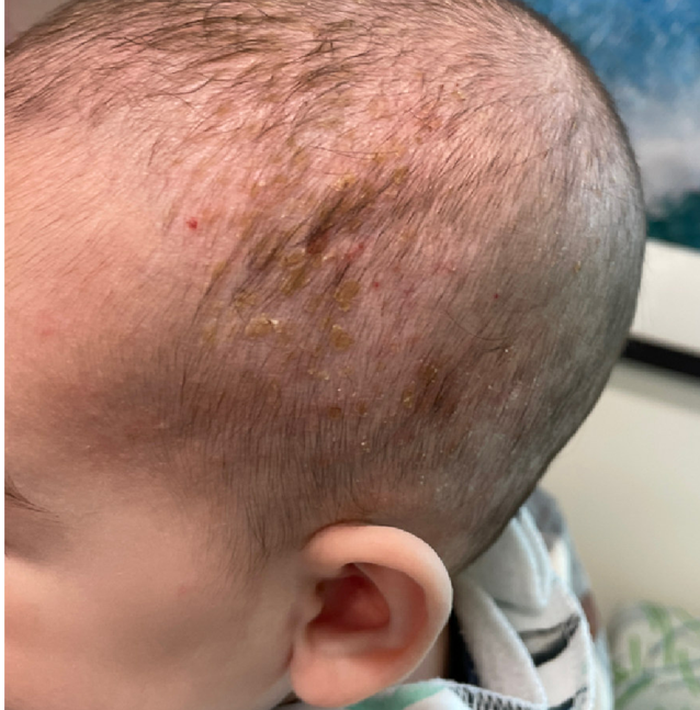

On the torso and diaper area, he had multiple scaly pink papules. On the groin he had eroded pink scaly plaques (Picture 2).
On his back he had a 3-mm yellow papule (Picture 3).
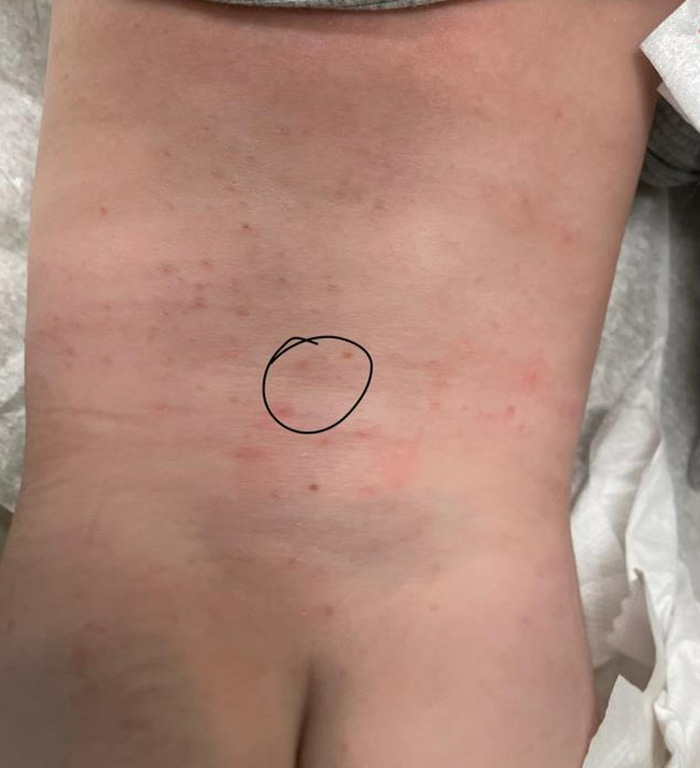
COVID hospitalizations climb for fourth straight week
Weekly new hospitalizations for COVID-19 have climbed for the fourth straight week.
according to newly updated Centers for Disease Control and Prevention figures. Hospitalizations reached an all-time low of about 6,300 per week in July.
The CDC stopped tracking the number of people infected by the virus earlier in 2023, and now relies on hospitalization data to gauge the current impact of COVID-19.
“We have to remember that we’re still dealing with numbers that are far less than what we’ve seen for the pandemic,” John Brownstein, PhD, a professor of biomedical informatics at Harvard Medical School, Boston, told ABC News. “We have to zoom out to look at our experience for the entire pandemic, to understand that what we’re dealing with now is far from any crisis that we’ve experienced with previous waves.”
The current predominant strain remains EG.5, and experts believe it is not more severe or more contagious than other recent variants.
Dr. Brownstein told ABC News that one reason for the concern about rising COVID metrics, despite their overall low levels, is that a surge occurred in the summer of 2021 with the dangerous Delta variant.
“But each new variant so far that has come through has subsequently had less of a population impact,” he said. “Now, is it possible we may see one in the future that is worthy, a real concern? Absolutely. But overall, we’ve seen a dampening of effect over the last several variants that have come through.”
A version of this article appeared on WebMD.com.
Weekly new hospitalizations for COVID-19 have climbed for the fourth straight week.
according to newly updated Centers for Disease Control and Prevention figures. Hospitalizations reached an all-time low of about 6,300 per week in July.
The CDC stopped tracking the number of people infected by the virus earlier in 2023, and now relies on hospitalization data to gauge the current impact of COVID-19.
“We have to remember that we’re still dealing with numbers that are far less than what we’ve seen for the pandemic,” John Brownstein, PhD, a professor of biomedical informatics at Harvard Medical School, Boston, told ABC News. “We have to zoom out to look at our experience for the entire pandemic, to understand that what we’re dealing with now is far from any crisis that we’ve experienced with previous waves.”
The current predominant strain remains EG.5, and experts believe it is not more severe or more contagious than other recent variants.
Dr. Brownstein told ABC News that one reason for the concern about rising COVID metrics, despite their overall low levels, is that a surge occurred in the summer of 2021 with the dangerous Delta variant.
“But each new variant so far that has come through has subsequently had less of a population impact,” he said. “Now, is it possible we may see one in the future that is worthy, a real concern? Absolutely. But overall, we’ve seen a dampening of effect over the last several variants that have come through.”
A version of this article appeared on WebMD.com.
Weekly new hospitalizations for COVID-19 have climbed for the fourth straight week.
according to newly updated Centers for Disease Control and Prevention figures. Hospitalizations reached an all-time low of about 6,300 per week in July.
The CDC stopped tracking the number of people infected by the virus earlier in 2023, and now relies on hospitalization data to gauge the current impact of COVID-19.
“We have to remember that we’re still dealing with numbers that are far less than what we’ve seen for the pandemic,” John Brownstein, PhD, a professor of biomedical informatics at Harvard Medical School, Boston, told ABC News. “We have to zoom out to look at our experience for the entire pandemic, to understand that what we’re dealing with now is far from any crisis that we’ve experienced with previous waves.”
The current predominant strain remains EG.5, and experts believe it is not more severe or more contagious than other recent variants.
Dr. Brownstein told ABC News that one reason for the concern about rising COVID metrics, despite their overall low levels, is that a surge occurred in the summer of 2021 with the dangerous Delta variant.
“But each new variant so far that has come through has subsequently had less of a population impact,” he said. “Now, is it possible we may see one in the future that is worthy, a real concern? Absolutely. But overall, we’ve seen a dampening of effect over the last several variants that have come through.”
A version of this article appeared on WebMD.com.
Child assault tied to triple the risk for mental illness within 1 year
The greatest risk was found in the first year following the assault, increasing to three times the risk of being diagnosed with mental illness, compared with children not assaulted. Mood and anxiety disorders were the most common diagnoses.
“From a clinical and policy perspective, our study highlights that there is a critical opportunity for health care clinicians to support children in the first year following physical assault,” Natasha Saunders, MD, MSc, of the Hospital for Sick Children, Toronto, and colleagues wrote. “There is a need to develop and implement targeted mental illness prevention, screening, and treatment programs for assaulted children.”
The findings were published online in JAMA Network Open.
While it has been well established that children exposed to assault have an increased risk for subsequent mental illness, Dr. Saunders and coinvestigators noted that using an age-matched, population-based cohort study would enable them to obtain detailed information on the patterns and timing of subsequent psychiatric diagnoses.
To that end, the researchers used several medical databases in Ontario to find 5,487 children (infants to age 13 years) who required an ED visit or hospitalization for a physical assault in Ontario between 2006 and 2014.
These children were matched on a 1:4 basis with 21,948 children not exposed to physical assault. The children were followed until their 18th birthday or until the study ended in March 2019.
The researchers found that more than a third of the children (39%) who were exposed to assault received a mental health diagnosis, according to health records, compared with 23% of unexposed children.
Mood and anxiety disorders were the most common diagnoses among children exposed to assault (16.2% vs. 10.6%, respectively); followed by select childhood behavior disorders, such as ADHD, oppositional defiant disorder, or conduct disorder (9.9% vs. 5.2%); and substance use disorders (2.4% vs. 0.4%).
Triple risk of mental illness in first year
The researchers found that the children exposed to assault were nearly twice as likely to be diagnosed with a mental illness over a median follow-up of 7 years, compared with those not exposed to assault (adjusted hazard ratio, 1.96; 95% confidence interval, 1.85,2.08).
In the year following the assault, children exposed to assault bore three times the risk of being diagnosed with a mental illness, compared with unexposed children (aHR, 3.08; 95% CI, 2.68,3.54).
In addition, the children who had been assaulted were more likely to be diagnosed in an acute care setting than those who were not assaulted (14% vs. 2.8%).
The children who had been assaulted were an average age of 7 years and were more often boys (55% vs. 45%). Children who were assaulted were also more likely to have mothers with mental illness (35% vs. 19%).
The investigators noted that the study likely underestimated the number of children exposed to assault, as many do not end up in the ED.
In addition to highlighting the need for medical personnel to support children in the first year following assault, the investigators wrote that “our results also advocate for accessible mental health care outside of the acute setting and for care that addresses the social and health needs of mothers, who themselves have high social and health risks.”
This study received funding from the National Foundation to End Child Abuse and Neglect and the Ontario Ministry of Health and the Ministry of Long-Term Care. Dr. Saunders reported receiving personal fees from The BMJ Group, Archives of Diseases in Childhood outside the submitted work.
A version of this article first appeared on Medscape.com.
The greatest risk was found in the first year following the assault, increasing to three times the risk of being diagnosed with mental illness, compared with children not assaulted. Mood and anxiety disorders were the most common diagnoses.
“From a clinical and policy perspective, our study highlights that there is a critical opportunity for health care clinicians to support children in the first year following physical assault,” Natasha Saunders, MD, MSc, of the Hospital for Sick Children, Toronto, and colleagues wrote. “There is a need to develop and implement targeted mental illness prevention, screening, and treatment programs for assaulted children.”
The findings were published online in JAMA Network Open.
While it has been well established that children exposed to assault have an increased risk for subsequent mental illness, Dr. Saunders and coinvestigators noted that using an age-matched, population-based cohort study would enable them to obtain detailed information on the patterns and timing of subsequent psychiatric diagnoses.
To that end, the researchers used several medical databases in Ontario to find 5,487 children (infants to age 13 years) who required an ED visit or hospitalization for a physical assault in Ontario between 2006 and 2014.
These children were matched on a 1:4 basis with 21,948 children not exposed to physical assault. The children were followed until their 18th birthday or until the study ended in March 2019.
The researchers found that more than a third of the children (39%) who were exposed to assault received a mental health diagnosis, according to health records, compared with 23% of unexposed children.
Mood and anxiety disorders were the most common diagnoses among children exposed to assault (16.2% vs. 10.6%, respectively); followed by select childhood behavior disorders, such as ADHD, oppositional defiant disorder, or conduct disorder (9.9% vs. 5.2%); and substance use disorders (2.4% vs. 0.4%).
Triple risk of mental illness in first year
The researchers found that the children exposed to assault were nearly twice as likely to be diagnosed with a mental illness over a median follow-up of 7 years, compared with those not exposed to assault (adjusted hazard ratio, 1.96; 95% confidence interval, 1.85,2.08).
In the year following the assault, children exposed to assault bore three times the risk of being diagnosed with a mental illness, compared with unexposed children (aHR, 3.08; 95% CI, 2.68,3.54).
In addition, the children who had been assaulted were more likely to be diagnosed in an acute care setting than those who were not assaulted (14% vs. 2.8%).
The children who had been assaulted were an average age of 7 years and were more often boys (55% vs. 45%). Children who were assaulted were also more likely to have mothers with mental illness (35% vs. 19%).
The investigators noted that the study likely underestimated the number of children exposed to assault, as many do not end up in the ED.
In addition to highlighting the need for medical personnel to support children in the first year following assault, the investigators wrote that “our results also advocate for accessible mental health care outside of the acute setting and for care that addresses the social and health needs of mothers, who themselves have high social and health risks.”
This study received funding from the National Foundation to End Child Abuse and Neglect and the Ontario Ministry of Health and the Ministry of Long-Term Care. Dr. Saunders reported receiving personal fees from The BMJ Group, Archives of Diseases in Childhood outside the submitted work.
A version of this article first appeared on Medscape.com.
The greatest risk was found in the first year following the assault, increasing to three times the risk of being diagnosed with mental illness, compared with children not assaulted. Mood and anxiety disorders were the most common diagnoses.
“From a clinical and policy perspective, our study highlights that there is a critical opportunity for health care clinicians to support children in the first year following physical assault,” Natasha Saunders, MD, MSc, of the Hospital for Sick Children, Toronto, and colleagues wrote. “There is a need to develop and implement targeted mental illness prevention, screening, and treatment programs for assaulted children.”
The findings were published online in JAMA Network Open.
While it has been well established that children exposed to assault have an increased risk for subsequent mental illness, Dr. Saunders and coinvestigators noted that using an age-matched, population-based cohort study would enable them to obtain detailed information on the patterns and timing of subsequent psychiatric diagnoses.
To that end, the researchers used several medical databases in Ontario to find 5,487 children (infants to age 13 years) who required an ED visit or hospitalization for a physical assault in Ontario between 2006 and 2014.
These children were matched on a 1:4 basis with 21,948 children not exposed to physical assault. The children were followed until their 18th birthday or until the study ended in March 2019.
The researchers found that more than a third of the children (39%) who were exposed to assault received a mental health diagnosis, according to health records, compared with 23% of unexposed children.
Mood and anxiety disorders were the most common diagnoses among children exposed to assault (16.2% vs. 10.6%, respectively); followed by select childhood behavior disorders, such as ADHD, oppositional defiant disorder, or conduct disorder (9.9% vs. 5.2%); and substance use disorders (2.4% vs. 0.4%).
Triple risk of mental illness in first year
The researchers found that the children exposed to assault were nearly twice as likely to be diagnosed with a mental illness over a median follow-up of 7 years, compared with those not exposed to assault (adjusted hazard ratio, 1.96; 95% confidence interval, 1.85,2.08).
In the year following the assault, children exposed to assault bore three times the risk of being diagnosed with a mental illness, compared with unexposed children (aHR, 3.08; 95% CI, 2.68,3.54).
In addition, the children who had been assaulted were more likely to be diagnosed in an acute care setting than those who were not assaulted (14% vs. 2.8%).
The children who had been assaulted were an average age of 7 years and were more often boys (55% vs. 45%). Children who were assaulted were also more likely to have mothers with mental illness (35% vs. 19%).
The investigators noted that the study likely underestimated the number of children exposed to assault, as many do not end up in the ED.
In addition to highlighting the need for medical personnel to support children in the first year following assault, the investigators wrote that “our results also advocate for accessible mental health care outside of the acute setting and for care that addresses the social and health needs of mothers, who themselves have high social and health risks.”
This study received funding from the National Foundation to End Child Abuse and Neglect and the Ontario Ministry of Health and the Ministry of Long-Term Care. Dr. Saunders reported receiving personal fees from The BMJ Group, Archives of Diseases in Childhood outside the submitted work.
A version of this article first appeared on Medscape.com.
FROM JAMA NETWORK OPEN
Healthy babies can still get very sick from RSV
Any parent might naturally assume that their newborn is at little risk from respiratory syncytial virus (RSV), which in healthy infants has been thought to cause mild symptoms similar to having a cold. But a new study challenges the assumption that only infirm children are at risk for the worst outcomes from RSV, finding that
The researchers, who published their study in JAMA Network Open, said the results reinforce the importance of a new preventive injection that can lower the risk for severe RSV infection in babies.
“RSV is the number one cause of hospitalizations in young infants,” said Natasha Halasa, MD, MPH, an infectious disease specialist at Vanderbilt University Medical Center in Nashville, Tenn., and the lead author of the new study. But “the vast majority of kids didn’t have underlying medical conditions” when they got sick.
Every infant in the study was in an intensive care unit for at least 24 hours, Dr. Halasa said, and most babies gave no prior indication that RSV would affect them so profoundly.
“Two to three of every 100 babies in the United States will be hospitalized for RSV in their first year of life,” added study author Angela Campbell, MD, MPH, of the Coronavirus and Other Respiratory Viruses Division of the Centers for Disease Control and Prevention in Atlanta.
Until recently, only one treatment was available for children up to age 2 at high risk for RSV, the monoclonal antibody palivizumab (Synagis). Palivizumab is reserved for children who are born prematurely, are immunocompromised, or have chronic heart or lung disease. The injection is given monthly during the 5-month peak of RSV season, from fall to spring.
In July, the Food and Drug Administration approved, and the CDC has since recommended, a new monoclonal antibody called nirsevimab (Beyfortus) to prevent the worst effects of RSV. Nirsevimab is intended for all newborns under age 8 months who were born during the RSV season, or babies who will be entering that season before reaching 8 months. The injection is given only once and can act for 150 days. The FDA and CDC actions came following a clinical trial showing that nirsevimab lowers the risk for hospitalization from RSV among infants by more than 75%.
“We’re very excited that this product exists now,” Dr. Campbell said.
Chart reviews during the ‘tripledemic’
In fall 2022 the United States experienced a “tripledemic” of elevated hospitalizations for COVID-19, influenza, and RSV. For the new study, Dr. Halasa and her colleagues examined the medical records of 600 infants (under age 1; average age, 2.6 months) admitted to U.S. ICUs for lower respiratory tract infections caused by RSV from October to December 2022, during the height of the tripledemic.
More than 60% of admissions, 361, were boys; 44% were White, 23% were Hispanic, 16% were Black, 10% were unknown race, 5% were multiple race, and 2% were Asian.
Of the 600 infants, 572 (95.3%) required oxygen at the hospital and 487 (81.2%) had no underlying medical conditions linked to higher risk from RSV. The other infants had at least one ailment, such as a cardiac or lung condition, that could result in more severe RSV outcomes.
The 169 preemies in the study population were more likely to be intubated in the ICU than were those born at term. But 90 of the 143 total recorded intubations happened among full-term infants. Two children in the study group died.
Christopher Horvat, MD, MHA, who works in the pediatric ICU at the University of Pittsburgh Medical Center, called the new study “important,” adding that it shows “the RSV burden is substantial for children who are otherwise healthy.” Dr. Horvat, who was not involved in the work, said the new data highlight the value of preventive measures to prevent any repeat of the tripledemic.
On the same day the new study was published, the American Academy of Pediatrics (AAP) released a statement calling for widespread access to nirsevimab.
“The American Academy of Pediatrics recommends that all infants – and especially those at high risk – receive the new preventive antibody, nirsevimab, to protect against severe disease caused by respiratory syncytial virus (RSV), which is common, highly contagious, and sometimes deadly,” the organization said in a statement.
The AAP called for the CDC and the Centers for Medicaid & Medicare Services to work together to ensure that any parent in America can obtain nirsevimab for their children if needed. Anyone who cannot access nirsevimab this year, the AAP said, should rely on the older treatment palivizumab instead.
The sources in this story reported no relevant financial relationships.
A version of this article first appeared on Medscape.com.
Any parent might naturally assume that their newborn is at little risk from respiratory syncytial virus (RSV), which in healthy infants has been thought to cause mild symptoms similar to having a cold. But a new study challenges the assumption that only infirm children are at risk for the worst outcomes from RSV, finding that
The researchers, who published their study in JAMA Network Open, said the results reinforce the importance of a new preventive injection that can lower the risk for severe RSV infection in babies.
“RSV is the number one cause of hospitalizations in young infants,” said Natasha Halasa, MD, MPH, an infectious disease specialist at Vanderbilt University Medical Center in Nashville, Tenn., and the lead author of the new study. But “the vast majority of kids didn’t have underlying medical conditions” when they got sick.
Every infant in the study was in an intensive care unit for at least 24 hours, Dr. Halasa said, and most babies gave no prior indication that RSV would affect them so profoundly.
“Two to three of every 100 babies in the United States will be hospitalized for RSV in their first year of life,” added study author Angela Campbell, MD, MPH, of the Coronavirus and Other Respiratory Viruses Division of the Centers for Disease Control and Prevention in Atlanta.
Until recently, only one treatment was available for children up to age 2 at high risk for RSV, the monoclonal antibody palivizumab (Synagis). Palivizumab is reserved for children who are born prematurely, are immunocompromised, or have chronic heart or lung disease. The injection is given monthly during the 5-month peak of RSV season, from fall to spring.
In July, the Food and Drug Administration approved, and the CDC has since recommended, a new monoclonal antibody called nirsevimab (Beyfortus) to prevent the worst effects of RSV. Nirsevimab is intended for all newborns under age 8 months who were born during the RSV season, or babies who will be entering that season before reaching 8 months. The injection is given only once and can act for 150 days. The FDA and CDC actions came following a clinical trial showing that nirsevimab lowers the risk for hospitalization from RSV among infants by more than 75%.
“We’re very excited that this product exists now,” Dr. Campbell said.
Chart reviews during the ‘tripledemic’
In fall 2022 the United States experienced a “tripledemic” of elevated hospitalizations for COVID-19, influenza, and RSV. For the new study, Dr. Halasa and her colleagues examined the medical records of 600 infants (under age 1; average age, 2.6 months) admitted to U.S. ICUs for lower respiratory tract infections caused by RSV from October to December 2022, during the height of the tripledemic.
More than 60% of admissions, 361, were boys; 44% were White, 23% were Hispanic, 16% were Black, 10% were unknown race, 5% were multiple race, and 2% were Asian.
Of the 600 infants, 572 (95.3%) required oxygen at the hospital and 487 (81.2%) had no underlying medical conditions linked to higher risk from RSV. The other infants had at least one ailment, such as a cardiac or lung condition, that could result in more severe RSV outcomes.
The 169 preemies in the study population were more likely to be intubated in the ICU than were those born at term. But 90 of the 143 total recorded intubations happened among full-term infants. Two children in the study group died.
Christopher Horvat, MD, MHA, who works in the pediatric ICU at the University of Pittsburgh Medical Center, called the new study “important,” adding that it shows “the RSV burden is substantial for children who are otherwise healthy.” Dr. Horvat, who was not involved in the work, said the new data highlight the value of preventive measures to prevent any repeat of the tripledemic.
On the same day the new study was published, the American Academy of Pediatrics (AAP) released a statement calling for widespread access to nirsevimab.
“The American Academy of Pediatrics recommends that all infants – and especially those at high risk – receive the new preventive antibody, nirsevimab, to protect against severe disease caused by respiratory syncytial virus (RSV), which is common, highly contagious, and sometimes deadly,” the organization said in a statement.
The AAP called for the CDC and the Centers for Medicaid & Medicare Services to work together to ensure that any parent in America can obtain nirsevimab for their children if needed. Anyone who cannot access nirsevimab this year, the AAP said, should rely on the older treatment palivizumab instead.
The sources in this story reported no relevant financial relationships.
A version of this article first appeared on Medscape.com.
Any parent might naturally assume that their newborn is at little risk from respiratory syncytial virus (RSV), which in healthy infants has been thought to cause mild symptoms similar to having a cold. But a new study challenges the assumption that only infirm children are at risk for the worst outcomes from RSV, finding that
The researchers, who published their study in JAMA Network Open, said the results reinforce the importance of a new preventive injection that can lower the risk for severe RSV infection in babies.
“RSV is the number one cause of hospitalizations in young infants,” said Natasha Halasa, MD, MPH, an infectious disease specialist at Vanderbilt University Medical Center in Nashville, Tenn., and the lead author of the new study. But “the vast majority of kids didn’t have underlying medical conditions” when they got sick.
Every infant in the study was in an intensive care unit for at least 24 hours, Dr. Halasa said, and most babies gave no prior indication that RSV would affect them so profoundly.
“Two to three of every 100 babies in the United States will be hospitalized for RSV in their first year of life,” added study author Angela Campbell, MD, MPH, of the Coronavirus and Other Respiratory Viruses Division of the Centers for Disease Control and Prevention in Atlanta.
Until recently, only one treatment was available for children up to age 2 at high risk for RSV, the monoclonal antibody palivizumab (Synagis). Palivizumab is reserved for children who are born prematurely, are immunocompromised, or have chronic heart or lung disease. The injection is given monthly during the 5-month peak of RSV season, from fall to spring.
In July, the Food and Drug Administration approved, and the CDC has since recommended, a new monoclonal antibody called nirsevimab (Beyfortus) to prevent the worst effects of RSV. Nirsevimab is intended for all newborns under age 8 months who were born during the RSV season, or babies who will be entering that season before reaching 8 months. The injection is given only once and can act for 150 days. The FDA and CDC actions came following a clinical trial showing that nirsevimab lowers the risk for hospitalization from RSV among infants by more than 75%.
“We’re very excited that this product exists now,” Dr. Campbell said.
Chart reviews during the ‘tripledemic’
In fall 2022 the United States experienced a “tripledemic” of elevated hospitalizations for COVID-19, influenza, and RSV. For the new study, Dr. Halasa and her colleagues examined the medical records of 600 infants (under age 1; average age, 2.6 months) admitted to U.S. ICUs for lower respiratory tract infections caused by RSV from October to December 2022, during the height of the tripledemic.
More than 60% of admissions, 361, were boys; 44% were White, 23% were Hispanic, 16% were Black, 10% were unknown race, 5% were multiple race, and 2% were Asian.
Of the 600 infants, 572 (95.3%) required oxygen at the hospital and 487 (81.2%) had no underlying medical conditions linked to higher risk from RSV. The other infants had at least one ailment, such as a cardiac or lung condition, that could result in more severe RSV outcomes.
The 169 preemies in the study population were more likely to be intubated in the ICU than were those born at term. But 90 of the 143 total recorded intubations happened among full-term infants. Two children in the study group died.
Christopher Horvat, MD, MHA, who works in the pediatric ICU at the University of Pittsburgh Medical Center, called the new study “important,” adding that it shows “the RSV burden is substantial for children who are otherwise healthy.” Dr. Horvat, who was not involved in the work, said the new data highlight the value of preventive measures to prevent any repeat of the tripledemic.
On the same day the new study was published, the American Academy of Pediatrics (AAP) released a statement calling for widespread access to nirsevimab.
“The American Academy of Pediatrics recommends that all infants – and especially those at high risk – receive the new preventive antibody, nirsevimab, to protect against severe disease caused by respiratory syncytial virus (RSV), which is common, highly contagious, and sometimes deadly,” the organization said in a statement.
The AAP called for the CDC and the Centers for Medicaid & Medicare Services to work together to ensure that any parent in America can obtain nirsevimab for their children if needed. Anyone who cannot access nirsevimab this year, the AAP said, should rely on the older treatment palivizumab instead.
The sources in this story reported no relevant financial relationships.
A version of this article first appeared on Medscape.com.
FROM JAMA NETWORK OPEN
Playing football linked to higher Parkinson’s risk
In a cross-sectional study of older men, former tackle football players had a 61% higher likelihood of reporting a diagnosis of parkinsonism or PD, compared with men who played non-football sports.
Longer duration of football participation and higher level of play (college and professional) were associated with higher risk.
Lead researcher Michael L. Alosco, PhD, director of the Boston University Alzheimer’s Disease Research Center, said it’s important to note that the findings are from a cohort of men “enriched” for having PD.
“These are people who are likely already concerned for or at risk for having this disease. We don’t yet know how our findings translate to the general population,” Dr. Alosco said in an interview.
The study was published online in JAMA Network Open.
Repetitive head impacts
Dating back to the 1920s, PD and parkinsonism an umbrella term that refers to motor symptoms associated with PD and other conditions have long been described in boxers who suffer repetitive head impacts.
Multiple studies have linked tackle football with progressive brain diseases such as chronic traumatic encephalopathy. Few studies, however, have investigated the association between participation in football and PD.
For their study, Dr. Alosco and colleagues leveraged data from Fox Insight, a longitudinal online study of some people with and some without PD that is sponsored by the Michael J. Fox Foundation for Parkinson’s Research.
They focused their analyses on 1,875 men (mean age, 67 years) who reported playing any organized sport. As noted, the cohort was enriched for parkinsonism or PD. A total of 1,602 (85%) had received a diagnosis of parkinsonism/PD, and 273 had not.
Altogether, 729 men had a history of playing tackle football, and 1,146 men played non-football sports (control group). Among the football players, 82% played at youth sports or at the high school level; 17% played at the college level; and fewer than 1% played at the pro or semi-pro level.
Among the football players, 648 (89%) reported a parkinsonism/PD diagnosis.
A history of playing football was associated with higher odds of reporting a parkinsonism/PD diagnosis (odds ratio, 1.61; 95% confidence interval, 1.19-2.17) after accounting for age, education level, history of diabetes and heart disease, body mass index (BMI), traumatic brain injury with loss of consciousness, and family history of PD.
Football players who had longer careers and who played at higher levels of competition were at increased risk of having parkinsonism or PD.
Playing one to four seasons yielded an OR of 1.39 (95% CI, 0.98-1.98). The OR was 2.18 (95% CI, 1.36-3.49) for playing five or more seasons.
Football players who competed at the college or professional level had nearly triple the odds of reporting a parkinsonism/PD diagnosis (OR, 2.93; 95% CI, 1.28-6.73), compared with athletes who played at the youth or high school level.
Age at first exposure to football was not associated with a parkinsonism/PD diagnosis.
The researchers cautioned that this was a convenience sample of mostly White people, and the sample was enriched for having PD – factors that limit the generalizability of the findings.
Also, diagnosis of PD was self-reported by participants through online assessments, and objective in-person evaluations were not conducted.
Unequivocal link?
“This is among the first and largest to look at the relationship between football and having a diagnosis of PD in a large cohort of people from the Fox Insight online study,” Dr. Alosco said.
He cautioned that “not all people who play football will develop later-life neurological problems. That being said, the study adds to the accumulating evidence that suggests playing football is one risk factor for the development of later-life brain diseases.
“This represents an opportunity to educate the communities on the potential risks of playing football (short and long term), including what we know and what we don’t know, so that people can make informed decisions on participating in tackle football and develop additional ways to mitigate risk,” Dr. Alosco said.
In a comment, Shaheen Lakhan, MD, PhD, a neurologist and researcher from Boston, said: “The emerging body of research leaves little doubt that engaging in football raises the risk of developing Parkinson’s disease and parkinsonism.
“This progressive line of investigation serves to enhance our understanding, unequivocally demonstrating that even participation in amateur football, including at the youth and high school levels, constitutes a significant risk factor for the onset of Parkinson’s disease,” said Dr. Lakhan, who was not involved in the study.
However, he said it’s “crucial to underscore that the statistics reveal a notable distinction: individuals who have a history of college or professional football play face odds nearly three times higher of receiving a diagnosis of parkinsonism or Parkinson’s disease when compared to their counterparts who engaged in football during their youth or high-school years.
“Ultimately, determinations regarding involvement in sports should be a collaborative endeavor involving parents, young athletes, and health care providers. It is incumbent upon physicians to equip parents and youth with a comprehensive comprehension of the potential risks and rewards inherent in football participation,” Dr. Lakhan said.
He added, though, that there are multifaceted advantages to playing football. “This pursuit nurtures cardiovascular well-being, fosters invaluable social interactions, cultivates teamwork, instills discipline through regimented routines, and hones a spectrum of physical proficiencies,” Dr. Lakhan said.
“It’s worth noting that a constellation of alternative sports, including track and field, swimming, soccer, baseball, and tennis, can be cogently discussed as substitutes, all while preserving the manifold benefits of athletic engagement,” Dr. Lakhan added.
The Fox Insight Study is funded by the Michael J. Fox Foundation for Parkinson’s Research. The study was conducted in collaboration with the Michael J. Fox Foundation for Parkinson’s Research, the sponsor of the Fox Insight study, which collected and aggregated data used in the study. It was also supported by the National Institute of Neurological Disorders and Stroke. Dr. Alosco received grants from the National Institutes of Health during the conduct of the study, an honorarium from the Michael J. Fox Foundation for work unrelated to the study, and royalties from Oxford University Press outside the submitted work. Dr. Lakhan disclosed no relevant financial relationships.
A version of this article first appeared on Medscape.com.
In a cross-sectional study of older men, former tackle football players had a 61% higher likelihood of reporting a diagnosis of parkinsonism or PD, compared with men who played non-football sports.
Longer duration of football participation and higher level of play (college and professional) were associated with higher risk.
Lead researcher Michael L. Alosco, PhD, director of the Boston University Alzheimer’s Disease Research Center, said it’s important to note that the findings are from a cohort of men “enriched” for having PD.
“These are people who are likely already concerned for or at risk for having this disease. We don’t yet know how our findings translate to the general population,” Dr. Alosco said in an interview.
The study was published online in JAMA Network Open.
Repetitive head impacts
Dating back to the 1920s, PD and parkinsonism an umbrella term that refers to motor symptoms associated with PD and other conditions have long been described in boxers who suffer repetitive head impacts.
Multiple studies have linked tackle football with progressive brain diseases such as chronic traumatic encephalopathy. Few studies, however, have investigated the association between participation in football and PD.
For their study, Dr. Alosco and colleagues leveraged data from Fox Insight, a longitudinal online study of some people with and some without PD that is sponsored by the Michael J. Fox Foundation for Parkinson’s Research.
They focused their analyses on 1,875 men (mean age, 67 years) who reported playing any organized sport. As noted, the cohort was enriched for parkinsonism or PD. A total of 1,602 (85%) had received a diagnosis of parkinsonism/PD, and 273 had not.
Altogether, 729 men had a history of playing tackle football, and 1,146 men played non-football sports (control group). Among the football players, 82% played at youth sports or at the high school level; 17% played at the college level; and fewer than 1% played at the pro or semi-pro level.
Among the football players, 648 (89%) reported a parkinsonism/PD diagnosis.
A history of playing football was associated with higher odds of reporting a parkinsonism/PD diagnosis (odds ratio, 1.61; 95% confidence interval, 1.19-2.17) after accounting for age, education level, history of diabetes and heart disease, body mass index (BMI), traumatic brain injury with loss of consciousness, and family history of PD.
Football players who had longer careers and who played at higher levels of competition were at increased risk of having parkinsonism or PD.
Playing one to four seasons yielded an OR of 1.39 (95% CI, 0.98-1.98). The OR was 2.18 (95% CI, 1.36-3.49) for playing five or more seasons.
Football players who competed at the college or professional level had nearly triple the odds of reporting a parkinsonism/PD diagnosis (OR, 2.93; 95% CI, 1.28-6.73), compared with athletes who played at the youth or high school level.
Age at first exposure to football was not associated with a parkinsonism/PD diagnosis.
The researchers cautioned that this was a convenience sample of mostly White people, and the sample was enriched for having PD – factors that limit the generalizability of the findings.
Also, diagnosis of PD was self-reported by participants through online assessments, and objective in-person evaluations were not conducted.
Unequivocal link?
“This is among the first and largest to look at the relationship between football and having a diagnosis of PD in a large cohort of people from the Fox Insight online study,” Dr. Alosco said.
He cautioned that “not all people who play football will develop later-life neurological problems. That being said, the study adds to the accumulating evidence that suggests playing football is one risk factor for the development of later-life brain diseases.
“This represents an opportunity to educate the communities on the potential risks of playing football (short and long term), including what we know and what we don’t know, so that people can make informed decisions on participating in tackle football and develop additional ways to mitigate risk,” Dr. Alosco said.
In a comment, Shaheen Lakhan, MD, PhD, a neurologist and researcher from Boston, said: “The emerging body of research leaves little doubt that engaging in football raises the risk of developing Parkinson’s disease and parkinsonism.
“This progressive line of investigation serves to enhance our understanding, unequivocally demonstrating that even participation in amateur football, including at the youth and high school levels, constitutes a significant risk factor for the onset of Parkinson’s disease,” said Dr. Lakhan, who was not involved in the study.
However, he said it’s “crucial to underscore that the statistics reveal a notable distinction: individuals who have a history of college or professional football play face odds nearly three times higher of receiving a diagnosis of parkinsonism or Parkinson’s disease when compared to their counterparts who engaged in football during their youth or high-school years.
“Ultimately, determinations regarding involvement in sports should be a collaborative endeavor involving parents, young athletes, and health care providers. It is incumbent upon physicians to equip parents and youth with a comprehensive comprehension of the potential risks and rewards inherent in football participation,” Dr. Lakhan said.
He added, though, that there are multifaceted advantages to playing football. “This pursuit nurtures cardiovascular well-being, fosters invaluable social interactions, cultivates teamwork, instills discipline through regimented routines, and hones a spectrum of physical proficiencies,” Dr. Lakhan said.
“It’s worth noting that a constellation of alternative sports, including track and field, swimming, soccer, baseball, and tennis, can be cogently discussed as substitutes, all while preserving the manifold benefits of athletic engagement,” Dr. Lakhan added.
The Fox Insight Study is funded by the Michael J. Fox Foundation for Parkinson’s Research. The study was conducted in collaboration with the Michael J. Fox Foundation for Parkinson’s Research, the sponsor of the Fox Insight study, which collected and aggregated data used in the study. It was also supported by the National Institute of Neurological Disorders and Stroke. Dr. Alosco received grants from the National Institutes of Health during the conduct of the study, an honorarium from the Michael J. Fox Foundation for work unrelated to the study, and royalties from Oxford University Press outside the submitted work. Dr. Lakhan disclosed no relevant financial relationships.
A version of this article first appeared on Medscape.com.
In a cross-sectional study of older men, former tackle football players had a 61% higher likelihood of reporting a diagnosis of parkinsonism or PD, compared with men who played non-football sports.
Longer duration of football participation and higher level of play (college and professional) were associated with higher risk.
Lead researcher Michael L. Alosco, PhD, director of the Boston University Alzheimer’s Disease Research Center, said it’s important to note that the findings are from a cohort of men “enriched” for having PD.
“These are people who are likely already concerned for or at risk for having this disease. We don’t yet know how our findings translate to the general population,” Dr. Alosco said in an interview.
The study was published online in JAMA Network Open.
Repetitive head impacts
Dating back to the 1920s, PD and parkinsonism an umbrella term that refers to motor symptoms associated with PD and other conditions have long been described in boxers who suffer repetitive head impacts.
Multiple studies have linked tackle football with progressive brain diseases such as chronic traumatic encephalopathy. Few studies, however, have investigated the association between participation in football and PD.
For their study, Dr. Alosco and colleagues leveraged data from Fox Insight, a longitudinal online study of some people with and some without PD that is sponsored by the Michael J. Fox Foundation for Parkinson’s Research.
They focused their analyses on 1,875 men (mean age, 67 years) who reported playing any organized sport. As noted, the cohort was enriched for parkinsonism or PD. A total of 1,602 (85%) had received a diagnosis of parkinsonism/PD, and 273 had not.
Altogether, 729 men had a history of playing tackle football, and 1,146 men played non-football sports (control group). Among the football players, 82% played at youth sports or at the high school level; 17% played at the college level; and fewer than 1% played at the pro or semi-pro level.
Among the football players, 648 (89%) reported a parkinsonism/PD diagnosis.
A history of playing football was associated with higher odds of reporting a parkinsonism/PD diagnosis (odds ratio, 1.61; 95% confidence interval, 1.19-2.17) after accounting for age, education level, history of diabetes and heart disease, body mass index (BMI), traumatic brain injury with loss of consciousness, and family history of PD.
Football players who had longer careers and who played at higher levels of competition were at increased risk of having parkinsonism or PD.
Playing one to four seasons yielded an OR of 1.39 (95% CI, 0.98-1.98). The OR was 2.18 (95% CI, 1.36-3.49) for playing five or more seasons.
Football players who competed at the college or professional level had nearly triple the odds of reporting a parkinsonism/PD diagnosis (OR, 2.93; 95% CI, 1.28-6.73), compared with athletes who played at the youth or high school level.
Age at first exposure to football was not associated with a parkinsonism/PD diagnosis.
The researchers cautioned that this was a convenience sample of mostly White people, and the sample was enriched for having PD – factors that limit the generalizability of the findings.
Also, diagnosis of PD was self-reported by participants through online assessments, and objective in-person evaluations were not conducted.
Unequivocal link?
“This is among the first and largest to look at the relationship between football and having a diagnosis of PD in a large cohort of people from the Fox Insight online study,” Dr. Alosco said.
He cautioned that “not all people who play football will develop later-life neurological problems. That being said, the study adds to the accumulating evidence that suggests playing football is one risk factor for the development of later-life brain diseases.
“This represents an opportunity to educate the communities on the potential risks of playing football (short and long term), including what we know and what we don’t know, so that people can make informed decisions on participating in tackle football and develop additional ways to mitigate risk,” Dr. Alosco said.
In a comment, Shaheen Lakhan, MD, PhD, a neurologist and researcher from Boston, said: “The emerging body of research leaves little doubt that engaging in football raises the risk of developing Parkinson’s disease and parkinsonism.
“This progressive line of investigation serves to enhance our understanding, unequivocally demonstrating that even participation in amateur football, including at the youth and high school levels, constitutes a significant risk factor for the onset of Parkinson’s disease,” said Dr. Lakhan, who was not involved in the study.
However, he said it’s “crucial to underscore that the statistics reveal a notable distinction: individuals who have a history of college or professional football play face odds nearly three times higher of receiving a diagnosis of parkinsonism or Parkinson’s disease when compared to their counterparts who engaged in football during their youth or high-school years.
“Ultimately, determinations regarding involvement in sports should be a collaborative endeavor involving parents, young athletes, and health care providers. It is incumbent upon physicians to equip parents and youth with a comprehensive comprehension of the potential risks and rewards inherent in football participation,” Dr. Lakhan said.
He added, though, that there are multifaceted advantages to playing football. “This pursuit nurtures cardiovascular well-being, fosters invaluable social interactions, cultivates teamwork, instills discipline through regimented routines, and hones a spectrum of physical proficiencies,” Dr. Lakhan said.
“It’s worth noting that a constellation of alternative sports, including track and field, swimming, soccer, baseball, and tennis, can be cogently discussed as substitutes, all while preserving the manifold benefits of athletic engagement,” Dr. Lakhan added.
The Fox Insight Study is funded by the Michael J. Fox Foundation for Parkinson’s Research. The study was conducted in collaboration with the Michael J. Fox Foundation for Parkinson’s Research, the sponsor of the Fox Insight study, which collected and aggregated data used in the study. It was also supported by the National Institute of Neurological Disorders and Stroke. Dr. Alosco received grants from the National Institutes of Health during the conduct of the study, an honorarium from the Michael J. Fox Foundation for work unrelated to the study, and royalties from Oxford University Press outside the submitted work. Dr. Lakhan disclosed no relevant financial relationships.
A version of this article first appeared on Medscape.com.
FROM JAMA NETWORK OPEN
Analysis reveals recent acne prescribing trends
While.
Notably, isotretinoin prescribing among men and women decreased slightly during the study period, “which may reflect ongoing administrative burdens associated with iPLEDGE,” study author John S. Barbieri, MD, MBA, of the department of dermatology, at Brigham and Women’s Hospital, Boston, told this news organization.
For the cross-sectional study, which was published online as a research letter in JAMA Dermatology, Dr. Barbieri drew from the Truven Health MarketScan Commercial Claims Database from Jan. 1, 2017, to Dec. 31, 2020, to identify individuals with an encounter for acne, prescriptions for oral tetracycline antibiotics (doxycycline, minocycline), other commonly prescribed oral antibiotics (trimethoprim-sulfamethoxazole, amoxicillin, cephalexin), spironolactone, and isotretinoin. Only drug courses greater than 28 days were included in the analysis, and Dr. Barbieri stratified them according to clinician type (dermatologist, nondermatology physician, and nurse-practitioner or physician assistant). To normalize prescribing rates (to address possible changes in the number of patients treated for acne over time), the number of treatment courses prescribed each year was standardized to the number of encounters for acne with that clinician type during the same calendar year.
The study period included a mean of 1.9 million acne encounters per year.
Dr. Barbieri found that dermatologists prescribed more oral antibiotics per clinician for acne than any other major medical specialty and that oral antibiotics remained frequently prescribed for treating acne by both dermatologists and nondermatologists. “Among oral antibiotics, minocycline and trimethoprim-sulfamethoxazole remain relatively commonly prescribed, despite potential safety concerns and a lack of evidence that they are any more effective than doxycycline,” he said in an interview.
“Patient outcomes could likely be improved by reducing use of minocycline and particularly trimethoprim-sulfamethoxazole given its high risk of serious side effects such as SJS/TEN [Stevens-Johnson syndrome/toxic epidermal necrolysis] and acute respiratory failure,” he added.
Dr. Barbieri noted that there are likely opportunities to consider nonantibiotic alternatives such as hormonal therapy (spironolactone, combined oral contraceptives) and isotretinoin. “There is also a need for continued research to identify nonantibiotic treatment options for patients with acne,” he said.
The analysis revealed that for women with acne prescriptions for spironolactone increased about three- to fourfold during the study period among all clinician types. In 2017, oral antibiotics were prescribed about two- to threefold more often than spironolactone, but by 2020 they were being prescribed at about the same frequency. “Given spironolactone may have similar effectiveness to oral antibiotics in the treatment of acne, this shift in practice has the potential to improve outcomes for patients by reducing the risk of antibiotic-associated complications,” Dr. Barbieri wrote. Still, in 2020, oral antibiotics were still slightly more commonly prescribed than spironolactone by nondermatology physicians and NP or PAs.
In other findings, isotretinoin prescribing decreased slightly among male and female patients during the study period. Among antibiotic prescriptions, prescribing for doxycycline increased at a higher rate than prescribing for minocycline, especially among dermatologists and NPs or PAs.
In the interview, Dr. Barbieri acknowledged certain limitations of the study, including the fact that the dataset “does not allow for evaluation of severity of acne and it is not possible to directly link prescriptions to diagnoses, so some prescriptions might not be for acne and others that are for acne might not have been included.”
Lawrence J. Green, MD, of the department of dermatology at George Washington University, Washington, who was asked to comment on the results, said that, while a course of antibiotic therapy was tied to an office visit in the analysis, the duration of each course of therapy was unclear. It would be interesting to see if antibiotic courses became shorter during the time period analyzed, such as 1-3 months versus 4 or more months, he added, “as this should reduce risks associated with long-term use of oral antibiotics.”
Dr. Barbieri reported personal fees from Dexcel Pharma for consulting outside the submitted work. Dr. Green disclosed that he is a speaker, consultant, or investigator for numerous pharmaceutical companies.
While.
Notably, isotretinoin prescribing among men and women decreased slightly during the study period, “which may reflect ongoing administrative burdens associated with iPLEDGE,” study author John S. Barbieri, MD, MBA, of the department of dermatology, at Brigham and Women’s Hospital, Boston, told this news organization.
For the cross-sectional study, which was published online as a research letter in JAMA Dermatology, Dr. Barbieri drew from the Truven Health MarketScan Commercial Claims Database from Jan. 1, 2017, to Dec. 31, 2020, to identify individuals with an encounter for acne, prescriptions for oral tetracycline antibiotics (doxycycline, minocycline), other commonly prescribed oral antibiotics (trimethoprim-sulfamethoxazole, amoxicillin, cephalexin), spironolactone, and isotretinoin. Only drug courses greater than 28 days were included in the analysis, and Dr. Barbieri stratified them according to clinician type (dermatologist, nondermatology physician, and nurse-practitioner or physician assistant). To normalize prescribing rates (to address possible changes in the number of patients treated for acne over time), the number of treatment courses prescribed each year was standardized to the number of encounters for acne with that clinician type during the same calendar year.
The study period included a mean of 1.9 million acne encounters per year.
Dr. Barbieri found that dermatologists prescribed more oral antibiotics per clinician for acne than any other major medical specialty and that oral antibiotics remained frequently prescribed for treating acne by both dermatologists and nondermatologists. “Among oral antibiotics, minocycline and trimethoprim-sulfamethoxazole remain relatively commonly prescribed, despite potential safety concerns and a lack of evidence that they are any more effective than doxycycline,” he said in an interview.
“Patient outcomes could likely be improved by reducing use of minocycline and particularly trimethoprim-sulfamethoxazole given its high risk of serious side effects such as SJS/TEN [Stevens-Johnson syndrome/toxic epidermal necrolysis] and acute respiratory failure,” he added.
Dr. Barbieri noted that there are likely opportunities to consider nonantibiotic alternatives such as hormonal therapy (spironolactone, combined oral contraceptives) and isotretinoin. “There is also a need for continued research to identify nonantibiotic treatment options for patients with acne,” he said.
The analysis revealed that for women with acne prescriptions for spironolactone increased about three- to fourfold during the study period among all clinician types. In 2017, oral antibiotics were prescribed about two- to threefold more often than spironolactone, but by 2020 they were being prescribed at about the same frequency. “Given spironolactone may have similar effectiveness to oral antibiotics in the treatment of acne, this shift in practice has the potential to improve outcomes for patients by reducing the risk of antibiotic-associated complications,” Dr. Barbieri wrote. Still, in 2020, oral antibiotics were still slightly more commonly prescribed than spironolactone by nondermatology physicians and NP or PAs.
In other findings, isotretinoin prescribing decreased slightly among male and female patients during the study period. Among antibiotic prescriptions, prescribing for doxycycline increased at a higher rate than prescribing for minocycline, especially among dermatologists and NPs or PAs.
In the interview, Dr. Barbieri acknowledged certain limitations of the study, including the fact that the dataset “does not allow for evaluation of severity of acne and it is not possible to directly link prescriptions to diagnoses, so some prescriptions might not be for acne and others that are for acne might not have been included.”
Lawrence J. Green, MD, of the department of dermatology at George Washington University, Washington, who was asked to comment on the results, said that, while a course of antibiotic therapy was tied to an office visit in the analysis, the duration of each course of therapy was unclear. It would be interesting to see if antibiotic courses became shorter during the time period analyzed, such as 1-3 months versus 4 or more months, he added, “as this should reduce risks associated with long-term use of oral antibiotics.”
Dr. Barbieri reported personal fees from Dexcel Pharma for consulting outside the submitted work. Dr. Green disclosed that he is a speaker, consultant, or investigator for numerous pharmaceutical companies.
While.
Notably, isotretinoin prescribing among men and women decreased slightly during the study period, “which may reflect ongoing administrative burdens associated with iPLEDGE,” study author John S. Barbieri, MD, MBA, of the department of dermatology, at Brigham and Women’s Hospital, Boston, told this news organization.
For the cross-sectional study, which was published online as a research letter in JAMA Dermatology, Dr. Barbieri drew from the Truven Health MarketScan Commercial Claims Database from Jan. 1, 2017, to Dec. 31, 2020, to identify individuals with an encounter for acne, prescriptions for oral tetracycline antibiotics (doxycycline, minocycline), other commonly prescribed oral antibiotics (trimethoprim-sulfamethoxazole, amoxicillin, cephalexin), spironolactone, and isotretinoin. Only drug courses greater than 28 days were included in the analysis, and Dr. Barbieri stratified them according to clinician type (dermatologist, nondermatology physician, and nurse-practitioner or physician assistant). To normalize prescribing rates (to address possible changes in the number of patients treated for acne over time), the number of treatment courses prescribed each year was standardized to the number of encounters for acne with that clinician type during the same calendar year.
The study period included a mean of 1.9 million acne encounters per year.
Dr. Barbieri found that dermatologists prescribed more oral antibiotics per clinician for acne than any other major medical specialty and that oral antibiotics remained frequently prescribed for treating acne by both dermatologists and nondermatologists. “Among oral antibiotics, minocycline and trimethoprim-sulfamethoxazole remain relatively commonly prescribed, despite potential safety concerns and a lack of evidence that they are any more effective than doxycycline,” he said in an interview.
“Patient outcomes could likely be improved by reducing use of minocycline and particularly trimethoprim-sulfamethoxazole given its high risk of serious side effects such as SJS/TEN [Stevens-Johnson syndrome/toxic epidermal necrolysis] and acute respiratory failure,” he added.
Dr. Barbieri noted that there are likely opportunities to consider nonantibiotic alternatives such as hormonal therapy (spironolactone, combined oral contraceptives) and isotretinoin. “There is also a need for continued research to identify nonantibiotic treatment options for patients with acne,” he said.
The analysis revealed that for women with acne prescriptions for spironolactone increased about three- to fourfold during the study period among all clinician types. In 2017, oral antibiotics were prescribed about two- to threefold more often than spironolactone, but by 2020 they were being prescribed at about the same frequency. “Given spironolactone may have similar effectiveness to oral antibiotics in the treatment of acne, this shift in practice has the potential to improve outcomes for patients by reducing the risk of antibiotic-associated complications,” Dr. Barbieri wrote. Still, in 2020, oral antibiotics were still slightly more commonly prescribed than spironolactone by nondermatology physicians and NP or PAs.
In other findings, isotretinoin prescribing decreased slightly among male and female patients during the study period. Among antibiotic prescriptions, prescribing for doxycycline increased at a higher rate than prescribing for minocycline, especially among dermatologists and NPs or PAs.
In the interview, Dr. Barbieri acknowledged certain limitations of the study, including the fact that the dataset “does not allow for evaluation of severity of acne and it is not possible to directly link prescriptions to diagnoses, so some prescriptions might not be for acne and others that are for acne might not have been included.”
Lawrence J. Green, MD, of the department of dermatology at George Washington University, Washington, who was asked to comment on the results, said that, while a course of antibiotic therapy was tied to an office visit in the analysis, the duration of each course of therapy was unclear. It would be interesting to see if antibiotic courses became shorter during the time period analyzed, such as 1-3 months versus 4 or more months, he added, “as this should reduce risks associated with long-term use of oral antibiotics.”
Dr. Barbieri reported personal fees from Dexcel Pharma for consulting outside the submitted work. Dr. Green disclosed that he is a speaker, consultant, or investigator for numerous pharmaceutical companies.
FROM JAMA DERMATOLOGY