User login
EC approves product for hemophilia A
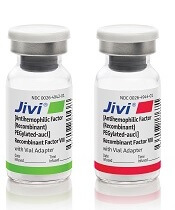
The European Commission (EC) has approved damoctocog alfa pegol (Jivi®), a recombinant human factor VIII therapy.
Damoctocog alfa pegol (formerly BAY94-9027) is approved for the treatment and prophylaxis of bleeding in previously treated patients age 12 and older who have hemophilia A.
The approval is valid in the European Union, Norway, Iceland, and Liechtenstein.
The EC’s decision to approve damoctocog alfa pegol is supported by the phase 2/3 PROTECT VIII trial.
Some results from this trial were published in the Journal of Thrombosis and Haemostasis in 2016. Additional results are available in the U.S. prescribing information for Jivi.
Study design
PROTECT VIII enrolled previously treated adults and adolescents (ages 12 to 65) with severe hemophilia A.
In part A, researchers evaluated different dosing regimens for damoctocog alfa pegol used as prophylaxis and on-demand treatment. An optional extension study was available to patients who completed part A.
In part B, researchers evaluated damoctocog alfa pegol for perioperative management.
In part A, there were 132 patients in the intent‐to‐treat population—112 in the prophylaxis group and 20 in the on-demand group.
Patients received damoctocog alfa pegol for 36 weeks. For the first 10 weeks, patients in the prophylaxis group received twice-weekly dosing at 25 IU/kg.
Patients with more than one bleed during this time went on to receive 30–40 IU/kg twice weekly. Patients with one or fewer bleeds were eligible for randomization to dosing every 5 days (45–60 IU/kg) or every 7 days (60 IU/kg).
Efficacy
The median annualized bleeding rate (ABR) was 4.1 for the patients who were treated twice weekly and were not eligible for randomization (n=13) and 1.9 for patients who were eligible for randomization but continued on twice-weekly treatment (n=11).
The median ABR was 1.9 for patients who were randomized to treatment every 5 days (n=43) and 0.96 for patients who completed prophylaxis with dosing every 7 days (32/43).
The median ABR for patients treated on demand was 24.1.
There were 388 treated bleeds in the on-demand group and 317 treated bleeds in the prophylaxis group. Overall, 73.3% of responses to treatment were considered “excellent” or “good,” 23.3% were “moderate,” and 3.3% were “poor.”
There were 17 patients who underwent 20 major surgeries in part B or the extension study and 10 patients who underwent minor surgeries in part A.
Damoctocog alfa pegol provided “good” or “excellent” hemostatic control during all surgeries.
Safety
Safety data are available for 148 patients age 12 and older.
Adverse events in these patients included abdominal pain (3%), nausea (5%), vomiting (3%), injection site reactions (1%), pyrexia (5%), hypersensitivity (2%), dizziness (2%), headache (14%), insomnia (3%), cough (7%), erythema (1%), pruritus (1%), rash (2%), and flushing (1%).
A factor VIII inhibitor was reported in one adult patient, but repeat testing did not confirm the report.
One adult with asthma had a clinical hypersensitivity reaction and a transient increase of IgM anti-PEG antibody titer, which was negative upon retesting.
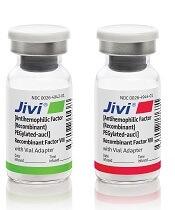
The European Commission (EC) has approved damoctocog alfa pegol (Jivi®), a recombinant human factor VIII therapy.
Damoctocog alfa pegol (formerly BAY94-9027) is approved for the treatment and prophylaxis of bleeding in previously treated patients age 12 and older who have hemophilia A.
The approval is valid in the European Union, Norway, Iceland, and Liechtenstein.
The EC’s decision to approve damoctocog alfa pegol is supported by the phase 2/3 PROTECT VIII trial.
Some results from this trial were published in the Journal of Thrombosis and Haemostasis in 2016. Additional results are available in the U.S. prescribing information for Jivi.
Study design
PROTECT VIII enrolled previously treated adults and adolescents (ages 12 to 65) with severe hemophilia A.
In part A, researchers evaluated different dosing regimens for damoctocog alfa pegol used as prophylaxis and on-demand treatment. An optional extension study was available to patients who completed part A.
In part B, researchers evaluated damoctocog alfa pegol for perioperative management.
In part A, there were 132 patients in the intent‐to‐treat population—112 in the prophylaxis group and 20 in the on-demand group.
Patients received damoctocog alfa pegol for 36 weeks. For the first 10 weeks, patients in the prophylaxis group received twice-weekly dosing at 25 IU/kg.
Patients with more than one bleed during this time went on to receive 30–40 IU/kg twice weekly. Patients with one or fewer bleeds were eligible for randomization to dosing every 5 days (45–60 IU/kg) or every 7 days (60 IU/kg).
Efficacy
The median annualized bleeding rate (ABR) was 4.1 for the patients who were treated twice weekly and were not eligible for randomization (n=13) and 1.9 for patients who were eligible for randomization but continued on twice-weekly treatment (n=11).
The median ABR was 1.9 for patients who were randomized to treatment every 5 days (n=43) and 0.96 for patients who completed prophylaxis with dosing every 7 days (32/43).
The median ABR for patients treated on demand was 24.1.
There were 388 treated bleeds in the on-demand group and 317 treated bleeds in the prophylaxis group. Overall, 73.3% of responses to treatment were considered “excellent” or “good,” 23.3% were “moderate,” and 3.3% were “poor.”
There were 17 patients who underwent 20 major surgeries in part B or the extension study and 10 patients who underwent minor surgeries in part A.
Damoctocog alfa pegol provided “good” or “excellent” hemostatic control during all surgeries.
Safety
Safety data are available for 148 patients age 12 and older.
Adverse events in these patients included abdominal pain (3%), nausea (5%), vomiting (3%), injection site reactions (1%), pyrexia (5%), hypersensitivity (2%), dizziness (2%), headache (14%), insomnia (3%), cough (7%), erythema (1%), pruritus (1%), rash (2%), and flushing (1%).
A factor VIII inhibitor was reported in one adult patient, but repeat testing did not confirm the report.
One adult with asthma had a clinical hypersensitivity reaction and a transient increase of IgM anti-PEG antibody titer, which was negative upon retesting.
The European Commission (EC) has approved damoctocog alfa pegol (Jivi®), a recombinant human factor VIII therapy.
Damoctocog alfa pegol (formerly BAY94-9027) is approved for the treatment and prophylaxis of bleeding in previously treated patients age 12 and older who have hemophilia A.
The approval is valid in the European Union, Norway, Iceland, and Liechtenstein.
The EC’s decision to approve damoctocog alfa pegol is supported by the phase 2/3 PROTECT VIII trial.
Some results from this trial were published in the Journal of Thrombosis and Haemostasis in 2016. Additional results are available in the U.S. prescribing information for Jivi.
Study design
PROTECT VIII enrolled previously treated adults and adolescents (ages 12 to 65) with severe hemophilia A.
In part A, researchers evaluated different dosing regimens for damoctocog alfa pegol used as prophylaxis and on-demand treatment. An optional extension study was available to patients who completed part A.
In part B, researchers evaluated damoctocog alfa pegol for perioperative management.
In part A, there were 132 patients in the intent‐to‐treat population—112 in the prophylaxis group and 20 in the on-demand group.
Patients received damoctocog alfa pegol for 36 weeks. For the first 10 weeks, patients in the prophylaxis group received twice-weekly dosing at 25 IU/kg.
Patients with more than one bleed during this time went on to receive 30–40 IU/kg twice weekly. Patients with one or fewer bleeds were eligible for randomization to dosing every 5 days (45–60 IU/kg) or every 7 days (60 IU/kg).
Efficacy
The median annualized bleeding rate (ABR) was 4.1 for the patients who were treated twice weekly and were not eligible for randomization (n=13) and 1.9 for patients who were eligible for randomization but continued on twice-weekly treatment (n=11).
The median ABR was 1.9 for patients who were randomized to treatment every 5 days (n=43) and 0.96 for patients who completed prophylaxis with dosing every 7 days (32/43).
The median ABR for patients treated on demand was 24.1.
There were 388 treated bleeds in the on-demand group and 317 treated bleeds in the prophylaxis group. Overall, 73.3% of responses to treatment were considered “excellent” or “good,” 23.3% were “moderate,” and 3.3% were “poor.”
There were 17 patients who underwent 20 major surgeries in part B or the extension study and 10 patients who underwent minor surgeries in part A.
Damoctocog alfa pegol provided “good” or “excellent” hemostatic control during all surgeries.
Safety
Safety data are available for 148 patients age 12 and older.
Adverse events in these patients included abdominal pain (3%), nausea (5%), vomiting (3%), injection site reactions (1%), pyrexia (5%), hypersensitivity (2%), dizziness (2%), headache (14%), insomnia (3%), cough (7%), erythema (1%), pruritus (1%), rash (2%), and flushing (1%).
A factor VIII inhibitor was reported in one adult patient, but repeat testing did not confirm the report.
One adult with asthma had a clinical hypersensitivity reaction and a transient increase of IgM anti-PEG antibody titer, which was negative upon retesting.
Child gun deaths lowest in states with strictest firearm laws
ORLANDO – and laws restricting children’s access to firearms are linked to reduced pediatric firearm suicide rates, according to research.

“State-level legislation could play an important role in reducing pediatric firearm-related deaths,” concluded Jordan S. Taylor, MD, of Stanford (Calif.) University and his colleagues.
Dr. Taylor earned top honors among the American Academy of Pediatrics (AAP) Council on Injury, Violence and Poison Prevention research abstracts when he presented his findings at the annual meeting of the American Academy of Pediatrics.
Firearm injuries account for the second leading cause of death among U.S. children: 3,155 youth ages 19 years and younger died from gunshot injuries in 2016, and more than 17,000 were injured. Yet state laws governing the purchase, ownership, carriage, and storage of guns vary widely across the country. Dr. Taylor and his colleagues conducted two studies to assess the effects of firearm legislation on firearm-related injuries and deaths in U.S. children.
In their first study, they analyzed pediatric inpatient admissions for firearm injuries in 2012 relative to the stringency of state firearm legislation. They relied on five data sources for the analysis: the Kids’ Inpatient Database (KID), the Healthcare Cost and Utilization Project, the Agency for Healthcare Research and Quality, the U.S. Census Bureau, and the 2013 Brady scorecard.
The Brady scorecard provides scores for each state based on the presence and strictness of firearm-related laws, including legislation on background checks, ability of dangerous individuals to purchase guns, trafficking laws, and laws governing the sales, carrying, and purchasing of firearms.
The 10 states with the strictest laws (highest Brady scores) are California, Connecticut, Delaware, Hawaii, Illinois, Maryland, Massachusetts, New Jersey, New York, and Rhode Island. The 10 states with the lowest scores (least-strict legislation) are Alaska, Arizona, Arkansas, Florida, Kentucky, Louisiana, Montana, Nevada, Virginia, and Wyoming.
Among the 6,941 youth (aged 0-20 years) hospitalized in 2012 for firearm injuries, 7% died. More than a third of these (36%) occurred in the South, 25% in the Midwest, 22% in the West, and 17% in the Northeast.
Children most likely to be injured were boys, older children, black and Latino children, and children living in low-income zip codes.
The Midwest and South, which have lower average Brady scores (more lax legislation on guns), had 8.30 injuries per 100,000 children, compared with 7.54 injuries per 100,000 children in the Northeast and West, which have higher average Brady scores (more stringent gun laws). This was a difference of 0.76 injuries per 100,000 children (95% confidence interval, 0.38-1.13; P less than 0.001).
Then the researchers conducted a second analysis that looked specifically at firearm mortality within the context of both child access prevention (CAP) laws and states’ Brady scores. CAP laws include safe storage laws and gun lock laws, for example.
This analysis used the Web-Based Injury Statistics Query and Reporting System to capture pediatric firearm deaths from 2014-2015 and compared these to the 2014 Brady scores and CAP laws.
An estimated 2,715 child gun deaths occurred during the study period, of which 62% were homicides and 31% were suicides. The researchers identified “a significant negative correlation between states’ firearm legislation stringency and pediatric firearm mortality (Spearman correlation coefficient = –0.66) and between presence of CAP laws and firearm suicide rates (Spearman correlation coefficient = –0.56).”
Dr. Taylor said in an interview, “states that have both types of child access prevention laws [had] suicide rates four times lower than states that did not have either of those.”
Positive correlations also showed up between unemployment rate and firearm homicide rate (Spearman correlation coefficient = 0.55) and teen tobacco use and firearm suicide rate (Spearman correlation coefficient = 0.50).
The association between Brady scores and pediatric mortality from firearms remained significant after adjustment for poverty, unemployment, and substance abuse (P less than .01). Similarly, the association between the pediatric firearm suicide rate and CAP laws remained significant after controlling for socioeconomic factors and other firearm legislation (P less than .01).
In a video interview, Dr. Taylor discussed his research findings and their importance in clinical practice.
“It’s absolutely important for pediatricians to talk to families about firearms in their home and also in the homes of their friends that they visit,” Dr. Taylor said. “We try to approach it as a public health issue similar to seat belts and car seats.”
No external funding was used, and Dr. Taylor reported no conflicts of interest.
ORLANDO – and laws restricting children’s access to firearms are linked to reduced pediatric firearm suicide rates, according to research.
“State-level legislation could play an important role in reducing pediatric firearm-related deaths,” concluded Jordan S. Taylor, MD, of Stanford (Calif.) University and his colleagues.
Dr. Taylor earned top honors among the American Academy of Pediatrics (AAP) Council on Injury, Violence and Poison Prevention research abstracts when he presented his findings at the annual meeting of the American Academy of Pediatrics.
Firearm injuries account for the second leading cause of death among U.S. children: 3,155 youth ages 19 years and younger died from gunshot injuries in 2016, and more than 17,000 were injured. Yet state laws governing the purchase, ownership, carriage, and storage of guns vary widely across the country. Dr. Taylor and his colleagues conducted two studies to assess the effects of firearm legislation on firearm-related injuries and deaths in U.S. children.
In their first study, they analyzed pediatric inpatient admissions for firearm injuries in 2012 relative to the stringency of state firearm legislation. They relied on five data sources for the analysis: the Kids’ Inpatient Database (KID), the Healthcare Cost and Utilization Project, the Agency for Healthcare Research and Quality, the U.S. Census Bureau, and the 2013 Brady scorecard.
The Brady scorecard provides scores for each state based on the presence and strictness of firearm-related laws, including legislation on background checks, ability of dangerous individuals to purchase guns, trafficking laws, and laws governing the sales, carrying, and purchasing of firearms.
The 10 states with the strictest laws (highest Brady scores) are California, Connecticut, Delaware, Hawaii, Illinois, Maryland, Massachusetts, New Jersey, New York, and Rhode Island. The 10 states with the lowest scores (least-strict legislation) are Alaska, Arizona, Arkansas, Florida, Kentucky, Louisiana, Montana, Nevada, Virginia, and Wyoming.
Among the 6,941 youth (aged 0-20 years) hospitalized in 2012 for firearm injuries, 7% died. More than a third of these (36%) occurred in the South, 25% in the Midwest, 22% in the West, and 17% in the Northeast.
Children most likely to be injured were boys, older children, black and Latino children, and children living in low-income zip codes.
The Midwest and South, which have lower average Brady scores (more lax legislation on guns), had 8.30 injuries per 100,000 children, compared with 7.54 injuries per 100,000 children in the Northeast and West, which have higher average Brady scores (more stringent gun laws). This was a difference of 0.76 injuries per 100,000 children (95% confidence interval, 0.38-1.13; P less than 0.001).
Then the researchers conducted a second analysis that looked specifically at firearm mortality within the context of both child access prevention (CAP) laws and states’ Brady scores. CAP laws include safe storage laws and gun lock laws, for example.
This analysis used the Web-Based Injury Statistics Query and Reporting System to capture pediatric firearm deaths from 2014-2015 and compared these to the 2014 Brady scores and CAP laws.
An estimated 2,715 child gun deaths occurred during the study period, of which 62% were homicides and 31% were suicides. The researchers identified “a significant negative correlation between states’ firearm legislation stringency and pediatric firearm mortality (Spearman correlation coefficient = –0.66) and between presence of CAP laws and firearm suicide rates (Spearman correlation coefficient = –0.56).”
Dr. Taylor said in an interview, “states that have both types of child access prevention laws [had] suicide rates four times lower than states that did not have either of those.”
Positive correlations also showed up between unemployment rate and firearm homicide rate (Spearman correlation coefficient = 0.55) and teen tobacco use and firearm suicide rate (Spearman correlation coefficient = 0.50).
The association between Brady scores and pediatric mortality from firearms remained significant after adjustment for poverty, unemployment, and substance abuse (P less than .01). Similarly, the association between the pediatric firearm suicide rate and CAP laws remained significant after controlling for socioeconomic factors and other firearm legislation (P less than .01).
In a video interview, Dr. Taylor discussed his research findings and their importance in clinical practice.
“It’s absolutely important for pediatricians to talk to families about firearms in their home and also in the homes of their friends that they visit,” Dr. Taylor said. “We try to approach it as a public health issue similar to seat belts and car seats.”
No external funding was used, and Dr. Taylor reported no conflicts of interest.
ORLANDO – and laws restricting children’s access to firearms are linked to reduced pediatric firearm suicide rates, according to research.
“State-level legislation could play an important role in reducing pediatric firearm-related deaths,” concluded Jordan S. Taylor, MD, of Stanford (Calif.) University and his colleagues.
Dr. Taylor earned top honors among the American Academy of Pediatrics (AAP) Council on Injury, Violence and Poison Prevention research abstracts when he presented his findings at the annual meeting of the American Academy of Pediatrics.
Firearm injuries account for the second leading cause of death among U.S. children: 3,155 youth ages 19 years and younger died from gunshot injuries in 2016, and more than 17,000 were injured. Yet state laws governing the purchase, ownership, carriage, and storage of guns vary widely across the country. Dr. Taylor and his colleagues conducted two studies to assess the effects of firearm legislation on firearm-related injuries and deaths in U.S. children.
In their first study, they analyzed pediatric inpatient admissions for firearm injuries in 2012 relative to the stringency of state firearm legislation. They relied on five data sources for the analysis: the Kids’ Inpatient Database (KID), the Healthcare Cost and Utilization Project, the Agency for Healthcare Research and Quality, the U.S. Census Bureau, and the 2013 Brady scorecard.
The Brady scorecard provides scores for each state based on the presence and strictness of firearm-related laws, including legislation on background checks, ability of dangerous individuals to purchase guns, trafficking laws, and laws governing the sales, carrying, and purchasing of firearms.
The 10 states with the strictest laws (highest Brady scores) are California, Connecticut, Delaware, Hawaii, Illinois, Maryland, Massachusetts, New Jersey, New York, and Rhode Island. The 10 states with the lowest scores (least-strict legislation) are Alaska, Arizona, Arkansas, Florida, Kentucky, Louisiana, Montana, Nevada, Virginia, and Wyoming.
Among the 6,941 youth (aged 0-20 years) hospitalized in 2012 for firearm injuries, 7% died. More than a third of these (36%) occurred in the South, 25% in the Midwest, 22% in the West, and 17% in the Northeast.
Children most likely to be injured were boys, older children, black and Latino children, and children living in low-income zip codes.
The Midwest and South, which have lower average Brady scores (more lax legislation on guns), had 8.30 injuries per 100,000 children, compared with 7.54 injuries per 100,000 children in the Northeast and West, which have higher average Brady scores (more stringent gun laws). This was a difference of 0.76 injuries per 100,000 children (95% confidence interval, 0.38-1.13; P less than 0.001).
Then the researchers conducted a second analysis that looked specifically at firearm mortality within the context of both child access prevention (CAP) laws and states’ Brady scores. CAP laws include safe storage laws and gun lock laws, for example.
This analysis used the Web-Based Injury Statistics Query and Reporting System to capture pediatric firearm deaths from 2014-2015 and compared these to the 2014 Brady scores and CAP laws.
An estimated 2,715 child gun deaths occurred during the study period, of which 62% were homicides and 31% were suicides. The researchers identified “a significant negative correlation between states’ firearm legislation stringency and pediatric firearm mortality (Spearman correlation coefficient = –0.66) and between presence of CAP laws and firearm suicide rates (Spearman correlation coefficient = –0.56).”
Dr. Taylor said in an interview, “states that have both types of child access prevention laws [had] suicide rates four times lower than states that did not have either of those.”
Positive correlations also showed up between unemployment rate and firearm homicide rate (Spearman correlation coefficient = 0.55) and teen tobacco use and firearm suicide rate (Spearman correlation coefficient = 0.50).
The association between Brady scores and pediatric mortality from firearms remained significant after adjustment for poverty, unemployment, and substance abuse (P less than .01). Similarly, the association between the pediatric firearm suicide rate and CAP laws remained significant after controlling for socioeconomic factors and other firearm legislation (P less than .01).
In a video interview, Dr. Taylor discussed his research findings and their importance in clinical practice.
“It’s absolutely important for pediatricians to talk to families about firearms in their home and also in the homes of their friends that they visit,” Dr. Taylor said. “We try to approach it as a public health issue similar to seat belts and car seats.”
No external funding was used, and Dr. Taylor reported no conflicts of interest.
REPORTING FROM AAP 2018
Key clinical point: Stricter state firearm legislation was associated with reduced firearm-related pediatric mortality.
Major finding: 8.3 injuries per 100,000 children occurred in the Midwest and South, compared with 7.5 injuries per 100,000 children in the Northeast and West.
Study details: The findings are based on two separate analyses that analyzed state Brady scores along with 6,941 firearm-related hospitalizations in 2012 and 2,715 pediatric deaths from firearms in 2014-2015.
Disclosures: No external funding was used, and Dr. Taylor reported no conflicts of interest.

Normothermic machine perfusion found to salvage fatty livers for transplantation
SAN FRANCISCO – results from a small trial showed.

“This is important in the context of liver transplantation, because fatty livers do very badly when their time is blunted,” study coauthor Carlo Ceresa, MBChB, MRCS, said during a press briefing at the annual meeting of the American Association for the Study of Liver Diseases. “They’re susceptible to ischemia reperfusion injury, and as a result, a large number are discarded. In the U.S., it’s estimated that around 6,000 steatotic livers are discarded each year. In the U.K., the picture is very similar. Because up to 20% of patients die on the waiting list for liver transplant, we need to try to identify methods to use more marginal organs. Unfortunately, with the obesity epidemic and obesity being a risk factor for NAFLD [nonalcoholic fatty liver disease], we find more fatty livers in the donor pool, and we aren’t able to use them. Identifying methods to salvage these livers for transplantation [is] of great importance.”
NMP maintains the liver in a fully functioning state ex situ and provides oxygen and nutrition at 37° C, said Dr. Ceresa, who is a clinical research fellow with the Medical Research Council and a PhD candidate at the University of Oxford, England. In an effort to evaluate the impact of NMP and defatting adjuncts on human steatotic livers, he and his colleagues perfused 18 discarded human steatotic livers on a normothermic, blood-based circuit for 48 hours. Of these, six were perfused by normothermic machine perfusion alone (group 1), while six were perfused by NMP plus apheresis filtration, which removes lipoproteins (group 2). “The hypothesis here was that we could mechanically remove the fat that the liver releases,” he said. The remaining six livers were perfused with NMP, lipid apheresis filtration, and defatting agents including
The livers in group 1 “did pretty badly,” Dr. Ceresa said. “Their function wasn’t great and within 48 hours deteriorated, and there was a slight increase in liver fat. That’s probably attributable to de novo lipogenesis.” However, the livers in groups 2 and 3 demonstrated a significant reduction in circulating triglycerides and in perfusate total cholesterol by 48 hours, compared with those in group 1. The researchers also observed an increase in median fatty acid oxidation as measured by 3-hydroxybutyrate among the livers in group 3, compared with those in groups 1 and 2. In addition, the livers in group 3 were the only ones to show a mean reduction in tissue triglyceride level.
Dr. Ceresa described the findings as “exciting, because we have a captive organ we can manipulate, which could then result in a successful transplantation,” he said. “You also get to test drive and get an objective assessment of the organ’s function before you transplant it, so the result may be more predictable. It gives us a very useful model to study NAFLD.”
The next step, he said, is to plan a clinical trial to determine if clinical outcomes can be improved through these ex situ interventions on steatotic livers.
Dr. Ceresa reported having no financial disclosures.
Source: Hepatology 2018;68[S1], Abstract 3.
SAN FRANCISCO – results from a small trial showed.
“This is important in the context of liver transplantation, because fatty livers do very badly when their time is blunted,” study coauthor Carlo Ceresa, MBChB, MRCS, said during a press briefing at the annual meeting of the American Association for the Study of Liver Diseases. “They’re susceptible to ischemia reperfusion injury, and as a result, a large number are discarded. In the U.S., it’s estimated that around 6,000 steatotic livers are discarded each year. In the U.K., the picture is very similar. Because up to 20% of patients die on the waiting list for liver transplant, we need to try to identify methods to use more marginal organs. Unfortunately, with the obesity epidemic and obesity being a risk factor for NAFLD [nonalcoholic fatty liver disease], we find more fatty livers in the donor pool, and we aren’t able to use them. Identifying methods to salvage these livers for transplantation [is] of great importance.”
NMP maintains the liver in a fully functioning state ex situ and provides oxygen and nutrition at 37° C, said Dr. Ceresa, who is a clinical research fellow with the Medical Research Council and a PhD candidate at the University of Oxford, England. In an effort to evaluate the impact of NMP and defatting adjuncts on human steatotic livers, he and his colleagues perfused 18 discarded human steatotic livers on a normothermic, blood-based circuit for 48 hours. Of these, six were perfused by normothermic machine perfusion alone (group 1), while six were perfused by NMP plus apheresis filtration, which removes lipoproteins (group 2). “The hypothesis here was that we could mechanically remove the fat that the liver releases,” he said. The remaining six livers were perfused with NMP, lipid apheresis filtration, and defatting agents including
The livers in group 1 “did pretty badly,” Dr. Ceresa said. “Their function wasn’t great and within 48 hours deteriorated, and there was a slight increase in liver fat. That’s probably attributable to de novo lipogenesis.” However, the livers in groups 2 and 3 demonstrated a significant reduction in circulating triglycerides and in perfusate total cholesterol by 48 hours, compared with those in group 1. The researchers also observed an increase in median fatty acid oxidation as measured by 3-hydroxybutyrate among the livers in group 3, compared with those in groups 1 and 2. In addition, the livers in group 3 were the only ones to show a mean reduction in tissue triglyceride level.
Dr. Ceresa described the findings as “exciting, because we have a captive organ we can manipulate, which could then result in a successful transplantation,” he said. “You also get to test drive and get an objective assessment of the organ’s function before you transplant it, so the result may be more predictable. It gives us a very useful model to study NAFLD.”
The next step, he said, is to plan a clinical trial to determine if clinical outcomes can be improved through these ex situ interventions on steatotic livers.
Dr. Ceresa reported having no financial disclosures.
Source: Hepatology 2018;68[S1], Abstract 3.
SAN FRANCISCO – results from a small trial showed.
“This is important in the context of liver transplantation, because fatty livers do very badly when their time is blunted,” study coauthor Carlo Ceresa, MBChB, MRCS, said during a press briefing at the annual meeting of the American Association for the Study of Liver Diseases. “They’re susceptible to ischemia reperfusion injury, and as a result, a large number are discarded. In the U.S., it’s estimated that around 6,000 steatotic livers are discarded each year. In the U.K., the picture is very similar. Because up to 20% of patients die on the waiting list for liver transplant, we need to try to identify methods to use more marginal organs. Unfortunately, with the obesity epidemic and obesity being a risk factor for NAFLD [nonalcoholic fatty liver disease], we find more fatty livers in the donor pool, and we aren’t able to use them. Identifying methods to salvage these livers for transplantation [is] of great importance.”
NMP maintains the liver in a fully functioning state ex situ and provides oxygen and nutrition at 37° C, said Dr. Ceresa, who is a clinical research fellow with the Medical Research Council and a PhD candidate at the University of Oxford, England. In an effort to evaluate the impact of NMP and defatting adjuncts on human steatotic livers, he and his colleagues perfused 18 discarded human steatotic livers on a normothermic, blood-based circuit for 48 hours. Of these, six were perfused by normothermic machine perfusion alone (group 1), while six were perfused by NMP plus apheresis filtration, which removes lipoproteins (group 2). “The hypothesis here was that we could mechanically remove the fat that the liver releases,” he said. The remaining six livers were perfused with NMP, lipid apheresis filtration, and defatting agents including
The livers in group 1 “did pretty badly,” Dr. Ceresa said. “Their function wasn’t great and within 48 hours deteriorated, and there was a slight increase in liver fat. That’s probably attributable to de novo lipogenesis.” However, the livers in groups 2 and 3 demonstrated a significant reduction in circulating triglycerides and in perfusate total cholesterol by 48 hours, compared with those in group 1. The researchers also observed an increase in median fatty acid oxidation as measured by 3-hydroxybutyrate among the livers in group 3, compared with those in groups 1 and 2. In addition, the livers in group 3 were the only ones to show a mean reduction in tissue triglyceride level.
Dr. Ceresa described the findings as “exciting, because we have a captive organ we can manipulate, which could then result in a successful transplantation,” he said. “You also get to test drive and get an objective assessment of the organ’s function before you transplant it, so the result may be more predictable. It gives us a very useful model to study NAFLD.”
The next step, he said, is to plan a clinical trial to determine if clinical outcomes can be improved through these ex situ interventions on steatotic livers.
Dr. Ceresa reported having no financial disclosures.
Source: Hepatology 2018;68[S1], Abstract 3.
AT THE LIVER MEETING 2018
Key clinical point: The addition of apheresis filtration and defatting agents to normothermic machine perfusion led to significant improvements in liver function.
Major finding: Livers which received apheresis filtration and defatting agents fared better than those that did not.
Study details: An analysis of 18 discarded human steatotic livers that were perfused on a normothermic, blood-based circuit for 48 hours.
Disclosures: Dr. Ceresa reported having no financial disclosures.
Source: Hepatology 2018;68[S1], Abstract 3.

Testicular cancer on the rise
Testicular cancer is noted to be the most common malignant cancer among men aged 15-44 years.1 Despite its being the most common, studies show testicular cancer accounts for only 1% of cancers among men over all. Although several risk factors have been identified, there are no clear direct causes of testicular cancer, and its incidence is on the rise.

In 2004 and again in 2010, the United States Preventive Services Task Force (USPSTF) determined that routine screening in asymptomatic males for testicular cancer either by self-exam or ultrasound did not yield better health outcomes.1 A 2015 study found that testicular cancer incidence in males over 15 years in the United States rose from 5.7/100,000 in 1992 to 6.8/100,000 in 2009, with a significant annual percentage change of 1.1% (P less than .001).2 Thankfully, mortality rates have declined since the 1970s because of the improvements made in chemotherapy regimens.3
Although several studies have investigated this issue, few have been able to determine an exact cause and effect, but several theories have been put forth as likely causes in the rising rates. Most of the established risk factors – such as cryptorchidism, age, race, and exposure to estrogen-mimicking chemicals in utero – have been well described in the literature, but what other factors are affecting our youth?
Increase in sedentary lifestyle is believed to play a role, mostly in relationship to the increase in heat exposure.4 As with cryptorchidism, the elevated temperatures associated with internal body temperatures and testicular exposure to it for extended time periods makes this association reasonable.
Dietary factors have shown a strong relationship to development of testicular cancer, as well. High-fat diets and large intake of dairy products were particularly implicated and correlated regionally with the highest incidences.5 Highest rates of testicular cancer are noted to be in Denmark and other European countries in which there is a high intake of dairy products.
Physical activity such as horseback riding, bicycle riding, and motorcycle riding had varied results when studied, but repeated low-level trauma has been associated with an increased risk of testicular cancer.6
Occupations that have repeated exposure to high-heat environments, such as fireman and factory workers, also showed elevated incidences. Aircraft maintenance and handling of heavy metal and pesticides also have showed a correlation. A substantial amount of evidence indicates that environmental pollutants with estrogenic or antiandrogenic activity are associated with increasing incidence of testicular cancer.4

Genetics have the strongest correlation as a risk factor. It has been well documented that there is an eight- to tenfold increase in risk if a brother has been diagnosed with testicular cancer and a four- to sixfold in risk for the son if a father had testicular cancer. Down syndrome also showed increased genetic risk for testicular cancer.3
Although mortality rates are declining and screening for testicular cancer is not indicated, it is important to remember the risk factors and consider it in the differential diagnosis of a symptomatic male given 26%-56% of newly diagnosed testicular cancer patients were wrongly diagnosed initially.1 Dietary guidance also can be helpful for patients who do have increased risk factors; have them avoid high fat diets and excessive dairy intake. Make patients aware that testicular cancer is most common in younger men, and if they note any changes in their testicle, they should seek medical attention.
Dr. Pearce is a pediatrician in Frankfort, Ill. She said she had no relevant financial disclosures. Email her at [email protected].
References
1. Ann Intern Med. 2010;153:396-9.
2. World J Urol. 2015 May;33(5):623-31.
3. N Engl J Med. 2014;371:2005-16.
4. CMAJ. 1999 Jan 26;160(2):213-4.
5. Nat Rev Urol. 2012;9(6):339-49.
6. Int J Cancer. 2005 Sep 1;116(3):331-9.
Testicular cancer is noted to be the most common malignant cancer among men aged 15-44 years.1 Despite its being the most common, studies show testicular cancer accounts for only 1% of cancers among men over all. Although several risk factors have been identified, there are no clear direct causes of testicular cancer, and its incidence is on the rise.
In 2004 and again in 2010, the United States Preventive Services Task Force (USPSTF) determined that routine screening in asymptomatic males for testicular cancer either by self-exam or ultrasound did not yield better health outcomes.1 A 2015 study found that testicular cancer incidence in males over 15 years in the United States rose from 5.7/100,000 in 1992 to 6.8/100,000 in 2009, with a significant annual percentage change of 1.1% (P less than .001).2 Thankfully, mortality rates have declined since the 1970s because of the improvements made in chemotherapy regimens.3
Although several studies have investigated this issue, few have been able to determine an exact cause and effect, but several theories have been put forth as likely causes in the rising rates. Most of the established risk factors – such as cryptorchidism, age, race, and exposure to estrogen-mimicking chemicals in utero – have been well described in the literature, but what other factors are affecting our youth?
Increase in sedentary lifestyle is believed to play a role, mostly in relationship to the increase in heat exposure.4 As with cryptorchidism, the elevated temperatures associated with internal body temperatures and testicular exposure to it for extended time periods makes this association reasonable.
Dietary factors have shown a strong relationship to development of testicular cancer, as well. High-fat diets and large intake of dairy products were particularly implicated and correlated regionally with the highest incidences.5 Highest rates of testicular cancer are noted to be in Denmark and other European countries in which there is a high intake of dairy products.
Physical activity such as horseback riding, bicycle riding, and motorcycle riding had varied results when studied, but repeated low-level trauma has been associated with an increased risk of testicular cancer.6
Occupations that have repeated exposure to high-heat environments, such as fireman and factory workers, also showed elevated incidences. Aircraft maintenance and handling of heavy metal and pesticides also have showed a correlation. A substantial amount of evidence indicates that environmental pollutants with estrogenic or antiandrogenic activity are associated with increasing incidence of testicular cancer.4
Genetics have the strongest correlation as a risk factor. It has been well documented that there is an eight- to tenfold increase in risk if a brother has been diagnosed with testicular cancer and a four- to sixfold in risk for the son if a father had testicular cancer. Down syndrome also showed increased genetic risk for testicular cancer.3
Although mortality rates are declining and screening for testicular cancer is not indicated, it is important to remember the risk factors and consider it in the differential diagnosis of a symptomatic male given 26%-56% of newly diagnosed testicular cancer patients were wrongly diagnosed initially.1 Dietary guidance also can be helpful for patients who do have increased risk factors; have them avoid high fat diets and excessive dairy intake. Make patients aware that testicular cancer is most common in younger men, and if they note any changes in their testicle, they should seek medical attention.
Dr. Pearce is a pediatrician in Frankfort, Ill. She said she had no relevant financial disclosures. Email her at [email protected].
References
1. Ann Intern Med. 2010;153:396-9.
2. World J Urol. 2015 May;33(5):623-31.
3. N Engl J Med. 2014;371:2005-16.
4. CMAJ. 1999 Jan 26;160(2):213-4.
5. Nat Rev Urol. 2012;9(6):339-49.
6. Int J Cancer. 2005 Sep 1;116(3):331-9.
Testicular cancer is noted to be the most common malignant cancer among men aged 15-44 years.1 Despite its being the most common, studies show testicular cancer accounts for only 1% of cancers among men over all. Although several risk factors have been identified, there are no clear direct causes of testicular cancer, and its incidence is on the rise.
In 2004 and again in 2010, the United States Preventive Services Task Force (USPSTF) determined that routine screening in asymptomatic males for testicular cancer either by self-exam or ultrasound did not yield better health outcomes.1 A 2015 study found that testicular cancer incidence in males over 15 years in the United States rose from 5.7/100,000 in 1992 to 6.8/100,000 in 2009, with a significant annual percentage change of 1.1% (P less than .001).2 Thankfully, mortality rates have declined since the 1970s because of the improvements made in chemotherapy regimens.3
Although several studies have investigated this issue, few have been able to determine an exact cause and effect, but several theories have been put forth as likely causes in the rising rates. Most of the established risk factors – such as cryptorchidism, age, race, and exposure to estrogen-mimicking chemicals in utero – have been well described in the literature, but what other factors are affecting our youth?
Increase in sedentary lifestyle is believed to play a role, mostly in relationship to the increase in heat exposure.4 As with cryptorchidism, the elevated temperatures associated with internal body temperatures and testicular exposure to it for extended time periods makes this association reasonable.
Dietary factors have shown a strong relationship to development of testicular cancer, as well. High-fat diets and large intake of dairy products were particularly implicated and correlated regionally with the highest incidences.5 Highest rates of testicular cancer are noted to be in Denmark and other European countries in which there is a high intake of dairy products.
Physical activity such as horseback riding, bicycle riding, and motorcycle riding had varied results when studied, but repeated low-level trauma has been associated with an increased risk of testicular cancer.6
Occupations that have repeated exposure to high-heat environments, such as fireman and factory workers, also showed elevated incidences. Aircraft maintenance and handling of heavy metal and pesticides also have showed a correlation. A substantial amount of evidence indicates that environmental pollutants with estrogenic or antiandrogenic activity are associated with increasing incidence of testicular cancer.4
Genetics have the strongest correlation as a risk factor. It has been well documented that there is an eight- to tenfold increase in risk if a brother has been diagnosed with testicular cancer and a four- to sixfold in risk for the son if a father had testicular cancer. Down syndrome also showed increased genetic risk for testicular cancer.3
Although mortality rates are declining and screening for testicular cancer is not indicated, it is important to remember the risk factors and consider it in the differential diagnosis of a symptomatic male given 26%-56% of newly diagnosed testicular cancer patients were wrongly diagnosed initially.1 Dietary guidance also can be helpful for patients who do have increased risk factors; have them avoid high fat diets and excessive dairy intake. Make patients aware that testicular cancer is most common in younger men, and if they note any changes in their testicle, they should seek medical attention.
Dr. Pearce is a pediatrician in Frankfort, Ill. She said she had no relevant financial disclosures. Email her at [email protected].
References
1. Ann Intern Med. 2010;153:396-9.
2. World J Urol. 2015 May;33(5):623-31.
3. N Engl J Med. 2014;371:2005-16.
4. CMAJ. 1999 Jan 26;160(2):213-4.
5. Nat Rev Urol. 2012;9(6):339-49.
6. Int J Cancer. 2005 Sep 1;116(3):331-9.

FDA approves gilteritinib for AML with FLT3 mutation
as detected by an FDA-approved test.

The FDA also expanded the approved indication for the LeukoStrat CDx FLT3 Mutation Assay to include use with gilteritinib. The LeukoStrat CDx FLT3 Mutation Assay, developed by Invivoscribe, is used to detect the FLT3 mutation in patients with AML.
Gilteritinib, developed by Astellas Pharma, has demonstrated inhibitory activity against FLT3 internal tandem duplication and FLT3 tyrosine kinase domain.
The FDA’s approval of gilteritinib was based on an interim analysis of the ADMIRAL trial, which enrolled adults with relapsed or refractory AML who had a FLT3 ITD, D835 or I836 mutation, according to the LeukoStrat CDx FLT3 Mutation Assay.
Patients received gilteritinib at 120 mg daily until they developed unacceptable toxicity or did not show a clinical benefit. Efficacy results are available for 138 patients, with a median follow-up of 4.6 months.
The complete response (CR) rate was 11.6% (16/138), the CR rate with partial hematologic recovery (CRh) was 9.4% (13/138), and the CR/CRh rate was 21% (29/138). The median duration of CR/CRh was 4.6 months.
There were 106 patients who were transfusion dependent at baseline, and 33 of these patients (31.1%) became transfusion independent during the post-baseline period.
Seventeen of the 32 patients (53.1%) who were transfusion independent at baseline remained transfusion independent.
Safety results are available for 292 patients. The median duration of exposure to gilteritinib in this group was 3 months.
The most common adverse events were myalgia/arthralgia, transaminase increase, fatigue/malaise, fever, noninfectious diarrhea, dyspnea, edema, rash, pneumonia, nausea, constipation, stomatitis, cough, headache, hypotension, dizziness, and vomiting.
A total of 8% of patients (n = 22) discontinued gilteritinib because of adverse events, the most common of which were pneumonia (2%), sepsis (2%), and dyspnea (1%).
as detected by an FDA-approved test.
The FDA also expanded the approved indication for the LeukoStrat CDx FLT3 Mutation Assay to include use with gilteritinib. The LeukoStrat CDx FLT3 Mutation Assay, developed by Invivoscribe, is used to detect the FLT3 mutation in patients with AML.
Gilteritinib, developed by Astellas Pharma, has demonstrated inhibitory activity against FLT3 internal tandem duplication and FLT3 tyrosine kinase domain.
The FDA’s approval of gilteritinib was based on an interim analysis of the ADMIRAL trial, which enrolled adults with relapsed or refractory AML who had a FLT3 ITD, D835 or I836 mutation, according to the LeukoStrat CDx FLT3 Mutation Assay.
Patients received gilteritinib at 120 mg daily until they developed unacceptable toxicity or did not show a clinical benefit. Efficacy results are available for 138 patients, with a median follow-up of 4.6 months.
The complete response (CR) rate was 11.6% (16/138), the CR rate with partial hematologic recovery (CRh) was 9.4% (13/138), and the CR/CRh rate was 21% (29/138). The median duration of CR/CRh was 4.6 months.
There were 106 patients who were transfusion dependent at baseline, and 33 of these patients (31.1%) became transfusion independent during the post-baseline period.
Seventeen of the 32 patients (53.1%) who were transfusion independent at baseline remained transfusion independent.
Safety results are available for 292 patients. The median duration of exposure to gilteritinib in this group was 3 months.
The most common adverse events were myalgia/arthralgia, transaminase increase, fatigue/malaise, fever, noninfectious diarrhea, dyspnea, edema, rash, pneumonia, nausea, constipation, stomatitis, cough, headache, hypotension, dizziness, and vomiting.
A total of 8% of patients (n = 22) discontinued gilteritinib because of adverse events, the most common of which were pneumonia (2%), sepsis (2%), and dyspnea (1%).
as detected by an FDA-approved test.
The FDA also expanded the approved indication for the LeukoStrat CDx FLT3 Mutation Assay to include use with gilteritinib. The LeukoStrat CDx FLT3 Mutation Assay, developed by Invivoscribe, is used to detect the FLT3 mutation in patients with AML.
Gilteritinib, developed by Astellas Pharma, has demonstrated inhibitory activity against FLT3 internal tandem duplication and FLT3 tyrosine kinase domain.
The FDA’s approval of gilteritinib was based on an interim analysis of the ADMIRAL trial, which enrolled adults with relapsed or refractory AML who had a FLT3 ITD, D835 or I836 mutation, according to the LeukoStrat CDx FLT3 Mutation Assay.
Patients received gilteritinib at 120 mg daily until they developed unacceptable toxicity or did not show a clinical benefit. Efficacy results are available for 138 patients, with a median follow-up of 4.6 months.
The complete response (CR) rate was 11.6% (16/138), the CR rate with partial hematologic recovery (CRh) was 9.4% (13/138), and the CR/CRh rate was 21% (29/138). The median duration of CR/CRh was 4.6 months.
There were 106 patients who were transfusion dependent at baseline, and 33 of these patients (31.1%) became transfusion independent during the post-baseline period.
Seventeen of the 32 patients (53.1%) who were transfusion independent at baseline remained transfusion independent.
Safety results are available for 292 patients. The median duration of exposure to gilteritinib in this group was 3 months.
The most common adverse events were myalgia/arthralgia, transaminase increase, fatigue/malaise, fever, noninfectious diarrhea, dyspnea, edema, rash, pneumonia, nausea, constipation, stomatitis, cough, headache, hypotension, dizziness, and vomiting.
A total of 8% of patients (n = 22) discontinued gilteritinib because of adverse events, the most common of which were pneumonia (2%), sepsis (2%), and dyspnea (1%).

SABCS 2018: Can CTCs determine treatment for advanced breast cancer?
While the majority of the presentations at this year’s San Antonio Breast Cancer Symposium, to be held Dec. 4-8, will focus on treatments, a few will focus on the treatment decisions. One such presentation will report on the findings of the phase 3 STIC CTC trial. This trial seeks to determine if circulating tumor cells (CTC) could serve as a tool to choose between first-line hormone therapy and chemotherapy for ER-positive HER2-negative metastatic breast cancer.
In the standard arm of the trial, treatment was decided by clinicians, taking into account the criteria usually used in this setting. In the CTC arm, the type of treatment was decided by CTC count: Hormone-therapy was chosen if there were fewer than 5 CTC/7.5 mL (CellSearch technique) or chemotherapy if there were 5 or more CTC/7.5 mL. The main objective was to demonstrate the noninferiority of the CTC-based strategy for progression-free survival. The secondary clinical objectives of the French trial were to compare toxicity, quality of life, and overall survival between the two arms. The cost per progression-free life-years gained will be compared in the two arms, as well.
The results and analysis of STIC CTC will be presented by Francois-Clement Bidard, MD, PhD, of Institut Curie, Paris, and the University of Versailles (France), on Thursday, Dec. 6 at 11 a.m. CST.
While the majority of the presentations at this year’s San Antonio Breast Cancer Symposium, to be held Dec. 4-8, will focus on treatments, a few will focus on the treatment decisions. One such presentation will report on the findings of the phase 3 STIC CTC trial. This trial seeks to determine if circulating tumor cells (CTC) could serve as a tool to choose between first-line hormone therapy and chemotherapy for ER-positive HER2-negative metastatic breast cancer.
In the standard arm of the trial, treatment was decided by clinicians, taking into account the criteria usually used in this setting. In the CTC arm, the type of treatment was decided by CTC count: Hormone-therapy was chosen if there were fewer than 5 CTC/7.5 mL (CellSearch technique) or chemotherapy if there were 5 or more CTC/7.5 mL. The main objective was to demonstrate the noninferiority of the CTC-based strategy for progression-free survival. The secondary clinical objectives of the French trial were to compare toxicity, quality of life, and overall survival between the two arms. The cost per progression-free life-years gained will be compared in the two arms, as well.
The results and analysis of STIC CTC will be presented by Francois-Clement Bidard, MD, PhD, of Institut Curie, Paris, and the University of Versailles (France), on Thursday, Dec. 6 at 11 a.m. CST.
While the majority of the presentations at this year’s San Antonio Breast Cancer Symposium, to be held Dec. 4-8, will focus on treatments, a few will focus on the treatment decisions. One such presentation will report on the findings of the phase 3 STIC CTC trial. This trial seeks to determine if circulating tumor cells (CTC) could serve as a tool to choose between first-line hormone therapy and chemotherapy for ER-positive HER2-negative metastatic breast cancer.
In the standard arm of the trial, treatment was decided by clinicians, taking into account the criteria usually used in this setting. In the CTC arm, the type of treatment was decided by CTC count: Hormone-therapy was chosen if there were fewer than 5 CTC/7.5 mL (CellSearch technique) or chemotherapy if there were 5 or more CTC/7.5 mL. The main objective was to demonstrate the noninferiority of the CTC-based strategy for progression-free survival. The secondary clinical objectives of the French trial were to compare toxicity, quality of life, and overall survival between the two arms. The cost per progression-free life-years gained will be compared in the two arms, as well.
The results and analysis of STIC CTC will be presented by Francois-Clement Bidard, MD, PhD, of Institut Curie, Paris, and the University of Versailles (France), on Thursday, Dec. 6 at 11 a.m. CST.
Three commonly used quick cognitive assessments often yield flawed results
a retrospective analysis has concluded.

The likelihood of a false-positive or false-negative result declined sharply when all three tests were given, however; only about 2% of patients were misclassified in all three, David Llewellyn, PhD, and his colleagues reported in Neurology: Clinical Practice.
The Mini Mental State Examination (MMSE), Memory Impairment Screen (MIS), and animal naming (AN) were susceptible to different measurement biases, wrote Dr. Llewellyn of the University of Exeter (U.K.).
Just one variable – an informant’s perception of the patient’s memory as unimpaired – consistently predicted inaccuracy in all three tests. Most of the patients in this category carried the diagnosis of cognitively impaired but not demented (CIND), a finding that has important clinical implications.
“These participants may be in the very early stages of conversion to dementia. ... Therefore, of those with low or borderline cognitive assessment results, reassessment to detect further decline may be appropriate.”
The study comprised 824 patients included in the Aging, Demographics and Memory Study, which is a subsample of the Health and Retirement Study. They completed the tests from 2001-2004, during which time they were a mean of 82 years old. A panel of experts adjudicated diagnoses, which they then parsed into all-cause dementia, CIND, or cognitively normal. The testing included a self and informant assessment of memory decline. The investigators also looked at 22 predictors of cognition, including patient characteristics, apolipoprotein E carriage (ApoE e4), and sociodemographic factors.
The prevalence of dementia was 35.3%; of the nondemented patients, 43% met the criteria for CIND. The team found that 35.7% of cases were misclassified by at least one test, 13.4% by two, and 1.7% by all three.
The MMSE was the least accurate, with a 21% misclassification rate, reflected in an 18.6% false-positive rate for those without dementia and a 2.4% rate of false-negative for those with dementia.
The MIS had a 16% misclassification rate, with a 9.5% rate of false-positive for those with no dementia and a 6.3% rate of false-negative for those without.
The AN had a 14% misclassification rate, with a 6.8% false-positive rate for those without dementia and a 7.7% false-negative rate for those with dementia.
For the MMSE, MIS, and AN, the number of participants with false-positives that met the criteria for CIND were 74.5%, 82.1%, and 82.1%, respectively.
In the final multivariate model, seven variables predicted misclassification, including black ethnicity for the MMSE; age, visual impairment, ApoeE4 noncarrier, and depression for the MIS; and no hyperlipidemia and normal informant memory assessment for the AN. Lower years of education and heart problems predicted misclassification on both the MMSE and AN.
An absence of informant-related poor memory predicted misclassification on all three tests.
“Failing to detect dementia can delay access to treatment and support, whereas false alarms lead to unnecessary investigations, causing pressure on health care systems,” Dr. Llewellyn said in a press statement. “Identifying people with dementia in a timely fashion is important, particularly as new methods of treatment come onstream. Our findings show that we desperately need more accurate and less biased ways of detecting dementia swiftly in clinic.”
The study was supported by the Halpin Trust, the Mary Kinross Charitable Trust, the Engineering and Physical Sciences Research Council, and the U.K. National Institute for Health Research. None of the authors reported any financial conflicts relevant to the work.
SOURCE: Llewellyn D et al. Neuro Clin Pract. 2019;1:1-9.
a retrospective analysis has concluded.
The likelihood of a false-positive or false-negative result declined sharply when all three tests were given, however; only about 2% of patients were misclassified in all three, David Llewellyn, PhD, and his colleagues reported in Neurology: Clinical Practice.
The Mini Mental State Examination (MMSE), Memory Impairment Screen (MIS), and animal naming (AN) were susceptible to different measurement biases, wrote Dr. Llewellyn of the University of Exeter (U.K.).
Just one variable – an informant’s perception of the patient’s memory as unimpaired – consistently predicted inaccuracy in all three tests. Most of the patients in this category carried the diagnosis of cognitively impaired but not demented (CIND), a finding that has important clinical implications.
“These participants may be in the very early stages of conversion to dementia. ... Therefore, of those with low or borderline cognitive assessment results, reassessment to detect further decline may be appropriate.”
The study comprised 824 patients included in the Aging, Demographics and Memory Study, which is a subsample of the Health and Retirement Study. They completed the tests from 2001-2004, during which time they were a mean of 82 years old. A panel of experts adjudicated diagnoses, which they then parsed into all-cause dementia, CIND, or cognitively normal. The testing included a self and informant assessment of memory decline. The investigators also looked at 22 predictors of cognition, including patient characteristics, apolipoprotein E carriage (ApoE e4), and sociodemographic factors.
The prevalence of dementia was 35.3%; of the nondemented patients, 43% met the criteria for CIND. The team found that 35.7% of cases were misclassified by at least one test, 13.4% by two, and 1.7% by all three.
The MMSE was the least accurate, with a 21% misclassification rate, reflected in an 18.6% false-positive rate for those without dementia and a 2.4% rate of false-negative for those with dementia.
The MIS had a 16% misclassification rate, with a 9.5% rate of false-positive for those with no dementia and a 6.3% rate of false-negative for those without.
The AN had a 14% misclassification rate, with a 6.8% false-positive rate for those without dementia and a 7.7% false-negative rate for those with dementia.
For the MMSE, MIS, and AN, the number of participants with false-positives that met the criteria for CIND were 74.5%, 82.1%, and 82.1%, respectively.
In the final multivariate model, seven variables predicted misclassification, including black ethnicity for the MMSE; age, visual impairment, ApoeE4 noncarrier, and depression for the MIS; and no hyperlipidemia and normal informant memory assessment for the AN. Lower years of education and heart problems predicted misclassification on both the MMSE and AN.
An absence of informant-related poor memory predicted misclassification on all three tests.
“Failing to detect dementia can delay access to treatment and support, whereas false alarms lead to unnecessary investigations, causing pressure on health care systems,” Dr. Llewellyn said in a press statement. “Identifying people with dementia in a timely fashion is important, particularly as new methods of treatment come onstream. Our findings show that we desperately need more accurate and less biased ways of detecting dementia swiftly in clinic.”
The study was supported by the Halpin Trust, the Mary Kinross Charitable Trust, the Engineering and Physical Sciences Research Council, and the U.K. National Institute for Health Research. None of the authors reported any financial conflicts relevant to the work.
SOURCE: Llewellyn D et al. Neuro Clin Pract. 2019;1:1-9.
a retrospective analysis has concluded.
The likelihood of a false-positive or false-negative result declined sharply when all three tests were given, however; only about 2% of patients were misclassified in all three, David Llewellyn, PhD, and his colleagues reported in Neurology: Clinical Practice.
The Mini Mental State Examination (MMSE), Memory Impairment Screen (MIS), and animal naming (AN) were susceptible to different measurement biases, wrote Dr. Llewellyn of the University of Exeter (U.K.).
Just one variable – an informant’s perception of the patient’s memory as unimpaired – consistently predicted inaccuracy in all three tests. Most of the patients in this category carried the diagnosis of cognitively impaired but not demented (CIND), a finding that has important clinical implications.
“These participants may be in the very early stages of conversion to dementia. ... Therefore, of those with low or borderline cognitive assessment results, reassessment to detect further decline may be appropriate.”
The study comprised 824 patients included in the Aging, Demographics and Memory Study, which is a subsample of the Health and Retirement Study. They completed the tests from 2001-2004, during which time they were a mean of 82 years old. A panel of experts adjudicated diagnoses, which they then parsed into all-cause dementia, CIND, or cognitively normal. The testing included a self and informant assessment of memory decline. The investigators also looked at 22 predictors of cognition, including patient characteristics, apolipoprotein E carriage (ApoE e4), and sociodemographic factors.
The prevalence of dementia was 35.3%; of the nondemented patients, 43% met the criteria for CIND. The team found that 35.7% of cases were misclassified by at least one test, 13.4% by two, and 1.7% by all three.
The MMSE was the least accurate, with a 21% misclassification rate, reflected in an 18.6% false-positive rate for those without dementia and a 2.4% rate of false-negative for those with dementia.
The MIS had a 16% misclassification rate, with a 9.5% rate of false-positive for those with no dementia and a 6.3% rate of false-negative for those without.
The AN had a 14% misclassification rate, with a 6.8% false-positive rate for those without dementia and a 7.7% false-negative rate for those with dementia.
For the MMSE, MIS, and AN, the number of participants with false-positives that met the criteria for CIND were 74.5%, 82.1%, and 82.1%, respectively.
In the final multivariate model, seven variables predicted misclassification, including black ethnicity for the MMSE; age, visual impairment, ApoeE4 noncarrier, and depression for the MIS; and no hyperlipidemia and normal informant memory assessment for the AN. Lower years of education and heart problems predicted misclassification on both the MMSE and AN.
An absence of informant-related poor memory predicted misclassification on all three tests.
“Failing to detect dementia can delay access to treatment and support, whereas false alarms lead to unnecessary investigations, causing pressure on health care systems,” Dr. Llewellyn said in a press statement. “Identifying people with dementia in a timely fashion is important, particularly as new methods of treatment come onstream. Our findings show that we desperately need more accurate and less biased ways of detecting dementia swiftly in clinic.”
The study was supported by the Halpin Trust, the Mary Kinross Charitable Trust, the Engineering and Physical Sciences Research Council, and the U.K. National Institute for Health Research. None of the authors reported any financial conflicts relevant to the work.
SOURCE: Llewellyn D et al. Neuro Clin Pract. 2019;1:1-9.
FROM NEUROLOGY: CLINICAL PRACTICE
Key clinical point: Used alone, the MMSE, Memory Impairment Screen, and animal naming tests may not correctly flag patients with memory problems.
Major finding: More than a third of patients received an inaccurate diagnosis from at least one of the tests.
Study details: The retrospective study comprised 824 patients.
Disclosures: The study was supported by the Halpin Trust, the Mary Kinross Charitable Trust, the Engineering and Physical Sciences Research Council, and the U.K. National Institute for Health Research. None of the authors reported any financial conflicts relevant to the work.Source: Llewellyn D et al. Neuro Clin Pract. 2019;9(1):1-9.

FDA approves rituximab biosimilar for lymphoma
(NHL).
Celltrion’s Truxima (rituximab-abbs) is a biosimilar of Genentech’s Rituxan (rituximab) and the first biosimilar approved in the United States to treat NHL.
Truxima (formerly CT-P10) is approved to treat adults with CD20-positive, B-cell NHL, either as a single agent or in combination with chemotherapy. Truxima is approved as a single agent to treat relapsed or refractory, low grade or follicular, CD20-positive, B-cell NHL. Truxima is approved in combination with first-line chemotherapy to treat previously untreated follicular, CD20-positive, B-cell NHL.
Truxima is approved as single-agent maintenance therapy in patients with follicular, CD20-positive, B-cell NHL who achieve a complete or partial response to a rituximab product in combination with chemotherapy. Truxima also is approved as a single agent to treat nonprogressing, low-grade, CD20-positive, B-cell NHL after first-line treatment with cyclophosphamide, vincristine, and prednisone.The label for Truxima contains a boxed warning detailing the risk of fatal infusion reactions, severe skin and mouth reactions (some with fatal outcomes), hepatitis B virus reactivation that may cause serious liver problems (including liver failure and death), and progressive multifocal leukoencephalopathy.
The FDA said its approval of Truxima is “based on a review of evidence that included extensive structural and functional characterization, animal study data, human pharmacokinetic data, clinical immunogenicity data, and other clinical data that demonstrates Truxima is biosimilar to Rituxan.”
Findings from a phase 3 trial suggested that Truxima is equivalent to the reference product in patients with low-tumor-burden follicular lymphoma (Lancet Haematol. 2018 Nov;5[11]:e543-53).
(NHL).
Celltrion’s Truxima (rituximab-abbs) is a biosimilar of Genentech’s Rituxan (rituximab) and the first biosimilar approved in the United States to treat NHL.
Truxima (formerly CT-P10) is approved to treat adults with CD20-positive, B-cell NHL, either as a single agent or in combination with chemotherapy. Truxima is approved as a single agent to treat relapsed or refractory, low grade or follicular, CD20-positive, B-cell NHL. Truxima is approved in combination with first-line chemotherapy to treat previously untreated follicular, CD20-positive, B-cell NHL.
Truxima is approved as single-agent maintenance therapy in patients with follicular, CD20-positive, B-cell NHL who achieve a complete or partial response to a rituximab product in combination with chemotherapy. Truxima also is approved as a single agent to treat nonprogressing, low-grade, CD20-positive, B-cell NHL after first-line treatment with cyclophosphamide, vincristine, and prednisone.The label for Truxima contains a boxed warning detailing the risk of fatal infusion reactions, severe skin and mouth reactions (some with fatal outcomes), hepatitis B virus reactivation that may cause serious liver problems (including liver failure and death), and progressive multifocal leukoencephalopathy.
The FDA said its approval of Truxima is “based on a review of evidence that included extensive structural and functional characterization, animal study data, human pharmacokinetic data, clinical immunogenicity data, and other clinical data that demonstrates Truxima is biosimilar to Rituxan.”
Findings from a phase 3 trial suggested that Truxima is equivalent to the reference product in patients with low-tumor-burden follicular lymphoma (Lancet Haematol. 2018 Nov;5[11]:e543-53).
(NHL).
Celltrion’s Truxima (rituximab-abbs) is a biosimilar of Genentech’s Rituxan (rituximab) and the first biosimilar approved in the United States to treat NHL.
Truxima (formerly CT-P10) is approved to treat adults with CD20-positive, B-cell NHL, either as a single agent or in combination with chemotherapy. Truxima is approved as a single agent to treat relapsed or refractory, low grade or follicular, CD20-positive, B-cell NHL. Truxima is approved in combination with first-line chemotherapy to treat previously untreated follicular, CD20-positive, B-cell NHL.
Truxima is approved as single-agent maintenance therapy in patients with follicular, CD20-positive, B-cell NHL who achieve a complete or partial response to a rituximab product in combination with chemotherapy. Truxima also is approved as a single agent to treat nonprogressing, low-grade, CD20-positive, B-cell NHL after first-line treatment with cyclophosphamide, vincristine, and prednisone.The label for Truxima contains a boxed warning detailing the risk of fatal infusion reactions, severe skin and mouth reactions (some with fatal outcomes), hepatitis B virus reactivation that may cause serious liver problems (including liver failure and death), and progressive multifocal leukoencephalopathy.
The FDA said its approval of Truxima is “based on a review of evidence that included extensive structural and functional characterization, animal study data, human pharmacokinetic data, clinical immunogenicity data, and other clinical data that demonstrates Truxima is biosimilar to Rituxan.”
Findings from a phase 3 trial suggested that Truxima is equivalent to the reference product in patients with low-tumor-burden follicular lymphoma (Lancet Haematol. 2018 Nov;5[11]:e543-53).
Evidence coming on best preeclampsia treatment threshold
CHICAGO – It’s clear that there’s a dose-dependent relationship between hypertension in pregnancy and poor outcomes, but, even so, treatment usually doesn’t begin until women hit 160/105 mm Hg or higher, according to Mark Santillan, MD, PhD, an assistant professor of obstetrics and gynecology – maternal fetal medicine at the University of Iowa, Iowa City.

That might soon change. The National Institutes of Health–funded CHAPS (Chronic Hypertension and Pregnancy) trial is testing whether earlier intervention improves outcomes, and it hopes to define proper treatment targets, which are uncertain at this point. Results are expected as soon as 2020.
What’s already changed is that the old treatment standby – methyldopa – has fallen out of favor for labetalol and nifedipine, which have been shown to work better. “Sometimes, we will throw on hydrochlorothiazide after we max out our beta- and calcium channel blockers,” Dr. Santillan said at the joint scientific sessions of the American Heart Association Council on Hypertension, AHA Council on Kidney in Cardiovascular Disease, and American Society of Hypertension (Cochrane Database Syst Rev. 2018 Oct 1;10:CD002252).
For severe hypertension, “most of the time we start off with IV hydralazine or IV labetalol” in the hospital. “You give a dose and check blood pressure in 10 or 20 minutes,” he said. If it hasn’t dropped, “give another dose until you reach your max dose.” When intravenous access is an issue, oral nifedipine is a good option (Obstet Gynecol. 2017 Apr;129[4]:e90-e95).
Delivery date is key; babies exposed to chronic hypertension are more likely to be stillborn. For hypertension without symptoms, delivery is at around 38 weeks. For mild preeclampsia – hypertension with only minor symptoms – it’s at 37 weeks.
In more severe cases – hypertension with pulmonary edema, renal insufficiency, and other problems – “the general gestalt is to stabilize and deliver when you can. See if you can get up to at least 34 weeks,” Dr. Santillan said. However, when women “have full-on HELLP syndrome [hemolysis, elevated liver enzymes, low platelet count], we often just deliver [immediately] because there’s not a lot of stabilization” that can be done. “We give magnesium after delivery to help decrease the risk of seizure,” he added.
Guidelines still use 140/90 mm Hg to define hypertension in pregnancy. When that level is reached, “you don’t need proteinuria anymore to diagnose preeclampsia. You need to have hypertension and something that looks like HELLP,” such as impaired liver function or neurologic symptoms, he said. Onset before 34 weeks portends more severe disease.
Daily baby aspirin 81 mg is known to help prevent preeclampsia, if only a little bit, so anyone with a history of preeclampsia or twin pregnancy, chronic hypertension, diabetes, renal disease, or autoimmune disease should automatically be put on aspirin prophylaxis. Women with two or more moderate risk factors – first pregnancy, obesity, preeclamptic family history, or aged 35 years or older – also should also get baby aspirin. Vitamin C, bed rest, and other preventative measures haven’t panned out in trials.
Investigators are looking for better predictors of preeclampsia; uterine artery blood flow is among the promising markers. However, it and other options are “expensive ventures” if you’re just going to end up in the same place, giving baby aspirin, Dr. Santillan said.
Dr. Santillan reported that he holds three patents; two on copeptin to predict preeclampsia and one on vasopressin receptor antagonists to treat it.
CHICAGO – It’s clear that there’s a dose-dependent relationship between hypertension in pregnancy and poor outcomes, but, even so, treatment usually doesn’t begin until women hit 160/105 mm Hg or higher, according to Mark Santillan, MD, PhD, an assistant professor of obstetrics and gynecology – maternal fetal medicine at the University of Iowa, Iowa City.
That might soon change. The National Institutes of Health–funded CHAPS (Chronic Hypertension and Pregnancy) trial is testing whether earlier intervention improves outcomes, and it hopes to define proper treatment targets, which are uncertain at this point. Results are expected as soon as 2020.
What’s already changed is that the old treatment standby – methyldopa – has fallen out of favor for labetalol and nifedipine, which have been shown to work better. “Sometimes, we will throw on hydrochlorothiazide after we max out our beta- and calcium channel blockers,” Dr. Santillan said at the joint scientific sessions of the American Heart Association Council on Hypertension, AHA Council on Kidney in Cardiovascular Disease, and American Society of Hypertension (Cochrane Database Syst Rev. 2018 Oct 1;10:CD002252).
For severe hypertension, “most of the time we start off with IV hydralazine or IV labetalol” in the hospital. “You give a dose and check blood pressure in 10 or 20 minutes,” he said. If it hasn’t dropped, “give another dose until you reach your max dose.” When intravenous access is an issue, oral nifedipine is a good option (Obstet Gynecol. 2017 Apr;129[4]:e90-e95).
Delivery date is key; babies exposed to chronic hypertension are more likely to be stillborn. For hypertension without symptoms, delivery is at around 38 weeks. For mild preeclampsia – hypertension with only minor symptoms – it’s at 37 weeks.
In more severe cases – hypertension with pulmonary edema, renal insufficiency, and other problems – “the general gestalt is to stabilize and deliver when you can. See if you can get up to at least 34 weeks,” Dr. Santillan said. However, when women “have full-on HELLP syndrome [hemolysis, elevated liver enzymes, low platelet count], we often just deliver [immediately] because there’s not a lot of stabilization” that can be done. “We give magnesium after delivery to help decrease the risk of seizure,” he added.
Guidelines still use 140/90 mm Hg to define hypertension in pregnancy. When that level is reached, “you don’t need proteinuria anymore to diagnose preeclampsia. You need to have hypertension and something that looks like HELLP,” such as impaired liver function or neurologic symptoms, he said. Onset before 34 weeks portends more severe disease.
Daily baby aspirin 81 mg is known to help prevent preeclampsia, if only a little bit, so anyone with a history of preeclampsia or twin pregnancy, chronic hypertension, diabetes, renal disease, or autoimmune disease should automatically be put on aspirin prophylaxis. Women with two or more moderate risk factors – first pregnancy, obesity, preeclamptic family history, or aged 35 years or older – also should also get baby aspirin. Vitamin C, bed rest, and other preventative measures haven’t panned out in trials.
Investigators are looking for better predictors of preeclampsia; uterine artery blood flow is among the promising markers. However, it and other options are “expensive ventures” if you’re just going to end up in the same place, giving baby aspirin, Dr. Santillan said.
Dr. Santillan reported that he holds three patents; two on copeptin to predict preeclampsia and one on vasopressin receptor antagonists to treat it.
CHICAGO – It’s clear that there’s a dose-dependent relationship between hypertension in pregnancy and poor outcomes, but, even so, treatment usually doesn’t begin until women hit 160/105 mm Hg or higher, according to Mark Santillan, MD, PhD, an assistant professor of obstetrics and gynecology – maternal fetal medicine at the University of Iowa, Iowa City.
That might soon change. The National Institutes of Health–funded CHAPS (Chronic Hypertension and Pregnancy) trial is testing whether earlier intervention improves outcomes, and it hopes to define proper treatment targets, which are uncertain at this point. Results are expected as soon as 2020.
What’s already changed is that the old treatment standby – methyldopa – has fallen out of favor for labetalol and nifedipine, which have been shown to work better. “Sometimes, we will throw on hydrochlorothiazide after we max out our beta- and calcium channel blockers,” Dr. Santillan said at the joint scientific sessions of the American Heart Association Council on Hypertension, AHA Council on Kidney in Cardiovascular Disease, and American Society of Hypertension (Cochrane Database Syst Rev. 2018 Oct 1;10:CD002252).
For severe hypertension, “most of the time we start off with IV hydralazine or IV labetalol” in the hospital. “You give a dose and check blood pressure in 10 or 20 minutes,” he said. If it hasn’t dropped, “give another dose until you reach your max dose.” When intravenous access is an issue, oral nifedipine is a good option (Obstet Gynecol. 2017 Apr;129[4]:e90-e95).
Delivery date is key; babies exposed to chronic hypertension are more likely to be stillborn. For hypertension without symptoms, delivery is at around 38 weeks. For mild preeclampsia – hypertension with only minor symptoms – it’s at 37 weeks.
In more severe cases – hypertension with pulmonary edema, renal insufficiency, and other problems – “the general gestalt is to stabilize and deliver when you can. See if you can get up to at least 34 weeks,” Dr. Santillan said. However, when women “have full-on HELLP syndrome [hemolysis, elevated liver enzymes, low platelet count], we often just deliver [immediately] because there’s not a lot of stabilization” that can be done. “We give magnesium after delivery to help decrease the risk of seizure,” he added.
Guidelines still use 140/90 mm Hg to define hypertension in pregnancy. When that level is reached, “you don’t need proteinuria anymore to diagnose preeclampsia. You need to have hypertension and something that looks like HELLP,” such as impaired liver function or neurologic symptoms, he said. Onset before 34 weeks portends more severe disease.
Daily baby aspirin 81 mg is known to help prevent preeclampsia, if only a little bit, so anyone with a history of preeclampsia or twin pregnancy, chronic hypertension, diabetes, renal disease, or autoimmune disease should automatically be put on aspirin prophylaxis. Women with two or more moderate risk factors – first pregnancy, obesity, preeclamptic family history, or aged 35 years or older – also should also get baby aspirin. Vitamin C, bed rest, and other preventative measures haven’t panned out in trials.
Investigators are looking for better predictors of preeclampsia; uterine artery blood flow is among the promising markers. However, it and other options are “expensive ventures” if you’re just going to end up in the same place, giving baby aspirin, Dr. Santillan said.
Dr. Santillan reported that he holds three patents; two on copeptin to predict preeclampsia and one on vasopressin receptor antagonists to treat it.
EXPERT ANALYSIS FROM JOINT HYPERTENSION 2018

Legos for lunch, saliva-sterilized pacifiers, and a healthy personality
Legos for lunch
As any parent, teacher, or teenage babysitter knows, children try to eat everything. Six intrepid researchers from Australia and the United Kingdom decided to put their lives – or, at least, their intestines – on the line by swallowing Lego pieces to determine “typical transit times” for the commonly ingested toy. The things people do in the name of science.

The study participants first measured their bowel habits by the Stool Hardness and Transit (SHAT) score, and then measured the Found and Retrieved Time (FART) score once the Lego was ... expelled. The researchers found that the average FART score was 1.71 days.
At this point, all involved stopped to have a hearty laugh and a round of high-fives. Parents can rest assured that their little progeny who swallow Legos are safe. Everything is awesome.
Don’t wash that pacifier!
If you want to clean your child’s pacifier, you should consider passing on the sink and pop it into your own mouth instead. That’s the story from research presented at the annual scientific meeting of the American College of Allergy, Asthma, and Immunology.

In a survey of 128 mothers over an 18-month period, 41% of those whose child was currently using a pacifier reported cleaning by sterilization, and 72% reported hand washing their child’s pacifier. (We will henceforth refer to these mothers as “normal people.”) Just over 10% of mothers reported cleaning through parental pacifier sucking.
Before you cringe too much, the children of these mothers had significantly lower IgE levels than the children of normal people, indicating they were at a lower risk of developing allergies or asthma.
The study authors hypothesized that exposure to adult saliva may transfer healthy microorganisms to their children, and they advocated for further study into the subject. We suggest getting the pediatricians from the Lego study involved – they’ll eat anything for science.
One camel latte, please
An unlikely partnership between a Saudi entrepreneur and Amish farmers might lead to a brand-new dairy market in the United States. Walid Abdul-Wahub is on a mission to put camel milk on the shelves of every grocery store in America.

Middle Eastern residents have been drinking camel milk for centuries, so it’s only a matter of time until some hipster coffee shop co-opts it and starts selling camel milk lattes for $9. On the plus side, camel milk has a different protein than cow milk, making it more similar to human milk than bovine milk. This could be a godsend for people with milk allergies and need alternatives to that god-awful almond milk. One camel milkshake, coming right up.
How healthy is your personality?
It’s a question bipedal hominins have pondered since our days scrounging for snacks in the Olduvai Gorge: Is my personality why no one wants to hunt and gather with me?

Homo sapiens researchers from the University of California, Davis, and elsewhere believe they have the answer. In fact, it is your personality that leaves you scavenging for baobab alone.
What’s a healthy personality? The Scientia sapiens split personality into five factors: agreeableness, conscientiousness, extroversion, neuroticism, and openness to experience. They then surveyed scientists and college students to construct the consensus Dream Date – er, healthy personality: low levels of neuroticism, sprinkled with lots of agreeable straightforwardness, openness to feelings, positive emotions, and warmth. It wouldn’t hurt to ease up on the Old Spice, either.
The taste of deprivation
At one time or another, you’ve probably seen someone who was pretty much physically attached to his or her phone and wondered about the owner’s personal priorities and where the phone fit into them.
Wonder no more.
In a study conducted at the University at Buffalo (N.Y.), 76 students were deprived of food for 3 hours and their smartphones for 2 hours, and then given a computer task that would earn them a serving of their favorite snack or use of their phone. To make things more interesting, the amount of work needed to earn food or phone time increased as the subjects completed their tasks.
“We knew that students would be motivated to gain access to their phones, but we were surprised that, despite modest food deprivation, smartphone reinforcement far exceeded food reinforcement,” lead investigator Sara O’Donnell said in a written statement.
Recruiting subjects for the next step in this line of research – choosing between phones and breathing – could get a little tricky. But we have to admire the creative solution that got one participant disqualified from the current study: He tried to eat his phone.
Legos for lunch
As any parent, teacher, or teenage babysitter knows, children try to eat everything. Six intrepid researchers from Australia and the United Kingdom decided to put their lives – or, at least, their intestines – on the line by swallowing Lego pieces to determine “typical transit times” for the commonly ingested toy. The things people do in the name of science.
The study participants first measured their bowel habits by the Stool Hardness and Transit (SHAT) score, and then measured the Found and Retrieved Time (FART) score once the Lego was ... expelled. The researchers found that the average FART score was 1.71 days.
At this point, all involved stopped to have a hearty laugh and a round of high-fives. Parents can rest assured that their little progeny who swallow Legos are safe. Everything is awesome.
Don’t wash that pacifier!
If you want to clean your child’s pacifier, you should consider passing on the sink and pop it into your own mouth instead. That’s the story from research presented at the annual scientific meeting of the American College of Allergy, Asthma, and Immunology.
In a survey of 128 mothers over an 18-month period, 41% of those whose child was currently using a pacifier reported cleaning by sterilization, and 72% reported hand washing their child’s pacifier. (We will henceforth refer to these mothers as “normal people.”) Just over 10% of mothers reported cleaning through parental pacifier sucking.
Before you cringe too much, the children of these mothers had significantly lower IgE levels than the children of normal people, indicating they were at a lower risk of developing allergies or asthma.
The study authors hypothesized that exposure to adult saliva may transfer healthy microorganisms to their children, and they advocated for further study into the subject. We suggest getting the pediatricians from the Lego study involved – they’ll eat anything for science.
One camel latte, please
An unlikely partnership between a Saudi entrepreneur and Amish farmers might lead to a brand-new dairy market in the United States. Walid Abdul-Wahub is on a mission to put camel milk on the shelves of every grocery store in America.
Middle Eastern residents have been drinking camel milk for centuries, so it’s only a matter of time until some hipster coffee shop co-opts it and starts selling camel milk lattes for $9. On the plus side, camel milk has a different protein than cow milk, making it more similar to human milk than bovine milk. This could be a godsend for people with milk allergies and need alternatives to that god-awful almond milk. One camel milkshake, coming right up.
How healthy is your personality?
It’s a question bipedal hominins have pondered since our days scrounging for snacks in the Olduvai Gorge: Is my personality why no one wants to hunt and gather with me?
Homo sapiens researchers from the University of California, Davis, and elsewhere believe they have the answer. In fact, it is your personality that leaves you scavenging for baobab alone.
What’s a healthy personality? The Scientia sapiens split personality into five factors: agreeableness, conscientiousness, extroversion, neuroticism, and openness to experience. They then surveyed scientists and college students to construct the consensus Dream Date – er, healthy personality: low levels of neuroticism, sprinkled with lots of agreeable straightforwardness, openness to feelings, positive emotions, and warmth. It wouldn’t hurt to ease up on the Old Spice, either.
The taste of deprivation
At one time or another, you’ve probably seen someone who was pretty much physically attached to his or her phone and wondered about the owner’s personal priorities and where the phone fit into them.
Wonder no more.
In a study conducted at the University at Buffalo (N.Y.), 76 students were deprived of food for 3 hours and their smartphones for 2 hours, and then given a computer task that would earn them a serving of their favorite snack or use of their phone. To make things more interesting, the amount of work needed to earn food or phone time increased as the subjects completed their tasks.
“We knew that students would be motivated to gain access to their phones, but we were surprised that, despite modest food deprivation, smartphone reinforcement far exceeded food reinforcement,” lead investigator Sara O’Donnell said in a written statement.
Recruiting subjects for the next step in this line of research – choosing between phones and breathing – could get a little tricky. But we have to admire the creative solution that got one participant disqualified from the current study: He tried to eat his phone.
Legos for lunch
As any parent, teacher, or teenage babysitter knows, children try to eat everything. Six intrepid researchers from Australia and the United Kingdom decided to put their lives – or, at least, their intestines – on the line by swallowing Lego pieces to determine “typical transit times” for the commonly ingested toy. The things people do in the name of science.
The study participants first measured their bowel habits by the Stool Hardness and Transit (SHAT) score, and then measured the Found and Retrieved Time (FART) score once the Lego was ... expelled. The researchers found that the average FART score was 1.71 days.
At this point, all involved stopped to have a hearty laugh and a round of high-fives. Parents can rest assured that their little progeny who swallow Legos are safe. Everything is awesome.
Don’t wash that pacifier!
If you want to clean your child’s pacifier, you should consider passing on the sink and pop it into your own mouth instead. That’s the story from research presented at the annual scientific meeting of the American College of Allergy, Asthma, and Immunology.
In a survey of 128 mothers over an 18-month period, 41% of those whose child was currently using a pacifier reported cleaning by sterilization, and 72% reported hand washing their child’s pacifier. (We will henceforth refer to these mothers as “normal people.”) Just over 10% of mothers reported cleaning through parental pacifier sucking.
Before you cringe too much, the children of these mothers had significantly lower IgE levels than the children of normal people, indicating they were at a lower risk of developing allergies or asthma.
The study authors hypothesized that exposure to adult saliva may transfer healthy microorganisms to their children, and they advocated for further study into the subject. We suggest getting the pediatricians from the Lego study involved – they’ll eat anything for science.
One camel latte, please
An unlikely partnership between a Saudi entrepreneur and Amish farmers might lead to a brand-new dairy market in the United States. Walid Abdul-Wahub is on a mission to put camel milk on the shelves of every grocery store in America.
Middle Eastern residents have been drinking camel milk for centuries, so it’s only a matter of time until some hipster coffee shop co-opts it and starts selling camel milk lattes for $9. On the plus side, camel milk has a different protein than cow milk, making it more similar to human milk than bovine milk. This could be a godsend for people with milk allergies and need alternatives to that god-awful almond milk. One camel milkshake, coming right up.
How healthy is your personality?
It’s a question bipedal hominins have pondered since our days scrounging for snacks in the Olduvai Gorge: Is my personality why no one wants to hunt and gather with me?
Homo sapiens researchers from the University of California, Davis, and elsewhere believe they have the answer. In fact, it is your personality that leaves you scavenging for baobab alone.
What’s a healthy personality? The Scientia sapiens split personality into five factors: agreeableness, conscientiousness, extroversion, neuroticism, and openness to experience. They then surveyed scientists and college students to construct the consensus Dream Date – er, healthy personality: low levels of neuroticism, sprinkled with lots of agreeable straightforwardness, openness to feelings, positive emotions, and warmth. It wouldn’t hurt to ease up on the Old Spice, either.
The taste of deprivation
At one time or another, you’ve probably seen someone who was pretty much physically attached to his or her phone and wondered about the owner’s personal priorities and where the phone fit into them.
Wonder no more.
In a study conducted at the University at Buffalo (N.Y.), 76 students were deprived of food for 3 hours and their smartphones for 2 hours, and then given a computer task that would earn them a serving of their favorite snack or use of their phone. To make things more interesting, the amount of work needed to earn food or phone time increased as the subjects completed their tasks.
“We knew that students would be motivated to gain access to their phones, but we were surprised that, despite modest food deprivation, smartphone reinforcement far exceeded food reinforcement,” lead investigator Sara O’Donnell said in a written statement.
Recruiting subjects for the next step in this line of research – choosing between phones and breathing – could get a little tricky. But we have to admire the creative solution that got one participant disqualified from the current study: He tried to eat his phone.