User login
VIDEO: CLEOPATRA combo extends survival in HER2-positive metastatic breast cancer
MADRID – The final overall survival analysis of the CLEOPATRA trial showed an unprecedented 15.7-month increase in overall survival for women with HER2-positive metastatic breast cancer.
The results were achieved by adding pertuzumab to first-line trastuzumab and docetaxel chemotherapy (56.5 months vs. 40.8 months; hazard ratio, 0.68; P = .0002).
Importantly, the survival improvement came without excessive toxicity, including cardiac events, lead author Dr. Sandra Swain reported during a presidential symposium at the European Society for Medical Oncology Congress.
The results, now with a median follow-up of 50 months, build on those previously reported from CLEOPATRA, showing a survival trend favoring the combination of two targeted agents with chemotherapy in the first interim analysis and a statistically significant overall survival advantage at 30 months in a second interim analysis.
In a video interview at the meeting, Dr. Swain, medical director of the Washington Cancer Institute, Medstar Washington Hospital Center, discusses the results and their implications for care.
The video associated with this article is no longer available on this site. Please view all of our videos on the MDedge YouTube channel
MADRID – The final overall survival analysis of the CLEOPATRA trial showed an unprecedented 15.7-month increase in overall survival for women with HER2-positive metastatic breast cancer.
The results were achieved by adding pertuzumab to first-line trastuzumab and docetaxel chemotherapy (56.5 months vs. 40.8 months; hazard ratio, 0.68; P = .0002).
Importantly, the survival improvement came without excessive toxicity, including cardiac events, lead author Dr. Sandra Swain reported during a presidential symposium at the European Society for Medical Oncology Congress.
The results, now with a median follow-up of 50 months, build on those previously reported from CLEOPATRA, showing a survival trend favoring the combination of two targeted agents with chemotherapy in the first interim analysis and a statistically significant overall survival advantage at 30 months in a second interim analysis.
In a video interview at the meeting, Dr. Swain, medical director of the Washington Cancer Institute, Medstar Washington Hospital Center, discusses the results and their implications for care.
The video associated with this article is no longer available on this site. Please view all of our videos on the MDedge YouTube channel
MADRID – The final overall survival analysis of the CLEOPATRA trial showed an unprecedented 15.7-month increase in overall survival for women with HER2-positive metastatic breast cancer.
The results were achieved by adding pertuzumab to first-line trastuzumab and docetaxel chemotherapy (56.5 months vs. 40.8 months; hazard ratio, 0.68; P = .0002).
Importantly, the survival improvement came without excessive toxicity, including cardiac events, lead author Dr. Sandra Swain reported during a presidential symposium at the European Society for Medical Oncology Congress.
The results, now with a median follow-up of 50 months, build on those previously reported from CLEOPATRA, showing a survival trend favoring the combination of two targeted agents with chemotherapy in the first interim analysis and a statistically significant overall survival advantage at 30 months in a second interim analysis.
In a video interview at the meeting, Dr. Swain, medical director of the Washington Cancer Institute, Medstar Washington Hospital Center, discusses the results and their implications for care.
The video associated with this article is no longer available on this site. Please view all of our videos on the MDedge YouTube channel
AT ESMO 2014
Key clinical point: CLEOPATRA establishes pertuzumab and trastuzumab plus chemotherapy as the standard of care in metastatic HER2-positive breast cancer.
Major finding: Overall survival was 40.8 months with trastuzumab plus chemotherapy, and 56.5 months with the addition of pertuzumab.
Data source: Phase III double-blind trial in 808 women with HER2-positive metastatic breast cancer.
Disclosures: The study was funded by Hoffman-La Roche, Genentech. Dr. Swain reported serving as an uncompensated consultant for Genentech/Roche. Her institution has received research funding from Genentech/Roche, Pfizer, Puma, Sanofi-Aventis, and Bristol-Myers Squibb. Several of her coauthors reported financial relationships with several drug firms.

Closing large dermal defects much like a Victorian corset
EDINBURGH – Barbed absorbable sutures are a useful new tool to facilitate dermal closure of facial and nonfacial defects following tumor resection.
“These are not the bad old sutures that you might of heard about before, that were nonabsorbable sutures and attempted for use in cosmetic procedures,” Dr. John Strasswimmer said at the 15th World Congress on Cancers of the Skin.
Last year, Dr. Strasswimmer, medical director of melanoma and cutaneous oncology at the Lynn Cancer Institute in Boca Raton, Fla., reported his initial experience using a procedure he calls “Corseta” to close a large Mohs defect on the trunk of an 83-year-old man (JAMA Dermatol. 2013;149:853-4).

The procedure employs a barbed, bioabsorbable suture (Ethicon’s Stratafix and Covidien’s V-Loc) that is run in a continuous vertical looping manner in the subcutaneous layer, with minimal to no undermining of the wound. Undermining is typically used in cutaneous surgery to relieve tension or provide structure around anatomical landmarks, but it can increase the risk of bleeding, swelling, and patient discomfort, he said.
Instead, the first suture pass is placed in the deepest portion of the subcutaneous tissue and brought out within the more superficial subcutaneous layer. Each bite of the barbed suture extends peripherally at least 2.0 cm from the edge of the wound, so the point of tension is lateral to the wound margins. At every two passes, tension is placed evenly across the sutures to close the deepest layer of tissue and to engage the barbs, much like closing of a Victorian corset, Dr. Strasswimmer said.
The second arm of the suture is passed in a similar manner in the subcutaneous plane, superficial to the first pass.
“This is a lacing, not a suturing technique,” he said. “You get tissue approximation, but more importantly, because we’re bringing in all that deep tissue, you automatically get beautiful wound-edge eversion and very nice cosmetic results.”
Because the sutures have barbs cut into them, however, a 0-0 weight polydioxane or other absorbable material suture can have a breaking strength of a #2-0 suture. “You have to look very carefully at the manufacturer’s sizing and strength requirements,” Dr. Strasswimmer cautioned.
Since their initial case report, Dr. Strasswimmer and his colleagues have expanded use of the Corseta technique to more than 600 facial and nonfacial reconstructions. The Corseta procedure is not as helpful for curved topography such as the central face or scalp, he said in an interview. Still, of the 600 or so cases, none required conversion to another closure technique.
“The traditional closure technique would not have worked in those challenging cases,” Dr. Strasswimmer said. “In the most difficult situations, such as older patients with severely atrophic skin, even the best suturing won’t work. In that case, the Corseta at least produces a partial closure, thereby reducing the wound and accelerating healing.” The Corseta procedure is often coupled with tumescent anesthesia to decrease the risk of bleeding, particularly in patients on anticoagulation, he noted.
The conference was sponsored by the Skin Cancer Foundation.
EDINBURGH – Barbed absorbable sutures are a useful new tool to facilitate dermal closure of facial and nonfacial defects following tumor resection.
“These are not the bad old sutures that you might of heard about before, that were nonabsorbable sutures and attempted for use in cosmetic procedures,” Dr. John Strasswimmer said at the 15th World Congress on Cancers of the Skin.
Last year, Dr. Strasswimmer, medical director of melanoma and cutaneous oncology at the Lynn Cancer Institute in Boca Raton, Fla., reported his initial experience using a procedure he calls “Corseta” to close a large Mohs defect on the trunk of an 83-year-old man (JAMA Dermatol. 2013;149:853-4).
The procedure employs a barbed, bioabsorbable suture (Ethicon’s Stratafix and Covidien’s V-Loc) that is run in a continuous vertical looping manner in the subcutaneous layer, with minimal to no undermining of the wound. Undermining is typically used in cutaneous surgery to relieve tension or provide structure around anatomical landmarks, but it can increase the risk of bleeding, swelling, and patient discomfort, he said.
Instead, the first suture pass is placed in the deepest portion of the subcutaneous tissue and brought out within the more superficial subcutaneous layer. Each bite of the barbed suture extends peripherally at least 2.0 cm from the edge of the wound, so the point of tension is lateral to the wound margins. At every two passes, tension is placed evenly across the sutures to close the deepest layer of tissue and to engage the barbs, much like closing of a Victorian corset, Dr. Strasswimmer said.
The second arm of the suture is passed in a similar manner in the subcutaneous plane, superficial to the first pass.
“This is a lacing, not a suturing technique,” he said. “You get tissue approximation, but more importantly, because we’re bringing in all that deep tissue, you automatically get beautiful wound-edge eversion and very nice cosmetic results.”
Because the sutures have barbs cut into them, however, a 0-0 weight polydioxane or other absorbable material suture can have a breaking strength of a #2-0 suture. “You have to look very carefully at the manufacturer’s sizing and strength requirements,” Dr. Strasswimmer cautioned.
Since their initial case report, Dr. Strasswimmer and his colleagues have expanded use of the Corseta technique to more than 600 facial and nonfacial reconstructions. The Corseta procedure is not as helpful for curved topography such as the central face or scalp, he said in an interview. Still, of the 600 or so cases, none required conversion to another closure technique.
“The traditional closure technique would not have worked in those challenging cases,” Dr. Strasswimmer said. “In the most difficult situations, such as older patients with severely atrophic skin, even the best suturing won’t work. In that case, the Corseta at least produces a partial closure, thereby reducing the wound and accelerating healing.” The Corseta procedure is often coupled with tumescent anesthesia to decrease the risk of bleeding, particularly in patients on anticoagulation, he noted.
The conference was sponsored by the Skin Cancer Foundation.
EDINBURGH – Barbed absorbable sutures are a useful new tool to facilitate dermal closure of facial and nonfacial defects following tumor resection.
“These are not the bad old sutures that you might of heard about before, that were nonabsorbable sutures and attempted for use in cosmetic procedures,” Dr. John Strasswimmer said at the 15th World Congress on Cancers of the Skin.
Last year, Dr. Strasswimmer, medical director of melanoma and cutaneous oncology at the Lynn Cancer Institute in Boca Raton, Fla., reported his initial experience using a procedure he calls “Corseta” to close a large Mohs defect on the trunk of an 83-year-old man (JAMA Dermatol. 2013;149:853-4).
The procedure employs a barbed, bioabsorbable suture (Ethicon’s Stratafix and Covidien’s V-Loc) that is run in a continuous vertical looping manner in the subcutaneous layer, with minimal to no undermining of the wound. Undermining is typically used in cutaneous surgery to relieve tension or provide structure around anatomical landmarks, but it can increase the risk of bleeding, swelling, and patient discomfort, he said.
Instead, the first suture pass is placed in the deepest portion of the subcutaneous tissue and brought out within the more superficial subcutaneous layer. Each bite of the barbed suture extends peripherally at least 2.0 cm from the edge of the wound, so the point of tension is lateral to the wound margins. At every two passes, tension is placed evenly across the sutures to close the deepest layer of tissue and to engage the barbs, much like closing of a Victorian corset, Dr. Strasswimmer said.
The second arm of the suture is passed in a similar manner in the subcutaneous plane, superficial to the first pass.
“This is a lacing, not a suturing technique,” he said. “You get tissue approximation, but more importantly, because we’re bringing in all that deep tissue, you automatically get beautiful wound-edge eversion and very nice cosmetic results.”
Because the sutures have barbs cut into them, however, a 0-0 weight polydioxane or other absorbable material suture can have a breaking strength of a #2-0 suture. “You have to look very carefully at the manufacturer’s sizing and strength requirements,” Dr. Strasswimmer cautioned.
Since their initial case report, Dr. Strasswimmer and his colleagues have expanded use of the Corseta technique to more than 600 facial and nonfacial reconstructions. The Corseta procedure is not as helpful for curved topography such as the central face or scalp, he said in an interview. Still, of the 600 or so cases, none required conversion to another closure technique.
“The traditional closure technique would not have worked in those challenging cases,” Dr. Strasswimmer said. “In the most difficult situations, such as older patients with severely atrophic skin, even the best suturing won’t work. In that case, the Corseta at least produces a partial closure, thereby reducing the wound and accelerating healing.” The Corseta procedure is often coupled with tumescent anesthesia to decrease the risk of bleeding, particularly in patients on anticoagulation, he noted.
The conference was sponsored by the Skin Cancer Foundation.
EXPERT ANALYSIS FROM WCCS 2014

Rethink using single-envelope CFLs in photosensitive patients
EDINBURGH – Physicians may want to avoid exposing their photosensitive patients to single-envelope compact fluorescent lamps. Better to use the double-envelope variety, Dr. Harry Moseley suggested.
“Ultraviolet emissions from single-envelope compact fluorescent lamps can be harmful to patients with light-sensitive skin disorders,” Dr. Moseley said at the 15th World Congress on Cancers of the Skin.
Compact fluorescent lamps (CFLs) contain small amounts of mercury that, when stimulated, produce ultraviolet radiation. Double-envelope CFLs encase the standard twisted CFL bulb in a glass or plastic shell, thereby lowering the UV risk.
Extensive testing of 280 lamps, including 106 single-envelope CFLs, by Dr. Moseley and others revealed sizable variations in emissions below the 400-nm threshold in the UVC (280-100 nm), UVB (280-315 nm), and UVA (315-400 nm) wavelengths.
The average UVC, UVB, UVA2, and UVA1 milliwatts per square meter from double-envelope CFLs was 0.02, 4, 11, and 408, respectively, compared with 2, 99, 81, and 989 milliwatts per square meter for single-envelope lamps (Photodermatol. Photoimmunol. Photomed. 2014;30:153-9; Br. J. Dermatol. 2013;169;910-5; Photochem. Photobiol. Sci. 2012;11:1346-55).
“So now we have something we can take to our photosensitive patients,” Dr. Moseley, head of scientific services at the photobiology unit, University of Dundee (Scotland), said.
Newer light-emitting diodes provide an even safer alternative, with no UV emissions detected below 380 nm in the lab, he added.
In its most recent 2011 report, the Scientific Committee on Emerging and Newly Identified Health Risks (SCENIHR) also acknowledged the benefits of LEDs to reduce UV radiation exposure.
A preliminary case report by Dr. Moseley involving just four patients with chronic actinic dermatitis (Br. J. Dermatol. 2009;160:659-664) prompted SCENIHR to issue its first warning about single-envelope CFLs in 2008 and recommend the use of double-envelope CFLs.
“The lighting industry said we were being too strict, and the patient pressure groups said we weren’t being strict enough, so I’m assuming we must have been about right,” he recalled.
Subsequent testing in 200 patients, 154 of whom were actively photosensitive, produced 32 positive responses to exposure from single-envelope CFLs at a distance of 5 cm.
Because CFLs don’t emit heat like old-fashioned incandescent bulbs, however, patients frequently place these lamps quite close to their face or hands when reading or doing intricate work, Dr. Moseley observed.
In the United States, the Food and Drug Administration has worked with the lighting industry to require a caution label on general-purpose lighting that exceeds the Illuminating Engineering Society of North America’s radiation emission standards. The FDA states that CFLs carry no such warning because UV levels fall “below the level of concern” when used at typical-use distances by healthy individuals.
“The problem is that when you’re buying these lamps, you don’t know how much UV is coming out of them because there is nothing on the packet that will tell you this kind of information you may be interested in,” he said at the meeting, sponsored by the Skin Cancer Foundation.
EDINBURGH – Physicians may want to avoid exposing their photosensitive patients to single-envelope compact fluorescent lamps. Better to use the double-envelope variety, Dr. Harry Moseley suggested.
“Ultraviolet emissions from single-envelope compact fluorescent lamps can be harmful to patients with light-sensitive skin disorders,” Dr. Moseley said at the 15th World Congress on Cancers of the Skin.
Compact fluorescent lamps (CFLs) contain small amounts of mercury that, when stimulated, produce ultraviolet radiation. Double-envelope CFLs encase the standard twisted CFL bulb in a glass or plastic shell, thereby lowering the UV risk.
Extensive testing of 280 lamps, including 106 single-envelope CFLs, by Dr. Moseley and others revealed sizable variations in emissions below the 400-nm threshold in the UVC (280-100 nm), UVB (280-315 nm), and UVA (315-400 nm) wavelengths.
The average UVC, UVB, UVA2, and UVA1 milliwatts per square meter from double-envelope CFLs was 0.02, 4, 11, and 408, respectively, compared with 2, 99, 81, and 989 milliwatts per square meter for single-envelope lamps (Photodermatol. Photoimmunol. Photomed. 2014;30:153-9; Br. J. Dermatol. 2013;169;910-5; Photochem. Photobiol. Sci. 2012;11:1346-55).
“So now we have something we can take to our photosensitive patients,” Dr. Moseley, head of scientific services at the photobiology unit, University of Dundee (Scotland), said.
Newer light-emitting diodes provide an even safer alternative, with no UV emissions detected below 380 nm in the lab, he added.
In its most recent 2011 report, the Scientific Committee on Emerging and Newly Identified Health Risks (SCENIHR) also acknowledged the benefits of LEDs to reduce UV radiation exposure.
A preliminary case report by Dr. Moseley involving just four patients with chronic actinic dermatitis (Br. J. Dermatol. 2009;160:659-664) prompted SCENIHR to issue its first warning about single-envelope CFLs in 2008 and recommend the use of double-envelope CFLs.
“The lighting industry said we were being too strict, and the patient pressure groups said we weren’t being strict enough, so I’m assuming we must have been about right,” he recalled.
Subsequent testing in 200 patients, 154 of whom were actively photosensitive, produced 32 positive responses to exposure from single-envelope CFLs at a distance of 5 cm.
Because CFLs don’t emit heat like old-fashioned incandescent bulbs, however, patients frequently place these lamps quite close to their face or hands when reading or doing intricate work, Dr. Moseley observed.
In the United States, the Food and Drug Administration has worked with the lighting industry to require a caution label on general-purpose lighting that exceeds the Illuminating Engineering Society of North America’s radiation emission standards. The FDA states that CFLs carry no such warning because UV levels fall “below the level of concern” when used at typical-use distances by healthy individuals.
“The problem is that when you’re buying these lamps, you don’t know how much UV is coming out of them because there is nothing on the packet that will tell you this kind of information you may be interested in,” he said at the meeting, sponsored by the Skin Cancer Foundation.
EDINBURGH – Physicians may want to avoid exposing their photosensitive patients to single-envelope compact fluorescent lamps. Better to use the double-envelope variety, Dr. Harry Moseley suggested.
“Ultraviolet emissions from single-envelope compact fluorescent lamps can be harmful to patients with light-sensitive skin disorders,” Dr. Moseley said at the 15th World Congress on Cancers of the Skin.
Compact fluorescent lamps (CFLs) contain small amounts of mercury that, when stimulated, produce ultraviolet radiation. Double-envelope CFLs encase the standard twisted CFL bulb in a glass or plastic shell, thereby lowering the UV risk.
Extensive testing of 280 lamps, including 106 single-envelope CFLs, by Dr. Moseley and others revealed sizable variations in emissions below the 400-nm threshold in the UVC (280-100 nm), UVB (280-315 nm), and UVA (315-400 nm) wavelengths.
The average UVC, UVB, UVA2, and UVA1 milliwatts per square meter from double-envelope CFLs was 0.02, 4, 11, and 408, respectively, compared with 2, 99, 81, and 989 milliwatts per square meter for single-envelope lamps (Photodermatol. Photoimmunol. Photomed. 2014;30:153-9; Br. J. Dermatol. 2013;169;910-5; Photochem. Photobiol. Sci. 2012;11:1346-55).
“So now we have something we can take to our photosensitive patients,” Dr. Moseley, head of scientific services at the photobiology unit, University of Dundee (Scotland), said.
Newer light-emitting diodes provide an even safer alternative, with no UV emissions detected below 380 nm in the lab, he added.
In its most recent 2011 report, the Scientific Committee on Emerging and Newly Identified Health Risks (SCENIHR) also acknowledged the benefits of LEDs to reduce UV radiation exposure.
A preliminary case report by Dr. Moseley involving just four patients with chronic actinic dermatitis (Br. J. Dermatol. 2009;160:659-664) prompted SCENIHR to issue its first warning about single-envelope CFLs in 2008 and recommend the use of double-envelope CFLs.
“The lighting industry said we were being too strict, and the patient pressure groups said we weren’t being strict enough, so I’m assuming we must have been about right,” he recalled.
Subsequent testing in 200 patients, 154 of whom were actively photosensitive, produced 32 positive responses to exposure from single-envelope CFLs at a distance of 5 cm.
Because CFLs don’t emit heat like old-fashioned incandescent bulbs, however, patients frequently place these lamps quite close to their face or hands when reading or doing intricate work, Dr. Moseley observed.
In the United States, the Food and Drug Administration has worked with the lighting industry to require a caution label on general-purpose lighting that exceeds the Illuminating Engineering Society of North America’s radiation emission standards. The FDA states that CFLs carry no such warning because UV levels fall “below the level of concern” when used at typical-use distances by healthy individuals.
“The problem is that when you’re buying these lamps, you don’t know how much UV is coming out of them because there is nothing on the packet that will tell you this kind of information you may be interested in,” he said at the meeting, sponsored by the Skin Cancer Foundation.
EXPERT ANALYSIS FROM THE 15th WORLD CONGRESS ON CANCERS OF THE SKIN
Focus lands on kinase fusions in Spitz tumors
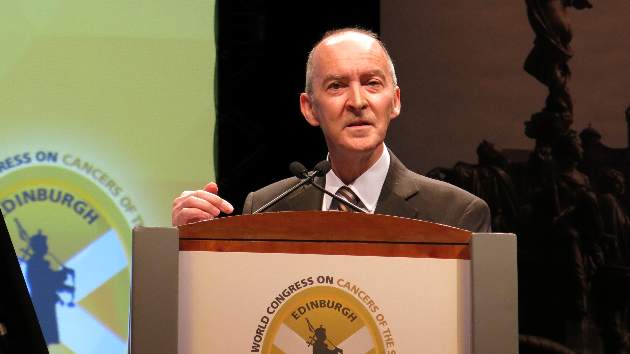
EDINBURGH –Kinase fusions have been well described in hematologic malignancies and are the newest genetic aberration to be identified in Spitz tumors.
Kinase fusions are actually quite common in Spitzoid neoplasms, with 51% of Spitzoid tumors and melanomas harboring a kinase fusion in a recent analysis of 140 tumors (Nat. Commun. 2014;5:3116. doi:10.1038/ncommons4116 ).
The fusions were identified across the entire biological spectrum of Spitzoid neoplasms, including 55% of Spitz nevi, 56% of atypical Spitz tumors, and 39% of Spitzoid melanomas. Therefore, kinase fusions are not useful to distinguish benign from malignant tumors, study author Dr. Thomas Wiesner said at the 15thWorld Congress on Cancers of the Skin.
However, the kinase fusions were mutually exclusive, meaning that only one fusion activates the oncogenic pathway in a tumor. Small molecule kinase inhibitors have become mainstays of modern oncologic therapy in recent years and thus may be useful in Spitz tumors, which typically affect the young.
“These genetic aberrations represent targets for therapeutic interventions and offer investigational treatment options for patients with metastatic disease,” said Dr. Wiesner, a research associate at Memorial Sloan-Kettering Cancer Center in New York City.
ROS1 (c-ros oncogene 1) fusions were the most frequent in the series at 17% and have been shown in mouse models to respond to crizotinib (Xalkori). ALK fusions, present in 10% of tumors, are also sensitive to this drug.
“I think Spitzoid melanoma that is metastatic should be stained for ROS1 or ALK fusions because crizotinib might help these patients,” he said. “We have good evidence that it helps, at least in lung cancer and lymphoma.”
Other drugs target NTRK1 (neurotrophic tyrosine kinase receptor type 1) fusions, which were identified in 16% of Spitzoid tumors, and are in preclinical trials.
The researchers have also published a description of the morphological features that point to the underlying genetic aberrations (Am. J. Surg. Pathol. Jul 2014;38:925-33)). The study, involving 17 patients, aged 2 to 35 years, indicates that BAP1 loss and BRAF mutations are common in epithelioid Spitz tumors, HRAS mutations and gains of 11p are seen in desmoplastic Spitz nevi, while ALK fusions usually point to plexiform Spitz tumors, Dr. Wiesner said.
Clinicians can use the morphological features along with basic immunohistochemistry to identify the distinct subsets of tumors with BAP1 loss or ALK, NTRK1, or ROS1 fusions.
BAP1 loss Spitz tumors are important to identify because they are associated with a hereditary tumor syndrome very similar to Peutz-Jeghers or Muir-Torre syndrome, Dr. Wiesner said.
“When we see multiple epithelioid Spitz tumors in one patient, we have to think about a hereditary tumor syndrome,” he said at the meeting, sponsored by the Skin Cancer Foundation.
EDINBURGH –Kinase fusions have been well described in hematologic malignancies and are the newest genetic aberration to be identified in Spitz tumors.
Kinase fusions are actually quite common in Spitzoid neoplasms, with 51% of Spitzoid tumors and melanomas harboring a kinase fusion in a recent analysis of 140 tumors (Nat. Commun. 2014;5:3116. doi:10.1038/ncommons4116 ).
The fusions were identified across the entire biological spectrum of Spitzoid neoplasms, including 55% of Spitz nevi, 56% of atypical Spitz tumors, and 39% of Spitzoid melanomas. Therefore, kinase fusions are not useful to distinguish benign from malignant tumors, study author Dr. Thomas Wiesner said at the 15thWorld Congress on Cancers of the Skin.
However, the kinase fusions were mutually exclusive, meaning that only one fusion activates the oncogenic pathway in a tumor. Small molecule kinase inhibitors have become mainstays of modern oncologic therapy in recent years and thus may be useful in Spitz tumors, which typically affect the young.
“These genetic aberrations represent targets for therapeutic interventions and offer investigational treatment options for patients with metastatic disease,” said Dr. Wiesner, a research associate at Memorial Sloan-Kettering Cancer Center in New York City.
ROS1 (c-ros oncogene 1) fusions were the most frequent in the series at 17% and have been shown in mouse models to respond to crizotinib (Xalkori). ALK fusions, present in 10% of tumors, are also sensitive to this drug.
“I think Spitzoid melanoma that is metastatic should be stained for ROS1 or ALK fusions because crizotinib might help these patients,” he said. “We have good evidence that it helps, at least in lung cancer and lymphoma.”
Other drugs target NTRK1 (neurotrophic tyrosine kinase receptor type 1) fusions, which were identified in 16% of Spitzoid tumors, and are in preclinical trials.
The researchers have also published a description of the morphological features that point to the underlying genetic aberrations (Am. J. Surg. Pathol. Jul 2014;38:925-33)). The study, involving 17 patients, aged 2 to 35 years, indicates that BAP1 loss and BRAF mutations are common in epithelioid Spitz tumors, HRAS mutations and gains of 11p are seen in desmoplastic Spitz nevi, while ALK fusions usually point to plexiform Spitz tumors, Dr. Wiesner said.
Clinicians can use the morphological features along with basic immunohistochemistry to identify the distinct subsets of tumors with BAP1 loss or ALK, NTRK1, or ROS1 fusions.
BAP1 loss Spitz tumors are important to identify because they are associated with a hereditary tumor syndrome very similar to Peutz-Jeghers or Muir-Torre syndrome, Dr. Wiesner said.
“When we see multiple epithelioid Spitz tumors in one patient, we have to think about a hereditary tumor syndrome,” he said at the meeting, sponsored by the Skin Cancer Foundation.
EDINBURGH –Kinase fusions have been well described in hematologic malignancies and are the newest genetic aberration to be identified in Spitz tumors.
Kinase fusions are actually quite common in Spitzoid neoplasms, with 51% of Spitzoid tumors and melanomas harboring a kinase fusion in a recent analysis of 140 tumors (Nat. Commun. 2014;5:3116. doi:10.1038/ncommons4116 ).
The fusions were identified across the entire biological spectrum of Spitzoid neoplasms, including 55% of Spitz nevi, 56% of atypical Spitz tumors, and 39% of Spitzoid melanomas. Therefore, kinase fusions are not useful to distinguish benign from malignant tumors, study author Dr. Thomas Wiesner said at the 15thWorld Congress on Cancers of the Skin.
However, the kinase fusions were mutually exclusive, meaning that only one fusion activates the oncogenic pathway in a tumor. Small molecule kinase inhibitors have become mainstays of modern oncologic therapy in recent years and thus may be useful in Spitz tumors, which typically affect the young.
“These genetic aberrations represent targets for therapeutic interventions and offer investigational treatment options for patients with metastatic disease,” said Dr. Wiesner, a research associate at Memorial Sloan-Kettering Cancer Center in New York City.
ROS1 (c-ros oncogene 1) fusions were the most frequent in the series at 17% and have been shown in mouse models to respond to crizotinib (Xalkori). ALK fusions, present in 10% of tumors, are also sensitive to this drug.
“I think Spitzoid melanoma that is metastatic should be stained for ROS1 or ALK fusions because crizotinib might help these patients,” he said. “We have good evidence that it helps, at least in lung cancer and lymphoma.”
Other drugs target NTRK1 (neurotrophic tyrosine kinase receptor type 1) fusions, which were identified in 16% of Spitzoid tumors, and are in preclinical trials.
The researchers have also published a description of the morphological features that point to the underlying genetic aberrations (Am. J. Surg. Pathol. Jul 2014;38:925-33)). The study, involving 17 patients, aged 2 to 35 years, indicates that BAP1 loss and BRAF mutations are common in epithelioid Spitz tumors, HRAS mutations and gains of 11p are seen in desmoplastic Spitz nevi, while ALK fusions usually point to plexiform Spitz tumors, Dr. Wiesner said.
Clinicians can use the morphological features along with basic immunohistochemistry to identify the distinct subsets of tumors with BAP1 loss or ALK, NTRK1, or ROS1 fusions.
BAP1 loss Spitz tumors are important to identify because they are associated with a hereditary tumor syndrome very similar to Peutz-Jeghers or Muir-Torre syndrome, Dr. Wiesner said.
“When we see multiple epithelioid Spitz tumors in one patient, we have to think about a hereditary tumor syndrome,” he said at the meeting, sponsored by the Skin Cancer Foundation.
AT THE WCCS 2014
Key clinical point: Kinase fusions are common in Spitz neoplasms and may serve as therapeutic targets.
Major finding: Kinase fusions were identified in 51% of 140 Spitzoid tumors and melanomas.
Data source: Published genetic studies.
Disclosures: Dr. Wiesner reported no conflicts of interest.
Adding second pain med to HA filler disappoints
CHICAGO – Adding epinephrine to a specific formulation of hyaluronic acid already mixed with lidocaine failed to reduce the severity of adverse events following correction of perioral lines in a blinded study.
"Our results using split-face comparison did not reveal a large difference in bruising and pain scores," Dr. Azadeh Shirazi of Scripps Clinic in La Jolla, Calif., reported at the American Academy of Dermatology summer meeting.
Three groups of 10 women with mild to severe lip wrinkles were treated with 1.0 mL of cohesive polydensified matrix hyaluronic acid (CPMHA) alone; CPMHA plus 0.3 mL of lidocaine HCl 1%; or CPMHA plus lidocaine and epinephrine 1:100,000. The volumes in each syringe were adjusted to 1 mL in total.
All injections were performed in the dermis, using serial punctures and linear threading techniques. An entire syringe of one mixture was used on one side, followed by injection of a different mixture on the contralateral side.
Outside evaluators, physician investigators, and patients were blinded to treatment. Bruising was assessed on a 4-point, nonvalidated scale, with 0 being "no visible bruising" and 3 "severe" bruising.
On day 1 post procedure, outside evaluators gave the lowest bruising score to CPMHA alone at about 1.375, followed by CPMHA plus lidocaine and epinephrine at about 1.4, and CPMHA plus lidocaine at about 1.45.
Physicians favored the hyaluronic acid with both pain medications, while patients rated the lidocaine formulation as causing the least bruising.
By day 7, bruising was lower in all groups. The outside evaluators again rated CPMHA alone as causing the least bruising on day 7, while patients and physicians perceived less bruising with the CPMHA-lidocaine formulation. Pain scores followed a similar pattern.
Although not a variable in the study, short-lived edema also was noted in most patients.
It’s possible that there was not enough time for the epinephrine to take full effect as a vasoconstrictor to decrease bruising, Dr. Shirazi said in an interview.
Larger studies are warranted to determine differences between the different formulations, the Dr. Shirazi and her colleagues concluded in the poster.
The study was supported by Merz North America, makers of the CPMHA formulation. Dr. Shirazi has served as an investigator for Allergan, Medicis, and Merz, and as an advisory board member for several pharmaceutical and device companies.
CHICAGO – Adding epinephrine to a specific formulation of hyaluronic acid already mixed with lidocaine failed to reduce the severity of adverse events following correction of perioral lines in a blinded study.
"Our results using split-face comparison did not reveal a large difference in bruising and pain scores," Dr. Azadeh Shirazi of Scripps Clinic in La Jolla, Calif., reported at the American Academy of Dermatology summer meeting.
Three groups of 10 women with mild to severe lip wrinkles were treated with 1.0 mL of cohesive polydensified matrix hyaluronic acid (CPMHA) alone; CPMHA plus 0.3 mL of lidocaine HCl 1%; or CPMHA plus lidocaine and epinephrine 1:100,000. The volumes in each syringe were adjusted to 1 mL in total.
All injections were performed in the dermis, using serial punctures and linear threading techniques. An entire syringe of one mixture was used on one side, followed by injection of a different mixture on the contralateral side.
Outside evaluators, physician investigators, and patients were blinded to treatment. Bruising was assessed on a 4-point, nonvalidated scale, with 0 being "no visible bruising" and 3 "severe" bruising.
On day 1 post procedure, outside evaluators gave the lowest bruising score to CPMHA alone at about 1.375, followed by CPMHA plus lidocaine and epinephrine at about 1.4, and CPMHA plus lidocaine at about 1.45.
Physicians favored the hyaluronic acid with both pain medications, while patients rated the lidocaine formulation as causing the least bruising.
By day 7, bruising was lower in all groups. The outside evaluators again rated CPMHA alone as causing the least bruising on day 7, while patients and physicians perceived less bruising with the CPMHA-lidocaine formulation. Pain scores followed a similar pattern.
Although not a variable in the study, short-lived edema also was noted in most patients.
It’s possible that there was not enough time for the epinephrine to take full effect as a vasoconstrictor to decrease bruising, Dr. Shirazi said in an interview.
Larger studies are warranted to determine differences between the different formulations, the Dr. Shirazi and her colleagues concluded in the poster.
The study was supported by Merz North America, makers of the CPMHA formulation. Dr. Shirazi has served as an investigator for Allergan, Medicis, and Merz, and as an advisory board member for several pharmaceutical and device companies.
CHICAGO – Adding epinephrine to a specific formulation of hyaluronic acid already mixed with lidocaine failed to reduce the severity of adverse events following correction of perioral lines in a blinded study.
"Our results using split-face comparison did not reveal a large difference in bruising and pain scores," Dr. Azadeh Shirazi of Scripps Clinic in La Jolla, Calif., reported at the American Academy of Dermatology summer meeting.
Three groups of 10 women with mild to severe lip wrinkles were treated with 1.0 mL of cohesive polydensified matrix hyaluronic acid (CPMHA) alone; CPMHA plus 0.3 mL of lidocaine HCl 1%; or CPMHA plus lidocaine and epinephrine 1:100,000. The volumes in each syringe were adjusted to 1 mL in total.
All injections were performed in the dermis, using serial punctures and linear threading techniques. An entire syringe of one mixture was used on one side, followed by injection of a different mixture on the contralateral side.
Outside evaluators, physician investigators, and patients were blinded to treatment. Bruising was assessed on a 4-point, nonvalidated scale, with 0 being "no visible bruising" and 3 "severe" bruising.
On day 1 post procedure, outside evaluators gave the lowest bruising score to CPMHA alone at about 1.375, followed by CPMHA plus lidocaine and epinephrine at about 1.4, and CPMHA plus lidocaine at about 1.45.
Physicians favored the hyaluronic acid with both pain medications, while patients rated the lidocaine formulation as causing the least bruising.
By day 7, bruising was lower in all groups. The outside evaluators again rated CPMHA alone as causing the least bruising on day 7, while patients and physicians perceived less bruising with the CPMHA-lidocaine formulation. Pain scores followed a similar pattern.
Although not a variable in the study, short-lived edema also was noted in most patients.
It’s possible that there was not enough time for the epinephrine to take full effect as a vasoconstrictor to decrease bruising, Dr. Shirazi said in an interview.
Larger studies are warranted to determine differences between the different formulations, the Dr. Shirazi and her colleagues concluded in the poster.
The study was supported by Merz North America, makers of the CPMHA formulation. Dr. Shirazi has served as an investigator for Allergan, Medicis, and Merz, and as an advisory board member for several pharmaceutical and device companies.
AT THE AAD SUMMER ACADEMY 2014
Key clinical point: Adding epinephrine to hyaluronic acid with lidocaine did not affect the severity of bruising or pain scores.
Major finding: On a scale of 0-3, bruising scores on day 1 post procedure were 1.375 with CPMHA, 1.4 with CPMHA plus lidocaine and epinephrine, and 1.45 with CPMHA plus lidocaine.
Data source: Blinded, split-face study in 30 women treated for correction of perioral lines.
Disclosures: The study was supported by Merz North America, makers of the CPMHA formulation. Dr. Shirazi has served as an investigator for Allergan, Medicis, and Merz, and as an advisory board member for several pharmaceutical and device companies.
Mobile Apps Get Skin in the Sun Protection Game
EDINBURGH – Mobile phone apps that provide real-time, personalized sun risk and protection information are gaining ground in the fight against skin cancer.
The SunSmart app uses geolocation to alert iPhone, Android, and Samsung phones users in Australia when the UV Index reaches 3 or more and protection is required.
"The great advantage of a smartphone app for communicating the UV Index is that it can really communicate very directly to individuals based on their location," Craig Sinclair said at the 15th World Congress on Cancers of the Skin.
The SunSmart app also provides precise information related to the UV index and behavior prompts associated with it. It can, for example, calculate how much sunscreen should be applied based on the user’s height, weight, and choice of clothing; provide reminders to reapply sunscreen every 2 hours; and track whether a user is getting enough vitamin D based on their skin type, time spent outdoors, and clothing choices, said Mr. Sinclair of the Cancer Council Australia, Victoria, developer of the app.
The World UV app, created by the British Association of Dermatologists (BAD) and the United Kingdom’s Met Office (national weather service), takes sun protection one step further by providing a guide to the Fitzpatrick skin classification scale so users can determine the effects of the current UV rating on their specific skin type.
The app uses simple icons to relay the current UV index in real time and whether skin protection is required. Separate tabs allow access to more information on their Fitzpatrick skin type, what type of protection is required, and sun protection tips.
The app uses geolocation to pinpoint users but also allows them to select from more than 10,000 locations worldwide – making it a truly global app, Nina Goad, head of communications at BAD, said at the meeting.
Since its informal launch in 2012, more than 150,000 people in 200 countries have downloaded the free World UV app. The app has been most popular in the United States, United Kingdom, Belgium, Spain, and Australia, she said.
The launch of the SunSmart app in late 2010 has prompted roughly 130,000 Australians to download the free app. An online survey of 78 users in February 2011 showed that 85% felt it was easy to use and 87% said it met or exceeded expectations, Mr. Sinclair said at the meeting, which was sponsored by the Skin Cancer Foundation.
A follow-up survey of 380 persons revealed that 72% "agreed" or "strongly agreed" that using the app improved their sun protection that summer.
Another 86% said that it made them more aware of the times of day when sun protection is required and 81% said they were able to recognize the difference between UV level and temperature, which is "always a difficult issue to communicate," Mr. Sinclair said.
"These are self-reports, so there is undoubtedly some bias associated with them, but nonetheless, showing reasonably promising results," he added.
Both Mr. Sinclair and Ms. Goad said the apps will continue to be refined to increase downloads and return visits but noted that their respective nonprofits do not have the funding for large-scale advertising campaigns.
EDINBURGH – Mobile phone apps that provide real-time, personalized sun risk and protection information are gaining ground in the fight against skin cancer.
The SunSmart app uses geolocation to alert iPhone, Android, and Samsung phones users in Australia when the UV Index reaches 3 or more and protection is required.
"The great advantage of a smartphone app for communicating the UV Index is that it can really communicate very directly to individuals based on their location," Craig Sinclair said at the 15th World Congress on Cancers of the Skin.
The SunSmart app also provides precise information related to the UV index and behavior prompts associated with it. It can, for example, calculate how much sunscreen should be applied based on the user’s height, weight, and choice of clothing; provide reminders to reapply sunscreen every 2 hours; and track whether a user is getting enough vitamin D based on their skin type, time spent outdoors, and clothing choices, said Mr. Sinclair of the Cancer Council Australia, Victoria, developer of the app.
The World UV app, created by the British Association of Dermatologists (BAD) and the United Kingdom’s Met Office (national weather service), takes sun protection one step further by providing a guide to the Fitzpatrick skin classification scale so users can determine the effects of the current UV rating on their specific skin type.
The app uses simple icons to relay the current UV index in real time and whether skin protection is required. Separate tabs allow access to more information on their Fitzpatrick skin type, what type of protection is required, and sun protection tips.
The app uses geolocation to pinpoint users but also allows them to select from more than 10,000 locations worldwide – making it a truly global app, Nina Goad, head of communications at BAD, said at the meeting.
Since its informal launch in 2012, more than 150,000 people in 200 countries have downloaded the free World UV app. The app has been most popular in the United States, United Kingdom, Belgium, Spain, and Australia, she said.
The launch of the SunSmart app in late 2010 has prompted roughly 130,000 Australians to download the free app. An online survey of 78 users in February 2011 showed that 85% felt it was easy to use and 87% said it met or exceeded expectations, Mr. Sinclair said at the meeting, which was sponsored by the Skin Cancer Foundation.
A follow-up survey of 380 persons revealed that 72% "agreed" or "strongly agreed" that using the app improved their sun protection that summer.
Another 86% said that it made them more aware of the times of day when sun protection is required and 81% said they were able to recognize the difference between UV level and temperature, which is "always a difficult issue to communicate," Mr. Sinclair said.
"These are self-reports, so there is undoubtedly some bias associated with them, but nonetheless, showing reasonably promising results," he added.
Both Mr. Sinclair and Ms. Goad said the apps will continue to be refined to increase downloads and return visits but noted that their respective nonprofits do not have the funding for large-scale advertising campaigns.
EDINBURGH – Mobile phone apps that provide real-time, personalized sun risk and protection information are gaining ground in the fight against skin cancer.
The SunSmart app uses geolocation to alert iPhone, Android, and Samsung phones users in Australia when the UV Index reaches 3 or more and protection is required.
"The great advantage of a smartphone app for communicating the UV Index is that it can really communicate very directly to individuals based on their location," Craig Sinclair said at the 15th World Congress on Cancers of the Skin.
The SunSmart app also provides precise information related to the UV index and behavior prompts associated with it. It can, for example, calculate how much sunscreen should be applied based on the user’s height, weight, and choice of clothing; provide reminders to reapply sunscreen every 2 hours; and track whether a user is getting enough vitamin D based on their skin type, time spent outdoors, and clothing choices, said Mr. Sinclair of the Cancer Council Australia, Victoria, developer of the app.
The World UV app, created by the British Association of Dermatologists (BAD) and the United Kingdom’s Met Office (national weather service), takes sun protection one step further by providing a guide to the Fitzpatrick skin classification scale so users can determine the effects of the current UV rating on their specific skin type.
The app uses simple icons to relay the current UV index in real time and whether skin protection is required. Separate tabs allow access to more information on their Fitzpatrick skin type, what type of protection is required, and sun protection tips.
The app uses geolocation to pinpoint users but also allows them to select from more than 10,000 locations worldwide – making it a truly global app, Nina Goad, head of communications at BAD, said at the meeting.
Since its informal launch in 2012, more than 150,000 people in 200 countries have downloaded the free World UV app. The app has been most popular in the United States, United Kingdom, Belgium, Spain, and Australia, she said.
The launch of the SunSmart app in late 2010 has prompted roughly 130,000 Australians to download the free app. An online survey of 78 users in February 2011 showed that 85% felt it was easy to use and 87% said it met or exceeded expectations, Mr. Sinclair said at the meeting, which was sponsored by the Skin Cancer Foundation.
A follow-up survey of 380 persons revealed that 72% "agreed" or "strongly agreed" that using the app improved their sun protection that summer.
Another 86% said that it made them more aware of the times of day when sun protection is required and 81% said they were able to recognize the difference between UV level and temperature, which is "always a difficult issue to communicate," Mr. Sinclair said.
"These are self-reports, so there is undoubtedly some bias associated with them, but nonetheless, showing reasonably promising results," he added.
Both Mr. Sinclair and Ms. Goad said the apps will continue to be refined to increase downloads and return visits but noted that their respective nonprofits do not have the funding for large-scale advertising campaigns.
EXPERT ANALYSIS FROM THE WCCS 2014
Mobile apps get skin in the sun protection game
EDINBURGH – Mobile phone apps that provide real-time, personalized sun risk and protection information are gaining ground in the fight against skin cancer.
The SunSmart app uses geolocation to alert iPhone, Android, and Samsung phones users in Australia when the UV Index reaches 3 or more and protection is required.

"The great advantage of a smartphone app for communicating the UV Index is that it can really communicate very directly to individuals based on their location," Craig Sinclair said at the 15th World Congress on Cancers of the Skin.
The SunSmart app also provides precise information related to the UV index and behavior prompts associated with it. It can, for example, calculate how much sunscreen should be applied based on the user’s height, weight, and choice of clothing; provide reminders to reapply sunscreen every 2 hours; and track whether a user is getting enough vitamin D based on their skin type, time spent outdoors, and clothing choices, said Mr. Sinclair of the Cancer Council Australia, Victoria, developer of the app.
The World UV app, created by the British Association of Dermatologists (BAD) and the United Kingdom’s Met Office (national weather service), takes sun protection one step further by providing a guide to the Fitzpatrick skin classification scale so users can determine the effects of the current UV rating on their specific skin type.
The app uses simple icons to relay the current UV index in real time and whether skin protection is required. Separate tabs allow access to more information on their Fitzpatrick skin type, what type of protection is required, and sun protection tips.
The app uses geolocation to pinpoint users but also allows them to select from more than 10,000 locations worldwide – making it a truly global app, Nina Goad, head of communications at BAD, said at the meeting.
Since its informal launch in 2012, more than 150,000 people in 200 countries have downloaded the free World UV app. The app has been most popular in the United States, United Kingdom, Belgium, Spain, and Australia, she said.
The launch of the SunSmart app in late 2010 has prompted roughly 130,000 Australians to download the free app. An online survey of 78 users in February 2011 showed that 85% felt it was easy to use and 87% said it met or exceeded expectations, Mr. Sinclair said at the meeting, which was sponsored by the Skin Cancer Foundation.

A follow-up survey of 380 persons revealed that 72% "agreed" or "strongly agreed" that using the app improved their sun protection that summer.
Another 86% said that it made them more aware of the times of day when sun protection is required and 81% said they were able to recognize the difference between UV level and temperature, which is "always a difficult issue to communicate," Mr. Sinclair said.
"These are self-reports, so there is undoubtedly some bias associated with them, but nonetheless, showing reasonably promising results," he added.
Both Mr. Sinclair and Ms. Goad said the apps will continue to be refined to increase downloads and return visits but noted that their respective nonprofits do not have the funding for large-scale advertising campaigns.
EDINBURGH – Mobile phone apps that provide real-time, personalized sun risk and protection information are gaining ground in the fight against skin cancer.
The SunSmart app uses geolocation to alert iPhone, Android, and Samsung phones users in Australia when the UV Index reaches 3 or more and protection is required.
"The great advantage of a smartphone app for communicating the UV Index is that it can really communicate very directly to individuals based on their location," Craig Sinclair said at the 15th World Congress on Cancers of the Skin.
The SunSmart app also provides precise information related to the UV index and behavior prompts associated with it. It can, for example, calculate how much sunscreen should be applied based on the user’s height, weight, and choice of clothing; provide reminders to reapply sunscreen every 2 hours; and track whether a user is getting enough vitamin D based on their skin type, time spent outdoors, and clothing choices, said Mr. Sinclair of the Cancer Council Australia, Victoria, developer of the app.
The World UV app, created by the British Association of Dermatologists (BAD) and the United Kingdom’s Met Office (national weather service), takes sun protection one step further by providing a guide to the Fitzpatrick skin classification scale so users can determine the effects of the current UV rating on their specific skin type.
The app uses simple icons to relay the current UV index in real time and whether skin protection is required. Separate tabs allow access to more information on their Fitzpatrick skin type, what type of protection is required, and sun protection tips.
The app uses geolocation to pinpoint users but also allows them to select from more than 10,000 locations worldwide – making it a truly global app, Nina Goad, head of communications at BAD, said at the meeting.
Since its informal launch in 2012, more than 150,000 people in 200 countries have downloaded the free World UV app. The app has been most popular in the United States, United Kingdom, Belgium, Spain, and Australia, she said.
The launch of the SunSmart app in late 2010 has prompted roughly 130,000 Australians to download the free app. An online survey of 78 users in February 2011 showed that 85% felt it was easy to use and 87% said it met or exceeded expectations, Mr. Sinclair said at the meeting, which was sponsored by the Skin Cancer Foundation.
A follow-up survey of 380 persons revealed that 72% "agreed" or "strongly agreed" that using the app improved their sun protection that summer.
Another 86% said that it made them more aware of the times of day when sun protection is required and 81% said they were able to recognize the difference between UV level and temperature, which is "always a difficult issue to communicate," Mr. Sinclair said.
"These are self-reports, so there is undoubtedly some bias associated with them, but nonetheless, showing reasonably promising results," he added.
Both Mr. Sinclair and Ms. Goad said the apps will continue to be refined to increase downloads and return visits but noted that their respective nonprofits do not have the funding for large-scale advertising campaigns.
EDINBURGH – Mobile phone apps that provide real-time, personalized sun risk and protection information are gaining ground in the fight against skin cancer.
The SunSmart app uses geolocation to alert iPhone, Android, and Samsung phones users in Australia when the UV Index reaches 3 or more and protection is required.
"The great advantage of a smartphone app for communicating the UV Index is that it can really communicate very directly to individuals based on their location," Craig Sinclair said at the 15th World Congress on Cancers of the Skin.
The SunSmart app also provides precise information related to the UV index and behavior prompts associated with it. It can, for example, calculate how much sunscreen should be applied based on the user’s height, weight, and choice of clothing; provide reminders to reapply sunscreen every 2 hours; and track whether a user is getting enough vitamin D based on their skin type, time spent outdoors, and clothing choices, said Mr. Sinclair of the Cancer Council Australia, Victoria, developer of the app.
The World UV app, created by the British Association of Dermatologists (BAD) and the United Kingdom’s Met Office (national weather service), takes sun protection one step further by providing a guide to the Fitzpatrick skin classification scale so users can determine the effects of the current UV rating on their specific skin type.
The app uses simple icons to relay the current UV index in real time and whether skin protection is required. Separate tabs allow access to more information on their Fitzpatrick skin type, what type of protection is required, and sun protection tips.
The app uses geolocation to pinpoint users but also allows them to select from more than 10,000 locations worldwide – making it a truly global app, Nina Goad, head of communications at BAD, said at the meeting.
Since its informal launch in 2012, more than 150,000 people in 200 countries have downloaded the free World UV app. The app has been most popular in the United States, United Kingdom, Belgium, Spain, and Australia, she said.
The launch of the SunSmart app in late 2010 has prompted roughly 130,000 Australians to download the free app. An online survey of 78 users in February 2011 showed that 85% felt it was easy to use and 87% said it met or exceeded expectations, Mr. Sinclair said at the meeting, which was sponsored by the Skin Cancer Foundation.
A follow-up survey of 380 persons revealed that 72% "agreed" or "strongly agreed" that using the app improved their sun protection that summer.
Another 86% said that it made them more aware of the times of day when sun protection is required and 81% said they were able to recognize the difference between UV level and temperature, which is "always a difficult issue to communicate," Mr. Sinclair said.
"These are self-reports, so there is undoubtedly some bias associated with them, but nonetheless, showing reasonably promising results," he added.
Both Mr. Sinclair and Ms. Goad said the apps will continue to be refined to increase downloads and return visits but noted that their respective nonprofits do not have the funding for large-scale advertising campaigns.
EXPERT ANALYSIS FROM THE WCCS 2014
COPPS-2 curtails colchicine enthusiasm in cardiac surgery
Patients undergoing cardiac surgery who took colchicine had significantly less postpericardiotomy syndrome than did those on placebo, but this protective effect did not extend to postoperative atrial fibrillation and pericardial or pleural effusions in the double-blind COPPS-2 trial.
The failure of colchicine to prevent postoperative atrial fibrillation (AF) was probably due to more frequent adverse events (36 vs. 21 with placebo), especially gastrointestinal intolerance (26 vs. 12), and drug discontinuation (39 vs. 32), since a prespecified on-treatment analysis showed a significant reduction in AF in patients tolerating the drug, Dr. Massimo Imazio reported at the annual congress of the European Society of Cardiology.

"The high rate of adverse effects is a reason for concern and suggests that colchicine should be considered only in well-selected patients," Dr. Imazio and his associates wrote in an article on COPPS-2 simultaneously published online (JAMA 2014 [doi:10.1001/jama.2014.11026]).
Colchicine has been a promising strategy for postpericardiotomy syndrome prevention, besting methylprednisolone and aspirin in a large meta-analysis (Am. J. Cardiol. 2011;108:575-9).
In the largest trial, COPPS (Colchicine for the Prevention of the Postpericardiotomy Syndrome), Dr. Imazio reported that colchicine significantly reduced the incidence of postpericardiotomy syndrome (8.9% vs. 21.1%), postoperative pericardial effusions (relative risk reduction, 43.9%), and pleural effusions (RRR, 52.3%) at 12 months, compared with placebo (Am. Heart J. 2011;162:527-32 and Eur. Heart J. 2010;31:2749-54). Colchicine was given for 1 month, beginning on the third postoperative day with a 1-mg twice-daily loading dose.
In COPPS-2, the 360 consecutive candidates for cardiac surgery also were given colchicine or placebo for 1 month, but treatment was started 48-72 hours before surgery to pretreat patients and improve colchicine’s ability to prevent postoperative systemic inflammation and its complications.
Colchicine also was administered using weight-based dosing (0.5 mg twice daily in patients weighing at least 70 kg or 0.5 mg once daily in those under 70 kg), and they avoided the loading dose in an effort to improve adherence.
"However, we observed a 2-fold increase of adverse effects and study drug discontinuations compared with those reported in the COPPS trial, likely due to significant vulnerability of patients in the perioperative phase, when the use of antibiotics and proton pump inhibitors is common and also increases the risk of gastrointestinal effects (e.g., diarrhea)," explained Dr. Imazio of Maria Vittoria Hospital and the University of Torino (Italy).
Still, colchicine provided significant protection in the COPPS-2 primary outcome of postpericardiotomy syndrome, compared with placebo (19.4% vs. 29.4%; 95% confidence interval, 1.1%-18.7%). The number needed to treat was 10.
The outcome did not differ significantly among predetermined subgroups based on age, sex, and presence or absence of pericardial effusion, although colchicine was especially efficacious in the setting of systemic inflammation with elevated C-reactive protein, the authors noted.
The intention-to-treat analysis revealed no significant differences between the colchicine and placebo groups for postoperative AF (33.9% vs. 41.7%; 95% CI, –2.2%-17.6%) or postoperative pericardial/pleural effusion (57.2% vs. 58.9%; 95% CI, –8.5%-11.7%).
The prespecified on-treatment analysis, however, showed a 14.2% absolute difference in postoperative AF, favoring colchicine over placebo (27% vs. 41.2%; 95% CI, 3.3%-24.7%).
"While the efficacy of colchicine for postpericardiotomy syndrome prevention is confirmed, the extent of efficacy for postoperative AF needs to be further investigated in future trials," Dr. Imazio stated.
Ongoing studies also will better clarify the potential of colchicine using lower doses that may be better tolerated.
The 360 patients were evenly randomized from 11 centers in Italy between March 2012 and March 2014. Their mean age was 67.5 years, 69% were men, and 36% had planned valvular surgery. Key exclusion criteria were absence of sinus rhythm at enrollment, urgent cardiac surgery, cardiac transplantation, and contraindications to colchicine.
COPPS-2 was supported by the Italian National Health Service and FARGIM. Acarpia provided the study drug. Dr. Imazio reported no conflicts of interest. A coauthor reported consultancy for Servier, serving on an advisory board for Boehringer Ingelheim, and lecturer fees from Abbott, AstraZeneca, Merck, Serono, Richter Gedeon, and Teva.
Patients undergoing cardiac surgery who took colchicine had significantly less postpericardiotomy syndrome than did those on placebo, but this protective effect did not extend to postoperative atrial fibrillation and pericardial or pleural effusions in the double-blind COPPS-2 trial.
The failure of colchicine to prevent postoperative atrial fibrillation (AF) was probably due to more frequent adverse events (36 vs. 21 with placebo), especially gastrointestinal intolerance (26 vs. 12), and drug discontinuation (39 vs. 32), since a prespecified on-treatment analysis showed a significant reduction in AF in patients tolerating the drug, Dr. Massimo Imazio reported at the annual congress of the European Society of Cardiology.
"The high rate of adverse effects is a reason for concern and suggests that colchicine should be considered only in well-selected patients," Dr. Imazio and his associates wrote in an article on COPPS-2 simultaneously published online (JAMA 2014 [doi:10.1001/jama.2014.11026]).
Colchicine has been a promising strategy for postpericardiotomy syndrome prevention, besting methylprednisolone and aspirin in a large meta-analysis (Am. J. Cardiol. 2011;108:575-9).
In the largest trial, COPPS (Colchicine for the Prevention of the Postpericardiotomy Syndrome), Dr. Imazio reported that colchicine significantly reduced the incidence of postpericardiotomy syndrome (8.9% vs. 21.1%), postoperative pericardial effusions (relative risk reduction, 43.9%), and pleural effusions (RRR, 52.3%) at 12 months, compared with placebo (Am. Heart J. 2011;162:527-32 and Eur. Heart J. 2010;31:2749-54). Colchicine was given for 1 month, beginning on the third postoperative day with a 1-mg twice-daily loading dose.
In COPPS-2, the 360 consecutive candidates for cardiac surgery also were given colchicine or placebo for 1 month, but treatment was started 48-72 hours before surgery to pretreat patients and improve colchicine’s ability to prevent postoperative systemic inflammation and its complications.
Colchicine also was administered using weight-based dosing (0.5 mg twice daily in patients weighing at least 70 kg or 0.5 mg once daily in those under 70 kg), and they avoided the loading dose in an effort to improve adherence.
"However, we observed a 2-fold increase of adverse effects and study drug discontinuations compared with those reported in the COPPS trial, likely due to significant vulnerability of patients in the perioperative phase, when the use of antibiotics and proton pump inhibitors is common and also increases the risk of gastrointestinal effects (e.g., diarrhea)," explained Dr. Imazio of Maria Vittoria Hospital and the University of Torino (Italy).
Still, colchicine provided significant protection in the COPPS-2 primary outcome of postpericardiotomy syndrome, compared with placebo (19.4% vs. 29.4%; 95% confidence interval, 1.1%-18.7%). The number needed to treat was 10.
The outcome did not differ significantly among predetermined subgroups based on age, sex, and presence or absence of pericardial effusion, although colchicine was especially efficacious in the setting of systemic inflammation with elevated C-reactive protein, the authors noted.
The intention-to-treat analysis revealed no significant differences between the colchicine and placebo groups for postoperative AF (33.9% vs. 41.7%; 95% CI, –2.2%-17.6%) or postoperative pericardial/pleural effusion (57.2% vs. 58.9%; 95% CI, –8.5%-11.7%).
The prespecified on-treatment analysis, however, showed a 14.2% absolute difference in postoperative AF, favoring colchicine over placebo (27% vs. 41.2%; 95% CI, 3.3%-24.7%).
"While the efficacy of colchicine for postpericardiotomy syndrome prevention is confirmed, the extent of efficacy for postoperative AF needs to be further investigated in future trials," Dr. Imazio stated.
Ongoing studies also will better clarify the potential of colchicine using lower doses that may be better tolerated.
The 360 patients were evenly randomized from 11 centers in Italy between March 2012 and March 2014. Their mean age was 67.5 years, 69% were men, and 36% had planned valvular surgery. Key exclusion criteria were absence of sinus rhythm at enrollment, urgent cardiac surgery, cardiac transplantation, and contraindications to colchicine.
COPPS-2 was supported by the Italian National Health Service and FARGIM. Acarpia provided the study drug. Dr. Imazio reported no conflicts of interest. A coauthor reported consultancy for Servier, serving on an advisory board for Boehringer Ingelheim, and lecturer fees from Abbott, AstraZeneca, Merck, Serono, Richter Gedeon, and Teva.
Patients undergoing cardiac surgery who took colchicine had significantly less postpericardiotomy syndrome than did those on placebo, but this protective effect did not extend to postoperative atrial fibrillation and pericardial or pleural effusions in the double-blind COPPS-2 trial.
The failure of colchicine to prevent postoperative atrial fibrillation (AF) was probably due to more frequent adverse events (36 vs. 21 with placebo), especially gastrointestinal intolerance (26 vs. 12), and drug discontinuation (39 vs. 32), since a prespecified on-treatment analysis showed a significant reduction in AF in patients tolerating the drug, Dr. Massimo Imazio reported at the annual congress of the European Society of Cardiology.
"The high rate of adverse effects is a reason for concern and suggests that colchicine should be considered only in well-selected patients," Dr. Imazio and his associates wrote in an article on COPPS-2 simultaneously published online (JAMA 2014 [doi:10.1001/jama.2014.11026]).
Colchicine has been a promising strategy for postpericardiotomy syndrome prevention, besting methylprednisolone and aspirin in a large meta-analysis (Am. J. Cardiol. 2011;108:575-9).
In the largest trial, COPPS (Colchicine for the Prevention of the Postpericardiotomy Syndrome), Dr. Imazio reported that colchicine significantly reduced the incidence of postpericardiotomy syndrome (8.9% vs. 21.1%), postoperative pericardial effusions (relative risk reduction, 43.9%), and pleural effusions (RRR, 52.3%) at 12 months, compared with placebo (Am. Heart J. 2011;162:527-32 and Eur. Heart J. 2010;31:2749-54). Colchicine was given for 1 month, beginning on the third postoperative day with a 1-mg twice-daily loading dose.
In COPPS-2, the 360 consecutive candidates for cardiac surgery also were given colchicine or placebo for 1 month, but treatment was started 48-72 hours before surgery to pretreat patients and improve colchicine’s ability to prevent postoperative systemic inflammation and its complications.
Colchicine also was administered using weight-based dosing (0.5 mg twice daily in patients weighing at least 70 kg or 0.5 mg once daily in those under 70 kg), and they avoided the loading dose in an effort to improve adherence.
"However, we observed a 2-fold increase of adverse effects and study drug discontinuations compared with those reported in the COPPS trial, likely due to significant vulnerability of patients in the perioperative phase, when the use of antibiotics and proton pump inhibitors is common and also increases the risk of gastrointestinal effects (e.g., diarrhea)," explained Dr. Imazio of Maria Vittoria Hospital and the University of Torino (Italy).
Still, colchicine provided significant protection in the COPPS-2 primary outcome of postpericardiotomy syndrome, compared with placebo (19.4% vs. 29.4%; 95% confidence interval, 1.1%-18.7%). The number needed to treat was 10.
The outcome did not differ significantly among predetermined subgroups based on age, sex, and presence or absence of pericardial effusion, although colchicine was especially efficacious in the setting of systemic inflammation with elevated C-reactive protein, the authors noted.
The intention-to-treat analysis revealed no significant differences between the colchicine and placebo groups for postoperative AF (33.9% vs. 41.7%; 95% CI, –2.2%-17.6%) or postoperative pericardial/pleural effusion (57.2% vs. 58.9%; 95% CI, –8.5%-11.7%).
The prespecified on-treatment analysis, however, showed a 14.2% absolute difference in postoperative AF, favoring colchicine over placebo (27% vs. 41.2%; 95% CI, 3.3%-24.7%).
"While the efficacy of colchicine for postpericardiotomy syndrome prevention is confirmed, the extent of efficacy for postoperative AF needs to be further investigated in future trials," Dr. Imazio stated.
Ongoing studies also will better clarify the potential of colchicine using lower doses that may be better tolerated.
The 360 patients were evenly randomized from 11 centers in Italy between March 2012 and March 2014. Their mean age was 67.5 years, 69% were men, and 36% had planned valvular surgery. Key exclusion criteria were absence of sinus rhythm at enrollment, urgent cardiac surgery, cardiac transplantation, and contraindications to colchicine.
COPPS-2 was supported by the Italian National Health Service and FARGIM. Acarpia provided the study drug. Dr. Imazio reported no conflicts of interest. A coauthor reported consultancy for Servier, serving on an advisory board for Boehringer Ingelheim, and lecturer fees from Abbott, AstraZeneca, Merck, Serono, Richter Gedeon, and Teva.
FROM THE ESC CONGRESS 2014
Key clinical point: Perioperative use of colchicine should be considered only in well-selected patients.
Major finding: Perioperative colchicine use cut the incidence of postpericardiotomy syndrome, but not postoperative atrial fibrillation or pericardial/pleural effusion.
Data source: Double-blind, randomized clinical trial in 360 consecutive candidates for heart surgery.
Disclosures: COPPS-2 was supported by the Italian National Health Service and FARGIM. Acarpia provided the study drug. Dr. Imazio reported no conflicts of interest. A coauthor reported consultancy for Servier, serving on an advisory board for Boehringer Ingelheim, and lecturer fees from Abbott, AstraZeneca, Merck, Serono, Richter Gedeon, and Teva.

Health care faces a long, bumpy ride
CHICAGO – Health care is going to change more in this decade than in the past 45 years, according to health futurist and medical economist Jeffrey Bauer, Ph.D.
"We’re going to go through an incredible period of disequilibrium and readjustment," he said in a plenary session at the American Academy of Dermatology summer meeting. "It’s going to be several years of real ups and downs."

Dr. Bauer’s forecast for 2015 through 2019 is far less bullish than most, giving just a 20% chance that national health spending will increase as a percentage of gross domestic product. The potential for stagnation is 35% and for decline is 45%.
Over the same time period, 35% of health care providers will cease to exist as currently organized, 40% will continue as organized, although precariously, and 25% will thrive by reinventing the way health care is delivered, said the nationally recognized author and management consultant.
Dr. Bauer made the following recommendations for improving the odds of success in the changing health care system:
• Manage the transition in core function from acute care to disease management.
The one-size-fits-all clinical paradigm is fast disappearing as a result of the ongoing revolution in medical science that is making medicine more precise. Cost-effective care will be achieved through personalized, preventive medicine that matches therapies to each patient’s specific disease characteristics.
• Those who build care teams will do better.
The site of care will continue to shift from hospital to clinic, pharmacy, worksite, and home, and care teams that extend physicians’ reach with nonphysician practitioners will become the best-practices delivery model. "The real key, if you want to be the 40% that survives or the 25% that thrives, is to recognize the value of care teams," Dr. Bauer said.
• Physicians need to position themselves to transition from fee-for-service reimbursement to bundled and value-based payment.
Patients simply don’t have the disposable income to pay more for care, forcing providers to rationalize pricing. Embrace the concept that future successes will be based on multi-stakeholder partnerships comprised of purchasers, payers, practitioners, and providers.
• Work to reform how health care is delivered.
"It’s important that we reform health care delivery so that people can get to you when they need to, but I am just as fervently of the belief that the Affordable Care Act doesn’t do that," he said. "We’ve got to find another way there."
Many of the tools needed to fix the way health care is delivered are already in physicians’ hands. They include advocacy through professional societies, utilization of advanced data analytics to demonstrate value and eliminate unexplained variation from objective performance standards, and adoption of performance improvement tools such as Six Sigma or Lean to ensure that care is delivered correctly all the time and as inexpensively as possible.
Dr. Bauer disclosed no conflicts of interest. He is the author of the just-released book: "Paradox and Imperatives in Health Care: Redirecting Reform for Efficiency and Effectiveness" (CRC Press, 2014).
CHICAGO – Health care is going to change more in this decade than in the past 45 years, according to health futurist and medical economist Jeffrey Bauer, Ph.D.
"We’re going to go through an incredible period of disequilibrium and readjustment," he said in a plenary session at the American Academy of Dermatology summer meeting. "It’s going to be several years of real ups and downs."
Dr. Bauer’s forecast for 2015 through 2019 is far less bullish than most, giving just a 20% chance that national health spending will increase as a percentage of gross domestic product. The potential for stagnation is 35% and for decline is 45%.
Over the same time period, 35% of health care providers will cease to exist as currently organized, 40% will continue as organized, although precariously, and 25% will thrive by reinventing the way health care is delivered, said the nationally recognized author and management consultant.
Dr. Bauer made the following recommendations for improving the odds of success in the changing health care system:
• Manage the transition in core function from acute care to disease management.
The one-size-fits-all clinical paradigm is fast disappearing as a result of the ongoing revolution in medical science that is making medicine more precise. Cost-effective care will be achieved through personalized, preventive medicine that matches therapies to each patient’s specific disease characteristics.
• Those who build care teams will do better.
The site of care will continue to shift from hospital to clinic, pharmacy, worksite, and home, and care teams that extend physicians’ reach with nonphysician practitioners will become the best-practices delivery model. "The real key, if you want to be the 40% that survives or the 25% that thrives, is to recognize the value of care teams," Dr. Bauer said.
• Physicians need to position themselves to transition from fee-for-service reimbursement to bundled and value-based payment.
Patients simply don’t have the disposable income to pay more for care, forcing providers to rationalize pricing. Embrace the concept that future successes will be based on multi-stakeholder partnerships comprised of purchasers, payers, practitioners, and providers.
• Work to reform how health care is delivered.
"It’s important that we reform health care delivery so that people can get to you when they need to, but I am just as fervently of the belief that the Affordable Care Act doesn’t do that," he said. "We’ve got to find another way there."
Many of the tools needed to fix the way health care is delivered are already in physicians’ hands. They include advocacy through professional societies, utilization of advanced data analytics to demonstrate value and eliminate unexplained variation from objective performance standards, and adoption of performance improvement tools such as Six Sigma or Lean to ensure that care is delivered correctly all the time and as inexpensively as possible.
Dr. Bauer disclosed no conflicts of interest. He is the author of the just-released book: "Paradox and Imperatives in Health Care: Redirecting Reform for Efficiency and Effectiveness" (CRC Press, 2014).
CHICAGO – Health care is going to change more in this decade than in the past 45 years, according to health futurist and medical economist Jeffrey Bauer, Ph.D.
"We’re going to go through an incredible period of disequilibrium and readjustment," he said in a plenary session at the American Academy of Dermatology summer meeting. "It’s going to be several years of real ups and downs."
Dr. Bauer’s forecast for 2015 through 2019 is far less bullish than most, giving just a 20% chance that national health spending will increase as a percentage of gross domestic product. The potential for stagnation is 35% and for decline is 45%.
Over the same time period, 35% of health care providers will cease to exist as currently organized, 40% will continue as organized, although precariously, and 25% will thrive by reinventing the way health care is delivered, said the nationally recognized author and management consultant.
Dr. Bauer made the following recommendations for improving the odds of success in the changing health care system:
• Manage the transition in core function from acute care to disease management.
The one-size-fits-all clinical paradigm is fast disappearing as a result of the ongoing revolution in medical science that is making medicine more precise. Cost-effective care will be achieved through personalized, preventive medicine that matches therapies to each patient’s specific disease characteristics.
• Those who build care teams will do better.
The site of care will continue to shift from hospital to clinic, pharmacy, worksite, and home, and care teams that extend physicians’ reach with nonphysician practitioners will become the best-practices delivery model. "The real key, if you want to be the 40% that survives or the 25% that thrives, is to recognize the value of care teams," Dr. Bauer said.
• Physicians need to position themselves to transition from fee-for-service reimbursement to bundled and value-based payment.
Patients simply don’t have the disposable income to pay more for care, forcing providers to rationalize pricing. Embrace the concept that future successes will be based on multi-stakeholder partnerships comprised of purchasers, payers, practitioners, and providers.
• Work to reform how health care is delivered.
"It’s important that we reform health care delivery so that people can get to you when they need to, but I am just as fervently of the belief that the Affordable Care Act doesn’t do that," he said. "We’ve got to find another way there."
Many of the tools needed to fix the way health care is delivered are already in physicians’ hands. They include advocacy through professional societies, utilization of advanced data analytics to demonstrate value and eliminate unexplained variation from objective performance standards, and adoption of performance improvement tools such as Six Sigma or Lean to ensure that care is delivered correctly all the time and as inexpensively as possible.
Dr. Bauer disclosed no conflicts of interest. He is the author of the just-released book: "Paradox and Imperatives in Health Care: Redirecting Reform for Efficiency and Effectiveness" (CRC Press, 2014).
EXPERT OPINION FROM THE AAD SUMMER ACADEMY 2014

Novel Antiviral Therapy 100% Protective Against Lethal Ebola-like Marburg Virus
For the first time, a novel antiviral treatment has saved the lives of primates when given in the late stage of infection with the Marburg virus, a lethal filovirus closely related to the Ebola virus.
Seven daily doses of the lipid-encapsulated small interfering RNA (siRNA) treatment started 3 days after exposure to a lethal dose of Marburg virus–Angola hemorrhagic fever (MARV-Angola) resulted in 100% protection in 16 rhesus macaques already showing clinical signs of the disease.
All untreated animals died; most died early on day 8 after infection, according to results reported in the Aug. 20 issue of Science Translational Medicine.
Delaying treatment until day 3 is clinically significant because this is the earliest time at which viremia can be detected, "showing real-world utility of this technology," study coauthor Thomas Geisbert, Ph.D., professor of microbiology and immunology at the University of Texas Medical Branch, Galveston, said during a press briefing.
The anti-MARV nucleoprotein-targeting siRNAs have been designed to protect against all known strains of Marburg virus, but will not protect against the Ebola virus.
A previous study, however, showed that the same technology completely protected rhesus monkeys exposed to the Zaire Ebola virus, the same species involved in the current outbreak, he said. That study examined treatment given only shortly after exposure, not when the signs of illness were already present, which is crucial to outbreak control (Lancet 2010;375:1896-905).
Still, the siRNA Ebola treatment could be used on a compassionate-use basis in the current Ebola outbreak, he added.
Recently two cases of MARV were imported to the United States and Europe, raising concerns about the public health threat posed by this virus.
There are no approved vaccines or drugs for humans infected with MARV-Angola. It has been associated with the highest case fatality rates of any strain or species of filovirus, causing 90% mortality in man in the largest Marburg outbreak in 2005 in Angola, Dr. Geisbert observed.
A phase I human study has been started with the Ebola siRNA product, but funding is needed before a trial evaluating the Marburg siRNA product can be launched in humans.
The antiviral strategy is based on siRNAs or double-stranded molecules that cause messenger RNA to be broken down after transcription. Thus, there is no translation of the Marburg virus proteins. The siRNAs are packaged in a proprietary lipid nanoparticle that serves as the delivery vehicle (Tekmira Pharmaceuticals, Burnaby, British Columbia).
Future work will examine how much further out treatment can be delayed in MARV-Angola as well as in Ebola hemorrhagic fever, Dr. Geisbert said.
So far, only one other strategy combining monoclonal antibodies and adenovirus vector expressing interferon-alpha has been shown to confer complete protection to macaques when given 3 days after infection (Sci. Transl. Med. 2013 Oct 16;5:207ra143. doi: 10.1126/scitranslmed.3006605), he said.
The National Institutes of Health provided up to $26 million in grant funding this March to UTMB, Tekmira, Profectus, and Vanderbilt University to allow researchers to evaluate both strategies and whether combining antibodies and siRNAs will further enhance the benefits, he said.
Treatment dosing has yet to be optimized. So far, no serious safety concerns have been identified in primates given the Marburg siRNA product or in humans dosed with the siRNA Ebola product, he added.
For the first time, a novel antiviral treatment has saved the lives of primates when given in the late stage of infection with the Marburg virus, a lethal filovirus closely related to the Ebola virus.
Seven daily doses of the lipid-encapsulated small interfering RNA (siRNA) treatment started 3 days after exposure to a lethal dose of Marburg virus–Angola hemorrhagic fever (MARV-Angola) resulted in 100% protection in 16 rhesus macaques already showing clinical signs of the disease.
All untreated animals died; most died early on day 8 after infection, according to results reported in the Aug. 20 issue of Science Translational Medicine.
Delaying treatment until day 3 is clinically significant because this is the earliest time at which viremia can be detected, "showing real-world utility of this technology," study coauthor Thomas Geisbert, Ph.D., professor of microbiology and immunology at the University of Texas Medical Branch, Galveston, said during a press briefing.
The anti-MARV nucleoprotein-targeting siRNAs have been designed to protect against all known strains of Marburg virus, but will not protect against the Ebola virus.
A previous study, however, showed that the same technology completely protected rhesus monkeys exposed to the Zaire Ebola virus, the same species involved in the current outbreak, he said. That study examined treatment given only shortly after exposure, not when the signs of illness were already present, which is crucial to outbreak control (Lancet 2010;375:1896-905).
Still, the siRNA Ebola treatment could be used on a compassionate-use basis in the current Ebola outbreak, he added.
Recently two cases of MARV were imported to the United States and Europe, raising concerns about the public health threat posed by this virus.
There are no approved vaccines or drugs for humans infected with MARV-Angola. It has been associated with the highest case fatality rates of any strain or species of filovirus, causing 90% mortality in man in the largest Marburg outbreak in 2005 in Angola, Dr. Geisbert observed.
A phase I human study has been started with the Ebola siRNA product, but funding is needed before a trial evaluating the Marburg siRNA product can be launched in humans.
The antiviral strategy is based on siRNAs or double-stranded molecules that cause messenger RNA to be broken down after transcription. Thus, there is no translation of the Marburg virus proteins. The siRNAs are packaged in a proprietary lipid nanoparticle that serves as the delivery vehicle (Tekmira Pharmaceuticals, Burnaby, British Columbia).
Future work will examine how much further out treatment can be delayed in MARV-Angola as well as in Ebola hemorrhagic fever, Dr. Geisbert said.
So far, only one other strategy combining monoclonal antibodies and adenovirus vector expressing interferon-alpha has been shown to confer complete protection to macaques when given 3 days after infection (Sci. Transl. Med. 2013 Oct 16;5:207ra143. doi: 10.1126/scitranslmed.3006605), he said.
The National Institutes of Health provided up to $26 million in grant funding this March to UTMB, Tekmira, Profectus, and Vanderbilt University to allow researchers to evaluate both strategies and whether combining antibodies and siRNAs will further enhance the benefits, he said.
Treatment dosing has yet to be optimized. So far, no serious safety concerns have been identified in primates given the Marburg siRNA product or in humans dosed with the siRNA Ebola product, he added.
For the first time, a novel antiviral treatment has saved the lives of primates when given in the late stage of infection with the Marburg virus, a lethal filovirus closely related to the Ebola virus.
Seven daily doses of the lipid-encapsulated small interfering RNA (siRNA) treatment started 3 days after exposure to a lethal dose of Marburg virus–Angola hemorrhagic fever (MARV-Angola) resulted in 100% protection in 16 rhesus macaques already showing clinical signs of the disease.
All untreated animals died; most died early on day 8 after infection, according to results reported in the Aug. 20 issue of Science Translational Medicine.
Delaying treatment until day 3 is clinically significant because this is the earliest time at which viremia can be detected, "showing real-world utility of this technology," study coauthor Thomas Geisbert, Ph.D., professor of microbiology and immunology at the University of Texas Medical Branch, Galveston, said during a press briefing.
The anti-MARV nucleoprotein-targeting siRNAs have been designed to protect against all known strains of Marburg virus, but will not protect against the Ebola virus.
A previous study, however, showed that the same technology completely protected rhesus monkeys exposed to the Zaire Ebola virus, the same species involved in the current outbreak, he said. That study examined treatment given only shortly after exposure, not when the signs of illness were already present, which is crucial to outbreak control (Lancet 2010;375:1896-905).
Still, the siRNA Ebola treatment could be used on a compassionate-use basis in the current Ebola outbreak, he added.
Recently two cases of MARV were imported to the United States and Europe, raising concerns about the public health threat posed by this virus.
There are no approved vaccines or drugs for humans infected with MARV-Angola. It has been associated with the highest case fatality rates of any strain or species of filovirus, causing 90% mortality in man in the largest Marburg outbreak in 2005 in Angola, Dr. Geisbert observed.
A phase I human study has been started with the Ebola siRNA product, but funding is needed before a trial evaluating the Marburg siRNA product can be launched in humans.
The antiviral strategy is based on siRNAs or double-stranded molecules that cause messenger RNA to be broken down after transcription. Thus, there is no translation of the Marburg virus proteins. The siRNAs are packaged in a proprietary lipid nanoparticle that serves as the delivery vehicle (Tekmira Pharmaceuticals, Burnaby, British Columbia).
Future work will examine how much further out treatment can be delayed in MARV-Angola as well as in Ebola hemorrhagic fever, Dr. Geisbert said.
So far, only one other strategy combining monoclonal antibodies and adenovirus vector expressing interferon-alpha has been shown to confer complete protection to macaques when given 3 days after infection (Sci. Transl. Med. 2013 Oct 16;5:207ra143. doi: 10.1126/scitranslmed.3006605), he said.
The National Institutes of Health provided up to $26 million in grant funding this March to UTMB, Tekmira, Profectus, and Vanderbilt University to allow researchers to evaluate both strategies and whether combining antibodies and siRNAs will further enhance the benefits, he said.
Treatment dosing has yet to be optimized. So far, no serious safety concerns have been identified in primates given the Marburg siRNA product or in humans dosed with the siRNA Ebola product, he added.
FROM SCIENCE TRANSLATIONAL MEDICINE