User login
Live births seen in half of pregnancies exposed to belimumab
PARIS – The live birth rate among women taking belimumab for systemic lupus erythematosus is similar to the background rate for women with the disorder, a study showed.
An analysis of clinical trials found that women who were taking the drug when they became pregnant had a live birth rate of 48% – in line with studies that place the rate at 55%-88%, Dr. Marcy Powell said at the annual European Congress of Rheumatology.
Although the number of pregnancies examined in the studies was small – with 80 exposed to belimumab (Benlysta) and 6 to placebo – the results were echoed by the initial findings in a recently established belimumab pregnancy registry, said Dr. Powell, director of safety evaluation and risk management at GlaxoSmithKline, which manufactures the drug.
More than 3,000 adult patients have been treated with belimumab – many for more than 10 years, but there are scant data on pregnancy outcomes. It’s a category C drug; women are advised to avoid pregnancy while taking it and for at least 4 months after stopping it. Thus, the only available pregnancy data are from inadvertent exposures in which the drug was stopped as soon as the pregnancy was discovered.
The data were drawn from the BLISS 52 and 78 studies, which enrolled more than 1,600 patients, 94% of whom were women. At baseline, the patients’ mean age was 38 years. Other medications were common in the cohort: 86% of patients were using corticosteroids, with 58% of those taking a prednisone equivalent of more than 5.7 mg/day. More than half (65%) were using antimalarials, and 49% were taking another immunosuppressant, including azathioprine, methotrexate, or mycophenolate mofetil.
Of the six pregnancies among patients assigned to placebo, there were three elective terminations, two spontaneous miscarriages, and one stillbirth, for a total fetal loss rate of 50%. The three pregnancies with fetal loss included two women who tested positive for anticardiolipin antibodies.
Among the 80 drug-exposed pregnancies, there were 21 elective terminations as well as 20 miscarriages and 1 stillbirth, yielding a total fetal loss rate of 26%. The background miscarriage rate was 12%-22%, and the background stillbirth rate was 2%-5%, both of which are similar to rates observed in the exposed pregnancies. Overall, women tested positive for anticardiolipin antibodies in 20 pregnancies exposed to belimumab, including 21% of the live births and 38% of the fetal losses.
There were 38 live births (48%). Four neonates had a congenital anomaly:
• One with Dandy-Walker syndrome.
• One with an unbalanced translocation (11 and 13) of maternal origin, a strictly genetic anomaly.
• One born at 27 weeks’ gestation with patent ductus arteriosus.
• One with bilateral enlarged kidneys with abnormal function whose mother was receiving ambrisentan, a known teratogen, for portal hypertension. (The infant was placed on dialysis and had the right kidney removed.)
The stillbirths in the placebo and belimumab patients occurred in conjunction with severe, very early third-trimester preeclampsia, Dr. Powell said. She noted that the sample size is so small that it’s unclear whether the results can be extrapolated to larger populations.
However, the Belimumab Pregnancy Registry, established by GlaxoSmithKline, could provide more reliable data, she said. So far, the registry has enrolled nine pregnancies, seven of which have been completed. Among those, there have been six live births and one miscarriage. Three of the infants were preterm, born at 32, 35, and 36 weeks’ gestation. There was one birth defect (mild Epstein’s anomaly of the tricuspid valve).
On Twitter @alz_gal
PARIS – The live birth rate among women taking belimumab for systemic lupus erythematosus is similar to the background rate for women with the disorder, a study showed.
An analysis of clinical trials found that women who were taking the drug when they became pregnant had a live birth rate of 48% – in line with studies that place the rate at 55%-88%, Dr. Marcy Powell said at the annual European Congress of Rheumatology.
Although the number of pregnancies examined in the studies was small – with 80 exposed to belimumab (Benlysta) and 6 to placebo – the results were echoed by the initial findings in a recently established belimumab pregnancy registry, said Dr. Powell, director of safety evaluation and risk management at GlaxoSmithKline, which manufactures the drug.
More than 3,000 adult patients have been treated with belimumab – many for more than 10 years, but there are scant data on pregnancy outcomes. It’s a category C drug; women are advised to avoid pregnancy while taking it and for at least 4 months after stopping it. Thus, the only available pregnancy data are from inadvertent exposures in which the drug was stopped as soon as the pregnancy was discovered.
The data were drawn from the BLISS 52 and 78 studies, which enrolled more than 1,600 patients, 94% of whom were women. At baseline, the patients’ mean age was 38 years. Other medications were common in the cohort: 86% of patients were using corticosteroids, with 58% of those taking a prednisone equivalent of more than 5.7 mg/day. More than half (65%) were using antimalarials, and 49% were taking another immunosuppressant, including azathioprine, methotrexate, or mycophenolate mofetil.
Of the six pregnancies among patients assigned to placebo, there were three elective terminations, two spontaneous miscarriages, and one stillbirth, for a total fetal loss rate of 50%. The three pregnancies with fetal loss included two women who tested positive for anticardiolipin antibodies.
Among the 80 drug-exposed pregnancies, there were 21 elective terminations as well as 20 miscarriages and 1 stillbirth, yielding a total fetal loss rate of 26%. The background miscarriage rate was 12%-22%, and the background stillbirth rate was 2%-5%, both of which are similar to rates observed in the exposed pregnancies. Overall, women tested positive for anticardiolipin antibodies in 20 pregnancies exposed to belimumab, including 21% of the live births and 38% of the fetal losses.
There were 38 live births (48%). Four neonates had a congenital anomaly:
• One with Dandy-Walker syndrome.
• One with an unbalanced translocation (11 and 13) of maternal origin, a strictly genetic anomaly.
• One born at 27 weeks’ gestation with patent ductus arteriosus.
• One with bilateral enlarged kidneys with abnormal function whose mother was receiving ambrisentan, a known teratogen, for portal hypertension. (The infant was placed on dialysis and had the right kidney removed.)
The stillbirths in the placebo and belimumab patients occurred in conjunction with severe, very early third-trimester preeclampsia, Dr. Powell said. She noted that the sample size is so small that it’s unclear whether the results can be extrapolated to larger populations.
However, the Belimumab Pregnancy Registry, established by GlaxoSmithKline, could provide more reliable data, she said. So far, the registry has enrolled nine pregnancies, seven of which have been completed. Among those, there have been six live births and one miscarriage. Three of the infants were preterm, born at 32, 35, and 36 weeks’ gestation. There was one birth defect (mild Epstein’s anomaly of the tricuspid valve).
On Twitter @alz_gal
PARIS – The live birth rate among women taking belimumab for systemic lupus erythematosus is similar to the background rate for women with the disorder, a study showed.
An analysis of clinical trials found that women who were taking the drug when they became pregnant had a live birth rate of 48% – in line with studies that place the rate at 55%-88%, Dr. Marcy Powell said at the annual European Congress of Rheumatology.
Although the number of pregnancies examined in the studies was small – with 80 exposed to belimumab (Benlysta) and 6 to placebo – the results were echoed by the initial findings in a recently established belimumab pregnancy registry, said Dr. Powell, director of safety evaluation and risk management at GlaxoSmithKline, which manufactures the drug.
More than 3,000 adult patients have been treated with belimumab – many for more than 10 years, but there are scant data on pregnancy outcomes. It’s a category C drug; women are advised to avoid pregnancy while taking it and for at least 4 months after stopping it. Thus, the only available pregnancy data are from inadvertent exposures in which the drug was stopped as soon as the pregnancy was discovered.
The data were drawn from the BLISS 52 and 78 studies, which enrolled more than 1,600 patients, 94% of whom were women. At baseline, the patients’ mean age was 38 years. Other medications were common in the cohort: 86% of patients were using corticosteroids, with 58% of those taking a prednisone equivalent of more than 5.7 mg/day. More than half (65%) were using antimalarials, and 49% were taking another immunosuppressant, including azathioprine, methotrexate, or mycophenolate mofetil.
Of the six pregnancies among patients assigned to placebo, there were three elective terminations, two spontaneous miscarriages, and one stillbirth, for a total fetal loss rate of 50%. The three pregnancies with fetal loss included two women who tested positive for anticardiolipin antibodies.
Among the 80 drug-exposed pregnancies, there were 21 elective terminations as well as 20 miscarriages and 1 stillbirth, yielding a total fetal loss rate of 26%. The background miscarriage rate was 12%-22%, and the background stillbirth rate was 2%-5%, both of which are similar to rates observed in the exposed pregnancies. Overall, women tested positive for anticardiolipin antibodies in 20 pregnancies exposed to belimumab, including 21% of the live births and 38% of the fetal losses.
There were 38 live births (48%). Four neonates had a congenital anomaly:
• One with Dandy-Walker syndrome.
• One with an unbalanced translocation (11 and 13) of maternal origin, a strictly genetic anomaly.
• One born at 27 weeks’ gestation with patent ductus arteriosus.
• One with bilateral enlarged kidneys with abnormal function whose mother was receiving ambrisentan, a known teratogen, for portal hypertension. (The infant was placed on dialysis and had the right kidney removed.)
The stillbirths in the placebo and belimumab patients occurred in conjunction with severe, very early third-trimester preeclampsia, Dr. Powell said. She noted that the sample size is so small that it’s unclear whether the results can be extrapolated to larger populations.
However, the Belimumab Pregnancy Registry, established by GlaxoSmithKline, could provide more reliable data, she said. So far, the registry has enrolled nine pregnancies, seven of which have been completed. Among those, there have been six live births and one miscarriage. Three of the infants were preterm, born at 32, 35, and 36 weeks’ gestation. There was one birth defect (mild Epstein’s anomaly of the tricuspid valve).
On Twitter @alz_gal
AT THE EULAR CONGRESS 2014
Key clinical point: Successful pregnancies are possible in SLE patients exposed to belimumab.
Major finding: The live birth rate was 48%, and the total fetal loss rate was 26%.
Data source: A cohort of 86 pregnancies and 9 additional pregnancies in a registry database.
Disclosures: Dr. Powell is director of safety evaluation and risk management at GlaxoSmithKline.
CDC panel: For children, live attenuated intranasal flu vaccine is best
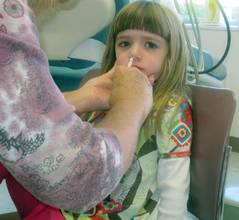
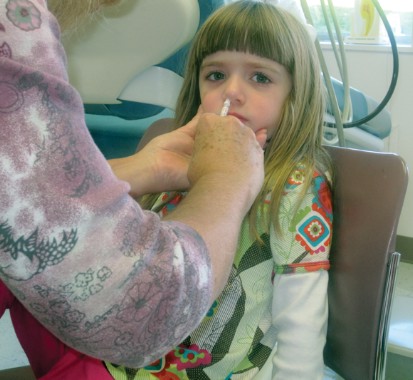
The live attenuated intranasal flu vaccine is the preferred method of immunizing healthy children aged 2-8 years against seasonal influenza, a federal panel has recommended.
At a meeting of the Centers for Disease Control and Prevention’s Advisory Committee on Immunization Practices, committee members unanimously agreed that healthy children with no contraindications should receive the quadrivalent live attenuated vaccine (LAIV) rather than an inactivated vaccine, provided that the LAIV is readily available.
"If the LAIV is not immediately available, [inactivated influenza vaccine (IIV)] should be used," the recommendation reads. "Vaccination should not be delayed in order to procure LAIV."
All children aged 6 months or older should receive influenza vaccine, according to the recommendation. "Influenza vaccine should not be delayed to procure a specific vaccine preparation if an appropriate one is already available."
The committee approved the recommendation after hearing an evidence review that found the LAIV to be "moderately" more effective for this age group than the inactivated vaccine was. Although the data are not plentiful, they suggest that it would probably prevent about 47 more lab-confirmed cases of flu per 1,000 children than the IIV, Dr. Lisa Grohskopf said
"The benefits appear to outweigh the potential harms, with modestly better efficacy," and no appreciable increase in adverse events associated with the live vaccine, said Dr. Grohskopf, who is a medical officer in the influenza division of the Centers for Disease Control and Prevention in Atlanta.
Her review was based on two studies – one published in 2006 and one in 2007. The earlier study was an open-label trial that randomized about 2,300 children aged 6-71 months to either the LAIV or an IIV. The much larger 2007 study randomized about 16,000 children aged 6-59 months to the two vaccine types or to matching placebos.
The pooled analysis was limited to healthy children aged 24-59 months who were without a history of asthma or wheezing. The primary endpoint of lab-confirmed influenza infection was significantly less likely among children who had received the LAIV (hazard ratio, 0.47). The secondary endpoint of influenza-associated otitis media was also significantly less likely to occur among those who got the LAIV (HR, 0.47).
Neither of the vaccines was associated with any medically significant wheezing or fever, Dr. Grohskopf said.
She also examined these same endpoints in children who had a history of wheezing or asthma. The LAIV significantly reduced the risk of lab-confirmed influenza in this group (HR, 0.53). There were no significantly increased risks of medically significant wheezing in the children, regardless of whether or not they had experienced wheezing within the past 12 months.
However, Dr. Grohskopf said, she and her colleagues didn’t feel that the studies were strong enough to make any initial recommendations to the committee about whether the LAIV could safely be used in children with a history of wheezing or asthma. The studies didn’t drill down into data on this group enough, and the data are now too old to be completely reliable for this population.
Asthma and wheezing are not strict contraindications to the LAIV, she said, but ACIP does not recommend it for children with those issues or for those with any chronic conditions that might predispose them to complications from the flu.
The committee also heard that the strains included in the 2014-2015 vaccine will be the same as last season’s. Because of this, children who received at least one dose of the 2013-2014 vaccine will only need one dose of this year’s vaccine to ensure immunity. "This is analogous to what happened in the 2011-2012 season, when the vaccine strains were unchanged from the previous season," Dr. Grohskopf said.
She also touched on the issue of cost. "We haven’t done a formal cost-effectiveness analysis," she said.
"It’s likely to be a very complex undertaking because of the large number of products out there. It will probably be a few years before that could be done."
The best estimates available now can be drawn from the 2013-2014 private sector costs associated with CDC’s Vaccines for Children program. "The cost of the LAIV intranasal vaccine is $22.70/dose, and for the inactivated vaccine, there is a broad range of variability, from $7.65-$14.81/dose for the trivalent to $14.90-$21.09/dose for the quadrivalent."
On Twitter @alz_gal
The live attenuated intranasal flu vaccine is the preferred method of immunizing healthy children aged 2-8 years against seasonal influenza, a federal panel has recommended.
At a meeting of the Centers for Disease Control and Prevention’s Advisory Committee on Immunization Practices, committee members unanimously agreed that healthy children with no contraindications should receive the quadrivalent live attenuated vaccine (LAIV) rather than an inactivated vaccine, provided that the LAIV is readily available.
"If the LAIV is not immediately available, [inactivated influenza vaccine (IIV)] should be used," the recommendation reads. "Vaccination should not be delayed in order to procure LAIV."
All children aged 6 months or older should receive influenza vaccine, according to the recommendation. "Influenza vaccine should not be delayed to procure a specific vaccine preparation if an appropriate one is already available."
The committee approved the recommendation after hearing an evidence review that found the LAIV to be "moderately" more effective for this age group than the inactivated vaccine was. Although the data are not plentiful, they suggest that it would probably prevent about 47 more lab-confirmed cases of flu per 1,000 children than the IIV, Dr. Lisa Grohskopf said
"The benefits appear to outweigh the potential harms, with modestly better efficacy," and no appreciable increase in adverse events associated with the live vaccine, said Dr. Grohskopf, who is a medical officer in the influenza division of the Centers for Disease Control and Prevention in Atlanta.
Her review was based on two studies – one published in 2006 and one in 2007. The earlier study was an open-label trial that randomized about 2,300 children aged 6-71 months to either the LAIV or an IIV. The much larger 2007 study randomized about 16,000 children aged 6-59 months to the two vaccine types or to matching placebos.
The pooled analysis was limited to healthy children aged 24-59 months who were without a history of asthma or wheezing. The primary endpoint of lab-confirmed influenza infection was significantly less likely among children who had received the LAIV (hazard ratio, 0.47). The secondary endpoint of influenza-associated otitis media was also significantly less likely to occur among those who got the LAIV (HR, 0.47).
Neither of the vaccines was associated with any medically significant wheezing or fever, Dr. Grohskopf said.
She also examined these same endpoints in children who had a history of wheezing or asthma. The LAIV significantly reduced the risk of lab-confirmed influenza in this group (HR, 0.53). There were no significantly increased risks of medically significant wheezing in the children, regardless of whether or not they had experienced wheezing within the past 12 months.
However, Dr. Grohskopf said, she and her colleagues didn’t feel that the studies were strong enough to make any initial recommendations to the committee about whether the LAIV could safely be used in children with a history of wheezing or asthma. The studies didn’t drill down into data on this group enough, and the data are now too old to be completely reliable for this population.
Asthma and wheezing are not strict contraindications to the LAIV, she said, but ACIP does not recommend it for children with those issues or for those with any chronic conditions that might predispose them to complications from the flu.
The committee also heard that the strains included in the 2014-2015 vaccine will be the same as last season’s. Because of this, children who received at least one dose of the 2013-2014 vaccine will only need one dose of this year’s vaccine to ensure immunity. "This is analogous to what happened in the 2011-2012 season, when the vaccine strains were unchanged from the previous season," Dr. Grohskopf said.
She also touched on the issue of cost. "We haven’t done a formal cost-effectiveness analysis," she said.
"It’s likely to be a very complex undertaking because of the large number of products out there. It will probably be a few years before that could be done."
The best estimates available now can be drawn from the 2013-2014 private sector costs associated with CDC’s Vaccines for Children program. "The cost of the LAIV intranasal vaccine is $22.70/dose, and for the inactivated vaccine, there is a broad range of variability, from $7.65-$14.81/dose for the trivalent to $14.90-$21.09/dose for the quadrivalent."
On Twitter @alz_gal
The live attenuated intranasal flu vaccine is the preferred method of immunizing healthy children aged 2-8 years against seasonal influenza, a federal panel has recommended.
At a meeting of the Centers for Disease Control and Prevention’s Advisory Committee on Immunization Practices, committee members unanimously agreed that healthy children with no contraindications should receive the quadrivalent live attenuated vaccine (LAIV) rather than an inactivated vaccine, provided that the LAIV is readily available.
"If the LAIV is not immediately available, [inactivated influenza vaccine (IIV)] should be used," the recommendation reads. "Vaccination should not be delayed in order to procure LAIV."
All children aged 6 months or older should receive influenza vaccine, according to the recommendation. "Influenza vaccine should not be delayed to procure a specific vaccine preparation if an appropriate one is already available."
The committee approved the recommendation after hearing an evidence review that found the LAIV to be "moderately" more effective for this age group than the inactivated vaccine was. Although the data are not plentiful, they suggest that it would probably prevent about 47 more lab-confirmed cases of flu per 1,000 children than the IIV, Dr. Lisa Grohskopf said
"The benefits appear to outweigh the potential harms, with modestly better efficacy," and no appreciable increase in adverse events associated with the live vaccine, said Dr. Grohskopf, who is a medical officer in the influenza division of the Centers for Disease Control and Prevention in Atlanta.
Her review was based on two studies – one published in 2006 and one in 2007. The earlier study was an open-label trial that randomized about 2,300 children aged 6-71 months to either the LAIV or an IIV. The much larger 2007 study randomized about 16,000 children aged 6-59 months to the two vaccine types or to matching placebos.
The pooled analysis was limited to healthy children aged 24-59 months who were without a history of asthma or wheezing. The primary endpoint of lab-confirmed influenza infection was significantly less likely among children who had received the LAIV (hazard ratio, 0.47). The secondary endpoint of influenza-associated otitis media was also significantly less likely to occur among those who got the LAIV (HR, 0.47).
Neither of the vaccines was associated with any medically significant wheezing or fever, Dr. Grohskopf said.
She also examined these same endpoints in children who had a history of wheezing or asthma. The LAIV significantly reduced the risk of lab-confirmed influenza in this group (HR, 0.53). There were no significantly increased risks of medically significant wheezing in the children, regardless of whether or not they had experienced wheezing within the past 12 months.
However, Dr. Grohskopf said, she and her colleagues didn’t feel that the studies were strong enough to make any initial recommendations to the committee about whether the LAIV could safely be used in children with a history of wheezing or asthma. The studies didn’t drill down into data on this group enough, and the data are now too old to be completely reliable for this population.
Asthma and wheezing are not strict contraindications to the LAIV, she said, but ACIP does not recommend it for children with those issues or for those with any chronic conditions that might predispose them to complications from the flu.
The committee also heard that the strains included in the 2014-2015 vaccine will be the same as last season’s. Because of this, children who received at least one dose of the 2013-2014 vaccine will only need one dose of this year’s vaccine to ensure immunity. "This is analogous to what happened in the 2011-2012 season, when the vaccine strains were unchanged from the previous season," Dr. Grohskopf said.
She also touched on the issue of cost. "We haven’t done a formal cost-effectiveness analysis," she said.
"It’s likely to be a very complex undertaking because of the large number of products out there. It will probably be a few years before that could be done."
The best estimates available now can be drawn from the 2013-2014 private sector costs associated with CDC’s Vaccines for Children program. "The cost of the LAIV intranasal vaccine is $22.70/dose, and for the inactivated vaccine, there is a broad range of variability, from $7.65-$14.81/dose for the trivalent to $14.90-$21.09/dose for the quadrivalent."
On Twitter @alz_gal
FROM AN ACIP MEETING
Eurofever Project takes aim at rare autoinflammatory disorders
PARIS – A large international registry aims to gather extensive data on the presentation, complications, and treatment response of rare autoinflammatory diseases in both children and adults, according to principal investigator Dr. Marco Gattorno.
Launched in 2009, the Eurofever Project is being conducted in 67 rheumatology centers across 31 countries. So far it has accumulated nearly 3,000 patients, about 70% of whom are children. The registry has thus far generated 10 papers that involved more than 50 centers and many more studies are in the offing, Dr. Gattorno said at the annual European Congress of Rheumatology.
"The Eurofever registry gives an epidemiological overview of the distribution and prevalence of these rare disorders in Europe and other countries," he said in an interview. "The aim was to understand who the patients are and who is following them. The registry is also collecting information on the clinical manifestations and complications associated with different diseases and on the response to treatment from disease onset to enrollment."
An online survey collects information on 15 of these rare diseases. Several present very early in life as sudden-onset, recurrent fever, often accompanied by rash, serositis, lymphadenopathy, or arthritis. Disease flares are usually separated by symptom-free intervals of variable duration, characterized by complete well-being, normal growth, and normalization of acute phase reactants. This cycle can result in a considerable delay in diagnosis, the project has determined –from 5 years for children with FMF [familial Mediterranean fever] to "an incredibly astonishing delay of 18 years" for children with TRAPS [tumor necrosis factor receptor–associated periodic syndrome], CAPS [cryopyrin-associated periodic syndrome], and MKD [mevalonate kinase deficiency], said Dr. Gattorno, a pediatric rheumatologist at the IRCCS Institute Giannina Gaslini in Genoa, Italy.
Fortunately, he noted, a recent paper drawn from Eurofever data has found that these delays are shortening. Although patients born in the 1970s and 1980s typically faced decades of diagnostic confusion, children born in the 1990s and early in this century are being diagnosed much sooner – often within 5 years, he noted.
The creation of new, evidence-based diagnostic and classification criteria is also the direct result of the Eurofever registry. A paper in process is building such systems for MKD, TRAPS, CAPS, and FMF.
Primary investigator Maria Pia Sormani, Ph.D., of the University of Genoa and her colleagues, have created scoring systems for each disorder based on the presence and absence of specific demographic and clinical characteristics. Meeting or exceeding the predetermined cutoff point for each will provide a "gold standard" for diagnosis, Dr. Gattorno said.
As the Eurofever registry continues to grow, it is adding other rare disorders, he said. These include deficiency of interleukin-36 receptor antagonist (DITRA); chronic atypical neutrophilic dermatosis with lipodystrophy and elevated temperature syndrome (CANDLE); Schnitzler syndrome (chronic, nonpruritic urticaria in association with recurrent fever, bone pain, arthralgia or arthritis, and a low-level monoclonal immunoglobulin M gammopathy); and ADA2 deficiency, a rare syndrome of sporadic fevers, skin rashes, and recurring strokes that begins early in childhood.
Eurofever is sponsored by the Executive Agency for Health and Consumers of European Union and other EU grants, as well as unrestricted grants by Novartis and SOBI, from which Dr. Gattorno has received speakers fees. The technical expertise is provided by the Paediatric Rheumatology International Trials Organisation.
The registry is actively enrolling patients. Information on the registry and how to participate can be found at the Eurofever website.
On Twitter @alz_gal
PARIS – A large international registry aims to gather extensive data on the presentation, complications, and treatment response of rare autoinflammatory diseases in both children and adults, according to principal investigator Dr. Marco Gattorno.
Launched in 2009, the Eurofever Project is being conducted in 67 rheumatology centers across 31 countries. So far it has accumulated nearly 3,000 patients, about 70% of whom are children. The registry has thus far generated 10 papers that involved more than 50 centers and many more studies are in the offing, Dr. Gattorno said at the annual European Congress of Rheumatology.
"The Eurofever registry gives an epidemiological overview of the distribution and prevalence of these rare disorders in Europe and other countries," he said in an interview. "The aim was to understand who the patients are and who is following them. The registry is also collecting information on the clinical manifestations and complications associated with different diseases and on the response to treatment from disease onset to enrollment."
An online survey collects information on 15 of these rare diseases. Several present very early in life as sudden-onset, recurrent fever, often accompanied by rash, serositis, lymphadenopathy, or arthritis. Disease flares are usually separated by symptom-free intervals of variable duration, characterized by complete well-being, normal growth, and normalization of acute phase reactants. This cycle can result in a considerable delay in diagnosis, the project has determined –from 5 years for children with FMF [familial Mediterranean fever] to "an incredibly astonishing delay of 18 years" for children with TRAPS [tumor necrosis factor receptor–associated periodic syndrome], CAPS [cryopyrin-associated periodic syndrome], and MKD [mevalonate kinase deficiency], said Dr. Gattorno, a pediatric rheumatologist at the IRCCS Institute Giannina Gaslini in Genoa, Italy.
Fortunately, he noted, a recent paper drawn from Eurofever data has found that these delays are shortening. Although patients born in the 1970s and 1980s typically faced decades of diagnostic confusion, children born in the 1990s and early in this century are being diagnosed much sooner – often within 5 years, he noted.
The creation of new, evidence-based diagnostic and classification criteria is also the direct result of the Eurofever registry. A paper in process is building such systems for MKD, TRAPS, CAPS, and FMF.
Primary investigator Maria Pia Sormani, Ph.D., of the University of Genoa and her colleagues, have created scoring systems for each disorder based on the presence and absence of specific demographic and clinical characteristics. Meeting or exceeding the predetermined cutoff point for each will provide a "gold standard" for diagnosis, Dr. Gattorno said.
As the Eurofever registry continues to grow, it is adding other rare disorders, he said. These include deficiency of interleukin-36 receptor antagonist (DITRA); chronic atypical neutrophilic dermatosis with lipodystrophy and elevated temperature syndrome (CANDLE); Schnitzler syndrome (chronic, nonpruritic urticaria in association with recurrent fever, bone pain, arthralgia or arthritis, and a low-level monoclonal immunoglobulin M gammopathy); and ADA2 deficiency, a rare syndrome of sporadic fevers, skin rashes, and recurring strokes that begins early in childhood.
Eurofever is sponsored by the Executive Agency for Health and Consumers of European Union and other EU grants, as well as unrestricted grants by Novartis and SOBI, from which Dr. Gattorno has received speakers fees. The technical expertise is provided by the Paediatric Rheumatology International Trials Organisation.
The registry is actively enrolling patients. Information on the registry and how to participate can be found at the Eurofever website.
On Twitter @alz_gal
PARIS – A large international registry aims to gather extensive data on the presentation, complications, and treatment response of rare autoinflammatory diseases in both children and adults, according to principal investigator Dr. Marco Gattorno.
Launched in 2009, the Eurofever Project is being conducted in 67 rheumatology centers across 31 countries. So far it has accumulated nearly 3,000 patients, about 70% of whom are children. The registry has thus far generated 10 papers that involved more than 50 centers and many more studies are in the offing, Dr. Gattorno said at the annual European Congress of Rheumatology.
"The Eurofever registry gives an epidemiological overview of the distribution and prevalence of these rare disorders in Europe and other countries," he said in an interview. "The aim was to understand who the patients are and who is following them. The registry is also collecting information on the clinical manifestations and complications associated with different diseases and on the response to treatment from disease onset to enrollment."
An online survey collects information on 15 of these rare diseases. Several present very early in life as sudden-onset, recurrent fever, often accompanied by rash, serositis, lymphadenopathy, or arthritis. Disease flares are usually separated by symptom-free intervals of variable duration, characterized by complete well-being, normal growth, and normalization of acute phase reactants. This cycle can result in a considerable delay in diagnosis, the project has determined –from 5 years for children with FMF [familial Mediterranean fever] to "an incredibly astonishing delay of 18 years" for children with TRAPS [tumor necrosis factor receptor–associated periodic syndrome], CAPS [cryopyrin-associated periodic syndrome], and MKD [mevalonate kinase deficiency], said Dr. Gattorno, a pediatric rheumatologist at the IRCCS Institute Giannina Gaslini in Genoa, Italy.
Fortunately, he noted, a recent paper drawn from Eurofever data has found that these delays are shortening. Although patients born in the 1970s and 1980s typically faced decades of diagnostic confusion, children born in the 1990s and early in this century are being diagnosed much sooner – often within 5 years, he noted.
The creation of new, evidence-based diagnostic and classification criteria is also the direct result of the Eurofever registry. A paper in process is building such systems for MKD, TRAPS, CAPS, and FMF.
Primary investigator Maria Pia Sormani, Ph.D., of the University of Genoa and her colleagues, have created scoring systems for each disorder based on the presence and absence of specific demographic and clinical characteristics. Meeting or exceeding the predetermined cutoff point for each will provide a "gold standard" for diagnosis, Dr. Gattorno said.
As the Eurofever registry continues to grow, it is adding other rare disorders, he said. These include deficiency of interleukin-36 receptor antagonist (DITRA); chronic atypical neutrophilic dermatosis with lipodystrophy and elevated temperature syndrome (CANDLE); Schnitzler syndrome (chronic, nonpruritic urticaria in association with recurrent fever, bone pain, arthralgia or arthritis, and a low-level monoclonal immunoglobulin M gammopathy); and ADA2 deficiency, a rare syndrome of sporadic fevers, skin rashes, and recurring strokes that begins early in childhood.
Eurofever is sponsored by the Executive Agency for Health and Consumers of European Union and other EU grants, as well as unrestricted grants by Novartis and SOBI, from which Dr. Gattorno has received speakers fees. The technical expertise is provided by the Paediatric Rheumatology International Trials Organisation.
The registry is actively enrolling patients. Information on the registry and how to participate can be found at the Eurofever website.
On Twitter @alz_gal
AT THE EULAR CONGRESS 2014
Factors that lead to gout often differ in men and women
PARIS – Women have different predisposing risk factors for gout than do men, who more often fit the stereotypical profile of patients with gout who consume foods that increase the risk of the disease.
In the study based on data collected from participants in the Consortium of Rheumatology Researchers of North America (CORRONA) gout registry, women with gout were more likely to have taken predisposing medications and to have more gout-associated comorbidities, whereas men were more likely to consume foods linked to the disorder, such as alcohol and red meat, according to Dr. Leslie Harrold, scientific director of the CORRONA gout registry.

"We live in an era of personalized medicine," she said in an interview. "These findings speak to the need to tailor our evaluations and treatments based on the patient. There cannot be a one-size-fits-all approach. We need to approach women with gout differently than men with gout."
Patients in the gout study were enrolled in 2012-2013. Data gathered from patients and their rheumatologists at study enrollment included demographics, predisposing factors (comorbid conditions, medications, diet), gout disease characteristics, current treatments, and physical exam findings.
The 54 participating rheumatologists enrolled 1,167 gout patients (239 women). Women were significantly older than men (71 years vs. 61 years) and had higher body mass index (34 kg/m2 vs. 23 kg/m2). They also were significantly more likely to have hypertension (77% vs. 57%), diabetes (28% vs. 17%), and renal disease (25% vs. 14%).
Women also had a shorter duration of gout when enrolled (6 years vs. 11 years) and were less likely to have a crystal-proven diagnosis (26% vs. 35%).
Medication risk factors for gout, such as diuretics, were more common in women (49% vs. 22%), while dietary risk factors were more frequent in men, who consumed significantly more beer, hard liquor, beef, and pork, Dr. Harrold reported at the annual European Congress of Rheumatology.
Although the clinical features of gout were similar between the genders at the time of initial diagnosis, women reported more frequent disability. Women were more likely to have contraindications to treatment with NSAIDs or colchicine, but women with tophi or active disease – defined as two or more flares per year – used urate-lowering therapy at a rate that was not statistically different from men (78% vs. 84%).
"I think what is most interesting is that the profile of men and women with gout differs," said Dr. Harrold of the division of rheumatology at the University of Massachusetts, Worcester. "Doctors usually have a single concept of the typical patient. But instead, here we have to realize that the typical woman with gout is different than the typical man with gout. That should frame our evaluation of suspected cases."
A number of pharmaceutical companies have financially supported the CORRONA registry. In the last 5 years, Dr. Harrold has received research funding from Takeda and has a pending grant with AstraZeneca.
PARIS – Women have different predisposing risk factors for gout than do men, who more often fit the stereotypical profile of patients with gout who consume foods that increase the risk of the disease.
In the study based on data collected from participants in the Consortium of Rheumatology Researchers of North America (CORRONA) gout registry, women with gout were more likely to have taken predisposing medications and to have more gout-associated comorbidities, whereas men were more likely to consume foods linked to the disorder, such as alcohol and red meat, according to Dr. Leslie Harrold, scientific director of the CORRONA gout registry.
"We live in an era of personalized medicine," she said in an interview. "These findings speak to the need to tailor our evaluations and treatments based on the patient. There cannot be a one-size-fits-all approach. We need to approach women with gout differently than men with gout."
Patients in the gout study were enrolled in 2012-2013. Data gathered from patients and their rheumatologists at study enrollment included demographics, predisposing factors (comorbid conditions, medications, diet), gout disease characteristics, current treatments, and physical exam findings.
The 54 participating rheumatologists enrolled 1,167 gout patients (239 women). Women were significantly older than men (71 years vs. 61 years) and had higher body mass index (34 kg/m2 vs. 23 kg/m2). They also were significantly more likely to have hypertension (77% vs. 57%), diabetes (28% vs. 17%), and renal disease (25% vs. 14%).
Women also had a shorter duration of gout when enrolled (6 years vs. 11 years) and were less likely to have a crystal-proven diagnosis (26% vs. 35%).
Medication risk factors for gout, such as diuretics, were more common in women (49% vs. 22%), while dietary risk factors were more frequent in men, who consumed significantly more beer, hard liquor, beef, and pork, Dr. Harrold reported at the annual European Congress of Rheumatology.
Although the clinical features of gout were similar between the genders at the time of initial diagnosis, women reported more frequent disability. Women were more likely to have contraindications to treatment with NSAIDs or colchicine, but women with tophi or active disease – defined as two or more flares per year – used urate-lowering therapy at a rate that was not statistically different from men (78% vs. 84%).
"I think what is most interesting is that the profile of men and women with gout differs," said Dr. Harrold of the division of rheumatology at the University of Massachusetts, Worcester. "Doctors usually have a single concept of the typical patient. But instead, here we have to realize that the typical woman with gout is different than the typical man with gout. That should frame our evaluation of suspected cases."
A number of pharmaceutical companies have financially supported the CORRONA registry. In the last 5 years, Dr. Harrold has received research funding from Takeda and has a pending grant with AstraZeneca.
PARIS – Women have different predisposing risk factors for gout than do men, who more often fit the stereotypical profile of patients with gout who consume foods that increase the risk of the disease.
In the study based on data collected from participants in the Consortium of Rheumatology Researchers of North America (CORRONA) gout registry, women with gout were more likely to have taken predisposing medications and to have more gout-associated comorbidities, whereas men were more likely to consume foods linked to the disorder, such as alcohol and red meat, according to Dr. Leslie Harrold, scientific director of the CORRONA gout registry.
"We live in an era of personalized medicine," she said in an interview. "These findings speak to the need to tailor our evaluations and treatments based on the patient. There cannot be a one-size-fits-all approach. We need to approach women with gout differently than men with gout."
Patients in the gout study were enrolled in 2012-2013. Data gathered from patients and their rheumatologists at study enrollment included demographics, predisposing factors (comorbid conditions, medications, diet), gout disease characteristics, current treatments, and physical exam findings.
The 54 participating rheumatologists enrolled 1,167 gout patients (239 women). Women were significantly older than men (71 years vs. 61 years) and had higher body mass index (34 kg/m2 vs. 23 kg/m2). They also were significantly more likely to have hypertension (77% vs. 57%), diabetes (28% vs. 17%), and renal disease (25% vs. 14%).
Women also had a shorter duration of gout when enrolled (6 years vs. 11 years) and were less likely to have a crystal-proven diagnosis (26% vs. 35%).
Medication risk factors for gout, such as diuretics, were more common in women (49% vs. 22%), while dietary risk factors were more frequent in men, who consumed significantly more beer, hard liquor, beef, and pork, Dr. Harrold reported at the annual European Congress of Rheumatology.
Although the clinical features of gout were similar between the genders at the time of initial diagnosis, women reported more frequent disability. Women were more likely to have contraindications to treatment with NSAIDs or colchicine, but women with tophi or active disease – defined as two or more flares per year – used urate-lowering therapy at a rate that was not statistically different from men (78% vs. 84%).
"I think what is most interesting is that the profile of men and women with gout differs," said Dr. Harrold of the division of rheumatology at the University of Massachusetts, Worcester. "Doctors usually have a single concept of the typical patient. But instead, here we have to realize that the typical woman with gout is different than the typical man with gout. That should frame our evaluation of suspected cases."
A number of pharmaceutical companies have financially supported the CORRONA registry. In the last 5 years, Dr. Harrold has received research funding from Takeda and has a pending grant with AstraZeneca.
AT THE EULAR CONGRESS 2014
Key clinical point: Clinicians should consider the differences in the presentation of gout between women and men and tailor their evaluation and treatment accordingly.
Major finding: Medication risk factors for gout, such as diuretics, were more common in women (49% vs. 22%), while dietary risk factors were more frequent in men, who consumed significantly more beer, hard liquor, beef, and pork.
Data source: A retrospective cohort study of 1,167 patients in the CORRONA gout registry.
Disclosures: A number of pharmaceutical companies have financially supported the CORRONA registry. In the last 5 years, Dr. Harrold has received research funding from Takeda and has a pending grant with AstraZeneca.

Imaging with florbetaben reliably excludes amyloid pathology
PHILADELPHIA – The radioimaging agent 18F-florbetaben reliably excluded amyloid pathology in a study of 74 end-of-life patients with dementia.
When used in PET brain scans, the agent showed 98% sensitivity for beta amyloid plaques, with a 96% negative predictive value, Dr. Marwan N. Sabbagh said at the annual meeting of the American Academy of Neurology.
"A negative scan should encourage the physician to search for other causes of cognitive decline and to tailor available treatment options," said Dr. Sabbagh, director of the Banner Sun Health Research Institute in Sun City, Ariz.
The study comprised 205 elderly patients who were near the end of life and had agreed to post mortem brain histopathology. The PET scans were read by three radiologists who had been trained in person on the use of the agent. Histopathology confirmed the scan results.
Of the group, 74 patients had both scans and histopathology verification. Most (57) had a clinical diagnosis of Alzheimer’s disease; three had been diagnosed with Lewy body dementia; and six were diagnosed with "other" dementia. Eight subjects were not demented at the time of death.
On histopathology, 47 of the patients showed amyloid pathology: 44 of the Alzheimer’s patients; 1 of the Lewy body patients; 1 of the "other dementia" patients; and 1 of the nondemented patients.
Florbetaben scans correctly identified amyloid plaques in 44 of these 47 patients, for a sensitivity of 98%. Scans from 24 of the 27 patients without amyloid pathology were correctly read as negative, for specificity of 89%. All but one of the 25 scans read as negative were confirmed negative by histopathology, for a negative predictive value of 96%.
These values are slightly better than those seen with 18F florbetapir (Amyvid), the PET imaging agent approved in 2012. It has a sensitivity of 92% and specificity of 95% for readers who received individual training in reading the scans. Both agents have a half-life of about 2 hours.
Florbetaben (NeuroCeq) received Food and Drug Administration approval in March, making it the third amyloid imaging compound approved for use in the United States.
A fourth, NAV4694, is being developed by Navidea Biopharmaceuticals. In early studies, the company said that the agent has a sensitivity, specificity, and overall accuracy ranging from 94% to 98%.
Avid Radiopharmaceuticals, the maker of 18F-florbetapir, is owned by Eli Lilly.
Piramal Imaging, maker of 18F-florbetaben, funded the study. Dr. Sabbagh has received grant money from the company as served as an adviser. He also disclosed that he has received grant money from Avid Radiopharmaceuticals.
On Twitter @alz_gal
PHILADELPHIA – The radioimaging agent 18F-florbetaben reliably excluded amyloid pathology in a study of 74 end-of-life patients with dementia.
When used in PET brain scans, the agent showed 98% sensitivity for beta amyloid plaques, with a 96% negative predictive value, Dr. Marwan N. Sabbagh said at the annual meeting of the American Academy of Neurology.
"A negative scan should encourage the physician to search for other causes of cognitive decline and to tailor available treatment options," said Dr. Sabbagh, director of the Banner Sun Health Research Institute in Sun City, Ariz.
The study comprised 205 elderly patients who were near the end of life and had agreed to post mortem brain histopathology. The PET scans were read by three radiologists who had been trained in person on the use of the agent. Histopathology confirmed the scan results.
Of the group, 74 patients had both scans and histopathology verification. Most (57) had a clinical diagnosis of Alzheimer’s disease; three had been diagnosed with Lewy body dementia; and six were diagnosed with "other" dementia. Eight subjects were not demented at the time of death.
On histopathology, 47 of the patients showed amyloid pathology: 44 of the Alzheimer’s patients; 1 of the Lewy body patients; 1 of the "other dementia" patients; and 1 of the nondemented patients.
Florbetaben scans correctly identified amyloid plaques in 44 of these 47 patients, for a sensitivity of 98%. Scans from 24 of the 27 patients without amyloid pathology were correctly read as negative, for specificity of 89%. All but one of the 25 scans read as negative were confirmed negative by histopathology, for a negative predictive value of 96%.
These values are slightly better than those seen with 18F florbetapir (Amyvid), the PET imaging agent approved in 2012. It has a sensitivity of 92% and specificity of 95% for readers who received individual training in reading the scans. Both agents have a half-life of about 2 hours.
Florbetaben (NeuroCeq) received Food and Drug Administration approval in March, making it the third amyloid imaging compound approved for use in the United States.
A fourth, NAV4694, is being developed by Navidea Biopharmaceuticals. In early studies, the company said that the agent has a sensitivity, specificity, and overall accuracy ranging from 94% to 98%.
Avid Radiopharmaceuticals, the maker of 18F-florbetapir, is owned by Eli Lilly.
Piramal Imaging, maker of 18F-florbetaben, funded the study. Dr. Sabbagh has received grant money from the company as served as an adviser. He also disclosed that he has received grant money from Avid Radiopharmaceuticals.
On Twitter @alz_gal
PHILADELPHIA – The radioimaging agent 18F-florbetaben reliably excluded amyloid pathology in a study of 74 end-of-life patients with dementia.
When used in PET brain scans, the agent showed 98% sensitivity for beta amyloid plaques, with a 96% negative predictive value, Dr. Marwan N. Sabbagh said at the annual meeting of the American Academy of Neurology.
"A negative scan should encourage the physician to search for other causes of cognitive decline and to tailor available treatment options," said Dr. Sabbagh, director of the Banner Sun Health Research Institute in Sun City, Ariz.
The study comprised 205 elderly patients who were near the end of life and had agreed to post mortem brain histopathology. The PET scans were read by three radiologists who had been trained in person on the use of the agent. Histopathology confirmed the scan results.
Of the group, 74 patients had both scans and histopathology verification. Most (57) had a clinical diagnosis of Alzheimer’s disease; three had been diagnosed with Lewy body dementia; and six were diagnosed with "other" dementia. Eight subjects were not demented at the time of death.
On histopathology, 47 of the patients showed amyloid pathology: 44 of the Alzheimer’s patients; 1 of the Lewy body patients; 1 of the "other dementia" patients; and 1 of the nondemented patients.
Florbetaben scans correctly identified amyloid plaques in 44 of these 47 patients, for a sensitivity of 98%. Scans from 24 of the 27 patients without amyloid pathology were correctly read as negative, for specificity of 89%. All but one of the 25 scans read as negative were confirmed negative by histopathology, for a negative predictive value of 96%.
These values are slightly better than those seen with 18F florbetapir (Amyvid), the PET imaging agent approved in 2012. It has a sensitivity of 92% and specificity of 95% for readers who received individual training in reading the scans. Both agents have a half-life of about 2 hours.
Florbetaben (NeuroCeq) received Food and Drug Administration approval in March, making it the third amyloid imaging compound approved for use in the United States.
A fourth, NAV4694, is being developed by Navidea Biopharmaceuticals. In early studies, the company said that the agent has a sensitivity, specificity, and overall accuracy ranging from 94% to 98%.
Avid Radiopharmaceuticals, the maker of 18F-florbetapir, is owned by Eli Lilly.
Piramal Imaging, maker of 18F-florbetaben, funded the study. Dr. Sabbagh has received grant money from the company as served as an adviser. He also disclosed that he has received grant money from Avid Radiopharmaceuticals.
On Twitter @alz_gal
AT THE AAN 2014 ANNUAL MEETING
Key clinical point: Search for other causes of cognitive decline and ‘tailor available treatment options’ after getting a negative scan.
Major finding: The radioligand florbetaben showed a 98% sensitivity and 96% negative predictive value for amyloid brain plaques.
Data source: A prospective study of 74 patients who had PET scanning and brain histopathology.
Disclosures: Dr. Sabbagh has received grant money from, and served as an adviser to, 18F florbetaben’s manufacturer, Piramal Imaging, which funded the study. Dr. Sabbagh also disclosed ties with Avid Radiopharmaceuticals.
Orexin antagonist improved sleep in phase III studies
PHILADELPHIA – An orexin receptor antagonist – the first drug to affect a neural system that promotes wakefulness – has proven safe and effective for up to 1 year in a pooled analysis of three phase III studies of patients with insomnia.
The drug (suvorexant) significantly improved both subjective and objective measures of sleep, including sleep onset, total sleep time, and wakefulness after sleep, Dr. W. Joseph Herring said at the annual meeting of the American Academy of Neurology.
Based on these data, the manufacturer, Merck, proceeded last year to preliminary talks with the Food and Drug Administration. The committee considering suvorexant recommended that Merck focus on the smaller of two proposed dose ranges – 20 mg for people up to 64 years of age, and 15 mg for those aged 65 years and older.
The orexin neural system was discovered in the late 1990s. Orexin neurons release two neuropeptides that interact with downstream receptors that promote wakefulness. Secretion follows a circadian rhythm. Suvorexant orexin antagonists block the activity of this wake-signaling system, allowing sleep to occur.
So far, studies have investigated the drug in almost 3,000 patients; 160 of these were treated for at least a year. The three phase III trials comprised more than 275,000 exposure nights. Most of the patients were women; 46% of the patients were aged 65 years or older.
Sleep was measured by subjective assessment and objective scales, including polysomnography.
In the two efficacy studies, the higher doses decreased time to sleep onset by 15 minutes on the first night; the lower doses did so by 10 minutes. By 3 months, the high-dose group’s decreased time to sleep onset was 5 minutes; the low dose group’s time was lowered to 4 minutes.
On the first night, the high-dose drug reduced wakefulness after sleep by 40 minutes; the low-dose drug did so by 35 minutes. After 3 months, the reductions were similar (about 25 minutes).
When the night was divided into thirds, both doses decreased wakefulness significantly and about equally, especially in the second and third fractions of the night.
In the subgroup of 160 patients who were treated for at least 12 months, the drugs showed persistent efficacy overall, although the high doses were somewhat more effective, Dr. Herring, Merck’s executive director of neuroscience clinical researchDr. Herring said.
A multivariate regression analysis found that, compared with placebo, patients who took the high dose were 2.4 times more likely to be considered responders at 1 month and 1.8 times more likely to be responders at 3 months. Those who took the low dose were 1.8 times more likely to respond at 1 and 3 months.
"The drugs really proved about equal in the chances of a good response," said Dr. Herring.
Although there were more adverse events in the active groups than in the placebo groups – and more in the high-dose groups, compared with the low-dose groups – suvorexant was considered safe, he said. The discontinuation rates for drug-related adverse events in the high-dose, low-dose, and placebo groups were 4%, 3%, and 2%, respectively.
The most common issues were next-day somnolence (3% for placebo, 7% with the low dose, and 11% for the high dose, respectively); headache (6%, 7%, and 7%, respectively); and fatigue (2%, 2%, and 4%, respectively).
Few serious adverse events were reported. These included one case of suicidal ideation each in the placebo and low-dose groups, and eight cases in the high-dose group. Dr. Herring said these were mild to moderate and of short duration.
Neither of the doses was associated with withdrawal symptoms or clinically significant insomnia rebound during the washout periods. "The drug appears to have a low potential for abuse," Dr. Herring noted.
Merck sponsored the studies. Dr. Herring is a full-time employee of the company.
On Twitter @alz_gal
PHILADELPHIA – An orexin receptor antagonist – the first drug to affect a neural system that promotes wakefulness – has proven safe and effective for up to 1 year in a pooled analysis of three phase III studies of patients with insomnia.
The drug (suvorexant) significantly improved both subjective and objective measures of sleep, including sleep onset, total sleep time, and wakefulness after sleep, Dr. W. Joseph Herring said at the annual meeting of the American Academy of Neurology.
Based on these data, the manufacturer, Merck, proceeded last year to preliminary talks with the Food and Drug Administration. The committee considering suvorexant recommended that Merck focus on the smaller of two proposed dose ranges – 20 mg for people up to 64 years of age, and 15 mg for those aged 65 years and older.
The orexin neural system was discovered in the late 1990s. Orexin neurons release two neuropeptides that interact with downstream receptors that promote wakefulness. Secretion follows a circadian rhythm. Suvorexant orexin antagonists block the activity of this wake-signaling system, allowing sleep to occur.
So far, studies have investigated the drug in almost 3,000 patients; 160 of these were treated for at least a year. The three phase III trials comprised more than 275,000 exposure nights. Most of the patients were women; 46% of the patients were aged 65 years or older.
Sleep was measured by subjective assessment and objective scales, including polysomnography.
In the two efficacy studies, the higher doses decreased time to sleep onset by 15 minutes on the first night; the lower doses did so by 10 minutes. By 3 months, the high-dose group’s decreased time to sleep onset was 5 minutes; the low dose group’s time was lowered to 4 minutes.
On the first night, the high-dose drug reduced wakefulness after sleep by 40 minutes; the low-dose drug did so by 35 minutes. After 3 months, the reductions were similar (about 25 minutes).
When the night was divided into thirds, both doses decreased wakefulness significantly and about equally, especially in the second and third fractions of the night.
In the subgroup of 160 patients who were treated for at least 12 months, the drugs showed persistent efficacy overall, although the high doses were somewhat more effective, Dr. Herring, Merck’s executive director of neuroscience clinical researchDr. Herring said.
A multivariate regression analysis found that, compared with placebo, patients who took the high dose were 2.4 times more likely to be considered responders at 1 month and 1.8 times more likely to be responders at 3 months. Those who took the low dose were 1.8 times more likely to respond at 1 and 3 months.
"The drugs really proved about equal in the chances of a good response," said Dr. Herring.
Although there were more adverse events in the active groups than in the placebo groups – and more in the high-dose groups, compared with the low-dose groups – suvorexant was considered safe, he said. The discontinuation rates for drug-related adverse events in the high-dose, low-dose, and placebo groups were 4%, 3%, and 2%, respectively.
The most common issues were next-day somnolence (3% for placebo, 7% with the low dose, and 11% for the high dose, respectively); headache (6%, 7%, and 7%, respectively); and fatigue (2%, 2%, and 4%, respectively).
Few serious adverse events were reported. These included one case of suicidal ideation each in the placebo and low-dose groups, and eight cases in the high-dose group. Dr. Herring said these were mild to moderate and of short duration.
Neither of the doses was associated with withdrawal symptoms or clinically significant insomnia rebound during the washout periods. "The drug appears to have a low potential for abuse," Dr. Herring noted.
Merck sponsored the studies. Dr. Herring is a full-time employee of the company.
On Twitter @alz_gal
PHILADELPHIA – An orexin receptor antagonist – the first drug to affect a neural system that promotes wakefulness – has proven safe and effective for up to 1 year in a pooled analysis of three phase III studies of patients with insomnia.
The drug (suvorexant) significantly improved both subjective and objective measures of sleep, including sleep onset, total sleep time, and wakefulness after sleep, Dr. W. Joseph Herring said at the annual meeting of the American Academy of Neurology.
Based on these data, the manufacturer, Merck, proceeded last year to preliminary talks with the Food and Drug Administration. The committee considering suvorexant recommended that Merck focus on the smaller of two proposed dose ranges – 20 mg for people up to 64 years of age, and 15 mg for those aged 65 years and older.
The orexin neural system was discovered in the late 1990s. Orexin neurons release two neuropeptides that interact with downstream receptors that promote wakefulness. Secretion follows a circadian rhythm. Suvorexant orexin antagonists block the activity of this wake-signaling system, allowing sleep to occur.
So far, studies have investigated the drug in almost 3,000 patients; 160 of these were treated for at least a year. The three phase III trials comprised more than 275,000 exposure nights. Most of the patients were women; 46% of the patients were aged 65 years or older.
Sleep was measured by subjective assessment and objective scales, including polysomnography.
In the two efficacy studies, the higher doses decreased time to sleep onset by 15 minutes on the first night; the lower doses did so by 10 minutes. By 3 months, the high-dose group’s decreased time to sleep onset was 5 minutes; the low dose group’s time was lowered to 4 minutes.
On the first night, the high-dose drug reduced wakefulness after sleep by 40 minutes; the low-dose drug did so by 35 minutes. After 3 months, the reductions were similar (about 25 minutes).
When the night was divided into thirds, both doses decreased wakefulness significantly and about equally, especially in the second and third fractions of the night.
In the subgroup of 160 patients who were treated for at least 12 months, the drugs showed persistent efficacy overall, although the high doses were somewhat more effective, Dr. Herring, Merck’s executive director of neuroscience clinical researchDr. Herring said.
A multivariate regression analysis found that, compared with placebo, patients who took the high dose were 2.4 times more likely to be considered responders at 1 month and 1.8 times more likely to be responders at 3 months. Those who took the low dose were 1.8 times more likely to respond at 1 and 3 months.
"The drugs really proved about equal in the chances of a good response," said Dr. Herring.
Although there were more adverse events in the active groups than in the placebo groups – and more in the high-dose groups, compared with the low-dose groups – suvorexant was considered safe, he said. The discontinuation rates for drug-related adverse events in the high-dose, low-dose, and placebo groups were 4%, 3%, and 2%, respectively.
The most common issues were next-day somnolence (3% for placebo, 7% with the low dose, and 11% for the high dose, respectively); headache (6%, 7%, and 7%, respectively); and fatigue (2%, 2%, and 4%, respectively).
Few serious adverse events were reported. These included one case of suicidal ideation each in the placebo and low-dose groups, and eight cases in the high-dose group. Dr. Herring said these were mild to moderate and of short duration.
Neither of the doses was associated with withdrawal symptoms or clinically significant insomnia rebound during the washout periods. "The drug appears to have a low potential for abuse," Dr. Herring noted.
Merck sponsored the studies. Dr. Herring is a full-time employee of the company.
On Twitter @alz_gal
Key clinical point: Orexin antagonist suvorexant improved sleep based on both subjective and objective measures, with minimal side effects.
Major finding: In patients with insomnia, suvorexant reduced the time to sleep onset by up to 10 minutes, and wakefulness after sleep by up to 40 minutes.
Data source: Three phase III studies involving almost 3,000 patients.
Disclosures: Dr. Herring is director of neuroscience clinical research at Merck, which sponsored the studies.
VIDEO: Erectile dysfunction may often occur in men with gout
PARIS – Men with gout are significantly more likely to experience erectile dysfunction than are those without the disorder, Dr. Naomi Schlesinger said at the annual European Congress of Rheumatology.
In a survey of 201 men, erectile dysfunction (ED) occurred in 76% of 83 with gout and 52% of those without gout – a significant difference. In addition, 43% of those with gout and ED had severe erection difficulty – significantly more than those who had ED alone (30%).
Dr. Schlesinger, chief of rheumatology and connective tissue research at the Robert Wood Johnson Medical School, New Brunswick, N.J., said that ED can be a symptom of underlying cardiovascular disease. The small penile blood vessels can become atherosclerotic before the larger coronary vessels. The association between gout and ED remained significant even when she controlled for several cardiovascular risk factors: diabetes, hypertension, smoking, fasting glucose, and glomerular filtration rate.
Because of ED’s prevalence in this population – and because of its apparent association with cardiovascular disease – she advised that all men with gout be screened for sexual health.
"It’s not something physicians normally think to do" because of mutual embarrassment, she added.
The video associated with this article is no longer available on this site. Please view all of our videos on the MDedge YouTube channel
On Twitter @alz_gal
PARIS – Men with gout are significantly more likely to experience erectile dysfunction than are those without the disorder, Dr. Naomi Schlesinger said at the annual European Congress of Rheumatology.
In a survey of 201 men, erectile dysfunction (ED) occurred in 76% of 83 with gout and 52% of those without gout – a significant difference. In addition, 43% of those with gout and ED had severe erection difficulty – significantly more than those who had ED alone (30%).
Dr. Schlesinger, chief of rheumatology and connective tissue research at the Robert Wood Johnson Medical School, New Brunswick, N.J., said that ED can be a symptom of underlying cardiovascular disease. The small penile blood vessels can become atherosclerotic before the larger coronary vessels. The association between gout and ED remained significant even when she controlled for several cardiovascular risk factors: diabetes, hypertension, smoking, fasting glucose, and glomerular filtration rate.
Because of ED’s prevalence in this population – and because of its apparent association with cardiovascular disease – she advised that all men with gout be screened for sexual health.
"It’s not something physicians normally think to do" because of mutual embarrassment, she added.
The video associated with this article is no longer available on this site. Please view all of our videos on the MDedge YouTube channel
On Twitter @alz_gal
PARIS – Men with gout are significantly more likely to experience erectile dysfunction than are those without the disorder, Dr. Naomi Schlesinger said at the annual European Congress of Rheumatology.
In a survey of 201 men, erectile dysfunction (ED) occurred in 76% of 83 with gout and 52% of those without gout – a significant difference. In addition, 43% of those with gout and ED had severe erection difficulty – significantly more than those who had ED alone (30%).
Dr. Schlesinger, chief of rheumatology and connective tissue research at the Robert Wood Johnson Medical School, New Brunswick, N.J., said that ED can be a symptom of underlying cardiovascular disease. The small penile blood vessels can become atherosclerotic before the larger coronary vessels. The association between gout and ED remained significant even when she controlled for several cardiovascular risk factors: diabetes, hypertension, smoking, fasting glucose, and glomerular filtration rate.
Because of ED’s prevalence in this population – and because of its apparent association with cardiovascular disease – she advised that all men with gout be screened for sexual health.
"It’s not something physicians normally think to do" because of mutual embarrassment, she added.
The video associated with this article is no longer available on this site. Please view all of our videos on the MDedge YouTube channel
On Twitter @alz_gal
AT THE EULAR CONGRESS 2014
Proposed PMR guidelines aim to standardize therapy
PARIS – New international guidelines for polymyalgia rheumatica will focus on standardizing treatment practice across specialties.
When adopted, the proposed guidelines will succeed those published by the British Society of Rheumatology in 2009, according to Dr. Bhaskar Dasgupta, a primary author of the new guidelines and leader of the study group.
"This is the first transatlantic EULAR-ACR [European League against Rheumatism-American College of Rheumatology] guideline in rheumatology," he said at the annual European Congress of Rheumatology. "It is very patient-centered and was developed with patient input."
There has been a great need for a document such as this, he said. Primary care physicians are almost always on the front line of diagnosing polymyalgia rheumatica and often [the first] to treat these patients – with variable success, said Dr. Dasgupta, head of the Southend Hospital rheumatology department, Essex, England.
"This disorder is as common as – or more common than – rheumatoid arthritis, with a very high prevalence and incidence," he said. "It’s often diagnosed by general practitioners, with patients referred to nonrheumatologists. Yet there is a very wide variation in practice and a lot of uncertainty in the diagnosis. We are concerned that we have handed this over to primary care physicians when it needs so much clinical acumen to tease this out from other conditions.
The guidelines were developed using GRADE (Grading of Recommendations Assessment, Development and Evaluation) methodology and involving appraisal of 445 relevant publications in polymyalgia rheumatica (PMR), published since 1970. The document was reviewed on several occasions by an international panel that included 51 investigators from the United States and represented countries in Western and Eastern Europe, as well as Australia, New Zealand, Brazil, South America, Japan, and India. All recommendations were adopted unanimously without the need to vote, according to Dr. Dasgupta.
According to the proposed document, most patients are diagnosed and treated in primary care settings, but there are no well-elucidated referral algorithms for referral to specialty care. This can contribute to variability in treatment.
For instance, "a proportion of PMR patients do not adequately respond to glucocorticoid therapy and suffer frequent relapses and dependency on long-term high doses," according to the guidelines. "Prolonged glucocorticoid therapy is associated with considerable side effects especially when high doses are employed." Dr. Dasgupta said the proposed guidelines address groups that are at especially high risk for these problems. "While effective, steroids have the potential to cause serious side effects," he said. "It is important to know how to use them [steroids] correctly in PMR. The subgroups that are vulnerable to side effects – such as patients with diabetes, hypertension, osteoporosis, and glaucoma, and high disease activity should be recognized – female sex and those with peripheral arthritis or high inflammatory markers."
The guidelines are structured as a treatment algorithm, which begins with accurate diagnosis and patient assessment. They recommend that most patients be started on oral prednisone at the equivalent of 12.5-25 mg/day, or if the patient is at high risk of steroid-related side effects, to begin with intramuscular glucocorticoids.
If there is inadequate response, the guidelines recommend an increase in glucocorticoid dose or methotrexate for those at high risk of side effects, relapse, or prolonged therapy.
If there is improvement within 4 weeks, consider a gradual tapering of steroids. If not, a confirmation of the diagnosis is in order, the guidelines note. Patients who respond well to the taper will likely go into remission and may continue the taper. Patients who relapse should have a diagnostic confirmation and/or specialist referral.
"Ultimately, in order to be accepted, the guidelines will require confirmation of their usefulness in clinical practice. PMR recommendations endorsed by both the ACR and EULAR would have a significant impact on clinical decision making, would reduce practice variation, and would stimulate further research in areas where there is currently lack of adequate evidence."
In addition, he said, the role for early methotrexate in treatment of the condition is now emerging and will be included in the guidelines for consideration in special subgroups.
The guidelines must still be ratified by both the ACR and EULAR. Once that happens, they will be simultaneously published in both associations’ journals – no later than mid-2015, Dr. Dasgupta said.
Dr. Dasgupta disclosed that he has helped design clinical trials for a number of drug companies and has received remuneration for educational symposia from others.
On Twitter @alz_gal
PARIS – New international guidelines for polymyalgia rheumatica will focus on standardizing treatment practice across specialties.
When adopted, the proposed guidelines will succeed those published by the British Society of Rheumatology in 2009, according to Dr. Bhaskar Dasgupta, a primary author of the new guidelines and leader of the study group.
"This is the first transatlantic EULAR-ACR [European League against Rheumatism-American College of Rheumatology] guideline in rheumatology," he said at the annual European Congress of Rheumatology. "It is very patient-centered and was developed with patient input."
There has been a great need for a document such as this, he said. Primary care physicians are almost always on the front line of diagnosing polymyalgia rheumatica and often [the first] to treat these patients – with variable success, said Dr. Dasgupta, head of the Southend Hospital rheumatology department, Essex, England.
"This disorder is as common as – or more common than – rheumatoid arthritis, with a very high prevalence and incidence," he said. "It’s often diagnosed by general practitioners, with patients referred to nonrheumatologists. Yet there is a very wide variation in practice and a lot of uncertainty in the diagnosis. We are concerned that we have handed this over to primary care physicians when it needs so much clinical acumen to tease this out from other conditions.
The guidelines were developed using GRADE (Grading of Recommendations Assessment, Development and Evaluation) methodology and involving appraisal of 445 relevant publications in polymyalgia rheumatica (PMR), published since 1970. The document was reviewed on several occasions by an international panel that included 51 investigators from the United States and represented countries in Western and Eastern Europe, as well as Australia, New Zealand, Brazil, South America, Japan, and India. All recommendations were adopted unanimously without the need to vote, according to Dr. Dasgupta.
According to the proposed document, most patients are diagnosed and treated in primary care settings, but there are no well-elucidated referral algorithms for referral to specialty care. This can contribute to variability in treatment.
For instance, "a proportion of PMR patients do not adequately respond to glucocorticoid therapy and suffer frequent relapses and dependency on long-term high doses," according to the guidelines. "Prolonged glucocorticoid therapy is associated with considerable side effects especially when high doses are employed." Dr. Dasgupta said the proposed guidelines address groups that are at especially high risk for these problems. "While effective, steroids have the potential to cause serious side effects," he said. "It is important to know how to use them [steroids] correctly in PMR. The subgroups that are vulnerable to side effects – such as patients with diabetes, hypertension, osteoporosis, and glaucoma, and high disease activity should be recognized – female sex and those with peripheral arthritis or high inflammatory markers."
The guidelines are structured as a treatment algorithm, which begins with accurate diagnosis and patient assessment. They recommend that most patients be started on oral prednisone at the equivalent of 12.5-25 mg/day, or if the patient is at high risk of steroid-related side effects, to begin with intramuscular glucocorticoids.
If there is inadequate response, the guidelines recommend an increase in glucocorticoid dose or methotrexate for those at high risk of side effects, relapse, or prolonged therapy.
If there is improvement within 4 weeks, consider a gradual tapering of steroids. If not, a confirmation of the diagnosis is in order, the guidelines note. Patients who respond well to the taper will likely go into remission and may continue the taper. Patients who relapse should have a diagnostic confirmation and/or specialist referral.
"Ultimately, in order to be accepted, the guidelines will require confirmation of their usefulness in clinical practice. PMR recommendations endorsed by both the ACR and EULAR would have a significant impact on clinical decision making, would reduce practice variation, and would stimulate further research in areas where there is currently lack of adequate evidence."
In addition, he said, the role for early methotrexate in treatment of the condition is now emerging and will be included in the guidelines for consideration in special subgroups.
The guidelines must still be ratified by both the ACR and EULAR. Once that happens, they will be simultaneously published in both associations’ journals – no later than mid-2015, Dr. Dasgupta said.
Dr. Dasgupta disclosed that he has helped design clinical trials for a number of drug companies and has received remuneration for educational symposia from others.
On Twitter @alz_gal
PARIS – New international guidelines for polymyalgia rheumatica will focus on standardizing treatment practice across specialties.
When adopted, the proposed guidelines will succeed those published by the British Society of Rheumatology in 2009, according to Dr. Bhaskar Dasgupta, a primary author of the new guidelines and leader of the study group.
"This is the first transatlantic EULAR-ACR [European League against Rheumatism-American College of Rheumatology] guideline in rheumatology," he said at the annual European Congress of Rheumatology. "It is very patient-centered and was developed with patient input."
There has been a great need for a document such as this, he said. Primary care physicians are almost always on the front line of diagnosing polymyalgia rheumatica and often [the first] to treat these patients – with variable success, said Dr. Dasgupta, head of the Southend Hospital rheumatology department, Essex, England.
"This disorder is as common as – or more common than – rheumatoid arthritis, with a very high prevalence and incidence," he said. "It’s often diagnosed by general practitioners, with patients referred to nonrheumatologists. Yet there is a very wide variation in practice and a lot of uncertainty in the diagnosis. We are concerned that we have handed this over to primary care physicians when it needs so much clinical acumen to tease this out from other conditions.
The guidelines were developed using GRADE (Grading of Recommendations Assessment, Development and Evaluation) methodology and involving appraisal of 445 relevant publications in polymyalgia rheumatica (PMR), published since 1970. The document was reviewed on several occasions by an international panel that included 51 investigators from the United States and represented countries in Western and Eastern Europe, as well as Australia, New Zealand, Brazil, South America, Japan, and India. All recommendations were adopted unanimously without the need to vote, according to Dr. Dasgupta.
According to the proposed document, most patients are diagnosed and treated in primary care settings, but there are no well-elucidated referral algorithms for referral to specialty care. This can contribute to variability in treatment.
For instance, "a proportion of PMR patients do not adequately respond to glucocorticoid therapy and suffer frequent relapses and dependency on long-term high doses," according to the guidelines. "Prolonged glucocorticoid therapy is associated with considerable side effects especially when high doses are employed." Dr. Dasgupta said the proposed guidelines address groups that are at especially high risk for these problems. "While effective, steroids have the potential to cause serious side effects," he said. "It is important to know how to use them [steroids] correctly in PMR. The subgroups that are vulnerable to side effects – such as patients with diabetes, hypertension, osteoporosis, and glaucoma, and high disease activity should be recognized – female sex and those with peripheral arthritis or high inflammatory markers."
The guidelines are structured as a treatment algorithm, which begins with accurate diagnosis and patient assessment. They recommend that most patients be started on oral prednisone at the equivalent of 12.5-25 mg/day, or if the patient is at high risk of steroid-related side effects, to begin with intramuscular glucocorticoids.
If there is inadequate response, the guidelines recommend an increase in glucocorticoid dose or methotrexate for those at high risk of side effects, relapse, or prolonged therapy.
If there is improvement within 4 weeks, consider a gradual tapering of steroids. If not, a confirmation of the diagnosis is in order, the guidelines note. Patients who respond well to the taper will likely go into remission and may continue the taper. Patients who relapse should have a diagnostic confirmation and/or specialist referral.
"Ultimately, in order to be accepted, the guidelines will require confirmation of their usefulness in clinical practice. PMR recommendations endorsed by both the ACR and EULAR would have a significant impact on clinical decision making, would reduce practice variation, and would stimulate further research in areas where there is currently lack of adequate evidence."
In addition, he said, the role for early methotrexate in treatment of the condition is now emerging and will be included in the guidelines for consideration in special subgroups.
The guidelines must still be ratified by both the ACR and EULAR. Once that happens, they will be simultaneously published in both associations’ journals – no later than mid-2015, Dr. Dasgupta said.
Dr. Dasgupta disclosed that he has helped design clinical trials for a number of drug companies and has received remuneration for educational symposia from others.
On Twitter @alz_gal
AT THE EULAR CONGRESS 2014
Stress linked to frequency of tension, migraine headache
PHILADELPHIA – A 10-point increase in headache patients’ perception of life stress was associated with up to a 10% increase in the frequency of tension-type headache, according to Dr. Zaza Katsarava.
A somewhat attenuated, but still significant relationship was observed with migraine, said Dr. Katsarava of the University of Essen (Germany).

"This is a confirmation of what we see every day in clinical practice. It’s an added piece of information suggesting that we need a comprehensive approach in how we treat our headache patients," he said at the annual meeting of the American Academy of Neurology.
He discussed findings of the German Headache Consortium study, which followed more than 5,000 people for 2 years. During that time, the subjects, aged 21-71 years, completed surveys every 3 months. Once a year, this was a long survey that let researchers identify headaches as tension type, migraine with coexisting tension type, migraine only, or unclassifiable. The long surveys also inquired about age, sex, body mass index, socioeconomic status, depression, stress, and medications.
Every 3 months throughout the study period, respondents completed a short questionnaire asking whether they had experienced headache during the prior 3 months and if so, how many headache days occurred during that time. Subjects also rated their perceived stress level over the same period, using a 0- to 100-point visual analog scale. The data were adjusted for sex, age, frequent intake of acute pain drugs, drinking, smoking, body mass index, and education.
About a third of respondents (31%) reported tension-type headache, with a mean of 2 headache days per month and a mean stress level of 52. Migraine with coexisting tension-type headache was present in 11%, with a mean of 4 headache days per month and a mean stress level of 59. Migraine occurred in 14%, with a mean of 4.5 headache days per month and a mean stress level of 62. Headache was unclassifiable in 17%.
Among those with tension-type headache, every 10-point increase on the stress measure was associated with an overall 6% increase in monthly headache days. The association also occurred among those with migraine, although it was somewhat attenuated (4% overall).
There were some significant differences in the association when the groups were broken down by age, however. For those with tension-type headache, younger people experienced the biggest effect. For those in their 20s and 30s, every 10-point increase in perceived stress was associated with a 10% increase in headache days. For those in their 40s, headaches increased about 7% for every 10-point stress increase. The increase dropped to 6% for those in their 50s, and to 3% for those in their 60s.
Among those with migraine, the 10-point stress increase was associated with an 8% increase in headache days for those in their 20s, and a 5% increase for those in their 30s. The associated increase was 3% for those in their 40s, 6% for those in their 60s, and less than 1% for those in their 70s.
The findings beg that never-ending question of whether tension begets headaches, or headaches beget tension, Dr. Katsarava said. This study, with its cross-sectional design and lack of a control group, can’t answer that question. It does, however, paint a clear picture of a very real relationship, he concluded.
The study was sponsored by the German Ministry for Education and Research. Dr. Katsarava disclosed that he has received honoraria from Allergan and Amgen.
On Twitter @alz_gal
PHILADELPHIA – A 10-point increase in headache patients’ perception of life stress was associated with up to a 10% increase in the frequency of tension-type headache, according to Dr. Zaza Katsarava.
A somewhat attenuated, but still significant relationship was observed with migraine, said Dr. Katsarava of the University of Essen (Germany).
"This is a confirmation of what we see every day in clinical practice. It’s an added piece of information suggesting that we need a comprehensive approach in how we treat our headache patients," he said at the annual meeting of the American Academy of Neurology.
He discussed findings of the German Headache Consortium study, which followed more than 5,000 people for 2 years. During that time, the subjects, aged 21-71 years, completed surveys every 3 months. Once a year, this was a long survey that let researchers identify headaches as tension type, migraine with coexisting tension type, migraine only, or unclassifiable. The long surveys also inquired about age, sex, body mass index, socioeconomic status, depression, stress, and medications.
Every 3 months throughout the study period, respondents completed a short questionnaire asking whether they had experienced headache during the prior 3 months and if so, how many headache days occurred during that time. Subjects also rated their perceived stress level over the same period, using a 0- to 100-point visual analog scale. The data were adjusted for sex, age, frequent intake of acute pain drugs, drinking, smoking, body mass index, and education.
About a third of respondents (31%) reported tension-type headache, with a mean of 2 headache days per month and a mean stress level of 52. Migraine with coexisting tension-type headache was present in 11%, with a mean of 4 headache days per month and a mean stress level of 59. Migraine occurred in 14%, with a mean of 4.5 headache days per month and a mean stress level of 62. Headache was unclassifiable in 17%.
Among those with tension-type headache, every 10-point increase on the stress measure was associated with an overall 6% increase in monthly headache days. The association also occurred among those with migraine, although it was somewhat attenuated (4% overall).
There were some significant differences in the association when the groups were broken down by age, however. For those with tension-type headache, younger people experienced the biggest effect. For those in their 20s and 30s, every 10-point increase in perceived stress was associated with a 10% increase in headache days. For those in their 40s, headaches increased about 7% for every 10-point stress increase. The increase dropped to 6% for those in their 50s, and to 3% for those in their 60s.
Among those with migraine, the 10-point stress increase was associated with an 8% increase in headache days for those in their 20s, and a 5% increase for those in their 30s. The associated increase was 3% for those in their 40s, 6% for those in their 60s, and less than 1% for those in their 70s.
The findings beg that never-ending question of whether tension begets headaches, or headaches beget tension, Dr. Katsarava said. This study, with its cross-sectional design and lack of a control group, can’t answer that question. It does, however, paint a clear picture of a very real relationship, he concluded.
The study was sponsored by the German Ministry for Education and Research. Dr. Katsarava disclosed that he has received honoraria from Allergan and Amgen.
On Twitter @alz_gal
PHILADELPHIA – A 10-point increase in headache patients’ perception of life stress was associated with up to a 10% increase in the frequency of tension-type headache, according to Dr. Zaza Katsarava.
A somewhat attenuated, but still significant relationship was observed with migraine, said Dr. Katsarava of the University of Essen (Germany).
"This is a confirmation of what we see every day in clinical practice. It’s an added piece of information suggesting that we need a comprehensive approach in how we treat our headache patients," he said at the annual meeting of the American Academy of Neurology.
He discussed findings of the German Headache Consortium study, which followed more than 5,000 people for 2 years. During that time, the subjects, aged 21-71 years, completed surveys every 3 months. Once a year, this was a long survey that let researchers identify headaches as tension type, migraine with coexisting tension type, migraine only, or unclassifiable. The long surveys also inquired about age, sex, body mass index, socioeconomic status, depression, stress, and medications.
Every 3 months throughout the study period, respondents completed a short questionnaire asking whether they had experienced headache during the prior 3 months and if so, how many headache days occurred during that time. Subjects also rated their perceived stress level over the same period, using a 0- to 100-point visual analog scale. The data were adjusted for sex, age, frequent intake of acute pain drugs, drinking, smoking, body mass index, and education.
About a third of respondents (31%) reported tension-type headache, with a mean of 2 headache days per month and a mean stress level of 52. Migraine with coexisting tension-type headache was present in 11%, with a mean of 4 headache days per month and a mean stress level of 59. Migraine occurred in 14%, with a mean of 4.5 headache days per month and a mean stress level of 62. Headache was unclassifiable in 17%.
Among those with tension-type headache, every 10-point increase on the stress measure was associated with an overall 6% increase in monthly headache days. The association also occurred among those with migraine, although it was somewhat attenuated (4% overall).
There were some significant differences in the association when the groups were broken down by age, however. For those with tension-type headache, younger people experienced the biggest effect. For those in their 20s and 30s, every 10-point increase in perceived stress was associated with a 10% increase in headache days. For those in their 40s, headaches increased about 7% for every 10-point stress increase. The increase dropped to 6% for those in their 50s, and to 3% for those in their 60s.
Among those with migraine, the 10-point stress increase was associated with an 8% increase in headache days for those in their 20s, and a 5% increase for those in their 30s. The associated increase was 3% for those in their 40s, 6% for those in their 60s, and less than 1% for those in their 70s.
The findings beg that never-ending question of whether tension begets headaches, or headaches beget tension, Dr. Katsarava said. This study, with its cross-sectional design and lack of a control group, can’t answer that question. It does, however, paint a clear picture of a very real relationship, he concluded.
The study was sponsored by the German Ministry for Education and Research. Dr. Katsarava disclosed that he has received honoraria from Allergan and Amgen.
On Twitter @alz_gal
AT THE AAN 2014 ANNUAL MEETING
Key clinical point: A comprehensive approach might be needed in the way neurologists treat headache patients.
Major finding: Every 10-point increase in perceived life stress was associated with up to a 10% increase in monthly tension-type headache days.
Data source: The German Headache Consortium study followed 5,000 people for 2 years.
Disclosures: The study was sponsored by the German Ministry for Education and Research. Dr. Katsarava disclosed that he has received honoraria from Allergan and Amgen.

Psychiatric comorbidities add to migraineurs’ medical interventions
PHILADELPHIA – Patients who have migraines and comorbid psychiatric disorders visited the emergency department more, and received more brain imaging and narcotics, than patients who had only migraine.
The additional emergency visits and procedures – combined with significantly higher rates of hospital admissions and outpatient visits – run contrary to published recommendations, Dr. Mia Minen reported at the annual meeting of the American Academy of Neurology.
The imaging findings of her cross-sectional analysis are particularly troubling in light of current guidelines aimed at helping to minimize radiation exposure by avoiding head and brain imaging in patients with primary headache disorders, said Dr. Minen, a fellow at the Graham Headache Center, Boston.
"One of the AAN’s recommendations for the Choosing Wisely campaign was not to perform brain imaging for patients presenting to the ED with recurrence of their baseline primary headache disorder," she said. She added that the American College of Emergency Physicians has not found level A evidence supporting imaging in patients who present to the emergency department with headache, unless the headache is sudden and severe, or unless it’s accompanied by an abnormal neurological exam.
Her analysis looked at emergency treatment trends in a database of almost 3,000 headache patients seen over a 10-year period in a single hospital’s emergency department. The patients were a mean of 40 years old; most (80%) were women. About 2,000 had at least one psychiatric comorbidity; the most common psychiatric comorbidities were anxiety and depression.
Over the 10-year study period, migraine patients overall made an average of 11 ED visits, with 10 admissions and 26 outpatient visits. Those patients without a comorbid psychiatric diagnosis made significantly fewer visits in every category: 6 ED visits, 3 inpatient visits, and 11 outpatient visits.
Migraine patients with comorbidities presented a very different picture, Dr. Minen said. These patients had an average of 18 ED visits, 19 inpatient visits, and 45 outpatient visits over the study period.
Compared with migraineurs without psychiatric disorders, those with them were significantly more likely to undergo a CT of the head (relative risk, 1.4) and an MRI of the brain (RR, 1.5). They received narcotic treatment in the ED significantly more often as well.
"We need more studies to understand why this is the case," Dr. Minen said.
She added that the pharmacotherapy findings also were in contrast to recommendations in the AAN Choosing Wisely campaign.
"In 2013, one of the final recommendations was not to use opiates or butalbital for the treatment of migraine, except in rare circumstances."
Dr. Minen had no financial disclosures.
PHILADELPHIA – Patients who have migraines and comorbid psychiatric disorders visited the emergency department more, and received more brain imaging and narcotics, than patients who had only migraine.
The additional emergency visits and procedures – combined with significantly higher rates of hospital admissions and outpatient visits – run contrary to published recommendations, Dr. Mia Minen reported at the annual meeting of the American Academy of Neurology.
The imaging findings of her cross-sectional analysis are particularly troubling in light of current guidelines aimed at helping to minimize radiation exposure by avoiding head and brain imaging in patients with primary headache disorders, said Dr. Minen, a fellow at the Graham Headache Center, Boston.
"One of the AAN’s recommendations for the Choosing Wisely campaign was not to perform brain imaging for patients presenting to the ED with recurrence of their baseline primary headache disorder," she said. She added that the American College of Emergency Physicians has not found level A evidence supporting imaging in patients who present to the emergency department with headache, unless the headache is sudden and severe, or unless it’s accompanied by an abnormal neurological exam.
Her analysis looked at emergency treatment trends in a database of almost 3,000 headache patients seen over a 10-year period in a single hospital’s emergency department. The patients were a mean of 40 years old; most (80%) were women. About 2,000 had at least one psychiatric comorbidity; the most common psychiatric comorbidities were anxiety and depression.
Over the 10-year study period, migraine patients overall made an average of 11 ED visits, with 10 admissions and 26 outpatient visits. Those patients without a comorbid psychiatric diagnosis made significantly fewer visits in every category: 6 ED visits, 3 inpatient visits, and 11 outpatient visits.
Migraine patients with comorbidities presented a very different picture, Dr. Minen said. These patients had an average of 18 ED visits, 19 inpatient visits, and 45 outpatient visits over the study period.
Compared with migraineurs without psychiatric disorders, those with them were significantly more likely to undergo a CT of the head (relative risk, 1.4) and an MRI of the brain (RR, 1.5). They received narcotic treatment in the ED significantly more often as well.
"We need more studies to understand why this is the case," Dr. Minen said.
She added that the pharmacotherapy findings also were in contrast to recommendations in the AAN Choosing Wisely campaign.
"In 2013, one of the final recommendations was not to use opiates or butalbital for the treatment of migraine, except in rare circumstances."
Dr. Minen had no financial disclosures.
PHILADELPHIA – Patients who have migraines and comorbid psychiatric disorders visited the emergency department more, and received more brain imaging and narcotics, than patients who had only migraine.
The additional emergency visits and procedures – combined with significantly higher rates of hospital admissions and outpatient visits – run contrary to published recommendations, Dr. Mia Minen reported at the annual meeting of the American Academy of Neurology.
The imaging findings of her cross-sectional analysis are particularly troubling in light of current guidelines aimed at helping to minimize radiation exposure by avoiding head and brain imaging in patients with primary headache disorders, said Dr. Minen, a fellow at the Graham Headache Center, Boston.
"One of the AAN’s recommendations for the Choosing Wisely campaign was not to perform brain imaging for patients presenting to the ED with recurrence of their baseline primary headache disorder," she said. She added that the American College of Emergency Physicians has not found level A evidence supporting imaging in patients who present to the emergency department with headache, unless the headache is sudden and severe, or unless it’s accompanied by an abnormal neurological exam.
Her analysis looked at emergency treatment trends in a database of almost 3,000 headache patients seen over a 10-year period in a single hospital’s emergency department. The patients were a mean of 40 years old; most (80%) were women. About 2,000 had at least one psychiatric comorbidity; the most common psychiatric comorbidities were anxiety and depression.
Over the 10-year study period, migraine patients overall made an average of 11 ED visits, with 10 admissions and 26 outpatient visits. Those patients without a comorbid psychiatric diagnosis made significantly fewer visits in every category: 6 ED visits, 3 inpatient visits, and 11 outpatient visits.
Migraine patients with comorbidities presented a very different picture, Dr. Minen said. These patients had an average of 18 ED visits, 19 inpatient visits, and 45 outpatient visits over the study period.
Compared with migraineurs without psychiatric disorders, those with them were significantly more likely to undergo a CT of the head (relative risk, 1.4) and an MRI of the brain (RR, 1.5). They received narcotic treatment in the ED significantly more often as well.
"We need more studies to understand why this is the case," Dr. Minen said.
She added that the pharmacotherapy findings also were in contrast to recommendations in the AAN Choosing Wisely campaign.
"In 2013, one of the final recommendations was not to use opiates or butalbital for the treatment of migraine, except in rare circumstances."
Dr. Minen had no financial disclosures.
AT THE AAN 2014 ANNUAL MEETING
Key clinical point: More studies are needed to determine why migraineurs with psychiatric disorders are more likely than those without comorbidities to undergo brain imaging and to receive narcotics.
Major finding: Migraine patients with psychiatric comorbidities were 40% more likely to have head imaging and 50% more likely to receive narcotics than those without such conditions.
Data source: The cross-sectional analysis comprised almost 3,000 patients.
Disclosures: Dr. Minen had no financial disclosures.