User login
VIDEO: Mayo Clinic app shortened hospitalizations
The Mayo Clinic handed iPads with an app called “myCare” to patients scheduled for surgery and showed that its use significantly reduced postsurgical length of stay, the total cost of care, and the need for home health care or skilled nursing care at discharge.
A study of 150 patients was so successful that the software, developed initially as an external software program for testing, is now being rebuilt into the institution’s systems so that it has a home in clinicians’ workflow, Dr. David J. Cook said at the Health 2.0 fall conference.
Dr. Cook, chair of cardiovascular anesthesiology at the Mayo Clinic, Rochester, Minn., describes the app in detail in this video interview. The app provides patients a customized plan of care including what they can expect daily, just-in-time education, self-assessment tools, and more. Results are transmitted wirelessly to a dashboard, where clinicians can track a patient’s progress, facilitating earlier intervention when needed.
Other investigators at the Mayo Clinic developed a separate online and smartphone-based app to help with rehabilitation of patients hospitalized after a heart attack and stent placement. The app functioned as a self-monitoring system that allowed patients to enter vital signs and to access educational content about steps they could take to reduce their risk of another heart attack.
During a 90-day study, 20% of 25 patients using the app were rehospitalized or admitted to an emergency department, compared with 60% of 19 patients in a control group who received conventional cardiac rehabilitation care without the app. The investigators reported the data at the American College of Cardiology earlier this year.
“We hope a tool like this will help us extend the reach of cardiac rehabilitation to all heart patients, but in particular, it could help patients in rural and underserved populations who might not be able to attend cardiac rehabilitation sessions,” Dr. R. Jay Widmer said in a statement released by the Mayo Clinic.
These and dozens of other apps and technological tools are being developed and tested is a systematic fashion through the Mayo Clinic’s Center for Innovation. In the video, Dr. Cook also describes the Center’s activities and previews another innovative tool in development.
Dr. Cook reported having no financial disclosures.
On Twitter @sherryboschert
The Mayo Clinic handed iPads with an app called “myCare” to patients scheduled for surgery and showed that its use significantly reduced postsurgical length of stay, the total cost of care, and the need for home health care or skilled nursing care at discharge.
A study of 150 patients was so successful that the software, developed initially as an external software program for testing, is now being rebuilt into the institution’s systems so that it has a home in clinicians’ workflow, Dr. David J. Cook said at the Health 2.0 fall conference.
Dr. Cook, chair of cardiovascular anesthesiology at the Mayo Clinic, Rochester, Minn., describes the app in detail in this video interview. The app provides patients a customized plan of care including what they can expect daily, just-in-time education, self-assessment tools, and more. Results are transmitted wirelessly to a dashboard, where clinicians can track a patient’s progress, facilitating earlier intervention when needed.
Other investigators at the Mayo Clinic developed a separate online and smartphone-based app to help with rehabilitation of patients hospitalized after a heart attack and stent placement. The app functioned as a self-monitoring system that allowed patients to enter vital signs and to access educational content about steps they could take to reduce their risk of another heart attack.
During a 90-day study, 20% of 25 patients using the app were rehospitalized or admitted to an emergency department, compared with 60% of 19 patients in a control group who received conventional cardiac rehabilitation care without the app. The investigators reported the data at the American College of Cardiology earlier this year.
“We hope a tool like this will help us extend the reach of cardiac rehabilitation to all heart patients, but in particular, it could help patients in rural and underserved populations who might not be able to attend cardiac rehabilitation sessions,” Dr. R. Jay Widmer said in a statement released by the Mayo Clinic.
These and dozens of other apps and technological tools are being developed and tested is a systematic fashion through the Mayo Clinic’s Center for Innovation. In the video, Dr. Cook also describes the Center’s activities and previews another innovative tool in development.
Dr. Cook reported having no financial disclosures.
On Twitter @sherryboschert
The Mayo Clinic handed iPads with an app called “myCare” to patients scheduled for surgery and showed that its use significantly reduced postsurgical length of stay, the total cost of care, and the need for home health care or skilled nursing care at discharge.
A study of 150 patients was so successful that the software, developed initially as an external software program for testing, is now being rebuilt into the institution’s systems so that it has a home in clinicians’ workflow, Dr. David J. Cook said at the Health 2.0 fall conference.
Dr. Cook, chair of cardiovascular anesthesiology at the Mayo Clinic, Rochester, Minn., describes the app in detail in this video interview. The app provides patients a customized plan of care including what they can expect daily, just-in-time education, self-assessment tools, and more. Results are transmitted wirelessly to a dashboard, where clinicians can track a patient’s progress, facilitating earlier intervention when needed.
Other investigators at the Mayo Clinic developed a separate online and smartphone-based app to help with rehabilitation of patients hospitalized after a heart attack and stent placement. The app functioned as a self-monitoring system that allowed patients to enter vital signs and to access educational content about steps they could take to reduce their risk of another heart attack.
During a 90-day study, 20% of 25 patients using the app were rehospitalized or admitted to an emergency department, compared with 60% of 19 patients in a control group who received conventional cardiac rehabilitation care without the app. The investigators reported the data at the American College of Cardiology earlier this year.
“We hope a tool like this will help us extend the reach of cardiac rehabilitation to all heart patients, but in particular, it could help patients in rural and underserved populations who might not be able to attend cardiac rehabilitation sessions,” Dr. R. Jay Widmer said in a statement released by the Mayo Clinic.
These and dozens of other apps and technological tools are being developed and tested is a systematic fashion through the Mayo Clinic’s Center for Innovation. In the video, Dr. Cook also describes the Center’s activities and previews another innovative tool in development.
Dr. Cook reported having no financial disclosures.
On Twitter @sherryboschert
AT HEALTH 2.0
VIDEO: Smartphone ECG detects atrial fibrillation
SANTA CLARA, CALIF. – When Dr. Omar Dawood demonstrated the AliveCor Heart Monitor with a new app and algorithm for detecting atrial fibrillation on stage at the Health 2.0 fall conference 2014, it showed that his heart was in normal sinus rhythm – but he had a heart rate of 135 beats per minute.
Chalk it up to the excitement of speaking before an audience of physicians and technologists about this new mobile ECG tool, Dr. Dawood said. “I’m not always that anxious.”
The AliveCor device attaches to the back of iPhones or Android-based smartphones and sells for $60-$199, depending on the model of smartphone. The Food and Drug Administration approved it in 2013, and patients have used it since March 2014. The device sends an ECG reading to a cardiologist or cardiac technician, who sends a reply within 24 hours.
With the new, free app, however, patients get an immediate result from the device showing whether or not they are likely to have atrial fibrillation. The FDA cleared the algorithm for the app in August 2014, and the company launched it on the marketplace at the Health 2.0 conference.
Validation studies have shown that the AliveCor system performs comparably to a traditional 12-lead ECG, Dr. Dawood said in a video interview.
For other recent news on studies of AliveCor in clinical settings, see our Evidence-Based Apps column.
Dr. Dawood, a surgeon by training, is a clinical adviser at AliveCor and also works for a separate technology company.
The video associated with this article is no longer available on this site. Please view all of our videos on the MDedge YouTube channel
On Twitter @sherryboschert
SANTA CLARA, CALIF. – When Dr. Omar Dawood demonstrated the AliveCor Heart Monitor with a new app and algorithm for detecting atrial fibrillation on stage at the Health 2.0 fall conference 2014, it showed that his heart was in normal sinus rhythm – but he had a heart rate of 135 beats per minute.
Chalk it up to the excitement of speaking before an audience of physicians and technologists about this new mobile ECG tool, Dr. Dawood said. “I’m not always that anxious.”
The AliveCor device attaches to the back of iPhones or Android-based smartphones and sells for $60-$199, depending on the model of smartphone. The Food and Drug Administration approved it in 2013, and patients have used it since March 2014. The device sends an ECG reading to a cardiologist or cardiac technician, who sends a reply within 24 hours.
With the new, free app, however, patients get an immediate result from the device showing whether or not they are likely to have atrial fibrillation. The FDA cleared the algorithm for the app in August 2014, and the company launched it on the marketplace at the Health 2.0 conference.
Validation studies have shown that the AliveCor system performs comparably to a traditional 12-lead ECG, Dr. Dawood said in a video interview.
For other recent news on studies of AliveCor in clinical settings, see our Evidence-Based Apps column.
Dr. Dawood, a surgeon by training, is a clinical adviser at AliveCor and also works for a separate technology company.
The video associated with this article is no longer available on this site. Please view all of our videos on the MDedge YouTube channel
On Twitter @sherryboschert
SANTA CLARA, CALIF. – When Dr. Omar Dawood demonstrated the AliveCor Heart Monitor with a new app and algorithm for detecting atrial fibrillation on stage at the Health 2.0 fall conference 2014, it showed that his heart was in normal sinus rhythm – but he had a heart rate of 135 beats per minute.
Chalk it up to the excitement of speaking before an audience of physicians and technologists about this new mobile ECG tool, Dr. Dawood said. “I’m not always that anxious.”
The AliveCor device attaches to the back of iPhones or Android-based smartphones and sells for $60-$199, depending on the model of smartphone. The Food and Drug Administration approved it in 2013, and patients have used it since March 2014. The device sends an ECG reading to a cardiologist or cardiac technician, who sends a reply within 24 hours.
With the new, free app, however, patients get an immediate result from the device showing whether or not they are likely to have atrial fibrillation. The FDA cleared the algorithm for the app in August 2014, and the company launched it on the marketplace at the Health 2.0 conference.
Validation studies have shown that the AliveCor system performs comparably to a traditional 12-lead ECG, Dr. Dawood said in a video interview.
For other recent news on studies of AliveCor in clinical settings, see our Evidence-Based Apps column.
Dr. Dawood, a surgeon by training, is a clinical adviser at AliveCor and also works for a separate technology company.
The video associated with this article is no longer available on this site. Please view all of our videos on the MDedge YouTube channel
On Twitter @sherryboschert
VIDEO: Risks of long-term opioid use remain unstudied
BETHESDA, MD – When opioids first received Food and Drug Administration approval, it was for short-term use in management of acute pain. With time, these agents have become a mainstay of long-term management of chronic pain. A systematic review of the literature shows that there are no data on long-term opioid use. The longest placebo controlled randomized controlled trial being 6 months. There are ample data showing risk risks of over dose, abuse, and addiction associated with long-term opioid use for chronic pain, according to Dr. Roger Chou, director of the Pacific Northwest Evidence-based Practice Center and professor of medicine in the department of medical informatics and clinical epidemiology at the Oregon Health & Science University in Portland, who lead the review. The National Institutes of Health commissioned the review to reveal the gaps in clinical data related to long-term opioid use.
To watch Dr. Chou discuss the data gaps, watch his interview with senior reporter Elizabeth Mechcatie.
The video associated with this article is no longer available on this site. Please view all of our videos on the MDedge YouTube channel
BETHESDA, MD – When opioids first received Food and Drug Administration approval, it was for short-term use in management of acute pain. With time, these agents have become a mainstay of long-term management of chronic pain. A systematic review of the literature shows that there are no data on long-term opioid use. The longest placebo controlled randomized controlled trial being 6 months. There are ample data showing risk risks of over dose, abuse, and addiction associated with long-term opioid use for chronic pain, according to Dr. Roger Chou, director of the Pacific Northwest Evidence-based Practice Center and professor of medicine in the department of medical informatics and clinical epidemiology at the Oregon Health & Science University in Portland, who lead the review. The National Institutes of Health commissioned the review to reveal the gaps in clinical data related to long-term opioid use.
To watch Dr. Chou discuss the data gaps, watch his interview with senior reporter Elizabeth Mechcatie.
The video associated with this article is no longer available on this site. Please view all of our videos on the MDedge YouTube channel
BETHESDA, MD – When opioids first received Food and Drug Administration approval, it was for short-term use in management of acute pain. With time, these agents have become a mainstay of long-term management of chronic pain. A systematic review of the literature shows that there are no data on long-term opioid use. The longest placebo controlled randomized controlled trial being 6 months. There are ample data showing risk risks of over dose, abuse, and addiction associated with long-term opioid use for chronic pain, according to Dr. Roger Chou, director of the Pacific Northwest Evidence-based Practice Center and professor of medicine in the department of medical informatics and clinical epidemiology at the Oregon Health & Science University in Portland, who lead the review. The National Institutes of Health commissioned the review to reveal the gaps in clinical data related to long-term opioid use.
To watch Dr. Chou discuss the data gaps, watch his interview with senior reporter Elizabeth Mechcatie.
The video associated with this article is no longer available on this site. Please view all of our videos on the MDedge YouTube channel
VIDEO: Primary care docs don’t use risk reduction strategies, for so many reasons
BETHESDA, MD. – Guideline-based strategies for opioid risk reduction have not been widely accepted by primary care physicians, according to Dr. Erin E. Krebs, speaking in an interview at an National Institutes of Health–sponsored pathways to prevention panel.
There are few if any data to support the effectiveness of opioid agreements, for example. Other strategies such as checking online prescription drug monitoring programs are time consuming and require use of a working computer, which may not always be present in a primary care office, said Dr. Krebs, who is medical director of the Women Veterans Comprehensive Health Center of the Minneapolis Veterans Administration. But these are crucial things to do. Patients are well aware that opioids have risks and don’t want to be harmed by them, according to Dr. Krebs. Any kind of monitoring has to be couched in terms of safety rather than mistrust, she said.
To watch her discuss the realities of trying to reduce opioid risk in a primary care world, watch her interview with senior reporter Elizabeth Mechcatie.
The video associated with this article is no longer available on this site. Please view all of our videos on the MDedge YouTube channel
BETHESDA, MD. – Guideline-based strategies for opioid risk reduction have not been widely accepted by primary care physicians, according to Dr. Erin E. Krebs, speaking in an interview at an National Institutes of Health–sponsored pathways to prevention panel.
There are few if any data to support the effectiveness of opioid agreements, for example. Other strategies such as checking online prescription drug monitoring programs are time consuming and require use of a working computer, which may not always be present in a primary care office, said Dr. Krebs, who is medical director of the Women Veterans Comprehensive Health Center of the Minneapolis Veterans Administration. But these are crucial things to do. Patients are well aware that opioids have risks and don’t want to be harmed by them, according to Dr. Krebs. Any kind of monitoring has to be couched in terms of safety rather than mistrust, she said.
To watch her discuss the realities of trying to reduce opioid risk in a primary care world, watch her interview with senior reporter Elizabeth Mechcatie.
The video associated with this article is no longer available on this site. Please view all of our videos on the MDedge YouTube channel
BETHESDA, MD. – Guideline-based strategies for opioid risk reduction have not been widely accepted by primary care physicians, according to Dr. Erin E. Krebs, speaking in an interview at an National Institutes of Health–sponsored pathways to prevention panel.
There are few if any data to support the effectiveness of opioid agreements, for example. Other strategies such as checking online prescription drug monitoring programs are time consuming and require use of a working computer, which may not always be present in a primary care office, said Dr. Krebs, who is medical director of the Women Veterans Comprehensive Health Center of the Minneapolis Veterans Administration. But these are crucial things to do. Patients are well aware that opioids have risks and don’t want to be harmed by them, according to Dr. Krebs. Any kind of monitoring has to be couched in terms of safety rather than mistrust, she said.
To watch her discuss the realities of trying to reduce opioid risk in a primary care world, watch her interview with senior reporter Elizabeth Mechcatie.
The video associated with this article is no longer available on this site. Please view all of our videos on the MDedge YouTube channel

VIDEO: Opioids do not work in most forms of chronic pain
BETHESDA, MD. – The reimbursement model for managing patients with chronic pain needs to change before physicians will stop prescribing opioids, according to Dr. Daniel J. Clauw, speaking at a National Institutes of Health–sponsored pathways to prevention panel on opioids. Certain types of chronic pain that are most common in young adults are the least likely to respond to opioids. These include headache, fibromyalgia, irritable bowel syndrome, peripheral nerve damage, temporal mandibular joint pain, and interstitial cystitis. Opioids may make them worse. Unfortunately, physicians are not reimbursed to provide the types of therapy that are effective at lessening the discomfort of patients with these chronic pain conditions, such as exercise and/or cognitive-behavioral therapy, said Dr. Clauw, who is professor of anesthesiology, medicine (rheumatology), and psychiatry at the University of Michigan in Ann Arbor. He serves as director of the Chronic Pain and Fatigue Research Center there.
In interviews at the meeting, Dr. Clauw discussed the major types of chronic pain and addressed the lack of data supporting use of opioids in almost all chronic pain conditions.
The video associated with this article is no longer available on this site. Please view all of our videos on the MDedge YouTube channel
BETHESDA, MD. – The reimbursement model for managing patients with chronic pain needs to change before physicians will stop prescribing opioids, according to Dr. Daniel J. Clauw, speaking at a National Institutes of Health–sponsored pathways to prevention panel on opioids. Certain types of chronic pain that are most common in young adults are the least likely to respond to opioids. These include headache, fibromyalgia, irritable bowel syndrome, peripheral nerve damage, temporal mandibular joint pain, and interstitial cystitis. Opioids may make them worse. Unfortunately, physicians are not reimbursed to provide the types of therapy that are effective at lessening the discomfort of patients with these chronic pain conditions, such as exercise and/or cognitive-behavioral therapy, said Dr. Clauw, who is professor of anesthesiology, medicine (rheumatology), and psychiatry at the University of Michigan in Ann Arbor. He serves as director of the Chronic Pain and Fatigue Research Center there.
In interviews at the meeting, Dr. Clauw discussed the major types of chronic pain and addressed the lack of data supporting use of opioids in almost all chronic pain conditions.
The video associated with this article is no longer available on this site. Please view all of our videos on the MDedge YouTube channel
BETHESDA, MD. – The reimbursement model for managing patients with chronic pain needs to change before physicians will stop prescribing opioids, according to Dr. Daniel J. Clauw, speaking at a National Institutes of Health–sponsored pathways to prevention panel on opioids. Certain types of chronic pain that are most common in young adults are the least likely to respond to opioids. These include headache, fibromyalgia, irritable bowel syndrome, peripheral nerve damage, temporal mandibular joint pain, and interstitial cystitis. Opioids may make them worse. Unfortunately, physicians are not reimbursed to provide the types of therapy that are effective at lessening the discomfort of patients with these chronic pain conditions, such as exercise and/or cognitive-behavioral therapy, said Dr. Clauw, who is professor of anesthesiology, medicine (rheumatology), and psychiatry at the University of Michigan in Ann Arbor. He serves as director of the Chronic Pain and Fatigue Research Center there.
In interviews at the meeting, Dr. Clauw discussed the major types of chronic pain and addressed the lack of data supporting use of opioids in almost all chronic pain conditions.
The video associated with this article is no longer available on this site. Please view all of our videos on the MDedge YouTube channel

VIDEO: How red hair and freckles might raise your skin cancer risk
EDINBURGH – Variants in the pigment-associated MC1R gene have been implicated in an increased risk for melanoma and nonmelanoma skin cancers, although the extent of that risk has been inconsistent across studies, according to Dr. Eugene Healy of the University of Southampton (England). In an interview at the 15th World Congress on Cancers of the Skin sponsored by the Skin Cancer Foundation, Dr. Healy discussed how the MC1R gene variants might impact skin cancer risk and the challenges of pinning down genetic data into practical applications for patients.
The video associated with this article is no longer available on this site. Please view all of our videos on the MDedge YouTube channel
EDINBURGH – Variants in the pigment-associated MC1R gene have been implicated in an increased risk for melanoma and nonmelanoma skin cancers, although the extent of that risk has been inconsistent across studies, according to Dr. Eugene Healy of the University of Southampton (England). In an interview at the 15th World Congress on Cancers of the Skin sponsored by the Skin Cancer Foundation, Dr. Healy discussed how the MC1R gene variants might impact skin cancer risk and the challenges of pinning down genetic data into practical applications for patients.
The video associated with this article is no longer available on this site. Please view all of our videos on the MDedge YouTube channel
EDINBURGH – Variants in the pigment-associated MC1R gene have been implicated in an increased risk for melanoma and nonmelanoma skin cancers, although the extent of that risk has been inconsistent across studies, according to Dr. Eugene Healy of the University of Southampton (England). In an interview at the 15th World Congress on Cancers of the Skin sponsored by the Skin Cancer Foundation, Dr. Healy discussed how the MC1R gene variants might impact skin cancer risk and the challenges of pinning down genetic data into practical applications for patients.
The video associated with this article is no longer available on this site. Please view all of our videos on the MDedge YouTube channel
EXPERT ANALYSIS FROM WCCS 2014

VIDEO: What to do when cancer patients say they want to die
EDINBURGH – When your patient says he or she wants to die, what do you do?
There’s no single answer, but asking the right questions can help patients find peace as well as perspective, according to Dr. Ilora Finlay, who spoke at the 15th World Congress on Cancers of the Skin about the types of conversations and seemingly small actions that can make a big difference for patients coping with advanced cancer.
In an interview at the meeting, Dr. Finlay shared some of her expertise from decades of clinical experience in palliative care.
The congress was sponsored by the Skin Cancer Foundation.
The video associated with this article is no longer available on this site. Please view all of our videos on the MDedge YouTube channel
EDINBURGH – When your patient says he or she wants to die, what do you do?
There’s no single answer, but asking the right questions can help patients find peace as well as perspective, according to Dr. Ilora Finlay, who spoke at the 15th World Congress on Cancers of the Skin about the types of conversations and seemingly small actions that can make a big difference for patients coping with advanced cancer.
In an interview at the meeting, Dr. Finlay shared some of her expertise from decades of clinical experience in palliative care.
The congress was sponsored by the Skin Cancer Foundation.
The video associated with this article is no longer available on this site. Please view all of our videos on the MDedge YouTube channel
EDINBURGH – When your patient says he or she wants to die, what do you do?
There’s no single answer, but asking the right questions can help patients find peace as well as perspective, according to Dr. Ilora Finlay, who spoke at the 15th World Congress on Cancers of the Skin about the types of conversations and seemingly small actions that can make a big difference for patients coping with advanced cancer.
In an interview at the meeting, Dr. Finlay shared some of her expertise from decades of clinical experience in palliative care.
The congress was sponsored by the Skin Cancer Foundation.
The video associated with this article is no longer available on this site. Please view all of our videos on the MDedge YouTube channel
EXPERT ANALYSIS FROM WCCS 2014
VIDEO: Try a second TNF inhibitor if first one doesn’t work in RA
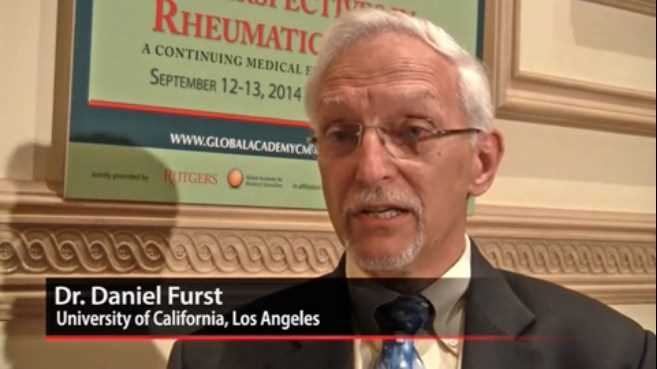
LAS VEGAS – When methotrexate doesn’t work in rheumatoid arthritis and patients are still suffering after their first tumor necrosis factor inhibitor, it’s worthwhile to try a second TNF inhibitor, according to Dr. Daniel Furst, the Carl M Pearson Professor in Rheumatology at University of California, Los Angeles.
Even just side effects from the first TNF inhibitor indicate that the second one might work, he said at the conference held by Global Academy for Medical Education.
Dr. Furst also explains in the video how to safely use steroids in RA patients, and when to move them to non–TNF inhibitor biologics.
Global Academy for Medical Education and this news organization are owned by Frontline Medical Communications.
The video associated with this article is no longer available on this site. Please view all of our videos on the MDedge YouTube channel
LAS VEGAS – When methotrexate doesn’t work in rheumatoid arthritis and patients are still suffering after their first tumor necrosis factor inhibitor, it’s worthwhile to try a second TNF inhibitor, according to Dr. Daniel Furst, the Carl M Pearson Professor in Rheumatology at University of California, Los Angeles.
Even just side effects from the first TNF inhibitor indicate that the second one might work, he said at the conference held by Global Academy for Medical Education.
Dr. Furst also explains in the video how to safely use steroids in RA patients, and when to move them to non–TNF inhibitor biologics.
Global Academy for Medical Education and this news organization are owned by Frontline Medical Communications.
The video associated with this article is no longer available on this site. Please view all of our videos on the MDedge YouTube channel
LAS VEGAS – When methotrexate doesn’t work in rheumatoid arthritis and patients are still suffering after their first tumor necrosis factor inhibitor, it’s worthwhile to try a second TNF inhibitor, according to Dr. Daniel Furst, the Carl M Pearson Professor in Rheumatology at University of California, Los Angeles.
Even just side effects from the first TNF inhibitor indicate that the second one might work, he said at the conference held by Global Academy for Medical Education.
Dr. Furst also explains in the video how to safely use steroids in RA patients, and when to move them to non–TNF inhibitor biologics.
Global Academy for Medical Education and this news organization are owned by Frontline Medical Communications.
The video associated with this article is no longer available on this site. Please view all of our videos on the MDedge YouTube channel
VIDEO: Are chemo-free regimens possible for CLL?
MILAN – The Food and Drug Administration has given full approval for ibrutinib for patients with chronic lymphocytic leukemia who have received at least one prior therapy and for those who have a deletion in chromosome 17 (17p deletion) and may or may not have received previous treatment.
At the annual congress of the European Hematology Association, Dr. Peter Hillmen discusses the results he presented from RESONATE, the study used to convert conditional, accelerated approval to full approval. The study evaluated daily ibrutinib monotherapy versus the anti-CD20 antibody ofatumumab, for patients with relapsed or refractory chronic lymphocytic leukemia (CLL).
Dr. Hillmen, professor of experimental hematology at the University of Leeds, England, also outlines some of the research in the works to evaluate ibrutinib as frontline therapy for patients with CLL and the possibility of chemotherapy-free regimens. He disclosed a consultancy role and honoraria from Pharmacyclics.
The video associated with this article is no longer available on this site. Please view all of our videos on the MDedge YouTube channel
MILAN – The Food and Drug Administration has given full approval for ibrutinib for patients with chronic lymphocytic leukemia who have received at least one prior therapy and for those who have a deletion in chromosome 17 (17p deletion) and may or may not have received previous treatment.
At the annual congress of the European Hematology Association, Dr. Peter Hillmen discusses the results he presented from RESONATE, the study used to convert conditional, accelerated approval to full approval. The study evaluated daily ibrutinib monotherapy versus the anti-CD20 antibody ofatumumab, for patients with relapsed or refractory chronic lymphocytic leukemia (CLL).
Dr. Hillmen, professor of experimental hematology at the University of Leeds, England, also outlines some of the research in the works to evaluate ibrutinib as frontline therapy for patients with CLL and the possibility of chemotherapy-free regimens. He disclosed a consultancy role and honoraria from Pharmacyclics.
The video associated with this article is no longer available on this site. Please view all of our videos on the MDedge YouTube channel
MILAN – The Food and Drug Administration has given full approval for ibrutinib for patients with chronic lymphocytic leukemia who have received at least one prior therapy and for those who have a deletion in chromosome 17 (17p deletion) and may or may not have received previous treatment.
At the annual congress of the European Hematology Association, Dr. Peter Hillmen discusses the results he presented from RESONATE, the study used to convert conditional, accelerated approval to full approval. The study evaluated daily ibrutinib monotherapy versus the anti-CD20 antibody ofatumumab, for patients with relapsed or refractory chronic lymphocytic leukemia (CLL).
Dr. Hillmen, professor of experimental hematology at the University of Leeds, England, also outlines some of the research in the works to evaluate ibrutinib as frontline therapy for patients with CLL and the possibility of chemotherapy-free regimens. He disclosed a consultancy role and honoraria from Pharmacyclics.
The video associated with this article is no longer available on this site. Please view all of our videos on the MDedge YouTube channel
AT THE EHA CONGRESS
VIDEO: Gradual HbA1c reduction safely benefits T2DM
VIENNA – A “pragmatic and simple” approach to gradually lower the hemoglobin A1c level in patients with type 2 diabetes to 6.5% and then maintain it for an average of 5 years caused no suggestion of harm and led to an important halving of end-stage renal disease during 10-year follow-up in a controlled study with more than 8,000 patients, Dr. Sophia Zoungas said in an interview at the annual meeting of the European Association for the Study of Diabetes.
Intensive glucose control did not increase mortality or the rate of major macrovascular events in 10-year results from the ADVANCE ON (Action in Diabetes and Vascular Disease: Preterax and Diamicron MR Controlled Evaluation Post Trial Observational Study) trial. The results also showed for the first time that intensive glucose control produced a significant and large reduction in end-stage kidney disease, said Dr. Zoungas, an endocrinologist with the George Institute of the University of Sydney.
ADVANCE ON received partial funding from Servier. Dr. Zoungas has received honoraria from Servier as well as from Merck Sharp & Dohme, Bristol-Myers Squibb/AstraZeneca, Sanofi-Aventis, Novo Nordisk, and Amgen.
The video associated with this article is no longer available on this site. Please view all of our videos on the MDedge YouTube channel
VIENNA – A “pragmatic and simple” approach to gradually lower the hemoglobin A1c level in patients with type 2 diabetes to 6.5% and then maintain it for an average of 5 years caused no suggestion of harm and led to an important halving of end-stage renal disease during 10-year follow-up in a controlled study with more than 8,000 patients, Dr. Sophia Zoungas said in an interview at the annual meeting of the European Association for the Study of Diabetes.
Intensive glucose control did not increase mortality or the rate of major macrovascular events in 10-year results from the ADVANCE ON (Action in Diabetes and Vascular Disease: Preterax and Diamicron MR Controlled Evaluation Post Trial Observational Study) trial. The results also showed for the first time that intensive glucose control produced a significant and large reduction in end-stage kidney disease, said Dr. Zoungas, an endocrinologist with the George Institute of the University of Sydney.
ADVANCE ON received partial funding from Servier. Dr. Zoungas has received honoraria from Servier as well as from Merck Sharp & Dohme, Bristol-Myers Squibb/AstraZeneca, Sanofi-Aventis, Novo Nordisk, and Amgen.
The video associated with this article is no longer available on this site. Please view all of our videos on the MDedge YouTube channel
VIENNA – A “pragmatic and simple” approach to gradually lower the hemoglobin A1c level in patients with type 2 diabetes to 6.5% and then maintain it for an average of 5 years caused no suggestion of harm and led to an important halving of end-stage renal disease during 10-year follow-up in a controlled study with more than 8,000 patients, Dr. Sophia Zoungas said in an interview at the annual meeting of the European Association for the Study of Diabetes.
Intensive glucose control did not increase mortality or the rate of major macrovascular events in 10-year results from the ADVANCE ON (Action in Diabetes and Vascular Disease: Preterax and Diamicron MR Controlled Evaluation Post Trial Observational Study) trial. The results also showed for the first time that intensive glucose control produced a significant and large reduction in end-stage kidney disease, said Dr. Zoungas, an endocrinologist with the George Institute of the University of Sydney.
ADVANCE ON received partial funding from Servier. Dr. Zoungas has received honoraria from Servier as well as from Merck Sharp & Dohme, Bristol-Myers Squibb/AstraZeneca, Sanofi-Aventis, Novo Nordisk, and Amgen.
The video associated with this article is no longer available on this site. Please view all of our videos on the MDedge YouTube channel
AT EASD 2014