User login
AAP: Video roundtable - Next steps in quality improvement, Part 1
WASHINGTON – Experts in pediatric quality improvement convened at the annual meeting of the American Academy of Pediatrics to discuss important next steps that must occur for quality improvement to advance.
In part 1 of a video roundtable, they described how networks are being formed to spur data sharing and determination of benchmarks in a variety of pediatric conditions, such as urinary tract infections and asthma. Dr. Matt D. Garber, director of pediatric hospitalists and chief quality officer at Palmetto Health Children’s Hospital, Columbia, S.C., representing the American Academy of Pediatrics Quality Improvement Innovation Networks (QUIIN), discussed how one such study on bronchiolitis guidelines enlisted the help of emergency physicians and inpatient physicians.
Dr. Anupam B. Kharbanda, director of research for emergency services at Children’s Minnesota, Minneapolis, and chairman, AAP pediatric emergency medicine collaborative research committee of the section on emergency medicine, questioned whether what third party payers want as benchmarks and what physicians, patients, and parents want in terms of quality of care are the same.
Dr. Joel S. Tieder, a pediatric hospitalist and director of the maintenance of certification program at Seattle Children’s Hospital and vice-chair of the AAP Council on Quality Improvement and Patient Safety (COQIPS), said, “With asthma, now we have a world where patient preferences matter, and they are hard to measure across this complicated health system.”
Dr. Michael L. Rinke, a pediatric hospitalist who is medical director of quality at Children’s Hospital at Montefiore in New York and cochair of the implementation committee of the AAP Council on Quality Improvement and Patient Safety (COQIPS), concurred.
The video associated with this article is no longer available on this site. Please view all of our videos on the MDedge YouTube channel
WASHINGTON – Experts in pediatric quality improvement convened at the annual meeting of the American Academy of Pediatrics to discuss important next steps that must occur for quality improvement to advance.
In part 1 of a video roundtable, they described how networks are being formed to spur data sharing and determination of benchmarks in a variety of pediatric conditions, such as urinary tract infections and asthma. Dr. Matt D. Garber, director of pediatric hospitalists and chief quality officer at Palmetto Health Children’s Hospital, Columbia, S.C., representing the American Academy of Pediatrics Quality Improvement Innovation Networks (QUIIN), discussed how one such study on bronchiolitis guidelines enlisted the help of emergency physicians and inpatient physicians.
Dr. Anupam B. Kharbanda, director of research for emergency services at Children’s Minnesota, Minneapolis, and chairman, AAP pediatric emergency medicine collaborative research committee of the section on emergency medicine, questioned whether what third party payers want as benchmarks and what physicians, patients, and parents want in terms of quality of care are the same.
Dr. Joel S. Tieder, a pediatric hospitalist and director of the maintenance of certification program at Seattle Children’s Hospital and vice-chair of the AAP Council on Quality Improvement and Patient Safety (COQIPS), said, “With asthma, now we have a world where patient preferences matter, and they are hard to measure across this complicated health system.”
Dr. Michael L. Rinke, a pediatric hospitalist who is medical director of quality at Children’s Hospital at Montefiore in New York and cochair of the implementation committee of the AAP Council on Quality Improvement and Patient Safety (COQIPS), concurred.
The video associated with this article is no longer available on this site. Please view all of our videos on the MDedge YouTube channel
WASHINGTON – Experts in pediatric quality improvement convened at the annual meeting of the American Academy of Pediatrics to discuss important next steps that must occur for quality improvement to advance.
In part 1 of a video roundtable, they described how networks are being formed to spur data sharing and determination of benchmarks in a variety of pediatric conditions, such as urinary tract infections and asthma. Dr. Matt D. Garber, director of pediatric hospitalists and chief quality officer at Palmetto Health Children’s Hospital, Columbia, S.C., representing the American Academy of Pediatrics Quality Improvement Innovation Networks (QUIIN), discussed how one such study on bronchiolitis guidelines enlisted the help of emergency physicians and inpatient physicians.
Dr. Anupam B. Kharbanda, director of research for emergency services at Children’s Minnesota, Minneapolis, and chairman, AAP pediatric emergency medicine collaborative research committee of the section on emergency medicine, questioned whether what third party payers want as benchmarks and what physicians, patients, and parents want in terms of quality of care are the same.
Dr. Joel S. Tieder, a pediatric hospitalist and director of the maintenance of certification program at Seattle Children’s Hospital and vice-chair of the AAP Council on Quality Improvement and Patient Safety (COQIPS), said, “With asthma, now we have a world where patient preferences matter, and they are hard to measure across this complicated health system.”
Dr. Michael L. Rinke, a pediatric hospitalist who is medical director of quality at Children’s Hospital at Montefiore in New York and cochair of the implementation committee of the AAP Council on Quality Improvement and Patient Safety (COQIPS), concurred.
The video associated with this article is no longer available on this site. Please view all of our videos on the MDedge YouTube channel
AT THE AAP NATIONAL CONFERENCE

Million Veteran Program Sees Significant Research, Enrollment Progress
The Million Veterans Program (MVP) has reached 40% of its goal, registering more than 400,000 participants. Veterans who participate in the program donate blood for DNA extraction, which is linked to their health records. Created in 2012, MVP was expected to take 5 to 7 years to reach 1 million participants. Recently started research studies associated with MVP include cardiovascular risk factors, multisubstance use, pharmacogenomics of kidney disease, and metabolic conditions, among others.
“We are proud to see the progress being made in MVP, and we are confident the knowledge gained through this research will have a very tangible and positive impact on the health care that Veterans and all Americans receive,” said Secretary of Veterans Affairs Robert A. McDonald. “We applaud our Veterans participating in the program. The selfless sacrifice they are making will allow researchers to gain valuable, important information.”
Genomic programs such as MVP received a significant boost earlier this year with the announcement of President Obama’s Precision Medicine Initiative. Both the Precision Medicine Initiative and MVP are part of a larger effort to better tailor treatment to individual patients based in part on their genetics. “VA is thrilled to be working closely with the White House and other federal partners on the president’s Precision Medicine Initiative,” said VA Chief Research and Development Officer Timothy O’Leary, MD, PhD. “We are committed to making precision medicine a reality for veterans and the nation."
Federal Practitioner recently spoke with Robert Nussbaum, MD, of the University of California—San Francisco on the potential impact of MVP on genomics research. Watch the video below for more on the importance of MVP and its role in genomics.
The Million Veterans Program (MVP) has reached 40% of its goal, registering more than 400,000 participants. Veterans who participate in the program donate blood for DNA extraction, which is linked to their health records. Created in 2012, MVP was expected to take 5 to 7 years to reach 1 million participants. Recently started research studies associated with MVP include cardiovascular risk factors, multisubstance use, pharmacogenomics of kidney disease, and metabolic conditions, among others.
“We are proud to see the progress being made in MVP, and we are confident the knowledge gained through this research will have a very tangible and positive impact on the health care that Veterans and all Americans receive,” said Secretary of Veterans Affairs Robert A. McDonald. “We applaud our Veterans participating in the program. The selfless sacrifice they are making will allow researchers to gain valuable, important information.”
Genomic programs such as MVP received a significant boost earlier this year with the announcement of President Obama’s Precision Medicine Initiative. Both the Precision Medicine Initiative and MVP are part of a larger effort to better tailor treatment to individual patients based in part on their genetics. “VA is thrilled to be working closely with the White House and other federal partners on the president’s Precision Medicine Initiative,” said VA Chief Research and Development Officer Timothy O’Leary, MD, PhD. “We are committed to making precision medicine a reality for veterans and the nation."
Federal Practitioner recently spoke with Robert Nussbaum, MD, of the University of California—San Francisco on the potential impact of MVP on genomics research. Watch the video below for more on the importance of MVP and its role in genomics.
The Million Veterans Program (MVP) has reached 40% of its goal, registering more than 400,000 participants. Veterans who participate in the program donate blood for DNA extraction, which is linked to their health records. Created in 2012, MVP was expected to take 5 to 7 years to reach 1 million participants. Recently started research studies associated with MVP include cardiovascular risk factors, multisubstance use, pharmacogenomics of kidney disease, and metabolic conditions, among others.
“We are proud to see the progress being made in MVP, and we are confident the knowledge gained through this research will have a very tangible and positive impact on the health care that Veterans and all Americans receive,” said Secretary of Veterans Affairs Robert A. McDonald. “We applaud our Veterans participating in the program. The selfless sacrifice they are making will allow researchers to gain valuable, important information.”
Genomic programs such as MVP received a significant boost earlier this year with the announcement of President Obama’s Precision Medicine Initiative. Both the Precision Medicine Initiative and MVP are part of a larger effort to better tailor treatment to individual patients based in part on their genetics. “VA is thrilled to be working closely with the White House and other federal partners on the president’s Precision Medicine Initiative,” said VA Chief Research and Development Officer Timothy O’Leary, MD, PhD. “We are committed to making precision medicine a reality for veterans and the nation."
Federal Practitioner recently spoke with Robert Nussbaum, MD, of the University of California—San Francisco on the potential impact of MVP on genomics research. Watch the video below for more on the importance of MVP and its role in genomics.
VIDEO: ASAP 2 trial will test Watchman in warfarin-contraindicated patients
Now that the Watchman device for left atrial appendage closure is on the U.S. market, target patients are those with atrial fibrillation who can tolerate at least a brief, 6-week course of treatment with warfarin – which is what the device’s labeling demands – but are poor candidates for long-term treatment with oral anticoagulation because they have had a serious bleeding episode while on anticoagulant treatment, Dr. Vivek Y. Reddy said in an interview.
Another type of atrial fibrillation patient who is potentially a prime target for Watchman placement are those with a complete contraindication to warfarin treatment, but as of now this makes then ineligible to receive the device. This category of patient will be the target of the ASAP 2 trial, a large, multicenter trial planned to start by the end of 2015 that will randomize atrial fibrillation patients ineligible to receive any oral anticoagulation to receive Watchman followed by a 6-month period of dual antiplatelet therapy or to current standard therapy for such patients with aspirin alone, said Dr. Reddy, professor of medicine and director of the cardiac arrhythmia service at Mount Sinai Hospital in New York.
The ASAP 2 trial follows the pilot study ASAP (ASA Plavix Feasibility Study With WATCHMAN Left Atrial Appendage Closure Technology) that Dr. Reddy led and ran at four centers in Europe placing Watchman in patients ineligible to receive any oral anticoagulant treatment followed by 6 months of dual antiplatelet therapy. The ASAP results showed that this approach could be safe and effective (J Am Coll Cardiol. 2013 Jun 25;61[25]:2551-6.).
Patients with a total contraindication against treatment with warfarin or another oral anticoagulant “have the greatest need,” said Dr. Reddy. “The problem is we don’t have much safety data” for these patients, and while the results from the ASAP trial showed the device can be safely placed just using dual antiplatelet therapy the numbers were small and the device is not approved for use in this setting, he said.
Dr. Reddy has been an advisor to and received research grants from Atritech/Boston Scientific, the companies that developed and now market Watchman.
The video associated with this article is no longer available on this site. Please view all of our videos on the MDedge YouTube channel
On Twitter @mitchelzoler
Now that the Watchman device for left atrial appendage closure is on the U.S. market, target patients are those with atrial fibrillation who can tolerate at least a brief, 6-week course of treatment with warfarin – which is what the device’s labeling demands – but are poor candidates for long-term treatment with oral anticoagulation because they have had a serious bleeding episode while on anticoagulant treatment, Dr. Vivek Y. Reddy said in an interview.
Another type of atrial fibrillation patient who is potentially a prime target for Watchman placement are those with a complete contraindication to warfarin treatment, but as of now this makes then ineligible to receive the device. This category of patient will be the target of the ASAP 2 trial, a large, multicenter trial planned to start by the end of 2015 that will randomize atrial fibrillation patients ineligible to receive any oral anticoagulation to receive Watchman followed by a 6-month period of dual antiplatelet therapy or to current standard therapy for such patients with aspirin alone, said Dr. Reddy, professor of medicine and director of the cardiac arrhythmia service at Mount Sinai Hospital in New York.
The ASAP 2 trial follows the pilot study ASAP (ASA Plavix Feasibility Study With WATCHMAN Left Atrial Appendage Closure Technology) that Dr. Reddy led and ran at four centers in Europe placing Watchman in patients ineligible to receive any oral anticoagulant treatment followed by 6 months of dual antiplatelet therapy. The ASAP results showed that this approach could be safe and effective (J Am Coll Cardiol. 2013 Jun 25;61[25]:2551-6.).
Patients with a total contraindication against treatment with warfarin or another oral anticoagulant “have the greatest need,” said Dr. Reddy. “The problem is we don’t have much safety data” for these patients, and while the results from the ASAP trial showed the device can be safely placed just using dual antiplatelet therapy the numbers were small and the device is not approved for use in this setting, he said.
Dr. Reddy has been an advisor to and received research grants from Atritech/Boston Scientific, the companies that developed and now market Watchman.
The video associated with this article is no longer available on this site. Please view all of our videos on the MDedge YouTube channel
On Twitter @mitchelzoler
Now that the Watchman device for left atrial appendage closure is on the U.S. market, target patients are those with atrial fibrillation who can tolerate at least a brief, 6-week course of treatment with warfarin – which is what the device’s labeling demands – but are poor candidates for long-term treatment with oral anticoagulation because they have had a serious bleeding episode while on anticoagulant treatment, Dr. Vivek Y. Reddy said in an interview.
Another type of atrial fibrillation patient who is potentially a prime target for Watchman placement are those with a complete contraindication to warfarin treatment, but as of now this makes then ineligible to receive the device. This category of patient will be the target of the ASAP 2 trial, a large, multicenter trial planned to start by the end of 2015 that will randomize atrial fibrillation patients ineligible to receive any oral anticoagulation to receive Watchman followed by a 6-month period of dual antiplatelet therapy or to current standard therapy for such patients with aspirin alone, said Dr. Reddy, professor of medicine and director of the cardiac arrhythmia service at Mount Sinai Hospital in New York.
The ASAP 2 trial follows the pilot study ASAP (ASA Plavix Feasibility Study With WATCHMAN Left Atrial Appendage Closure Technology) that Dr. Reddy led and ran at four centers in Europe placing Watchman in patients ineligible to receive any oral anticoagulant treatment followed by 6 months of dual antiplatelet therapy. The ASAP results showed that this approach could be safe and effective (J Am Coll Cardiol. 2013 Jun 25;61[25]:2551-6.).
Patients with a total contraindication against treatment with warfarin or another oral anticoagulant “have the greatest need,” said Dr. Reddy. “The problem is we don’t have much safety data” for these patients, and while the results from the ASAP trial showed the device can be safely placed just using dual antiplatelet therapy the numbers were small and the device is not approved for use in this setting, he said.
Dr. Reddy has been an advisor to and received research grants from Atritech/Boston Scientific, the companies that developed and now market Watchman.
The video associated with this article is no longer available on this site. Please view all of our videos on the MDedge YouTube channel
On Twitter @mitchelzoler

CHEST: Yoga performs like pulmonary rehab for COPD patients
MONTREAL – A structured regimen of regular yoga exercises was as effective as a standard pulmonary rehabilitation program in patients with chronic obstructive pulmonary disease for improving lung function, exercise tolerance, dyspnea severity, and quality of life in a single-center, randomized comparison of the two strategies with 60 patients.
In addition, chronic obstructive pulmonary disease (COPD) patients had a higher level of acceptance of yoga and were more comfortable doing it, compared with standard pulmonary rehabilitation, and it is a cost-effective approach given the minimal equipment required, Dr. Randeep Guleria said at the annual meeting of the American College of Chest Physicians.

“Patients with difficulty walking, osteoarthritis, knee problems, or unable to do exercises like cycling or treadmill found yoga to be much more acceptable,” said Dr. Guleria in an interview. Acceptance of yoga was also higher than standard rehabilitation among patients with more severe COPD, said Dr. Guleria, professor and head of the department of pulmonary medicine and sleep disorders at the All India Institute of Medical Sciences in New Delhi.
“I think that yoga could be a very valuable adjunct” to pulmonary rehabilitation in COPD patients, commented Dr. Roger S. Goldstein, director of the divisional program in respiratory rehabilitation at the University of Toronto. Dr. Goldstein speculated that even better than comparing yoga against conventional pulmonary rehabilitation would be a study that compared a combined yoga plus rehabilitation program against standard rehabilitation alone. Yoga is “a tremendous opportunity,” he said.
The 12-week study enrolled 60 patients who averaged 56 years old who had been diagnosed with COPD for an average of 8 years. Just under a third of the patients had moderate COPD, 42% had severe COPD, and 28% had very severe COPD.
Dr. Guleria and his associates randomized 30 patients into a yoga program that included 4 weeks of biweekly 1-hour sessions that instructed patients in a series of specially designed yoga exercises. That was followed by 8 weeks during which patients were mostly left to perform their learned exercises on their own, but with a supervised session once every 2 weeks. The other 30 patients participated in a standard pulmonary rehabilitation program for 12 weeks.
The researchers measured several parameters at baseline and after 12 weeks, including two measures of dyspnea severity, 6-minute walk distance, a quality of life assessment, and two serum markers of inflammation, C-reactive protein and interleukin 6.
Both interventions resulted in modest but statistically significant improvements, such as increases in 6-minute walk distance and a reduced modified Borg scale assessment. The Borg scale score fell from an average of 1.5 at baseline to 1.0 after 12 weeks in the yoga patients, and from an average 3.0 at baseline to 0.5 after 12 weeks in the rehabilitation patients.
A score that measured total quality of life improved by an average of 32% in the yoga patients and by an average of 21% in the rehabilitation patients, changes that approached statistical significance in both subgroups.
Comparing the assessment measures after 12 weeks in both arms of the study showed no statistically significant between-group differences, Dr. Guleria reported.
The researchers commissioned a specially designed yoga program from a professional yoga instructor who had been briefed about COPD. The yoga exercises included physical postures, breathing technique, and meditation and relaxation. The pulmonary rehabilitation program included patient education, upper and lower limb exercises, and breathing exercises.
Dr. Guleria said he believed the opportunity exists to further modify the yoga program to better optimize its potential to benefit COPD patients.
Dr. Guleria had no relevant disclosures. Dr. Goldstein had no relevant disclosures.
The video associated with this article is no longer available on this site. Please view all of our videos on the MDedge YouTube channel
On Twitter@mitchelzoler
MONTREAL – A structured regimen of regular yoga exercises was as effective as a standard pulmonary rehabilitation program in patients with chronic obstructive pulmonary disease for improving lung function, exercise tolerance, dyspnea severity, and quality of life in a single-center, randomized comparison of the two strategies with 60 patients.
In addition, chronic obstructive pulmonary disease (COPD) patients had a higher level of acceptance of yoga and were more comfortable doing it, compared with standard pulmonary rehabilitation, and it is a cost-effective approach given the minimal equipment required, Dr. Randeep Guleria said at the annual meeting of the American College of Chest Physicians.
“Patients with difficulty walking, osteoarthritis, knee problems, or unable to do exercises like cycling or treadmill found yoga to be much more acceptable,” said Dr. Guleria in an interview. Acceptance of yoga was also higher than standard rehabilitation among patients with more severe COPD, said Dr. Guleria, professor and head of the department of pulmonary medicine and sleep disorders at the All India Institute of Medical Sciences in New Delhi.
“I think that yoga could be a very valuable adjunct” to pulmonary rehabilitation in COPD patients, commented Dr. Roger S. Goldstein, director of the divisional program in respiratory rehabilitation at the University of Toronto. Dr. Goldstein speculated that even better than comparing yoga against conventional pulmonary rehabilitation would be a study that compared a combined yoga plus rehabilitation program against standard rehabilitation alone. Yoga is “a tremendous opportunity,” he said.
The 12-week study enrolled 60 patients who averaged 56 years old who had been diagnosed with COPD for an average of 8 years. Just under a third of the patients had moderate COPD, 42% had severe COPD, and 28% had very severe COPD.
Dr. Guleria and his associates randomized 30 patients into a yoga program that included 4 weeks of biweekly 1-hour sessions that instructed patients in a series of specially designed yoga exercises. That was followed by 8 weeks during which patients were mostly left to perform their learned exercises on their own, but with a supervised session once every 2 weeks. The other 30 patients participated in a standard pulmonary rehabilitation program for 12 weeks.
The researchers measured several parameters at baseline and after 12 weeks, including two measures of dyspnea severity, 6-minute walk distance, a quality of life assessment, and two serum markers of inflammation, C-reactive protein and interleukin 6.
Both interventions resulted in modest but statistically significant improvements, such as increases in 6-minute walk distance and a reduced modified Borg scale assessment. The Borg scale score fell from an average of 1.5 at baseline to 1.0 after 12 weeks in the yoga patients, and from an average 3.0 at baseline to 0.5 after 12 weeks in the rehabilitation patients.
A score that measured total quality of life improved by an average of 32% in the yoga patients and by an average of 21% in the rehabilitation patients, changes that approached statistical significance in both subgroups.
Comparing the assessment measures after 12 weeks in both arms of the study showed no statistically significant between-group differences, Dr. Guleria reported.
The researchers commissioned a specially designed yoga program from a professional yoga instructor who had been briefed about COPD. The yoga exercises included physical postures, breathing technique, and meditation and relaxation. The pulmonary rehabilitation program included patient education, upper and lower limb exercises, and breathing exercises.
Dr. Guleria said he believed the opportunity exists to further modify the yoga program to better optimize its potential to benefit COPD patients.
Dr. Guleria had no relevant disclosures. Dr. Goldstein had no relevant disclosures.
The video associated with this article is no longer available on this site. Please view all of our videos on the MDedge YouTube channel
On Twitter@mitchelzoler
MONTREAL – A structured regimen of regular yoga exercises was as effective as a standard pulmonary rehabilitation program in patients with chronic obstructive pulmonary disease for improving lung function, exercise tolerance, dyspnea severity, and quality of life in a single-center, randomized comparison of the two strategies with 60 patients.
In addition, chronic obstructive pulmonary disease (COPD) patients had a higher level of acceptance of yoga and were more comfortable doing it, compared with standard pulmonary rehabilitation, and it is a cost-effective approach given the minimal equipment required, Dr. Randeep Guleria said at the annual meeting of the American College of Chest Physicians.
“Patients with difficulty walking, osteoarthritis, knee problems, or unable to do exercises like cycling or treadmill found yoga to be much more acceptable,” said Dr. Guleria in an interview. Acceptance of yoga was also higher than standard rehabilitation among patients with more severe COPD, said Dr. Guleria, professor and head of the department of pulmonary medicine and sleep disorders at the All India Institute of Medical Sciences in New Delhi.
“I think that yoga could be a very valuable adjunct” to pulmonary rehabilitation in COPD patients, commented Dr. Roger S. Goldstein, director of the divisional program in respiratory rehabilitation at the University of Toronto. Dr. Goldstein speculated that even better than comparing yoga against conventional pulmonary rehabilitation would be a study that compared a combined yoga plus rehabilitation program against standard rehabilitation alone. Yoga is “a tremendous opportunity,” he said.
The 12-week study enrolled 60 patients who averaged 56 years old who had been diagnosed with COPD for an average of 8 years. Just under a third of the patients had moderate COPD, 42% had severe COPD, and 28% had very severe COPD.
Dr. Guleria and his associates randomized 30 patients into a yoga program that included 4 weeks of biweekly 1-hour sessions that instructed patients in a series of specially designed yoga exercises. That was followed by 8 weeks during which patients were mostly left to perform their learned exercises on their own, but with a supervised session once every 2 weeks. The other 30 patients participated in a standard pulmonary rehabilitation program for 12 weeks.
The researchers measured several parameters at baseline and after 12 weeks, including two measures of dyspnea severity, 6-minute walk distance, a quality of life assessment, and two serum markers of inflammation, C-reactive protein and interleukin 6.
Both interventions resulted in modest but statistically significant improvements, such as increases in 6-minute walk distance and a reduced modified Borg scale assessment. The Borg scale score fell from an average of 1.5 at baseline to 1.0 after 12 weeks in the yoga patients, and from an average 3.0 at baseline to 0.5 after 12 weeks in the rehabilitation patients.
A score that measured total quality of life improved by an average of 32% in the yoga patients and by an average of 21% in the rehabilitation patients, changes that approached statistical significance in both subgroups.
Comparing the assessment measures after 12 weeks in both arms of the study showed no statistically significant between-group differences, Dr. Guleria reported.
The researchers commissioned a specially designed yoga program from a professional yoga instructor who had been briefed about COPD. The yoga exercises included physical postures, breathing technique, and meditation and relaxation. The pulmonary rehabilitation program included patient education, upper and lower limb exercises, and breathing exercises.
Dr. Guleria said he believed the opportunity exists to further modify the yoga program to better optimize its potential to benefit COPD patients.
Dr. Guleria had no relevant disclosures. Dr. Goldstein had no relevant disclosures.
The video associated with this article is no longer available on this site. Please view all of our videos on the MDedge YouTube channel
On Twitter@mitchelzoler
AT CHEST 2015
Key clinical point: COPD patients randomized to a 12-week program of yoga exercises had improvements similar to patients randomized to a standard pulmonary rehabilitation program.
Major finding: Average total quality of life scores improved by a relative 32% with yoga and 21% with standard rehabilitation.
Data source: Single-center, prospective, randomized trial with 60 patients.
Disclosures: Dr. Guleria had no relevant disclosures. Dr. Goldstein had no relevant disclosures.

CHEST: Oral solithromycin shows pneumonia pivotal-trial efficacy
MONTREAL – A new, next-generation macrolide, solithromycin, showed safety and efficacy as a once-daily oral agent that was noninferior to the comparator oral antibiotic, the fluoroquinolone moxifloxacin, in a phase III trial.
Macrolide resistance among strains of Streptococcus pneumoniae that cause many U.S. cases of severe community-acquired pneumonia has become common, complicating treatment of this common infection with a macrolide, Dr. Carlos M. Barrera explained at the annual meeting of the American College of Chest Physicians.
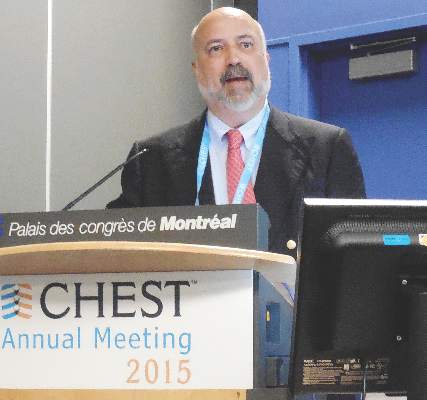
The SOLITAIRE-ORAL (Efficacy and Safety Study of Oral Solithromycin [CEM-101] Compared to Oral Moxifloxacin in Treatment of Patients With Community-Acquired Bacterial Pneumonia) trial enrolled 860 patients with moderate to moderately severe community-acquired pneumonia.
About half of the patients enrolled in the trial underwent microbiologic assessment of their infecting pathogen, and about 40% of cases in each treatment arm had infections caused by S. pneumoniae. In this subgroup, the 5-day regimen of solithromycin tested in the study succeeded in clearing the infection in 89% of patients, comparable to the 83% success rate achieved with a 7-day course of moxifloxacin (Avelox), said Dr. Barrera, a pulmonologist who practices in Miami.
The study’s primary endpoint for Food and Drug Administration approval of solithromycin was early clinical response, defined as an improvement in at least two listed symptoms at 72 hours after onset of treatment. That endpoint occurred in 78% of patients enrolled in each of the two arms of the study.
The data make solithromycin look like a promising way to once again have a macrolide available for empiric oral treatment of more severe community-acquired pneumonia, pending full peer review of the data, commented Dr. Muthiah P. Muthiah, a pulmonologist at the University of Tennessee Health Science Center in Memphis.
“A couple of decades ago, you could comfortably treat a patient with severe community-acquired pneumonia with a macrolide, but you can’t do that anymore,” Dr. Muthiah said in an interview.
If the newly reported data on oral solithromycin hold up under further review, it would mean that solithromycin was as effective as a potent quinolone, which remains an effective monotherapy for community-acquired pneumonia in patients who do not require treatment in an intensive care unit, Dr. Muthiah noted.
A companion study, SOLITAIRE-IV, is a phase III pivotal trial assessing the safety and efficacy of solithromycin when begun intravenously for treating community-acquired pneumonia, followed by a switch to oral dosing, in comparison with intravenous followed by oral treatment with moxifloxacin.
Once those data are fully collected and analyzed, the company will submit the information from both trials to the FDA, said Dr. David Oldach, chief medical officer for Cempra.
Results from the intravenous trial, reported in a preliminary way by Cempra Oct. 16 in a press release, showed that the solithromycin treatment regimen tested in SOLITAIRE-IV met its noninferiority targets, compared with moxifloxacin. The safety results, however, showed that solithromycin produced a higher number of patients with a liver-enzyme elevation, compared with patients treated with moxifloxacin.
In SOLITAIRE-IV, Cempra reported that grade 3 increase in levels of alanine transaminase (ALT) occurred in 8% of patients on solithromycin and in 3% of patients on moxifloxacin. Grade 4 increases in ALT occurred in less than 1% of patients in both treatment arms.
In the current, orally administered trial, grade 3 ALT increases occurred in 5% of patients treated with solithromycin and in 2% of patients treated with moxifloxacin, Dr. Barrera reported. Grade 4 ALT increases occurred in 0.5% of patients treated with solithromycin and in 1.2% of those treated with moxifloxacin. No patients in either arm developed an elevation of both ALT and bilirubin, and the ALT increases seen were reversible and asymptomatic, Dr. Barrera said.
By other assessments, the safety profiles of solithromycin and moxifloxacin were similar: 7% of patients on solithromycin and 6% on moxifloxacin had a serious adverse event, and 4% of patients in each study arm discontinued treatment because of an adverse event.
SOLITAIRE-ORAL was sponsored by Cempra, the company developing solithromycin. Dr. Barrera has received research funding from Cempra. Dr. Muthiah had no disclosures.
The video associated with this article is no longer available on this site. Please view all of our videos on the MDedge YouTube channel
On Twitter @mitchelzoler
MONTREAL – A new, next-generation macrolide, solithromycin, showed safety and efficacy as a once-daily oral agent that was noninferior to the comparator oral antibiotic, the fluoroquinolone moxifloxacin, in a phase III trial.
Macrolide resistance among strains of Streptococcus pneumoniae that cause many U.S. cases of severe community-acquired pneumonia has become common, complicating treatment of this common infection with a macrolide, Dr. Carlos M. Barrera explained at the annual meeting of the American College of Chest Physicians.
The SOLITAIRE-ORAL (Efficacy and Safety Study of Oral Solithromycin [CEM-101] Compared to Oral Moxifloxacin in Treatment of Patients With Community-Acquired Bacterial Pneumonia) trial enrolled 860 patients with moderate to moderately severe community-acquired pneumonia.
About half of the patients enrolled in the trial underwent microbiologic assessment of their infecting pathogen, and about 40% of cases in each treatment arm had infections caused by S. pneumoniae. In this subgroup, the 5-day regimen of solithromycin tested in the study succeeded in clearing the infection in 89% of patients, comparable to the 83% success rate achieved with a 7-day course of moxifloxacin (Avelox), said Dr. Barrera, a pulmonologist who practices in Miami.
The study’s primary endpoint for Food and Drug Administration approval of solithromycin was early clinical response, defined as an improvement in at least two listed symptoms at 72 hours after onset of treatment. That endpoint occurred in 78% of patients enrolled in each of the two arms of the study.
The data make solithromycin look like a promising way to once again have a macrolide available for empiric oral treatment of more severe community-acquired pneumonia, pending full peer review of the data, commented Dr. Muthiah P. Muthiah, a pulmonologist at the University of Tennessee Health Science Center in Memphis.
“A couple of decades ago, you could comfortably treat a patient with severe community-acquired pneumonia with a macrolide, but you can’t do that anymore,” Dr. Muthiah said in an interview.
If the newly reported data on oral solithromycin hold up under further review, it would mean that solithromycin was as effective as a potent quinolone, which remains an effective monotherapy for community-acquired pneumonia in patients who do not require treatment in an intensive care unit, Dr. Muthiah noted.
A companion study, SOLITAIRE-IV, is a phase III pivotal trial assessing the safety and efficacy of solithromycin when begun intravenously for treating community-acquired pneumonia, followed by a switch to oral dosing, in comparison with intravenous followed by oral treatment with moxifloxacin.
Once those data are fully collected and analyzed, the company will submit the information from both trials to the FDA, said Dr. David Oldach, chief medical officer for Cempra.
Results from the intravenous trial, reported in a preliminary way by Cempra Oct. 16 in a press release, showed that the solithromycin treatment regimen tested in SOLITAIRE-IV met its noninferiority targets, compared with moxifloxacin. The safety results, however, showed that solithromycin produced a higher number of patients with a liver-enzyme elevation, compared with patients treated with moxifloxacin.
In SOLITAIRE-IV, Cempra reported that grade 3 increase in levels of alanine transaminase (ALT) occurred in 8% of patients on solithromycin and in 3% of patients on moxifloxacin. Grade 4 increases in ALT occurred in less than 1% of patients in both treatment arms.
In the current, orally administered trial, grade 3 ALT increases occurred in 5% of patients treated with solithromycin and in 2% of patients treated with moxifloxacin, Dr. Barrera reported. Grade 4 ALT increases occurred in 0.5% of patients treated with solithromycin and in 1.2% of those treated with moxifloxacin. No patients in either arm developed an elevation of both ALT and bilirubin, and the ALT increases seen were reversible and asymptomatic, Dr. Barrera said.
By other assessments, the safety profiles of solithromycin and moxifloxacin were similar: 7% of patients on solithromycin and 6% on moxifloxacin had a serious adverse event, and 4% of patients in each study arm discontinued treatment because of an adverse event.
SOLITAIRE-ORAL was sponsored by Cempra, the company developing solithromycin. Dr. Barrera has received research funding from Cempra. Dr. Muthiah had no disclosures.
The video associated with this article is no longer available on this site. Please view all of our videos on the MDedge YouTube channel
On Twitter @mitchelzoler
MONTREAL – A new, next-generation macrolide, solithromycin, showed safety and efficacy as a once-daily oral agent that was noninferior to the comparator oral antibiotic, the fluoroquinolone moxifloxacin, in a phase III trial.
Macrolide resistance among strains of Streptococcus pneumoniae that cause many U.S. cases of severe community-acquired pneumonia has become common, complicating treatment of this common infection with a macrolide, Dr. Carlos M. Barrera explained at the annual meeting of the American College of Chest Physicians.
The SOLITAIRE-ORAL (Efficacy and Safety Study of Oral Solithromycin [CEM-101] Compared to Oral Moxifloxacin in Treatment of Patients With Community-Acquired Bacterial Pneumonia) trial enrolled 860 patients with moderate to moderately severe community-acquired pneumonia.
About half of the patients enrolled in the trial underwent microbiologic assessment of their infecting pathogen, and about 40% of cases in each treatment arm had infections caused by S. pneumoniae. In this subgroup, the 5-day regimen of solithromycin tested in the study succeeded in clearing the infection in 89% of patients, comparable to the 83% success rate achieved with a 7-day course of moxifloxacin (Avelox), said Dr. Barrera, a pulmonologist who practices in Miami.
The study’s primary endpoint for Food and Drug Administration approval of solithromycin was early clinical response, defined as an improvement in at least two listed symptoms at 72 hours after onset of treatment. That endpoint occurred in 78% of patients enrolled in each of the two arms of the study.
The data make solithromycin look like a promising way to once again have a macrolide available for empiric oral treatment of more severe community-acquired pneumonia, pending full peer review of the data, commented Dr. Muthiah P. Muthiah, a pulmonologist at the University of Tennessee Health Science Center in Memphis.
“A couple of decades ago, you could comfortably treat a patient with severe community-acquired pneumonia with a macrolide, but you can’t do that anymore,” Dr. Muthiah said in an interview.
If the newly reported data on oral solithromycin hold up under further review, it would mean that solithromycin was as effective as a potent quinolone, which remains an effective monotherapy for community-acquired pneumonia in patients who do not require treatment in an intensive care unit, Dr. Muthiah noted.
A companion study, SOLITAIRE-IV, is a phase III pivotal trial assessing the safety and efficacy of solithromycin when begun intravenously for treating community-acquired pneumonia, followed by a switch to oral dosing, in comparison with intravenous followed by oral treatment with moxifloxacin.
Once those data are fully collected and analyzed, the company will submit the information from both trials to the FDA, said Dr. David Oldach, chief medical officer for Cempra.
Results from the intravenous trial, reported in a preliminary way by Cempra Oct. 16 in a press release, showed that the solithromycin treatment regimen tested in SOLITAIRE-IV met its noninferiority targets, compared with moxifloxacin. The safety results, however, showed that solithromycin produced a higher number of patients with a liver-enzyme elevation, compared with patients treated with moxifloxacin.
In SOLITAIRE-IV, Cempra reported that grade 3 increase in levels of alanine transaminase (ALT) occurred in 8% of patients on solithromycin and in 3% of patients on moxifloxacin. Grade 4 increases in ALT occurred in less than 1% of patients in both treatment arms.
In the current, orally administered trial, grade 3 ALT increases occurred in 5% of patients treated with solithromycin and in 2% of patients treated with moxifloxacin, Dr. Barrera reported. Grade 4 ALT increases occurred in 0.5% of patients treated with solithromycin and in 1.2% of those treated with moxifloxacin. No patients in either arm developed an elevation of both ALT and bilirubin, and the ALT increases seen were reversible and asymptomatic, Dr. Barrera said.
By other assessments, the safety profiles of solithromycin and moxifloxacin were similar: 7% of patients on solithromycin and 6% on moxifloxacin had a serious adverse event, and 4% of patients in each study arm discontinued treatment because of an adverse event.
SOLITAIRE-ORAL was sponsored by Cempra, the company developing solithromycin. Dr. Barrera has received research funding from Cempra. Dr. Muthiah had no disclosures.
The video associated with this article is no longer available on this site. Please view all of our videos on the MDedge YouTube channel
On Twitter @mitchelzoler
AT CHEST 2015
Key clinical point: A next-generation, orally administered macrolide, solithromycin, showed efficacy that was noninferior to moxifloxacin against moderate to moderately severe community-acquired pneumonia in a phase III pivotal trial.
Major finding: Both solithromycin and moxifloxacin produced a 78% early clinical response rate, the study’s primary endpoint for Food and Drug Administration approval.
Data source: SOLITAIRE-ORAL, a multicenter, international phase III trial involving 860 patients with community-acquired pneumonia.
Disclosures: SOLITAIRE-ORAL was sponsored by Cempra, the company developing solithromycin. Dr. Barrera has received research funding from Cempra. Dr. Muthiah had no disclosures.
VIDEO: AAP policy aims to protect young football players from head injury
WASHINGTON – Youth football coaches and officials should adopt a “zero tolerance” policy regarding dangerous, illegal head-first tackling, according to a policy statement from the American Academy of Pediatrics.
Dr. Gregory L. Landry, a pediatrician at the University of Wisconsin, Madison, presented the policy statement in a plenary session at the AAP annual meeting.
“In looking at the data, we could not find a case for banning tackling in youth football. The injury rate in youth football is relatively low, compared to the older boys and girls,” Dr. Landry, who coauthored the statement, said in a video interview. “We were a little bit worried that if we banned tackling at the youth level it would increase the injury rate when older kids learn how to tackle when they are bigger and more powerful.”
The policy also calls for the following:
• Players must decide whether the benefits of playing outweigh the risks of possible injury.
• Nontackling leagues should be expanded so athletes can choose to participate without the injury risks associated with tackling.
• Skilled athletic trainers should be available on the sidelines, as evidence shows they can reduce the number of injuries for players.
See the video interview with Dr. Landry below.
The video associated with this article is no longer available on this site. Please view all of our videos on the MDedge YouTube channel
On Twitter @denisefulton
WASHINGTON – Youth football coaches and officials should adopt a “zero tolerance” policy regarding dangerous, illegal head-first tackling, according to a policy statement from the American Academy of Pediatrics.
Dr. Gregory L. Landry, a pediatrician at the University of Wisconsin, Madison, presented the policy statement in a plenary session at the AAP annual meeting.
“In looking at the data, we could not find a case for banning tackling in youth football. The injury rate in youth football is relatively low, compared to the older boys and girls,” Dr. Landry, who coauthored the statement, said in a video interview. “We were a little bit worried that if we banned tackling at the youth level it would increase the injury rate when older kids learn how to tackle when they are bigger and more powerful.”
The policy also calls for the following:
• Players must decide whether the benefits of playing outweigh the risks of possible injury.
• Nontackling leagues should be expanded so athletes can choose to participate without the injury risks associated with tackling.
• Skilled athletic trainers should be available on the sidelines, as evidence shows they can reduce the number of injuries for players.
See the video interview with Dr. Landry below.
The video associated with this article is no longer available on this site. Please view all of our videos on the MDedge YouTube channel
On Twitter @denisefulton
WASHINGTON – Youth football coaches and officials should adopt a “zero tolerance” policy regarding dangerous, illegal head-first tackling, according to a policy statement from the American Academy of Pediatrics.
Dr. Gregory L. Landry, a pediatrician at the University of Wisconsin, Madison, presented the policy statement in a plenary session at the AAP annual meeting.
“In looking at the data, we could not find a case for banning tackling in youth football. The injury rate in youth football is relatively low, compared to the older boys and girls,” Dr. Landry, who coauthored the statement, said in a video interview. “We were a little bit worried that if we banned tackling at the youth level it would increase the injury rate when older kids learn how to tackle when they are bigger and more powerful.”
The policy also calls for the following:
• Players must decide whether the benefits of playing outweigh the risks of possible injury.
• Nontackling leagues should be expanded so athletes can choose to participate without the injury risks associated with tackling.
• Skilled athletic trainers should be available on the sidelines, as evidence shows they can reduce the number of injuries for players.
See the video interview with Dr. Landry below.
The video associated with this article is no longer available on this site. Please view all of our videos on the MDedge YouTube channel
On Twitter @denisefulton
AT THE AAP NATIONAL CONFERENCE
Sheldon Schuster, PhD
The video associated with this article is no longer available on this site. Please view all of our videos on the MDedge YouTube channel
The video associated with this article is no longer available on this site. Please view all of our videos on the MDedge YouTube channel
The video associated with this article is no longer available on this site. Please view all of our videos on the MDedge YouTube channel

PTSD in Women and Men
Beginning in September, Federal Practitioner will focus on female health and women service members, including interviews with authors of chapters from Women at War. For more, visit www.fedprac.com/articles/women-at-war.html.

In addition to coediting the Women at War volume, Dr. Ritchie authored the chapter, “Female Soldiers and Post-Traumatic Stress Disorder” (PTSD). In this interview, she discusses the evolving definition of PTSD, military and civilian research into the condition, its stressors, and how PTSD may differ in women and men.
For a limited time, a discount is being offered to Federal Practitioner readers. Click here and use the promo code AMPROMD9 at checkout.
Beginning in September, Federal Practitioner will focus on female health and women service members, including interviews with authors of chapters from Women at War. For more, visit www.fedprac.com/articles/women-at-war.html.
In addition to coediting the Women at War volume, Dr. Ritchie authored the chapter, “Female Soldiers and Post-Traumatic Stress Disorder” (PTSD). In this interview, she discusses the evolving definition of PTSD, military and civilian research into the condition, its stressors, and how PTSD may differ in women and men.
For a limited time, a discount is being offered to Federal Practitioner readers. Click here and use the promo code AMPROMD9 at checkout.
Beginning in September, Federal Practitioner will focus on female health and women service members, including interviews with authors of chapters from Women at War. For more, visit www.fedprac.com/articles/women-at-war.html.
In addition to coediting the Women at War volume, Dr. Ritchie authored the chapter, “Female Soldiers and Post-Traumatic Stress Disorder” (PTSD). In this interview, she discusses the evolving definition of PTSD, military and civilian research into the condition, its stressors, and how PTSD may differ in women and men.
For a limited time, a discount is being offered to Federal Practitioner readers. Click here and use the promo code AMPROMD9 at checkout.

VIDEO: Drug-coated balloons offer in-stent restenosis option
SAN FRANCISCO – Drug-coated balloons have become a widely used option in Europe for treating coronary in-stent restenosis, and the scoring-balloon pretreatment tested in ISAR-DESIRE 4 appeared to boost the efficacy of a drug-coated balloon in a clinically meaningful way, Dr. Marco Valgimigli said in an interview at the Transcatheter Cardiovascular Therapeutics annual meeting.
When patients develop restenosis within a coronary stent, many times it’s because the stent was not properly expanded during initial placement. An advantage to a drug-coated balloon is that it pairs well with therapeutic reexpansion of the existing stent to its proper, fully open position.
In addition, this approach spares the patient from receiving a second stent inside the first stent, said Dr. Valgimigli, an interventional cardiologist at Inselspital in Bern, Switzerland.
Often when patients develop in-stent restenosis, it tends to keep recurring. And when that happens, eventually the only remaining option for effective revascularization of the patient’s coronary arteries is coronary bypass surgery.
Pretreating in-stent restenosis with a scoring balloon prior to treatment with a drug-coated balloon improved efficacy in the ISAR-DESIRE 4 trial by a modest amount. But if this treatment strategy can successfully defer or obviate just a few cases that might otherwise require coronary bypass surgery, then using the scoring balloon is a reasonable approach, Dr. Valgimigli said at the meeting, sponsored by the Cardiovascular Research Foundation.
The video associated with this article is no longer available on this site. Please view all of our videos on the MDedge YouTube channel
On Twitter @mitchelzoler
SAN FRANCISCO – Drug-coated balloons have become a widely used option in Europe for treating coronary in-stent restenosis, and the scoring-balloon pretreatment tested in ISAR-DESIRE 4 appeared to boost the efficacy of a drug-coated balloon in a clinically meaningful way, Dr. Marco Valgimigli said in an interview at the Transcatheter Cardiovascular Therapeutics annual meeting.
When patients develop restenosis within a coronary stent, many times it’s because the stent was not properly expanded during initial placement. An advantage to a drug-coated balloon is that it pairs well with therapeutic reexpansion of the existing stent to its proper, fully open position.
In addition, this approach spares the patient from receiving a second stent inside the first stent, said Dr. Valgimigli, an interventional cardiologist at Inselspital in Bern, Switzerland.
Often when patients develop in-stent restenosis, it tends to keep recurring. And when that happens, eventually the only remaining option for effective revascularization of the patient’s coronary arteries is coronary bypass surgery.
Pretreating in-stent restenosis with a scoring balloon prior to treatment with a drug-coated balloon improved efficacy in the ISAR-DESIRE 4 trial by a modest amount. But if this treatment strategy can successfully defer or obviate just a few cases that might otherwise require coronary bypass surgery, then using the scoring balloon is a reasonable approach, Dr. Valgimigli said at the meeting, sponsored by the Cardiovascular Research Foundation.
The video associated with this article is no longer available on this site. Please view all of our videos on the MDedge YouTube channel
On Twitter @mitchelzoler
SAN FRANCISCO – Drug-coated balloons have become a widely used option in Europe for treating coronary in-stent restenosis, and the scoring-balloon pretreatment tested in ISAR-DESIRE 4 appeared to boost the efficacy of a drug-coated balloon in a clinically meaningful way, Dr. Marco Valgimigli said in an interview at the Transcatheter Cardiovascular Therapeutics annual meeting.
When patients develop restenosis within a coronary stent, many times it’s because the stent was not properly expanded during initial placement. An advantage to a drug-coated balloon is that it pairs well with therapeutic reexpansion of the existing stent to its proper, fully open position.
In addition, this approach spares the patient from receiving a second stent inside the first stent, said Dr. Valgimigli, an interventional cardiologist at Inselspital in Bern, Switzerland.
Often when patients develop in-stent restenosis, it tends to keep recurring. And when that happens, eventually the only remaining option for effective revascularization of the patient’s coronary arteries is coronary bypass surgery.
Pretreating in-stent restenosis with a scoring balloon prior to treatment with a drug-coated balloon improved efficacy in the ISAR-DESIRE 4 trial by a modest amount. But if this treatment strategy can successfully defer or obviate just a few cases that might otherwise require coronary bypass surgery, then using the scoring balloon is a reasonable approach, Dr. Valgimigli said at the meeting, sponsored by the Cardiovascular Research Foundation.
The video associated with this article is no longer available on this site. Please view all of our videos on the MDedge YouTube channel
On Twitter @mitchelzoler
EXPERT ANALYSIS FROM TCT 2015

VIDEO: Integrated care is key to ‘normal’ life with schizophrenia
WASHINGTON – Integrated, patient-centered care can help young people with serious mental illness stay productive and find meaning in their lives, according to new data from the RAISE (Recovery After an Initial Schizophrenia Episode) studies, sponsored by the National Institute of Mental Health.
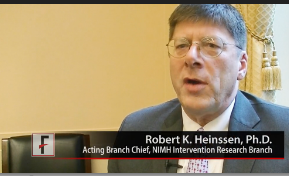
With early intervention and the right medication, a combination of goal-oriented psychotherapy, family psychoeducation, and support for helping people with first-episode psychosis stay in school and work is more effective than standard community-based care, explained Robert Heinssen, Ph.D., director of the division of services and intervention research at NIMH.
This video report explores how primary care and psychiatry can work together to help people with schizophrenia, like Maggie Harrigan, aged 20 years, stay in nursing school and function in society.
The video associated with this article is no longer available on this site. Please view all of our videos on the MDedge YouTube channel
On Twitter @whitneymcknight
WASHINGTON – Integrated, patient-centered care can help young people with serious mental illness stay productive and find meaning in their lives, according to new data from the RAISE (Recovery After an Initial Schizophrenia Episode) studies, sponsored by the National Institute of Mental Health.
With early intervention and the right medication, a combination of goal-oriented psychotherapy, family psychoeducation, and support for helping people with first-episode psychosis stay in school and work is more effective than standard community-based care, explained Robert Heinssen, Ph.D., director of the division of services and intervention research at NIMH.
This video report explores how primary care and psychiatry can work together to help people with schizophrenia, like Maggie Harrigan, aged 20 years, stay in nursing school and function in society.
The video associated with this article is no longer available on this site. Please view all of our videos on the MDedge YouTube channel
On Twitter @whitneymcknight
WASHINGTON – Integrated, patient-centered care can help young people with serious mental illness stay productive and find meaning in their lives, according to new data from the RAISE (Recovery After an Initial Schizophrenia Episode) studies, sponsored by the National Institute of Mental Health.
With early intervention and the right medication, a combination of goal-oriented psychotherapy, family psychoeducation, and support for helping people with first-episode psychosis stay in school and work is more effective than standard community-based care, explained Robert Heinssen, Ph.D., director of the division of services and intervention research at NIMH.
This video report explores how primary care and psychiatry can work together to help people with schizophrenia, like Maggie Harrigan, aged 20 years, stay in nursing school and function in society.
The video associated with this article is no longer available on this site. Please view all of our videos on the MDedge YouTube channel
On Twitter @whitneymcknight
EXPERT ANALYSIS FROM A NATIONAL ALLIANCE ON MENTAL ILLNESS BRIEFING