User login
VIDEO: Bioresorbable vascular scaffolds serve niche patients
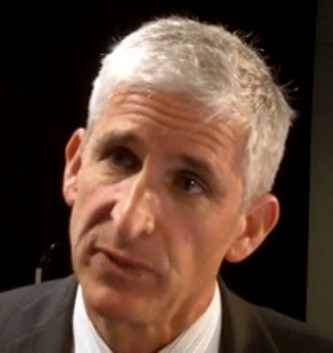
SAN FRANCISCO – Results from the ABSORB III pivotal trial of the Absorb bioresorbable vascular scaffold will likely soon bring the device to the U.S. market, where it initially will be appropriate for a minority of patients with coronary artery disease, Dr. Daniel I. Simon said in an interview during the Transcatheter Cardiovascular Therapeutics annual meeting.
“I suspect its penetration will be no different than in Europe, where it’s used on about 10%-15% of patients, for certain niche patients. There will be target populations,” said Dr. Simon, professor and chief of cardiovascular medicine at University Hospitals Case Medical Center in Cleveland.
One attractive coronary candidate for treatment with bioresorbable vascular scaffolds would be a middle-aged man with diffuse and distal stenoses in his left anterior descending coronary artery and disease that’s not especially suitable for coronary bypass surgery that if stented would likely result in 70 mm or more in stent length, posing a high long-term risk for restenosis. In such patients devices that disappear after 3 years are attractive to avoid what might otherwise be a long stretch of metal, Dr. Simon said at the meeting sponsored by the Cardiovascular Research Foundation.
Dr. Simon has been an advisor to Medtronic and Heart Flow and he was an investigator on the ABSORB III trial, sponsored by Abbott Vascular.
The video associated with this article is no longer available on this site. Please view all of our videos on the MDedge YouTube channel
On Twitter @mitchelzoler
SAN FRANCISCO – Results from the ABSORB III pivotal trial of the Absorb bioresorbable vascular scaffold will likely soon bring the device to the U.S. market, where it initially will be appropriate for a minority of patients with coronary artery disease, Dr. Daniel I. Simon said in an interview during the Transcatheter Cardiovascular Therapeutics annual meeting.
“I suspect its penetration will be no different than in Europe, where it’s used on about 10%-15% of patients, for certain niche patients. There will be target populations,” said Dr. Simon, professor and chief of cardiovascular medicine at University Hospitals Case Medical Center in Cleveland.
One attractive coronary candidate for treatment with bioresorbable vascular scaffolds would be a middle-aged man with diffuse and distal stenoses in his left anterior descending coronary artery and disease that’s not especially suitable for coronary bypass surgery that if stented would likely result in 70 mm or more in stent length, posing a high long-term risk for restenosis. In such patients devices that disappear after 3 years are attractive to avoid what might otherwise be a long stretch of metal, Dr. Simon said at the meeting sponsored by the Cardiovascular Research Foundation.
Dr. Simon has been an advisor to Medtronic and Heart Flow and he was an investigator on the ABSORB III trial, sponsored by Abbott Vascular.
The video associated with this article is no longer available on this site. Please view all of our videos on the MDedge YouTube channel
On Twitter @mitchelzoler
SAN FRANCISCO – Results from the ABSORB III pivotal trial of the Absorb bioresorbable vascular scaffold will likely soon bring the device to the U.S. market, where it initially will be appropriate for a minority of patients with coronary artery disease, Dr. Daniel I. Simon said in an interview during the Transcatheter Cardiovascular Therapeutics annual meeting.
“I suspect its penetration will be no different than in Europe, where it’s used on about 10%-15% of patients, for certain niche patients. There will be target populations,” said Dr. Simon, professor and chief of cardiovascular medicine at University Hospitals Case Medical Center in Cleveland.
One attractive coronary candidate for treatment with bioresorbable vascular scaffolds would be a middle-aged man with diffuse and distal stenoses in his left anterior descending coronary artery and disease that’s not especially suitable for coronary bypass surgery that if stented would likely result in 70 mm or more in stent length, posing a high long-term risk for restenosis. In such patients devices that disappear after 3 years are attractive to avoid what might otherwise be a long stretch of metal, Dr. Simon said at the meeting sponsored by the Cardiovascular Research Foundation.
Dr. Simon has been an advisor to Medtronic and Heart Flow and he was an investigator on the ABSORB III trial, sponsored by Abbott Vascular.
The video associated with this article is no longer available on this site. Please view all of our videos on the MDedge YouTube channel
On Twitter @mitchelzoler
EXPERT ANALYSIS FROM TCT 2015
VIDEO: Could kisspeptin help avoid ovarian hyperstimulation during IVF?
Clinicians may someday be able to cut the risk of ovarian hyperstimulation during in vitro fertilization by using the hormone kisspeptin when maturing and harvesting eggs instead of human chorionic gonadotropin, according to a new study.
Researchers at the Imperial College of London and the Imperial College Healthcare NHS Trust used kisspeptin at varying doses as part of the IVF protocol among 60 women at high risk for ovarian hyperstimulation syndrome (OHSS). The average live birth rate was 45% across all doses of the hormone. No women in the study developed moderate, severe, or critical OHSS during pregnancy.
“Kisspeptin appears to be a promising therapy and further studies are now needed to directly compare kisspeptin with currently available IVF treatments,” said Dr. Ali Abbara, the lead author of the study.
The researchers presented their findings at the Society for Endocrinology’s annual conference in Edinburgh.
On Twitter @maryellenny
Clinicians may someday be able to cut the risk of ovarian hyperstimulation during in vitro fertilization by using the hormone kisspeptin when maturing and harvesting eggs instead of human chorionic gonadotropin, according to a new study.
Researchers at the Imperial College of London and the Imperial College Healthcare NHS Trust used kisspeptin at varying doses as part of the IVF protocol among 60 women at high risk for ovarian hyperstimulation syndrome (OHSS). The average live birth rate was 45% across all doses of the hormone. No women in the study developed moderate, severe, or critical OHSS during pregnancy.
“Kisspeptin appears to be a promising therapy and further studies are now needed to directly compare kisspeptin with currently available IVF treatments,” said Dr. Ali Abbara, the lead author of the study.
The researchers presented their findings at the Society for Endocrinology’s annual conference in Edinburgh.
On Twitter @maryellenny
Clinicians may someday be able to cut the risk of ovarian hyperstimulation during in vitro fertilization by using the hormone kisspeptin when maturing and harvesting eggs instead of human chorionic gonadotropin, according to a new study.
Researchers at the Imperial College of London and the Imperial College Healthcare NHS Trust used kisspeptin at varying doses as part of the IVF protocol among 60 women at high risk for ovarian hyperstimulation syndrome (OHSS). The average live birth rate was 45% across all doses of the hormone. No women in the study developed moderate, severe, or critical OHSS during pregnancy.
“Kisspeptin appears to be a promising therapy and further studies are now needed to directly compare kisspeptin with currently available IVF treatments,” said Dr. Ali Abbara, the lead author of the study.
The researchers presented their findings at the Society for Endocrinology’s annual conference in Edinburgh.
On Twitter @maryellenny

VIDEO: MMF equals cyclophosphamide’s efficacy in sclerodermal lung disease
MONTREAL – The immunosuppressant mycophenolate mofetil worked as effectively as cyclophosphamide for treating scleroderma-related interstitial lung disease while being better tolerated and causing fewer adverse effects in a multicenter, head-to-head comparison with 142 randomized patients.
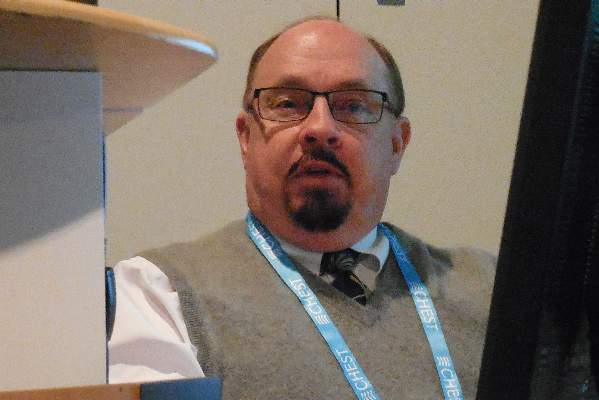
“The findings support the increasingly common clinical practice of prescribing MMF [mycophenolate mofetil] for this disease,” said Dr. Donald P. Tashkin at the annual meeting of the American College of Chest Physicians.

Another limitation of cyclophosphamide is that it is usually not used for more than 1 year because of concerns that longer use substantially increases a patient’s risk for developing malignancy. That’s another reason why there is a “strong need for longer and safer immunosuppressive treatment with a drug like MMF,” said Dr. Tashkin, a pulmonologist at the University of California, Los Angeles.
When used in this trial on patients with scleroderma, as defined by the American College of Rheumatology and with a baseline forced vital capacity of no more than 80% of predicted, “MMF was effective at reducing the rate of decline in vital capacity, improving symptoms such as dyspnea – the cardinal symptom of interstitial lung disease, and reducing lung fibrosis seen on CT scans, and MMF was better tolerated” than cyclophosphamide, Dr. Tashkin said in an interview. Cyclophosphamide treatment in this new trial “was associated with more toxicity, especially hematologic toxicity, an was not nearly as well tolerated, with more patients withdrawing because of side effects or a perceived lack of benefit.”
“Cyclophosphamide has a lot of side effects. MMF is just now coming into increased use. I think we’ll see it being used more for first-line treatment because the side effects with cyclophosphamide are so bad,” commented Dr. Thomas Fuhrman, chief of anesthesiology at the Bay Pines (Fla.) VA Healthcare System.
Dr. Tashkin and his associates conceived the Scleroderma Lung Study II (SLSII) as a follow-up to the first SLS run about a decade ago that compared cyclosphosphamide against placebo for controlling progression of interstitial lung disease in scleroderma patients. The results from the first SLS trial established cyclosphosphamide as a treatment that could preserve forced vital capacity percent predicted in patients with scleroderma-induced interstitial lung disease (N Engl J Med. 2006 Jun 22;354[25]:2655-666).
For the new study they enrolled patients who averaged 52 years old, with an average scleroderma duration of almost 3 years. Their average percent predicted forced vital capacity was 67%, and their baseline dyspnea index was 7.1.
Patients received either a target oral MMF dosage of 1.5 g b.i.d. for 2 years, or a target cyclophosphamide dosage of 2 mg/kg/day for up to 1 year, followed by a year of placebo. Cyclophosphamide treatment was capped at 1 year to protect against causing malignancy. Among the 73 patients randomized to the cyclophosphamide arm, 58 had data available after 12 months with 48 patients continuing on cyclophosphamide, and 53 had data available out to 2 years, with 37 patients remaining on their assigned regimen. Among 69 patients randomized to MMF 58 had data available after 12 months with 53 continuing on MMF, and 53 patients had data available through 24 months with 49 remaining on their MMF regimen.
After 24 months, the average percent predicted forced vital capacity, the study’s primary endpoint, had increased by 3.3% among patients on MMF and 3.0% among those in the cyclophosphamide arm in an intention-to-treat analysis, a nonsignificant difference. After 24 months 72% of patients in the MMF arm and 65% in the cyclophosphamide arm had a positive change, compared with baseline, in their percent predicted forced vital capacity, Dr. Tashkin reported.
MMF also showed a superior overall safety profile. Patients on cyclophosphamide had a significantly increased rate of withdrawal from the study medication. Drug discontinuations occurred in 36 of the cyclophosphamide patients and in 20 of those on MMF. Serious adverse events attributable to study medication occurred in eight patients on cyclophosphamide and three patients on MMF. The most frequent protocol-defined adverse event was leukopenia, which occurred in 30 patients on cyclophosphamide and four patients on MMF.
The video associated with this article is no longer available on this site. Please view all of our videos on the MDedge YouTube channel
On Twitter @mitchelzoler
MONTREAL – The immunosuppressant mycophenolate mofetil worked as effectively as cyclophosphamide for treating scleroderma-related interstitial lung disease while being better tolerated and causing fewer adverse effects in a multicenter, head-to-head comparison with 142 randomized patients.
“The findings support the increasingly common clinical practice of prescribing MMF [mycophenolate mofetil] for this disease,” said Dr. Donald P. Tashkin at the annual meeting of the American College of Chest Physicians.
Another limitation of cyclophosphamide is that it is usually not used for more than 1 year because of concerns that longer use substantially increases a patient’s risk for developing malignancy. That’s another reason why there is a “strong need for longer and safer immunosuppressive treatment with a drug like MMF,” said Dr. Tashkin, a pulmonologist at the University of California, Los Angeles.
When used in this trial on patients with scleroderma, as defined by the American College of Rheumatology and with a baseline forced vital capacity of no more than 80% of predicted, “MMF was effective at reducing the rate of decline in vital capacity, improving symptoms such as dyspnea – the cardinal symptom of interstitial lung disease, and reducing lung fibrosis seen on CT scans, and MMF was better tolerated” than cyclophosphamide, Dr. Tashkin said in an interview. Cyclophosphamide treatment in this new trial “was associated with more toxicity, especially hematologic toxicity, an was not nearly as well tolerated, with more patients withdrawing because of side effects or a perceived lack of benefit.”
“Cyclophosphamide has a lot of side effects. MMF is just now coming into increased use. I think we’ll see it being used more for first-line treatment because the side effects with cyclophosphamide are so bad,” commented Dr. Thomas Fuhrman, chief of anesthesiology at the Bay Pines (Fla.) VA Healthcare System.
Dr. Tashkin and his associates conceived the Scleroderma Lung Study II (SLSII) as a follow-up to the first SLS run about a decade ago that compared cyclosphosphamide against placebo for controlling progression of interstitial lung disease in scleroderma patients. The results from the first SLS trial established cyclosphosphamide as a treatment that could preserve forced vital capacity percent predicted in patients with scleroderma-induced interstitial lung disease (N Engl J Med. 2006 Jun 22;354[25]:2655-666).
For the new study they enrolled patients who averaged 52 years old, with an average scleroderma duration of almost 3 years. Their average percent predicted forced vital capacity was 67%, and their baseline dyspnea index was 7.1.
Patients received either a target oral MMF dosage of 1.5 g b.i.d. for 2 years, or a target cyclophosphamide dosage of 2 mg/kg/day for up to 1 year, followed by a year of placebo. Cyclophosphamide treatment was capped at 1 year to protect against causing malignancy. Among the 73 patients randomized to the cyclophosphamide arm, 58 had data available after 12 months with 48 patients continuing on cyclophosphamide, and 53 had data available out to 2 years, with 37 patients remaining on their assigned regimen. Among 69 patients randomized to MMF 58 had data available after 12 months with 53 continuing on MMF, and 53 patients had data available through 24 months with 49 remaining on their MMF regimen.
After 24 months, the average percent predicted forced vital capacity, the study’s primary endpoint, had increased by 3.3% among patients on MMF and 3.0% among those in the cyclophosphamide arm in an intention-to-treat analysis, a nonsignificant difference. After 24 months 72% of patients in the MMF arm and 65% in the cyclophosphamide arm had a positive change, compared with baseline, in their percent predicted forced vital capacity, Dr. Tashkin reported.
MMF also showed a superior overall safety profile. Patients on cyclophosphamide had a significantly increased rate of withdrawal from the study medication. Drug discontinuations occurred in 36 of the cyclophosphamide patients and in 20 of those on MMF. Serious adverse events attributable to study medication occurred in eight patients on cyclophosphamide and three patients on MMF. The most frequent protocol-defined adverse event was leukopenia, which occurred in 30 patients on cyclophosphamide and four patients on MMF.
The video associated with this article is no longer available on this site. Please view all of our videos on the MDedge YouTube channel
On Twitter @mitchelzoler
MONTREAL – The immunosuppressant mycophenolate mofetil worked as effectively as cyclophosphamide for treating scleroderma-related interstitial lung disease while being better tolerated and causing fewer adverse effects in a multicenter, head-to-head comparison with 142 randomized patients.
“The findings support the increasingly common clinical practice of prescribing MMF [mycophenolate mofetil] for this disease,” said Dr. Donald P. Tashkin at the annual meeting of the American College of Chest Physicians.
Another limitation of cyclophosphamide is that it is usually not used for more than 1 year because of concerns that longer use substantially increases a patient’s risk for developing malignancy. That’s another reason why there is a “strong need for longer and safer immunosuppressive treatment with a drug like MMF,” said Dr. Tashkin, a pulmonologist at the University of California, Los Angeles.
When used in this trial on patients with scleroderma, as defined by the American College of Rheumatology and with a baseline forced vital capacity of no more than 80% of predicted, “MMF was effective at reducing the rate of decline in vital capacity, improving symptoms such as dyspnea – the cardinal symptom of interstitial lung disease, and reducing lung fibrosis seen on CT scans, and MMF was better tolerated” than cyclophosphamide, Dr. Tashkin said in an interview. Cyclophosphamide treatment in this new trial “was associated with more toxicity, especially hematologic toxicity, an was not nearly as well tolerated, with more patients withdrawing because of side effects or a perceived lack of benefit.”
“Cyclophosphamide has a lot of side effects. MMF is just now coming into increased use. I think we’ll see it being used more for first-line treatment because the side effects with cyclophosphamide are so bad,” commented Dr. Thomas Fuhrman, chief of anesthesiology at the Bay Pines (Fla.) VA Healthcare System.
Dr. Tashkin and his associates conceived the Scleroderma Lung Study II (SLSII) as a follow-up to the first SLS run about a decade ago that compared cyclosphosphamide against placebo for controlling progression of interstitial lung disease in scleroderma patients. The results from the first SLS trial established cyclosphosphamide as a treatment that could preserve forced vital capacity percent predicted in patients with scleroderma-induced interstitial lung disease (N Engl J Med. 2006 Jun 22;354[25]:2655-666).
For the new study they enrolled patients who averaged 52 years old, with an average scleroderma duration of almost 3 years. Their average percent predicted forced vital capacity was 67%, and their baseline dyspnea index was 7.1.
Patients received either a target oral MMF dosage of 1.5 g b.i.d. for 2 years, or a target cyclophosphamide dosage of 2 mg/kg/day for up to 1 year, followed by a year of placebo. Cyclophosphamide treatment was capped at 1 year to protect against causing malignancy. Among the 73 patients randomized to the cyclophosphamide arm, 58 had data available after 12 months with 48 patients continuing on cyclophosphamide, and 53 had data available out to 2 years, with 37 patients remaining on their assigned regimen. Among 69 patients randomized to MMF 58 had data available after 12 months with 53 continuing on MMF, and 53 patients had data available through 24 months with 49 remaining on their MMF regimen.
After 24 months, the average percent predicted forced vital capacity, the study’s primary endpoint, had increased by 3.3% among patients on MMF and 3.0% among those in the cyclophosphamide arm in an intention-to-treat analysis, a nonsignificant difference. After 24 months 72% of patients in the MMF arm and 65% in the cyclophosphamide arm had a positive change, compared with baseline, in their percent predicted forced vital capacity, Dr. Tashkin reported.
MMF also showed a superior overall safety profile. Patients on cyclophosphamide had a significantly increased rate of withdrawal from the study medication. Drug discontinuations occurred in 36 of the cyclophosphamide patients and in 20 of those on MMF. Serious adverse events attributable to study medication occurred in eight patients on cyclophosphamide and three patients on MMF. The most frequent protocol-defined adverse event was leukopenia, which occurred in 30 patients on cyclophosphamide and four patients on MMF.
The video associated with this article is no longer available on this site. Please view all of our videos on the MDedge YouTube channel
On Twitter @mitchelzoler
AT CHEST 2015
Key clinical point: Mycophenolate mofetil controlled scleroderma-induced interstitial lung disease as well as cyclosphosphamide did but with reduced toxicity.
Major finding: Average percent predicted forced vital capacity rose 3.0% in patients treated with cyclosphosphamide and 3.3% in those on MMF.
Data source: SLSII, a randomized trial that enrolled 142 scleroderma patients at 13 U.S. centers.
Disclosures: SLSII received partial funding from Hoffman-La Roche, a company that markets a formulation of mycophenolate mofetil (CellCept). Dr. Tashkin had no disclosures. Dr. Fuhrman had no disclosures.
HFSA Roundtable, part 1: Beta-blockers remain heart failure management linchpin
NATIONAL HARBOR, MD. – More than 20 years ago, treating chronic heart failure patients with a beta-blocker drug seemed counterintuitive, but it turned out to be a landmark step, both for clinical efficacy and for improved understanding of the role neurohormonal drivers play in chronic heart failure.
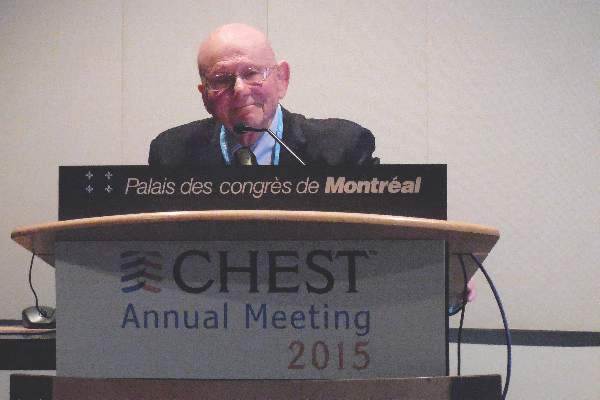
The Heart Failure Society of America awarded its annual Lifetime Achievement Award to Dr. Sidney Goldstein during the its annual meeting in September. On the occasion of that award, we gathered Dr. Goldstein and some of his associates to discuss the beta-blocker legacy and other aspects of how heart failure treatments developed and where they stand today. Joining this round table were Dr. Jay N. Cohn, Hani N. Sabbah, Ph.D., and Dr. Prakash Deedwania.
In this first segment of the interview, the panel reminisced about how a rationale gradually developed supporting the principle behind beta-blockers and other neurohormonal interventions for heart failure, and they discussed how the explanation of beta-blocker activity in heart failure patients remains controversial even today.
Despite a track record of consistent efficacy across drugs in the beta-blocker class that goes back some 2 decades, getting patients to their appropriate beta-blocker dosage remains a challenge, noted Dr. Goldstein, a cardiologist at Henry Ford Hospital and a professor of medicine at Wayne State University in Detroit. “Most heart failure patients whom I see on a beta-blocker are on far too low a dosage,” he said. Clinicians continue to believe that maximum dosing with a beta-blocker is nearly impossible, while in reality “if you advance the treatment, patients tolerate it quite well. There has always been this mystique about the tolerability of beta-blockers, but that’s pure fantasy,” Dr. Goldstein said.
Dr. Goldstein had no disclosures. Dr. Deedwania had no disclosures. Dr. Cohn receives royalties from Arbor Pharmaceuticals related to his work on hydralazine and isosorbide dinitrate. Dr. Sabbah is a consultant to Boston Scientific and an adviser to BioControl Medical, and he has received research grants from both companies.
The video associated with this article is no longer available on this site. Please view all of our videos on the MDedge YouTube channel
On Twitter @mitchelzoler
NATIONAL HARBOR, MD. – More than 20 years ago, treating chronic heart failure patients with a beta-blocker drug seemed counterintuitive, but it turned out to be a landmark step, both for clinical efficacy and for improved understanding of the role neurohormonal drivers play in chronic heart failure.
The Heart Failure Society of America awarded its annual Lifetime Achievement Award to Dr. Sidney Goldstein during the its annual meeting in September. On the occasion of that award, we gathered Dr. Goldstein and some of his associates to discuss the beta-blocker legacy and other aspects of how heart failure treatments developed and where they stand today. Joining this round table were Dr. Jay N. Cohn, Hani N. Sabbah, Ph.D., and Dr. Prakash Deedwania.
In this first segment of the interview, the panel reminisced about how a rationale gradually developed supporting the principle behind beta-blockers and other neurohormonal interventions for heart failure, and they discussed how the explanation of beta-blocker activity in heart failure patients remains controversial even today.
Despite a track record of consistent efficacy across drugs in the beta-blocker class that goes back some 2 decades, getting patients to their appropriate beta-blocker dosage remains a challenge, noted Dr. Goldstein, a cardiologist at Henry Ford Hospital and a professor of medicine at Wayne State University in Detroit. “Most heart failure patients whom I see on a beta-blocker are on far too low a dosage,” he said. Clinicians continue to believe that maximum dosing with a beta-blocker is nearly impossible, while in reality “if you advance the treatment, patients tolerate it quite well. There has always been this mystique about the tolerability of beta-blockers, but that’s pure fantasy,” Dr. Goldstein said.
Dr. Goldstein had no disclosures. Dr. Deedwania had no disclosures. Dr. Cohn receives royalties from Arbor Pharmaceuticals related to his work on hydralazine and isosorbide dinitrate. Dr. Sabbah is a consultant to Boston Scientific and an adviser to BioControl Medical, and he has received research grants from both companies.
The video associated with this article is no longer available on this site. Please view all of our videos on the MDedge YouTube channel
On Twitter @mitchelzoler
NATIONAL HARBOR, MD. – More than 20 years ago, treating chronic heart failure patients with a beta-blocker drug seemed counterintuitive, but it turned out to be a landmark step, both for clinical efficacy and for improved understanding of the role neurohormonal drivers play in chronic heart failure.
The Heart Failure Society of America awarded its annual Lifetime Achievement Award to Dr. Sidney Goldstein during the its annual meeting in September. On the occasion of that award, we gathered Dr. Goldstein and some of his associates to discuss the beta-blocker legacy and other aspects of how heart failure treatments developed and where they stand today. Joining this round table were Dr. Jay N. Cohn, Hani N. Sabbah, Ph.D., and Dr. Prakash Deedwania.
In this first segment of the interview, the panel reminisced about how a rationale gradually developed supporting the principle behind beta-blockers and other neurohormonal interventions for heart failure, and they discussed how the explanation of beta-blocker activity in heart failure patients remains controversial even today.
Despite a track record of consistent efficacy across drugs in the beta-blocker class that goes back some 2 decades, getting patients to their appropriate beta-blocker dosage remains a challenge, noted Dr. Goldstein, a cardiologist at Henry Ford Hospital and a professor of medicine at Wayne State University in Detroit. “Most heart failure patients whom I see on a beta-blocker are on far too low a dosage,” he said. Clinicians continue to believe that maximum dosing with a beta-blocker is nearly impossible, while in reality “if you advance the treatment, patients tolerate it quite well. There has always been this mystique about the tolerability of beta-blockers, but that’s pure fantasy,” Dr. Goldstein said.
Dr. Goldstein had no disclosures. Dr. Deedwania had no disclosures. Dr. Cohn receives royalties from Arbor Pharmaceuticals related to his work on hydralazine and isosorbide dinitrate. Dr. Sabbah is a consultant to Boston Scientific and an adviser to BioControl Medical, and he has received research grants from both companies.
The video associated with this article is no longer available on this site. Please view all of our videos on the MDedge YouTube channel
On Twitter @mitchelzoler
EXPERT ANALYSIS FROM HFSA
Beta-blockers remain a key part of treatment for chronic heart failure, and control of neurohormonal activation remains a central principle of treatment.

Non-drug therapies for refractory schizophrenia
The video associated with this article is no longer available on this site. Please view all of our videos on the MDedge YouTube channel
The video associated with this article is no longer available on this site. Please view all of our videos on the MDedge YouTube channel
The video associated with this article is no longer available on this site. Please view all of our videos on the MDedge YouTube channel
VIDEO: Expert outlines new thinking on irritable bowel syndrome
HONOLULU – New medications and more patient-focused strategies are changing the treatment of irritable bowel syndrome, as physicians move away from simply treating symptoms and gain a better understanding of IBS processes and mechanisms of action.
“I think there’s kind of an explosion in medications for functional bowel disease, specifically irritable bowel syndrome, over the last couple years, because we’ve gotten a lot smarter about how we think about these patients and how we treat these patients,” explained Dr. Darren M. Brenner, director of the functional bowel program at Northwestern University, Chicago.
In an interview at the annual meeting of the American College of Gastroenterology, Dr. Brenner discussed new approaches to target the syndrome’s mechanisms of action, new thinking by the Food and Drug Administration on IBS drug approval, and the wide range of traditional, complementary and alternative, and diet-related therapeutic options now available to patients.
HONOLULU – New medications and more patient-focused strategies are changing the treatment of irritable bowel syndrome, as physicians move away from simply treating symptoms and gain a better understanding of IBS processes and mechanisms of action.
“I think there’s kind of an explosion in medications for functional bowel disease, specifically irritable bowel syndrome, over the last couple years, because we’ve gotten a lot smarter about how we think about these patients and how we treat these patients,” explained Dr. Darren M. Brenner, director of the functional bowel program at Northwestern University, Chicago.
In an interview at the annual meeting of the American College of Gastroenterology, Dr. Brenner discussed new approaches to target the syndrome’s mechanisms of action, new thinking by the Food and Drug Administration on IBS drug approval, and the wide range of traditional, complementary and alternative, and diet-related therapeutic options now available to patients.
HONOLULU – New medications and more patient-focused strategies are changing the treatment of irritable bowel syndrome, as physicians move away from simply treating symptoms and gain a better understanding of IBS processes and mechanisms of action.
“I think there’s kind of an explosion in medications for functional bowel disease, specifically irritable bowel syndrome, over the last couple years, because we’ve gotten a lot smarter about how we think about these patients and how we treat these patients,” explained Dr. Darren M. Brenner, director of the functional bowel program at Northwestern University, Chicago.
In an interview at the annual meeting of the American College of Gastroenterology, Dr. Brenner discussed new approaches to target the syndrome’s mechanisms of action, new thinking by the Food and Drug Administration on IBS drug approval, and the wide range of traditional, complementary and alternative, and diet-related therapeutic options now available to patients.
AT ACG 2015
VIDEO: Serum amyloid A could be IBD biomarker
HONOLULU – Serum amyloid A levels may offer an effective biomarker to gauge disease activity in inflammatory bowel disease, while baseline fecal calprotectin levels could help predict how patients with IBD will respond to anti-tumor necrosis factor therapy, according to two studies presented at the annual meeting of the American College of Gastroenterology.
“There’s a really high need for biomarkers in order to have a better assessment and better control of disease activity, before treatment and then throughout therapy,” explained the studies’ lead author, Dr. Andres Yarur of the University of Chicago.
In an interview at the meeting, Dr. Yarur discussed the two studies’ results, and how serum amyloid A levels, in combination with C-reactive protein levels, may improve clinicians’ ability to identify active endoscopic disease.
The video associated with this article is no longer available on this site. Please view all of our videos on the MDedge YouTube channel
HONOLULU – Serum amyloid A levels may offer an effective biomarker to gauge disease activity in inflammatory bowel disease, while baseline fecal calprotectin levels could help predict how patients with IBD will respond to anti-tumor necrosis factor therapy, according to two studies presented at the annual meeting of the American College of Gastroenterology.
“There’s a really high need for biomarkers in order to have a better assessment and better control of disease activity, before treatment and then throughout therapy,” explained the studies’ lead author, Dr. Andres Yarur of the University of Chicago.
In an interview at the meeting, Dr. Yarur discussed the two studies’ results, and how serum amyloid A levels, in combination with C-reactive protein levels, may improve clinicians’ ability to identify active endoscopic disease.
The video associated with this article is no longer available on this site. Please view all of our videos on the MDedge YouTube channel
HONOLULU – Serum amyloid A levels may offer an effective biomarker to gauge disease activity in inflammatory bowel disease, while baseline fecal calprotectin levels could help predict how patients with IBD will respond to anti-tumor necrosis factor therapy, according to two studies presented at the annual meeting of the American College of Gastroenterology.
“There’s a really high need for biomarkers in order to have a better assessment and better control of disease activity, before treatment and then throughout therapy,” explained the studies’ lead author, Dr. Andres Yarur of the University of Chicago.
In an interview at the meeting, Dr. Yarur discussed the two studies’ results, and how serum amyloid A levels, in combination with C-reactive protein levels, may improve clinicians’ ability to identify active endoscopic disease.
The video associated with this article is no longer available on this site. Please view all of our videos on the MDedge YouTube channel
AT ACG 2015
VIDEO: Transforming pediatric education to deal with mental health issues
WASHINGTON – Behavioral and mental health issues are the largest group of conditions that you see in your practice, but pediatric residency training does not adequately prepare you for this challenge, Dr. Julia A. McMillan said in a video roundtable at the annual meeting of the American Academy of Pediatrics.
Dr. John D. Duby, professor and chair of pediatrics at Wright State University, Dayton, Ohio, added, “as we think about the innovation and transformation in pediatric education, pediatricians alone can’t do this work. We need to think more about integrated models for training that bring in psychologists, licensed social workers, care coordinators, community health workers, maybe even child psychiatrists.”
Dr. McMillan, professor of pediatrics and associate dean for graduate medical education at the Johns Hopkins University, Baltimore, agreed, and said that training about behavioral and mental health issues needs to be reinforced throughout pediatric residency training, not just in a block rotation about mental health, but also during critical care or continuity clinic training.
Dr. Duby emphasized that although there are roadblocks to preparing pediatricians of the future to deal with children confronted with trauma or the most common mental health issues – attention-deficit/hyperactivity disorder, anxiety, depression, or disruptive behavior – the difficulty of handling these disorders in the pediatric medical home is not insurmountable. This really requires only about 10 skills, simple strategies that pediatricians can learn. One of these is assessing a patient’s readiness to change.
Dr. Michelle M. Macias, a professor of pediatrics and director of the division of developmental-behavioral pediatrics at the Medical University of South Carolina, Charleston, who also took part in the roundtable, added it is important to emphasize strength-based approaches, positive parenting, and preventive medicine to deal with behavioral and mental health issues in children.
For those already in practice, there also is help from the AAP. Dr. McMillan mentioned a 2009 article in Pediatrics (2009;124:410-21) written by the AAP Task Force on Mental Health and an online curriculum to aid residency continuity clinic preceptors in training residents to help children in their care with mental health issues.
The video associated with this article is no longer available on this site. Please view all of our videos on the MDedge YouTube channel
WASHINGTON – Behavioral and mental health issues are the largest group of conditions that you see in your practice, but pediatric residency training does not adequately prepare you for this challenge, Dr. Julia A. McMillan said in a video roundtable at the annual meeting of the American Academy of Pediatrics.
Dr. John D. Duby, professor and chair of pediatrics at Wright State University, Dayton, Ohio, added, “as we think about the innovation and transformation in pediatric education, pediatricians alone can’t do this work. We need to think more about integrated models for training that bring in psychologists, licensed social workers, care coordinators, community health workers, maybe even child psychiatrists.”
Dr. McMillan, professor of pediatrics and associate dean for graduate medical education at the Johns Hopkins University, Baltimore, agreed, and said that training about behavioral and mental health issues needs to be reinforced throughout pediatric residency training, not just in a block rotation about mental health, but also during critical care or continuity clinic training.
Dr. Duby emphasized that although there are roadblocks to preparing pediatricians of the future to deal with children confronted with trauma or the most common mental health issues – attention-deficit/hyperactivity disorder, anxiety, depression, or disruptive behavior – the difficulty of handling these disorders in the pediatric medical home is not insurmountable. This really requires only about 10 skills, simple strategies that pediatricians can learn. One of these is assessing a patient’s readiness to change.
Dr. Michelle M. Macias, a professor of pediatrics and director of the division of developmental-behavioral pediatrics at the Medical University of South Carolina, Charleston, who also took part in the roundtable, added it is important to emphasize strength-based approaches, positive parenting, and preventive medicine to deal with behavioral and mental health issues in children.
For those already in practice, there also is help from the AAP. Dr. McMillan mentioned a 2009 article in Pediatrics (2009;124:410-21) written by the AAP Task Force on Mental Health and an online curriculum to aid residency continuity clinic preceptors in training residents to help children in their care with mental health issues.
The video associated with this article is no longer available on this site. Please view all of our videos on the MDedge YouTube channel
WASHINGTON – Behavioral and mental health issues are the largest group of conditions that you see in your practice, but pediatric residency training does not adequately prepare you for this challenge, Dr. Julia A. McMillan said in a video roundtable at the annual meeting of the American Academy of Pediatrics.
Dr. John D. Duby, professor and chair of pediatrics at Wright State University, Dayton, Ohio, added, “as we think about the innovation and transformation in pediatric education, pediatricians alone can’t do this work. We need to think more about integrated models for training that bring in psychologists, licensed social workers, care coordinators, community health workers, maybe even child psychiatrists.”
Dr. McMillan, professor of pediatrics and associate dean for graduate medical education at the Johns Hopkins University, Baltimore, agreed, and said that training about behavioral and mental health issues needs to be reinforced throughout pediatric residency training, not just in a block rotation about mental health, but also during critical care or continuity clinic training.
Dr. Duby emphasized that although there are roadblocks to preparing pediatricians of the future to deal with children confronted with trauma or the most common mental health issues – attention-deficit/hyperactivity disorder, anxiety, depression, or disruptive behavior – the difficulty of handling these disorders in the pediatric medical home is not insurmountable. This really requires only about 10 skills, simple strategies that pediatricians can learn. One of these is assessing a patient’s readiness to change.
Dr. Michelle M. Macias, a professor of pediatrics and director of the division of developmental-behavioral pediatrics at the Medical University of South Carolina, Charleston, who also took part in the roundtable, added it is important to emphasize strength-based approaches, positive parenting, and preventive medicine to deal with behavioral and mental health issues in children.
For those already in practice, there also is help from the AAP. Dr. McMillan mentioned a 2009 article in Pediatrics (2009;124:410-21) written by the AAP Task Force on Mental Health and an online curriculum to aid residency continuity clinic preceptors in training residents to help children in their care with mental health issues.
The video associated with this article is no longer available on this site. Please view all of our videos on the MDedge YouTube channel
EXPERT ANALYSIS FROM THE AAP NATIONAL CONFERENCE
VIDEO: Gut microbiota may predict C. diff treatment response
HONOLULU – Could gut microbiota be a better predictor than clinical factors of a patient’s response to treatment for Clostridium difficile infection?
In a study of 88 patients with C. difficile, the overall treatment failure rate was 12.5% – but clinical factors such as age, sex, ongoing antibiotic exposure, and hospitalization status failed to predict which patients wouldn’t respond to treatment.
So, “we aimed to identify if there are any gut microbiota signatures to predict treatment response and treatment failure,” explained the study’s lead author, Dr. Sahil Khanna of the Mayo Clinic, Rochester, Minn.
In an interview at the annual meeting of the American College of Gastroenterology, Dr. Khanna discussed the study results and why gut microbiota may be an effective predictor of treatment responders and nonresponders.
The video associated with this article is no longer available on this site. Please view all of our videos on the MDedge YouTube channel
HONOLULU – Could gut microbiota be a better predictor than clinical factors of a patient’s response to treatment for Clostridium difficile infection?
In a study of 88 patients with C. difficile, the overall treatment failure rate was 12.5% – but clinical factors such as age, sex, ongoing antibiotic exposure, and hospitalization status failed to predict which patients wouldn’t respond to treatment.
So, “we aimed to identify if there are any gut microbiota signatures to predict treatment response and treatment failure,” explained the study’s lead author, Dr. Sahil Khanna of the Mayo Clinic, Rochester, Minn.
In an interview at the annual meeting of the American College of Gastroenterology, Dr. Khanna discussed the study results and why gut microbiota may be an effective predictor of treatment responders and nonresponders.
The video associated with this article is no longer available on this site. Please view all of our videos on the MDedge YouTube channel
HONOLULU – Could gut microbiota be a better predictor than clinical factors of a patient’s response to treatment for Clostridium difficile infection?
In a study of 88 patients with C. difficile, the overall treatment failure rate was 12.5% – but clinical factors such as age, sex, ongoing antibiotic exposure, and hospitalization status failed to predict which patients wouldn’t respond to treatment.
So, “we aimed to identify if there are any gut microbiota signatures to predict treatment response and treatment failure,” explained the study’s lead author, Dr. Sahil Khanna of the Mayo Clinic, Rochester, Minn.
In an interview at the annual meeting of the American College of Gastroenterology, Dr. Khanna discussed the study results and why gut microbiota may be an effective predictor of treatment responders and nonresponders.
The video associated with this article is no longer available on this site. Please view all of our videos on the MDedge YouTube channel
At ACG 2015

AAP: Video roundtable - Next steps in quality improvement, part 2
WASHINGTON – Four experts explain what COQIPS, VIP, PEMCRC, and ALIIGN are all about.
These acronyms each concern pediatric quality improvement, and you can learn about them in part 2 of a video roundtable that took place at the annual meeting of the American Academy of Pediatrics.
Dr. Matt D. Garber, director of pediatric hospitalists and chief quality officer at Palmetto Health Children’s Hospital, Columbia, S.C., representing the AAP Quality Improvement Innovation Networks (QUIIN), explains how Value in Inpatient Pediatrics (VIP) quality collaboratives involving a number of hospitals take guidelines that impact patient care, such as bronchiolitis, and create quality measures and toolkits, and try to implement what the guidelines are recommending. There also is an outpatient arm involving pediatric practices.
Dr. Michael L. Rinke, a pediatric hospitalist who is medical director of quality at Children’s Hospital at Montefiore, New York, and cochair of the implementation committee of the AAP Council on Quality Improvement and Patient Safety (COQIPS), described how COQIPS will serve as a clearinghouse for toolkits so pediatricians “don’t have to reinvent the wheel” when they want to do quality improvement projects. He emphasized that these toolkits are a quality improvement project-in-a-box.
Dr. Anupam B. Kharbanda, director of research for emergency services at Children’s Minnesota, Minneapolis, and chairman, AAP pediatric emergency medicine collaborative research committee of the section on emergency medicine, emphasized these guidelines and toolkits “apply to your patients, to the average pediatrician who wants to get involved.”
Dr. Joel S. Tieder, a pediatric hospitalist and director of the maintenance of certification program at Seattle Children’s Hospital and vice-chair of the AAP COQIPS, added that maintenance of certification is a perfect opportunity to do a quality improvement project, and not just that, to improve quality for your patients. Dr. Tieder is the author of the ALIIGN proposal, which is all about evaluating and implementing guidelines.
*This article was updated 11/3/2015.
The video associated with this article is no longer available on this site. Please view all of our videos on the MDedge YouTube channel
WASHINGTON – Four experts explain what COQIPS, VIP, PEMCRC, and ALIIGN are all about.
These acronyms each concern pediatric quality improvement, and you can learn about them in part 2 of a video roundtable that took place at the annual meeting of the American Academy of Pediatrics.
Dr. Matt D. Garber, director of pediatric hospitalists and chief quality officer at Palmetto Health Children’s Hospital, Columbia, S.C., representing the AAP Quality Improvement Innovation Networks (QUIIN), explains how Value in Inpatient Pediatrics (VIP) quality collaboratives involving a number of hospitals take guidelines that impact patient care, such as bronchiolitis, and create quality measures and toolkits, and try to implement what the guidelines are recommending. There also is an outpatient arm involving pediatric practices.
Dr. Michael L. Rinke, a pediatric hospitalist who is medical director of quality at Children’s Hospital at Montefiore, New York, and cochair of the implementation committee of the AAP Council on Quality Improvement and Patient Safety (COQIPS), described how COQIPS will serve as a clearinghouse for toolkits so pediatricians “don’t have to reinvent the wheel” when they want to do quality improvement projects. He emphasized that these toolkits are a quality improvement project-in-a-box.
Dr. Anupam B. Kharbanda, director of research for emergency services at Children’s Minnesota, Minneapolis, and chairman, AAP pediatric emergency medicine collaborative research committee of the section on emergency medicine, emphasized these guidelines and toolkits “apply to your patients, to the average pediatrician who wants to get involved.”
Dr. Joel S. Tieder, a pediatric hospitalist and director of the maintenance of certification program at Seattle Children’s Hospital and vice-chair of the AAP COQIPS, added that maintenance of certification is a perfect opportunity to do a quality improvement project, and not just that, to improve quality for your patients. Dr. Tieder is the author of the ALIIGN proposal, which is all about evaluating and implementing guidelines.
*This article was updated 11/3/2015.
The video associated with this article is no longer available on this site. Please view all of our videos on the MDedge YouTube channel
WASHINGTON – Four experts explain what COQIPS, VIP, PEMCRC, and ALIIGN are all about.
These acronyms each concern pediatric quality improvement, and you can learn about them in part 2 of a video roundtable that took place at the annual meeting of the American Academy of Pediatrics.
Dr. Matt D. Garber, director of pediatric hospitalists and chief quality officer at Palmetto Health Children’s Hospital, Columbia, S.C., representing the AAP Quality Improvement Innovation Networks (QUIIN), explains how Value in Inpatient Pediatrics (VIP) quality collaboratives involving a number of hospitals take guidelines that impact patient care, such as bronchiolitis, and create quality measures and toolkits, and try to implement what the guidelines are recommending. There also is an outpatient arm involving pediatric practices.
Dr. Michael L. Rinke, a pediatric hospitalist who is medical director of quality at Children’s Hospital at Montefiore, New York, and cochair of the implementation committee of the AAP Council on Quality Improvement and Patient Safety (COQIPS), described how COQIPS will serve as a clearinghouse for toolkits so pediatricians “don’t have to reinvent the wheel” when they want to do quality improvement projects. He emphasized that these toolkits are a quality improvement project-in-a-box.
Dr. Anupam B. Kharbanda, director of research for emergency services at Children’s Minnesota, Minneapolis, and chairman, AAP pediatric emergency medicine collaborative research committee of the section on emergency medicine, emphasized these guidelines and toolkits “apply to your patients, to the average pediatrician who wants to get involved.”
Dr. Joel S. Tieder, a pediatric hospitalist and director of the maintenance of certification program at Seattle Children’s Hospital and vice-chair of the AAP COQIPS, added that maintenance of certification is a perfect opportunity to do a quality improvement project, and not just that, to improve quality for your patients. Dr. Tieder is the author of the ALIIGN proposal, which is all about evaluating and implementing guidelines.
*This article was updated 11/3/2015.
The video associated with this article is no longer available on this site. Please view all of our videos on the MDedge YouTube channel
EXPERT ANALYSIS FROM THE AAP NATIONAL CONFERENCE