User login
VIDEO: PALBI score sharpened liver cancer prognosis
SAN FRANCISCO – The PALBI liver function score measuring platelet count, albumin, and bilirubin was more effective than Child-Pugh score at predicting survival in hepatocellular carcinoma patients.
“We wanted to get a purely objective score to assess liver function in people with liver disease, and also wanted a score that was more granular and had more refinement to it than [Child-Pugh score] classification,” explained Dr. Sasan Roayaie of North Shore-LIJ Health System, New York.
“By combining those three very objective, readily available lab tests, we were able to come up with a score that we were then able to show in an independent validation cohort of more than 4,000 [hepatocellular carcinoma] patients predicted survival,” he added.
In an interview at the annual meeting of the American Association for the Study of Liver Diseases, Dr. Roayaie discussed PALBI’s development and its potential clinical impact.
The video associated with this article is no longer available on this site. Please view all of our videos on the MDedge YouTube channel
SAN FRANCISCO – The PALBI liver function score measuring platelet count, albumin, and bilirubin was more effective than Child-Pugh score at predicting survival in hepatocellular carcinoma patients.
“We wanted to get a purely objective score to assess liver function in people with liver disease, and also wanted a score that was more granular and had more refinement to it than [Child-Pugh score] classification,” explained Dr. Sasan Roayaie of North Shore-LIJ Health System, New York.
“By combining those three very objective, readily available lab tests, we were able to come up with a score that we were then able to show in an independent validation cohort of more than 4,000 [hepatocellular carcinoma] patients predicted survival,” he added.
In an interview at the annual meeting of the American Association for the Study of Liver Diseases, Dr. Roayaie discussed PALBI’s development and its potential clinical impact.
The video associated with this article is no longer available on this site. Please view all of our videos on the MDedge YouTube channel
SAN FRANCISCO – The PALBI liver function score measuring platelet count, albumin, and bilirubin was more effective than Child-Pugh score at predicting survival in hepatocellular carcinoma patients.
“We wanted to get a purely objective score to assess liver function in people with liver disease, and also wanted a score that was more granular and had more refinement to it than [Child-Pugh score] classification,” explained Dr. Sasan Roayaie of North Shore-LIJ Health System, New York.
“By combining those three very objective, readily available lab tests, we were able to come up with a score that we were then able to show in an independent validation cohort of more than 4,000 [hepatocellular carcinoma] patients predicted survival,” he added.
In an interview at the annual meeting of the American Association for the Study of Liver Diseases, Dr. Roayaie discussed PALBI’s development and its potential clinical impact.
The video associated with this article is no longer available on this site. Please view all of our videos on the MDedge YouTube channel
AT THE LIVER MEETING 2015

VIDEO: Eating before liver stiffness test may skew results
SAN FRANCISCO – Expanding the time between a liver fibrosis patient’s last meal and liver stiffness test may improve the accuracy of the test, according to a Danish study.
In patients referred for high liver stiffness, “we noticed that, when we called them in for a repeat liver stiffness measurement in a fasting state, that suddenly one patient with a high liver stiffness would have normal liver stiffness,” explained study researcher Dr. Maja Thiele of Odense (Denmark) University Hospital. “Potentially, this would have been a patient that we would have biopsied.”
In an interview at the annual meeting of the American Association for the Study of Liver Diseases, Dr. Thiele discussed the study’s findings and the clinical implications of food intake on subsequent liver stiffness test results, and she explained how long liver fibrosis patients should wait after a meal to undergo liver stiffness testing.
The video associated with this article is no longer available on this site. Please view all of our videos on the MDedge YouTube channel
SAN FRANCISCO – Expanding the time between a liver fibrosis patient’s last meal and liver stiffness test may improve the accuracy of the test, according to a Danish study.
In patients referred for high liver stiffness, “we noticed that, when we called them in for a repeat liver stiffness measurement in a fasting state, that suddenly one patient with a high liver stiffness would have normal liver stiffness,” explained study researcher Dr. Maja Thiele of Odense (Denmark) University Hospital. “Potentially, this would have been a patient that we would have biopsied.”
In an interview at the annual meeting of the American Association for the Study of Liver Diseases, Dr. Thiele discussed the study’s findings and the clinical implications of food intake on subsequent liver stiffness test results, and she explained how long liver fibrosis patients should wait after a meal to undergo liver stiffness testing.
The video associated with this article is no longer available on this site. Please view all of our videos on the MDedge YouTube channel
SAN FRANCISCO – Expanding the time between a liver fibrosis patient’s last meal and liver stiffness test may improve the accuracy of the test, according to a Danish study.
In patients referred for high liver stiffness, “we noticed that, when we called them in for a repeat liver stiffness measurement in a fasting state, that suddenly one patient with a high liver stiffness would have normal liver stiffness,” explained study researcher Dr. Maja Thiele of Odense (Denmark) University Hospital. “Potentially, this would have been a patient that we would have biopsied.”
In an interview at the annual meeting of the American Association for the Study of Liver Diseases, Dr. Thiele discussed the study’s findings and the clinical implications of food intake on subsequent liver stiffness test results, and she explained how long liver fibrosis patients should wait after a meal to undergo liver stiffness testing.
The video associated with this article is no longer available on this site. Please view all of our videos on the MDedge YouTube channel
AT THE LIVER MEETING 2015
VIDEO: How to handle pregnancy and breast feeding in rheumatoid arthritis
San Francisco – Should you give rheumatoid arthritis patients tumor necrosis factor blockers during pregnancy? What can you substitute for methotrexate?
And what in the world do you do about breast feeding?
“The management of rheumatoid arthritis in pregnancy seems to be evolving,” explained Dr. Megan Clowse, a specialist in rheumatology and pregnancy at Duke University, Durham, N.C. “The old strategy of just stopping all the medications and letting the woman flare and using some prednisone really doesn’t seem to actually be achieving the outcomes that we need to get.”
Dr. Clowse answered a host of pregnancy-related questions and more in a pearl-filled interview at the annual meeting of the American College of Rheumatology.
The video associated with this article is no longer available on this site. Please view all of our videos on the MDedge YouTube channel
San Francisco – Should you give rheumatoid arthritis patients tumor necrosis factor blockers during pregnancy? What can you substitute for methotrexate?
And what in the world do you do about breast feeding?
“The management of rheumatoid arthritis in pregnancy seems to be evolving,” explained Dr. Megan Clowse, a specialist in rheumatology and pregnancy at Duke University, Durham, N.C. “The old strategy of just stopping all the medications and letting the woman flare and using some prednisone really doesn’t seem to actually be achieving the outcomes that we need to get.”
Dr. Clowse answered a host of pregnancy-related questions and more in a pearl-filled interview at the annual meeting of the American College of Rheumatology.
The video associated with this article is no longer available on this site. Please view all of our videos on the MDedge YouTube channel
San Francisco – Should you give rheumatoid arthritis patients tumor necrosis factor blockers during pregnancy? What can you substitute for methotrexate?
And what in the world do you do about breast feeding?
“The management of rheumatoid arthritis in pregnancy seems to be evolving,” explained Dr. Megan Clowse, a specialist in rheumatology and pregnancy at Duke University, Durham, N.C. “The old strategy of just stopping all the medications and letting the woman flare and using some prednisone really doesn’t seem to actually be achieving the outcomes that we need to get.”
Dr. Clowse answered a host of pregnancy-related questions and more in a pearl-filled interview at the annual meeting of the American College of Rheumatology.
The video associated with this article is no longer available on this site. Please view all of our videos on the MDedge YouTube channel
AT THE ACR ANNUAL MEETING

What Inspired These Cancer Researchers?
Whether you are looking for inspiration or new researchers for your team, this LabTV series is worth exploring. Profiles of these researchers and their research institutions offer fascinating insights into the motivations of the next generation of scientists.
“It’s important to… allow yourself many experiences in different fields in order to figure out one that you’re really passionate about,” explains Lindsey Brinton, a PhD candidate at the University of Virginia in the lab of Kimberly Kelly, PhD. “If you find what you’re passionate about, you’ll succeed.” Here’s wishing her every success! The research in Dr. Kelly’s lab is focused on the cells that surround the pancreatic cancer tumor, the stroma, and on the risk of metastasis.
Find more research profiles of breast cancer, leukemia, at http://www.labtv.com/
Whether you are looking for inspiration or new researchers for your team, this LabTV series is worth exploring. Profiles of these researchers and their research institutions offer fascinating insights into the motivations of the next generation of scientists.
“It’s important to… allow yourself many experiences in different fields in order to figure out one that you’re really passionate about,” explains Lindsey Brinton, a PhD candidate at the University of Virginia in the lab of Kimberly Kelly, PhD. “If you find what you’re passionate about, you’ll succeed.” Here’s wishing her every success! The research in Dr. Kelly’s lab is focused on the cells that surround the pancreatic cancer tumor, the stroma, and on the risk of metastasis.
Find more research profiles of breast cancer, leukemia, at http://www.labtv.com/
Whether you are looking for inspiration or new researchers for your team, this LabTV series is worth exploring. Profiles of these researchers and their research institutions offer fascinating insights into the motivations of the next generation of scientists.
“It’s important to… allow yourself many experiences in different fields in order to figure out one that you’re really passionate about,” explains Lindsey Brinton, a PhD candidate at the University of Virginia in the lab of Kimberly Kelly, PhD. “If you find what you’re passionate about, you’ll succeed.” Here’s wishing her every success! The research in Dr. Kelly’s lab is focused on the cells that surround the pancreatic cancer tumor, the stroma, and on the risk of metastasis.
Find more research profiles of breast cancer, leukemia, at http://www.labtv.com/
VIDEO: ‘Spectacular’ results for anakinra in pericarditis
SAN FRANCISCO – Anakinra might be a life saver for recurrent idiopathic pericarditis when corticosteroids, colchicine, and NSAIDS aren’t working.
Anakinra (Kineret) seemed to end the cycle of recurrent attacks and get patients off corticosteroids in a randomized, placebo-controlled trial from Italy. The drug might even prove to be a steroid-sparing, first-line choice for children.
Investigator Dr. Antonio Brucato of Papa Giovanni XXIII Hospital in Bergamo, Italy, called the results “spectacular.” He explained why in an interview at the annual meeting of the American College of Rheumatology, and also explained exactly how and when to use anakinra for pericarditis.
The video associated with this article is no longer available on this site. Please view all of our videos on the MDedge YouTube channel
SAN FRANCISCO – Anakinra might be a life saver for recurrent idiopathic pericarditis when corticosteroids, colchicine, and NSAIDS aren’t working.
Anakinra (Kineret) seemed to end the cycle of recurrent attacks and get patients off corticosteroids in a randomized, placebo-controlled trial from Italy. The drug might even prove to be a steroid-sparing, first-line choice for children.
Investigator Dr. Antonio Brucato of Papa Giovanni XXIII Hospital in Bergamo, Italy, called the results “spectacular.” He explained why in an interview at the annual meeting of the American College of Rheumatology, and also explained exactly how and when to use anakinra for pericarditis.
The video associated with this article is no longer available on this site. Please view all of our videos on the MDedge YouTube channel
SAN FRANCISCO – Anakinra might be a life saver for recurrent idiopathic pericarditis when corticosteroids, colchicine, and NSAIDS aren’t working.
Anakinra (Kineret) seemed to end the cycle of recurrent attacks and get patients off corticosteroids in a randomized, placebo-controlled trial from Italy. The drug might even prove to be a steroid-sparing, first-line choice for children.
Investigator Dr. Antonio Brucato of Papa Giovanni XXIII Hospital in Bergamo, Italy, called the results “spectacular.” He explained why in an interview at the annual meeting of the American College of Rheumatology, and also explained exactly how and when to use anakinra for pericarditis.
The video associated with this article is no longer available on this site. Please view all of our videos on the MDedge YouTube channel
AT THE ACR ANNUAL MEETING
VIDEO: Trial points to using non-TNF biologic when first anti-TNF drug fails
SAN FRANCISCO – Rheumatoid arthritis patients who did not respond to the first tumor necrosis factor inhibitor they tried had a higher rate of good or moderate response when they switched to a non–TNF inhibitor biologic, rather than another anti-TNF agent, after 48 weeks in the first randomized trial to compare the two strategies.
The results of this French open-label study, called Rotation or Change, provides evidence to guide the choice of a second biologic in patients who fail first biologic treatment with an anti-TNF agent. The trial also confirms findings reported in observational registry studies, principal investigator Dr. Jacques-Eric Gottenberg said in an interview at the annual meeting of the American College of Rheumatology.
But in contrast to the main study results, a post hoc analysis suggested that a second TNF inhibitor may be just as effective as a non–TNF inhibitor biologic in patients who develop antidrug antibodies to the first TNF inhibitor, said Dr. Gottenberg of the department of rheumatology at Strasbourg (France) University Hospital.
He and his colleagues aimed to mimic what happens in daily practice by allowing participating rheumatologists at French academic medical centers to choose which drug each patient received after randomization. During 2009-2012, 292 patients were randomized to any of four TNF inhibitors (adalimumab, certolizumab pegol, etanercept, or infliximab) or any of three non–TNF inhibitor biologics (abatacept, rituximab, or tocilizumab). (Golimumab was not available in France when the trial began in 2009.)
At 12 weeks, 48% of participants who switched to another TNF inhibitor had good or moderate responses based on European League Against Rheumatism criteria, and this rose to 52% at 24 weeks and then dropped to 43% at 48 weeks. At those time points, good or moderate response occurred in an additional 16%-18% of participants who switched to a non–TNF inhibitor biologic: 64% at 12 weeks, 70% at 24 weeks, and 60% at 48 weeks.
In the post hoc analysis of 278 patients who were tested for antidrug antibodies, 20 patients with ADAs who had been randomized to a non–TNF targeted biologic had a response at 24 weeks that was similar to 12 patients with ADAs who had been randomized to a second TNF inhibitor.
The video associated with this article is no longer available on this site. Please view all of our videos on the MDedge YouTube channel
SAN FRANCISCO – Rheumatoid arthritis patients who did not respond to the first tumor necrosis factor inhibitor they tried had a higher rate of good or moderate response when they switched to a non–TNF inhibitor biologic, rather than another anti-TNF agent, after 48 weeks in the first randomized trial to compare the two strategies.
The results of this French open-label study, called Rotation or Change, provides evidence to guide the choice of a second biologic in patients who fail first biologic treatment with an anti-TNF agent. The trial also confirms findings reported in observational registry studies, principal investigator Dr. Jacques-Eric Gottenberg said in an interview at the annual meeting of the American College of Rheumatology.
But in contrast to the main study results, a post hoc analysis suggested that a second TNF inhibitor may be just as effective as a non–TNF inhibitor biologic in patients who develop antidrug antibodies to the first TNF inhibitor, said Dr. Gottenberg of the department of rheumatology at Strasbourg (France) University Hospital.
He and his colleagues aimed to mimic what happens in daily practice by allowing participating rheumatologists at French academic medical centers to choose which drug each patient received after randomization. During 2009-2012, 292 patients were randomized to any of four TNF inhibitors (adalimumab, certolizumab pegol, etanercept, or infliximab) or any of three non–TNF inhibitor biologics (abatacept, rituximab, or tocilizumab). (Golimumab was not available in France when the trial began in 2009.)
At 12 weeks, 48% of participants who switched to another TNF inhibitor had good or moderate responses based on European League Against Rheumatism criteria, and this rose to 52% at 24 weeks and then dropped to 43% at 48 weeks. At those time points, good or moderate response occurred in an additional 16%-18% of participants who switched to a non–TNF inhibitor biologic: 64% at 12 weeks, 70% at 24 weeks, and 60% at 48 weeks.
In the post hoc analysis of 278 patients who were tested for antidrug antibodies, 20 patients with ADAs who had been randomized to a non–TNF targeted biologic had a response at 24 weeks that was similar to 12 patients with ADAs who had been randomized to a second TNF inhibitor.
The video associated with this article is no longer available on this site. Please view all of our videos on the MDedge YouTube channel
SAN FRANCISCO – Rheumatoid arthritis patients who did not respond to the first tumor necrosis factor inhibitor they tried had a higher rate of good or moderate response when they switched to a non–TNF inhibitor biologic, rather than another anti-TNF agent, after 48 weeks in the first randomized trial to compare the two strategies.
The results of this French open-label study, called Rotation or Change, provides evidence to guide the choice of a second biologic in patients who fail first biologic treatment with an anti-TNF agent. The trial also confirms findings reported in observational registry studies, principal investigator Dr. Jacques-Eric Gottenberg said in an interview at the annual meeting of the American College of Rheumatology.
But in contrast to the main study results, a post hoc analysis suggested that a second TNF inhibitor may be just as effective as a non–TNF inhibitor biologic in patients who develop antidrug antibodies to the first TNF inhibitor, said Dr. Gottenberg of the department of rheumatology at Strasbourg (France) University Hospital.
He and his colleagues aimed to mimic what happens in daily practice by allowing participating rheumatologists at French academic medical centers to choose which drug each patient received after randomization. During 2009-2012, 292 patients were randomized to any of four TNF inhibitors (adalimumab, certolizumab pegol, etanercept, or infliximab) or any of three non–TNF inhibitor biologics (abatacept, rituximab, or tocilizumab). (Golimumab was not available in France when the trial began in 2009.)
At 12 weeks, 48% of participants who switched to another TNF inhibitor had good or moderate responses based on European League Against Rheumatism criteria, and this rose to 52% at 24 weeks and then dropped to 43% at 48 weeks. At those time points, good or moderate response occurred in an additional 16%-18% of participants who switched to a non–TNF inhibitor biologic: 64% at 12 weeks, 70% at 24 weeks, and 60% at 48 weeks.
In the post hoc analysis of 278 patients who were tested for antidrug antibodies, 20 patients with ADAs who had been randomized to a non–TNF targeted biologic had a response at 24 weeks that was similar to 12 patients with ADAs who had been randomized to a second TNF inhibitor.
The video associated with this article is no longer available on this site. Please view all of our videos on the MDedge YouTube channel
AT THE ACR ANNUAL MEETING
VIDEO: Study shows how to stand up to the ‘sitting disease’
ORLANDO – Interrupting prolonged sitting with brief bouts of light-intensity activity throughout the workday resulted in an impressive drop in blood pressure in overweight sedentary men and women with type 2 diabetes, Bronwyn Kingwell, Ph.D., said in a video interview at the American Heart Association scientific sessions.
A total of 24 such individuals were randomized in crossover fashion to a 3-day study conducted under controlled conditions in a physiology lab. On one day participants did what they usually do: They sat at their desks for an 8-hour workday. On another day they rose from their desks every 30 minutes for 3 minutes of walking down the hall at a 2-mph pace. And on yet another day they stood up every 30 minutes and did 3 minutes of simple resistance activities at their desks: half squats, knee raises, calf stretches.
Blood pressure was measured eight times per day, and plasma norepinephrine as a measure of sympathetic activity was measured nine times. At the end of the light walking day, subjects’ blood pressure was on average 14/8 mm Hg lower than on the uninterrupted sitting day. On the simple resistance activity day, it was 16/10 mm Hg lower.
“This is quite an impressive reduction, and more than we might have anticipated. It’s similar to the type of reduction you might see with single-drug antihypertensive therapy. And I thought it was interesting that two-thirds of subjects were already taking antihypertensive drugs,” observed Dr. Kingwell, head of metabolic and vascular physiology at the Baker IDI Heart and Diabetes Institute in Melbourne.
“I think the new thing here is that even with these very small bouts of activity – just 3 minutes – we’re getting this reduction that’s sustained throughout the day, provided you break it up every 30 minutes,” she said. “We’ve seen an increase in sitting behavior in most industrialized countries, particularly over the last 10 years, and we also see low adherence to structured exercise programs. The approach examined in this simple study may represent a practical strategy which could contribute to blood pressure reduction in a group that is at high risk.”
The video associated with this article is no longer available on this site. Please view all of our videos on the MDedge YouTube channel
ORLANDO – Interrupting prolonged sitting with brief bouts of light-intensity activity throughout the workday resulted in an impressive drop in blood pressure in overweight sedentary men and women with type 2 diabetes, Bronwyn Kingwell, Ph.D., said in a video interview at the American Heart Association scientific sessions.
A total of 24 such individuals were randomized in crossover fashion to a 3-day study conducted under controlled conditions in a physiology lab. On one day participants did what they usually do: They sat at their desks for an 8-hour workday. On another day they rose from their desks every 30 minutes for 3 minutes of walking down the hall at a 2-mph pace. And on yet another day they stood up every 30 minutes and did 3 minutes of simple resistance activities at their desks: half squats, knee raises, calf stretches.
Blood pressure was measured eight times per day, and plasma norepinephrine as a measure of sympathetic activity was measured nine times. At the end of the light walking day, subjects’ blood pressure was on average 14/8 mm Hg lower than on the uninterrupted sitting day. On the simple resistance activity day, it was 16/10 mm Hg lower.
“This is quite an impressive reduction, and more than we might have anticipated. It’s similar to the type of reduction you might see with single-drug antihypertensive therapy. And I thought it was interesting that two-thirds of subjects were already taking antihypertensive drugs,” observed Dr. Kingwell, head of metabolic and vascular physiology at the Baker IDI Heart and Diabetes Institute in Melbourne.
“I think the new thing here is that even with these very small bouts of activity – just 3 minutes – we’re getting this reduction that’s sustained throughout the day, provided you break it up every 30 minutes,” she said. “We’ve seen an increase in sitting behavior in most industrialized countries, particularly over the last 10 years, and we also see low adherence to structured exercise programs. The approach examined in this simple study may represent a practical strategy which could contribute to blood pressure reduction in a group that is at high risk.”
The video associated with this article is no longer available on this site. Please view all of our videos on the MDedge YouTube channel
ORLANDO – Interrupting prolonged sitting with brief bouts of light-intensity activity throughout the workday resulted in an impressive drop in blood pressure in overweight sedentary men and women with type 2 diabetes, Bronwyn Kingwell, Ph.D., said in a video interview at the American Heart Association scientific sessions.
A total of 24 such individuals were randomized in crossover fashion to a 3-day study conducted under controlled conditions in a physiology lab. On one day participants did what they usually do: They sat at their desks for an 8-hour workday. On another day they rose from their desks every 30 minutes for 3 minutes of walking down the hall at a 2-mph pace. And on yet another day they stood up every 30 minutes and did 3 minutes of simple resistance activities at their desks: half squats, knee raises, calf stretches.
Blood pressure was measured eight times per day, and plasma norepinephrine as a measure of sympathetic activity was measured nine times. At the end of the light walking day, subjects’ blood pressure was on average 14/8 mm Hg lower than on the uninterrupted sitting day. On the simple resistance activity day, it was 16/10 mm Hg lower.
“This is quite an impressive reduction, and more than we might have anticipated. It’s similar to the type of reduction you might see with single-drug antihypertensive therapy. And I thought it was interesting that two-thirds of subjects were already taking antihypertensive drugs,” observed Dr. Kingwell, head of metabolic and vascular physiology at the Baker IDI Heart and Diabetes Institute in Melbourne.
“I think the new thing here is that even with these very small bouts of activity – just 3 minutes – we’re getting this reduction that’s sustained throughout the day, provided you break it up every 30 minutes,” she said. “We’ve seen an increase in sitting behavior in most industrialized countries, particularly over the last 10 years, and we also see low adherence to structured exercise programs. The approach examined in this simple study may represent a practical strategy which could contribute to blood pressure reduction in a group that is at high risk.”
The video associated with this article is no longer available on this site. Please view all of our videos on the MDedge YouTube channel
AT THE AHA SCIENTIFIC SESSIONS

VIDEO: College football linemen develop unwelcome cardiac changes
ORLANDO – College football linemen develop adverse cardiac structural and functional changes over the course of their freshman season that are not seen in teammates who play at other positions, Dr. Jeffrey Lin said in an interview at the American Heart Association scientific sessions.
He followed 30 Harvard University linemen and 57 players at other football positions through their 3-month fall freshman season by means of serial blood pressure measurements and 2-D echocardiography, including speckle tracking. During the course of that season, 90% of the linemen developed prehypertension or hypertension, 30% showed clear echocardiographic evidence of concentric left ventricular hypertrophy, and as a group they also developed a relative decrease in systolic function, with a reduction from baseline in global longitudinal strain by speckle tracking.
It’s concerning because these 18-year-old linemen are going to expose themselves to another 3 years of the stresses of year-round intensive training along with three more seasons of university-level football, noted Dr. Lin, a cardiac imaging fellow at Columbia University in New York.
These cardiac changes were not seen in non-linemen. They developed adaptive cardiac structural remodeling with eccentric hypertrophy and an increase in global longitudinal strain, which is characteristic of what’s been called the “athlete’s heart,” according to Dr. Lin.
Watch the video to learn what he thinks may be going on.
The video associated with this article is no longer available on this site. Please view all of our videos on the MDedge YouTube channel
ORLANDO – College football linemen develop adverse cardiac structural and functional changes over the course of their freshman season that are not seen in teammates who play at other positions, Dr. Jeffrey Lin said in an interview at the American Heart Association scientific sessions.
He followed 30 Harvard University linemen and 57 players at other football positions through their 3-month fall freshman season by means of serial blood pressure measurements and 2-D echocardiography, including speckle tracking. During the course of that season, 90% of the linemen developed prehypertension or hypertension, 30% showed clear echocardiographic evidence of concentric left ventricular hypertrophy, and as a group they also developed a relative decrease in systolic function, with a reduction from baseline in global longitudinal strain by speckle tracking.
It’s concerning because these 18-year-old linemen are going to expose themselves to another 3 years of the stresses of year-round intensive training along with three more seasons of university-level football, noted Dr. Lin, a cardiac imaging fellow at Columbia University in New York.
These cardiac changes were not seen in non-linemen. They developed adaptive cardiac structural remodeling with eccentric hypertrophy and an increase in global longitudinal strain, which is characteristic of what’s been called the “athlete’s heart,” according to Dr. Lin.
Watch the video to learn what he thinks may be going on.
The video associated with this article is no longer available on this site. Please view all of our videos on the MDedge YouTube channel
ORLANDO – College football linemen develop adverse cardiac structural and functional changes over the course of their freshman season that are not seen in teammates who play at other positions, Dr. Jeffrey Lin said in an interview at the American Heart Association scientific sessions.
He followed 30 Harvard University linemen and 57 players at other football positions through their 3-month fall freshman season by means of serial blood pressure measurements and 2-D echocardiography, including speckle tracking. During the course of that season, 90% of the linemen developed prehypertension or hypertension, 30% showed clear echocardiographic evidence of concentric left ventricular hypertrophy, and as a group they also developed a relative decrease in systolic function, with a reduction from baseline in global longitudinal strain by speckle tracking.
It’s concerning because these 18-year-old linemen are going to expose themselves to another 3 years of the stresses of year-round intensive training along with three more seasons of university-level football, noted Dr. Lin, a cardiac imaging fellow at Columbia University in New York.
These cardiac changes were not seen in non-linemen. They developed adaptive cardiac structural remodeling with eccentric hypertrophy and an increase in global longitudinal strain, which is characteristic of what’s been called the “athlete’s heart,” according to Dr. Lin.
Watch the video to learn what he thinks may be going on.
The video associated with this article is no longer available on this site. Please view all of our videos on the MDedge YouTube channel
AT THE AHA SCIENTIFIC SESSIONS

VIDEO: Psoriasis, psoriatic arthritis improve with bariatric surgery
SAN FRANCISCO – It might be time to add psoriasis to the list of comorbidities bariatric surgery is likely to help.
New York University investigators have found a marked improvement in psoriasis and psoriatic arthritis following bariatric surgery, especially with severe disease. The more weight people lose, the better they do.
In an interview at the annual meeting of the American College of Rheumatology, investigator Dr. Soumya Reddy, codirector of NYU’s Psoriatic Arthritis Center in Manhattan, explained how the findings can be used in the clinic and their potential impact on bariatric surgery authorization.
The video associated with this article is no longer available on this site. Please view all of our videos on the MDedge YouTube channel
SAN FRANCISCO – It might be time to add psoriasis to the list of comorbidities bariatric surgery is likely to help.
New York University investigators have found a marked improvement in psoriasis and psoriatic arthritis following bariatric surgery, especially with severe disease. The more weight people lose, the better they do.
In an interview at the annual meeting of the American College of Rheumatology, investigator Dr. Soumya Reddy, codirector of NYU’s Psoriatic Arthritis Center in Manhattan, explained how the findings can be used in the clinic and their potential impact on bariatric surgery authorization.
The video associated with this article is no longer available on this site. Please view all of our videos on the MDedge YouTube channel
SAN FRANCISCO – It might be time to add psoriasis to the list of comorbidities bariatric surgery is likely to help.
New York University investigators have found a marked improvement in psoriasis and psoriatic arthritis following bariatric surgery, especially with severe disease. The more weight people lose, the better they do.
In an interview at the annual meeting of the American College of Rheumatology, investigator Dr. Soumya Reddy, codirector of NYU’s Psoriatic Arthritis Center in Manhattan, explained how the findings can be used in the clinic and their potential impact on bariatric surgery authorization.
The video associated with this article is no longer available on this site. Please view all of our videos on the MDedge YouTube channel
AT THE ACR ANNUAL MEETING
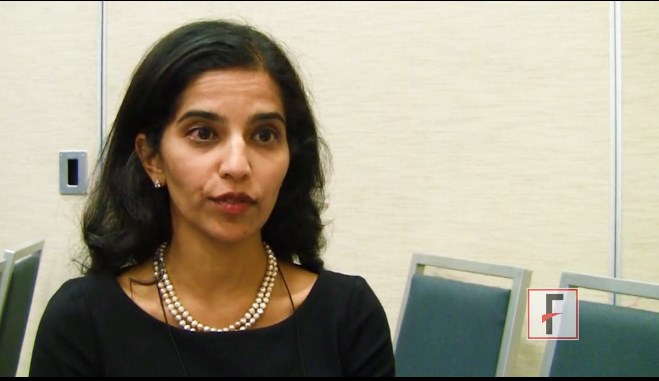
VIDEO: Chondroitin tops celecoxib in reducing knee OA structural progression
SAN FRANCISCO – Patients with symptomatic knee osteoarthritis who received pharmaceutical-grade chondroitin sulfate for 2 years lost about 20% less cartilage volume than did patients treated with celecoxib, according to a randomized, double-blind trial.
Improvements were limited to the medial tibiofemoral compartment, but even such modest structural effects can significantly decrease rates of total knee replacement over time, said lead investigator Dr. Jean-Pierre Pelletier, who presented the findings at the annual meeting of the American College of Rheumatology.
The 194 participants in the study received chondroitin sulfate, 1,200 mg a day, or celecoxib, 200 mg daily. Joint effusion and pain and function improved markedly in both groups, and they had similar rates of adverse events, said Dr. Pelletier, who is a rheumatologist at Institut de recherche en rhumatologie de Montréal. He discussed the findings and plans for future research in an exclusive video interview.
Bioibérica sponsored the study and makes the chondroitin sulfate that participants received. Dr. Pelletier and his associates had no other disclosures.
The video associated with this article is no longer available on this site. Please view all of our videos on the MDedge YouTube channel
SAN FRANCISCO – Patients with symptomatic knee osteoarthritis who received pharmaceutical-grade chondroitin sulfate for 2 years lost about 20% less cartilage volume than did patients treated with celecoxib, according to a randomized, double-blind trial.
Improvements were limited to the medial tibiofemoral compartment, but even such modest structural effects can significantly decrease rates of total knee replacement over time, said lead investigator Dr. Jean-Pierre Pelletier, who presented the findings at the annual meeting of the American College of Rheumatology.
The 194 participants in the study received chondroitin sulfate, 1,200 mg a day, or celecoxib, 200 mg daily. Joint effusion and pain and function improved markedly in both groups, and they had similar rates of adverse events, said Dr. Pelletier, who is a rheumatologist at Institut de recherche en rhumatologie de Montréal. He discussed the findings and plans for future research in an exclusive video interview.
Bioibérica sponsored the study and makes the chondroitin sulfate that participants received. Dr. Pelletier and his associates had no other disclosures.
The video associated with this article is no longer available on this site. Please view all of our videos on the MDedge YouTube channel
SAN FRANCISCO – Patients with symptomatic knee osteoarthritis who received pharmaceutical-grade chondroitin sulfate for 2 years lost about 20% less cartilage volume than did patients treated with celecoxib, according to a randomized, double-blind trial.
Improvements were limited to the medial tibiofemoral compartment, but even such modest structural effects can significantly decrease rates of total knee replacement over time, said lead investigator Dr. Jean-Pierre Pelletier, who presented the findings at the annual meeting of the American College of Rheumatology.
The 194 participants in the study received chondroitin sulfate, 1,200 mg a day, or celecoxib, 200 mg daily. Joint effusion and pain and function improved markedly in both groups, and they had similar rates of adverse events, said Dr. Pelletier, who is a rheumatologist at Institut de recherche en rhumatologie de Montréal. He discussed the findings and plans for future research in an exclusive video interview.
Bioibérica sponsored the study and makes the chondroitin sulfate that participants received. Dr. Pelletier and his associates had no other disclosures.
The video associated with this article is no longer available on this site. Please view all of our videos on the MDedge YouTube channel
AT THE ACR ANNUAL MEETING