User login
VIDEO: SPRINT results rebut JNC 8’s blood pressure targets
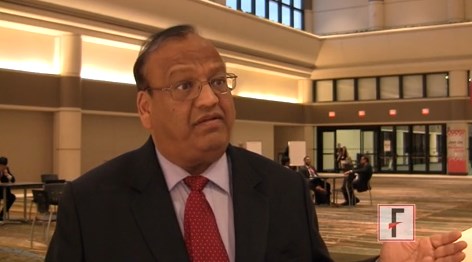
ORLANDO – SPRINT’s hypertension-treatment results serve as a rebuttal to the systolic blood pressure target of less than 150 mm Hg for older patients set less than 2 years ago by the panel originally constituted as JNC 8, Dr. Prakash Deedwania said in an interview at the American Heart Association scientific sessions.
“We were all concerned” by the high target systolic blood pressure for patients aged 60 years or older set by the panel initially organized as JNC 8, said Dr. Deedwania, professor of medicine at the University of California, San Francisco, in Fresno. The SPRINT results, which showed incremental value for a systolic blood pressure target of less than 120 mm Hg for selected patients at risk for cardiovascular disease, will influence the new hypertension-treatment guidelines now in development by a panel formed by the American College of Cardiology and American Heart Association, he said.
While applauding SPRINT (Systolic Blood Pressure Intervention Trial) and its clear outcome, Dr. Deedwania cited several cautions to keep in mind when applying the results to practice. One of his concerns centered on driving diastolic pressure low with aggressive antihypertensive treatment, especially in elderly patients with underlying coronary artery disease who could have inadequate coronary perfusion if their diastolic pressure drops too low.
Another caution was the need to reconcile the SPRINT results with those from the ACCORD blood pressure trial results, which failed to show that a systolic blood pressure target of less than 120 mm Hg led to better outcomes than did a target of less than 140 mm Hg in patients with diabetes. Although SPRINT specifically excluded patients with diabetes, a helpful analysis that the SPRINT data should allow is assessment of outcomes in patients who were obese and had hyperlipidemia as well as hypertension, defining a subgroup of patients with metabolic syndrome that is considered a prediabetes state.
Dr. Deedwania also warned that so far researchers have not reported the SPRINT results in patients with preexisting renal dysfunction compared with patients with more normal kidney function. Patients with impaired renal function can be in jeopardy if their blood pressure gets too low, he noted.
Dr. Deedwania had no disclosures.
The video associated with this article is no longer available on this site. Please view all of our videos on the MDedge YouTube channel
On Twitter @mitchelzoler
ORLANDO – SPRINT’s hypertension-treatment results serve as a rebuttal to the systolic blood pressure target of less than 150 mm Hg for older patients set less than 2 years ago by the panel originally constituted as JNC 8, Dr. Prakash Deedwania said in an interview at the American Heart Association scientific sessions.
“We were all concerned” by the high target systolic blood pressure for patients aged 60 years or older set by the panel initially organized as JNC 8, said Dr. Deedwania, professor of medicine at the University of California, San Francisco, in Fresno. The SPRINT results, which showed incremental value for a systolic blood pressure target of less than 120 mm Hg for selected patients at risk for cardiovascular disease, will influence the new hypertension-treatment guidelines now in development by a panel formed by the American College of Cardiology and American Heart Association, he said.
While applauding SPRINT (Systolic Blood Pressure Intervention Trial) and its clear outcome, Dr. Deedwania cited several cautions to keep in mind when applying the results to practice. One of his concerns centered on driving diastolic pressure low with aggressive antihypertensive treatment, especially in elderly patients with underlying coronary artery disease who could have inadequate coronary perfusion if their diastolic pressure drops too low.
Another caution was the need to reconcile the SPRINT results with those from the ACCORD blood pressure trial results, which failed to show that a systolic blood pressure target of less than 120 mm Hg led to better outcomes than did a target of less than 140 mm Hg in patients with diabetes. Although SPRINT specifically excluded patients with diabetes, a helpful analysis that the SPRINT data should allow is assessment of outcomes in patients who were obese and had hyperlipidemia as well as hypertension, defining a subgroup of patients with metabolic syndrome that is considered a prediabetes state.
Dr. Deedwania also warned that so far researchers have not reported the SPRINT results in patients with preexisting renal dysfunction compared with patients with more normal kidney function. Patients with impaired renal function can be in jeopardy if their blood pressure gets too low, he noted.
Dr. Deedwania had no disclosures.
The video associated with this article is no longer available on this site. Please view all of our videos on the MDedge YouTube channel
On Twitter @mitchelzoler
ORLANDO – SPRINT’s hypertension-treatment results serve as a rebuttal to the systolic blood pressure target of less than 150 mm Hg for older patients set less than 2 years ago by the panel originally constituted as JNC 8, Dr. Prakash Deedwania said in an interview at the American Heart Association scientific sessions.
“We were all concerned” by the high target systolic blood pressure for patients aged 60 years or older set by the panel initially organized as JNC 8, said Dr. Deedwania, professor of medicine at the University of California, San Francisco, in Fresno. The SPRINT results, which showed incremental value for a systolic blood pressure target of less than 120 mm Hg for selected patients at risk for cardiovascular disease, will influence the new hypertension-treatment guidelines now in development by a panel formed by the American College of Cardiology and American Heart Association, he said.
While applauding SPRINT (Systolic Blood Pressure Intervention Trial) and its clear outcome, Dr. Deedwania cited several cautions to keep in mind when applying the results to practice. One of his concerns centered on driving diastolic pressure low with aggressive antihypertensive treatment, especially in elderly patients with underlying coronary artery disease who could have inadequate coronary perfusion if their diastolic pressure drops too low.
Another caution was the need to reconcile the SPRINT results with those from the ACCORD blood pressure trial results, which failed to show that a systolic blood pressure target of less than 120 mm Hg led to better outcomes than did a target of less than 140 mm Hg in patients with diabetes. Although SPRINT specifically excluded patients with diabetes, a helpful analysis that the SPRINT data should allow is assessment of outcomes in patients who were obese and had hyperlipidemia as well as hypertension, defining a subgroup of patients with metabolic syndrome that is considered a prediabetes state.
Dr. Deedwania also warned that so far researchers have not reported the SPRINT results in patients with preexisting renal dysfunction compared with patients with more normal kidney function. Patients with impaired renal function can be in jeopardy if their blood pressure gets too low, he noted.
Dr. Deedwania had no disclosures.
The video associated with this article is no longer available on this site. Please view all of our videos on the MDedge YouTube channel
On Twitter @mitchelzoler
EXPERT ANALYSIS FROM THE AHA SCIENTIFIC SESSIONS
AUDIO: Do you know the most important question to ask a patient who presents with depressive symptoms?
WASHINGTON – When patients present with what you suspect is depression, how confident are you in your ability to differentiate your diagnosis from distress or demoralization? In this interview, Dr. James L. Griffith, the Leon M. Yochelson Professor and chair of the department of psychiatry and behavioral Sciences at George Washington University, Washington, discusses the clinical signs of all three, and offers his thoughts on how to confidently diagnose and treat them.
“Humans are built to heal through many redundant pathways,” Dr. Griffith says. “We don’t have to hit all of them.”
In addition to using antidepressants and forms of talk therapy, Dr. Griffith talks about how leveraging hope, a patient’s relationships, and the insights they have into their lives and ailments can lead to better outcomes. Dr. Griffith also shares the single most important question to ask patients when addressing their behavioral health needs.
On Twitter @whitneymcknight
WASHINGTON – When patients present with what you suspect is depression, how confident are you in your ability to differentiate your diagnosis from distress or demoralization? In this interview, Dr. James L. Griffith, the Leon M. Yochelson Professor and chair of the department of psychiatry and behavioral Sciences at George Washington University, Washington, discusses the clinical signs of all three, and offers his thoughts on how to confidently diagnose and treat them.
“Humans are built to heal through many redundant pathways,” Dr. Griffith says. “We don’t have to hit all of them.”
In addition to using antidepressants and forms of talk therapy, Dr. Griffith talks about how leveraging hope, a patient’s relationships, and the insights they have into their lives and ailments can lead to better outcomes. Dr. Griffith also shares the single most important question to ask patients when addressing their behavioral health needs.
On Twitter @whitneymcknight
WASHINGTON – When patients present with what you suspect is depression, how confident are you in your ability to differentiate your diagnosis from distress or demoralization? In this interview, Dr. James L. Griffith, the Leon M. Yochelson Professor and chair of the department of psychiatry and behavioral Sciences at George Washington University, Washington, discusses the clinical signs of all three, and offers his thoughts on how to confidently diagnose and treat them.
“Humans are built to heal through many redundant pathways,” Dr. Griffith says. “We don’t have to hit all of them.”
In addition to using antidepressants and forms of talk therapy, Dr. Griffith talks about how leveraging hope, a patient’s relationships, and the insights they have into their lives and ailments can lead to better outcomes. Dr. Griffith also shares the single most important question to ask patients when addressing their behavioral health needs.
On Twitter @whitneymcknight
VIDEO: U.S. hepatitis C treatment capacity falls short of need
SAN FRANCISCO – The U.S. health care system’s capacity to treat patients who need hepatitis C treatment has improved since 2014, but it still falls far short of what’s needed, according to an analysis presented at the annual meeting of the American Association for the Study of Liver Diseases.
Despite recent improvements, it would still take at least 6 years to treat the majority of patients in need of hepatitis C therapy, explained Jagpreet Chhatwal, Ph.D., of Massachusetts General Hospital, Boston. “Even in the [direct-acting antiviral] era, the burden of hepatitis C remains substantial for a disease for which we have a cure.”
To predict trends in hepatitis C treatment, Dr. Chhatwal and his colleagues developed a mathematical model of health care factors, such as changing treatment regimens, screening policies, and widened insurance coverage.
“We wanted to put all of these different components together to project how the disease burden would change in the near future, and how the disease burden would look if we increased the treatment capacity for hepatitis C,” he said.
In an interview, Dr. Chhatwal discussed his findings and how capacity changes could affect the speed with which those in need receive necessary hepatitis C treatment.
The video associated with this article is no longer available on this site. Please view all of our videos on the MDedge YouTube channel
SAN FRANCISCO – The U.S. health care system’s capacity to treat patients who need hepatitis C treatment has improved since 2014, but it still falls far short of what’s needed, according to an analysis presented at the annual meeting of the American Association for the Study of Liver Diseases.
Despite recent improvements, it would still take at least 6 years to treat the majority of patients in need of hepatitis C therapy, explained Jagpreet Chhatwal, Ph.D., of Massachusetts General Hospital, Boston. “Even in the [direct-acting antiviral] era, the burden of hepatitis C remains substantial for a disease for which we have a cure.”
To predict trends in hepatitis C treatment, Dr. Chhatwal and his colleagues developed a mathematical model of health care factors, such as changing treatment regimens, screening policies, and widened insurance coverage.
“We wanted to put all of these different components together to project how the disease burden would change in the near future, and how the disease burden would look if we increased the treatment capacity for hepatitis C,” he said.
In an interview, Dr. Chhatwal discussed his findings and how capacity changes could affect the speed with which those in need receive necessary hepatitis C treatment.
The video associated with this article is no longer available on this site. Please view all of our videos on the MDedge YouTube channel
SAN FRANCISCO – The U.S. health care system’s capacity to treat patients who need hepatitis C treatment has improved since 2014, but it still falls far short of what’s needed, according to an analysis presented at the annual meeting of the American Association for the Study of Liver Diseases.
Despite recent improvements, it would still take at least 6 years to treat the majority of patients in need of hepatitis C therapy, explained Jagpreet Chhatwal, Ph.D., of Massachusetts General Hospital, Boston. “Even in the [direct-acting antiviral] era, the burden of hepatitis C remains substantial for a disease for which we have a cure.”
To predict trends in hepatitis C treatment, Dr. Chhatwal and his colleagues developed a mathematical model of health care factors, such as changing treatment regimens, screening policies, and widened insurance coverage.
“We wanted to put all of these different components together to project how the disease burden would change in the near future, and how the disease burden would look if we increased the treatment capacity for hepatitis C,” he said.
In an interview, Dr. Chhatwal discussed his findings and how capacity changes could affect the speed with which those in need receive necessary hepatitis C treatment.
The video associated with this article is no longer available on this site. Please view all of our videos on the MDedge YouTube channel
AT THE LIVER MEETING 2015

VIDEO: 12-week HCV retreatment effective if short course fails
SAN FRANCISCO – Can patients who fail short-course treatment for hepatitis C and show high levels of resistance to an antiviral drug still respond to standard 12-week therapy?
“There were initially some data that retreatment might not be as good,” explained Dr. Eleanor Wilson of the University of Maryland, Baltimore.
In the SYNERGY trial, patients underwent short-course therapy with three or four directly acting antivirals. Those who failed the short-course therapies had the opportunity to re-enroll for 12-week standard-of-care therapy. Dr. Wilson and her colleagues studied patients who failed short-course therapy but then underwent 12-week HCV treatment.
In an interview at the annual meeting of the American Association for the Study of Liver Diseases, Dr. Wilson discussed her findings and whether retreatment for 12 weeks was effective, particularly in patients with high levels of resistance to ledipasvir.
The video associated with this article is no longer available on this site. Please view all of our videos on the MDedge YouTube channel
SAN FRANCISCO – Can patients who fail short-course treatment for hepatitis C and show high levels of resistance to an antiviral drug still respond to standard 12-week therapy?
“There were initially some data that retreatment might not be as good,” explained Dr. Eleanor Wilson of the University of Maryland, Baltimore.
In the SYNERGY trial, patients underwent short-course therapy with three or four directly acting antivirals. Those who failed the short-course therapies had the opportunity to re-enroll for 12-week standard-of-care therapy. Dr. Wilson and her colleagues studied patients who failed short-course therapy but then underwent 12-week HCV treatment.
In an interview at the annual meeting of the American Association for the Study of Liver Diseases, Dr. Wilson discussed her findings and whether retreatment for 12 weeks was effective, particularly in patients with high levels of resistance to ledipasvir.
The video associated with this article is no longer available on this site. Please view all of our videos on the MDedge YouTube channel
SAN FRANCISCO – Can patients who fail short-course treatment for hepatitis C and show high levels of resistance to an antiviral drug still respond to standard 12-week therapy?
“There were initially some data that retreatment might not be as good,” explained Dr. Eleanor Wilson of the University of Maryland, Baltimore.
In the SYNERGY trial, patients underwent short-course therapy with three or four directly acting antivirals. Those who failed the short-course therapies had the opportunity to re-enroll for 12-week standard-of-care therapy. Dr. Wilson and her colleagues studied patients who failed short-course therapy but then underwent 12-week HCV treatment.
In an interview at the annual meeting of the American Association for the Study of Liver Diseases, Dr. Wilson discussed her findings and whether retreatment for 12 weeks was effective, particularly in patients with high levels of resistance to ledipasvir.
The video associated with this article is no longer available on this site. Please view all of our videos on the MDedge YouTube channel
AT THE LIVER MEETING 2015

VIDEO: Longer HCV therapy worked even after short-term failures
SAN FRANCISCO – Patients with hepatitis C who fail short-course antiviral treatment may still be able to achieve a cure using longer-duration therapies plus ribavirin, a small study has demonstrated.
The C-SWIFT study, an earlier trial of HCV patients undergoing a 4-week, triple-therapy regimen with sofosbuvir, elbasvir, and grazoprevir, resulted in a cure rate of only about 40% – not the result for which the researchers had hoped.
So, “the idea of this current trial was to take those patients and put them on a regimen that would ultimately give them sustained virologic response or virologic cure,” explained Dr. Eric Lawitz of the Texas Liver Institute, San Antonio. “Within these shortened durations, could we re-treat the patients with the same regimen, extending therapy to 12 weeks and adding ribavirin?”
In an interview at the annual meeting of the American Association for the Study of Liver Diseases, Dr. Lawitz discussed the study’s findings and whether retreatment can deliver a cure in patients who’d earlier failed with shorter treatment regimens.
The video associated with this article is no longer available on this site. Please view all of our videos on the MDedge YouTube channel
SAN FRANCISCO – Patients with hepatitis C who fail short-course antiviral treatment may still be able to achieve a cure using longer-duration therapies plus ribavirin, a small study has demonstrated.
The C-SWIFT study, an earlier trial of HCV patients undergoing a 4-week, triple-therapy regimen with sofosbuvir, elbasvir, and grazoprevir, resulted in a cure rate of only about 40% – not the result for which the researchers had hoped.
So, “the idea of this current trial was to take those patients and put them on a regimen that would ultimately give them sustained virologic response or virologic cure,” explained Dr. Eric Lawitz of the Texas Liver Institute, San Antonio. “Within these shortened durations, could we re-treat the patients with the same regimen, extending therapy to 12 weeks and adding ribavirin?”
In an interview at the annual meeting of the American Association for the Study of Liver Diseases, Dr. Lawitz discussed the study’s findings and whether retreatment can deliver a cure in patients who’d earlier failed with shorter treatment regimens.
The video associated with this article is no longer available on this site. Please view all of our videos on the MDedge YouTube channel
SAN FRANCISCO – Patients with hepatitis C who fail short-course antiviral treatment may still be able to achieve a cure using longer-duration therapies plus ribavirin, a small study has demonstrated.
The C-SWIFT study, an earlier trial of HCV patients undergoing a 4-week, triple-therapy regimen with sofosbuvir, elbasvir, and grazoprevir, resulted in a cure rate of only about 40% – not the result for which the researchers had hoped.
So, “the idea of this current trial was to take those patients and put them on a regimen that would ultimately give them sustained virologic response or virologic cure,” explained Dr. Eric Lawitz of the Texas Liver Institute, San Antonio. “Within these shortened durations, could we re-treat the patients with the same regimen, extending therapy to 12 weeks and adding ribavirin?”
In an interview at the annual meeting of the American Association for the Study of Liver Diseases, Dr. Lawitz discussed the study’s findings and whether retreatment can deliver a cure in patients who’d earlier failed with shorter treatment regimens.
The video associated with this article is no longer available on this site. Please view all of our videos on the MDedge YouTube channel
AT THE LIVER MEETING 2015
VIDEO: Antigen test could simplify HCV screening
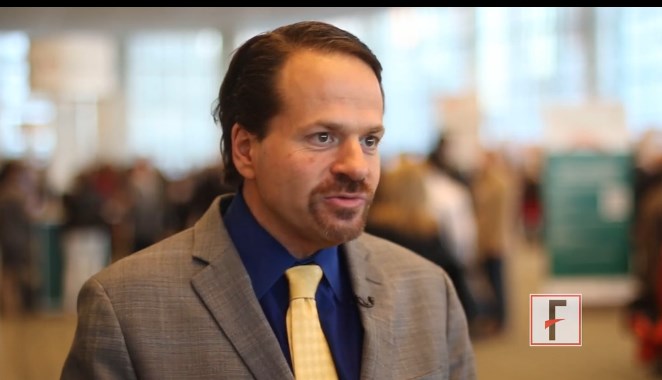
SAN FRANCISCO – Hepatitis C testing can be time consuming, expensive, and not widely available, but a new test focused on hepatitis C antigen detection might simplify the process and reduce its costs.
“Our goal was to develop a simple, one-stop test, “said Dr. Ke-Qin Hu of UC Irvine Medical Center, Orange, Calif. “Hepatitis C virus antigens would be good candidates for this.”
In an interview at the annual meeting of the American Association for the Study of Liver Diseases, Dr. Hu discussed the findings from studies of the antigen test, and the test’s potential to improve hepatitis C screening and diagnosis.
The video associated with this article is no longer available on this site. Please view all of our videos on the MDedge YouTube channel
SAN FRANCISCO – Hepatitis C testing can be time consuming, expensive, and not widely available, but a new test focused on hepatitis C antigen detection might simplify the process and reduce its costs.
“Our goal was to develop a simple, one-stop test, “said Dr. Ke-Qin Hu of UC Irvine Medical Center, Orange, Calif. “Hepatitis C virus antigens would be good candidates for this.”
In an interview at the annual meeting of the American Association for the Study of Liver Diseases, Dr. Hu discussed the findings from studies of the antigen test, and the test’s potential to improve hepatitis C screening and diagnosis.
The video associated with this article is no longer available on this site. Please view all of our videos on the MDedge YouTube channel
SAN FRANCISCO – Hepatitis C testing can be time consuming, expensive, and not widely available, but a new test focused on hepatitis C antigen detection might simplify the process and reduce its costs.
“Our goal was to develop a simple, one-stop test, “said Dr. Ke-Qin Hu of UC Irvine Medical Center, Orange, Calif. “Hepatitis C virus antigens would be good candidates for this.”
In an interview at the annual meeting of the American Association for the Study of Liver Diseases, Dr. Hu discussed the findings from studies of the antigen test, and the test’s potential to improve hepatitis C screening and diagnosis.
The video associated with this article is no longer available on this site. Please view all of our videos on the MDedge YouTube channel
AT THE LIVER MEETING 2015

VIDEO: Inappropriate hepatitis A, B tests may be widespread in hospitals
SAN FRANCISCO – A majority of inpatients with suspected acute hepatitis A and acute hepatitis B underwent inappropriate ordering of lab tests for those conditions, a study in one U.S. medical center showed.
“We looked at all the patients that came into our hospital who had acute hepatitis A or acute hepatitis B panels ordered,” explained Dr. Kamran Hussaini of Saint Louis (Mo.) University.
How frequently were those labs ordered inappropriately? “What we found was that the majority of patients who had acute hepatitis A and acute hepatitis B labs had ALT [alanine aminotransferase] and AST [aspartate aminotransferase] levels that were below 100,” Dr. Hussaini said.
In an interview at the annual meeting of the American Association for the Study of Liver Diseases, Dr. Hussaini discussed the study’s findings, what may be driving physicians to order inappropriate and costly hepatitis testing, and which strategies could reduce those trends.
The video associated with this article is no longer available on this site. Please view all of our videos on the MDedge YouTube channel
SAN FRANCISCO – A majority of inpatients with suspected acute hepatitis A and acute hepatitis B underwent inappropriate ordering of lab tests for those conditions, a study in one U.S. medical center showed.
“We looked at all the patients that came into our hospital who had acute hepatitis A or acute hepatitis B panels ordered,” explained Dr. Kamran Hussaini of Saint Louis (Mo.) University.
How frequently were those labs ordered inappropriately? “What we found was that the majority of patients who had acute hepatitis A and acute hepatitis B labs had ALT [alanine aminotransferase] and AST [aspartate aminotransferase] levels that were below 100,” Dr. Hussaini said.
In an interview at the annual meeting of the American Association for the Study of Liver Diseases, Dr. Hussaini discussed the study’s findings, what may be driving physicians to order inappropriate and costly hepatitis testing, and which strategies could reduce those trends.
The video associated with this article is no longer available on this site. Please view all of our videos on the MDedge YouTube channel
SAN FRANCISCO – A majority of inpatients with suspected acute hepatitis A and acute hepatitis B underwent inappropriate ordering of lab tests for those conditions, a study in one U.S. medical center showed.
“We looked at all the patients that came into our hospital who had acute hepatitis A or acute hepatitis B panels ordered,” explained Dr. Kamran Hussaini of Saint Louis (Mo.) University.
How frequently were those labs ordered inappropriately? “What we found was that the majority of patients who had acute hepatitis A and acute hepatitis B labs had ALT [alanine aminotransferase] and AST [aspartate aminotransferase] levels that were below 100,” Dr. Hussaini said.
In an interview at the annual meeting of the American Association for the Study of Liver Diseases, Dr. Hussaini discussed the study’s findings, what may be driving physicians to order inappropriate and costly hepatitis testing, and which strategies could reduce those trends.
The video associated with this article is no longer available on this site. Please view all of our videos on the MDedge YouTube channel
AT THE LIVER MEETING 2015

VIDEO: SPRINT is practice changer; good news for elderly patients
ORLANDO – Results from the SPRINT hypertension trial are “truly practice changing,” by “giving us definitive clinical-trial evidence that an additional 15-18 mm Hg lowering of systolic blood pressure, aiming for a target of less than 120 mm Hg, translates into” a significantly reduced composite cardiovascular-event endpoint as well as significantly reduced all-cause death, Dr. Gregg C. Fonarow said in an interview at the American Heart Association scientific sessions.
The significant, 27% relative reduction in all-cause mortality in SPRINT in patients targeted to a systolic blood pressure of less than 120 mm Hg was especially notable because an all-cause mortality benefit is not typically seen with other interventions, and because it “ultimately demonstrates that the benefits clearly outweigh the potential risks,” said Dr. Fonarow, professor and associate chief of cardiology at the University of California, Los Angeles.
Dr. Fonarow acknowledged that results from SPRINT showed a more aggressive regimen also produced higher rates of certain important adverse effects, such as acute kidney injury. But the large incremental benefit in total mortality during the greater than 3 years of average follow-up showed the overwhelming net benefit from more aggressive antihypertensive treatment.
Less clear is whether the SPRINT results say anything about initiating antihypertensive treatment in a patients who resemble those enrolled in the trial and have an untreated systolic blood pressure of 130-139 mm Hg. While people like these could enter SPRINT, they constituted just under 10% of the enrolled population.
“The vast majority of patients in the trial met the conventional clinical definition of hypertension, with a systolic blood pressure of 140 mm Hg or greater and already on some treatment, and treating them to a systolic pressure of less than 120 mm Hg, usually by adding just one antihypertensive drug, translated into substantial clinical benefit,” Dr. Fonarow concluded. He also noted that a large subgroup, about 28% of enrolled patients, were at least 75 years old, and in these patients the more aggressive regimen was as safe and effective as in the entire study. “We have a spectacular result” for elderly patients, he said.
Dr. Fonarow had no disclosures.
The video associated with this article is no longer available on this site. Please view all of our videos on the MDedge YouTube channel
On Twitter @mitchelzoler
ORLANDO – Results from the SPRINT hypertension trial are “truly practice changing,” by “giving us definitive clinical-trial evidence that an additional 15-18 mm Hg lowering of systolic blood pressure, aiming for a target of less than 120 mm Hg, translates into” a significantly reduced composite cardiovascular-event endpoint as well as significantly reduced all-cause death, Dr. Gregg C. Fonarow said in an interview at the American Heart Association scientific sessions.
The significant, 27% relative reduction in all-cause mortality in SPRINT in patients targeted to a systolic blood pressure of less than 120 mm Hg was especially notable because an all-cause mortality benefit is not typically seen with other interventions, and because it “ultimately demonstrates that the benefits clearly outweigh the potential risks,” said Dr. Fonarow, professor and associate chief of cardiology at the University of California, Los Angeles.
Dr. Fonarow acknowledged that results from SPRINT showed a more aggressive regimen also produced higher rates of certain important adverse effects, such as acute kidney injury. But the large incremental benefit in total mortality during the greater than 3 years of average follow-up showed the overwhelming net benefit from more aggressive antihypertensive treatment.
Less clear is whether the SPRINT results say anything about initiating antihypertensive treatment in a patients who resemble those enrolled in the trial and have an untreated systolic blood pressure of 130-139 mm Hg. While people like these could enter SPRINT, they constituted just under 10% of the enrolled population.
“The vast majority of patients in the trial met the conventional clinical definition of hypertension, with a systolic blood pressure of 140 mm Hg or greater and already on some treatment, and treating them to a systolic pressure of less than 120 mm Hg, usually by adding just one antihypertensive drug, translated into substantial clinical benefit,” Dr. Fonarow concluded. He also noted that a large subgroup, about 28% of enrolled patients, were at least 75 years old, and in these patients the more aggressive regimen was as safe and effective as in the entire study. “We have a spectacular result” for elderly patients, he said.
Dr. Fonarow had no disclosures.
The video associated with this article is no longer available on this site. Please view all of our videos on the MDedge YouTube channel
On Twitter @mitchelzoler
ORLANDO – Results from the SPRINT hypertension trial are “truly practice changing,” by “giving us definitive clinical-trial evidence that an additional 15-18 mm Hg lowering of systolic blood pressure, aiming for a target of less than 120 mm Hg, translates into” a significantly reduced composite cardiovascular-event endpoint as well as significantly reduced all-cause death, Dr. Gregg C. Fonarow said in an interview at the American Heart Association scientific sessions.
The significant, 27% relative reduction in all-cause mortality in SPRINT in patients targeted to a systolic blood pressure of less than 120 mm Hg was especially notable because an all-cause mortality benefit is not typically seen with other interventions, and because it “ultimately demonstrates that the benefits clearly outweigh the potential risks,” said Dr. Fonarow, professor and associate chief of cardiology at the University of California, Los Angeles.
Dr. Fonarow acknowledged that results from SPRINT showed a more aggressive regimen also produced higher rates of certain important adverse effects, such as acute kidney injury. But the large incremental benefit in total mortality during the greater than 3 years of average follow-up showed the overwhelming net benefit from more aggressive antihypertensive treatment.
Less clear is whether the SPRINT results say anything about initiating antihypertensive treatment in a patients who resemble those enrolled in the trial and have an untreated systolic blood pressure of 130-139 mm Hg. While people like these could enter SPRINT, they constituted just under 10% of the enrolled population.
“The vast majority of patients in the trial met the conventional clinical definition of hypertension, with a systolic blood pressure of 140 mm Hg or greater and already on some treatment, and treating them to a systolic pressure of less than 120 mm Hg, usually by adding just one antihypertensive drug, translated into substantial clinical benefit,” Dr. Fonarow concluded. He also noted that a large subgroup, about 28% of enrolled patients, were at least 75 years old, and in these patients the more aggressive regimen was as safe and effective as in the entire study. “We have a spectacular result” for elderly patients, he said.
Dr. Fonarow had no disclosures.
The video associated with this article is no longer available on this site. Please view all of our videos on the MDedge YouTube channel
On Twitter @mitchelzoler
EXPERT ANALYSIS FROM THE AHA SCIENTIFIC SESSIONS
Key clinical point: SPRINT results showed significant added benefit from treating selected patients with cardiovascular disease risk to a systolic blood pressure of less than 120 mm Hg.

VIDEO: Survival benefits, relapse risks in liver transplant for alcoholic hepatitis
SAN FRANCISCO – Are policies requiring 6 months of abstinence before liver transplantation in severe alcoholic hepatitis justified, given the potential survival advantage that earlier transplantation offers?
Alcoholic hepatitis has an “exceptionally high mortality rate,” noted Dr. Brian Lee of Johns Hopkins University, Baltimore. But a policy requiring 6 months of abstinence before liver transplantation in patients with severe alcoholic hepatitis “is possibly even causing a precondition that’s death for these patients.”
In an interview at the annual meeting of the American Association for the Study of Liver Diseases, Dr. Lee discussed a study in which early liver transplantation in 40 patients with severe alcoholic hepatitis achieved a 100% survival rate at 1 year, with a 22% alcohol relapse rate.
The video associated with this article is no longer available on this site. Please view all of our videos on the MDedge YouTube channel
SAN FRANCISCO – Are policies requiring 6 months of abstinence before liver transplantation in severe alcoholic hepatitis justified, given the potential survival advantage that earlier transplantation offers?
Alcoholic hepatitis has an “exceptionally high mortality rate,” noted Dr. Brian Lee of Johns Hopkins University, Baltimore. But a policy requiring 6 months of abstinence before liver transplantation in patients with severe alcoholic hepatitis “is possibly even causing a precondition that’s death for these patients.”
In an interview at the annual meeting of the American Association for the Study of Liver Diseases, Dr. Lee discussed a study in which early liver transplantation in 40 patients with severe alcoholic hepatitis achieved a 100% survival rate at 1 year, with a 22% alcohol relapse rate.
The video associated with this article is no longer available on this site. Please view all of our videos on the MDedge YouTube channel
SAN FRANCISCO – Are policies requiring 6 months of abstinence before liver transplantation in severe alcoholic hepatitis justified, given the potential survival advantage that earlier transplantation offers?
Alcoholic hepatitis has an “exceptionally high mortality rate,” noted Dr. Brian Lee of Johns Hopkins University, Baltimore. But a policy requiring 6 months of abstinence before liver transplantation in patients with severe alcoholic hepatitis “is possibly even causing a precondition that’s death for these patients.”
In an interview at the annual meeting of the American Association for the Study of Liver Diseases, Dr. Lee discussed a study in which early liver transplantation in 40 patients with severe alcoholic hepatitis achieved a 100% survival rate at 1 year, with a 22% alcohol relapse rate.
The video associated with this article is no longer available on this site. Please view all of our videos on the MDedge YouTube channel
AT THE LIVER MEETING 2015

VIDEO: Ledipasvir/sofosbuvir highly effective in treatment-naive HCV GT1
SAN FRANCISCO – Combination treatment with ledipasvir/sofosbuvir is highly effective for treatment-naive hepatitis C virus genotype 1 patients in routine medical practices, according to findings from a large observational cohort study.
Of 4,365 treatment-naive genotype 1 hepatitis C virus (GT1 HCV)–infected patients identified from the Veterans Affairs Clinical Case Registries who initiated 8 or 12 weeks of ledipasvir/sofosbuvir (LDV/SOF) with or without ribavirin, more than 90% had undetectable levels of HCV RNA at the end of treatment, Dr. Lisa I. Backus of the VA Palo Alto (Calif.) Health Care System reported at the annual meeting of the American Association for the Study of Liver Diseases.
Sustained virologic response rates were “amazingly high” in this large, real-world cohort, Dr. Backus said, explaining that, historically, the veteran population has had substantially lower response rates than those seen in clinical trials.
“To our surprise and great delight, the SVR rates we’re seeing … nearly match those seen in clinical trials,” she said.
In this interview at the meeting, she discusses her findings and some of the clinical implications, including the possibility that 8 weeks of treatment may be more cost-effective than 12 weeks in non-cirrhotic treatment-naive HCV GT1 patients.
The video associated with this article is no longer available on this site. Please view all of our videos on the MDedge YouTube channel
SAN FRANCISCO – Combination treatment with ledipasvir/sofosbuvir is highly effective for treatment-naive hepatitis C virus genotype 1 patients in routine medical practices, according to findings from a large observational cohort study.
Of 4,365 treatment-naive genotype 1 hepatitis C virus (GT1 HCV)–infected patients identified from the Veterans Affairs Clinical Case Registries who initiated 8 or 12 weeks of ledipasvir/sofosbuvir (LDV/SOF) with or without ribavirin, more than 90% had undetectable levels of HCV RNA at the end of treatment, Dr. Lisa I. Backus of the VA Palo Alto (Calif.) Health Care System reported at the annual meeting of the American Association for the Study of Liver Diseases.
Sustained virologic response rates were “amazingly high” in this large, real-world cohort, Dr. Backus said, explaining that, historically, the veteran population has had substantially lower response rates than those seen in clinical trials.
“To our surprise and great delight, the SVR rates we’re seeing … nearly match those seen in clinical trials,” she said.
In this interview at the meeting, she discusses her findings and some of the clinical implications, including the possibility that 8 weeks of treatment may be more cost-effective than 12 weeks in non-cirrhotic treatment-naive HCV GT1 patients.
The video associated with this article is no longer available on this site. Please view all of our videos on the MDedge YouTube channel
SAN FRANCISCO – Combination treatment with ledipasvir/sofosbuvir is highly effective for treatment-naive hepatitis C virus genotype 1 patients in routine medical practices, according to findings from a large observational cohort study.
Of 4,365 treatment-naive genotype 1 hepatitis C virus (GT1 HCV)–infected patients identified from the Veterans Affairs Clinical Case Registries who initiated 8 or 12 weeks of ledipasvir/sofosbuvir (LDV/SOF) with or without ribavirin, more than 90% had undetectable levels of HCV RNA at the end of treatment, Dr. Lisa I. Backus of the VA Palo Alto (Calif.) Health Care System reported at the annual meeting of the American Association for the Study of Liver Diseases.
Sustained virologic response rates were “amazingly high” in this large, real-world cohort, Dr. Backus said, explaining that, historically, the veteran population has had substantially lower response rates than those seen in clinical trials.
“To our surprise and great delight, the SVR rates we’re seeing … nearly match those seen in clinical trials,” she said.
In this interview at the meeting, she discusses her findings and some of the clinical implications, including the possibility that 8 weeks of treatment may be more cost-effective than 12 weeks in non-cirrhotic treatment-naive HCV GT1 patients.
The video associated with this article is no longer available on this site. Please view all of our videos on the MDedge YouTube channel
AT THE LIVER MEETING 2015