User login
Dr. Topol talks: COVID-19 variants are innocent until proven guilty
Editor in Chief of this news organization Eric Topol, MD, founder and director of the Scripps Research Translational Institute in La Jolla, Calif., and professor of molecular medicine, has been closely following COVID-19 data since the pandemic began. He spoke with writer Miriam E. Tucker about the latest on SARS-CoV-2 variants and their impact on vaccine efficacy. The conversation serves as a follow-up to his April 13, 2021, New York Times opinion piece, in which he advised readers that “all variants are innocent until proven guilty.”
You have expressed overall confidence in the efficacy of the vaccines thus far despite the emergence of variants, with some caveats. How do you see the current situation?
The Centers for Disease Control and Prevention has designated five “variants of concern,” but only three of them are real concerns – B.1.1.7, first detected in the United Kingdom; P.1, in Brazil and Japan; and B.1.351, in South Africa. Yet, all three are susceptible to our current vaccines.
The U.K. B.1.1.7 is the worst variant of all because it’s hypertransmissible, so I call it a “superspreader strain.” It also causes more severe illness independent of the spread, so it’s a double whammy. It’s clear that it also causes more deaths. The only arguable point is whether it’s 30% or 50% more deaths, but regardless, it’s more lethal and more transmissible.
The B.1.1.7 is going to be the dominant strain worldwide. It could develop new mutations within it that could come back to haunt us. We must keep watch.
But for now, it’s fully responsive to all the vaccines, which is great because if we didn’t have them, we wouldn’t have gotten through this U.S. pandemic like we have, and neither would Israel and the United Kingdom and other countries that have been able to get out of the crisis. We met the enemy and put it in check.
As for the South Africa variant of concern, B.1.351, we just got some encouraging news showing that it›s very responsive to the Pfizer/BioNTech mRNA vaccine in large numbers of people. The study was conducted in Qatar following that country’s mass immunization campaign in which a total of 385,853 people had received at least one vaccine dose and 265,410 had completed the two doses as of March 31, 2021.
At 2 weeks past the second dose, the vaccine was 75% effective at preventing any documented infection with the B.1.351 variant and 89.5% effective against B.1.1.7. The vaccine’s effectiveness against severe, critical, or fatal COVID-19 was greater than 97.4% for all circulating strains in Qatar, where B.1.1.7 and B.1.351 are most prominent.
We also know that B.1.351 is very responsive to the Johnson & Johnson vaccine and the Novavax [vaccine in development] to a lesser degree. It is the most immune-evading variant we’ve seen thus far, with the highest likelihood of providing some vaccine resistance, yet not enough to interfere with vaccination campaigns. So that’s great news.
The caveats here are that you definitely need two doses of the mRNA vaccines to combat the B.1.351 variant. Also, the AstraZeneca vaccine failed to prevent it in South Africa. However, that study was hard to judge because it was underpowered for number of people with mild infections. So, it didn’t look as if it had any efficacy, but maybe it would if tested in a real trial.
The P.1 (Brazil) variant is the second-highest concern after B.1.1.7 because it’s the only one in the United States that’s still headed up. It seems to be competing a bit with B.1.1.7 here. We know it was associated with the crisis in Brazil, in Chile, and some other South American countries. It has some immune escape, but not as bad as B.1.351. It also appears to have somewhat greater transmissibility but not as much as B.1.1.7.
With P.1, we just don’t know enough yet. It was difficult to assess in Brazil because they were in the midst of a catastrophe – like India is now – and you don’t know how much of it is dragged by the catastrophe vs driving it.
We have to respond to P.1 carefully. There are some good data that it does respond to the Chinese vaccine Sinovac and the AstraZeneca vaccine, and it appears to respond to the others as well, based on serum studies. So it doesn’t look like vaccines will be the worry with this variant. Rather, it could be competing with B.1.1.7 and could lead to breakthrough infections in vaccinated people or reinfections in unvaccinated people who had COVID-19. We need several more weeks to sort it out.
Although the B.1.427 and B.1.429 variants initially seen in California remain on the CDC’s concern list, I’m not worried about them.
You mentioned the current COVID-19 crisis in India, where a new variant has been described as a “double mutant,” but on Twitter you called it a “scariant.” Why?
First of all, the B.1.617 variant isn’t a double mutant. It has 15 mutations. It’s a stupid term, focusing on two mutations which largely have been put aside as to concern. One of them is the L452R, which is the same as one of the California variants, and that hasn’t proved to be particularly serious or concerning. The other is the 484Q, and it’s not clear whether that has any function.
The B.1.617 is not the driver of the catastrophe in India. It may be contributing a small amount, but it has been overhyped as the double mutant that’s causing it all. Adding to that are what I call “scariant” headlines here in the United States when a few cases of that variant have been seen.
I coined the term scariant in early February because it was a pretty clear trend. People don’t know what variants are. They know a little bit about mutations but not variants, and they’re scared. A few variants are concerning, but we keep learning more and more things to decrease the concern. That’s why I wrote the New York Times op-ed, to try to provide some reassurance, since there’s such paranoia.
Do you think booster vaccinations will be necessary? If so, will those be of the original vaccines or new ones that incorporate the variants?
As we go forward, there’s still potential for new variants that we haven’t seen yet that combine the worst of all features – transmissibility and immune evasion – especially since we have a world where COVID-19 is unchecked. So, we’re not out of it yet, but at least for the moment, we have vaccines that are capable of protecting against all variants.
In most people, the immune response against SARS-CoV-2 is very durable and strong and may well last for years. With the most closely related SARS-CoV-1, people still had immune responses up to 18 years later. However, some people will have less robust vaccine responses, including the elderly and the immunocompromised. If they don’t have great responses to the vaccine to start with, over time they’re likely to become more vulnerable, especially if they’re exposed to the variants with some degree of immune evasion.
I think we need to study these individuals post vaccination. A lot of people fit into those categories, including seniors, people being treated for cancer or autoimmune conditions, or post organ transplant. We could set up a prospective study to see whether they develop symptomatic COVID-19 and if so, from what – the original strain, B.1.1.7, or the newer variants.
That’s where I think booster shots may be needed. They may not be necessary across the board, but perhaps just in these special subgroups.
All of the current vaccines can be tweaked to include new variants, but the need for that is uncertain as of now. Moderna is working on a so-called bivalent vaccine that includes the original SARS-CoV-2 strain plus the B.1.351 variant, but it isn’t clear that that’s going to be necessary.
Currently, at least 200 COVID-19 vaccines are in development. There will be vaccines you can inhale, room temperature mRNA vaccines, and potentially even oral vaccines.
In the near future, Novavax is close, and there will likely be a two-dose Johnson & Johnson version that has the same potency as the mRNA vaccines. There are a lot of moving parts here.
There may be a step down in efficacy from mRNA to the others, though, and that shouldn’t be discounted. All of the available vaccines so far protect very well against severe disease and death, but some are less effective against mild to moderate infections, which may then lead to long COVID. We don’t yet know whether those who get mild infection post vaccination can still get long COVID.
What do you think it will take to achieve herd immunity?
I prefer the term “containment.” It’s quantitative. If you get to an infection rate of less than 1 in 100,000 people, as they’ve done in Israel, with 0.8 per 100,000, then you have the virus in check, and there will be very little spread when it’s at that controlled rate, with no outbreaks. The United States is currently at about 15 per 100,000. California is at 4. That still has to get lower.
It will be a challenge to get to President Biden’s goal of having 70% of U.S. adults given at least one dose by July 4. We’re now at about 57%. To get that next 13% of adults is going to take an all-out effort: mobile units, going to homes, making it ultraconvenient, education for people with safety concerns, incentivization, and days off.
We also need to get employers, universities, and health systems to get to the mandatory level. We haven’t done that yet. Some universities have mandated it for students, faculty, and staff. We need it in more health care systems. Right now, we only have a couple. We mandate flu shots, and flu is nothing, compared with COVID-19. And the COVID-19 vaccine is far more efficacious – flu shots are 40% efficacious, while these are 95%. COVID-19 is a tenfold more lethal and serious disease, and much more spreadable.
People are using the lack of full licensure by the Food and Drug Administration – as opposed to emergency use authorization – as an excuse not to get vaccinated. A biologics license application takes time to approve. Meanwhile, we have hundreds of millions of doses that have been well tolerated and incredibly effective.
Another aspect to consider regarding containment is that about 110 million Americans have already had COVID-19, even though only about 30 million cases have been confirmed. Most of these people have immune protection, although it’s not as good as if they have one vaccine dose. But they have enough protection to be part of the story here of the wall against COVID-19 and will help us get through this.
That’s a silver lining of having an unchecked epidemic for the entire year of 2020. The good part is that’s helping to get us to achieve an incredible level of containment when we haven’t even been close. Right now, we’re as good as the country has been in the pandemic, but we still have a long gap to get down to that 1 per 100,000. That’s what we should be working toward, and we can get there.
A version of this article first appeared on Medscape.com.
Editor in Chief of this news organization Eric Topol, MD, founder and director of the Scripps Research Translational Institute in La Jolla, Calif., and professor of molecular medicine, has been closely following COVID-19 data since the pandemic began. He spoke with writer Miriam E. Tucker about the latest on SARS-CoV-2 variants and their impact on vaccine efficacy. The conversation serves as a follow-up to his April 13, 2021, New York Times opinion piece, in which he advised readers that “all variants are innocent until proven guilty.”
You have expressed overall confidence in the efficacy of the vaccines thus far despite the emergence of variants, with some caveats. How do you see the current situation?
The Centers for Disease Control and Prevention has designated five “variants of concern,” but only three of them are real concerns – B.1.1.7, first detected in the United Kingdom; P.1, in Brazil and Japan; and B.1.351, in South Africa. Yet, all three are susceptible to our current vaccines.
The U.K. B.1.1.7 is the worst variant of all because it’s hypertransmissible, so I call it a “superspreader strain.” It also causes more severe illness independent of the spread, so it’s a double whammy. It’s clear that it also causes more deaths. The only arguable point is whether it’s 30% or 50% more deaths, but regardless, it’s more lethal and more transmissible.
The B.1.1.7 is going to be the dominant strain worldwide. It could develop new mutations within it that could come back to haunt us. We must keep watch.
But for now, it’s fully responsive to all the vaccines, which is great because if we didn’t have them, we wouldn’t have gotten through this U.S. pandemic like we have, and neither would Israel and the United Kingdom and other countries that have been able to get out of the crisis. We met the enemy and put it in check.
As for the South Africa variant of concern, B.1.351, we just got some encouraging news showing that it›s very responsive to the Pfizer/BioNTech mRNA vaccine in large numbers of people. The study was conducted in Qatar following that country’s mass immunization campaign in which a total of 385,853 people had received at least one vaccine dose and 265,410 had completed the two doses as of March 31, 2021.
At 2 weeks past the second dose, the vaccine was 75% effective at preventing any documented infection with the B.1.351 variant and 89.5% effective against B.1.1.7. The vaccine’s effectiveness against severe, critical, or fatal COVID-19 was greater than 97.4% for all circulating strains in Qatar, where B.1.1.7 and B.1.351 are most prominent.
We also know that B.1.351 is very responsive to the Johnson & Johnson vaccine and the Novavax [vaccine in development] to a lesser degree. It is the most immune-evading variant we’ve seen thus far, with the highest likelihood of providing some vaccine resistance, yet not enough to interfere with vaccination campaigns. So that’s great news.
The caveats here are that you definitely need two doses of the mRNA vaccines to combat the B.1.351 variant. Also, the AstraZeneca vaccine failed to prevent it in South Africa. However, that study was hard to judge because it was underpowered for number of people with mild infections. So, it didn’t look as if it had any efficacy, but maybe it would if tested in a real trial.
The P.1 (Brazil) variant is the second-highest concern after B.1.1.7 because it’s the only one in the United States that’s still headed up. It seems to be competing a bit with B.1.1.7 here. We know it was associated with the crisis in Brazil, in Chile, and some other South American countries. It has some immune escape, but not as bad as B.1.351. It also appears to have somewhat greater transmissibility but not as much as B.1.1.7.
With P.1, we just don’t know enough yet. It was difficult to assess in Brazil because they were in the midst of a catastrophe – like India is now – and you don’t know how much of it is dragged by the catastrophe vs driving it.
We have to respond to P.1 carefully. There are some good data that it does respond to the Chinese vaccine Sinovac and the AstraZeneca vaccine, and it appears to respond to the others as well, based on serum studies. So it doesn’t look like vaccines will be the worry with this variant. Rather, it could be competing with B.1.1.7 and could lead to breakthrough infections in vaccinated people or reinfections in unvaccinated people who had COVID-19. We need several more weeks to sort it out.
Although the B.1.427 and B.1.429 variants initially seen in California remain on the CDC’s concern list, I’m not worried about them.
You mentioned the current COVID-19 crisis in India, where a new variant has been described as a “double mutant,” but on Twitter you called it a “scariant.” Why?
First of all, the B.1.617 variant isn’t a double mutant. It has 15 mutations. It’s a stupid term, focusing on two mutations which largely have been put aside as to concern. One of them is the L452R, which is the same as one of the California variants, and that hasn’t proved to be particularly serious or concerning. The other is the 484Q, and it’s not clear whether that has any function.
The B.1.617 is not the driver of the catastrophe in India. It may be contributing a small amount, but it has been overhyped as the double mutant that’s causing it all. Adding to that are what I call “scariant” headlines here in the United States when a few cases of that variant have been seen.
I coined the term scariant in early February because it was a pretty clear trend. People don’t know what variants are. They know a little bit about mutations but not variants, and they’re scared. A few variants are concerning, but we keep learning more and more things to decrease the concern. That’s why I wrote the New York Times op-ed, to try to provide some reassurance, since there’s such paranoia.
Do you think booster vaccinations will be necessary? If so, will those be of the original vaccines or new ones that incorporate the variants?
As we go forward, there’s still potential for new variants that we haven’t seen yet that combine the worst of all features – transmissibility and immune evasion – especially since we have a world where COVID-19 is unchecked. So, we’re not out of it yet, but at least for the moment, we have vaccines that are capable of protecting against all variants.
In most people, the immune response against SARS-CoV-2 is very durable and strong and may well last for years. With the most closely related SARS-CoV-1, people still had immune responses up to 18 years later. However, some people will have less robust vaccine responses, including the elderly and the immunocompromised. If they don’t have great responses to the vaccine to start with, over time they’re likely to become more vulnerable, especially if they’re exposed to the variants with some degree of immune evasion.
I think we need to study these individuals post vaccination. A lot of people fit into those categories, including seniors, people being treated for cancer or autoimmune conditions, or post organ transplant. We could set up a prospective study to see whether they develop symptomatic COVID-19 and if so, from what – the original strain, B.1.1.7, or the newer variants.
That’s where I think booster shots may be needed. They may not be necessary across the board, but perhaps just in these special subgroups.
All of the current vaccines can be tweaked to include new variants, but the need for that is uncertain as of now. Moderna is working on a so-called bivalent vaccine that includes the original SARS-CoV-2 strain plus the B.1.351 variant, but it isn’t clear that that’s going to be necessary.
Currently, at least 200 COVID-19 vaccines are in development. There will be vaccines you can inhale, room temperature mRNA vaccines, and potentially even oral vaccines.
In the near future, Novavax is close, and there will likely be a two-dose Johnson & Johnson version that has the same potency as the mRNA vaccines. There are a lot of moving parts here.
There may be a step down in efficacy from mRNA to the others, though, and that shouldn’t be discounted. All of the available vaccines so far protect very well against severe disease and death, but some are less effective against mild to moderate infections, which may then lead to long COVID. We don’t yet know whether those who get mild infection post vaccination can still get long COVID.
What do you think it will take to achieve herd immunity?
I prefer the term “containment.” It’s quantitative. If you get to an infection rate of less than 1 in 100,000 people, as they’ve done in Israel, with 0.8 per 100,000, then you have the virus in check, and there will be very little spread when it’s at that controlled rate, with no outbreaks. The United States is currently at about 15 per 100,000. California is at 4. That still has to get lower.
It will be a challenge to get to President Biden’s goal of having 70% of U.S. adults given at least one dose by July 4. We’re now at about 57%. To get that next 13% of adults is going to take an all-out effort: mobile units, going to homes, making it ultraconvenient, education for people with safety concerns, incentivization, and days off.
We also need to get employers, universities, and health systems to get to the mandatory level. We haven’t done that yet. Some universities have mandated it for students, faculty, and staff. We need it in more health care systems. Right now, we only have a couple. We mandate flu shots, and flu is nothing, compared with COVID-19. And the COVID-19 vaccine is far more efficacious – flu shots are 40% efficacious, while these are 95%. COVID-19 is a tenfold more lethal and serious disease, and much more spreadable.
People are using the lack of full licensure by the Food and Drug Administration – as opposed to emergency use authorization – as an excuse not to get vaccinated. A biologics license application takes time to approve. Meanwhile, we have hundreds of millions of doses that have been well tolerated and incredibly effective.
Another aspect to consider regarding containment is that about 110 million Americans have already had COVID-19, even though only about 30 million cases have been confirmed. Most of these people have immune protection, although it’s not as good as if they have one vaccine dose. But they have enough protection to be part of the story here of the wall against COVID-19 and will help us get through this.
That’s a silver lining of having an unchecked epidemic for the entire year of 2020. The good part is that’s helping to get us to achieve an incredible level of containment when we haven’t even been close. Right now, we’re as good as the country has been in the pandemic, but we still have a long gap to get down to that 1 per 100,000. That’s what we should be working toward, and we can get there.
A version of this article first appeared on Medscape.com.
Editor in Chief of this news organization Eric Topol, MD, founder and director of the Scripps Research Translational Institute in La Jolla, Calif., and professor of molecular medicine, has been closely following COVID-19 data since the pandemic began. He spoke with writer Miriam E. Tucker about the latest on SARS-CoV-2 variants and their impact on vaccine efficacy. The conversation serves as a follow-up to his April 13, 2021, New York Times opinion piece, in which he advised readers that “all variants are innocent until proven guilty.”
You have expressed overall confidence in the efficacy of the vaccines thus far despite the emergence of variants, with some caveats. How do you see the current situation?
The Centers for Disease Control and Prevention has designated five “variants of concern,” but only three of them are real concerns – B.1.1.7, first detected in the United Kingdom; P.1, in Brazil and Japan; and B.1.351, in South Africa. Yet, all three are susceptible to our current vaccines.
The U.K. B.1.1.7 is the worst variant of all because it’s hypertransmissible, so I call it a “superspreader strain.” It also causes more severe illness independent of the spread, so it’s a double whammy. It’s clear that it also causes more deaths. The only arguable point is whether it’s 30% or 50% more deaths, but regardless, it’s more lethal and more transmissible.
The B.1.1.7 is going to be the dominant strain worldwide. It could develop new mutations within it that could come back to haunt us. We must keep watch.
But for now, it’s fully responsive to all the vaccines, which is great because if we didn’t have them, we wouldn’t have gotten through this U.S. pandemic like we have, and neither would Israel and the United Kingdom and other countries that have been able to get out of the crisis. We met the enemy and put it in check.
As for the South Africa variant of concern, B.1.351, we just got some encouraging news showing that it›s very responsive to the Pfizer/BioNTech mRNA vaccine in large numbers of people. The study was conducted in Qatar following that country’s mass immunization campaign in which a total of 385,853 people had received at least one vaccine dose and 265,410 had completed the two doses as of March 31, 2021.
At 2 weeks past the second dose, the vaccine was 75% effective at preventing any documented infection with the B.1.351 variant and 89.5% effective against B.1.1.7. The vaccine’s effectiveness against severe, critical, or fatal COVID-19 was greater than 97.4% for all circulating strains in Qatar, where B.1.1.7 and B.1.351 are most prominent.
We also know that B.1.351 is very responsive to the Johnson & Johnson vaccine and the Novavax [vaccine in development] to a lesser degree. It is the most immune-evading variant we’ve seen thus far, with the highest likelihood of providing some vaccine resistance, yet not enough to interfere with vaccination campaigns. So that’s great news.
The caveats here are that you definitely need two doses of the mRNA vaccines to combat the B.1.351 variant. Also, the AstraZeneca vaccine failed to prevent it in South Africa. However, that study was hard to judge because it was underpowered for number of people with mild infections. So, it didn’t look as if it had any efficacy, but maybe it would if tested in a real trial.
The P.1 (Brazil) variant is the second-highest concern after B.1.1.7 because it’s the only one in the United States that’s still headed up. It seems to be competing a bit with B.1.1.7 here. We know it was associated with the crisis in Brazil, in Chile, and some other South American countries. It has some immune escape, but not as bad as B.1.351. It also appears to have somewhat greater transmissibility but not as much as B.1.1.7.
With P.1, we just don’t know enough yet. It was difficult to assess in Brazil because they were in the midst of a catastrophe – like India is now – and you don’t know how much of it is dragged by the catastrophe vs driving it.
We have to respond to P.1 carefully. There are some good data that it does respond to the Chinese vaccine Sinovac and the AstraZeneca vaccine, and it appears to respond to the others as well, based on serum studies. So it doesn’t look like vaccines will be the worry with this variant. Rather, it could be competing with B.1.1.7 and could lead to breakthrough infections in vaccinated people or reinfections in unvaccinated people who had COVID-19. We need several more weeks to sort it out.
Although the B.1.427 and B.1.429 variants initially seen in California remain on the CDC’s concern list, I’m not worried about them.
You mentioned the current COVID-19 crisis in India, where a new variant has been described as a “double mutant,” but on Twitter you called it a “scariant.” Why?
First of all, the B.1.617 variant isn’t a double mutant. It has 15 mutations. It’s a stupid term, focusing on two mutations which largely have been put aside as to concern. One of them is the L452R, which is the same as one of the California variants, and that hasn’t proved to be particularly serious or concerning. The other is the 484Q, and it’s not clear whether that has any function.
The B.1.617 is not the driver of the catastrophe in India. It may be contributing a small amount, but it has been overhyped as the double mutant that’s causing it all. Adding to that are what I call “scariant” headlines here in the United States when a few cases of that variant have been seen.
I coined the term scariant in early February because it was a pretty clear trend. People don’t know what variants are. They know a little bit about mutations but not variants, and they’re scared. A few variants are concerning, but we keep learning more and more things to decrease the concern. That’s why I wrote the New York Times op-ed, to try to provide some reassurance, since there’s such paranoia.
Do you think booster vaccinations will be necessary? If so, will those be of the original vaccines or new ones that incorporate the variants?
As we go forward, there’s still potential for new variants that we haven’t seen yet that combine the worst of all features – transmissibility and immune evasion – especially since we have a world where COVID-19 is unchecked. So, we’re not out of it yet, but at least for the moment, we have vaccines that are capable of protecting against all variants.
In most people, the immune response against SARS-CoV-2 is very durable and strong and may well last for years. With the most closely related SARS-CoV-1, people still had immune responses up to 18 years later. However, some people will have less robust vaccine responses, including the elderly and the immunocompromised. If they don’t have great responses to the vaccine to start with, over time they’re likely to become more vulnerable, especially if they’re exposed to the variants with some degree of immune evasion.
I think we need to study these individuals post vaccination. A lot of people fit into those categories, including seniors, people being treated for cancer or autoimmune conditions, or post organ transplant. We could set up a prospective study to see whether they develop symptomatic COVID-19 and if so, from what – the original strain, B.1.1.7, or the newer variants.
That’s where I think booster shots may be needed. They may not be necessary across the board, but perhaps just in these special subgroups.
All of the current vaccines can be tweaked to include new variants, but the need for that is uncertain as of now. Moderna is working on a so-called bivalent vaccine that includes the original SARS-CoV-2 strain plus the B.1.351 variant, but it isn’t clear that that’s going to be necessary.
Currently, at least 200 COVID-19 vaccines are in development. There will be vaccines you can inhale, room temperature mRNA vaccines, and potentially even oral vaccines.
In the near future, Novavax is close, and there will likely be a two-dose Johnson & Johnson version that has the same potency as the mRNA vaccines. There are a lot of moving parts here.
There may be a step down in efficacy from mRNA to the others, though, and that shouldn’t be discounted. All of the available vaccines so far protect very well against severe disease and death, but some are less effective against mild to moderate infections, which may then lead to long COVID. We don’t yet know whether those who get mild infection post vaccination can still get long COVID.
What do you think it will take to achieve herd immunity?
I prefer the term “containment.” It’s quantitative. If you get to an infection rate of less than 1 in 100,000 people, as they’ve done in Israel, with 0.8 per 100,000, then you have the virus in check, and there will be very little spread when it’s at that controlled rate, with no outbreaks. The United States is currently at about 15 per 100,000. California is at 4. That still has to get lower.
It will be a challenge to get to President Biden’s goal of having 70% of U.S. adults given at least one dose by July 4. We’re now at about 57%. To get that next 13% of adults is going to take an all-out effort: mobile units, going to homes, making it ultraconvenient, education for people with safety concerns, incentivization, and days off.
We also need to get employers, universities, and health systems to get to the mandatory level. We haven’t done that yet. Some universities have mandated it for students, faculty, and staff. We need it in more health care systems. Right now, we only have a couple. We mandate flu shots, and flu is nothing, compared with COVID-19. And the COVID-19 vaccine is far more efficacious – flu shots are 40% efficacious, while these are 95%. COVID-19 is a tenfold more lethal and serious disease, and much more spreadable.
People are using the lack of full licensure by the Food and Drug Administration – as opposed to emergency use authorization – as an excuse not to get vaccinated. A biologics license application takes time to approve. Meanwhile, we have hundreds of millions of doses that have been well tolerated and incredibly effective.
Another aspect to consider regarding containment is that about 110 million Americans have already had COVID-19, even though only about 30 million cases have been confirmed. Most of these people have immune protection, although it’s not as good as if they have one vaccine dose. But they have enough protection to be part of the story here of the wall against COVID-19 and will help us get through this.
That’s a silver lining of having an unchecked epidemic for the entire year of 2020. The good part is that’s helping to get us to achieve an incredible level of containment when we haven’t even been close. Right now, we’re as good as the country has been in the pandemic, but we still have a long gap to get down to that 1 per 100,000. That’s what we should be working toward, and we can get there.
A version of this article first appeared on Medscape.com.
Virtual APA vs. the real thing: Which is better?
Every spring, I look forward to attending the American Psychiatric Association’s annual meeting. It has become a ritual that starts many months before the actual conference.
Submissions for presentations are due in September, so the planning often starts in the late summer. Hotel and plane reservations are made in January, and the meeting itself begins in May.
The city that hosts the event changes each year but, for me, many things do not. The Clinical Psychiatry News editorial board meeting takes place on Monday morning at 7 a.m., and I scour the program for what sessions to attend. In recent years, I have made a point of writing an article for about one of the sessions while still at the meeting – in 2019 I wrote about the improv-acting workshops I attended – something that just doesn’t translate to a Zoom experience.
I go with the same friend every year, I always attend the Hopkins alumni reception, and I organize dinner at a nice restaurant for friends. I have collected so many funny stories and memories over the years that it would be hard to catalog them all. There was the time in Toronto that I set up a meal at a restaurant named Susur – a meal like no other I’ve ever had – and the check arrived with a jaw-dropping sum that I had not anticipated. In San Diego, we watched a gorgeous sunset over the Pacific Ocean from the veranda of the Hotel Coronado. There was the time I sunbathed on the beach in Waikiki with my book editor, and the notable distress when my colleague’s husband called from the airport to say he was not permitted to board his plane in Baltimore to join us in California! There are funny stories, but there is the sadness that one friend who joined us for so many of these events has died.
I always find the program options to be overwhelming: There is so much going on at once that it can be hard to decide what to go to. I try to attend a mix of sessions, some that are inspiring or entertaining, and others that will be informative for clinical issues.
The speakers have been incredible and over the years I’ve heard then-Vice President Joseph Biden, retired quarterback Terry Bradshaw, Oliver Sacks, Alan Alda, Archbishop Desmond Tutu, and perhaps my favorite – Lorraine Bracco, the actress who played Dr. Melfi on “The Sopranos” – to name just a few. And, of course, the opportunity to get the continuing medical education credits I need for licensing is just one more reason to attend.
Last year in May I was still adjusting to my “new” career from home with a computer screen. I had been scheduled to participate in several panels for the meeting in Philadelphia, but extra computer hours had no appeal. And while the fatigue of doing telemental health has eased, I still avoid extra hours interacting with my computer screen and I did not attend this year’s meeting. Without the lure of friends, fun, and the novelty of being somewhere new, my APA experience would have to wait for real life.
Virtual APA has had a drop in participation. In 2019, the last real-life convention in San Francisco, there were 700 scientific sessions and 11,000 professionals in attendance. This year’s virtual conference hosted 135 sessions with more than 7,000 attendees. Attendance was down, but so were costs associated with live conventions and
Tom Abdallah is a medical student at Weill Cornell Medicine–Qatar in Education City. He has never attended an in-person APA annual meeting, but he joined for this year’s virtual sessions. “The scientific sessions were fantastic and diverse. Networking was limited in comparison to in-person conferences. The meeting was very well organized, and it gave me the opportunity to attend without worrying about travel.”

Steven Daviss, MD, a psychiatrist in Maryland, also commented on the ease and financial benefit of attending the meeting from his home office. He calculated that the cost was much less: $350 for virtual APA, compared with approximately $3,500 for the real thing, allowing for transportation, hotels, meals out, and lost income. “But,” said Dr. Daviss, “engagement with colleagues was minimal.”
APA Assembly member Annette Hanson, MD, has continued to go into work throughout the pandemic. Still, she noted that meetings and committee work have made sure she does not miss out on the “Zoom fatigue” that everyone else is feeling. The virtual APA was tiring for her.
“It was brutal. There was the APA Assembly 1 weekend, right after evening Zoom reference committee meetings the week before. Then virtual APA the next weekend. By the end of the week, I had worked every day for 3 weeks straight, including my more-than-full-time job!”
It has been a challenging time, to say the least, and it has certainly helped that videoconferencing has allowed us to be there for our patients and for each other in so many different circumstances. Former APA President Paul Summergrad, MD, talked about how virtual meetings can be very good as educational tools, but he conveyed what I have been feeling in a sentence: “I miss the social aspect of meetings.”
Please get your vaccine, and I hope to see you in New Orleans next May!
Dr. Miller is coauthor of “Committed: The Battle Over Involuntary Psychiatric Care” (Baltimore: Johns Hopkins University Press, 2016). She has a private practice and is assistant professor of psychiatry and behavioral sciences at Johns Hopkins, both in Baltimore.
Every spring, I look forward to attending the American Psychiatric Association’s annual meeting. It has become a ritual that starts many months before the actual conference.
Submissions for presentations are due in September, so the planning often starts in the late summer. Hotel and plane reservations are made in January, and the meeting itself begins in May.
The city that hosts the event changes each year but, for me, many things do not. The Clinical Psychiatry News editorial board meeting takes place on Monday morning at 7 a.m., and I scour the program for what sessions to attend. In recent years, I have made a point of writing an article for about one of the sessions while still at the meeting – in 2019 I wrote about the improv-acting workshops I attended – something that just doesn’t translate to a Zoom experience.
I go with the same friend every year, I always attend the Hopkins alumni reception, and I organize dinner at a nice restaurant for friends. I have collected so many funny stories and memories over the years that it would be hard to catalog them all. There was the time in Toronto that I set up a meal at a restaurant named Susur – a meal like no other I’ve ever had – and the check arrived with a jaw-dropping sum that I had not anticipated. In San Diego, we watched a gorgeous sunset over the Pacific Ocean from the veranda of the Hotel Coronado. There was the time I sunbathed on the beach in Waikiki with my book editor, and the notable distress when my colleague’s husband called from the airport to say he was not permitted to board his plane in Baltimore to join us in California! There are funny stories, but there is the sadness that one friend who joined us for so many of these events has died.
I always find the program options to be overwhelming: There is so much going on at once that it can be hard to decide what to go to. I try to attend a mix of sessions, some that are inspiring or entertaining, and others that will be informative for clinical issues.
The speakers have been incredible and over the years I’ve heard then-Vice President Joseph Biden, retired quarterback Terry Bradshaw, Oliver Sacks, Alan Alda, Archbishop Desmond Tutu, and perhaps my favorite – Lorraine Bracco, the actress who played Dr. Melfi on “The Sopranos” – to name just a few. And, of course, the opportunity to get the continuing medical education credits I need for licensing is just one more reason to attend.
Last year in May I was still adjusting to my “new” career from home with a computer screen. I had been scheduled to participate in several panels for the meeting in Philadelphia, but extra computer hours had no appeal. And while the fatigue of doing telemental health has eased, I still avoid extra hours interacting with my computer screen and I did not attend this year’s meeting. Without the lure of friends, fun, and the novelty of being somewhere new, my APA experience would have to wait for real life.
Virtual APA has had a drop in participation. In 2019, the last real-life convention in San Francisco, there were 700 scientific sessions and 11,000 professionals in attendance. This year’s virtual conference hosted 135 sessions with more than 7,000 attendees. Attendance was down, but so were costs associated with live conventions and
Tom Abdallah is a medical student at Weill Cornell Medicine–Qatar in Education City. He has never attended an in-person APA annual meeting, but he joined for this year’s virtual sessions. “The scientific sessions were fantastic and diverse. Networking was limited in comparison to in-person conferences. The meeting was very well organized, and it gave me the opportunity to attend without worrying about travel.”
Steven Daviss, MD, a psychiatrist in Maryland, also commented on the ease and financial benefit of attending the meeting from his home office. He calculated that the cost was much less: $350 for virtual APA, compared with approximately $3,500 for the real thing, allowing for transportation, hotels, meals out, and lost income. “But,” said Dr. Daviss, “engagement with colleagues was minimal.”
APA Assembly member Annette Hanson, MD, has continued to go into work throughout the pandemic. Still, she noted that meetings and committee work have made sure she does not miss out on the “Zoom fatigue” that everyone else is feeling. The virtual APA was tiring for her.
“It was brutal. There was the APA Assembly 1 weekend, right after evening Zoom reference committee meetings the week before. Then virtual APA the next weekend. By the end of the week, I had worked every day for 3 weeks straight, including my more-than-full-time job!”
It has been a challenging time, to say the least, and it has certainly helped that videoconferencing has allowed us to be there for our patients and for each other in so many different circumstances. Former APA President Paul Summergrad, MD, talked about how virtual meetings can be very good as educational tools, but he conveyed what I have been feeling in a sentence: “I miss the social aspect of meetings.”
Please get your vaccine, and I hope to see you in New Orleans next May!
Dr. Miller is coauthor of “Committed: The Battle Over Involuntary Psychiatric Care” (Baltimore: Johns Hopkins University Press, 2016). She has a private practice and is assistant professor of psychiatry and behavioral sciences at Johns Hopkins, both in Baltimore.
Every spring, I look forward to attending the American Psychiatric Association’s annual meeting. It has become a ritual that starts many months before the actual conference.
Submissions for presentations are due in September, so the planning often starts in the late summer. Hotel and plane reservations are made in January, and the meeting itself begins in May.
The city that hosts the event changes each year but, for me, many things do not. The Clinical Psychiatry News editorial board meeting takes place on Monday morning at 7 a.m., and I scour the program for what sessions to attend. In recent years, I have made a point of writing an article for about one of the sessions while still at the meeting – in 2019 I wrote about the improv-acting workshops I attended – something that just doesn’t translate to a Zoom experience.
I go with the same friend every year, I always attend the Hopkins alumni reception, and I organize dinner at a nice restaurant for friends. I have collected so many funny stories and memories over the years that it would be hard to catalog them all. There was the time in Toronto that I set up a meal at a restaurant named Susur – a meal like no other I’ve ever had – and the check arrived with a jaw-dropping sum that I had not anticipated. In San Diego, we watched a gorgeous sunset over the Pacific Ocean from the veranda of the Hotel Coronado. There was the time I sunbathed on the beach in Waikiki with my book editor, and the notable distress when my colleague’s husband called from the airport to say he was not permitted to board his plane in Baltimore to join us in California! There are funny stories, but there is the sadness that one friend who joined us for so many of these events has died.
I always find the program options to be overwhelming: There is so much going on at once that it can be hard to decide what to go to. I try to attend a mix of sessions, some that are inspiring or entertaining, and others that will be informative for clinical issues.
The speakers have been incredible and over the years I’ve heard then-Vice President Joseph Biden, retired quarterback Terry Bradshaw, Oliver Sacks, Alan Alda, Archbishop Desmond Tutu, and perhaps my favorite – Lorraine Bracco, the actress who played Dr. Melfi on “The Sopranos” – to name just a few. And, of course, the opportunity to get the continuing medical education credits I need for licensing is just one more reason to attend.
Last year in May I was still adjusting to my “new” career from home with a computer screen. I had been scheduled to participate in several panels for the meeting in Philadelphia, but extra computer hours had no appeal. And while the fatigue of doing telemental health has eased, I still avoid extra hours interacting with my computer screen and I did not attend this year’s meeting. Without the lure of friends, fun, and the novelty of being somewhere new, my APA experience would have to wait for real life.
Virtual APA has had a drop in participation. In 2019, the last real-life convention in San Francisco, there were 700 scientific sessions and 11,000 professionals in attendance. This year’s virtual conference hosted 135 sessions with more than 7,000 attendees. Attendance was down, but so were costs associated with live conventions and
Tom Abdallah is a medical student at Weill Cornell Medicine–Qatar in Education City. He has never attended an in-person APA annual meeting, but he joined for this year’s virtual sessions. “The scientific sessions were fantastic and diverse. Networking was limited in comparison to in-person conferences. The meeting was very well organized, and it gave me the opportunity to attend without worrying about travel.”
Steven Daviss, MD, a psychiatrist in Maryland, also commented on the ease and financial benefit of attending the meeting from his home office. He calculated that the cost was much less: $350 for virtual APA, compared with approximately $3,500 for the real thing, allowing for transportation, hotels, meals out, and lost income. “But,” said Dr. Daviss, “engagement with colleagues was minimal.”
APA Assembly member Annette Hanson, MD, has continued to go into work throughout the pandemic. Still, she noted that meetings and committee work have made sure she does not miss out on the “Zoom fatigue” that everyone else is feeling. The virtual APA was tiring for her.
“It was brutal. There was the APA Assembly 1 weekend, right after evening Zoom reference committee meetings the week before. Then virtual APA the next weekend. By the end of the week, I had worked every day for 3 weeks straight, including my more-than-full-time job!”
It has been a challenging time, to say the least, and it has certainly helped that videoconferencing has allowed us to be there for our patients and for each other in so many different circumstances. Former APA President Paul Summergrad, MD, talked about how virtual meetings can be very good as educational tools, but he conveyed what I have been feeling in a sentence: “I miss the social aspect of meetings.”
Please get your vaccine, and I hope to see you in New Orleans next May!
Dr. Miller is coauthor of “Committed: The Battle Over Involuntary Psychiatric Care” (Baltimore: Johns Hopkins University Press, 2016). She has a private practice and is assistant professor of psychiatry and behavioral sciences at Johns Hopkins, both in Baltimore.
Reflections on healing as a process
We physicians should not think of ourselves as ‘fixers.’
Recently, a patient excitedly told me during her session that she had been coming to see me for about 24 years. This was followed by positive remarks about where she was at the point when she first walked into my office.
Her progress has been slow but steady – and today, she finds herself at a much better place even within the context of having to deal with life’s complications. Her surprise about the longevity of this therapeutic relationship was easily and comfortably balanced by the pleasant feeling of well-being.
This interaction reminded me of a conversation I had with a friend of mine, an ophthalmologist who once asked me a related question: Why is it that people have been coming to see me for decades and I have not been able to “fix” them? Does that make me feel badly?
I clearly remember my response, which started in more of a defensive mode but ended with some self-reflection. I reminded him that, in his specialty, like many other fields of medicine, we don’t get to “fix” a lot. In fact, the majority of the conditions we deal with are chronic and lingering.
However, during the process of reminding him to look in the mirror, I was also able to articulate that many of these patients came into my office in potentially dire situations, including experiencing severe depression and suicidal thoughts, ignoring basic needs such as hygiene, feeling paralyzed with panic attacks, or having complete inability to deal with day-to-day situations.
Decades later, many of these patients, while still struggling with some ongoing issues, appeared to be alive and well – and we have wonderful interactions in our office where I get to talk to them about exciting things they’re looking forward to doing with their families or for themselves. Similar analogies can be applied to almost all medical specialties. An endocrinologist might help a patient with severe diabetes or hypothyroid disease get the illness under control but is not able to fix the problem. Clearly, patients’ quality of life improves tremendously through treatment with medications and with education about lifestyle changes, such as exercise and diet.
Even in the case of surgeons who may successfully remove the problem tissue or tumor, the patient is not in fact “fixed” and still requires ongoing medical care, psychosocial interventions, and pharmacotherapy to maintain or improve upon quality of life.
My patient’s remarks led to a similar, delightful therapeutic session reflecting on her progress and what it meant to both of us. We physicians certainly find it very frustrating that we are unable to fix things and make people feel completely better. However, it is important to reflect on the difference our contribution to the process of healing makes for our patients and the impact it has on their quality of life – which is meaningful to them, however small it may be.
, which could lead to minimal or no improvement in the pathological condition but may in fact improve patients’ outlook and willingness to carry on with dignity and satisfaction. It could do us all a lot of good to think of ourselves as healers – not fixers.
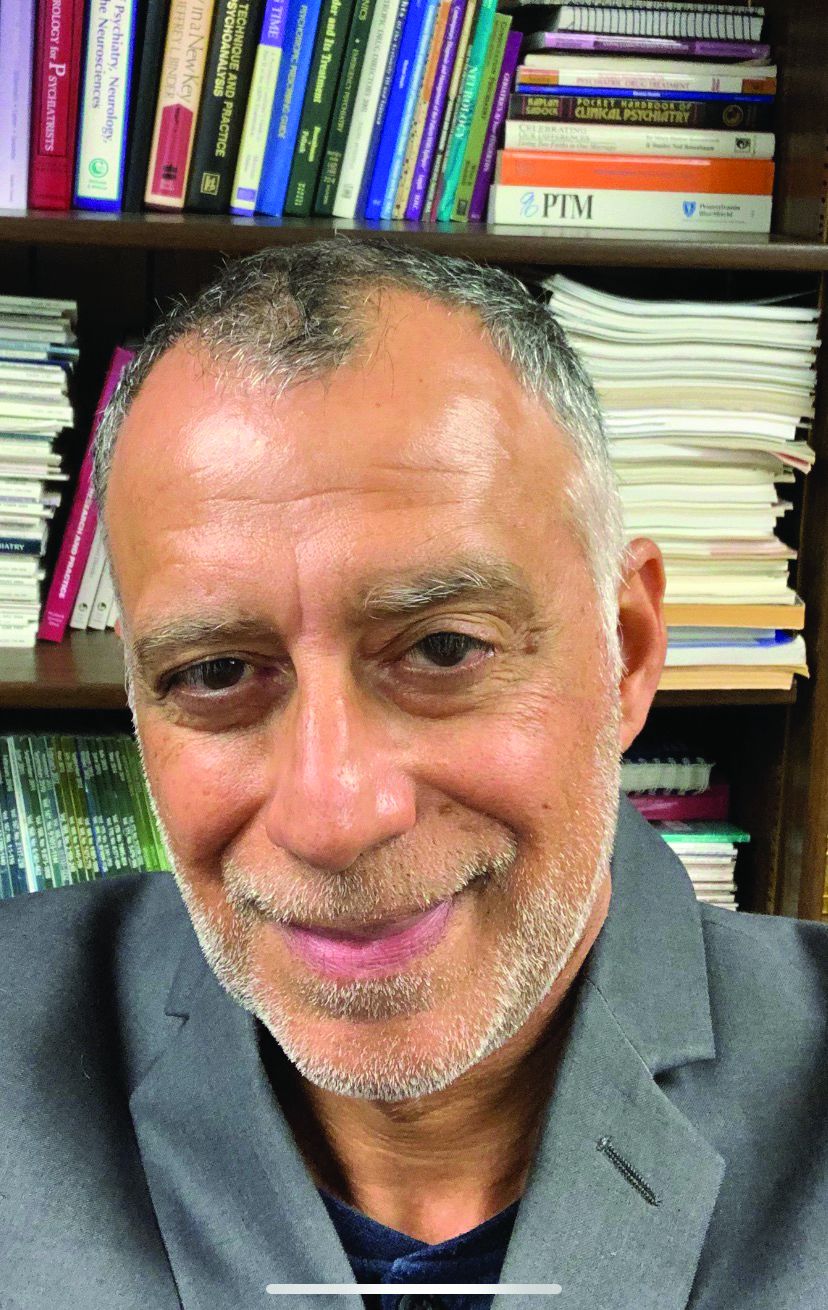
Dr. Awan, a psychiatrist, is medical director of Pennsylvania Counseling Services in Reading. He disclosed no conflicts of interest.
We physicians should not think of ourselves as ‘fixers.’
We physicians should not think of ourselves as ‘fixers.’
Recently, a patient excitedly told me during her session that she had been coming to see me for about 24 years. This was followed by positive remarks about where she was at the point when she first walked into my office.
Her progress has been slow but steady – and today, she finds herself at a much better place even within the context of having to deal with life’s complications. Her surprise about the longevity of this therapeutic relationship was easily and comfortably balanced by the pleasant feeling of well-being.
This interaction reminded me of a conversation I had with a friend of mine, an ophthalmologist who once asked me a related question: Why is it that people have been coming to see me for decades and I have not been able to “fix” them? Does that make me feel badly?
I clearly remember my response, which started in more of a defensive mode but ended with some self-reflection. I reminded him that, in his specialty, like many other fields of medicine, we don’t get to “fix” a lot. In fact, the majority of the conditions we deal with are chronic and lingering.
However, during the process of reminding him to look in the mirror, I was also able to articulate that many of these patients came into my office in potentially dire situations, including experiencing severe depression and suicidal thoughts, ignoring basic needs such as hygiene, feeling paralyzed with panic attacks, or having complete inability to deal with day-to-day situations.
Decades later, many of these patients, while still struggling with some ongoing issues, appeared to be alive and well – and we have wonderful interactions in our office where I get to talk to them about exciting things they’re looking forward to doing with their families or for themselves. Similar analogies can be applied to almost all medical specialties. An endocrinologist might help a patient with severe diabetes or hypothyroid disease get the illness under control but is not able to fix the problem. Clearly, patients’ quality of life improves tremendously through treatment with medications and with education about lifestyle changes, such as exercise and diet.
Even in the case of surgeons who may successfully remove the problem tissue or tumor, the patient is not in fact “fixed” and still requires ongoing medical care, psychosocial interventions, and pharmacotherapy to maintain or improve upon quality of life.
My patient’s remarks led to a similar, delightful therapeutic session reflecting on her progress and what it meant to both of us. We physicians certainly find it very frustrating that we are unable to fix things and make people feel completely better. However, it is important to reflect on the difference our contribution to the process of healing makes for our patients and the impact it has on their quality of life – which is meaningful to them, however small it may be.
, which could lead to minimal or no improvement in the pathological condition but may in fact improve patients’ outlook and willingness to carry on with dignity and satisfaction. It could do us all a lot of good to think of ourselves as healers – not fixers.
Dr. Awan, a psychiatrist, is medical director of Pennsylvania Counseling Services in Reading. He disclosed no conflicts of interest.
Recently, a patient excitedly told me during her session that she had been coming to see me for about 24 years. This was followed by positive remarks about where she was at the point when she first walked into my office.
Her progress has been slow but steady – and today, she finds herself at a much better place even within the context of having to deal with life’s complications. Her surprise about the longevity of this therapeutic relationship was easily and comfortably balanced by the pleasant feeling of well-being.
This interaction reminded me of a conversation I had with a friend of mine, an ophthalmologist who once asked me a related question: Why is it that people have been coming to see me for decades and I have not been able to “fix” them? Does that make me feel badly?
I clearly remember my response, which started in more of a defensive mode but ended with some self-reflection. I reminded him that, in his specialty, like many other fields of medicine, we don’t get to “fix” a lot. In fact, the majority of the conditions we deal with are chronic and lingering.
However, during the process of reminding him to look in the mirror, I was also able to articulate that many of these patients came into my office in potentially dire situations, including experiencing severe depression and suicidal thoughts, ignoring basic needs such as hygiene, feeling paralyzed with panic attacks, or having complete inability to deal with day-to-day situations.
Decades later, many of these patients, while still struggling with some ongoing issues, appeared to be alive and well – and we have wonderful interactions in our office where I get to talk to them about exciting things they’re looking forward to doing with their families or for themselves. Similar analogies can be applied to almost all medical specialties. An endocrinologist might help a patient with severe diabetes or hypothyroid disease get the illness under control but is not able to fix the problem. Clearly, patients’ quality of life improves tremendously through treatment with medications and with education about lifestyle changes, such as exercise and diet.
Even in the case of surgeons who may successfully remove the problem tissue or tumor, the patient is not in fact “fixed” and still requires ongoing medical care, psychosocial interventions, and pharmacotherapy to maintain or improve upon quality of life.
My patient’s remarks led to a similar, delightful therapeutic session reflecting on her progress and what it meant to both of us. We physicians certainly find it very frustrating that we are unable to fix things and make people feel completely better. However, it is important to reflect on the difference our contribution to the process of healing makes for our patients and the impact it has on their quality of life – which is meaningful to them, however small it may be.
, which could lead to minimal or no improvement in the pathological condition but may in fact improve patients’ outlook and willingness to carry on with dignity and satisfaction. It could do us all a lot of good to think of ourselves as healers – not fixers.
Dr. Awan, a psychiatrist, is medical director of Pennsylvania Counseling Services in Reading. He disclosed no conflicts of interest.
To fight anti-Asian hate, we must talk about it
Words matter. So, hear me when I say: I am Asian. I am American. I am a woman. I am not COVID-19. I did not create this virus. I did not place it in my pocket and bring it to the world, sprinkling it like pixie dust, along each path I’ve crossed.
My words create a story, and not just those of one psychiatrist reaching out to others. It’s the story of how the powerful use of words throughout my life inflicted racism upon me, even when unacknowledged by my conscious self. I share my story to let you know you are not alone in your journey of unwinding the cumulative systemic racist words and actions that might have affected your self-identification and self-love. I hope you channel that renewed sense of discovery to empower you to use your own words to create a positive impact for yourself and others – whether it is for your patients, friends, or community.
Currently, I serve as a physician and an advocate. I lead telehealth and developed software that screens for suicide risk (with support of a digital health grant). I also joined friends to develop a by-clinician, for-clinician telemental health platform.
Outside of my Hippocratic Oath, my mission, at its core, was to destigmatize mental illness through cultivating thoughtful conversations. I am a daughter, a sister, an aunt, a friend, and an American. I am working hard to create a life I love – the embodiment of the American Dream. If you meet me face to face, no curriculum vitae, no email, I’m Vietnamese. However, I am not the color of my skin or the shape of my eyes. I am no more defined by my lingering Vietnamese accent than I am by its Texan counterpart. Yet, throughout my life, my Vietnamese ethnicity has been a marker that others have used to define and objectify me.
Trauma emerges on national stage
I never thought it would happen to me, but as a resident physician, one of my most traumatic experiences of abusive power was when Donald Trump was running for president in 2016. He was using words and rhetoric that objectified women by classifying and quantifying their “attractiveness.” This culminated in a scandal surrounding a recording in which he said he would grab women by the $%&#@ ... and had been allowed to do so because he was a celebrity. That episode affected me profoundly, maybe more than most. As a child and adolescent psychiatrist, I knew the impact those words could have on future generations, and, as a woman and an aunt, I was appalled. But then, the effect turned to assault. Words matter.
I was living in New York City and as I made my nightly walk home on the Upper East Side, a man followed me. When I walked up the stairs to my building, he actually grabbed me ... by the $%&#@. He did this with the same casual manner that one might greet a coworker with a high-five. He then turned and walked away, laughing. I was overcome with shock; shocked that I could be so violated and yet thankful that he hadn’t taken any more aggressive liberties. He didn’t run away. He walked out as calmly as he had walked in, despite violating a most private piece of my femininity. And he laughed. As much as it jilted me, angered me, and made me feel demeaned and less-than, I know it’s a blessing that the story ended there; so often attacks against women end so much worse.
I questioned: “Why?” Why would this man do this to me? To anyone? I don’t know the answer, but I do know this: The things we normalize through the words we hear in the world, on the news, and at our dinner tables become action. It happened. This man didn’t skulk off into the alleyway. He didn’t hide. He laughed because he felt entitled. That’s because words matter.
My journey is paved with words that mattered. I was born in Vietnam; my family legally immigrated to the United States when I was 5 years old. Throughout grade school, I began to realize the power of spoken words, especially when I was frequently told to go back to where I came from. Questions flew at me like bullets, and whether innocent or borne of curiosity, were hurtful reminders that, through no choice of my own, I was an unwelcome foreigner. “Where are you from?” ... “No, where are you really, really from?” I felt eyes peering through me when my mother packed for me our culture’s traditional foods for lunch. “Ew, what’s that?” ... “That’s gross it smells.” How I longed for the cloak of a peanut butter and jelly sandwich and blonde hair.
As I approached high school, college, and postgraduate work, the “where are you from?” questions didn’t stop but took on a new connotation, as if I were some exotic pet that men had seen walking down the street. “Ooh, what is that?” While history is riddled with the objectification of women, rarely would any woman expect to have a stranger approach her and objectify her with a statement such as: “I only date girls with breast implants.” For Asian women, however, experiencing verbal objectification has become the norm. Each approach I faced was followed by a story about Asian girlfriends of their past and a request for my phone number that felt more like a demand.
What these men probably meant as flirtation, I internalized as inescapable concerns of whether or not they had true desire to get to know me as a person. I became used to unsolicited words and attention from men who objectified me as an exotic fetish. I tried to pretend it was okay, but why? Objectifying Asian women is racism. Their words remind me, and I still hear them, that America has a long history of hypersexualizing Asian women. These words – at their core – dehumanize Asian women, and as we have seen, lead to violence.
Over the past few weeks, there’s been discourse about the mass shooting in Atlanta. We need to pause and remember that the victims, like us, were human. These women killed in Atlanta had husbands, children, siblings, parents, and communities that they were taken away from, senselessly, based solely on their outward appearance. Whether or not this act was perpetrated by someone with a sexual addiction doesn’t matter. What happened is rooted in the systemic racism that has stereotyped Asian women as sexual objects. The perpetrator targeted a group of people because of the systemic racism ingrained in him, plain and simple.
Everybody, no matter how evolved one’s thinking, is influenced by words. You don’t have to have mental illness or malicious intent to fall for propaganda – that’s what makes it so scary, it works so well. Even among my own friends and family, some of the most compassionate people I know, I’ve heard disparaging remarks against Chinese people, from other Asians, repeating the same rhetoric they’ve seen in American newspapers and Asian media outlets, echoing the former president’s coronavirus references to the “Chinese virus.”
But what makes something systemic? What feeds this virus of hate and gives these practices their longevity? Pointing out problems doesn’t make them go away; we have to cultivate conversation based around solutions. And that’s our next step. What can we do to make a positive impact?
Words have affected my life, and my words have given me power. I encourage others to engage in activities where they too can feel empowered. Since the beginning of the pandemic, I’ve leveraged my leadership position with the American Psychiatric Association’s Caucus of Asian American Psychiatrists and used my words to promote advocacy. I’ve also used my voice to raise national attention to the anti-Asian hate activities. Motivated by my own desire to seek a supportive space with others to reflect on our racial identities, I’ve also launched various free support groups for Asian American and Pacific Islanders (AAPI) professionals and health care providers. I want to feel a sense of connection with others who share my experiences, as I never underestimate the phenomenal force of comforting words from a healing community.
Clinicians need their own space for processing, too. It is vitally important for us to take care of ourselves, because our patients’ words can affect our own mental health. My colleagues are shocked by the amount of AAPI patients who are reaching out to them for care. Most of them have not worked with AAPI patients before, because so many people of AAPI descent do not often seek treatment. Many of our patients are dealing with anxiety surrounding their own health and wellness, coupled with financial uncertainties and social unrest. In particular, AAPI clinicians may start to experience bystander trauma, because, for the first time, they are thinking: “It could have been me.” AAPI clinicians are in a unique situation where they have the extra burden of providing a safe space for processing clients’ trauma while also processing their own. We may have experiences of discrimination or racially motivated assaults and can reexperience this trauma through our work. Before we can help others, we have to do a self-check and reflect on how we are doing and seek our own support.
If you are able to take care of yourself and feel empowered to make a difference, there are many ways to help fight against anti-Asian sentiment, both on a personal and more global scale.
We have to check our biases and those of our family, friends, and colleagues. Everyone, even mental health professionals, has biases and is affected by disinformation. We have to dig deep into our own unconscious biases, reflect on them, and commit to changing the biases around us. Do we, or our families, have unconscious biases against a particular minority group? If so, discuss it. No one is to blame. This is systemic, and no one is at fault. White men are not to be vilified. Conservative Republicans are not our enemy. Each of us is human, with our own flaws that can influence our own conscious and unconscious thoughts and actions. Let’s discuss racial issues with our family and friends. Whenever someone says something hateful or discriminatory toward another ethnic group or racial background, we have to call it out, and help them realize their biases and change them.
If you are able, use your words to write to your elected representatives. Send them a short email, no need to be fancy. For example, you can send a note of support for legislation that is similar to the COVID-19 Hate Crimes Act, which passed the Senate on Thursday, April 22, with 94:1 bipartisan support. This kind of legislation is a step in the right direction, but there is still more we must do to stop anti-Asian biases and hate. There is empowerment and healing through making your own voice heard. I hope that these tragic incidents will lead to impactful policy changes.
The next step in this journey of empowerment is speaking about your lived experiences publicly and promoting the voices of others. I dedicated a section of my social media platforms to amplifying Asian voices, sharing news, and updating my hashtags to support the #StopAsianHate movement. I made it a point to form relationships with other advocates, AAPI mental health professionals and those personally affected by anti-Asian hate. Speaking up and speaking out didn’t take away my worries, but it did remind me that I’m powerful and that I am not alone. I can take action and demand action. I do not have to hide in the shadows but can stand in the light, using my voice like a megaphone to call out injustice and intolerance.
I hope that, for AAPI clinicians who may be affected by these current events, this validates your experiences. You are not alone. This is a reminder to treat yourself with empathy as you would your patients. For others, I hope this helps you to learn the plight of many AAPI community members in this country. Together, we can use words to create better neighborhoods, a better country, and safe spaces for all communities, especially the marginalized. As we know, words matter.
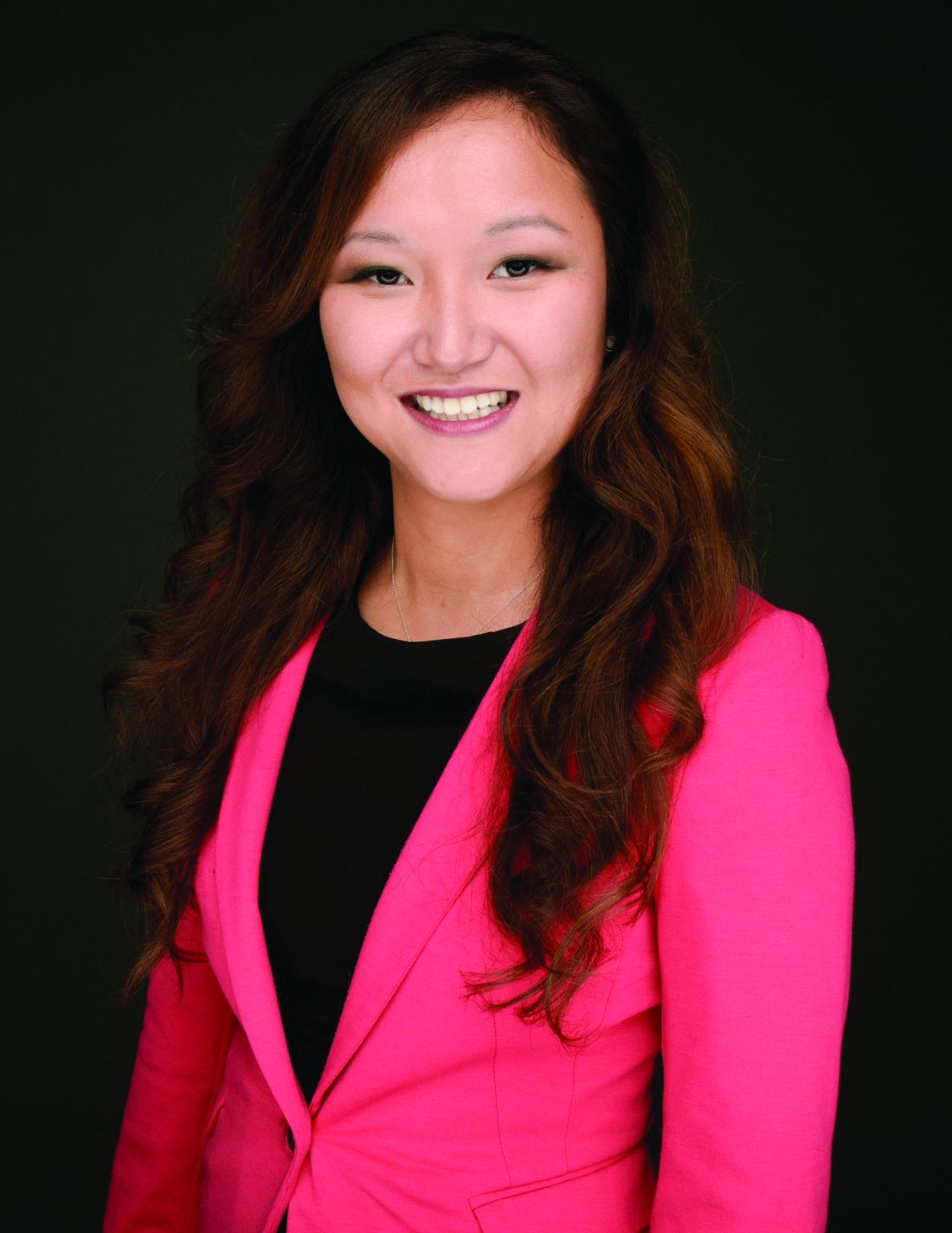
Dr. Vo is a board-certified psychiatrist and is the medical director of telehealth for the department of child and adolescent psychiatry and behavioral sciences at Children’s Hospital of Philadelphia. She is also a faculty member at the University of Pennsylvania, also in Philadelphia. Dr. Vo conducts digital health research focused on using automation and artificial intelligence for suicide risk screening and connecting patients to mental health care services. She disclosed serving as cofounder of telemental health software, Orchid, that eliminates burdensome administrative tasks so that clinicians can focus on their patients and have time for their loved ones.
Words matter. So, hear me when I say: I am Asian. I am American. I am a woman. I am not COVID-19. I did not create this virus. I did not place it in my pocket and bring it to the world, sprinkling it like pixie dust, along each path I’ve crossed.
My words create a story, and not just those of one psychiatrist reaching out to others. It’s the story of how the powerful use of words throughout my life inflicted racism upon me, even when unacknowledged by my conscious self. I share my story to let you know you are not alone in your journey of unwinding the cumulative systemic racist words and actions that might have affected your self-identification and self-love. I hope you channel that renewed sense of discovery to empower you to use your own words to create a positive impact for yourself and others – whether it is for your patients, friends, or community.
Currently, I serve as a physician and an advocate. I lead telehealth and developed software that screens for suicide risk (with support of a digital health grant). I also joined friends to develop a by-clinician, for-clinician telemental health platform.
Outside of my Hippocratic Oath, my mission, at its core, was to destigmatize mental illness through cultivating thoughtful conversations. I am a daughter, a sister, an aunt, a friend, and an American. I am working hard to create a life I love – the embodiment of the American Dream. If you meet me face to face, no curriculum vitae, no email, I’m Vietnamese. However, I am not the color of my skin or the shape of my eyes. I am no more defined by my lingering Vietnamese accent than I am by its Texan counterpart. Yet, throughout my life, my Vietnamese ethnicity has been a marker that others have used to define and objectify me.
Trauma emerges on national stage
I never thought it would happen to me, but as a resident physician, one of my most traumatic experiences of abusive power was when Donald Trump was running for president in 2016. He was using words and rhetoric that objectified women by classifying and quantifying their “attractiveness.” This culminated in a scandal surrounding a recording in which he said he would grab women by the $%&#@ ... and had been allowed to do so because he was a celebrity. That episode affected me profoundly, maybe more than most. As a child and adolescent psychiatrist, I knew the impact those words could have on future generations, and, as a woman and an aunt, I was appalled. But then, the effect turned to assault. Words matter.
I was living in New York City and as I made my nightly walk home on the Upper East Side, a man followed me. When I walked up the stairs to my building, he actually grabbed me ... by the $%&#@. He did this with the same casual manner that one might greet a coworker with a high-five. He then turned and walked away, laughing. I was overcome with shock; shocked that I could be so violated and yet thankful that he hadn’t taken any more aggressive liberties. He didn’t run away. He walked out as calmly as he had walked in, despite violating a most private piece of my femininity. And he laughed. As much as it jilted me, angered me, and made me feel demeaned and less-than, I know it’s a blessing that the story ended there; so often attacks against women end so much worse.
I questioned: “Why?” Why would this man do this to me? To anyone? I don’t know the answer, but I do know this: The things we normalize through the words we hear in the world, on the news, and at our dinner tables become action. It happened. This man didn’t skulk off into the alleyway. He didn’t hide. He laughed because he felt entitled. That’s because words matter.
My journey is paved with words that mattered. I was born in Vietnam; my family legally immigrated to the United States when I was 5 years old. Throughout grade school, I began to realize the power of spoken words, especially when I was frequently told to go back to where I came from. Questions flew at me like bullets, and whether innocent or borne of curiosity, were hurtful reminders that, through no choice of my own, I was an unwelcome foreigner. “Where are you from?” ... “No, where are you really, really from?” I felt eyes peering through me when my mother packed for me our culture’s traditional foods for lunch. “Ew, what’s that?” ... “That’s gross it smells.” How I longed for the cloak of a peanut butter and jelly sandwich and blonde hair.
As I approached high school, college, and postgraduate work, the “where are you from?” questions didn’t stop but took on a new connotation, as if I were some exotic pet that men had seen walking down the street. “Ooh, what is that?” While history is riddled with the objectification of women, rarely would any woman expect to have a stranger approach her and objectify her with a statement such as: “I only date girls with breast implants.” For Asian women, however, experiencing verbal objectification has become the norm. Each approach I faced was followed by a story about Asian girlfriends of their past and a request for my phone number that felt more like a demand.
What these men probably meant as flirtation, I internalized as inescapable concerns of whether or not they had true desire to get to know me as a person. I became used to unsolicited words and attention from men who objectified me as an exotic fetish. I tried to pretend it was okay, but why? Objectifying Asian women is racism. Their words remind me, and I still hear them, that America has a long history of hypersexualizing Asian women. These words – at their core – dehumanize Asian women, and as we have seen, lead to violence.
Over the past few weeks, there’s been discourse about the mass shooting in Atlanta. We need to pause and remember that the victims, like us, were human. These women killed in Atlanta had husbands, children, siblings, parents, and communities that they were taken away from, senselessly, based solely on their outward appearance. Whether or not this act was perpetrated by someone with a sexual addiction doesn’t matter. What happened is rooted in the systemic racism that has stereotyped Asian women as sexual objects. The perpetrator targeted a group of people because of the systemic racism ingrained in him, plain and simple.
Everybody, no matter how evolved one’s thinking, is influenced by words. You don’t have to have mental illness or malicious intent to fall for propaganda – that’s what makes it so scary, it works so well. Even among my own friends and family, some of the most compassionate people I know, I’ve heard disparaging remarks against Chinese people, from other Asians, repeating the same rhetoric they’ve seen in American newspapers and Asian media outlets, echoing the former president’s coronavirus references to the “Chinese virus.”
But what makes something systemic? What feeds this virus of hate and gives these practices their longevity? Pointing out problems doesn’t make them go away; we have to cultivate conversation based around solutions. And that’s our next step. What can we do to make a positive impact?
Words have affected my life, and my words have given me power. I encourage others to engage in activities where they too can feel empowered. Since the beginning of the pandemic, I’ve leveraged my leadership position with the American Psychiatric Association’s Caucus of Asian American Psychiatrists and used my words to promote advocacy. I’ve also used my voice to raise national attention to the anti-Asian hate activities. Motivated by my own desire to seek a supportive space with others to reflect on our racial identities, I’ve also launched various free support groups for Asian American and Pacific Islanders (AAPI) professionals and health care providers. I want to feel a sense of connection with others who share my experiences, as I never underestimate the phenomenal force of comforting words from a healing community.
Clinicians need their own space for processing, too. It is vitally important for us to take care of ourselves, because our patients’ words can affect our own mental health. My colleagues are shocked by the amount of AAPI patients who are reaching out to them for care. Most of them have not worked with AAPI patients before, because so many people of AAPI descent do not often seek treatment. Many of our patients are dealing with anxiety surrounding their own health and wellness, coupled with financial uncertainties and social unrest. In particular, AAPI clinicians may start to experience bystander trauma, because, for the first time, they are thinking: “It could have been me.” AAPI clinicians are in a unique situation where they have the extra burden of providing a safe space for processing clients’ trauma while also processing their own. We may have experiences of discrimination or racially motivated assaults and can reexperience this trauma through our work. Before we can help others, we have to do a self-check and reflect on how we are doing and seek our own support.
If you are able to take care of yourself and feel empowered to make a difference, there are many ways to help fight against anti-Asian sentiment, both on a personal and more global scale.
We have to check our biases and those of our family, friends, and colleagues. Everyone, even mental health professionals, has biases and is affected by disinformation. We have to dig deep into our own unconscious biases, reflect on them, and commit to changing the biases around us. Do we, or our families, have unconscious biases against a particular minority group? If so, discuss it. No one is to blame. This is systemic, and no one is at fault. White men are not to be vilified. Conservative Republicans are not our enemy. Each of us is human, with our own flaws that can influence our own conscious and unconscious thoughts and actions. Let’s discuss racial issues with our family and friends. Whenever someone says something hateful or discriminatory toward another ethnic group or racial background, we have to call it out, and help them realize their biases and change them.
If you are able, use your words to write to your elected representatives. Send them a short email, no need to be fancy. For example, you can send a note of support for legislation that is similar to the COVID-19 Hate Crimes Act, which passed the Senate on Thursday, April 22, with 94:1 bipartisan support. This kind of legislation is a step in the right direction, but there is still more we must do to stop anti-Asian biases and hate. There is empowerment and healing through making your own voice heard. I hope that these tragic incidents will lead to impactful policy changes.
The next step in this journey of empowerment is speaking about your lived experiences publicly and promoting the voices of others. I dedicated a section of my social media platforms to amplifying Asian voices, sharing news, and updating my hashtags to support the #StopAsianHate movement. I made it a point to form relationships with other advocates, AAPI mental health professionals and those personally affected by anti-Asian hate. Speaking up and speaking out didn’t take away my worries, but it did remind me that I’m powerful and that I am not alone. I can take action and demand action. I do not have to hide in the shadows but can stand in the light, using my voice like a megaphone to call out injustice and intolerance.
I hope that, for AAPI clinicians who may be affected by these current events, this validates your experiences. You are not alone. This is a reminder to treat yourself with empathy as you would your patients. For others, I hope this helps you to learn the plight of many AAPI community members in this country. Together, we can use words to create better neighborhoods, a better country, and safe spaces for all communities, especially the marginalized. As we know, words matter.
Dr. Vo is a board-certified psychiatrist and is the medical director of telehealth for the department of child and adolescent psychiatry and behavioral sciences at Children’s Hospital of Philadelphia. She is also a faculty member at the University of Pennsylvania, also in Philadelphia. Dr. Vo conducts digital health research focused on using automation and artificial intelligence for suicide risk screening and connecting patients to mental health care services. She disclosed serving as cofounder of telemental health software, Orchid, that eliminates burdensome administrative tasks so that clinicians can focus on their patients and have time for their loved ones.
Words matter. So, hear me when I say: I am Asian. I am American. I am a woman. I am not COVID-19. I did not create this virus. I did not place it in my pocket and bring it to the world, sprinkling it like pixie dust, along each path I’ve crossed.
My words create a story, and not just those of one psychiatrist reaching out to others. It’s the story of how the powerful use of words throughout my life inflicted racism upon me, even when unacknowledged by my conscious self. I share my story to let you know you are not alone in your journey of unwinding the cumulative systemic racist words and actions that might have affected your self-identification and self-love. I hope you channel that renewed sense of discovery to empower you to use your own words to create a positive impact for yourself and others – whether it is for your patients, friends, or community.
Currently, I serve as a physician and an advocate. I lead telehealth and developed software that screens for suicide risk (with support of a digital health grant). I also joined friends to develop a by-clinician, for-clinician telemental health platform.
Outside of my Hippocratic Oath, my mission, at its core, was to destigmatize mental illness through cultivating thoughtful conversations. I am a daughter, a sister, an aunt, a friend, and an American. I am working hard to create a life I love – the embodiment of the American Dream. If you meet me face to face, no curriculum vitae, no email, I’m Vietnamese. However, I am not the color of my skin or the shape of my eyes. I am no more defined by my lingering Vietnamese accent than I am by its Texan counterpart. Yet, throughout my life, my Vietnamese ethnicity has been a marker that others have used to define and objectify me.
Trauma emerges on national stage
I never thought it would happen to me, but as a resident physician, one of my most traumatic experiences of abusive power was when Donald Trump was running for president in 2016. He was using words and rhetoric that objectified women by classifying and quantifying their “attractiveness.” This culminated in a scandal surrounding a recording in which he said he would grab women by the $%&#@ ... and had been allowed to do so because he was a celebrity. That episode affected me profoundly, maybe more than most. As a child and adolescent psychiatrist, I knew the impact those words could have on future generations, and, as a woman and an aunt, I was appalled. But then, the effect turned to assault. Words matter.
I was living in New York City and as I made my nightly walk home on the Upper East Side, a man followed me. When I walked up the stairs to my building, he actually grabbed me ... by the $%&#@. He did this with the same casual manner that one might greet a coworker with a high-five. He then turned and walked away, laughing. I was overcome with shock; shocked that I could be so violated and yet thankful that he hadn’t taken any more aggressive liberties. He didn’t run away. He walked out as calmly as he had walked in, despite violating a most private piece of my femininity. And he laughed. As much as it jilted me, angered me, and made me feel demeaned and less-than, I know it’s a blessing that the story ended there; so often attacks against women end so much worse.
I questioned: “Why?” Why would this man do this to me? To anyone? I don’t know the answer, but I do know this: The things we normalize through the words we hear in the world, on the news, and at our dinner tables become action. It happened. This man didn’t skulk off into the alleyway. He didn’t hide. He laughed because he felt entitled. That’s because words matter.
My journey is paved with words that mattered. I was born in Vietnam; my family legally immigrated to the United States when I was 5 years old. Throughout grade school, I began to realize the power of spoken words, especially when I was frequently told to go back to where I came from. Questions flew at me like bullets, and whether innocent or borne of curiosity, were hurtful reminders that, through no choice of my own, I was an unwelcome foreigner. “Where are you from?” ... “No, where are you really, really from?” I felt eyes peering through me when my mother packed for me our culture’s traditional foods for lunch. “Ew, what’s that?” ... “That’s gross it smells.” How I longed for the cloak of a peanut butter and jelly sandwich and blonde hair.
As I approached high school, college, and postgraduate work, the “where are you from?” questions didn’t stop but took on a new connotation, as if I were some exotic pet that men had seen walking down the street. “Ooh, what is that?” While history is riddled with the objectification of women, rarely would any woman expect to have a stranger approach her and objectify her with a statement such as: “I only date girls with breast implants.” For Asian women, however, experiencing verbal objectification has become the norm. Each approach I faced was followed by a story about Asian girlfriends of their past and a request for my phone number that felt more like a demand.
What these men probably meant as flirtation, I internalized as inescapable concerns of whether or not they had true desire to get to know me as a person. I became used to unsolicited words and attention from men who objectified me as an exotic fetish. I tried to pretend it was okay, but why? Objectifying Asian women is racism. Their words remind me, and I still hear them, that America has a long history of hypersexualizing Asian women. These words – at their core – dehumanize Asian women, and as we have seen, lead to violence.
Over the past few weeks, there’s been discourse about the mass shooting in Atlanta. We need to pause and remember that the victims, like us, were human. These women killed in Atlanta had husbands, children, siblings, parents, and communities that they were taken away from, senselessly, based solely on their outward appearance. Whether or not this act was perpetrated by someone with a sexual addiction doesn’t matter. What happened is rooted in the systemic racism that has stereotyped Asian women as sexual objects. The perpetrator targeted a group of people because of the systemic racism ingrained in him, plain and simple.
Everybody, no matter how evolved one’s thinking, is influenced by words. You don’t have to have mental illness or malicious intent to fall for propaganda – that’s what makes it so scary, it works so well. Even among my own friends and family, some of the most compassionate people I know, I’ve heard disparaging remarks against Chinese people, from other Asians, repeating the same rhetoric they’ve seen in American newspapers and Asian media outlets, echoing the former president’s coronavirus references to the “Chinese virus.”
But what makes something systemic? What feeds this virus of hate and gives these practices their longevity? Pointing out problems doesn’t make them go away; we have to cultivate conversation based around solutions. And that’s our next step. What can we do to make a positive impact?
Words have affected my life, and my words have given me power. I encourage others to engage in activities where they too can feel empowered. Since the beginning of the pandemic, I’ve leveraged my leadership position with the American Psychiatric Association’s Caucus of Asian American Psychiatrists and used my words to promote advocacy. I’ve also used my voice to raise national attention to the anti-Asian hate activities. Motivated by my own desire to seek a supportive space with others to reflect on our racial identities, I’ve also launched various free support groups for Asian American and Pacific Islanders (AAPI) professionals and health care providers. I want to feel a sense of connection with others who share my experiences, as I never underestimate the phenomenal force of comforting words from a healing community.
Clinicians need their own space for processing, too. It is vitally important for us to take care of ourselves, because our patients’ words can affect our own mental health. My colleagues are shocked by the amount of AAPI patients who are reaching out to them for care. Most of them have not worked with AAPI patients before, because so many people of AAPI descent do not often seek treatment. Many of our patients are dealing with anxiety surrounding their own health and wellness, coupled with financial uncertainties and social unrest. In particular, AAPI clinicians may start to experience bystander trauma, because, for the first time, they are thinking: “It could have been me.” AAPI clinicians are in a unique situation where they have the extra burden of providing a safe space for processing clients’ trauma while also processing their own. We may have experiences of discrimination or racially motivated assaults and can reexperience this trauma through our work. Before we can help others, we have to do a self-check and reflect on how we are doing and seek our own support.
If you are able to take care of yourself and feel empowered to make a difference, there are many ways to help fight against anti-Asian sentiment, both on a personal and more global scale.
We have to check our biases and those of our family, friends, and colleagues. Everyone, even mental health professionals, has biases and is affected by disinformation. We have to dig deep into our own unconscious biases, reflect on them, and commit to changing the biases around us. Do we, or our families, have unconscious biases against a particular minority group? If so, discuss it. No one is to blame. This is systemic, and no one is at fault. White men are not to be vilified. Conservative Republicans are not our enemy. Each of us is human, with our own flaws that can influence our own conscious and unconscious thoughts and actions. Let’s discuss racial issues with our family and friends. Whenever someone says something hateful or discriminatory toward another ethnic group or racial background, we have to call it out, and help them realize their biases and change them.
If you are able, use your words to write to your elected representatives. Send them a short email, no need to be fancy. For example, you can send a note of support for legislation that is similar to the COVID-19 Hate Crimes Act, which passed the Senate on Thursday, April 22, with 94:1 bipartisan support. This kind of legislation is a step in the right direction, but there is still more we must do to stop anti-Asian biases and hate. There is empowerment and healing through making your own voice heard. I hope that these tragic incidents will lead to impactful policy changes.
The next step in this journey of empowerment is speaking about your lived experiences publicly and promoting the voices of others. I dedicated a section of my social media platforms to amplifying Asian voices, sharing news, and updating my hashtags to support the #StopAsianHate movement. I made it a point to form relationships with other advocates, AAPI mental health professionals and those personally affected by anti-Asian hate. Speaking up and speaking out didn’t take away my worries, but it did remind me that I’m powerful and that I am not alone. I can take action and demand action. I do not have to hide in the shadows but can stand in the light, using my voice like a megaphone to call out injustice and intolerance.
I hope that, for AAPI clinicians who may be affected by these current events, this validates your experiences. You are not alone. This is a reminder to treat yourself with empathy as you would your patients. For others, I hope this helps you to learn the plight of many AAPI community members in this country. Together, we can use words to create better neighborhoods, a better country, and safe spaces for all communities, especially the marginalized. As we know, words matter.
Dr. Vo is a board-certified psychiatrist and is the medical director of telehealth for the department of child and adolescent psychiatry and behavioral sciences at Children’s Hospital of Philadelphia. She is also a faculty member at the University of Pennsylvania, also in Philadelphia. Dr. Vo conducts digital health research focused on using automation and artificial intelligence for suicide risk screening and connecting patients to mental health care services. She disclosed serving as cofounder of telemental health software, Orchid, that eliminates burdensome administrative tasks so that clinicians can focus on their patients and have time for their loved ones.
Tragic consequences of ignorance for everyone
One of the top stories in the local newspaper recently described an unfortunate incident in which a previously healthy 19-month-old baby was found unresponsive and apneic in a crib at her day-care center. She was successfully resuscitated by the daycare provider but is now blind, has seizures, and no longer walks or talks. According to the day care owner, the child had not settled down during rest time and her talking was preventing the other children from sleeping. This apparently had happened before and the day-care provider had successfully resorted to triple wrapping the child in a blanket and placing her in a crib in a separate room. The day-care provider had checked on the child once and noted she was snoring. When the child failed to wake after the expected interval of time she was found face down with her head partially covered by a pillow.

An investigation of the day-care center is ongoing and no reports or prior violations, warnings, or license suspensions have surfaced at this point. The day-care provider has been charged with aggravated assault and endangering the welfare of a child. The charges could carry a prison sentence of 30 years.
As I reread this very sad story I began wondering how this tragedy is going to unfold in the next months and years. We can assume one young life has already been permanently damaged. Her family will have to deal with the consequences of this event for decades or longer. What about the day-care provider? I hope we can assume that she intended no harm to the child nor had she ignored prior warnings or training about swaddling. Nor does this lapse in judgment fit a previous pattern of behavior. Regardless of what the courts decide she will carry some degree of guilt for the foreseeable future. The day-care center has been closed voluntarily and given that Maine is a small state where word travels fast it is unlikely that it will ever reopen.
Can we imagine any good coming out of this tragedy? It may be that with luck and diligent therapies that the little girl will be able to lead a life she finds rewarding and gives others some pleasure. It is possible that some individuals involved in her life – her parents or therapists – will find the devotion to her care brings new meaning to their lives.
Will the day-care provider find a new career or a cause that can help her restore some of the self worth she may have lost in the wake of the event? Or, will a protracted course through the legal system take its devastating toll on her life and marriage? It is unlikely that she will spend anywhere near 30 years in prison, if any at all. Will the child’s family sue this small family day-care center? It is hard to imagine they will recover anything more than a tiny fraction of the lifetime costs of this child’s care.
It is also unlikely that the message that swaddling children old enough to turn over carries a significant risk will go beyond one or two more stories in the local Maine newspapers. If this child’s father had been a professional football player or her mother had been an actress or U.S. Senator this tragic turn of events could possibly have stirred enough waters to grab national attention, spawn a foundation, or even result in legislation. But, she appears to come from a family with modest means without claims to notoriety. There is no flawed product to ban. She is a victim of ignorance and our failure to educate. As a result, her tragedy and those of thousands of other children will do little more than accumulate as unfortunate statistics.
Dr. Wilkoff practiced primary care pediatrics in Brunswick, Maine, for nearly 40 years. He has authored several books on behavioral pediatrics, including “How to Say No to Your Toddler.” Other than a Littman stethoscope he accepted as a first-year medical student in 1966, Dr. Wilkoff reports having nothing to disclose. Email him at [email protected].
One of the top stories in the local newspaper recently described an unfortunate incident in which a previously healthy 19-month-old baby was found unresponsive and apneic in a crib at her day-care center. She was successfully resuscitated by the daycare provider but is now blind, has seizures, and no longer walks or talks. According to the day care owner, the child had not settled down during rest time and her talking was preventing the other children from sleeping. This apparently had happened before and the day-care provider had successfully resorted to triple wrapping the child in a blanket and placing her in a crib in a separate room. The day-care provider had checked on the child once and noted she was snoring. When the child failed to wake after the expected interval of time she was found face down with her head partially covered by a pillow.
An investigation of the day-care center is ongoing and no reports or prior violations, warnings, or license suspensions have surfaced at this point. The day-care provider has been charged with aggravated assault and endangering the welfare of a child. The charges could carry a prison sentence of 30 years.
As I reread this very sad story I began wondering how this tragedy is going to unfold in the next months and years. We can assume one young life has already been permanently damaged. Her family will have to deal with the consequences of this event for decades or longer. What about the day-care provider? I hope we can assume that she intended no harm to the child nor had she ignored prior warnings or training about swaddling. Nor does this lapse in judgment fit a previous pattern of behavior. Regardless of what the courts decide she will carry some degree of guilt for the foreseeable future. The day-care center has been closed voluntarily and given that Maine is a small state where word travels fast it is unlikely that it will ever reopen.
Can we imagine any good coming out of this tragedy? It may be that with luck and diligent therapies that the little girl will be able to lead a life she finds rewarding and gives others some pleasure. It is possible that some individuals involved in her life – her parents or therapists – will find the devotion to her care brings new meaning to their lives.
Will the day-care provider find a new career or a cause that can help her restore some of the self worth she may have lost in the wake of the event? Or, will a protracted course through the legal system take its devastating toll on her life and marriage? It is unlikely that she will spend anywhere near 30 years in prison, if any at all. Will the child’s family sue this small family day-care center? It is hard to imagine they will recover anything more than a tiny fraction of the lifetime costs of this child’s care.
It is also unlikely that the message that swaddling children old enough to turn over carries a significant risk will go beyond one or two more stories in the local Maine newspapers. If this child’s father had been a professional football player or her mother had been an actress or U.S. Senator this tragic turn of events could possibly have stirred enough waters to grab national attention, spawn a foundation, or even result in legislation. But, she appears to come from a family with modest means without claims to notoriety. There is no flawed product to ban. She is a victim of ignorance and our failure to educate. As a result, her tragedy and those of thousands of other children will do little more than accumulate as unfortunate statistics.
Dr. Wilkoff practiced primary care pediatrics in Brunswick, Maine, for nearly 40 years. He has authored several books on behavioral pediatrics, including “How to Say No to Your Toddler.” Other than a Littman stethoscope he accepted as a first-year medical student in 1966, Dr. Wilkoff reports having nothing to disclose. Email him at [email protected].
One of the top stories in the local newspaper recently described an unfortunate incident in which a previously healthy 19-month-old baby was found unresponsive and apneic in a crib at her day-care center. She was successfully resuscitated by the daycare provider but is now blind, has seizures, and no longer walks or talks. According to the day care owner, the child had not settled down during rest time and her talking was preventing the other children from sleeping. This apparently had happened before and the day-care provider had successfully resorted to triple wrapping the child in a blanket and placing her in a crib in a separate room. The day-care provider had checked on the child once and noted she was snoring. When the child failed to wake after the expected interval of time she was found face down with her head partially covered by a pillow.
An investigation of the day-care center is ongoing and no reports or prior violations, warnings, or license suspensions have surfaced at this point. The day-care provider has been charged with aggravated assault and endangering the welfare of a child. The charges could carry a prison sentence of 30 years.
As I reread this very sad story I began wondering how this tragedy is going to unfold in the next months and years. We can assume one young life has already been permanently damaged. Her family will have to deal with the consequences of this event for decades or longer. What about the day-care provider? I hope we can assume that she intended no harm to the child nor had she ignored prior warnings or training about swaddling. Nor does this lapse in judgment fit a previous pattern of behavior. Regardless of what the courts decide she will carry some degree of guilt for the foreseeable future. The day-care center has been closed voluntarily and given that Maine is a small state where word travels fast it is unlikely that it will ever reopen.
Can we imagine any good coming out of this tragedy? It may be that with luck and diligent therapies that the little girl will be able to lead a life she finds rewarding and gives others some pleasure. It is possible that some individuals involved in her life – her parents or therapists – will find the devotion to her care brings new meaning to their lives.
Will the day-care provider find a new career or a cause that can help her restore some of the self worth she may have lost in the wake of the event? Or, will a protracted course through the legal system take its devastating toll on her life and marriage? It is unlikely that she will spend anywhere near 30 years in prison, if any at all. Will the child’s family sue this small family day-care center? It is hard to imagine they will recover anything more than a tiny fraction of the lifetime costs of this child’s care.
It is also unlikely that the message that swaddling children old enough to turn over carries a significant risk will go beyond one or two more stories in the local Maine newspapers. If this child’s father had been a professional football player or her mother had been an actress or U.S. Senator this tragic turn of events could possibly have stirred enough waters to grab national attention, spawn a foundation, or even result in legislation. But, she appears to come from a family with modest means without claims to notoriety. There is no flawed product to ban. She is a victim of ignorance and our failure to educate. As a result, her tragedy and those of thousands of other children will do little more than accumulate as unfortunate statistics.
Dr. Wilkoff practiced primary care pediatrics in Brunswick, Maine, for nearly 40 years. He has authored several books on behavioral pediatrics, including “How to Say No to Your Toddler.” Other than a Littman stethoscope he accepted as a first-year medical student in 1966, Dr. Wilkoff reports having nothing to disclose. Email him at [email protected].
The risk of risk avoidance
It’s pretty clear that, at least globally, we have not reached a steady state with the SARS-COV-2 virus. And here in the United States we should remain concerned that if we can’t convince our vaccine-hesitant population to step forward for their shots, this country may slide back into dangerous instability. Despite these uncertainties, it may be time to polish up the old retrospectoscope again and see what the last year and a half has taught us.
Although it took us too long to discover the reality, it is now pretty clear that the virus is spread in the air and by close personal contact, especially indoors. There continues to be some misplaced over-attention to surface cleaning, but for the most part, the bulk of the population seems to have finally gotten the picture. We are of course still plagued by our own impatience and the unfortunate mix of politics and the disagreement about how personal freedom and the common good can coexist.
A year ago, while we were still on the steep part of the learning curve and the specter of the unknown hung over us like a dark cloud, schools and colleges faced a myriad of challenges as they considered how to safely educate their students. Faced with a relative vacuum in leadership from the federal government, school boards and college administrators were left to interpret the trickle of information that filtered down from the media. Many turned for help to hired consultants and a variety of state and local health departments, all of whom were relying on the same information sources that were available to all of us – sources that often were neither peer reviewed nor based on hard facts. In this land that prides itself on free speech, we were all college administrators, local school board members, and parents basing our decision on the same smorgasbord of information that was frequently self-contradictory.
As I look around at the school systems and colleges with which I have some familiarity it has been interesting to observe how their responses to this hodgepodge of opinion and guesstimates have fallen into two basic categories. Some institutions seem to have been primarily motivated by risk avoidance and others appeared to have struggled to maintain their focus on how best to carry out their primary mission of educating their students.
This dichotomy is not surprising. Institutions are composed of people and people naturally self-sort themselves into pessimists and optimists. When a study is published without peer review suggesting that within schools transmission of the virus between children is unusual the optimist may use the scrap of information to support her decision to craft a hybrid system that includes an abundance of in-class experience. The pessimist will probably observe that it was only one study and instead be more concerned about the number of multi-system-inflammatory syndrome cases reported among children in New York City. He will be far less likely to abandon his all-remote learning system.
There is risk inherent in any decision-making process, including incurring a greater risk by failing to make any decision. The person whose primary focus is on avoiding any risk often shuts off the process of creative thinking and problem solving. At the end of the day, the risk avoider may have achieved his goal with a policy that includes aggressive closings but has fallen far short of his primary mission of educating students.
Here in New England there are several examples of small colleges that have managed to create more normal on-campus educational environments. To my knowledge, their experience with case numbers is no worse and may even be better than that of schools of similar size and geographic siting that chose more restrictive policies. You could argue that the less restrictive schools were just lucky. But my hunch is that the institutions that were able to put risk in perspective and remain focused on their mission were able to navigate the uncharted waters more creatively. The bottom line is that we aren’t talking about right or wrong decisions but grouped together they should provide a foundation to build on for the next turmoil.
Dr. Wilkoff practiced primary care pediatrics in Brunswick, Maine, for nearly 40 years. He has authored several books on behavioral pediatrics, including “How to Say No to Your Toddler.” Other than a Littman stethoscope he accepted as a first-year medical student in 1966, Dr. Wilkoff reports having nothing to disclose. Email him at [email protected].
It’s pretty clear that, at least globally, we have not reached a steady state with the SARS-COV-2 virus. And here in the United States we should remain concerned that if we can’t convince our vaccine-hesitant population to step forward for their shots, this country may slide back into dangerous instability. Despite these uncertainties, it may be time to polish up the old retrospectoscope again and see what the last year and a half has taught us.
Although it took us too long to discover the reality, it is now pretty clear that the virus is spread in the air and by close personal contact, especially indoors. There continues to be some misplaced over-attention to surface cleaning, but for the most part, the bulk of the population seems to have finally gotten the picture. We are of course still plagued by our own impatience and the unfortunate mix of politics and the disagreement about how personal freedom and the common good can coexist.
A year ago, while we were still on the steep part of the learning curve and the specter of the unknown hung over us like a dark cloud, schools and colleges faced a myriad of challenges as they considered how to safely educate their students. Faced with a relative vacuum in leadership from the federal government, school boards and college administrators were left to interpret the trickle of information that filtered down from the media. Many turned for help to hired consultants and a variety of state and local health departments, all of whom were relying on the same information sources that were available to all of us – sources that often were neither peer reviewed nor based on hard facts. In this land that prides itself on free speech, we were all college administrators, local school board members, and parents basing our decision on the same smorgasbord of information that was frequently self-contradictory.
As I look around at the school systems and colleges with which I have some familiarity it has been interesting to observe how their responses to this hodgepodge of opinion and guesstimates have fallen into two basic categories. Some institutions seem to have been primarily motivated by risk avoidance and others appeared to have struggled to maintain their focus on how best to carry out their primary mission of educating their students.
This dichotomy is not surprising. Institutions are composed of people and people naturally self-sort themselves into pessimists and optimists. When a study is published without peer review suggesting that within schools transmission of the virus between children is unusual the optimist may use the scrap of information to support her decision to craft a hybrid system that includes an abundance of in-class experience. The pessimist will probably observe that it was only one study and instead be more concerned about the number of multi-system-inflammatory syndrome cases reported among children in New York City. He will be far less likely to abandon his all-remote learning system.
There is risk inherent in any decision-making process, including incurring a greater risk by failing to make any decision. The person whose primary focus is on avoiding any risk often shuts off the process of creative thinking and problem solving. At the end of the day, the risk avoider may have achieved his goal with a policy that includes aggressive closings but has fallen far short of his primary mission of educating students.
Here in New England there are several examples of small colleges that have managed to create more normal on-campus educational environments. To my knowledge, their experience with case numbers is no worse and may even be better than that of schools of similar size and geographic siting that chose more restrictive policies. You could argue that the less restrictive schools were just lucky. But my hunch is that the institutions that were able to put risk in perspective and remain focused on their mission were able to navigate the uncharted waters more creatively. The bottom line is that we aren’t talking about right or wrong decisions but grouped together they should provide a foundation to build on for the next turmoil.
Dr. Wilkoff practiced primary care pediatrics in Brunswick, Maine, for nearly 40 years. He has authored several books on behavioral pediatrics, including “How to Say No to Your Toddler.” Other than a Littman stethoscope he accepted as a first-year medical student in 1966, Dr. Wilkoff reports having nothing to disclose. Email him at [email protected].
It’s pretty clear that, at least globally, we have not reached a steady state with the SARS-COV-2 virus. And here in the United States we should remain concerned that if we can’t convince our vaccine-hesitant population to step forward for their shots, this country may slide back into dangerous instability. Despite these uncertainties, it may be time to polish up the old retrospectoscope again and see what the last year and a half has taught us.
Although it took us too long to discover the reality, it is now pretty clear that the virus is spread in the air and by close personal contact, especially indoors. There continues to be some misplaced over-attention to surface cleaning, but for the most part, the bulk of the population seems to have finally gotten the picture. We are of course still plagued by our own impatience and the unfortunate mix of politics and the disagreement about how personal freedom and the common good can coexist.
A year ago, while we were still on the steep part of the learning curve and the specter of the unknown hung over us like a dark cloud, schools and colleges faced a myriad of challenges as they considered how to safely educate their students. Faced with a relative vacuum in leadership from the federal government, school boards and college administrators were left to interpret the trickle of information that filtered down from the media. Many turned for help to hired consultants and a variety of state and local health departments, all of whom were relying on the same information sources that were available to all of us – sources that often were neither peer reviewed nor based on hard facts. In this land that prides itself on free speech, we were all college administrators, local school board members, and parents basing our decision on the same smorgasbord of information that was frequently self-contradictory.
As I look around at the school systems and colleges with which I have some familiarity it has been interesting to observe how their responses to this hodgepodge of opinion and guesstimates have fallen into two basic categories. Some institutions seem to have been primarily motivated by risk avoidance and others appeared to have struggled to maintain their focus on how best to carry out their primary mission of educating their students.
This dichotomy is not surprising. Institutions are composed of people and people naturally self-sort themselves into pessimists and optimists. When a study is published without peer review suggesting that within schools transmission of the virus between children is unusual the optimist may use the scrap of information to support her decision to craft a hybrid system that includes an abundance of in-class experience. The pessimist will probably observe that it was only one study and instead be more concerned about the number of multi-system-inflammatory syndrome cases reported among children in New York City. He will be far less likely to abandon his all-remote learning system.
There is risk inherent in any decision-making process, including incurring a greater risk by failing to make any decision. The person whose primary focus is on avoiding any risk often shuts off the process of creative thinking and problem solving. At the end of the day, the risk avoider may have achieved his goal with a policy that includes aggressive closings but has fallen far short of his primary mission of educating students.
Here in New England there are several examples of small colleges that have managed to create more normal on-campus educational environments. To my knowledge, their experience with case numbers is no worse and may even be better than that of schools of similar size and geographic siting that chose more restrictive policies. You could argue that the less restrictive schools were just lucky. But my hunch is that the institutions that were able to put risk in perspective and remain focused on their mission were able to navigate the uncharted waters more creatively. The bottom line is that we aren’t talking about right or wrong decisions but grouped together they should provide a foundation to build on for the next turmoil.
Dr. Wilkoff practiced primary care pediatrics in Brunswick, Maine, for nearly 40 years. He has authored several books on behavioral pediatrics, including “How to Say No to Your Toddler.” Other than a Littman stethoscope he accepted as a first-year medical student in 1966, Dr. Wilkoff reports having nothing to disclose. Email him at [email protected].
Death from despair
I’ve taken care of both Bill and his wife for a few years. They’re a sweet couple, each with their own neurological issues. Bill has also battled depression on and off over time. He can be a challenge, and I’ve never envied his psychiatrist.
Bill committed suicide in the final week of April.
Patient deaths are unavoidable in medicine. It’s part of the job. Suicides, though less common, also happen. Sometimes they’re related to a sad diagnosis we’ve made, but more commonly (as in Bill’s case) they result from demons we had no control over.
I had a patient commit suicide about 6 months after I started my practice, and probably average one every 2 years (that I hear about) since then. They’re still the deaths that surprise me the most, make me take pause for a few minutes, even after doing this for 23 years.
Suicide is as old as humanity, and gets worse during difficult societal and economic times. It disproportionately affects doctors, dentists, veterinarians, and police officers, and leaves devastated families and friends in its wake.
Death because of the progression of time and disease is never easy, but perhaps more psychologically acceptable to those left behind. Death because of a tragic accident at any age is more difficult.
But when the person involved makes a conscious decision to end his or her own life, the effects on those left behind are terrible. Wondering why, questioning if they could have done something different, and, as with any loss, grieving.
In a world where major advances have been made in many areas of medicine, including mental health, death from despair shows no sign of abating.
Maybe it’s part of the price of sentience and reason. Or civilization. I doubt it will ever stop being a public health issue, no matter how many other diseases we cure.
But, as I write a letter to Bill’s wife, that’s little consolation for those they’ve left behind.
Dr. Block has a solo neurology practice in Scottsdale, Ariz.
I’ve taken care of both Bill and his wife for a few years. They’re a sweet couple, each with their own neurological issues. Bill has also battled depression on and off over time. He can be a challenge, and I’ve never envied his psychiatrist.
Bill committed suicide in the final week of April.
Patient deaths are unavoidable in medicine. It’s part of the job. Suicides, though less common, also happen. Sometimes they’re related to a sad diagnosis we’ve made, but more commonly (as in Bill’s case) they result from demons we had no control over.
I had a patient commit suicide about 6 months after I started my practice, and probably average one every 2 years (that I hear about) since then. They’re still the deaths that surprise me the most, make me take pause for a few minutes, even after doing this for 23 years.
Suicide is as old as humanity, and gets worse during difficult societal and economic times. It disproportionately affects doctors, dentists, veterinarians, and police officers, and leaves devastated families and friends in its wake.
Death because of the progression of time and disease is never easy, but perhaps more psychologically acceptable to those left behind. Death because of a tragic accident at any age is more difficult.
But when the person involved makes a conscious decision to end his or her own life, the effects on those left behind are terrible. Wondering why, questioning if they could have done something different, and, as with any loss, grieving.
In a world where major advances have been made in many areas of medicine, including mental health, death from despair shows no sign of abating.
Maybe it’s part of the price of sentience and reason. Or civilization. I doubt it will ever stop being a public health issue, no matter how many other diseases we cure.
But, as I write a letter to Bill’s wife, that’s little consolation for those they’ve left behind.
Dr. Block has a solo neurology practice in Scottsdale, Ariz.
I’ve taken care of both Bill and his wife for a few years. They’re a sweet couple, each with their own neurological issues. Bill has also battled depression on and off over time. He can be a challenge, and I’ve never envied his psychiatrist.
Bill committed suicide in the final week of April.
Patient deaths are unavoidable in medicine. It’s part of the job. Suicides, though less common, also happen. Sometimes they’re related to a sad diagnosis we’ve made, but more commonly (as in Bill’s case) they result from demons we had no control over.
I had a patient commit suicide about 6 months after I started my practice, and probably average one every 2 years (that I hear about) since then. They’re still the deaths that surprise me the most, make me take pause for a few minutes, even after doing this for 23 years.
Suicide is as old as humanity, and gets worse during difficult societal and economic times. It disproportionately affects doctors, dentists, veterinarians, and police officers, and leaves devastated families and friends in its wake.
Death because of the progression of time and disease is never easy, but perhaps more psychologically acceptable to those left behind. Death because of a tragic accident at any age is more difficult.
But when the person involved makes a conscious decision to end his or her own life, the effects on those left behind are terrible. Wondering why, questioning if they could have done something different, and, as with any loss, grieving.
In a world where major advances have been made in many areas of medicine, including mental health, death from despair shows no sign of abating.
Maybe it’s part of the price of sentience and reason. Or civilization. I doubt it will ever stop being a public health issue, no matter how many other diseases we cure.
But, as I write a letter to Bill’s wife, that’s little consolation for those they’ve left behind.
Dr. Block has a solo neurology practice in Scottsdale, Ariz.
Patients with agoraphobia are showing strength, resilience during the pandemic
The COVID-19 pandemic has exposed a wave of general and mental health-related problems, such as stress, addiction, weight gain, depression, and social isolation. Those problems have been exacerbated in patients with mental illness who are already struggling to cope with personal problems.
One might expect those with agoraphobia to be adversely affected by the pandemic and experience increased feelings of anxiety. It appears that people with agoraphobia might especially feel uncertain of other people’s actions during this time. Some might perceive being alone and cut off from help, and those feelings might make them more susceptible to panic attacks.
In my (R.W.C.) clinical experience, however, my patients with agoraphobia are actually functioning better than usual throughout this challenging course.
Personalizing treatment
Agoraphobia is a type of anxiety disorder that often develops after a panic attack and involves an intense fear of a place or situation. In my 40 years of clinical experience, I have treated about 300 patients with agoraphobia, and all of them exhibit the following three symptoms: depression (from losses in life), dependency (dependent on other people to help with activities of daily living), and panic attacks (an abrupt surge of intense fear or intense discomfort that may cause a person to avoid crowded areas or other public spaces outside of the home).
To manage these clients, I individualize treatment and use different strategies for different patients to help them cope with their agoraphobia. I normally treat my agoraphobic patients with a combination of medication and therapy. I most often use a selective serotonin reuptake inhibitor (SSRI), and my SSRI drug of choice is usually paroxetine (Paxil). Or, instead of an SSRI, I sometimes prescribe a tricyclic antidepressant, often Tofranil (imipramine). As an adjunct, I might prescribe a benzodiazepine, Xanax (alprazolam), p.r.n. My prescription decision is based on a patient’s side effect profile, medical history, and close blood relatives’ responses to those medications.
The therapy I use is behavior modification with systematic desensitization and flooding. Desensitization is a coping technique that helps the patient overcome triggers associated with the panic attacks and anxiety. In normal times, I use both in vitro (imaginary) and in vivo (real situation) desensitization. However, during the pandemic, I can use only in vitro desensitization, since I am treating patients through phone calls and telemedicine rather than in-person visits.
I also teach my patients with agoraphobia relaxation techniques to work through their fears and anxieties, and thus to reduce feelings of stress and anxiety. The patients can practice these learned techniques on their own in an effort to reduce panic and avoidance behaviors, and create a relaxation response.
Treating the key symptoms
As stated earlier, all of my agoraphobic patients exhibit the following three symptoms: depression, dependency, and panic attacks.
- Depression – My agoraphobia patients are less depressed during the pandemic and are not feeling intense losses as they did prepandemic.
- Dependency – During the pandemic, everyone has been interdependent upon other people in their households. Therefore, the patients’ support systems are more readily available, and the patients can help others as much as others help them in their own households or “havens of safety.”
- Panic attacks – As depression has declined, panic attacks have also declined, since they are interrelated.
Understanding why functioning might be better
I attribute the improved functioning I am seeing to five factors:
1. Some people with agoraphobia may find that physical distancing provides relief, because it discourages situations that may trigger fear.
2. Staying in their homes can make people with agoraphobia feel like part of mainstream America, rather than outside the norm. Also, they become egosyntonic, and sense both acceptance and comfort in their homes.
3. Isolating, staying home, and avoidance behavior is now applauded and has become the norm for the entire population. Thus, people with agoraphobia might feel heightened self-esteem.
4. Since many people have been staying in for the most part, people with agoraphobia do not feel they are missing out by staying in. As a result, they are experiencing less depression.
5. Now, I treat my patients through the use of telemedicine or by phone, and thus, patients are more relaxed and calm because they do not have to leave their homes and travel to my office. Thus, patients can avoid this dreaded anxiety trigger.
It might have been logical to assume that patients living with agoraphobia would be negatively affected by the pandemic, and experience increased feelings of anxiety and/or panic attacks – since the pandemic forced those with the illness to face fearful situations from which they cannot escape.
Fortunately, my agoraphobia patients have fared very well. They have remained on their prescribed medications and have adapted well to phone and telemedicine therapy. In fact, the adjustment of my patients with agoraphobia to the stringent mitigation measures surpassed the adjustment of my other patients. These patients with agoraphobia have proved to be a strong and resilient group in the face of extreme stress.
Dr. Cohen, who is married to Nancy S. Cohen, is board-certified in psychiatry and has had a private practice in Philadelphia for more than 35 years. His areas of specialty include agoraphobia, sports psychiatry, depression, and substance abuse. In addition, Dr. Cohen is a former professor of psychiatry, family medicine, and otolaryngology at Thomas Jefferson University in Philadelphia. He has no conflicts of interest. Ms. Cohen holds an MBA from Temple University in Philadelphia with a focus on health care administration. Previously, Ms. Cohen was an associate administrator at Hahnemann University Hospital and an executive at the Health Services Council, both in Philadelphia. She currently writes biographical summaries of notable 18th- and 19th-century women. Ms. Cohen has no disclosures.
The COVID-19 pandemic has exposed a wave of general and mental health-related problems, such as stress, addiction, weight gain, depression, and social isolation. Those problems have been exacerbated in patients with mental illness who are already struggling to cope with personal problems.
One might expect those with agoraphobia to be adversely affected by the pandemic and experience increased feelings of anxiety. It appears that people with agoraphobia might especially feel uncertain of other people’s actions during this time. Some might perceive being alone and cut off from help, and those feelings might make them more susceptible to panic attacks.
In my (R.W.C.) clinical experience, however, my patients with agoraphobia are actually functioning better than usual throughout this challenging course.
Personalizing treatment
Agoraphobia is a type of anxiety disorder that often develops after a panic attack and involves an intense fear of a place or situation. In my 40 years of clinical experience, I have treated about 300 patients with agoraphobia, and all of them exhibit the following three symptoms: depression (from losses in life), dependency (dependent on other people to help with activities of daily living), and panic attacks (an abrupt surge of intense fear or intense discomfort that may cause a person to avoid crowded areas or other public spaces outside of the home).
To manage these clients, I individualize treatment and use different strategies for different patients to help them cope with their agoraphobia. I normally treat my agoraphobic patients with a combination of medication and therapy. I most often use a selective serotonin reuptake inhibitor (SSRI), and my SSRI drug of choice is usually paroxetine (Paxil). Or, instead of an SSRI, I sometimes prescribe a tricyclic antidepressant, often Tofranil (imipramine). As an adjunct, I might prescribe a benzodiazepine, Xanax (alprazolam), p.r.n. My prescription decision is based on a patient’s side effect profile, medical history, and close blood relatives’ responses to those medications.
The therapy I use is behavior modification with systematic desensitization and flooding. Desensitization is a coping technique that helps the patient overcome triggers associated with the panic attacks and anxiety. In normal times, I use both in vitro (imaginary) and in vivo (real situation) desensitization. However, during the pandemic, I can use only in vitro desensitization, since I am treating patients through phone calls and telemedicine rather than in-person visits.
I also teach my patients with agoraphobia relaxation techniques to work through their fears and anxieties, and thus to reduce feelings of stress and anxiety. The patients can practice these learned techniques on their own in an effort to reduce panic and avoidance behaviors, and create a relaxation response.
Treating the key symptoms
As stated earlier, all of my agoraphobic patients exhibit the following three symptoms: depression, dependency, and panic attacks.
- Depression – My agoraphobia patients are less depressed during the pandemic and are not feeling intense losses as they did prepandemic.
- Dependency – During the pandemic, everyone has been interdependent upon other people in their households. Therefore, the patients’ support systems are more readily available, and the patients can help others as much as others help them in their own households or “havens of safety.”
- Panic attacks – As depression has declined, panic attacks have also declined, since they are interrelated.
Understanding why functioning might be better
I attribute the improved functioning I am seeing to five factors:
1. Some people with agoraphobia may find that physical distancing provides relief, because it discourages situations that may trigger fear.
2. Staying in their homes can make people with agoraphobia feel like part of mainstream America, rather than outside the norm. Also, they become egosyntonic, and sense both acceptance and comfort in their homes.
3. Isolating, staying home, and avoidance behavior is now applauded and has become the norm for the entire population. Thus, people with agoraphobia might feel heightened self-esteem.
4. Since many people have been staying in for the most part, people with agoraphobia do not feel they are missing out by staying in. As a result, they are experiencing less depression.
5. Now, I treat my patients through the use of telemedicine or by phone, and thus, patients are more relaxed and calm because they do not have to leave their homes and travel to my office. Thus, patients can avoid this dreaded anxiety trigger.
It might have been logical to assume that patients living with agoraphobia would be negatively affected by the pandemic, and experience increased feelings of anxiety and/or panic attacks – since the pandemic forced those with the illness to face fearful situations from which they cannot escape.
Fortunately, my agoraphobia patients have fared very well. They have remained on their prescribed medications and have adapted well to phone and telemedicine therapy. In fact, the adjustment of my patients with agoraphobia to the stringent mitigation measures surpassed the adjustment of my other patients. These patients with agoraphobia have proved to be a strong and resilient group in the face of extreme stress.
Dr. Cohen, who is married to Nancy S. Cohen, is board-certified in psychiatry and has had a private practice in Philadelphia for more than 35 years. His areas of specialty include agoraphobia, sports psychiatry, depression, and substance abuse. In addition, Dr. Cohen is a former professor of psychiatry, family medicine, and otolaryngology at Thomas Jefferson University in Philadelphia. He has no conflicts of interest. Ms. Cohen holds an MBA from Temple University in Philadelphia with a focus on health care administration. Previously, Ms. Cohen was an associate administrator at Hahnemann University Hospital and an executive at the Health Services Council, both in Philadelphia. She currently writes biographical summaries of notable 18th- and 19th-century women. Ms. Cohen has no disclosures.
The COVID-19 pandemic has exposed a wave of general and mental health-related problems, such as stress, addiction, weight gain, depression, and social isolation. Those problems have been exacerbated in patients with mental illness who are already struggling to cope with personal problems.
One might expect those with agoraphobia to be adversely affected by the pandemic and experience increased feelings of anxiety. It appears that people with agoraphobia might especially feel uncertain of other people’s actions during this time. Some might perceive being alone and cut off from help, and those feelings might make them more susceptible to panic attacks.
In my (R.W.C.) clinical experience, however, my patients with agoraphobia are actually functioning better than usual throughout this challenging course.
Personalizing treatment
Agoraphobia is a type of anxiety disorder that often develops after a panic attack and involves an intense fear of a place or situation. In my 40 years of clinical experience, I have treated about 300 patients with agoraphobia, and all of them exhibit the following three symptoms: depression (from losses in life), dependency (dependent on other people to help with activities of daily living), and panic attacks (an abrupt surge of intense fear or intense discomfort that may cause a person to avoid crowded areas or other public spaces outside of the home).
To manage these clients, I individualize treatment and use different strategies for different patients to help them cope with their agoraphobia. I normally treat my agoraphobic patients with a combination of medication and therapy. I most often use a selective serotonin reuptake inhibitor (SSRI), and my SSRI drug of choice is usually paroxetine (Paxil). Or, instead of an SSRI, I sometimes prescribe a tricyclic antidepressant, often Tofranil (imipramine). As an adjunct, I might prescribe a benzodiazepine, Xanax (alprazolam), p.r.n. My prescription decision is based on a patient’s side effect profile, medical history, and close blood relatives’ responses to those medications.
The therapy I use is behavior modification with systematic desensitization and flooding. Desensitization is a coping technique that helps the patient overcome triggers associated with the panic attacks and anxiety. In normal times, I use both in vitro (imaginary) and in vivo (real situation) desensitization. However, during the pandemic, I can use only in vitro desensitization, since I am treating patients through phone calls and telemedicine rather than in-person visits.
I also teach my patients with agoraphobia relaxation techniques to work through their fears and anxieties, and thus to reduce feelings of stress and anxiety. The patients can practice these learned techniques on their own in an effort to reduce panic and avoidance behaviors, and create a relaxation response.
Treating the key symptoms
As stated earlier, all of my agoraphobic patients exhibit the following three symptoms: depression, dependency, and panic attacks.
- Depression – My agoraphobia patients are less depressed during the pandemic and are not feeling intense losses as they did prepandemic.
- Dependency – During the pandemic, everyone has been interdependent upon other people in their households. Therefore, the patients’ support systems are more readily available, and the patients can help others as much as others help them in their own households or “havens of safety.”
- Panic attacks – As depression has declined, panic attacks have also declined, since they are interrelated.
Understanding why functioning might be better
I attribute the improved functioning I am seeing to five factors:
1. Some people with agoraphobia may find that physical distancing provides relief, because it discourages situations that may trigger fear.
2. Staying in their homes can make people with agoraphobia feel like part of mainstream America, rather than outside the norm. Also, they become egosyntonic, and sense both acceptance and comfort in their homes.
3. Isolating, staying home, and avoidance behavior is now applauded and has become the norm for the entire population. Thus, people with agoraphobia might feel heightened self-esteem.
4. Since many people have been staying in for the most part, people with agoraphobia do not feel they are missing out by staying in. As a result, they are experiencing less depression.
5. Now, I treat my patients through the use of telemedicine or by phone, and thus, patients are more relaxed and calm because they do not have to leave their homes and travel to my office. Thus, patients can avoid this dreaded anxiety trigger.
It might have been logical to assume that patients living with agoraphobia would be negatively affected by the pandemic, and experience increased feelings of anxiety and/or panic attacks – since the pandemic forced those with the illness to face fearful situations from which they cannot escape.
Fortunately, my agoraphobia patients have fared very well. They have remained on their prescribed medications and have adapted well to phone and telemedicine therapy. In fact, the adjustment of my patients with agoraphobia to the stringent mitigation measures surpassed the adjustment of my other patients. These patients with agoraphobia have proved to be a strong and resilient group in the face of extreme stress.
Dr. Cohen, who is married to Nancy S. Cohen, is board-certified in psychiatry and has had a private practice in Philadelphia for more than 35 years. His areas of specialty include agoraphobia, sports psychiatry, depression, and substance abuse. In addition, Dr. Cohen is a former professor of psychiatry, family medicine, and otolaryngology at Thomas Jefferson University in Philadelphia. He has no conflicts of interest. Ms. Cohen holds an MBA from Temple University in Philadelphia with a focus on health care administration. Previously, Ms. Cohen was an associate administrator at Hahnemann University Hospital and an executive at the Health Services Council, both in Philadelphia. She currently writes biographical summaries of notable 18th- and 19th-century women. Ms. Cohen has no disclosures.
Are adolescents canaries in the coal mine?
Increasing youth suicides may be a warning about society’s psychosocial health.
Before COVID-19 pandemic, suicide rates were already increasing among adolescents.1 Loneliness, because of social isolation and loss of in-person community contacts, was recognized as one factor perhaps contributing to increasing adolescent suicide.2 Now, with the physical distancing measures vital to curbing the spread, the loneliness epidemic that preceded COVID-19 has only worsened, and suicidal thoughts in adolescents remain on the rise.3

Given the crucial role of interpersonal interactions and community in healthy adolescent development, these troubling trends provide insight not only into the psychosocial health of our teenagers but also into the psychosocial health of our society as a whole.
Over the past 8 months, our psychiatric crisis stabilization unit has experienced a surge in admissions for adolescents with suicidal ideation, often with accompanying attempts. Even more concerning, a significant percentage of these patients do not have additional symptoms of depression or premorbid risk factors for suicide. In many cases, there are no warning signs to alert parents of their adolescent’s imminent suicidal behavior.
Prior to COVID-19, most of our patients with suicidal ideations arrived withdrawn, irritable, and isolative. Interactions with these patients evoked poignant feelings of empathy and sadness, and these patients endorsed multiple additional symptoms consistent with criteria for a specified depressive disorder.
More recently, since COVID-19, we have observed patients who, mere hours earlier, were in an ED receiving medical interventions for a suicide attempt, now present on our unit smiling, laughing, and interacting contentedly with their peers. Upon integration into our milieu, they often report complete resolution of their suicidal thoughts. Interactions with these patients do not conjure feelings of sadness or despair. In fact, we often struggle with diagnostic specificity, because many of these patients do not meet criteria for a specified depressive disorder.
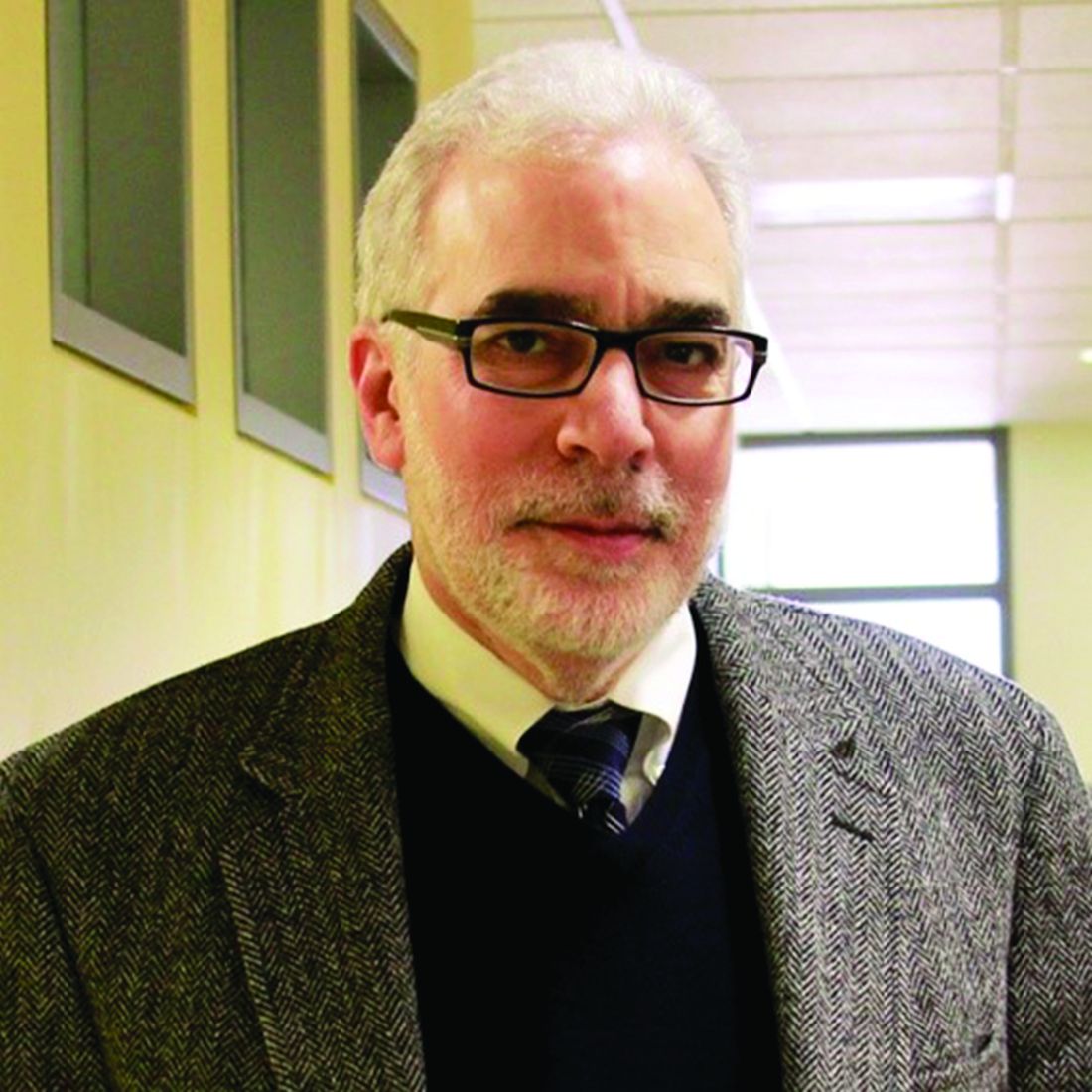
As observed in real time on our unit, meaningful interpersonal interactions are especially crucial to our adolescents’ psychosocial and emotional well-being. As their independence grows, their holding environment expands to incorporate the community. Nonparent family members, teachers, mentors, coaches, peers, parents, and most importantly, same-aged peers play a vital role in creating the environment necessary for healthy adolescent development.
The larger community is essential for adolescents to develop the skills and confidence to move into adulthood. When adolescents are lonely, with less contact with the community outside of their family, they lose the milieu in which they develop. Their fundamental psychological need of belonging becomes compromised; they fail to experience fidelity or a sense of self; and sometimes they no longer have the desire to live.
So what might the increasing suicide rate in adolescents indicate about the status of the psychosocial health of our society as a whole? Based on the vital necessity of community to support their development, Like the canary in the coal mines, this increase in suicidal ideations in our adolescent population may be a warning that our current lack of psychosocial supports have become toxic. If we cannot restore our relatedness and reconstruct our sense of community, societal psychosocial health may continue to decline.
References
1. National Center for Health Statistics Data Brief. 2019 Oct (352). https://www.cdc.gov/nchs/data/databriefs/db352-h.pdf
2. J Soc Pers Relationships. 2019 Mar 19. doi: 10.1177/0265407519836170.
3. Medscape.com. 2020 Sep 25. https://www.medscape.com/viewarticle/938065.
Dr. Loper is the team leader for inpatient psychiatric services at Prisma Health–Midlands in Columbia, S.C. He is an assistant professor in the department of neuropsychiatry and behavioral science at the University of South Carolina, Columbia. He has no conflicts of interest. Dr. Kaminstein is an adjunct assistant professor at the graduate school of education and affiliated faculty in the organizational dynamics program, School of Arts and Sciences, at the University of Pennsylvania, Philadelphia. He is a social psychologist who has been studying groups and organizations for more than 40 years. He has no conflicts of interest.
Increasing youth suicides may be a warning about society’s psychosocial health.
Increasing youth suicides may be a warning about society’s psychosocial health.
Before COVID-19 pandemic, suicide rates were already increasing among adolescents.1 Loneliness, because of social isolation and loss of in-person community contacts, was recognized as one factor perhaps contributing to increasing adolescent suicide.2 Now, with the physical distancing measures vital to curbing the spread, the loneliness epidemic that preceded COVID-19 has only worsened, and suicidal thoughts in adolescents remain on the rise.3
Given the crucial role of interpersonal interactions and community in healthy adolescent development, these troubling trends provide insight not only into the psychosocial health of our teenagers but also into the psychosocial health of our society as a whole.
Over the past 8 months, our psychiatric crisis stabilization unit has experienced a surge in admissions for adolescents with suicidal ideation, often with accompanying attempts. Even more concerning, a significant percentage of these patients do not have additional symptoms of depression or premorbid risk factors for suicide. In many cases, there are no warning signs to alert parents of their adolescent’s imminent suicidal behavior.
Prior to COVID-19, most of our patients with suicidal ideations arrived withdrawn, irritable, and isolative. Interactions with these patients evoked poignant feelings of empathy and sadness, and these patients endorsed multiple additional symptoms consistent with criteria for a specified depressive disorder.
More recently, since COVID-19, we have observed patients who, mere hours earlier, were in an ED receiving medical interventions for a suicide attempt, now present on our unit smiling, laughing, and interacting contentedly with their peers. Upon integration into our milieu, they often report complete resolution of their suicidal thoughts. Interactions with these patients do not conjure feelings of sadness or despair. In fact, we often struggle with diagnostic specificity, because many of these patients do not meet criteria for a specified depressive disorder.
As observed in real time on our unit, meaningful interpersonal interactions are especially crucial to our adolescents’ psychosocial and emotional well-being. As their independence grows, their holding environment expands to incorporate the community. Nonparent family members, teachers, mentors, coaches, peers, parents, and most importantly, same-aged peers play a vital role in creating the environment necessary for healthy adolescent development.
The larger community is essential for adolescents to develop the skills and confidence to move into adulthood. When adolescents are lonely, with less contact with the community outside of their family, they lose the milieu in which they develop. Their fundamental psychological need of belonging becomes compromised; they fail to experience fidelity or a sense of self; and sometimes they no longer have the desire to live.
So what might the increasing suicide rate in adolescents indicate about the status of the psychosocial health of our society as a whole? Based on the vital necessity of community to support their development, Like the canary in the coal mines, this increase in suicidal ideations in our adolescent population may be a warning that our current lack of psychosocial supports have become toxic. If we cannot restore our relatedness and reconstruct our sense of community, societal psychosocial health may continue to decline.
References
1. National Center for Health Statistics Data Brief. 2019 Oct (352). https://www.cdc.gov/nchs/data/databriefs/db352-h.pdf
2. J Soc Pers Relationships. 2019 Mar 19. doi: 10.1177/0265407519836170.
3. Medscape.com. 2020 Sep 25. https://www.medscape.com/viewarticle/938065.
Dr. Loper is the team leader for inpatient psychiatric services at Prisma Health–Midlands in Columbia, S.C. He is an assistant professor in the department of neuropsychiatry and behavioral science at the University of South Carolina, Columbia. He has no conflicts of interest. Dr. Kaminstein is an adjunct assistant professor at the graduate school of education and affiliated faculty in the organizational dynamics program, School of Arts and Sciences, at the University of Pennsylvania, Philadelphia. He is a social psychologist who has been studying groups and organizations for more than 40 years. He has no conflicts of interest.
Before COVID-19 pandemic, suicide rates were already increasing among adolescents.1 Loneliness, because of social isolation and loss of in-person community contacts, was recognized as one factor perhaps contributing to increasing adolescent suicide.2 Now, with the physical distancing measures vital to curbing the spread, the loneliness epidemic that preceded COVID-19 has only worsened, and suicidal thoughts in adolescents remain on the rise.3
Given the crucial role of interpersonal interactions and community in healthy adolescent development, these troubling trends provide insight not only into the psychosocial health of our teenagers but also into the psychosocial health of our society as a whole.
Over the past 8 months, our psychiatric crisis stabilization unit has experienced a surge in admissions for adolescents with suicidal ideation, often with accompanying attempts. Even more concerning, a significant percentage of these patients do not have additional symptoms of depression or premorbid risk factors for suicide. In many cases, there are no warning signs to alert parents of their adolescent’s imminent suicidal behavior.
Prior to COVID-19, most of our patients with suicidal ideations arrived withdrawn, irritable, and isolative. Interactions with these patients evoked poignant feelings of empathy and sadness, and these patients endorsed multiple additional symptoms consistent with criteria for a specified depressive disorder.
More recently, since COVID-19, we have observed patients who, mere hours earlier, were in an ED receiving medical interventions for a suicide attempt, now present on our unit smiling, laughing, and interacting contentedly with their peers. Upon integration into our milieu, they often report complete resolution of their suicidal thoughts. Interactions with these patients do not conjure feelings of sadness or despair. In fact, we often struggle with diagnostic specificity, because many of these patients do not meet criteria for a specified depressive disorder.
As observed in real time on our unit, meaningful interpersonal interactions are especially crucial to our adolescents’ psychosocial and emotional well-being. As their independence grows, their holding environment expands to incorporate the community. Nonparent family members, teachers, mentors, coaches, peers, parents, and most importantly, same-aged peers play a vital role in creating the environment necessary for healthy adolescent development.
The larger community is essential for adolescents to develop the skills and confidence to move into adulthood. When adolescents are lonely, with less contact with the community outside of their family, they lose the milieu in which they develop. Their fundamental psychological need of belonging becomes compromised; they fail to experience fidelity or a sense of self; and sometimes they no longer have the desire to live.
So what might the increasing suicide rate in adolescents indicate about the status of the psychosocial health of our society as a whole? Based on the vital necessity of community to support their development, Like the canary in the coal mines, this increase in suicidal ideations in our adolescent population may be a warning that our current lack of psychosocial supports have become toxic. If we cannot restore our relatedness and reconstruct our sense of community, societal psychosocial health may continue to decline.
References
1. National Center for Health Statistics Data Brief. 2019 Oct (352). https://www.cdc.gov/nchs/data/databriefs/db352-h.pdf
2. J Soc Pers Relationships. 2019 Mar 19. doi: 10.1177/0265407519836170.
3. Medscape.com. 2020 Sep 25. https://www.medscape.com/viewarticle/938065.
Dr. Loper is the team leader for inpatient psychiatric services at Prisma Health–Midlands in Columbia, S.C. He is an assistant professor in the department of neuropsychiatry and behavioral science at the University of South Carolina, Columbia. He has no conflicts of interest. Dr. Kaminstein is an adjunct assistant professor at the graduate school of education and affiliated faculty in the organizational dynamics program, School of Arts and Sciences, at the University of Pennsylvania, Philadelphia. He is a social psychologist who has been studying groups and organizations for more than 40 years. He has no conflicts of interest.
Suicide in the early months of the pandemic: Unexpected trends
Every psychiatrist knows that this past year has been a challenge. The COVID-19 pandemic altered our lives, practically overnight, in ways that most of us had never anticipated.
There were months of lockdown. A new work-from-home transition. Recommendations to distance and mask. The destruction and recreation of our social lives. And the end of some industries as we have known them.
Over a year later, many children are still in virtual school. This lifestyle and economic toll do not even begin to include the horror experienced by exhausted and distressed health care workers or by the many who have lost a loved one or survived a hospitalization. National and international anxiety are running high. More people are seeking mental health care, and many of the patients we were caring for prior to the pandemic have been distressed.
Rates of both depression and anxiety are up, and the fear has been that the isolation of lockdowns, with their emotional and economic toll, would also increase suicide rates. Despite the increase in psychiatric symptoms and general distress, initial studies in the United States have shown that overall suicide rates in the early months of the pandemic were lower than in prior years.
A study published in The Lancet looked at suicide data from around the world and compared expected suicides, based on data from past years, with observed suicides. The researchers restricted their analysis to the countries, and regions of countries, where real-time suicide data were available through internet searches. Their paper is based on findings from 21 countries, including 16 high-income countries and five upper-middle–income countries (from regions where data were available). The overall analysis showed a drop in suicides by 5% when looking at the first 4 months of the pandemic, defined as April 1, 2020, to July 31, 2020. There were statistically significant increases in suicide only in Vienna, Puerto Rico, and Japan.
Igor Galynker, MD, PhD, directs the Suicide Research and Prevention Lab and the Zirinsky Center for Bipolar Disorder at the Icahn School of Medicine at Mount Sinai. He was not surprised by these findings.
“This is an important study,” Dr. Galynker said. “When it was discovered that U.S. rates went down, it was ‘U.S. specific’ and it was confounded by the fact that there was a dramatic increase in opiate overdose deaths in the U.S., which are not reported as suicides. This study shows that the decrease is international and that the finding in the United States is not related to the spike in overdose deaths.”
The study authors postulated that the drop in suicide may be due to proactive protective measures that societies have put in place, such as improved mental health services and fiscal support to mitigate financial consequences of the pandemic. They explained that “communities might have actively tried to support at-risk individuals, people might have connected in new ways, and some relationships might have been strengthened by households spending more time with each other. For some people, everyday stresses might have been reduced during stay-at-home periods, and for others the collective feeling of ‘we’re all in this together’ might have been beneficial”.
Dr. Galynker noted that, in times of calamity, suicide rates historically go down. “Short-term disasters invoke a fight-or-flight response that mobilizes us and improves our functioning under stress. Those acute responses last 2-3 months and then chronic stress sets in.” He is concerned that there will be increases in suicide rates down the road.
It is possible that individuals who consider social gatherings to be stressful, or who are bullied at school, may have found some relief from social interactions and expectations during the lockdown. “Some people have discovered that they like their families!” Dr. Galynker said.
While suicide rates have gone down, that is not true for all population subsets, and the authors of the Lancet paper noted that they were unable to give breakdowns of rates for different demographics.
Paul Nestadt, MD, is codirector of the Johns Hopkins Anxiety Disorders Clinic and studies suicide, firearms, and opiates. He looked at suicides in Maryland during the first 2 months of the lockdown (March 5, 2020 to May 7, 2020) and found that, Studies in Connecticut and Chicago yielded similar findings. These findings indicate that the overall trends may not reflect the impact on a specific subpopulation.
Dr. Nestadt talked about the disparities of suicide trends. “Communities hit harder by this pandemic in terms of sickness and death may experience more distress in ways that may come out as suicide in the context of other comorbid mood disorders. Also, in line with the idea of suicide as a marker of community- or population-level distress, there’s a general idea that having less of an economic cushion makes the pandemic more of a problem for some than for others. We know that suicide has been correlated to economic distress in general, and it makes sense that it would be community-specific where there is more economic duress.”
It has been a difficult year – not just for the United States, but for the entire world. One thing that may come of it is a unique opportunity to look at how stress and loss affect suicide rates, with the hope that preventive measures will follow.
A version of this article first appeared on Medscape.com.
Every psychiatrist knows that this past year has been a challenge. The COVID-19 pandemic altered our lives, practically overnight, in ways that most of us had never anticipated.
There were months of lockdown. A new work-from-home transition. Recommendations to distance and mask. The destruction and recreation of our social lives. And the end of some industries as we have known them.
Over a year later, many children are still in virtual school. This lifestyle and economic toll do not even begin to include the horror experienced by exhausted and distressed health care workers or by the many who have lost a loved one or survived a hospitalization. National and international anxiety are running high. More people are seeking mental health care, and many of the patients we were caring for prior to the pandemic have been distressed.
Rates of both depression and anxiety are up, and the fear has been that the isolation of lockdowns, with their emotional and economic toll, would also increase suicide rates. Despite the increase in psychiatric symptoms and general distress, initial studies in the United States have shown that overall suicide rates in the early months of the pandemic were lower than in prior years.
A study published in The Lancet looked at suicide data from around the world and compared expected suicides, based on data from past years, with observed suicides. The researchers restricted their analysis to the countries, and regions of countries, where real-time suicide data were available through internet searches. Their paper is based on findings from 21 countries, including 16 high-income countries and five upper-middle–income countries (from regions where data were available). The overall analysis showed a drop in suicides by 5% when looking at the first 4 months of the pandemic, defined as April 1, 2020, to July 31, 2020. There were statistically significant increases in suicide only in Vienna, Puerto Rico, and Japan.
Igor Galynker, MD, PhD, directs the Suicide Research and Prevention Lab and the Zirinsky Center for Bipolar Disorder at the Icahn School of Medicine at Mount Sinai. He was not surprised by these findings.
“This is an important study,” Dr. Galynker said. “When it was discovered that U.S. rates went down, it was ‘U.S. specific’ and it was confounded by the fact that there was a dramatic increase in opiate overdose deaths in the U.S., which are not reported as suicides. This study shows that the decrease is international and that the finding in the United States is not related to the spike in overdose deaths.”
The study authors postulated that the drop in suicide may be due to proactive protective measures that societies have put in place, such as improved mental health services and fiscal support to mitigate financial consequences of the pandemic. They explained that “communities might have actively tried to support at-risk individuals, people might have connected in new ways, and some relationships might have been strengthened by households spending more time with each other. For some people, everyday stresses might have been reduced during stay-at-home periods, and for others the collective feeling of ‘we’re all in this together’ might have been beneficial”.
Dr. Galynker noted that, in times of calamity, suicide rates historically go down. “Short-term disasters invoke a fight-or-flight response that mobilizes us and improves our functioning under stress. Those acute responses last 2-3 months and then chronic stress sets in.” He is concerned that there will be increases in suicide rates down the road.
It is possible that individuals who consider social gatherings to be stressful, or who are bullied at school, may have found some relief from social interactions and expectations during the lockdown. “Some people have discovered that they like their families!” Dr. Galynker said.
While suicide rates have gone down, that is not true for all population subsets, and the authors of the Lancet paper noted that they were unable to give breakdowns of rates for different demographics.
Paul Nestadt, MD, is codirector of the Johns Hopkins Anxiety Disorders Clinic and studies suicide, firearms, and opiates. He looked at suicides in Maryland during the first 2 months of the lockdown (March 5, 2020 to May 7, 2020) and found that, Studies in Connecticut and Chicago yielded similar findings. These findings indicate that the overall trends may not reflect the impact on a specific subpopulation.
Dr. Nestadt talked about the disparities of suicide trends. “Communities hit harder by this pandemic in terms of sickness and death may experience more distress in ways that may come out as suicide in the context of other comorbid mood disorders. Also, in line with the idea of suicide as a marker of community- or population-level distress, there’s a general idea that having less of an economic cushion makes the pandemic more of a problem for some than for others. We know that suicide has been correlated to economic distress in general, and it makes sense that it would be community-specific where there is more economic duress.”
It has been a difficult year – not just for the United States, but for the entire world. One thing that may come of it is a unique opportunity to look at how stress and loss affect suicide rates, with the hope that preventive measures will follow.
A version of this article first appeared on Medscape.com.
Every psychiatrist knows that this past year has been a challenge. The COVID-19 pandemic altered our lives, practically overnight, in ways that most of us had never anticipated.
There were months of lockdown. A new work-from-home transition. Recommendations to distance and mask. The destruction and recreation of our social lives. And the end of some industries as we have known them.
Over a year later, many children are still in virtual school. This lifestyle and economic toll do not even begin to include the horror experienced by exhausted and distressed health care workers or by the many who have lost a loved one or survived a hospitalization. National and international anxiety are running high. More people are seeking mental health care, and many of the patients we were caring for prior to the pandemic have been distressed.
Rates of both depression and anxiety are up, and the fear has been that the isolation of lockdowns, with their emotional and economic toll, would also increase suicide rates. Despite the increase in psychiatric symptoms and general distress, initial studies in the United States have shown that overall suicide rates in the early months of the pandemic were lower than in prior years.
A study published in The Lancet looked at suicide data from around the world and compared expected suicides, based on data from past years, with observed suicides. The researchers restricted their analysis to the countries, and regions of countries, where real-time suicide data were available through internet searches. Their paper is based on findings from 21 countries, including 16 high-income countries and five upper-middle–income countries (from regions where data were available). The overall analysis showed a drop in suicides by 5% when looking at the first 4 months of the pandemic, defined as April 1, 2020, to July 31, 2020. There were statistically significant increases in suicide only in Vienna, Puerto Rico, and Japan.
Igor Galynker, MD, PhD, directs the Suicide Research and Prevention Lab and the Zirinsky Center for Bipolar Disorder at the Icahn School of Medicine at Mount Sinai. He was not surprised by these findings.
“This is an important study,” Dr. Galynker said. “When it was discovered that U.S. rates went down, it was ‘U.S. specific’ and it was confounded by the fact that there was a dramatic increase in opiate overdose deaths in the U.S., which are not reported as suicides. This study shows that the decrease is international and that the finding in the United States is not related to the spike in overdose deaths.”
The study authors postulated that the drop in suicide may be due to proactive protective measures that societies have put in place, such as improved mental health services and fiscal support to mitigate financial consequences of the pandemic. They explained that “communities might have actively tried to support at-risk individuals, people might have connected in new ways, and some relationships might have been strengthened by households spending more time with each other. For some people, everyday stresses might have been reduced during stay-at-home periods, and for others the collective feeling of ‘we’re all in this together’ might have been beneficial”.
Dr. Galynker noted that, in times of calamity, suicide rates historically go down. “Short-term disasters invoke a fight-or-flight response that mobilizes us and improves our functioning under stress. Those acute responses last 2-3 months and then chronic stress sets in.” He is concerned that there will be increases in suicide rates down the road.
It is possible that individuals who consider social gatherings to be stressful, or who are bullied at school, may have found some relief from social interactions and expectations during the lockdown. “Some people have discovered that they like their families!” Dr. Galynker said.
While suicide rates have gone down, that is not true for all population subsets, and the authors of the Lancet paper noted that they were unable to give breakdowns of rates for different demographics.
Paul Nestadt, MD, is codirector of the Johns Hopkins Anxiety Disorders Clinic and studies suicide, firearms, and opiates. He looked at suicides in Maryland during the first 2 months of the lockdown (March 5, 2020 to May 7, 2020) and found that, Studies in Connecticut and Chicago yielded similar findings. These findings indicate that the overall trends may not reflect the impact on a specific subpopulation.
Dr. Nestadt talked about the disparities of suicide trends. “Communities hit harder by this pandemic in terms of sickness and death may experience more distress in ways that may come out as suicide in the context of other comorbid mood disorders. Also, in line with the idea of suicide as a marker of community- or population-level distress, there’s a general idea that having less of an economic cushion makes the pandemic more of a problem for some than for others. We know that suicide has been correlated to economic distress in general, and it makes sense that it would be community-specific where there is more economic duress.”
It has been a difficult year – not just for the United States, but for the entire world. One thing that may come of it is a unique opportunity to look at how stress and loss affect suicide rates, with the hope that preventive measures will follow.
A version of this article first appeared on Medscape.com.