User login
Official Newspaper of the American College of Surgeons
ACS, Connecticut Health Care Leaders discuss Quality Improvement and health care reform
The American College of Surgeons (ACS) hosted the ACS Surgical Health Care Quality Forum Connecticut on April 26, in partnership with the ACS Connecticut Chapter and the Connecticut State Medical Society. In this 13th forum, surgeons, hospitals, health plans, physicians, and government leaders shared best practices for improving patient care, achieving better outcomes, and curbing rising health care costs.
The Connecticut Forum highlighted the efforts of the Connecticut Surgical Quality Collaborative (CtSQC), a statewide group of 20 hospitals that meets regularly to share quality outcomes including successes and best practices.

The CtSQC announced that six more hospitals are joining this effort, including: Hartford Hospital, The Hospital of Central Connecticut, New Britain and Southington; Windham Hospital, Willimantic; MidState Medical Center, Meriden; Lawrence + Memorial Hospital, Pawcatuck; and John Dempsey Hospital at the UConn Health Center, Farmington. Many CtSQC hospitals also use the ACS National Surgical Quality Improvement Program (ACS NSQIP®) to improve outcomes in key areas of surgical care and provide the best possible value to patients, hospitals, and health plans.
"Our collaborative is a unique forum to get hospitals at the table, not as competitors, but as health care providers with a common goal to improve patient care," said forum host Scott J. Ellner, DO, MPH, FACS, director of surgical quality, Saint Francis Hospital and Medical Center, assistant professor of surgery, University of Connecticut School of Medicine, and Co-chair, ACS Connecticut Chapter Committee on Patient Safety. "We now have more than two-thirds of the hospitals in the state participating, sharing practical and candid information with each other, and that’s something we all can be really proud of. As a result of this effort, patients will get better care and our health care system will improve—everyone wins."
"Connecticut is the perfect example of what the College aspires to drive forward with these forums and the Inspiring Quality initiative—encouraging collaboration to share tangible examples of quality improvement and therefore provide a platform for action," said ACS Executive Director David B. Hoyt, MD, FACS.
The Connecticut forum featured diverse opinions on high-quality health care and the impact of health care reform, including:
• Kevin J. Counihan, chief executive officer, Access Health CT
"Premium rate increases are among the greatest threats to the sustainability of health reform and enhanced access to health insurance"
• Andrew Baskin, MD, national medical director, quality and provider performance, Aetna
"Quality improvement is more than just one single event or provider—it requires partnerships throughout the spectrum of care. "
• Colleen Desai, MSN, RN, CEN, trauma program manager, Saint Francis Hospital and Medical Center; president-elect, Connecticut Emergency Nurses Association
"At Saint Francis, we rely on quality programs like ACS NSQIP and the ACS Trauma Quality Improvement Program (TQIP) to tell us exactly how we’re doing in key areas so we know what we need to improve on."
• Alison L. Hong, MD, director, quality and patient safety, Connecticut Hospital Association
"Connecticut hospitals are recognized as leaders by the Centers for Medicare & Medicaid Services (CMS) for their participation in Partnership for Patients, an initiative to prevent harm and reduce readmissions."
• Kathleen LaVorgna, MD, FACS, private practice surgeon, Norwalk Hospital; president, ACS Connecticut Chapter
"Participation in the state collaborative allows us to compare our quality issues with other hospitals in our state, and by sharing our experiences, we learn from each other and the quality movement becomes not just a concept to discuss, but a real collaborative project based on science and clinical results."
• Kevin P. Lembo, Comptroller, State of Connecticut
"Through the Health Enhancement Program, we are bringing patients closer to primary care—proving that quality care and management results in better outcomes for both the patient and the plan.
• Rocco Orlando III, MD, FACS, senior vice president and chief medical officer, Hartford HealthCare
Our leaders drive our culture by linking our values to our performance. Across our health system, we set goals collectively and collaboratively—building dashboards and objective metrics to assess our progress."
• Donna Laliberte O’Shea, MD, MBA, CPE, market medical director, Connecticut, UnitedHealthcare
"Transparency will continue to play a larger role as we examine both how to define quality and how to provide higher-quality care"
To view the archived Connecticut forum video and follow additional updates, visit InspiringQuality.facs.org or the College’s YouTube channel at http://www.youtube.com/AmCollegeofSurgeons.
The American College of Surgeons (ACS) hosted the ACS Surgical Health Care Quality Forum Connecticut on April 26, in partnership with the ACS Connecticut Chapter and the Connecticut State Medical Society. In this 13th forum, surgeons, hospitals, health plans, physicians, and government leaders shared best practices for improving patient care, achieving better outcomes, and curbing rising health care costs.
The Connecticut Forum highlighted the efforts of the Connecticut Surgical Quality Collaborative (CtSQC), a statewide group of 20 hospitals that meets regularly to share quality outcomes including successes and best practices.
The CtSQC announced that six more hospitals are joining this effort, including: Hartford Hospital, The Hospital of Central Connecticut, New Britain and Southington; Windham Hospital, Willimantic; MidState Medical Center, Meriden; Lawrence + Memorial Hospital, Pawcatuck; and John Dempsey Hospital at the UConn Health Center, Farmington. Many CtSQC hospitals also use the ACS National Surgical Quality Improvement Program (ACS NSQIP®) to improve outcomes in key areas of surgical care and provide the best possible value to patients, hospitals, and health plans.
"Our collaborative is a unique forum to get hospitals at the table, not as competitors, but as health care providers with a common goal to improve patient care," said forum host Scott J. Ellner, DO, MPH, FACS, director of surgical quality, Saint Francis Hospital and Medical Center, assistant professor of surgery, University of Connecticut School of Medicine, and Co-chair, ACS Connecticut Chapter Committee on Patient Safety. "We now have more than two-thirds of the hospitals in the state participating, sharing practical and candid information with each other, and that’s something we all can be really proud of. As a result of this effort, patients will get better care and our health care system will improve—everyone wins."
"Connecticut is the perfect example of what the College aspires to drive forward with these forums and the Inspiring Quality initiative—encouraging collaboration to share tangible examples of quality improvement and therefore provide a platform for action," said ACS Executive Director David B. Hoyt, MD, FACS.
The Connecticut forum featured diverse opinions on high-quality health care and the impact of health care reform, including:
• Kevin J. Counihan, chief executive officer, Access Health CT
"Premium rate increases are among the greatest threats to the sustainability of health reform and enhanced access to health insurance"
• Andrew Baskin, MD, national medical director, quality and provider performance, Aetna
"Quality improvement is more than just one single event or provider—it requires partnerships throughout the spectrum of care. "
• Colleen Desai, MSN, RN, CEN, trauma program manager, Saint Francis Hospital and Medical Center; president-elect, Connecticut Emergency Nurses Association
"At Saint Francis, we rely on quality programs like ACS NSQIP and the ACS Trauma Quality Improvement Program (TQIP) to tell us exactly how we’re doing in key areas so we know what we need to improve on."
• Alison L. Hong, MD, director, quality and patient safety, Connecticut Hospital Association
"Connecticut hospitals are recognized as leaders by the Centers for Medicare & Medicaid Services (CMS) for their participation in Partnership for Patients, an initiative to prevent harm and reduce readmissions."
• Kathleen LaVorgna, MD, FACS, private practice surgeon, Norwalk Hospital; president, ACS Connecticut Chapter
"Participation in the state collaborative allows us to compare our quality issues with other hospitals in our state, and by sharing our experiences, we learn from each other and the quality movement becomes not just a concept to discuss, but a real collaborative project based on science and clinical results."
• Kevin P. Lembo, Comptroller, State of Connecticut
"Through the Health Enhancement Program, we are bringing patients closer to primary care—proving that quality care and management results in better outcomes for both the patient and the plan.
• Rocco Orlando III, MD, FACS, senior vice president and chief medical officer, Hartford HealthCare
Our leaders drive our culture by linking our values to our performance. Across our health system, we set goals collectively and collaboratively—building dashboards and objective metrics to assess our progress."
• Donna Laliberte O’Shea, MD, MBA, CPE, market medical director, Connecticut, UnitedHealthcare
"Transparency will continue to play a larger role as we examine both how to define quality and how to provide higher-quality care"
To view the archived Connecticut forum video and follow additional updates, visit InspiringQuality.facs.org or the College’s YouTube channel at http://www.youtube.com/AmCollegeofSurgeons.
The American College of Surgeons (ACS) hosted the ACS Surgical Health Care Quality Forum Connecticut on April 26, in partnership with the ACS Connecticut Chapter and the Connecticut State Medical Society. In this 13th forum, surgeons, hospitals, health plans, physicians, and government leaders shared best practices for improving patient care, achieving better outcomes, and curbing rising health care costs.
The Connecticut Forum highlighted the efforts of the Connecticut Surgical Quality Collaborative (CtSQC), a statewide group of 20 hospitals that meets regularly to share quality outcomes including successes and best practices.
The CtSQC announced that six more hospitals are joining this effort, including: Hartford Hospital, The Hospital of Central Connecticut, New Britain and Southington; Windham Hospital, Willimantic; MidState Medical Center, Meriden; Lawrence + Memorial Hospital, Pawcatuck; and John Dempsey Hospital at the UConn Health Center, Farmington. Many CtSQC hospitals also use the ACS National Surgical Quality Improvement Program (ACS NSQIP®) to improve outcomes in key areas of surgical care and provide the best possible value to patients, hospitals, and health plans.
"Our collaborative is a unique forum to get hospitals at the table, not as competitors, but as health care providers with a common goal to improve patient care," said forum host Scott J. Ellner, DO, MPH, FACS, director of surgical quality, Saint Francis Hospital and Medical Center, assistant professor of surgery, University of Connecticut School of Medicine, and Co-chair, ACS Connecticut Chapter Committee on Patient Safety. "We now have more than two-thirds of the hospitals in the state participating, sharing practical and candid information with each other, and that’s something we all can be really proud of. As a result of this effort, patients will get better care and our health care system will improve—everyone wins."
"Connecticut is the perfect example of what the College aspires to drive forward with these forums and the Inspiring Quality initiative—encouraging collaboration to share tangible examples of quality improvement and therefore provide a platform for action," said ACS Executive Director David B. Hoyt, MD, FACS.
The Connecticut forum featured diverse opinions on high-quality health care and the impact of health care reform, including:
• Kevin J. Counihan, chief executive officer, Access Health CT
"Premium rate increases are among the greatest threats to the sustainability of health reform and enhanced access to health insurance"
• Andrew Baskin, MD, national medical director, quality and provider performance, Aetna
"Quality improvement is more than just one single event or provider—it requires partnerships throughout the spectrum of care. "
• Colleen Desai, MSN, RN, CEN, trauma program manager, Saint Francis Hospital and Medical Center; president-elect, Connecticut Emergency Nurses Association
"At Saint Francis, we rely on quality programs like ACS NSQIP and the ACS Trauma Quality Improvement Program (TQIP) to tell us exactly how we’re doing in key areas so we know what we need to improve on."
• Alison L. Hong, MD, director, quality and patient safety, Connecticut Hospital Association
"Connecticut hospitals are recognized as leaders by the Centers for Medicare & Medicaid Services (CMS) for their participation in Partnership for Patients, an initiative to prevent harm and reduce readmissions."
• Kathleen LaVorgna, MD, FACS, private practice surgeon, Norwalk Hospital; president, ACS Connecticut Chapter
"Participation in the state collaborative allows us to compare our quality issues with other hospitals in our state, and by sharing our experiences, we learn from each other and the quality movement becomes not just a concept to discuss, but a real collaborative project based on science and clinical results."
• Kevin P. Lembo, Comptroller, State of Connecticut
"Through the Health Enhancement Program, we are bringing patients closer to primary care—proving that quality care and management results in better outcomes for both the patient and the plan.
• Rocco Orlando III, MD, FACS, senior vice president and chief medical officer, Hartford HealthCare
Our leaders drive our culture by linking our values to our performance. Across our health system, we set goals collectively and collaboratively—building dashboards and objective metrics to assess our progress."
• Donna Laliberte O’Shea, MD, MBA, CPE, market medical director, Connecticut, UnitedHealthcare
"Transparency will continue to play a larger role as we examine both how to define quality and how to provide higher-quality care"
To view the archived Connecticut forum video and follow additional updates, visit InspiringQuality.facs.org or the College’s YouTube channel at http://www.youtube.com/AmCollegeofSurgeons.

2013 COT Residents Trauma Papers Competition winners announced
The American College of Surgeons Committee on Trauma (ACS COT) announced the 15 winners of the 36th annual Residents Trauma Papers Competition at its March 21-23 meeting in San Diego, CA. Each winner received a $500 prize, with an additional $500 awarded to the second-place winners in each category, and an extra $1,000 to the two first-place winners.
The competition is open to surgical residents and trauma fellows. Submissions describe original research in the area of trauma care and/or prevention in one of two categories: basic laboratory research or clinical investigation. The Eastern and Western States COTs, Region 7 (Iowa, Kansas, Missouri, and Nebraska) and the ACS are funding the competition.

Submissions begin at the state or provincial level, and winners are then judged at regional competitions. Each region is then eligible to submit two abstracts to a panel of COT judges, who make the final selection for presentation at the Scientific Session of the COT meeting. This year, Raul Coimbra, MD, PhD, FACS, San Diego, CA, Vice-Chair of the COT and Chair of the COT Regional Committees, moderated the session.
The surgical residents and trauma fellows who presented are listed in the sidebar on page 81.
The 2013 final winners are as follows (see photo, this page):
First Place, Basic Laboratory Research: Abubaker A. Ali, MD, Dearborn, MI (Region 5): The Stress Hormone Epinephrine Increases IgA Transport across Respiratory Epithelial Cells
First Place, Clinical Investigation: Eiman Zargaran, MD, Vancouver, BC (Region 11): Development and Evaluation of an Electronic Trauma Health Record to Support Trauma Care and Population-Based Injury Surveillance in Low-Resource Settings
Second Place, Basic Laboratory Research (tied): Kristin L. Long, MD, Lexington, KY, (Region 4): Fresh Red Blood Cells Mitigate Human T-Cell Suppression Seen with Stored Blood Bank Red Cells
Second Place, Basic Laboratory Research (tied): Isaiah R. Turnbull, MD, PhD, St. Louis, MO (Region 7): Severe Multisystem Injury Alters Immune Cell Expression of TLR-4 in a Novel Mouse Model of Adult Trauma
Second Place, Clinical Investigation: David A. Hampton, MD, MEng, Portland, OR (Region 10): Cryopreserved Red Blood Cells Are Superior to Standard Liquid Blood Cells
The American College of Surgeons Committee on Trauma (ACS COT) announced the 15 winners of the 36th annual Residents Trauma Papers Competition at its March 21-23 meeting in San Diego, CA. Each winner received a $500 prize, with an additional $500 awarded to the second-place winners in each category, and an extra $1,000 to the two first-place winners.
The competition is open to surgical residents and trauma fellows. Submissions describe original research in the area of trauma care and/or prevention in one of two categories: basic laboratory research or clinical investigation. The Eastern and Western States COTs, Region 7 (Iowa, Kansas, Missouri, and Nebraska) and the ACS are funding the competition.
Submissions begin at the state or provincial level, and winners are then judged at regional competitions. Each region is then eligible to submit two abstracts to a panel of COT judges, who make the final selection for presentation at the Scientific Session of the COT meeting. This year, Raul Coimbra, MD, PhD, FACS, San Diego, CA, Vice-Chair of the COT and Chair of the COT Regional Committees, moderated the session.
The surgical residents and trauma fellows who presented are listed in the sidebar on page 81.
The 2013 final winners are as follows (see photo, this page):
First Place, Basic Laboratory Research: Abubaker A. Ali, MD, Dearborn, MI (Region 5): The Stress Hormone Epinephrine Increases IgA Transport across Respiratory Epithelial Cells
First Place, Clinical Investigation: Eiman Zargaran, MD, Vancouver, BC (Region 11): Development and Evaluation of an Electronic Trauma Health Record to Support Trauma Care and Population-Based Injury Surveillance in Low-Resource Settings
Second Place, Basic Laboratory Research (tied): Kristin L. Long, MD, Lexington, KY, (Region 4): Fresh Red Blood Cells Mitigate Human T-Cell Suppression Seen with Stored Blood Bank Red Cells
Second Place, Basic Laboratory Research (tied): Isaiah R. Turnbull, MD, PhD, St. Louis, MO (Region 7): Severe Multisystem Injury Alters Immune Cell Expression of TLR-4 in a Novel Mouse Model of Adult Trauma
Second Place, Clinical Investigation: David A. Hampton, MD, MEng, Portland, OR (Region 10): Cryopreserved Red Blood Cells Are Superior to Standard Liquid Blood Cells
The American College of Surgeons Committee on Trauma (ACS COT) announced the 15 winners of the 36th annual Residents Trauma Papers Competition at its March 21-23 meeting in San Diego, CA. Each winner received a $500 prize, with an additional $500 awarded to the second-place winners in each category, and an extra $1,000 to the two first-place winners.
The competition is open to surgical residents and trauma fellows. Submissions describe original research in the area of trauma care and/or prevention in one of two categories: basic laboratory research or clinical investigation. The Eastern and Western States COTs, Region 7 (Iowa, Kansas, Missouri, and Nebraska) and the ACS are funding the competition.
Submissions begin at the state or provincial level, and winners are then judged at regional competitions. Each region is then eligible to submit two abstracts to a panel of COT judges, who make the final selection for presentation at the Scientific Session of the COT meeting. This year, Raul Coimbra, MD, PhD, FACS, San Diego, CA, Vice-Chair of the COT and Chair of the COT Regional Committees, moderated the session.
The surgical residents and trauma fellows who presented are listed in the sidebar on page 81.
The 2013 final winners are as follows (see photo, this page):
First Place, Basic Laboratory Research: Abubaker A. Ali, MD, Dearborn, MI (Region 5): The Stress Hormone Epinephrine Increases IgA Transport across Respiratory Epithelial Cells
First Place, Clinical Investigation: Eiman Zargaran, MD, Vancouver, BC (Region 11): Development and Evaluation of an Electronic Trauma Health Record to Support Trauma Care and Population-Based Injury Surveillance in Low-Resource Settings
Second Place, Basic Laboratory Research (tied): Kristin L. Long, MD, Lexington, KY, (Region 4): Fresh Red Blood Cells Mitigate Human T-Cell Suppression Seen with Stored Blood Bank Red Cells
Second Place, Basic Laboratory Research (tied): Isaiah R. Turnbull, MD, PhD, St. Louis, MO (Region 7): Severe Multisystem Injury Alters Immune Cell Expression of TLR-4 in a Novel Mouse Model of Adult Trauma
Second Place, Clinical Investigation: David A. Hampton, MD, MEng, Portland, OR (Region 10): Cryopreserved Red Blood Cells Are Superior to Standard Liquid Blood Cells

CMS Releases FY 2014 IPPS Proposed Rule
The Centers for Medicare & Medicaid Services (CMS) on April 26 released the fiscal year (FY) 2014 Inpatient Prospective Payment System (IPPS) proposed rule, which would increase average inpatient payments by 0.8 percent starting when FY2014 begins on October 1, 2013. This reimbursement update is contingent upon hospitals reporting data as specified in the Inpatient Quality Reporting program, which requires hospitals to report on a specified list of quality measures in order to receive the full annual update to their payment rates.
The proposed rule also would reduce disproportionate share hospital payments to 25 percent of the amount that Medicare currently pays. The remaining 75 percent would be distributed to hospitals based on their share of uncompensated care provided to Medicare patients.
In addition, the proposed rule would make a number of changes aimed at quality improvement, such as increasing the percentage of Medicare payments that hospitals would lose due to excessive readmissions under the Hospital Readmissions Reduction Program from the current 1 percent to 2 percent; increasing the reduction in hospital Medicare payment to fund the Hospital Value-Based Purchasing program from the current 1 percent to 1.25 percent; and reducing Medicare payments by 1 percent for hospitals that are in the highest quartile with respect to their rates of hospital-acquired conditions.
Another significant provision calls for revising the definition of inpatient. The new definition would presume that hospital inpatient admissions are reasonable and necessary for patients receiving medically necessary services who require more than one Medicare use day, which would be defined as a hospital stay crossing two midnights.
ACS regulatory staff is evaluating the proposed rule to determine the potential impact on surgery and will submit a comment letter to CMS. View a copy of the proposed rule at http://www.ofr.gov/OFRUpload/OFRData/2013-10234_PI.pdf] -13=10234.PI.pdf. View fact sheets on the payment and quality aspects of the proposal, both released April 26, at http://www.cms.gov/apps/media/fact_sheets.asp.
The Centers for Medicare & Medicaid Services (CMS) on April 26 released the fiscal year (FY) 2014 Inpatient Prospective Payment System (IPPS) proposed rule, which would increase average inpatient payments by 0.8 percent starting when FY2014 begins on October 1, 2013. This reimbursement update is contingent upon hospitals reporting data as specified in the Inpatient Quality Reporting program, which requires hospitals to report on a specified list of quality measures in order to receive the full annual update to their payment rates.
The proposed rule also would reduce disproportionate share hospital payments to 25 percent of the amount that Medicare currently pays. The remaining 75 percent would be distributed to hospitals based on their share of uncompensated care provided to Medicare patients.
In addition, the proposed rule would make a number of changes aimed at quality improvement, such as increasing the percentage of Medicare payments that hospitals would lose due to excessive readmissions under the Hospital Readmissions Reduction Program from the current 1 percent to 2 percent; increasing the reduction in hospital Medicare payment to fund the Hospital Value-Based Purchasing program from the current 1 percent to 1.25 percent; and reducing Medicare payments by 1 percent for hospitals that are in the highest quartile with respect to their rates of hospital-acquired conditions.
Another significant provision calls for revising the definition of inpatient. The new definition would presume that hospital inpatient admissions are reasonable and necessary for patients receiving medically necessary services who require more than one Medicare use day, which would be defined as a hospital stay crossing two midnights.
ACS regulatory staff is evaluating the proposed rule to determine the potential impact on surgery and will submit a comment letter to CMS. View a copy of the proposed rule at http://www.ofr.gov/OFRUpload/OFRData/2013-10234_PI.pdf] -13=10234.PI.pdf. View fact sheets on the payment and quality aspects of the proposal, both released April 26, at http://www.cms.gov/apps/media/fact_sheets.asp.
The Centers for Medicare & Medicaid Services (CMS) on April 26 released the fiscal year (FY) 2014 Inpatient Prospective Payment System (IPPS) proposed rule, which would increase average inpatient payments by 0.8 percent starting when FY2014 begins on October 1, 2013. This reimbursement update is contingent upon hospitals reporting data as specified in the Inpatient Quality Reporting program, which requires hospitals to report on a specified list of quality measures in order to receive the full annual update to their payment rates.
The proposed rule also would reduce disproportionate share hospital payments to 25 percent of the amount that Medicare currently pays. The remaining 75 percent would be distributed to hospitals based on their share of uncompensated care provided to Medicare patients.
In addition, the proposed rule would make a number of changes aimed at quality improvement, such as increasing the percentage of Medicare payments that hospitals would lose due to excessive readmissions under the Hospital Readmissions Reduction Program from the current 1 percent to 2 percent; increasing the reduction in hospital Medicare payment to fund the Hospital Value-Based Purchasing program from the current 1 percent to 1.25 percent; and reducing Medicare payments by 1 percent for hospitals that are in the highest quartile with respect to their rates of hospital-acquired conditions.
Another significant provision calls for revising the definition of inpatient. The new definition would presume that hospital inpatient admissions are reasonable and necessary for patients receiving medically necessary services who require more than one Medicare use day, which would be defined as a hospital stay crossing two midnights.
ACS regulatory staff is evaluating the proposed rule to determine the potential impact on surgery and will submit a comment letter to CMS. View a copy of the proposed rule at http://www.ofr.gov/OFRUpload/OFRData/2013-10234_PI.pdf] -13=10234.PI.pdf. View fact sheets on the payment and quality aspects of the proposal, both released April 26, at http://www.cms.gov/apps/media/fact_sheets.asp.
Hemodialysis AV graft patency similar for forearm, upper arm
SAN FRANCISCO – Outcomes of forearm and upper arm hemodialysis arteriovenous grafts are similar despite the fact that large caliber outflow veins are often encountered in the upper arm, results from a large trial showed.
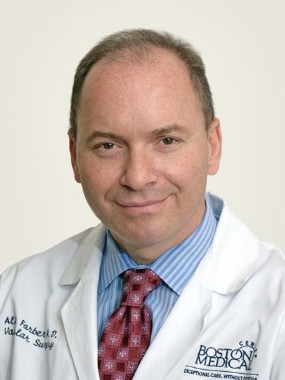
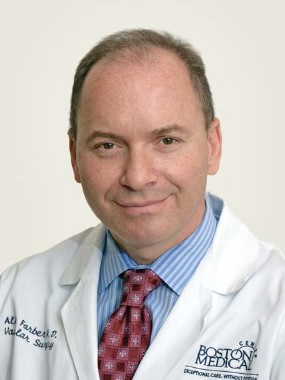
"To preserve a maximal number of access sites, forearm location should always be considered before resorting to an upper arm graft," Dr. Alik Farber said at the Society for Vascular Surgery Annual Meeting.
The incidence and prevalence of end-stage renal disease in the United States has grown exponentially in the past 25 years, said Dr. Farber, chief of vascular and endovascular surgery at Boston University Medical Center. "In fact, in 2010 almost 400,000 patients were undergoing hemodialysis," he said. "At the same time, there has been a steady increase in the percent of AV fistulas placed and an associated decline in the percent of AV grafts placed in the United States. In 2010, 20% of patients were undergoing hemodialysis through AV grafts."
Most grafts in the upper extremity are based on the brachial artery. Some are in the forearm while others are in the upper arm. "In the forearm most grafts are looped," Dr. Farber said. "In the upper arm some are looped and some are straight. As it turns out, the optimal graft configuration is unknown. The optimal venous outflow in the upper extremity is unknown. And the optimal location of the first-time AV graft is controversial."
He went on to note that the forearm AV graft "saves the upper arm for a future graft site and has a potential advantage of increasing the suitability of upper arm veins for future native fistula. On the other hand, there is some evidence in the literature that forearm grafts have lower patency rates. The upper arm graft may have higher patency rates because they are ‘sawn into’ large caliber veins. However, surgeons who preferentially place upper arm grafts tend to skip potential distal access sites."
Given the dearth of information on this topic, Dr. Farber and his associates set out to compare outcomes of forearm and upper arm grafts and to evaluate the association between upper extremity AV graft configuration, location, venous outflow, and patency in 649 patients from a multicenter trial conducted by the Dialysis Access Consortium (DAC). This was a randomized, controlled trial of dipyridamole versus placebo in patients with new AV grafts. It found that dipyridamole increased primary unassisted graft patency (N. Engl. J. Med. 2009;360:2191-201). "The important thing for us was that this is the largest randomized, controlled trial of AV grafts conducted to date," Dr. Farber said.
He presented results from 522 patients with AV grafts that were based on the brachial artery. Of the 522 patients, 269 had a forearm graft (fAVG) and 253 had an upper arm graft (uAVG). The primary outcome was loss of primary unassisted patency. "This was defined as a first occurrence of graft thrombosis, an access procedure to correct a greater than 50% stenosis, or other surgical graft modification," Dr. Farber explained. The secondary outcome was cumulative graft failure, "which was defined as the time from randomization to complete loss of access site for dialysis." Kaplan-Meier curves and Cox models were used to examine the effects of access location and configuration on study outcomes.
Compared with patients in the fAVG group, those in the uAVG group were more likely to be male (43% vs. 34%), to be African-American (78% vs. 62%), to have a lower body mass index (mean of 29 kg/m2 vs. a mean of 32 kg/m2), to have a lower baseline systolic blood pressure (139 mm Hg vs. 146 mm Hg), to have hemodialysis initiated before graft placement (80% vs. 64%), and to be on dialysis for a longer period of time (a mean of 2.59 years vs. a mean of 2.51 years).
Unadjusted analyses showed that there was no significant difference in the loss of primary unassisted graft patency or cumulative graft failure between the fAVG and uAVG groups.
Multivariate analyses of outcomes controlled for covariates revealed that the risk of loss of primary unassisted graft patency was not significantly higher in the uAVG group, compared with the fAVG group (hazard ratio of 1.24; P = .15). However, there was a suggestion of an association of increased risk of cumulative graft failure among upper arm grafts (HR 1.37; P = .09).
In a comparison of straight vs. looped grafts, straight configuration grafts "appeared to have a lower risk of primary and secondary failure, compared with looped figuration grafts, [but] this difference was not statistically significant," he said.
When compared to forearm looped grafts, which were used as a reference, there was no significant difference in the risk of primary and secondary failure among straight fAVGs, straight uAVGs, and looped uAVGs. There was a suggestion of increased risk of failure among upper arm looped grafts (HR 1.47; P = .06). There were also no significant differences between the two groups in adverse events and complications at 30 days.
Dr. Farber acknowledged certain limitations of the study. "Like any observational comparison of treatment groups, analysis was susceptible to uncontrolled confounding [variables]," he said. "We did a post hoc analysis of a randomized trial which did not answer the questions that we posed. Preoperative artery and vein diameters were not recorded and the reasons for graft selection are not known. Lastly, access interventions were followed for only 30 days beyond the occurrence of the primary endpoint, so we couldn’t really use access intervention to thoroughly evaluate the determinants of cumulative graft failure."
Dr. Farber said that he had no disclosures.
SAN FRANCISCO – Outcomes of forearm and upper arm hemodialysis arteriovenous grafts are similar despite the fact that large caliber outflow veins are often encountered in the upper arm, results from a large trial showed.
"To preserve a maximal number of access sites, forearm location should always be considered before resorting to an upper arm graft," Dr. Alik Farber said at the Society for Vascular Surgery Annual Meeting.
The incidence and prevalence of end-stage renal disease in the United States has grown exponentially in the past 25 years, said Dr. Farber, chief of vascular and endovascular surgery at Boston University Medical Center. "In fact, in 2010 almost 400,000 patients were undergoing hemodialysis," he said. "At the same time, there has been a steady increase in the percent of AV fistulas placed and an associated decline in the percent of AV grafts placed in the United States. In 2010, 20% of patients were undergoing hemodialysis through AV grafts."
Most grafts in the upper extremity are based on the brachial artery. Some are in the forearm while others are in the upper arm. "In the forearm most grafts are looped," Dr. Farber said. "In the upper arm some are looped and some are straight. As it turns out, the optimal graft configuration is unknown. The optimal venous outflow in the upper extremity is unknown. And the optimal location of the first-time AV graft is controversial."
He went on to note that the forearm AV graft "saves the upper arm for a future graft site and has a potential advantage of increasing the suitability of upper arm veins for future native fistula. On the other hand, there is some evidence in the literature that forearm grafts have lower patency rates. The upper arm graft may have higher patency rates because they are ‘sawn into’ large caliber veins. However, surgeons who preferentially place upper arm grafts tend to skip potential distal access sites."
Given the dearth of information on this topic, Dr. Farber and his associates set out to compare outcomes of forearm and upper arm grafts and to evaluate the association between upper extremity AV graft configuration, location, venous outflow, and patency in 649 patients from a multicenter trial conducted by the Dialysis Access Consortium (DAC). This was a randomized, controlled trial of dipyridamole versus placebo in patients with new AV grafts. It found that dipyridamole increased primary unassisted graft patency (N. Engl. J. Med. 2009;360:2191-201). "The important thing for us was that this is the largest randomized, controlled trial of AV grafts conducted to date," Dr. Farber said.
He presented results from 522 patients with AV grafts that were based on the brachial artery. Of the 522 patients, 269 had a forearm graft (fAVG) and 253 had an upper arm graft (uAVG). The primary outcome was loss of primary unassisted patency. "This was defined as a first occurrence of graft thrombosis, an access procedure to correct a greater than 50% stenosis, or other surgical graft modification," Dr. Farber explained. The secondary outcome was cumulative graft failure, "which was defined as the time from randomization to complete loss of access site for dialysis." Kaplan-Meier curves and Cox models were used to examine the effects of access location and configuration on study outcomes.
Compared with patients in the fAVG group, those in the uAVG group were more likely to be male (43% vs. 34%), to be African-American (78% vs. 62%), to have a lower body mass index (mean of 29 kg/m2 vs. a mean of 32 kg/m2), to have a lower baseline systolic blood pressure (139 mm Hg vs. 146 mm Hg), to have hemodialysis initiated before graft placement (80% vs. 64%), and to be on dialysis for a longer period of time (a mean of 2.59 years vs. a mean of 2.51 years).
Unadjusted analyses showed that there was no significant difference in the loss of primary unassisted graft patency or cumulative graft failure between the fAVG and uAVG groups.
Multivariate analyses of outcomes controlled for covariates revealed that the risk of loss of primary unassisted graft patency was not significantly higher in the uAVG group, compared with the fAVG group (hazard ratio of 1.24; P = .15). However, there was a suggestion of an association of increased risk of cumulative graft failure among upper arm grafts (HR 1.37; P = .09).
In a comparison of straight vs. looped grafts, straight configuration grafts "appeared to have a lower risk of primary and secondary failure, compared with looped figuration grafts, [but] this difference was not statistically significant," he said.
When compared to forearm looped grafts, which were used as a reference, there was no significant difference in the risk of primary and secondary failure among straight fAVGs, straight uAVGs, and looped uAVGs. There was a suggestion of increased risk of failure among upper arm looped grafts (HR 1.47; P = .06). There were also no significant differences between the two groups in adverse events and complications at 30 days.
Dr. Farber acknowledged certain limitations of the study. "Like any observational comparison of treatment groups, analysis was susceptible to uncontrolled confounding [variables]," he said. "We did a post hoc analysis of a randomized trial which did not answer the questions that we posed. Preoperative artery and vein diameters were not recorded and the reasons for graft selection are not known. Lastly, access interventions were followed for only 30 days beyond the occurrence of the primary endpoint, so we couldn’t really use access intervention to thoroughly evaluate the determinants of cumulative graft failure."
Dr. Farber said that he had no disclosures.
SAN FRANCISCO – Outcomes of forearm and upper arm hemodialysis arteriovenous grafts are similar despite the fact that large caliber outflow veins are often encountered in the upper arm, results from a large trial showed.
"To preserve a maximal number of access sites, forearm location should always be considered before resorting to an upper arm graft," Dr. Alik Farber said at the Society for Vascular Surgery Annual Meeting.
The incidence and prevalence of end-stage renal disease in the United States has grown exponentially in the past 25 years, said Dr. Farber, chief of vascular and endovascular surgery at Boston University Medical Center. "In fact, in 2010 almost 400,000 patients were undergoing hemodialysis," he said. "At the same time, there has been a steady increase in the percent of AV fistulas placed and an associated decline in the percent of AV grafts placed in the United States. In 2010, 20% of patients were undergoing hemodialysis through AV grafts."
Most grafts in the upper extremity are based on the brachial artery. Some are in the forearm while others are in the upper arm. "In the forearm most grafts are looped," Dr. Farber said. "In the upper arm some are looped and some are straight. As it turns out, the optimal graft configuration is unknown. The optimal venous outflow in the upper extremity is unknown. And the optimal location of the first-time AV graft is controversial."
He went on to note that the forearm AV graft "saves the upper arm for a future graft site and has a potential advantage of increasing the suitability of upper arm veins for future native fistula. On the other hand, there is some evidence in the literature that forearm grafts have lower patency rates. The upper arm graft may have higher patency rates because they are ‘sawn into’ large caliber veins. However, surgeons who preferentially place upper arm grafts tend to skip potential distal access sites."
Given the dearth of information on this topic, Dr. Farber and his associates set out to compare outcomes of forearm and upper arm grafts and to evaluate the association between upper extremity AV graft configuration, location, venous outflow, and patency in 649 patients from a multicenter trial conducted by the Dialysis Access Consortium (DAC). This was a randomized, controlled trial of dipyridamole versus placebo in patients with new AV grafts. It found that dipyridamole increased primary unassisted graft patency (N. Engl. J. Med. 2009;360:2191-201). "The important thing for us was that this is the largest randomized, controlled trial of AV grafts conducted to date," Dr. Farber said.
He presented results from 522 patients with AV grafts that were based on the brachial artery. Of the 522 patients, 269 had a forearm graft (fAVG) and 253 had an upper arm graft (uAVG). The primary outcome was loss of primary unassisted patency. "This was defined as a first occurrence of graft thrombosis, an access procedure to correct a greater than 50% stenosis, or other surgical graft modification," Dr. Farber explained. The secondary outcome was cumulative graft failure, "which was defined as the time from randomization to complete loss of access site for dialysis." Kaplan-Meier curves and Cox models were used to examine the effects of access location and configuration on study outcomes.
Compared with patients in the fAVG group, those in the uAVG group were more likely to be male (43% vs. 34%), to be African-American (78% vs. 62%), to have a lower body mass index (mean of 29 kg/m2 vs. a mean of 32 kg/m2), to have a lower baseline systolic blood pressure (139 mm Hg vs. 146 mm Hg), to have hemodialysis initiated before graft placement (80% vs. 64%), and to be on dialysis for a longer period of time (a mean of 2.59 years vs. a mean of 2.51 years).
Unadjusted analyses showed that there was no significant difference in the loss of primary unassisted graft patency or cumulative graft failure between the fAVG and uAVG groups.
Multivariate analyses of outcomes controlled for covariates revealed that the risk of loss of primary unassisted graft patency was not significantly higher in the uAVG group, compared with the fAVG group (hazard ratio of 1.24; P = .15). However, there was a suggestion of an association of increased risk of cumulative graft failure among upper arm grafts (HR 1.37; P = .09).
In a comparison of straight vs. looped grafts, straight configuration grafts "appeared to have a lower risk of primary and secondary failure, compared with looped figuration grafts, [but] this difference was not statistically significant," he said.
When compared to forearm looped grafts, which were used as a reference, there was no significant difference in the risk of primary and secondary failure among straight fAVGs, straight uAVGs, and looped uAVGs. There was a suggestion of increased risk of failure among upper arm looped grafts (HR 1.47; P = .06). There were also no significant differences between the two groups in adverse events and complications at 30 days.
Dr. Farber acknowledged certain limitations of the study. "Like any observational comparison of treatment groups, analysis was susceptible to uncontrolled confounding [variables]," he said. "We did a post hoc analysis of a randomized trial which did not answer the questions that we posed. Preoperative artery and vein diameters were not recorded and the reasons for graft selection are not known. Lastly, access interventions were followed for only 30 days beyond the occurrence of the primary endpoint, so we couldn’t really use access intervention to thoroughly evaluate the determinants of cumulative graft failure."
Dr. Farber said that he had no disclosures.
AT THE SVS ANNUAL MEETING
Major finding: The risk of loss of primary unassisted graft patency was not significantly higher in patients who had an upper arm arteriovenous graft compared with those who had a forearm AV graft (hazard ratio of 1.24; P = .15). However, there was a suggestion of an association of increased risk of cumulative graft failure among upper arm grafts (HR 1.37; P = .09).
Data source: A study of 522 hemodialysis patients with AV grafts based on the brachial artery. Of these, 269 had a forearm graft and 253 had an upper arm graft.
Disclosures: Dr. Farber said that he had no disclosures.
Supreme Court allows FTC to challenge 'pay for delay' settlements
The Federal Trade Commission has the right to challenge so-called "pay-for-delay" agreements that allow brand-name drug companies to pay their generic competitors to keep products off the market, the Supreme Court ruled June 17.
The high court declared that the FTC could move forward with its antitrust lawsuit against Actavis, Solvay Pharmaceuticals, and others for participating in a legal settlement that delayed the introduction of generic products competing with AndroGel (testosterone gel) 1.62%.

In the case of AndroGel, three generic companies were seeking to invalidate the patent held by Solvay Pharmaceuticals, which in turn sued the generic manufacturers. The companies all settled their cases and reached similar agreements. For instance, Actavis agreed not to bring its generic product to market until August 2015, 65 months before Solvay’s patent expired. The generic drugmaker also agreed to promote AndroGel to physicians. In exchange, Solvay agreed to pay the company between $19 million and $30 million annually for 9 years. The companies said the payments were for a variety of services but the FTC disputes that, saying the real aim was to keep the generic products off the market.
In the 5-3 ruling, the justices held that these "reverse payment settlements" in which the generic company being sued for patent infringement receives the payments, can "sometimes violate the antitrust laws" and allowed the FTC to pursue its case (Federal Trade Commission v. Actavis, Inc., et al.). This overturns a lower court ruling that there was no antitrust violation because the agreement didn’t keep the generic off the market for longer than the length of the brand name drug’s original patent exclusivity period.
The court stopped short of the FTC’s request to declare that all reverse payment settlements are "presumptively unlawful." The courts will have to decide on a case-by-case basis whether the agreement violates antitrust laws, according to the ruling.
The FTC called the decision a victory for consumers that could lead to greater competition and lower drug prices.
"The court has made it clear that pay-for-delay agreements between brand and generic drug companies are subject to antitrust scrutiny, and it has rejected the attempt by branded and generic companies to effectively immunize these agreements from the antitrust laws," Edith Ramirez, the FTC chairwoman, said in a statement. "With this finding, the court has taken a big step toward addressing a problem that has cost Americans $3.5 billion a year in higher drug prices."
The agency plans to move ahead with the Actavis litigation.
Officials at Actavis praised the high court’s decision not to declare reverse payment settlements presumptively unlawful, but said the ruling will place additional and unnecessary administrative burdens on the drug industry.
"Patent settlements have saved and continue to save consumers billions of dollars, and ensure more timely introduction of generic competition," Paul Bisaro, president and CEO of Actavis, said in a statement. "We plan to continue to defend the propriety of such settlements against any further legislative or judicial challenges."
The Federal Trade Commission has the right to challenge so-called "pay-for-delay" agreements that allow brand-name drug companies to pay their generic competitors to keep products off the market, the Supreme Court ruled June 17.
The high court declared that the FTC could move forward with its antitrust lawsuit against Actavis, Solvay Pharmaceuticals, and others for participating in a legal settlement that delayed the introduction of generic products competing with AndroGel (testosterone gel) 1.62%.
In the case of AndroGel, three generic companies were seeking to invalidate the patent held by Solvay Pharmaceuticals, which in turn sued the generic manufacturers. The companies all settled their cases and reached similar agreements. For instance, Actavis agreed not to bring its generic product to market until August 2015, 65 months before Solvay’s patent expired. The generic drugmaker also agreed to promote AndroGel to physicians. In exchange, Solvay agreed to pay the company between $19 million and $30 million annually for 9 years. The companies said the payments were for a variety of services but the FTC disputes that, saying the real aim was to keep the generic products off the market.
In the 5-3 ruling, the justices held that these "reverse payment settlements" in which the generic company being sued for patent infringement receives the payments, can "sometimes violate the antitrust laws" and allowed the FTC to pursue its case (Federal Trade Commission v. Actavis, Inc., et al.). This overturns a lower court ruling that there was no antitrust violation because the agreement didn’t keep the generic off the market for longer than the length of the brand name drug’s original patent exclusivity period.
The court stopped short of the FTC’s request to declare that all reverse payment settlements are "presumptively unlawful." The courts will have to decide on a case-by-case basis whether the agreement violates antitrust laws, according to the ruling.
The FTC called the decision a victory for consumers that could lead to greater competition and lower drug prices.
"The court has made it clear that pay-for-delay agreements between brand and generic drug companies are subject to antitrust scrutiny, and it has rejected the attempt by branded and generic companies to effectively immunize these agreements from the antitrust laws," Edith Ramirez, the FTC chairwoman, said in a statement. "With this finding, the court has taken a big step toward addressing a problem that has cost Americans $3.5 billion a year in higher drug prices."
The agency plans to move ahead with the Actavis litigation.
Officials at Actavis praised the high court’s decision not to declare reverse payment settlements presumptively unlawful, but said the ruling will place additional and unnecessary administrative burdens on the drug industry.
"Patent settlements have saved and continue to save consumers billions of dollars, and ensure more timely introduction of generic competition," Paul Bisaro, president and CEO of Actavis, said in a statement. "We plan to continue to defend the propriety of such settlements against any further legislative or judicial challenges."
The Federal Trade Commission has the right to challenge so-called "pay-for-delay" agreements that allow brand-name drug companies to pay their generic competitors to keep products off the market, the Supreme Court ruled June 17.
The high court declared that the FTC could move forward with its antitrust lawsuit against Actavis, Solvay Pharmaceuticals, and others for participating in a legal settlement that delayed the introduction of generic products competing with AndroGel (testosterone gel) 1.62%.
In the case of AndroGel, three generic companies were seeking to invalidate the patent held by Solvay Pharmaceuticals, which in turn sued the generic manufacturers. The companies all settled their cases and reached similar agreements. For instance, Actavis agreed not to bring its generic product to market until August 2015, 65 months before Solvay’s patent expired. The generic drugmaker also agreed to promote AndroGel to physicians. In exchange, Solvay agreed to pay the company between $19 million and $30 million annually for 9 years. The companies said the payments were for a variety of services but the FTC disputes that, saying the real aim was to keep the generic products off the market.
In the 5-3 ruling, the justices held that these "reverse payment settlements" in which the generic company being sued for patent infringement receives the payments, can "sometimes violate the antitrust laws" and allowed the FTC to pursue its case (Federal Trade Commission v. Actavis, Inc., et al.). This overturns a lower court ruling that there was no antitrust violation because the agreement didn’t keep the generic off the market for longer than the length of the brand name drug’s original patent exclusivity period.
The court stopped short of the FTC’s request to declare that all reverse payment settlements are "presumptively unlawful." The courts will have to decide on a case-by-case basis whether the agreement violates antitrust laws, according to the ruling.
The FTC called the decision a victory for consumers that could lead to greater competition and lower drug prices.
"The court has made it clear that pay-for-delay agreements between brand and generic drug companies are subject to antitrust scrutiny, and it has rejected the attempt by branded and generic companies to effectively immunize these agreements from the antitrust laws," Edith Ramirez, the FTC chairwoman, said in a statement. "With this finding, the court has taken a big step toward addressing a problem that has cost Americans $3.5 billion a year in higher drug prices."
The agency plans to move ahead with the Actavis litigation.
Officials at Actavis praised the high court’s decision not to declare reverse payment settlements presumptively unlawful, but said the ruling will place additional and unnecessary administrative burdens on the drug industry.
"Patent settlements have saved and continue to save consumers billions of dollars, and ensure more timely introduction of generic competition," Paul Bisaro, president and CEO of Actavis, said in a statement. "We plan to continue to defend the propriety of such settlements against any further legislative or judicial challenges."

Weighing a TAVR outcome
Is mild aortic regurgitation following transcatheter aortic valve replacement okay, or do patients face an unacceptably high risk for death when their procedure has that outcome?
That’s a question dogging transcatheter aortic valve replacement (TAVR) right now that will only get answered as more patients undergo TAVR and follow-up times increase. But it is also a question that probably comes up almost every day in cath labs performing TAVR.
Last month during EuroPCR, I heard the wrap-up for a just-completed TAVR case. After the replacement valve was placed, the patient had mild aortic regurgitation, and a key decision of the case was whether or not to try to fiddle with the valve to improve on that. Given the valvular calcification and the frailty of the patient, the physicians in the lab as well as those on the panel in the hall uniformly agreed that stopping at mild regurgitation was the best option for this case.
But hearing that, I also recalled the comment in March from Dr. Friederich-Wilhelm Mohr when he was reporting the most recent results from the German national TAVR registry. Dr. Mohr looked at the outcomes of patients with mild regurgitation and concluded that "regurgitation matters, whether is it mild or severe." In the German 1-year outcome results from nearly 2,700 patients who underwent transvascular TAVR, those who emerged with mild aortic regurgitation had a 25% 1-year mortality rate, compared with a 21% rate among patients who had no regurgitation flowing TAVR, and compared with a 50% rate in the small number of patients who emerged from TAVR with severe regurgitation. Dr. Mohr did not say whether he applied statistical analysis to those 21% and 25% results to determine if it was a significant difference.
Back to the case, is that possible 4% absolute difference in 1-year mortality worth the risk of possible clinical complications that fiddling with the valve might cause and with no guarantee of getting an improved result? The interventionalists thought that in this patient, the answer was to leave well enough alone.
But in the bigger picture, the answer lies in better TAVR devices that produce higher rates of patients with no regurgitation. In the German registry using 2011 TAVR technology, 56% of the transvascular TAVR patients had mild aortic regurgitation after their procedure finished. Dr. Mohr said that rate was too high.
Also at EuroPCR was a report from Dr. Ian Meredith from Melbourne on 60 patients treated with a new TAVR system designed to allow easy repositioning of the valve. Also, surrounding the valve as it gets placed in the patient’s heart is a layer of something Dr. Meredith likened to cling wrap, to fill and seal the small crevices around the new valve. In 53 patients with 30-day follow-up, one patient (2%) had moderate regurgitation, 10 patients (19%) had mild regurgitation, 13 (25%) had trace regurgitation, and 29 (55%) had no regurgitation. If those rates hold up with wider and longer use, it would be an advance, though still room for further improvement. By comparison, typical reported rates using the approved Sapien TAVR device show 15% moderate or severe regurgitation at 30 days following TAVR, 45% mild, and less than 20% with none.
Is mild aortic regurgitation following transcatheter aortic valve replacement okay, or do patients face an unacceptably high risk for death when their procedure has that outcome?
That’s a question dogging transcatheter aortic valve replacement (TAVR) right now that will only get answered as more patients undergo TAVR and follow-up times increase. But it is also a question that probably comes up almost every day in cath labs performing TAVR.
Last month during EuroPCR, I heard the wrap-up for a just-completed TAVR case. After the replacement valve was placed, the patient had mild aortic regurgitation, and a key decision of the case was whether or not to try to fiddle with the valve to improve on that. Given the valvular calcification and the frailty of the patient, the physicians in the lab as well as those on the panel in the hall uniformly agreed that stopping at mild regurgitation was the best option for this case.
But hearing that, I also recalled the comment in March from Dr. Friederich-Wilhelm Mohr when he was reporting the most recent results from the German national TAVR registry. Dr. Mohr looked at the outcomes of patients with mild regurgitation and concluded that "regurgitation matters, whether is it mild or severe." In the German 1-year outcome results from nearly 2,700 patients who underwent transvascular TAVR, those who emerged with mild aortic regurgitation had a 25% 1-year mortality rate, compared with a 21% rate among patients who had no regurgitation flowing TAVR, and compared with a 50% rate in the small number of patients who emerged from TAVR with severe regurgitation. Dr. Mohr did not say whether he applied statistical analysis to those 21% and 25% results to determine if it was a significant difference.
Back to the case, is that possible 4% absolute difference in 1-year mortality worth the risk of possible clinical complications that fiddling with the valve might cause and with no guarantee of getting an improved result? The interventionalists thought that in this patient, the answer was to leave well enough alone.
But in the bigger picture, the answer lies in better TAVR devices that produce higher rates of patients with no regurgitation. In the German registry using 2011 TAVR technology, 56% of the transvascular TAVR patients had mild aortic regurgitation after their procedure finished. Dr. Mohr said that rate was too high.
Also at EuroPCR was a report from Dr. Ian Meredith from Melbourne on 60 patients treated with a new TAVR system designed to allow easy repositioning of the valve. Also, surrounding the valve as it gets placed in the patient’s heart is a layer of something Dr. Meredith likened to cling wrap, to fill and seal the small crevices around the new valve. In 53 patients with 30-day follow-up, one patient (2%) had moderate regurgitation, 10 patients (19%) had mild regurgitation, 13 (25%) had trace regurgitation, and 29 (55%) had no regurgitation. If those rates hold up with wider and longer use, it would be an advance, though still room for further improvement. By comparison, typical reported rates using the approved Sapien TAVR device show 15% moderate or severe regurgitation at 30 days following TAVR, 45% mild, and less than 20% with none.
Is mild aortic regurgitation following transcatheter aortic valve replacement okay, or do patients face an unacceptably high risk for death when their procedure has that outcome?
That’s a question dogging transcatheter aortic valve replacement (TAVR) right now that will only get answered as more patients undergo TAVR and follow-up times increase. But it is also a question that probably comes up almost every day in cath labs performing TAVR.
Last month during EuroPCR, I heard the wrap-up for a just-completed TAVR case. After the replacement valve was placed, the patient had mild aortic regurgitation, and a key decision of the case was whether or not to try to fiddle with the valve to improve on that. Given the valvular calcification and the frailty of the patient, the physicians in the lab as well as those on the panel in the hall uniformly agreed that stopping at mild regurgitation was the best option for this case.
But hearing that, I also recalled the comment in March from Dr. Friederich-Wilhelm Mohr when he was reporting the most recent results from the German national TAVR registry. Dr. Mohr looked at the outcomes of patients with mild regurgitation and concluded that "regurgitation matters, whether is it mild or severe." In the German 1-year outcome results from nearly 2,700 patients who underwent transvascular TAVR, those who emerged with mild aortic regurgitation had a 25% 1-year mortality rate, compared with a 21% rate among patients who had no regurgitation flowing TAVR, and compared with a 50% rate in the small number of patients who emerged from TAVR with severe regurgitation. Dr. Mohr did not say whether he applied statistical analysis to those 21% and 25% results to determine if it was a significant difference.
Back to the case, is that possible 4% absolute difference in 1-year mortality worth the risk of possible clinical complications that fiddling with the valve might cause and with no guarantee of getting an improved result? The interventionalists thought that in this patient, the answer was to leave well enough alone.
But in the bigger picture, the answer lies in better TAVR devices that produce higher rates of patients with no regurgitation. In the German registry using 2011 TAVR technology, 56% of the transvascular TAVR patients had mild aortic regurgitation after their procedure finished. Dr. Mohr said that rate was too high.
Also at EuroPCR was a report from Dr. Ian Meredith from Melbourne on 60 patients treated with a new TAVR system designed to allow easy repositioning of the valve. Also, surrounding the valve as it gets placed in the patient’s heart is a layer of something Dr. Meredith likened to cling wrap, to fill and seal the small crevices around the new valve. In 53 patients with 30-day follow-up, one patient (2%) had moderate regurgitation, 10 patients (19%) had mild regurgitation, 13 (25%) had trace regurgitation, and 29 (55%) had no regurgitation. If those rates hold up with wider and longer use, it would be an advance, though still room for further improvement. By comparison, typical reported rates using the approved Sapien TAVR device show 15% moderate or severe regurgitation at 30 days following TAVR, 45% mild, and less than 20% with none.
In HCC, histology and parenchyma more important than tumor size
ORLANDO – In hepatocellular carcinoma, tumor size did not independently influence recurrence or survival, whereas tumor histopathology and background parenchyma did, according to a retrospective, single-center study of 300 patients.
"These findings further support that prognosis and treatment guidelines cannot be effectively categorized based on tumor size," said Dr. Michael D. Kluger of the department of surgery at New York-Presbyterian Hospital–Cornell University, New York.
Although the procedure is hampered by high recurrence rates, resection is safe, readily available, and offers good overall survival, he said.
Also, "This strategy can allow for the more effective utilization of a limited (and dwindling) supply of transplantable livers; freeing other patients from the potential short- and long-term complications of undergoing unnecessary transplantation," Dr. Kluger said.
Meanwhile, "many treatments with curative intent remain available after recurrence, including re-resection, salvage transplantation, and ablation," he said.
He presented his abstract, which is not published, during the annual Digestive Disease Week.
Dr. Kluger and his colleagues studied 313 patients with hepatocellular carcinoma (HCC) who underwent liver resection between 1989 and 2010.
Patients were stratified based on tumor size of less than 50 mm (36%), 50-100 mm (36%), and more than 100 mm (28%).
Patients with larger tumors were more likely to have normal liver parenchyma: 43% of patients with tumors larger than 100 mm, compared with 1% of patients with tumors smaller than 50 mm (P less than .001).
The influence of tumor size on overall survival was significant in univariate analyses (less than 50 mm vs. 50-100 mm, P = .0321; less then 50 mm vs. more than 100 mm, P = 0.009; 50-100 mm vs. more than 100 mm, P = .57), said Dr. Kluger, but when the salvage transplantation cases were excluded, tumor size was no longer significant (P = .18, .07, and .65, respectively.)
Researchers found seven independent predictors that led to decreased overall survival: intraoperative transfusion (hazard ratio, 2.60), cirrhosis (HR, 2.42), poorly differentiated tumor (HR, 2.04), satellite lesions (HR, 1.68), microvascular invasion (HR, 1.48), alpha-fetoprotein more than 200 ng/mL (HR, 1.53), and salvage transplantation (HR, 0.23).
Median overall survival was 60 months. One-year overall survival was 76%, and 5-year overall survival was 50%. Meanwhile, 5-year survival of patients who underwent salvage transplantation from the time of occurrence was 90%, compared with 18% for those not undergoing the procedure (P less than .0001).
The median time to recurrence was 20 months, with 1-year recurrence-free survival at 61%, and 5-year recurrence-free survival at 28%.
Four variables independently affected recurrence-free survival, the authors noted: intra-operative transfusion (HR, 2.15), poorly differentiated tumor (HR, 1.87), cirrhosis (HR, 1.69), and microvascular invasion (HR, 1.71).
Patients with nontransplantable recurrences after resection of tumors smaller than 5 cm had similar overall survival, compared with patients whose tumors were originally 5 cm or larger.
The study also showed that the rate of complications decreased during the second decade of the study period. While the mortality rate between 1989 and 1999 was 14%, it dropped to 5% through 2010 (P less than .008).
"These improvements coincide with major advances in liver surgery, patient selection, anesthetic practices, liver imaging, and postoperative care," said Dr. Kluger in an interview. "We also believe that routine integration of laparoscopy for appropriate cases since 1998 was also critical to improvements in outcomes. Whereas 6% of the cases performed prior to 2000 utilized a laparoscopic technique, 30% performed after 2000 did."
Dr. Kluger said that "tumor size is a widely accepted but inadequate proxy for interactions within the tumor milieu. ... The onus is to determine which patients would most benefit from upfront listing for transplantation despite candidacy for resection, or resection with the future possibility of salvage transplantation for recurrence," he said.
Dr. Kluger had no disclosures.
On Twitter @NaseemSMiller
ORLANDO – In hepatocellular carcinoma, tumor size did not independently influence recurrence or survival, whereas tumor histopathology and background parenchyma did, according to a retrospective, single-center study of 300 patients.
"These findings further support that prognosis and treatment guidelines cannot be effectively categorized based on tumor size," said Dr. Michael D. Kluger of the department of surgery at New York-Presbyterian Hospital–Cornell University, New York.
Although the procedure is hampered by high recurrence rates, resection is safe, readily available, and offers good overall survival, he said.
Also, "This strategy can allow for the more effective utilization of a limited (and dwindling) supply of transplantable livers; freeing other patients from the potential short- and long-term complications of undergoing unnecessary transplantation," Dr. Kluger said.
Meanwhile, "many treatments with curative intent remain available after recurrence, including re-resection, salvage transplantation, and ablation," he said.
He presented his abstract, which is not published, during the annual Digestive Disease Week.
Dr. Kluger and his colleagues studied 313 patients with hepatocellular carcinoma (HCC) who underwent liver resection between 1989 and 2010.
Patients were stratified based on tumor size of less than 50 mm (36%), 50-100 mm (36%), and more than 100 mm (28%).
Patients with larger tumors were more likely to have normal liver parenchyma: 43% of patients with tumors larger than 100 mm, compared with 1% of patients with tumors smaller than 50 mm (P less than .001).
The influence of tumor size on overall survival was significant in univariate analyses (less than 50 mm vs. 50-100 mm, P = .0321; less then 50 mm vs. more than 100 mm, P = 0.009; 50-100 mm vs. more than 100 mm, P = .57), said Dr. Kluger, but when the salvage transplantation cases were excluded, tumor size was no longer significant (P = .18, .07, and .65, respectively.)
Researchers found seven independent predictors that led to decreased overall survival: intraoperative transfusion (hazard ratio, 2.60), cirrhosis (HR, 2.42), poorly differentiated tumor (HR, 2.04), satellite lesions (HR, 1.68), microvascular invasion (HR, 1.48), alpha-fetoprotein more than 200 ng/mL (HR, 1.53), and salvage transplantation (HR, 0.23).
Median overall survival was 60 months. One-year overall survival was 76%, and 5-year overall survival was 50%. Meanwhile, 5-year survival of patients who underwent salvage transplantation from the time of occurrence was 90%, compared with 18% for those not undergoing the procedure (P less than .0001).
The median time to recurrence was 20 months, with 1-year recurrence-free survival at 61%, and 5-year recurrence-free survival at 28%.
Four variables independently affected recurrence-free survival, the authors noted: intra-operative transfusion (HR, 2.15), poorly differentiated tumor (HR, 1.87), cirrhosis (HR, 1.69), and microvascular invasion (HR, 1.71).
Patients with nontransplantable recurrences after resection of tumors smaller than 5 cm had similar overall survival, compared with patients whose tumors were originally 5 cm or larger.
The study also showed that the rate of complications decreased during the second decade of the study period. While the mortality rate between 1989 and 1999 was 14%, it dropped to 5% through 2010 (P less than .008).
"These improvements coincide with major advances in liver surgery, patient selection, anesthetic practices, liver imaging, and postoperative care," said Dr. Kluger in an interview. "We also believe that routine integration of laparoscopy for appropriate cases since 1998 was also critical to improvements in outcomes. Whereas 6% of the cases performed prior to 2000 utilized a laparoscopic technique, 30% performed after 2000 did."
Dr. Kluger said that "tumor size is a widely accepted but inadequate proxy for interactions within the tumor milieu. ... The onus is to determine which patients would most benefit from upfront listing for transplantation despite candidacy for resection, or resection with the future possibility of salvage transplantation for recurrence," he said.
Dr. Kluger had no disclosures.
On Twitter @NaseemSMiller
ORLANDO – In hepatocellular carcinoma, tumor size did not independently influence recurrence or survival, whereas tumor histopathology and background parenchyma did, according to a retrospective, single-center study of 300 patients.
"These findings further support that prognosis and treatment guidelines cannot be effectively categorized based on tumor size," said Dr. Michael D. Kluger of the department of surgery at New York-Presbyterian Hospital–Cornell University, New York.
Although the procedure is hampered by high recurrence rates, resection is safe, readily available, and offers good overall survival, he said.
Also, "This strategy can allow for the more effective utilization of a limited (and dwindling) supply of transplantable livers; freeing other patients from the potential short- and long-term complications of undergoing unnecessary transplantation," Dr. Kluger said.
Meanwhile, "many treatments with curative intent remain available after recurrence, including re-resection, salvage transplantation, and ablation," he said.
He presented his abstract, which is not published, during the annual Digestive Disease Week.
Dr. Kluger and his colleagues studied 313 patients with hepatocellular carcinoma (HCC) who underwent liver resection between 1989 and 2010.
Patients were stratified based on tumor size of less than 50 mm (36%), 50-100 mm (36%), and more than 100 mm (28%).
Patients with larger tumors were more likely to have normal liver parenchyma: 43% of patients with tumors larger than 100 mm, compared with 1% of patients with tumors smaller than 50 mm (P less than .001).
The influence of tumor size on overall survival was significant in univariate analyses (less than 50 mm vs. 50-100 mm, P = .0321; less then 50 mm vs. more than 100 mm, P = 0.009; 50-100 mm vs. more than 100 mm, P = .57), said Dr. Kluger, but when the salvage transplantation cases were excluded, tumor size was no longer significant (P = .18, .07, and .65, respectively.)
Researchers found seven independent predictors that led to decreased overall survival: intraoperative transfusion (hazard ratio, 2.60), cirrhosis (HR, 2.42), poorly differentiated tumor (HR, 2.04), satellite lesions (HR, 1.68), microvascular invasion (HR, 1.48), alpha-fetoprotein more than 200 ng/mL (HR, 1.53), and salvage transplantation (HR, 0.23).
Median overall survival was 60 months. One-year overall survival was 76%, and 5-year overall survival was 50%. Meanwhile, 5-year survival of patients who underwent salvage transplantation from the time of occurrence was 90%, compared with 18% for those not undergoing the procedure (P less than .0001).
The median time to recurrence was 20 months, with 1-year recurrence-free survival at 61%, and 5-year recurrence-free survival at 28%.
Four variables independently affected recurrence-free survival, the authors noted: intra-operative transfusion (HR, 2.15), poorly differentiated tumor (HR, 1.87), cirrhosis (HR, 1.69), and microvascular invasion (HR, 1.71).
Patients with nontransplantable recurrences after resection of tumors smaller than 5 cm had similar overall survival, compared with patients whose tumors were originally 5 cm or larger.
The study also showed that the rate of complications decreased during the second decade of the study period. While the mortality rate between 1989 and 1999 was 14%, it dropped to 5% through 2010 (P less than .008).
"These improvements coincide with major advances in liver surgery, patient selection, anesthetic practices, liver imaging, and postoperative care," said Dr. Kluger in an interview. "We also believe that routine integration of laparoscopy for appropriate cases since 1998 was also critical to improvements in outcomes. Whereas 6% of the cases performed prior to 2000 utilized a laparoscopic technique, 30% performed after 2000 did."
Dr. Kluger said that "tumor size is a widely accepted but inadequate proxy for interactions within the tumor milieu. ... The onus is to determine which patients would most benefit from upfront listing for transplantation despite candidacy for resection, or resection with the future possibility of salvage transplantation for recurrence," he said.
Dr. Kluger had no disclosures.
On Twitter @NaseemSMiller
AT DDW 2013
Major finding: The influence of tumor size on overall survival was significant in univariate analyses but when the salvage transplantation cases were excluded, tumor size was no longer significant.
Data source: Study of 313 patients with hepatocellular carcinoma who underwent liver resection between 1989 and 2010 at a single center.
Disclosures: Dr. Kluger had no disclosures.
FDA approves denosumab for giant cell tumors
Denosumab is approved for the treatment of giant cell tumors of the bone, the Food and Drug Administration announced June 13.
Rare and usually noncancerous, giant cell tumors of the bone generally affect 20- to 40-year-olds. Most of these tumors destroy growing bone, causing pain, limited range of motion, and bone fractures. Rarely, the tumors become cancerous and spread to the lungs.
Denosumab (Xgeva) is indicated for use in patients who are not candidates for surgical resection of their tumors or when surgery is likely to result in severe morbidity, such as loss of limbs or joint removal. It should be used only in adolescents whose bones have matured, the FDA said in a statement.

"Today’s approval of Xgeva provides a needed treatment option for patients with GCTB who are not surgical candidates or who would otherwise have to undergo extensive, life-altering surgery," said Dr. Richard Pazdur, director of the Office of Hematology and Oncology Products in the FDA’s Center for Drug Evaluation and Research.
The FDA reviewed denosumab under its priority review program as the drug was granted orphan product designation because GCTB is a rare disease.
The safety and effectiveness of denosumab for GCTB were established in two clinical trials that enrolled 305 adult or adolescent patients with confirmed GCTB that was recurrent, unresectable, or would be associated with severe morbidity if surgically managed.
After an average of 3 months, tumors reduced in size among 47 of 187 patients whose tumors could be measured. Over an average follow-up of 20 months, GCTBs regrew in three patients whose tumors originally became smaller during treatment.
Common side effects of denosumab included joint pain, headache, nausea, fatigue, back pain, and extremity pain. The most common serious side effects were osteonecrosis of the jaw and osteomyelitis. Women of reproductive potential should use highly effective contraception while taking denosumab because of potential fetal harm, according to the FDA.
Denosumab was approved in 2010 to prevent fractures when cancer has spread to the bones. It is marketed by Amgen.
On Twitter @maryjodales
Denosumab is approved for the treatment of giant cell tumors of the bone, the Food and Drug Administration announced June 13.
Rare and usually noncancerous, giant cell tumors of the bone generally affect 20- to 40-year-olds. Most of these tumors destroy growing bone, causing pain, limited range of motion, and bone fractures. Rarely, the tumors become cancerous and spread to the lungs.
Denosumab (Xgeva) is indicated for use in patients who are not candidates for surgical resection of their tumors or when surgery is likely to result in severe morbidity, such as loss of limbs or joint removal. It should be used only in adolescents whose bones have matured, the FDA said in a statement.
"Today’s approval of Xgeva provides a needed treatment option for patients with GCTB who are not surgical candidates or who would otherwise have to undergo extensive, life-altering surgery," said Dr. Richard Pazdur, director of the Office of Hematology and Oncology Products in the FDA’s Center for Drug Evaluation and Research.
The FDA reviewed denosumab under its priority review program as the drug was granted orphan product designation because GCTB is a rare disease.
The safety and effectiveness of denosumab for GCTB were established in two clinical trials that enrolled 305 adult or adolescent patients with confirmed GCTB that was recurrent, unresectable, or would be associated with severe morbidity if surgically managed.
After an average of 3 months, tumors reduced in size among 47 of 187 patients whose tumors could be measured. Over an average follow-up of 20 months, GCTBs regrew in three patients whose tumors originally became smaller during treatment.
Common side effects of denosumab included joint pain, headache, nausea, fatigue, back pain, and extremity pain. The most common serious side effects were osteonecrosis of the jaw and osteomyelitis. Women of reproductive potential should use highly effective contraception while taking denosumab because of potential fetal harm, according to the FDA.
Denosumab was approved in 2010 to prevent fractures when cancer has spread to the bones. It is marketed by Amgen.
On Twitter @maryjodales
Denosumab is approved for the treatment of giant cell tumors of the bone, the Food and Drug Administration announced June 13.
Rare and usually noncancerous, giant cell tumors of the bone generally affect 20- to 40-year-olds. Most of these tumors destroy growing bone, causing pain, limited range of motion, and bone fractures. Rarely, the tumors become cancerous and spread to the lungs.
Denosumab (Xgeva) is indicated for use in patients who are not candidates for surgical resection of their tumors or when surgery is likely to result in severe morbidity, such as loss of limbs or joint removal. It should be used only in adolescents whose bones have matured, the FDA said in a statement.
"Today’s approval of Xgeva provides a needed treatment option for patients with GCTB who are not surgical candidates or who would otherwise have to undergo extensive, life-altering surgery," said Dr. Richard Pazdur, director of the Office of Hematology and Oncology Products in the FDA’s Center for Drug Evaluation and Research.
The FDA reviewed denosumab under its priority review program as the drug was granted orphan product designation because GCTB is a rare disease.
The safety and effectiveness of denosumab for GCTB were established in two clinical trials that enrolled 305 adult or adolescent patients with confirmed GCTB that was recurrent, unresectable, or would be associated with severe morbidity if surgically managed.
After an average of 3 months, tumors reduced in size among 47 of 187 patients whose tumors could be measured. Over an average follow-up of 20 months, GCTBs regrew in three patients whose tumors originally became smaller during treatment.
Common side effects of denosumab included joint pain, headache, nausea, fatigue, back pain, and extremity pain. The most common serious side effects were osteonecrosis of the jaw and osteomyelitis. Women of reproductive potential should use highly effective contraception while taking denosumab because of potential fetal harm, according to the FDA.
Denosumab was approved in 2010 to prevent fractures when cancer has spread to the bones. It is marketed by Amgen.
On Twitter @maryjodales

Readmission: Symptom or problem?
Among the myriad efforts at performance improvement in our hospital system, none loom larger than those aimed at preventing readmissions. While clinicians have long known that patients’ outcomes suffer when they are readmitted to the acute care hospital, now hospital outcomes will also suffer – financially, by up to 2% of Medicare billings for FY 2014, with greater penalties in future years.
Our system expects to lose $575,000 for FY 2013, when the penalty is a more modest 1% of Medicare billings. Efforts to prevent readmissions to date have focused primarily on finding and eliminating process gaps: Have we adequately educated the patient and family about medications, treatments, follow-up appointments? Are there transportation challenges? Can the patient afford and obtain medications? National efforts have addressed the most common gaps. These efforts are very effective for the patient whose illness trajectory is one of slow and steady improvement.
As patients enter the final phase of a serious illness, the trajectory is progressive decline, despite available treatments. Trajectory of decline is characterized by functional decline, loss of lean body mass, and the need for frequent medical care (hospitalization, ED and physician visits). These patients have multiple transitions between and among health care settings. Recent analysis of data from the Centers for Medicare and Medicaid Services was discouraging: Though hospice at time of death doubled between 2000 and 2009, nearly a third of those patients were in hospice 3 or fewer days. Forty percent of those short-stay patients were discharged to hospice from an ICU. Fourteen percent of Medicare decedents in 2009 had at least one transition of care in the last 3 days of life (JAMA 309:470-77).
On the palliative care service, we encounter a group of patients who are frequently readmitted, not because of process gaps, but because they are too ill to live well outside of the hospital without significant assistance. For these patients, the readmission is a symptom, not the problem.
The problem is that the patient is dying. How can we better manage the transition away from acute care for the patient whose death is expected? Often these patients are readmitted because we have not provided an alternative to hospital admission for the next crisis. Medicare skilled nursing facilities, and long-term acute care and rehabilitation hospitals, are designed to care for patients whose conditions are improving, and as a result, they rapidly transfer declining patients back to the acute care hospital.
Hospice, as an interdisciplinary 24-hour model of care, is uniquely positioned to treat symptoms and assist the patient and family to cope with distress and grief. Hospices are required to provide respite to caregivers as well as options for inpatient care when the patient’s symptoms cannot be reasonably managed in another setting. Hospice admission within 30 days of death significantly reduces the likelihood of 30-day readmission, subsequent ICU admission, and death in the hospital (Health Aff. 2013;32:552-61). Greater reduction in the likelihood of these outcomes is seen with hospice admission at least 53 days before death. Ironically, hospice patients have demonstrated longer life expectancy than their disease-matched counterparts (J. Pain Symptom Manage. 2007;33:238-46).
Patients with serious, progressive illness need concrete information about the natural history of the illness, its expected course and prognosis, and the potential impact of proposed treatments on morbidity as well as mortality. Understanding what is expected in the illness often alters the choices patients make about treatment and postacute care. After disease education, a patient and family can select goals of care and treatment options that align with their preferences. When asked, most laypersons prefer to die at home, comfortably, with their family. For these patients, the question is not "Do you want to die?" but "How do you want to die?" These conversations are difficult for all involved (physician, patient, family), but allow patients to make truly informed decisions about their care, and to decide what is most important as death approaches.
Lacking complete information, patients are often subjected to a merry-go-round of transfers between the acute and postacute environments, with increased caregiver stress. Attention to goals of care results in fewer readmissions, higher satisfaction, and better outcomes for patients and health care organizations.
Palliative care teams can provide consultative assistance with these conversations, and may be available to provide additional training to health care providers as well. If your institution does not have a palliative care team, look to a board-certified palliative medicine clinician in your community (often the hospice medical director) for consultation and guidance.
Dr. Fredholm and Dr. Bekanich are codirectors of Seton Health Palliative Care, part of the University of Texas Southwestern Residency Programs in Austin.
Among the myriad efforts at performance improvement in our hospital system, none loom larger than those aimed at preventing readmissions. While clinicians have long known that patients’ outcomes suffer when they are readmitted to the acute care hospital, now hospital outcomes will also suffer – financially, by up to 2% of Medicare billings for FY 2014, with greater penalties in future years.
Our system expects to lose $575,000 for FY 2013, when the penalty is a more modest 1% of Medicare billings. Efforts to prevent readmissions to date have focused primarily on finding and eliminating process gaps: Have we adequately educated the patient and family about medications, treatments, follow-up appointments? Are there transportation challenges? Can the patient afford and obtain medications? National efforts have addressed the most common gaps. These efforts are very effective for the patient whose illness trajectory is one of slow and steady improvement.
As patients enter the final phase of a serious illness, the trajectory is progressive decline, despite available treatments. Trajectory of decline is characterized by functional decline, loss of lean body mass, and the need for frequent medical care (hospitalization, ED and physician visits). These patients have multiple transitions between and among health care settings. Recent analysis of data from the Centers for Medicare and Medicaid Services was discouraging: Though hospice at time of death doubled between 2000 and 2009, nearly a third of those patients were in hospice 3 or fewer days. Forty percent of those short-stay patients were discharged to hospice from an ICU. Fourteen percent of Medicare decedents in 2009 had at least one transition of care in the last 3 days of life (JAMA 309:470-77).
On the palliative care service, we encounter a group of patients who are frequently readmitted, not because of process gaps, but because they are too ill to live well outside of the hospital without significant assistance. For these patients, the readmission is a symptom, not the problem.
The problem is that the patient is dying. How can we better manage the transition away from acute care for the patient whose death is expected? Often these patients are readmitted because we have not provided an alternative to hospital admission for the next crisis. Medicare skilled nursing facilities, and long-term acute care and rehabilitation hospitals, are designed to care for patients whose conditions are improving, and as a result, they rapidly transfer declining patients back to the acute care hospital.
Hospice, as an interdisciplinary 24-hour model of care, is uniquely positioned to treat symptoms and assist the patient and family to cope with distress and grief. Hospices are required to provide respite to caregivers as well as options for inpatient care when the patient’s symptoms cannot be reasonably managed in another setting. Hospice admission within 30 days of death significantly reduces the likelihood of 30-day readmission, subsequent ICU admission, and death in the hospital (Health Aff. 2013;32:552-61). Greater reduction in the likelihood of these outcomes is seen with hospice admission at least 53 days before death. Ironically, hospice patients have demonstrated longer life expectancy than their disease-matched counterparts (J. Pain Symptom Manage. 2007;33:238-46).
Patients with serious, progressive illness need concrete information about the natural history of the illness, its expected course and prognosis, and the potential impact of proposed treatments on morbidity as well as mortality. Understanding what is expected in the illness often alters the choices patients make about treatment and postacute care. After disease education, a patient and family can select goals of care and treatment options that align with their preferences. When asked, most laypersons prefer to die at home, comfortably, with their family. For these patients, the question is not "Do you want to die?" but "How do you want to die?" These conversations are difficult for all involved (physician, patient, family), but allow patients to make truly informed decisions about their care, and to decide what is most important as death approaches.
Lacking complete information, patients are often subjected to a merry-go-round of transfers between the acute and postacute environments, with increased caregiver stress. Attention to goals of care results in fewer readmissions, higher satisfaction, and better outcomes for patients and health care organizations.
Palliative care teams can provide consultative assistance with these conversations, and may be available to provide additional training to health care providers as well. If your institution does not have a palliative care team, look to a board-certified palliative medicine clinician in your community (often the hospice medical director) for consultation and guidance.
Dr. Fredholm and Dr. Bekanich are codirectors of Seton Health Palliative Care, part of the University of Texas Southwestern Residency Programs in Austin.
Among the myriad efforts at performance improvement in our hospital system, none loom larger than those aimed at preventing readmissions. While clinicians have long known that patients’ outcomes suffer when they are readmitted to the acute care hospital, now hospital outcomes will also suffer – financially, by up to 2% of Medicare billings for FY 2014, with greater penalties in future years.
Our system expects to lose $575,000 for FY 2013, when the penalty is a more modest 1% of Medicare billings. Efforts to prevent readmissions to date have focused primarily on finding and eliminating process gaps: Have we adequately educated the patient and family about medications, treatments, follow-up appointments? Are there transportation challenges? Can the patient afford and obtain medications? National efforts have addressed the most common gaps. These efforts are very effective for the patient whose illness trajectory is one of slow and steady improvement.
As patients enter the final phase of a serious illness, the trajectory is progressive decline, despite available treatments. Trajectory of decline is characterized by functional decline, loss of lean body mass, and the need for frequent medical care (hospitalization, ED and physician visits). These patients have multiple transitions between and among health care settings. Recent analysis of data from the Centers for Medicare and Medicaid Services was discouraging: Though hospice at time of death doubled between 2000 and 2009, nearly a third of those patients were in hospice 3 or fewer days. Forty percent of those short-stay patients were discharged to hospice from an ICU. Fourteen percent of Medicare decedents in 2009 had at least one transition of care in the last 3 days of life (JAMA 309:470-77).
On the palliative care service, we encounter a group of patients who are frequently readmitted, not because of process gaps, but because they are too ill to live well outside of the hospital without significant assistance. For these patients, the readmission is a symptom, not the problem.
The problem is that the patient is dying. How can we better manage the transition away from acute care for the patient whose death is expected? Often these patients are readmitted because we have not provided an alternative to hospital admission for the next crisis. Medicare skilled nursing facilities, and long-term acute care and rehabilitation hospitals, are designed to care for patients whose conditions are improving, and as a result, they rapidly transfer declining patients back to the acute care hospital.
Hospice, as an interdisciplinary 24-hour model of care, is uniquely positioned to treat symptoms and assist the patient and family to cope with distress and grief. Hospices are required to provide respite to caregivers as well as options for inpatient care when the patient’s symptoms cannot be reasonably managed in another setting. Hospice admission within 30 days of death significantly reduces the likelihood of 30-day readmission, subsequent ICU admission, and death in the hospital (Health Aff. 2013;32:552-61). Greater reduction in the likelihood of these outcomes is seen with hospice admission at least 53 days before death. Ironically, hospice patients have demonstrated longer life expectancy than their disease-matched counterparts (J. Pain Symptom Manage. 2007;33:238-46).
Patients with serious, progressive illness need concrete information about the natural history of the illness, its expected course and prognosis, and the potential impact of proposed treatments on morbidity as well as mortality. Understanding what is expected in the illness often alters the choices patients make about treatment and postacute care. After disease education, a patient and family can select goals of care and treatment options that align with their preferences. When asked, most laypersons prefer to die at home, comfortably, with their family. For these patients, the question is not "Do you want to die?" but "How do you want to die?" These conversations are difficult for all involved (physician, patient, family), but allow patients to make truly informed decisions about their care, and to decide what is most important as death approaches.
Lacking complete information, patients are often subjected to a merry-go-round of transfers between the acute and postacute environments, with increased caregiver stress. Attention to goals of care results in fewer readmissions, higher satisfaction, and better outcomes for patients and health care organizations.
Palliative care teams can provide consultative assistance with these conversations, and may be available to provide additional training to health care providers as well. If your institution does not have a palliative care team, look to a board-certified palliative medicine clinician in your community (often the hospice medical director) for consultation and guidance.
Dr. Fredholm and Dr. Bekanich are codirectors of Seton Health Palliative Care, part of the University of Texas Southwestern Residency Programs in Austin.
Supreme Court: Human genes cannot be patented
Private companies do not have the right to patent human genes, the U.S. Supreme Court has ruled.
In a unanimous decision issued on June 13, the high court ruled that a naturally occurring DNA segment is a "product of nature" and is not eligible for a patent simply because it has been isolated. But the court also ruled that synthetically created DNA known as complementary DNA (cDNA) can be granted a patent.
In Association for Molecular Pathology et al. v. Myriad Genetics, the high court considered the validity of patents held by Utah-based Myriad Genetics for the BRCA1 and BRCA2 genes, which are associated with an increased risk of breast and ovarian cancer.
Scientists at Myriad Genetics uncovered the location and sequence of the BRCA1 and BRCA2 genes in the mid-1990s. Since then, they have held the exclusive rights to the diagnostic testing for the mutations. But critics say the monopoly on testing held by Myriad is bad for patients because the test is expensive and they have no alternative confirmatory test.
"It is undisputed that Myriad did not create or alter any of the genetic information encoded in the BRCA1 and BRCA2 genes," Justice Clarence Thomas wrote in the court’s opinion. "Myriad’s principal contribution was uncovering the precise location and genetic sequence of the BRCA1 and BRCA2 genes within chromosomes 17 and 13."
The justices concluded that simply isolating genes and the information they encode from the surrounding genetic material is insufficient for a patent. However, cDNA are not naturally occurring so tests using that technology can be patented.
The American Medical Association, which filed an amicus brief in support of invalidating the Myriad patents, praised the Court’s decision.
“Removing the patents on the building blocks of life ensures that scientific discovery and medical care based on insights into human DNA will remain freely accessible and widely disseminated, not hidden behind a vast thicket of exclusive rights,” Dr. Jeremy A. Lazarus, AMA president, said in a statement.
The American Civil Liberties Union, which joined the suit against Myriad, said the decision brings down a major barrier to patient care and medical innovation. "Because of this ruling, patients will have greater access to genetic testing and scientists can engage in research on these genes without fear of being sued," Sandra Park, senior staff attorney with the ACLU Women’s Rights Project, said in a statement.
The Supreme Court’s decision comes too late to have much of a practical impact on BRCA1 and BRCA2 testing, since Myriad’s 20-year exclusivity on the patents in dispute all expire by 2015.
On Twitter @MaryEllenNY
Private companies do not have the right to patent human genes, the U.S. Supreme Court has ruled.
In a unanimous decision issued on June 13, the high court ruled that a naturally occurring DNA segment is a "product of nature" and is not eligible for a patent simply because it has been isolated. But the court also ruled that synthetically created DNA known as complementary DNA (cDNA) can be granted a patent.
In Association for Molecular Pathology et al. v. Myriad Genetics, the high court considered the validity of patents held by Utah-based Myriad Genetics for the BRCA1 and BRCA2 genes, which are associated with an increased risk of breast and ovarian cancer.
Scientists at Myriad Genetics uncovered the location and sequence of the BRCA1 and BRCA2 genes in the mid-1990s. Since then, they have held the exclusive rights to the diagnostic testing for the mutations. But critics say the monopoly on testing held by Myriad is bad for patients because the test is expensive and they have no alternative confirmatory test.
"It is undisputed that Myriad did not create or alter any of the genetic information encoded in the BRCA1 and BRCA2 genes," Justice Clarence Thomas wrote in the court’s opinion. "Myriad’s principal contribution was uncovering the precise location and genetic sequence of the BRCA1 and BRCA2 genes within chromosomes 17 and 13."
The justices concluded that simply isolating genes and the information they encode from the surrounding genetic material is insufficient for a patent. However, cDNA are not naturally occurring so tests using that technology can be patented.
The American Medical Association, which filed an amicus brief in support of invalidating the Myriad patents, praised the Court’s decision.
“Removing the patents on the building blocks of life ensures that scientific discovery and medical care based on insights into human DNA will remain freely accessible and widely disseminated, not hidden behind a vast thicket of exclusive rights,” Dr. Jeremy A. Lazarus, AMA president, said in a statement.
The American Civil Liberties Union, which joined the suit against Myriad, said the decision brings down a major barrier to patient care and medical innovation. "Because of this ruling, patients will have greater access to genetic testing and scientists can engage in research on these genes without fear of being sued," Sandra Park, senior staff attorney with the ACLU Women’s Rights Project, said in a statement.
The Supreme Court’s decision comes too late to have much of a practical impact on BRCA1 and BRCA2 testing, since Myriad’s 20-year exclusivity on the patents in dispute all expire by 2015.
On Twitter @MaryEllenNY
Private companies do not have the right to patent human genes, the U.S. Supreme Court has ruled.
In a unanimous decision issued on June 13, the high court ruled that a naturally occurring DNA segment is a "product of nature" and is not eligible for a patent simply because it has been isolated. But the court also ruled that synthetically created DNA known as complementary DNA (cDNA) can be granted a patent.
In Association for Molecular Pathology et al. v. Myriad Genetics, the high court considered the validity of patents held by Utah-based Myriad Genetics for the BRCA1 and BRCA2 genes, which are associated with an increased risk of breast and ovarian cancer.
Scientists at Myriad Genetics uncovered the location and sequence of the BRCA1 and BRCA2 genes in the mid-1990s. Since then, they have held the exclusive rights to the diagnostic testing for the mutations. But critics say the monopoly on testing held by Myriad is bad for patients because the test is expensive and they have no alternative confirmatory test.
"It is undisputed that Myriad did not create or alter any of the genetic information encoded in the BRCA1 and BRCA2 genes," Justice Clarence Thomas wrote in the court’s opinion. "Myriad’s principal contribution was uncovering the precise location and genetic sequence of the BRCA1 and BRCA2 genes within chromosomes 17 and 13."
The justices concluded that simply isolating genes and the information they encode from the surrounding genetic material is insufficient for a patent. However, cDNA are not naturally occurring so tests using that technology can be patented.
The American Medical Association, which filed an amicus brief in support of invalidating the Myriad patents, praised the Court’s decision.
“Removing the patents on the building blocks of life ensures that scientific discovery and medical care based on insights into human DNA will remain freely accessible and widely disseminated, not hidden behind a vast thicket of exclusive rights,” Dr. Jeremy A. Lazarus, AMA president, said in a statement.
The American Civil Liberties Union, which joined the suit against Myriad, said the decision brings down a major barrier to patient care and medical innovation. "Because of this ruling, patients will have greater access to genetic testing and scientists can engage in research on these genes without fear of being sued," Sandra Park, senior staff attorney with the ACLU Women’s Rights Project, said in a statement.
The Supreme Court’s decision comes too late to have much of a practical impact on BRCA1 and BRCA2 testing, since Myriad’s 20-year exclusivity on the patents in dispute all expire by 2015.
On Twitter @MaryEllenNY