User login
Official Newspaper of the American College of Surgeons
Open surgery less risky than FEVAR for some aneurysm repairs
SAN FRANCISCO – Fenestrated endovascular aneurysm repair was associated with a significantly higher mortality and a significantly higher rate of any complication, compared with open surgery, for complex abdominal aortic aneurysm repair, results from a two-center study demonstrated.
The findings suggest that "in very-low-risk patients, open surgery should be considered preferable to EVAR," Dr. Maxime Raux said at the Society for Vascular Surgery annual meeting. "Identifying patients at risk of target vessel difficulties or graft complications may identify the patients at high risk for FEVAR."
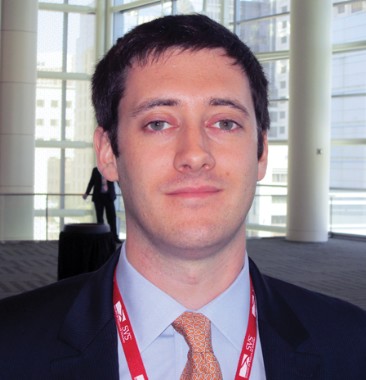
Working with researchers at Massachusetts General Hospital, Boston, Dr. Raux and his associates in the of the department of vascular and endovascular surgery at Henri Mondor Hospital in Créteil, France, retrospectively compared 30-day outcomes of fenestrated EVAR (FEVAR) with open surgery repair (OR) of complex abdominal aortic aneurysms performed between 2001 and 2012. FEVAR procedures were performed for high-risk patients at Henri Mondor Hospital while the OR cases were performed at Massachusetts General Hospital.
The researchers excluded patients with type IV thoracic aortic aneurysm (TAA), those with a ruptured or symptomatic aneurysm, those who required redo surgery or who had undergone a previous aortic intervention, and those who required actual or anticipated infrarenal clamp position. Next, they performed propensity score matching to identify clinical and anatomically similar cohorts. This left a study cohort of 42 FEVAR procedures and 147 open repairs.
Compared with the OR group, patients in the FEVAR group were more likely to be male, have heart failure, coronary artery disease, chronic obstructive pulmonary disease, and diabetes, while patients in the OR group were more likely to have hypertension and smoke, compared with their counterparts in the FEVAR group. These differences did not reach statistical significance.
Univariate analysis revealed that, compared with patients in the OR group, those in the FEVAR group had a higher 30-day mortality (9.5% vs. 2%; P = .038), a higher occurrence of any complication (42.9% vs. 23.1%; P = .012), procedural complication (23.8% vs. 7.5%; P = .0044), and graft complication (33.3% vs. 2%; P less than .0001). There were four deaths in the FEVAR group: two cases of mesenteric infarction, one case of multiple organ failure plus mesenteric infarction, and one case of respiratory failure. There were three deaths in the OR group: one intraoperative death, one case of myocardial infarction, and one death of unknown cause post discharge.
Multivariate analysis revealed that patients in the FEVAR group had an increased risk of 30-day mortality (odds ratio, 5.05; P = .039), risk of any complication (odds ratio, 2.3; P = .03), and risk of graft complication (odds ratio, 24; P less than .0001).
Dr. Raux acknowledged certain limitations of the study, including its retrospective design and the potential for selection bias. It also compared a new procedure (FEVAR) to a well-established procedure (OR). "Also, there were no comparisons of target vessel anatomy or considerations related to aortic anatomy," he said.
Based on the results of the study, he concluded that "extension of the infrarenal AAA treatment paradigm shift to EVAR cannot be applied to a similar shift of complex AAA to EVAR. Further evaluation with prospective studies is warranted."
Dr. Raux said that he had no relevant financial conflicts to disclose.
SAN FRANCISCO – Fenestrated endovascular aneurysm repair was associated with a significantly higher mortality and a significantly higher rate of any complication, compared with open surgery, for complex abdominal aortic aneurysm repair, results from a two-center study demonstrated.
The findings suggest that "in very-low-risk patients, open surgery should be considered preferable to EVAR," Dr. Maxime Raux said at the Society for Vascular Surgery annual meeting. "Identifying patients at risk of target vessel difficulties or graft complications may identify the patients at high risk for FEVAR."
Working with researchers at Massachusetts General Hospital, Boston, Dr. Raux and his associates in the of the department of vascular and endovascular surgery at Henri Mondor Hospital in Créteil, France, retrospectively compared 30-day outcomes of fenestrated EVAR (FEVAR) with open surgery repair (OR) of complex abdominal aortic aneurysms performed between 2001 and 2012. FEVAR procedures were performed for high-risk patients at Henri Mondor Hospital while the OR cases were performed at Massachusetts General Hospital.
The researchers excluded patients with type IV thoracic aortic aneurysm (TAA), those with a ruptured or symptomatic aneurysm, those who required redo surgery or who had undergone a previous aortic intervention, and those who required actual or anticipated infrarenal clamp position. Next, they performed propensity score matching to identify clinical and anatomically similar cohorts. This left a study cohort of 42 FEVAR procedures and 147 open repairs.
Compared with the OR group, patients in the FEVAR group were more likely to be male, have heart failure, coronary artery disease, chronic obstructive pulmonary disease, and diabetes, while patients in the OR group were more likely to have hypertension and smoke, compared with their counterparts in the FEVAR group. These differences did not reach statistical significance.
Univariate analysis revealed that, compared with patients in the OR group, those in the FEVAR group had a higher 30-day mortality (9.5% vs. 2%; P = .038), a higher occurrence of any complication (42.9% vs. 23.1%; P = .012), procedural complication (23.8% vs. 7.5%; P = .0044), and graft complication (33.3% vs. 2%; P less than .0001). There were four deaths in the FEVAR group: two cases of mesenteric infarction, one case of multiple organ failure plus mesenteric infarction, and one case of respiratory failure. There were three deaths in the OR group: one intraoperative death, one case of myocardial infarction, and one death of unknown cause post discharge.
Multivariate analysis revealed that patients in the FEVAR group had an increased risk of 30-day mortality (odds ratio, 5.05; P = .039), risk of any complication (odds ratio, 2.3; P = .03), and risk of graft complication (odds ratio, 24; P less than .0001).
Dr. Raux acknowledged certain limitations of the study, including its retrospective design and the potential for selection bias. It also compared a new procedure (FEVAR) to a well-established procedure (OR). "Also, there were no comparisons of target vessel anatomy or considerations related to aortic anatomy," he said.
Based on the results of the study, he concluded that "extension of the infrarenal AAA treatment paradigm shift to EVAR cannot be applied to a similar shift of complex AAA to EVAR. Further evaluation with prospective studies is warranted."
Dr. Raux said that he had no relevant financial conflicts to disclose.
SAN FRANCISCO – Fenestrated endovascular aneurysm repair was associated with a significantly higher mortality and a significantly higher rate of any complication, compared with open surgery, for complex abdominal aortic aneurysm repair, results from a two-center study demonstrated.
The findings suggest that "in very-low-risk patients, open surgery should be considered preferable to EVAR," Dr. Maxime Raux said at the Society for Vascular Surgery annual meeting. "Identifying patients at risk of target vessel difficulties or graft complications may identify the patients at high risk for FEVAR."
Working with researchers at Massachusetts General Hospital, Boston, Dr. Raux and his associates in the of the department of vascular and endovascular surgery at Henri Mondor Hospital in Créteil, France, retrospectively compared 30-day outcomes of fenestrated EVAR (FEVAR) with open surgery repair (OR) of complex abdominal aortic aneurysms performed between 2001 and 2012. FEVAR procedures were performed for high-risk patients at Henri Mondor Hospital while the OR cases were performed at Massachusetts General Hospital.
The researchers excluded patients with type IV thoracic aortic aneurysm (TAA), those with a ruptured or symptomatic aneurysm, those who required redo surgery or who had undergone a previous aortic intervention, and those who required actual or anticipated infrarenal clamp position. Next, they performed propensity score matching to identify clinical and anatomically similar cohorts. This left a study cohort of 42 FEVAR procedures and 147 open repairs.
Compared with the OR group, patients in the FEVAR group were more likely to be male, have heart failure, coronary artery disease, chronic obstructive pulmonary disease, and diabetes, while patients in the OR group were more likely to have hypertension and smoke, compared with their counterparts in the FEVAR group. These differences did not reach statistical significance.
Univariate analysis revealed that, compared with patients in the OR group, those in the FEVAR group had a higher 30-day mortality (9.5% vs. 2%; P = .038), a higher occurrence of any complication (42.9% vs. 23.1%; P = .012), procedural complication (23.8% vs. 7.5%; P = .0044), and graft complication (33.3% vs. 2%; P less than .0001). There were four deaths in the FEVAR group: two cases of mesenteric infarction, one case of multiple organ failure plus mesenteric infarction, and one case of respiratory failure. There were three deaths in the OR group: one intraoperative death, one case of myocardial infarction, and one death of unknown cause post discharge.
Multivariate analysis revealed that patients in the FEVAR group had an increased risk of 30-day mortality (odds ratio, 5.05; P = .039), risk of any complication (odds ratio, 2.3; P = .03), and risk of graft complication (odds ratio, 24; P less than .0001).
Dr. Raux acknowledged certain limitations of the study, including its retrospective design and the potential for selection bias. It also compared a new procedure (FEVAR) to a well-established procedure (OR). "Also, there were no comparisons of target vessel anatomy or considerations related to aortic anatomy," he said.
Based on the results of the study, he concluded that "extension of the infrarenal AAA treatment paradigm shift to EVAR cannot be applied to a similar shift of complex AAA to EVAR. Further evaluation with prospective studies is warranted."
Dr. Raux said that he had no relevant financial conflicts to disclose.
AT THE SVS ANNUAL MEETING
Major finding: Compared with patients who underwent open surgical repair of complex abdominal aortic aneurysms, those who underwent fenestrated endovascular aneurysm repair had a higher 30-day mortality (9.5% vs. 2%; P = .038) and a higher occurrence of any complication (42.9% vs. 23.1%; P = .012).
Data source: An analysis 147 open surgery repairs and 42 FEVAR procedures performed at two medical centers between 2001 and 2012.
Disclosures: Dr. Raux said that he had no relevant financial conflicts to disclose.
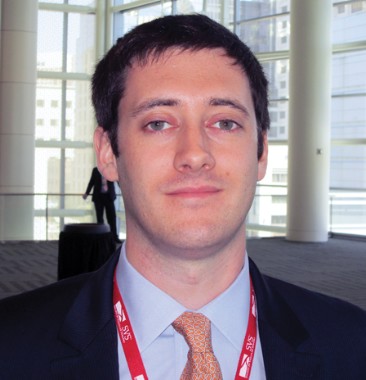
Open surgery less risky than FEVAR for some aneurysm repairs
SAN FRANCISCO – Fenestrated endovascular aneurysm repair was associated with a significantly higher mortality and a significantly higher rate of any complication, compared with open surgery, for complex abdominal aortic aneurysm repair, results from a two-center study demonstrated.
The findings suggest that "in very-low-risk patients, open surgery should be considered preferable to EVAR," Dr. Maxime Raux said at the Society for Vascular Surgery annual meeting. "Identifying patients at risk of target vessel difficulties or graft complications may identify the patients at high risk for FEVAR."
Working with researchers at Massachusetts General Hospital, Boston, Dr. Raux and his associates in the of the department of vascular and endovascular surgery at Henri Mondor Hospital in Créteil, France, retrospectively compared 30-day outcomes of fenestrated EVAR (FEVAR) with open surgery repair (OR) of complex abdominal aortic aneurysms performed between 2001 and 2012. FEVAR procedures were performed for high-risk patients at Henri Mondor Hospital while the OR cases were performed at Massachusetts General Hospital.
The researchers excluded patients with type IV thoracic aortic aneurysm (TAA), those with a ruptured or symptomatic aneurysm, those who required redo surgery or who had undergone a previous aortic intervention, and those who required actual or anticipated infrarenal clamp position. Next, they performed propensity score matching to identify clinical and anatomically similar cohorts. This left a study cohort of 42 FEVAR procedures and 147 open repairs.
Compared with the OR group, patients in the FEVAR group were more likely to be male, have heart failure, coronary artery disease, chronic obstructive pulmonary disease, and diabetes, while patients in the OR group were more likely to have hypertension and smoke, compared with their counterparts in the FEVAR group. These differences did not reach statistical significance.
Univariate analysis revealed that, compared with patients in the OR group, those in the FEVAR group had a higher 30-day mortality (9.5% vs. 2%; P = .038), a higher occurrence of any complication (42.9% vs. 23.1%; P = .012), procedural complication (23.8% vs. 7.5%; P = .0044), and graft complication (33.3% vs. 2%; P less than .0001). There were four deaths in the FEVAR group: two cases of mesenteric infarction, one case of multiple organ failure plus mesenteric infarction, and one case of respiratory failure. There were three deaths in the OR group: one intraoperative death, one case of myocardial infarction, and one death of unknown cause post discharge.
Multivariate analysis revealed that patients in the FEVAR group had an increased risk of 30-day mortality (odds ratio, 5.05; P = .039), risk of any complication (odds ratio, 2.3; P = .03), and risk of graft complication (odds ratio, 24; P less than .0001).
Dr. Raux acknowledged certain limitations of the study, including its retrospective design and the potential for selection bias. It also compared a new procedure (FEVAR) to a well-established procedure (OR). "Also, there were no comparisons of target vessel anatomy or considerations related to aortic anatomy," he said.
Based on the results of the study, he concluded that "extension of the infrarenal AAA treatment paradigm shift to EVAR cannot be applied to a similar shift of complex AAA to EVAR. Further evaluation with prospective studies is warranted."
Dr. Raux said that he had no relevant financial conflicts to disclose.
SAN FRANCISCO – Fenestrated endovascular aneurysm repair was associated with a significantly higher mortality and a significantly higher rate of any complication, compared with open surgery, for complex abdominal aortic aneurysm repair, results from a two-center study demonstrated.
The findings suggest that "in very-low-risk patients, open surgery should be considered preferable to EVAR," Dr. Maxime Raux said at the Society for Vascular Surgery annual meeting. "Identifying patients at risk of target vessel difficulties or graft complications may identify the patients at high risk for FEVAR."
Working with researchers at Massachusetts General Hospital, Boston, Dr. Raux and his associates in the of the department of vascular and endovascular surgery at Henri Mondor Hospital in Créteil, France, retrospectively compared 30-day outcomes of fenestrated EVAR (FEVAR) with open surgery repair (OR) of complex abdominal aortic aneurysms performed between 2001 and 2012. FEVAR procedures were performed for high-risk patients at Henri Mondor Hospital while the OR cases were performed at Massachusetts General Hospital.
The researchers excluded patients with type IV thoracic aortic aneurysm (TAA), those with a ruptured or symptomatic aneurysm, those who required redo surgery or who had undergone a previous aortic intervention, and those who required actual or anticipated infrarenal clamp position. Next, they performed propensity score matching to identify clinical and anatomically similar cohorts. This left a study cohort of 42 FEVAR procedures and 147 open repairs.
Compared with the OR group, patients in the FEVAR group were more likely to be male, have heart failure, coronary artery disease, chronic obstructive pulmonary disease, and diabetes, while patients in the OR group were more likely to have hypertension and smoke, compared with their counterparts in the FEVAR group. These differences did not reach statistical significance.
Univariate analysis revealed that, compared with patients in the OR group, those in the FEVAR group had a higher 30-day mortality (9.5% vs. 2%; P = .038), a higher occurrence of any complication (42.9% vs. 23.1%; P = .012), procedural complication (23.8% vs. 7.5%; P = .0044), and graft complication (33.3% vs. 2%; P less than .0001). There were four deaths in the FEVAR group: two cases of mesenteric infarction, one case of multiple organ failure plus mesenteric infarction, and one case of respiratory failure. There were three deaths in the OR group: one intraoperative death, one case of myocardial infarction, and one death of unknown cause post discharge.
Multivariate analysis revealed that patients in the FEVAR group had an increased risk of 30-day mortality (odds ratio, 5.05; P = .039), risk of any complication (odds ratio, 2.3; P = .03), and risk of graft complication (odds ratio, 24; P less than .0001).
Dr. Raux acknowledged certain limitations of the study, including its retrospective design and the potential for selection bias. It also compared a new procedure (FEVAR) to a well-established procedure (OR). "Also, there were no comparisons of target vessel anatomy or considerations related to aortic anatomy," he said.
Based on the results of the study, he concluded that "extension of the infrarenal AAA treatment paradigm shift to EVAR cannot be applied to a similar shift of complex AAA to EVAR. Further evaluation with prospective studies is warranted."
Dr. Raux said that he had no relevant financial conflicts to disclose.
SAN FRANCISCO – Fenestrated endovascular aneurysm repair was associated with a significantly higher mortality and a significantly higher rate of any complication, compared with open surgery, for complex abdominal aortic aneurysm repair, results from a two-center study demonstrated.
The findings suggest that "in very-low-risk patients, open surgery should be considered preferable to EVAR," Dr. Maxime Raux said at the Society for Vascular Surgery annual meeting. "Identifying patients at risk of target vessel difficulties or graft complications may identify the patients at high risk for FEVAR."
Working with researchers at Massachusetts General Hospital, Boston, Dr. Raux and his associates in the of the department of vascular and endovascular surgery at Henri Mondor Hospital in Créteil, France, retrospectively compared 30-day outcomes of fenestrated EVAR (FEVAR) with open surgery repair (OR) of complex abdominal aortic aneurysms performed between 2001 and 2012. FEVAR procedures were performed for high-risk patients at Henri Mondor Hospital while the OR cases were performed at Massachusetts General Hospital.
The researchers excluded patients with type IV thoracic aortic aneurysm (TAA), those with a ruptured or symptomatic aneurysm, those who required redo surgery or who had undergone a previous aortic intervention, and those who required actual or anticipated infrarenal clamp position. Next, they performed propensity score matching to identify clinical and anatomically similar cohorts. This left a study cohort of 42 FEVAR procedures and 147 open repairs.
Compared with the OR group, patients in the FEVAR group were more likely to be male, have heart failure, coronary artery disease, chronic obstructive pulmonary disease, and diabetes, while patients in the OR group were more likely to have hypertension and smoke, compared with their counterparts in the FEVAR group. These differences did not reach statistical significance.
Univariate analysis revealed that, compared with patients in the OR group, those in the FEVAR group had a higher 30-day mortality (9.5% vs. 2%; P = .038), a higher occurrence of any complication (42.9% vs. 23.1%; P = .012), procedural complication (23.8% vs. 7.5%; P = .0044), and graft complication (33.3% vs. 2%; P less than .0001). There were four deaths in the FEVAR group: two cases of mesenteric infarction, one case of multiple organ failure plus mesenteric infarction, and one case of respiratory failure. There were three deaths in the OR group: one intraoperative death, one case of myocardial infarction, and one death of unknown cause post discharge.
Multivariate analysis revealed that patients in the FEVAR group had an increased risk of 30-day mortality (odds ratio, 5.05; P = .039), risk of any complication (odds ratio, 2.3; P = .03), and risk of graft complication (odds ratio, 24; P less than .0001).
Dr. Raux acknowledged certain limitations of the study, including its retrospective design and the potential for selection bias. It also compared a new procedure (FEVAR) to a well-established procedure (OR). "Also, there were no comparisons of target vessel anatomy or considerations related to aortic anatomy," he said.
Based on the results of the study, he concluded that "extension of the infrarenal AAA treatment paradigm shift to EVAR cannot be applied to a similar shift of complex AAA to EVAR. Further evaluation with prospective studies is warranted."
Dr. Raux said that he had no relevant financial conflicts to disclose.
AT THE SVS ANNUAL MEETING
Major finding: Compared with patients who underwent open surgical repair of complex abdominal aortic aneurysms, those who underwent fenestrated endovascular aneurysm repair had a higher 30-day mortality (9.5% vs. 2%; P = .038) and a higher occurrence of any complication (42.9% vs. 23.1%; P = .012).
Data source: An analysis 147 open surgery repairs and 42 FEVAR procedures performed at two medical centers between 2001 and 2012.
Disclosures: Dr. Raux said that he had no relevant financial conflicts to disclose.
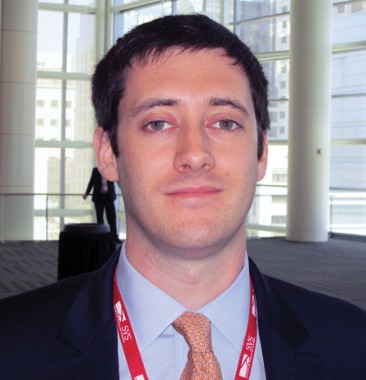
Medicare-remunerated EVAR can mean negative operation margins
SAN FRANCISCO – Endovascular aneurysm repair (EVAR) is associated with negative operating margins among Medicare beneficiaries, and device costs account for more than 50% of the technical costs, results from a single-center study demonstrated.
"U.S. health care expenditures have steadily increased over several decades, with some projections now reaching 20% of gross domestic product by 2020," Dr. David H. Stone said at the annual meeting of the Society for Vascular Surgery Annual Meeting. "Accordingly, vigorous debate surrounding health care reform has ensued. In this setting physicians and health care system alike are placing a growing emphasis on both cost reduction and quality improvement, thus increasing the overall value of health care delivery. Endovascular aneurysm repair represents a high-value procedure, though it remains associated with significant cost. This places EVAR at odds with efforts to constrain procedure-associated health care dollars."

Dr. Stone, in the section of vascular surgery at Dartmouth-Hitchcock Medical Center, Lebanon, N.H., and his associates retrospectively examined the EVAR-associated technical costs, revenues, and resulting operating margins among 127 infrarenal EVARs performed at the center between April 2011 and March 2012. They excluded cases in which anatomy was deemed outside of conventional "Instructions for Use" guidelines, included cases treated only by a single vendor’s device, and restricted the payer source to Medicare-remunerated cases billed using the DRG 238 code. This left a cohort of 49 patients. The researchers then determined mean EVAR implant costs per procedure and used 2012 University HealthSystem Consortium data to benchmark their DRG 238 costs and length of stay – another major driver for cost.
"To our surprise, we initially determined that our section’s annual net operating margin for EVAR when billed using DRG 238 was substantially negative, approaching –$500,000 per year," Dr. Stone said. Specifically, mean technical costs among the 49 patients were $31,672, while technical revenue was $27,657, resulting in a negative technical operating margin of $4,015 per case. More specifically, stent grafts accounted for 52% of the technical costs while institutional overhead costs accounted for the remaining 48%.
Among the nonimplant costs the operating room accounted for the single greatest technical cost driver (17%). "By comparison, stent grafts account for roughly threefold more technical cost than [did] any nonimplant hospital costs," Dr. Stone said. "Interestingly, there is an apparent inequity between the stent graft costs when considered as a percentage of cost vs. a percentage of revenue. More specifically, stent grafts currently account for 52% of the technical costs but assume 60% of the DRG payment, thus contributing in part to our institution’s negative margin."
Given the substantial impact of graft costs to the procedure, the researchers also examined Dartmouth-Hitchcock’s current vendor market share for the medical center’s entire EVAR practice. The vendors were not named but rather described as vendors A, B, C, and D. "Though historically we have not routinely integrated costs into our case planning, we were somewhat surprised to learn that vendor D the highest-cost device derived the largest market share, while vendors A and B the two lowest-cost devices derived the smallest market shares, respectively," Dr. Stone said. "Surgeons were largely unaware of this cost disparity." He said that a "lack of transparency" of the device costs among institutions has also led in part to the sustainability of this practice pattern.
Dr. Stone acknowledged certain limitations of the study, including its single-center design, "thus graft pricing and institutional overhead will likely vary among hospitals," he said. "In addition, we did not analyze DRG 237–remunerated EVAR with major complications, where costs may be higher yet. However, we nevertheless believe that the adjudicated financial costs presented here may reflect a similar trend in many institutions throughout the country for Medicare-remunerated EVAR."
He concluded his remarks by noting that the negative operating margin for Medicare-remunerated EVAR "is likely unsustainable. Surgeon awareness of price differential among grafts may allow for competitive negotiated pricing. Accordingly, we believe that EVAR as a high-value procedure must undergo care delivery redesign, reflecting cost restructuring with viable remuneration schemes in order for current practice to remain sustainable."
Dr. Stone said that he had no relevant financial conflicts to disclose.
Dr. Stone and his colleagues at Dartmouth-Hitchcock have identified simple, uncomplicated EVAR cases as producing a negative contribution margin to the institution, primarily because of device costs. In today’s environment of cost containment, it is imperative that physicians partner with institutions to evaluate appropriate methods of cost containment, while maintaining excellence of care. These findings should not lead to the abandonment or restriction of EVAR, but rather further discussions between hospitals and physicians as to ways to decrease cost of the procedure. This will include negotiations with vendors to potentially decrease device costs and to provide, at the least, budget neutral interventions, as the current status is not sustainable.
As we move forward, these types of calculations will need to occur at all institutions for high-volume procedures to ensure viability of the institutions while maintaining excellence of medical care.
Dr. Linda Harris is the program director and division chief of vascular surgery at the State University of New York, Buffalo.
Dr. Stone and his colleagues at Dartmouth-Hitchcock have identified simple, uncomplicated EVAR cases as producing a negative contribution margin to the institution, primarily because of device costs. In today’s environment of cost containment, it is imperative that physicians partner with institutions to evaluate appropriate methods of cost containment, while maintaining excellence of care. These findings should not lead to the abandonment or restriction of EVAR, but rather further discussions between hospitals and physicians as to ways to decrease cost of the procedure. This will include negotiations with vendors to potentially decrease device costs and to provide, at the least, budget neutral interventions, as the current status is not sustainable.
As we move forward, these types of calculations will need to occur at all institutions for high-volume procedures to ensure viability of the institutions while maintaining excellence of medical care.
Dr. Linda Harris is the program director and division chief of vascular surgery at the State University of New York, Buffalo.
Dr. Stone and his colleagues at Dartmouth-Hitchcock have identified simple, uncomplicated EVAR cases as producing a negative contribution margin to the institution, primarily because of device costs. In today’s environment of cost containment, it is imperative that physicians partner with institutions to evaluate appropriate methods of cost containment, while maintaining excellence of care. These findings should not lead to the abandonment or restriction of EVAR, but rather further discussions between hospitals and physicians as to ways to decrease cost of the procedure. This will include negotiations with vendors to potentially decrease device costs and to provide, at the least, budget neutral interventions, as the current status is not sustainable.
As we move forward, these types of calculations will need to occur at all institutions for high-volume procedures to ensure viability of the institutions while maintaining excellence of medical care.
Dr. Linda Harris is the program director and division chief of vascular surgery at the State University of New York, Buffalo.
SAN FRANCISCO – Endovascular aneurysm repair (EVAR) is associated with negative operating margins among Medicare beneficiaries, and device costs account for more than 50% of the technical costs, results from a single-center study demonstrated.
"U.S. health care expenditures have steadily increased over several decades, with some projections now reaching 20% of gross domestic product by 2020," Dr. David H. Stone said at the annual meeting of the Society for Vascular Surgery Annual Meeting. "Accordingly, vigorous debate surrounding health care reform has ensued. In this setting physicians and health care system alike are placing a growing emphasis on both cost reduction and quality improvement, thus increasing the overall value of health care delivery. Endovascular aneurysm repair represents a high-value procedure, though it remains associated with significant cost. This places EVAR at odds with efforts to constrain procedure-associated health care dollars."
Dr. Stone, in the section of vascular surgery at Dartmouth-Hitchcock Medical Center, Lebanon, N.H., and his associates retrospectively examined the EVAR-associated technical costs, revenues, and resulting operating margins among 127 infrarenal EVARs performed at the center between April 2011 and March 2012. They excluded cases in which anatomy was deemed outside of conventional "Instructions for Use" guidelines, included cases treated only by a single vendor’s device, and restricted the payer source to Medicare-remunerated cases billed using the DRG 238 code. This left a cohort of 49 patients. The researchers then determined mean EVAR implant costs per procedure and used 2012 University HealthSystem Consortium data to benchmark their DRG 238 costs and length of stay – another major driver for cost.
"To our surprise, we initially determined that our section’s annual net operating margin for EVAR when billed using DRG 238 was substantially negative, approaching –$500,000 per year," Dr. Stone said. Specifically, mean technical costs among the 49 patients were $31,672, while technical revenue was $27,657, resulting in a negative technical operating margin of $4,015 per case. More specifically, stent grafts accounted for 52% of the technical costs while institutional overhead costs accounted for the remaining 48%.
Among the nonimplant costs the operating room accounted for the single greatest technical cost driver (17%). "By comparison, stent grafts account for roughly threefold more technical cost than [did] any nonimplant hospital costs," Dr. Stone said. "Interestingly, there is an apparent inequity between the stent graft costs when considered as a percentage of cost vs. a percentage of revenue. More specifically, stent grafts currently account for 52% of the technical costs but assume 60% of the DRG payment, thus contributing in part to our institution’s negative margin."
Given the substantial impact of graft costs to the procedure, the researchers also examined Dartmouth-Hitchcock’s current vendor market share for the medical center’s entire EVAR practice. The vendors were not named but rather described as vendors A, B, C, and D. "Though historically we have not routinely integrated costs into our case planning, we were somewhat surprised to learn that vendor D the highest-cost device derived the largest market share, while vendors A and B the two lowest-cost devices derived the smallest market shares, respectively," Dr. Stone said. "Surgeons were largely unaware of this cost disparity." He said that a "lack of transparency" of the device costs among institutions has also led in part to the sustainability of this practice pattern.
Dr. Stone acknowledged certain limitations of the study, including its single-center design, "thus graft pricing and institutional overhead will likely vary among hospitals," he said. "In addition, we did not analyze DRG 237–remunerated EVAR with major complications, where costs may be higher yet. However, we nevertheless believe that the adjudicated financial costs presented here may reflect a similar trend in many institutions throughout the country for Medicare-remunerated EVAR."
He concluded his remarks by noting that the negative operating margin for Medicare-remunerated EVAR "is likely unsustainable. Surgeon awareness of price differential among grafts may allow for competitive negotiated pricing. Accordingly, we believe that EVAR as a high-value procedure must undergo care delivery redesign, reflecting cost restructuring with viable remuneration schemes in order for current practice to remain sustainable."
Dr. Stone said that he had no relevant financial conflicts to disclose.
SAN FRANCISCO – Endovascular aneurysm repair (EVAR) is associated with negative operating margins among Medicare beneficiaries, and device costs account for more than 50% of the technical costs, results from a single-center study demonstrated.
"U.S. health care expenditures have steadily increased over several decades, with some projections now reaching 20% of gross domestic product by 2020," Dr. David H. Stone said at the annual meeting of the Society for Vascular Surgery Annual Meeting. "Accordingly, vigorous debate surrounding health care reform has ensued. In this setting physicians and health care system alike are placing a growing emphasis on both cost reduction and quality improvement, thus increasing the overall value of health care delivery. Endovascular aneurysm repair represents a high-value procedure, though it remains associated with significant cost. This places EVAR at odds with efforts to constrain procedure-associated health care dollars."
Dr. Stone, in the section of vascular surgery at Dartmouth-Hitchcock Medical Center, Lebanon, N.H., and his associates retrospectively examined the EVAR-associated technical costs, revenues, and resulting operating margins among 127 infrarenal EVARs performed at the center between April 2011 and March 2012. They excluded cases in which anatomy was deemed outside of conventional "Instructions for Use" guidelines, included cases treated only by a single vendor’s device, and restricted the payer source to Medicare-remunerated cases billed using the DRG 238 code. This left a cohort of 49 patients. The researchers then determined mean EVAR implant costs per procedure and used 2012 University HealthSystem Consortium data to benchmark their DRG 238 costs and length of stay – another major driver for cost.
"To our surprise, we initially determined that our section’s annual net operating margin for EVAR when billed using DRG 238 was substantially negative, approaching –$500,000 per year," Dr. Stone said. Specifically, mean technical costs among the 49 patients were $31,672, while technical revenue was $27,657, resulting in a negative technical operating margin of $4,015 per case. More specifically, stent grafts accounted for 52% of the technical costs while institutional overhead costs accounted for the remaining 48%.
Among the nonimplant costs the operating room accounted for the single greatest technical cost driver (17%). "By comparison, stent grafts account for roughly threefold more technical cost than [did] any nonimplant hospital costs," Dr. Stone said. "Interestingly, there is an apparent inequity between the stent graft costs when considered as a percentage of cost vs. a percentage of revenue. More specifically, stent grafts currently account for 52% of the technical costs but assume 60% of the DRG payment, thus contributing in part to our institution’s negative margin."
Given the substantial impact of graft costs to the procedure, the researchers also examined Dartmouth-Hitchcock’s current vendor market share for the medical center’s entire EVAR practice. The vendors were not named but rather described as vendors A, B, C, and D. "Though historically we have not routinely integrated costs into our case planning, we were somewhat surprised to learn that vendor D the highest-cost device derived the largest market share, while vendors A and B the two lowest-cost devices derived the smallest market shares, respectively," Dr. Stone said. "Surgeons were largely unaware of this cost disparity." He said that a "lack of transparency" of the device costs among institutions has also led in part to the sustainability of this practice pattern.
Dr. Stone acknowledged certain limitations of the study, including its single-center design, "thus graft pricing and institutional overhead will likely vary among hospitals," he said. "In addition, we did not analyze DRG 237–remunerated EVAR with major complications, where costs may be higher yet. However, we nevertheless believe that the adjudicated financial costs presented here may reflect a similar trend in many institutions throughout the country for Medicare-remunerated EVAR."
He concluded his remarks by noting that the negative operating margin for Medicare-remunerated EVAR "is likely unsustainable. Surgeon awareness of price differential among grafts may allow for competitive negotiated pricing. Accordingly, we believe that EVAR as a high-value procedure must undergo care delivery redesign, reflecting cost restructuring with viable remuneration schemes in order for current practice to remain sustainable."
Dr. Stone said that he had no relevant financial conflicts to disclose.
AT THE SVS ANNUAL MEETING
Major finding: In a study of DRG 238 remunerated EVAR, stent grafts accounted for 52% of the technical costs while institutional overhead costs accounted for the remaining 48%.
Data source: A retrospectively examination of the EVAR-associated technical costs, revenues, and resulting operating margins among 127 infrarenal EVARs performed at Dartmouth-Hitchcock Medical Center between April 2011 and March 2012.
Disclosures: Dr. Stone said that he had no relevant financial conflicts to disclose.

Dr. Lewis Flint receives H. Biemann Othersen, Jr., MD, MUSC Alumni Award
Lewis M. Flint, MD, FACS, Editor-in-Chief of Selected Readings in General Surgery of the American College of Surgeons (ACS) Division of Education and adjunct professor of surgery at the Feinberg School of Medicine, Northwestern University, Chicago, IL, received the H. Biemann Othersen, Jr., M.D., Distinguished Alumnus Award on April 25. This award is the highest alumni honor bestowed by the Medical University of South Carolina (MUSC) department of surgery, Charleston. The Curtis P. Artz MUSC Surgical Society, a member organization that recognizes the achievements of MUSC alumni who have enhanced the surgical profession through education, research, and clinical practice, presented the award to Dr. Flint.
Dr. Flint earned his medical degree and completed his surgical internship at Duke University School of Medicine, Durham, NC, in 1966. He was surgery chief resident at MUSC from 1973 to 1974. Dr. Flint has served as president of several surgical societies, including the Society of University Surgeons, the American Association for the Surgery of Trauma, the Halsted Society, and the Southern Surgical Association. He was recognized by the American Board of Surgery as director and senior examiner and was on the Centers for Disease Control and Prevention Injury Grant Review Committee. He also provides his expertise to the editorial boards of the American Journal of Surgery and the Journal of Trauma and Acute Care Surgery.
For more information on the Curtis P. Artz MUSC Surgical Society, view the brochure at http://academicdepartments.musc.edu/surgery/alumni/ArtzBrochure%206%2013%2012.pdf.
Lewis M. Flint, MD, FACS, Editor-in-Chief of Selected Readings in General Surgery of the American College of Surgeons (ACS) Division of Education and adjunct professor of surgery at the Feinberg School of Medicine, Northwestern University, Chicago, IL, received the H. Biemann Othersen, Jr., M.D., Distinguished Alumnus Award on April 25. This award is the highest alumni honor bestowed by the Medical University of South Carolina (MUSC) department of surgery, Charleston. The Curtis P. Artz MUSC Surgical Society, a member organization that recognizes the achievements of MUSC alumni who have enhanced the surgical profession through education, research, and clinical practice, presented the award to Dr. Flint.
Dr. Flint earned his medical degree and completed his surgical internship at Duke University School of Medicine, Durham, NC, in 1966. He was surgery chief resident at MUSC from 1973 to 1974. Dr. Flint has served as president of several surgical societies, including the Society of University Surgeons, the American Association for the Surgery of Trauma, the Halsted Society, and the Southern Surgical Association. He was recognized by the American Board of Surgery as director and senior examiner and was on the Centers for Disease Control and Prevention Injury Grant Review Committee. He also provides his expertise to the editorial boards of the American Journal of Surgery and the Journal of Trauma and Acute Care Surgery.
For more information on the Curtis P. Artz MUSC Surgical Society, view the brochure at http://academicdepartments.musc.edu/surgery/alumni/ArtzBrochure%206%2013%2012.pdf.
Lewis M. Flint, MD, FACS, Editor-in-Chief of Selected Readings in General Surgery of the American College of Surgeons (ACS) Division of Education and adjunct professor of surgery at the Feinberg School of Medicine, Northwestern University, Chicago, IL, received the H. Biemann Othersen, Jr., M.D., Distinguished Alumnus Award on April 25. This award is the highest alumni honor bestowed by the Medical University of South Carolina (MUSC) department of surgery, Charleston. The Curtis P. Artz MUSC Surgical Society, a member organization that recognizes the achievements of MUSC alumni who have enhanced the surgical profession through education, research, and clinical practice, presented the award to Dr. Flint.
Dr. Flint earned his medical degree and completed his surgical internship at Duke University School of Medicine, Durham, NC, in 1966. He was surgery chief resident at MUSC from 1973 to 1974. Dr. Flint has served as president of several surgical societies, including the Society of University Surgeons, the American Association for the Surgery of Trauma, the Halsted Society, and the Southern Surgical Association. He was recognized by the American Board of Surgery as director and senior examiner and was on the Centers for Disease Control and Prevention Injury Grant Review Committee. He also provides his expertise to the editorial boards of the American Journal of Surgery and the Journal of Trauma and Acute Care Surgery.
For more information on the Curtis P. Artz MUSC Surgical Society, view the brochure at http://academicdepartments.musc.edu/surgery/alumni/ArtzBrochure%206%2013%2012.pdf.
Postop troponin elevation, MI impact 5-year survival
SAN FRANCISCO – Postoperative troponin elevation and myocardial infarction both impact 5-year survival following vascular surgery procedures, the results of a large long-term study showed.
In fact, troponin elevation increased the hazard of death by 50% while myocardial infarction increased the hazard of death by nearly threefold, Dr. Jessica P. Simons reported at the annual meeting of the Society for Vascular Surgery. "Future studies are needed to assess the nature of this association as well as the utility of routine postoperative screening for myocardial ischemia," said Dr. Simons of the division of vascular and endovascular surgery at the University of Massachusetts, Worcester.
In a study that she presented on behalf of the Vascular Study Group of New England (VSGNE), Dr. Simons and her associates set out to determine the association of postoperative troponin elevation with long-term survival in patients undergoing vascular surgical procedures. "Postoperative myocardial infarction has been shown to impact short- and long-term mortality," she said. "In addition, troponin elevations have also been shown to negatively impact survival for a wide range of diagnoses. This has been seen in critical care medical literature and also in the general surgical population."
The researchers identified 16,363 VSGNE patients who underwent carotid revascularization, open AAA repair, endovascular AAA repair, or lower-extremity bypass between 2003 and 2011. The exposure variable of interest was postoperative myocardial ischemia, which was categorized as either no ischemia, troponin elevation, or myocardial infarction. The primary end point was survival during the first 5 years postoperatively. They used Kaplan-Meier analyses and Cox proportional hazards models to evaluate the effect of postoperative troponin elevation and myocardial infarction.
Of the 16,363 patients, 15,888 (97.1%) had no ischemia, 211 (1.3%) had troponin elevation, and 264 (1.6%) had myocardial infarction. When this was broken down by procedure type, open AAA had the highest rates of postoperative myocardial ischemia (9%), troponin elevation (3.9%), and myocardial infarction (5.1%), compared with carotid revascularization, endovascular aneurysm repair, and lower-extremity bypass.
The rate of 5-year survival for all procedures was 73% among those with no ischemia, 54% among those with troponin elevation, and 33% among those with myocardial infarction. This difference reached statistical significance with a P value of less than .0001. After adjusting for covariates, the researchers found a similar trend. In this analysis the rate of 5-year survival was 78% among those with no ischemia, 48% among those with troponin elevation, and 35% among those with myocardial infarction. This also reached statistical significance with a P value of less than .0001.
"We performed a subgroup analysis by procedure type, and the trend was the same across all procedure types," Dr. Simons said.
In Cox modeling the researchers found that postoperative ischemia in the form of a troponin elevation increased the hazard of death at 5 years by 45% (HR, 1.45; P =.01) while myocardial infarction nearly tripled the hazard of death (HR, 2.93; P =.0001).
"We have shown an association between postoperative myocardial ischemia and worse survival, but does postoperative myocardial ischemia worsen long-term survival, or does postoperative myocardial ischemia simply identify a high-risk subset of patients?" Dr. Simons asked. "If postoperative myocardial ischemia worsens long-term survival, then efforts should focus on better preoperative medical optimization and perioperative prevention of ischemia. If postoperative myocardial ischemia is simply identifying a high-risk subset of patients, then efforts should focus on better preoperative risk stratification and postoperative medical surveillance."
She concluded that postoperative myocardial ischemia, "whether a troponin elevation or a myocardial infarction, is associated with lower survival. This effect is seen across all procedure types and persists out to 5 years postoperatively."
Dr. Simons said she had no relevant financial disclosures.
SAN FRANCISCO – Postoperative troponin elevation and myocardial infarction both impact 5-year survival following vascular surgery procedures, the results of a large long-term study showed.
In fact, troponin elevation increased the hazard of death by 50% while myocardial infarction increased the hazard of death by nearly threefold, Dr. Jessica P. Simons reported at the annual meeting of the Society for Vascular Surgery. "Future studies are needed to assess the nature of this association as well as the utility of routine postoperative screening for myocardial ischemia," said Dr. Simons of the division of vascular and endovascular surgery at the University of Massachusetts, Worcester.
In a study that she presented on behalf of the Vascular Study Group of New England (VSGNE), Dr. Simons and her associates set out to determine the association of postoperative troponin elevation with long-term survival in patients undergoing vascular surgical procedures. "Postoperative myocardial infarction has been shown to impact short- and long-term mortality," she said. "In addition, troponin elevations have also been shown to negatively impact survival for a wide range of diagnoses. This has been seen in critical care medical literature and also in the general surgical population."
The researchers identified 16,363 VSGNE patients who underwent carotid revascularization, open AAA repair, endovascular AAA repair, or lower-extremity bypass between 2003 and 2011. The exposure variable of interest was postoperative myocardial ischemia, which was categorized as either no ischemia, troponin elevation, or myocardial infarction. The primary end point was survival during the first 5 years postoperatively. They used Kaplan-Meier analyses and Cox proportional hazards models to evaluate the effect of postoperative troponin elevation and myocardial infarction.
Of the 16,363 patients, 15,888 (97.1%) had no ischemia, 211 (1.3%) had troponin elevation, and 264 (1.6%) had myocardial infarction. When this was broken down by procedure type, open AAA had the highest rates of postoperative myocardial ischemia (9%), troponin elevation (3.9%), and myocardial infarction (5.1%), compared with carotid revascularization, endovascular aneurysm repair, and lower-extremity bypass.
The rate of 5-year survival for all procedures was 73% among those with no ischemia, 54% among those with troponin elevation, and 33% among those with myocardial infarction. This difference reached statistical significance with a P value of less than .0001. After adjusting for covariates, the researchers found a similar trend. In this analysis the rate of 5-year survival was 78% among those with no ischemia, 48% among those with troponin elevation, and 35% among those with myocardial infarction. This also reached statistical significance with a P value of less than .0001.
"We performed a subgroup analysis by procedure type, and the trend was the same across all procedure types," Dr. Simons said.
In Cox modeling the researchers found that postoperative ischemia in the form of a troponin elevation increased the hazard of death at 5 years by 45% (HR, 1.45; P =.01) while myocardial infarction nearly tripled the hazard of death (HR, 2.93; P =.0001).
"We have shown an association between postoperative myocardial ischemia and worse survival, but does postoperative myocardial ischemia worsen long-term survival, or does postoperative myocardial ischemia simply identify a high-risk subset of patients?" Dr. Simons asked. "If postoperative myocardial ischemia worsens long-term survival, then efforts should focus on better preoperative medical optimization and perioperative prevention of ischemia. If postoperative myocardial ischemia is simply identifying a high-risk subset of patients, then efforts should focus on better preoperative risk stratification and postoperative medical surveillance."
She concluded that postoperative myocardial ischemia, "whether a troponin elevation or a myocardial infarction, is associated with lower survival. This effect is seen across all procedure types and persists out to 5 years postoperatively."
Dr. Simons said she had no relevant financial disclosures.
SAN FRANCISCO – Postoperative troponin elevation and myocardial infarction both impact 5-year survival following vascular surgery procedures, the results of a large long-term study showed.
In fact, troponin elevation increased the hazard of death by 50% while myocardial infarction increased the hazard of death by nearly threefold, Dr. Jessica P. Simons reported at the annual meeting of the Society for Vascular Surgery. "Future studies are needed to assess the nature of this association as well as the utility of routine postoperative screening for myocardial ischemia," said Dr. Simons of the division of vascular and endovascular surgery at the University of Massachusetts, Worcester.
In a study that she presented on behalf of the Vascular Study Group of New England (VSGNE), Dr. Simons and her associates set out to determine the association of postoperative troponin elevation with long-term survival in patients undergoing vascular surgical procedures. "Postoperative myocardial infarction has been shown to impact short- and long-term mortality," she said. "In addition, troponin elevations have also been shown to negatively impact survival for a wide range of diagnoses. This has been seen in critical care medical literature and also in the general surgical population."
The researchers identified 16,363 VSGNE patients who underwent carotid revascularization, open AAA repair, endovascular AAA repair, or lower-extremity bypass between 2003 and 2011. The exposure variable of interest was postoperative myocardial ischemia, which was categorized as either no ischemia, troponin elevation, or myocardial infarction. The primary end point was survival during the first 5 years postoperatively. They used Kaplan-Meier analyses and Cox proportional hazards models to evaluate the effect of postoperative troponin elevation and myocardial infarction.
Of the 16,363 patients, 15,888 (97.1%) had no ischemia, 211 (1.3%) had troponin elevation, and 264 (1.6%) had myocardial infarction. When this was broken down by procedure type, open AAA had the highest rates of postoperative myocardial ischemia (9%), troponin elevation (3.9%), and myocardial infarction (5.1%), compared with carotid revascularization, endovascular aneurysm repair, and lower-extremity bypass.
The rate of 5-year survival for all procedures was 73% among those with no ischemia, 54% among those with troponin elevation, and 33% among those with myocardial infarction. This difference reached statistical significance with a P value of less than .0001. After adjusting for covariates, the researchers found a similar trend. In this analysis the rate of 5-year survival was 78% among those with no ischemia, 48% among those with troponin elevation, and 35% among those with myocardial infarction. This also reached statistical significance with a P value of less than .0001.
"We performed a subgroup analysis by procedure type, and the trend was the same across all procedure types," Dr. Simons said.
In Cox modeling the researchers found that postoperative ischemia in the form of a troponin elevation increased the hazard of death at 5 years by 45% (HR, 1.45; P =.01) while myocardial infarction nearly tripled the hazard of death (HR, 2.93; P =.0001).
"We have shown an association between postoperative myocardial ischemia and worse survival, but does postoperative myocardial ischemia worsen long-term survival, or does postoperative myocardial ischemia simply identify a high-risk subset of patients?" Dr. Simons asked. "If postoperative myocardial ischemia worsens long-term survival, then efforts should focus on better preoperative medical optimization and perioperative prevention of ischemia. If postoperative myocardial ischemia is simply identifying a high-risk subset of patients, then efforts should focus on better preoperative risk stratification and postoperative medical surveillance."
She concluded that postoperative myocardial ischemia, "whether a troponin elevation or a myocardial infarction, is associated with lower survival. This effect is seen across all procedure types and persists out to 5 years postoperatively."
Dr. Simons said she had no relevant financial disclosures.
AT THE SVS ANNUAL MEETING
Major finding: Postoperative ischemia in the form of a troponin elevation increased the hazard of death at 5 years by 45% (HR, 1.45; P =.01) while myocardial infarction nearly tripled the hazard of death (HR, 2.93; P =.0001).
Data source: A study of 16,363 Vascular Study Group of New England patients who underwent carotid revascularization, open AAA repair, endovascular AAA repair, or lower-extremity bypass between 2003 and 2011.
Disclosures: Dr. Simons said she had no relevant financial disclosures.
Good Samaritan Health Professionals Act introduced in Congress
Rep. Marsha Blackburn (R-TN) and Rep. Jim Matheson (D-UT) on April 25 introduced the Good Samaritan Health Professionals Act (H.R. 1733) – legislation that would ensure that health professionals who want to provide voluntary care in response to a federally declared disaster are able to do so without worries about potential liability. Rapid medical response in a disaster can greatly decrease loss of life and improve outcomes for patients who desperately need care. However, when a disaster strikes, the needs of victims often overwhelm the services that are available locally. The medical profession has a long history of stepping forward to assist disaster victims; however, the current Volunteer Protection Act, which was enacted specifically to encourage such actions, fails to address the issue of liability protections for health care providers who cross state lines to aid disaster victims. H.R. 1733 attends to this shortcoming. For more information, contact the American College of Surgeons advocacy staff at [email protected].
Rep. Marsha Blackburn (R-TN) and Rep. Jim Matheson (D-UT) on April 25 introduced the Good Samaritan Health Professionals Act (H.R. 1733) – legislation that would ensure that health professionals who want to provide voluntary care in response to a federally declared disaster are able to do so without worries about potential liability. Rapid medical response in a disaster can greatly decrease loss of life and improve outcomes for patients who desperately need care. However, when a disaster strikes, the needs of victims often overwhelm the services that are available locally. The medical profession has a long history of stepping forward to assist disaster victims; however, the current Volunteer Protection Act, which was enacted specifically to encourage such actions, fails to address the issue of liability protections for health care providers who cross state lines to aid disaster victims. H.R. 1733 attends to this shortcoming. For more information, contact the American College of Surgeons advocacy staff at [email protected].
Rep. Marsha Blackburn (R-TN) and Rep. Jim Matheson (D-UT) on April 25 introduced the Good Samaritan Health Professionals Act (H.R. 1733) – legislation that would ensure that health professionals who want to provide voluntary care in response to a federally declared disaster are able to do so without worries about potential liability. Rapid medical response in a disaster can greatly decrease loss of life and improve outcomes for patients who desperately need care. However, when a disaster strikes, the needs of victims often overwhelm the services that are available locally. The medical profession has a long history of stepping forward to assist disaster victims; however, the current Volunteer Protection Act, which was enacted specifically to encourage such actions, fails to address the issue of liability protections for health care providers who cross state lines to aid disaster victims. H.R. 1733 attends to this shortcoming. For more information, contact the American College of Surgeons advocacy staff at [email protected].
In memoriam: Leading trauma surgeon Eric R. Frykberg, MD, FACS, dies at age 62
Eric R. Frykberg, M.D., FACS, an American College of Surgeons (ACS) Governor, died March 25 at the age of 62. For nearly 30 years, Dr. Frykberg was chief of the division of general surgery at Shands Jacksonville Medical Center and professor of surgery at the University of Florida College of Medicine-Jacksonville.
Dr. Frykberg had an intense interest in many aspects of general surgery and was particularly dedicated to trauma care and disaster preparedness. He served on the ACS Committee on Trauma (COT) from 1999 to 2005 and in the aftermath of the September 11, 2001, terrorist attacks chaired the COT’s Ad Hoc Committee on Disaster and Mass Casualty Management. He also served on the COT’s Committee on Injury Prevention and Control (1999-2005). In addition, he was member of the Nominating Committee of the Board of Governors (2011-2012) and the Board of Governors’ Committee on Physician Competency and Health (2011-2012).
His foresight saved many lives and his insights forged systems of care that will save many more. He is missed by all who had the privilege to know and work with him.
Dr. Frykberg is survived by his wife of 39 years, Patti; daughter Erica Glass, D.O.; son Brett Frykberg, M.D.; daughter Jessica Vogel; and five grandchildren.
Eric R. Frykberg, M.D., FACS, an American College of Surgeons (ACS) Governor, died March 25 at the age of 62. For nearly 30 years, Dr. Frykberg was chief of the division of general surgery at Shands Jacksonville Medical Center and professor of surgery at the University of Florida College of Medicine-Jacksonville.
Dr. Frykberg had an intense interest in many aspects of general surgery and was particularly dedicated to trauma care and disaster preparedness. He served on the ACS Committee on Trauma (COT) from 1999 to 2005 and in the aftermath of the September 11, 2001, terrorist attacks chaired the COT’s Ad Hoc Committee on Disaster and Mass Casualty Management. He also served on the COT’s Committee on Injury Prevention and Control (1999-2005). In addition, he was member of the Nominating Committee of the Board of Governors (2011-2012) and the Board of Governors’ Committee on Physician Competency and Health (2011-2012).
His foresight saved many lives and his insights forged systems of care that will save many more. He is missed by all who had the privilege to know and work with him.
Dr. Frykberg is survived by his wife of 39 years, Patti; daughter Erica Glass, D.O.; son Brett Frykberg, M.D.; daughter Jessica Vogel; and five grandchildren.
Eric R. Frykberg, M.D., FACS, an American College of Surgeons (ACS) Governor, died March 25 at the age of 62. For nearly 30 years, Dr. Frykberg was chief of the division of general surgery at Shands Jacksonville Medical Center and professor of surgery at the University of Florida College of Medicine-Jacksonville.
Dr. Frykberg had an intense interest in many aspects of general surgery and was particularly dedicated to trauma care and disaster preparedness. He served on the ACS Committee on Trauma (COT) from 1999 to 2005 and in the aftermath of the September 11, 2001, terrorist attacks chaired the COT’s Ad Hoc Committee on Disaster and Mass Casualty Management. He also served on the COT’s Committee on Injury Prevention and Control (1999-2005). In addition, he was member of the Nominating Committee of the Board of Governors (2011-2012) and the Board of Governors’ Committee on Physician Competency and Health (2011-2012).
His foresight saved many lives and his insights forged systems of care that will save many more. He is missed by all who had the privilege to know and work with him.
Dr. Frykberg is survived by his wife of 39 years, Patti; daughter Erica Glass, D.O.; son Brett Frykberg, M.D.; daughter Jessica Vogel; and five grandchildren.
ACS testifies at congressional hearing on payment reform
David B. Hoyt, MD, FACS, Executive Director of the American College of Surgeons (ACS), and representatives of other physicians’ organizations provided testimony, which can be viewed at http://www.facs.org/ahp/medicare/hoyt.513.html during a May 7 House Ways and Means Subcommittee on Health hearing. The hearing centered on a joint proposal that the House Ways and Means and Energy and Commerce Committees have developed to reform the Medicare physician payment system. There is widespread agreement in Congress that repealing the sustainable growth rate (SGR) formula is a necessary first step toward reforming the current system.
"We need to repeal the SGR so that seniors continue to have access to their local doctors," Rep. Kevin Brady (R-TX), chair of the subcommittee, said in his opening remarks. "In our communities, we are witnessing first-hand how the current broken system is forcing doctors to rethink their future with Medicare, consider closing their private practices or joining up with a hospital. The SGR is a major contributor to an unhealthy system—and it needs to change this year."
The College expressed appreciation for the committees’ acknowledgment that the current Medicare physician payment system and the SGR are fundamentally flawed and for the joint proposal’s elimination of the SGR during the first phase of implementation. The College also supported efforts to find more innovative models of physician payment and asserted that any new payment system should be based on the complementary objectives of improving outcomes, quality, safety, and efficiency while reducing the growth in health care spending. The College offered its Value Based Update (VBU), proposal which can be viewed at http://www.facs.org/ahp/news/2013/may.html, as a way to accomplish these goals. Dr. Hoyt answered several questions regarding the VBU and the College’s work on quality measurement, including the use of national registries and databases to compile data and facilitate the exchange of information among health care providers. More information on the College’s perspective on the joint proposal can be found in the February response letter, available at http://www.facs.org/ahp/medicare/response-ec-wm.2.13.pdf, and the April response, which can be viewed at http://www.facs.org/ahp/medicare/response-ec-wm.4.13.pdf.
David B. Hoyt, MD, FACS, Executive Director of the American College of Surgeons (ACS), and representatives of other physicians’ organizations provided testimony, which can be viewed at http://www.facs.org/ahp/medicare/hoyt.513.html during a May 7 House Ways and Means Subcommittee on Health hearing. The hearing centered on a joint proposal that the House Ways and Means and Energy and Commerce Committees have developed to reform the Medicare physician payment system. There is widespread agreement in Congress that repealing the sustainable growth rate (SGR) formula is a necessary first step toward reforming the current system.
"We need to repeal the SGR so that seniors continue to have access to their local doctors," Rep. Kevin Brady (R-TX), chair of the subcommittee, said in his opening remarks. "In our communities, we are witnessing first-hand how the current broken system is forcing doctors to rethink their future with Medicare, consider closing their private practices or joining up with a hospital. The SGR is a major contributor to an unhealthy system—and it needs to change this year."
The College expressed appreciation for the committees’ acknowledgment that the current Medicare physician payment system and the SGR are fundamentally flawed and for the joint proposal’s elimination of the SGR during the first phase of implementation. The College also supported efforts to find more innovative models of physician payment and asserted that any new payment system should be based on the complementary objectives of improving outcomes, quality, safety, and efficiency while reducing the growth in health care spending. The College offered its Value Based Update (VBU), proposal which can be viewed at http://www.facs.org/ahp/news/2013/may.html, as a way to accomplish these goals. Dr. Hoyt answered several questions regarding the VBU and the College’s work on quality measurement, including the use of national registries and databases to compile data and facilitate the exchange of information among health care providers. More information on the College’s perspective on the joint proposal can be found in the February response letter, available at http://www.facs.org/ahp/medicare/response-ec-wm.2.13.pdf, and the April response, which can be viewed at http://www.facs.org/ahp/medicare/response-ec-wm.4.13.pdf.
David B. Hoyt, MD, FACS, Executive Director of the American College of Surgeons (ACS), and representatives of other physicians’ organizations provided testimony, which can be viewed at http://www.facs.org/ahp/medicare/hoyt.513.html during a May 7 House Ways and Means Subcommittee on Health hearing. The hearing centered on a joint proposal that the House Ways and Means and Energy and Commerce Committees have developed to reform the Medicare physician payment system. There is widespread agreement in Congress that repealing the sustainable growth rate (SGR) formula is a necessary first step toward reforming the current system.
"We need to repeal the SGR so that seniors continue to have access to their local doctors," Rep. Kevin Brady (R-TX), chair of the subcommittee, said in his opening remarks. "In our communities, we are witnessing first-hand how the current broken system is forcing doctors to rethink their future with Medicare, consider closing their private practices or joining up with a hospital. The SGR is a major contributor to an unhealthy system—and it needs to change this year."
The College expressed appreciation for the committees’ acknowledgment that the current Medicare physician payment system and the SGR are fundamentally flawed and for the joint proposal’s elimination of the SGR during the first phase of implementation. The College also supported efforts to find more innovative models of physician payment and asserted that any new payment system should be based on the complementary objectives of improving outcomes, quality, safety, and efficiency while reducing the growth in health care spending. The College offered its Value Based Update (VBU), proposal which can be viewed at http://www.facs.org/ahp/news/2013/may.html, as a way to accomplish these goals. Dr. Hoyt answered several questions regarding the VBU and the College’s work on quality measurement, including the use of national registries and databases to compile data and facilitate the exchange of information among health care providers. More information on the College’s perspective on the joint proposal can be found in the February response letter, available at http://www.facs.org/ahp/medicare/response-ec-wm.2.13.pdf, and the April response, which can be viewed at http://www.facs.org/ahp/medicare/response-ec-wm.4.13.pdf.
AJCC Names Dr. Mahul Amin Editor-in-Chief of Cancer Staging Manual
The Executive Committee of the American Joint Committee on Cancer (AJCC) has named Mahul B. Amin, MD, FCAP, Editor-in-Chief of the upcoming eighth edition of the AJCC Cancer Staging Manual. Dr. Amin is chairman and professor of the department of pathology and laboratory medicine at Cedars-Sinai Medical Center, Los Angeles, CA. He is a national and international expert and consultant on tumors of the genitourinary tract, including the prostate, urinary bladder, kidney, and testis, and served on the Executive Committee of the AJCC from 2003 to 2011. Programs of the AJCC, founded in 1959, are administered by the American College of Surgeons.

Physicians and health care professionals worldwide use the AJCC Cancer Staging Manual to facilitate the uniform description of neoplastic diseases. The manual contains evidence-based criteria for the staging of cancer for a number of anatomic disease sites, which includes the rationale and rules for staging; the definitions of tumor, lymph node involvement, and metastasis; stage groupings; and histologic grade.
The eighth edition of the Cancer Staging Manual—which is expected to be published in late 2015 for patients diagnosed with cancer after January 2016—will incorporate advances made in cancer research, staging, diagnosis, and treatment since the seventh edition was published in October 2009. For more information, view the press release. At http://www.facs.org/news/2013/ajcc-editor-amin0513.html.
The Executive Committee of the American Joint Committee on Cancer (AJCC) has named Mahul B. Amin, MD, FCAP, Editor-in-Chief of the upcoming eighth edition of the AJCC Cancer Staging Manual. Dr. Amin is chairman and professor of the department of pathology and laboratory medicine at Cedars-Sinai Medical Center, Los Angeles, CA. He is a national and international expert and consultant on tumors of the genitourinary tract, including the prostate, urinary bladder, kidney, and testis, and served on the Executive Committee of the AJCC from 2003 to 2011. Programs of the AJCC, founded in 1959, are administered by the American College of Surgeons.
Physicians and health care professionals worldwide use the AJCC Cancer Staging Manual to facilitate the uniform description of neoplastic diseases. The manual contains evidence-based criteria for the staging of cancer for a number of anatomic disease sites, which includes the rationale and rules for staging; the definitions of tumor, lymph node involvement, and metastasis; stage groupings; and histologic grade.
The eighth edition of the Cancer Staging Manual—which is expected to be published in late 2015 for patients diagnosed with cancer after January 2016—will incorporate advances made in cancer research, staging, diagnosis, and treatment since the seventh edition was published in October 2009. For more information, view the press release. At http://www.facs.org/news/2013/ajcc-editor-amin0513.html.
The Executive Committee of the American Joint Committee on Cancer (AJCC) has named Mahul B. Amin, MD, FCAP, Editor-in-Chief of the upcoming eighth edition of the AJCC Cancer Staging Manual. Dr. Amin is chairman and professor of the department of pathology and laboratory medicine at Cedars-Sinai Medical Center, Los Angeles, CA. He is a national and international expert and consultant on tumors of the genitourinary tract, including the prostate, urinary bladder, kidney, and testis, and served on the Executive Committee of the AJCC from 2003 to 2011. Programs of the AJCC, founded in 1959, are administered by the American College of Surgeons.
Physicians and health care professionals worldwide use the AJCC Cancer Staging Manual to facilitate the uniform description of neoplastic diseases. The manual contains evidence-based criteria for the staging of cancer for a number of anatomic disease sites, which includes the rationale and rules for staging; the definitions of tumor, lymph node involvement, and metastasis; stage groupings; and histologic grade.
The eighth edition of the Cancer Staging Manual—which is expected to be published in late 2015 for patients diagnosed with cancer after January 2016—will incorporate advances made in cancer research, staging, diagnosis, and treatment since the seventh edition was published in October 2009. For more information, view the press release. At http://www.facs.org/news/2013/ajcc-editor-amin0513.html.

Dr. Rotondo named CEO, University of Rochester Medical Faculty Group
Michael F. Rotondo, MD, FACS, chairman of the department of surgery at the Brody School of Medicine at East Carolina University and chief of surgery at Vidant Medical Center, Greenville, NC, on July 1 will assume the role of chief executive officer of the 1,000-physician University of Rochester Medical Faculty Group (NY).

In this new assignment, Dr. Rotondo will also serve as senior associate dean of clinical affairs, professor of surgery, and vice president for administration at Strong Memorial Hospital. Dr. Rotondo, a former American College of Surgeons (ACS) Governor, is currently Chair of the ACS Committee on Trauma and Liaison for the ACS Program Committee. He is a trauma and general surgeon who graduated from Georgetown University School of Medicine. View the press release announcing Dr. Rotondo’s appointment at http://www.urmc.rochester.edu/news/story/index.cfm?id=3786.
Michael F. Rotondo, MD, FACS, chairman of the department of surgery at the Brody School of Medicine at East Carolina University and chief of surgery at Vidant Medical Center, Greenville, NC, on July 1 will assume the role of chief executive officer of the 1,000-physician University of Rochester Medical Faculty Group (NY).
In this new assignment, Dr. Rotondo will also serve as senior associate dean of clinical affairs, professor of surgery, and vice president for administration at Strong Memorial Hospital. Dr. Rotondo, a former American College of Surgeons (ACS) Governor, is currently Chair of the ACS Committee on Trauma and Liaison for the ACS Program Committee. He is a trauma and general surgeon who graduated from Georgetown University School of Medicine. View the press release announcing Dr. Rotondo’s appointment at http://www.urmc.rochester.edu/news/story/index.cfm?id=3786.
Michael F. Rotondo, MD, FACS, chairman of the department of surgery at the Brody School of Medicine at East Carolina University and chief of surgery at Vidant Medical Center, Greenville, NC, on July 1 will assume the role of chief executive officer of the 1,000-physician University of Rochester Medical Faculty Group (NY).
In this new assignment, Dr. Rotondo will also serve as senior associate dean of clinical affairs, professor of surgery, and vice president for administration at Strong Memorial Hospital. Dr. Rotondo, a former American College of Surgeons (ACS) Governor, is currently Chair of the ACS Committee on Trauma and Liaison for the ACS Program Committee. He is a trauma and general surgeon who graduated from Georgetown University School of Medicine. View the press release announcing Dr. Rotondo’s appointment at http://www.urmc.rochester.edu/news/story/index.cfm?id=3786.