User login
‘Less is More’ in Myeloma
Among those that intrigue me most are the pioneering “less is more” trials that challenged conventional practices and remain relevant today. One such trial was inspired by a patient’s dissatisfaction with high doses of dexamethasone and its side effects.

Unlike the prevailing norm of frequent high doses, this trial compared a steroid dose administered weekly (as opposed to doses given several days a week). Lo and behold, the lower steroid dosage was associated with significantly better survival rates. At 1-year follow-up, 96% of patients in the lower-dose group were alive, compared with 87% in the higher-dose group.
Another noteworthy “less-is more” trial that I love, spearheaded by an Italian team, also focused on steroid dosage. This trial investigated discontinuing dexamethasone after nine cycles, along with reducing the dose of lenalidomide, versus maintaining long-term treatment without reductions. The findings revealed comparable progression-free survival with reduced toxicity, highlighting the potential benefits of this less-is-more approach.
While these trials are inspirational, a closer examination of myeloma trial history, especially those that led to regulatory approvals, reveals a preponderance of “add-on” trials. You add a potentially effective drug to an existing backbone, and you get an improvement in an outcome such as response rate (shrinking cancer) or duration of remission or progression free survival (amount of time alive and in remission).
Such trials have led to an abundance of effective options. But these same trials have almost always been a comparison of three drugs versus two drugs, and almost never three drugs versus three. And the drugs are often given continuously, especially the “newer” added drug, without a break. As a result, we are left completely unsure of how to sequence our drugs, and whether a finite course of the new drug would be equivalent to administering that new drug forever.
This problem is not unique to myeloma. Yet it is very apparent in myeloma, because we have been lucky to have so many good drugs (or at least “potentially” good drugs) that make it to phase 3 trials.
Unfortunately, the landscape of clinical trials is heavily influenced by the pharmaceutical industry, with limited funding available from alternative sources. As a result, there is a scarcity of trials exploring “less is more” approaches, despite their potential to optimize treatment outcomes and quality of life.
Even government-funded trials run by cooperative groups require industry buy-in or are run by people who have very close contacts and conflicts of interest with industry. We need so many more of these less-is-more trials, but we have limited means to fund them.
These are the kinds of discussions I have with my patients daily. We grapple with questions about the necessity of lifelong (or any) maintenance therapy or the feasibility of treatment breaks for patients with stable disease. While we strive to provide the best care possible, the lack of definitive data often leaves us making tough decisions in the clinic.
I am grateful to those who are working tirelessly to facilitate trials that prioritize quality of life and “less is more” approaches. Your efforts are invaluable. Looking forward, I aspire to contribute to this important work.
Dr. Mohyuddin is assistant professor in the multiple myeloma program at the Huntsman Cancer Institute at the University of Utah in Salt Lake City.
Among those that intrigue me most are the pioneering “less is more” trials that challenged conventional practices and remain relevant today. One such trial was inspired by a patient’s dissatisfaction with high doses of dexamethasone and its side effects.
Unlike the prevailing norm of frequent high doses, this trial compared a steroid dose administered weekly (as opposed to doses given several days a week). Lo and behold, the lower steroid dosage was associated with significantly better survival rates. At 1-year follow-up, 96% of patients in the lower-dose group were alive, compared with 87% in the higher-dose group.
Another noteworthy “less-is more” trial that I love, spearheaded by an Italian team, also focused on steroid dosage. This trial investigated discontinuing dexamethasone after nine cycles, along with reducing the dose of lenalidomide, versus maintaining long-term treatment without reductions. The findings revealed comparable progression-free survival with reduced toxicity, highlighting the potential benefits of this less-is-more approach.
While these trials are inspirational, a closer examination of myeloma trial history, especially those that led to regulatory approvals, reveals a preponderance of “add-on” trials. You add a potentially effective drug to an existing backbone, and you get an improvement in an outcome such as response rate (shrinking cancer) or duration of remission or progression free survival (amount of time alive and in remission).
Such trials have led to an abundance of effective options. But these same trials have almost always been a comparison of three drugs versus two drugs, and almost never three drugs versus three. And the drugs are often given continuously, especially the “newer” added drug, without a break. As a result, we are left completely unsure of how to sequence our drugs, and whether a finite course of the new drug would be equivalent to administering that new drug forever.
This problem is not unique to myeloma. Yet it is very apparent in myeloma, because we have been lucky to have so many good drugs (or at least “potentially” good drugs) that make it to phase 3 trials.
Unfortunately, the landscape of clinical trials is heavily influenced by the pharmaceutical industry, with limited funding available from alternative sources. As a result, there is a scarcity of trials exploring “less is more” approaches, despite their potential to optimize treatment outcomes and quality of life.
Even government-funded trials run by cooperative groups require industry buy-in or are run by people who have very close contacts and conflicts of interest with industry. We need so many more of these less-is-more trials, but we have limited means to fund them.
These are the kinds of discussions I have with my patients daily. We grapple with questions about the necessity of lifelong (or any) maintenance therapy or the feasibility of treatment breaks for patients with stable disease. While we strive to provide the best care possible, the lack of definitive data often leaves us making tough decisions in the clinic.
I am grateful to those who are working tirelessly to facilitate trials that prioritize quality of life and “less is more” approaches. Your efforts are invaluable. Looking forward, I aspire to contribute to this important work.
Dr. Mohyuddin is assistant professor in the multiple myeloma program at the Huntsman Cancer Institute at the University of Utah in Salt Lake City.
Among those that intrigue me most are the pioneering “less is more” trials that challenged conventional practices and remain relevant today. One such trial was inspired by a patient’s dissatisfaction with high doses of dexamethasone and its side effects.
Unlike the prevailing norm of frequent high doses, this trial compared a steroid dose administered weekly (as opposed to doses given several days a week). Lo and behold, the lower steroid dosage was associated with significantly better survival rates. At 1-year follow-up, 96% of patients in the lower-dose group were alive, compared with 87% in the higher-dose group.
Another noteworthy “less-is more” trial that I love, spearheaded by an Italian team, also focused on steroid dosage. This trial investigated discontinuing dexamethasone after nine cycles, along with reducing the dose of lenalidomide, versus maintaining long-term treatment without reductions. The findings revealed comparable progression-free survival with reduced toxicity, highlighting the potential benefits of this less-is-more approach.
While these trials are inspirational, a closer examination of myeloma trial history, especially those that led to regulatory approvals, reveals a preponderance of “add-on” trials. You add a potentially effective drug to an existing backbone, and you get an improvement in an outcome such as response rate (shrinking cancer) or duration of remission or progression free survival (amount of time alive and in remission).
Such trials have led to an abundance of effective options. But these same trials have almost always been a comparison of three drugs versus two drugs, and almost never three drugs versus three. And the drugs are often given continuously, especially the “newer” added drug, without a break. As a result, we are left completely unsure of how to sequence our drugs, and whether a finite course of the new drug would be equivalent to administering that new drug forever.
This problem is not unique to myeloma. Yet it is very apparent in myeloma, because we have been lucky to have so many good drugs (or at least “potentially” good drugs) that make it to phase 3 trials.
Unfortunately, the landscape of clinical trials is heavily influenced by the pharmaceutical industry, with limited funding available from alternative sources. As a result, there is a scarcity of trials exploring “less is more” approaches, despite their potential to optimize treatment outcomes and quality of life.
Even government-funded trials run by cooperative groups require industry buy-in or are run by people who have very close contacts and conflicts of interest with industry. We need so many more of these less-is-more trials, but we have limited means to fund them.
These are the kinds of discussions I have with my patients daily. We grapple with questions about the necessity of lifelong (or any) maintenance therapy or the feasibility of treatment breaks for patients with stable disease. While we strive to provide the best care possible, the lack of definitive data often leaves us making tough decisions in the clinic.
I am grateful to those who are working tirelessly to facilitate trials that prioritize quality of life and “less is more” approaches. Your efforts are invaluable. Looking forward, I aspire to contribute to this important work.
Dr. Mohyuddin is assistant professor in the multiple myeloma program at the Huntsman Cancer Institute at the University of Utah in Salt Lake City.
MM:New Tool Gauges Post–CAR T Relapse Risk
“To our knowledge, this large multicenter study is the first report to identify patients with RRMM at high risk of early relapse after CAR-T,” the authors report in the study, published February 15 in the Journal of Clinical Oncology.
“We saw that early relapse within 5 months from infusion was significantly associated with very poor outcomes, and disease-, treatment-, and inflammation-specific variables were independent predictors of early relapse,” first author Nico Gagelmann, MD, of the University Medical Center Hamburg-Eppendorf, in Hamburg, Germany, explained in presenting the findings at the 6th European CAR T-cell Meeting jointly sponsored by the European Society for Blood and Marrow Transplantation and the European Hematology Association. CAR-T therapy has revolutionized the treatment of RRMM, with the idecabtagene vicleucel (ide-cel) and ciltacabtagene autoleucel (cilta-cel) CAR-T therapies approved for the condition. However, the treatment is far from a cure, with nearly 50% of patients relapsing and having progression of disease within the first year after infusion, prompting a need to better understand the risk factors for who may or may not progress.
With a lack of a universal model to help with those predictions across products and populations, Dr. Gagelmann and colleagues conducted a retrospective observational study utilizing data from 136 patients at seven CAR-T centers in Europe and 133 patients at three centers in the US who had received either commercial or academically produced anti-BCMA CAR-T.
Of the patients, 171 were infused with ide-cel, 38 with cilta-cel, and 60 with an academic CAR-T therapy. The patients had a median age of 63, and extramedullary disease was more common in the US cohort (48%) versus European (35%; P = .04).
Notably, the response rates between the European and US cohorts were similar, despite various differences between the cohorts, including differences in ethnicities and a lower body mass index (BMI) in the European cohort versus US (BMI 25 vs 28, respectively; P < .001). There were also no significant differences in responses between the CAR-T treatments.
The overall response rate was 87% and was comparable between the European and US groups, with complete responses occurring among 48% of patients in Europe and 49% in the US group.
Their measurable residual disease (MRD) negativity rate at any time was 29% and 37%, respectively, and rates of complete response at day 30 were 29% and 26%, respectively. The rate of progression-free survival at 12 months was 40% for the entire cohort, with a rate of 45% in the European group and 34% in the US group (P = .09). Overall survival rates at 12 months were 79% and 65%, respectively (P = .11).
The patients had a median time to relapse of 5 months, and the 5-month incidence of relapse was identical, at 24% in each cohort.
Of those patients, overall survival at 12 months was low, at 30% in the European cohort and 14% in the US group.
“Early relapse within the first 5 months clearly identified patients with poor survival across the cohort,” Dr. Gagelmann said.
Key Risk Factors Identified
Key factors found after multivariate adjustment to be independently predictive of early relapse or progression included extramedullary disease or plasma cell leukemia, being refractory to lenalidomide, having high-risk cytogenetics, and having increased age- and sex-adjusted ferritin at the time of lymphodepletion.
With each of the risk factors valued at 1 point, the MyCARe model ranked scores of 0-1 points as low-risk, 2-3 as intermediate risk, and a score above 4 was considered high-risk.
Based on the model, the risk of early relapse within 5 months among those scored as low risk was 7%, for intermediate risk, 27% (hazard ratio [HR], 3.27 vs low-risk; P < .001), and for high risk, 53% (HR, 7.89 vs low-risk; P < .001), with outcomes overall comparable between the two geographic groups. Importantly, the model maintained utility for patients who did and did not receive salvage therapies; however, “more studies are needed to identify the optimal post–CAR-T approach,” the authors write.
Dr. Gagelmann added that older age was significantly associated with improved progression-free survival in the US cohort, with a 12-month progression-free survival of 27% among patients under 65 versus 43% for those over 65 (P = .03). However, age was not found to be associated with similar outcomes in the European cohort.
The authors note that the MyCARe model outperformed the CAR-HEMATOTOX and more recent disease-specific R2-ISS risk-stratification tools regarding prediction of relapse/progression and progression-free survival.
However, with CAR-HEMATOTOX developed to predict side effects and non-relapse mortality, “our results demonstrate that both scores independently predict different outcomes after anti–BCMA CAR-T in RRMM,” the authors report. Therefore, “they can be used complimentarily to predict complications (CAR-HEMATOTOX) and relapse/progression-free survival (MyCARe model).”
Importantly, the authors add that the tool may help in patient selection for earlier treatment.
“As ide-cel and cilta-cel have shown astonishing efficacy for earlier treatment lines, our model might also be validated for such patients,” the authors note in the study. They conclude that the study provides “the first Euro-American cartography of the efficacy and safety profile of current CAR-T, showing comparable results.”
“We also built the MyCARe model, which can predict early relapse, response, and survival and may facilitate patient selection in this very challenging setting,” the authors report.
Hope for Interventions Based on Patients’ Risk
Commenting on the study, Rahul Banerjee, MD, an assistant professor with the Division of Hematology and Oncology, University of Washington, Seattle, underscored that “we need more cross-border research like this in the myeloma field.”
“Clinically, my hope that this will help us tailor post–CAR-T interventions according to each patient’s risk profile,” he said.
Risk factors such as the presence of extramedullary disease, plasma cell leukemia, or high-risk cytogenetics are expected; however, Dr. Banerjee said the inclusion of increased ferritin before CAR-T was “an interesting new risk factor that we’ve also heard about from our colleagues in the lymphoma space.”
Ferritin perturbations can indicate many things, but high ferritin can be a sign of elevated inflammation at baseline,” he explained. “These patients may have a hyperinflammatory phenotype of their myeloma which can predispose T-cells to exhaustion,” Dr. Banerjee said.
“Exhausted T-cells at collection mean exhausted CAR T-cells at infusion, and so the negative prognostic significance of elevated ferritin — which we don’t always check before CAR-T — makes sense.”
While the authors suggest a potential benefit of the MyCAR3 model in identifying patients who could benefit from other novel therapies at relapse, Dr. Banerjee suggests another possibility. “I’d take this a step further and suggest future studies of this MyCARe model to identify patients who might benefit from post–CAR-T maintenance,” he said.
“The ‘one-and-done’ nature of CAR-T in terms of not requiring further myeloma therapy after infusion is a powerful benefit for patients, but there are some patients who may benefit from low-dose pomalidomide or iberdomide/mezigdomide maintenance to help keep the myeloma at bay and to promote T-cell fitness,” Dr. Banerjee explained. “This risk model may identify patients to prioritize for such types of clinical trials in the future.”
Caveats include that factors beyond the baseline features (used for the risk model) can further influence outcomes,” Dr. Banerjee noted.
“Risk stratification is inherently a dynamic process over time,” he said, questioning, for instance, “what about patients who achieve measurable residual disease negativity [MRD] at day +28 after CAR-T cell? Does the achievement of MRD negativity ‘erase’ a high-risk MyCARe score? We’ll need future studies to tell.”
An overriding take-home message for clinicians should be to simply refer eligible patients to a CAR-T capable center as soon as possible for evaluation.
“In the lymphoma world, they have a nice adage for this: ‘If they recur, you should refer,’ ” he said. “I’d suggest the same here. By no means will we move to CAR-T therapy for every patient at first relapse. However, based on their MyCARe score and other risk factors, there may be patients we prioritize for CAR-T first versus CAR-T with maintenance versus clinical trials.”
Dr. Gagelmann reported relationships with BMS, Pfizer, Stemline, MorphoSys, and Kite. Dr. Banerjee disclosed ties with BMS, Caribou Biosciences, Genentech, Janssen, Karyopharm, Pfizer, Sanofi, SparkCures, Novartis, and Pack Health.
“To our knowledge, this large multicenter study is the first report to identify patients with RRMM at high risk of early relapse after CAR-T,” the authors report in the study, published February 15 in the Journal of Clinical Oncology.
“We saw that early relapse within 5 months from infusion was significantly associated with very poor outcomes, and disease-, treatment-, and inflammation-specific variables were independent predictors of early relapse,” first author Nico Gagelmann, MD, of the University Medical Center Hamburg-Eppendorf, in Hamburg, Germany, explained in presenting the findings at the 6th European CAR T-cell Meeting jointly sponsored by the European Society for Blood and Marrow Transplantation and the European Hematology Association. CAR-T therapy has revolutionized the treatment of RRMM, with the idecabtagene vicleucel (ide-cel) and ciltacabtagene autoleucel (cilta-cel) CAR-T therapies approved for the condition. However, the treatment is far from a cure, with nearly 50% of patients relapsing and having progression of disease within the first year after infusion, prompting a need to better understand the risk factors for who may or may not progress.
With a lack of a universal model to help with those predictions across products and populations, Dr. Gagelmann and colleagues conducted a retrospective observational study utilizing data from 136 patients at seven CAR-T centers in Europe and 133 patients at three centers in the US who had received either commercial or academically produced anti-BCMA CAR-T.
Of the patients, 171 were infused with ide-cel, 38 with cilta-cel, and 60 with an academic CAR-T therapy. The patients had a median age of 63, and extramedullary disease was more common in the US cohort (48%) versus European (35%; P = .04).
Notably, the response rates between the European and US cohorts were similar, despite various differences between the cohorts, including differences in ethnicities and a lower body mass index (BMI) in the European cohort versus US (BMI 25 vs 28, respectively; P < .001). There were also no significant differences in responses between the CAR-T treatments.
The overall response rate was 87% and was comparable between the European and US groups, with complete responses occurring among 48% of patients in Europe and 49% in the US group.
Their measurable residual disease (MRD) negativity rate at any time was 29% and 37%, respectively, and rates of complete response at day 30 were 29% and 26%, respectively. The rate of progression-free survival at 12 months was 40% for the entire cohort, with a rate of 45% in the European group and 34% in the US group (P = .09). Overall survival rates at 12 months were 79% and 65%, respectively (P = .11).
The patients had a median time to relapse of 5 months, and the 5-month incidence of relapse was identical, at 24% in each cohort.
Of those patients, overall survival at 12 months was low, at 30% in the European cohort and 14% in the US group.
“Early relapse within the first 5 months clearly identified patients with poor survival across the cohort,” Dr. Gagelmann said.
Key Risk Factors Identified
Key factors found after multivariate adjustment to be independently predictive of early relapse or progression included extramedullary disease or plasma cell leukemia, being refractory to lenalidomide, having high-risk cytogenetics, and having increased age- and sex-adjusted ferritin at the time of lymphodepletion.
With each of the risk factors valued at 1 point, the MyCARe model ranked scores of 0-1 points as low-risk, 2-3 as intermediate risk, and a score above 4 was considered high-risk.
Based on the model, the risk of early relapse within 5 months among those scored as low risk was 7%, for intermediate risk, 27% (hazard ratio [HR], 3.27 vs low-risk; P < .001), and for high risk, 53% (HR, 7.89 vs low-risk; P < .001), with outcomes overall comparable between the two geographic groups. Importantly, the model maintained utility for patients who did and did not receive salvage therapies; however, “more studies are needed to identify the optimal post–CAR-T approach,” the authors write.
Dr. Gagelmann added that older age was significantly associated with improved progression-free survival in the US cohort, with a 12-month progression-free survival of 27% among patients under 65 versus 43% for those over 65 (P = .03). However, age was not found to be associated with similar outcomes in the European cohort.
The authors note that the MyCARe model outperformed the CAR-HEMATOTOX and more recent disease-specific R2-ISS risk-stratification tools regarding prediction of relapse/progression and progression-free survival.
However, with CAR-HEMATOTOX developed to predict side effects and non-relapse mortality, “our results demonstrate that both scores independently predict different outcomes after anti–BCMA CAR-T in RRMM,” the authors report. Therefore, “they can be used complimentarily to predict complications (CAR-HEMATOTOX) and relapse/progression-free survival (MyCARe model).”
Importantly, the authors add that the tool may help in patient selection for earlier treatment.
“As ide-cel and cilta-cel have shown astonishing efficacy for earlier treatment lines, our model might also be validated for such patients,” the authors note in the study. They conclude that the study provides “the first Euro-American cartography of the efficacy and safety profile of current CAR-T, showing comparable results.”
“We also built the MyCARe model, which can predict early relapse, response, and survival and may facilitate patient selection in this very challenging setting,” the authors report.
Hope for Interventions Based on Patients’ Risk
Commenting on the study, Rahul Banerjee, MD, an assistant professor with the Division of Hematology and Oncology, University of Washington, Seattle, underscored that “we need more cross-border research like this in the myeloma field.”
“Clinically, my hope that this will help us tailor post–CAR-T interventions according to each patient’s risk profile,” he said.
Risk factors such as the presence of extramedullary disease, plasma cell leukemia, or high-risk cytogenetics are expected; however, Dr. Banerjee said the inclusion of increased ferritin before CAR-T was “an interesting new risk factor that we’ve also heard about from our colleagues in the lymphoma space.”
Ferritin perturbations can indicate many things, but high ferritin can be a sign of elevated inflammation at baseline,” he explained. “These patients may have a hyperinflammatory phenotype of their myeloma which can predispose T-cells to exhaustion,” Dr. Banerjee said.
“Exhausted T-cells at collection mean exhausted CAR T-cells at infusion, and so the negative prognostic significance of elevated ferritin — which we don’t always check before CAR-T — makes sense.”
While the authors suggest a potential benefit of the MyCAR3 model in identifying patients who could benefit from other novel therapies at relapse, Dr. Banerjee suggests another possibility. “I’d take this a step further and suggest future studies of this MyCARe model to identify patients who might benefit from post–CAR-T maintenance,” he said.
“The ‘one-and-done’ nature of CAR-T in terms of not requiring further myeloma therapy after infusion is a powerful benefit for patients, but there are some patients who may benefit from low-dose pomalidomide or iberdomide/mezigdomide maintenance to help keep the myeloma at bay and to promote T-cell fitness,” Dr. Banerjee explained. “This risk model may identify patients to prioritize for such types of clinical trials in the future.”
Caveats include that factors beyond the baseline features (used for the risk model) can further influence outcomes,” Dr. Banerjee noted.
“Risk stratification is inherently a dynamic process over time,” he said, questioning, for instance, “what about patients who achieve measurable residual disease negativity [MRD] at day +28 after CAR-T cell? Does the achievement of MRD negativity ‘erase’ a high-risk MyCARe score? We’ll need future studies to tell.”
An overriding take-home message for clinicians should be to simply refer eligible patients to a CAR-T capable center as soon as possible for evaluation.
“In the lymphoma world, they have a nice adage for this: ‘If they recur, you should refer,’ ” he said. “I’d suggest the same here. By no means will we move to CAR-T therapy for every patient at first relapse. However, based on their MyCARe score and other risk factors, there may be patients we prioritize for CAR-T first versus CAR-T with maintenance versus clinical trials.”
Dr. Gagelmann reported relationships with BMS, Pfizer, Stemline, MorphoSys, and Kite. Dr. Banerjee disclosed ties with BMS, Caribou Biosciences, Genentech, Janssen, Karyopharm, Pfizer, Sanofi, SparkCures, Novartis, and Pack Health.
“To our knowledge, this large multicenter study is the first report to identify patients with RRMM at high risk of early relapse after CAR-T,” the authors report in the study, published February 15 in the Journal of Clinical Oncology.
“We saw that early relapse within 5 months from infusion was significantly associated with very poor outcomes, and disease-, treatment-, and inflammation-specific variables were independent predictors of early relapse,” first author Nico Gagelmann, MD, of the University Medical Center Hamburg-Eppendorf, in Hamburg, Germany, explained in presenting the findings at the 6th European CAR T-cell Meeting jointly sponsored by the European Society for Blood and Marrow Transplantation and the European Hematology Association. CAR-T therapy has revolutionized the treatment of RRMM, with the idecabtagene vicleucel (ide-cel) and ciltacabtagene autoleucel (cilta-cel) CAR-T therapies approved for the condition. However, the treatment is far from a cure, with nearly 50% of patients relapsing and having progression of disease within the first year after infusion, prompting a need to better understand the risk factors for who may or may not progress.
With a lack of a universal model to help with those predictions across products and populations, Dr. Gagelmann and colleagues conducted a retrospective observational study utilizing data from 136 patients at seven CAR-T centers in Europe and 133 patients at three centers in the US who had received either commercial or academically produced anti-BCMA CAR-T.
Of the patients, 171 were infused with ide-cel, 38 with cilta-cel, and 60 with an academic CAR-T therapy. The patients had a median age of 63, and extramedullary disease was more common in the US cohort (48%) versus European (35%; P = .04).
Notably, the response rates between the European and US cohorts were similar, despite various differences between the cohorts, including differences in ethnicities and a lower body mass index (BMI) in the European cohort versus US (BMI 25 vs 28, respectively; P < .001). There were also no significant differences in responses between the CAR-T treatments.
The overall response rate was 87% and was comparable between the European and US groups, with complete responses occurring among 48% of patients in Europe and 49% in the US group.
Their measurable residual disease (MRD) negativity rate at any time was 29% and 37%, respectively, and rates of complete response at day 30 were 29% and 26%, respectively. The rate of progression-free survival at 12 months was 40% for the entire cohort, with a rate of 45% in the European group and 34% in the US group (P = .09). Overall survival rates at 12 months were 79% and 65%, respectively (P = .11).
The patients had a median time to relapse of 5 months, and the 5-month incidence of relapse was identical, at 24% in each cohort.
Of those patients, overall survival at 12 months was low, at 30% in the European cohort and 14% in the US group.
“Early relapse within the first 5 months clearly identified patients with poor survival across the cohort,” Dr. Gagelmann said.
Key Risk Factors Identified
Key factors found after multivariate adjustment to be independently predictive of early relapse or progression included extramedullary disease or plasma cell leukemia, being refractory to lenalidomide, having high-risk cytogenetics, and having increased age- and sex-adjusted ferritin at the time of lymphodepletion.
With each of the risk factors valued at 1 point, the MyCARe model ranked scores of 0-1 points as low-risk, 2-3 as intermediate risk, and a score above 4 was considered high-risk.
Based on the model, the risk of early relapse within 5 months among those scored as low risk was 7%, for intermediate risk, 27% (hazard ratio [HR], 3.27 vs low-risk; P < .001), and for high risk, 53% (HR, 7.89 vs low-risk; P < .001), with outcomes overall comparable between the two geographic groups. Importantly, the model maintained utility for patients who did and did not receive salvage therapies; however, “more studies are needed to identify the optimal post–CAR-T approach,” the authors write.
Dr. Gagelmann added that older age was significantly associated with improved progression-free survival in the US cohort, with a 12-month progression-free survival of 27% among patients under 65 versus 43% for those over 65 (P = .03). However, age was not found to be associated with similar outcomes in the European cohort.
The authors note that the MyCARe model outperformed the CAR-HEMATOTOX and more recent disease-specific R2-ISS risk-stratification tools regarding prediction of relapse/progression and progression-free survival.
However, with CAR-HEMATOTOX developed to predict side effects and non-relapse mortality, “our results demonstrate that both scores independently predict different outcomes after anti–BCMA CAR-T in RRMM,” the authors report. Therefore, “they can be used complimentarily to predict complications (CAR-HEMATOTOX) and relapse/progression-free survival (MyCARe model).”
Importantly, the authors add that the tool may help in patient selection for earlier treatment.
“As ide-cel and cilta-cel have shown astonishing efficacy for earlier treatment lines, our model might also be validated for such patients,” the authors note in the study. They conclude that the study provides “the first Euro-American cartography of the efficacy and safety profile of current CAR-T, showing comparable results.”
“We also built the MyCARe model, which can predict early relapse, response, and survival and may facilitate patient selection in this very challenging setting,” the authors report.
Hope for Interventions Based on Patients’ Risk
Commenting on the study, Rahul Banerjee, MD, an assistant professor with the Division of Hematology and Oncology, University of Washington, Seattle, underscored that “we need more cross-border research like this in the myeloma field.”
“Clinically, my hope that this will help us tailor post–CAR-T interventions according to each patient’s risk profile,” he said.
Risk factors such as the presence of extramedullary disease, plasma cell leukemia, or high-risk cytogenetics are expected; however, Dr. Banerjee said the inclusion of increased ferritin before CAR-T was “an interesting new risk factor that we’ve also heard about from our colleagues in the lymphoma space.”
Ferritin perturbations can indicate many things, but high ferritin can be a sign of elevated inflammation at baseline,” he explained. “These patients may have a hyperinflammatory phenotype of their myeloma which can predispose T-cells to exhaustion,” Dr. Banerjee said.
“Exhausted T-cells at collection mean exhausted CAR T-cells at infusion, and so the negative prognostic significance of elevated ferritin — which we don’t always check before CAR-T — makes sense.”
While the authors suggest a potential benefit of the MyCAR3 model in identifying patients who could benefit from other novel therapies at relapse, Dr. Banerjee suggests another possibility. “I’d take this a step further and suggest future studies of this MyCARe model to identify patients who might benefit from post–CAR-T maintenance,” he said.
“The ‘one-and-done’ nature of CAR-T in terms of not requiring further myeloma therapy after infusion is a powerful benefit for patients, but there are some patients who may benefit from low-dose pomalidomide or iberdomide/mezigdomide maintenance to help keep the myeloma at bay and to promote T-cell fitness,” Dr. Banerjee explained. “This risk model may identify patients to prioritize for such types of clinical trials in the future.”
Caveats include that factors beyond the baseline features (used for the risk model) can further influence outcomes,” Dr. Banerjee noted.
“Risk stratification is inherently a dynamic process over time,” he said, questioning, for instance, “what about patients who achieve measurable residual disease negativity [MRD] at day +28 after CAR-T cell? Does the achievement of MRD negativity ‘erase’ a high-risk MyCARe score? We’ll need future studies to tell.”
An overriding take-home message for clinicians should be to simply refer eligible patients to a CAR-T capable center as soon as possible for evaluation.
“In the lymphoma world, they have a nice adage for this: ‘If they recur, you should refer,’ ” he said. “I’d suggest the same here. By no means will we move to CAR-T therapy for every patient at first relapse. However, based on their MyCARe score and other risk factors, there may be patients we prioritize for CAR-T first versus CAR-T with maintenance versus clinical trials.”
Dr. Gagelmann reported relationships with BMS, Pfizer, Stemline, MorphoSys, and Kite. Dr. Banerjee disclosed ties with BMS, Caribou Biosciences, Genentech, Janssen, Karyopharm, Pfizer, Sanofi, SparkCures, Novartis, and Pack Health.
FROM THE 6TH EUROPEAN CAR T-CELL MEETING
FDA Withdraws Melflufen Approval, but EMA Still Allows Its Use
But the European Medicines Agency (EMA) still authorizes the drug’s manufacturer Oncopeptides AB to market the drug, also called Pepaxti, in Europe, Iceland, Lichtenstein, Norway, and the United Kingdom.
Amol Akhade, MBBS, who describes himself as a senior consultant medical and hemato oncologist–bone marrow transplant physician on LinkedIn, raised questions about the inconsistencies between the FDA and EMA’s opinions about these drugs. Dr. Akhad, of Suyog Cancer Clinics in India, posted via the following handle @SuyogCancer on X (Twitter):
“How can one drug and one trial data [have] two diagonally different outcomes from two different drug approval agencies?
Melphalan Flufenamide is finally completely withdrawn by @US_FDA
But approval by @EMA_News stays.
How can be one drug be harmful across one side of Atlantic Ocean and becomes safe and useful on the other side of Atlantic Ocean?
Modern day miracle?”
EMA: Pepaxti’s Benefits Exceed Its Risks
The EMA, which could not be reached for comment regarding why the agency was still allowing patients to use the drug, said the following about Pepaxti on its website:
“The European Medicines Agency decided that Pepaxti’s benefits are greater than its risks and it can be authorised for use in the EU. The Agency noted the unmet medical need for patients with multiple myeloma who no longer improve with the available therapies. Despite some limitations in the studies, the results were considered clinically relevant, with the exception of the subgroup of patients who had an autologous stem cell transplant and whose disease progressed within three years of transplantation.
Regarding safety, although side effects, including severe effects, were seen with treatment involving Pepaxti, these were considered acceptable and manageable,” the agency wrote.
“Recommendations and precautions to be followed by healthcare professionals and patients for the safe and effective use of Pepaxti have been included in the summary of product characteristics and the package leaflet.
As for all medicines, data on the use of Pepaxti are continuously monitored. Suspected side effects reported with Pepaxti are carefully evaluated and any necessary action taken to protect patients,” according to the EMA.
The FDA’s final decision, issued on February 23, 2024, follows its warning in 2021 that meflufen plus dexamethasone exposed patients with multiple myeloma to increased risk for death, and its call for withdrawal of the drug in 2022.
“The grounds for withdrawing approval have been met because: (1) the confirmatory study conducted as a condition of accelerated approval did not confirm Pepaxto’s clinical benefit and (2) the available evidence demonstrates that Pepaxto is not shown to be safe or effective under its conditions of use,” Peter Marks, MD, PhD, Director of the FDA Center for Biologics Evaluation and Research, wrote in the final decision document.
Oncopeptides AB: Drug ‘Caters to a Large Unmet Need’
David Augustsson, Director of Corporate Affairs, Oncopeptides AB, explained in an interview why he thinks the EMA and FDA’s actions regarding the drug differ from each other.

“The European Medicines Agency had the opinion that the OCEAN study met its primary endpoint by demonstrating superior progression-free survival and it agreed that the potential detriment of overall survival was limited to patients progressing less than 36 months after an autologous stem cell transplant,” he said.“The FDA was not willing to acknowledge the observed clinically relevant differences across patient subgroups in the OCEAN study as confirmed.”
Mr. Augustsson added that this decision will deprive US patients of access to “a drug we believe caters to a large unmet need among elderly multiple myeloma patients with few treatment options left.”
“While we remain confident that we have science on our side we are of course disappointed in the decision [to remove Pepaxto from the US market],” Oncopeptides AB CEO Sofia Heigis said in a statement. “At the same time this is no change to our plans and we will continue to focus all our attention on the commercialization in Europe, progression of our pipeline and rest of world opportunities.”
FDA 'Took Swift Action' to Ensure Users of Pepaxto Were Informed of Risks
In February 2021, the FDA used the Accelerated Approval Program to enable certain patients with multiple myeloma to be treated with the peptide conjugated alkylating drug melflufen plus dexamethasone. Under the program, Oncopeptides was required to conduct the phase III randomized, controlled OCEAN clinical trial.
OCEAN enrolled 495 patients with relapsed/refractory multiple myeloma who had 2 to 4 lines of prior therapy and who were refractory to lenalidomide in the last line of therapy. Participants in the multinational study received either melflufen plus dexamethasone or pomalidomide plus dexamethasone until disease progression, unacceptable toxicity, or lack of benefit.
In July 2021, the FDA issued an alert that the study results showed increased risk for death in participants treated with melflufen. In October that year, at FDA request, Oncopeptides removed the drug from the US market but continued to provide it to patients already receiving it. In December 2022, the FDA requested that the company withdraw melflufen’s US marketing authorization.
Responding to questions about the timing of the FDA’s most recent decision about Pepaxto and how the decision will affect patient care in the US, the FDA emailed the following statement to this news organization:
“Since the OCEAN trial results for Pepaxto in 2021, the FDA has responded to safety concerns about Pepaxto by issuing a CDER Alert, communicating concerns to Oncopeptides, holding an Oncologic Drugs Advisory Committee meeting in September 2022, and issuing a letter of notice to Oncopeptides in July 2023, proposing to withdraw Pepaxto (NDA 214383). After receiving the notice, Oncopeptides appealed the withdrawal in August 2023. A meeting was held with the Commissioner’s designee, Dr. Peter Marks, Oncopeptides, and others from FDA in October 2023. Dr. Marks reviewed the record and considered the arguments made on appeal and issued a final decision on February 23, 2024. Prior to reaching a decision, the FDA took swift action to ensure those receiving Pepaxto in the post-confirmatory clinical trial were informed of the risks and that no new patients were enrolled in the trial. We also note that it is our understanding that Pepaxto has not been marketed in the U.S. since October 22, 2021.”
“This is the first time FDA has used the amended procedures for withdrawal of accelerated approval that were enacted in 2023, as part of the Food and Drug Omnibus Report Act of 2022 (FDORA),” the agency wrote in a Feb 23 statement. The agency will also remove melflufen from the Approved Drug Products with Therapeutic Equivalence Evaluations, also called the Orange Book.
But the European Medicines Agency (EMA) still authorizes the drug’s manufacturer Oncopeptides AB to market the drug, also called Pepaxti, in Europe, Iceland, Lichtenstein, Norway, and the United Kingdom.
Amol Akhade, MBBS, who describes himself as a senior consultant medical and hemato oncologist–bone marrow transplant physician on LinkedIn, raised questions about the inconsistencies between the FDA and EMA’s opinions about these drugs. Dr. Akhad, of Suyog Cancer Clinics in India, posted via the following handle @SuyogCancer on X (Twitter):
“How can one drug and one trial data [have] two diagonally different outcomes from two different drug approval agencies?
Melphalan Flufenamide is finally completely withdrawn by @US_FDA
But approval by @EMA_News stays.
How can be one drug be harmful across one side of Atlantic Ocean and becomes safe and useful on the other side of Atlantic Ocean?
Modern day miracle?”
EMA: Pepaxti’s Benefits Exceed Its Risks
The EMA, which could not be reached for comment regarding why the agency was still allowing patients to use the drug, said the following about Pepaxti on its website:
“The European Medicines Agency decided that Pepaxti’s benefits are greater than its risks and it can be authorised for use in the EU. The Agency noted the unmet medical need for patients with multiple myeloma who no longer improve with the available therapies. Despite some limitations in the studies, the results were considered clinically relevant, with the exception of the subgroup of patients who had an autologous stem cell transplant and whose disease progressed within three years of transplantation.
Regarding safety, although side effects, including severe effects, were seen with treatment involving Pepaxti, these were considered acceptable and manageable,” the agency wrote.
“Recommendations and precautions to be followed by healthcare professionals and patients for the safe and effective use of Pepaxti have been included in the summary of product characteristics and the package leaflet.
As for all medicines, data on the use of Pepaxti are continuously monitored. Suspected side effects reported with Pepaxti are carefully evaluated and any necessary action taken to protect patients,” according to the EMA.
The FDA’s final decision, issued on February 23, 2024, follows its warning in 2021 that meflufen plus dexamethasone exposed patients with multiple myeloma to increased risk for death, and its call for withdrawal of the drug in 2022.
“The grounds for withdrawing approval have been met because: (1) the confirmatory study conducted as a condition of accelerated approval did not confirm Pepaxto’s clinical benefit and (2) the available evidence demonstrates that Pepaxto is not shown to be safe or effective under its conditions of use,” Peter Marks, MD, PhD, Director of the FDA Center for Biologics Evaluation and Research, wrote in the final decision document.
Oncopeptides AB: Drug ‘Caters to a Large Unmet Need’
David Augustsson, Director of Corporate Affairs, Oncopeptides AB, explained in an interview why he thinks the EMA and FDA’s actions regarding the drug differ from each other.
“The European Medicines Agency had the opinion that the OCEAN study met its primary endpoint by demonstrating superior progression-free survival and it agreed that the potential detriment of overall survival was limited to patients progressing less than 36 months after an autologous stem cell transplant,” he said.“The FDA was not willing to acknowledge the observed clinically relevant differences across patient subgroups in the OCEAN study as confirmed.”
Mr. Augustsson added that this decision will deprive US patients of access to “a drug we believe caters to a large unmet need among elderly multiple myeloma patients with few treatment options left.”
“While we remain confident that we have science on our side we are of course disappointed in the decision [to remove Pepaxto from the US market],” Oncopeptides AB CEO Sofia Heigis said in a statement. “At the same time this is no change to our plans and we will continue to focus all our attention on the commercialization in Europe, progression of our pipeline and rest of world opportunities.”
FDA 'Took Swift Action' to Ensure Users of Pepaxto Were Informed of Risks
In February 2021, the FDA used the Accelerated Approval Program to enable certain patients with multiple myeloma to be treated with the peptide conjugated alkylating drug melflufen plus dexamethasone. Under the program, Oncopeptides was required to conduct the phase III randomized, controlled OCEAN clinical trial.
OCEAN enrolled 495 patients with relapsed/refractory multiple myeloma who had 2 to 4 lines of prior therapy and who were refractory to lenalidomide in the last line of therapy. Participants in the multinational study received either melflufen plus dexamethasone or pomalidomide plus dexamethasone until disease progression, unacceptable toxicity, or lack of benefit.
In July 2021, the FDA issued an alert that the study results showed increased risk for death in participants treated with melflufen. In October that year, at FDA request, Oncopeptides removed the drug from the US market but continued to provide it to patients already receiving it. In December 2022, the FDA requested that the company withdraw melflufen’s US marketing authorization.
Responding to questions about the timing of the FDA’s most recent decision about Pepaxto and how the decision will affect patient care in the US, the FDA emailed the following statement to this news organization:
“Since the OCEAN trial results for Pepaxto in 2021, the FDA has responded to safety concerns about Pepaxto by issuing a CDER Alert, communicating concerns to Oncopeptides, holding an Oncologic Drugs Advisory Committee meeting in September 2022, and issuing a letter of notice to Oncopeptides in July 2023, proposing to withdraw Pepaxto (NDA 214383). After receiving the notice, Oncopeptides appealed the withdrawal in August 2023. A meeting was held with the Commissioner’s designee, Dr. Peter Marks, Oncopeptides, and others from FDA in October 2023. Dr. Marks reviewed the record and considered the arguments made on appeal and issued a final decision on February 23, 2024. Prior to reaching a decision, the FDA took swift action to ensure those receiving Pepaxto in the post-confirmatory clinical trial were informed of the risks and that no new patients were enrolled in the trial. We also note that it is our understanding that Pepaxto has not been marketed in the U.S. since October 22, 2021.”
“This is the first time FDA has used the amended procedures for withdrawal of accelerated approval that were enacted in 2023, as part of the Food and Drug Omnibus Report Act of 2022 (FDORA),” the agency wrote in a Feb 23 statement. The agency will also remove melflufen from the Approved Drug Products with Therapeutic Equivalence Evaluations, also called the Orange Book.
But the European Medicines Agency (EMA) still authorizes the drug’s manufacturer Oncopeptides AB to market the drug, also called Pepaxti, in Europe, Iceland, Lichtenstein, Norway, and the United Kingdom.
Amol Akhade, MBBS, who describes himself as a senior consultant medical and hemato oncologist–bone marrow transplant physician on LinkedIn, raised questions about the inconsistencies between the FDA and EMA’s opinions about these drugs. Dr. Akhad, of Suyog Cancer Clinics in India, posted via the following handle @SuyogCancer on X (Twitter):
“How can one drug and one trial data [have] two diagonally different outcomes from two different drug approval agencies?
Melphalan Flufenamide is finally completely withdrawn by @US_FDA
But approval by @EMA_News stays.
How can be one drug be harmful across one side of Atlantic Ocean and becomes safe and useful on the other side of Atlantic Ocean?
Modern day miracle?”
EMA: Pepaxti’s Benefits Exceed Its Risks
The EMA, which could not be reached for comment regarding why the agency was still allowing patients to use the drug, said the following about Pepaxti on its website:
“The European Medicines Agency decided that Pepaxti’s benefits are greater than its risks and it can be authorised for use in the EU. The Agency noted the unmet medical need for patients with multiple myeloma who no longer improve with the available therapies. Despite some limitations in the studies, the results were considered clinically relevant, with the exception of the subgroup of patients who had an autologous stem cell transplant and whose disease progressed within three years of transplantation.
Regarding safety, although side effects, including severe effects, were seen with treatment involving Pepaxti, these were considered acceptable and manageable,” the agency wrote.
“Recommendations and precautions to be followed by healthcare professionals and patients for the safe and effective use of Pepaxti have been included in the summary of product characteristics and the package leaflet.
As for all medicines, data on the use of Pepaxti are continuously monitored. Suspected side effects reported with Pepaxti are carefully evaluated and any necessary action taken to protect patients,” according to the EMA.
The FDA’s final decision, issued on February 23, 2024, follows its warning in 2021 that meflufen plus dexamethasone exposed patients with multiple myeloma to increased risk for death, and its call for withdrawal of the drug in 2022.
“The grounds for withdrawing approval have been met because: (1) the confirmatory study conducted as a condition of accelerated approval did not confirm Pepaxto’s clinical benefit and (2) the available evidence demonstrates that Pepaxto is not shown to be safe or effective under its conditions of use,” Peter Marks, MD, PhD, Director of the FDA Center for Biologics Evaluation and Research, wrote in the final decision document.
Oncopeptides AB: Drug ‘Caters to a Large Unmet Need’
David Augustsson, Director of Corporate Affairs, Oncopeptides AB, explained in an interview why he thinks the EMA and FDA’s actions regarding the drug differ from each other.
“The European Medicines Agency had the opinion that the OCEAN study met its primary endpoint by demonstrating superior progression-free survival and it agreed that the potential detriment of overall survival was limited to patients progressing less than 36 months after an autologous stem cell transplant,” he said.“The FDA was not willing to acknowledge the observed clinically relevant differences across patient subgroups in the OCEAN study as confirmed.”
Mr. Augustsson added that this decision will deprive US patients of access to “a drug we believe caters to a large unmet need among elderly multiple myeloma patients with few treatment options left.”
“While we remain confident that we have science on our side we are of course disappointed in the decision [to remove Pepaxto from the US market],” Oncopeptides AB CEO Sofia Heigis said in a statement. “At the same time this is no change to our plans and we will continue to focus all our attention on the commercialization in Europe, progression of our pipeline and rest of world opportunities.”
FDA 'Took Swift Action' to Ensure Users of Pepaxto Were Informed of Risks
In February 2021, the FDA used the Accelerated Approval Program to enable certain patients with multiple myeloma to be treated with the peptide conjugated alkylating drug melflufen plus dexamethasone. Under the program, Oncopeptides was required to conduct the phase III randomized, controlled OCEAN clinical trial.
OCEAN enrolled 495 patients with relapsed/refractory multiple myeloma who had 2 to 4 lines of prior therapy and who were refractory to lenalidomide in the last line of therapy. Participants in the multinational study received either melflufen plus dexamethasone or pomalidomide plus dexamethasone until disease progression, unacceptable toxicity, or lack of benefit.
In July 2021, the FDA issued an alert that the study results showed increased risk for death in participants treated with melflufen. In October that year, at FDA request, Oncopeptides removed the drug from the US market but continued to provide it to patients already receiving it. In December 2022, the FDA requested that the company withdraw melflufen’s US marketing authorization.
Responding to questions about the timing of the FDA’s most recent decision about Pepaxto and how the decision will affect patient care in the US, the FDA emailed the following statement to this news organization:
“Since the OCEAN trial results for Pepaxto in 2021, the FDA has responded to safety concerns about Pepaxto by issuing a CDER Alert, communicating concerns to Oncopeptides, holding an Oncologic Drugs Advisory Committee meeting in September 2022, and issuing a letter of notice to Oncopeptides in July 2023, proposing to withdraw Pepaxto (NDA 214383). After receiving the notice, Oncopeptides appealed the withdrawal in August 2023. A meeting was held with the Commissioner’s designee, Dr. Peter Marks, Oncopeptides, and others from FDA in October 2023. Dr. Marks reviewed the record and considered the arguments made on appeal and issued a final decision on February 23, 2024. Prior to reaching a decision, the FDA took swift action to ensure those receiving Pepaxto in the post-confirmatory clinical trial were informed of the risks and that no new patients were enrolled in the trial. We also note that it is our understanding that Pepaxto has not been marketed in the U.S. since October 22, 2021.”
“This is the first time FDA has used the amended procedures for withdrawal of accelerated approval that were enacted in 2023, as part of the Food and Drug Omnibus Report Act of 2022 (FDORA),” the agency wrote in a Feb 23 statement. The agency will also remove melflufen from the Approved Drug Products with Therapeutic Equivalence Evaluations, also called the Orange Book.
Are Food Emulsifiers Associated With Increased Cancer Risk?
Food emulsifiers are among the most widespread food additives.
Ultraprocessed foods constitute a significant part of our diet, representing approximately 30% of energy intake in France.
Large epidemiologic studies have already linked diets rich in ultraprocessed products to an increased risk for cardiovascular diseases, diabetes, obesity, and mortality. Possible explanations for this association include the presence of additives, particularly emulsifiers. These additives are intended to improve the texture and shelf life of foods.
Recent experimental studies have shown that emulsifiers alter the gut microbiota and may lead to low-grade inflammation. Dysbiosis and chronic inflammation not only increase the risk for inflammatory bowel diseases but are also implicated in the etiology of several other chronic pathologies and certain extraintestinal cancers.
The NutriNet-Santé study provided extensive information on the dietary habits of > 100,000 French participants. A new analysis was conducted, examining the possible link between the presence of emulsifiers in the diet and cancer occurrence. Data from 92,000 participants (78.8% women) were utilized. They covered an average follow-up of 6.7 years, during which 2604 cancer cases were diagnosed, including 750 breast cancers, 322 prostate cancers, and 207 colorectal cancers.
In this cohort, the risk for cancer increased with a higher presence in the diet of products containing certain emulsifiers widely used in industrial food in Europe: Carrageenans (E407), mono- and diglycerides of fatty acids (E471), pectins (E440), and sodium carbonate (E500).
Notably, the highest consumption of mono- and diglycerides of fatty acids (E471) was associated with a 15% increase in the risk for all types of cancer, a 24% increase in breast cancer risk, and a 46% increase in prostate cancer risk. The highest consumption of carrageenans (E407) was associated with a 28% increase in breast cancer risk.
In an analysis by menopausal status, the risk for breast cancer before menopause was associated with high consumption of diphosphates (E450; 45% increase), pectins (E440; 55% increase), and sodium bicarbonate (E500; 48% increase). No link was found between emulsifier consumption and colorectal cancer risk. While some associations were observed for other emulsifiers, they did not persist in sensitivity analyses.
The European Food Safety Agency recently evaluated the risks of emulsifiers, however, and found no safety issues or need to limit daily consumption of several of them, notably E471.
It is certain that cancer is multifactorial, and a single factor (here, exposure to emulsifiers) will not significantly increase the risk. However, while not essential to human health, emulsifiers are widely prevalent in the global market. Therefore, if causality is established, the increased risk could translate into a significant number of preventable cancers at the population level. Confirmation of this causal link will need to be obtained through experimental and epidemiological studies.
This story was translated from JIM, which is part of the Medscape professional network, using several editorial tools, including AI, as part of the process. Human editors reviewed this content before publication. A version of this article appeared on Medscape.com.
Food emulsifiers are among the most widespread food additives.
Ultraprocessed foods constitute a significant part of our diet, representing approximately 30% of energy intake in France.
Large epidemiologic studies have already linked diets rich in ultraprocessed products to an increased risk for cardiovascular diseases, diabetes, obesity, and mortality. Possible explanations for this association include the presence of additives, particularly emulsifiers. These additives are intended to improve the texture and shelf life of foods.
Recent experimental studies have shown that emulsifiers alter the gut microbiota and may lead to low-grade inflammation. Dysbiosis and chronic inflammation not only increase the risk for inflammatory bowel diseases but are also implicated in the etiology of several other chronic pathologies and certain extraintestinal cancers.
The NutriNet-Santé study provided extensive information on the dietary habits of > 100,000 French participants. A new analysis was conducted, examining the possible link between the presence of emulsifiers in the diet and cancer occurrence. Data from 92,000 participants (78.8% women) were utilized. They covered an average follow-up of 6.7 years, during which 2604 cancer cases were diagnosed, including 750 breast cancers, 322 prostate cancers, and 207 colorectal cancers.
In this cohort, the risk for cancer increased with a higher presence in the diet of products containing certain emulsifiers widely used in industrial food in Europe: Carrageenans (E407), mono- and diglycerides of fatty acids (E471), pectins (E440), and sodium carbonate (E500).
Notably, the highest consumption of mono- and diglycerides of fatty acids (E471) was associated with a 15% increase in the risk for all types of cancer, a 24% increase in breast cancer risk, and a 46% increase in prostate cancer risk. The highest consumption of carrageenans (E407) was associated with a 28% increase in breast cancer risk.
In an analysis by menopausal status, the risk for breast cancer before menopause was associated with high consumption of diphosphates (E450; 45% increase), pectins (E440; 55% increase), and sodium bicarbonate (E500; 48% increase). No link was found between emulsifier consumption and colorectal cancer risk. While some associations were observed for other emulsifiers, they did not persist in sensitivity analyses.
The European Food Safety Agency recently evaluated the risks of emulsifiers, however, and found no safety issues or need to limit daily consumption of several of them, notably E471.
It is certain that cancer is multifactorial, and a single factor (here, exposure to emulsifiers) will not significantly increase the risk. However, while not essential to human health, emulsifiers are widely prevalent in the global market. Therefore, if causality is established, the increased risk could translate into a significant number of preventable cancers at the population level. Confirmation of this causal link will need to be obtained through experimental and epidemiological studies.
This story was translated from JIM, which is part of the Medscape professional network, using several editorial tools, including AI, as part of the process. Human editors reviewed this content before publication. A version of this article appeared on Medscape.com.
Food emulsifiers are among the most widespread food additives.
Ultraprocessed foods constitute a significant part of our diet, representing approximately 30% of energy intake in France.
Large epidemiologic studies have already linked diets rich in ultraprocessed products to an increased risk for cardiovascular diseases, diabetes, obesity, and mortality. Possible explanations for this association include the presence of additives, particularly emulsifiers. These additives are intended to improve the texture and shelf life of foods.
Recent experimental studies have shown that emulsifiers alter the gut microbiota and may lead to low-grade inflammation. Dysbiosis and chronic inflammation not only increase the risk for inflammatory bowel diseases but are also implicated in the etiology of several other chronic pathologies and certain extraintestinal cancers.
The NutriNet-Santé study provided extensive information on the dietary habits of > 100,000 French participants. A new analysis was conducted, examining the possible link between the presence of emulsifiers in the diet and cancer occurrence. Data from 92,000 participants (78.8% women) were utilized. They covered an average follow-up of 6.7 years, during which 2604 cancer cases were diagnosed, including 750 breast cancers, 322 prostate cancers, and 207 colorectal cancers.
In this cohort, the risk for cancer increased with a higher presence in the diet of products containing certain emulsifiers widely used in industrial food in Europe: Carrageenans (E407), mono- and diglycerides of fatty acids (E471), pectins (E440), and sodium carbonate (E500).
Notably, the highest consumption of mono- and diglycerides of fatty acids (E471) was associated with a 15% increase in the risk for all types of cancer, a 24% increase in breast cancer risk, and a 46% increase in prostate cancer risk. The highest consumption of carrageenans (E407) was associated with a 28% increase in breast cancer risk.
In an analysis by menopausal status, the risk for breast cancer before menopause was associated with high consumption of diphosphates (E450; 45% increase), pectins (E440; 55% increase), and sodium bicarbonate (E500; 48% increase). No link was found between emulsifier consumption and colorectal cancer risk. While some associations were observed for other emulsifiers, they did not persist in sensitivity analyses.
The European Food Safety Agency recently evaluated the risks of emulsifiers, however, and found no safety issues or need to limit daily consumption of several of them, notably E471.
It is certain that cancer is multifactorial, and a single factor (here, exposure to emulsifiers) will not significantly increase the risk. However, while not essential to human health, emulsifiers are widely prevalent in the global market. Therefore, if causality is established, the increased risk could translate into a significant number of preventable cancers at the population level. Confirmation of this causal link will need to be obtained through experimental and epidemiological studies.
This story was translated from JIM, which is part of the Medscape professional network, using several editorial tools, including AI, as part of the process. Human editors reviewed this content before publication. A version of this article appeared on Medscape.com.
Democratic Lawmakers Press Pfizer on Chemotherapy Drug Shortages
In a statement about their February 21 action, the legislators, led by Rep. Jamie Raskin (D-Md.), the committee’s ranking minority member, described their work as a follow up to an earlier investigation into price hikes of generic drugs. While the committee members queried Pfizer over the three oncology medications only, they also sent letters to drugmakers Teva and Sandoz with respect to shortages in other drug classes.
A representative for Pfizer confirmed to MDedge Oncology that the company had received the representatives’ letter but said “we have no further details to provide at this time.”
What is the basis for concern?
All three generic chemotherapy drugs are mainstay treatments used across a broad array of cancers. Though shortages have been reported for several years, they became especially acute after December 2022, when an inspection by the US Food and Drug Administration (FDA) led to regulatory action against an Indian manufacturer, Intas, that produced up to half of the platinum-based therapies supplied globally. The National Comprehensive Cancer Care Network reported in October 2023 that more than 90% of its member centers were struggling to maintain adequate supplies of carboplatin, and 70% had trouble obtaining cisplatin, while the American Society of Clinical Oncology published clinical guidance on alternative treatment strategies.
What has the government done in response to the recent shortages?
The White House and the FDA announced in September that they were working with several manufacturers to help increase supplies of the platinum-based chemotherapies and of methotrexate, and taking measures that included relaxing rules on imports. Recent guidance under a pandemic-era federal law, the 2020 CARES Act, strengthened manufacturer reporting requirements related to drug shortages, and other measures have been proposed. While federal regulators have many tools with which to address drug shortages, they cannot legally oblige a manufacturer to increase production of a drug.
What can the lawmakers expect to achieve with their letter?
By pressuring Pfizer publicly, the lawmakers may be able to nudge the company to take measures to assure more consistent supplies of the three drugs. The lawmakers also said they hoped to glean from Pfizer more insight into the root causes of the shortages and potential remedies. They noted that, in a May 2023 letter by Pfizer to customers, the company had warned of depleted and limited supplies of the three drugs and said it was “working diligently” to increase output. However, the lawmakers wrote, “the root cause is not yet resolved and carboplatin, cisplatin, and methotrexate continue to experience residual delays.”
Why did the committee target Pfizer specifically?
Pfizer and its subsidiaries are among the major manufacturers of the three generic chemotherapy agents mentioned in the letter. The legislators noted that “pharmaceutical companies may not be motivated to produce generic drugs like carboplatin, cisplatin, and methotrexate, because they are not as lucrative as producing patented brand name drugs,” and that “as a principal supplier of carboplatin, cisplatin, and methotrexate, it is critical that Pfizer continues to increase production of these life-sustaining cancer medications, even amidst potential lower profitability.”
The committee members also made reference to news reports of price-gouging with these medications, as smaller hospitals or oncology centers are forced to turn to unscrupulous third-party suppliers.
What is being demanded of Pfizer?
Pfizer was given until March 6 to respond, in writing and in a briefing with committee staff, to a six questions. These queries concern what specific steps the company has taken to increase supplies of the three generic oncology drugs, what Pfizer is doing to help avert price-gouging, whether further oncology drug shortages are anticipated, and how the company is working with the FDA on the matter.
In a statement about their February 21 action, the legislators, led by Rep. Jamie Raskin (D-Md.), the committee’s ranking minority member, described their work as a follow up to an earlier investigation into price hikes of generic drugs. While the committee members queried Pfizer over the three oncology medications only, they also sent letters to drugmakers Teva and Sandoz with respect to shortages in other drug classes.
A representative for Pfizer confirmed to MDedge Oncology that the company had received the representatives’ letter but said “we have no further details to provide at this time.”
What is the basis for concern?
All three generic chemotherapy drugs are mainstay treatments used across a broad array of cancers. Though shortages have been reported for several years, they became especially acute after December 2022, when an inspection by the US Food and Drug Administration (FDA) led to regulatory action against an Indian manufacturer, Intas, that produced up to half of the platinum-based therapies supplied globally. The National Comprehensive Cancer Care Network reported in October 2023 that more than 90% of its member centers were struggling to maintain adequate supplies of carboplatin, and 70% had trouble obtaining cisplatin, while the American Society of Clinical Oncology published clinical guidance on alternative treatment strategies.
What has the government done in response to the recent shortages?
The White House and the FDA announced in September that they were working with several manufacturers to help increase supplies of the platinum-based chemotherapies and of methotrexate, and taking measures that included relaxing rules on imports. Recent guidance under a pandemic-era federal law, the 2020 CARES Act, strengthened manufacturer reporting requirements related to drug shortages, and other measures have been proposed. While federal regulators have many tools with which to address drug shortages, they cannot legally oblige a manufacturer to increase production of a drug.
What can the lawmakers expect to achieve with their letter?
By pressuring Pfizer publicly, the lawmakers may be able to nudge the company to take measures to assure more consistent supplies of the three drugs. The lawmakers also said they hoped to glean from Pfizer more insight into the root causes of the shortages and potential remedies. They noted that, in a May 2023 letter by Pfizer to customers, the company had warned of depleted and limited supplies of the three drugs and said it was “working diligently” to increase output. However, the lawmakers wrote, “the root cause is not yet resolved and carboplatin, cisplatin, and methotrexate continue to experience residual delays.”
Why did the committee target Pfizer specifically?
Pfizer and its subsidiaries are among the major manufacturers of the three generic chemotherapy agents mentioned in the letter. The legislators noted that “pharmaceutical companies may not be motivated to produce generic drugs like carboplatin, cisplatin, and methotrexate, because they are not as lucrative as producing patented brand name drugs,” and that “as a principal supplier of carboplatin, cisplatin, and methotrexate, it is critical that Pfizer continues to increase production of these life-sustaining cancer medications, even amidst potential lower profitability.”
The committee members also made reference to news reports of price-gouging with these medications, as smaller hospitals or oncology centers are forced to turn to unscrupulous third-party suppliers.
What is being demanded of Pfizer?
Pfizer was given until March 6 to respond, in writing and in a briefing with committee staff, to a six questions. These queries concern what specific steps the company has taken to increase supplies of the three generic oncology drugs, what Pfizer is doing to help avert price-gouging, whether further oncology drug shortages are anticipated, and how the company is working with the FDA on the matter.
In a statement about their February 21 action, the legislators, led by Rep. Jamie Raskin (D-Md.), the committee’s ranking minority member, described their work as a follow up to an earlier investigation into price hikes of generic drugs. While the committee members queried Pfizer over the three oncology medications only, they also sent letters to drugmakers Teva and Sandoz with respect to shortages in other drug classes.
A representative for Pfizer confirmed to MDedge Oncology that the company had received the representatives’ letter but said “we have no further details to provide at this time.”
What is the basis for concern?
All three generic chemotherapy drugs are mainstay treatments used across a broad array of cancers. Though shortages have been reported for several years, they became especially acute after December 2022, when an inspection by the US Food and Drug Administration (FDA) led to regulatory action against an Indian manufacturer, Intas, that produced up to half of the platinum-based therapies supplied globally. The National Comprehensive Cancer Care Network reported in October 2023 that more than 90% of its member centers were struggling to maintain adequate supplies of carboplatin, and 70% had trouble obtaining cisplatin, while the American Society of Clinical Oncology published clinical guidance on alternative treatment strategies.
What has the government done in response to the recent shortages?
The White House and the FDA announced in September that they were working with several manufacturers to help increase supplies of the platinum-based chemotherapies and of methotrexate, and taking measures that included relaxing rules on imports. Recent guidance under a pandemic-era federal law, the 2020 CARES Act, strengthened manufacturer reporting requirements related to drug shortages, and other measures have been proposed. While federal regulators have many tools with which to address drug shortages, they cannot legally oblige a manufacturer to increase production of a drug.
What can the lawmakers expect to achieve with their letter?
By pressuring Pfizer publicly, the lawmakers may be able to nudge the company to take measures to assure more consistent supplies of the three drugs. The lawmakers also said they hoped to glean from Pfizer more insight into the root causes of the shortages and potential remedies. They noted that, in a May 2023 letter by Pfizer to customers, the company had warned of depleted and limited supplies of the three drugs and said it was “working diligently” to increase output. However, the lawmakers wrote, “the root cause is not yet resolved and carboplatin, cisplatin, and methotrexate continue to experience residual delays.”
Why did the committee target Pfizer specifically?
Pfizer and its subsidiaries are among the major manufacturers of the three generic chemotherapy agents mentioned in the letter. The legislators noted that “pharmaceutical companies may not be motivated to produce generic drugs like carboplatin, cisplatin, and methotrexate, because they are not as lucrative as producing patented brand name drugs,” and that “as a principal supplier of carboplatin, cisplatin, and methotrexate, it is critical that Pfizer continues to increase production of these life-sustaining cancer medications, even amidst potential lower profitability.”
The committee members also made reference to news reports of price-gouging with these medications, as smaller hospitals or oncology centers are forced to turn to unscrupulous third-party suppliers.
What is being demanded of Pfizer?
Pfizer was given until March 6 to respond, in writing and in a briefing with committee staff, to a six questions. These queries concern what specific steps the company has taken to increase supplies of the three generic oncology drugs, what Pfizer is doing to help avert price-gouging, whether further oncology drug shortages are anticipated, and how the company is working with the FDA on the matter.
Unleashing Our Immune Response to Quash Cancer
This article was originally published on February 10 in Eric Topol’s substack “Ground Truths.”
It’s astounding how devious cancer cells and tumor tissue can be. This week in Science we learned how certain lung cancer cells can function like “Catch Me If You Can” — changing their driver mutation and cell identity to escape targeted therapy. This histologic transformation, as seen in an experimental model, is just one of so many cancer tricks that we are learning about.
Recently, as shown by single-cell sequencing, cancer cells can steal the mitochondria from T cells, a double whammy that turbocharges cancer cells with the hijacked fuel supply and, at the same time, dismantles the immune response.
Last week, we saw how tumor cells can release a virus-like protein that unleashes a vicious autoimmune response.
And then there’s the finding that cancer cell spread predominantly is occurring while we sleep.
As I previously reviewed, the ability for cancer cells to hijack neurons and neural circuits is now well established, no less their ability to reprogram neurons to become adrenergic and stimulate tumor progression, and interfere with the immune response. Stay tuned on that for a new Ground Truths podcast with Prof Michelle Monje, a leader in cancer neuroscience, which will post soon.
Add advancing age’s immunosenescence as yet another challenge to the long and growing list of formidable ways that cancer cells, and the tumor microenvironment, evade our immune response.
An Ever-Expanding Armamentarium
Immune Checkpoint Inhibitors
The field of immunotherapies took off with the immune checkpoint inhibitors, first approved by the FDA in 2011, that take the brakes off of T cells, with the programmed death-1 (PD-1), PD-ligand1, and anti-CTLA-4 monoclonal antibodies.
But we’re clearly learning they are not enough to prevail over cancer with common recurrences, only short term success in most patients, with some notable exceptions. Adding other immune response strategies, such as a vaccine, or antibody-drug conjugates, or engineered T cells, are showing improved chances for success.
Therapeutic Cancer Vaccines
There are many therapeutic cancer vaccines in the works, as reviewed in depth here.
Here’s a list of ongoing clinical trials of cancer vaccines. You’ll note most of these are on top of a checkpoint inhibitor and use personalized neoantigens (cancer cell surface proteins) derived from sequencing (whole-exome or whole genome, RNA-sequencing and HLA-profiling) the patient’s tumor.
An example of positive findings is with the combination of an mRNA-nanoparticle vaccine with up to 34 personalized neoantigens and pembrolizumab (Keytruda) vs pembrolizumab alone in advanced melanoma after resection, with improved outcomes at 3-year follow-up, cutting death or relapse rate in half.
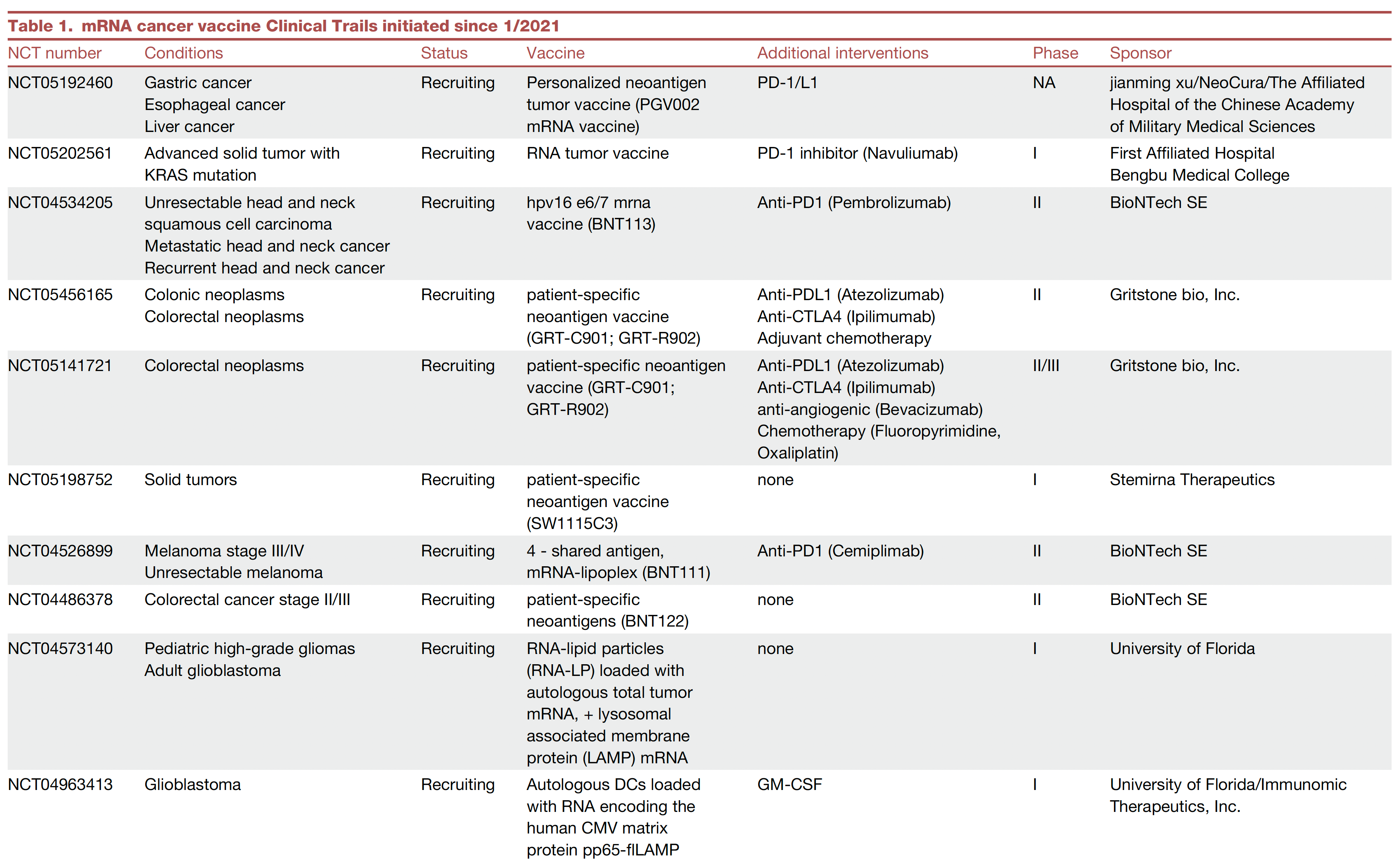
Antibody-Drug Conjugates (ADC)
There is considerable excitement about antibody-drug conjugates (ADC) whereby a linker is used to attach a chemotherapy agent to the checkpoint inhibitor antibody, specifically targeting the cancer cell and facilitating entry of the chemotherapy into the cell. Akin to these are bispecific antibodies (BiTEs, binding to a tumor antigen and T cell receptor simultaneously), both of these conjugates acting as “biologic” or “guided” missiles.
A very good example of the potency of an ADC was seen in a “HER2-low” breast cancer randomized trial. The absence or very low expression or amplification of the HER2 receptor is common in breast cancer and successful treatment has been elusive. A randomized trial of an ADC (trastuzumab deruxtecan) compared to physician’s choice therapy demonstrated a marked success for progression-free survival in HER2-low patients, which was characterized as “unheard-of success” by media coverage.
This strategy is being used to target some of the most difficult cancer driver mutations such as TP53 and KRAS.
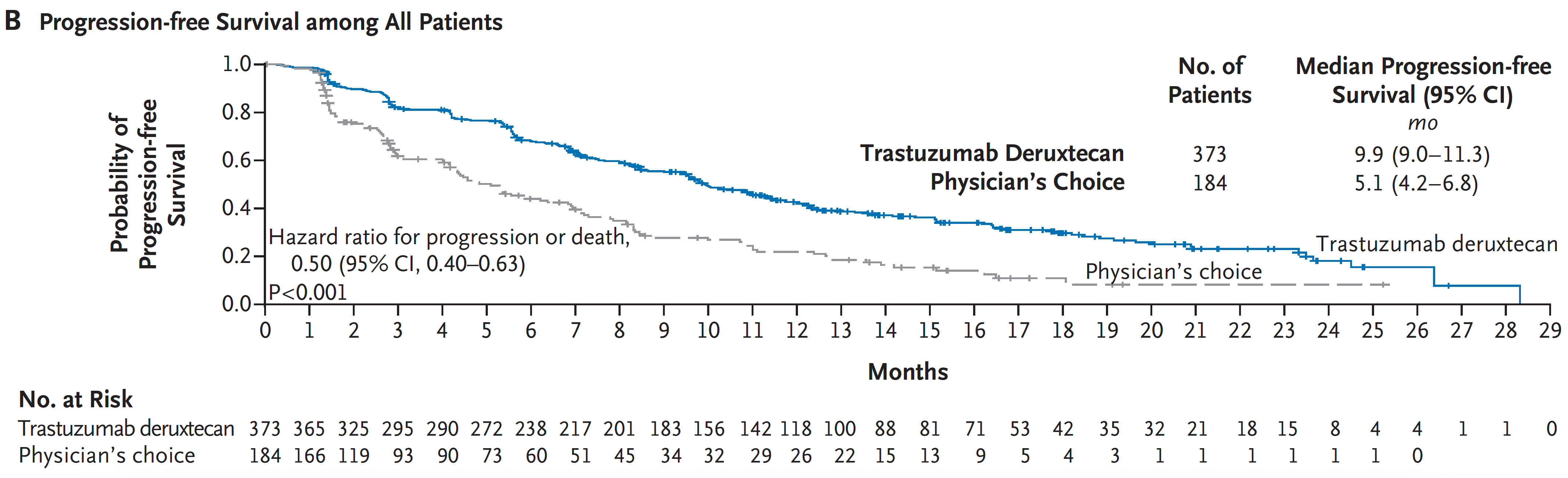
Oncolytic Viruses
Modifying viruses to infect the tumor and make it more visible to the immune system, potentiating anti-tumor responses, known as oncolytic viruses, have been proposed as a way to rev up the immune response for a long time but without positive Phase 3 clinical trials.
After decades of failure, a recent trial in refractory bladder cancer showed marked success, along with others, summarized here, now providing very encouraging results. It looks like oncolytic viruses are on a comeback path.
Engineering T Cells (Chimeric Antigen Receptor [CAR-T])
As I recently reviewed, there are over 500 ongoing clinical trials to build on the success of the first CAR-T approval for leukemia 7 years ago. I won’t go through that all again here, but to reiterate most of the success to date has been in “liquid” blood (leukemia and lymphoma) cancer tumors. This week in Nature is the discovery of a T cell cancer mutation, a gene fusion CARD11-PIK3R3, from a T cell lymphoma that can potentially be used to augment CAR-T efficacy. It has pronounced and prolonged effects in the experimental model. Instead of 1 million cells needed for treatment, even 20,000 were enough to melt the tumor. This is a noteworthy discovery since CAR-T work to date has largely not exploited such naturally occurring mutations, while instead concentrating on those seen in the patient’s set of key tumor mutations.
As currently conceived, CAR-T, and what is being referred to more broadly as adoptive cell therapies, involves removing T cells from the patient’s body and engineering their activation, then reintroducing them back to the patient. This is laborious, technically difficult, and very expensive. Recently, the idea of achieving all of this via an injection of virus that specifically infects T cells and inserts the genes needed, was advanced by two biotech companies with preclinical results, one in non-human primates.
Gearing up to meet the challenge of solid tumor CAR-T intervention, there’s more work using CRISPR genome editing of T cell receptors. A.I. is increasingly being exploited to process the data from sequencing and identify optimal neoantigens.
Instead of just CAR-T, we’re seeing the emergence of CAR-macrophage and CAR-natural killer (NK) cells strategies, and rapidly expanding potential combinations of all the strategies I’ve mentioned. No less, there’s been maturation of on-off suicide switches programmed in, to limit cytokine release and promote safety of these interventions. Overall, major side effects of immunotherapies are not only cytokine release syndromes, but also include interstitial pneumonitis and neurotoxicity.
Summary
Given the multitude of ways cancer cells and tumor tissue can evade our immune response, durably successful treatment remains a daunting challenge. But the ingenuity of so many different approaches to unleash our immune response, and their combinations, provides considerable hope that we’ll increasingly meet the challenge in the years ahead. We have clearly learned that combining different immunotherapy strategies will be essential for many patients with the most resilient solid tumors.
Of concern, as noted by a recent editorial in The Lancet, entitled “Cancer Research Equity: Innovations For The Many, Not The Few,” is that these individualized, sophisticated strategies are not scalable; they will have limited reach and benefit. The movement towards “off the shelf” CAR-T and inexpensive, orally active checkpoint inhibitors may help mitigate this issue.
Notwithstanding this important concern, we’re seeing an array of diverse and potent immunotherapy strategies that are providing highly encouraging results, engendering more excitement than we’ve seen in this space for some time. These should propel substantial improvements in outcomes for patients in the years ahead. It can’t happen soon enough.
Thanks for reading this edition of Ground Truths. If you found it informative, please share it with your colleagues.
Dr. Topol has disclosed the following relevant financial relationships: Serve(d) as a director, officer, partner, employee, advisor, consultant, or trustee for Dexcom; Illumina; Molecular Stethoscope; Quest Diagnostics; Blue Cross Blue Shield Association. Received research grant from National Institutes of Health.
A version of this article appeared on Medscape.com.
This article was originally published on February 10 in Eric Topol’s substack “Ground Truths.”
It’s astounding how devious cancer cells and tumor tissue can be. This week in Science we learned how certain lung cancer cells can function like “Catch Me If You Can” — changing their driver mutation and cell identity to escape targeted therapy. This histologic transformation, as seen in an experimental model, is just one of so many cancer tricks that we are learning about.
Recently, as shown by single-cell sequencing, cancer cells can steal the mitochondria from T cells, a double whammy that turbocharges cancer cells with the hijacked fuel supply and, at the same time, dismantles the immune response.
Last week, we saw how tumor cells can release a virus-like protein that unleashes a vicious autoimmune response.
And then there’s the finding that cancer cell spread predominantly is occurring while we sleep.
As I previously reviewed, the ability for cancer cells to hijack neurons and neural circuits is now well established, no less their ability to reprogram neurons to become adrenergic and stimulate tumor progression, and interfere with the immune response. Stay tuned on that for a new Ground Truths podcast with Prof Michelle Monje, a leader in cancer neuroscience, which will post soon.
Add advancing age’s immunosenescence as yet another challenge to the long and growing list of formidable ways that cancer cells, and the tumor microenvironment, evade our immune response.
An Ever-Expanding Armamentarium
Immune Checkpoint Inhibitors
The field of immunotherapies took off with the immune checkpoint inhibitors, first approved by the FDA in 2011, that take the brakes off of T cells, with the programmed death-1 (PD-1), PD-ligand1, and anti-CTLA-4 monoclonal antibodies.
But we’re clearly learning they are not enough to prevail over cancer with common recurrences, only short term success in most patients, with some notable exceptions. Adding other immune response strategies, such as a vaccine, or antibody-drug conjugates, or engineered T cells, are showing improved chances for success.
Therapeutic Cancer Vaccines
There are many therapeutic cancer vaccines in the works, as reviewed in depth here.
Here’s a list of ongoing clinical trials of cancer vaccines. You’ll note most of these are on top of a checkpoint inhibitor and use personalized neoantigens (cancer cell surface proteins) derived from sequencing (whole-exome or whole genome, RNA-sequencing and HLA-profiling) the patient’s tumor.
An example of positive findings is with the combination of an mRNA-nanoparticle vaccine with up to 34 personalized neoantigens and pembrolizumab (Keytruda) vs pembrolizumab alone in advanced melanoma after resection, with improved outcomes at 3-year follow-up, cutting death or relapse rate in half.
Antibody-Drug Conjugates (ADC)
There is considerable excitement about antibody-drug conjugates (ADC) whereby a linker is used to attach a chemotherapy agent to the checkpoint inhibitor antibody, specifically targeting the cancer cell and facilitating entry of the chemotherapy into the cell. Akin to these are bispecific antibodies (BiTEs, binding to a tumor antigen and T cell receptor simultaneously), both of these conjugates acting as “biologic” or “guided” missiles.
A very good example of the potency of an ADC was seen in a “HER2-low” breast cancer randomized trial. The absence or very low expression or amplification of the HER2 receptor is common in breast cancer and successful treatment has been elusive. A randomized trial of an ADC (trastuzumab deruxtecan) compared to physician’s choice therapy demonstrated a marked success for progression-free survival in HER2-low patients, which was characterized as “unheard-of success” by media coverage.
This strategy is being used to target some of the most difficult cancer driver mutations such as TP53 and KRAS.
Oncolytic Viruses
Modifying viruses to infect the tumor and make it more visible to the immune system, potentiating anti-tumor responses, known as oncolytic viruses, have been proposed as a way to rev up the immune response for a long time but without positive Phase 3 clinical trials.
After decades of failure, a recent trial in refractory bladder cancer showed marked success, along with others, summarized here, now providing very encouraging results. It looks like oncolytic viruses are on a comeback path.
Engineering T Cells (Chimeric Antigen Receptor [CAR-T])
As I recently reviewed, there are over 500 ongoing clinical trials to build on the success of the first CAR-T approval for leukemia 7 years ago. I won’t go through that all again here, but to reiterate most of the success to date has been in “liquid” blood (leukemia and lymphoma) cancer tumors. This week in Nature is the discovery of a T cell cancer mutation, a gene fusion CARD11-PIK3R3, from a T cell lymphoma that can potentially be used to augment CAR-T efficacy. It has pronounced and prolonged effects in the experimental model. Instead of 1 million cells needed for treatment, even 20,000 were enough to melt the tumor. This is a noteworthy discovery since CAR-T work to date has largely not exploited such naturally occurring mutations, while instead concentrating on those seen in the patient’s set of key tumor mutations.
As currently conceived, CAR-T, and what is being referred to more broadly as adoptive cell therapies, involves removing T cells from the patient’s body and engineering their activation, then reintroducing them back to the patient. This is laborious, technically difficult, and very expensive. Recently, the idea of achieving all of this via an injection of virus that specifically infects T cells and inserts the genes needed, was advanced by two biotech companies with preclinical results, one in non-human primates.
Gearing up to meet the challenge of solid tumor CAR-T intervention, there’s more work using CRISPR genome editing of T cell receptors. A.I. is increasingly being exploited to process the data from sequencing and identify optimal neoantigens.
Instead of just CAR-T, we’re seeing the emergence of CAR-macrophage and CAR-natural killer (NK) cells strategies, and rapidly expanding potential combinations of all the strategies I’ve mentioned. No less, there’s been maturation of on-off suicide switches programmed in, to limit cytokine release and promote safety of these interventions. Overall, major side effects of immunotherapies are not only cytokine release syndromes, but also include interstitial pneumonitis and neurotoxicity.
Summary
Given the multitude of ways cancer cells and tumor tissue can evade our immune response, durably successful treatment remains a daunting challenge. But the ingenuity of so many different approaches to unleash our immune response, and their combinations, provides considerable hope that we’ll increasingly meet the challenge in the years ahead. We have clearly learned that combining different immunotherapy strategies will be essential for many patients with the most resilient solid tumors.
Of concern, as noted by a recent editorial in The Lancet, entitled “Cancer Research Equity: Innovations For The Many, Not The Few,” is that these individualized, sophisticated strategies are not scalable; they will have limited reach and benefit. The movement towards “off the shelf” CAR-T and inexpensive, orally active checkpoint inhibitors may help mitigate this issue.
Notwithstanding this important concern, we’re seeing an array of diverse and potent immunotherapy strategies that are providing highly encouraging results, engendering more excitement than we’ve seen in this space for some time. These should propel substantial improvements in outcomes for patients in the years ahead. It can’t happen soon enough.
Thanks for reading this edition of Ground Truths. If you found it informative, please share it with your colleagues.
Dr. Topol has disclosed the following relevant financial relationships: Serve(d) as a director, officer, partner, employee, advisor, consultant, or trustee for Dexcom; Illumina; Molecular Stethoscope; Quest Diagnostics; Blue Cross Blue Shield Association. Received research grant from National Institutes of Health.
A version of this article appeared on Medscape.com.
This article was originally published on February 10 in Eric Topol’s substack “Ground Truths.”
It’s astounding how devious cancer cells and tumor tissue can be. This week in Science we learned how certain lung cancer cells can function like “Catch Me If You Can” — changing their driver mutation and cell identity to escape targeted therapy. This histologic transformation, as seen in an experimental model, is just one of so many cancer tricks that we are learning about.
Recently, as shown by single-cell sequencing, cancer cells can steal the mitochondria from T cells, a double whammy that turbocharges cancer cells with the hijacked fuel supply and, at the same time, dismantles the immune response.
Last week, we saw how tumor cells can release a virus-like protein that unleashes a vicious autoimmune response.
And then there’s the finding that cancer cell spread predominantly is occurring while we sleep.
As I previously reviewed, the ability for cancer cells to hijack neurons and neural circuits is now well established, no less their ability to reprogram neurons to become adrenergic and stimulate tumor progression, and interfere with the immune response. Stay tuned on that for a new Ground Truths podcast with Prof Michelle Monje, a leader in cancer neuroscience, which will post soon.
Add advancing age’s immunosenescence as yet another challenge to the long and growing list of formidable ways that cancer cells, and the tumor microenvironment, evade our immune response.
An Ever-Expanding Armamentarium
Immune Checkpoint Inhibitors
The field of immunotherapies took off with the immune checkpoint inhibitors, first approved by the FDA in 2011, that take the brakes off of T cells, with the programmed death-1 (PD-1), PD-ligand1, and anti-CTLA-4 monoclonal antibodies.
But we’re clearly learning they are not enough to prevail over cancer with common recurrences, only short term success in most patients, with some notable exceptions. Adding other immune response strategies, such as a vaccine, or antibody-drug conjugates, or engineered T cells, are showing improved chances for success.
Therapeutic Cancer Vaccines
There are many therapeutic cancer vaccines in the works, as reviewed in depth here.
Here’s a list of ongoing clinical trials of cancer vaccines. You’ll note most of these are on top of a checkpoint inhibitor and use personalized neoantigens (cancer cell surface proteins) derived from sequencing (whole-exome or whole genome, RNA-sequencing and HLA-profiling) the patient’s tumor.
An example of positive findings is with the combination of an mRNA-nanoparticle vaccine with up to 34 personalized neoantigens and pembrolizumab (Keytruda) vs pembrolizumab alone in advanced melanoma after resection, with improved outcomes at 3-year follow-up, cutting death or relapse rate in half.
Antibody-Drug Conjugates (ADC)
There is considerable excitement about antibody-drug conjugates (ADC) whereby a linker is used to attach a chemotherapy agent to the checkpoint inhibitor antibody, specifically targeting the cancer cell and facilitating entry of the chemotherapy into the cell. Akin to these are bispecific antibodies (BiTEs, binding to a tumor antigen and T cell receptor simultaneously), both of these conjugates acting as “biologic” or “guided” missiles.
A very good example of the potency of an ADC was seen in a “HER2-low” breast cancer randomized trial. The absence or very low expression or amplification of the HER2 receptor is common in breast cancer and successful treatment has been elusive. A randomized trial of an ADC (trastuzumab deruxtecan) compared to physician’s choice therapy demonstrated a marked success for progression-free survival in HER2-low patients, which was characterized as “unheard-of success” by media coverage.
This strategy is being used to target some of the most difficult cancer driver mutations such as TP53 and KRAS.
Oncolytic Viruses
Modifying viruses to infect the tumor and make it more visible to the immune system, potentiating anti-tumor responses, known as oncolytic viruses, have been proposed as a way to rev up the immune response for a long time but without positive Phase 3 clinical trials.
After decades of failure, a recent trial in refractory bladder cancer showed marked success, along with others, summarized here, now providing very encouraging results. It looks like oncolytic viruses are on a comeback path.
Engineering T Cells (Chimeric Antigen Receptor [CAR-T])
As I recently reviewed, there are over 500 ongoing clinical trials to build on the success of the first CAR-T approval for leukemia 7 years ago. I won’t go through that all again here, but to reiterate most of the success to date has been in “liquid” blood (leukemia and lymphoma) cancer tumors. This week in Nature is the discovery of a T cell cancer mutation, a gene fusion CARD11-PIK3R3, from a T cell lymphoma that can potentially be used to augment CAR-T efficacy. It has pronounced and prolonged effects in the experimental model. Instead of 1 million cells needed for treatment, even 20,000 were enough to melt the tumor. This is a noteworthy discovery since CAR-T work to date has largely not exploited such naturally occurring mutations, while instead concentrating on those seen in the patient’s set of key tumor mutations.
As currently conceived, CAR-T, and what is being referred to more broadly as adoptive cell therapies, involves removing T cells from the patient’s body and engineering their activation, then reintroducing them back to the patient. This is laborious, technically difficult, and very expensive. Recently, the idea of achieving all of this via an injection of virus that specifically infects T cells and inserts the genes needed, was advanced by two biotech companies with preclinical results, one in non-human primates.
Gearing up to meet the challenge of solid tumor CAR-T intervention, there’s more work using CRISPR genome editing of T cell receptors. A.I. is increasingly being exploited to process the data from sequencing and identify optimal neoantigens.
Instead of just CAR-T, we’re seeing the emergence of CAR-macrophage and CAR-natural killer (NK) cells strategies, and rapidly expanding potential combinations of all the strategies I’ve mentioned. No less, there’s been maturation of on-off suicide switches programmed in, to limit cytokine release and promote safety of these interventions. Overall, major side effects of immunotherapies are not only cytokine release syndromes, but also include interstitial pneumonitis and neurotoxicity.
Summary
Given the multitude of ways cancer cells and tumor tissue can evade our immune response, durably successful treatment remains a daunting challenge. But the ingenuity of so many different approaches to unleash our immune response, and their combinations, provides considerable hope that we’ll increasingly meet the challenge in the years ahead. We have clearly learned that combining different immunotherapy strategies will be essential for many patients with the most resilient solid tumors.
Of concern, as noted by a recent editorial in The Lancet, entitled “Cancer Research Equity: Innovations For The Many, Not The Few,” is that these individualized, sophisticated strategies are not scalable; they will have limited reach and benefit. The movement towards “off the shelf” CAR-T and inexpensive, orally active checkpoint inhibitors may help mitigate this issue.
Notwithstanding this important concern, we’re seeing an array of diverse and potent immunotherapy strategies that are providing highly encouraging results, engendering more excitement than we’ve seen in this space for some time. These should propel substantial improvements in outcomes for patients in the years ahead. It can’t happen soon enough.
Thanks for reading this edition of Ground Truths. If you found it informative, please share it with your colleagues.
Dr. Topol has disclosed the following relevant financial relationships: Serve(d) as a director, officer, partner, employee, advisor, consultant, or trustee for Dexcom; Illumina; Molecular Stethoscope; Quest Diagnostics; Blue Cross Blue Shield Association. Received research grant from National Institutes of Health.
A version of this article appeared on Medscape.com.
Belantamab Mafodotin Tops Daratumumab in Multiple Myeloma
TOPLINE:
METHODOLOGY:
- Belantamab mafodotin, a first-in-class anti-BCMA monoclonal antibody conjugate, was approved in the US in 2020 for adult patients with relapsed or refractory multiple myeloma who had received at least 4 prior therapies. However, in February 2023, the FDA withdrew this approval, following disappointing findings from a large confirmatory trial, called DREAMM-3. Although the agent is still being investigated to treat relapsed or refractory multiple myeloma, the current FDA label says the agent is only available in the US through a restricted program.
- Patients with multiple myeloma who relapse often become refractory to frontline triplet or quadruplet regimens and need effective second-line options.
- In the current phase 3 DREAMM-7 study, the researchers evaluated triplet therapy with belantamab mafodotin vs daratumumab as a second-line or later treatment option in patients with relapsed or refractory multiple myeloma.
- In this multicenter, open-label, randomized, phase 3 trial, 494 patients with relapsed/refractory multiple myeloma who previously received at least one prior line of therapy received bortezomib plus dexamethasone with either belantamab mafodotin or daratumumab.
- The primary outcome was PFS; secondary endpoints were overall survival, duration of response, and overall response rate.
TAKEAWAY:
- At a median follow-up of 28.2 months, patients who received belantamab mafodotin demonstrated significantly longer median PFS than those who received daratumumab (36.6 vs 13.4 months; hazard ratio [HR], 0.41). The improvement was evident in all prespecified groups, including patients refractory to lenalidomide (HR, 0.37) and those with a high risk for cytogenetic abnormalities (HR, 0.36).
- The early overall survival trend favored belantamab mafodotin — with 84% of patients alive at 18 months vs 73% in the daratumumab group — but overall survival follow-up is ongoing.
- The overall response rate was 83% in the belantamab mafodotin group vs 71% in the daratumumab group. Complete response rates were also higher in the belantamab mafodotin: 34.6% vs 17.1%. Median duration of response was twice as long in the belantamab mafodotin group (36 vs 18 months).
- Grade 3 or higher non-ocular adverse events in belantamab mafodotin vs daratumumab group included thrombocytopenia (55% vs 35%), infections and infestations (31% vs 20%), neutropenia (12% vs 6%), pneumonia (12% vs 4%), and anemia (8% vs 10%). Grade 3 or higher ocular adverse events were reported in 34% of patients treated with belantamab mafodotin, but ocular toxicities reversed in most patients.
IN PRACTICE:
Based on favorable PFS and manageable safety profile, belantamab mafodotin in combination with bortezomib plus dexamethasone has potential to become a new standard of care in the second line or later among patients with relapsed or refractory multiple myeloma, the author concluded.
SOURCE:
This study, led by Maria-Victoria Mateos, MD, PhD, from University Hospital of Salamanca, Salamanca, Spain, was presented at ASCO Plenary Series: February 2024 Session and published in the Journal of Clinical Oncology.
LIMITATIONS:
Open-label design was a limitation of this study. Follow-up for overall survival was ongoing.
DISCLOSURES:
This study was funded by GSK. Dr. Mateos reported receiving honoraria, consulting/personal fees outside this work.
A version of this article first appeared on Medscape.com.
TOPLINE:
METHODOLOGY:
- Belantamab mafodotin, a first-in-class anti-BCMA monoclonal antibody conjugate, was approved in the US in 2020 for adult patients with relapsed or refractory multiple myeloma who had received at least 4 prior therapies. However, in February 2023, the FDA withdrew this approval, following disappointing findings from a large confirmatory trial, called DREAMM-3. Although the agent is still being investigated to treat relapsed or refractory multiple myeloma, the current FDA label says the agent is only available in the US through a restricted program.
- Patients with multiple myeloma who relapse often become refractory to frontline triplet or quadruplet regimens and need effective second-line options.
- In the current phase 3 DREAMM-7 study, the researchers evaluated triplet therapy with belantamab mafodotin vs daratumumab as a second-line or later treatment option in patients with relapsed or refractory multiple myeloma.
- In this multicenter, open-label, randomized, phase 3 trial, 494 patients with relapsed/refractory multiple myeloma who previously received at least one prior line of therapy received bortezomib plus dexamethasone with either belantamab mafodotin or daratumumab.
- The primary outcome was PFS; secondary endpoints were overall survival, duration of response, and overall response rate.
TAKEAWAY:
- At a median follow-up of 28.2 months, patients who received belantamab mafodotin demonstrated significantly longer median PFS than those who received daratumumab (36.6 vs 13.4 months; hazard ratio [HR], 0.41). The improvement was evident in all prespecified groups, including patients refractory to lenalidomide (HR, 0.37) and those with a high risk for cytogenetic abnormalities (HR, 0.36).
- The early overall survival trend favored belantamab mafodotin — with 84% of patients alive at 18 months vs 73% in the daratumumab group — but overall survival follow-up is ongoing.
- The overall response rate was 83% in the belantamab mafodotin group vs 71% in the daratumumab group. Complete response rates were also higher in the belantamab mafodotin: 34.6% vs 17.1%. Median duration of response was twice as long in the belantamab mafodotin group (36 vs 18 months).
- Grade 3 or higher non-ocular adverse events in belantamab mafodotin vs daratumumab group included thrombocytopenia (55% vs 35%), infections and infestations (31% vs 20%), neutropenia (12% vs 6%), pneumonia (12% vs 4%), and anemia (8% vs 10%). Grade 3 or higher ocular adverse events were reported in 34% of patients treated with belantamab mafodotin, but ocular toxicities reversed in most patients.
IN PRACTICE:
Based on favorable PFS and manageable safety profile, belantamab mafodotin in combination with bortezomib plus dexamethasone has potential to become a new standard of care in the second line or later among patients with relapsed or refractory multiple myeloma, the author concluded.
SOURCE:
This study, led by Maria-Victoria Mateos, MD, PhD, from University Hospital of Salamanca, Salamanca, Spain, was presented at ASCO Plenary Series: February 2024 Session and published in the Journal of Clinical Oncology.
LIMITATIONS:
Open-label design was a limitation of this study. Follow-up for overall survival was ongoing.
DISCLOSURES:
This study was funded by GSK. Dr. Mateos reported receiving honoraria, consulting/personal fees outside this work.
A version of this article first appeared on Medscape.com.
TOPLINE:
METHODOLOGY:
- Belantamab mafodotin, a first-in-class anti-BCMA monoclonal antibody conjugate, was approved in the US in 2020 for adult patients with relapsed or refractory multiple myeloma who had received at least 4 prior therapies. However, in February 2023, the FDA withdrew this approval, following disappointing findings from a large confirmatory trial, called DREAMM-3. Although the agent is still being investigated to treat relapsed or refractory multiple myeloma, the current FDA label says the agent is only available in the US through a restricted program.
- Patients with multiple myeloma who relapse often become refractory to frontline triplet or quadruplet regimens and need effective second-line options.
- In the current phase 3 DREAMM-7 study, the researchers evaluated triplet therapy with belantamab mafodotin vs daratumumab as a second-line or later treatment option in patients with relapsed or refractory multiple myeloma.
- In this multicenter, open-label, randomized, phase 3 trial, 494 patients with relapsed/refractory multiple myeloma who previously received at least one prior line of therapy received bortezomib plus dexamethasone with either belantamab mafodotin or daratumumab.
- The primary outcome was PFS; secondary endpoints were overall survival, duration of response, and overall response rate.
TAKEAWAY:
- At a median follow-up of 28.2 months, patients who received belantamab mafodotin demonstrated significantly longer median PFS than those who received daratumumab (36.6 vs 13.4 months; hazard ratio [HR], 0.41). The improvement was evident in all prespecified groups, including patients refractory to lenalidomide (HR, 0.37) and those with a high risk for cytogenetic abnormalities (HR, 0.36).
- The early overall survival trend favored belantamab mafodotin — with 84% of patients alive at 18 months vs 73% in the daratumumab group — but overall survival follow-up is ongoing.
- The overall response rate was 83% in the belantamab mafodotin group vs 71% in the daratumumab group. Complete response rates were also higher in the belantamab mafodotin: 34.6% vs 17.1%. Median duration of response was twice as long in the belantamab mafodotin group (36 vs 18 months).
- Grade 3 or higher non-ocular adverse events in belantamab mafodotin vs daratumumab group included thrombocytopenia (55% vs 35%), infections and infestations (31% vs 20%), neutropenia (12% vs 6%), pneumonia (12% vs 4%), and anemia (8% vs 10%). Grade 3 or higher ocular adverse events were reported in 34% of patients treated with belantamab mafodotin, but ocular toxicities reversed in most patients.
IN PRACTICE:
Based on favorable PFS and manageable safety profile, belantamab mafodotin in combination with bortezomib plus dexamethasone has potential to become a new standard of care in the second line or later among patients with relapsed or refractory multiple myeloma, the author concluded.
SOURCE:
This study, led by Maria-Victoria Mateos, MD, PhD, from University Hospital of Salamanca, Salamanca, Spain, was presented at ASCO Plenary Series: February 2024 Session and published in the Journal of Clinical Oncology.
LIMITATIONS:
Open-label design was a limitation of this study. Follow-up for overall survival was ongoing.
DISCLOSURES:
This study was funded by GSK. Dr. Mateos reported receiving honoraria, consulting/personal fees outside this work.
A version of this article first appeared on Medscape.com.
Young Myeloma Specialist Forges Ahead, Gives Back
Ahead of the conference held in San Diego in December, Dr. Mohyuddin, a blood cancer specialist with a focus on multiple myeloma and medical education, put out a heartfelt appeal on X (formerly Twitter): “If you’re a trainee and interested in meeting me at #ASH23, please reach out … (especially if [international medical graduate]) I’d love to meet and offer support in whatever capacity I can! I can’t have a research project for each one of you, but happy to help/mentor in any other way possible,” he posted on X back in late November.
An international medical graduate himself, Dr. Mohyuddin recalls how overwhelmed he felt when he first attended an annual ASH conference as a trainee, so he aims to reassure others that they “don’t have to know everything.”
“It’s about networking and broadening horizons,” he said in an interview that took place between ASH sessions, his own research presentations, and meetings with the many trainees who took him up on the offer he made via X. “I’ve spent most of this ASH meeting trainees — it’s the most rewarding thing for me at these meetings.
“Reassurance is a lot of what we do in oncology,” he continued, drawing a connection between his affinity for helping trainees and providing compassionate care to patients. “For an oncologist, the single most important thing is having excellent communication skills and being able to express support and empathy. The ability to connect deeply with your patients during their time of need is profoundly important.
“You can compensate for lack of knowledge, because we have so many other sources of support for knowledge, but you simply cannot compensate for poor communication skills, and your patient suffers as a result,” he said.
Relationship Building
In addition to the guidance he received from mentors, Dr. Mohyuddin noted that it was the chance to build supportive, empathetic relationships that drew him to specialize in blood cancer and, in particular, to caring for patients with multiple myeloma and conducting research focused on improving the patient experience.
Dr. Mohyuddin attended medical school at the Aga Khan University in Pakistan, then completed his internal medicine residency and fellowship at the University of Kansas in Kansas City. As a chief resident there, he focused on novel approaches to education delivery and improving access to research for trainees. As a fellow, he developed clinical and research interests in multiple myeloma, which he describes as an “incredibly rewarding field” marked by “truly spectacular advances over the last two decades.”
“There are some cancers you can cure, which means you don’t get to see patients often, and there are some you can’t cure, where patients die early, and there’s not a lot of time to build a relationship,” he said. “But there are some where patients can do well even though they aren’t currently cured, and you get to form really amazing and meaningful relationships over a long period of time.
“Multiple myeloma occupies that space, and that’s why I’m drawn to it,” Dr. Mohyuddin added, noting that he doesn’t shy away from forging emotional connections with patients. “I recognize that makes me vulnerable, but I think that is essentially what your patients deserve from you — to be invested at an emotional level with them through their suffering.”
Improving value and the patient experience
“One thing, philosophically, that I research is value in multiple myeloma care: identifying areas where we are overtreating patients and where we can do less and get away with it,” he said.
Despite the major advances in multiple myeloma in recent years, which “represent a lot of what is going right with oncology,” this blood cancer still “also represents a lot of what is wrong with oncology,” he noted. As an example, he cited “the approval of low-value drugs, the sequencing of drugs, adding more and more drugs without responsibly addressing quality-of-life questions, and identifying more responsible ways to provide high-value efficacious care without bankrupting the economy.
“So my research and policy work apply to that,” he explained. “What can we do better? What sort of trials should we be doing? What populations do we enroll? Are we asking the right questions or looking at trivialities? Are we serving patients foremost?”
Sometimes, this means comparing multiple myeloma staging systems in a real-world cohort, or assessing whether a widely available, cheap, and safe drug like budesonide can help patients avoid diarrhea during chemotherapy, whether control arms in myeloma randomized trials are fair, whether drugs ever get approved in low- or middle-income countries after their approval in the United States, and whether smoldering myeloma, a multiple myeloma precursor, really requires treatment, as current guidelines suggest, or if patients would do just as well — or perhaps better — with a close surveillance protocol.
“Pharma won’t do those studies and many key opinion leaders feel the question [about whether smoldering myeloma needs to be treated] has already been answered, so we are launching a prospective study that will define the natural history of smoldering myeloma and allow for patients to stay off therapy while undergoing rigorous surveillance with imaging,” he said.
Another study Dr. Mohyuddin hopes to launch soon will look at a “start low, go slow” treatment approach for the frailest patients with newly diagnosed myeloma.
His upbringing in Pakistan, where there are “mind-boggling” differences in health care access, affordability, and outcomes when compared with the United States, provided a foundation for both his “enthusiasm for cost-effective care” and his desire to give back, he said.
Another aspect of life in Pakistan — an across-the-board sense of closeness and solidarity in families and communities that is sometimes lacking in the United States — contributed to his desire to build relationships.
“That is something I dearly miss,” he said. “I am very privileged and so thankful to be here in the US, but that is one thing I do deeply miss.”
Connecting and Making a Difference
Dr. Mohyuddin seeks connection through his relationships with patients, trainees, and his many followers on social media platforms like X, where he frequently shares his thoughts on research quality and findings, heme/onc trends, and treatment-related insight.
“How to treat myeloma after #ASH23,” he posted on X as the conference came to a close. His takeaways: Don’t treat smoldering myeloma, do quadruple therapy for transplant-eligible patients (but no cd38 maintenance therapy afterward), don’t do quads for carfilzomib in newly diagnosed frail or older patients, and don’t do a salvage autologous transplant, no matter how good the first transplant was.
Dr. Mohyuddin also works to make a difference through his research and involvement in helping to launch initiatives like Common Sense Oncology, an ambitious global effort to reform cancer clinical trials and care, and through a current project with colleagues in India and Pakistan to create a consortium for pooling data on hematologic malignancies from South Asian countries. The hope is that such a collaborative effort will lead to good prospective research relevant to the needs of participating countries, he explained.
“Those are things where I want to make a difference. Taking care of patients is number one, but more than research, the number two thing for me is teaching and hopefully inspiring trainees and others to think differently, to look at data differently,” he said, noting that despite the major advances in myeloma, the reality is that “a lot of what we offer in oncology is very marginal.”
The effect sizes of interventions are often very small, and outcomes can still be really bad, he explained, adding that “[i]t really hits you when you see a lot of death and suffering. It’s a huge wake-up call … we have so many advances, but the reality is very, very sobering.
“Critically understanding and interpreting data is something where education really fails us. I’m incredibly passionate about it. I’ve found great resources to help me interpret data better, and I want to make them more accessible and inspire others to understand better,” he said. “We need to know how to defend ourselves from the hype.”
His efforts have not gone unnoticed. Dr. Mohyuddin was the recipient of the 2023 Hematology and Medical Oncology Fellowship Faculty Teaching Award at the University of Utah, Salt Lake City, where he is currently a faculty member.
“The recognition means more than any publication or grant award,” he said. “It’s great to know that medical education is appreciated, because so often we are in a rat race of getting more papers and grants out, but teaching and inspiring people is what is really, really important to me.”
Ahead of the conference held in San Diego in December, Dr. Mohyuddin, a blood cancer specialist with a focus on multiple myeloma and medical education, put out a heartfelt appeal on X (formerly Twitter): “If you’re a trainee and interested in meeting me at #ASH23, please reach out … (especially if [international medical graduate]) I’d love to meet and offer support in whatever capacity I can! I can’t have a research project for each one of you, but happy to help/mentor in any other way possible,” he posted on X back in late November.
An international medical graduate himself, Dr. Mohyuddin recalls how overwhelmed he felt when he first attended an annual ASH conference as a trainee, so he aims to reassure others that they “don’t have to know everything.”
“It’s about networking and broadening horizons,” he said in an interview that took place between ASH sessions, his own research presentations, and meetings with the many trainees who took him up on the offer he made via X. “I’ve spent most of this ASH meeting trainees — it’s the most rewarding thing for me at these meetings.
“Reassurance is a lot of what we do in oncology,” he continued, drawing a connection between his affinity for helping trainees and providing compassionate care to patients. “For an oncologist, the single most important thing is having excellent communication skills and being able to express support and empathy. The ability to connect deeply with your patients during their time of need is profoundly important.
“You can compensate for lack of knowledge, because we have so many other sources of support for knowledge, but you simply cannot compensate for poor communication skills, and your patient suffers as a result,” he said.
Relationship Building
In addition to the guidance he received from mentors, Dr. Mohyuddin noted that it was the chance to build supportive, empathetic relationships that drew him to specialize in blood cancer and, in particular, to caring for patients with multiple myeloma and conducting research focused on improving the patient experience.
Dr. Mohyuddin attended medical school at the Aga Khan University in Pakistan, then completed his internal medicine residency and fellowship at the University of Kansas in Kansas City. As a chief resident there, he focused on novel approaches to education delivery and improving access to research for trainees. As a fellow, he developed clinical and research interests in multiple myeloma, which he describes as an “incredibly rewarding field” marked by “truly spectacular advances over the last two decades.”
“There are some cancers you can cure, which means you don’t get to see patients often, and there are some you can’t cure, where patients die early, and there’s not a lot of time to build a relationship,” he said. “But there are some where patients can do well even though they aren’t currently cured, and you get to form really amazing and meaningful relationships over a long period of time.
“Multiple myeloma occupies that space, and that’s why I’m drawn to it,” Dr. Mohyuddin added, noting that he doesn’t shy away from forging emotional connections with patients. “I recognize that makes me vulnerable, but I think that is essentially what your patients deserve from you — to be invested at an emotional level with them through their suffering.”
Improving value and the patient experience
“One thing, philosophically, that I research is value in multiple myeloma care: identifying areas where we are overtreating patients and where we can do less and get away with it,” he said.
Despite the major advances in multiple myeloma in recent years, which “represent a lot of what is going right with oncology,” this blood cancer still “also represents a lot of what is wrong with oncology,” he noted. As an example, he cited “the approval of low-value drugs, the sequencing of drugs, adding more and more drugs without responsibly addressing quality-of-life questions, and identifying more responsible ways to provide high-value efficacious care without bankrupting the economy.
“So my research and policy work apply to that,” he explained. “What can we do better? What sort of trials should we be doing? What populations do we enroll? Are we asking the right questions or looking at trivialities? Are we serving patients foremost?”
Sometimes, this means comparing multiple myeloma staging systems in a real-world cohort, or assessing whether a widely available, cheap, and safe drug like budesonide can help patients avoid diarrhea during chemotherapy, whether control arms in myeloma randomized trials are fair, whether drugs ever get approved in low- or middle-income countries after their approval in the United States, and whether smoldering myeloma, a multiple myeloma precursor, really requires treatment, as current guidelines suggest, or if patients would do just as well — or perhaps better — with a close surveillance protocol.
“Pharma won’t do those studies and many key opinion leaders feel the question [about whether smoldering myeloma needs to be treated] has already been answered, so we are launching a prospective study that will define the natural history of smoldering myeloma and allow for patients to stay off therapy while undergoing rigorous surveillance with imaging,” he said.
Another study Dr. Mohyuddin hopes to launch soon will look at a “start low, go slow” treatment approach for the frailest patients with newly diagnosed myeloma.
His upbringing in Pakistan, where there are “mind-boggling” differences in health care access, affordability, and outcomes when compared with the United States, provided a foundation for both his “enthusiasm for cost-effective care” and his desire to give back, he said.
Another aspect of life in Pakistan — an across-the-board sense of closeness and solidarity in families and communities that is sometimes lacking in the United States — contributed to his desire to build relationships.
“That is something I dearly miss,” he said. “I am very privileged and so thankful to be here in the US, but that is one thing I do deeply miss.”
Connecting and Making a Difference
Dr. Mohyuddin seeks connection through his relationships with patients, trainees, and his many followers on social media platforms like X, where he frequently shares his thoughts on research quality and findings, heme/onc trends, and treatment-related insight.
“How to treat myeloma after #ASH23,” he posted on X as the conference came to a close. His takeaways: Don’t treat smoldering myeloma, do quadruple therapy for transplant-eligible patients (but no cd38 maintenance therapy afterward), don’t do quads for carfilzomib in newly diagnosed frail or older patients, and don’t do a salvage autologous transplant, no matter how good the first transplant was.
Dr. Mohyuddin also works to make a difference through his research and involvement in helping to launch initiatives like Common Sense Oncology, an ambitious global effort to reform cancer clinical trials and care, and through a current project with colleagues in India and Pakistan to create a consortium for pooling data on hematologic malignancies from South Asian countries. The hope is that such a collaborative effort will lead to good prospective research relevant to the needs of participating countries, he explained.
“Those are things where I want to make a difference. Taking care of patients is number one, but more than research, the number two thing for me is teaching and hopefully inspiring trainees and others to think differently, to look at data differently,” he said, noting that despite the major advances in myeloma, the reality is that “a lot of what we offer in oncology is very marginal.”
The effect sizes of interventions are often very small, and outcomes can still be really bad, he explained, adding that “[i]t really hits you when you see a lot of death and suffering. It’s a huge wake-up call … we have so many advances, but the reality is very, very sobering.
“Critically understanding and interpreting data is something where education really fails us. I’m incredibly passionate about it. I’ve found great resources to help me interpret data better, and I want to make them more accessible and inspire others to understand better,” he said. “We need to know how to defend ourselves from the hype.”
His efforts have not gone unnoticed. Dr. Mohyuddin was the recipient of the 2023 Hematology and Medical Oncology Fellowship Faculty Teaching Award at the University of Utah, Salt Lake City, where he is currently a faculty member.
“The recognition means more than any publication or grant award,” he said. “It’s great to know that medical education is appreciated, because so often we are in a rat race of getting more papers and grants out, but teaching and inspiring people is what is really, really important to me.”
Ahead of the conference held in San Diego in December, Dr. Mohyuddin, a blood cancer specialist with a focus on multiple myeloma and medical education, put out a heartfelt appeal on X (formerly Twitter): “If you’re a trainee and interested in meeting me at #ASH23, please reach out … (especially if [international medical graduate]) I’d love to meet and offer support in whatever capacity I can! I can’t have a research project for each one of you, but happy to help/mentor in any other way possible,” he posted on X back in late November.
An international medical graduate himself, Dr. Mohyuddin recalls how overwhelmed he felt when he first attended an annual ASH conference as a trainee, so he aims to reassure others that they “don’t have to know everything.”
“It’s about networking and broadening horizons,” he said in an interview that took place between ASH sessions, his own research presentations, and meetings with the many trainees who took him up on the offer he made via X. “I’ve spent most of this ASH meeting trainees — it’s the most rewarding thing for me at these meetings.
“Reassurance is a lot of what we do in oncology,” he continued, drawing a connection between his affinity for helping trainees and providing compassionate care to patients. “For an oncologist, the single most important thing is having excellent communication skills and being able to express support and empathy. The ability to connect deeply with your patients during their time of need is profoundly important.
“You can compensate for lack of knowledge, because we have so many other sources of support for knowledge, but you simply cannot compensate for poor communication skills, and your patient suffers as a result,” he said.
Relationship Building
In addition to the guidance he received from mentors, Dr. Mohyuddin noted that it was the chance to build supportive, empathetic relationships that drew him to specialize in blood cancer and, in particular, to caring for patients with multiple myeloma and conducting research focused on improving the patient experience.
Dr. Mohyuddin attended medical school at the Aga Khan University in Pakistan, then completed his internal medicine residency and fellowship at the University of Kansas in Kansas City. As a chief resident there, he focused on novel approaches to education delivery and improving access to research for trainees. As a fellow, he developed clinical and research interests in multiple myeloma, which he describes as an “incredibly rewarding field” marked by “truly spectacular advances over the last two decades.”
“There are some cancers you can cure, which means you don’t get to see patients often, and there are some you can’t cure, where patients die early, and there’s not a lot of time to build a relationship,” he said. “But there are some where patients can do well even though they aren’t currently cured, and you get to form really amazing and meaningful relationships over a long period of time.
“Multiple myeloma occupies that space, and that’s why I’m drawn to it,” Dr. Mohyuddin added, noting that he doesn’t shy away from forging emotional connections with patients. “I recognize that makes me vulnerable, but I think that is essentially what your patients deserve from you — to be invested at an emotional level with them through their suffering.”
Improving value and the patient experience
“One thing, philosophically, that I research is value in multiple myeloma care: identifying areas where we are overtreating patients and where we can do less and get away with it,” he said.
Despite the major advances in multiple myeloma in recent years, which “represent a lot of what is going right with oncology,” this blood cancer still “also represents a lot of what is wrong with oncology,” he noted. As an example, he cited “the approval of low-value drugs, the sequencing of drugs, adding more and more drugs without responsibly addressing quality-of-life questions, and identifying more responsible ways to provide high-value efficacious care without bankrupting the economy.
“So my research and policy work apply to that,” he explained. “What can we do better? What sort of trials should we be doing? What populations do we enroll? Are we asking the right questions or looking at trivialities? Are we serving patients foremost?”
Sometimes, this means comparing multiple myeloma staging systems in a real-world cohort, or assessing whether a widely available, cheap, and safe drug like budesonide can help patients avoid diarrhea during chemotherapy, whether control arms in myeloma randomized trials are fair, whether drugs ever get approved in low- or middle-income countries after their approval in the United States, and whether smoldering myeloma, a multiple myeloma precursor, really requires treatment, as current guidelines suggest, or if patients would do just as well — or perhaps better — with a close surveillance protocol.
“Pharma won’t do those studies and many key opinion leaders feel the question [about whether smoldering myeloma needs to be treated] has already been answered, so we are launching a prospective study that will define the natural history of smoldering myeloma and allow for patients to stay off therapy while undergoing rigorous surveillance with imaging,” he said.
Another study Dr. Mohyuddin hopes to launch soon will look at a “start low, go slow” treatment approach for the frailest patients with newly diagnosed myeloma.
His upbringing in Pakistan, where there are “mind-boggling” differences in health care access, affordability, and outcomes when compared with the United States, provided a foundation for both his “enthusiasm for cost-effective care” and his desire to give back, he said.
Another aspect of life in Pakistan — an across-the-board sense of closeness and solidarity in families and communities that is sometimes lacking in the United States — contributed to his desire to build relationships.
“That is something I dearly miss,” he said. “I am very privileged and so thankful to be here in the US, but that is one thing I do deeply miss.”
Connecting and Making a Difference
Dr. Mohyuddin seeks connection through his relationships with patients, trainees, and his many followers on social media platforms like X, where he frequently shares his thoughts on research quality and findings, heme/onc trends, and treatment-related insight.
“How to treat myeloma after #ASH23,” he posted on X as the conference came to a close. His takeaways: Don’t treat smoldering myeloma, do quadruple therapy for transplant-eligible patients (but no cd38 maintenance therapy afterward), don’t do quads for carfilzomib in newly diagnosed frail or older patients, and don’t do a salvage autologous transplant, no matter how good the first transplant was.
Dr. Mohyuddin also works to make a difference through his research and involvement in helping to launch initiatives like Common Sense Oncology, an ambitious global effort to reform cancer clinical trials and care, and through a current project with colleagues in India and Pakistan to create a consortium for pooling data on hematologic malignancies from South Asian countries. The hope is that such a collaborative effort will lead to good prospective research relevant to the needs of participating countries, he explained.
“Those are things where I want to make a difference. Taking care of patients is number one, but more than research, the number two thing for me is teaching and hopefully inspiring trainees and others to think differently, to look at data differently,” he said, noting that despite the major advances in myeloma, the reality is that “a lot of what we offer in oncology is very marginal.”
The effect sizes of interventions are often very small, and outcomes can still be really bad, he explained, adding that “[i]t really hits you when you see a lot of death and suffering. It’s a huge wake-up call … we have so many advances, but the reality is very, very sobering.
“Critically understanding and interpreting data is something where education really fails us. I’m incredibly passionate about it. I’ve found great resources to help me interpret data better, and I want to make them more accessible and inspire others to understand better,” he said. “We need to know how to defend ourselves from the hype.”
His efforts have not gone unnoticed. Dr. Mohyuddin was the recipient of the 2023 Hematology and Medical Oncology Fellowship Faculty Teaching Award at the University of Utah, Salt Lake City, where he is currently a faculty member.
“The recognition means more than any publication or grant award,” he said. “It’s great to know that medical education is appreciated, because so often we are in a rat race of getting more papers and grants out, but teaching and inspiring people is what is really, really important to me.”
New Multiple Myeloma Staging Systems Outperform the Standard
.
The findings should encourage greater use of these newer staging systems in routine clinical practice, first author Manni Mohyuddin, MD, said during a presentation at the American Society of Hematology annual meeting.
Dr. Mohyuddin and his colleagues retrospectively compared the standard Revised International Staging System (R-ISS) with two newer systems, the Second Revision of the R-ISS (R2-ISS) and the Mayo Additive Staging System (MASS), using real-world data from nearly 500 patients with newly diagnosed multiple myeloma.
The R-ISS, the most common multiple myeloma staging system, incorporates a range of prognostic features, including high-risk genetic markers assessed using fluorescence in situ hybridization as well as levels of lactate dehydrogenase, albumin, and beta-2 microglobulin, explained Dr. Mohyuddin, assistant professor at the Huntsman Cancer Institute, University of Utah, Salt Lake City.
R2-ISS and MASS include additional factors that reflect experts’ growing understanding of multiple myeloma. Specifically, the systems also evaluate a gain of chromosome 1q, in which patients have an extra copy of chromosome 1q, as well as the additive effects of multiple high-risk cytogenetic abnormalities, both of which indicate worse prognosis in multiple myeloma, Dr. Mohyuddin said in an interview.
To compare the three staging systems, the investigators used information on newly diagnosed patients in the Flatiron Health EHR–derived deidentified database, which includes data from cancer clinics across the United States. Patients were followed from first-line treatment initiation until death, the end of the study period, or last recorded activity.
The patients from the database had a median age of 70 years, and most had not received a transplant. The most common cytogenetic abnormality was gain 1q, present in about one third of patients.
Given that the R2-ISS originated from patients in clinical trials, Dr. Mohyuddin noted the importance of assessing how the system would perform in a real-world setting.
Of the 497 patients in the analysis, the R-ISS staging system classified 24% as stage I, 63% as stage II, and 13% as stage III. Overall survival differed across these R-ISS stages, indicating the system was prognostic for survival. Median overall survival was not reached for those with stage I disease, was 62.9 months for those with stage II disease, and 37.6 months for those with stage III disease.
Because the R-ISS doesn’t consider the additive effect of multiple cytogenetic abnormalities, many patients end up in the R-ISS stage II category but ultimately may have vastly different outcomes, Dr. Mohyuddin said.
The R2-ISS includes four risk categories, which provide more granularity to the stage II classification: Stage I is low risk, stage II is low-intermediate, stage III is intermediate, and stage IV is high risk. Using this staging system, 20% of patients were stage I, 25% were stage II, 46% were stage III, and 9% were stage IV.
The R2-ISS was also prognostic for survival, which generally worsened from stage I to stage IV: Median overall survival was not reached in stage I patients, was 69.3 months for stage II, 50.0 months for stage III, and 50.6 months for stage IV patients. However, Dr. Mohyuddin noted that there was some overlap in the survival curves for stages I and II and for stages III and IV.
When applying MASS, 34% of patients were categorized as stage I, 35% as stage II, and 31% as stage III disease. This system was prognostic for survival as well, with median overall survival of 76.9 months for stage I, 61.2 months for stage II, and 45.0 months for stage III.
With R2-ISS, many of those in R-ISS stage II are moved into stage I and III. With MASS, the R-ISS stage II patients are more evenly distributed across stages I, II, and III.
In other words, “we show that both these newer staging systems basically recategorize patients into different stages,” essentially “decreasing the number of people in the large, ambiguous (R-ISS) stage II category,” said Dr. Mohyuddin.
Dr. Mohyuddin and colleagues also evaluated the staging systems in fully adjusted analyses that controlled for age, race/ethnicity, sex, practice type, and diagnosis year.
Using R2-ISS, stage I patients had a similar risk for death compared with stage II patients (hazard ratio [HR], 1.2). Compared with stage I patients, stage III and IV patients had comparable risks for death, both about 2.5-fold higher than in those with stage I disease (HR, 2.4 and 2.6, respectively).
Compared with stage I MASS patients, those with stage II had a twofold higher risk for death (HR, 2.0), and those with stage III had an almost threefold higher risk (HR, 2.7).
Although no system considers all factors associated with myeloma outcomes, R2-ISS and MASS do offer a benefit over R-ISS, Dr. Mohyuddin said.
He added that the R2-ISS and MASS are similar from a statistical standpoint, but he gave MASS a slight edge for use in clinical practice.
MASS “more cleanly demarcated [patients] into prognostic subsets,” plus it is “a little easier to remember by heart,” he explained. MASS also puts more emphasis on the presence of multiple high-risk cytogenetic abnormalities, which is a worse prognostic in this era of quadruplet therapy for multiple myeloma, he added.
Because the study largely took place in an era when triplet therapy dominated, “we would be curious to see, with longer follow-up and more use of quadruplets, how these staging systems would perform,” he said.
Despite the benefits of these newer staging systems, many factors play a role in multiple myeloma outcomes, Dr. Mohyuddin explained. Staging systems are “only a piece of the puzzle.”
Dr. Mohyuddin reported having no financial interests to disclose.
A version of this article appeared on Medscape.com.
.
The findings should encourage greater use of these newer staging systems in routine clinical practice, first author Manni Mohyuddin, MD, said during a presentation at the American Society of Hematology annual meeting.
Dr. Mohyuddin and his colleagues retrospectively compared the standard Revised International Staging System (R-ISS) with two newer systems, the Second Revision of the R-ISS (R2-ISS) and the Mayo Additive Staging System (MASS), using real-world data from nearly 500 patients with newly diagnosed multiple myeloma.
The R-ISS, the most common multiple myeloma staging system, incorporates a range of prognostic features, including high-risk genetic markers assessed using fluorescence in situ hybridization as well as levels of lactate dehydrogenase, albumin, and beta-2 microglobulin, explained Dr. Mohyuddin, assistant professor at the Huntsman Cancer Institute, University of Utah, Salt Lake City.
R2-ISS and MASS include additional factors that reflect experts’ growing understanding of multiple myeloma. Specifically, the systems also evaluate a gain of chromosome 1q, in which patients have an extra copy of chromosome 1q, as well as the additive effects of multiple high-risk cytogenetic abnormalities, both of which indicate worse prognosis in multiple myeloma, Dr. Mohyuddin said in an interview.
To compare the three staging systems, the investigators used information on newly diagnosed patients in the Flatiron Health EHR–derived deidentified database, which includes data from cancer clinics across the United States. Patients were followed from first-line treatment initiation until death, the end of the study period, or last recorded activity.
The patients from the database had a median age of 70 years, and most had not received a transplant. The most common cytogenetic abnormality was gain 1q, present in about one third of patients.
Given that the R2-ISS originated from patients in clinical trials, Dr. Mohyuddin noted the importance of assessing how the system would perform in a real-world setting.
Of the 497 patients in the analysis, the R-ISS staging system classified 24% as stage I, 63% as stage II, and 13% as stage III. Overall survival differed across these R-ISS stages, indicating the system was prognostic for survival. Median overall survival was not reached for those with stage I disease, was 62.9 months for those with stage II disease, and 37.6 months for those with stage III disease.
Because the R-ISS doesn’t consider the additive effect of multiple cytogenetic abnormalities, many patients end up in the R-ISS stage II category but ultimately may have vastly different outcomes, Dr. Mohyuddin said.
The R2-ISS includes four risk categories, which provide more granularity to the stage II classification: Stage I is low risk, stage II is low-intermediate, stage III is intermediate, and stage IV is high risk. Using this staging system, 20% of patients were stage I, 25% were stage II, 46% were stage III, and 9% were stage IV.
The R2-ISS was also prognostic for survival, which generally worsened from stage I to stage IV: Median overall survival was not reached in stage I patients, was 69.3 months for stage II, 50.0 months for stage III, and 50.6 months for stage IV patients. However, Dr. Mohyuddin noted that there was some overlap in the survival curves for stages I and II and for stages III and IV.
When applying MASS, 34% of patients were categorized as stage I, 35% as stage II, and 31% as stage III disease. This system was prognostic for survival as well, with median overall survival of 76.9 months for stage I, 61.2 months for stage II, and 45.0 months for stage III.
With R2-ISS, many of those in R-ISS stage II are moved into stage I and III. With MASS, the R-ISS stage II patients are more evenly distributed across stages I, II, and III.
In other words, “we show that both these newer staging systems basically recategorize patients into different stages,” essentially “decreasing the number of people in the large, ambiguous (R-ISS) stage II category,” said Dr. Mohyuddin.
Dr. Mohyuddin and colleagues also evaluated the staging systems in fully adjusted analyses that controlled for age, race/ethnicity, sex, practice type, and diagnosis year.
Using R2-ISS, stage I patients had a similar risk for death compared with stage II patients (hazard ratio [HR], 1.2). Compared with stage I patients, stage III and IV patients had comparable risks for death, both about 2.5-fold higher than in those with stage I disease (HR, 2.4 and 2.6, respectively).
Compared with stage I MASS patients, those with stage II had a twofold higher risk for death (HR, 2.0), and those with stage III had an almost threefold higher risk (HR, 2.7).
Although no system considers all factors associated with myeloma outcomes, R2-ISS and MASS do offer a benefit over R-ISS, Dr. Mohyuddin said.
He added that the R2-ISS and MASS are similar from a statistical standpoint, but he gave MASS a slight edge for use in clinical practice.
MASS “more cleanly demarcated [patients] into prognostic subsets,” plus it is “a little easier to remember by heart,” he explained. MASS also puts more emphasis on the presence of multiple high-risk cytogenetic abnormalities, which is a worse prognostic in this era of quadruplet therapy for multiple myeloma, he added.
Because the study largely took place in an era when triplet therapy dominated, “we would be curious to see, with longer follow-up and more use of quadruplets, how these staging systems would perform,” he said.
Despite the benefits of these newer staging systems, many factors play a role in multiple myeloma outcomes, Dr. Mohyuddin explained. Staging systems are “only a piece of the puzzle.”
Dr. Mohyuddin reported having no financial interests to disclose.
A version of this article appeared on Medscape.com.
.
The findings should encourage greater use of these newer staging systems in routine clinical practice, first author Manni Mohyuddin, MD, said during a presentation at the American Society of Hematology annual meeting.
Dr. Mohyuddin and his colleagues retrospectively compared the standard Revised International Staging System (R-ISS) with two newer systems, the Second Revision of the R-ISS (R2-ISS) and the Mayo Additive Staging System (MASS), using real-world data from nearly 500 patients with newly diagnosed multiple myeloma.
The R-ISS, the most common multiple myeloma staging system, incorporates a range of prognostic features, including high-risk genetic markers assessed using fluorescence in situ hybridization as well as levels of lactate dehydrogenase, albumin, and beta-2 microglobulin, explained Dr. Mohyuddin, assistant professor at the Huntsman Cancer Institute, University of Utah, Salt Lake City.
R2-ISS and MASS include additional factors that reflect experts’ growing understanding of multiple myeloma. Specifically, the systems also evaluate a gain of chromosome 1q, in which patients have an extra copy of chromosome 1q, as well as the additive effects of multiple high-risk cytogenetic abnormalities, both of which indicate worse prognosis in multiple myeloma, Dr. Mohyuddin said in an interview.
To compare the three staging systems, the investigators used information on newly diagnosed patients in the Flatiron Health EHR–derived deidentified database, which includes data from cancer clinics across the United States. Patients were followed from first-line treatment initiation until death, the end of the study period, or last recorded activity.
The patients from the database had a median age of 70 years, and most had not received a transplant. The most common cytogenetic abnormality was gain 1q, present in about one third of patients.
Given that the R2-ISS originated from patients in clinical trials, Dr. Mohyuddin noted the importance of assessing how the system would perform in a real-world setting.
Of the 497 patients in the analysis, the R-ISS staging system classified 24% as stage I, 63% as stage II, and 13% as stage III. Overall survival differed across these R-ISS stages, indicating the system was prognostic for survival. Median overall survival was not reached for those with stage I disease, was 62.9 months for those with stage II disease, and 37.6 months for those with stage III disease.
Because the R-ISS doesn’t consider the additive effect of multiple cytogenetic abnormalities, many patients end up in the R-ISS stage II category but ultimately may have vastly different outcomes, Dr. Mohyuddin said.
The R2-ISS includes four risk categories, which provide more granularity to the stage II classification: Stage I is low risk, stage II is low-intermediate, stage III is intermediate, and stage IV is high risk. Using this staging system, 20% of patients were stage I, 25% were stage II, 46% were stage III, and 9% were stage IV.
The R2-ISS was also prognostic for survival, which generally worsened from stage I to stage IV: Median overall survival was not reached in stage I patients, was 69.3 months for stage II, 50.0 months for stage III, and 50.6 months for stage IV patients. However, Dr. Mohyuddin noted that there was some overlap in the survival curves for stages I and II and for stages III and IV.
When applying MASS, 34% of patients were categorized as stage I, 35% as stage II, and 31% as stage III disease. This system was prognostic for survival as well, with median overall survival of 76.9 months for stage I, 61.2 months for stage II, and 45.0 months for stage III.
With R2-ISS, many of those in R-ISS stage II are moved into stage I and III. With MASS, the R-ISS stage II patients are more evenly distributed across stages I, II, and III.
In other words, “we show that both these newer staging systems basically recategorize patients into different stages,” essentially “decreasing the number of people in the large, ambiguous (R-ISS) stage II category,” said Dr. Mohyuddin.
Dr. Mohyuddin and colleagues also evaluated the staging systems in fully adjusted analyses that controlled for age, race/ethnicity, sex, practice type, and diagnosis year.
Using R2-ISS, stage I patients had a similar risk for death compared with stage II patients (hazard ratio [HR], 1.2). Compared with stage I patients, stage III and IV patients had comparable risks for death, both about 2.5-fold higher than in those with stage I disease (HR, 2.4 and 2.6, respectively).
Compared with stage I MASS patients, those with stage II had a twofold higher risk for death (HR, 2.0), and those with stage III had an almost threefold higher risk (HR, 2.7).
Although no system considers all factors associated with myeloma outcomes, R2-ISS and MASS do offer a benefit over R-ISS, Dr. Mohyuddin said.
He added that the R2-ISS and MASS are similar from a statistical standpoint, but he gave MASS a slight edge for use in clinical practice.
MASS “more cleanly demarcated [patients] into prognostic subsets,” plus it is “a little easier to remember by heart,” he explained. MASS also puts more emphasis on the presence of multiple high-risk cytogenetic abnormalities, which is a worse prognostic in this era of quadruplet therapy for multiple myeloma, he added.
Because the study largely took place in an era when triplet therapy dominated, “we would be curious to see, with longer follow-up and more use of quadruplets, how these staging systems would perform,” he said.
Despite the benefits of these newer staging systems, many factors play a role in multiple myeloma outcomes, Dr. Mohyuddin explained. Staging systems are “only a piece of the puzzle.”
Dr. Mohyuddin reported having no financial interests to disclose.
A version of this article appeared on Medscape.com.
FROM ASH 2023
In Transplant-Ineligible Myeloma, This Frontline Tx Is Better
The study found that frontline triple therapy with daratumumab plus lenalidomide and dexamethasone led to significantly longer time to next treatment or time to death compared with the triple combination that includes bortezomib instead of daratumumab.
In the absence of head-to-head randomized controlled clinical trials, this study may help clinicians make more informed decisions when choosing therapies for patients with newly diagnosed, transplant-ineligible multiple myeloma, said investigator Doris K. Hansen, MD, from the Moffitt Cancer Center & Research Institute in Tampa, Florida, who presented finding from the analysis at the annual meeting of the American Society of Hematology.
Despite the lack of head-to-head randomized trials in this setting, several indirect comparisons have suggested that the daratumumab regimen carries an efficacy edge.
For instance, an indirect comparison of patients who received the daratumumab regimen in the MAIA trial with those who received the bortezomib regimen in the SWOG S0777 trial revealed a 40% lower risk for disease progression or death among patients treated with daratumumab. Researchers also observed a benefit for the daratumumab regimen — a 32% lower risk for disease progression or death — when comparing patient outcomes in the MAIA and PEGASUS studies.
To more directly compare the efficacy of the two regimens, Dr. Hansen and colleagues combed data from Acentrus, a de-identified academic electronic medical records database, to find patients who started a frontline treatment regimen for multiple myeloma between January 2018 and May 2023. The team used several methods to balance baseline characteristics between cohorts.
After making these adjustments, the study included data on 302 patients who received frontline therapy with the daratumumab regimen and 341 who received the bortezomib regimen. Patients who underwent hematopoietic stem cell transplant before or during therapy were excluded, as were those who had prior primary solid tumors, hematologic malignancies, or amyloidosis.
During a 20.2-month median follow-up for patients on daratumumab, 98 (32%) switched to a new therapy or died. During a 21.5-month median follow-up for those on bortezomib, 175 (51%) switched treatments or died.
The median time to death was 37.8 months in the daratumumab group vs 18.7 months in the bortezomib group. Overall, patients who received the daratumumab regimen had a 42% lower risk for death or time-to-next treatment (adjusted hazard ratio [HR], 0.58; P < .001).
Dr. Hansen acknowledged several limitations of the study, including that the data used came from provider-based records and may be missing patients who saw an out-of-network clinician. The database also does not include information on ECOG performance status, patient frailty, or cytogenetic risk profiles, which may have influenced outcomes.
The outcome measure combined time-to-next treatment and time to death; however, Dr. Hansen noted, time-to-next treatment is not a direct surrogate for progression-free survival.
Overall, findings from this real-world study support the use of daratumumab plus lenalidomide and dexamethasone over bortezomib plus lenalidomide and dexamethasone in this population of transplant-ineligible patients with newly diagnosed multiple myeloma, Dr. Hansen concluded.
The study was supported by Janssen. Dr. Hansen reported consulting for Janssen and others, receiving honoraria from OncLive and Survivorship, and other disclosures.
A version of this article appeared on Medscape.com.
The study found that frontline triple therapy with daratumumab plus lenalidomide and dexamethasone led to significantly longer time to next treatment or time to death compared with the triple combination that includes bortezomib instead of daratumumab.
In the absence of head-to-head randomized controlled clinical trials, this study may help clinicians make more informed decisions when choosing therapies for patients with newly diagnosed, transplant-ineligible multiple myeloma, said investigator Doris K. Hansen, MD, from the Moffitt Cancer Center & Research Institute in Tampa, Florida, who presented finding from the analysis at the annual meeting of the American Society of Hematology.
Despite the lack of head-to-head randomized trials in this setting, several indirect comparisons have suggested that the daratumumab regimen carries an efficacy edge.
For instance, an indirect comparison of patients who received the daratumumab regimen in the MAIA trial with those who received the bortezomib regimen in the SWOG S0777 trial revealed a 40% lower risk for disease progression or death among patients treated with daratumumab. Researchers also observed a benefit for the daratumumab regimen — a 32% lower risk for disease progression or death — when comparing patient outcomes in the MAIA and PEGASUS studies.
To more directly compare the efficacy of the two regimens, Dr. Hansen and colleagues combed data from Acentrus, a de-identified academic electronic medical records database, to find patients who started a frontline treatment regimen for multiple myeloma between January 2018 and May 2023. The team used several methods to balance baseline characteristics between cohorts.
After making these adjustments, the study included data on 302 patients who received frontline therapy with the daratumumab regimen and 341 who received the bortezomib regimen. Patients who underwent hematopoietic stem cell transplant before or during therapy were excluded, as were those who had prior primary solid tumors, hematologic malignancies, or amyloidosis.
During a 20.2-month median follow-up for patients on daratumumab, 98 (32%) switched to a new therapy or died. During a 21.5-month median follow-up for those on bortezomib, 175 (51%) switched treatments or died.
The median time to death was 37.8 months in the daratumumab group vs 18.7 months in the bortezomib group. Overall, patients who received the daratumumab regimen had a 42% lower risk for death or time-to-next treatment (adjusted hazard ratio [HR], 0.58; P < .001).
Dr. Hansen acknowledged several limitations of the study, including that the data used came from provider-based records and may be missing patients who saw an out-of-network clinician. The database also does not include information on ECOG performance status, patient frailty, or cytogenetic risk profiles, which may have influenced outcomes.
The outcome measure combined time-to-next treatment and time to death; however, Dr. Hansen noted, time-to-next treatment is not a direct surrogate for progression-free survival.
Overall, findings from this real-world study support the use of daratumumab plus lenalidomide and dexamethasone over bortezomib plus lenalidomide and dexamethasone in this population of transplant-ineligible patients with newly diagnosed multiple myeloma, Dr. Hansen concluded.
The study was supported by Janssen. Dr. Hansen reported consulting for Janssen and others, receiving honoraria from OncLive and Survivorship, and other disclosures.
A version of this article appeared on Medscape.com.
The study found that frontline triple therapy with daratumumab plus lenalidomide and dexamethasone led to significantly longer time to next treatment or time to death compared with the triple combination that includes bortezomib instead of daratumumab.
In the absence of head-to-head randomized controlled clinical trials, this study may help clinicians make more informed decisions when choosing therapies for patients with newly diagnosed, transplant-ineligible multiple myeloma, said investigator Doris K. Hansen, MD, from the Moffitt Cancer Center & Research Institute in Tampa, Florida, who presented finding from the analysis at the annual meeting of the American Society of Hematology.
Despite the lack of head-to-head randomized trials in this setting, several indirect comparisons have suggested that the daratumumab regimen carries an efficacy edge.
For instance, an indirect comparison of patients who received the daratumumab regimen in the MAIA trial with those who received the bortezomib regimen in the SWOG S0777 trial revealed a 40% lower risk for disease progression or death among patients treated with daratumumab. Researchers also observed a benefit for the daratumumab regimen — a 32% lower risk for disease progression or death — when comparing patient outcomes in the MAIA and PEGASUS studies.
To more directly compare the efficacy of the two regimens, Dr. Hansen and colleagues combed data from Acentrus, a de-identified academic electronic medical records database, to find patients who started a frontline treatment regimen for multiple myeloma between January 2018 and May 2023. The team used several methods to balance baseline characteristics between cohorts.
After making these adjustments, the study included data on 302 patients who received frontline therapy with the daratumumab regimen and 341 who received the bortezomib regimen. Patients who underwent hematopoietic stem cell transplant before or during therapy were excluded, as were those who had prior primary solid tumors, hematologic malignancies, or amyloidosis.
During a 20.2-month median follow-up for patients on daratumumab, 98 (32%) switched to a new therapy or died. During a 21.5-month median follow-up for those on bortezomib, 175 (51%) switched treatments or died.
The median time to death was 37.8 months in the daratumumab group vs 18.7 months in the bortezomib group. Overall, patients who received the daratumumab regimen had a 42% lower risk for death or time-to-next treatment (adjusted hazard ratio [HR], 0.58; P < .001).
Dr. Hansen acknowledged several limitations of the study, including that the data used came from provider-based records and may be missing patients who saw an out-of-network clinician. The database also does not include information on ECOG performance status, patient frailty, or cytogenetic risk profiles, which may have influenced outcomes.
The outcome measure combined time-to-next treatment and time to death; however, Dr. Hansen noted, time-to-next treatment is not a direct surrogate for progression-free survival.
Overall, findings from this real-world study support the use of daratumumab plus lenalidomide and dexamethasone over bortezomib plus lenalidomide and dexamethasone in this population of transplant-ineligible patients with newly diagnosed multiple myeloma, Dr. Hansen concluded.
The study was supported by Janssen. Dr. Hansen reported consulting for Janssen and others, receiving honoraria from OncLive and Survivorship, and other disclosures.
A version of this article appeared on Medscape.com.
FROM ASH 2023