User login
MyPathway: Targeted therapies show promise in nonindicated tumors
CHICAGO – Agents that target the HER2, BRAF, Hedgehog, or EGFR pathways show promise in nonindicated tumor types that harbor these molecular alterations, according to early findings from the MyPathway study.
Of 129 patients enrolled in the multicenter, open-label, phase IIa study, 29 had a major response, defined as tumor shrinkage of at least 30%, to such treatment. One of those patients had a complete response, and 28 had a partial response. An additional 40 patients had stable disease on treatment. Fourteen of the 29 patients progressed after a median of 6 months’ follow-up, and 15 responses were ongoing at up to 11 months, Dr. John D. Hainsworth reported at the annual meeting of the American Society of Clinical Oncology.

No new safety signals were observed, said Dr. Hainsworth of Sarah Cannon Research Institute in Nashville, Tenn.
Treatments evaluated in MyPathway included:
• Trastuzumab + pertuzumab, which targets the HER2 pathway and is currently indicated for breast cancer.
• Vemurafenib, which targets the BRAF pathway and is currently indicated for melanoma.
• Vismodegib, which targets the Hedgehog pathway and is currently indicated for basal cell carcinoma of the skin.
• Erlotinib, which targets the EGFR pathway and is indicated for non–small-cell lung cancer.
Responses have been seen with all four of the treatments, but the best responses were seen among patients with HER2 and BRAF abnormalities.
Among 61 cancers with HER2 amplification/overexpression, trastuzumab + pertuzumab provided a benefit for colorectal, bladder, biliary, non–small-cell lung, pancreas, and head/neck cancers.
Of 20 colorectal tumors, 7 (35%) showed complete or partial response, and 3 (15%) remained stable for at least 120 days (clinical benefit rate, 50%). Complete/partial responses and stable disease, respectively, were also seen in three and two of eight bladder tumors (clinical benefit rate, 63%), in three and three of six biliary tumors (clinical benefit rate, 100%), in two and zero of seven non–small-cell lung tumors (clinical benefit rate, 29%), one and zero of six pancreas tumors (clinical benefit rate, 17%), and one and zero of three head and neck tumors (34%). One of 11 other types of tumors showed disease stability at 120 days (clinical benefit rate, 9%). The overall clinical benefit rate in the study was 43%, Dr. Hainsworth said.
Among 33 cancers with the BRAF mutation, vemurafenib showed activity for non–small-cell lung, ovary, unknown primary, colorectal, pancreas, and head/neck tumors. Of 15 non–small-cell lung tumors, 3 (20%) showed complete or partial responses and 2 (13%) remained stable for at least 120 days (clinical benefit rate, 33%). Complete/partial responses and stable disease, respectively, were also seen in one and two of four ovary tumors (clinical benefit rate, 75%), and complete or partial responses were seen in one each of three unknown primary tumors, two colorectal tumors, two pancreas tumors, and one head/neck tumor (clinical benefit rates of 33%, 50%, 50%, and 100%, respectively). No benefit was seen with tumors at other sites (total clinical benefit rate, 36%), Dr. Hainsworth said.
“Of interest in this group [of patients with BRAF mutations], seven of the eight responses were in V600E mutations, and as you know, that’s the mutation that’s been specifically correlated with high response to BRAF inhibition in melanoma where this treatment is now approved,” he said, adding that the response rate in those patients was 38%.
Based on these early results, enrollment of patients with HER2 abnormalities and colorectal, bladder, or biliary cancer, and of patients with BRAF mutations and lung cancer, will be expanded, he said.
Subjects enrolled in MyPathway have advanced cancer showing abnormalities in any of the pathways of interest. The first 129 received a mean of three prior therapies, and in the 29 who responded, 12 different types of cancer responded to the targeted treatment.
“An increasing number of targeted agents for advanced cancer are in use now based on the presence of molecular abnormalities in the cancer. … We’ve known that the same mutations that are in those cancers are found in a wide variety of other cancers, although at a lower incidence, and it’s been difficult to test how effective these same treatments are for the other cancers due to the difficulty in identifying the patient population,” he said, explaining that an increase in comprehensive genomic profiling in recent years has allowed for identification of more and more of these mutations in other cancers.
“I think we’ve shown now that this trial design is feasible, where patients are selected on the basis of molecular abnormalities in their cancers rather than on their primary tumor type or primary site, and certainly offers opportunities for patients with these molecular abnormalities,” Dr. Hainsworth concluded.
Thus far, MyPathway has enrolled more than 200 patients, and is designed to accrue up to 500, with adjustment of treatment groups based on response rates. Emerging new regimens that target these pathways, such as the MEK inhibitor cobemetinib, will also be added, as will new agents targeting additional molecular abnormalities.
The study design, using this “tumor-agnostic approach,” mirrors that of the ASCO-led TAPUR trial, according to ASCO spokesperson Dr. Sumanta Kumar Pal.
The findings of these and other precision medicine trials may ultimately shift the longstanding cancer treatment paradigm, Dr. Pal said.
MyPathway received funding from Genentech. Dr. Hainsworth reported that his institution has received research funding from Astellas Pharma, AstraZeneca, Celgene, Genentech, Johnson & Johnson, Lilly, and Novartis.
CHICAGO – Agents that target the HER2, BRAF, Hedgehog, or EGFR pathways show promise in nonindicated tumor types that harbor these molecular alterations, according to early findings from the MyPathway study.
Of 129 patients enrolled in the multicenter, open-label, phase IIa study, 29 had a major response, defined as tumor shrinkage of at least 30%, to such treatment. One of those patients had a complete response, and 28 had a partial response. An additional 40 patients had stable disease on treatment. Fourteen of the 29 patients progressed after a median of 6 months’ follow-up, and 15 responses were ongoing at up to 11 months, Dr. John D. Hainsworth reported at the annual meeting of the American Society of Clinical Oncology.
No new safety signals were observed, said Dr. Hainsworth of Sarah Cannon Research Institute in Nashville, Tenn.
Treatments evaluated in MyPathway included:
• Trastuzumab + pertuzumab, which targets the HER2 pathway and is currently indicated for breast cancer.
• Vemurafenib, which targets the BRAF pathway and is currently indicated for melanoma.
• Vismodegib, which targets the Hedgehog pathway and is currently indicated for basal cell carcinoma of the skin.
• Erlotinib, which targets the EGFR pathway and is indicated for non–small-cell lung cancer.
Responses have been seen with all four of the treatments, but the best responses were seen among patients with HER2 and BRAF abnormalities.
Among 61 cancers with HER2 amplification/overexpression, trastuzumab + pertuzumab provided a benefit for colorectal, bladder, biliary, non–small-cell lung, pancreas, and head/neck cancers.
Of 20 colorectal tumors, 7 (35%) showed complete or partial response, and 3 (15%) remained stable for at least 120 days (clinical benefit rate, 50%). Complete/partial responses and stable disease, respectively, were also seen in three and two of eight bladder tumors (clinical benefit rate, 63%), in three and three of six biliary tumors (clinical benefit rate, 100%), in two and zero of seven non–small-cell lung tumors (clinical benefit rate, 29%), one and zero of six pancreas tumors (clinical benefit rate, 17%), and one and zero of three head and neck tumors (34%). One of 11 other types of tumors showed disease stability at 120 days (clinical benefit rate, 9%). The overall clinical benefit rate in the study was 43%, Dr. Hainsworth said.
Among 33 cancers with the BRAF mutation, vemurafenib showed activity for non–small-cell lung, ovary, unknown primary, colorectal, pancreas, and head/neck tumors. Of 15 non–small-cell lung tumors, 3 (20%) showed complete or partial responses and 2 (13%) remained stable for at least 120 days (clinical benefit rate, 33%). Complete/partial responses and stable disease, respectively, were also seen in one and two of four ovary tumors (clinical benefit rate, 75%), and complete or partial responses were seen in one each of three unknown primary tumors, two colorectal tumors, two pancreas tumors, and one head/neck tumor (clinical benefit rates of 33%, 50%, 50%, and 100%, respectively). No benefit was seen with tumors at other sites (total clinical benefit rate, 36%), Dr. Hainsworth said.
“Of interest in this group [of patients with BRAF mutations], seven of the eight responses were in V600E mutations, and as you know, that’s the mutation that’s been specifically correlated with high response to BRAF inhibition in melanoma where this treatment is now approved,” he said, adding that the response rate in those patients was 38%.
Based on these early results, enrollment of patients with HER2 abnormalities and colorectal, bladder, or biliary cancer, and of patients with BRAF mutations and lung cancer, will be expanded, he said.
Subjects enrolled in MyPathway have advanced cancer showing abnormalities in any of the pathways of interest. The first 129 received a mean of three prior therapies, and in the 29 who responded, 12 different types of cancer responded to the targeted treatment.
“An increasing number of targeted agents for advanced cancer are in use now based on the presence of molecular abnormalities in the cancer. … We’ve known that the same mutations that are in those cancers are found in a wide variety of other cancers, although at a lower incidence, and it’s been difficult to test how effective these same treatments are for the other cancers due to the difficulty in identifying the patient population,” he said, explaining that an increase in comprehensive genomic profiling in recent years has allowed for identification of more and more of these mutations in other cancers.
“I think we’ve shown now that this trial design is feasible, where patients are selected on the basis of molecular abnormalities in their cancers rather than on their primary tumor type or primary site, and certainly offers opportunities for patients with these molecular abnormalities,” Dr. Hainsworth concluded.
Thus far, MyPathway has enrolled more than 200 patients, and is designed to accrue up to 500, with adjustment of treatment groups based on response rates. Emerging new regimens that target these pathways, such as the MEK inhibitor cobemetinib, will also be added, as will new agents targeting additional molecular abnormalities.
The study design, using this “tumor-agnostic approach,” mirrors that of the ASCO-led TAPUR trial, according to ASCO spokesperson Dr. Sumanta Kumar Pal.
The findings of these and other precision medicine trials may ultimately shift the longstanding cancer treatment paradigm, Dr. Pal said.
MyPathway received funding from Genentech. Dr. Hainsworth reported that his institution has received research funding from Astellas Pharma, AstraZeneca, Celgene, Genentech, Johnson & Johnson, Lilly, and Novartis.
CHICAGO – Agents that target the HER2, BRAF, Hedgehog, or EGFR pathways show promise in nonindicated tumor types that harbor these molecular alterations, according to early findings from the MyPathway study.
Of 129 patients enrolled in the multicenter, open-label, phase IIa study, 29 had a major response, defined as tumor shrinkage of at least 30%, to such treatment. One of those patients had a complete response, and 28 had a partial response. An additional 40 patients had stable disease on treatment. Fourteen of the 29 patients progressed after a median of 6 months’ follow-up, and 15 responses were ongoing at up to 11 months, Dr. John D. Hainsworth reported at the annual meeting of the American Society of Clinical Oncology.
No new safety signals were observed, said Dr. Hainsworth of Sarah Cannon Research Institute in Nashville, Tenn.
Treatments evaluated in MyPathway included:
• Trastuzumab + pertuzumab, which targets the HER2 pathway and is currently indicated for breast cancer.
• Vemurafenib, which targets the BRAF pathway and is currently indicated for melanoma.
• Vismodegib, which targets the Hedgehog pathway and is currently indicated for basal cell carcinoma of the skin.
• Erlotinib, which targets the EGFR pathway and is indicated for non–small-cell lung cancer.
Responses have been seen with all four of the treatments, but the best responses were seen among patients with HER2 and BRAF abnormalities.
Among 61 cancers with HER2 amplification/overexpression, trastuzumab + pertuzumab provided a benefit for colorectal, bladder, biliary, non–small-cell lung, pancreas, and head/neck cancers.
Of 20 colorectal tumors, 7 (35%) showed complete or partial response, and 3 (15%) remained stable for at least 120 days (clinical benefit rate, 50%). Complete/partial responses and stable disease, respectively, were also seen in three and two of eight bladder tumors (clinical benefit rate, 63%), in three and three of six biliary tumors (clinical benefit rate, 100%), in two and zero of seven non–small-cell lung tumors (clinical benefit rate, 29%), one and zero of six pancreas tumors (clinical benefit rate, 17%), and one and zero of three head and neck tumors (34%). One of 11 other types of tumors showed disease stability at 120 days (clinical benefit rate, 9%). The overall clinical benefit rate in the study was 43%, Dr. Hainsworth said.
Among 33 cancers with the BRAF mutation, vemurafenib showed activity for non–small-cell lung, ovary, unknown primary, colorectal, pancreas, and head/neck tumors. Of 15 non–small-cell lung tumors, 3 (20%) showed complete or partial responses and 2 (13%) remained stable for at least 120 days (clinical benefit rate, 33%). Complete/partial responses and stable disease, respectively, were also seen in one and two of four ovary tumors (clinical benefit rate, 75%), and complete or partial responses were seen in one each of three unknown primary tumors, two colorectal tumors, two pancreas tumors, and one head/neck tumor (clinical benefit rates of 33%, 50%, 50%, and 100%, respectively). No benefit was seen with tumors at other sites (total clinical benefit rate, 36%), Dr. Hainsworth said.
“Of interest in this group [of patients with BRAF mutations], seven of the eight responses were in V600E mutations, and as you know, that’s the mutation that’s been specifically correlated with high response to BRAF inhibition in melanoma where this treatment is now approved,” he said, adding that the response rate in those patients was 38%.
Based on these early results, enrollment of patients with HER2 abnormalities and colorectal, bladder, or biliary cancer, and of patients with BRAF mutations and lung cancer, will be expanded, he said.
Subjects enrolled in MyPathway have advanced cancer showing abnormalities in any of the pathways of interest. The first 129 received a mean of three prior therapies, and in the 29 who responded, 12 different types of cancer responded to the targeted treatment.
“An increasing number of targeted agents for advanced cancer are in use now based on the presence of molecular abnormalities in the cancer. … We’ve known that the same mutations that are in those cancers are found in a wide variety of other cancers, although at a lower incidence, and it’s been difficult to test how effective these same treatments are for the other cancers due to the difficulty in identifying the patient population,” he said, explaining that an increase in comprehensive genomic profiling in recent years has allowed for identification of more and more of these mutations in other cancers.
“I think we’ve shown now that this trial design is feasible, where patients are selected on the basis of molecular abnormalities in their cancers rather than on their primary tumor type or primary site, and certainly offers opportunities for patients with these molecular abnormalities,” Dr. Hainsworth concluded.
Thus far, MyPathway has enrolled more than 200 patients, and is designed to accrue up to 500, with adjustment of treatment groups based on response rates. Emerging new regimens that target these pathways, such as the MEK inhibitor cobemetinib, will also be added, as will new agents targeting additional molecular abnormalities.
The study design, using this “tumor-agnostic approach,” mirrors that of the ASCO-led TAPUR trial, according to ASCO spokesperson Dr. Sumanta Kumar Pal.
The findings of these and other precision medicine trials may ultimately shift the longstanding cancer treatment paradigm, Dr. Pal said.
MyPathway received funding from Genentech. Dr. Hainsworth reported that his institution has received research funding from Astellas Pharma, AstraZeneca, Celgene, Genentech, Johnson & Johnson, Lilly, and Novartis.
AT THE 2016 ASCO ANNUAL MEETING
Key clinical point: Agents that target the HER2, BRAF, Hedgehog, or EGFR pathways show promise in nonindicated tumor types that harbor these molecular alterations, according to early findings from the MyPathway study.
Major finding: Twenty-nine patients had a major response, and an additional 40 remained stable on treatment.
Data source: The ongoing open-label, phase IIa MyPathway study, including results from the first 129 patients.
Disclosures: MyPathway received funding from Genentech. Dr. Hainsworth reported that his institution has received research funding from Astellas Pharma, AstraZeneca, Celgene, Genentech, Johnson & Johnson, Lilly, and Novartis.

Resection of recurrence shows survival benefit for adrenocortical carcinoma
BALTIMORE – Patients who have recurrent adrenocortical carcinoma appear to have one option to increase their survival: surgery that includes complete tumor resection – but it may a viable path only if the recurrence occurred a year or more after the initial resection and diagnosis, according to an retrospective study of patients at five French university hospitals. “Adrenocortical carcinoma (ACC) is a rare, malignant tumor that has a poor prognosis, and recurrence of the tumor is considerable with 75% recurrence at 5 years,” Dr. Claire Blanchard of the Digestive and Endocrine Surgery Clinic at the Central University Hospital, Nantes, France, reported at the annual meeting of the American Association of Endocrine Surgeons. “Complete resection of recurrence is the only curative treatment.”
The researchers conducted a retrospective study of patients with at least one recurrence, diagnosed between 1980 and 2014, after initial resection of ACC, comparing outcomes in 29 patients who underwent surgery with 30 who had non-operative treatment, mainly chemotherapy and radiation.

Patients who had an operation for recurrence more often had local recurrence, 75% vs. 10% in the nonoperative group, and more frequently had a unique site of recurrence, 97% vs. 45%, than the nonoperative patients, Dr. Blanchard said.
These other demographic and tumor characteristics were similar between the operative and nonoperative groups, respectively: age, 49 years and 53 years; gender, 63% and 79% female; Weiss score, 6 and 7; Ki-67 protein index, 23% and 24%; tumor size, 99.2 mm and 115.5 mm; ENSAT stage, 65% and 45% stages I and II; and R0 resection status of the primary tumor at initial surgery, 83% and 71%.
The univariate analysis showed that appearance of the first recurrence more than 12 months after the initial diagnosis increased a patient’s chance of survival after treatment for recurrence, Dr. Blanchard said.
“Recurrences occurred at median delay of 12 months after the initial surgery,” Dr. Blanchard said. “In the 59 patients, 24 had local recurrences and 35 had distant metastases.”
Overall median survival after the first recurrence was 91 months for patients who had surgery vs. 15 months for those who did not. Overall median survival after initial resection of the primary tumor was 133 months, with a range of 14 to 252 months, in operated patients vs. 32 months, ranging from 21 to 43 months, in those who had no surgery, Dr. Blanchard said.
Of the 29 surgery patients in the surgery group, 22 had local-regional resections, 6 of whom had adjunctive radiation of the tumor bed.
“The type of resection in recurrent ACC depends on the location of the recurrence,” senior coauthor Dr. Eric Mirallié said. “In the case of local recurrence, we resected the adrenalectomy bed and all the adjacent invaded organs.”
In this series, 6 patients had resection of the tumor bed and 16 had adjacent organ resections; 8 patients (28%) had two or more operations for recurrences. These operations involved eight splenectomies, seven resections for abdominal nodules, six nephrectomies, three distal pancreatectomies, three segmental colectomies, and two minor hepatectomies. All operations were by laparotomy.
“In cases of distant recurrence, complete metastasectomy was performed,” Dr. Mirallié said. The series reported two right hepatectomies, one liver tumorectomy, one lung tumorectomy, and one brain tumorectomy.
“Nonoperative management is reserved for nonresectable patients with recurrent adrenocortical carcinoma,” Dr. Mirallié said. “Oral chemotherapy like mitotane was always given when possible. In cases of nonresectable local recurrence, radiotherapy can be used.”
During the discussion, Dr. Bradford K. Mitchell of Michigan State University, East Lansing, said that the benefit of improved survival in surgical patients in the study may have been a function of selection bias as patients who were not operated on may have had more advanced disease.
Dr. Blanchard and her coauthors had no financial relationships to disclose.
BALTIMORE – Patients who have recurrent adrenocortical carcinoma appear to have one option to increase their survival: surgery that includes complete tumor resection – but it may a viable path only if the recurrence occurred a year or more after the initial resection and diagnosis, according to an retrospective study of patients at five French university hospitals. “Adrenocortical carcinoma (ACC) is a rare, malignant tumor that has a poor prognosis, and recurrence of the tumor is considerable with 75% recurrence at 5 years,” Dr. Claire Blanchard of the Digestive and Endocrine Surgery Clinic at the Central University Hospital, Nantes, France, reported at the annual meeting of the American Association of Endocrine Surgeons. “Complete resection of recurrence is the only curative treatment.”
The researchers conducted a retrospective study of patients with at least one recurrence, diagnosed between 1980 and 2014, after initial resection of ACC, comparing outcomes in 29 patients who underwent surgery with 30 who had non-operative treatment, mainly chemotherapy and radiation.
Patients who had an operation for recurrence more often had local recurrence, 75% vs. 10% in the nonoperative group, and more frequently had a unique site of recurrence, 97% vs. 45%, than the nonoperative patients, Dr. Blanchard said.
These other demographic and tumor characteristics were similar between the operative and nonoperative groups, respectively: age, 49 years and 53 years; gender, 63% and 79% female; Weiss score, 6 and 7; Ki-67 protein index, 23% and 24%; tumor size, 99.2 mm and 115.5 mm; ENSAT stage, 65% and 45% stages I and II; and R0 resection status of the primary tumor at initial surgery, 83% and 71%.
The univariate analysis showed that appearance of the first recurrence more than 12 months after the initial diagnosis increased a patient’s chance of survival after treatment for recurrence, Dr. Blanchard said.
“Recurrences occurred at median delay of 12 months after the initial surgery,” Dr. Blanchard said. “In the 59 patients, 24 had local recurrences and 35 had distant metastases.”
Overall median survival after the first recurrence was 91 months for patients who had surgery vs. 15 months for those who did not. Overall median survival after initial resection of the primary tumor was 133 months, with a range of 14 to 252 months, in operated patients vs. 32 months, ranging from 21 to 43 months, in those who had no surgery, Dr. Blanchard said.
Of the 29 surgery patients in the surgery group, 22 had local-regional resections, 6 of whom had adjunctive radiation of the tumor bed.
“The type of resection in recurrent ACC depends on the location of the recurrence,” senior coauthor Dr. Eric Mirallié said. “In the case of local recurrence, we resected the adrenalectomy bed and all the adjacent invaded organs.”
In this series, 6 patients had resection of the tumor bed and 16 had adjacent organ resections; 8 patients (28%) had two or more operations for recurrences. These operations involved eight splenectomies, seven resections for abdominal nodules, six nephrectomies, three distal pancreatectomies, three segmental colectomies, and two minor hepatectomies. All operations were by laparotomy.
“In cases of distant recurrence, complete metastasectomy was performed,” Dr. Mirallié said. The series reported two right hepatectomies, one liver tumorectomy, one lung tumorectomy, and one brain tumorectomy.
“Nonoperative management is reserved for nonresectable patients with recurrent adrenocortical carcinoma,” Dr. Mirallié said. “Oral chemotherapy like mitotane was always given when possible. In cases of nonresectable local recurrence, radiotherapy can be used.”
During the discussion, Dr. Bradford K. Mitchell of Michigan State University, East Lansing, said that the benefit of improved survival in surgical patients in the study may have been a function of selection bias as patients who were not operated on may have had more advanced disease.
Dr. Blanchard and her coauthors had no financial relationships to disclose.
BALTIMORE – Patients who have recurrent adrenocortical carcinoma appear to have one option to increase their survival: surgery that includes complete tumor resection – but it may a viable path only if the recurrence occurred a year or more after the initial resection and diagnosis, according to an retrospective study of patients at five French university hospitals. “Adrenocortical carcinoma (ACC) is a rare, malignant tumor that has a poor prognosis, and recurrence of the tumor is considerable with 75% recurrence at 5 years,” Dr. Claire Blanchard of the Digestive and Endocrine Surgery Clinic at the Central University Hospital, Nantes, France, reported at the annual meeting of the American Association of Endocrine Surgeons. “Complete resection of recurrence is the only curative treatment.”
The researchers conducted a retrospective study of patients with at least one recurrence, diagnosed between 1980 and 2014, after initial resection of ACC, comparing outcomes in 29 patients who underwent surgery with 30 who had non-operative treatment, mainly chemotherapy and radiation.
Patients who had an operation for recurrence more often had local recurrence, 75% vs. 10% in the nonoperative group, and more frequently had a unique site of recurrence, 97% vs. 45%, than the nonoperative patients, Dr. Blanchard said.
These other demographic and tumor characteristics were similar between the operative and nonoperative groups, respectively: age, 49 years and 53 years; gender, 63% and 79% female; Weiss score, 6 and 7; Ki-67 protein index, 23% and 24%; tumor size, 99.2 mm and 115.5 mm; ENSAT stage, 65% and 45% stages I and II; and R0 resection status of the primary tumor at initial surgery, 83% and 71%.
The univariate analysis showed that appearance of the first recurrence more than 12 months after the initial diagnosis increased a patient’s chance of survival after treatment for recurrence, Dr. Blanchard said.
“Recurrences occurred at median delay of 12 months after the initial surgery,” Dr. Blanchard said. “In the 59 patients, 24 had local recurrences and 35 had distant metastases.”
Overall median survival after the first recurrence was 91 months for patients who had surgery vs. 15 months for those who did not. Overall median survival after initial resection of the primary tumor was 133 months, with a range of 14 to 252 months, in operated patients vs. 32 months, ranging from 21 to 43 months, in those who had no surgery, Dr. Blanchard said.
Of the 29 surgery patients in the surgery group, 22 had local-regional resections, 6 of whom had adjunctive radiation of the tumor bed.
“The type of resection in recurrent ACC depends on the location of the recurrence,” senior coauthor Dr. Eric Mirallié said. “In the case of local recurrence, we resected the adrenalectomy bed and all the adjacent invaded organs.”
In this series, 6 patients had resection of the tumor bed and 16 had adjacent organ resections; 8 patients (28%) had two or more operations for recurrences. These operations involved eight splenectomies, seven resections for abdominal nodules, six nephrectomies, three distal pancreatectomies, three segmental colectomies, and two minor hepatectomies. All operations were by laparotomy.
“In cases of distant recurrence, complete metastasectomy was performed,” Dr. Mirallié said. The series reported two right hepatectomies, one liver tumorectomy, one lung tumorectomy, and one brain tumorectomy.
“Nonoperative management is reserved for nonresectable patients with recurrent adrenocortical carcinoma,” Dr. Mirallié said. “Oral chemotherapy like mitotane was always given when possible. In cases of nonresectable local recurrence, radiotherapy can be used.”
During the discussion, Dr. Bradford K. Mitchell of Michigan State University, East Lansing, said that the benefit of improved survival in surgical patients in the study may have been a function of selection bias as patients who were not operated on may have had more advanced disease.
Dr. Blanchard and her coauthors had no financial relationships to disclose.
AT AAES 2016
Key clinical point: Surgery carries a significant survival benefit in patients with recurrent adrenocortical carcinoma (ACC).
Major finding: Overall median survival after the first recurrence was 91 months in patients who had surgery vs. 32 months in those who did not.
Data source: Retrospective case-control study of 59 patients at five French teaching hospitals who had treatment for recurrent ACC from 1980-2014.
Disclosures: Dr. Blanchard and her coauthors reported having no financial disclosures.

Prognostic significance of HPV status in postoperative squamous-cell carcinoma of the head and neck
Background There are limited data on the prognostic significance of human papillomavirus (HPV) status in relation to traditional risk factors for head and neck squamous-cell carcinoma (HNSCC) in the postoperative setting.
Objective To clarify the impact of HPV status on the risk for HNSCC in the postoperative setting.
Methods We retrospectively evaluated an institutional cohort of 128 patients with HNSCC patients who had been treated with definitive surgery with or without adjuvant radiotherapy or chemoradiotherapy. Patient, disease, and treatment factors were analyzed as potential prognostic indicators.
Results Lymph node extracapsular extension (ECE), perineural invasion (PNI), and lymphovascular space invasion (LVSI) positivity predicted poorer locoregional control (LRC), disease-free survival (DFS), and overall survival (OS). Positive margins related to poorer DFS and OS. HPV status alone did not predict LRC, DFS, or OS. Compared with patients who were HPV-positive and ECE-negative, both HPV-positive and HPV-negative patients with ECE experienced significantly poorer OS (78.6%, 60%, and 43.7%, respectively; P = .010 and P = .018, respectively).
Limitations Retrospective, single-institution study; small patient cohort; short follow-up time
Conclusion The influence of HPV in postoperative HNSCC seems limited compared with traditional risk factors such as ECE, LVSI, and PNI. De-escalation of postoperative treatment based on HPV status alone should be approached with caution.
Click on the PDF icon at the top of this introduction to read the full article.
Background There are limited data on the prognostic significance of human papillomavirus (HPV) status in relation to traditional risk factors for head and neck squamous-cell carcinoma (HNSCC) in the postoperative setting.
Objective To clarify the impact of HPV status on the risk for HNSCC in the postoperative setting.
Methods We retrospectively evaluated an institutional cohort of 128 patients with HNSCC patients who had been treated with definitive surgery with or without adjuvant radiotherapy or chemoradiotherapy. Patient, disease, and treatment factors were analyzed as potential prognostic indicators.
Results Lymph node extracapsular extension (ECE), perineural invasion (PNI), and lymphovascular space invasion (LVSI) positivity predicted poorer locoregional control (LRC), disease-free survival (DFS), and overall survival (OS). Positive margins related to poorer DFS and OS. HPV status alone did not predict LRC, DFS, or OS. Compared with patients who were HPV-positive and ECE-negative, both HPV-positive and HPV-negative patients with ECE experienced significantly poorer OS (78.6%, 60%, and 43.7%, respectively; P = .010 and P = .018, respectively).
Limitations Retrospective, single-institution study; small patient cohort; short follow-up time
Conclusion The influence of HPV in postoperative HNSCC seems limited compared with traditional risk factors such as ECE, LVSI, and PNI. De-escalation of postoperative treatment based on HPV status alone should be approached with caution.
Click on the PDF icon at the top of this introduction to read the full article.
Background There are limited data on the prognostic significance of human papillomavirus (HPV) status in relation to traditional risk factors for head and neck squamous-cell carcinoma (HNSCC) in the postoperative setting.
Objective To clarify the impact of HPV status on the risk for HNSCC in the postoperative setting.
Methods We retrospectively evaluated an institutional cohort of 128 patients with HNSCC patients who had been treated with definitive surgery with or without adjuvant radiotherapy or chemoradiotherapy. Patient, disease, and treatment factors were analyzed as potential prognostic indicators.
Results Lymph node extracapsular extension (ECE), perineural invasion (PNI), and lymphovascular space invasion (LVSI) positivity predicted poorer locoregional control (LRC), disease-free survival (DFS), and overall survival (OS). Positive margins related to poorer DFS and OS. HPV status alone did not predict LRC, DFS, or OS. Compared with patients who were HPV-positive and ECE-negative, both HPV-positive and HPV-negative patients with ECE experienced significantly poorer OS (78.6%, 60%, and 43.7%, respectively; P = .010 and P = .018, respectively).
Limitations Retrospective, single-institution study; small patient cohort; short follow-up time
Conclusion The influence of HPV in postoperative HNSCC seems limited compared with traditional risk factors such as ECE, LVSI, and PNI. De-escalation of postoperative treatment based on HPV status alone should be approached with caution.
Click on the PDF icon at the top of this introduction to read the full article.
Accuracy of gene test for thyroid nodules questioned
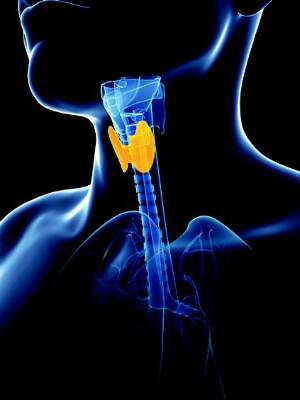
BALTIMORE – Biopsy results from a commercially available genetic test for ruling out malignancy of thyroid nodules may not provide reliable answers to clinicians and patients.
When fine-needle aspiration biopsy of thyroid nodules comes back inconclusive, clinicians have increasingly utilized the Afirma gene expression classifier (GEC) to rule out malignancy, but a retrospective analysis of almost 200 patients with indeterminate biopsy results along with a pooled analysis of 11 previous studies has raised questions about the negative predictive value of the test.
“The Afirma GEC test has substantial variability in performance,” said Dr. Zaid Al-Qurayshi of Tulane University, New Orleans, who reported the results at the annual meeting of the American Association of Endocrine Surgeons. “This variability cannot be explained based on differences in prevalence alone, but may also be the result of intrinsic test properties.”
The Afirma GEC measures the expression of 167 genes to more precisely determine the cancer risk of an indeterminate biopsied thyroid nodule and avoid unnecessary surgery. The test costs approximately $4,800 per nodule.
The researchers undertook the study in light of an American Thyroid Association (ATA) statement last year that concluded that test results are predicated on the clinician knowing the prevalence of malignancy within each indeterminate cytologic category at his/her own institution. Without this information, the performance of the diagnostic tests may vary substantially (Thyroid. 2015;25:760-8).
The single-center, retrospective cohort analysis included 192 patients with 210 indeterminate biopsy results, 145 of whom had surgery with 154 thyroid nodules. With a malignancy prevalence of 45%, the expected negative predictive value (NPV) of the test was estimated to be 85%, Dr. Al-Qurayshi said. However, the actual observed NPV was 69%. “If the prevalence was assumed to be 25%, the expected NPV was estimated to be 94%, while the observed NPV would have been 85%,” Dr. Al-Qurayshi said.
The researchers calculated the expected NPV by adopting the sensitivity and specificity rates of the test as reported in previous studies, while they calculated the observed NPV based on the actual negative rate among the Tulane cohort, Dr. Al-Qurayshi said.
Dr. Al-Qurayshi and colleagues then compared their results with pooled data from 11 other studies of the Afirma GEC. The pooled data analysis included 1,303 patients and yielded a malignancy prevalence of 31.1%, with a range of 29%-35%, and a pooled NPV of 92%, with a range of 87%-96%, Dr. Al-Qurayshi said.
“A lot of previously published studies took the sensitivity and specificity that were previously reported for granted, and now we are showing this sensitivity is all over the place,” Dr. Al-Qurayshi said. “Now, we don’t know which is the true one, and we need a larger clinical trial first to determine the true properties. Then we can ask how the prevalence in one’s institution is affecting the performance of the test.”
In an interview, Dr. Emad Kandil, senior study coauthor, also of Tulane, said the 69% NPV of the Tulane cohort puts the diagnostic scenario “back to ground zero, which is similar to what we had prior to the use of the new commercially available genetic tests.” He added, “A larger, randomized trial of the Afirma GEC test should answer those questions.”
The seminal study for the Afirma GEC, authored by Dr. Erik Alexander of Brigham and Women’s Hospital, Boston, in 2012, reported a 92% NPV with the test (N Engl J Med. 2012;367:705-15).
“The first thought was that they had different results because their population was different,” Dr. Al-Qurayshi said. “The ATA statement noted that it is the clinician’s responsibility to determine if this test is appropriate for their population or not, but the performance of the test doesn’t just depend on the population property, but it also depends on the intrinsic testing properties.”
Dr. Kandil disclosed that he has been a primary investigator in the ENHANCE multicenter study of the Afirma GEC. The other coauthors had no financial disclosures.
BALTIMORE – Biopsy results from a commercially available genetic test for ruling out malignancy of thyroid nodules may not provide reliable answers to clinicians and patients.
When fine-needle aspiration biopsy of thyroid nodules comes back inconclusive, clinicians have increasingly utilized the Afirma gene expression classifier (GEC) to rule out malignancy, but a retrospective analysis of almost 200 patients with indeterminate biopsy results along with a pooled analysis of 11 previous studies has raised questions about the negative predictive value of the test.
“The Afirma GEC test has substantial variability in performance,” said Dr. Zaid Al-Qurayshi of Tulane University, New Orleans, who reported the results at the annual meeting of the American Association of Endocrine Surgeons. “This variability cannot be explained based on differences in prevalence alone, but may also be the result of intrinsic test properties.”
The Afirma GEC measures the expression of 167 genes to more precisely determine the cancer risk of an indeterminate biopsied thyroid nodule and avoid unnecessary surgery. The test costs approximately $4,800 per nodule.
The researchers undertook the study in light of an American Thyroid Association (ATA) statement last year that concluded that test results are predicated on the clinician knowing the prevalence of malignancy within each indeterminate cytologic category at his/her own institution. Without this information, the performance of the diagnostic tests may vary substantially (Thyroid. 2015;25:760-8).
The single-center, retrospective cohort analysis included 192 patients with 210 indeterminate biopsy results, 145 of whom had surgery with 154 thyroid nodules. With a malignancy prevalence of 45%, the expected negative predictive value (NPV) of the test was estimated to be 85%, Dr. Al-Qurayshi said. However, the actual observed NPV was 69%. “If the prevalence was assumed to be 25%, the expected NPV was estimated to be 94%, while the observed NPV would have been 85%,” Dr. Al-Qurayshi said.
The researchers calculated the expected NPV by adopting the sensitivity and specificity rates of the test as reported in previous studies, while they calculated the observed NPV based on the actual negative rate among the Tulane cohort, Dr. Al-Qurayshi said.
Dr. Al-Qurayshi and colleagues then compared their results with pooled data from 11 other studies of the Afirma GEC. The pooled data analysis included 1,303 patients and yielded a malignancy prevalence of 31.1%, with a range of 29%-35%, and a pooled NPV of 92%, with a range of 87%-96%, Dr. Al-Qurayshi said.
“A lot of previously published studies took the sensitivity and specificity that were previously reported for granted, and now we are showing this sensitivity is all over the place,” Dr. Al-Qurayshi said. “Now, we don’t know which is the true one, and we need a larger clinical trial first to determine the true properties. Then we can ask how the prevalence in one’s institution is affecting the performance of the test.”
In an interview, Dr. Emad Kandil, senior study coauthor, also of Tulane, said the 69% NPV of the Tulane cohort puts the diagnostic scenario “back to ground zero, which is similar to what we had prior to the use of the new commercially available genetic tests.” He added, “A larger, randomized trial of the Afirma GEC test should answer those questions.”
The seminal study for the Afirma GEC, authored by Dr. Erik Alexander of Brigham and Women’s Hospital, Boston, in 2012, reported a 92% NPV with the test (N Engl J Med. 2012;367:705-15).
“The first thought was that they had different results because their population was different,” Dr. Al-Qurayshi said. “The ATA statement noted that it is the clinician’s responsibility to determine if this test is appropriate for their population or not, but the performance of the test doesn’t just depend on the population property, but it also depends on the intrinsic testing properties.”
Dr. Kandil disclosed that he has been a primary investigator in the ENHANCE multicenter study of the Afirma GEC. The other coauthors had no financial disclosures.
BALTIMORE – Biopsy results from a commercially available genetic test for ruling out malignancy of thyroid nodules may not provide reliable answers to clinicians and patients.
When fine-needle aspiration biopsy of thyroid nodules comes back inconclusive, clinicians have increasingly utilized the Afirma gene expression classifier (GEC) to rule out malignancy, but a retrospective analysis of almost 200 patients with indeterminate biopsy results along with a pooled analysis of 11 previous studies has raised questions about the negative predictive value of the test.
“The Afirma GEC test has substantial variability in performance,” said Dr. Zaid Al-Qurayshi of Tulane University, New Orleans, who reported the results at the annual meeting of the American Association of Endocrine Surgeons. “This variability cannot be explained based on differences in prevalence alone, but may also be the result of intrinsic test properties.”
The Afirma GEC measures the expression of 167 genes to more precisely determine the cancer risk of an indeterminate biopsied thyroid nodule and avoid unnecessary surgery. The test costs approximately $4,800 per nodule.
The researchers undertook the study in light of an American Thyroid Association (ATA) statement last year that concluded that test results are predicated on the clinician knowing the prevalence of malignancy within each indeterminate cytologic category at his/her own institution. Without this information, the performance of the diagnostic tests may vary substantially (Thyroid. 2015;25:760-8).
The single-center, retrospective cohort analysis included 192 patients with 210 indeterminate biopsy results, 145 of whom had surgery with 154 thyroid nodules. With a malignancy prevalence of 45%, the expected negative predictive value (NPV) of the test was estimated to be 85%, Dr. Al-Qurayshi said. However, the actual observed NPV was 69%. “If the prevalence was assumed to be 25%, the expected NPV was estimated to be 94%, while the observed NPV would have been 85%,” Dr. Al-Qurayshi said.
The researchers calculated the expected NPV by adopting the sensitivity and specificity rates of the test as reported in previous studies, while they calculated the observed NPV based on the actual negative rate among the Tulane cohort, Dr. Al-Qurayshi said.
Dr. Al-Qurayshi and colleagues then compared their results with pooled data from 11 other studies of the Afirma GEC. The pooled data analysis included 1,303 patients and yielded a malignancy prevalence of 31.1%, with a range of 29%-35%, and a pooled NPV of 92%, with a range of 87%-96%, Dr. Al-Qurayshi said.
“A lot of previously published studies took the sensitivity and specificity that were previously reported for granted, and now we are showing this sensitivity is all over the place,” Dr. Al-Qurayshi said. “Now, we don’t know which is the true one, and we need a larger clinical trial first to determine the true properties. Then we can ask how the prevalence in one’s institution is affecting the performance of the test.”
In an interview, Dr. Emad Kandil, senior study coauthor, also of Tulane, said the 69% NPV of the Tulane cohort puts the diagnostic scenario “back to ground zero, which is similar to what we had prior to the use of the new commercially available genetic tests.” He added, “A larger, randomized trial of the Afirma GEC test should answer those questions.”
The seminal study for the Afirma GEC, authored by Dr. Erik Alexander of Brigham and Women’s Hospital, Boston, in 2012, reported a 92% NPV with the test (N Engl J Med. 2012;367:705-15).
“The first thought was that they had different results because their population was different,” Dr. Al-Qurayshi said. “The ATA statement noted that it is the clinician’s responsibility to determine if this test is appropriate for their population or not, but the performance of the test doesn’t just depend on the population property, but it also depends on the intrinsic testing properties.”
Dr. Kandil disclosed that he has been a primary investigator in the ENHANCE multicenter study of the Afirma GEC. The other coauthors had no financial disclosures.
At AAES 2016
Key clinical point: Biopsy results from a commercially available genetic test for ruling out malignancy of thyroid nodules may not provide reliable answers to clinicians and patients.
Major finding: With a malignancy prevalence of 45%, the expected negative predictive value of the test was estimated to be 85%, but the actual observed NPV was 69%.
Data source: A single-center, retrospective cohort analysis involving 145 patients with 154 thyroid nodules.
Disclosures: Coauthor Dr. Emad Kandil disclosed that he has been a primary investigator in the ENHANCE multicenter study of the Afirma GEC. The other coauthors reported having no financial disclosures.
Mining for information, participation in clinical trials
Click on the PDF icon at the top of this introduction to read the full article.
Click on the PDF icon at the top of this introduction to read the full article.
Click on the PDF icon at the top of this introduction to read the full article.
Sentinel node biopsies may be useful in head and neck squamous cell carcinoma
ORLANDO – Sentinel node biopsies may be a useful staging tool for patients with cutaneous squamous cell carcinomas of the head and neck.
These patients – especially those with compromised immune systems – appear to be at sufficiently high risk of metastasis to justify the procedure, Dr. Jonathan Lopez said at the annual meeting of the American College of Mohs Surgery.
“We found that sentinel lymph node biopsy in our clinic had a 91% negative predictive value for local recurrence, nodal recurrence, and disease-specific death. It provides valuable prognostic information for patients at increased risk of nodal metastasis,” said Dr. Lopez, a dermatology resident at the Mayo Clinic, Rochester, Minn.

He and his associates conducted a chart review of 24 patients treated at the Mayo Clinic from 2000 to 2014 for a cutaneous squamous cell carcinoma (SCC) of the head or neck. Of these, 11 patients were immunosuppressed. Five had undergone a kidney transplant and three a lung transplant. One patient had Hodgkin’s lymphoma, one had cutaneous lymphocytic leukemia, and one, metastatic urothelial carcinoma.
Before sentinel node biopsy, eight patients had a wide local excision; 12 were treated with Mohs micrographic surgery only; and four had a Mohs procedure followed by resection for better margins.
The biopsies identified two patients with nodal disease, but failed to identify a third who had it, Dr. Lopez said.
Patient No. 1 had a primary SCC on the nasal tip that was stage 2, according to the American Joint Committee on Cancer (AJCC) staging system, and 2b according to the Brigham and Women’s Hospital (BWH) system. He had undergone a prior double lung transplant and his lymph node dissection showed no nodal metastasis. He declined radiotherapy and died within 2 months of the biopsy, of unclear causes that were not related to his skin cancer.
Patient No. 2 had a primary lesion on the right cheek, and a history of kidney transplant. His cancer was stage 2 by the AJCC system and 2b by the BWH system. His lymph node dissection of the right parotid and neck was negative. At last follow-up of 3.5 years, he was cancer free. However, Dr. Lopez noted, the patient died at 4 years’ follow-up of unknown causes.
The final patient had a primary lesion on the right conchal bowl. It was a stage 2 cancer by the AJCC system and 2a by the BWH system. His sentinel node biopsy was negative. However, the otolaryngologist who performed the biopsy also took seven superficial parotid nodes and one of those was positive. This patient had no recurrence at the last visit, 1.5 years after the biopsy.
The sentinel node biopsies were negative in the 21 other patients. Of these, 14 had no evidence of recurrence at a mean of 3 years’ follow-up after the sentinel lymph node biopsy. Two developed local recurrence and two others, both of whom had a history of multiple squamous cell carcinomas, developed nodal spread and died of metastatic disease. Three have died of causes unrelated to their cancer.
Dr. Lopez had no financial disclosures.
ORLANDO – Sentinel node biopsies may be a useful staging tool for patients with cutaneous squamous cell carcinomas of the head and neck.
These patients – especially those with compromised immune systems – appear to be at sufficiently high risk of metastasis to justify the procedure, Dr. Jonathan Lopez said at the annual meeting of the American College of Mohs Surgery.
“We found that sentinel lymph node biopsy in our clinic had a 91% negative predictive value for local recurrence, nodal recurrence, and disease-specific death. It provides valuable prognostic information for patients at increased risk of nodal metastasis,” said Dr. Lopez, a dermatology resident at the Mayo Clinic, Rochester, Minn.
He and his associates conducted a chart review of 24 patients treated at the Mayo Clinic from 2000 to 2014 for a cutaneous squamous cell carcinoma (SCC) of the head or neck. Of these, 11 patients were immunosuppressed. Five had undergone a kidney transplant and three a lung transplant. One patient had Hodgkin’s lymphoma, one had cutaneous lymphocytic leukemia, and one, metastatic urothelial carcinoma.
Before sentinel node biopsy, eight patients had a wide local excision; 12 were treated with Mohs micrographic surgery only; and four had a Mohs procedure followed by resection for better margins.
The biopsies identified two patients with nodal disease, but failed to identify a third who had it, Dr. Lopez said.
Patient No. 1 had a primary SCC on the nasal tip that was stage 2, according to the American Joint Committee on Cancer (AJCC) staging system, and 2b according to the Brigham and Women’s Hospital (BWH) system. He had undergone a prior double lung transplant and his lymph node dissection showed no nodal metastasis. He declined radiotherapy and died within 2 months of the biopsy, of unclear causes that were not related to his skin cancer.
Patient No. 2 had a primary lesion on the right cheek, and a history of kidney transplant. His cancer was stage 2 by the AJCC system and 2b by the BWH system. His lymph node dissection of the right parotid and neck was negative. At last follow-up of 3.5 years, he was cancer free. However, Dr. Lopez noted, the patient died at 4 years’ follow-up of unknown causes.
The final patient had a primary lesion on the right conchal bowl. It was a stage 2 cancer by the AJCC system and 2a by the BWH system. His sentinel node biopsy was negative. However, the otolaryngologist who performed the biopsy also took seven superficial parotid nodes and one of those was positive. This patient had no recurrence at the last visit, 1.5 years after the biopsy.
The sentinel node biopsies were negative in the 21 other patients. Of these, 14 had no evidence of recurrence at a mean of 3 years’ follow-up after the sentinel lymph node biopsy. Two developed local recurrence and two others, both of whom had a history of multiple squamous cell carcinomas, developed nodal spread and died of metastatic disease. Three have died of causes unrelated to their cancer.
Dr. Lopez had no financial disclosures.
ORLANDO – Sentinel node biopsies may be a useful staging tool for patients with cutaneous squamous cell carcinomas of the head and neck.
These patients – especially those with compromised immune systems – appear to be at sufficiently high risk of metastasis to justify the procedure, Dr. Jonathan Lopez said at the annual meeting of the American College of Mohs Surgery.
“We found that sentinel lymph node biopsy in our clinic had a 91% negative predictive value for local recurrence, nodal recurrence, and disease-specific death. It provides valuable prognostic information for patients at increased risk of nodal metastasis,” said Dr. Lopez, a dermatology resident at the Mayo Clinic, Rochester, Minn.
He and his associates conducted a chart review of 24 patients treated at the Mayo Clinic from 2000 to 2014 for a cutaneous squamous cell carcinoma (SCC) of the head or neck. Of these, 11 patients were immunosuppressed. Five had undergone a kidney transplant and three a lung transplant. One patient had Hodgkin’s lymphoma, one had cutaneous lymphocytic leukemia, and one, metastatic urothelial carcinoma.
Before sentinel node biopsy, eight patients had a wide local excision; 12 were treated with Mohs micrographic surgery only; and four had a Mohs procedure followed by resection for better margins.
The biopsies identified two patients with nodal disease, but failed to identify a third who had it, Dr. Lopez said.
Patient No. 1 had a primary SCC on the nasal tip that was stage 2, according to the American Joint Committee on Cancer (AJCC) staging system, and 2b according to the Brigham and Women’s Hospital (BWH) system. He had undergone a prior double lung transplant and his lymph node dissection showed no nodal metastasis. He declined radiotherapy and died within 2 months of the biopsy, of unclear causes that were not related to his skin cancer.
Patient No. 2 had a primary lesion on the right cheek, and a history of kidney transplant. His cancer was stage 2 by the AJCC system and 2b by the BWH system. His lymph node dissection of the right parotid and neck was negative. At last follow-up of 3.5 years, he was cancer free. However, Dr. Lopez noted, the patient died at 4 years’ follow-up of unknown causes.
The final patient had a primary lesion on the right conchal bowl. It was a stage 2 cancer by the AJCC system and 2a by the BWH system. His sentinel node biopsy was negative. However, the otolaryngologist who performed the biopsy also took seven superficial parotid nodes and one of those was positive. This patient had no recurrence at the last visit, 1.5 years after the biopsy.
The sentinel node biopsies were negative in the 21 other patients. Of these, 14 had no evidence of recurrence at a mean of 3 years’ follow-up after the sentinel lymph node biopsy. Two developed local recurrence and two others, both of whom had a history of multiple squamous cell carcinomas, developed nodal spread and died of metastatic disease. Three have died of causes unrelated to their cancer.
Dr. Lopez had no financial disclosures.
AT THE ACMS ANNUAL MEETING
Key clinical point: Sentinel node biopsies identified nodal spread in some patients with cutaneous SCC of the head and neck
Major finding: The procedure had a 91% negative predictive value for nodal spread and disease-specific death.
Data source: The retrospective chart review comprised of 24 patients, treated at the Mayo Clinic for cutaneous SCC of the head and neck from 2000 to 2014.
Disclosures: Dr. Lopez had no financial disclosures.

Olanzapine versus fosaprepitant for the prevention of concurrent chemotherapy radiotherapy-induced nausea and vomiting
Background Concurrent chemotherapy radiation therapy may result in significant nausea and vomiting. There have been few studies reporting effective interventions for preventing treatment-related nausea and vomiting.
Objective To compare olanzapine with fosaprepitant for the prevention of nausea and vomiting in patients receiving concurrent highly emetogenic chemotherapy (HEC) and radiotherapy for locally advanced head and neck or esophageal cancer.
Methods 120 chemotherapy and radiotherapy naïve patients with head and neck cancer who were receiving concurrent local radiation and cisplatin were randomized to receive either olanzapine or fosaprepitant in combination with palonosetron and dexamethasone for the prevention of chemotherapy- and radiation-induced nausea and vomiting. The olanzapine, palonosetron, dexamethasone (OPD) regimen was 10 mg oral olanzapine , 0.25 mg IV palonosetron, and 20 mg IV dexamethasone before chemotherapy on day 1, and 10 mg/day of oral olanzapine before chemotherapy on days 2-4. The fosaprepitant, palonosetron, dexamethasone (FPD) regimen was 150 mg IV fosaprepitant, 0.25 mg IV palonosetron, and 12 mg IV dexamethasone before chemotherapy on day 1, and 4 mg dexamethasone PO BID, before chemotherapy days 2 and 3.
Results 101 of the 120 patients were evaluable. In 51 patients who received the OPD regimen, the complete response (CR; no emesis, no rescue medication) rate was 88% for the acute period (24 h after chemotherapy), 76% for the delayed period (days 2-5), and 76% for the overall period (0-120 h). In 50 patients who received the FPD regimen, the CR was 84% acute, 74% delayed, and 74% overall (P > .01 for all periods). Patients with no nausea (0, on a scale 0-10, visual analogue scale) were: OPD: 86% acute, 71% delayed, 71% overall; FPD: 78% acute, 40% delayed, 40% overall (P > .01 for acute; P < .01 for delayed and overall) There were no grade 3 or 4 toxicities.
Conclusions CR was similar for OPD and FPD; nausea in the delayed and overall periods was signifcantly improved with OPD compared with FPD (P < .01).
Funding Reich Endowment for the Care of the Whole Patient
Click on the PDF icon at the top of this introduction to read the full article.
Background Concurrent chemotherapy radiation therapy may result in significant nausea and vomiting. There have been few studies reporting effective interventions for preventing treatment-related nausea and vomiting.
Objective To compare olanzapine with fosaprepitant for the prevention of nausea and vomiting in patients receiving concurrent highly emetogenic chemotherapy (HEC) and radiotherapy for locally advanced head and neck or esophageal cancer.
Methods 120 chemotherapy and radiotherapy naïve patients with head and neck cancer who were receiving concurrent local radiation and cisplatin were randomized to receive either olanzapine or fosaprepitant in combination with palonosetron and dexamethasone for the prevention of chemotherapy- and radiation-induced nausea and vomiting. The olanzapine, palonosetron, dexamethasone (OPD) regimen was 10 mg oral olanzapine , 0.25 mg IV palonosetron, and 20 mg IV dexamethasone before chemotherapy on day 1, and 10 mg/day of oral olanzapine before chemotherapy on days 2-4. The fosaprepitant, palonosetron, dexamethasone (FPD) regimen was 150 mg IV fosaprepitant, 0.25 mg IV palonosetron, and 12 mg IV dexamethasone before chemotherapy on day 1, and 4 mg dexamethasone PO BID, before chemotherapy days 2 and 3.
Results 101 of the 120 patients were evaluable. In 51 patients who received the OPD regimen, the complete response (CR; no emesis, no rescue medication) rate was 88% for the acute period (24 h after chemotherapy), 76% for the delayed period (days 2-5), and 76% for the overall period (0-120 h). In 50 patients who received the FPD regimen, the CR was 84% acute, 74% delayed, and 74% overall (P > .01 for all periods). Patients with no nausea (0, on a scale 0-10, visual analogue scale) were: OPD: 86% acute, 71% delayed, 71% overall; FPD: 78% acute, 40% delayed, 40% overall (P > .01 for acute; P < .01 for delayed and overall) There were no grade 3 or 4 toxicities.
Conclusions CR was similar for OPD and FPD; nausea in the delayed and overall periods was signifcantly improved with OPD compared with FPD (P < .01).
Funding Reich Endowment for the Care of the Whole Patient
Click on the PDF icon at the top of this introduction to read the full article.
Background Concurrent chemotherapy radiation therapy may result in significant nausea and vomiting. There have been few studies reporting effective interventions for preventing treatment-related nausea and vomiting.
Objective To compare olanzapine with fosaprepitant for the prevention of nausea and vomiting in patients receiving concurrent highly emetogenic chemotherapy (HEC) and radiotherapy for locally advanced head and neck or esophageal cancer.
Methods 120 chemotherapy and radiotherapy naïve patients with head and neck cancer who were receiving concurrent local radiation and cisplatin were randomized to receive either olanzapine or fosaprepitant in combination with palonosetron and dexamethasone for the prevention of chemotherapy- and radiation-induced nausea and vomiting. The olanzapine, palonosetron, dexamethasone (OPD) regimen was 10 mg oral olanzapine , 0.25 mg IV palonosetron, and 20 mg IV dexamethasone before chemotherapy on day 1, and 10 mg/day of oral olanzapine before chemotherapy on days 2-4. The fosaprepitant, palonosetron, dexamethasone (FPD) regimen was 150 mg IV fosaprepitant, 0.25 mg IV palonosetron, and 12 mg IV dexamethasone before chemotherapy on day 1, and 4 mg dexamethasone PO BID, before chemotherapy days 2 and 3.
Results 101 of the 120 patients were evaluable. In 51 patients who received the OPD regimen, the complete response (CR; no emesis, no rescue medication) rate was 88% for the acute period (24 h after chemotherapy), 76% for the delayed period (days 2-5), and 76% for the overall period (0-120 h). In 50 patients who received the FPD regimen, the CR was 84% acute, 74% delayed, and 74% overall (P > .01 for all periods). Patients with no nausea (0, on a scale 0-10, visual analogue scale) were: OPD: 86% acute, 71% delayed, 71% overall; FPD: 78% acute, 40% delayed, 40% overall (P > .01 for acute; P < .01 for delayed and overall) There were no grade 3 or 4 toxicities.
Conclusions CR was similar for OPD and FPD; nausea in the delayed and overall periods was signifcantly improved with OPD compared with FPD (P < .01).
Funding Reich Endowment for the Care of the Whole Patient
Click on the PDF icon at the top of this introduction to read the full article.
Surgery has edge over surveillance for micropapillary thyroid cancer
BALTIMORE – Hemithyroidectomy for low-risk micropapillary thyroid cancer can have advantages over active surveillance, according to findings from a study that examined outcomes by cost and quality of life data.
Endocrinologists and surgeons need to have in-depth conversations with their patients to determine their level of anxiety about cancer, surgery, and about their quality of life, to determine the best course of treatment, researchers at the University of California, San Francisco (UCSF) reported at the annual meeting of the American Association of Endocrine Surgeons.

“Our study found that hemithyroidectomy is cost effective in the majority of scenarios,” presenter Shriya Venkatesh said. “However, patient perception of micropapillary thyroid cancer as well as [the patient’s] life expectancy can play a major role in deciding which therapeutic option to choose.”
The study involved a cost-effectiveness analysis of the surgery vs. active surveillance, “which is especially relevant in our current times,” Ms. Venkatesh said in an interview. “What we wanted to do is give physicians information for when they approach their patients, not only in assessing the tumor from the medical aspect but also when looking at it from quality-of-life and cost-benefit perspectives.”
Both courses of management were modeled over a 20-year period with Medicare data and literature review to calculate costs and health utilities. The UCSF researchers used Markov statistical models for both approaches in which the reference case was a 40-year-old, otherwise healthy patient with a recent diagnosis of micropapillary thyroid cancer without high-risk factors. Either hemithyroidectomy or surveillance would be reasonable treatment options.
“We found that hemithyroidectomy was about $8,000 more costly than active surveillance, but it also afforded an increase in about 1.09 quality-adjusted life years,” Ms. Venkatesh said. Hemithyroidectomy is most cost effective for patients with a life expectancy of 3 years or more and who perceive that living with low-grade thyroid cancer would have even a modest detriment on their quality of life, she said.
“Unfortunately there is no current published quality-of-life assessment of active surveillance for thyroid cancer,” Ms. Venkatesh said. “We believe that estimating active surveillance to the equivalent of surgery underestimates the anxiety some patients may feel upon receiving their diagnosis.”
The paucity of literature on active surveillance for thyroid cancer prompted the UCSF researchers to turn to the prostate cancer literature, which has more data on active surveillance, to try to determine the disutility of active surveillance for micropapillary thyroid cancer. “Our extrapolation from the literature yields a mean disutility of 0.11,” she said.
However, the utility estimates the researchers came up with were variable, Ms. Venkatesh said. “This really pushes physicians to have that conversation with their patients, not only about the physical aspects of how they’re doing but also the mental aspects,” she said.

But quality of life is difficult to quantify, senior author Dr. Insoo Suh said in an interview. “What we found is that no matter how one measures quality of life, the qualitative degree of quality of life decrease that people associate with ‘living with cancer’ need not be that significant in order for surgery to be a potentially cost-effective treatment for them,” said Dr. Suh, an endocrine surgeon at UCSF and an ACS Fellow.
During the discussion, Dr. Peter Angelos of the University of Chicago and an ACS Fellow, said, “I’m curious how this information should impact the individual decision-making and informed consent for a specific patient, because I’m not sure that an individual patient would care if active surveillance is more cost effective or not.”
“When speaking to your patients, obviously discussing the rates of progression of the disease is important and then [so is] talking to them about different therapeutic options,” Ms. Venkatesh said. “The physician should also make an assessment about the patient’s quality of life to see if there are likely to be any changes due to the diagnosis.”
The limitations of the study include the extrapolation of data from the prostate cancer literature to define a utility scale and also the reference case used in the Markov model. Other utility measures showed variability as well.
Ms. Venkatesh, Dr. Suh and their coauthors had no financial relationships to disclose.
BALTIMORE – Hemithyroidectomy for low-risk micropapillary thyroid cancer can have advantages over active surveillance, according to findings from a study that examined outcomes by cost and quality of life data.
Endocrinologists and surgeons need to have in-depth conversations with their patients to determine their level of anxiety about cancer, surgery, and about their quality of life, to determine the best course of treatment, researchers at the University of California, San Francisco (UCSF) reported at the annual meeting of the American Association of Endocrine Surgeons.
“Our study found that hemithyroidectomy is cost effective in the majority of scenarios,” presenter Shriya Venkatesh said. “However, patient perception of micropapillary thyroid cancer as well as [the patient’s] life expectancy can play a major role in deciding which therapeutic option to choose.”
The study involved a cost-effectiveness analysis of the surgery vs. active surveillance, “which is especially relevant in our current times,” Ms. Venkatesh said in an interview. “What we wanted to do is give physicians information for when they approach their patients, not only in assessing the tumor from the medical aspect but also when looking at it from quality-of-life and cost-benefit perspectives.”
Both courses of management were modeled over a 20-year period with Medicare data and literature review to calculate costs and health utilities. The UCSF researchers used Markov statistical models for both approaches in which the reference case was a 40-year-old, otherwise healthy patient with a recent diagnosis of micropapillary thyroid cancer without high-risk factors. Either hemithyroidectomy or surveillance would be reasonable treatment options.
“We found that hemithyroidectomy was about $8,000 more costly than active surveillance, but it also afforded an increase in about 1.09 quality-adjusted life years,” Ms. Venkatesh said. Hemithyroidectomy is most cost effective for patients with a life expectancy of 3 years or more and who perceive that living with low-grade thyroid cancer would have even a modest detriment on their quality of life, she said.
“Unfortunately there is no current published quality-of-life assessment of active surveillance for thyroid cancer,” Ms. Venkatesh said. “We believe that estimating active surveillance to the equivalent of surgery underestimates the anxiety some patients may feel upon receiving their diagnosis.”
The paucity of literature on active surveillance for thyroid cancer prompted the UCSF researchers to turn to the prostate cancer literature, which has more data on active surveillance, to try to determine the disutility of active surveillance for micropapillary thyroid cancer. “Our extrapolation from the literature yields a mean disutility of 0.11,” she said.
However, the utility estimates the researchers came up with were variable, Ms. Venkatesh said. “This really pushes physicians to have that conversation with their patients, not only about the physical aspects of how they’re doing but also the mental aspects,” she said.
But quality of life is difficult to quantify, senior author Dr. Insoo Suh said in an interview. “What we found is that no matter how one measures quality of life, the qualitative degree of quality of life decrease that people associate with ‘living with cancer’ need not be that significant in order for surgery to be a potentially cost-effective treatment for them,” said Dr. Suh, an endocrine surgeon at UCSF and an ACS Fellow.
During the discussion, Dr. Peter Angelos of the University of Chicago and an ACS Fellow, said, “I’m curious how this information should impact the individual decision-making and informed consent for a specific patient, because I’m not sure that an individual patient would care if active surveillance is more cost effective or not.”
“When speaking to your patients, obviously discussing the rates of progression of the disease is important and then [so is] talking to them about different therapeutic options,” Ms. Venkatesh said. “The physician should also make an assessment about the patient’s quality of life to see if there are likely to be any changes due to the diagnosis.”
The limitations of the study include the extrapolation of data from the prostate cancer literature to define a utility scale and also the reference case used in the Markov model. Other utility measures showed variability as well.
Ms. Venkatesh, Dr. Suh and their coauthors had no financial relationships to disclose.
BALTIMORE – Hemithyroidectomy for low-risk micropapillary thyroid cancer can have advantages over active surveillance, according to findings from a study that examined outcomes by cost and quality of life data.
Endocrinologists and surgeons need to have in-depth conversations with their patients to determine their level of anxiety about cancer, surgery, and about their quality of life, to determine the best course of treatment, researchers at the University of California, San Francisco (UCSF) reported at the annual meeting of the American Association of Endocrine Surgeons.
“Our study found that hemithyroidectomy is cost effective in the majority of scenarios,” presenter Shriya Venkatesh said. “However, patient perception of micropapillary thyroid cancer as well as [the patient’s] life expectancy can play a major role in deciding which therapeutic option to choose.”
The study involved a cost-effectiveness analysis of the surgery vs. active surveillance, “which is especially relevant in our current times,” Ms. Venkatesh said in an interview. “What we wanted to do is give physicians information for when they approach their patients, not only in assessing the tumor from the medical aspect but also when looking at it from quality-of-life and cost-benefit perspectives.”
Both courses of management were modeled over a 20-year period with Medicare data and literature review to calculate costs and health utilities. The UCSF researchers used Markov statistical models for both approaches in which the reference case was a 40-year-old, otherwise healthy patient with a recent diagnosis of micropapillary thyroid cancer without high-risk factors. Either hemithyroidectomy or surveillance would be reasonable treatment options.
“We found that hemithyroidectomy was about $8,000 more costly than active surveillance, but it also afforded an increase in about 1.09 quality-adjusted life years,” Ms. Venkatesh said. Hemithyroidectomy is most cost effective for patients with a life expectancy of 3 years or more and who perceive that living with low-grade thyroid cancer would have even a modest detriment on their quality of life, she said.
“Unfortunately there is no current published quality-of-life assessment of active surveillance for thyroid cancer,” Ms. Venkatesh said. “We believe that estimating active surveillance to the equivalent of surgery underestimates the anxiety some patients may feel upon receiving their diagnosis.”
The paucity of literature on active surveillance for thyroid cancer prompted the UCSF researchers to turn to the prostate cancer literature, which has more data on active surveillance, to try to determine the disutility of active surveillance for micropapillary thyroid cancer. “Our extrapolation from the literature yields a mean disutility of 0.11,” she said.
However, the utility estimates the researchers came up with were variable, Ms. Venkatesh said. “This really pushes physicians to have that conversation with their patients, not only about the physical aspects of how they’re doing but also the mental aspects,” she said.
But quality of life is difficult to quantify, senior author Dr. Insoo Suh said in an interview. “What we found is that no matter how one measures quality of life, the qualitative degree of quality of life decrease that people associate with ‘living with cancer’ need not be that significant in order for surgery to be a potentially cost-effective treatment for them,” said Dr. Suh, an endocrine surgeon at UCSF and an ACS Fellow.
During the discussion, Dr. Peter Angelos of the University of Chicago and an ACS Fellow, said, “I’m curious how this information should impact the individual decision-making and informed consent for a specific patient, because I’m not sure that an individual patient would care if active surveillance is more cost effective or not.”
“When speaking to your patients, obviously discussing the rates of progression of the disease is important and then [so is] talking to them about different therapeutic options,” Ms. Venkatesh said. “The physician should also make an assessment about the patient’s quality of life to see if there are likely to be any changes due to the diagnosis.”
The limitations of the study include the extrapolation of data from the prostate cancer literature to define a utility scale and also the reference case used in the Markov model. Other utility measures showed variability as well.
Ms. Venkatesh, Dr. Suh and their coauthors had no financial relationships to disclose.
AT AAES 2016
Key clinical point: Patient psychological factors are key determinants in choosing a course of management for low-risk micropapillary thyroid cancer.
Major finding: Hemithyroidectomy typically costs about $8,000 more than active surveillance but also accounts for improved quality of life in these patients.
Data source: Markov models for both courses of management over a 20-year period with Medicare data and literature review to calculate costs and health utilities.
Disclosures: Ms. Venkatesh and her coauthors reported having no financial disclosures.

Predicting Tongue Cancer Recurrence
For patients with squamous cell carcinoma (SCC) of the tongue, recurrence is common and closely associated with survival, say researchers from Capital Medical University, Beijing. The researchers conducted a retrospective study of 204 patients with SCC of the tongue that aimed to identify the factors that predict relapse and prognosis.
Related: IBD and the Risk of Oral Cancer
In an earlier study, the researchers assessed the best indications for neck dissection and the prognostic factors of oral SCC. Their results showed that middle-late oral SCC is an indication for simultaneous neck dissection, even in patients whose nodes are clear. But few studies have focused on the outcomes of treatment after different surgical approaches, such as en bloc resection and discontinuous resection. En bloc dissection requires continuity between the tumor and the level I neck nodes, and the technique involves removal of the sublingual gland and the mylohyoid muscle, as well as the associated sublingual nodes.
Related: A Team Approach to Nonmelanotic Skin Cancer Procedures
Within the median follow-up of 82 months, 59 patients died (29%), 4 from non-cancer causes. Two patients in the en bloc group and 12 in the control group (discontinuous resection) had relapses. Ten of the 14 in this group had recurrences within a year of the first operation. Nine patients had salvage operations; however, only 2 experienced a successful outcome.
Surgical technique and pathological nodal (pN) status independently predicted both 5-year recurrence and disease-specific survival.
Related: Nivolumab Approved for Expanded Indication
The analysis showed a “dramatic” decrease in the 5-year disease-specific survival if the cancer recurred after the primary operation (no recurrence, 77% vs recurrence, 14%). Patients in the en bloc group “could expect an obviously lower” 5-year recurrence rate (2%, compared with 11% in the control group). They also had a better 5-year disease-specific survival (80%, versus 66%). An aggressive pN status was closely correlated with recurrence.
Source:
Feng Z, Xu QS, Qin LZ, et al. Br J Oral Maxillofac Surg. 2016;54(1):88-93.
doi: 10.1016/j.bjoms.2015.09.024
For patients with squamous cell carcinoma (SCC) of the tongue, recurrence is common and closely associated with survival, say researchers from Capital Medical University, Beijing. The researchers conducted a retrospective study of 204 patients with SCC of the tongue that aimed to identify the factors that predict relapse and prognosis.
Related: IBD and the Risk of Oral Cancer
In an earlier study, the researchers assessed the best indications for neck dissection and the prognostic factors of oral SCC. Their results showed that middle-late oral SCC is an indication for simultaneous neck dissection, even in patients whose nodes are clear. But few studies have focused on the outcomes of treatment after different surgical approaches, such as en bloc resection and discontinuous resection. En bloc dissection requires continuity between the tumor and the level I neck nodes, and the technique involves removal of the sublingual gland and the mylohyoid muscle, as well as the associated sublingual nodes.
Related: A Team Approach to Nonmelanotic Skin Cancer Procedures
Within the median follow-up of 82 months, 59 patients died (29%), 4 from non-cancer causes. Two patients in the en bloc group and 12 in the control group (discontinuous resection) had relapses. Ten of the 14 in this group had recurrences within a year of the first operation. Nine patients had salvage operations; however, only 2 experienced a successful outcome.
Surgical technique and pathological nodal (pN) status independently predicted both 5-year recurrence and disease-specific survival.
Related: Nivolumab Approved for Expanded Indication
The analysis showed a “dramatic” decrease in the 5-year disease-specific survival if the cancer recurred after the primary operation (no recurrence, 77% vs recurrence, 14%). Patients in the en bloc group “could expect an obviously lower” 5-year recurrence rate (2%, compared with 11% in the control group). They also had a better 5-year disease-specific survival (80%, versus 66%). An aggressive pN status was closely correlated with recurrence.
Source:
Feng Z, Xu QS, Qin LZ, et al. Br J Oral Maxillofac Surg. 2016;54(1):88-93.
doi: 10.1016/j.bjoms.2015.09.024
For patients with squamous cell carcinoma (SCC) of the tongue, recurrence is common and closely associated with survival, say researchers from Capital Medical University, Beijing. The researchers conducted a retrospective study of 204 patients with SCC of the tongue that aimed to identify the factors that predict relapse and prognosis.
Related: IBD and the Risk of Oral Cancer
In an earlier study, the researchers assessed the best indications for neck dissection and the prognostic factors of oral SCC. Their results showed that middle-late oral SCC is an indication for simultaneous neck dissection, even in patients whose nodes are clear. But few studies have focused on the outcomes of treatment after different surgical approaches, such as en bloc resection and discontinuous resection. En bloc dissection requires continuity between the tumor and the level I neck nodes, and the technique involves removal of the sublingual gland and the mylohyoid muscle, as well as the associated sublingual nodes.
Related: A Team Approach to Nonmelanotic Skin Cancer Procedures
Within the median follow-up of 82 months, 59 patients died (29%), 4 from non-cancer causes. Two patients in the en bloc group and 12 in the control group (discontinuous resection) had relapses. Ten of the 14 in this group had recurrences within a year of the first operation. Nine patients had salvage operations; however, only 2 experienced a successful outcome.
Surgical technique and pathological nodal (pN) status independently predicted both 5-year recurrence and disease-specific survival.
Related: Nivolumab Approved for Expanded Indication
The analysis showed a “dramatic” decrease in the 5-year disease-specific survival if the cancer recurred after the primary operation (no recurrence, 77% vs recurrence, 14%). Patients in the en bloc group “could expect an obviously lower” 5-year recurrence rate (2%, compared with 11% in the control group). They also had a better 5-year disease-specific survival (80%, versus 66%). An aggressive pN status was closely correlated with recurrence.
Source:
Feng Z, Xu QS, Qin LZ, et al. Br J Oral Maxillofac Surg. 2016;54(1):88-93.
doi: 10.1016/j.bjoms.2015.09.024
IBD and the Risk of Oral Cancer
Patients with inflammatory bowel disease (IBD) may have a higher risk of oral cancer, according to a study at Mount Sinai Medical Center. Researchers collected data on 7,294 patients from 2000 through 2011. The results were published in the March issue of Clinical Gastroenterology and Hepatology.
Related: Exercise and Inflammatory Bowel Disease
In the study, the expected incidence of oral cancer was calculated for the patients who were stratified by gender and age using the Surveillance, Epidemiology and End Results (SEER) 18 registry data. Seven men and 4 women had biopsy-proven oral cancer. Six had cancer of the tongue, 2 had cancer of the hard palate, and 3 had tonsillar, buccal, or mandibular sarcoma. Seven patients had been treated for IBD before the cancer diagnosis.
Women had a higher risk of oral cancer. Adjusted for age and sex, the incidence ratio for oral cancer in patients with IBD was 9.77:12.07 for women12.07 and 9.77:8.49 for men. The age-adjusted incidence ratio for tongue cancer was 18.91: 17.06 for men, 22.10 for women.
Related: More Illnesses Linked to Camp Lejeune Water
The authors concluded that, “we found patients with IBD to be at increased risk for oral cancers, especially tongue cancer. Women are at higher risk than men.”
Source:
Katsanos KH, Roda G, McBride RB, Cohen B, Colombel JF. Clin Gastroenterol Hepatol. 2016;14(3):413-420
doi: 10.1016/j.cgh.2015.09.041.
Patients with inflammatory bowel disease (IBD) may have a higher risk of oral cancer, according to a study at Mount Sinai Medical Center. Researchers collected data on 7,294 patients from 2000 through 2011. The results were published in the March issue of Clinical Gastroenterology and Hepatology.
Related: Exercise and Inflammatory Bowel Disease
In the study, the expected incidence of oral cancer was calculated for the patients who were stratified by gender and age using the Surveillance, Epidemiology and End Results (SEER) 18 registry data. Seven men and 4 women had biopsy-proven oral cancer. Six had cancer of the tongue, 2 had cancer of the hard palate, and 3 had tonsillar, buccal, or mandibular sarcoma. Seven patients had been treated for IBD before the cancer diagnosis.
Women had a higher risk of oral cancer. Adjusted for age and sex, the incidence ratio for oral cancer in patients with IBD was 9.77:12.07 for women12.07 and 9.77:8.49 for men. The age-adjusted incidence ratio for tongue cancer was 18.91: 17.06 for men, 22.10 for women.
Related: More Illnesses Linked to Camp Lejeune Water
The authors concluded that, “we found patients with IBD to be at increased risk for oral cancers, especially tongue cancer. Women are at higher risk than men.”
Source:
Katsanos KH, Roda G, McBride RB, Cohen B, Colombel JF. Clin Gastroenterol Hepatol. 2016;14(3):413-420
doi: 10.1016/j.cgh.2015.09.041.
Patients with inflammatory bowel disease (IBD) may have a higher risk of oral cancer, according to a study at Mount Sinai Medical Center. Researchers collected data on 7,294 patients from 2000 through 2011. The results were published in the March issue of Clinical Gastroenterology and Hepatology.
Related: Exercise and Inflammatory Bowel Disease
In the study, the expected incidence of oral cancer was calculated for the patients who were stratified by gender and age using the Surveillance, Epidemiology and End Results (SEER) 18 registry data. Seven men and 4 women had biopsy-proven oral cancer. Six had cancer of the tongue, 2 had cancer of the hard palate, and 3 had tonsillar, buccal, or mandibular sarcoma. Seven patients had been treated for IBD before the cancer diagnosis.
Women had a higher risk of oral cancer. Adjusted for age and sex, the incidence ratio for oral cancer in patients with IBD was 9.77:12.07 for women12.07 and 9.77:8.49 for men. The age-adjusted incidence ratio for tongue cancer was 18.91: 17.06 for men, 22.10 for women.
Related: More Illnesses Linked to Camp Lejeune Water
The authors concluded that, “we found patients with IBD to be at increased risk for oral cancers, especially tongue cancer. Women are at higher risk than men.”
Source:
Katsanos KH, Roda G, McBride RB, Cohen B, Colombel JF. Clin Gastroenterol Hepatol. 2016;14(3):413-420
doi: 10.1016/j.cgh.2015.09.041.