User login
Bringing you the latest news, research and reviews, exclusive interviews, podcasts, quizzes, and more.
Powered by CHEST Physician, Clinician Reviews, MDedge Family Medicine, Internal Medicine News, and The Journal of Clinical Outcomes Management.
In-hospital mortality predictors eyed in pneumonia patient subset
SAN DIEGO –, results from a large retrospective cohort study found.
In a poster abstract presented at an international conference of the American Thoracic Society, researchers led by Thomas P. Lodise Jr., PharmD, noted that ventilator-associated pneumonia is one of the most common hospital-acquired infections in intensive care units and affected an estimated 9%-27% of all intubated patients. “While data are readily available surrounding mortality associated with VAP, scant data are available on outcomes associated with any type of pneumonia requiring intubation and mechanical ventilation (MV) caused by gram-negative organisms,” they wrote.
In an effort to describe mortality rates and associated risk factors for intubated and MV patients diagnosed with gram-negative pneumonia, Dr. Lodise of the Albany (N.Y.) College of Pharmacy and Health Sciences and his associates conducted a retrospective cohort study of data from the Healthcare Cost and Utilization Project (HCUP) National Readmission Database (NRD). HCUP is the largest source of hospital care data in the United States, accounting for 49.3% of the total U.S. resident population and 49.1% of U.S. hospitalizations. The researchers included patients at least 18 years of age who were hospitalized with a primary or secondary diagnosis of gram-negative pneumonia between Feb. 1, 2013, and Nov. 30, 2013. They excluded index hospitalizations with a primary or secondary diagnosis of viral pneumonia, fungal pneumonia, atypical organisms, gram-positive bacterial pneumonia, or pneumonia occurring secondary to an infectious disease. They examined mortality rates descriptively and modeled them via adjusted multivariate logistic regression to evaluate the impact of baseline characteristics and comorbidities on risk of mortality. All analyses incorporated sample weights to increase generalizability and allow for extrapolation to the entire U.S. population.
A total of 32,683 patients met all study criteria. Of these, 2,323 (7.1%) had a primary diagnosis and 30,360 (92.9%) had a secondary diagnosis for gram-negative pneumonia. Their mean age was 64 years, and 61.1% were male. In all, 7,928 patients (24.3%) died during hospitalization. Multivariate analysis revealed that patients with concomitant sepsis had the highest risk of mortality (odds ratio, 2.60), followed by patients aged 65 years and older (OR, 1.88) and those with any prior hospitalization within 30 days (OR, 1.34). Comorbidities upon admission with highest risk of mortality included cancer (OR, 2.45), liver disease (OR, 1.91), AIDS/HIV (OR, 1.59), renal disease (OR, 1.33), and congestive heart failure (OR, 1.15). Diabetes was found to have a decreased risk of mortality, with an OR of 0.80. “However, a majority of patients with diabetes had no complications; thus, these patients may be representative of a less severe patient population,” Dr. Lodise and his associates noted in the poster.
They acknowledged certain limitations of the study, including the potential for coding errors. They also pointed out the HCUP NRD does not contain treatment-specific information, drugs administered or treatment patterns during hospitalization, the number of days patients spent in the ICU, or the number of days on ventilation, “which can influence outcomes in pneumonia patients.” In addition, the study did not attempt to determine cause of death. “Death may have been due to combinations of factors separate from pneumonia,” they wrote.
Bayer Healthcare Pharmaceuticals funded the study. Dr. Lodise reported having no financial disclosures.
[email protected]
SOURCE: Lodise T. et al. ATS 2018, Poster 272.
SAN DIEGO –, results from a large retrospective cohort study found.
In a poster abstract presented at an international conference of the American Thoracic Society, researchers led by Thomas P. Lodise Jr., PharmD, noted that ventilator-associated pneumonia is one of the most common hospital-acquired infections in intensive care units and affected an estimated 9%-27% of all intubated patients. “While data are readily available surrounding mortality associated with VAP, scant data are available on outcomes associated with any type of pneumonia requiring intubation and mechanical ventilation (MV) caused by gram-negative organisms,” they wrote.
In an effort to describe mortality rates and associated risk factors for intubated and MV patients diagnosed with gram-negative pneumonia, Dr. Lodise of the Albany (N.Y.) College of Pharmacy and Health Sciences and his associates conducted a retrospective cohort study of data from the Healthcare Cost and Utilization Project (HCUP) National Readmission Database (NRD). HCUP is the largest source of hospital care data in the United States, accounting for 49.3% of the total U.S. resident population and 49.1% of U.S. hospitalizations. The researchers included patients at least 18 years of age who were hospitalized with a primary or secondary diagnosis of gram-negative pneumonia between Feb. 1, 2013, and Nov. 30, 2013. They excluded index hospitalizations with a primary or secondary diagnosis of viral pneumonia, fungal pneumonia, atypical organisms, gram-positive bacterial pneumonia, or pneumonia occurring secondary to an infectious disease. They examined mortality rates descriptively and modeled them via adjusted multivariate logistic regression to evaluate the impact of baseline characteristics and comorbidities on risk of mortality. All analyses incorporated sample weights to increase generalizability and allow for extrapolation to the entire U.S. population.
A total of 32,683 patients met all study criteria. Of these, 2,323 (7.1%) had a primary diagnosis and 30,360 (92.9%) had a secondary diagnosis for gram-negative pneumonia. Their mean age was 64 years, and 61.1% were male. In all, 7,928 patients (24.3%) died during hospitalization. Multivariate analysis revealed that patients with concomitant sepsis had the highest risk of mortality (odds ratio, 2.60), followed by patients aged 65 years and older (OR, 1.88) and those with any prior hospitalization within 30 days (OR, 1.34). Comorbidities upon admission with highest risk of mortality included cancer (OR, 2.45), liver disease (OR, 1.91), AIDS/HIV (OR, 1.59), renal disease (OR, 1.33), and congestive heart failure (OR, 1.15). Diabetes was found to have a decreased risk of mortality, with an OR of 0.80. “However, a majority of patients with diabetes had no complications; thus, these patients may be representative of a less severe patient population,” Dr. Lodise and his associates noted in the poster.
They acknowledged certain limitations of the study, including the potential for coding errors. They also pointed out the HCUP NRD does not contain treatment-specific information, drugs administered or treatment patterns during hospitalization, the number of days patients spent in the ICU, or the number of days on ventilation, “which can influence outcomes in pneumonia patients.” In addition, the study did not attempt to determine cause of death. “Death may have been due to combinations of factors separate from pneumonia,” they wrote.
Bayer Healthcare Pharmaceuticals funded the study. Dr. Lodise reported having no financial disclosures.
[email protected]
SOURCE: Lodise T. et al. ATS 2018, Poster 272.
SAN DIEGO –, results from a large retrospective cohort study found.
In a poster abstract presented at an international conference of the American Thoracic Society, researchers led by Thomas P. Lodise Jr., PharmD, noted that ventilator-associated pneumonia is one of the most common hospital-acquired infections in intensive care units and affected an estimated 9%-27% of all intubated patients. “While data are readily available surrounding mortality associated with VAP, scant data are available on outcomes associated with any type of pneumonia requiring intubation and mechanical ventilation (MV) caused by gram-negative organisms,” they wrote.
In an effort to describe mortality rates and associated risk factors for intubated and MV patients diagnosed with gram-negative pneumonia, Dr. Lodise of the Albany (N.Y.) College of Pharmacy and Health Sciences and his associates conducted a retrospective cohort study of data from the Healthcare Cost and Utilization Project (HCUP) National Readmission Database (NRD). HCUP is the largest source of hospital care data in the United States, accounting for 49.3% of the total U.S. resident population and 49.1% of U.S. hospitalizations. The researchers included patients at least 18 years of age who were hospitalized with a primary or secondary diagnosis of gram-negative pneumonia between Feb. 1, 2013, and Nov. 30, 2013. They excluded index hospitalizations with a primary or secondary diagnosis of viral pneumonia, fungal pneumonia, atypical organisms, gram-positive bacterial pneumonia, or pneumonia occurring secondary to an infectious disease. They examined mortality rates descriptively and modeled them via adjusted multivariate logistic regression to evaluate the impact of baseline characteristics and comorbidities on risk of mortality. All analyses incorporated sample weights to increase generalizability and allow for extrapolation to the entire U.S. population.
A total of 32,683 patients met all study criteria. Of these, 2,323 (7.1%) had a primary diagnosis and 30,360 (92.9%) had a secondary diagnosis for gram-negative pneumonia. Their mean age was 64 years, and 61.1% were male. In all, 7,928 patients (24.3%) died during hospitalization. Multivariate analysis revealed that patients with concomitant sepsis had the highest risk of mortality (odds ratio, 2.60), followed by patients aged 65 years and older (OR, 1.88) and those with any prior hospitalization within 30 days (OR, 1.34). Comorbidities upon admission with highest risk of mortality included cancer (OR, 2.45), liver disease (OR, 1.91), AIDS/HIV (OR, 1.59), renal disease (OR, 1.33), and congestive heart failure (OR, 1.15). Diabetes was found to have a decreased risk of mortality, with an OR of 0.80. “However, a majority of patients with diabetes had no complications; thus, these patients may be representative of a less severe patient population,” Dr. Lodise and his associates noted in the poster.
They acknowledged certain limitations of the study, including the potential for coding errors. They also pointed out the HCUP NRD does not contain treatment-specific information, drugs administered or treatment patterns during hospitalization, the number of days patients spent in the ICU, or the number of days on ventilation, “which can influence outcomes in pneumonia patients.” In addition, the study did not attempt to determine cause of death. “Death may have been due to combinations of factors separate from pneumonia,” they wrote.
Bayer Healthcare Pharmaceuticals funded the study. Dr. Lodise reported having no financial disclosures.
[email protected]
SOURCE: Lodise T. et al. ATS 2018, Poster 272.
AT ATS 2018
Key clinical point: Before this analysis, mortality and associated risk factors for intubated or mechanically ventilated patients diagnosed with gram-negative pneumonia were poorly understood.
Major finding: Among hospitalized, intubated or mechanically ventilated patients with gram-negative pneumonia, 24.3% died during their hospital stay.
Study details: A retrospective cohort study of data from 32,683 patients who were hospitalized with a primary or secondary diagnosis of gram-negative pneumonia.
Disclosures: Bayer Healthcare Pharmaceuticals funded the study. Dr. Lodise reported having no financial disclosures.
Source: Lodise T. et al. ATS 2018, Poster 272.
Four-meter gait speed predicts mortality in IPF
SAN DIEGO – Among patients with idiopathic pulmonary fibrosis (IPF), an improvement in 4-meter gait speed with pulmonary rehabilitation is an independent predictor of all-cause mortality at 1 year, suggest results from a multicenter study presented at an international conference of the American Thoracic Society.
In all, 11% of patients died within 1 year of completing pulmonary rehabilitation.

“Mortality is an attractive endpoint in IPF clinical research but requires large sample sizes and long follow-up duration, making clinical trials expensive and challenging to undertake,” lead study author Claire M. Nolan, MSc, said at the conference.
“Consequently, there is much interest in surrogate endpoints of mortality. In the elderly population, a lot of work has been done on performance measures, in particular the 4-meter gait test. It’s a simple test to do from the assessor’s perspective, because you just need a 4-meter corridor and a stopwatch. From the patient’s perspective, they only have to walk at their usual speed, making it feasible in most settings.”
The study by Ms. Nolan, a National Institute for Health Research fellow, and her associates, involved recruiting 90 IPF patients referred to three outpatient pulmonary rehabilitation programs in London. All patients underwent the following assessments before and after 8 weeks of pulmonary rehabilitation: spirometry; Medical Research Council dyspnea score; anthropometry; 4-meter gait speed; incremental shuttle walk test, and King’s Brief Interstitial Lung Disease questionnaire. Ms. Nolan, a respiratory physiotherapist with the Harefield Pulmonary Rehabilitation and Muscle Research Group, Royal Brompton and Harefield NHS Foundation Trust, Harefield, London, and her associates drew from national databases to obtain data on all-cause mortality 1 year following pulmonary rehabilitation.
“We also identified a cutpoint, so if patients improved their walking speed by 0.009 meters per second or above, that was associated with a longer survival time at 1 year (area under the curve of 0.76, for sensitivity of 69.6% and a specificity of 70%; P less than 0.01),” she said.* “Among patients who achieved that cutpoint or exceeded it, only 5% of them died in the 1-year follow-up period, compared with 23% in the group that didn’t achieve that cutpoint. That’s quite a big difference, but this requires external validation in another population.”
To determine the 4-meter gait speed change cut-off that best discriminated between patients who died and survived, the investigators plotted receiver operating characteristic curves. For validation, they conducted a Kaplan-Meier analysis to assess time to death, with significance assessed via the log-rank test. Finally, they used a multivariate Cox proportional hazards model to characterize the relationship between 4-meter gait speed change and all-cause mortality, adjusting for independent predictors of mortality (age, previous respiratory hospitalizations in the past year, forced vital capacity percent predicted) and baseline 4-meter gait speed.
At baseline, 70% of the 90 patients were male, mean age was 74 years, mean forced vital capacity was 72.8% predicted, and mean Medical Research Council dyspnea score was 3. In addition, mean body mass index was 27.2 kg/m2, mean 4-meter gait speed was 0.92 meters per second, mean incremental shuttle walk test measurement was 271 meters, and mean King’s Brief Interstitial Lung Disease total score was 56.4. Following 8 weeks of pulmonary rehabilitation, the patients’ 4-meter gait speed improved significantly by a mean of 0.15 meters per second (P less than .001). All other variables also improved significantly, with the exception of forced vital capacity.
In an interview, Ms. Nolan characterized the results as “one piece of the puzzle in answering whether 4-meter gait speed is a useful test for clinicians and researchers. It needs to be taken in the context of 4-meter gait speed in other populations as well as with what we’re finding in patients with IPF. We know that this test is reliable, valid, and responsive to treatment. Now we know that it has predictive capacity as well.”
During her presentation, she cited potential reasons why change in gait speed is associated with survival. “Firstly, gait speed has been described as a clinical indicator of multisystem well-being and the ‘sixth vital sign,’ ”she said. “Walking ability and speed rely on multiple factors and the integration of many systems, cardiovascular and otherwise. We know that pulmonary rehab has multiple benefits and improves these systems, and it’s plausible that change in gait speed may be a surrogate marker for, say, improvement in exercise capacity or health status. But the precise mechanism requires verification.”
Ms. Nolan acknowledged certain limitations of the study, including the fact that contemporaneous measurement of full lung function testing and pulmonary hypertension diagnosis were not available at the time of the study. “Therefore, we were unable to account for [diffusing capacity of the lung for carbon monoxide] and pulmonary hypertension diagnosis,” she said. “Secondly, we were unable to identify the precise cause of death from the national database of harm and care records, but this corroborates previous data which suggest that it’s difficult to reliably discern if a death is IPF- or non-IPF related. Lastly, we know that the benefits of pulmonary rehab experienced by IPF patients tend to wane after 6 months. It would be interesting to compare the short-term improvements in gait speed that we observed to more sustained improvements, to identify whether this impacts prognostability.”
National Institute for Health Research funded the study. Ms. Nolan reported having no financial disclosures.
*Correction, 5/23/18: An earlier version of this article misstated the 4-meter gait speed cutoff point.
SOURCE: Nolan CM et al. ATS 2018, Abstract A2456.
SAN DIEGO – Among patients with idiopathic pulmonary fibrosis (IPF), an improvement in 4-meter gait speed with pulmonary rehabilitation is an independent predictor of all-cause mortality at 1 year, suggest results from a multicenter study presented at an international conference of the American Thoracic Society.
In all, 11% of patients died within 1 year of completing pulmonary rehabilitation.
“Mortality is an attractive endpoint in IPF clinical research but requires large sample sizes and long follow-up duration, making clinical trials expensive and challenging to undertake,” lead study author Claire M. Nolan, MSc, said at the conference.
“Consequently, there is much interest in surrogate endpoints of mortality. In the elderly population, a lot of work has been done on performance measures, in particular the 4-meter gait test. It’s a simple test to do from the assessor’s perspective, because you just need a 4-meter corridor and a stopwatch. From the patient’s perspective, they only have to walk at their usual speed, making it feasible in most settings.”
The study by Ms. Nolan, a National Institute for Health Research fellow, and her associates, involved recruiting 90 IPF patients referred to three outpatient pulmonary rehabilitation programs in London. All patients underwent the following assessments before and after 8 weeks of pulmonary rehabilitation: spirometry; Medical Research Council dyspnea score; anthropometry; 4-meter gait speed; incremental shuttle walk test, and King’s Brief Interstitial Lung Disease questionnaire. Ms. Nolan, a respiratory physiotherapist with the Harefield Pulmonary Rehabilitation and Muscle Research Group, Royal Brompton and Harefield NHS Foundation Trust, Harefield, London, and her associates drew from national databases to obtain data on all-cause mortality 1 year following pulmonary rehabilitation.
“We also identified a cutpoint, so if patients improved their walking speed by 0.009 meters per second or above, that was associated with a longer survival time at 1 year (area under the curve of 0.76, for sensitivity of 69.6% and a specificity of 70%; P less than 0.01),” she said.* “Among patients who achieved that cutpoint or exceeded it, only 5% of them died in the 1-year follow-up period, compared with 23% in the group that didn’t achieve that cutpoint. That’s quite a big difference, but this requires external validation in another population.”
To determine the 4-meter gait speed change cut-off that best discriminated between patients who died and survived, the investigators plotted receiver operating characteristic curves. For validation, they conducted a Kaplan-Meier analysis to assess time to death, with significance assessed via the log-rank test. Finally, they used a multivariate Cox proportional hazards model to characterize the relationship between 4-meter gait speed change and all-cause mortality, adjusting for independent predictors of mortality (age, previous respiratory hospitalizations in the past year, forced vital capacity percent predicted) and baseline 4-meter gait speed.
At baseline, 70% of the 90 patients were male, mean age was 74 years, mean forced vital capacity was 72.8% predicted, and mean Medical Research Council dyspnea score was 3. In addition, mean body mass index was 27.2 kg/m2, mean 4-meter gait speed was 0.92 meters per second, mean incremental shuttle walk test measurement was 271 meters, and mean King’s Brief Interstitial Lung Disease total score was 56.4. Following 8 weeks of pulmonary rehabilitation, the patients’ 4-meter gait speed improved significantly by a mean of 0.15 meters per second (P less than .001). All other variables also improved significantly, with the exception of forced vital capacity.
In an interview, Ms. Nolan characterized the results as “one piece of the puzzle in answering whether 4-meter gait speed is a useful test for clinicians and researchers. It needs to be taken in the context of 4-meter gait speed in other populations as well as with what we’re finding in patients with IPF. We know that this test is reliable, valid, and responsive to treatment. Now we know that it has predictive capacity as well.”
During her presentation, she cited potential reasons why change in gait speed is associated with survival. “Firstly, gait speed has been described as a clinical indicator of multisystem well-being and the ‘sixth vital sign,’ ”she said. “Walking ability and speed rely on multiple factors and the integration of many systems, cardiovascular and otherwise. We know that pulmonary rehab has multiple benefits and improves these systems, and it’s plausible that change in gait speed may be a surrogate marker for, say, improvement in exercise capacity or health status. But the precise mechanism requires verification.”
Ms. Nolan acknowledged certain limitations of the study, including the fact that contemporaneous measurement of full lung function testing and pulmonary hypertension diagnosis were not available at the time of the study. “Therefore, we were unable to account for [diffusing capacity of the lung for carbon monoxide] and pulmonary hypertension diagnosis,” she said. “Secondly, we were unable to identify the precise cause of death from the national database of harm and care records, but this corroborates previous data which suggest that it’s difficult to reliably discern if a death is IPF- or non-IPF related. Lastly, we know that the benefits of pulmonary rehab experienced by IPF patients tend to wane after 6 months. It would be interesting to compare the short-term improvements in gait speed that we observed to more sustained improvements, to identify whether this impacts prognostability.”
National Institute for Health Research funded the study. Ms. Nolan reported having no financial disclosures.
*Correction, 5/23/18: An earlier version of this article misstated the 4-meter gait speed cutoff point.
SOURCE: Nolan CM et al. ATS 2018, Abstract A2456.
SAN DIEGO – Among patients with idiopathic pulmonary fibrosis (IPF), an improvement in 4-meter gait speed with pulmonary rehabilitation is an independent predictor of all-cause mortality at 1 year, suggest results from a multicenter study presented at an international conference of the American Thoracic Society.
In all, 11% of patients died within 1 year of completing pulmonary rehabilitation.
“Mortality is an attractive endpoint in IPF clinical research but requires large sample sizes and long follow-up duration, making clinical trials expensive and challenging to undertake,” lead study author Claire M. Nolan, MSc, said at the conference.
“Consequently, there is much interest in surrogate endpoints of mortality. In the elderly population, a lot of work has been done on performance measures, in particular the 4-meter gait test. It’s a simple test to do from the assessor’s perspective, because you just need a 4-meter corridor and a stopwatch. From the patient’s perspective, they only have to walk at their usual speed, making it feasible in most settings.”
The study by Ms. Nolan, a National Institute for Health Research fellow, and her associates, involved recruiting 90 IPF patients referred to three outpatient pulmonary rehabilitation programs in London. All patients underwent the following assessments before and after 8 weeks of pulmonary rehabilitation: spirometry; Medical Research Council dyspnea score; anthropometry; 4-meter gait speed; incremental shuttle walk test, and King’s Brief Interstitial Lung Disease questionnaire. Ms. Nolan, a respiratory physiotherapist with the Harefield Pulmonary Rehabilitation and Muscle Research Group, Royal Brompton and Harefield NHS Foundation Trust, Harefield, London, and her associates drew from national databases to obtain data on all-cause mortality 1 year following pulmonary rehabilitation.
“We also identified a cutpoint, so if patients improved their walking speed by 0.009 meters per second or above, that was associated with a longer survival time at 1 year (area under the curve of 0.76, for sensitivity of 69.6% and a specificity of 70%; P less than 0.01),” she said.* “Among patients who achieved that cutpoint or exceeded it, only 5% of them died in the 1-year follow-up period, compared with 23% in the group that didn’t achieve that cutpoint. That’s quite a big difference, but this requires external validation in another population.”
To determine the 4-meter gait speed change cut-off that best discriminated between patients who died and survived, the investigators plotted receiver operating characteristic curves. For validation, they conducted a Kaplan-Meier analysis to assess time to death, with significance assessed via the log-rank test. Finally, they used a multivariate Cox proportional hazards model to characterize the relationship between 4-meter gait speed change and all-cause mortality, adjusting for independent predictors of mortality (age, previous respiratory hospitalizations in the past year, forced vital capacity percent predicted) and baseline 4-meter gait speed.
At baseline, 70% of the 90 patients were male, mean age was 74 years, mean forced vital capacity was 72.8% predicted, and mean Medical Research Council dyspnea score was 3. In addition, mean body mass index was 27.2 kg/m2, mean 4-meter gait speed was 0.92 meters per second, mean incremental shuttle walk test measurement was 271 meters, and mean King’s Brief Interstitial Lung Disease total score was 56.4. Following 8 weeks of pulmonary rehabilitation, the patients’ 4-meter gait speed improved significantly by a mean of 0.15 meters per second (P less than .001). All other variables also improved significantly, with the exception of forced vital capacity.
In an interview, Ms. Nolan characterized the results as “one piece of the puzzle in answering whether 4-meter gait speed is a useful test for clinicians and researchers. It needs to be taken in the context of 4-meter gait speed in other populations as well as with what we’re finding in patients with IPF. We know that this test is reliable, valid, and responsive to treatment. Now we know that it has predictive capacity as well.”
During her presentation, she cited potential reasons why change in gait speed is associated with survival. “Firstly, gait speed has been described as a clinical indicator of multisystem well-being and the ‘sixth vital sign,’ ”she said. “Walking ability and speed rely on multiple factors and the integration of many systems, cardiovascular and otherwise. We know that pulmonary rehab has multiple benefits and improves these systems, and it’s plausible that change in gait speed may be a surrogate marker for, say, improvement in exercise capacity or health status. But the precise mechanism requires verification.”
Ms. Nolan acknowledged certain limitations of the study, including the fact that contemporaneous measurement of full lung function testing and pulmonary hypertension diagnosis were not available at the time of the study. “Therefore, we were unable to account for [diffusing capacity of the lung for carbon monoxide] and pulmonary hypertension diagnosis,” she said. “Secondly, we were unable to identify the precise cause of death from the national database of harm and care records, but this corroborates previous data which suggest that it’s difficult to reliably discern if a death is IPF- or non-IPF related. Lastly, we know that the benefits of pulmonary rehab experienced by IPF patients tend to wane after 6 months. It would be interesting to compare the short-term improvements in gait speed that we observed to more sustained improvements, to identify whether this impacts prognostability.”
National Institute for Health Research funded the study. Ms. Nolan reported having no financial disclosures.
*Correction, 5/23/18: An earlier version of this article misstated the 4-meter gait speed cutoff point.
SOURCE: Nolan CM et al. ATS 2018, Abstract A2456.
AT ATS 2018
Key clinical point: Change in 4-meter gait speed following pulmonary rehabilitation is an independent predictor of all-cause mortality at 1 year in patients with IPF.
Major finding: IPF patients who improved their 4-meter walking speed by 0.009 meters per second or more were more likely to be alive 1 year following pulmonary rehabilitation, compared with those who did not reach that cut point (P less than .01).
Study details: A multicenter study of 90 IPF patients who underwent 8 weeks of pulmonary rehabilitation.
Disclosures: The National Institute for Health Research funded the study. Ms. Nolan reported having no financial disclosures.
Source: Nolan, CM et al. ATS 2018, Abstract A2456.
8-Isoprostane levels predict OSA in children
The oxidative stress biomarker 8-isoprostane (8-IsoP) predicted obstructive sleep apnea (OSA) and disease severity in children better than the fractional concentration of exhaled nitric oxide (FENO), according to results published in Sleep Medicine.
In an analysis of 46 patients with sleep-disordered breathing and 20 controls, 8-IsoP values were also correlated with apnea hypopnea index (AHI) (r, 0.40; P = .003) and oxygen saturation, also known as SaO2, (r, –0.50; P = .001), reported Dr. Mario Berreto of the Pediatric Unit at Sant’Andrea Hospital in Rome and his coauthors.
The investigators studied 66 children aged 4.5-15.1 years, of whom 46 had sleep-disordered breathing (SDB) and were enrolled in the hospital’s Pediatric Sleep Center. The 20 healthy controls had no history of sleep problems, including snoring, apneas, and restless sleep. Exclusion criteria included acute respiratory infections in the 4 weeks preceding the study, chronic respiratory comorbidities, and therapy with corticosteroids or other anti-inflammatory drugs for at least 3 weeks.
Patients with SDB had a medical examination followed by overnight standard polysomnography (PSG), and EBC 8-IsoP and FENO measurements were collected the next morning upon waking. The SDB group also had spirometry and skin prick testing for common allergens. The children in the control group had the same tests and measurements done, except for PSG, Dr. Berreto and his colleagues wrote.
Central, obstructive, and mixed apnea events were counted according to American Academy of Sleep Medicine (AASM) criteria. AHI was defined as the average number of apnea and hypopnea events per hour of sleep. OSA was diagnosed with an AHI of one episode per hour and confirmed by the presence of SDB symptoms with AHI of one episode per hour.
Children with snoring and an AHI of less than one episode per hour were diagnosed with primary snoring (PS). Patients with an AHI greater than one episode per hour and less than five episodes per hour were diagnosed with mild OSA. Children with an AHI of greater than five episodes per hour were diagnosed with moderate to severe OSA, the authors said.
While 8-IsoP concentrations correlated with OSA severity for AHI and SaO2, FENO did not, Dr. Berreto and colleagues reported.
The difference in 8-IsoP concentrations for children with SDB and controls (mean, 39.6; P = .006) was increased when adjusted using multiple linear regression (mean, 43.2; P = .007), and the difference was even more pronounced when adjusted for all potential confounding variables (mean, 53.1; P = .008). The difference in FENO levels between SDB patients and controls was not statistically significant (mean, 1.67; P = .358) and did not change significantly when adjusted for confounding variables.
High area under the curve values were observed for 8-IsoP as a predictor of OSA (.839; 95% confidence interval, .744-.933, P = .000). The sensitivity and specificity of cutoff values of 8-IsoP concentrations above the 50th percentile were 76.5% and 78.1%, respectively.
“[It] seems that biomarkers of oxidative stress reflect OSA severity in children more closely than biomarkers of atopic-eosinophilic airway inflammation,” the authors concluded.
No disclosures or conflicts of interest were reported.
SOURCE: Barreto M et al. Sleep Medicine. 2018. doi: 10.1016/j.sleep.2018.01.011.
The oxidative stress biomarker 8-isoprostane (8-IsoP) predicted obstructive sleep apnea (OSA) and disease severity in children better than the fractional concentration of exhaled nitric oxide (FENO), according to results published in Sleep Medicine.
In an analysis of 46 patients with sleep-disordered breathing and 20 controls, 8-IsoP values were also correlated with apnea hypopnea index (AHI) (r, 0.40; P = .003) and oxygen saturation, also known as SaO2, (r, –0.50; P = .001), reported Dr. Mario Berreto of the Pediatric Unit at Sant’Andrea Hospital in Rome and his coauthors.
The investigators studied 66 children aged 4.5-15.1 years, of whom 46 had sleep-disordered breathing (SDB) and were enrolled in the hospital’s Pediatric Sleep Center. The 20 healthy controls had no history of sleep problems, including snoring, apneas, and restless sleep. Exclusion criteria included acute respiratory infections in the 4 weeks preceding the study, chronic respiratory comorbidities, and therapy with corticosteroids or other anti-inflammatory drugs for at least 3 weeks.
Patients with SDB had a medical examination followed by overnight standard polysomnography (PSG), and EBC 8-IsoP and FENO measurements were collected the next morning upon waking. The SDB group also had spirometry and skin prick testing for common allergens. The children in the control group had the same tests and measurements done, except for PSG, Dr. Berreto and his colleagues wrote.
Central, obstructive, and mixed apnea events were counted according to American Academy of Sleep Medicine (AASM) criteria. AHI was defined as the average number of apnea and hypopnea events per hour of sleep. OSA was diagnosed with an AHI of one episode per hour and confirmed by the presence of SDB symptoms with AHI of one episode per hour.
Children with snoring and an AHI of less than one episode per hour were diagnosed with primary snoring (PS). Patients with an AHI greater than one episode per hour and less than five episodes per hour were diagnosed with mild OSA. Children with an AHI of greater than five episodes per hour were diagnosed with moderate to severe OSA, the authors said.
While 8-IsoP concentrations correlated with OSA severity for AHI and SaO2, FENO did not, Dr. Berreto and colleagues reported.
The difference in 8-IsoP concentrations for children with SDB and controls (mean, 39.6; P = .006) was increased when adjusted using multiple linear regression (mean, 43.2; P = .007), and the difference was even more pronounced when adjusted for all potential confounding variables (mean, 53.1; P = .008). The difference in FENO levels between SDB patients and controls was not statistically significant (mean, 1.67; P = .358) and did not change significantly when adjusted for confounding variables.
High area under the curve values were observed for 8-IsoP as a predictor of OSA (.839; 95% confidence interval, .744-.933, P = .000). The sensitivity and specificity of cutoff values of 8-IsoP concentrations above the 50th percentile were 76.5% and 78.1%, respectively.
“[It] seems that biomarkers of oxidative stress reflect OSA severity in children more closely than biomarkers of atopic-eosinophilic airway inflammation,” the authors concluded.
No disclosures or conflicts of interest were reported.
SOURCE: Barreto M et al. Sleep Medicine. 2018. doi: 10.1016/j.sleep.2018.01.011.
The oxidative stress biomarker 8-isoprostane (8-IsoP) predicted obstructive sleep apnea (OSA) and disease severity in children better than the fractional concentration of exhaled nitric oxide (FENO), according to results published in Sleep Medicine.
In an analysis of 46 patients with sleep-disordered breathing and 20 controls, 8-IsoP values were also correlated with apnea hypopnea index (AHI) (r, 0.40; P = .003) and oxygen saturation, also known as SaO2, (r, –0.50; P = .001), reported Dr. Mario Berreto of the Pediatric Unit at Sant’Andrea Hospital in Rome and his coauthors.
The investigators studied 66 children aged 4.5-15.1 years, of whom 46 had sleep-disordered breathing (SDB) and were enrolled in the hospital’s Pediatric Sleep Center. The 20 healthy controls had no history of sleep problems, including snoring, apneas, and restless sleep. Exclusion criteria included acute respiratory infections in the 4 weeks preceding the study, chronic respiratory comorbidities, and therapy with corticosteroids or other anti-inflammatory drugs for at least 3 weeks.
Patients with SDB had a medical examination followed by overnight standard polysomnography (PSG), and EBC 8-IsoP and FENO measurements were collected the next morning upon waking. The SDB group also had spirometry and skin prick testing for common allergens. The children in the control group had the same tests and measurements done, except for PSG, Dr. Berreto and his colleagues wrote.
Central, obstructive, and mixed apnea events were counted according to American Academy of Sleep Medicine (AASM) criteria. AHI was defined as the average number of apnea and hypopnea events per hour of sleep. OSA was diagnosed with an AHI of one episode per hour and confirmed by the presence of SDB symptoms with AHI of one episode per hour.
Children with snoring and an AHI of less than one episode per hour were diagnosed with primary snoring (PS). Patients with an AHI greater than one episode per hour and less than five episodes per hour were diagnosed with mild OSA. Children with an AHI of greater than five episodes per hour were diagnosed with moderate to severe OSA, the authors said.
While 8-IsoP concentrations correlated with OSA severity for AHI and SaO2, FENO did not, Dr. Berreto and colleagues reported.
The difference in 8-IsoP concentrations for children with SDB and controls (mean, 39.6; P = .006) was increased when adjusted using multiple linear regression (mean, 43.2; P = .007), and the difference was even more pronounced when adjusted for all potential confounding variables (mean, 53.1; P = .008). The difference in FENO levels between SDB patients and controls was not statistically significant (mean, 1.67; P = .358) and did not change significantly when adjusted for confounding variables.
High area under the curve values were observed for 8-IsoP as a predictor of OSA (.839; 95% confidence interval, .744-.933, P = .000). The sensitivity and specificity of cutoff values of 8-IsoP concentrations above the 50th percentile were 76.5% and 78.1%, respectively.
“[It] seems that biomarkers of oxidative stress reflect OSA severity in children more closely than biomarkers of atopic-eosinophilic airway inflammation,” the authors concluded.
No disclosures or conflicts of interest were reported.
SOURCE: Barreto M et al. Sleep Medicine. 2018. doi: 10.1016/j.sleep.2018.01.011.
FROM SLEEP MEDICINE
Key clinical point: The biomarker 8-isoprostane predicted OSA and correlated with disease severity in children.
Major finding: Children with OSA had higher levels of 8-IsoP than patients with primary snoring (PS) and controls; 8-IsoP values were also correlated with apnea hypopnea index (r, 0.40; P = .003).
Study details: A single-center, cross-sectional observational study of 46 children with sleep-disordered breathing and 20 healthy controls.
Disclosures: No disclosures or conflicts of interest were reported.
Source: Barreto M et al. Sleep Medicine. 2018. doi: https://doi.org/10.1016/j.sleep.2018.01.011.
Three days of beta-lactam beat clinically stable CAP
MADRID – Three days of beta-lactam therapy was just as effective as 8 days for clinically stable patients presenting with community-acquired pneumonia.
In a randomized, placebo-controlled trial, 15-day cure rates were 69.9% in patients who took 3 days of antibiotics and 61.2% in those who took 8 days – a nonsignificant difference, Aurélien Dinh, MD, said at the European Society of Clinical Microbiology and Infectious Diseases annual congress.
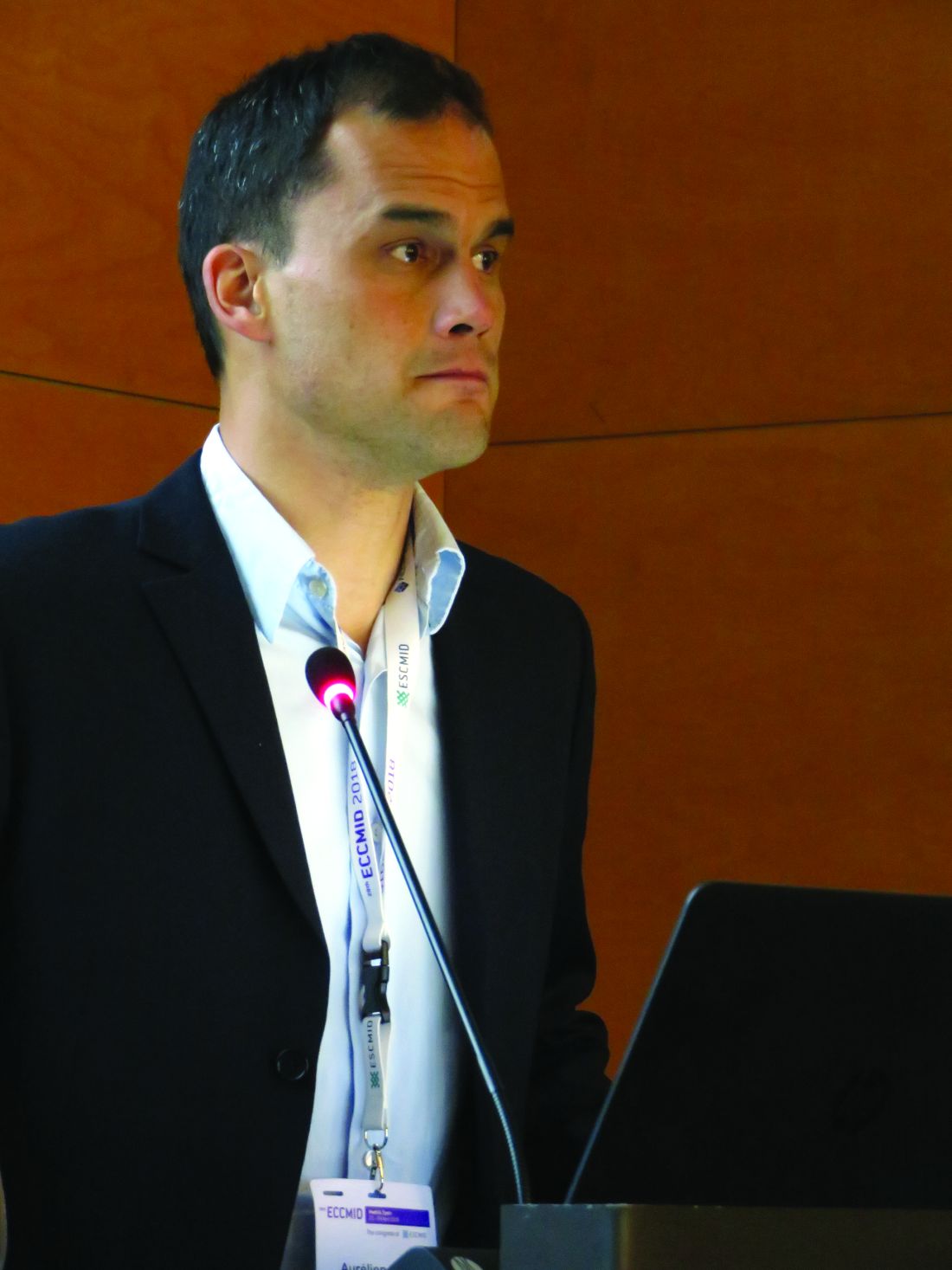
“Reducing treatment time now appears to be manageable and effective in a number of infectious diseases,” Dr. Dinh explained. “Although there are some limits, surely, this change in practice might lead to reduced rates of multidrug-resistant bacteria, fewer adverse events, and surely lower costs.”
The French PTC Trial (Short Duration Treatment of Non-Severe Community-Acquired Pneumonia) randomized 310 patients (mean age, 73.5 years) to either short- or long-course treatment with a beta-lactam antibiotic. Patients were eligible for the study if they were admitted to the hospital for community-acquired pneumonia based on respiratory signs, fever of 38° C or higher, and evidence of new infiltrate on chest radiograph.
All patients were treated with 3 days of amoxicillin/clavulanic acid (Augmentin) or third-generation cephalosporin. Those who had responded clinically by day 3 entered the 5-day randomization period, receiving placebo or 5 more days of active therapy with the same agent.
Clinical requirements for randomization included being afebrile with stable heart and respiratory rate, a systolic blood pressure of at least 90 mm Hg, and oxygen saturation of at least 90%.
The primary endpoint was clinical cure at day 15: no fever, absence of or improvement in respiratory symptoms (dyspnea, cough, purulent sputum, and cackles), and no need for additional antibiotic treatment for any indication.
Secondary endpoints were cure at day 30, 30-day mortality, adverse events, length of stay, return to usual activities by day 30, and quality of life at day 30.
Many of the generally elderly patient cohort had comorbid illnesses, including diabetes (about 20%), chronic obstructive pulmonary disease (about 35%), and coronary insufficiency (about 14%). About 20% were active smokers. Less than 10% had gotten a pneumococcal vaccine in the past 5 years.
At admission, more than half of patients were dyspneic, 80% had cough, and 39% had purulent sputum. The median PSI/PORT Score was 82.
After 3 days of treatment, clinical cure was not significantly different between the 3- and 8-day groups, either in the intent-to-treat analysis (69.9% vs. 61.2%) or in the per-protocol analysis (75.7% vs. 68.7%).
Because the trial had closed days before the ECCMID meeting, only the primary endpoints were available for discussion, Dr. Dinh said. Investigators are analyzing the secondary endpoint data, which he said would be published at a later date.
Despite the positive results, Dr. Dinh cautioned against using the study as justification for a one-size-fits-all treatment for community-acquired pneumonia.
“Although I think we demonstrated that 3 days of treatment with beta-lactam is not inferior to 8 days, this cannot be imposed without regard to individual patient status,” he cautioned. Such a treatment paradigm would not be advisable for patients with moderately severe pneumonia, who were excluded from the study, or those with compromised immune systems.
Nor does Dr. Dinh expect wholesale clinical embracing of the encouraging results, which bolster the ever-accumulating data in favor of shorter courses of antibiotics for some infectious diseases.
“I think there is a chance that clinicians who normally treat for 9 or 10 days may now feel comfortable reducing to 7,” he said with a chuckle.
The French Ministry of Health sponsored the study. Dr. Dinh had no competing financial interests.
SOURCE: Dinh et al. ECCMID 2018, Oral Abstract O1126.
MADRID – Three days of beta-lactam therapy was just as effective as 8 days for clinically stable patients presenting with community-acquired pneumonia.
In a randomized, placebo-controlled trial, 15-day cure rates were 69.9% in patients who took 3 days of antibiotics and 61.2% in those who took 8 days – a nonsignificant difference, Aurélien Dinh, MD, said at the European Society of Clinical Microbiology and Infectious Diseases annual congress.
“Reducing treatment time now appears to be manageable and effective in a number of infectious diseases,” Dr. Dinh explained. “Although there are some limits, surely, this change in practice might lead to reduced rates of multidrug-resistant bacteria, fewer adverse events, and surely lower costs.”
The French PTC Trial (Short Duration Treatment of Non-Severe Community-Acquired Pneumonia) randomized 310 patients (mean age, 73.5 years) to either short- or long-course treatment with a beta-lactam antibiotic. Patients were eligible for the study if they were admitted to the hospital for community-acquired pneumonia based on respiratory signs, fever of 38° C or higher, and evidence of new infiltrate on chest radiograph.
All patients were treated with 3 days of amoxicillin/clavulanic acid (Augmentin) or third-generation cephalosporin. Those who had responded clinically by day 3 entered the 5-day randomization period, receiving placebo or 5 more days of active therapy with the same agent.
Clinical requirements for randomization included being afebrile with stable heart and respiratory rate, a systolic blood pressure of at least 90 mm Hg, and oxygen saturation of at least 90%.
The primary endpoint was clinical cure at day 15: no fever, absence of or improvement in respiratory symptoms (dyspnea, cough, purulent sputum, and cackles), and no need for additional antibiotic treatment for any indication.
Secondary endpoints were cure at day 30, 30-day mortality, adverse events, length of stay, return to usual activities by day 30, and quality of life at day 30.
Many of the generally elderly patient cohort had comorbid illnesses, including diabetes (about 20%), chronic obstructive pulmonary disease (about 35%), and coronary insufficiency (about 14%). About 20% were active smokers. Less than 10% had gotten a pneumococcal vaccine in the past 5 years.
At admission, more than half of patients were dyspneic, 80% had cough, and 39% had purulent sputum. The median PSI/PORT Score was 82.
After 3 days of treatment, clinical cure was not significantly different between the 3- and 8-day groups, either in the intent-to-treat analysis (69.9% vs. 61.2%) or in the per-protocol analysis (75.7% vs. 68.7%).
Because the trial had closed days before the ECCMID meeting, only the primary endpoints were available for discussion, Dr. Dinh said. Investigators are analyzing the secondary endpoint data, which he said would be published at a later date.
Despite the positive results, Dr. Dinh cautioned against using the study as justification for a one-size-fits-all treatment for community-acquired pneumonia.
“Although I think we demonstrated that 3 days of treatment with beta-lactam is not inferior to 8 days, this cannot be imposed without regard to individual patient status,” he cautioned. Such a treatment paradigm would not be advisable for patients with moderately severe pneumonia, who were excluded from the study, or those with compromised immune systems.
Nor does Dr. Dinh expect wholesale clinical embracing of the encouraging results, which bolster the ever-accumulating data in favor of shorter courses of antibiotics for some infectious diseases.
“I think there is a chance that clinicians who normally treat for 9 or 10 days may now feel comfortable reducing to 7,” he said with a chuckle.
The French Ministry of Health sponsored the study. Dr. Dinh had no competing financial interests.
SOURCE: Dinh et al. ECCMID 2018, Oral Abstract O1126.
MADRID – Three days of beta-lactam therapy was just as effective as 8 days for clinically stable patients presenting with community-acquired pneumonia.
In a randomized, placebo-controlled trial, 15-day cure rates were 69.9% in patients who took 3 days of antibiotics and 61.2% in those who took 8 days – a nonsignificant difference, Aurélien Dinh, MD, said at the European Society of Clinical Microbiology and Infectious Diseases annual congress.
“Reducing treatment time now appears to be manageable and effective in a number of infectious diseases,” Dr. Dinh explained. “Although there are some limits, surely, this change in practice might lead to reduced rates of multidrug-resistant bacteria, fewer adverse events, and surely lower costs.”
The French PTC Trial (Short Duration Treatment of Non-Severe Community-Acquired Pneumonia) randomized 310 patients (mean age, 73.5 years) to either short- or long-course treatment with a beta-lactam antibiotic. Patients were eligible for the study if they were admitted to the hospital for community-acquired pneumonia based on respiratory signs, fever of 38° C or higher, and evidence of new infiltrate on chest radiograph.
All patients were treated with 3 days of amoxicillin/clavulanic acid (Augmentin) or third-generation cephalosporin. Those who had responded clinically by day 3 entered the 5-day randomization period, receiving placebo or 5 more days of active therapy with the same agent.
Clinical requirements for randomization included being afebrile with stable heart and respiratory rate, a systolic blood pressure of at least 90 mm Hg, and oxygen saturation of at least 90%.
The primary endpoint was clinical cure at day 15: no fever, absence of or improvement in respiratory symptoms (dyspnea, cough, purulent sputum, and cackles), and no need for additional antibiotic treatment for any indication.
Secondary endpoints were cure at day 30, 30-day mortality, adverse events, length of stay, return to usual activities by day 30, and quality of life at day 30.
Many of the generally elderly patient cohort had comorbid illnesses, including diabetes (about 20%), chronic obstructive pulmonary disease (about 35%), and coronary insufficiency (about 14%). About 20% were active smokers. Less than 10% had gotten a pneumococcal vaccine in the past 5 years.
At admission, more than half of patients were dyspneic, 80% had cough, and 39% had purulent sputum. The median PSI/PORT Score was 82.
After 3 days of treatment, clinical cure was not significantly different between the 3- and 8-day groups, either in the intent-to-treat analysis (69.9% vs. 61.2%) or in the per-protocol analysis (75.7% vs. 68.7%).
Because the trial had closed days before the ECCMID meeting, only the primary endpoints were available for discussion, Dr. Dinh said. Investigators are analyzing the secondary endpoint data, which he said would be published at a later date.
Despite the positive results, Dr. Dinh cautioned against using the study as justification for a one-size-fits-all treatment for community-acquired pneumonia.
“Although I think we demonstrated that 3 days of treatment with beta-lactam is not inferior to 8 days, this cannot be imposed without regard to individual patient status,” he cautioned. Such a treatment paradigm would not be advisable for patients with moderately severe pneumonia, who were excluded from the study, or those with compromised immune systems.
Nor does Dr. Dinh expect wholesale clinical embracing of the encouraging results, which bolster the ever-accumulating data in favor of shorter courses of antibiotics for some infectious diseases.
“I think there is a chance that clinicians who normally treat for 9 or 10 days may now feel comfortable reducing to 7,” he said with a chuckle.
The French Ministry of Health sponsored the study. Dr. Dinh had no competing financial interests.
SOURCE: Dinh et al. ECCMID 2018, Oral Abstract O1126.
REPORTING FROM ECCMID 2018
Key clinical point: Three days of beta-lactam treatment were as effective as 8 days in curing clinically stable patients with community-acquired pneumonia.
Major finding: Cure rates at 15 days were 69.9% in the 3-day group, compared with 61.2% in the 8-day group, a nonsignificant difference.
Study details: The placebo-controlled study randomized 310 patients to treatment.
Disclosures: The French Ministry of Health sponsored the trial. Dr. Dinh had no financial disclosures.
Source: Dinh et al. ECCMID 2018, oral abstract O1126.
Malignant pleural mesothelioma guidelines often are ignored
SAN DIEGO – National guidelines for the treatment of malignant pleural mesothelioma often are not followed, a new study showed, with fewer than one-third of patients receiving cancer-directed surgery.
Another 32% received no treatment, although that didn’t seem to have an impact on median months of survival.

Still, “there can be a wide variation in median survival time, depending on clinical factors and tumor characteristics,” said study coauthor Harmik Soukiasian, MD, of Cedars-Sinai Medical Center, Los Angeles. “Given the variation in prognosis, it is quite astonishing that over 30% of MPM patients are not receiving any form of treatment. As clinicians armed with these data, we need to investigate why that is.”
Dr. Soukiasian presented the study findings at the annual meeting of the American Association for Thoracic Surgery.
MPM, a rare cancer, is mainly linked to asbestos exposure. “MPM is almost always a fatal disease, and the prognosis can only be modestly influenced by oncological treatments,” according to the authors of guidelines released in 2013. “The diagnostic process can be complex, with highly specialized advice frequently required to arrive at a definite diagnosis. Treatment varies from therapeutic nihilism to radical combined-modality treatment approaches” (J Thorac Dis. 2013 Dec;5[6]:E254-E307).
Surgical resection is a controversial treatment for MPM, Dr. Soukiasian said. It is “based on the principle of macroscopic resection of solid tumor with adjuvant therapy to treat micrometastatic disease,” he explained. “Cancer-directed surgery for MPM is usually reserved for localized epithelial type histology and is associated with a 5-year survival rate of 15%.”
For the new study, the investigators tracked 3,834 patients in the National Cancer Database (2004-2014) diagnosed with MPM clinical stages I-III. Most had epithelioid MPM (69%), with sarcomatoid (17%) and mixed subtype (15%) making up the rest. They examined whether patient treatment complied with the National Comprehensive Cancer Network (NCCN) guidelines, which recommend surgery in resectable epithelioid MPM.
“Our study revealed significant lack of compliance with NCCN guidelines, as well as many disparities in the management of MPM,” Dr. Soukiasian said. “For the overall cohort, 32.3% of patients did not receive any treatment, 18.1% had surgery plus chemotherapy, 38.6% chemotherapy alone, and only 7% received trimodality therapy. In patients with epithelial histology, surgery was significantly underutilized, with only 30% of patients receiving cancer-directed surgery.”
In addition, he said, “our study reveals several disparities that affect compliance with NCCN guidelines. Treatment disparities were observed in women, octogenarians, the uninsured, the Medicaid-insured, and in patients with comorbidities. Guideline adherence was significantly increased in academic and high-volume hospitals with an associated increase in survival.”
But the study also found that median survival estimates were similar regardless of treatment: 10 months for no treatment, 15 months for chemotherapy only, 17 months for surgery only, and 22 months for surgery plus chemotherapy.
During the AATS presentation, an audience member asked about how performance status – a measure of a person’s ability to perform everyday activities – affects the eligibility for surgery.
“It’s quite common for low performance status to exclude someone from surgery,” the audience member said. “Some of these patients are very sick.”
Dr. Soukiasian acknowledged that performance status was not included in the data. The study was focused on the gap between guidelines and real-world practice, and generated questions of why and about the potential opportunity for improved treatment of these patients.
How do patient choices, cost, and quality of life factor in? “These are very important questions and concerns,” Dr. Soukiasian said. “Although our research does not provide data or conclusions on quality of life or cost, these topics will be important to address in follow-up studies to elucidate possible barriers in the treatment of MPM and the initiation of future educational opportunities for our patients.”
No disclosures and no study funding were reported.
SOURCE: Espinoza-Mercado F et al. General Thoracic Surgery Simultaneous Scientific Session. Abstract 18.
SAN DIEGO – National guidelines for the treatment of malignant pleural mesothelioma often are not followed, a new study showed, with fewer than one-third of patients receiving cancer-directed surgery.
Another 32% received no treatment, although that didn’t seem to have an impact on median months of survival.
Still, “there can be a wide variation in median survival time, depending on clinical factors and tumor characteristics,” said study coauthor Harmik Soukiasian, MD, of Cedars-Sinai Medical Center, Los Angeles. “Given the variation in prognosis, it is quite astonishing that over 30% of MPM patients are not receiving any form of treatment. As clinicians armed with these data, we need to investigate why that is.”
Dr. Soukiasian presented the study findings at the annual meeting of the American Association for Thoracic Surgery.
MPM, a rare cancer, is mainly linked to asbestos exposure. “MPM is almost always a fatal disease, and the prognosis can only be modestly influenced by oncological treatments,” according to the authors of guidelines released in 2013. “The diagnostic process can be complex, with highly specialized advice frequently required to arrive at a definite diagnosis. Treatment varies from therapeutic nihilism to radical combined-modality treatment approaches” (J Thorac Dis. 2013 Dec;5[6]:E254-E307).
Surgical resection is a controversial treatment for MPM, Dr. Soukiasian said. It is “based on the principle of macroscopic resection of solid tumor with adjuvant therapy to treat micrometastatic disease,” he explained. “Cancer-directed surgery for MPM is usually reserved for localized epithelial type histology and is associated with a 5-year survival rate of 15%.”
For the new study, the investigators tracked 3,834 patients in the National Cancer Database (2004-2014) diagnosed with MPM clinical stages I-III. Most had epithelioid MPM (69%), with sarcomatoid (17%) and mixed subtype (15%) making up the rest. They examined whether patient treatment complied with the National Comprehensive Cancer Network (NCCN) guidelines, which recommend surgery in resectable epithelioid MPM.
“Our study revealed significant lack of compliance with NCCN guidelines, as well as many disparities in the management of MPM,” Dr. Soukiasian said. “For the overall cohort, 32.3% of patients did not receive any treatment, 18.1% had surgery plus chemotherapy, 38.6% chemotherapy alone, and only 7% received trimodality therapy. In patients with epithelial histology, surgery was significantly underutilized, with only 30% of patients receiving cancer-directed surgery.”
In addition, he said, “our study reveals several disparities that affect compliance with NCCN guidelines. Treatment disparities were observed in women, octogenarians, the uninsured, the Medicaid-insured, and in patients with comorbidities. Guideline adherence was significantly increased in academic and high-volume hospitals with an associated increase in survival.”
But the study also found that median survival estimates were similar regardless of treatment: 10 months for no treatment, 15 months for chemotherapy only, 17 months for surgery only, and 22 months for surgery plus chemotherapy.
During the AATS presentation, an audience member asked about how performance status – a measure of a person’s ability to perform everyday activities – affects the eligibility for surgery.
“It’s quite common for low performance status to exclude someone from surgery,” the audience member said. “Some of these patients are very sick.”
Dr. Soukiasian acknowledged that performance status was not included in the data. The study was focused on the gap between guidelines and real-world practice, and generated questions of why and about the potential opportunity for improved treatment of these patients.
How do patient choices, cost, and quality of life factor in? “These are very important questions and concerns,” Dr. Soukiasian said. “Although our research does not provide data or conclusions on quality of life or cost, these topics will be important to address in follow-up studies to elucidate possible barriers in the treatment of MPM and the initiation of future educational opportunities for our patients.”
No disclosures and no study funding were reported.
SOURCE: Espinoza-Mercado F et al. General Thoracic Surgery Simultaneous Scientific Session. Abstract 18.
SAN DIEGO – National guidelines for the treatment of malignant pleural mesothelioma often are not followed, a new study showed, with fewer than one-third of patients receiving cancer-directed surgery.
Another 32% received no treatment, although that didn’t seem to have an impact on median months of survival.
Still, “there can be a wide variation in median survival time, depending on clinical factors and tumor characteristics,” said study coauthor Harmik Soukiasian, MD, of Cedars-Sinai Medical Center, Los Angeles. “Given the variation in prognosis, it is quite astonishing that over 30% of MPM patients are not receiving any form of treatment. As clinicians armed with these data, we need to investigate why that is.”
Dr. Soukiasian presented the study findings at the annual meeting of the American Association for Thoracic Surgery.
MPM, a rare cancer, is mainly linked to asbestos exposure. “MPM is almost always a fatal disease, and the prognosis can only be modestly influenced by oncological treatments,” according to the authors of guidelines released in 2013. “The diagnostic process can be complex, with highly specialized advice frequently required to arrive at a definite diagnosis. Treatment varies from therapeutic nihilism to radical combined-modality treatment approaches” (J Thorac Dis. 2013 Dec;5[6]:E254-E307).
Surgical resection is a controversial treatment for MPM, Dr. Soukiasian said. It is “based on the principle of macroscopic resection of solid tumor with adjuvant therapy to treat micrometastatic disease,” he explained. “Cancer-directed surgery for MPM is usually reserved for localized epithelial type histology and is associated with a 5-year survival rate of 15%.”
For the new study, the investigators tracked 3,834 patients in the National Cancer Database (2004-2014) diagnosed with MPM clinical stages I-III. Most had epithelioid MPM (69%), with sarcomatoid (17%) and mixed subtype (15%) making up the rest. They examined whether patient treatment complied with the National Comprehensive Cancer Network (NCCN) guidelines, which recommend surgery in resectable epithelioid MPM.
“Our study revealed significant lack of compliance with NCCN guidelines, as well as many disparities in the management of MPM,” Dr. Soukiasian said. “For the overall cohort, 32.3% of patients did not receive any treatment, 18.1% had surgery plus chemotherapy, 38.6% chemotherapy alone, and only 7% received trimodality therapy. In patients with epithelial histology, surgery was significantly underutilized, with only 30% of patients receiving cancer-directed surgery.”
In addition, he said, “our study reveals several disparities that affect compliance with NCCN guidelines. Treatment disparities were observed in women, octogenarians, the uninsured, the Medicaid-insured, and in patients with comorbidities. Guideline adherence was significantly increased in academic and high-volume hospitals with an associated increase in survival.”
But the study also found that median survival estimates were similar regardless of treatment: 10 months for no treatment, 15 months for chemotherapy only, 17 months for surgery only, and 22 months for surgery plus chemotherapy.
During the AATS presentation, an audience member asked about how performance status – a measure of a person’s ability to perform everyday activities – affects the eligibility for surgery.
“It’s quite common for low performance status to exclude someone from surgery,” the audience member said. “Some of these patients are very sick.”
Dr. Soukiasian acknowledged that performance status was not included in the data. The study was focused on the gap between guidelines and real-world practice, and generated questions of why and about the potential opportunity for improved treatment of these patients.
How do patient choices, cost, and quality of life factor in? “These are very important questions and concerns,” Dr. Soukiasian said. “Although our research does not provide data or conclusions on quality of life or cost, these topics will be important to address in follow-up studies to elucidate possible barriers in the treatment of MPM and the initiation of future educational opportunities for our patients.”
No disclosures and no study funding were reported.
SOURCE: Espinoza-Mercado F et al. General Thoracic Surgery Simultaneous Scientific Session. Abstract 18.
REPORTING FROM THE AATS ANNUAL MEETING
Key clinical point:
Major finding: Guidelines recommend surgery in epithelioid MPM, but only 30% of patients received it.
Study details: Analysis of 3,834 patients diagnosed with MPM clinical stages I-III during 2004-2014.
Disclosures: No disclosures and no study funding were reported.
Source: Espinoza-Mercado F et al. General Thoracic Surgery Simultaneous Scientific Session. Abstract 18.
VIDEO: Let clinical scenario, not imaging, guide sarcoidosis treatment
SANDESTIN, FLA. – Don’t be a slave to imaging when evaluating the patient with sarcoidosis.
“Sometimes, the worst-looking patients [on imaging] have the best prognosis,” Daniel Culver, DO, said at the annual Congress of Clinical Rheumatology. Patients with Löfgren’s syndrome are a very good example of this tenet, he said in an interview. Scans can look alarming, with multiple widespread granulomas. But Löfgren’s is generally a benign condition, despite its threatening mien.
The video associated with this article is no longer available on this site. Please view all of our videos on the MDedge YouTube channel
Instead of imaging, “Let two things drive your decision to treat: danger to an organ, and quality of life,” said Dr. Culver, a pulmonologist and director of the Sarcoidosis Center of Excellence at the Cleveland Clinic in Ohio; he is also president of the World Association for Sarcoidosis.
He agrees with a decision schema published in 2015 (Clin Chest Med. 2015;36[4]:751-67).
Six factors weigh in favor of treatment:
- Symptomatic disease.
- Impaired organ function.
- Disease endangering an organ.
- Progressive disease.
- Clear-cut disease activity.
- Low likelihood of remission.
These must be balanced – with patient input as the fulcrum – against five factors that favor conservative management:
- Minimal symptoms.
- Good organ function.
- Low risk of danger to organs.
- Inactive disease.
- Higher likelihood of remission.
The decision to embark on a treatment program, usually starting with a steroid-based regimen, can’t be taken lightly, Dr. Culver said. A 2017 study showed that steroids pose a cumulative risk of toxicities for sarcoidosis patients (Respir Med. 2017 Nov;132:9-14). Patients who started steroids faced more than a doubling in the risk of a toxic side effect by 96 months when compared with those who didn’t. But even short-term steroid use increased the risk of a toxicity, Dr. Culver said. The study noted that problems can begin to occur in as little as 1 month, at a cumulative dose as low as 1 g.
For patients who fall onto the “treat” side of the risk teeter-totter, Dr. Culver recommended starting with an initial course of prednisone at 20-30 mg daily for no more than 4 weeks. Responders can taper to less than 10 mg/day. Those who continue to do well can maintain low-dose prednisone for up to 12 months and then complete the taper. Patients who relapse can add an immune modulator (methotrexate, azathioprine, leflunomide, or mycophenolate).
Those who have an inadequate response to the initial prednisone course should then get an immune modulator. If they do well, that can be maintained; a second modulator can be brought on board if necessary.
For those who don’t respond at all to the initial prednisone course, it’s necessary to proceed immediately to an immunosuppressive regimen to prevent irreversible fibrosis.
Dr. Culver noted associations with multiple pharmaceutical companies, but said none were relevant to his talk.
SOURCE: Culver D. CCR 2018.
SANDESTIN, FLA. – Don’t be a slave to imaging when evaluating the patient with sarcoidosis.
“Sometimes, the worst-looking patients [on imaging] have the best prognosis,” Daniel Culver, DO, said at the annual Congress of Clinical Rheumatology. Patients with Löfgren’s syndrome are a very good example of this tenet, he said in an interview. Scans can look alarming, with multiple widespread granulomas. But Löfgren’s is generally a benign condition, despite its threatening mien.
The video associated with this article is no longer available on this site. Please view all of our videos on the MDedge YouTube channel
Instead of imaging, “Let two things drive your decision to treat: danger to an organ, and quality of life,” said Dr. Culver, a pulmonologist and director of the Sarcoidosis Center of Excellence at the Cleveland Clinic in Ohio; he is also president of the World Association for Sarcoidosis.
He agrees with a decision schema published in 2015 (Clin Chest Med. 2015;36[4]:751-67).
Six factors weigh in favor of treatment:
- Symptomatic disease.
- Impaired organ function.
- Disease endangering an organ.
- Progressive disease.
- Clear-cut disease activity.
- Low likelihood of remission.
These must be balanced – with patient input as the fulcrum – against five factors that favor conservative management:
- Minimal symptoms.
- Good organ function.
- Low risk of danger to organs.
- Inactive disease.
- Higher likelihood of remission.
The decision to embark on a treatment program, usually starting with a steroid-based regimen, can’t be taken lightly, Dr. Culver said. A 2017 study showed that steroids pose a cumulative risk of toxicities for sarcoidosis patients (Respir Med. 2017 Nov;132:9-14). Patients who started steroids faced more than a doubling in the risk of a toxic side effect by 96 months when compared with those who didn’t. But even short-term steroid use increased the risk of a toxicity, Dr. Culver said. The study noted that problems can begin to occur in as little as 1 month, at a cumulative dose as low as 1 g.
For patients who fall onto the “treat” side of the risk teeter-totter, Dr. Culver recommended starting with an initial course of prednisone at 20-30 mg daily for no more than 4 weeks. Responders can taper to less than 10 mg/day. Those who continue to do well can maintain low-dose prednisone for up to 12 months and then complete the taper. Patients who relapse can add an immune modulator (methotrexate, azathioprine, leflunomide, or mycophenolate).
Those who have an inadequate response to the initial prednisone course should then get an immune modulator. If they do well, that can be maintained; a second modulator can be brought on board if necessary.
For those who don’t respond at all to the initial prednisone course, it’s necessary to proceed immediately to an immunosuppressive regimen to prevent irreversible fibrosis.
Dr. Culver noted associations with multiple pharmaceutical companies, but said none were relevant to his talk.
SOURCE: Culver D. CCR 2018.
SANDESTIN, FLA. – Don’t be a slave to imaging when evaluating the patient with sarcoidosis.
“Sometimes, the worst-looking patients [on imaging] have the best prognosis,” Daniel Culver, DO, said at the annual Congress of Clinical Rheumatology. Patients with Löfgren’s syndrome are a very good example of this tenet, he said in an interview. Scans can look alarming, with multiple widespread granulomas. But Löfgren’s is generally a benign condition, despite its threatening mien.
The video associated with this article is no longer available on this site. Please view all of our videos on the MDedge YouTube channel
Instead of imaging, “Let two things drive your decision to treat: danger to an organ, and quality of life,” said Dr. Culver, a pulmonologist and director of the Sarcoidosis Center of Excellence at the Cleveland Clinic in Ohio; he is also president of the World Association for Sarcoidosis.
He agrees with a decision schema published in 2015 (Clin Chest Med. 2015;36[4]:751-67).
Six factors weigh in favor of treatment:
- Symptomatic disease.
- Impaired organ function.
- Disease endangering an organ.
- Progressive disease.
- Clear-cut disease activity.
- Low likelihood of remission.
These must be balanced – with patient input as the fulcrum – against five factors that favor conservative management:
- Minimal symptoms.
- Good organ function.
- Low risk of danger to organs.
- Inactive disease.
- Higher likelihood of remission.
The decision to embark on a treatment program, usually starting with a steroid-based regimen, can’t be taken lightly, Dr. Culver said. A 2017 study showed that steroids pose a cumulative risk of toxicities for sarcoidosis patients (Respir Med. 2017 Nov;132:9-14). Patients who started steroids faced more than a doubling in the risk of a toxic side effect by 96 months when compared with those who didn’t. But even short-term steroid use increased the risk of a toxicity, Dr. Culver said. The study noted that problems can begin to occur in as little as 1 month, at a cumulative dose as low as 1 g.
For patients who fall onto the “treat” side of the risk teeter-totter, Dr. Culver recommended starting with an initial course of prednisone at 20-30 mg daily for no more than 4 weeks. Responders can taper to less than 10 mg/day. Those who continue to do well can maintain low-dose prednisone for up to 12 months and then complete the taper. Patients who relapse can add an immune modulator (methotrexate, azathioprine, leflunomide, or mycophenolate).
Those who have an inadequate response to the initial prednisone course should then get an immune modulator. If they do well, that can be maintained; a second modulator can be brought on board if necessary.
For those who don’t respond at all to the initial prednisone course, it’s necessary to proceed immediately to an immunosuppressive regimen to prevent irreversible fibrosis.
Dr. Culver noted associations with multiple pharmaceutical companies, but said none were relevant to his talk.
SOURCE: Culver D. CCR 2018.
REPORTING FROM CCR 18

Palliative care may reduce suicide among lung cancer patients
according to new research that will be presented at an international conference of the American Thoracic Society.
“Suicide is a significant national public health problem, especially among lung cancer patients and among veterans,” said lead author, Donald R. Sullivan, MD, of the division of pulmonary and critical care medicine at Oregon Health & Science University and a member of the OHSU Knight Cancer Institute, in a statement.
The investigators found that veterans who experienced at least one “palliative care encounter” after learning they had lung cancer were 82% less likely to die by suicide (odds ratio, 0.18; 95% confidence interval, 0.07-0.46; P less than .001), when compared with veterans who were diagnosed with lung cancer but did not receive palliative care.
The suicide rate for the advanced-stage lung cancer patients was 200/100,000 patient-years, which was more than five times higher than the suicide rate – adjusted for age, sex, and year – for all veterans using VA health care (37.5/100,000), according to the study abstract.
Of the 20,900 lung cancer patients analyzed, 30 committed suicide. Only six (20%) of the patients who died by suicide had received palliative care. Overall, most patients (18,192 or 87%) in the registry died of lung cancer. Other cancers, heart disease, and chronic obstructive pulmonary disease were some of the other common causes of death for the lung cancer patients, according to the abstract.
While several medical societies recommend palliative care for all patients with advanced-stage lung cancer, there is a gap between those recommendations and practice, noted Dr. Sullivan. “There are many barriers to palliative care, and unfortunately, some are related to clinician referrals. Not all doctors are aware of the benefits of palliative care,” he said in the statement.
Dr. Sullivan added that palliative care should be offered to all patients shortly after receiving a diagnosis of advanced-stage lung cancer.
More details on this study will be presented at the conference on Monday, May 21, at 2:30 p.m. in Room 14 A-B (Mezzanine Level) of the San Diego Convention Center.
according to new research that will be presented at an international conference of the American Thoracic Society.
“Suicide is a significant national public health problem, especially among lung cancer patients and among veterans,” said lead author, Donald R. Sullivan, MD, of the division of pulmonary and critical care medicine at Oregon Health & Science University and a member of the OHSU Knight Cancer Institute, in a statement.
The investigators found that veterans who experienced at least one “palliative care encounter” after learning they had lung cancer were 82% less likely to die by suicide (odds ratio, 0.18; 95% confidence interval, 0.07-0.46; P less than .001), when compared with veterans who were diagnosed with lung cancer but did not receive palliative care.
The suicide rate for the advanced-stage lung cancer patients was 200/100,000 patient-years, which was more than five times higher than the suicide rate – adjusted for age, sex, and year – for all veterans using VA health care (37.5/100,000), according to the study abstract.
Of the 20,900 lung cancer patients analyzed, 30 committed suicide. Only six (20%) of the patients who died by suicide had received palliative care. Overall, most patients (18,192 or 87%) in the registry died of lung cancer. Other cancers, heart disease, and chronic obstructive pulmonary disease were some of the other common causes of death for the lung cancer patients, according to the abstract.
While several medical societies recommend palliative care for all patients with advanced-stage lung cancer, there is a gap between those recommendations and practice, noted Dr. Sullivan. “There are many barriers to palliative care, and unfortunately, some are related to clinician referrals. Not all doctors are aware of the benefits of palliative care,” he said in the statement.
Dr. Sullivan added that palliative care should be offered to all patients shortly after receiving a diagnosis of advanced-stage lung cancer.
More details on this study will be presented at the conference on Monday, May 21, at 2:30 p.m. in Room 14 A-B (Mezzanine Level) of the San Diego Convention Center.
according to new research that will be presented at an international conference of the American Thoracic Society.
“Suicide is a significant national public health problem, especially among lung cancer patients and among veterans,” said lead author, Donald R. Sullivan, MD, of the division of pulmonary and critical care medicine at Oregon Health & Science University and a member of the OHSU Knight Cancer Institute, in a statement.
The investigators found that veterans who experienced at least one “palliative care encounter” after learning they had lung cancer were 82% less likely to die by suicide (odds ratio, 0.18; 95% confidence interval, 0.07-0.46; P less than .001), when compared with veterans who were diagnosed with lung cancer but did not receive palliative care.
The suicide rate for the advanced-stage lung cancer patients was 200/100,000 patient-years, which was more than five times higher than the suicide rate – adjusted for age, sex, and year – for all veterans using VA health care (37.5/100,000), according to the study abstract.
Of the 20,900 lung cancer patients analyzed, 30 committed suicide. Only six (20%) of the patients who died by suicide had received palliative care. Overall, most patients (18,192 or 87%) in the registry died of lung cancer. Other cancers, heart disease, and chronic obstructive pulmonary disease were some of the other common causes of death for the lung cancer patients, according to the abstract.
While several medical societies recommend palliative care for all patients with advanced-stage lung cancer, there is a gap between those recommendations and practice, noted Dr. Sullivan. “There are many barriers to palliative care, and unfortunately, some are related to clinician referrals. Not all doctors are aware of the benefits of palliative care,” he said in the statement.
Dr. Sullivan added that palliative care should be offered to all patients shortly after receiving a diagnosis of advanced-stage lung cancer.
More details on this study will be presented at the conference on Monday, May 21, at 2:30 p.m. in Room 14 A-B (Mezzanine Level) of the San Diego Convention Center.
FROM ATS 2018
New ILD diagnostic test is available
IPF can be difficult to distinguish from other ILDs, S. Samuel Weigt, MD, of the University of California, Los Angeles, and director of UCLA Health’s Interstitial Lung Disease Center, said in a statement from Veracyte, the company marketing the test.
In fact, more than half of patients with ILDs were misdiagnosed at least once, according to a study published by the Pulmonary Fibrosis Foundation.
The new test, known as the Envisia Genomic Classifier, combines RNA sequencing and machine learning to help physicians differentiate IPF from ILDs in samples obtained through transbronchial biopsy. Its specificity and sensitivity for detecting the genomic pattern of usual interstitial pneumonia, are 88% and 70%, respectively, according to the Veracyte statement.
“Multiple studies have demonstrated that the Envisia Genomic Classifier supports more confident IPF diagnosis and optimal patient management,” Bonnie Anderson, chairman and CEO of Veracyte, said in the statement.
A benefit of the new test is that its use does not require patients to undergo risky, expensive surgery, which may not even be possible for some patients, noted Dr. Weigt. “We are pleased to be one of the few medical facilities in the country to have access to this breakthrough technology.”
To obtain more information about the Envisia Genomic Classifier and how to use the early-access program, contact Veracyte at 844-464-5864 or [email protected].
IPF can be difficult to distinguish from other ILDs, S. Samuel Weigt, MD, of the University of California, Los Angeles, and director of UCLA Health’s Interstitial Lung Disease Center, said in a statement from Veracyte, the company marketing the test.
In fact, more than half of patients with ILDs were misdiagnosed at least once, according to a study published by the Pulmonary Fibrosis Foundation.
The new test, known as the Envisia Genomic Classifier, combines RNA sequencing and machine learning to help physicians differentiate IPF from ILDs in samples obtained through transbronchial biopsy. Its specificity and sensitivity for detecting the genomic pattern of usual interstitial pneumonia, are 88% and 70%, respectively, according to the Veracyte statement.
“Multiple studies have demonstrated that the Envisia Genomic Classifier supports more confident IPF diagnosis and optimal patient management,” Bonnie Anderson, chairman and CEO of Veracyte, said in the statement.
A benefit of the new test is that its use does not require patients to undergo risky, expensive surgery, which may not even be possible for some patients, noted Dr. Weigt. “We are pleased to be one of the few medical facilities in the country to have access to this breakthrough technology.”
To obtain more information about the Envisia Genomic Classifier and how to use the early-access program, contact Veracyte at 844-464-5864 or [email protected].
IPF can be difficult to distinguish from other ILDs, S. Samuel Weigt, MD, of the University of California, Los Angeles, and director of UCLA Health’s Interstitial Lung Disease Center, said in a statement from Veracyte, the company marketing the test.
In fact, more than half of patients with ILDs were misdiagnosed at least once, according to a study published by the Pulmonary Fibrosis Foundation.
The new test, known as the Envisia Genomic Classifier, combines RNA sequencing and machine learning to help physicians differentiate IPF from ILDs in samples obtained through transbronchial biopsy. Its specificity and sensitivity for detecting the genomic pattern of usual interstitial pneumonia, are 88% and 70%, respectively, according to the Veracyte statement.
“Multiple studies have demonstrated that the Envisia Genomic Classifier supports more confident IPF diagnosis and optimal patient management,” Bonnie Anderson, chairman and CEO of Veracyte, said in the statement.
A benefit of the new test is that its use does not require patients to undergo risky, expensive surgery, which may not even be possible for some patients, noted Dr. Weigt. “We are pleased to be one of the few medical facilities in the country to have access to this breakthrough technology.”
To obtain more information about the Envisia Genomic Classifier and how to use the early-access program, contact Veracyte at 844-464-5864 or [email protected].
EPA proposal on research data to be discussed at ATS meeting
A press conference on the Environmental Protection Agency’s proposed policy on research data will be held at the American Thoracic Society International Conference on Sunday, May 20.
The conference, entitled “Silencing Science: EPA’s Proposed Policy on Research Data,” will occur at 11:15 a.m. Pacific Standard Time in the San Diego Convention Center, Meeting Room 23A (Upper Level).
For information about this press conference, contact Dacia Morris, director of communications and marketing of the ATS, at 212-315-8620.
A press conference on the Environmental Protection Agency’s proposed policy on research data will be held at the American Thoracic Society International Conference on Sunday, May 20.
The conference, entitled “Silencing Science: EPA’s Proposed Policy on Research Data,” will occur at 11:15 a.m. Pacific Standard Time in the San Diego Convention Center, Meeting Room 23A (Upper Level).
For information about this press conference, contact Dacia Morris, director of communications and marketing of the ATS, at 212-315-8620.
A press conference on the Environmental Protection Agency’s proposed policy on research data will be held at the American Thoracic Society International Conference on Sunday, May 20.
The conference, entitled “Silencing Science: EPA’s Proposed Policy on Research Data,” will occur at 11:15 a.m. Pacific Standard Time in the San Diego Convention Center, Meeting Room 23A (Upper Level).
For information about this press conference, contact Dacia Morris, director of communications and marketing of the ATS, at 212-315-8620.
FROM ATS 2018
CHEST® Physician’s preview of ATS 2018
Here is a glimpse of some of the important research that will be presented at this meeting.

The findings of several chronic obstructive pulmonary disease (COPD) drug trials will be discussed during a session entitled “ICS [Inhaled corticosteroids] in COPD: The Pendulum Keeps Swinging,” which is scheduled to occur at 9:15 a.m. in Room 14 A-B (Mezzanine Level). Among the research to be presented are the latest findings of the phase 3 IMPACT study of 10,355 symptomatic COPD patients with a history of moderate to severe exacerbations. This study compared the use of an inhaled therapy that comprised a corticosteroid, a long-acting muscarinic antagonist (LAMA), and a long-acting beta2-agonist (LABA) with the use of two other therapy combinations – a corticosteroid and a LABA, or a LABA and a LAMA. (Lipson DA et al. N Engl J Med. 2018 Apr 18;378:1671-80). Patients were randomized to receive either a once-daily combination of 100 mcg fluticasone furoate (a corticosteroid); 62.5 mcg of the LAMA, umeclidinium; and 25 mcg of the LABA, vilanterol; or dual inhaled therapy involving either 100 mcg fluticasone furoate plus 25 mcg of vilanterol, or 62.5 mcg of umeclidinium plus 25 mcg of vilanterol for 52 weeks.
One of the updates on this trial is that using the triple therapy significantly reduced on-treatment all-cause mortality over using the LAMA (62.5 mcg of umeclidinium) plus LABA (25 mcg of the vilanterol) dual therapy. Fifty of the patients who received triple therapy died (1.20%), versus 49 patients in the corticosteroid plus LABA group (1.19%) and 30 patients (1.88%) in the LAMA plus LABA group. A 42.1% reduction in risk of all-cause mortality occurred for patients who took the triple therapy, when compared with patients who took the LAMA/LABA combo (95% confidence interval, 11.9%-61.9%; P = .011), according to an abstract on the ATS International Conference’s website.
At the same time on Sunday, researchers will be presenting their research in a session entitled “Sleep Disordered Breathing, Cardiovascular Disease, and Mortality,” in Room 3 (Upper Level) of the convention center. One of the abstracts that will be discussed compared the long-term effectiveness of noninvasive ventilation (NIV) with continuous positive airway pressure (CPAP) in patients with obesity hypoventilation syndrome with severe obstructive sleep apnea. In this multicenter open-label, randomized, controlled trial, Sanchez Quiroga M et al. analyzed the results for 202 patients who used one of the two treatments for at least 3 years. Among this study’s findings were that the mortality rates and the number of cardiovascular events that occurred were similar in the two treatment groups. The mortality rate for patients who used CPAP was 14.7%, compared with 11.3% for the patients who received NIV (adjusted hazard ratio, 0.73; P = .439), and the cardiovascular events per 100 person-years were 5.1 for CPAP and 7.46 for NIV (P = .315). The researchers concluded that both treatments are equally effective for the long term, but that CPAP should be “the preferred treatment modality,” because it’s cheaper and easier to implement.
On Monday morning, researchers will present their findings of the short-term cardiovascular effects of 30 pulmonary arterial hypertension patients’ use of the beta blocker carvedilol, in 3.125 mg doses taken twice a day. Right ventricular systolic pressure (RVSP) decreased by an average of 11 mmHg (P = .003) in this double-blinded, randomized, controlled open-label trial with a 1-week run-in period. Cardiac output decreased by an average of –1.8 L/min (P less than .0001), but RVSP was inversely associated with cardiac output. “Short-term carvedilol could potentially identify a subgroup for long-term therapy based on initial drop in RVSP and heart rate response,” noted Farha SY et al. in their abstract. None of the patients experienced any side effects from taking the drug. More details on this research and other studies on pulmonary hypertension will be presented at 9:15 am in Area B (Hall A-B2, Ground level) of the convention center, in the session entitled “Surf’s Up: Riding the Wave of Clinical Research in Pulmonary Hypertension.”
Look for all of our on-site coverage of the conference at mdedge.com/chestphysician next week.
Here is a glimpse of some of the important research that will be presented at this meeting.
The findings of several chronic obstructive pulmonary disease (COPD) drug trials will be discussed during a session entitled “ICS [Inhaled corticosteroids] in COPD: The Pendulum Keeps Swinging,” which is scheduled to occur at 9:15 a.m. in Room 14 A-B (Mezzanine Level). Among the research to be presented are the latest findings of the phase 3 IMPACT study of 10,355 symptomatic COPD patients with a history of moderate to severe exacerbations. This study compared the use of an inhaled therapy that comprised a corticosteroid, a long-acting muscarinic antagonist (LAMA), and a long-acting beta2-agonist (LABA) with the use of two other therapy combinations – a corticosteroid and a LABA, or a LABA and a LAMA. (Lipson DA et al. N Engl J Med. 2018 Apr 18;378:1671-80). Patients were randomized to receive either a once-daily combination of 100 mcg fluticasone furoate (a corticosteroid); 62.5 mcg of the LAMA, umeclidinium; and 25 mcg of the LABA, vilanterol; or dual inhaled therapy involving either 100 mcg fluticasone furoate plus 25 mcg of vilanterol, or 62.5 mcg of umeclidinium plus 25 mcg of vilanterol for 52 weeks.
One of the updates on this trial is that using the triple therapy significantly reduced on-treatment all-cause mortality over using the LAMA (62.5 mcg of umeclidinium) plus LABA (25 mcg of the vilanterol) dual therapy. Fifty of the patients who received triple therapy died (1.20%), versus 49 patients in the corticosteroid plus LABA group (1.19%) and 30 patients (1.88%) in the LAMA plus LABA group. A 42.1% reduction in risk of all-cause mortality occurred for patients who took the triple therapy, when compared with patients who took the LAMA/LABA combo (95% confidence interval, 11.9%-61.9%; P = .011), according to an abstract on the ATS International Conference’s website.
At the same time on Sunday, researchers will be presenting their research in a session entitled “Sleep Disordered Breathing, Cardiovascular Disease, and Mortality,” in Room 3 (Upper Level) of the convention center. One of the abstracts that will be discussed compared the long-term effectiveness of noninvasive ventilation (NIV) with continuous positive airway pressure (CPAP) in patients with obesity hypoventilation syndrome with severe obstructive sleep apnea. In this multicenter open-label, randomized, controlled trial, Sanchez Quiroga M et al. analyzed the results for 202 patients who used one of the two treatments for at least 3 years. Among this study’s findings were that the mortality rates and the number of cardiovascular events that occurred were similar in the two treatment groups. The mortality rate for patients who used CPAP was 14.7%, compared with 11.3% for the patients who received NIV (adjusted hazard ratio, 0.73; P = .439), and the cardiovascular events per 100 person-years were 5.1 for CPAP and 7.46 for NIV (P = .315). The researchers concluded that both treatments are equally effective for the long term, but that CPAP should be “the preferred treatment modality,” because it’s cheaper and easier to implement.
On Monday morning, researchers will present their findings of the short-term cardiovascular effects of 30 pulmonary arterial hypertension patients’ use of the beta blocker carvedilol, in 3.125 mg doses taken twice a day. Right ventricular systolic pressure (RVSP) decreased by an average of 11 mmHg (P = .003) in this double-blinded, randomized, controlled open-label trial with a 1-week run-in period. Cardiac output decreased by an average of –1.8 L/min (P less than .0001), but RVSP was inversely associated with cardiac output. “Short-term carvedilol could potentially identify a subgroup for long-term therapy based on initial drop in RVSP and heart rate response,” noted Farha SY et al. in their abstract. None of the patients experienced any side effects from taking the drug. More details on this research and other studies on pulmonary hypertension will be presented at 9:15 am in Area B (Hall A-B2, Ground level) of the convention center, in the session entitled “Surf’s Up: Riding the Wave of Clinical Research in Pulmonary Hypertension.”
Look for all of our on-site coverage of the conference at mdedge.com/chestphysician next week.
Here is a glimpse of some of the important research that will be presented at this meeting.
The findings of several chronic obstructive pulmonary disease (COPD) drug trials will be discussed during a session entitled “ICS [Inhaled corticosteroids] in COPD: The Pendulum Keeps Swinging,” which is scheduled to occur at 9:15 a.m. in Room 14 A-B (Mezzanine Level). Among the research to be presented are the latest findings of the phase 3 IMPACT study of 10,355 symptomatic COPD patients with a history of moderate to severe exacerbations. This study compared the use of an inhaled therapy that comprised a corticosteroid, a long-acting muscarinic antagonist (LAMA), and a long-acting beta2-agonist (LABA) with the use of two other therapy combinations – a corticosteroid and a LABA, or a LABA and a LAMA. (Lipson DA et al. N Engl J Med. 2018 Apr 18;378:1671-80). Patients were randomized to receive either a once-daily combination of 100 mcg fluticasone furoate (a corticosteroid); 62.5 mcg of the LAMA, umeclidinium; and 25 mcg of the LABA, vilanterol; or dual inhaled therapy involving either 100 mcg fluticasone furoate plus 25 mcg of vilanterol, or 62.5 mcg of umeclidinium plus 25 mcg of vilanterol for 52 weeks.
One of the updates on this trial is that using the triple therapy significantly reduced on-treatment all-cause mortality over using the LAMA (62.5 mcg of umeclidinium) plus LABA (25 mcg of the vilanterol) dual therapy. Fifty of the patients who received triple therapy died (1.20%), versus 49 patients in the corticosteroid plus LABA group (1.19%) and 30 patients (1.88%) in the LAMA plus LABA group. A 42.1% reduction in risk of all-cause mortality occurred for patients who took the triple therapy, when compared with patients who took the LAMA/LABA combo (95% confidence interval, 11.9%-61.9%; P = .011), according to an abstract on the ATS International Conference’s website.
At the same time on Sunday, researchers will be presenting their research in a session entitled “Sleep Disordered Breathing, Cardiovascular Disease, and Mortality,” in Room 3 (Upper Level) of the convention center. One of the abstracts that will be discussed compared the long-term effectiveness of noninvasive ventilation (NIV) with continuous positive airway pressure (CPAP) in patients with obesity hypoventilation syndrome with severe obstructive sleep apnea. In this multicenter open-label, randomized, controlled trial, Sanchez Quiroga M et al. analyzed the results for 202 patients who used one of the two treatments for at least 3 years. Among this study’s findings were that the mortality rates and the number of cardiovascular events that occurred were similar in the two treatment groups. The mortality rate for patients who used CPAP was 14.7%, compared with 11.3% for the patients who received NIV (adjusted hazard ratio, 0.73; P = .439), and the cardiovascular events per 100 person-years were 5.1 for CPAP and 7.46 for NIV (P = .315). The researchers concluded that both treatments are equally effective for the long term, but that CPAP should be “the preferred treatment modality,” because it’s cheaper and easier to implement.
On Monday morning, researchers will present their findings of the short-term cardiovascular effects of 30 pulmonary arterial hypertension patients’ use of the beta blocker carvedilol, in 3.125 mg doses taken twice a day. Right ventricular systolic pressure (RVSP) decreased by an average of 11 mmHg (P = .003) in this double-blinded, randomized, controlled open-label trial with a 1-week run-in period. Cardiac output decreased by an average of –1.8 L/min (P less than .0001), but RVSP was inversely associated with cardiac output. “Short-term carvedilol could potentially identify a subgroup for long-term therapy based on initial drop in RVSP and heart rate response,” noted Farha SY et al. in their abstract. None of the patients experienced any side effects from taking the drug. More details on this research and other studies on pulmonary hypertension will be presented at 9:15 am in Area B (Hall A-B2, Ground level) of the convention center, in the session entitled “Surf’s Up: Riding the Wave of Clinical Research in Pulmonary Hypertension.”
Look for all of our on-site coverage of the conference at mdedge.com/chestphysician next week.
FROM ATS 2018