User login
Clinical Endocrinology News is an independent news source that provides endocrinologists with timely and relevant news and commentary about clinical developments and the impact of health care policy on the endocrinologist's practice. Specialty topics include Diabetes, Lipid & Metabolic Disorders Menopause, Obesity, Osteoporosis, Pediatric Endocrinology, Pituitary, Thyroid & Adrenal Disorders, and Reproductive Endocrinology. Featured content includes Commentaries, Implementin Health Reform, Law & Medicine, and In the Loop, the blog of Clinical Endocrinology News. Clinical Endocrinology News is owned by Frontline Medical Communications.
addict
addicted
addicting
addiction
adult sites
alcohol
antibody
ass
attorney
audit
auditor
babies
babpa
baby
ban
banned
banning
best
bisexual
bitch
bleach
blog
blow job
bondage
boobs
booty
buy
cannabis
certificate
certification
certified
cheap
cheapest
class action
cocaine
cock
counterfeit drug
crack
crap
crime
criminal
cunt
curable
cure
dangerous
dangers
dead
deadly
death
defend
defended
depedent
dependence
dependent
detergent
dick
die
dildo
drug abuse
drug recall
dying
fag
fake
fatal
fatalities
fatality
free
fuck
gangs
gingivitis
guns
hardcore
herbal
herbs
heroin
herpes
home remedies
homo
horny
hypersensitivity
hypoglycemia treatment
illegal drug use
illegal use of prescription
incest
infant
infants
job
ketoacidosis
kill
killer
killing
kinky
law suit
lawsuit
lawyer
lesbian
marijuana
medicine for hypoglycemia
murder
naked
natural
newborn
nigger
noise
nude
nudity
orgy
over the counter
overdosage
overdose
overdosed
overdosing
penis
pimp
pistol
porn
porno
pornographic
pornography
prison
profanity
purchase
purchasing
pussy
queer
rape
rapist
recall
recreational drug
rob
robberies
sale
sales
sex
sexual
shit
shoot
slut
slutty
stole
stolen
store
sue
suicidal
suicide
supplements
supply company
theft
thief
thieves
tit
toddler
toddlers
toxic
toxin
tragedy
treating dka
treating hypoglycemia
treatment for hypoglycemia
vagina
violence
whore
withdrawal
without prescription
section[contains(@class, 'nav-hidden')]
footer[@id='footer']
div[contains(@class, 'pane-pub-article-imn')]
div[contains(@class, 'pane-pub-home-imn')]
div[contains(@class, 'pane-pub-topic-imn')]
div[contains(@class, 'panel-panel-inner')]
div[contains(@class, 'pane-node-field-article-topics')]
section[contains(@class, 'footer-nav-section-wrapper')]
Hormones account for 10% of lipid changes after menopause
The transition from perimenopause to menopause is accompanied by a proatherogenic shift in lipids and other circulating metabolites that potentially predispose women to cardiovascular disease (CVD). Now, for the first time, a new prospective cohort study quantifies the link between hormonal shifts and these lipid changes.
However, hormone therapy (HT) somewhat mitigates the shift and may help protect menopausal women from some elevated CVD risk, the same study suggests.
“Menopause is not avoidable, but perhaps the negative metabolite shift can be diminished by lifestyle choices such as eating healthily and being physically active,” senior author Eija Laakkonen, MD, University of Jyväskylä, Finland, told this news organization in an email.
“And women should especially pay attention to the quality of dietary fats and amount of exercise [they get] to maintain cardiorespiratory fitness,” she said, adding that women should discuss the option of HT with their health care providers.
Asked to comment, JoAnn Manson, MD, of Harvard Medical School, Boston, and past president of the North American Menopause Society, said there is strong evidence that women undergo negative cardiometabolic changes during the menopausal transition.
Changes include those in body composition (an increase in visceral fat and waist circumference), as well as unfavorable shifts in the lipid profile, as reflected by increases in low-density lipoprotein cholesterol (LDL-C) and triglycerides and a decrease in high-density lipoprotein cholesterol (HDL-C).
It’s also clear from a variety of cohort studies that HT blunts menopausal-related increases in body weight, percentage of body fat, as well as visceral fat, she said.
So the new findings do seem to “parallel” those of other perimenopausal to menopausal transition studies, which include HT having “favorable effects on lipids,” Dr. Manson said. HT “lowers LDL-C and increases HDL-C, and this is especially true when it is given orally,” but even transdermal delivery has shown some benefits, she observed.
Shift in hormones causes 10% of lipid changes after menopause
The new study, by Jari E. Karppinen, also of the University of Jyväskylä, and colleagues, was recently published in the European Journal of Preventive Cardiology. The data are from the Estrogenic Regulation of Muscle Apoptosis (ERMA) prospective cohort study.
In total, 218 women were tracked from perimenopause through to early postmenopause, 35 of whom started HT, mostly oral preparations. The women were followed for a median of 14 months. Their mean age was 51.7 years when their hormone and metabolite profiles were first measured.
Previous studies have shown that menopause is associated with levels of metabolites that promote CVD, but this study is the first to specifically link this shift with changes in female sex hormones, the researchers stress.
“Menopause was associated with a statistically significant change in 85 metabolite measures,” Mr. Karppinen and colleagues report.
Analyses showed that the menopausal hormonal shift directly explained the change in 64 of the 85 metabolites, with effect sizes ranging from 2.1% to 11.2%.
These included increases in LDL-C, triglycerides, and fatty acids. Analyses were adjusted for age at baseline, duration of follow-up, education level, smoking status, alcohol use, physical activity, and diet quality.
More specifically, investigators found that all apoB-containing particle counts as well as particle diameters increased over follow-up, although no change occurred in HDL particles.
They also found cholesterol concentrations in all apoB-containing lipoprotein classes to increase and triglyceride concentrations to increase in very low-density lipoprotein and HDL particles.
“These findings, including HDL triglycerides, can be interpreted as signs of poor metabolic health since, despite higher HDL-C being good for health, high HDL triglyceride levels are associated with a higher risk of coronary heart disease,” Dr. Laakkonen emphasized.
Among the 35 women who initiated HT on study enrollment, investigators did note, on exploratory analysis, increases in HDL-C and reductions in LDL-C.
“The number of women starting HT was small, and the type of HT was not controlled,” Dr. Laakkonen cautioned, however.
“Nevertheless, our observations support clinical guidelines to initiate HT early into menopause, as this timing offers the greatest cardioprotective effect,” she added.
The study was supported by the Academy of Finland. The authors and Dr. Manson have reported no relevant financial relationships. Dr. Manson is a contributor to Medscape.
This article was updated on 5/20/2022.
A version of this article first appeared on Medscape.com.
The transition from perimenopause to menopause is accompanied by a proatherogenic shift in lipids and other circulating metabolites that potentially predispose women to cardiovascular disease (CVD). Now, for the first time, a new prospective cohort study quantifies the link between hormonal shifts and these lipid changes.
However, hormone therapy (HT) somewhat mitigates the shift and may help protect menopausal women from some elevated CVD risk, the same study suggests.
“Menopause is not avoidable, but perhaps the negative metabolite shift can be diminished by lifestyle choices such as eating healthily and being physically active,” senior author Eija Laakkonen, MD, University of Jyväskylä, Finland, told this news organization in an email.
“And women should especially pay attention to the quality of dietary fats and amount of exercise [they get] to maintain cardiorespiratory fitness,” she said, adding that women should discuss the option of HT with their health care providers.
Asked to comment, JoAnn Manson, MD, of Harvard Medical School, Boston, and past president of the North American Menopause Society, said there is strong evidence that women undergo negative cardiometabolic changes during the menopausal transition.
Changes include those in body composition (an increase in visceral fat and waist circumference), as well as unfavorable shifts in the lipid profile, as reflected by increases in low-density lipoprotein cholesterol (LDL-C) and triglycerides and a decrease in high-density lipoprotein cholesterol (HDL-C).
It’s also clear from a variety of cohort studies that HT blunts menopausal-related increases in body weight, percentage of body fat, as well as visceral fat, she said.
So the new findings do seem to “parallel” those of other perimenopausal to menopausal transition studies, which include HT having “favorable effects on lipids,” Dr. Manson said. HT “lowers LDL-C and increases HDL-C, and this is especially true when it is given orally,” but even transdermal delivery has shown some benefits, she observed.
Shift in hormones causes 10% of lipid changes after menopause
The new study, by Jari E. Karppinen, also of the University of Jyväskylä, and colleagues, was recently published in the European Journal of Preventive Cardiology. The data are from the Estrogenic Regulation of Muscle Apoptosis (ERMA) prospective cohort study.
In total, 218 women were tracked from perimenopause through to early postmenopause, 35 of whom started HT, mostly oral preparations. The women were followed for a median of 14 months. Their mean age was 51.7 years when their hormone and metabolite profiles were first measured.
Previous studies have shown that menopause is associated with levels of metabolites that promote CVD, but this study is the first to specifically link this shift with changes in female sex hormones, the researchers stress.
“Menopause was associated with a statistically significant change in 85 metabolite measures,” Mr. Karppinen and colleagues report.
Analyses showed that the menopausal hormonal shift directly explained the change in 64 of the 85 metabolites, with effect sizes ranging from 2.1% to 11.2%.
These included increases in LDL-C, triglycerides, and fatty acids. Analyses were adjusted for age at baseline, duration of follow-up, education level, smoking status, alcohol use, physical activity, and diet quality.
More specifically, investigators found that all apoB-containing particle counts as well as particle diameters increased over follow-up, although no change occurred in HDL particles.
They also found cholesterol concentrations in all apoB-containing lipoprotein classes to increase and triglyceride concentrations to increase in very low-density lipoprotein and HDL particles.
“These findings, including HDL triglycerides, can be interpreted as signs of poor metabolic health since, despite higher HDL-C being good for health, high HDL triglyceride levels are associated with a higher risk of coronary heart disease,” Dr. Laakkonen emphasized.
Among the 35 women who initiated HT on study enrollment, investigators did note, on exploratory analysis, increases in HDL-C and reductions in LDL-C.
“The number of women starting HT was small, and the type of HT was not controlled,” Dr. Laakkonen cautioned, however.
“Nevertheless, our observations support clinical guidelines to initiate HT early into menopause, as this timing offers the greatest cardioprotective effect,” she added.
The study was supported by the Academy of Finland. The authors and Dr. Manson have reported no relevant financial relationships. Dr. Manson is a contributor to Medscape.
This article was updated on 5/20/2022.
A version of this article first appeared on Medscape.com.
The transition from perimenopause to menopause is accompanied by a proatherogenic shift in lipids and other circulating metabolites that potentially predispose women to cardiovascular disease (CVD). Now, for the first time, a new prospective cohort study quantifies the link between hormonal shifts and these lipid changes.
However, hormone therapy (HT) somewhat mitigates the shift and may help protect menopausal women from some elevated CVD risk, the same study suggests.
“Menopause is not avoidable, but perhaps the negative metabolite shift can be diminished by lifestyle choices such as eating healthily and being physically active,” senior author Eija Laakkonen, MD, University of Jyväskylä, Finland, told this news organization in an email.
“And women should especially pay attention to the quality of dietary fats and amount of exercise [they get] to maintain cardiorespiratory fitness,” she said, adding that women should discuss the option of HT with their health care providers.
Asked to comment, JoAnn Manson, MD, of Harvard Medical School, Boston, and past president of the North American Menopause Society, said there is strong evidence that women undergo negative cardiometabolic changes during the menopausal transition.
Changes include those in body composition (an increase in visceral fat and waist circumference), as well as unfavorable shifts in the lipid profile, as reflected by increases in low-density lipoprotein cholesterol (LDL-C) and triglycerides and a decrease in high-density lipoprotein cholesterol (HDL-C).
It’s also clear from a variety of cohort studies that HT blunts menopausal-related increases in body weight, percentage of body fat, as well as visceral fat, she said.
So the new findings do seem to “parallel” those of other perimenopausal to menopausal transition studies, which include HT having “favorable effects on lipids,” Dr. Manson said. HT “lowers LDL-C and increases HDL-C, and this is especially true when it is given orally,” but even transdermal delivery has shown some benefits, she observed.
Shift in hormones causes 10% of lipid changes after menopause
The new study, by Jari E. Karppinen, also of the University of Jyväskylä, and colleagues, was recently published in the European Journal of Preventive Cardiology. The data are from the Estrogenic Regulation of Muscle Apoptosis (ERMA) prospective cohort study.
In total, 218 women were tracked from perimenopause through to early postmenopause, 35 of whom started HT, mostly oral preparations. The women were followed for a median of 14 months. Their mean age was 51.7 years when their hormone and metabolite profiles were first measured.
Previous studies have shown that menopause is associated with levels of metabolites that promote CVD, but this study is the first to specifically link this shift with changes in female sex hormones, the researchers stress.
“Menopause was associated with a statistically significant change in 85 metabolite measures,” Mr. Karppinen and colleagues report.
Analyses showed that the menopausal hormonal shift directly explained the change in 64 of the 85 metabolites, with effect sizes ranging from 2.1% to 11.2%.
These included increases in LDL-C, triglycerides, and fatty acids. Analyses were adjusted for age at baseline, duration of follow-up, education level, smoking status, alcohol use, physical activity, and diet quality.
More specifically, investigators found that all apoB-containing particle counts as well as particle diameters increased over follow-up, although no change occurred in HDL particles.
They also found cholesterol concentrations in all apoB-containing lipoprotein classes to increase and triglyceride concentrations to increase in very low-density lipoprotein and HDL particles.
“These findings, including HDL triglycerides, can be interpreted as signs of poor metabolic health since, despite higher HDL-C being good for health, high HDL triglyceride levels are associated with a higher risk of coronary heart disease,” Dr. Laakkonen emphasized.
Among the 35 women who initiated HT on study enrollment, investigators did note, on exploratory analysis, increases in HDL-C and reductions in LDL-C.
“The number of women starting HT was small, and the type of HT was not controlled,” Dr. Laakkonen cautioned, however.
“Nevertheless, our observations support clinical guidelines to initiate HT early into menopause, as this timing offers the greatest cardioprotective effect,” she added.
The study was supported by the Academy of Finland. The authors and Dr. Manson have reported no relevant financial relationships. Dr. Manson is a contributor to Medscape.
This article was updated on 5/20/2022.
A version of this article first appeared on Medscape.com.
FROM THE EUROPEAN JOURNAL OF PREVENTIVE CARDIOLOGY
Male breast cancer risk linked with infertility
, according to new research funded by the charity Breast Cancer Now and published in Breast Cancer Research. The study is one of the largest ever into male breast cancer, enabling the team to show a highly statistically significant association.
A link with infertility had been suspected, since parity markedly reduces the risk of female breast cancer; there are known genetic links in both sexes, and a high risk of both breast cancer and infertility among men with Klinefelter syndrome, suggesting some sex hormone-related involvement. However, the rarity of breast cancer in men – with an annual incidence of about 370 cases and 80 deaths per year in the United Kingdom – meant that past studies were necessarily small and yielded mixed results.
“Compared with previous studies, our study of male breast cancer is large,” said study coauthor Michael Jones, PhD, of the division of genetics and epidemiology at the Institute of Cancer Research (ICR) in London. “It was carried out nationwide across England and Wales and was set in motion more than 15 years ago. Because of how rare male breast cancer is, it took us over 12 years to identify and interview the nearly 2,000 men with breast cancer who were part of this study.”
The latest research is part of the wider Breast Cancer Now Male Breast Cancer Study, launched by the charity in 2007. For the new study, the ICR team interviewed 1,998 males living in England and Wales who had been diagnosed with breast cancer between 2005 and 2017. All were aged under 80 but most 60 or older at diagnosis; 92% of their tumors were invasive, and almost all were estrogen receptor positive (98.5% of those with known status).
Their responses were compared with those of a control group of 1,597 men without breast cancer, matched by age at diagnosis and geographic region, recruited from male non-blood relatives of cases and from husbands of women participating in the Generations cohort study of breast cancer etiology.
Raised risk with history of male infertility
Overall, 112 cases (5.6%) and 80 controls (5.0%) reported that they had had infertility problems for which they or their partner had consulted a doctor or infertility clinic. This represented a raised odds ratio of 1.29 (95% confidence interval, 0.94-1.77), which was statistically not significant. However, when analyzed by outcome of the infertility consultation, there was a significant and more than doubled risk of breast cancer among men who were diagnosed as the source of the couple’s infertility (OR = 2.03 [1.18-3.49]), whereas this was not the case among men whose partner was the source (OR = 0.86 [0.51-1.45]) or for whom no source was identified (OR = 1.26 [0.71-2.24]).
In addition, proportionately fewer cases (1,615, or 80.8%) compared with controls (1,423, or 89.1%) had fathered any children, also giving a statistically significantly raised risk of breast cancer for men with no biological children (OR = 1.50 [1.21-1.86], P < .001), “congruent with infertility as a risk factor,” the authors said. The risk was statistically significant for invasive tumors but not for the much smaller number of in situ tumors.
Analysis by number of children showed a decreasing risk with increasing numbers of children, with a highly significant (P < .001) inverse trend where zero was included as a value, but a borderline significant trend (P = .04) if it was not. The team noted that number of children beyond one is difficult to interpret as an indicator of male fertility, since it may more reflect social and cultural factors than fertility per se.
Baseline demographic factors were adjusted for in the risk analyses, and results were not materially changed by sensitivity analyses adjusting additionally for alcohol consumption, smoking, liver disease, and family history of breast cancer. The association also largely remained after exclusion of patients with other preexisting potential confounders including severe obesity and testicular abnormalities, and was consistent irrespective of HER-2 status (there were too few ER-negative tumors to analyze results by ER status).
Potential underlying factors
“The causes of breast cancer in men are largely unknown, partly because it is rare and partly because previous studies have been small,” Dr. Jones said. “The evidence presented in our study suggests that the association of infertility and breast cancer should be confirmed with further research, and future investigations are needed into the potential underlying factors, such as hormone imbalances.”
Commenting on the study, Fiona Osgun, senior health information manager at Cancer Research UK, told this news organization: “Overall, there isn’t strong evidence that infertility is a risk factor for male breast cancer. This study helps to shed light onto a cancer type that is sadly still not very well understood, but much more research is needed to say that infertility is a risk factor for male breast cancer.”
She added that although male breast cancer is a rare condition, it’s still important for men to be aware of what looks and feels normal for them, and to be encouraged to seek medical advice if something is not quite right.
A spokesperson for Breast Cancer UK told this news organization: “[We] believe it’s important to understand what leads to breast cancer in men as well as women and that high quality, long-term studies such as this will help with this understanding.
The findings are consistent with an earlier study that found that U.S. men who have never fathered children are at higher risk of breast cancer. This new long-term U.K. study provides strong evidence, which supports this finding.
“As the authors note, the biological reasons are unclear, but may be associated with altered hormone levels. The ratio of circulating levels of estrogen and androgens (e.g. testosterone) is crucial in healthy functioning of breast tissue. Disruption to this, for example as a result of damage to testes, may affect both fertility and breast cancer risk.
“It is also possible that external factors, such as exposure to certain endocrine (hormone) disrupting chemicals (EDCs), which affect sex hormones, may also affect both fertility and breast cancer risk.
“More studies into breast cancer in men are needed to help us understand better all the risk factors associated with this disease including both hormonal factors and chemical exposures.”
Simon Vincent, PhD, director of research, support, and influencing at Breast Cancer Now, said: “Research has discovered different treatments directed at some features of breast cancer in women; however, breast cancer is not as well understood for men. This is why Breast Cancer Now funds the Male Breast Cancer Study, which looks at what might cause the disease in men. Discovering a link between infertility and male breast cancer is a step towards us understanding male breast cancer and how we could find more ways to diagnose and treat men – and possibly women – with this devastating disease.”
A version of this article first appeared on Medscape UK.
, according to new research funded by the charity Breast Cancer Now and published in Breast Cancer Research. The study is one of the largest ever into male breast cancer, enabling the team to show a highly statistically significant association.
A link with infertility had been suspected, since parity markedly reduces the risk of female breast cancer; there are known genetic links in both sexes, and a high risk of both breast cancer and infertility among men with Klinefelter syndrome, suggesting some sex hormone-related involvement. However, the rarity of breast cancer in men – with an annual incidence of about 370 cases and 80 deaths per year in the United Kingdom – meant that past studies were necessarily small and yielded mixed results.
“Compared with previous studies, our study of male breast cancer is large,” said study coauthor Michael Jones, PhD, of the division of genetics and epidemiology at the Institute of Cancer Research (ICR) in London. “It was carried out nationwide across England and Wales and was set in motion more than 15 years ago. Because of how rare male breast cancer is, it took us over 12 years to identify and interview the nearly 2,000 men with breast cancer who were part of this study.”
The latest research is part of the wider Breast Cancer Now Male Breast Cancer Study, launched by the charity in 2007. For the new study, the ICR team interviewed 1,998 males living in England and Wales who had been diagnosed with breast cancer between 2005 and 2017. All were aged under 80 but most 60 or older at diagnosis; 92% of their tumors were invasive, and almost all were estrogen receptor positive (98.5% of those with known status).
Their responses were compared with those of a control group of 1,597 men without breast cancer, matched by age at diagnosis and geographic region, recruited from male non-blood relatives of cases and from husbands of women participating in the Generations cohort study of breast cancer etiology.
Raised risk with history of male infertility
Overall, 112 cases (5.6%) and 80 controls (5.0%) reported that they had had infertility problems for which they or their partner had consulted a doctor or infertility clinic. This represented a raised odds ratio of 1.29 (95% confidence interval, 0.94-1.77), which was statistically not significant. However, when analyzed by outcome of the infertility consultation, there was a significant and more than doubled risk of breast cancer among men who were diagnosed as the source of the couple’s infertility (OR = 2.03 [1.18-3.49]), whereas this was not the case among men whose partner was the source (OR = 0.86 [0.51-1.45]) or for whom no source was identified (OR = 1.26 [0.71-2.24]).
In addition, proportionately fewer cases (1,615, or 80.8%) compared with controls (1,423, or 89.1%) had fathered any children, also giving a statistically significantly raised risk of breast cancer for men with no biological children (OR = 1.50 [1.21-1.86], P < .001), “congruent with infertility as a risk factor,” the authors said. The risk was statistically significant for invasive tumors but not for the much smaller number of in situ tumors.
Analysis by number of children showed a decreasing risk with increasing numbers of children, with a highly significant (P < .001) inverse trend where zero was included as a value, but a borderline significant trend (P = .04) if it was not. The team noted that number of children beyond one is difficult to interpret as an indicator of male fertility, since it may more reflect social and cultural factors than fertility per se.
Baseline demographic factors were adjusted for in the risk analyses, and results were not materially changed by sensitivity analyses adjusting additionally for alcohol consumption, smoking, liver disease, and family history of breast cancer. The association also largely remained after exclusion of patients with other preexisting potential confounders including severe obesity and testicular abnormalities, and was consistent irrespective of HER-2 status (there were too few ER-negative tumors to analyze results by ER status).
Potential underlying factors
“The causes of breast cancer in men are largely unknown, partly because it is rare and partly because previous studies have been small,” Dr. Jones said. “The evidence presented in our study suggests that the association of infertility and breast cancer should be confirmed with further research, and future investigations are needed into the potential underlying factors, such as hormone imbalances.”
Commenting on the study, Fiona Osgun, senior health information manager at Cancer Research UK, told this news organization: “Overall, there isn’t strong evidence that infertility is a risk factor for male breast cancer. This study helps to shed light onto a cancer type that is sadly still not very well understood, but much more research is needed to say that infertility is a risk factor for male breast cancer.”
She added that although male breast cancer is a rare condition, it’s still important for men to be aware of what looks and feels normal for them, and to be encouraged to seek medical advice if something is not quite right.
A spokesperson for Breast Cancer UK told this news organization: “[We] believe it’s important to understand what leads to breast cancer in men as well as women and that high quality, long-term studies such as this will help with this understanding.
The findings are consistent with an earlier study that found that U.S. men who have never fathered children are at higher risk of breast cancer. This new long-term U.K. study provides strong evidence, which supports this finding.
“As the authors note, the biological reasons are unclear, but may be associated with altered hormone levels. The ratio of circulating levels of estrogen and androgens (e.g. testosterone) is crucial in healthy functioning of breast tissue. Disruption to this, for example as a result of damage to testes, may affect both fertility and breast cancer risk.
“It is also possible that external factors, such as exposure to certain endocrine (hormone) disrupting chemicals (EDCs), which affect sex hormones, may also affect both fertility and breast cancer risk.
“More studies into breast cancer in men are needed to help us understand better all the risk factors associated with this disease including both hormonal factors and chemical exposures.”
Simon Vincent, PhD, director of research, support, and influencing at Breast Cancer Now, said: “Research has discovered different treatments directed at some features of breast cancer in women; however, breast cancer is not as well understood for men. This is why Breast Cancer Now funds the Male Breast Cancer Study, which looks at what might cause the disease in men. Discovering a link between infertility and male breast cancer is a step towards us understanding male breast cancer and how we could find more ways to diagnose and treat men – and possibly women – with this devastating disease.”
A version of this article first appeared on Medscape UK.
, according to new research funded by the charity Breast Cancer Now and published in Breast Cancer Research. The study is one of the largest ever into male breast cancer, enabling the team to show a highly statistically significant association.
A link with infertility had been suspected, since parity markedly reduces the risk of female breast cancer; there are known genetic links in both sexes, and a high risk of both breast cancer and infertility among men with Klinefelter syndrome, suggesting some sex hormone-related involvement. However, the rarity of breast cancer in men – with an annual incidence of about 370 cases and 80 deaths per year in the United Kingdom – meant that past studies were necessarily small and yielded mixed results.
“Compared with previous studies, our study of male breast cancer is large,” said study coauthor Michael Jones, PhD, of the division of genetics and epidemiology at the Institute of Cancer Research (ICR) in London. “It was carried out nationwide across England and Wales and was set in motion more than 15 years ago. Because of how rare male breast cancer is, it took us over 12 years to identify and interview the nearly 2,000 men with breast cancer who were part of this study.”
The latest research is part of the wider Breast Cancer Now Male Breast Cancer Study, launched by the charity in 2007. For the new study, the ICR team interviewed 1,998 males living in England and Wales who had been diagnosed with breast cancer between 2005 and 2017. All were aged under 80 but most 60 or older at diagnosis; 92% of their tumors were invasive, and almost all were estrogen receptor positive (98.5% of those with known status).
Their responses were compared with those of a control group of 1,597 men without breast cancer, matched by age at diagnosis and geographic region, recruited from male non-blood relatives of cases and from husbands of women participating in the Generations cohort study of breast cancer etiology.
Raised risk with history of male infertility
Overall, 112 cases (5.6%) and 80 controls (5.0%) reported that they had had infertility problems for which they or their partner had consulted a doctor or infertility clinic. This represented a raised odds ratio of 1.29 (95% confidence interval, 0.94-1.77), which was statistically not significant. However, when analyzed by outcome of the infertility consultation, there was a significant and more than doubled risk of breast cancer among men who were diagnosed as the source of the couple’s infertility (OR = 2.03 [1.18-3.49]), whereas this was not the case among men whose partner was the source (OR = 0.86 [0.51-1.45]) or for whom no source was identified (OR = 1.26 [0.71-2.24]).
In addition, proportionately fewer cases (1,615, or 80.8%) compared with controls (1,423, or 89.1%) had fathered any children, also giving a statistically significantly raised risk of breast cancer for men with no biological children (OR = 1.50 [1.21-1.86], P < .001), “congruent with infertility as a risk factor,” the authors said. The risk was statistically significant for invasive tumors but not for the much smaller number of in situ tumors.
Analysis by number of children showed a decreasing risk with increasing numbers of children, with a highly significant (P < .001) inverse trend where zero was included as a value, but a borderline significant trend (P = .04) if it was not. The team noted that number of children beyond one is difficult to interpret as an indicator of male fertility, since it may more reflect social and cultural factors than fertility per se.
Baseline demographic factors were adjusted for in the risk analyses, and results were not materially changed by sensitivity analyses adjusting additionally for alcohol consumption, smoking, liver disease, and family history of breast cancer. The association also largely remained after exclusion of patients with other preexisting potential confounders including severe obesity and testicular abnormalities, and was consistent irrespective of HER-2 status (there were too few ER-negative tumors to analyze results by ER status).
Potential underlying factors
“The causes of breast cancer in men are largely unknown, partly because it is rare and partly because previous studies have been small,” Dr. Jones said. “The evidence presented in our study suggests that the association of infertility and breast cancer should be confirmed with further research, and future investigations are needed into the potential underlying factors, such as hormone imbalances.”
Commenting on the study, Fiona Osgun, senior health information manager at Cancer Research UK, told this news organization: “Overall, there isn’t strong evidence that infertility is a risk factor for male breast cancer. This study helps to shed light onto a cancer type that is sadly still not very well understood, but much more research is needed to say that infertility is a risk factor for male breast cancer.”
She added that although male breast cancer is a rare condition, it’s still important for men to be aware of what looks and feels normal for them, and to be encouraged to seek medical advice if something is not quite right.
A spokesperson for Breast Cancer UK told this news organization: “[We] believe it’s important to understand what leads to breast cancer in men as well as women and that high quality, long-term studies such as this will help with this understanding.
The findings are consistent with an earlier study that found that U.S. men who have never fathered children are at higher risk of breast cancer. This new long-term U.K. study provides strong evidence, which supports this finding.
“As the authors note, the biological reasons are unclear, but may be associated with altered hormone levels. The ratio of circulating levels of estrogen and androgens (e.g. testosterone) is crucial in healthy functioning of breast tissue. Disruption to this, for example as a result of damage to testes, may affect both fertility and breast cancer risk.
“It is also possible that external factors, such as exposure to certain endocrine (hormone) disrupting chemicals (EDCs), which affect sex hormones, may also affect both fertility and breast cancer risk.
“More studies into breast cancer in men are needed to help us understand better all the risk factors associated with this disease including both hormonal factors and chemical exposures.”
Simon Vincent, PhD, director of research, support, and influencing at Breast Cancer Now, said: “Research has discovered different treatments directed at some features of breast cancer in women; however, breast cancer is not as well understood for men. This is why Breast Cancer Now funds the Male Breast Cancer Study, which looks at what might cause the disease in men. Discovering a link between infertility and male breast cancer is a step towards us understanding male breast cancer and how we could find more ways to diagnose and treat men – and possibly women – with this devastating disease.”
A version of this article first appeared on Medscape UK.
FROM BREAST CANCER RESEARCH
Common brain parasite linked to attractiveness, new study
That Toxoplasma gondii looks good on you
Parasite and attractiveness don’t usually go together, but it appears that nobody told Toxoplasma gondii. The world’s most successful parasite affects 30%-50% of the world’s population, and it’s mainly thought to go after the brain in humans, possibly changing behavior and leading to neurological disorders and mental illness.
Now, are you ready to be super confused? According to a recent study, those affected with T. gondii were seen as more attractive and healthy looking, compared with noninfected people. It doesn’t make much sense to us, but it could be an evolutionary thing: The more attractive the parasite makes a person or animal, the more likely it is to spread.
“Some sexually transmitted parasites, such as T. gondii, may produce changes in the appearance and behavior of the human host, either as a by-product of the infection or as the result of the manipulation of the parasite to increase its spread to new hosts,” Javier Borráz-León, PhD, of the University of Turku (Finland), and associates wrote in PeerJ.
Previous research has suggested that men with more testosterone are more likely to become infected because of their behavior with the extra hormones. It’s also been noted that the parasite may manipulate hormones for its own gain, but that’s not proven. Infected women were found to have a lower BMI, more confidence in their appearance, and more partners. Dr. Borráz-León and associates also found that “Toxoplasma-infected subjects had significantly lower facial fluctuating asymmetry than the noninfected people,” ScienceAlert said.
We usually perceive parasites as a bad thing, but honestly this one isn’t sounding too bad. It seems to help with some confidence boosters, and who doesn’t want that? We’re thinking that T. gondii could be the Next Big Thing. All it needs is some marketing and … what if it was covered with nonpareils?
Give it to me straight, Doc. Don’t sugar coat it.
Okay, so he’s not a doctor – not a medical doctor, anyway – but that’s exactly what he did. William H. Grover, PhD, has sugar coated drugs in the name of fraud prevention. We will explain.
The sugar coating comes in the form of nonpareils, the tiny and colorful round sprinkles often found covering small discs of chocolate. Dr. Grover, a bioengineering professor at the University of California, Riverside, who has been working on ways to ensure the authenticity of pharmaceuticals, “started wondering how many different patterns of colored nonpareils were possible on these candies,” he said in a statement from the university.
With just eight colors and an average of 92 individual nonpareils on each candy, the combinations, he found out, are almost endless. Could the same thing be done with a pill? Could the nonpareils be applied as a coating to a pill, giving it a unique pattern that could be stored by the manufacturer and used later as identification?
After much time and effort involving edible cake-decorating glue, Tylenol capsules, smartphones, and computer simulations, he produced CandyCode, an algorithm that converts a photo of a nonpareil-covered pill “into a set of text strings suitable for storing in a computer database and querying by consumers,” the statement explained.
Dr. Grover also mentioned a side benefit: “Anecdotally, I found that CandyCoded caplets were more pleasant to swallow than plain caplets, confirming Mary Poppins’ classic observation about the relationship between sugar and medicine.”
First of all, we can’t believe we just used a Mary Poppins reference. Not exactly what you’d call MDedgey, is it? Second of all, what about the children? We’re talking about drugs that, literally, have been turned into candy. Are the kids going to love them, too? Sounds more like a job for Mr. Yuk.
So you want to be a superhero?
Be honest, who didn’t want to be a superhero when they were a kid? There’s a reason every other movie released in the past decade has been a superhero movie. That’s how we’ve ended up with the millionth Batman reboot and Marvel scraping the bottom of the C-list hero barrel. (Seriously, who’d actually heard of Moon Knight before now?)

Point is, we all like to fantasize, and now a meta-analysis from researchers in Germany and the United States has given us all a reason to strike those dashing superhero poses. Through evaluation of 130 studies and over 10,000 people, the researchers found that power posing (and perfect posture) was strongly associated with increased confidence and self-worth. It was also associated with improved behavior, though the connection was less strong.
Sadly though, the research found no connection with power posing and changes in testosterone or cortisol levels. Standing like a superhero may make you feel good, but it won’t give your body any cool powers or superhuman abilities. But don’t despair, because we’re not finished yet. In fact, it may be the biggest news we’ve ever reported for LOTME: A group of scientists from the University of Kentucky has assembled the full genome of a salamander.
Wait, we have more! Beyond having a genome ten times bigger than a human, this salamander, the axolotl from Mexico, is the model of natural regeneration. Name a body part, and the axolotl can grow it back. It can even regenerate portions of its brain. And now that we have access to the complete genome, it’s possible that one day we could use the axolotl’s regeneration for ourselves. Growing back limbs, regenerating spinal cords, the sky’s the limit. And if Wolverine and Deadpool are anything to go by, it’s all you need to get that superhero career off the ground. Salamander powers may not have the cachet of a radioactive spider, but we’ll take what we can get.
Post your way to financial hardship
After you pump your gas at the gas station, how do you pay? At the pump or inside? How frequently do you post to your social media pages? What kind of content are you posting?
That kind of nontraditional credit data hasn’t been considered by lenders and credit agencies, but that is changing. The reasoning? It’s opening more opportunities for those without much credit history. But according to a paper published by Janine S. Hiller of Virginia Tech and Lindsay Sain Jones, a financial regulation researcher at the University of Georgia, this just opens a can of worms.
Why is this so dangerous? Well, alternative credit scoring isn’t covered by the Fair Credit Reporting Act or Equal Opportunity Act, so the consumer doesn’t have the ability to dispute any data the credit agencies or lenders receive. Then there’s the “credit boost,” which some companies offer to gain access to the consumer’s data. Often there are no limitations on how long it’s kept. That purchase you made 2 years ago can come back to haunt you.
It also creates a cause for the possibility of discrimination based on “lifestyle-related data points,” which some lenders use to determine creditworthiness: zip code, age, gender, race, socioeconomic status. Even where the consumer went to college is a factor taken under consideration.
“There are all kinds of factors that can be correlated with creditworthiness, but that doesn’t mean they should be used,” Ms. Jones said in the EurekAlert statement.
Let’s say someone applies for a loan needed for a medical procedure. They could be denied because the lender or a credit-reporting agency didn’t like the data they received (most times without the consumer’s consent). Talk about a broken system.
That Toxoplasma gondii looks good on you
Parasite and attractiveness don’t usually go together, but it appears that nobody told Toxoplasma gondii. The world’s most successful parasite affects 30%-50% of the world’s population, and it’s mainly thought to go after the brain in humans, possibly changing behavior and leading to neurological disorders and mental illness.
Now, are you ready to be super confused? According to a recent study, those affected with T. gondii were seen as more attractive and healthy looking, compared with noninfected people. It doesn’t make much sense to us, but it could be an evolutionary thing: The more attractive the parasite makes a person or animal, the more likely it is to spread.
“Some sexually transmitted parasites, such as T. gondii, may produce changes in the appearance and behavior of the human host, either as a by-product of the infection or as the result of the manipulation of the parasite to increase its spread to new hosts,” Javier Borráz-León, PhD, of the University of Turku (Finland), and associates wrote in PeerJ.
Previous research has suggested that men with more testosterone are more likely to become infected because of their behavior with the extra hormones. It’s also been noted that the parasite may manipulate hormones for its own gain, but that’s not proven. Infected women were found to have a lower BMI, more confidence in their appearance, and more partners. Dr. Borráz-León and associates also found that “Toxoplasma-infected subjects had significantly lower facial fluctuating asymmetry than the noninfected people,” ScienceAlert said.
We usually perceive parasites as a bad thing, but honestly this one isn’t sounding too bad. It seems to help with some confidence boosters, and who doesn’t want that? We’re thinking that T. gondii could be the Next Big Thing. All it needs is some marketing and … what if it was covered with nonpareils?
Give it to me straight, Doc. Don’t sugar coat it.
Okay, so he’s not a doctor – not a medical doctor, anyway – but that’s exactly what he did. William H. Grover, PhD, has sugar coated drugs in the name of fraud prevention. We will explain.
The sugar coating comes in the form of nonpareils, the tiny and colorful round sprinkles often found covering small discs of chocolate. Dr. Grover, a bioengineering professor at the University of California, Riverside, who has been working on ways to ensure the authenticity of pharmaceuticals, “started wondering how many different patterns of colored nonpareils were possible on these candies,” he said in a statement from the university.
With just eight colors and an average of 92 individual nonpareils on each candy, the combinations, he found out, are almost endless. Could the same thing be done with a pill? Could the nonpareils be applied as a coating to a pill, giving it a unique pattern that could be stored by the manufacturer and used later as identification?
After much time and effort involving edible cake-decorating glue, Tylenol capsules, smartphones, and computer simulations, he produced CandyCode, an algorithm that converts a photo of a nonpareil-covered pill “into a set of text strings suitable for storing in a computer database and querying by consumers,” the statement explained.
Dr. Grover also mentioned a side benefit: “Anecdotally, I found that CandyCoded caplets were more pleasant to swallow than plain caplets, confirming Mary Poppins’ classic observation about the relationship between sugar and medicine.”
First of all, we can’t believe we just used a Mary Poppins reference. Not exactly what you’d call MDedgey, is it? Second of all, what about the children? We’re talking about drugs that, literally, have been turned into candy. Are the kids going to love them, too? Sounds more like a job for Mr. Yuk.
So you want to be a superhero?
Be honest, who didn’t want to be a superhero when they were a kid? There’s a reason every other movie released in the past decade has been a superhero movie. That’s how we’ve ended up with the millionth Batman reboot and Marvel scraping the bottom of the C-list hero barrel. (Seriously, who’d actually heard of Moon Knight before now?)
Point is, we all like to fantasize, and now a meta-analysis from researchers in Germany and the United States has given us all a reason to strike those dashing superhero poses. Through evaluation of 130 studies and over 10,000 people, the researchers found that power posing (and perfect posture) was strongly associated with increased confidence and self-worth. It was also associated with improved behavior, though the connection was less strong.
Sadly though, the research found no connection with power posing and changes in testosterone or cortisol levels. Standing like a superhero may make you feel good, but it won’t give your body any cool powers or superhuman abilities. But don’t despair, because we’re not finished yet. In fact, it may be the biggest news we’ve ever reported for LOTME: A group of scientists from the University of Kentucky has assembled the full genome of a salamander.
Wait, we have more! Beyond having a genome ten times bigger than a human, this salamander, the axolotl from Mexico, is the model of natural regeneration. Name a body part, and the axolotl can grow it back. It can even regenerate portions of its brain. And now that we have access to the complete genome, it’s possible that one day we could use the axolotl’s regeneration for ourselves. Growing back limbs, regenerating spinal cords, the sky’s the limit. And if Wolverine and Deadpool are anything to go by, it’s all you need to get that superhero career off the ground. Salamander powers may not have the cachet of a radioactive spider, but we’ll take what we can get.
Post your way to financial hardship
After you pump your gas at the gas station, how do you pay? At the pump or inside? How frequently do you post to your social media pages? What kind of content are you posting?
That kind of nontraditional credit data hasn’t been considered by lenders and credit agencies, but that is changing. The reasoning? It’s opening more opportunities for those without much credit history. But according to a paper published by Janine S. Hiller of Virginia Tech and Lindsay Sain Jones, a financial regulation researcher at the University of Georgia, this just opens a can of worms.
Why is this so dangerous? Well, alternative credit scoring isn’t covered by the Fair Credit Reporting Act or Equal Opportunity Act, so the consumer doesn’t have the ability to dispute any data the credit agencies or lenders receive. Then there’s the “credit boost,” which some companies offer to gain access to the consumer’s data. Often there are no limitations on how long it’s kept. That purchase you made 2 years ago can come back to haunt you.
It also creates a cause for the possibility of discrimination based on “lifestyle-related data points,” which some lenders use to determine creditworthiness: zip code, age, gender, race, socioeconomic status. Even where the consumer went to college is a factor taken under consideration.
“There are all kinds of factors that can be correlated with creditworthiness, but that doesn’t mean they should be used,” Ms. Jones said in the EurekAlert statement.
Let’s say someone applies for a loan needed for a medical procedure. They could be denied because the lender or a credit-reporting agency didn’t like the data they received (most times without the consumer’s consent). Talk about a broken system.
That Toxoplasma gondii looks good on you
Parasite and attractiveness don’t usually go together, but it appears that nobody told Toxoplasma gondii. The world’s most successful parasite affects 30%-50% of the world’s population, and it’s mainly thought to go after the brain in humans, possibly changing behavior and leading to neurological disorders and mental illness.
Now, are you ready to be super confused? According to a recent study, those affected with T. gondii were seen as more attractive and healthy looking, compared with noninfected people. It doesn’t make much sense to us, but it could be an evolutionary thing: The more attractive the parasite makes a person or animal, the more likely it is to spread.
“Some sexually transmitted parasites, such as T. gondii, may produce changes in the appearance and behavior of the human host, either as a by-product of the infection or as the result of the manipulation of the parasite to increase its spread to new hosts,” Javier Borráz-León, PhD, of the University of Turku (Finland), and associates wrote in PeerJ.
Previous research has suggested that men with more testosterone are more likely to become infected because of their behavior with the extra hormones. It’s also been noted that the parasite may manipulate hormones for its own gain, but that’s not proven. Infected women were found to have a lower BMI, more confidence in their appearance, and more partners. Dr. Borráz-León and associates also found that “Toxoplasma-infected subjects had significantly lower facial fluctuating asymmetry than the noninfected people,” ScienceAlert said.
We usually perceive parasites as a bad thing, but honestly this one isn’t sounding too bad. It seems to help with some confidence boosters, and who doesn’t want that? We’re thinking that T. gondii could be the Next Big Thing. All it needs is some marketing and … what if it was covered with nonpareils?
Give it to me straight, Doc. Don’t sugar coat it.
Okay, so he’s not a doctor – not a medical doctor, anyway – but that’s exactly what he did. William H. Grover, PhD, has sugar coated drugs in the name of fraud prevention. We will explain.
The sugar coating comes in the form of nonpareils, the tiny and colorful round sprinkles often found covering small discs of chocolate. Dr. Grover, a bioengineering professor at the University of California, Riverside, who has been working on ways to ensure the authenticity of pharmaceuticals, “started wondering how many different patterns of colored nonpareils were possible on these candies,” he said in a statement from the university.
With just eight colors and an average of 92 individual nonpareils on each candy, the combinations, he found out, are almost endless. Could the same thing be done with a pill? Could the nonpareils be applied as a coating to a pill, giving it a unique pattern that could be stored by the manufacturer and used later as identification?
After much time and effort involving edible cake-decorating glue, Tylenol capsules, smartphones, and computer simulations, he produced CandyCode, an algorithm that converts a photo of a nonpareil-covered pill “into a set of text strings suitable for storing in a computer database and querying by consumers,” the statement explained.
Dr. Grover also mentioned a side benefit: “Anecdotally, I found that CandyCoded caplets were more pleasant to swallow than plain caplets, confirming Mary Poppins’ classic observation about the relationship between sugar and medicine.”
First of all, we can’t believe we just used a Mary Poppins reference. Not exactly what you’d call MDedgey, is it? Second of all, what about the children? We’re talking about drugs that, literally, have been turned into candy. Are the kids going to love them, too? Sounds more like a job for Mr. Yuk.
So you want to be a superhero?
Be honest, who didn’t want to be a superhero when they were a kid? There’s a reason every other movie released in the past decade has been a superhero movie. That’s how we’ve ended up with the millionth Batman reboot and Marvel scraping the bottom of the C-list hero barrel. (Seriously, who’d actually heard of Moon Knight before now?)
Point is, we all like to fantasize, and now a meta-analysis from researchers in Germany and the United States has given us all a reason to strike those dashing superhero poses. Through evaluation of 130 studies and over 10,000 people, the researchers found that power posing (and perfect posture) was strongly associated with increased confidence and self-worth. It was also associated with improved behavior, though the connection was less strong.
Sadly though, the research found no connection with power posing and changes in testosterone or cortisol levels. Standing like a superhero may make you feel good, but it won’t give your body any cool powers or superhuman abilities. But don’t despair, because we’re not finished yet. In fact, it may be the biggest news we’ve ever reported for LOTME: A group of scientists from the University of Kentucky has assembled the full genome of a salamander.
Wait, we have more! Beyond having a genome ten times bigger than a human, this salamander, the axolotl from Mexico, is the model of natural regeneration. Name a body part, and the axolotl can grow it back. It can even regenerate portions of its brain. And now that we have access to the complete genome, it’s possible that one day we could use the axolotl’s regeneration for ourselves. Growing back limbs, regenerating spinal cords, the sky’s the limit. And if Wolverine and Deadpool are anything to go by, it’s all you need to get that superhero career off the ground. Salamander powers may not have the cachet of a radioactive spider, but we’ll take what we can get.
Post your way to financial hardship
After you pump your gas at the gas station, how do you pay? At the pump or inside? How frequently do you post to your social media pages? What kind of content are you posting?
That kind of nontraditional credit data hasn’t been considered by lenders and credit agencies, but that is changing. The reasoning? It’s opening more opportunities for those without much credit history. But according to a paper published by Janine S. Hiller of Virginia Tech and Lindsay Sain Jones, a financial regulation researcher at the University of Georgia, this just opens a can of worms.
Why is this so dangerous? Well, alternative credit scoring isn’t covered by the Fair Credit Reporting Act or Equal Opportunity Act, so the consumer doesn’t have the ability to dispute any data the credit agencies or lenders receive. Then there’s the “credit boost,” which some companies offer to gain access to the consumer’s data. Often there are no limitations on how long it’s kept. That purchase you made 2 years ago can come back to haunt you.
It also creates a cause for the possibility of discrimination based on “lifestyle-related data points,” which some lenders use to determine creditworthiness: zip code, age, gender, race, socioeconomic status. Even where the consumer went to college is a factor taken under consideration.
“There are all kinds of factors that can be correlated with creditworthiness, but that doesn’t mean they should be used,” Ms. Jones said in the EurekAlert statement.
Let’s say someone applies for a loan needed for a medical procedure. They could be denied because the lender or a credit-reporting agency didn’t like the data they received (most times without the consumer’s consent). Talk about a broken system.
One weird trick to fight burnout
“Here and now is what counts. So, let’s go to work!” –Walter Orthmann, 100 years old
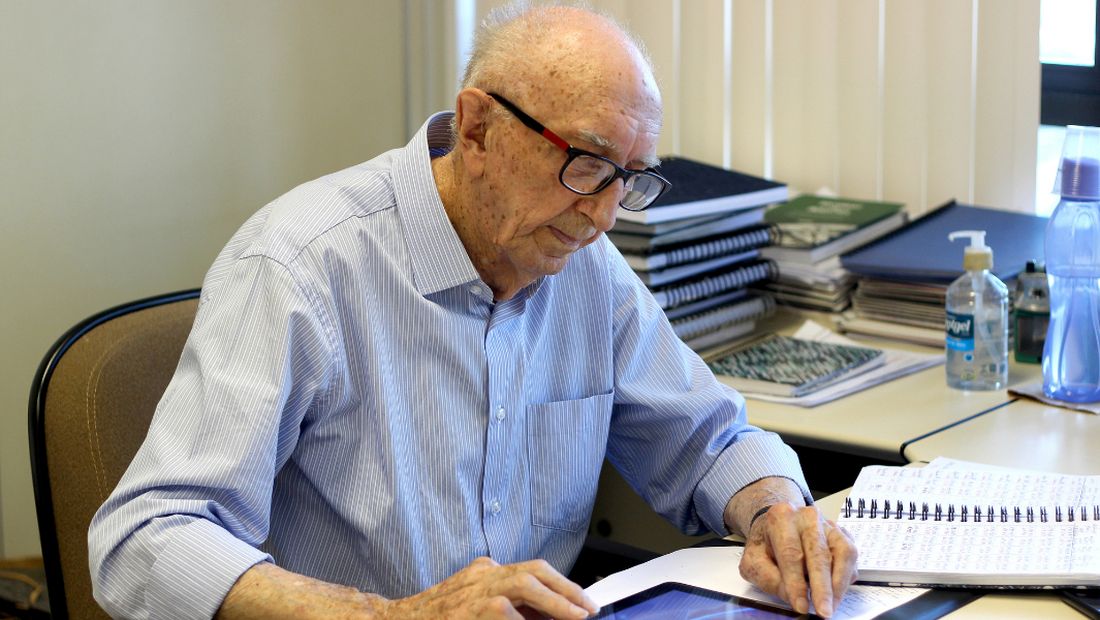
How long before you retire? If you know the answer in exact years, months, and days, you aren’t alone. For many good reasons, we doctors are more likely to be counting down the years until we retire rather than counting up the years since we started working. For me, if I’m to break the Guinness World Record, I have 69 more years, 3 months and 6 days left to go. That would surpass the current achievement for the longest career at one company, Mr. Walter Orthmann, who has been sitting at the same desk for 84 years. At 100 years old, Mr. Orthmann still shows up every Monday morning, as bright eyed and bushy tailed as a young squirrel. I’ll be 119 when I break his streak, which would also put me past Anthony Mancinelli, a New York barber who at 107 years of age was still brushing off his chair for the next customer. Unbelievable, I know! I wonder, what’s the one weird trick these guys are doing that keeps them going?
Of course, the job itself matters. Some jobs, like being a police officer, aren’t suitable for old people. Or are they? Officer L.C. “Buckshot” Smith was still keeping streets safe from his patrol car at 91 years old. After a bit of searching, I found pretty much any job you can think of has a very long-lasting Energizer Bunny story: A female surgeon who was operating at 90 years old, a 100-year-old rheumatologist who was still teaching at University of California, San Francisco, and a 105-year-old Japanese physician who was still seeing patients. There are plenty of geriatric lawyers, nurses, land surveyors, accountants, judges, you name it. So it seems it’s not the work, but the worker that matters. Why do some older workers recharge daily and carry on while many younger ones say the daily grind is burning them out? What makes the Greatest Generation so great?
We all know colleagues who hung up their white coats early. In my medical group, it’s often financially feasible to retire at 58 and many have chosen that option. Yet, we have loads of Partner Emeritus docs in their 70’s who still log on to EPIC and pitch in everyday.
“So, how do you keep going?” I asked my 105-year-old patient who still walks and manages his affairs. “Just stay healthy,” he advised. A circular argument, yet he’s right. You must both be lucky and also choose to be active mentally and physically. Mr. Mancinelli, who was barbering full time at 107 years old, had no aches and pains and all his teeth. He pruned his own bushes. The data are crystal clear that physical activity adds not only years of life, but also improves cognitive capabilities during those years.
As for beating burnout, it seems the one trick that these ultraworkers do is to focus only on the present. Mr. Orthmann’s pithy advice as quoted by NPR is, “You need to get busy with the present, not the past or the future.” These centenarian employees also frame their work not as stressful but rather as their daily series of problems to be solved.
When I asked my super-geriatric patient how he sleeps so well, he said, “I never worry when I get into bed, I just shut my eyes and sleep. I’ll think about tomorrow when I wake up.” Now if I can do that about 25,000 more times, I’ll have the record.
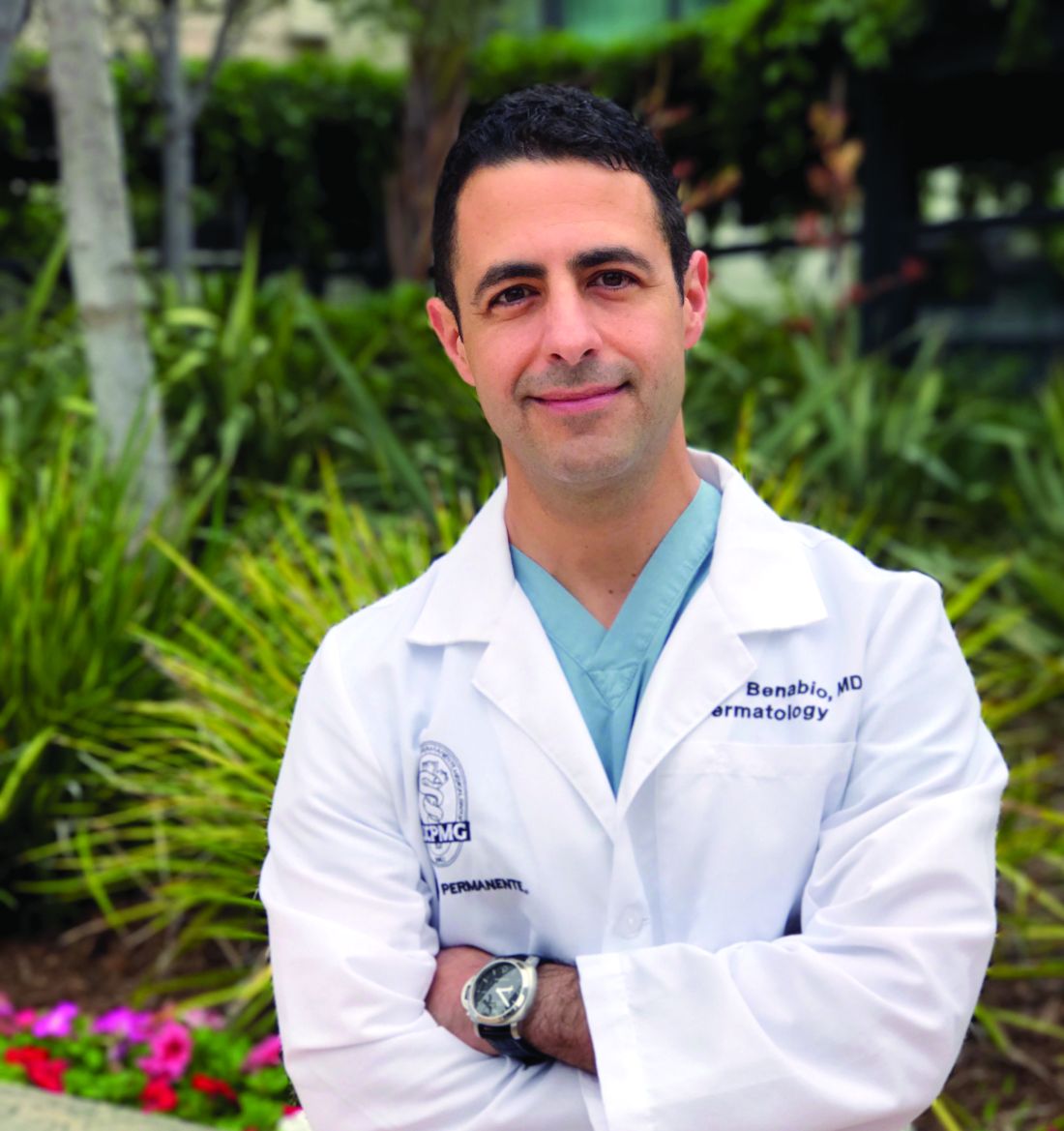
Dr. Jeff Benabio is director of Healthcare Transformation and chief of dermatology at Kaiser Permanente San Diego. The opinions expressed in this column are his own and do not represent those of Kaiser Permanente. Dr. Benabio is @Dermdoc on Twitter. Write to him at [email protected]
“Here and now is what counts. So, let’s go to work!” –Walter Orthmann, 100 years old
How long before you retire? If you know the answer in exact years, months, and days, you aren’t alone. For many good reasons, we doctors are more likely to be counting down the years until we retire rather than counting up the years since we started working. For me, if I’m to break the Guinness World Record, I have 69 more years, 3 months and 6 days left to go. That would surpass the current achievement for the longest career at one company, Mr. Walter Orthmann, who has been sitting at the same desk for 84 years. At 100 years old, Mr. Orthmann still shows up every Monday morning, as bright eyed and bushy tailed as a young squirrel. I’ll be 119 when I break his streak, which would also put me past Anthony Mancinelli, a New York barber who at 107 years of age was still brushing off his chair for the next customer. Unbelievable, I know! I wonder, what’s the one weird trick these guys are doing that keeps them going?
Of course, the job itself matters. Some jobs, like being a police officer, aren’t suitable for old people. Or are they? Officer L.C. “Buckshot” Smith was still keeping streets safe from his patrol car at 91 years old. After a bit of searching, I found pretty much any job you can think of has a very long-lasting Energizer Bunny story: A female surgeon who was operating at 90 years old, a 100-year-old rheumatologist who was still teaching at University of California, San Francisco, and a 105-year-old Japanese physician who was still seeing patients. There are plenty of geriatric lawyers, nurses, land surveyors, accountants, judges, you name it. So it seems it’s not the work, but the worker that matters. Why do some older workers recharge daily and carry on while many younger ones say the daily grind is burning them out? What makes the Greatest Generation so great?
We all know colleagues who hung up their white coats early. In my medical group, it’s often financially feasible to retire at 58 and many have chosen that option. Yet, we have loads of Partner Emeritus docs in their 70’s who still log on to EPIC and pitch in everyday.
“So, how do you keep going?” I asked my 105-year-old patient who still walks and manages his affairs. “Just stay healthy,” he advised. A circular argument, yet he’s right. You must both be lucky and also choose to be active mentally and physically. Mr. Mancinelli, who was barbering full time at 107 years old, had no aches and pains and all his teeth. He pruned his own bushes. The data are crystal clear that physical activity adds not only years of life, but also improves cognitive capabilities during those years.
As for beating burnout, it seems the one trick that these ultraworkers do is to focus only on the present. Mr. Orthmann’s pithy advice as quoted by NPR is, “You need to get busy with the present, not the past or the future.” These centenarian employees also frame their work not as stressful but rather as their daily series of problems to be solved.
When I asked my super-geriatric patient how he sleeps so well, he said, “I never worry when I get into bed, I just shut my eyes and sleep. I’ll think about tomorrow when I wake up.” Now if I can do that about 25,000 more times, I’ll have the record.
Dr. Jeff Benabio is director of Healthcare Transformation and chief of dermatology at Kaiser Permanente San Diego. The opinions expressed in this column are his own and do not represent those of Kaiser Permanente. Dr. Benabio is @Dermdoc on Twitter. Write to him at [email protected]
“Here and now is what counts. So, let’s go to work!” –Walter Orthmann, 100 years old
How long before you retire? If you know the answer in exact years, months, and days, you aren’t alone. For many good reasons, we doctors are more likely to be counting down the years until we retire rather than counting up the years since we started working. For me, if I’m to break the Guinness World Record, I have 69 more years, 3 months and 6 days left to go. That would surpass the current achievement for the longest career at one company, Mr. Walter Orthmann, who has been sitting at the same desk for 84 years. At 100 years old, Mr. Orthmann still shows up every Monday morning, as bright eyed and bushy tailed as a young squirrel. I’ll be 119 when I break his streak, which would also put me past Anthony Mancinelli, a New York barber who at 107 years of age was still brushing off his chair for the next customer. Unbelievable, I know! I wonder, what’s the one weird trick these guys are doing that keeps them going?
Of course, the job itself matters. Some jobs, like being a police officer, aren’t suitable for old people. Or are they? Officer L.C. “Buckshot” Smith was still keeping streets safe from his patrol car at 91 years old. After a bit of searching, I found pretty much any job you can think of has a very long-lasting Energizer Bunny story: A female surgeon who was operating at 90 years old, a 100-year-old rheumatologist who was still teaching at University of California, San Francisco, and a 105-year-old Japanese physician who was still seeing patients. There are plenty of geriatric lawyers, nurses, land surveyors, accountants, judges, you name it. So it seems it’s not the work, but the worker that matters. Why do some older workers recharge daily and carry on while many younger ones say the daily grind is burning them out? What makes the Greatest Generation so great?
We all know colleagues who hung up their white coats early. In my medical group, it’s often financially feasible to retire at 58 and many have chosen that option. Yet, we have loads of Partner Emeritus docs in their 70’s who still log on to EPIC and pitch in everyday.
“So, how do you keep going?” I asked my 105-year-old patient who still walks and manages his affairs. “Just stay healthy,” he advised. A circular argument, yet he’s right. You must both be lucky and also choose to be active mentally and physically. Mr. Mancinelli, who was barbering full time at 107 years old, had no aches and pains and all his teeth. He pruned his own bushes. The data are crystal clear that physical activity adds not only years of life, but also improves cognitive capabilities during those years.
As for beating burnout, it seems the one trick that these ultraworkers do is to focus only on the present. Mr. Orthmann’s pithy advice as quoted by NPR is, “You need to get busy with the present, not the past or the future.” These centenarian employees also frame their work not as stressful but rather as their daily series of problems to be solved.
When I asked my super-geriatric patient how he sleeps so well, he said, “I never worry when I get into bed, I just shut my eyes and sleep. I’ll think about tomorrow when I wake up.” Now if I can do that about 25,000 more times, I’ll have the record.
Dr. Jeff Benabio is director of Healthcare Transformation and chief of dermatology at Kaiser Permanente San Diego. The opinions expressed in this column are his own and do not represent those of Kaiser Permanente. Dr. Benabio is @Dermdoc on Twitter. Write to him at [email protected]
When is the ideal time to try for a baby after bariatric surgery?
Doctors are advising women who have had bariatric surgery to wait at least 2 years before trying to conceive to reduce the risk of a small-for-gestational-age baby.
In fact, babies conceived less than 2 years post bariatric surgery are 15 times more likely to be small for gestational age as those conceived after this cut-off point, new study findings indicate.
Ana Carreira, MD, Coimbra Hospital and University Centre, Portugal, presented the findings as a poster at the European Congress on Obesity (ECO) 2022.
“The prevalence of small-for-gestational-age babies was similar across the different types of bariatric surgery, and we calculated that the cut-off for the bariatric-surgery-to-conception interval for a lower risk of small for gestational age babies was 24.5 months,” Dr. Carreira reported.
The study also found that for each additional month after the 2-year time point from bariatric surgery to conception, there was a 4.2-g (0.15-oz) increase in birth weight, and there was a 5% lower risk for a small-for-gestational-age neonate.
“Clinically, this is very significant,” she told this news organization.
“While it may be possible to slightly adjust this on an individual basis, it is important that women who are undergoing bariatric surgery are aware of the risk of early conception and of the benefits of delaying pregnancy,” she added.
Asked to comment, Kari Johansson, PhD, of the Karolinska Institute, Stockholm, who has worked in the field, said: “These increased risks have been hypothesized to potentially be attributed to the inadequate in utero availability of nutrients to the fetus, especially during the first year post bariatric surgery when the rapid and largest weight loss occurs. This is why many clinical guidelines recommend women wait 12-24 months until getting pregnant.”
Indeed, the American College of Obstetricians and Gynecologists recommends women wait 12-24 months post bariatric surgery before trying to conceive.
Dr. Johansson also noted, however, that there were no significant increased risks of adverse outcomes between pregnancies with a surgery-to-conception interval of 12 months or less versus over 12 months in a recent meta-analysis. But those authors also concluded that large cohorts with sufficient power are needed “before any definite conclusions can be made on the optimal surgery-to-conception interval,” she cautioned.
All types of bariatric surgery investigated
Bariatric surgery, which is increasingly popular in women of reproductive age, involves rapid weight loss, which can trigger improved fertility, Dr. Carreira explained. Currently, clinics generally advise women to wait at least 1 year before trying for a baby post-surgery.
Dr. Carreira and colleagues conducted the study because “the optimal bariatric-surgery-to-conception interval has yet to be determined,” and they wanted to examine the issue of small-for-gestational-age babies in particular, she noted. They also examined outcomes after a number of different bariatric procedures.
They retrospectively reviewed a cohort of 48 post surgery pregnancies (in 2008-2020) with a minimum follow-up of 30 weeks and determined the proportion of small-for-gestational-age neonates, defined as having a birth weight less than the 10th percentile according to National Center for Health Statistics growth charts.
Mean maternal age was 34.3 years, mean body mass index at conception was 30.9 kg/m2, and 70.8% had a bariatric-surgery-to-conception interval of over 24 months, 14.6% of 12-24 months, and 14.6% of less than 12 months.
Bariatric surgeries included adjustable gastric banding (22.9%), sleeve gastrectomy (35.4%), Roux-en-Y gastric bypass (37.5%), and biliopancreatic diversion (4.2%).
Overall, mean birth weight was 2.98 kg (6.6 lb) and the prevalence of small-for-gestational-age babies was 26.3%.
“For an interval of less than 24 months, around 60% of babies were small for gestational age,” Dr. Carreira noted.
Most babies who were small for gestational age were conceived at 18 months (median), and those who were not were conceived at 59 months (median).
And, after adjustment for maternal comorbidities, the odds ratio for a small-for-gestational-age neonate was 15.1 (95% confidence interval, 2.4-93.1) for a baby conceived less than 24 months after surgery.
“Some people think the interval can change according to the type of bariatric surgery, but we found no difference in findings according to [surgery] type,” added Dr. Carreira.
She pointed out that after discharge from their endocrinology clinic (after bariatric surgery), the women are cared for by their family doctor, “and we find that when they return to us in pregnancy their nutrient deficiencies have not been properly addressed. They need to be addressed at least 6 months prior to conception.”
“We recommend that women wait at least 2 years after bariatric surgery before trying to conceive, irrespective of the type of surgery,” she reiterated.
Dr. Carreira and Dr. Johansson have reported no relevant financial relationships.
A version of this article first appeared on Medscape.com.
Doctors are advising women who have had bariatric surgery to wait at least 2 years before trying to conceive to reduce the risk of a small-for-gestational-age baby.
In fact, babies conceived less than 2 years post bariatric surgery are 15 times more likely to be small for gestational age as those conceived after this cut-off point, new study findings indicate.
Ana Carreira, MD, Coimbra Hospital and University Centre, Portugal, presented the findings as a poster at the European Congress on Obesity (ECO) 2022.
“The prevalence of small-for-gestational-age babies was similar across the different types of bariatric surgery, and we calculated that the cut-off for the bariatric-surgery-to-conception interval for a lower risk of small for gestational age babies was 24.5 months,” Dr. Carreira reported.
The study also found that for each additional month after the 2-year time point from bariatric surgery to conception, there was a 4.2-g (0.15-oz) increase in birth weight, and there was a 5% lower risk for a small-for-gestational-age neonate.
“Clinically, this is very significant,” she told this news organization.
“While it may be possible to slightly adjust this on an individual basis, it is important that women who are undergoing bariatric surgery are aware of the risk of early conception and of the benefits of delaying pregnancy,” she added.
Asked to comment, Kari Johansson, PhD, of the Karolinska Institute, Stockholm, who has worked in the field, said: “These increased risks have been hypothesized to potentially be attributed to the inadequate in utero availability of nutrients to the fetus, especially during the first year post bariatric surgery when the rapid and largest weight loss occurs. This is why many clinical guidelines recommend women wait 12-24 months until getting pregnant.”
Indeed, the American College of Obstetricians and Gynecologists recommends women wait 12-24 months post bariatric surgery before trying to conceive.
Dr. Johansson also noted, however, that there were no significant increased risks of adverse outcomes between pregnancies with a surgery-to-conception interval of 12 months or less versus over 12 months in a recent meta-analysis. But those authors also concluded that large cohorts with sufficient power are needed “before any definite conclusions can be made on the optimal surgery-to-conception interval,” she cautioned.
All types of bariatric surgery investigated
Bariatric surgery, which is increasingly popular in women of reproductive age, involves rapid weight loss, which can trigger improved fertility, Dr. Carreira explained. Currently, clinics generally advise women to wait at least 1 year before trying for a baby post-surgery.
Dr. Carreira and colleagues conducted the study because “the optimal bariatric-surgery-to-conception interval has yet to be determined,” and they wanted to examine the issue of small-for-gestational-age babies in particular, she noted. They also examined outcomes after a number of different bariatric procedures.
They retrospectively reviewed a cohort of 48 post surgery pregnancies (in 2008-2020) with a minimum follow-up of 30 weeks and determined the proportion of small-for-gestational-age neonates, defined as having a birth weight less than the 10th percentile according to National Center for Health Statistics growth charts.
Mean maternal age was 34.3 years, mean body mass index at conception was 30.9 kg/m2, and 70.8% had a bariatric-surgery-to-conception interval of over 24 months, 14.6% of 12-24 months, and 14.6% of less than 12 months.
Bariatric surgeries included adjustable gastric banding (22.9%), sleeve gastrectomy (35.4%), Roux-en-Y gastric bypass (37.5%), and biliopancreatic diversion (4.2%).
Overall, mean birth weight was 2.98 kg (6.6 lb) and the prevalence of small-for-gestational-age babies was 26.3%.
“For an interval of less than 24 months, around 60% of babies were small for gestational age,” Dr. Carreira noted.
Most babies who were small for gestational age were conceived at 18 months (median), and those who were not were conceived at 59 months (median).
And, after adjustment for maternal comorbidities, the odds ratio for a small-for-gestational-age neonate was 15.1 (95% confidence interval, 2.4-93.1) for a baby conceived less than 24 months after surgery.
“Some people think the interval can change according to the type of bariatric surgery, but we found no difference in findings according to [surgery] type,” added Dr. Carreira.
She pointed out that after discharge from their endocrinology clinic (after bariatric surgery), the women are cared for by their family doctor, “and we find that when they return to us in pregnancy their nutrient deficiencies have not been properly addressed. They need to be addressed at least 6 months prior to conception.”
“We recommend that women wait at least 2 years after bariatric surgery before trying to conceive, irrespective of the type of surgery,” she reiterated.
Dr. Carreira and Dr. Johansson have reported no relevant financial relationships.
A version of this article first appeared on Medscape.com.
Doctors are advising women who have had bariatric surgery to wait at least 2 years before trying to conceive to reduce the risk of a small-for-gestational-age baby.
In fact, babies conceived less than 2 years post bariatric surgery are 15 times more likely to be small for gestational age as those conceived after this cut-off point, new study findings indicate.
Ana Carreira, MD, Coimbra Hospital and University Centre, Portugal, presented the findings as a poster at the European Congress on Obesity (ECO) 2022.
“The prevalence of small-for-gestational-age babies was similar across the different types of bariatric surgery, and we calculated that the cut-off for the bariatric-surgery-to-conception interval for a lower risk of small for gestational age babies was 24.5 months,” Dr. Carreira reported.
The study also found that for each additional month after the 2-year time point from bariatric surgery to conception, there was a 4.2-g (0.15-oz) increase in birth weight, and there was a 5% lower risk for a small-for-gestational-age neonate.
“Clinically, this is very significant,” she told this news organization.
“While it may be possible to slightly adjust this on an individual basis, it is important that women who are undergoing bariatric surgery are aware of the risk of early conception and of the benefits of delaying pregnancy,” she added.
Asked to comment, Kari Johansson, PhD, of the Karolinska Institute, Stockholm, who has worked in the field, said: “These increased risks have been hypothesized to potentially be attributed to the inadequate in utero availability of nutrients to the fetus, especially during the first year post bariatric surgery when the rapid and largest weight loss occurs. This is why many clinical guidelines recommend women wait 12-24 months until getting pregnant.”
Indeed, the American College of Obstetricians and Gynecologists recommends women wait 12-24 months post bariatric surgery before trying to conceive.
Dr. Johansson also noted, however, that there were no significant increased risks of adverse outcomes between pregnancies with a surgery-to-conception interval of 12 months or less versus over 12 months in a recent meta-analysis. But those authors also concluded that large cohorts with sufficient power are needed “before any definite conclusions can be made on the optimal surgery-to-conception interval,” she cautioned.
All types of bariatric surgery investigated
Bariatric surgery, which is increasingly popular in women of reproductive age, involves rapid weight loss, which can trigger improved fertility, Dr. Carreira explained. Currently, clinics generally advise women to wait at least 1 year before trying for a baby post-surgery.
Dr. Carreira and colleagues conducted the study because “the optimal bariatric-surgery-to-conception interval has yet to be determined,” and they wanted to examine the issue of small-for-gestational-age babies in particular, she noted. They also examined outcomes after a number of different bariatric procedures.
They retrospectively reviewed a cohort of 48 post surgery pregnancies (in 2008-2020) with a minimum follow-up of 30 weeks and determined the proportion of small-for-gestational-age neonates, defined as having a birth weight less than the 10th percentile according to National Center for Health Statistics growth charts.
Mean maternal age was 34.3 years, mean body mass index at conception was 30.9 kg/m2, and 70.8% had a bariatric-surgery-to-conception interval of over 24 months, 14.6% of 12-24 months, and 14.6% of less than 12 months.
Bariatric surgeries included adjustable gastric banding (22.9%), sleeve gastrectomy (35.4%), Roux-en-Y gastric bypass (37.5%), and biliopancreatic diversion (4.2%).
Overall, mean birth weight was 2.98 kg (6.6 lb) and the prevalence of small-for-gestational-age babies was 26.3%.
“For an interval of less than 24 months, around 60% of babies were small for gestational age,” Dr. Carreira noted.
Most babies who were small for gestational age were conceived at 18 months (median), and those who were not were conceived at 59 months (median).
And, after adjustment for maternal comorbidities, the odds ratio for a small-for-gestational-age neonate was 15.1 (95% confidence interval, 2.4-93.1) for a baby conceived less than 24 months after surgery.
“Some people think the interval can change according to the type of bariatric surgery, but we found no difference in findings according to [surgery] type,” added Dr. Carreira.
She pointed out that after discharge from their endocrinology clinic (after bariatric surgery), the women are cared for by their family doctor, “and we find that when they return to us in pregnancy their nutrient deficiencies have not been properly addressed. They need to be addressed at least 6 months prior to conception.”
“We recommend that women wait at least 2 years after bariatric surgery before trying to conceive, irrespective of the type of surgery,” she reiterated.
Dr. Carreira and Dr. Johansson have reported no relevant financial relationships.
A version of this article first appeared on Medscape.com.
Keeping thyroid hormone treatment on target is key for the heart
A new study highlights the importance of avoiding both exogenous hyperthyroidism and exogenous hypothyroidism to decrease cardiovascular risk and death among patients receiving thyroid hormone treatment.
“Our findings suggest that clinicians should make every effort to maintain euthyroidism in patients on thyroid hormone treatment, regardless of underlying cardiovascular risk, particularly in vulnerable populations, such as older adults,” senior author Maria Papaleontiou, MD, said in an interview.
Commenting on the study, David S. Cooper, MD, of Johns Hopkins University School of Medicine, Baltimore, agreed that the findings are significant.
“Both undertreatment and overtreatment were associated with adverse cardiovascular outcomes, meaning that patients’ thyroid function needs to be monitored, and levothyroxine adjusted if need be, on an ongoing basis,” he told this news organization.
Getting the balance right: a tricky task
Variations in thyroid hormone levels falling above or below target ranges are common with thyroid hormone therapy, as a wide array of factors can prompt the need to regularly adjust dosing to maintain “index” levels. And while guidelines from the American Thyroid Association (ATA) recommend maintaining serum thyroid stimulating hormone (TSH) levels in the normal ranges during treatment, the task is tricky.
“Despite these [ATA] guidelines, prior studies in adults with hypothyroidism have shown that up to 30% are undertreated and up to 48% are overtreated,” said Dr. Papaleontiou, an assistant professor in the Division of Metabolism, Endocrinology at the University of Michigan, Ann Arbor.
In a previous study, Dr. Papaleontiou and colleagues showed that the intensity of thyroid hormone treatment is a modifiable risk factor for incident atrial fibrillation and stroke, however, less is understood about the association with cardiovascular mortality.
For the new study, published in JAMA Network Open, Josh M. Evron, MD, of the University of North Carolina, Chapel Hill, and colleagues further investigated the issue in a large, retrospective cohort of 705,307 adults in the Veterans Health Administration Corporate Data Warehouse treated with thyroid hormone during 2004-2017 who had a median follow-up of 4 years.
They investigated the roles of TSH as well as free thyroxine (FT4) levels among 701,929 adults in the group with data on TSH and 373,981 patients with FT4 measurements.
The mean age of participants was 67 years and 88.7% were male.
Over the course of the study, 10.8% of patients (75,963) died of cardiovascular causes.
Compared with patients with normal thyroid levels, those with exogenous hyperthyroidism related to thyroid hormone treatment had an increased risk of cardiovascular mortality, specifically including when TSH levels were below 0.1 mIU/L (adjusted hazard ratio, 1.39) and when FT4 levels were above 1.9 ng/dL (AHR, 1.29), independent of factors including age, sex, and traditional cardiovascular risk factors, including hypertension, smoking, and previous cardiovascular disease or arrhythmia.
In addition, the increased risk of cardiovascular mortality was observed with exogenous hypothyroidism, specifically among those with TSH levels above 20 mIU/L (AHR, 2.67) and FT4 levels below 0.7 ng/dL (AHR, 1.56), after multivariate adjustment.
Of note, the risk of cardiovascular mortality was dose-dependent, with the risk increasing progressively with the lower and higher TSH levels, compared with normal levels.
The increased mortality risk in relation to TSH levels was more pronounced among older patients, compared with FT4 associations, the authors note.
“From a clinical perspective, older adults, and particularly the oldest old (aged 85 years), appear to be the most vulnerable, with increased risk of cardiovascular mortality with both exogenous hyperthyroidism and hypothyroidism,” they report.
Among key limitations is that women, who make up the majority of patients with thyroid disease, are under-represented in the predominantly male population of the Veterans Health Administration.
Nevertheless, “because the risk of cardiovascular disease is higher for men than for women, and because more than 70,000 women were included in this cohort, the results of this study are highly clinically relevant,” the authors note.
Addressing over- and under-treatment will avoid harm
The results are also important considering the status of levothyroxine (for hypothyroidism) as consistently ranking among the top three prescription medications in the United States.
And with the common occurrence of exogenous hyperthyroidism or hypothyroidism, the findings have important implications.
“Addressing over- and under-treatment of hypothyroidism promptly will help reduce patient harm, particularly in vulnerable populations such as older adults who are at higher risk for adverse effects,” Dr. Papaleontiou said.
Dr. Cooper further commented that the findings underscore the need to be aware of treatment adjustments and targets that may vary according to patient age.
“In older persons, over 65-70, the target TSH may be higher [for example, 2-4 mIU/L] than in younger persons, and in patients above ages 70 or 80, serum TSH levels may be allowed to rise even further into the 4-6 mIU/L range,” he explained.
“The older the patient, the higher the chance for an adverse cardiovascular outcome if the TSH is subnormal due to iatrogenic thyrotoxicosis,” Dr. Cooper explained.
“In contrast, in younger individuals, an elevated TSH, indicating mild [subclinical] hypothyroidism may be associated with increased cardiovascular risk, especially with serum TSH levels greater than 7 mIU/L.”
The authors have reported no relevant financial relationships.
A version of this article first appeared on Medscape.com.
A new study highlights the importance of avoiding both exogenous hyperthyroidism and exogenous hypothyroidism to decrease cardiovascular risk and death among patients receiving thyroid hormone treatment.
“Our findings suggest that clinicians should make every effort to maintain euthyroidism in patients on thyroid hormone treatment, regardless of underlying cardiovascular risk, particularly in vulnerable populations, such as older adults,” senior author Maria Papaleontiou, MD, said in an interview.
Commenting on the study, David S. Cooper, MD, of Johns Hopkins University School of Medicine, Baltimore, agreed that the findings are significant.
“Both undertreatment and overtreatment were associated with adverse cardiovascular outcomes, meaning that patients’ thyroid function needs to be monitored, and levothyroxine adjusted if need be, on an ongoing basis,” he told this news organization.
Getting the balance right: a tricky task
Variations in thyroid hormone levels falling above or below target ranges are common with thyroid hormone therapy, as a wide array of factors can prompt the need to regularly adjust dosing to maintain “index” levels. And while guidelines from the American Thyroid Association (ATA) recommend maintaining serum thyroid stimulating hormone (TSH) levels in the normal ranges during treatment, the task is tricky.
“Despite these [ATA] guidelines, prior studies in adults with hypothyroidism have shown that up to 30% are undertreated and up to 48% are overtreated,” said Dr. Papaleontiou, an assistant professor in the Division of Metabolism, Endocrinology at the University of Michigan, Ann Arbor.
In a previous study, Dr. Papaleontiou and colleagues showed that the intensity of thyroid hormone treatment is a modifiable risk factor for incident atrial fibrillation and stroke, however, less is understood about the association with cardiovascular mortality.
For the new study, published in JAMA Network Open, Josh M. Evron, MD, of the University of North Carolina, Chapel Hill, and colleagues further investigated the issue in a large, retrospective cohort of 705,307 adults in the Veterans Health Administration Corporate Data Warehouse treated with thyroid hormone during 2004-2017 who had a median follow-up of 4 years.
They investigated the roles of TSH as well as free thyroxine (FT4) levels among 701,929 adults in the group with data on TSH and 373,981 patients with FT4 measurements.
The mean age of participants was 67 years and 88.7% were male.
Over the course of the study, 10.8% of patients (75,963) died of cardiovascular causes.
Compared with patients with normal thyroid levels, those with exogenous hyperthyroidism related to thyroid hormone treatment had an increased risk of cardiovascular mortality, specifically including when TSH levels were below 0.1 mIU/L (adjusted hazard ratio, 1.39) and when FT4 levels were above 1.9 ng/dL (AHR, 1.29), independent of factors including age, sex, and traditional cardiovascular risk factors, including hypertension, smoking, and previous cardiovascular disease or arrhythmia.
In addition, the increased risk of cardiovascular mortality was observed with exogenous hypothyroidism, specifically among those with TSH levels above 20 mIU/L (AHR, 2.67) and FT4 levels below 0.7 ng/dL (AHR, 1.56), after multivariate adjustment.
Of note, the risk of cardiovascular mortality was dose-dependent, with the risk increasing progressively with the lower and higher TSH levels, compared with normal levels.
The increased mortality risk in relation to TSH levels was more pronounced among older patients, compared with FT4 associations, the authors note.
“From a clinical perspective, older adults, and particularly the oldest old (aged 85 years), appear to be the most vulnerable, with increased risk of cardiovascular mortality with both exogenous hyperthyroidism and hypothyroidism,” they report.
Among key limitations is that women, who make up the majority of patients with thyroid disease, are under-represented in the predominantly male population of the Veterans Health Administration.
Nevertheless, “because the risk of cardiovascular disease is higher for men than for women, and because more than 70,000 women were included in this cohort, the results of this study are highly clinically relevant,” the authors note.
Addressing over- and under-treatment will avoid harm
The results are also important considering the status of levothyroxine (for hypothyroidism) as consistently ranking among the top three prescription medications in the United States.
And with the common occurrence of exogenous hyperthyroidism or hypothyroidism, the findings have important implications.
“Addressing over- and under-treatment of hypothyroidism promptly will help reduce patient harm, particularly in vulnerable populations such as older adults who are at higher risk for adverse effects,” Dr. Papaleontiou said.
Dr. Cooper further commented that the findings underscore the need to be aware of treatment adjustments and targets that may vary according to patient age.
“In older persons, over 65-70, the target TSH may be higher [for example, 2-4 mIU/L] than in younger persons, and in patients above ages 70 or 80, serum TSH levels may be allowed to rise even further into the 4-6 mIU/L range,” he explained.
“The older the patient, the higher the chance for an adverse cardiovascular outcome if the TSH is subnormal due to iatrogenic thyrotoxicosis,” Dr. Cooper explained.
“In contrast, in younger individuals, an elevated TSH, indicating mild [subclinical] hypothyroidism may be associated with increased cardiovascular risk, especially with serum TSH levels greater than 7 mIU/L.”
The authors have reported no relevant financial relationships.
A version of this article first appeared on Medscape.com.
A new study highlights the importance of avoiding both exogenous hyperthyroidism and exogenous hypothyroidism to decrease cardiovascular risk and death among patients receiving thyroid hormone treatment.
“Our findings suggest that clinicians should make every effort to maintain euthyroidism in patients on thyroid hormone treatment, regardless of underlying cardiovascular risk, particularly in vulnerable populations, such as older adults,” senior author Maria Papaleontiou, MD, said in an interview.
Commenting on the study, David S. Cooper, MD, of Johns Hopkins University School of Medicine, Baltimore, agreed that the findings are significant.
“Both undertreatment and overtreatment were associated with adverse cardiovascular outcomes, meaning that patients’ thyroid function needs to be monitored, and levothyroxine adjusted if need be, on an ongoing basis,” he told this news organization.
Getting the balance right: a tricky task
Variations in thyroid hormone levels falling above or below target ranges are common with thyroid hormone therapy, as a wide array of factors can prompt the need to regularly adjust dosing to maintain “index” levels. And while guidelines from the American Thyroid Association (ATA) recommend maintaining serum thyroid stimulating hormone (TSH) levels in the normal ranges during treatment, the task is tricky.
“Despite these [ATA] guidelines, prior studies in adults with hypothyroidism have shown that up to 30% are undertreated and up to 48% are overtreated,” said Dr. Papaleontiou, an assistant professor in the Division of Metabolism, Endocrinology at the University of Michigan, Ann Arbor.
In a previous study, Dr. Papaleontiou and colleagues showed that the intensity of thyroid hormone treatment is a modifiable risk factor for incident atrial fibrillation and stroke, however, less is understood about the association with cardiovascular mortality.
For the new study, published in JAMA Network Open, Josh M. Evron, MD, of the University of North Carolina, Chapel Hill, and colleagues further investigated the issue in a large, retrospective cohort of 705,307 adults in the Veterans Health Administration Corporate Data Warehouse treated with thyroid hormone during 2004-2017 who had a median follow-up of 4 years.
They investigated the roles of TSH as well as free thyroxine (FT4) levels among 701,929 adults in the group with data on TSH and 373,981 patients with FT4 measurements.
The mean age of participants was 67 years and 88.7% were male.
Over the course of the study, 10.8% of patients (75,963) died of cardiovascular causes.
Compared with patients with normal thyroid levels, those with exogenous hyperthyroidism related to thyroid hormone treatment had an increased risk of cardiovascular mortality, specifically including when TSH levels were below 0.1 mIU/L (adjusted hazard ratio, 1.39) and when FT4 levels were above 1.9 ng/dL (AHR, 1.29), independent of factors including age, sex, and traditional cardiovascular risk factors, including hypertension, smoking, and previous cardiovascular disease or arrhythmia.
In addition, the increased risk of cardiovascular mortality was observed with exogenous hypothyroidism, specifically among those with TSH levels above 20 mIU/L (AHR, 2.67) and FT4 levels below 0.7 ng/dL (AHR, 1.56), after multivariate adjustment.
Of note, the risk of cardiovascular mortality was dose-dependent, with the risk increasing progressively with the lower and higher TSH levels, compared with normal levels.
The increased mortality risk in relation to TSH levels was more pronounced among older patients, compared with FT4 associations, the authors note.
“From a clinical perspective, older adults, and particularly the oldest old (aged 85 years), appear to be the most vulnerable, with increased risk of cardiovascular mortality with both exogenous hyperthyroidism and hypothyroidism,” they report.
Among key limitations is that women, who make up the majority of patients with thyroid disease, are under-represented in the predominantly male population of the Veterans Health Administration.
Nevertheless, “because the risk of cardiovascular disease is higher for men than for women, and because more than 70,000 women were included in this cohort, the results of this study are highly clinically relevant,” the authors note.
Addressing over- and under-treatment will avoid harm
The results are also important considering the status of levothyroxine (for hypothyroidism) as consistently ranking among the top three prescription medications in the United States.
And with the common occurrence of exogenous hyperthyroidism or hypothyroidism, the findings have important implications.
“Addressing over- and under-treatment of hypothyroidism promptly will help reduce patient harm, particularly in vulnerable populations such as older adults who are at higher risk for adverse effects,” Dr. Papaleontiou said.
Dr. Cooper further commented that the findings underscore the need to be aware of treatment adjustments and targets that may vary according to patient age.
“In older persons, over 65-70, the target TSH may be higher [for example, 2-4 mIU/L] than in younger persons, and in patients above ages 70 or 80, serum TSH levels may be allowed to rise even further into the 4-6 mIU/L range,” he explained.
“The older the patient, the higher the chance for an adverse cardiovascular outcome if the TSH is subnormal due to iatrogenic thyrotoxicosis,” Dr. Cooper explained.
“In contrast, in younger individuals, an elevated TSH, indicating mild [subclinical] hypothyroidism may be associated with increased cardiovascular risk, especially with serum TSH levels greater than 7 mIU/L.”
The authors have reported no relevant financial relationships.
A version of this article first appeared on Medscape.com.
Omicron breakthrough cases boost protection, studies say
two preprint studies show.
The University of Washington, Seattle, working with Vir Biotechnology of San Francisco, looked at blood samples of vaccinated people who had breakthrough cases of Delta or Omicron and compared the samples with three other groups: people who caught COVID and were later vaccinated, vaccinated people who were never infected, and people who were infected and never vaccinated.
The vaccinated people who had a breakthrough case of Omicron produced antibodies that helped protect against coronavirus variants, whereas unvaccinated people who caught Omicron didn’t produce as many antibodies, the study showed.
BioNTech, the German biotechnology company, found that people who’d been double and triple vaccinated and then became infected with Omicron had a better B-cell response than people who’d gotten a booster shot but had not been infected.
The University of Washington research team also came up with similar findings about B cells.
The findings don’t mean people should deliberately try to become infected with COVID, said Alexandra Walls, PhD, one of the University of Washington scientists, according to Business Standard.
But the study does indicate “that we are at the point where we may want to consider having a different vaccine to boost people,” said David Veesler, PhD, of the University of Washington team.
“We should think about breakthrough infections as essentially equivalent to another dose of vaccine,” John Wherry, PhD, a professor and director of the Institute for Immunology at the University of Pennsylvania, Philadelphia, told Business Standard. Dr. Wherry was not involved in the studies but reviewed the BioNTech study.
A version of this article first appeared on WebMD.com.
two preprint studies show.
The University of Washington, Seattle, working with Vir Biotechnology of San Francisco, looked at blood samples of vaccinated people who had breakthrough cases of Delta or Omicron and compared the samples with three other groups: people who caught COVID and were later vaccinated, vaccinated people who were never infected, and people who were infected and never vaccinated.
The vaccinated people who had a breakthrough case of Omicron produced antibodies that helped protect against coronavirus variants, whereas unvaccinated people who caught Omicron didn’t produce as many antibodies, the study showed.
BioNTech, the German biotechnology company, found that people who’d been double and triple vaccinated and then became infected with Omicron had a better B-cell response than people who’d gotten a booster shot but had not been infected.
The University of Washington research team also came up with similar findings about B cells.
The findings don’t mean people should deliberately try to become infected with COVID, said Alexandra Walls, PhD, one of the University of Washington scientists, according to Business Standard.
But the study does indicate “that we are at the point where we may want to consider having a different vaccine to boost people,” said David Veesler, PhD, of the University of Washington team.
“We should think about breakthrough infections as essentially equivalent to another dose of vaccine,” John Wherry, PhD, a professor and director of the Institute for Immunology at the University of Pennsylvania, Philadelphia, told Business Standard. Dr. Wherry was not involved in the studies but reviewed the BioNTech study.
A version of this article first appeared on WebMD.com.
two preprint studies show.
The University of Washington, Seattle, working with Vir Biotechnology of San Francisco, looked at blood samples of vaccinated people who had breakthrough cases of Delta or Omicron and compared the samples with three other groups: people who caught COVID and were later vaccinated, vaccinated people who were never infected, and people who were infected and never vaccinated.
The vaccinated people who had a breakthrough case of Omicron produced antibodies that helped protect against coronavirus variants, whereas unvaccinated people who caught Omicron didn’t produce as many antibodies, the study showed.
BioNTech, the German biotechnology company, found that people who’d been double and triple vaccinated and then became infected with Omicron had a better B-cell response than people who’d gotten a booster shot but had not been infected.
The University of Washington research team also came up with similar findings about B cells.
The findings don’t mean people should deliberately try to become infected with COVID, said Alexandra Walls, PhD, one of the University of Washington scientists, according to Business Standard.
But the study does indicate “that we are at the point where we may want to consider having a different vaccine to boost people,” said David Veesler, PhD, of the University of Washington team.
“We should think about breakthrough infections as essentially equivalent to another dose of vaccine,” John Wherry, PhD, a professor and director of the Institute for Immunology at the University of Pennsylvania, Philadelphia, told Business Standard. Dr. Wherry was not involved in the studies but reviewed the BioNTech study.
A version of this article first appeared on WebMD.com.
Student loan forgiveness plans exclude physicians
In the run up to the midterm elections in November, President Biden has warmed to student loan forgiveness. However, before even being proposed,
What was the plan?
During the 2020 election, student loan forgiveness was a hot topic as the COVID epidemic raged. The CARES Act has placed all federal student loans in forbearance, with no payments made and the interest rate set to 0% to prevent further accrual. While this was tremendously useful to 45 million borrowers around the country (including the author), nothing material was done to deal with the loans.
The Biden Administration’s approach at that time was multi-tiered and chaotic. Plans were put forward that either expanded Public Service Loan Forgiveness (PSLF) or capped it. Plans were put forward that either extended free undergraduate or severely limited it through Pell Grants. Unfortunately, that duality continues today, with current plans not having a clear goal or a target group of beneficiaries.
Necessary CARES Act extensions
The Biden Administration has attempted repeatedly to turn the student loan apparatus back on, restarting payments en masse. However, each time, they are beset by challenges, ranging from repeat COVID spikes to servicer withdrawals or macroeconomic indicators of a recession.
At each step, the administration has had little choice but to extend the CARES Act forbearance, lest they suffer retribution for hastily resuming payments for 45 million borrowers without the apparatus to do so. Two years ago, the major federal servicers laid off hundreds, if not thousands, of staffers responsible for payment processing, accounting, customer care, and taxation. Hiring, training, and staffing these positions is nontrivial.
The administration has been out of step with servicers such that three of the largest have chosen not to renew their contracts: Navient, MyFedLoan, and Granite State Management and Resources. This has left 15 million borrowers in the lurch, not knowing who their servicer is – and, even worse, losing track of qualifying payments toward programs like PSLF.
Avenues of forgiveness
There are two major pathways to forgiveness. It is widely believed that the executive branch has the authority to broadly forgive student loans under executive order and managed through the U.S. Department of Education.
The alternative is through congressional action, voting on forgiveness as an economic stimulus plan. There is little appetite in Congress for forgiveness, and prominent congresspeople like Senator Warren and Senator Schumer have both pushed the executive branch for forgiveness in recognition of this.
What has been proposed?
First, it’s important to state that as headline-grabbing as it is to see that $50,000 of forgiveness has been proposed, the reality is that President Biden has repeatedly stated that he will not be in favor of that level of forgiveness. Instead, the number most commonly being discussed is $10,000. This would represent an unprecedented amount of support, alleviating 35% of borrowers of all student debt.
The impact of proposed forgiveness plans for physicians
For the medical community, sadly, this doesn’t represent a significant amount of forgiveness. At graduation, the average MD has $203,000 in debt, and the average DO has $258,000 in debt. These numbers grow during residency for years before any meaningful payments are made.
Further weakening forgiveness plans for physicians has been two caps proposed by the administration in recent days. The first is an income cap of $125,000. While this would maintain forgiveness for nearly all residents and fellows, this would exclude nearly every practicing physician. The alternative to an income cap is specific exclusion of certain careers seen to be high-earning: doctors and lawyers.
The bottom line
Physicians are unlikely to be included in any forgiveness plans being proposed recently by the Biden Administration. If they are considered, it will be for exclusion from any forgiveness offered.
For physicians no longer eligible for PSLF, this exclusion needs to be considered in managing the student loan debt associated with becoming a doctor.
Dr. Palmer is a part-time instructor, department of pediatrics, Harvard Medical School, Boston, and staff physician, department of medical critical care, Boston Children’s Hospital. He disclosed that he serves as director for Panacea Financial.
A version of this article first appeared on Medscape.com.
In the run up to the midterm elections in November, President Biden has warmed to student loan forgiveness. However, before even being proposed,
What was the plan?
During the 2020 election, student loan forgiveness was a hot topic as the COVID epidemic raged. The CARES Act has placed all federal student loans in forbearance, with no payments made and the interest rate set to 0% to prevent further accrual. While this was tremendously useful to 45 million borrowers around the country (including the author), nothing material was done to deal with the loans.
The Biden Administration’s approach at that time was multi-tiered and chaotic. Plans were put forward that either expanded Public Service Loan Forgiveness (PSLF) or capped it. Plans were put forward that either extended free undergraduate or severely limited it through Pell Grants. Unfortunately, that duality continues today, with current plans not having a clear goal or a target group of beneficiaries.
Necessary CARES Act extensions
The Biden Administration has attempted repeatedly to turn the student loan apparatus back on, restarting payments en masse. However, each time, they are beset by challenges, ranging from repeat COVID spikes to servicer withdrawals or macroeconomic indicators of a recession.
At each step, the administration has had little choice but to extend the CARES Act forbearance, lest they suffer retribution for hastily resuming payments for 45 million borrowers without the apparatus to do so. Two years ago, the major federal servicers laid off hundreds, if not thousands, of staffers responsible for payment processing, accounting, customer care, and taxation. Hiring, training, and staffing these positions is nontrivial.
The administration has been out of step with servicers such that three of the largest have chosen not to renew their contracts: Navient, MyFedLoan, and Granite State Management and Resources. This has left 15 million borrowers in the lurch, not knowing who their servicer is – and, even worse, losing track of qualifying payments toward programs like PSLF.
Avenues of forgiveness
There are two major pathways to forgiveness. It is widely believed that the executive branch has the authority to broadly forgive student loans under executive order and managed through the U.S. Department of Education.
The alternative is through congressional action, voting on forgiveness as an economic stimulus plan. There is little appetite in Congress for forgiveness, and prominent congresspeople like Senator Warren and Senator Schumer have both pushed the executive branch for forgiveness in recognition of this.
What has been proposed?
First, it’s important to state that as headline-grabbing as it is to see that $50,000 of forgiveness has been proposed, the reality is that President Biden has repeatedly stated that he will not be in favor of that level of forgiveness. Instead, the number most commonly being discussed is $10,000. This would represent an unprecedented amount of support, alleviating 35% of borrowers of all student debt.
The impact of proposed forgiveness plans for physicians
For the medical community, sadly, this doesn’t represent a significant amount of forgiveness. At graduation, the average MD has $203,000 in debt, and the average DO has $258,000 in debt. These numbers grow during residency for years before any meaningful payments are made.
Further weakening forgiveness plans for physicians has been two caps proposed by the administration in recent days. The first is an income cap of $125,000. While this would maintain forgiveness for nearly all residents and fellows, this would exclude nearly every practicing physician. The alternative to an income cap is specific exclusion of certain careers seen to be high-earning: doctors and lawyers.
The bottom line
Physicians are unlikely to be included in any forgiveness plans being proposed recently by the Biden Administration. If they are considered, it will be for exclusion from any forgiveness offered.
For physicians no longer eligible for PSLF, this exclusion needs to be considered in managing the student loan debt associated with becoming a doctor.
Dr. Palmer is a part-time instructor, department of pediatrics, Harvard Medical School, Boston, and staff physician, department of medical critical care, Boston Children’s Hospital. He disclosed that he serves as director for Panacea Financial.
A version of this article first appeared on Medscape.com.
In the run up to the midterm elections in November, President Biden has warmed to student loan forgiveness. However, before even being proposed,
What was the plan?
During the 2020 election, student loan forgiveness was a hot topic as the COVID epidemic raged. The CARES Act has placed all federal student loans in forbearance, with no payments made and the interest rate set to 0% to prevent further accrual. While this was tremendously useful to 45 million borrowers around the country (including the author), nothing material was done to deal with the loans.
The Biden Administration’s approach at that time was multi-tiered and chaotic. Plans were put forward that either expanded Public Service Loan Forgiveness (PSLF) or capped it. Plans were put forward that either extended free undergraduate or severely limited it through Pell Grants. Unfortunately, that duality continues today, with current plans not having a clear goal or a target group of beneficiaries.
Necessary CARES Act extensions
The Biden Administration has attempted repeatedly to turn the student loan apparatus back on, restarting payments en masse. However, each time, they are beset by challenges, ranging from repeat COVID spikes to servicer withdrawals or macroeconomic indicators of a recession.
At each step, the administration has had little choice but to extend the CARES Act forbearance, lest they suffer retribution for hastily resuming payments for 45 million borrowers without the apparatus to do so. Two years ago, the major federal servicers laid off hundreds, if not thousands, of staffers responsible for payment processing, accounting, customer care, and taxation. Hiring, training, and staffing these positions is nontrivial.
The administration has been out of step with servicers such that three of the largest have chosen not to renew their contracts: Navient, MyFedLoan, and Granite State Management and Resources. This has left 15 million borrowers in the lurch, not knowing who their servicer is – and, even worse, losing track of qualifying payments toward programs like PSLF.
Avenues of forgiveness
There are two major pathways to forgiveness. It is widely believed that the executive branch has the authority to broadly forgive student loans under executive order and managed through the U.S. Department of Education.
The alternative is through congressional action, voting on forgiveness as an economic stimulus plan. There is little appetite in Congress for forgiveness, and prominent congresspeople like Senator Warren and Senator Schumer have both pushed the executive branch for forgiveness in recognition of this.
What has been proposed?
First, it’s important to state that as headline-grabbing as it is to see that $50,000 of forgiveness has been proposed, the reality is that President Biden has repeatedly stated that he will not be in favor of that level of forgiveness. Instead, the number most commonly being discussed is $10,000. This would represent an unprecedented amount of support, alleviating 35% of borrowers of all student debt.
The impact of proposed forgiveness plans for physicians
For the medical community, sadly, this doesn’t represent a significant amount of forgiveness. At graduation, the average MD has $203,000 in debt, and the average DO has $258,000 in debt. These numbers grow during residency for years before any meaningful payments are made.
Further weakening forgiveness plans for physicians has been two caps proposed by the administration in recent days. The first is an income cap of $125,000. While this would maintain forgiveness for nearly all residents and fellows, this would exclude nearly every practicing physician. The alternative to an income cap is specific exclusion of certain careers seen to be high-earning: doctors and lawyers.
The bottom line
Physicians are unlikely to be included in any forgiveness plans being proposed recently by the Biden Administration. If they are considered, it will be for exclusion from any forgiveness offered.
For physicians no longer eligible for PSLF, this exclusion needs to be considered in managing the student loan debt associated with becoming a doctor.
Dr. Palmer is a part-time instructor, department of pediatrics, Harvard Medical School, Boston, and staff physician, department of medical critical care, Boston Children’s Hospital. He disclosed that he serves as director for Panacea Financial.
A version of this article first appeared on Medscape.com.
Why do clinical trials still underrepresent minority groups?
It’s no secret that, for decades, the participants in clinical trials for new drugs and medical devices haven’t accurately represented the diverse groups of patients the drugs and devices were designed for.
In a recently published draft guidance, the Food and Drug Administration recommended that companies in charge of running these trials should submit a proposal to the agency that would address how they plan to enroll more “clinically relevant populations” and historically underrepresented racial and ethnic groups.
It’s an issue that the U.S. has been trying to fix for years. In 1993, the NIH Revitalization Act was passed into law. It mandated the appropriate inclusion of women and racial minorities in all National Institutes of Health–funded research.
Since then, the FDA has put out plans that encourage trial sponsors to recruit more diverse enrollees, offering strategies and best practices rather than establishing requirements or quotas that companies would be forced to meet. Despite its efforts to encourage inclusion, people of color continue to be largely underrepresented in clinical trials.
Experts aren’t just calling for trial cohorts to reflect U.S. census data. Rather, the demographics of participants should match those of the diagnosis being studied. An analysis of 24 clinical trials of cardiovascular drugs, for example, found that Black Americans made up 2.9% of trial participants, compared with 83.1% for White people. Given that cardiovascular diseases affect Black Americans at almost the same rate as Whites (23.5% and 23.7%, respectively) – and keeping in mind that Black Americans make up 13.4% of the population and White people represent 76.3% – the degree of underrepresentation is glaring.
One commonly cited reason for this lack of representation is that people of color, especially Black Americans, have lingering feelings of mistrust toward the medical field. The U.S.-run Tuskegee study – during which researchers documented the natural progression of syphilis in hundreds of Black men who were kept from life-saving treatment – is, justifiably, often named as a notable source of that suspicion.
But blaming the disproportionately low numbers of Black participants in clinical trials on medical mistrust is an easy answer to a much more complicated issue, said cardiologist Clyde Yancy, MD, who also serves as the vice dean for diversity and inclusion at Northwestern University’s Feinberg School of Medicine, Chicago.
“We need to not put the onus on the back of the patient cohort, and say they are the problem,” Dr. Yancy said, adding that many trials add financial barriers and don’t provide proper transportation for participants who may live farther away.
The diversity of the study team itself – the institutions, researchers, and recruiters – also contributes to a lack of diversity in the participant pool. When considering all of these factors, “you begin to understand the complexity and the multidimensionality of why we have underrepresentation,” said Dr. Yancy. “So I would not promulgate the notion that this is simply because patients don’t trust the system.”
Soumya Niranjan, PhD, worked as a study coordinator at the Tulane Cancer Center in New Orleans, La., where she recruited patients for a prostate cancer study. After researching the impact of clinicians’ biases on the recruitment of racial and ethnic minorities in oncology trials, she found that some recruiters view patients of color as less promising participants.
“Who ends up being approached for a clinical trial is based on a preset rubric that one has in mind about a patient who may be eligible for a cancer study,” said Dr. Niranjan. “There is a characterization of, ‘we want to make sure this patient is compliant, that they will be a good historian and seem responsible.’ ... Our study showed that it kind of fell along racial lines.”
In her study, published in the journal Cancer in 2020, Dr. Niranjan wrote that researchers sometimes “perceived racial minority groups to have low knowledge of cancer clinical trials. This was considered to be a hindrance while explaining cancer clinical trials in the face of limited provider time during a clinical encounter.”
Some researchers believed minority participants, especially Black women, would be less likely to file study protocols. Others said people of color are more likely to be selfish.
She quoted one research investigator as saying Black people are less knowledgeable.
“African Americans I think have less knowledge,” the unnamed researcher said. “We take a little bit more time to explain to African American [sic]. I think ... they have more questions because we know they are not more knowledgeable so I think it takes time. They have a lot of questions.”
Progress over the years
The FDA’s recent draft builds upon a guidance from 2016, which already recommended that trial teams submit an inclusion plan to the agency at the earliest phase of development. While the recent announcement is another step in the right direction, it may not be substantial enough.
“There’s always an enrollment plan,” Dr. Niranjan said. “But those enrollment plans are not enforced. So if it’s not enforced, what does that look like?”
In an emailed statement to this news organization, Lola Fashoyin-Aje, MD, the deputy director of the FDA Oncology Center of Excellence’s division to expand diversity, emphasized that the draft guidance does not require anything, but that the agency “expect[s] sponsors will follow FDA’s recommendations as described in the draft guidance.”
Without requirements, it’s up to the sponsor to make the effort to enroll people with varied racial and ethnic backgrounds. During the development of the COVID-19 vaccine, Moderna announced that the company would slow the trial’s enrollment to ensure minority groups were properly represented.
Not every sponsor is as motivated to make this a concerted effort, and some simply don’t have the funds to allocate to strengthening the enrollment process.
“There’s so much red tape and paperwork to get the funding for a clinical trial,” said Julie Silver, MD, professor of physical medicine and rehabilitation at Harvard Medical School, Boston, who studies workforce diversity and inclusion. “Even when people are equitably included, the amount of funding they have to do the trial might not be enough to do an analysis that shows potential differences.”
Whether the FDA will enforce enrollment plans in the future remains an open question; however, Dr. Yancy said the most effective way to do this would be through incentives, rather than penalties.
According to Dr. Fashoyin-Aje, the FDA and sponsors “will learn from these submissions and over time, whether and how these diversity plans lead to meaningful changes in clinical trial representation will need to be assessed, including whether additional steps need to be taken.”
A version of this article first appeared on Medscape.com.
It’s no secret that, for decades, the participants in clinical trials for new drugs and medical devices haven’t accurately represented the diverse groups of patients the drugs and devices were designed for.
In a recently published draft guidance, the Food and Drug Administration recommended that companies in charge of running these trials should submit a proposal to the agency that would address how they plan to enroll more “clinically relevant populations” and historically underrepresented racial and ethnic groups.
It’s an issue that the U.S. has been trying to fix for years. In 1993, the NIH Revitalization Act was passed into law. It mandated the appropriate inclusion of women and racial minorities in all National Institutes of Health–funded research.
Since then, the FDA has put out plans that encourage trial sponsors to recruit more diverse enrollees, offering strategies and best practices rather than establishing requirements or quotas that companies would be forced to meet. Despite its efforts to encourage inclusion, people of color continue to be largely underrepresented in clinical trials.
Experts aren’t just calling for trial cohorts to reflect U.S. census data. Rather, the demographics of participants should match those of the diagnosis being studied. An analysis of 24 clinical trials of cardiovascular drugs, for example, found that Black Americans made up 2.9% of trial participants, compared with 83.1% for White people. Given that cardiovascular diseases affect Black Americans at almost the same rate as Whites (23.5% and 23.7%, respectively) – and keeping in mind that Black Americans make up 13.4% of the population and White people represent 76.3% – the degree of underrepresentation is glaring.
One commonly cited reason for this lack of representation is that people of color, especially Black Americans, have lingering feelings of mistrust toward the medical field. The U.S.-run Tuskegee study – during which researchers documented the natural progression of syphilis in hundreds of Black men who were kept from life-saving treatment – is, justifiably, often named as a notable source of that suspicion.
But blaming the disproportionately low numbers of Black participants in clinical trials on medical mistrust is an easy answer to a much more complicated issue, said cardiologist Clyde Yancy, MD, who also serves as the vice dean for diversity and inclusion at Northwestern University’s Feinberg School of Medicine, Chicago.
“We need to not put the onus on the back of the patient cohort, and say they are the problem,” Dr. Yancy said, adding that many trials add financial barriers and don’t provide proper transportation for participants who may live farther away.
The diversity of the study team itself – the institutions, researchers, and recruiters – also contributes to a lack of diversity in the participant pool. When considering all of these factors, “you begin to understand the complexity and the multidimensionality of why we have underrepresentation,” said Dr. Yancy. “So I would not promulgate the notion that this is simply because patients don’t trust the system.”
Soumya Niranjan, PhD, worked as a study coordinator at the Tulane Cancer Center in New Orleans, La., where she recruited patients for a prostate cancer study. After researching the impact of clinicians’ biases on the recruitment of racial and ethnic minorities in oncology trials, she found that some recruiters view patients of color as less promising participants.
“Who ends up being approached for a clinical trial is based on a preset rubric that one has in mind about a patient who may be eligible for a cancer study,” said Dr. Niranjan. “There is a characterization of, ‘we want to make sure this patient is compliant, that they will be a good historian and seem responsible.’ ... Our study showed that it kind of fell along racial lines.”
In her study, published in the journal Cancer in 2020, Dr. Niranjan wrote that researchers sometimes “perceived racial minority groups to have low knowledge of cancer clinical trials. This was considered to be a hindrance while explaining cancer clinical trials in the face of limited provider time during a clinical encounter.”
Some researchers believed minority participants, especially Black women, would be less likely to file study protocols. Others said people of color are more likely to be selfish.
She quoted one research investigator as saying Black people are less knowledgeable.
“African Americans I think have less knowledge,” the unnamed researcher said. “We take a little bit more time to explain to African American [sic]. I think ... they have more questions because we know they are not more knowledgeable so I think it takes time. They have a lot of questions.”
Progress over the years
The FDA’s recent draft builds upon a guidance from 2016, which already recommended that trial teams submit an inclusion plan to the agency at the earliest phase of development. While the recent announcement is another step in the right direction, it may not be substantial enough.
“There’s always an enrollment plan,” Dr. Niranjan said. “But those enrollment plans are not enforced. So if it’s not enforced, what does that look like?”
In an emailed statement to this news organization, Lola Fashoyin-Aje, MD, the deputy director of the FDA Oncology Center of Excellence’s division to expand diversity, emphasized that the draft guidance does not require anything, but that the agency “expect[s] sponsors will follow FDA’s recommendations as described in the draft guidance.”
Without requirements, it’s up to the sponsor to make the effort to enroll people with varied racial and ethnic backgrounds. During the development of the COVID-19 vaccine, Moderna announced that the company would slow the trial’s enrollment to ensure minority groups were properly represented.
Not every sponsor is as motivated to make this a concerted effort, and some simply don’t have the funds to allocate to strengthening the enrollment process.
“There’s so much red tape and paperwork to get the funding for a clinical trial,” said Julie Silver, MD, professor of physical medicine and rehabilitation at Harvard Medical School, Boston, who studies workforce diversity and inclusion. “Even when people are equitably included, the amount of funding they have to do the trial might not be enough to do an analysis that shows potential differences.”
Whether the FDA will enforce enrollment plans in the future remains an open question; however, Dr. Yancy said the most effective way to do this would be through incentives, rather than penalties.
According to Dr. Fashoyin-Aje, the FDA and sponsors “will learn from these submissions and over time, whether and how these diversity plans lead to meaningful changes in clinical trial representation will need to be assessed, including whether additional steps need to be taken.”
A version of this article first appeared on Medscape.com.
It’s no secret that, for decades, the participants in clinical trials for new drugs and medical devices haven’t accurately represented the diverse groups of patients the drugs and devices were designed for.
In a recently published draft guidance, the Food and Drug Administration recommended that companies in charge of running these trials should submit a proposal to the agency that would address how they plan to enroll more “clinically relevant populations” and historically underrepresented racial and ethnic groups.
It’s an issue that the U.S. has been trying to fix for years. In 1993, the NIH Revitalization Act was passed into law. It mandated the appropriate inclusion of women and racial minorities in all National Institutes of Health–funded research.
Since then, the FDA has put out plans that encourage trial sponsors to recruit more diverse enrollees, offering strategies and best practices rather than establishing requirements or quotas that companies would be forced to meet. Despite its efforts to encourage inclusion, people of color continue to be largely underrepresented in clinical trials.
Experts aren’t just calling for trial cohorts to reflect U.S. census data. Rather, the demographics of participants should match those of the diagnosis being studied. An analysis of 24 clinical trials of cardiovascular drugs, for example, found that Black Americans made up 2.9% of trial participants, compared with 83.1% for White people. Given that cardiovascular diseases affect Black Americans at almost the same rate as Whites (23.5% and 23.7%, respectively) – and keeping in mind that Black Americans make up 13.4% of the population and White people represent 76.3% – the degree of underrepresentation is glaring.
One commonly cited reason for this lack of representation is that people of color, especially Black Americans, have lingering feelings of mistrust toward the medical field. The U.S.-run Tuskegee study – during which researchers documented the natural progression of syphilis in hundreds of Black men who were kept from life-saving treatment – is, justifiably, often named as a notable source of that suspicion.
But blaming the disproportionately low numbers of Black participants in clinical trials on medical mistrust is an easy answer to a much more complicated issue, said cardiologist Clyde Yancy, MD, who also serves as the vice dean for diversity and inclusion at Northwestern University’s Feinberg School of Medicine, Chicago.
“We need to not put the onus on the back of the patient cohort, and say they are the problem,” Dr. Yancy said, adding that many trials add financial barriers and don’t provide proper transportation for participants who may live farther away.
The diversity of the study team itself – the institutions, researchers, and recruiters – also contributes to a lack of diversity in the participant pool. When considering all of these factors, “you begin to understand the complexity and the multidimensionality of why we have underrepresentation,” said Dr. Yancy. “So I would not promulgate the notion that this is simply because patients don’t trust the system.”
Soumya Niranjan, PhD, worked as a study coordinator at the Tulane Cancer Center in New Orleans, La., where she recruited patients for a prostate cancer study. After researching the impact of clinicians’ biases on the recruitment of racial and ethnic minorities in oncology trials, she found that some recruiters view patients of color as less promising participants.
“Who ends up being approached for a clinical trial is based on a preset rubric that one has in mind about a patient who may be eligible for a cancer study,” said Dr. Niranjan. “There is a characterization of, ‘we want to make sure this patient is compliant, that they will be a good historian and seem responsible.’ ... Our study showed that it kind of fell along racial lines.”
In her study, published in the journal Cancer in 2020, Dr. Niranjan wrote that researchers sometimes “perceived racial minority groups to have low knowledge of cancer clinical trials. This was considered to be a hindrance while explaining cancer clinical trials in the face of limited provider time during a clinical encounter.”
Some researchers believed minority participants, especially Black women, would be less likely to file study protocols. Others said people of color are more likely to be selfish.
She quoted one research investigator as saying Black people are less knowledgeable.
“African Americans I think have less knowledge,” the unnamed researcher said. “We take a little bit more time to explain to African American [sic]. I think ... they have more questions because we know they are not more knowledgeable so I think it takes time. They have a lot of questions.”
Progress over the years
The FDA’s recent draft builds upon a guidance from 2016, which already recommended that trial teams submit an inclusion plan to the agency at the earliest phase of development. While the recent announcement is another step in the right direction, it may not be substantial enough.
“There’s always an enrollment plan,” Dr. Niranjan said. “But those enrollment plans are not enforced. So if it’s not enforced, what does that look like?”
In an emailed statement to this news organization, Lola Fashoyin-Aje, MD, the deputy director of the FDA Oncology Center of Excellence’s division to expand diversity, emphasized that the draft guidance does not require anything, but that the agency “expect[s] sponsors will follow FDA’s recommendations as described in the draft guidance.”
Without requirements, it’s up to the sponsor to make the effort to enroll people with varied racial and ethnic backgrounds. During the development of the COVID-19 vaccine, Moderna announced that the company would slow the trial’s enrollment to ensure minority groups were properly represented.
Not every sponsor is as motivated to make this a concerted effort, and some simply don’t have the funds to allocate to strengthening the enrollment process.
“There’s so much red tape and paperwork to get the funding for a clinical trial,” said Julie Silver, MD, professor of physical medicine and rehabilitation at Harvard Medical School, Boston, who studies workforce diversity and inclusion. “Even when people are equitably included, the amount of funding they have to do the trial might not be enough to do an analysis that shows potential differences.”
Whether the FDA will enforce enrollment plans in the future remains an open question; however, Dr. Yancy said the most effective way to do this would be through incentives, rather than penalties.
According to Dr. Fashoyin-Aje, the FDA and sponsors “will learn from these submissions and over time, whether and how these diversity plans lead to meaningful changes in clinical trial representation will need to be assessed, including whether additional steps need to be taken.”
A version of this article first appeared on Medscape.com.
Advancing digital health care past pandemic-driven telemedicine
COVID-19 forced consumers to adopt digital and virtual platforms to receive medical care, and more than 2 years after the start of the pandemic, it doesn’t appear that that will change.
“During the pandemic we witnessed a very steep rise in the utilization of digital health care transactions. And as we have now witnessed a plateau, we see that digital health care transactions have not fallen back to the way things were prepandemic,” said Bart M. Demaerschalk, MD, professor and chair of cerebrovascular diseases for digital health research at the Mayo Clinic in Phoenix, Ariz. “At Mayo Clinic and other health care organizations, approximately 20% ... of the composite care is occurring by digital means.”
Dr. Demaerschalk was among a panel representing retail and traditional health care organizations at the American Telemedicine Association conference in Boston.
The pandemic created this new reality, and health care leaders are now trying to make the most of all digital tools. Marcus Osborne, former senior vice president at Walmart Health, said that to progress, the health care industry needs to move beyond the conception of a world in which consumers interact with care providers via one-off in-person or digital experiences.

“What we’re actually seeing in other sectors and in life in general is that the world is not multichannel. The world is omnichannel,” Mr. Osborne said. Under an omnichannel paradigm, provider organizations integrate multiple digital and in-person health delivery methods, making it possible to “create whole new experiences for consumers that no one channel could deliver,” he added.
Creagh Milford, DO, vice president and head of enterprise virtual care at CVS Health, agreed and added that “the retail footprint will evolve” from offering separate physical and virtual care experiences to a “blended” experience.

To move in this direction, health care leaders need to “stop talking about the site of care so much,” said Christopher McCann, MBChB, CEO and cofounder of the health IT firm Current Health. Instead of “fixating” on either brick-and-mortar or digital experiences, leaders should meet “the consumer where they are and deliver what is the most appropriate care to that consumer in the most appropriate setting,” Dr. McCann said.
Three key digital technology strategies
In addition to supporting an omnichannel experience, the panelists pointed out that traditional and retail health care providers can make the most of digital technologies in a few different ways.
One is by helping consumers manage innovation. With venture capital investments in digital technologies at an all-time high, the health care industry is drowning in innovation, <r/ Osborne pointed out.
“So on one hand, we have been blessed with this eruption of innovation. On the other hand – and I’m saying this as a consumer – it [doesn’t] really matter. I’m overwhelmed, and I think the market is overwhelmed,” Mr. Osborne said. “So if we’re overwhelmed, it means we’re not going to leverage that innovation as effectively as we should.” The challenge, then, is to find a way to “not get overwhelmed by the sheer force of innovations occurring” and to instead leverage these new technologies to drive real transformation in our health care system.
To meet this challenge, health care organizations will have to provide consumers with “some guidance as to how to tailor that journey,” Dr. Demaerschalk said. “It’s the responsibility of all of us to be creating that tailored and individual guidance for our patients.” By doing so, health care organizations ultimately can help consumers feel less overwhelmed.
Another strategy is to ensure that the use of technology promotes health equity. Mr. Osborne pointed out that events such as the pandemic and George Floyd’s murder have resulted in a “much more robust conversation around the need to address health inequities in America. I’ve also heard a lot of people say they believe that digital health solutions are the answer.”
As such, health care organizations need to ensure that digital innovations are leveraged to “fundamentally address the inequities that we’re facing today and support the care of all Americans,” Mr. Osborne noted.
To move in this direction, leaders need to address one glaring gap: “We talk all the time about fancy technology, like artificial intelligence. Most of my clients, they’re just trying to get basic Internet access at home,” Dr. McCann said. “So, there’s a technology challenge we first have to solve.”
Once this hurdle is overcome, however, digital technologies could pay off in spades, especially for consumers who struggle to access in-person services because they live 2 or 3 hours away from the hospital, are working two jobs, and have child care responsibilities, Dr. McCann noted.
Health care must also address staffing issues, said the panelists. Leaders need to create new career paths for clinicians as digital care delivery becomes more prominent.
Some health care organizations have already discovered that using digital technologies to support hospital-at-home programs can also enhance the work lives of clinicians.
When working in hospital-at-home programs, clinicians can “deliver care in the way that they have always wanted to but have never been able to within an acute inpatient facility. They’re able to go into patients’ homes and spend an hour with them, actually develop a proper relationship and look at social determinants of health and medications and do things in a way they’ve never been able to do before. And that has dramatically reduced rates of burnout,” Dr. McCann said.
While these strategies will help organizations support “this exciting digital ecosystem,” health care technology innovators need to “really study the costs and the health outcomes related to these digital health transactions in order to move the entire field and the science forward,” Dr. Demaerschalk concluded.
A version of this article first appeared on Medscape.com.
COVID-19 forced consumers to adopt digital and virtual platforms to receive medical care, and more than 2 years after the start of the pandemic, it doesn’t appear that that will change.
“During the pandemic we witnessed a very steep rise in the utilization of digital health care transactions. And as we have now witnessed a plateau, we see that digital health care transactions have not fallen back to the way things were prepandemic,” said Bart M. Demaerschalk, MD, professor and chair of cerebrovascular diseases for digital health research at the Mayo Clinic in Phoenix, Ariz. “At Mayo Clinic and other health care organizations, approximately 20% ... of the composite care is occurring by digital means.”
Dr. Demaerschalk was among a panel representing retail and traditional health care organizations at the American Telemedicine Association conference in Boston.
The pandemic created this new reality, and health care leaders are now trying to make the most of all digital tools. Marcus Osborne, former senior vice president at Walmart Health, said that to progress, the health care industry needs to move beyond the conception of a world in which consumers interact with care providers via one-off in-person or digital experiences.
“What we’re actually seeing in other sectors and in life in general is that the world is not multichannel. The world is omnichannel,” Mr. Osborne said. Under an omnichannel paradigm, provider organizations integrate multiple digital and in-person health delivery methods, making it possible to “create whole new experiences for consumers that no one channel could deliver,” he added.
Creagh Milford, DO, vice president and head of enterprise virtual care at CVS Health, agreed and added that “the retail footprint will evolve” from offering separate physical and virtual care experiences to a “blended” experience.
To move in this direction, health care leaders need to “stop talking about the site of care so much,” said Christopher McCann, MBChB, CEO and cofounder of the health IT firm Current Health. Instead of “fixating” on either brick-and-mortar or digital experiences, leaders should meet “the consumer where they are and deliver what is the most appropriate care to that consumer in the most appropriate setting,” Dr. McCann said.
Three key digital technology strategies
In addition to supporting an omnichannel experience, the panelists pointed out that traditional and retail health care providers can make the most of digital technologies in a few different ways.
One is by helping consumers manage innovation. With venture capital investments in digital technologies at an all-time high, the health care industry is drowning in innovation, <r/ Osborne pointed out.
“So on one hand, we have been blessed with this eruption of innovation. On the other hand – and I’m saying this as a consumer – it [doesn’t] really matter. I’m overwhelmed, and I think the market is overwhelmed,” Mr. Osborne said. “So if we’re overwhelmed, it means we’re not going to leverage that innovation as effectively as we should.” The challenge, then, is to find a way to “not get overwhelmed by the sheer force of innovations occurring” and to instead leverage these new technologies to drive real transformation in our health care system.
To meet this challenge, health care organizations will have to provide consumers with “some guidance as to how to tailor that journey,” Dr. Demaerschalk said. “It’s the responsibility of all of us to be creating that tailored and individual guidance for our patients.” By doing so, health care organizations ultimately can help consumers feel less overwhelmed.
Another strategy is to ensure that the use of technology promotes health equity. Mr. Osborne pointed out that events such as the pandemic and George Floyd’s murder have resulted in a “much more robust conversation around the need to address health inequities in America. I’ve also heard a lot of people say they believe that digital health solutions are the answer.”
As such, health care organizations need to ensure that digital innovations are leveraged to “fundamentally address the inequities that we’re facing today and support the care of all Americans,” Mr. Osborne noted.
To move in this direction, leaders need to address one glaring gap: “We talk all the time about fancy technology, like artificial intelligence. Most of my clients, they’re just trying to get basic Internet access at home,” Dr. McCann said. “So, there’s a technology challenge we first have to solve.”
Once this hurdle is overcome, however, digital technologies could pay off in spades, especially for consumers who struggle to access in-person services because they live 2 or 3 hours away from the hospital, are working two jobs, and have child care responsibilities, Dr. McCann noted.
Health care must also address staffing issues, said the panelists. Leaders need to create new career paths for clinicians as digital care delivery becomes more prominent.
Some health care organizations have already discovered that using digital technologies to support hospital-at-home programs can also enhance the work lives of clinicians.
When working in hospital-at-home programs, clinicians can “deliver care in the way that they have always wanted to but have never been able to within an acute inpatient facility. They’re able to go into patients’ homes and spend an hour with them, actually develop a proper relationship and look at social determinants of health and medications and do things in a way they’ve never been able to do before. And that has dramatically reduced rates of burnout,” Dr. McCann said.
While these strategies will help organizations support “this exciting digital ecosystem,” health care technology innovators need to “really study the costs and the health outcomes related to these digital health transactions in order to move the entire field and the science forward,” Dr. Demaerschalk concluded.
A version of this article first appeared on Medscape.com.
COVID-19 forced consumers to adopt digital and virtual platforms to receive medical care, and more than 2 years after the start of the pandemic, it doesn’t appear that that will change.
“During the pandemic we witnessed a very steep rise in the utilization of digital health care transactions. And as we have now witnessed a plateau, we see that digital health care transactions have not fallen back to the way things were prepandemic,” said Bart M. Demaerschalk, MD, professor and chair of cerebrovascular diseases for digital health research at the Mayo Clinic in Phoenix, Ariz. “At Mayo Clinic and other health care organizations, approximately 20% ... of the composite care is occurring by digital means.”
Dr. Demaerschalk was among a panel representing retail and traditional health care organizations at the American Telemedicine Association conference in Boston.
The pandemic created this new reality, and health care leaders are now trying to make the most of all digital tools. Marcus Osborne, former senior vice president at Walmart Health, said that to progress, the health care industry needs to move beyond the conception of a world in which consumers interact with care providers via one-off in-person or digital experiences.
“What we’re actually seeing in other sectors and in life in general is that the world is not multichannel. The world is omnichannel,” Mr. Osborne said. Under an omnichannel paradigm, provider organizations integrate multiple digital and in-person health delivery methods, making it possible to “create whole new experiences for consumers that no one channel could deliver,” he added.
Creagh Milford, DO, vice president and head of enterprise virtual care at CVS Health, agreed and added that “the retail footprint will evolve” from offering separate physical and virtual care experiences to a “blended” experience.
To move in this direction, health care leaders need to “stop talking about the site of care so much,” said Christopher McCann, MBChB, CEO and cofounder of the health IT firm Current Health. Instead of “fixating” on either brick-and-mortar or digital experiences, leaders should meet “the consumer where they are and deliver what is the most appropriate care to that consumer in the most appropriate setting,” Dr. McCann said.
Three key digital technology strategies
In addition to supporting an omnichannel experience, the panelists pointed out that traditional and retail health care providers can make the most of digital technologies in a few different ways.
One is by helping consumers manage innovation. With venture capital investments in digital technologies at an all-time high, the health care industry is drowning in innovation, <r/ Osborne pointed out.
“So on one hand, we have been blessed with this eruption of innovation. On the other hand – and I’m saying this as a consumer – it [doesn’t] really matter. I’m overwhelmed, and I think the market is overwhelmed,” Mr. Osborne said. “So if we’re overwhelmed, it means we’re not going to leverage that innovation as effectively as we should.” The challenge, then, is to find a way to “not get overwhelmed by the sheer force of innovations occurring” and to instead leverage these new technologies to drive real transformation in our health care system.
To meet this challenge, health care organizations will have to provide consumers with “some guidance as to how to tailor that journey,” Dr. Demaerschalk said. “It’s the responsibility of all of us to be creating that tailored and individual guidance for our patients.” By doing so, health care organizations ultimately can help consumers feel less overwhelmed.
Another strategy is to ensure that the use of technology promotes health equity. Mr. Osborne pointed out that events such as the pandemic and George Floyd’s murder have resulted in a “much more robust conversation around the need to address health inequities in America. I’ve also heard a lot of people say they believe that digital health solutions are the answer.”
As such, health care organizations need to ensure that digital innovations are leveraged to “fundamentally address the inequities that we’re facing today and support the care of all Americans,” Mr. Osborne noted.
To move in this direction, leaders need to address one glaring gap: “We talk all the time about fancy technology, like artificial intelligence. Most of my clients, they’re just trying to get basic Internet access at home,” Dr. McCann said. “So, there’s a technology challenge we first have to solve.”
Once this hurdle is overcome, however, digital technologies could pay off in spades, especially for consumers who struggle to access in-person services because they live 2 or 3 hours away from the hospital, are working two jobs, and have child care responsibilities, Dr. McCann noted.
Health care must also address staffing issues, said the panelists. Leaders need to create new career paths for clinicians as digital care delivery becomes more prominent.
Some health care organizations have already discovered that using digital technologies to support hospital-at-home programs can also enhance the work lives of clinicians.
When working in hospital-at-home programs, clinicians can “deliver care in the way that they have always wanted to but have never been able to within an acute inpatient facility. They’re able to go into patients’ homes and spend an hour with them, actually develop a proper relationship and look at social determinants of health and medications and do things in a way they’ve never been able to do before. And that has dramatically reduced rates of burnout,” Dr. McCann said.
While these strategies will help organizations support “this exciting digital ecosystem,” health care technology innovators need to “really study the costs and the health outcomes related to these digital health transactions in order to move the entire field and the science forward,” Dr. Demaerschalk concluded.
A version of this article first appeared on Medscape.com.
FROM ATA 2022