User login
Elderly suicidality tied to disability, isolation
NEW ORLEANS – Suicidal thoughts and actions are not rare among the elderly, and seem to have diverse drivers, including physical disability, pain, and loneliness.
Overall, about 6% of those aged 65 years and older expressed some sort of death wish or suicidal behavior, a large population-based study has found. But that number almost tripled among subjects who had high levels of functional disability, Dr. Margda Waern reported at the annual meeting of the American Association for Geriatric Psychiatry.
Dr. Waern, a psychiatrist at the University of Gothenburg, Sweden, discussed a pooled analysis of the classic EURODEP study, which examined the relationship between depressive symptoms and physical functioning in 14 cross-sectional European cohorts. EURODEP comprised almost 23,000 respondents aged 65 years and older and has been mined many times since its original publication in 2005.
Dr. Waern examined pooled data from 11 of the EURODEP studies, comprising 15,580 subjects. Most of the centers – but not all – used the Katz Index of Independence in Activities of Daily Living scale to assess physical function. In order to harmonize the data on functional disability, Dr. Waern instead trichotomized them into no disability, intermediate disability, and high disability. She also examined a broad measure of suicidality – “death wishes” – which she said encompassed the continuum of suicidal thoughts to active ideation.
“We saw what I would call a very nice dose-response relationship between high levels of functional disability and death wishes,” she said.
About 4% of those without a functional disability expressed ever having had a death wish, compared to 8% of those with moderate disability, and 17% of those with high functional disability. Those findings were similar among both men and women.
She tried to tease out more detailed data with a multivariate regression model of 11,000 subjects. In this model, functional disability remained a strong independent risk factor. Intermediate disability conferred a 60% increased risk of death wish, and a high level more than doubled the risk (odds ratio, 2.4). Perceived loneliness also was a strong independent risk factor, associated with a near tripling, compared with those who did not feel lonely (OR, 2.7).
Subjects with chronic illnesses also were at significantly higher risk of having death wishes, Dr. Waern said.
She also discussed a population-based study of suicidal feelings in people aged 97 years and older. All residents of Gothenburg who had reached that age were invited to participate in the survey. Dr. Waern had a 60% response rate – about 600 residents. Of these, 269 without a diagnosis of dementia participated in the survey, which asked about suicidal thoughts and actions in the previous month.
There were no recent suicide attempts, she said. But 12% of the cohort reported some kind of suicidal feeling or thought during that time frame. These included the idea that “life is not worth living” (8%); death wishes (10%); and thoughts about committing suicide (4%).
She looked for associations between these thoughts and several physical characteristics. Most (77%) of those who reported such feelings fulfilled criteria for neither major nor minor depression. There were no associations with vision or hearing loss, overall motor function, or with a perception of poor physical health. Suicidal feelings were significantly more common among those who had experienced a stroke (23% vs. 16%) and among those who reported living with physical pain (41% vs. 24%).
“In a multivariate model, however, pain fell out as an independent predictor,” Dr. Waern said. “What did show up was problematic sleep and also the feeling of having deficient social contacts.”
Sleep difficulties were associated with a tripling of the risk (OR, 3.5). Three forms of social isolation conferred a significant increase in the risk of suicidal thoughts: Too little time spent with neighbors (adjusted OR, 5.0); too little time spent with friends (OR, 6.6); and perceived loneliness (OR, 3.3).
Dr. Waern had no financial disclosures.
On Twitter @alz_gal
NEW ORLEANS – Suicidal thoughts and actions are not rare among the elderly, and seem to have diverse drivers, including physical disability, pain, and loneliness.
Overall, about 6% of those aged 65 years and older expressed some sort of death wish or suicidal behavior, a large population-based study has found. But that number almost tripled among subjects who had high levels of functional disability, Dr. Margda Waern reported at the annual meeting of the American Association for Geriatric Psychiatry.
Dr. Waern, a psychiatrist at the University of Gothenburg, Sweden, discussed a pooled analysis of the classic EURODEP study, which examined the relationship between depressive symptoms and physical functioning in 14 cross-sectional European cohorts. EURODEP comprised almost 23,000 respondents aged 65 years and older and has been mined many times since its original publication in 2005.
Dr. Waern examined pooled data from 11 of the EURODEP studies, comprising 15,580 subjects. Most of the centers – but not all – used the Katz Index of Independence in Activities of Daily Living scale to assess physical function. In order to harmonize the data on functional disability, Dr. Waern instead trichotomized them into no disability, intermediate disability, and high disability. She also examined a broad measure of suicidality – “death wishes” – which she said encompassed the continuum of suicidal thoughts to active ideation.
“We saw what I would call a very nice dose-response relationship between high levels of functional disability and death wishes,” she said.
About 4% of those without a functional disability expressed ever having had a death wish, compared to 8% of those with moderate disability, and 17% of those with high functional disability. Those findings were similar among both men and women.
She tried to tease out more detailed data with a multivariate regression model of 11,000 subjects. In this model, functional disability remained a strong independent risk factor. Intermediate disability conferred a 60% increased risk of death wish, and a high level more than doubled the risk (odds ratio, 2.4). Perceived loneliness also was a strong independent risk factor, associated with a near tripling, compared with those who did not feel lonely (OR, 2.7).
Subjects with chronic illnesses also were at significantly higher risk of having death wishes, Dr. Waern said.
She also discussed a population-based study of suicidal feelings in people aged 97 years and older. All residents of Gothenburg who had reached that age were invited to participate in the survey. Dr. Waern had a 60% response rate – about 600 residents. Of these, 269 without a diagnosis of dementia participated in the survey, which asked about suicidal thoughts and actions in the previous month.
There were no recent suicide attempts, she said. But 12% of the cohort reported some kind of suicidal feeling or thought during that time frame. These included the idea that “life is not worth living” (8%); death wishes (10%); and thoughts about committing suicide (4%).
She looked for associations between these thoughts and several physical characteristics. Most (77%) of those who reported such feelings fulfilled criteria for neither major nor minor depression. There were no associations with vision or hearing loss, overall motor function, or with a perception of poor physical health. Suicidal feelings were significantly more common among those who had experienced a stroke (23% vs. 16%) and among those who reported living with physical pain (41% vs. 24%).
“In a multivariate model, however, pain fell out as an independent predictor,” Dr. Waern said. “What did show up was problematic sleep and also the feeling of having deficient social contacts.”
Sleep difficulties were associated with a tripling of the risk (OR, 3.5). Three forms of social isolation conferred a significant increase in the risk of suicidal thoughts: Too little time spent with neighbors (adjusted OR, 5.0); too little time spent with friends (OR, 6.6); and perceived loneliness (OR, 3.3).
Dr. Waern had no financial disclosures.
On Twitter @alz_gal
NEW ORLEANS – Suicidal thoughts and actions are not rare among the elderly, and seem to have diverse drivers, including physical disability, pain, and loneliness.
Overall, about 6% of those aged 65 years and older expressed some sort of death wish or suicidal behavior, a large population-based study has found. But that number almost tripled among subjects who had high levels of functional disability, Dr. Margda Waern reported at the annual meeting of the American Association for Geriatric Psychiatry.
Dr. Waern, a psychiatrist at the University of Gothenburg, Sweden, discussed a pooled analysis of the classic EURODEP study, which examined the relationship between depressive symptoms and physical functioning in 14 cross-sectional European cohorts. EURODEP comprised almost 23,000 respondents aged 65 years and older and has been mined many times since its original publication in 2005.
Dr. Waern examined pooled data from 11 of the EURODEP studies, comprising 15,580 subjects. Most of the centers – but not all – used the Katz Index of Independence in Activities of Daily Living scale to assess physical function. In order to harmonize the data on functional disability, Dr. Waern instead trichotomized them into no disability, intermediate disability, and high disability. She also examined a broad measure of suicidality – “death wishes” – which she said encompassed the continuum of suicidal thoughts to active ideation.
“We saw what I would call a very nice dose-response relationship between high levels of functional disability and death wishes,” she said.
About 4% of those without a functional disability expressed ever having had a death wish, compared to 8% of those with moderate disability, and 17% of those with high functional disability. Those findings were similar among both men and women.
She tried to tease out more detailed data with a multivariate regression model of 11,000 subjects. In this model, functional disability remained a strong independent risk factor. Intermediate disability conferred a 60% increased risk of death wish, and a high level more than doubled the risk (odds ratio, 2.4). Perceived loneliness also was a strong independent risk factor, associated with a near tripling, compared with those who did not feel lonely (OR, 2.7).
Subjects with chronic illnesses also were at significantly higher risk of having death wishes, Dr. Waern said.
She also discussed a population-based study of suicidal feelings in people aged 97 years and older. All residents of Gothenburg who had reached that age were invited to participate in the survey. Dr. Waern had a 60% response rate – about 600 residents. Of these, 269 without a diagnosis of dementia participated in the survey, which asked about suicidal thoughts and actions in the previous month.
There were no recent suicide attempts, she said. But 12% of the cohort reported some kind of suicidal feeling or thought during that time frame. These included the idea that “life is not worth living” (8%); death wishes (10%); and thoughts about committing suicide (4%).
She looked for associations between these thoughts and several physical characteristics. Most (77%) of those who reported such feelings fulfilled criteria for neither major nor minor depression. There were no associations with vision or hearing loss, overall motor function, or with a perception of poor physical health. Suicidal feelings were significantly more common among those who had experienced a stroke (23% vs. 16%) and among those who reported living with physical pain (41% vs. 24%).
“In a multivariate model, however, pain fell out as an independent predictor,” Dr. Waern said. “What did show up was problematic sleep and also the feeling of having deficient social contacts.”
Sleep difficulties were associated with a tripling of the risk (OR, 3.5). Three forms of social isolation conferred a significant increase in the risk of suicidal thoughts: Too little time spent with neighbors (adjusted OR, 5.0); too little time spent with friends (OR, 6.6); and perceived loneliness (OR, 3.3).
Dr. Waern had no financial disclosures.
On Twitter @alz_gal
AT THE AAGP ANNUAL MEETING
Study aims to bolster argument for reimbursing amyloid imaging
A $100 million study may decide the financial fate of amyloid PET imaging and thus potentially the frequency with which it is used to help rule out Alzheimer’s disease as a cause of dementia.
If the study finds that amyloid imaging improves patient outcomes, hopes are high that Medicare may reverse a 2013 decision that severely limited reimbursement for the procedure and start covering the scan for patients being evaluated for cognitive decline or progressive dementia of unknown etiology.
Although Medicare officials said that extant data don’t confirm improved patient outcomes with amyloid PET imaging, they promised to revisit the issue should new information emerge. The IDEAS study is designed to provide that information, according to Maria C. Carrillo, Ph.D., chief science officer of the Alzheimer’s Association and a cochair of the study.
“One aim of the IDEAS study is to clearly demonstrate that an early and accurate Alzheimer’s disease diagnosis is aided by the use of brain amyloid PET scans – in appropriate cases where there is substantial diagnostic uncertainty. Also, we hope to show that this novel technology can improve health outcomes,” she said in an interview. “I am confident that, at the end of this study, we will have amassed sufficient data to assess whether amyloid imaging has a positive impact on patient outcomes leading to expansion of beneficiary access to this important procedure beyond the IDEAS study.”
The Alzheimer’s Association worked with the Centers for Medicare & Medicaid Services to design the trial, which is expected to cost about $100 million. CMS will pay for the PET scans – estimated at $80 million – under its Coverage with Evidence Development program. The rest of the money is expected to come from industry and philanthropic sources.
IDEAS has two goals: to examine how amyloid imaging might affect the clinical management of patients with symptoms suggestive of Alzheimer’s, and how it might affect 12-month major medical outcomes (such as hospitalization or emergency department admissions) for those patients, compared with a control group.
Positive findings could be used to support another plea for Medicare to cover the scans in clinical practice. Reimbursement is currently limited to one scan per patient, and only for those enrolled in an approved randomized clinical trial.
The root of CMS’ reluctance to full endorse amyloid scanning is its clinical utility – or lack thereof. The agency agreed that the procedure is useful for excluding Alzheimer’s in some clinically difficult diagnoses and that it is a very good tool for ensuring that amyloid-positive patients are actually being enrolled in studies. But, officials said, there is little extant evidence that being able to identify amyloid plaques in the brain of a cognitively impaired patient can do anything to alter the trajectory of illness, either clinically of financially. It’s never been linked to improvements in any clinical outcomes – either avoidance of expensive or futile testing, reduced hospitalizations, improved quality of life, or delay of disease progression. And since there are no disease-modifying therapies, amyloid imaging isn’t proven to contribute to treatment decisions.
IDEAS aims to fill in these knowledge gaps. It will enroll 18,488 Medicare beneficiaries aged 65 years and older, who have either a progressive, unexplained mild cognitive impairment, or dementia of unknown etiology. They will undergo one amyloid PET scan and be followed for 12 months.
The study will investigate both the short- and long-term impact of amyloid imaging on patient outcomes.
Aim 1 will examine how a scan might affect patient management in the first 90 days after the procedure, by comparing actual post-scan management to the pre-scan intended management. Outcomes here include the use of Alzheimer’s drugs, other medications, and counseling about safety and future planning.
Aim 2 will use Medicare claims data to compare 12-month medical outcomes between study subjects and matched controls. The primary objective here is to learn whether amyloid imaging is associated with any significant reductions in outcomes such as hospitalization and emergency department visits. Health resource utilization will also be examined.
Even if CMS broadens its reimbursement policy for amyloid scans, the procedure won’t be applicable for every patient, Dr. Carrillo said. But for those for whom it is appropriate, scan results will add valuable information to the diagnostic and planning picture.
“An early and accurate diagnosis is best for many reasons,” she said. “If a scan is positive, a clinician should be able to provide the patient and family with not only a care plan, but [also] referral to the Alzheimer’s Association, family planning for the future, and participation in clinical trials. A more accurate diagnosis can also ensure better care to manage a person’s other diseases and medications to ensure positive health outcomes and quality of life. If a scan is negative, a physician may then explore other reasons for the dementia symptoms which also lead to an accurate diagnosis and better care plans.”
Dr. Carrillo also suggested that the IDEAS study could set a useful precedent for wider reimbursement of other Alzheimer’s biomarker tests.
“Many current biomarkers in development for Alzheimer’s are similar to amyloid imaging in that they are not specific for Alzheimer’s disease and are known to occur with other dementias. In the future, coverage may also be questioned as to how they improve health outcomes in a clinical setting. Results from the IDEAS study will help create precedent and lay the groundwork for the type of information that will be needed for future biomarker approval and coverage.”
On Twitter @alz_gal
A $100 million study may decide the financial fate of amyloid PET imaging and thus potentially the frequency with which it is used to help rule out Alzheimer’s disease as a cause of dementia.
If the study finds that amyloid imaging improves patient outcomes, hopes are high that Medicare may reverse a 2013 decision that severely limited reimbursement for the procedure and start covering the scan for patients being evaluated for cognitive decline or progressive dementia of unknown etiology.
Although Medicare officials said that extant data don’t confirm improved patient outcomes with amyloid PET imaging, they promised to revisit the issue should new information emerge. The IDEAS study is designed to provide that information, according to Maria C. Carrillo, Ph.D., chief science officer of the Alzheimer’s Association and a cochair of the study.
“One aim of the IDEAS study is to clearly demonstrate that an early and accurate Alzheimer’s disease diagnosis is aided by the use of brain amyloid PET scans – in appropriate cases where there is substantial diagnostic uncertainty. Also, we hope to show that this novel technology can improve health outcomes,” she said in an interview. “I am confident that, at the end of this study, we will have amassed sufficient data to assess whether amyloid imaging has a positive impact on patient outcomes leading to expansion of beneficiary access to this important procedure beyond the IDEAS study.”
The Alzheimer’s Association worked with the Centers for Medicare & Medicaid Services to design the trial, which is expected to cost about $100 million. CMS will pay for the PET scans – estimated at $80 million – under its Coverage with Evidence Development program. The rest of the money is expected to come from industry and philanthropic sources.
IDEAS has two goals: to examine how amyloid imaging might affect the clinical management of patients with symptoms suggestive of Alzheimer’s, and how it might affect 12-month major medical outcomes (such as hospitalization or emergency department admissions) for those patients, compared with a control group.
Positive findings could be used to support another plea for Medicare to cover the scans in clinical practice. Reimbursement is currently limited to one scan per patient, and only for those enrolled in an approved randomized clinical trial.
The root of CMS’ reluctance to full endorse amyloid scanning is its clinical utility – or lack thereof. The agency agreed that the procedure is useful for excluding Alzheimer’s in some clinically difficult diagnoses and that it is a very good tool for ensuring that amyloid-positive patients are actually being enrolled in studies. But, officials said, there is little extant evidence that being able to identify amyloid plaques in the brain of a cognitively impaired patient can do anything to alter the trajectory of illness, either clinically of financially. It’s never been linked to improvements in any clinical outcomes – either avoidance of expensive or futile testing, reduced hospitalizations, improved quality of life, or delay of disease progression. And since there are no disease-modifying therapies, amyloid imaging isn’t proven to contribute to treatment decisions.
IDEAS aims to fill in these knowledge gaps. It will enroll 18,488 Medicare beneficiaries aged 65 years and older, who have either a progressive, unexplained mild cognitive impairment, or dementia of unknown etiology. They will undergo one amyloid PET scan and be followed for 12 months.
The study will investigate both the short- and long-term impact of amyloid imaging on patient outcomes.
Aim 1 will examine how a scan might affect patient management in the first 90 days after the procedure, by comparing actual post-scan management to the pre-scan intended management. Outcomes here include the use of Alzheimer’s drugs, other medications, and counseling about safety and future planning.
Aim 2 will use Medicare claims data to compare 12-month medical outcomes between study subjects and matched controls. The primary objective here is to learn whether amyloid imaging is associated with any significant reductions in outcomes such as hospitalization and emergency department visits. Health resource utilization will also be examined.
Even if CMS broadens its reimbursement policy for amyloid scans, the procedure won’t be applicable for every patient, Dr. Carrillo said. But for those for whom it is appropriate, scan results will add valuable information to the diagnostic and planning picture.
“An early and accurate diagnosis is best for many reasons,” she said. “If a scan is positive, a clinician should be able to provide the patient and family with not only a care plan, but [also] referral to the Alzheimer’s Association, family planning for the future, and participation in clinical trials. A more accurate diagnosis can also ensure better care to manage a person’s other diseases and medications to ensure positive health outcomes and quality of life. If a scan is negative, a physician may then explore other reasons for the dementia symptoms which also lead to an accurate diagnosis and better care plans.”
Dr. Carrillo also suggested that the IDEAS study could set a useful precedent for wider reimbursement of other Alzheimer’s biomarker tests.
“Many current biomarkers in development for Alzheimer’s are similar to amyloid imaging in that they are not specific for Alzheimer’s disease and are known to occur with other dementias. In the future, coverage may also be questioned as to how they improve health outcomes in a clinical setting. Results from the IDEAS study will help create precedent and lay the groundwork for the type of information that will be needed for future biomarker approval and coverage.”
On Twitter @alz_gal
A $100 million study may decide the financial fate of amyloid PET imaging and thus potentially the frequency with which it is used to help rule out Alzheimer’s disease as a cause of dementia.
If the study finds that amyloid imaging improves patient outcomes, hopes are high that Medicare may reverse a 2013 decision that severely limited reimbursement for the procedure and start covering the scan for patients being evaluated for cognitive decline or progressive dementia of unknown etiology.
Although Medicare officials said that extant data don’t confirm improved patient outcomes with amyloid PET imaging, they promised to revisit the issue should new information emerge. The IDEAS study is designed to provide that information, according to Maria C. Carrillo, Ph.D., chief science officer of the Alzheimer’s Association and a cochair of the study.
“One aim of the IDEAS study is to clearly demonstrate that an early and accurate Alzheimer’s disease diagnosis is aided by the use of brain amyloid PET scans – in appropriate cases where there is substantial diagnostic uncertainty. Also, we hope to show that this novel technology can improve health outcomes,” she said in an interview. “I am confident that, at the end of this study, we will have amassed sufficient data to assess whether amyloid imaging has a positive impact on patient outcomes leading to expansion of beneficiary access to this important procedure beyond the IDEAS study.”
The Alzheimer’s Association worked with the Centers for Medicare & Medicaid Services to design the trial, which is expected to cost about $100 million. CMS will pay for the PET scans – estimated at $80 million – under its Coverage with Evidence Development program. The rest of the money is expected to come from industry and philanthropic sources.
IDEAS has two goals: to examine how amyloid imaging might affect the clinical management of patients with symptoms suggestive of Alzheimer’s, and how it might affect 12-month major medical outcomes (such as hospitalization or emergency department admissions) for those patients, compared with a control group.
Positive findings could be used to support another plea for Medicare to cover the scans in clinical practice. Reimbursement is currently limited to one scan per patient, and only for those enrolled in an approved randomized clinical trial.
The root of CMS’ reluctance to full endorse amyloid scanning is its clinical utility – or lack thereof. The agency agreed that the procedure is useful for excluding Alzheimer’s in some clinically difficult diagnoses and that it is a very good tool for ensuring that amyloid-positive patients are actually being enrolled in studies. But, officials said, there is little extant evidence that being able to identify amyloid plaques in the brain of a cognitively impaired patient can do anything to alter the trajectory of illness, either clinically of financially. It’s never been linked to improvements in any clinical outcomes – either avoidance of expensive or futile testing, reduced hospitalizations, improved quality of life, or delay of disease progression. And since there are no disease-modifying therapies, amyloid imaging isn’t proven to contribute to treatment decisions.
IDEAS aims to fill in these knowledge gaps. It will enroll 18,488 Medicare beneficiaries aged 65 years and older, who have either a progressive, unexplained mild cognitive impairment, or dementia of unknown etiology. They will undergo one amyloid PET scan and be followed for 12 months.
The study will investigate both the short- and long-term impact of amyloid imaging on patient outcomes.
Aim 1 will examine how a scan might affect patient management in the first 90 days after the procedure, by comparing actual post-scan management to the pre-scan intended management. Outcomes here include the use of Alzheimer’s drugs, other medications, and counseling about safety and future planning.
Aim 2 will use Medicare claims data to compare 12-month medical outcomes between study subjects and matched controls. The primary objective here is to learn whether amyloid imaging is associated with any significant reductions in outcomes such as hospitalization and emergency department visits. Health resource utilization will also be examined.
Even if CMS broadens its reimbursement policy for amyloid scans, the procedure won’t be applicable for every patient, Dr. Carrillo said. But for those for whom it is appropriate, scan results will add valuable information to the diagnostic and planning picture.
“An early and accurate diagnosis is best for many reasons,” she said. “If a scan is positive, a clinician should be able to provide the patient and family with not only a care plan, but [also] referral to the Alzheimer’s Association, family planning for the future, and participation in clinical trials. A more accurate diagnosis can also ensure better care to manage a person’s other diseases and medications to ensure positive health outcomes and quality of life. If a scan is negative, a physician may then explore other reasons for the dementia symptoms which also lead to an accurate diagnosis and better care plans.”
Dr. Carrillo also suggested that the IDEAS study could set a useful precedent for wider reimbursement of other Alzheimer’s biomarker tests.
“Many current biomarkers in development for Alzheimer’s are similar to amyloid imaging in that they are not specific for Alzheimer’s disease and are known to occur with other dementias. In the future, coverage may also be questioned as to how they improve health outcomes in a clinical setting. Results from the IDEAS study will help create precedent and lay the groundwork for the type of information that will be needed for future biomarker approval and coverage.”
On Twitter @alz_gal
Memantine plus cholinesterase inhibitor improves behavioral symptoms in Alzheimer’s
NEW ORLEANS – The combination of memantine and a cholinesterase inhibitor improved behavioral symptoms in patients with moderate-severe Alzheimer’s dementia, according to two pooled, post hoc analyses.
The combination not only significantly improved total scores on the Neuropsychiatric Inventory (NPI), but individual scores on agitation/aggression, elation/euphoria, emotional lability, and appetite, Suzanne Hendrix, Ph.D., reported in two posters presented at the annual meeting of the American Association for Geriatric Psychiatry.
The studies, sponsored by the Forest Research Institute, examined pooled data from five randomized, placebo-controlled trials; three of these were included in both analyses.
The first study comprised a total of about 1,250 patients with moderate-severe Alzheimer’s included in three placebo-controlled trials. The first randomized patients to 10 mg memantine or placebo plus donepezil. The second randomized to 20 mg memantine or placebo plus any existing cholinesterase inhibitor (ChEI). The third randomized to extended-release 28 mg memantine or placebo plus any existing ChEI. All were 24 weeks’ duration.
The primary outcome was change on the total NPI; the secondary outcomes were changes in individual subscores.
Patients were a mean age of 75 years. Total NPI scores ranged from 14 to 17; only 7%-14% had an NPI of 0.
By week 24, all memantine doses combined with ChEI had significantly outperformed ChEI alone on both the total NPI score and on the subscores for delusions, agitation/aggression, irritability/lability, and nighttime behaviors. The mean total score improvement was about 2.25 points.
When considering only those patients who were symptomatic at baseline, combination therapy also significantly outperformed ChEI alone in total NPI and on the subscores for agitation/aggression, irritability/lability, and appetite – all by about 0.5 points. Aberrant motor behavior improved by a nearly statistically significant amount with a P value of .051.
The second analysis comprised about 1,800 patients with moderate-severe disease. Its primary endpoint was change agitation among the subset of patients who did not display this symptom or who displayed clinically insignificant symptoms (474 with NPI 1, 2, or 3; 596 with NPI 1, 2, 3, or 4). It included the previous three trials, plus two more, both of which randomized to 10 mg memantine twice a day or placebo. Patient characteristics were similar in all the studies. Comparisons were made between combination therapy, placebo plus ChEI, and placebo only.
By week 12, mean agitation/aggression scores were unchanged in those on combination therapy and nonsignificantly worse for those taking either memantine alone or ChEI alone. Agitation/aggression scores had worsened by almost 0.6 points among those taking placebo – a significant difference from combination therapy.
By the end of the studies, the mean score among those with NPI scores of 1-3 who took combination therapy actually had improved significantly from baseline (about 0.5 points). Patients taking either monotherapy remained unchanged, while those taking only placebo worsened by almost a full point.
Findings were similar among those with NPI scores of 1-4. By the end of the studies, those taking combination therapy experienced a mean improvement of almost 1 point, while those taking placebo worsened by a mean of 0.6 points. Scores in the monotherapy groups remained unchanged.
Given the expected worsening of agitation and aggression as AD progresses, the results suggest a clinical benefit of memantine when added to existing cholinesterase inhibition, Dr. Hendricks said.
“This argues for the potential benefit of earlier addition of memantine. This may in turn prevent the expected worsening of agitation/aggression, delay considerably additional diagnoses, and also delay the introduction of other medications.”
The Forest Research Institute supported the analysis. Dr. Hendricks is president of the Pentara Corp., which consults with pharmaceutical companies and nonprofit or academic groups in Alzheimer’s disease clinical study design and analysis.
On Twitter @alz_gal
NEW ORLEANS – The combination of memantine and a cholinesterase inhibitor improved behavioral symptoms in patients with moderate-severe Alzheimer’s dementia, according to two pooled, post hoc analyses.
The combination not only significantly improved total scores on the Neuropsychiatric Inventory (NPI), but individual scores on agitation/aggression, elation/euphoria, emotional lability, and appetite, Suzanne Hendrix, Ph.D., reported in two posters presented at the annual meeting of the American Association for Geriatric Psychiatry.
The studies, sponsored by the Forest Research Institute, examined pooled data from five randomized, placebo-controlled trials; three of these were included in both analyses.
The first study comprised a total of about 1,250 patients with moderate-severe Alzheimer’s included in three placebo-controlled trials. The first randomized patients to 10 mg memantine or placebo plus donepezil. The second randomized to 20 mg memantine or placebo plus any existing cholinesterase inhibitor (ChEI). The third randomized to extended-release 28 mg memantine or placebo plus any existing ChEI. All were 24 weeks’ duration.
The primary outcome was change on the total NPI; the secondary outcomes were changes in individual subscores.
Patients were a mean age of 75 years. Total NPI scores ranged from 14 to 17; only 7%-14% had an NPI of 0.
By week 24, all memantine doses combined with ChEI had significantly outperformed ChEI alone on both the total NPI score and on the subscores for delusions, agitation/aggression, irritability/lability, and nighttime behaviors. The mean total score improvement was about 2.25 points.
When considering only those patients who were symptomatic at baseline, combination therapy also significantly outperformed ChEI alone in total NPI and on the subscores for agitation/aggression, irritability/lability, and appetite – all by about 0.5 points. Aberrant motor behavior improved by a nearly statistically significant amount with a P value of .051.
The second analysis comprised about 1,800 patients with moderate-severe disease. Its primary endpoint was change agitation among the subset of patients who did not display this symptom or who displayed clinically insignificant symptoms (474 with NPI 1, 2, or 3; 596 with NPI 1, 2, 3, or 4). It included the previous three trials, plus two more, both of which randomized to 10 mg memantine twice a day or placebo. Patient characteristics were similar in all the studies. Comparisons were made between combination therapy, placebo plus ChEI, and placebo only.
By week 12, mean agitation/aggression scores were unchanged in those on combination therapy and nonsignificantly worse for those taking either memantine alone or ChEI alone. Agitation/aggression scores had worsened by almost 0.6 points among those taking placebo – a significant difference from combination therapy.
By the end of the studies, the mean score among those with NPI scores of 1-3 who took combination therapy actually had improved significantly from baseline (about 0.5 points). Patients taking either monotherapy remained unchanged, while those taking only placebo worsened by almost a full point.
Findings were similar among those with NPI scores of 1-4. By the end of the studies, those taking combination therapy experienced a mean improvement of almost 1 point, while those taking placebo worsened by a mean of 0.6 points. Scores in the monotherapy groups remained unchanged.
Given the expected worsening of agitation and aggression as AD progresses, the results suggest a clinical benefit of memantine when added to existing cholinesterase inhibition, Dr. Hendricks said.
“This argues for the potential benefit of earlier addition of memantine. This may in turn prevent the expected worsening of agitation/aggression, delay considerably additional diagnoses, and also delay the introduction of other medications.”
The Forest Research Institute supported the analysis. Dr. Hendricks is president of the Pentara Corp., which consults with pharmaceutical companies and nonprofit or academic groups in Alzheimer’s disease clinical study design and analysis.
On Twitter @alz_gal
NEW ORLEANS – The combination of memantine and a cholinesterase inhibitor improved behavioral symptoms in patients with moderate-severe Alzheimer’s dementia, according to two pooled, post hoc analyses.
The combination not only significantly improved total scores on the Neuropsychiatric Inventory (NPI), but individual scores on agitation/aggression, elation/euphoria, emotional lability, and appetite, Suzanne Hendrix, Ph.D., reported in two posters presented at the annual meeting of the American Association for Geriatric Psychiatry.
The studies, sponsored by the Forest Research Institute, examined pooled data from five randomized, placebo-controlled trials; three of these were included in both analyses.
The first study comprised a total of about 1,250 patients with moderate-severe Alzheimer’s included in three placebo-controlled trials. The first randomized patients to 10 mg memantine or placebo plus donepezil. The second randomized to 20 mg memantine or placebo plus any existing cholinesterase inhibitor (ChEI). The third randomized to extended-release 28 mg memantine or placebo plus any existing ChEI. All were 24 weeks’ duration.
The primary outcome was change on the total NPI; the secondary outcomes were changes in individual subscores.
Patients were a mean age of 75 years. Total NPI scores ranged from 14 to 17; only 7%-14% had an NPI of 0.
By week 24, all memantine doses combined with ChEI had significantly outperformed ChEI alone on both the total NPI score and on the subscores for delusions, agitation/aggression, irritability/lability, and nighttime behaviors. The mean total score improvement was about 2.25 points.
When considering only those patients who were symptomatic at baseline, combination therapy also significantly outperformed ChEI alone in total NPI and on the subscores for agitation/aggression, irritability/lability, and appetite – all by about 0.5 points. Aberrant motor behavior improved by a nearly statistically significant amount with a P value of .051.
The second analysis comprised about 1,800 patients with moderate-severe disease. Its primary endpoint was change agitation among the subset of patients who did not display this symptom or who displayed clinically insignificant symptoms (474 with NPI 1, 2, or 3; 596 with NPI 1, 2, 3, or 4). It included the previous three trials, plus two more, both of which randomized to 10 mg memantine twice a day or placebo. Patient characteristics were similar in all the studies. Comparisons were made between combination therapy, placebo plus ChEI, and placebo only.
By week 12, mean agitation/aggression scores were unchanged in those on combination therapy and nonsignificantly worse for those taking either memantine alone or ChEI alone. Agitation/aggression scores had worsened by almost 0.6 points among those taking placebo – a significant difference from combination therapy.
By the end of the studies, the mean score among those with NPI scores of 1-3 who took combination therapy actually had improved significantly from baseline (about 0.5 points). Patients taking either monotherapy remained unchanged, while those taking only placebo worsened by almost a full point.
Findings were similar among those with NPI scores of 1-4. By the end of the studies, those taking combination therapy experienced a mean improvement of almost 1 point, while those taking placebo worsened by a mean of 0.6 points. Scores in the monotherapy groups remained unchanged.
Given the expected worsening of agitation and aggression as AD progresses, the results suggest a clinical benefit of memantine when added to existing cholinesterase inhibition, Dr. Hendricks said.
“This argues for the potential benefit of earlier addition of memantine. This may in turn prevent the expected worsening of agitation/aggression, delay considerably additional diagnoses, and also delay the introduction of other medications.”
The Forest Research Institute supported the analysis. Dr. Hendricks is president of the Pentara Corp., which consults with pharmaceutical companies and nonprofit or academic groups in Alzheimer’s disease clinical study design and analysis.
On Twitter @alz_gal
AT THE AAGP ANNUAL MEETING
Key clinical point: The combination of memantine and a cholinesterase inhibitor significantly improved behavioral symptoms compared to monotherapy in patients with moderate-severe Alzheimer’s.
Major finding: Combination therapy led to a total Neuropsychiatric Index score improvement of more than 2 points.
Data source: The pooled post hoc analyses comprised more than 3,000 patients.
Disclosures: The Forest Research Institute supported the analysis. Dr. Hendricks is president of the Pentara Corp., which consults with pharmaceutical companies and nonprofit or academic groups in Alzheimer’s disease clinical study design and analysis.
Metabolic monitoring suboptimal for dementia patients taking antipsychotics
NEW ORLEANS – Elderly dementia patients who take antipsychotics are significantly less likely to have guideline-concordant metabolic checkups than are patients without dementia who take the drugs.
There seems to be no universal reason why this should be so, but the findings of a large retrospective study do suggest that providers should be aware of the problem and make an effort to improve follow-up monitoring, Dr. Dinesh Mittal said at the annual meeting of the American Association for Geriatric Psychiatry.
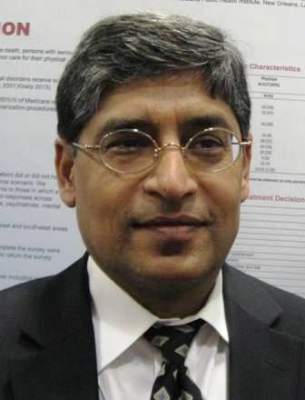
“Metabolic side effects possibly contribute to mortality in elderly patients,” said Dr. Mittal of the Central Arkansas Veterans Healthcare System, North Little Rock. “Because of this, it’s important to monitor outpatients with dementia receiving antipsychotics, especially because the drugs do not have demonstrated efficacy in managing behavioral symptoms of dementia.”
He presented a retrospective cohort analysis of 1,576 matched pairs of elderly Veterans Affairs patients with an index prescription for an antipsychotic. Half of the group had dementia but not psychosis, and the other half had a psychosis but not dementia.
The primary outcomes were metabolic monitoring at both baseline and the 3-month follow-up visit. Metabolic measures considered were weight, glucose or hemoglobin A1c, and low-density lipoprotein (LDL) cholesterol.
Because the patients with dementia were significantly older and differed on most demographic and clinical variables than those without dementia, the authors used propensity matching to even the groups. Their mean age in the matched sample was 73 years. A quarter had diabetes at baseline. Half had dyslipidemia and half hypertension, 30% were obese, and 15% had some form of heart disease.
About 10% were taking a medication with a high risk of metabolic derangement (clozapine, olanzapine). Most (70%) were taking a drug with a moderate risk (risperidone, chlorpromazine, paliperidone, thiothixene, or trifluoperazine). A low-risk drug was prescribed to the rest of the patients (aripiprazole, ziprasidone, haloperidol, fluphenazine, molindone, pimozide, or mesoridazine).
Even at baseline, the frequency of metabolic measurements was suboptimal, Dr. Mittal said. Weight most often was recorded (68% of dementia patents vs. 64% for the psychosis patients). Less than half of each group had a glucose measurement obtained (41% in the dementia group vs. 44% in the psychosis group). LDL cholesterol was obtained in just a quarter (24% vs. 27%, respectively).
Compared with baseline, significantly fewer patients in each group had 3-month measurements; there also were significant between-group differences, with dementia patients getting less attention. Weight was obtained in 46% of the group with dementia and 51% of the psychosis group, glucose in 26% of the dementia group and 31% of the psychosis group, and LDL in 13% of the dementia group and 18% of the psychosis group.
“We were quite surprised at the findings, as we had expected the rates to be much higher given the [Food and Drug Administration] warnings about the risk of metabolic derangement and mortality with antipsychotic medications,” Dr. Mittal noted.
Reasons for the poor monitoring, especially in dementia patients, are unclear, he said.
“One possible reason may be that monitoring recommendations were developed to apply to any patient treated with a second-generation antipsychotic but did not specifically mention monitoring for patients with dementia. The perception among providers may be that these guidelines apply to patients with psychosis only,” he suggested.
It’s unlikely that transportation problems for patients cared for at home, or lack of understanding about the need for tests, are the cause. An exploratory analysis concluded that 95% of the dementia patients had at least one baseline visit and 75% had at least one follow-up visit during the 3 months after medication initiation.
Some clinicians could view medication-related weight gain as helpful for dementia patients, who tend to lose weight as the disease progresses, but “our sample included only patients with dementia who were being managed in the outpatient setting and were thus likely to have less advanced dementia than those in nursing homes who are more likely to have lost significant weight to warrant such a drastic intervention,” Dr. Mittal said.
The findings are in sharp contrast to the existing guidelines, he pointed out.
In 2004, the American Diabetes Association, American Psychiatric Association, American Association of Clinical Endocrinologists, and North American Association for the Study of Obesity published a consensus statement on the issue. It recommended assessing metabolic parameters at baseline and at 4, 8, and 12 weeks after treatment initiation. Monitoring also should be conducted quarterly, annually, and every 5 years, the statement noted.
A 2012 literature review upheld this recommendation, suggesting that patients with a history of cardiac disease receive extra attention.
Dr. Mittal had no financial disclosures.
On Twitter @alz_gal
NEW ORLEANS – Elderly dementia patients who take antipsychotics are significantly less likely to have guideline-concordant metabolic checkups than are patients without dementia who take the drugs.
There seems to be no universal reason why this should be so, but the findings of a large retrospective study do suggest that providers should be aware of the problem and make an effort to improve follow-up monitoring, Dr. Dinesh Mittal said at the annual meeting of the American Association for Geriatric Psychiatry.
“Metabolic side effects possibly contribute to mortality in elderly patients,” said Dr. Mittal of the Central Arkansas Veterans Healthcare System, North Little Rock. “Because of this, it’s important to monitor outpatients with dementia receiving antipsychotics, especially because the drugs do not have demonstrated efficacy in managing behavioral symptoms of dementia.”
He presented a retrospective cohort analysis of 1,576 matched pairs of elderly Veterans Affairs patients with an index prescription for an antipsychotic. Half of the group had dementia but not psychosis, and the other half had a psychosis but not dementia.
The primary outcomes were metabolic monitoring at both baseline and the 3-month follow-up visit. Metabolic measures considered were weight, glucose or hemoglobin A1c, and low-density lipoprotein (LDL) cholesterol.
Because the patients with dementia were significantly older and differed on most demographic and clinical variables than those without dementia, the authors used propensity matching to even the groups. Their mean age in the matched sample was 73 years. A quarter had diabetes at baseline. Half had dyslipidemia and half hypertension, 30% were obese, and 15% had some form of heart disease.
About 10% were taking a medication with a high risk of metabolic derangement (clozapine, olanzapine). Most (70%) were taking a drug with a moderate risk (risperidone, chlorpromazine, paliperidone, thiothixene, or trifluoperazine). A low-risk drug was prescribed to the rest of the patients (aripiprazole, ziprasidone, haloperidol, fluphenazine, molindone, pimozide, or mesoridazine).
Even at baseline, the frequency of metabolic measurements was suboptimal, Dr. Mittal said. Weight most often was recorded (68% of dementia patents vs. 64% for the psychosis patients). Less than half of each group had a glucose measurement obtained (41% in the dementia group vs. 44% in the psychosis group). LDL cholesterol was obtained in just a quarter (24% vs. 27%, respectively).
Compared with baseline, significantly fewer patients in each group had 3-month measurements; there also were significant between-group differences, with dementia patients getting less attention. Weight was obtained in 46% of the group with dementia and 51% of the psychosis group, glucose in 26% of the dementia group and 31% of the psychosis group, and LDL in 13% of the dementia group and 18% of the psychosis group.
“We were quite surprised at the findings, as we had expected the rates to be much higher given the [Food and Drug Administration] warnings about the risk of metabolic derangement and mortality with antipsychotic medications,” Dr. Mittal noted.
Reasons for the poor monitoring, especially in dementia patients, are unclear, he said.
“One possible reason may be that monitoring recommendations were developed to apply to any patient treated with a second-generation antipsychotic but did not specifically mention monitoring for patients with dementia. The perception among providers may be that these guidelines apply to patients with psychosis only,” he suggested.
It’s unlikely that transportation problems for patients cared for at home, or lack of understanding about the need for tests, are the cause. An exploratory analysis concluded that 95% of the dementia patients had at least one baseline visit and 75% had at least one follow-up visit during the 3 months after medication initiation.
Some clinicians could view medication-related weight gain as helpful for dementia patients, who tend to lose weight as the disease progresses, but “our sample included only patients with dementia who were being managed in the outpatient setting and were thus likely to have less advanced dementia than those in nursing homes who are more likely to have lost significant weight to warrant such a drastic intervention,” Dr. Mittal said.
The findings are in sharp contrast to the existing guidelines, he pointed out.
In 2004, the American Diabetes Association, American Psychiatric Association, American Association of Clinical Endocrinologists, and North American Association for the Study of Obesity published a consensus statement on the issue. It recommended assessing metabolic parameters at baseline and at 4, 8, and 12 weeks after treatment initiation. Monitoring also should be conducted quarterly, annually, and every 5 years, the statement noted.
A 2012 literature review upheld this recommendation, suggesting that patients with a history of cardiac disease receive extra attention.
Dr. Mittal had no financial disclosures.
On Twitter @alz_gal
NEW ORLEANS – Elderly dementia patients who take antipsychotics are significantly less likely to have guideline-concordant metabolic checkups than are patients without dementia who take the drugs.
There seems to be no universal reason why this should be so, but the findings of a large retrospective study do suggest that providers should be aware of the problem and make an effort to improve follow-up monitoring, Dr. Dinesh Mittal said at the annual meeting of the American Association for Geriatric Psychiatry.
“Metabolic side effects possibly contribute to mortality in elderly patients,” said Dr. Mittal of the Central Arkansas Veterans Healthcare System, North Little Rock. “Because of this, it’s important to monitor outpatients with dementia receiving antipsychotics, especially because the drugs do not have demonstrated efficacy in managing behavioral symptoms of dementia.”
He presented a retrospective cohort analysis of 1,576 matched pairs of elderly Veterans Affairs patients with an index prescription for an antipsychotic. Half of the group had dementia but not psychosis, and the other half had a psychosis but not dementia.
The primary outcomes were metabolic monitoring at both baseline and the 3-month follow-up visit. Metabolic measures considered were weight, glucose or hemoglobin A1c, and low-density lipoprotein (LDL) cholesterol.
Because the patients with dementia were significantly older and differed on most demographic and clinical variables than those without dementia, the authors used propensity matching to even the groups. Their mean age in the matched sample was 73 years. A quarter had diabetes at baseline. Half had dyslipidemia and half hypertension, 30% were obese, and 15% had some form of heart disease.
About 10% were taking a medication with a high risk of metabolic derangement (clozapine, olanzapine). Most (70%) were taking a drug with a moderate risk (risperidone, chlorpromazine, paliperidone, thiothixene, or trifluoperazine). A low-risk drug was prescribed to the rest of the patients (aripiprazole, ziprasidone, haloperidol, fluphenazine, molindone, pimozide, or mesoridazine).
Even at baseline, the frequency of metabolic measurements was suboptimal, Dr. Mittal said. Weight most often was recorded (68% of dementia patents vs. 64% for the psychosis patients). Less than half of each group had a glucose measurement obtained (41% in the dementia group vs. 44% in the psychosis group). LDL cholesterol was obtained in just a quarter (24% vs. 27%, respectively).
Compared with baseline, significantly fewer patients in each group had 3-month measurements; there also were significant between-group differences, with dementia patients getting less attention. Weight was obtained in 46% of the group with dementia and 51% of the psychosis group, glucose in 26% of the dementia group and 31% of the psychosis group, and LDL in 13% of the dementia group and 18% of the psychosis group.
“We were quite surprised at the findings, as we had expected the rates to be much higher given the [Food and Drug Administration] warnings about the risk of metabolic derangement and mortality with antipsychotic medications,” Dr. Mittal noted.
Reasons for the poor monitoring, especially in dementia patients, are unclear, he said.
“One possible reason may be that monitoring recommendations were developed to apply to any patient treated with a second-generation antipsychotic but did not specifically mention monitoring for patients with dementia. The perception among providers may be that these guidelines apply to patients with psychosis only,” he suggested.
It’s unlikely that transportation problems for patients cared for at home, or lack of understanding about the need for tests, are the cause. An exploratory analysis concluded that 95% of the dementia patients had at least one baseline visit and 75% had at least one follow-up visit during the 3 months after medication initiation.
Some clinicians could view medication-related weight gain as helpful for dementia patients, who tend to lose weight as the disease progresses, but “our sample included only patients with dementia who were being managed in the outpatient setting and were thus likely to have less advanced dementia than those in nursing homes who are more likely to have lost significant weight to warrant such a drastic intervention,” Dr. Mittal said.
The findings are in sharp contrast to the existing guidelines, he pointed out.
In 2004, the American Diabetes Association, American Psychiatric Association, American Association of Clinical Endocrinologists, and North American Association for the Study of Obesity published a consensus statement on the issue. It recommended assessing metabolic parameters at baseline and at 4, 8, and 12 weeks after treatment initiation. Monitoring also should be conducted quarterly, annually, and every 5 years, the statement noted.
A 2012 literature review upheld this recommendation, suggesting that patients with a history of cardiac disease receive extra attention.
Dr. Mittal had no financial disclosures.
On Twitter @alz_gal
AT THE AAGP ANNUAL MEETING
Key clinical point: Follow-up metabolic monitoring needs to be improved in elderly patients – particularly those with dementia – who are taking antipsychotics.
Major finding: Three months after treatment initiation, weight, glucose, and LDL cholesterol were measured in less than 50% of each group.
Data source: The retrospective cohort study involved 1,576 matched pairs.
Disclosures: Dr. Mittal had no financial disclosures.
Behavioral symptoms in dementia need a global touch
NEW ORLEANS–An individualized, step-by-step plan is the best way to treat psychiatric and behavioral problems that might arise in patients with dementia.
But, according to Dr. Rajesh R. Tampi, “There’s no one silver bullet” for these symptoms, which can make things very hard not only on the patient but [also on] the family and caregiving staff.
No medications are approved for treating these symptoms in dementia patients, Dr. Tampi said at the annual meeting of the American Association for Geriatric Psychiatry. Furthermore, some of the most commonly used medications simply aren’t effective, and those that are often come at the price of side effects that prompt discontinuation.
Benzodiazepines, which are still quite often employed, are usually much more harmful than useful, he said. “The data for using benzodiazepines for behavioral problems in dementia simply do not exist. And given the new data we have on worsening of cognition, and a fivefold increase in the risk of falls, I do not think they are useful. I use them only for alcohol- or benzodiazepine-withdrawal or as an intramuscular injection to sedate but never for continuing management.”
Prevention is always the best medicine, said Dr. Tampi, chief of geriatric psychiatry at MetroHealth, Cleveland. Behavioral and psychiatric symptoms often arise as dementia worsens, so delaying disease progression may delay symptom onset as well. Cholinesterase inhibitors and memantine are the only medications approved for this purpose, and studies have found that donepezil, galantamine, and memantine also seem to exert some modest benefit on existing behavioral symptoms. These drugs generally are well tolerated, too, he added.
Prevention also can come in the form of a general physical and psychiatric health assessment. “Just because a person has dementia doesn’t mean there can’t be other psychiatric or physical conditions going on as well. For example, about 20% of dementia patients have a comorbid depression.” Pain, too, is common in these patients and can cause or exacerbate behavioral problems. Getting a handle on these underlying issues is the first step in building an effective treatment paradigm.
Most behavioral symptoms that occur in dementia patients are nonemergent. Because an emergency behavioral situation, like dangerous aggression, is rare, time is on everyone’s side. After making sure the proper cognition-enhancing medications are on board and pain or underlying illnesses addressed, psychological and behavioral interventions should be next in line.
But as dementia progresses, these lower-order approaches may become less and less effective. Eventually, medical therapy may be necessary. Dr. Tampi shared a treatment algorithm that he and his Veterans Affairs colleagues developed. The algorithm, published in 2011, divides behavioral symptoms by clinical presentation: depressed/anxious, hypomanic/manic, psychotic, and agitation/aggression.
In line with moving from least to highest treatment intensity, Dr. Tampi suggested always starting with low-dose monotherapy. For mood disorders in dementia patients, data support the use of SSRIs. For mania/hypomania, the algorithm recommends carbamazepine or divalproex, or an atypical antipsychotic. He also uses atypical antipsychotics for patients with psychotic symptoms. For those who exhibit agitation or aggression, the algorithm suggests carbamazepine, SSRIs, divalproex, or trazodone.
“If monotherapy doesn’t work, some drug combinations – like an SSRI with an antipsychotic or a mood stabilizer, do make sense and are effective, but they must be used judiciously,” Dr. Tampi said. Any behavioral or psychological interventions already in place should be continued, and even reinforced, when medical therapy comes on board, he added.
Emergent behaviors, or course, need quick solutions. However, Dr. Tampi still incorporates a judicious approach to handling them. “We always use oral medications at first. We only go with intramuscular if there’s no response or if the patient refuses.”
He recommended starting with risperidone, aripiprazole, quetiapine, or olanzapine, with a second dose 30 minutes to 1 hour later if needed. “You may need one or two repeats before the patient calms down, though,” he said.
If the agitation or aggression is very severe, or if the patient refuses oral medications, Dr. Tampi said injections are in order. His preferences are aripiprazole 1.875-7.7 mg, olanzapine 2.5-5 mg, or haloperidol 0.5-2 mg.
“Again, you can repeat the dose in 30 minutes to 1 hour if needed, and you might need to repeat once or twice before the patient calms down.”
He had no financial disclosures.
On Twitter @alz_gal
NEW ORLEANS–An individualized, step-by-step plan is the best way to treat psychiatric and behavioral problems that might arise in patients with dementia.
But, according to Dr. Rajesh R. Tampi, “There’s no one silver bullet” for these symptoms, which can make things very hard not only on the patient but [also on] the family and caregiving staff.
No medications are approved for treating these symptoms in dementia patients, Dr. Tampi said at the annual meeting of the American Association for Geriatric Psychiatry. Furthermore, some of the most commonly used medications simply aren’t effective, and those that are often come at the price of side effects that prompt discontinuation.
Benzodiazepines, which are still quite often employed, are usually much more harmful than useful, he said. “The data for using benzodiazepines for behavioral problems in dementia simply do not exist. And given the new data we have on worsening of cognition, and a fivefold increase in the risk of falls, I do not think they are useful. I use them only for alcohol- or benzodiazepine-withdrawal or as an intramuscular injection to sedate but never for continuing management.”
Prevention is always the best medicine, said Dr. Tampi, chief of geriatric psychiatry at MetroHealth, Cleveland. Behavioral and psychiatric symptoms often arise as dementia worsens, so delaying disease progression may delay symptom onset as well. Cholinesterase inhibitors and memantine are the only medications approved for this purpose, and studies have found that donepezil, galantamine, and memantine also seem to exert some modest benefit on existing behavioral symptoms. These drugs generally are well tolerated, too, he added.
Prevention also can come in the form of a general physical and psychiatric health assessment. “Just because a person has dementia doesn’t mean there can’t be other psychiatric or physical conditions going on as well. For example, about 20% of dementia patients have a comorbid depression.” Pain, too, is common in these patients and can cause or exacerbate behavioral problems. Getting a handle on these underlying issues is the first step in building an effective treatment paradigm.
Most behavioral symptoms that occur in dementia patients are nonemergent. Because an emergency behavioral situation, like dangerous aggression, is rare, time is on everyone’s side. After making sure the proper cognition-enhancing medications are on board and pain or underlying illnesses addressed, psychological and behavioral interventions should be next in line.
But as dementia progresses, these lower-order approaches may become less and less effective. Eventually, medical therapy may be necessary. Dr. Tampi shared a treatment algorithm that he and his Veterans Affairs colleagues developed. The algorithm, published in 2011, divides behavioral symptoms by clinical presentation: depressed/anxious, hypomanic/manic, psychotic, and agitation/aggression.
In line with moving from least to highest treatment intensity, Dr. Tampi suggested always starting with low-dose monotherapy. For mood disorders in dementia patients, data support the use of SSRIs. For mania/hypomania, the algorithm recommends carbamazepine or divalproex, or an atypical antipsychotic. He also uses atypical antipsychotics for patients with psychotic symptoms. For those who exhibit agitation or aggression, the algorithm suggests carbamazepine, SSRIs, divalproex, or trazodone.
“If monotherapy doesn’t work, some drug combinations – like an SSRI with an antipsychotic or a mood stabilizer, do make sense and are effective, but they must be used judiciously,” Dr. Tampi said. Any behavioral or psychological interventions already in place should be continued, and even reinforced, when medical therapy comes on board, he added.
Emergent behaviors, or course, need quick solutions. However, Dr. Tampi still incorporates a judicious approach to handling them. “We always use oral medications at first. We only go with intramuscular if there’s no response or if the patient refuses.”
He recommended starting with risperidone, aripiprazole, quetiapine, or olanzapine, with a second dose 30 minutes to 1 hour later if needed. “You may need one or two repeats before the patient calms down, though,” he said.
If the agitation or aggression is very severe, or if the patient refuses oral medications, Dr. Tampi said injections are in order. His preferences are aripiprazole 1.875-7.7 mg, olanzapine 2.5-5 mg, or haloperidol 0.5-2 mg.
“Again, you can repeat the dose in 30 minutes to 1 hour if needed, and you might need to repeat once or twice before the patient calms down.”
He had no financial disclosures.
On Twitter @alz_gal
NEW ORLEANS–An individualized, step-by-step plan is the best way to treat psychiatric and behavioral problems that might arise in patients with dementia.
But, according to Dr. Rajesh R. Tampi, “There’s no one silver bullet” for these symptoms, which can make things very hard not only on the patient but [also on] the family and caregiving staff.
No medications are approved for treating these symptoms in dementia patients, Dr. Tampi said at the annual meeting of the American Association for Geriatric Psychiatry. Furthermore, some of the most commonly used medications simply aren’t effective, and those that are often come at the price of side effects that prompt discontinuation.
Benzodiazepines, which are still quite often employed, are usually much more harmful than useful, he said. “The data for using benzodiazepines for behavioral problems in dementia simply do not exist. And given the new data we have on worsening of cognition, and a fivefold increase in the risk of falls, I do not think they are useful. I use them only for alcohol- or benzodiazepine-withdrawal or as an intramuscular injection to sedate but never for continuing management.”
Prevention is always the best medicine, said Dr. Tampi, chief of geriatric psychiatry at MetroHealth, Cleveland. Behavioral and psychiatric symptoms often arise as dementia worsens, so delaying disease progression may delay symptom onset as well. Cholinesterase inhibitors and memantine are the only medications approved for this purpose, and studies have found that donepezil, galantamine, and memantine also seem to exert some modest benefit on existing behavioral symptoms. These drugs generally are well tolerated, too, he added.
Prevention also can come in the form of a general physical and psychiatric health assessment. “Just because a person has dementia doesn’t mean there can’t be other psychiatric or physical conditions going on as well. For example, about 20% of dementia patients have a comorbid depression.” Pain, too, is common in these patients and can cause or exacerbate behavioral problems. Getting a handle on these underlying issues is the first step in building an effective treatment paradigm.
Most behavioral symptoms that occur in dementia patients are nonemergent. Because an emergency behavioral situation, like dangerous aggression, is rare, time is on everyone’s side. After making sure the proper cognition-enhancing medications are on board and pain or underlying illnesses addressed, psychological and behavioral interventions should be next in line.
But as dementia progresses, these lower-order approaches may become less and less effective. Eventually, medical therapy may be necessary. Dr. Tampi shared a treatment algorithm that he and his Veterans Affairs colleagues developed. The algorithm, published in 2011, divides behavioral symptoms by clinical presentation: depressed/anxious, hypomanic/manic, psychotic, and agitation/aggression.
In line with moving from least to highest treatment intensity, Dr. Tampi suggested always starting with low-dose monotherapy. For mood disorders in dementia patients, data support the use of SSRIs. For mania/hypomania, the algorithm recommends carbamazepine or divalproex, or an atypical antipsychotic. He also uses atypical antipsychotics for patients with psychotic symptoms. For those who exhibit agitation or aggression, the algorithm suggests carbamazepine, SSRIs, divalproex, or trazodone.
“If monotherapy doesn’t work, some drug combinations – like an SSRI with an antipsychotic or a mood stabilizer, do make sense and are effective, but they must be used judiciously,” Dr. Tampi said. Any behavioral or psychological interventions already in place should be continued, and even reinforced, when medical therapy comes on board, he added.
Emergent behaviors, or course, need quick solutions. However, Dr. Tampi still incorporates a judicious approach to handling them. “We always use oral medications at first. We only go with intramuscular if there’s no response or if the patient refuses.”
He recommended starting with risperidone, aripiprazole, quetiapine, or olanzapine, with a second dose 30 minutes to 1 hour later if needed. “You may need one or two repeats before the patient calms down, though,” he said.
If the agitation or aggression is very severe, or if the patient refuses oral medications, Dr. Tampi said injections are in order. His preferences are aripiprazole 1.875-7.7 mg, olanzapine 2.5-5 mg, or haloperidol 0.5-2 mg.
“Again, you can repeat the dose in 30 minutes to 1 hour if needed, and you might need to repeat once or twice before the patient calms down.”
He had no financial disclosures.
On Twitter @alz_gal
EXPERT ANALYSIS FROM THE AAGP ANNUAL MEETING
Olfactory deficits may signal cognitive decline
NEW ORLEANS – A test of smell identification seems to predict cognitive decline in elderly patients who score normally on memory tests.
Each 1-point decline on the 40-item smell test was associated with a 7% increase in the risk of cognitive decline over 2 years, Dr. Davangere P. Devanand reported at the annual meeting of the American Association for Geriatric Psychiatry.

The results of his retrospective cohort analysis, combined with previous studies on smell and cognition, suggest that an inability to identify smells might be a very early sign of neuropathology related to Alzheimer’s disease.
“In the Alzheimer’s disease field, we are moving more and more to looking at people who are cognitively normal,” said Dr. Devanand, professor of clinical psychiatry in neurology at Columbia University, New York. “A memory test is great when people already have a memory deficit but not that good when people are scoring normal on cognitive measures. We should be looking at olfaction identification deficit as a potential indicator of incipient pathology that a cognitive battery simply may not pick up.”
Dr. Devanand and his colleagues have previously shown that the University of Pennsylvania Smell Identification Test (UPSIT) can predict conversion from mild cognitive impairment (MCI) to Alzheimer’s disease.
But screening for cognitive decline before any memory symptoms develop is a tough challenge, he said. The olfactory nerves might just be a literal window deep in the brain, where memory deficits begin.
Second-order neurons project from the olfactory bulb directly into the piriform cortex, amygdala, entorhinal cortex, and hippocampus. In Alzheimer’s patients, those neurons seem particularly susceptible to the very early development of neurofibrillary tangles, although they do not show evidence of amyloid plaques. These neuropathology findings might explain why olfactory memory is impaired very early in the disease process and is associated with MCI conversion, Dr. Devanand said.
To investigate these changes and their correlation with cognition, he looked at data from the ongoing Northern Manhattan Study. The study is following a large multiethnic cohort for stroke risk factors and stroke. All of the 1,037 participants completed the UPSIT as part of their baseline evaluation. The cognition study comprised 757 of these participants, who were followed for 2 years. The mean age at baseline was 80 years.
During the study period, 109 subjects transitioned to dementia; of those, 101 converted to Alzheimer’s disease. Lower UPSIT scores at baseline were associated with a significant risk of eventual progression to AD – almost a 10% increased risk for each point decline from age-adjusted norms.
Dr. Devanand then looked at the UPSIT as a predictor of cognitive decline among those subjects who were cognitively normal at baseline. He defined cognitive decline as a decline of 0.5 standard deviation in composite measure of memory, language, or visuospatial ability over 2 years.
In a logistic regression model that controlled for demographics, lower UPSIT scores were significantly associated with cognitive decline, with a 7% increase in risk for each point lost. “It wasn’t a big effect, but it is clearly there,” Dr. Devanand said.
In fact, he added, “Perhaps the most interesting finding was the negative one.” The smell test was a significantly better predictor of 2-year cognitive decline than was the Selective Reminding Test – a very accurate measure of episodic verbal memory. Adding the SRT to the UPSIT did not improve its predictive value.
“If someone is scoring normal or close to normal memory, the olfactory test may predict if that person will decline cognitively,” said Dr. Devanand, who indicated that he had no financial disclosures.
On Twitter @alz_gal
NEW ORLEANS – A test of smell identification seems to predict cognitive decline in elderly patients who score normally on memory tests.
Each 1-point decline on the 40-item smell test was associated with a 7% increase in the risk of cognitive decline over 2 years, Dr. Davangere P. Devanand reported at the annual meeting of the American Association for Geriatric Psychiatry.
The results of his retrospective cohort analysis, combined with previous studies on smell and cognition, suggest that an inability to identify smells might be a very early sign of neuropathology related to Alzheimer’s disease.
“In the Alzheimer’s disease field, we are moving more and more to looking at people who are cognitively normal,” said Dr. Devanand, professor of clinical psychiatry in neurology at Columbia University, New York. “A memory test is great when people already have a memory deficit but not that good when people are scoring normal on cognitive measures. We should be looking at olfaction identification deficit as a potential indicator of incipient pathology that a cognitive battery simply may not pick up.”
Dr. Devanand and his colleagues have previously shown that the University of Pennsylvania Smell Identification Test (UPSIT) can predict conversion from mild cognitive impairment (MCI) to Alzheimer’s disease.
But screening for cognitive decline before any memory symptoms develop is a tough challenge, he said. The olfactory nerves might just be a literal window deep in the brain, where memory deficits begin.
Second-order neurons project from the olfactory bulb directly into the piriform cortex, amygdala, entorhinal cortex, and hippocampus. In Alzheimer’s patients, those neurons seem particularly susceptible to the very early development of neurofibrillary tangles, although they do not show evidence of amyloid plaques. These neuropathology findings might explain why olfactory memory is impaired very early in the disease process and is associated with MCI conversion, Dr. Devanand said.
To investigate these changes and their correlation with cognition, he looked at data from the ongoing Northern Manhattan Study. The study is following a large multiethnic cohort for stroke risk factors and stroke. All of the 1,037 participants completed the UPSIT as part of their baseline evaluation. The cognition study comprised 757 of these participants, who were followed for 2 years. The mean age at baseline was 80 years.
During the study period, 109 subjects transitioned to dementia; of those, 101 converted to Alzheimer’s disease. Lower UPSIT scores at baseline were associated with a significant risk of eventual progression to AD – almost a 10% increased risk for each point decline from age-adjusted norms.
Dr. Devanand then looked at the UPSIT as a predictor of cognitive decline among those subjects who were cognitively normal at baseline. He defined cognitive decline as a decline of 0.5 standard deviation in composite measure of memory, language, or visuospatial ability over 2 years.
In a logistic regression model that controlled for demographics, lower UPSIT scores were significantly associated with cognitive decline, with a 7% increase in risk for each point lost. “It wasn’t a big effect, but it is clearly there,” Dr. Devanand said.
In fact, he added, “Perhaps the most interesting finding was the negative one.” The smell test was a significantly better predictor of 2-year cognitive decline than was the Selective Reminding Test – a very accurate measure of episodic verbal memory. Adding the SRT to the UPSIT did not improve its predictive value.
“If someone is scoring normal or close to normal memory, the olfactory test may predict if that person will decline cognitively,” said Dr. Devanand, who indicated that he had no financial disclosures.
On Twitter @alz_gal
NEW ORLEANS – A test of smell identification seems to predict cognitive decline in elderly patients who score normally on memory tests.
Each 1-point decline on the 40-item smell test was associated with a 7% increase in the risk of cognitive decline over 2 years, Dr. Davangere P. Devanand reported at the annual meeting of the American Association for Geriatric Psychiatry.
The results of his retrospective cohort analysis, combined with previous studies on smell and cognition, suggest that an inability to identify smells might be a very early sign of neuropathology related to Alzheimer’s disease.
“In the Alzheimer’s disease field, we are moving more and more to looking at people who are cognitively normal,” said Dr. Devanand, professor of clinical psychiatry in neurology at Columbia University, New York. “A memory test is great when people already have a memory deficit but not that good when people are scoring normal on cognitive measures. We should be looking at olfaction identification deficit as a potential indicator of incipient pathology that a cognitive battery simply may not pick up.”
Dr. Devanand and his colleagues have previously shown that the University of Pennsylvania Smell Identification Test (UPSIT) can predict conversion from mild cognitive impairment (MCI) to Alzheimer’s disease.
But screening for cognitive decline before any memory symptoms develop is a tough challenge, he said. The olfactory nerves might just be a literal window deep in the brain, where memory deficits begin.
Second-order neurons project from the olfactory bulb directly into the piriform cortex, amygdala, entorhinal cortex, and hippocampus. In Alzheimer’s patients, those neurons seem particularly susceptible to the very early development of neurofibrillary tangles, although they do not show evidence of amyloid plaques. These neuropathology findings might explain why olfactory memory is impaired very early in the disease process and is associated with MCI conversion, Dr. Devanand said.
To investigate these changes and their correlation with cognition, he looked at data from the ongoing Northern Manhattan Study. The study is following a large multiethnic cohort for stroke risk factors and stroke. All of the 1,037 participants completed the UPSIT as part of their baseline evaluation. The cognition study comprised 757 of these participants, who were followed for 2 years. The mean age at baseline was 80 years.
During the study period, 109 subjects transitioned to dementia; of those, 101 converted to Alzheimer’s disease. Lower UPSIT scores at baseline were associated with a significant risk of eventual progression to AD – almost a 10% increased risk for each point decline from age-adjusted norms.
Dr. Devanand then looked at the UPSIT as a predictor of cognitive decline among those subjects who were cognitively normal at baseline. He defined cognitive decline as a decline of 0.5 standard deviation in composite measure of memory, language, or visuospatial ability over 2 years.
In a logistic regression model that controlled for demographics, lower UPSIT scores were significantly associated with cognitive decline, with a 7% increase in risk for each point lost. “It wasn’t a big effect, but it is clearly there,” Dr. Devanand said.
In fact, he added, “Perhaps the most interesting finding was the negative one.” The smell test was a significantly better predictor of 2-year cognitive decline than was the Selective Reminding Test – a very accurate measure of episodic verbal memory. Adding the SRT to the UPSIT did not improve its predictive value.
“If someone is scoring normal or close to normal memory, the olfactory test may predict if that person will decline cognitively,” said Dr. Devanand, who indicated that he had no financial disclosures.
On Twitter @alz_gal
AT THE AAGP ANNUAL MEETING
Key clinical point: Deficits in smell recognition may predict cognitive decline in cognitively normal elderly.
Major finding: The risk of cognitive decline rose by 7% for every point decline from age-adjusted norms on the University of Pennsylvania Smell Identification Test.
Data source: A retrospective cohort study of 757 subjects.
Disclosures: Dr. Devanand had no financial disclosures.

Problem-solving, dietary therapy help ward off depression in elderly
NEW ORLEANS – Both problem-solving and lifestyle interventions significantly reduced the incidence of major depression among black and white community-living elders who had some mild symptoms of the disorder.
By 2 years, both interventions conferred a 4-point decrease in the Beck Depression Inventory (BDI) score, with whites and blacks experiencing the same benefit, Dr. Charles F. Reynolds III said at the annual meeting of the American Association for Geriatric Psychiatry.

“Perhaps not surprisingly, improving scores in [problem solving] predicted lower depression scores, and falling depression scores predicted better scores in [problem solving],” said Dr. Reynolds, the UPMC Endowed Professor in Geriatric Psychiatry at the University of Pittsburgh. “This suggests a bidirectional effect. Better problem-solving leads to improvement in depression, and improvement in depression leads to better problem solving.”
Dr. Reynolds and his colleagues conducted a 2-year study of a problem-solving intervention and a dietary intervention in a cohort of elderly subjects with subsyndromal depressive symptoms. The primary endpoint was a three-way comparison: problem-solving vs. dietary intervention overall, black vs. white response overall, and overall response vs. response in comparable groups undergoing usual care.
Their study comprised 154 white participants and 90 black participants. “Getting black participants into clinical trials has always been challenging for us,” he said. “Typically, we get about 10%-12% rates. This cohort approached 40%, which I think reflected several things,” the most crucial of which was recruitment technique.
“We identified ‘community champions’ – people who had leadership positions in the black community, especially in the religious communities. They gave us the imprimatur of their approval to participate. We also recruited through churches and community centers, and saw patients there. We didn’t ask them to come into the lab,” said Dr. Reynolds, also professor of neurology, behavioral and community health sciences, and clinical and translational science at the university.
All subjects also received financial compensation for being in the study – a total of $450 each over the full 2-year period.
The subjects were a mean of 65 years old. Scores on the Hamilton Depression Rating Scale (HAM-D) and the BDI indicated mild depression in each group.
The black participants had more traditional risk factors for depression. Fewer were married (25% vs. 88% of whites), and fewer were employed (27% vs. 71%). Median household income was $31,000 vs. $58,000. Blacks had fewer years of education as well (13 vs. 15). They also had poorer overall health and more medical comorbidities. About 60% of each group had a body mass index greater than 30 kg/m2 – the prime factor that motivated choosing diet as the comparator therapy.
Problem-solving therapy was talk based, with the subject and the clinician collaborating to identify problems and focus on solving them with a structured approach. It also included assessments of the subjects’ general approach to problems. Dietary therapy focused on improving healthful eating through better shopping, cooking, and eating. The cumulative “face time” between subjects and clinicians was just 6 hours over the 2 years – a “remarkably short period,” Dr. Reynolds noted, with short booster sessions conducted every 6 months.
At the end of 2 years, both interventions conferred a 13% lower risk of major depression, corresponding to an overall incidence of about 8%. Blacks and whites achieved comparable results. Archival data suggest a 20%-25% rate of major depression when elderly adults with subsyndromal symptoms receive usual care.
Both groups achieved a 4-point decrease in the BDI score, which was evidenced by 6 months and sustained over the duration of the study.
Dr. Reynolds cautioned against overinterpreting the results, however.
“In the absence of a direct comparator of usual care, we need to consider these results promising but still preliminary.”
He said he had no relevant financial disclosures.
[email protected]
On Twitter @alz_gal
NEW ORLEANS – Both problem-solving and lifestyle interventions significantly reduced the incidence of major depression among black and white community-living elders who had some mild symptoms of the disorder.
By 2 years, both interventions conferred a 4-point decrease in the Beck Depression Inventory (BDI) score, with whites and blacks experiencing the same benefit, Dr. Charles F. Reynolds III said at the annual meeting of the American Association for Geriatric Psychiatry.
“Perhaps not surprisingly, improving scores in [problem solving] predicted lower depression scores, and falling depression scores predicted better scores in [problem solving],” said Dr. Reynolds, the UPMC Endowed Professor in Geriatric Psychiatry at the University of Pittsburgh. “This suggests a bidirectional effect. Better problem-solving leads to improvement in depression, and improvement in depression leads to better problem solving.”
Dr. Reynolds and his colleagues conducted a 2-year study of a problem-solving intervention and a dietary intervention in a cohort of elderly subjects with subsyndromal depressive symptoms. The primary endpoint was a three-way comparison: problem-solving vs. dietary intervention overall, black vs. white response overall, and overall response vs. response in comparable groups undergoing usual care.
Their study comprised 154 white participants and 90 black participants. “Getting black participants into clinical trials has always been challenging for us,” he said. “Typically, we get about 10%-12% rates. This cohort approached 40%, which I think reflected several things,” the most crucial of which was recruitment technique.
“We identified ‘community champions’ – people who had leadership positions in the black community, especially in the religious communities. They gave us the imprimatur of their approval to participate. We also recruited through churches and community centers, and saw patients there. We didn’t ask them to come into the lab,” said Dr. Reynolds, also professor of neurology, behavioral and community health sciences, and clinical and translational science at the university.
All subjects also received financial compensation for being in the study – a total of $450 each over the full 2-year period.
The subjects were a mean of 65 years old. Scores on the Hamilton Depression Rating Scale (HAM-D) and the BDI indicated mild depression in each group.
The black participants had more traditional risk factors for depression. Fewer were married (25% vs. 88% of whites), and fewer were employed (27% vs. 71%). Median household income was $31,000 vs. $58,000. Blacks had fewer years of education as well (13 vs. 15). They also had poorer overall health and more medical comorbidities. About 60% of each group had a body mass index greater than 30 kg/m2 – the prime factor that motivated choosing diet as the comparator therapy.
Problem-solving therapy was talk based, with the subject and the clinician collaborating to identify problems and focus on solving them with a structured approach. It also included assessments of the subjects’ general approach to problems. Dietary therapy focused on improving healthful eating through better shopping, cooking, and eating. The cumulative “face time” between subjects and clinicians was just 6 hours over the 2 years – a “remarkably short period,” Dr. Reynolds noted, with short booster sessions conducted every 6 months.
At the end of 2 years, both interventions conferred a 13% lower risk of major depression, corresponding to an overall incidence of about 8%. Blacks and whites achieved comparable results. Archival data suggest a 20%-25% rate of major depression when elderly adults with subsyndromal symptoms receive usual care.
Both groups achieved a 4-point decrease in the BDI score, which was evidenced by 6 months and sustained over the duration of the study.
Dr. Reynolds cautioned against overinterpreting the results, however.
“In the absence of a direct comparator of usual care, we need to consider these results promising but still preliminary.”
He said he had no relevant financial disclosures.
[email protected]
On Twitter @alz_gal
NEW ORLEANS – Both problem-solving and lifestyle interventions significantly reduced the incidence of major depression among black and white community-living elders who had some mild symptoms of the disorder.
By 2 years, both interventions conferred a 4-point decrease in the Beck Depression Inventory (BDI) score, with whites and blacks experiencing the same benefit, Dr. Charles F. Reynolds III said at the annual meeting of the American Association for Geriatric Psychiatry.
“Perhaps not surprisingly, improving scores in [problem solving] predicted lower depression scores, and falling depression scores predicted better scores in [problem solving],” said Dr. Reynolds, the UPMC Endowed Professor in Geriatric Psychiatry at the University of Pittsburgh. “This suggests a bidirectional effect. Better problem-solving leads to improvement in depression, and improvement in depression leads to better problem solving.”
Dr. Reynolds and his colleagues conducted a 2-year study of a problem-solving intervention and a dietary intervention in a cohort of elderly subjects with subsyndromal depressive symptoms. The primary endpoint was a three-way comparison: problem-solving vs. dietary intervention overall, black vs. white response overall, and overall response vs. response in comparable groups undergoing usual care.
Their study comprised 154 white participants and 90 black participants. “Getting black participants into clinical trials has always been challenging for us,” he said. “Typically, we get about 10%-12% rates. This cohort approached 40%, which I think reflected several things,” the most crucial of which was recruitment technique.
“We identified ‘community champions’ – people who had leadership positions in the black community, especially in the religious communities. They gave us the imprimatur of their approval to participate. We also recruited through churches and community centers, and saw patients there. We didn’t ask them to come into the lab,” said Dr. Reynolds, also professor of neurology, behavioral and community health sciences, and clinical and translational science at the university.
All subjects also received financial compensation for being in the study – a total of $450 each over the full 2-year period.
The subjects were a mean of 65 years old. Scores on the Hamilton Depression Rating Scale (HAM-D) and the BDI indicated mild depression in each group.
The black participants had more traditional risk factors for depression. Fewer were married (25% vs. 88% of whites), and fewer were employed (27% vs. 71%). Median household income was $31,000 vs. $58,000. Blacks had fewer years of education as well (13 vs. 15). They also had poorer overall health and more medical comorbidities. About 60% of each group had a body mass index greater than 30 kg/m2 – the prime factor that motivated choosing diet as the comparator therapy.
Problem-solving therapy was talk based, with the subject and the clinician collaborating to identify problems and focus on solving them with a structured approach. It also included assessments of the subjects’ general approach to problems. Dietary therapy focused on improving healthful eating through better shopping, cooking, and eating. The cumulative “face time” between subjects and clinicians was just 6 hours over the 2 years – a “remarkably short period,” Dr. Reynolds noted, with short booster sessions conducted every 6 months.
At the end of 2 years, both interventions conferred a 13% lower risk of major depression, corresponding to an overall incidence of about 8%. Blacks and whites achieved comparable results. Archival data suggest a 20%-25% rate of major depression when elderly adults with subsyndromal symptoms receive usual care.
Both groups achieved a 4-point decrease in the BDI score, which was evidenced by 6 months and sustained over the duration of the study.
Dr. Reynolds cautioned against overinterpreting the results, however.
“In the absence of a direct comparator of usual care, we need to consider these results promising but still preliminary.”
He said he had no relevant financial disclosures.
[email protected]
On Twitter @alz_gal
AT THE AAGP ANNUAL MEETING
Key clinical point: Problem-solving and dietary interventions are effective ways to reduce the risk of major depression in community-living elders with some mild signs of the disorder.
Major finding: Both interventions reduced the risk of m ajor depression by 13% in elderly subjects with subsyndromal depressive symptoms.
Data source: A randomized trial comprised of 244 subjects.
Disclosures: Dr. Reynolds said he had no relevant financial disclosures.

Medical devices – the evidence for coverage
SAN FRANCISCO – At the 2015 AGA Tech Summit, which is sponsored by the AGA Center for GI Innovation and Technology, AGA convened a panel of payer medical directors to shed light on what it takes to get coverage and reimbursement for a new device or procedure. Data is king! Companies need to show durable and sustainable efficacy of their technology through relatively large, well-designed studies that include both commercial and Medicare patient populations, demonstrating an improvement in outcomes over several years duration, and publish the results in peer-reviewed journals.
Payer representatives included:
Arthur Lurvey, MD, FACP, FACE, Contractor Medical Director, Noridian Healthcare Solutions, LLC, which administers Medicare plans
John L. Fox, MD, MHA, Senior Medical Director and Associate Vice President, Medical Affairs, Priority Health, which administers Medicare, Medicaid, and private health plans
John S. Yao, MD, MPH, MBA, MPA, FACP, Staff Vice President of Medical Policy, Anthem Inc., which administers Medicare, federal employee, and private health plans
1) What should a device manufacturer be thinking about when trying to generate the evidence necessary to ensure coverage for a new device?
Dr. Yao
Clearly, we would all like to see well-designed, well-powered, randomized controlled trials with statistically significant results. But we recognize that this is not always possible in the real world. From the coverage perspective, we are looking for objective evidence, which includes not only analytical validity of the device, but also both clinical validity and clinical utility.
Dr. Lurvey
We look at journals, white papers, and technical assessments, particularly by parties who are not associated with the manufacturer – because we know if it comes from the manufacturer they are going to want to make it look good.
As far as publications, we want data published in reputable journals. There are plenty of journals that will publish anything for $500. This isn’t what we’re looking for. We want quality studies published in quality journals. We see a lot of noninferiority trials concluding that “My product is as good as everyone else’s,” but that is not helpful – you should be looking for equivalence at a minimum, or superiority. Another big problem is endpoints – we need clinically meaningful, primary endpoints, not secondary or tertiary endpoints. We look for input from specialty societies, such as AGA.
When we are looking at journal articles by impartial experts, we are influenced by their concluding remarks, especially if they recommend further study. If the experts don’t think it’s ready for prime time, then we don’t either.
We also like to see a wider patient population. Very few studies deal with people older than 65, so we don’t know how effective or harmful your device would be to the Medicare population, people who are older, or medically fragile.
Dr. Fox
Those who design studies need to design them around a clinically meaningful primary endpoint, and physicians will have to decide what that is. We can’t just have a statistically significant endpoint. It has to mean something to patients. We want evidence of outcomes that show this device is making a difference in patients’ lives – not just in patient scores. Do they feel better? Does it cut down on the need for additional procedures or treatments? Is there evidence that it’s a good alternative to a more expensive therapy? Does it produce a better outcome with a lower cost? How are physicians going to use the device, and how will it change their management of patients?
If you can’t come to the table with information like that, I’ll be playing defense against something that isn’t really helping patients and may be costing them more.
2) What do you look for in terms of durability of effect?
Dr. Yao
We want to see technology that can be replicated consistently in a real-world practice setting, not just in the ideal setting of a clinical trial or in tertiary care centers with strict protocols and ideal patient populations.
As far as long-term safety, we get a lot of requests from device manufacturers who have 6-month data. With a brand new innovation, we feel 6 months is not long enough. We would like to see at least 1-2 year follow-up data with good results and no adverse events. For example, there was a very highly anticipated implant for postprostatectomy urinary incontinence where the data initially looked very good. But as longer-term data became available, the reimplantation rate was about 25%, and this turned out to be a very invasive procedure. You don’t get this with only 6 months of observation.
SAN FRANCISCO – At the 2015 AGA Tech Summit, which is sponsored by the AGA Center for GI Innovation and Technology, AGA convened a panel of payer medical directors to shed light on what it takes to get coverage and reimbursement for a new device or procedure. Data is king! Companies need to show durable and sustainable efficacy of their technology through relatively large, well-designed studies that include both commercial and Medicare patient populations, demonstrating an improvement in outcomes over several years duration, and publish the results in peer-reviewed journals.
Payer representatives included:
Arthur Lurvey, MD, FACP, FACE, Contractor Medical Director, Noridian Healthcare Solutions, LLC, which administers Medicare plans
John L. Fox, MD, MHA, Senior Medical Director and Associate Vice President, Medical Affairs, Priority Health, which administers Medicare, Medicaid, and private health plans
John S. Yao, MD, MPH, MBA, MPA, FACP, Staff Vice President of Medical Policy, Anthem Inc., which administers Medicare, federal employee, and private health plans
1) What should a device manufacturer be thinking about when trying to generate the evidence necessary to ensure coverage for a new device?
Dr. Yao
Clearly, we would all like to see well-designed, well-powered, randomized controlled trials with statistically significant results. But we recognize that this is not always possible in the real world. From the coverage perspective, we are looking for objective evidence, which includes not only analytical validity of the device, but also both clinical validity and clinical utility.
Dr. Lurvey
We look at journals, white papers, and technical assessments, particularly by parties who are not associated with the manufacturer – because we know if it comes from the manufacturer they are going to want to make it look good.
As far as publications, we want data published in reputable journals. There are plenty of journals that will publish anything for $500. This isn’t what we’re looking for. We want quality studies published in quality journals. We see a lot of noninferiority trials concluding that “My product is as good as everyone else’s,” but that is not helpful – you should be looking for equivalence at a minimum, or superiority. Another big problem is endpoints – we need clinically meaningful, primary endpoints, not secondary or tertiary endpoints. We look for input from specialty societies, such as AGA.
When we are looking at journal articles by impartial experts, we are influenced by their concluding remarks, especially if they recommend further study. If the experts don’t think it’s ready for prime time, then we don’t either.
We also like to see a wider patient population. Very few studies deal with people older than 65, so we don’t know how effective or harmful your device would be to the Medicare population, people who are older, or medically fragile.
Dr. Fox
Those who design studies need to design them around a clinically meaningful primary endpoint, and physicians will have to decide what that is. We can’t just have a statistically significant endpoint. It has to mean something to patients. We want evidence of outcomes that show this device is making a difference in patients’ lives – not just in patient scores. Do they feel better? Does it cut down on the need for additional procedures or treatments? Is there evidence that it’s a good alternative to a more expensive therapy? Does it produce a better outcome with a lower cost? How are physicians going to use the device, and how will it change their management of patients?
If you can’t come to the table with information like that, I’ll be playing defense against something that isn’t really helping patients and may be costing them more.
2) What do you look for in terms of durability of effect?
Dr. Yao
We want to see technology that can be replicated consistently in a real-world practice setting, not just in the ideal setting of a clinical trial or in tertiary care centers with strict protocols and ideal patient populations.
As far as long-term safety, we get a lot of requests from device manufacturers who have 6-month data. With a brand new innovation, we feel 6 months is not long enough. We would like to see at least 1-2 year follow-up data with good results and no adverse events. For example, there was a very highly anticipated implant for postprostatectomy urinary incontinence where the data initially looked very good. But as longer-term data became available, the reimplantation rate was about 25%, and this turned out to be a very invasive procedure. You don’t get this with only 6 months of observation.
SAN FRANCISCO – At the 2015 AGA Tech Summit, which is sponsored by the AGA Center for GI Innovation and Technology, AGA convened a panel of payer medical directors to shed light on what it takes to get coverage and reimbursement for a new device or procedure. Data is king! Companies need to show durable and sustainable efficacy of their technology through relatively large, well-designed studies that include both commercial and Medicare patient populations, demonstrating an improvement in outcomes over several years duration, and publish the results in peer-reviewed journals.
Payer representatives included:
Arthur Lurvey, MD, FACP, FACE, Contractor Medical Director, Noridian Healthcare Solutions, LLC, which administers Medicare plans
John L. Fox, MD, MHA, Senior Medical Director and Associate Vice President, Medical Affairs, Priority Health, which administers Medicare, Medicaid, and private health plans
John S. Yao, MD, MPH, MBA, MPA, FACP, Staff Vice President of Medical Policy, Anthem Inc., which administers Medicare, federal employee, and private health plans
1) What should a device manufacturer be thinking about when trying to generate the evidence necessary to ensure coverage for a new device?
Dr. Yao
Clearly, we would all like to see well-designed, well-powered, randomized controlled trials with statistically significant results. But we recognize that this is not always possible in the real world. From the coverage perspective, we are looking for objective evidence, which includes not only analytical validity of the device, but also both clinical validity and clinical utility.
Dr. Lurvey
We look at journals, white papers, and technical assessments, particularly by parties who are not associated with the manufacturer – because we know if it comes from the manufacturer they are going to want to make it look good.
As far as publications, we want data published in reputable journals. There are plenty of journals that will publish anything for $500. This isn’t what we’re looking for. We want quality studies published in quality journals. We see a lot of noninferiority trials concluding that “My product is as good as everyone else’s,” but that is not helpful – you should be looking for equivalence at a minimum, or superiority. Another big problem is endpoints – we need clinically meaningful, primary endpoints, not secondary or tertiary endpoints. We look for input from specialty societies, such as AGA.
When we are looking at journal articles by impartial experts, we are influenced by their concluding remarks, especially if they recommend further study. If the experts don’t think it’s ready for prime time, then we don’t either.
We also like to see a wider patient population. Very few studies deal with people older than 65, so we don’t know how effective or harmful your device would be to the Medicare population, people who are older, or medically fragile.
Dr. Fox
Those who design studies need to design them around a clinically meaningful primary endpoint, and physicians will have to decide what that is. We can’t just have a statistically significant endpoint. It has to mean something to patients. We want evidence of outcomes that show this device is making a difference in patients’ lives – not just in patient scores. Do they feel better? Does it cut down on the need for additional procedures or treatments? Is there evidence that it’s a good alternative to a more expensive therapy? Does it produce a better outcome with a lower cost? How are physicians going to use the device, and how will it change their management of patients?
If you can’t come to the table with information like that, I’ll be playing defense against something that isn’t really helping patients and may be costing them more.
2) What do you look for in terms of durability of effect?
Dr. Yao
We want to see technology that can be replicated consistently in a real-world practice setting, not just in the ideal setting of a clinical trial or in tertiary care centers with strict protocols and ideal patient populations.
As far as long-term safety, we get a lot of requests from device manufacturers who have 6-month data. With a brand new innovation, we feel 6 months is not long enough. We would like to see at least 1-2 year follow-up data with good results and no adverse events. For example, there was a very highly anticipated implant for postprostatectomy urinary incontinence where the data initially looked very good. But as longer-term data became available, the reimplantation rate was about 25%, and this turned out to be a very invasive procedure. You don’t get this with only 6 months of observation.
AT THE 2015 AGA TECH SUMMIT
A tale of two devices – succeeding and failing in the clinical marketplace
A successful medical device needs to bat two out of three requirements: fulfill an unmet need, be an effective treatment, and be a simple solution.
But not all of those criteria may be completely determined before the product launch, according to speakers at the 2015 AGA Tech Summit, which is sponsored by the AGA Center for GI Innovation and Technology.

Poor marketing strategy to clinicians and payers combined with 12-month follow-up data sank an apparently promising endoscopic treatment for gastroesophageal reflux disease (the ENTERYX procedure). It was effective but technically difficult, and it was intended for patients who were already responding to medical therapy.
Aortic valve replacement, however – seemingly a much more complicated procedure requiring cardiac bypass and tiny stitches – has not only survived but also thrived, with demonstrable success and constantly evolving iterations.
Why the disparity?
Learning from failure
The ENTERYX procedure involved the circumferential injection of polymer just above the pyloric sphincter – a permanent solution for thousands of GERD patients taking proton pump inhibitors. The polymer induced inflammation and encapsulation, effectively narrowing the gastroesophageal junction and preventing reflex.
“Our preclinical studies looked great,” said Rich Cohen, who handled the project for the Boston Scientific Corporation at the time. “We were approved by the Food and Drug Administration as a Class III medical device. Our pivotal randomized trial, conducted after approval, was very good; 70% of patients were able to get off their medication.”
ENTERYX was launched in 2003, said Mr. Cohen, who is now global director of market development for the endoscopy division of Boston Scientific. Almost 4,000 patients underwent the procedure, most with very good, very stable results.
But injection precision was critical; the polymer had to be deposited intramurally. Fluoroscopy was necessary to provide real-time feedback of the deposition location. Unfortunately, this safeguard didn’t work every time, he said.
“We had good results in the hands of experts, but it never translated down, despite our required training program,” Mr. Cohen said. There were reports of chest pain and dysphagia in treated patients, another patient experienced a partial reduction in renal function due to partial embolization. Two patients died (0.05%), both due to complications from aortoenteric fistula.
In 2005, FDA issued an advisory about the procedure, and Boston Scientific voluntarily recalled it, ending its use.
Such rare complications might possibly have been acceptable for a procedure that was successful for a hard-to-treat disorder with no alternative treatment, but patients who qualified for ENTERYX were already being treated successfully with PPIs, Mr. Cohen said.
“Any time you are treating something invasively that already has a successful alternative, it’s very difficult to sell. And when you do sell it, the bar for adverse events is very, very low.”
Even before the clinical events, ENTERYX was a marketing problem child. The first stumbling block was actually a sales issue, Mr. Cohen said. Because patients were already being medically managed, most primary care providers felt there was no need for surgical or endoscopic referral, at least partially damming the flow of interest.
Reimbursement was also an issue. “Our clinical data supporting safety and efficacy were not enough to sway decision makers. We ended up having to do a randomized controlled trial after we launched. If we had to do it over again, we would tie our approval trials to [Centers for Medicare & Medicaid Services] for coding, because without that you are really facing an uphill battle for something that treats a quality-of-life disease,” Mr. Cohen said.1
Getting premarket support from specialists is crucial. “We should have talked to physician societies before launching. Without that, it’s like pushing a boulder uphill and the minute you stop, you get run over. Even if you’ve got the best product in the world, it’s useless if patients never get treated.”
A look at success
Aortic valve replacement, on the other hand, is a perfect solution to a perfect market and clinical confluence.
Initiated in 1960, it’s grown exponentially to serve a huge global market, said Dr. Stanley Chetcuti, director of cardiac catheterization at the University of Michigan Hospital and Health System, Ann Arbor.
“The numbers with aortic stenosis are similar to the numbers with coronary artery disease – about 1.5 million in the U.S. Of these 25% are operable, meaning about 300,000 patients eligible for replacement each year. Unfortunately only about 80,000 get that surgery, but even with that small number, it’s an enormous need.”
And an enormous market as well.
Aortic stenosis is far from a quality-of-life disease. In fact, the prognosis without surgery is dismal, with less than a 30% 5-year survival if the stenosis is symptomatic. There’s no real alternative management, either.
“The indications for surgery are well defined, the surgery is straightforward, many people need it, and the outcomes are usually quite good,” said Dr. Chetcuti.
Still, the operation carries a perioperative mortality rate of up to 10% and usually a need for lifelong anticoagulant therapy. Despite all of that, aortic valve replacement has been widely adopted and continues to evolve. The latest iteration uses a built-in filter to catch any liberated emboli.
Teamwork has also greatly enhanced the technical success and evolution of heart valve surgery, Dr. Chetcuti said. “The new paradigm, and the reason this has truly become a technical success, is the combined heart team. It’s a really robust team effort that crosses borders – it includes the cardiologist, the interventionalist, the primary care physician, and the anesthesiologist. And it has to include the hospital administrator, especially when you’re implementing a new technology with no set plan for reimbursement. You need a support team to grab this thing and make it work.”
1.This is where the AGA Center for GI Innovation and Technology comes in. The center helps companies develop their early studies in a way that captures the data needed by other regulatory groups, such as CMS and private payers, who need different data than the FDA to cover and pay for technology. Learn more about the center by visiting www.gastro.org.
A successful medical device needs to bat two out of three requirements: fulfill an unmet need, be an effective treatment, and be a simple solution.
But not all of those criteria may be completely determined before the product launch, according to speakers at the 2015 AGA Tech Summit, which is sponsored by the AGA Center for GI Innovation and Technology.
Poor marketing strategy to clinicians and payers combined with 12-month follow-up data sank an apparently promising endoscopic treatment for gastroesophageal reflux disease (the ENTERYX procedure). It was effective but technically difficult, and it was intended for patients who were already responding to medical therapy.
Aortic valve replacement, however – seemingly a much more complicated procedure requiring cardiac bypass and tiny stitches – has not only survived but also thrived, with demonstrable success and constantly evolving iterations.
Why the disparity?
Learning from failure
The ENTERYX procedure involved the circumferential injection of polymer just above the pyloric sphincter – a permanent solution for thousands of GERD patients taking proton pump inhibitors. The polymer induced inflammation and encapsulation, effectively narrowing the gastroesophageal junction and preventing reflex.
“Our preclinical studies looked great,” said Rich Cohen, who handled the project for the Boston Scientific Corporation at the time. “We were approved by the Food and Drug Administration as a Class III medical device. Our pivotal randomized trial, conducted after approval, was very good; 70% of patients were able to get off their medication.”
ENTERYX was launched in 2003, said Mr. Cohen, who is now global director of market development for the endoscopy division of Boston Scientific. Almost 4,000 patients underwent the procedure, most with very good, very stable results.
But injection precision was critical; the polymer had to be deposited intramurally. Fluoroscopy was necessary to provide real-time feedback of the deposition location. Unfortunately, this safeguard didn’t work every time, he said.
“We had good results in the hands of experts, but it never translated down, despite our required training program,” Mr. Cohen said. There were reports of chest pain and dysphagia in treated patients, another patient experienced a partial reduction in renal function due to partial embolization. Two patients died (0.05%), both due to complications from aortoenteric fistula.
In 2005, FDA issued an advisory about the procedure, and Boston Scientific voluntarily recalled it, ending its use.
Such rare complications might possibly have been acceptable for a procedure that was successful for a hard-to-treat disorder with no alternative treatment, but patients who qualified for ENTERYX were already being treated successfully with PPIs, Mr. Cohen said.
“Any time you are treating something invasively that already has a successful alternative, it’s very difficult to sell. And when you do sell it, the bar for adverse events is very, very low.”
Even before the clinical events, ENTERYX was a marketing problem child. The first stumbling block was actually a sales issue, Mr. Cohen said. Because patients were already being medically managed, most primary care providers felt there was no need for surgical or endoscopic referral, at least partially damming the flow of interest.
Reimbursement was also an issue. “Our clinical data supporting safety and efficacy were not enough to sway decision makers. We ended up having to do a randomized controlled trial after we launched. If we had to do it over again, we would tie our approval trials to [Centers for Medicare & Medicaid Services] for coding, because without that you are really facing an uphill battle for something that treats a quality-of-life disease,” Mr. Cohen said.1
Getting premarket support from specialists is crucial. “We should have talked to physician societies before launching. Without that, it’s like pushing a boulder uphill and the minute you stop, you get run over. Even if you’ve got the best product in the world, it’s useless if patients never get treated.”
A look at success
Aortic valve replacement, on the other hand, is a perfect solution to a perfect market and clinical confluence.
Initiated in 1960, it’s grown exponentially to serve a huge global market, said Dr. Stanley Chetcuti, director of cardiac catheterization at the University of Michigan Hospital and Health System, Ann Arbor.
“The numbers with aortic stenosis are similar to the numbers with coronary artery disease – about 1.5 million in the U.S. Of these 25% are operable, meaning about 300,000 patients eligible for replacement each year. Unfortunately only about 80,000 get that surgery, but even with that small number, it’s an enormous need.”
And an enormous market as well.
Aortic stenosis is far from a quality-of-life disease. In fact, the prognosis without surgery is dismal, with less than a 30% 5-year survival if the stenosis is symptomatic. There’s no real alternative management, either.
“The indications for surgery are well defined, the surgery is straightforward, many people need it, and the outcomes are usually quite good,” said Dr. Chetcuti.
Still, the operation carries a perioperative mortality rate of up to 10% and usually a need for lifelong anticoagulant therapy. Despite all of that, aortic valve replacement has been widely adopted and continues to evolve. The latest iteration uses a built-in filter to catch any liberated emboli.
Teamwork has also greatly enhanced the technical success and evolution of heart valve surgery, Dr. Chetcuti said. “The new paradigm, and the reason this has truly become a technical success, is the combined heart team. It’s a really robust team effort that crosses borders – it includes the cardiologist, the interventionalist, the primary care physician, and the anesthesiologist. And it has to include the hospital administrator, especially when you’re implementing a new technology with no set plan for reimbursement. You need a support team to grab this thing and make it work.”
1.This is where the AGA Center for GI Innovation and Technology comes in. The center helps companies develop their early studies in a way that captures the data needed by other regulatory groups, such as CMS and private payers, who need different data than the FDA to cover and pay for technology. Learn more about the center by visiting www.gastro.org.
A successful medical device needs to bat two out of three requirements: fulfill an unmet need, be an effective treatment, and be a simple solution.
But not all of those criteria may be completely determined before the product launch, according to speakers at the 2015 AGA Tech Summit, which is sponsored by the AGA Center for GI Innovation and Technology.
Poor marketing strategy to clinicians and payers combined with 12-month follow-up data sank an apparently promising endoscopic treatment for gastroesophageal reflux disease (the ENTERYX procedure). It was effective but technically difficult, and it was intended for patients who were already responding to medical therapy.
Aortic valve replacement, however – seemingly a much more complicated procedure requiring cardiac bypass and tiny stitches – has not only survived but also thrived, with demonstrable success and constantly evolving iterations.
Why the disparity?
Learning from failure
The ENTERYX procedure involved the circumferential injection of polymer just above the pyloric sphincter – a permanent solution for thousands of GERD patients taking proton pump inhibitors. The polymer induced inflammation and encapsulation, effectively narrowing the gastroesophageal junction and preventing reflex.
“Our preclinical studies looked great,” said Rich Cohen, who handled the project for the Boston Scientific Corporation at the time. “We were approved by the Food and Drug Administration as a Class III medical device. Our pivotal randomized trial, conducted after approval, was very good; 70% of patients were able to get off their medication.”
ENTERYX was launched in 2003, said Mr. Cohen, who is now global director of market development for the endoscopy division of Boston Scientific. Almost 4,000 patients underwent the procedure, most with very good, very stable results.
But injection precision was critical; the polymer had to be deposited intramurally. Fluoroscopy was necessary to provide real-time feedback of the deposition location. Unfortunately, this safeguard didn’t work every time, he said.
“We had good results in the hands of experts, but it never translated down, despite our required training program,” Mr. Cohen said. There were reports of chest pain and dysphagia in treated patients, another patient experienced a partial reduction in renal function due to partial embolization. Two patients died (0.05%), both due to complications from aortoenteric fistula.
In 2005, FDA issued an advisory about the procedure, and Boston Scientific voluntarily recalled it, ending its use.
Such rare complications might possibly have been acceptable for a procedure that was successful for a hard-to-treat disorder with no alternative treatment, but patients who qualified for ENTERYX were already being treated successfully with PPIs, Mr. Cohen said.
“Any time you are treating something invasively that already has a successful alternative, it’s very difficult to sell. And when you do sell it, the bar for adverse events is very, very low.”
Even before the clinical events, ENTERYX was a marketing problem child. The first stumbling block was actually a sales issue, Mr. Cohen said. Because patients were already being medically managed, most primary care providers felt there was no need for surgical or endoscopic referral, at least partially damming the flow of interest.
Reimbursement was also an issue. “Our clinical data supporting safety and efficacy were not enough to sway decision makers. We ended up having to do a randomized controlled trial after we launched. If we had to do it over again, we would tie our approval trials to [Centers for Medicare & Medicaid Services] for coding, because without that you are really facing an uphill battle for something that treats a quality-of-life disease,” Mr. Cohen said.1
Getting premarket support from specialists is crucial. “We should have talked to physician societies before launching. Without that, it’s like pushing a boulder uphill and the minute you stop, you get run over. Even if you’ve got the best product in the world, it’s useless if patients never get treated.”
A look at success
Aortic valve replacement, on the other hand, is a perfect solution to a perfect market and clinical confluence.
Initiated in 1960, it’s grown exponentially to serve a huge global market, said Dr. Stanley Chetcuti, director of cardiac catheterization at the University of Michigan Hospital and Health System, Ann Arbor.
“The numbers with aortic stenosis are similar to the numbers with coronary artery disease – about 1.5 million in the U.S. Of these 25% are operable, meaning about 300,000 patients eligible for replacement each year. Unfortunately only about 80,000 get that surgery, but even with that small number, it’s an enormous need.”
And an enormous market as well.
Aortic stenosis is far from a quality-of-life disease. In fact, the prognosis without surgery is dismal, with less than a 30% 5-year survival if the stenosis is symptomatic. There’s no real alternative management, either.
“The indications for surgery are well defined, the surgery is straightforward, many people need it, and the outcomes are usually quite good,” said Dr. Chetcuti.
Still, the operation carries a perioperative mortality rate of up to 10% and usually a need for lifelong anticoagulant therapy. Despite all of that, aortic valve replacement has been widely adopted and continues to evolve. The latest iteration uses a built-in filter to catch any liberated emboli.
Teamwork has also greatly enhanced the technical success and evolution of heart valve surgery, Dr. Chetcuti said. “The new paradigm, and the reason this has truly become a technical success, is the combined heart team. It’s a really robust team effort that crosses borders – it includes the cardiologist, the interventionalist, the primary care physician, and the anesthesiologist. And it has to include the hospital administrator, especially when you’re implementing a new technology with no set plan for reimbursement. You need a support team to grab this thing and make it work.”
1.This is where the AGA Center for GI Innovation and Technology comes in. The center helps companies develop their early studies in a way that captures the data needed by other regulatory groups, such as CMS and private payers, who need different data than the FDA to cover and pay for technology. Learn more about the center by visiting www.gastro.org.
AT THE AGA 2015 TECH SUMMIT
Mobile communication brings doctors and patients closer
SAN FRANCISCO – In the best of all possible worlds, patient care wouldn’t stop outside the four walls of the treatment or exam room. It would eliminate post-treatment problems by effective follow-up. It would encourage compliance by understanding a patient’s “real life.” It would involve primary care in a collegial, collaborative relationship, and bring in the family when appropriate.
We might not live in the best of all possible worlds. But we do live in an increasingly connected world, where technology can bridge the space between “would” and “will,” Dr. Ashish Atreja said at the 2015 AGA Tech Summit.

“The time is ripe” to put smartphone apps, social media, and teleconferencing to work to improve patient outcomes, Dr. Atreja of Mt. Sinai Hospital, New York, said at the meeting, which is sponsored by the AGA Center for GI Innovation and Technology. Not only can these connections improve doctor-patient relationships and clinical outcomes, they stand ready to harness the research power of real-time data.
“We can merge clinical data from the electronic medical record and link to a registry. We can mine data for safety and efficacy. We can even use it to enroll patients in clinical trials that might otherwise take years to build a meaningful cohort.”
When Dr. Atreja says “The future is now,” he means it. Just days ago, Apple launched its new iPhone program, ResearchKit. The app allows users to become part of enormous potential research pools. Within just 36 hours of launch, thousands of users had signed up.
They can enter all kinds of baseline health data – for example, blood pressure, body mass index, and chronic illnesses. They can also complete user-interface activities like finger-tapping the screen, speaking into the phone, and walking with it – all of which can flag potential disease-specific symptoms.
Researchers looking for study subjects can comb through the data and identify subjects who might be interested in participating, then reach out to them.
Digital communication also makes extending care beyond clinic a reality, said Dr. Brennan Spiegel, director of Health Services Research at Cedars-Sinai Hospital, Los Angeles.
“Our patients don’t just exist in the clinic. They are at senior centers. They are at home, at work, at play in parks. These are the places where they experience the psychomedical effects of their illness. And we need to find a way to get to them.”
Patients are not always completely reliable, or even open, during a clinic visit. The physician, therefore, can be working off incomplete information even before embarking on a complex 20-minute interview.
“We need to get a history, do an exam, think about tests, try and understand the emotional context of the illness, assess the patient’s motivation, educate and counsel, and develop a targeted treatment plan. All from behind the laptop that separates us from the patient.”
The patient often leaves with unanswered questions, or simply overwhelmed with information. “But she has a computer. She has smartphone. And so do we. . . so we can still exchange information.”
Is it practical, though, for the physician who already has too few hours in any day to stay glued to a cellphone or laptop for this kind of continuous interaction? The answer is a most decided “No.”
Instead, Dr. Spiegel said, interactive algorithms can be employed to gather real-time patient metrics through voluntary input or automatic monitoring programs, and send what amounts to personally dictated notes to providers through the patients’ electronic medical record.
My GI Health, which Dr. Spiegel co-created, is a good example of this technology.
Patients can access a secure portal and answers basic questions about GI symptoms and medical history. The program translates this into something very much akin to a provider-generated history and presentation document. This can be reviewed before an appointment to facilitate communication. And because the initial information is shared privately, Dr. Spiegel said patients may be more forthcoming than discussing what they perceive as embarrassing topics face-to-face.
The computer-generated notes are impressively accurate. A study published in the American Journal of Gastroenterology in January showed just how impressive.
Blinded physician reviewers compared both computer- and physician-generated histories for 75 GI patients. The reviewers found the computer-created histories consistently superior, even after adjusting for physician and visit type, location, mode of transcription, and demographics. They said the computer histories were more complete, more useful, better organized, more succinct and more comprehensible. All of the computer histories could have been billed at the highest level, compared to 84% of those written by humans.
“That doesn’t mean computers are better than doctors,” Dr. Spiegel said. “We still need ‘us’ … to look at patients face-to-face, to understand the deep, nuanced complexity of their lives and illnesses. But computers are excellent at collecting information and putting that into meaningful context. And we can use this to benefit everyone.”
SAN FRANCISCO – In the best of all possible worlds, patient care wouldn’t stop outside the four walls of the treatment or exam room. It would eliminate post-treatment problems by effective follow-up. It would encourage compliance by understanding a patient’s “real life.” It would involve primary care in a collegial, collaborative relationship, and bring in the family when appropriate.
We might not live in the best of all possible worlds. But we do live in an increasingly connected world, where technology can bridge the space between “would” and “will,” Dr. Ashish Atreja said at the 2015 AGA Tech Summit.
“The time is ripe” to put smartphone apps, social media, and teleconferencing to work to improve patient outcomes, Dr. Atreja of Mt. Sinai Hospital, New York, said at the meeting, which is sponsored by the AGA Center for GI Innovation and Technology. Not only can these connections improve doctor-patient relationships and clinical outcomes, they stand ready to harness the research power of real-time data.
“We can merge clinical data from the electronic medical record and link to a registry. We can mine data for safety and efficacy. We can even use it to enroll patients in clinical trials that might otherwise take years to build a meaningful cohort.”
When Dr. Atreja says “The future is now,” he means it. Just days ago, Apple launched its new iPhone program, ResearchKit. The app allows users to become part of enormous potential research pools. Within just 36 hours of launch, thousands of users had signed up.
They can enter all kinds of baseline health data – for example, blood pressure, body mass index, and chronic illnesses. They can also complete user-interface activities like finger-tapping the screen, speaking into the phone, and walking with it – all of which can flag potential disease-specific symptoms.
Researchers looking for study subjects can comb through the data and identify subjects who might be interested in participating, then reach out to them.
Digital communication also makes extending care beyond clinic a reality, said Dr. Brennan Spiegel, director of Health Services Research at Cedars-Sinai Hospital, Los Angeles.
“Our patients don’t just exist in the clinic. They are at senior centers. They are at home, at work, at play in parks. These are the places where they experience the psychomedical effects of their illness. And we need to find a way to get to them.”
Patients are not always completely reliable, or even open, during a clinic visit. The physician, therefore, can be working off incomplete information even before embarking on a complex 20-minute interview.
“We need to get a history, do an exam, think about tests, try and understand the emotional context of the illness, assess the patient’s motivation, educate and counsel, and develop a targeted treatment plan. All from behind the laptop that separates us from the patient.”
The patient often leaves with unanswered questions, or simply overwhelmed with information. “But she has a computer. She has smartphone. And so do we. . . so we can still exchange information.”
Is it practical, though, for the physician who already has too few hours in any day to stay glued to a cellphone or laptop for this kind of continuous interaction? The answer is a most decided “No.”
Instead, Dr. Spiegel said, interactive algorithms can be employed to gather real-time patient metrics through voluntary input or automatic monitoring programs, and send what amounts to personally dictated notes to providers through the patients’ electronic medical record.
My GI Health, which Dr. Spiegel co-created, is a good example of this technology.
Patients can access a secure portal and answers basic questions about GI symptoms and medical history. The program translates this into something very much akin to a provider-generated history and presentation document. This can be reviewed before an appointment to facilitate communication. And because the initial information is shared privately, Dr. Spiegel said patients may be more forthcoming than discussing what they perceive as embarrassing topics face-to-face.
The computer-generated notes are impressively accurate. A study published in the American Journal of Gastroenterology in January showed just how impressive.
Blinded physician reviewers compared both computer- and physician-generated histories for 75 GI patients. The reviewers found the computer-created histories consistently superior, even after adjusting for physician and visit type, location, mode of transcription, and demographics. They said the computer histories were more complete, more useful, better organized, more succinct and more comprehensible. All of the computer histories could have been billed at the highest level, compared to 84% of those written by humans.
“That doesn’t mean computers are better than doctors,” Dr. Spiegel said. “We still need ‘us’ … to look at patients face-to-face, to understand the deep, nuanced complexity of their lives and illnesses. But computers are excellent at collecting information and putting that into meaningful context. And we can use this to benefit everyone.”
SAN FRANCISCO – In the best of all possible worlds, patient care wouldn’t stop outside the four walls of the treatment or exam room. It would eliminate post-treatment problems by effective follow-up. It would encourage compliance by understanding a patient’s “real life.” It would involve primary care in a collegial, collaborative relationship, and bring in the family when appropriate.
We might not live in the best of all possible worlds. But we do live in an increasingly connected world, where technology can bridge the space between “would” and “will,” Dr. Ashish Atreja said at the 2015 AGA Tech Summit.
“The time is ripe” to put smartphone apps, social media, and teleconferencing to work to improve patient outcomes, Dr. Atreja of Mt. Sinai Hospital, New York, said at the meeting, which is sponsored by the AGA Center for GI Innovation and Technology. Not only can these connections improve doctor-patient relationships and clinical outcomes, they stand ready to harness the research power of real-time data.
“We can merge clinical data from the electronic medical record and link to a registry. We can mine data for safety and efficacy. We can even use it to enroll patients in clinical trials that might otherwise take years to build a meaningful cohort.”
When Dr. Atreja says “The future is now,” he means it. Just days ago, Apple launched its new iPhone program, ResearchKit. The app allows users to become part of enormous potential research pools. Within just 36 hours of launch, thousands of users had signed up.
They can enter all kinds of baseline health data – for example, blood pressure, body mass index, and chronic illnesses. They can also complete user-interface activities like finger-tapping the screen, speaking into the phone, and walking with it – all of which can flag potential disease-specific symptoms.
Researchers looking for study subjects can comb through the data and identify subjects who might be interested in participating, then reach out to them.
Digital communication also makes extending care beyond clinic a reality, said Dr. Brennan Spiegel, director of Health Services Research at Cedars-Sinai Hospital, Los Angeles.
“Our patients don’t just exist in the clinic. They are at senior centers. They are at home, at work, at play in parks. These are the places where they experience the psychomedical effects of their illness. And we need to find a way to get to them.”
Patients are not always completely reliable, or even open, during a clinic visit. The physician, therefore, can be working off incomplete information even before embarking on a complex 20-minute interview.
“We need to get a history, do an exam, think about tests, try and understand the emotional context of the illness, assess the patient’s motivation, educate and counsel, and develop a targeted treatment plan. All from behind the laptop that separates us from the patient.”
The patient often leaves with unanswered questions, or simply overwhelmed with information. “But she has a computer. She has smartphone. And so do we. . . so we can still exchange information.”
Is it practical, though, for the physician who already has too few hours in any day to stay glued to a cellphone or laptop for this kind of continuous interaction? The answer is a most decided “No.”
Instead, Dr. Spiegel said, interactive algorithms can be employed to gather real-time patient metrics through voluntary input or automatic monitoring programs, and send what amounts to personally dictated notes to providers through the patients’ electronic medical record.
My GI Health, which Dr. Spiegel co-created, is a good example of this technology.
Patients can access a secure portal and answers basic questions about GI symptoms and medical history. The program translates this into something very much akin to a provider-generated history and presentation document. This can be reviewed before an appointment to facilitate communication. And because the initial information is shared privately, Dr. Spiegel said patients may be more forthcoming than discussing what they perceive as embarrassing topics face-to-face.
The computer-generated notes are impressively accurate. A study published in the American Journal of Gastroenterology in January showed just how impressive.
Blinded physician reviewers compared both computer- and physician-generated histories for 75 GI patients. The reviewers found the computer-created histories consistently superior, even after adjusting for physician and visit type, location, mode of transcription, and demographics. They said the computer histories were more complete, more useful, better organized, more succinct and more comprehensible. All of the computer histories could have been billed at the highest level, compared to 84% of those written by humans.
“That doesn’t mean computers are better than doctors,” Dr. Spiegel said. “We still need ‘us’ … to look at patients face-to-face, to understand the deep, nuanced complexity of their lives and illnesses. But computers are excellent at collecting information and putting that into meaningful context. And we can use this to benefit everyone.”
AT THE 2015 TECH SUMMIT