User login
USPSTF guideline: Tell smokers to stop, and provide cessation aids
The U.S. Preventive Services Task Force has issued a final grade A recommendation urging clinicians to ask all adults whether they smoke, advise them to quit if they do, and provide cessation aids to adults who use tobacco.
The guideline also includes Grade I statements, which say “the current evidence is insufficient to assess the balance of benefits and harms of pharmacotherapy interventions for tobacco cessation in pregnant women and electronic nicotine delivery systems for tobacco cessation in all adults (Ann Intern Med. 2015 Sep 22. doi: 10.7326/M15-2023).

The guideline reaffirms the 2009 USPSTF recommendation, which recommends clinicians ask all adults about tobacco use and provides tobacco cessation interventions to help them quit. The new guideline differs from the 2009 recommendation in that it calls for more evidence on the use of e-cigarettes for smoking cessation in adults and the use of medications to help pregnant women stop smoking.
“A large body of evidence on interventions for smoking cessation already exists, and the overall benefit of pharmacotherapy and behavioral counseling to promote smoking is well established,” says the new USPSTF guideline.
“Tobacco is the leading preventable cause of disease, disability, and death in the United States,” with cigarette smoking, specifically, causing more than 480,000 premature deaths annually and accounting for one in every five deaths, according to the guideline.
“In pregnant women, smoking increases the risk of congenital anomalies; perinatal complications, such as preterm birth, fetal growth restriction, and placental abruption; miscarriage and stillbirth; and neonatal or pediatric complications, such as sudden infant death syndrome and impaired lung function in childhood,” the guideline says.
According to a 2013 systematic review of 28 studies, rates of smoking abstinence at 6 months or more were 8% in groups that received physician advice, compared with 5% in groups that received no advice or usual care (risk ratio, 1.76; 95% confidence interval, 1.56-1.96).
Pharmacotherapy was effective at stopping nonpregnant smokers from continuing to smoke; a 2012 systematic review of 117 nicotine replacement therapy (NRT) studies found that 17% of participants who took any form of an NRT drug abstained from smoking for 6 months or more, compared with 10% of participants who received placebo or did not take an NRT drug (RR, 0.60; 95% CI, 1.53-1.68), the review says.
Combinations of behavioral counseling and pharmacotherapy for smoking cessation also were effective; “a 2012 good-quality systematic review” found the abstinence rate of participants who received combination pharmacotherapy and intensive behavioral counseling was 14.5%, at 6 months or more, compared with 8% among control participants who received “usual care, self-help materials, or brief advice on quitting (which was less intensive than the counseling or support given to the intervention groups)” (RR, 1.82; 95% CI, 1.66-2.00).
For pregnant women, “a good-quality systematic review of 86 studies done in 2013” found that behavioral interventions were effective at improving rates of smoking cessation. Compared with control participants, pregnant women who received any type of behavioral intervention before the third trimester had higher cessation rates late in pregnancy (15% vs. 11%; RR, 1.45; 95% CI, 1.27-1.64), the review says.
Responding to pubic comments, USPSTF said that “both intervention types (pharmacotherapy and behavioral intervention) are effective and recommended,” with combinations of interventions being the most effective at getting patients to stop smoking.
“Further research is still needed to elucidate specific features of complex behavioral counseling interventions, benefits of pharmacotherapy in specific populations [such as pregnant women and adults with mental health conditions], and the efficacy of newer technology-based interventions … such as Internet-based programs, mobile or smartphone applications, and text-messaging programs.” The document also called for investigations into the safety, benefits, and harms of electronic nicotine delivery systems.
The authors of the guidelines stated they had nothing to disclose.
The U.S. Preventive Services Task Force has issued a final grade A recommendation urging clinicians to ask all adults whether they smoke, advise them to quit if they do, and provide cessation aids to adults who use tobacco.
The guideline also includes Grade I statements, which say “the current evidence is insufficient to assess the balance of benefits and harms of pharmacotherapy interventions for tobacco cessation in pregnant women and electronic nicotine delivery systems for tobacco cessation in all adults (Ann Intern Med. 2015 Sep 22. doi: 10.7326/M15-2023).
The guideline reaffirms the 2009 USPSTF recommendation, which recommends clinicians ask all adults about tobacco use and provides tobacco cessation interventions to help them quit. The new guideline differs from the 2009 recommendation in that it calls for more evidence on the use of e-cigarettes for smoking cessation in adults and the use of medications to help pregnant women stop smoking.
“A large body of evidence on interventions for smoking cessation already exists, and the overall benefit of pharmacotherapy and behavioral counseling to promote smoking is well established,” says the new USPSTF guideline.
“Tobacco is the leading preventable cause of disease, disability, and death in the United States,” with cigarette smoking, specifically, causing more than 480,000 premature deaths annually and accounting for one in every five deaths, according to the guideline.
“In pregnant women, smoking increases the risk of congenital anomalies; perinatal complications, such as preterm birth, fetal growth restriction, and placental abruption; miscarriage and stillbirth; and neonatal or pediatric complications, such as sudden infant death syndrome and impaired lung function in childhood,” the guideline says.
According to a 2013 systematic review of 28 studies, rates of smoking abstinence at 6 months or more were 8% in groups that received physician advice, compared with 5% in groups that received no advice or usual care (risk ratio, 1.76; 95% confidence interval, 1.56-1.96).
Pharmacotherapy was effective at stopping nonpregnant smokers from continuing to smoke; a 2012 systematic review of 117 nicotine replacement therapy (NRT) studies found that 17% of participants who took any form of an NRT drug abstained from smoking for 6 months or more, compared with 10% of participants who received placebo or did not take an NRT drug (RR, 0.60; 95% CI, 1.53-1.68), the review says.
Combinations of behavioral counseling and pharmacotherapy for smoking cessation also were effective; “a 2012 good-quality systematic review” found the abstinence rate of participants who received combination pharmacotherapy and intensive behavioral counseling was 14.5%, at 6 months or more, compared with 8% among control participants who received “usual care, self-help materials, or brief advice on quitting (which was less intensive than the counseling or support given to the intervention groups)” (RR, 1.82; 95% CI, 1.66-2.00).
For pregnant women, “a good-quality systematic review of 86 studies done in 2013” found that behavioral interventions were effective at improving rates of smoking cessation. Compared with control participants, pregnant women who received any type of behavioral intervention before the third trimester had higher cessation rates late in pregnancy (15% vs. 11%; RR, 1.45; 95% CI, 1.27-1.64), the review says.
Responding to pubic comments, USPSTF said that “both intervention types (pharmacotherapy and behavioral intervention) are effective and recommended,” with combinations of interventions being the most effective at getting patients to stop smoking.
“Further research is still needed to elucidate specific features of complex behavioral counseling interventions, benefits of pharmacotherapy in specific populations [such as pregnant women and adults with mental health conditions], and the efficacy of newer technology-based interventions … such as Internet-based programs, mobile or smartphone applications, and text-messaging programs.” The document also called for investigations into the safety, benefits, and harms of electronic nicotine delivery systems.
The authors of the guidelines stated they had nothing to disclose.
The U.S. Preventive Services Task Force has issued a final grade A recommendation urging clinicians to ask all adults whether they smoke, advise them to quit if they do, and provide cessation aids to adults who use tobacco.
The guideline also includes Grade I statements, which say “the current evidence is insufficient to assess the balance of benefits and harms of pharmacotherapy interventions for tobacco cessation in pregnant women and electronic nicotine delivery systems for tobacco cessation in all adults (Ann Intern Med. 2015 Sep 22. doi: 10.7326/M15-2023).
The guideline reaffirms the 2009 USPSTF recommendation, which recommends clinicians ask all adults about tobacco use and provides tobacco cessation interventions to help them quit. The new guideline differs from the 2009 recommendation in that it calls for more evidence on the use of e-cigarettes for smoking cessation in adults and the use of medications to help pregnant women stop smoking.
“A large body of evidence on interventions for smoking cessation already exists, and the overall benefit of pharmacotherapy and behavioral counseling to promote smoking is well established,” says the new USPSTF guideline.
“Tobacco is the leading preventable cause of disease, disability, and death in the United States,” with cigarette smoking, specifically, causing more than 480,000 premature deaths annually and accounting for one in every five deaths, according to the guideline.
“In pregnant women, smoking increases the risk of congenital anomalies; perinatal complications, such as preterm birth, fetal growth restriction, and placental abruption; miscarriage and stillbirth; and neonatal or pediatric complications, such as sudden infant death syndrome and impaired lung function in childhood,” the guideline says.
According to a 2013 systematic review of 28 studies, rates of smoking abstinence at 6 months or more were 8% in groups that received physician advice, compared with 5% in groups that received no advice or usual care (risk ratio, 1.76; 95% confidence interval, 1.56-1.96).
Pharmacotherapy was effective at stopping nonpregnant smokers from continuing to smoke; a 2012 systematic review of 117 nicotine replacement therapy (NRT) studies found that 17% of participants who took any form of an NRT drug abstained from smoking for 6 months or more, compared with 10% of participants who received placebo or did not take an NRT drug (RR, 0.60; 95% CI, 1.53-1.68), the review says.
Combinations of behavioral counseling and pharmacotherapy for smoking cessation also were effective; “a 2012 good-quality systematic review” found the abstinence rate of participants who received combination pharmacotherapy and intensive behavioral counseling was 14.5%, at 6 months or more, compared with 8% among control participants who received “usual care, self-help materials, or brief advice on quitting (which was less intensive than the counseling or support given to the intervention groups)” (RR, 1.82; 95% CI, 1.66-2.00).
For pregnant women, “a good-quality systematic review of 86 studies done in 2013” found that behavioral interventions were effective at improving rates of smoking cessation. Compared with control participants, pregnant women who received any type of behavioral intervention before the third trimester had higher cessation rates late in pregnancy (15% vs. 11%; RR, 1.45; 95% CI, 1.27-1.64), the review says.
Responding to pubic comments, USPSTF said that “both intervention types (pharmacotherapy and behavioral intervention) are effective and recommended,” with combinations of interventions being the most effective at getting patients to stop smoking.
“Further research is still needed to elucidate specific features of complex behavioral counseling interventions, benefits of pharmacotherapy in specific populations [such as pregnant women and adults with mental health conditions], and the efficacy of newer technology-based interventions … such as Internet-based programs, mobile or smartphone applications, and text-messaging programs.” The document also called for investigations into the safety, benefits, and harms of electronic nicotine delivery systems.
The authors of the guidelines stated they had nothing to disclose.
FROM ANNALS of INTERNAL MEDICINE

Half of Pregnant Women Got the Flu Vaccine in 2014-15 Season
Half (50.3%) of women who were pregnant at any time from October 2014 through January 2015 received influenza vaccination before or during pregnancy, according to responses from 1,702 participants in an Internet panel survey conducted by the Centers for Disease Control and Prevention.
Vaccination rates for pregnant women during the 2014-15 flu season are similar to rates over the past few years, with 52.2% getting vaccinated in 2013-14 season, 50.5% in 2012-13, and 46.4% in 2011-12. Vaccination coverage, however, was substantially higher when a physician or other health care provider offered the vaccine.
Of the 64.9% of women who received a vaccination offer, 67.9% chose to get the influenza vaccination. Among the 14.8% of survey participants whose health care provider recommended vaccination but didn’t offer it, 33.5% got vaccinated. And of the 20.3% of patients who didn’t receive a recommendation for the influenza vaccination, 8.5% got the vaccine.

“Even among women who reported negative attitudes regarding influenza vaccine efficacy or safety, or were not concerned about influenza infection, coverage was higher among those whose provider recommended and offered vaccination than among women with the same belief who reported only receiving a provider recommendation or receiving no recommendation,” Dr. Helen Ding and her colleagues wrote in the CDC’s Morbidity and Mortality Weekly Report (2015 Sept. 18;64[36];1000-5.).
Negative attitudes about safety and efficacy were the most common reasons that study participants rejected the flu vaccination, with 17.2% saying that they didn’t think the vaccination was effective, 14.5% saying that they were worried about the possible safety risks to their baby, and 13.6% expressing concern that the vaccination would give them the flu.
“Efforts are needed to improve influenza vaccination coverage among pregnant women. Interventions should include implementing clinic-based education to ensure access to information about influenza vaccine safety and efficacy and the risk for influenza for pregnant women and their infants, and systems to ensure that providers recommend and offer influenza vaccination to all pregnant women,” the researchers wrote.
Read the full article in MMWR.
Half (50.3%) of women who were pregnant at any time from October 2014 through January 2015 received influenza vaccination before or during pregnancy, according to responses from 1,702 participants in an Internet panel survey conducted by the Centers for Disease Control and Prevention.
Vaccination rates for pregnant women during the 2014-15 flu season are similar to rates over the past few years, with 52.2% getting vaccinated in 2013-14 season, 50.5% in 2012-13, and 46.4% in 2011-12. Vaccination coverage, however, was substantially higher when a physician or other health care provider offered the vaccine.
Of the 64.9% of women who received a vaccination offer, 67.9% chose to get the influenza vaccination. Among the 14.8% of survey participants whose health care provider recommended vaccination but didn’t offer it, 33.5% got vaccinated. And of the 20.3% of patients who didn’t receive a recommendation for the influenza vaccination, 8.5% got the vaccine.
“Even among women who reported negative attitudes regarding influenza vaccine efficacy or safety, or were not concerned about influenza infection, coverage was higher among those whose provider recommended and offered vaccination than among women with the same belief who reported only receiving a provider recommendation or receiving no recommendation,” Dr. Helen Ding and her colleagues wrote in the CDC’s Morbidity and Mortality Weekly Report (2015 Sept. 18;64[36];1000-5.).
Negative attitudes about safety and efficacy were the most common reasons that study participants rejected the flu vaccination, with 17.2% saying that they didn’t think the vaccination was effective, 14.5% saying that they were worried about the possible safety risks to their baby, and 13.6% expressing concern that the vaccination would give them the flu.
“Efforts are needed to improve influenza vaccination coverage among pregnant women. Interventions should include implementing clinic-based education to ensure access to information about influenza vaccine safety and efficacy and the risk for influenza for pregnant women and their infants, and systems to ensure that providers recommend and offer influenza vaccination to all pregnant women,” the researchers wrote.
Read the full article in MMWR.
Half (50.3%) of women who were pregnant at any time from October 2014 through January 2015 received influenza vaccination before or during pregnancy, according to responses from 1,702 participants in an Internet panel survey conducted by the Centers for Disease Control and Prevention.
Vaccination rates for pregnant women during the 2014-15 flu season are similar to rates over the past few years, with 52.2% getting vaccinated in 2013-14 season, 50.5% in 2012-13, and 46.4% in 2011-12. Vaccination coverage, however, was substantially higher when a physician or other health care provider offered the vaccine.
Of the 64.9% of women who received a vaccination offer, 67.9% chose to get the influenza vaccination. Among the 14.8% of survey participants whose health care provider recommended vaccination but didn’t offer it, 33.5% got vaccinated. And of the 20.3% of patients who didn’t receive a recommendation for the influenza vaccination, 8.5% got the vaccine.
“Even among women who reported negative attitudes regarding influenza vaccine efficacy or safety, or were not concerned about influenza infection, coverage was higher among those whose provider recommended and offered vaccination than among women with the same belief who reported only receiving a provider recommendation or receiving no recommendation,” Dr. Helen Ding and her colleagues wrote in the CDC’s Morbidity and Mortality Weekly Report (2015 Sept. 18;64[36];1000-5.).
Negative attitudes about safety and efficacy were the most common reasons that study participants rejected the flu vaccination, with 17.2% saying that they didn’t think the vaccination was effective, 14.5% saying that they were worried about the possible safety risks to their baby, and 13.6% expressing concern that the vaccination would give them the flu.
“Efforts are needed to improve influenza vaccination coverage among pregnant women. Interventions should include implementing clinic-based education to ensure access to information about influenza vaccine safety and efficacy and the risk for influenza for pregnant women and their infants, and systems to ensure that providers recommend and offer influenza vaccination to all pregnant women,” the researchers wrote.
Read the full article in MMWR.
FROM THE MORBIDITY AND MORTALITY WEEKLY REPORT
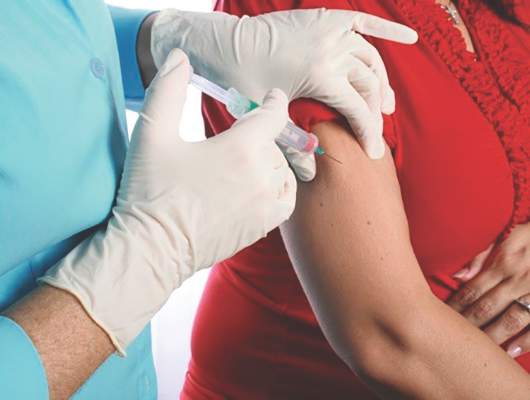
Half of pregnant women got the flu vaccine in 2014-15 season
Half (50.3%) of women who were pregnant at any time from October 2014 through January 2015 received influenza vaccination before or during pregnancy, according to responses from 1,702 participants in an Internet panel survey conducted by the Centers for Disease Control and Prevention.
Vaccination rates for pregnant women during the 2014-15 flu season are similar to rates over the past few years, with 52.2% getting vaccinated in 2013-14 season, 50.5% in 2012-13, and 46.4% in 2011-12. Vaccination coverage, however, was substantially higher when a physician or other health care provider offered the vaccine.
Of the 64.9% of women who received a vaccination offer, 67.9% chose to get the influenza vaccination. Among the 14.8% of survey participants whose health care provider recommended vaccination but didn’t offer it, 33.5% got vaccinated. And of the 20.3% of patients who didn’t receive a recommendation for the influenza vaccination, 8.5% got the vaccine.

“Even among women who reported negative attitudes regarding influenza vaccine efficacy or safety, or were not concerned about influenza infection, coverage was higher among those whose provider recommended and offered vaccination than among women with the same belief who reported only receiving a provider recommendation or receiving no recommendation,” Dr. Helen Ding and her colleagues wrote in the CDC’s Morbidity and Mortality Weekly Report (2015 Sept. 18;64[36];1000-5.).
Negative attitudes about safety and efficacy were the most common reasons that study participants rejected the flu vaccination, with 17.2% saying that they didn’t think the vaccination was effective, 14.5% saying that they were worried about the possible safety risks to their baby, and 13.6% expressing concern that the vaccination would give them the flu.
“Efforts are needed to improve influenza vaccination coverage among pregnant women. Interventions should include implementing clinic-based education to ensure access to information about influenza vaccine safety and efficacy and the risk for influenza for pregnant women and their infants, and systems to ensure that providers recommend and offer influenza vaccination to all pregnant women,” the researchers wrote.
Read the full article in MMWR.
Half (50.3%) of women who were pregnant at any time from October 2014 through January 2015 received influenza vaccination before or during pregnancy, according to responses from 1,702 participants in an Internet panel survey conducted by the Centers for Disease Control and Prevention.
Vaccination rates for pregnant women during the 2014-15 flu season are similar to rates over the past few years, with 52.2% getting vaccinated in 2013-14 season, 50.5% in 2012-13, and 46.4% in 2011-12. Vaccination coverage, however, was substantially higher when a physician or other health care provider offered the vaccine.
Of the 64.9% of women who received a vaccination offer, 67.9% chose to get the influenza vaccination. Among the 14.8% of survey participants whose health care provider recommended vaccination but didn’t offer it, 33.5% got vaccinated. And of the 20.3% of patients who didn’t receive a recommendation for the influenza vaccination, 8.5% got the vaccine.
“Even among women who reported negative attitudes regarding influenza vaccine efficacy or safety, or were not concerned about influenza infection, coverage was higher among those whose provider recommended and offered vaccination than among women with the same belief who reported only receiving a provider recommendation or receiving no recommendation,” Dr. Helen Ding and her colleagues wrote in the CDC’s Morbidity and Mortality Weekly Report (2015 Sept. 18;64[36];1000-5.).
Negative attitudes about safety and efficacy were the most common reasons that study participants rejected the flu vaccination, with 17.2% saying that they didn’t think the vaccination was effective, 14.5% saying that they were worried about the possible safety risks to their baby, and 13.6% expressing concern that the vaccination would give them the flu.
“Efforts are needed to improve influenza vaccination coverage among pregnant women. Interventions should include implementing clinic-based education to ensure access to information about influenza vaccine safety and efficacy and the risk for influenza for pregnant women and their infants, and systems to ensure that providers recommend and offer influenza vaccination to all pregnant women,” the researchers wrote.
Read the full article in MMWR.
Half (50.3%) of women who were pregnant at any time from October 2014 through January 2015 received influenza vaccination before or during pregnancy, according to responses from 1,702 participants in an Internet panel survey conducted by the Centers for Disease Control and Prevention.
Vaccination rates for pregnant women during the 2014-15 flu season are similar to rates over the past few years, with 52.2% getting vaccinated in 2013-14 season, 50.5% in 2012-13, and 46.4% in 2011-12. Vaccination coverage, however, was substantially higher when a physician or other health care provider offered the vaccine.
Of the 64.9% of women who received a vaccination offer, 67.9% chose to get the influenza vaccination. Among the 14.8% of survey participants whose health care provider recommended vaccination but didn’t offer it, 33.5% got vaccinated. And of the 20.3% of patients who didn’t receive a recommendation for the influenza vaccination, 8.5% got the vaccine.
“Even among women who reported negative attitudes regarding influenza vaccine efficacy or safety, or were not concerned about influenza infection, coverage was higher among those whose provider recommended and offered vaccination than among women with the same belief who reported only receiving a provider recommendation or receiving no recommendation,” Dr. Helen Ding and her colleagues wrote in the CDC’s Morbidity and Mortality Weekly Report (2015 Sept. 18;64[36];1000-5.).
Negative attitudes about safety and efficacy were the most common reasons that study participants rejected the flu vaccination, with 17.2% saying that they didn’t think the vaccination was effective, 14.5% saying that they were worried about the possible safety risks to their baby, and 13.6% expressing concern that the vaccination would give them the flu.
“Efforts are needed to improve influenza vaccination coverage among pregnant women. Interventions should include implementing clinic-based education to ensure access to information about influenza vaccine safety and efficacy and the risk for influenza for pregnant women and their infants, and systems to ensure that providers recommend and offer influenza vaccination to all pregnant women,” the researchers wrote.
Read the full article in MMWR.
FROM THE MORBIDITY AND MORTALITY WEEKLY REPORT
1,000 patients enrolled in MMRF CoMMpass Study
The Multiple Myeloma Research Foundation (MMRF) has achieved its goal of acquiring participation from 1,000 multiple myeloma patients in its CoMMpass study, the foundation said in a statement.
Each participant in the MMRF CoMMpass Studyprovides bone marrow samples at diagnosis and when condition changes occur over the course of at least 8 years. The study opened in July of 2011 and involves the mapping of the genomic profiles of its participants, who are from more than 100 sites in the United States, Canada, and the European Union.
The study “will provide one of the most comprehensive clinical-genomic maps of any cancer. Beyond identifying novel biomarkers and therapeutic targets, the results will help physicians make informed and customized treatment decisions for their patients through data that show which individual and combined therapies work based on a specific profile, and will also help us identify mutations. This deep understanding ultimately leads to better, more precises care, as well as the promise of a cure,” said principal investigator Dr. Sagar Lonial, professor and executive vice chair in the department of hematology and medical oncology and chief medical officer at Winship Cancer Institute, Emory University, Atlanta.
Outputs from the study are accessible through the MMRF Researcher Gateway, an online, open-access portal designed to make key genomic and clinical data available for additional study. Read more about the study on the foundation’s website.
The Multiple Myeloma Research Foundation (MMRF) has achieved its goal of acquiring participation from 1,000 multiple myeloma patients in its CoMMpass study, the foundation said in a statement.
Each participant in the MMRF CoMMpass Studyprovides bone marrow samples at diagnosis and when condition changes occur over the course of at least 8 years. The study opened in July of 2011 and involves the mapping of the genomic profiles of its participants, who are from more than 100 sites in the United States, Canada, and the European Union.
The study “will provide one of the most comprehensive clinical-genomic maps of any cancer. Beyond identifying novel biomarkers and therapeutic targets, the results will help physicians make informed and customized treatment decisions for their patients through data that show which individual and combined therapies work based on a specific profile, and will also help us identify mutations. This deep understanding ultimately leads to better, more precises care, as well as the promise of a cure,” said principal investigator Dr. Sagar Lonial, professor and executive vice chair in the department of hematology and medical oncology and chief medical officer at Winship Cancer Institute, Emory University, Atlanta.
Outputs from the study are accessible through the MMRF Researcher Gateway, an online, open-access portal designed to make key genomic and clinical data available for additional study. Read more about the study on the foundation’s website.
The Multiple Myeloma Research Foundation (MMRF) has achieved its goal of acquiring participation from 1,000 multiple myeloma patients in its CoMMpass study, the foundation said in a statement.
Each participant in the MMRF CoMMpass Studyprovides bone marrow samples at diagnosis and when condition changes occur over the course of at least 8 years. The study opened in July of 2011 and involves the mapping of the genomic profiles of its participants, who are from more than 100 sites in the United States, Canada, and the European Union.
The study “will provide one of the most comprehensive clinical-genomic maps of any cancer. Beyond identifying novel biomarkers and therapeutic targets, the results will help physicians make informed and customized treatment decisions for their patients through data that show which individual and combined therapies work based on a specific profile, and will also help us identify mutations. This deep understanding ultimately leads to better, more precises care, as well as the promise of a cure,” said principal investigator Dr. Sagar Lonial, professor and executive vice chair in the department of hematology and medical oncology and chief medical officer at Winship Cancer Institute, Emory University, Atlanta.
Outputs from the study are accessible through the MMRF Researcher Gateway, an online, open-access portal designed to make key genomic and clinical data available for additional study. Read more about the study on the foundation’s website.
Adolescents’ Unsupervised Time With Peers Correlated With Substance Use
Adolescents’ unsupervised time with peers and participation in sports were significantly associated with substance use at the end of high school, according to a study.
The researchers examined longitudinal data on 766 adolescents from 10 locations across the United States. All of the research subjects’ participation in out-of-school time (OST) activities (unsupervised time with peers, sports, and other organized activities, such as band; and paid employment) and use of alcohol, marijuana, and tobacco were measured when they were 15 years old and when they were finishing high school.

More unsupervised time was correlated with higher amounts of all three types of substance use the researchers examined; for cigarette use (r = 0.19), for alcohol use (r = 0.23), and for marijuana use (r = 0.24). More involvement in paid employment also was related to higher amounts of cigarette (r = 0.10) and alcohol use (r = 0.08), but not marijuana use. More participation in sports was positively correlated only with more alcohol use (r = 0.10). In fact, greater participation in sports actually was associated with lower amounts of cigarette (r = –0.17) and marijuana use (r = –0.08).
“Consistent with predictions of Routine Activity Theory and with prior empirical research, more unsupervised time with peers was found to increase both the odds and amount of substance use reported by adolescents at the end of high school,” according to Kenneth T.H. Lee and Deborah Lowe Vandell, Ph.D., of the University of California, Irvine. “That these relations were found, even when time in other OST contexts were controlled, suggests that lack of adult supervision, the presence of peers, and minimal structure are important processes for influencing substance use in adolescence. Other forms of OST also appeared to be linked to substance use in adolescence, suggesting that these relations were not simply artifacts of a confounding with unsupervised time.”
Among this study’s unique findings are that participation in sports appeared to be a protective factor for marijuana and tobacco use, and that participation in other organized activities did not seem to play a significant protective role against substance use, according to the researchers.
Areas that were not addressed in this study include the amount of participation in different types of OST non-sports, organized activities, and paid employment, and the efficacy of reducing the amount of unsupervised time that adolescents spend with peers at preventing substance use and abuse.
Read the full study in the Journal of Adolescent Health (doi: 10.1016/j.jadohealth.2015.07.003).
Adolescents’ unsupervised time with peers and participation in sports were significantly associated with substance use at the end of high school, according to a study.
The researchers examined longitudinal data on 766 adolescents from 10 locations across the United States. All of the research subjects’ participation in out-of-school time (OST) activities (unsupervised time with peers, sports, and other organized activities, such as band; and paid employment) and use of alcohol, marijuana, and tobacco were measured when they were 15 years old and when they were finishing high school.
More unsupervised time was correlated with higher amounts of all three types of substance use the researchers examined; for cigarette use (r = 0.19), for alcohol use (r = 0.23), and for marijuana use (r = 0.24). More involvement in paid employment also was related to higher amounts of cigarette (r = 0.10) and alcohol use (r = 0.08), but not marijuana use. More participation in sports was positively correlated only with more alcohol use (r = 0.10). In fact, greater participation in sports actually was associated with lower amounts of cigarette (r = –0.17) and marijuana use (r = –0.08).
“Consistent with predictions of Routine Activity Theory and with prior empirical research, more unsupervised time with peers was found to increase both the odds and amount of substance use reported by adolescents at the end of high school,” according to Kenneth T.H. Lee and Deborah Lowe Vandell, Ph.D., of the University of California, Irvine. “That these relations were found, even when time in other OST contexts were controlled, suggests that lack of adult supervision, the presence of peers, and minimal structure are important processes for influencing substance use in adolescence. Other forms of OST also appeared to be linked to substance use in adolescence, suggesting that these relations were not simply artifacts of a confounding with unsupervised time.”
Among this study’s unique findings are that participation in sports appeared to be a protective factor for marijuana and tobacco use, and that participation in other organized activities did not seem to play a significant protective role against substance use, according to the researchers.
Areas that were not addressed in this study include the amount of participation in different types of OST non-sports, organized activities, and paid employment, and the efficacy of reducing the amount of unsupervised time that adolescents spend with peers at preventing substance use and abuse.
Read the full study in the Journal of Adolescent Health (doi: 10.1016/j.jadohealth.2015.07.003).
Adolescents’ unsupervised time with peers and participation in sports were significantly associated with substance use at the end of high school, according to a study.
The researchers examined longitudinal data on 766 adolescents from 10 locations across the United States. All of the research subjects’ participation in out-of-school time (OST) activities (unsupervised time with peers, sports, and other organized activities, such as band; and paid employment) and use of alcohol, marijuana, and tobacco were measured when they were 15 years old and when they were finishing high school.
More unsupervised time was correlated with higher amounts of all three types of substance use the researchers examined; for cigarette use (r = 0.19), for alcohol use (r = 0.23), and for marijuana use (r = 0.24). More involvement in paid employment also was related to higher amounts of cigarette (r = 0.10) and alcohol use (r = 0.08), but not marijuana use. More participation in sports was positively correlated only with more alcohol use (r = 0.10). In fact, greater participation in sports actually was associated with lower amounts of cigarette (r = –0.17) and marijuana use (r = –0.08).
“Consistent with predictions of Routine Activity Theory and with prior empirical research, more unsupervised time with peers was found to increase both the odds and amount of substance use reported by adolescents at the end of high school,” according to Kenneth T.H. Lee and Deborah Lowe Vandell, Ph.D., of the University of California, Irvine. “That these relations were found, even when time in other OST contexts were controlled, suggests that lack of adult supervision, the presence of peers, and minimal structure are important processes for influencing substance use in adolescence. Other forms of OST also appeared to be linked to substance use in adolescence, suggesting that these relations were not simply artifacts of a confounding with unsupervised time.”
Among this study’s unique findings are that participation in sports appeared to be a protective factor for marijuana and tobacco use, and that participation in other organized activities did not seem to play a significant protective role against substance use, according to the researchers.
Areas that were not addressed in this study include the amount of participation in different types of OST non-sports, organized activities, and paid employment, and the efficacy of reducing the amount of unsupervised time that adolescents spend with peers at preventing substance use and abuse.
Read the full study in the Journal of Adolescent Health (doi: 10.1016/j.jadohealth.2015.07.003).
FROM THE JOURNAL OF ADOLESCENT HEALTH

Adolescents’ unsupervised time with peers correlated with substance use
Adolescents’ unsupervised time with peers and participation in sports were significantly associated with substance use at the end of high school, according to a study.
The researchers examined longitudinal data on 766 adolescents from 10 locations across the United States. All of the research subjects’ participation in out-of-school time (OST) activities (unsupervised time with peers, sports, and other organized activities, such as band; and paid employment) and use of alcohol, marijuana, and tobacco were measured when they were 15 years old and when they were finishing high school.

More unsupervised time was correlated with higher amounts of all three types of substance use the researchers examined; for cigarette use (r = 0.19), for alcohol use (r = 0.23), and for marijuana use (r = 0.24). More involvement in paid employment also was related to higher amounts of cigarette (r = 0.10) and alcohol use (r = 0.08), but not marijuana use. More participation in sports was positively correlated only with more alcohol use (r = 0.10). In fact, greater participation in sports actually was associated with lower amounts of cigarette (r = –0.17) and marijuana use (r = –0.08).
“Consistent with predictions of Routine Activity Theory and with prior empirical research, more unsupervised time with peers was found to increase both the odds and amount of substance use reported by adolescents at the end of high school,” according to Kenneth T.H. Lee and Deborah Lowe Vandell, Ph.D., of the University of California, Irvine. “That these relations were found, even when time in other OST contexts were controlled, suggests that lack of adult supervision, the presence of peers, and minimal structure are important processes for influencing substance use in adolescence. Other forms of OST also appeared to be linked to substance use in adolescence, suggesting that these relations were not simply artifacts of a confounding with unsupervised time.”
Among this study’s unique findings are that participation in sports appeared to be a protective factor for marijuana and tobacco use, and that participation in other organized activities did not seem to play a significant protective role against substance use, according to the researchers.
Areas that were not addressed in this study include the amount of participation in different types of OST non-sports, organized activities, and paid employment, and the efficacy of reducing the amount of unsupervised time that adolescents spend with peers at preventing substance use and abuse.
Read the full study in the Journal of Adolescent Health (doi: 10.1016/j.jadohealth.2015.07.003).
Adolescents’ unsupervised time with peers and participation in sports were significantly associated with substance use at the end of high school, according to a study.
The researchers examined longitudinal data on 766 adolescents from 10 locations across the United States. All of the research subjects’ participation in out-of-school time (OST) activities (unsupervised time with peers, sports, and other organized activities, such as band; and paid employment) and use of alcohol, marijuana, and tobacco were measured when they were 15 years old and when they were finishing high school.
More unsupervised time was correlated with higher amounts of all three types of substance use the researchers examined; for cigarette use (r = 0.19), for alcohol use (r = 0.23), and for marijuana use (r = 0.24). More involvement in paid employment also was related to higher amounts of cigarette (r = 0.10) and alcohol use (r = 0.08), but not marijuana use. More participation in sports was positively correlated only with more alcohol use (r = 0.10). In fact, greater participation in sports actually was associated with lower amounts of cigarette (r = –0.17) and marijuana use (r = –0.08).
“Consistent with predictions of Routine Activity Theory and with prior empirical research, more unsupervised time with peers was found to increase both the odds and amount of substance use reported by adolescents at the end of high school,” according to Kenneth T.H. Lee and Deborah Lowe Vandell, Ph.D., of the University of California, Irvine. “That these relations were found, even when time in other OST contexts were controlled, suggests that lack of adult supervision, the presence of peers, and minimal structure are important processes for influencing substance use in adolescence. Other forms of OST also appeared to be linked to substance use in adolescence, suggesting that these relations were not simply artifacts of a confounding with unsupervised time.”
Among this study’s unique findings are that participation in sports appeared to be a protective factor for marijuana and tobacco use, and that participation in other organized activities did not seem to play a significant protective role against substance use, according to the researchers.
Areas that were not addressed in this study include the amount of participation in different types of OST non-sports, organized activities, and paid employment, and the efficacy of reducing the amount of unsupervised time that adolescents spend with peers at preventing substance use and abuse.
Read the full study in the Journal of Adolescent Health (doi: 10.1016/j.jadohealth.2015.07.003).
Adolescents’ unsupervised time with peers and participation in sports were significantly associated with substance use at the end of high school, according to a study.
The researchers examined longitudinal data on 766 adolescents from 10 locations across the United States. All of the research subjects’ participation in out-of-school time (OST) activities (unsupervised time with peers, sports, and other organized activities, such as band; and paid employment) and use of alcohol, marijuana, and tobacco were measured when they were 15 years old and when they were finishing high school.
More unsupervised time was correlated with higher amounts of all three types of substance use the researchers examined; for cigarette use (r = 0.19), for alcohol use (r = 0.23), and for marijuana use (r = 0.24). More involvement in paid employment also was related to higher amounts of cigarette (r = 0.10) and alcohol use (r = 0.08), but not marijuana use. More participation in sports was positively correlated only with more alcohol use (r = 0.10). In fact, greater participation in sports actually was associated with lower amounts of cigarette (r = –0.17) and marijuana use (r = –0.08).
“Consistent with predictions of Routine Activity Theory and with prior empirical research, more unsupervised time with peers was found to increase both the odds and amount of substance use reported by adolescents at the end of high school,” according to Kenneth T.H. Lee and Deborah Lowe Vandell, Ph.D., of the University of California, Irvine. “That these relations were found, even when time in other OST contexts were controlled, suggests that lack of adult supervision, the presence of peers, and minimal structure are important processes for influencing substance use in adolescence. Other forms of OST also appeared to be linked to substance use in adolescence, suggesting that these relations were not simply artifacts of a confounding with unsupervised time.”
Among this study’s unique findings are that participation in sports appeared to be a protective factor for marijuana and tobacco use, and that participation in other organized activities did not seem to play a significant protective role against substance use, according to the researchers.
Areas that were not addressed in this study include the amount of participation in different types of OST non-sports, organized activities, and paid employment, and the efficacy of reducing the amount of unsupervised time that adolescents spend with peers at preventing substance use and abuse.
Read the full study in the Journal of Adolescent Health (doi: 10.1016/j.jadohealth.2015.07.003).
FROM THE JOURNAL OF ADOLESCENT HEALTH

Vaccine-derived polio case presents new challenges to eradication
A male immunodeficient patient excreted strains of a vaccine-derived poliovirus for 28 years, a study has found. This case suggests that there are new barriers to polio eradication, according to Glynis Dunn and coauthors of a research article published August 27 in PLoS Pathogens.
Poliovirus strains in the oral polio vaccine (OPV) can be transmitted from person to person in populations with low immunity and can cause outbreaks. The strains can also replicate for long periods of time in an immunodeficient individual. The patient in question received childhood OPV immunizations at 5, 7, and 12 months of age and a booster when he was about 7 years old. His case is the longest-known example of a vaccinated patient excreting the live poliovirus.
The researchers analyzed 185 stool samples that the patient provided between 1995 and 2015. All stools were positive for strain 2 polio virus; the virus titres shed in the stools were “comparable to virus titres shed by healthy vaccinees and paralytics cases infected with vaccine or wild poliovirus.”
The excreted virus began to diverge from the vaccine strain around the time of the individual’s last known OPV vaccination, acquiring various mutations that affected its antigenic structure.
The patient excreted “a highly virulent and antigenically modified type 2 poliovirus at high titres for a period estimated to be 28 years so far ... Provided antibody titres and immunizations coverage are maintained, it is likely that the population will be protected against paralytic disease, but it is also possible that this virus could circulate in populations only using [inactivated polio vaccine] as described in Israel for wild poliovirus, thus representing a possible source of polio reemergence,” according to the authors.
Read the full article in PLoS Pathogens (doi:10.1371/journal.ppat.1005114).
A male immunodeficient patient excreted strains of a vaccine-derived poliovirus for 28 years, a study has found. This case suggests that there are new barriers to polio eradication, according to Glynis Dunn and coauthors of a research article published August 27 in PLoS Pathogens.
Poliovirus strains in the oral polio vaccine (OPV) can be transmitted from person to person in populations with low immunity and can cause outbreaks. The strains can also replicate for long periods of time in an immunodeficient individual. The patient in question received childhood OPV immunizations at 5, 7, and 12 months of age and a booster when he was about 7 years old. His case is the longest-known example of a vaccinated patient excreting the live poliovirus.
The researchers analyzed 185 stool samples that the patient provided between 1995 and 2015. All stools were positive for strain 2 polio virus; the virus titres shed in the stools were “comparable to virus titres shed by healthy vaccinees and paralytics cases infected with vaccine or wild poliovirus.”
The excreted virus began to diverge from the vaccine strain around the time of the individual’s last known OPV vaccination, acquiring various mutations that affected its antigenic structure.
The patient excreted “a highly virulent and antigenically modified type 2 poliovirus at high titres for a period estimated to be 28 years so far ... Provided antibody titres and immunizations coverage are maintained, it is likely that the population will be protected against paralytic disease, but it is also possible that this virus could circulate in populations only using [inactivated polio vaccine] as described in Israel for wild poliovirus, thus representing a possible source of polio reemergence,” according to the authors.
Read the full article in PLoS Pathogens (doi:10.1371/journal.ppat.1005114).
A male immunodeficient patient excreted strains of a vaccine-derived poliovirus for 28 years, a study has found. This case suggests that there are new barriers to polio eradication, according to Glynis Dunn and coauthors of a research article published August 27 in PLoS Pathogens.
Poliovirus strains in the oral polio vaccine (OPV) can be transmitted from person to person in populations with low immunity and can cause outbreaks. The strains can also replicate for long periods of time in an immunodeficient individual. The patient in question received childhood OPV immunizations at 5, 7, and 12 months of age and a booster when he was about 7 years old. His case is the longest-known example of a vaccinated patient excreting the live poliovirus.
The researchers analyzed 185 stool samples that the patient provided between 1995 and 2015. All stools were positive for strain 2 polio virus; the virus titres shed in the stools were “comparable to virus titres shed by healthy vaccinees and paralytics cases infected with vaccine or wild poliovirus.”
The excreted virus began to diverge from the vaccine strain around the time of the individual’s last known OPV vaccination, acquiring various mutations that affected its antigenic structure.
The patient excreted “a highly virulent and antigenically modified type 2 poliovirus at high titres for a period estimated to be 28 years so far ... Provided antibody titres and immunizations coverage are maintained, it is likely that the population will be protected against paralytic disease, but it is also possible that this virus could circulate in populations only using [inactivated polio vaccine] as described in Israel for wild poliovirus, thus representing a possible source of polio reemergence,” according to the authors.
Read the full article in PLoS Pathogens (doi:10.1371/journal.ppat.1005114).
Metabolic dysfunction markers found in bipolar patients
Bipolar disorder patients had different levels of some of the biomarkers linked to metabolic dysfunction than healthy controls, according to a study.
The study’s participants included 57 bipolar disorder patients and a control group of 49 healthy individuals. Among the experimental group, 24 had bipolar disorder type I and the remaining 33 had bipolar disorder type II. The bipolar patients’ average duration of illness was 22 years and their average body mass index was 25.9 kg/m2. The experimental group’s ages and body mass indices were not significantly different from those of the control group.
The researchers compared the bipolar disorder patients’ and control group’s average levels of the biomarkers: C-peptide, ghrelin, glucose-dependent insulinotropic peptide (GIP), glucagonlike peptide-1 (GLP-1), glucagon, insulin, leptin, plasminogen activator inhibitor-1 (PAI-1, total), resistin, and visfatin.
Bipolar disorder patients has significantly lower levels of ghrelin, glucagon, and GLP-1 (P = .018 for ghrelin; P less than .0001 for glucagon; P less than .0001 for GLP-1), and significantly higher levels of GIP than did controls (P less than .0001).
When the bipolar I patients’ biomarker levels were compared with those of the bipolar II patients, no significant differences were found.
Additional findings included negative correlations between a patient’s level of glucagon and numbers of previous manic (r = –0.480; P less than .001), depressive (r = –0.294; P = .026), and any mood episodes (r = –0.403; P = .002). GLP-1 levels also were negatively correlated with the numbers of manic (r = –0.322; P = .015) and any mood episodes (r = –0.274 ; P = .039) experienced by a patient.
“Our findings support the hypothesis that dysregulations in serum glucagon, GLP-1, GIP, and ghrelin might be involved in [bipolar disorder] pathogenesis, particularly in the depressed phase. Moreover, the correlation of glucagon and GLP-1 alterations with number of mood episode recurrences could contribute to the identification of late-stage” bipolar disorder patients, according to Gianluca Rosso, Ph.D., of the University of Torino, Italy, and his colleagues. “Studies in larger samples are needed to confirm these data and to further investigate the common mechanism between mood and metabolic disorders.”
Read the full article here: (J Affect Disord. 2015 Sept 15;184:293-8.)
Bipolar disorder patients had different levels of some of the biomarkers linked to metabolic dysfunction than healthy controls, according to a study.
The study’s participants included 57 bipolar disorder patients and a control group of 49 healthy individuals. Among the experimental group, 24 had bipolar disorder type I and the remaining 33 had bipolar disorder type II. The bipolar patients’ average duration of illness was 22 years and their average body mass index was 25.9 kg/m2. The experimental group’s ages and body mass indices were not significantly different from those of the control group.
The researchers compared the bipolar disorder patients’ and control group’s average levels of the biomarkers: C-peptide, ghrelin, glucose-dependent insulinotropic peptide (GIP), glucagonlike peptide-1 (GLP-1), glucagon, insulin, leptin, plasminogen activator inhibitor-1 (PAI-1, total), resistin, and visfatin.
Bipolar disorder patients has significantly lower levels of ghrelin, glucagon, and GLP-1 (P = .018 for ghrelin; P less than .0001 for glucagon; P less than .0001 for GLP-1), and significantly higher levels of GIP than did controls (P less than .0001).
When the bipolar I patients’ biomarker levels were compared with those of the bipolar II patients, no significant differences were found.
Additional findings included negative correlations between a patient’s level of glucagon and numbers of previous manic (r = –0.480; P less than .001), depressive (r = –0.294; P = .026), and any mood episodes (r = –0.403; P = .002). GLP-1 levels also were negatively correlated with the numbers of manic (r = –0.322; P = .015) and any mood episodes (r = –0.274 ; P = .039) experienced by a patient.
“Our findings support the hypothesis that dysregulations in serum glucagon, GLP-1, GIP, and ghrelin might be involved in [bipolar disorder] pathogenesis, particularly in the depressed phase. Moreover, the correlation of glucagon and GLP-1 alterations with number of mood episode recurrences could contribute to the identification of late-stage” bipolar disorder patients, according to Gianluca Rosso, Ph.D., of the University of Torino, Italy, and his colleagues. “Studies in larger samples are needed to confirm these data and to further investigate the common mechanism between mood and metabolic disorders.”
Read the full article here: (J Affect Disord. 2015 Sept 15;184:293-8.)
Bipolar disorder patients had different levels of some of the biomarkers linked to metabolic dysfunction than healthy controls, according to a study.
The study’s participants included 57 bipolar disorder patients and a control group of 49 healthy individuals. Among the experimental group, 24 had bipolar disorder type I and the remaining 33 had bipolar disorder type II. The bipolar patients’ average duration of illness was 22 years and their average body mass index was 25.9 kg/m2. The experimental group’s ages and body mass indices were not significantly different from those of the control group.
The researchers compared the bipolar disorder patients’ and control group’s average levels of the biomarkers: C-peptide, ghrelin, glucose-dependent insulinotropic peptide (GIP), glucagonlike peptide-1 (GLP-1), glucagon, insulin, leptin, plasminogen activator inhibitor-1 (PAI-1, total), resistin, and visfatin.
Bipolar disorder patients has significantly lower levels of ghrelin, glucagon, and GLP-1 (P = .018 for ghrelin; P less than .0001 for glucagon; P less than .0001 for GLP-1), and significantly higher levels of GIP than did controls (P less than .0001).
When the bipolar I patients’ biomarker levels were compared with those of the bipolar II patients, no significant differences were found.
Additional findings included negative correlations between a patient’s level of glucagon and numbers of previous manic (r = –0.480; P less than .001), depressive (r = –0.294; P = .026), and any mood episodes (r = –0.403; P = .002). GLP-1 levels also were negatively correlated with the numbers of manic (r = –0.322; P = .015) and any mood episodes (r = –0.274 ; P = .039) experienced by a patient.
“Our findings support the hypothesis that dysregulations in serum glucagon, GLP-1, GIP, and ghrelin might be involved in [bipolar disorder] pathogenesis, particularly in the depressed phase. Moreover, the correlation of glucagon and GLP-1 alterations with number of mood episode recurrences could contribute to the identification of late-stage” bipolar disorder patients, according to Gianluca Rosso, Ph.D., of the University of Torino, Italy, and his colleagues. “Studies in larger samples are needed to confirm these data and to further investigate the common mechanism between mood and metabolic disorders.”
Read the full article here: (J Affect Disord. 2015 Sept 15;184:293-8.)
FROM JOURNAL OF AFFECTIVE DISORDERS
OCs may ease inflammatory arthritis severity
Oral contraceptive use may improve symptoms of inflammatory arthritis in women, according to a cohort study conducted in Germany between 2010 and 2013.
The researchers analyzed reports on 273 18- to 60-year-old women who had arthritis for fewer than 6 months, from both a rheumatologist and the patients. The rheumatologist followed patients for 24 months, conducting standardized assessments at 0, 3, 6, 12, 18, and 24 months. Patients reported outcomes at 0, 6, 12, and 24 months.

Of the patients studied, 50 (18%) had never used OCs, 170 (62%) had used OCs in the past, and 53 (19%) used OCs at the time of the study.
Inflammatory arthritis patients who were taking OCs at the time of the study or had previously taken OCs reported better outcomes within the first 2 years of disease, compared with patients who had never used OCs.
After adjustment for age, education, and body mass index, current or previous OC use was associated with better scores on the patient-reported Rheumatoid Arthritis Impact of Disease Score (RAID), Profile of Mood and Discomfort (PROFAD), Rheumatoid Arthritis Disease Activity Index (RADAI), and Hannover Functional Assessment (FFbH) at 12 months (P less than .05). In addition, over 2 years, average RAID scores were significantly better in women who had used or were using OCs (P less than .001).
Although better disease activity scores “seemed to be associated with the use of OCs, the parameters of active inflammation were not,” noted Dr. Katinka Albrecht of German Rheumatism Research Centre, Berlin, and her colleagues.
“The positive effects of past or current OC use on patient-reported outcomes within the first 2 years after the onset of inflammatory arthritis may be explained by long-lasting programming of [central nervous system] function,” but further research is needed to confirm this,” the researchers concluded.
The study was sponsored by a grant from Pfizer. The authors declared no conflicts of interest. Read the full study in Arthritis Care & Research (doi: 10.1002/acr.22667).
Oral contraceptive use may improve symptoms of inflammatory arthritis in women, according to a cohort study conducted in Germany between 2010 and 2013.
The researchers analyzed reports on 273 18- to 60-year-old women who had arthritis for fewer than 6 months, from both a rheumatologist and the patients. The rheumatologist followed patients for 24 months, conducting standardized assessments at 0, 3, 6, 12, 18, and 24 months. Patients reported outcomes at 0, 6, 12, and 24 months.
Of the patients studied, 50 (18%) had never used OCs, 170 (62%) had used OCs in the past, and 53 (19%) used OCs at the time of the study.
Inflammatory arthritis patients who were taking OCs at the time of the study or had previously taken OCs reported better outcomes within the first 2 years of disease, compared with patients who had never used OCs.
After adjustment for age, education, and body mass index, current or previous OC use was associated with better scores on the patient-reported Rheumatoid Arthritis Impact of Disease Score (RAID), Profile of Mood and Discomfort (PROFAD), Rheumatoid Arthritis Disease Activity Index (RADAI), and Hannover Functional Assessment (FFbH) at 12 months (P less than .05). In addition, over 2 years, average RAID scores were significantly better in women who had used or were using OCs (P less than .001).
Although better disease activity scores “seemed to be associated with the use of OCs, the parameters of active inflammation were not,” noted Dr. Katinka Albrecht of German Rheumatism Research Centre, Berlin, and her colleagues.
“The positive effects of past or current OC use on patient-reported outcomes within the first 2 years after the onset of inflammatory arthritis may be explained by long-lasting programming of [central nervous system] function,” but further research is needed to confirm this,” the researchers concluded.
The study was sponsored by a grant from Pfizer. The authors declared no conflicts of interest. Read the full study in Arthritis Care & Research (doi: 10.1002/acr.22667).
Oral contraceptive use may improve symptoms of inflammatory arthritis in women, according to a cohort study conducted in Germany between 2010 and 2013.
The researchers analyzed reports on 273 18- to 60-year-old women who had arthritis for fewer than 6 months, from both a rheumatologist and the patients. The rheumatologist followed patients for 24 months, conducting standardized assessments at 0, 3, 6, 12, 18, and 24 months. Patients reported outcomes at 0, 6, 12, and 24 months.
Of the patients studied, 50 (18%) had never used OCs, 170 (62%) had used OCs in the past, and 53 (19%) used OCs at the time of the study.
Inflammatory arthritis patients who were taking OCs at the time of the study or had previously taken OCs reported better outcomes within the first 2 years of disease, compared with patients who had never used OCs.
After adjustment for age, education, and body mass index, current or previous OC use was associated with better scores on the patient-reported Rheumatoid Arthritis Impact of Disease Score (RAID), Profile of Mood and Discomfort (PROFAD), Rheumatoid Arthritis Disease Activity Index (RADAI), and Hannover Functional Assessment (FFbH) at 12 months (P less than .05). In addition, over 2 years, average RAID scores were significantly better in women who had used or were using OCs (P less than .001).
Although better disease activity scores “seemed to be associated with the use of OCs, the parameters of active inflammation were not,” noted Dr. Katinka Albrecht of German Rheumatism Research Centre, Berlin, and her colleagues.
“The positive effects of past or current OC use on patient-reported outcomes within the first 2 years after the onset of inflammatory arthritis may be explained by long-lasting programming of [central nervous system] function,” but further research is needed to confirm this,” the researchers concluded.
The study was sponsored by a grant from Pfizer. The authors declared no conflicts of interest. Read the full study in Arthritis Care & Research (doi: 10.1002/acr.22667).
FROM ARTHRITIS CARE & RESEARCH

Cyberbullying greater depression trigger than traditional bullying
College students who face cybervictimization are more likely to suffer from depression than those subjected to traditional victimization, a study suggests.
The study’s participants included 267 college students aged 18-24 years, who were enrolled in an introductory psychology course at a large, public university in the United States. The researchers collected data on the students through surveys.

Traditional victimization and cybervictimization were significantly associated with depression, but “cybervictimization was a unique significant predictor of depression above and beyond traditional victimization,” according to Jaclyn E. Tennant and her colleagues. “Specifically, adding cybervictimization to a model that already contained traditional victimization accounted for a greater percentage of the variance in depression” within the sample.
The study also found that higher levels of social support were linked to lower levels of depression, but that social support was not “a buffer for the associations among cybervictimization or traditional victimization and depression.”
The researchers recommended that “the potential causal effects of cybervictimization on depression” be examined in longitudinal studies.
Read the full study in Computers in Human Behavior (doi: 10.1016/j.chb.2015.04.014).
College students who face cybervictimization are more likely to suffer from depression than those subjected to traditional victimization, a study suggests.
The study’s participants included 267 college students aged 18-24 years, who were enrolled in an introductory psychology course at a large, public university in the United States. The researchers collected data on the students through surveys.
Traditional victimization and cybervictimization were significantly associated with depression, but “cybervictimization was a unique significant predictor of depression above and beyond traditional victimization,” according to Jaclyn E. Tennant and her colleagues. “Specifically, adding cybervictimization to a model that already contained traditional victimization accounted for a greater percentage of the variance in depression” within the sample.
The study also found that higher levels of social support were linked to lower levels of depression, but that social support was not “a buffer for the associations among cybervictimization or traditional victimization and depression.”
The researchers recommended that “the potential causal effects of cybervictimization on depression” be examined in longitudinal studies.
Read the full study in Computers in Human Behavior (doi: 10.1016/j.chb.2015.04.014).
College students who face cybervictimization are more likely to suffer from depression than those subjected to traditional victimization, a study suggests.
The study’s participants included 267 college students aged 18-24 years, who were enrolled in an introductory psychology course at a large, public university in the United States. The researchers collected data on the students through surveys.
Traditional victimization and cybervictimization were significantly associated with depression, but “cybervictimization was a unique significant predictor of depression above and beyond traditional victimization,” according to Jaclyn E. Tennant and her colleagues. “Specifically, adding cybervictimization to a model that already contained traditional victimization accounted for a greater percentage of the variance in depression” within the sample.
The study also found that higher levels of social support were linked to lower levels of depression, but that social support was not “a buffer for the associations among cybervictimization or traditional victimization and depression.”
The researchers recommended that “the potential causal effects of cybervictimization on depression” be examined in longitudinal studies.
Read the full study in Computers in Human Behavior (doi: 10.1016/j.chb.2015.04.014).
FROM COMPUTERS IN HUMAN BEHAVIOR