User login
Doug Brunk is a San Diego-based award-winning reporter who began covering health care in 1991. Before joining the company, he wrote for the health sciences division of Columbia University and was an associate editor at Contemporary Long Term Care magazine when it won a Jesse H. Neal Award. His work has been syndicated by the Los Angeles Times and he is the author of two books related to the University of Kentucky Wildcats men's basketball program. Doug has a master’s degree in magazine journalism from the S.I. Newhouse School of Public Communications at Syracuse University. Follow him on Twitter @dougbrunk.
VIDEO: Following breast cancer diagnosis, risk of thyroid cancer rises
SAN DIEGO – Women who survive breast cancer face an increased risk of developing thyroid cancer, especially within 5 years of their breast cancer diagnosis, according to a large analysis of the National Cancer Institute’s Surveillance, Epidemiology, and End Results 9 database, covering 1973-2011.
In an interview at the meeting of the Endocrine Society, the study’s lead author, Dr. Jennifer H. Kuo, thyroid biopsy program director in the division of GI/endocrine surgery at Columbia University, New York, said that compared with patients with breast cancer alone, women who had breast cancer followed by thyroid cancer were younger on average when diagnosed with their breast cancer. They also were more likely to have had invasive ductal carcinoma, a smaller focus of cancer, and to have received radiation therapy as part of their breast cancer treatment.
Dr. Kuo concluded that recognition of the association should prompt vigilant screening for thyroid cancer among breast cancer survivors. She reported having no relevant financial conflicts to disclose.
The video associated with this article is no longer available on this site. Please view all of our videos on the MDedge YouTube channel
On Twitter @dougbrunk
SAN DIEGO – Women who survive breast cancer face an increased risk of developing thyroid cancer, especially within 5 years of their breast cancer diagnosis, according to a large analysis of the National Cancer Institute’s Surveillance, Epidemiology, and End Results 9 database, covering 1973-2011.
In an interview at the meeting of the Endocrine Society, the study’s lead author, Dr. Jennifer H. Kuo, thyroid biopsy program director in the division of GI/endocrine surgery at Columbia University, New York, said that compared with patients with breast cancer alone, women who had breast cancer followed by thyroid cancer were younger on average when diagnosed with their breast cancer. They also were more likely to have had invasive ductal carcinoma, a smaller focus of cancer, and to have received radiation therapy as part of their breast cancer treatment.
Dr. Kuo concluded that recognition of the association should prompt vigilant screening for thyroid cancer among breast cancer survivors. She reported having no relevant financial conflicts to disclose.
The video associated with this article is no longer available on this site. Please view all of our videos on the MDedge YouTube channel
On Twitter @dougbrunk
SAN DIEGO – Women who survive breast cancer face an increased risk of developing thyroid cancer, especially within 5 years of their breast cancer diagnosis, according to a large analysis of the National Cancer Institute’s Surveillance, Epidemiology, and End Results 9 database, covering 1973-2011.
In an interview at the meeting of the Endocrine Society, the study’s lead author, Dr. Jennifer H. Kuo, thyroid biopsy program director in the division of GI/endocrine surgery at Columbia University, New York, said that compared with patients with breast cancer alone, women who had breast cancer followed by thyroid cancer were younger on average when diagnosed with their breast cancer. They also were more likely to have had invasive ductal carcinoma, a smaller focus of cancer, and to have received radiation therapy as part of their breast cancer treatment.
Dr. Kuo concluded that recognition of the association should prompt vigilant screening for thyroid cancer among breast cancer survivors. She reported having no relevant financial conflicts to disclose.
The video associated with this article is no longer available on this site. Please view all of our videos on the MDedge YouTube channel
On Twitter @dougbrunk
AT ENDO 2015

VIDEO: Not All Menopausal Hormone Therapies Are Created Equal
SAN DIEGO – As prescriptions for less-regulated, custom-compounded menopausal hormones approach the number of prescriptions for FDA-approved hormones, Dr. JoAnn Pinkerton says that clinicians should educate patients on the differences between the hormones.
In an interview at the meeting of the Endocrine Society, Dr. Pinkerton, professor of obstetrics and gynecology at the University of Virginia Health System, Charlottesville, framed her remarks in light of findings from a recent survey of 483 pharmacists, which found that an estimated 26-33 million prescriptions for compounded, non–FDA-approved menopausal therapies are filled in the United States each year.
Dr. Pinkerton disclosed that she has received grants and research support (paid to the University of Virginia) from Pfizer, Inc., TherapeuticsMD, Noven, Shionogi, and TXMD.
The video associated with this article is no longer available on this site. Please view all of our videos on the MDedge YouTube channel
SAN DIEGO – As prescriptions for less-regulated, custom-compounded menopausal hormones approach the number of prescriptions for FDA-approved hormones, Dr. JoAnn Pinkerton says that clinicians should educate patients on the differences between the hormones.
In an interview at the meeting of the Endocrine Society, Dr. Pinkerton, professor of obstetrics and gynecology at the University of Virginia Health System, Charlottesville, framed her remarks in light of findings from a recent survey of 483 pharmacists, which found that an estimated 26-33 million prescriptions for compounded, non–FDA-approved menopausal therapies are filled in the United States each year.
Dr. Pinkerton disclosed that she has received grants and research support (paid to the University of Virginia) from Pfizer, Inc., TherapeuticsMD, Noven, Shionogi, and TXMD.
The video associated with this article is no longer available on this site. Please view all of our videos on the MDedge YouTube channel
SAN DIEGO – As prescriptions for less-regulated, custom-compounded menopausal hormones approach the number of prescriptions for FDA-approved hormones, Dr. JoAnn Pinkerton says that clinicians should educate patients on the differences between the hormones.
In an interview at the meeting of the Endocrine Society, Dr. Pinkerton, professor of obstetrics and gynecology at the University of Virginia Health System, Charlottesville, framed her remarks in light of findings from a recent survey of 483 pharmacists, which found that an estimated 26-33 million prescriptions for compounded, non–FDA-approved menopausal therapies are filled in the United States each year.
Dr. Pinkerton disclosed that she has received grants and research support (paid to the University of Virginia) from Pfizer, Inc., TherapeuticsMD, Noven, Shionogi, and TXMD.
The video associated with this article is no longer available on this site. Please view all of our videos on the MDedge YouTube channel
AT ENDO 2015

VIDEO: Not all menopausal hormone therapies are created equal
SAN DIEGO – As prescriptions for less-regulated, custom-compounded menopausal hormones approach the number of prescriptions for FDA-approved hormones, Dr. JoAnn Pinkerton says that clinicians should educate patients on the differences between the hormones.
In an interview at the meeting of the Endocrine Society, Dr. Pinkerton, professor of obstetrics and gynecology at the University of Virginia Health System, Charlottesville, framed her remarks in light of findings from a recent survey of 483 pharmacists, which found that an estimated 26-33 million prescriptions for compounded, non–FDA-approved menopausal therapies are filled in the United States each year.
Dr. Pinkerton disclosed that she has received grants and research support (paid to the University of Virginia) from Pfizer, Inc., TherapeuticsMD, Noven, Shionogi, and TXMD.
The video associated with this article is no longer available on this site. Please view all of our videos on the MDedge YouTube channel
On Twitter @dougbrunk
SAN DIEGO – As prescriptions for less-regulated, custom-compounded menopausal hormones approach the number of prescriptions for FDA-approved hormones, Dr. JoAnn Pinkerton says that clinicians should educate patients on the differences between the hormones.
In an interview at the meeting of the Endocrine Society, Dr. Pinkerton, professor of obstetrics and gynecology at the University of Virginia Health System, Charlottesville, framed her remarks in light of findings from a recent survey of 483 pharmacists, which found that an estimated 26-33 million prescriptions for compounded, non–FDA-approved menopausal therapies are filled in the United States each year.
Dr. Pinkerton disclosed that she has received grants and research support (paid to the University of Virginia) from Pfizer, Inc., TherapeuticsMD, Noven, Shionogi, and TXMD.
The video associated with this article is no longer available on this site. Please view all of our videos on the MDedge YouTube channel
On Twitter @dougbrunk
SAN DIEGO – As prescriptions for less-regulated, custom-compounded menopausal hormones approach the number of prescriptions for FDA-approved hormones, Dr. JoAnn Pinkerton says that clinicians should educate patients on the differences between the hormones.
In an interview at the meeting of the Endocrine Society, Dr. Pinkerton, professor of obstetrics and gynecology at the University of Virginia Health System, Charlottesville, framed her remarks in light of findings from a recent survey of 483 pharmacists, which found that an estimated 26-33 million prescriptions for compounded, non–FDA-approved menopausal therapies are filled in the United States each year.
Dr. Pinkerton disclosed that she has received grants and research support (paid to the University of Virginia) from Pfizer, Inc., TherapeuticsMD, Noven, Shionogi, and TXMD.
The video associated with this article is no longer available on this site. Please view all of our videos on the MDedge YouTube channel
On Twitter @dougbrunk
AT ENDO 2015

SEER: Breast cancer survivors at increased risk of thyroid cancer
SAN DIEGO – Breast cancer survivors face an increased risk of thyroid cancer, especially within 5 years of their breast cancer diagnosis, according to results from large retrospective analysis.
“The results of this study prompt a greater awareness of the increased risk for thyroid cancer among breast cancer survivors,” Dr. Jennifer H. Kuo said during a press briefing at the meeting of the Endocrine Society.

Although the incidence of breast cancer has been stable in the last 2 decades, “it’s still a leading cause of cancer; it affects one in eight women in this country at some time in their lives,” said Dr. Kuo of the division of GI/endocrine surgery at Columbia University, New York. “With advancements for the treatment of breast cancer, however, survival after breast cancer has greatly improved, now reaching almost 90% at 5 years. What this means is the number of breast cancer survivors in this country is now increasing. These survivors have an 18%-30% risk of developing a second cancer. Most of these second cancers are hormonally mediated, such as ovarian and uterine cancers, but there are some studies that indicate thyroid cancer is also increased.”
To date, she said, the relationship between breast and thyroid cancer has been largely based on findings from single-center studies, which have suggested a possible increase in thyroid cancer incidence after breast cancer. To further explore this relationship, Dr. Kuo and her associates evaluated the National Cancer Institute’s Surveillance, Epidemiology, and End Results 9 (SEER 9) program to identify individuals diagnosed with breast cancer and/or thyroid cancer between 1973 and 2011. In all, they identified 704,402 patients with breast cancer only, 49,663 with thyroid cancer only, and 1,526 patients who developed thyroid cancer after breast cancer.
The 10-year risk of thyroid cancer in breast cancer survivors, compared with the general population, was highest among those aged 40 years and 50 years (16% and 12%, vs. 0.33% and 0.35%, respectively), and lowest among those 60 years and 70 years old (0.05% and 0.02% vs. 0.33% and 0.27%). Breast cancer survivors developed thyroid cancer a median of 5 years after their primary diagnosis.
Breast cancer survivors who developed thyroid cancer were younger compared with patients who had breast cancer only (a mean of 54 years vs. 61 years, respectively; P less than .001), had smaller breast cancers (a mean of 15 mm vs. 18 mm; P less than .001), a greater percentage of invasive ductal carcinoma (7.6% vs. 5.5%; P = .002), and were more likely to receive adjuvant radiation therapy (48% vs. 44%; P = .009). “This is probably reflective of the surgical treatment that these patients receive,” Dr. Kuo said.
No differences between the two cohorts were noted in terms of estrogen receptor/progesterone receptor positivity or lymph node involvement.
Because breast cancer doesn’t generally develop in younger women, breast cancer survivors in the SEER 9 database who then developed a subsequent thyroid cancer were older, compared with patients who had thyroid cancer only (a mean of 62 vs. 45 years, respectively; P less than .001). In addition, compared with patients who had thyroid cancer only, breast cancer survivors who developed thyroid cancer had smaller thyroid tumors (11 mm vs. 13 mm; P = .004) and less radioactive iodine positivity (46% vs. 37%; P less than .001). They also had a greater percentage of tall cell variant papillary thyroid cancer (.9% vs. .5%; P = .036), oxyphilic variant follicular thyroid cancer (4.3% vs. 2.6%; P less than .001), and anaplastic cancer 1.5% vs. 0.8%; P = .001).
Dr. Kuo plans to investigate if tamoxifen treatment plays a role in increasing the risk of thyroid cancer in breast cancer survivors. She reported having no relevant financial conflicts.
On Twitter @dougbrunk
SAN DIEGO – Breast cancer survivors face an increased risk of thyroid cancer, especially within 5 years of their breast cancer diagnosis, according to results from large retrospective analysis.
“The results of this study prompt a greater awareness of the increased risk for thyroid cancer among breast cancer survivors,” Dr. Jennifer H. Kuo said during a press briefing at the meeting of the Endocrine Society.
Although the incidence of breast cancer has been stable in the last 2 decades, “it’s still a leading cause of cancer; it affects one in eight women in this country at some time in their lives,” said Dr. Kuo of the division of GI/endocrine surgery at Columbia University, New York. “With advancements for the treatment of breast cancer, however, survival after breast cancer has greatly improved, now reaching almost 90% at 5 years. What this means is the number of breast cancer survivors in this country is now increasing. These survivors have an 18%-30% risk of developing a second cancer. Most of these second cancers are hormonally mediated, such as ovarian and uterine cancers, but there are some studies that indicate thyroid cancer is also increased.”
To date, she said, the relationship between breast and thyroid cancer has been largely based on findings from single-center studies, which have suggested a possible increase in thyroid cancer incidence after breast cancer. To further explore this relationship, Dr. Kuo and her associates evaluated the National Cancer Institute’s Surveillance, Epidemiology, and End Results 9 (SEER 9) program to identify individuals diagnosed with breast cancer and/or thyroid cancer between 1973 and 2011. In all, they identified 704,402 patients with breast cancer only, 49,663 with thyroid cancer only, and 1,526 patients who developed thyroid cancer after breast cancer.
The 10-year risk of thyroid cancer in breast cancer survivors, compared with the general population, was highest among those aged 40 years and 50 years (16% and 12%, vs. 0.33% and 0.35%, respectively), and lowest among those 60 years and 70 years old (0.05% and 0.02% vs. 0.33% and 0.27%). Breast cancer survivors developed thyroid cancer a median of 5 years after their primary diagnosis.
Breast cancer survivors who developed thyroid cancer were younger compared with patients who had breast cancer only (a mean of 54 years vs. 61 years, respectively; P less than .001), had smaller breast cancers (a mean of 15 mm vs. 18 mm; P less than .001), a greater percentage of invasive ductal carcinoma (7.6% vs. 5.5%; P = .002), and were more likely to receive adjuvant radiation therapy (48% vs. 44%; P = .009). “This is probably reflective of the surgical treatment that these patients receive,” Dr. Kuo said.
No differences between the two cohorts were noted in terms of estrogen receptor/progesterone receptor positivity or lymph node involvement.
Because breast cancer doesn’t generally develop in younger women, breast cancer survivors in the SEER 9 database who then developed a subsequent thyroid cancer were older, compared with patients who had thyroid cancer only (a mean of 62 vs. 45 years, respectively; P less than .001). In addition, compared with patients who had thyroid cancer only, breast cancer survivors who developed thyroid cancer had smaller thyroid tumors (11 mm vs. 13 mm; P = .004) and less radioactive iodine positivity (46% vs. 37%; P less than .001). They also had a greater percentage of tall cell variant papillary thyroid cancer (.9% vs. .5%; P = .036), oxyphilic variant follicular thyroid cancer (4.3% vs. 2.6%; P less than .001), and anaplastic cancer 1.5% vs. 0.8%; P = .001).
Dr. Kuo plans to investigate if tamoxifen treatment plays a role in increasing the risk of thyroid cancer in breast cancer survivors. She reported having no relevant financial conflicts.
On Twitter @dougbrunk
SAN DIEGO – Breast cancer survivors face an increased risk of thyroid cancer, especially within 5 years of their breast cancer diagnosis, according to results from large retrospective analysis.
“The results of this study prompt a greater awareness of the increased risk for thyroid cancer among breast cancer survivors,” Dr. Jennifer H. Kuo said during a press briefing at the meeting of the Endocrine Society.
Although the incidence of breast cancer has been stable in the last 2 decades, “it’s still a leading cause of cancer; it affects one in eight women in this country at some time in their lives,” said Dr. Kuo of the division of GI/endocrine surgery at Columbia University, New York. “With advancements for the treatment of breast cancer, however, survival after breast cancer has greatly improved, now reaching almost 90% at 5 years. What this means is the number of breast cancer survivors in this country is now increasing. These survivors have an 18%-30% risk of developing a second cancer. Most of these second cancers are hormonally mediated, such as ovarian and uterine cancers, but there are some studies that indicate thyroid cancer is also increased.”
To date, she said, the relationship between breast and thyroid cancer has been largely based on findings from single-center studies, which have suggested a possible increase in thyroid cancer incidence after breast cancer. To further explore this relationship, Dr. Kuo and her associates evaluated the National Cancer Institute’s Surveillance, Epidemiology, and End Results 9 (SEER 9) program to identify individuals diagnosed with breast cancer and/or thyroid cancer between 1973 and 2011. In all, they identified 704,402 patients with breast cancer only, 49,663 with thyroid cancer only, and 1,526 patients who developed thyroid cancer after breast cancer.
The 10-year risk of thyroid cancer in breast cancer survivors, compared with the general population, was highest among those aged 40 years and 50 years (16% and 12%, vs. 0.33% and 0.35%, respectively), and lowest among those 60 years and 70 years old (0.05% and 0.02% vs. 0.33% and 0.27%). Breast cancer survivors developed thyroid cancer a median of 5 years after their primary diagnosis.
Breast cancer survivors who developed thyroid cancer were younger compared with patients who had breast cancer only (a mean of 54 years vs. 61 years, respectively; P less than .001), had smaller breast cancers (a mean of 15 mm vs. 18 mm; P less than .001), a greater percentage of invasive ductal carcinoma (7.6% vs. 5.5%; P = .002), and were more likely to receive adjuvant radiation therapy (48% vs. 44%; P = .009). “This is probably reflective of the surgical treatment that these patients receive,” Dr. Kuo said.
No differences between the two cohorts were noted in terms of estrogen receptor/progesterone receptor positivity or lymph node involvement.
Because breast cancer doesn’t generally develop in younger women, breast cancer survivors in the SEER 9 database who then developed a subsequent thyroid cancer were older, compared with patients who had thyroid cancer only (a mean of 62 vs. 45 years, respectively; P less than .001). In addition, compared with patients who had thyroid cancer only, breast cancer survivors who developed thyroid cancer had smaller thyroid tumors (11 mm vs. 13 mm; P = .004) and less radioactive iodine positivity (46% vs. 37%; P less than .001). They also had a greater percentage of tall cell variant papillary thyroid cancer (.9% vs. .5%; P = .036), oxyphilic variant follicular thyroid cancer (4.3% vs. 2.6%; P less than .001), and anaplastic cancer 1.5% vs. 0.8%; P = .001).
Dr. Kuo plans to investigate if tamoxifen treatment plays a role in increasing the risk of thyroid cancer in breast cancer survivors. She reported having no relevant financial conflicts.
On Twitter @dougbrunk
AT ENDO 2015
Key clinical point: The age-specific risk of thyroid cancer is higher among breast cancer survivors, compared with that of the general population.
Major finding: The 10-year risk of thyroid cancer in breast cancer survivors was highest among those aged 40 and 50 years, compared with the general population (16% and 12%, vs. 0.33% and 0.35%, respectively), and lowest among those 60 and 70 years old (0.33% and 0.27% vs. 0.05% and 0.02%).
Data source: A retrospective analysis of the National Cancer Institute’s Surveillance, Epidemiology, and End Results 9 (SEER 9) to identify individuals diagnosed with breast cancer and/or thyroid cancer between 1973 and 2011.
Disclosures: Dr. Kuo reported having no relevant financial conflicts.

Depression Common in Men With Borderline Testosterone Levels
SAN DIEGO – More than half of adult males referred for borderline testosterone levels have depression or depressive symptoms, judging from results from a single-center study.
“Men diagnosed with depressive symptoms should be referred to a mental health professional for formal evaluation and treatment,” Dr. Michael S. Irwig said during a press briefing at the 2015 annual meeting of the Endocrine Society. “We as clinicians should consider managing common comorbidities in this sample population such as obesity and sedentary lifestyle. For example, there’s practically no risk to getting men to lose weight, which would have a lot of health benefits, but there are potential risks to testosterone therapy. I’ll tell men that if they lose weight, that will increase their body’s production of testosterone.”
In the wake of multi-million dollar pharmaceutical advertising campaigns geared to educate the public about low testosterone, Dr. Irwig and his associates set out to describe the population of men referred for borderline testosterone levels and to assess comorbidities. They hypothesized that men referred for borderline testosterone levels would have higher rates of depression and depressive symptoms than the general population.
“There’s been a dramatic increase in testing for testosterone levels,” said Dr. Irwig, director of the Center for Andrology in the division of endocrinology at George Washington University, Washington. “There are many men who wind up having borderline testosterone levels that are closer to the lower end of the reference range. Nobody really knows what a low testosterone level is; there’s no clear agreement on this. There are virtually no published studies looking at this group of men who seek medical care for borderline testosterone levels.”
The researchers recruited 200 men aged 20-77 years who were referred for management of borderline-to-low testosterone levels. They defined borderline testosterone levels as between 200 ng/dL and 350 ng/dL (which corresponds to 6.9-12 nmol/L) and assessed depressive symptoms with the validated Patient Health Questionnaire 9 (PHQ-9), with scores 10 or greater considered positive. They also collected data on demographics, medical history, what medications they were taking, and any signs and symptoms of hypogonadism.
Dr. Irwig reported that 56% of men had either depressive symptoms based on the PHQ-9, a known diagnosis of depression, and/or they were already on an antidepressant. By comparison, previous studies of PHQ-9 scores have demonstrated that the rate of depression in the general population is 15%-20% among ethnically diverse primary care patients and 5.6% of overweight and obese adults who participated in the National Health and Nutrition Examination Survey. “So clearly, this population [of men referred for borderline testosterone levels] has a much higher rate of depression and depressive symptoms,” he said.
When the study participants were asked if they engaged in exercise other than walking, 51% reported that they weren’t doing any exercise, 27% were exercising 1-3 times per week, and 22% were exercising 4 times per week or more. Only 16% of the study participants were normal weight based on their body mass index, while 39% were overweight, 43% were obese, and 2% were underweight.
As for symptoms that prompted the men to get their testosterone levels checked in the first place, most reported erectile dysfunction (89%), followed by low libido (69%), fewer morning erections (58%), low energy (52%), sleep disturbances (42%), and decreased concentration (27%).
Dr. Irwig emphasized that the study participants “are a select sample, because they probably had some symptom that prompted them to get [their testosterone level] tested,” he said. “Therefore, our findings cannot be generalized to men with borderline testosterone levels who do not seek medical care.”
Dr. Irwig reported having no relevant financial conflicts.
SAN DIEGO – More than half of adult males referred for borderline testosterone levels have depression or depressive symptoms, judging from results from a single-center study.
“Men diagnosed with depressive symptoms should be referred to a mental health professional for formal evaluation and treatment,” Dr. Michael S. Irwig said during a press briefing at the 2015 annual meeting of the Endocrine Society. “We as clinicians should consider managing common comorbidities in this sample population such as obesity and sedentary lifestyle. For example, there’s practically no risk to getting men to lose weight, which would have a lot of health benefits, but there are potential risks to testosterone therapy. I’ll tell men that if they lose weight, that will increase their body’s production of testosterone.”
In the wake of multi-million dollar pharmaceutical advertising campaigns geared to educate the public about low testosterone, Dr. Irwig and his associates set out to describe the population of men referred for borderline testosterone levels and to assess comorbidities. They hypothesized that men referred for borderline testosterone levels would have higher rates of depression and depressive symptoms than the general population.
“There’s been a dramatic increase in testing for testosterone levels,” said Dr. Irwig, director of the Center for Andrology in the division of endocrinology at George Washington University, Washington. “There are many men who wind up having borderline testosterone levels that are closer to the lower end of the reference range. Nobody really knows what a low testosterone level is; there’s no clear agreement on this. There are virtually no published studies looking at this group of men who seek medical care for borderline testosterone levels.”
The researchers recruited 200 men aged 20-77 years who were referred for management of borderline-to-low testosterone levels. They defined borderline testosterone levels as between 200 ng/dL and 350 ng/dL (which corresponds to 6.9-12 nmol/L) and assessed depressive symptoms with the validated Patient Health Questionnaire 9 (PHQ-9), with scores 10 or greater considered positive. They also collected data on demographics, medical history, what medications they were taking, and any signs and symptoms of hypogonadism.
Dr. Irwig reported that 56% of men had either depressive symptoms based on the PHQ-9, a known diagnosis of depression, and/or they were already on an antidepressant. By comparison, previous studies of PHQ-9 scores have demonstrated that the rate of depression in the general population is 15%-20% among ethnically diverse primary care patients and 5.6% of overweight and obese adults who participated in the National Health and Nutrition Examination Survey. “So clearly, this population [of men referred for borderline testosterone levels] has a much higher rate of depression and depressive symptoms,” he said.
When the study participants were asked if they engaged in exercise other than walking, 51% reported that they weren’t doing any exercise, 27% were exercising 1-3 times per week, and 22% were exercising 4 times per week or more. Only 16% of the study participants were normal weight based on their body mass index, while 39% were overweight, 43% were obese, and 2% were underweight.
As for symptoms that prompted the men to get their testosterone levels checked in the first place, most reported erectile dysfunction (89%), followed by low libido (69%), fewer morning erections (58%), low energy (52%), sleep disturbances (42%), and decreased concentration (27%).
Dr. Irwig emphasized that the study participants “are a select sample, because they probably had some symptom that prompted them to get [their testosterone level] tested,” he said. “Therefore, our findings cannot be generalized to men with borderline testosterone levels who do not seek medical care.”
Dr. Irwig reported having no relevant financial conflicts.
SAN DIEGO – More than half of adult males referred for borderline testosterone levels have depression or depressive symptoms, judging from results from a single-center study.
“Men diagnosed with depressive symptoms should be referred to a mental health professional for formal evaluation and treatment,” Dr. Michael S. Irwig said during a press briefing at the 2015 annual meeting of the Endocrine Society. “We as clinicians should consider managing common comorbidities in this sample population such as obesity and sedentary lifestyle. For example, there’s practically no risk to getting men to lose weight, which would have a lot of health benefits, but there are potential risks to testosterone therapy. I’ll tell men that if they lose weight, that will increase their body’s production of testosterone.”
In the wake of multi-million dollar pharmaceutical advertising campaigns geared to educate the public about low testosterone, Dr. Irwig and his associates set out to describe the population of men referred for borderline testosterone levels and to assess comorbidities. They hypothesized that men referred for borderline testosterone levels would have higher rates of depression and depressive symptoms than the general population.
“There’s been a dramatic increase in testing for testosterone levels,” said Dr. Irwig, director of the Center for Andrology in the division of endocrinology at George Washington University, Washington. “There are many men who wind up having borderline testosterone levels that are closer to the lower end of the reference range. Nobody really knows what a low testosterone level is; there’s no clear agreement on this. There are virtually no published studies looking at this group of men who seek medical care for borderline testosterone levels.”
The researchers recruited 200 men aged 20-77 years who were referred for management of borderline-to-low testosterone levels. They defined borderline testosterone levels as between 200 ng/dL and 350 ng/dL (which corresponds to 6.9-12 nmol/L) and assessed depressive symptoms with the validated Patient Health Questionnaire 9 (PHQ-9), with scores 10 or greater considered positive. They also collected data on demographics, medical history, what medications they were taking, and any signs and symptoms of hypogonadism.
Dr. Irwig reported that 56% of men had either depressive symptoms based on the PHQ-9, a known diagnosis of depression, and/or they were already on an antidepressant. By comparison, previous studies of PHQ-9 scores have demonstrated that the rate of depression in the general population is 15%-20% among ethnically diverse primary care patients and 5.6% of overweight and obese adults who participated in the National Health and Nutrition Examination Survey. “So clearly, this population [of men referred for borderline testosterone levels] has a much higher rate of depression and depressive symptoms,” he said.
When the study participants were asked if they engaged in exercise other than walking, 51% reported that they weren’t doing any exercise, 27% were exercising 1-3 times per week, and 22% were exercising 4 times per week or more. Only 16% of the study participants were normal weight based on their body mass index, while 39% were overweight, 43% were obese, and 2% were underweight.
As for symptoms that prompted the men to get their testosterone levels checked in the first place, most reported erectile dysfunction (89%), followed by low libido (69%), fewer morning erections (58%), low energy (52%), sleep disturbances (42%), and decreased concentration (27%).
Dr. Irwig emphasized that the study participants “are a select sample, because they probably had some symptom that prompted them to get [their testosterone level] tested,” he said. “Therefore, our findings cannot be generalized to men with borderline testosterone levels who do not seek medical care.”
Dr. Irwig reported having no relevant financial conflicts.
AT ENDO 2015
Depression common in men with borderline testosterone levels
SAN DIEGO – More than half of adult males referred for borderline testosterone levels have depression or depressive symptoms, judging from results from a single-center study.
“Men diagnosed with depressive symptoms should be referred to a mental health professional for formal evaluation and treatment,” Dr. Michael S. Irwig said during a press briefing at the 2015 annual meeting of the Endocrine Society. “We as clinicians should consider managing common comorbidities in this sample population such as obesity and sedentary lifestyle. For example, there’s practically no risk to getting men to lose weight, which would have a lot of health benefits, but there are potential risks to testosterone therapy. I’ll tell men that if they lose weight, that will increase their body’s production of testosterone.”
In the wake of multi-million dollar pharmaceutical advertising campaigns geared to educate the public about low testosterone, Dr. Irwig and his associates set out to describe the population of men referred for borderline testosterone levels and to assess comorbidities. They hypothesized that men referred for borderline testosterone levels would have higher rates of depression and depressive symptoms than the general population.
“There’s been a dramatic increase in testing for testosterone levels,” said Dr. Irwig, director of the Center for Andrology in the division of endocrinology at George Washington University, Washington. “There are many men who wind up having borderline testosterone levels that are closer to the lower end of the reference range. Nobody really knows what a low testosterone level is; there’s no clear agreement on this. There are virtually no published studies looking at this group of men who seek medical care for borderline testosterone levels.”
The researchers recruited 200 men aged 20-77 years who were referred for management of borderline-to-low testosterone levels. They defined borderline testosterone levels as between 200 ng/dL and 350 ng/dL (which corresponds to 6.9-12 nmol/L) and assessed depressive symptoms with the validated Patient Health Questionnaire 9 (PHQ-9), with scores 10 or greater considered positive. They also collected data on demographics, medical history, what medications they were taking, and any signs and symptoms of hypogonadism.
Dr. Irwig reported that 56% of men had either depressive symptoms based on the PHQ-9, a known diagnosis of depression, and/or they were already on an antidepressant. By comparison, previous studies of PHQ-9 scores have demonstrated that the rate of depression in the general population is 15%-20% among ethnically diverse primary care patients and 5.6% of overweight and obese adults who participated in the National Health and Nutrition Examination Survey. “So clearly, this population [of men referred for borderline testosterone levels] has a much higher rate of depression and depressive symptoms,” he said.
When the study participants were asked if they engaged in exercise other than walking, 51% reported that they weren’t doing any exercise, 27% were exercising 1-3 times per week, and 22% were exercising 4 times per week or more. Only 16% of the study participants were normal weight based on their body mass index, while 39% were overweight, 43% were obese, and 2% were underweight.
As for symptoms that prompted the men to get their testosterone levels checked in the first place, most reported erectile dysfunction (89%), followed by low libido (69%), fewer morning erections (58%), low energy (52%), sleep disturbances (42%), and decreased concentration (27%).
Dr. Irwig emphasized that the study participants “are a select sample, because they probably had some symptom that prompted them to get [their testosterone level] tested,” he said. “Therefore, our findings cannot be generalized to men with borderline testosterone levels who do not seek medical care.”
Dr. Irwig reported having no relevant financial conflicts.
On Twitter @dougbrunk
SAN DIEGO – More than half of adult males referred for borderline testosterone levels have depression or depressive symptoms, judging from results from a single-center study.
“Men diagnosed with depressive symptoms should be referred to a mental health professional for formal evaluation and treatment,” Dr. Michael S. Irwig said during a press briefing at the 2015 annual meeting of the Endocrine Society. “We as clinicians should consider managing common comorbidities in this sample population such as obesity and sedentary lifestyle. For example, there’s practically no risk to getting men to lose weight, which would have a lot of health benefits, but there are potential risks to testosterone therapy. I’ll tell men that if they lose weight, that will increase their body’s production of testosterone.”
In the wake of multi-million dollar pharmaceutical advertising campaigns geared to educate the public about low testosterone, Dr. Irwig and his associates set out to describe the population of men referred for borderline testosterone levels and to assess comorbidities. They hypothesized that men referred for borderline testosterone levels would have higher rates of depression and depressive symptoms than the general population.
“There’s been a dramatic increase in testing for testosterone levels,” said Dr. Irwig, director of the Center for Andrology in the division of endocrinology at George Washington University, Washington. “There are many men who wind up having borderline testosterone levels that are closer to the lower end of the reference range. Nobody really knows what a low testosterone level is; there’s no clear agreement on this. There are virtually no published studies looking at this group of men who seek medical care for borderline testosterone levels.”
The researchers recruited 200 men aged 20-77 years who were referred for management of borderline-to-low testosterone levels. They defined borderline testosterone levels as between 200 ng/dL and 350 ng/dL (which corresponds to 6.9-12 nmol/L) and assessed depressive symptoms with the validated Patient Health Questionnaire 9 (PHQ-9), with scores 10 or greater considered positive. They also collected data on demographics, medical history, what medications they were taking, and any signs and symptoms of hypogonadism.
Dr. Irwig reported that 56% of men had either depressive symptoms based on the PHQ-9, a known diagnosis of depression, and/or they were already on an antidepressant. By comparison, previous studies of PHQ-9 scores have demonstrated that the rate of depression in the general population is 15%-20% among ethnically diverse primary care patients and 5.6% of overweight and obese adults who participated in the National Health and Nutrition Examination Survey. “So clearly, this population [of men referred for borderline testosterone levels] has a much higher rate of depression and depressive symptoms,” he said.
When the study participants were asked if they engaged in exercise other than walking, 51% reported that they weren’t doing any exercise, 27% were exercising 1-3 times per week, and 22% were exercising 4 times per week or more. Only 16% of the study participants were normal weight based on their body mass index, while 39% were overweight, 43% were obese, and 2% were underweight.
As for symptoms that prompted the men to get their testosterone levels checked in the first place, most reported erectile dysfunction (89%), followed by low libido (69%), fewer morning erections (58%), low energy (52%), sleep disturbances (42%), and decreased concentration (27%).
Dr. Irwig emphasized that the study participants “are a select sample, because they probably had some symptom that prompted them to get [their testosterone level] tested,” he said. “Therefore, our findings cannot be generalized to men with borderline testosterone levels who do not seek medical care.”
Dr. Irwig reported having no relevant financial conflicts.
On Twitter @dougbrunk
SAN DIEGO – More than half of adult males referred for borderline testosterone levels have depression or depressive symptoms, judging from results from a single-center study.
“Men diagnosed with depressive symptoms should be referred to a mental health professional for formal evaluation and treatment,” Dr. Michael S. Irwig said during a press briefing at the 2015 annual meeting of the Endocrine Society. “We as clinicians should consider managing common comorbidities in this sample population such as obesity and sedentary lifestyle. For example, there’s practically no risk to getting men to lose weight, which would have a lot of health benefits, but there are potential risks to testosterone therapy. I’ll tell men that if they lose weight, that will increase their body’s production of testosterone.”
In the wake of multi-million dollar pharmaceutical advertising campaigns geared to educate the public about low testosterone, Dr. Irwig and his associates set out to describe the population of men referred for borderline testosterone levels and to assess comorbidities. They hypothesized that men referred for borderline testosterone levels would have higher rates of depression and depressive symptoms than the general population.
“There’s been a dramatic increase in testing for testosterone levels,” said Dr. Irwig, director of the Center for Andrology in the division of endocrinology at George Washington University, Washington. “There are many men who wind up having borderline testosterone levels that are closer to the lower end of the reference range. Nobody really knows what a low testosterone level is; there’s no clear agreement on this. There are virtually no published studies looking at this group of men who seek medical care for borderline testosterone levels.”
The researchers recruited 200 men aged 20-77 years who were referred for management of borderline-to-low testosterone levels. They defined borderline testosterone levels as between 200 ng/dL and 350 ng/dL (which corresponds to 6.9-12 nmol/L) and assessed depressive symptoms with the validated Patient Health Questionnaire 9 (PHQ-9), with scores 10 or greater considered positive. They also collected data on demographics, medical history, what medications they were taking, and any signs and symptoms of hypogonadism.
Dr. Irwig reported that 56% of men had either depressive symptoms based on the PHQ-9, a known diagnosis of depression, and/or they were already on an antidepressant. By comparison, previous studies of PHQ-9 scores have demonstrated that the rate of depression in the general population is 15%-20% among ethnically diverse primary care patients and 5.6% of overweight and obese adults who participated in the National Health and Nutrition Examination Survey. “So clearly, this population [of men referred for borderline testosterone levels] has a much higher rate of depression and depressive symptoms,” he said.
When the study participants were asked if they engaged in exercise other than walking, 51% reported that they weren’t doing any exercise, 27% were exercising 1-3 times per week, and 22% were exercising 4 times per week or more. Only 16% of the study participants were normal weight based on their body mass index, while 39% were overweight, 43% were obese, and 2% were underweight.
As for symptoms that prompted the men to get their testosterone levels checked in the first place, most reported erectile dysfunction (89%), followed by low libido (69%), fewer morning erections (58%), low energy (52%), sleep disturbances (42%), and decreased concentration (27%).
Dr. Irwig emphasized that the study participants “are a select sample, because they probably had some symptom that prompted them to get [their testosterone level] tested,” he said. “Therefore, our findings cannot be generalized to men with borderline testosterone levels who do not seek medical care.”
Dr. Irwig reported having no relevant financial conflicts.
On Twitter @dougbrunk
AT ENDO 2015
Key clinical point: More than half of men referred for borderline testosterone levels have depression.
Major finding: Using a score of 10 or higher on the Patient Health Questionnaire 9, 56% of men referred for borderline testosterone levels had depressive symptoms, a known diagnosis of depression, and/or were using an antidepressant.
Data source: A single-center study of 200 men age 20-77 years who were referred for management of borderline-to-low testosterone levels.
Disclosures: Dr. Irwig reported having no relevant financial conflicts.
Use of nonregulated menopausal hormone treatment on the rise
SAN DIEGO – An estimated 26-33 million prescriptions for compounded, non–FDA-approved menopausal hormone therapy are filled in the United States each year, with annual sales reaching $1.3-$1.7 billion, results from a national pharmacist survey suggest.
What’s more, 69% of pharmacists expect their custom-compounded hormone therapy business to grow over the next 2 years.
“This is key, because if you expect that there’s nearly equivalent prescribing of compounded hormone therapy and menopausal hormone therapy, then it behooves us as care providers to make sure that [consumers] understand the difference between something that’s FDA approved, monitored, and regulated, and something that’s compounded, less well-regulated, and that is not FDA monitored or tested in rigorous clinical trials,” lead study author JoAnn Pinkerton said during a press briefing at the annual meeting of the Endocrine Society. “There are concerns about overdosing and under-dosing, sterility issues, the issue of batch-to-batch stability, and also the fact that if you get an FDA-approved product, you get a ‘black box’ warning of everything that’s been reported for HT [hormone therapy]. If you get a compounded product, they’re not required to give you any information about the risks. Many women are using these products. They’re being prescribed and we want people to be educated about the differences.”
Following the release of Women’s Health Initiative (WHI) data linking menopausal hormone therapy (MHT) to certain health risks, FDA-approved MHT users decreased from about 17.9 million in 2002 to about 3.7 million in 2013, said Dr. Pinkerton, a professor of obstetrics and gynecology at the University of Virginia Health System, Charlottesville. “This resulted in a marked increase in the compounded ‘bioidentical’ hormone therapy market primarily, we believe, because of a lot of hype that they might be safer, more effective, and that estriol might prevent breast cancer,” Dr. Pinkerton said. Specifically, the compounded ‘bioidentical’ hormone therapy (CHT) market has grown “from almost a negligible amount to about 2.5 million women, which is about 2% of U.S. women based on consumer surveys and U.S Census data. In earlier consumer surveys, most women who use these products were not aware that they are not FDA approved. There’s a knowledge gap for providers and women to learn about.”
For the study, Dr. Pinkerton and her associates evaluated results from an online national survey that was e-mailed to 12,250 independent community pharmacies and independent compounding pharmacies in the fall of 2014. Respondents “had to be knowledgeable of the annual revenue and the volume of compounded and noncompounded [prescriptions] at the pharmacy locations,” Dr. Pinkerton said. “We asked questions including the percentage of nonsterile compounding volume that is CHT, the percentage of monthly prescriptions for each type of CHT, and the likelihood of MHT prescribing over the next 2 years.”
Based on complete responses from 483 pharmacists, the researchers found that an estimated 26-33 million CHT prescriptions are filled each year, which is similar to the number of FDA-approved MHT prescriptions filled each year. In addition, based on an average compounded price of $50, the estimated sales of CHT currently range from $1.3 to $1.7 billion. More than half of compounding pharmacies (69%) expected demand for CHT to grow by 5%-25%. “Very few expected that the market would ‘explode,’ and very few thought that it would decrease,” Dr. Pinkerton said.
Dr. Pinkerton disclosed that she has received grants and research support (paid to the University of Virginia) from Pfizer, Inc., TherapeuticsMD, Noven, Shionogi, and TXMD.
On Twitter @dougbrunk
SAN DIEGO – An estimated 26-33 million prescriptions for compounded, non–FDA-approved menopausal hormone therapy are filled in the United States each year, with annual sales reaching $1.3-$1.7 billion, results from a national pharmacist survey suggest.
What’s more, 69% of pharmacists expect their custom-compounded hormone therapy business to grow over the next 2 years.
“This is key, because if you expect that there’s nearly equivalent prescribing of compounded hormone therapy and menopausal hormone therapy, then it behooves us as care providers to make sure that [consumers] understand the difference between something that’s FDA approved, monitored, and regulated, and something that’s compounded, less well-regulated, and that is not FDA monitored or tested in rigorous clinical trials,” lead study author JoAnn Pinkerton said during a press briefing at the annual meeting of the Endocrine Society. “There are concerns about overdosing and under-dosing, sterility issues, the issue of batch-to-batch stability, and also the fact that if you get an FDA-approved product, you get a ‘black box’ warning of everything that’s been reported for HT [hormone therapy]. If you get a compounded product, they’re not required to give you any information about the risks. Many women are using these products. They’re being prescribed and we want people to be educated about the differences.”
Following the release of Women’s Health Initiative (WHI) data linking menopausal hormone therapy (MHT) to certain health risks, FDA-approved MHT users decreased from about 17.9 million in 2002 to about 3.7 million in 2013, said Dr. Pinkerton, a professor of obstetrics and gynecology at the University of Virginia Health System, Charlottesville. “This resulted in a marked increase in the compounded ‘bioidentical’ hormone therapy market primarily, we believe, because of a lot of hype that they might be safer, more effective, and that estriol might prevent breast cancer,” Dr. Pinkerton said. Specifically, the compounded ‘bioidentical’ hormone therapy (CHT) market has grown “from almost a negligible amount to about 2.5 million women, which is about 2% of U.S. women based on consumer surveys and U.S Census data. In earlier consumer surveys, most women who use these products were not aware that they are not FDA approved. There’s a knowledge gap for providers and women to learn about.”
For the study, Dr. Pinkerton and her associates evaluated results from an online national survey that was e-mailed to 12,250 independent community pharmacies and independent compounding pharmacies in the fall of 2014. Respondents “had to be knowledgeable of the annual revenue and the volume of compounded and noncompounded [prescriptions] at the pharmacy locations,” Dr. Pinkerton said. “We asked questions including the percentage of nonsterile compounding volume that is CHT, the percentage of monthly prescriptions for each type of CHT, and the likelihood of MHT prescribing over the next 2 years.”
Based on complete responses from 483 pharmacists, the researchers found that an estimated 26-33 million CHT prescriptions are filled each year, which is similar to the number of FDA-approved MHT prescriptions filled each year. In addition, based on an average compounded price of $50, the estimated sales of CHT currently range from $1.3 to $1.7 billion. More than half of compounding pharmacies (69%) expected demand for CHT to grow by 5%-25%. “Very few expected that the market would ‘explode,’ and very few thought that it would decrease,” Dr. Pinkerton said.
Dr. Pinkerton disclosed that she has received grants and research support (paid to the University of Virginia) from Pfizer, Inc., TherapeuticsMD, Noven, Shionogi, and TXMD.
On Twitter @dougbrunk
SAN DIEGO – An estimated 26-33 million prescriptions for compounded, non–FDA-approved menopausal hormone therapy are filled in the United States each year, with annual sales reaching $1.3-$1.7 billion, results from a national pharmacist survey suggest.
What’s more, 69% of pharmacists expect their custom-compounded hormone therapy business to grow over the next 2 years.
“This is key, because if you expect that there’s nearly equivalent prescribing of compounded hormone therapy and menopausal hormone therapy, then it behooves us as care providers to make sure that [consumers] understand the difference between something that’s FDA approved, monitored, and regulated, and something that’s compounded, less well-regulated, and that is not FDA monitored or tested in rigorous clinical trials,” lead study author JoAnn Pinkerton said during a press briefing at the annual meeting of the Endocrine Society. “There are concerns about overdosing and under-dosing, sterility issues, the issue of batch-to-batch stability, and also the fact that if you get an FDA-approved product, you get a ‘black box’ warning of everything that’s been reported for HT [hormone therapy]. If you get a compounded product, they’re not required to give you any information about the risks. Many women are using these products. They’re being prescribed and we want people to be educated about the differences.”
Following the release of Women’s Health Initiative (WHI) data linking menopausal hormone therapy (MHT) to certain health risks, FDA-approved MHT users decreased from about 17.9 million in 2002 to about 3.7 million in 2013, said Dr. Pinkerton, a professor of obstetrics and gynecology at the University of Virginia Health System, Charlottesville. “This resulted in a marked increase in the compounded ‘bioidentical’ hormone therapy market primarily, we believe, because of a lot of hype that they might be safer, more effective, and that estriol might prevent breast cancer,” Dr. Pinkerton said. Specifically, the compounded ‘bioidentical’ hormone therapy (CHT) market has grown “from almost a negligible amount to about 2.5 million women, which is about 2% of U.S. women based on consumer surveys and U.S Census data. In earlier consumer surveys, most women who use these products were not aware that they are not FDA approved. There’s a knowledge gap for providers and women to learn about.”
For the study, Dr. Pinkerton and her associates evaluated results from an online national survey that was e-mailed to 12,250 independent community pharmacies and independent compounding pharmacies in the fall of 2014. Respondents “had to be knowledgeable of the annual revenue and the volume of compounded and noncompounded [prescriptions] at the pharmacy locations,” Dr. Pinkerton said. “We asked questions including the percentage of nonsterile compounding volume that is CHT, the percentage of monthly prescriptions for each type of CHT, and the likelihood of MHT prescribing over the next 2 years.”
Based on complete responses from 483 pharmacists, the researchers found that an estimated 26-33 million CHT prescriptions are filled each year, which is similar to the number of FDA-approved MHT prescriptions filled each year. In addition, based on an average compounded price of $50, the estimated sales of CHT currently range from $1.3 to $1.7 billion. More than half of compounding pharmacies (69%) expected demand for CHT to grow by 5%-25%. “Very few expected that the market would ‘explode,’ and very few thought that it would decrease,” Dr. Pinkerton said.
Dr. Pinkerton disclosed that she has received grants and research support (paid to the University of Virginia) from Pfizer, Inc., TherapeuticsMD, Noven, Shionogi, and TXMD.
On Twitter @dougbrunk
AT ENDO 2015
Key clinical point: A large proportion of the U.S. market for menopausal hormone therapy consists of nonregulated, custom-compounded hormone therapy.
Major finding: An estimated 26-33 million prescriptions for compounded, non–FDA-approved menopausal hormone therapy are filled in the United States each year.
Data source: Responses to a national survey that was e-mailed to 12,250 independent community pharmacies and independent compounding pharmacies in the fall of 2014.
Disclosures: Dr. Pinkerton disclosed that she has received grants and research support (paid to the University of Virginia) from Pfizer, Inc., TherapeuticsMD, Noven, Shionogi, and TXMD.
Ancestry-specific skeletal maturation differences noted in prepubertal children
SAN DIEGO – Skeletal maturation is more advanced in African American nonobese prepubertal girls and boys, compared with children of other races, even after body composition and size are taken into account, a large federally funded study showed.
"This means that other factors beyond differences in body composition [the amount of muscle and fat in the body], perhaps nutritional, hormonal, genetic, or mitochondrial, should be investigated as additional potential explanations," Dr. Shana E. McCormack said in an interview at a meeting of the Endocrine Society. "A better understanding of these factors may enrich our understanding of skeletal health in children. In addition, clinicians who use bone age to assess children with early or late puberty may be informed by these insights."
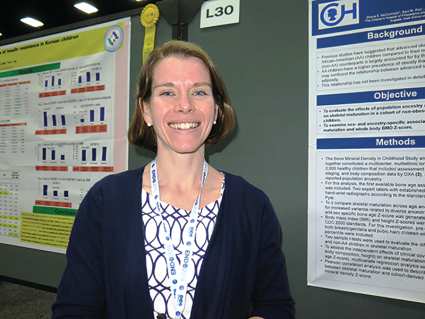
Previous studies have demonstrated that there are differences between children of African American and European descent with respect to bone mineral density, said Dr. McCormack of the diabetes center for children and the congenital hyperinsulinism center at Children’s Hospital of Philadelphia. “These differences persist into adulthood as well; it may be that these differences relate to the pace of skeletal maturation, or development of the adult skeleton, which seems to occur earlier in African Americans than Europeans. Clinically, skeletal maturation is assessed using a bone age x-ray of the left hand. Previously, it had been suggested that higher rates of obesity in African Americans might account for their more advanced skeletal maturation. However, in this study of exclusively nonobese children who had not yet entered puberty, we showed that ancestry-specific differences in skeletal maturation persist.”
In the future, Dr. McCormack said a better appreciation of ancestry-specific differences in skeletal maturation may inform understanding of corresponding variation in bone mineral density. Currently, endocrinologists “use bone age x-rays when they take care of a child who has either early or delayed puberty, to assess where that child is,” she said. “It’s one piece of information that helps determine if additional evaluation is necessary, so understanding the strengths and limitations of the test is valuable. We’ve shown that even in these nonobese kids, there’s a 4- or 5-month difference that’s attributable to ancestry. I think we need better, more updated bone age standards for clinicians to use.”
In a multisite effort supported by the National Institute of Child Health and Human Development called the Bone Mineral Density in Childhood Study (BMDCS), Dr. McCormack and her associates collected serial simultaneous bone age assessments for skeletal maturation, anthropometrics, Tanner staging, and body composition data from bone measurements taken with dual-energy x-ray absorptiometry, along with self-reported population ancestry in 1,011 subjects with a mean age of 8 years. The first available bone age assessment for each child was included. Two experts rated the hand-wrist radiographs according to the standards of the Greulich-Pyle bone age scale.
To compare bone ages across age and sex and to account for increased variance related to diverse ancestries, the researchers generated a within-cohort bone age z score. They used Centers for Disease Control and Prevention 2000 standards to calculate body mass index and z scores. The current analysis was limited to prepubertal (Tanner stage I for both breasts/genitalia and pubic hair) children with a BMI greater than the 3rd but less than the 95th percentile.
Nearly half (48%) of the study subjects were girls, 17% were African American, 13% were overweight, and 1% were underweight. The researchers found that bone age z score was higher in African American girls vs. girls of other ancestry (P = .0004) and higher in African American boys vs. those of other ancestry (P = .0002). This corresponded to an advancement of around 4.8 months in African American girls vs. those of other ancestry (P = .0008) and 5.4 months in African American boys vs. those of other ancestry(P = .0001).
In multivariate regression analyses that accounted for lean mass, fat mass, height, and age, African American ancestry was independently associated with more advanced skeletal maturation in both girls (P = .039) and boys (P = .014). In addition, increased lean mass was independently associated with skeletal maturation after ancestry and the clinical covariates in both girls (P = .041) and boys (P = .001) were taken into account. The effect of fat mass did not reach statistical significance in either sex.
In addition to receiving funding from NICHD, the BMDCS study received grants from the National Institutes of Health and the National Center for Advancing Translational Sciences. Additional support was provided by the Pediatric Endocrine Society Clinical Scholars Award, and by the Children’s Hospital of Philadelphia Metabolism, Nutrition, and Development Research Affinity Group Pilot and Feasibility Grant. The researchers reported having no relevant financial conflicts.
[email protected]
On Twitter @dougbrunk
SAN DIEGO – Skeletal maturation is more advanced in African American nonobese prepubertal girls and boys, compared with children of other races, even after body composition and size are taken into account, a large federally funded study showed.
"This means that other factors beyond differences in body composition [the amount of muscle and fat in the body], perhaps nutritional, hormonal, genetic, or mitochondrial, should be investigated as additional potential explanations," Dr. Shana E. McCormack said in an interview at a meeting of the Endocrine Society. "A better understanding of these factors may enrich our understanding of skeletal health in children. In addition, clinicians who use bone age to assess children with early or late puberty may be informed by these insights."
Previous studies have demonstrated that there are differences between children of African American and European descent with respect to bone mineral density, said Dr. McCormack of the diabetes center for children and the congenital hyperinsulinism center at Children’s Hospital of Philadelphia. “These differences persist into adulthood as well; it may be that these differences relate to the pace of skeletal maturation, or development of the adult skeleton, which seems to occur earlier in African Americans than Europeans. Clinically, skeletal maturation is assessed using a bone age x-ray of the left hand. Previously, it had been suggested that higher rates of obesity in African Americans might account for their more advanced skeletal maturation. However, in this study of exclusively nonobese children who had not yet entered puberty, we showed that ancestry-specific differences in skeletal maturation persist.”
In the future, Dr. McCormack said a better appreciation of ancestry-specific differences in skeletal maturation may inform understanding of corresponding variation in bone mineral density. Currently, endocrinologists “use bone age x-rays when they take care of a child who has either early or delayed puberty, to assess where that child is,” she said. “It’s one piece of information that helps determine if additional evaluation is necessary, so understanding the strengths and limitations of the test is valuable. We’ve shown that even in these nonobese kids, there’s a 4- or 5-month difference that’s attributable to ancestry. I think we need better, more updated bone age standards for clinicians to use.”
In a multisite effort supported by the National Institute of Child Health and Human Development called the Bone Mineral Density in Childhood Study (BMDCS), Dr. McCormack and her associates collected serial simultaneous bone age assessments for skeletal maturation, anthropometrics, Tanner staging, and body composition data from bone measurements taken with dual-energy x-ray absorptiometry, along with self-reported population ancestry in 1,011 subjects with a mean age of 8 years. The first available bone age assessment for each child was included. Two experts rated the hand-wrist radiographs according to the standards of the Greulich-Pyle bone age scale.
To compare bone ages across age and sex and to account for increased variance related to diverse ancestries, the researchers generated a within-cohort bone age z score. They used Centers for Disease Control and Prevention 2000 standards to calculate body mass index and z scores. The current analysis was limited to prepubertal (Tanner stage I for both breasts/genitalia and pubic hair) children with a BMI greater than the 3rd but less than the 95th percentile.
Nearly half (48%) of the study subjects were girls, 17% were African American, 13% were overweight, and 1% were underweight. The researchers found that bone age z score was higher in African American girls vs. girls of other ancestry (P = .0004) and higher in African American boys vs. those of other ancestry (P = .0002). This corresponded to an advancement of around 4.8 months in African American girls vs. those of other ancestry (P = .0008) and 5.4 months in African American boys vs. those of other ancestry(P = .0001).
In multivariate regression analyses that accounted for lean mass, fat mass, height, and age, African American ancestry was independently associated with more advanced skeletal maturation in both girls (P = .039) and boys (P = .014). In addition, increased lean mass was independently associated with skeletal maturation after ancestry and the clinical covariates in both girls (P = .041) and boys (P = .001) were taken into account. The effect of fat mass did not reach statistical significance in either sex.
In addition to receiving funding from NICHD, the BMDCS study received grants from the National Institutes of Health and the National Center for Advancing Translational Sciences. Additional support was provided by the Pediatric Endocrine Society Clinical Scholars Award, and by the Children’s Hospital of Philadelphia Metabolism, Nutrition, and Development Research Affinity Group Pilot and Feasibility Grant. The researchers reported having no relevant financial conflicts.
[email protected]
On Twitter @dougbrunk
SAN DIEGO – Skeletal maturation is more advanced in African American nonobese prepubertal girls and boys, compared with children of other races, even after body composition and size are taken into account, a large federally funded study showed.
"This means that other factors beyond differences in body composition [the amount of muscle and fat in the body], perhaps nutritional, hormonal, genetic, or mitochondrial, should be investigated as additional potential explanations," Dr. Shana E. McCormack said in an interview at a meeting of the Endocrine Society. "A better understanding of these factors may enrich our understanding of skeletal health in children. In addition, clinicians who use bone age to assess children with early or late puberty may be informed by these insights."
Previous studies have demonstrated that there are differences between children of African American and European descent with respect to bone mineral density, said Dr. McCormack of the diabetes center for children and the congenital hyperinsulinism center at Children’s Hospital of Philadelphia. “These differences persist into adulthood as well; it may be that these differences relate to the pace of skeletal maturation, or development of the adult skeleton, which seems to occur earlier in African Americans than Europeans. Clinically, skeletal maturation is assessed using a bone age x-ray of the left hand. Previously, it had been suggested that higher rates of obesity in African Americans might account for their more advanced skeletal maturation. However, in this study of exclusively nonobese children who had not yet entered puberty, we showed that ancestry-specific differences in skeletal maturation persist.”
In the future, Dr. McCormack said a better appreciation of ancestry-specific differences in skeletal maturation may inform understanding of corresponding variation in bone mineral density. Currently, endocrinologists “use bone age x-rays when they take care of a child who has either early or delayed puberty, to assess where that child is,” she said. “It’s one piece of information that helps determine if additional evaluation is necessary, so understanding the strengths and limitations of the test is valuable. We’ve shown that even in these nonobese kids, there’s a 4- or 5-month difference that’s attributable to ancestry. I think we need better, more updated bone age standards for clinicians to use.”
In a multisite effort supported by the National Institute of Child Health and Human Development called the Bone Mineral Density in Childhood Study (BMDCS), Dr. McCormack and her associates collected serial simultaneous bone age assessments for skeletal maturation, anthropometrics, Tanner staging, and body composition data from bone measurements taken with dual-energy x-ray absorptiometry, along with self-reported population ancestry in 1,011 subjects with a mean age of 8 years. The first available bone age assessment for each child was included. Two experts rated the hand-wrist radiographs according to the standards of the Greulich-Pyle bone age scale.
To compare bone ages across age and sex and to account for increased variance related to diverse ancestries, the researchers generated a within-cohort bone age z score. They used Centers for Disease Control and Prevention 2000 standards to calculate body mass index and z scores. The current analysis was limited to prepubertal (Tanner stage I for both breasts/genitalia and pubic hair) children with a BMI greater than the 3rd but less than the 95th percentile.
Nearly half (48%) of the study subjects were girls, 17% were African American, 13% were overweight, and 1% were underweight. The researchers found that bone age z score was higher in African American girls vs. girls of other ancestry (P = .0004) and higher in African American boys vs. those of other ancestry (P = .0002). This corresponded to an advancement of around 4.8 months in African American girls vs. those of other ancestry (P = .0008) and 5.4 months in African American boys vs. those of other ancestry(P = .0001).
In multivariate regression analyses that accounted for lean mass, fat mass, height, and age, African American ancestry was independently associated with more advanced skeletal maturation in both girls (P = .039) and boys (P = .014). In addition, increased lean mass was independently associated with skeletal maturation after ancestry and the clinical covariates in both girls (P = .041) and boys (P = .001) were taken into account. The effect of fat mass did not reach statistical significance in either sex.
In addition to receiving funding from NICHD, the BMDCS study received grants from the National Institutes of Health and the National Center for Advancing Translational Sciences. Additional support was provided by the Pediatric Endocrine Society Clinical Scholars Award, and by the Children’s Hospital of Philadelphia Metabolism, Nutrition, and Development Research Affinity Group Pilot and Feasibility Grant. The researchers reported having no relevant financial conflicts.
[email protected]
On Twitter @dougbrunk
AT ENDO 2015
Key clinical point: Skeletal maturation is more advanced in African American children than in children of other races, even after body composition and size are taken into account.
Major finding: Thebone age z score was higher in African American girls than in those of other races (P = .0004) and higher in African American boys than in others (P = .0002).
Data source: An analysis of 1,011 subjects with a mean age of 8 years who enrolled in the multisite Bone Mineral Density in Childhood Study.
Disclosures: The BMDCS study was funded by grants from the NICHS, the NIH, and the National Center for Advancing Translational Sciences. Additional support was provided by the Pediatric Endocrine Society Clinical Scholars Award and the Children’s Hospital of Philadelphia Metabolism, Nutrition, and Development Research Affinity Group Pilot and Feasibility Grant. The researchers reported having no relevant financial conflicts.
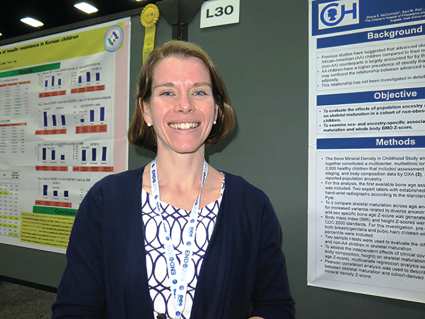
Extending second stage of labor raised maternal and neonatal morbidity
SAN DIEGO – The crossing times for the rate of spontaneous vaginal delivery versus a composite maternal or neonatal morbidity/mortality occurred slightly earlier than current recommended guidelines for women with an epidural (2.6 hours versus 3 hours), regardless of parity, results from a large federally funded retrospective study showed.
After this time, the risk of morbidity was higher than the chance of vaginal delivery.
But for women without an epidural, the crossing times for spontaneous vaginal delivery (SVD) and any morbidity occurred slightly later than current guidelines suggest (2.4 hours versus 2 hours in nulliparous women, and 2.3 hours versus 1 hour in multiparous women). Only in multiparous women without an epidural did the lines cross at least 1 hour later, Dr. Katherine Laughon Grantz said at the annual Pregnancy Meeting sponsored by the Society for Maternal-Fetal Medicine.

“We provide data that can be used to balance chances of SVD versus morbidity with increasing duration of second stage,” said Dr. Grantz, an investigator at the National Institute of Child Health and Human Development.
A June 2000 clinical management guideline from the American College of Obstetricians and Gynecologists states that operative vaginal delivery is indicated for nulliparous women who lack progress after 3 hours with an epidural, or 2 hours without an epidural. For multiparous women, the guideline is 2 hours with an epidural and 1 hour without. Dr. Grantz said that historical guidance for the 2-hour rule was first described in the 1850s by expert opinion and case series.
“Recently, however, it’s been recommended that it is safe to extend the current ACOG guidelines by 1 hour,” she said.
In 2014, Dr. Grantz and her colleagues published a study showing that prolonged second stage is associated with increased risk of maternal and neonatal morbidity (Obstet. Gynecol. 2014;124:57-67).
“Therefore, our group wanted to take this a step further, to determine the second-stage duration wherein the chance of vaginal delivery became so low it was outweighed by the increased risk of morbidity,” she said.
The researchers used data from the Consortium on Safe Labor, a study of 19 hospitals within 12 medical institutions in the United States. Medical records from 228,438 deliveries between 2002 and 2008 were evaluated, including patient demographics, prenatal complications, labor and delivery information, and maternal and neonatal outcomes.
They limited the analysis to singleton gestations delivered greater than or equal to 36 weeks’ gestation and excluded nonvertex presentation, antepartum stillbirth prior to onset of labor, women with a prior uterine scar, congenital anomalies, and cervical exams prior to vaginal delivery that were less than 10 cm or missing. This resulted in a total of 103,415 deliveries studied.
The researchers analyzed the groups in four strata: by parity (nulliparous or multiparous), and by epidural status (yes or no). Four outcomes were studied: spontaneous vaginal delivery; a composite of maternal morbidity (which included postpartum hemorrhage, blood transfusion, cesarean hysterectomy, endometritis, or ICU admission); composite neonatal morbidity/mortality (including shoulder dystocia, 5-minute Apgar score of less than 4, need for continuous positive airway pressure resuscitation or higher, NICU admission, sepsis, pneumonia, hypoxic-ischemic encephalopathy/periventricular leukomalacia, seizure, intracranial hemorrhage/periventricular hemorrhage, asphyxia, or neonatal death); and any maternal or neonatal morbidity.
They calculated the hazard rates of each outcome and created joint models for hazard rates that model rate of spontaneous vaginal delivery versus the risk of each of the three morbidity categories.
Dr. Grantz reported that for nulliparous women with an epidural, extending the second stage from 3 to 4 hours resulted in 16% of maternal and 15% of neonatal morbidities, with approximately 5.5% additional SVD during that hour.
“Our data are limited because these are retrospective data,” Dr. Grantz noted. “Women who were allowed to continue with a prolonged second stage might have been different than women who did not continue with a prolonged second stage. We also did not have information on delayed versus active pushing, and we lacked long-term maternal and child outcomes.”
But the major strength of the study is the large number of deliveries, she said, which allowed the researchers to investigate rare neonatal outcomes at term.
The study was supported by the NICHD. Dr. Grantz reported having no relevant financial conflicts.
On Twitter @dougbrunk
SAN DIEGO – The crossing times for the rate of spontaneous vaginal delivery versus a composite maternal or neonatal morbidity/mortality occurred slightly earlier than current recommended guidelines for women with an epidural (2.6 hours versus 3 hours), regardless of parity, results from a large federally funded retrospective study showed.
After this time, the risk of morbidity was higher than the chance of vaginal delivery.
But for women without an epidural, the crossing times for spontaneous vaginal delivery (SVD) and any morbidity occurred slightly later than current guidelines suggest (2.4 hours versus 2 hours in nulliparous women, and 2.3 hours versus 1 hour in multiparous women). Only in multiparous women without an epidural did the lines cross at least 1 hour later, Dr. Katherine Laughon Grantz said at the annual Pregnancy Meeting sponsored by the Society for Maternal-Fetal Medicine.
“We provide data that can be used to balance chances of SVD versus morbidity with increasing duration of second stage,” said Dr. Grantz, an investigator at the National Institute of Child Health and Human Development.
A June 2000 clinical management guideline from the American College of Obstetricians and Gynecologists states that operative vaginal delivery is indicated for nulliparous women who lack progress after 3 hours with an epidural, or 2 hours without an epidural. For multiparous women, the guideline is 2 hours with an epidural and 1 hour without. Dr. Grantz said that historical guidance for the 2-hour rule was first described in the 1850s by expert opinion and case series.
“Recently, however, it’s been recommended that it is safe to extend the current ACOG guidelines by 1 hour,” she said.
In 2014, Dr. Grantz and her colleagues published a study showing that prolonged second stage is associated with increased risk of maternal and neonatal morbidity (Obstet. Gynecol. 2014;124:57-67).
“Therefore, our group wanted to take this a step further, to determine the second-stage duration wherein the chance of vaginal delivery became so low it was outweighed by the increased risk of morbidity,” she said.
The researchers used data from the Consortium on Safe Labor, a study of 19 hospitals within 12 medical institutions in the United States. Medical records from 228,438 deliveries between 2002 and 2008 were evaluated, including patient demographics, prenatal complications, labor and delivery information, and maternal and neonatal outcomes.
They limited the analysis to singleton gestations delivered greater than or equal to 36 weeks’ gestation and excluded nonvertex presentation, antepartum stillbirth prior to onset of labor, women with a prior uterine scar, congenital anomalies, and cervical exams prior to vaginal delivery that were less than 10 cm or missing. This resulted in a total of 103,415 deliveries studied.
The researchers analyzed the groups in four strata: by parity (nulliparous or multiparous), and by epidural status (yes or no). Four outcomes were studied: spontaneous vaginal delivery; a composite of maternal morbidity (which included postpartum hemorrhage, blood transfusion, cesarean hysterectomy, endometritis, or ICU admission); composite neonatal morbidity/mortality (including shoulder dystocia, 5-minute Apgar score of less than 4, need for continuous positive airway pressure resuscitation or higher, NICU admission, sepsis, pneumonia, hypoxic-ischemic encephalopathy/periventricular leukomalacia, seizure, intracranial hemorrhage/periventricular hemorrhage, asphyxia, or neonatal death); and any maternal or neonatal morbidity.
They calculated the hazard rates of each outcome and created joint models for hazard rates that model rate of spontaneous vaginal delivery versus the risk of each of the three morbidity categories.
Dr. Grantz reported that for nulliparous women with an epidural, extending the second stage from 3 to 4 hours resulted in 16% of maternal and 15% of neonatal morbidities, with approximately 5.5% additional SVD during that hour.
“Our data are limited because these are retrospective data,” Dr. Grantz noted. “Women who were allowed to continue with a prolonged second stage might have been different than women who did not continue with a prolonged second stage. We also did not have information on delayed versus active pushing, and we lacked long-term maternal and child outcomes.”
But the major strength of the study is the large number of deliveries, she said, which allowed the researchers to investigate rare neonatal outcomes at term.
The study was supported by the NICHD. Dr. Grantz reported having no relevant financial conflicts.
On Twitter @dougbrunk
SAN DIEGO – The crossing times for the rate of spontaneous vaginal delivery versus a composite maternal or neonatal morbidity/mortality occurred slightly earlier than current recommended guidelines for women with an epidural (2.6 hours versus 3 hours), regardless of parity, results from a large federally funded retrospective study showed.
After this time, the risk of morbidity was higher than the chance of vaginal delivery.
But for women without an epidural, the crossing times for spontaneous vaginal delivery (SVD) and any morbidity occurred slightly later than current guidelines suggest (2.4 hours versus 2 hours in nulliparous women, and 2.3 hours versus 1 hour in multiparous women). Only in multiparous women without an epidural did the lines cross at least 1 hour later, Dr. Katherine Laughon Grantz said at the annual Pregnancy Meeting sponsored by the Society for Maternal-Fetal Medicine.
“We provide data that can be used to balance chances of SVD versus morbidity with increasing duration of second stage,” said Dr. Grantz, an investigator at the National Institute of Child Health and Human Development.
A June 2000 clinical management guideline from the American College of Obstetricians and Gynecologists states that operative vaginal delivery is indicated for nulliparous women who lack progress after 3 hours with an epidural, or 2 hours without an epidural. For multiparous women, the guideline is 2 hours with an epidural and 1 hour without. Dr. Grantz said that historical guidance for the 2-hour rule was first described in the 1850s by expert opinion and case series.
“Recently, however, it’s been recommended that it is safe to extend the current ACOG guidelines by 1 hour,” she said.
In 2014, Dr. Grantz and her colleagues published a study showing that prolonged second stage is associated with increased risk of maternal and neonatal morbidity (Obstet. Gynecol. 2014;124:57-67).
“Therefore, our group wanted to take this a step further, to determine the second-stage duration wherein the chance of vaginal delivery became so low it was outweighed by the increased risk of morbidity,” she said.
The researchers used data from the Consortium on Safe Labor, a study of 19 hospitals within 12 medical institutions in the United States. Medical records from 228,438 deliveries between 2002 and 2008 were evaluated, including patient demographics, prenatal complications, labor and delivery information, and maternal and neonatal outcomes.
They limited the analysis to singleton gestations delivered greater than or equal to 36 weeks’ gestation and excluded nonvertex presentation, antepartum stillbirth prior to onset of labor, women with a prior uterine scar, congenital anomalies, and cervical exams prior to vaginal delivery that were less than 10 cm or missing. This resulted in a total of 103,415 deliveries studied.
The researchers analyzed the groups in four strata: by parity (nulliparous or multiparous), and by epidural status (yes or no). Four outcomes were studied: spontaneous vaginal delivery; a composite of maternal morbidity (which included postpartum hemorrhage, blood transfusion, cesarean hysterectomy, endometritis, or ICU admission); composite neonatal morbidity/mortality (including shoulder dystocia, 5-minute Apgar score of less than 4, need for continuous positive airway pressure resuscitation or higher, NICU admission, sepsis, pneumonia, hypoxic-ischemic encephalopathy/periventricular leukomalacia, seizure, intracranial hemorrhage/periventricular hemorrhage, asphyxia, or neonatal death); and any maternal or neonatal morbidity.
They calculated the hazard rates of each outcome and created joint models for hazard rates that model rate of spontaneous vaginal delivery versus the risk of each of the three morbidity categories.
Dr. Grantz reported that for nulliparous women with an epidural, extending the second stage from 3 to 4 hours resulted in 16% of maternal and 15% of neonatal morbidities, with approximately 5.5% additional SVD during that hour.
“Our data are limited because these are retrospective data,” Dr. Grantz noted. “Women who were allowed to continue with a prolonged second stage might have been different than women who did not continue with a prolonged second stage. We also did not have information on delayed versus active pushing, and we lacked long-term maternal and child outcomes.”
But the major strength of the study is the large number of deliveries, she said, which allowed the researchers to investigate rare neonatal outcomes at term.
The study was supported by the NICHD. Dr. Grantz reported having no relevant financial conflicts.
On Twitter @dougbrunk
AT THE PREGNANCY MEETING
Key clinical point: Extending the second stage in nulliparous women from 3 hours to 4 hours was associated with an increased rate of maternal and neonatal morbidity.
Major finding: Among nulliparous women with an epidural, extending the second stage of labor from 3 hours to 4 hours resulted in 16% of maternal and 15% of neonatal morbidities, with approximately 5.5% additional spontaneous vaginal deliveries during that hour.
Data source: A retrospective study of medical records from 103,415 deliveries between 2002 and 2008.
Disclosures: The study was supported by the National Institute of Child Health and Human Development. Dr. Grantz reported having no relevant financial conflicts.

Studies of anesthesia’s effect on upper airway are limited
CORONADO, CALIF. – Studies of the most appropriate anesthetic agents for drug-induced sleep endoscopy are limited, but according to the best available evidence, local anesthetics appear to affect airway reflexes while inhalation anesthetics and opioids exaggerate dynamic airway collapse, so they may not be ideal.
Those are key conclusions from a systematic review of literature on the effects of commonly used anesthetic agents and opioids on the upper airway presented at the Triological Society’s Combined Sections meeting. Drug-induced sleep endoscopy (DISE) “is a great tool to assess upper airway dynamics in order to determine optimal surgical therapy for obstructive sleep apnea,” said Dr. Zarmina Ehsan, a pediatric pulmonary medicine fellow at Cincinnati Children’s Hospital Medical Center. “There’s a lack of understanding regarding how upper airway dynamics are altered by anesthetic agents, compared with normal sleep. This is important because this hinders the development of universal guidelines and protocols for the use of DISE.”

Using PubMed, EMBASE, and other sources, she and her associates conducted a qualitative systematic review of studies related to common anesthetic agents and opioids in the medical literature through September 2014. To be eligible for inclusion, a study must have evaluated the agent’s effect on the upper airway, must have contained an abstract, and must have been published in English. Studies with fewer than seven subjects, no original data, review articles, and those involving animals were excluded. The researchers reviewed 180 abstracts and included 56 full text articles in the final analysis, for a total study population of 8,540 patients. At the meeting Dr. Ehsan summarized the following findings by agent:
• Lidocaine. This agent is safe for topical use, has a rapid onset of action, and an intermediate duration of efficacy. Lidocaine acts on muscles “which are potent dilators and tensors of the pharyngeal and laryngeal structures,” she said. Of 10 studies included in the analysis, 7 assessed the impact of lidocaine on upper airway obstruction. Of these, three showed increased airway obstruction while four showed no significant effects. There were two studies on sleep parameters with conflicting results: One showed an increase in mean apnea duration with lidocaine use while the other did not. From this the researchers concluded that lidocaine does affect upper airway dynamics.
• Propofol. This lipophilic intravenous agent has a quick onset of action and acts by global central nervous system depression. Of 12 studies included in the analysis, 4 examined dose-response characteristics and showed a dose-dependent decrease in airway cross-sectional area with increased dosing of propofol. “So increasing your dose makes airway obstruction more likely,” Dr. Ehsan said. “The levels of obstruction were greatest at the base of tongue, and the closure was primarily in the anterior-posterior direction.” Three studies found that propofol caused a decrease in genioglossus electromyogram activity, while the remaining five studies assessed heterogeneous outcomes. “Overall, the studies showed that propofol had a dose-dependent effect on the upper airway with increasing doses making airway obstruction more likely,” she said.
• Dexmedetomidine (DEX). This agent is an alpha-2 adrenergic agonist with sedative, anxiolytic, and analgesic effects. It’s typically given as a 10-minute loading dose followed by a continuous infusion, and is recommended when you want to preserve spontaneous respiration. Of the four DEX-related studies that were included in the analysis, all demonstrated a minimal effect on upper airway cross-sectional area. “One of the studies looked at sleep parameters and concluded that DEX does approximate non-REM sleep without causing respiratory depression,” Dr. Ehsan added. “So overall, DEX was less likely to result in upper airway obstruction, compared with propofol.”
• Midazolam. This agent is commonly used for procedural sedation, with an onset of action within 1-3 minutes and a duration of 15-60 minutes. Of the six studies involving midazolam, two evaluated sleep staging. One reported lack of REM sleep and increased duration of stage N3 sleep, while the other study found that all sleep stages were observed at a lower dosage. The remaining four studies had heterogeneous outcomes. This led the researchers to conclude that midazolam “may lead to upper airway obstruction,” Dr. Ehsan said. “It’s unclear if this is dose dependent.”
• Pentobarbital. Of the two studies involving this short-acting barbiturate, one showed no effect on pharyngeal critical pressure or respiratory muscle function, while the other found that pentobarbital can increase the upper airway cross-sectional area. “So the effect of pentobarbital is unclear,” she said.
• Ketamine. This N-methyl-D-aspartate receptor has a rapid onset and a minimal effect on the central respiratory drive. Of the three studies involving ketamine, one found a 10% incidence of transient laryngospasm, one found that the incidence of transient laryngospasm was higher when it was delivered intramuscularly vs. intravenously, and one found that ketamine was safe in infants undergoing upper airway endoscopy. The researchers concluded that overall, ketamine “could be useful during DISE.”
• Inhalation anesthetics. There were 11 studies of these agents. Of these, six found that inhalation anesthetics caused upper airway collapse while five had heterogeneous outcomes. “Overall, a majority of studies found that inhalation anesthetics exaggerate dynamic airway collapse,” Dr. Ehsan said.
• Opioids. Of the nine studies involving these agents, six found that opioids caused upper airway obstruction; two found that they caused depression of upper airway reflexes, and one found that they caused a decrease in respiratory compliance. “Overall, opioids increase upper airway obstruction,” she said.
Dr. Ehsan acknowledged certain limitations of the analysis, including the fact that there was little information on sleep state approximated by many of these agents, “which makes it difficult to determine the ideal anesthetic protocol. There was substantial heterogeneity in outcomes, and few prospective studies comparing the ability of anesthetics to approximate natural sleep.” She recommended that future efforts focus on comparative effectiveness studies between the agents, as well as evaluate the impact of combining anesthetic agents. “This is important, because most DISE protocols use a combination of agents,” she said.
The meeting was jointly sponsored by the Triological Society and the American College of Surgeons
Dr. Ehsan reported having no relevant financial conflicts.
On Twitter @dougbrunk
CORONADO, CALIF. – Studies of the most appropriate anesthetic agents for drug-induced sleep endoscopy are limited, but according to the best available evidence, local anesthetics appear to affect airway reflexes while inhalation anesthetics and opioids exaggerate dynamic airway collapse, so they may not be ideal.
Those are key conclusions from a systematic review of literature on the effects of commonly used anesthetic agents and opioids on the upper airway presented at the Triological Society’s Combined Sections meeting. Drug-induced sleep endoscopy (DISE) “is a great tool to assess upper airway dynamics in order to determine optimal surgical therapy for obstructive sleep apnea,” said Dr. Zarmina Ehsan, a pediatric pulmonary medicine fellow at Cincinnati Children’s Hospital Medical Center. “There’s a lack of understanding regarding how upper airway dynamics are altered by anesthetic agents, compared with normal sleep. This is important because this hinders the development of universal guidelines and protocols for the use of DISE.”
Using PubMed, EMBASE, and other sources, she and her associates conducted a qualitative systematic review of studies related to common anesthetic agents and opioids in the medical literature through September 2014. To be eligible for inclusion, a study must have evaluated the agent’s effect on the upper airway, must have contained an abstract, and must have been published in English. Studies with fewer than seven subjects, no original data, review articles, and those involving animals were excluded. The researchers reviewed 180 abstracts and included 56 full text articles in the final analysis, for a total study population of 8,540 patients. At the meeting Dr. Ehsan summarized the following findings by agent:
• Lidocaine. This agent is safe for topical use, has a rapid onset of action, and an intermediate duration of efficacy. Lidocaine acts on muscles “which are potent dilators and tensors of the pharyngeal and laryngeal structures,” she said. Of 10 studies included in the analysis, 7 assessed the impact of lidocaine on upper airway obstruction. Of these, three showed increased airway obstruction while four showed no significant effects. There were two studies on sleep parameters with conflicting results: One showed an increase in mean apnea duration with lidocaine use while the other did not. From this the researchers concluded that lidocaine does affect upper airway dynamics.
• Propofol. This lipophilic intravenous agent has a quick onset of action and acts by global central nervous system depression. Of 12 studies included in the analysis, 4 examined dose-response characteristics and showed a dose-dependent decrease in airway cross-sectional area with increased dosing of propofol. “So increasing your dose makes airway obstruction more likely,” Dr. Ehsan said. “The levels of obstruction were greatest at the base of tongue, and the closure was primarily in the anterior-posterior direction.” Three studies found that propofol caused a decrease in genioglossus electromyogram activity, while the remaining five studies assessed heterogeneous outcomes. “Overall, the studies showed that propofol had a dose-dependent effect on the upper airway with increasing doses making airway obstruction more likely,” she said.
• Dexmedetomidine (DEX). This agent is an alpha-2 adrenergic agonist with sedative, anxiolytic, and analgesic effects. It’s typically given as a 10-minute loading dose followed by a continuous infusion, and is recommended when you want to preserve spontaneous respiration. Of the four DEX-related studies that were included in the analysis, all demonstrated a minimal effect on upper airway cross-sectional area. “One of the studies looked at sleep parameters and concluded that DEX does approximate non-REM sleep without causing respiratory depression,” Dr. Ehsan added. “So overall, DEX was less likely to result in upper airway obstruction, compared with propofol.”
• Midazolam. This agent is commonly used for procedural sedation, with an onset of action within 1-3 minutes and a duration of 15-60 minutes. Of the six studies involving midazolam, two evaluated sleep staging. One reported lack of REM sleep and increased duration of stage N3 sleep, while the other study found that all sleep stages were observed at a lower dosage. The remaining four studies had heterogeneous outcomes. This led the researchers to conclude that midazolam “may lead to upper airway obstruction,” Dr. Ehsan said. “It’s unclear if this is dose dependent.”
• Pentobarbital. Of the two studies involving this short-acting barbiturate, one showed no effect on pharyngeal critical pressure or respiratory muscle function, while the other found that pentobarbital can increase the upper airway cross-sectional area. “So the effect of pentobarbital is unclear,” she said.
• Ketamine. This N-methyl-D-aspartate receptor has a rapid onset and a minimal effect on the central respiratory drive. Of the three studies involving ketamine, one found a 10% incidence of transient laryngospasm, one found that the incidence of transient laryngospasm was higher when it was delivered intramuscularly vs. intravenously, and one found that ketamine was safe in infants undergoing upper airway endoscopy. The researchers concluded that overall, ketamine “could be useful during DISE.”
• Inhalation anesthetics. There were 11 studies of these agents. Of these, six found that inhalation anesthetics caused upper airway collapse while five had heterogeneous outcomes. “Overall, a majority of studies found that inhalation anesthetics exaggerate dynamic airway collapse,” Dr. Ehsan said.
• Opioids. Of the nine studies involving these agents, six found that opioids caused upper airway obstruction; two found that they caused depression of upper airway reflexes, and one found that they caused a decrease in respiratory compliance. “Overall, opioids increase upper airway obstruction,” she said.
Dr. Ehsan acknowledged certain limitations of the analysis, including the fact that there was little information on sleep state approximated by many of these agents, “which makes it difficult to determine the ideal anesthetic protocol. There was substantial heterogeneity in outcomes, and few prospective studies comparing the ability of anesthetics to approximate natural sleep.” She recommended that future efforts focus on comparative effectiveness studies between the agents, as well as evaluate the impact of combining anesthetic agents. “This is important, because most DISE protocols use a combination of agents,” she said.
The meeting was jointly sponsored by the Triological Society and the American College of Surgeons
Dr. Ehsan reported having no relevant financial conflicts.
On Twitter @dougbrunk
CORONADO, CALIF. – Studies of the most appropriate anesthetic agents for drug-induced sleep endoscopy are limited, but according to the best available evidence, local anesthetics appear to affect airway reflexes while inhalation anesthetics and opioids exaggerate dynamic airway collapse, so they may not be ideal.
Those are key conclusions from a systematic review of literature on the effects of commonly used anesthetic agents and opioids on the upper airway presented at the Triological Society’s Combined Sections meeting. Drug-induced sleep endoscopy (DISE) “is a great tool to assess upper airway dynamics in order to determine optimal surgical therapy for obstructive sleep apnea,” said Dr. Zarmina Ehsan, a pediatric pulmonary medicine fellow at Cincinnati Children’s Hospital Medical Center. “There’s a lack of understanding regarding how upper airway dynamics are altered by anesthetic agents, compared with normal sleep. This is important because this hinders the development of universal guidelines and protocols for the use of DISE.”
Using PubMed, EMBASE, and other sources, she and her associates conducted a qualitative systematic review of studies related to common anesthetic agents and opioids in the medical literature through September 2014. To be eligible for inclusion, a study must have evaluated the agent’s effect on the upper airway, must have contained an abstract, and must have been published in English. Studies with fewer than seven subjects, no original data, review articles, and those involving animals were excluded. The researchers reviewed 180 abstracts and included 56 full text articles in the final analysis, for a total study population of 8,540 patients. At the meeting Dr. Ehsan summarized the following findings by agent:
• Lidocaine. This agent is safe for topical use, has a rapid onset of action, and an intermediate duration of efficacy. Lidocaine acts on muscles “which are potent dilators and tensors of the pharyngeal and laryngeal structures,” she said. Of 10 studies included in the analysis, 7 assessed the impact of lidocaine on upper airway obstruction. Of these, three showed increased airway obstruction while four showed no significant effects. There were two studies on sleep parameters with conflicting results: One showed an increase in mean apnea duration with lidocaine use while the other did not. From this the researchers concluded that lidocaine does affect upper airway dynamics.
• Propofol. This lipophilic intravenous agent has a quick onset of action and acts by global central nervous system depression. Of 12 studies included in the analysis, 4 examined dose-response characteristics and showed a dose-dependent decrease in airway cross-sectional area with increased dosing of propofol. “So increasing your dose makes airway obstruction more likely,” Dr. Ehsan said. “The levels of obstruction were greatest at the base of tongue, and the closure was primarily in the anterior-posterior direction.” Three studies found that propofol caused a decrease in genioglossus electromyogram activity, while the remaining five studies assessed heterogeneous outcomes. “Overall, the studies showed that propofol had a dose-dependent effect on the upper airway with increasing doses making airway obstruction more likely,” she said.
• Dexmedetomidine (DEX). This agent is an alpha-2 adrenergic agonist with sedative, anxiolytic, and analgesic effects. It’s typically given as a 10-minute loading dose followed by a continuous infusion, and is recommended when you want to preserve spontaneous respiration. Of the four DEX-related studies that were included in the analysis, all demonstrated a minimal effect on upper airway cross-sectional area. “One of the studies looked at sleep parameters and concluded that DEX does approximate non-REM sleep without causing respiratory depression,” Dr. Ehsan added. “So overall, DEX was less likely to result in upper airway obstruction, compared with propofol.”
• Midazolam. This agent is commonly used for procedural sedation, with an onset of action within 1-3 minutes and a duration of 15-60 minutes. Of the six studies involving midazolam, two evaluated sleep staging. One reported lack of REM sleep and increased duration of stage N3 sleep, while the other study found that all sleep stages were observed at a lower dosage. The remaining four studies had heterogeneous outcomes. This led the researchers to conclude that midazolam “may lead to upper airway obstruction,” Dr. Ehsan said. “It’s unclear if this is dose dependent.”
• Pentobarbital. Of the two studies involving this short-acting barbiturate, one showed no effect on pharyngeal critical pressure or respiratory muscle function, while the other found that pentobarbital can increase the upper airway cross-sectional area. “So the effect of pentobarbital is unclear,” she said.
• Ketamine. This N-methyl-D-aspartate receptor has a rapid onset and a minimal effect on the central respiratory drive. Of the three studies involving ketamine, one found a 10% incidence of transient laryngospasm, one found that the incidence of transient laryngospasm was higher when it was delivered intramuscularly vs. intravenously, and one found that ketamine was safe in infants undergoing upper airway endoscopy. The researchers concluded that overall, ketamine “could be useful during DISE.”
• Inhalation anesthetics. There were 11 studies of these agents. Of these, six found that inhalation anesthetics caused upper airway collapse while five had heterogeneous outcomes. “Overall, a majority of studies found that inhalation anesthetics exaggerate dynamic airway collapse,” Dr. Ehsan said.
• Opioids. Of the nine studies involving these agents, six found that opioids caused upper airway obstruction; two found that they caused depression of upper airway reflexes, and one found that they caused a decrease in respiratory compliance. “Overall, opioids increase upper airway obstruction,” she said.
Dr. Ehsan acknowledged certain limitations of the analysis, including the fact that there was little information on sleep state approximated by many of these agents, “which makes it difficult to determine the ideal anesthetic protocol. There was substantial heterogeneity in outcomes, and few prospective studies comparing the ability of anesthetics to approximate natural sleep.” She recommended that future efforts focus on comparative effectiveness studies between the agents, as well as evaluate the impact of combining anesthetic agents. “This is important, because most DISE protocols use a combination of agents,” she said.
The meeting was jointly sponsored by the Triological Society and the American College of Surgeons
Dr. Ehsan reported having no relevant financial conflicts.
On Twitter @dougbrunk
AT THE COMBINED SECTIONS WINTER MEETING
Key clinical point: Choice of an appropriate anesthetic protocol for drug-induced sleep endoscopy must be based on a limited number of comparative studies.
Major finding: Local anesthetics appear to affect upper airway reflexes while inhalation anesthetics and opioids exaggerate dynamic airway collapse.
Data source: A qualitative systematic review of 56 studies related to common anesthetic agents and opioids published in the medical literature through September 2014.
Disclosures: Dr. Ehsan reported having no financial disclosures.
