User login
VIDEO: Lifestyle intervention blocks antipsychotic-associated weight gain
MADRID – The weight gain most patients have when first starting treatment with antipsychotic medications is not inevitable.
A 12-week intervention program designed to promote exercise and a healthy diet largely blunted a big weight gain by 16 adolescents and young adults starting treatment after an initial diagnosis of psychosis in a controlled study at a single Australian center. Later follow-up further showed that a majority of participants in the program remained mostly free of excess weight 2 years after the life-style intervention, Dr. Philip B. Ward said at the meeting sponsored by the European Psychiatric Association.
Implementing this type of intervention is very important because antipsychotic-induced weight gain launches young psychiatric patients into a middle age that often includes metabolic syndrome, type 2 diabetes, and a significantly increased risk for cardiovascular disease events, said Dr. Ward, a psychiatrist at the University of New South Wales in Sydney.
He reported results from a pilot program, Keeping the Body in Mind, run at one of the university’s community clinics that gave newly-diagnosed psychiatric patients aged 15-25 years regular instruction in diet, food shopping, and cooking and in an exercise class that included individualized coaching over the course of 12 weeks. At the end of the program, average weight gain relative to baseline weight was 1.8 kg among 16 patients in the intervention group and 7.8 kg among 12 patients who received standard care at a different community clinic. (Early Interv Psychiatry. 2015. doi: 10.1111/eip.12230).
Expressed another way, 2 of the 16 participating patients (13%) had a clinically significant (at least 7%) weight gain during the 12-week program, compared with 9 of the 12 (75%) of patients with a significant weight gain in the control group.
To assess the durability of this effect, Dr. Ward and his associates did follow-up 2 years later on 12 of the participants, who showed an average 1.3-kg weight gain after 2 years, compared with their weight at the time they entered the program, Dr Ward reported. Based on this success, the university’s psychiatric clinics are now expanding the program to make it available to all patients starting treatment on antipsychotic medications, about 80 patients a year, Dr. Ward said in an interview.
Although Dr. Ward stressed the importance of lifestyle intervention, he noted that the antipsychotic drug selected for treatment can also affect the magnitude of acute weight gain. Two drugs that seem to pose some of the lowest weight-gain risks are aripiprazole and ziprasidone.
The video associated with this article is no longer available on this site. Please view all of our videos on the MDedge YouTube channel
On Twitter @mitchelzoler
MADRID – The weight gain most patients have when first starting treatment with antipsychotic medications is not inevitable.
A 12-week intervention program designed to promote exercise and a healthy diet largely blunted a big weight gain by 16 adolescents and young adults starting treatment after an initial diagnosis of psychosis in a controlled study at a single Australian center. Later follow-up further showed that a majority of participants in the program remained mostly free of excess weight 2 years after the life-style intervention, Dr. Philip B. Ward said at the meeting sponsored by the European Psychiatric Association.
Implementing this type of intervention is very important because antipsychotic-induced weight gain launches young psychiatric patients into a middle age that often includes metabolic syndrome, type 2 diabetes, and a significantly increased risk for cardiovascular disease events, said Dr. Ward, a psychiatrist at the University of New South Wales in Sydney.
He reported results from a pilot program, Keeping the Body in Mind, run at one of the university’s community clinics that gave newly-diagnosed psychiatric patients aged 15-25 years regular instruction in diet, food shopping, and cooking and in an exercise class that included individualized coaching over the course of 12 weeks. At the end of the program, average weight gain relative to baseline weight was 1.8 kg among 16 patients in the intervention group and 7.8 kg among 12 patients who received standard care at a different community clinic. (Early Interv Psychiatry. 2015. doi: 10.1111/eip.12230).
Expressed another way, 2 of the 16 participating patients (13%) had a clinically significant (at least 7%) weight gain during the 12-week program, compared with 9 of the 12 (75%) of patients with a significant weight gain in the control group.
To assess the durability of this effect, Dr. Ward and his associates did follow-up 2 years later on 12 of the participants, who showed an average 1.3-kg weight gain after 2 years, compared with their weight at the time they entered the program, Dr Ward reported. Based on this success, the university’s psychiatric clinics are now expanding the program to make it available to all patients starting treatment on antipsychotic medications, about 80 patients a year, Dr. Ward said in an interview.
Although Dr. Ward stressed the importance of lifestyle intervention, he noted that the antipsychotic drug selected for treatment can also affect the magnitude of acute weight gain. Two drugs that seem to pose some of the lowest weight-gain risks are aripiprazole and ziprasidone.
The video associated with this article is no longer available on this site. Please view all of our videos on the MDedge YouTube channel
On Twitter @mitchelzoler
MADRID – The weight gain most patients have when first starting treatment with antipsychotic medications is not inevitable.
A 12-week intervention program designed to promote exercise and a healthy diet largely blunted a big weight gain by 16 adolescents and young adults starting treatment after an initial diagnosis of psychosis in a controlled study at a single Australian center. Later follow-up further showed that a majority of participants in the program remained mostly free of excess weight 2 years after the life-style intervention, Dr. Philip B. Ward said at the meeting sponsored by the European Psychiatric Association.
Implementing this type of intervention is very important because antipsychotic-induced weight gain launches young psychiatric patients into a middle age that often includes metabolic syndrome, type 2 diabetes, and a significantly increased risk for cardiovascular disease events, said Dr. Ward, a psychiatrist at the University of New South Wales in Sydney.
He reported results from a pilot program, Keeping the Body in Mind, run at one of the university’s community clinics that gave newly-diagnosed psychiatric patients aged 15-25 years regular instruction in diet, food shopping, and cooking and in an exercise class that included individualized coaching over the course of 12 weeks. At the end of the program, average weight gain relative to baseline weight was 1.8 kg among 16 patients in the intervention group and 7.8 kg among 12 patients who received standard care at a different community clinic. (Early Interv Psychiatry. 2015. doi: 10.1111/eip.12230).
Expressed another way, 2 of the 16 participating patients (13%) had a clinically significant (at least 7%) weight gain during the 12-week program, compared with 9 of the 12 (75%) of patients with a significant weight gain in the control group.
To assess the durability of this effect, Dr. Ward and his associates did follow-up 2 years later on 12 of the participants, who showed an average 1.3-kg weight gain after 2 years, compared with their weight at the time they entered the program, Dr Ward reported. Based on this success, the university’s psychiatric clinics are now expanding the program to make it available to all patients starting treatment on antipsychotic medications, about 80 patients a year, Dr. Ward said in an interview.
Although Dr. Ward stressed the importance of lifestyle intervention, he noted that the antipsychotic drug selected for treatment can also affect the magnitude of acute weight gain. Two drugs that seem to pose some of the lowest weight-gain risks are aripiprazole and ziprasidone.
The video associated with this article is no longer available on this site. Please view all of our videos on the MDedge YouTube channel
On Twitter @mitchelzoler
AT THE EUROPEAN CONGRESS OF PSYCHIATRY
Key clinical point: Most adolescents and young adults who participated in a lifestyle intervention when they began receiving an antipsychotic medication avoided acute weight gain.
Major finding: At 2-year follow-up, the average weight gain by program participants was 1.3 kg above baseline weight.
Data source: Sixteen adolescent and young-adult patients newly diagnosed with psychosis treated at one Australian center.
Disclosures: Dr. Ward had no disclosures.

VIDEO: Treat most older women with stage I breast cancer with lumpectomy only
MIAMI – The trend over time to use less invasive surgery for breast cancer – from radical mastectomy to radical modified mastectomy to simplified mastectomy to lumpectomy – should extend now radiation therapy in older women with stage I disease, “and not give it unless it’s absolutely needed,” Dr. Kevin Hughes said at the annual Miami Breast Cancer Conference, held by Physicians’ Education Resource.
In fact, in most instances, these older women should receive lumpectomy without radiation, said Dr. Hughes of Massachusetts General Hospital and Harvard Medical School in Boston.
Three major trials that looked at stage I cancer in women over 50, 65, or 70 years of age reached the same conclusion: that radiation adds little benefit to overall treatment.
Dr. Hughes also said oncologists with genomic information on a specific cancer can also choose to more judiciously order radiation treatment, particularly with luminal A and, possibly, luminal B cancers.
Dr. Hughes had no relevant financial disclosures.
The video associated with this article is no longer available on this site. Please view all of our videos on the MDedge YouTube channel
MIAMI – The trend over time to use less invasive surgery for breast cancer – from radical mastectomy to radical modified mastectomy to simplified mastectomy to lumpectomy – should extend now radiation therapy in older women with stage I disease, “and not give it unless it’s absolutely needed,” Dr. Kevin Hughes said at the annual Miami Breast Cancer Conference, held by Physicians’ Education Resource.
In fact, in most instances, these older women should receive lumpectomy without radiation, said Dr. Hughes of Massachusetts General Hospital and Harvard Medical School in Boston.
Three major trials that looked at stage I cancer in women over 50, 65, or 70 years of age reached the same conclusion: that radiation adds little benefit to overall treatment.
Dr. Hughes also said oncologists with genomic information on a specific cancer can also choose to more judiciously order radiation treatment, particularly with luminal A and, possibly, luminal B cancers.
Dr. Hughes had no relevant financial disclosures.
The video associated with this article is no longer available on this site. Please view all of our videos on the MDedge YouTube channel
MIAMI – The trend over time to use less invasive surgery for breast cancer – from radical mastectomy to radical modified mastectomy to simplified mastectomy to lumpectomy – should extend now radiation therapy in older women with stage I disease, “and not give it unless it’s absolutely needed,” Dr. Kevin Hughes said at the annual Miami Breast Cancer Conference, held by Physicians’ Education Resource.
In fact, in most instances, these older women should receive lumpectomy without radiation, said Dr. Hughes of Massachusetts General Hospital and Harvard Medical School in Boston.
Three major trials that looked at stage I cancer in women over 50, 65, or 70 years of age reached the same conclusion: that radiation adds little benefit to overall treatment.
Dr. Hughes also said oncologists with genomic information on a specific cancer can also choose to more judiciously order radiation treatment, particularly with luminal A and, possibly, luminal B cancers.
Dr. Hughes had no relevant financial disclosures.
The video associated with this article is no longer available on this site. Please view all of our videos on the MDedge YouTube channel
EXPERT ANALYSIS FROM MBCC

VIDEO: Weighing the cost-effectiveness of contralateral risk-reducing mastectomy
MIAMI – Some researchers suggest contralateral prophylactic mastectomy increases costs, compared with a less-extensive ipsilateral procedure. But if true, the additional cost of the surgery needs to be couched within patient concerns about survival, Dr. Anees Chagpar said at the annual Miami Breast Cancer Conference, held by Physicians’ Education Resource.
The cost-effectiveness can vary based on patient age. In addition, there are costs associated with not undergoing a prophylactic mastectomy that are often not considered, added Dr. Chagpar, director of the Breast Center, Smilow Cancer Hospital at Yale-New Haven (Conn.).
Dr. Chagpar reported no relevant financial disclosures.
The video associated with this article is no longer available on this site. Please view all of our videos on the MDedge YouTube channel
MIAMI – Some researchers suggest contralateral prophylactic mastectomy increases costs, compared with a less-extensive ipsilateral procedure. But if true, the additional cost of the surgery needs to be couched within patient concerns about survival, Dr. Anees Chagpar said at the annual Miami Breast Cancer Conference, held by Physicians’ Education Resource.
The cost-effectiveness can vary based on patient age. In addition, there are costs associated with not undergoing a prophylactic mastectomy that are often not considered, added Dr. Chagpar, director of the Breast Center, Smilow Cancer Hospital at Yale-New Haven (Conn.).
Dr. Chagpar reported no relevant financial disclosures.
The video associated with this article is no longer available on this site. Please view all of our videos on the MDedge YouTube channel
MIAMI – Some researchers suggest contralateral prophylactic mastectomy increases costs, compared with a less-extensive ipsilateral procedure. But if true, the additional cost of the surgery needs to be couched within patient concerns about survival, Dr. Anees Chagpar said at the annual Miami Breast Cancer Conference, held by Physicians’ Education Resource.
The cost-effectiveness can vary based on patient age. In addition, there are costs associated with not undergoing a prophylactic mastectomy that are often not considered, added Dr. Chagpar, director of the Breast Center, Smilow Cancer Hospital at Yale-New Haven (Conn.).
Dr. Chagpar reported no relevant financial disclosures.
The video associated with this article is no longer available on this site. Please view all of our videos on the MDedge YouTube channel
EXPERT ANALYSIS FROM MBCC

VIDEO: Carefully consider impact of MRI to detect contralateral breast cancer
MIAMI – Physicians generally herald advances in medical imaging technology to improve and inform clinical decision-making for their patients. However, greater precision in MRI findings can leave physicians wondering how to advise patients concerned about a contralateral breast cancer, Dr. Anees Chagpar said.
It boils down to clinical significance and anxiety. Smaller lesions now detected by MRI may or may not indicate a true increase in risk, Dr. Chagpar said at the annual Miami Breast Cancer Conference, held by Physicians’ Education Resource. In addition, evidence suggests just having an MRI raises anxiety in some women with unilateral breast cancer, regardless of results. She advises providers to carefully consider why they’re ordering an MRI and the potential impact on a patient already at a heightened state of anxiety from their initial diagnosis.
Dr. Chagpar, director of the Breast Center, Smilow Cancer Hospital at Yale-New Haven (Conn.), reported no relevant financial disclosures.
The video associated with this article is no longer available on this site. Please view all of our videos on the MDedge YouTube channel
MIAMI – Physicians generally herald advances in medical imaging technology to improve and inform clinical decision-making for their patients. However, greater precision in MRI findings can leave physicians wondering how to advise patients concerned about a contralateral breast cancer, Dr. Anees Chagpar said.
It boils down to clinical significance and anxiety. Smaller lesions now detected by MRI may or may not indicate a true increase in risk, Dr. Chagpar said at the annual Miami Breast Cancer Conference, held by Physicians’ Education Resource. In addition, evidence suggests just having an MRI raises anxiety in some women with unilateral breast cancer, regardless of results. She advises providers to carefully consider why they’re ordering an MRI and the potential impact on a patient already at a heightened state of anxiety from their initial diagnosis.
Dr. Chagpar, director of the Breast Center, Smilow Cancer Hospital at Yale-New Haven (Conn.), reported no relevant financial disclosures.
The video associated with this article is no longer available on this site. Please view all of our videos on the MDedge YouTube channel
MIAMI – Physicians generally herald advances in medical imaging technology to improve and inform clinical decision-making for their patients. However, greater precision in MRI findings can leave physicians wondering how to advise patients concerned about a contralateral breast cancer, Dr. Anees Chagpar said.
It boils down to clinical significance and anxiety. Smaller lesions now detected by MRI may or may not indicate a true increase in risk, Dr. Chagpar said at the annual Miami Breast Cancer Conference, held by Physicians’ Education Resource. In addition, evidence suggests just having an MRI raises anxiety in some women with unilateral breast cancer, regardless of results. She advises providers to carefully consider why they’re ordering an MRI and the potential impact on a patient already at a heightened state of anxiety from their initial diagnosis.
Dr. Chagpar, director of the Breast Center, Smilow Cancer Hospital at Yale-New Haven (Conn.), reported no relevant financial disclosures.
The video associated with this article is no longer available on this site. Please view all of our videos on the MDedge YouTube channel
EXPERT ANALYSIS AT MBCC

VIDEO: Counseling patients considering contralateral prophylactic mastectomy
MIAMI – The number of women with ipsilateral breast cancer seeking a contralateral mastectomy to reduce their future risk and, essentially, for peace of mind, is increasing. Dr. Anees Chagpar director of the Breast Center, Smilow Cancer Hospital at Yale-New Haven (Conn.), suggests what doctors can include in discussions with these patients.
Presenting patients with a complete picture of risks and benefits promotes shared decision-making. Consider the absolute risk reduction provided by this type of surgery, particularly in older patients who are not BRCA 1 or 2 carriers, Dr. Chagpar said at the annual Miami Breast Cancer Conference, held by Physicians’ Education Resource.
Differences between unilateral and bilateral surgery go beyond operative time, duration of hospital stay, and risk of complications, Dr. Chagpar said, and should include a discussion about patient values and what is driving their consideration of this surgery.
Dr. Chagpar had no relevant financial disclosures.
The video associated with this article is no longer available on this site. Please view all of our videos on the MDedge YouTube channel
MIAMI – The number of women with ipsilateral breast cancer seeking a contralateral mastectomy to reduce their future risk and, essentially, for peace of mind, is increasing. Dr. Anees Chagpar director of the Breast Center, Smilow Cancer Hospital at Yale-New Haven (Conn.), suggests what doctors can include in discussions with these patients.
Presenting patients with a complete picture of risks and benefits promotes shared decision-making. Consider the absolute risk reduction provided by this type of surgery, particularly in older patients who are not BRCA 1 or 2 carriers, Dr. Chagpar said at the annual Miami Breast Cancer Conference, held by Physicians’ Education Resource.
Differences between unilateral and bilateral surgery go beyond operative time, duration of hospital stay, and risk of complications, Dr. Chagpar said, and should include a discussion about patient values and what is driving their consideration of this surgery.
Dr. Chagpar had no relevant financial disclosures.
The video associated with this article is no longer available on this site. Please view all of our videos on the MDedge YouTube channel
MIAMI – The number of women with ipsilateral breast cancer seeking a contralateral mastectomy to reduce their future risk and, essentially, for peace of mind, is increasing. Dr. Anees Chagpar director of the Breast Center, Smilow Cancer Hospital at Yale-New Haven (Conn.), suggests what doctors can include in discussions with these patients.
Presenting patients with a complete picture of risks and benefits promotes shared decision-making. Consider the absolute risk reduction provided by this type of surgery, particularly in older patients who are not BRCA 1 or 2 carriers, Dr. Chagpar said at the annual Miami Breast Cancer Conference, held by Physicians’ Education Resource.
Differences between unilateral and bilateral surgery go beyond operative time, duration of hospital stay, and risk of complications, Dr. Chagpar said, and should include a discussion about patient values and what is driving their consideration of this surgery.
Dr. Chagpar had no relevant financial disclosures.
The video associated with this article is no longer available on this site. Please view all of our videos on the MDedge YouTube channel
EXPERT ANALYSIS FROM MBCC

VIDEO: Breast cancer surgery choice depends on the individual
MIAMI – In addition to a thorough discussion of the risks and benefits of breast-conserving therapy and mastectomy, physicians need to address the individual concerns that each patient will have before choosing a procedure, Dr. Patrick Borgen, chair of the department of surgery at Maimonides Medical Center in Brooklyn, N.Y., said.
The facts do not support the superiority of one procedure over another for all women, Dr. Borgen said at the annual Miami Breast Cancer Conference, held by Physicians’ Education Resource. When discussing the options, each individual patient will have unique concerns and quality of life issues that need to be factored into a collaborative decision about the choice of procedure.
Not including mastectomy in the conversation could be a disservice to the patient, Dr. Borgen said. Quality of life over time, patient anxiety, and “the price of vigilance” are additional factors that patients consider when weighing their surgical options.
Dr. Borgen had no relevant financial disclosures.
The video associated with this article is no longer available on this site. Please view all of our videos on the MDedge YouTube channel
MIAMI – In addition to a thorough discussion of the risks and benefits of breast-conserving therapy and mastectomy, physicians need to address the individual concerns that each patient will have before choosing a procedure, Dr. Patrick Borgen, chair of the department of surgery at Maimonides Medical Center in Brooklyn, N.Y., said.
The facts do not support the superiority of one procedure over another for all women, Dr. Borgen said at the annual Miami Breast Cancer Conference, held by Physicians’ Education Resource. When discussing the options, each individual patient will have unique concerns and quality of life issues that need to be factored into a collaborative decision about the choice of procedure.
Not including mastectomy in the conversation could be a disservice to the patient, Dr. Borgen said. Quality of life over time, patient anxiety, and “the price of vigilance” are additional factors that patients consider when weighing their surgical options.
Dr. Borgen had no relevant financial disclosures.
The video associated with this article is no longer available on this site. Please view all of our videos on the MDedge YouTube channel
MIAMI – In addition to a thorough discussion of the risks and benefits of breast-conserving therapy and mastectomy, physicians need to address the individual concerns that each patient will have before choosing a procedure, Dr. Patrick Borgen, chair of the department of surgery at Maimonides Medical Center in Brooklyn, N.Y., said.
The facts do not support the superiority of one procedure over another for all women, Dr. Borgen said at the annual Miami Breast Cancer Conference, held by Physicians’ Education Resource. When discussing the options, each individual patient will have unique concerns and quality of life issues that need to be factored into a collaborative decision about the choice of procedure.
Not including mastectomy in the conversation could be a disservice to the patient, Dr. Borgen said. Quality of life over time, patient anxiety, and “the price of vigilance” are additional factors that patients consider when weighing their surgical options.
Dr. Borgen had no relevant financial disclosures.
The video associated with this article is no longer available on this site. Please view all of our videos on the MDedge YouTube channel
AT MBCC

VIDEO: Advice varies for chemoprevention, genetic testing in invasive breast cancer
MIAMI – The message from major trials evaluating tamoxifen, raloxifene, and aromatase inhibitors for chemoprevention of invasive breast cancer got clearer with data from extended follow-up coming in. Interestingly, sometimes the longer duration studies confirm earlier findings, and sometimes they do not – and researchers end up reaching new conclusions, Dr. Banu Arun of the University of Texas MD Anderson Cancer Center in Houston explained at the annual Miami Breast Cancer Conference, held by Physicians’ Education Resource.
Although not everyone agrees, Dr. Arun said why she believes there is still a role for chemoprevention of invasive breast cancer. In cases where studies do not point to a clear-cut difference in survival outcomes between agents, she recommends physicians select therapy based on other risks, benefits, and other considerations.
Technology also presents a challenge. Advances in next generation sequencing, for example, allow physicians to order a test for up to 25 genetic mutations associated with breast cancer. Compared with earlier assays that only tested for well-known risk factors like BRCA 1 and BRCA 2, these panels can return results where the clinical implications remain uncertain, leaving doctors unclear on how to counsel patients.
Dr. Arun had no relevant financial disclosures.
The video associated with this article is no longer available on this site. Please view all of our videos on the MDedge YouTube channel
MIAMI – The message from major trials evaluating tamoxifen, raloxifene, and aromatase inhibitors for chemoprevention of invasive breast cancer got clearer with data from extended follow-up coming in. Interestingly, sometimes the longer duration studies confirm earlier findings, and sometimes they do not – and researchers end up reaching new conclusions, Dr. Banu Arun of the University of Texas MD Anderson Cancer Center in Houston explained at the annual Miami Breast Cancer Conference, held by Physicians’ Education Resource.
Although not everyone agrees, Dr. Arun said why she believes there is still a role for chemoprevention of invasive breast cancer. In cases where studies do not point to a clear-cut difference in survival outcomes between agents, she recommends physicians select therapy based on other risks, benefits, and other considerations.
Technology also presents a challenge. Advances in next generation sequencing, for example, allow physicians to order a test for up to 25 genetic mutations associated with breast cancer. Compared with earlier assays that only tested for well-known risk factors like BRCA 1 and BRCA 2, these panels can return results where the clinical implications remain uncertain, leaving doctors unclear on how to counsel patients.
Dr. Arun had no relevant financial disclosures.
The video associated with this article is no longer available on this site. Please view all of our videos on the MDedge YouTube channel
MIAMI – The message from major trials evaluating tamoxifen, raloxifene, and aromatase inhibitors for chemoprevention of invasive breast cancer got clearer with data from extended follow-up coming in. Interestingly, sometimes the longer duration studies confirm earlier findings, and sometimes they do not – and researchers end up reaching new conclusions, Dr. Banu Arun of the University of Texas MD Anderson Cancer Center in Houston explained at the annual Miami Breast Cancer Conference, held by Physicians’ Education Resource.
Although not everyone agrees, Dr. Arun said why she believes there is still a role for chemoprevention of invasive breast cancer. In cases where studies do not point to a clear-cut difference in survival outcomes between agents, she recommends physicians select therapy based on other risks, benefits, and other considerations.
Technology also presents a challenge. Advances in next generation sequencing, for example, allow physicians to order a test for up to 25 genetic mutations associated with breast cancer. Compared with earlier assays that only tested for well-known risk factors like BRCA 1 and BRCA 2, these panels can return results where the clinical implications remain uncertain, leaving doctors unclear on how to counsel patients.
Dr. Arun had no relevant financial disclosures.
The video associated with this article is no longer available on this site. Please view all of our videos on the MDedge YouTube channel
EXPERT ANALYSIS FROM MBCC

Dose-dense chemotherapy boosts premenopausal breast cancer survival
AMSTERDAM – Premenopausal women with breast cancer at high risk for recurrence had a significantly improved 10-year rate of overall survival when they received a dose-dense chemotherapy regimen, compared with women treated with a standard dosage schedule.
This post hoc analysis of 1,549 premenopausal patients, a subgroup drawn from two separate trials run a decade apart, helps further confirm the benefit of the dose-dense approach in this population. “I think that European practice will now change,” based on this new analysis plus other recent findings from smaller studies, predicted Dr. Matteo Lambertini, who reported the analysis at the European Breast Cancer Congress.
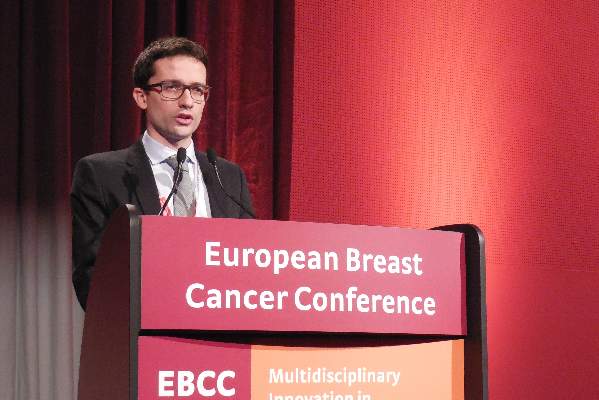
“Dose-dense adjuvant chemotherapy may be considered the preferred treatment option and should be proposed to all high-risk, premenopausal breast cancer patients who are candidates for chemotherapy,” said Dr. Lambertini of Azienda University Hospital in Genoa, Italy. Although dose-dense regimens are common in U.S. practice for these patients and used at certain European Centers, many other European cancer programs still use standard-dose chemotherapy, he said.
The findings also showed that when treatment induced amenorrhea, it had no bearing on subsequent survival, and that the dose-dense regimen did not cause amenorrhea.
The analysis run by Dr. Lambertini and his associates pieced together data from premenopausal women who formed subgroups in two large Italian trials of dose-dense regimens as adjuvant chemotherapy for women of all ages with early-stage breast cancer: the Mammella InterGruppo (MIG) 1 trial and the Gruppo Italiano Mammella (GIM) 2 trial. MIG1 randomized 1,214 patients with early-stage breast cancer to standard chemotherapy given in 3-week cycles or in dose-dense 2-week cycles. At a median 10-year follow-up, the results showed a nonsignificant difference in overall survival between the two arms; the findings primarily demonstrated the safety of the dose-dense regimen (J Nat Cancer Inst. 2005 Dec 7;97 [23]:1724-33). GIM2 randomized 2,019 patients with early-stage breast cancer to the same alternatives, standard chemotherapy administered either every 2 or every 3 weeks and followed them for a median of 7 years. Its results showed a statistically significant improvement in disease-free survival after 5 years with the dose-dense regimen (Lancet. 2015 May 9;385[9980]:1863-72).
All patients in both studies routinely received ongoing treatment with a granulocyte colony–stimulating factor analogue during chemotherapy to help avoid the development of anemia or leukopenia.
Dr. Lambertini’s analysis focused on the 1,549 women from both studies who were premenopausal at the time they received treatment, with more than half of these patients younger than 45 years old. In this population, treatment with the dose-dense regimen resulted in a statistically significant increased rate of 10-year overall survival, expressed as a 29% reduced hazard ratio for death with dose-dense treatment (P = .021), he reported. The benefit was greatest in women with hormone receptor–negative tumors, with a hazard ratio for death reduced by 35% among women with a hormone receptor–negative tumor; overall mortality fell by 22% after a dose-dense regimen, compared with women who received chemotherapy with a standard interval between treatments.
The analysis also showed no impact from development of amenorrhea, with a nonsignificant hazard ratio of 16% separating the mortality rates in women who developed treatment-related amenorrhea and those who did not.
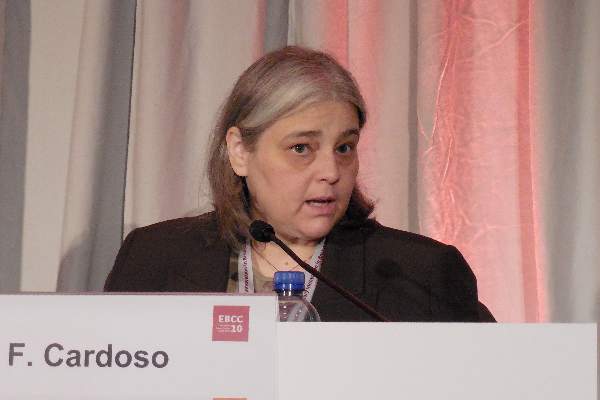
“This meta-analysis provides important information that has the potential to change and improve treatment of breast cancer in premenopausal patients,” commented Dr. Fátima Cardoso, director of the breast unit at the Champalimaud Clinical Center, Lisbon. The new findings “give us evidence-based answers as to whether or not dose-dense chemotherapy can be used in these patients without increasing their risk of treatment-induced amenorrhea, as well as showing a survival benefit,” Dr. Cardoso said in a written statement.
On Twitter@mitchelzoler
This analysis confirms the appropriateness of dose-dense chemotherapy regimens for premenopausal patients, an approach that is already routinely used in women with high-risk breast cancer who require chemotherapy. Dose-dense regimens are currently used more widely in the United States than in Europe, but these new findings should help further convince European oncologists to use dose-dense treatment schedules. The disadvantage of these regimens is that they involve more clinic visits and are more costly.
One of the factors increasing the cost is the need for greater bone marrow support by concurrent treatment with a granulocyte colony–stimulating factor analogue. It is important to have data like these to convince payers that dose-dense regimens are worth their extra cost.
By focusing specifically on premenopausal women, this analysis also showed that dose-dense regimens do not trigger more episodes of amenorrhea, nor were episodes of amenorrhea needed to get the greatest survival benefit.
Dr. Emiel J.T. Rutgers is a surgical oncologist and clinical director of the Netherlands Cancer Institute in Amsterdam. He had no relevant financial disclosures. He made these comments during a video interview with this news organization.
The video associated with this article is no longer available on this site. Please view all of our videos on the MDedge YouTube channel
This analysis confirms the appropriateness of dose-dense chemotherapy regimens for premenopausal patients, an approach that is already routinely used in women with high-risk breast cancer who require chemotherapy. Dose-dense regimens are currently used more widely in the United States than in Europe, but these new findings should help further convince European oncologists to use dose-dense treatment schedules. The disadvantage of these regimens is that they involve more clinic visits and are more costly.
One of the factors increasing the cost is the need for greater bone marrow support by concurrent treatment with a granulocyte colony–stimulating factor analogue. It is important to have data like these to convince payers that dose-dense regimens are worth their extra cost.
By focusing specifically on premenopausal women, this analysis also showed that dose-dense regimens do not trigger more episodes of amenorrhea, nor were episodes of amenorrhea needed to get the greatest survival benefit.
Dr. Emiel J.T. Rutgers is a surgical oncologist and clinical director of the Netherlands Cancer Institute in Amsterdam. He had no relevant financial disclosures. He made these comments during a video interview with this news organization.
The video associated with this article is no longer available on this site. Please view all of our videos on the MDedge YouTube channel
This analysis confirms the appropriateness of dose-dense chemotherapy regimens for premenopausal patients, an approach that is already routinely used in women with high-risk breast cancer who require chemotherapy. Dose-dense regimens are currently used more widely in the United States than in Europe, but these new findings should help further convince European oncologists to use dose-dense treatment schedules. The disadvantage of these regimens is that they involve more clinic visits and are more costly.
One of the factors increasing the cost is the need for greater bone marrow support by concurrent treatment with a granulocyte colony–stimulating factor analogue. It is important to have data like these to convince payers that dose-dense regimens are worth their extra cost.
By focusing specifically on premenopausal women, this analysis also showed that dose-dense regimens do not trigger more episodes of amenorrhea, nor were episodes of amenorrhea needed to get the greatest survival benefit.
Dr. Emiel J.T. Rutgers is a surgical oncologist and clinical director of the Netherlands Cancer Institute in Amsterdam. He had no relevant financial disclosures. He made these comments during a video interview with this news organization.
The video associated with this article is no longer available on this site. Please view all of our videos on the MDedge YouTube channel
AMSTERDAM – Premenopausal women with breast cancer at high risk for recurrence had a significantly improved 10-year rate of overall survival when they received a dose-dense chemotherapy regimen, compared with women treated with a standard dosage schedule.
This post hoc analysis of 1,549 premenopausal patients, a subgroup drawn from two separate trials run a decade apart, helps further confirm the benefit of the dose-dense approach in this population. “I think that European practice will now change,” based on this new analysis plus other recent findings from smaller studies, predicted Dr. Matteo Lambertini, who reported the analysis at the European Breast Cancer Congress.
“Dose-dense adjuvant chemotherapy may be considered the preferred treatment option and should be proposed to all high-risk, premenopausal breast cancer patients who are candidates for chemotherapy,” said Dr. Lambertini of Azienda University Hospital in Genoa, Italy. Although dose-dense regimens are common in U.S. practice for these patients and used at certain European Centers, many other European cancer programs still use standard-dose chemotherapy, he said.
The findings also showed that when treatment induced amenorrhea, it had no bearing on subsequent survival, and that the dose-dense regimen did not cause amenorrhea.
The analysis run by Dr. Lambertini and his associates pieced together data from premenopausal women who formed subgroups in two large Italian trials of dose-dense regimens as adjuvant chemotherapy for women of all ages with early-stage breast cancer: the Mammella InterGruppo (MIG) 1 trial and the Gruppo Italiano Mammella (GIM) 2 trial. MIG1 randomized 1,214 patients with early-stage breast cancer to standard chemotherapy given in 3-week cycles or in dose-dense 2-week cycles. At a median 10-year follow-up, the results showed a nonsignificant difference in overall survival between the two arms; the findings primarily demonstrated the safety of the dose-dense regimen (J Nat Cancer Inst. 2005 Dec 7;97 [23]:1724-33). GIM2 randomized 2,019 patients with early-stage breast cancer to the same alternatives, standard chemotherapy administered either every 2 or every 3 weeks and followed them for a median of 7 years. Its results showed a statistically significant improvement in disease-free survival after 5 years with the dose-dense regimen (Lancet. 2015 May 9;385[9980]:1863-72).
All patients in both studies routinely received ongoing treatment with a granulocyte colony–stimulating factor analogue during chemotherapy to help avoid the development of anemia or leukopenia.
Dr. Lambertini’s analysis focused on the 1,549 women from both studies who were premenopausal at the time they received treatment, with more than half of these patients younger than 45 years old. In this population, treatment with the dose-dense regimen resulted in a statistically significant increased rate of 10-year overall survival, expressed as a 29% reduced hazard ratio for death with dose-dense treatment (P = .021), he reported. The benefit was greatest in women with hormone receptor–negative tumors, with a hazard ratio for death reduced by 35% among women with a hormone receptor–negative tumor; overall mortality fell by 22% after a dose-dense regimen, compared with women who received chemotherapy with a standard interval between treatments.
The analysis also showed no impact from development of amenorrhea, with a nonsignificant hazard ratio of 16% separating the mortality rates in women who developed treatment-related amenorrhea and those who did not.
“This meta-analysis provides important information that has the potential to change and improve treatment of breast cancer in premenopausal patients,” commented Dr. Fátima Cardoso, director of the breast unit at the Champalimaud Clinical Center, Lisbon. The new findings “give us evidence-based answers as to whether or not dose-dense chemotherapy can be used in these patients without increasing their risk of treatment-induced amenorrhea, as well as showing a survival benefit,” Dr. Cardoso said in a written statement.
On Twitter@mitchelzoler
AMSTERDAM – Premenopausal women with breast cancer at high risk for recurrence had a significantly improved 10-year rate of overall survival when they received a dose-dense chemotherapy regimen, compared with women treated with a standard dosage schedule.
This post hoc analysis of 1,549 premenopausal patients, a subgroup drawn from two separate trials run a decade apart, helps further confirm the benefit of the dose-dense approach in this population. “I think that European practice will now change,” based on this new analysis plus other recent findings from smaller studies, predicted Dr. Matteo Lambertini, who reported the analysis at the European Breast Cancer Congress.
“Dose-dense adjuvant chemotherapy may be considered the preferred treatment option and should be proposed to all high-risk, premenopausal breast cancer patients who are candidates for chemotherapy,” said Dr. Lambertini of Azienda University Hospital in Genoa, Italy. Although dose-dense regimens are common in U.S. practice for these patients and used at certain European Centers, many other European cancer programs still use standard-dose chemotherapy, he said.
The findings also showed that when treatment induced amenorrhea, it had no bearing on subsequent survival, and that the dose-dense regimen did not cause amenorrhea.
The analysis run by Dr. Lambertini and his associates pieced together data from premenopausal women who formed subgroups in two large Italian trials of dose-dense regimens as adjuvant chemotherapy for women of all ages with early-stage breast cancer: the Mammella InterGruppo (MIG) 1 trial and the Gruppo Italiano Mammella (GIM) 2 trial. MIG1 randomized 1,214 patients with early-stage breast cancer to standard chemotherapy given in 3-week cycles or in dose-dense 2-week cycles. At a median 10-year follow-up, the results showed a nonsignificant difference in overall survival between the two arms; the findings primarily demonstrated the safety of the dose-dense regimen (J Nat Cancer Inst. 2005 Dec 7;97 [23]:1724-33). GIM2 randomized 2,019 patients with early-stage breast cancer to the same alternatives, standard chemotherapy administered either every 2 or every 3 weeks and followed them for a median of 7 years. Its results showed a statistically significant improvement in disease-free survival after 5 years with the dose-dense regimen (Lancet. 2015 May 9;385[9980]:1863-72).
All patients in both studies routinely received ongoing treatment with a granulocyte colony–stimulating factor analogue during chemotherapy to help avoid the development of anemia or leukopenia.
Dr. Lambertini’s analysis focused on the 1,549 women from both studies who were premenopausal at the time they received treatment, with more than half of these patients younger than 45 years old. In this population, treatment with the dose-dense regimen resulted in a statistically significant increased rate of 10-year overall survival, expressed as a 29% reduced hazard ratio for death with dose-dense treatment (P = .021), he reported. The benefit was greatest in women with hormone receptor–negative tumors, with a hazard ratio for death reduced by 35% among women with a hormone receptor–negative tumor; overall mortality fell by 22% after a dose-dense regimen, compared with women who received chemotherapy with a standard interval between treatments.
The analysis also showed no impact from development of amenorrhea, with a nonsignificant hazard ratio of 16% separating the mortality rates in women who developed treatment-related amenorrhea and those who did not.
“This meta-analysis provides important information that has the potential to change and improve treatment of breast cancer in premenopausal patients,” commented Dr. Fátima Cardoso, director of the breast unit at the Champalimaud Clinical Center, Lisbon. The new findings “give us evidence-based answers as to whether or not dose-dense chemotherapy can be used in these patients without increasing their risk of treatment-induced amenorrhea, as well as showing a survival benefit,” Dr. Cardoso said in a written statement.
On Twitter@mitchelzoler
AT EBCC10
Key clinical point: Premenopausal women with breast cancer at high risk for recurrence had a significantly improved rate of overall 10-year survival following a dose-dense chemotherapy regimen, compared with women who received a standard-treatment schedule.
Major finding: The mortality hazard ratio fell by 29% (P = .021) with dose-dense treatment, compared with standard chemotherapy.
Data source: A post hoc subgroup analysis of data collected from two large Italian chemotherapy trials that together included 1,549 premenopausal breast cancer patients.
Disclosures: Dr. Lambertini and Dr. Cardoso had no relevant financial disclosures.
Psychosis: Watch for sudden poor academic performance
When an adolescent presents with a history of sudden decline in academic performance, be sure to consider serious mental illness.
According to Dr. David Pickar, a psychiatrist and former (retired) director of intramural research at the National Institute of Mental Health, 90%of cases – particularly of schizophrenia – occur between the ages of 16 and 24 years.
“As a scientist, I’ve spent my career thinking about that, but for the primary care doc, if the family comes in and reports that their kid was a good student, and he’s now terrible,” first-episode psychosis should be considered, said Dr. Pickar, who produced a documentary short film describing how to recognize schizophrenia and psychosis. In this video, Dr. Pickar also explains how the use of marijuana also can precipitate psychosis in some people with a genetic predisposition to the illness.
The video associated with this article is no longer available on this site. Please view all of our videos on the MDedge YouTube channel
When an adolescent presents with a history of sudden decline in academic performance, be sure to consider serious mental illness.
According to Dr. David Pickar, a psychiatrist and former (retired) director of intramural research at the National Institute of Mental Health, 90%of cases – particularly of schizophrenia – occur between the ages of 16 and 24 years.
“As a scientist, I’ve spent my career thinking about that, but for the primary care doc, if the family comes in and reports that their kid was a good student, and he’s now terrible,” first-episode psychosis should be considered, said Dr. Pickar, who produced a documentary short film describing how to recognize schizophrenia and psychosis. In this video, Dr. Pickar also explains how the use of marijuana also can precipitate psychosis in some people with a genetic predisposition to the illness.
The video associated with this article is no longer available on this site. Please view all of our videos on the MDedge YouTube channel
When an adolescent presents with a history of sudden decline in academic performance, be sure to consider serious mental illness.
According to Dr. David Pickar, a psychiatrist and former (retired) director of intramural research at the National Institute of Mental Health, 90%of cases – particularly of schizophrenia – occur between the ages of 16 and 24 years.
“As a scientist, I’ve spent my career thinking about that, but for the primary care doc, if the family comes in and reports that their kid was a good student, and he’s now terrible,” first-episode psychosis should be considered, said Dr. Pickar, who produced a documentary short film describing how to recognize schizophrenia and psychosis. In this video, Dr. Pickar also explains how the use of marijuana also can precipitate psychosis in some people with a genetic predisposition to the illness.
The video associated with this article is no longer available on this site. Please view all of our videos on the MDedge YouTube channel

VIDEO: Physicians must counsel women on mastectomy misperceptions
MIAMI BEACH – Although many women with breast cancer who choose a mastectomy believe they will lower their risk for recurrence, compared with breast conservation therapy, physicians should counsel them about this misperception for most instances, Dr. Mike Dixon said in a video interview at the annual Miami Breast Cancer Conference.
Multiple factors suggest that the risk of cancer recurrence with breast conservation therapy have declined over time. When combined with advances in imaging and gains in systemic therapy and radiation therapy, offering women with early breast cancer a choice between mastectomy and breast conservation may no longer make sense, said Dr. Dixon, professor of surgery at the University of Edinburgh.
More favorable patient outcomes and lower overall costs also favor breast conservation therapy over mastectomy for most women, he explained.
The conference was held by Physicians’ Education Resource. Dr. Dixon has no relevant disclosures.
The video associated with this article is no longer available on this site. Please view all of our videos on the MDedge YouTube channel
MIAMI BEACH – Although many women with breast cancer who choose a mastectomy believe they will lower their risk for recurrence, compared with breast conservation therapy, physicians should counsel them about this misperception for most instances, Dr. Mike Dixon said in a video interview at the annual Miami Breast Cancer Conference.
Multiple factors suggest that the risk of cancer recurrence with breast conservation therapy have declined over time. When combined with advances in imaging and gains in systemic therapy and radiation therapy, offering women with early breast cancer a choice between mastectomy and breast conservation may no longer make sense, said Dr. Dixon, professor of surgery at the University of Edinburgh.
More favorable patient outcomes and lower overall costs also favor breast conservation therapy over mastectomy for most women, he explained.
The conference was held by Physicians’ Education Resource. Dr. Dixon has no relevant disclosures.
The video associated with this article is no longer available on this site. Please view all of our videos on the MDedge YouTube channel
MIAMI BEACH – Although many women with breast cancer who choose a mastectomy believe they will lower their risk for recurrence, compared with breast conservation therapy, physicians should counsel them about this misperception for most instances, Dr. Mike Dixon said in a video interview at the annual Miami Breast Cancer Conference.
Multiple factors suggest that the risk of cancer recurrence with breast conservation therapy have declined over time. When combined with advances in imaging and gains in systemic therapy and radiation therapy, offering women with early breast cancer a choice between mastectomy and breast conservation may no longer make sense, said Dr. Dixon, professor of surgery at the University of Edinburgh.
More favorable patient outcomes and lower overall costs also favor breast conservation therapy over mastectomy for most women, he explained.
The conference was held by Physicians’ Education Resource. Dr. Dixon has no relevant disclosures.
The video associated with this article is no longer available on this site. Please view all of our videos on the MDedge YouTube channel
EXPERT ANALYSIS FROM MBCC