User login
Official Newspaper of the American College of Surgeons
Carcinoembryonic antigen poor for differentiating pancreatic cysts
The accuracy of cyst fluid carcinoembryonic antigen in differentiating between benign and malignant pancreatic cysts is poor, and the antigen should not be used as a sole marker for guiding surgical decision making, results from a meta-analysis of available literature on the topic suggests.
"The clinical value of cyst fluid CEA should be limited only to distinguishing mucinous from nonmucinous cystic lesions," Dr. Saowanee Ngamruengphong and her colleagues from the division of gastroenterology and hepatology at Mayo Clinic Florida, Jacksonville, wrote in an article in Digestive and Liver Disease (2013 June 18 [doi: 10.1016/j.dld.2013.05.002]). "Large, multicentric, well-designed trials are needed to further characterize the role of cyst fluid tumor marker and molecular analysis in the evaluation of pancreatic cysts."
Results from two previously published articles in the medical literature showed that a cyst fluid EA level of 192-200 ng/mL had 80% accuracy in differentiating between mucinous and nonmucinous cysts (Gastroenterology 2004;126:1330-6 and Pancreatology 2012;12:183-97).
In an effort to determine the diagnostic accuracy of cyst fluid CEA in discriminating benign from malignant pancreatic cystic neoplasms, the authors of the current study conducted a literature search of Medline and Embase databases for studies published before October 2012. They used the following keywords: "pancreas OR pancreatic cystic lesion," "tumor marker OR carcinoembryonic antigen OR CEA," and "diagnosis." A total of eight published articles involving 504 patients were included in the final analysis. Random-effects models were used to calculate pooled estimates of diagnostic precision.
Dr. Ngamruengphong and her colleagues reported that the CEA cutoff level for determining a malignant cyst ranged from 109.9 to 6,000 mg/mL, and that the pooled sensitivity of cyst fluid CEA in the prediction of malignant pancreatic cysts was 63% while the pooled specificity was 63%. In addition, the positive likelihood ratio was 1.89, the negative likelihood ratio was 0.62, and the diagnostic odds ratio was 3.84.
A subgroup analysis of 227 patients with mucinous cysts revealed similar results: a pooled sensitivity of 65%, a pooled specificity of 66%, and a diagnostic odds ratio of 4.74.
"Our findings support the current guidelines, which do not recommend the use of fluid cyst CEA to diagnose malignant pancreatic cysts," the researchers wrote.
They acknowledged certain limitations of the study, including the fact that there was significant heterogeneity among the studies and that the small sample sizes in the included studies "could potentially be subject to selection bias."
The researchers stated that they had no relevant financial conflicts to disclose.
The accuracy of cyst fluid carcinoembryonic antigen in differentiating between benign and malignant pancreatic cysts is poor, and the antigen should not be used as a sole marker for guiding surgical decision making, results from a meta-analysis of available literature on the topic suggests.
"The clinical value of cyst fluid CEA should be limited only to distinguishing mucinous from nonmucinous cystic lesions," Dr. Saowanee Ngamruengphong and her colleagues from the division of gastroenterology and hepatology at Mayo Clinic Florida, Jacksonville, wrote in an article in Digestive and Liver Disease (2013 June 18 [doi: 10.1016/j.dld.2013.05.002]). "Large, multicentric, well-designed trials are needed to further characterize the role of cyst fluid tumor marker and molecular analysis in the evaluation of pancreatic cysts."
Results from two previously published articles in the medical literature showed that a cyst fluid EA level of 192-200 ng/mL had 80% accuracy in differentiating between mucinous and nonmucinous cysts (Gastroenterology 2004;126:1330-6 and Pancreatology 2012;12:183-97).
In an effort to determine the diagnostic accuracy of cyst fluid CEA in discriminating benign from malignant pancreatic cystic neoplasms, the authors of the current study conducted a literature search of Medline and Embase databases for studies published before October 2012. They used the following keywords: "pancreas OR pancreatic cystic lesion," "tumor marker OR carcinoembryonic antigen OR CEA," and "diagnosis." A total of eight published articles involving 504 patients were included in the final analysis. Random-effects models were used to calculate pooled estimates of diagnostic precision.
Dr. Ngamruengphong and her colleagues reported that the CEA cutoff level for determining a malignant cyst ranged from 109.9 to 6,000 mg/mL, and that the pooled sensitivity of cyst fluid CEA in the prediction of malignant pancreatic cysts was 63% while the pooled specificity was 63%. In addition, the positive likelihood ratio was 1.89, the negative likelihood ratio was 0.62, and the diagnostic odds ratio was 3.84.
A subgroup analysis of 227 patients with mucinous cysts revealed similar results: a pooled sensitivity of 65%, a pooled specificity of 66%, and a diagnostic odds ratio of 4.74.
"Our findings support the current guidelines, which do not recommend the use of fluid cyst CEA to diagnose malignant pancreatic cysts," the researchers wrote.
They acknowledged certain limitations of the study, including the fact that there was significant heterogeneity among the studies and that the small sample sizes in the included studies "could potentially be subject to selection bias."
The researchers stated that they had no relevant financial conflicts to disclose.
The accuracy of cyst fluid carcinoembryonic antigen in differentiating between benign and malignant pancreatic cysts is poor, and the antigen should not be used as a sole marker for guiding surgical decision making, results from a meta-analysis of available literature on the topic suggests.
"The clinical value of cyst fluid CEA should be limited only to distinguishing mucinous from nonmucinous cystic lesions," Dr. Saowanee Ngamruengphong and her colleagues from the division of gastroenterology and hepatology at Mayo Clinic Florida, Jacksonville, wrote in an article in Digestive and Liver Disease (2013 June 18 [doi: 10.1016/j.dld.2013.05.002]). "Large, multicentric, well-designed trials are needed to further characterize the role of cyst fluid tumor marker and molecular analysis in the evaluation of pancreatic cysts."
Results from two previously published articles in the medical literature showed that a cyst fluid EA level of 192-200 ng/mL had 80% accuracy in differentiating between mucinous and nonmucinous cysts (Gastroenterology 2004;126:1330-6 and Pancreatology 2012;12:183-97).
In an effort to determine the diagnostic accuracy of cyst fluid CEA in discriminating benign from malignant pancreatic cystic neoplasms, the authors of the current study conducted a literature search of Medline and Embase databases for studies published before October 2012. They used the following keywords: "pancreas OR pancreatic cystic lesion," "tumor marker OR carcinoembryonic antigen OR CEA," and "diagnosis." A total of eight published articles involving 504 patients were included in the final analysis. Random-effects models were used to calculate pooled estimates of diagnostic precision.
Dr. Ngamruengphong and her colleagues reported that the CEA cutoff level for determining a malignant cyst ranged from 109.9 to 6,000 mg/mL, and that the pooled sensitivity of cyst fluid CEA in the prediction of malignant pancreatic cysts was 63% while the pooled specificity was 63%. In addition, the positive likelihood ratio was 1.89, the negative likelihood ratio was 0.62, and the diagnostic odds ratio was 3.84.
A subgroup analysis of 227 patients with mucinous cysts revealed similar results: a pooled sensitivity of 65%, a pooled specificity of 66%, and a diagnostic odds ratio of 4.74.
"Our findings support the current guidelines, which do not recommend the use of fluid cyst CEA to diagnose malignant pancreatic cysts," the researchers wrote.
They acknowledged certain limitations of the study, including the fact that there was significant heterogeneity among the studies and that the small sample sizes in the included studies "could potentially be subject to selection bias."
The researchers stated that they had no relevant financial conflicts to disclose.
FROM DIGESTIVE AND LIVER DISEASE
Major finding: The pooled sensitivity of cyst fluid carcinoembryonic antigen in predicting malignant pancreatic cysts was 63%, while the pooled specificity was also 63%.
Data source: A meta-analysis of eight studies involving 504 patients.
Disclosures: The researchers stated that they had no relevant financial conflicts to disclose.
Mammas, don't let your babies grow up to be doctors
When country singer Ed Bruce released "Mammas, Don’t Let Your Babies Grow Up to be Cowboys" in 1975, he suggested that they should consider becoming doctors instead, but if a new national survey of doctors is to be believed, that’s not such a good career move either.
The survey, conducted by the Georgia-based staffing company Jackson Healthcare, found that 59% of physicians would be unlikely to encourage a young person to become a doctor. The findings are based on the responses of 3,456 physicians who completed e-mailed surveys between March 7 and April 1, 2013.

Their dissatisfaction with medical practice is reflected in the career satisfaction numbers in the survey. Only 20% of physicians said that they were very satisfied in their work, while 39% were somewhat satisfied and 42% were somewhat or very dissatisfied.
The satisfied ones tended to be those employed by a hospital or working at a physician-owned practice where they had no ownership stake, according to the survey.
Satisfied doctors reported that they worked 11 hours a day or less and were supported by nurse practitioners or physician assistants.
In contrast, dissatisfied doctors tended to own their practices, work as locum tenens physicians, or work for a hospital-owned practice. They also worked longer hours and had few physician extenders.
Maybe the next generation will take Ed Bruce’s other suggested career path and become lawyers.
When country singer Ed Bruce released "Mammas, Don’t Let Your Babies Grow Up to be Cowboys" in 1975, he suggested that they should consider becoming doctors instead, but if a new national survey of doctors is to be believed, that’s not such a good career move either.
The survey, conducted by the Georgia-based staffing company Jackson Healthcare, found that 59% of physicians would be unlikely to encourage a young person to become a doctor. The findings are based on the responses of 3,456 physicians who completed e-mailed surveys between March 7 and April 1, 2013.
Their dissatisfaction with medical practice is reflected in the career satisfaction numbers in the survey. Only 20% of physicians said that they were very satisfied in their work, while 39% were somewhat satisfied and 42% were somewhat or very dissatisfied.
The satisfied ones tended to be those employed by a hospital or working at a physician-owned practice where they had no ownership stake, according to the survey.
Satisfied doctors reported that they worked 11 hours a day or less and were supported by nurse practitioners or physician assistants.
In contrast, dissatisfied doctors tended to own their practices, work as locum tenens physicians, or work for a hospital-owned practice. They also worked longer hours and had few physician extenders.
Maybe the next generation will take Ed Bruce’s other suggested career path and become lawyers.
When country singer Ed Bruce released "Mammas, Don’t Let Your Babies Grow Up to be Cowboys" in 1975, he suggested that they should consider becoming doctors instead, but if a new national survey of doctors is to be believed, that’s not such a good career move either.
The survey, conducted by the Georgia-based staffing company Jackson Healthcare, found that 59% of physicians would be unlikely to encourage a young person to become a doctor. The findings are based on the responses of 3,456 physicians who completed e-mailed surveys between March 7 and April 1, 2013.
Their dissatisfaction with medical practice is reflected in the career satisfaction numbers in the survey. Only 20% of physicians said that they were very satisfied in their work, while 39% were somewhat satisfied and 42% were somewhat or very dissatisfied.
The satisfied ones tended to be those employed by a hospital or working at a physician-owned practice where they had no ownership stake, according to the survey.
Satisfied doctors reported that they worked 11 hours a day or less and were supported by nurse practitioners or physician assistants.
In contrast, dissatisfied doctors tended to own their practices, work as locum tenens physicians, or work for a hospital-owned practice. They also worked longer hours and had few physician extenders.
Maybe the next generation will take Ed Bruce’s other suggested career path and become lawyers.

2014 Medicare fee proposal ponders pay for non-face-to-face work
In a move away from the traditional visit-based payment system, officials at the Centers for Medicare and Medicaid Services are considering paying physicians for their non-face-to-face work in chronic disease management.
The proposal, which would be a boon for primary care physicians, would create two new G-codes for the non-–face-to-face care management services for Medicare patients with two or more significant chronic conditions.
The services would include physician development and revision of a care plan, communication with other treating physicians and health providers, as well as medication management. CMS is proposing to establish two G-codes for establishing a plan of care and for providing care management over 90-day periods.
Physicians could use the codes if their patients have had either Medicare’s Annual Wellness Visit or an Initial Preventive Physician Examination. CMS also plans to establish some practice standards to go along with the codes, such as requiring the use an electronic health record at the time of service.
The new codes would go into effect Jan. 1, 2015.
Currently, Medicare only pays for primary care management that occurs during an office visit. However, last year the agency established codes for transitional care management services for patients moving from a hospital or a skilled nursing facility to home, which included some non–face-to-face activities. The transitional care codes went into effect in January 2013.
The new codes are one of several policy changes being floated as part of the proposed 2014 Medicare Physician Fee Schedule. The proposed rule will be published in the Federal Register on July 19. CMS will accept public comment on the proposal until Sept. 6 and a final rule is expected in November.
The rule also serves as a reminder that in addition to payment changes proposed by CMS, physicians currently face a 24.4% across-the-board pay cut in 2015 due to the Sustainable Growth Rate (SGR) formula. Congressional action is required to avoid the steep pay cut. Members of Congress are currently drafting legislation that would permanently eliminate the SGR formula but it is unclear if the bill would be voted on this year.
Dr. Jeffrey Cain, president of the American Academy of Family Physicians, praised the CMS proposal for complex chronic care management, but said the agency can only make so much progress on payment reform within the current system.
"In light of the SGR’s mandate that CMS slash Medicare physician payment by 24.4%, these incremental increases do nothing to sustain primary medical care, much less build the primary care physician workforce," he said in a statement. "The SGR-required payment cut shines a bright light on the need for Congress to replace this dysfunctional system."
The fee schedule proposal also offers more specifics for rolling out the physician value-based payment modifier, an Affordable Care Act program to will pay physicians based on both the quality and cost of the care they provide to Medicare beneficiaries. The program is being phased in over time but will apply to all physicians by Jan. 1, 2017.
Since the program is "budget neutral," higher payments for some physicians mean pay cuts for others. Under the program, physician groups could see a payment cut of between 1% and 2% in 2016 based on their performance on quality and cost.
The latest fee schedule proposal sets out an implementation schedule for the value modifier program. Physician groups with 100 or more eligible professionals will be subject to the modifier starting in 2015. In 2016, the program will apply to physician groups of 10 or more. However, Medicare officials will begin measuring their performance on cost and quality in 2014 to determine the payments in 2016. The expansion of the program to groups of 10 or more will mean that nearly 60% of physicians will be affected by the modifier in 2016, according to CMS.
The remainder of physicians will see their payments affected by the modifier in 2017, based on performance during 2015.
Physicians can see how they are performing on cost and quality through annual Quality and Resource Use Reports produced by CMS. The agency will be providing these reports to groups of 25 or more eligible professionals in September. CMS said they expect to provide the reports to physician groups of all sizes in 2014.
In a move away from the traditional visit-based payment system, officials at the Centers for Medicare and Medicaid Services are considering paying physicians for their non-face-to-face work in chronic disease management.
The proposal, which would be a boon for primary care physicians, would create two new G-codes for the non-–face-to-face care management services for Medicare patients with two or more significant chronic conditions.
The services would include physician development and revision of a care plan, communication with other treating physicians and health providers, as well as medication management. CMS is proposing to establish two G-codes for establishing a plan of care and for providing care management over 90-day periods.
Physicians could use the codes if their patients have had either Medicare’s Annual Wellness Visit or an Initial Preventive Physician Examination. CMS also plans to establish some practice standards to go along with the codes, such as requiring the use an electronic health record at the time of service.
The new codes would go into effect Jan. 1, 2015.
Currently, Medicare only pays for primary care management that occurs during an office visit. However, last year the agency established codes for transitional care management services for patients moving from a hospital or a skilled nursing facility to home, which included some non–face-to-face activities. The transitional care codes went into effect in January 2013.
The new codes are one of several policy changes being floated as part of the proposed 2014 Medicare Physician Fee Schedule. The proposed rule will be published in the Federal Register on July 19. CMS will accept public comment on the proposal until Sept. 6 and a final rule is expected in November.
The rule also serves as a reminder that in addition to payment changes proposed by CMS, physicians currently face a 24.4% across-the-board pay cut in 2015 due to the Sustainable Growth Rate (SGR) formula. Congressional action is required to avoid the steep pay cut. Members of Congress are currently drafting legislation that would permanently eliminate the SGR formula but it is unclear if the bill would be voted on this year.
Dr. Jeffrey Cain, president of the American Academy of Family Physicians, praised the CMS proposal for complex chronic care management, but said the agency can only make so much progress on payment reform within the current system.
"In light of the SGR’s mandate that CMS slash Medicare physician payment by 24.4%, these incremental increases do nothing to sustain primary medical care, much less build the primary care physician workforce," he said in a statement. "The SGR-required payment cut shines a bright light on the need for Congress to replace this dysfunctional system."
The fee schedule proposal also offers more specifics for rolling out the physician value-based payment modifier, an Affordable Care Act program to will pay physicians based on both the quality and cost of the care they provide to Medicare beneficiaries. The program is being phased in over time but will apply to all physicians by Jan. 1, 2017.
Since the program is "budget neutral," higher payments for some physicians mean pay cuts for others. Under the program, physician groups could see a payment cut of between 1% and 2% in 2016 based on their performance on quality and cost.
The latest fee schedule proposal sets out an implementation schedule for the value modifier program. Physician groups with 100 or more eligible professionals will be subject to the modifier starting in 2015. In 2016, the program will apply to physician groups of 10 or more. However, Medicare officials will begin measuring their performance on cost and quality in 2014 to determine the payments in 2016. The expansion of the program to groups of 10 or more will mean that nearly 60% of physicians will be affected by the modifier in 2016, according to CMS.
The remainder of physicians will see their payments affected by the modifier in 2017, based on performance during 2015.
Physicians can see how they are performing on cost and quality through annual Quality and Resource Use Reports produced by CMS. The agency will be providing these reports to groups of 25 or more eligible professionals in September. CMS said they expect to provide the reports to physician groups of all sizes in 2014.
In a move away from the traditional visit-based payment system, officials at the Centers for Medicare and Medicaid Services are considering paying physicians for their non-face-to-face work in chronic disease management.
The proposal, which would be a boon for primary care physicians, would create two new G-codes for the non-–face-to-face care management services for Medicare patients with two or more significant chronic conditions.
The services would include physician development and revision of a care plan, communication with other treating physicians and health providers, as well as medication management. CMS is proposing to establish two G-codes for establishing a plan of care and for providing care management over 90-day periods.
Physicians could use the codes if their patients have had either Medicare’s Annual Wellness Visit or an Initial Preventive Physician Examination. CMS also plans to establish some practice standards to go along with the codes, such as requiring the use an electronic health record at the time of service.
The new codes would go into effect Jan. 1, 2015.
Currently, Medicare only pays for primary care management that occurs during an office visit. However, last year the agency established codes for transitional care management services for patients moving from a hospital or a skilled nursing facility to home, which included some non–face-to-face activities. The transitional care codes went into effect in January 2013.
The new codes are one of several policy changes being floated as part of the proposed 2014 Medicare Physician Fee Schedule. The proposed rule will be published in the Federal Register on July 19. CMS will accept public comment on the proposal until Sept. 6 and a final rule is expected in November.
The rule also serves as a reminder that in addition to payment changes proposed by CMS, physicians currently face a 24.4% across-the-board pay cut in 2015 due to the Sustainable Growth Rate (SGR) formula. Congressional action is required to avoid the steep pay cut. Members of Congress are currently drafting legislation that would permanently eliminate the SGR formula but it is unclear if the bill would be voted on this year.
Dr. Jeffrey Cain, president of the American Academy of Family Physicians, praised the CMS proposal for complex chronic care management, but said the agency can only make so much progress on payment reform within the current system.
"In light of the SGR’s mandate that CMS slash Medicare physician payment by 24.4%, these incremental increases do nothing to sustain primary medical care, much less build the primary care physician workforce," he said in a statement. "The SGR-required payment cut shines a bright light on the need for Congress to replace this dysfunctional system."
The fee schedule proposal also offers more specifics for rolling out the physician value-based payment modifier, an Affordable Care Act program to will pay physicians based on both the quality and cost of the care they provide to Medicare beneficiaries. The program is being phased in over time but will apply to all physicians by Jan. 1, 2017.
Since the program is "budget neutral," higher payments for some physicians mean pay cuts for others. Under the program, physician groups could see a payment cut of between 1% and 2% in 2016 based on their performance on quality and cost.
The latest fee schedule proposal sets out an implementation schedule for the value modifier program. Physician groups with 100 or more eligible professionals will be subject to the modifier starting in 2015. In 2016, the program will apply to physician groups of 10 or more. However, Medicare officials will begin measuring their performance on cost and quality in 2014 to determine the payments in 2016. The expansion of the program to groups of 10 or more will mean that nearly 60% of physicians will be affected by the modifier in 2016, according to CMS.
The remainder of physicians will see their payments affected by the modifier in 2017, based on performance during 2015.
Physicians can see how they are performing on cost and quality through annual Quality and Resource Use Reports produced by CMS. The agency will be providing these reports to groups of 25 or more eligible professionals in September. CMS said they expect to provide the reports to physician groups of all sizes in 2014.
'Clinical equipoise' seen for surgical approaches to early rectal cancer
PHOENIX – Two differing surgical approaches for early rectal cancer – radical resection and local resection—appear to be essentially equivalent treatment options, finds a systematic review and meta-analysis.
The conclusion is based on an analysis of morbidity and mortality data from 13 studies with a total of 2,855 patients with stage T1N0M0 rectal adenocarcinoma. All of the studies were published after 1979, when total mesorectal excision and modern local resection techniques were being used.
There are "improved results with the newer techniques of TEMS [transanal endoscopic microsurgery] and TAMIS [transanal minimally invasive surgery], as well as comparable outcomes when we adjust for the fact that there is a bit of a selection bias in the literature for lower-third lesions to be performed by local resection," lead investigator Dr. Sami A. Chadi reported at the annual meeting of the American Society of Colon and Rectal Surgeons.
"We know that quality of life data is better with local resection," he commented. Relative to radical resection, local resection was associated with an 87% lower risk of postoperative complications, a 69% lower risk of perioperative mortality, and an 83% lower risk of permanent ostomy.
On the other hand, local resection also was associated with a 46% higher likelihood of death at 5 years. Survival no longer differed significantly, however, when analyses took into account the greater use of local resection for cancers located in the lower third of the rectum.
"The implication is that we have established clinical equipoise between groups with T1N0M0 adenocarcinoma of the rectum, thus prompting the need for a prospective randomized, controlled trial on these two procedures," he maintained. "We do need further data to assess whether or not there is a role for neoadjuvant or adjuvant therapy in these groups." Ongoing studies are assessing the role of therapy, as well as the potential for local resection to be performed for T2 lesions.
Dr. Chadi, a surgeon with the University of Western Ontario in London, and his colleagues analyzed data from 12 observational studies and one randomized, controlled trial among patients with T1N0M0 cancer.
The 5-year rate of overall survival was poorer with local resection (relative risk, 1.46), with the difference between groups corresponding to 72 more deaths per 1,000 patients in the local resection group, according to Dr. Chadi, who disclosed no conflicts of interest related to the research.
However, this difference was largely driven by transanal excision (TAE) local procedures. There was no significant difference in this outcome for TEMS local procedures as compared with radical resection.
The researchers also repeated the survival analysis with an adjustment for cancers in the lower third of the rectum. In these patients, the surgical choice is more often local resection, potentially leading to selection bias.
When the ratio of lower-third cancers was equal in both the radical and local resection groups, there was no longer a significant difference in 5-year overall survival.
Compared with radical resection, local resection yielded a lower risk of postoperative complications (rate ratio, 0.13), with the difference corresponding to 129 fewer complications per 1,000 patients in the local resection group. The difference was significant for both TAE and TEMS individually as compared with radical resection.
Local resection also was associated with a lower risk of perioperative mortality (rate ratio, 0.31), with the difference corresponding to 11 fewer deaths per 1,000 patients in the local resection group, and a lower risk of permanent ostomy (risk ratio, 0.17), with the difference corresponding to 225 fewer permanent ostomies per 1,000 patients in the local resection group.
Local excision is an ideal management strategy for early-stage rectal cancer patients, T1 and/or T2 with no nodal involvement and no metastases. It would be great if we could pursue local excision as a primary management strategy. At this point, however, the data in the literature suggest that radical resection is associated with superior oncological outcomes.
Robust data from a randomized controlled trial are needed to decide management. Dr. Chadi was said that such a trial would have to include patients who are candidates for either procedure and are diagnosed using a standard procedure such as magnetic resonance imaging or endorectal ultrasound. Comorbidities and receipt of adjuvant therapy would be among the main confounders to consider in trial design. Study subgroups would include patients with lesions in either the lower one-third or the upper two-thirds of the rectum, and the sample size would need to be powered to account for the selection bias for lower third lesions to have local resection.
Since the initiation of local resection, newer techniques have become available that allow for better visualization and more precise dissections. This has given rise to the hope that oncologic outcomes—historically superior with radical resection—might now be similar with local resection.
Dr. Allyson H. Stone, of the Dartmouth-Hitchcock Medical Center in Lebanon, N.H., was the invited discussant of the study. She had no relevant financial disclosures.
Local excision is an ideal management strategy for early-stage rectal cancer patients, T1 and/or T2 with no nodal involvement and no metastases. It would be great if we could pursue local excision as a primary management strategy. At this point, however, the data in the literature suggest that radical resection is associated with superior oncological outcomes.
Robust data from a randomized controlled trial are needed to decide management. Dr. Chadi was said that such a trial would have to include patients who are candidates for either procedure and are diagnosed using a standard procedure such as magnetic resonance imaging or endorectal ultrasound. Comorbidities and receipt of adjuvant therapy would be among the main confounders to consider in trial design. Study subgroups would include patients with lesions in either the lower one-third or the upper two-thirds of the rectum, and the sample size would need to be powered to account for the selection bias for lower third lesions to have local resection.
Since the initiation of local resection, newer techniques have become available that allow for better visualization and more precise dissections. This has given rise to the hope that oncologic outcomes—historically superior with radical resection—might now be similar with local resection.
Dr. Allyson H. Stone, of the Dartmouth-Hitchcock Medical Center in Lebanon, N.H., was the invited discussant of the study. She had no relevant financial disclosures.
Local excision is an ideal management strategy for early-stage rectal cancer patients, T1 and/or T2 with no nodal involvement and no metastases. It would be great if we could pursue local excision as a primary management strategy. At this point, however, the data in the literature suggest that radical resection is associated with superior oncological outcomes.
Robust data from a randomized controlled trial are needed to decide management. Dr. Chadi was said that such a trial would have to include patients who are candidates for either procedure and are diagnosed using a standard procedure such as magnetic resonance imaging or endorectal ultrasound. Comorbidities and receipt of adjuvant therapy would be among the main confounders to consider in trial design. Study subgroups would include patients with lesions in either the lower one-third or the upper two-thirds of the rectum, and the sample size would need to be powered to account for the selection bias for lower third lesions to have local resection.
Since the initiation of local resection, newer techniques have become available that allow for better visualization and more precise dissections. This has given rise to the hope that oncologic outcomes—historically superior with radical resection—might now be similar with local resection.
Dr. Allyson H. Stone, of the Dartmouth-Hitchcock Medical Center in Lebanon, N.H., was the invited discussant of the study. She had no relevant financial disclosures.
PHOENIX – Two differing surgical approaches for early rectal cancer – radical resection and local resection—appear to be essentially equivalent treatment options, finds a systematic review and meta-analysis.
The conclusion is based on an analysis of morbidity and mortality data from 13 studies with a total of 2,855 patients with stage T1N0M0 rectal adenocarcinoma. All of the studies were published after 1979, when total mesorectal excision and modern local resection techniques were being used.
There are "improved results with the newer techniques of TEMS [transanal endoscopic microsurgery] and TAMIS [transanal minimally invasive surgery], as well as comparable outcomes when we adjust for the fact that there is a bit of a selection bias in the literature for lower-third lesions to be performed by local resection," lead investigator Dr. Sami A. Chadi reported at the annual meeting of the American Society of Colon and Rectal Surgeons.
"We know that quality of life data is better with local resection," he commented. Relative to radical resection, local resection was associated with an 87% lower risk of postoperative complications, a 69% lower risk of perioperative mortality, and an 83% lower risk of permanent ostomy.
On the other hand, local resection also was associated with a 46% higher likelihood of death at 5 years. Survival no longer differed significantly, however, when analyses took into account the greater use of local resection for cancers located in the lower third of the rectum.
"The implication is that we have established clinical equipoise between groups with T1N0M0 adenocarcinoma of the rectum, thus prompting the need for a prospective randomized, controlled trial on these two procedures," he maintained. "We do need further data to assess whether or not there is a role for neoadjuvant or adjuvant therapy in these groups." Ongoing studies are assessing the role of therapy, as well as the potential for local resection to be performed for T2 lesions.
Dr. Chadi, a surgeon with the University of Western Ontario in London, and his colleagues analyzed data from 12 observational studies and one randomized, controlled trial among patients with T1N0M0 cancer.
The 5-year rate of overall survival was poorer with local resection (relative risk, 1.46), with the difference between groups corresponding to 72 more deaths per 1,000 patients in the local resection group, according to Dr. Chadi, who disclosed no conflicts of interest related to the research.
However, this difference was largely driven by transanal excision (TAE) local procedures. There was no significant difference in this outcome for TEMS local procedures as compared with radical resection.
The researchers also repeated the survival analysis with an adjustment for cancers in the lower third of the rectum. In these patients, the surgical choice is more often local resection, potentially leading to selection bias.
When the ratio of lower-third cancers was equal in both the radical and local resection groups, there was no longer a significant difference in 5-year overall survival.
Compared with radical resection, local resection yielded a lower risk of postoperative complications (rate ratio, 0.13), with the difference corresponding to 129 fewer complications per 1,000 patients in the local resection group. The difference was significant for both TAE and TEMS individually as compared with radical resection.
Local resection also was associated with a lower risk of perioperative mortality (rate ratio, 0.31), with the difference corresponding to 11 fewer deaths per 1,000 patients in the local resection group, and a lower risk of permanent ostomy (risk ratio, 0.17), with the difference corresponding to 225 fewer permanent ostomies per 1,000 patients in the local resection group.
PHOENIX – Two differing surgical approaches for early rectal cancer – radical resection and local resection—appear to be essentially equivalent treatment options, finds a systematic review and meta-analysis.
The conclusion is based on an analysis of morbidity and mortality data from 13 studies with a total of 2,855 patients with stage T1N0M0 rectal adenocarcinoma. All of the studies were published after 1979, when total mesorectal excision and modern local resection techniques were being used.
There are "improved results with the newer techniques of TEMS [transanal endoscopic microsurgery] and TAMIS [transanal minimally invasive surgery], as well as comparable outcomes when we adjust for the fact that there is a bit of a selection bias in the literature for lower-third lesions to be performed by local resection," lead investigator Dr. Sami A. Chadi reported at the annual meeting of the American Society of Colon and Rectal Surgeons.
"We know that quality of life data is better with local resection," he commented. Relative to radical resection, local resection was associated with an 87% lower risk of postoperative complications, a 69% lower risk of perioperative mortality, and an 83% lower risk of permanent ostomy.
On the other hand, local resection also was associated with a 46% higher likelihood of death at 5 years. Survival no longer differed significantly, however, when analyses took into account the greater use of local resection for cancers located in the lower third of the rectum.
"The implication is that we have established clinical equipoise between groups with T1N0M0 adenocarcinoma of the rectum, thus prompting the need for a prospective randomized, controlled trial on these two procedures," he maintained. "We do need further data to assess whether or not there is a role for neoadjuvant or adjuvant therapy in these groups." Ongoing studies are assessing the role of therapy, as well as the potential for local resection to be performed for T2 lesions.
Dr. Chadi, a surgeon with the University of Western Ontario in London, and his colleagues analyzed data from 12 observational studies and one randomized, controlled trial among patients with T1N0M0 cancer.
The 5-year rate of overall survival was poorer with local resection (relative risk, 1.46), with the difference between groups corresponding to 72 more deaths per 1,000 patients in the local resection group, according to Dr. Chadi, who disclosed no conflicts of interest related to the research.
However, this difference was largely driven by transanal excision (TAE) local procedures. There was no significant difference in this outcome for TEMS local procedures as compared with radical resection.
The researchers also repeated the survival analysis with an adjustment for cancers in the lower third of the rectum. In these patients, the surgical choice is more often local resection, potentially leading to selection bias.
When the ratio of lower-third cancers was equal in both the radical and local resection groups, there was no longer a significant difference in 5-year overall survival.
Compared with radical resection, local resection yielded a lower risk of postoperative complications (rate ratio, 0.13), with the difference corresponding to 129 fewer complications per 1,000 patients in the local resection group. The difference was significant for both TAE and TEMS individually as compared with radical resection.
Local resection also was associated with a lower risk of perioperative mortality (rate ratio, 0.31), with the difference corresponding to 11 fewer deaths per 1,000 patients in the local resection group, and a lower risk of permanent ostomy (risk ratio, 0.17), with the difference corresponding to 225 fewer permanent ostomies per 1,000 patients in the local resection group.
AT THE ASCRS ANNUAL MEETING
Major finding: Compared with radical resection, local resection was associated with a lower risk of perioperative mortality (rate ratio, 0.31), with the difference corresponding to 11 fewer deaths per 1,000 patients and a lower risk of permanent ostomy (risk ratio, 0.17), with the difference corresponding to 225 fewer permanent ostomies per 1,000 patients.
Data source: A systematic review and meta-analysis of 12 observational studies and one randomized controlled trial with a total of 2,855 patients with T1N0M0 rectal cancer.
Disclosures: Dr. Chadi disclosed no relevant conflicts of interest.
NAPBC announces milestone accreditation of 500 breast centers
The National Accreditation Program for Breast Centers (NAPBC) announced recently that it has accredited more than 500 breast centers, and the program has widespread distribution in 48 states including Alaska and Hawaii, and the territory of Puerto Rico. This milestone achievement comes after surpassing the 100-accredited-centers mark in 2009, a little more than one year after the NAPBC began the formal process of surveying breast centers for accreditation in September 2008.
Read more about the NAPBC achievement at http://www.newswise.com/articles/national-accreditation-program-for-breast-centers-surpasses-the-500-accredited-centers-mark.
The National Accreditation Program for Breast Centers (NAPBC) announced recently that it has accredited more than 500 breast centers, and the program has widespread distribution in 48 states including Alaska and Hawaii, and the territory of Puerto Rico. This milestone achievement comes after surpassing the 100-accredited-centers mark in 2009, a little more than one year after the NAPBC began the formal process of surveying breast centers for accreditation in September 2008.
Read more about the NAPBC achievement at http://www.newswise.com/articles/national-accreditation-program-for-breast-centers-surpasses-the-500-accredited-centers-mark.
The National Accreditation Program for Breast Centers (NAPBC) announced recently that it has accredited more than 500 breast centers, and the program has widespread distribution in 48 states including Alaska and Hawaii, and the territory of Puerto Rico. This milestone achievement comes after surpassing the 100-accredited-centers mark in 2009, a little more than one year after the NAPBC began the formal process of surveying breast centers for accreditation in September 2008.
Read more about the NAPBC achievement at http://www.newswise.com/articles/national-accreditation-program-for-breast-centers-surpasses-the-500-accredited-centers-mark.
Clinical Congress Panel Sessions will cover mass casualty preparation and response
Register for two new Panel Sessions at the American College of Surgeons (ACS) 2013 Clinical Congress, October 6-10, in Washington, DC, that will explore proper emergency responses that boost the possibility of human survival during mass-casualty events. Panel speakers at these sessions will share first-hand experiences and provide lessons learned, in addition to practical strategies on how to coordinate with federal and local agencies when responding to crisis situations.
PS331: Lessons Learned from the Boston Marathon Bombing
Wednesday, October 9
8:00 – 9:30 am
Moderator: Michael J. Zinner, MD, FACS, ACS Regent
Co-Moderator: Michael F. Rotondo, MD, FACS, Chair, ACS Committee on Trauma
Participants will discuss the lessons learned from the April 15, 2013, Boston Marathon bombing, a civilian mass-casualty event. The exercises that preceded the event and the ACS Committee on Trauma’s certification of five adult level-one trauma centers in Boston helped save the lives of all the victims who were transported to hospitals.
PS310: Mass-Casualty Shootings: Saving the Patients
Wednesday, October 9
9:45 – 11:15 am
Moderator: Lenworth M. Jacobs, MD, FACS
Participants will discuss saving victims’ lives during mass-casualty events, such as those at Sandy Hook Elementary School, Newtown, CT, and the Boston Marathon. The ACS has partnered with numerous organizations, including the FBI, police, fire, and emergency prehospital management, in preparing a document that will encourage cooperation among all agencies involved in managing these events. A panel of representatives from these groups will provide practical strategies for attendees to apply in their communities.
Admission to Panel Sessions is included with each paid Clinical Congress registration. For more information about the Panel Sessions or other Clinical Congress information, please visit the Clinical Congress website at http://www.facs.org/clincon2013/index.html.
Register for two new Panel Sessions at the American College of Surgeons (ACS) 2013 Clinical Congress, October 6-10, in Washington, DC, that will explore proper emergency responses that boost the possibility of human survival during mass-casualty events. Panel speakers at these sessions will share first-hand experiences and provide lessons learned, in addition to practical strategies on how to coordinate with federal and local agencies when responding to crisis situations.
PS331: Lessons Learned from the Boston Marathon Bombing
Wednesday, October 9
8:00 – 9:30 am
Moderator: Michael J. Zinner, MD, FACS, ACS Regent
Co-Moderator: Michael F. Rotondo, MD, FACS, Chair, ACS Committee on Trauma
Participants will discuss the lessons learned from the April 15, 2013, Boston Marathon bombing, a civilian mass-casualty event. The exercises that preceded the event and the ACS Committee on Trauma’s certification of five adult level-one trauma centers in Boston helped save the lives of all the victims who were transported to hospitals.
PS310: Mass-Casualty Shootings: Saving the Patients
Wednesday, October 9
9:45 – 11:15 am
Moderator: Lenworth M. Jacobs, MD, FACS
Participants will discuss saving victims’ lives during mass-casualty events, such as those at Sandy Hook Elementary School, Newtown, CT, and the Boston Marathon. The ACS has partnered with numerous organizations, including the FBI, police, fire, and emergency prehospital management, in preparing a document that will encourage cooperation among all agencies involved in managing these events. A panel of representatives from these groups will provide practical strategies for attendees to apply in their communities.
Admission to Panel Sessions is included with each paid Clinical Congress registration. For more information about the Panel Sessions or other Clinical Congress information, please visit the Clinical Congress website at http://www.facs.org/clincon2013/index.html.
Register for two new Panel Sessions at the American College of Surgeons (ACS) 2013 Clinical Congress, October 6-10, in Washington, DC, that will explore proper emergency responses that boost the possibility of human survival during mass-casualty events. Panel speakers at these sessions will share first-hand experiences and provide lessons learned, in addition to practical strategies on how to coordinate with federal and local agencies when responding to crisis situations.
PS331: Lessons Learned from the Boston Marathon Bombing
Wednesday, October 9
8:00 – 9:30 am
Moderator: Michael J. Zinner, MD, FACS, ACS Regent
Co-Moderator: Michael F. Rotondo, MD, FACS, Chair, ACS Committee on Trauma
Participants will discuss the lessons learned from the April 15, 2013, Boston Marathon bombing, a civilian mass-casualty event. The exercises that preceded the event and the ACS Committee on Trauma’s certification of five adult level-one trauma centers in Boston helped save the lives of all the victims who were transported to hospitals.
PS310: Mass-Casualty Shootings: Saving the Patients
Wednesday, October 9
9:45 – 11:15 am
Moderator: Lenworth M. Jacobs, MD, FACS
Participants will discuss saving victims’ lives during mass-casualty events, such as those at Sandy Hook Elementary School, Newtown, CT, and the Boston Marathon. The ACS has partnered with numerous organizations, including the FBI, police, fire, and emergency prehospital management, in preparing a document that will encourage cooperation among all agencies involved in managing these events. A panel of representatives from these groups will provide practical strategies for attendees to apply in their communities.
Admission to Panel Sessions is included with each paid Clinical Congress registration. For more information about the Panel Sessions or other Clinical Congress information, please visit the Clinical Congress website at http://www.facs.org/clincon2013/index.html.
Revitalized leadership conference motivates members to redefine roles and responsibilities
"The goal of this portion of the meeting is to renew our pledge to each other as leaders," said David B. Hoyt, MD, FACS, Executive Director of the American College of Surgeons (ACS) in his opening remarks at the second annual Leadership Conference, April 13-14, at the Mandarin Oriental Hotel in Washington, DC.
The 2013 Leadership Conference—held in conjunction with the Advocacy Summit—drew 308 attendees from all levels of ACS leadership, including Regents, Governors, Advisory Council members, and Chapter leaders.

A "recommitment to ACS leadership goals" was a central message of this year’s conference, according to Patricia L. Turner, MD, FACS, Director, ACS Division of Member Services. Part of this re-energized focus included the unveiling of a new and expanded list of ACS Board of Governors (B/G) duties presented by Lena M. Napolitano, MD, FACS, Chair of the B/G. These new expectations, including mandatory attendance at future Leadership Conference and Advocacy Summit meetings, are intended to enhance "bi-directional communication between the Board of Governors and their constituents," explained Dr. Napolitano.
A new interactive component of the meeting fostered relationship-building among colleagues, as participants convened by geographic location to identify areas for synergy and unity in addressing common challenges. A representative from each breakout session presented the findings to the group-at-large. Common themes to emerge from these breakout sessions included a need for increased communication among chapter members, enhanced member engagement, and a desire for professional development training.
Roles and responsibilities
Other conference sessions covered a spectrum of topics tethered to the meeting’s leadership theme. A session on Roles and Responsibilities focused on the functions of ACS Regents, Governors, Chapters, and Advisory Council Chairs.
Julie A. Freischlag, MD, FACS, Chair of the Board of Regents, outlined the "Top 10 Things a Regent Should Do," including "attend Regents’ meetings, prepare for and talk at Regent meetings, and communicate to your group about the ACS."
Dr. Napolitano summarized the enhanced duties of the B/G. "The Governors act as a liaison between the Board of Regents and the Fellows and as a clearinghouse for the Regents on general assigned subjects and on local problems," she said, quoting the College Bylaws.
"Our mission is to bring the voice of the Fellows forward so that the Regents can make important decisions," explained Dr. Napolitano.
John P. Rioux, MD, FACS, Chair of the Board of Governors National Chapter Workgroup, outlined the key duties of the Chapter Officers, and underscored the importance of developing a strategic plan. "Develop an operational plan, assign tasks with established timelines, and develop measures of success necessary to fully implement the strategic plan," he advised.
Finally, E. Christopher Ellison, MD, FACS, Chair, Advisory Council for General Surgery, and Chair, Advisory Council Chairs presented an overview of the ACS Advisory Councils for the Surgical Specialties. "Since the founding of the College, surgical specialties have been closely integrated into all College activities," observed Dr. Ellison, noting that ACS Advisory Councils for Surgical Specialties:
• Serve as a liaison between the surgical societies and the Regents
• Advise the Regents on policy matters relating to their specialties
• Nominate Fellows from the surgical specialties to serve on College committees
• Provide specialty input on the development of general and specialty sessions for the Clinical Congress
Review of ACS Infrastructure
The Leadership Conference’s second block of meetings featured presentations by ACS staff members and others on key areas of the College. "This next section of the agenda is a review of the infrastructure of the American College of Surgeons and highlights the offerings of each division," explained Dr. Turner.
Ajit K. Sachdeva, MD, FACS, FRCSC, Director, ACS Division of Education, underscored the division’s "special focus on the two ends of residency training—the transition from medical school to surgery residency and the transition from training to independent surgical practice." The College publication titled Successfully Navigating the First Year of Surgical Residency lists the critical cognitive, clinical, and technical skills needed for the first year of residency training.
In an effort to assist residents who are concerned about moving into independent surgical practice, the Division of Education has introduced the new ACS Transition to Practice Program in General Surgery initiative.
The program is taking place in several underserved regions and is designed to help residents:
Obtain more autonomous experience in general surgery, increase their clinical competence, learn about practice management, connect with mentors, and participate in experiential learning.
Dr. Sachdeva also unveiled the ACS Division of Education’s new tagline, "Blended Surgical Education and Training for Life," which describes the department’s ongoing mission of promoting "excellence and expertise in surgery through innovative education, training, verification, validation, and accreditation."
Dr. Turner noted the Member Services Division is responsible for processing applications; facilitating member recruitment and retention; providing staff support to the Board of Governors, the Advisory Councils, the Young Fellows Association, the Residents and Associates Society, Operation Giving Back, and several ACS committees All of these areas, provide an opportunity for enhanced member engagement, added Dr. Turner.
Dr. Turner urged conference attendees—and their constituents—to complete their member profiles. Dr. Turner strives to implement "substantive use of existing member data to drive marketing and increase value to our Fellows." Thousands of patients use the College’s ‘find-a-surgeon’ feature on the website," she added in a post-conference interview.
Christian Shalgian, Director, ACS Division of Advocacy and Health Policy, outlined the College’s priority legislative and regulatory issues, including: Medicare physician payment, quality care initiatives, graduate medical education and workforce challenges, and medical liability reform.
Mr. Shalgian said the sustainable growth rate (SGR) formula, which is used to calculate physician payment, could be replaced with the Value-Based Update, a proposal developed by the ACS that better reflects accurate health care costs and would factor in the quality of care physicians deliver based on measures that are meaningful to both patients and surgeons.
The ACS has developed the framework for this proposal, and now we need to add data and modeling," he said. To this end, the College has partnered with researchers at Brigham and Women’s Hospital, Boston, MA, and Brandeis University, Waltham, MA
Mr. Shalgian highlighted strategies for effective advocacy and unveiled a new grassroots Advocacy and Health Policy initiative titled "ACS—SurgeonsVoice," which he described as an "ongoing, organized program of recruiting, educating, and motivating members to use their political power to advocate and influence."
"Dr. Dr. Hoyt outlined four "guiding principles of continuous quality improvement": standards (validated by research and data, nationally benchmarked); infrastructure (including proper staffing levels, checklists, and information technology); rigorous data (including post-discharge tracking and continuously updated, real-time measurement); and verification (external peer-review).
He also noted the release of a limited edition book titled Inspiring Quality Tour: Lessons Learned in the Pursuit of Quality Surgical Health Care, which summarizes the 18-month effort to generate a national dialogue about surgical quality and patient safety through a series of ACS Surgical Health Care Quality Forums.
"My message to you today is that we are at a critical time right now when it comes to advocating for the right kind of quality improvement," he said.
Dr. Napolitano provided an overview of the B/G committee reorganization, summarizing the goals of the board’s five pillars—Member Services, Education, Advocacy/Health Policy, Quality-Research/Optimal Patient Care, and Communication— modeled after the Divisions of the College.
B/G "Leads" for each pillar are as follows:
• Member Services Pillar: Fabrizio Michelassi, MD, FACS
• Education Pillar: Lorrie Langdale, MD, FACS
• Advocacy and Health Policy Pillar: Jim Denneny, MD, FACS
• Quality-Research/Optimal Patient Care Pillar: Sherry Wren, MD, FACS
• Communication Pillar: Gary Timmerman, MD, FACS
Challenges in leadership
Mark C. Weissler, MD, FACS, Vice-Chair, Board of Regents; Dr. Timmerman, Vice-Chair Board of Governors; and Mary E. Fallat, MD, FACS, Chair, Advisory Council for Pediatric Surgery, presented at the Challenges in Leadership session.
"The core purpose of the ACS is to maintain the professional core of surgery in North America," said Dr. Weissler. "Surgery is increasingly subspecialized and if we want to remain the umbrella organization and maintain membership, we must remain inclusive and cater to a variety of needs."
Dr. Timmerman outlined the qualities of a strong leader. "The best leaders are the best listeners, are humble servants, and [engage in] volunteerism," said Dr. Timmerman.
Dr. Fallat described challenges surgeons typically face, particularly those in leadership positions, including "volume of information, time constraints, ability to absorb content, and ability to extract what is important for all surgeons, as well as what is important for the specialty."
Improving involvement
The final session of the conference focused on enhancing member engagement.
S. Rob Todd, MD, FACS, Chair, Member Services Workgroup, Young Fellows Association, described the advantages of College membership for young Fellows and ACS leaders, particularly in leadership development.
Steven L. Chen, MD, FACS, Chair, Education Workgroup, Young Fellows Association encouraged attendees to apply to become either a mentor or mentee, as both roles can lead to increased involvement with the College.
David W. Dexter, MD, FACS, member, ACS Northwest Pennsylvania Chapter, offered strategies for stimulating chapter growth and member engagement "Successful chapters, he said, "sustain membership, involve and recruit young surgeons, are marked by member enthusiasm, feature strong administrative leadership, and promote ACS programs," Dr. Dexter said.
Several factors affect Chapters’ financial sustainability, added Dr. Dexter, including an aging membership, decreases in enrollment, increasing costs, decreasing vendor support, mergers, and consolidation of vendors. He urged attendees to "take financial control of your chapter."
Breakout sessions
Attendees were organized into specific groups by state or region to discuss issues of mutual concern.
Questions raised at the breakout sessions included:
What one ACS initiative or event can be planned in your area over the next 12 months that will support or enhance the practice, patient care, financial well-being, or engagement of your local surgeons?
Of what accomplishment by your local community of surgeons are you most proud?
What topics would you like to see covered at the Leadership Conference next year?
Several common goals emerged, including:
• Increased communication among chapter members
• More member engagement
• Professional development training
• Leadership skills training
• Bringing Quality Forum tour to states that have not hosted a forum up to this point
Member Services staff are compiling the information presented in the Breakout Session reports and will provide a summary later this year.
Mr. Peregrin is the Senior Editor of the Bulletin of the American College of Surgeons.
"The goal of this portion of the meeting is to renew our pledge to each other as leaders," said David B. Hoyt, MD, FACS, Executive Director of the American College of Surgeons (ACS) in his opening remarks at the second annual Leadership Conference, April 13-14, at the Mandarin Oriental Hotel in Washington, DC.
The 2013 Leadership Conference—held in conjunction with the Advocacy Summit—drew 308 attendees from all levels of ACS leadership, including Regents, Governors, Advisory Council members, and Chapter leaders.
A "recommitment to ACS leadership goals" was a central message of this year’s conference, according to Patricia L. Turner, MD, FACS, Director, ACS Division of Member Services. Part of this re-energized focus included the unveiling of a new and expanded list of ACS Board of Governors (B/G) duties presented by Lena M. Napolitano, MD, FACS, Chair of the B/G. These new expectations, including mandatory attendance at future Leadership Conference and Advocacy Summit meetings, are intended to enhance "bi-directional communication between the Board of Governors and their constituents," explained Dr. Napolitano.
A new interactive component of the meeting fostered relationship-building among colleagues, as participants convened by geographic location to identify areas for synergy and unity in addressing common challenges. A representative from each breakout session presented the findings to the group-at-large. Common themes to emerge from these breakout sessions included a need for increased communication among chapter members, enhanced member engagement, and a desire for professional development training.
Roles and responsibilities
Other conference sessions covered a spectrum of topics tethered to the meeting’s leadership theme. A session on Roles and Responsibilities focused on the functions of ACS Regents, Governors, Chapters, and Advisory Council Chairs.
Julie A. Freischlag, MD, FACS, Chair of the Board of Regents, outlined the "Top 10 Things a Regent Should Do," including "attend Regents’ meetings, prepare for and talk at Regent meetings, and communicate to your group about the ACS."
Dr. Napolitano summarized the enhanced duties of the B/G. "The Governors act as a liaison between the Board of Regents and the Fellows and as a clearinghouse for the Regents on general assigned subjects and on local problems," she said, quoting the College Bylaws.
"Our mission is to bring the voice of the Fellows forward so that the Regents can make important decisions," explained Dr. Napolitano.
John P. Rioux, MD, FACS, Chair of the Board of Governors National Chapter Workgroup, outlined the key duties of the Chapter Officers, and underscored the importance of developing a strategic plan. "Develop an operational plan, assign tasks with established timelines, and develop measures of success necessary to fully implement the strategic plan," he advised.
Finally, E. Christopher Ellison, MD, FACS, Chair, Advisory Council for General Surgery, and Chair, Advisory Council Chairs presented an overview of the ACS Advisory Councils for the Surgical Specialties. "Since the founding of the College, surgical specialties have been closely integrated into all College activities," observed Dr. Ellison, noting that ACS Advisory Councils for Surgical Specialties:
• Serve as a liaison between the surgical societies and the Regents
• Advise the Regents on policy matters relating to their specialties
• Nominate Fellows from the surgical specialties to serve on College committees
• Provide specialty input on the development of general and specialty sessions for the Clinical Congress
Review of ACS Infrastructure
The Leadership Conference’s second block of meetings featured presentations by ACS staff members and others on key areas of the College. "This next section of the agenda is a review of the infrastructure of the American College of Surgeons and highlights the offerings of each division," explained Dr. Turner.
Ajit K. Sachdeva, MD, FACS, FRCSC, Director, ACS Division of Education, underscored the division’s "special focus on the two ends of residency training—the transition from medical school to surgery residency and the transition from training to independent surgical practice." The College publication titled Successfully Navigating the First Year of Surgical Residency lists the critical cognitive, clinical, and technical skills needed for the first year of residency training.
In an effort to assist residents who are concerned about moving into independent surgical practice, the Division of Education has introduced the new ACS Transition to Practice Program in General Surgery initiative.
The program is taking place in several underserved regions and is designed to help residents:
Obtain more autonomous experience in general surgery, increase their clinical competence, learn about practice management, connect with mentors, and participate in experiential learning.
Dr. Sachdeva also unveiled the ACS Division of Education’s new tagline, "Blended Surgical Education and Training for Life," which describes the department’s ongoing mission of promoting "excellence and expertise in surgery through innovative education, training, verification, validation, and accreditation."
Dr. Turner noted the Member Services Division is responsible for processing applications; facilitating member recruitment and retention; providing staff support to the Board of Governors, the Advisory Councils, the Young Fellows Association, the Residents and Associates Society, Operation Giving Back, and several ACS committees All of these areas, provide an opportunity for enhanced member engagement, added Dr. Turner.
Dr. Turner urged conference attendees—and their constituents—to complete their member profiles. Dr. Turner strives to implement "substantive use of existing member data to drive marketing and increase value to our Fellows." Thousands of patients use the College’s ‘find-a-surgeon’ feature on the website," she added in a post-conference interview.
Christian Shalgian, Director, ACS Division of Advocacy and Health Policy, outlined the College’s priority legislative and regulatory issues, including: Medicare physician payment, quality care initiatives, graduate medical education and workforce challenges, and medical liability reform.
Mr. Shalgian said the sustainable growth rate (SGR) formula, which is used to calculate physician payment, could be replaced with the Value-Based Update, a proposal developed by the ACS that better reflects accurate health care costs and would factor in the quality of care physicians deliver based on measures that are meaningful to both patients and surgeons.
The ACS has developed the framework for this proposal, and now we need to add data and modeling," he said. To this end, the College has partnered with researchers at Brigham and Women’s Hospital, Boston, MA, and Brandeis University, Waltham, MA
Mr. Shalgian highlighted strategies for effective advocacy and unveiled a new grassroots Advocacy and Health Policy initiative titled "ACS—SurgeonsVoice," which he described as an "ongoing, organized program of recruiting, educating, and motivating members to use their political power to advocate and influence."
"Dr. Dr. Hoyt outlined four "guiding principles of continuous quality improvement": standards (validated by research and data, nationally benchmarked); infrastructure (including proper staffing levels, checklists, and information technology); rigorous data (including post-discharge tracking and continuously updated, real-time measurement); and verification (external peer-review).
He also noted the release of a limited edition book titled Inspiring Quality Tour: Lessons Learned in the Pursuit of Quality Surgical Health Care, which summarizes the 18-month effort to generate a national dialogue about surgical quality and patient safety through a series of ACS Surgical Health Care Quality Forums.
"My message to you today is that we are at a critical time right now when it comes to advocating for the right kind of quality improvement," he said.
Dr. Napolitano provided an overview of the B/G committee reorganization, summarizing the goals of the board’s five pillars—Member Services, Education, Advocacy/Health Policy, Quality-Research/Optimal Patient Care, and Communication— modeled after the Divisions of the College.
B/G "Leads" for each pillar are as follows:
• Member Services Pillar: Fabrizio Michelassi, MD, FACS
• Education Pillar: Lorrie Langdale, MD, FACS
• Advocacy and Health Policy Pillar: Jim Denneny, MD, FACS
• Quality-Research/Optimal Patient Care Pillar: Sherry Wren, MD, FACS
• Communication Pillar: Gary Timmerman, MD, FACS
Challenges in leadership
Mark C. Weissler, MD, FACS, Vice-Chair, Board of Regents; Dr. Timmerman, Vice-Chair Board of Governors; and Mary E. Fallat, MD, FACS, Chair, Advisory Council for Pediatric Surgery, presented at the Challenges in Leadership session.
"The core purpose of the ACS is to maintain the professional core of surgery in North America," said Dr. Weissler. "Surgery is increasingly subspecialized and if we want to remain the umbrella organization and maintain membership, we must remain inclusive and cater to a variety of needs."
Dr. Timmerman outlined the qualities of a strong leader. "The best leaders are the best listeners, are humble servants, and [engage in] volunteerism," said Dr. Timmerman.
Dr. Fallat described challenges surgeons typically face, particularly those in leadership positions, including "volume of information, time constraints, ability to absorb content, and ability to extract what is important for all surgeons, as well as what is important for the specialty."
Improving involvement
The final session of the conference focused on enhancing member engagement.
S. Rob Todd, MD, FACS, Chair, Member Services Workgroup, Young Fellows Association, described the advantages of College membership for young Fellows and ACS leaders, particularly in leadership development.
Steven L. Chen, MD, FACS, Chair, Education Workgroup, Young Fellows Association encouraged attendees to apply to become either a mentor or mentee, as both roles can lead to increased involvement with the College.
David W. Dexter, MD, FACS, member, ACS Northwest Pennsylvania Chapter, offered strategies for stimulating chapter growth and member engagement "Successful chapters, he said, "sustain membership, involve and recruit young surgeons, are marked by member enthusiasm, feature strong administrative leadership, and promote ACS programs," Dr. Dexter said.
Several factors affect Chapters’ financial sustainability, added Dr. Dexter, including an aging membership, decreases in enrollment, increasing costs, decreasing vendor support, mergers, and consolidation of vendors. He urged attendees to "take financial control of your chapter."
Breakout sessions
Attendees were organized into specific groups by state or region to discuss issues of mutual concern.
Questions raised at the breakout sessions included:
What one ACS initiative or event can be planned in your area over the next 12 months that will support or enhance the practice, patient care, financial well-being, or engagement of your local surgeons?
Of what accomplishment by your local community of surgeons are you most proud?
What topics would you like to see covered at the Leadership Conference next year?
Several common goals emerged, including:
• Increased communication among chapter members
• More member engagement
• Professional development training
• Leadership skills training
• Bringing Quality Forum tour to states that have not hosted a forum up to this point
Member Services staff are compiling the information presented in the Breakout Session reports and will provide a summary later this year.
Mr. Peregrin is the Senior Editor of the Bulletin of the American College of Surgeons.
"The goal of this portion of the meeting is to renew our pledge to each other as leaders," said David B. Hoyt, MD, FACS, Executive Director of the American College of Surgeons (ACS) in his opening remarks at the second annual Leadership Conference, April 13-14, at the Mandarin Oriental Hotel in Washington, DC.
The 2013 Leadership Conference—held in conjunction with the Advocacy Summit—drew 308 attendees from all levels of ACS leadership, including Regents, Governors, Advisory Council members, and Chapter leaders.
A "recommitment to ACS leadership goals" was a central message of this year’s conference, according to Patricia L. Turner, MD, FACS, Director, ACS Division of Member Services. Part of this re-energized focus included the unveiling of a new and expanded list of ACS Board of Governors (B/G) duties presented by Lena M. Napolitano, MD, FACS, Chair of the B/G. These new expectations, including mandatory attendance at future Leadership Conference and Advocacy Summit meetings, are intended to enhance "bi-directional communication between the Board of Governors and their constituents," explained Dr. Napolitano.
A new interactive component of the meeting fostered relationship-building among colleagues, as participants convened by geographic location to identify areas for synergy and unity in addressing common challenges. A representative from each breakout session presented the findings to the group-at-large. Common themes to emerge from these breakout sessions included a need for increased communication among chapter members, enhanced member engagement, and a desire for professional development training.
Roles and responsibilities
Other conference sessions covered a spectrum of topics tethered to the meeting’s leadership theme. A session on Roles and Responsibilities focused on the functions of ACS Regents, Governors, Chapters, and Advisory Council Chairs.
Julie A. Freischlag, MD, FACS, Chair of the Board of Regents, outlined the "Top 10 Things a Regent Should Do," including "attend Regents’ meetings, prepare for and talk at Regent meetings, and communicate to your group about the ACS."
Dr. Napolitano summarized the enhanced duties of the B/G. "The Governors act as a liaison between the Board of Regents and the Fellows and as a clearinghouse for the Regents on general assigned subjects and on local problems," she said, quoting the College Bylaws.
"Our mission is to bring the voice of the Fellows forward so that the Regents can make important decisions," explained Dr. Napolitano.
John P. Rioux, MD, FACS, Chair of the Board of Governors National Chapter Workgroup, outlined the key duties of the Chapter Officers, and underscored the importance of developing a strategic plan. "Develop an operational plan, assign tasks with established timelines, and develop measures of success necessary to fully implement the strategic plan," he advised.
Finally, E. Christopher Ellison, MD, FACS, Chair, Advisory Council for General Surgery, and Chair, Advisory Council Chairs presented an overview of the ACS Advisory Councils for the Surgical Specialties. "Since the founding of the College, surgical specialties have been closely integrated into all College activities," observed Dr. Ellison, noting that ACS Advisory Councils for Surgical Specialties:
• Serve as a liaison between the surgical societies and the Regents
• Advise the Regents on policy matters relating to their specialties
• Nominate Fellows from the surgical specialties to serve on College committees
• Provide specialty input on the development of general and specialty sessions for the Clinical Congress
Review of ACS Infrastructure
The Leadership Conference’s second block of meetings featured presentations by ACS staff members and others on key areas of the College. "This next section of the agenda is a review of the infrastructure of the American College of Surgeons and highlights the offerings of each division," explained Dr. Turner.
Ajit K. Sachdeva, MD, FACS, FRCSC, Director, ACS Division of Education, underscored the division’s "special focus on the two ends of residency training—the transition from medical school to surgery residency and the transition from training to independent surgical practice." The College publication titled Successfully Navigating the First Year of Surgical Residency lists the critical cognitive, clinical, and technical skills needed for the first year of residency training.
In an effort to assist residents who are concerned about moving into independent surgical practice, the Division of Education has introduced the new ACS Transition to Practice Program in General Surgery initiative.
The program is taking place in several underserved regions and is designed to help residents:
Obtain more autonomous experience in general surgery, increase their clinical competence, learn about practice management, connect with mentors, and participate in experiential learning.
Dr. Sachdeva also unveiled the ACS Division of Education’s new tagline, "Blended Surgical Education and Training for Life," which describes the department’s ongoing mission of promoting "excellence and expertise in surgery through innovative education, training, verification, validation, and accreditation."
Dr. Turner noted the Member Services Division is responsible for processing applications; facilitating member recruitment and retention; providing staff support to the Board of Governors, the Advisory Councils, the Young Fellows Association, the Residents and Associates Society, Operation Giving Back, and several ACS committees All of these areas, provide an opportunity for enhanced member engagement, added Dr. Turner.
Dr. Turner urged conference attendees—and their constituents—to complete their member profiles. Dr. Turner strives to implement "substantive use of existing member data to drive marketing and increase value to our Fellows." Thousands of patients use the College’s ‘find-a-surgeon’ feature on the website," she added in a post-conference interview.
Christian Shalgian, Director, ACS Division of Advocacy and Health Policy, outlined the College’s priority legislative and regulatory issues, including: Medicare physician payment, quality care initiatives, graduate medical education and workforce challenges, and medical liability reform.
Mr. Shalgian said the sustainable growth rate (SGR) formula, which is used to calculate physician payment, could be replaced with the Value-Based Update, a proposal developed by the ACS that better reflects accurate health care costs and would factor in the quality of care physicians deliver based on measures that are meaningful to both patients and surgeons.
The ACS has developed the framework for this proposal, and now we need to add data and modeling," he said. To this end, the College has partnered with researchers at Brigham and Women’s Hospital, Boston, MA, and Brandeis University, Waltham, MA
Mr. Shalgian highlighted strategies for effective advocacy and unveiled a new grassroots Advocacy and Health Policy initiative titled "ACS—SurgeonsVoice," which he described as an "ongoing, organized program of recruiting, educating, and motivating members to use their political power to advocate and influence."
"Dr. Dr. Hoyt outlined four "guiding principles of continuous quality improvement": standards (validated by research and data, nationally benchmarked); infrastructure (including proper staffing levels, checklists, and information technology); rigorous data (including post-discharge tracking and continuously updated, real-time measurement); and verification (external peer-review).
He also noted the release of a limited edition book titled Inspiring Quality Tour: Lessons Learned in the Pursuit of Quality Surgical Health Care, which summarizes the 18-month effort to generate a national dialogue about surgical quality and patient safety through a series of ACS Surgical Health Care Quality Forums.
"My message to you today is that we are at a critical time right now when it comes to advocating for the right kind of quality improvement," he said.
Dr. Napolitano provided an overview of the B/G committee reorganization, summarizing the goals of the board’s five pillars—Member Services, Education, Advocacy/Health Policy, Quality-Research/Optimal Patient Care, and Communication— modeled after the Divisions of the College.
B/G "Leads" for each pillar are as follows:
• Member Services Pillar: Fabrizio Michelassi, MD, FACS
• Education Pillar: Lorrie Langdale, MD, FACS
• Advocacy and Health Policy Pillar: Jim Denneny, MD, FACS
• Quality-Research/Optimal Patient Care Pillar: Sherry Wren, MD, FACS
• Communication Pillar: Gary Timmerman, MD, FACS
Challenges in leadership
Mark C. Weissler, MD, FACS, Vice-Chair, Board of Regents; Dr. Timmerman, Vice-Chair Board of Governors; and Mary E. Fallat, MD, FACS, Chair, Advisory Council for Pediatric Surgery, presented at the Challenges in Leadership session.
"The core purpose of the ACS is to maintain the professional core of surgery in North America," said Dr. Weissler. "Surgery is increasingly subspecialized and if we want to remain the umbrella organization and maintain membership, we must remain inclusive and cater to a variety of needs."
Dr. Timmerman outlined the qualities of a strong leader. "The best leaders are the best listeners, are humble servants, and [engage in] volunteerism," said Dr. Timmerman.
Dr. Fallat described challenges surgeons typically face, particularly those in leadership positions, including "volume of information, time constraints, ability to absorb content, and ability to extract what is important for all surgeons, as well as what is important for the specialty."
Improving involvement
The final session of the conference focused on enhancing member engagement.
S. Rob Todd, MD, FACS, Chair, Member Services Workgroup, Young Fellows Association, described the advantages of College membership for young Fellows and ACS leaders, particularly in leadership development.
Steven L. Chen, MD, FACS, Chair, Education Workgroup, Young Fellows Association encouraged attendees to apply to become either a mentor or mentee, as both roles can lead to increased involvement with the College.
David W. Dexter, MD, FACS, member, ACS Northwest Pennsylvania Chapter, offered strategies for stimulating chapter growth and member engagement "Successful chapters, he said, "sustain membership, involve and recruit young surgeons, are marked by member enthusiasm, feature strong administrative leadership, and promote ACS programs," Dr. Dexter said.
Several factors affect Chapters’ financial sustainability, added Dr. Dexter, including an aging membership, decreases in enrollment, increasing costs, decreasing vendor support, mergers, and consolidation of vendors. He urged attendees to "take financial control of your chapter."
Breakout sessions
Attendees were organized into specific groups by state or region to discuss issues of mutual concern.
Questions raised at the breakout sessions included:
What one ACS initiative or event can be planned in your area over the next 12 months that will support or enhance the practice, patient care, financial well-being, or engagement of your local surgeons?
Of what accomplishment by your local community of surgeons are you most proud?
What topics would you like to see covered at the Leadership Conference next year?
Several common goals emerged, including:
• Increased communication among chapter members
• More member engagement
• Professional development training
• Leadership skills training
• Bringing Quality Forum tour to states that have not hosted a forum up to this point
Member Services staff are compiling the information presented in the Breakout Session reports and will provide a summary later this year.
Mr. Peregrin is the Senior Editor of the Bulletin of the American College of Surgeons.
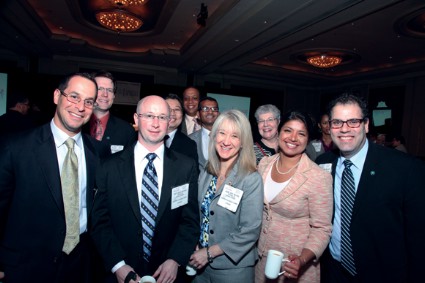
2013 Summit allows surgeons to put advocacy into action
The second annual American College of Surgeons Advocacy Summit took place April 14-16, in Washington, DC, in conjunction with the ACS Leadership Conference. The event rallies surgery’s collective grassroots advocacy voice, with more than 200 surgeon attendees learning about such topics as reforming the Medicare physician payment system, protecting the surgical workforce, and funding graduate medical education (GME) before spending a day on Capitol Hill meeting with their representatives and senators and congressional staff.
Understanding the issues
Health care costs continue to rise, particularly as baby boomers age and increase the demand services. The ACS Young Fellows Association (YFA) sponsored a panel at the Summit on the future of health care. Moderated by Scott Coates, MD, FACS, Vice-Co-Chair, the YFA Member Services Work Group, speakers included Gail Wilensky, PhD, senior fellow, Project Hope; Harold Miller, executive director, Center for Healthcare Quality and Payment Reform; and Frank G. Opelka, MD, FACS, Associate Medical Director, ACS Division of Advocacy and Health Policy.

Dr. Wilensky discussed physician payments, the cost of health care, and spending—topics that have recently gained traction. She expressed skepticism about whether programs such as accountable care organizations (ACOs) – designed to provide more coordinated, high quality care to Medicare patients – are the answer to physician payment woes. However, she said bundled payments,1 which encourage efficiency by offering a single payment to multiple providers of services delivered during a single episode of care or over a specific period of time, could result in lower costs.
Advocacy Summit participants
Dr. Miller, however, said that some accountable care arrangements may benefit surgeons and patients while reducing Medicare spending. Under the model he suggested, health care professionals would participate in a flexible, alternative payment and delivery system that best fits their practices and that delivers high-quality, efficient care.
The College has offered another option—the Value-Based Update (VBU), 2 noted Dr. Opelka. The VBU calls for replacing the sustainable growth rate (SGR) formula used to calculate physician payment with a system that improves outcomes, quality, safety and efficiency while reducing the growth in health care spending. Dr. Opelka noted that the VBU would combine the College’s century of experience in quality measurement to improve patient care and reduce costs,
Atul Grover, MD, chief public policy officer, Association of American Medical Colleges; Doug Henley, MD, chief executive officer, and executive vice president, American Academy of Family Physicians; and Samuel Finlayson, MD, MPH, Kessler Director, Center for Surgery and Public Health, Brigham and Women’s Hospital, offered distinct viewpoints on physician workforce issues. Dr. Grover discussed specialty choice among physicians and practice locations, deficit reduction plans, and incentives for surgical practice in rural areas. Dr. Henley provided data on what he believes are probable causes of the current workforce shortage and suggested possible solutions, including appropriately valuing and compensating primary care physicians to address the income gap between primary care and other specialties and reforming GME. Dr. Finlayson believes that increasing the number of surgeons is an "unwise response to the workforce crisis" and that "addressing geographic and specialty distribution is the main challenge."
Maria Ghazal, vice president and counsel of the Business Roundtable, which represents the interests of many of the nation’s largest companies, invited the College to collaborate on many issues, including the development of state insurance exchanges. Greg Gierer, vice president of policy, America’s Health Insurance Plans, agreed that collaboration can effectively address health care reform, particularly cost-containment. Mr. Gierer discussed health care cost and how insurers are leading changes in the marketplace through collaboration with providers and possible means of providing care to vulnerable populations through public-private cooperation. Harlan F. Weisman, MD, chairman and chief executive officer of Coronado Biosciences, Inc., talked about regaining the country’s status as the world leader in the development of pharmaceutical research and advancement.
The price of politics
Bob Woodward, Pulitzer Prize-winning journalist for The Washington Post and author of The Price of Politics, opened the Summit on Sunday evening as the keynote dinner speaker. He focused many of his comments on political investigative reporting, providing examples of events that have had a profound impact on today’s political climate, including President Bill Clinton’s impeachment and Vice-President Al Gore’s unsuccessful run for president. Mr. Woodward discussed his disappointment with the today’s media’s fact-finding methods, asking, "Why isn’t the media doing more?"
Technology-driven campaigns
Mike Allen, chief White House correspondent for Politico and author of the Politico Playbook was the featured speaker at the Summit’s political luncheon. His talk centered on Barack Obama’s second presidential election bid and how the president’s reelection campaign effectively used technology-driven communications.
An election campaign must be broad and optimistically open to change, explained Mr. Allen.
Training to be an effective advocate
Christopher Kush, grassroots expert and CEO of Soapbox Consulting, helped participants navigate their day on Capitol Hill.
"Hook, line, and sinker" is a three-phase method Mr. Kush suggests advocates use when meeting with a member of Congress. He says ultimately an advocate has three minutes for introductions (hook), five minutes to tell the story(line), and five minutes to make the request and discuss it (sinker).
In preparation for Lobby Day, participants received individualized legislative meeting schedules, educational literature, and a pocket card that listed the critical health care talking points, or "Congressional Asks."
A limited-edition book, Inspiring Quality Tour: Lessons Learned in the Pursuit of Quality Surgical Health Care, was released in conjunction with the Summit, summarizing the College’s 18-month effort to create a national dialogue about surgical quality and patient safety through a series of ACS Surgical Health Care Quality Forums. Participants received a personal copy of the book, as well as one to present to policymakers on Lobby Day. The book can be accessed at facs.org/quality/lessonslearned.html.
Grassroots and the ACSPA-SurgeonsPACS
In advance of Lobby Day, several members of Congress provided insight into issues in need of bipartisan solutions, such as medical liability reform and reimbursement. Legislators who spoke included: Reps. Kevin Brady (R-TX), Chair, House Ways and Means Health Subcommittee; Larry Bucshon, MD, FACS (R-IN); and Ami Bera, MD (D-CA).
"Get involved and stay involved," was the common message among many presenters. Jeff Carroll, Chief of Staff for Rep. Frank Pallone (D-NJ), presented Winning in Advocacy: Why Grassroots and Messaging Matter, emphasizing political action committees (PACs), such as the American College of Surgeons Professional Association (ACSPA)-SurgeonsPAC. "Access comes through PAC donations," said Mr. Carroll. "It’s important to encourage members to give to the PAC. PAC donations help build trust and get you in the door to create effective relationships."
Mr. Carroll also discussed the importance of grassroots efforts, and which methods work best, pointing out that "a lot of members of Congress pay attention to social media-and the College should, too."
PAC contributors participated in a wine-tasting fundraiser and reception hosted by the ACSPA-SurgeonsPAC at the National Museum for Women in the Arts and attended by 11 lawmakers , including Rep. Dan Benishek, MD, FACS (R-MI), Rep. Diane Black, RN (R-TN), Rep. Michael Burgess, MD (R-TX), Rep. Lois Capps, RN (D-CA), Rep. Phil Gingrey, MD (R-GA), Rep. Andy Harris, MD (R-MD), Rep. Joe Heck, MD (R-NV), Sen. Johnny Isakson (R-GA), Rep. Leonard Lance (R-NJ), Rep. Phil Roe, MD (R-TN), and Rep. Tom Price, MD, FACS (R-GA).
The 2014 Advocacy Summit will take place March 29-April 1 in Washington, DC.
Ms. Moye is Communications Manager, Division of Integrated Communications, Washington, DC.
The second annual American College of Surgeons Advocacy Summit took place April 14-16, in Washington, DC, in conjunction with the ACS Leadership Conference. The event rallies surgery’s collective grassroots advocacy voice, with more than 200 surgeon attendees learning about such topics as reforming the Medicare physician payment system, protecting the surgical workforce, and funding graduate medical education (GME) before spending a day on Capitol Hill meeting with their representatives and senators and congressional staff.
Understanding the issues
Health care costs continue to rise, particularly as baby boomers age and increase the demand services. The ACS Young Fellows Association (YFA) sponsored a panel at the Summit on the future of health care. Moderated by Scott Coates, MD, FACS, Vice-Co-Chair, the YFA Member Services Work Group, speakers included Gail Wilensky, PhD, senior fellow, Project Hope; Harold Miller, executive director, Center for Healthcare Quality and Payment Reform; and Frank G. Opelka, MD, FACS, Associate Medical Director, ACS Division of Advocacy and Health Policy.
Dr. Wilensky discussed physician payments, the cost of health care, and spending—topics that have recently gained traction. She expressed skepticism about whether programs such as accountable care organizations (ACOs) – designed to provide more coordinated, high quality care to Medicare patients – are the answer to physician payment woes. However, she said bundled payments,1 which encourage efficiency by offering a single payment to multiple providers of services delivered during a single episode of care or over a specific period of time, could result in lower costs.
Advocacy Summit participants
Dr. Miller, however, said that some accountable care arrangements may benefit surgeons and patients while reducing Medicare spending. Under the model he suggested, health care professionals would participate in a flexible, alternative payment and delivery system that best fits their practices and that delivers high-quality, efficient care.
The College has offered another option—the Value-Based Update (VBU), 2 noted Dr. Opelka. The VBU calls for replacing the sustainable growth rate (SGR) formula used to calculate physician payment with a system that improves outcomes, quality, safety and efficiency while reducing the growth in health care spending. Dr. Opelka noted that the VBU would combine the College’s century of experience in quality measurement to improve patient care and reduce costs,
Atul Grover, MD, chief public policy officer, Association of American Medical Colleges; Doug Henley, MD, chief executive officer, and executive vice president, American Academy of Family Physicians; and Samuel Finlayson, MD, MPH, Kessler Director, Center for Surgery and Public Health, Brigham and Women’s Hospital, offered distinct viewpoints on physician workforce issues. Dr. Grover discussed specialty choice among physicians and practice locations, deficit reduction plans, and incentives for surgical practice in rural areas. Dr. Henley provided data on what he believes are probable causes of the current workforce shortage and suggested possible solutions, including appropriately valuing and compensating primary care physicians to address the income gap between primary care and other specialties and reforming GME. Dr. Finlayson believes that increasing the number of surgeons is an "unwise response to the workforce crisis" and that "addressing geographic and specialty distribution is the main challenge."
Maria Ghazal, vice president and counsel of the Business Roundtable, which represents the interests of many of the nation’s largest companies, invited the College to collaborate on many issues, including the development of state insurance exchanges. Greg Gierer, vice president of policy, America’s Health Insurance Plans, agreed that collaboration can effectively address health care reform, particularly cost-containment. Mr. Gierer discussed health care cost and how insurers are leading changes in the marketplace through collaboration with providers and possible means of providing care to vulnerable populations through public-private cooperation. Harlan F. Weisman, MD, chairman and chief executive officer of Coronado Biosciences, Inc., talked about regaining the country’s status as the world leader in the development of pharmaceutical research and advancement.
The price of politics
Bob Woodward, Pulitzer Prize-winning journalist for The Washington Post and author of The Price of Politics, opened the Summit on Sunday evening as the keynote dinner speaker. He focused many of his comments on political investigative reporting, providing examples of events that have had a profound impact on today’s political climate, including President Bill Clinton’s impeachment and Vice-President Al Gore’s unsuccessful run for president. Mr. Woodward discussed his disappointment with the today’s media’s fact-finding methods, asking, "Why isn’t the media doing more?"
Technology-driven campaigns
Mike Allen, chief White House correspondent for Politico and author of the Politico Playbook was the featured speaker at the Summit’s political luncheon. His talk centered on Barack Obama’s second presidential election bid and how the president’s reelection campaign effectively used technology-driven communications.
An election campaign must be broad and optimistically open to change, explained Mr. Allen.
Training to be an effective advocate
Christopher Kush, grassroots expert and CEO of Soapbox Consulting, helped participants navigate their day on Capitol Hill.
"Hook, line, and sinker" is a three-phase method Mr. Kush suggests advocates use when meeting with a member of Congress. He says ultimately an advocate has three minutes for introductions (hook), five minutes to tell the story(line), and five minutes to make the request and discuss it (sinker).
In preparation for Lobby Day, participants received individualized legislative meeting schedules, educational literature, and a pocket card that listed the critical health care talking points, or "Congressional Asks."
A limited-edition book, Inspiring Quality Tour: Lessons Learned in the Pursuit of Quality Surgical Health Care, was released in conjunction with the Summit, summarizing the College’s 18-month effort to create a national dialogue about surgical quality and patient safety through a series of ACS Surgical Health Care Quality Forums. Participants received a personal copy of the book, as well as one to present to policymakers on Lobby Day. The book can be accessed at facs.org/quality/lessonslearned.html.
Grassroots and the ACSPA-SurgeonsPACS
In advance of Lobby Day, several members of Congress provided insight into issues in need of bipartisan solutions, such as medical liability reform and reimbursement. Legislators who spoke included: Reps. Kevin Brady (R-TX), Chair, House Ways and Means Health Subcommittee; Larry Bucshon, MD, FACS (R-IN); and Ami Bera, MD (D-CA).
"Get involved and stay involved," was the common message among many presenters. Jeff Carroll, Chief of Staff for Rep. Frank Pallone (D-NJ), presented Winning in Advocacy: Why Grassroots and Messaging Matter, emphasizing political action committees (PACs), such as the American College of Surgeons Professional Association (ACSPA)-SurgeonsPAC. "Access comes through PAC donations," said Mr. Carroll. "It’s important to encourage members to give to the PAC. PAC donations help build trust and get you in the door to create effective relationships."
Mr. Carroll also discussed the importance of grassroots efforts, and which methods work best, pointing out that "a lot of members of Congress pay attention to social media-and the College should, too."
PAC contributors participated in a wine-tasting fundraiser and reception hosted by the ACSPA-SurgeonsPAC at the National Museum for Women in the Arts and attended by 11 lawmakers , including Rep. Dan Benishek, MD, FACS (R-MI), Rep. Diane Black, RN (R-TN), Rep. Michael Burgess, MD (R-TX), Rep. Lois Capps, RN (D-CA), Rep. Phil Gingrey, MD (R-GA), Rep. Andy Harris, MD (R-MD), Rep. Joe Heck, MD (R-NV), Sen. Johnny Isakson (R-GA), Rep. Leonard Lance (R-NJ), Rep. Phil Roe, MD (R-TN), and Rep. Tom Price, MD, FACS (R-GA).
The 2014 Advocacy Summit will take place March 29-April 1 in Washington, DC.
Ms. Moye is Communications Manager, Division of Integrated Communications, Washington, DC.
The second annual American College of Surgeons Advocacy Summit took place April 14-16, in Washington, DC, in conjunction with the ACS Leadership Conference. The event rallies surgery’s collective grassroots advocacy voice, with more than 200 surgeon attendees learning about such topics as reforming the Medicare physician payment system, protecting the surgical workforce, and funding graduate medical education (GME) before spending a day on Capitol Hill meeting with their representatives and senators and congressional staff.
Understanding the issues
Health care costs continue to rise, particularly as baby boomers age and increase the demand services. The ACS Young Fellows Association (YFA) sponsored a panel at the Summit on the future of health care. Moderated by Scott Coates, MD, FACS, Vice-Co-Chair, the YFA Member Services Work Group, speakers included Gail Wilensky, PhD, senior fellow, Project Hope; Harold Miller, executive director, Center for Healthcare Quality and Payment Reform; and Frank G. Opelka, MD, FACS, Associate Medical Director, ACS Division of Advocacy and Health Policy.
Dr. Wilensky discussed physician payments, the cost of health care, and spending—topics that have recently gained traction. She expressed skepticism about whether programs such as accountable care organizations (ACOs) – designed to provide more coordinated, high quality care to Medicare patients – are the answer to physician payment woes. However, she said bundled payments,1 which encourage efficiency by offering a single payment to multiple providers of services delivered during a single episode of care or over a specific period of time, could result in lower costs.
Advocacy Summit participants
Dr. Miller, however, said that some accountable care arrangements may benefit surgeons and patients while reducing Medicare spending. Under the model he suggested, health care professionals would participate in a flexible, alternative payment and delivery system that best fits their practices and that delivers high-quality, efficient care.
The College has offered another option—the Value-Based Update (VBU), 2 noted Dr. Opelka. The VBU calls for replacing the sustainable growth rate (SGR) formula used to calculate physician payment with a system that improves outcomes, quality, safety and efficiency while reducing the growth in health care spending. Dr. Opelka noted that the VBU would combine the College’s century of experience in quality measurement to improve patient care and reduce costs,
Atul Grover, MD, chief public policy officer, Association of American Medical Colleges; Doug Henley, MD, chief executive officer, and executive vice president, American Academy of Family Physicians; and Samuel Finlayson, MD, MPH, Kessler Director, Center for Surgery and Public Health, Brigham and Women’s Hospital, offered distinct viewpoints on physician workforce issues. Dr. Grover discussed specialty choice among physicians and practice locations, deficit reduction plans, and incentives for surgical practice in rural areas. Dr. Henley provided data on what he believes are probable causes of the current workforce shortage and suggested possible solutions, including appropriately valuing and compensating primary care physicians to address the income gap between primary care and other specialties and reforming GME. Dr. Finlayson believes that increasing the number of surgeons is an "unwise response to the workforce crisis" and that "addressing geographic and specialty distribution is the main challenge."
Maria Ghazal, vice president and counsel of the Business Roundtable, which represents the interests of many of the nation’s largest companies, invited the College to collaborate on many issues, including the development of state insurance exchanges. Greg Gierer, vice president of policy, America’s Health Insurance Plans, agreed that collaboration can effectively address health care reform, particularly cost-containment. Mr. Gierer discussed health care cost and how insurers are leading changes in the marketplace through collaboration with providers and possible means of providing care to vulnerable populations through public-private cooperation. Harlan F. Weisman, MD, chairman and chief executive officer of Coronado Biosciences, Inc., talked about regaining the country’s status as the world leader in the development of pharmaceutical research and advancement.
The price of politics
Bob Woodward, Pulitzer Prize-winning journalist for The Washington Post and author of The Price of Politics, opened the Summit on Sunday evening as the keynote dinner speaker. He focused many of his comments on political investigative reporting, providing examples of events that have had a profound impact on today’s political climate, including President Bill Clinton’s impeachment and Vice-President Al Gore’s unsuccessful run for president. Mr. Woodward discussed his disappointment with the today’s media’s fact-finding methods, asking, "Why isn’t the media doing more?"
Technology-driven campaigns
Mike Allen, chief White House correspondent for Politico and author of the Politico Playbook was the featured speaker at the Summit’s political luncheon. His talk centered on Barack Obama’s second presidential election bid and how the president’s reelection campaign effectively used technology-driven communications.
An election campaign must be broad and optimistically open to change, explained Mr. Allen.
Training to be an effective advocate
Christopher Kush, grassroots expert and CEO of Soapbox Consulting, helped participants navigate their day on Capitol Hill.
"Hook, line, and sinker" is a three-phase method Mr. Kush suggests advocates use when meeting with a member of Congress. He says ultimately an advocate has three minutes for introductions (hook), five minutes to tell the story(line), and five minutes to make the request and discuss it (sinker).
In preparation for Lobby Day, participants received individualized legislative meeting schedules, educational literature, and a pocket card that listed the critical health care talking points, or "Congressional Asks."
A limited-edition book, Inspiring Quality Tour: Lessons Learned in the Pursuit of Quality Surgical Health Care, was released in conjunction with the Summit, summarizing the College’s 18-month effort to create a national dialogue about surgical quality and patient safety through a series of ACS Surgical Health Care Quality Forums. Participants received a personal copy of the book, as well as one to present to policymakers on Lobby Day. The book can be accessed at facs.org/quality/lessonslearned.html.
Grassroots and the ACSPA-SurgeonsPACS
In advance of Lobby Day, several members of Congress provided insight into issues in need of bipartisan solutions, such as medical liability reform and reimbursement. Legislators who spoke included: Reps. Kevin Brady (R-TX), Chair, House Ways and Means Health Subcommittee; Larry Bucshon, MD, FACS (R-IN); and Ami Bera, MD (D-CA).
"Get involved and stay involved," was the common message among many presenters. Jeff Carroll, Chief of Staff for Rep. Frank Pallone (D-NJ), presented Winning in Advocacy: Why Grassroots and Messaging Matter, emphasizing political action committees (PACs), such as the American College of Surgeons Professional Association (ACSPA)-SurgeonsPAC. "Access comes through PAC donations," said Mr. Carroll. "It’s important to encourage members to give to the PAC. PAC donations help build trust and get you in the door to create effective relationships."
Mr. Carroll also discussed the importance of grassroots efforts, and which methods work best, pointing out that "a lot of members of Congress pay attention to social media-and the College should, too."
PAC contributors participated in a wine-tasting fundraiser and reception hosted by the ACSPA-SurgeonsPAC at the National Museum for Women in the Arts and attended by 11 lawmakers , including Rep. Dan Benishek, MD, FACS (R-MI), Rep. Diane Black, RN (R-TN), Rep. Michael Burgess, MD (R-TX), Rep. Lois Capps, RN (D-CA), Rep. Phil Gingrey, MD (R-GA), Rep. Andy Harris, MD (R-MD), Rep. Joe Heck, MD (R-NV), Sen. Johnny Isakson (R-GA), Rep. Leonard Lance (R-NJ), Rep. Phil Roe, MD (R-TN), and Rep. Tom Price, MD, FACS (R-GA).
The 2014 Advocacy Summit will take place March 29-April 1 in Washington, DC.
Ms. Moye is Communications Manager, Division of Integrated Communications, Washington, DC.

HAIs: Another opinion
I read with interest the Point-Counterpoint column of Dr. Arjun Srinivasan and Dr. Michael Edmond ("Hospital-acquired infections: Is getting to zero the right medicine?" May 2013, p. 4).
I have to agree with Dr. Srinivasan that, on one level, it is hard to identify any target lower than zero for which we should strive. However, I must also agree with Dr. Edmond that try as we may, we will never actually get to zero. Calling a "median" rate of zero "zero" is playing with words and acknowledges that up to 50% of facilities reporting have rates higher than zero.
I would like to propose a compromise that I believe is compatible with the points being made by both of these experts. We can define the steps that we all agree should be taken to make the risk of HAI as low as possible. One of the areas where this has been studied and written about extensively is surgical site infections (SSIs).
The American College of Surgeons’ Surgical Care Improvement Project (SCIP) recommends giving appropriate antibiotics within a specific time interval before the incision. SCIP recommendations are good but not sufficient. Multiple studies have indicated that following SCIP recommendations alone does not result in a significant reduction in SSI rates. In addition to SCIP, we need to make sure that our doses are adequate for our generally overweight patients and that prophylactic antibiotics are being redosed during long operations.
Above and beyond SCIP, we should ensure intraoperative normothermia for all patients (not just colectomy patients) and intraoperative and postoperative normoglycemia (no glucose levels above 180 mg/dL) for all patients (not just cardiac surgical patients). We should ensure optimal teamwork and communication in the OR among all members of the team, aided by the use of checklists. We should ensure understanding and optimization of surgical technique, aseptic technique, good postoperative incision care, preoperative optimization of nutritional status, and other elements that readers of this publication would recommend. SCIP is not sufficient, even though it is very important in addition to the things I have listed above and undoubtedly others I have not listed. Similar lists could be constructed for targeting all HAIs. A list for eliminating central line–associated bloodstream infections (CLABSI) would include use of wide area drapes; full mask, gown, and glove attire for the inserting provider; chlorhexidine skin preparation; use of a checklist; proper dressing of inserted lines; and daily queries regarding whether the line can be removed.
I would like to suggest a goal different from zero HAIs. I propose that we strive to achieve zero "potentially preventable HAIs." A pioneer in surveillance of SSI, Dr. James T. Lee of the University of Minnesota proposed this concept (Infect. Dis. Clin. North Am. 1992;6:643-56). Dr. Lee, an ACS Fellow, defined a "potentially preventable SSI" as one in which investigation of the circumstances demonstrated that the medical/surgical team had not done all that they could and intended to do that would reduce SSI risk. On the other hand, an SSI that occurred in the setting in which every known preventive measure had been taken would be termed an "apparently unpreventable SSI." This conceptualization keeps us on track to follow infections and to investigate each one as a potential failure. It also allows us to focus on where we have done what we intended and where we have failed in our intentions. This approach also gives us the opportunity to improve.
In the Surgical Infection Prevention Committee at the University of Washington Medical Center (UWMC) we started over 10 years ago to follow this practice in our surveillance and focus on SSIs. We started with a focus on the proper delivery of prophylactic antibiotics. We utilized a simple definition of potentially preventable SSI.
An SSI in a case that did not get an appropriate antibiotic within the 60-minute window before incision and that was shaved before the operation was termed potentially preventable. Later we added to the definition those cases that did not get a repeat dose for cases that extended more than two half-lives beyond the time of administering the preoperative dose.
We strived to have no potentially preventable SSIs. When our system achieved the goals of giving preoperative doses and intraoperative redoses such that we had essentially no potentially preventable SSIs (although we continued to have SSIs, of course), we raised the criteria for our definition of preventable SSI.
Next, the definition of potentially preventable SSIs included those diagnosed in any patient who did not get the correct antibiotic at the correct time, was not redosed when necessary, or who arrived in the recovery room with a temperature below 36o C. When we perfected our system to the point where we no longer saw patients arriving in the recovery room with low temperatures, we then focused on glucose.
The emphasis on glucose level is our most recent effort. Now we categorize any patient who has a recorded blood glucose level above 180 mg/dL on the day of operation or the next 2 days and who then gets an SSI as having a potentially preventable SSI. When we achieve our goal of managing the glucose parameter, we will add another piece to our definition.
During this entire period of implementing this program, our proportion of potentially preventable SSIs as a percentage of all SSIs has remained significant, because as it drops we make our criteria more stringent. But this means that we are gradually improving and enhancing the process measures that reduce SSI risk.
We will never get to zero SSIs or HAIs, but with this process we have reduced our SSI rate for targeted clean operations at our institution from 0.83% when we began this process in 2005 to 0.24% during the past year. I believe that this process can be applied, in a stepwise fashion, to any HAI that a multidisciplinary team in any hospital cares to take on.
Dr. Dellinger is professor and vice chairman, department of surgery, and chief, division of general surgery, at the University of Washington, Seattle.
I read with interest the Point-Counterpoint column of Dr. Arjun Srinivasan and Dr. Michael Edmond ("Hospital-acquired infections: Is getting to zero the right medicine?" May 2013, p. 4).
I have to agree with Dr. Srinivasan that, on one level, it is hard to identify any target lower than zero for which we should strive. However, I must also agree with Dr. Edmond that try as we may, we will never actually get to zero. Calling a "median" rate of zero "zero" is playing with words and acknowledges that up to 50% of facilities reporting have rates higher than zero.
I would like to propose a compromise that I believe is compatible with the points being made by both of these experts. We can define the steps that we all agree should be taken to make the risk of HAI as low as possible. One of the areas where this has been studied and written about extensively is surgical site infections (SSIs).
The American College of Surgeons’ Surgical Care Improvement Project (SCIP) recommends giving appropriate antibiotics within a specific time interval before the incision. SCIP recommendations are good but not sufficient. Multiple studies have indicated that following SCIP recommendations alone does not result in a significant reduction in SSI rates. In addition to SCIP, we need to make sure that our doses are adequate for our generally overweight patients and that prophylactic antibiotics are being redosed during long operations.
Above and beyond SCIP, we should ensure intraoperative normothermia for all patients (not just colectomy patients) and intraoperative and postoperative normoglycemia (no glucose levels above 180 mg/dL) for all patients (not just cardiac surgical patients). We should ensure optimal teamwork and communication in the OR among all members of the team, aided by the use of checklists. We should ensure understanding and optimization of surgical technique, aseptic technique, good postoperative incision care, preoperative optimization of nutritional status, and other elements that readers of this publication would recommend. SCIP is not sufficient, even though it is very important in addition to the things I have listed above and undoubtedly others I have not listed. Similar lists could be constructed for targeting all HAIs. A list for eliminating central line–associated bloodstream infections (CLABSI) would include use of wide area drapes; full mask, gown, and glove attire for the inserting provider; chlorhexidine skin preparation; use of a checklist; proper dressing of inserted lines; and daily queries regarding whether the line can be removed.
I would like to suggest a goal different from zero HAIs. I propose that we strive to achieve zero "potentially preventable HAIs." A pioneer in surveillance of SSI, Dr. James T. Lee of the University of Minnesota proposed this concept (Infect. Dis. Clin. North Am. 1992;6:643-56). Dr. Lee, an ACS Fellow, defined a "potentially preventable SSI" as one in which investigation of the circumstances demonstrated that the medical/surgical team had not done all that they could and intended to do that would reduce SSI risk. On the other hand, an SSI that occurred in the setting in which every known preventive measure had been taken would be termed an "apparently unpreventable SSI." This conceptualization keeps us on track to follow infections and to investigate each one as a potential failure. It also allows us to focus on where we have done what we intended and where we have failed in our intentions. This approach also gives us the opportunity to improve.
In the Surgical Infection Prevention Committee at the University of Washington Medical Center (UWMC) we started over 10 years ago to follow this practice in our surveillance and focus on SSIs. We started with a focus on the proper delivery of prophylactic antibiotics. We utilized a simple definition of potentially preventable SSI.
An SSI in a case that did not get an appropriate antibiotic within the 60-minute window before incision and that was shaved before the operation was termed potentially preventable. Later we added to the definition those cases that did not get a repeat dose for cases that extended more than two half-lives beyond the time of administering the preoperative dose.
We strived to have no potentially preventable SSIs. When our system achieved the goals of giving preoperative doses and intraoperative redoses such that we had essentially no potentially preventable SSIs (although we continued to have SSIs, of course), we raised the criteria for our definition of preventable SSI.
Next, the definition of potentially preventable SSIs included those diagnosed in any patient who did not get the correct antibiotic at the correct time, was not redosed when necessary, or who arrived in the recovery room with a temperature below 36o C. When we perfected our system to the point where we no longer saw patients arriving in the recovery room with low temperatures, we then focused on glucose.
The emphasis on glucose level is our most recent effort. Now we categorize any patient who has a recorded blood glucose level above 180 mg/dL on the day of operation or the next 2 days and who then gets an SSI as having a potentially preventable SSI. When we achieve our goal of managing the glucose parameter, we will add another piece to our definition.
During this entire period of implementing this program, our proportion of potentially preventable SSIs as a percentage of all SSIs has remained significant, because as it drops we make our criteria more stringent. But this means that we are gradually improving and enhancing the process measures that reduce SSI risk.
We will never get to zero SSIs or HAIs, but with this process we have reduced our SSI rate for targeted clean operations at our institution from 0.83% when we began this process in 2005 to 0.24% during the past year. I believe that this process can be applied, in a stepwise fashion, to any HAI that a multidisciplinary team in any hospital cares to take on.
Dr. Dellinger is professor and vice chairman, department of surgery, and chief, division of general surgery, at the University of Washington, Seattle.
I read with interest the Point-Counterpoint column of Dr. Arjun Srinivasan and Dr. Michael Edmond ("Hospital-acquired infections: Is getting to zero the right medicine?" May 2013, p. 4).
I have to agree with Dr. Srinivasan that, on one level, it is hard to identify any target lower than zero for which we should strive. However, I must also agree with Dr. Edmond that try as we may, we will never actually get to zero. Calling a "median" rate of zero "zero" is playing with words and acknowledges that up to 50% of facilities reporting have rates higher than zero.
I would like to propose a compromise that I believe is compatible with the points being made by both of these experts. We can define the steps that we all agree should be taken to make the risk of HAI as low as possible. One of the areas where this has been studied and written about extensively is surgical site infections (SSIs).
The American College of Surgeons’ Surgical Care Improvement Project (SCIP) recommends giving appropriate antibiotics within a specific time interval before the incision. SCIP recommendations are good but not sufficient. Multiple studies have indicated that following SCIP recommendations alone does not result in a significant reduction in SSI rates. In addition to SCIP, we need to make sure that our doses are adequate for our generally overweight patients and that prophylactic antibiotics are being redosed during long operations.
Above and beyond SCIP, we should ensure intraoperative normothermia for all patients (not just colectomy patients) and intraoperative and postoperative normoglycemia (no glucose levels above 180 mg/dL) for all patients (not just cardiac surgical patients). We should ensure optimal teamwork and communication in the OR among all members of the team, aided by the use of checklists. We should ensure understanding and optimization of surgical technique, aseptic technique, good postoperative incision care, preoperative optimization of nutritional status, and other elements that readers of this publication would recommend. SCIP is not sufficient, even though it is very important in addition to the things I have listed above and undoubtedly others I have not listed. Similar lists could be constructed for targeting all HAIs. A list for eliminating central line–associated bloodstream infections (CLABSI) would include use of wide area drapes; full mask, gown, and glove attire for the inserting provider; chlorhexidine skin preparation; use of a checklist; proper dressing of inserted lines; and daily queries regarding whether the line can be removed.
I would like to suggest a goal different from zero HAIs. I propose that we strive to achieve zero "potentially preventable HAIs." A pioneer in surveillance of SSI, Dr. James T. Lee of the University of Minnesota proposed this concept (Infect. Dis. Clin. North Am. 1992;6:643-56). Dr. Lee, an ACS Fellow, defined a "potentially preventable SSI" as one in which investigation of the circumstances demonstrated that the medical/surgical team had not done all that they could and intended to do that would reduce SSI risk. On the other hand, an SSI that occurred in the setting in which every known preventive measure had been taken would be termed an "apparently unpreventable SSI." This conceptualization keeps us on track to follow infections and to investigate each one as a potential failure. It also allows us to focus on where we have done what we intended and where we have failed in our intentions. This approach also gives us the opportunity to improve.
In the Surgical Infection Prevention Committee at the University of Washington Medical Center (UWMC) we started over 10 years ago to follow this practice in our surveillance and focus on SSIs. We started with a focus on the proper delivery of prophylactic antibiotics. We utilized a simple definition of potentially preventable SSI.
An SSI in a case that did not get an appropriate antibiotic within the 60-minute window before incision and that was shaved before the operation was termed potentially preventable. Later we added to the definition those cases that did not get a repeat dose for cases that extended more than two half-lives beyond the time of administering the preoperative dose.
We strived to have no potentially preventable SSIs. When our system achieved the goals of giving preoperative doses and intraoperative redoses such that we had essentially no potentially preventable SSIs (although we continued to have SSIs, of course), we raised the criteria for our definition of preventable SSI.
Next, the definition of potentially preventable SSIs included those diagnosed in any patient who did not get the correct antibiotic at the correct time, was not redosed when necessary, or who arrived in the recovery room with a temperature below 36o C. When we perfected our system to the point where we no longer saw patients arriving in the recovery room with low temperatures, we then focused on glucose.
The emphasis on glucose level is our most recent effort. Now we categorize any patient who has a recorded blood glucose level above 180 mg/dL on the day of operation or the next 2 days and who then gets an SSI as having a potentially preventable SSI. When we achieve our goal of managing the glucose parameter, we will add another piece to our definition.
During this entire period of implementing this program, our proportion of potentially preventable SSIs as a percentage of all SSIs has remained significant, because as it drops we make our criteria more stringent. But this means that we are gradually improving and enhancing the process measures that reduce SSI risk.
We will never get to zero SSIs or HAIs, but with this process we have reduced our SSI rate for targeted clean operations at our institution from 0.83% when we began this process in 2005 to 0.24% during the past year. I believe that this process can be applied, in a stepwise fashion, to any HAI that a multidisciplinary team in any hospital cares to take on.
Dr. Dellinger is professor and vice chairman, department of surgery, and chief, division of general surgery, at the University of Washington, Seattle.
ACA employer mandate delayed 1 year
Employers will have until January 2015 – an extra year – to comply with the Affordable Care Act’s employer mandate, a key provision of the law.
Under the health reform law, employers with more than 50 full-time workers are required to provide health care coverage for those workers or pay a penalty. The U.S. Treasury Department announced July 2 that it will not require employers to report on health care coverage until 2015 and therefore will not penalize those who do not comply with the law.

The delay was billed by the Obama administration as a chance to simplify the reporting requirements.
"We have heard concerns about the complexity of the requirements and the need for more time to implement them effectively," Mark J. Mazur, Treasury’s assistant secretary for tax policy, wrote on the agency’s website. "We recognize that the vast majority of businesses that will need to do this reporting already provide health insurance to their workers, and we want to make sure it is easy for others to do so. We have listened to your feedback. And we are taking action."
The administration will offer proposed regulations on the insurance reporting requirements this summer. Officials plan to encourage employers to report voluntarily in 2014. "Real-world testing of reporting systems in 2014 will contribute to a smoother transition to full implementation in 2015," Mr. Mazur wrote.
The announcement created a firestorm on Capitol Hill, where ACA opponents said the move was an admission that the health reform law is bad for business and will cost jobs.
"We have all heard the warnings, and a 1-year delay does nothing to fix the law’s fundamental flaws," Rep. Fred Upton (R-Mich.), chairman of the House Energy and Commerce Committee, said in a statement. "This law will never be ready for prime time, and sadly, the administration’s acknowledgement that it still needs yet another year clearly disrupts everyone’s ability to determine what is best for them and their business."
The delay offers relief for businesses, but it does nothing for individuals because the law requires them to have health insurance on Jan. 1, 2014, said Sarah Swinehart, spokeswoman for the House Ways and Means Committee.
"The Obama administration’s decision to give corporate America a free pass on the employer mandate while continuing to force average, everyday Americans to abide by the law is deeply disturbing," she said. "The administration’s decision is an admission that this law is a failure and that we still need to lower the cost of health care for all Americans, which this job-killing law fails to do."
Employers will have until January 2015 – an extra year – to comply with the Affordable Care Act’s employer mandate, a key provision of the law.
Under the health reform law, employers with more than 50 full-time workers are required to provide health care coverage for those workers or pay a penalty. The U.S. Treasury Department announced July 2 that it will not require employers to report on health care coverage until 2015 and therefore will not penalize those who do not comply with the law.
The delay was billed by the Obama administration as a chance to simplify the reporting requirements.
"We have heard concerns about the complexity of the requirements and the need for more time to implement them effectively," Mark J. Mazur, Treasury’s assistant secretary for tax policy, wrote on the agency’s website. "We recognize that the vast majority of businesses that will need to do this reporting already provide health insurance to their workers, and we want to make sure it is easy for others to do so. We have listened to your feedback. And we are taking action."
The administration will offer proposed regulations on the insurance reporting requirements this summer. Officials plan to encourage employers to report voluntarily in 2014. "Real-world testing of reporting systems in 2014 will contribute to a smoother transition to full implementation in 2015," Mr. Mazur wrote.
The announcement created a firestorm on Capitol Hill, where ACA opponents said the move was an admission that the health reform law is bad for business and will cost jobs.
"We have all heard the warnings, and a 1-year delay does nothing to fix the law’s fundamental flaws," Rep. Fred Upton (R-Mich.), chairman of the House Energy and Commerce Committee, said in a statement. "This law will never be ready for prime time, and sadly, the administration’s acknowledgement that it still needs yet another year clearly disrupts everyone’s ability to determine what is best for them and their business."
The delay offers relief for businesses, but it does nothing for individuals because the law requires them to have health insurance on Jan. 1, 2014, said Sarah Swinehart, spokeswoman for the House Ways and Means Committee.
"The Obama administration’s decision to give corporate America a free pass on the employer mandate while continuing to force average, everyday Americans to abide by the law is deeply disturbing," she said. "The administration’s decision is an admission that this law is a failure and that we still need to lower the cost of health care for all Americans, which this job-killing law fails to do."
Employers will have until January 2015 – an extra year – to comply with the Affordable Care Act’s employer mandate, a key provision of the law.
Under the health reform law, employers with more than 50 full-time workers are required to provide health care coverage for those workers or pay a penalty. The U.S. Treasury Department announced July 2 that it will not require employers to report on health care coverage until 2015 and therefore will not penalize those who do not comply with the law.
The delay was billed by the Obama administration as a chance to simplify the reporting requirements.
"We have heard concerns about the complexity of the requirements and the need for more time to implement them effectively," Mark J. Mazur, Treasury’s assistant secretary for tax policy, wrote on the agency’s website. "We recognize that the vast majority of businesses that will need to do this reporting already provide health insurance to their workers, and we want to make sure it is easy for others to do so. We have listened to your feedback. And we are taking action."
The administration will offer proposed regulations on the insurance reporting requirements this summer. Officials plan to encourage employers to report voluntarily in 2014. "Real-world testing of reporting systems in 2014 will contribute to a smoother transition to full implementation in 2015," Mr. Mazur wrote.
The announcement created a firestorm on Capitol Hill, where ACA opponents said the move was an admission that the health reform law is bad for business and will cost jobs.
"We have all heard the warnings, and a 1-year delay does nothing to fix the law’s fundamental flaws," Rep. Fred Upton (R-Mich.), chairman of the House Energy and Commerce Committee, said in a statement. "This law will never be ready for prime time, and sadly, the administration’s acknowledgement that it still needs yet another year clearly disrupts everyone’s ability to determine what is best for them and their business."
The delay offers relief for businesses, but it does nothing for individuals because the law requires them to have health insurance on Jan. 1, 2014, said Sarah Swinehart, spokeswoman for the House Ways and Means Committee.
"The Obama administration’s decision to give corporate America a free pass on the employer mandate while continuing to force average, everyday Americans to abide by the law is deeply disturbing," she said. "The administration’s decision is an admission that this law is a failure and that we still need to lower the cost of health care for all Americans, which this job-killing law fails to do."