User login
Official Newspaper of the American College of Surgeons
Appeals court ruling protects marijuana doctors from prosecution
A new appellate ruling protects doctors from federal prosecution when they recommend medical marijuana in accordance with state law.
In an Aug. 16 opinion, the 9th U.S. Circuit Court of Appeals ruled that the U.S. Department of Justice cannot spend funding to prosecute physicians and patients who allegedly violate federal drug laws if their actions comply with state medical cannabis statutes.

The decision supports the longstanding policies of several medical specialty societies.
“The conflict between state and federal law regarding medical marijuana can be concerning for patients and physicians who may consider using or recommending marijuana as a treatment option,” Hilary Daniel, senior health policy analyst for the American College of Physicians, said in an interview. “We are encouraged that the decision by the 9th U.S. Circuit Court of Appeals may help to address some of these conflicts and remain cognizant of the potential challenges faced by physicians and patients outside the jurisdiction of the 9th Circuit.”
The ruling stems from a 2014 federal appropriations law that banned the Justice Department from interfering with state implementation of marijuana laws. Short-term measures since then have extended the prohibition, which now continues through Sept. 30, 2016. Defendants in 10 criminal cases sued the federal government, requesting their prosecutions be dismissed on the grounds that the Justice Department is prevented from spending funds to prosecute them. The parties were accused of various federal marijuana offenses, including conspiracy to manufacture and possession with intent to distribute. The Justice Department argued it is not preventing states from operating their medical marijuana laws by prosecuting private individuals. Three district courts declined to halt the prosecutions from proceeding.
But the appeals court ruled that the Justice Department is prohibited from spending funds from relevant federal appropriation to prosecute the defendants if their conduct was permitted by state medical marijuana laws. Judges remanded the cases to the district courts with instructions that if the Justice Department wishes to continue the cases, the appellants are entitled to hearings to determine whether their actions were authorized by state laws.
The decision is significant because it establishes an appellate level precedent regarding enforcement of the Congressional budget requirements, said Joshua Prober, general counsel and senior vice president for the American Osteopathic Association. However, the decision does not overturn federal criminal laws regarding marijuana use and is limited to the impact of Congress’ specific budgetary authorization measure, he said.
“As noted in the court’s opinion, it is quite possible that a future Congress will not put the same restrictions in place on federal prosecutorial activity,” Mr. Prober said in an interview. “And obviously there are the procedural limitations, i.e., the decision is only the view of one appellate circuit. It is possible that a different appellate court might find the Department of Justice’s arguments to be more persuasive.”
The appeals ruling comes less than a week after the U.S. Drug Enforcement Agency refused to reclassify marijuana under the Controlled Substances Act. Marijuana remains a schedule I controlled substance, noting in its decision that marijuana does not meet the criteria for currently accepted medical use in the United States, that there is a lack of accepted safety for its use under medical supervision, and that it has a high potential for abuse.
“The DEA and FDA continue to believe that scientifically valid and well-controlled clinical trials conducted under investigational new drug applications are the proper way to research all potential new medicines, including marijuana,” DEA Acting Administrator Chuck Rosenberg wrote in a letter to state governors. “Furthermore, we believe that the drug approval process is the proper way to assess whether a product derived from marijuana or its constituent parts is safe and effective for medical use.”
While tension between state and federal law regarding marijuana lingers, more states continue to approve marijuana for recreational and medical use, noted John A. DiNome, a health law attorney based in Philadelphia. So far, Oregon, Colorado, Washington, and Alaska allow recreational marijuana use, while 25 states have approved marijuana for medical use. At least 9 more states will consider recreational marijuana use in November.
“For the time being, the problem still exists,” Mr. DiNome said in an interview. “This temporarily keeps doctors off the hook from prosecution, but it doesn’t solve the underlying problem, which is: Is federal law going to change?”
On Twitter @legal_med
A new appellate ruling protects doctors from federal prosecution when they recommend medical marijuana in accordance with state law.
In an Aug. 16 opinion, the 9th U.S. Circuit Court of Appeals ruled that the U.S. Department of Justice cannot spend funding to prosecute physicians and patients who allegedly violate federal drug laws if their actions comply with state medical cannabis statutes.
The decision supports the longstanding policies of several medical specialty societies.
“The conflict between state and federal law regarding medical marijuana can be concerning for patients and physicians who may consider using or recommending marijuana as a treatment option,” Hilary Daniel, senior health policy analyst for the American College of Physicians, said in an interview. “We are encouraged that the decision by the 9th U.S. Circuit Court of Appeals may help to address some of these conflicts and remain cognizant of the potential challenges faced by physicians and patients outside the jurisdiction of the 9th Circuit.”
The ruling stems from a 2014 federal appropriations law that banned the Justice Department from interfering with state implementation of marijuana laws. Short-term measures since then have extended the prohibition, which now continues through Sept. 30, 2016. Defendants in 10 criminal cases sued the federal government, requesting their prosecutions be dismissed on the grounds that the Justice Department is prevented from spending funds to prosecute them. The parties were accused of various federal marijuana offenses, including conspiracy to manufacture and possession with intent to distribute. The Justice Department argued it is not preventing states from operating their medical marijuana laws by prosecuting private individuals. Three district courts declined to halt the prosecutions from proceeding.
But the appeals court ruled that the Justice Department is prohibited from spending funds from relevant federal appropriation to prosecute the defendants if their conduct was permitted by state medical marijuana laws. Judges remanded the cases to the district courts with instructions that if the Justice Department wishes to continue the cases, the appellants are entitled to hearings to determine whether their actions were authorized by state laws.
The decision is significant because it establishes an appellate level precedent regarding enforcement of the Congressional budget requirements, said Joshua Prober, general counsel and senior vice president for the American Osteopathic Association. However, the decision does not overturn federal criminal laws regarding marijuana use and is limited to the impact of Congress’ specific budgetary authorization measure, he said.
“As noted in the court’s opinion, it is quite possible that a future Congress will not put the same restrictions in place on federal prosecutorial activity,” Mr. Prober said in an interview. “And obviously there are the procedural limitations, i.e., the decision is only the view of one appellate circuit. It is possible that a different appellate court might find the Department of Justice’s arguments to be more persuasive.”
The appeals ruling comes less than a week after the U.S. Drug Enforcement Agency refused to reclassify marijuana under the Controlled Substances Act. Marijuana remains a schedule I controlled substance, noting in its decision that marijuana does not meet the criteria for currently accepted medical use in the United States, that there is a lack of accepted safety for its use under medical supervision, and that it has a high potential for abuse.
“The DEA and FDA continue to believe that scientifically valid and well-controlled clinical trials conducted under investigational new drug applications are the proper way to research all potential new medicines, including marijuana,” DEA Acting Administrator Chuck Rosenberg wrote in a letter to state governors. “Furthermore, we believe that the drug approval process is the proper way to assess whether a product derived from marijuana or its constituent parts is safe and effective for medical use.”
While tension between state and federal law regarding marijuana lingers, more states continue to approve marijuana for recreational and medical use, noted John A. DiNome, a health law attorney based in Philadelphia. So far, Oregon, Colorado, Washington, and Alaska allow recreational marijuana use, while 25 states have approved marijuana for medical use. At least 9 more states will consider recreational marijuana use in November.
“For the time being, the problem still exists,” Mr. DiNome said in an interview. “This temporarily keeps doctors off the hook from prosecution, but it doesn’t solve the underlying problem, which is: Is federal law going to change?”
On Twitter @legal_med
A new appellate ruling protects doctors from federal prosecution when they recommend medical marijuana in accordance with state law.
In an Aug. 16 opinion, the 9th U.S. Circuit Court of Appeals ruled that the U.S. Department of Justice cannot spend funding to prosecute physicians and patients who allegedly violate federal drug laws if their actions comply with state medical cannabis statutes.
The decision supports the longstanding policies of several medical specialty societies.
“The conflict between state and federal law regarding medical marijuana can be concerning for patients and physicians who may consider using or recommending marijuana as a treatment option,” Hilary Daniel, senior health policy analyst for the American College of Physicians, said in an interview. “We are encouraged that the decision by the 9th U.S. Circuit Court of Appeals may help to address some of these conflicts and remain cognizant of the potential challenges faced by physicians and patients outside the jurisdiction of the 9th Circuit.”
The ruling stems from a 2014 federal appropriations law that banned the Justice Department from interfering with state implementation of marijuana laws. Short-term measures since then have extended the prohibition, which now continues through Sept. 30, 2016. Defendants in 10 criminal cases sued the federal government, requesting their prosecutions be dismissed on the grounds that the Justice Department is prevented from spending funds to prosecute them. The parties were accused of various federal marijuana offenses, including conspiracy to manufacture and possession with intent to distribute. The Justice Department argued it is not preventing states from operating their medical marijuana laws by prosecuting private individuals. Three district courts declined to halt the prosecutions from proceeding.
But the appeals court ruled that the Justice Department is prohibited from spending funds from relevant federal appropriation to prosecute the defendants if their conduct was permitted by state medical marijuana laws. Judges remanded the cases to the district courts with instructions that if the Justice Department wishes to continue the cases, the appellants are entitled to hearings to determine whether their actions were authorized by state laws.
The decision is significant because it establishes an appellate level precedent regarding enforcement of the Congressional budget requirements, said Joshua Prober, general counsel and senior vice president for the American Osteopathic Association. However, the decision does not overturn federal criminal laws regarding marijuana use and is limited to the impact of Congress’ specific budgetary authorization measure, he said.
“As noted in the court’s opinion, it is quite possible that a future Congress will not put the same restrictions in place on federal prosecutorial activity,” Mr. Prober said in an interview. “And obviously there are the procedural limitations, i.e., the decision is only the view of one appellate circuit. It is possible that a different appellate court might find the Department of Justice’s arguments to be more persuasive.”
The appeals ruling comes less than a week after the U.S. Drug Enforcement Agency refused to reclassify marijuana under the Controlled Substances Act. Marijuana remains a schedule I controlled substance, noting in its decision that marijuana does not meet the criteria for currently accepted medical use in the United States, that there is a lack of accepted safety for its use under medical supervision, and that it has a high potential for abuse.
“The DEA and FDA continue to believe that scientifically valid and well-controlled clinical trials conducted under investigational new drug applications are the proper way to research all potential new medicines, including marijuana,” DEA Acting Administrator Chuck Rosenberg wrote in a letter to state governors. “Furthermore, we believe that the drug approval process is the proper way to assess whether a product derived from marijuana or its constituent parts is safe and effective for medical use.”
While tension between state and federal law regarding marijuana lingers, more states continue to approve marijuana for recreational and medical use, noted John A. DiNome, a health law attorney based in Philadelphia. So far, Oregon, Colorado, Washington, and Alaska allow recreational marijuana use, while 25 states have approved marijuana for medical use. At least 9 more states will consider recreational marijuana use in November.
“For the time being, the problem still exists,” Mr. DiNome said in an interview. “This temporarily keeps doctors off the hook from prosecution, but it doesn’t solve the underlying problem, which is: Is federal law going to change?”
On Twitter @legal_med

Junior resident participation in general surgery procedures declines
Junior-level residents are getting less operative experience in some common general surgery procedures, a large case review study has found.
The rise in laparoscopic surgery and the decline of open procedures have been accompanied by a reduction in junior resident participation in what previously would have been considered junior-level cases, reported Matthew Mullen, MD, and his associates at the department of surgery, University of Virginia, Charlottesville (J Surg Educ. 2016 August. doi: 10.1016/j.jsurg.2016.02.010).

“The general response from the surgical community has been that this issue would correct over time, and the distribution of cases to junior residents would normalize,” the investigators explained. In the present study, the investigators “sought to evaluate continuing trends in case distribution among junior and senior residents.”
A total of 185,335 surgical cases performed between 2005 and 2012, identified through a query of the Participant Use Data File, were analyzed. Junior residents were defined as PGY1-3. Of the surgical cases reviewed, 30.2% were appendectomies, 21.9% were inguinal herniorrhaphies, 14.2% were colectomies, and 33.8% were cholecystectomy.
Over the 8-year period, 66% of those procedures were laparoscopic, and each year the likelihood of surgery being performed laparoscopically increased steadily for appendectomy, inguinal herniorrhaphy, and colectomy but remained the same for cholecystectomies.
In the same 8-year period, the likelihood of junior resident participation across all of these procedures decreased by an average of 5.3% per year. This decrease was most drastic for laparoscopic cholecystectomy at 6.2% per year while participation did not change for laparoscopic inguinal herniorrhaphy and increased by 3.9% for partial colectomy.
Junior level participation in open surgeries over the 8 years also decreased by 9.4% for appendectomy, 10% for inguinal herniorrhaphy, 2.9% for partial colectomy, and 4.1% for cholecystectomy.
Among the limitations of the study, the data did not show whether the lack of operative experience among junior residents was compensated for in their senior year or if these patterns differed between academic and community training environments.
“The reason for diminishing junior resident case volume for the basic general surgery procedures we examined is not truly known. It is possible that these common and technically straightforward cases, traditionally the training ground for junior residents, now require advanced laparoscopic skills and therefore are no longer appropriate for junior-level residents,” Dr. Mullen and his associates wrote.
Nonetheless, the decline of junior resident participation in these procedures will have significant implications for general surgery resident education, the investigators concluded.
This study was funded by the National Institutes of Health. Author disclosures were not reported.
Junior-level residents are getting less operative experience in some common general surgery procedures, a large case review study has found.
The rise in laparoscopic surgery and the decline of open procedures have been accompanied by a reduction in junior resident participation in what previously would have been considered junior-level cases, reported Matthew Mullen, MD, and his associates at the department of surgery, University of Virginia, Charlottesville (J Surg Educ. 2016 August. doi: 10.1016/j.jsurg.2016.02.010).
“The general response from the surgical community has been that this issue would correct over time, and the distribution of cases to junior residents would normalize,” the investigators explained. In the present study, the investigators “sought to evaluate continuing trends in case distribution among junior and senior residents.”
A total of 185,335 surgical cases performed between 2005 and 2012, identified through a query of the Participant Use Data File, were analyzed. Junior residents were defined as PGY1-3. Of the surgical cases reviewed, 30.2% were appendectomies, 21.9% were inguinal herniorrhaphies, 14.2% were colectomies, and 33.8% were cholecystectomy.
Over the 8-year period, 66% of those procedures were laparoscopic, and each year the likelihood of surgery being performed laparoscopically increased steadily for appendectomy, inguinal herniorrhaphy, and colectomy but remained the same for cholecystectomies.
In the same 8-year period, the likelihood of junior resident participation across all of these procedures decreased by an average of 5.3% per year. This decrease was most drastic for laparoscopic cholecystectomy at 6.2% per year while participation did not change for laparoscopic inguinal herniorrhaphy and increased by 3.9% for partial colectomy.
Junior level participation in open surgeries over the 8 years also decreased by 9.4% for appendectomy, 10% for inguinal herniorrhaphy, 2.9% for partial colectomy, and 4.1% for cholecystectomy.
Among the limitations of the study, the data did not show whether the lack of operative experience among junior residents was compensated for in their senior year or if these patterns differed between academic and community training environments.
“The reason for diminishing junior resident case volume for the basic general surgery procedures we examined is not truly known. It is possible that these common and technically straightforward cases, traditionally the training ground for junior residents, now require advanced laparoscopic skills and therefore are no longer appropriate for junior-level residents,” Dr. Mullen and his associates wrote.
Nonetheless, the decline of junior resident participation in these procedures will have significant implications for general surgery resident education, the investigators concluded.
This study was funded by the National Institutes of Health. Author disclosures were not reported.
Junior-level residents are getting less operative experience in some common general surgery procedures, a large case review study has found.
The rise in laparoscopic surgery and the decline of open procedures have been accompanied by a reduction in junior resident participation in what previously would have been considered junior-level cases, reported Matthew Mullen, MD, and his associates at the department of surgery, University of Virginia, Charlottesville (J Surg Educ. 2016 August. doi: 10.1016/j.jsurg.2016.02.010).
“The general response from the surgical community has been that this issue would correct over time, and the distribution of cases to junior residents would normalize,” the investigators explained. In the present study, the investigators “sought to evaluate continuing trends in case distribution among junior and senior residents.”
A total of 185,335 surgical cases performed between 2005 and 2012, identified through a query of the Participant Use Data File, were analyzed. Junior residents were defined as PGY1-3. Of the surgical cases reviewed, 30.2% were appendectomies, 21.9% were inguinal herniorrhaphies, 14.2% were colectomies, and 33.8% were cholecystectomy.
Over the 8-year period, 66% of those procedures were laparoscopic, and each year the likelihood of surgery being performed laparoscopically increased steadily for appendectomy, inguinal herniorrhaphy, and colectomy but remained the same for cholecystectomies.
In the same 8-year period, the likelihood of junior resident participation across all of these procedures decreased by an average of 5.3% per year. This decrease was most drastic for laparoscopic cholecystectomy at 6.2% per year while participation did not change for laparoscopic inguinal herniorrhaphy and increased by 3.9% for partial colectomy.
Junior level participation in open surgeries over the 8 years also decreased by 9.4% for appendectomy, 10% for inguinal herniorrhaphy, 2.9% for partial colectomy, and 4.1% for cholecystectomy.
Among the limitations of the study, the data did not show whether the lack of operative experience among junior residents was compensated for in their senior year or if these patterns differed between academic and community training environments.
“The reason for diminishing junior resident case volume for the basic general surgery procedures we examined is not truly known. It is possible that these common and technically straightforward cases, traditionally the training ground for junior residents, now require advanced laparoscopic skills and therefore are no longer appropriate for junior-level residents,” Dr. Mullen and his associates wrote.
Nonetheless, the decline of junior resident participation in these procedures will have significant implications for general surgery resident education, the investigators concluded.
This study was funded by the National Institutes of Health. Author disclosures were not reported.
FROM THE JOURNAL OF SURGICAL EDUCATION
Key clinical point: Junior resident participation in certain general open and laparoscopic surgeries decreased from 2005 to 2012.
Major finding: Likelihood of junior resident participation in all procedures decreased by 5.3% per year over the 8-year period.
Data source: Meta-analysis of 185,335 surgical cases.
Disclosures: This study was funded by the National Institutes of Health. Author disclosures were not reported.

Fresh Press: ACS Surgery News digital August issue is available on the website
This month’s issue features coverage of a presentation by John Morton, MD, FACS, at the ACS National Surgical Quality Improvement Project annual meeting on the remarkable progress made over the past decade on bariatric surgery safety and patient satisfaction. The work in this area of quality improvement continues with the DROP project currently underway. See p
In this month’s From the Washington Office column, Patrick V. Bailey, MD, FACS, keeps the Fellows informed on the advocacy efforts to make sure the 2017 proposed Medicare Physician Fee Schedule does not impose unreasonable data collection burdens on surgeons. See p. 7
Meet our new co-Editors of ACS Surgery News, Karen E. Deveney, MD, FACS and Tyler G. Hughes, MD, FACS! These two surgeons are teaming up to oversee the content and direction of ACS Surgery News, replacing our esteemed former Editor-in-Chief, Layton F. Rikkers, MD, FACS. Dr. Rikkers is a tough act to follow, but our two new Editors are up to the challenge and I hope you will join me in welcoming them both. See p. 8
Use the mobile app to download or view as a pdf.
This month’s issue features coverage of a presentation by John Morton, MD, FACS, at the ACS National Surgical Quality Improvement Project annual meeting on the remarkable progress made over the past decade on bariatric surgery safety and patient satisfaction. The work in this area of quality improvement continues with the DROP project currently underway. See p
In this month’s From the Washington Office column, Patrick V. Bailey, MD, FACS, keeps the Fellows informed on the advocacy efforts to make sure the 2017 proposed Medicare Physician Fee Schedule does not impose unreasonable data collection burdens on surgeons. See p. 7
Meet our new co-Editors of ACS Surgery News, Karen E. Deveney, MD, FACS and Tyler G. Hughes, MD, FACS! These two surgeons are teaming up to oversee the content and direction of ACS Surgery News, replacing our esteemed former Editor-in-Chief, Layton F. Rikkers, MD, FACS. Dr. Rikkers is a tough act to follow, but our two new Editors are up to the challenge and I hope you will join me in welcoming them both. See p. 8
Use the mobile app to download or view as a pdf.
This month’s issue features coverage of a presentation by John Morton, MD, FACS, at the ACS National Surgical Quality Improvement Project annual meeting on the remarkable progress made over the past decade on bariatric surgery safety and patient satisfaction. The work in this area of quality improvement continues with the DROP project currently underway. See p
In this month’s From the Washington Office column, Patrick V. Bailey, MD, FACS, keeps the Fellows informed on the advocacy efforts to make sure the 2017 proposed Medicare Physician Fee Schedule does not impose unreasonable data collection burdens on surgeons. See p. 7
Meet our new co-Editors of ACS Surgery News, Karen E. Deveney, MD, FACS and Tyler G. Hughes, MD, FACS! These two surgeons are teaming up to oversee the content and direction of ACS Surgery News, replacing our esteemed former Editor-in-Chief, Layton F. Rikkers, MD, FACS. Dr. Rikkers is a tough act to follow, but our two new Editors are up to the challenge and I hope you will join me in welcoming them both. See p. 8
Use the mobile app to download or view as a pdf.
Obamacare marketplace shakeout rocks Arizona, Southeast
Some of the Affordable Care Act’s insurance marketplaces are in turmoil as the fourth open enrollment season approaches this fall, but what’s ahead for consumers very much depends on where they live.
Competition on these exchanges will be diminished next year when three of the nation’s largest health insurers – Aetna, UnitedHealthcare and Humana – will sell individual plans in many fewer markets. So too will several Blue Cross and Blue Shield plans in various states. That’s on top of the 16 nonprofit co-ops that have closed since January 2015.
The announcements, however, apply generally only to the individual market. The much larger market of employer-sponsored insurance is not part of the health law exchanges.
Aetna’s exit announcement Aug. 15 that blamed financial losses on its marketplace plans gave Obamacare opponents who have from the start predicted the ACA’s failure a fresh chance to proclaim “I told you so.”
That story line got more complicated Aug. 17 after the Huffington Post reported that Aetna CEO Mark Bertolini sent a letter to the Department of Justice (DOJ) on July 5 threatening to withdraw from the Obamacare marketplaces if the DOJ sued to block his company’s planned merger with Humana. The DOJ did just that a couple weeks later.
But most marketplace consumers won’t see any ill effects from insurers’ withdrawals, according to ACA advocates and independent experts.
“The effect on consumers is going to be mixed around the country,” said Katherine Hempstead, PhD, a senior adviser at the nonpartisan Robert Wood Johnson Foundation. “Most of these marketplaces are not dependent on” the large national carriers.
Many major metropolitan areas, such as those in California, New York, and Texas, will still have several insurers for individual health insurance consumers to choose from. In Texas, all major metro areas – including Austin, Dallas, Houston, and San Antonio – will have at least three insurers after Aetna and UnitedHealthcare exit.
That’s true also for most urban exchange customers living in the Northwest, the Midwest, and New England.
Most hurt will be marketplace consumers in Arizona, North and South Carolina, Georgia, and parts of Florida, where only one or two insurers will be left when open enrollment season begins Nov. 15.
Remaining insurers might raise their monthly premiums as a result, but more than eight in 10 consumers on the marketplaces who get government subsidies would be insulated. Subsidies increase as premiums rise.
Still, health experts worry that with less competition, insurers may tighten their provider networks and give these consumers fewer choices of hospitals and doctors. That trend started several years ago, and some states have responded with regulations requiring insurers to provide customers with reasonable access to doctors and hospitals in each county where they sell plans.
Nearly 13 million people signed up for Obamacare marketplace policies for 2016. Aetna, UnitedHealthcare, and Humana have 2 million members in total, but their exit from certain states is predicted to affect between 1 million and 1.5 million people who will have to choose new carriers.
While changing plans can force people to find new doctors, it’s also the best way for consumers get the best deals on coverage.
Aetna will exit 11 of 15 states where it sells plans on the exchanges. UnitedHealthcare has said it will quit 22 of 34 states, and Humana will leave 4 of the 15 states where it operates.
In late May, the Kaiser Family Foundation estimated the number of rural counties at risk of having one insurer on the exchanges would triple in 2017. That was before Humana and Aetna detailed their plans. (KHN is an editorially independent project of the foundation.)
Now, “we could be looking at about one in four counties in the U.S. with just one exchange insurer next year, though this could change between now and open enrollment in November,” said Cynthia Cox, associate director for the Kaiser Family Foundation Program for the Study of Health Reform and Private Insurance.
Overshadowed by the big insurers’ withdrawals is the prospect that other carriers will enter markets the three giants are leaving. Smaller insurers Molina and Centene have said they’re doing fine on the exchanges. And Cigna, a larger insurer, has said it will move into some North Carolina counties for 2017.
North Carolina will be left with just one or two plans in most of the state after it loses UnitedHealthcare and Aetna plans. Health insurance experts say three insurers are needed for a healthy competitive market.
“We’ve had a very robust enrollment under the ACA and hope consumers will still see benefits of having coverage even if they have fewer options,” said Ciara Zachary, health policy analyst for the North Carolina Justice Center’s Health Access Coalition.
Rural Americans had few health insurers to choose from even before Obamacare, but some suburban and urban parts of the Southeast will be in the same fix next year. In southeast Florida, consumers in counties near Naples and Fort Myers will have only one marketplace insurer – Florida Blue – next year, unless other insurers step in.
“There are some headwinds, but it’s not a question of whether the market will stabilize but how quickly and how well,” said Dr. Hempstead.
Strong winds are already blowing toward Arizona’s Pinal County, southeast of Phoenix, health care advocates say. Nearly 10,000 people enrolled in Obamacare marketplace policies this year and about 85% received a federal subsidy.
In 2017, Pinal stands to lose its only two insurers – UnitedHealthcare and Blue Cross and Blue Shield of Arizona.
“Clearly this is a big concern for consumers,” said Allen Gjersvig, director of navigator and enrollment services for the Arizona Alliance for Community Health Centers. He said he is hopeful, but not confident, that another insurer will step in.
Neighboring Maricopa County, which includes Phoenix, is expected to have just two relatively small insurers left on its marketplace next year. Mr. Gjersvig said that he questions whether those two – Cigna and Phoenix Health Plan – will have enough doctors and hospitals under contract to handle their new members after larger rival Blue Cross and Blue Shield of Arizona gives up its 40,000 customers.
At least a dozen other counties in Arizona will be left with just one health insurer, he said.
Arizona had eight insurers operating in various parts of the state this year, but four are leaving entirely – Aetna, UnitedHealthcare, Humana, and Health Choice. Two more, Blue Cross Blue Shield and Health Net, are scaling back their participation.
Despite the problems with the marketplaces, Mr. Gjersvig said thousands of people have gained coverage through them and he is confident they will survive.
“We do not see this as a death knell for the marketplace,” he said.
Tammie King, an insurance agent in Columbia, S.C., is less sure how insurer departures will affect consumers in the Palmetto State. Pullouts by UnitedHealthcare and Aetna mean only one carrier in the state in 2017 – Blue Cross and Blue Shield of South Carolina.
That’s a concern in Columbia, S.C., because the Blue Cross plan does not include one of the biggest hospitals, Lexington Medical Center, and its affiliated physicians, she said.
“People will be left unable to see the doctors they are now using,” she added.
Ms. King said she worried the Blue Cross plan will use its monopoly power to further reduce the number of doctors and hospitals in its network and limit its choice of prescription drugs. “You can’t blame them because … they have to do something to control costs,” she said.
This story appears courtesy of Kaiser Health News, a national health policy news service that is part of the nonpartisan Henry J. Kaiser Family Foundation.
Some of the Affordable Care Act’s insurance marketplaces are in turmoil as the fourth open enrollment season approaches this fall, but what’s ahead for consumers very much depends on where they live.
Competition on these exchanges will be diminished next year when three of the nation’s largest health insurers – Aetna, UnitedHealthcare and Humana – will sell individual plans in many fewer markets. So too will several Blue Cross and Blue Shield plans in various states. That’s on top of the 16 nonprofit co-ops that have closed since January 2015.
The announcements, however, apply generally only to the individual market. The much larger market of employer-sponsored insurance is not part of the health law exchanges.
Aetna’s exit announcement Aug. 15 that blamed financial losses on its marketplace plans gave Obamacare opponents who have from the start predicted the ACA’s failure a fresh chance to proclaim “I told you so.”
That story line got more complicated Aug. 17 after the Huffington Post reported that Aetna CEO Mark Bertolini sent a letter to the Department of Justice (DOJ) on July 5 threatening to withdraw from the Obamacare marketplaces if the DOJ sued to block his company’s planned merger with Humana. The DOJ did just that a couple weeks later.
But most marketplace consumers won’t see any ill effects from insurers’ withdrawals, according to ACA advocates and independent experts.
“The effect on consumers is going to be mixed around the country,” said Katherine Hempstead, PhD, a senior adviser at the nonpartisan Robert Wood Johnson Foundation. “Most of these marketplaces are not dependent on” the large national carriers.
Many major metropolitan areas, such as those in California, New York, and Texas, will still have several insurers for individual health insurance consumers to choose from. In Texas, all major metro areas – including Austin, Dallas, Houston, and San Antonio – will have at least three insurers after Aetna and UnitedHealthcare exit.
That’s true also for most urban exchange customers living in the Northwest, the Midwest, and New England.
Most hurt will be marketplace consumers in Arizona, North and South Carolina, Georgia, and parts of Florida, where only one or two insurers will be left when open enrollment season begins Nov. 15.
Remaining insurers might raise their monthly premiums as a result, but more than eight in 10 consumers on the marketplaces who get government subsidies would be insulated. Subsidies increase as premiums rise.
Still, health experts worry that with less competition, insurers may tighten their provider networks and give these consumers fewer choices of hospitals and doctors. That trend started several years ago, and some states have responded with regulations requiring insurers to provide customers with reasonable access to doctors and hospitals in each county where they sell plans.
Nearly 13 million people signed up for Obamacare marketplace policies for 2016. Aetna, UnitedHealthcare, and Humana have 2 million members in total, but their exit from certain states is predicted to affect between 1 million and 1.5 million people who will have to choose new carriers.
While changing plans can force people to find new doctors, it’s also the best way for consumers get the best deals on coverage.
Aetna will exit 11 of 15 states where it sells plans on the exchanges. UnitedHealthcare has said it will quit 22 of 34 states, and Humana will leave 4 of the 15 states where it operates.
In late May, the Kaiser Family Foundation estimated the number of rural counties at risk of having one insurer on the exchanges would triple in 2017. That was before Humana and Aetna detailed their plans. (KHN is an editorially independent project of the foundation.)
Now, “we could be looking at about one in four counties in the U.S. with just one exchange insurer next year, though this could change between now and open enrollment in November,” said Cynthia Cox, associate director for the Kaiser Family Foundation Program for the Study of Health Reform and Private Insurance.
Overshadowed by the big insurers’ withdrawals is the prospect that other carriers will enter markets the three giants are leaving. Smaller insurers Molina and Centene have said they’re doing fine on the exchanges. And Cigna, a larger insurer, has said it will move into some North Carolina counties for 2017.
North Carolina will be left with just one or two plans in most of the state after it loses UnitedHealthcare and Aetna plans. Health insurance experts say three insurers are needed for a healthy competitive market.
“We’ve had a very robust enrollment under the ACA and hope consumers will still see benefits of having coverage even if they have fewer options,” said Ciara Zachary, health policy analyst for the North Carolina Justice Center’s Health Access Coalition.
Rural Americans had few health insurers to choose from even before Obamacare, but some suburban and urban parts of the Southeast will be in the same fix next year. In southeast Florida, consumers in counties near Naples and Fort Myers will have only one marketplace insurer – Florida Blue – next year, unless other insurers step in.
“There are some headwinds, but it’s not a question of whether the market will stabilize but how quickly and how well,” said Dr. Hempstead.
Strong winds are already blowing toward Arizona’s Pinal County, southeast of Phoenix, health care advocates say. Nearly 10,000 people enrolled in Obamacare marketplace policies this year and about 85% received a federal subsidy.
In 2017, Pinal stands to lose its only two insurers – UnitedHealthcare and Blue Cross and Blue Shield of Arizona.
“Clearly this is a big concern for consumers,” said Allen Gjersvig, director of navigator and enrollment services for the Arizona Alliance for Community Health Centers. He said he is hopeful, but not confident, that another insurer will step in.
Neighboring Maricopa County, which includes Phoenix, is expected to have just two relatively small insurers left on its marketplace next year. Mr. Gjersvig said that he questions whether those two – Cigna and Phoenix Health Plan – will have enough doctors and hospitals under contract to handle their new members after larger rival Blue Cross and Blue Shield of Arizona gives up its 40,000 customers.
At least a dozen other counties in Arizona will be left with just one health insurer, he said.
Arizona had eight insurers operating in various parts of the state this year, but four are leaving entirely – Aetna, UnitedHealthcare, Humana, and Health Choice. Two more, Blue Cross Blue Shield and Health Net, are scaling back their participation.
Despite the problems with the marketplaces, Mr. Gjersvig said thousands of people have gained coverage through them and he is confident they will survive.
“We do not see this as a death knell for the marketplace,” he said.
Tammie King, an insurance agent in Columbia, S.C., is less sure how insurer departures will affect consumers in the Palmetto State. Pullouts by UnitedHealthcare and Aetna mean only one carrier in the state in 2017 – Blue Cross and Blue Shield of South Carolina.
That’s a concern in Columbia, S.C., because the Blue Cross plan does not include one of the biggest hospitals, Lexington Medical Center, and its affiliated physicians, she said.
“People will be left unable to see the doctors they are now using,” she added.
Ms. King said she worried the Blue Cross plan will use its monopoly power to further reduce the number of doctors and hospitals in its network and limit its choice of prescription drugs. “You can’t blame them because … they have to do something to control costs,” she said.
This story appears courtesy of Kaiser Health News, a national health policy news service that is part of the nonpartisan Henry J. Kaiser Family Foundation.
Some of the Affordable Care Act’s insurance marketplaces are in turmoil as the fourth open enrollment season approaches this fall, but what’s ahead for consumers very much depends on where they live.
Competition on these exchanges will be diminished next year when three of the nation’s largest health insurers – Aetna, UnitedHealthcare and Humana – will sell individual plans in many fewer markets. So too will several Blue Cross and Blue Shield plans in various states. That’s on top of the 16 nonprofit co-ops that have closed since January 2015.
The announcements, however, apply generally only to the individual market. The much larger market of employer-sponsored insurance is not part of the health law exchanges.
Aetna’s exit announcement Aug. 15 that blamed financial losses on its marketplace plans gave Obamacare opponents who have from the start predicted the ACA’s failure a fresh chance to proclaim “I told you so.”
That story line got more complicated Aug. 17 after the Huffington Post reported that Aetna CEO Mark Bertolini sent a letter to the Department of Justice (DOJ) on July 5 threatening to withdraw from the Obamacare marketplaces if the DOJ sued to block his company’s planned merger with Humana. The DOJ did just that a couple weeks later.
But most marketplace consumers won’t see any ill effects from insurers’ withdrawals, according to ACA advocates and independent experts.
“The effect on consumers is going to be mixed around the country,” said Katherine Hempstead, PhD, a senior adviser at the nonpartisan Robert Wood Johnson Foundation. “Most of these marketplaces are not dependent on” the large national carriers.
Many major metropolitan areas, such as those in California, New York, and Texas, will still have several insurers for individual health insurance consumers to choose from. In Texas, all major metro areas – including Austin, Dallas, Houston, and San Antonio – will have at least three insurers after Aetna and UnitedHealthcare exit.
That’s true also for most urban exchange customers living in the Northwest, the Midwest, and New England.
Most hurt will be marketplace consumers in Arizona, North and South Carolina, Georgia, and parts of Florida, where only one or two insurers will be left when open enrollment season begins Nov. 15.
Remaining insurers might raise their monthly premiums as a result, but more than eight in 10 consumers on the marketplaces who get government subsidies would be insulated. Subsidies increase as premiums rise.
Still, health experts worry that with less competition, insurers may tighten their provider networks and give these consumers fewer choices of hospitals and doctors. That trend started several years ago, and some states have responded with regulations requiring insurers to provide customers with reasonable access to doctors and hospitals in each county where they sell plans.
Nearly 13 million people signed up for Obamacare marketplace policies for 2016. Aetna, UnitedHealthcare, and Humana have 2 million members in total, but their exit from certain states is predicted to affect between 1 million and 1.5 million people who will have to choose new carriers.
While changing plans can force people to find new doctors, it’s also the best way for consumers get the best deals on coverage.
Aetna will exit 11 of 15 states where it sells plans on the exchanges. UnitedHealthcare has said it will quit 22 of 34 states, and Humana will leave 4 of the 15 states where it operates.
In late May, the Kaiser Family Foundation estimated the number of rural counties at risk of having one insurer on the exchanges would triple in 2017. That was before Humana and Aetna detailed their plans. (KHN is an editorially independent project of the foundation.)
Now, “we could be looking at about one in four counties in the U.S. with just one exchange insurer next year, though this could change between now and open enrollment in November,” said Cynthia Cox, associate director for the Kaiser Family Foundation Program for the Study of Health Reform and Private Insurance.
Overshadowed by the big insurers’ withdrawals is the prospect that other carriers will enter markets the three giants are leaving. Smaller insurers Molina and Centene have said they’re doing fine on the exchanges. And Cigna, a larger insurer, has said it will move into some North Carolina counties for 2017.
North Carolina will be left with just one or two plans in most of the state after it loses UnitedHealthcare and Aetna plans. Health insurance experts say three insurers are needed for a healthy competitive market.
“We’ve had a very robust enrollment under the ACA and hope consumers will still see benefits of having coverage even if they have fewer options,” said Ciara Zachary, health policy analyst for the North Carolina Justice Center’s Health Access Coalition.
Rural Americans had few health insurers to choose from even before Obamacare, but some suburban and urban parts of the Southeast will be in the same fix next year. In southeast Florida, consumers in counties near Naples and Fort Myers will have only one marketplace insurer – Florida Blue – next year, unless other insurers step in.
“There are some headwinds, but it’s not a question of whether the market will stabilize but how quickly and how well,” said Dr. Hempstead.
Strong winds are already blowing toward Arizona’s Pinal County, southeast of Phoenix, health care advocates say. Nearly 10,000 people enrolled in Obamacare marketplace policies this year and about 85% received a federal subsidy.
In 2017, Pinal stands to lose its only two insurers – UnitedHealthcare and Blue Cross and Blue Shield of Arizona.
“Clearly this is a big concern for consumers,” said Allen Gjersvig, director of navigator and enrollment services for the Arizona Alliance for Community Health Centers. He said he is hopeful, but not confident, that another insurer will step in.
Neighboring Maricopa County, which includes Phoenix, is expected to have just two relatively small insurers left on its marketplace next year. Mr. Gjersvig said that he questions whether those two – Cigna and Phoenix Health Plan – will have enough doctors and hospitals under contract to handle their new members after larger rival Blue Cross and Blue Shield of Arizona gives up its 40,000 customers.
At least a dozen other counties in Arizona will be left with just one health insurer, he said.
Arizona had eight insurers operating in various parts of the state this year, but four are leaving entirely – Aetna, UnitedHealthcare, Humana, and Health Choice. Two more, Blue Cross Blue Shield and Health Net, are scaling back their participation.
Despite the problems with the marketplaces, Mr. Gjersvig said thousands of people have gained coverage through them and he is confident they will survive.
“We do not see this as a death knell for the marketplace,” he said.
Tammie King, an insurance agent in Columbia, S.C., is less sure how insurer departures will affect consumers in the Palmetto State. Pullouts by UnitedHealthcare and Aetna mean only one carrier in the state in 2017 – Blue Cross and Blue Shield of South Carolina.
That’s a concern in Columbia, S.C., because the Blue Cross plan does not include one of the biggest hospitals, Lexington Medical Center, and its affiliated physicians, she said.
“People will be left unable to see the doctors they are now using,” she added.
Ms. King said she worried the Blue Cross plan will use its monopoly power to further reduce the number of doctors and hospitals in its network and limit its choice of prescription drugs. “You can’t blame them because … they have to do something to control costs,” she said.
This story appears courtesy of Kaiser Health News, a national health policy news service that is part of the nonpartisan Henry J. Kaiser Family Foundation.
A dual Y-shaped stent can improve QOL with airway fistulas
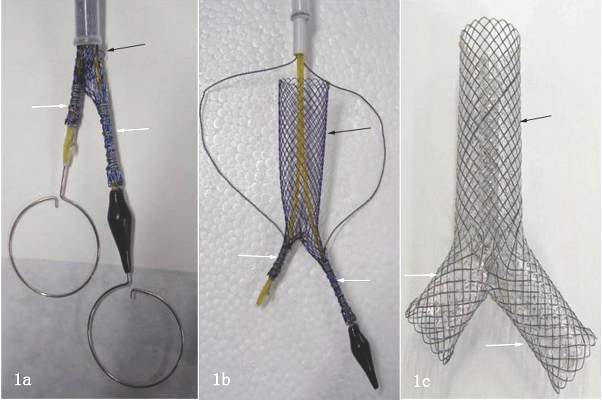
Airway fistula is a rare but life-threatening complication of esophageal surgery, but an innovative technique using two custom-made, Y-shaped metallic stents can preserve airway patency, researchers at Zhengzhou University in China reported in the August issue of the Journal of Thoracic and Cardiovascular Surgery (J Thorac Cardiovasc Surg. 2016;152:557-63).
The study involved 10 patients who received Y-shaped stents to treat gastrotracheal or gastrobronchial fistulas (GTFs and GBFs, respectively) after esophageal surgery from 2010 through 2014. “Our patients tolerated the stents well and had good palliation of their symptoms,” wrote Teng-Fei Li, MD, and colleagues.
Six patients died within 8 months for unrelated reasons – either tumors (four patients), or hemoptysis or pulmonary infection (one each). In one patient, the carinal fistula enlarged 4 months after stenting, but the researchers successfully placed an additional small Y-shaped stent. At the publication of the paper, this patient and three others had survived, Dr. Li and colleagues said.
After esophagectomy, fistulas can form between the tracheobronchial tree and stomach for a variety of reasons. A metallic stent would seem the logical choice after fistula formation, but it can be problematic, Dr. Li and colleagues pointed out. “Most often the clinician faces a situation in which the esophageal stent should have a larger diameter on the gastric side, making stenting the alimentary side of the fistula insufficient,” they said. The risk of stent migration is high, and the bifurcated structure of the trachea and main bronchi can cause leakage and stent displacement.
The researchers noted that Y-shaped self-expanding stents have been used for sealing airway fistulas, but they don’t always fully seal large GTFs and GBFs. Their primary objective in studying the combined-type Y-shaped covered metallic stent was to determine the safety and feasibility of the technique; the secondary aim was to evaluate long-term patency and complication rates.
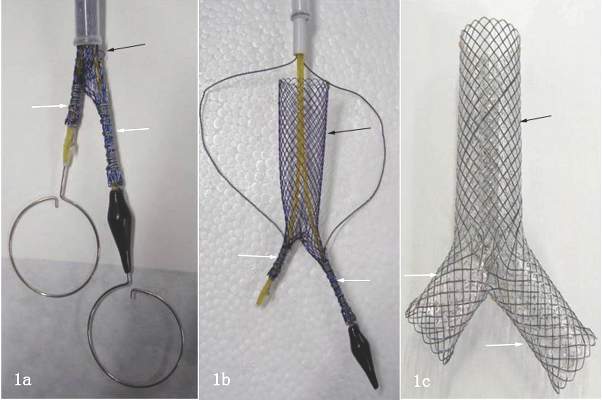
They designed a Y-shaped stent delivery system (Micro-Tech) and used a combined bundle-and-push to insert the main body of the stent. In all, they inserted 20 Y-shaped stents in the 10 patients, although two stents did not fully expand and were dilated with a balloon. The researchers reported resolution of coughing during eating, toleration of liquid or semiliquid diet, and no complications after insertion.
Dr. Li and colleagues also developed strategies to avoid complications of Y-shaped stents, which have been known to retain secretions because they hinder cilia function. “To avoid this, we provided sputum suction and administered continuous high-concentration oxygen during the procedure,” they noted. Also, speed and agility in placement are important. “The operation should be performed as rapidly and gently as possible to avoid irritation to the airway,” Dr. Li and colleagues wrote. The postoperative course involved IV expectorants and antiasthma agents and aerosol inhalation of terbutaline. Surveillance bronchoscopes and debridement of granulation tissue helped avoid stent obstruction.
Nonetheless, the researches acknowledged limitations of the retrospective study, namely its small sample size and lack of a control group.
Dr. Li and colleagues had no financial relationships to disclose.
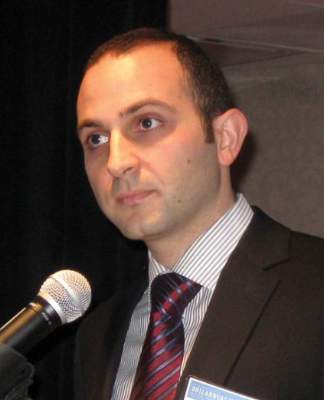
The Zhengzhou University investigators provide an opportunity to “think outside the box” when managing complex airway fistulas, Waël C. Hanna, MDCM, of McMaster University and St. Joseph’s Healthcare in Hamilton, Ontario, said in his invited commentary (J Thorac Cardiovasc Surg. 2016;152:564).
|
Dr. Waël Hanna |
Dr. Hanna credited a couple of innovations in their technique to overcome the challenge of Y stents that “remain notoriously difficult to position”: eliminating rigid bronchoscopy and using angiography-guided oral delivery; and developing the hybrid deployment mechanism.
Dr. Hanna also noted two “important nuances” of the technique: The stents are custom-made based on the length and location of the fistula; and the routine placement of two stents, with a limb of the smaller Y stent projecting through a limb of the larger Y stent to seal the entire airway. “This Y-en-Y technique using perfectly fitted stents is likely what caused the excellent outcomes that are reported in this series,” Dr. Hanna said.
But their approach may not be a practical solution to complex airway fistulas soon, he said. “Most of us who see the occasional case are unlikely to be able to commission custom-made Y stents,” he said. What’s more, the deployment mechanism is complicated, and the effect on patient quality of life is unclear.
Dr. Hanna had no financial relationships to disclose.
The Zhengzhou University investigators provide an opportunity to “think outside the box” when managing complex airway fistulas, Waël C. Hanna, MDCM, of McMaster University and St. Joseph’s Healthcare in Hamilton, Ontario, said in his invited commentary (J Thorac Cardiovasc Surg. 2016;152:564).
|
|
Dr. Waël Hanna |
Dr. Hanna credited a couple of innovations in their technique to overcome the challenge of Y stents that “remain notoriously difficult to position”: eliminating rigid bronchoscopy and using angiography-guided oral delivery; and developing the hybrid deployment mechanism.
Dr. Hanna also noted two “important nuances” of the technique: The stents are custom-made based on the length and location of the fistula; and the routine placement of two stents, with a limb of the smaller Y stent projecting through a limb of the larger Y stent to seal the entire airway. “This Y-en-Y technique using perfectly fitted stents is likely what caused the excellent outcomes that are reported in this series,” Dr. Hanna said.
But their approach may not be a practical solution to complex airway fistulas soon, he said. “Most of us who see the occasional case are unlikely to be able to commission custom-made Y stents,” he said. What’s more, the deployment mechanism is complicated, and the effect on patient quality of life is unclear.
Dr. Hanna had no financial relationships to disclose.
The Zhengzhou University investigators provide an opportunity to “think outside the box” when managing complex airway fistulas, Waël C. Hanna, MDCM, of McMaster University and St. Joseph’s Healthcare in Hamilton, Ontario, said in his invited commentary (J Thorac Cardiovasc Surg. 2016;152:564).
|
|
Dr. Waël Hanna |
Dr. Hanna credited a couple of innovations in their technique to overcome the challenge of Y stents that “remain notoriously difficult to position”: eliminating rigid bronchoscopy and using angiography-guided oral delivery; and developing the hybrid deployment mechanism.
Dr. Hanna also noted two “important nuances” of the technique: The stents are custom-made based on the length and location of the fistula; and the routine placement of two stents, with a limb of the smaller Y stent projecting through a limb of the larger Y stent to seal the entire airway. “This Y-en-Y technique using perfectly fitted stents is likely what caused the excellent outcomes that are reported in this series,” Dr. Hanna said.
But their approach may not be a practical solution to complex airway fistulas soon, he said. “Most of us who see the occasional case are unlikely to be able to commission custom-made Y stents,” he said. What’s more, the deployment mechanism is complicated, and the effect on patient quality of life is unclear.
Dr. Hanna had no financial relationships to disclose.
Airway fistula is a rare but life-threatening complication of esophageal surgery, but an innovative technique using two custom-made, Y-shaped metallic stents can preserve airway patency, researchers at Zhengzhou University in China reported in the August issue of the Journal of Thoracic and Cardiovascular Surgery (J Thorac Cardiovasc Surg. 2016;152:557-63).
The study involved 10 patients who received Y-shaped stents to treat gastrotracheal or gastrobronchial fistulas (GTFs and GBFs, respectively) after esophageal surgery from 2010 through 2014. “Our patients tolerated the stents well and had good palliation of their symptoms,” wrote Teng-Fei Li, MD, and colleagues.
Six patients died within 8 months for unrelated reasons – either tumors (four patients), or hemoptysis or pulmonary infection (one each). In one patient, the carinal fistula enlarged 4 months after stenting, but the researchers successfully placed an additional small Y-shaped stent. At the publication of the paper, this patient and three others had survived, Dr. Li and colleagues said.
After esophagectomy, fistulas can form between the tracheobronchial tree and stomach for a variety of reasons. A metallic stent would seem the logical choice after fistula formation, but it can be problematic, Dr. Li and colleagues pointed out. “Most often the clinician faces a situation in which the esophageal stent should have a larger diameter on the gastric side, making stenting the alimentary side of the fistula insufficient,” they said. The risk of stent migration is high, and the bifurcated structure of the trachea and main bronchi can cause leakage and stent displacement.
The researchers noted that Y-shaped self-expanding stents have been used for sealing airway fistulas, but they don’t always fully seal large GTFs and GBFs. Their primary objective in studying the combined-type Y-shaped covered metallic stent was to determine the safety and feasibility of the technique; the secondary aim was to evaluate long-term patency and complication rates.
They designed a Y-shaped stent delivery system (Micro-Tech) and used a combined bundle-and-push to insert the main body of the stent. In all, they inserted 20 Y-shaped stents in the 10 patients, although two stents did not fully expand and were dilated with a balloon. The researchers reported resolution of coughing during eating, toleration of liquid or semiliquid diet, and no complications after insertion.
Dr. Li and colleagues also developed strategies to avoid complications of Y-shaped stents, which have been known to retain secretions because they hinder cilia function. “To avoid this, we provided sputum suction and administered continuous high-concentration oxygen during the procedure,” they noted. Also, speed and agility in placement are important. “The operation should be performed as rapidly and gently as possible to avoid irritation to the airway,” Dr. Li and colleagues wrote. The postoperative course involved IV expectorants and antiasthma agents and aerosol inhalation of terbutaline. Surveillance bronchoscopes and debridement of granulation tissue helped avoid stent obstruction.
Nonetheless, the researches acknowledged limitations of the retrospective study, namely its small sample size and lack of a control group.
Dr. Li and colleagues had no financial relationships to disclose.
Airway fistula is a rare but life-threatening complication of esophageal surgery, but an innovative technique using two custom-made, Y-shaped metallic stents can preserve airway patency, researchers at Zhengzhou University in China reported in the August issue of the Journal of Thoracic and Cardiovascular Surgery (J Thorac Cardiovasc Surg. 2016;152:557-63).
The study involved 10 patients who received Y-shaped stents to treat gastrotracheal or gastrobronchial fistulas (GTFs and GBFs, respectively) after esophageal surgery from 2010 through 2014. “Our patients tolerated the stents well and had good palliation of their symptoms,” wrote Teng-Fei Li, MD, and colleagues.
Six patients died within 8 months for unrelated reasons – either tumors (four patients), or hemoptysis or pulmonary infection (one each). In one patient, the carinal fistula enlarged 4 months after stenting, but the researchers successfully placed an additional small Y-shaped stent. At the publication of the paper, this patient and three others had survived, Dr. Li and colleagues said.
After esophagectomy, fistulas can form between the tracheobronchial tree and stomach for a variety of reasons. A metallic stent would seem the logical choice after fistula formation, but it can be problematic, Dr. Li and colleagues pointed out. “Most often the clinician faces a situation in which the esophageal stent should have a larger diameter on the gastric side, making stenting the alimentary side of the fistula insufficient,” they said. The risk of stent migration is high, and the bifurcated structure of the trachea and main bronchi can cause leakage and stent displacement.
The researchers noted that Y-shaped self-expanding stents have been used for sealing airway fistulas, but they don’t always fully seal large GTFs and GBFs. Their primary objective in studying the combined-type Y-shaped covered metallic stent was to determine the safety and feasibility of the technique; the secondary aim was to evaluate long-term patency and complication rates.
They designed a Y-shaped stent delivery system (Micro-Tech) and used a combined bundle-and-push to insert the main body of the stent. In all, they inserted 20 Y-shaped stents in the 10 patients, although two stents did not fully expand and were dilated with a balloon. The researchers reported resolution of coughing during eating, toleration of liquid or semiliquid diet, and no complications after insertion.
Dr. Li and colleagues also developed strategies to avoid complications of Y-shaped stents, which have been known to retain secretions because they hinder cilia function. “To avoid this, we provided sputum suction and administered continuous high-concentration oxygen during the procedure,” they noted. Also, speed and agility in placement are important. “The operation should be performed as rapidly and gently as possible to avoid irritation to the airway,” Dr. Li and colleagues wrote. The postoperative course involved IV expectorants and antiasthma agents and aerosol inhalation of terbutaline. Surveillance bronchoscopes and debridement of granulation tissue helped avoid stent obstruction.
Nonetheless, the researches acknowledged limitations of the retrospective study, namely its small sample size and lack of a control group.
Dr. Li and colleagues had no financial relationships to disclose.
FROM THE JOURNAL OF THORACIC AND CARDIOVASCULAR SURGERY
Key clinical point: A combined type Y-shaped self-expandable coated metallic stent is a new approach for treatment of airway fistulas.
Major finding: Ten patients received the stents; all of them reported improved quality of life. Six died within 8 months because of unrelated factors.
Data source: Single-institution retrospective review of 10 patients with gastrotracheal or gastrobronchial fistulas who received the stent to reopen the airway.
Disclosures: Dr. Li and coauthors had no financial relationships to disclose. The study received support from the National High-Tech R&D Program of China.
Guideline recommends 2-mm negative margins for DCIS
Surgical excision with 2-mm clear margins combined with whole-breast irradiation may be the optimal standard to reduce recurrence in patients with ductal carcinoma in situ (DCIS), according to a multidisciplinary consensus panel.
Despite the widespread use of surgical excision in breast-conserving therapy among patients with DCIS, there is no consensus on the optimal negative margin to prevent recurrence and re-excision. Therefore, the Society of Surgical Oncology, the American Society for Radiation Oncology, and the American Society of Clinical Oncology convened a panel to answer the following question: What margin width minimizes the risk of ipsilateral breast tumor recurrence in patients with DCIS receiving breast-conserving surgery?

The guideline panel reviewed 20 studies including 7,883 DCIS patients. A median of 100% of patients received whole-breast radiation therapy and a median of 21% received endocrine therapy. Patients were followed for a median of 6.5 years and the median incidence of recurrence was 8.3%.
“There is no debate that a positive margin ... implies a potentially incomplete resection and is associated with a higher rate of [recurrence],” according to Monica Morrow, MD, of Memorial Sloan-Kettering Cancer Center, and her fellow panelists. Further, the addition of whole-breast irradiation did not negate this increased risk, the panelists noted (J Clin Oncol. 2016 Aug. doi: 10.1200/JCO.2016.68.3573).
According to the meta-analysis, patients with 2-mm negative margins plus whole-breast irradiation were significantly less likely to experience ipsilateral breast tumor recurrence compared with patients who had excisions with positive margins.
“Margins of at least 2 mm are associated with a reduced risk of [recurrence] relative to narrower negative margin widths in patients receiving [whole-breast radiotherapy]. The routine practice of obtaining negative margin widths wider than 2 mm is not supported by the evidence,” they wrote.
The panel also noted that treatment with excision alone is associated with higher rates of recurrence compared with treatment involving with both excision and whole-breast radiation therapy. However, if patients are treated with excision alone, the optimal margin, which is unknown for this subset of patients, should be at least 2 millimeters, according to the guideline.
Due to variability in specimen sampling and in margin evaluation and assessment, “clinical judgment must be used in determining whether patients with smaller negative margin widths (0 or 1 mm) require re-excision,” the panelists noted. “The findings should not be extrapolated to DCIS patients treated with [accelerated partial breast irradiation] or those with invasive carcinoma for whom a separate guideline has been developed,” Dr. Morrow and her associates wrote.
The guideline development process was funded by the Susan G. Komen Foundation. The authors had no relevant disclosures to report.
On Twitter @jessnicolecraig
Surgical excision with 2-mm clear margins combined with whole-breast irradiation may be the optimal standard to reduce recurrence in patients with ductal carcinoma in situ (DCIS), according to a multidisciplinary consensus panel.
Despite the widespread use of surgical excision in breast-conserving therapy among patients with DCIS, there is no consensus on the optimal negative margin to prevent recurrence and re-excision. Therefore, the Society of Surgical Oncology, the American Society for Radiation Oncology, and the American Society of Clinical Oncology convened a panel to answer the following question: What margin width minimizes the risk of ipsilateral breast tumor recurrence in patients with DCIS receiving breast-conserving surgery?
The guideline panel reviewed 20 studies including 7,883 DCIS patients. A median of 100% of patients received whole-breast radiation therapy and a median of 21% received endocrine therapy. Patients were followed for a median of 6.5 years and the median incidence of recurrence was 8.3%.
“There is no debate that a positive margin ... implies a potentially incomplete resection and is associated with a higher rate of [recurrence],” according to Monica Morrow, MD, of Memorial Sloan-Kettering Cancer Center, and her fellow panelists. Further, the addition of whole-breast irradiation did not negate this increased risk, the panelists noted (J Clin Oncol. 2016 Aug. doi: 10.1200/JCO.2016.68.3573).
According to the meta-analysis, patients with 2-mm negative margins plus whole-breast irradiation were significantly less likely to experience ipsilateral breast tumor recurrence compared with patients who had excisions with positive margins.
“Margins of at least 2 mm are associated with a reduced risk of [recurrence] relative to narrower negative margin widths in patients receiving [whole-breast radiotherapy]. The routine practice of obtaining negative margin widths wider than 2 mm is not supported by the evidence,” they wrote.
The panel also noted that treatment with excision alone is associated with higher rates of recurrence compared with treatment involving with both excision and whole-breast radiation therapy. However, if patients are treated with excision alone, the optimal margin, which is unknown for this subset of patients, should be at least 2 millimeters, according to the guideline.
Due to variability in specimen sampling and in margin evaluation and assessment, “clinical judgment must be used in determining whether patients with smaller negative margin widths (0 or 1 mm) require re-excision,” the panelists noted. “The findings should not be extrapolated to DCIS patients treated with [accelerated partial breast irradiation] or those with invasive carcinoma for whom a separate guideline has been developed,” Dr. Morrow and her associates wrote.
The guideline development process was funded by the Susan G. Komen Foundation. The authors had no relevant disclosures to report.
On Twitter @jessnicolecraig
Surgical excision with 2-mm clear margins combined with whole-breast irradiation may be the optimal standard to reduce recurrence in patients with ductal carcinoma in situ (DCIS), according to a multidisciplinary consensus panel.
Despite the widespread use of surgical excision in breast-conserving therapy among patients with DCIS, there is no consensus on the optimal negative margin to prevent recurrence and re-excision. Therefore, the Society of Surgical Oncology, the American Society for Radiation Oncology, and the American Society of Clinical Oncology convened a panel to answer the following question: What margin width minimizes the risk of ipsilateral breast tumor recurrence in patients with DCIS receiving breast-conserving surgery?
The guideline panel reviewed 20 studies including 7,883 DCIS patients. A median of 100% of patients received whole-breast radiation therapy and a median of 21% received endocrine therapy. Patients were followed for a median of 6.5 years and the median incidence of recurrence was 8.3%.
“There is no debate that a positive margin ... implies a potentially incomplete resection and is associated with a higher rate of [recurrence],” according to Monica Morrow, MD, of Memorial Sloan-Kettering Cancer Center, and her fellow panelists. Further, the addition of whole-breast irradiation did not negate this increased risk, the panelists noted (J Clin Oncol. 2016 Aug. doi: 10.1200/JCO.2016.68.3573).
According to the meta-analysis, patients with 2-mm negative margins plus whole-breast irradiation were significantly less likely to experience ipsilateral breast tumor recurrence compared with patients who had excisions with positive margins.
“Margins of at least 2 mm are associated with a reduced risk of [recurrence] relative to narrower negative margin widths in patients receiving [whole-breast radiotherapy]. The routine practice of obtaining negative margin widths wider than 2 mm is not supported by the evidence,” they wrote.
The panel also noted that treatment with excision alone is associated with higher rates of recurrence compared with treatment involving with both excision and whole-breast radiation therapy. However, if patients are treated with excision alone, the optimal margin, which is unknown for this subset of patients, should be at least 2 millimeters, according to the guideline.
Due to variability in specimen sampling and in margin evaluation and assessment, “clinical judgment must be used in determining whether patients with smaller negative margin widths (0 or 1 mm) require re-excision,” the panelists noted. “The findings should not be extrapolated to DCIS patients treated with [accelerated partial breast irradiation] or those with invasive carcinoma for whom a separate guideline has been developed,” Dr. Morrow and her associates wrote.
The guideline development process was funded by the Susan G. Komen Foundation. The authors had no relevant disclosures to report.
On Twitter @jessnicolecraig
FROM THE JOURNAL OF CLINICAL ONCOLOGY
Key clinical point: Surgical excision with 2-mm clear margins combined with whole-breast irradiation may be the optimal standard to reduce recurrence in patients with ductal carcinoma in situ.
Major finding: Patients with 2-mm clear margins were significantly less likely to experience ipsilateral breast tumor recurrence compared with patients who had excisions with positive margins.
Data source: Meta-analysis of 20 studies and other published literature.
Disclosures: The Susan G. Komen Foundation funded the guideline development process. The panel members had no relevant disclosures.

5 tips to surviving Meaningful Use audits
The Meaningful Use (MU) program as doctors know it may soon be ending, but audits of past attestations are slated to continue for at least the next 6 years.
Experts offer the following guidance on how to successfully manage audits and subsequent appeals.
1. Expect an audit.

Assume that at some point, you will be audited, said Joshua J. Freemire, a health law attorney based in Baltimore who specializes in regulatory compliance matters.
“Have good procedures in place to ensure the audit is brought to the attention of management and responded to promptly,” Mr. Freemire said in an interview. “Similarly, it is important that practices understand, in advance, how information created by their EHR is stored and managed.”
Audits are not limited to the current or most recent year, he noted. Being able to promptly access the appropriate information is an important part of drafting appropriate responses.
2. Save records

Keep all relevant records electronically for at least 6 years after attestation, advised Carmiña Nitzki, a senior consultant with GE Healthcare Camden Group.
Some documentation, such as your security risk analysis, should be maintained in paper form, she added. It is also helpful to take screen shots of certain measures that address the functionality of your system.
Records should follow when a physician moves a practice or changes employment. Ms. Nitzki recently assisted a case in which an early adopter physician dissolved his practice, became employed, and moved offices. His 2011 attestation was later audited, and he did not have all of the requested information. The doctor came to Ms. Nitzki after failing an audit and being assessed an $18,000 recoupment payment. Together, they were able to recreate and locate much of the necessary records through old emails and past documentation.
“We won the appeal,” said Ms. Nitzki, who spoke about meaningful use audits at a recent American Bar Association meeting. “The takeaway is if you’re going to respond to an audit, make sure you understand everything that they’re asking for and that you’re confident that you’re responding with all of the appropriate documentation,” she said.
3. Meet deadlines
Promptly responding to audits and quickly addressing failed audits are critical, Mr. Freemire said.
“The [MU] program is very strict with regard to deadlines, and an appeal cannot be filed once the applicable deadline has passed,” he said.
Mr. Freemire said that he routinely encounters health providers who have missed deadlines or let too much time lapse after being contacted by the government. Failure to meet deadlines can result from various reasons, including that notices are not promptly brought to the physician’s attention, delays investigating the availability of requested materials, or a false assumption that the requested information is readily at hand, he said.
Ensure that all audit deadlines are recorded and work with staff and leadership to file responses on time. Factor in additional time if there could be difficulty in locating records, experts stressed.
“I see difficulty in effectively responding to audits where records are simply not maintained,” he said. “Again, this can happen for many reasons, including personnel turnover, but it can be difficult or impossible to effectively respond to audit requests” in this situation.
4. Appeal effectively
Swiftly and thoroughly appeal a failed audit.
When a doctor fails an audit, it’s usually because of incomplete responses or missing information, Ms. Nitzki said. Only those measures that were rejected or that failed to meet standards need to be addressed during an appeal. Sending a cover letter to CMS with the appeal, explaining why the doctor may have failed initially can strengthen the case, she said.
“The appeals process is done directly with CMS, so they’re a little more reasonable,” she said. “They tend to look at things on broader scale.”
Don’t wait to appeal, Mr. Freemire said. Practices have 30 days from the date of an adverse audit determination letter to submit an appeal. If time runs out, physicians must pay back any money requested by auditors, and CMS expects the recoupment in full.
“Following a negative decision, the most important step is prompt attention,” he said. “The sooner that process begins, the sooner it can be completed. The time line for audit appeals is not generous and providers need to ensure they react promptly to a negative finding.”
5. Get help
Ms. Nitzki recommends that physicians obtain professional assistance when responding to an audit.
Practices can hire a consulting company or find audit resources from their specialty society or state medical association. The American Academy of Family Physicians provides a tip sheet on responding to audits. Some state organizations, such as the Texas Medical Association, offer a helpline for doctors to call and ask questions related to meaningful use.
“Unless they have a very savvy person in their office who has taken care all of their meaningful use attestations and documentation, we recommend they get help because it’s in the details where they could fail,” she said.
Seeking help after a failed audit is also essential, notes Mr. Freemire. Experts who are familiar with the program and its requirements and procedures can be of great assistance when it comes organizing the facts into a persuasive argument, he said.
“A cost/benefit is necessary – as it is with all service providers,” he said. “But a provider’s chances for a successful appeal are increased when that appeal is prepared by someone who understands the history and intention behind program requirements, who can best identify and present the necessary evidence of compliance, and who can make a compelling argument as to the provider’s satisfaction of program requirements.”
On Twitter @legal_med
The Meaningful Use (MU) program as doctors know it may soon be ending, but audits of past attestations are slated to continue for at least the next 6 years.
Experts offer the following guidance on how to successfully manage audits and subsequent appeals.
1. Expect an audit.
Assume that at some point, you will be audited, said Joshua J. Freemire, a health law attorney based in Baltimore who specializes in regulatory compliance matters.
“Have good procedures in place to ensure the audit is brought to the attention of management and responded to promptly,” Mr. Freemire said in an interview. “Similarly, it is important that practices understand, in advance, how information created by their EHR is stored and managed.”
Audits are not limited to the current or most recent year, he noted. Being able to promptly access the appropriate information is an important part of drafting appropriate responses.
2. Save records
Keep all relevant records electronically for at least 6 years after attestation, advised Carmiña Nitzki, a senior consultant with GE Healthcare Camden Group.
Some documentation, such as your security risk analysis, should be maintained in paper form, she added. It is also helpful to take screen shots of certain measures that address the functionality of your system.
Records should follow when a physician moves a practice or changes employment. Ms. Nitzki recently assisted a case in which an early adopter physician dissolved his practice, became employed, and moved offices. His 2011 attestation was later audited, and he did not have all of the requested information. The doctor came to Ms. Nitzki after failing an audit and being assessed an $18,000 recoupment payment. Together, they were able to recreate and locate much of the necessary records through old emails and past documentation.
“We won the appeal,” said Ms. Nitzki, who spoke about meaningful use audits at a recent American Bar Association meeting. “The takeaway is if you’re going to respond to an audit, make sure you understand everything that they’re asking for and that you’re confident that you’re responding with all of the appropriate documentation,” she said.
3. Meet deadlines
Promptly responding to audits and quickly addressing failed audits are critical, Mr. Freemire said.
“The [MU] program is very strict with regard to deadlines, and an appeal cannot be filed once the applicable deadline has passed,” he said.
Mr. Freemire said that he routinely encounters health providers who have missed deadlines or let too much time lapse after being contacted by the government. Failure to meet deadlines can result from various reasons, including that notices are not promptly brought to the physician’s attention, delays investigating the availability of requested materials, or a false assumption that the requested information is readily at hand, he said.
Ensure that all audit deadlines are recorded and work with staff and leadership to file responses on time. Factor in additional time if there could be difficulty in locating records, experts stressed.
“I see difficulty in effectively responding to audits where records are simply not maintained,” he said. “Again, this can happen for many reasons, including personnel turnover, but it can be difficult or impossible to effectively respond to audit requests” in this situation.
4. Appeal effectively
Swiftly and thoroughly appeal a failed audit.
When a doctor fails an audit, it’s usually because of incomplete responses or missing information, Ms. Nitzki said. Only those measures that were rejected or that failed to meet standards need to be addressed during an appeal. Sending a cover letter to CMS with the appeal, explaining why the doctor may have failed initially can strengthen the case, she said.
“The appeals process is done directly with CMS, so they’re a little more reasonable,” she said. “They tend to look at things on broader scale.”
Don’t wait to appeal, Mr. Freemire said. Practices have 30 days from the date of an adverse audit determination letter to submit an appeal. If time runs out, physicians must pay back any money requested by auditors, and CMS expects the recoupment in full.
“Following a negative decision, the most important step is prompt attention,” he said. “The sooner that process begins, the sooner it can be completed. The time line for audit appeals is not generous and providers need to ensure they react promptly to a negative finding.”
5. Get help
Ms. Nitzki recommends that physicians obtain professional assistance when responding to an audit.
Practices can hire a consulting company or find audit resources from their specialty society or state medical association. The American Academy of Family Physicians provides a tip sheet on responding to audits. Some state organizations, such as the Texas Medical Association, offer a helpline for doctors to call and ask questions related to meaningful use.
“Unless they have a very savvy person in their office who has taken care all of their meaningful use attestations and documentation, we recommend they get help because it’s in the details where they could fail,” she said.
Seeking help after a failed audit is also essential, notes Mr. Freemire. Experts who are familiar with the program and its requirements and procedures can be of great assistance when it comes organizing the facts into a persuasive argument, he said.
“A cost/benefit is necessary – as it is with all service providers,” he said. “But a provider’s chances for a successful appeal are increased when that appeal is prepared by someone who understands the history and intention behind program requirements, who can best identify and present the necessary evidence of compliance, and who can make a compelling argument as to the provider’s satisfaction of program requirements.”
On Twitter @legal_med
The Meaningful Use (MU) program as doctors know it may soon be ending, but audits of past attestations are slated to continue for at least the next 6 years.
Experts offer the following guidance on how to successfully manage audits and subsequent appeals.
1. Expect an audit.
Assume that at some point, you will be audited, said Joshua J. Freemire, a health law attorney based in Baltimore who specializes in regulatory compliance matters.
“Have good procedures in place to ensure the audit is brought to the attention of management and responded to promptly,” Mr. Freemire said in an interview. “Similarly, it is important that practices understand, in advance, how information created by their EHR is stored and managed.”
Audits are not limited to the current or most recent year, he noted. Being able to promptly access the appropriate information is an important part of drafting appropriate responses.
2. Save records
Keep all relevant records electronically for at least 6 years after attestation, advised Carmiña Nitzki, a senior consultant with GE Healthcare Camden Group.
Some documentation, such as your security risk analysis, should be maintained in paper form, she added. It is also helpful to take screen shots of certain measures that address the functionality of your system.
Records should follow when a physician moves a practice or changes employment. Ms. Nitzki recently assisted a case in which an early adopter physician dissolved his practice, became employed, and moved offices. His 2011 attestation was later audited, and he did not have all of the requested information. The doctor came to Ms. Nitzki after failing an audit and being assessed an $18,000 recoupment payment. Together, they were able to recreate and locate much of the necessary records through old emails and past documentation.
“We won the appeal,” said Ms. Nitzki, who spoke about meaningful use audits at a recent American Bar Association meeting. “The takeaway is if you’re going to respond to an audit, make sure you understand everything that they’re asking for and that you’re confident that you’re responding with all of the appropriate documentation,” she said.
3. Meet deadlines
Promptly responding to audits and quickly addressing failed audits are critical, Mr. Freemire said.
“The [MU] program is very strict with regard to deadlines, and an appeal cannot be filed once the applicable deadline has passed,” he said.
Mr. Freemire said that he routinely encounters health providers who have missed deadlines or let too much time lapse after being contacted by the government. Failure to meet deadlines can result from various reasons, including that notices are not promptly brought to the physician’s attention, delays investigating the availability of requested materials, or a false assumption that the requested information is readily at hand, he said.
Ensure that all audit deadlines are recorded and work with staff and leadership to file responses on time. Factor in additional time if there could be difficulty in locating records, experts stressed.
“I see difficulty in effectively responding to audits where records are simply not maintained,” he said. “Again, this can happen for many reasons, including personnel turnover, but it can be difficult or impossible to effectively respond to audit requests” in this situation.
4. Appeal effectively
Swiftly and thoroughly appeal a failed audit.
When a doctor fails an audit, it’s usually because of incomplete responses or missing information, Ms. Nitzki said. Only those measures that were rejected or that failed to meet standards need to be addressed during an appeal. Sending a cover letter to CMS with the appeal, explaining why the doctor may have failed initially can strengthen the case, she said.
“The appeals process is done directly with CMS, so they’re a little more reasonable,” she said. “They tend to look at things on broader scale.”
Don’t wait to appeal, Mr. Freemire said. Practices have 30 days from the date of an adverse audit determination letter to submit an appeal. If time runs out, physicians must pay back any money requested by auditors, and CMS expects the recoupment in full.
“Following a negative decision, the most important step is prompt attention,” he said. “The sooner that process begins, the sooner it can be completed. The time line for audit appeals is not generous and providers need to ensure they react promptly to a negative finding.”
5. Get help
Ms. Nitzki recommends that physicians obtain professional assistance when responding to an audit.
Practices can hire a consulting company or find audit resources from their specialty society or state medical association. The American Academy of Family Physicians provides a tip sheet on responding to audits. Some state organizations, such as the Texas Medical Association, offer a helpline for doctors to call and ask questions related to meaningful use.
“Unless they have a very savvy person in their office who has taken care all of their meaningful use attestations and documentation, we recommend they get help because it’s in the details where they could fail,” she said.
Seeking help after a failed audit is also essential, notes Mr. Freemire. Experts who are familiar with the program and its requirements and procedures can be of great assistance when it comes organizing the facts into a persuasive argument, he said.
“A cost/benefit is necessary – as it is with all service providers,” he said. “But a provider’s chances for a successful appeal are increased when that appeal is prepared by someone who understands the history and intention behind program requirements, who can best identify and present the necessary evidence of compliance, and who can make a compelling argument as to the provider’s satisfaction of program requirements.”
On Twitter @legal_med

TEP hernia repair patients have significant QOL improvements
The majority of patients who have undergone laparoscopic totally extraperitoneal groin hernia repair report mild or no symptoms 2 years after the operation, results of a large prospective study indicate.
Researchers assessed 293 patients – 93% of whom were male – who underwent laparoscopic totally extraperitoneal (TEP) groin hernia repair, both before and 3 weeks, 6 months, 1 year, and 2 years after their operation, using the 36-Item Short Form Survey (v2), Surgical Outcomes Measurement System, and Carolinas Comfort Scale.

The study, published in the July issue of the Journal of the American College of Surgeons, found that 98% of individuals reported no or nonbothersome symptoms of sensation of mesh, 95% reported the same for pain, and 97% reported the same for movement limitations when assessed using the Carolinas Comfort Scale 2 years after surgery.
Pain scores, as measured by the Surgical Outcomes Measurement System, also improved significantly from baseline to 2 years after surgery (10 vs. 7.5; P = .025), and at all postoperative points, patients said they were highly satisfied with their quality of life.
“This study found that laparoscopic TEP groin hernia repair improves patient quality of life significantly, as evidenced by two generic and one procedure-specific quality of life instruments,” wrote Matthew E. Gitelis and his colleagues at the department of surgery at NorthShore University HealthSystem, Evanston, Ill. “Additionally, the procedure can be performed safely with minimal morbidity and low recurrence rates.”
According to the 36-Item Short Form Survey, patients showed significant improvements in physical functioning at 2 years after surgery, but not at 3 weeks, 6 months, or 1 year postoperatively. Pain scores initially increased at 3 weeks after surgery, compared with baseline, decreased to baseline levels at 6 months, then improved significantly at 1 and 2 years after surgery.
While surgery did not appear to affect energy/fatigue scores or emotional well-being, patients did report significant improvements in social functioning and role limitations (J Am Coll Surg. 2016 Jul;223:153-161). On average, patients used narcotic pain medication for 2.5 days after surgery, and returned to work and daily activities after 5.4 days.
The study also examined the technical outcomes of the operations, which were all performed by four surgeons specializing in minimally invasive and bariatric surgery at three sites across an academic-affiliated hospital system.
The authors said the decision was made to study the outcomes from more experienced surgeons because of the steep learning curves and specialized skill set required for laparoscopic techniques.
“Looking at the technical outcomes of our cohort as they relate to recurrence rates and complications, we continue to show the importance of reporting the experience of high-volume centers,” they wrote. “Our goal is to better understand the details and duration of quality of life outcomes so that we can better address patient expectations and provide important information used in the decision-making process for patients undergoing an elective procedure.”
There were 66 complications overall, most of which were from seroma (25 patients), hematoma (13 patients), and urinary retention (21 patients), with 7 cases of wound infection reported. Eight patients (2.2%) experienced a hernia recurrence.
“It is worth noting that, in the middle of our study, in an effort to decrease long-term postoperative pain, we switched to lighter-weight mesh (Physiomesh) from the polyester mesh (Parietex anatomical) used previously,” the authors reported. “Carolinas Comfort Scale scores at 1 year did confirm decreased pain scores; however, we also saw significantly higher rates of recurrence during that period.”
No conflicts of interest were declared.
The majority of patients who have undergone laparoscopic totally extraperitoneal groin hernia repair report mild or no symptoms 2 years after the operation, results of a large prospective study indicate.
Researchers assessed 293 patients – 93% of whom were male – who underwent laparoscopic totally extraperitoneal (TEP) groin hernia repair, both before and 3 weeks, 6 months, 1 year, and 2 years after their operation, using the 36-Item Short Form Survey (v2), Surgical Outcomes Measurement System, and Carolinas Comfort Scale.
The study, published in the July issue of the Journal of the American College of Surgeons, found that 98% of individuals reported no or nonbothersome symptoms of sensation of mesh, 95% reported the same for pain, and 97% reported the same for movement limitations when assessed using the Carolinas Comfort Scale 2 years after surgery.
Pain scores, as measured by the Surgical Outcomes Measurement System, also improved significantly from baseline to 2 years after surgery (10 vs. 7.5; P = .025), and at all postoperative points, patients said they were highly satisfied with their quality of life.
“This study found that laparoscopic TEP groin hernia repair improves patient quality of life significantly, as evidenced by two generic and one procedure-specific quality of life instruments,” wrote Matthew E. Gitelis and his colleagues at the department of surgery at NorthShore University HealthSystem, Evanston, Ill. “Additionally, the procedure can be performed safely with minimal morbidity and low recurrence rates.”
According to the 36-Item Short Form Survey, patients showed significant improvements in physical functioning at 2 years after surgery, but not at 3 weeks, 6 months, or 1 year postoperatively. Pain scores initially increased at 3 weeks after surgery, compared with baseline, decreased to baseline levels at 6 months, then improved significantly at 1 and 2 years after surgery.
While surgery did not appear to affect energy/fatigue scores or emotional well-being, patients did report significant improvements in social functioning and role limitations (J Am Coll Surg. 2016 Jul;223:153-161). On average, patients used narcotic pain medication for 2.5 days after surgery, and returned to work and daily activities after 5.4 days.
The study also examined the technical outcomes of the operations, which were all performed by four surgeons specializing in minimally invasive and bariatric surgery at three sites across an academic-affiliated hospital system.
The authors said the decision was made to study the outcomes from more experienced surgeons because of the steep learning curves and specialized skill set required for laparoscopic techniques.
“Looking at the technical outcomes of our cohort as they relate to recurrence rates and complications, we continue to show the importance of reporting the experience of high-volume centers,” they wrote. “Our goal is to better understand the details and duration of quality of life outcomes so that we can better address patient expectations and provide important information used in the decision-making process for patients undergoing an elective procedure.”
There were 66 complications overall, most of which were from seroma (25 patients), hematoma (13 patients), and urinary retention (21 patients), with 7 cases of wound infection reported. Eight patients (2.2%) experienced a hernia recurrence.
“It is worth noting that, in the middle of our study, in an effort to decrease long-term postoperative pain, we switched to lighter-weight mesh (Physiomesh) from the polyester mesh (Parietex anatomical) used previously,” the authors reported. “Carolinas Comfort Scale scores at 1 year did confirm decreased pain scores; however, we also saw significantly higher rates of recurrence during that period.”
No conflicts of interest were declared.
The majority of patients who have undergone laparoscopic totally extraperitoneal groin hernia repair report mild or no symptoms 2 years after the operation, results of a large prospective study indicate.
Researchers assessed 293 patients – 93% of whom were male – who underwent laparoscopic totally extraperitoneal (TEP) groin hernia repair, both before and 3 weeks, 6 months, 1 year, and 2 years after their operation, using the 36-Item Short Form Survey (v2), Surgical Outcomes Measurement System, and Carolinas Comfort Scale.
The study, published in the July issue of the Journal of the American College of Surgeons, found that 98% of individuals reported no or nonbothersome symptoms of sensation of mesh, 95% reported the same for pain, and 97% reported the same for movement limitations when assessed using the Carolinas Comfort Scale 2 years after surgery.
Pain scores, as measured by the Surgical Outcomes Measurement System, also improved significantly from baseline to 2 years after surgery (10 vs. 7.5; P = .025), and at all postoperative points, patients said they were highly satisfied with their quality of life.
“This study found that laparoscopic TEP groin hernia repair improves patient quality of life significantly, as evidenced by two generic and one procedure-specific quality of life instruments,” wrote Matthew E. Gitelis and his colleagues at the department of surgery at NorthShore University HealthSystem, Evanston, Ill. “Additionally, the procedure can be performed safely with minimal morbidity and low recurrence rates.”
According to the 36-Item Short Form Survey, patients showed significant improvements in physical functioning at 2 years after surgery, but not at 3 weeks, 6 months, or 1 year postoperatively. Pain scores initially increased at 3 weeks after surgery, compared with baseline, decreased to baseline levels at 6 months, then improved significantly at 1 and 2 years after surgery.
While surgery did not appear to affect energy/fatigue scores or emotional well-being, patients did report significant improvements in social functioning and role limitations (J Am Coll Surg. 2016 Jul;223:153-161). On average, patients used narcotic pain medication for 2.5 days after surgery, and returned to work and daily activities after 5.4 days.
The study also examined the technical outcomes of the operations, which were all performed by four surgeons specializing in minimally invasive and bariatric surgery at three sites across an academic-affiliated hospital system.
The authors said the decision was made to study the outcomes from more experienced surgeons because of the steep learning curves and specialized skill set required for laparoscopic techniques.
“Looking at the technical outcomes of our cohort as they relate to recurrence rates and complications, we continue to show the importance of reporting the experience of high-volume centers,” they wrote. “Our goal is to better understand the details and duration of quality of life outcomes so that we can better address patient expectations and provide important information used in the decision-making process for patients undergoing an elective procedure.”
There were 66 complications overall, most of which were from seroma (25 patients), hematoma (13 patients), and urinary retention (21 patients), with 7 cases of wound infection reported. Eight patients (2.2%) experienced a hernia recurrence.
“It is worth noting that, in the middle of our study, in an effort to decrease long-term postoperative pain, we switched to lighter-weight mesh (Physiomesh) from the polyester mesh (Parietex anatomical) used previously,” the authors reported. “Carolinas Comfort Scale scores at 1 year did confirm decreased pain scores; however, we also saw significantly higher rates of recurrence during that period.”
No conflicts of interest were declared.
FROM JOURNAL OF THE AMERICAN COLLEGE OF SURGEONS
Key clinical point: The majority of patients who have undergone laparoscopic totally extraperitoneal groin hernia repair report mild or no symptoms 2 years after the operation.
Major finding: More 90% of patients experience no or nonbothersome symptoms of sensation of mesh, pain or movement limitations at 2 years after laparoscopic totally extraperitoneal groin hernia repair.
Data source: Prospective study in 293 patients undergoing laparoscopic totally extraperitoneal groin hernia repair.
Disclosures: No conflicts of interest were declared.

FBI questions legality of telemedicine compact laws
The FBI is raising concerns that language in the Interstate Medical Licensure Compact violates federal regulations over criminal background checks. The government pushback could mean implementation delays of telemedicine legislation that 17 states have enacted.
In a letter to the Minnesota Bureau of Criminal Apprehension, an FBI attorney wrote that the state’s compact law does not meet federal rules that allow the sharing of information with states for purposes of criminal background checks. In addition, no federal statutory authority exists for the FBI to share criminal files with a “private” entity such as the interstate commission, wrote Christopher B. Chaney, an attorney in the FBI Office of the General Counsel in Clarksburg, W.Va. The FBI sent a letter expressing the same concerns to the Montana Department of Justice regarding Montana’s compact law.
The Minnesota Board of Medical Practice has requested that the FBI reverse its findings, writing in an Aug. 3 letter that the agency does not appear to fully understand how the compact works. The board is scheduled to begin issuing licenses via the compact in January 2017, said Ruth Martinez, the board’s executive director.

“We believe it’s an erroneous conclusion that they’ve drawn,” Ms. Martinez said in an interview. “We are very actively engaged in rule-writing and in preparing technology and so forth to be ready to issue licenses, and we feel very confident that this determination will be overturned.”
The Montana Board of Medical Examiners meanwhile is aware of the FBI’s letter and is closely monitoring the situation in Minnesota before taking action, said Ian Marquand, executive officer for the Montana Board of Medical Examiners.
“We are still digesting this and are anxious to see what happens with the Minnesota situation,” Mr. Marquand said in an interview. “That may provide the road map.”
The Interstate Medical Licensure Compact is aimed at making it easier for telemedicine physicians to gain licenses in multiple states. Under the model legislation, developed by the Federation of State Medical Boards (FSMB), physicians designate a member state as the state of principal licensure and select the other states in which they wish to be licensed. The state of principal licensure then verifies the physician’s eligibility and provides credential information to the interstate commission, which collects applicable fees and transmits the doctor’s information to the other states. Upon receipt in the additional states, the physician would be granted a license.
In July 2015, the U.S. Health Resources and Services Administration awarded the FSMB a grant to support establishment of the commission and aid with the compact’s infrastructure.
There is nothing unique about Minnesota’s compact law, Ms. Martinez said. The statute is based on the same model legislation that passed in 16 other states. She believes that Minnesota’s law is merely one of the first to be reviewed by the FBI. Both Minnesota and Montana officials had requested that their respective state departments of justice determine if the compact laws met public law standards pertaining to criminal history records.
Ms. Martinez said that she hopes that the board’s letter to the FBI will help explain how the compact process works and prevent further federal rejections in other jurisdictions. She notes for example that the FBI incorrectly characterizes the interstate commission as a “private” entity in its letter, when the commission is a corporate body and a joint agency of the member states. The FBI also misunderstands how the commission interacts with the individual state licensing boards and the process of licensure, according to the board’s reply letter. It is not the commission that will be using FBI data, but the member states that will be utilizing the information in the course of verification, writes Rick Masters, special counsel to the National Center for Interstate Compacts.
The Federation of State Medical Boards is closely watching the matter and supports the Minnesota Board of Medical Practice, said Lisa A. Robin FSMB’s chief advocacy officer.
“The FSMB, along with the Council of State Governments (CSG), agrees with and supports the Minnesota board’s position in this matter,” Ms. Robin said in an emailed statement. “The compact’s statutory language does not alter state-based responsibility for the administration of criminal background checks, nor does it seek to extend this responsibility beyond individual state medical boards.”
At press time, the FBI’s Mr. Chaney had not responded to a message seeking comment.
On Twitter @legal_med
The FBI is raising concerns that language in the Interstate Medical Licensure Compact violates federal regulations over criminal background checks. The government pushback could mean implementation delays of telemedicine legislation that 17 states have enacted.
In a letter to the Minnesota Bureau of Criminal Apprehension, an FBI attorney wrote that the state’s compact law does not meet federal rules that allow the sharing of information with states for purposes of criminal background checks. In addition, no federal statutory authority exists for the FBI to share criminal files with a “private” entity such as the interstate commission, wrote Christopher B. Chaney, an attorney in the FBI Office of the General Counsel in Clarksburg, W.Va. The FBI sent a letter expressing the same concerns to the Montana Department of Justice regarding Montana’s compact law.
The Minnesota Board of Medical Practice has requested that the FBI reverse its findings, writing in an Aug. 3 letter that the agency does not appear to fully understand how the compact works. The board is scheduled to begin issuing licenses via the compact in January 2017, said Ruth Martinez, the board’s executive director.
“We believe it’s an erroneous conclusion that they’ve drawn,” Ms. Martinez said in an interview. “We are very actively engaged in rule-writing and in preparing technology and so forth to be ready to issue licenses, and we feel very confident that this determination will be overturned.”
The Montana Board of Medical Examiners meanwhile is aware of the FBI’s letter and is closely monitoring the situation in Minnesota before taking action, said Ian Marquand, executive officer for the Montana Board of Medical Examiners.
“We are still digesting this and are anxious to see what happens with the Minnesota situation,” Mr. Marquand said in an interview. “That may provide the road map.”
The Interstate Medical Licensure Compact is aimed at making it easier for telemedicine physicians to gain licenses in multiple states. Under the model legislation, developed by the Federation of State Medical Boards (FSMB), physicians designate a member state as the state of principal licensure and select the other states in which they wish to be licensed. The state of principal licensure then verifies the physician’s eligibility and provides credential information to the interstate commission, which collects applicable fees and transmits the doctor’s information to the other states. Upon receipt in the additional states, the physician would be granted a license.
In July 2015, the U.S. Health Resources and Services Administration awarded the FSMB a grant to support establishment of the commission and aid with the compact’s infrastructure.
There is nothing unique about Minnesota’s compact law, Ms. Martinez said. The statute is based on the same model legislation that passed in 16 other states. She believes that Minnesota’s law is merely one of the first to be reviewed by the FBI. Both Minnesota and Montana officials had requested that their respective state departments of justice determine if the compact laws met public law standards pertaining to criminal history records.
Ms. Martinez said that she hopes that the board’s letter to the FBI will help explain how the compact process works and prevent further federal rejections in other jurisdictions. She notes for example that the FBI incorrectly characterizes the interstate commission as a “private” entity in its letter, when the commission is a corporate body and a joint agency of the member states. The FBI also misunderstands how the commission interacts with the individual state licensing boards and the process of licensure, according to the board’s reply letter. It is not the commission that will be using FBI data, but the member states that will be utilizing the information in the course of verification, writes Rick Masters, special counsel to the National Center for Interstate Compacts.
The Federation of State Medical Boards is closely watching the matter and supports the Minnesota Board of Medical Practice, said Lisa A. Robin FSMB’s chief advocacy officer.
“The FSMB, along with the Council of State Governments (CSG), agrees with and supports the Minnesota board’s position in this matter,” Ms. Robin said in an emailed statement. “The compact’s statutory language does not alter state-based responsibility for the administration of criminal background checks, nor does it seek to extend this responsibility beyond individual state medical boards.”
At press time, the FBI’s Mr. Chaney had not responded to a message seeking comment.
On Twitter @legal_med
The FBI is raising concerns that language in the Interstate Medical Licensure Compact violates federal regulations over criminal background checks. The government pushback could mean implementation delays of telemedicine legislation that 17 states have enacted.
In a letter to the Minnesota Bureau of Criminal Apprehension, an FBI attorney wrote that the state’s compact law does not meet federal rules that allow the sharing of information with states for purposes of criminal background checks. In addition, no federal statutory authority exists for the FBI to share criminal files with a “private” entity such as the interstate commission, wrote Christopher B. Chaney, an attorney in the FBI Office of the General Counsel in Clarksburg, W.Va. The FBI sent a letter expressing the same concerns to the Montana Department of Justice regarding Montana’s compact law.
The Minnesota Board of Medical Practice has requested that the FBI reverse its findings, writing in an Aug. 3 letter that the agency does not appear to fully understand how the compact works. The board is scheduled to begin issuing licenses via the compact in January 2017, said Ruth Martinez, the board’s executive director.
“We believe it’s an erroneous conclusion that they’ve drawn,” Ms. Martinez said in an interview. “We are very actively engaged in rule-writing and in preparing technology and so forth to be ready to issue licenses, and we feel very confident that this determination will be overturned.”
The Montana Board of Medical Examiners meanwhile is aware of the FBI’s letter and is closely monitoring the situation in Minnesota before taking action, said Ian Marquand, executive officer for the Montana Board of Medical Examiners.
“We are still digesting this and are anxious to see what happens with the Minnesota situation,” Mr. Marquand said in an interview. “That may provide the road map.”
The Interstate Medical Licensure Compact is aimed at making it easier for telemedicine physicians to gain licenses in multiple states. Under the model legislation, developed by the Federation of State Medical Boards (FSMB), physicians designate a member state as the state of principal licensure and select the other states in which they wish to be licensed. The state of principal licensure then verifies the physician’s eligibility and provides credential information to the interstate commission, which collects applicable fees and transmits the doctor’s information to the other states. Upon receipt in the additional states, the physician would be granted a license.
In July 2015, the U.S. Health Resources and Services Administration awarded the FSMB a grant to support establishment of the commission and aid with the compact’s infrastructure.
There is nothing unique about Minnesota’s compact law, Ms. Martinez said. The statute is based on the same model legislation that passed in 16 other states. She believes that Minnesota’s law is merely one of the first to be reviewed by the FBI. Both Minnesota and Montana officials had requested that their respective state departments of justice determine if the compact laws met public law standards pertaining to criminal history records.
Ms. Martinez said that she hopes that the board’s letter to the FBI will help explain how the compact process works and prevent further federal rejections in other jurisdictions. She notes for example that the FBI incorrectly characterizes the interstate commission as a “private” entity in its letter, when the commission is a corporate body and a joint agency of the member states. The FBI also misunderstands how the commission interacts with the individual state licensing boards and the process of licensure, according to the board’s reply letter. It is not the commission that will be using FBI data, but the member states that will be utilizing the information in the course of verification, writes Rick Masters, special counsel to the National Center for Interstate Compacts.
The Federation of State Medical Boards is closely watching the matter and supports the Minnesota Board of Medical Practice, said Lisa A. Robin FSMB’s chief advocacy officer.
“The FSMB, along with the Council of State Governments (CSG), agrees with and supports the Minnesota board’s position in this matter,” Ms. Robin said in an emailed statement. “The compact’s statutory language does not alter state-based responsibility for the administration of criminal background checks, nor does it seek to extend this responsibility beyond individual state medical boards.”
At press time, the FBI’s Mr. Chaney had not responded to a message seeking comment.
On Twitter @legal_med

Model estimates risk of pneumonia after CABG
A model incorporating 17 easily obtainable preoperative variables may help clinicians estimate patients’ risk of developing pneumonia after undergoing coronary artery bypass graft surgery, according to a report published in Annals of Thoracic Surgery.
“This model may be used to inform clinician-patient decision making and to identify opportunities for mitigating a patient’s risk,” said Raymond J. Strobel, a medical student at the University of Michigan, Ann Arbor, and his associates.

Postoperative pneumonia is the most common hospital-acquired infection following CABG, and it raises mortality risk fourfold and increases length of stay threefold. But reliable estimation of patient risk of post-CABG pneumonia has been difficult because of its low relative incidence – roughly 3% – and because most studies of the disorder are nearly a decade out of date.
To devise a predictive model using current data, Mr. Strobel and his associates assessed numerous potential risk factors and outcomes for 16,084 consecutive patients undergoing CABG at all 33 cardiac centers across Michigan during a 3-year period. They identified 531 cases of post-CABG pneumonia (3.3%) in this cohort.
The investigators performed a univariate analysis to test the associations between pneumonia and numerous factors related to patient demographics, medical history, comorbid diseases, laboratory values, cardiac anatomy, cardiac function, pulmonary function, the CABG procedure, and the institution where the procedure was performed. Variables that were found to be significantly associated with pneumonia (though usually with small absolute magnitudes) were then assessed in a multivariate analysis, which was further refined to create the final model.
The final model includes 17 factors that clearly raise the risk of post-CABG pneumonia. These include an elevated leukocyte count; a decreased hematocrit; older patient age; comorbidities such as peripheral vascular disease, diabetes, and liver disease; markers of pulmonary impairment such as cigarette smoking, the need for home oxygen therapy, and chronic lung disease; markers of cardiac dysfunction such as a recent history of arrhythmia and decreased ejection fraction; and emergency or urgent rather than elective operative status.
“This model performs well and demonstrates robustness across important clinical subgroups and centers,” the investigators said (Ann Thorac Surg. 2016 Jun 1; doi: 10.1016/j.athoracsur.2016.03.074).
In particular, this study identified preoperative leukocytosis to be a significant predictor of post-CABG pneumonia across several subgroups of patients. “We speculate that patients presenting with an elevated white blood cell count before surgery may be mounting an immune response against a pathogen and that the insult of CABG significantly increases their odds of postoperative pneumonia. ... It may be prudent to delay surgery until the source of leukocytosis is satisfactorily investigated, if not identified and treated, or the leukocytosis has otherwise resolved,” Mr. Strobel and his associates noted.
A model incorporating 17 easily obtainable preoperative variables may help clinicians estimate patients’ risk of developing pneumonia after undergoing coronary artery bypass graft surgery, according to a report published in Annals of Thoracic Surgery.
“This model may be used to inform clinician-patient decision making and to identify opportunities for mitigating a patient’s risk,” said Raymond J. Strobel, a medical student at the University of Michigan, Ann Arbor, and his associates.
Postoperative pneumonia is the most common hospital-acquired infection following CABG, and it raises mortality risk fourfold and increases length of stay threefold. But reliable estimation of patient risk of post-CABG pneumonia has been difficult because of its low relative incidence – roughly 3% – and because most studies of the disorder are nearly a decade out of date.
To devise a predictive model using current data, Mr. Strobel and his associates assessed numerous potential risk factors and outcomes for 16,084 consecutive patients undergoing CABG at all 33 cardiac centers across Michigan during a 3-year period. They identified 531 cases of post-CABG pneumonia (3.3%) in this cohort.
The investigators performed a univariate analysis to test the associations between pneumonia and numerous factors related to patient demographics, medical history, comorbid diseases, laboratory values, cardiac anatomy, cardiac function, pulmonary function, the CABG procedure, and the institution where the procedure was performed. Variables that were found to be significantly associated with pneumonia (though usually with small absolute magnitudes) were then assessed in a multivariate analysis, which was further refined to create the final model.
The final model includes 17 factors that clearly raise the risk of post-CABG pneumonia. These include an elevated leukocyte count; a decreased hematocrit; older patient age; comorbidities such as peripheral vascular disease, diabetes, and liver disease; markers of pulmonary impairment such as cigarette smoking, the need for home oxygen therapy, and chronic lung disease; markers of cardiac dysfunction such as a recent history of arrhythmia and decreased ejection fraction; and emergency or urgent rather than elective operative status.
“This model performs well and demonstrates robustness across important clinical subgroups and centers,” the investigators said (Ann Thorac Surg. 2016 Jun 1; doi: 10.1016/j.athoracsur.2016.03.074).
In particular, this study identified preoperative leukocytosis to be a significant predictor of post-CABG pneumonia across several subgroups of patients. “We speculate that patients presenting with an elevated white blood cell count before surgery may be mounting an immune response against a pathogen and that the insult of CABG significantly increases their odds of postoperative pneumonia. ... It may be prudent to delay surgery until the source of leukocytosis is satisfactorily investigated, if not identified and treated, or the leukocytosis has otherwise resolved,” Mr. Strobel and his associates noted.
A model incorporating 17 easily obtainable preoperative variables may help clinicians estimate patients’ risk of developing pneumonia after undergoing coronary artery bypass graft surgery, according to a report published in Annals of Thoracic Surgery.
“This model may be used to inform clinician-patient decision making and to identify opportunities for mitigating a patient’s risk,” said Raymond J. Strobel, a medical student at the University of Michigan, Ann Arbor, and his associates.
Postoperative pneumonia is the most common hospital-acquired infection following CABG, and it raises mortality risk fourfold and increases length of stay threefold. But reliable estimation of patient risk of post-CABG pneumonia has been difficult because of its low relative incidence – roughly 3% – and because most studies of the disorder are nearly a decade out of date.
To devise a predictive model using current data, Mr. Strobel and his associates assessed numerous potential risk factors and outcomes for 16,084 consecutive patients undergoing CABG at all 33 cardiac centers across Michigan during a 3-year period. They identified 531 cases of post-CABG pneumonia (3.3%) in this cohort.
The investigators performed a univariate analysis to test the associations between pneumonia and numerous factors related to patient demographics, medical history, comorbid diseases, laboratory values, cardiac anatomy, cardiac function, pulmonary function, the CABG procedure, and the institution where the procedure was performed. Variables that were found to be significantly associated with pneumonia (though usually with small absolute magnitudes) were then assessed in a multivariate analysis, which was further refined to create the final model.
The final model includes 17 factors that clearly raise the risk of post-CABG pneumonia. These include an elevated leukocyte count; a decreased hematocrit; older patient age; comorbidities such as peripheral vascular disease, diabetes, and liver disease; markers of pulmonary impairment such as cigarette smoking, the need for home oxygen therapy, and chronic lung disease; markers of cardiac dysfunction such as a recent history of arrhythmia and decreased ejection fraction; and emergency or urgent rather than elective operative status.
“This model performs well and demonstrates robustness across important clinical subgroups and centers,” the investigators said (Ann Thorac Surg. 2016 Jun 1; doi: 10.1016/j.athoracsur.2016.03.074).
In particular, this study identified preoperative leukocytosis to be a significant predictor of post-CABG pneumonia across several subgroups of patients. “We speculate that patients presenting with an elevated white blood cell count before surgery may be mounting an immune response against a pathogen and that the insult of CABG significantly increases their odds of postoperative pneumonia. ... It may be prudent to delay surgery until the source of leukocytosis is satisfactorily investigated, if not identified and treated, or the leukocytosis has otherwise resolved,” Mr. Strobel and his associates noted.
FROM ANNALS OF THORACIC SURGERY
Key clinical point: A model incorporating 17 easily obtainable preoperative variables helps estimate patients’ risk of developing pneumonia after coronary artery bypass surgery.
Major finding: Seventeen factors clearly raise the risk of post-CABG pneumonia, including an elevated leukocyte count, a decreased hematocrit, cigarette smoking, and the need for home oxygen therapy.
Data source: A prospective observational cohort study assessing numerous risk factors in 16,084 CABG patients.
Disclosures: This study was funded in part by the U.S. Agency for Healthcare Research and Quality, Blue Cross and Blue Shield of Michigan, and Blue Care Network. The authors’ financial disclosures were not provided.
