User login
EULAR: Panel targets six rheumatic disease comorbidities
ROME – Clinicians who care for patients with chronic inflammatory rheumatic diseases should consider regularly assessing six potential comorbidities these patients might develop, according to a set of “points to consider” developed by a task force of the European League Against Rheumatism.
The six comorbidities the working group’s report cites are ischemic cardiovascular disease, malignancies, infections, peptic ulcer, osteoporosis, and depression, Dr. Maxime Dougados said at the European Congress of Rheumatology.
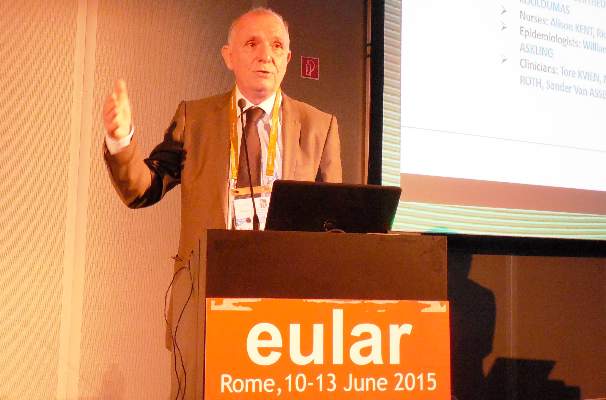
This is the “minimum list of comorbidities to systematically check” for patients with inflammatory rheumatic diseases, said Dr. Dougados, professor and chief of rheumatology at Cochin Hospital in Paris.
The task force he heads plans to soon make available on the EULAR Website screening questionnaires for assessing the status of each of these six comorbidities. “We hope you will consider this initiative and implement these points to consider in your practice,” he said.
A seventh comorbidity to potentially add to the list for regular assessment is hypertension, said Dr. Deborah P.M. Symmons, professor of rheumatology and musculoskeletal epidemiology at the University of Manchester (England), in a separate talk at the meeting. Roughly 80% of patients with rheumatoid arthritis (RA) have at least one comorbidity, she noted.
Recent study results have documented the prevalence of comorbidities in patients with RA, Dr. Symmons said. For example, an analysis of data collected during 2011 and 2012 from 3,920 RA patients in 17 countries, including 400 U.S. patients, showed that depression was the most common comorbidity, affecting 15% of patients; other comorbidities included ischemic cardiovascular disease in 6%, malignancy in 5%, and hypertension in 11% (Ann. Rheum. Dis. 2014;73:62-8). A separate survey of 9,874 RA patients from 34 countries also published last year found patients had a median of two comorbidities each. The most common were hypertension in 32% of patients, osteoporosis in 18%, and osteoarthritis in 16% (Clin. Exp. Rheum. 2014;32:869-77).

“Chronic diseases cluster together, more than you would expect by chance, perhaps because of shared risk factors such as genetic or environmental, the direct impact of inflammation, and because of treatment” patients receive for their rheumatic disease, Dr. Symmons said.
The consequence is that clinicians who manage patients with RA or other rheumatic disease must be on the lookout for comorbidities and take them into consideration when planning management strategies. A rheumatologist might be most concerned about how comobidities will affect the rheumatic disease, but for patients the overriding concern is how all their chronic diseases, not just their rheumatic disease, will affect their quality of life and physical function, she noted. “We must constantly ask ourselves whether treatment of the RA will worsen the comorbidities, or will treatment of the comorbidities worsen the RA?”
Knowledge of how RA treatments will affect comorbidities is often lacking because patients with comorbidities are usually not enrolled in clinical trials, Dr. Symmons said.
She recommended that rheumatologists systematically screen patients annually for comorbidities and discuss with each patient and with clinicians from other relevant specialties appropriate treatment based on the patient’s global status. Steroid treatment should be minimized because of the risk it poses for causing or exacerbating hypertension, hyperlipidemia, diabetes, osteoporosis, and infection.
The rheumatologist does not necessarily need to be the clinician who manages all of a patient’s comorbidities, which might be better done by a primary care physician, but the rheumatologist should know that a patient’s comorbidities are being managed by someone, and this fact should be documented in the rheumatologist’s records for each patient, she said.
Dr. Dougados and Dr. Symmons said they had no relevant financial disclosures.
On Twitter@mitchelzoler
ROME – Clinicians who care for patients with chronic inflammatory rheumatic diseases should consider regularly assessing six potential comorbidities these patients might develop, according to a set of “points to consider” developed by a task force of the European League Against Rheumatism.
The six comorbidities the working group’s report cites are ischemic cardiovascular disease, malignancies, infections, peptic ulcer, osteoporosis, and depression, Dr. Maxime Dougados said at the European Congress of Rheumatology.
This is the “minimum list of comorbidities to systematically check” for patients with inflammatory rheumatic diseases, said Dr. Dougados, professor and chief of rheumatology at Cochin Hospital in Paris.
The task force he heads plans to soon make available on the EULAR Website screening questionnaires for assessing the status of each of these six comorbidities. “We hope you will consider this initiative and implement these points to consider in your practice,” he said.
A seventh comorbidity to potentially add to the list for regular assessment is hypertension, said Dr. Deborah P.M. Symmons, professor of rheumatology and musculoskeletal epidemiology at the University of Manchester (England), in a separate talk at the meeting. Roughly 80% of patients with rheumatoid arthritis (RA) have at least one comorbidity, she noted.
Recent study results have documented the prevalence of comorbidities in patients with RA, Dr. Symmons said. For example, an analysis of data collected during 2011 and 2012 from 3,920 RA patients in 17 countries, including 400 U.S. patients, showed that depression was the most common comorbidity, affecting 15% of patients; other comorbidities included ischemic cardiovascular disease in 6%, malignancy in 5%, and hypertension in 11% (Ann. Rheum. Dis. 2014;73:62-8). A separate survey of 9,874 RA patients from 34 countries also published last year found patients had a median of two comorbidities each. The most common were hypertension in 32% of patients, osteoporosis in 18%, and osteoarthritis in 16% (Clin. Exp. Rheum. 2014;32:869-77).
“Chronic diseases cluster together, more than you would expect by chance, perhaps because of shared risk factors such as genetic or environmental, the direct impact of inflammation, and because of treatment” patients receive for their rheumatic disease, Dr. Symmons said.
The consequence is that clinicians who manage patients with RA or other rheumatic disease must be on the lookout for comorbidities and take them into consideration when planning management strategies. A rheumatologist might be most concerned about how comobidities will affect the rheumatic disease, but for patients the overriding concern is how all their chronic diseases, not just their rheumatic disease, will affect their quality of life and physical function, she noted. “We must constantly ask ourselves whether treatment of the RA will worsen the comorbidities, or will treatment of the comorbidities worsen the RA?”
Knowledge of how RA treatments will affect comorbidities is often lacking because patients with comorbidities are usually not enrolled in clinical trials, Dr. Symmons said.
She recommended that rheumatologists systematically screen patients annually for comorbidities and discuss with each patient and with clinicians from other relevant specialties appropriate treatment based on the patient’s global status. Steroid treatment should be minimized because of the risk it poses for causing or exacerbating hypertension, hyperlipidemia, diabetes, osteoporosis, and infection.
The rheumatologist does not necessarily need to be the clinician who manages all of a patient’s comorbidities, which might be better done by a primary care physician, but the rheumatologist should know that a patient’s comorbidities are being managed by someone, and this fact should be documented in the rheumatologist’s records for each patient, she said.
Dr. Dougados and Dr. Symmons said they had no relevant financial disclosures.
On Twitter@mitchelzoler
ROME – Clinicians who care for patients with chronic inflammatory rheumatic diseases should consider regularly assessing six potential comorbidities these patients might develop, according to a set of “points to consider” developed by a task force of the European League Against Rheumatism.
The six comorbidities the working group’s report cites are ischemic cardiovascular disease, malignancies, infections, peptic ulcer, osteoporosis, and depression, Dr. Maxime Dougados said at the European Congress of Rheumatology.
This is the “minimum list of comorbidities to systematically check” for patients with inflammatory rheumatic diseases, said Dr. Dougados, professor and chief of rheumatology at Cochin Hospital in Paris.
The task force he heads plans to soon make available on the EULAR Website screening questionnaires for assessing the status of each of these six comorbidities. “We hope you will consider this initiative and implement these points to consider in your practice,” he said.
A seventh comorbidity to potentially add to the list for regular assessment is hypertension, said Dr. Deborah P.M. Symmons, professor of rheumatology and musculoskeletal epidemiology at the University of Manchester (England), in a separate talk at the meeting. Roughly 80% of patients with rheumatoid arthritis (RA) have at least one comorbidity, she noted.
Recent study results have documented the prevalence of comorbidities in patients with RA, Dr. Symmons said. For example, an analysis of data collected during 2011 and 2012 from 3,920 RA patients in 17 countries, including 400 U.S. patients, showed that depression was the most common comorbidity, affecting 15% of patients; other comorbidities included ischemic cardiovascular disease in 6%, malignancy in 5%, and hypertension in 11% (Ann. Rheum. Dis. 2014;73:62-8). A separate survey of 9,874 RA patients from 34 countries also published last year found patients had a median of two comorbidities each. The most common were hypertension in 32% of patients, osteoporosis in 18%, and osteoarthritis in 16% (Clin. Exp. Rheum. 2014;32:869-77).
“Chronic diseases cluster together, more than you would expect by chance, perhaps because of shared risk factors such as genetic or environmental, the direct impact of inflammation, and because of treatment” patients receive for their rheumatic disease, Dr. Symmons said.
The consequence is that clinicians who manage patients with RA or other rheumatic disease must be on the lookout for comorbidities and take them into consideration when planning management strategies. A rheumatologist might be most concerned about how comobidities will affect the rheumatic disease, but for patients the overriding concern is how all their chronic diseases, not just their rheumatic disease, will affect their quality of life and physical function, she noted. “We must constantly ask ourselves whether treatment of the RA will worsen the comorbidities, or will treatment of the comorbidities worsen the RA?”
Knowledge of how RA treatments will affect comorbidities is often lacking because patients with comorbidities are usually not enrolled in clinical trials, Dr. Symmons said.
She recommended that rheumatologists systematically screen patients annually for comorbidities and discuss with each patient and with clinicians from other relevant specialties appropriate treatment based on the patient’s global status. Steroid treatment should be minimized because of the risk it poses for causing or exacerbating hypertension, hyperlipidemia, diabetes, osteoporosis, and infection.
The rheumatologist does not necessarily need to be the clinician who manages all of a patient’s comorbidities, which might be better done by a primary care physician, but the rheumatologist should know that a patient’s comorbidities are being managed by someone, and this fact should be documented in the rheumatologist’s records for each patient, she said.
Dr. Dougados and Dr. Symmons said they had no relevant financial disclosures.
On Twitter@mitchelzoler
AT THE EULAR 2015 CONGRESS
WCD: Secukinumab shows effectiveness for nail, palmoplantar psoriasis
VANCOUVER, B.C. – The interleukin-17A inhibitor secukinumab demonstrated the greatest improvement in nail psoriasis ever reported from a randomized, placebo-controlled trial in the phase IIIb TRANSFIGURE study, Dr. Kristian Reich reported at the World Congress of Dermatology.
At 198 patients, TRANSFIGURE is the largest-ever prospective study in patients with moderate to severe chronic plaque psoriasis and significant nail involvement. And while only the 16-week results are available thus far, when TRANSFIGURE is completed after a planned 132 weeks of treatment, it will also be the longest-ever study in the treatment of nail psoriasis, noted Dr. Reich, a dermatologist in group practice in Hamburg, Germany.

Elsewhere at WCD 2015, Dr. Alice B. Gottlieb presented the week 16 results of the phase IIIb GESTURE study, in which 205 psoriasis patients with moderate to severe psoriasis of the palms and soles were randomized to subcutaneous secukinumab (Cosentyx) at 150 or 300 mg or placebo. Dosing was weekly for the first 5 weeks and monthly thereafter.
The primary endpoint, a palmoplantar Investigator’s Global Assessment scale score of 0 or 1 – clear or almost clear – at week 16 was 33.3% with secukinumab at 300 mg, 22.1% at 150 mg, and 1.5% with placebo. The average reduction in palmoplantar PASI (Psoriasis Area Severity Index) score from baseline was 54.6% with high-dose and 35.3% with low-dose secukinumab, compared with 4.1% in placebo-treated controls, reported Dr. Gottlieb, professor and chair of dermatology at Tufts University, Boston.
Like the TRANSFIGURE trial, GESTURE will continue for 132 weeks, with the initial placebo-treated controls being randomized to secukinumab at 150 or 300 mg after week 16.
Dr. Reich reported that by 16 weeks in TRANSFIGURE, mean scores on the Nail Psoriasis Severity Index had improved by 45.3%, compared with baseline, in patients on secukinumab 300 mg, 37.9% in those on secukinumab 150 mg, and 10.8% with placebo.
The results on the skin were dramatic: a PASI 75 rate of 87.1% with secukinumab 300 mg, 77% with secukinumab 150 mg, and 5.1% with placebo. The PASI 100 response rate – meaning totally clear skin – was 31.9% with high-dose and 25.2% with lower-dose secukinumab, while there was a zero PASI 100 rate in controls.
The only adverse events more common than with placebo were nasopharyngitis and upper respiratory infections.
Dr. Reich predicted that as the ongoing TRANSFIGURE study continues well beyond 16 weeks, the nail psoriasis response rates will climb, since nails are so slow growing.
TRANSFIGURE and GESTURE are sponsored by Novartis, which markets secukinumab. Dr. Reich and Dr. Gottlieb reported having financial relationships with Novartis and numerous other pharmaceutical companies.
VANCOUVER, B.C. – The interleukin-17A inhibitor secukinumab demonstrated the greatest improvement in nail psoriasis ever reported from a randomized, placebo-controlled trial in the phase IIIb TRANSFIGURE study, Dr. Kristian Reich reported at the World Congress of Dermatology.
At 198 patients, TRANSFIGURE is the largest-ever prospective study in patients with moderate to severe chronic plaque psoriasis and significant nail involvement. And while only the 16-week results are available thus far, when TRANSFIGURE is completed after a planned 132 weeks of treatment, it will also be the longest-ever study in the treatment of nail psoriasis, noted Dr. Reich, a dermatologist in group practice in Hamburg, Germany.
Elsewhere at WCD 2015, Dr. Alice B. Gottlieb presented the week 16 results of the phase IIIb GESTURE study, in which 205 psoriasis patients with moderate to severe psoriasis of the palms and soles were randomized to subcutaneous secukinumab (Cosentyx) at 150 or 300 mg or placebo. Dosing was weekly for the first 5 weeks and monthly thereafter.
The primary endpoint, a palmoplantar Investigator’s Global Assessment scale score of 0 or 1 – clear or almost clear – at week 16 was 33.3% with secukinumab at 300 mg, 22.1% at 150 mg, and 1.5% with placebo. The average reduction in palmoplantar PASI (Psoriasis Area Severity Index) score from baseline was 54.6% with high-dose and 35.3% with low-dose secukinumab, compared with 4.1% in placebo-treated controls, reported Dr. Gottlieb, professor and chair of dermatology at Tufts University, Boston.
Like the TRANSFIGURE trial, GESTURE will continue for 132 weeks, with the initial placebo-treated controls being randomized to secukinumab at 150 or 300 mg after week 16.
Dr. Reich reported that by 16 weeks in TRANSFIGURE, mean scores on the Nail Psoriasis Severity Index had improved by 45.3%, compared with baseline, in patients on secukinumab 300 mg, 37.9% in those on secukinumab 150 mg, and 10.8% with placebo.
The results on the skin were dramatic: a PASI 75 rate of 87.1% with secukinumab 300 mg, 77% with secukinumab 150 mg, and 5.1% with placebo. The PASI 100 response rate – meaning totally clear skin – was 31.9% with high-dose and 25.2% with lower-dose secukinumab, while there was a zero PASI 100 rate in controls.
The only adverse events more common than with placebo were nasopharyngitis and upper respiratory infections.
Dr. Reich predicted that as the ongoing TRANSFIGURE study continues well beyond 16 weeks, the nail psoriasis response rates will climb, since nails are so slow growing.
TRANSFIGURE and GESTURE are sponsored by Novartis, which markets secukinumab. Dr. Reich and Dr. Gottlieb reported having financial relationships with Novartis and numerous other pharmaceutical companies.
VANCOUVER, B.C. – The interleukin-17A inhibitor secukinumab demonstrated the greatest improvement in nail psoriasis ever reported from a randomized, placebo-controlled trial in the phase IIIb TRANSFIGURE study, Dr. Kristian Reich reported at the World Congress of Dermatology.
At 198 patients, TRANSFIGURE is the largest-ever prospective study in patients with moderate to severe chronic plaque psoriasis and significant nail involvement. And while only the 16-week results are available thus far, when TRANSFIGURE is completed after a planned 132 weeks of treatment, it will also be the longest-ever study in the treatment of nail psoriasis, noted Dr. Reich, a dermatologist in group practice in Hamburg, Germany.
Elsewhere at WCD 2015, Dr. Alice B. Gottlieb presented the week 16 results of the phase IIIb GESTURE study, in which 205 psoriasis patients with moderate to severe psoriasis of the palms and soles were randomized to subcutaneous secukinumab (Cosentyx) at 150 or 300 mg or placebo. Dosing was weekly for the first 5 weeks and monthly thereafter.
The primary endpoint, a palmoplantar Investigator’s Global Assessment scale score of 0 or 1 – clear or almost clear – at week 16 was 33.3% with secukinumab at 300 mg, 22.1% at 150 mg, and 1.5% with placebo. The average reduction in palmoplantar PASI (Psoriasis Area Severity Index) score from baseline was 54.6% with high-dose and 35.3% with low-dose secukinumab, compared with 4.1% in placebo-treated controls, reported Dr. Gottlieb, professor and chair of dermatology at Tufts University, Boston.
Like the TRANSFIGURE trial, GESTURE will continue for 132 weeks, with the initial placebo-treated controls being randomized to secukinumab at 150 or 300 mg after week 16.
Dr. Reich reported that by 16 weeks in TRANSFIGURE, mean scores on the Nail Psoriasis Severity Index had improved by 45.3%, compared with baseline, in patients on secukinumab 300 mg, 37.9% in those on secukinumab 150 mg, and 10.8% with placebo.
The results on the skin were dramatic: a PASI 75 rate of 87.1% with secukinumab 300 mg, 77% with secukinumab 150 mg, and 5.1% with placebo. The PASI 100 response rate – meaning totally clear skin – was 31.9% with high-dose and 25.2% with lower-dose secukinumab, while there was a zero PASI 100 rate in controls.
The only adverse events more common than with placebo were nasopharyngitis and upper respiratory infections.
Dr. Reich predicted that as the ongoing TRANSFIGURE study continues well beyond 16 weeks, the nail psoriasis response rates will climb, since nails are so slow growing.
TRANSFIGURE and GESTURE are sponsored by Novartis, which markets secukinumab. Dr. Reich and Dr. Gottlieb reported having financial relationships with Novartis and numerous other pharmaceutical companies.
AT WCD 2015
Key clinical point: Two phase IIIb trials show secukinumab at 300 mg is the most effective drug ever formally studied for nail or palmoplantar psoriasis.
Major finding: At 16 weeks, secukinumab at 300 mg improved nail psoriasis by 45.3% and palmoplantar psoriasis by 33.3%.
Data source: The phase IIIb TRANSFIGURE and GESTURE studies, ongoing randomized, prospective, initially double-blind studies in which 198 patients with significant nail psoriasis and 205 with palmoplantar psoriasis received secukinumab at 150 or 300 mg or placebo. Both studies will continue out to 132 weeks.
Disclosures: TRANSFIGURE and GESTURE are sponsored by Novartis, which markets secukinumab. Dr. Reich and Dr. Gottlieb reported having financial relationships with Novartis and numerous other pharmaceutical companies.

WCD: IL-23p19 inhibitors yield ‘promising’ psoriasis results
VANCOUVER, B.C. – So far, monoclonal antibodies that specifically target IL-23p19 are showing promise for treating chronic plaque psoriasis and are usually well tolerated, Dr. Elisabeth Riedl said at the World Congress of Dermatology.
The agents target the interleukin (IL)-23 cytokine, which is important in the induction of T-helper-17 cells in psoriasis and several other inflammatory disorders, said Dr. Riedl of the department of dermatology at Mount Sinai Hospital in New York. IL-23 has two subunits – p40, which it shares with IL-12, and p19, which is specific for IL-23, she said. Based on earlier research, the effectiveness of psoriasis treatments that target the p40 subunit seems to depend mostly on their ability to neutralize IL-23, not IL-12, she noted.
That observation helped spur several psoriasis trials of monoclonal antibodies that target IL-23p19, according to Dr. Riedl. Among the most promising of the monoclonal antibodies is BI 655066, which significantly outperformed placebo in a randomized, double-blind phase I trial reported earlier in 2015. At week 12, 87% of patients who received intravenous or oral BI65506 achieved a PASI (Psoriasis Area and Severity Index) 75 score, while 58% achieved a PASI 90 score and 16% achieved PASI 100, compared with none of the placebo group.
Another IL-23p19 inhibitor, guselkumab (CNTO 1959), beat placebo in a small randomized, double-blind phase I trial, Dr. Riedl noted. All patients who received a single subcutaneous injection of 300 mg of guselkumab achieved a PASI 75 score, and about 80% achieved PASI 90, compared with none of the placebo group, she noted.
The third IL-23p19 inhibitor, tildrakizumab (MK-3222), also beat placebo at all doses tested in a three-part, randomized, placebo-controlled phase I trial, Dr. Riedl said. Furthermore, the histopathology of a subgroup of patients revealed significant decreases in lesions, compared with baseline, and a significant correlation between histopathologic and clinical scores, she noted. “In phase II, there was a significant response for all dosing cohorts, with a durable response to 52 weeks,” she added.
The primary safety concern for IL-23 inhibitors appears to be increased infection risk, although patients with genetic diseases connected to the IL-23/Th17 pathway already are at increased risk for infections such as candidiasis, mycobacteriosis, salmonellosis, and staphylococcal and Klebsiella infections, Dr. Riedl noted. “Ustekinumab targets IL-12/IL-23 and so far has shown a favorable safety profile,” she said, pointing to a 5-year follow-up study of the antibody that found no increase over time in adverse events and similar rates of adverse events among dosing groups.
Infections and headaches were the most commonly reported adverse events in phase I and II trials of targeted anti–IL-23p19 antibodies, Dr. Riedl said. In the phase I trial of BI 655066, rates of adverse events were similar for treatment and placebo except for nasopharyngitis, which affected 13% of the BI 655066 group and none of the placebo group, she noted. Guselkumab also was associated with similar rates of overall adverse events, compared with placebo, in its phase I trial, although 6 of 20 patients who received guselkumab developed infections, including two upper respiratory tract infections and one event each of bronchitis, folliculitis, viral gastroenteritis, herpes simplex infection, lower respiratory tract infection, vaginal infection, and nasopharyngitis, she said. Tildrakizumab was generally well tolerated in its phase IIb trial, she added. Serious adverse events that might have been related to treatment were rare but included bacterial arthritis, lymphedema, melanoma, stroke, epiglottitis, and knee infection.
Taken together, the data for IL-23p19 inhibitors are encouraging, according to Dr. Riedl. “The results suggest that selective inhibition of IL-23p19 is a promising target for novel therapies,” she said.
Dr. Riedl reported receiving grant support or serving as a consultant, advisory board member, or speakers bureau member for Abbvie, Celgen, Merck, Pfizer, and Janssen.
VANCOUVER, B.C. – So far, monoclonal antibodies that specifically target IL-23p19 are showing promise for treating chronic plaque psoriasis and are usually well tolerated, Dr. Elisabeth Riedl said at the World Congress of Dermatology.
The agents target the interleukin (IL)-23 cytokine, which is important in the induction of T-helper-17 cells in psoriasis and several other inflammatory disorders, said Dr. Riedl of the department of dermatology at Mount Sinai Hospital in New York. IL-23 has two subunits – p40, which it shares with IL-12, and p19, which is specific for IL-23, she said. Based on earlier research, the effectiveness of psoriasis treatments that target the p40 subunit seems to depend mostly on their ability to neutralize IL-23, not IL-12, she noted.
That observation helped spur several psoriasis trials of monoclonal antibodies that target IL-23p19, according to Dr. Riedl. Among the most promising of the monoclonal antibodies is BI 655066, which significantly outperformed placebo in a randomized, double-blind phase I trial reported earlier in 2015. At week 12, 87% of patients who received intravenous or oral BI65506 achieved a PASI (Psoriasis Area and Severity Index) 75 score, while 58% achieved a PASI 90 score and 16% achieved PASI 100, compared with none of the placebo group.
Another IL-23p19 inhibitor, guselkumab (CNTO 1959), beat placebo in a small randomized, double-blind phase I trial, Dr. Riedl noted. All patients who received a single subcutaneous injection of 300 mg of guselkumab achieved a PASI 75 score, and about 80% achieved PASI 90, compared with none of the placebo group, she noted.
The third IL-23p19 inhibitor, tildrakizumab (MK-3222), also beat placebo at all doses tested in a three-part, randomized, placebo-controlled phase I trial, Dr. Riedl said. Furthermore, the histopathology of a subgroup of patients revealed significant decreases in lesions, compared with baseline, and a significant correlation between histopathologic and clinical scores, she noted. “In phase II, there was a significant response for all dosing cohorts, with a durable response to 52 weeks,” she added.
The primary safety concern for IL-23 inhibitors appears to be increased infection risk, although patients with genetic diseases connected to the IL-23/Th17 pathway already are at increased risk for infections such as candidiasis, mycobacteriosis, salmonellosis, and staphylococcal and Klebsiella infections, Dr. Riedl noted. “Ustekinumab targets IL-12/IL-23 and so far has shown a favorable safety profile,” she said, pointing to a 5-year follow-up study of the antibody that found no increase over time in adverse events and similar rates of adverse events among dosing groups.
Infections and headaches were the most commonly reported adverse events in phase I and II trials of targeted anti–IL-23p19 antibodies, Dr. Riedl said. In the phase I trial of BI 655066, rates of adverse events were similar for treatment and placebo except for nasopharyngitis, which affected 13% of the BI 655066 group and none of the placebo group, she noted. Guselkumab also was associated with similar rates of overall adverse events, compared with placebo, in its phase I trial, although 6 of 20 patients who received guselkumab developed infections, including two upper respiratory tract infections and one event each of bronchitis, folliculitis, viral gastroenteritis, herpes simplex infection, lower respiratory tract infection, vaginal infection, and nasopharyngitis, she said. Tildrakizumab was generally well tolerated in its phase IIb trial, she added. Serious adverse events that might have been related to treatment were rare but included bacterial arthritis, lymphedema, melanoma, stroke, epiglottitis, and knee infection.
Taken together, the data for IL-23p19 inhibitors are encouraging, according to Dr. Riedl. “The results suggest that selective inhibition of IL-23p19 is a promising target for novel therapies,” she said.
Dr. Riedl reported receiving grant support or serving as a consultant, advisory board member, or speakers bureau member for Abbvie, Celgen, Merck, Pfizer, and Janssen.
VANCOUVER, B.C. – So far, monoclonal antibodies that specifically target IL-23p19 are showing promise for treating chronic plaque psoriasis and are usually well tolerated, Dr. Elisabeth Riedl said at the World Congress of Dermatology.
The agents target the interleukin (IL)-23 cytokine, which is important in the induction of T-helper-17 cells in psoriasis and several other inflammatory disorders, said Dr. Riedl of the department of dermatology at Mount Sinai Hospital in New York. IL-23 has two subunits – p40, which it shares with IL-12, and p19, which is specific for IL-23, she said. Based on earlier research, the effectiveness of psoriasis treatments that target the p40 subunit seems to depend mostly on their ability to neutralize IL-23, not IL-12, she noted.
That observation helped spur several psoriasis trials of monoclonal antibodies that target IL-23p19, according to Dr. Riedl. Among the most promising of the monoclonal antibodies is BI 655066, which significantly outperformed placebo in a randomized, double-blind phase I trial reported earlier in 2015. At week 12, 87% of patients who received intravenous or oral BI65506 achieved a PASI (Psoriasis Area and Severity Index) 75 score, while 58% achieved a PASI 90 score and 16% achieved PASI 100, compared with none of the placebo group.
Another IL-23p19 inhibitor, guselkumab (CNTO 1959), beat placebo in a small randomized, double-blind phase I trial, Dr. Riedl noted. All patients who received a single subcutaneous injection of 300 mg of guselkumab achieved a PASI 75 score, and about 80% achieved PASI 90, compared with none of the placebo group, she noted.
The third IL-23p19 inhibitor, tildrakizumab (MK-3222), also beat placebo at all doses tested in a three-part, randomized, placebo-controlled phase I trial, Dr. Riedl said. Furthermore, the histopathology of a subgroup of patients revealed significant decreases in lesions, compared with baseline, and a significant correlation between histopathologic and clinical scores, she noted. “In phase II, there was a significant response for all dosing cohorts, with a durable response to 52 weeks,” she added.
The primary safety concern for IL-23 inhibitors appears to be increased infection risk, although patients with genetic diseases connected to the IL-23/Th17 pathway already are at increased risk for infections such as candidiasis, mycobacteriosis, salmonellosis, and staphylococcal and Klebsiella infections, Dr. Riedl noted. “Ustekinumab targets IL-12/IL-23 and so far has shown a favorable safety profile,” she said, pointing to a 5-year follow-up study of the antibody that found no increase over time in adverse events and similar rates of adverse events among dosing groups.
Infections and headaches were the most commonly reported adverse events in phase I and II trials of targeted anti–IL-23p19 antibodies, Dr. Riedl said. In the phase I trial of BI 655066, rates of adverse events were similar for treatment and placebo except for nasopharyngitis, which affected 13% of the BI 655066 group and none of the placebo group, she noted. Guselkumab also was associated with similar rates of overall adverse events, compared with placebo, in its phase I trial, although 6 of 20 patients who received guselkumab developed infections, including two upper respiratory tract infections and one event each of bronchitis, folliculitis, viral gastroenteritis, herpes simplex infection, lower respiratory tract infection, vaginal infection, and nasopharyngitis, she said. Tildrakizumab was generally well tolerated in its phase IIb trial, she added. Serious adverse events that might have been related to treatment were rare but included bacterial arthritis, lymphedema, melanoma, stroke, epiglottitis, and knee infection.
Taken together, the data for IL-23p19 inhibitors are encouraging, according to Dr. Riedl. “The results suggest that selective inhibition of IL-23p19 is a promising target for novel therapies,” she said.
Dr. Riedl reported receiving grant support or serving as a consultant, advisory board member, or speakers bureau member for Abbvie, Celgen, Merck, Pfizer, and Janssen.
EXPERT ANALYSIS FROM WCD 2015
WCD: Ixekizumab beats etanercept for psoriatic itch
VANCOUVER, B.C. – Ixekizumab-treated patients with plaque psoriasis reported markedly faster and larger improvements in itch severity than those on high-dose etanercept or placebo in a large head-to-head phase III randomized trial.
Ixekizumab is an investigational humanized IgG4 monoclonal antibody directed against the proinflammatory cytokines interleukin-17A. In the 1,224-patient phase III UNCOVER-2 trial, itch severity was rapidly reduced in ixekizumab-treated patients as early as week 1, when the first assessment occurred, Dr. Gil Yosipovitch reported at the World Congress of Dermatology.
Moreover, a clinically meaningful itch response – defined by Dr. Yosipovitch and coinvestigators as at least a 4-point drop from baseline on a 0-10 Itch Numeric Rating Scale based upon 24-hour recall – occurred in the ixekizumab-treated patients by week 4. Patients randomized to etanercept (Enbrel) at 50 mg twice per week never reached that bar during the 12-week study. Neither did the placebo-treated controls, noted Dr. Yosipovitch, professor and chairman of the department of dermatology at Temple University in Philadelphia.
The average baseline itch severity score in UNCOVER-2 was 6.6 points. The mean 12-week reduction in itch score was 0.4 points, or 14%, with placebo; 3.6 points, or 51%, with etanercept; 4.9 points, or 75%, with ixekizumab at 80 mg every 4 weeks; and 5.2 points, or 76%, with ixekizumab 80 mg every 2 weeks.
“The most important part of my presentation today is the rapid response to ixekizumab. There’s a significant reduction in itch in the first week and a 75% reduction at 12 weeks. I have to tell you, as someone who’s been in the itch field for a very long time, those are very impressive results,” the dermatologist declared. “Fast improvement is the issue, really. It we want a drug that claims to have an antipruritic effect, it has to work fast, because that’s what really bothers the patient.”
Another impressive statistic: 41% of ixekizumab-treated patients reported “no itching” at 12 weeks, compared with 17% on high-dose etanercept and 2% with placebo, he continued.
A recurring theme at WCD 2015, bolstered by an impressively large survey of North American and European dermatologists, rheumatologists, and patients, is that psoriasis patients feel itch hasn’t gotten the attention it deserves from physicians. Itch is the most common symptom of psoriasis, and more psoriasis patients rate itch as the most bothersome aspect of their chronic inflammatory skin disease than they do any other symptom, Dr. Yosipovitch noted.
Aside from this UNCOVER-2 analysis, very few data exist regarding the antipruritic effects of various biologic agents, he observed.
“I am very excited about this type of approach. Hopefully other companies wil now put more focus on itch. I think this is what the patients want, and if we can achieve fast responses, we are doing our job well,” the dermatologist said.
One audience member asked why the itch score is based upon recall over the previous 24 hours. Why not a week?
Dr. Yosipovitch replied that from other studies he’s done, he has found itch recall beyond 24 hours to be highly problematic.
“I actually recommend doing it twice a day, because itch is not constant throughout the day. It fluctuates. It is worst at nighttime, and that affects quality of life. In trials, I try to have patients keep a diary capturing itch evening and morning,” Dr. Yosipovitch said.
Another audience member asked whether a rapid response to itch might be a biomarker predictive of a later favorable response in terms of lesion size. If so, he continued, perhaps failure to experience a reduction in itch within the first week or so on an agent such a ixekizumab might be a signal to switch to another drug, rather than waiting for 4-8 weeks.
Dr. Yosipovitch replied that it’s an excellent thought and worthy of study, but the answer simply isn’t known yet.
The primary outcomes of UNCOVER-2 have previously been presented (Lancet 2015 June 10 [doi: 10.1016/S0140-6736(15)60125-8]). Briefly, the Psoriasis Area Severity Index (PASI) 75 response rate was 2% with placebo, 42% with etanercept, 78% with ixekizumab every 4 weeks, and 90% with ixekizumab every 2 weeks. When the bar was set higher – a PASI 100 – the response rate was 1% with placebo, 5% with etanercept, and 31% and 41% with ixekizumab every 4 and 2 weeks.
The UNCOVER-2 trial was sponsored by Eli Lilly. Dr. Yosipovitch is a recipient of research grants from and/or a consultant to Eli Lilly and roughly a dozen other pharmaceutical companies.
VANCOUVER, B.C. – Ixekizumab-treated patients with plaque psoriasis reported markedly faster and larger improvements in itch severity than those on high-dose etanercept or placebo in a large head-to-head phase III randomized trial.
Ixekizumab is an investigational humanized IgG4 monoclonal antibody directed against the proinflammatory cytokines interleukin-17A. In the 1,224-patient phase III UNCOVER-2 trial, itch severity was rapidly reduced in ixekizumab-treated patients as early as week 1, when the first assessment occurred, Dr. Gil Yosipovitch reported at the World Congress of Dermatology.
Moreover, a clinically meaningful itch response – defined by Dr. Yosipovitch and coinvestigators as at least a 4-point drop from baseline on a 0-10 Itch Numeric Rating Scale based upon 24-hour recall – occurred in the ixekizumab-treated patients by week 4. Patients randomized to etanercept (Enbrel) at 50 mg twice per week never reached that bar during the 12-week study. Neither did the placebo-treated controls, noted Dr. Yosipovitch, professor and chairman of the department of dermatology at Temple University in Philadelphia.
The average baseline itch severity score in UNCOVER-2 was 6.6 points. The mean 12-week reduction in itch score was 0.4 points, or 14%, with placebo; 3.6 points, or 51%, with etanercept; 4.9 points, or 75%, with ixekizumab at 80 mg every 4 weeks; and 5.2 points, or 76%, with ixekizumab 80 mg every 2 weeks.
“The most important part of my presentation today is the rapid response to ixekizumab. There’s a significant reduction in itch in the first week and a 75% reduction at 12 weeks. I have to tell you, as someone who’s been in the itch field for a very long time, those are very impressive results,” the dermatologist declared. “Fast improvement is the issue, really. It we want a drug that claims to have an antipruritic effect, it has to work fast, because that’s what really bothers the patient.”
Another impressive statistic: 41% of ixekizumab-treated patients reported “no itching” at 12 weeks, compared with 17% on high-dose etanercept and 2% with placebo, he continued.
A recurring theme at WCD 2015, bolstered by an impressively large survey of North American and European dermatologists, rheumatologists, and patients, is that psoriasis patients feel itch hasn’t gotten the attention it deserves from physicians. Itch is the most common symptom of psoriasis, and more psoriasis patients rate itch as the most bothersome aspect of their chronic inflammatory skin disease than they do any other symptom, Dr. Yosipovitch noted.
Aside from this UNCOVER-2 analysis, very few data exist regarding the antipruritic effects of various biologic agents, he observed.
“I am very excited about this type of approach. Hopefully other companies wil now put more focus on itch. I think this is what the patients want, and if we can achieve fast responses, we are doing our job well,” the dermatologist said.
One audience member asked why the itch score is based upon recall over the previous 24 hours. Why not a week?
Dr. Yosipovitch replied that from other studies he’s done, he has found itch recall beyond 24 hours to be highly problematic.
“I actually recommend doing it twice a day, because itch is not constant throughout the day. It fluctuates. It is worst at nighttime, and that affects quality of life. In trials, I try to have patients keep a diary capturing itch evening and morning,” Dr. Yosipovitch said.
Another audience member asked whether a rapid response to itch might be a biomarker predictive of a later favorable response in terms of lesion size. If so, he continued, perhaps failure to experience a reduction in itch within the first week or so on an agent such a ixekizumab might be a signal to switch to another drug, rather than waiting for 4-8 weeks.
Dr. Yosipovitch replied that it’s an excellent thought and worthy of study, but the answer simply isn’t known yet.
The primary outcomes of UNCOVER-2 have previously been presented (Lancet 2015 June 10 [doi: 10.1016/S0140-6736(15)60125-8]). Briefly, the Psoriasis Area Severity Index (PASI) 75 response rate was 2% with placebo, 42% with etanercept, 78% with ixekizumab every 4 weeks, and 90% with ixekizumab every 2 weeks. When the bar was set higher – a PASI 100 – the response rate was 1% with placebo, 5% with etanercept, and 31% and 41% with ixekizumab every 4 and 2 weeks.
The UNCOVER-2 trial was sponsored by Eli Lilly. Dr. Yosipovitch is a recipient of research grants from and/or a consultant to Eli Lilly and roughly a dozen other pharmaceutical companies.
VANCOUVER, B.C. – Ixekizumab-treated patients with plaque psoriasis reported markedly faster and larger improvements in itch severity than those on high-dose etanercept or placebo in a large head-to-head phase III randomized trial.
Ixekizumab is an investigational humanized IgG4 monoclonal antibody directed against the proinflammatory cytokines interleukin-17A. In the 1,224-patient phase III UNCOVER-2 trial, itch severity was rapidly reduced in ixekizumab-treated patients as early as week 1, when the first assessment occurred, Dr. Gil Yosipovitch reported at the World Congress of Dermatology.
Moreover, a clinically meaningful itch response – defined by Dr. Yosipovitch and coinvestigators as at least a 4-point drop from baseline on a 0-10 Itch Numeric Rating Scale based upon 24-hour recall – occurred in the ixekizumab-treated patients by week 4. Patients randomized to etanercept (Enbrel) at 50 mg twice per week never reached that bar during the 12-week study. Neither did the placebo-treated controls, noted Dr. Yosipovitch, professor and chairman of the department of dermatology at Temple University in Philadelphia.
The average baseline itch severity score in UNCOVER-2 was 6.6 points. The mean 12-week reduction in itch score was 0.4 points, or 14%, with placebo; 3.6 points, or 51%, with etanercept; 4.9 points, or 75%, with ixekizumab at 80 mg every 4 weeks; and 5.2 points, or 76%, with ixekizumab 80 mg every 2 weeks.
“The most important part of my presentation today is the rapid response to ixekizumab. There’s a significant reduction in itch in the first week and a 75% reduction at 12 weeks. I have to tell you, as someone who’s been in the itch field for a very long time, those are very impressive results,” the dermatologist declared. “Fast improvement is the issue, really. It we want a drug that claims to have an antipruritic effect, it has to work fast, because that’s what really bothers the patient.”
Another impressive statistic: 41% of ixekizumab-treated patients reported “no itching” at 12 weeks, compared with 17% on high-dose etanercept and 2% with placebo, he continued.
A recurring theme at WCD 2015, bolstered by an impressively large survey of North American and European dermatologists, rheumatologists, and patients, is that psoriasis patients feel itch hasn’t gotten the attention it deserves from physicians. Itch is the most common symptom of psoriasis, and more psoriasis patients rate itch as the most bothersome aspect of their chronic inflammatory skin disease than they do any other symptom, Dr. Yosipovitch noted.
Aside from this UNCOVER-2 analysis, very few data exist regarding the antipruritic effects of various biologic agents, he observed.
“I am very excited about this type of approach. Hopefully other companies wil now put more focus on itch. I think this is what the patients want, and if we can achieve fast responses, we are doing our job well,” the dermatologist said.
One audience member asked why the itch score is based upon recall over the previous 24 hours. Why not a week?
Dr. Yosipovitch replied that from other studies he’s done, he has found itch recall beyond 24 hours to be highly problematic.
“I actually recommend doing it twice a day, because itch is not constant throughout the day. It fluctuates. It is worst at nighttime, and that affects quality of life. In trials, I try to have patients keep a diary capturing itch evening and morning,” Dr. Yosipovitch said.
Another audience member asked whether a rapid response to itch might be a biomarker predictive of a later favorable response in terms of lesion size. If so, he continued, perhaps failure to experience a reduction in itch within the first week or so on an agent such a ixekizumab might be a signal to switch to another drug, rather than waiting for 4-8 weeks.
Dr. Yosipovitch replied that it’s an excellent thought and worthy of study, but the answer simply isn’t known yet.
The primary outcomes of UNCOVER-2 have previously been presented (Lancet 2015 June 10 [doi: 10.1016/S0140-6736(15)60125-8]). Briefly, the Psoriasis Area Severity Index (PASI) 75 response rate was 2% with placebo, 42% with etanercept, 78% with ixekizumab every 4 weeks, and 90% with ixekizumab every 2 weeks. When the bar was set higher – a PASI 100 – the response rate was 1% with placebo, 5% with etanercept, and 31% and 41% with ixekizumab every 4 and 2 weeks.
The UNCOVER-2 trial was sponsored by Eli Lilly. Dr. Yosipovitch is a recipient of research grants from and/or a consultant to Eli Lilly and roughly a dozen other pharmaceutical companies.
AT WCD 2015
Key clinical point: Ixekizumab reduces psoriatic itch markedly faster and more profoundly than etanercept.
Major finding: Psoriasis patients randomized to ixekizumab showed a significant reduction in itch scores within the first week.
Data source: The UNCOVER-2 trial was a 12-week, phase III randomized trial involving 1,224 patients with plaque psoriasis.
Disclosures: UNCOVER-2 was sponsored by Eli Lilly. The presenter reported receiving research grants from and/or serving as a consultant to Eli Lilly and roughly a dozen other pharmaceutical companies.
VIDEO: Could a deep Koebner phenomenon trigger psoriatic arthritis?
ROME – Psoriasis patients with a past history of bone or joint trauma had about 50% higher risk of later developing psoriatic arthritis than did those without a history of trauma in a longitudinal, population-based study of more than 70,000 psoriasis patients in the United Kingdom.
The relationship between trauma and later development of psoriatic arthritis could involve a deep Koebner phenomenon similar to what is observed with the Koebner phenomenon in the skin, suggested lead investigator Dr. Thorvardur Löve in an interview at the European Congress of Rheumatology.
Based on these findings, “one of the things that we are very excited about is the potential to think of strategies and test strategies that might be used in psoriasis patients once they are injured. So should we do anything different in an injured psoriasis patient, for instance, some sort of preventive treatment?” said Dr. Löve of Landspitali University Hospital in Reykjavik, Iceland.
The video associated with this article is no longer available on this site. Please view all of our videos on the MDedge YouTube channel
ROME – Psoriasis patients with a past history of bone or joint trauma had about 50% higher risk of later developing psoriatic arthritis than did those without a history of trauma in a longitudinal, population-based study of more than 70,000 psoriasis patients in the United Kingdom.
The relationship between trauma and later development of psoriatic arthritis could involve a deep Koebner phenomenon similar to what is observed with the Koebner phenomenon in the skin, suggested lead investigator Dr. Thorvardur Löve in an interview at the European Congress of Rheumatology.
Based on these findings, “one of the things that we are very excited about is the potential to think of strategies and test strategies that might be used in psoriasis patients once they are injured. So should we do anything different in an injured psoriasis patient, for instance, some sort of preventive treatment?” said Dr. Löve of Landspitali University Hospital in Reykjavik, Iceland.
The video associated with this article is no longer available on this site. Please view all of our videos on the MDedge YouTube channel
ROME – Psoriasis patients with a past history of bone or joint trauma had about 50% higher risk of later developing psoriatic arthritis than did those without a history of trauma in a longitudinal, population-based study of more than 70,000 psoriasis patients in the United Kingdom.
The relationship between trauma and later development of psoriatic arthritis could involve a deep Koebner phenomenon similar to what is observed with the Koebner phenomenon in the skin, suggested lead investigator Dr. Thorvardur Löve in an interview at the European Congress of Rheumatology.
Based on these findings, “one of the things that we are very excited about is the potential to think of strategies and test strategies that might be used in psoriasis patients once they are injured. So should we do anything different in an injured psoriasis patient, for instance, some sort of preventive treatment?” said Dr. Löve of Landspitali University Hospital in Reykjavik, Iceland.
The video associated with this article is no longer available on this site. Please view all of our videos on the MDedge YouTube channel
AT THE EULAR 2015 CONGRESS

Counseling key to guiding rheumatic disease treatment during pregnancy
ROME – New therapies introduced over the past 15 years have vastly improved the lives of patients with rheumatic diseases but are also creating complex treatment scenarios as more female patients consider starting a family or become pregnant while taking medication. At the European Congress of Rheumatology, experts discussed the importance of contraceptive counseling, pregnancy planning, and how to treat pregnant women with rheumatic diseases.
“Nowadays we have such better treatments for our patients that sexuality and contraception is becoming more and more important,” said Dr. Eliza Chakravarty of the Oklahoma Medical Research Foundation in Oklahoma City. Yet contraception is “quite underused in our patients,” she observed.

Indeed, in one study looking at the risk of unintended pregnancy in women with lupus, over half (55%) of the 212 women surveyed admitted that they had unprotected sex at least once, with almost a quarter (23%) saying that this was usually in the preceding 3 months (Arthritis Care Res. 2008;59:863-6).
This underuse of contraception is not unique to lupus patients, and there are many reasons why women with rheumatic diseases who are sexually active may not always use adequate contraception. One of these reasons was the lack of time during consultations, which tend to focus on disease management rather than issues such as contraceptive counseling. Other reasons may be misconceptions on fertility or a lack of understanding of the teratogenicity of medications or the effect that hormones may have on disease activity. Women also may be reluctant to take additional medicines or feel uncomfortable discussing the topic with their rheumatologists.
“Patients see their rheumatologist more frequently than any other [health care] provider,” Dr. Chakravarty said, adding that continual follow-up appointments over time provide an opportunity to discuss fertility and changing contraception needs. “Contraception is a component of effective disease management for young women,” she said.
There are many contraceptive methods available, each with pros and cons and varying efficacy, so women have multiple options to choose from to suit their personal preferences and lifestyles. Dr. Chakravarty suggested that, of all the available methods, long-acting reversible contraceptive methods, such as the subdermal implant or intrauterine device, were perhaps the best choice for many women with rheumatic diseases since they are associated with a low rate of accidental pregnancy and after insertion there is little or nothing to do or remember until the devices needed replacing after 3-10 years.
Dr. Monika Østensen of the Norwegian National Advisory Unit on Pregnancy and Rheumatic Diseases at St. Olavs Hospital-Trondheim University Hospital, echoed the need for repeated family-planning advice. Of course, pregnancies occur even with the best planning, she said, and the question then is how to manage the rheumatic disease.
The need for treatment will depending on the type of disease, she said, noting that the need generally decreased during pregnancy in women with rheumatoid arthritis (RA) but increased in those with ankylosing spondylitis, most notably in the first and second trimesters (Ann. Rheum. Dis. 2004;63:1212-7). The ideal situation would be to adjust disease-directed therapy if needed before conception, although methotrexate is the only drug with proven teratogenicity that is used for RA and ankylosing spondylitis and that should definitely be stopped, she said.
There is a lot of evidence that methotrexate needs to be stopped before pregnancy. One recent prospective study (Arthritis Rheumatol. 2014;66:1101-10) looked at pregnancy outcomes and methotrexate use and found a high rate of spontaneous abortions if it was used within 10 weeks of conception (14.4%) or in the first trimester (42.5%). The rate of major birth defects was 6.6% if methotrexate was used in early pregnancy, versus 2.9% for women without rheumatic disease or 3.5% in women with rheumatic disease who were not taking the disease-modifying antirheumatic drug (DMARD).
Dr. Østensen advised that, when stopping methotrexate, women should be counseled to wait for one menstrual cycle before attempting to conceive and not to stop therapy without perhaps checking for fertility or switching to another pregnancy-compatible drug. She also stressed that patients who want to become pregnant or who do become pregnant should not immediately stop taking their medication without consulting a rheumatologist. Such an action could result in disease flares, and the aim of therapy should always be to keep the patient in remission or low disease activity and continue drugs that support remission while trying to minimize any likely effects on the fetus.
Leflunomide (Arava), rituximab (Rituxan), abatacept (Orencia), and newer biologics such as tocilizumab (Actemra), ustekinumab (Stelara), and tofacitinb (Xeljanz) are contraindicated because of lack of data on whether they are safe for the fetus. If a woman did become pregnant while taking any of these drugs or even methotrexate, then taking a careful history and performing fetal ultrasound and amniocentesis may be the best approach to determine what action to take and if pregnancy termination should be considered.
Tumor necrosis factor-alpha inhibitors (TNFi), the best-studied biologic DMARDs, can be given before conception and during the first and early second trimester; however, use in late pregnancy requires different considerations because transplacental passage varies based on differences related to their structure. Some TNFis, such as certolizumab pegol (Cimzia), have small affinity to the fetal Fc receptor or no Fc part and show low transplacental passage to the fetus. TNFis that possess an Fc part of immunoglobulin G1, however, allow high amounts of transfer and should be avoided in the third trimester whenever possible, Dr. Østensen said.
Data are sparse on human pregnancy exposure and fetal side effects and outcomes for most other biologics, so decisions to use biologics targeting B-cells, T-cell activation, or cytokines like interleukin (IL)-6, IL-23, IL-17, or IL-1beta must be based on the severity of maternal disease and reserved for cases in which no other safe options are available, Dr. Østensen cautioned.
So how can acute arthritis be treated during pregnancy? Options in RA include NSAIDs, short-term oral prednisone with rapid tapering or intramuscular injection of triamcinolone. Intra-articular steroid injection also might be considered, and TNFi in patients with severe polyarthritis. Spondyloarthritis might be treated with NSAIDs, intramuscular triamcinolone, or intra-articular steroid injection, with TNFi in severe cases.
Newer approaches to managing arthritis during pregnancy are to perhaps prescribe a TNFi with a low propensity for transplacental passage or to use a flexible regimen of TNFi by reducing the dose or prolonging the interval between administrations.
Continuing medications such as hydroxychloroquine, sulfasalazine, or azathioprine might be in some patients’ best interests to support remission and keep disease activity low, Dr. Østensen suggested. She noted that prednisone should be used at a low (5-7.5 mg) dose during pregnancy and that the aim should be to try to slowly reduce the use of pregnancy-compatible medications that are not necessary for continued remission, keeping a close eye on patients’ disease activity to ensure that no flares occur.
Dr. Chakravarty had no financial disclosures. Dr. Østensen reported receiving speaker fees and honoraria from UCB, Roche, AbbVie, MSD, Pfizer, and New Bridge.
ROME – New therapies introduced over the past 15 years have vastly improved the lives of patients with rheumatic diseases but are also creating complex treatment scenarios as more female patients consider starting a family or become pregnant while taking medication. At the European Congress of Rheumatology, experts discussed the importance of contraceptive counseling, pregnancy planning, and how to treat pregnant women with rheumatic diseases.
“Nowadays we have such better treatments for our patients that sexuality and contraception is becoming more and more important,” said Dr. Eliza Chakravarty of the Oklahoma Medical Research Foundation in Oklahoma City. Yet contraception is “quite underused in our patients,” she observed.
Indeed, in one study looking at the risk of unintended pregnancy in women with lupus, over half (55%) of the 212 women surveyed admitted that they had unprotected sex at least once, with almost a quarter (23%) saying that this was usually in the preceding 3 months (Arthritis Care Res. 2008;59:863-6).
This underuse of contraception is not unique to lupus patients, and there are many reasons why women with rheumatic diseases who are sexually active may not always use adequate contraception. One of these reasons was the lack of time during consultations, which tend to focus on disease management rather than issues such as contraceptive counseling. Other reasons may be misconceptions on fertility or a lack of understanding of the teratogenicity of medications or the effect that hormones may have on disease activity. Women also may be reluctant to take additional medicines or feel uncomfortable discussing the topic with their rheumatologists.
“Patients see their rheumatologist more frequently than any other [health care] provider,” Dr. Chakravarty said, adding that continual follow-up appointments over time provide an opportunity to discuss fertility and changing contraception needs. “Contraception is a component of effective disease management for young women,” she said.
There are many contraceptive methods available, each with pros and cons and varying efficacy, so women have multiple options to choose from to suit their personal preferences and lifestyles. Dr. Chakravarty suggested that, of all the available methods, long-acting reversible contraceptive methods, such as the subdermal implant or intrauterine device, were perhaps the best choice for many women with rheumatic diseases since they are associated with a low rate of accidental pregnancy and after insertion there is little or nothing to do or remember until the devices needed replacing after 3-10 years.
Dr. Monika Østensen of the Norwegian National Advisory Unit on Pregnancy and Rheumatic Diseases at St. Olavs Hospital-Trondheim University Hospital, echoed the need for repeated family-planning advice. Of course, pregnancies occur even with the best planning, she said, and the question then is how to manage the rheumatic disease.
The need for treatment will depending on the type of disease, she said, noting that the need generally decreased during pregnancy in women with rheumatoid arthritis (RA) but increased in those with ankylosing spondylitis, most notably in the first and second trimesters (Ann. Rheum. Dis. 2004;63:1212-7). The ideal situation would be to adjust disease-directed therapy if needed before conception, although methotrexate is the only drug with proven teratogenicity that is used for RA and ankylosing spondylitis and that should definitely be stopped, she said.
There is a lot of evidence that methotrexate needs to be stopped before pregnancy. One recent prospective study (Arthritis Rheumatol. 2014;66:1101-10) looked at pregnancy outcomes and methotrexate use and found a high rate of spontaneous abortions if it was used within 10 weeks of conception (14.4%) or in the first trimester (42.5%). The rate of major birth defects was 6.6% if methotrexate was used in early pregnancy, versus 2.9% for women without rheumatic disease or 3.5% in women with rheumatic disease who were not taking the disease-modifying antirheumatic drug (DMARD).
Dr. Østensen advised that, when stopping methotrexate, women should be counseled to wait for one menstrual cycle before attempting to conceive and not to stop therapy without perhaps checking for fertility or switching to another pregnancy-compatible drug. She also stressed that patients who want to become pregnant or who do become pregnant should not immediately stop taking their medication without consulting a rheumatologist. Such an action could result in disease flares, and the aim of therapy should always be to keep the patient in remission or low disease activity and continue drugs that support remission while trying to minimize any likely effects on the fetus.
Leflunomide (Arava), rituximab (Rituxan), abatacept (Orencia), and newer biologics such as tocilizumab (Actemra), ustekinumab (Stelara), and tofacitinb (Xeljanz) are contraindicated because of lack of data on whether they are safe for the fetus. If a woman did become pregnant while taking any of these drugs or even methotrexate, then taking a careful history and performing fetal ultrasound and amniocentesis may be the best approach to determine what action to take and if pregnancy termination should be considered.
Tumor necrosis factor-alpha inhibitors (TNFi), the best-studied biologic DMARDs, can be given before conception and during the first and early second trimester; however, use in late pregnancy requires different considerations because transplacental passage varies based on differences related to their structure. Some TNFis, such as certolizumab pegol (Cimzia), have small affinity to the fetal Fc receptor or no Fc part and show low transplacental passage to the fetus. TNFis that possess an Fc part of immunoglobulin G1, however, allow high amounts of transfer and should be avoided in the third trimester whenever possible, Dr. Østensen said.
Data are sparse on human pregnancy exposure and fetal side effects and outcomes for most other biologics, so decisions to use biologics targeting B-cells, T-cell activation, or cytokines like interleukin (IL)-6, IL-23, IL-17, or IL-1beta must be based on the severity of maternal disease and reserved for cases in which no other safe options are available, Dr. Østensen cautioned.
So how can acute arthritis be treated during pregnancy? Options in RA include NSAIDs, short-term oral prednisone with rapid tapering or intramuscular injection of triamcinolone. Intra-articular steroid injection also might be considered, and TNFi in patients with severe polyarthritis. Spondyloarthritis might be treated with NSAIDs, intramuscular triamcinolone, or intra-articular steroid injection, with TNFi in severe cases.
Newer approaches to managing arthritis during pregnancy are to perhaps prescribe a TNFi with a low propensity for transplacental passage or to use a flexible regimen of TNFi by reducing the dose or prolonging the interval between administrations.
Continuing medications such as hydroxychloroquine, sulfasalazine, or azathioprine might be in some patients’ best interests to support remission and keep disease activity low, Dr. Østensen suggested. She noted that prednisone should be used at a low (5-7.5 mg) dose during pregnancy and that the aim should be to try to slowly reduce the use of pregnancy-compatible medications that are not necessary for continued remission, keeping a close eye on patients’ disease activity to ensure that no flares occur.
Dr. Chakravarty had no financial disclosures. Dr. Østensen reported receiving speaker fees and honoraria from UCB, Roche, AbbVie, MSD, Pfizer, and New Bridge.
ROME – New therapies introduced over the past 15 years have vastly improved the lives of patients with rheumatic diseases but are also creating complex treatment scenarios as more female patients consider starting a family or become pregnant while taking medication. At the European Congress of Rheumatology, experts discussed the importance of contraceptive counseling, pregnancy planning, and how to treat pregnant women with rheumatic diseases.
“Nowadays we have such better treatments for our patients that sexuality and contraception is becoming more and more important,” said Dr. Eliza Chakravarty of the Oklahoma Medical Research Foundation in Oklahoma City. Yet contraception is “quite underused in our patients,” she observed.
Indeed, in one study looking at the risk of unintended pregnancy in women with lupus, over half (55%) of the 212 women surveyed admitted that they had unprotected sex at least once, with almost a quarter (23%) saying that this was usually in the preceding 3 months (Arthritis Care Res. 2008;59:863-6).
This underuse of contraception is not unique to lupus patients, and there are many reasons why women with rheumatic diseases who are sexually active may not always use adequate contraception. One of these reasons was the lack of time during consultations, which tend to focus on disease management rather than issues such as contraceptive counseling. Other reasons may be misconceptions on fertility or a lack of understanding of the teratogenicity of medications or the effect that hormones may have on disease activity. Women also may be reluctant to take additional medicines or feel uncomfortable discussing the topic with their rheumatologists.
“Patients see their rheumatologist more frequently than any other [health care] provider,” Dr. Chakravarty said, adding that continual follow-up appointments over time provide an opportunity to discuss fertility and changing contraception needs. “Contraception is a component of effective disease management for young women,” she said.
There are many contraceptive methods available, each with pros and cons and varying efficacy, so women have multiple options to choose from to suit their personal preferences and lifestyles. Dr. Chakravarty suggested that, of all the available methods, long-acting reversible contraceptive methods, such as the subdermal implant or intrauterine device, were perhaps the best choice for many women with rheumatic diseases since they are associated with a low rate of accidental pregnancy and after insertion there is little or nothing to do or remember until the devices needed replacing after 3-10 years.
Dr. Monika Østensen of the Norwegian National Advisory Unit on Pregnancy and Rheumatic Diseases at St. Olavs Hospital-Trondheim University Hospital, echoed the need for repeated family-planning advice. Of course, pregnancies occur even with the best planning, she said, and the question then is how to manage the rheumatic disease.
The need for treatment will depending on the type of disease, she said, noting that the need generally decreased during pregnancy in women with rheumatoid arthritis (RA) but increased in those with ankylosing spondylitis, most notably in the first and second trimesters (Ann. Rheum. Dis. 2004;63:1212-7). The ideal situation would be to adjust disease-directed therapy if needed before conception, although methotrexate is the only drug with proven teratogenicity that is used for RA and ankylosing spondylitis and that should definitely be stopped, she said.
There is a lot of evidence that methotrexate needs to be stopped before pregnancy. One recent prospective study (Arthritis Rheumatol. 2014;66:1101-10) looked at pregnancy outcomes and methotrexate use and found a high rate of spontaneous abortions if it was used within 10 weeks of conception (14.4%) or in the first trimester (42.5%). The rate of major birth defects was 6.6% if methotrexate was used in early pregnancy, versus 2.9% for women without rheumatic disease or 3.5% in women with rheumatic disease who were not taking the disease-modifying antirheumatic drug (DMARD).
Dr. Østensen advised that, when stopping methotrexate, women should be counseled to wait for one menstrual cycle before attempting to conceive and not to stop therapy without perhaps checking for fertility or switching to another pregnancy-compatible drug. She also stressed that patients who want to become pregnant or who do become pregnant should not immediately stop taking their medication without consulting a rheumatologist. Such an action could result in disease flares, and the aim of therapy should always be to keep the patient in remission or low disease activity and continue drugs that support remission while trying to minimize any likely effects on the fetus.
Leflunomide (Arava), rituximab (Rituxan), abatacept (Orencia), and newer biologics such as tocilizumab (Actemra), ustekinumab (Stelara), and tofacitinb (Xeljanz) are contraindicated because of lack of data on whether they are safe for the fetus. If a woman did become pregnant while taking any of these drugs or even methotrexate, then taking a careful history and performing fetal ultrasound and amniocentesis may be the best approach to determine what action to take and if pregnancy termination should be considered.
Tumor necrosis factor-alpha inhibitors (TNFi), the best-studied biologic DMARDs, can be given before conception and during the first and early second trimester; however, use in late pregnancy requires different considerations because transplacental passage varies based on differences related to their structure. Some TNFis, such as certolizumab pegol (Cimzia), have small affinity to the fetal Fc receptor or no Fc part and show low transplacental passage to the fetus. TNFis that possess an Fc part of immunoglobulin G1, however, allow high amounts of transfer and should be avoided in the third trimester whenever possible, Dr. Østensen said.
Data are sparse on human pregnancy exposure and fetal side effects and outcomes for most other biologics, so decisions to use biologics targeting B-cells, T-cell activation, or cytokines like interleukin (IL)-6, IL-23, IL-17, or IL-1beta must be based on the severity of maternal disease and reserved for cases in which no other safe options are available, Dr. Østensen cautioned.
So how can acute arthritis be treated during pregnancy? Options in RA include NSAIDs, short-term oral prednisone with rapid tapering or intramuscular injection of triamcinolone. Intra-articular steroid injection also might be considered, and TNFi in patients with severe polyarthritis. Spondyloarthritis might be treated with NSAIDs, intramuscular triamcinolone, or intra-articular steroid injection, with TNFi in severe cases.
Newer approaches to managing arthritis during pregnancy are to perhaps prescribe a TNFi with a low propensity for transplacental passage or to use a flexible regimen of TNFi by reducing the dose or prolonging the interval between administrations.
Continuing medications such as hydroxychloroquine, sulfasalazine, or azathioprine might be in some patients’ best interests to support remission and keep disease activity low, Dr. Østensen suggested. She noted that prednisone should be used at a low (5-7.5 mg) dose during pregnancy and that the aim should be to try to slowly reduce the use of pregnancy-compatible medications that are not necessary for continued remission, keeping a close eye on patients’ disease activity to ensure that no flares occur.
Dr. Chakravarty had no financial disclosures. Dr. Østensen reported receiving speaker fees and honoraria from UCB, Roche, AbbVie, MSD, Pfizer, and New Bridge.
EXPERT ANALYSIS FROM THE EULAR 2015 CONGRESS

Amgen’s termination of brodalumab stuns psoriasis world
VANCOUVER, B.C. – Amgen’s recent announcement that it is pulling the plug on further development of the investigational interleukin-17 receptor A inhibitor brodalumab was the red hot topic among psoriasis experts at the World Congress of Dermatology.
The biologic agent had seemingly been breezing through phase III clinical trials, racking up head-turning efficacy and reasonable safety numbers in a series of very large randomized studies conducted in patients with moderate-to-severe chronic plaque psoriasis. Then came the surprise announcement a scant couple of weeks before WCD 2015.

Brodalumab was also in codevelopment by Amgen and AstraZeneca for psoriatic arthritis and axial spondyloarthritis. Amgen is halting all participation in those research projects as well.
The company’s decision was based upon preliminary indications from the Food and Drug Administration that, as a condition for marketing approval, there would likely need to be restrictive labeling calling for physician monitoring for suicidality, something few dermatologists or rheumatologists are comfortable with.
“During our preparation process for regulatory submissions, we came to believe that labeling requirements likely would limit the appropriate patient population for brodalumab,” Dr. Sean E. Harper, executive vice president of research and development at Amgen, said in the company’s announcement.
AstraZeneca officials said in a separate statement that they will review all the brodalumab data in detail and make a decision as soon as possible regarding whether to pursue unilateral development of the biologic agent.
Dr. Richard G. Langley, who at WCD 2015 presented the results of the AMAGINE-3 trial – 1,881 psoriasis patients randomized to ustekinumab (Stelara) at the approved dosing, placebo, or brodalumab at either 140 mg or 210 mg subcutaneously – noted that rates of depression and suicidal ideation were similarly low in the ustekinumab and brodalumab groups during the 52-week study, and there were no suicide attempts.
The problem for Amgen was a single-digit numeric imbalance in these adverse events in some of the earlier, considerably smaller studies of brodalumab, according to Dr. Langley, professor of dermatology at Dalhousie University in Halifax, Nova Scotia.
“We have to remember that we can sometimes make spurious assumptions about rare events and perhaps cast a shadow on a pathway or molecule before we have full information,” he said diplomatically. “The Amgen decision is particularly unfortunate for patients because with brodalumab the only patients I’ve had who were depressed were the ones I’ve told are now no longer going to get the medication.”
Session chair Dr. Yves Poulin of Laval University in Quebec City, Quebec, said his experience has been similar: Patients love the unprecedented effectiveness of brodalumab and are crestfallen at learning they have to go off it.
Indeed, in AMAGINE-3, the 12-week PASI 75 rate among patients on brodalumab at 210 mg every 2 weeks – the more effective dose of the IL-17A inhibitor – was 85.1%, compared with 69.2% for ustekinumab, which is one of the most widely prescribed biologics. The PASI 100 rate was 36.7% for brodalumab, twice the 18.5% rate with ustekinumab. And the Investigator’s Global Assessment rating of 0 or 1 – clear or almost clear – was 79.6% with brodalumab, compared with 59% for ustekinumab, Dr. Langley reported.
“A consistent finding with brodalumab and the other IL-17 inhibitors is the remarkably fast improvement: within the first 2-4 weeks there’s a robust response,” he added.

Elsewhere at WCD 2015, Dr. Alan Menter presented the findings of the AMAGINE-2 trial, an 1,831-patient study identical in design to AMAGINE-3. The efficacy and safety results were virtually the same as in AMAGINE-3 as well, both in the 12-week induction phase and out to 52 weeks.
“We have a major issue that I think people haven’t understood well over the years relating to depression and psoriasis. Suicidal ideation has always been an issue. If you’re a 25-year-old and you’re trying to make your way in life and you’ve got significant psoriasis, you’re going to get depressed. But the suicidal ideation is twice as high in young people with psoriasis at baseline than in all the other autoimmune diseases put together,” said Dr. Menter, chair of dermatology at Baylor University Medical Center, Dallas, and the founding president of the International Psoriasis Council.
There has been no suicidality signal with secukinumab (Cosentyx), which in January became the first and, to date, only IL-17 inhibitor approved for marketing, nor with ixekizumab, which is in phase III clinical trials. There are distinct differences between the IL-17 inhibitor molecules – for example, brodalumab is IgG2, secukinumab is IgG1, and ixekizumab is IgG4. And brodalumab is a receptor antibody that not only inhibits the activity of IL-17A, but of IL-17F and -E as well, whereas secukinumab and ixekizumab work by other mechanisms. Investigators are now taking a close look at these differences to see if they have effects in terms of clinical outcomes and side effect profiles, he said.
Dr. Langley and Dr. Menter reported having financial relationships with Amgen and numerous other pharmaceutical companies.
VANCOUVER, B.C. – Amgen’s recent announcement that it is pulling the plug on further development of the investigational interleukin-17 receptor A inhibitor brodalumab was the red hot topic among psoriasis experts at the World Congress of Dermatology.
The biologic agent had seemingly been breezing through phase III clinical trials, racking up head-turning efficacy and reasonable safety numbers in a series of very large randomized studies conducted in patients with moderate-to-severe chronic plaque psoriasis. Then came the surprise announcement a scant couple of weeks before WCD 2015.
Brodalumab was also in codevelopment by Amgen and AstraZeneca for psoriatic arthritis and axial spondyloarthritis. Amgen is halting all participation in those research projects as well.
The company’s decision was based upon preliminary indications from the Food and Drug Administration that, as a condition for marketing approval, there would likely need to be restrictive labeling calling for physician monitoring for suicidality, something few dermatologists or rheumatologists are comfortable with.
“During our preparation process for regulatory submissions, we came to believe that labeling requirements likely would limit the appropriate patient population for brodalumab,” Dr. Sean E. Harper, executive vice president of research and development at Amgen, said in the company’s announcement.
AstraZeneca officials said in a separate statement that they will review all the brodalumab data in detail and make a decision as soon as possible regarding whether to pursue unilateral development of the biologic agent.
Dr. Richard G. Langley, who at WCD 2015 presented the results of the AMAGINE-3 trial – 1,881 psoriasis patients randomized to ustekinumab (Stelara) at the approved dosing, placebo, or brodalumab at either 140 mg or 210 mg subcutaneously – noted that rates of depression and suicidal ideation were similarly low in the ustekinumab and brodalumab groups during the 52-week study, and there were no suicide attempts.
The problem for Amgen was a single-digit numeric imbalance in these adverse events in some of the earlier, considerably smaller studies of brodalumab, according to Dr. Langley, professor of dermatology at Dalhousie University in Halifax, Nova Scotia.
“We have to remember that we can sometimes make spurious assumptions about rare events and perhaps cast a shadow on a pathway or molecule before we have full information,” he said diplomatically. “The Amgen decision is particularly unfortunate for patients because with brodalumab the only patients I’ve had who were depressed were the ones I’ve told are now no longer going to get the medication.”
Session chair Dr. Yves Poulin of Laval University in Quebec City, Quebec, said his experience has been similar: Patients love the unprecedented effectiveness of brodalumab and are crestfallen at learning they have to go off it.
Indeed, in AMAGINE-3, the 12-week PASI 75 rate among patients on brodalumab at 210 mg every 2 weeks – the more effective dose of the IL-17A inhibitor – was 85.1%, compared with 69.2% for ustekinumab, which is one of the most widely prescribed biologics. The PASI 100 rate was 36.7% for brodalumab, twice the 18.5% rate with ustekinumab. And the Investigator’s Global Assessment rating of 0 or 1 – clear or almost clear – was 79.6% with brodalumab, compared with 59% for ustekinumab, Dr. Langley reported.
“A consistent finding with brodalumab and the other IL-17 inhibitors is the remarkably fast improvement: within the first 2-4 weeks there’s a robust response,” he added.
Elsewhere at WCD 2015, Dr. Alan Menter presented the findings of the AMAGINE-2 trial, an 1,831-patient study identical in design to AMAGINE-3. The efficacy and safety results were virtually the same as in AMAGINE-3 as well, both in the 12-week induction phase and out to 52 weeks.
“We have a major issue that I think people haven’t understood well over the years relating to depression and psoriasis. Suicidal ideation has always been an issue. If you’re a 25-year-old and you’re trying to make your way in life and you’ve got significant psoriasis, you’re going to get depressed. But the suicidal ideation is twice as high in young people with psoriasis at baseline than in all the other autoimmune diseases put together,” said Dr. Menter, chair of dermatology at Baylor University Medical Center, Dallas, and the founding president of the International Psoriasis Council.
There has been no suicidality signal with secukinumab (Cosentyx), which in January became the first and, to date, only IL-17 inhibitor approved for marketing, nor with ixekizumab, which is in phase III clinical trials. There are distinct differences between the IL-17 inhibitor molecules – for example, brodalumab is IgG2, secukinumab is IgG1, and ixekizumab is IgG4. And brodalumab is a receptor antibody that not only inhibits the activity of IL-17A, but of IL-17F and -E as well, whereas secukinumab and ixekizumab work by other mechanisms. Investigators are now taking a close look at these differences to see if they have effects in terms of clinical outcomes and side effect profiles, he said.
Dr. Langley and Dr. Menter reported having financial relationships with Amgen and numerous other pharmaceutical companies.
VANCOUVER, B.C. – Amgen’s recent announcement that it is pulling the plug on further development of the investigational interleukin-17 receptor A inhibitor brodalumab was the red hot topic among psoriasis experts at the World Congress of Dermatology.
The biologic agent had seemingly been breezing through phase III clinical trials, racking up head-turning efficacy and reasonable safety numbers in a series of very large randomized studies conducted in patients with moderate-to-severe chronic plaque psoriasis. Then came the surprise announcement a scant couple of weeks before WCD 2015.
Brodalumab was also in codevelopment by Amgen and AstraZeneca for psoriatic arthritis and axial spondyloarthritis. Amgen is halting all participation in those research projects as well.
The company’s decision was based upon preliminary indications from the Food and Drug Administration that, as a condition for marketing approval, there would likely need to be restrictive labeling calling for physician monitoring for suicidality, something few dermatologists or rheumatologists are comfortable with.
“During our preparation process for regulatory submissions, we came to believe that labeling requirements likely would limit the appropriate patient population for brodalumab,” Dr. Sean E. Harper, executive vice president of research and development at Amgen, said in the company’s announcement.
AstraZeneca officials said in a separate statement that they will review all the brodalumab data in detail and make a decision as soon as possible regarding whether to pursue unilateral development of the biologic agent.
Dr. Richard G. Langley, who at WCD 2015 presented the results of the AMAGINE-3 trial – 1,881 psoriasis patients randomized to ustekinumab (Stelara) at the approved dosing, placebo, or brodalumab at either 140 mg or 210 mg subcutaneously – noted that rates of depression and suicidal ideation were similarly low in the ustekinumab and brodalumab groups during the 52-week study, and there were no suicide attempts.
The problem for Amgen was a single-digit numeric imbalance in these adverse events in some of the earlier, considerably smaller studies of brodalumab, according to Dr. Langley, professor of dermatology at Dalhousie University in Halifax, Nova Scotia.
“We have to remember that we can sometimes make spurious assumptions about rare events and perhaps cast a shadow on a pathway or molecule before we have full information,” he said diplomatically. “The Amgen decision is particularly unfortunate for patients because with brodalumab the only patients I’ve had who were depressed were the ones I’ve told are now no longer going to get the medication.”
Session chair Dr. Yves Poulin of Laval University in Quebec City, Quebec, said his experience has been similar: Patients love the unprecedented effectiveness of brodalumab and are crestfallen at learning they have to go off it.
Indeed, in AMAGINE-3, the 12-week PASI 75 rate among patients on brodalumab at 210 mg every 2 weeks – the more effective dose of the IL-17A inhibitor – was 85.1%, compared with 69.2% for ustekinumab, which is one of the most widely prescribed biologics. The PASI 100 rate was 36.7% for brodalumab, twice the 18.5% rate with ustekinumab. And the Investigator’s Global Assessment rating of 0 or 1 – clear or almost clear – was 79.6% with brodalumab, compared with 59% for ustekinumab, Dr. Langley reported.
“A consistent finding with brodalumab and the other IL-17 inhibitors is the remarkably fast improvement: within the first 2-4 weeks there’s a robust response,” he added.
Elsewhere at WCD 2015, Dr. Alan Menter presented the findings of the AMAGINE-2 trial, an 1,831-patient study identical in design to AMAGINE-3. The efficacy and safety results were virtually the same as in AMAGINE-3 as well, both in the 12-week induction phase and out to 52 weeks.
“We have a major issue that I think people haven’t understood well over the years relating to depression and psoriasis. Suicidal ideation has always been an issue. If you’re a 25-year-old and you’re trying to make your way in life and you’ve got significant psoriasis, you’re going to get depressed. But the suicidal ideation is twice as high in young people with psoriasis at baseline than in all the other autoimmune diseases put together,” said Dr. Menter, chair of dermatology at Baylor University Medical Center, Dallas, and the founding president of the International Psoriasis Council.
There has been no suicidality signal with secukinumab (Cosentyx), which in January became the first and, to date, only IL-17 inhibitor approved for marketing, nor with ixekizumab, which is in phase III clinical trials. There are distinct differences between the IL-17 inhibitor molecules – for example, brodalumab is IgG2, secukinumab is IgG1, and ixekizumab is IgG4. And brodalumab is a receptor antibody that not only inhibits the activity of IL-17A, but of IL-17F and -E as well, whereas secukinumab and ixekizumab work by other mechanisms. Investigators are now taking a close look at these differences to see if they have effects in terms of clinical outcomes and side effect profiles, he said.
Dr. Langley and Dr. Menter reported having financial relationships with Amgen and numerous other pharmaceutical companies.
EXPERT ANALYSIS FROM WCD 2015

Lasting ustekinumab benefits seen in psoriatic arthritis
The final results of a 2-year, phase III study assessing the clinical efficacy and safety of ustekinumab in 615 patients with active psoriatic arthritis confirm that joint- and skin-related improvements are maintained.
Data from the randomized, double blind, placebo-controlled PSUMMIT 1 study showed that 56.7%-63.6% of psoriatic arthritis (PsA) patients treated with a 45-mg or 90-mg dose every 12 weeks achieved American College of Rheumatology criteria for a 20% improvement in joint symptoms (ACR20). ACR50 and ACR70 responses ranged from 37.3% to 46% and 18.6% to 24.7%, respectively.
“The proportions of patients with either DAS28-CRP [28-joint Disease Activity Score using C-reactive protein] response or remission were maintained from week 52 to week 100,” noted lead study author Dr. Arthur Kavanaugh of the University of California-San Diego in La Jolla and his associates (Arthritis Care Res. 2015 June 19 [doi:10.1002/acr.22645]).
A moderate or good response according to DAS28-CRP was achieved by 71.9%-76.7% of patients. A 75% improvement in the Psoriasis Area and Severity Index (PASI) was achieved by 63.9%-72.5% of patients, and 41%-51.9% achieved a PASI 90. Mean changes in radiographic damage also were maintained.
“No unexpected safety events were observed through 2 years, and results were consistent with the known safety profile of ustekinumab,” Dr. Kavanaugh and his colleagues wrote, adding that the study “demonstrated a favorable benefit-risk profile of ustekinumab treatment in patients with active PsA.”
The trial was funded by Janssen Research & Development. Dr. Kavanaugh has received research support from AbbVie, Janssen, and UCB. Many of the other authors also had financial ties to Janssen and other manufacturers of biologics for psoriatic arthritis.
The final results of a 2-year, phase III study assessing the clinical efficacy and safety of ustekinumab in 615 patients with active psoriatic arthritis confirm that joint- and skin-related improvements are maintained.
Data from the randomized, double blind, placebo-controlled PSUMMIT 1 study showed that 56.7%-63.6% of psoriatic arthritis (PsA) patients treated with a 45-mg or 90-mg dose every 12 weeks achieved American College of Rheumatology criteria for a 20% improvement in joint symptoms (ACR20). ACR50 and ACR70 responses ranged from 37.3% to 46% and 18.6% to 24.7%, respectively.
“The proportions of patients with either DAS28-CRP [28-joint Disease Activity Score using C-reactive protein] response or remission were maintained from week 52 to week 100,” noted lead study author Dr. Arthur Kavanaugh of the University of California-San Diego in La Jolla and his associates (Arthritis Care Res. 2015 June 19 [doi:10.1002/acr.22645]).
A moderate or good response according to DAS28-CRP was achieved by 71.9%-76.7% of patients. A 75% improvement in the Psoriasis Area and Severity Index (PASI) was achieved by 63.9%-72.5% of patients, and 41%-51.9% achieved a PASI 90. Mean changes in radiographic damage also were maintained.
“No unexpected safety events were observed through 2 years, and results were consistent with the known safety profile of ustekinumab,” Dr. Kavanaugh and his colleagues wrote, adding that the study “demonstrated a favorable benefit-risk profile of ustekinumab treatment in patients with active PsA.”
The trial was funded by Janssen Research & Development. Dr. Kavanaugh has received research support from AbbVie, Janssen, and UCB. Many of the other authors also had financial ties to Janssen and other manufacturers of biologics for psoriatic arthritis.
The final results of a 2-year, phase III study assessing the clinical efficacy and safety of ustekinumab in 615 patients with active psoriatic arthritis confirm that joint- and skin-related improvements are maintained.
Data from the randomized, double blind, placebo-controlled PSUMMIT 1 study showed that 56.7%-63.6% of psoriatic arthritis (PsA) patients treated with a 45-mg or 90-mg dose every 12 weeks achieved American College of Rheumatology criteria for a 20% improvement in joint symptoms (ACR20). ACR50 and ACR70 responses ranged from 37.3% to 46% and 18.6% to 24.7%, respectively.
“The proportions of patients with either DAS28-CRP [28-joint Disease Activity Score using C-reactive protein] response or remission were maintained from week 52 to week 100,” noted lead study author Dr. Arthur Kavanaugh of the University of California-San Diego in La Jolla and his associates (Arthritis Care Res. 2015 June 19 [doi:10.1002/acr.22645]).
A moderate or good response according to DAS28-CRP was achieved by 71.9%-76.7% of patients. A 75% improvement in the Psoriasis Area and Severity Index (PASI) was achieved by 63.9%-72.5% of patients, and 41%-51.9% achieved a PASI 90. Mean changes in radiographic damage also were maintained.
“No unexpected safety events were observed through 2 years, and results were consistent with the known safety profile of ustekinumab,” Dr. Kavanaugh and his colleagues wrote, adding that the study “demonstrated a favorable benefit-risk profile of ustekinumab treatment in patients with active PsA.”
The trial was funded by Janssen Research & Development. Dr. Kavanaugh has received research support from AbbVie, Janssen, and UCB. Many of the other authors also had financial ties to Janssen and other manufacturers of biologics for psoriatic arthritis.
FROM ARTHRITIS & RHEUMATOLOGY
Key clinical point: The effects of ustekinumab on joint and skin symptoms are maintained for up to 2 years in adult patients with PsA.
Major finding: ACR20, 50, and 70 responses ranged from 56.7% to 63.6%, 37.3% to 46%, and 18.6% to 24.7%, respectively.
Data source: Randomized, double blind, placebo-controlled phase III PSUMMIT1 trial assessing the clinical efficacy and safety of ustekinumab in 615 patients with active PsA.
Disclosures: The trial was funded by Janssen Research & Development. Dr. Kavanaugh has received research support from AbbVie, Janssen, and UCB. Many of the other authors also had financial ties to Janssen and other manufacturers of biologics for psoriatic arthritis.
EULAR: Panel previews updated CVD recommendations
ROME – The interval for assessing cardiovascular disease risk in patients with at least one inflamed joint can be as long as 5 years, depending on the patient, according to revised recommendations issued by a European League Against Rheumatism expert panel. The first edition of the recommendations called for annual assessment.
“We leave the assessment interval up to each clinician. Annually is very hard to incorporate into clinical practice,” said Dr. Michael T. Nurmohamed, convenor of both the initial recommendation panel as well as the group that produced the new revision. He previewed the updated recommendations during a talk at the European Congress of Rheumatology. The final form of the revised recommendations, which apply to patients with rheumatoid arthritis, psoriatic arthritis, or ankylosing spondylitis, will soon be posted online and published, he said.

The context for cardiovascular disease risk assessment of patients with these rheumatoid diseases who are in primary-prevention mode has changed since the initial version was released in 2009 (Ann. Rheum. Dis. 2010;69:325-31). That changed context led to a rethinking of the appropriate interval for risk-factor assessment, said Dr. Nurmohamed, professor and head of rheumatology research at VU University Medical Center in Amsterdam. “In 2009, tight control of rheumatoid diseases generally did not exist,” he said in an interview.
In patients with well-controlled rheumatoid disease, “you can assess their cardiovascular disease [CVD] risk, and if the risk is very low” you can defer the next follow-up assessment for 5 years or longer. But if a patient’s CVD risk is high, assess the patient more often, Dr. Nurmohamed suggested. The recommendations also call for an updated CVD risk assessment following a “major change” in antirheumatoid therapy.
The updated recommendations include two other notable changes. First, there is now a much deeper evidence base behind the need for CVD risk assessment and management in patients with psoriatic arthritis or ankylosing spondylitis. “We mentioned them before, but the data weren’t all that hard. We now have more evidence,” he said in an interview.
Second, the revised recommendations say that ultrasound examination of atherosclerotic plaque number and volume in a patient’s carotid artery “may be considered.” Dr. Nurmohamed acknowledged that carotid examination by ultrasound is very discretionary; it can provide useful risk information, but “not every rheumatologist will do it.”
Most other aspects of the revised recommendations remain similar to the 2009 edition. They emphasize controlling inflammation to lower CVD risk, multiplying a patient’s CVD risk score by a factor of 1.5 to better estimate their increased risk level due to their rheumatic disease, cautious use of nonsteroidal anti-inflammatory drugs, and minimized use of glucocorticoids. Multiplying a patient’s CVD risk score results in a “rough” risk estimate, he cautioned. “The problem is we use 1.5 for all patients, regardless of their rheumatoid-disease duration,” he said.
Recommended interventions to reduce a patient’s CVD risk include lifestyle steps of healthy diet, regular exercise, and smoking cessation, and the standard drug interventions for reducing CVD risk: antihypertensive medications and lipid-lowering drugs, especially statins. Target levels for treating hypertension and hyperlipidemia remain the same as for primary prevention in the general population, he said. CVD risk assessment and management steps for patients with one of the covered rheumatoid diseases and established CVD are the same as for standard secondary-prevention measures in the general population.
A notable gap in the revision is the continued absence of recommendations for patients with gout. “Gout is on our research agenda, but represents an enormous task,” Dr. Nurmohamed said. He anticipates that his panel will eventually develop recommendations for managing CVD risk in gout patients.
On Twitter @mitchelzoler
ROME – The interval for assessing cardiovascular disease risk in patients with at least one inflamed joint can be as long as 5 years, depending on the patient, according to revised recommendations issued by a European League Against Rheumatism expert panel. The first edition of the recommendations called for annual assessment.
“We leave the assessment interval up to each clinician. Annually is very hard to incorporate into clinical practice,” said Dr. Michael T. Nurmohamed, convenor of both the initial recommendation panel as well as the group that produced the new revision. He previewed the updated recommendations during a talk at the European Congress of Rheumatology. The final form of the revised recommendations, which apply to patients with rheumatoid arthritis, psoriatic arthritis, or ankylosing spondylitis, will soon be posted online and published, he said.
The context for cardiovascular disease risk assessment of patients with these rheumatoid diseases who are in primary-prevention mode has changed since the initial version was released in 2009 (Ann. Rheum. Dis. 2010;69:325-31). That changed context led to a rethinking of the appropriate interval for risk-factor assessment, said Dr. Nurmohamed, professor and head of rheumatology research at VU University Medical Center in Amsterdam. “In 2009, tight control of rheumatoid diseases generally did not exist,” he said in an interview.
In patients with well-controlled rheumatoid disease, “you can assess their cardiovascular disease [CVD] risk, and if the risk is very low” you can defer the next follow-up assessment for 5 years or longer. But if a patient’s CVD risk is high, assess the patient more often, Dr. Nurmohamed suggested. The recommendations also call for an updated CVD risk assessment following a “major change” in antirheumatoid therapy.
The updated recommendations include two other notable changes. First, there is now a much deeper evidence base behind the need for CVD risk assessment and management in patients with psoriatic arthritis or ankylosing spondylitis. “We mentioned them before, but the data weren’t all that hard. We now have more evidence,” he said in an interview.
Second, the revised recommendations say that ultrasound examination of atherosclerotic plaque number and volume in a patient’s carotid artery “may be considered.” Dr. Nurmohamed acknowledged that carotid examination by ultrasound is very discretionary; it can provide useful risk information, but “not every rheumatologist will do it.”
Most other aspects of the revised recommendations remain similar to the 2009 edition. They emphasize controlling inflammation to lower CVD risk, multiplying a patient’s CVD risk score by a factor of 1.5 to better estimate their increased risk level due to their rheumatic disease, cautious use of nonsteroidal anti-inflammatory drugs, and minimized use of glucocorticoids. Multiplying a patient’s CVD risk score results in a “rough” risk estimate, he cautioned. “The problem is we use 1.5 for all patients, regardless of their rheumatoid-disease duration,” he said.
Recommended interventions to reduce a patient’s CVD risk include lifestyle steps of healthy diet, regular exercise, and smoking cessation, and the standard drug interventions for reducing CVD risk: antihypertensive medications and lipid-lowering drugs, especially statins. Target levels for treating hypertension and hyperlipidemia remain the same as for primary prevention in the general population, he said. CVD risk assessment and management steps for patients with one of the covered rheumatoid diseases and established CVD are the same as for standard secondary-prevention measures in the general population.
A notable gap in the revision is the continued absence of recommendations for patients with gout. “Gout is on our research agenda, but represents an enormous task,” Dr. Nurmohamed said. He anticipates that his panel will eventually develop recommendations for managing CVD risk in gout patients.
On Twitter @mitchelzoler
ROME – The interval for assessing cardiovascular disease risk in patients with at least one inflamed joint can be as long as 5 years, depending on the patient, according to revised recommendations issued by a European League Against Rheumatism expert panel. The first edition of the recommendations called for annual assessment.
“We leave the assessment interval up to each clinician. Annually is very hard to incorporate into clinical practice,” said Dr. Michael T. Nurmohamed, convenor of both the initial recommendation panel as well as the group that produced the new revision. He previewed the updated recommendations during a talk at the European Congress of Rheumatology. The final form of the revised recommendations, which apply to patients with rheumatoid arthritis, psoriatic arthritis, or ankylosing spondylitis, will soon be posted online and published, he said.
The context for cardiovascular disease risk assessment of patients with these rheumatoid diseases who are in primary-prevention mode has changed since the initial version was released in 2009 (Ann. Rheum. Dis. 2010;69:325-31). That changed context led to a rethinking of the appropriate interval for risk-factor assessment, said Dr. Nurmohamed, professor and head of rheumatology research at VU University Medical Center in Amsterdam. “In 2009, tight control of rheumatoid diseases generally did not exist,” he said in an interview.
In patients with well-controlled rheumatoid disease, “you can assess their cardiovascular disease [CVD] risk, and if the risk is very low” you can defer the next follow-up assessment for 5 years or longer. But if a patient’s CVD risk is high, assess the patient more often, Dr. Nurmohamed suggested. The recommendations also call for an updated CVD risk assessment following a “major change” in antirheumatoid therapy.
The updated recommendations include two other notable changes. First, there is now a much deeper evidence base behind the need for CVD risk assessment and management in patients with psoriatic arthritis or ankylosing spondylitis. “We mentioned them before, but the data weren’t all that hard. We now have more evidence,” he said in an interview.
Second, the revised recommendations say that ultrasound examination of atherosclerotic plaque number and volume in a patient’s carotid artery “may be considered.” Dr. Nurmohamed acknowledged that carotid examination by ultrasound is very discretionary; it can provide useful risk information, but “not every rheumatologist will do it.”
Most other aspects of the revised recommendations remain similar to the 2009 edition. They emphasize controlling inflammation to lower CVD risk, multiplying a patient’s CVD risk score by a factor of 1.5 to better estimate their increased risk level due to their rheumatic disease, cautious use of nonsteroidal anti-inflammatory drugs, and minimized use of glucocorticoids. Multiplying a patient’s CVD risk score results in a “rough” risk estimate, he cautioned. “The problem is we use 1.5 for all patients, regardless of their rheumatoid-disease duration,” he said.
Recommended interventions to reduce a patient’s CVD risk include lifestyle steps of healthy diet, regular exercise, and smoking cessation, and the standard drug interventions for reducing CVD risk: antihypertensive medications and lipid-lowering drugs, especially statins. Target levels for treating hypertension and hyperlipidemia remain the same as for primary prevention in the general population, he said. CVD risk assessment and management steps for patients with one of the covered rheumatoid diseases and established CVD are the same as for standard secondary-prevention measures in the general population.
A notable gap in the revision is the continued absence of recommendations for patients with gout. “Gout is on our research agenda, but represents an enormous task,” Dr. Nurmohamed said. He anticipates that his panel will eventually develop recommendations for managing CVD risk in gout patients.
On Twitter @mitchelzoler
EXPERT ANALYSIS FROM THE EULAR 2015 Congress

Large-scale psoriasis study links trauma to arthritis
ROME – Patients with psoriasis were more likely to develop psoriatic arthritis if they had experienced physical trauma, based on data from a large, population-based study.
The crude incidence of psoriatic arthritis was 30 per 10,000 person-years in psoriasis patients exposed to trauma, compared with 22 per 10,000 person years in those who were not.

The hazard ratio (HR) for increased psoriatic arthritis risk with any trauma was 1.32 after adjusting for multiple factors, including patient age, gender, and the duration of psoriasis, senior study author Dr. Thorvardur Love said during a press briefing at the European Congress of Rheumatology.
“Patients with psoriasis are an easily identifiable group [to study] as they have skin disease on their body,” he noted. They also have a high risk of developing arthritis, at around 10%-30% of patients. This makes them an ideal population to study to try to find factors that might mitigate the risk and potentially have a large impact in clinical practice.
“The idea that trauma precipitates psoriatic arthritis is not new,” observed Dr. Love of Landspitali University Hospital in Reykjavik, Iceland. “It comes a little bit from the Koebner phenomenon, which is when psoriasis patients develop a new lesion in the skin where an injury has been.”
A few small studies had given rise to the idea that trauma could perhaps trigger a deep Koebner phenomenon in patients with psoriasis, and so the aim of the present analysis was to look at this idea in a larger population. Electronic health records of more than 10 million individuals living in the United Kingdom between 1995 and 2013 were analyzed from the Health Improvement Network (THIN) database. Of 70,646 patients with psoriasis who were identified, 15,416 had been exposed to some form of trauma, which was stratified as trauma involving the joints, bones, nerves, or skin.
After 425,120 person-years of follow-up, 1,010 incident cases of psoriatic arthritis had been recorded.
Having bone or joint trauma was found to increase the risk for psoriatic arthritis by 46% (HR, 1.46; 95% confidence interval, 1.13-1.54) and 50% (HR, 1.50; 95% CI. 1.19-1.90), respectively. This was after adjusting for age, gender, date of entry into the THIN database, duration of psoriasis, body mass index, smoking, alcohol consumption, and the number of visits to the general practitioner.
Neither nerve nor skin trauma were associated with an increased risk for psoriatic arthritis. Dr. Love and his fellow researchers also looked to see if patients with psoriasis had an increased risk of rheumatoid arthritis but found no significant association (HR, 1.04; 95% 0.99-1.10).
“The conclusion is that physical trauma is a risk factor for psoriatic arthritis among patients with psoriasis,” Dr. Love said. “We believe this is very important as the baseline risk is so high.”The effect is specific to psoriatic arthritis, as it is not seen in rheumatoid arthritis, which might provide clues for further research, he added. Why trauma might up the risk for developing psoriatic but not other types of inflammatory arthritis remains unclear, but the hypothesis is that patients would need to have a genetic predisposition and the “right types” of T cells in and around the joint that get disturbed in some way, perhaps by infection or by trauma. “I think it’s important to note that at this point we are not making any recommendations to the psoriasis community,” Dr. Love said. He suggested that, before any recommendations could be made, there needed to be a “really robust” conversation between patients, researchers, and physicians to determine exactly what these findings might mean. Certainly more research is needed before suggesting any lifestyle modifications that might help avoid situations associated with certain types of trauma, he said.
A literature review in the journal Clinical Rheumatology provided additional explanation of the deep Koebner effect. The investigators noted in their abstract that “the role of neuropeptides such as substance P and vasoactive intestinal peptide has been highlighted in the synovium after trauma.”
An editorial in the Journal of Rheumatology also suggested areas for additional research. Dr. Ignazio Olivieri of San Carlo Hospital in Potenza, Italy, wrote that “criteria of imputability” that should be met include “single and significant trauma; absence of joint lesion before trauma; localization of arthritis in the area of trauma; and absence or short delay between trauma and onset of arthritis.”
“You might envision treating [psoriasis] patients early [for psoriatic arthritis] if they break a leg or get a joint dislocation, but we are not there yet,” Dr. Love stressed. “This is an idea of where we could take this and where we might actually be able to have an effect.”
The research was performed by researchers at the University of Iceland (Reykjavik) in collaboration with researchers at Harvard Medical School in Boston and the University of Pennsylvania in Philadelphia. It was partially funded by the Icelandic Centre for Research (RANNIS) and the National Institutes of Health. Dr. Love’s associate, Dr. Stefan Thorarensen of the division of public health at the University of Iceland, presented the findings during the clinical science session at the congress.
Dr. Love and his coauthors reported having no financial disclosures.
ROME – Patients with psoriasis were more likely to develop psoriatic arthritis if they had experienced physical trauma, based on data from a large, population-based study.
The crude incidence of psoriatic arthritis was 30 per 10,000 person-years in psoriasis patients exposed to trauma, compared with 22 per 10,000 person years in those who were not.
The hazard ratio (HR) for increased psoriatic arthritis risk with any trauma was 1.32 after adjusting for multiple factors, including patient age, gender, and the duration of psoriasis, senior study author Dr. Thorvardur Love said during a press briefing at the European Congress of Rheumatology.
“Patients with psoriasis are an easily identifiable group [to study] as they have skin disease on their body,” he noted. They also have a high risk of developing arthritis, at around 10%-30% of patients. This makes them an ideal population to study to try to find factors that might mitigate the risk and potentially have a large impact in clinical practice.
“The idea that trauma precipitates psoriatic arthritis is not new,” observed Dr. Love of Landspitali University Hospital in Reykjavik, Iceland. “It comes a little bit from the Koebner phenomenon, which is when psoriasis patients develop a new lesion in the skin where an injury has been.”
A few small studies had given rise to the idea that trauma could perhaps trigger a deep Koebner phenomenon in patients with psoriasis, and so the aim of the present analysis was to look at this idea in a larger population. Electronic health records of more than 10 million individuals living in the United Kingdom between 1995 and 2013 were analyzed from the Health Improvement Network (THIN) database. Of 70,646 patients with psoriasis who were identified, 15,416 had been exposed to some form of trauma, which was stratified as trauma involving the joints, bones, nerves, or skin.
After 425,120 person-years of follow-up, 1,010 incident cases of psoriatic arthritis had been recorded.
Having bone or joint trauma was found to increase the risk for psoriatic arthritis by 46% (HR, 1.46; 95% confidence interval, 1.13-1.54) and 50% (HR, 1.50; 95% CI. 1.19-1.90), respectively. This was after adjusting for age, gender, date of entry into the THIN database, duration of psoriasis, body mass index, smoking, alcohol consumption, and the number of visits to the general practitioner.
Neither nerve nor skin trauma were associated with an increased risk for psoriatic arthritis. Dr. Love and his fellow researchers also looked to see if patients with psoriasis had an increased risk of rheumatoid arthritis but found no significant association (HR, 1.04; 95% 0.99-1.10).
“The conclusion is that physical trauma is a risk factor for psoriatic arthritis among patients with psoriasis,” Dr. Love said. “We believe this is very important as the baseline risk is so high.”The effect is specific to psoriatic arthritis, as it is not seen in rheumatoid arthritis, which might provide clues for further research, he added. Why trauma might up the risk for developing psoriatic but not other types of inflammatory arthritis remains unclear, but the hypothesis is that patients would need to have a genetic predisposition and the “right types” of T cells in and around the joint that get disturbed in some way, perhaps by infection or by trauma. “I think it’s important to note that at this point we are not making any recommendations to the psoriasis community,” Dr. Love said. He suggested that, before any recommendations could be made, there needed to be a “really robust” conversation between patients, researchers, and physicians to determine exactly what these findings might mean. Certainly more research is needed before suggesting any lifestyle modifications that might help avoid situations associated with certain types of trauma, he said.
A literature review in the journal Clinical Rheumatology provided additional explanation of the deep Koebner effect. The investigators noted in their abstract that “the role of neuropeptides such as substance P and vasoactive intestinal peptide has been highlighted in the synovium after trauma.”
An editorial in the Journal of Rheumatology also suggested areas for additional research. Dr. Ignazio Olivieri of San Carlo Hospital in Potenza, Italy, wrote that “criteria of imputability” that should be met include “single and significant trauma; absence of joint lesion before trauma; localization of arthritis in the area of trauma; and absence or short delay between trauma and onset of arthritis.”
“You might envision treating [psoriasis] patients early [for psoriatic arthritis] if they break a leg or get a joint dislocation, but we are not there yet,” Dr. Love stressed. “This is an idea of where we could take this and where we might actually be able to have an effect.”
The research was performed by researchers at the University of Iceland (Reykjavik) in collaboration with researchers at Harvard Medical School in Boston and the University of Pennsylvania in Philadelphia. It was partially funded by the Icelandic Centre for Research (RANNIS) and the National Institutes of Health. Dr. Love’s associate, Dr. Stefan Thorarensen of the division of public health at the University of Iceland, presented the findings during the clinical science session at the congress.
Dr. Love and his coauthors reported having no financial disclosures.
ROME – Patients with psoriasis were more likely to develop psoriatic arthritis if they had experienced physical trauma, based on data from a large, population-based study.
The crude incidence of psoriatic arthritis was 30 per 10,000 person-years in psoriasis patients exposed to trauma, compared with 22 per 10,000 person years in those who were not.
The hazard ratio (HR) for increased psoriatic arthritis risk with any trauma was 1.32 after adjusting for multiple factors, including patient age, gender, and the duration of psoriasis, senior study author Dr. Thorvardur Love said during a press briefing at the European Congress of Rheumatology.
“Patients with psoriasis are an easily identifiable group [to study] as they have skin disease on their body,” he noted. They also have a high risk of developing arthritis, at around 10%-30% of patients. This makes them an ideal population to study to try to find factors that might mitigate the risk and potentially have a large impact in clinical practice.
“The idea that trauma precipitates psoriatic arthritis is not new,” observed Dr. Love of Landspitali University Hospital in Reykjavik, Iceland. “It comes a little bit from the Koebner phenomenon, which is when psoriasis patients develop a new lesion in the skin where an injury has been.”
A few small studies had given rise to the idea that trauma could perhaps trigger a deep Koebner phenomenon in patients with psoriasis, and so the aim of the present analysis was to look at this idea in a larger population. Electronic health records of more than 10 million individuals living in the United Kingdom between 1995 and 2013 were analyzed from the Health Improvement Network (THIN) database. Of 70,646 patients with psoriasis who were identified, 15,416 had been exposed to some form of trauma, which was stratified as trauma involving the joints, bones, nerves, or skin.
After 425,120 person-years of follow-up, 1,010 incident cases of psoriatic arthritis had been recorded.
Having bone or joint trauma was found to increase the risk for psoriatic arthritis by 46% (HR, 1.46; 95% confidence interval, 1.13-1.54) and 50% (HR, 1.50; 95% CI. 1.19-1.90), respectively. This was after adjusting for age, gender, date of entry into the THIN database, duration of psoriasis, body mass index, smoking, alcohol consumption, and the number of visits to the general practitioner.
Neither nerve nor skin trauma were associated with an increased risk for psoriatic arthritis. Dr. Love and his fellow researchers also looked to see if patients with psoriasis had an increased risk of rheumatoid arthritis but found no significant association (HR, 1.04; 95% 0.99-1.10).
“The conclusion is that physical trauma is a risk factor for psoriatic arthritis among patients with psoriasis,” Dr. Love said. “We believe this is very important as the baseline risk is so high.”The effect is specific to psoriatic arthritis, as it is not seen in rheumatoid arthritis, which might provide clues for further research, he added. Why trauma might up the risk for developing psoriatic but not other types of inflammatory arthritis remains unclear, but the hypothesis is that patients would need to have a genetic predisposition and the “right types” of T cells in and around the joint that get disturbed in some way, perhaps by infection or by trauma. “I think it’s important to note that at this point we are not making any recommendations to the psoriasis community,” Dr. Love said. He suggested that, before any recommendations could be made, there needed to be a “really robust” conversation between patients, researchers, and physicians to determine exactly what these findings might mean. Certainly more research is needed before suggesting any lifestyle modifications that might help avoid situations associated with certain types of trauma, he said.
A literature review in the journal Clinical Rheumatology provided additional explanation of the deep Koebner effect. The investigators noted in their abstract that “the role of neuropeptides such as substance P and vasoactive intestinal peptide has been highlighted in the synovium after trauma.”
An editorial in the Journal of Rheumatology also suggested areas for additional research. Dr. Ignazio Olivieri of San Carlo Hospital in Potenza, Italy, wrote that “criteria of imputability” that should be met include “single and significant trauma; absence of joint lesion before trauma; localization of arthritis in the area of trauma; and absence or short delay between trauma and onset of arthritis.”
“You might envision treating [psoriasis] patients early [for psoriatic arthritis] if they break a leg or get a joint dislocation, but we are not there yet,” Dr. Love stressed. “This is an idea of where we could take this and where we might actually be able to have an effect.”
The research was performed by researchers at the University of Iceland (Reykjavik) in collaboration with researchers at Harvard Medical School in Boston and the University of Pennsylvania in Philadelphia. It was partially funded by the Icelandic Centre for Research (RANNIS) and the National Institutes of Health. Dr. Love’s associate, Dr. Stefan Thorarensen of the division of public health at the University of Iceland, presented the findings during the clinical science session at the congress.
Dr. Love and his coauthors reported having no financial disclosures.
Key clinical point: Further research is needed before any clinical recommendations can be made based on these findings.
Major finding: Trauma, especially that involving the bone or joints, was associated with a higher risk for developing psoriatic arthritis (HR, 1.32).
Data source: A retrospective, population-based cohort study of 70,646 patients with psoriasis.
Disclosures: Dr. Love and coauthors reported having no financial disclosures.