User login
Return to Play Rates Are High for NFL Players Following Shoulder Stabilization Surgery
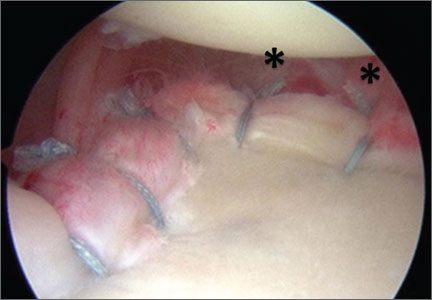
SEATTLE—The return to play rates for National Football League (NFL) athletes following shoulder stabilization is approximately 90%, according to a study presented at the 2014 Annual Meeting of the American Orthopaedic Society for Sports Medicine. There is no difference in return to play rates between open and arthroscopic repairs.
Shoulder instability is a common injury among football players but the rate of return to play has not been regularly determined following surgery. Matthew J. White, MD, from the American Sports Medicine Institute (ASMI) in Birmingham, AL, and colleagues conducted a study to highlight the success rate of return to play in the NFL following shoulder stabilization surgery, and to determine what factors may affect return to play in these professional athletes.
Sixty NFL players who had undergone shoulder stabilization at ASMI were followed to determine the rate of return to play and the factors predicting return to play. Researchers performed chart review and analyzed follow-up data by accessing the NFL statistics database. Successful return to play was defined as participation in at least 1 regular season NFL game following surgery. Chi square and t-tests were performed to examine differences between perioperative and athletic history variables and a player’s ability to return to play. “Age, number of games before surgery, and career length were not statistically different between those that returned and those that did not,” said Dr. White.
Ninety percent (54 of 60) of NFL players were able to return to play following shoulder stabilization, with an average return to play time of 8.6 months. Eleven of the 60 patients underwent open stabilization. Ninety-two percent (45/49) of the arthroscopically treated and 82% (9/11) of the openly treated athletes were able to return to play. “It was also interesting to note, that players selected before the fourth round of the NFL draft were 7.6 times more likely to return to play following shoulder stabilization surgery,” said Dr. White.
In addition, circumferential labral tears were found in 7 athletes, all of whom returned to play following surgery. “Additional investigation on shoulder function and outcome scores long-term would be beneficial in this group of athletes to determine better standards of care,” noted Dr. White.
SEATTLE—The return to play rates for National Football League (NFL) athletes following shoulder stabilization is approximately 90%, according to a study presented at the 2014 Annual Meeting of the American Orthopaedic Society for Sports Medicine. There is no difference in return to play rates between open and arthroscopic repairs.
Shoulder instability is a common injury among football players but the rate of return to play has not been regularly determined following surgery. Matthew J. White, MD, from the American Sports Medicine Institute (ASMI) in Birmingham, AL, and colleagues conducted a study to highlight the success rate of return to play in the NFL following shoulder stabilization surgery, and to determine what factors may affect return to play in these professional athletes.
Sixty NFL players who had undergone shoulder stabilization at ASMI were followed to determine the rate of return to play and the factors predicting return to play. Researchers performed chart review and analyzed follow-up data by accessing the NFL statistics database. Successful return to play was defined as participation in at least 1 regular season NFL game following surgery. Chi square and t-tests were performed to examine differences between perioperative and athletic history variables and a player’s ability to return to play. “Age, number of games before surgery, and career length were not statistically different between those that returned and those that did not,” said Dr. White.
Ninety percent (54 of 60) of NFL players were able to return to play following shoulder stabilization, with an average return to play time of 8.6 months. Eleven of the 60 patients underwent open stabilization. Ninety-two percent (45/49) of the arthroscopically treated and 82% (9/11) of the openly treated athletes were able to return to play. “It was also interesting to note, that players selected before the fourth round of the NFL draft were 7.6 times more likely to return to play following shoulder stabilization surgery,” said Dr. White.
In addition, circumferential labral tears were found in 7 athletes, all of whom returned to play following surgery. “Additional investigation on shoulder function and outcome scores long-term would be beneficial in this group of athletes to determine better standards of care,” noted Dr. White.
SEATTLE—The return to play rates for National Football League (NFL) athletes following shoulder stabilization is approximately 90%, according to a study presented at the 2014 Annual Meeting of the American Orthopaedic Society for Sports Medicine. There is no difference in return to play rates between open and arthroscopic repairs.
Shoulder instability is a common injury among football players but the rate of return to play has not been regularly determined following surgery. Matthew J. White, MD, from the American Sports Medicine Institute (ASMI) in Birmingham, AL, and colleagues conducted a study to highlight the success rate of return to play in the NFL following shoulder stabilization surgery, and to determine what factors may affect return to play in these professional athletes.
Sixty NFL players who had undergone shoulder stabilization at ASMI were followed to determine the rate of return to play and the factors predicting return to play. Researchers performed chart review and analyzed follow-up data by accessing the NFL statistics database. Successful return to play was defined as participation in at least 1 regular season NFL game following surgery. Chi square and t-tests were performed to examine differences between perioperative and athletic history variables and a player’s ability to return to play. “Age, number of games before surgery, and career length were not statistically different between those that returned and those that did not,” said Dr. White.
Ninety percent (54 of 60) of NFL players were able to return to play following shoulder stabilization, with an average return to play time of 8.6 months. Eleven of the 60 patients underwent open stabilization. Ninety-two percent (45/49) of the arthroscopically treated and 82% (9/11) of the openly treated athletes were able to return to play. “It was also interesting to note, that players selected before the fourth round of the NFL draft were 7.6 times more likely to return to play following shoulder stabilization surgery,” said Dr. White.
In addition, circumferential labral tears were found in 7 athletes, all of whom returned to play following surgery. “Additional investigation on shoulder function and outcome scores long-term would be beneficial in this group of athletes to determine better standards of care,” noted Dr. White.
Increased Risk of Elbow Surgery for MLB Pitchers
SEATTLE— Eighty-seven percent of Major League Baseball (MLB) pitchers who underwent ulnar collateral ligament (UCL) reconstructive surgery returned to the Major League level of sport, according to a study presented at the 2014 Annual Meeting of the American Orthopaedic Society for Sports Medicine. However, the study also documented a decline in pitching performance after undergoing reconstructive surgery. Entering the Major Leagues at a younger age also increased a player’s risk for requiring surgery.
A tremendous amount of stress is placed on the elbow while pitching a baseball. Due to these stresses, MLB pitchers are at increased risk for UCL injuries. Robert A. Keller, MD, of Henry Ford Hospital in Detroit, Michigan, and colleagues, reviewed the statistics for 168 MLB pitchers, who threw at least 1 season at the Major League level and underwent UCL reconstruction. Statistical data, including earned run average (ERA), walks and hits per innings pitched (WHIP), win percentage, innings pitched, and salary were compared for the 3 years before and 3 years after undergoing UCL reconstruction. “Having athletic trainers and team physicians closely look at when players pitching performance stats start to decrease may allow for steps to be taken with a pitcher before a surgery is needed,” said Dr. Keller.
Of the 87% of pitchers that returned to the Major League level after undergoing UCL reconstruction, a statistically significant decline in their ERA (P = 0.001), WHIP (P = 0.011), and innings pitched (P = 0.026) was seen compared to pre-reconstruction performance. Reconstructed pitchers also had a statistically decline in their pitching performance in the season before their surgery (ERA P = 0.014, WHIP P = 0.036, innings pitched P < 0.001, win percentage P = 0.004). Approximately 60% of pitchers requiring UCL reconstruction had surgery within the first 5 years of being in the Major Leagues. Validated by a multivariable generalized estimating equation model that examined risk factors, arm stress from earlier Major League experience contributed to injury. In addition, players who entered the MLB at an earlier age also appeared to have a greater risk for surgery.
“Our results suggest that UCL reconstructive surgery does a tremendous job in allowing players to return to their same level of sport but it also describes a decline in pitching performance after undergoing reconstruction,” said Dr. Keller. “Our study also further highlights the need for kids not to overuse their arms early in their pitching careers.”
SEATTLE— Eighty-seven percent of Major League Baseball (MLB) pitchers who underwent ulnar collateral ligament (UCL) reconstructive surgery returned to the Major League level of sport, according to a study presented at the 2014 Annual Meeting of the American Orthopaedic Society for Sports Medicine. However, the study also documented a decline in pitching performance after undergoing reconstructive surgery. Entering the Major Leagues at a younger age also increased a player’s risk for requiring surgery.
A tremendous amount of stress is placed on the elbow while pitching a baseball. Due to these stresses, MLB pitchers are at increased risk for UCL injuries. Robert A. Keller, MD, of Henry Ford Hospital in Detroit, Michigan, and colleagues, reviewed the statistics for 168 MLB pitchers, who threw at least 1 season at the Major League level and underwent UCL reconstruction. Statistical data, including earned run average (ERA), walks and hits per innings pitched (WHIP), win percentage, innings pitched, and salary were compared for the 3 years before and 3 years after undergoing UCL reconstruction. “Having athletic trainers and team physicians closely look at when players pitching performance stats start to decrease may allow for steps to be taken with a pitcher before a surgery is needed,” said Dr. Keller.
Of the 87% of pitchers that returned to the Major League level after undergoing UCL reconstruction, a statistically significant decline in their ERA (P = 0.001), WHIP (P = 0.011), and innings pitched (P = 0.026) was seen compared to pre-reconstruction performance. Reconstructed pitchers also had a statistically decline in their pitching performance in the season before their surgery (ERA P = 0.014, WHIP P = 0.036, innings pitched P < 0.001, win percentage P = 0.004). Approximately 60% of pitchers requiring UCL reconstruction had surgery within the first 5 years of being in the Major Leagues. Validated by a multivariable generalized estimating equation model that examined risk factors, arm stress from earlier Major League experience contributed to injury. In addition, players who entered the MLB at an earlier age also appeared to have a greater risk for surgery.
“Our results suggest that UCL reconstructive surgery does a tremendous job in allowing players to return to their same level of sport but it also describes a decline in pitching performance after undergoing reconstruction,” said Dr. Keller. “Our study also further highlights the need for kids not to overuse their arms early in their pitching careers.”
SEATTLE— Eighty-seven percent of Major League Baseball (MLB) pitchers who underwent ulnar collateral ligament (UCL) reconstructive surgery returned to the Major League level of sport, according to a study presented at the 2014 Annual Meeting of the American Orthopaedic Society for Sports Medicine. However, the study also documented a decline in pitching performance after undergoing reconstructive surgery. Entering the Major Leagues at a younger age also increased a player’s risk for requiring surgery.
A tremendous amount of stress is placed on the elbow while pitching a baseball. Due to these stresses, MLB pitchers are at increased risk for UCL injuries. Robert A. Keller, MD, of Henry Ford Hospital in Detroit, Michigan, and colleagues, reviewed the statistics for 168 MLB pitchers, who threw at least 1 season at the Major League level and underwent UCL reconstruction. Statistical data, including earned run average (ERA), walks and hits per innings pitched (WHIP), win percentage, innings pitched, and salary were compared for the 3 years before and 3 years after undergoing UCL reconstruction. “Having athletic trainers and team physicians closely look at when players pitching performance stats start to decrease may allow for steps to be taken with a pitcher before a surgery is needed,” said Dr. Keller.
Of the 87% of pitchers that returned to the Major League level after undergoing UCL reconstruction, a statistically significant decline in their ERA (P = 0.001), WHIP (P = 0.011), and innings pitched (P = 0.026) was seen compared to pre-reconstruction performance. Reconstructed pitchers also had a statistically decline in their pitching performance in the season before their surgery (ERA P = 0.014, WHIP P = 0.036, innings pitched P < 0.001, win percentage P = 0.004). Approximately 60% of pitchers requiring UCL reconstruction had surgery within the first 5 years of being in the Major Leagues. Validated by a multivariable generalized estimating equation model that examined risk factors, arm stress from earlier Major League experience contributed to injury. In addition, players who entered the MLB at an earlier age also appeared to have a greater risk for surgery.
“Our results suggest that UCL reconstructive surgery does a tremendous job in allowing players to return to their same level of sport but it also describes a decline in pitching performance after undergoing reconstruction,” said Dr. Keller. “Our study also further highlights the need for kids not to overuse their arms early in their pitching careers.”
New Research Identifies Risk Factors and Treatment Options for Little League Shoulder
SEATTLE—Proximal humeral epiphysiolysis, or little league shoulder (LLS), is being diagnosed with increasing frequency, according to data presented at the 2014 Annual Meeting of the American Orthopaedic Society for Sports Medicine. Concomitant elbow pain may also be seen in up to 13% of youth athletes diagnosed with LLS. After rest and physical therapy, recurrent symptoms can occur, generally 6 to 12 months after return to sports.
With rising participation in youth sports such as baseball and tennis, there remains a paucity of literature regarding the causes or outcomes of LLS. Benton E. Heyworth, MD, from Children’s Hospital Boston, Division of Sports Medicine in Boston, Massachusetts, and colleagues examined 95 patients with LLS. The researchers reviewed cases of LLS between 1999 and 2013 at a single pediatric referral center. The study analyzed age, sex, physical examination, radiologic findings, treatment approaches, and rates of recurrence.
Of the 95 patients (93 males; mean age 13.1 years, range 8-17 years), 13% reported elbow pain, 10% reported shoulder fatigue or weakness, 8% reported mechanical symptoms, and all patients complained of shoulder pain with overhead athletics. “These related symptoms should be recognized as possible identifiers for injured athletes in the future,” said Dr. Heyworth. On physical examination, 30% were reported to have glenohumeral internal rotation deficit (GIRD). Patients with GIRD were 3 times more likely to experience an injury recurrence 6 to 12 months after returning to play. “Not surprisingly, we found 97% of the affected athletes were baseball players, with 50% of the patients being only 12 or 13 years old—a good indicator of the stress being put on young arms,” added Dr. Heyworth.
Treatment recommendations included rest in 98% of cases, physical therapy in 79%, and position change upon return to play in 25%. Average time to resolution of symptoms was 2.6 months, with average time for return to competition was 4.2 months. Recurrent symptoms were reported in 7.4% in the overall population at a mean of 8 months following symptom resolution.
SEATTLE—Proximal humeral epiphysiolysis, or little league shoulder (LLS), is being diagnosed with increasing frequency, according to data presented at the 2014 Annual Meeting of the American Orthopaedic Society for Sports Medicine. Concomitant elbow pain may also be seen in up to 13% of youth athletes diagnosed with LLS. After rest and physical therapy, recurrent symptoms can occur, generally 6 to 12 months after return to sports.
With rising participation in youth sports such as baseball and tennis, there remains a paucity of literature regarding the causes or outcomes of LLS. Benton E. Heyworth, MD, from Children’s Hospital Boston, Division of Sports Medicine in Boston, Massachusetts, and colleagues examined 95 patients with LLS. The researchers reviewed cases of LLS between 1999 and 2013 at a single pediatric referral center. The study analyzed age, sex, physical examination, radiologic findings, treatment approaches, and rates of recurrence.
Of the 95 patients (93 males; mean age 13.1 years, range 8-17 years), 13% reported elbow pain, 10% reported shoulder fatigue or weakness, 8% reported mechanical symptoms, and all patients complained of shoulder pain with overhead athletics. “These related symptoms should be recognized as possible identifiers for injured athletes in the future,” said Dr. Heyworth. On physical examination, 30% were reported to have glenohumeral internal rotation deficit (GIRD). Patients with GIRD were 3 times more likely to experience an injury recurrence 6 to 12 months after returning to play. “Not surprisingly, we found 97% of the affected athletes were baseball players, with 50% of the patients being only 12 or 13 years old—a good indicator of the stress being put on young arms,” added Dr. Heyworth.
Treatment recommendations included rest in 98% of cases, physical therapy in 79%, and position change upon return to play in 25%. Average time to resolution of symptoms was 2.6 months, with average time for return to competition was 4.2 months. Recurrent symptoms were reported in 7.4% in the overall population at a mean of 8 months following symptom resolution.
SEATTLE—Proximal humeral epiphysiolysis, or little league shoulder (LLS), is being diagnosed with increasing frequency, according to data presented at the 2014 Annual Meeting of the American Orthopaedic Society for Sports Medicine. Concomitant elbow pain may also be seen in up to 13% of youth athletes diagnosed with LLS. After rest and physical therapy, recurrent symptoms can occur, generally 6 to 12 months after return to sports.
With rising participation in youth sports such as baseball and tennis, there remains a paucity of literature regarding the causes or outcomes of LLS. Benton E. Heyworth, MD, from Children’s Hospital Boston, Division of Sports Medicine in Boston, Massachusetts, and colleagues examined 95 patients with LLS. The researchers reviewed cases of LLS between 1999 and 2013 at a single pediatric referral center. The study analyzed age, sex, physical examination, radiologic findings, treatment approaches, and rates of recurrence.
Of the 95 patients (93 males; mean age 13.1 years, range 8-17 years), 13% reported elbow pain, 10% reported shoulder fatigue or weakness, 8% reported mechanical symptoms, and all patients complained of shoulder pain with overhead athletics. “These related symptoms should be recognized as possible identifiers for injured athletes in the future,” said Dr. Heyworth. On physical examination, 30% were reported to have glenohumeral internal rotation deficit (GIRD). Patients with GIRD were 3 times more likely to experience an injury recurrence 6 to 12 months after returning to play. “Not surprisingly, we found 97% of the affected athletes were baseball players, with 50% of the patients being only 12 or 13 years old—a good indicator of the stress being put on young arms,” added Dr. Heyworth.
Treatment recommendations included rest in 98% of cases, physical therapy in 79%, and position change upon return to play in 25%. Average time to resolution of symptoms was 2.6 months, with average time for return to competition was 4.2 months. Recurrent symptoms were reported in 7.4% in the overall population at a mean of 8 months following symptom resolution.