User login
For MD-IQ use only
Combined risk factors for coronary events
Also today, a device malfunction muddles results for insulin inhaler for Alzheimer’s, it’s time for universal hepatitis C virus screening in the ED, and there is a date for the 2019 Sickle Cell Disease guidelines.
Amazon Alexa
Apple Podcasts
Google Podcasts
Spotify
Also today, a device malfunction muddles results for insulin inhaler for Alzheimer’s, it’s time for universal hepatitis C virus screening in the ED, and there is a date for the 2019 Sickle Cell Disease guidelines.
Amazon Alexa
Apple Podcasts
Google Podcasts
Spotify
Also today, a device malfunction muddles results for insulin inhaler for Alzheimer’s, it’s time for universal hepatitis C virus screening in the ED, and there is a date for the 2019 Sickle Cell Disease guidelines.
Amazon Alexa
Apple Podcasts
Google Podcasts
Spotify

New devices can monitor personalized light exposure for radiation
, according to three studies of the millimeter-scale near-field communication (mm-NFC) devices.
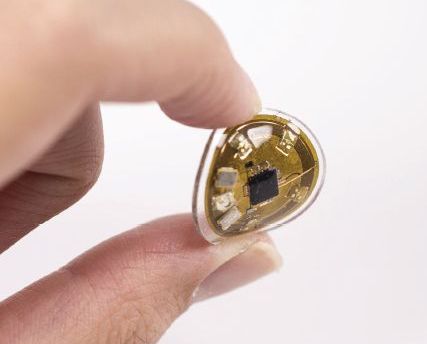
“These studies highlight the differences between mm-NFC dosimeters and commercial devices in real-world, practical scenarios,” wrote lead author Seung Yun Heo of the department of biomedical engineering at the Center for Bio-Integrated Electronics at Northwestern University, Chicago, and her coauthors. “The former operate in continuous, uninterrupted modes, whereas the latter capture instantaneous values of intensity at preprogrammed intervals,”they noted. The study was published in Science Translational Medicine.
Separate studies to assess the performance of these “flexible” dosimeters took place in Rio de Janeiro, Brazil, and St. Petersburg, Fla. The Florida study included 13 healthy participants who wore skin-mounted mm-NFC ultraviolet A (UVA) dosimeters on the right back hand, left back hand, left inner arm, and left outer arm, plus a commercial dosimeter on the right wrist. The volunteers walked a 6.44-km path three times: a morning and subsequent afternoon stroll, plus an evening walk 4 days later. Four devices failed during the afternoon exercise, but otherwise, participants received data on their smartphones via the dosimeters at 30-minute intervals.
The Brazilian study was made up of nine healthy participants who wore mm-NFC UVA dosimeters on the thumbnail or the middle fingernail; commercial dosimeters were worn on the wrist of the ipsilateral side. These volunteers engaged in rooftop recreational activities that corresponded to solar zenith angles, along with showering and swimming with the use of soap and skin creams. All sensors remained functional over the 4 days of testing, and 14 of 20 devices remained adhered to the fingernail. Accumulated doses ranged widely, “as expected on the basis of the differences in behaviors,” the authors wrote. These observations imply highly variable UV-associated risks between participants, due not only to differences in Fitzpatrick skin types but also to individual behavior patterns,” they added.
The third study of mm-NFC blue light dosimeters comprised three newborns in an Urbana, Ill., neonatal ICU undergoing blue light phototherapy treatments. Nurses mounted dosimeters on the patients’ chests before phototherapy; an antenna underneath the incubator mattress transmitted continuous wireless measurements of blue intensity and dosage at 20-minute intervals for 20 hours.
The authors acknowledged that these devices and their designs have limitations, including a small detection area as compared to the surface area of a human body. The study’s results “represent localized measurements of exposure, whereas the sun irradiance profile across the body surface is not uniform and varies by position of the sun in the sky over the course of a day.” They recommended that future research could “create anatomic specific risk assessment of UV exposure” via multinodal sensing with UVA/UVB dosimeters on several parts of the body.
The Brazilian UV study was sponsored by La Roche Posay and L’Oreal California Research Center. Research was supported by the National Cancer Institute. Five of the authors reported commercial interests in the technology. Another author reported paid consultation for Aclaris Therapeutics.
SOURCE: Heo SY et al. Sci. Transl. Med. 2018 Dec 5. doi: 10.1126/scitranslmed.aau1643.
, according to three studies of the millimeter-scale near-field communication (mm-NFC) devices.
“These studies highlight the differences between mm-NFC dosimeters and commercial devices in real-world, practical scenarios,” wrote lead author Seung Yun Heo of the department of biomedical engineering at the Center for Bio-Integrated Electronics at Northwestern University, Chicago, and her coauthors. “The former operate in continuous, uninterrupted modes, whereas the latter capture instantaneous values of intensity at preprogrammed intervals,”they noted. The study was published in Science Translational Medicine.
Separate studies to assess the performance of these “flexible” dosimeters took place in Rio de Janeiro, Brazil, and St. Petersburg, Fla. The Florida study included 13 healthy participants who wore skin-mounted mm-NFC ultraviolet A (UVA) dosimeters on the right back hand, left back hand, left inner arm, and left outer arm, plus a commercial dosimeter on the right wrist. The volunteers walked a 6.44-km path three times: a morning and subsequent afternoon stroll, plus an evening walk 4 days later. Four devices failed during the afternoon exercise, but otherwise, participants received data on their smartphones via the dosimeters at 30-minute intervals.
The Brazilian study was made up of nine healthy participants who wore mm-NFC UVA dosimeters on the thumbnail or the middle fingernail; commercial dosimeters were worn on the wrist of the ipsilateral side. These volunteers engaged in rooftop recreational activities that corresponded to solar zenith angles, along with showering and swimming with the use of soap and skin creams. All sensors remained functional over the 4 days of testing, and 14 of 20 devices remained adhered to the fingernail. Accumulated doses ranged widely, “as expected on the basis of the differences in behaviors,” the authors wrote. These observations imply highly variable UV-associated risks between participants, due not only to differences in Fitzpatrick skin types but also to individual behavior patterns,” they added.
The third study of mm-NFC blue light dosimeters comprised three newborns in an Urbana, Ill., neonatal ICU undergoing blue light phototherapy treatments. Nurses mounted dosimeters on the patients’ chests before phototherapy; an antenna underneath the incubator mattress transmitted continuous wireless measurements of blue intensity and dosage at 20-minute intervals for 20 hours.
The authors acknowledged that these devices and their designs have limitations, including a small detection area as compared to the surface area of a human body. The study’s results “represent localized measurements of exposure, whereas the sun irradiance profile across the body surface is not uniform and varies by position of the sun in the sky over the course of a day.” They recommended that future research could “create anatomic specific risk assessment of UV exposure” via multinodal sensing with UVA/UVB dosimeters on several parts of the body.
The Brazilian UV study was sponsored by La Roche Posay and L’Oreal California Research Center. Research was supported by the National Cancer Institute. Five of the authors reported commercial interests in the technology. Another author reported paid consultation for Aclaris Therapeutics.
SOURCE: Heo SY et al. Sci. Transl. Med. 2018 Dec 5. doi: 10.1126/scitranslmed.aau1643.
, according to three studies of the millimeter-scale near-field communication (mm-NFC) devices.
“These studies highlight the differences between mm-NFC dosimeters and commercial devices in real-world, practical scenarios,” wrote lead author Seung Yun Heo of the department of biomedical engineering at the Center for Bio-Integrated Electronics at Northwestern University, Chicago, and her coauthors. “The former operate in continuous, uninterrupted modes, whereas the latter capture instantaneous values of intensity at preprogrammed intervals,”they noted. The study was published in Science Translational Medicine.
Separate studies to assess the performance of these “flexible” dosimeters took place in Rio de Janeiro, Brazil, and St. Petersburg, Fla. The Florida study included 13 healthy participants who wore skin-mounted mm-NFC ultraviolet A (UVA) dosimeters on the right back hand, left back hand, left inner arm, and left outer arm, plus a commercial dosimeter on the right wrist. The volunteers walked a 6.44-km path three times: a morning and subsequent afternoon stroll, plus an evening walk 4 days later. Four devices failed during the afternoon exercise, but otherwise, participants received data on their smartphones via the dosimeters at 30-minute intervals.
The Brazilian study was made up of nine healthy participants who wore mm-NFC UVA dosimeters on the thumbnail or the middle fingernail; commercial dosimeters were worn on the wrist of the ipsilateral side. These volunteers engaged in rooftop recreational activities that corresponded to solar zenith angles, along with showering and swimming with the use of soap and skin creams. All sensors remained functional over the 4 days of testing, and 14 of 20 devices remained adhered to the fingernail. Accumulated doses ranged widely, “as expected on the basis of the differences in behaviors,” the authors wrote. These observations imply highly variable UV-associated risks between participants, due not only to differences in Fitzpatrick skin types but also to individual behavior patterns,” they added.
The third study of mm-NFC blue light dosimeters comprised three newborns in an Urbana, Ill., neonatal ICU undergoing blue light phototherapy treatments. Nurses mounted dosimeters on the patients’ chests before phototherapy; an antenna underneath the incubator mattress transmitted continuous wireless measurements of blue intensity and dosage at 20-minute intervals for 20 hours.
The authors acknowledged that these devices and their designs have limitations, including a small detection area as compared to the surface area of a human body. The study’s results “represent localized measurements of exposure, whereas the sun irradiance profile across the body surface is not uniform and varies by position of the sun in the sky over the course of a day.” They recommended that future research could “create anatomic specific risk assessment of UV exposure” via multinodal sensing with UVA/UVB dosimeters on several parts of the body.
The Brazilian UV study was sponsored by La Roche Posay and L’Oreal California Research Center. Research was supported by the National Cancer Institute. Five of the authors reported commercial interests in the technology. Another author reported paid consultation for Aclaris Therapeutics.
SOURCE: Heo SY et al. Sci. Transl. Med. 2018 Dec 5. doi: 10.1126/scitranslmed.aau1643.
FROM SCIENCE TRANSLATIONAL MEDICINE
Key clinical point: Newly designed flexible dosimeters can track personalized light exposure and electromagnetic radiation via wireless sensor technology.
Major finding: In one study, during four days of testing – including recreational activities, showering, and swimming—all mm-NFC UVA dosimeter sensors remained functional and 14 of 20 devices remained adhered to the fingernail.
Study details: Three studies of millimeter-scale near-field communication dosimeters, comprising healthy volunteers from Rio de Janeiro, Brazil; St. Petersburg, Florida; and neonates undergoing blue light phototherapy treatments in an Urbana, Ill., neonatal ICU.
Disclosures: The UV study in Brazil, was sponsored by La Roche Posay and the L’Oreal California Research Center. Research was supported by the National Cancer Institute. Five of the authors reported commercial interests in the technology. Another author reported paid consultation for Aclaris Therapeutics.
Source: Heo SY et al. Sci. Transl. Med. 2018 Dec 5 doi: 10.1126/scitranslmed.aau1643.
2018: A banner year for hematology drug approvals
SAN DIEGO – It was banner year for new hematology drug approvals, according to R. Angelo de Claro, MD, of the Food and Drug Administration.
, including 12 first-time approvals, 5 new biosimilars, and 15 new indications for previously approved drugs, Dr. de Claro, clinical team leader in the FDA’s division of hematology products in Silver Spring, Md., said during an overview of the approvals at the annual meeting of the American Society of Hematology.
These include six new approvals for first-line treatment, and eight for pediatric indications, he said.
Highlights were discussed at two ASH-FDA joint symposia at the meeting, including one focused on the malignant hematology approvals, and another on the nonmalignant hematology approvals. In a video interview, Dr. de Claro provides some additional insight into their importance and about what might lie ahead.
“I think what’s exciting is that you have drug development occurring in more common conditions such as chronic lymphocytic leukemia, as well as in rare conditions, including hairy cell leukemia – and the first-ever approval in hemophagocytic lymphohistiocytosis,” he said. “It’s been very busy at the FDA; stay tuned ... the year’s not done yet. There could be more coming and we certainly anticipate more applications in the future.”
Dr. de Claro is an FDA employee. He reported having no other relevant disclosures.
SAN DIEGO – It was banner year for new hematology drug approvals, according to R. Angelo de Claro, MD, of the Food and Drug Administration.
, including 12 first-time approvals, 5 new biosimilars, and 15 new indications for previously approved drugs, Dr. de Claro, clinical team leader in the FDA’s division of hematology products in Silver Spring, Md., said during an overview of the approvals at the annual meeting of the American Society of Hematology.
These include six new approvals for first-line treatment, and eight for pediatric indications, he said.
Highlights were discussed at two ASH-FDA joint symposia at the meeting, including one focused on the malignant hematology approvals, and another on the nonmalignant hematology approvals. In a video interview, Dr. de Claro provides some additional insight into their importance and about what might lie ahead.
“I think what’s exciting is that you have drug development occurring in more common conditions such as chronic lymphocytic leukemia, as well as in rare conditions, including hairy cell leukemia – and the first-ever approval in hemophagocytic lymphohistiocytosis,” he said. “It’s been very busy at the FDA; stay tuned ... the year’s not done yet. There could be more coming and we certainly anticipate more applications in the future.”
Dr. de Claro is an FDA employee. He reported having no other relevant disclosures.
SAN DIEGO – It was banner year for new hematology drug approvals, according to R. Angelo de Claro, MD, of the Food and Drug Administration.
, including 12 first-time approvals, 5 new biosimilars, and 15 new indications for previously approved drugs, Dr. de Claro, clinical team leader in the FDA’s division of hematology products in Silver Spring, Md., said during an overview of the approvals at the annual meeting of the American Society of Hematology.
These include six new approvals for first-line treatment, and eight for pediatric indications, he said.
Highlights were discussed at two ASH-FDA joint symposia at the meeting, including one focused on the malignant hematology approvals, and another on the nonmalignant hematology approvals. In a video interview, Dr. de Claro provides some additional insight into their importance and about what might lie ahead.
“I think what’s exciting is that you have drug development occurring in more common conditions such as chronic lymphocytic leukemia, as well as in rare conditions, including hairy cell leukemia – and the first-ever approval in hemophagocytic lymphohistiocytosis,” he said. “It’s been very busy at the FDA; stay tuned ... the year’s not done yet. There could be more coming and we certainly anticipate more applications in the future.”
Dr. de Claro is an FDA employee. He reported having no other relevant disclosures.
REPORTING FROM ASH 2018

Large cohort study IDs prognostic factors in thromboangiitis obliterans
CHICAGO – Nonwhite ethnicity and limb infection at diagnosis predict vascular events in patients with thromboangiitis obliterans (TAO), and the latter also predicts amputation, which occurs within 10 years of diagnosis in nearly a third of patients, according to findings from a large retrospective French cohort study.

After a mean follow-up of 5.7 years, 58.9% of 224 patients with TAO – also known as Buerger’s disease – experienced a vascular event, 21.4% experienced at least one amputation, and 1.3% died, Alexandre Le Joncour, MD, reported at the annual meeting of the American College of Rheumatology.
The 5- and 15-year vascular event-free survival rates were 45% and 28%, respectively, and the 10- and 15-year amputation-free survival rates were 74%, and 66%, respectively, said Dr. Le Joncour of Sorbonne University, Paris.
Of note, no significant difference was seen in the vascular event-free survival rates based on tobacco use levels (more than 22 pack-years vs. 22 or fewer pack-years; HR, 1.2), he said.
Patient characteristics and clinical factors found to independently predict vascular events included nonwhite ethnicity (hazard ratio, 2.35; P = .005) and limb infection at diagnosis (HR, 3.29; P = .045). Limb infection at diagnosis also independently predicted amputation (HR, 12.1; P less than .001), he said.
“But there was no significant [association with amputation] in patients who had claudication, critical ischemia, or ischemic ulcers/necrosis,” he noted, adding that a comparison of white and nonwhite patients showed that the groups were similar with respect to epidemiologic and cardiovascular factors, clinical symptom distribution, and rates of addiction to tobacco, alcohol, and illicit drugs.
It was also clear that patients who quit using tobacco had a significantly lower risk of amputation than did those who continued using tobacco (P = .001), he said, explaining that 43 of the 48 patients who experienced amputation were current smokers, and 5 were ex-smokers at the time of amputation.
Dr. Le Joncour and his colleagues included TAO patients diagnosed between 1967 and 2016 at a median age of 36 years at the time of first symptoms, with a median of 12 months from symptom onset until diagnosis. About 76% were men, and about 83% were white. Patients with diabetes, atherosclerosis, arterial emboli, connective tissue disease, and/or thrombophilia were excluded.
Vascular events in this study were defined as “an acute worsening of the disease course requiring treatment modifications,” and included critical ischemia (35% of cases), ulcers/necrosis (33%), claudication worsening (16%), deep vein thrombosis (3%), superficial phlebitis (7%), limb infection (4%), and “other” events (2%).
Major amputation was defined as “an amputation involving the tibio-tarsian articulation for lower limbs and the metacarpophalangeal articulation for upper limbs,” he explained.
The median time to amputation was 4 years, and patients who experienced amputation had a median age of 39 years. Half of the 48 patients who experienced amputation had one amputation, nearly a third had two amputations, and 19% had three amputations. About two-thirds had minor amputations and a third had major amputations.
The findings provide important prognostic information regarding TAO, Dr. Le Joncour said, noting that long-term data on outcomes in TAO patients have been lacking.
“We found specific characteristics that identified those at highest risk for subsequent vascular complications, and these factors are not only important predictors of vascular complications or relapse, but may also serve to adjust more aggressive management and close follow-up of these patients,” he concluded.
Dr. Le Joncour reported having no disclosures.
SOURCE: Le Joncour A et al. Arthritis Rheumatol. 2018;70(Suppl 10): Abstract 1885.
CHICAGO – Nonwhite ethnicity and limb infection at diagnosis predict vascular events in patients with thromboangiitis obliterans (TAO), and the latter also predicts amputation, which occurs within 10 years of diagnosis in nearly a third of patients, according to findings from a large retrospective French cohort study.
After a mean follow-up of 5.7 years, 58.9% of 224 patients with TAO – also known as Buerger’s disease – experienced a vascular event, 21.4% experienced at least one amputation, and 1.3% died, Alexandre Le Joncour, MD, reported at the annual meeting of the American College of Rheumatology.
The 5- and 15-year vascular event-free survival rates were 45% and 28%, respectively, and the 10- and 15-year amputation-free survival rates were 74%, and 66%, respectively, said Dr. Le Joncour of Sorbonne University, Paris.
Of note, no significant difference was seen in the vascular event-free survival rates based on tobacco use levels (more than 22 pack-years vs. 22 or fewer pack-years; HR, 1.2), he said.
Patient characteristics and clinical factors found to independently predict vascular events included nonwhite ethnicity (hazard ratio, 2.35; P = .005) and limb infection at diagnosis (HR, 3.29; P = .045). Limb infection at diagnosis also independently predicted amputation (HR, 12.1; P less than .001), he said.
“But there was no significant [association with amputation] in patients who had claudication, critical ischemia, or ischemic ulcers/necrosis,” he noted, adding that a comparison of white and nonwhite patients showed that the groups were similar with respect to epidemiologic and cardiovascular factors, clinical symptom distribution, and rates of addiction to tobacco, alcohol, and illicit drugs.
It was also clear that patients who quit using tobacco had a significantly lower risk of amputation than did those who continued using tobacco (P = .001), he said, explaining that 43 of the 48 patients who experienced amputation were current smokers, and 5 were ex-smokers at the time of amputation.
Dr. Le Joncour and his colleagues included TAO patients diagnosed between 1967 and 2016 at a median age of 36 years at the time of first symptoms, with a median of 12 months from symptom onset until diagnosis. About 76% were men, and about 83% were white. Patients with diabetes, atherosclerosis, arterial emboli, connective tissue disease, and/or thrombophilia were excluded.
Vascular events in this study were defined as “an acute worsening of the disease course requiring treatment modifications,” and included critical ischemia (35% of cases), ulcers/necrosis (33%), claudication worsening (16%), deep vein thrombosis (3%), superficial phlebitis (7%), limb infection (4%), and “other” events (2%).
Major amputation was defined as “an amputation involving the tibio-tarsian articulation for lower limbs and the metacarpophalangeal articulation for upper limbs,” he explained.
The median time to amputation was 4 years, and patients who experienced amputation had a median age of 39 years. Half of the 48 patients who experienced amputation had one amputation, nearly a third had two amputations, and 19% had three amputations. About two-thirds had minor amputations and a third had major amputations.
The findings provide important prognostic information regarding TAO, Dr. Le Joncour said, noting that long-term data on outcomes in TAO patients have been lacking.
“We found specific characteristics that identified those at highest risk for subsequent vascular complications, and these factors are not only important predictors of vascular complications or relapse, but may also serve to adjust more aggressive management and close follow-up of these patients,” he concluded.
Dr. Le Joncour reported having no disclosures.
SOURCE: Le Joncour A et al. Arthritis Rheumatol. 2018;70(Suppl 10): Abstract 1885.
CHICAGO – Nonwhite ethnicity and limb infection at diagnosis predict vascular events in patients with thromboangiitis obliterans (TAO), and the latter also predicts amputation, which occurs within 10 years of diagnosis in nearly a third of patients, according to findings from a large retrospective French cohort study.
After a mean follow-up of 5.7 years, 58.9% of 224 patients with TAO – also known as Buerger’s disease – experienced a vascular event, 21.4% experienced at least one amputation, and 1.3% died, Alexandre Le Joncour, MD, reported at the annual meeting of the American College of Rheumatology.
The 5- and 15-year vascular event-free survival rates were 45% and 28%, respectively, and the 10- and 15-year amputation-free survival rates were 74%, and 66%, respectively, said Dr. Le Joncour of Sorbonne University, Paris.
Of note, no significant difference was seen in the vascular event-free survival rates based on tobacco use levels (more than 22 pack-years vs. 22 or fewer pack-years; HR, 1.2), he said.
Patient characteristics and clinical factors found to independently predict vascular events included nonwhite ethnicity (hazard ratio, 2.35; P = .005) and limb infection at diagnosis (HR, 3.29; P = .045). Limb infection at diagnosis also independently predicted amputation (HR, 12.1; P less than .001), he said.
“But there was no significant [association with amputation] in patients who had claudication, critical ischemia, or ischemic ulcers/necrosis,” he noted, adding that a comparison of white and nonwhite patients showed that the groups were similar with respect to epidemiologic and cardiovascular factors, clinical symptom distribution, and rates of addiction to tobacco, alcohol, and illicit drugs.
It was also clear that patients who quit using tobacco had a significantly lower risk of amputation than did those who continued using tobacco (P = .001), he said, explaining that 43 of the 48 patients who experienced amputation were current smokers, and 5 were ex-smokers at the time of amputation.
Dr. Le Joncour and his colleagues included TAO patients diagnosed between 1967 and 2016 at a median age of 36 years at the time of first symptoms, with a median of 12 months from symptom onset until diagnosis. About 76% were men, and about 83% were white. Patients with diabetes, atherosclerosis, arterial emboli, connective tissue disease, and/or thrombophilia were excluded.
Vascular events in this study were defined as “an acute worsening of the disease course requiring treatment modifications,” and included critical ischemia (35% of cases), ulcers/necrosis (33%), claudication worsening (16%), deep vein thrombosis (3%), superficial phlebitis (7%), limb infection (4%), and “other” events (2%).
Major amputation was defined as “an amputation involving the tibio-tarsian articulation for lower limbs and the metacarpophalangeal articulation for upper limbs,” he explained.
The median time to amputation was 4 years, and patients who experienced amputation had a median age of 39 years. Half of the 48 patients who experienced amputation had one amputation, nearly a third had two amputations, and 19% had three amputations. About two-thirds had minor amputations and a third had major amputations.
The findings provide important prognostic information regarding TAO, Dr. Le Joncour said, noting that long-term data on outcomes in TAO patients have been lacking.
“We found specific characteristics that identified those at highest risk for subsequent vascular complications, and these factors are not only important predictors of vascular complications or relapse, but may also serve to adjust more aggressive management and close follow-up of these patients,” he concluded.
Dr. Le Joncour reported having no disclosures.
SOURCE: Le Joncour A et al. Arthritis Rheumatol. 2018;70(Suppl 10): Abstract 1885.
REPORTING FROM THE ACR ANNUAL MEETING
Key clinical point: Nonwhite ethnicity and limb infection predict poor prognosis in TAO.
Major finding: Ethnicity predicts vascular events (HR, 2.35); limb infection at diagnosis predicts vascular events and amputation (HR, 3.29 and 12.1, respectively).
Study details: A retrospective cohort study of 224 patients.
Disclosures: Dr. Le Joncour reported having no disclosures.
Source: Le Joncour A et al. Arthritis Rheumatol. 2018;70(Suppl 10): Abstract 1885.
Jack Drescher: Sexual Conversion Therapy
Dr. Drescher is a psychiatrist and psychoanalyst in private practice in New York City. In this episode he explains issues with the therapy as well as how to treat patients who have undergone this “therapy.”
In 2016, Dr. Drescher and his colleagues authored a report that reviews the history of conversion therapy and offers guidelines for government regulations as well as for other regulatory bodies.
He and his colleagues wrote that “peer-reviewed literature from multiple professional organizations, including the American Psychiatric Association and the American Psychological Association, have found no evidence that conversion therapy treatments result in changes in sexual orientation.” They also noted that there is evidence suggesting that these treatments are harmful.
Dr. Drescher is a psychiatrist and psychoanalyst in private practice in New York City. In this episode he explains issues with the therapy as well as how to treat patients who have undergone this “therapy.”
In 2016, Dr. Drescher and his colleagues authored a report that reviews the history of conversion therapy and offers guidelines for government regulations as well as for other regulatory bodies.
He and his colleagues wrote that “peer-reviewed literature from multiple professional organizations, including the American Psychiatric Association and the American Psychological Association, have found no evidence that conversion therapy treatments result in changes in sexual orientation.” They also noted that there is evidence suggesting that these treatments are harmful.
Dr. Drescher is a psychiatrist and psychoanalyst in private practice in New York City. In this episode he explains issues with the therapy as well as how to treat patients who have undergone this “therapy.”
In 2016, Dr. Drescher and his colleagues authored a report that reviews the history of conversion therapy and offers guidelines for government regulations as well as for other regulatory bodies.
He and his colleagues wrote that “peer-reviewed literature from multiple professional organizations, including the American Psychiatric Association and the American Psychological Association, have found no evidence that conversion therapy treatments result in changes in sexual orientation.” They also noted that there is evidence suggesting that these treatments are harmful.

Prices impacting insulin use
. Also today, methotrexate fails to cut cardiovascular events, a single-item scale is effective for assessing sleep quality, and deaths from opioid overdose for inpatients with sickle cell disease do not match those of general inpatients.
Amazon Alexa
Apple Podcasts
Google Podcasts
Spotify
. Also today, methotrexate fails to cut cardiovascular events, a single-item scale is effective for assessing sleep quality, and deaths from opioid overdose for inpatients with sickle cell disease do not match those of general inpatients.
Amazon Alexa
Apple Podcasts
Google Podcasts
Spotify
. Also today, methotrexate fails to cut cardiovascular events, a single-item scale is effective for assessing sleep quality, and deaths from opioid overdose for inpatients with sickle cell disease do not match those of general inpatients.
Amazon Alexa
Apple Podcasts
Google Podcasts
Spotify

Phase 3 study of novel pemphigus treatment is initiated
and will enroll about 120 patients with moderate to severe disease, according to Principia Biopharma, which is developing the drug.
In a press release, the company said that the randomized, double-blind PEGASYS study will compare PRN1008 with placebo, in about 120 patients with newly diagnosed or relapsing moderate to severe pemphigus.
The company also reported the results of an open label phase 2 study of patients with newly diagnosed or relapsing mild or moderate pemphigus, including pemphigus vulgaris and pemphigus foliaceus, which found that control of disease activity within 4 weeks of starting treatment – the primary efficacy endpoint – was achieved by more than 50% of patients taking PRN1008. Principia has extended the trial’s active treatment period from 12 to 24 weeks. The results also led the company to initiate the phase 3 trial.
PRN1008 is an inhibitor of BTK, an enzyme that “is present in the signaling pathways of most types of white blood cells except for T cells and plasma cells,” according to the company’s press release.
and will enroll about 120 patients with moderate to severe disease, according to Principia Biopharma, which is developing the drug.
In a press release, the company said that the randomized, double-blind PEGASYS study will compare PRN1008 with placebo, in about 120 patients with newly diagnosed or relapsing moderate to severe pemphigus.
The company also reported the results of an open label phase 2 study of patients with newly diagnosed or relapsing mild or moderate pemphigus, including pemphigus vulgaris and pemphigus foliaceus, which found that control of disease activity within 4 weeks of starting treatment – the primary efficacy endpoint – was achieved by more than 50% of patients taking PRN1008. Principia has extended the trial’s active treatment period from 12 to 24 weeks. The results also led the company to initiate the phase 3 trial.
PRN1008 is an inhibitor of BTK, an enzyme that “is present in the signaling pathways of most types of white blood cells except for T cells and plasma cells,” according to the company’s press release.
and will enroll about 120 patients with moderate to severe disease, according to Principia Biopharma, which is developing the drug.
In a press release, the company said that the randomized, double-blind PEGASYS study will compare PRN1008 with placebo, in about 120 patients with newly diagnosed or relapsing moderate to severe pemphigus.
The company also reported the results of an open label phase 2 study of patients with newly diagnosed or relapsing mild or moderate pemphigus, including pemphigus vulgaris and pemphigus foliaceus, which found that control of disease activity within 4 weeks of starting treatment – the primary efficacy endpoint – was achieved by more than 50% of patients taking PRN1008. Principia has extended the trial’s active treatment period from 12 to 24 weeks. The results also led the company to initiate the phase 3 trial.
PRN1008 is an inhibitor of BTK, an enzyme that “is present in the signaling pathways of most types of white blood cells except for T cells and plasma cells,” according to the company’s press release.
Autistic youth face higher risks from online child pornography
Prevention efforts include advising adolescent patients about puberty and sex.
AUSTIN, TEX. – It is important to understand the legislative and social lay of the land for child pornography and related issues, such as sexting and revenge porn, according to Nicole Sussman, MD.

Dr. Sussman of Cambridge (Mass.) Health Alliance provided an overview of the history of child pornography legislation before discussing the current landscape and the unique challenges and risks it presents to autistic youth at the annual meeting of the American Academy of Psychiatry and the Law.
History of U.S. child pornography laws
The Protection of Children Against Sexual Exploitation Act, passed in 1977, criminalized the act of forcing a child to engage in sexual activity. But it wasn’t widely cited. Little awareness existed around the issue until New York v. Ferber in 1982, which upheld a New York statute that outlawed distribution of material depicting children under 16 years of age engaged in sexual acts. The U.S. Supreme Court linked child porn to sexual abuse of a child and determined that the only way to control production of child pornography was to regulate distribution of it.
Shortly thereafter, the Child Protection Act of 1984 limited the production, distribution, and possession of “materials involving the sexual exploitation of minors even if the material is not found to be ‘obscene.’ ” The law also raised the age of a minor for the law’s purposes to anyone younger than age 18 years, removed the requirement that the materials be sold (free distribution was now also regulated), and authorized interception of communications to investigate offenses.
Two years later, the Child Sexual Abuse and Pornography Act and the Child Abuse Victims’ Rights Act strengthened child pornography laws; the first made it a federal offense to advertise “any product depicting sexually explicit conduct with a minor or the opportunity to engage in such conduct with a minor.”
More regulation followed with the Child Protection and Obscenity Enforcement Act of 1988, which added regulation of child pornography on computers, and the Child Pornography Prevention Act of 1996, which regulates all forms of online/virtual child pornography.
The first weakening of these laws came with Ashcroft v. Free Speech Coalition in 2002, which held that the 1996 law was overly broad, with the potential to violate free speech, since prohibition of images that “appear to be” or “convey the impression” of child pornography might not necessarily have actually involved child exploitation.
Finally, the Adam Walsh Child Protection and Safety Act of 2006 established the national sex offender registry and mandated convicted offender requirements for reporting their whereabouts based on the “tier” of their crime.
Today’s landscape: Internet use and pornography
With all that legislation as a backdrop, the intersection of growing use of mobile technology, online pornography and sexting can become thorny.
Recent data show that 95% of teens aged 13-17 years have access to a smartphone – independent of their race, sex, ethnicity, or socioeconomic status. Nearly half of teens (45%) report that they are online nearly constantly, Dr. Sussman said.
And pornography is free and easy to find online. A 2006 survey of New Hampshire college students found that 72% of them had seen porn before age 18 years – and that’s decade-old data.
A 2013-2014 survey of 16- and 17-year-olds in Boston found that about half (51%) reported watching porn at least weekly, and 54% watched porn to learn how to do something. Further, 30% of youth in that survey said porn was their primary source of sexual education, followed by parents, cited by 21%.
Put these realities together, and you encounter sexting, the act of sharing “sexually explicit images, videos, or messages through electronic media.” Research on the prevalence of sexting varies widely, with estimates up to 60% of teens. Though prevalence estimates depend on definitions, recent studies suggest that one in four teens send “sexts” and one in seven teens receive them, Dr. Sussman said.
But these figures should be considered alongside an understanding normal sexual development among adolescents. Sexting might simply represent a normal emerging component of sexual development within the context of today’s society, Dr. Sussman said. Sexting often is viewed by youth as a way to initiate and maintain relationships, she said.
Nevertheless, teens might not be able to fully appreciate the risks associated with sending or receiving sexually explicit texts. One in eight teens report being involved in nonconsensual sexting, whether as recipient of an unsolicited sext or as the subject of one.
Sexting also can take the form of “revenge porn” and “sextortion,” in which sexually explicit electronic images are distributed as a form of revenge or are threatened to be distributed.
Early legislation related to sexting has led to litigation, such as the case of 16-year-old A.H., who was charged with producing child pornography after she emailed her 17-year-old boyfriend images of the two of them engaged in sexual activity. She argued she had a right to privacy. But the court disagreed, finding the state had a compelling interest “in protecting children from sexual exploitation,” regardless of “whether the person sexually exploiting the child is an adult or a minor.”
By 2008-2009, about 4,000 cases involving minors sexting were making their way through the courts, demonstrating a “need for laws to evolve and to consider developmental context,” Dr. Sussman said. Punishment could be severe, including requirements for youth to register in the national sex offender registry. Today, however, 25 states have laws differentiating sexting from child pornography.
Child pornography and autistic youth
Teens with autism spectrum disorder might be particularly at higher risk for accessing child pornography and subsequent conviction. Autistic youth’s weaknesses in social skills make it difficult for them to understand the unwritten rules and subjectivity of dating. While their bodies and hormones are changing, their mental age might lag, and their weak interpersonal skills limit their ability to move a relationship in a romantic direction.
Meanwhile, autistic youth might feel more comfortable interacting with others on their computers. Paired with a difficulty in judging others’ age and a limited awareness or understanding of the potential outcomes of their actions, autistic youth can easily fall into a trap of accessing child pornography.
Porn might become a substitute for human interaction, and the accessibility of porn online makes it easy to discover child pornography whose “mere existence implies legality,” Dr. Sussman said. Further, youth are drawn toward images depicting people they personally identify with in terms of their social or emotional age.
Given that pornography typically is not discussed by parents or in sex education, “there have been some cases where people who have autism spectrum disorders have gotten in trouble,” Dr. Sussman said. Autistic youth also might struggle to make the connection between what’s wrong in real life versus what might appear abstract and more acceptable on a computer.
The realities of this special population have several implications courts should consider, Dr. Sussman said. For one, their actions may be misinterpreted as criminal when they might not pose the same level of danger to society as someone else who accesses child pornography. In general, criminal behavior is statistically lower among autistic individuals, but victimization of them is higher than average.
Yet it might be difficult for courts to perceive deficits in individuals with stronger (“high-functioning”) skills in some areas. Courts also should consider how an autistic person might fare in a correctional facility, where inability to understand and adhere to the prison environment’s social structure could prove fatal.
Autistic individuals might be more inclined to report those who break rules and might have an eagerness to please that makes them easily manipulated. Prison staff might misinterpret their behavior, and autistic inmates might be at risk for higher rates of isolation for their own protection.
Dr. Sussman said. Physicians should provide anticipatory guidance when it comes to puberty, sex, romantic interests, and masturbation, she said, and parents can us parental controls.
Youth, especially autistic youth, should be taught the difference between acceptable (“good”) touch, versus unacceptable (“bad”) touch, respect of personal space, and the difference between public and private behavior. Discussions of reality vs. fantasy – especially considering how unrealistic online porn often is – and the definition of consent are also vital preventive strategies.
Dr. Sussman had no conflicts of interest.
Prevention efforts include advising adolescent patients about puberty and sex.
Prevention efforts include advising adolescent patients about puberty and sex.
AUSTIN, TEX. – It is important to understand the legislative and social lay of the land for child pornography and related issues, such as sexting and revenge porn, according to Nicole Sussman, MD.
Dr. Sussman of Cambridge (Mass.) Health Alliance provided an overview of the history of child pornography legislation before discussing the current landscape and the unique challenges and risks it presents to autistic youth at the annual meeting of the American Academy of Psychiatry and the Law.
History of U.S. child pornography laws
The Protection of Children Against Sexual Exploitation Act, passed in 1977, criminalized the act of forcing a child to engage in sexual activity. But it wasn’t widely cited. Little awareness existed around the issue until New York v. Ferber in 1982, which upheld a New York statute that outlawed distribution of material depicting children under 16 years of age engaged in sexual acts. The U.S. Supreme Court linked child porn to sexual abuse of a child and determined that the only way to control production of child pornography was to regulate distribution of it.
Shortly thereafter, the Child Protection Act of 1984 limited the production, distribution, and possession of “materials involving the sexual exploitation of minors even if the material is not found to be ‘obscene.’ ” The law also raised the age of a minor for the law’s purposes to anyone younger than age 18 years, removed the requirement that the materials be sold (free distribution was now also regulated), and authorized interception of communications to investigate offenses.
Two years later, the Child Sexual Abuse and Pornography Act and the Child Abuse Victims’ Rights Act strengthened child pornography laws; the first made it a federal offense to advertise “any product depicting sexually explicit conduct with a minor or the opportunity to engage in such conduct with a minor.”
More regulation followed with the Child Protection and Obscenity Enforcement Act of 1988, which added regulation of child pornography on computers, and the Child Pornography Prevention Act of 1996, which regulates all forms of online/virtual child pornography.
The first weakening of these laws came with Ashcroft v. Free Speech Coalition in 2002, which held that the 1996 law was overly broad, with the potential to violate free speech, since prohibition of images that “appear to be” or “convey the impression” of child pornography might not necessarily have actually involved child exploitation.
Finally, the Adam Walsh Child Protection and Safety Act of 2006 established the national sex offender registry and mandated convicted offender requirements for reporting their whereabouts based on the “tier” of their crime.
Today’s landscape: Internet use and pornography
With all that legislation as a backdrop, the intersection of growing use of mobile technology, online pornography and sexting can become thorny.
Recent data show that 95% of teens aged 13-17 years have access to a smartphone – independent of their race, sex, ethnicity, or socioeconomic status. Nearly half of teens (45%) report that they are online nearly constantly, Dr. Sussman said.
And pornography is free and easy to find online. A 2006 survey of New Hampshire college students found that 72% of them had seen porn before age 18 years – and that’s decade-old data.
A 2013-2014 survey of 16- and 17-year-olds in Boston found that about half (51%) reported watching porn at least weekly, and 54% watched porn to learn how to do something. Further, 30% of youth in that survey said porn was their primary source of sexual education, followed by parents, cited by 21%.
Put these realities together, and you encounter sexting, the act of sharing “sexually explicit images, videos, or messages through electronic media.” Research on the prevalence of sexting varies widely, with estimates up to 60% of teens. Though prevalence estimates depend on definitions, recent studies suggest that one in four teens send “sexts” and one in seven teens receive them, Dr. Sussman said.
But these figures should be considered alongside an understanding normal sexual development among adolescents. Sexting might simply represent a normal emerging component of sexual development within the context of today’s society, Dr. Sussman said. Sexting often is viewed by youth as a way to initiate and maintain relationships, she said.
Nevertheless, teens might not be able to fully appreciate the risks associated with sending or receiving sexually explicit texts. One in eight teens report being involved in nonconsensual sexting, whether as recipient of an unsolicited sext or as the subject of one.
Sexting also can take the form of “revenge porn” and “sextortion,” in which sexually explicit electronic images are distributed as a form of revenge or are threatened to be distributed.
Early legislation related to sexting has led to litigation, such as the case of 16-year-old A.H., who was charged with producing child pornography after she emailed her 17-year-old boyfriend images of the two of them engaged in sexual activity. She argued she had a right to privacy. But the court disagreed, finding the state had a compelling interest “in protecting children from sexual exploitation,” regardless of “whether the person sexually exploiting the child is an adult or a minor.”
By 2008-2009, about 4,000 cases involving minors sexting were making their way through the courts, demonstrating a “need for laws to evolve and to consider developmental context,” Dr. Sussman said. Punishment could be severe, including requirements for youth to register in the national sex offender registry. Today, however, 25 states have laws differentiating sexting from child pornography.
Child pornography and autistic youth
Teens with autism spectrum disorder might be particularly at higher risk for accessing child pornography and subsequent conviction. Autistic youth’s weaknesses in social skills make it difficult for them to understand the unwritten rules and subjectivity of dating. While their bodies and hormones are changing, their mental age might lag, and their weak interpersonal skills limit their ability to move a relationship in a romantic direction.
Meanwhile, autistic youth might feel more comfortable interacting with others on their computers. Paired with a difficulty in judging others’ age and a limited awareness or understanding of the potential outcomes of their actions, autistic youth can easily fall into a trap of accessing child pornography.
Porn might become a substitute for human interaction, and the accessibility of porn online makes it easy to discover child pornography whose “mere existence implies legality,” Dr. Sussman said. Further, youth are drawn toward images depicting people they personally identify with in terms of their social or emotional age.
Given that pornography typically is not discussed by parents or in sex education, “there have been some cases where people who have autism spectrum disorders have gotten in trouble,” Dr. Sussman said. Autistic youth also might struggle to make the connection between what’s wrong in real life versus what might appear abstract and more acceptable on a computer.
The realities of this special population have several implications courts should consider, Dr. Sussman said. For one, their actions may be misinterpreted as criminal when they might not pose the same level of danger to society as someone else who accesses child pornography. In general, criminal behavior is statistically lower among autistic individuals, but victimization of them is higher than average.
Yet it might be difficult for courts to perceive deficits in individuals with stronger (“high-functioning”) skills in some areas. Courts also should consider how an autistic person might fare in a correctional facility, where inability to understand and adhere to the prison environment’s social structure could prove fatal.
Autistic individuals might be more inclined to report those who break rules and might have an eagerness to please that makes them easily manipulated. Prison staff might misinterpret their behavior, and autistic inmates might be at risk for higher rates of isolation for their own protection.
Dr. Sussman said. Physicians should provide anticipatory guidance when it comes to puberty, sex, romantic interests, and masturbation, she said, and parents can us parental controls.
Youth, especially autistic youth, should be taught the difference between acceptable (“good”) touch, versus unacceptable (“bad”) touch, respect of personal space, and the difference between public and private behavior. Discussions of reality vs. fantasy – especially considering how unrealistic online porn often is – and the definition of consent are also vital preventive strategies.
Dr. Sussman had no conflicts of interest.
AUSTIN, TEX. – It is important to understand the legislative and social lay of the land for child pornography and related issues, such as sexting and revenge porn, according to Nicole Sussman, MD.
Dr. Sussman of Cambridge (Mass.) Health Alliance provided an overview of the history of child pornography legislation before discussing the current landscape and the unique challenges and risks it presents to autistic youth at the annual meeting of the American Academy of Psychiatry and the Law.
History of U.S. child pornography laws
The Protection of Children Against Sexual Exploitation Act, passed in 1977, criminalized the act of forcing a child to engage in sexual activity. But it wasn’t widely cited. Little awareness existed around the issue until New York v. Ferber in 1982, which upheld a New York statute that outlawed distribution of material depicting children under 16 years of age engaged in sexual acts. The U.S. Supreme Court linked child porn to sexual abuse of a child and determined that the only way to control production of child pornography was to regulate distribution of it.
Shortly thereafter, the Child Protection Act of 1984 limited the production, distribution, and possession of “materials involving the sexual exploitation of minors even if the material is not found to be ‘obscene.’ ” The law also raised the age of a minor for the law’s purposes to anyone younger than age 18 years, removed the requirement that the materials be sold (free distribution was now also regulated), and authorized interception of communications to investigate offenses.
Two years later, the Child Sexual Abuse and Pornography Act and the Child Abuse Victims’ Rights Act strengthened child pornography laws; the first made it a federal offense to advertise “any product depicting sexually explicit conduct with a minor or the opportunity to engage in such conduct with a minor.”
More regulation followed with the Child Protection and Obscenity Enforcement Act of 1988, which added regulation of child pornography on computers, and the Child Pornography Prevention Act of 1996, which regulates all forms of online/virtual child pornography.
The first weakening of these laws came with Ashcroft v. Free Speech Coalition in 2002, which held that the 1996 law was overly broad, with the potential to violate free speech, since prohibition of images that “appear to be” or “convey the impression” of child pornography might not necessarily have actually involved child exploitation.
Finally, the Adam Walsh Child Protection and Safety Act of 2006 established the national sex offender registry and mandated convicted offender requirements for reporting their whereabouts based on the “tier” of their crime.
Today’s landscape: Internet use and pornography
With all that legislation as a backdrop, the intersection of growing use of mobile technology, online pornography and sexting can become thorny.
Recent data show that 95% of teens aged 13-17 years have access to a smartphone – independent of their race, sex, ethnicity, or socioeconomic status. Nearly half of teens (45%) report that they are online nearly constantly, Dr. Sussman said.
And pornography is free and easy to find online. A 2006 survey of New Hampshire college students found that 72% of them had seen porn before age 18 years – and that’s decade-old data.
A 2013-2014 survey of 16- and 17-year-olds in Boston found that about half (51%) reported watching porn at least weekly, and 54% watched porn to learn how to do something. Further, 30% of youth in that survey said porn was their primary source of sexual education, followed by parents, cited by 21%.
Put these realities together, and you encounter sexting, the act of sharing “sexually explicit images, videos, or messages through electronic media.” Research on the prevalence of sexting varies widely, with estimates up to 60% of teens. Though prevalence estimates depend on definitions, recent studies suggest that one in four teens send “sexts” and one in seven teens receive them, Dr. Sussman said.
But these figures should be considered alongside an understanding normal sexual development among adolescents. Sexting might simply represent a normal emerging component of sexual development within the context of today’s society, Dr. Sussman said. Sexting often is viewed by youth as a way to initiate and maintain relationships, she said.
Nevertheless, teens might not be able to fully appreciate the risks associated with sending or receiving sexually explicit texts. One in eight teens report being involved in nonconsensual sexting, whether as recipient of an unsolicited sext or as the subject of one.
Sexting also can take the form of “revenge porn” and “sextortion,” in which sexually explicit electronic images are distributed as a form of revenge or are threatened to be distributed.
Early legislation related to sexting has led to litigation, such as the case of 16-year-old A.H., who was charged with producing child pornography after she emailed her 17-year-old boyfriend images of the two of them engaged in sexual activity. She argued she had a right to privacy. But the court disagreed, finding the state had a compelling interest “in protecting children from sexual exploitation,” regardless of “whether the person sexually exploiting the child is an adult or a minor.”
By 2008-2009, about 4,000 cases involving minors sexting were making their way through the courts, demonstrating a “need for laws to evolve and to consider developmental context,” Dr. Sussman said. Punishment could be severe, including requirements for youth to register in the national sex offender registry. Today, however, 25 states have laws differentiating sexting from child pornography.
Child pornography and autistic youth
Teens with autism spectrum disorder might be particularly at higher risk for accessing child pornography and subsequent conviction. Autistic youth’s weaknesses in social skills make it difficult for them to understand the unwritten rules and subjectivity of dating. While their bodies and hormones are changing, their mental age might lag, and their weak interpersonal skills limit their ability to move a relationship in a romantic direction.
Meanwhile, autistic youth might feel more comfortable interacting with others on their computers. Paired with a difficulty in judging others’ age and a limited awareness or understanding of the potential outcomes of their actions, autistic youth can easily fall into a trap of accessing child pornography.
Porn might become a substitute for human interaction, and the accessibility of porn online makes it easy to discover child pornography whose “mere existence implies legality,” Dr. Sussman said. Further, youth are drawn toward images depicting people they personally identify with in terms of their social or emotional age.
Given that pornography typically is not discussed by parents or in sex education, “there have been some cases where people who have autism spectrum disorders have gotten in trouble,” Dr. Sussman said. Autistic youth also might struggle to make the connection between what’s wrong in real life versus what might appear abstract and more acceptable on a computer.
The realities of this special population have several implications courts should consider, Dr. Sussman said. For one, their actions may be misinterpreted as criminal when they might not pose the same level of danger to society as someone else who accesses child pornography. In general, criminal behavior is statistically lower among autistic individuals, but victimization of them is higher than average.
Yet it might be difficult for courts to perceive deficits in individuals with stronger (“high-functioning”) skills in some areas. Courts also should consider how an autistic person might fare in a correctional facility, where inability to understand and adhere to the prison environment’s social structure could prove fatal.
Autistic individuals might be more inclined to report those who break rules and might have an eagerness to please that makes them easily manipulated. Prison staff might misinterpret their behavior, and autistic inmates might be at risk for higher rates of isolation for their own protection.
Dr. Sussman said. Physicians should provide anticipatory guidance when it comes to puberty, sex, romantic interests, and masturbation, she said, and parents can us parental controls.
Youth, especially autistic youth, should be taught the difference between acceptable (“good”) touch, versus unacceptable (“bad”) touch, respect of personal space, and the difference between public and private behavior. Discussions of reality vs. fantasy – especially considering how unrealistic online porn often is – and the definition of consent are also vital preventive strategies.
Dr. Sussman had no conflicts of interest.
REPORTING FROM THE AAPL ANNUAL MEETING
Cure for Sickle Cell?
Apixaban edges other direct acting anticoagulants for octogenarians, heavy menstrual bleeding in teens is often linked to bleeding disorders, and tanning use disorder should be added to the diagnostic and statistical manual of mental disorders.
Amazon Alexa
Apple Podcasts
Google Podcasts
Spotify
Apixaban edges other direct acting anticoagulants for octogenarians, heavy menstrual bleeding in teens is often linked to bleeding disorders, and tanning use disorder should be added to the diagnostic and statistical manual of mental disorders.
Amazon Alexa
Apple Podcasts
Google Podcasts
Spotify
Apixaban edges other direct acting anticoagulants for octogenarians, heavy menstrual bleeding in teens is often linked to bleeding disorders, and tanning use disorder should be added to the diagnostic and statistical manual of mental disorders.
Amazon Alexa
Apple Podcasts
Google Podcasts
Spotify

Cognitive tests and flawed results
Also today, disease-modifying anti-rheumatic drugs improve vascular abnormalities in early RA, mandating insurance coverage of PrEP for HIV prevention, and polycystic ovary syndrome is linked to increased cancer risk in pre-menopausal women.
Amazon Alexa
Apple Podcasts
Google Podcasts
Spotify
Also today, disease-modifying anti-rheumatic drugs improve vascular abnormalities in early RA, mandating insurance coverage of PrEP for HIV prevention, and polycystic ovary syndrome is linked to increased cancer risk in pre-menopausal women.
Amazon Alexa
Apple Podcasts
Google Podcasts
Spotify
Also today, disease-modifying anti-rheumatic drugs improve vascular abnormalities in early RA, mandating insurance coverage of PrEP for HIV prevention, and polycystic ovary syndrome is linked to increased cancer risk in pre-menopausal women.
Amazon Alexa
Apple Podcasts
Google Podcasts
Spotify