User login
For MD-IQ use only
What did you learn at the Annual Conference today? (VIDEO)
HM19 attendees explain what they learned at the meeting today.

HM19 attendees explain what they learned at the meeting today.
HM19 attendees explain what they learned at the meeting today.
SHM’s Research Shark Tank a resounding success
A few lucky hospitalists had the chance to compete for dedicated consultation time from experienced hospital medicine mentors during the SHM Annual Conference’s first Research Shark Tank.
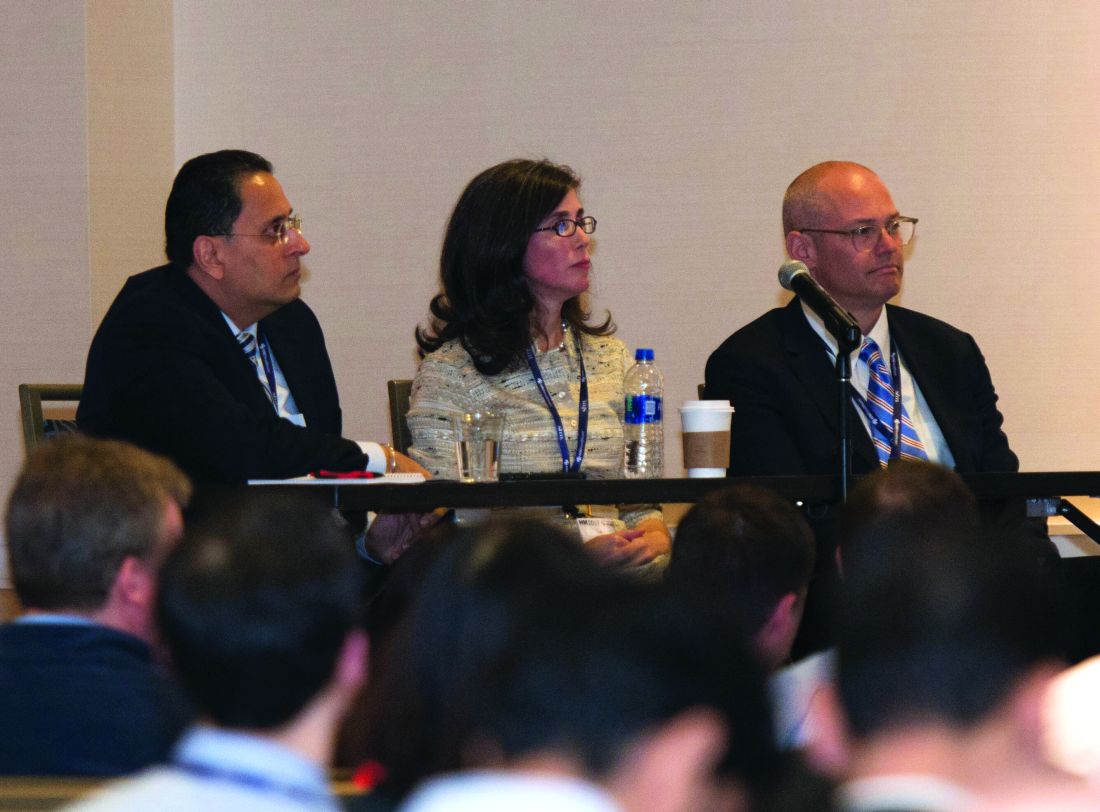
During the Monday afternoon session, four hospitalist projects were each presented in a 5-minute “pitch” to three senior quality and research leaders in hospital medicine who served as the “sharks.” These pitches were followed by 7 minutes of moderated questions and feedback from the sharks and the audience. Sharks then “bid” on the projects, offering up to 2 hours of one-on-one consultation during the conference or as needed.
The four projects included a study of the use of off-site scribes listening in to patient/hospitalist interactions to eliminate the need for the doctor to be glued to the computer screen, which was presented by Thea Dalfino, MD, chief of hospital medicine at Albany (N.Y.) Memorial Hospital; a rethinking of medical education to emphasize the role of hospitalists as mentors to individual student “apprentices,” presented by Amulya Nagarur, MD, of the department of medicine at Massachusetts General Hospital, Boston, and Christiana Renner, MD, of University of Texas Southwestern Medical Center, Dallas; and a redesign of patient hospital gowns to optimize, comfort, morale, and functionality, presented by Cheryl Dellasega, PhD, professor of medicine and humanities at Penn State University, Hershey.
The winning project was presented by Meera Udayakumar, MD, medical director at the University of North Carolina REX Healthcare in Raleigh. She discussed “The Equalizer,” a computerized tool to optimize patient distribution among hospitalists in order to balance workflow in a practice.
In discussing the thinking behind this unique session, Luci Leykum, MD, SFHM, chief of the division of general and hospital medicine at the University of Texas, San Antonio, who served as one of the sharks, stated that: “We’ve always tried to do things to promote the pipeline of research in hospital medicine and to raise the visibility of research activities at the annual conference. In the past, we have done one-on-one ‘speed dating’ with mentors, but the research committee thought this format would be more interactive and that audience members could benefit from hearing the discussion.”
The other participating sharks were Andrew Auerbach, MD, MPH, MHM, professor of medicine at the University of California, San Francisco, and former editor of the Journal of Hospital Medicine, and Hardeep Singh, MD, MPH, chief of the health policy, quality, and informatics program at the Center for Innovations in Quality, Effectiveness, and Safety at the Michael E. DeBakey Veterans Affairs Medical Center in Houston.
The selection process for those looking to pitch was rigorous. Projects submitted to the research committee had to focus on research, quality improvement, or medical education and be very specific to the practice of hospital medicine. In addition, the ideas needed to be relatively well developed, ideally with some pilot data. Applicants also needed to address a significant problem in hospital medicine, showcase an innovative approach, and make the case for how their solution would have short- and long-term effects.
Dr. Leykum said she was looking to see whether the pitched projects have clearly articulated questions that are important and interesting and whether the proposed methods would sufficiently answer those questions. She also considered what the implications were if the work was done.
Audience members had a chance to ask questions and, if they were interested, to potentially partner with presenters or adopt similar ideas at their own institutions. Attendees were exposed to innovative ways of solving problems that are common and ideas that have a big impact on the way problems are approached in hospital medicine.
“I think it was a fun, fast, interactive session, and it was interesting to see,” said Dr. Leykum. “Those of us who were the sharks know each other and each other’s work, so that was a fun dynamic.”
A few lucky hospitalists had the chance to compete for dedicated consultation time from experienced hospital medicine mentors during the SHM Annual Conference’s first Research Shark Tank.
During the Monday afternoon session, four hospitalist projects were each presented in a 5-minute “pitch” to three senior quality and research leaders in hospital medicine who served as the “sharks.” These pitches were followed by 7 minutes of moderated questions and feedback from the sharks and the audience. Sharks then “bid” on the projects, offering up to 2 hours of one-on-one consultation during the conference or as needed.
The four projects included a study of the use of off-site scribes listening in to patient/hospitalist interactions to eliminate the need for the doctor to be glued to the computer screen, which was presented by Thea Dalfino, MD, chief of hospital medicine at Albany (N.Y.) Memorial Hospital; a rethinking of medical education to emphasize the role of hospitalists as mentors to individual student “apprentices,” presented by Amulya Nagarur, MD, of the department of medicine at Massachusetts General Hospital, Boston, and Christiana Renner, MD, of University of Texas Southwestern Medical Center, Dallas; and a redesign of patient hospital gowns to optimize, comfort, morale, and functionality, presented by Cheryl Dellasega, PhD, professor of medicine and humanities at Penn State University, Hershey.
The winning project was presented by Meera Udayakumar, MD, medical director at the University of North Carolina REX Healthcare in Raleigh. She discussed “The Equalizer,” a computerized tool to optimize patient distribution among hospitalists in order to balance workflow in a practice.
In discussing the thinking behind this unique session, Luci Leykum, MD, SFHM, chief of the division of general and hospital medicine at the University of Texas, San Antonio, who served as one of the sharks, stated that: “We’ve always tried to do things to promote the pipeline of research in hospital medicine and to raise the visibility of research activities at the annual conference. In the past, we have done one-on-one ‘speed dating’ with mentors, but the research committee thought this format would be more interactive and that audience members could benefit from hearing the discussion.”
The other participating sharks were Andrew Auerbach, MD, MPH, MHM, professor of medicine at the University of California, San Francisco, and former editor of the Journal of Hospital Medicine, and Hardeep Singh, MD, MPH, chief of the health policy, quality, and informatics program at the Center for Innovations in Quality, Effectiveness, and Safety at the Michael E. DeBakey Veterans Affairs Medical Center in Houston.
The selection process for those looking to pitch was rigorous. Projects submitted to the research committee had to focus on research, quality improvement, or medical education and be very specific to the practice of hospital medicine. In addition, the ideas needed to be relatively well developed, ideally with some pilot data. Applicants also needed to address a significant problem in hospital medicine, showcase an innovative approach, and make the case for how their solution would have short- and long-term effects.
Dr. Leykum said she was looking to see whether the pitched projects have clearly articulated questions that are important and interesting and whether the proposed methods would sufficiently answer those questions. She also considered what the implications were if the work was done.
Audience members had a chance to ask questions and, if they were interested, to potentially partner with presenters or adopt similar ideas at their own institutions. Attendees were exposed to innovative ways of solving problems that are common and ideas that have a big impact on the way problems are approached in hospital medicine.
“I think it was a fun, fast, interactive session, and it was interesting to see,” said Dr. Leykum. “Those of us who were the sharks know each other and each other’s work, so that was a fun dynamic.”
A few lucky hospitalists had the chance to compete for dedicated consultation time from experienced hospital medicine mentors during the SHM Annual Conference’s first Research Shark Tank.
During the Monday afternoon session, four hospitalist projects were each presented in a 5-minute “pitch” to three senior quality and research leaders in hospital medicine who served as the “sharks.” These pitches were followed by 7 minutes of moderated questions and feedback from the sharks and the audience. Sharks then “bid” on the projects, offering up to 2 hours of one-on-one consultation during the conference or as needed.
The four projects included a study of the use of off-site scribes listening in to patient/hospitalist interactions to eliminate the need for the doctor to be glued to the computer screen, which was presented by Thea Dalfino, MD, chief of hospital medicine at Albany (N.Y.) Memorial Hospital; a rethinking of medical education to emphasize the role of hospitalists as mentors to individual student “apprentices,” presented by Amulya Nagarur, MD, of the department of medicine at Massachusetts General Hospital, Boston, and Christiana Renner, MD, of University of Texas Southwestern Medical Center, Dallas; and a redesign of patient hospital gowns to optimize, comfort, morale, and functionality, presented by Cheryl Dellasega, PhD, professor of medicine and humanities at Penn State University, Hershey.
The winning project was presented by Meera Udayakumar, MD, medical director at the University of North Carolina REX Healthcare in Raleigh. She discussed “The Equalizer,” a computerized tool to optimize patient distribution among hospitalists in order to balance workflow in a practice.
In discussing the thinking behind this unique session, Luci Leykum, MD, SFHM, chief of the division of general and hospital medicine at the University of Texas, San Antonio, who served as one of the sharks, stated that: “We’ve always tried to do things to promote the pipeline of research in hospital medicine and to raise the visibility of research activities at the annual conference. In the past, we have done one-on-one ‘speed dating’ with mentors, but the research committee thought this format would be more interactive and that audience members could benefit from hearing the discussion.”
The other participating sharks were Andrew Auerbach, MD, MPH, MHM, professor of medicine at the University of California, San Francisco, and former editor of the Journal of Hospital Medicine, and Hardeep Singh, MD, MPH, chief of the health policy, quality, and informatics program at the Center for Innovations in Quality, Effectiveness, and Safety at the Michael E. DeBakey Veterans Affairs Medical Center in Houston.
The selection process for those looking to pitch was rigorous. Projects submitted to the research committee had to focus on research, quality improvement, or medical education and be very specific to the practice of hospital medicine. In addition, the ideas needed to be relatively well developed, ideally with some pilot data. Applicants also needed to address a significant problem in hospital medicine, showcase an innovative approach, and make the case for how their solution would have short- and long-term effects.
Dr. Leykum said she was looking to see whether the pitched projects have clearly articulated questions that are important and interesting and whether the proposed methods would sufficiently answer those questions. She also considered what the implications were if the work was done.
Audience members had a chance to ask questions and, if they were interested, to potentially partner with presenters or adopt similar ideas at their own institutions. Attendees were exposed to innovative ways of solving problems that are common and ideas that have a big impact on the way problems are approached in hospital medicine.
“I think it was a fun, fast, interactive session, and it was interesting to see,” said Dr. Leykum. “Those of us who were the sharks know each other and each other’s work, so that was a fun dynamic.”
Adapting to change key to hospitalists’ future, SHM president says
Society of Hospital Medicine President Nasim Afsar, MD, SFHM, told a packed ballroom of hospitalists at HM19 on Monday that it’s not change to the health care industry that is most central to their future, but it’s how they assume a role within it and how they spark it themselves.
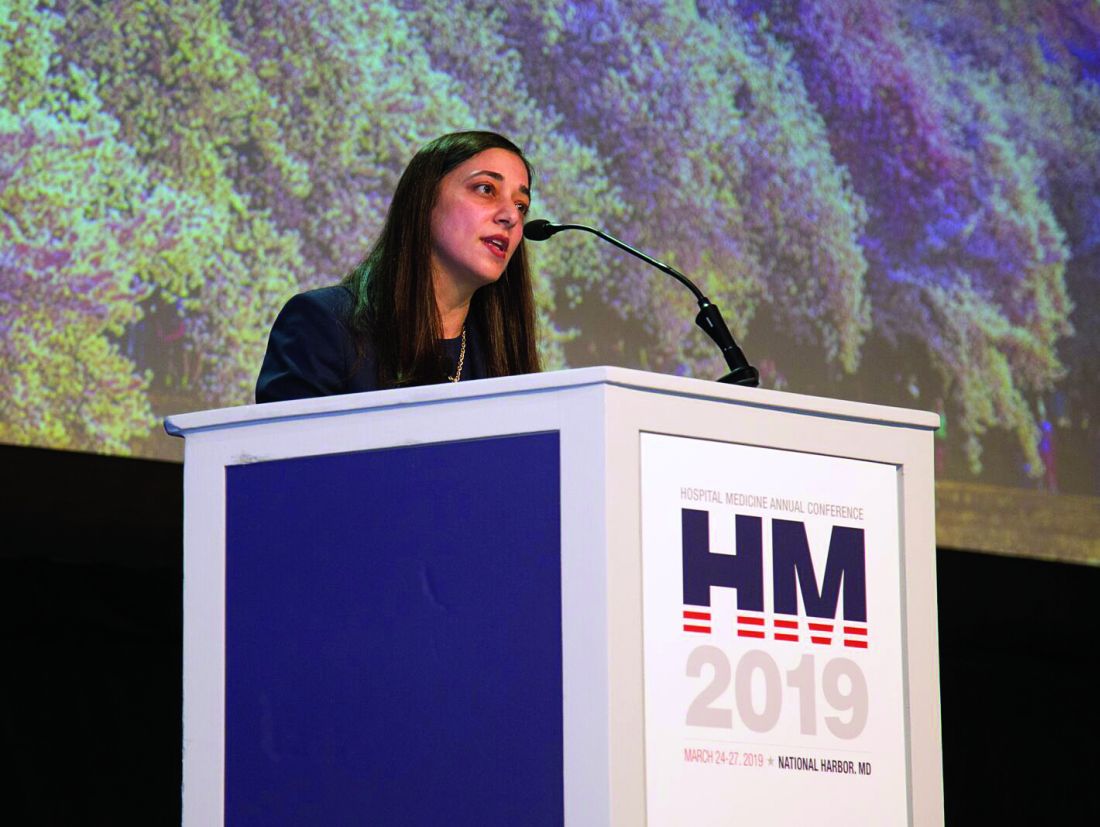
With a tone that was, at times, almost ebullient about change, Dr. Afsar characterized the flux of health care as a series of opportunities to improve patient care.
“Run toward change,” said Dr. Afsar, chief ambulatory officer and chief medical officer for accountable care organizations at University of California, Irvine. “And be a force of positive change.”
The push toward affordability and value has made for some “unlikely partners,” she noted, including the health care venture launched by Amazon, Berkshire Hathaway, and JPMorgan Chase, as well as some newer corporations stepping into the health care sphere, such as Uber with its UberHealth and the creation of giants like the CVS-Aetna merger.
She acknowledged it brings “uncertainty and risk” but suggested that hospitalists are equipped to cope, saying that “we’ve all experienced this in our personal and professional lives.”
Dr. Afsar described four major themes of change to the health care landscape that will affect how hospitalists do their jobs.
- A new setting of care. “The care of the patients is moving from the hospital to the ambulatory setting,” she said. “Some of the surgeries that we used to do in the ER are now being done in ambulatory surgery centers. Antibiotics are being infused via IVs at patients’ homes.”
- Focus on health and well-being. “There’s a transition as a society on focusing on the sick to prevention of disease,” she said. “How can we prevent chronic illness once it occurs? How can we limit its progression? This is a very new focus for us in health care.”
- An increasing role of patient care teams – including primary care doctors, pharmacists, and case managers – rather than hospital-based teams.
- A new focus on patient-centered care. “It’s a focus about how we can be everywhere the patient is, at anytime that the patient needs us,” she said.
A sense of the way forward, Dr. Afsar said, came out of recent strategic meetings of the SHM board of directors, in which they talked about the role and future of hospitalists in population health management and value-based care. They agreed hospitalists should define themselves by their values and competencies, not by the hospital building itself. Hospitalists should use the acute care episode to make sure patients are connected to a larger system of care with wellness and prevention in mind.
“It’s not the strongest of the species that survive, nor the most intelligent,” Dr. Afsar said. “But the ones who are most adaptable to change. While there’s debate on the Internet about who originally said this, there’s absolutely no debate that the theme in life and in health care is adaptability in the face of constant change.”
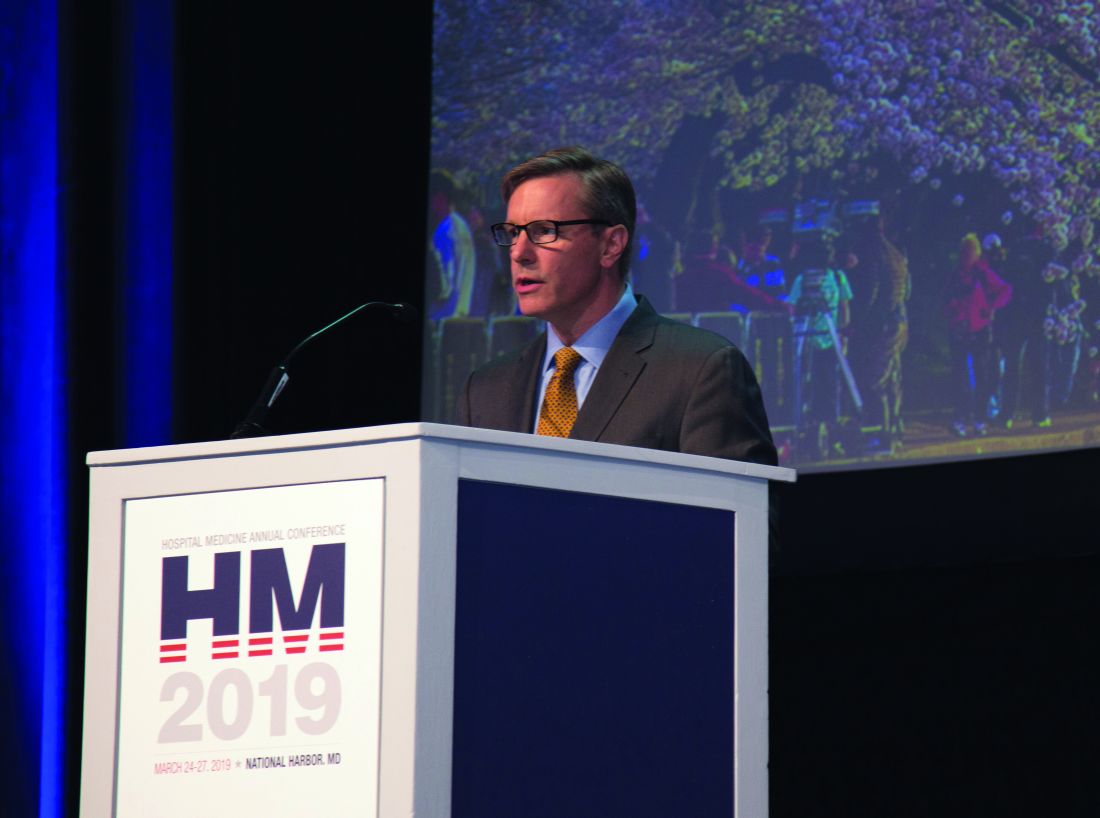
In his own address at the Annual Conference of the Society of Hospital Medicine, Christopher Frost, MD, SFHM, the president-elect of SHM and national medical director of hospital-based services for LifePoint Health in Brentwood, Tenn., echoed Dr. Afsar’s theme of action in the context of change.
A key word, he said, is “multifarious” – the health care industry changes and the ways hospitalists are tackling these changes come in many and various types.
“We will not just react to – but actually help author – aspects of this change,” he said, including the continued move from fee for service to value-based and risk-based models of payment, and how to put new insights into disease processes to use and how they’re linked to social factors.
Increasing the diversity of hospitalist teams, maximizing the use of technology, and improving LGBTQ care are all themes of change being addressed at the meeting, he noted.
“When we summit one mountain of our own professional Alps,” Dr. Frost said, “and we see another on the horizon, we say, ‘Let’s climb that one. Let’s go there.’ ”
Society of Hospital Medicine President Nasim Afsar, MD, SFHM, told a packed ballroom of hospitalists at HM19 on Monday that it’s not change to the health care industry that is most central to their future, but it’s how they assume a role within it and how they spark it themselves.
With a tone that was, at times, almost ebullient about change, Dr. Afsar characterized the flux of health care as a series of opportunities to improve patient care.
“Run toward change,” said Dr. Afsar, chief ambulatory officer and chief medical officer for accountable care organizations at University of California, Irvine. “And be a force of positive change.”
The push toward affordability and value has made for some “unlikely partners,” she noted, including the health care venture launched by Amazon, Berkshire Hathaway, and JPMorgan Chase, as well as some newer corporations stepping into the health care sphere, such as Uber with its UberHealth and the creation of giants like the CVS-Aetna merger.
She acknowledged it brings “uncertainty and risk” but suggested that hospitalists are equipped to cope, saying that “we’ve all experienced this in our personal and professional lives.”
Dr. Afsar described four major themes of change to the health care landscape that will affect how hospitalists do their jobs.
- A new setting of care. “The care of the patients is moving from the hospital to the ambulatory setting,” she said. “Some of the surgeries that we used to do in the ER are now being done in ambulatory surgery centers. Antibiotics are being infused via IVs at patients’ homes.”
- Focus on health and well-being. “There’s a transition as a society on focusing on the sick to prevention of disease,” she said. “How can we prevent chronic illness once it occurs? How can we limit its progression? This is a very new focus for us in health care.”
- An increasing role of patient care teams – including primary care doctors, pharmacists, and case managers – rather than hospital-based teams.
- A new focus on patient-centered care. “It’s a focus about how we can be everywhere the patient is, at anytime that the patient needs us,” she said.
A sense of the way forward, Dr. Afsar said, came out of recent strategic meetings of the SHM board of directors, in which they talked about the role and future of hospitalists in population health management and value-based care. They agreed hospitalists should define themselves by their values and competencies, not by the hospital building itself. Hospitalists should use the acute care episode to make sure patients are connected to a larger system of care with wellness and prevention in mind.
“It’s not the strongest of the species that survive, nor the most intelligent,” Dr. Afsar said. “But the ones who are most adaptable to change. While there’s debate on the Internet about who originally said this, there’s absolutely no debate that the theme in life and in health care is adaptability in the face of constant change.”
In his own address at the Annual Conference of the Society of Hospital Medicine, Christopher Frost, MD, SFHM, the president-elect of SHM and national medical director of hospital-based services for LifePoint Health in Brentwood, Tenn., echoed Dr. Afsar’s theme of action in the context of change.
A key word, he said, is “multifarious” – the health care industry changes and the ways hospitalists are tackling these changes come in many and various types.
“We will not just react to – but actually help author – aspects of this change,” he said, including the continued move from fee for service to value-based and risk-based models of payment, and how to put new insights into disease processes to use and how they’re linked to social factors.
Increasing the diversity of hospitalist teams, maximizing the use of technology, and improving LGBTQ care are all themes of change being addressed at the meeting, he noted.
“When we summit one mountain of our own professional Alps,” Dr. Frost said, “and we see another on the horizon, we say, ‘Let’s climb that one. Let’s go there.’ ”
Society of Hospital Medicine President Nasim Afsar, MD, SFHM, told a packed ballroom of hospitalists at HM19 on Monday that it’s not change to the health care industry that is most central to their future, but it’s how they assume a role within it and how they spark it themselves.
With a tone that was, at times, almost ebullient about change, Dr. Afsar characterized the flux of health care as a series of opportunities to improve patient care.
“Run toward change,” said Dr. Afsar, chief ambulatory officer and chief medical officer for accountable care organizations at University of California, Irvine. “And be a force of positive change.”
The push toward affordability and value has made for some “unlikely partners,” she noted, including the health care venture launched by Amazon, Berkshire Hathaway, and JPMorgan Chase, as well as some newer corporations stepping into the health care sphere, such as Uber with its UberHealth and the creation of giants like the CVS-Aetna merger.
She acknowledged it brings “uncertainty and risk” but suggested that hospitalists are equipped to cope, saying that “we’ve all experienced this in our personal and professional lives.”
Dr. Afsar described four major themes of change to the health care landscape that will affect how hospitalists do their jobs.
- A new setting of care. “The care of the patients is moving from the hospital to the ambulatory setting,” she said. “Some of the surgeries that we used to do in the ER are now being done in ambulatory surgery centers. Antibiotics are being infused via IVs at patients’ homes.”
- Focus on health and well-being. “There’s a transition as a society on focusing on the sick to prevention of disease,” she said. “How can we prevent chronic illness once it occurs? How can we limit its progression? This is a very new focus for us in health care.”
- An increasing role of patient care teams – including primary care doctors, pharmacists, and case managers – rather than hospital-based teams.
- A new focus on patient-centered care. “It’s a focus about how we can be everywhere the patient is, at anytime that the patient needs us,” she said.
A sense of the way forward, Dr. Afsar said, came out of recent strategic meetings of the SHM board of directors, in which they talked about the role and future of hospitalists in population health management and value-based care. They agreed hospitalists should define themselves by their values and competencies, not by the hospital building itself. Hospitalists should use the acute care episode to make sure patients are connected to a larger system of care with wellness and prevention in mind.
“It’s not the strongest of the species that survive, nor the most intelligent,” Dr. Afsar said. “But the ones who are most adaptable to change. While there’s debate on the Internet about who originally said this, there’s absolutely no debate that the theme in life and in health care is adaptability in the face of constant change.”
In his own address at the Annual Conference of the Society of Hospital Medicine, Christopher Frost, MD, SFHM, the president-elect of SHM and national medical director of hospital-based services for LifePoint Health in Brentwood, Tenn., echoed Dr. Afsar’s theme of action in the context of change.
A key word, he said, is “multifarious” – the health care industry changes and the ways hospitalists are tackling these changes come in many and various types.
“We will not just react to – but actually help author – aspects of this change,” he said, including the continued move from fee for service to value-based and risk-based models of payment, and how to put new insights into disease processes to use and how they’re linked to social factors.
Increasing the diversity of hospitalist teams, maximizing the use of technology, and improving LGBTQ care are all themes of change being addressed at the meeting, he noted.
“When we summit one mountain of our own professional Alps,” Dr. Frost said, “and we see another on the horizon, we say, ‘Let’s climb that one. Let’s go there.’ ”
SHM honors extraordinary leader, editor
When Andrew Auerbach, MD, MPH, SFHM, started as a hospitalist, his specialty didn’t have a name. His title was simply “medical director.” Now, 2 decades later, he is a professor of medicine at the University of California, San Francisco, and one of the most experienced and influential hospitalists in the field.
SHM will honor Dr. Auerbach and celebrate his achievements today at HM19, at the Awards plenary following the Chapter Awards of Excellence ceremony that begins at 8:30 a.m. SHM president Nasim Afsar, MD, SFHM, will present him with a plaque and review his contributions to the growth of the Journal of Hospital Medicine.
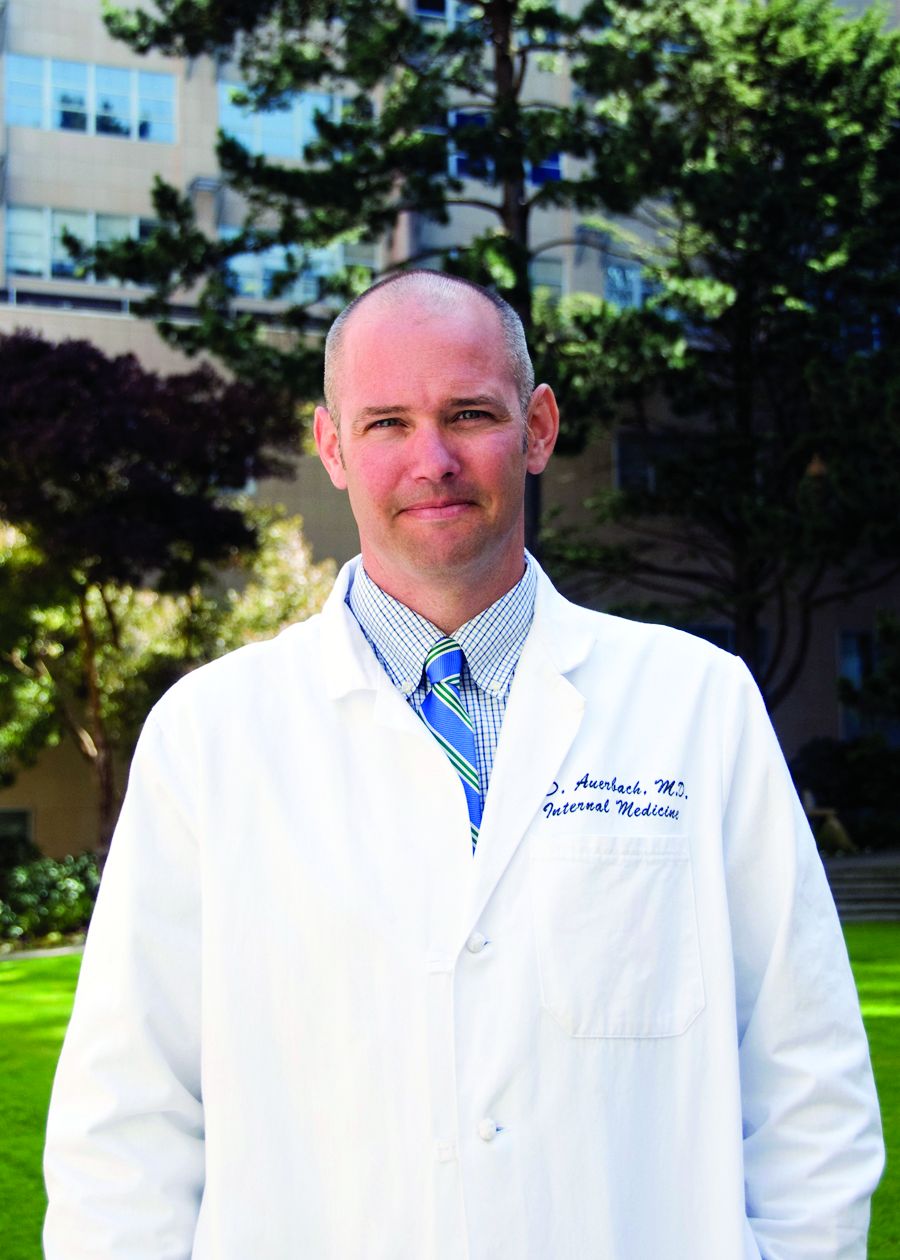
Throughout his career, even going back to the days he helped to found the Society of Hospital Medicine, Dr. Auerbach has played a crucial role in defining how a hospitalist works and thinks. Over the last 7 years, he led the Journal of Hospital Medicine through an extraordinary period of growth that has secured its reputation as a crucial resource for hospitalists and beyond.
“Andy Auerbach transformed the Journal of Hospital Medicine from the status of a ‘start-up’ Version 1.0 to a polished, efficient machine – Version 2.0. His efforts garnered the national respect that JHM deserves,” said Mark Williams, MD, MHM, University of Kentucky HealthCare hospital medicine division chief and tenured professor of medicine. Dr. Williams served as editor in chief of the journal immediately prior to Dr. Auerbach. “I hope Andy will be known as the editor who transformed an acceptable journal into a stellar example of what a medical journal can become.”
Samir S. Shah, MD, MSCE, MHM, who has replaced Dr. Auerbach as editor in chief of the journal, also has praise for his predecessor. “Andy has really invested in advancing scholarship in hospital medicine and ensuring that great work is broadly disseminated,” said Dr. Shah, chief of hospital medicine at Cincinnati Children’s Hospital Medical Center.
Dr. Auerbach said his interest in inpatient and perioperative care sparked his focus on hospital medicine. “My initial research was foundational for the field. I wanted to understand, refine, and improve our role: Do hospitalists improve care and outcomes? Do they affect patient perceptions of their doctors?”
At the time, hospital medicine felt like a 1990s dot-com startup, he recalled, but one that was destined to last. “It was clear that hospital medicine was going to take off, but the academic pursuits were taking longer to get going. We were starting from zero.”
Enter the Journal of Hospital Medicine. The publication received about 200 submissions a year when Dr. Auerbach took over as editor in chief. Now, it receives more than 800.
The higher number of submissions allows editors to be more selective about the papers that are published. At the same time, the growth in the journal’s profile and influence has allowed it to evolve into a more wide-ranging publication, Dr. Auerbach said.
“Geriatricians and nephrologists are sending us papers,” he said. “They believe our work is important, and they understand that we’re publishing research about topics such as acute kidney injury, delirium, inpatient safety issues, and transfer of care.”
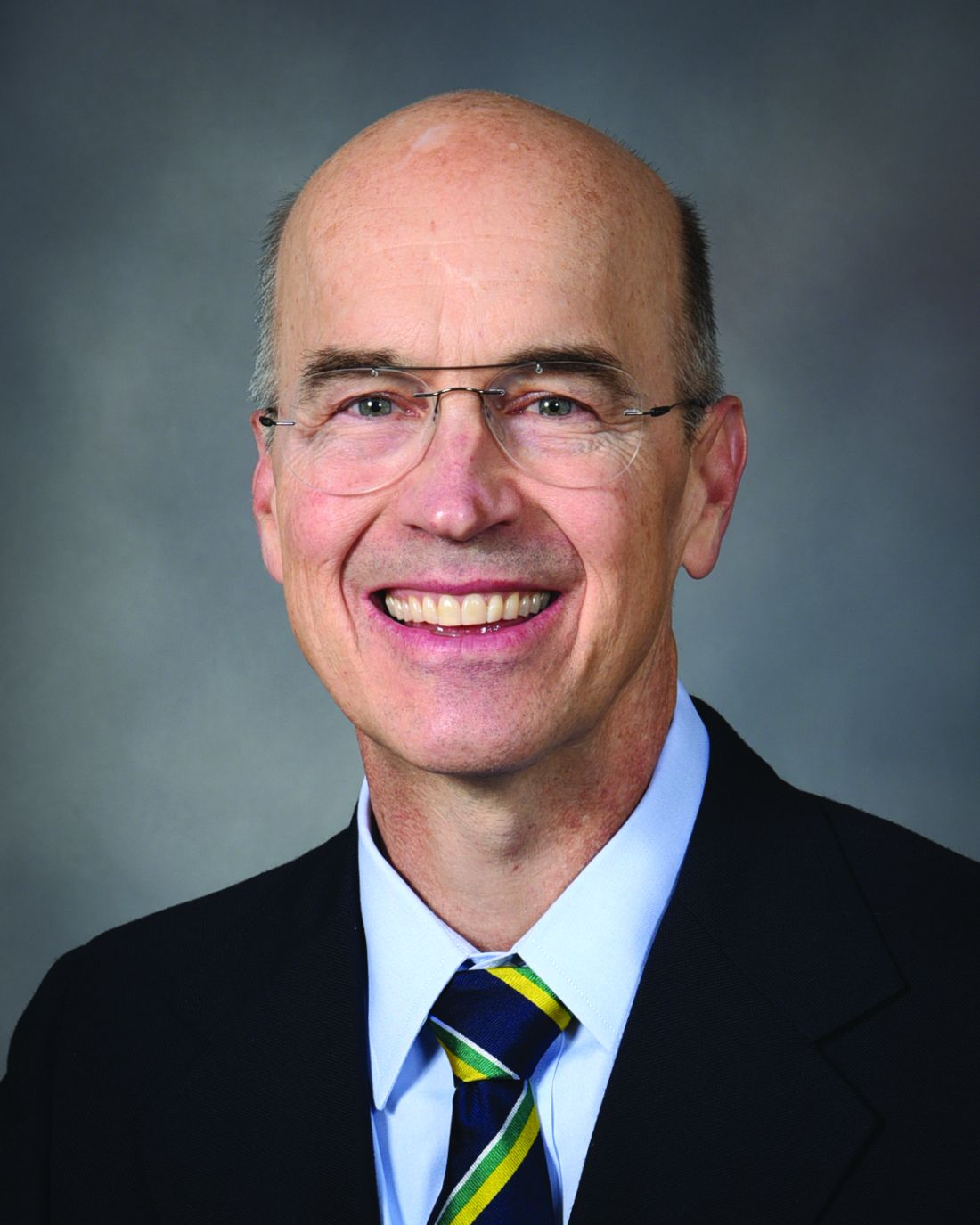
According to Dr. Williams, his successor has played a crucial role in the journal’s success. “Andy improved the response rate of JHM, dramatically shortening the time for reviews while maintaining and even improving the quality of reviews,” he said. “This single act profoundly impacted author satisfaction and drove the increased number of article submissions.”
Dr. Auerbach also revolutionized the journal’s approach to technology. “Under his leadership, the journal pioneered the use of social media to engage readers in ways that were fundamentally different from established processes at the time,” said new editor in chief Dr. Shah. “For example, the journal has created roles for social media editors, and it routinely publishes visual abstracts to provide readers with a quick overview of journal research. We also hold regular dialogues with readers via our #JHMChat Twitter journal club to engage them in discussing the latest research published in JHM.”
Dr. Shah also noted that Dr. Auerbach boosted hospital medicine and the journal in other ways during his tenure. “He encouraged the team of editors to engage with our authors in meaningful and substantive ways. That meant encouraging thoughtful feedback and also reaching out to authors directly to provide additional guidance as they revised their manuscript and, oftentimes, as they prepared to submit their manuscript elsewhere,” he said.

In addition, Dr. Shah said that his colleague “also created the JHM editorial fellowship as a way to help develop the pipeline for academic leadership. This fellowship provides chief residents, academic hospital medicine fellows, and junior faculty an opportunity to learn about medical publishing, hone their skills in evaluating research and writing, and network with leaders in the field.”
For his part, Dr. Auerbach hopes his legacy at the journal will include an expansion, perhaps within a year or 2. “I’d love to see the journal come out twice a month,” he said. “There’s enough potential science out there, and I think it could be in that position soon.”
Awards of Excellence
Tuesday, 8:30 – 9:10 a.m.
Potomac ABCD
When Andrew Auerbach, MD, MPH, SFHM, started as a hospitalist, his specialty didn’t have a name. His title was simply “medical director.” Now, 2 decades later, he is a professor of medicine at the University of California, San Francisco, and one of the most experienced and influential hospitalists in the field.
SHM will honor Dr. Auerbach and celebrate his achievements today at HM19, at the Awards plenary following the Chapter Awards of Excellence ceremony that begins at 8:30 a.m. SHM president Nasim Afsar, MD, SFHM, will present him with a plaque and review his contributions to the growth of the Journal of Hospital Medicine.
Throughout his career, even going back to the days he helped to found the Society of Hospital Medicine, Dr. Auerbach has played a crucial role in defining how a hospitalist works and thinks. Over the last 7 years, he led the Journal of Hospital Medicine through an extraordinary period of growth that has secured its reputation as a crucial resource for hospitalists and beyond.
“Andy Auerbach transformed the Journal of Hospital Medicine from the status of a ‘start-up’ Version 1.0 to a polished, efficient machine – Version 2.0. His efforts garnered the national respect that JHM deserves,” said Mark Williams, MD, MHM, University of Kentucky HealthCare hospital medicine division chief and tenured professor of medicine. Dr. Williams served as editor in chief of the journal immediately prior to Dr. Auerbach. “I hope Andy will be known as the editor who transformed an acceptable journal into a stellar example of what a medical journal can become.”
Samir S. Shah, MD, MSCE, MHM, who has replaced Dr. Auerbach as editor in chief of the journal, also has praise for his predecessor. “Andy has really invested in advancing scholarship in hospital medicine and ensuring that great work is broadly disseminated,” said Dr. Shah, chief of hospital medicine at Cincinnati Children’s Hospital Medical Center.
Dr. Auerbach said his interest in inpatient and perioperative care sparked his focus on hospital medicine. “My initial research was foundational for the field. I wanted to understand, refine, and improve our role: Do hospitalists improve care and outcomes? Do they affect patient perceptions of their doctors?”
At the time, hospital medicine felt like a 1990s dot-com startup, he recalled, but one that was destined to last. “It was clear that hospital medicine was going to take off, but the academic pursuits were taking longer to get going. We were starting from zero.”
Enter the Journal of Hospital Medicine. The publication received about 200 submissions a year when Dr. Auerbach took over as editor in chief. Now, it receives more than 800.
The higher number of submissions allows editors to be more selective about the papers that are published. At the same time, the growth in the journal’s profile and influence has allowed it to evolve into a more wide-ranging publication, Dr. Auerbach said.
“Geriatricians and nephrologists are sending us papers,” he said. “They believe our work is important, and they understand that we’re publishing research about topics such as acute kidney injury, delirium, inpatient safety issues, and transfer of care.”
According to Dr. Williams, his successor has played a crucial role in the journal’s success. “Andy improved the response rate of JHM, dramatically shortening the time for reviews while maintaining and even improving the quality of reviews,” he said. “This single act profoundly impacted author satisfaction and drove the increased number of article submissions.”
Dr. Auerbach also revolutionized the journal’s approach to technology. “Under his leadership, the journal pioneered the use of social media to engage readers in ways that were fundamentally different from established processes at the time,” said new editor in chief Dr. Shah. “For example, the journal has created roles for social media editors, and it routinely publishes visual abstracts to provide readers with a quick overview of journal research. We also hold regular dialogues with readers via our #JHMChat Twitter journal club to engage them in discussing the latest research published in JHM.”
Dr. Shah also noted that Dr. Auerbach boosted hospital medicine and the journal in other ways during his tenure. “He encouraged the team of editors to engage with our authors in meaningful and substantive ways. That meant encouraging thoughtful feedback and also reaching out to authors directly to provide additional guidance as they revised their manuscript and, oftentimes, as they prepared to submit their manuscript elsewhere,” he said.
In addition, Dr. Shah said that his colleague “also created the JHM editorial fellowship as a way to help develop the pipeline for academic leadership. This fellowship provides chief residents, academic hospital medicine fellows, and junior faculty an opportunity to learn about medical publishing, hone their skills in evaluating research and writing, and network with leaders in the field.”
For his part, Dr. Auerbach hopes his legacy at the journal will include an expansion, perhaps within a year or 2. “I’d love to see the journal come out twice a month,” he said. “There’s enough potential science out there, and I think it could be in that position soon.”
Awards of Excellence
Tuesday, 8:30 – 9:10 a.m.
Potomac ABCD
When Andrew Auerbach, MD, MPH, SFHM, started as a hospitalist, his specialty didn’t have a name. His title was simply “medical director.” Now, 2 decades later, he is a professor of medicine at the University of California, San Francisco, and one of the most experienced and influential hospitalists in the field.
SHM will honor Dr. Auerbach and celebrate his achievements today at HM19, at the Awards plenary following the Chapter Awards of Excellence ceremony that begins at 8:30 a.m. SHM president Nasim Afsar, MD, SFHM, will present him with a plaque and review his contributions to the growth of the Journal of Hospital Medicine.
Throughout his career, even going back to the days he helped to found the Society of Hospital Medicine, Dr. Auerbach has played a crucial role in defining how a hospitalist works and thinks. Over the last 7 years, he led the Journal of Hospital Medicine through an extraordinary period of growth that has secured its reputation as a crucial resource for hospitalists and beyond.
“Andy Auerbach transformed the Journal of Hospital Medicine from the status of a ‘start-up’ Version 1.0 to a polished, efficient machine – Version 2.0. His efforts garnered the national respect that JHM deserves,” said Mark Williams, MD, MHM, University of Kentucky HealthCare hospital medicine division chief and tenured professor of medicine. Dr. Williams served as editor in chief of the journal immediately prior to Dr. Auerbach. “I hope Andy will be known as the editor who transformed an acceptable journal into a stellar example of what a medical journal can become.”
Samir S. Shah, MD, MSCE, MHM, who has replaced Dr. Auerbach as editor in chief of the journal, also has praise for his predecessor. “Andy has really invested in advancing scholarship in hospital medicine and ensuring that great work is broadly disseminated,” said Dr. Shah, chief of hospital medicine at Cincinnati Children’s Hospital Medical Center.
Dr. Auerbach said his interest in inpatient and perioperative care sparked his focus on hospital medicine. “My initial research was foundational for the field. I wanted to understand, refine, and improve our role: Do hospitalists improve care and outcomes? Do they affect patient perceptions of their doctors?”
At the time, hospital medicine felt like a 1990s dot-com startup, he recalled, but one that was destined to last. “It was clear that hospital medicine was going to take off, but the academic pursuits were taking longer to get going. We were starting from zero.”
Enter the Journal of Hospital Medicine. The publication received about 200 submissions a year when Dr. Auerbach took over as editor in chief. Now, it receives more than 800.
The higher number of submissions allows editors to be more selective about the papers that are published. At the same time, the growth in the journal’s profile and influence has allowed it to evolve into a more wide-ranging publication, Dr. Auerbach said.
“Geriatricians and nephrologists are sending us papers,” he said. “They believe our work is important, and they understand that we’re publishing research about topics such as acute kidney injury, delirium, inpatient safety issues, and transfer of care.”
According to Dr. Williams, his successor has played a crucial role in the journal’s success. “Andy improved the response rate of JHM, dramatically shortening the time for reviews while maintaining and even improving the quality of reviews,” he said. “This single act profoundly impacted author satisfaction and drove the increased number of article submissions.”
Dr. Auerbach also revolutionized the journal’s approach to technology. “Under his leadership, the journal pioneered the use of social media to engage readers in ways that were fundamentally different from established processes at the time,” said new editor in chief Dr. Shah. “For example, the journal has created roles for social media editors, and it routinely publishes visual abstracts to provide readers with a quick overview of journal research. We also hold regular dialogues with readers via our #JHMChat Twitter journal club to engage them in discussing the latest research published in JHM.”
Dr. Shah also noted that Dr. Auerbach boosted hospital medicine and the journal in other ways during his tenure. “He encouraged the team of editors to engage with our authors in meaningful and substantive ways. That meant encouraging thoughtful feedback and also reaching out to authors directly to provide additional guidance as they revised their manuscript and, oftentimes, as they prepared to submit their manuscript elsewhere,” he said.
In addition, Dr. Shah said that his colleague “also created the JHM editorial fellowship as a way to help develop the pipeline for academic leadership. This fellowship provides chief residents, academic hospital medicine fellows, and junior faculty an opportunity to learn about medical publishing, hone their skills in evaluating research and writing, and network with leaders in the field.”
For his part, Dr. Auerbach hopes his legacy at the journal will include an expansion, perhaps within a year or 2. “I’d love to see the journal come out twice a month,” he said. “There’s enough potential science out there, and I think it could be in that position soon.”
Awards of Excellence
Tuesday, 8:30 – 9:10 a.m.
Potomac ABCD
Hospital medicine grows globally
Hospital medicine is growing in popularity in some foreign countries, speakers said during Monday afternoon’s session, “International Hospital Medicine in the United Arab Emirates, Brazil and Holland.” The presenters discussed some of the history of hospital medicine in each of those countries as well as some current challenges.
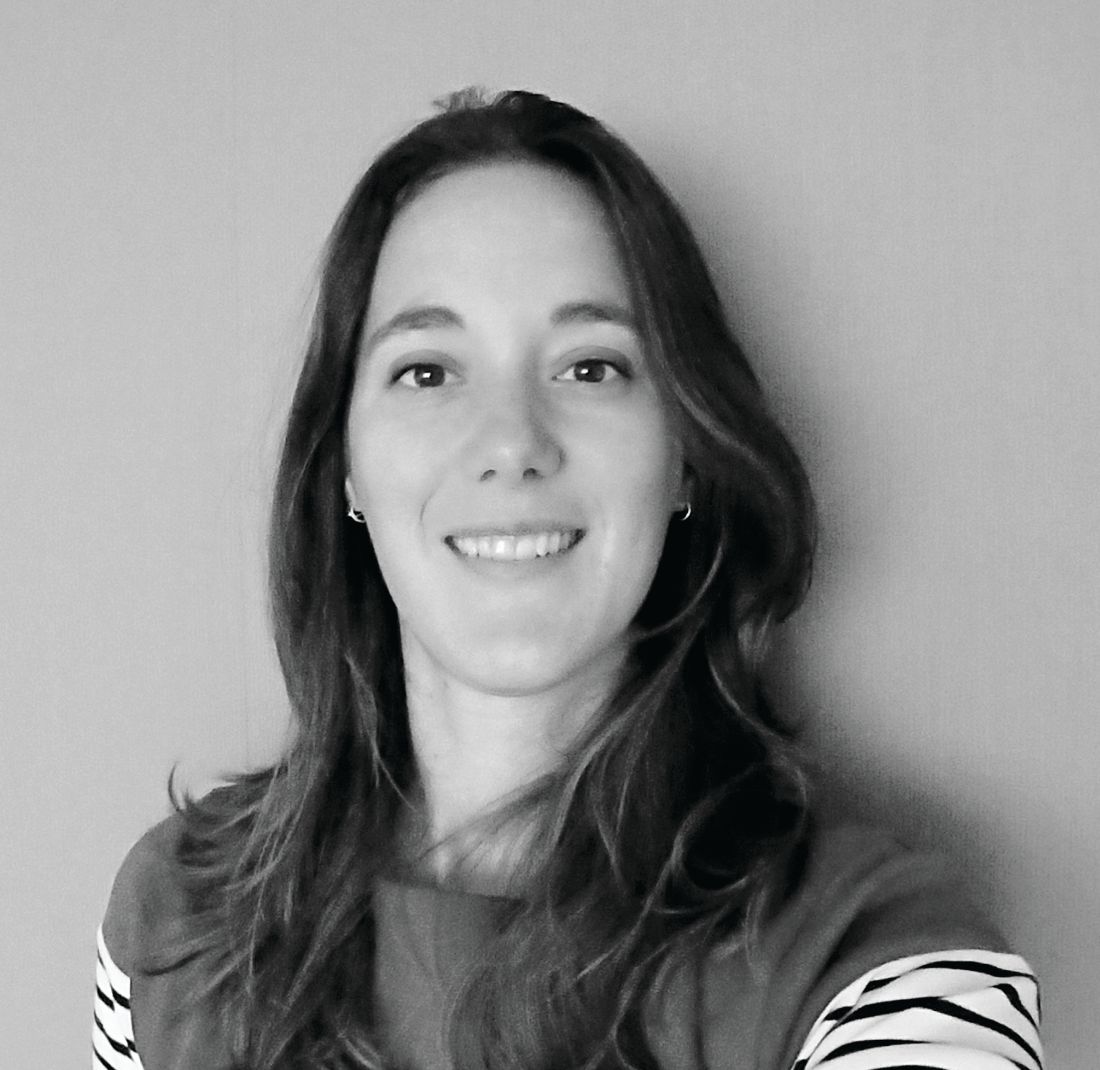
Hospital medicine in the Netherlands started in about 2012, said Marjolein de Boom, MD, a hospitalist at Haaglanden Medical Centre. The country has its own 3-year training program for hospitalists, who first started to work in hospitals in the country in 2015. “It’s a relatively new and young specialty,” said Dr. de Boom, with 39 hospitalists in the country working in 8 of the 80 Dutch hospitals. Another 25 or so hospitalists are in training, “so it’s a growing profession,” she said. A Dutch chapter of SHM has been in place since 2017.
Hospitals in the Netherlands permit physicians to serve as hospitalists in different specialties depending on their needs. For example, Dr. de Boom works in the oncology department, as well as the surgical and trauma surgery units. One challenge has been to get more physicians interested in the hospitalist program because it’s newer and not as well-known, she said.
Hospital medicine in the United Arab Emirates also is a newer concept. The American model of hospital medicine was first introduced to the region in 2014 by the Cleveland Clinic in Abu Dhabi, said Mahmoud Al-Hawamdeh, MD, MBA, SFHM, FACP, chair of hospital medicine at the medical center. “Before that, inpatient hospital care was done by traditional family and internal medicine physicians, general practitioners, and residents,” he said.
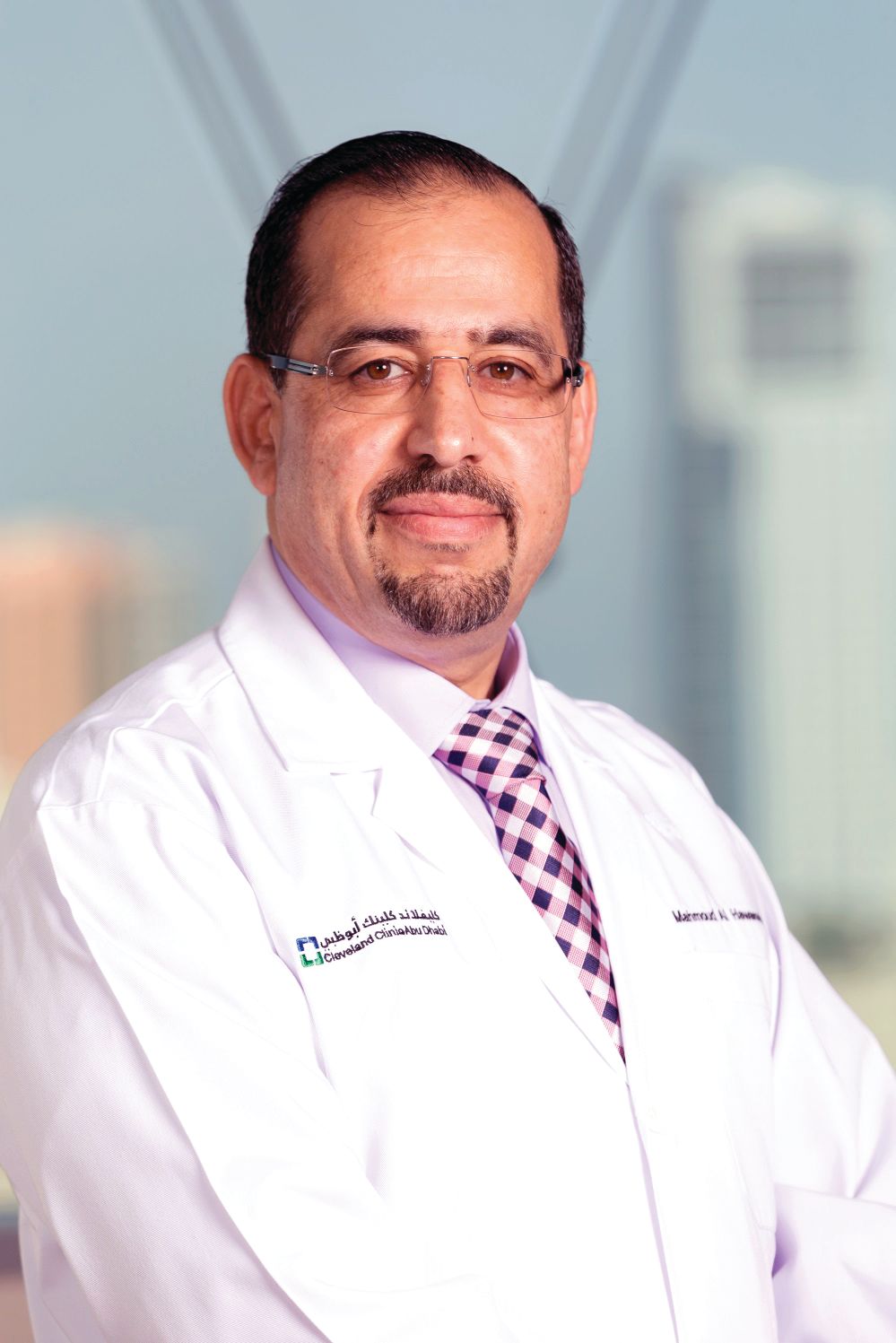
There are 43 hospitalists at Cleveland Clinic, Abu Dhabi, said Dr. Al-Hawamdeh. They cover about 50%-60% of inpatient services, as well as handle admissions for vascular surgery, ophthalmology, and some general services; they also comanage postcardiac surgery care, he said. “It has been a tremendous success to implement hospital medicine in the care for the inpatient with improved quality metrics, reduced length of stay, and improved patient satisfaction.”
However, there are some challenges, such as educating patients and families about the role of hospitalists, cultural barriers, and the lack of a postdischarge follow-up network and institutions such as skilled nursing facilities. Dr. Al-Hawamdeh worked with physicians from Johns Hopkins Aramco Healthcare and Hamad Medical Corporation to establish an SHM Middle East chapter in 2016.
In Brazil, hospital medicine started to take hold in 2004, said Guilherme Barcellos, MD, SFHM. At that time, just a few doctors were true hospitalists. Dr. Barcellos helped create two hospitalist societies in the country. Hospitalists balancing multiple jobs is still very common, but decreasing, he said, while hospital employment and medical group participation is increasing.
“It was a high-pressure environment, crying out for efficiency, that drove forward Brazilian hospital medicine,” Dr. Barcellos said, “together with new reimbursement models, surgical redesigns, primary care recognition and structure.”
Some challenges remain in Brazil as well, he said. Fancy private hospitals announce they have hospitalists when they may not. In addition, the role of generalists and subspecialists, and the role of certifications, is not always clear. But hospitalists are gaining a foothold, participating in a Choosing Wisely initiative in the country and organizing several conferences.
Hospital medicine is growing in popularity in some foreign countries, speakers said during Monday afternoon’s session, “International Hospital Medicine in the United Arab Emirates, Brazil and Holland.” The presenters discussed some of the history of hospital medicine in each of those countries as well as some current challenges.
Hospital medicine in the Netherlands started in about 2012, said Marjolein de Boom, MD, a hospitalist at Haaglanden Medical Centre. The country has its own 3-year training program for hospitalists, who first started to work in hospitals in the country in 2015. “It’s a relatively new and young specialty,” said Dr. de Boom, with 39 hospitalists in the country working in 8 of the 80 Dutch hospitals. Another 25 or so hospitalists are in training, “so it’s a growing profession,” she said. A Dutch chapter of SHM has been in place since 2017.
Hospitals in the Netherlands permit physicians to serve as hospitalists in different specialties depending on their needs. For example, Dr. de Boom works in the oncology department, as well as the surgical and trauma surgery units. One challenge has been to get more physicians interested in the hospitalist program because it’s newer and not as well-known, she said.
Hospital medicine in the United Arab Emirates also is a newer concept. The American model of hospital medicine was first introduced to the region in 2014 by the Cleveland Clinic in Abu Dhabi, said Mahmoud Al-Hawamdeh, MD, MBA, SFHM, FACP, chair of hospital medicine at the medical center. “Before that, inpatient hospital care was done by traditional family and internal medicine physicians, general practitioners, and residents,” he said.
There are 43 hospitalists at Cleveland Clinic, Abu Dhabi, said Dr. Al-Hawamdeh. They cover about 50%-60% of inpatient services, as well as handle admissions for vascular surgery, ophthalmology, and some general services; they also comanage postcardiac surgery care, he said. “It has been a tremendous success to implement hospital medicine in the care for the inpatient with improved quality metrics, reduced length of stay, and improved patient satisfaction.”
However, there are some challenges, such as educating patients and families about the role of hospitalists, cultural barriers, and the lack of a postdischarge follow-up network and institutions such as skilled nursing facilities. Dr. Al-Hawamdeh worked with physicians from Johns Hopkins Aramco Healthcare and Hamad Medical Corporation to establish an SHM Middle East chapter in 2016.
In Brazil, hospital medicine started to take hold in 2004, said Guilherme Barcellos, MD, SFHM. At that time, just a few doctors were true hospitalists. Dr. Barcellos helped create two hospitalist societies in the country. Hospitalists balancing multiple jobs is still very common, but decreasing, he said, while hospital employment and medical group participation is increasing.
“It was a high-pressure environment, crying out for efficiency, that drove forward Brazilian hospital medicine,” Dr. Barcellos said, “together with new reimbursement models, surgical redesigns, primary care recognition and structure.”
Some challenges remain in Brazil as well, he said. Fancy private hospitals announce they have hospitalists when they may not. In addition, the role of generalists and subspecialists, and the role of certifications, is not always clear. But hospitalists are gaining a foothold, participating in a Choosing Wisely initiative in the country and organizing several conferences.
Hospital medicine is growing in popularity in some foreign countries, speakers said during Monday afternoon’s session, “International Hospital Medicine in the United Arab Emirates, Brazil and Holland.” The presenters discussed some of the history of hospital medicine in each of those countries as well as some current challenges.
Hospital medicine in the Netherlands started in about 2012, said Marjolein de Boom, MD, a hospitalist at Haaglanden Medical Centre. The country has its own 3-year training program for hospitalists, who first started to work in hospitals in the country in 2015. “It’s a relatively new and young specialty,” said Dr. de Boom, with 39 hospitalists in the country working in 8 of the 80 Dutch hospitals. Another 25 or so hospitalists are in training, “so it’s a growing profession,” she said. A Dutch chapter of SHM has been in place since 2017.
Hospitals in the Netherlands permit physicians to serve as hospitalists in different specialties depending on their needs. For example, Dr. de Boom works in the oncology department, as well as the surgical and trauma surgery units. One challenge has been to get more physicians interested in the hospitalist program because it’s newer and not as well-known, she said.
Hospital medicine in the United Arab Emirates also is a newer concept. The American model of hospital medicine was first introduced to the region in 2014 by the Cleveland Clinic in Abu Dhabi, said Mahmoud Al-Hawamdeh, MD, MBA, SFHM, FACP, chair of hospital medicine at the medical center. “Before that, inpatient hospital care was done by traditional family and internal medicine physicians, general practitioners, and residents,” he said.
There are 43 hospitalists at Cleveland Clinic, Abu Dhabi, said Dr. Al-Hawamdeh. They cover about 50%-60% of inpatient services, as well as handle admissions for vascular surgery, ophthalmology, and some general services; they also comanage postcardiac surgery care, he said. “It has been a tremendous success to implement hospital medicine in the care for the inpatient with improved quality metrics, reduced length of stay, and improved patient satisfaction.”
However, there are some challenges, such as educating patients and families about the role of hospitalists, cultural barriers, and the lack of a postdischarge follow-up network and institutions such as skilled nursing facilities. Dr. Al-Hawamdeh worked with physicians from Johns Hopkins Aramco Healthcare and Hamad Medical Corporation to establish an SHM Middle East chapter in 2016.
In Brazil, hospital medicine started to take hold in 2004, said Guilherme Barcellos, MD, SFHM. At that time, just a few doctors were true hospitalists. Dr. Barcellos helped create two hospitalist societies in the country. Hospitalists balancing multiple jobs is still very common, but decreasing, he said, while hospital employment and medical group participation is increasing.
“It was a high-pressure environment, crying out for efficiency, that drove forward Brazilian hospital medicine,” Dr. Barcellos said, “together with new reimbursement models, surgical redesigns, primary care recognition and structure.”
Some challenges remain in Brazil as well, he said. Fancy private hospitals announce they have hospitalists when they may not. In addition, the role of generalists and subspecialists, and the role of certifications, is not always clear. But hospitalists are gaining a foothold, participating in a Choosing Wisely initiative in the country and organizing several conferences.
In transgender care, questions are the answer
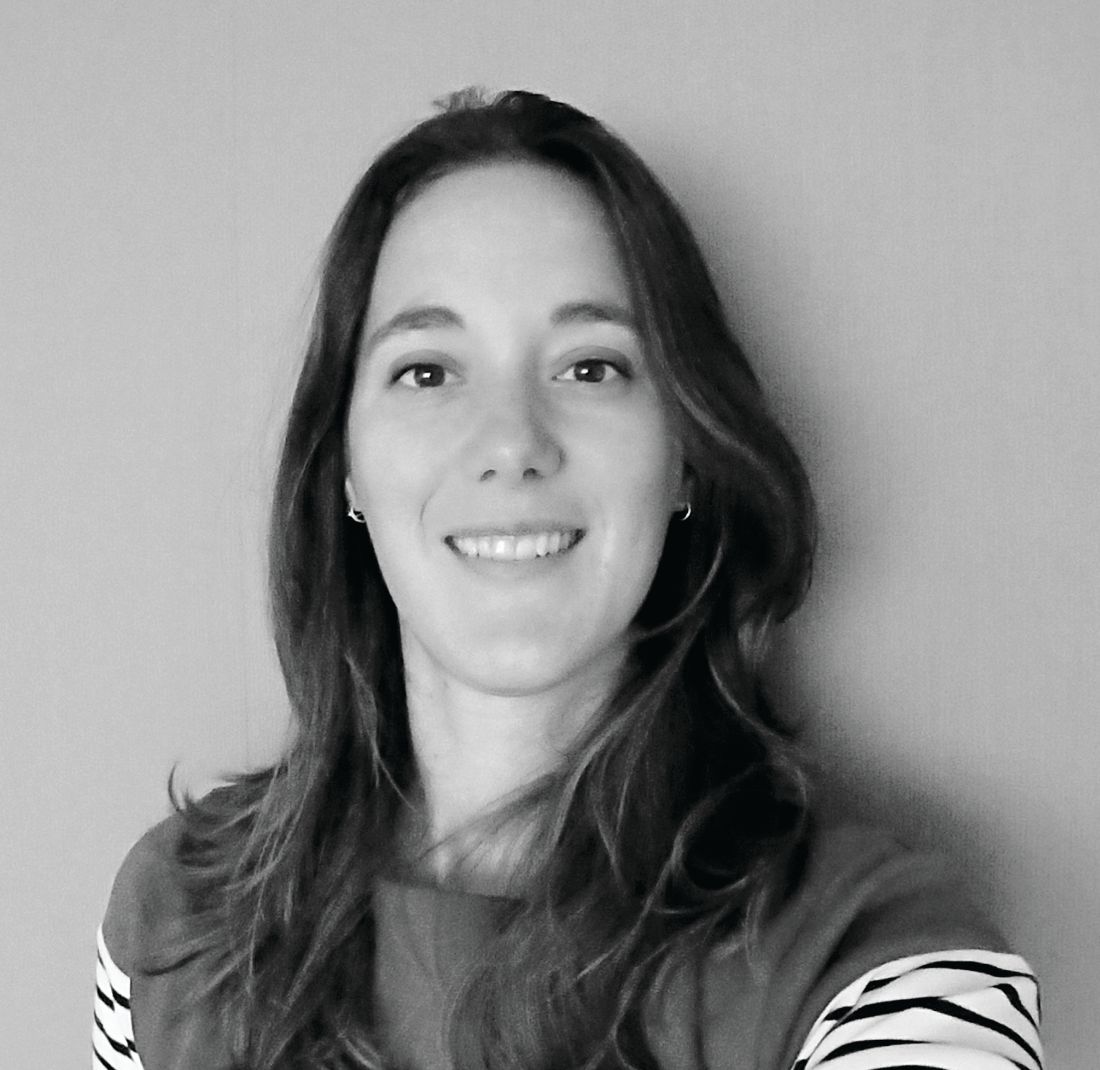
New York OBGYN Zoe I. Rodriguez, MD, a pioneer in the care of transgender people, has witnessed a remarkable evolution in medicine.
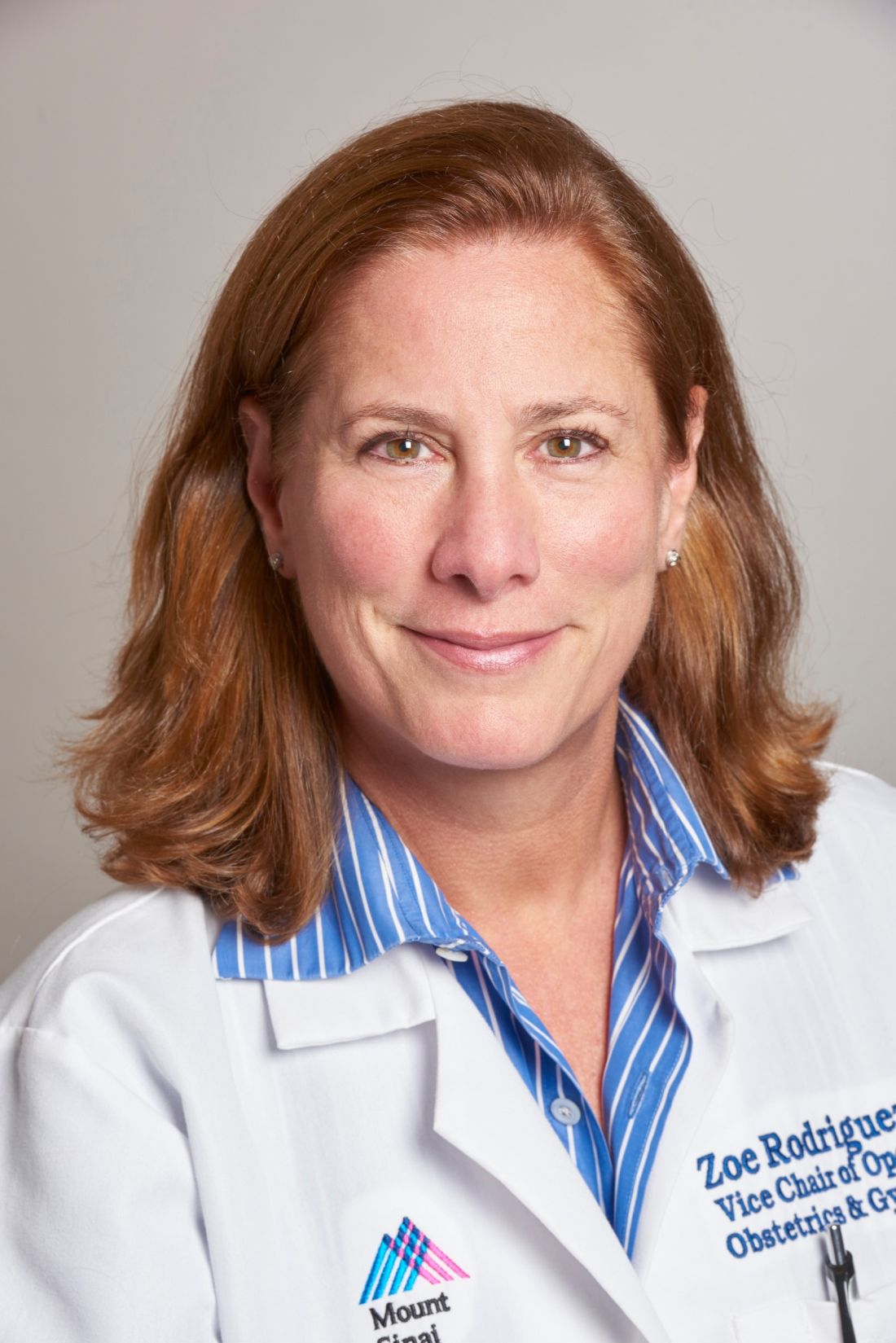
Years ago, providers knew little to nothing about the unique needs of transgender patients. Now, Dr. Rodriguez said, “there’s tremendous interest in being able to competently treat and address transgender individuals.”
But increased awareness has come with a dose of worry. Providers are often afraid they’ll say or do the wrong thing.
Dr. Rodriguez, who is an assistant professor at the Icahn School of Medicine at Mount Sinai, New York, will help hospitalists gain confidence in treating transgender patients at an HM19 session on Tuesday. “I hope to eliminate this element of fear,” she said. “It’s just really about treating people with respect and dignity and having the knowledge to care for them appropriately.”
The United States is home to an estimated 1.4 million transgender people, and every one has a preferred name and preferred pronouns. It’s crucial for physicians to understand name and pronoun preferences and use them, Dr. Rodriguez said.
At her practice, an intake form asks patients how they wish to be addressed. “I know this information by the time I walk into the exam room,” she said.
For hospitalists, she said, getting this information beforehand may not be possible. In that case, she said, ask questions of the patient and don’t be afraid to get it wrong.
“Mistakes happen all the time,” Dr. Rodriguez said. “People will correct you if you misgender them or call them other than their preferred name. As long as the mistakes are not willful, apologize and move on.”
It’s also important to understand the special needs that transgender patients may – or may not – have. For example, not every transgender patient takes hormones. Even if a patient does, the hormones may not affect as many body processes as you might assume, Dr. Rodriguez said.
Also, not every transgender person has had surgery. However, it can be helpful to understand what surgery entails. “If they get their surgery done in Thailand, a popular destination, and they need treatment in Topeka for an issue related to their surgery, it would be good for the hospitalist to understand what’s done during the surgery.”
In her session, Dr. Rodriguez will also talk about creating an LGBT-friendly environment. “These patients are already feeling very vulnerable and marginalized within these vast health systems,” she said. “It makes a big difference to know that someone is there and gets it.”
Dr. Rodriguez also plans to emphasize the importance of staying aware and up to date about transgender issues. “It’s a continuum,” she said. “There will be more evolution as people come up with new terminologies and words to describe their gender expression and identity. It will be crucially important for physicians to be aware and respectful.”
What Hospitalists Need to Know About Caring for Transgender Patients
Tuesday, 3:50 - 4:30 p.m.
Maryland A/1-3
New York OBGYN Zoe I. Rodriguez, MD, a pioneer in the care of transgender people, has witnessed a remarkable evolution in medicine.
Years ago, providers knew little to nothing about the unique needs of transgender patients. Now, Dr. Rodriguez said, “there’s tremendous interest in being able to competently treat and address transgender individuals.”
But increased awareness has come with a dose of worry. Providers are often afraid they’ll say or do the wrong thing.
Dr. Rodriguez, who is an assistant professor at the Icahn School of Medicine at Mount Sinai, New York, will help hospitalists gain confidence in treating transgender patients at an HM19 session on Tuesday. “I hope to eliminate this element of fear,” she said. “It’s just really about treating people with respect and dignity and having the knowledge to care for them appropriately.”
The United States is home to an estimated 1.4 million transgender people, and every one has a preferred name and preferred pronouns. It’s crucial for physicians to understand name and pronoun preferences and use them, Dr. Rodriguez said.
At her practice, an intake form asks patients how they wish to be addressed. “I know this information by the time I walk into the exam room,” she said.
For hospitalists, she said, getting this information beforehand may not be possible. In that case, she said, ask questions of the patient and don’t be afraid to get it wrong.
“Mistakes happen all the time,” Dr. Rodriguez said. “People will correct you if you misgender them or call them other than their preferred name. As long as the mistakes are not willful, apologize and move on.”
It’s also important to understand the special needs that transgender patients may – or may not – have. For example, not every transgender patient takes hormones. Even if a patient does, the hormones may not affect as many body processes as you might assume, Dr. Rodriguez said.
Also, not every transgender person has had surgery. However, it can be helpful to understand what surgery entails. “If they get their surgery done in Thailand, a popular destination, and they need treatment in Topeka for an issue related to their surgery, it would be good for the hospitalist to understand what’s done during the surgery.”
In her session, Dr. Rodriguez will also talk about creating an LGBT-friendly environment. “These patients are already feeling very vulnerable and marginalized within these vast health systems,” she said. “It makes a big difference to know that someone is there and gets it.”
Dr. Rodriguez also plans to emphasize the importance of staying aware and up to date about transgender issues. “It’s a continuum,” she said. “There will be more evolution as people come up with new terminologies and words to describe their gender expression and identity. It will be crucially important for physicians to be aware and respectful.”
What Hospitalists Need to Know About Caring for Transgender Patients
Tuesday, 3:50 - 4:30 p.m.
Maryland A/1-3
New York OBGYN Zoe I. Rodriguez, MD, a pioneer in the care of transgender people, has witnessed a remarkable evolution in medicine.
Years ago, providers knew little to nothing about the unique needs of transgender patients. Now, Dr. Rodriguez said, “there’s tremendous interest in being able to competently treat and address transgender individuals.”
But increased awareness has come with a dose of worry. Providers are often afraid they’ll say or do the wrong thing.
Dr. Rodriguez, who is an assistant professor at the Icahn School of Medicine at Mount Sinai, New York, will help hospitalists gain confidence in treating transgender patients at an HM19 session on Tuesday. “I hope to eliminate this element of fear,” she said. “It’s just really about treating people with respect and dignity and having the knowledge to care for them appropriately.”
The United States is home to an estimated 1.4 million transgender people, and every one has a preferred name and preferred pronouns. It’s crucial for physicians to understand name and pronoun preferences and use them, Dr. Rodriguez said.
At her practice, an intake form asks patients how they wish to be addressed. “I know this information by the time I walk into the exam room,” she said.
For hospitalists, she said, getting this information beforehand may not be possible. In that case, she said, ask questions of the patient and don’t be afraid to get it wrong.
“Mistakes happen all the time,” Dr. Rodriguez said. “People will correct you if you misgender them or call them other than their preferred name. As long as the mistakes are not willful, apologize and move on.”
It’s also important to understand the special needs that transgender patients may – or may not – have. For example, not every transgender patient takes hormones. Even if a patient does, the hormones may not affect as many body processes as you might assume, Dr. Rodriguez said.
Also, not every transgender person has had surgery. However, it can be helpful to understand what surgery entails. “If they get their surgery done in Thailand, a popular destination, and they need treatment in Topeka for an issue related to their surgery, it would be good for the hospitalist to understand what’s done during the surgery.”
In her session, Dr. Rodriguez will also talk about creating an LGBT-friendly environment. “These patients are already feeling very vulnerable and marginalized within these vast health systems,” she said. “It makes a big difference to know that someone is there and gets it.”
Dr. Rodriguez also plans to emphasize the importance of staying aware and up to date about transgender issues. “It’s a continuum,” she said. “There will be more evolution as people come up with new terminologies and words to describe their gender expression and identity. It will be crucially important for physicians to be aware and respectful.”
What Hospitalists Need to Know About Caring for Transgender Patients
Tuesday, 3:50 - 4:30 p.m.
Maryland A/1-3
Genetic signature helps ID MS risk
Also today, the CDC has a plan to cut undiagnosed and untreated HIV, which patients who have diabetes benefit the most from long-term metformin, and why amlodopine may be the best choice for lowering blood pressure in black patients.
Amazon Alexa
Apple Podcasts
Google Podcasts
Spotify
Also today, the CDC has a plan to cut undiagnosed and untreated HIV, which patients who have diabetes benefit the most from long-term metformin, and why amlodopine may be the best choice for lowering blood pressure in black patients.
Amazon Alexa
Apple Podcasts
Google Podcasts
Spotify
Also today, the CDC has a plan to cut undiagnosed and untreated HIV, which patients who have diabetes benefit the most from long-term metformin, and why amlodopine may be the best choice for lowering blood pressure in black patients.
Amazon Alexa
Apple Podcasts
Google Podcasts
Spotify
Improving research dissemination among hospitalists
Social media a great platform
Medical journals and societies are trying to figure out ways to use social media to connect with hospitalists and others interested in their subject matter, says Charlie Wray, DO, MS, lead author of a paper proposing a way they can do that: implementing a journal-sponsored club on Twitter.
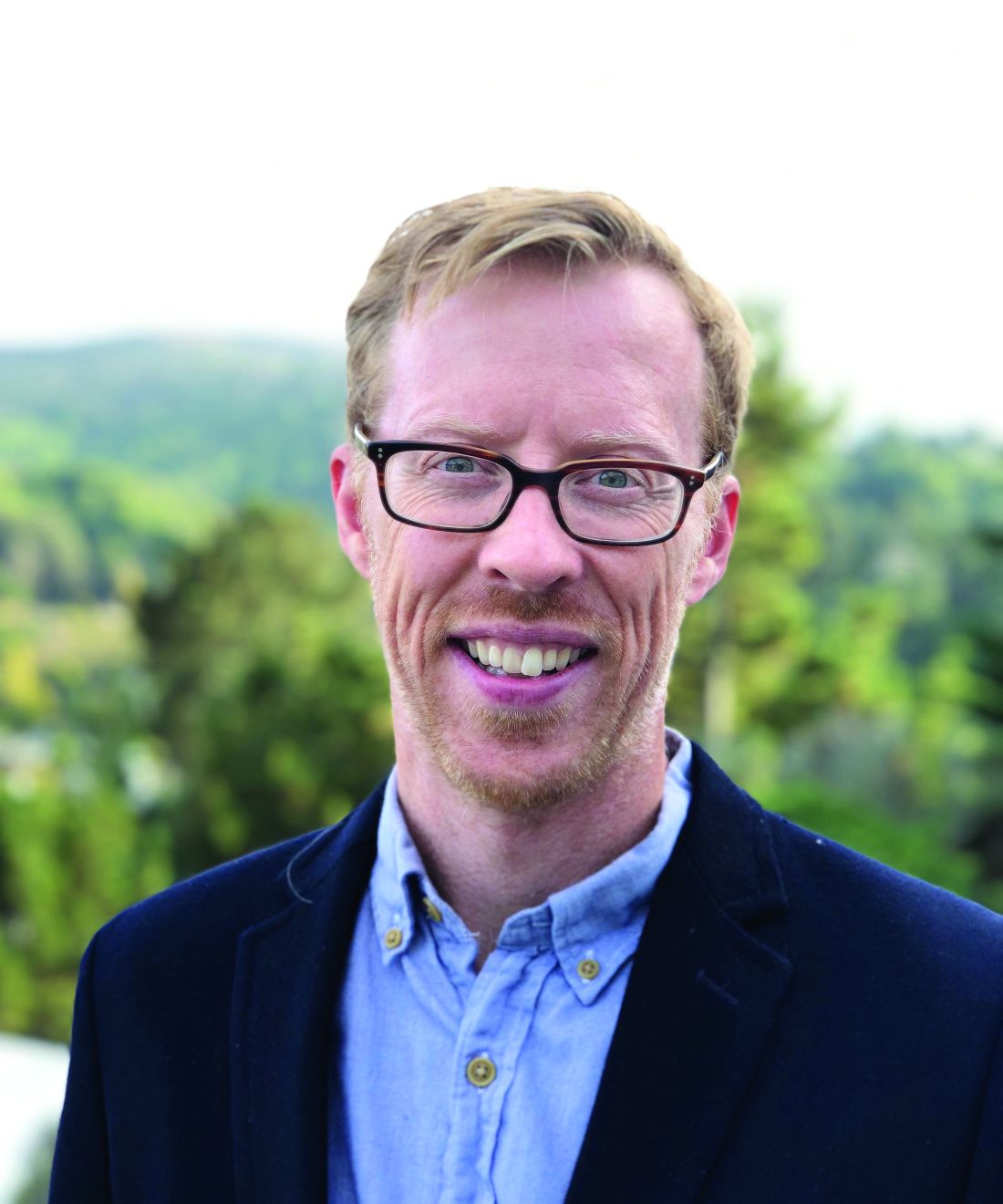
“At the Journal of Hospital Medicine (JHM), we noticed that there was a large community of hospitalists on Twitter who were looking for a community to engage in hospital medicine topics,” Dr. Wray said. “We created #JHMChat to bring the hospital medicine community together on a regular basis to talk about pertinent research, medical education philosophies, and value-based care interventions. Our ultimate goal was to increase engagement, networking, and communication among this community, while highlighting the work that is being published in JHM.”
A study of #JHMChat showed that social media is a great platform for large organizations to reach out, connect, and create a community around, he added. “We were very surprised by both the Twitter metrics (i.e., number of participants and overall impressions), which showed very large dissemination numbers, in addition to the external dissemination metrics (i.e., page views and altmetrics scores), which showed that each chat basically corresponded to a release of a new issue. This could be informative to other journals as they look for ways to increase their web traffic or disseminate their work to their respective audiences.”
Dr. Wray hopes the study alerts hospitalists to the fact that there is a large and ever-growing community available within social media.
“Second, we know that careers in hospital medicine can be tough, regardless of whether you’re at a community hospital or a large academic center. Knowing that there is a community with which you can connect to is both comforting and reassuring.”
Reference
Wray C et al. The adoption of an online journal club to improve research dissemination and social media engagement among hospitalists. J Hosp Med. 2018 Nov;13(11):764-9.
Social media a great platform
Social media a great platform
Medical journals and societies are trying to figure out ways to use social media to connect with hospitalists and others interested in their subject matter, says Charlie Wray, DO, MS, lead author of a paper proposing a way they can do that: implementing a journal-sponsored club on Twitter.
“At the Journal of Hospital Medicine (JHM), we noticed that there was a large community of hospitalists on Twitter who were looking for a community to engage in hospital medicine topics,” Dr. Wray said. “We created #JHMChat to bring the hospital medicine community together on a regular basis to talk about pertinent research, medical education philosophies, and value-based care interventions. Our ultimate goal was to increase engagement, networking, and communication among this community, while highlighting the work that is being published in JHM.”
A study of #JHMChat showed that social media is a great platform for large organizations to reach out, connect, and create a community around, he added. “We were very surprised by both the Twitter metrics (i.e., number of participants and overall impressions), which showed very large dissemination numbers, in addition to the external dissemination metrics (i.e., page views and altmetrics scores), which showed that each chat basically corresponded to a release of a new issue. This could be informative to other journals as they look for ways to increase their web traffic or disseminate their work to their respective audiences.”
Dr. Wray hopes the study alerts hospitalists to the fact that there is a large and ever-growing community available within social media.
“Second, we know that careers in hospital medicine can be tough, regardless of whether you’re at a community hospital or a large academic center. Knowing that there is a community with which you can connect to is both comforting and reassuring.”
Reference
Wray C et al. The adoption of an online journal club to improve research dissemination and social media engagement among hospitalists. J Hosp Med. 2018 Nov;13(11):764-9.
Medical journals and societies are trying to figure out ways to use social media to connect with hospitalists and others interested in their subject matter, says Charlie Wray, DO, MS, lead author of a paper proposing a way they can do that: implementing a journal-sponsored club on Twitter.
“At the Journal of Hospital Medicine (JHM), we noticed that there was a large community of hospitalists on Twitter who were looking for a community to engage in hospital medicine topics,” Dr. Wray said. “We created #JHMChat to bring the hospital medicine community together on a regular basis to talk about pertinent research, medical education philosophies, and value-based care interventions. Our ultimate goal was to increase engagement, networking, and communication among this community, while highlighting the work that is being published in JHM.”
A study of #JHMChat showed that social media is a great platform for large organizations to reach out, connect, and create a community around, he added. “We were very surprised by both the Twitter metrics (i.e., number of participants and overall impressions), which showed very large dissemination numbers, in addition to the external dissemination metrics (i.e., page views and altmetrics scores), which showed that each chat basically corresponded to a release of a new issue. This could be informative to other journals as they look for ways to increase their web traffic or disseminate their work to their respective audiences.”
Dr. Wray hopes the study alerts hospitalists to the fact that there is a large and ever-growing community available within social media.
“Second, we know that careers in hospital medicine can be tough, regardless of whether you’re at a community hospital or a large academic center. Knowing that there is a community with which you can connect to is both comforting and reassuring.”
Reference
Wray C et al. The adoption of an online journal club to improve research dissemination and social media engagement among hospitalists. J Hosp Med. 2018 Nov;13(11):764-9.
First primary prevention CVD guidelines form ACC, AHA
Also today, a new coronary artery calcium score threshold may identify patients at particular risk, how to reduce the risk of drowning in pediatric patients, and an algorithm in smartwatches proves effective at detecting atrial fibrillation.
Amazon Alexa
Apple Podcasts
Google Podcasts
Spotify
Also today, a new coronary artery calcium score threshold may identify patients at particular risk, how to reduce the risk of drowning in pediatric patients, and an algorithm in smartwatches proves effective at detecting atrial fibrillation.
Amazon Alexa
Apple Podcasts
Google Podcasts
Spotify
Also today, a new coronary artery calcium score threshold may identify patients at particular risk, how to reduce the risk of drowning in pediatric patients, and an algorithm in smartwatches proves effective at detecting atrial fibrillation.
Amazon Alexa
Apple Podcasts
Google Podcasts
Spotify
Is a telehospitalist service right for you and your group?
Telemedicine “ripe for adoption” by hospitalists
For medical inpatients, the advent of virtual care began decades ago with telephones and the ability of physicians to give “verbal orders” while outside the hospital. It evolved into widespread adoption of pagers and is now ubiquitous through smart phones, texting, and HIPPA-compliant applications. In the past few years, inpatient telemedicine programs have been developed and studied including tele-ICU, telestroke, and now the telehospitalist.
Telemedicine is not new and has seen rapid adoption in the outpatient setting over the past decade,1 especially since the passing of telemedicine parity laws in 35 states to support equal reimbursement with face-to-face visits.2 In addition, 24 states have joined the Interstate Medical Licensure Compact (IMLC).3 This voluntary program provides an expedited pathway to licensure for qualified physicians who practice in multiple states. The goal is to increase access to care for patients in underserved and rural areas and to allow easier consultation through telemedicine. Combined, these two federal initiatives have lowered two major barriers to entry for telemedicine: reimbursement and credentialing.
Only a handful of papers have been published on the telehospitalist model with one of the first in 2007 in The Hospitalist reporting on the intersection between tele-ICU and telehospitalist care.4 More recent work describes the implementation of a telehospitalist program between a large university hospitalist program and a rural, critical access hospital.5 A key goal of this program, developed by Dr. Ethan Kuperman and colleagues at the University of Iowa, was to keep patients at the critical access hospital that previously would have been transferred. This has obvious benefits for patients, the critical access hospital, and the local community. It also benefited the tertiary care referral center, which was dealing with high occupancy rates. Keeping lower acuity patients at the critical access hospital helps maintain access for more complex patients at the referral center. This same principle has applied to the use of the tele-ICU where lower acuity ICU patients could remain in the small, rural ICU, and only those patients who the intensivist believes would benefit from a higher level of care in a tertiary center would be transferred.
As this study and others have shown, telemedicine is ripe for adoption by hospitalists. The bigger question is how should it fit into the current model of hospital medicine? There are several different applications we are familiar with and each has unique considerations. The first model, as applied in the Kuperman paper, is for a larger hospitalist program to provide a telehospitalist service to a smaller, unaffiliated hospital (for example, critical access hospitals) that employs nurse practitioners or physician assistants on site but can’t recruit or retain full-time hospitalist coverage. In this collaborative model of care, the local provider performs the physical exam but provides care under the guidance and supervision of a hospital medicine specialist. This is expected to improve outcomes and bring the benefits of hospital medicine, including improved outcomes and decreased hospital spending, to smaller communities.6 In this model, the critical access hospital pays a fee for the service and retains the billing to third party payers.
A variation on that model would provide telehospitalist services to other hospitals within an existing health care network (such as Kaiser Permanente, Intermountain Healthcare, government hospitals) that have different financial models with incentives to collaborate. The Veterans Health Administration is embarking on a pilot through the VA Office of Rural Health to provide a telehospitalist service to small rural VA hospitals using the consultative model during the day with a nurse practitioner at the local site and physician backup from the emergency department. Although existing night cross-coverage will be maintained by a physician on call, this telehospitalist service may also evolve into providing cross-coverage on nights and weekends.
A third would be like a locum tenens model in which telehospitalist services are contracted for short periods of time when coverage is needed for vacations or staff shortages. A fourth model of telehospitalist care would be to international areas in need of hospitalist expertise, like a medical mission model but without the expense or time required to travel. Other models will likely evolve based on the demand for services, supply of hospitalists, changes in regulations, and reimbursement.
Another important consideration is how this will evolve for the practicing hospitalist. Will we have dedicated virtual hospitalists, akin to the “nocturnist” who covers nights and weekends? Or will working on the telehospitalist service be in the rotation of duties like many programs have with teaching and “nonteaching” services, medical consultation, and even transition clinics and emergency department triage responsibilities? It could serve as a lower-intensity service that can be staffed during office-based time that would include scholarly work, quality improvement, and administrative duties. If financially viable, it could be mutually beneficial for both the provider and recipient sides of telehospitalist care.
For any of these models to work, technical aspects must be ironed-out. It is indispensable for the provider to have remote access to the electronic health record for data review, documentation, and placing orders if needed. Adequate broadband for effective video connection, accompanied by the appropriate HIPPA-compliant software and hardware must be in place. Although highly specialized hardware has been developed, including remote stethoscopes and otoscopes, the key component is a good camera and video screen on each end of the interaction. Based upon prior experience with telemedicine programs, establishment of trusting relationships with the receiving hospital staff, physicians, and nurse practitioners is also critical. Optimally, the telehospitalist would have an opportunity to travel to the remote site to meet with the local care team and learn about the local resources and community. Many other operational and logistical issues need to be considered and will be supported by the Society of Hospital Medicine through publications, online resources, and national and regional meeting educational content on telehospitalist programs.
As hospital medicine adopts the telehospitalist model, it brings with it important considerations. First, is how we embrace the concept of the medical virtualist, a term used to describe physicians who spend the majority or all of their time caring for patients using a virtual medium.7 We find it difficult to imagine spending all or the majority of our time as a virtual hospitalist, but years ago many could not imagine someone being a full-time hospitalist or nocturnist. Some individuals will see this as a career opportunity that allows them to work as a hospitalist regardless of where they live or where the hospital is located. That has obvious advantages for both career choice and the provision of hospital medicine expertise to low-resourced or low-volume settings, such as rural or international locations and nights and weekends.
Second, the telehospitalist model will require professional standards, training, reimbursement and coding adjustments, hardware and software development, and managing patient expectations for care.
Lastly, hospitals, health care systems, hospitalist groups, and even individual hospitalists will have to determine how best to take advantage of this innovative model of care to provide the highest possible quality, in a cost-efficient manner, that supports professional satisfaction and development.
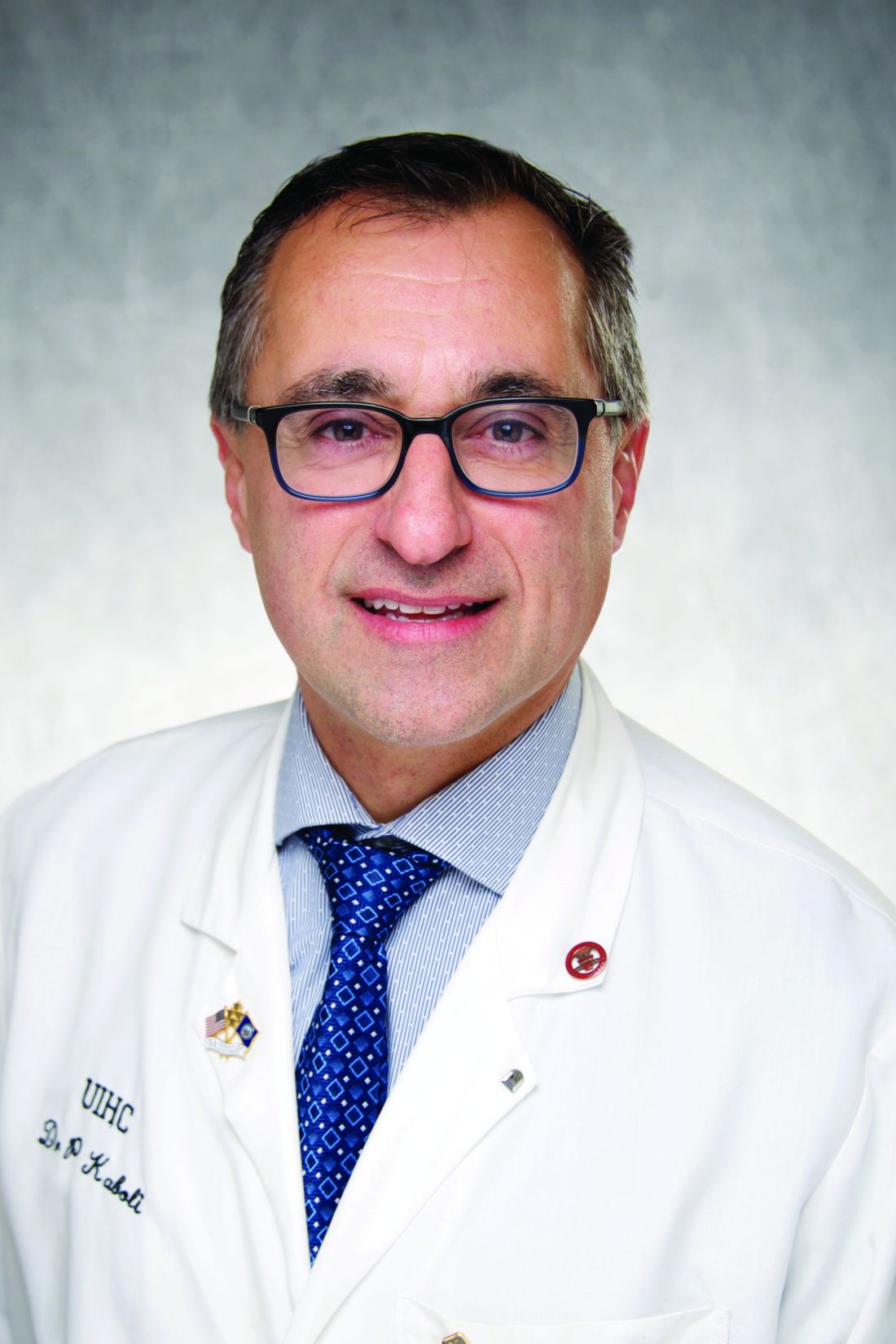
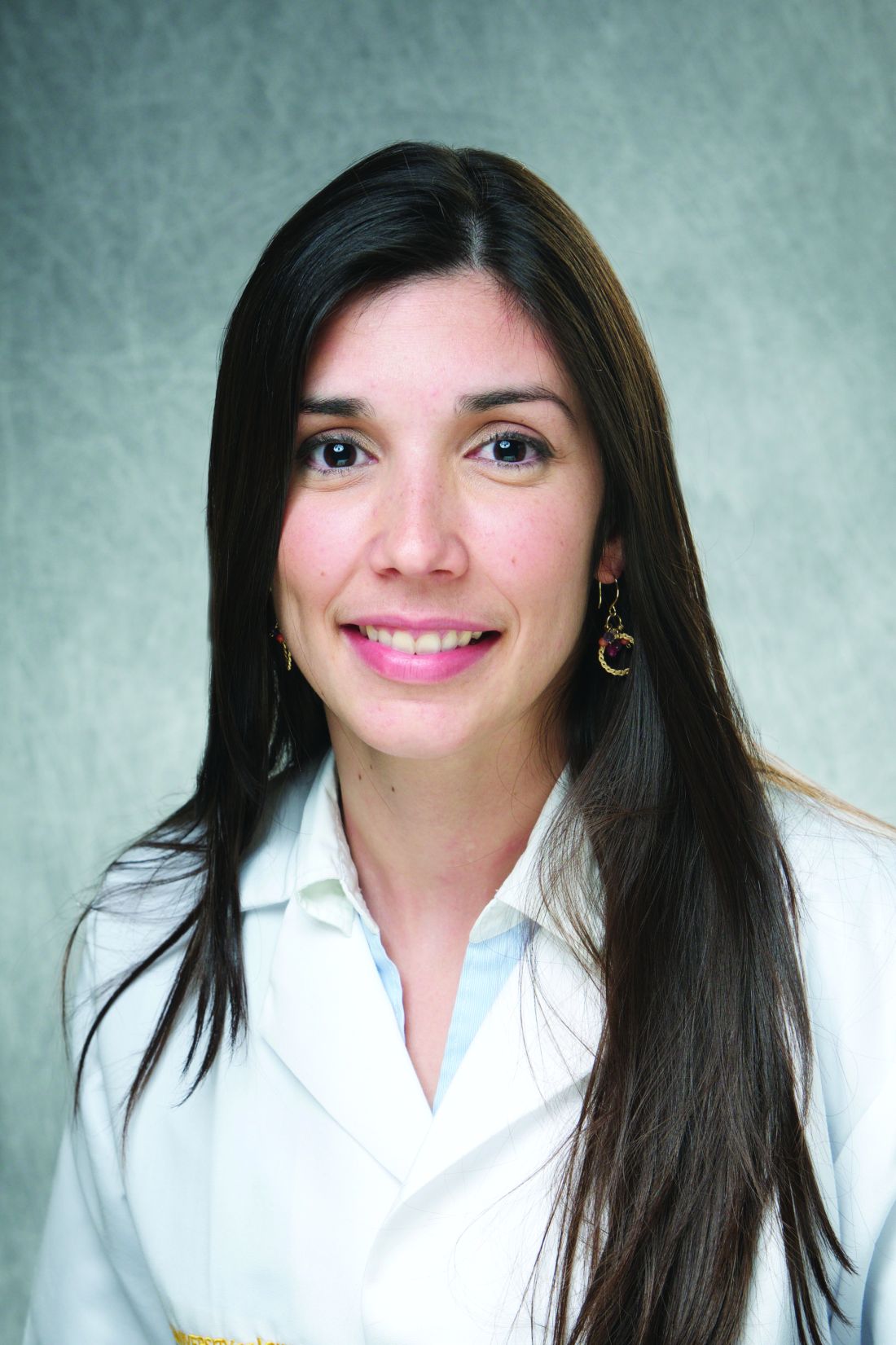
Dr. Kaboli and Dr. Gutierrez are based at the Center for Access and Delivery Research and Evaluation (CADRE) at the Iowa City VA Healthcare System, the Veterans Rural Health Resource Center-Iowa City, VA Office of Rural Health, and the department of internal medicine, University of Iowa, both in Iowa City.
References
1. Barnett ML et al. Trends in telemedicine use in a large commercially insured population, 2005-2017. JAMA. 2018;320(20):2147-9.
2. American Telemedicine Association State Policy Resource Center. 2018; http://www.americantelemed.org/main/policy-page/state-policy-resource-center. Accessed 2018 Dec 14.
3. Interstate Medical Licensure Compact 2018; https://imlcc.org/. Accessed 2018 Dec 14.
4. Hengehold D. The telehospitalist. The Hospitalist. 2007;7(July). https://www.the-hospitalist.org/hospitalist/article/123381/telehospitalist. Accessed 2018 Dec 14.
5. Kuperman EF et al. The virtual hospitalist: A single-site implementation bringing hospitalist coverage to critical access hospitals. J Hosp Med. 2018;13(11):759-63.
6. Peterson MC. A systematic review of outcomes and quality measures in adult patients cared for by hospitalists vs nonhospitalists. Mayo Clinic proceedings. 2009;84(3):248-54.
7. Nochomovitz M, Sharma R. Is it time for a new medical specialty?: The medical virtualist. JAMA. 2018;319(5):437-8.
Telemedicine “ripe for adoption” by hospitalists
Telemedicine “ripe for adoption” by hospitalists
For medical inpatients, the advent of virtual care began decades ago with telephones and the ability of physicians to give “verbal orders” while outside the hospital. It evolved into widespread adoption of pagers and is now ubiquitous through smart phones, texting, and HIPPA-compliant applications. In the past few years, inpatient telemedicine programs have been developed and studied including tele-ICU, telestroke, and now the telehospitalist.
Telemedicine is not new and has seen rapid adoption in the outpatient setting over the past decade,1 especially since the passing of telemedicine parity laws in 35 states to support equal reimbursement with face-to-face visits.2 In addition, 24 states have joined the Interstate Medical Licensure Compact (IMLC).3 This voluntary program provides an expedited pathway to licensure for qualified physicians who practice in multiple states. The goal is to increase access to care for patients in underserved and rural areas and to allow easier consultation through telemedicine. Combined, these two federal initiatives have lowered two major barriers to entry for telemedicine: reimbursement and credentialing.
Only a handful of papers have been published on the telehospitalist model with one of the first in 2007 in The Hospitalist reporting on the intersection between tele-ICU and telehospitalist care.4 More recent work describes the implementation of a telehospitalist program between a large university hospitalist program and a rural, critical access hospital.5 A key goal of this program, developed by Dr. Ethan Kuperman and colleagues at the University of Iowa, was to keep patients at the critical access hospital that previously would have been transferred. This has obvious benefits for patients, the critical access hospital, and the local community. It also benefited the tertiary care referral center, which was dealing with high occupancy rates. Keeping lower acuity patients at the critical access hospital helps maintain access for more complex patients at the referral center. This same principle has applied to the use of the tele-ICU where lower acuity ICU patients could remain in the small, rural ICU, and only those patients who the intensivist believes would benefit from a higher level of care in a tertiary center would be transferred.
As this study and others have shown, telemedicine is ripe for adoption by hospitalists. The bigger question is how should it fit into the current model of hospital medicine? There are several different applications we are familiar with and each has unique considerations. The first model, as applied in the Kuperman paper, is for a larger hospitalist program to provide a telehospitalist service to a smaller, unaffiliated hospital (for example, critical access hospitals) that employs nurse practitioners or physician assistants on site but can’t recruit or retain full-time hospitalist coverage. In this collaborative model of care, the local provider performs the physical exam but provides care under the guidance and supervision of a hospital medicine specialist. This is expected to improve outcomes and bring the benefits of hospital medicine, including improved outcomes and decreased hospital spending, to smaller communities.6 In this model, the critical access hospital pays a fee for the service and retains the billing to third party payers.
A variation on that model would provide telehospitalist services to other hospitals within an existing health care network (such as Kaiser Permanente, Intermountain Healthcare, government hospitals) that have different financial models with incentives to collaborate. The Veterans Health Administration is embarking on a pilot through the VA Office of Rural Health to provide a telehospitalist service to small rural VA hospitals using the consultative model during the day with a nurse practitioner at the local site and physician backup from the emergency department. Although existing night cross-coverage will be maintained by a physician on call, this telehospitalist service may also evolve into providing cross-coverage on nights and weekends.
A third would be like a locum tenens model in which telehospitalist services are contracted for short periods of time when coverage is needed for vacations or staff shortages. A fourth model of telehospitalist care would be to international areas in need of hospitalist expertise, like a medical mission model but without the expense or time required to travel. Other models will likely evolve based on the demand for services, supply of hospitalists, changes in regulations, and reimbursement.
Another important consideration is how this will evolve for the practicing hospitalist. Will we have dedicated virtual hospitalists, akin to the “nocturnist” who covers nights and weekends? Or will working on the telehospitalist service be in the rotation of duties like many programs have with teaching and “nonteaching” services, medical consultation, and even transition clinics and emergency department triage responsibilities? It could serve as a lower-intensity service that can be staffed during office-based time that would include scholarly work, quality improvement, and administrative duties. If financially viable, it could be mutually beneficial for both the provider and recipient sides of telehospitalist care.
For any of these models to work, technical aspects must be ironed-out. It is indispensable for the provider to have remote access to the electronic health record for data review, documentation, and placing orders if needed. Adequate broadband for effective video connection, accompanied by the appropriate HIPPA-compliant software and hardware must be in place. Although highly specialized hardware has been developed, including remote stethoscopes and otoscopes, the key component is a good camera and video screen on each end of the interaction. Based upon prior experience with telemedicine programs, establishment of trusting relationships with the receiving hospital staff, physicians, and nurse practitioners is also critical. Optimally, the telehospitalist would have an opportunity to travel to the remote site to meet with the local care team and learn about the local resources and community. Many other operational and logistical issues need to be considered and will be supported by the Society of Hospital Medicine through publications, online resources, and national and regional meeting educational content on telehospitalist programs.
As hospital medicine adopts the telehospitalist model, it brings with it important considerations. First, is how we embrace the concept of the medical virtualist, a term used to describe physicians who spend the majority or all of their time caring for patients using a virtual medium.7 We find it difficult to imagine spending all or the majority of our time as a virtual hospitalist, but years ago many could not imagine someone being a full-time hospitalist or nocturnist. Some individuals will see this as a career opportunity that allows them to work as a hospitalist regardless of where they live or where the hospital is located. That has obvious advantages for both career choice and the provision of hospital medicine expertise to low-resourced or low-volume settings, such as rural or international locations and nights and weekends.
Second, the telehospitalist model will require professional standards, training, reimbursement and coding adjustments, hardware and software development, and managing patient expectations for care.
Lastly, hospitals, health care systems, hospitalist groups, and even individual hospitalists will have to determine how best to take advantage of this innovative model of care to provide the highest possible quality, in a cost-efficient manner, that supports professional satisfaction and development.
Dr. Kaboli and Dr. Gutierrez are based at the Center for Access and Delivery Research and Evaluation (CADRE) at the Iowa City VA Healthcare System, the Veterans Rural Health Resource Center-Iowa City, VA Office of Rural Health, and the department of internal medicine, University of Iowa, both in Iowa City.
References
1. Barnett ML et al. Trends in telemedicine use in a large commercially insured population, 2005-2017. JAMA. 2018;320(20):2147-9.
2. American Telemedicine Association State Policy Resource Center. 2018; http://www.americantelemed.org/main/policy-page/state-policy-resource-center. Accessed 2018 Dec 14.
3. Interstate Medical Licensure Compact 2018; https://imlcc.org/. Accessed 2018 Dec 14.
4. Hengehold D. The telehospitalist. The Hospitalist. 2007;7(July). https://www.the-hospitalist.org/hospitalist/article/123381/telehospitalist. Accessed 2018 Dec 14.
5. Kuperman EF et al. The virtual hospitalist: A single-site implementation bringing hospitalist coverage to critical access hospitals. J Hosp Med. 2018;13(11):759-63.
6. Peterson MC. A systematic review of outcomes and quality measures in adult patients cared for by hospitalists vs nonhospitalists. Mayo Clinic proceedings. 2009;84(3):248-54.
7. Nochomovitz M, Sharma R. Is it time for a new medical specialty?: The medical virtualist. JAMA. 2018;319(5):437-8.
For medical inpatients, the advent of virtual care began decades ago with telephones and the ability of physicians to give “verbal orders” while outside the hospital. It evolved into widespread adoption of pagers and is now ubiquitous through smart phones, texting, and HIPPA-compliant applications. In the past few years, inpatient telemedicine programs have been developed and studied including tele-ICU, telestroke, and now the telehospitalist.
Telemedicine is not new and has seen rapid adoption in the outpatient setting over the past decade,1 especially since the passing of telemedicine parity laws in 35 states to support equal reimbursement with face-to-face visits.2 In addition, 24 states have joined the Interstate Medical Licensure Compact (IMLC).3 This voluntary program provides an expedited pathway to licensure for qualified physicians who practice in multiple states. The goal is to increase access to care for patients in underserved and rural areas and to allow easier consultation through telemedicine. Combined, these two federal initiatives have lowered two major barriers to entry for telemedicine: reimbursement and credentialing.
Only a handful of papers have been published on the telehospitalist model with one of the first in 2007 in The Hospitalist reporting on the intersection between tele-ICU and telehospitalist care.4 More recent work describes the implementation of a telehospitalist program between a large university hospitalist program and a rural, critical access hospital.5 A key goal of this program, developed by Dr. Ethan Kuperman and colleagues at the University of Iowa, was to keep patients at the critical access hospital that previously would have been transferred. This has obvious benefits for patients, the critical access hospital, and the local community. It also benefited the tertiary care referral center, which was dealing with high occupancy rates. Keeping lower acuity patients at the critical access hospital helps maintain access for more complex patients at the referral center. This same principle has applied to the use of the tele-ICU where lower acuity ICU patients could remain in the small, rural ICU, and only those patients who the intensivist believes would benefit from a higher level of care in a tertiary center would be transferred.
As this study and others have shown, telemedicine is ripe for adoption by hospitalists. The bigger question is how should it fit into the current model of hospital medicine? There are several different applications we are familiar with and each has unique considerations. The first model, as applied in the Kuperman paper, is for a larger hospitalist program to provide a telehospitalist service to a smaller, unaffiliated hospital (for example, critical access hospitals) that employs nurse practitioners or physician assistants on site but can’t recruit or retain full-time hospitalist coverage. In this collaborative model of care, the local provider performs the physical exam but provides care under the guidance and supervision of a hospital medicine specialist. This is expected to improve outcomes and bring the benefits of hospital medicine, including improved outcomes and decreased hospital spending, to smaller communities.6 In this model, the critical access hospital pays a fee for the service and retains the billing to third party payers.
A variation on that model would provide telehospitalist services to other hospitals within an existing health care network (such as Kaiser Permanente, Intermountain Healthcare, government hospitals) that have different financial models with incentives to collaborate. The Veterans Health Administration is embarking on a pilot through the VA Office of Rural Health to provide a telehospitalist service to small rural VA hospitals using the consultative model during the day with a nurse practitioner at the local site and physician backup from the emergency department. Although existing night cross-coverage will be maintained by a physician on call, this telehospitalist service may also evolve into providing cross-coverage on nights and weekends.
A third would be like a locum tenens model in which telehospitalist services are contracted for short periods of time when coverage is needed for vacations or staff shortages. A fourth model of telehospitalist care would be to international areas in need of hospitalist expertise, like a medical mission model but without the expense or time required to travel. Other models will likely evolve based on the demand for services, supply of hospitalists, changes in regulations, and reimbursement.
Another important consideration is how this will evolve for the practicing hospitalist. Will we have dedicated virtual hospitalists, akin to the “nocturnist” who covers nights and weekends? Or will working on the telehospitalist service be in the rotation of duties like many programs have with teaching and “nonteaching” services, medical consultation, and even transition clinics and emergency department triage responsibilities? It could serve as a lower-intensity service that can be staffed during office-based time that would include scholarly work, quality improvement, and administrative duties. If financially viable, it could be mutually beneficial for both the provider and recipient sides of telehospitalist care.
For any of these models to work, technical aspects must be ironed-out. It is indispensable for the provider to have remote access to the electronic health record for data review, documentation, and placing orders if needed. Adequate broadband for effective video connection, accompanied by the appropriate HIPPA-compliant software and hardware must be in place. Although highly specialized hardware has been developed, including remote stethoscopes and otoscopes, the key component is a good camera and video screen on each end of the interaction. Based upon prior experience with telemedicine programs, establishment of trusting relationships with the receiving hospital staff, physicians, and nurse practitioners is also critical. Optimally, the telehospitalist would have an opportunity to travel to the remote site to meet with the local care team and learn about the local resources and community. Many other operational and logistical issues need to be considered and will be supported by the Society of Hospital Medicine through publications, online resources, and national and regional meeting educational content on telehospitalist programs.
As hospital medicine adopts the telehospitalist model, it brings with it important considerations. First, is how we embrace the concept of the medical virtualist, a term used to describe physicians who spend the majority or all of their time caring for patients using a virtual medium.7 We find it difficult to imagine spending all or the majority of our time as a virtual hospitalist, but years ago many could not imagine someone being a full-time hospitalist or nocturnist. Some individuals will see this as a career opportunity that allows them to work as a hospitalist regardless of where they live or where the hospital is located. That has obvious advantages for both career choice and the provision of hospital medicine expertise to low-resourced or low-volume settings, such as rural or international locations and nights and weekends.
Second, the telehospitalist model will require professional standards, training, reimbursement and coding adjustments, hardware and software development, and managing patient expectations for care.
Lastly, hospitals, health care systems, hospitalist groups, and even individual hospitalists will have to determine how best to take advantage of this innovative model of care to provide the highest possible quality, in a cost-efficient manner, that supports professional satisfaction and development.
Dr. Kaboli and Dr. Gutierrez are based at the Center for Access and Delivery Research and Evaluation (CADRE) at the Iowa City VA Healthcare System, the Veterans Rural Health Resource Center-Iowa City, VA Office of Rural Health, and the department of internal medicine, University of Iowa, both in Iowa City.
References
1. Barnett ML et al. Trends in telemedicine use in a large commercially insured population, 2005-2017. JAMA. 2018;320(20):2147-9.
2. American Telemedicine Association State Policy Resource Center. 2018; http://www.americantelemed.org/main/policy-page/state-policy-resource-center. Accessed 2018 Dec 14.
3. Interstate Medical Licensure Compact 2018; https://imlcc.org/. Accessed 2018 Dec 14.
4. Hengehold D. The telehospitalist. The Hospitalist. 2007;7(July). https://www.the-hospitalist.org/hospitalist/article/123381/telehospitalist. Accessed 2018 Dec 14.
5. Kuperman EF et al. The virtual hospitalist: A single-site implementation bringing hospitalist coverage to critical access hospitals. J Hosp Med. 2018;13(11):759-63.
6. Peterson MC. A systematic review of outcomes and quality measures in adult patients cared for by hospitalists vs nonhospitalists. Mayo Clinic proceedings. 2009;84(3):248-54.
7. Nochomovitz M, Sharma R. Is it time for a new medical specialty?: The medical virtualist. JAMA. 2018;319(5):437-8.