User login
Trichomonas: Clinical Analysis of a Highly Prevalent and Misdiagnosed Infection
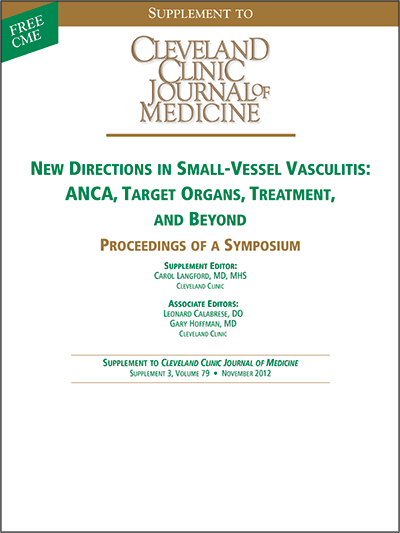
New Directions in Small-Vessel Vasculitis: ANCA, Target Organs, Treatment, and Beyond

Supplement Editor:
Carol Langford, MD, MHS
Associate Editors:
Leonard Calabrese, DO, and Gary Hoffman, MD
Contents
Diagnosis, ANCA testing, and disease activity
Clinical features and diagnosis of small-vessel vasculitis
Carol Langford, MD, MHS
Controversies in ANCA testing
Ulrich Specks, MD
Defining disease activity and damage in patients with small-vessel vasculitis
Peter A. Merkel, MD, MPH
Impact on individual organs
Upper airway manifestations of granulomatosis with polyangiitis
Daniel S. Alam, MD; Rahul Seth, MD; Raj Sindwani, MD; Erika A. Woodson, MD; and Karthik Rajasekaran, MD
Renal disease in small-vessel vasculitis
Kirsten de Groot, MD
Pulmonary disease in small-vessel vasculitis
Thomas R. Gildea, MD, MS
Ocular manifestations of small-vessel vasculitis
James A. Garrity, MD
Monitoring and safety
Monitoring patients with vasculitis
Alexandra Villa-Forte, MD, MPH
Safety issues in vasculitis: Infections and immunizations in the immunosuppressed host
Carlos M. Isada, MD, FCCP
Treatment considerations
Treating vasculitis with conventional immunosuppressive agents
David Jayne, MD, FRCP
Biologic agents in the treatment of granulomatosis with polyangiitis
Ulrich Specks, MD
Historical perspective
History of vasculitis: The life and work of Adolf Kussmaul
Eric L. Matteson, MD, MPH
Supplement Editor:
Carol Langford, MD, MHS
Associate Editors:
Leonard Calabrese, DO, and Gary Hoffman, MD
Contents
Diagnosis, ANCA testing, and disease activity
Clinical features and diagnosis of small-vessel vasculitis
Carol Langford, MD, MHS
Controversies in ANCA testing
Ulrich Specks, MD
Defining disease activity and damage in patients with small-vessel vasculitis
Peter A. Merkel, MD, MPH
Impact on individual organs
Upper airway manifestations of granulomatosis with polyangiitis
Daniel S. Alam, MD; Rahul Seth, MD; Raj Sindwani, MD; Erika A. Woodson, MD; and Karthik Rajasekaran, MD
Renal disease in small-vessel vasculitis
Kirsten de Groot, MD
Pulmonary disease in small-vessel vasculitis
Thomas R. Gildea, MD, MS
Ocular manifestations of small-vessel vasculitis
James A. Garrity, MD
Monitoring and safety
Monitoring patients with vasculitis
Alexandra Villa-Forte, MD, MPH
Safety issues in vasculitis: Infections and immunizations in the immunosuppressed host
Carlos M. Isada, MD, FCCP
Treatment considerations
Treating vasculitis with conventional immunosuppressive agents
David Jayne, MD, FRCP
Biologic agents in the treatment of granulomatosis with polyangiitis
Ulrich Specks, MD
Historical perspective
History of vasculitis: The life and work of Adolf Kussmaul
Eric L. Matteson, MD, MPH
Supplement Editor:
Carol Langford, MD, MHS
Associate Editors:
Leonard Calabrese, DO, and Gary Hoffman, MD
Contents
Diagnosis, ANCA testing, and disease activity
Clinical features and diagnosis of small-vessel vasculitis
Carol Langford, MD, MHS
Controversies in ANCA testing
Ulrich Specks, MD
Defining disease activity and damage in patients with small-vessel vasculitis
Peter A. Merkel, MD, MPH
Impact on individual organs
Upper airway manifestations of granulomatosis with polyangiitis
Daniel S. Alam, MD; Rahul Seth, MD; Raj Sindwani, MD; Erika A. Woodson, MD; and Karthik Rajasekaran, MD
Renal disease in small-vessel vasculitis
Kirsten de Groot, MD
Pulmonary disease in small-vessel vasculitis
Thomas R. Gildea, MD, MS
Ocular manifestations of small-vessel vasculitis
James A. Garrity, MD
Monitoring and safety
Monitoring patients with vasculitis
Alexandra Villa-Forte, MD, MPH
Safety issues in vasculitis: Infections and immunizations in the immunosuppressed host
Carlos M. Isada, MD, FCCP
Treatment considerations
Treating vasculitis with conventional immunosuppressive agents
David Jayne, MD, FRCP
Biologic agents in the treatment of granulomatosis with polyangiitis
Ulrich Specks, MD
Historical perspective
History of vasculitis: The life and work of Adolf Kussmaul
Eric L. Matteson, MD, MPH
Sickle cell disease: Gaining control over the pain
Sickle cell disease affects an estimated 100,000 patients in the United States.1 By the time just one of these patients reaches the age of 45, his or her health care costs will reach nearly $1 million.2
Pain is the primary reason patients seek treatment for this disorder. Individuals with sickle cell disease have pain that is characterized as chronic with intermittent episodes of acute pain crises. The pain during a crisis is related to the ischemia the sickle-shaped red blood cells cause as they aggregate, resulting in decreased blood flow to distal tissues. (For more on other factors that can influence sickle cell pain, see “The role of age and depression in sickle cell crises”3 below.)
THE ROLE OF AGE AND DEPRESSION IN SICKLE CELL CRISES Sickle cell pain is primarily due to ischemia; however, there are other factors that may play a role. The PiSCES project was an epidemiologic longitudinal cohort of adults with sickle cell pain designed to address the relationship between sickle cell pain and the individual response to pain.3 Researchers enrolled 260 patients and compared the genotype of sickle cell, sex of patient, presence of depression, and age with location of pain, number of associated painful crises, and overall health care utilization for pain management. Researchers found that the areas of the body associated with the most painful episodes were the lower back, knee/shin area, and hips. Interestingly, more pain sites were reported by those with depression (3.8 vs 3.1 for those with no depression; P=.0011) and by those who were 45 years and older (2.7 pain sites [<25 years old]; 3.3 pain sites [25-44 years old]; 4.0 pain sites [≥45 years old]; P=0.0120 for overall test for older patients vs those <45 years).3 |
Key Point Patients ≥45 years and those suffering from depression had more pain sites than younger patients and those with no depression. |
In the review that follows, I’ll describe the mainstays of pharmacologic treatment to address this pain and provide strategies to help minimize patients’ time in the hospital and maximize their quality of life. But first, a brief review of what occurs during a sickle cell crisis.
What you’ll see during a crisis
Dehydration, infection, stress, and changes in body temperature are common triggers of a sickle cell crisis.4 Once set into motion, a crisis unfolds in 4 distinct phases:
Prodromal. During this phase, patients typically become lethargic and experience mild pain in a single localized area, such as the lower back, hips, or legs. There are no hematologic changes at this point and the pain can be managed using oral analgesics.
Initial infarctive. At this point, the pain increases from mild to moderate intensity. This phase is marked by a decrease in hemoglobin and alterations in mood, such as increased anxiety or irritability. The laboratory findings often occur much later than the patient’s report of symptoms. Prompt attention by the physician when the patient begins to experience the symptoms is key to initial management.
Post-infarctive/inflammatory. The peak of severe pain occurs during this phase. The pain is intense enough to cause patients to seek emergency services or hospitalization for pain relief. Laboratory changes include an increase in reticulocyte count, lactate dehydrogenase, and C-reactive protein. CRP levels, for instance, will rise to 70 mg/L during a crisis. Patients with sickle cell disease normally average 32.2 mg/L; non-sickle cell patients average 10 mg/L.5
Resolving. After adequate fluid hydration and intravenous analgesics, the pain of a crisis will return to a moderate intensity.
Pain management centers on opioids
Opioids form the foundation of sickle cell pain management, both in acute crisis management and for the chronic pain that patients experience as the disease progresses. (See “Case study: Helping Annie stay out of the hospital” below.) Opioids like codeine and tramadol are typically used to treat moderate pain, whereas drugs such as morphine, oxycodone, hydrocodone, and hydromorphone have a more prominent role in severe and breakthrough pain management.
CASE STUDY: Helping Annie stay out of the hospital Annie is a 29-year-old African American woman with sickle cell disease. She arrives at the local emergency department (ED) and tells the staff that she’s there because of her “usual sickle cell pain.” She has pain (9/10) in her lower back, hips, and lower extremities. She says the pain is sharp, constant, and localized—with no radiation to other areas. She has no chest pain or shortness of breath. A review of systems is negative, except for what was documented in the history of her present illness. Annie’s home medications include oxycodone extended release 40 mg twice daily, oxycodone immediate release 5 to 10 mg every 4 hours as needed for pain, and ibuprofen 600 mg as needed. Before coming into the ED, Annie says she took her morning oxycodone extended release dose and oxycodone 40 mg immediate release over the past 24 hours with little relief. Her vital signs in the ED are blood pressure, 150/85 mm Hg; heart rate, 95 beats per minute; respiratory rate, 14 breaths per minute; temperature 99.2°F. The patient has scleral icterus and bilateral mild lower extremity swelling. Her lab work reveals a serum creatinine concentration of 1.4 mg/dL and lactate dehydrogenase level of 256 IU/L. During her 8-hour stay in the ED, Annie receives hydromorphone 2 mg IV every 30 minutes for 3 doses, 3 liters of IV rehydration, and 25 mg oral diphenhydramine for itching with the third dose of hydromorphone. She is discharged to home after rating her pain as 5/10, which she finds tolerable. Discharge instructions indicate that she should follow up with her primary care provider. One week later, Annie goes to see her family physician. Because she’s been taking her oxycodone prescriptions as directed and has still ended up in the ED twice in the past 3 weeks, her physician talks to her about increasing her oxycodone extended release to 80 mg twice a day and the immediate release to 10 to 15 mg every 4 hours as needed. During their conversation, Annie mentions that as her use of oxycodone has gone up, the number of bowel movements has gone down. So her physician prescribes a stimulant laxative (senna with docusate) twice a day. The physician also talks to Annie about restarting her hydroxyurea, which she hasn’t been taking for the past few months. Before Annie leaves, her physician reminds her to stay hydrated, pointing out that it will not only prevent dehydration, but it will aid with bowel regulation. |
What to use—and when—during a crisis
In order to manage acute painful episodes, nonsteroidal anti-inflammatory drugs (NSAIDs), opioids, and adequate hydration are standard. Parenteral NSAIDs are beneficial because of their opioid-sparing effects; they can also lead to a more efficient transition to oral analgesics.
A Cochrane review of the medical management of pain associated with a sickle cell crisis6 acknowledges the opioid-sparing effects of parenteral NSAIDs in the initial phases of a crisis. This review also suggests that:
The use of parenteral opioids with their fast onset in a pain crisis should be transitioned to oral sustained-release opioids once the patient is able to tolerate oral medications.
Short-acting oral opioids are appropriate for intermittent (breakthrough) pain during a crisis, while sustained-release opioids are useful for persistent (baseline) pain.
Parenteral corticosteroids may be of some benefit during the crisis phases, but data related to their efficacy are lacking after the first 48 hours of the crisis.
PCA can make a big difference to patients
Many opioids such as morphine, fentanyl, and hydromorphone are available for delivery via patient-controlled analgesia (PCA). This allows the patient to give him- or herself a dose of opioid when the pain intensity is greater than baseline. During the inflammatory phase of a crisis, the PCA opioids are preferred by many patients because of their convenient dosing and the ease of self-titration to adequate analgesia. Once the resolving phase begins, the patient can decrease his or her breakthrough PCA opioid use and return to the pre-crisis amount of opioids.
Hydroxyurea can help with crisis prevention
The use of hydroxyurea in the maintenance of sickle cell disease and the prevention of crises has been documented in the literature.7 Hydroxyurea increases the circulating amounts of fetal hemoglobin, which has been shown to inhibit the sickling of mature red blood cells. In one study, patients on hydroxyurea had fewer crises (5.1 per year vs 7.9 with placebo) and their risk of death was reduced by approximately 40% during a 6- to 8-year observation period.8
Long-term data are lacking and other novel approaches to outpatient maintenance and prevention of sickle cell crises are still being discovered. Relative contraindications to hydroxyurea therapy include bone marrow suppression, impaired renal or hepatic function, and pregnancy.9
Key Point In one study, patients on hydroxyurea had fewer crises and their risk of death was reduced by about 40%. |
Pharmacologic management of chronic pain
Patients with sickle cell disease are typically managed using opioids and other pharmacologic agents, such as NSAIDs and acetaminophen, along with nonpharmacologic strategies. The goal of sickle cell management is to enable the patient to resume activities of daily living.
Some patients have a very high tolerance to opioids and are subsequently on large doses of long-acting and short-acting opioids. Patients who are on long-term opiates should have an opioid agreement in place to monitor adherence to therapy and potential diversion, as well as to document potentially risky patient behaviors, such as a pattern of early refills in the absence of clinical change or prescription “problems,” such as lost or stolen medications.10
Opioid agreements generally have language that indicates the patient will receive opioids from only one provider, utilize one pharmacy to fill prescriptions for opioids, and inform the clinic if he or she receives care from another provider who is also prescribing opioids. These agreements can also include specific language related to urine drug screening practices, medication counts, and consequences of breaking the treatment agreement. It is good practice to institute opioid agreements for all patients on long-term opiates in order to ensure consistency within the clinic.
Addressing the pain from many angles
Management of the chronic underlying pain requires a multifaceted approach to ensure patient adherence to treatment and adequate management of symptoms. Chronic pain involves modulation of the afferent nociceptive pathways in the spinal cord (such as the spinothalamic tract), which are responsible for transmission of pain from the periphery to the brain for processing. Medications that can alter the perception of pain in the spinothalamic tract include opioids, serotonin norepinephrine reuptake inhibitors (SNRIs), and tricyclic antidepressants. The SNRIs duloxetine and milnacipran have indications for chronic pain—although not for sickle cell pain. No tricyclics are FDA approved for chronic pain, though they are routinely used for this purpose as an adjunct to nonpharmacologic therapy for chronic neuropathic pain.
Nonpharmacologic management strategies include minimizing caffeine intake, avoiding or minimizing intake of alcohol, and adequate rest. Also, because dehydration can lead to a crisis, it’s important to avoid—whenever possible—the use of diuretics in these patients.
Multidisciplinary patient management offers additional treatment strategies such as social support, assistance with activities of daily living, and “day hospitals” for management of patients in a subacute setting. The day hospital model, which originated in 1989,11 provides patients with access to a controlled environment where they can receive parenteral medication and hydration for the purpose of avoiding emergency care or inpatient hospitalization.
A 5-year-study of this model showed that patients were admitted to the hospital 5 times less often from the day hospital than from the emergency department. Also, the inpatient length of stay dropped by 1.5 days once the day hospital model was put into place.11
Patients need help coping
The long-term effects of pain on physiology and psychology are well documented. Patients living with chronic pain may also have comorbidities such as anxiety, depression, and/or substance abuse. A tricyclic antidepressant or an SNRI may be worth considering for patients with sickle cell disease who are suffering from depression.
Many sickle cell patients feel isolated from others because of their constant pain and fear of the next sickle cell crisis.12 A strong network of friends and family, empathetic health care providers, and a support network of other sickle cell patients who “truly understand” the pain of sickle cell disease can have a positive impact on the sickle cell patient. (For more on support groups, see the box below.) Shifting the focus away from inpatient hospitalization for pain management and onto outpatient maintenance and prevention of future crises will increase the overall quality of life of these patients.
SUPPORT GROUPS FOR SICKLE CELL PATIENTS |
Disclosure
The author reports that he serves on the speakers’ bureau of Aventine HealthSciences, a medical communications agency for pain and neuroscience.
References
- Centers for Disease Control and Prevention. Sickle cell disease: data & statistics. Last updated September 16, 2011. Available at: http://www.cdc.gov/ncbddd/sicklecell/data.html. Accessed June 27, 2012.
- Kauf TL, Coates TD, Huazhi L, et al. The cost of health care for children and adults with sickle cell disease. Am J Hematol. 2009;84:323–327.
- McClish DK, Smith WR, Dahman BA, et al. Pain site frequency and location in sickle cell disease: the PiSCES project. Pain 2009;145:246–251.
- Centers for Disease Control and Prevention. Living Well With Sickle Cell Disease: Self-Care Toolkit. Available at: http://www.cdc.gov/ncbddd/sicklecell/documents/LivingWell-With-Sickle-Cell%20Disease_Self-Care Toolkit.pdf. Accessed June 30, 2012.
- Hibbert JM, Hsu LL, Bhathena SJ, et al. Proinflammatory cytokines and the hypermetabolism of children with sickle cell disease. Exp Biol Med (Maywood). 2008;230:68–74.
- Dunlop RJ, Bennett KC. Pain management for sickle cell disease in children and adults. Cochrane Database Syst Rev. 2006;(2):CD003350.
- Charache S, Terrin ML, Moore RD, et al. Effect of hydroxyurea on the frequency of painful crises in sickle cell anemia. N Engl J Med. 1995;332:1317–1322.
- Davies SC, Gilmore A. The role of hydroxyurea in the management of sickle cell disease. Blood Rev. 2003;17:99–109.
- Droxia [package insert]. Princeton, NJ: Bristol-Myers Squibb Company; 2011.
- Chabal C, Erjavec MK, Jacobson L, et al. Prescription opiate abuse in chronic pain patients: clinical criteria, incidence, and predictors. Clin J Pain. 1997;13:150–155.
- Benjamin LJ, Swinson GI, Nagel RL. Sickle cell anemia day hospital: an approach for the management of uncomplicated painful crises. Blood 2000;95:1130–1136.
- Booker MJ, Blethyn KL, Wright CS, et al. Pain management in sickle cell disease. Chronic Illn. 2006;2:39–50.
Sickle cell disease affects an estimated 100,000 patients in the United States.1 By the time just one of these patients reaches the age of 45, his or her health care costs will reach nearly $1 million.2
Pain is the primary reason patients seek treatment for this disorder. Individuals with sickle cell disease have pain that is characterized as chronic with intermittent episodes of acute pain crises. The pain during a crisis is related to the ischemia the sickle-shaped red blood cells cause as they aggregate, resulting in decreased blood flow to distal tissues. (For more on other factors that can influence sickle cell pain, see “The role of age and depression in sickle cell crises”3 below.)
THE ROLE OF AGE AND DEPRESSION IN SICKLE CELL CRISES Sickle cell pain is primarily due to ischemia; however, there are other factors that may play a role. The PiSCES project was an epidemiologic longitudinal cohort of adults with sickle cell pain designed to address the relationship between sickle cell pain and the individual response to pain.3 Researchers enrolled 260 patients and compared the genotype of sickle cell, sex of patient, presence of depression, and age with location of pain, number of associated painful crises, and overall health care utilization for pain management. Researchers found that the areas of the body associated with the most painful episodes were the lower back, knee/shin area, and hips. Interestingly, more pain sites were reported by those with depression (3.8 vs 3.1 for those with no depression; P=.0011) and by those who were 45 years and older (2.7 pain sites [<25 years old]; 3.3 pain sites [25-44 years old]; 4.0 pain sites [≥45 years old]; P=0.0120 for overall test for older patients vs those <45 years).3 |
Key Point Patients ≥45 years and those suffering from depression had more pain sites than younger patients and those with no depression. |
In the review that follows, I’ll describe the mainstays of pharmacologic treatment to address this pain and provide strategies to help minimize patients’ time in the hospital and maximize their quality of life. But first, a brief review of what occurs during a sickle cell crisis.
What you’ll see during a crisis
Dehydration, infection, stress, and changes in body temperature are common triggers of a sickle cell crisis.4 Once set into motion, a crisis unfolds in 4 distinct phases:
Prodromal. During this phase, patients typically become lethargic and experience mild pain in a single localized area, such as the lower back, hips, or legs. There are no hematologic changes at this point and the pain can be managed using oral analgesics.
Initial infarctive. At this point, the pain increases from mild to moderate intensity. This phase is marked by a decrease in hemoglobin and alterations in mood, such as increased anxiety or irritability. The laboratory findings often occur much later than the patient’s report of symptoms. Prompt attention by the physician when the patient begins to experience the symptoms is key to initial management.
Post-infarctive/inflammatory. The peak of severe pain occurs during this phase. The pain is intense enough to cause patients to seek emergency services or hospitalization for pain relief. Laboratory changes include an increase in reticulocyte count, lactate dehydrogenase, and C-reactive protein. CRP levels, for instance, will rise to 70 mg/L during a crisis. Patients with sickle cell disease normally average 32.2 mg/L; non-sickle cell patients average 10 mg/L.5
Resolving. After adequate fluid hydration and intravenous analgesics, the pain of a crisis will return to a moderate intensity.
Pain management centers on opioids
Opioids form the foundation of sickle cell pain management, both in acute crisis management and for the chronic pain that patients experience as the disease progresses. (See “Case study: Helping Annie stay out of the hospital” below.) Opioids like codeine and tramadol are typically used to treat moderate pain, whereas drugs such as morphine, oxycodone, hydrocodone, and hydromorphone have a more prominent role in severe and breakthrough pain management.
CASE STUDY: Helping Annie stay out of the hospital Annie is a 29-year-old African American woman with sickle cell disease. She arrives at the local emergency department (ED) and tells the staff that she’s there because of her “usual sickle cell pain.” She has pain (9/10) in her lower back, hips, and lower extremities. She says the pain is sharp, constant, and localized—with no radiation to other areas. She has no chest pain or shortness of breath. A review of systems is negative, except for what was documented in the history of her present illness. Annie’s home medications include oxycodone extended release 40 mg twice daily, oxycodone immediate release 5 to 10 mg every 4 hours as needed for pain, and ibuprofen 600 mg as needed. Before coming into the ED, Annie says she took her morning oxycodone extended release dose and oxycodone 40 mg immediate release over the past 24 hours with little relief. Her vital signs in the ED are blood pressure, 150/85 mm Hg; heart rate, 95 beats per minute; respiratory rate, 14 breaths per minute; temperature 99.2°F. The patient has scleral icterus and bilateral mild lower extremity swelling. Her lab work reveals a serum creatinine concentration of 1.4 mg/dL and lactate dehydrogenase level of 256 IU/L. During her 8-hour stay in the ED, Annie receives hydromorphone 2 mg IV every 30 minutes for 3 doses, 3 liters of IV rehydration, and 25 mg oral diphenhydramine for itching with the third dose of hydromorphone. She is discharged to home after rating her pain as 5/10, which she finds tolerable. Discharge instructions indicate that she should follow up with her primary care provider. One week later, Annie goes to see her family physician. Because she’s been taking her oxycodone prescriptions as directed and has still ended up in the ED twice in the past 3 weeks, her physician talks to her about increasing her oxycodone extended release to 80 mg twice a day and the immediate release to 10 to 15 mg every 4 hours as needed. During their conversation, Annie mentions that as her use of oxycodone has gone up, the number of bowel movements has gone down. So her physician prescribes a stimulant laxative (senna with docusate) twice a day. The physician also talks to Annie about restarting her hydroxyurea, which she hasn’t been taking for the past few months. Before Annie leaves, her physician reminds her to stay hydrated, pointing out that it will not only prevent dehydration, but it will aid with bowel regulation. |
What to use—and when—during a crisis
In order to manage acute painful episodes, nonsteroidal anti-inflammatory drugs (NSAIDs), opioids, and adequate hydration are standard. Parenteral NSAIDs are beneficial because of their opioid-sparing effects; they can also lead to a more efficient transition to oral analgesics.
A Cochrane review of the medical management of pain associated with a sickle cell crisis6 acknowledges the opioid-sparing effects of parenteral NSAIDs in the initial phases of a crisis. This review also suggests that:
The use of parenteral opioids with their fast onset in a pain crisis should be transitioned to oral sustained-release opioids once the patient is able to tolerate oral medications.
Short-acting oral opioids are appropriate for intermittent (breakthrough) pain during a crisis, while sustained-release opioids are useful for persistent (baseline) pain.
Parenteral corticosteroids may be of some benefit during the crisis phases, but data related to their efficacy are lacking after the first 48 hours of the crisis.
PCA can make a big difference to patients
Many opioids such as morphine, fentanyl, and hydromorphone are available for delivery via patient-controlled analgesia (PCA). This allows the patient to give him- or herself a dose of opioid when the pain intensity is greater than baseline. During the inflammatory phase of a crisis, the PCA opioids are preferred by many patients because of their convenient dosing and the ease of self-titration to adequate analgesia. Once the resolving phase begins, the patient can decrease his or her breakthrough PCA opioid use and return to the pre-crisis amount of opioids.
Hydroxyurea can help with crisis prevention
The use of hydroxyurea in the maintenance of sickle cell disease and the prevention of crises has been documented in the literature.7 Hydroxyurea increases the circulating amounts of fetal hemoglobin, which has been shown to inhibit the sickling of mature red blood cells. In one study, patients on hydroxyurea had fewer crises (5.1 per year vs 7.9 with placebo) and their risk of death was reduced by approximately 40% during a 6- to 8-year observation period.8
Long-term data are lacking and other novel approaches to outpatient maintenance and prevention of sickle cell crises are still being discovered. Relative contraindications to hydroxyurea therapy include bone marrow suppression, impaired renal or hepatic function, and pregnancy.9
Key Point In one study, patients on hydroxyurea had fewer crises and their risk of death was reduced by about 40%. |
Pharmacologic management of chronic pain
Patients with sickle cell disease are typically managed using opioids and other pharmacologic agents, such as NSAIDs and acetaminophen, along with nonpharmacologic strategies. The goal of sickle cell management is to enable the patient to resume activities of daily living.
Some patients have a very high tolerance to opioids and are subsequently on large doses of long-acting and short-acting opioids. Patients who are on long-term opiates should have an opioid agreement in place to monitor adherence to therapy and potential diversion, as well as to document potentially risky patient behaviors, such as a pattern of early refills in the absence of clinical change or prescription “problems,” such as lost or stolen medications.10
Opioid agreements generally have language that indicates the patient will receive opioids from only one provider, utilize one pharmacy to fill prescriptions for opioids, and inform the clinic if he or she receives care from another provider who is also prescribing opioids. These agreements can also include specific language related to urine drug screening practices, medication counts, and consequences of breaking the treatment agreement. It is good practice to institute opioid agreements for all patients on long-term opiates in order to ensure consistency within the clinic.
Addressing the pain from many angles
Management of the chronic underlying pain requires a multifaceted approach to ensure patient adherence to treatment and adequate management of symptoms. Chronic pain involves modulation of the afferent nociceptive pathways in the spinal cord (such as the spinothalamic tract), which are responsible for transmission of pain from the periphery to the brain for processing. Medications that can alter the perception of pain in the spinothalamic tract include opioids, serotonin norepinephrine reuptake inhibitors (SNRIs), and tricyclic antidepressants. The SNRIs duloxetine and milnacipran have indications for chronic pain—although not for sickle cell pain. No tricyclics are FDA approved for chronic pain, though they are routinely used for this purpose as an adjunct to nonpharmacologic therapy for chronic neuropathic pain.
Nonpharmacologic management strategies include minimizing caffeine intake, avoiding or minimizing intake of alcohol, and adequate rest. Also, because dehydration can lead to a crisis, it’s important to avoid—whenever possible—the use of diuretics in these patients.
Multidisciplinary patient management offers additional treatment strategies such as social support, assistance with activities of daily living, and “day hospitals” for management of patients in a subacute setting. The day hospital model, which originated in 1989,11 provides patients with access to a controlled environment where they can receive parenteral medication and hydration for the purpose of avoiding emergency care or inpatient hospitalization.
A 5-year-study of this model showed that patients were admitted to the hospital 5 times less often from the day hospital than from the emergency department. Also, the inpatient length of stay dropped by 1.5 days once the day hospital model was put into place.11
Patients need help coping
The long-term effects of pain on physiology and psychology are well documented. Patients living with chronic pain may also have comorbidities such as anxiety, depression, and/or substance abuse. A tricyclic antidepressant or an SNRI may be worth considering for patients with sickle cell disease who are suffering from depression.
Many sickle cell patients feel isolated from others because of their constant pain and fear of the next sickle cell crisis.12 A strong network of friends and family, empathetic health care providers, and a support network of other sickle cell patients who “truly understand” the pain of sickle cell disease can have a positive impact on the sickle cell patient. (For more on support groups, see the box below.) Shifting the focus away from inpatient hospitalization for pain management and onto outpatient maintenance and prevention of future crises will increase the overall quality of life of these patients.
SUPPORT GROUPS FOR SICKLE CELL PATIENTS |
Disclosure
The author reports that he serves on the speakers’ bureau of Aventine HealthSciences, a medical communications agency for pain and neuroscience.
References
- Centers for Disease Control and Prevention. Sickle cell disease: data & statistics. Last updated September 16, 2011. Available at: http://www.cdc.gov/ncbddd/sicklecell/data.html. Accessed June 27, 2012.
- Kauf TL, Coates TD, Huazhi L, et al. The cost of health care for children and adults with sickle cell disease. Am J Hematol. 2009;84:323–327.
- McClish DK, Smith WR, Dahman BA, et al. Pain site frequency and location in sickle cell disease: the PiSCES project. Pain 2009;145:246–251.
- Centers for Disease Control and Prevention. Living Well With Sickle Cell Disease: Self-Care Toolkit. Available at: http://www.cdc.gov/ncbddd/sicklecell/documents/LivingWell-With-Sickle-Cell%20Disease_Self-Care Toolkit.pdf. Accessed June 30, 2012.
- Hibbert JM, Hsu LL, Bhathena SJ, et al. Proinflammatory cytokines and the hypermetabolism of children with sickle cell disease. Exp Biol Med (Maywood). 2008;230:68–74.
- Dunlop RJ, Bennett KC. Pain management for sickle cell disease in children and adults. Cochrane Database Syst Rev. 2006;(2):CD003350.
- Charache S, Terrin ML, Moore RD, et al. Effect of hydroxyurea on the frequency of painful crises in sickle cell anemia. N Engl J Med. 1995;332:1317–1322.
- Davies SC, Gilmore A. The role of hydroxyurea in the management of sickle cell disease. Blood Rev. 2003;17:99–109.
- Droxia [package insert]. Princeton, NJ: Bristol-Myers Squibb Company; 2011.
- Chabal C, Erjavec MK, Jacobson L, et al. Prescription opiate abuse in chronic pain patients: clinical criteria, incidence, and predictors. Clin J Pain. 1997;13:150–155.
- Benjamin LJ, Swinson GI, Nagel RL. Sickle cell anemia day hospital: an approach for the management of uncomplicated painful crises. Blood 2000;95:1130–1136.
- Booker MJ, Blethyn KL, Wright CS, et al. Pain management in sickle cell disease. Chronic Illn. 2006;2:39–50.
Sickle cell disease affects an estimated 100,000 patients in the United States.1 By the time just one of these patients reaches the age of 45, his or her health care costs will reach nearly $1 million.2
Pain is the primary reason patients seek treatment for this disorder. Individuals with sickle cell disease have pain that is characterized as chronic with intermittent episodes of acute pain crises. The pain during a crisis is related to the ischemia the sickle-shaped red blood cells cause as they aggregate, resulting in decreased blood flow to distal tissues. (For more on other factors that can influence sickle cell pain, see “The role of age and depression in sickle cell crises”3 below.)
THE ROLE OF AGE AND DEPRESSION IN SICKLE CELL CRISES Sickle cell pain is primarily due to ischemia; however, there are other factors that may play a role. The PiSCES project was an epidemiologic longitudinal cohort of adults with sickle cell pain designed to address the relationship between sickle cell pain and the individual response to pain.3 Researchers enrolled 260 patients and compared the genotype of sickle cell, sex of patient, presence of depression, and age with location of pain, number of associated painful crises, and overall health care utilization for pain management. Researchers found that the areas of the body associated with the most painful episodes were the lower back, knee/shin area, and hips. Interestingly, more pain sites were reported by those with depression (3.8 vs 3.1 for those with no depression; P=.0011) and by those who were 45 years and older (2.7 pain sites [<25 years old]; 3.3 pain sites [25-44 years old]; 4.0 pain sites [≥45 years old]; P=0.0120 for overall test for older patients vs those <45 years).3 |
Key Point Patients ≥45 years and those suffering from depression had more pain sites than younger patients and those with no depression. |
In the review that follows, I’ll describe the mainstays of pharmacologic treatment to address this pain and provide strategies to help minimize patients’ time in the hospital and maximize their quality of life. But first, a brief review of what occurs during a sickle cell crisis.
What you’ll see during a crisis
Dehydration, infection, stress, and changes in body temperature are common triggers of a sickle cell crisis.4 Once set into motion, a crisis unfolds in 4 distinct phases:
Prodromal. During this phase, patients typically become lethargic and experience mild pain in a single localized area, such as the lower back, hips, or legs. There are no hematologic changes at this point and the pain can be managed using oral analgesics.
Initial infarctive. At this point, the pain increases from mild to moderate intensity. This phase is marked by a decrease in hemoglobin and alterations in mood, such as increased anxiety or irritability. The laboratory findings often occur much later than the patient’s report of symptoms. Prompt attention by the physician when the patient begins to experience the symptoms is key to initial management.
Post-infarctive/inflammatory. The peak of severe pain occurs during this phase. The pain is intense enough to cause patients to seek emergency services or hospitalization for pain relief. Laboratory changes include an increase in reticulocyte count, lactate dehydrogenase, and C-reactive protein. CRP levels, for instance, will rise to 70 mg/L during a crisis. Patients with sickle cell disease normally average 32.2 mg/L; non-sickle cell patients average 10 mg/L.5
Resolving. After adequate fluid hydration and intravenous analgesics, the pain of a crisis will return to a moderate intensity.
Pain management centers on opioids
Opioids form the foundation of sickle cell pain management, both in acute crisis management and for the chronic pain that patients experience as the disease progresses. (See “Case study: Helping Annie stay out of the hospital” below.) Opioids like codeine and tramadol are typically used to treat moderate pain, whereas drugs such as morphine, oxycodone, hydrocodone, and hydromorphone have a more prominent role in severe and breakthrough pain management.
CASE STUDY: Helping Annie stay out of the hospital Annie is a 29-year-old African American woman with sickle cell disease. She arrives at the local emergency department (ED) and tells the staff that she’s there because of her “usual sickle cell pain.” She has pain (9/10) in her lower back, hips, and lower extremities. She says the pain is sharp, constant, and localized—with no radiation to other areas. She has no chest pain or shortness of breath. A review of systems is negative, except for what was documented in the history of her present illness. Annie’s home medications include oxycodone extended release 40 mg twice daily, oxycodone immediate release 5 to 10 mg every 4 hours as needed for pain, and ibuprofen 600 mg as needed. Before coming into the ED, Annie says she took her morning oxycodone extended release dose and oxycodone 40 mg immediate release over the past 24 hours with little relief. Her vital signs in the ED are blood pressure, 150/85 mm Hg; heart rate, 95 beats per minute; respiratory rate, 14 breaths per minute; temperature 99.2°F. The patient has scleral icterus and bilateral mild lower extremity swelling. Her lab work reveals a serum creatinine concentration of 1.4 mg/dL and lactate dehydrogenase level of 256 IU/L. During her 8-hour stay in the ED, Annie receives hydromorphone 2 mg IV every 30 minutes for 3 doses, 3 liters of IV rehydration, and 25 mg oral diphenhydramine for itching with the third dose of hydromorphone. She is discharged to home after rating her pain as 5/10, which she finds tolerable. Discharge instructions indicate that she should follow up with her primary care provider. One week later, Annie goes to see her family physician. Because she’s been taking her oxycodone prescriptions as directed and has still ended up in the ED twice in the past 3 weeks, her physician talks to her about increasing her oxycodone extended release to 80 mg twice a day and the immediate release to 10 to 15 mg every 4 hours as needed. During their conversation, Annie mentions that as her use of oxycodone has gone up, the number of bowel movements has gone down. So her physician prescribes a stimulant laxative (senna with docusate) twice a day. The physician also talks to Annie about restarting her hydroxyurea, which she hasn’t been taking for the past few months. Before Annie leaves, her physician reminds her to stay hydrated, pointing out that it will not only prevent dehydration, but it will aid with bowel regulation. |
What to use—and when—during a crisis
In order to manage acute painful episodes, nonsteroidal anti-inflammatory drugs (NSAIDs), opioids, and adequate hydration are standard. Parenteral NSAIDs are beneficial because of their opioid-sparing effects; they can also lead to a more efficient transition to oral analgesics.
A Cochrane review of the medical management of pain associated with a sickle cell crisis6 acknowledges the opioid-sparing effects of parenteral NSAIDs in the initial phases of a crisis. This review also suggests that:
The use of parenteral opioids with their fast onset in a pain crisis should be transitioned to oral sustained-release opioids once the patient is able to tolerate oral medications.
Short-acting oral opioids are appropriate for intermittent (breakthrough) pain during a crisis, while sustained-release opioids are useful for persistent (baseline) pain.
Parenteral corticosteroids may be of some benefit during the crisis phases, but data related to their efficacy are lacking after the first 48 hours of the crisis.
PCA can make a big difference to patients
Many opioids such as morphine, fentanyl, and hydromorphone are available for delivery via patient-controlled analgesia (PCA). This allows the patient to give him- or herself a dose of opioid when the pain intensity is greater than baseline. During the inflammatory phase of a crisis, the PCA opioids are preferred by many patients because of their convenient dosing and the ease of self-titration to adequate analgesia. Once the resolving phase begins, the patient can decrease his or her breakthrough PCA opioid use and return to the pre-crisis amount of opioids.
Hydroxyurea can help with crisis prevention
The use of hydroxyurea in the maintenance of sickle cell disease and the prevention of crises has been documented in the literature.7 Hydroxyurea increases the circulating amounts of fetal hemoglobin, which has been shown to inhibit the sickling of mature red blood cells. In one study, patients on hydroxyurea had fewer crises (5.1 per year vs 7.9 with placebo) and their risk of death was reduced by approximately 40% during a 6- to 8-year observation period.8
Long-term data are lacking and other novel approaches to outpatient maintenance and prevention of sickle cell crises are still being discovered. Relative contraindications to hydroxyurea therapy include bone marrow suppression, impaired renal or hepatic function, and pregnancy.9
Key Point In one study, patients on hydroxyurea had fewer crises and their risk of death was reduced by about 40%. |
Pharmacologic management of chronic pain
Patients with sickle cell disease are typically managed using opioids and other pharmacologic agents, such as NSAIDs and acetaminophen, along with nonpharmacologic strategies. The goal of sickle cell management is to enable the patient to resume activities of daily living.
Some patients have a very high tolerance to opioids and are subsequently on large doses of long-acting and short-acting opioids. Patients who are on long-term opiates should have an opioid agreement in place to monitor adherence to therapy and potential diversion, as well as to document potentially risky patient behaviors, such as a pattern of early refills in the absence of clinical change or prescription “problems,” such as lost or stolen medications.10
Opioid agreements generally have language that indicates the patient will receive opioids from only one provider, utilize one pharmacy to fill prescriptions for opioids, and inform the clinic if he or she receives care from another provider who is also prescribing opioids. These agreements can also include specific language related to urine drug screening practices, medication counts, and consequences of breaking the treatment agreement. It is good practice to institute opioid agreements for all patients on long-term opiates in order to ensure consistency within the clinic.
Addressing the pain from many angles
Management of the chronic underlying pain requires a multifaceted approach to ensure patient adherence to treatment and adequate management of symptoms. Chronic pain involves modulation of the afferent nociceptive pathways in the spinal cord (such as the spinothalamic tract), which are responsible for transmission of pain from the periphery to the brain for processing. Medications that can alter the perception of pain in the spinothalamic tract include opioids, serotonin norepinephrine reuptake inhibitors (SNRIs), and tricyclic antidepressants. The SNRIs duloxetine and milnacipran have indications for chronic pain—although not for sickle cell pain. No tricyclics are FDA approved for chronic pain, though they are routinely used for this purpose as an adjunct to nonpharmacologic therapy for chronic neuropathic pain.
Nonpharmacologic management strategies include minimizing caffeine intake, avoiding or minimizing intake of alcohol, and adequate rest. Also, because dehydration can lead to a crisis, it’s important to avoid—whenever possible—the use of diuretics in these patients.
Multidisciplinary patient management offers additional treatment strategies such as social support, assistance with activities of daily living, and “day hospitals” for management of patients in a subacute setting. The day hospital model, which originated in 1989,11 provides patients with access to a controlled environment where they can receive parenteral medication and hydration for the purpose of avoiding emergency care or inpatient hospitalization.
A 5-year-study of this model showed that patients were admitted to the hospital 5 times less often from the day hospital than from the emergency department. Also, the inpatient length of stay dropped by 1.5 days once the day hospital model was put into place.11
Patients need help coping
The long-term effects of pain on physiology and psychology are well documented. Patients living with chronic pain may also have comorbidities such as anxiety, depression, and/or substance abuse. A tricyclic antidepressant or an SNRI may be worth considering for patients with sickle cell disease who are suffering from depression.
Many sickle cell patients feel isolated from others because of their constant pain and fear of the next sickle cell crisis.12 A strong network of friends and family, empathetic health care providers, and a support network of other sickle cell patients who “truly understand” the pain of sickle cell disease can have a positive impact on the sickle cell patient. (For more on support groups, see the box below.) Shifting the focus away from inpatient hospitalization for pain management and onto outpatient maintenance and prevention of future crises will increase the overall quality of life of these patients.
SUPPORT GROUPS FOR SICKLE CELL PATIENTS |
Disclosure
The author reports that he serves on the speakers’ bureau of Aventine HealthSciences, a medical communications agency for pain and neuroscience.
References
- Centers for Disease Control and Prevention. Sickle cell disease: data & statistics. Last updated September 16, 2011. Available at: http://www.cdc.gov/ncbddd/sicklecell/data.html. Accessed June 27, 2012.
- Kauf TL, Coates TD, Huazhi L, et al. The cost of health care for children and adults with sickle cell disease. Am J Hematol. 2009;84:323–327.
- McClish DK, Smith WR, Dahman BA, et al. Pain site frequency and location in sickle cell disease: the PiSCES project. Pain 2009;145:246–251.
- Centers for Disease Control and Prevention. Living Well With Sickle Cell Disease: Self-Care Toolkit. Available at: http://www.cdc.gov/ncbddd/sicklecell/documents/LivingWell-With-Sickle-Cell%20Disease_Self-Care Toolkit.pdf. Accessed June 30, 2012.
- Hibbert JM, Hsu LL, Bhathena SJ, et al. Proinflammatory cytokines and the hypermetabolism of children with sickle cell disease. Exp Biol Med (Maywood). 2008;230:68–74.
- Dunlop RJ, Bennett KC. Pain management for sickle cell disease in children and adults. Cochrane Database Syst Rev. 2006;(2):CD003350.
- Charache S, Terrin ML, Moore RD, et al. Effect of hydroxyurea on the frequency of painful crises in sickle cell anemia. N Engl J Med. 1995;332:1317–1322.
- Davies SC, Gilmore A. The role of hydroxyurea in the management of sickle cell disease. Blood Rev. 2003;17:99–109.
- Droxia [package insert]. Princeton, NJ: Bristol-Myers Squibb Company; 2011.
- Chabal C, Erjavec MK, Jacobson L, et al. Prescription opiate abuse in chronic pain patients: clinical criteria, incidence, and predictors. Clin J Pain. 1997;13:150–155.
- Benjamin LJ, Swinson GI, Nagel RL. Sickle cell anemia day hospital: an approach for the management of uncomplicated painful crises. Blood 2000;95:1130–1136.
- Booker MJ, Blethyn KL, Wright CS, et al. Pain management in sickle cell disease. Chronic Illn. 2006;2:39–50.
NuSwabSM VG: A New Diagnostic Approach to Vaginitis

Managing Hypoglycemia in Primary Care

Best Practices in IVF Nursing. Patient-centered care: What does it mean and how to implement it?


Best Practices for Female Sterilization in 2012 and Beyond

Female sterilization remains the leading contraceptive choice for women in the United States who do not plan future childbearing, with over 40% choosing this option.1 While different techniques for obtaining tubal occlusion have been developed over the years, including using monopolar or bipolar electrosurgery, rings, or clips, these procedures all require entry into the peritoneal cavity using a transabdominal approach. Data from the US Collaborative Review of Sterilization, also known as the CREST study have examined both the failure and complication rates related to various sterilization techniques.
Female sterilization remains the leading contraceptive choice for women in the United States who do not plan future childbearing, with over 40% choosing this option.1 While different techniques for obtaining tubal occlusion have been developed over the years, including using monopolar or bipolar electrosurgery, rings, or clips, these procedures all require entry into the peritoneal cavity using a transabdominal approach. Data from the US Collaborative Review of Sterilization, also known as the CREST study have examined both the failure and complication rates related to various sterilization techniques.
Female sterilization remains the leading contraceptive choice for women in the United States who do not plan future childbearing, with over 40% choosing this option.1 While different techniques for obtaining tubal occlusion have been developed over the years, including using monopolar or bipolar electrosurgery, rings, or clips, these procedures all require entry into the peritoneal cavity using a transabdominal approach. Data from the US Collaborative Review of Sterilization, also known as the CREST study have examined both the failure and complication rates related to various sterilization techniques.

Best Practices in IVF NursingOvarian reserve: Explaining the tests, interpreting the results
Ovarian reserve: Explaining the tests, interpreting the results

Ovarian reserve: Explaining the tests, interpreting the results
Ovarian reserve: Explaining the tests, interpreting the results

Trichomonas: Clinical Analysis of a Highly Prevalent and Misdiagnosed Infection