User login
A major shift in the way the federal government funds state HIV programs is likely to mean more dollars for HIV testing and treatment at the expense of funds to help prevent the disease from developing in the first place among high-risk populations.
The $339 million funding package – about the same amount as in last year’s total – reallocates federal monies by awarding health department grants based on the number of HIV-infected people living in the locality. That means areas with many cases will gain, but areas with fewer cases are going to lose – and some will lose big, said Dr. Donna Sweet, chair of the American Academy of HIV Medicine’s Board of Regents.
The redistribution may actually penalize areas with successful programs, she said in an interview, because years of prevention services and education have decreased their HIV-positive population.
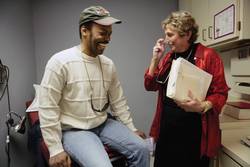
"Part of the National HIV/AIDS Strategy is to go where the epidemic is, and by definition to do that you are shifting money, taking it from areas that are doing a great job. But without that money, these low-incidence places run the risk of losing their edge and swinging back toward becoming high-incidence places," Dr. Sweet said.
Prior funding packages were based on the number of AIDS cases. That scenario doesn’t reflect today’s epidemiology, because antiretroviral drugs have cut down on full-blown AIDS cases. Funding based on diagnosis channels the money more effectively, Dr. Kevin Fenton said in a press statement.
"With 50,000 new HIV infections every year and a tough economic environment, the need to do more with existing resources is greater than ever," said Dr. Fenton, director of the Centers for Disease Control and Prevention’s (CDC) National Center for HIV/AIDS, Viral Hepatitis, STD, and TB Prevention. "This new approach to prevention funding is designed to focus on the places where needs are most urgent, and on the programs that will have the most far-reaching impact. It will help us achieve the ambitious goals of the National HIV/AIDS Strategy with the efficiency and urgency the HIV epidemic demands."
Most of the federal money is for increased HIV testing and to link HIV-positive patients to medical care, according to the CDC. The new program will be phased-in over 5 years, with most of this year’s money already promised. A small portion – $20 million – will be awarded this spring to jurisdictions that institute "unique, promising demonstration projects," but standard programs aren’t eligible for that money.
"This new shift in funding to high-impact jurisdictions is leaving lower-impact areas with less," said Murray Penner, deputy director of the National Alliance of State and Territorial AIDS Directors.
"It concerns us that these programs are getting cut. We don’t know what the impact will be. Will it be like the syphilis issue, when we put money into it and it declined, only to reappear when the financial focus went away?"
The group is still calculating the new program’s state-by-state impact. But two states, Hawaii and Iowa, have been particularly hard hit, he said. Both have a low incidence of HIV-infected residents, with about 1,000 new cases each year in Hawaii and just a few hundred in Iowa. But both also have had strong prevention programs for high-risk HIV-negative residents, programs that will now disappear.
Hawaii will endure a 50% federal funding cut by 2016, at which point the new allocation program is expected to be fully implemented. The drop doesn’t account for staff wage increases, lab fees, and transportation costs – a big-ticket item in a multi-island state, said Peter Whiticar, chief of the state’s STD/AIDS Prevention Branch.
The new priority on testing and treatment means that Hawaii and other states must change their HIV focus from behavioral interventions for high-risk HIV-negative clients to medical interventions for the HIV-positive. Although both strategies are key weapons in the HIV fight, health departments may now be forced to focus on one to the detriment of the other. "We simply will not be doing any more behavioral interventions" for HIV-negative at-risk clients, Mr. Whiticar said.
And the federal grant money isn’t just for HIV/AIDS, he pointed out. It also covers services for STD and hepatitis A – an integration that CDC pushed for in the past. This made sense, because the same risky behaviors increase the chance of all these illnesses, and the strategy helped a diverse group of people, Mr. Whiticar said. But because the majority of HIV patients are men, the new funding shift cuts sexual health services for women and transgendered people, he added.
"With 50,000 new HIV infections every year and a tough economic environment, the need to do more with existing resources is greater than ever."
"When you get this kind of funding emphasis on single service, the others start to fall by the wayside. Where the rubber hits the road is that small-incidence states still need to provide the same kind of services as high-incidence states."
Iowa is in a similar situation. The state will lose 55% of its government HIV funding by 2016, said Randy Mayer, chief of the Iowa Bureau of HIV, STD, and Hepatitis.
"We are getting out of the behavioral prevention business," he said in an interview. "We had 16 projects focusing on high-risk negative residents, and we won’t be doing that any more. This is a test, treat, and re-engage model, and it’s a very different way of doing things."
With the new testing-focused model, Iowa risks losing some of its ability to prevent new infections, he said. "We already struggle with late diagnoses, and I worry that this might now be exacerbated."
While some states must wrestle with shrinking programs, others will wrestle with expanding programs. Programs and money usually grow in tandem. States that get this quick cash boost will need time to ramp up programming. Jacquelyn Clymore, director of the North Carolina Department of Health’s Communicable Disease Branch, is face-to-face with this very issue.
"We are one of the fortunate states," she said in an interview. North Carolina, with about 25,000 HIV cases, realized a net increase of $626,000 through the redistribution program. "When you get this money, you also receive the burden of spending it wisely. You need an effective infrastructure, and you don’t put that together overnight. It takes time and community trust. It takes investing in getting trained, sensitive field workers. And you have to do all this right to make sure the money is reaching the people at highest risk with the most effective interventions, to get the best outcomes."
Although Ms. Clymore is thrilled with the "desperately needed" funding increase, she said low-incidence states could suffer the double hit of losing money and then seeing cases increase.
"We had that exact scenario with syphilis here," she said. "We had the highest syphilis rate in the country, and CDC poured money into an effort that brought it down radically. Then we lost that money and syphilis rates rose again. When you take your eye off the ball, it tends to bounce back up."
For more information on the program, visit http://www.cdc.gov/hiv/topics/funding/PS12-1201/.
A major shift in the way the federal government funds state HIV programs is likely to mean more dollars for HIV testing and treatment at the expense of funds to help prevent the disease from developing in the first place among high-risk populations.
The $339 million funding package – about the same amount as in last year’s total – reallocates federal monies by awarding health department grants based on the number of HIV-infected people living in the locality. That means areas with many cases will gain, but areas with fewer cases are going to lose – and some will lose big, said Dr. Donna Sweet, chair of the American Academy of HIV Medicine’s Board of Regents.
The redistribution may actually penalize areas with successful programs, she said in an interview, because years of prevention services and education have decreased their HIV-positive population.
"Part of the National HIV/AIDS Strategy is to go where the epidemic is, and by definition to do that you are shifting money, taking it from areas that are doing a great job. But without that money, these low-incidence places run the risk of losing their edge and swinging back toward becoming high-incidence places," Dr. Sweet said.
Prior funding packages were based on the number of AIDS cases. That scenario doesn’t reflect today’s epidemiology, because antiretroviral drugs have cut down on full-blown AIDS cases. Funding based on diagnosis channels the money more effectively, Dr. Kevin Fenton said in a press statement.
"With 50,000 new HIV infections every year and a tough economic environment, the need to do more with existing resources is greater than ever," said Dr. Fenton, director of the Centers for Disease Control and Prevention’s (CDC) National Center for HIV/AIDS, Viral Hepatitis, STD, and TB Prevention. "This new approach to prevention funding is designed to focus on the places where needs are most urgent, and on the programs that will have the most far-reaching impact. It will help us achieve the ambitious goals of the National HIV/AIDS Strategy with the efficiency and urgency the HIV epidemic demands."
Most of the federal money is for increased HIV testing and to link HIV-positive patients to medical care, according to the CDC. The new program will be phased-in over 5 years, with most of this year’s money already promised. A small portion – $20 million – will be awarded this spring to jurisdictions that institute "unique, promising demonstration projects," but standard programs aren’t eligible for that money.
"This new shift in funding to high-impact jurisdictions is leaving lower-impact areas with less," said Murray Penner, deputy director of the National Alliance of State and Territorial AIDS Directors.
"It concerns us that these programs are getting cut. We don’t know what the impact will be. Will it be like the syphilis issue, when we put money into it and it declined, only to reappear when the financial focus went away?"
The group is still calculating the new program’s state-by-state impact. But two states, Hawaii and Iowa, have been particularly hard hit, he said. Both have a low incidence of HIV-infected residents, with about 1,000 new cases each year in Hawaii and just a few hundred in Iowa. But both also have had strong prevention programs for high-risk HIV-negative residents, programs that will now disappear.
Hawaii will endure a 50% federal funding cut by 2016, at which point the new allocation program is expected to be fully implemented. The drop doesn’t account for staff wage increases, lab fees, and transportation costs – a big-ticket item in a multi-island state, said Peter Whiticar, chief of the state’s STD/AIDS Prevention Branch.
The new priority on testing and treatment means that Hawaii and other states must change their HIV focus from behavioral interventions for high-risk HIV-negative clients to medical interventions for the HIV-positive. Although both strategies are key weapons in the HIV fight, health departments may now be forced to focus on one to the detriment of the other. "We simply will not be doing any more behavioral interventions" for HIV-negative at-risk clients, Mr. Whiticar said.
And the federal grant money isn’t just for HIV/AIDS, he pointed out. It also covers services for STD and hepatitis A – an integration that CDC pushed for in the past. This made sense, because the same risky behaviors increase the chance of all these illnesses, and the strategy helped a diverse group of people, Mr. Whiticar said. But because the majority of HIV patients are men, the new funding shift cuts sexual health services for women and transgendered people, he added.
"With 50,000 new HIV infections every year and a tough economic environment, the need to do more with existing resources is greater than ever."
"When you get this kind of funding emphasis on single service, the others start to fall by the wayside. Where the rubber hits the road is that small-incidence states still need to provide the same kind of services as high-incidence states."
Iowa is in a similar situation. The state will lose 55% of its government HIV funding by 2016, said Randy Mayer, chief of the Iowa Bureau of HIV, STD, and Hepatitis.
"We are getting out of the behavioral prevention business," he said in an interview. "We had 16 projects focusing on high-risk negative residents, and we won’t be doing that any more. This is a test, treat, and re-engage model, and it’s a very different way of doing things."
With the new testing-focused model, Iowa risks losing some of its ability to prevent new infections, he said. "We already struggle with late diagnoses, and I worry that this might now be exacerbated."
While some states must wrestle with shrinking programs, others will wrestle with expanding programs. Programs and money usually grow in tandem. States that get this quick cash boost will need time to ramp up programming. Jacquelyn Clymore, director of the North Carolina Department of Health’s Communicable Disease Branch, is face-to-face with this very issue.
"We are one of the fortunate states," she said in an interview. North Carolina, with about 25,000 HIV cases, realized a net increase of $626,000 through the redistribution program. "When you get this money, you also receive the burden of spending it wisely. You need an effective infrastructure, and you don’t put that together overnight. It takes time and community trust. It takes investing in getting trained, sensitive field workers. And you have to do all this right to make sure the money is reaching the people at highest risk with the most effective interventions, to get the best outcomes."
Although Ms. Clymore is thrilled with the "desperately needed" funding increase, she said low-incidence states could suffer the double hit of losing money and then seeing cases increase.
"We had that exact scenario with syphilis here," she said. "We had the highest syphilis rate in the country, and CDC poured money into an effort that brought it down radically. Then we lost that money and syphilis rates rose again. When you take your eye off the ball, it tends to bounce back up."
For more information on the program, visit http://www.cdc.gov/hiv/topics/funding/PS12-1201/.
A major shift in the way the federal government funds state HIV programs is likely to mean more dollars for HIV testing and treatment at the expense of funds to help prevent the disease from developing in the first place among high-risk populations.
The $339 million funding package – about the same amount as in last year’s total – reallocates federal monies by awarding health department grants based on the number of HIV-infected people living in the locality. That means areas with many cases will gain, but areas with fewer cases are going to lose – and some will lose big, said Dr. Donna Sweet, chair of the American Academy of HIV Medicine’s Board of Regents.
The redistribution may actually penalize areas with successful programs, she said in an interview, because years of prevention services and education have decreased their HIV-positive population.
"Part of the National HIV/AIDS Strategy is to go where the epidemic is, and by definition to do that you are shifting money, taking it from areas that are doing a great job. But without that money, these low-incidence places run the risk of losing their edge and swinging back toward becoming high-incidence places," Dr. Sweet said.
Prior funding packages were based on the number of AIDS cases. That scenario doesn’t reflect today’s epidemiology, because antiretroviral drugs have cut down on full-blown AIDS cases. Funding based on diagnosis channels the money more effectively, Dr. Kevin Fenton said in a press statement.
"With 50,000 new HIV infections every year and a tough economic environment, the need to do more with existing resources is greater than ever," said Dr. Fenton, director of the Centers for Disease Control and Prevention’s (CDC) National Center for HIV/AIDS, Viral Hepatitis, STD, and TB Prevention. "This new approach to prevention funding is designed to focus on the places where needs are most urgent, and on the programs that will have the most far-reaching impact. It will help us achieve the ambitious goals of the National HIV/AIDS Strategy with the efficiency and urgency the HIV epidemic demands."
Most of the federal money is for increased HIV testing and to link HIV-positive patients to medical care, according to the CDC. The new program will be phased-in over 5 years, with most of this year’s money already promised. A small portion – $20 million – will be awarded this spring to jurisdictions that institute "unique, promising demonstration projects," but standard programs aren’t eligible for that money.
"This new shift in funding to high-impact jurisdictions is leaving lower-impact areas with less," said Murray Penner, deputy director of the National Alliance of State and Territorial AIDS Directors.
"It concerns us that these programs are getting cut. We don’t know what the impact will be. Will it be like the syphilis issue, when we put money into it and it declined, only to reappear when the financial focus went away?"
The group is still calculating the new program’s state-by-state impact. But two states, Hawaii and Iowa, have been particularly hard hit, he said. Both have a low incidence of HIV-infected residents, with about 1,000 new cases each year in Hawaii and just a few hundred in Iowa. But both also have had strong prevention programs for high-risk HIV-negative residents, programs that will now disappear.
Hawaii will endure a 50% federal funding cut by 2016, at which point the new allocation program is expected to be fully implemented. The drop doesn’t account for staff wage increases, lab fees, and transportation costs – a big-ticket item in a multi-island state, said Peter Whiticar, chief of the state’s STD/AIDS Prevention Branch.
The new priority on testing and treatment means that Hawaii and other states must change their HIV focus from behavioral interventions for high-risk HIV-negative clients to medical interventions for the HIV-positive. Although both strategies are key weapons in the HIV fight, health departments may now be forced to focus on one to the detriment of the other. "We simply will not be doing any more behavioral interventions" for HIV-negative at-risk clients, Mr. Whiticar said.
And the federal grant money isn’t just for HIV/AIDS, he pointed out. It also covers services for STD and hepatitis A – an integration that CDC pushed for in the past. This made sense, because the same risky behaviors increase the chance of all these illnesses, and the strategy helped a diverse group of people, Mr. Whiticar said. But because the majority of HIV patients are men, the new funding shift cuts sexual health services for women and transgendered people, he added.
"With 50,000 new HIV infections every year and a tough economic environment, the need to do more with existing resources is greater than ever."
"When you get this kind of funding emphasis on single service, the others start to fall by the wayside. Where the rubber hits the road is that small-incidence states still need to provide the same kind of services as high-incidence states."
Iowa is in a similar situation. The state will lose 55% of its government HIV funding by 2016, said Randy Mayer, chief of the Iowa Bureau of HIV, STD, and Hepatitis.
"We are getting out of the behavioral prevention business," he said in an interview. "We had 16 projects focusing on high-risk negative residents, and we won’t be doing that any more. This is a test, treat, and re-engage model, and it’s a very different way of doing things."
With the new testing-focused model, Iowa risks losing some of its ability to prevent new infections, he said. "We already struggle with late diagnoses, and I worry that this might now be exacerbated."
While some states must wrestle with shrinking programs, others will wrestle with expanding programs. Programs and money usually grow in tandem. States that get this quick cash boost will need time to ramp up programming. Jacquelyn Clymore, director of the North Carolina Department of Health’s Communicable Disease Branch, is face-to-face with this very issue.
"We are one of the fortunate states," she said in an interview. North Carolina, with about 25,000 HIV cases, realized a net increase of $626,000 through the redistribution program. "When you get this money, you also receive the burden of spending it wisely. You need an effective infrastructure, and you don’t put that together overnight. It takes time and community trust. It takes investing in getting trained, sensitive field workers. And you have to do all this right to make sure the money is reaching the people at highest risk with the most effective interventions, to get the best outcomes."
Although Ms. Clymore is thrilled with the "desperately needed" funding increase, she said low-incidence states could suffer the double hit of losing money and then seeing cases increase.
"We had that exact scenario with syphilis here," she said. "We had the highest syphilis rate in the country, and CDC poured money into an effort that brought it down radically. Then we lost that money and syphilis rates rose again. When you take your eye off the ball, it tends to bounce back up."
For more information on the program, visit http://www.cdc.gov/hiv/topics/funding/PS12-1201/.