User login
Clinical Endocrinology News is an independent news source that provides endocrinologists with timely and relevant news and commentary about clinical developments and the impact of health care policy on the endocrinologist's practice. Specialty topics include Diabetes, Lipid & Metabolic Disorders Menopause, Obesity, Osteoporosis, Pediatric Endocrinology, Pituitary, Thyroid & Adrenal Disorders, and Reproductive Endocrinology. Featured content includes Commentaries, Implementin Health Reform, Law & Medicine, and In the Loop, the blog of Clinical Endocrinology News. Clinical Endocrinology News is owned by Frontline Medical Communications.
addict
addicted
addicting
addiction
adult sites
alcohol
antibody
ass
attorney
audit
auditor
babies
babpa
baby
ban
banned
banning
best
bisexual
bitch
bleach
blog
blow job
bondage
boobs
booty
buy
cannabis
certificate
certification
certified
cheap
cheapest
class action
cocaine
cock
counterfeit drug
crack
crap
crime
criminal
cunt
curable
cure
dangerous
dangers
dead
deadly
death
defend
defended
depedent
dependence
dependent
detergent
dick
die
dildo
drug abuse
drug recall
dying
fag
fake
fatal
fatalities
fatality
free
fuck
gangs
gingivitis
guns
hardcore
herbal
herbs
heroin
herpes
home remedies
homo
horny
hypersensitivity
hypoglycemia treatment
illegal drug use
illegal use of prescription
incest
infant
infants
job
ketoacidosis
kill
killer
killing
kinky
law suit
lawsuit
lawyer
lesbian
marijuana
medicine for hypoglycemia
murder
naked
natural
newborn
nigger
noise
nude
nudity
orgy
over the counter
overdosage
overdose
overdosed
overdosing
penis
pimp
pistol
porn
porno
pornographic
pornography
prison
profanity
purchase
purchasing
pussy
queer
rape
rapist
recall
recreational drug
rob
robberies
sale
sales
sex
sexual
shit
shoot
slut
slutty
stole
stolen
store
sue
suicidal
suicide
supplements
supply company
theft
thief
thieves
tit
toddler
toddlers
toxic
toxin
tragedy
treating dka
treating hypoglycemia
treatment for hypoglycemia
vagina
violence
whore
withdrawal
without prescription
section[contains(@class, 'nav-hidden')]
footer[@id='footer']
div[contains(@class, 'pane-pub-article-imn')]
div[contains(@class, 'pane-pub-home-imn')]
div[contains(@class, 'pane-pub-topic-imn')]
div[contains(@class, 'panel-panel-inner')]
div[contains(@class, 'pane-node-field-article-topics')]
section[contains(@class, 'footer-nav-section-wrapper')]
Medical education programs tell how climate change affects health
Ms. Manivannan, copresident of Emory Medical Students for Climate Action, was in the first class of Emory’s medical students to experience the birth of a refined curriculum – lobbied for and partially created by students themselves. The new course of study addresses the myriad ways climate affects health: from air pollution and its effects on the lungs and cardiovascular system to heat-related kidney disease.
“We have known that climate has affected health for decades,” Ms. Manivannan said in a recent interview. “The narrative used to be that icebergs were melting and in 2050 polar bears would be extinct. The piece that’s different now is people are linking climate to increases in asthma and various diseases. We have a way to directly communicate that it’s not a far-off thing. It’s happening to your friends and family right now.”

Hospitals, medical schools, and public health programs are stepping up to educate the next generation of doctors as well as veteran medical workers on one of the most widespread, insidious health threats of our time – climate change – and specific ways it could affect their patients.
Although climate change may seem to many Americans like a distant threat, Marilyn Howarth, MD, a pediatrician in Philadelphia, is trying to make sure physicians are better prepared to treat a growing number of health problems associated with global warming.
“There isn’t a lot of education for pediatricians and internists on environmental health issues. It has not been a standard part of education in medical school or residency training,” Dr. Howarth, deputy director of the new Philadelphia Regional Center for Children’s Environmental Health, said. “With increasing attention on our climate, we really recognize there’s a real gap in physician knowledge, both in pediatric and adult care.”
Scientists have found that climate change can alter just about every system within the human body. Studies show that more extreme weather events, such as heat waves, thunderstorms, and floods, can worsen asthma and produce more pollen and mold, triggering debilitating respiratory problems.
According to the American Lung Association, ultrafine particles of air pollution can be inhaled and then travel throughout the bloodstream, wreaking havoc on organs and increasing risk of heart attack and stroke. Various types of air pollution also cause changes to the climate by trapping heat in the atmosphere, which leads to problems such as rising sea levels and extreme weather. Plus, in a new study published in Nature, scientists warn that warming climates are forcing animals to migrate to different areas, raising the risk that new infectious diseases will hop from animals – such as bats – to humans, a process called “zoonotic spillover” that many researchers believe is responsible for the COVID-19 pandemic.
The Philadelphia Regional Center for Children’s Environmental Health
One of the latest initiatives aimed at disseminating information about children’s health to health care providers is the Philadelphia Regional Center for Children’s Environmental Health, part of Children’s Hospital of Philadelphia and Penn Medicine. CHOP and Penn Medicine are jointly funding this center’s work, which will include educating health care providers on how to better screen for climate-caused health risks and treat related conditions, such as lead poisoning and asthma.
Outreach will focus on providers who treat patients with illnesses that researchers have linked to climate change, Dr. Howarth said. The center will offer clinicians access to seminars and webinars, along with online resources to help doctors treat environmental illnesses. For example, doctors at CHOP’s Poison Control Center are developing a toolkit for physicians to treat patients with elevated levels of lead in the blood. Scientists have linked extreme weather events related to climate change to flooding that pushes metals away from river banks where they were previously contained, allowing them to more easily contaminate homes, soils, and yards.
The initiative builds on CHOP’s Community Asthma Prevention Program (CAPP), which was launched in 1997 by Tyra Bryant-Stephens, MD, its current medical director. CAPP deploys community health workers into homes armed with supplies and tips for managing asthma. The new center will use similar tactics to provide education and resources to patients. The goal is to reach as many at-risk local children as possible.
Future generation of doctors fuel growth in climate change education
Lisa Doggett, MD, cofounder and president of the board of directors of Texas Physicians for Social Responsibility, announced in March that the University of Texas at Austin, Baylor College of Medicine, Houston, and the University of Texas Southwestern in Dallas have all decided to begin offering a course on environmental threats. Emory’s new curriculum has become more comprehensive every year since its start – thanks in part to the input of students like Ms. Manivannan. Faculty members tasked her with approving the new additions to the curriculum on how climate affects health, which in 2019 had consisted of a few slides about issues such as extreme heat exposure and air pollution and their effects on childbirth outcomes.
Material on climate change has now been woven into 13 courses. It is discussed at length in relation to pulmonology, cardiology, and gastropulmonology, for example, said Rebecca Philipsborn, MD, MPA, FAAP, faculty lead for the environmental and health curriculum at Emory.
The curriculum has only been incorporated into Emory’s program for the past 2 years. Dr. Philipsborn said the school plans to expand it to the clinical years to help trainees learn to treat conditions such as pediatric asthma.
“In the past few years, there has been so much momentum, and part of that is a testament to already seeing effects of climate change and how they affect delivery of health care,” she said.
At least one medical journal has recently ramped up its efforts to educate physicians on the links between health issues and climate change. Editors of Family Practice, from Oxford University Press, have announced that they plan to publish a special Climate Crisis and Primary Health Care issue in September.
Of course, not all climate initiatives in medicine are new. A select few have existed for decades.
But only now are physicians widely seeing the links between health and environment, according to Aaron Bernstein, MD, MPH, interim director of the Center for Climate, Health, and the Global Environment (C-CHANGE) at Harvard School of Public Health, Boston.
C-CHANGE, founded in 1996, was the first center in the world to focus on the health effects of environmental change.
“It’s taken 20 years, but what we’re seeing, I think, is the fruits of education,” Dr. Bernstein said. “There’s clearly a wave building here, and I think it really started with education and people younger than the people in charge calling them into account.”
Like the Philadelphia center, Harvard’s program conducts research on climate and health and educates people from high schoolers to health care veterans. Dr. Bernstein helps lead Climate MD, a program that aims to prepare health care workers for climate crises. The Climate MD team has published several articles in peer-reviewed journals on how to better treat patients struggling with environmental health problems. For example, an article on mapping patients in hurricane zones helped shed light on how systems can identify climate-vulnerable patients using public data.
They also developed a tool to help pediatricians provide “climate-informed primary care” – guidance on how to assess whether children are at risk of any harmful environmental exposures, a feature that is not part of standard pediatric visits.
Like the other programs, Climate MD uses community outreach to treat as many local patients as possible. Staff work with providers at more than 100 health clinics, particularly in areas where climate change disproportionately affects residents.
The next major step is to bring some of this into clinical practice, Dr. Bernstein said. In February 2020, C-CHANGE held its first symposium to address that issue.
“The key is to understand climate issues from a provider’s perspective,” he said. “Then those issues can really be brought to the bedside.”
A version of this article first appeared on Medscape.com.
Ms. Manivannan, copresident of Emory Medical Students for Climate Action, was in the first class of Emory’s medical students to experience the birth of a refined curriculum – lobbied for and partially created by students themselves. The new course of study addresses the myriad ways climate affects health: from air pollution and its effects on the lungs and cardiovascular system to heat-related kidney disease.
“We have known that climate has affected health for decades,” Ms. Manivannan said in a recent interview. “The narrative used to be that icebergs were melting and in 2050 polar bears would be extinct. The piece that’s different now is people are linking climate to increases in asthma and various diseases. We have a way to directly communicate that it’s not a far-off thing. It’s happening to your friends and family right now.”
Hospitals, medical schools, and public health programs are stepping up to educate the next generation of doctors as well as veteran medical workers on one of the most widespread, insidious health threats of our time – climate change – and specific ways it could affect their patients.
Although climate change may seem to many Americans like a distant threat, Marilyn Howarth, MD, a pediatrician in Philadelphia, is trying to make sure physicians are better prepared to treat a growing number of health problems associated with global warming.
“There isn’t a lot of education for pediatricians and internists on environmental health issues. It has not been a standard part of education in medical school or residency training,” Dr. Howarth, deputy director of the new Philadelphia Regional Center for Children’s Environmental Health, said. “With increasing attention on our climate, we really recognize there’s a real gap in physician knowledge, both in pediatric and adult care.”
Scientists have found that climate change can alter just about every system within the human body. Studies show that more extreme weather events, such as heat waves, thunderstorms, and floods, can worsen asthma and produce more pollen and mold, triggering debilitating respiratory problems.
According to the American Lung Association, ultrafine particles of air pollution can be inhaled and then travel throughout the bloodstream, wreaking havoc on organs and increasing risk of heart attack and stroke. Various types of air pollution also cause changes to the climate by trapping heat in the atmosphere, which leads to problems such as rising sea levels and extreme weather. Plus, in a new study published in Nature, scientists warn that warming climates are forcing animals to migrate to different areas, raising the risk that new infectious diseases will hop from animals – such as bats – to humans, a process called “zoonotic spillover” that many researchers believe is responsible for the COVID-19 pandemic.
The Philadelphia Regional Center for Children’s Environmental Health
One of the latest initiatives aimed at disseminating information about children’s health to health care providers is the Philadelphia Regional Center for Children’s Environmental Health, part of Children’s Hospital of Philadelphia and Penn Medicine. CHOP and Penn Medicine are jointly funding this center’s work, which will include educating health care providers on how to better screen for climate-caused health risks and treat related conditions, such as lead poisoning and asthma.
Outreach will focus on providers who treat patients with illnesses that researchers have linked to climate change, Dr. Howarth said. The center will offer clinicians access to seminars and webinars, along with online resources to help doctors treat environmental illnesses. For example, doctors at CHOP’s Poison Control Center are developing a toolkit for physicians to treat patients with elevated levels of lead in the blood. Scientists have linked extreme weather events related to climate change to flooding that pushes metals away from river banks where they were previously contained, allowing them to more easily contaminate homes, soils, and yards.
The initiative builds on CHOP’s Community Asthma Prevention Program (CAPP), which was launched in 1997 by Tyra Bryant-Stephens, MD, its current medical director. CAPP deploys community health workers into homes armed with supplies and tips for managing asthma. The new center will use similar tactics to provide education and resources to patients. The goal is to reach as many at-risk local children as possible.
Future generation of doctors fuel growth in climate change education
Lisa Doggett, MD, cofounder and president of the board of directors of Texas Physicians for Social Responsibility, announced in March that the University of Texas at Austin, Baylor College of Medicine, Houston, and the University of Texas Southwestern in Dallas have all decided to begin offering a course on environmental threats. Emory’s new curriculum has become more comprehensive every year since its start – thanks in part to the input of students like Ms. Manivannan. Faculty members tasked her with approving the new additions to the curriculum on how climate affects health, which in 2019 had consisted of a few slides about issues such as extreme heat exposure and air pollution and their effects on childbirth outcomes.
Material on climate change has now been woven into 13 courses. It is discussed at length in relation to pulmonology, cardiology, and gastropulmonology, for example, said Rebecca Philipsborn, MD, MPA, FAAP, faculty lead for the environmental and health curriculum at Emory.
The curriculum has only been incorporated into Emory’s program for the past 2 years. Dr. Philipsborn said the school plans to expand it to the clinical years to help trainees learn to treat conditions such as pediatric asthma.
“In the past few years, there has been so much momentum, and part of that is a testament to already seeing effects of climate change and how they affect delivery of health care,” she said.
At least one medical journal has recently ramped up its efforts to educate physicians on the links between health issues and climate change. Editors of Family Practice, from Oxford University Press, have announced that they plan to publish a special Climate Crisis and Primary Health Care issue in September.
Of course, not all climate initiatives in medicine are new. A select few have existed for decades.
But only now are physicians widely seeing the links between health and environment, according to Aaron Bernstein, MD, MPH, interim director of the Center for Climate, Health, and the Global Environment (C-CHANGE) at Harvard School of Public Health, Boston.
C-CHANGE, founded in 1996, was the first center in the world to focus on the health effects of environmental change.
“It’s taken 20 years, but what we’re seeing, I think, is the fruits of education,” Dr. Bernstein said. “There’s clearly a wave building here, and I think it really started with education and people younger than the people in charge calling them into account.”
Like the Philadelphia center, Harvard’s program conducts research on climate and health and educates people from high schoolers to health care veterans. Dr. Bernstein helps lead Climate MD, a program that aims to prepare health care workers for climate crises. The Climate MD team has published several articles in peer-reviewed journals on how to better treat patients struggling with environmental health problems. For example, an article on mapping patients in hurricane zones helped shed light on how systems can identify climate-vulnerable patients using public data.
They also developed a tool to help pediatricians provide “climate-informed primary care” – guidance on how to assess whether children are at risk of any harmful environmental exposures, a feature that is not part of standard pediatric visits.
Like the other programs, Climate MD uses community outreach to treat as many local patients as possible. Staff work with providers at more than 100 health clinics, particularly in areas where climate change disproportionately affects residents.
The next major step is to bring some of this into clinical practice, Dr. Bernstein said. In February 2020, C-CHANGE held its first symposium to address that issue.
“The key is to understand climate issues from a provider’s perspective,” he said. “Then those issues can really be brought to the bedside.”
A version of this article first appeared on Medscape.com.
Ms. Manivannan, copresident of Emory Medical Students for Climate Action, was in the first class of Emory’s medical students to experience the birth of a refined curriculum – lobbied for and partially created by students themselves. The new course of study addresses the myriad ways climate affects health: from air pollution and its effects on the lungs and cardiovascular system to heat-related kidney disease.
“We have known that climate has affected health for decades,” Ms. Manivannan said in a recent interview. “The narrative used to be that icebergs were melting and in 2050 polar bears would be extinct. The piece that’s different now is people are linking climate to increases in asthma and various diseases. We have a way to directly communicate that it’s not a far-off thing. It’s happening to your friends and family right now.”
Hospitals, medical schools, and public health programs are stepping up to educate the next generation of doctors as well as veteran medical workers on one of the most widespread, insidious health threats of our time – climate change – and specific ways it could affect their patients.
Although climate change may seem to many Americans like a distant threat, Marilyn Howarth, MD, a pediatrician in Philadelphia, is trying to make sure physicians are better prepared to treat a growing number of health problems associated with global warming.
“There isn’t a lot of education for pediatricians and internists on environmental health issues. It has not been a standard part of education in medical school or residency training,” Dr. Howarth, deputy director of the new Philadelphia Regional Center for Children’s Environmental Health, said. “With increasing attention on our climate, we really recognize there’s a real gap in physician knowledge, both in pediatric and adult care.”
Scientists have found that climate change can alter just about every system within the human body. Studies show that more extreme weather events, such as heat waves, thunderstorms, and floods, can worsen asthma and produce more pollen and mold, triggering debilitating respiratory problems.
According to the American Lung Association, ultrafine particles of air pollution can be inhaled and then travel throughout the bloodstream, wreaking havoc on organs and increasing risk of heart attack and stroke. Various types of air pollution also cause changes to the climate by trapping heat in the atmosphere, which leads to problems such as rising sea levels and extreme weather. Plus, in a new study published in Nature, scientists warn that warming climates are forcing animals to migrate to different areas, raising the risk that new infectious diseases will hop from animals – such as bats – to humans, a process called “zoonotic spillover” that many researchers believe is responsible for the COVID-19 pandemic.
The Philadelphia Regional Center for Children’s Environmental Health
One of the latest initiatives aimed at disseminating information about children’s health to health care providers is the Philadelphia Regional Center for Children’s Environmental Health, part of Children’s Hospital of Philadelphia and Penn Medicine. CHOP and Penn Medicine are jointly funding this center’s work, which will include educating health care providers on how to better screen for climate-caused health risks and treat related conditions, such as lead poisoning and asthma.
Outreach will focus on providers who treat patients with illnesses that researchers have linked to climate change, Dr. Howarth said. The center will offer clinicians access to seminars and webinars, along with online resources to help doctors treat environmental illnesses. For example, doctors at CHOP’s Poison Control Center are developing a toolkit for physicians to treat patients with elevated levels of lead in the blood. Scientists have linked extreme weather events related to climate change to flooding that pushes metals away from river banks where they were previously contained, allowing them to more easily contaminate homes, soils, and yards.
The initiative builds on CHOP’s Community Asthma Prevention Program (CAPP), which was launched in 1997 by Tyra Bryant-Stephens, MD, its current medical director. CAPP deploys community health workers into homes armed with supplies and tips for managing asthma. The new center will use similar tactics to provide education and resources to patients. The goal is to reach as many at-risk local children as possible.
Future generation of doctors fuel growth in climate change education
Lisa Doggett, MD, cofounder and president of the board of directors of Texas Physicians for Social Responsibility, announced in March that the University of Texas at Austin, Baylor College of Medicine, Houston, and the University of Texas Southwestern in Dallas have all decided to begin offering a course on environmental threats. Emory’s new curriculum has become more comprehensive every year since its start – thanks in part to the input of students like Ms. Manivannan. Faculty members tasked her with approving the new additions to the curriculum on how climate affects health, which in 2019 had consisted of a few slides about issues such as extreme heat exposure and air pollution and their effects on childbirth outcomes.
Material on climate change has now been woven into 13 courses. It is discussed at length in relation to pulmonology, cardiology, and gastropulmonology, for example, said Rebecca Philipsborn, MD, MPA, FAAP, faculty lead for the environmental and health curriculum at Emory.
The curriculum has only been incorporated into Emory’s program for the past 2 years. Dr. Philipsborn said the school plans to expand it to the clinical years to help trainees learn to treat conditions such as pediatric asthma.
“In the past few years, there has been so much momentum, and part of that is a testament to already seeing effects of climate change and how they affect delivery of health care,” she said.
At least one medical journal has recently ramped up its efforts to educate physicians on the links between health issues and climate change. Editors of Family Practice, from Oxford University Press, have announced that they plan to publish a special Climate Crisis and Primary Health Care issue in September.
Of course, not all climate initiatives in medicine are new. A select few have existed for decades.
But only now are physicians widely seeing the links between health and environment, according to Aaron Bernstein, MD, MPH, interim director of the Center for Climate, Health, and the Global Environment (C-CHANGE) at Harvard School of Public Health, Boston.
C-CHANGE, founded in 1996, was the first center in the world to focus on the health effects of environmental change.
“It’s taken 20 years, but what we’re seeing, I think, is the fruits of education,” Dr. Bernstein said. “There’s clearly a wave building here, and I think it really started with education and people younger than the people in charge calling them into account.”
Like the Philadelphia center, Harvard’s program conducts research on climate and health and educates people from high schoolers to health care veterans. Dr. Bernstein helps lead Climate MD, a program that aims to prepare health care workers for climate crises. The Climate MD team has published several articles in peer-reviewed journals on how to better treat patients struggling with environmental health problems. For example, an article on mapping patients in hurricane zones helped shed light on how systems can identify climate-vulnerable patients using public data.
They also developed a tool to help pediatricians provide “climate-informed primary care” – guidance on how to assess whether children are at risk of any harmful environmental exposures, a feature that is not part of standard pediatric visits.
Like the other programs, Climate MD uses community outreach to treat as many local patients as possible. Staff work with providers at more than 100 health clinics, particularly in areas where climate change disproportionately affects residents.
The next major step is to bring some of this into clinical practice, Dr. Bernstein said. In February 2020, C-CHANGE held its first symposium to address that issue.
“The key is to understand climate issues from a provider’s perspective,” he said. “Then those issues can really be brought to the bedside.”
A version of this article first appeared on Medscape.com.
My choice? Unvaccinated pose outsize risk to vaccinated
according to a mathematical modeling study.
The study, which simulated patterns of infection among vaccinated and unvaccinated populations, showed that, as the populations mixed less, attack rates decreased among vaccinated people (from 15% to 10%) and increased among unvaccinated people (from 62% to 79%). The unvaccinated increasingly became the source of infection, however.
“When the vaccinated and unvaccinated mix, indirect protection is conferred upon the unvaccinated by the buffering effect of vaccinated individuals, and by contrast, risk in the vaccinated goes up,” lead author David Fisman, MD, professor of epidemiology at the University of Toronto, told this news organization.
As the groups mix less and less, the size of the epidemic increases among the unvaccinated and decreases among the vaccinated. “But the impact of the unvaccinated on risk in the vaccinated is disproportionate to the numbers of contacts between the two groups,” said Dr. Fisman.
The study was published online in the Canadian Medical Association Journal.
Relative contributions to risk
The researchers used a model of a respiratory viral disease “similar to SARS-CoV-2 infection with Delta variant.” They included reproduction values to capture the dynamics of the Omicron variant, which was emerging at the time. In the study, vaccines ranged in effectiveness from 40% to 80%. The study incorporated various levels of mixing between a partially vaccinated and an unvaccinated population. The mixing ranged from random mixing to like-with-like mixing (“assortativity”). There were three possible “compartments” of people in the model: those considered susceptible to infection, those considered infected and infectious, and those considered immune because of recovery.
The model showed that, as mixing between the vaccinated and the unvaccinated populations increased, case numbers rose, “with cases in the unvaccinated subpopulation accounting for a substantial proportion of infections.” However, as mixing between the populations decreased, the final attack rate decreased among vaccinated people, but the relative “contribution of risk to vaccinated people caused by infection acquired from contact with unvaccinated people ... increased.”
When the vaccination rate was increased in the model, case numbers among the vaccinated declined “as expected, owing to indirect protective effects,” the researchers noted. But this also “further increased the relative contribution to risk in vaccinated people by those who were unvaccinated.”
Self-regarding risk?
The findings show that “choices made by people who forgo vaccination contribute disproportionately to risk among those who do get vaccinated,” the researchers wrote. “Although risk associated with avoiding vaccination during a virulent pandemic accrues chiefly to those who are unvaccinated, the choice of some individuals to refuse vaccination is likely to affect the health and safety of vaccinated people in a manner disproportionate to the fraction of unvaccinated people in the population.”
The fact that like-with-like mixing cannot mitigate the risk to vaccinated people “undermines the assertion that vaccine choice is best left to the individual and supports strong public actions aimed at enhancing vaccine uptake and limiting access to public spaces for unvaccinated people,” they wrote.
Mandates and passports
“Our model provides support for vaccine mandates and passports during epidemics, such that vaccination is required for people to take part in nonessential activities,” said Dr. Fisman. The choice to not be vaccinated against COVID-19 should not be considered “self-regarding,” he added. “Risk is self-regarding when it only impacts the person engaging in the activity. Something like smoking cigarettes (alone, without others around) creates a lot of risk over time, but if nobody is breathing your secondhand smoke, you’re only creating risk for yourself. By contrast, we regulate, in Ontario, your right to smoke in public indoor spaces such as restaurants, because once other people are around, the risk isn’t self-regarding anymore. You’re creating risk for others.”
The authors also noted that the risks created by the unvaccinated extend beyond those of infection by “creating a risk that those around them may not be able to obtain the care they need.” They recommended that considerations of equity and justice for people who do choose to be vaccinated, as well as those who choose not to be, need to be included in formulating vaccination policy.
Illuminating the discussion
Asked to comment on the study, Matthew Oughton, MD, assistant professor of medicine at McGill University, Montreal, said: “It is easy to dismiss a mathematical model as a series of assumptions that leads to an implausible conclusion. ... However, they can serve to illustrate and, to an extent, quantify the results of complex interactions, and this study does just that.” Dr. Oughton was not involved in the research.
During the past 2 years, the scientific press and the general press have often discussed the individual and collective effects of disease-prevention methods, including nonpharmaceutical interventions. “Models like this can help illuminate those discussions by highlighting important consequences of preventive measures,” said Dr. Oughton, who also works in the division of infectious diseases at the Jewish General Hospital, Montreal.
It’s worth noting that the authors modeled vaccine effectiveness against all infection, “rather than the generally greater and more durable effects we have seen for vaccines in prevention of severe infection,” said Dr. Oughton. He added that the authors did not include the effect of vaccination in reducing forward transmission. “Inclusion of this effect would presumably have reduced overall infectious burden in mixed populations and increased the difference between groups at lower levels of mixing between populations.”
The research was supported by a grant from the Canadian Institutes of Health Research. Dr. Fisman has served on advisory boards related to influenza and SARS-CoV-2 vaccines for Seqirus, Pfizer, AstraZeneca, and Sanofi-Pasteur Vaccines and has served as a legal expert on issues related to COVID-19 epidemiology for the Elementary Teachers Federation of Ontario and the Registered Nurses Association of Ontario. Dr. Oughton disclosed no relevant financial relationships.
A version of this article first appeared on Medscape.com.
according to a mathematical modeling study.
The study, which simulated patterns of infection among vaccinated and unvaccinated populations, showed that, as the populations mixed less, attack rates decreased among vaccinated people (from 15% to 10%) and increased among unvaccinated people (from 62% to 79%). The unvaccinated increasingly became the source of infection, however.
“When the vaccinated and unvaccinated mix, indirect protection is conferred upon the unvaccinated by the buffering effect of vaccinated individuals, and by contrast, risk in the vaccinated goes up,” lead author David Fisman, MD, professor of epidemiology at the University of Toronto, told this news organization.
As the groups mix less and less, the size of the epidemic increases among the unvaccinated and decreases among the vaccinated. “But the impact of the unvaccinated on risk in the vaccinated is disproportionate to the numbers of contacts between the two groups,” said Dr. Fisman.
The study was published online in the Canadian Medical Association Journal.
Relative contributions to risk
The researchers used a model of a respiratory viral disease “similar to SARS-CoV-2 infection with Delta variant.” They included reproduction values to capture the dynamics of the Omicron variant, which was emerging at the time. In the study, vaccines ranged in effectiveness from 40% to 80%. The study incorporated various levels of mixing between a partially vaccinated and an unvaccinated population. The mixing ranged from random mixing to like-with-like mixing (“assortativity”). There were three possible “compartments” of people in the model: those considered susceptible to infection, those considered infected and infectious, and those considered immune because of recovery.
The model showed that, as mixing between the vaccinated and the unvaccinated populations increased, case numbers rose, “with cases in the unvaccinated subpopulation accounting for a substantial proportion of infections.” However, as mixing between the populations decreased, the final attack rate decreased among vaccinated people, but the relative “contribution of risk to vaccinated people caused by infection acquired from contact with unvaccinated people ... increased.”
When the vaccination rate was increased in the model, case numbers among the vaccinated declined “as expected, owing to indirect protective effects,” the researchers noted. But this also “further increased the relative contribution to risk in vaccinated people by those who were unvaccinated.”
Self-regarding risk?
The findings show that “choices made by people who forgo vaccination contribute disproportionately to risk among those who do get vaccinated,” the researchers wrote. “Although risk associated with avoiding vaccination during a virulent pandemic accrues chiefly to those who are unvaccinated, the choice of some individuals to refuse vaccination is likely to affect the health and safety of vaccinated people in a manner disproportionate to the fraction of unvaccinated people in the population.”
The fact that like-with-like mixing cannot mitigate the risk to vaccinated people “undermines the assertion that vaccine choice is best left to the individual and supports strong public actions aimed at enhancing vaccine uptake and limiting access to public spaces for unvaccinated people,” they wrote.
Mandates and passports
“Our model provides support for vaccine mandates and passports during epidemics, such that vaccination is required for people to take part in nonessential activities,” said Dr. Fisman. The choice to not be vaccinated against COVID-19 should not be considered “self-regarding,” he added. “Risk is self-regarding when it only impacts the person engaging in the activity. Something like smoking cigarettes (alone, without others around) creates a lot of risk over time, but if nobody is breathing your secondhand smoke, you’re only creating risk for yourself. By contrast, we regulate, in Ontario, your right to smoke in public indoor spaces such as restaurants, because once other people are around, the risk isn’t self-regarding anymore. You’re creating risk for others.”
The authors also noted that the risks created by the unvaccinated extend beyond those of infection by “creating a risk that those around them may not be able to obtain the care they need.” They recommended that considerations of equity and justice for people who do choose to be vaccinated, as well as those who choose not to be, need to be included in formulating vaccination policy.
Illuminating the discussion
Asked to comment on the study, Matthew Oughton, MD, assistant professor of medicine at McGill University, Montreal, said: “It is easy to dismiss a mathematical model as a series of assumptions that leads to an implausible conclusion. ... However, they can serve to illustrate and, to an extent, quantify the results of complex interactions, and this study does just that.” Dr. Oughton was not involved in the research.
During the past 2 years, the scientific press and the general press have often discussed the individual and collective effects of disease-prevention methods, including nonpharmaceutical interventions. “Models like this can help illuminate those discussions by highlighting important consequences of preventive measures,” said Dr. Oughton, who also works in the division of infectious diseases at the Jewish General Hospital, Montreal.
It’s worth noting that the authors modeled vaccine effectiveness against all infection, “rather than the generally greater and more durable effects we have seen for vaccines in prevention of severe infection,” said Dr. Oughton. He added that the authors did not include the effect of vaccination in reducing forward transmission. “Inclusion of this effect would presumably have reduced overall infectious burden in mixed populations and increased the difference between groups at lower levels of mixing between populations.”
The research was supported by a grant from the Canadian Institutes of Health Research. Dr. Fisman has served on advisory boards related to influenza and SARS-CoV-2 vaccines for Seqirus, Pfizer, AstraZeneca, and Sanofi-Pasteur Vaccines and has served as a legal expert on issues related to COVID-19 epidemiology for the Elementary Teachers Federation of Ontario and the Registered Nurses Association of Ontario. Dr. Oughton disclosed no relevant financial relationships.
A version of this article first appeared on Medscape.com.
according to a mathematical modeling study.
The study, which simulated patterns of infection among vaccinated and unvaccinated populations, showed that, as the populations mixed less, attack rates decreased among vaccinated people (from 15% to 10%) and increased among unvaccinated people (from 62% to 79%). The unvaccinated increasingly became the source of infection, however.
“When the vaccinated and unvaccinated mix, indirect protection is conferred upon the unvaccinated by the buffering effect of vaccinated individuals, and by contrast, risk in the vaccinated goes up,” lead author David Fisman, MD, professor of epidemiology at the University of Toronto, told this news organization.
As the groups mix less and less, the size of the epidemic increases among the unvaccinated and decreases among the vaccinated. “But the impact of the unvaccinated on risk in the vaccinated is disproportionate to the numbers of contacts between the two groups,” said Dr. Fisman.
The study was published online in the Canadian Medical Association Journal.
Relative contributions to risk
The researchers used a model of a respiratory viral disease “similar to SARS-CoV-2 infection with Delta variant.” They included reproduction values to capture the dynamics of the Omicron variant, which was emerging at the time. In the study, vaccines ranged in effectiveness from 40% to 80%. The study incorporated various levels of mixing between a partially vaccinated and an unvaccinated population. The mixing ranged from random mixing to like-with-like mixing (“assortativity”). There were three possible “compartments” of people in the model: those considered susceptible to infection, those considered infected and infectious, and those considered immune because of recovery.
The model showed that, as mixing between the vaccinated and the unvaccinated populations increased, case numbers rose, “with cases in the unvaccinated subpopulation accounting for a substantial proportion of infections.” However, as mixing between the populations decreased, the final attack rate decreased among vaccinated people, but the relative “contribution of risk to vaccinated people caused by infection acquired from contact with unvaccinated people ... increased.”
When the vaccination rate was increased in the model, case numbers among the vaccinated declined “as expected, owing to indirect protective effects,” the researchers noted. But this also “further increased the relative contribution to risk in vaccinated people by those who were unvaccinated.”
Self-regarding risk?
The findings show that “choices made by people who forgo vaccination contribute disproportionately to risk among those who do get vaccinated,” the researchers wrote. “Although risk associated with avoiding vaccination during a virulent pandemic accrues chiefly to those who are unvaccinated, the choice of some individuals to refuse vaccination is likely to affect the health and safety of vaccinated people in a manner disproportionate to the fraction of unvaccinated people in the population.”
The fact that like-with-like mixing cannot mitigate the risk to vaccinated people “undermines the assertion that vaccine choice is best left to the individual and supports strong public actions aimed at enhancing vaccine uptake and limiting access to public spaces for unvaccinated people,” they wrote.
Mandates and passports
“Our model provides support for vaccine mandates and passports during epidemics, such that vaccination is required for people to take part in nonessential activities,” said Dr. Fisman. The choice to not be vaccinated against COVID-19 should not be considered “self-regarding,” he added. “Risk is self-regarding when it only impacts the person engaging in the activity. Something like smoking cigarettes (alone, without others around) creates a lot of risk over time, but if nobody is breathing your secondhand smoke, you’re only creating risk for yourself. By contrast, we regulate, in Ontario, your right to smoke in public indoor spaces such as restaurants, because once other people are around, the risk isn’t self-regarding anymore. You’re creating risk for others.”
The authors also noted that the risks created by the unvaccinated extend beyond those of infection by “creating a risk that those around them may not be able to obtain the care they need.” They recommended that considerations of equity and justice for people who do choose to be vaccinated, as well as those who choose not to be, need to be included in formulating vaccination policy.
Illuminating the discussion
Asked to comment on the study, Matthew Oughton, MD, assistant professor of medicine at McGill University, Montreal, said: “It is easy to dismiss a mathematical model as a series of assumptions that leads to an implausible conclusion. ... However, they can serve to illustrate and, to an extent, quantify the results of complex interactions, and this study does just that.” Dr. Oughton was not involved in the research.
During the past 2 years, the scientific press and the general press have often discussed the individual and collective effects of disease-prevention methods, including nonpharmaceutical interventions. “Models like this can help illuminate those discussions by highlighting important consequences of preventive measures,” said Dr. Oughton, who also works in the division of infectious diseases at the Jewish General Hospital, Montreal.
It’s worth noting that the authors modeled vaccine effectiveness against all infection, “rather than the generally greater and more durable effects we have seen for vaccines in prevention of severe infection,” said Dr. Oughton. He added that the authors did not include the effect of vaccination in reducing forward transmission. “Inclusion of this effect would presumably have reduced overall infectious burden in mixed populations and increased the difference between groups at lower levels of mixing between populations.”
The research was supported by a grant from the Canadian Institutes of Health Research. Dr. Fisman has served on advisory boards related to influenza and SARS-CoV-2 vaccines for Seqirus, Pfizer, AstraZeneca, and Sanofi-Pasteur Vaccines and has served as a legal expert on issues related to COVID-19 epidemiology for the Elementary Teachers Federation of Ontario and the Registered Nurses Association of Ontario. Dr. Oughton disclosed no relevant financial relationships.
A version of this article first appeared on Medscape.com.
FROM THE CANADIAN MEDICAL ASSOCIATION JOURNAL
CDC predicts a rise in COVID-19 hospitalizations and deaths in coming weeks
, according to a national forecast used by the Centers for Disease Control and Prevention.
The national model also predicts that about 5,000 deaths will occur over the next two weeks, with Ohio, New Jersey, and New York projected to see the largest totals of daily deaths in upcoming weeks.
The numbers follow several weeks of steady increases in infections across the country. More than 67,000 new cases are being reported daily, according to the data tracker from The New York Times, marking a 59% increase in the past two weeks.
In the Northeast, infection rates have risen by nearly 65%. In the New York and New Jersey region, infection rates are up about 55% in the past two weeks.
Hospitalizations have already begun to climb as well, with about 19,000 COVID-19 patients hospitalized nationwide and 1,725 in intensive care, according to the latest data from the Department of Health and Human Services. In the last week, hospital admissions have jumped by 20%, and emergency department visits are up by 18%.
The CDC forecast shows that 42 states and territories will see increases in hospital admissions during the next two weeks. Florida, Minnesota, New York, and Wisconsin will see some of the largest increases.
On average, more than 2,200 COVID-19 patients are entering the hospital each day, which has increased about 20% in the last week, according to ABC News. This also marks the highest number of COVID-19 patients needing hospital care since mid-March.
Public health officials have cited several factors for the increase in cases, such as states lifting mask mandates and other safety restrictions, ABC News reported. Highly contagious Omicron subvariants, such as BA.2 and BA.2.12.1, continue to spread in the United States and escape immunity from previous infections.
The BA.2 subvariant accounts for 62% of new national cases, according to the latest CDC data. The BA.2.12.1 subvariant makes up about 36% of new cases across the United States but 62% in the New York area.
A version of this article first appeared on WebMD.com.
, according to a national forecast used by the Centers for Disease Control and Prevention.
The national model also predicts that about 5,000 deaths will occur over the next two weeks, with Ohio, New Jersey, and New York projected to see the largest totals of daily deaths in upcoming weeks.
The numbers follow several weeks of steady increases in infections across the country. More than 67,000 new cases are being reported daily, according to the data tracker from The New York Times, marking a 59% increase in the past two weeks.
In the Northeast, infection rates have risen by nearly 65%. In the New York and New Jersey region, infection rates are up about 55% in the past two weeks.
Hospitalizations have already begun to climb as well, with about 19,000 COVID-19 patients hospitalized nationwide and 1,725 in intensive care, according to the latest data from the Department of Health and Human Services. In the last week, hospital admissions have jumped by 20%, and emergency department visits are up by 18%.
The CDC forecast shows that 42 states and territories will see increases in hospital admissions during the next two weeks. Florida, Minnesota, New York, and Wisconsin will see some of the largest increases.
On average, more than 2,200 COVID-19 patients are entering the hospital each day, which has increased about 20% in the last week, according to ABC News. This also marks the highest number of COVID-19 patients needing hospital care since mid-March.
Public health officials have cited several factors for the increase in cases, such as states lifting mask mandates and other safety restrictions, ABC News reported. Highly contagious Omicron subvariants, such as BA.2 and BA.2.12.1, continue to spread in the United States and escape immunity from previous infections.
The BA.2 subvariant accounts for 62% of new national cases, according to the latest CDC data. The BA.2.12.1 subvariant makes up about 36% of new cases across the United States but 62% in the New York area.
A version of this article first appeared on WebMD.com.
, according to a national forecast used by the Centers for Disease Control and Prevention.
The national model also predicts that about 5,000 deaths will occur over the next two weeks, with Ohio, New Jersey, and New York projected to see the largest totals of daily deaths in upcoming weeks.
The numbers follow several weeks of steady increases in infections across the country. More than 67,000 new cases are being reported daily, according to the data tracker from The New York Times, marking a 59% increase in the past two weeks.
In the Northeast, infection rates have risen by nearly 65%. In the New York and New Jersey region, infection rates are up about 55% in the past two weeks.
Hospitalizations have already begun to climb as well, with about 19,000 COVID-19 patients hospitalized nationwide and 1,725 in intensive care, according to the latest data from the Department of Health and Human Services. In the last week, hospital admissions have jumped by 20%, and emergency department visits are up by 18%.
The CDC forecast shows that 42 states and territories will see increases in hospital admissions during the next two weeks. Florida, Minnesota, New York, and Wisconsin will see some of the largest increases.
On average, more than 2,200 COVID-19 patients are entering the hospital each day, which has increased about 20% in the last week, according to ABC News. This also marks the highest number of COVID-19 patients needing hospital care since mid-March.
Public health officials have cited several factors for the increase in cases, such as states lifting mask mandates and other safety restrictions, ABC News reported. Highly contagious Omicron subvariants, such as BA.2 and BA.2.12.1, continue to spread in the United States and escape immunity from previous infections.
The BA.2 subvariant accounts for 62% of new national cases, according to the latest CDC data. The BA.2.12.1 subvariant makes up about 36% of new cases across the United States but 62% in the New York area.
A version of this article first appeared on WebMD.com.
Screening for diabetes at normal BMIs could cut racial disparities
Use of race-based diabetes screening thresholds could reduce the disparity that arises from current screening guidelines in the United States, new research suggests.
In August 2021, the U.S. Preventive Services Task Force (USPSTF) lowered the recommended age for type 2 diabetes screening from 40 to 35 years among people with a body mass index of 25 kg/m2 or greater.
However, the diabetes rate among ethnic minorities aged 35-70 years in the United States is not just higher overall but, in certain populations, also occurs more frequently at a younger age and at lower BMIs, the new study indicates.
Among people with a BMI below 25 kg/m2, the diabetes prevalence is two to four times higher among Asian, Black, and Hispanic Americans than among the U.S. White population.
And the authors of the new study, led by Rahul Aggarwal, MD, predict that if screening begins at age 35 years, the BMI cut-off equivalent to 25 kg/m2 for White Americans would be 18.5 kg/m2 for Hispanic and Black Americans and 20 kg/m2 for Asian Americans.
“While diabetes has often been thought of as a disease that primarily affects adults with overweight or [obesity], our findings suggest that normal-weight adults in minority groups have surprisingly high rates of diabetes,” Dr. Aggarwal, senior resident physician in internal medicine at Harvard Medical School, Boston, told this news organization.
“Assessing diabetes risks in certain racial/ethnic groups will be necessary, even if these adults do not have overweight or [obesity],” he added.
Not screening in this way “is a missed opportunity for early intervention,” he noted.
And both the authors and an editorialist stress that the issue isn’t just theoretical.
“USPSTF recommendations influence what payers choose to cover, which in turn determines access to preventative services ... Addressing the staggering inequities in diabetes outcomes will require substantial investments in diabetes prevention and treatment, but making screening more equitable is a good place to start,” said senior author Dhruv S. Kazi, MD, of the Smith Center for Outcomes Research in Cardiology and director of the Cardiac Critical Care Unit at Beth Israel, Boston.
Screen minorities at a younger age if current BMI threshold kept
In their study, based on data from the National Health and Nutrition Examination Survey (NHANES) for 2011-2018, Dr. Aggarwal and colleagues also calculated that, if the BMI threshold is kept at 25 kg/m2, then the equivalent age cut-offs for Asian, Black, and Hispanic Americans would be 23, 21, and 25 years, respectively, compared with 35 years for White Americans.
The findings were published online in the Annals of Internal Medicine.
The prevalence of diabetes in those aged 35-70 years in the NHANES population was 17.3% for Asian Americans and 12.5% for those who were White (odds ratio, 1.51 vs. Whites). Among Black Americans and Mexican Americans, the prevalence was 20.7% and 20.6%, respectively, almost twice the prevalence in Whites (OR, 1.85 and 1.80). For other Hispanic Americans, the prevalence was 16.4% (OR, 1.37 vs. Whites). All of those differences were significant, compared with White Americans.
Undiagnosed diabetes was also significantly more common among minority populations, at 27.6%, 22.8%, 21.2%, and 23.5% for Asian, Black, Mexican, and other Hispanic Americans, respectively, versus 12.5% for White Americans.
‘The time has come for USPSTF to offer more concrete guidance’
“While there is more work to be done on carefully examining the long-term risk–benefit trade-off of various diabetes screening, I believe the time has come for USPSTF to offer more concrete guidance on the use of lower thresholds for screening higher-risk individuals,” Dr. Kazi told this news organization.
The author of an accompanying editorial agrees, noting that in a recent commentary the USPSTF, itself, “acknowledged the persistent inequalities across the screening-to-treatment continuum that result in racial/ethnic health disparities in the United States.”
And the USPSTF “emphasized the need to improve systems of care to ensure equitable and consistent delivery of high-quality preventive and treatment services, with special attention to racial/ethnic groups who may experience worse health outcomes,” continues Quyen Ngo-Metzger, MD, Kaiser Permanente Bernard J. Tyson School of Medicine, Pasadena, California.
For other conditions, including cancer, cardiovascular disease, and infectious disease, the USPSTF already recommends risk-based preventive services.
“To address the current inequity in diabetes screening, the USPSTF should apply the same consideration to its diabetes screening recommendation,” she notes.
‘Implementation will require an eye for pragmatism’
Asked about how this recommendation might be carried out in the real world, Dr. Aggarwal said in an interview that, because all three minority groups with normal weight had similar diabetes risk profiles to White adults with overweight, “one way for clinicians to easily implement these findings is by screening all Asian, Black, and Hispanic adults ages 35-70 years with normal weight for diabetes, similarly to how all White adults ages 35-70 years with overweight are currently recommended for screening.”
Dr. Kazi said: “I believe that implementation will require an eye for pragmatism,” noting that another option would be to have screening algorithms embedded in the electronic health record to flag individuals who qualify.
In any case, “the simplicity of the current one-size-fits-all approach is alluring, but it is profoundly inequitable. The more I look at the empiric evidence on diabetes burden in our communities, the more the status quo becomes untenable.”
However, Dr. Kazi also noted, “the benefit of any screening program relates to what we do with the information. The key is to ensure that folks identified as having diabetes – or better still prediabetes – receive timely lifestyle and pharmacological interventions to avert its long-term complications.”
This study was supported by institutional funds from the Richard A. and Susan F. Smith Center for Outcomes Research in Cardiology. Dr. Aggarwal, Dr. Kazi, and Dr. Ngo-Metzger have reported no relevant relationships.
A version of this article first appeared on Medscape.com.
Use of race-based diabetes screening thresholds could reduce the disparity that arises from current screening guidelines in the United States, new research suggests.
In August 2021, the U.S. Preventive Services Task Force (USPSTF) lowered the recommended age for type 2 diabetes screening from 40 to 35 years among people with a body mass index of 25 kg/m2 or greater.
However, the diabetes rate among ethnic minorities aged 35-70 years in the United States is not just higher overall but, in certain populations, also occurs more frequently at a younger age and at lower BMIs, the new study indicates.
Among people with a BMI below 25 kg/m2, the diabetes prevalence is two to four times higher among Asian, Black, and Hispanic Americans than among the U.S. White population.
And the authors of the new study, led by Rahul Aggarwal, MD, predict that if screening begins at age 35 years, the BMI cut-off equivalent to 25 kg/m2 for White Americans would be 18.5 kg/m2 for Hispanic and Black Americans and 20 kg/m2 for Asian Americans.
“While diabetes has often been thought of as a disease that primarily affects adults with overweight or [obesity], our findings suggest that normal-weight adults in minority groups have surprisingly high rates of diabetes,” Dr. Aggarwal, senior resident physician in internal medicine at Harvard Medical School, Boston, told this news organization.
“Assessing diabetes risks in certain racial/ethnic groups will be necessary, even if these adults do not have overweight or [obesity],” he added.
Not screening in this way “is a missed opportunity for early intervention,” he noted.
And both the authors and an editorialist stress that the issue isn’t just theoretical.
“USPSTF recommendations influence what payers choose to cover, which in turn determines access to preventative services ... Addressing the staggering inequities in diabetes outcomes will require substantial investments in diabetes prevention and treatment, but making screening more equitable is a good place to start,” said senior author Dhruv S. Kazi, MD, of the Smith Center for Outcomes Research in Cardiology and director of the Cardiac Critical Care Unit at Beth Israel, Boston.
Screen minorities at a younger age if current BMI threshold kept
In their study, based on data from the National Health and Nutrition Examination Survey (NHANES) for 2011-2018, Dr. Aggarwal and colleagues also calculated that, if the BMI threshold is kept at 25 kg/m2, then the equivalent age cut-offs for Asian, Black, and Hispanic Americans would be 23, 21, and 25 years, respectively, compared with 35 years for White Americans.
The findings were published online in the Annals of Internal Medicine.
The prevalence of diabetes in those aged 35-70 years in the NHANES population was 17.3% for Asian Americans and 12.5% for those who were White (odds ratio, 1.51 vs. Whites). Among Black Americans and Mexican Americans, the prevalence was 20.7% and 20.6%, respectively, almost twice the prevalence in Whites (OR, 1.85 and 1.80). For other Hispanic Americans, the prevalence was 16.4% (OR, 1.37 vs. Whites). All of those differences were significant, compared with White Americans.
Undiagnosed diabetes was also significantly more common among minority populations, at 27.6%, 22.8%, 21.2%, and 23.5% for Asian, Black, Mexican, and other Hispanic Americans, respectively, versus 12.5% for White Americans.
‘The time has come for USPSTF to offer more concrete guidance’
“While there is more work to be done on carefully examining the long-term risk–benefit trade-off of various diabetes screening, I believe the time has come for USPSTF to offer more concrete guidance on the use of lower thresholds for screening higher-risk individuals,” Dr. Kazi told this news organization.
The author of an accompanying editorial agrees, noting that in a recent commentary the USPSTF, itself, “acknowledged the persistent inequalities across the screening-to-treatment continuum that result in racial/ethnic health disparities in the United States.”
And the USPSTF “emphasized the need to improve systems of care to ensure equitable and consistent delivery of high-quality preventive and treatment services, with special attention to racial/ethnic groups who may experience worse health outcomes,” continues Quyen Ngo-Metzger, MD, Kaiser Permanente Bernard J. Tyson School of Medicine, Pasadena, California.
For other conditions, including cancer, cardiovascular disease, and infectious disease, the USPSTF already recommends risk-based preventive services.
“To address the current inequity in diabetes screening, the USPSTF should apply the same consideration to its diabetes screening recommendation,” she notes.
‘Implementation will require an eye for pragmatism’
Asked about how this recommendation might be carried out in the real world, Dr. Aggarwal said in an interview that, because all three minority groups with normal weight had similar diabetes risk profiles to White adults with overweight, “one way for clinicians to easily implement these findings is by screening all Asian, Black, and Hispanic adults ages 35-70 years with normal weight for diabetes, similarly to how all White adults ages 35-70 years with overweight are currently recommended for screening.”
Dr. Kazi said: “I believe that implementation will require an eye for pragmatism,” noting that another option would be to have screening algorithms embedded in the electronic health record to flag individuals who qualify.
In any case, “the simplicity of the current one-size-fits-all approach is alluring, but it is profoundly inequitable. The more I look at the empiric evidence on diabetes burden in our communities, the more the status quo becomes untenable.”
However, Dr. Kazi also noted, “the benefit of any screening program relates to what we do with the information. The key is to ensure that folks identified as having diabetes – or better still prediabetes – receive timely lifestyle and pharmacological interventions to avert its long-term complications.”
This study was supported by institutional funds from the Richard A. and Susan F. Smith Center for Outcomes Research in Cardiology. Dr. Aggarwal, Dr. Kazi, and Dr. Ngo-Metzger have reported no relevant relationships.
A version of this article first appeared on Medscape.com.
Use of race-based diabetes screening thresholds could reduce the disparity that arises from current screening guidelines in the United States, new research suggests.
In August 2021, the U.S. Preventive Services Task Force (USPSTF) lowered the recommended age for type 2 diabetes screening from 40 to 35 years among people with a body mass index of 25 kg/m2 or greater.
However, the diabetes rate among ethnic minorities aged 35-70 years in the United States is not just higher overall but, in certain populations, also occurs more frequently at a younger age and at lower BMIs, the new study indicates.
Among people with a BMI below 25 kg/m2, the diabetes prevalence is two to four times higher among Asian, Black, and Hispanic Americans than among the U.S. White population.
And the authors of the new study, led by Rahul Aggarwal, MD, predict that if screening begins at age 35 years, the BMI cut-off equivalent to 25 kg/m2 for White Americans would be 18.5 kg/m2 for Hispanic and Black Americans and 20 kg/m2 for Asian Americans.
“While diabetes has often been thought of as a disease that primarily affects adults with overweight or [obesity], our findings suggest that normal-weight adults in minority groups have surprisingly high rates of diabetes,” Dr. Aggarwal, senior resident physician in internal medicine at Harvard Medical School, Boston, told this news organization.
“Assessing diabetes risks in certain racial/ethnic groups will be necessary, even if these adults do not have overweight or [obesity],” he added.
Not screening in this way “is a missed opportunity for early intervention,” he noted.
And both the authors and an editorialist stress that the issue isn’t just theoretical.
“USPSTF recommendations influence what payers choose to cover, which in turn determines access to preventative services ... Addressing the staggering inequities in diabetes outcomes will require substantial investments in diabetes prevention and treatment, but making screening more equitable is a good place to start,” said senior author Dhruv S. Kazi, MD, of the Smith Center for Outcomes Research in Cardiology and director of the Cardiac Critical Care Unit at Beth Israel, Boston.
Screen minorities at a younger age if current BMI threshold kept
In their study, based on data from the National Health and Nutrition Examination Survey (NHANES) for 2011-2018, Dr. Aggarwal and colleagues also calculated that, if the BMI threshold is kept at 25 kg/m2, then the equivalent age cut-offs for Asian, Black, and Hispanic Americans would be 23, 21, and 25 years, respectively, compared with 35 years for White Americans.
The findings were published online in the Annals of Internal Medicine.
The prevalence of diabetes in those aged 35-70 years in the NHANES population was 17.3% for Asian Americans and 12.5% for those who were White (odds ratio, 1.51 vs. Whites). Among Black Americans and Mexican Americans, the prevalence was 20.7% and 20.6%, respectively, almost twice the prevalence in Whites (OR, 1.85 and 1.80). For other Hispanic Americans, the prevalence was 16.4% (OR, 1.37 vs. Whites). All of those differences were significant, compared with White Americans.
Undiagnosed diabetes was also significantly more common among minority populations, at 27.6%, 22.8%, 21.2%, and 23.5% for Asian, Black, Mexican, and other Hispanic Americans, respectively, versus 12.5% for White Americans.
‘The time has come for USPSTF to offer more concrete guidance’
“While there is more work to be done on carefully examining the long-term risk–benefit trade-off of various diabetes screening, I believe the time has come for USPSTF to offer more concrete guidance on the use of lower thresholds for screening higher-risk individuals,” Dr. Kazi told this news organization.
The author of an accompanying editorial agrees, noting that in a recent commentary the USPSTF, itself, “acknowledged the persistent inequalities across the screening-to-treatment continuum that result in racial/ethnic health disparities in the United States.”
And the USPSTF “emphasized the need to improve systems of care to ensure equitable and consistent delivery of high-quality preventive and treatment services, with special attention to racial/ethnic groups who may experience worse health outcomes,” continues Quyen Ngo-Metzger, MD, Kaiser Permanente Bernard J. Tyson School of Medicine, Pasadena, California.
For other conditions, including cancer, cardiovascular disease, and infectious disease, the USPSTF already recommends risk-based preventive services.
“To address the current inequity in diabetes screening, the USPSTF should apply the same consideration to its diabetes screening recommendation,” she notes.
‘Implementation will require an eye for pragmatism’
Asked about how this recommendation might be carried out in the real world, Dr. Aggarwal said in an interview that, because all three minority groups with normal weight had similar diabetes risk profiles to White adults with overweight, “one way for clinicians to easily implement these findings is by screening all Asian, Black, and Hispanic adults ages 35-70 years with normal weight for diabetes, similarly to how all White adults ages 35-70 years with overweight are currently recommended for screening.”
Dr. Kazi said: “I believe that implementation will require an eye for pragmatism,” noting that another option would be to have screening algorithms embedded in the electronic health record to flag individuals who qualify.
In any case, “the simplicity of the current one-size-fits-all approach is alluring, but it is profoundly inequitable. The more I look at the empiric evidence on diabetes burden in our communities, the more the status quo becomes untenable.”
However, Dr. Kazi also noted, “the benefit of any screening program relates to what we do with the information. The key is to ensure that folks identified as having diabetes – or better still prediabetes – receive timely lifestyle and pharmacological interventions to avert its long-term complications.”
This study was supported by institutional funds from the Richard A. and Susan F. Smith Center for Outcomes Research in Cardiology. Dr. Aggarwal, Dr. Kazi, and Dr. Ngo-Metzger have reported no relevant relationships.
A version of this article first appeared on Medscape.com.
Obesity interactions complex in acute pancreatitis
Obesity, in combination with other risk factors, is associated with increased morbidity and mortality in acute pancreatitis (AP); however, body mass index (BMI) alone is not a successful predictor of disease severity, new research shows.
“As there was no agreement or consistency between BMI and AP severity, it can be concluded that AP severity cannot be predicted successfully by examining BMI only,” reported the authors in research published recently in Pancreatology.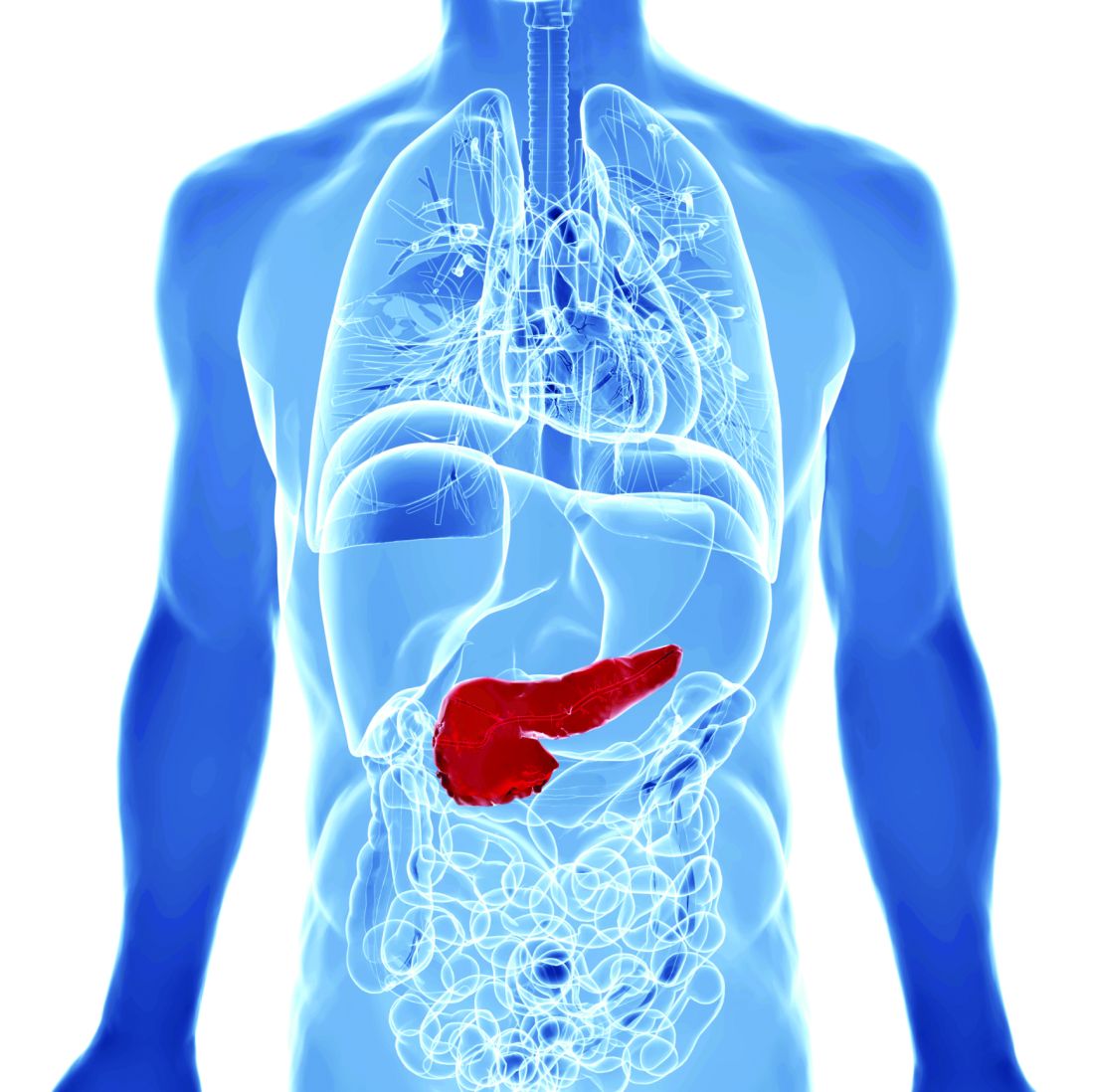
The course of acute pancreatitis is typically mild in the majority (80%-85%) of cases; however, in severe cases, permanent organ failure can occur, with much worse outcomes and mortality rates of up to 35%.
Research has previously shown not only a link between obesity and acute pancreatitis but also an increased risk for complications and in-hospital mortality in obese patients with severe cases of acute pancreatitis – though a wide range of factors and comorbidities may complicate the association.
To more closely evaluate the course and outcomes of acute pancreatitis based on BMI classification, study authors led by Ali Tuzun Ince, MD, of the department of internal medicine, Gastroenterology Clinic of Bezmialem Vakif University, Istanbul, analyzed retrospective data from 2010 to 2020 on 1,334 adult patients (720 female, 614 male) who were diagnosed with acute pancreatitis per the Revised Atlanta Classification (RAC) criteria.
The patients were stratified based on their BMI as normal weight, overweight, or obese and whether they had mild, moderate, or severe (with permanent organ failure) acute pancreatitis.
In terms of acute pancreatitis severity, based on RAC criteria, 57.1% of patients had mild disease, 20.4% had moderate disease, and 22.5% had severe disease.
The overall mortality rate was 9.9% (n = 132); half of these patients were obese, and 87% had severe acute pancreatitis.
The overall rate of complications was 42.9%, including 20.8% in the normal weight group, 40.6% in the overweight group, and 38.6% in the obese group.
Patients in the overweight and obese groups also had higher mortality rates (3.7% and 4.9%, respectively), interventional procedures (36% and 39%, respectively), and length of hospital stay (11.6% and 9.8%, respectively), compared with the normal-weight group.
Other factors that were significantly associated with an increased mortality risk, in addition to obesity (P = .046), included old age (P = .000), male sex (P = .05), alcohol use (P = .014), low hematocrit (P = .044), high C-reactive protein (P = .024), moderate to severe and severe acute pancreatitis (P = .02 and P < .001, respectively), and any complications (P < .001).
Risk factors associated with increased admission to the ICU differed from those for mortality, and included female gender (P = .024), smoking (P = .021), hypertriglyceridemia (P = .047), idiopathic etiology (P = .023), and moderate to severe and severe acute pancreatitis (P < .001).
Of note, there were no significant associations between BMI and either the RAC score or Balthazar CT severity index (Balthazar CTSI) groups.
Specifically, among patients considered to have severe acute pancreatitis per Balthazar CTSI, 6.3% were of normal weight, 5% were overweight, and 7.1% were obese.
“In addition, since agreement and consistency between BMI and Balthazar score cannot be determined, the Balthazar score cannot be estimated from BMI,” the authors reported.
While the prediction of prognosis in acute pancreatitis is gaining interest, the findings underscore the role of combined factors, they added.
“Although many scoring systems are currently in use attempt to estimate the severity [in acute pancreatitis], none is 100% accurate yet,” the authors noted. “Each risk factor exacerbates the course of disease. Therefore, it would be better to consider the combined effects of risk factors.”
That being said, the findings show “mortality is increased significantly by the combined presence of risk factors such as male sex, OB [obesity], alcohol, MSAP [moderate to severe acute pancreatitis] and SAP [severe acute pancreatitis], all kinds of complications, old age, low Hct, and high CRP,” they wrote.
Obesity’s complex interactions
Commenting on the study, Vijay P. Singh, MD, a professor of medicine in the division of gastroenterology and hepatology at the Mayo Clinic in Scottsdale, Ariz., agreed that the complexities risk factors, particularly with obesity, can be tricky to detangle.
“Broadly, the study confirms several previous reports from different parts of the world that obesity was associated with increased mortality in acute pancreatitis,” he said in an interview.
“However, obesity had two complex interactions, the first that obesity is also associated with increased diabetes, and hypertriglyceridemia, which may themselves be risk factors for severity,” he explained.
“The second one is that intermediary severity markers [e.g., Balthazar score on imaging] did not correlate with the BMI categories.”
Dr. Singh noted that is “likely because therapies like IV fluids that may get more intense in predicted severe disease alter the natural course of pancreatitis.”
The findings are a reminder that “BMI is only a number that attempts to quantify fat,” Dr. Singh said, noting that BMI doesn’t address either the location of fat, such as being in close proximity to the pancreas, or fat composition, such as the proportion of unsaturated fat.
“When the unsaturated fat proportion is higher, the pancreatitis is worse, even at smaller total fat amounts [for example, at a lower BMI],” he said. “Taking these aspects into account may help in risk assessment.”
The authors and Dr. Singh had no disclosures to report.
Obesity, in combination with other risk factors, is associated with increased morbidity and mortality in acute pancreatitis (AP); however, body mass index (BMI) alone is not a successful predictor of disease severity, new research shows.
“As there was no agreement or consistency between BMI and AP severity, it can be concluded that AP severity cannot be predicted successfully by examining BMI only,” reported the authors in research published recently in Pancreatology.
The course of acute pancreatitis is typically mild in the majority (80%-85%) of cases; however, in severe cases, permanent organ failure can occur, with much worse outcomes and mortality rates of up to 35%.
Research has previously shown not only a link between obesity and acute pancreatitis but also an increased risk for complications and in-hospital mortality in obese patients with severe cases of acute pancreatitis – though a wide range of factors and comorbidities may complicate the association.
To more closely evaluate the course and outcomes of acute pancreatitis based on BMI classification, study authors led by Ali Tuzun Ince, MD, of the department of internal medicine, Gastroenterology Clinic of Bezmialem Vakif University, Istanbul, analyzed retrospective data from 2010 to 2020 on 1,334 adult patients (720 female, 614 male) who were diagnosed with acute pancreatitis per the Revised Atlanta Classification (RAC) criteria.
The patients were stratified based on their BMI as normal weight, overweight, or obese and whether they had mild, moderate, or severe (with permanent organ failure) acute pancreatitis.
In terms of acute pancreatitis severity, based on RAC criteria, 57.1% of patients had mild disease, 20.4% had moderate disease, and 22.5% had severe disease.
The overall mortality rate was 9.9% (n = 132); half of these patients were obese, and 87% had severe acute pancreatitis.
The overall rate of complications was 42.9%, including 20.8% in the normal weight group, 40.6% in the overweight group, and 38.6% in the obese group.
Patients in the overweight and obese groups also had higher mortality rates (3.7% and 4.9%, respectively), interventional procedures (36% and 39%, respectively), and length of hospital stay (11.6% and 9.8%, respectively), compared with the normal-weight group.
Other factors that were significantly associated with an increased mortality risk, in addition to obesity (P = .046), included old age (P = .000), male sex (P = .05), alcohol use (P = .014), low hematocrit (P = .044), high C-reactive protein (P = .024), moderate to severe and severe acute pancreatitis (P = .02 and P < .001, respectively), and any complications (P < .001).
Risk factors associated with increased admission to the ICU differed from those for mortality, and included female gender (P = .024), smoking (P = .021), hypertriglyceridemia (P = .047), idiopathic etiology (P = .023), and moderate to severe and severe acute pancreatitis (P < .001).
Of note, there were no significant associations between BMI and either the RAC score or Balthazar CT severity index (Balthazar CTSI) groups.
Specifically, among patients considered to have severe acute pancreatitis per Balthazar CTSI, 6.3% were of normal weight, 5% were overweight, and 7.1% were obese.
“In addition, since agreement and consistency between BMI and Balthazar score cannot be determined, the Balthazar score cannot be estimated from BMI,” the authors reported.
While the prediction of prognosis in acute pancreatitis is gaining interest, the findings underscore the role of combined factors, they added.
“Although many scoring systems are currently in use attempt to estimate the severity [in acute pancreatitis], none is 100% accurate yet,” the authors noted. “Each risk factor exacerbates the course of disease. Therefore, it would be better to consider the combined effects of risk factors.”
That being said, the findings show “mortality is increased significantly by the combined presence of risk factors such as male sex, OB [obesity], alcohol, MSAP [moderate to severe acute pancreatitis] and SAP [severe acute pancreatitis], all kinds of complications, old age, low Hct, and high CRP,” they wrote.
Obesity’s complex interactions
Commenting on the study, Vijay P. Singh, MD, a professor of medicine in the division of gastroenterology and hepatology at the Mayo Clinic in Scottsdale, Ariz., agreed that the complexities risk factors, particularly with obesity, can be tricky to detangle.
“Broadly, the study confirms several previous reports from different parts of the world that obesity was associated with increased mortality in acute pancreatitis,” he said in an interview.
“However, obesity had two complex interactions, the first that obesity is also associated with increased diabetes, and hypertriglyceridemia, which may themselves be risk factors for severity,” he explained.
“The second one is that intermediary severity markers [e.g., Balthazar score on imaging] did not correlate with the BMI categories.”
Dr. Singh noted that is “likely because therapies like IV fluids that may get more intense in predicted severe disease alter the natural course of pancreatitis.”
The findings are a reminder that “BMI is only a number that attempts to quantify fat,” Dr. Singh said, noting that BMI doesn’t address either the location of fat, such as being in close proximity to the pancreas, or fat composition, such as the proportion of unsaturated fat.
“When the unsaturated fat proportion is higher, the pancreatitis is worse, even at smaller total fat amounts [for example, at a lower BMI],” he said. “Taking these aspects into account may help in risk assessment.”
The authors and Dr. Singh had no disclosures to report.
Obesity, in combination with other risk factors, is associated with increased morbidity and mortality in acute pancreatitis (AP); however, body mass index (BMI) alone is not a successful predictor of disease severity, new research shows.
“As there was no agreement or consistency between BMI and AP severity, it can be concluded that AP severity cannot be predicted successfully by examining BMI only,” reported the authors in research published recently in Pancreatology.
The course of acute pancreatitis is typically mild in the majority (80%-85%) of cases; however, in severe cases, permanent organ failure can occur, with much worse outcomes and mortality rates of up to 35%.
Research has previously shown not only a link between obesity and acute pancreatitis but also an increased risk for complications and in-hospital mortality in obese patients with severe cases of acute pancreatitis – though a wide range of factors and comorbidities may complicate the association.
To more closely evaluate the course and outcomes of acute pancreatitis based on BMI classification, study authors led by Ali Tuzun Ince, MD, of the department of internal medicine, Gastroenterology Clinic of Bezmialem Vakif University, Istanbul, analyzed retrospective data from 2010 to 2020 on 1,334 adult patients (720 female, 614 male) who were diagnosed with acute pancreatitis per the Revised Atlanta Classification (RAC) criteria.
The patients were stratified based on their BMI as normal weight, overweight, or obese and whether they had mild, moderate, or severe (with permanent organ failure) acute pancreatitis.
In terms of acute pancreatitis severity, based on RAC criteria, 57.1% of patients had mild disease, 20.4% had moderate disease, and 22.5% had severe disease.
The overall mortality rate was 9.9% (n = 132); half of these patients were obese, and 87% had severe acute pancreatitis.
The overall rate of complications was 42.9%, including 20.8% in the normal weight group, 40.6% in the overweight group, and 38.6% in the obese group.
Patients in the overweight and obese groups also had higher mortality rates (3.7% and 4.9%, respectively), interventional procedures (36% and 39%, respectively), and length of hospital stay (11.6% and 9.8%, respectively), compared with the normal-weight group.
Other factors that were significantly associated with an increased mortality risk, in addition to obesity (P = .046), included old age (P = .000), male sex (P = .05), alcohol use (P = .014), low hematocrit (P = .044), high C-reactive protein (P = .024), moderate to severe and severe acute pancreatitis (P = .02 and P < .001, respectively), and any complications (P < .001).
Risk factors associated with increased admission to the ICU differed from those for mortality, and included female gender (P = .024), smoking (P = .021), hypertriglyceridemia (P = .047), idiopathic etiology (P = .023), and moderate to severe and severe acute pancreatitis (P < .001).
Of note, there were no significant associations between BMI and either the RAC score or Balthazar CT severity index (Balthazar CTSI) groups.
Specifically, among patients considered to have severe acute pancreatitis per Balthazar CTSI, 6.3% were of normal weight, 5% were overweight, and 7.1% were obese.
“In addition, since agreement and consistency between BMI and Balthazar score cannot be determined, the Balthazar score cannot be estimated from BMI,” the authors reported.
While the prediction of prognosis in acute pancreatitis is gaining interest, the findings underscore the role of combined factors, they added.
“Although many scoring systems are currently in use attempt to estimate the severity [in acute pancreatitis], none is 100% accurate yet,” the authors noted. “Each risk factor exacerbates the course of disease. Therefore, it would be better to consider the combined effects of risk factors.”
That being said, the findings show “mortality is increased significantly by the combined presence of risk factors such as male sex, OB [obesity], alcohol, MSAP [moderate to severe acute pancreatitis] and SAP [severe acute pancreatitis], all kinds of complications, old age, low Hct, and high CRP,” they wrote.
Obesity’s complex interactions
Commenting on the study, Vijay P. Singh, MD, a professor of medicine in the division of gastroenterology and hepatology at the Mayo Clinic in Scottsdale, Ariz., agreed that the complexities risk factors, particularly with obesity, can be tricky to detangle.
“Broadly, the study confirms several previous reports from different parts of the world that obesity was associated with increased mortality in acute pancreatitis,” he said in an interview.
“However, obesity had two complex interactions, the first that obesity is also associated with increased diabetes, and hypertriglyceridemia, which may themselves be risk factors for severity,” he explained.
“The second one is that intermediary severity markers [e.g., Balthazar score on imaging] did not correlate with the BMI categories.”
Dr. Singh noted that is “likely because therapies like IV fluids that may get more intense in predicted severe disease alter the natural course of pancreatitis.”
The findings are a reminder that “BMI is only a number that attempts to quantify fat,” Dr. Singh said, noting that BMI doesn’t address either the location of fat, such as being in close proximity to the pancreas, or fat composition, such as the proportion of unsaturated fat.
“When the unsaturated fat proportion is higher, the pancreatitis is worse, even at smaller total fat amounts [for example, at a lower BMI],” he said. “Taking these aspects into account may help in risk assessment.”
The authors and Dr. Singh had no disclosures to report.
FROM PANCREATOLOGY
Longer use of proton pump inhibitors tied to diabetes risk
Long-term use of a proton-pump inhibitor (PPI) was associated with an increased risk of being diagnosed with type 2 diabetes in a large, population-based case-control study in Italy.
The risk of diabetes increased from 19% to 56% as treatment duration increased from 8 weeks to more than 2 years, and prolonged treatment was associated with an even higher risk of diabetes in the youngest patients (age 40-65) and those with the most comorbidities.
The results suggest that “physicians should therefore avoid unnecessary prescription of this class of drugs, particularly for long-term use,” say Stefano Ciardullo, MD, University of Milano-Bicocca, Italy, and colleagues, in their article recently published online in the Journal of Clinical Endocrinology & Metabolism.
“Nonetheless, epidemiologic evidence on the topic remains conflicting,” they acknowledge, adding that “future studies are still needed to validate our findings.”
If the results are confirmed, these “may have important implications for both public health and clinical practice, given the high number of patients being treated with PPIs and the influence of diabetes on morbidity and mortality related to its possible micro- and macrovascular complications,” Dr. Ciardullo and colleagues conclude.
Not enough data to support a change in practice
The current findings align with a recent analysis of three prospective cohort studies of U.S. health care workers that showed a progressively increased risk of diabetes with longer treatment with PPIs, David A. Leiman, MD, MSHP, who was not involved with the current study, told this news organization in an email. “But the effect size remains relatively small and may be explained by residual or unmeasured confounding,” he cautioned.
“Ultimately, there do not seem to be enough data to support a change in clinical practice from this study alone, and, as a result, clinicians should continue to inform patients of the best available evidence regarding the benefits and risks of PPIs,” said Dr. Leiman, assistant professor of medicine, Division of Gastroenterology, Duke University Medical Center, Durham, N.C.
“Recent best practice advice from the American Gastroenterological Association does not recommend screening for insulin resistance among PPI users [and recommends that the decision to discontinue PPIs] should be based solely on the lack of an indication for PPI use, and not because of concern for PPI-associated adverse events,” he noted.
“Clinicians should be prepared to discuss the described risks associated with PPIs,” said Dr. Leiman, but they should “also feel comfortable affirming their safety profile and substantial efficacy in managing symptoms and preventing complications when prescribed for the appropriate indication.”
First-choice therapy for acid-related disorders
PPIs have become first-choice therapy for patients with acid-related disorders such as gastroesophageal reflux disease, Barrett esophagus, and peptic ulcer, and to prevent gastrointestinal bleeding while on nonsteroidal anti-inflammatory drugs (NSAIDs), Dr. Ciardullo and colleagues explain.
However, several studies have identified potential fractures, hypomagnesemia, gastric carcinoids, chronic kidney disease, dementia, and Clostridium difficile diarrhea with prolonged use of PPIs, and these agents can cause changes in the gut microbiome that may play a role in diabetes and other metabolic diseases.
To investigate a potential association between PPIs and type 2 diabetes, the researchers analyzed data from 777,420 patients age 40 and older who were newly treated with PPIs between 2010 and 2015 in Lombardy, Italy.
Of these, 50,540 patients were diagnosed with type 2 diabetes during follow-up until 2020 (a mean follow-up of 6.2 years and a diabetes incidence of 10.6 cases per 1,000 person-years).
The researchers matched 50,535 patients diagnosed with diabetes during follow-up with 50,535 control patients who had the same age, sex, and clinical status.
Patients were a mean age of 66 years and half were men. The most prescribed PPIs were pantoprazole and omeprazole, and the patients diagnosed with diabetes were more likely to use antihypertensives and lipid-lowering drugs.
Compared with patients who received PPIs for less than 8 weeks, those who received PPIs for 8 weeks to 6 months had a 19% increased risk of being diagnosed with diabetes during follow-up (odds ratio, 1.19; 95% confidence interval, 1.15-1.24), after adjusting for age, clinical profile, comorbidities, medical therapy, and PPI type.
Patients who received PPIs for 6 months to 2 years had a 43% increased risk of the outcome (OR, 1.43; 95% CI, 1.38-1.49), and those who received PPIs for more than 2 years had a 56% increased risk of the outcome (OR, 1.56; 95% CI, 1.49-1.64).
The researchers acknowledge limitations including that the study was not a randomized controlled trial, and it lacked information about over-the-counter medications and unmeasured confounders such as body mass index or family history of diabetes that may have affected the outcomes.
Dr. Leiman added that patients may have had prediabetes or undiagnosed diabetes and symptoms such as heartburn or dyspepsia arising from complications of insulin resistance, for which PPIs might have been prescribed.
The study was funded by a grant from the Italian Ministry of Education, University and Research. Dr. Ciardullo and Dr. Leiman have reported no relevant financial relationships.
A version of this article first appeared on Medscape.com.
Long-term use of a proton-pump inhibitor (PPI) was associated with an increased risk of being diagnosed with type 2 diabetes in a large, population-based case-control study in Italy.
The risk of diabetes increased from 19% to 56% as treatment duration increased from 8 weeks to more than 2 years, and prolonged treatment was associated with an even higher risk of diabetes in the youngest patients (age 40-65) and those with the most comorbidities.
The results suggest that “physicians should therefore avoid unnecessary prescription of this class of drugs, particularly for long-term use,” say Stefano Ciardullo, MD, University of Milano-Bicocca, Italy, and colleagues, in their article recently published online in the Journal of Clinical Endocrinology & Metabolism.
“Nonetheless, epidemiologic evidence on the topic remains conflicting,” they acknowledge, adding that “future studies are still needed to validate our findings.”
If the results are confirmed, these “may have important implications for both public health and clinical practice, given the high number of patients being treated with PPIs and the influence of diabetes on morbidity and mortality related to its possible micro- and macrovascular complications,” Dr. Ciardullo and colleagues conclude.
Not enough data to support a change in practice
The current findings align with a recent analysis of three prospective cohort studies of U.S. health care workers that showed a progressively increased risk of diabetes with longer treatment with PPIs, David A. Leiman, MD, MSHP, who was not involved with the current study, told this news organization in an email. “But the effect size remains relatively small and may be explained by residual or unmeasured confounding,” he cautioned.
“Ultimately, there do not seem to be enough data to support a change in clinical practice from this study alone, and, as a result, clinicians should continue to inform patients of the best available evidence regarding the benefits and risks of PPIs,” said Dr. Leiman, assistant professor of medicine, Division of Gastroenterology, Duke University Medical Center, Durham, N.C.
“Recent best practice advice from the American Gastroenterological Association does not recommend screening for insulin resistance among PPI users [and recommends that the decision to discontinue PPIs] should be based solely on the lack of an indication for PPI use, and not because of concern for PPI-associated adverse events,” he noted.
“Clinicians should be prepared to discuss the described risks associated with PPIs,” said Dr. Leiman, but they should “also feel comfortable affirming their safety profile and substantial efficacy in managing symptoms and preventing complications when prescribed for the appropriate indication.”
First-choice therapy for acid-related disorders
PPIs have become first-choice therapy for patients with acid-related disorders such as gastroesophageal reflux disease, Barrett esophagus, and peptic ulcer, and to prevent gastrointestinal bleeding while on nonsteroidal anti-inflammatory drugs (NSAIDs), Dr. Ciardullo and colleagues explain.
However, several studies have identified potential fractures, hypomagnesemia, gastric carcinoids, chronic kidney disease, dementia, and Clostridium difficile diarrhea with prolonged use of PPIs, and these agents can cause changes in the gut microbiome that may play a role in diabetes and other metabolic diseases.
To investigate a potential association between PPIs and type 2 diabetes, the researchers analyzed data from 777,420 patients age 40 and older who were newly treated with PPIs between 2010 and 2015 in Lombardy, Italy.
Of these, 50,540 patients were diagnosed with type 2 diabetes during follow-up until 2020 (a mean follow-up of 6.2 years and a diabetes incidence of 10.6 cases per 1,000 person-years).
The researchers matched 50,535 patients diagnosed with diabetes during follow-up with 50,535 control patients who had the same age, sex, and clinical status.
Patients were a mean age of 66 years and half were men. The most prescribed PPIs were pantoprazole and omeprazole, and the patients diagnosed with diabetes were more likely to use antihypertensives and lipid-lowering drugs.
Compared with patients who received PPIs for less than 8 weeks, those who received PPIs for 8 weeks to 6 months had a 19% increased risk of being diagnosed with diabetes during follow-up (odds ratio, 1.19; 95% confidence interval, 1.15-1.24), after adjusting for age, clinical profile, comorbidities, medical therapy, and PPI type.
Patients who received PPIs for 6 months to 2 years had a 43% increased risk of the outcome (OR, 1.43; 95% CI, 1.38-1.49), and those who received PPIs for more than 2 years had a 56% increased risk of the outcome (OR, 1.56; 95% CI, 1.49-1.64).
The researchers acknowledge limitations including that the study was not a randomized controlled trial, and it lacked information about over-the-counter medications and unmeasured confounders such as body mass index or family history of diabetes that may have affected the outcomes.
Dr. Leiman added that patients may have had prediabetes or undiagnosed diabetes and symptoms such as heartburn or dyspepsia arising from complications of insulin resistance, for which PPIs might have been prescribed.
The study was funded by a grant from the Italian Ministry of Education, University and Research. Dr. Ciardullo and Dr. Leiman have reported no relevant financial relationships.
A version of this article first appeared on Medscape.com.
Long-term use of a proton-pump inhibitor (PPI) was associated with an increased risk of being diagnosed with type 2 diabetes in a large, population-based case-control study in Italy.
The risk of diabetes increased from 19% to 56% as treatment duration increased from 8 weeks to more than 2 years, and prolonged treatment was associated with an even higher risk of diabetes in the youngest patients (age 40-65) and those with the most comorbidities.
The results suggest that “physicians should therefore avoid unnecessary prescription of this class of drugs, particularly for long-term use,” say Stefano Ciardullo, MD, University of Milano-Bicocca, Italy, and colleagues, in their article recently published online in the Journal of Clinical Endocrinology & Metabolism.
“Nonetheless, epidemiologic evidence on the topic remains conflicting,” they acknowledge, adding that “future studies are still needed to validate our findings.”
If the results are confirmed, these “may have important implications for both public health and clinical practice, given the high number of patients being treated with PPIs and the influence of diabetes on morbidity and mortality related to its possible micro- and macrovascular complications,” Dr. Ciardullo and colleagues conclude.
Not enough data to support a change in practice
The current findings align with a recent analysis of three prospective cohort studies of U.S. health care workers that showed a progressively increased risk of diabetes with longer treatment with PPIs, David A. Leiman, MD, MSHP, who was not involved with the current study, told this news organization in an email. “But the effect size remains relatively small and may be explained by residual or unmeasured confounding,” he cautioned.
“Ultimately, there do not seem to be enough data to support a change in clinical practice from this study alone, and, as a result, clinicians should continue to inform patients of the best available evidence regarding the benefits and risks of PPIs,” said Dr. Leiman, assistant professor of medicine, Division of Gastroenterology, Duke University Medical Center, Durham, N.C.
“Recent best practice advice from the American Gastroenterological Association does not recommend screening for insulin resistance among PPI users [and recommends that the decision to discontinue PPIs] should be based solely on the lack of an indication for PPI use, and not because of concern for PPI-associated adverse events,” he noted.
“Clinicians should be prepared to discuss the described risks associated with PPIs,” said Dr. Leiman, but they should “also feel comfortable affirming their safety profile and substantial efficacy in managing symptoms and preventing complications when prescribed for the appropriate indication.”
First-choice therapy for acid-related disorders
PPIs have become first-choice therapy for patients with acid-related disorders such as gastroesophageal reflux disease, Barrett esophagus, and peptic ulcer, and to prevent gastrointestinal bleeding while on nonsteroidal anti-inflammatory drugs (NSAIDs), Dr. Ciardullo and colleagues explain.
However, several studies have identified potential fractures, hypomagnesemia, gastric carcinoids, chronic kidney disease, dementia, and Clostridium difficile diarrhea with prolonged use of PPIs, and these agents can cause changes in the gut microbiome that may play a role in diabetes and other metabolic diseases.
To investigate a potential association between PPIs and type 2 diabetes, the researchers analyzed data from 777,420 patients age 40 and older who were newly treated with PPIs between 2010 and 2015 in Lombardy, Italy.
Of these, 50,540 patients were diagnosed with type 2 diabetes during follow-up until 2020 (a mean follow-up of 6.2 years and a diabetes incidence of 10.6 cases per 1,000 person-years).
The researchers matched 50,535 patients diagnosed with diabetes during follow-up with 50,535 control patients who had the same age, sex, and clinical status.
Patients were a mean age of 66 years and half were men. The most prescribed PPIs were pantoprazole and omeprazole, and the patients diagnosed with diabetes were more likely to use antihypertensives and lipid-lowering drugs.
Compared with patients who received PPIs for less than 8 weeks, those who received PPIs for 8 weeks to 6 months had a 19% increased risk of being diagnosed with diabetes during follow-up (odds ratio, 1.19; 95% confidence interval, 1.15-1.24), after adjusting for age, clinical profile, comorbidities, medical therapy, and PPI type.
Patients who received PPIs for 6 months to 2 years had a 43% increased risk of the outcome (OR, 1.43; 95% CI, 1.38-1.49), and those who received PPIs for more than 2 years had a 56% increased risk of the outcome (OR, 1.56; 95% CI, 1.49-1.64).
The researchers acknowledge limitations including that the study was not a randomized controlled trial, and it lacked information about over-the-counter medications and unmeasured confounders such as body mass index or family history of diabetes that may have affected the outcomes.
Dr. Leiman added that patients may have had prediabetes or undiagnosed diabetes and symptoms such as heartburn or dyspepsia arising from complications of insulin resistance, for which PPIs might have been prescribed.
The study was funded by a grant from the Italian Ministry of Education, University and Research. Dr. Ciardullo and Dr. Leiman have reported no relevant financial relationships.
A version of this article first appeared on Medscape.com.
FROM THE JOURNAL OF CLINICAL ENDOCRINOLOGY & METABOLISM
Innocent doc sued after 'secret' medical expert says claim has merit
When the hospital’s trauma team could not get an IV inserted into an accident victim, they called Illinois emergency physician William Sullivan, DO, JD, for help. Dr. Sullivan, who is based in the Chicago suburb of Frankfort, inserted a central line into the patient’s leg on his first attempt – a task that took about 20 minutes.
A year later, Dr. Sullivan was shocked and angry to learn he was being sued by the trauma patient’s family. Inserting the line was his only interaction with the woman, and he had no role in her care management, he said. Yet, the suit claimed he was negligent for failing to diagnose the patient with internal bleeding and for not performing surgery.
“The lawsuit put a lot of stress on our family,” Dr. Sullivan recalled. “At the time my wife was pregnant. I was in law school, and I was also working full time in the ER to support our family. I remember my wife crying on the couch after reading the complaint and asking how the plaintiff’s attorney could get away with making the allegations he made.”
Dr. Sullivan soon learned that 15 medical providers in the patient’s medical record were named as defendants. This included the director of the radiology department, whose name was on a radiology report as “director” but who was actually out of the country when the incident occurred.
Despite some of the accusations being impossible, a medical expert had claimed there was a “meritorious claim” against every health professional named in the suit. Illinois is among the 28 states that require plaintiffs’ attorneys to file an affidavit of merit for medical malpractice claims to move forward.
Dr. Sullivan wondered who would endorse such outlandish accusations, but the expert’s identity was a mystery. According to Illinois law, About one-third of states with merit requirements permit anonymous experts, according to research and attorneys familiar with the issue.
Because the expert’s identity remains hidden, physicians have no way of knowing whether they were qualified to render an opinion, Dr. Sullivan said. The loopholes can drag out frivolous claims and waste significant time and expense, say legal experts. Frequently, it takes a year or more before innocent physicians are dismissed from unfounded lawsuits by the court or dropped when plaintiffs can’t support the claim.
“It’s hugely frustrating,” said Bruce Montoya, JD, a Colorado medical liability defense attorney. “You have an expert who is not disclosed. Further down the road, when experts are being deposed, the plaintiff does not have to reveal whether any of those testifying experts is the same one who certified the case. You never get to determine whether they, in fact, had a certificate reviewer who was legitimate.”
The laws have led to a recent outcry among physicians and fueled a revised resolution by the American College of Emergency Physicians (ACEP) denouncing anonymous affidavits of merit. (The revision has not yet been published online.)
“The minute experts are identified, they can be vetted,” said Rade B. Vukmir, MD, JD, chair of ACEP’s Medical Legal Committee. “There are reasons that you want to clarify the qualification and veracity of the witness. [Anonymous affidavits of merit] don’t allow that, and there’s something inherently wrong with that.”
Because the identities of consulting experts are unknown, it’s hard to know how many are unqualified. Expert witnesses who testify during trials, on the other hand, have long come under scrutiny for questionable qualifications. Some have come under fire for allegedly lying under oath about their experience, misrepresenting their credentials, and falsely representing their knowledge.
“Considering the known problem of potentially unethical expert witness testimony at trial, there’s is the potential likelihood that experts in anonymous affidavits of merit may sometimes lack the qualifications to give opinions,” said Dr. Vukmir, an emergency care physician in Pittsburgh.
Attorneys: Hidden experts increase costs, waste time
In Colorado, Mr. Montoya has seen firsthand how anonymous experts can prolong questionable claims and burden defendants.
Like Illinois, Colorado does not require attorneys to identify the medical experts used to fulfill its certificate of review statute. The expert consulted must have expertise in the same area of the alleged negligence, but does not have to practice in the same specialty, and the statute allows one expert to certify a lawsuit against multiple doctors.
In a recent case, Mr. Montoya represented a Denver neurosurgeon who was sued along with multiple other health care professionals. From the outset, Mr. Montoya argued the claim had no merit against the neurosurgeon, but the plaintiff’s attorney refused to dismiss the physician. Mr. Montoya asked whether the expert consulted for the certificate of merit was a neurosurgeon, but the attorney declined to disclose that information, he said.
The case progressed and Mr. Montoya eventually asked the judge to review the certificate of merit. By law, a judge can confidentially review the certificate of merit and decide whether it aligns with the state statute, but without disclosing the expert’s identity to the defense. The judge ruled the certificate appeared to conform with state law, and the case continued.
A year later, as both sides were getting ready to disclose their experts who would testify, Mr. Montoya again argued the neurosurgeon should be dropped from the suit. This time, he warned if the claim continued against the neurosurgeon, the defense would be filing a motion for summary judgment and pursuing attorney fees and costs. Colorado law allows for such fees if the filing or pursuit of an action is frivolous.
“Boom, my client was dismissed,” Mr. Montoya said. “This is a year later, after multiple conferences among the attorneys, multiple pleadings filed, expert witnesses retained to review the care, discovery exchanged, and records obtained. If we had [a stronger] certificate of review statute, it would have been a different ballgame. It’s never going to get a year down the road.”
In New York, physician defendants have experienced similar woes. The state’s law requires plaintiffs’ attorneys to certify that they consulted with a physician prior to filing the claim, and that they believe based on that discussion, there’s a reasonable basis for the claim to move forward. Attorneys are not required to disclose the expert’s identity.
The law also allows “an out,” explained Morris Auster, JD, senior vice president and chief legislative counsel for the Medical Society of the State of New York. If the attorney made three separate attempts to obtain a consultation, and all three experts would not agree to the consultation, the lawsuit can be filed anyway, he said.
“From our standpoint, it’s important to have an affidavit of merit requirement; it’s better than not having it,” Mr. Auster said. “But its effectiveness in providing control over the filing of lawsuits in New York has never been as strong as it could’ve been.”
Mr. Auster notes that New York has some of the highest liability costs in the country in addition to doctors paying some of the steepest medical liability insurance premiums.
“This really affects a lot of physicians and it’s driving physicians into employment arrangements, so they don’t have to deal with it on their own,” he said. “We support a number of measures to address these significantly high costs, and stronger certificate of merit requirements would certainly be one of those advocacy goals.”
Why are anonymous experts allowed?
Certificates of merit that shield the identity of consultants encourage a greater pool of physicians willing to review cases, said J. Matthew Dudley, JD, president of the Illinois Trial Lawyers Association. When the requirements first went into effect in Illinois, there was significant animosity among physicians toward doctors who testified in medical malpractice cases for patients, Mr. Dudley explained.
“Sometimes they would be ostracized from their professional societies, or it would hurt a referral relationship.” he said. “Over time, that animosity has lessened, but there was a concern that if the identity of physicians in certificates of merit weren’t protected, then doctors would not look at cases for patients.”
This would result in additional barriers for patients and their attorneys in pursuing their legal rights, Mr. Dudley said. He said Illinois’ certificate of merit statute is successful in fulfilling its intended purpose, and he has not seen any statistical evidence to suggest otherwise.
“It has proven effective at decreasing filings in medical malpractice and effectively screening medical malpractice cases,” he said. “Certificates of merit help to decrease filings by firms that aren’t that experienced in dealing with those kinds of cases.”
Kentucky is another state that does not require attorneys to identity the experts consulted for certificates of merit. Malpractice defense attorney Andrew DeSimone, JD, who practices in Kentucky, said this isn’t a problem since attorneys eventually must disclose the expert witnesses who will testify at trial.
“Knowing the name behind the certificate of merit is not that pertinent,” Mr. DeSimone said. “Physicians and their attorneys will ultimately have the chance to question and evaluate the expert witnesses used at trial. The certificate of merit is designed to weed out totally frivolous cases that do not have expert support. It’s not designed to be a trial on the merits.”
The belief that plaintiffs’ attorneys frequently bring weak cases and use unqualified experts to certify claims is not realistic or logical, added Sean Domnick, JD, a Florida medical malpractice attorney and vice president for the American Association for Justice. Medical malpractice cases are extremely challenging for plaintiffs – and they’re expensive, Mr. Domnick said.
“We can’t afford to take bad cases,” he said. “For me to take on a medical malpractice case, it’s not unusual for me to spend well over $100,000. Remember, if we lose, I don’t get that money back and I don’t get paid. Why in the world would a plaintiff take on that type of a burden for a case they didn’t believe in? The logic escapes me.”
In Florida, where Mr. Domnick practices, plaintiffs’ attorneys must send their certificates of merit to the defense with the expert identified. Domnick believes the requirement is a hindrance.
“It creates a delay that is unnecessary in a system that is already designed to wear our clients down,” he said. “It’s just another component that makes it harder on them.”
Hidden experts may insulate plaintiffs’ attorneys from liability
Dr. Sullivan, the Illinois emergency physician, was ultimately dismissed from the multiparty lawsuit, but not for roughly 18 months. After the dismissal, he fought back. He sued the plaintiff’s law firm for malicious prosecution, negligence in hiring, and relying on the opinion of an expert who was unqualified to render an opinion against an emergency physician.
The law firm, however, argued that it was immune from liability because it reasonably relied on the expert’s opinion as required by Illinois law. A trial court agreed with the plaintiffs’ firm. The judge denied Dr. Sullivan’s request to identify the expert, ruling there was no finding that the affidavit was untrue or made without reasonable cause. Dr. Sullivan appealed, and the appellate court upheld the trial’s court decision.
“As happened with my case, law firms can use the affidavit as a defense against countersuits or motions for sanctions,” Dr. Sullivan said. “Although the certificate of merit is intended to prevent attorneys from filing frivolous cases, it can also have the opposite effect of helping to insulate plaintiff attorneys from liability for filing a frivolous lawsuit.”
In Colorado, complaints about the state’s certificate of merit statute have gone before the Colorado Supreme Court. In one case, a lower court ruled that a certificate of merit was deficient because the consultants were not chiropractors. In another case, a nurse defendant argued the claim’s certificate of review was insufficient because the consulting expert was a physician.
In both instances, Colorado judges held the state’s statute does not require consultants to be in the same profession or the same specialty as the health professional defendant.
In New York, meanwhile, Mr. Auster said several bills to strengthen the state’s certificate of merit requirements have failed in recent years.
“It’s hard to say whether it will improve anytime soon,” he said. “The trial lawyers are a very powerful advocacy force in the state, and they tend to oppose even the slightest of changes in civil liability. [In addition], some of these issues have been put on a lower tier because of trying to manage the pandemic.”
Ultimately, Dr. Sullivan said that courts and legislatures need to strongly consider the ethics of allowing anonymous experts to provide testimony against defendant physicians.
“I also think we need to consider how the notion of a secret expert comports with a defendant physician’s due process,” he said. “If an expert’s opinion is appropriate, why would there be a need to shroud one’s identity in a veil of secrecy?”
A version of this article first appeared on Medscape.com.
When the hospital’s trauma team could not get an IV inserted into an accident victim, they called Illinois emergency physician William Sullivan, DO, JD, for help. Dr. Sullivan, who is based in the Chicago suburb of Frankfort, inserted a central line into the patient’s leg on his first attempt – a task that took about 20 minutes.
A year later, Dr. Sullivan was shocked and angry to learn he was being sued by the trauma patient’s family. Inserting the line was his only interaction with the woman, and he had no role in her care management, he said. Yet, the suit claimed he was negligent for failing to diagnose the patient with internal bleeding and for not performing surgery.
“The lawsuit put a lot of stress on our family,” Dr. Sullivan recalled. “At the time my wife was pregnant. I was in law school, and I was also working full time in the ER to support our family. I remember my wife crying on the couch after reading the complaint and asking how the plaintiff’s attorney could get away with making the allegations he made.”
Dr. Sullivan soon learned that 15 medical providers in the patient’s medical record were named as defendants. This included the director of the radiology department, whose name was on a radiology report as “director” but who was actually out of the country when the incident occurred.
Despite some of the accusations being impossible, a medical expert had claimed there was a “meritorious claim” against every health professional named in the suit. Illinois is among the 28 states that require plaintiffs’ attorneys to file an affidavit of merit for medical malpractice claims to move forward.
Dr. Sullivan wondered who would endorse such outlandish accusations, but the expert’s identity was a mystery. According to Illinois law, About one-third of states with merit requirements permit anonymous experts, according to research and attorneys familiar with the issue.
Because the expert’s identity remains hidden, physicians have no way of knowing whether they were qualified to render an opinion, Dr. Sullivan said. The loopholes can drag out frivolous claims and waste significant time and expense, say legal experts. Frequently, it takes a year or more before innocent physicians are dismissed from unfounded lawsuits by the court or dropped when plaintiffs can’t support the claim.
“It’s hugely frustrating,” said Bruce Montoya, JD, a Colorado medical liability defense attorney. “You have an expert who is not disclosed. Further down the road, when experts are being deposed, the plaintiff does not have to reveal whether any of those testifying experts is the same one who certified the case. You never get to determine whether they, in fact, had a certificate reviewer who was legitimate.”
The laws have led to a recent outcry among physicians and fueled a revised resolution by the American College of Emergency Physicians (ACEP) denouncing anonymous affidavits of merit. (The revision has not yet been published online.)
“The minute experts are identified, they can be vetted,” said Rade B. Vukmir, MD, JD, chair of ACEP’s Medical Legal Committee. “There are reasons that you want to clarify the qualification and veracity of the witness. [Anonymous affidavits of merit] don’t allow that, and there’s something inherently wrong with that.”
Because the identities of consulting experts are unknown, it’s hard to know how many are unqualified. Expert witnesses who testify during trials, on the other hand, have long come under scrutiny for questionable qualifications. Some have come under fire for allegedly lying under oath about their experience, misrepresenting their credentials, and falsely representing their knowledge.
“Considering the known problem of potentially unethical expert witness testimony at trial, there’s is the potential likelihood that experts in anonymous affidavits of merit may sometimes lack the qualifications to give opinions,” said Dr. Vukmir, an emergency care physician in Pittsburgh.
Attorneys: Hidden experts increase costs, waste time
In Colorado, Mr. Montoya has seen firsthand how anonymous experts can prolong questionable claims and burden defendants.
Like Illinois, Colorado does not require attorneys to identify the medical experts used to fulfill its certificate of review statute. The expert consulted must have expertise in the same area of the alleged negligence, but does not have to practice in the same specialty, and the statute allows one expert to certify a lawsuit against multiple doctors.
In a recent case, Mr. Montoya represented a Denver neurosurgeon who was sued along with multiple other health care professionals. From the outset, Mr. Montoya argued the claim had no merit against the neurosurgeon, but the plaintiff’s attorney refused to dismiss the physician. Mr. Montoya asked whether the expert consulted for the certificate of merit was a neurosurgeon, but the attorney declined to disclose that information, he said.
The case progressed and Mr. Montoya eventually asked the judge to review the certificate of merit. By law, a judge can confidentially review the certificate of merit and decide whether it aligns with the state statute, but without disclosing the expert’s identity to the defense. The judge ruled the certificate appeared to conform with state law, and the case continued.
A year later, as both sides were getting ready to disclose their experts who would testify, Mr. Montoya again argued the neurosurgeon should be dropped from the suit. This time, he warned if the claim continued against the neurosurgeon, the defense would be filing a motion for summary judgment and pursuing attorney fees and costs. Colorado law allows for such fees if the filing or pursuit of an action is frivolous.
“Boom, my client was dismissed,” Mr. Montoya said. “This is a year later, after multiple conferences among the attorneys, multiple pleadings filed, expert witnesses retained to review the care, discovery exchanged, and records obtained. If we had [a stronger] certificate of review statute, it would have been a different ballgame. It’s never going to get a year down the road.”
In New York, physician defendants have experienced similar woes. The state’s law requires plaintiffs’ attorneys to certify that they consulted with a physician prior to filing the claim, and that they believe based on that discussion, there’s a reasonable basis for the claim to move forward. Attorneys are not required to disclose the expert’s identity.
The law also allows “an out,” explained Morris Auster, JD, senior vice president and chief legislative counsel for the Medical Society of the State of New York. If the attorney made three separate attempts to obtain a consultation, and all three experts would not agree to the consultation, the lawsuit can be filed anyway, he said.
“From our standpoint, it’s important to have an affidavit of merit requirement; it’s better than not having it,” Mr. Auster said. “But its effectiveness in providing control over the filing of lawsuits in New York has never been as strong as it could’ve been.”
Mr. Auster notes that New York has some of the highest liability costs in the country in addition to doctors paying some of the steepest medical liability insurance premiums.
“This really affects a lot of physicians and it’s driving physicians into employment arrangements, so they don’t have to deal with it on their own,” he said. “We support a number of measures to address these significantly high costs, and stronger certificate of merit requirements would certainly be one of those advocacy goals.”
Why are anonymous experts allowed?
Certificates of merit that shield the identity of consultants encourage a greater pool of physicians willing to review cases, said J. Matthew Dudley, JD, president of the Illinois Trial Lawyers Association. When the requirements first went into effect in Illinois, there was significant animosity among physicians toward doctors who testified in medical malpractice cases for patients, Mr. Dudley explained.
“Sometimes they would be ostracized from their professional societies, or it would hurt a referral relationship.” he said. “Over time, that animosity has lessened, but there was a concern that if the identity of physicians in certificates of merit weren’t protected, then doctors would not look at cases for patients.”
This would result in additional barriers for patients and their attorneys in pursuing their legal rights, Mr. Dudley said. He said Illinois’ certificate of merit statute is successful in fulfilling its intended purpose, and he has not seen any statistical evidence to suggest otherwise.
“It has proven effective at decreasing filings in medical malpractice and effectively screening medical malpractice cases,” he said. “Certificates of merit help to decrease filings by firms that aren’t that experienced in dealing with those kinds of cases.”
Kentucky is another state that does not require attorneys to identity the experts consulted for certificates of merit. Malpractice defense attorney Andrew DeSimone, JD, who practices in Kentucky, said this isn’t a problem since attorneys eventually must disclose the expert witnesses who will testify at trial.
“Knowing the name behind the certificate of merit is not that pertinent,” Mr. DeSimone said. “Physicians and their attorneys will ultimately have the chance to question and evaluate the expert witnesses used at trial. The certificate of merit is designed to weed out totally frivolous cases that do not have expert support. It’s not designed to be a trial on the merits.”
The belief that plaintiffs’ attorneys frequently bring weak cases and use unqualified experts to certify claims is not realistic or logical, added Sean Domnick, JD, a Florida medical malpractice attorney and vice president for the American Association for Justice. Medical malpractice cases are extremely challenging for plaintiffs – and they’re expensive, Mr. Domnick said.
“We can’t afford to take bad cases,” he said. “For me to take on a medical malpractice case, it’s not unusual for me to spend well over $100,000. Remember, if we lose, I don’t get that money back and I don’t get paid. Why in the world would a plaintiff take on that type of a burden for a case they didn’t believe in? The logic escapes me.”
In Florida, where Mr. Domnick practices, plaintiffs’ attorneys must send their certificates of merit to the defense with the expert identified. Domnick believes the requirement is a hindrance.
“It creates a delay that is unnecessary in a system that is already designed to wear our clients down,” he said. “It’s just another component that makes it harder on them.”
Hidden experts may insulate plaintiffs’ attorneys from liability
Dr. Sullivan, the Illinois emergency physician, was ultimately dismissed from the multiparty lawsuit, but not for roughly 18 months. After the dismissal, he fought back. He sued the plaintiff’s law firm for malicious prosecution, negligence in hiring, and relying on the opinion of an expert who was unqualified to render an opinion against an emergency physician.
The law firm, however, argued that it was immune from liability because it reasonably relied on the expert’s opinion as required by Illinois law. A trial court agreed with the plaintiffs’ firm. The judge denied Dr. Sullivan’s request to identify the expert, ruling there was no finding that the affidavit was untrue or made without reasonable cause. Dr. Sullivan appealed, and the appellate court upheld the trial’s court decision.
“As happened with my case, law firms can use the affidavit as a defense against countersuits or motions for sanctions,” Dr. Sullivan said. “Although the certificate of merit is intended to prevent attorneys from filing frivolous cases, it can also have the opposite effect of helping to insulate plaintiff attorneys from liability for filing a frivolous lawsuit.”
In Colorado, complaints about the state’s certificate of merit statute have gone before the Colorado Supreme Court. In one case, a lower court ruled that a certificate of merit was deficient because the consultants were not chiropractors. In another case, a nurse defendant argued the claim’s certificate of review was insufficient because the consulting expert was a physician.
In both instances, Colorado judges held the state’s statute does not require consultants to be in the same profession or the same specialty as the health professional defendant.
In New York, meanwhile, Mr. Auster said several bills to strengthen the state’s certificate of merit requirements have failed in recent years.
“It’s hard to say whether it will improve anytime soon,” he said. “The trial lawyers are a very powerful advocacy force in the state, and they tend to oppose even the slightest of changes in civil liability. [In addition], some of these issues have been put on a lower tier because of trying to manage the pandemic.”
Ultimately, Dr. Sullivan said that courts and legislatures need to strongly consider the ethics of allowing anonymous experts to provide testimony against defendant physicians.
“I also think we need to consider how the notion of a secret expert comports with a defendant physician’s due process,” he said. “If an expert’s opinion is appropriate, why would there be a need to shroud one’s identity in a veil of secrecy?”
A version of this article first appeared on Medscape.com.
When the hospital’s trauma team could not get an IV inserted into an accident victim, they called Illinois emergency physician William Sullivan, DO, JD, for help. Dr. Sullivan, who is based in the Chicago suburb of Frankfort, inserted a central line into the patient’s leg on his first attempt – a task that took about 20 minutes.
A year later, Dr. Sullivan was shocked and angry to learn he was being sued by the trauma patient’s family. Inserting the line was his only interaction with the woman, and he had no role in her care management, he said. Yet, the suit claimed he was negligent for failing to diagnose the patient with internal bleeding and for not performing surgery.
“The lawsuit put a lot of stress on our family,” Dr. Sullivan recalled. “At the time my wife was pregnant. I was in law school, and I was also working full time in the ER to support our family. I remember my wife crying on the couch after reading the complaint and asking how the plaintiff’s attorney could get away with making the allegations he made.”
Dr. Sullivan soon learned that 15 medical providers in the patient’s medical record were named as defendants. This included the director of the radiology department, whose name was on a radiology report as “director” but who was actually out of the country when the incident occurred.
Despite some of the accusations being impossible, a medical expert had claimed there was a “meritorious claim” against every health professional named in the suit. Illinois is among the 28 states that require plaintiffs’ attorneys to file an affidavit of merit for medical malpractice claims to move forward.
Dr. Sullivan wondered who would endorse such outlandish accusations, but the expert’s identity was a mystery. According to Illinois law, About one-third of states with merit requirements permit anonymous experts, according to research and attorneys familiar with the issue.
Because the expert’s identity remains hidden, physicians have no way of knowing whether they were qualified to render an opinion, Dr. Sullivan said. The loopholes can drag out frivolous claims and waste significant time and expense, say legal experts. Frequently, it takes a year or more before innocent physicians are dismissed from unfounded lawsuits by the court or dropped when plaintiffs can’t support the claim.
“It’s hugely frustrating,” said Bruce Montoya, JD, a Colorado medical liability defense attorney. “You have an expert who is not disclosed. Further down the road, when experts are being deposed, the plaintiff does not have to reveal whether any of those testifying experts is the same one who certified the case. You never get to determine whether they, in fact, had a certificate reviewer who was legitimate.”
The laws have led to a recent outcry among physicians and fueled a revised resolution by the American College of Emergency Physicians (ACEP) denouncing anonymous affidavits of merit. (The revision has not yet been published online.)
“The minute experts are identified, they can be vetted,” said Rade B. Vukmir, MD, JD, chair of ACEP’s Medical Legal Committee. “There are reasons that you want to clarify the qualification and veracity of the witness. [Anonymous affidavits of merit] don’t allow that, and there’s something inherently wrong with that.”
Because the identities of consulting experts are unknown, it’s hard to know how many are unqualified. Expert witnesses who testify during trials, on the other hand, have long come under scrutiny for questionable qualifications. Some have come under fire for allegedly lying under oath about their experience, misrepresenting their credentials, and falsely representing their knowledge.
“Considering the known problem of potentially unethical expert witness testimony at trial, there’s is the potential likelihood that experts in anonymous affidavits of merit may sometimes lack the qualifications to give opinions,” said Dr. Vukmir, an emergency care physician in Pittsburgh.
Attorneys: Hidden experts increase costs, waste time
In Colorado, Mr. Montoya has seen firsthand how anonymous experts can prolong questionable claims and burden defendants.
Like Illinois, Colorado does not require attorneys to identify the medical experts used to fulfill its certificate of review statute. The expert consulted must have expertise in the same area of the alleged negligence, but does not have to practice in the same specialty, and the statute allows one expert to certify a lawsuit against multiple doctors.
In a recent case, Mr. Montoya represented a Denver neurosurgeon who was sued along with multiple other health care professionals. From the outset, Mr. Montoya argued the claim had no merit against the neurosurgeon, but the plaintiff’s attorney refused to dismiss the physician. Mr. Montoya asked whether the expert consulted for the certificate of merit was a neurosurgeon, but the attorney declined to disclose that information, he said.
The case progressed and Mr. Montoya eventually asked the judge to review the certificate of merit. By law, a judge can confidentially review the certificate of merit and decide whether it aligns with the state statute, but without disclosing the expert’s identity to the defense. The judge ruled the certificate appeared to conform with state law, and the case continued.
A year later, as both sides were getting ready to disclose their experts who would testify, Mr. Montoya again argued the neurosurgeon should be dropped from the suit. This time, he warned if the claim continued against the neurosurgeon, the defense would be filing a motion for summary judgment and pursuing attorney fees and costs. Colorado law allows for such fees if the filing or pursuit of an action is frivolous.
“Boom, my client was dismissed,” Mr. Montoya said. “This is a year later, after multiple conferences among the attorneys, multiple pleadings filed, expert witnesses retained to review the care, discovery exchanged, and records obtained. If we had [a stronger] certificate of review statute, it would have been a different ballgame. It’s never going to get a year down the road.”
In New York, physician defendants have experienced similar woes. The state’s law requires plaintiffs’ attorneys to certify that they consulted with a physician prior to filing the claim, and that they believe based on that discussion, there’s a reasonable basis for the claim to move forward. Attorneys are not required to disclose the expert’s identity.
The law also allows “an out,” explained Morris Auster, JD, senior vice president and chief legislative counsel for the Medical Society of the State of New York. If the attorney made three separate attempts to obtain a consultation, and all three experts would not agree to the consultation, the lawsuit can be filed anyway, he said.
“From our standpoint, it’s important to have an affidavit of merit requirement; it’s better than not having it,” Mr. Auster said. “But its effectiveness in providing control over the filing of lawsuits in New York has never been as strong as it could’ve been.”
Mr. Auster notes that New York has some of the highest liability costs in the country in addition to doctors paying some of the steepest medical liability insurance premiums.
“This really affects a lot of physicians and it’s driving physicians into employment arrangements, so they don’t have to deal with it on their own,” he said. “We support a number of measures to address these significantly high costs, and stronger certificate of merit requirements would certainly be one of those advocacy goals.”
Why are anonymous experts allowed?
Certificates of merit that shield the identity of consultants encourage a greater pool of physicians willing to review cases, said J. Matthew Dudley, JD, president of the Illinois Trial Lawyers Association. When the requirements first went into effect in Illinois, there was significant animosity among physicians toward doctors who testified in medical malpractice cases for patients, Mr. Dudley explained.
“Sometimes they would be ostracized from their professional societies, or it would hurt a referral relationship.” he said. “Over time, that animosity has lessened, but there was a concern that if the identity of physicians in certificates of merit weren’t protected, then doctors would not look at cases for patients.”
This would result in additional barriers for patients and their attorneys in pursuing their legal rights, Mr. Dudley said. He said Illinois’ certificate of merit statute is successful in fulfilling its intended purpose, and he has not seen any statistical evidence to suggest otherwise.
“It has proven effective at decreasing filings in medical malpractice and effectively screening medical malpractice cases,” he said. “Certificates of merit help to decrease filings by firms that aren’t that experienced in dealing with those kinds of cases.”
Kentucky is another state that does not require attorneys to identity the experts consulted for certificates of merit. Malpractice defense attorney Andrew DeSimone, JD, who practices in Kentucky, said this isn’t a problem since attorneys eventually must disclose the expert witnesses who will testify at trial.
“Knowing the name behind the certificate of merit is not that pertinent,” Mr. DeSimone said. “Physicians and their attorneys will ultimately have the chance to question and evaluate the expert witnesses used at trial. The certificate of merit is designed to weed out totally frivolous cases that do not have expert support. It’s not designed to be a trial on the merits.”
The belief that plaintiffs’ attorneys frequently bring weak cases and use unqualified experts to certify claims is not realistic or logical, added Sean Domnick, JD, a Florida medical malpractice attorney and vice president for the American Association for Justice. Medical malpractice cases are extremely challenging for plaintiffs – and they’re expensive, Mr. Domnick said.
“We can’t afford to take bad cases,” he said. “For me to take on a medical malpractice case, it’s not unusual for me to spend well over $100,000. Remember, if we lose, I don’t get that money back and I don’t get paid. Why in the world would a plaintiff take on that type of a burden for a case they didn’t believe in? The logic escapes me.”
In Florida, where Mr. Domnick practices, plaintiffs’ attorneys must send their certificates of merit to the defense with the expert identified. Domnick believes the requirement is a hindrance.
“It creates a delay that is unnecessary in a system that is already designed to wear our clients down,” he said. “It’s just another component that makes it harder on them.”
Hidden experts may insulate plaintiffs’ attorneys from liability
Dr. Sullivan, the Illinois emergency physician, was ultimately dismissed from the multiparty lawsuit, but not for roughly 18 months. After the dismissal, he fought back. He sued the plaintiff’s law firm for malicious prosecution, negligence in hiring, and relying on the opinion of an expert who was unqualified to render an opinion against an emergency physician.
The law firm, however, argued that it was immune from liability because it reasonably relied on the expert’s opinion as required by Illinois law. A trial court agreed with the plaintiffs’ firm. The judge denied Dr. Sullivan’s request to identify the expert, ruling there was no finding that the affidavit was untrue or made without reasonable cause. Dr. Sullivan appealed, and the appellate court upheld the trial’s court decision.
“As happened with my case, law firms can use the affidavit as a defense against countersuits or motions for sanctions,” Dr. Sullivan said. “Although the certificate of merit is intended to prevent attorneys from filing frivolous cases, it can also have the opposite effect of helping to insulate plaintiff attorneys from liability for filing a frivolous lawsuit.”
In Colorado, complaints about the state’s certificate of merit statute have gone before the Colorado Supreme Court. In one case, a lower court ruled that a certificate of merit was deficient because the consultants were not chiropractors. In another case, a nurse defendant argued the claim’s certificate of review was insufficient because the consulting expert was a physician.
In both instances, Colorado judges held the state’s statute does not require consultants to be in the same profession or the same specialty as the health professional defendant.
In New York, meanwhile, Mr. Auster said several bills to strengthen the state’s certificate of merit requirements have failed in recent years.
“It’s hard to say whether it will improve anytime soon,” he said. “The trial lawyers are a very powerful advocacy force in the state, and they tend to oppose even the slightest of changes in civil liability. [In addition], some of these issues have been put on a lower tier because of trying to manage the pandemic.”
Ultimately, Dr. Sullivan said that courts and legislatures need to strongly consider the ethics of allowing anonymous experts to provide testimony against defendant physicians.
“I also think we need to consider how the notion of a secret expert comports with a defendant physician’s due process,” he said. “If an expert’s opinion is appropriate, why would there be a need to shroud one’s identity in a veil of secrecy?”
A version of this article first appeared on Medscape.com.
Vegan diet helps shed pounds but doesn’t dint diabetes
on average, new research indicates.
No effect was seen on blood pressure, triglycerides, or high-density lipoprotein cholesterol. HbA1c was reduced by a mean of –0.18 percentage points (P = .002), and there was a small reduction in total cholesterol and low-density lipoprotein cholesterol, on average, across all the studies examined in this meta-analysis.
The work, which compared a number of trials looking at vegan diets versus “normal” eating or other kinds of weight loss diets, “indicates with reasonable certainty that adhering to a vegan diet for at least 12 weeks may result in clinically meaningful weight loss [and] can be used in the management of overweight and type 2 diabetes,” said Anne-Ditte Termannsen, PhD, who reported the findings during a press conference at the European Congress on Obesity 2022, where the work was also presented as a poster.
A vegan diet most likely led to weight loss because it is “associated with a reduced calorie intake due to a lower content of fat and higher content of dietary fiber,” added Dr. Termannsen of the Steno Diabetes Center Copenhagen.
Asked to comment, Janet Cade, PhD, who leads the Nutritional Epidemiology Group at the University of Leeds (England) said the results are likely attributable to fewer calories in the vegan diet, compared with the “control” diets. “Of course, a vegan diet can be healthier in a range of ways, such as higher fruit and vegetables, more fiber and antioxidants; however, the same would be true of a vegetarian diet,” she noted.
And she warned that longer-term data are needed on health outcomes associated with vegan diets, noting, “there have been links to poorer bone health and osteoporosis in people consuming a vegan diet.”
Gunter Kuhnle, PhD, professor of nutrition and food science, University of Reading (England) told the UK Science Media Centre: “The authors conducted a systematic review of intervention studies and found that, compared with no dietary interventions, vegan diets showed the strongest association with body-weight reduction.”
However, “When comparing vegan diets with other dietary interventions – such as the Mediterranean diet – the association was much weaker,” he noted.
Vegan, habitual, or a range of weight-loss diets
Dr. Termannsen and colleagues set out to look at the effect of a plant-based diet on cardiometabolic risk factors in people with overweight or type 2 diabetes. They searched the literature for randomized controlled trials with adult participants with overweight (body mass index ≥ 25 kg/m2), prediabetes, or type 2 diabetes.
Participants followed a vegan diet that lasted at least 12 weeks; habitual diets without any changes or energy restriction; a Mediterranean diet; a host of different “diabetes” diets; a low-fat diet; or portion-controlled diets.
“The vegan diets were nearly all low-fat vegan diets but vary substantially regarding the protein, fat, carbohydrate content. All but one study was ad libitum fat, and there were no energy restrictions,” Dr. Termannsen said.
Control diets were more varied. “Some continued their habitual diet, and about half were energy restricted and the others were not,” she acknowledged.
Outcomes comprised body weight, BMI, HbA1c, systolic and diastolic blood pressure, total cholesterol, LDL cholesterol, HDL cholesterol, and triglycerides, which were assessed across studies.
A total of 11 trials were included in the meta-analysis, and studies were a mean duration of 19 weeks. A total of 796 participants were included.
Compared with control diets, those on vegan diets lost on average –4.1 kg (–9 lb) (P < .001), with a range of –5.9 kg to –2.4 kg.
BMI dropped by –1.38 kg/m2 (P < .001). Total cholesterol dropped by –0.30 mmol/L (–11.6 mg/dL; P = .007) and LDL cholesterol by –0.24 mmol/L (–9.28 mg/dL; P = .005).
Further analyses found even greater reductions in body weight and BMI when vegan diets were compared with continuing a normal diet without dietary changes, on average, at –7.4 kg (–16.3 lb) (P < .001) and –2.78 kg/m2 (P < .001) respectively.
When compared with other intervention diets, however, body weight dropped by –2.7 kg (–6 lb; P < .001) and BMI by –0.87 kg/m2 (P < .001).
Commenting on limitations of studies compared to the real world, Dr. Termannsen said: “Some studies reported high adherence to their diet, usually due to a high level of support, suggesting that providing continued face-to-face contact with participants may partly explain the adherence differences.”
“This also questions the long-term feasibility of the diet and the applicability of this as long-term care,” she added.
Following a vegan diet requires good planning to ensure adequate nutrition and avoid any deficiencies, she urged. “We need to remember that the menu plans in the studies were created by dietitians.”
A version of this article first appeared on Medscape.com.
on average, new research indicates.
No effect was seen on blood pressure, triglycerides, or high-density lipoprotein cholesterol. HbA1c was reduced by a mean of –0.18 percentage points (P = .002), and there was a small reduction in total cholesterol and low-density lipoprotein cholesterol, on average, across all the studies examined in this meta-analysis.
The work, which compared a number of trials looking at vegan diets versus “normal” eating or other kinds of weight loss diets, “indicates with reasonable certainty that adhering to a vegan diet for at least 12 weeks may result in clinically meaningful weight loss [and] can be used in the management of overweight and type 2 diabetes,” said Anne-Ditte Termannsen, PhD, who reported the findings during a press conference at the European Congress on Obesity 2022, where the work was also presented as a poster.
A vegan diet most likely led to weight loss because it is “associated with a reduced calorie intake due to a lower content of fat and higher content of dietary fiber,” added Dr. Termannsen of the Steno Diabetes Center Copenhagen.
Asked to comment, Janet Cade, PhD, who leads the Nutritional Epidemiology Group at the University of Leeds (England) said the results are likely attributable to fewer calories in the vegan diet, compared with the “control” diets. “Of course, a vegan diet can be healthier in a range of ways, such as higher fruit and vegetables, more fiber and antioxidants; however, the same would be true of a vegetarian diet,” she noted.
And she warned that longer-term data are needed on health outcomes associated with vegan diets, noting, “there have been links to poorer bone health and osteoporosis in people consuming a vegan diet.”
Gunter Kuhnle, PhD, professor of nutrition and food science, University of Reading (England) told the UK Science Media Centre: “The authors conducted a systematic review of intervention studies and found that, compared with no dietary interventions, vegan diets showed the strongest association with body-weight reduction.”
However, “When comparing vegan diets with other dietary interventions – such as the Mediterranean diet – the association was much weaker,” he noted.
Vegan, habitual, or a range of weight-loss diets
Dr. Termannsen and colleagues set out to look at the effect of a plant-based diet on cardiometabolic risk factors in people with overweight or type 2 diabetes. They searched the literature for randomized controlled trials with adult participants with overweight (body mass index ≥ 25 kg/m2), prediabetes, or type 2 diabetes.
Participants followed a vegan diet that lasted at least 12 weeks; habitual diets without any changes or energy restriction; a Mediterranean diet; a host of different “diabetes” diets; a low-fat diet; or portion-controlled diets.
“The vegan diets were nearly all low-fat vegan diets but vary substantially regarding the protein, fat, carbohydrate content. All but one study was ad libitum fat, and there were no energy restrictions,” Dr. Termannsen said.
Control diets were more varied. “Some continued their habitual diet, and about half were energy restricted and the others were not,” she acknowledged.
Outcomes comprised body weight, BMI, HbA1c, systolic and diastolic blood pressure, total cholesterol, LDL cholesterol, HDL cholesterol, and triglycerides, which were assessed across studies.
A total of 11 trials were included in the meta-analysis, and studies were a mean duration of 19 weeks. A total of 796 participants were included.
Compared with control diets, those on vegan diets lost on average –4.1 kg (–9 lb) (P < .001), with a range of –5.9 kg to –2.4 kg.
BMI dropped by –1.38 kg/m2 (P < .001). Total cholesterol dropped by –0.30 mmol/L (–11.6 mg/dL; P = .007) and LDL cholesterol by –0.24 mmol/L (–9.28 mg/dL; P = .005).
Further analyses found even greater reductions in body weight and BMI when vegan diets were compared with continuing a normal diet without dietary changes, on average, at –7.4 kg (–16.3 lb) (P < .001) and –2.78 kg/m2 (P < .001) respectively.
When compared with other intervention diets, however, body weight dropped by –2.7 kg (–6 lb; P < .001) and BMI by –0.87 kg/m2 (P < .001).
Commenting on limitations of studies compared to the real world, Dr. Termannsen said: “Some studies reported high adherence to their diet, usually due to a high level of support, suggesting that providing continued face-to-face contact with participants may partly explain the adherence differences.”
“This also questions the long-term feasibility of the diet and the applicability of this as long-term care,” she added.
Following a vegan diet requires good planning to ensure adequate nutrition and avoid any deficiencies, she urged. “We need to remember that the menu plans in the studies were created by dietitians.”
A version of this article first appeared on Medscape.com.
on average, new research indicates.
No effect was seen on blood pressure, triglycerides, or high-density lipoprotein cholesterol. HbA1c was reduced by a mean of –0.18 percentage points (P = .002), and there was a small reduction in total cholesterol and low-density lipoprotein cholesterol, on average, across all the studies examined in this meta-analysis.
The work, which compared a number of trials looking at vegan diets versus “normal” eating or other kinds of weight loss diets, “indicates with reasonable certainty that adhering to a vegan diet for at least 12 weeks may result in clinically meaningful weight loss [and] can be used in the management of overweight and type 2 diabetes,” said Anne-Ditte Termannsen, PhD, who reported the findings during a press conference at the European Congress on Obesity 2022, where the work was also presented as a poster.
A vegan diet most likely led to weight loss because it is “associated with a reduced calorie intake due to a lower content of fat and higher content of dietary fiber,” added Dr. Termannsen of the Steno Diabetes Center Copenhagen.
Asked to comment, Janet Cade, PhD, who leads the Nutritional Epidemiology Group at the University of Leeds (England) said the results are likely attributable to fewer calories in the vegan diet, compared with the “control” diets. “Of course, a vegan diet can be healthier in a range of ways, such as higher fruit and vegetables, more fiber and antioxidants; however, the same would be true of a vegetarian diet,” she noted.
And she warned that longer-term data are needed on health outcomes associated with vegan diets, noting, “there have been links to poorer bone health and osteoporosis in people consuming a vegan diet.”
Gunter Kuhnle, PhD, professor of nutrition and food science, University of Reading (England) told the UK Science Media Centre: “The authors conducted a systematic review of intervention studies and found that, compared with no dietary interventions, vegan diets showed the strongest association with body-weight reduction.”
However, “When comparing vegan diets with other dietary interventions – such as the Mediterranean diet – the association was much weaker,” he noted.
Vegan, habitual, or a range of weight-loss diets
Dr. Termannsen and colleagues set out to look at the effect of a plant-based diet on cardiometabolic risk factors in people with overweight or type 2 diabetes. They searched the literature for randomized controlled trials with adult participants with overweight (body mass index ≥ 25 kg/m2), prediabetes, or type 2 diabetes.
Participants followed a vegan diet that lasted at least 12 weeks; habitual diets without any changes or energy restriction; a Mediterranean diet; a host of different “diabetes” diets; a low-fat diet; or portion-controlled diets.
“The vegan diets were nearly all low-fat vegan diets but vary substantially regarding the protein, fat, carbohydrate content. All but one study was ad libitum fat, and there were no energy restrictions,” Dr. Termannsen said.
Control diets were more varied. “Some continued their habitual diet, and about half were energy restricted and the others were not,” she acknowledged.
Outcomes comprised body weight, BMI, HbA1c, systolic and diastolic blood pressure, total cholesterol, LDL cholesterol, HDL cholesterol, and triglycerides, which were assessed across studies.
A total of 11 trials were included in the meta-analysis, and studies were a mean duration of 19 weeks. A total of 796 participants were included.
Compared with control diets, those on vegan diets lost on average –4.1 kg (–9 lb) (P < .001), with a range of –5.9 kg to –2.4 kg.
BMI dropped by –1.38 kg/m2 (P < .001). Total cholesterol dropped by –0.30 mmol/L (–11.6 mg/dL; P = .007) and LDL cholesterol by –0.24 mmol/L (–9.28 mg/dL; P = .005).
Further analyses found even greater reductions in body weight and BMI when vegan diets were compared with continuing a normal diet without dietary changes, on average, at –7.4 kg (–16.3 lb) (P < .001) and –2.78 kg/m2 (P < .001) respectively.
When compared with other intervention diets, however, body weight dropped by –2.7 kg (–6 lb; P < .001) and BMI by –0.87 kg/m2 (P < .001).
Commenting on limitations of studies compared to the real world, Dr. Termannsen said: “Some studies reported high adherence to their diet, usually due to a high level of support, suggesting that providing continued face-to-face contact with participants may partly explain the adherence differences.”
“This also questions the long-term feasibility of the diet and the applicability of this as long-term care,” she added.
Following a vegan diet requires good planning to ensure adequate nutrition and avoid any deficiencies, she urged. “We need to remember that the menu plans in the studies were created by dietitians.”
A version of this article first appeared on Medscape.com.
FROM ECO 2022
‘Together, we can demand improvements’: Stanford Health Care’s residents vote to join union
More than 81% of the health system’s resident physicians voted to join the union; the decision garnered 835 yes votes and 214 no votes, according to a CIR-SEIU announcement. The largest housestaff union in the United States and a local of the Service Employees International Union (SEIU), CIR-SEIU represents more than 20,000 resident physicians and fellows.
“With its successful representation with the Committee of Interns and Residents, Stanford housestaff now join the strong community of allied unions and fellow health care workers such as the Committee for Recognition of Nursing Achievement (CRONA), an independent union of Stanford nurses,” according to CIR-SEIU.
“We are organizing not only for a new economic contract that enables all potential housestaff and their families to afford living in the Bay Area but also for a new social contract that redefines how we are valued by the hospital system,” Ben Solomon, MD, PhD, a third-year resident physician in pediatrics at Stanford Medicine and a member of CIR-SEIU, said in an interview.
“This includes advocating for more humane working hours, reasonable parental leave, and childcare support, as well as resources to combat burnout in young physicians,” he added.
Lisa Kim, a spokesperson for Stanford Health Care, told this news organization that “a majority of residents and fellows at Stanford Health Care voted in favor of unionization. Of 1,478 total residents and fellows, 835 voted in favor. CIR/SEIU will be certified as the exclusive bargaining representative for all residents and fellows. Stanford Health Care does not plan to contest the election results.”
“As we begin the collective bargaining process, our goal remains unchanged: providing our residents and fellows with a world-class training experience. We will bring this same focus to negotiations as we strive to support their development as physician leaders,” she added.
The National Labor Relations Board (NLRB) must certify the election results before they are considered final, per CIR-SEIU. An independent federal agency, the NLRB safeguards employees’ rights to organize and determines whether union participation is appropriate while also preventing and remedying unfair labor practices committed by private sector employers and unions.
Concerns date back to initial COVID-19 vaccine rollout
The residents delivered a formal demand to Stanford Health Care to recognize the union in February; their request was not accepted by the health system. The residents’ concerns date as far back as the availability of the COVID-19 vaccines at the end of 2020.
Of the health system’s 5,000 doses, only seven residents and fellows were included in the initial round.
Niraj Sehgal, MD, chief medical officer for Stanford Health Care, apologized in a letter to the graduate medical education community, posted by Palo Alto Weekly, which revealed the root causes to be an algorithm used by the hospital and the age of the residents.
The vote by Stanford Health Care’s residents comes a day after nurses at Stanford and Lucile Packard Children’s hospitals ratified a new contract with their union after a strike for better working conditions and higher pay stretched on for a week, reported Palo Alto Online.
Part of a growing trend
Dr. Solomon got involved in the unionization effort at Stanford Health Care “to have a say in working conditions for residents and fellows,” he said. “As individuals, it’s virtually impossible to make demands to our hospital without risking our careers, but together we can demand improvements on the job and in patient care.”
The health system’s inability to extend COVID-19 vaccines during the initial rollout, “despite our role working with COVID patients on the frontlines,” spurred his involvement in the union effort, said Dr. Solomon.
In the short term, the union will be involved in negotiating its first contract, he said. “However, in the long term, we are committed to supporting the unionization efforts of residents and fellows across the country, including partnering with many housestaff unions here in California.”
Stanford Health Care’s residents are participating in a growing trend. In Worcester, Mass., UMass Medical School’s 613 residents and fellow physicians, who are also represented by CIR-SEIU, had their union certified by the Massachusetts Department of Labor Relations in March 2021, reported the (Worcester) Telegram & Gazette.
Other unionization efforts across the country include a supermajority of 85 interns, residents, and fellows employed by Keck School of Medicine of University of Southern California , who requested that Los Angeles County+USC Medical Center recognize their union, per an announcement. That’s in addition to residents at University of Vermont Medical Center, who announced their intention to unionize in March, reported VTDigger.org.
A version of this article first appeared on Medscape.com.
More than 81% of the health system’s resident physicians voted to join the union; the decision garnered 835 yes votes and 214 no votes, according to a CIR-SEIU announcement. The largest housestaff union in the United States and a local of the Service Employees International Union (SEIU), CIR-SEIU represents more than 20,000 resident physicians and fellows.
“With its successful representation with the Committee of Interns and Residents, Stanford housestaff now join the strong community of allied unions and fellow health care workers such as the Committee for Recognition of Nursing Achievement (CRONA), an independent union of Stanford nurses,” according to CIR-SEIU.
“We are organizing not only for a new economic contract that enables all potential housestaff and their families to afford living in the Bay Area but also for a new social contract that redefines how we are valued by the hospital system,” Ben Solomon, MD, PhD, a third-year resident physician in pediatrics at Stanford Medicine and a member of CIR-SEIU, said in an interview.
“This includes advocating for more humane working hours, reasonable parental leave, and childcare support, as well as resources to combat burnout in young physicians,” he added.
Lisa Kim, a spokesperson for Stanford Health Care, told this news organization that “a majority of residents and fellows at Stanford Health Care voted in favor of unionization. Of 1,478 total residents and fellows, 835 voted in favor. CIR/SEIU will be certified as the exclusive bargaining representative for all residents and fellows. Stanford Health Care does not plan to contest the election results.”
“As we begin the collective bargaining process, our goal remains unchanged: providing our residents and fellows with a world-class training experience. We will bring this same focus to negotiations as we strive to support their development as physician leaders,” she added.
The National Labor Relations Board (NLRB) must certify the election results before they are considered final, per CIR-SEIU. An independent federal agency, the NLRB safeguards employees’ rights to organize and determines whether union participation is appropriate while also preventing and remedying unfair labor practices committed by private sector employers and unions.
Concerns date back to initial COVID-19 vaccine rollout
The residents delivered a formal demand to Stanford Health Care to recognize the union in February; their request was not accepted by the health system. The residents’ concerns date as far back as the availability of the COVID-19 vaccines at the end of 2020.
Of the health system’s 5,000 doses, only seven residents and fellows were included in the initial round.
Niraj Sehgal, MD, chief medical officer for Stanford Health Care, apologized in a letter to the graduate medical education community, posted by Palo Alto Weekly, which revealed the root causes to be an algorithm used by the hospital and the age of the residents.
The vote by Stanford Health Care’s residents comes a day after nurses at Stanford and Lucile Packard Children’s hospitals ratified a new contract with their union after a strike for better working conditions and higher pay stretched on for a week, reported Palo Alto Online.
Part of a growing trend
Dr. Solomon got involved in the unionization effort at Stanford Health Care “to have a say in working conditions for residents and fellows,” he said. “As individuals, it’s virtually impossible to make demands to our hospital without risking our careers, but together we can demand improvements on the job and in patient care.”
The health system’s inability to extend COVID-19 vaccines during the initial rollout, “despite our role working with COVID patients on the frontlines,” spurred his involvement in the union effort, said Dr. Solomon.
In the short term, the union will be involved in negotiating its first contract, he said. “However, in the long term, we are committed to supporting the unionization efforts of residents and fellows across the country, including partnering with many housestaff unions here in California.”
Stanford Health Care’s residents are participating in a growing trend. In Worcester, Mass., UMass Medical School’s 613 residents and fellow physicians, who are also represented by CIR-SEIU, had their union certified by the Massachusetts Department of Labor Relations in March 2021, reported the (Worcester) Telegram & Gazette.
Other unionization efforts across the country include a supermajority of 85 interns, residents, and fellows employed by Keck School of Medicine of University of Southern California , who requested that Los Angeles County+USC Medical Center recognize their union, per an announcement. That’s in addition to residents at University of Vermont Medical Center, who announced their intention to unionize in March, reported VTDigger.org.
A version of this article first appeared on Medscape.com.
More than 81% of the health system’s resident physicians voted to join the union; the decision garnered 835 yes votes and 214 no votes, according to a CIR-SEIU announcement. The largest housestaff union in the United States and a local of the Service Employees International Union (SEIU), CIR-SEIU represents more than 20,000 resident physicians and fellows.
“With its successful representation with the Committee of Interns and Residents, Stanford housestaff now join the strong community of allied unions and fellow health care workers such as the Committee for Recognition of Nursing Achievement (CRONA), an independent union of Stanford nurses,” according to CIR-SEIU.
“We are organizing not only for a new economic contract that enables all potential housestaff and their families to afford living in the Bay Area but also for a new social contract that redefines how we are valued by the hospital system,” Ben Solomon, MD, PhD, a third-year resident physician in pediatrics at Stanford Medicine and a member of CIR-SEIU, said in an interview.
“This includes advocating for more humane working hours, reasonable parental leave, and childcare support, as well as resources to combat burnout in young physicians,” he added.
Lisa Kim, a spokesperson for Stanford Health Care, told this news organization that “a majority of residents and fellows at Stanford Health Care voted in favor of unionization. Of 1,478 total residents and fellows, 835 voted in favor. CIR/SEIU will be certified as the exclusive bargaining representative for all residents and fellows. Stanford Health Care does not plan to contest the election results.”
“As we begin the collective bargaining process, our goal remains unchanged: providing our residents and fellows with a world-class training experience. We will bring this same focus to negotiations as we strive to support their development as physician leaders,” she added.
The National Labor Relations Board (NLRB) must certify the election results before they are considered final, per CIR-SEIU. An independent federal agency, the NLRB safeguards employees’ rights to organize and determines whether union participation is appropriate while also preventing and remedying unfair labor practices committed by private sector employers and unions.
Concerns date back to initial COVID-19 vaccine rollout
The residents delivered a formal demand to Stanford Health Care to recognize the union in February; their request was not accepted by the health system. The residents’ concerns date as far back as the availability of the COVID-19 vaccines at the end of 2020.
Of the health system’s 5,000 doses, only seven residents and fellows were included in the initial round.
Niraj Sehgal, MD, chief medical officer for Stanford Health Care, apologized in a letter to the graduate medical education community, posted by Palo Alto Weekly, which revealed the root causes to be an algorithm used by the hospital and the age of the residents.
The vote by Stanford Health Care’s residents comes a day after nurses at Stanford and Lucile Packard Children’s hospitals ratified a new contract with their union after a strike for better working conditions and higher pay stretched on for a week, reported Palo Alto Online.
Part of a growing trend
Dr. Solomon got involved in the unionization effort at Stanford Health Care “to have a say in working conditions for residents and fellows,” he said. “As individuals, it’s virtually impossible to make demands to our hospital without risking our careers, but together we can demand improvements on the job and in patient care.”
The health system’s inability to extend COVID-19 vaccines during the initial rollout, “despite our role working with COVID patients on the frontlines,” spurred his involvement in the union effort, said Dr. Solomon.
In the short term, the union will be involved in negotiating its first contract, he said. “However, in the long term, we are committed to supporting the unionization efforts of residents and fellows across the country, including partnering with many housestaff unions here in California.”
Stanford Health Care’s residents are participating in a growing trend. In Worcester, Mass., UMass Medical School’s 613 residents and fellow physicians, who are also represented by CIR-SEIU, had their union certified by the Massachusetts Department of Labor Relations in March 2021, reported the (Worcester) Telegram & Gazette.
Other unionization efforts across the country include a supermajority of 85 interns, residents, and fellows employed by Keck School of Medicine of University of Southern California , who requested that Los Angeles County+USC Medical Center recognize their union, per an announcement. That’s in addition to residents at University of Vermont Medical Center, who announced their intention to unionize in March, reported VTDigger.org.
A version of this article first appeared on Medscape.com.
One in four obese teens don’t know they’re obese
New research from 10 countries around the globe, including 1,164 participants from the United Kingdom, presented at this year’s European Congress on Obesity shows that nearly one-quarter (24%) of adolescents living with obesity (ALwO) do not know they have obesity.
“The impact of obesity – in children and adults – on individuals, society, and our health care systems should not be underestimated,” said lead author Professor Jason C.G. Halford, PhD, C.Psychol, AFBPS, head of the school of psychology, University of Leeds (England), and president of the European Association for the Study of Obesity.
The new findings come from the ACTION teens global survey study, a quantitative survey-based study that collected data in 10 countries (Australia, Colombia, Italy, Korea, Mexico, Saudi Arabia, Spain, Taiwan, Turkey, and the United Kingdom) and included ALwO, their caregivers, and health care professionals (HCPs) who had direct, recent experience of clinical obesity management in adolescents.
Included in the survey were:
- 5,275 ALwO aged 12-17 years with current body mass index–for-age (based on self-reported sex, age, height, and weight) in the top 5% (≥95th percentile) for age and sex.
- 5,389 caregivers aged 25 years and over, who were the parent or legal guardian of an ALwO who lived in the same household at least 50% of the time and were involved in their ALwO’s health care decisions.
- 2,323 HCP, primary care physicians, pediatricians, or other specialists, who had been in clinical practice for at least 2 years, spent at least 50% of their time in direct patient care, and treated at least 10 ALwO in a typical month
An online panel, telephone calls, and in-person meetings were utilized to survey participants on a wide range of topics, including attitudes towards obesity and its impact, number of weight-loss attempts, and motivations/barriers to weight loss.
Many believe losing weight is their sole responsibility
The authors reported that around 9 out of 10 (89%) HCPs indicated that obesity has a strong impact on a person’s overall health and wellbeing. Fewer ALwO and caregivers, however, had similar views about this (72% and 67% respectively). In addition, the authors said that “most participants thought obesity was at least as, or more, impactful than heart disease, cancer, or diabetes.”
Despite many ALwO not recognizing being obese, most surveyed (85%) were worried about the impact of their weight on their future health, with two-thirds (65%) feeling it was their sole responsibility to deal with their excess weight. This compared to 37% of caregivers and around one in four HCPs (27%) feeling that losing weight was solely the ALwO’s responsibility.
Study coauthor Vicki Mooney, chairwoman of the Irish Coalition for People Living with Obesity and executive director of the European Coalition for People living with Obesity, said: “It is hard to fathom the pressure for these teenagers, especially as two-thirds believe it is their sole responsibility to lose weight, with many of their parents/caregivers struggling to know how to best care for their child.”
Teenagers unable to speak to parents about losing weight
Many ALwO said they struggled to talk to those closest to them about their weight, with 1 in 3 saying they couldn’t talk to either parent about their weight, and alarmingly 1 in 10 feeling they couldn’t talk to anyone about their weight. However, around one in three could talk to their doctor, and 74% said that they trusted the advice of a HCP about weight management.
Ms. Mooney said: “The results show us teenagers want to lose weight and improve their health, however, one in three teenagers feel unable to speak to their parents about it and many revert to social media for guidance.”
When it came to sources of information YouTube (34%), social media (28%), family and friends (25%), search engines (25%), and doctors (24%) were the most popular.
Motivation, barriers, and attempts
Weight-loss attempts by ALwO appeared to be underestimated by HCPs, the authors explained, while caregivers tended to underestimate both the impact of obesity on health and wellbeing, and ALwO’s weight-loss attempts.
Efforts had been made to try and lose weight in the past year by more than half (58%) of ALwO, with three-quarters (75%) being somewhat/very likely to attempt to lose weight in the next 6 months. However, fewer (41%) caregivers reported that their ‘linked’ ALwO attempted weight loss over the past year or that their ALwO was somewhat/very likely (63%) to attempt to lose weight in the next 6 months. Amongst HCPs, only about two out of five (38%) responded that their ALwO patients had made a serious weight loss attempt in the past year.
Motivation is a key component of successful weight reduction and wanting to be more fit/in better shape (40%), not being happy with their weight (37%), and wanting to feel more confident (35%) were the most common motivators for ALwO, and also the most common motivators reported by caregivers for their ALwO. For HCPs, though, things were somewhat different, with the top three motivators they reported for ALwO to lose weight were wanting the have more confidence/self-esteem (69%), improved social life and popularity (69%), and wanting to look like peers their age (65%).
The top three barriers to losing weight reported by ALwO and by caregivers for their ALwO were not being able to control hunger (38%), lack of motivation (34%), and enjoying eating unhealthy food (32%). For HCPs, the top three barriers they reported for ALwO losing weight were unhealthy eating habits (93%), lack of exercise (92%), and enjoying eating unhealthy food (91%).
“Key motivations and barriers for weight loss were not aligned between ALwO and HCPs,” said the authors. They pointed out that these disconnects may “negatively impact the level of support and effectiveness” of obesity care ALwO receive from caregivers and HCPs.
Prof. Halford said: “There is urgent need for governments and society to recognize and treat obesity as a disease, so that more teens can get the right support to help them live happier and healthier lives.”
The conference posters have yet to be published in a journal but were peer reviewed by the ECO selection committee.
The studies were sponsored by Novo Nordisk A/S.
A version of this article first appeared on Univadis.
New research from 10 countries around the globe, including 1,164 participants from the United Kingdom, presented at this year’s European Congress on Obesity shows that nearly one-quarter (24%) of adolescents living with obesity (ALwO) do not know they have obesity.
“The impact of obesity – in children and adults – on individuals, society, and our health care systems should not be underestimated,” said lead author Professor Jason C.G. Halford, PhD, C.Psychol, AFBPS, head of the school of psychology, University of Leeds (England), and president of the European Association for the Study of Obesity.
The new findings come from the ACTION teens global survey study, a quantitative survey-based study that collected data in 10 countries (Australia, Colombia, Italy, Korea, Mexico, Saudi Arabia, Spain, Taiwan, Turkey, and the United Kingdom) and included ALwO, their caregivers, and health care professionals (HCPs) who had direct, recent experience of clinical obesity management in adolescents.
Included in the survey were:
- 5,275 ALwO aged 12-17 years with current body mass index–for-age (based on self-reported sex, age, height, and weight) in the top 5% (≥95th percentile) for age and sex.
- 5,389 caregivers aged 25 years and over, who were the parent or legal guardian of an ALwO who lived in the same household at least 50% of the time and were involved in their ALwO’s health care decisions.
- 2,323 HCP, primary care physicians, pediatricians, or other specialists, who had been in clinical practice for at least 2 years, spent at least 50% of their time in direct patient care, and treated at least 10 ALwO in a typical month
An online panel, telephone calls, and in-person meetings were utilized to survey participants on a wide range of topics, including attitudes towards obesity and its impact, number of weight-loss attempts, and motivations/barriers to weight loss.
Many believe losing weight is their sole responsibility
The authors reported that around 9 out of 10 (89%) HCPs indicated that obesity has a strong impact on a person’s overall health and wellbeing. Fewer ALwO and caregivers, however, had similar views about this (72% and 67% respectively). In addition, the authors said that “most participants thought obesity was at least as, or more, impactful than heart disease, cancer, or diabetes.”
Despite many ALwO not recognizing being obese, most surveyed (85%) were worried about the impact of their weight on their future health, with two-thirds (65%) feeling it was their sole responsibility to deal with their excess weight. This compared to 37% of caregivers and around one in four HCPs (27%) feeling that losing weight was solely the ALwO’s responsibility.
Study coauthor Vicki Mooney, chairwoman of the Irish Coalition for People Living with Obesity and executive director of the European Coalition for People living with Obesity, said: “It is hard to fathom the pressure for these teenagers, especially as two-thirds believe it is their sole responsibility to lose weight, with many of their parents/caregivers struggling to know how to best care for their child.”
Teenagers unable to speak to parents about losing weight
Many ALwO said they struggled to talk to those closest to them about their weight, with 1 in 3 saying they couldn’t talk to either parent about their weight, and alarmingly 1 in 10 feeling they couldn’t talk to anyone about their weight. However, around one in three could talk to their doctor, and 74% said that they trusted the advice of a HCP about weight management.
Ms. Mooney said: “The results show us teenagers want to lose weight and improve their health, however, one in three teenagers feel unable to speak to their parents about it and many revert to social media for guidance.”
When it came to sources of information YouTube (34%), social media (28%), family and friends (25%), search engines (25%), and doctors (24%) were the most popular.
Motivation, barriers, and attempts
Weight-loss attempts by ALwO appeared to be underestimated by HCPs, the authors explained, while caregivers tended to underestimate both the impact of obesity on health and wellbeing, and ALwO’s weight-loss attempts.
Efforts had been made to try and lose weight in the past year by more than half (58%) of ALwO, with three-quarters (75%) being somewhat/very likely to attempt to lose weight in the next 6 months. However, fewer (41%) caregivers reported that their ‘linked’ ALwO attempted weight loss over the past year or that their ALwO was somewhat/very likely (63%) to attempt to lose weight in the next 6 months. Amongst HCPs, only about two out of five (38%) responded that their ALwO patients had made a serious weight loss attempt in the past year.
Motivation is a key component of successful weight reduction and wanting to be more fit/in better shape (40%), not being happy with their weight (37%), and wanting to feel more confident (35%) were the most common motivators for ALwO, and also the most common motivators reported by caregivers for their ALwO. For HCPs, though, things were somewhat different, with the top three motivators they reported for ALwO to lose weight were wanting the have more confidence/self-esteem (69%), improved social life and popularity (69%), and wanting to look like peers their age (65%).
The top three barriers to losing weight reported by ALwO and by caregivers for their ALwO were not being able to control hunger (38%), lack of motivation (34%), and enjoying eating unhealthy food (32%). For HCPs, the top three barriers they reported for ALwO losing weight were unhealthy eating habits (93%), lack of exercise (92%), and enjoying eating unhealthy food (91%).
“Key motivations and barriers for weight loss were not aligned between ALwO and HCPs,” said the authors. They pointed out that these disconnects may “negatively impact the level of support and effectiveness” of obesity care ALwO receive from caregivers and HCPs.
Prof. Halford said: “There is urgent need for governments and society to recognize and treat obesity as a disease, so that more teens can get the right support to help them live happier and healthier lives.”
The conference posters have yet to be published in a journal but were peer reviewed by the ECO selection committee.
The studies were sponsored by Novo Nordisk A/S.
A version of this article first appeared on Univadis.
New research from 10 countries around the globe, including 1,164 participants from the United Kingdom, presented at this year’s European Congress on Obesity shows that nearly one-quarter (24%) of adolescents living with obesity (ALwO) do not know they have obesity.
“The impact of obesity – in children and adults – on individuals, society, and our health care systems should not be underestimated,” said lead author Professor Jason C.G. Halford, PhD, C.Psychol, AFBPS, head of the school of psychology, University of Leeds (England), and president of the European Association for the Study of Obesity.
The new findings come from the ACTION teens global survey study, a quantitative survey-based study that collected data in 10 countries (Australia, Colombia, Italy, Korea, Mexico, Saudi Arabia, Spain, Taiwan, Turkey, and the United Kingdom) and included ALwO, their caregivers, and health care professionals (HCPs) who had direct, recent experience of clinical obesity management in adolescents.
Included in the survey were:
- 5,275 ALwO aged 12-17 years with current body mass index–for-age (based on self-reported sex, age, height, and weight) in the top 5% (≥95th percentile) for age and sex.
- 5,389 caregivers aged 25 years and over, who were the parent or legal guardian of an ALwO who lived in the same household at least 50% of the time and were involved in their ALwO’s health care decisions.
- 2,323 HCP, primary care physicians, pediatricians, or other specialists, who had been in clinical practice for at least 2 years, spent at least 50% of their time in direct patient care, and treated at least 10 ALwO in a typical month
An online panel, telephone calls, and in-person meetings were utilized to survey participants on a wide range of topics, including attitudes towards obesity and its impact, number of weight-loss attempts, and motivations/barriers to weight loss.
Many believe losing weight is their sole responsibility
The authors reported that around 9 out of 10 (89%) HCPs indicated that obesity has a strong impact on a person’s overall health and wellbeing. Fewer ALwO and caregivers, however, had similar views about this (72% and 67% respectively). In addition, the authors said that “most participants thought obesity was at least as, or more, impactful than heart disease, cancer, or diabetes.”
Despite many ALwO not recognizing being obese, most surveyed (85%) were worried about the impact of their weight on their future health, with two-thirds (65%) feeling it was their sole responsibility to deal with their excess weight. This compared to 37% of caregivers and around one in four HCPs (27%) feeling that losing weight was solely the ALwO’s responsibility.
Study coauthor Vicki Mooney, chairwoman of the Irish Coalition for People Living with Obesity and executive director of the European Coalition for People living with Obesity, said: “It is hard to fathom the pressure for these teenagers, especially as two-thirds believe it is their sole responsibility to lose weight, with many of their parents/caregivers struggling to know how to best care for their child.”
Teenagers unable to speak to parents about losing weight
Many ALwO said they struggled to talk to those closest to them about their weight, with 1 in 3 saying they couldn’t talk to either parent about their weight, and alarmingly 1 in 10 feeling they couldn’t talk to anyone about their weight. However, around one in three could talk to their doctor, and 74% said that they trusted the advice of a HCP about weight management.
Ms. Mooney said: “The results show us teenagers want to lose weight and improve their health, however, one in three teenagers feel unable to speak to their parents about it and many revert to social media for guidance.”
When it came to sources of information YouTube (34%), social media (28%), family and friends (25%), search engines (25%), and doctors (24%) were the most popular.
Motivation, barriers, and attempts
Weight-loss attempts by ALwO appeared to be underestimated by HCPs, the authors explained, while caregivers tended to underestimate both the impact of obesity on health and wellbeing, and ALwO’s weight-loss attempts.
Efforts had been made to try and lose weight in the past year by more than half (58%) of ALwO, with three-quarters (75%) being somewhat/very likely to attempt to lose weight in the next 6 months. However, fewer (41%) caregivers reported that their ‘linked’ ALwO attempted weight loss over the past year or that their ALwO was somewhat/very likely (63%) to attempt to lose weight in the next 6 months. Amongst HCPs, only about two out of five (38%) responded that their ALwO patients had made a serious weight loss attempt in the past year.
Motivation is a key component of successful weight reduction and wanting to be more fit/in better shape (40%), not being happy with their weight (37%), and wanting to feel more confident (35%) were the most common motivators for ALwO, and also the most common motivators reported by caregivers for their ALwO. For HCPs, though, things were somewhat different, with the top three motivators they reported for ALwO to lose weight were wanting the have more confidence/self-esteem (69%), improved social life and popularity (69%), and wanting to look like peers their age (65%).
The top three barriers to losing weight reported by ALwO and by caregivers for their ALwO were not being able to control hunger (38%), lack of motivation (34%), and enjoying eating unhealthy food (32%). For HCPs, the top three barriers they reported for ALwO losing weight were unhealthy eating habits (93%), lack of exercise (92%), and enjoying eating unhealthy food (91%).
“Key motivations and barriers for weight loss were not aligned between ALwO and HCPs,” said the authors. They pointed out that these disconnects may “negatively impact the level of support and effectiveness” of obesity care ALwO receive from caregivers and HCPs.
Prof. Halford said: “There is urgent need for governments and society to recognize and treat obesity as a disease, so that more teens can get the right support to help them live happier and healthier lives.”
The conference posters have yet to be published in a journal but were peer reviewed by the ECO selection committee.
The studies were sponsored by Novo Nordisk A/S.
A version of this article first appeared on Univadis.