User login
Guideline: PFO closure best bet for recurrent stroke prevention
In patients younger than 60 years, patent foramen ovale (PFO) closure plus antiplatelet therapy is a better strategy for preventing recurrent ischemic stroke than indefinite anticoagulant therapy without closure, according to a recommendation from an expert panel after a systematic literature review.

When compared with the alternative strategy of indefinite anticoagulant therapy for those patients “open to all options,” the recommendation was labeled only “weak” on the basis of the GRADE classification system used by the panel to rate treatment strategies. However, the recommendation for PFO closure plus antiplatelets becomes “strong” if anticoagulation therapy is contraindicated or declined as a treatment option.
The new recommendations were largely driven by three multicenter studies of that were published simultaneously last year. (N Engl J Med. 2017 Sep 14;377:1011-21; 1022-32; 1033-42). However, these and previous studies did not provide adequate data on risks and benefits for all options, which the authors emphasized in guidelines meant to help clinicians weigh options.
Weak means that clinicians “should recognize that different choices will be appropriate for different patients,” explained Frederick A. Spencer, MD, professor, division of cardiology, McMaster University, Hamilton, Ontario. Quoting from GRADE definitions, Dr. Spencer, who was the guideline panel chair, explained that weak recommendations are the product of uncertainties that may affect choice in specific individuals.
In addition to the recommendation for PFO closure plus antiplatelets as either a weak or strong recommendation in relation to the availability of anticoagulation therapy, the guidelines offered one other recommendation. For patients contraindicated or unwilling to undergo PFO closure, anticoagulation therapy was preferred over antiplatelet therapy. This was also labeled a “weak” recommendation.
These guidelines were the product of collaboration between the BMJ and the nonprofit MAGIC (Making GRADE the Irresistible Choice) project. In addition to providing a methodology and structure to organize guideline deliberations among the participating international experts, MAGIC facilitated communication and collaboration through Web-based technology.
This approach was particularly useful for the detailed analyses and debate about relative risks and benefits of treatment alternatives in which direct comparative data were limited. For example, the authors noted that the only randomized comparison of PFO closure to anticoagulation involved just 353 patients. Indirect evidence was therefore added to improve the precision of the estimated benefits and risks. The panel selected PFO closure plus antiplatelet therapy over anticoagulation therapy, because “the most serious complications of PFO closure are usually short term, whereas anticoagulation imposes a long-term burden and increased risk of major bleeding.”
The estimated rate of adverse events associated with PFO is 3.6%, according to data cited in the expert guidelines. Atrial fibrillation accounts for about half of these events. At 5 years, the absolute reduction in stroke from PFO closure versus no intervention is an estimated 8.7%. The panel assumed that most patients would place greater weight on stroke prevention than the largely reversible adverse events associated with PFO closure.
The newly published guidelines include a detailed review of the available data to allow clinicians to counsel patients appropriately. Dr. Spencer cautioned that no recommendation, strong or weak, should be uniformly applied without considering individual patient factors and preferences.
According to Christopher J. White, MD, system chairman for cardiology, Ochsner Medical Center, New Orleans, the guideline committee had no choice but to label PFO closure plus antiplatelet therapy as a “weak” recommendation within the requirements of GRADE. However, Dr. White believes that it should be considered the best option in most patients despite this terminology.
“What I tell patients is that this is a one-and-done procedure,” Dr. White explained. “Without closure, patients must remain on anticoagulation therapy, which involves refilling prescriptions, remaining compliant with daily therapy for life, and accepting an increased risk of bleeding. Once the PFO is closed and endothelialized, no additional anticoagulation treatment is needed.”
There are adverse events associated with PFO closure, but Dr. White called these uncommon and more acceptable than the risks of indefinite anticoagulation therapy, particularly if patients are not fully compliant.
“When I explain the options to patients, most will opt for PFO closure,” Dr. White said.
He also emphasized that the advantage of PFO closure accrues over time.
“When these patients have a stroke at a relatively young age, they may need to be on anticoagulation for decades. Once the PFO is closed, you are saving the patient the burden of lifelong compliance to anticoagulation therapy as well as the costs,” he added. Although the guidelines compared relative benefits of a given strategy over 5 years, the advantage of PFO closure over anticoagulation will keep increasing beyond this point.
Source: Kuipers et al. BMJ 2018 Jul 25;362:K2515
In patients younger than 60 years, patent foramen ovale (PFO) closure plus antiplatelet therapy is a better strategy for preventing recurrent ischemic stroke than indefinite anticoagulant therapy without closure, according to a recommendation from an expert panel after a systematic literature review.
When compared with the alternative strategy of indefinite anticoagulant therapy for those patients “open to all options,” the recommendation was labeled only “weak” on the basis of the GRADE classification system used by the panel to rate treatment strategies. However, the recommendation for PFO closure plus antiplatelets becomes “strong” if anticoagulation therapy is contraindicated or declined as a treatment option.
The new recommendations were largely driven by three multicenter studies of that were published simultaneously last year. (N Engl J Med. 2017 Sep 14;377:1011-21; 1022-32; 1033-42). However, these and previous studies did not provide adequate data on risks and benefits for all options, which the authors emphasized in guidelines meant to help clinicians weigh options.
Weak means that clinicians “should recognize that different choices will be appropriate for different patients,” explained Frederick A. Spencer, MD, professor, division of cardiology, McMaster University, Hamilton, Ontario. Quoting from GRADE definitions, Dr. Spencer, who was the guideline panel chair, explained that weak recommendations are the product of uncertainties that may affect choice in specific individuals.
In addition to the recommendation for PFO closure plus antiplatelets as either a weak or strong recommendation in relation to the availability of anticoagulation therapy, the guidelines offered one other recommendation. For patients contraindicated or unwilling to undergo PFO closure, anticoagulation therapy was preferred over antiplatelet therapy. This was also labeled a “weak” recommendation.
These guidelines were the product of collaboration between the BMJ and the nonprofit MAGIC (Making GRADE the Irresistible Choice) project. In addition to providing a methodology and structure to organize guideline deliberations among the participating international experts, MAGIC facilitated communication and collaboration through Web-based technology.
This approach was particularly useful for the detailed analyses and debate about relative risks and benefits of treatment alternatives in which direct comparative data were limited. For example, the authors noted that the only randomized comparison of PFO closure to anticoagulation involved just 353 patients. Indirect evidence was therefore added to improve the precision of the estimated benefits and risks. The panel selected PFO closure plus antiplatelet therapy over anticoagulation therapy, because “the most serious complications of PFO closure are usually short term, whereas anticoagulation imposes a long-term burden and increased risk of major bleeding.”
The estimated rate of adverse events associated with PFO is 3.6%, according to data cited in the expert guidelines. Atrial fibrillation accounts for about half of these events. At 5 years, the absolute reduction in stroke from PFO closure versus no intervention is an estimated 8.7%. The panel assumed that most patients would place greater weight on stroke prevention than the largely reversible adverse events associated with PFO closure.
The newly published guidelines include a detailed review of the available data to allow clinicians to counsel patients appropriately. Dr. Spencer cautioned that no recommendation, strong or weak, should be uniformly applied without considering individual patient factors and preferences.
According to Christopher J. White, MD, system chairman for cardiology, Ochsner Medical Center, New Orleans, the guideline committee had no choice but to label PFO closure plus antiplatelet therapy as a “weak” recommendation within the requirements of GRADE. However, Dr. White believes that it should be considered the best option in most patients despite this terminology.
“What I tell patients is that this is a one-and-done procedure,” Dr. White explained. “Without closure, patients must remain on anticoagulation therapy, which involves refilling prescriptions, remaining compliant with daily therapy for life, and accepting an increased risk of bleeding. Once the PFO is closed and endothelialized, no additional anticoagulation treatment is needed.”
There are adverse events associated with PFO closure, but Dr. White called these uncommon and more acceptable than the risks of indefinite anticoagulation therapy, particularly if patients are not fully compliant.
“When I explain the options to patients, most will opt for PFO closure,” Dr. White said.
He also emphasized that the advantage of PFO closure accrues over time.
“When these patients have a stroke at a relatively young age, they may need to be on anticoagulation for decades. Once the PFO is closed, you are saving the patient the burden of lifelong compliance to anticoagulation therapy as well as the costs,” he added. Although the guidelines compared relative benefits of a given strategy over 5 years, the advantage of PFO closure over anticoagulation will keep increasing beyond this point.
Source: Kuipers et al. BMJ 2018 Jul 25;362:K2515
In patients younger than 60 years, patent foramen ovale (PFO) closure plus antiplatelet therapy is a better strategy for preventing recurrent ischemic stroke than indefinite anticoagulant therapy without closure, according to a recommendation from an expert panel after a systematic literature review.
When compared with the alternative strategy of indefinite anticoagulant therapy for those patients “open to all options,” the recommendation was labeled only “weak” on the basis of the GRADE classification system used by the panel to rate treatment strategies. However, the recommendation for PFO closure plus antiplatelets becomes “strong” if anticoagulation therapy is contraindicated or declined as a treatment option.
The new recommendations were largely driven by three multicenter studies of that were published simultaneously last year. (N Engl J Med. 2017 Sep 14;377:1011-21; 1022-32; 1033-42). However, these and previous studies did not provide adequate data on risks and benefits for all options, which the authors emphasized in guidelines meant to help clinicians weigh options.
Weak means that clinicians “should recognize that different choices will be appropriate for different patients,” explained Frederick A. Spencer, MD, professor, division of cardiology, McMaster University, Hamilton, Ontario. Quoting from GRADE definitions, Dr. Spencer, who was the guideline panel chair, explained that weak recommendations are the product of uncertainties that may affect choice in specific individuals.
In addition to the recommendation for PFO closure plus antiplatelets as either a weak or strong recommendation in relation to the availability of anticoagulation therapy, the guidelines offered one other recommendation. For patients contraindicated or unwilling to undergo PFO closure, anticoagulation therapy was preferred over antiplatelet therapy. This was also labeled a “weak” recommendation.
These guidelines were the product of collaboration between the BMJ and the nonprofit MAGIC (Making GRADE the Irresistible Choice) project. In addition to providing a methodology and structure to organize guideline deliberations among the participating international experts, MAGIC facilitated communication and collaboration through Web-based technology.
This approach was particularly useful for the detailed analyses and debate about relative risks and benefits of treatment alternatives in which direct comparative data were limited. For example, the authors noted that the only randomized comparison of PFO closure to anticoagulation involved just 353 patients. Indirect evidence was therefore added to improve the precision of the estimated benefits and risks. The panel selected PFO closure plus antiplatelet therapy over anticoagulation therapy, because “the most serious complications of PFO closure are usually short term, whereas anticoagulation imposes a long-term burden and increased risk of major bleeding.”
The estimated rate of adverse events associated with PFO is 3.6%, according to data cited in the expert guidelines. Atrial fibrillation accounts for about half of these events. At 5 years, the absolute reduction in stroke from PFO closure versus no intervention is an estimated 8.7%. The panel assumed that most patients would place greater weight on stroke prevention than the largely reversible adverse events associated with PFO closure.
The newly published guidelines include a detailed review of the available data to allow clinicians to counsel patients appropriately. Dr. Spencer cautioned that no recommendation, strong or weak, should be uniformly applied without considering individual patient factors and preferences.
According to Christopher J. White, MD, system chairman for cardiology, Ochsner Medical Center, New Orleans, the guideline committee had no choice but to label PFO closure plus antiplatelet therapy as a “weak” recommendation within the requirements of GRADE. However, Dr. White believes that it should be considered the best option in most patients despite this terminology.
“What I tell patients is that this is a one-and-done procedure,” Dr. White explained. “Without closure, patients must remain on anticoagulation therapy, which involves refilling prescriptions, remaining compliant with daily therapy for life, and accepting an increased risk of bleeding. Once the PFO is closed and endothelialized, no additional anticoagulation treatment is needed.”
There are adverse events associated with PFO closure, but Dr. White called these uncommon and more acceptable than the risks of indefinite anticoagulation therapy, particularly if patients are not fully compliant.
“When I explain the options to patients, most will opt for PFO closure,” Dr. White said.
He also emphasized that the advantage of PFO closure accrues over time.
“When these patients have a stroke at a relatively young age, they may need to be on anticoagulation for decades. Once the PFO is closed, you are saving the patient the burden of lifelong compliance to anticoagulation therapy as well as the costs,” he added. Although the guidelines compared relative benefits of a given strategy over 5 years, the advantage of PFO closure over anticoagulation will keep increasing beyond this point.
Source: Kuipers et al. BMJ 2018 Jul 25;362:K2515
FROM BMJ
Mandated 1-hour sepsis care protocol lowers mortality in children
A bundle of blood cultures, broad-spectrum antibiotics, and intravenous fluid replacement reduces risk of in-hospital mortality among children with sepsis if all three forms of management are initiated within an hour, according to a cohort study published in JAMA.

Although published guidelines already recommend prompt initiation of these three elements of care, a mandate created in New York in 2013 called for these interventions to be initiated in children within 1 hour of sepsis recognition. The newly published cohort study shows a mortality benefit when this is done.
In the study, which evaluated the impact of the bundle as well as each of the components in 1,179 pediatric patients with sepsis treated at 54 hospitals, the risk-adjusted odds ratio of in-hospital mortality was 0.59 (P = .02) among patients receiving the mandated protocol, compared with those who did not.
When provided within 1 hour, none of the individual components of the bundles were associated with a significant reduction of risk-adjusted, in-hospital mortality by themselves. However, there were trends for benefit with blood cultures (OR, 0.73; P = .1) and broad-spectrum antibiotics (OR, 0.78; P = .18). There was no trend for administration of intravenous fluids (OR, 0.88; P = .56), for which the mandate specified 20 mL/kg.
Although 46.5% of patients received intravenous fluids, 62.8% received broad-spectrum antibiotics, and blood cultures were obtained in 67.7% of the children within 1 hour, only 24.9% were managed with the entire sepsis bundle. Across hospitals, the proportion of children completing the bundle ranged from 7.3% to 46.1%.
Bundle completion was more common in hospitals already treating a relatively high volume of pediatric patients and in those with pediatric specialty services, but the study authors noted that this was not a linear relationship. Rather, they called this association “hypothesis generating” and speculated that other factors might also be important.
The children in this cohort ranged in age from under 1 month to 17 years. Slightly more than half were aged 6 years or older and nearly one-third were older than 12 years. Nearly 45% had no comorbidities. Slightly more than one-third had a malignancy or were immunosuppressed.
None of the study authors reported any relevant financial relationships with industry.
SOURCE: Evans IVR et al. JAMA. 2018 Jul 24. doi:10.1001/jama.2018.9071.
The data published by Evans et al support a protocol approach to sepsis management in children as well as prompt delivery of the components outlined in the New York state mandate, according to an accompanying editorial written by Robert J. Vinci, MD, of Boston Medical Center, and Elliot Melendez, MD, of Johns Hopkins All Children’s Hospital, St. Petersburg, Fla. However, it cannot be determined from this study whether it is prompt delivery of these three mandated components or a more rigorous approach to pediatric sepsis management that deserves the most credit for the mortality benefit.
“Organizations that undertake quality improvement initiatives may have systems of care that promote the bundle completion, which then leads to improved outcomes,” they wrote. As a result, bundle completion may be a marker of expertise in managing critically ill children. They agreed that the data support the tested protocol, but they questioned whether this is sufficient.
“Organizations should be cautious about merely adopting a bundle of care without ensuring they have a universal culture of safety and quality that is adopted and supported from front-line clinical caregivers to organizational leaders and administrators,” they stated.
Dr. Vinci and Dr. Melendez had no disclosures to report.
SOURCE: JAMA. 2018;320(4):345-346. doi:10.1001/jama.2018.9183.
The data published by Evans et al support a protocol approach to sepsis management in children as well as prompt delivery of the components outlined in the New York state mandate, according to an accompanying editorial written by Robert J. Vinci, MD, of Boston Medical Center, and Elliot Melendez, MD, of Johns Hopkins All Children’s Hospital, St. Petersburg, Fla. However, it cannot be determined from this study whether it is prompt delivery of these three mandated components or a more rigorous approach to pediatric sepsis management that deserves the most credit for the mortality benefit.
“Organizations that undertake quality improvement initiatives may have systems of care that promote the bundle completion, which then leads to improved outcomes,” they wrote. As a result, bundle completion may be a marker of expertise in managing critically ill children. They agreed that the data support the tested protocol, but they questioned whether this is sufficient.
“Organizations should be cautious about merely adopting a bundle of care without ensuring they have a universal culture of safety and quality that is adopted and supported from front-line clinical caregivers to organizational leaders and administrators,” they stated.
Dr. Vinci and Dr. Melendez had no disclosures to report.
SOURCE: JAMA. 2018;320(4):345-346. doi:10.1001/jama.2018.9183.
The data published by Evans et al support a protocol approach to sepsis management in children as well as prompt delivery of the components outlined in the New York state mandate, according to an accompanying editorial written by Robert J. Vinci, MD, of Boston Medical Center, and Elliot Melendez, MD, of Johns Hopkins All Children’s Hospital, St. Petersburg, Fla. However, it cannot be determined from this study whether it is prompt delivery of these three mandated components or a more rigorous approach to pediatric sepsis management that deserves the most credit for the mortality benefit.
“Organizations that undertake quality improvement initiatives may have systems of care that promote the bundle completion, which then leads to improved outcomes,” they wrote. As a result, bundle completion may be a marker of expertise in managing critically ill children. They agreed that the data support the tested protocol, but they questioned whether this is sufficient.
“Organizations should be cautious about merely adopting a bundle of care without ensuring they have a universal culture of safety and quality that is adopted and supported from front-line clinical caregivers to organizational leaders and administrators,” they stated.
Dr. Vinci and Dr. Melendez had no disclosures to report.
SOURCE: JAMA. 2018;320(4):345-346. doi:10.1001/jama.2018.9183.
A bundle of blood cultures, broad-spectrum antibiotics, and intravenous fluid replacement reduces risk of in-hospital mortality among children with sepsis if all three forms of management are initiated within an hour, according to a cohort study published in JAMA.
Although published guidelines already recommend prompt initiation of these three elements of care, a mandate created in New York in 2013 called for these interventions to be initiated in children within 1 hour of sepsis recognition. The newly published cohort study shows a mortality benefit when this is done.
In the study, which evaluated the impact of the bundle as well as each of the components in 1,179 pediatric patients with sepsis treated at 54 hospitals, the risk-adjusted odds ratio of in-hospital mortality was 0.59 (P = .02) among patients receiving the mandated protocol, compared with those who did not.
When provided within 1 hour, none of the individual components of the bundles were associated with a significant reduction of risk-adjusted, in-hospital mortality by themselves. However, there were trends for benefit with blood cultures (OR, 0.73; P = .1) and broad-spectrum antibiotics (OR, 0.78; P = .18). There was no trend for administration of intravenous fluids (OR, 0.88; P = .56), for which the mandate specified 20 mL/kg.
Although 46.5% of patients received intravenous fluids, 62.8% received broad-spectrum antibiotics, and blood cultures were obtained in 67.7% of the children within 1 hour, only 24.9% were managed with the entire sepsis bundle. Across hospitals, the proportion of children completing the bundle ranged from 7.3% to 46.1%.
Bundle completion was more common in hospitals already treating a relatively high volume of pediatric patients and in those with pediatric specialty services, but the study authors noted that this was not a linear relationship. Rather, they called this association “hypothesis generating” and speculated that other factors might also be important.
The children in this cohort ranged in age from under 1 month to 17 years. Slightly more than half were aged 6 years or older and nearly one-third were older than 12 years. Nearly 45% had no comorbidities. Slightly more than one-third had a malignancy or were immunosuppressed.
None of the study authors reported any relevant financial relationships with industry.
SOURCE: Evans IVR et al. JAMA. 2018 Jul 24. doi:10.1001/jama.2018.9071.
A bundle of blood cultures, broad-spectrum antibiotics, and intravenous fluid replacement reduces risk of in-hospital mortality among children with sepsis if all three forms of management are initiated within an hour, according to a cohort study published in JAMA.
Although published guidelines already recommend prompt initiation of these three elements of care, a mandate created in New York in 2013 called for these interventions to be initiated in children within 1 hour of sepsis recognition. The newly published cohort study shows a mortality benefit when this is done.
In the study, which evaluated the impact of the bundle as well as each of the components in 1,179 pediatric patients with sepsis treated at 54 hospitals, the risk-adjusted odds ratio of in-hospital mortality was 0.59 (P = .02) among patients receiving the mandated protocol, compared with those who did not.
When provided within 1 hour, none of the individual components of the bundles were associated with a significant reduction of risk-adjusted, in-hospital mortality by themselves. However, there were trends for benefit with blood cultures (OR, 0.73; P = .1) and broad-spectrum antibiotics (OR, 0.78; P = .18). There was no trend for administration of intravenous fluids (OR, 0.88; P = .56), for which the mandate specified 20 mL/kg.
Although 46.5% of patients received intravenous fluids, 62.8% received broad-spectrum antibiotics, and blood cultures were obtained in 67.7% of the children within 1 hour, only 24.9% were managed with the entire sepsis bundle. Across hospitals, the proportion of children completing the bundle ranged from 7.3% to 46.1%.
Bundle completion was more common in hospitals already treating a relatively high volume of pediatric patients and in those with pediatric specialty services, but the study authors noted that this was not a linear relationship. Rather, they called this association “hypothesis generating” and speculated that other factors might also be important.
The children in this cohort ranged in age from under 1 month to 17 years. Slightly more than half were aged 6 years or older and nearly one-third were older than 12 years. Nearly 45% had no comorbidities. Slightly more than one-third had a malignancy or were immunosuppressed.
None of the study authors reported any relevant financial relationships with industry.
SOURCE: Evans IVR et al. JAMA. 2018 Jul 24. doi:10.1001/jama.2018.9071.
FROM JAMA
Key clinical point: Delivery of all three parts of the bundled pediatric sepsis management protocol was required for a mortality benefit.
Major finding: With timely delivery of the complete bundle, the odds ratio for in-hospital mortality was reduced 41% (OR, 0.59; P = .02).
Study details: A cohort study including 1,179 pediatric patients with sepsis at 54 New York hospitals.
Disclosures: None of the study authors reported any relevant financial relationships with industry.
Source: Evans IVR et al. JAMA. 2018 Jul 24. doi:10.1001/jama.2018.9071.
Ankylosing spondylitis progression slowed when NSAIDs added to TNFi
AMSTERDAM – When combined with a tumor necrosis factor inhibitor, NSAIDs provide protection against long-term radiographic progression in patients with ankylosing spondylitis, according to an analysis of more than 500 patients presented at the European Congress of Rheumatology.

Relative to TNFi alone, the addition of NSAIDs of any type provided protection at 4 years against radiographic progression as measured with the modified Stoke Ankylosing Spondylitis Spine Score (mSASSS). However, the protection associated with adding celecoxib was significant at 2 years and greater than that of adding nonselective NSAIDs at 4 years.
These data were drawn from 519 patients participating in the Prospective Study of Ankylosing Spondylitis study. All patients in this analysis were followed for at least 4 years. Radiographs were obtained every 6 months.
Although the study was a retrospective analysis of prospectively collected data, Dr. Gensler explained that control of variables such as disease and symptom duration with a technique called causal interference modeling “allows simulation of a randomized, controlled trial with observational data.”
Whether measured at 2 or 4 years, the reductions in mSASSS score for TNFi use versus no TNFi use were modest and did not reach statistical significance. However, exposure to NSAIDs plus TNFi did reach significance at 4 years, and the effect was dose dependent when patients taking a low-dose NSAID, defined as less than 50% of the index dose, were compared with those taking a higher dose. In this study, 70% were on chronic NSAID therapy, and these patients were divided relatively evenly between those on a low-dose or high-dose regimen.
At 2 years, relative radiographic protection for TNFi plus NSAIDs was not significantly greater than with TNFi alone, but at 4 years the median mSASSS score was 1.24 points lower (P less than .001) in those receiving low-dose NSAIDs, and 3.31 points lower (P less than .001) in those receiving high-dose NSAIDs.
In the subgroup of patients taking high-dose NSAIDs, the protection from progression was greatest among those receiving the selective COX2-inhibitor celecoxib. In these, the median 3.98 points lower mSASSS score (P less than .001) was already significant at 2 years. At 4 years, the median mSASSS score in those receiving TNFi plus celecoxib was 4.69 points lower (P less than .001).
Further evaluation suggested that the benefit from celecoxib plus TNFi was not just additive but synergistic, according to Dr. Gensler. She reported that neither TNFi nor celecoxib alone provided radiographic protection at 2 or 4 years.
Despite the modeling strategy employed to reduce the effect of bias, Dr. Gensler acknowledged that residual confounding is still possible. But she contended that “a large effect [from a such a variable] would be required to negate the findings.”
One of the messages from this study is that “not all NSAIDs are alike,” Dr. Gensler said. “Despite this, when I sit with a patient across from me, I will still treat the patient based on symptoms and disease activity first, though perhaps choose to be more NSAID selective if this is warranted and feasible.”
The next steps for research include a randomized, controlled trial combining TNFi and varying NSAIDs or different doses, Dr. Gensler said. In addition, “the development of newer imaging modalities will allow us to answer these questions in a more feasible time frame.”
The study was not industry funded. Dr. Gensler reported financial relationships with Amgen, AbbVie, Janssen, Eli Lilly, Novartis, and UCB.
SOURCE: Gensler L et al. Ann Rheum Dis. 2018;77(Suppl 2):148. Abstract OP0198.
AMSTERDAM – When combined with a tumor necrosis factor inhibitor, NSAIDs provide protection against long-term radiographic progression in patients with ankylosing spondylitis, according to an analysis of more than 500 patients presented at the European Congress of Rheumatology.
Relative to TNFi alone, the addition of NSAIDs of any type provided protection at 4 years against radiographic progression as measured with the modified Stoke Ankylosing Spondylitis Spine Score (mSASSS). However, the protection associated with adding celecoxib was significant at 2 years and greater than that of adding nonselective NSAIDs at 4 years.
These data were drawn from 519 patients participating in the Prospective Study of Ankylosing Spondylitis study. All patients in this analysis were followed for at least 4 years. Radiographs were obtained every 6 months.
Although the study was a retrospective analysis of prospectively collected data, Dr. Gensler explained that control of variables such as disease and symptom duration with a technique called causal interference modeling “allows simulation of a randomized, controlled trial with observational data.”
Whether measured at 2 or 4 years, the reductions in mSASSS score for TNFi use versus no TNFi use were modest and did not reach statistical significance. However, exposure to NSAIDs plus TNFi did reach significance at 4 years, and the effect was dose dependent when patients taking a low-dose NSAID, defined as less than 50% of the index dose, were compared with those taking a higher dose. In this study, 70% were on chronic NSAID therapy, and these patients were divided relatively evenly between those on a low-dose or high-dose regimen.
At 2 years, relative radiographic protection for TNFi plus NSAIDs was not significantly greater than with TNFi alone, but at 4 years the median mSASSS score was 1.24 points lower (P less than .001) in those receiving low-dose NSAIDs, and 3.31 points lower (P less than .001) in those receiving high-dose NSAIDs.
In the subgroup of patients taking high-dose NSAIDs, the protection from progression was greatest among those receiving the selective COX2-inhibitor celecoxib. In these, the median 3.98 points lower mSASSS score (P less than .001) was already significant at 2 years. At 4 years, the median mSASSS score in those receiving TNFi plus celecoxib was 4.69 points lower (P less than .001).
Further evaluation suggested that the benefit from celecoxib plus TNFi was not just additive but synergistic, according to Dr. Gensler. She reported that neither TNFi nor celecoxib alone provided radiographic protection at 2 or 4 years.
Despite the modeling strategy employed to reduce the effect of bias, Dr. Gensler acknowledged that residual confounding is still possible. But she contended that “a large effect [from a such a variable] would be required to negate the findings.”
One of the messages from this study is that “not all NSAIDs are alike,” Dr. Gensler said. “Despite this, when I sit with a patient across from me, I will still treat the patient based on symptoms and disease activity first, though perhaps choose to be more NSAID selective if this is warranted and feasible.”
The next steps for research include a randomized, controlled trial combining TNFi and varying NSAIDs or different doses, Dr. Gensler said. In addition, “the development of newer imaging modalities will allow us to answer these questions in a more feasible time frame.”
The study was not industry funded. Dr. Gensler reported financial relationships with Amgen, AbbVie, Janssen, Eli Lilly, Novartis, and UCB.
SOURCE: Gensler L et al. Ann Rheum Dis. 2018;77(Suppl 2):148. Abstract OP0198.
AMSTERDAM – When combined with a tumor necrosis factor inhibitor, NSAIDs provide protection against long-term radiographic progression in patients with ankylosing spondylitis, according to an analysis of more than 500 patients presented at the European Congress of Rheumatology.
Relative to TNFi alone, the addition of NSAIDs of any type provided protection at 4 years against radiographic progression as measured with the modified Stoke Ankylosing Spondylitis Spine Score (mSASSS). However, the protection associated with adding celecoxib was significant at 2 years and greater than that of adding nonselective NSAIDs at 4 years.
These data were drawn from 519 patients participating in the Prospective Study of Ankylosing Spondylitis study. All patients in this analysis were followed for at least 4 years. Radiographs were obtained every 6 months.
Although the study was a retrospective analysis of prospectively collected data, Dr. Gensler explained that control of variables such as disease and symptom duration with a technique called causal interference modeling “allows simulation of a randomized, controlled trial with observational data.”
Whether measured at 2 or 4 years, the reductions in mSASSS score for TNFi use versus no TNFi use were modest and did not reach statistical significance. However, exposure to NSAIDs plus TNFi did reach significance at 4 years, and the effect was dose dependent when patients taking a low-dose NSAID, defined as less than 50% of the index dose, were compared with those taking a higher dose. In this study, 70% were on chronic NSAID therapy, and these patients were divided relatively evenly between those on a low-dose or high-dose regimen.
At 2 years, relative radiographic protection for TNFi plus NSAIDs was not significantly greater than with TNFi alone, but at 4 years the median mSASSS score was 1.24 points lower (P less than .001) in those receiving low-dose NSAIDs, and 3.31 points lower (P less than .001) in those receiving high-dose NSAIDs.
In the subgroup of patients taking high-dose NSAIDs, the protection from progression was greatest among those receiving the selective COX2-inhibitor celecoxib. In these, the median 3.98 points lower mSASSS score (P less than .001) was already significant at 2 years. At 4 years, the median mSASSS score in those receiving TNFi plus celecoxib was 4.69 points lower (P less than .001).
Further evaluation suggested that the benefit from celecoxib plus TNFi was not just additive but synergistic, according to Dr. Gensler. She reported that neither TNFi nor celecoxib alone provided radiographic protection at 2 or 4 years.
Despite the modeling strategy employed to reduce the effect of bias, Dr. Gensler acknowledged that residual confounding is still possible. But she contended that “a large effect [from a such a variable] would be required to negate the findings.”
One of the messages from this study is that “not all NSAIDs are alike,” Dr. Gensler said. “Despite this, when I sit with a patient across from me, I will still treat the patient based on symptoms and disease activity first, though perhaps choose to be more NSAID selective if this is warranted and feasible.”
The next steps for research include a randomized, controlled trial combining TNFi and varying NSAIDs or different doses, Dr. Gensler said. In addition, “the development of newer imaging modalities will allow us to answer these questions in a more feasible time frame.”
The study was not industry funded. Dr. Gensler reported financial relationships with Amgen, AbbVie, Janssen, Eli Lilly, Novartis, and UCB.
SOURCE: Gensler L et al. Ann Rheum Dis. 2018;77(Suppl 2):148. Abstract OP0198.
REPORTING FROM THE EULAR 2018 CONGRESS
Key clinical point: Ankylosing spondylitis patients have less progression on a TNFi when they also receive an NSAID, especially celecoxib.
Major finding: At 4 years, the mSASSS score was 4.69 points (P less than .0001) lower on TNFi with celecoxib than on TNFi alone.
Study details: Retrospective study with causal interference modeling.
Disclosures: The study was not industry funded. Dr. Gensler reported financial relationships with Amgen, AbbVie, Janssen, Eli Lilly, Novartis, and UCB.
Source: Gensler L et al. Ann Rheum Dis. 2018;77(Suppl 2):148. Abstract OP0198.
Limited anakinra course often enough for systemic JIA if used first
AMSTERDAM – Rather than waiting for other drugs or immunotherapies to fail, an immediate up-front but time-limited course of an interleukin-1 receptor (IL-1R) antagonist induced rapid and sustained remissions in most children with systemic juvenile idiopathic arthritis (JIA), according to 5-year data presented at the European Congress of Rheumatology.
In the latest follow-up of a protocol first described in 2014, over 90% of patients still had inactive disease, 75% of whom were completely off therapy, reported Sebastiaan J. Vastert, MD, PhD, of the division of pediatrics at University Medical Center, Utrecht, the Netherlands.

“Translating this into clinical practice, you could say that there might be a window of opportunity early in systemic JIA in which the innate immune system is the major player and perhaps you could down-regulate this to control the inflammation,” Dr. Vastert explained.
Citing a series of experimental studies at his institution that suggest immune mediators change as systemic JIA evolves from an acute to a chronic phase, Dr. Vastert believes that early use of an anti–IL-1R therapy may alter the trajectory of systemic JIA, compared with when it goes untreated or is treated with conventional therapies.
In the original series reported in 2014 (Arthritis Rheumatol. 2014 Apr;66:1034-43), data were presented on 20 patients. All fulfilled the International League of Associations for Rheumatology criteria for systemic JIA. They were treated with anakinra after failing to respond to indomethacin but before receiving any other therapy, including corticosteroids, disease-modifying antirheumatic drugs, or other biologics.
In the protocol described in the initial publication, a stop-therapy strategy permitted treatment discontinuation after 3 months in those who met American College of Rheumatology criteria for 90% improvement (ACR Pedi 90) in JIA.
By 1 year, 73% of the patients had met criteria to stop therapy. Of 11 patients followed for 3 years, 10 met criteria for disease remission, 8 of whom were off medication. The remaining two continued to receive anti–IL-1R or another therapy.
The systemic JIA cohort at Dr. Vastert’s institution has now grown to 50 patients, of whom 42 patients have received first-line anakinra. Among the 25 patients who have been followed for at least 5 years, 72% have inactive disease as defined by ACR Pedi 90 criteria off therapy. Another 20% have inactive disease on therapy, which is anakinra or another biologic in most cases. The majority of patients have avoided corticosteroids completely.
Freedom from corticosteroids has been accompanied by high rates of satisfaction and has allowed patients to avoid adverse events associated with corticosteroids. For example, only one patient in this series has a growth curve more than two standard deviations below normal for age and gender, according to Dr. Vastert.
“This is just a single-center cohort study, but we now have 3 more years of data to be convinced of this concept,” Dr. Vastert said.
Another notable finding from this cohort: 12 patients have been enrolled that did not fulfill International League of Associations for Rheumatology criteria for systemic JIA because of the absence of joint involvement. Strongly suspected of having systemic JIA because of other clinical signs and features, these patients have also responded well to first-line anakinra therapy.
“Our data point to a classification [of systemic JIA] that does not include arthritis as a prerequisite for diagnosis,” said Dr. Vastert, who provided data suggesting that elevated levels of IL-18 might be among biomarkers that could be employed in a revised classification system.
The study was not funded by industry. Dr. Vastert reported receiving consulting fees from Novartis.
AMSTERDAM – Rather than waiting for other drugs or immunotherapies to fail, an immediate up-front but time-limited course of an interleukin-1 receptor (IL-1R) antagonist induced rapid and sustained remissions in most children with systemic juvenile idiopathic arthritis (JIA), according to 5-year data presented at the European Congress of Rheumatology.
In the latest follow-up of a protocol first described in 2014, over 90% of patients still had inactive disease, 75% of whom were completely off therapy, reported Sebastiaan J. Vastert, MD, PhD, of the division of pediatrics at University Medical Center, Utrecht, the Netherlands.
“Translating this into clinical practice, you could say that there might be a window of opportunity early in systemic JIA in which the innate immune system is the major player and perhaps you could down-regulate this to control the inflammation,” Dr. Vastert explained.
Citing a series of experimental studies at his institution that suggest immune mediators change as systemic JIA evolves from an acute to a chronic phase, Dr. Vastert believes that early use of an anti–IL-1R therapy may alter the trajectory of systemic JIA, compared with when it goes untreated or is treated with conventional therapies.
In the original series reported in 2014 (Arthritis Rheumatol. 2014 Apr;66:1034-43), data were presented on 20 patients. All fulfilled the International League of Associations for Rheumatology criteria for systemic JIA. They were treated with anakinra after failing to respond to indomethacin but before receiving any other therapy, including corticosteroids, disease-modifying antirheumatic drugs, or other biologics.
In the protocol described in the initial publication, a stop-therapy strategy permitted treatment discontinuation after 3 months in those who met American College of Rheumatology criteria for 90% improvement (ACR Pedi 90) in JIA.
By 1 year, 73% of the patients had met criteria to stop therapy. Of 11 patients followed for 3 years, 10 met criteria for disease remission, 8 of whom were off medication. The remaining two continued to receive anti–IL-1R or another therapy.
The systemic JIA cohort at Dr. Vastert’s institution has now grown to 50 patients, of whom 42 patients have received first-line anakinra. Among the 25 patients who have been followed for at least 5 years, 72% have inactive disease as defined by ACR Pedi 90 criteria off therapy. Another 20% have inactive disease on therapy, which is anakinra or another biologic in most cases. The majority of patients have avoided corticosteroids completely.
Freedom from corticosteroids has been accompanied by high rates of satisfaction and has allowed patients to avoid adverse events associated with corticosteroids. For example, only one patient in this series has a growth curve more than two standard deviations below normal for age and gender, according to Dr. Vastert.
“This is just a single-center cohort study, but we now have 3 more years of data to be convinced of this concept,” Dr. Vastert said.
Another notable finding from this cohort: 12 patients have been enrolled that did not fulfill International League of Associations for Rheumatology criteria for systemic JIA because of the absence of joint involvement. Strongly suspected of having systemic JIA because of other clinical signs and features, these patients have also responded well to first-line anakinra therapy.
“Our data point to a classification [of systemic JIA] that does not include arthritis as a prerequisite for diagnosis,” said Dr. Vastert, who provided data suggesting that elevated levels of IL-18 might be among biomarkers that could be employed in a revised classification system.
The study was not funded by industry. Dr. Vastert reported receiving consulting fees from Novartis.
AMSTERDAM – Rather than waiting for other drugs or immunotherapies to fail, an immediate up-front but time-limited course of an interleukin-1 receptor (IL-1R) antagonist induced rapid and sustained remissions in most children with systemic juvenile idiopathic arthritis (JIA), according to 5-year data presented at the European Congress of Rheumatology.
In the latest follow-up of a protocol first described in 2014, over 90% of patients still had inactive disease, 75% of whom were completely off therapy, reported Sebastiaan J. Vastert, MD, PhD, of the division of pediatrics at University Medical Center, Utrecht, the Netherlands.
“Translating this into clinical practice, you could say that there might be a window of opportunity early in systemic JIA in which the innate immune system is the major player and perhaps you could down-regulate this to control the inflammation,” Dr. Vastert explained.
Citing a series of experimental studies at his institution that suggest immune mediators change as systemic JIA evolves from an acute to a chronic phase, Dr. Vastert believes that early use of an anti–IL-1R therapy may alter the trajectory of systemic JIA, compared with when it goes untreated or is treated with conventional therapies.
In the original series reported in 2014 (Arthritis Rheumatol. 2014 Apr;66:1034-43), data were presented on 20 patients. All fulfilled the International League of Associations for Rheumatology criteria for systemic JIA. They were treated with anakinra after failing to respond to indomethacin but before receiving any other therapy, including corticosteroids, disease-modifying antirheumatic drugs, or other biologics.
In the protocol described in the initial publication, a stop-therapy strategy permitted treatment discontinuation after 3 months in those who met American College of Rheumatology criteria for 90% improvement (ACR Pedi 90) in JIA.
By 1 year, 73% of the patients had met criteria to stop therapy. Of 11 patients followed for 3 years, 10 met criteria for disease remission, 8 of whom were off medication. The remaining two continued to receive anti–IL-1R or another therapy.
The systemic JIA cohort at Dr. Vastert’s institution has now grown to 50 patients, of whom 42 patients have received first-line anakinra. Among the 25 patients who have been followed for at least 5 years, 72% have inactive disease as defined by ACR Pedi 90 criteria off therapy. Another 20% have inactive disease on therapy, which is anakinra or another biologic in most cases. The majority of patients have avoided corticosteroids completely.
Freedom from corticosteroids has been accompanied by high rates of satisfaction and has allowed patients to avoid adverse events associated with corticosteroids. For example, only one patient in this series has a growth curve more than two standard deviations below normal for age and gender, according to Dr. Vastert.
“This is just a single-center cohort study, but we now have 3 more years of data to be convinced of this concept,” Dr. Vastert said.
Another notable finding from this cohort: 12 patients have been enrolled that did not fulfill International League of Associations for Rheumatology criteria for systemic JIA because of the absence of joint involvement. Strongly suspected of having systemic JIA because of other clinical signs and features, these patients have also responded well to first-line anakinra therapy.
“Our data point to a classification [of systemic JIA] that does not include arthritis as a prerequisite for diagnosis,” said Dr. Vastert, who provided data suggesting that elevated levels of IL-18 might be among biomarkers that could be employed in a revised classification system.
The study was not funded by industry. Dr. Vastert reported receiving consulting fees from Novartis.
REPORTING FROM THE EULAR 2018 CONGRESS
Key clinical point: Based on long-term outcomes, first-line anakinra may change natural history of systemic juvenile idiopathic arthritis.
Major finding: In a 5-year follow-up of 25 patients with systemic JIA, 92% have inactive disease, most of whom are off therapy.
Study details: A prospective, single-center cohort registry.
Disclosures: The study was not funded by industry. Dr. Vastert reported receiving consulting fees from Novartis.
In JIA, etanercept associated with lower uveitis risk compared with methotrexate
AMSTERDAM – Etanercept does not appear to increase the risk of uveitis relative to methotrexate in children with juvenile idiopathic arthritis (JIA), according to a large retrospective cohort study presented at the EULAR 2018 Congress.
“When we added in a fully adjusted hazard ratio, it showed a lower risk in the development of uveitis in patients on etanercept [compared with methotrexate],” reported Rebecca Davies, a research assistant at the University of Manchester (England).
These data were characterized as reassuring for JIA patients being considered for etanercept, but Ms. Davies was cautious about suggesting that etanercept has a protective effect. Even though hazard ratios were calculated with propensity-adjusted Cox regression analyses, Ms. Davies believes the best interpretation of these data is that etanercept therapy is not likely to contribute significantly to the risk of uveitis.
The substantial differences between the comparator groups provide one reason to refrain from speculating that etanercept is protective against uveitis. The risk of uveitis is greater both in younger patients and in the first year after diagnosis. Patients in the etanercept group were older than patients in the methotrexate group and they started etanercept a longer time after the JIA diagnosis.
“The initiation of etanercept later in the disease may mean that more of these patients had already passed through the window of greatest risk,” Ms. Davies explained.
The data for this study were drawn from a British Society for Pediatric and Adolescent Rheumatology cohort registry. Confined to patients first starting as opposed to restarting therapy, 1,009 patients initiating etanercept were compared to 508 patients initiating methotrexate.
In addition to an older age (11 vs. 9 years) and disease duration at start of therapy (3 vs. 1 years), a lower proportion of patients in the etanercept group had a persistent oligoarthritis subtype (5% vs. 17%). During follow-up, there were 15 cases (0.15%) of uveitis in the etanercept group and 18 (3.5%) in the methotrexate group.
The crude incidence of uveitis was 0.6 per 100 patient-years for etanercept versus 2.4 per 100 patient-years for methotrexate, according to Ms. Davies. After adjustment for a broad number of variables, including age, gender, disease scores, disease duration, baseline steroid use, and the presence of comorbidities, there was still a 70% lower risk of uveitis among those treated with etanercept (hazard ratio 0.30; 95% confidence interval, 0.1-0.9).
The low relative rate of uveitis after starting etanercept is discordant with several previous studies, according to Ms. Davies. In two retrospective studies conducted in the United States and one in Canada, etanercept treatment was associated with higher rates of uveitis than other tumor necrosis factor inhibitors. In a German study, etanercept was associated with a higher risk of uveitis than that of methotrexate.
Although a highly effective anti-inflammatory agent such as etanercept might be expected to have a protective effect against uveitis, at least relative to methotrexate, Ms. Davies suggested that the previous reports of potential causal association and the limitations of this retrospective analysis require a more cautious interpretation.
“It is possible that those considered to be at high risk of developing uveitis were kept away from etanercept,” said Ms. Davis, providing one of several explanations why skepticism is needed in regard to assuming uveitis protection from etanercept.
With up to 1 in 10 patients with JIA eventually developing sight-threatening uveitis, risk management is a priority, according to Ms. Davies. Current guidelines in the United Kingdom call for an ophthalmologist consult within 6 weeks of a diagnosis. Although several risk factors for uveitis have been published, the goal of this study was to determine whether exposure to etanercept is among these risks. According to Ms. Davies, these data suggest that this is not the case, but prospective studies comparing etanercept to other biologics would be particularly helpful in determining which therapy is most appropriate in order to reduce uveitis risk.
SOURCE: EULAR 2018 Congress. Abstract OP0351.
AMSTERDAM – Etanercept does not appear to increase the risk of uveitis relative to methotrexate in children with juvenile idiopathic arthritis (JIA), according to a large retrospective cohort study presented at the EULAR 2018 Congress.
“When we added in a fully adjusted hazard ratio, it showed a lower risk in the development of uveitis in patients on etanercept [compared with methotrexate],” reported Rebecca Davies, a research assistant at the University of Manchester (England).
These data were characterized as reassuring for JIA patients being considered for etanercept, but Ms. Davies was cautious about suggesting that etanercept has a protective effect. Even though hazard ratios were calculated with propensity-adjusted Cox regression analyses, Ms. Davies believes the best interpretation of these data is that etanercept therapy is not likely to contribute significantly to the risk of uveitis.
The substantial differences between the comparator groups provide one reason to refrain from speculating that etanercept is protective against uveitis. The risk of uveitis is greater both in younger patients and in the first year after diagnosis. Patients in the etanercept group were older than patients in the methotrexate group and they started etanercept a longer time after the JIA diagnosis.
“The initiation of etanercept later in the disease may mean that more of these patients had already passed through the window of greatest risk,” Ms. Davies explained.
The data for this study were drawn from a British Society for Pediatric and Adolescent Rheumatology cohort registry. Confined to patients first starting as opposed to restarting therapy, 1,009 patients initiating etanercept were compared to 508 patients initiating methotrexate.
In addition to an older age (11 vs. 9 years) and disease duration at start of therapy (3 vs. 1 years), a lower proportion of patients in the etanercept group had a persistent oligoarthritis subtype (5% vs. 17%). During follow-up, there were 15 cases (0.15%) of uveitis in the etanercept group and 18 (3.5%) in the methotrexate group.
The crude incidence of uveitis was 0.6 per 100 patient-years for etanercept versus 2.4 per 100 patient-years for methotrexate, according to Ms. Davies. After adjustment for a broad number of variables, including age, gender, disease scores, disease duration, baseline steroid use, and the presence of comorbidities, there was still a 70% lower risk of uveitis among those treated with etanercept (hazard ratio 0.30; 95% confidence interval, 0.1-0.9).
The low relative rate of uveitis after starting etanercept is discordant with several previous studies, according to Ms. Davies. In two retrospective studies conducted in the United States and one in Canada, etanercept treatment was associated with higher rates of uveitis than other tumor necrosis factor inhibitors. In a German study, etanercept was associated with a higher risk of uveitis than that of methotrexate.
Although a highly effective anti-inflammatory agent such as etanercept might be expected to have a protective effect against uveitis, at least relative to methotrexate, Ms. Davies suggested that the previous reports of potential causal association and the limitations of this retrospective analysis require a more cautious interpretation.
“It is possible that those considered to be at high risk of developing uveitis were kept away from etanercept,” said Ms. Davis, providing one of several explanations why skepticism is needed in regard to assuming uveitis protection from etanercept.
With up to 1 in 10 patients with JIA eventually developing sight-threatening uveitis, risk management is a priority, according to Ms. Davies. Current guidelines in the United Kingdom call for an ophthalmologist consult within 6 weeks of a diagnosis. Although several risk factors for uveitis have been published, the goal of this study was to determine whether exposure to etanercept is among these risks. According to Ms. Davies, these data suggest that this is not the case, but prospective studies comparing etanercept to other biologics would be particularly helpful in determining which therapy is most appropriate in order to reduce uveitis risk.
SOURCE: EULAR 2018 Congress. Abstract OP0351.
AMSTERDAM – Etanercept does not appear to increase the risk of uveitis relative to methotrexate in children with juvenile idiopathic arthritis (JIA), according to a large retrospective cohort study presented at the EULAR 2018 Congress.
“When we added in a fully adjusted hazard ratio, it showed a lower risk in the development of uveitis in patients on etanercept [compared with methotrexate],” reported Rebecca Davies, a research assistant at the University of Manchester (England).
These data were characterized as reassuring for JIA patients being considered for etanercept, but Ms. Davies was cautious about suggesting that etanercept has a protective effect. Even though hazard ratios were calculated with propensity-adjusted Cox regression analyses, Ms. Davies believes the best interpretation of these data is that etanercept therapy is not likely to contribute significantly to the risk of uveitis.
The substantial differences between the comparator groups provide one reason to refrain from speculating that etanercept is protective against uveitis. The risk of uveitis is greater both in younger patients and in the first year after diagnosis. Patients in the etanercept group were older than patients in the methotrexate group and they started etanercept a longer time after the JIA diagnosis.
“The initiation of etanercept later in the disease may mean that more of these patients had already passed through the window of greatest risk,” Ms. Davies explained.
The data for this study were drawn from a British Society for Pediatric and Adolescent Rheumatology cohort registry. Confined to patients first starting as opposed to restarting therapy, 1,009 patients initiating etanercept were compared to 508 patients initiating methotrexate.
In addition to an older age (11 vs. 9 years) and disease duration at start of therapy (3 vs. 1 years), a lower proportion of patients in the etanercept group had a persistent oligoarthritis subtype (5% vs. 17%). During follow-up, there were 15 cases (0.15%) of uveitis in the etanercept group and 18 (3.5%) in the methotrexate group.
The crude incidence of uveitis was 0.6 per 100 patient-years for etanercept versus 2.4 per 100 patient-years for methotrexate, according to Ms. Davies. After adjustment for a broad number of variables, including age, gender, disease scores, disease duration, baseline steroid use, and the presence of comorbidities, there was still a 70% lower risk of uveitis among those treated with etanercept (hazard ratio 0.30; 95% confidence interval, 0.1-0.9).
The low relative rate of uveitis after starting etanercept is discordant with several previous studies, according to Ms. Davies. In two retrospective studies conducted in the United States and one in Canada, etanercept treatment was associated with higher rates of uveitis than other tumor necrosis factor inhibitors. In a German study, etanercept was associated with a higher risk of uveitis than that of methotrexate.
Although a highly effective anti-inflammatory agent such as etanercept might be expected to have a protective effect against uveitis, at least relative to methotrexate, Ms. Davies suggested that the previous reports of potential causal association and the limitations of this retrospective analysis require a more cautious interpretation.
“It is possible that those considered to be at high risk of developing uveitis were kept away from etanercept,” said Ms. Davis, providing one of several explanations why skepticism is needed in regard to assuming uveitis protection from etanercept.
With up to 1 in 10 patients with JIA eventually developing sight-threatening uveitis, risk management is a priority, according to Ms. Davies. Current guidelines in the United Kingdom call for an ophthalmologist consult within 6 weeks of a diagnosis. Although several risk factors for uveitis have been published, the goal of this study was to determine whether exposure to etanercept is among these risks. According to Ms. Davies, these data suggest that this is not the case, but prospective studies comparing etanercept to other biologics would be particularly helpful in determining which therapy is most appropriate in order to reduce uveitis risk.
SOURCE: EULAR 2018 Congress. Abstract OP0351.
REPORTING FROM THE EULAR 2018 CONGRESS
Key clinical point:
Major finding: In children on new medication, the incidence of uveitis per 100 patients was 0.6 for etanercept and 2.4 for methotrexate.
Study details: Retrospective cohort registry.
Disclosures: The study was not funded by industry. Ms. Davies reports no potential conflicts of interest.
Source: EULAR 2018 Congress. Abstract OP0351.
Checkpoint inhibitors in autoimmune disease: More flares, better cancer outcomes
AMSTERDAM – In patients with autoimmune diseases, cancer treatment with checkpoint inhibitor immunotherapy increases the risk of flares, but these flares are associated with improved cancer outcomes, according to a multicenter, retrospective study presented at the European Congress of Rheumatology.
“Survival was longer in patients who experienced a flare of their preexisting autoimmune disease or any other immune-related adverse event, but this gain was lost if an immunosuppressive therapy was used,” reported Alice Tison, a resident in rheumatology at the Centre Hospitalier Universitaire, Brest, France.

These were some of the mixed messages from this evaluation, which involved 112 patients with preexisting autoimmune disease (PAD) whose data were collected from 11 tertiary care centers in France. Of the cases of PAD represented, the majority involved joint diseases, including psoriatic arthritis (28%), rheumatoid arthritis (18%), and spondyloarthritis (4.5%). However, other types of PAD, including inflammatory bowel disease (13%), were included in the series.
Only 33% of the patients had active disease at the time that checkpoint inhibitor therapy was initiated, and only 21% were taking an immunosuppressive therapy for their disease. Of those on therapy, the majority were taking steroids, but about a third of those on therapy were taking a disease-modifying antirheumatic drug, such as methotrexate.
With the initiation of checkpoint inhibitors, which were offered primarily for the treatment of melanoma (59%) and non–small cell lung cancer (36%), 42% of patients with PAD developed a disease flare. Of these, 30% were considered severe. Other immune-related events not considered related to the underlying disease, such as colitis, were also observed but at rates not clearly different than those observed in patients without PAD.
The activity of checkpoint inhibitors did not appear to be different than that observed in non-PAD patients. For example, the overall response rate was 48% in those with melanoma and 54% in those with non–small cell lung cancer. After a median of 8 months of follow-up, the median progression-free survival was 12.4 months and 9.7 months for the two diseases, respectively. Median overall survival had not been reached in either disease.
However, those with a flare or another immune-related adverse event had significantly better progression-free survival (P = .016) and overall survival (P = .004) when compared with those who did not flare or have an immune-related adverse event. According to Ms. Tison, this has been reported before, but a more surprising finding was that the gain in progression-free survival and overall survival was lost in those treated with an immunosuppressive drug.
Even though non-PAD patients commonly receive steroids for immune-related adverse events such as colitis, the loss of benefit in PAD patients who received immunosuppressive therapies may be caused by, at least in part, cross-reactivity between tumor antigens and autoantigens, Ms. Tison speculated.
Ms. Tison was cautious in drawing conclusions about specific strategies to optimize benefits from checkpoint inhibitors in PAD based on this limited series of patients. However, she did suggest that discontinuation of immunosuppressive therapies prior to initiating checkpoint inhibitors may be prudent in PAD patients, particularly those with inactive disease.
Overall, she emphasized that checkpoint inhibitors “have revolutionized the management of several cancers” and should not be denied to PAD patients who are otherwise appropriate candidates. Although flares are common, more than half of PAD patients in this series did not flare and flares were mild to moderate in most of those who did.
“The response to checkpoint inhibitors in PAD patients is good,” Ms. Tison advised. For those who do flare, “we need prospective studies to understand which strategies provide a good balance of benefit to risk” for cancer immunotherapy and for the options to manage immune-related adverse events.
The study was not industry funded. Ms. Tison reported no potential conflicts of interest.
SOURCE: Tison A et al. Ann Rheum Dis. 2018;77(Suppl 2):147. EULAR Congress 2018, Abstract OP0196.
AMSTERDAM – In patients with autoimmune diseases, cancer treatment with checkpoint inhibitor immunotherapy increases the risk of flares, but these flares are associated with improved cancer outcomes, according to a multicenter, retrospective study presented at the European Congress of Rheumatology.
“Survival was longer in patients who experienced a flare of their preexisting autoimmune disease or any other immune-related adverse event, but this gain was lost if an immunosuppressive therapy was used,” reported Alice Tison, a resident in rheumatology at the Centre Hospitalier Universitaire, Brest, France.
These were some of the mixed messages from this evaluation, which involved 112 patients with preexisting autoimmune disease (PAD) whose data were collected from 11 tertiary care centers in France. Of the cases of PAD represented, the majority involved joint diseases, including psoriatic arthritis (28%), rheumatoid arthritis (18%), and spondyloarthritis (4.5%). However, other types of PAD, including inflammatory bowel disease (13%), were included in the series.
Only 33% of the patients had active disease at the time that checkpoint inhibitor therapy was initiated, and only 21% were taking an immunosuppressive therapy for their disease. Of those on therapy, the majority were taking steroids, but about a third of those on therapy were taking a disease-modifying antirheumatic drug, such as methotrexate.
With the initiation of checkpoint inhibitors, which were offered primarily for the treatment of melanoma (59%) and non–small cell lung cancer (36%), 42% of patients with PAD developed a disease flare. Of these, 30% were considered severe. Other immune-related events not considered related to the underlying disease, such as colitis, were also observed but at rates not clearly different than those observed in patients without PAD.
The activity of checkpoint inhibitors did not appear to be different than that observed in non-PAD patients. For example, the overall response rate was 48% in those with melanoma and 54% in those with non–small cell lung cancer. After a median of 8 months of follow-up, the median progression-free survival was 12.4 months and 9.7 months for the two diseases, respectively. Median overall survival had not been reached in either disease.
However, those with a flare or another immune-related adverse event had significantly better progression-free survival (P = .016) and overall survival (P = .004) when compared with those who did not flare or have an immune-related adverse event. According to Ms. Tison, this has been reported before, but a more surprising finding was that the gain in progression-free survival and overall survival was lost in those treated with an immunosuppressive drug.
Even though non-PAD patients commonly receive steroids for immune-related adverse events such as colitis, the loss of benefit in PAD patients who received immunosuppressive therapies may be caused by, at least in part, cross-reactivity between tumor antigens and autoantigens, Ms. Tison speculated.
Ms. Tison was cautious in drawing conclusions about specific strategies to optimize benefits from checkpoint inhibitors in PAD based on this limited series of patients. However, she did suggest that discontinuation of immunosuppressive therapies prior to initiating checkpoint inhibitors may be prudent in PAD patients, particularly those with inactive disease.
Overall, she emphasized that checkpoint inhibitors “have revolutionized the management of several cancers” and should not be denied to PAD patients who are otherwise appropriate candidates. Although flares are common, more than half of PAD patients in this series did not flare and flares were mild to moderate in most of those who did.
“The response to checkpoint inhibitors in PAD patients is good,” Ms. Tison advised. For those who do flare, “we need prospective studies to understand which strategies provide a good balance of benefit to risk” for cancer immunotherapy and for the options to manage immune-related adverse events.
The study was not industry funded. Ms. Tison reported no potential conflicts of interest.
SOURCE: Tison A et al. Ann Rheum Dis. 2018;77(Suppl 2):147. EULAR Congress 2018, Abstract OP0196.
AMSTERDAM – In patients with autoimmune diseases, cancer treatment with checkpoint inhibitor immunotherapy increases the risk of flares, but these flares are associated with improved cancer outcomes, according to a multicenter, retrospective study presented at the European Congress of Rheumatology.
“Survival was longer in patients who experienced a flare of their preexisting autoimmune disease or any other immune-related adverse event, but this gain was lost if an immunosuppressive therapy was used,” reported Alice Tison, a resident in rheumatology at the Centre Hospitalier Universitaire, Brest, France.
These were some of the mixed messages from this evaluation, which involved 112 patients with preexisting autoimmune disease (PAD) whose data were collected from 11 tertiary care centers in France. Of the cases of PAD represented, the majority involved joint diseases, including psoriatic arthritis (28%), rheumatoid arthritis (18%), and spondyloarthritis (4.5%). However, other types of PAD, including inflammatory bowel disease (13%), were included in the series.
Only 33% of the patients had active disease at the time that checkpoint inhibitor therapy was initiated, and only 21% were taking an immunosuppressive therapy for their disease. Of those on therapy, the majority were taking steroids, but about a third of those on therapy were taking a disease-modifying antirheumatic drug, such as methotrexate.
With the initiation of checkpoint inhibitors, which were offered primarily for the treatment of melanoma (59%) and non–small cell lung cancer (36%), 42% of patients with PAD developed a disease flare. Of these, 30% were considered severe. Other immune-related events not considered related to the underlying disease, such as colitis, were also observed but at rates not clearly different than those observed in patients without PAD.
The activity of checkpoint inhibitors did not appear to be different than that observed in non-PAD patients. For example, the overall response rate was 48% in those with melanoma and 54% in those with non–small cell lung cancer. After a median of 8 months of follow-up, the median progression-free survival was 12.4 months and 9.7 months for the two diseases, respectively. Median overall survival had not been reached in either disease.
However, those with a flare or another immune-related adverse event had significantly better progression-free survival (P = .016) and overall survival (P = .004) when compared with those who did not flare or have an immune-related adverse event. According to Ms. Tison, this has been reported before, but a more surprising finding was that the gain in progression-free survival and overall survival was lost in those treated with an immunosuppressive drug.
Even though non-PAD patients commonly receive steroids for immune-related adverse events such as colitis, the loss of benefit in PAD patients who received immunosuppressive therapies may be caused by, at least in part, cross-reactivity between tumor antigens and autoantigens, Ms. Tison speculated.
Ms. Tison was cautious in drawing conclusions about specific strategies to optimize benefits from checkpoint inhibitors in PAD based on this limited series of patients. However, she did suggest that discontinuation of immunosuppressive therapies prior to initiating checkpoint inhibitors may be prudent in PAD patients, particularly those with inactive disease.
Overall, she emphasized that checkpoint inhibitors “have revolutionized the management of several cancers” and should not be denied to PAD patients who are otherwise appropriate candidates. Although flares are common, more than half of PAD patients in this series did not flare and flares were mild to moderate in most of those who did.
“The response to checkpoint inhibitors in PAD patients is good,” Ms. Tison advised. For those who do flare, “we need prospective studies to understand which strategies provide a good balance of benefit to risk” for cancer immunotherapy and for the options to manage immune-related adverse events.
The study was not industry funded. Ms. Tison reported no potential conflicts of interest.
SOURCE: Tison A et al. Ann Rheum Dis. 2018;77(Suppl 2):147. EULAR Congress 2018, Abstract OP0196.
REPORTING FROM THE EULAR 2018 CONGRESS
Key clinical point: Cancer patients who take a checkpoint inhibitor and have a preexisting autoimmune disease were significantly more likely to have a disease flare but also a better cancer outcome than were those without preexisting disease.
Major finding: In those with a disease flare, progression-free and overall survival were significantly improved (P = .016 and P = .004, respectively).
Study details: Retrospective multicenter study.
Disclosures: The study was not industry funded. Ms. Tison reported no potential conflicts of interest.
Source: Tison A et al. Ann Rheum Dis. 2018;77(Suppl 2):147. EULAR Congress 2018, Abstract OP0196.
Data suggest harm outweighs benefit of opioids for musculoskeletal pain
AMSTERDAM – Opioids cannot be justified for the routine treatment for musculoskeletal pain because risks outweigh benefits, according to a detailed review of published studies presented at the European Congress of Rheumatology.
“There is very little evidence of benefit for the long-term management of nonmalignant pain, but very good evidence for harm,” reported Blair Smith, MD, head of the population health sciences division, University of Dundee (Scotland).
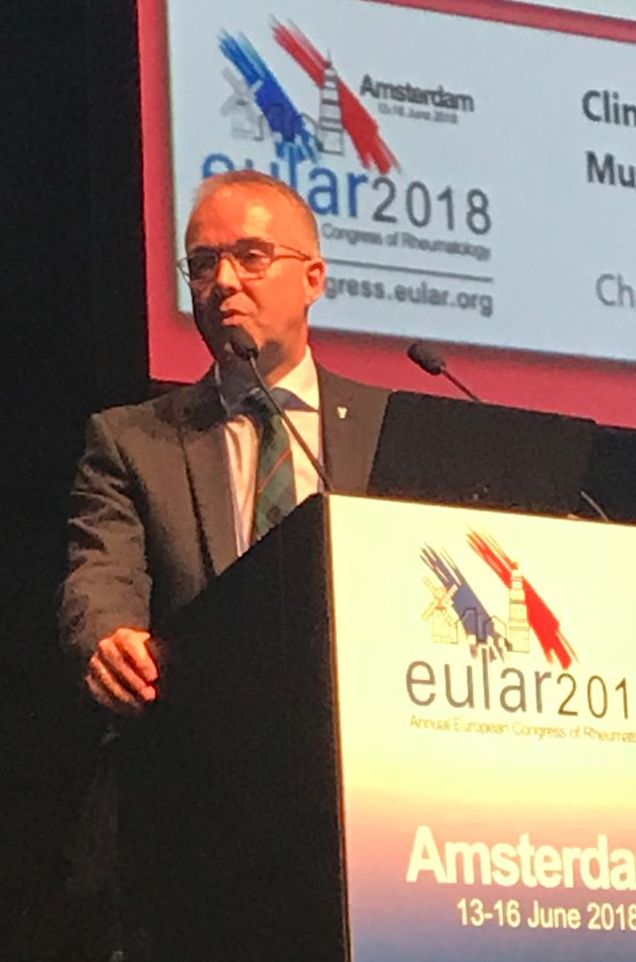
In the treatment of musculoskeletal pain, the goals are increased function and quality of life, rather than complete relief of pain, according to Dr. Smith. On this basis, opioids are not an appropriate routine therapy. He reported that pain relief is not well documented, while side effects such as sedation, dizziness, and constipation, are likely to be counterproductive to improved outcomes.
There is no absolute contraindication for opioids in the control of chronic musculoskeletal pain, but Dr. Smith’s summary of the data led him to conclude that they should be used judiciously and “only for carefully selected patients.”
Of the many studies he reviewed to draw this conclusion, one of the most recent was identified as the most persuasive. Published earlier this year, the SPACE study is “the first good-quality study of long-term opioid use” in patients with musculoskeletal complaints. It was negative.
“The pain intensity at the end of 12 months of treatment was slightly but significantly worse among those randomized to opioids,” reported Dr. Smith. “There was no difference in patient function, but there was an increased risk of adverse events.”
In the SPACE study, 240 patients with moderate to severe chronic back pain or hip or knee osteoarthritis were randomized to opioid or nonopioid pain management. In the nonopioid group, the first therapeutic step was acetaminophen, but medications could be changed, added, or adjusted within both groups to improve patient response.
At the end of 12 months, a lack of benefit on both pain control and functional improvement from opioids relative to nonopioid treatment was accompanied by a higher rate of adverse effects. This led the authors to conclude that opioids are not supported for musculoskeletal pain.
Not all the evidence argues against opioids for noncancer pain management, according to Dr. Smith, but he emphasized that those who support use of opioids do so for pain control only. They do not confirm an advantage for function and quality of life, which he suggested are the key endpoints. For example, a 2010 Cochrane review concluded from a systematic literature review that there is “weak evidence” for pain relief but inconclusive evidence of an improvement in functioning and quality of life.
Other investigators have drawn the same conclusion, according to Dr. Smith. He cited a statement from the International Association for Study of Pain that advises, “Caution should be used for prescribing opioids for chronic pain.” Although this statement was not specific to musculoskeletal pain, the IASP does specify that pain medications should be employed “to promote increased function and improved quality of life rather than complete relief of pain,” according to Dr. Smith.
Opioid prescriptions for chronic pain have been increasing in Europe as they have in the United States, but Dr. Smith indicated that opioids, if used at all, should be prescribed for very short periods and for very specific goals, particularly improvement in function.
“Probably most important for my [primary care] colleagues, patients prescribed opioids should be evaluated early and frequently to gauge benefit,” Dr. Smith said. Although he believes pain control is an important and worthwhile goal, it must be approached within the context of improved well-being rather than as an isolated endpoint.
SOURCE: Smith B et al. EULAR 2018, Abstract No. SP0073.
AMSTERDAM – Opioids cannot be justified for the routine treatment for musculoskeletal pain because risks outweigh benefits, according to a detailed review of published studies presented at the European Congress of Rheumatology.
“There is very little evidence of benefit for the long-term management of nonmalignant pain, but very good evidence for harm,” reported Blair Smith, MD, head of the population health sciences division, University of Dundee (Scotland).
In the treatment of musculoskeletal pain, the goals are increased function and quality of life, rather than complete relief of pain, according to Dr. Smith. On this basis, opioids are not an appropriate routine therapy. He reported that pain relief is not well documented, while side effects such as sedation, dizziness, and constipation, are likely to be counterproductive to improved outcomes.
There is no absolute contraindication for opioids in the control of chronic musculoskeletal pain, but Dr. Smith’s summary of the data led him to conclude that they should be used judiciously and “only for carefully selected patients.”
Of the many studies he reviewed to draw this conclusion, one of the most recent was identified as the most persuasive. Published earlier this year, the SPACE study is “the first good-quality study of long-term opioid use” in patients with musculoskeletal complaints. It was negative.
“The pain intensity at the end of 12 months of treatment was slightly but significantly worse among those randomized to opioids,” reported Dr. Smith. “There was no difference in patient function, but there was an increased risk of adverse events.”
In the SPACE study, 240 patients with moderate to severe chronic back pain or hip or knee osteoarthritis were randomized to opioid or nonopioid pain management. In the nonopioid group, the first therapeutic step was acetaminophen, but medications could be changed, added, or adjusted within both groups to improve patient response.
At the end of 12 months, a lack of benefit on both pain control and functional improvement from opioids relative to nonopioid treatment was accompanied by a higher rate of adverse effects. This led the authors to conclude that opioids are not supported for musculoskeletal pain.
Not all the evidence argues against opioids for noncancer pain management, according to Dr. Smith, but he emphasized that those who support use of opioids do so for pain control only. They do not confirm an advantage for function and quality of life, which he suggested are the key endpoints. For example, a 2010 Cochrane review concluded from a systematic literature review that there is “weak evidence” for pain relief but inconclusive evidence of an improvement in functioning and quality of life.
Other investigators have drawn the same conclusion, according to Dr. Smith. He cited a statement from the International Association for Study of Pain that advises, “Caution should be used for prescribing opioids for chronic pain.” Although this statement was not specific to musculoskeletal pain, the IASP does specify that pain medications should be employed “to promote increased function and improved quality of life rather than complete relief of pain,” according to Dr. Smith.
Opioid prescriptions for chronic pain have been increasing in Europe as they have in the United States, but Dr. Smith indicated that opioids, if used at all, should be prescribed for very short periods and for very specific goals, particularly improvement in function.
“Probably most important for my [primary care] colleagues, patients prescribed opioids should be evaluated early and frequently to gauge benefit,” Dr. Smith said. Although he believes pain control is an important and worthwhile goal, it must be approached within the context of improved well-being rather than as an isolated endpoint.
SOURCE: Smith B et al. EULAR 2018, Abstract No. SP0073.
AMSTERDAM – Opioids cannot be justified for the routine treatment for musculoskeletal pain because risks outweigh benefits, according to a detailed review of published studies presented at the European Congress of Rheumatology.
“There is very little evidence of benefit for the long-term management of nonmalignant pain, but very good evidence for harm,” reported Blair Smith, MD, head of the population health sciences division, University of Dundee (Scotland).
In the treatment of musculoskeletal pain, the goals are increased function and quality of life, rather than complete relief of pain, according to Dr. Smith. On this basis, opioids are not an appropriate routine therapy. He reported that pain relief is not well documented, while side effects such as sedation, dizziness, and constipation, are likely to be counterproductive to improved outcomes.
There is no absolute contraindication for opioids in the control of chronic musculoskeletal pain, but Dr. Smith’s summary of the data led him to conclude that they should be used judiciously and “only for carefully selected patients.”
Of the many studies he reviewed to draw this conclusion, one of the most recent was identified as the most persuasive. Published earlier this year, the SPACE study is “the first good-quality study of long-term opioid use” in patients with musculoskeletal complaints. It was negative.
“The pain intensity at the end of 12 months of treatment was slightly but significantly worse among those randomized to opioids,” reported Dr. Smith. “There was no difference in patient function, but there was an increased risk of adverse events.”
In the SPACE study, 240 patients with moderate to severe chronic back pain or hip or knee osteoarthritis were randomized to opioid or nonopioid pain management. In the nonopioid group, the first therapeutic step was acetaminophen, but medications could be changed, added, or adjusted within both groups to improve patient response.
At the end of 12 months, a lack of benefit on both pain control and functional improvement from opioids relative to nonopioid treatment was accompanied by a higher rate of adverse effects. This led the authors to conclude that opioids are not supported for musculoskeletal pain.
Not all the evidence argues against opioids for noncancer pain management, according to Dr. Smith, but he emphasized that those who support use of opioids do so for pain control only. They do not confirm an advantage for function and quality of life, which he suggested are the key endpoints. For example, a 2010 Cochrane review concluded from a systematic literature review that there is “weak evidence” for pain relief but inconclusive evidence of an improvement in functioning and quality of life.
Other investigators have drawn the same conclusion, according to Dr. Smith. He cited a statement from the International Association for Study of Pain that advises, “Caution should be used for prescribing opioids for chronic pain.” Although this statement was not specific to musculoskeletal pain, the IASP does specify that pain medications should be employed “to promote increased function and improved quality of life rather than complete relief of pain,” according to Dr. Smith.
Opioid prescriptions for chronic pain have been increasing in Europe as they have in the United States, but Dr. Smith indicated that opioids, if used at all, should be prescribed for very short periods and for very specific goals, particularly improvement in function.
“Probably most important for my [primary care] colleagues, patients prescribed opioids should be evaluated early and frequently to gauge benefit,” Dr. Smith said. Although he believes pain control is an important and worthwhile goal, it must be approached within the context of improved well-being rather than as an isolated endpoint.
SOURCE: Smith B et al. EULAR 2018, Abstract No. SP0073.
REPORTING FROM THE EULAR 2018 CONGRESS
Biologic efficacy differs in psoriatic arthritis by lymphocyte phenotype
AMSTERDAM – In patients with psoriatic arthritis (PsA), new evidence suggests selection of biologic disease-modifying antirheumatic drugs (bDMARDs) might be individualized by T-helper cell phenotype to improve disease control, according to the results of a study presented at the European Congress of Rheumatology.
“Our findings suggest a potential for precision medicine in patients with psoriatic arthritis,” reported Ippei Miyagawa, MD, of the University of Occupational and Environmental Health in Kitakyushu, Japan.

These phenotypes were employed to individualize therapy with the currently available targeted bDMARDs. Patients with a Th1-predominant phenotype received ustekinumab (Stelara), which blocks the p40 subunit of interleukin (IL)-12 and IL-23. Patients with a Th17-predominant phenotype received secukinumab (Cosentyx), which targets IL-17. Patients with the Th1/Th17-high phenotype received either secukinumab or a tumor necrosis factor inhibitor. Patients with the Th1/Th17-low phenotype received a TNF inhibitor.
The 26 patients whose bDMARD therapy was individualized were compared with 38 PsA patients who received bDMARDs selected according to EULAR recommendations. The groups were similar for baseline characteristics.
In both groups, there were significant decreases from baseline in essentially all clinical measures, including the Simplified Disease Activity Index, the Psoriasis Area and Severity Index, and the Patient Global Health Assessment. However, several disease markers suggested greater disease control in those receiving individualized therapy. For example, the Disease Activity Score in 28 joints using erythrocyte sedimentation rate (DAS28-ESR) at 6 months was 0.76 in the Th17-predominant group versus 1.32 in those on an unselected bDMARD therapy (P = .008).
As a proportion of lymphocytes, Th1-predominant cells greater than 1.2% and Th17-predominant cells greater than 1.5% appeared to be sensitive cutoffs for predicting response to ustekinumab and secukinumab, respectively, according to data presented by Dr. Miyagawa. Although the results in this small series of patients are considered preliminary, Dr. Miyagawa said, “We think that this research is the first step toward the future use of precision medicine in PsA.”
Larger studies are needed to verify that lymphocyte phenotyping is an effective and reproducible strategy for individualizing selection of bDMARDs, but Dr. Miyagawa acknowledged other practical barriers to routine clinical application of this strategy. In particular, he called flow cytometry, which was employed in this study to phenotype lymphocyte expression, “complicated” for routine clinical use. However, this study strongly suggests that lymphocyte expression is a predictor of response to the different bDMARDs now available for treatment of PsA.
“The bDMARDs effective in PsA have different targets and may not offer the same degree of efficacy in all patients. Our study suggests an approach to optimal drug selection,” he said.
The study was not industry funded. Dr. Miyagawa reported no relevant financial disclosures.
SOURCE: Miyagawa I et al. Ann Rheum Dis. 2018;77(Suppl 2):206-7. EULAR Congress 2018, Abstract OP0321.
AMSTERDAM – In patients with psoriatic arthritis (PsA), new evidence suggests selection of biologic disease-modifying antirheumatic drugs (bDMARDs) might be individualized by T-helper cell phenotype to improve disease control, according to the results of a study presented at the European Congress of Rheumatology.
“Our findings suggest a potential for precision medicine in patients with psoriatic arthritis,” reported Ippei Miyagawa, MD, of the University of Occupational and Environmental Health in Kitakyushu, Japan.
These phenotypes were employed to individualize therapy with the currently available targeted bDMARDs. Patients with a Th1-predominant phenotype received ustekinumab (Stelara), which blocks the p40 subunit of interleukin (IL)-12 and IL-23. Patients with a Th17-predominant phenotype received secukinumab (Cosentyx), which targets IL-17. Patients with the Th1/Th17-high phenotype received either secukinumab or a tumor necrosis factor inhibitor. Patients with the Th1/Th17-low phenotype received a TNF inhibitor.
The 26 patients whose bDMARD therapy was individualized were compared with 38 PsA patients who received bDMARDs selected according to EULAR recommendations. The groups were similar for baseline characteristics.
In both groups, there were significant decreases from baseline in essentially all clinical measures, including the Simplified Disease Activity Index, the Psoriasis Area and Severity Index, and the Patient Global Health Assessment. However, several disease markers suggested greater disease control in those receiving individualized therapy. For example, the Disease Activity Score in 28 joints using erythrocyte sedimentation rate (DAS28-ESR) at 6 months was 0.76 in the Th17-predominant group versus 1.32 in those on an unselected bDMARD therapy (P = .008).
As a proportion of lymphocytes, Th1-predominant cells greater than 1.2% and Th17-predominant cells greater than 1.5% appeared to be sensitive cutoffs for predicting response to ustekinumab and secukinumab, respectively, according to data presented by Dr. Miyagawa. Although the results in this small series of patients are considered preliminary, Dr. Miyagawa said, “We think that this research is the first step toward the future use of precision medicine in PsA.”
Larger studies are needed to verify that lymphocyte phenotyping is an effective and reproducible strategy for individualizing selection of bDMARDs, but Dr. Miyagawa acknowledged other practical barriers to routine clinical application of this strategy. In particular, he called flow cytometry, which was employed in this study to phenotype lymphocyte expression, “complicated” for routine clinical use. However, this study strongly suggests that lymphocyte expression is a predictor of response to the different bDMARDs now available for treatment of PsA.
“The bDMARDs effective in PsA have different targets and may not offer the same degree of efficacy in all patients. Our study suggests an approach to optimal drug selection,” he said.
The study was not industry funded. Dr. Miyagawa reported no relevant financial disclosures.
SOURCE: Miyagawa I et al. Ann Rheum Dis. 2018;77(Suppl 2):206-7. EULAR Congress 2018, Abstract OP0321.
AMSTERDAM – In patients with psoriatic arthritis (PsA), new evidence suggests selection of biologic disease-modifying antirheumatic drugs (bDMARDs) might be individualized by T-helper cell phenotype to improve disease control, according to the results of a study presented at the European Congress of Rheumatology.
“Our findings suggest a potential for precision medicine in patients with psoriatic arthritis,” reported Ippei Miyagawa, MD, of the University of Occupational and Environmental Health in Kitakyushu, Japan.
These phenotypes were employed to individualize therapy with the currently available targeted bDMARDs. Patients with a Th1-predominant phenotype received ustekinumab (Stelara), which blocks the p40 subunit of interleukin (IL)-12 and IL-23. Patients with a Th17-predominant phenotype received secukinumab (Cosentyx), which targets IL-17. Patients with the Th1/Th17-high phenotype received either secukinumab or a tumor necrosis factor inhibitor. Patients with the Th1/Th17-low phenotype received a TNF inhibitor.
The 26 patients whose bDMARD therapy was individualized were compared with 38 PsA patients who received bDMARDs selected according to EULAR recommendations. The groups were similar for baseline characteristics.
In both groups, there were significant decreases from baseline in essentially all clinical measures, including the Simplified Disease Activity Index, the Psoriasis Area and Severity Index, and the Patient Global Health Assessment. However, several disease markers suggested greater disease control in those receiving individualized therapy. For example, the Disease Activity Score in 28 joints using erythrocyte sedimentation rate (DAS28-ESR) at 6 months was 0.76 in the Th17-predominant group versus 1.32 in those on an unselected bDMARD therapy (P = .008).
As a proportion of lymphocytes, Th1-predominant cells greater than 1.2% and Th17-predominant cells greater than 1.5% appeared to be sensitive cutoffs for predicting response to ustekinumab and secukinumab, respectively, according to data presented by Dr. Miyagawa. Although the results in this small series of patients are considered preliminary, Dr. Miyagawa said, “We think that this research is the first step toward the future use of precision medicine in PsA.”
Larger studies are needed to verify that lymphocyte phenotyping is an effective and reproducible strategy for individualizing selection of bDMARDs, but Dr. Miyagawa acknowledged other practical barriers to routine clinical application of this strategy. In particular, he called flow cytometry, which was employed in this study to phenotype lymphocyte expression, “complicated” for routine clinical use. However, this study strongly suggests that lymphocyte expression is a predictor of response to the different bDMARDs now available for treatment of PsA.
“The bDMARDs effective in PsA have different targets and may not offer the same degree of efficacy in all patients. Our study suggests an approach to optimal drug selection,” he said.
The study was not industry funded. Dr. Miyagawa reported no relevant financial disclosures.
SOURCE: Miyagawa I et al. Ann Rheum Dis. 2018;77(Suppl 2):206-7. EULAR Congress 2018, Abstract OP0321.
REPORTING FROM THE EULAR 2018 CONGRESS
Key clinical point: Lymphocyte profile phenotypes appear to permit individualized biologic therapy in patients with PsA.
Major finding: Therapy individualized for Th17-predominant PsA produced a DAS28 score 0.56 points lower than did nonselected therapy (P = .008).
Study details: A prospective, nonrandomized study of 64 PsA patients with either individualized bDMARD therapy or bDMARDs selected according to EULAR recommendations.
Disclosures: The study was not industry funded. Dr. Miyagawa reported no relevant financial disclosures.
Source: Miyagawa I et al. Ann Rheum Dis. 2018;77(Suppl 2):206-7. EULAR Congress 2018, Abstract OP0321.
Salivary gland ultrasound is accurate diagnostic tool for Sjögren’s
AMSTERDAM – Ultrasound of the salivary glands is a readily available and inexpensive tool for the diagnosis of Sjögren’s syndrome, according to a study that evaluated this test in relation to the recent American College of Rheumatology and European League Against Rheumatism (ACR/EULAR) classification criteria.
In a video interview, Esther-Jellina Mossel reported that the sensitivity and specificity of a Sjögren’s syndrome diagnosis is essentially unchanged when ultrasound replaces a positive ocular staining score, the Schirmer test, or an unstimulated whole saliva flow test, without reducing diagnostic accuracy.
The sensitivity of the diagnosis is reduced only if ultrasound is used to replace either of the two remaining ACR/EULAR criteria, which are a labial gland biopsy or an anti-SSA antibody test. In relation to the three criteria that it can replace without loss of diagnostic accuracy, ultrasound might have advantages.
“People who don’t have access to an ophthalmologist performing an ocular staining score, for instance, could use an ultrasound of the salivary glands instead of the ocular staining score and still make a diagnosis,” said Ms. Mossel, a PhD student in the department of rheumatology at the University of Groningen (the Netherlands).
Ultrasound, which is commonly used to evaluate joints of patients with inflammatory diseases, is available in the offices of most rheumatologists, according to Ms. Mossel. She estimated that the evaluation of the salivary glands, which reveals characteristic hypoechogenic areas when Sjögren’s syndrome is present, takes about 10 minutes.
At Ms. Mossel’s center, ultrasound has already become a standard tool for the diagnosis of Sjögren’s syndrome. She said that other centers have also found this imaging tool to be accurate and useful for Sjögren’s syndrome diagnosis.
Based on the experience at the University of Groningen, Ms. Mossel believes that ultrasound will eventually be widely adopted for Sjögren’s syndrome diagnosis. Indeed, she expects that this strategy is likely to be added to the ACR/EULAR diagnostic criteria when its accuracy becomes more generally recognized.
AMSTERDAM – Ultrasound of the salivary glands is a readily available and inexpensive tool for the diagnosis of Sjögren’s syndrome, according to a study that evaluated this test in relation to the recent American College of Rheumatology and European League Against Rheumatism (ACR/EULAR) classification criteria.
In a video interview, Esther-Jellina Mossel reported that the sensitivity and specificity of a Sjögren’s syndrome diagnosis is essentially unchanged when ultrasound replaces a positive ocular staining score, the Schirmer test, or an unstimulated whole saliva flow test, without reducing diagnostic accuracy.
The sensitivity of the diagnosis is reduced only if ultrasound is used to replace either of the two remaining ACR/EULAR criteria, which are a labial gland biopsy or an anti-SSA antibody test. In relation to the three criteria that it can replace without loss of diagnostic accuracy, ultrasound might have advantages.
“People who don’t have access to an ophthalmologist performing an ocular staining score, for instance, could use an ultrasound of the salivary glands instead of the ocular staining score and still make a diagnosis,” said Ms. Mossel, a PhD student in the department of rheumatology at the University of Groningen (the Netherlands).
Ultrasound, which is commonly used to evaluate joints of patients with inflammatory diseases, is available in the offices of most rheumatologists, according to Ms. Mossel. She estimated that the evaluation of the salivary glands, which reveals characteristic hypoechogenic areas when Sjögren’s syndrome is present, takes about 10 minutes.
At Ms. Mossel’s center, ultrasound has already become a standard tool for the diagnosis of Sjögren’s syndrome. She said that other centers have also found this imaging tool to be accurate and useful for Sjögren’s syndrome diagnosis.
Based on the experience at the University of Groningen, Ms. Mossel believes that ultrasound will eventually be widely adopted for Sjögren’s syndrome diagnosis. Indeed, she expects that this strategy is likely to be added to the ACR/EULAR diagnostic criteria when its accuracy becomes more generally recognized.
AMSTERDAM – Ultrasound of the salivary glands is a readily available and inexpensive tool for the diagnosis of Sjögren’s syndrome, according to a study that evaluated this test in relation to the recent American College of Rheumatology and European League Against Rheumatism (ACR/EULAR) classification criteria.
In a video interview, Esther-Jellina Mossel reported that the sensitivity and specificity of a Sjögren’s syndrome diagnosis is essentially unchanged when ultrasound replaces a positive ocular staining score, the Schirmer test, or an unstimulated whole saliva flow test, without reducing diagnostic accuracy.
The sensitivity of the diagnosis is reduced only if ultrasound is used to replace either of the two remaining ACR/EULAR criteria, which are a labial gland biopsy or an anti-SSA antibody test. In relation to the three criteria that it can replace without loss of diagnostic accuracy, ultrasound might have advantages.
“People who don’t have access to an ophthalmologist performing an ocular staining score, for instance, could use an ultrasound of the salivary glands instead of the ocular staining score and still make a diagnosis,” said Ms. Mossel, a PhD student in the department of rheumatology at the University of Groningen (the Netherlands).
Ultrasound, which is commonly used to evaluate joints of patients with inflammatory diseases, is available in the offices of most rheumatologists, according to Ms. Mossel. She estimated that the evaluation of the salivary glands, which reveals characteristic hypoechogenic areas when Sjögren’s syndrome is present, takes about 10 minutes.
At Ms. Mossel’s center, ultrasound has already become a standard tool for the diagnosis of Sjögren’s syndrome. She said that other centers have also found this imaging tool to be accurate and useful for Sjögren’s syndrome diagnosis.
Based on the experience at the University of Groningen, Ms. Mossel believes that ultrasound will eventually be widely adopted for Sjögren’s syndrome diagnosis. Indeed, she expects that this strategy is likely to be added to the ACR/EULAR diagnostic criteria when its accuracy becomes more generally recognized.
REPORTING FROM THE EULAR 2018 CONGRESS

Risankizumab impresses in phase 2 psoriatic arthritis trial
AMSTERDAM – Phase 2 data with the IL-23 inhibitor risankizumab at week 24 were even more impressive than the week 16 data, showing that without any further dosing after week 16, all doses provided protection against radiographic progression relative to placebo at 24 weeks, according to data presented at the European Congress of Rheumatology.
In a video interview, first author Philip J. Mease, MD, a rheumatologist at Swedish Medical Center in Seattle, explained that it is not only the high rates of response to risankizumab but also the prolonged response that are attracting attention.
Risankizumab is among several monoclonal antibodies developed to target the p19 subunit of the proinflammatory cytokine IL-23. These drugs have already shown a high degree of efficacy for psoriasis, according to Dr. Mease. However, the new data with risankizumab confirm prolonged responses against a broad range of additional clinical targets specific to psoriatic arthritis, including bone destruction and enthesitis.
A prolonged response in patients treated with a single, relatively low dose of risankizumab is one of the intriguing findings. While three of the four active treatments arms received multiple infusions of 150 mg, the single-dose arm received only 75 mg of risankizumab once at baseline. At 16 weeks and 24 weeks, all arms, including the single-dose arm, met the primary endpoint of superiority to placebo for ACR20. At week 24, the single infusion of 75 mg was also providing significant benefit for several secondary endpoints, including radiographic progression.
However, the higher, more frequent doses did show greater efficacy overall. For example, patients in the arm with the most frequent dosing of risankizumab (every 4 weeks) and no dosing after week 16 continued to show significant improvement in enthesitis. A less frequent schedule of 150 mg risankizumab and the arm receiving a single dose of 75 mg risankizumab were not associated with a significant advantage over placebo for this endpoint.
Still, the prolonged responses at week 24 suggest that it may be possible to administer risankizumab at intervals that are less frequent than many other biologics.
So far, there “is nothing remarkable about safety,” Dr. Mease explained. A higher rate of infection relative to placebo was a treatment-emergent side effect in this study, but Dr. Mease said the drug is well tolerated.
Risankizumab is poised for evaluation in a phase 3 trial for psoriatic arthritis, and Dr. Mease was optimistic about its potential role, predicting that this, as well as other anti-IL23 p19 monoclonal antibodies, is likely to be an “important addition to our armamentarium.”
AbbVie and Boehringer Ingelheim funded the risankizumab study. Dr. Mease has received grant/research support from AbbVie and many other pharmaceutical companies. He also is a consultant to them and is on their speakers bureaus.
SOURCE: Mease P et al. Ann Rheum Dis. 2018;77(Suppl 2):200-1. Abstract OP0307
AMSTERDAM – Phase 2 data with the IL-23 inhibitor risankizumab at week 24 were even more impressive than the week 16 data, showing that without any further dosing after week 16, all doses provided protection against radiographic progression relative to placebo at 24 weeks, according to data presented at the European Congress of Rheumatology.
In a video interview, first author Philip J. Mease, MD, a rheumatologist at Swedish Medical Center in Seattle, explained that it is not only the high rates of response to risankizumab but also the prolonged response that are attracting attention.
Risankizumab is among several monoclonal antibodies developed to target the p19 subunit of the proinflammatory cytokine IL-23. These drugs have already shown a high degree of efficacy for psoriasis, according to Dr. Mease. However, the new data with risankizumab confirm prolonged responses against a broad range of additional clinical targets specific to psoriatic arthritis, including bone destruction and enthesitis.
A prolonged response in patients treated with a single, relatively low dose of risankizumab is one of the intriguing findings. While three of the four active treatments arms received multiple infusions of 150 mg, the single-dose arm received only 75 mg of risankizumab once at baseline. At 16 weeks and 24 weeks, all arms, including the single-dose arm, met the primary endpoint of superiority to placebo for ACR20. At week 24, the single infusion of 75 mg was also providing significant benefit for several secondary endpoints, including radiographic progression.
However, the higher, more frequent doses did show greater efficacy overall. For example, patients in the arm with the most frequent dosing of risankizumab (every 4 weeks) and no dosing after week 16 continued to show significant improvement in enthesitis. A less frequent schedule of 150 mg risankizumab and the arm receiving a single dose of 75 mg risankizumab were not associated with a significant advantage over placebo for this endpoint.
Still, the prolonged responses at week 24 suggest that it may be possible to administer risankizumab at intervals that are less frequent than many other biologics.
So far, there “is nothing remarkable about safety,” Dr. Mease explained. A higher rate of infection relative to placebo was a treatment-emergent side effect in this study, but Dr. Mease said the drug is well tolerated.
Risankizumab is poised for evaluation in a phase 3 trial for psoriatic arthritis, and Dr. Mease was optimistic about its potential role, predicting that this, as well as other anti-IL23 p19 monoclonal antibodies, is likely to be an “important addition to our armamentarium.”
AbbVie and Boehringer Ingelheim funded the risankizumab study. Dr. Mease has received grant/research support from AbbVie and many other pharmaceutical companies. He also is a consultant to them and is on their speakers bureaus.
SOURCE: Mease P et al. Ann Rheum Dis. 2018;77(Suppl 2):200-1. Abstract OP0307
AMSTERDAM – Phase 2 data with the IL-23 inhibitor risankizumab at week 24 were even more impressive than the week 16 data, showing that without any further dosing after week 16, all doses provided protection against radiographic progression relative to placebo at 24 weeks, according to data presented at the European Congress of Rheumatology.
In a video interview, first author Philip J. Mease, MD, a rheumatologist at Swedish Medical Center in Seattle, explained that it is not only the high rates of response to risankizumab but also the prolonged response that are attracting attention.
Risankizumab is among several monoclonal antibodies developed to target the p19 subunit of the proinflammatory cytokine IL-23. These drugs have already shown a high degree of efficacy for psoriasis, according to Dr. Mease. However, the new data with risankizumab confirm prolonged responses against a broad range of additional clinical targets specific to psoriatic arthritis, including bone destruction and enthesitis.
A prolonged response in patients treated with a single, relatively low dose of risankizumab is one of the intriguing findings. While three of the four active treatments arms received multiple infusions of 150 mg, the single-dose arm received only 75 mg of risankizumab once at baseline. At 16 weeks and 24 weeks, all arms, including the single-dose arm, met the primary endpoint of superiority to placebo for ACR20. At week 24, the single infusion of 75 mg was also providing significant benefit for several secondary endpoints, including radiographic progression.
However, the higher, more frequent doses did show greater efficacy overall. For example, patients in the arm with the most frequent dosing of risankizumab (every 4 weeks) and no dosing after week 16 continued to show significant improvement in enthesitis. A less frequent schedule of 150 mg risankizumab and the arm receiving a single dose of 75 mg risankizumab were not associated with a significant advantage over placebo for this endpoint.
Still, the prolonged responses at week 24 suggest that it may be possible to administer risankizumab at intervals that are less frequent than many other biologics.
So far, there “is nothing remarkable about safety,” Dr. Mease explained. A higher rate of infection relative to placebo was a treatment-emergent side effect in this study, but Dr. Mease said the drug is well tolerated.
Risankizumab is poised for evaluation in a phase 3 trial for psoriatic arthritis, and Dr. Mease was optimistic about its potential role, predicting that this, as well as other anti-IL23 p19 monoclonal antibodies, is likely to be an “important addition to our armamentarium.”
AbbVie and Boehringer Ingelheim funded the risankizumab study. Dr. Mease has received grant/research support from AbbVie and many other pharmaceutical companies. He also is a consultant to them and is on their speakers bureaus.
SOURCE: Mease P et al. Ann Rheum Dis. 2018;77(Suppl 2):200-1. Abstract OP0307
REPORTING FROM the EULAR 2018 Congress