User login
IMAGINE-RA: No need for MRI with treat-to-target strategy
AMSTERDAM – Results of the

“Despite patients achieving a target of clinical remission, we still see erosive progression in about 20%-30%,” study investigator Signe Møller-Bisgaard, MD, PhD, said at the European Congress of Rheumatology. That’s regardless of the definition of remission that you use, she added.
Dr. Møller-Bisgaard, a resident in rheumatology and postdoctoral researcher who works at Rigshospitalet and Frederiksberg Hospital in Copenhagen, observed that both synovial inflammation and bone marrow edema seen on MRI had been shown to predict progression in patients with rheumatoid arthritis.
What was not known, however, was whether there was any value in specifically targeting MRI remission in patients who had already achieved clinical remission. This is what the IMAGINE-RA study set out to address. It was a 2-year trial of 200 patients with rheumatoid arthritis in clinical remission who were recruited and randomized to either an MRI or conventional treat-to-target strategy. The study involved nine rheumatology and eight radiological departments, Dr. Møller-Bisgaard said.
The protocol for the study (Trials. 2015;16:178) defined clinical remission as a DAS28-CRP of 3.2 or lower and no swollen joints. Patients had to have erosions on x-ray, be anti–cyclic citrullinated peptide positive, and be treated only with conventional synthetic disease-modifying antirheumatic drugs (csDMARDs) at the time of entry.
During the study patients were assessed every 4 months via the DAS28 or DAS28 plus MRI of the dominant hand and wrist, with radiographs of the hands and feet performed annually in both groups and MRI also performed yearly in the conventional treat-to-target group.
“Treatment was intensified in both arms if the DAS28-CRP was above 3.2, and there was at least one clinical swollen joint,” Dr. Møller-Bisgaard explained. Treatment was also intensified in the MRI group if bone marrow edema was observed. Treatment intensification involved maximal doses of csDMARDs alone or in combinations, and then addition of biologic treatments, such as a tumor necrosis factor inhibitor.
“Targeting absence of MRI bone marrow edema in addition to a conventional treat-to-target strategy in RA patients in clinical remission had no effect on the probability of achieving DAS28-CRP remission or halting radiographic progression,” she said.
However, there were some positive effects on several predefined secondary endpoints. For instance, more patients in the MRI group than in the conventional treat-to-target group achieved American College of Rheumatology/EULAR remission (49% vs. 32%; P = .017). There was a significant improvement in the number of swollen joints and a patient and physician global assessment. “There was also more improvement in HAQ [Health Assessment Questionnaire], with a difference between the groups of .14 [P less than .001], Dr. Møller-Bisgaard reported.
The IMAGINE-RA study is funded by grants from the Danish Rheumatism Association and the Research Fund of Region Zealand. Funding is also provided by AbbVie via a nonrestricted grant, and adalimumab is provided free of charge. Dr. Møller-Bisgaard and coauthors had no personal conflicts of interest to declare.
SOURCE: Møller-Bisgaard S et al. EULAR 2018 Congress. Abstract OP0018.
AMSTERDAM – Results of the
“Despite patients achieving a target of clinical remission, we still see erosive progression in about 20%-30%,” study investigator Signe Møller-Bisgaard, MD, PhD, said at the European Congress of Rheumatology. That’s regardless of the definition of remission that you use, she added.
Dr. Møller-Bisgaard, a resident in rheumatology and postdoctoral researcher who works at Rigshospitalet and Frederiksberg Hospital in Copenhagen, observed that both synovial inflammation and bone marrow edema seen on MRI had been shown to predict progression in patients with rheumatoid arthritis.
What was not known, however, was whether there was any value in specifically targeting MRI remission in patients who had already achieved clinical remission. This is what the IMAGINE-RA study set out to address. It was a 2-year trial of 200 patients with rheumatoid arthritis in clinical remission who were recruited and randomized to either an MRI or conventional treat-to-target strategy. The study involved nine rheumatology and eight radiological departments, Dr. Møller-Bisgaard said.
The protocol for the study (Trials. 2015;16:178) defined clinical remission as a DAS28-CRP of 3.2 or lower and no swollen joints. Patients had to have erosions on x-ray, be anti–cyclic citrullinated peptide positive, and be treated only with conventional synthetic disease-modifying antirheumatic drugs (csDMARDs) at the time of entry.
During the study patients were assessed every 4 months via the DAS28 or DAS28 plus MRI of the dominant hand and wrist, with radiographs of the hands and feet performed annually in both groups and MRI also performed yearly in the conventional treat-to-target group.
“Treatment was intensified in both arms if the DAS28-CRP was above 3.2, and there was at least one clinical swollen joint,” Dr. Møller-Bisgaard explained. Treatment was also intensified in the MRI group if bone marrow edema was observed. Treatment intensification involved maximal doses of csDMARDs alone or in combinations, and then addition of biologic treatments, such as a tumor necrosis factor inhibitor.
“Targeting absence of MRI bone marrow edema in addition to a conventional treat-to-target strategy in RA patients in clinical remission had no effect on the probability of achieving DAS28-CRP remission or halting radiographic progression,” she said.
However, there were some positive effects on several predefined secondary endpoints. For instance, more patients in the MRI group than in the conventional treat-to-target group achieved American College of Rheumatology/EULAR remission (49% vs. 32%; P = .017). There was a significant improvement in the number of swollen joints and a patient and physician global assessment. “There was also more improvement in HAQ [Health Assessment Questionnaire], with a difference between the groups of .14 [P less than .001], Dr. Møller-Bisgaard reported.
The IMAGINE-RA study is funded by grants from the Danish Rheumatism Association and the Research Fund of Region Zealand. Funding is also provided by AbbVie via a nonrestricted grant, and adalimumab is provided free of charge. Dr. Møller-Bisgaard and coauthors had no personal conflicts of interest to declare.
SOURCE: Møller-Bisgaard S et al. EULAR 2018 Congress. Abstract OP0018.
AMSTERDAM – Results of the
“Despite patients achieving a target of clinical remission, we still see erosive progression in about 20%-30%,” study investigator Signe Møller-Bisgaard, MD, PhD, said at the European Congress of Rheumatology. That’s regardless of the definition of remission that you use, she added.
Dr. Møller-Bisgaard, a resident in rheumatology and postdoctoral researcher who works at Rigshospitalet and Frederiksberg Hospital in Copenhagen, observed that both synovial inflammation and bone marrow edema seen on MRI had been shown to predict progression in patients with rheumatoid arthritis.
What was not known, however, was whether there was any value in specifically targeting MRI remission in patients who had already achieved clinical remission. This is what the IMAGINE-RA study set out to address. It was a 2-year trial of 200 patients with rheumatoid arthritis in clinical remission who were recruited and randomized to either an MRI or conventional treat-to-target strategy. The study involved nine rheumatology and eight radiological departments, Dr. Møller-Bisgaard said.
The protocol for the study (Trials. 2015;16:178) defined clinical remission as a DAS28-CRP of 3.2 or lower and no swollen joints. Patients had to have erosions on x-ray, be anti–cyclic citrullinated peptide positive, and be treated only with conventional synthetic disease-modifying antirheumatic drugs (csDMARDs) at the time of entry.
During the study patients were assessed every 4 months via the DAS28 or DAS28 plus MRI of the dominant hand and wrist, with radiographs of the hands and feet performed annually in both groups and MRI also performed yearly in the conventional treat-to-target group.
“Treatment was intensified in both arms if the DAS28-CRP was above 3.2, and there was at least one clinical swollen joint,” Dr. Møller-Bisgaard explained. Treatment was also intensified in the MRI group if bone marrow edema was observed. Treatment intensification involved maximal doses of csDMARDs alone or in combinations, and then addition of biologic treatments, such as a tumor necrosis factor inhibitor.
“Targeting absence of MRI bone marrow edema in addition to a conventional treat-to-target strategy in RA patients in clinical remission had no effect on the probability of achieving DAS28-CRP remission or halting radiographic progression,” she said.
However, there were some positive effects on several predefined secondary endpoints. For instance, more patients in the MRI group than in the conventional treat-to-target group achieved American College of Rheumatology/EULAR remission (49% vs. 32%; P = .017). There was a significant improvement in the number of swollen joints and a patient and physician global assessment. “There was also more improvement in HAQ [Health Assessment Questionnaire], with a difference between the groups of .14 [P less than .001], Dr. Møller-Bisgaard reported.
The IMAGINE-RA study is funded by grants from the Danish Rheumatism Association and the Research Fund of Region Zealand. Funding is also provided by AbbVie via a nonrestricted grant, and adalimumab is provided free of charge. Dr. Møller-Bisgaard and coauthors had no personal conflicts of interest to declare.
SOURCE: Møller-Bisgaard S et al. EULAR 2018 Congress. Abstract OP0018.
REPORTING FROM THE EULAR 2018 CONGRESS
Key clinical point: When a treat-to-target approach is used there is no added benefit of using magnetic resonance imaging.
Major finding: At 2 years, a similar percentage of patients achieved a DAS28-CRP of less than 2.6 and had no radiographic progression with an MRI-guided and conventional treat-to-target strategy.
Study details: The IMAGINE-RA study, a 2-year, prospective, randomized, multicenter trial of 200 patients with rheumatoid arthritis in clinical remission treated at 10 Danish hospitals.
Disclosures: The IMAGINE-RA study is funded by grants from the Danish Rheumatism Association and the Research Fund of Region Zealand. Funding is also provided by AbbVie via a nonrestricted grant and adalimumab is provided free of charge. Dr. Møller-Bisgaard and her coauthors had no personal conflicts of interest to declare.
Source: Møller-Bisgaard S et al. EULAR 2018 Congress. Abstract OP0018.
Heart failure confers poor prognosis in rheumatoid arthritis
AMSTERDAM – The combination of heart failure and rheumatoid arthritis carries a poor prognosis, according to data from the German biologics register.
Of 393 patients enrolled in RABBIT (Rheumatoide Arthritis: Beobachtung der Biologika-Therapie) who had heart failure in addition to their rheumatoid arthritis, 131 (33%) needed hospital treatment or died over a 10-year period. The mean time to hospitalization or death was 2.5-3.0 years.
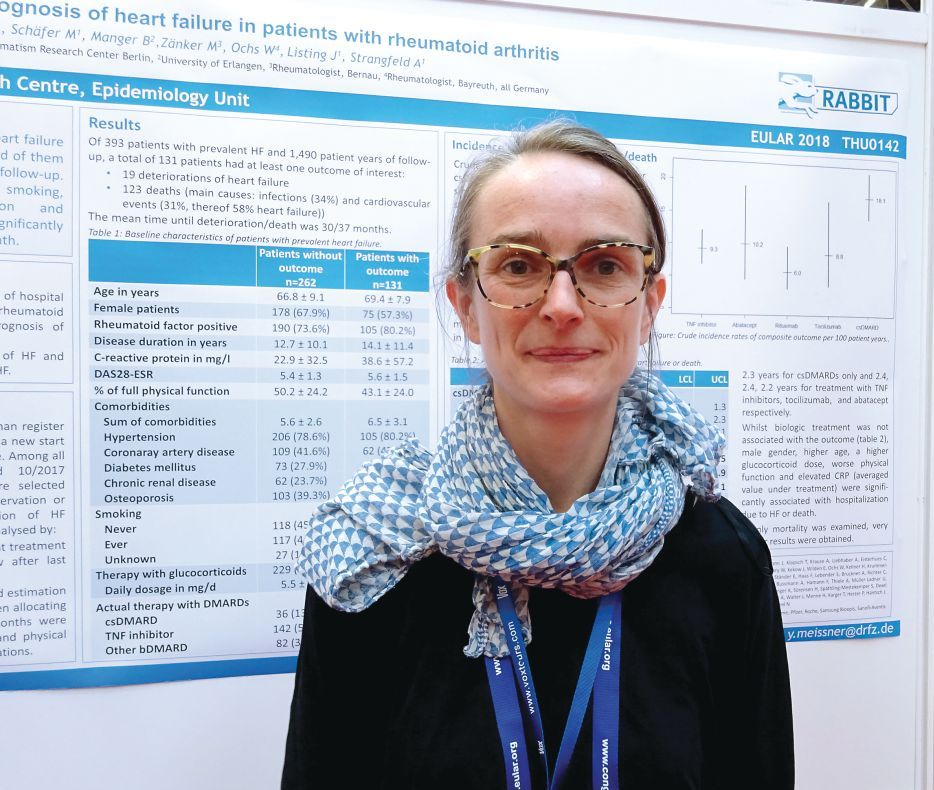
“We include patients at the start of their DMARD [disease modifying antirheumatic drug] treatment and follow them up for at least 5 years,” said Dr. Meissner, explaining how the German biologics register works. “For this analysis, we selected all the patients with prevalent heart failure and followed them up until either the database was closed, they dropped out, or had an event.” In this case, an event was defined as a composite of deterioration in heart failure that required hospitalization or death from any cause.
Dr. Meissner, of the German Rheumatism Research Center in Berlin, noted that 19 (14.5%) patients experienced a deterioration in their heart failure and 123 deaths were recorded during the study period that started in May 2001 and ended in October 2017. Around one-third of deaths were attributable to infections (34%), and one-third were attributable to cardiovascular causes (31%). Of the CV deaths, more than half (58%) were attributed to patients’ heart failure.
“What impressed us the most is the number of comorbidities at baseline,” Dr. Meissner said. Not including heart failure or rheumatoid arthritis, patients who experienced an event had an average of 6.5 comorbidities versus 5.6 for those who did not have an event. These additional comorbidities included hypertension, coronary artery disease, diabetes mellitus, chronic renal disease, and osteoporosis.
Crude incidence rates (IRs) for heart failure deterioration or death were calculated according to the rheumatoid arthritis treatment being used and found to be highest in those treated with conventional DMARDs, at 18.1/100 patient-years. IRs with biologic treatments were lower, at 10.2/100 patient-years for abatacept, 9.3 for TNF inhibitors, 8.8 for tocilizumab, and 6.0 for rituximab. What this suggests it that better control of inflammation results in a lower risk for hospitalization and death, Dr. Meissner and her associates reported in their poster presentation.
“If patients are not effectively treated for rheumatoid arthritis, there might be other consequences like the deterioration of heart failure or death,” Dr. Meissner said.
She noted that investigators also looked at identifying risk factors for hospitalization or death and found that there was a greater adjusted relative risk if patients were male (RR = 2.4), older (RR = 1.3 per 5-year increase in age), or if they smoked (RR = 1.7). Using higher doses of glucocorticoids also was a risk factor, with a RR of 1.4 for every 5 mg/day increase in dose.
Better physical function was associated with a lower risk of an event (RR = 0.9) and, along with smoking and adjustment of the steroid dose, is a risk factor that could potentially be influenced, Dr. Meissner proposed.
No data on how the heart failure was being managed are available for this cohort and more research is needed.
“There is still not enough known about this topic, and we need the research to determine how to best manage these patients,” Dr. Meissner said. “The time to an event was only 3 years from the time of inclusion in the register, so we need better management of those patients with heart failure as a comorbidity.”
RABBIT is supported by a joint, unconditional grant from AbbVie, Bristol-Myers Squibb, Celltrion, Hexal AG, Lilly, MSD Sharp & Dohme, Pfizer, Roche, Samsung Bioepis, Sanofi-Aventis, and UCB. Dr. Meissner disclosed being on a speakers bureau for Pfizer.
SOURCE: Meissner Y et al. EULAR 2018 Congress. Abstract THU0142 .
AMSTERDAM – The combination of heart failure and rheumatoid arthritis carries a poor prognosis, according to data from the German biologics register.
Of 393 patients enrolled in RABBIT (Rheumatoide Arthritis: Beobachtung der Biologika-Therapie) who had heart failure in addition to their rheumatoid arthritis, 131 (33%) needed hospital treatment or died over a 10-year period. The mean time to hospitalization or death was 2.5-3.0 years.
“We include patients at the start of their DMARD [disease modifying antirheumatic drug] treatment and follow them up for at least 5 years,” said Dr. Meissner, explaining how the German biologics register works. “For this analysis, we selected all the patients with prevalent heart failure and followed them up until either the database was closed, they dropped out, or had an event.” In this case, an event was defined as a composite of deterioration in heart failure that required hospitalization or death from any cause.
Dr. Meissner, of the German Rheumatism Research Center in Berlin, noted that 19 (14.5%) patients experienced a deterioration in their heart failure and 123 deaths were recorded during the study period that started in May 2001 and ended in October 2017. Around one-third of deaths were attributable to infections (34%), and one-third were attributable to cardiovascular causes (31%). Of the CV deaths, more than half (58%) were attributed to patients’ heart failure.
“What impressed us the most is the number of comorbidities at baseline,” Dr. Meissner said. Not including heart failure or rheumatoid arthritis, patients who experienced an event had an average of 6.5 comorbidities versus 5.6 for those who did not have an event. These additional comorbidities included hypertension, coronary artery disease, diabetes mellitus, chronic renal disease, and osteoporosis.
Crude incidence rates (IRs) for heart failure deterioration or death were calculated according to the rheumatoid arthritis treatment being used and found to be highest in those treated with conventional DMARDs, at 18.1/100 patient-years. IRs with biologic treatments were lower, at 10.2/100 patient-years for abatacept, 9.3 for TNF inhibitors, 8.8 for tocilizumab, and 6.0 for rituximab. What this suggests it that better control of inflammation results in a lower risk for hospitalization and death, Dr. Meissner and her associates reported in their poster presentation.
“If patients are not effectively treated for rheumatoid arthritis, there might be other consequences like the deterioration of heart failure or death,” Dr. Meissner said.
She noted that investigators also looked at identifying risk factors for hospitalization or death and found that there was a greater adjusted relative risk if patients were male (RR = 2.4), older (RR = 1.3 per 5-year increase in age), or if they smoked (RR = 1.7). Using higher doses of glucocorticoids also was a risk factor, with a RR of 1.4 for every 5 mg/day increase in dose.
Better physical function was associated with a lower risk of an event (RR = 0.9) and, along with smoking and adjustment of the steroid dose, is a risk factor that could potentially be influenced, Dr. Meissner proposed.
No data on how the heart failure was being managed are available for this cohort and more research is needed.
“There is still not enough known about this topic, and we need the research to determine how to best manage these patients,” Dr. Meissner said. “The time to an event was only 3 years from the time of inclusion in the register, so we need better management of those patients with heart failure as a comorbidity.”
RABBIT is supported by a joint, unconditional grant from AbbVie, Bristol-Myers Squibb, Celltrion, Hexal AG, Lilly, MSD Sharp & Dohme, Pfizer, Roche, Samsung Bioepis, Sanofi-Aventis, and UCB. Dr. Meissner disclosed being on a speakers bureau for Pfizer.
SOURCE: Meissner Y et al. EULAR 2018 Congress. Abstract THU0142 .
AMSTERDAM – The combination of heart failure and rheumatoid arthritis carries a poor prognosis, according to data from the German biologics register.
Of 393 patients enrolled in RABBIT (Rheumatoide Arthritis: Beobachtung der Biologika-Therapie) who had heart failure in addition to their rheumatoid arthritis, 131 (33%) needed hospital treatment or died over a 10-year period. The mean time to hospitalization or death was 2.5-3.0 years.
“We include patients at the start of their DMARD [disease modifying antirheumatic drug] treatment and follow them up for at least 5 years,” said Dr. Meissner, explaining how the German biologics register works. “For this analysis, we selected all the patients with prevalent heart failure and followed them up until either the database was closed, they dropped out, or had an event.” In this case, an event was defined as a composite of deterioration in heart failure that required hospitalization or death from any cause.
Dr. Meissner, of the German Rheumatism Research Center in Berlin, noted that 19 (14.5%) patients experienced a deterioration in their heart failure and 123 deaths were recorded during the study period that started in May 2001 and ended in October 2017. Around one-third of deaths were attributable to infections (34%), and one-third were attributable to cardiovascular causes (31%). Of the CV deaths, more than half (58%) were attributed to patients’ heart failure.
“What impressed us the most is the number of comorbidities at baseline,” Dr. Meissner said. Not including heart failure or rheumatoid arthritis, patients who experienced an event had an average of 6.5 comorbidities versus 5.6 for those who did not have an event. These additional comorbidities included hypertension, coronary artery disease, diabetes mellitus, chronic renal disease, and osteoporosis.
Crude incidence rates (IRs) for heart failure deterioration or death were calculated according to the rheumatoid arthritis treatment being used and found to be highest in those treated with conventional DMARDs, at 18.1/100 patient-years. IRs with biologic treatments were lower, at 10.2/100 patient-years for abatacept, 9.3 for TNF inhibitors, 8.8 for tocilizumab, and 6.0 for rituximab. What this suggests it that better control of inflammation results in a lower risk for hospitalization and death, Dr. Meissner and her associates reported in their poster presentation.
“If patients are not effectively treated for rheumatoid arthritis, there might be other consequences like the deterioration of heart failure or death,” Dr. Meissner said.
She noted that investigators also looked at identifying risk factors for hospitalization or death and found that there was a greater adjusted relative risk if patients were male (RR = 2.4), older (RR = 1.3 per 5-year increase in age), or if they smoked (RR = 1.7). Using higher doses of glucocorticoids also was a risk factor, with a RR of 1.4 for every 5 mg/day increase in dose.
Better physical function was associated with a lower risk of an event (RR = 0.9) and, along with smoking and adjustment of the steroid dose, is a risk factor that could potentially be influenced, Dr. Meissner proposed.
No data on how the heart failure was being managed are available for this cohort and more research is needed.
“There is still not enough known about this topic, and we need the research to determine how to best manage these patients,” Dr. Meissner said. “The time to an event was only 3 years from the time of inclusion in the register, so we need better management of those patients with heart failure as a comorbidity.”
RABBIT is supported by a joint, unconditional grant from AbbVie, Bristol-Myers Squibb, Celltrion, Hexal AG, Lilly, MSD Sharp & Dohme, Pfizer, Roche, Samsung Bioepis, Sanofi-Aventis, and UCB. Dr. Meissner disclosed being on a speakers bureau for Pfizer.
SOURCE: Meissner Y et al. EULAR 2018 Congress. Abstract THU0142 .
REPORTING FROM THE EULAR 2018 CONGRESS
Key clinical point: Comorbid heart failure and rheumatoid arthritis carry an unfavorable prognosis, but risk factors have been identified.
Major finding: One-third of patients were hospitalized or died, with a mean time to deterioration or death of 2.5-3 years.
Study details: 393 patients with both heart failure and rheumatoid arthritis enrolled in the German biologics register RABBIT.
Disclosures: RABBIT is supported by a joint, unconditional grant from AbbVie, Bristol-Myers Squibb, Celltrion, Hexal AG, Lilly, MSD Sharp & Dohme, Pfizer, Roche, Samsung Bioepis, Sanofi-Aventis, and UCB. Dr. Meissner disclosed being part of a speakers bureau for Pfizer.
Source: Meissner Y et al. EULAR 2018 Congress, Abstract THU0142.
Severe OA sparks depression, surgery “ameliorates” depression in RA
AMSTERDAM – Structural severity in OA is related to the onset of depressive symptoms while surgery “ameliorates” depression in RA, according to the results of two separate studies presented at the European Congress of Rheumatology.
Using data on more than 1,600 individuals with knee OA from the Osteoarthritis Initiative, Alan Rathbun, PhD, and his associates looked at the components of disease severity and how they might individually contribute to the development of depression. They found that the odds of having depression more than doubled as joint space width increased (odds ratio, 2.25) and gait speed decreased (OR, 2.08), and rose 60% as pain became more severe (OR, 1.60).

Worsening knee OA could set off depression
“Studies have consistently shown that depressive symptoms are associated with worse osteoarthritis disease severity, however, there is a lack of research focused on identifying the specific components that contribute to the onset of depressive symptoms in nondepressed OA patients,” said Dr. Rathbun in an interview ahead of his presentation.
Dr. Rathbun, a research associate in the departments of epidemiology and of public health and medicine at the University of Maryland, Baltimore, also said that while OA guidelines do advise on treating depression, there is no standardized way to manage comorbid depression in routine clinical practice.
“If OA disease severity contributes to the development and worsening of depressive symptoms, it may be necessary to intervene on both conditions simultaneously in order to successfully manage them,” he suggested.
“Depression is a frequently occurring comorbidity in persons with OA,” Dr. Rathbun later observed during a press conference. Around one in five people with knee OA have depression, he said. This is an important fact if you consider how common symptomatic knee OA is – affecting 10% of men and 13% of women aged over 60 years – and the impact that it has on people’s quality of life, healthcare utilization, and mortality.
Dr. Rathbun and colleagues examined data on 1,652 men and women who were part of the Osteoarthritis Initiative, a multicenter, prospective, longitudinal study of knee health sponsored by the National Institutes of Health. For inclusion in the study, participants had to have radiographic knee OA, no depressive symptoms, and complete data on the disease severity components of interest: minimum joint space width, 20-meter gait speed, and the pain subscale of the Western Ontario and McMaster Universities Osteoarthritis Index. Depression was assessed using the Center for Epidemiological Studies Depression Scale, with no depression ascribed a score of 16 or under. Data from three additional annual follow-up visits was also required.
“All three components of OA disease progression were associated with an increased risk for the onset of depressive symptoms in those with radiographic knee OA,” Dr. Rathbun said in the interview. While pain severity has previously been linked to depressive symptoms in OA, the finding of worsening structural disease is new.
“The clinical implications of our findings are that the onset of depressive symptoms in OA patients is related to worsening pain, physical function, and structural disease severity,” he added. They also mean that these components and depression need to be targeted at the same time.
“Future studies need to ascertain whether depressive symptoms modify clinical response to analgesic medications in OA patients,” Dr. Rathbun suggested. “Considering that analgesics are often the first-line treatment for OA patients and the high prevalence of depressive symptoms in this population, comorbid depression may be an important contributor to ineffective medical management in the many OA patients who undergo total joint replacement.”
Depression “ameliorated” by orthopedic surgery for RA
While the effects of analgesic medications might be something to look at in relation to depression in OA, research presented elsewhere at the congress suggested that appropriate surgical intervention might also be key to dealing with depressive symptoms, at least in patients with RA.
After a 1-year follow-up in patients with RA who underwent orthopedic surgery, the mean BDI-II score improved from 13.0 to 11.5 (P less than .01), and the percentage of patients with a BDI-II score of 14 or more fell from 43% to 35%. Improvements in other health assessments – the Japanese version of the Health Assessment Questionnaire and the EuroQol 5 dimensions instrument – were also seen.
The prospective, observational cohort study included 276 patients with structural damage caused by RA. The most common site of joint damage requiring elective surgery was the wrist (n = 74), followed by the hand (n = 63), knee (n = 50), forefoot (n = 50), elbow (n = 26), hand and wrist (n = 18), hip (n = 13), ankle (n = 12), and shoulder (n = 6).
Looking at the improvement in depression scores by surgical site revealed a significant difference from baseline for the elbow (P less than .001), wrist (P less than .001), and forefoot (P less than .05). The magnitude of decrease in the BDI-II scores was independently related to Steinbrocker stage and pain measured on a visual analog scale.
“Depression was ameliorated by surgical intervention in patients with RA,” Hajime Ishikawa, MD, PhD, of the department of rheumatology at Niigata Rheumatic Center in Shibata, Japan, and associates concluded in their poster presentation. They added that the psychological changes observed were “related to the preoperative severity of joint damage and pain in the affected joint.”
Dr. Rathbun’s work was supported by a Rheumatology Research Foundation Scientist Development Award. Dr. Ishikawa and associates stated they had no disclosures of interest.
SOURCES: Rathbun AM et al. Ann Rheum Dis. 2018;77(Suppl 2):50-1. Abstract OP0003; Ishikawa H et al. Ann Rheum Dis. 2018;77(Suppl 2):297-8. Abstract THU0156.
AMSTERDAM – Structural severity in OA is related to the onset of depressive symptoms while surgery “ameliorates” depression in RA, according to the results of two separate studies presented at the European Congress of Rheumatology.
Using data on more than 1,600 individuals with knee OA from the Osteoarthritis Initiative, Alan Rathbun, PhD, and his associates looked at the components of disease severity and how they might individually contribute to the development of depression. They found that the odds of having depression more than doubled as joint space width increased (odds ratio, 2.25) and gait speed decreased (OR, 2.08), and rose 60% as pain became more severe (OR, 1.60).
Worsening knee OA could set off depression
“Studies have consistently shown that depressive symptoms are associated with worse osteoarthritis disease severity, however, there is a lack of research focused on identifying the specific components that contribute to the onset of depressive symptoms in nondepressed OA patients,” said Dr. Rathbun in an interview ahead of his presentation.
Dr. Rathbun, a research associate in the departments of epidemiology and of public health and medicine at the University of Maryland, Baltimore, also said that while OA guidelines do advise on treating depression, there is no standardized way to manage comorbid depression in routine clinical practice.
“If OA disease severity contributes to the development and worsening of depressive symptoms, it may be necessary to intervene on both conditions simultaneously in order to successfully manage them,” he suggested.
“Depression is a frequently occurring comorbidity in persons with OA,” Dr. Rathbun later observed during a press conference. Around one in five people with knee OA have depression, he said. This is an important fact if you consider how common symptomatic knee OA is – affecting 10% of men and 13% of women aged over 60 years – and the impact that it has on people’s quality of life, healthcare utilization, and mortality.
Dr. Rathbun and colleagues examined data on 1,652 men and women who were part of the Osteoarthritis Initiative, a multicenter, prospective, longitudinal study of knee health sponsored by the National Institutes of Health. For inclusion in the study, participants had to have radiographic knee OA, no depressive symptoms, and complete data on the disease severity components of interest: minimum joint space width, 20-meter gait speed, and the pain subscale of the Western Ontario and McMaster Universities Osteoarthritis Index. Depression was assessed using the Center for Epidemiological Studies Depression Scale, with no depression ascribed a score of 16 or under. Data from three additional annual follow-up visits was also required.
“All three components of OA disease progression were associated with an increased risk for the onset of depressive symptoms in those with radiographic knee OA,” Dr. Rathbun said in the interview. While pain severity has previously been linked to depressive symptoms in OA, the finding of worsening structural disease is new.
“The clinical implications of our findings are that the onset of depressive symptoms in OA patients is related to worsening pain, physical function, and structural disease severity,” he added. They also mean that these components and depression need to be targeted at the same time.
“Future studies need to ascertain whether depressive symptoms modify clinical response to analgesic medications in OA patients,” Dr. Rathbun suggested. “Considering that analgesics are often the first-line treatment for OA patients and the high prevalence of depressive symptoms in this population, comorbid depression may be an important contributor to ineffective medical management in the many OA patients who undergo total joint replacement.”
Depression “ameliorated” by orthopedic surgery for RA
While the effects of analgesic medications might be something to look at in relation to depression in OA, research presented elsewhere at the congress suggested that appropriate surgical intervention might also be key to dealing with depressive symptoms, at least in patients with RA.
After a 1-year follow-up in patients with RA who underwent orthopedic surgery, the mean BDI-II score improved from 13.0 to 11.5 (P less than .01), and the percentage of patients with a BDI-II score of 14 or more fell from 43% to 35%. Improvements in other health assessments – the Japanese version of the Health Assessment Questionnaire and the EuroQol 5 dimensions instrument – were also seen.
The prospective, observational cohort study included 276 patients with structural damage caused by RA. The most common site of joint damage requiring elective surgery was the wrist (n = 74), followed by the hand (n = 63), knee (n = 50), forefoot (n = 50), elbow (n = 26), hand and wrist (n = 18), hip (n = 13), ankle (n = 12), and shoulder (n = 6).
Looking at the improvement in depression scores by surgical site revealed a significant difference from baseline for the elbow (P less than .001), wrist (P less than .001), and forefoot (P less than .05). The magnitude of decrease in the BDI-II scores was independently related to Steinbrocker stage and pain measured on a visual analog scale.
“Depression was ameliorated by surgical intervention in patients with RA,” Hajime Ishikawa, MD, PhD, of the department of rheumatology at Niigata Rheumatic Center in Shibata, Japan, and associates concluded in their poster presentation. They added that the psychological changes observed were “related to the preoperative severity of joint damage and pain in the affected joint.”
Dr. Rathbun’s work was supported by a Rheumatology Research Foundation Scientist Development Award. Dr. Ishikawa and associates stated they had no disclosures of interest.
SOURCES: Rathbun AM et al. Ann Rheum Dis. 2018;77(Suppl 2):50-1. Abstract OP0003; Ishikawa H et al. Ann Rheum Dis. 2018;77(Suppl 2):297-8. Abstract THU0156.
AMSTERDAM – Structural severity in OA is related to the onset of depressive symptoms while surgery “ameliorates” depression in RA, according to the results of two separate studies presented at the European Congress of Rheumatology.
Using data on more than 1,600 individuals with knee OA from the Osteoarthritis Initiative, Alan Rathbun, PhD, and his associates looked at the components of disease severity and how they might individually contribute to the development of depression. They found that the odds of having depression more than doubled as joint space width increased (odds ratio, 2.25) and gait speed decreased (OR, 2.08), and rose 60% as pain became more severe (OR, 1.60).
Worsening knee OA could set off depression
“Studies have consistently shown that depressive symptoms are associated with worse osteoarthritis disease severity, however, there is a lack of research focused on identifying the specific components that contribute to the onset of depressive symptoms in nondepressed OA patients,” said Dr. Rathbun in an interview ahead of his presentation.
Dr. Rathbun, a research associate in the departments of epidemiology and of public health and medicine at the University of Maryland, Baltimore, also said that while OA guidelines do advise on treating depression, there is no standardized way to manage comorbid depression in routine clinical practice.
“If OA disease severity contributes to the development and worsening of depressive symptoms, it may be necessary to intervene on both conditions simultaneously in order to successfully manage them,” he suggested.
“Depression is a frequently occurring comorbidity in persons with OA,” Dr. Rathbun later observed during a press conference. Around one in five people with knee OA have depression, he said. This is an important fact if you consider how common symptomatic knee OA is – affecting 10% of men and 13% of women aged over 60 years – and the impact that it has on people’s quality of life, healthcare utilization, and mortality.
Dr. Rathbun and colleagues examined data on 1,652 men and women who were part of the Osteoarthritis Initiative, a multicenter, prospective, longitudinal study of knee health sponsored by the National Institutes of Health. For inclusion in the study, participants had to have radiographic knee OA, no depressive symptoms, and complete data on the disease severity components of interest: minimum joint space width, 20-meter gait speed, and the pain subscale of the Western Ontario and McMaster Universities Osteoarthritis Index. Depression was assessed using the Center for Epidemiological Studies Depression Scale, with no depression ascribed a score of 16 or under. Data from three additional annual follow-up visits was also required.
“All three components of OA disease progression were associated with an increased risk for the onset of depressive symptoms in those with radiographic knee OA,” Dr. Rathbun said in the interview. While pain severity has previously been linked to depressive symptoms in OA, the finding of worsening structural disease is new.
“The clinical implications of our findings are that the onset of depressive symptoms in OA patients is related to worsening pain, physical function, and structural disease severity,” he added. They also mean that these components and depression need to be targeted at the same time.
“Future studies need to ascertain whether depressive symptoms modify clinical response to analgesic medications in OA patients,” Dr. Rathbun suggested. “Considering that analgesics are often the first-line treatment for OA patients and the high prevalence of depressive symptoms in this population, comorbid depression may be an important contributor to ineffective medical management in the many OA patients who undergo total joint replacement.”
Depression “ameliorated” by orthopedic surgery for RA
While the effects of analgesic medications might be something to look at in relation to depression in OA, research presented elsewhere at the congress suggested that appropriate surgical intervention might also be key to dealing with depressive symptoms, at least in patients with RA.
After a 1-year follow-up in patients with RA who underwent orthopedic surgery, the mean BDI-II score improved from 13.0 to 11.5 (P less than .01), and the percentage of patients with a BDI-II score of 14 or more fell from 43% to 35%. Improvements in other health assessments – the Japanese version of the Health Assessment Questionnaire and the EuroQol 5 dimensions instrument – were also seen.
The prospective, observational cohort study included 276 patients with structural damage caused by RA. The most common site of joint damage requiring elective surgery was the wrist (n = 74), followed by the hand (n = 63), knee (n = 50), forefoot (n = 50), elbow (n = 26), hand and wrist (n = 18), hip (n = 13), ankle (n = 12), and shoulder (n = 6).
Looking at the improvement in depression scores by surgical site revealed a significant difference from baseline for the elbow (P less than .001), wrist (P less than .001), and forefoot (P less than .05). The magnitude of decrease in the BDI-II scores was independently related to Steinbrocker stage and pain measured on a visual analog scale.
“Depression was ameliorated by surgical intervention in patients with RA,” Hajime Ishikawa, MD, PhD, of the department of rheumatology at Niigata Rheumatic Center in Shibata, Japan, and associates concluded in their poster presentation. They added that the psychological changes observed were “related to the preoperative severity of joint damage and pain in the affected joint.”
Dr. Rathbun’s work was supported by a Rheumatology Research Foundation Scientist Development Award. Dr. Ishikawa and associates stated they had no disclosures of interest.
SOURCES: Rathbun AM et al. Ann Rheum Dis. 2018;77(Suppl 2):50-1. Abstract OP0003; Ishikawa H et al. Ann Rheum Dis. 2018;77(Suppl 2):297-8. Abstract THU0156.
REPORTING FROM THE EULAR 2018 CONGRESS
Key clinical point: Structural severity is related to the onset of depressive symptoms in OA while surgery “ameliorates” depression in RA.
Major findings: Depression increased the odds of having worse OA (2.25 for greater joint space width, 2.08 for slower gait, and 1.60 for pain severity). The mean Beck Depression Inventory–II score of RA patients who underwent orthopedic surgery was 11.5 postsurgery, an improvement of 1.5 points versus presurgery scores (P less than .01).
Study details: Data on more than 1,600 individuals with knee OA from the Osteoarthritis Initiative and a separate prospective, observational cohort study of 276 patients with structural joint damage caused by RA who underwent elective surgery.
Disclosures: Dr. Rathbun’s work was supported by a Rheumatology Research Foundation Scientist Development Award. Dr. Ishikawa and associates reported no disclosures of interest.
Sources: Rathbun AM et al. Ann Rheum Dis. 2018;77(Suppl 2):50-1. Abstract OP0003; Ishikawa H et al. Ann Rheum Dis. 2018;77(Suppl 2):297-8. Abstract THU0156.
SLE classification criteria perform well in validation study
AMSTERDAM – The first European League Against Rheumatism and American College of Rheumatology joint criteria for classifying systemic lupus erythematosus have a sensitivity and a specificity of more than 90%.
This is important because they improve upon the existing ACR and Systemic Lupus International Collaborating Clinics (SLICC) criteria, said Martin Aringer, MD, PhD, who cochaired the Steering Committee that produced the new classification criteria.
The video associated with this article is no longer available on this site. Please view all of our videos on the MDedge YouTube channel
Most clinicians working with lupus are familiar with the 1997 ACR criteria for the classification of systemic lupus erythematosus (SLE), which “had a relatively simple structure,” Dr. Aringer said during the opening plenary abstract session at the European Congress of Rheumatology. These considered items such as the presence of malar or discoid rash, photosensitivity, oral ulcers and arthritis, among others. These had a high specificity but a lower sensitivity. The development of the SLICC criteria in 2012 improved upon the sensitivity of the ACR criteria (92%-99% vs. 77%-91%), but at a loss in specificity (74%–88% vs. 91%-96%).
The SLICC criteria introduced two novel ideas, said Dr. Aringer, professor of medicine and chief of the division of rheumatology at the Technical University of Dresden (Germany). The first was that there had to be at least one immunologic criterion met, and the second was that biopsy-proven lupus nephritis had to be present with antinuclear antibodies (ANA) and anti-DNA antibodies detected.
One of the goals in developing the joint EULAR/ACR criteria therefore was to try to maintain the respective sensitivity and specificity achieved with the SLICC and ACR criteria. One of the key things that the new criteria looked at was to see if ANA could be used as an entry criterion. Investigations involving more than 13,000 patients with SLE showed that it could, with a antibody titer threshold of 1:80, exhibit a sensitivity of 98% (Arthritis Care Res. 2018;70[3]:428-38). Another goal was to see if histology-proven nephritis was a stronger predictor of SLE than clinical factors, such as oral ulcers, and to identify items that would only be included if there was no other more likely explanation (Lupus. 2016;25[8]:805-11).
Draft SLE classification criteria were developed based on an expert Delphi process and included ANA as an entry criterion and weighted items according to the likelihood of being associated with lupus. Items considered included the presence and severity of lupus nephritis, serology and other antibody tests, skin and central nervous system involvement, and hematologic and immunologic criteria such as the presence of thrombocytopenia and low complement (C3 and/or C4).

The final, simplified draft SLE classification criteria include 22 items in addition to the presence of ANA. A cut-off score of 10 or more is required for a classification of SLE. For example, a patient with an ANA of 1:80 or higher plus class III/IV nephritis (scoring 10) would be classified as having SLE. A patient with class II/V nephritis (scoring 8) would need another factor to be classified as having lupus, such as the presence of arthritis (scoring 6).
“Performance characteristics find sensitivity similar to the SLICC criteria while maintaining the specificity of the ACR 1997 criteria,” Dr. Aringer said, adding that these criteria will now be formally submitted to and reviewed by EULAR and ACR.
The sensitivity and specificity of the new criteria were 98% and 96% in the derivation cohort and 96% and 93% in the validation cohort.
“I was really very pleased and very happy to see that the revised or the new ACR/EULAR classification criteria had sensitivity and specificity of above 90%,” Thomas Dörner, MD, PhD, said in an interview at the congress. Dr. Dörner was a codeveloper of these criteria.
Over the past 10-15 years there have been several therapies that have failed to live up to their early promise as a potential treatment for lupus, said Dr. Dörner, professor of medicine at Charité–Universitätsmedizin Berlin. He noted that the failed treatment trials had led investigators to try to determine ways in which lupus might be best treated, such as by a “treat-to-target” approach to attain remission and low-disease activity. It also led to the reevaluation of how lupus is classified to see if that might be affecting the population of patients recruited into clinical trials.
“We had the feeling, and this is now confirmed by the new classification criteria, that a number of patients studied in earlier trials may have not fulfilled what we think is the classical lupus profile, so-called lupus or SLE mimickers,” Dr. Dörner said. This could have affected the chances of a treatment approach being successful versus placebo.
The new classification criteria are similar to those in other rheumatic diseases in that they give different weight to the effects on different organ systems, Dr. Dörner said. The stipulation that there must be a positive ANA test is also an important step, “really to make sure that we are looking at an autoimmune disease and nothing else,” he observed.
For patients who do not have a positive ANA test, they can of course still be treated, Dr. Dörner reassured, but for the classification criteria and entering patients into clinical trials, it’s really important to have strict classification criteria so that the results may be compared.
Dr. Aringer and Dr. Dörner had no relevant disclosures besides their involvement in developing the new classification criteria.
SOURCE: Aringer M et al. Ann Rheum Dis. 2018;77(Suppl 2):60. Abstract OP0020.
AMSTERDAM – The first European League Against Rheumatism and American College of Rheumatology joint criteria for classifying systemic lupus erythematosus have a sensitivity and a specificity of more than 90%.
This is important because they improve upon the existing ACR and Systemic Lupus International Collaborating Clinics (SLICC) criteria, said Martin Aringer, MD, PhD, who cochaired the Steering Committee that produced the new classification criteria.
The video associated with this article is no longer available on this site. Please view all of our videos on the MDedge YouTube channel
Most clinicians working with lupus are familiar with the 1997 ACR criteria for the classification of systemic lupus erythematosus (SLE), which “had a relatively simple structure,” Dr. Aringer said during the opening plenary abstract session at the European Congress of Rheumatology. These considered items such as the presence of malar or discoid rash, photosensitivity, oral ulcers and arthritis, among others. These had a high specificity but a lower sensitivity. The development of the SLICC criteria in 2012 improved upon the sensitivity of the ACR criteria (92%-99% vs. 77%-91%), but at a loss in specificity (74%–88% vs. 91%-96%).
The SLICC criteria introduced two novel ideas, said Dr. Aringer, professor of medicine and chief of the division of rheumatology at the Technical University of Dresden (Germany). The first was that there had to be at least one immunologic criterion met, and the second was that biopsy-proven lupus nephritis had to be present with antinuclear antibodies (ANA) and anti-DNA antibodies detected.
One of the goals in developing the joint EULAR/ACR criteria therefore was to try to maintain the respective sensitivity and specificity achieved with the SLICC and ACR criteria. One of the key things that the new criteria looked at was to see if ANA could be used as an entry criterion. Investigations involving more than 13,000 patients with SLE showed that it could, with a antibody titer threshold of 1:80, exhibit a sensitivity of 98% (Arthritis Care Res. 2018;70[3]:428-38). Another goal was to see if histology-proven nephritis was a stronger predictor of SLE than clinical factors, such as oral ulcers, and to identify items that would only be included if there was no other more likely explanation (Lupus. 2016;25[8]:805-11).
Draft SLE classification criteria were developed based on an expert Delphi process and included ANA as an entry criterion and weighted items according to the likelihood of being associated with lupus. Items considered included the presence and severity of lupus nephritis, serology and other antibody tests, skin and central nervous system involvement, and hematologic and immunologic criteria such as the presence of thrombocytopenia and low complement (C3 and/or C4).
The final, simplified draft SLE classification criteria include 22 items in addition to the presence of ANA. A cut-off score of 10 or more is required for a classification of SLE. For example, a patient with an ANA of 1:80 or higher plus class III/IV nephritis (scoring 10) would be classified as having SLE. A patient with class II/V nephritis (scoring 8) would need another factor to be classified as having lupus, such as the presence of arthritis (scoring 6).
“Performance characteristics find sensitivity similar to the SLICC criteria while maintaining the specificity of the ACR 1997 criteria,” Dr. Aringer said, adding that these criteria will now be formally submitted to and reviewed by EULAR and ACR.
The sensitivity and specificity of the new criteria were 98% and 96% in the derivation cohort and 96% and 93% in the validation cohort.
“I was really very pleased and very happy to see that the revised or the new ACR/EULAR classification criteria had sensitivity and specificity of above 90%,” Thomas Dörner, MD, PhD, said in an interview at the congress. Dr. Dörner was a codeveloper of these criteria.
Over the past 10-15 years there have been several therapies that have failed to live up to their early promise as a potential treatment for lupus, said Dr. Dörner, professor of medicine at Charité–Universitätsmedizin Berlin. He noted that the failed treatment trials had led investigators to try to determine ways in which lupus might be best treated, such as by a “treat-to-target” approach to attain remission and low-disease activity. It also led to the reevaluation of how lupus is classified to see if that might be affecting the population of patients recruited into clinical trials.
“We had the feeling, and this is now confirmed by the new classification criteria, that a number of patients studied in earlier trials may have not fulfilled what we think is the classical lupus profile, so-called lupus or SLE mimickers,” Dr. Dörner said. This could have affected the chances of a treatment approach being successful versus placebo.
The new classification criteria are similar to those in other rheumatic diseases in that they give different weight to the effects on different organ systems, Dr. Dörner said. The stipulation that there must be a positive ANA test is also an important step, “really to make sure that we are looking at an autoimmune disease and nothing else,” he observed.
For patients who do not have a positive ANA test, they can of course still be treated, Dr. Dörner reassured, but for the classification criteria and entering patients into clinical trials, it’s really important to have strict classification criteria so that the results may be compared.
Dr. Aringer and Dr. Dörner had no relevant disclosures besides their involvement in developing the new classification criteria.
SOURCE: Aringer M et al. Ann Rheum Dis. 2018;77(Suppl 2):60. Abstract OP0020.
AMSTERDAM – The first European League Against Rheumatism and American College of Rheumatology joint criteria for classifying systemic lupus erythematosus have a sensitivity and a specificity of more than 90%.
This is important because they improve upon the existing ACR and Systemic Lupus International Collaborating Clinics (SLICC) criteria, said Martin Aringer, MD, PhD, who cochaired the Steering Committee that produced the new classification criteria.
The video associated with this article is no longer available on this site. Please view all of our videos on the MDedge YouTube channel
Most clinicians working with lupus are familiar with the 1997 ACR criteria for the classification of systemic lupus erythematosus (SLE), which “had a relatively simple structure,” Dr. Aringer said during the opening plenary abstract session at the European Congress of Rheumatology. These considered items such as the presence of malar or discoid rash, photosensitivity, oral ulcers and arthritis, among others. These had a high specificity but a lower sensitivity. The development of the SLICC criteria in 2012 improved upon the sensitivity of the ACR criteria (92%-99% vs. 77%-91%), but at a loss in specificity (74%–88% vs. 91%-96%).
The SLICC criteria introduced two novel ideas, said Dr. Aringer, professor of medicine and chief of the division of rheumatology at the Technical University of Dresden (Germany). The first was that there had to be at least one immunologic criterion met, and the second was that biopsy-proven lupus nephritis had to be present with antinuclear antibodies (ANA) and anti-DNA antibodies detected.
One of the goals in developing the joint EULAR/ACR criteria therefore was to try to maintain the respective sensitivity and specificity achieved with the SLICC and ACR criteria. One of the key things that the new criteria looked at was to see if ANA could be used as an entry criterion. Investigations involving more than 13,000 patients with SLE showed that it could, with a antibody titer threshold of 1:80, exhibit a sensitivity of 98% (Arthritis Care Res. 2018;70[3]:428-38). Another goal was to see if histology-proven nephritis was a stronger predictor of SLE than clinical factors, such as oral ulcers, and to identify items that would only be included if there was no other more likely explanation (Lupus. 2016;25[8]:805-11).
Draft SLE classification criteria were developed based on an expert Delphi process and included ANA as an entry criterion and weighted items according to the likelihood of being associated with lupus. Items considered included the presence and severity of lupus nephritis, serology and other antibody tests, skin and central nervous system involvement, and hematologic and immunologic criteria such as the presence of thrombocytopenia and low complement (C3 and/or C4).
The final, simplified draft SLE classification criteria include 22 items in addition to the presence of ANA. A cut-off score of 10 or more is required for a classification of SLE. For example, a patient with an ANA of 1:80 or higher plus class III/IV nephritis (scoring 10) would be classified as having SLE. A patient with class II/V nephritis (scoring 8) would need another factor to be classified as having lupus, such as the presence of arthritis (scoring 6).
“Performance characteristics find sensitivity similar to the SLICC criteria while maintaining the specificity of the ACR 1997 criteria,” Dr. Aringer said, adding that these criteria will now be formally submitted to and reviewed by EULAR and ACR.
The sensitivity and specificity of the new criteria were 98% and 96% in the derivation cohort and 96% and 93% in the validation cohort.
“I was really very pleased and very happy to see that the revised or the new ACR/EULAR classification criteria had sensitivity and specificity of above 90%,” Thomas Dörner, MD, PhD, said in an interview at the congress. Dr. Dörner was a codeveloper of these criteria.
Over the past 10-15 years there have been several therapies that have failed to live up to their early promise as a potential treatment for lupus, said Dr. Dörner, professor of medicine at Charité–Universitätsmedizin Berlin. He noted that the failed treatment trials had led investigators to try to determine ways in which lupus might be best treated, such as by a “treat-to-target” approach to attain remission and low-disease activity. It also led to the reevaluation of how lupus is classified to see if that might be affecting the population of patients recruited into clinical trials.
“We had the feeling, and this is now confirmed by the new classification criteria, that a number of patients studied in earlier trials may have not fulfilled what we think is the classical lupus profile, so-called lupus or SLE mimickers,” Dr. Dörner said. This could have affected the chances of a treatment approach being successful versus placebo.
The new classification criteria are similar to those in other rheumatic diseases in that they give different weight to the effects on different organ systems, Dr. Dörner said. The stipulation that there must be a positive ANA test is also an important step, “really to make sure that we are looking at an autoimmune disease and nothing else,” he observed.
For patients who do not have a positive ANA test, they can of course still be treated, Dr. Dörner reassured, but for the classification criteria and entering patients into clinical trials, it’s really important to have strict classification criteria so that the results may be compared.
Dr. Aringer and Dr. Dörner had no relevant disclosures besides their involvement in developing the new classification criteria.
SOURCE: Aringer M et al. Ann Rheum Dis. 2018;77(Suppl 2):60. Abstract OP0020.
REPORTING FROM THE EULAR 2018 CONGRESS
Key clinical point: New classification criteria for systemic lupus erythematosus (SLE) achieve both high sensitivity and specificity.
Major finding: The sensitivity and specificity of the new criteria were 98% and 96% in the derivation cohort and 96% and 93% in the validation cohort.
Study details: An international cohort of 1,160 SLE patients and 1,058 non-SLE patients in whom the new criteria were tested and validated.
Disclosures: Dr. Aringer and Dr. Dörner had no relevant disclosures besides their involvement in developing the new classification criteria.
Source: Aringer M et al. Ann Rheum Dis. 2018;77(Suppl 2):60. Abstract OP0020.
Serum troponin predicts cardiovascular death in early arthritis
LIVERPOOL, ENGLAND – Serum levels of the cardiac biomarker troponin might prove useful for assessing the risk of death from cardiovascular causes in patients with inflammatory arthritis, according to study findings presented at the British Society for Rheumatology annual conference.
“In this analysis we have shown that baseline troponin levels predict cardiovascular death in inflammatory arthritis, and this association is independent of the traditional risk factors, inflammation, and disease characteristics at baseline,” said study author Sarah Skeoch, MBChB, who works at the Arthritis Research UK Centre for Epidemiology in the division of musculoskeletal and dermatological sciences at the University of Manchester (England).

Furthermore, the association remained in patients who had rheumatoid arthritis classified according to the 2010 American College of Rheumatology and European League Against Rheumatism criteria (overall adjusted HR, 2.25) and in those without prior cardiovascular disease at baseline (HR, 1.63).
Individuals with inflammatory arthritis are known to have an increased risk of developing cardiovascular problems versus the general population, but current prediction models using traditional risk factors do not fully account for the increased risk seen in patients with inflammatory arthritis, Dr. Skeoch explained.
“There has been some work looking at troponin in inflammatory arthritis already,” she said, with “higher levels observed versus age- and sex-matched controls, and associations have been shown with traditional risk factors.” There has also been a link to C-reactive protein levels and disease activity, and there has also been an association with coronary stenosis on CT scans. The aim of the current study was to see if there was any link to cardiovascular events and death.
A total of 1,023 patients who had been recruited into NOAR between 2000 and 2009 were studied. NOAR is an inception cohort study that includes patients with a history of two or more swollen joints for 4 weeks or more and has been running for almost 30 years. At baseline serum samples are taken and a variety of assessments made, including cardiovascular risk factors.
The study population was mostly female (66%), aged a median of 56 years, and had symptoms for a median of 10.6 months. Around half were seropositive for rheumatoid factor, anti–citrullinated protein antibodies, or both. The median baseline disease activity score in 28 joints (DAS28) was 3.73, and 61% met ACR/EULAR 2010 criteria for RA.
Baseline serum samples were analyzed using a chemiluminescent assay to determine hs-TnI levels, with the median being 6.3 pg/mL. All patients had detectable hs-TnI levels, and 2.6% had levels exceeding 26.1 pg/mL, which is the level associated with having had an acute myocardial infarction. Almost 4% had a previous cardiovascular event, and 7% had diabetes. One in five were current smokers, and roughly 18% had hypertension. The investigators adjusted for all of these factors in the multivariate analyses.
The median follow up was 11.2 years, totaling 11,237 person-years, and during that time 158 deaths occurred, of which 27 were due to ischemic events. The median time from inclusion in NOAR to death was 7.4 years.
When levels of hs-TnI were separated into tertiles, a 12.5-fold increased risk was observed when comparing patients in the highest (more than 7.7 pg/mL) to lowest tertiles (less than 5.2 pg/mL).
“The magnitude of risk between the highest and the lowest tertile was much greater than observed in the general population,” Dr. Skeoch said, and although not directly comparable, she said the hazard ratios were 12.5 and 1.67, “which again suggests that troponin may be an effective tool or addition to the risk prediction models in inflammatory arthritis.”
Unlike some biomarkers, assays to assess troponin are already available in the clinic, Dr. Skeoch commented, “so if further work by us and other groups do suggest a role for troponin, this could be translated fairly rapidly into clinical practice.”
Further research needs to look at why troponin is raised and what is its relationship to other risk factors. “There is a strong association with traditional risk factors such as lipids, so it would stand to reason that managing those risk factors, as well as lifestyle factors, would have a positive impact,” Dr. Skeoch suggested.
The NOAR register is funded by Arthritis Research UK and the U.K. National Institute for Health Research. Dr. Skeoch and her coauthors had no relevant financial conflicts of interest.
SOURCE: Skeoch S et al. BSR 2018. Rheumatology. 2018;57[Suppl. 3]:key075.192.
LIVERPOOL, ENGLAND – Serum levels of the cardiac biomarker troponin might prove useful for assessing the risk of death from cardiovascular causes in patients with inflammatory arthritis, according to study findings presented at the British Society for Rheumatology annual conference.
“In this analysis we have shown that baseline troponin levels predict cardiovascular death in inflammatory arthritis, and this association is independent of the traditional risk factors, inflammation, and disease characteristics at baseline,” said study author Sarah Skeoch, MBChB, who works at the Arthritis Research UK Centre for Epidemiology in the division of musculoskeletal and dermatological sciences at the University of Manchester (England).
Furthermore, the association remained in patients who had rheumatoid arthritis classified according to the 2010 American College of Rheumatology and European League Against Rheumatism criteria (overall adjusted HR, 2.25) and in those without prior cardiovascular disease at baseline (HR, 1.63).
Individuals with inflammatory arthritis are known to have an increased risk of developing cardiovascular problems versus the general population, but current prediction models using traditional risk factors do not fully account for the increased risk seen in patients with inflammatory arthritis, Dr. Skeoch explained.
“There has been some work looking at troponin in inflammatory arthritis already,” she said, with “higher levels observed versus age- and sex-matched controls, and associations have been shown with traditional risk factors.” There has also been a link to C-reactive protein levels and disease activity, and there has also been an association with coronary stenosis on CT scans. The aim of the current study was to see if there was any link to cardiovascular events and death.
A total of 1,023 patients who had been recruited into NOAR between 2000 and 2009 were studied. NOAR is an inception cohort study that includes patients with a history of two or more swollen joints for 4 weeks or more and has been running for almost 30 years. At baseline serum samples are taken and a variety of assessments made, including cardiovascular risk factors.
The study population was mostly female (66%), aged a median of 56 years, and had symptoms for a median of 10.6 months. Around half were seropositive for rheumatoid factor, anti–citrullinated protein antibodies, or both. The median baseline disease activity score in 28 joints (DAS28) was 3.73, and 61% met ACR/EULAR 2010 criteria for RA.
Baseline serum samples were analyzed using a chemiluminescent assay to determine hs-TnI levels, with the median being 6.3 pg/mL. All patients had detectable hs-TnI levels, and 2.6% had levels exceeding 26.1 pg/mL, which is the level associated with having had an acute myocardial infarction. Almost 4% had a previous cardiovascular event, and 7% had diabetes. One in five were current smokers, and roughly 18% had hypertension. The investigators adjusted for all of these factors in the multivariate analyses.
The median follow up was 11.2 years, totaling 11,237 person-years, and during that time 158 deaths occurred, of which 27 were due to ischemic events. The median time from inclusion in NOAR to death was 7.4 years.
When levels of hs-TnI were separated into tertiles, a 12.5-fold increased risk was observed when comparing patients in the highest (more than 7.7 pg/mL) to lowest tertiles (less than 5.2 pg/mL).
“The magnitude of risk between the highest and the lowest tertile was much greater than observed in the general population,” Dr. Skeoch said, and although not directly comparable, she said the hazard ratios were 12.5 and 1.67, “which again suggests that troponin may be an effective tool or addition to the risk prediction models in inflammatory arthritis.”
Unlike some biomarkers, assays to assess troponin are already available in the clinic, Dr. Skeoch commented, “so if further work by us and other groups do suggest a role for troponin, this could be translated fairly rapidly into clinical practice.”
Further research needs to look at why troponin is raised and what is its relationship to other risk factors. “There is a strong association with traditional risk factors such as lipids, so it would stand to reason that managing those risk factors, as well as lifestyle factors, would have a positive impact,” Dr. Skeoch suggested.
The NOAR register is funded by Arthritis Research UK and the U.K. National Institute for Health Research. Dr. Skeoch and her coauthors had no relevant financial conflicts of interest.
SOURCE: Skeoch S et al. BSR 2018. Rheumatology. 2018;57[Suppl. 3]:key075.192.
LIVERPOOL, ENGLAND – Serum levels of the cardiac biomarker troponin might prove useful for assessing the risk of death from cardiovascular causes in patients with inflammatory arthritis, according to study findings presented at the British Society for Rheumatology annual conference.
“In this analysis we have shown that baseline troponin levels predict cardiovascular death in inflammatory arthritis, and this association is independent of the traditional risk factors, inflammation, and disease characteristics at baseline,” said study author Sarah Skeoch, MBChB, who works at the Arthritis Research UK Centre for Epidemiology in the division of musculoskeletal and dermatological sciences at the University of Manchester (England).
Furthermore, the association remained in patients who had rheumatoid arthritis classified according to the 2010 American College of Rheumatology and European League Against Rheumatism criteria (overall adjusted HR, 2.25) and in those without prior cardiovascular disease at baseline (HR, 1.63).
Individuals with inflammatory arthritis are known to have an increased risk of developing cardiovascular problems versus the general population, but current prediction models using traditional risk factors do not fully account for the increased risk seen in patients with inflammatory arthritis, Dr. Skeoch explained.
“There has been some work looking at troponin in inflammatory arthritis already,” she said, with “higher levels observed versus age- and sex-matched controls, and associations have been shown with traditional risk factors.” There has also been a link to C-reactive protein levels and disease activity, and there has also been an association with coronary stenosis on CT scans. The aim of the current study was to see if there was any link to cardiovascular events and death.
A total of 1,023 patients who had been recruited into NOAR between 2000 and 2009 were studied. NOAR is an inception cohort study that includes patients with a history of two or more swollen joints for 4 weeks or more and has been running for almost 30 years. At baseline serum samples are taken and a variety of assessments made, including cardiovascular risk factors.
The study population was mostly female (66%), aged a median of 56 years, and had symptoms for a median of 10.6 months. Around half were seropositive for rheumatoid factor, anti–citrullinated protein antibodies, or both. The median baseline disease activity score in 28 joints (DAS28) was 3.73, and 61% met ACR/EULAR 2010 criteria for RA.
Baseline serum samples were analyzed using a chemiluminescent assay to determine hs-TnI levels, with the median being 6.3 pg/mL. All patients had detectable hs-TnI levels, and 2.6% had levels exceeding 26.1 pg/mL, which is the level associated with having had an acute myocardial infarction. Almost 4% had a previous cardiovascular event, and 7% had diabetes. One in five were current smokers, and roughly 18% had hypertension. The investigators adjusted for all of these factors in the multivariate analyses.
The median follow up was 11.2 years, totaling 11,237 person-years, and during that time 158 deaths occurred, of which 27 were due to ischemic events. The median time from inclusion in NOAR to death was 7.4 years.
When levels of hs-TnI were separated into tertiles, a 12.5-fold increased risk was observed when comparing patients in the highest (more than 7.7 pg/mL) to lowest tertiles (less than 5.2 pg/mL).
“The magnitude of risk between the highest and the lowest tertile was much greater than observed in the general population,” Dr. Skeoch said, and although not directly comparable, she said the hazard ratios were 12.5 and 1.67, “which again suggests that troponin may be an effective tool or addition to the risk prediction models in inflammatory arthritis.”
Unlike some biomarkers, assays to assess troponin are already available in the clinic, Dr. Skeoch commented, “so if further work by us and other groups do suggest a role for troponin, this could be translated fairly rapidly into clinical practice.”
Further research needs to look at why troponin is raised and what is its relationship to other risk factors. “There is a strong association with traditional risk factors such as lipids, so it would stand to reason that managing those risk factors, as well as lifestyle factors, would have a positive impact,” Dr. Skeoch suggested.
The NOAR register is funded by Arthritis Research UK and the U.K. National Institute for Health Research. Dr. Skeoch and her coauthors had no relevant financial conflicts of interest.
SOURCE: Skeoch S et al. BSR 2018. Rheumatology. 2018;57[Suppl. 3]:key075.192.
REPORTING FROM BSR 2018
Key clinical point: Cardiovascular mortality was predicted by baseline levels of high-sensitivity troponin I.
Major finding: For every log unit increase in hs-TnI at baseline, there was an increase in cardiovascular mortality (HR, 2.16).
Study details: Analysis of data on 1,023 patients with inflammatory arthritis listed in the Norfolk Arthritis Register.
Disclosures: Dr. Skeoch and coauthors had no relevant financial conflicts of interest.
Source: Skeoch S et al. BSR 2018. Rheumatology. 2018;57[Suppl. 3]:key075.192.
Biologics improve axial spondyloarthritis patients’ work performance
LIVERPOOL, ENGLAND – Biologic therapy for axial spondyloarthritis can improve individuals’ work productivity and decrease the extent that the disease impairs overall work and overall activity, new data from the British Society for Rheumatology Biologics Register in Ankylosing Spondylitis have shown.
A variety of work outcomes on the Work Productivity and Impairment Specific Health Problem (WPAI-SHP) questionnaire improved to a significantly greater extent with biologics use than without. Presenteeism, or working while sick, improved by a mean of –9.4%. Overall work impairment reduced by 13.9%, and overall activity impairment decreased by 19.2%. There was no great effect on absenteeism, however, with a mean difference in improvement of –1.5% between the groups.

“Research into this chronic condition has shown that it has detrimental impact on one’s ability to work,” she added. People may take sick leave and be less productive at work, which can have a psychological effect and cause worry about job loss.
While there is “strong evidence” to show that biologic therapy can improve disease activity in those with axSpA, there is equivocal evidence on whether it has any effect on work outcomes, explained Dr. Shim, a physiotherapist and a postdoctoral research fellow in the Epidemiology Group at the University of Aberdeen (Scotland).
The British Society for Rheumatology Biologics Register in Ankylosing Spondylitis (BSRBR-AS) started recruiting patients with axSpA from 84 centers across the United Kingdom in 2012 and there are now more than 2,500 participants included in the register. Similar to other biologics registers run under the auspices of the British Society for Rheumatology, the BSRBR-AS consists of two cohorts of patients, one who are about to start biologic therapy (with Enbrel [etanercept], Humira [adalimumab], or Cimzia [certolizumab pegol]) and one not receiving biologics.
The current analysis of 577 participants included 161 who had been treated with biologics and 416 who had not. Dr. Shim pointed out that people treated with biologics were younger (42 vs. 47 years), had shorter disease duration (7.7 vs. 12.3 years), and were more likely to be smokers (21% vs. 11%) than were those who had not taken biologics. Biologics-treated patients also had higher mean baseline disease activity measured by the Bath Ankylosing Spondylitis Disease Activity Index (5.8 vs. 3.3), poorer function as measured by the Bath Ankylosing Spondylitis Functional Index (5.4 vs. 2.7), and worse overall Bath Ankylosing Spondylitis Global status scores (6.7 vs. 3.2).
“That’s the reason why they are given biologic therapy in the first place,” Dr. Shim said. To even out these differences, the investigators used propensity score matching before assessing work outcomes with the WPAI-SHP questionnaire. This consists of four components that are assessed in the last 7 days: absenteeism, presenteeism, overall work impairments (a combination of absenteeism and presenteeism), and overall activity impairment.
At recruitment, the investigators found that patients who later received biologics had greater impairment in work outcomes than did patients who later did not receive biologics. Patients who went on to receive biologics reported more absenteeism (13.0% vs. 3.0%), presenteeism (41.5% vs. 19.9%), overall work impairment (43.3% vs. 20.6%), and overall activity impairment (59.9% vs. 32.5%).
“Despite the improvements that we observed, there is still substantial unmet need, in the sense that people in the biologic therapy group are still experiencing significantly higher work impairments, compared to people in the nonbiologic therapy group,” Dr. Shim said. She added that, ideally, there should be no work impairment at all.
Dr. Shim and her associates combined the new BSRBR-AS findings with data from four prior randomized, controlled studies that met criteria for a meta-analysis. The results showed a mean difference between biologic and nonbiologic treatment of –5.35 on presenteeism, –11.20 on overall work impairment, and –12.13 on overall activity impairment. Again, there was little overall effect on absenteeism, with a mean difference of 0.84 between the groups.
The apparent lack of effect of biologic treatment on absenteeism could be from several reasons, one being that absenteeism was reportedly low in the BSRBR-AS and in other studies. Also, there is some evidence that presenteeism precedes absenteeism. The type of work done or number of allowed sick days may also play a role, Dr. Shim suggested.
“Work is a very important economic and social outcome,” Dr. Shim said. “We propose that future work should look into the assessment of work outcomes as standard measures,” in order to generate a greater evidence base around pharmacologic and nonpharmacologic approaches to improve work outcomes.
The BSRBR-AS is funded by the British Society for Rheumatology, which in turn has received function from AbbVie, Pfizer, and UCB. Dr. Shim reported that she had no conflicts of interest in relation to her presentation.
SOURCE: Shim J et al. Rheumatology. 2018;57[Suppl. 3]:key075.181.
LIVERPOOL, ENGLAND – Biologic therapy for axial spondyloarthritis can improve individuals’ work productivity and decrease the extent that the disease impairs overall work and overall activity, new data from the British Society for Rheumatology Biologics Register in Ankylosing Spondylitis have shown.
A variety of work outcomes on the Work Productivity and Impairment Specific Health Problem (WPAI-SHP) questionnaire improved to a significantly greater extent with biologics use than without. Presenteeism, or working while sick, improved by a mean of –9.4%. Overall work impairment reduced by 13.9%, and overall activity impairment decreased by 19.2%. There was no great effect on absenteeism, however, with a mean difference in improvement of –1.5% between the groups.
“Research into this chronic condition has shown that it has detrimental impact on one’s ability to work,” she added. People may take sick leave and be less productive at work, which can have a psychological effect and cause worry about job loss.
While there is “strong evidence” to show that biologic therapy can improve disease activity in those with axSpA, there is equivocal evidence on whether it has any effect on work outcomes, explained Dr. Shim, a physiotherapist and a postdoctoral research fellow in the Epidemiology Group at the University of Aberdeen (Scotland).
The British Society for Rheumatology Biologics Register in Ankylosing Spondylitis (BSRBR-AS) started recruiting patients with axSpA from 84 centers across the United Kingdom in 2012 and there are now more than 2,500 participants included in the register. Similar to other biologics registers run under the auspices of the British Society for Rheumatology, the BSRBR-AS consists of two cohorts of patients, one who are about to start biologic therapy (with Enbrel [etanercept], Humira [adalimumab], or Cimzia [certolizumab pegol]) and one not receiving biologics.
The current analysis of 577 participants included 161 who had been treated with biologics and 416 who had not. Dr. Shim pointed out that people treated with biologics were younger (42 vs. 47 years), had shorter disease duration (7.7 vs. 12.3 years), and were more likely to be smokers (21% vs. 11%) than were those who had not taken biologics. Biologics-treated patients also had higher mean baseline disease activity measured by the Bath Ankylosing Spondylitis Disease Activity Index (5.8 vs. 3.3), poorer function as measured by the Bath Ankylosing Spondylitis Functional Index (5.4 vs. 2.7), and worse overall Bath Ankylosing Spondylitis Global status scores (6.7 vs. 3.2).
“That’s the reason why they are given biologic therapy in the first place,” Dr. Shim said. To even out these differences, the investigators used propensity score matching before assessing work outcomes with the WPAI-SHP questionnaire. This consists of four components that are assessed in the last 7 days: absenteeism, presenteeism, overall work impairments (a combination of absenteeism and presenteeism), and overall activity impairment.
At recruitment, the investigators found that patients who later received biologics had greater impairment in work outcomes than did patients who later did not receive biologics. Patients who went on to receive biologics reported more absenteeism (13.0% vs. 3.0%), presenteeism (41.5% vs. 19.9%), overall work impairment (43.3% vs. 20.6%), and overall activity impairment (59.9% vs. 32.5%).
“Despite the improvements that we observed, there is still substantial unmet need, in the sense that people in the biologic therapy group are still experiencing significantly higher work impairments, compared to people in the nonbiologic therapy group,” Dr. Shim said. She added that, ideally, there should be no work impairment at all.
Dr. Shim and her associates combined the new BSRBR-AS findings with data from four prior randomized, controlled studies that met criteria for a meta-analysis. The results showed a mean difference between biologic and nonbiologic treatment of –5.35 on presenteeism, –11.20 on overall work impairment, and –12.13 on overall activity impairment. Again, there was little overall effect on absenteeism, with a mean difference of 0.84 between the groups.
The apparent lack of effect of biologic treatment on absenteeism could be from several reasons, one being that absenteeism was reportedly low in the BSRBR-AS and in other studies. Also, there is some evidence that presenteeism precedes absenteeism. The type of work done or number of allowed sick days may also play a role, Dr. Shim suggested.
“Work is a very important economic and social outcome,” Dr. Shim said. “We propose that future work should look into the assessment of work outcomes as standard measures,” in order to generate a greater evidence base around pharmacologic and nonpharmacologic approaches to improve work outcomes.
The BSRBR-AS is funded by the British Society for Rheumatology, which in turn has received function from AbbVie, Pfizer, and UCB. Dr. Shim reported that she had no conflicts of interest in relation to her presentation.
SOURCE: Shim J et al. Rheumatology. 2018;57[Suppl. 3]:key075.181.
LIVERPOOL, ENGLAND – Biologic therapy for axial spondyloarthritis can improve individuals’ work productivity and decrease the extent that the disease impairs overall work and overall activity, new data from the British Society for Rheumatology Biologics Register in Ankylosing Spondylitis have shown.
A variety of work outcomes on the Work Productivity and Impairment Specific Health Problem (WPAI-SHP) questionnaire improved to a significantly greater extent with biologics use than without. Presenteeism, or working while sick, improved by a mean of –9.4%. Overall work impairment reduced by 13.9%, and overall activity impairment decreased by 19.2%. There was no great effect on absenteeism, however, with a mean difference in improvement of –1.5% between the groups.
“Research into this chronic condition has shown that it has detrimental impact on one’s ability to work,” she added. People may take sick leave and be less productive at work, which can have a psychological effect and cause worry about job loss.
While there is “strong evidence” to show that biologic therapy can improve disease activity in those with axSpA, there is equivocal evidence on whether it has any effect on work outcomes, explained Dr. Shim, a physiotherapist and a postdoctoral research fellow in the Epidemiology Group at the University of Aberdeen (Scotland).
The British Society for Rheumatology Biologics Register in Ankylosing Spondylitis (BSRBR-AS) started recruiting patients with axSpA from 84 centers across the United Kingdom in 2012 and there are now more than 2,500 participants included in the register. Similar to other biologics registers run under the auspices of the British Society for Rheumatology, the BSRBR-AS consists of two cohorts of patients, one who are about to start biologic therapy (with Enbrel [etanercept], Humira [adalimumab], or Cimzia [certolizumab pegol]) and one not receiving biologics.
The current analysis of 577 participants included 161 who had been treated with biologics and 416 who had not. Dr. Shim pointed out that people treated with biologics were younger (42 vs. 47 years), had shorter disease duration (7.7 vs. 12.3 years), and were more likely to be smokers (21% vs. 11%) than were those who had not taken biologics. Biologics-treated patients also had higher mean baseline disease activity measured by the Bath Ankylosing Spondylitis Disease Activity Index (5.8 vs. 3.3), poorer function as measured by the Bath Ankylosing Spondylitis Functional Index (5.4 vs. 2.7), and worse overall Bath Ankylosing Spondylitis Global status scores (6.7 vs. 3.2).
“That’s the reason why they are given biologic therapy in the first place,” Dr. Shim said. To even out these differences, the investigators used propensity score matching before assessing work outcomes with the WPAI-SHP questionnaire. This consists of four components that are assessed in the last 7 days: absenteeism, presenteeism, overall work impairments (a combination of absenteeism and presenteeism), and overall activity impairment.
At recruitment, the investigators found that patients who later received biologics had greater impairment in work outcomes than did patients who later did not receive biologics. Patients who went on to receive biologics reported more absenteeism (13.0% vs. 3.0%), presenteeism (41.5% vs. 19.9%), overall work impairment (43.3% vs. 20.6%), and overall activity impairment (59.9% vs. 32.5%).
“Despite the improvements that we observed, there is still substantial unmet need, in the sense that people in the biologic therapy group are still experiencing significantly higher work impairments, compared to people in the nonbiologic therapy group,” Dr. Shim said. She added that, ideally, there should be no work impairment at all.
Dr. Shim and her associates combined the new BSRBR-AS findings with data from four prior randomized, controlled studies that met criteria for a meta-analysis. The results showed a mean difference between biologic and nonbiologic treatment of –5.35 on presenteeism, –11.20 on overall work impairment, and –12.13 on overall activity impairment. Again, there was little overall effect on absenteeism, with a mean difference of 0.84 between the groups.
The apparent lack of effect of biologic treatment on absenteeism could be from several reasons, one being that absenteeism was reportedly low in the BSRBR-AS and in other studies. Also, there is some evidence that presenteeism precedes absenteeism. The type of work done or number of allowed sick days may also play a role, Dr. Shim suggested.
“Work is a very important economic and social outcome,” Dr. Shim said. “We propose that future work should look into the assessment of work outcomes as standard measures,” in order to generate a greater evidence base around pharmacologic and nonpharmacologic approaches to improve work outcomes.
The BSRBR-AS is funded by the British Society for Rheumatology, which in turn has received function from AbbVie, Pfizer, and UCB. Dr. Shim reported that she had no conflicts of interest in relation to her presentation.
SOURCE: Shim J et al. Rheumatology. 2018;57[Suppl. 3]:key075.181.
REPORTING FROM RHEUMATOLOGY 2018
Key clinical point: Treatment with biologic therapy led to improved work outcomes to a greater extent over time than in patients who did not take biologics.
Major finding: Presenteeism improved by a mean of –9.4%, overall work impairment reduced by 13.9%, and overall activity impairment decreased by 19.2%.
Study details: 577 patients registered in BSRBR-AS (the British Society for Rheumatology Biologics Register in Ankylosing Spondylitis).
Disclosures: The BSRBR-AS is funded by the British Society for Rheumatology, which in turn has received function from AbbVie, Pfizer, and UCB. Dr. Shim reported that she has no conflicts of interest in relation to her presentation.
Source: Shim J et al. Rheumatology. 2018;57(Suppl. 3):key075.181.
Ankylosing spondylitis diagnosis linked to self-harm attempts
AMSTERDAM – There is an increased relative risk of deliberate self-harm that results in emergency treatment among individuals newly diagnosed with ankylosing spondylitis, according to the results of a large, Canadian population-based study.
A diagnosis of ankylosing spondylitis was associated with a 59% increased risk of deliberate self-harm, compared with no diagnosis (HR = 1.59, 95% CI, 1.16-2.21). While the risk of deliberate self-harm in patients diagnosed with rheumatoid arthritis (RA) was initially elevated, the association was not significant after adjustment for confounding factors (HR = 1.08, 95% CI, 0.87-1.34).
These findings call for heightened awareness among clinicians, study investigator Nigil Haroon, MD, PhD, said in an interview at the European Congress of Rheumatology. “Depression is generally well known to be increased in patients with chronic diseases, especially so with chronic inflammatory rheumatic diseases like ankylosing spondylitis and rheumatoid arthritis,” he said. This may in turn be linked to increased cases of deliberate self-harm, but there have been few studies to determine if this is the case, he said, which may be because it is a relatively rare event in routine clinical practice.
Dr. Haroon, who runs a specialist clinic in ankylosing spondylitis in Toronto, has seen the long-term effects of chronic pain, lack of social support, and inability to sleep on patients’ mood first hand. This is what drove him and other colleagues at the University of Toronto and University Health Network to look at the possibility that this could be linked to an increased risk for depression and perhaps deliberate self-harm among newly diagnosed patients.
To try to estimate the risk, they obtained administrative data on more than 100,000 individuals diagnosed with ankylosing spondylitis or RA in the province of Ontario, Canada, between 2002 and 2014. Excluding those with a history of mental illness or a prior self-harm attempt resulted in the creation of two cohorts of patients – 13,964 with ankylosing spondylitis and 53,240 with RA. Indviduals in these two cohorts were then matched, 4:1, to similar controls in the general population.
The average age of those diagnosed with ankylosing spondylitis was 46 years and of those with RA was 57 years, with more males than females in the ankylosing spondylitis group (57% vs. 43%) and more females than males in the RA group (67% vs. 33%).
The main outcome assessed was the first episode of intentional self-injury or self-poisoning that required emergency treatment that occurred after the diagnosis of ankylosing spondylitis or RA.
Overall, there were 69 deliberate self-harm attempts recorded in the ankylosing spondylitis patient group, compared with 131 attempts in the non-ankylosing spondylitis group. In the RA patient group, there were 129 attempts, and 372 attempts in the non-RA group.
Poisoning was “by far the most common modality” used to intentionally self-harm, used by 67% of patients with ankylosing spondylitis and by 81% of those with RA, Dr. Haroon reported. Contact with a sharp object was the second most common method used to deliberately self-harm by 30% of ankylosing spondylitis patients and 16% of RA patients.
Most (70%) patients were discharged following emergency treatment for a deliberate self-harm attempt, with around 15% of ankylosing spondylitis and 22% of RA patients requiring hospital admission.
“For any chronic disease there is a potential for depression to settle, and we should identify [patients] early, even at the primary care levels itself and try to address it,” Dr. Haroon advised. It’s important to spend time and to develop a good rapport with your patients, he added, which can help them open up and talk about their mood.
The work was funded by the Division of Rheumatology Pfizer Research Chair, University of Toronto. Dr. Haroon reported having no relevant financial disclosures.
The video associated with this article is no longer available on this site. Please view all of our videos on the MDedge YouTube channel
SOURCE: Kuriya B et al. Ann Rheum Dis. 2018;77(Suppl 2):195. Abstract OP0296.
AMSTERDAM – There is an increased relative risk of deliberate self-harm that results in emergency treatment among individuals newly diagnosed with ankylosing spondylitis, according to the results of a large, Canadian population-based study.
A diagnosis of ankylosing spondylitis was associated with a 59% increased risk of deliberate self-harm, compared with no diagnosis (HR = 1.59, 95% CI, 1.16-2.21). While the risk of deliberate self-harm in patients diagnosed with rheumatoid arthritis (RA) was initially elevated, the association was not significant after adjustment for confounding factors (HR = 1.08, 95% CI, 0.87-1.34).
These findings call for heightened awareness among clinicians, study investigator Nigil Haroon, MD, PhD, said in an interview at the European Congress of Rheumatology. “Depression is generally well known to be increased in patients with chronic diseases, especially so with chronic inflammatory rheumatic diseases like ankylosing spondylitis and rheumatoid arthritis,” he said. This may in turn be linked to increased cases of deliberate self-harm, but there have been few studies to determine if this is the case, he said, which may be because it is a relatively rare event in routine clinical practice.
Dr. Haroon, who runs a specialist clinic in ankylosing spondylitis in Toronto, has seen the long-term effects of chronic pain, lack of social support, and inability to sleep on patients’ mood first hand. This is what drove him and other colleagues at the University of Toronto and University Health Network to look at the possibility that this could be linked to an increased risk for depression and perhaps deliberate self-harm among newly diagnosed patients.
To try to estimate the risk, they obtained administrative data on more than 100,000 individuals diagnosed with ankylosing spondylitis or RA in the province of Ontario, Canada, between 2002 and 2014. Excluding those with a history of mental illness or a prior self-harm attempt resulted in the creation of two cohorts of patients – 13,964 with ankylosing spondylitis and 53,240 with RA. Indviduals in these two cohorts were then matched, 4:1, to similar controls in the general population.
The average age of those diagnosed with ankylosing spondylitis was 46 years and of those with RA was 57 years, with more males than females in the ankylosing spondylitis group (57% vs. 43%) and more females than males in the RA group (67% vs. 33%).
The main outcome assessed was the first episode of intentional self-injury or self-poisoning that required emergency treatment that occurred after the diagnosis of ankylosing spondylitis or RA.
Overall, there were 69 deliberate self-harm attempts recorded in the ankylosing spondylitis patient group, compared with 131 attempts in the non-ankylosing spondylitis group. In the RA patient group, there were 129 attempts, and 372 attempts in the non-RA group.
Poisoning was “by far the most common modality” used to intentionally self-harm, used by 67% of patients with ankylosing spondylitis and by 81% of those with RA, Dr. Haroon reported. Contact with a sharp object was the second most common method used to deliberately self-harm by 30% of ankylosing spondylitis patients and 16% of RA patients.
Most (70%) patients were discharged following emergency treatment for a deliberate self-harm attempt, with around 15% of ankylosing spondylitis and 22% of RA patients requiring hospital admission.
“For any chronic disease there is a potential for depression to settle, and we should identify [patients] early, even at the primary care levels itself and try to address it,” Dr. Haroon advised. It’s important to spend time and to develop a good rapport with your patients, he added, which can help them open up and talk about their mood.
The work was funded by the Division of Rheumatology Pfizer Research Chair, University of Toronto. Dr. Haroon reported having no relevant financial disclosures.
The video associated with this article is no longer available on this site. Please view all of our videos on the MDedge YouTube channel
SOURCE: Kuriya B et al. Ann Rheum Dis. 2018;77(Suppl 2):195. Abstract OP0296.
AMSTERDAM – There is an increased relative risk of deliberate self-harm that results in emergency treatment among individuals newly diagnosed with ankylosing spondylitis, according to the results of a large, Canadian population-based study.
A diagnosis of ankylosing spondylitis was associated with a 59% increased risk of deliberate self-harm, compared with no diagnosis (HR = 1.59, 95% CI, 1.16-2.21). While the risk of deliberate self-harm in patients diagnosed with rheumatoid arthritis (RA) was initially elevated, the association was not significant after adjustment for confounding factors (HR = 1.08, 95% CI, 0.87-1.34).
These findings call for heightened awareness among clinicians, study investigator Nigil Haroon, MD, PhD, said in an interview at the European Congress of Rheumatology. “Depression is generally well known to be increased in patients with chronic diseases, especially so with chronic inflammatory rheumatic diseases like ankylosing spondylitis and rheumatoid arthritis,” he said. This may in turn be linked to increased cases of deliberate self-harm, but there have been few studies to determine if this is the case, he said, which may be because it is a relatively rare event in routine clinical practice.
Dr. Haroon, who runs a specialist clinic in ankylosing spondylitis in Toronto, has seen the long-term effects of chronic pain, lack of social support, and inability to sleep on patients’ mood first hand. This is what drove him and other colleagues at the University of Toronto and University Health Network to look at the possibility that this could be linked to an increased risk for depression and perhaps deliberate self-harm among newly diagnosed patients.
To try to estimate the risk, they obtained administrative data on more than 100,000 individuals diagnosed with ankylosing spondylitis or RA in the province of Ontario, Canada, between 2002 and 2014. Excluding those with a history of mental illness or a prior self-harm attempt resulted in the creation of two cohorts of patients – 13,964 with ankylosing spondylitis and 53,240 with RA. Indviduals in these two cohorts were then matched, 4:1, to similar controls in the general population.
The average age of those diagnosed with ankylosing spondylitis was 46 years and of those with RA was 57 years, with more males than females in the ankylosing spondylitis group (57% vs. 43%) and more females than males in the RA group (67% vs. 33%).
The main outcome assessed was the first episode of intentional self-injury or self-poisoning that required emergency treatment that occurred after the diagnosis of ankylosing spondylitis or RA.
Overall, there were 69 deliberate self-harm attempts recorded in the ankylosing spondylitis patient group, compared with 131 attempts in the non-ankylosing spondylitis group. In the RA patient group, there were 129 attempts, and 372 attempts in the non-RA group.
Poisoning was “by far the most common modality” used to intentionally self-harm, used by 67% of patients with ankylosing spondylitis and by 81% of those with RA, Dr. Haroon reported. Contact with a sharp object was the second most common method used to deliberately self-harm by 30% of ankylosing spondylitis patients and 16% of RA patients.
Most (70%) patients were discharged following emergency treatment for a deliberate self-harm attempt, with around 15% of ankylosing spondylitis and 22% of RA patients requiring hospital admission.
“For any chronic disease there is a potential for depression to settle, and we should identify [patients] early, even at the primary care levels itself and try to address it,” Dr. Haroon advised. It’s important to spend time and to develop a good rapport with your patients, he added, which can help them open up and talk about their mood.
The work was funded by the Division of Rheumatology Pfizer Research Chair, University of Toronto. Dr. Haroon reported having no relevant financial disclosures.
The video associated with this article is no longer available on this site. Please view all of our videos on the MDedge YouTube channel
SOURCE: Kuriya B et al. Ann Rheum Dis. 2018;77(Suppl 2):195. Abstract OP0296.
REPORTING FROM THE EULAR 2018 CONGRESS
Key clinical point: Major finding: Newly-diagnosed individuals with ankylosing spondylitis are more likely to attempt self harm than those without the diagnosis (HR = 1.59, 95% CI, 1.16-2.21).
Study details: Population-based study of 13,964 individuals with ankylosing spondylitis, 53,240 individuals with RA, and matched controls from the general population.
Disclosures: The work was funded by the Division of Rheumatology Pfizer Research Chair, University of Toronto. Dr. Haroon reported having no relevant financial disclosures.
Source: Kuriya B et al. Ann Rheum Dis. 2018;77(Suppl 2):195. Abstract OP0296.

Baricitinib shows potential as lupus treatment
AMSTERDAM – A significantly higher proportion of patients with lupus experienced improvements in joint and skin symptoms if they were treated with baricitinib (Olumiant) than if they received placebo in a phase 2 trial.
The primary endpoint of arthritis or rash resolution as measured by the Systemic Lupus Erythematosus (SLE) Disease Activity Index 2000 (SLEDAI-2K) was met by approximately 67% of patients who were treated with 4 mg baricitinib once daily and by around 53% of patients given a matching placebo (P less than .05).
With no new safety concerns, these findings suggest that baricitinib could be of benefit in patients with SLE and further study is warranted in a phase 3 trial, said the presenting study investigator Daniel J. Wallace, MD, at the European Congress of Rheumatology. Dr. Wallace is the associate director of the Rheumatology Fellowship Program at Cedars-Sinai Medical Center, Los Angeles.
Baricitinib is already approved for use as a treatment for RA in more than 40 countries. On June 1, Eli Lilly announced that the Food and Drug Administration had given the green light for its use in RA in the United States, but only at a dose of 2 mg once daily, whereas a 2-mg and 4-mg once-daily dose is approved in most other countries.
Data from the phase 2 trial presented by Dr. Wallace did include a 2-mg dose arm, but the difference in treatment response rates versus placebo was not statistically significant.

“I think the placebo response is mainly inflated by the use of corticosteroids,” said Dr. Dörner, professor of medicine at Charité–Universitätsmedizin Berlin. “If one would have applied a steroid tapering regimen, I would have expected a larger effect size, and possibly also the 2-mg [dose] be more effective as compared to placebo.” This is something to consider when moving into a phase 3 trial, he suggested.
For inclusion in the phase 2 trial, patients had to meet the following criteria: Be positive for antinuclear antibodies and/or a positive anti-dsDNA test, have a SLEDAI-2K clinical score of 4 or more, and have active SLEDAI arthritis and/or rash. Patients with severe active lupus nephritis or CNS involvement were excluded.
The mean age of patients was around 44 years, and as might be expected, the study population was predominantly female (99%). Around two-thirds of patients were white, 19% were of Asian descent, and the rest were designated as “other”. The average time to SLE onset was 9.7 years in the placebo group and just over 11 years in the baricitinib arms, with similar SLEDAI-2K scores of about 8-9, about 7-8 tender joints, and about five swollen joints at baseline.
A number of other secondary endpoints were also met by the 4 mg baricitinib group, Dr. Wallace reported. This included the relatively new Lupus Low Disease Activity State, he said, which was met by 38% (n = 27) of patients treated with 4 mg baricitinib, 33% (n = 35) treated with 2 mg baricitinib, and 26% (n = 27) of those given placebo (P less than .05 for the 4-mg dose vs. placebo). There were also numerically fewer SLE flares, including fewer severe flares.
“Some of the other outcomes demonstrated statistical significance: Physician Global Assessment, tender joint count, worst joint pain, and worst pain on a numeric rating scale,” Dr. Wallace said. A trend towards improvement was seen in the swollen joint count, with modest improvement in fatigue.
Treatment-emergent adverse events were seen in around 71%-73% of patients given baricitinib and 65% of patients given placebo. Most were mild or moderate in nature, but serious adverse events did occur in approximately 10% of patients who received baricitinib and in 4% of those who received placebo.
What’s noteworthy, Dr. Dörner said during a press briefing, is the very low rate of venous thromboembolism seen in the trial. “We’d have expected to see more deep vein thrombosis,” he said. Only one case occurred, in a patent taking the 4-mg dose, but this patient had preexisting antiphospholipid antibodies.
Additionally, although the percentage of patients with serious infections was slightly higher in the 2 and 4 mg baricitinib arms than for placebo (1.9% and 5.8% vs. 1%, respectively) “this is what we expect for lupus patients,” Dr. Dörner said. Furthermore, herpes zoster infection, which is very often reactivated in lupus because of the disease or its treatment, was only reported in one patient in the placebo group and in one patient in the 4 mg group.
“I think there is a very promising outlook, at least for the 4-mg dose of baricitinib,” Dr. Dörner said. “There have been no new safety or tolerability issues when compared to the RA population, and we’re looking forward to seeing subsequent studies in this [SLE] patient population where we have a need for more efficacious therapies.”
The study was funded by Eli Lilly. Dr. Dörner was part of the trial’s steering committee and has acted as a consultant for Eli Lilly. He has also received grant or research support from Roche/Chugai, Janssen, and Sanofi-Aventis; consulted for AbbVie, Celgene, Roche, UCB, Merck Sharp & Dohme, Pfizer/Hospira, and Novartis; and he is part of the speakers bureaus for Amgen, Celgene, and Biogen. Dr. Wallace has acted as a consultant for Eli Lilly, as well as EMD Serono, Pfizer, and GlaxoSmithKline.
The video associated with this article is no longer available on this site. Please view all of our videos on the MDedge YouTube channel
SOURCE: Wallace DJ et al. Ann Rheum Dis. 2018;77(Suppl 2):59. Abstract OP0019.
AMSTERDAM – A significantly higher proportion of patients with lupus experienced improvements in joint and skin symptoms if they were treated with baricitinib (Olumiant) than if they received placebo in a phase 2 trial.
The primary endpoint of arthritis or rash resolution as measured by the Systemic Lupus Erythematosus (SLE) Disease Activity Index 2000 (SLEDAI-2K) was met by approximately 67% of patients who were treated with 4 mg baricitinib once daily and by around 53% of patients given a matching placebo (P less than .05).
With no new safety concerns, these findings suggest that baricitinib could be of benefit in patients with SLE and further study is warranted in a phase 3 trial, said the presenting study investigator Daniel J. Wallace, MD, at the European Congress of Rheumatology. Dr. Wallace is the associate director of the Rheumatology Fellowship Program at Cedars-Sinai Medical Center, Los Angeles.
Baricitinib is already approved for use as a treatment for RA in more than 40 countries. On June 1, Eli Lilly announced that the Food and Drug Administration had given the green light for its use in RA in the United States, but only at a dose of 2 mg once daily, whereas a 2-mg and 4-mg once-daily dose is approved in most other countries.
Data from the phase 2 trial presented by Dr. Wallace did include a 2-mg dose arm, but the difference in treatment response rates versus placebo was not statistically significant.
“I think the placebo response is mainly inflated by the use of corticosteroids,” said Dr. Dörner, professor of medicine at Charité–Universitätsmedizin Berlin. “If one would have applied a steroid tapering regimen, I would have expected a larger effect size, and possibly also the 2-mg [dose] be more effective as compared to placebo.” This is something to consider when moving into a phase 3 trial, he suggested.
For inclusion in the phase 2 trial, patients had to meet the following criteria: Be positive for antinuclear antibodies and/or a positive anti-dsDNA test, have a SLEDAI-2K clinical score of 4 or more, and have active SLEDAI arthritis and/or rash. Patients with severe active lupus nephritis or CNS involvement were excluded.
The mean age of patients was around 44 years, and as might be expected, the study population was predominantly female (99%). Around two-thirds of patients were white, 19% were of Asian descent, and the rest were designated as “other”. The average time to SLE onset was 9.7 years in the placebo group and just over 11 years in the baricitinib arms, with similar SLEDAI-2K scores of about 8-9, about 7-8 tender joints, and about five swollen joints at baseline.
A number of other secondary endpoints were also met by the 4 mg baricitinib group, Dr. Wallace reported. This included the relatively new Lupus Low Disease Activity State, he said, which was met by 38% (n = 27) of patients treated with 4 mg baricitinib, 33% (n = 35) treated with 2 mg baricitinib, and 26% (n = 27) of those given placebo (P less than .05 for the 4-mg dose vs. placebo). There were also numerically fewer SLE flares, including fewer severe flares.
“Some of the other outcomes demonstrated statistical significance: Physician Global Assessment, tender joint count, worst joint pain, and worst pain on a numeric rating scale,” Dr. Wallace said. A trend towards improvement was seen in the swollen joint count, with modest improvement in fatigue.
Treatment-emergent adverse events were seen in around 71%-73% of patients given baricitinib and 65% of patients given placebo. Most were mild or moderate in nature, but serious adverse events did occur in approximately 10% of patients who received baricitinib and in 4% of those who received placebo.
What’s noteworthy, Dr. Dörner said during a press briefing, is the very low rate of venous thromboembolism seen in the trial. “We’d have expected to see more deep vein thrombosis,” he said. Only one case occurred, in a patent taking the 4-mg dose, but this patient had preexisting antiphospholipid antibodies.
Additionally, although the percentage of patients with serious infections was slightly higher in the 2 and 4 mg baricitinib arms than for placebo (1.9% and 5.8% vs. 1%, respectively) “this is what we expect for lupus patients,” Dr. Dörner said. Furthermore, herpes zoster infection, which is very often reactivated in lupus because of the disease or its treatment, was only reported in one patient in the placebo group and in one patient in the 4 mg group.
“I think there is a very promising outlook, at least for the 4-mg dose of baricitinib,” Dr. Dörner said. “There have been no new safety or tolerability issues when compared to the RA population, and we’re looking forward to seeing subsequent studies in this [SLE] patient population where we have a need for more efficacious therapies.”
The study was funded by Eli Lilly. Dr. Dörner was part of the trial’s steering committee and has acted as a consultant for Eli Lilly. He has also received grant or research support from Roche/Chugai, Janssen, and Sanofi-Aventis; consulted for AbbVie, Celgene, Roche, UCB, Merck Sharp & Dohme, Pfizer/Hospira, and Novartis; and he is part of the speakers bureaus for Amgen, Celgene, and Biogen. Dr. Wallace has acted as a consultant for Eli Lilly, as well as EMD Serono, Pfizer, and GlaxoSmithKline.
The video associated with this article is no longer available on this site. Please view all of our videos on the MDedge YouTube channel
SOURCE: Wallace DJ et al. Ann Rheum Dis. 2018;77(Suppl 2):59. Abstract OP0019.
AMSTERDAM – A significantly higher proportion of patients with lupus experienced improvements in joint and skin symptoms if they were treated with baricitinib (Olumiant) than if they received placebo in a phase 2 trial.
The primary endpoint of arthritis or rash resolution as measured by the Systemic Lupus Erythematosus (SLE) Disease Activity Index 2000 (SLEDAI-2K) was met by approximately 67% of patients who were treated with 4 mg baricitinib once daily and by around 53% of patients given a matching placebo (P less than .05).
With no new safety concerns, these findings suggest that baricitinib could be of benefit in patients with SLE and further study is warranted in a phase 3 trial, said the presenting study investigator Daniel J. Wallace, MD, at the European Congress of Rheumatology. Dr. Wallace is the associate director of the Rheumatology Fellowship Program at Cedars-Sinai Medical Center, Los Angeles.
Baricitinib is already approved for use as a treatment for RA in more than 40 countries. On June 1, Eli Lilly announced that the Food and Drug Administration had given the green light for its use in RA in the United States, but only at a dose of 2 mg once daily, whereas a 2-mg and 4-mg once-daily dose is approved in most other countries.
Data from the phase 2 trial presented by Dr. Wallace did include a 2-mg dose arm, but the difference in treatment response rates versus placebo was not statistically significant.
“I think the placebo response is mainly inflated by the use of corticosteroids,” said Dr. Dörner, professor of medicine at Charité–Universitätsmedizin Berlin. “If one would have applied a steroid tapering regimen, I would have expected a larger effect size, and possibly also the 2-mg [dose] be more effective as compared to placebo.” This is something to consider when moving into a phase 3 trial, he suggested.
For inclusion in the phase 2 trial, patients had to meet the following criteria: Be positive for antinuclear antibodies and/or a positive anti-dsDNA test, have a SLEDAI-2K clinical score of 4 or more, and have active SLEDAI arthritis and/or rash. Patients with severe active lupus nephritis or CNS involvement were excluded.
The mean age of patients was around 44 years, and as might be expected, the study population was predominantly female (99%). Around two-thirds of patients were white, 19% were of Asian descent, and the rest were designated as “other”. The average time to SLE onset was 9.7 years in the placebo group and just over 11 years in the baricitinib arms, with similar SLEDAI-2K scores of about 8-9, about 7-8 tender joints, and about five swollen joints at baseline.
A number of other secondary endpoints were also met by the 4 mg baricitinib group, Dr. Wallace reported. This included the relatively new Lupus Low Disease Activity State, he said, which was met by 38% (n = 27) of patients treated with 4 mg baricitinib, 33% (n = 35) treated with 2 mg baricitinib, and 26% (n = 27) of those given placebo (P less than .05 for the 4-mg dose vs. placebo). There were also numerically fewer SLE flares, including fewer severe flares.
“Some of the other outcomes demonstrated statistical significance: Physician Global Assessment, tender joint count, worst joint pain, and worst pain on a numeric rating scale,” Dr. Wallace said. A trend towards improvement was seen in the swollen joint count, with modest improvement in fatigue.
Treatment-emergent adverse events were seen in around 71%-73% of patients given baricitinib and 65% of patients given placebo. Most were mild or moderate in nature, but serious adverse events did occur in approximately 10% of patients who received baricitinib and in 4% of those who received placebo.
What’s noteworthy, Dr. Dörner said during a press briefing, is the very low rate of venous thromboembolism seen in the trial. “We’d have expected to see more deep vein thrombosis,” he said. Only one case occurred, in a patent taking the 4-mg dose, but this patient had preexisting antiphospholipid antibodies.
Additionally, although the percentage of patients with serious infections was slightly higher in the 2 and 4 mg baricitinib arms than for placebo (1.9% and 5.8% vs. 1%, respectively) “this is what we expect for lupus patients,” Dr. Dörner said. Furthermore, herpes zoster infection, which is very often reactivated in lupus because of the disease or its treatment, was only reported in one patient in the placebo group and in one patient in the 4 mg group.
“I think there is a very promising outlook, at least for the 4-mg dose of baricitinib,” Dr. Dörner said. “There have been no new safety or tolerability issues when compared to the RA population, and we’re looking forward to seeing subsequent studies in this [SLE] patient population where we have a need for more efficacious therapies.”
The study was funded by Eli Lilly. Dr. Dörner was part of the trial’s steering committee and has acted as a consultant for Eli Lilly. He has also received grant or research support from Roche/Chugai, Janssen, and Sanofi-Aventis; consulted for AbbVie, Celgene, Roche, UCB, Merck Sharp & Dohme, Pfizer/Hospira, and Novartis; and he is part of the speakers bureaus for Amgen, Celgene, and Biogen. Dr. Wallace has acted as a consultant for Eli Lilly, as well as EMD Serono, Pfizer, and GlaxoSmithKline.
The video associated with this article is no longer available on this site. Please view all of our videos on the MDedge YouTube channel
SOURCE: Wallace DJ et al. Ann Rheum Dis. 2018;77(Suppl 2):59. Abstract OP0019.
REPORTING FROM THE EULAR 2018 CONGRESS
Key clinical point: Baricitinib at 4 mg was associated with significant clinical improvements versus placebo and had an acceptable safety and tolerability profile.
Major finding: A higher percentage of patients receiving 4 mg of baricitinib than those receiving placebo achieved the primary endpoint of arthritis and/or rash remission as defined by the Systemic Lupus Erythematosus Disease Activity Index 2000 at week 24 (P less than .05).
Study details: A phase 2, multinational, double-blind, placebo-controlled, parallel group study of once-daily, oral baricitinib (2 mg and 4 mg) in 314 patients with SLE receiving standard therapy.
Disclosures: The study was funded by Eli Lilly. Dr. Dörner was part of the trial’s steering committee and has acted as a consultant for Eli Lilly. He has also received grant or research support from Roche/Chugai, Janssen, and Sanofi-Aventis; consulted for AbbVie, Celgene, Roche, UCB, Merck Sharp & Dohme, Pfizer/Hospira, and Novartis; and he is part of the speakers bureaus for Amgen, Celgene, and Biogen. Dr. Wallace has acted as a consultant for Eli Lilly, as well as EMD Serono, Pfizer, and GlaxoSmithKline.
Source: Wallace DJ et al. Ann Rheum Dis. 2018;77(Suppl 2):59. Abstract OP0019.
Functional disability prevails despite rheumatoid arthritis treatment
AMSTERDAM – Functional disability remains a significant problem for people with rheumatoid arthritis, with the prevalence remaining at least 15% higher over time than in individuals without the disease.
“We found a higher prevalence of functional disability in patients with RA versus non-RA,” the presenting study investigator Elena Myasoedova, MD, PhD, said at the European Congress of Rheumatology.
Dr. Myasoedova, who is a clinical fellow in rheumatology at the Mayo Clinic in Rochester, Minn., added that the increase in prevalence over time was significantly higher in subjects with RA than in those without RA (P = .003), but that there was no difference in the pace of this increase with adjustment for the duration of RA disease (P = .51).
There was also no difference in functional disability between the two groups of patients by about the 8th or 9th decade.
RA remains one of the most common conditions associated with functional disability, Dr. Myasoedova said, with several risk factors for physical impairment identified, including being female, of older age, smoking, and the use of certain medications (glucocorticoids and antidepressants), as well as sociodemographic factors.
A discrepancy between improved RA disease control and persistent impairment in physical function has been noted in prior studies, but there are few data on how this might change over time. Dr. Myasoedova and her associates investigated this by analyzing data from the Rochester Epidemiology Project, which collects medical data on individuals living in Olmsted County, Minnesota. They identified two populations of adults aged 18 and older: one diagnosed with RA according to 1987 American College of Rheumatology criteria between 1999 and 2013, and one without RA but who were of a similar age and sex and enrolled in the project around the same time.
As part of the project, participants completed an annual questionnaire asking about their health and ability to perform six activities of daily living (ADL). These include the ability to wash, dress, feed, and toilet oneself without assistance, as well as perform normal household chores and walk unaided. Over the course of study, 7,466 questionnaires have been completed by the participants and functional disability was defined as having difficulty with at least one of these six ADLs, Dr. Myasoedova explained.
At baseline, subjects with and without RA were aged a mean of 55 and 56 years, respectively, and 70% in both groups were female. Similar percentages were current (about 15%), former (about 30%), or never smokers (about 55%), and about 40% were obese.
Just under two-thirds (64.4%) of patients in the RA cohort were positive for rheumatoid factor (RF) or anti–cyclic citrullinated peptide (CCP) antibodies. While there was a similar prevalence of functional disability in RA patients who were or were not RF or CCP positive (both 25%, P = .67), there was an increasing prevalence noted in those who were positive versus those who were negative over time (P = .027).
Although the investigators did not conduct an objective assessment for functional disability, these findings highlight the need for vigilant management of patients with RA, Dr. Myasoedova proposed.
“Early and aggressive treatment regimens aimed at tight inflammation control can help prevent the disabling effects of high disease activity and joint damage, thereby lowering functional disability,” she said in an interview ahead of the congress.
Future work, she observed, should look at how the pattern of functional disability changes and the use of transition modeling to understand the bidirectional pattern of potential change and accumulation of functional disability in RA. The investigators also plan to look at risk factors for persistent and worsening functional disability and how treatment – including “treat to target” and biologics – might affect this.
The National Institute of Arthritis and Musculoskeletal and Skin Diseases supported the study. Dr. Myasoedova had no conflicts of interest.
SOURCE: Myasoedova E et al. Ann Rheum Dis. 2018;77(Suppl 2):54. Abstract OP0009.
AMSTERDAM – Functional disability remains a significant problem for people with rheumatoid arthritis, with the prevalence remaining at least 15% higher over time than in individuals without the disease.
“We found a higher prevalence of functional disability in patients with RA versus non-RA,” the presenting study investigator Elena Myasoedova, MD, PhD, said at the European Congress of Rheumatology.
Dr. Myasoedova, who is a clinical fellow in rheumatology at the Mayo Clinic in Rochester, Minn., added that the increase in prevalence over time was significantly higher in subjects with RA than in those without RA (P = .003), but that there was no difference in the pace of this increase with adjustment for the duration of RA disease (P = .51).
There was also no difference in functional disability between the two groups of patients by about the 8th or 9th decade.
RA remains one of the most common conditions associated with functional disability, Dr. Myasoedova said, with several risk factors for physical impairment identified, including being female, of older age, smoking, and the use of certain medications (glucocorticoids and antidepressants), as well as sociodemographic factors.
A discrepancy between improved RA disease control and persistent impairment in physical function has been noted in prior studies, but there are few data on how this might change over time. Dr. Myasoedova and her associates investigated this by analyzing data from the Rochester Epidemiology Project, which collects medical data on individuals living in Olmsted County, Minnesota. They identified two populations of adults aged 18 and older: one diagnosed with RA according to 1987 American College of Rheumatology criteria between 1999 and 2013, and one without RA but who were of a similar age and sex and enrolled in the project around the same time.
As part of the project, participants completed an annual questionnaire asking about their health and ability to perform six activities of daily living (ADL). These include the ability to wash, dress, feed, and toilet oneself without assistance, as well as perform normal household chores and walk unaided. Over the course of study, 7,466 questionnaires have been completed by the participants and functional disability was defined as having difficulty with at least one of these six ADLs, Dr. Myasoedova explained.
At baseline, subjects with and without RA were aged a mean of 55 and 56 years, respectively, and 70% in both groups were female. Similar percentages were current (about 15%), former (about 30%), or never smokers (about 55%), and about 40% were obese.
Just under two-thirds (64.4%) of patients in the RA cohort were positive for rheumatoid factor (RF) or anti–cyclic citrullinated peptide (CCP) antibodies. While there was a similar prevalence of functional disability in RA patients who were or were not RF or CCP positive (both 25%, P = .67), there was an increasing prevalence noted in those who were positive versus those who were negative over time (P = .027).
Although the investigators did not conduct an objective assessment for functional disability, these findings highlight the need for vigilant management of patients with RA, Dr. Myasoedova proposed.
“Early and aggressive treatment regimens aimed at tight inflammation control can help prevent the disabling effects of high disease activity and joint damage, thereby lowering functional disability,” she said in an interview ahead of the congress.
Future work, she observed, should look at how the pattern of functional disability changes and the use of transition modeling to understand the bidirectional pattern of potential change and accumulation of functional disability in RA. The investigators also plan to look at risk factors for persistent and worsening functional disability and how treatment – including “treat to target” and biologics – might affect this.
The National Institute of Arthritis and Musculoskeletal and Skin Diseases supported the study. Dr. Myasoedova had no conflicts of interest.
SOURCE: Myasoedova E et al. Ann Rheum Dis. 2018;77(Suppl 2):54. Abstract OP0009.
AMSTERDAM – Functional disability remains a significant problem for people with rheumatoid arthritis, with the prevalence remaining at least 15% higher over time than in individuals without the disease.
“We found a higher prevalence of functional disability in patients with RA versus non-RA,” the presenting study investigator Elena Myasoedova, MD, PhD, said at the European Congress of Rheumatology.
Dr. Myasoedova, who is a clinical fellow in rheumatology at the Mayo Clinic in Rochester, Minn., added that the increase in prevalence over time was significantly higher in subjects with RA than in those without RA (P = .003), but that there was no difference in the pace of this increase with adjustment for the duration of RA disease (P = .51).
There was also no difference in functional disability between the two groups of patients by about the 8th or 9th decade.
RA remains one of the most common conditions associated with functional disability, Dr. Myasoedova said, with several risk factors for physical impairment identified, including being female, of older age, smoking, and the use of certain medications (glucocorticoids and antidepressants), as well as sociodemographic factors.
A discrepancy between improved RA disease control and persistent impairment in physical function has been noted in prior studies, but there are few data on how this might change over time. Dr. Myasoedova and her associates investigated this by analyzing data from the Rochester Epidemiology Project, which collects medical data on individuals living in Olmsted County, Minnesota. They identified two populations of adults aged 18 and older: one diagnosed with RA according to 1987 American College of Rheumatology criteria between 1999 and 2013, and one without RA but who were of a similar age and sex and enrolled in the project around the same time.
As part of the project, participants completed an annual questionnaire asking about their health and ability to perform six activities of daily living (ADL). These include the ability to wash, dress, feed, and toilet oneself without assistance, as well as perform normal household chores and walk unaided. Over the course of study, 7,466 questionnaires have been completed by the participants and functional disability was defined as having difficulty with at least one of these six ADLs, Dr. Myasoedova explained.
At baseline, subjects with and without RA were aged a mean of 55 and 56 years, respectively, and 70% in both groups were female. Similar percentages were current (about 15%), former (about 30%), or never smokers (about 55%), and about 40% were obese.
Just under two-thirds (64.4%) of patients in the RA cohort were positive for rheumatoid factor (RF) or anti–cyclic citrullinated peptide (CCP) antibodies. While there was a similar prevalence of functional disability in RA patients who were or were not RF or CCP positive (both 25%, P = .67), there was an increasing prevalence noted in those who were positive versus those who were negative over time (P = .027).
Although the investigators did not conduct an objective assessment for functional disability, these findings highlight the need for vigilant management of patients with RA, Dr. Myasoedova proposed.
“Early and aggressive treatment regimens aimed at tight inflammation control can help prevent the disabling effects of high disease activity and joint damage, thereby lowering functional disability,” she said in an interview ahead of the congress.
Future work, she observed, should look at how the pattern of functional disability changes and the use of transition modeling to understand the bidirectional pattern of potential change and accumulation of functional disability in RA. The investigators also plan to look at risk factors for persistent and worsening functional disability and how treatment – including “treat to target” and biologics – might affect this.
The National Institute of Arthritis and Musculoskeletal and Skin Diseases supported the study. Dr. Myasoedova had no conflicts of interest.
SOURCE: Myasoedova E et al. Ann Rheum Dis. 2018;77(Suppl 2):54. Abstract OP0009.
REPORTING FROM THE EULAR 2018 CONGRESS
Key clinical point: Functional disability remains higher over time in patients with rheumatoid arthritis, compared with people without the disease.
Major finding: The prevalence of functional disability was 26% vs. 11% at baseline, a 15% difference that persisted over more than 18 years of follow-up.
Study details: Retrospective, longitudinal, population-based cohort study of 586 individuals with RA, and 531 without.
Disclosures: The National Institute of Arthritis and Musculoskeletal and Skin Diseases supported the study. Dr. Myasoedova had no conflicts of interest.
Source: Myasoedova E et al. Ann Rheum Dis. 2018;77(Suppl 2):54. Abstract OP0009.
New JAK-1 inhibitor had high, early efficacy in rheumatoid arthritis trial
LIVERPOOL, ENGLAND – Treatment with the investigational drug upadacitinib resulted in higher percentages of patients with active rheumatoid arthritis achieving good disease control within 12 weeks than did treatment with placebo in a phase 3 trial.
Two-thirds of patients met American College of Rheumatology 20% (ACR 20) response criteria, and almost half (48%) achieved a Disease Activity Score in 28 Joints–C-reactive protein (DAS28-CRP) of 3.2 or less versus 17% of placebo-treated patients (P less than .001).
All patients had been given upadacitinib on top of their existing conventional synthetic disease-modifying antirheumatic drug therapy because they had not been fully responding to csDMARDs alone.
“Onset of action was rapid: By week 1 significantly more patients achieved ACR 20 on upadacitinib at both doses versus placebo,” the study’s investigators noted in a poster presentation given at the British Society for Rheumatology annual conference. Significant improvements in DAS28-CRP and Clinical Disease Activity Index (CDAI) were also seen as early as week 1.
Gerd R. Burmester, MD, of Charité-Universitätsmedizin, Berlin, and associates reported the results of the SELECT-NEXT study, one of six global phase 3 studies testing the efficacy and safety of upadacitinib targeting “a range of different patient populations” with RA; together the trials include more than 4,500 patients.
Upadacitinib (ABT-494) is a selective Janus kinase (JAK)-1 inhibitor and is also in phase 3 trials for the treatment of psoriatic arthritis and Crohn’s disease, as well as being tested as a potential treatment for axial spondyloarthritis, giant cell arteritis, ulcerative colitis, and atopic dermatitis.
SELECT-NEXT consists of two phases, the first of which has been completed and was reported at the meeting. Phase 1 consisted of randomized, double-blind treatment with upadacitinib 15 mg or 30 mg once daily or matching placebo. After the coprimary endpoint assessment of ACR 20 and DAS28-CRP was undertaken at 12 weeks, the trial entered its second phase: This is a blinded-extension phase that will last up to 5 years and during which patients randomized to upadacitinib will continue their treatment, and the patients randomized to placebo will split into two groups and be treated with one or the other dose of upadacitinib.
The study included 661 patients who had been treated with csDMARDs for at least 3 months but still had swollen and tender joint counts of six or higher and high-sensitivity CRP levels of 3 mg/L or higher. At entry, patients were allowed to continue on up to two csDMARDs; stable-dose steroids (less than 10 mg/week), nonsteroidal anti-inflammatory drugs, and acetaminophen were also allowed.
“Significant changes from baseline in several patient-reported outcomes were observed,” with the active treatment versus placebo, the investigators observed. Indeed, by week 12, morning stiffness was reduced by an average of 85 minutes in patients taking upadacitinib versus a decrease of 34 minutes in the placebo group. Significant (P less than .01) improvements were also seen in Short-Form 36–Mental Component scores, they reported.
Furthermore, more patients taking the active treatment than placebo achieved clinical remission by 12 weeks.
“The safety and tolerability profile was consistent with observations in the phase 2 studies,” Dr. Burmester and associates observed. The most frequently reported adverse events in more than 3% of patients were nasopharyngitis, upper respiratory infection, headache, urinary tract infection, cough, nausea, and diarrhea.
Serious adverse events and those leading to discontinuation were both higher in the two upadacitinib groups versus placebo, at 2.7% and 5.9% for the 30-mg dose, 4.1% and 3.2% for the 15-mg dose, and 2.3% and 3.2% for placebo. Of note, infections occurred in a 31.5% of patients on 30 mg, 29.0% on 15 mg, and 21.3% on placebo, and hepatic disorders occurred in 2.7% of patients on 30 mg, 1.8% on 15 mg, and 2.3% on placebo. One (0.5%) patient taking the 30-mg dose had a major cardiovascular event and two (0.9%) patients in the 15-mg group had other adjudicated cardiovascular events.
The study was sponsored and run by Abbvie. The study authors acknowledged receiving research support or consulting fees from Abbvie or being employees of the company.
SOURCE: Burmester GR et al.; BSR 2018 Rheumatology. 2018;57[Suppl. 3]:key075.466.
LIVERPOOL, ENGLAND – Treatment with the investigational drug upadacitinib resulted in higher percentages of patients with active rheumatoid arthritis achieving good disease control within 12 weeks than did treatment with placebo in a phase 3 trial.
Two-thirds of patients met American College of Rheumatology 20% (ACR 20) response criteria, and almost half (48%) achieved a Disease Activity Score in 28 Joints–C-reactive protein (DAS28-CRP) of 3.2 or less versus 17% of placebo-treated patients (P less than .001).
All patients had been given upadacitinib on top of their existing conventional synthetic disease-modifying antirheumatic drug therapy because they had not been fully responding to csDMARDs alone.
“Onset of action was rapid: By week 1 significantly more patients achieved ACR 20 on upadacitinib at both doses versus placebo,” the study’s investigators noted in a poster presentation given at the British Society for Rheumatology annual conference. Significant improvements in DAS28-CRP and Clinical Disease Activity Index (CDAI) were also seen as early as week 1.
Gerd R. Burmester, MD, of Charité-Universitätsmedizin, Berlin, and associates reported the results of the SELECT-NEXT study, one of six global phase 3 studies testing the efficacy and safety of upadacitinib targeting “a range of different patient populations” with RA; together the trials include more than 4,500 patients.
Upadacitinib (ABT-494) is a selective Janus kinase (JAK)-1 inhibitor and is also in phase 3 trials for the treatment of psoriatic arthritis and Crohn’s disease, as well as being tested as a potential treatment for axial spondyloarthritis, giant cell arteritis, ulcerative colitis, and atopic dermatitis.
SELECT-NEXT consists of two phases, the first of which has been completed and was reported at the meeting. Phase 1 consisted of randomized, double-blind treatment with upadacitinib 15 mg or 30 mg once daily or matching placebo. After the coprimary endpoint assessment of ACR 20 and DAS28-CRP was undertaken at 12 weeks, the trial entered its second phase: This is a blinded-extension phase that will last up to 5 years and during which patients randomized to upadacitinib will continue their treatment, and the patients randomized to placebo will split into two groups and be treated with one or the other dose of upadacitinib.
The study included 661 patients who had been treated with csDMARDs for at least 3 months but still had swollen and tender joint counts of six or higher and high-sensitivity CRP levels of 3 mg/L or higher. At entry, patients were allowed to continue on up to two csDMARDs; stable-dose steroids (less than 10 mg/week), nonsteroidal anti-inflammatory drugs, and acetaminophen were also allowed.
“Significant changes from baseline in several patient-reported outcomes were observed,” with the active treatment versus placebo, the investigators observed. Indeed, by week 12, morning stiffness was reduced by an average of 85 minutes in patients taking upadacitinib versus a decrease of 34 minutes in the placebo group. Significant (P less than .01) improvements were also seen in Short-Form 36–Mental Component scores, they reported.
Furthermore, more patients taking the active treatment than placebo achieved clinical remission by 12 weeks.
“The safety and tolerability profile was consistent with observations in the phase 2 studies,” Dr. Burmester and associates observed. The most frequently reported adverse events in more than 3% of patients were nasopharyngitis, upper respiratory infection, headache, urinary tract infection, cough, nausea, and diarrhea.
Serious adverse events and those leading to discontinuation were both higher in the two upadacitinib groups versus placebo, at 2.7% and 5.9% for the 30-mg dose, 4.1% and 3.2% for the 15-mg dose, and 2.3% and 3.2% for placebo. Of note, infections occurred in a 31.5% of patients on 30 mg, 29.0% on 15 mg, and 21.3% on placebo, and hepatic disorders occurred in 2.7% of patients on 30 mg, 1.8% on 15 mg, and 2.3% on placebo. One (0.5%) patient taking the 30-mg dose had a major cardiovascular event and two (0.9%) patients in the 15-mg group had other adjudicated cardiovascular events.
The study was sponsored and run by Abbvie. The study authors acknowledged receiving research support or consulting fees from Abbvie or being employees of the company.
SOURCE: Burmester GR et al.; BSR 2018 Rheumatology. 2018;57[Suppl. 3]:key075.466.
LIVERPOOL, ENGLAND – Treatment with the investigational drug upadacitinib resulted in higher percentages of patients with active rheumatoid arthritis achieving good disease control within 12 weeks than did treatment with placebo in a phase 3 trial.
Two-thirds of patients met American College of Rheumatology 20% (ACR 20) response criteria, and almost half (48%) achieved a Disease Activity Score in 28 Joints–C-reactive protein (DAS28-CRP) of 3.2 or less versus 17% of placebo-treated patients (P less than .001).
All patients had been given upadacitinib on top of their existing conventional synthetic disease-modifying antirheumatic drug therapy because they had not been fully responding to csDMARDs alone.
“Onset of action was rapid: By week 1 significantly more patients achieved ACR 20 on upadacitinib at both doses versus placebo,” the study’s investigators noted in a poster presentation given at the British Society for Rheumatology annual conference. Significant improvements in DAS28-CRP and Clinical Disease Activity Index (CDAI) were also seen as early as week 1.
Gerd R. Burmester, MD, of Charité-Universitätsmedizin, Berlin, and associates reported the results of the SELECT-NEXT study, one of six global phase 3 studies testing the efficacy and safety of upadacitinib targeting “a range of different patient populations” with RA; together the trials include more than 4,500 patients.
Upadacitinib (ABT-494) is a selective Janus kinase (JAK)-1 inhibitor and is also in phase 3 trials for the treatment of psoriatic arthritis and Crohn’s disease, as well as being tested as a potential treatment for axial spondyloarthritis, giant cell arteritis, ulcerative colitis, and atopic dermatitis.
SELECT-NEXT consists of two phases, the first of which has been completed and was reported at the meeting. Phase 1 consisted of randomized, double-blind treatment with upadacitinib 15 mg or 30 mg once daily or matching placebo. After the coprimary endpoint assessment of ACR 20 and DAS28-CRP was undertaken at 12 weeks, the trial entered its second phase: This is a blinded-extension phase that will last up to 5 years and during which patients randomized to upadacitinib will continue their treatment, and the patients randomized to placebo will split into two groups and be treated with one or the other dose of upadacitinib.
The study included 661 patients who had been treated with csDMARDs for at least 3 months but still had swollen and tender joint counts of six or higher and high-sensitivity CRP levels of 3 mg/L or higher. At entry, patients were allowed to continue on up to two csDMARDs; stable-dose steroids (less than 10 mg/week), nonsteroidal anti-inflammatory drugs, and acetaminophen were also allowed.
“Significant changes from baseline in several patient-reported outcomes were observed,” with the active treatment versus placebo, the investigators observed. Indeed, by week 12, morning stiffness was reduced by an average of 85 minutes in patients taking upadacitinib versus a decrease of 34 minutes in the placebo group. Significant (P less than .01) improvements were also seen in Short-Form 36–Mental Component scores, they reported.
Furthermore, more patients taking the active treatment than placebo achieved clinical remission by 12 weeks.
“The safety and tolerability profile was consistent with observations in the phase 2 studies,” Dr. Burmester and associates observed. The most frequently reported adverse events in more than 3% of patients were nasopharyngitis, upper respiratory infection, headache, urinary tract infection, cough, nausea, and diarrhea.
Serious adverse events and those leading to discontinuation were both higher in the two upadacitinib groups versus placebo, at 2.7% and 5.9% for the 30-mg dose, 4.1% and 3.2% for the 15-mg dose, and 2.3% and 3.2% for placebo. Of note, infections occurred in a 31.5% of patients on 30 mg, 29.0% on 15 mg, and 21.3% on placebo, and hepatic disorders occurred in 2.7% of patients on 30 mg, 1.8% on 15 mg, and 2.3% on placebo. One (0.5%) patient taking the 30-mg dose had a major cardiovascular event and two (0.9%) patients in the 15-mg group had other adjudicated cardiovascular events.
The study was sponsored and run by Abbvie. The study authors acknowledged receiving research support or consulting fees from Abbvie or being employees of the company.
SOURCE: Burmester GR et al.; BSR 2018 Rheumatology. 2018;57[Suppl. 3]:key075.466.
REPORTING FROM Rheumatology 2018
Key clinical point: Upadacitinib met both of the coprimary endpoints in the trial – ACR 20 response and low disease activity at 12 weeks.
Major finding: ACR 20 was achieved by 64%/66%/36% of patients taking upadacitinib 15 mg once daily, patients taking upadacitinib 30 mg once daily, and placebo-treated patients, respectively. Low disease activity was achieved by 48%/48%/17% of patients taking upadacitinib 15 mg once daily, patients taking upadacitinib 30 mg once daily, and placebo-treated patients, respectively (P less than .001).
Study details: SELECT-NEXT, a phase 3, randomized, double-blind, placebo-controlled trial of two doses of upadacitinib in 661 patients with rheumatoid arthritis who were not responding to conventional disease-modifying drug treatment.
Disclosures: The study was sponsored by Abbvie. The study authors acknowledged receiving research support or consulting fees from Abbvie or being employees of the company.
Source: Burmester GR et al. BSR 2018; Rheumatology. 2018;57[Suppl. 3]:key075.466.