User login
Abatacept loses ALLURE in lupus nephritis
AMSTERDAM – Abatacept used on top of the standard of care did not improve the primary endpoint of a complete renal response versus placebo in the ALLURE phase 3 study.
Criteria for a complete renal response (CRR) at 1 year was met by 35.1% of abatacept-treated and 33.5% of placebo-treated patients (P = .73). CRR criteria included having a urine protein to creatinine ratio (UPCR) of less than 0.5, a normal estimated glomerular filtration rate (eGFR) or an eGFR of 85% or more of baseline values, no cellular casts, and a daily corticosteroid dose of 10 mg or less.

“We also saw a more rapid decline in proteinuria in those people treated with abatacept, and that seemed to be sustained over the course of the study,” said Dr. Furie, professor of medicine at Hofstra University, Hempstead, N.Y., chief of the division of rheumatology at Northwell Health in Great Neck, N.Y., and a professor at the Center for Autoimmune, Musculoskeletal, and Hematopoietic Diseases in the Feinstein Institute for Medical Research in Manhasset, N.Y. After about 12 weeks, the adjusted mean change in UPCR from baseline was –2.5 for abatacept and –2.0 for placebo; the values at 1 year were a respective –2.95 vs. –2.68 and at 2 years were –3.13 vs. –2.72.
Renal function was not negatively impacted by treatment with abatacept, with about a 5%-8% increase in eGFR seen in both groups.
Furthermore, improvements in lupus-related biomarkers were more pronounced in patients treated with abatacept than placebo, Dr. Furie said. This included a greater decrease in anti–double-stranded DNA autoantibody titers and an increase in complement C3 and C4 levels.
Eric Morand, MD, who was not involved in the ALLURE study, commented during discussion that the main result of the study was “very sad.”
Dr. Morand of Monash University in Melbourne observed that the duration of renal disease at study entry was about 14 months and that around 38% had been previously treated with mycophenolate mofetil (MMF). So, could this have influenced the findings?
Dr. Furie was unable to answer the question but confirmed that MMF was one of two background medications given in the trial, at an oral dose of 1.5 g/day, alongside of oral prednisone up to 60-mg daily.
ALLURE was a 2-year randomized, double-blind study with an open-ended, blinded, long-term extension in 405 patients with active class III or IV lupus nephritis. The aim of the trial was to determine the efficacy and safety of abatacept versus placebo in the treatment of active proliferative lupus nephritis.
Abatacept was given intravenously, first at a dose of 30 mg/kg on days 1, 15, 29, and 57, and then at a dose of 10 mg/kg every 4 weeks.
In terms of safety, 14 deaths occurred during the course of the study and its long-term extension. Seven abatacept patients died in year 1, two of whom died more than 56 days after discontinuing the study drug. Five patients in the placebo group died in year 1, one in year 2, and one in the long-term extension. Rates of any or serious adverse events were similar among the groups, decreasing over time.
“The safety signals were really no different to what we already know about abatacept,” Dr. Furie said. As for the future, more analyses from the trial can be expected, he added.
The study was sponsored by Bristol-Myers Squibb. Dr. Furie disclosed receiving grant or research support from, and acting as a consultant to, the company. All but 3 of the study’s 12 authors had financial ties to many pharmaceutical companies, some of which included Bristol-Myers Squibb. Two authors are employees of Bristol-Myers Squibb. Dr. Monash was not involved in the ALLURE study but has received research support from Bristol-Myers Squibb, among other pharmaceutical companies.
SOURCE: Furie RA et al. EULAR 2018. Abstract OP0253.
AMSTERDAM – Abatacept used on top of the standard of care did not improve the primary endpoint of a complete renal response versus placebo in the ALLURE phase 3 study.
Criteria for a complete renal response (CRR) at 1 year was met by 35.1% of abatacept-treated and 33.5% of placebo-treated patients (P = .73). CRR criteria included having a urine protein to creatinine ratio (UPCR) of less than 0.5, a normal estimated glomerular filtration rate (eGFR) or an eGFR of 85% or more of baseline values, no cellular casts, and a daily corticosteroid dose of 10 mg or less.
“We also saw a more rapid decline in proteinuria in those people treated with abatacept, and that seemed to be sustained over the course of the study,” said Dr. Furie, professor of medicine at Hofstra University, Hempstead, N.Y., chief of the division of rheumatology at Northwell Health in Great Neck, N.Y., and a professor at the Center for Autoimmune, Musculoskeletal, and Hematopoietic Diseases in the Feinstein Institute for Medical Research in Manhasset, N.Y. After about 12 weeks, the adjusted mean change in UPCR from baseline was –2.5 for abatacept and –2.0 for placebo; the values at 1 year were a respective –2.95 vs. –2.68 and at 2 years were –3.13 vs. –2.72.
Renal function was not negatively impacted by treatment with abatacept, with about a 5%-8% increase in eGFR seen in both groups.
Furthermore, improvements in lupus-related biomarkers were more pronounced in patients treated with abatacept than placebo, Dr. Furie said. This included a greater decrease in anti–double-stranded DNA autoantibody titers and an increase in complement C3 and C4 levels.
Eric Morand, MD, who was not involved in the ALLURE study, commented during discussion that the main result of the study was “very sad.”
Dr. Morand of Monash University in Melbourne observed that the duration of renal disease at study entry was about 14 months and that around 38% had been previously treated with mycophenolate mofetil (MMF). So, could this have influenced the findings?
Dr. Furie was unable to answer the question but confirmed that MMF was one of two background medications given in the trial, at an oral dose of 1.5 g/day, alongside of oral prednisone up to 60-mg daily.
ALLURE was a 2-year randomized, double-blind study with an open-ended, blinded, long-term extension in 405 patients with active class III or IV lupus nephritis. The aim of the trial was to determine the efficacy and safety of abatacept versus placebo in the treatment of active proliferative lupus nephritis.
Abatacept was given intravenously, first at a dose of 30 mg/kg on days 1, 15, 29, and 57, and then at a dose of 10 mg/kg every 4 weeks.
In terms of safety, 14 deaths occurred during the course of the study and its long-term extension. Seven abatacept patients died in year 1, two of whom died more than 56 days after discontinuing the study drug. Five patients in the placebo group died in year 1, one in year 2, and one in the long-term extension. Rates of any or serious adverse events were similar among the groups, decreasing over time.
“The safety signals were really no different to what we already know about abatacept,” Dr. Furie said. As for the future, more analyses from the trial can be expected, he added.
The study was sponsored by Bristol-Myers Squibb. Dr. Furie disclosed receiving grant or research support from, and acting as a consultant to, the company. All but 3 of the study’s 12 authors had financial ties to many pharmaceutical companies, some of which included Bristol-Myers Squibb. Two authors are employees of Bristol-Myers Squibb. Dr. Monash was not involved in the ALLURE study but has received research support from Bristol-Myers Squibb, among other pharmaceutical companies.
SOURCE: Furie RA et al. EULAR 2018. Abstract OP0253.
AMSTERDAM – Abatacept used on top of the standard of care did not improve the primary endpoint of a complete renal response versus placebo in the ALLURE phase 3 study.
Criteria for a complete renal response (CRR) at 1 year was met by 35.1% of abatacept-treated and 33.5% of placebo-treated patients (P = .73). CRR criteria included having a urine protein to creatinine ratio (UPCR) of less than 0.5, a normal estimated glomerular filtration rate (eGFR) or an eGFR of 85% or more of baseline values, no cellular casts, and a daily corticosteroid dose of 10 mg or less.
“We also saw a more rapid decline in proteinuria in those people treated with abatacept, and that seemed to be sustained over the course of the study,” said Dr. Furie, professor of medicine at Hofstra University, Hempstead, N.Y., chief of the division of rheumatology at Northwell Health in Great Neck, N.Y., and a professor at the Center for Autoimmune, Musculoskeletal, and Hematopoietic Diseases in the Feinstein Institute for Medical Research in Manhasset, N.Y. After about 12 weeks, the adjusted mean change in UPCR from baseline was –2.5 for abatacept and –2.0 for placebo; the values at 1 year were a respective –2.95 vs. –2.68 and at 2 years were –3.13 vs. –2.72.
Renal function was not negatively impacted by treatment with abatacept, with about a 5%-8% increase in eGFR seen in both groups.
Furthermore, improvements in lupus-related biomarkers were more pronounced in patients treated with abatacept than placebo, Dr. Furie said. This included a greater decrease in anti–double-stranded DNA autoantibody titers and an increase in complement C3 and C4 levels.
Eric Morand, MD, who was not involved in the ALLURE study, commented during discussion that the main result of the study was “very sad.”
Dr. Morand of Monash University in Melbourne observed that the duration of renal disease at study entry was about 14 months and that around 38% had been previously treated with mycophenolate mofetil (MMF). So, could this have influenced the findings?
Dr. Furie was unable to answer the question but confirmed that MMF was one of two background medications given in the trial, at an oral dose of 1.5 g/day, alongside of oral prednisone up to 60-mg daily.
ALLURE was a 2-year randomized, double-blind study with an open-ended, blinded, long-term extension in 405 patients with active class III or IV lupus nephritis. The aim of the trial was to determine the efficacy and safety of abatacept versus placebo in the treatment of active proliferative lupus nephritis.
Abatacept was given intravenously, first at a dose of 30 mg/kg on days 1, 15, 29, and 57, and then at a dose of 10 mg/kg every 4 weeks.
In terms of safety, 14 deaths occurred during the course of the study and its long-term extension. Seven abatacept patients died in year 1, two of whom died more than 56 days after discontinuing the study drug. Five patients in the placebo group died in year 1, one in year 2, and one in the long-term extension. Rates of any or serious adverse events were similar among the groups, decreasing over time.
“The safety signals were really no different to what we already know about abatacept,” Dr. Furie said. As for the future, more analyses from the trial can be expected, he added.
The study was sponsored by Bristol-Myers Squibb. Dr. Furie disclosed receiving grant or research support from, and acting as a consultant to, the company. All but 3 of the study’s 12 authors had financial ties to many pharmaceutical companies, some of which included Bristol-Myers Squibb. Two authors are employees of Bristol-Myers Squibb. Dr. Monash was not involved in the ALLURE study but has received research support from Bristol-Myers Squibb, among other pharmaceutical companies.
SOURCE: Furie RA et al. EULAR 2018. Abstract OP0253.
REPORTING FROM THE EULAR 2018 CONGRESS
Key clinical point: Abatacept treatment did not improve the complete renal response rate versus placebo.
Major finding: A complete renal response rate at 1 year was seen in 35.1% of abatacept-treated and 33.5% of placebo-treated patients (P = .73).
Study details: The phase 3 ALLURE study, a 2-year, randomized, double-blind study with an open-ended, blinded, long-term extension in 405 patients with active class III or IV lupus nephritis.
Disclosures: The study was sponsored by Bristol-Myers Squibb. Dr. Furie disclosed receiving grant or research support from, and acting as a consultant to, the company. All but 3 of the study’s 12 authors had financial ties to many pharmaceutical companies, some of which included Bristol-Myers Squibb. Two authors are employees of Bristol-Myers Squibb. Dr. Monash was not involved in the ALLURE study but has received research support from Bristol-Myers Squibb, among other pharmaceutical companies.
Source: Furie RA et al. EULAR 2018. Abstract OP0253.
SLE flares linked to air temperature, pollution
AMSTERDAM – Both air temperature and air pollution levels affected the likelihood of experiencing a flare in systemic lupus erythematosus (SLE) organ-specific disease activity in a study presented at the European Congress of Rheumatology.
For every 1° F increase in temperature, there was an increase in the odds of experiencing a skin flare (odds ratio, 1.0075), joint flare (OR, 1.0110), or neurologic flare (OR, 1.0096), reported George Stojan, MD, and associates during one of the poster sessions. Conversely, renal flares were less likely to occur with rising temperature (OR, 0.9960). The latter is something previously reported, Dr. Stojan said in an interview, “as we found most renal flares occur in the winter, not in the summer months.”
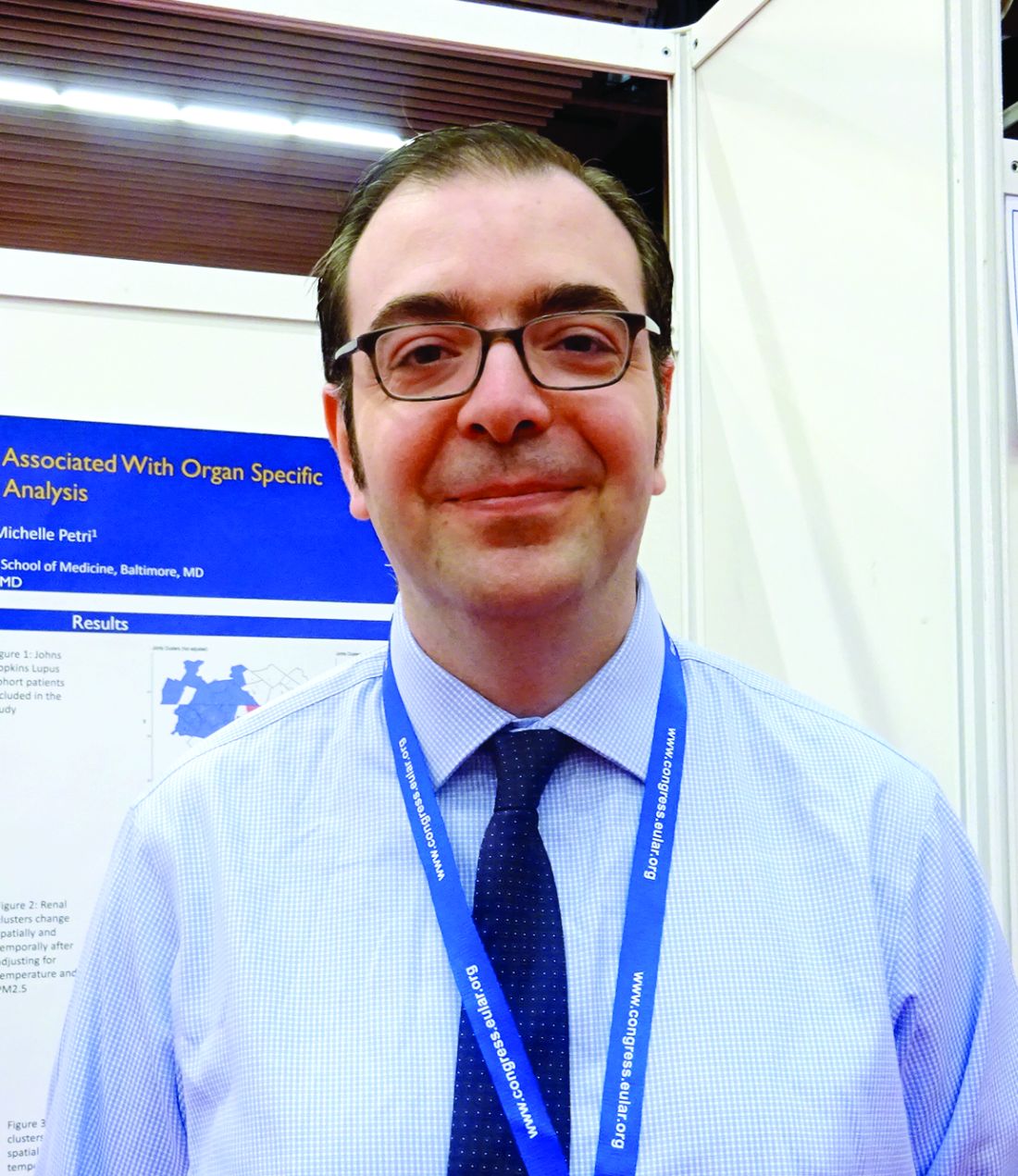
Furthermore, for every 1 mcg per cubic meter increase in fine particulate matter pollution (PM2.5), there were increases in serositis (OR, 1.0240) and hematologic flares (OR, 1.011).
There were two reasons for looking at the role of these environmental factors in relation to SLE flares, said Dr. Stojan, an assistant professor of medicine at Johns Hopkins University, Baltimore. “The first was a clinical observation – I was getting clusters of patients with certain disease manifestations, for example with serositis or joint flares, and there wasn’t a random distribution.”
The second was a patient observation, added Dr. Stojan, who is also codirector of the Johns Hopkins Lupus Center. Every year, patients treated at the Center have the opportunity to meet each other and hear about the research being done by the team, and it was at this meeting that patients said they felt they were experiencing similar disease flares.
To look at the underlying role of environmental exposures in the development of SLE and possible associations with disease activity, Dr. Stojan and associates used a method known as cluster detection, which is commonly used in public health studies.
The investigators used a 350-km radial zone around the Johns Hopkins Lupus Center for the analysis as this was an area where a uniform number of patients treated by the center were living. They obtained data on 1,261 patients in the Hopkins Lupus Cohort, spanning a 10-year period from 1999 to 2009, and used SaTScan software to identify clusters of disease activity occurring during 3 separate monthly time intervals in different counties. The researchers then linked these clusters to average temperature and PM2.5 data obtained from the Environmental Protection Agency for the 10 days prior to patients’ visits.
“The SaTScan system predicts how many flares per organ system you would expect in a county based on the number of patients and based on the total flares we have in our cohort,” Dr. Stojan explained. Previously, the system helped to identify areas that had a higher flare incidence for each organ system that lasted for about 2-3 years, did not overlap, and could not be explained. So, the next step was to look for potential environmental triggers.
“Basically, the SaTScan adjusts the data that’s inputted for temperature and small particulate pollution. If the cluster moves in space and time then these did affect it,” Dr. Stojan said. “It seems that these do affect certain types of organ flares,” even after adjustment for other variables such as patients’ age, gender, income, ethnicity, and living situation (rural or urban).
Flares in skin symptoms during the summer have been identified before, he acknowledged, but the link to joint flares or neurologic flares have not. The latter includes things like seizures, neuropathy, or abnormal brain imaging rather than mood changes or mild cognitive dysfunction.
These data could have an impact on how clinical trials are designed, Dr. Stojan added, suggesting that factoring in where patients live and how close they are to areas of pollution could ensure a uniform population of patients is studied.
From a more practical perspective, these data might help to develop predictive models to help understand when patients are likely to experience a flare and if any action can be taken to ameliorate the effects of exposure.
The next step is a collaboration with patients to develop software or a mobile application where patients could input information about any disease flares. This would enable a finer view of what could be happening, Dr. Stojan said, as while daily readings are available for the environmental factors studied, disease activity data is only available during 3 separate monthly intervals. It would also allow other environmental factors to be considered.
“I think this is an important step in figuring out environmental factors and their influence on lupus,” he said. “There has been an extensive amount of research into viral causes and potential infectious triggers, but spatial-temporal analysis of environmental variables have never been done before in lupus.”
The study received no commercial funding, and Dr. Stojan reported having no disclosures.
SOURCE: Stojan G et al. Ann Rheum Dis. 2018;77(Suppl 2):1191. Abstract SAT0685.
AMSTERDAM – Both air temperature and air pollution levels affected the likelihood of experiencing a flare in systemic lupus erythematosus (SLE) organ-specific disease activity in a study presented at the European Congress of Rheumatology.
For every 1° F increase in temperature, there was an increase in the odds of experiencing a skin flare (odds ratio, 1.0075), joint flare (OR, 1.0110), or neurologic flare (OR, 1.0096), reported George Stojan, MD, and associates during one of the poster sessions. Conversely, renal flares were less likely to occur with rising temperature (OR, 0.9960). The latter is something previously reported, Dr. Stojan said in an interview, “as we found most renal flares occur in the winter, not in the summer months.”
Furthermore, for every 1 mcg per cubic meter increase in fine particulate matter pollution (PM2.5), there were increases in serositis (OR, 1.0240) and hematologic flares (OR, 1.011).
There were two reasons for looking at the role of these environmental factors in relation to SLE flares, said Dr. Stojan, an assistant professor of medicine at Johns Hopkins University, Baltimore. “The first was a clinical observation – I was getting clusters of patients with certain disease manifestations, for example with serositis or joint flares, and there wasn’t a random distribution.”
The second was a patient observation, added Dr. Stojan, who is also codirector of the Johns Hopkins Lupus Center. Every year, patients treated at the Center have the opportunity to meet each other and hear about the research being done by the team, and it was at this meeting that patients said they felt they were experiencing similar disease flares.
To look at the underlying role of environmental exposures in the development of SLE and possible associations with disease activity, Dr. Stojan and associates used a method known as cluster detection, which is commonly used in public health studies.
The investigators used a 350-km radial zone around the Johns Hopkins Lupus Center for the analysis as this was an area where a uniform number of patients treated by the center were living. They obtained data on 1,261 patients in the Hopkins Lupus Cohort, spanning a 10-year period from 1999 to 2009, and used SaTScan software to identify clusters of disease activity occurring during 3 separate monthly time intervals in different counties. The researchers then linked these clusters to average temperature and PM2.5 data obtained from the Environmental Protection Agency for the 10 days prior to patients’ visits.
“The SaTScan system predicts how many flares per organ system you would expect in a county based on the number of patients and based on the total flares we have in our cohort,” Dr. Stojan explained. Previously, the system helped to identify areas that had a higher flare incidence for each organ system that lasted for about 2-3 years, did not overlap, and could not be explained. So, the next step was to look for potential environmental triggers.
“Basically, the SaTScan adjusts the data that’s inputted for temperature and small particulate pollution. If the cluster moves in space and time then these did affect it,” Dr. Stojan said. “It seems that these do affect certain types of organ flares,” even after adjustment for other variables such as patients’ age, gender, income, ethnicity, and living situation (rural or urban).
Flares in skin symptoms during the summer have been identified before, he acknowledged, but the link to joint flares or neurologic flares have not. The latter includes things like seizures, neuropathy, or abnormal brain imaging rather than mood changes or mild cognitive dysfunction.
These data could have an impact on how clinical trials are designed, Dr. Stojan added, suggesting that factoring in where patients live and how close they are to areas of pollution could ensure a uniform population of patients is studied.
From a more practical perspective, these data might help to develop predictive models to help understand when patients are likely to experience a flare and if any action can be taken to ameliorate the effects of exposure.
The next step is a collaboration with patients to develop software or a mobile application where patients could input information about any disease flares. This would enable a finer view of what could be happening, Dr. Stojan said, as while daily readings are available for the environmental factors studied, disease activity data is only available during 3 separate monthly intervals. It would also allow other environmental factors to be considered.
“I think this is an important step in figuring out environmental factors and their influence on lupus,” he said. “There has been an extensive amount of research into viral causes and potential infectious triggers, but spatial-temporal analysis of environmental variables have never been done before in lupus.”
The study received no commercial funding, and Dr. Stojan reported having no disclosures.
SOURCE: Stojan G et al. Ann Rheum Dis. 2018;77(Suppl 2):1191. Abstract SAT0685.
AMSTERDAM – Both air temperature and air pollution levels affected the likelihood of experiencing a flare in systemic lupus erythematosus (SLE) organ-specific disease activity in a study presented at the European Congress of Rheumatology.
For every 1° F increase in temperature, there was an increase in the odds of experiencing a skin flare (odds ratio, 1.0075), joint flare (OR, 1.0110), or neurologic flare (OR, 1.0096), reported George Stojan, MD, and associates during one of the poster sessions. Conversely, renal flares were less likely to occur with rising temperature (OR, 0.9960). The latter is something previously reported, Dr. Stojan said in an interview, “as we found most renal flares occur in the winter, not in the summer months.”
Furthermore, for every 1 mcg per cubic meter increase in fine particulate matter pollution (PM2.5), there were increases in serositis (OR, 1.0240) and hematologic flares (OR, 1.011).
There were two reasons for looking at the role of these environmental factors in relation to SLE flares, said Dr. Stojan, an assistant professor of medicine at Johns Hopkins University, Baltimore. “The first was a clinical observation – I was getting clusters of patients with certain disease manifestations, for example with serositis or joint flares, and there wasn’t a random distribution.”
The second was a patient observation, added Dr. Stojan, who is also codirector of the Johns Hopkins Lupus Center. Every year, patients treated at the Center have the opportunity to meet each other and hear about the research being done by the team, and it was at this meeting that patients said they felt they were experiencing similar disease flares.
To look at the underlying role of environmental exposures in the development of SLE and possible associations with disease activity, Dr. Stojan and associates used a method known as cluster detection, which is commonly used in public health studies.
The investigators used a 350-km radial zone around the Johns Hopkins Lupus Center for the analysis as this was an area where a uniform number of patients treated by the center were living. They obtained data on 1,261 patients in the Hopkins Lupus Cohort, spanning a 10-year period from 1999 to 2009, and used SaTScan software to identify clusters of disease activity occurring during 3 separate monthly time intervals in different counties. The researchers then linked these clusters to average temperature and PM2.5 data obtained from the Environmental Protection Agency for the 10 days prior to patients’ visits.
“The SaTScan system predicts how many flares per organ system you would expect in a county based on the number of patients and based on the total flares we have in our cohort,” Dr. Stojan explained. Previously, the system helped to identify areas that had a higher flare incidence for each organ system that lasted for about 2-3 years, did not overlap, and could not be explained. So, the next step was to look for potential environmental triggers.
“Basically, the SaTScan adjusts the data that’s inputted for temperature and small particulate pollution. If the cluster moves in space and time then these did affect it,” Dr. Stojan said. “It seems that these do affect certain types of organ flares,” even after adjustment for other variables such as patients’ age, gender, income, ethnicity, and living situation (rural or urban).
Flares in skin symptoms during the summer have been identified before, he acknowledged, but the link to joint flares or neurologic flares have not. The latter includes things like seizures, neuropathy, or abnormal brain imaging rather than mood changes or mild cognitive dysfunction.
These data could have an impact on how clinical trials are designed, Dr. Stojan added, suggesting that factoring in where patients live and how close they are to areas of pollution could ensure a uniform population of patients is studied.
From a more practical perspective, these data might help to develop predictive models to help understand when patients are likely to experience a flare and if any action can be taken to ameliorate the effects of exposure.
The next step is a collaboration with patients to develop software or a mobile application where patients could input information about any disease flares. This would enable a finer view of what could be happening, Dr. Stojan said, as while daily readings are available for the environmental factors studied, disease activity data is only available during 3 separate monthly intervals. It would also allow other environmental factors to be considered.
“I think this is an important step in figuring out environmental factors and their influence on lupus,” he said. “There has been an extensive amount of research into viral causes and potential infectious triggers, but spatial-temporal analysis of environmental variables have never been done before in lupus.”
The study received no commercial funding, and Dr. Stojan reported having no disclosures.
SOURCE: Stojan G et al. Ann Rheum Dis. 2018;77(Suppl 2):1191. Abstract SAT0685.
REPORTING FROM THE EULAR 2018 CONGRESS
Key clinical point:
Major finding: For every 1° F increase in temperature, the risk for skin, joint, or neurologic flares increased.
Study details: A spatial-time cluster analysis of 1,261 patients in the Hopkins Lupus Cohort linking disease activity to temperature changes and fine particulate matter pollution.
Disclosures: The study received no commercial funding, and Dr. Stojan reported having no disclosures.
Source: Stojan G et al. Ann Rheum Dis. 2018;77(Suppl 2):1191. Abstract SAT0685.
Prolia tops risedronate at 2 years in steroid-induced osteoporosis
AMSTERDAM – Greater increases in bone strength were achieved with denosumab (Prolia) than with risedronate in patients receiving glucocorticoid treatment in a phase 3 trial, suggesting it may prove to be an effective means of preventing osteoporosis in this at-risk population of patients.
At 2 years, the percentage change in bone mineral density (BMD) from baseline with denosumab compared to risedronate in patients initiating steroid treatment was significantly higher (all P values less than .001) at the lumbar spine (6% vs. 2%), total hip (3% vs. 0%), and the femoral neck (1.5% vs. –1%). Similar results were seen in patients who were continuing steroid treatment when they entered the randomized, multicenter, double blind trial.
These data build on the 1-year data that have just been published (Lancet Diabetes Endocrinol. 2018;6[6]:445-54), Willem F. Lems, MD, the presenting study investigator, said at the European Congress of Rheumatology.
“Denosumab continued to increased BMD significantly more then risedronate through 24 months,” said Dr. Lems of VU University Medical Center, Amsterdam. He added that “the treatment differences at all skeletal sites were larger at 24 months than as 12 months.”
The Food and Drug Administration approved an additional indication in May of 2018 for denosumab to treat glucocorticoid-induced osteoporosis in adults at high risk of fracture. The biologic, a monoclonal antibody that targets the RANK ligand, was already approved to treat postmenopausal women with osteoporosis at high fracture risk, to increase bone mass in men with osteoporosis at high fracture risk, and to increase bone mass in women receiving adjuvant aromatase inhibitor therapy for breast cancer and in men receiving androgen deprivation therapy for nonmetastatic prostate cancer.
Secondary osteoporosis is a well known downside of glucocorticoid treatment, and despite there being approved therapies, many patients do not receive such treatment, Dr. Lems noted.
“This 24-month study assessed the safety and efficacy of denosumab versus risedronate in glucocorticoid-treated individuals, in whom guidelines advocate treatment,” Dr. Lems said.

In all, 795 adults who were taking glucocorticoids (7.5 mg prednisone or more daily, or equivalent) were enrolled at 79 sites in Europe, North America, Latin America, and Asia. Patients were subdivided into two populations based on their duration of glucocorticoid use, with 290 designated “glucocorticoid initiating” as they had been treated for less than 3 months, and 505 as “glucocorticoid continuing” as they had been treated for 3 or more months. Within these groups, approximately half were randomized to receive denosumab at a 60-mg subcutaneous dose every 6 months and half to receive risedronate 5 mg orally every day. All participants received calcium and vitamin D supplementation.
Bone turnover markers also declined “significantly more” with denosumab than with risedronate, with the exception of procollagen type 1 N-terminal telopeptide on day 10 and at 2 years and serum C-telopeptide of type 1 collagen at 2 years.
As for safety, a similar percentage of adverse events, including serious adverse events, was seen, Dr. Lems said. So far, he added, “data seem to be reassuring” regarding the risk for serious infections in high-risk subgroups of patients, such as those also taking biologic or immunosuppressant medications. There were no infections reported in patients taking biologics (vs. 12.1% for risedronate) and fewer infections in those taking immunosuppressant or biologic medication (3.6% vs. 6.8%).
Although the study was not powered to look at the rate of fractures between the two treatments, Dr. Lems noted that there was no significant difference in the rates of either new vertebral (4.1% for denosumab; 5.8% risedronate) or clinical (5.8% vs. 6.3%) fractures at 2 years.
“Additional studies are needed to confirm if denosumab is superior to other bisphosphonates for BMD improvement and fracture reduction,” Dr. Lems said. “Denosumab may offer a useful osteoporosis treatment option for patients receiving glucocorticoids,” he concluded.
Amgen sponsored the study. Dr. Lems acknowledged ties to Amgen, Eli Lilly, and Merck: being on the speakers bureau, receiving honoraria for advisory board meetings, and acting as a consultant. All but one other author disclosed ties to Amgen.
SOURCE: Saag KG et al. Ann Rheum Dis. 2018;77(Suppl 2):218. Abstract OP0345.
AMSTERDAM – Greater increases in bone strength were achieved with denosumab (Prolia) than with risedronate in patients receiving glucocorticoid treatment in a phase 3 trial, suggesting it may prove to be an effective means of preventing osteoporosis in this at-risk population of patients.
At 2 years, the percentage change in bone mineral density (BMD) from baseline with denosumab compared to risedronate in patients initiating steroid treatment was significantly higher (all P values less than .001) at the lumbar spine (6% vs. 2%), total hip (3% vs. 0%), and the femoral neck (1.5% vs. –1%). Similar results were seen in patients who were continuing steroid treatment when they entered the randomized, multicenter, double blind trial.
These data build on the 1-year data that have just been published (Lancet Diabetes Endocrinol. 2018;6[6]:445-54), Willem F. Lems, MD, the presenting study investigator, said at the European Congress of Rheumatology.
“Denosumab continued to increased BMD significantly more then risedronate through 24 months,” said Dr. Lems of VU University Medical Center, Amsterdam. He added that “the treatment differences at all skeletal sites were larger at 24 months than as 12 months.”
The Food and Drug Administration approved an additional indication in May of 2018 for denosumab to treat glucocorticoid-induced osteoporosis in adults at high risk of fracture. The biologic, a monoclonal antibody that targets the RANK ligand, was already approved to treat postmenopausal women with osteoporosis at high fracture risk, to increase bone mass in men with osteoporosis at high fracture risk, and to increase bone mass in women receiving adjuvant aromatase inhibitor therapy for breast cancer and in men receiving androgen deprivation therapy for nonmetastatic prostate cancer.
Secondary osteoporosis is a well known downside of glucocorticoid treatment, and despite there being approved therapies, many patients do not receive such treatment, Dr. Lems noted.
“This 24-month study assessed the safety and efficacy of denosumab versus risedronate in glucocorticoid-treated individuals, in whom guidelines advocate treatment,” Dr. Lems said.
In all, 795 adults who were taking glucocorticoids (7.5 mg prednisone or more daily, or equivalent) were enrolled at 79 sites in Europe, North America, Latin America, and Asia. Patients were subdivided into two populations based on their duration of glucocorticoid use, with 290 designated “glucocorticoid initiating” as they had been treated for less than 3 months, and 505 as “glucocorticoid continuing” as they had been treated for 3 or more months. Within these groups, approximately half were randomized to receive denosumab at a 60-mg subcutaneous dose every 6 months and half to receive risedronate 5 mg orally every day. All participants received calcium and vitamin D supplementation.
Bone turnover markers also declined “significantly more” with denosumab than with risedronate, with the exception of procollagen type 1 N-terminal telopeptide on day 10 and at 2 years and serum C-telopeptide of type 1 collagen at 2 years.
As for safety, a similar percentage of adverse events, including serious adverse events, was seen, Dr. Lems said. So far, he added, “data seem to be reassuring” regarding the risk for serious infections in high-risk subgroups of patients, such as those also taking biologic or immunosuppressant medications. There were no infections reported in patients taking biologics (vs. 12.1% for risedronate) and fewer infections in those taking immunosuppressant or biologic medication (3.6% vs. 6.8%).
Although the study was not powered to look at the rate of fractures between the two treatments, Dr. Lems noted that there was no significant difference in the rates of either new vertebral (4.1% for denosumab; 5.8% risedronate) or clinical (5.8% vs. 6.3%) fractures at 2 years.
“Additional studies are needed to confirm if denosumab is superior to other bisphosphonates for BMD improvement and fracture reduction,” Dr. Lems said. “Denosumab may offer a useful osteoporosis treatment option for patients receiving glucocorticoids,” he concluded.
Amgen sponsored the study. Dr. Lems acknowledged ties to Amgen, Eli Lilly, and Merck: being on the speakers bureau, receiving honoraria for advisory board meetings, and acting as a consultant. All but one other author disclosed ties to Amgen.
SOURCE: Saag KG et al. Ann Rheum Dis. 2018;77(Suppl 2):218. Abstract OP0345.
AMSTERDAM – Greater increases in bone strength were achieved with denosumab (Prolia) than with risedronate in patients receiving glucocorticoid treatment in a phase 3 trial, suggesting it may prove to be an effective means of preventing osteoporosis in this at-risk population of patients.
At 2 years, the percentage change in bone mineral density (BMD) from baseline with denosumab compared to risedronate in patients initiating steroid treatment was significantly higher (all P values less than .001) at the lumbar spine (6% vs. 2%), total hip (3% vs. 0%), and the femoral neck (1.5% vs. –1%). Similar results were seen in patients who were continuing steroid treatment when they entered the randomized, multicenter, double blind trial.
These data build on the 1-year data that have just been published (Lancet Diabetes Endocrinol. 2018;6[6]:445-54), Willem F. Lems, MD, the presenting study investigator, said at the European Congress of Rheumatology.
“Denosumab continued to increased BMD significantly more then risedronate through 24 months,” said Dr. Lems of VU University Medical Center, Amsterdam. He added that “the treatment differences at all skeletal sites were larger at 24 months than as 12 months.”
The Food and Drug Administration approved an additional indication in May of 2018 for denosumab to treat glucocorticoid-induced osteoporosis in adults at high risk of fracture. The biologic, a monoclonal antibody that targets the RANK ligand, was already approved to treat postmenopausal women with osteoporosis at high fracture risk, to increase bone mass in men with osteoporosis at high fracture risk, and to increase bone mass in women receiving adjuvant aromatase inhibitor therapy for breast cancer and in men receiving androgen deprivation therapy for nonmetastatic prostate cancer.
Secondary osteoporosis is a well known downside of glucocorticoid treatment, and despite there being approved therapies, many patients do not receive such treatment, Dr. Lems noted.
“This 24-month study assessed the safety and efficacy of denosumab versus risedronate in glucocorticoid-treated individuals, in whom guidelines advocate treatment,” Dr. Lems said.
In all, 795 adults who were taking glucocorticoids (7.5 mg prednisone or more daily, or equivalent) were enrolled at 79 sites in Europe, North America, Latin America, and Asia. Patients were subdivided into two populations based on their duration of glucocorticoid use, with 290 designated “glucocorticoid initiating” as they had been treated for less than 3 months, and 505 as “glucocorticoid continuing” as they had been treated for 3 or more months. Within these groups, approximately half were randomized to receive denosumab at a 60-mg subcutaneous dose every 6 months and half to receive risedronate 5 mg orally every day. All participants received calcium and vitamin D supplementation.
Bone turnover markers also declined “significantly more” with denosumab than with risedronate, with the exception of procollagen type 1 N-terminal telopeptide on day 10 and at 2 years and serum C-telopeptide of type 1 collagen at 2 years.
As for safety, a similar percentage of adverse events, including serious adverse events, was seen, Dr. Lems said. So far, he added, “data seem to be reassuring” regarding the risk for serious infections in high-risk subgroups of patients, such as those also taking biologic or immunosuppressant medications. There were no infections reported in patients taking biologics (vs. 12.1% for risedronate) and fewer infections in those taking immunosuppressant or biologic medication (3.6% vs. 6.8%).
Although the study was not powered to look at the rate of fractures between the two treatments, Dr. Lems noted that there was no significant difference in the rates of either new vertebral (4.1% for denosumab; 5.8% risedronate) or clinical (5.8% vs. 6.3%) fractures at 2 years.
“Additional studies are needed to confirm if denosumab is superior to other bisphosphonates for BMD improvement and fracture reduction,” Dr. Lems said. “Denosumab may offer a useful osteoporosis treatment option for patients receiving glucocorticoids,” he concluded.
Amgen sponsored the study. Dr. Lems acknowledged ties to Amgen, Eli Lilly, and Merck: being on the speakers bureau, receiving honoraria for advisory board meetings, and acting as a consultant. All but one other author disclosed ties to Amgen.
SOURCE: Saag KG et al. Ann Rheum Dis. 2018;77(Suppl 2):218. Abstract OP0345.
REPORTING FROM THE EULAR 2018 CONGRESS
Key clinical point: Denosumab may offer a useful alternative to risedronate in patients at risk for steroid-induced osteoporosis.
Major finding: Treatment differences were greater at 2 years than at 1 year at all skeletal sites assessed.
Study details: A phase 3, randomized, double-blind, active-controlled study to evaluate the efficacy and safety of denosumab versus risedronate in 795 glucocorticoid-treated individuals.
Disclosures: Amgen sponsored the study. Dr. Lems acknowledged ties to Amgen, Eli Lilly, and Merck: being on the speakers bureau, receiving honoraria for advisory board meetings, and acting as a consultant. All but one other author disclosed ties to Amgen.
Source: Saag KG et al. Ann Rheum Dis. 2018;77(Suppl 2):218. Abstract OP0345.
ACR and EULAR to review new criteria for classifying vasculitis
AMSTERDAM – New classification criteria for antineutrophil cytoplasmic antibody (ANCA)–associated vasculitides have been drafted and now need formal review by the American College of Rheumatology and the European League Against Rheumatism before they can be put into practice.

According to Joanna Robson, MBBS, PhD, the chair of the DCVAS steering committee, these new criteria better “reflect current practice by incorporating, but not relying on, ANCA testing and advanced imaging.”
“The old criteria were actually produced in the early 1990s and since then we’ve had further thinking about the different subtypes of systemic vasculitis,” explained Dr. Robson of the University of the West of England in Bristol. There has also been a consensus conference held at Chapel Hill (Arthritis Rheum 2013;65[1]:1-11) which identified MPA as a separate entity, and ANCA testing has become routine practice. Computed tomography and magnetic resonance imaging are also now used to help differentiate between the different vasculitides.
“This really has been a collaborative, multinational effort,” Dr. Robson said at the European Congress of Rheumatology. To develop the draft criteria, data collated from 135 sites in 32 countries on more than 2,000 patients were used. These had been collected as part of the ACR/EULAR–run DCVAS study, which has been coordinated at the University of Oxford since 2011.
Three phases were used to develop these criteria: first an expert panel reviewed all cases in the DCVAS to identify those that they felt were attributable to small vessel vasculitis. Second, variables that might be appropriate to use in the models were examined, with more than 8,000 individual DVCAS items considered and then whittled down to 91 items and then sifted again to form a clear set of 10 or fewer items. Third, statistical analyses combined with expert review were used to develop the criteria and then validate these.
Dr. Robson reported that of 2,871 cases identified as ANCA-associated vasculitis, 2,072 (72%) were agreed upon by the expert review panel. Of these, there were 724 cases of GPA, 291 of MPA, 226 of EGPA, and around 300 cases of other small vessel vasculitis or polyarteritis nodosa. To develop the criteria the GPA cases were used as the “cases” and the other types of vasculitis as the comparators, Dr. Robson explained.
For GPA, MPA, and EGPA a set of items (10, 6, and 7, respectively) were derived and scored, positively or negatively, and a cutoff determined at which a classification of the particular vasculitis could be made. During discussion, Dr. Robson noted that the threshold score for a classification of EGPA (greater than or equal to 6) had been set slightly higher than for GPA or MPA (both greater than or equal to 5) “because of the clinical problem of there being very close comparators which can actually mimic EGPA.” This is where the negative scoring of some items used in these criteria are very important, she said.
The 10-item GPA criteria included three clinical (such as the presence of bloody nasal discharge upon examination) and seven investigational (such as cANCA positivity) items. These criteria were found to have a high sensitivity (92%) and specificity (94%) for identifying GPA.
The six-item MPA criteria included one clinical item (bloody nasal discharge, which was this time attributed a negative score) and five investigational items (with ANCA testing given a higher positive score than for GPA). The sensitivity and specificity of these criteria were a respective 91% and 94%.
Finally, the seven-item EGPA criteria included three clinical items (including obstructive airways disease and nasal polyps) and four investigational items (with ANCA positivity given a negative score). These criteria had an 85% sensitivity and 99% specificity for EGPA.
Dr. Robson emphasized that all of these classification criteria were to be used only after exclusion of other possible causes of vasculitis, such as infection, malignancy, or other autoimmune diseases such as inflammatory bowel disease, and a “diagnosis of small- or medium-vessel vasculitis has been made.”
These criteria are to help classify into the subtypes of vasculitis “primarily for the purpose of clinical trials,” she said. “The next steps are review by the EULAR and ACR committee, and only on final approval will these criteria be ready to use.”
DCVAS is sponsored by the University of Oxford (England) with funding from the European League Against Rheumatism, the American College of Rheumatology, and the Vasculitis Foundation. Dr. Robson had no relevant financial disclosures.
SOURCE: Robson JC et al. EULAR 2018. Abstract OP0021.
AMSTERDAM – New classification criteria for antineutrophil cytoplasmic antibody (ANCA)–associated vasculitides have been drafted and now need formal review by the American College of Rheumatology and the European League Against Rheumatism before they can be put into practice.
According to Joanna Robson, MBBS, PhD, the chair of the DCVAS steering committee, these new criteria better “reflect current practice by incorporating, but not relying on, ANCA testing and advanced imaging.”
“The old criteria were actually produced in the early 1990s and since then we’ve had further thinking about the different subtypes of systemic vasculitis,” explained Dr. Robson of the University of the West of England in Bristol. There has also been a consensus conference held at Chapel Hill (Arthritis Rheum 2013;65[1]:1-11) which identified MPA as a separate entity, and ANCA testing has become routine practice. Computed tomography and magnetic resonance imaging are also now used to help differentiate between the different vasculitides.
“This really has been a collaborative, multinational effort,” Dr. Robson said at the European Congress of Rheumatology. To develop the draft criteria, data collated from 135 sites in 32 countries on more than 2,000 patients were used. These had been collected as part of the ACR/EULAR–run DCVAS study, which has been coordinated at the University of Oxford since 2011.
Three phases were used to develop these criteria: first an expert panel reviewed all cases in the DCVAS to identify those that they felt were attributable to small vessel vasculitis. Second, variables that might be appropriate to use in the models were examined, with more than 8,000 individual DVCAS items considered and then whittled down to 91 items and then sifted again to form a clear set of 10 or fewer items. Third, statistical analyses combined with expert review were used to develop the criteria and then validate these.
Dr. Robson reported that of 2,871 cases identified as ANCA-associated vasculitis, 2,072 (72%) were agreed upon by the expert review panel. Of these, there were 724 cases of GPA, 291 of MPA, 226 of EGPA, and around 300 cases of other small vessel vasculitis or polyarteritis nodosa. To develop the criteria the GPA cases were used as the “cases” and the other types of vasculitis as the comparators, Dr. Robson explained.
For GPA, MPA, and EGPA a set of items (10, 6, and 7, respectively) were derived and scored, positively or negatively, and a cutoff determined at which a classification of the particular vasculitis could be made. During discussion, Dr. Robson noted that the threshold score for a classification of EGPA (greater than or equal to 6) had been set slightly higher than for GPA or MPA (both greater than or equal to 5) “because of the clinical problem of there being very close comparators which can actually mimic EGPA.” This is where the negative scoring of some items used in these criteria are very important, she said.
The 10-item GPA criteria included three clinical (such as the presence of bloody nasal discharge upon examination) and seven investigational (such as cANCA positivity) items. These criteria were found to have a high sensitivity (92%) and specificity (94%) for identifying GPA.
The six-item MPA criteria included one clinical item (bloody nasal discharge, which was this time attributed a negative score) and five investigational items (with ANCA testing given a higher positive score than for GPA). The sensitivity and specificity of these criteria were a respective 91% and 94%.
Finally, the seven-item EGPA criteria included three clinical items (including obstructive airways disease and nasal polyps) and four investigational items (with ANCA positivity given a negative score). These criteria had an 85% sensitivity and 99% specificity for EGPA.
Dr. Robson emphasized that all of these classification criteria were to be used only after exclusion of other possible causes of vasculitis, such as infection, malignancy, or other autoimmune diseases such as inflammatory bowel disease, and a “diagnosis of small- or medium-vessel vasculitis has been made.”
These criteria are to help classify into the subtypes of vasculitis “primarily for the purpose of clinical trials,” she said. “The next steps are review by the EULAR and ACR committee, and only on final approval will these criteria be ready to use.”
DCVAS is sponsored by the University of Oxford (England) with funding from the European League Against Rheumatism, the American College of Rheumatology, and the Vasculitis Foundation. Dr. Robson had no relevant financial disclosures.
SOURCE: Robson JC et al. EULAR 2018. Abstract OP0021.
AMSTERDAM – New classification criteria for antineutrophil cytoplasmic antibody (ANCA)–associated vasculitides have been drafted and now need formal review by the American College of Rheumatology and the European League Against Rheumatism before they can be put into practice.
According to Joanna Robson, MBBS, PhD, the chair of the DCVAS steering committee, these new criteria better “reflect current practice by incorporating, but not relying on, ANCA testing and advanced imaging.”
“The old criteria were actually produced in the early 1990s and since then we’ve had further thinking about the different subtypes of systemic vasculitis,” explained Dr. Robson of the University of the West of England in Bristol. There has also been a consensus conference held at Chapel Hill (Arthritis Rheum 2013;65[1]:1-11) which identified MPA as a separate entity, and ANCA testing has become routine practice. Computed tomography and magnetic resonance imaging are also now used to help differentiate between the different vasculitides.
“This really has been a collaborative, multinational effort,” Dr. Robson said at the European Congress of Rheumatology. To develop the draft criteria, data collated from 135 sites in 32 countries on more than 2,000 patients were used. These had been collected as part of the ACR/EULAR–run DCVAS study, which has been coordinated at the University of Oxford since 2011.
Three phases were used to develop these criteria: first an expert panel reviewed all cases in the DCVAS to identify those that they felt were attributable to small vessel vasculitis. Second, variables that might be appropriate to use in the models were examined, with more than 8,000 individual DVCAS items considered and then whittled down to 91 items and then sifted again to form a clear set of 10 or fewer items. Third, statistical analyses combined with expert review were used to develop the criteria and then validate these.
Dr. Robson reported that of 2,871 cases identified as ANCA-associated vasculitis, 2,072 (72%) were agreed upon by the expert review panel. Of these, there were 724 cases of GPA, 291 of MPA, 226 of EGPA, and around 300 cases of other small vessel vasculitis or polyarteritis nodosa. To develop the criteria the GPA cases were used as the “cases” and the other types of vasculitis as the comparators, Dr. Robson explained.
For GPA, MPA, and EGPA a set of items (10, 6, and 7, respectively) were derived and scored, positively or negatively, and a cutoff determined at which a classification of the particular vasculitis could be made. During discussion, Dr. Robson noted that the threshold score for a classification of EGPA (greater than or equal to 6) had been set slightly higher than for GPA or MPA (both greater than or equal to 5) “because of the clinical problem of there being very close comparators which can actually mimic EGPA.” This is where the negative scoring of some items used in these criteria are very important, she said.
The 10-item GPA criteria included three clinical (such as the presence of bloody nasal discharge upon examination) and seven investigational (such as cANCA positivity) items. These criteria were found to have a high sensitivity (92%) and specificity (94%) for identifying GPA.
The six-item MPA criteria included one clinical item (bloody nasal discharge, which was this time attributed a negative score) and five investigational items (with ANCA testing given a higher positive score than for GPA). The sensitivity and specificity of these criteria were a respective 91% and 94%.
Finally, the seven-item EGPA criteria included three clinical items (including obstructive airways disease and nasal polyps) and four investigational items (with ANCA positivity given a negative score). These criteria had an 85% sensitivity and 99% specificity for EGPA.
Dr. Robson emphasized that all of these classification criteria were to be used only after exclusion of other possible causes of vasculitis, such as infection, malignancy, or other autoimmune diseases such as inflammatory bowel disease, and a “diagnosis of small- or medium-vessel vasculitis has been made.”
These criteria are to help classify into the subtypes of vasculitis “primarily for the purpose of clinical trials,” she said. “The next steps are review by the EULAR and ACR committee, and only on final approval will these criteria be ready to use.”
DCVAS is sponsored by the University of Oxford (England) with funding from the European League Against Rheumatism, the American College of Rheumatology, and the Vasculitis Foundation. Dr. Robson had no relevant financial disclosures.
SOURCE: Robson JC et al. EULAR 2018. Abstract OP0021.
REPORTING FROM THE EULAR 2018 CONGRESS
Key clinical point: New classification criteria for ANCA-associated vasculitides have been drafted and now need formal review before they are ready to use.
Major finding: Analysis of the 10-, 6-, and 7-item GPA, MPA, and EGPA criteria showed a respective 92%, 94%, and 91% sensitivity and 94%, 85%, and 99% specificity.
Study details: The Diagnostic and Classification Criteria in Vasculitis (DCVAS) observational study of more than 6,000 cases of vasculitides and comparators.
Disclosures: DCVAS is sponsored by the University of Oxford (England) with funding from the American College of Rheumatology, the European League Against Rheumatism, and the Vasculitis Foundation. Dr. Robson had no relevant financial disclosures.
Source: Robson JC et al. EULAR 2018. Abstract OP0021.
Biosimilar switch accepted by most rheumatic disease patients
LIVERPOOL, ENGLAND – , although the biosimilar they are being switched to may be important, according to data from three separate poster presentations at the British Society for Rheumatology annual conference.

Of 35 patients who expressed concerns about the switch, most (n = 27) were concerned about the efficacy of the biosimilar, with others were mainly concerned about safety (n = 5), side effects (n = 3), or other factors (n = 5).
“This is the population of patients we were worried about, because we had got them on a drug that had finally worked for them,” poster presenter Joanne Kitchen, MBChB, said in an interview.
“It’s hard enough to get on the biologic, and we were concerned about whether they would lose response. ... There wasn’t a lot of evidence about if they didn’t respond and we switched back, would it still work for them,” explained Dr. Kitchen, a consultant rheumatologist who works at the Royal Berkshire Hospital in Reading, England.
Biosimilar etanercept became available in the United Kingdom in April 2016, and many rheumatology centers had to make the switch to its use at the behest of their health trusts in a cost-saving effort. The switch at the Royal Berkshire occurred in August 2016, and Dr. Kitchen explained that prior to the switch, letters were sent out to inform patients, who were then seen in the clinic. There also was an understanding between the medical team and the patients that, if things did not work out, patients could switch back to the originator etanercept.
Between August 2016 and February 2017, 113 patients had switched to biosimilar etanercept for their rheumatoid arthritis (RA), spondyloarthritis, or psoriatic arthritis.
Although worsening joint pain or stiffness (n = 12) or increased fatigue (n = 4) were reported by some patients, the fact that 88% of those who responded to the survey in October 2017 were still taking the drug 6-12 months after initiation suggests that these side effects were minor or manageable. Adherence to medication was not checked, however, which might have been a factor in any flare ups.
Medication changes occurred for four patients who switched back to originator etanercept, three to an alternative biologic, and four who discontinued biologics.
Other adverse effects reported by patients were more painful injections (n = 5), infections (n = 2), and others incidents such as individual cases of rash and headache in the remainder.
“We know our biologic costs are incrementally increasing, but it’s still very hard for some patients to get onto these drugs,” Dr. Kitchen said. She hopes that with the cost-savings being made from the switch, it could help with negotiations to lower the threshold at which patients become eligible for biologic/biosimilar use, thus enabling more patients in need to be treated.
“I think these data have given confidence that patients can switch onto a biosimilar, and that the real-world experience matches what we’re seeing in trials,” Dr. Kitchen said. “We haven’t had a negative experience, and that’s what patients and we were worried about.”
In a separate poster presentation, Kavina Shah, MBBS, and her associates from Northwick Park Hospital, London, reported their experience of switching 115 patients with RA from etanercept to the biosimilar Benepali between January and June 2017.
They conducted a prospective study in which patients were offered an education session and then attended a clinic appointment set up to manage the switch. Patients were assessed by various objective and subjective means before and 4 months after the switch.
Dr. Shah and her associates found that 43% of patients were pleased with the switch. Part of the reason patients might have been happy with the switch was the easier mode of administration, they observed: “Patients commented on the easier technique and less manual dexterity required.”
However, almost a quarter (23%) of patients were not happy with the switch, with others being indifferent (7%) or unsure (8%).
Patients were also asked how they felt their RA was after the switch, and 75% responded that it was no different, 11% said it had improved, and 17% said it was worse.
The mean Disease Activity Score in 28 joints (DAS28) values were significantly lower in patients after the switch than before (2.66 vs. 2.97; P = .0019). “This could be explained by the lower levels of immunogenicity with Benepali,” Dr. Shah and her coauthors wrote on their poster. Alternatively, it could be an artifact introduced by lower rates of anxiety at follow-up, they said.
There were also statistically nonsignificant improvements in health assessment questionnaire (HAQ) and European Quality of Life-5 Dimensions (EQ-5D) scores.
Taken together, these findings are “reassuring,” Dr. Shah and her associates noted, and “should positively encourage clinicians and patients to switch to biosimilars in order to optimize the cost saving to the NHS.”
Not all biosimilar switches may go as smoothly as switching from TNF inhibitors, as Muhammad K. Nisar, MBBS, reported in another poster presentation at the conference. Dr. Nisar, a consultant rheumatologist for Luton (England) and Dunstable Hospital University Trust, reported his center’s experience of switching patients on rituximab (Rituxan) to biosimilar rituximab (Truxima).
Of 44 patients who were established on rituximab, 39 were eligible to make the switch. Four patients had stopped taking rituximab before the switch took place and one patient remained on the originator. As of October 2017, 24 (61.5%) of patients had actually made the switch.
“All were happy to switch after receiving a letter and having the opportunity to contact if necessary,” Dr. Nisar reported. “At group level there were no major differences in disease outcomes and 80% reported no issues.”
However, five (20%) patients developed a severe serum sickness reaction early on with loss of efficacy. This happened in the first week after the second dose of the biosimilar was given, Dr. Nisar explained. No obvious reason could be found, but two patients required emergency hospital treatment within 24 hours.
“Our experience of switching rituximab patients is certainly not as smooth as it was for infliximab or and etanercept,” Dr. Nisar said. While he said “they support routine switching from originator to biosimilar,” he noted that “close monitoring is required, certainly in the first week of dose administration.”
All authors had nothing to disclose.
SOURCES: Hoque T et al. Rheumatology. 2018 Apr 25;57(Suppl. 3):key075.296. Shah K et al. Rheumatology. 2018 Apr 25;57(Suppl. 3):key075.456. Nisar MK. Rheumatology. 2018 Apr 1;57(Suppl. 3):key075.516.
LIVERPOOL, ENGLAND – , although the biosimilar they are being switched to may be important, according to data from three separate poster presentations at the British Society for Rheumatology annual conference.
Of 35 patients who expressed concerns about the switch, most (n = 27) were concerned about the efficacy of the biosimilar, with others were mainly concerned about safety (n = 5), side effects (n = 3), or other factors (n = 5).
“This is the population of patients we were worried about, because we had got them on a drug that had finally worked for them,” poster presenter Joanne Kitchen, MBChB, said in an interview.
“It’s hard enough to get on the biologic, and we were concerned about whether they would lose response. ... There wasn’t a lot of evidence about if they didn’t respond and we switched back, would it still work for them,” explained Dr. Kitchen, a consultant rheumatologist who works at the Royal Berkshire Hospital in Reading, England.
Biosimilar etanercept became available in the United Kingdom in April 2016, and many rheumatology centers had to make the switch to its use at the behest of their health trusts in a cost-saving effort. The switch at the Royal Berkshire occurred in August 2016, and Dr. Kitchen explained that prior to the switch, letters were sent out to inform patients, who were then seen in the clinic. There also was an understanding between the medical team and the patients that, if things did not work out, patients could switch back to the originator etanercept.
Between August 2016 and February 2017, 113 patients had switched to biosimilar etanercept for their rheumatoid arthritis (RA), spondyloarthritis, or psoriatic arthritis.
Although worsening joint pain or stiffness (n = 12) or increased fatigue (n = 4) were reported by some patients, the fact that 88% of those who responded to the survey in October 2017 were still taking the drug 6-12 months after initiation suggests that these side effects were minor or manageable. Adherence to medication was not checked, however, which might have been a factor in any flare ups.
Medication changes occurred for four patients who switched back to originator etanercept, three to an alternative biologic, and four who discontinued biologics.
Other adverse effects reported by patients were more painful injections (n = 5), infections (n = 2), and others incidents such as individual cases of rash and headache in the remainder.
“We know our biologic costs are incrementally increasing, but it’s still very hard for some patients to get onto these drugs,” Dr. Kitchen said. She hopes that with the cost-savings being made from the switch, it could help with negotiations to lower the threshold at which patients become eligible for biologic/biosimilar use, thus enabling more patients in need to be treated.
“I think these data have given confidence that patients can switch onto a biosimilar, and that the real-world experience matches what we’re seeing in trials,” Dr. Kitchen said. “We haven’t had a negative experience, and that’s what patients and we were worried about.”
In a separate poster presentation, Kavina Shah, MBBS, and her associates from Northwick Park Hospital, London, reported their experience of switching 115 patients with RA from etanercept to the biosimilar Benepali between January and June 2017.
They conducted a prospective study in which patients were offered an education session and then attended a clinic appointment set up to manage the switch. Patients were assessed by various objective and subjective means before and 4 months after the switch.
Dr. Shah and her associates found that 43% of patients were pleased with the switch. Part of the reason patients might have been happy with the switch was the easier mode of administration, they observed: “Patients commented on the easier technique and less manual dexterity required.”
However, almost a quarter (23%) of patients were not happy with the switch, with others being indifferent (7%) or unsure (8%).
Patients were also asked how they felt their RA was after the switch, and 75% responded that it was no different, 11% said it had improved, and 17% said it was worse.
The mean Disease Activity Score in 28 joints (DAS28) values were significantly lower in patients after the switch than before (2.66 vs. 2.97; P = .0019). “This could be explained by the lower levels of immunogenicity with Benepali,” Dr. Shah and her coauthors wrote on their poster. Alternatively, it could be an artifact introduced by lower rates of anxiety at follow-up, they said.
There were also statistically nonsignificant improvements in health assessment questionnaire (HAQ) and European Quality of Life-5 Dimensions (EQ-5D) scores.
Taken together, these findings are “reassuring,” Dr. Shah and her associates noted, and “should positively encourage clinicians and patients to switch to biosimilars in order to optimize the cost saving to the NHS.”
Not all biosimilar switches may go as smoothly as switching from TNF inhibitors, as Muhammad K. Nisar, MBBS, reported in another poster presentation at the conference. Dr. Nisar, a consultant rheumatologist for Luton (England) and Dunstable Hospital University Trust, reported his center’s experience of switching patients on rituximab (Rituxan) to biosimilar rituximab (Truxima).
Of 44 patients who were established on rituximab, 39 were eligible to make the switch. Four patients had stopped taking rituximab before the switch took place and one patient remained on the originator. As of October 2017, 24 (61.5%) of patients had actually made the switch.
“All were happy to switch after receiving a letter and having the opportunity to contact if necessary,” Dr. Nisar reported. “At group level there were no major differences in disease outcomes and 80% reported no issues.”
However, five (20%) patients developed a severe serum sickness reaction early on with loss of efficacy. This happened in the first week after the second dose of the biosimilar was given, Dr. Nisar explained. No obvious reason could be found, but two patients required emergency hospital treatment within 24 hours.
“Our experience of switching rituximab patients is certainly not as smooth as it was for infliximab or and etanercept,” Dr. Nisar said. While he said “they support routine switching from originator to biosimilar,” he noted that “close monitoring is required, certainly in the first week of dose administration.”
All authors had nothing to disclose.
SOURCES: Hoque T et al. Rheumatology. 2018 Apr 25;57(Suppl. 3):key075.296. Shah K et al. Rheumatology. 2018 Apr 25;57(Suppl. 3):key075.456. Nisar MK. Rheumatology. 2018 Apr 1;57(Suppl. 3):key075.516.
LIVERPOOL, ENGLAND – , although the biosimilar they are being switched to may be important, according to data from three separate poster presentations at the British Society for Rheumatology annual conference.
Of 35 patients who expressed concerns about the switch, most (n = 27) were concerned about the efficacy of the biosimilar, with others were mainly concerned about safety (n = 5), side effects (n = 3), or other factors (n = 5).
“This is the population of patients we were worried about, because we had got them on a drug that had finally worked for them,” poster presenter Joanne Kitchen, MBChB, said in an interview.
“It’s hard enough to get on the biologic, and we were concerned about whether they would lose response. ... There wasn’t a lot of evidence about if they didn’t respond and we switched back, would it still work for them,” explained Dr. Kitchen, a consultant rheumatologist who works at the Royal Berkshire Hospital in Reading, England.
Biosimilar etanercept became available in the United Kingdom in April 2016, and many rheumatology centers had to make the switch to its use at the behest of their health trusts in a cost-saving effort. The switch at the Royal Berkshire occurred in August 2016, and Dr. Kitchen explained that prior to the switch, letters were sent out to inform patients, who were then seen in the clinic. There also was an understanding between the medical team and the patients that, if things did not work out, patients could switch back to the originator etanercept.
Between August 2016 and February 2017, 113 patients had switched to biosimilar etanercept for their rheumatoid arthritis (RA), spondyloarthritis, or psoriatic arthritis.
Although worsening joint pain or stiffness (n = 12) or increased fatigue (n = 4) were reported by some patients, the fact that 88% of those who responded to the survey in October 2017 were still taking the drug 6-12 months after initiation suggests that these side effects were minor or manageable. Adherence to medication was not checked, however, which might have been a factor in any flare ups.
Medication changes occurred for four patients who switched back to originator etanercept, three to an alternative biologic, and four who discontinued biologics.
Other adverse effects reported by patients were more painful injections (n = 5), infections (n = 2), and others incidents such as individual cases of rash and headache in the remainder.
“We know our biologic costs are incrementally increasing, but it’s still very hard for some patients to get onto these drugs,” Dr. Kitchen said. She hopes that with the cost-savings being made from the switch, it could help with negotiations to lower the threshold at which patients become eligible for biologic/biosimilar use, thus enabling more patients in need to be treated.
“I think these data have given confidence that patients can switch onto a biosimilar, and that the real-world experience matches what we’re seeing in trials,” Dr. Kitchen said. “We haven’t had a negative experience, and that’s what patients and we were worried about.”
In a separate poster presentation, Kavina Shah, MBBS, and her associates from Northwick Park Hospital, London, reported their experience of switching 115 patients with RA from etanercept to the biosimilar Benepali between January and June 2017.
They conducted a prospective study in which patients were offered an education session and then attended a clinic appointment set up to manage the switch. Patients were assessed by various objective and subjective means before and 4 months after the switch.
Dr. Shah and her associates found that 43% of patients were pleased with the switch. Part of the reason patients might have been happy with the switch was the easier mode of administration, they observed: “Patients commented on the easier technique and less manual dexterity required.”
However, almost a quarter (23%) of patients were not happy with the switch, with others being indifferent (7%) or unsure (8%).
Patients were also asked how they felt their RA was after the switch, and 75% responded that it was no different, 11% said it had improved, and 17% said it was worse.
The mean Disease Activity Score in 28 joints (DAS28) values were significantly lower in patients after the switch than before (2.66 vs. 2.97; P = .0019). “This could be explained by the lower levels of immunogenicity with Benepali,” Dr. Shah and her coauthors wrote on their poster. Alternatively, it could be an artifact introduced by lower rates of anxiety at follow-up, they said.
There were also statistically nonsignificant improvements in health assessment questionnaire (HAQ) and European Quality of Life-5 Dimensions (EQ-5D) scores.
Taken together, these findings are “reassuring,” Dr. Shah and her associates noted, and “should positively encourage clinicians and patients to switch to biosimilars in order to optimize the cost saving to the NHS.”
Not all biosimilar switches may go as smoothly as switching from TNF inhibitors, as Muhammad K. Nisar, MBBS, reported in another poster presentation at the conference. Dr. Nisar, a consultant rheumatologist for Luton (England) and Dunstable Hospital University Trust, reported his center’s experience of switching patients on rituximab (Rituxan) to biosimilar rituximab (Truxima).
Of 44 patients who were established on rituximab, 39 were eligible to make the switch. Four patients had stopped taking rituximab before the switch took place and one patient remained on the originator. As of October 2017, 24 (61.5%) of patients had actually made the switch.
“All were happy to switch after receiving a letter and having the opportunity to contact if necessary,” Dr. Nisar reported. “At group level there were no major differences in disease outcomes and 80% reported no issues.”
However, five (20%) patients developed a severe serum sickness reaction early on with loss of efficacy. This happened in the first week after the second dose of the biosimilar was given, Dr. Nisar explained. No obvious reason could be found, but two patients required emergency hospital treatment within 24 hours.
“Our experience of switching rituximab patients is certainly not as smooth as it was for infliximab or and etanercept,” Dr. Nisar said. While he said “they support routine switching from originator to biosimilar,” he noted that “close monitoring is required, certainly in the first week of dose administration.”
All authors had nothing to disclose.
SOURCES: Hoque T et al. Rheumatology. 2018 Apr 25;57(Suppl. 3):key075.296. Shah K et al. Rheumatology. 2018 Apr 25;57(Suppl. 3):key075.456. Nisar MK. Rheumatology. 2018 Apr 1;57(Suppl. 3):key075.516.
REPORTING FROM BSR 2018
Predicting rituximab responses in lupus remains challenging
AMSTERDAM – Despite some “encouraging signs” seen in a cross-sectional study, it remains difficult to determine whether a patient with systemic lupus erythematosus (SLE) will respond to off-label rituximab therapy, according to David Isenberg, MD.
The presence of constitutional symptoms, which includes fatigue, at baseline were associated with a favorable response to rituximab at 6 months (odds ratio, 7.35; P = .01). Conversely, having more than one anti–extractable nuclear antigen (anti-ENA) antibody was associated with a worse response to rituximab at 12 months (OR, 0.33; P = .032).
The video associated with this article is no longer available on this site. Please view all of our videos on the MDedge YouTube channel
“It’s not a cure for lupus, that’s obvious, but used at the appropriate time in the right sort of patients, it can be very helpful,” Dr. Isenberg said in an interview at the European Congress of Rheumatology. That’s both in terms of improving disease activity and reducing the use of glucocorticosteroids and immunosuppressive drugs, he noted.
“The great mystery, as with all drugs, is: Are there any markers which might tell us that the disease is going to do better with rituximab than perhaps with another form of medication, or is it just saying to us, ‘Whatever you do, it doesn’t make much difference’?” Dr. Isenberg said. He discussed the results of a study involving the first 121 patients treated with rituximab at his institution, University College London Hospital (UCLH); he noted this is one of the largest single-center cohorts of individuals with SLE who have used rituximab.
The aim of the study, which was presented at the congress by Hiurma Sánchez Pérez, MD, was therefore to try to find demographic, clinical, and serological markers that might help in predicting the response to rituximab in SLE patients.

Response to treatment was determined using the British Isles Lupus Assessment Group (BILAG) Index. Patients who initially had markedly (BILAG A) or moderately (BILAG B) active disease but who no longer fell into these categories at 6 or 12 months were designated as responders. Those who remained were designated as nonresponders. In addition, any person moving into category A or B of the BILAG Index was said to have relapsed because of a flare in disease activity.
At 6 and 12 months, a respective 85% and 70% of patients exhibited a response to rituximab. Just under a quarter (24%) relapsed before 1 year, Dr. Sánchez Pérez reported.
Most of the patients in the cohort were white (n = 50) or Afro-Caribbean (n = 38), but ethnicity did not seem to play a role in predicting whether patients would respond to rituximab treatment.
Aside from constitutional symptoms and having more than one anti-ENA antibody, there were no other biological markers of response that remained significant after multivariate analysis.
The mean time to flare after rituximab was nearly 8 months, Dr. Sánchez Pérez said. Arthritis was the main manifestation seen during relapse (41% of patients), and mucocutaneous symptoms occurred in 21%. Biological markers of flare at 12 months after multivariate analysis were musculoskeletal symptoms at baseline (OR, 0.26; P = .039) and being anti-RNP antibody positive (OR, 10.56; P = .03).
“There were one or two encouraging signs,” said Dr. Isenberg, who was the senior author of the study. “Unfortunately, what I think the data show us, it remains pretty hard to know how any individual patient is going to respond to B-cell depletion using rituximab.”
Dr. Sánchez Pérez reported having no disclosures in relation to the study. Dr. Isenberg was one of the first people to use rituximab to treat patients with lupus but reported having no other competing interests.
SOURCE: Sánchez Pérez H and Isenberg D. Ann Rheum Dis. 2018;77(Suppl 2):177. EULAR 2018 Congress, Abstract OP0255.
AMSTERDAM – Despite some “encouraging signs” seen in a cross-sectional study, it remains difficult to determine whether a patient with systemic lupus erythematosus (SLE) will respond to off-label rituximab therapy, according to David Isenberg, MD.
The presence of constitutional symptoms, which includes fatigue, at baseline were associated with a favorable response to rituximab at 6 months (odds ratio, 7.35; P = .01). Conversely, having more than one anti–extractable nuclear antigen (anti-ENA) antibody was associated with a worse response to rituximab at 12 months (OR, 0.33; P = .032).
The video associated with this article is no longer available on this site. Please view all of our videos on the MDedge YouTube channel
“It’s not a cure for lupus, that’s obvious, but used at the appropriate time in the right sort of patients, it can be very helpful,” Dr. Isenberg said in an interview at the European Congress of Rheumatology. That’s both in terms of improving disease activity and reducing the use of glucocorticosteroids and immunosuppressive drugs, he noted.
“The great mystery, as with all drugs, is: Are there any markers which might tell us that the disease is going to do better with rituximab than perhaps with another form of medication, or is it just saying to us, ‘Whatever you do, it doesn’t make much difference’?” Dr. Isenberg said. He discussed the results of a study involving the first 121 patients treated with rituximab at his institution, University College London Hospital (UCLH); he noted this is one of the largest single-center cohorts of individuals with SLE who have used rituximab.
The aim of the study, which was presented at the congress by Hiurma Sánchez Pérez, MD, was therefore to try to find demographic, clinical, and serological markers that might help in predicting the response to rituximab in SLE patients.
Response to treatment was determined using the British Isles Lupus Assessment Group (BILAG) Index. Patients who initially had markedly (BILAG A) or moderately (BILAG B) active disease but who no longer fell into these categories at 6 or 12 months were designated as responders. Those who remained were designated as nonresponders. In addition, any person moving into category A or B of the BILAG Index was said to have relapsed because of a flare in disease activity.
At 6 and 12 months, a respective 85% and 70% of patients exhibited a response to rituximab. Just under a quarter (24%) relapsed before 1 year, Dr. Sánchez Pérez reported.
Most of the patients in the cohort were white (n = 50) or Afro-Caribbean (n = 38), but ethnicity did not seem to play a role in predicting whether patients would respond to rituximab treatment.
Aside from constitutional symptoms and having more than one anti-ENA antibody, there were no other biological markers of response that remained significant after multivariate analysis.
The mean time to flare after rituximab was nearly 8 months, Dr. Sánchez Pérez said. Arthritis was the main manifestation seen during relapse (41% of patients), and mucocutaneous symptoms occurred in 21%. Biological markers of flare at 12 months after multivariate analysis were musculoskeletal symptoms at baseline (OR, 0.26; P = .039) and being anti-RNP antibody positive (OR, 10.56; P = .03).
“There were one or two encouraging signs,” said Dr. Isenberg, who was the senior author of the study. “Unfortunately, what I think the data show us, it remains pretty hard to know how any individual patient is going to respond to B-cell depletion using rituximab.”
Dr. Sánchez Pérez reported having no disclosures in relation to the study. Dr. Isenberg was one of the first people to use rituximab to treat patients with lupus but reported having no other competing interests.
SOURCE: Sánchez Pérez H and Isenberg D. Ann Rheum Dis. 2018;77(Suppl 2):177. EULAR 2018 Congress, Abstract OP0255.
AMSTERDAM – Despite some “encouraging signs” seen in a cross-sectional study, it remains difficult to determine whether a patient with systemic lupus erythematosus (SLE) will respond to off-label rituximab therapy, according to David Isenberg, MD.
The presence of constitutional symptoms, which includes fatigue, at baseline were associated with a favorable response to rituximab at 6 months (odds ratio, 7.35; P = .01). Conversely, having more than one anti–extractable nuclear antigen (anti-ENA) antibody was associated with a worse response to rituximab at 12 months (OR, 0.33; P = .032).
The video associated with this article is no longer available on this site. Please view all of our videos on the MDedge YouTube channel
“It’s not a cure for lupus, that’s obvious, but used at the appropriate time in the right sort of patients, it can be very helpful,” Dr. Isenberg said in an interview at the European Congress of Rheumatology. That’s both in terms of improving disease activity and reducing the use of glucocorticosteroids and immunosuppressive drugs, he noted.
“The great mystery, as with all drugs, is: Are there any markers which might tell us that the disease is going to do better with rituximab than perhaps with another form of medication, or is it just saying to us, ‘Whatever you do, it doesn’t make much difference’?” Dr. Isenberg said. He discussed the results of a study involving the first 121 patients treated with rituximab at his institution, University College London Hospital (UCLH); he noted this is one of the largest single-center cohorts of individuals with SLE who have used rituximab.
The aim of the study, which was presented at the congress by Hiurma Sánchez Pérez, MD, was therefore to try to find demographic, clinical, and serological markers that might help in predicting the response to rituximab in SLE patients.
Response to treatment was determined using the British Isles Lupus Assessment Group (BILAG) Index. Patients who initially had markedly (BILAG A) or moderately (BILAG B) active disease but who no longer fell into these categories at 6 or 12 months were designated as responders. Those who remained were designated as nonresponders. In addition, any person moving into category A or B of the BILAG Index was said to have relapsed because of a flare in disease activity.
At 6 and 12 months, a respective 85% and 70% of patients exhibited a response to rituximab. Just under a quarter (24%) relapsed before 1 year, Dr. Sánchez Pérez reported.
Most of the patients in the cohort were white (n = 50) or Afro-Caribbean (n = 38), but ethnicity did not seem to play a role in predicting whether patients would respond to rituximab treatment.
Aside from constitutional symptoms and having more than one anti-ENA antibody, there were no other biological markers of response that remained significant after multivariate analysis.
The mean time to flare after rituximab was nearly 8 months, Dr. Sánchez Pérez said. Arthritis was the main manifestation seen during relapse (41% of patients), and mucocutaneous symptoms occurred in 21%. Biological markers of flare at 12 months after multivariate analysis were musculoskeletal symptoms at baseline (OR, 0.26; P = .039) and being anti-RNP antibody positive (OR, 10.56; P = .03).
“There were one or two encouraging signs,” said Dr. Isenberg, who was the senior author of the study. “Unfortunately, what I think the data show us, it remains pretty hard to know how any individual patient is going to respond to B-cell depletion using rituximab.”
Dr. Sánchez Pérez reported having no disclosures in relation to the study. Dr. Isenberg was one of the first people to use rituximab to treat patients with lupus but reported having no other competing interests.
SOURCE: Sánchez Pérez H and Isenberg D. Ann Rheum Dis. 2018;77(Suppl 2):177. EULAR 2018 Congress, Abstract OP0255.
REPORTING FROM THE EULAR 2018 CONGRESS
Key clinical point: Only the presence of constitutional symptoms at baseline and having more than one anti–extractable nuclear antigen (anti-ENA) antibody were related to rituximab response.
Major finding: Having more than one anti-ENA antibody was related to a worse response to rituximab at 12 months.
Study details: A cross-sectional study of 121 patients with systemic lupus erythematosus treated with rituximab during 2000-2016.
Disclosures: Dr. Isenberg has used rituximab to treat patients with lupus for almost 20 years but reported having no other competing interests. Dr. Sánchez Pérez reported having no disclosures in relation to the study.
Source: Sánchez Pérez H and Isenberg D. Ann Rheum Dis. 2018;77(Suppl 2):177. EULAR 2018 Congress, Abstract OP0255.

Ultrasound aids treat-to-target approach for gout
AMSTERDAM – Results from the longitudinal NOR-GOUT study show that ultrasound can help visualize decreasing levels of uric acid deposits that occur during a treat-to-target approach with urate-lowering therapy.

“Gout is a really painful disease when there are flares,” said Dr. Hammer, a senior consultant in the rheumatology department at Diakonhjemmet Hospital in Oslo. Ultrasound has been shown to be a sensitive method to detect uric monosodium urate (MSU) deposition and its use is included in the classification criteria for gout.
“MSU depositions are found in many different regions with some predilection sites,” Dr. Hammer noted. This led the OMERACT (Outcome Measures in Rheumatology) Ultrasound Group to develop three key definitions for MSU lesions: the “double contour sign” (DC), which occurs when urate crystals form on the surface of cartilage; tophus, which is where there is a larger, hypoechoic aggregation of crystals that are usually well delineated; and “aggregates,” which are small, hyperechoic deposits.
“There are, up until now, only a few smaller studies that have explored the decrease of depositions during uric acid–lowering treatment,” Dr. Hammer observed.
NOR-GOUT was a prospective, observational study of 161 consecutively-recruited patients with urate crystal–proven gout who needed treatment with urate-lowering therapy. Patients were included if they had a recent gout flare and had serum urate levels of more than 360 micromol/L (6.0 mg/dL) and had no contraindication to urate-lowering therapy.
“We used a treat-to-target approach with the medication,” Dr. Hammer explained. The aim was to get uric acid levels to 360 micromol/L or lower, or to less than 300 micromol/L (5.0 mg/dL) if clinical tophi were present. “The medication was optimized by monthly follow-up by a study nurse until the treatment target was met,” she added.
Patients underwent an extensive ultrasound assessment at study entry and again after 3, 6, and 12 months of urate-lowering therapy. This included bilateral assessment of all relevant joints and the presence of crystals semiquantitatively scored from 0 to 3, the latter signifying many deposits. The sum of scores for the three key OMERACT definitions were calculated each time the patients were assessed, with a total score for all three also calculated.
Mean serum urate levels dropped from a baseline of 487 to 312 micromol/L (from 8.2 to 5.3 mg/dL) at 12 months (P less than .001), Dr. Hammer reported. The percentage of patients achieving a urate target of less than 360 micromol/L increased from 71% at 3 months to 81% at 6 months and to 84% at 12 months, she said.
Ultrasound scores decreased with decreasing urate levels at 3, 6, and 12 months, with the highest numeric difference from baseline seen at 12 months for DC (3.1, 2.3, and 1.2; all P less than .001 vs. baseline of 4.2). The respective values for tophi were 6.3, 5.4, and 4.2 versus a baseline of 6.5; for aggregates, the values were 8.8, 7.9, and 6.7 versus a baseline of 9.1.
Standardized Response Mean values from baseline to 3, 6, and 12 months showed that DC was the most sensitive for change, with a respective 0.73, 1.02, and 1.26 in ultrasound scores. Values for tophi were 0.06, 0.57, and 0.91, and 0.20, 0.51 and 0.66 for aggregates.
“Not all patients had reached 12 months of follow-up when we made these calculations,” Dr. Hammer said, noting the limitations of the study. Nevertheless, these interim findings suggest that ultrasound is a valuable tool that can help see how patients fare on a treat-to-target approach, she concluded.
Dr. Hammer had no conflicts of interest to disclose.
SOURCE: Hammer HB et al. Ann Rheum Dis. 2018;77(Suppl 2):154-5. Abstract OP0211.
AMSTERDAM – Results from the longitudinal NOR-GOUT study show that ultrasound can help visualize decreasing levels of uric acid deposits that occur during a treat-to-target approach with urate-lowering therapy.
“Gout is a really painful disease when there are flares,” said Dr. Hammer, a senior consultant in the rheumatology department at Diakonhjemmet Hospital in Oslo. Ultrasound has been shown to be a sensitive method to detect uric monosodium urate (MSU) deposition and its use is included in the classification criteria for gout.
“MSU depositions are found in many different regions with some predilection sites,” Dr. Hammer noted. This led the OMERACT (Outcome Measures in Rheumatology) Ultrasound Group to develop three key definitions for MSU lesions: the “double contour sign” (DC), which occurs when urate crystals form on the surface of cartilage; tophus, which is where there is a larger, hypoechoic aggregation of crystals that are usually well delineated; and “aggregates,” which are small, hyperechoic deposits.
“There are, up until now, only a few smaller studies that have explored the decrease of depositions during uric acid–lowering treatment,” Dr. Hammer observed.
NOR-GOUT was a prospective, observational study of 161 consecutively-recruited patients with urate crystal–proven gout who needed treatment with urate-lowering therapy. Patients were included if they had a recent gout flare and had serum urate levels of more than 360 micromol/L (6.0 mg/dL) and had no contraindication to urate-lowering therapy.
“We used a treat-to-target approach with the medication,” Dr. Hammer explained. The aim was to get uric acid levels to 360 micromol/L or lower, or to less than 300 micromol/L (5.0 mg/dL) if clinical tophi were present. “The medication was optimized by monthly follow-up by a study nurse until the treatment target was met,” she added.
Patients underwent an extensive ultrasound assessment at study entry and again after 3, 6, and 12 months of urate-lowering therapy. This included bilateral assessment of all relevant joints and the presence of crystals semiquantitatively scored from 0 to 3, the latter signifying many deposits. The sum of scores for the three key OMERACT definitions were calculated each time the patients were assessed, with a total score for all three also calculated.
Mean serum urate levels dropped from a baseline of 487 to 312 micromol/L (from 8.2 to 5.3 mg/dL) at 12 months (P less than .001), Dr. Hammer reported. The percentage of patients achieving a urate target of less than 360 micromol/L increased from 71% at 3 months to 81% at 6 months and to 84% at 12 months, she said.
Ultrasound scores decreased with decreasing urate levels at 3, 6, and 12 months, with the highest numeric difference from baseline seen at 12 months for DC (3.1, 2.3, and 1.2; all P less than .001 vs. baseline of 4.2). The respective values for tophi were 6.3, 5.4, and 4.2 versus a baseline of 6.5; for aggregates, the values were 8.8, 7.9, and 6.7 versus a baseline of 9.1.
Standardized Response Mean values from baseline to 3, 6, and 12 months showed that DC was the most sensitive for change, with a respective 0.73, 1.02, and 1.26 in ultrasound scores. Values for tophi were 0.06, 0.57, and 0.91, and 0.20, 0.51 and 0.66 for aggregates.
“Not all patients had reached 12 months of follow-up when we made these calculations,” Dr. Hammer said, noting the limitations of the study. Nevertheless, these interim findings suggest that ultrasound is a valuable tool that can help see how patients fare on a treat-to-target approach, she concluded.
Dr. Hammer had no conflicts of interest to disclose.
SOURCE: Hammer HB et al. Ann Rheum Dis. 2018;77(Suppl 2):154-5. Abstract OP0211.
AMSTERDAM – Results from the longitudinal NOR-GOUT study show that ultrasound can help visualize decreasing levels of uric acid deposits that occur during a treat-to-target approach with urate-lowering therapy.
“Gout is a really painful disease when there are flares,” said Dr. Hammer, a senior consultant in the rheumatology department at Diakonhjemmet Hospital in Oslo. Ultrasound has been shown to be a sensitive method to detect uric monosodium urate (MSU) deposition and its use is included in the classification criteria for gout.
“MSU depositions are found in many different regions with some predilection sites,” Dr. Hammer noted. This led the OMERACT (Outcome Measures in Rheumatology) Ultrasound Group to develop three key definitions for MSU lesions: the “double contour sign” (DC), which occurs when urate crystals form on the surface of cartilage; tophus, which is where there is a larger, hypoechoic aggregation of crystals that are usually well delineated; and “aggregates,” which are small, hyperechoic deposits.
“There are, up until now, only a few smaller studies that have explored the decrease of depositions during uric acid–lowering treatment,” Dr. Hammer observed.
NOR-GOUT was a prospective, observational study of 161 consecutively-recruited patients with urate crystal–proven gout who needed treatment with urate-lowering therapy. Patients were included if they had a recent gout flare and had serum urate levels of more than 360 micromol/L (6.0 mg/dL) and had no contraindication to urate-lowering therapy.
“We used a treat-to-target approach with the medication,” Dr. Hammer explained. The aim was to get uric acid levels to 360 micromol/L or lower, or to less than 300 micromol/L (5.0 mg/dL) if clinical tophi were present. “The medication was optimized by monthly follow-up by a study nurse until the treatment target was met,” she added.
Patients underwent an extensive ultrasound assessment at study entry and again after 3, 6, and 12 months of urate-lowering therapy. This included bilateral assessment of all relevant joints and the presence of crystals semiquantitatively scored from 0 to 3, the latter signifying many deposits. The sum of scores for the three key OMERACT definitions were calculated each time the patients were assessed, with a total score for all three also calculated.
Mean serum urate levels dropped from a baseline of 487 to 312 micromol/L (from 8.2 to 5.3 mg/dL) at 12 months (P less than .001), Dr. Hammer reported. The percentage of patients achieving a urate target of less than 360 micromol/L increased from 71% at 3 months to 81% at 6 months and to 84% at 12 months, she said.
Ultrasound scores decreased with decreasing urate levels at 3, 6, and 12 months, with the highest numeric difference from baseline seen at 12 months for DC (3.1, 2.3, and 1.2; all P less than .001 vs. baseline of 4.2). The respective values for tophi were 6.3, 5.4, and 4.2 versus a baseline of 6.5; for aggregates, the values were 8.8, 7.9, and 6.7 versus a baseline of 9.1.
Standardized Response Mean values from baseline to 3, 6, and 12 months showed that DC was the most sensitive for change, with a respective 0.73, 1.02, and 1.26 in ultrasound scores. Values for tophi were 0.06, 0.57, and 0.91, and 0.20, 0.51 and 0.66 for aggregates.
“Not all patients had reached 12 months of follow-up when we made these calculations,” Dr. Hammer said, noting the limitations of the study. Nevertheless, these interim findings suggest that ultrasound is a valuable tool that can help see how patients fare on a treat-to-target approach, she concluded.
Dr. Hammer had no conflicts of interest to disclose.
SOURCE: Hammer HB et al. Ann Rheum Dis. 2018;77(Suppl 2):154-5. Abstract OP0211.
REPORTING FROM THE EULAR 2018 CONGRESS
Key clinical point: Deceasing uric acid load during a treat-to-target approach can be seen on ultrasound.
Major finding: Ultrasound scores decreased with decreasing urate levels at 3, 6 and 12 month, with the highest numeric difference from baseline seen at 12 months for double contour sign (3.1, 2.3, and 1.2; all P less than .001 vs. baseline of 4.2).
Study details: A prospective, observational study of 161 patients with urate crystal–proven gout treated with urate-lowering therapy.
Disclosures: Dr. Hammer had no conflicts of interest to disclose.
Sources: Hammer HB et al. Ann Rheum Dis. 2018;77(Suppl 2):154-5. Abstract OP0211.
Pain remains after rheumatoid arthritis diagnosis
AMSTERDAM – according to data from a large prospective study reported at the European Congress of Rheumatology.
At enrollment, 64% of patients still had remaining pain, and at 1 year, 24% had remaining pain, according to data from the Canadian Early Arthritis Cohort (CATCH).

Dr. Bykerk of the University of Toronto and the Hospital for Special Surgery, New York, presented the research on behalf of Yvonne C. Lee, MD, of Northwestern University, Chicago, and noted that they had previously published data showing the incidence of widespread pain was highest within the first year of an RA diagnosis and then plateaued (Ann Rheum Dis. 2013;72[6];949-54). This plateau could have been related to the control of inflammation, Dr. Bykerk observed.
“We think the first 12 months are really a critical window during which time acute inflammatory pain may transition, if you will, to chronic noninflammatory pain,” Dr. Bykerk said.
The aim of their current study was to look at the evolution of pain in the year following an RA diagnosis and to see whether there were any predictive factors for remaining pain and widespread pain. The latter might previously have been described as fibromyalgia, Dr. Bykerk said, and was defined as a difference between the tender and swollen 28-joint counts of at least seven points. Remaining pain was defined as a score of more than 4 on a pain intensity numerical rating scale.
Data on 1,270 patients who were enrolled in CATCH across 17 sites in Canada during 2007-2017 were used. The majority of the sample was female (73%) and white (82%) and had been experiencing symptoms for a median of 6 months. The mean age of patients was 54 years.
At enrollment, patients had a mean number of two comorbidities, with up to 12% having another condition that might contribute to pain, such as osteoarthritis (12%), a back or spinal problem (10%), or fibromyalgia (9%).
Most (72%) patients were being treated with methotrexate initially, either alone (29%) or in combination with other drugs, and almost two-thirds were using steroids, either orally (29%) or parenterally (32%). A small percentage (2%) were treated with biologics, but this is unusual until almost 12 months, Dr. Bykerk observed.
The baseline predictors for remaining pain at 1 year were high baseline pain (odds ratio, 2.1), sleep difficulties (OR, 2.2), and disability measured by the Health Assessment Questionnaire Disability Index (OR, 1.5). The latter was the strongest predictor for lingering widespread pain. The number of comorbidities were also predictive of lingering pain, though this was not a significant difference.
Assessing and considering treatment for these predictors may be important for improving persisting pain, Dr. Bykerk suggested. “In future we’d like to validate our findings with other validated questionnaires; we have a depression questionnaire now being used in the study, and we want to understand what subgroups of patients have different trajectories of pain.”
CATCH is currently funded via unrestricted research grants from Amgen, Pfizer, Bristol-Myers Squibb, Medexus, Eli Lilly, Merck, and Sandoz Canada Pharmaceuticals. Dr. Bykerk had no personal financial disclosures.
SOURCE: Lee YC et al. EULAR 2018 Congress.Abstract OP0349.
AMSTERDAM – according to data from a large prospective study reported at the European Congress of Rheumatology.
At enrollment, 64% of patients still had remaining pain, and at 1 year, 24% had remaining pain, according to data from the Canadian Early Arthritis Cohort (CATCH).
Dr. Bykerk of the University of Toronto and the Hospital for Special Surgery, New York, presented the research on behalf of Yvonne C. Lee, MD, of Northwestern University, Chicago, and noted that they had previously published data showing the incidence of widespread pain was highest within the first year of an RA diagnosis and then plateaued (Ann Rheum Dis. 2013;72[6];949-54). This plateau could have been related to the control of inflammation, Dr. Bykerk observed.
“We think the first 12 months are really a critical window during which time acute inflammatory pain may transition, if you will, to chronic noninflammatory pain,” Dr. Bykerk said.
The aim of their current study was to look at the evolution of pain in the year following an RA diagnosis and to see whether there were any predictive factors for remaining pain and widespread pain. The latter might previously have been described as fibromyalgia, Dr. Bykerk said, and was defined as a difference between the tender and swollen 28-joint counts of at least seven points. Remaining pain was defined as a score of more than 4 on a pain intensity numerical rating scale.
Data on 1,270 patients who were enrolled in CATCH across 17 sites in Canada during 2007-2017 were used. The majority of the sample was female (73%) and white (82%) and had been experiencing symptoms for a median of 6 months. The mean age of patients was 54 years.
At enrollment, patients had a mean number of two comorbidities, with up to 12% having another condition that might contribute to pain, such as osteoarthritis (12%), a back or spinal problem (10%), or fibromyalgia (9%).
Most (72%) patients were being treated with methotrexate initially, either alone (29%) or in combination with other drugs, and almost two-thirds were using steroids, either orally (29%) or parenterally (32%). A small percentage (2%) were treated with biologics, but this is unusual until almost 12 months, Dr. Bykerk observed.
The baseline predictors for remaining pain at 1 year were high baseline pain (odds ratio, 2.1), sleep difficulties (OR, 2.2), and disability measured by the Health Assessment Questionnaire Disability Index (OR, 1.5). The latter was the strongest predictor for lingering widespread pain. The number of comorbidities were also predictive of lingering pain, though this was not a significant difference.
Assessing and considering treatment for these predictors may be important for improving persisting pain, Dr. Bykerk suggested. “In future we’d like to validate our findings with other validated questionnaires; we have a depression questionnaire now being used in the study, and we want to understand what subgroups of patients have different trajectories of pain.”
CATCH is currently funded via unrestricted research grants from Amgen, Pfizer, Bristol-Myers Squibb, Medexus, Eli Lilly, Merck, and Sandoz Canada Pharmaceuticals. Dr. Bykerk had no personal financial disclosures.
SOURCE: Lee YC et al. EULAR 2018 Congress.Abstract OP0349.
AMSTERDAM – according to data from a large prospective study reported at the European Congress of Rheumatology.
At enrollment, 64% of patients still had remaining pain, and at 1 year, 24% had remaining pain, according to data from the Canadian Early Arthritis Cohort (CATCH).
Dr. Bykerk of the University of Toronto and the Hospital for Special Surgery, New York, presented the research on behalf of Yvonne C. Lee, MD, of Northwestern University, Chicago, and noted that they had previously published data showing the incidence of widespread pain was highest within the first year of an RA diagnosis and then plateaued (Ann Rheum Dis. 2013;72[6];949-54). This plateau could have been related to the control of inflammation, Dr. Bykerk observed.
“We think the first 12 months are really a critical window during which time acute inflammatory pain may transition, if you will, to chronic noninflammatory pain,” Dr. Bykerk said.
The aim of their current study was to look at the evolution of pain in the year following an RA diagnosis and to see whether there were any predictive factors for remaining pain and widespread pain. The latter might previously have been described as fibromyalgia, Dr. Bykerk said, and was defined as a difference between the tender and swollen 28-joint counts of at least seven points. Remaining pain was defined as a score of more than 4 on a pain intensity numerical rating scale.
Data on 1,270 patients who were enrolled in CATCH across 17 sites in Canada during 2007-2017 were used. The majority of the sample was female (73%) and white (82%) and had been experiencing symptoms for a median of 6 months. The mean age of patients was 54 years.
At enrollment, patients had a mean number of two comorbidities, with up to 12% having another condition that might contribute to pain, such as osteoarthritis (12%), a back or spinal problem (10%), or fibromyalgia (9%).
Most (72%) patients were being treated with methotrexate initially, either alone (29%) or in combination with other drugs, and almost two-thirds were using steroids, either orally (29%) or parenterally (32%). A small percentage (2%) were treated with biologics, but this is unusual until almost 12 months, Dr. Bykerk observed.
The baseline predictors for remaining pain at 1 year were high baseline pain (odds ratio, 2.1), sleep difficulties (OR, 2.2), and disability measured by the Health Assessment Questionnaire Disability Index (OR, 1.5). The latter was the strongest predictor for lingering widespread pain. The number of comorbidities were also predictive of lingering pain, though this was not a significant difference.
Assessing and considering treatment for these predictors may be important for improving persisting pain, Dr. Bykerk suggested. “In future we’d like to validate our findings with other validated questionnaires; we have a depression questionnaire now being used in the study, and we want to understand what subgroups of patients have different trajectories of pain.”
CATCH is currently funded via unrestricted research grants from Amgen, Pfizer, Bristol-Myers Squibb, Medexus, Eli Lilly, Merck, and Sandoz Canada Pharmaceuticals. Dr. Bykerk had no personal financial disclosures.
SOURCE: Lee YC et al. EULAR 2018 Congress.Abstract OP0349.
REPORTING FROM THE EULAR 2018 CONGRESS
Key clinical point: A substantial number of patients have pain 1 year after being diagnosed with rheumatoid arthritis.
Major finding: Remaining pain and widespread pain were a respective 64% and 9% at baseline and 9% and 5% at 1 year.
Study details: A prospective, observational, cohort of 1,270 patients with new-onset inflammatory arthritis.
Disclosures: Dr. Bykerk is the principle investigator of the Canadian Early Arthritis Cohort (CATCH). CATCH is currently funded via unrestricted research grants from Amgen, Pfizer, Bristol-Myers Squibb, Medexus, Eli Lilly, Merck, and Sandoz Canada Pharmaceuticals. Dr. Bykerk had no personal financial disclosures.
Source: Lee YC et al. EULAR 2018 Congress, Abstract OP0349.
EULAR recommendations on steroids: ‘As necessary, but as little as possible’
AMSTERDAM – Glucocorticosteroids remain an important therapeutic option for many patients with rheumatic and nonrheumatic disease, but careful assessment of their relative benefits and risks needs to be considered when prescribing, according to an expert summary of currently available European League Against Rheumatism (EULAR) recommendations.
The video associated with this article is no longer available on this site. Please view all of our videos on the MDedge YouTube channel
From rheumatoid arthritis (RA) and polymyalgia rheumatica (PMR) to vasculitis, myositis, and even gout, steroids are widely used in the rheumatic diseases, said Frank Buttgereit, MD, during a final plenary session at the European Congress of Rheumatology.
“These are strong-acting, rapidly acting, efficacious drugs,” observed Dr. Buttgereit, who is a professor in the department of rheumatology at Charité–Universitätsmedizin Berlin. While effective at reducing inflammation and providing immunosuppression, they are, of course, not without their well-known risks. Some of the well-documented risks he pointed out were the development of osteoporosis, myopathy, and edema; the disruption of lipid and carbohydrate metabolism; and the risk of developing glaucoma and cataracts.
“This leads to the question on how to optimize the use of these drugs,” Dr. Buttgereit said. “EULAR is constantly working to improve its guidelines,” and updating these in line with the available evidence, he added. “The bottom line is always give as much as necessary but as little as possible.”
Over the past few years, EULAR’s Glucocorticoid Task Force has been reviewing and updating recommendations on the use of these drugs and it has published several important documents clarifying their use in RA and in PMR. The task force has also published a viewpoint article on the long-term use of steroids, defining the conditions where an “acceptably low level of harm” might exist to enable their continued use. There have also been separate recommendations, published in 2010, on how to monitor these drugs (Ann Rheum Dis. 2010;69[11]:1913-9).
Clarifying the role of steroids in rheumatoid arthritis
The latest (2016) EULAR recommendations on the use of glucocorticosteroids were published last year (Ann Rheum Dis. 2017;76[6]:960-77) and included an important adjustment on when they should be initially used in RA, Dr. Buttgereit explained. Previous recommendations had said that steroids could be combined with disease-modifying antirheumatic drugs (DMARDs) but had suggested that they be used at a low dose. Now the wording has changed to focus on short-term use rather than dosing.
“Glucocorticoids can be given initially at different dosages, and using different routes of administration,” he said in a video interview at the EULAR Congress. The practice on what dose to give varies from country to country, he noted, so the recommendations are now being less prescriptive.
“We have made it clear that glucocorticoids should really be used only when initiating conventional synthetic DMARDs, but not necessarily if you switch to biologics or targeted synthetics because usually the onset of their actions is pretty fast,” Dr. Buttgereit said.
One thing that hasn’t changed is that steroid should be tapered down as “rapidly as clinically feasible” until, ideally, their full withdrawal. Although there are cases when that might not be possible, and their long-term use might be warranted. This is when you get into discussion about the benefit-to-risk ratio, he said.
Steroids for polymyalgia rheumatica
Steroids may be used as monotherapy in patients with PMR, Dr. Buttgereit observed, which is in contrast to other conditions such as RA. Although the evidence for use of steroids in PMR is limited, the EULAR Glucocorticoid Task Force and American College of Rheumatology recommended (Ann Rheum Dis. 2015;74[10]:1799-807) using a starting dose of a prednisolone-equivalent dose between 12.5 and 25 mg/day, and if there is an improvement in few weeks, the dose can start to be reduced. Tapering should be rapid at first to bring the dose down to 10 mg/day and followed by a more gradual dose-reduction phase.
“So, you can see we are giving more or less precise recommendations on how to start, how to taper,” Dr. Buttgereit said.
Balancing long-term benefit vs. harm
Balancing the long-term benefits and risks of steroids in rheumatic disease was the focus of a EULAR viewpoint article published 3 years ago in 2015 (Ann Rheum Dis. 2015;75[6]:952-7).
Three main messages can be drawn out of this work, Dr. Buttgereit said.
First, treatment with steroids for 3-6 months is associated with more benefits than risks if doses of 5 mg/day or less are used. There is one important exception to this, however, and that is the use of steroids in patients with comorbid cardiovascular disease.
Second, using doses of 10 mg/day for long periods tips the balance toward more risks than benefits, and “this means you should avoid this.”
Third, doses of 5-10 mg/day may be appropriate, but there are certain patient factors that will influence the benefit-to-harm ratio that need to be considered. These include older age, smoking, high alcohol consumption, and poor nutrition. There are also factors that may help protect the patients from risk, such as early diagnosis, low disease activity, low cumulative dose of steroids, and a shorter duration of treatment.
“It’s not only the dose, it’s also the absence or presence of risk factors and/or preventive measures,” that’s important, Dr. Buttgereit said.
Dr. Buttgereit has received consultancy fees, honoraria, and/or travel expenses from Amgen, Horizon Pharma, Mundipharma, Roche, and Pfizer and grant or study support from Amgen, Mundipharma, and Pfizer.
SOURCE: Buttgereit F. EULAR 2018 Congress, Abstract SP160.
AMSTERDAM – Glucocorticosteroids remain an important therapeutic option for many patients with rheumatic and nonrheumatic disease, but careful assessment of their relative benefits and risks needs to be considered when prescribing, according to an expert summary of currently available European League Against Rheumatism (EULAR) recommendations.
The video associated with this article is no longer available on this site. Please view all of our videos on the MDedge YouTube channel
From rheumatoid arthritis (RA) and polymyalgia rheumatica (PMR) to vasculitis, myositis, and even gout, steroids are widely used in the rheumatic diseases, said Frank Buttgereit, MD, during a final plenary session at the European Congress of Rheumatology.
“These are strong-acting, rapidly acting, efficacious drugs,” observed Dr. Buttgereit, who is a professor in the department of rheumatology at Charité–Universitätsmedizin Berlin. While effective at reducing inflammation and providing immunosuppression, they are, of course, not without their well-known risks. Some of the well-documented risks he pointed out were the development of osteoporosis, myopathy, and edema; the disruption of lipid and carbohydrate metabolism; and the risk of developing glaucoma and cataracts.
“This leads to the question on how to optimize the use of these drugs,” Dr. Buttgereit said. “EULAR is constantly working to improve its guidelines,” and updating these in line with the available evidence, he added. “The bottom line is always give as much as necessary but as little as possible.”
Over the past few years, EULAR’s Glucocorticoid Task Force has been reviewing and updating recommendations on the use of these drugs and it has published several important documents clarifying their use in RA and in PMR. The task force has also published a viewpoint article on the long-term use of steroids, defining the conditions where an “acceptably low level of harm” might exist to enable their continued use. There have also been separate recommendations, published in 2010, on how to monitor these drugs (Ann Rheum Dis. 2010;69[11]:1913-9).
Clarifying the role of steroids in rheumatoid arthritis
The latest (2016) EULAR recommendations on the use of glucocorticosteroids were published last year (Ann Rheum Dis. 2017;76[6]:960-77) and included an important adjustment on when they should be initially used in RA, Dr. Buttgereit explained. Previous recommendations had said that steroids could be combined with disease-modifying antirheumatic drugs (DMARDs) but had suggested that they be used at a low dose. Now the wording has changed to focus on short-term use rather than dosing.
“Glucocorticoids can be given initially at different dosages, and using different routes of administration,” he said in a video interview at the EULAR Congress. The practice on what dose to give varies from country to country, he noted, so the recommendations are now being less prescriptive.
“We have made it clear that glucocorticoids should really be used only when initiating conventional synthetic DMARDs, but not necessarily if you switch to biologics or targeted synthetics because usually the onset of their actions is pretty fast,” Dr. Buttgereit said.
One thing that hasn’t changed is that steroid should be tapered down as “rapidly as clinically feasible” until, ideally, their full withdrawal. Although there are cases when that might not be possible, and their long-term use might be warranted. This is when you get into discussion about the benefit-to-risk ratio, he said.
Steroids for polymyalgia rheumatica
Steroids may be used as monotherapy in patients with PMR, Dr. Buttgereit observed, which is in contrast to other conditions such as RA. Although the evidence for use of steroids in PMR is limited, the EULAR Glucocorticoid Task Force and American College of Rheumatology recommended (Ann Rheum Dis. 2015;74[10]:1799-807) using a starting dose of a prednisolone-equivalent dose between 12.5 and 25 mg/day, and if there is an improvement in few weeks, the dose can start to be reduced. Tapering should be rapid at first to bring the dose down to 10 mg/day and followed by a more gradual dose-reduction phase.
“So, you can see we are giving more or less precise recommendations on how to start, how to taper,” Dr. Buttgereit said.
Balancing long-term benefit vs. harm
Balancing the long-term benefits and risks of steroids in rheumatic disease was the focus of a EULAR viewpoint article published 3 years ago in 2015 (Ann Rheum Dis. 2015;75[6]:952-7).
Three main messages can be drawn out of this work, Dr. Buttgereit said.
First, treatment with steroids for 3-6 months is associated with more benefits than risks if doses of 5 mg/day or less are used. There is one important exception to this, however, and that is the use of steroids in patients with comorbid cardiovascular disease.
Second, using doses of 10 mg/day for long periods tips the balance toward more risks than benefits, and “this means you should avoid this.”
Third, doses of 5-10 mg/day may be appropriate, but there are certain patient factors that will influence the benefit-to-harm ratio that need to be considered. These include older age, smoking, high alcohol consumption, and poor nutrition. There are also factors that may help protect the patients from risk, such as early diagnosis, low disease activity, low cumulative dose of steroids, and a shorter duration of treatment.
“It’s not only the dose, it’s also the absence or presence of risk factors and/or preventive measures,” that’s important, Dr. Buttgereit said.
Dr. Buttgereit has received consultancy fees, honoraria, and/or travel expenses from Amgen, Horizon Pharma, Mundipharma, Roche, and Pfizer and grant or study support from Amgen, Mundipharma, and Pfizer.
SOURCE: Buttgereit F. EULAR 2018 Congress, Abstract SP160.
AMSTERDAM – Glucocorticosteroids remain an important therapeutic option for many patients with rheumatic and nonrheumatic disease, but careful assessment of their relative benefits and risks needs to be considered when prescribing, according to an expert summary of currently available European League Against Rheumatism (EULAR) recommendations.
The video associated with this article is no longer available on this site. Please view all of our videos on the MDedge YouTube channel
From rheumatoid arthritis (RA) and polymyalgia rheumatica (PMR) to vasculitis, myositis, and even gout, steroids are widely used in the rheumatic diseases, said Frank Buttgereit, MD, during a final plenary session at the European Congress of Rheumatology.
“These are strong-acting, rapidly acting, efficacious drugs,” observed Dr. Buttgereit, who is a professor in the department of rheumatology at Charité–Universitätsmedizin Berlin. While effective at reducing inflammation and providing immunosuppression, they are, of course, not without their well-known risks. Some of the well-documented risks he pointed out were the development of osteoporosis, myopathy, and edema; the disruption of lipid and carbohydrate metabolism; and the risk of developing glaucoma and cataracts.
“This leads to the question on how to optimize the use of these drugs,” Dr. Buttgereit said. “EULAR is constantly working to improve its guidelines,” and updating these in line with the available evidence, he added. “The bottom line is always give as much as necessary but as little as possible.”
Over the past few years, EULAR’s Glucocorticoid Task Force has been reviewing and updating recommendations on the use of these drugs and it has published several important documents clarifying their use in RA and in PMR. The task force has also published a viewpoint article on the long-term use of steroids, defining the conditions where an “acceptably low level of harm” might exist to enable their continued use. There have also been separate recommendations, published in 2010, on how to monitor these drugs (Ann Rheum Dis. 2010;69[11]:1913-9).
Clarifying the role of steroids in rheumatoid arthritis
The latest (2016) EULAR recommendations on the use of glucocorticosteroids were published last year (Ann Rheum Dis. 2017;76[6]:960-77) and included an important adjustment on when they should be initially used in RA, Dr. Buttgereit explained. Previous recommendations had said that steroids could be combined with disease-modifying antirheumatic drugs (DMARDs) but had suggested that they be used at a low dose. Now the wording has changed to focus on short-term use rather than dosing.
“Glucocorticoids can be given initially at different dosages, and using different routes of administration,” he said in a video interview at the EULAR Congress. The practice on what dose to give varies from country to country, he noted, so the recommendations are now being less prescriptive.
“We have made it clear that glucocorticoids should really be used only when initiating conventional synthetic DMARDs, but not necessarily if you switch to biologics or targeted synthetics because usually the onset of their actions is pretty fast,” Dr. Buttgereit said.
One thing that hasn’t changed is that steroid should be tapered down as “rapidly as clinically feasible” until, ideally, their full withdrawal. Although there are cases when that might not be possible, and their long-term use might be warranted. This is when you get into discussion about the benefit-to-risk ratio, he said.
Steroids for polymyalgia rheumatica
Steroids may be used as monotherapy in patients with PMR, Dr. Buttgereit observed, which is in contrast to other conditions such as RA. Although the evidence for use of steroids in PMR is limited, the EULAR Glucocorticoid Task Force and American College of Rheumatology recommended (Ann Rheum Dis. 2015;74[10]:1799-807) using a starting dose of a prednisolone-equivalent dose between 12.5 and 25 mg/day, and if there is an improvement in few weeks, the dose can start to be reduced. Tapering should be rapid at first to bring the dose down to 10 mg/day and followed by a more gradual dose-reduction phase.
“So, you can see we are giving more or less precise recommendations on how to start, how to taper,” Dr. Buttgereit said.
Balancing long-term benefit vs. harm
Balancing the long-term benefits and risks of steroids in rheumatic disease was the focus of a EULAR viewpoint article published 3 years ago in 2015 (Ann Rheum Dis. 2015;75[6]:952-7).
Three main messages can be drawn out of this work, Dr. Buttgereit said.
First, treatment with steroids for 3-6 months is associated with more benefits than risks if doses of 5 mg/day or less are used. There is one important exception to this, however, and that is the use of steroids in patients with comorbid cardiovascular disease.
Second, using doses of 10 mg/day for long periods tips the balance toward more risks than benefits, and “this means you should avoid this.”
Third, doses of 5-10 mg/day may be appropriate, but there are certain patient factors that will influence the benefit-to-harm ratio that need to be considered. These include older age, smoking, high alcohol consumption, and poor nutrition. There are also factors that may help protect the patients from risk, such as early diagnosis, low disease activity, low cumulative dose of steroids, and a shorter duration of treatment.
“It’s not only the dose, it’s also the absence or presence of risk factors and/or preventive measures,” that’s important, Dr. Buttgereit said.
Dr. Buttgereit has received consultancy fees, honoraria, and/or travel expenses from Amgen, Horizon Pharma, Mundipharma, Roche, and Pfizer and grant or study support from Amgen, Mundipharma, and Pfizer.
SOURCE: Buttgereit F. EULAR 2018 Congress, Abstract SP160.
REPORTING FROM THE EULAR 2018 CONGRESS
Key clinical point: When dosing glucocorticoids, give as much as necessary but as little as possible.
Major finding:
Disclosures: Dr. Buttgereit has received consultancy fees, honoraria, and/or travel expenses from Amgen, Horizon Pharma, Mundipharma, Roche, and Pfizer and grant or study support from Amgen, Mundipharma, and Pfizer.
Source: Buttgereit F. EULAR 2018 Congress. Abstract SP160.

Glucocorticosteroid use raises sarcopenia risk in RA
AMSTERDAM – Patients with RA have a higher risk of developing sarcopenia if they are treated with glucocorticosteroids, study findings suggested.

“The strength of our study is that it is a prospective, longitudinal study and this study is the first, to our knowledge, to look at risk factors for sarcopenia limited to RA patients,” Yutaro Yamada, MD, said in an interview at the European Congress of Rheumatology.
Dr. Yamada, of the department of orthopedic surgery at Osaka City University, Japan, said that there is a twofold rationale for looking at risk factors for sarcopenia in RA patients. First, RA causes chronic inflammation and this in turn is thought to lead to a metabolic state that then results in muscle loss. Furthermore, joint dysfunction and subsequent disuse likely contribute to weakening muscles. Second, glucocorticosteroids, which are commonly used to treat patients with RA, have themselves been associated with a low muscle area in prior research.
In 2016, the CHIKARA study was initiated “to clarify the correlation between RA disease activity and sarcopenia,” Dr. Yamada and his associates reported in a poster presentation. They recruited 100 patients, of whom 78% were women, and recorded body weight, muscle mass, fat mass, and predicted bone mass using a body composition analyzer at entry and 1 year later. Laboratory data and disease activity parameters were also assessed, along with radiologic findings and ability to perform activities of daily living. Patients’ treatment was also recorded.
At baseline, the mean age of study participants was 68 years with a mean disease duration of 5.5 years. The majority (86%) had been treated with methotrexate, with 26% also using glucocorticosteroids, and 30% using biologic agents.
Just over one-quarter (28%) were diagnosed with sarcopenia over the course of 1 year. Sarcopenia was defined by criteria agreed by the Asia Working Group on Sarcopenia (Am Med Dir Assoc. 2014;15[2]:95-101) that set thresholds for low muscle mass, low muscle strength, and low physical performance.
Comparing the 9 patients who did develop sarcopenia with the 86 who did not, the researchers found that sarcopenia patients tended to be younger (66.7 vs. 80.2 years), although the difference was not statistically significant. Interestingly, however, more than half (55.6%) of patients who developed sarcopenia were using glucocorticosteroids, compared with 22% of those who were not (P = .029). Of note, the average glucocorticosteroid dose was just 2 mg/day. Patients who developed sarcopenia were also observed to have a lower fat mass (11.7 vs. 15.8, P = .058).
A multiple logistic regression analysis found that using a glucocorticosteroid dose of 2 mg/day or more and lower body fat mass (odds ratio, 0.78; 95% CI 0.61-0.98; P = 0.037) were significant variables for the onset of sarcopenia.
Dr. Yamada noted that 2 mg/day is “a relatively low dose” and so avoiding glucocorticosteroid therapy in those at risk of sarcopenia, particularly those with a low fat mass, may be something to consider.
The study did not receive commercial funding, and Dr. Yamada had no conflicts of interest to disclose.
SOURCE: Yamada Y et al. Ann Rheum Dis. 2018;77(Suppl 2):308-9. Abstract THU0181.
AMSTERDAM – Patients with RA have a higher risk of developing sarcopenia if they are treated with glucocorticosteroids, study findings suggested.
“The strength of our study is that it is a prospective, longitudinal study and this study is the first, to our knowledge, to look at risk factors for sarcopenia limited to RA patients,” Yutaro Yamada, MD, said in an interview at the European Congress of Rheumatology.
Dr. Yamada, of the department of orthopedic surgery at Osaka City University, Japan, said that there is a twofold rationale for looking at risk factors for sarcopenia in RA patients. First, RA causes chronic inflammation and this in turn is thought to lead to a metabolic state that then results in muscle loss. Furthermore, joint dysfunction and subsequent disuse likely contribute to weakening muscles. Second, glucocorticosteroids, which are commonly used to treat patients with RA, have themselves been associated with a low muscle area in prior research.
In 2016, the CHIKARA study was initiated “to clarify the correlation between RA disease activity and sarcopenia,” Dr. Yamada and his associates reported in a poster presentation. They recruited 100 patients, of whom 78% were women, and recorded body weight, muscle mass, fat mass, and predicted bone mass using a body composition analyzer at entry and 1 year later. Laboratory data and disease activity parameters were also assessed, along with radiologic findings and ability to perform activities of daily living. Patients’ treatment was also recorded.
At baseline, the mean age of study participants was 68 years with a mean disease duration of 5.5 years. The majority (86%) had been treated with methotrexate, with 26% also using glucocorticosteroids, and 30% using biologic agents.
Just over one-quarter (28%) were diagnosed with sarcopenia over the course of 1 year. Sarcopenia was defined by criteria agreed by the Asia Working Group on Sarcopenia (Am Med Dir Assoc. 2014;15[2]:95-101) that set thresholds for low muscle mass, low muscle strength, and low physical performance.
Comparing the 9 patients who did develop sarcopenia with the 86 who did not, the researchers found that sarcopenia patients tended to be younger (66.7 vs. 80.2 years), although the difference was not statistically significant. Interestingly, however, more than half (55.6%) of patients who developed sarcopenia were using glucocorticosteroids, compared with 22% of those who were not (P = .029). Of note, the average glucocorticosteroid dose was just 2 mg/day. Patients who developed sarcopenia were also observed to have a lower fat mass (11.7 vs. 15.8, P = .058).
A multiple logistic regression analysis found that using a glucocorticosteroid dose of 2 mg/day or more and lower body fat mass (odds ratio, 0.78; 95% CI 0.61-0.98; P = 0.037) were significant variables for the onset of sarcopenia.
Dr. Yamada noted that 2 mg/day is “a relatively low dose” and so avoiding glucocorticosteroid therapy in those at risk of sarcopenia, particularly those with a low fat mass, may be something to consider.
The study did not receive commercial funding, and Dr. Yamada had no conflicts of interest to disclose.
SOURCE: Yamada Y et al. Ann Rheum Dis. 2018;77(Suppl 2):308-9. Abstract THU0181.
AMSTERDAM – Patients with RA have a higher risk of developing sarcopenia if they are treated with glucocorticosteroids, study findings suggested.
“The strength of our study is that it is a prospective, longitudinal study and this study is the first, to our knowledge, to look at risk factors for sarcopenia limited to RA patients,” Yutaro Yamada, MD, said in an interview at the European Congress of Rheumatology.
Dr. Yamada, of the department of orthopedic surgery at Osaka City University, Japan, said that there is a twofold rationale for looking at risk factors for sarcopenia in RA patients. First, RA causes chronic inflammation and this in turn is thought to lead to a metabolic state that then results in muscle loss. Furthermore, joint dysfunction and subsequent disuse likely contribute to weakening muscles. Second, glucocorticosteroids, which are commonly used to treat patients with RA, have themselves been associated with a low muscle area in prior research.
In 2016, the CHIKARA study was initiated “to clarify the correlation between RA disease activity and sarcopenia,” Dr. Yamada and his associates reported in a poster presentation. They recruited 100 patients, of whom 78% were women, and recorded body weight, muscle mass, fat mass, and predicted bone mass using a body composition analyzer at entry and 1 year later. Laboratory data and disease activity parameters were also assessed, along with radiologic findings and ability to perform activities of daily living. Patients’ treatment was also recorded.
At baseline, the mean age of study participants was 68 years with a mean disease duration of 5.5 years. The majority (86%) had been treated with methotrexate, with 26% also using glucocorticosteroids, and 30% using biologic agents.
Just over one-quarter (28%) were diagnosed with sarcopenia over the course of 1 year. Sarcopenia was defined by criteria agreed by the Asia Working Group on Sarcopenia (Am Med Dir Assoc. 2014;15[2]:95-101) that set thresholds for low muscle mass, low muscle strength, and low physical performance.
Comparing the 9 patients who did develop sarcopenia with the 86 who did not, the researchers found that sarcopenia patients tended to be younger (66.7 vs. 80.2 years), although the difference was not statistically significant. Interestingly, however, more than half (55.6%) of patients who developed sarcopenia were using glucocorticosteroids, compared with 22% of those who were not (P = .029). Of note, the average glucocorticosteroid dose was just 2 mg/day. Patients who developed sarcopenia were also observed to have a lower fat mass (11.7 vs. 15.8, P = .058).
A multiple logistic regression analysis found that using a glucocorticosteroid dose of 2 mg/day or more and lower body fat mass (odds ratio, 0.78; 95% CI 0.61-0.98; P = 0.037) were significant variables for the onset of sarcopenia.
Dr. Yamada noted that 2 mg/day is “a relatively low dose” and so avoiding glucocorticosteroid therapy in those at risk of sarcopenia, particularly those with a low fat mass, may be something to consider.
The study did not receive commercial funding, and Dr. Yamada had no conflicts of interest to disclose.
SOURCE: Yamada Y et al. Ann Rheum Dis. 2018;77(Suppl 2):308-9. Abstract THU0181.
REPORTING FROM THE EULAR 2018 CONGRESS
Key clinical point: Patients with RA and a lean body mass have a heightened risk of developing sarcopenia if they are treated with glucocorticosteroids.
Major finding: Using glucocorticosteroids at doses of 2 mg/day or more significantly increased the odds of developing sarcopenia (odds ratio, 8.0; 95% confidence interval, 1.17-54.8; P = .034).
Study details: The CHIKARA study – a prospective, observational study involving 100 patients with RA.
Disclosures: The study did not receive commercial funding, and Dr. Yamada had no conflicts of interest to disclose.
Source: Yamada Y et al. Ann Rheum Dis. 2018;77(Suppl 2):308-9. Abstract THU0181.